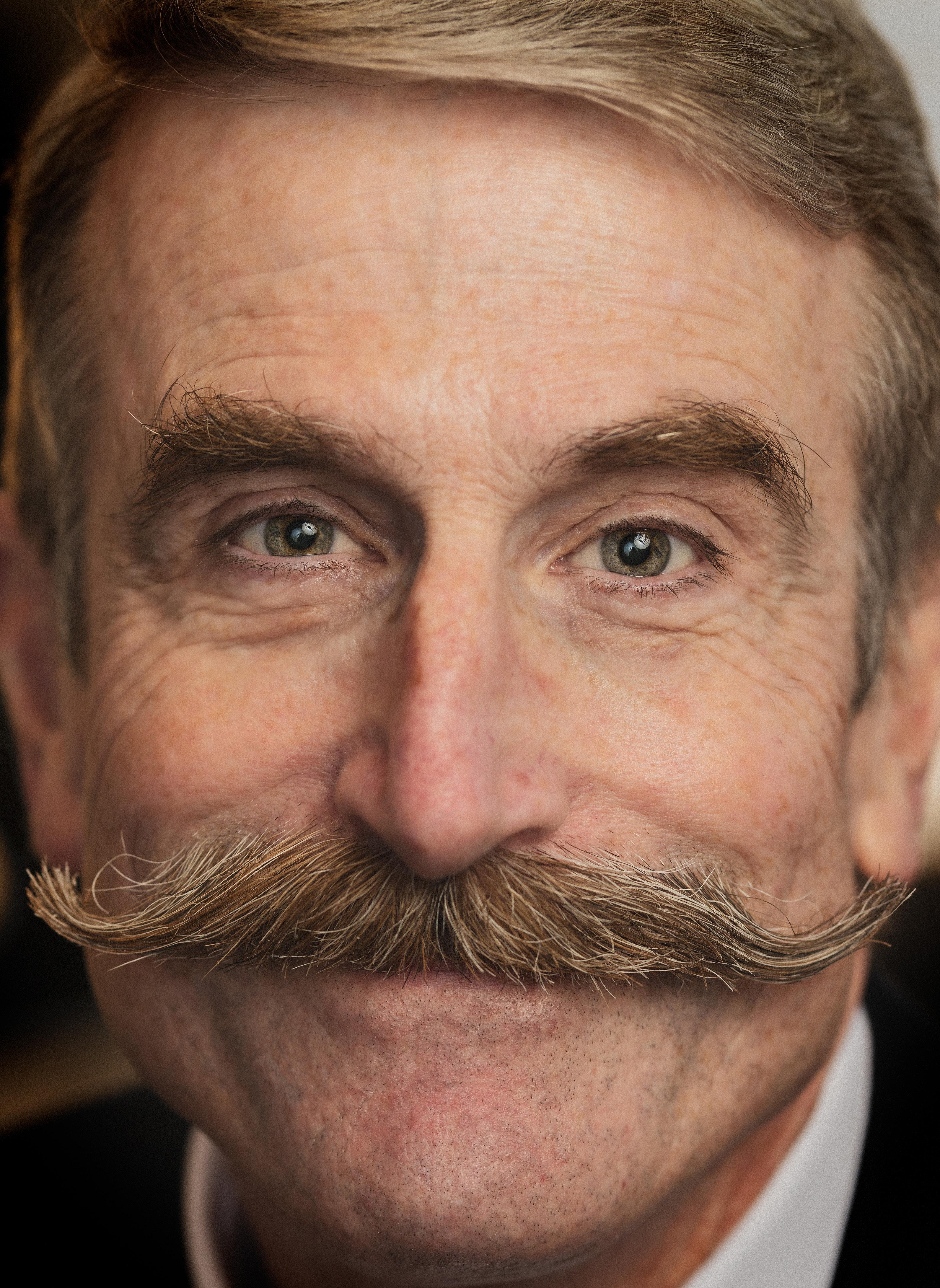
ON THE ’STACHE AND STEWARDSHIP
After ten years at Lawrenceville, Head of School Steve Murray reflects on leadership, change, and the origins of his signature look
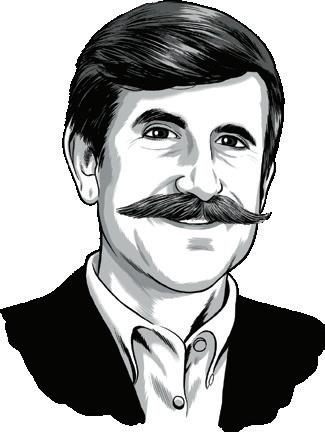
Thank a Teacher
Ilearned in February that someone I was quite close to passed away suddenly. Sue was a dear, lifelong friend, and also my sixth-grade teacher 50 years ago. Part of me would like to think that I was her favorite student, but I know that wasn’t true — all of her students were her favorite students. That’s how she made us feel.
The most important lesson I learned from her is something that I believe our faculty here at Lawrenceville know well, which is that teaching is about love and trust. That’s exactly how she approached it, and I have spent my career trying to live up to and to live by that standard she set. When I say that teaching is about love and trust, it is because great teachers invest deeply in their students. They get to know them, and they see possibilities and potential that the young learner doesn’t yet realize. And it doesn’t work if you don’t truly know your student. Push someone to achieve before they are ready, and you simply teach them their limitations. But start with caring and trust, and knowing exactly when to push, and you open up a world of opportunity for that young person.
So that’s the thing: We knew she loved us, and we loved her right back, and with that came trust — whatever she said, it had to be true.
A few months into that school year, she said that we would be putting on a play called The Music Man, as in, the Broadway musical. We thought, “OK, if she says so, then that’s what we’re doing!” We did it, and we were proud of it. Later in the year when she told us we were going to perform scenes from Shakespeare’s Julius Caesar, we shrugged and said, “Well, why not Shakespeare?” And we did that, too.
When the day arrived, I was up at the podium looking out at the crowd, and then I saw her in the second row, looking up at me with this happy smile. And just like when I was about to go on stage as Harold Hill in The Music Man 40 years earlier, I thought, “She seems to think I can do this; maybe I can.”
We’d have dinner maybe once a year, and we’d talk. I always looked forward to those evenings, and I treasure them now.
A few years ago, I came across a story in The New York Times. The author, a writer, is visiting his childhood hometown and is browsing in a used-book store. He finds a book of old photos of the town from 1930s. He sees a picture of schoolchildren from the local school of the era, and something about a little girl in the front row gives him a feeling. He looks at the name in the caption, and it is his first-grade teacher. A wave of nostalgia washes over him.
On a whim, he tracks down her home number through information. He calls, and she picks up; she must have been in her eighties. He identifies himself and says, “I just had to call you. You taught me to read, taught me to love the magic of words, and you opened up a whole world for me that led to my career as a writer. I just want to thank you, but you probably get these calls all the time.”
There was silence for a moment on the line, and she says, “No, you’re the first.”
And he ends his essay by saying, “Thank a teacher.”
LONG WAY DOWN
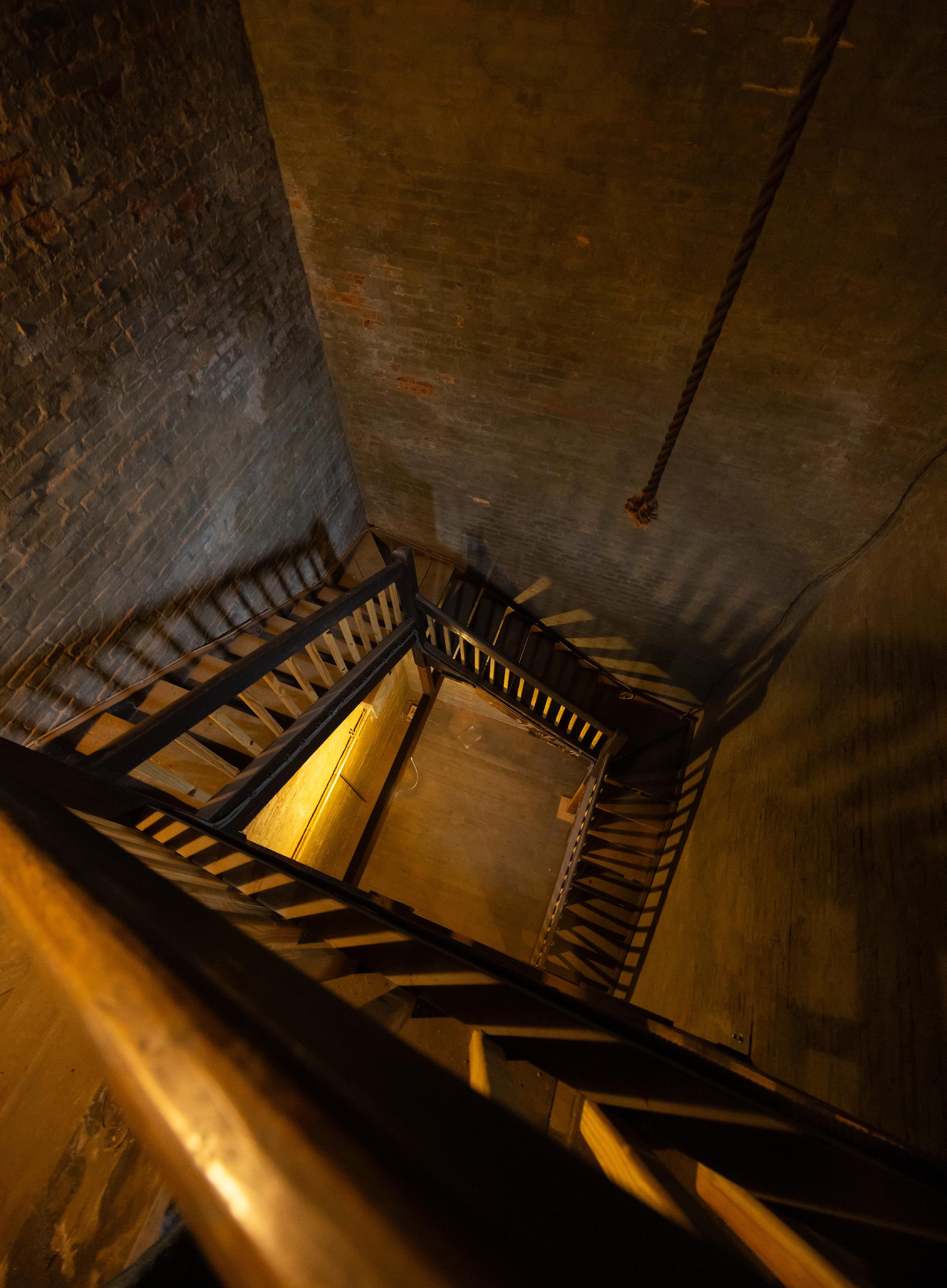
Only the upper length of the rope bell pulley still hangs from the belfry atop the tower of Edith Memorial Chapel, unreachable from the landing in the center of this image.
I went into teaching because of these experiences, and I have loved my career, every bit of it. In addition to having been fortunate to be her student, I was lucky enough that we stayed in touch, that she cared enough to do so. One of the biggest challenges of my life was accepting the position as head of school here almost eleven years ago. Talk about imposter’s syndrome. I wrote to her to tell her I was moving back to New Jersey, and I invited her to my installation. I spent weeks writing my speech, and I sure was nervous.
I love the message in that essay, all the more so because I am grateful that I had the opportunity to at least try to thank Sue for all that she did for so many of us and for all that she meant to me. I don’t know that I ever quite had the words to fully convey how I felt, but I think in the end she knew.
Sincerely,
Stephen S. Murray H’54 ’55 ’63 ’65 ’16 P’16 ’21
The Shelby Cullom Davis Class of 1926 Head of School
I Mustache You a Question
After 10 years at Lawrenceville, Head of School Steve Murray reflects on leadership, change, and the origins of his signature look in an engaging Q&A.
The Hidden Lawrenceville Everyone knows the School’s iconic architecture and scenic landscapes. But have you ever seen these veiled spaces that exist on no campus tour? We’ll bet (most of) you have not.
❝ Mr. and Mrs. Getz were not just the benefactors of the House itself, but to the young women living inside of it, as well.”
Jennifer Rose Savino ’88, who was among the first cohort of girls to live in McClellan House, built with a gift from the Getz family. Bert Getz ’55 H’56 P’85 GP’18 ’20, a trustee emeritus, died last August. (See page 80)

EDITOR
Sean Ramsden H’65
DESIGN
Bruce Hanson / EGADS
Landesberg Design
NEWS EDITOR
Lisa M. Gillard H’17
STAFF PHOTOGRAPHER
Paloma Torres
CONTRIBUTORS
Andrea Fereshteh
Jacqueline Haun H’65
Jennifer Rose Savino ’88
Nicole Stock
Tin Ho Xiong ’27
PHOTOGRAPHY
Cameron Baker ’29
Michael Branscom
Lisa M. Gillard H’17
Justin Huang ’26
Colin Lenton
Kjeld Mahoney
ILLUSTRATION
Joel Kimmel
PROOFREADER
Rob Reinalda ’76
HEAD OF SCHOOL
Stephen S. Murray H’54 ’55 ’63 ’65 ’16 P’16 ’21
CHIEF ADVANCEMENT OFFICER
Greta Morgan
DIRECTOR OF COMMUNICATIONS AND EXTERNAL RELATIONS
Jessica Welsh
The Lawrentian (USPS #306-700) is published four times a year (three in print; one digital-only) by The Lawrenceville School, P.O. Box 6008, Lawrenceville, NJ 08648, for alumni, parents, grandparents, and friends.
Periodical postage paid at Trenton, NJ, and additional mailing offices.
The Lawrentian welcomes letters from readers. Please send all correspondence to sramsden@lawrenceville.org or to the above address, care of The Lawrentian Editor. Letters may be edited for publication.
POSTMASTER
Please send address corrections to:
The Lawrentian
The Lawrenceville School
P.O. Box 6008
Lawrenceville, NJ 08648
©The Lawrenceville School
Lawrenceville, New Jersey
All rights reserved.
In the waning years of the old Yankee Stadium, if the game wasn’t particularly compelling, I would set about to find some hidden crevices in the venerable old ballpark, places that you never see in photographs. I never crossed any clear legal boundary, but there were times I was rebuffed by stadium personnel for going where I knew I didn’t belong, and I would plead ignorance: “I’m sorry, I was looking for a restroom.”
Uh-huh. Can I see your ticket?
I meant no trouble; I was just so curious to spy some hidden corner of the old place that I had never seen before for as many times I had walked through the turnstiles. And this, despite the rich, sweeping green grass and iconic contours of the most famous field in the sport, all clearly visible from my seat. What can I say?
Just about everyone picking up this magazine knows all about the beauty of Lawrenceville’s campus. Buildings designed by famed architects across the eras, sprawling across a magnificent landscape designed, at least in part, by Frederick Law Olmsted, make for a stunning welcome to first-time visitors. And it continues to wear well no matter how many times you encounter it.
Sometimes I have the impulse to surprise you, our readers, and reveal something about this School that that many of you have never set eyes upon despite the years you spent here. Some thing or place that simply exists out of sight, or perhaps was inaccessible to you. There are spots here that you had no good reason to see, aside from those adventurous souls who made it their business to explore whatever they could — an impulse that I understand very well.
So, after more than ten years on this campus, my curiosity got the best of me. As I led photographer Michael Branscom into a few dark corners of musty basements or even (what I thought were) daringly high perches, I believed I had the opportunity to show you something new about someplace very old. Michael has shot plenty of the gorgeous images the School uses for marketing purposes, so this was a decidedly new assignment for him, too.
Beginning on page 32 in “The Hidden Lawrenceville,” you’ll take a tour of campus that visitors don’t see. These images are for you curious Lawrentians, a chance to see something you may have missed while you were trying to fit a week’s worth of studying into one night. As you’ll see in some images of Woods Memorial Hall, this isn’t completely uncharted territory. But if you glimpse a view of something unfamiliar or gain a new perspective on a place you thought you knew everything about, I know one editor who will be glad to know it.
All the best,

Sean Ramsden H’65 Editor sramsden@lawrenceville.org
Inside the Gates

questions for Blake Eldridge ’96 H’78 ’12 P’25, assistant head of school for student life and dean of students, who reveals whom he’d be most revved up to see sitting at the Harkness table.
House Call
What’s a “Lawrenceville life hack” you swear by? Why?

5Q4
What would Blake, the Lawrenceville student, have thought about Blake, the dean of students? Finally … a worthy adversary.
If you could be part of a Harkness discussion with any three figures from history, whom would you choose?
Spartacus, Toni Morrison, and William Harley/Arthur Davidson [founders of Harley-Davidson motorcycles].
What would most surprise a current student about the Lawrenceville of the 1990s?
That “G” [head athletic trainer Mike Goldenberg H’94 ’96 ’97 P’05 ’10] was the bouncer at the Club Stanley dance back then, too.
What is your favorite book or movie?
The Empire Strikes Back, a training film for deans.
What never fails to make you laugh?
Everyone who worked in Woods Memorial Hall sometime between 1990 and 2004; Marty Doggett [H’76 ’79 ’82 ’86 ’87 ’88 ’92 ’98 P’00]’s “fashion faux pas” School meetings; Col. [David] Schorr [H’65 ’88 ’97 ’98 ’00 ’02 P’80 ’82 ’88 GP’97 ’09 ’12 ’17] working Hamill House football into a rabid froth before the “Crutch Game.”
Don’t waste time! Use every second as time to spend with friends, finish a half-done homework assignment, or get a head start on test preparations. Not only will you feel happier and more productive, but you’ll also have more sleeping time!
Melina Kyriakopoulos ’27 MCCLELLAN HOUSE
Go to consultation! Many people will tell you this, but it’s actually very
important for understanding material better, forming relationships with teachers, and understanding their requirements in order to excel in your classes!
Claire Liang ’29 CROMWELL HOUSE
Going to the Bath House after school. It’s the perfect time to go, as people are getting ready for sports and there isn’t a line. You have to be aware of the days
Club Hopping
The Periwig Club
There aren’t many clubs that have the history of Lawrenceville’s per forming arts group founded in 1892, but Periwig annually remains a vibrant spectacle of sight and sound onstage and you might not realize what an eye-opening experience the club can be for students. “When I was a kid, I discovered I really liked acting; I liked acting and singing, but kind of separately. And then I came here and discovered musicals, because my home country, Serbia, does not have musicals whatsoever,” says Mihajlo Gajic ’26 of Belgrade, who starred as Jean Valjean in this past fall’s musical, Les Misérables. Periwig performers and crews also come through under duress: “Unlike any other school that puts on a music production, we do this in seven weeks. That is unheard of,” says Matt Campbell, director of theatre and chair of the Performing Arts department, who says most schools provide three months to do what Periwig does in half that time. “So, this is varsity performing arts. This is varsity theatre.”

Lawrenceville 101
Capstone: Art and Justice
IN588
“Throughout every major social change in history — whether it be rupture or healing — art has been critical to our democracy,” says Zaheer Ali, executive director of the Hutchins Center for Civics, which helped create and facilitate this year’s spring Fifth Form Capstone, themed “Art and Justice.”
Condensed from an L10 report by Kayla Yang ’26 and video from Seun Aladese
Old School
The Passing of the Prodigious Hickey
The Prodigious Hickey of Owen Johnson fame is no more. On February 15, in Johns Hopkins Hospital, Baltimore, after a long illness, Colonel William Orville Hickok, 72, died. One of the several characters of the Johnson lore who were truly drawn from life, Colonel Hickok maintained a fresh memory of his schoolboy days, regarding them not as ill-fated and ending in defeat, but rather as a series of fairly fought contests with the faculty. From which he emerged “triumphant even in defeat.”
From “The Passing of the Prodigious Hickey” in the Spring 1946 Lawrentian.
when it closes early, but besides that it’s the best time to go and get a snack before dinner.
Courtney Hall ’28
MCCLELLAN HOUSE
Putting honey in your wok. I know it sounds strange, but it cuts the saltiness of soy sauce without making it too sweet. And it’s a Lawrenceville life
hack I learned from seniors my freshman year!
Mira Trappe ’26
MCPHERSON HOUSE
I use an actual alarm clock instead of my phone so that I can avoid doomscrolling at night before bed. It works. Sometimes.
Marcus Tsai ’27
KENNEDY HOUSE
The Capstone asks students to consider how creative expression functions within moments of social change. Art and Justice, with its accompanying Speaker Series, surveys how art not only reflects society, but helps shape it, building the civic capacity of students to “share information, strengthen connections, sharpen analysis, illuminate vision, and inspire action,” Ali says.
Learning through direct engagement with practicing artists and cultural critics, students move beyond abstraction, encountering how creative work operates within real social and political contexts.
Ali hopes that student find their experience in the Capstone “more than anything else, sparked and nurtured […] a deep curiosity about themselves and others, and the world around them.”
You’ll never forget to SISO again. For iPhone: Open Shortcuts — Automations — + Sign — Arrive — Location — Adjust Campus Limits to Most Used Entrance — Select Any Time — Select Run Immediately — Tap Checkmark — Create New Shortcut — Select Open App Action — Select REACH as App — Repeat Above for Leaving Campus!
Jasmine Shah ’29
PERRY ROSS HOUSE

If you’re craving food from off campus, rather than DoorDashing, order burger patties and grill with your housemates. You get great memories for a fraction of the cost, and everything tastes better when you cook it for yourself.
Carter Labrie ’27
KENNEDY HOUSE
One 2 Watch
Going the Distance Blair Bartlett ’27
At Lawrenceville, the track and field and cross country teams have been the beneficiaries of some exceptionally talented girls. From dis tance to sprints, hurdles to high jump, the teams have accumulated an impressive collection of Mid-Atlantic Prep League and state titles, with plenty of personal school records falling along the way in recent years.
But what Blair is doing as a Fourth Former is different. In March, she recorded the No. 1 time in the United States this year in the Girls’ 5,000-meter championship at the Nike Indoor Nationals in New York, finishing in 15:28.07. Think that’s good? It’s the fastest time ever post ed by a high school junior. So, yeah. Not bad.
Although she’s attracted national attention, signing on with the Nike Elite program, Blair is quick to redirect the spotlight toward her teammates, such as her three partners on Big Red’s distance medley relay team — Rory Laubach ’27, Jael Gaines ’26, and Yasmin Willie ’28 — that recorded the third-fastest time in the United States this year, also at the Nike Indoor Nationals. Their shared time of 11:40.00 is also a School record.
In February at the M.A.P.L. Indoor Champion ship, Blair ran a jaw-dropping 9:42.38 to win the girls’ 3,200-meter, moving her to No. 2 all time in the event among high school girls in indoor competition. What is nearly as remarkable is Blair’s versatility; at the N.J.S.I.A.A. Champion ship, days after her M.A.P.L. exploits, she set a school record in the 800 meters, running a time of 2:09.05 — good for No. 4 in the nation.
Despite Blair’s national profile, her life as a student is decidedly typical. Among other things, she’s a member of the choir and the Sus tainability Council and serves as a Ropes Course Instructor and Tour Guide.
“Passions outside of sports help me to under stand what matters to me and why,” Blair told VoiceInSport.com, “keeping me grounded and focused on what I love.”

things we learned producing this issue of The Lawrentian:
The School had planned to demolish Hamill House by the conclusion of the 1880s, but with enrollment swollen beyond the capacity of the new Circle Houses, Hamill was pressed back into service. The venerable stone structure is still going strong at 212 years old.
Head of School Steve Murray H’54 ’55 ’63 ’65 ’16 P’16 ’21 has worn his signature English mustache steadily for 42 years, shaving it only once, for a St. Baldrick’s fundraiser when he was the head of University School in Cleveland.
A wooden coffin rumored to be stored in a corner of the basement of McPherson House — built nearly a century ago as the School’s infirmary — is actually nothing more than a plywood replica casket constructed for a Periwig Club musical.
They
Said It
❝We have long idolized people who understood their moral obligations to others — superheroes and Disney princesses are almost universally selfless. After all, why do we exist if not to improve the overall amount of good in this world? If that’s not good enough for you, understand that other people’s problems are yours. Victims of violence are more likely to become violent themselves. Humans are social animals; we require community to live. To protect others is to protect yourself.” ❞
Mira Ponnambalam ’26 in “A Call to Action,” which appeared in the February 27, 2026, issue of The Lawrence
What’s Cookin’?
Street Treat
& Co. named tamarind its spice of the year in 2024, Gary Giberson H’11 ’18 P’10 founder and president of Sustainable Fare, knew he had captured the moment — in a jar. “It was just by chance I was involved with developing a ‘clean’ BBQ sauce and was planning on rolling it out to our community,” he says of the sauce, which uses real-food, rather than refined, processed ingredients. The resulting concoction — Tamarind Heads — is now available in over 30 states and at Lawrenceville. “Our Street Cart Chicken is one of our most popular entrees that uses the sauce,” Giberson says.

Street Cart Chicken Yields four 6-ounce portions
Ingredients
24 ounces/about 4
large chicken thighs, boneless, skinless, fat trimmed
1 lemon, juiced and zested
2 garlic cloves, minced
1 teaspoon ground cumin
Procedure
3 tablespoons Tamarind Heads BBQ sauce
1 teaspoon kosher salt
1 teaspoon oregano
½ teaspoon sweet paprika
½ teaspoon turmeric
• In a stainless-steel mixing bowl large enough to hold the chicken, mix the lemon zest and juice, garlic, cumin, Tamarind Heads BBQ sauce, and spices. Add chicken and toss to coat. Set aside at least 20 minutes, or chill overnight for best flavor.
• When ready to cook, thighs can be panseared or grilled over high heat. Brown well, about 4 minutes per side. Reduce heat if pan-searing to low and cover, or on grill, move to indirect heat with lid closed and continue cooking until cooked through –about 10-12 minutes or until an internal temperature of 160 degrees.
• Once cooked, remove chicken to cutting board to rest, covered; about 5 minutes. Slice and serve over green salad, with pita or over steamed rice.
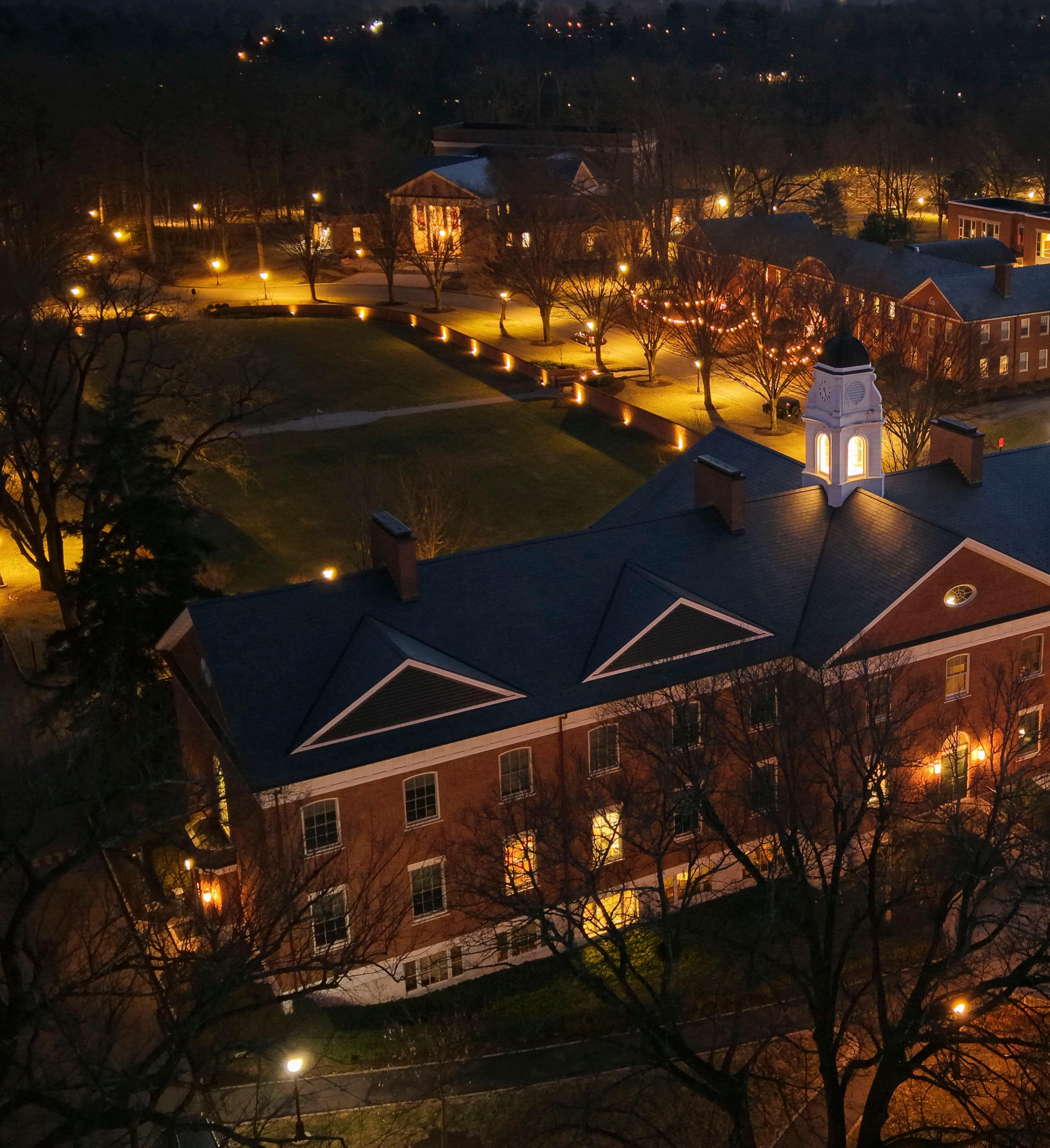
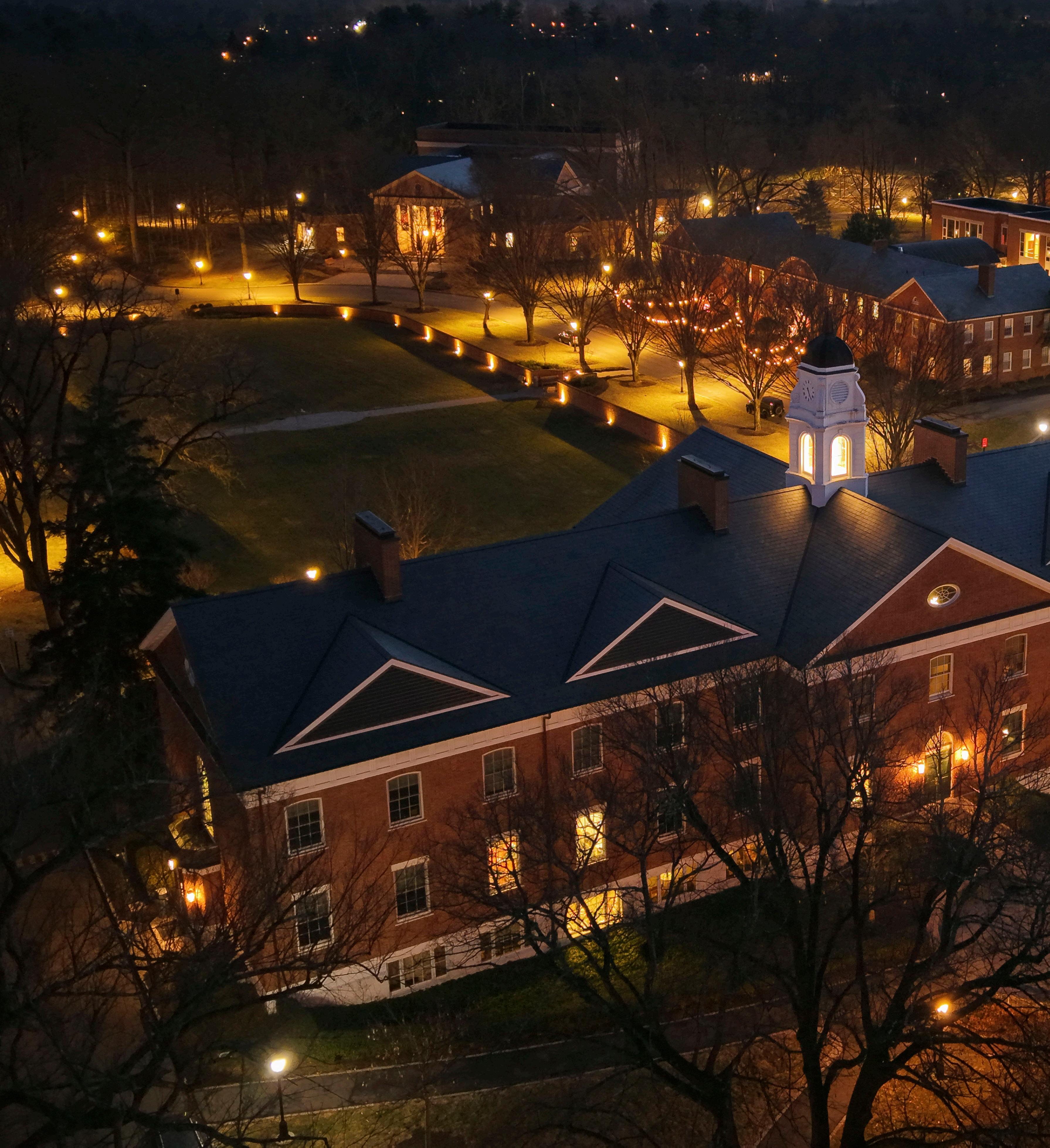
Photo by Cameron Baker
The Big Picture
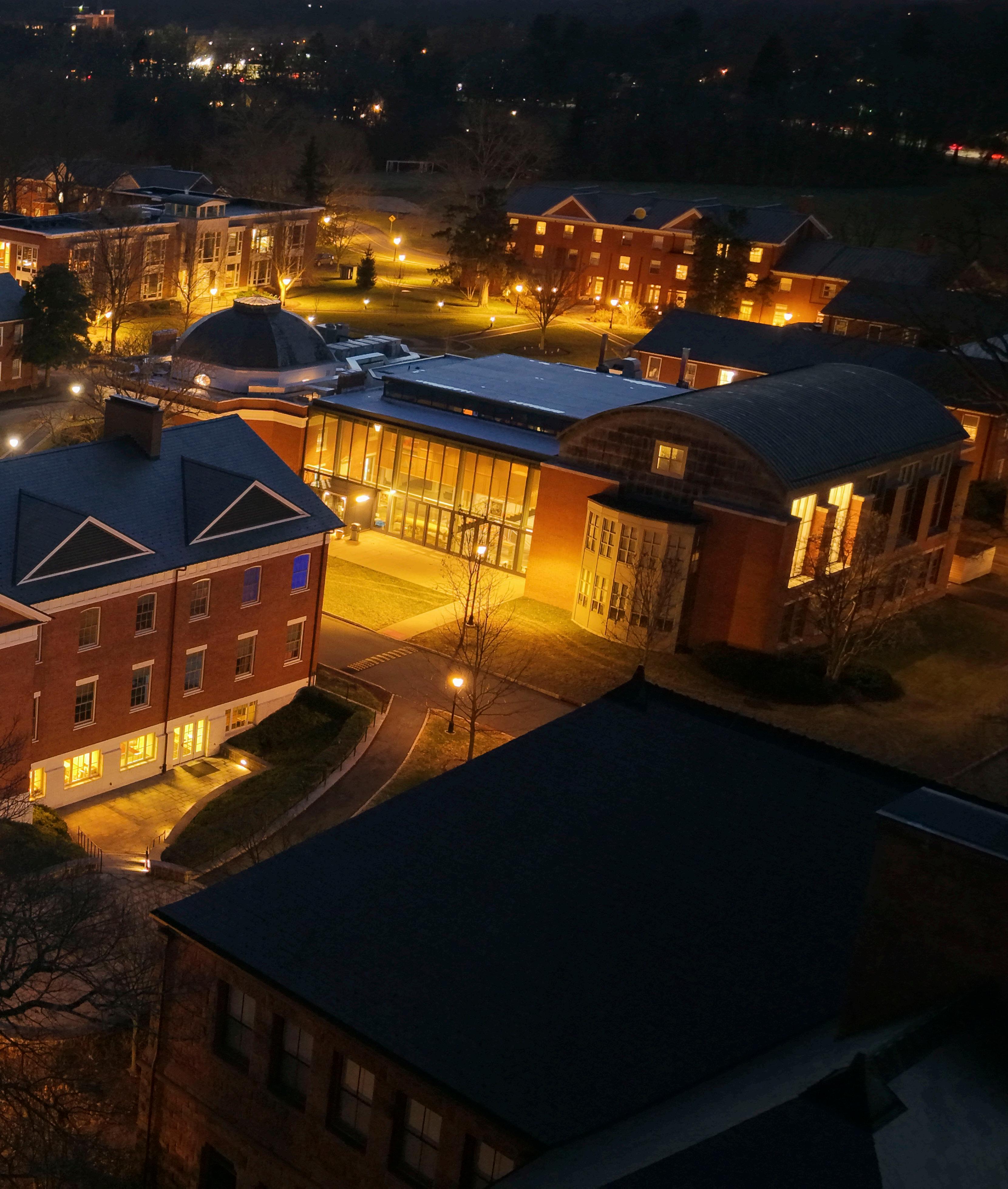
Cozy Vibes
Amid the brutal chill of January, the warm glow coming from Lawrenceville’s familiar learning spaces and Houses provided a reassuring calm to the view from high above.
Noteworthy
Depth Perception
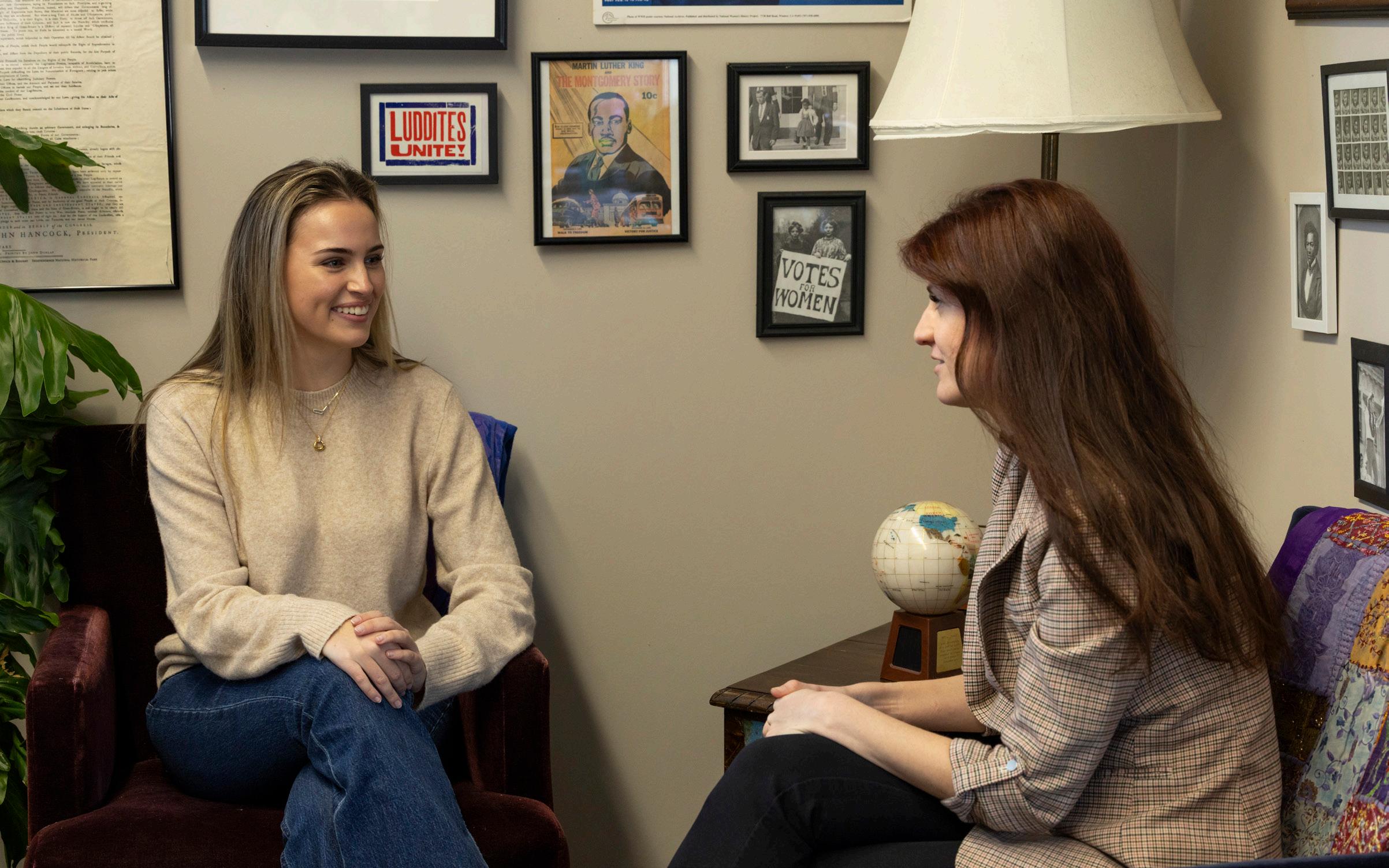
Lawrenceville’s new Advanced Civic Studies course helped Leila Campbell ’26 — and other students — see community engagement in a new dimension.
“CIVICS IS REALLY all about engagement with one’s community,” history teacher Hazel Baldwin-Kress said. “So, what better way to learn than to actually do it?”
Baldwin-Kress leads Advanced Civic Studies, a new course that reimagines what civic education can look like in practice. Rather than focusing solely on traditional government structures, the class tasks students with designing and executing initiatives that apply civic frameworks to real community needs. Students brainstorm personal connections, assess available resources, and develop projects rooted in access, opportunity, equity, and support.
Leila Campbell ’26 transformed her lived experience with stereoblindness – the inability to perceive three-dimensional depth — into a research initiative, an art-based community workshop, and a broader advocacy effort.
“I thought that it was a really captivating and under-researched topic that wholly encompassed my experience with
Leila Campbell ’26 (left) transformed her lived experience with stereoblindness into a research initiative, an art-based community workshop, and a broader advocacy effort in Hazel Baldwin-Kress’ Advanced Civic Studies course.
vision issues and how I was able to cope as a kid,” she said.
With Baldwin-Kress’ guidance, Campbell shaped her idea into a project that connected her passion for art with her interest in visual perception and disability advocacy. Campbell explored how creative expression, medical outreach, and family support can also serve civic goals.
“Nobody makes change by themselves,” Baldwin-Kress said, recalling how Campbell identified her optometrist, Noah Tannen, as a partner who could help connect her work with a broader audience.
The result is a community art workshop for children with vision impairments. The workshop is designed to build confidence, foster peer connection, and challenge limiting assumptions.
“The main point of that is to both create a community,” Campbell said, “and to hopefully inspire in people the knowledge that you can do more than what you’ve been diagnosed with.”
Campbell began her research with a hypothesis rooted in her own artistic experience: “If you can’t see in 3D, if your world is a flat surface,” she explained, “then it’s probably easier for you to translate what you’re seeing onto a 2D canvas.”
Her research extended into art history, uncovering studies suggesting that some Old Master painters may also have been stereoblind — a discovery that validated both her instincts and her creative process.
“That’s what I had been thinking,” she said. “And then when I looked into it, and I found these studies, I was like, I feel like more people should know about this.”
Campbell’s work has attracted the attention of one of the leading authorities in vision care, Leonard Press, who has asked Campbell and Tannen to co-author an article for the Optometric Vision Development & Rehabilitation Journal She hopes the attention will inspire others to use art as therapy for individuals with visual impairments.
“Art has been so beneficial throughout my life,” Campbell said. “Art could be something that you never thought you’d be good at, but, paradoxically, poor vision could actually make you a better artist.”
Campbell’s project is one of many that Baldwin-Kress describes as a “constellation” of civic initiatives — all rooted in different communities and concerns. Other student projects addressed media literacy, access to athletics for female athletes, literacy support for multilingual families, financial barriers to extracurricular participation, and more.
“People think civics is just government,” Baldwin-Kress said. “But it’s also about access, opportunity, community support, and using your own experiences to make meaningful change.”
2.10.26
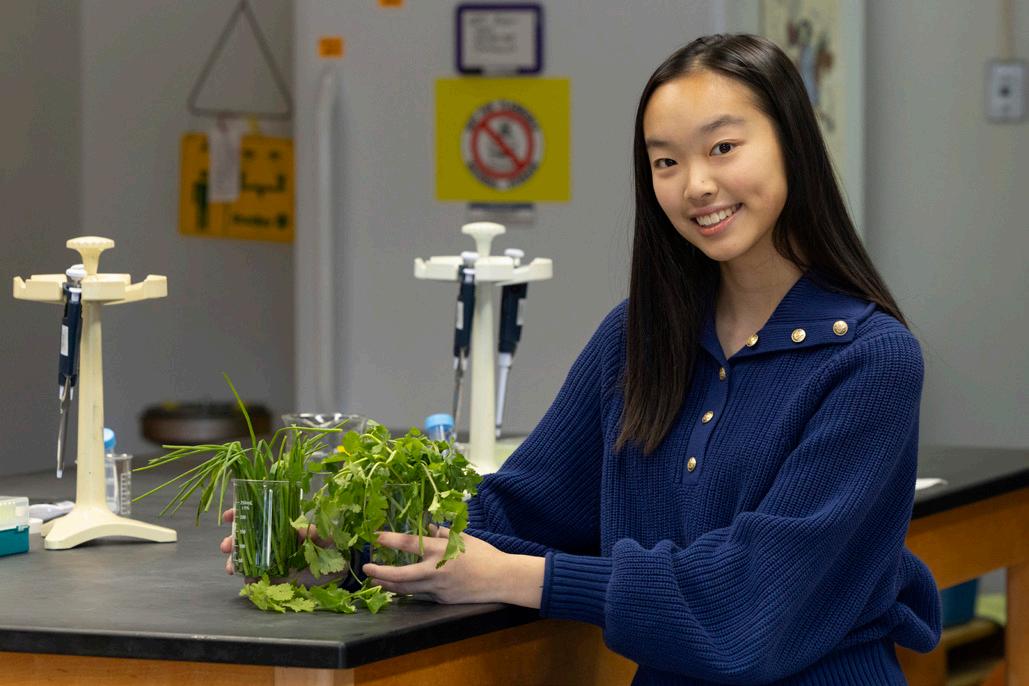
Gloria Yu ’26 was named one of the top 300 scholars in the 2026 Regeneron Science Talent Search, the nation’s oldest and most prestigious science and math competition for high school seniors, in recognition of her research on plant-based methods to remove toxic chemicals from the environment.
1.16.26
The Lawrenceville community began the new year with a schoolwide focus on wellbeing. An address by sports psychologist Jarrod Spencer on the importance of sleep launched a weeklong schedule of programming and events designed to build student resilience and community.
12.11.25
Jennifer Parnell, director of innovation and AI projects, and Marquis Scott, assistant head of school, shared Lawrenceville’s Campus ServiceBased Model, an approach that empowers students to design practical AI solutions that strengthen both learning and operations, at the NAIS Symposium on AI and the Future of Learning in Houston.
10.22.25
Lawrenceville presented $80,000 to the Lawrence Township Education Foundation as part of the School’s annual support of the organization, representing the LTEF’s largest single donor. This long-standing community partnership dates back to 1996 with nearly $2 million contributed by the School since that time.
Lens into the Past
LAWRENCEVILLE’S STEPHAN ARCHIVES
debuted a student-made film by Harry Robinson Safford, Class of 1930, at the inaugural New Jersey Archival Film Festival in November at Monmouth University. Safford, a native of Houston, captured snippets of Lawrenceville life on a handheld camera in 1928, creating what has become a visual time capsule of early 20th-century campus life.
Recently conserved and digitized by George Blood LLC, Safford’s 11-minute film offers a rare lens into the Lawrenceville of a century ago. Against many familiar backdrops, students appear playing baseball, football, golf, and track, interspersed with candid glimpses, lighthearted horseplay and faculty cameos — among them, Pulitzer Prize-winning author and playwright Thornton Wilder, who resigned from Lawrenceville later that year after earning the equivalent of $1.6 million for his 1927 novel The Bridge of San Luis Rey, and then-Head Master Mather Abbott. Students appear enthusiastic about the novelty of a moving-picture camera trained on them — something their modern counterparts now consider almost de rigueur
Beyond his filmmaking, Safford was a prolific writer who contributed to the School’s literary magazine and yearbook. After Lawrenceville, he attended Yale University, served as chief intelligence officer at the Red River Ordnance Plant in Texarkana, Texas, during World War II, and later became executive secretary of the Petroleum Equipment Suppliers Association.
Murray to Conclude More Than a Decade of Leadership
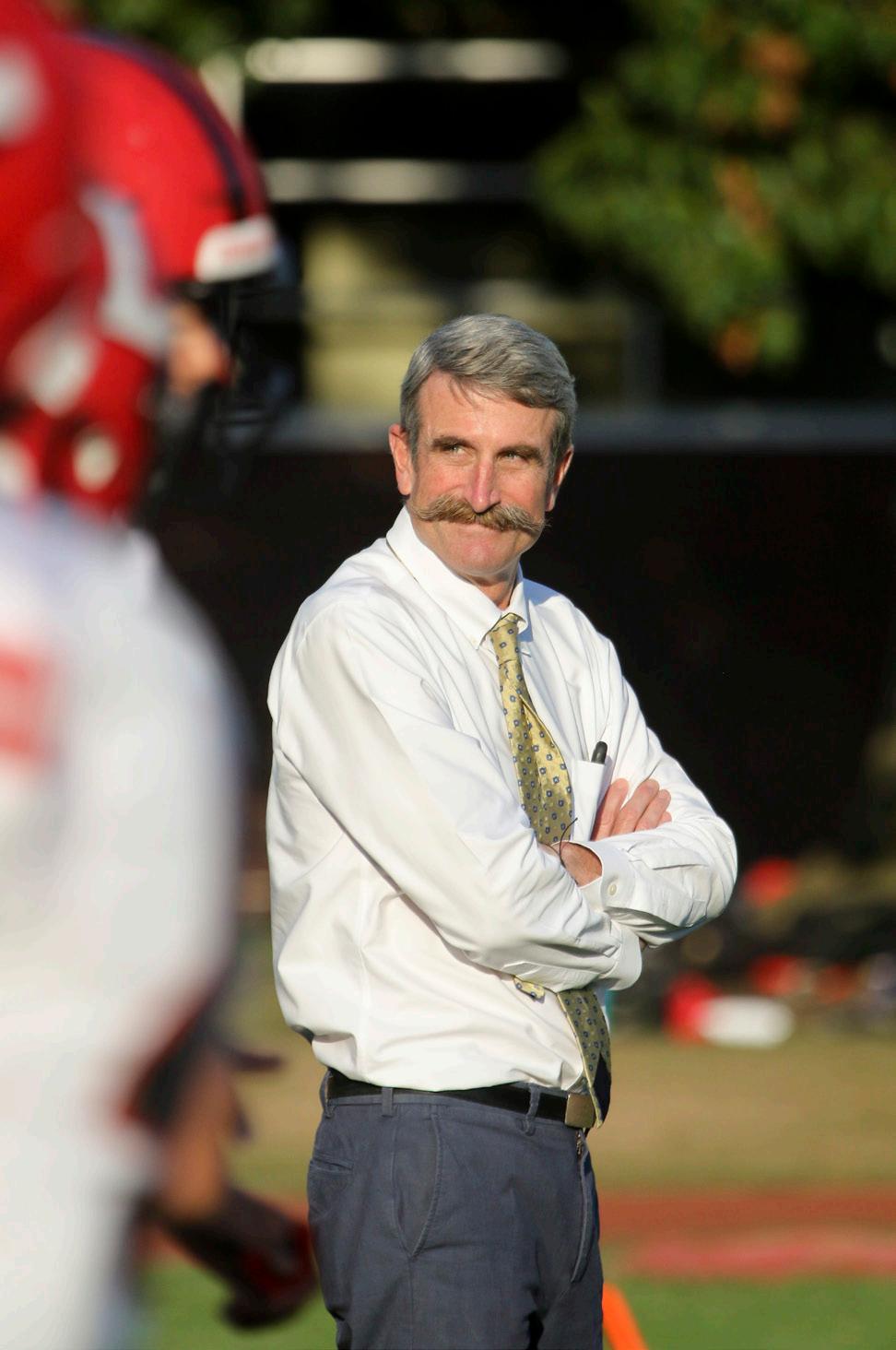
STEPHEN S. MURRAY H’54 ’55 ’63 ’65 ’16 P’16 ’21 will conclude his tenure as Lawrenceville’s 13th head of school on June 30, 2027, following more than a decade leading the School. He announced his decision on February 26.
Since his arrival in 2015, Murray has broadened the scope of experiential learning, overseeing the renovation and construction of Tsai Field House as a hub of campus life, and created a state-of-the-art design center and makerspace in the Gruss Center for Art and Design. He spearheaded the development of two strategic plans at Lawrenceville: Lawrenceville 20/20 in 2016, which paved the way for the most successful fundraising campaign in independent school history, and House, Harkness, Heart: A New Era for Community Wellbeing in 2021, which formalized the School’s commitment to helping students live healthy, balanced lives.
“On behalf of the Board of Trustees, I extend sincere and deep gratitude to Steve for his steady leadership and the integrity with which he has served this institution, and to his wife, Sarah, for her unwavering support of the Lawrenceville community,” said board president Celeste Mellett ’94 P’27 in a letter to the School community.
A committee of the Board of Trustees is partnering with Spencer Stuart, a global advisory search firm, to identify Lawrenceville’s 14th head of school.
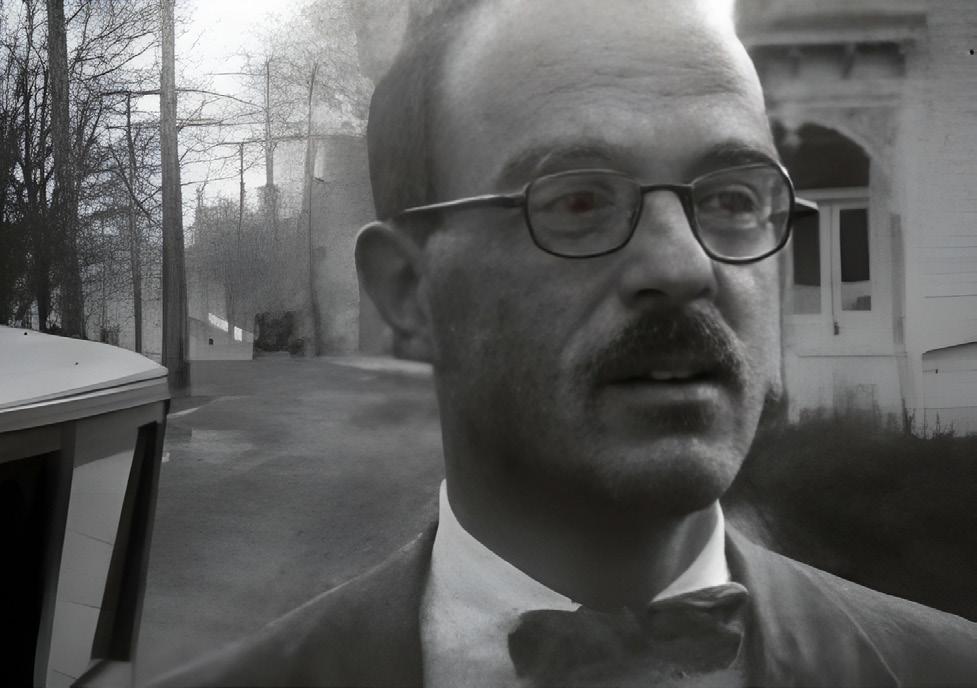
A screen capture of Thornton Wilder from Safford’s film, enhanced by Piscart AI.
Flake: Challenges Are Best Met Through Collective Effort
The former U.S. senator and ambassador called trust the currency that makes democratic systems function.
LAWRENCEVILLE HOSTED FORMER U.S. Sen. Jeff Flake of Arizona, who more recently served as the ambassador to Türkiye, during Winter Gathering in late January. Flake, who served a single term in the Senate after being elected six times to the U.S. House of Representatives, spoke to students at School Meeting and later, to parents. Across both talks, Flake emphasized a shared theme: Democracy depends not on division, but on trust, cooperation, and moral courage. He and his wife, Cheryl Bae Flake, also visited a History of the American Democracy class and attended a campus dinner to meet students and faculty.
Flake framed his remarks around a central idea: that the greatest challenges facing the country are best met through collective effort. Speaking to students, he emphasized that history offers reassurance.
“The key is that we’ve always faced these challenges together as a country,” Flake said, “through bipartisanship,

through civil discourse, and by finding common ground.”
He described democracy as a system that asks people to listen to those they disagree with, to accept electoral outcomes they don’t prefer, and to grant legitimacy to political opponents.
“Trust is the currency that makes democratic systems function,” he said. Unlike rhetoric or ideology, trust is built slowly through consistent conduct and decency, he added.
To both audiences, Flake emphasized moral courage and the willingness to speak honestly, accept political consequences, and uphold principles even when doing so is unpopular.
“Self-government is not a spectator sport,” Flake said, urging students to be thoughtful about how they engage with political ideas, consume information, and treat those who hold different views.
Expressing confidence in younger generations to both students and their parents, Flake told them that he often sees more openness to diverse perspectives among young people than among adults.
“We are not meant to live alone,” he said. “Democracy has to be the same. It’s not about standing alone; it’s about standing together, imperfectly, patiently, responsibly.”
Flake concluded by encouraging students and parents alike to choose grace over grievance and to practice civil discourse not as a slogan, but as a daily habit.
Students said Flake’s remarks prompted reflection not only on national politics, but also on their own roles as listeners, leaders, and citizens.
“He has a genuine affection for reconciliation despite disagreement,” said Willem Anton ’26. “He exemplifies a trait that makes me find people likable: He is willing to distinguish his opinions from facts.”
Brook Bartlett ’26 appreciated Flake’s anecdotes from Capitol Hill, which she said brought texture to the people behind the elected offices.
“I particularly enjoyed hearing about Ambassador Flake’s close relationships with colleagues on both sides of the aisle,” she said. “He humanized our legislature and showed that bipartisan cooperation remains both possible and essential.”
Former U.S. senator and ambassador Jeff Flake sat for an interview with Mira Ponnambalam ’26 and Ellen Jordan ’26 of The Lawrence in the Kirby Arts Center Lounge.
Reading the Room
Alexander Salgado-Lozhkin ’26 balances instinct and inheritance, shaping the crowd’s energy from the first drop to the final beat.
UNDER THE FLICKERING lights of Abbott Dining Hall, a swarm of students jumped and sang as songs blasted in the space like an artificial thunderstorm. Sneakers thudded down against the terrazzo tile; laughter rolled like bass. The air shimmered with sweat and color and noise, all of it tied together by one steady pulse.
Behind the booth, framed by LED panels and a tower of speakers, Alexander Salgado-Lozhkin ’26 grinned as the next beat dropped, his hands sweeping across the mixer in the same instinctive motion his father once used on the decks of Puerto Rico’s most legendary nightclubs. For SalgadoLozhkin, the art of spinning and mixing is not merely a pastime, but something closer to an inheritance.


“My dad has been a DJ since 1991,” he said with both pride and amusement. “All the equipment you saw at Homecoming was, in fact, his.”
Salgado-Lozhkin’s father, Luis Salgado-Clara P’26, once directed one of the biggest clubs in Puerto Rico; his uncle ran the other. Together, they ruled the island’s nightlife. According to Salgado-Lozhkin, his father and uncle “met figures like Donald Trump, Mariah Carey, Beyoncé, and basically all celebrities from the ’90s and early 2000s.”
Salgado-Lozhkin grew up surrounded by soundboards, rhythm, and reels of wire that hummed with electricity.
“I kind of just picked it up from him,” he said.
That legacy came to life when Salgado-Lozhkin first arrived at Lawrenceville as a Second Former and he began working most of the dances on campus. His sets are now woven into weekends: bits of pop anthems and TikTok beats colliding with familiar throwbacks. Each transition feels impulsive in the best way, like a conversation that bursts into laughter. Salgado-Lozhkin’s process lives somewhere between planning and instinct. He watched the Homecoming crowd as carefully as an athlete watches game tapes, tracking every rise and drop in energy until he knew exactly when to strike. His secret weapon is balance — knowing when to feed the crowd what it wants and when to throw it a curveball.
“When you are deejaying, you really cannot be selfish,” he said.
His sets flow through three tempos: reggaetón, hip-hop, and drill or dance beats. Every so often, Salgado-Lozhkin plays with a bit of chaos, sending the crowd from confusion to laughter in a single beat. At Homecoming, for instance, Salgado-Lozhkin dropped DJ Snake and Lil John’s “Turn Down for What?” and then went straight into the ABBA classic “Dancing Queen” right at the climax.
“People get mad for half a second, but they still dance,” he said. “That’s the point — you want them to laugh and move at the same time.”
Beneath the humor, however, runs the quiet tension of a job that looks carefree but instead carries the weight of every beat.
“It is like public speaking for an hour and a half straight,” Salgado-Lozhkin said. “You are the one controlling the vibe, and if it slips, everyone feels it.”
— Tin Ho Xiong ’27/ The Lawrence
Photos by Justin Huang ’26/The Lawrence
Family Business: Alexander Salgado-Lozhkin ’26, whose father was a top nightclub DJ in Puerto Rico in the 1990s and 2000s, is carrying on the tradition at Lawrenceville.
David Bell Named Medical Director
DAVID L. BELL, M.D., M.P.H., joined the Lawrenceville community this past fall as the School’s new medical director, providing leadership and clinical oversight of the School’s medical, counseling, sports medicine, and health administration services. As a member of Lawrenceville’s Senior Staff and the Wellness Team, Bell will help advance the Key Aspirations of the School’s wellbeing strategic plan.
A nationally recognized physician leader, Bell had been medical director of the Young Men’s Clinic at New York Presbyterian Hospital since founding the clinic in 1999 and was a longtime professor at both Columbia University Mailman School of Public Health and Columbia University Irving Medical Center. His approach integrates primary, urgent, and reproductive healthcare with mental health services, reflecting a deep commitment to whole-person, evidence-informed care.
“What excites me most is that Lawrenceville is fully devoted to the health, growth, and wellbeing of adolescents,” said Bell, New York Presbyterian’s Physician of the Year in 2012. “My hope is that my time at Lawrenceville will also allow me to develop strong, positive connections with the families who are such an important part of the students’ lives.”
Bell earned his medical degree from the University of Texas Southwestern Medical School and a Master of Public Health from the University of California, Berkeley. He completed his fellowship in adolescent medicine at the University of California, San Francisco, and is board certified in pediatrics.

Paging Through New Works from Lawrentians
Literary Lawrenceville alumni battle book-banning, explain how to halt the effects of sedentary life on screens, and reveal the broad clout of a turn-of-thecentury New Jersey mayor.

Samuel Cohen ’85
Banning Books in America: Not a How-To
Why are some Americans so determined to decide which books other Americans should get to read? Here, Cohen, associate chair of English at the University of Missouri, has edited a collection of novelists and educators’ views from the trenches of the war on reading. These are their models for how to think about what book banning means and how to fight back.

Manoush Zomorodi ’91
Body Electric: The Hidden Health Costs of the Digital Age and New Science to Reclaim Your Well-Being
The host of the NPR’s TED Radio Hour and Body Electric podcast, Zomorodi interviewed experts, conducted citizen experiments, and sought out research about how our digital lives are changing the way we think, learn, and feel. Now, she presents a timely investigation into how sitting in front of screens for eight to 10 hours a day is reshaping our bodies — from breath and eyesight to blood pressure, posture, and productivity — and how a simple shift can change everything.
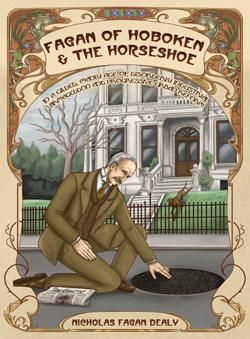
Nicholas Fagan Dealy ’95
Fagan of Hoboken & the Horseshoe
An Irish immigrant, the multifaceted Lawrence Fagan eared renown in late 19th-century Hudson County, N.J., as a successful ironmaster, newspaper publisher — and as the mayor of Hoboken, determined to upend political and municipal corruption. Dealy presents a lively and well-researched look at his great-grandfather’s life of political influence that was felt throughout the state.
Ancient Words, Modern Minds
By studying a so-called “dead language,” students are breathing life into the way they interpret their contemporary readings. Reports of Latin’s demise are greatly exaggerated.
By Lisa M. Gillard H’17
hy study a language no one speaks? For Lawrenceville’s Latin teachers, the answer lies in the people who once did. Every line of Cicero, every scrap of graffiti, every verse of poetry scratched on a wall is a reminder that the ancients were not strangers, but reflections of ourselves.
“We want to drive home the point that ancient people were not in any way primitive,” says Scott Barnard, a Latin teacher in the Language Department. “They are very similar to modern people. There’s something universally human that we can learn by studying them that helps us better understand ourselves.”
That idea that Latin is a direct conversation with real human voices across 2,000 years sits at the center of Lawrenceville’s Latin program. It’s training students to listen carefully, think critically, and recognize themselves in someone else’s world.
“It’s also about giving students the tools to experience
that for themselves and not have to rely on the filter of a translator,” Barnard says. “We want them to see what was actually on these people’s minds.”
For fellow Latin teacher Michael Niu, the program is just as much about the present tense.
“Your choice of words and how you express yourself and how you communicate with people often leaves a first impression,” Niu says. “Learning Latin teaches students the importance of words and how they can articulate themselves.”
Three years ago, Barnard and Niu hit a wall with traditional Latin textbooks, which, they believed, did not emphasize the relevance of the subject. So, with support from a Lawrenceville Woods Summer Research Grant, a program named in honor of former English teacher Henry C. Woods ’40 and supported by a gift from his estate, the pair wrote their own curriculum, spending two summers building Lawrenceville’s Latin I and II texts from scratch.
“We asked, What do we want the Latin I and II experience to be so that they can get the most out of Latin III, when we start to read real Roman authors? ” Barnard says. “We designed a program that teaches things in the order and with the depth that we think are really necessary for a high school student. We examine authors who will actually resonate with our students. We’d rather have them thinking about what it means to be a young person in a complicated world than sprinting through an exam rubric.”
For Bridget Holden ’26, exploring Cicero’s rhetoric revealed how relevant Latin remains today. As she researched Cicero’s orations, she noticed parallels between ancient rhetoric and modern political speech.
“It really is fascinating to me how modern politicians still arrange their persuasive arguments with ancient constructions,” she explains, “and only replace old language with contemporary diction that’s suited for current audiences.”
Holden also believes the class has changed how she approaches information itself.
“It made me think about why I believe what I believe. When reading the news, how many of the conclusions I’ve come to are actually my own?” she wonders. “Is the information I read precisely factual, or is it presented with strategic language that intentionally guides readers to a predetermined conclusion? It’s impacted a lot of the way I think every day.”
Latin teachers Michael Niu and Scott Barnard completely revamped their foundational Latin classes in order to have students get the most from upper-level Latin classes.
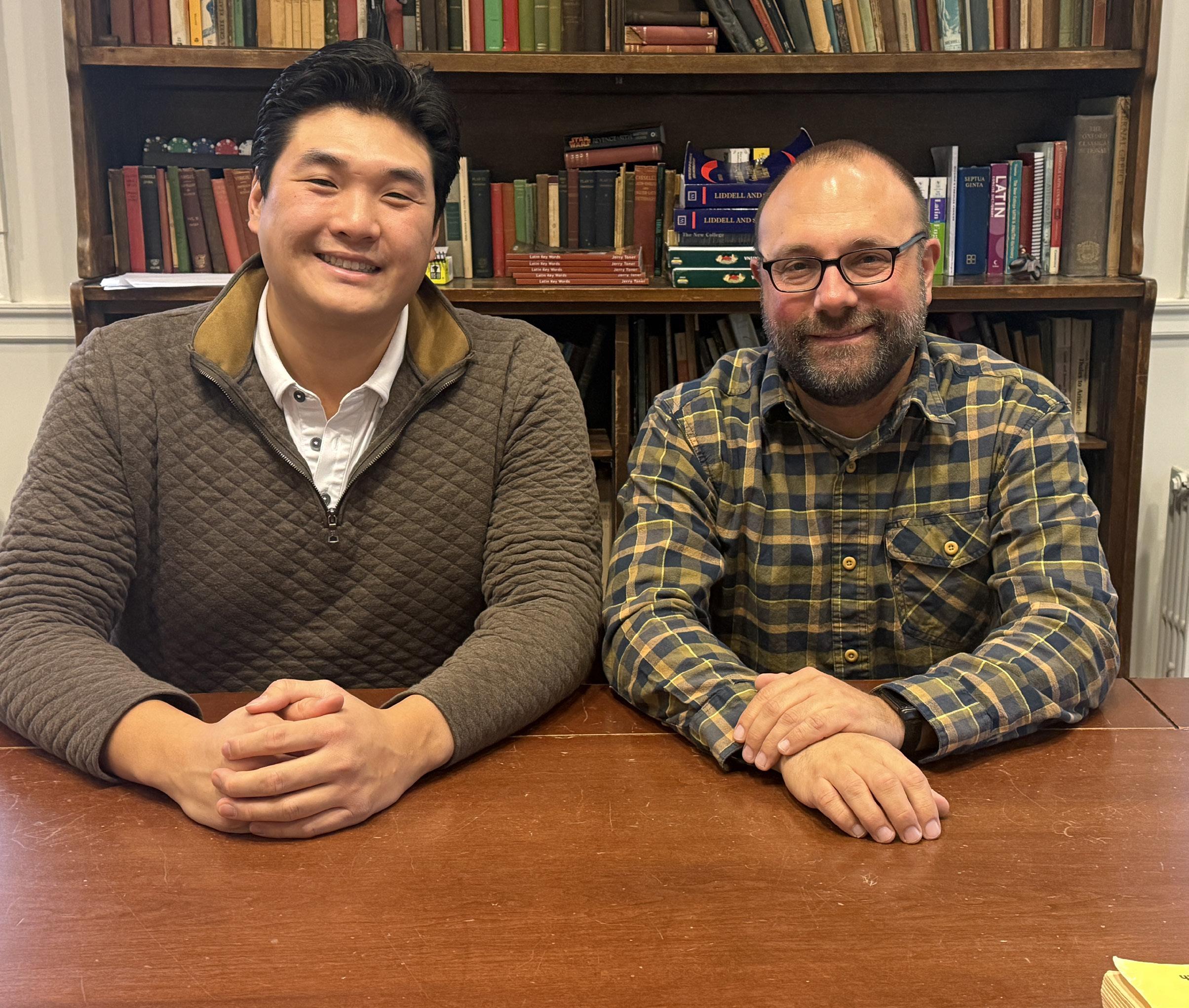
“There’s something universally human that we can learn by studying them that helps us better understand ourselves.”
— Scott Barnard (right)
Everything Old Is New Again
Students are seeing their lives with the writings of the ancients
“The first thing that comes to mind is how my perception of language has changed. It might be natural to assume that systems and cultures from thousands of years ago would likely have little in common with modernity, but looking into Cicero has proved to me that few parts of our world are entirely novel.”
Bridget Holden ’26
“The classroom is always filled with laughter, and the enjoyment of one another’s company is always apparent. The environment fosters healthy learning and makes class more enjoyable.”
Noah Mondello
’27
“There have been moments when I think a poem could be translated one way, but my friend might think something else [since Latin doesn’t always have a contextual translation]. Those always lead to great discussions, trying to uncover the author’s intent, and they’re always a lot of fun.”
Marco Pellegrini ’26
“Once we get into Latin III and Honors Latin, class becomes much more Harkness. We’re interpreting what we’re reading. There’s less ‘this is the form and this is what it means,’ and more ‘here’s the range of what this could mean; what do you think is most accurate and why?’”
Scott
Barnard, Latin teacher

Refilling a Need
By following a mission of low-waste living, Julia Traggorth ’05 creates high-impact connections through her refill store.
IIf you walk into Four Corners Supply Co. with an empty bourbon bottle, Julia (Merriman) Traggorth ’05 won’t inquire about your weekend with a raised eyebrow. She’ll just ask if you’d like the glass vessel filled with lavender laundry detergent or nontoxic dish soap. As the founder of this refill store, or “refillery,” as they are sometimes known, Traggorth deals in thoroughly vetted, eco-friendly retail items that are all sustainably sourced and reduce packaging and waste as much as possible, while carrying a promise of being earth-, plant-, and people-safe. It’s a business, but also an extension of her life.
“People ask me, how long have you been doing this? ” she says. “I’ve always been doing this. I’ve just always been like this.”
Still, parlaying a passion into a small business comes with a learning curve, but as a former teacher, that is something Traggorth understood and was up for the challenge.
“My friends would always ask me for recommendations or say, ‘Hey, we know you’ve tried everything and wasted all the money, so can you just tell us what actually works?’” she explains with a laugh. “And so that made me think, Yeah, might as well try it.”
Traggorth began selling sustainable home products from a closet in her Massachusetts home in 2021, fulfilling online orders. Before long, she leased a space in the historic Four Corners section of Hanover, Mass., which lent its name to her business. She has since moved to a larger store a few miles away in Marshfield, on the South Shore.
Four Corners Supply Co. is one of about 1,300 refill stores in the United States, and one of just eighteen in Massachusetts. Though product lines vary by store and state — Traggorth is not permitted by law to sell food items, for instance — refillery staples include bulk products such as soaps and detergents and cleaning and kitchen supplies.
Customers typically bring their own containers (which are not typically bourbon bottles, though they can be) into which Traggorth dispenses the amount of a product they will hold, with prices based on weight. Sunscreens, face and body lotions, household cleaners, and scented laundry powders and concentrates are just some of the bulk items for sale, but her store also sells reusable non-paper towels, a nifty
garlic press and herb stripper, a stainless-steel lunchbox with compartments, and charming Duckhead umbrellas. Traggorth even carries a soothing organic Booty Balm, which is, well, exactly what it sounds like. Hey, diaper rash is no laughing matter.
The fun inventory of goods available at Four Corners Supply Co. can and does appeal to shoppers beyond devoted environmentalists or consumers trying to avoid exposure to chemicals. Many are drawn to its stripped-down simplicity.
“I do feel like a lot of people are looking for a more analog experience in a very overwhelming, saturated world,” Traggorth says. “So, it’s nice to have just highly curated things and less choices sometimes.”
Not everyone is familiar with refilleries, and although she is loath to preach about the detriments of plastics — “that’s not a great way of getting people to change their habits,” Traggorth says — she starts slowly before yielding more and more information when explaining her catalogue, particularly away from her shop.
“The reactions are either like, Huh, that’s weird, or, Oh, cool,” she says. “Or, Oh, I’ve always wanted to do something like that! I’ll come by! ”
Traggorth says those in the third group frequently become customers, and their subsequent spreading of the word accounts for a good part of her sales, 80 percent of which occur in store. She estimates that she sees a new face in Four Corners Supply Co. just about every day she’s open.
“Which is nice,” she adds.
That group, along with her far-flung peers who own similar establishments, has collectively engendered a sense of bonhomie and common purpose. Shop owners will refer their regular customers to stores in other areas if they’re traveling or even relocating. Traggorth recently heard from a refillery owner in New Hampshire who sells to a former customer who moved north.
“I told her that’s great — say ‘hi!’” she says.
That personal connection has been the most surprising aspect of her work.
“I wasn’t setting out to create a community,” says Traggorth, adding that Four Corners Supply Co. sponsors a local youth baseball team. “I was just really looking to create a retail store, and it has become this really wonderful, valuable community to me.”
Julia Traggorth ’05, who owns Four Corners Supply Co., a refill store, says her exposure to ecology-based learning at Lawrenceville was fostered by former Aldo Leopold Fellow Josh Hahn. “It shaped who I am,” she says.
Go Big Red
Big Red Roundup
Beyond the Boards
Girls’ ice hockey coaches build confidence one shift at a time.
Boys’ and girls’ cross country captured their respective M.A.P.L. championships, going undefeated in meets. Led by Blair Bartlett ’27 (see page 6), girls’ indoor track and field won the M.A.P.L. and N.J.I.S.A.A. championships. Boys’ indoor track and field did the same.
Lily Chincarini ’26 and Kendall Sorrentino ’26 earned first-team All-M.A.P.L. honors in field hockey, with Chincarini and Megan Widlar ’26 named to the All-N.J.I.S.A.A. Prep A first team.
Mohamed Mohamed ’26, Ayodele Joa-Griffith ’26, and Joao Abrahao ’26 were named first-team
N.J.I.S.A.A. All-Prep in boys’ soccer. On the girls’ side, they were joined by Valentina Garcia ’28, who also earned a first-team All-M.A.P.L. nod.
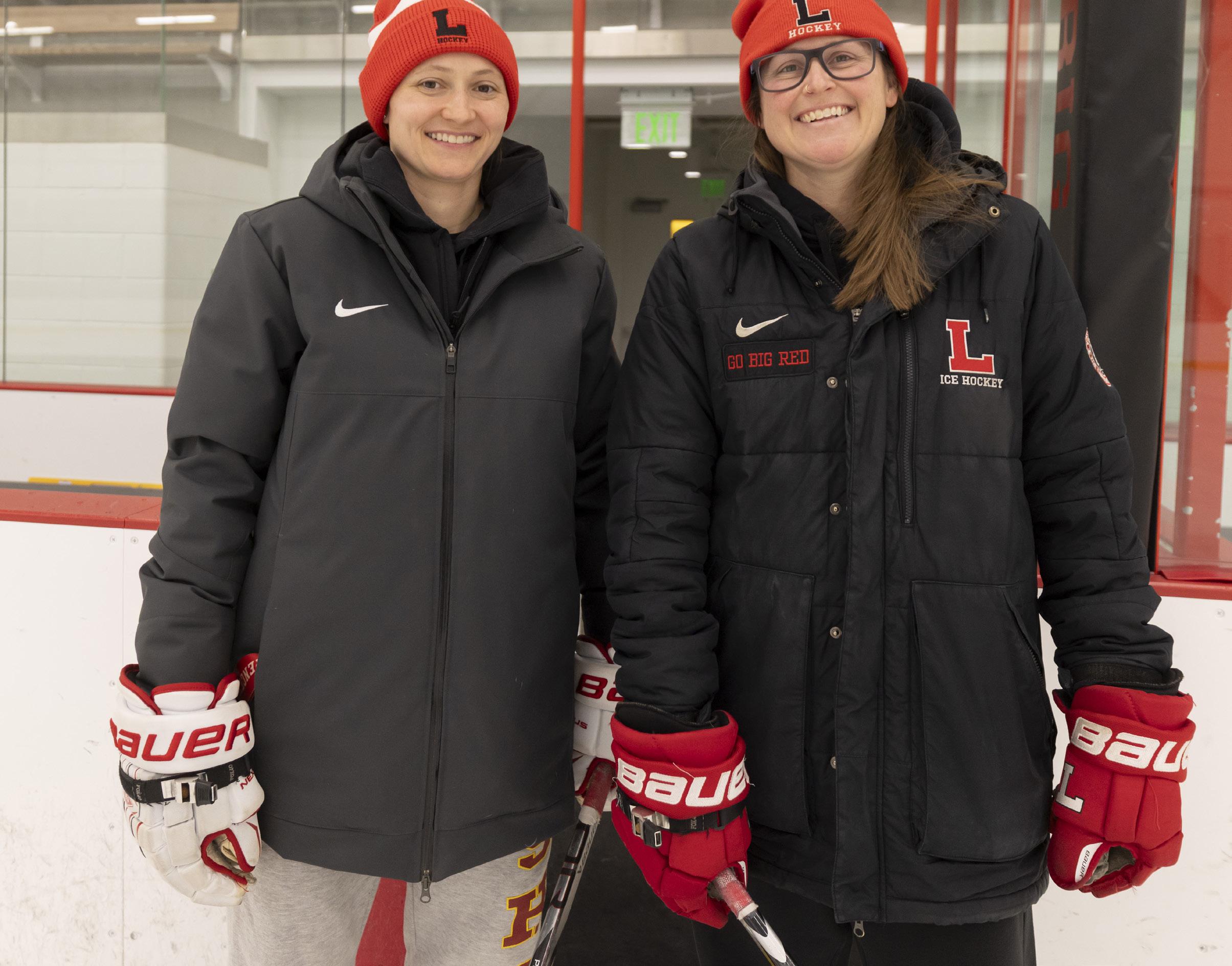
Assistant coach Nicole Stock and head coach Nicole Uliasz both bring their own extensive playing experience to the girls’ ice hockey team.

By Lisa M. Gillard H’17
AT LAWRENCEVILLE, GIRLS’ varsity ice hockey is about far more than the final score. For head coach Nicole Uliasz and assistant coach Nicole Stock, success is measured in growth — as teammates, as students, and as people.
That mindset shapes every decision the two coaches make, from practice plans to team culture. They want athletes who compete hard, respect one another, and learn lessons that endure long after graduation. Nearly 50 of their former players have gone on to compete in college hockey — many at Ivy League programs — a reflection, they say, of what happens when high standards, support, and opportunity align.
Both coaches, affectionately dubbed “Uli” and “Stock” by their players, as know that path well.
Stock, who is also Lawrenceville’s athletic director, began skating at 7, moved into goal at 8, and never left the crease. She played boys’ hockey until high school, then went on to Choate Rosemary Hall, Brown University, and ultimately to the professional women’s league that preceded today’s PWHL. Uliasz, who doubles as associate athletic director, followed a similar path: youth hockey, the Taft School, the University of Wisconsin, and selection to the elite U.S. U22 and National Teams.
Those experiences now sit at the center of their Lawrenceville program, fostering respect for the work, appreciation for every role on the team, and a belief that effort and attitude matter as much as talent.
Tri-captain Sarah Martin ’26 says that philosophy has shaped both the team’s culture and her own leadership.
“Our coaches make hockey a place players look forward to going to every day, rather than just another commitment,” she says. “Uli and Stock are a huge part of our team, and our culture would be very different without them.”
The coaches strive to make everyone feel equal, no matter their role.
“When we coach, everyone is the same,” Uliasz said. “Whether you’re on the team as our manager, you’re still a part of our team and you’re very much included in whatever we do.”
That inclusive approach resonates with players from the moment they arrive.
“From Day One, Uli and Stock made me feel like I belonged,” Natalie Tang ’26 says. “They treat everyone with respect and genuinely encourage us, showing me that leadership isn’t about being loud and controlling. It’s making people feel seen, supported, and confident.”
Uliasz and Stock’s partnership blends discipline with empathy, structure with creativity. They expect players to compete fiercely, but also to support one another — to learn how to lead, how to listen, and how to rebound from setbacks.
“I love working with Stock,” Uliasz says. “Working with someone you respect and are friends with, who has the same goals and passions — that makes it fun.”
Stock still views the game through a goalie’s lens.
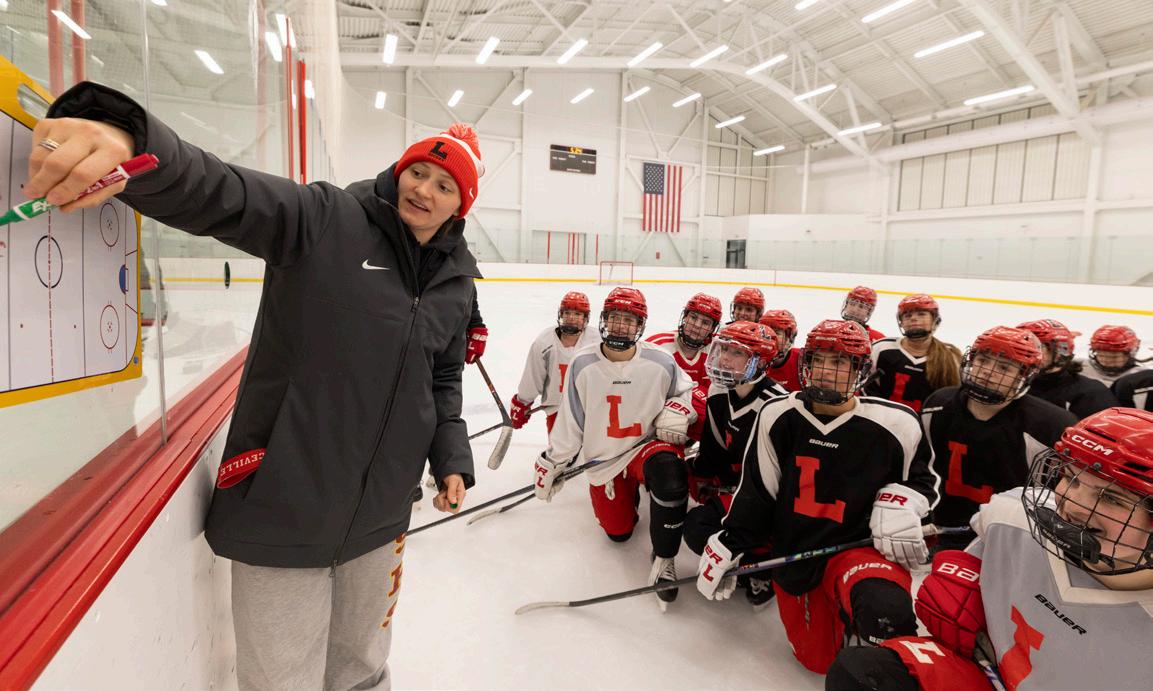
“I’m someone who watches at a high level, a 100-foot view,” she said. “Power play, penalty kill, forechecks, neutral zones — I could do that all day.”
A former defender, Uliasz brings a complementary focus.
“We’re literally the perfect team,” she says. “Stock can break down any system, and I’m breaking it down by skill level. It ends up working out really well.”
For tri-captain Emma Walling ’26, that partnership has shaped something even broader than performance.
“While their expertise on the ice has undoubtedly made me a better player,” Walling says, “what’s most important about Stock and Uli’s leadership is their ability to make us better Lawrentians in every sense.”
Together, the coaches have built a program where dedication is expected, mistakes are seen as part of progress, and tradition and growth coexist.
“Hard work,” they agree, is the non-negotiable value of Lawrenceville hockey.
Girls’ tennis claimed the M.A.P.L. championship after a 16-1 season, with Minhee Kim ’28, Sophie Bilanin ’26, and Katelyn Ni ’26 receiving first-team All-M.A.P.L. acclaim.
In girls’ volleyball, Maddy Stockwell ’27 was named N.J.I.S.A.A. Prep A All-League, while Ceci Mape ’27 and Sussa Surrante ’26 claimed first-team All-M.A.P.L. honors.
Marque Johnson ’28 and Aryana Iyer ’27 earned first-team All-M.A.P.L. nods in boys’ and girls’ basketball, respectively. Boys’ fencing claimed the N.J.I.S.A.A. title and its first ever Cetrulo Tournament championship.
Isabella Jin ’26 broke the School record in the 100m freestyle, and Jin, Marissa Lombardi ’26, Ariana Dai ’27, and Jade
Zhang ’28 set a Big Red mark in the 200m medley relay for girls’ swimming and diving.
Alex Donne ’26 and Yidrew Chen ’28 were both named to the All-M.A.P.L. boys’ squash team. Laura Leven ’28, Millie Mario ’27, and Ava Yang ’29 joined them on the girls’ squash All-M.A.P.L. squad.
A natural tactician, Nicole Stock breaks down a play for the team during a practice at Tsai Ice Rink.
‘It Went In!’
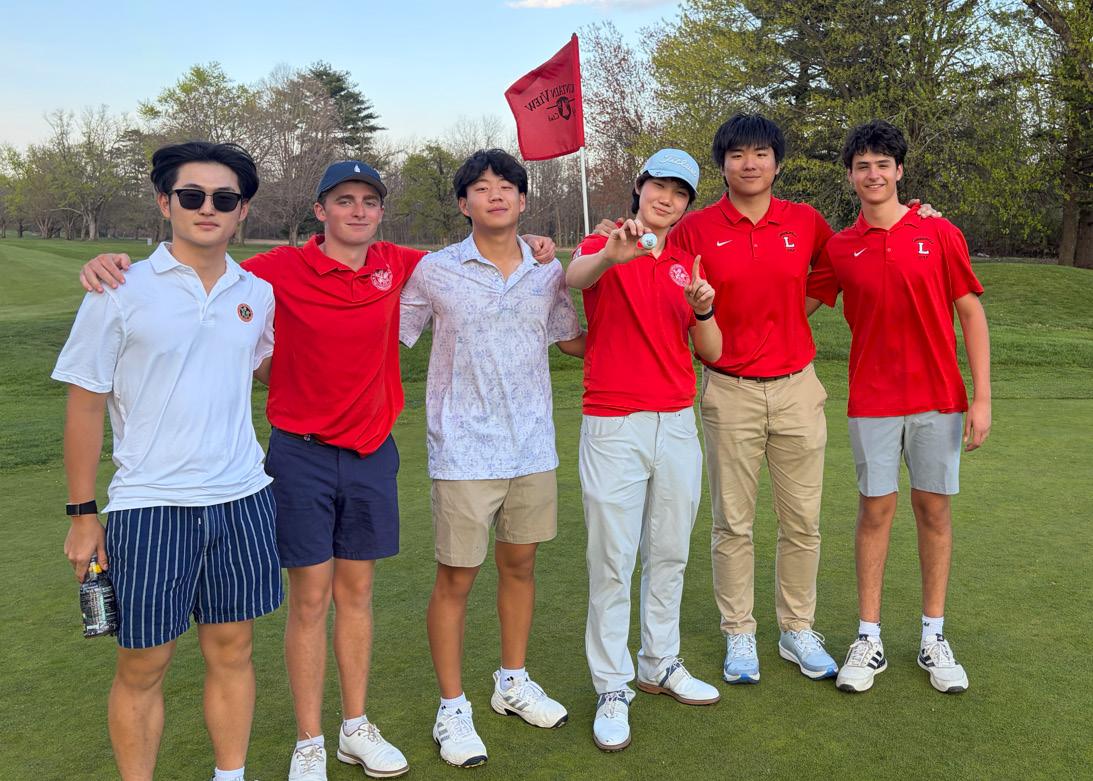
Golfer Ethan Lee ’27 makes history with his second hole-in-one.
THEY SAY LIGHTNING never strikes the same person twice. Are they sure about that?
Ethan Lee ’27 sank his second career hole-in-one on April 14, this time on the 162-yard fourth hole at the Mountain
Another Resounding Win on Hill Weekend
Lawrentians headed to Pottstown, Pa., on November 8 to contest one of the longest-running high school rivalries in the United States — Lawrenceville versus The Hill School — the 138th renewal of the rivalry. Big Red emerged triumphant with 10 wins against five losses and a tie to capture the Meigs-Green Cup, awarded to the school with the most victories on the day.
View Golf Club in Ewing, N.J., in a match versus Pennington School. Last March 31, Lee aced the 137-yard second hole at the Golden Pheasant Golf Club in Lumberton, N.J., the first hole-in-one for Big Red golf since the 1970s, according to head boys’ golf coach Etienne Bilodeau H’01 ’20 ’21
“I feel extremely fortunate and thrilled to get a hole-in-one in two consecutive years, both in a match,” Lee said. “I was so happy and grateful to celebrate such exciting news with my closest, most caring teammates and coach.”
Lee said the wind was trailing strong left to right and into his face.
“The shot felt good and well executed, but I honestly lost track of the ball for most of it, as it went really high,” he said, noting that he finds this particular hole to be one of the hardest at Mountain View, Big Red’s home track. “I wasn’t expecting much and just tried to look for my ball. But then Aiden Li [’26], my teammate and captain, who was tracking the ball, yelled, ‘It went in!’ I was shocked.”
Lee said he felt “calm … having a great time in great weather” as he addressed his shot.
“Relaxation and enjoyment of the present, for me, went a long way,” he said.
Just far enough and not an inch too long.
Surrounded by his teammates, Ethan Lee ’27 holds the ball he used on his 162-yard hole-in-one, his second ace in just over a year for Big Red golf. No Lawrenceville golfer had recorded an ace since the 1970s before Lee’s in 2025.
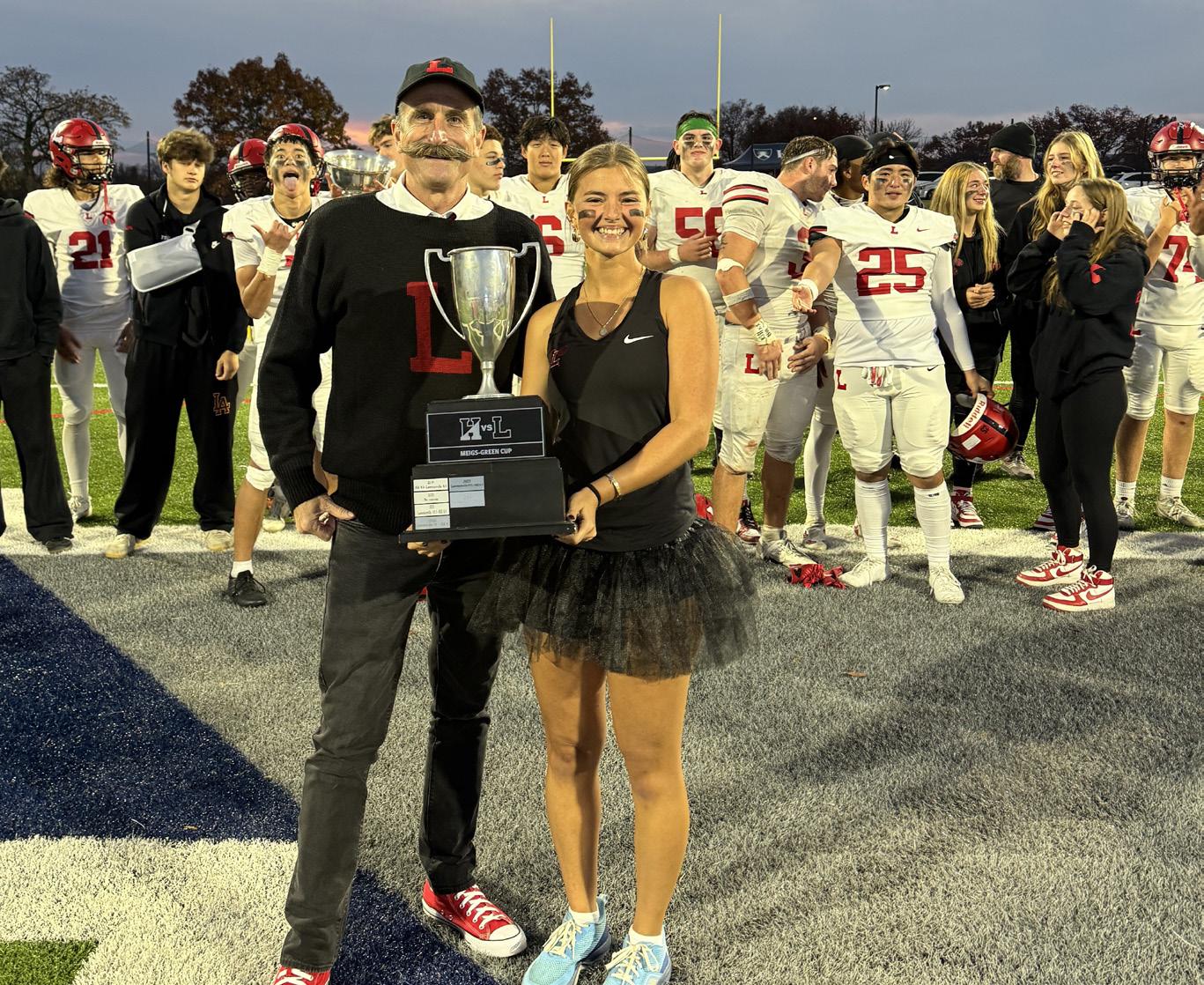
School president Sienna Kulynych ’26 presents the Meigs-Green Cup to Head of School Steve Murray H’54 ’55 ’63 ’65 ’16 P’16 ’21 after football thumped Hill, 64-0.

An Invitation to Join
The John Cleve Green Society honors a distinguished tradition of giving at Lawrenceville. By establishing a planned gift — bequests, life income vehicles, other deferred gifts — you automatically become a member of the John Cleve Green Society.
By including Lawrenceville in your estate plans, you make a meaningful investment in our mission — supporting exceptional students and faculty members, preserving our historic campus, and providing vital financial aid and student support for generations of future Lawrentians.

Have You Heard?
Now is a great time for a Charitable Gift Annuity!
Gift annuity rates are the highest since 2008
IRA assets can now be used to fund gift annuities
Charitable Gift Annuities (CGAs) provide donors with a secure, fixed income for life while supporting Lawrenceville. Key benefits include tax advantages, increased and flexible cash-flow, and maximizing your philanthropic impact!
Scan here to learn more about making a planned gift and becoming a John Cleve Green Society member, or contact Director of Planned Giving Julia Ott at 609-620-6064 or jott@lawrenceville.org.
Encore
Shaking Up Shakespeare
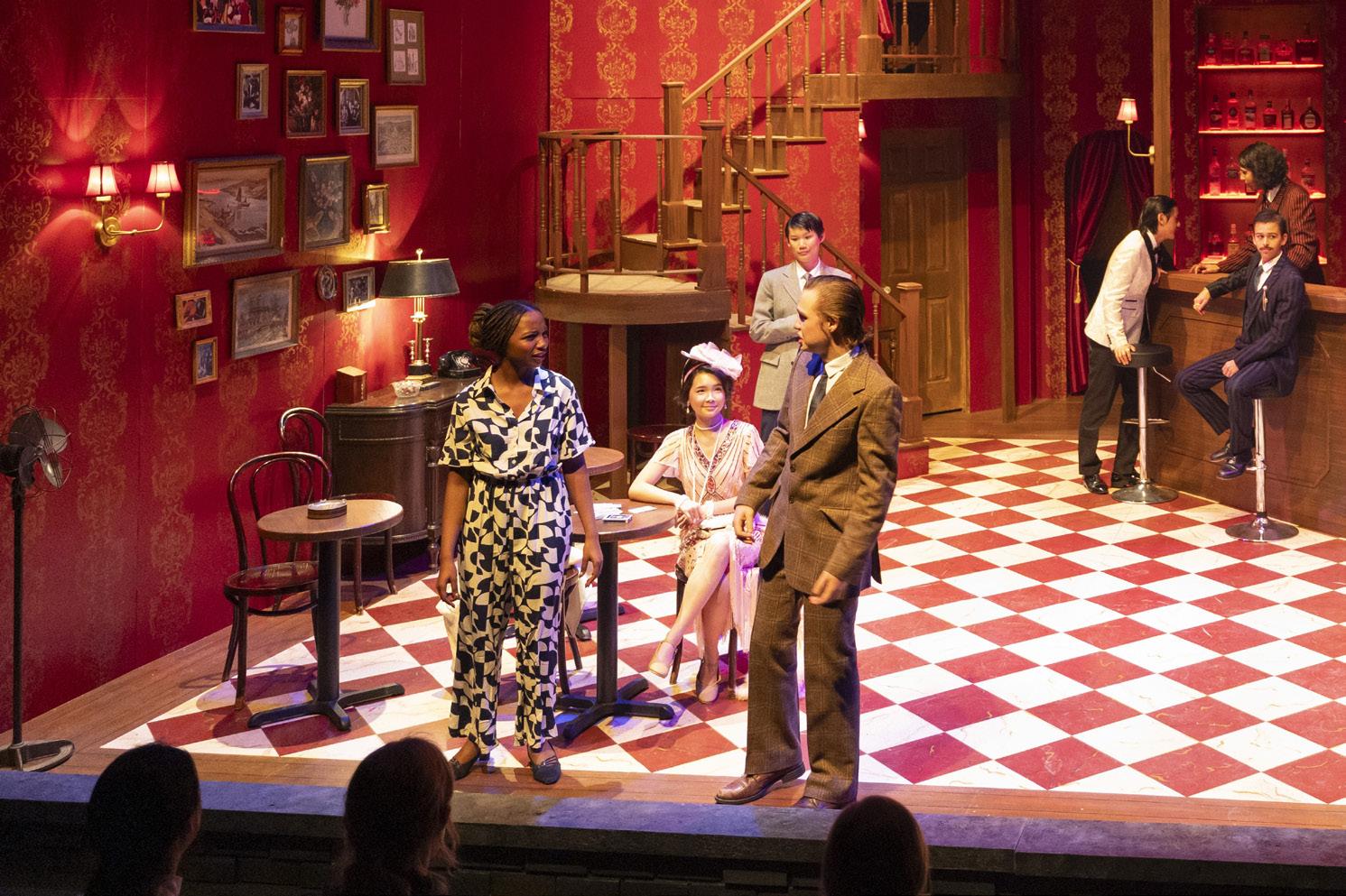
The Second Form performance of ‘Much Ado About Nothing’ reimagined 16th-century Messina as a 1930s jazz club, but Beatrice and Bendick still found love.
IT’S A RITE OF PASSAGE for stage performers anywhere in the world, right down to the stage of the Kirby Arts Center: You will, at some point, grapple with the works of William Shakespeare. At Lawrenceville, it’s not uncommon for Second Formers to wonder how the Bard’s strange jargon remains relevant in 2026.
Not only does Shakespeare help students “better understand contemporary English,” explains Ian August , who directed Much Ado About Nothing, the 24th annual Second Form
Shakespeare, in February, but it also offers the young performers a new sort of theatrical experience.
“The [students] who participate may get a crash course in how art and craft work together to create an experience,” August says, and “for those who attend, they get to see a familiar story told in an unfamiliar way, and that’s something that could spark their imagination.”
Much Ado About Nothing is centered on a battle of wits that transforms into a love story. Seemingly destined to hate each other — and even the mere concept of love — the two main characters, Beatrice and Benedick, bicker endlessly, hurling caustic insults at each and constantly comparing their intellectual skill. However, through their friends’ plots and deception, they miraculously fall for each other.
Though he concedes that Bendick can be “annoying” to the audience
for much of the show, Jack SharpSteinbrech ’29 says the role’s reward is “seeing [his] character change from an awful man into an actual loving person. Going under the surface of all of that was a lot of fun.”
Ella Gee ’29, who played Beatrice, embraced the Second Form tradition as a measuring stick of her classmates’ personal growth since the academic year began in late summer — whether or not they were part of Much Ado About Nothing.
It “serves as a reminder [of] the parts of their first year they took for granted and how far they have come since then,” she says.
This year, 22 cast members from the Second Form immersed themselves in the world of the dynamic love story, offering many unique and novel experiences.
“This is my first time performing anything Shakespearean, and I am both nervous and excited,” Gee said prior to her debut.
Along with the actors, the directors and stage managers played a large role in bringing Much Ado About Nothing to life, but the scenery may have defied an audience expecting to a comedy at in 16th-century Messina, Sicily.
“Our interpretation […] is much more modern-set in a jazz club in the early 1930s, at the tail end of prohibition,” August says, comparing the adaptation to F. Scott Fitzgerald’s The Great Gatsby, right down to the “music, mobsters, and debauchery.”
— Claire Liang ’29/ The Lawrence
Beatrice, played by Ella Gee ’29, and Bendick (Jack Sharp-Steinbrech ’29) trade barbs before amused onlookers in director Ian August’s adaptation of Shakespeare’s Much Ado About Nothing
Alum Provides a Glimpse of Japan
THE HUTCHINS GALLERIES will present Kaimamiru: A Glimpse of Japan, an exhibition by photographer Nils Huehnergarth ’76 from May 7 to June 4, in conjunction with his class’s 50th reunion on Alumni Reunion Weekend. Through some 50 photographs, Huehnergarth invites viewers on a quiet journey across Japan, from the vibrant pace of Tokyo to the meditative stillness of mountain villages. His images capture moments where light, rhythm, and humanity converge, revealing the harmony between modern life and timeless tradition that defines the spirit of Japan.
Huehnergarth discovered photography as a teenager, soon after his years at Lawrenceville, learning to shoot black-and-white images on a Leica M3. After college, where he organized an arts festival featuring works by Yousuf Karsh and Ansel Adams, Huehnergarth put his passion for photography on pause to focus on his family and career. But while working for Nokia, then the world’s largest mobile phone (and camera) company, he rediscovered his zeal for capturing the decisive moment, the expressive portrait, and the majesty of natural landscapes.
“At the time, Nokia partnered with Carl Zeiss, the same company that made lenses for my old Leica,” Huehnergarth explains. “That connection reignited my curiosity, and because my job involved extensive travel, I began
Key Moment
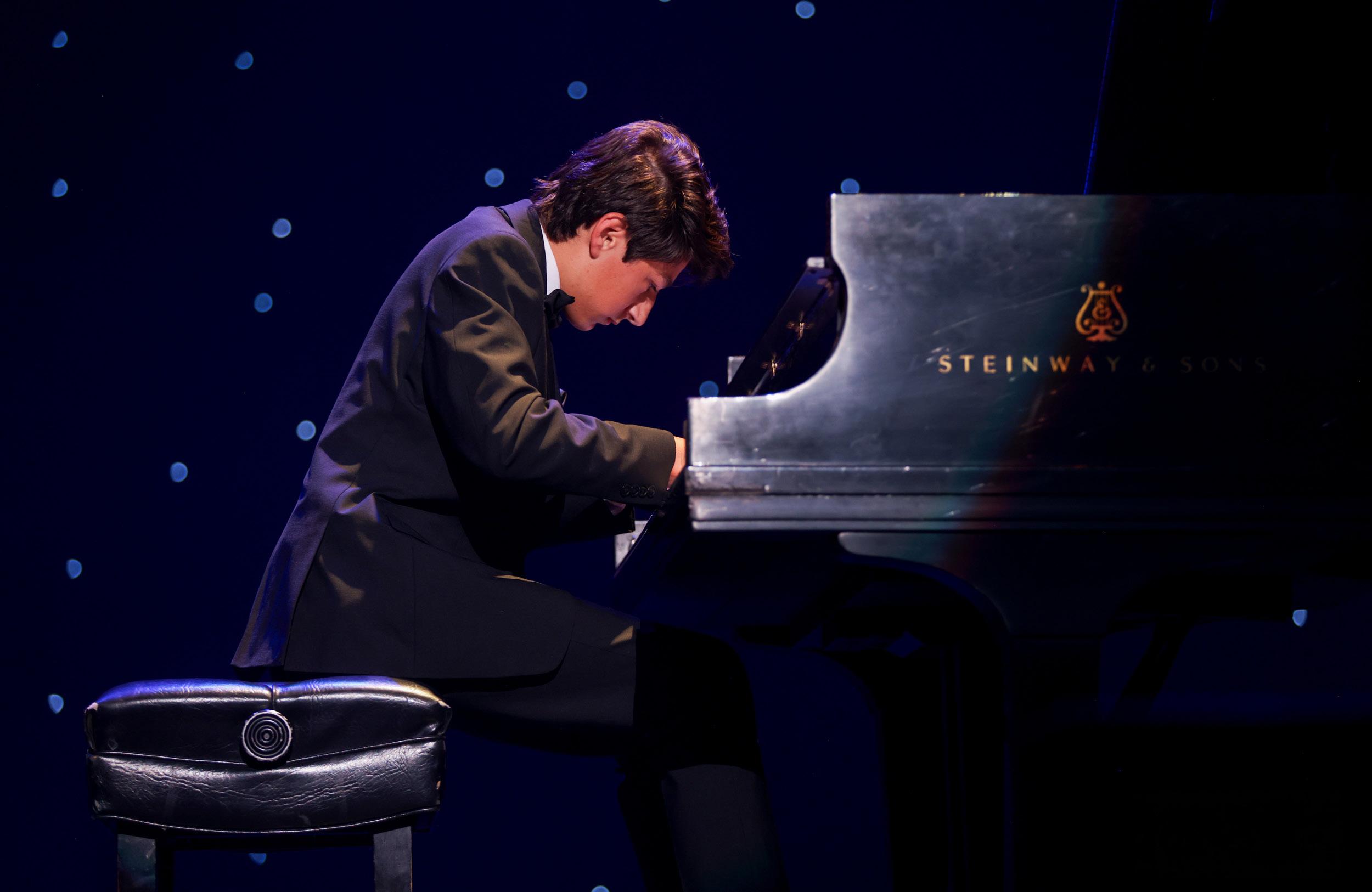
A sterling piano performance of Rachmaninoff’s Prelude in C-Sharp Minor earned Elias Nicozisis ’28 first place in Jersey’s Got Talent at The State Theatre New Jersey in New Brunswick. The win followed his seventh appearance at Carnegie Hall as both a soloist and duet pianist. Nicozisis, who has attended the Juilliard School for the past two summers, has also earned the International Music and Arts Grand Prize, the Young Performers Foundation First Place Award, and the MusicFest Grand Prix.
photographing again wherever I went.”
That travel includes 21 European countries, lands throughout the Americas, and most recently, across Japan, from which Kaimamiru — a verb meaning “to catch a glimpse” — is drawn.
“I thought it was an apt way to describe my brief tour of Japan,” he says.
Huehnergarth calls his opportunity to show his work at his alma mater “deeply meaningful.”
“Lawrenceville helped spark my curiosity and appreciation for art and learning,” he says. “To return with an exhibition that reflects decades of exploration feels both nostalgic and full circle.”
In “Grace at the Shrine,” Nils Huehnergarth ’76 allows the architecture and attire to highlight the elegance of Japanese cultural traditions.

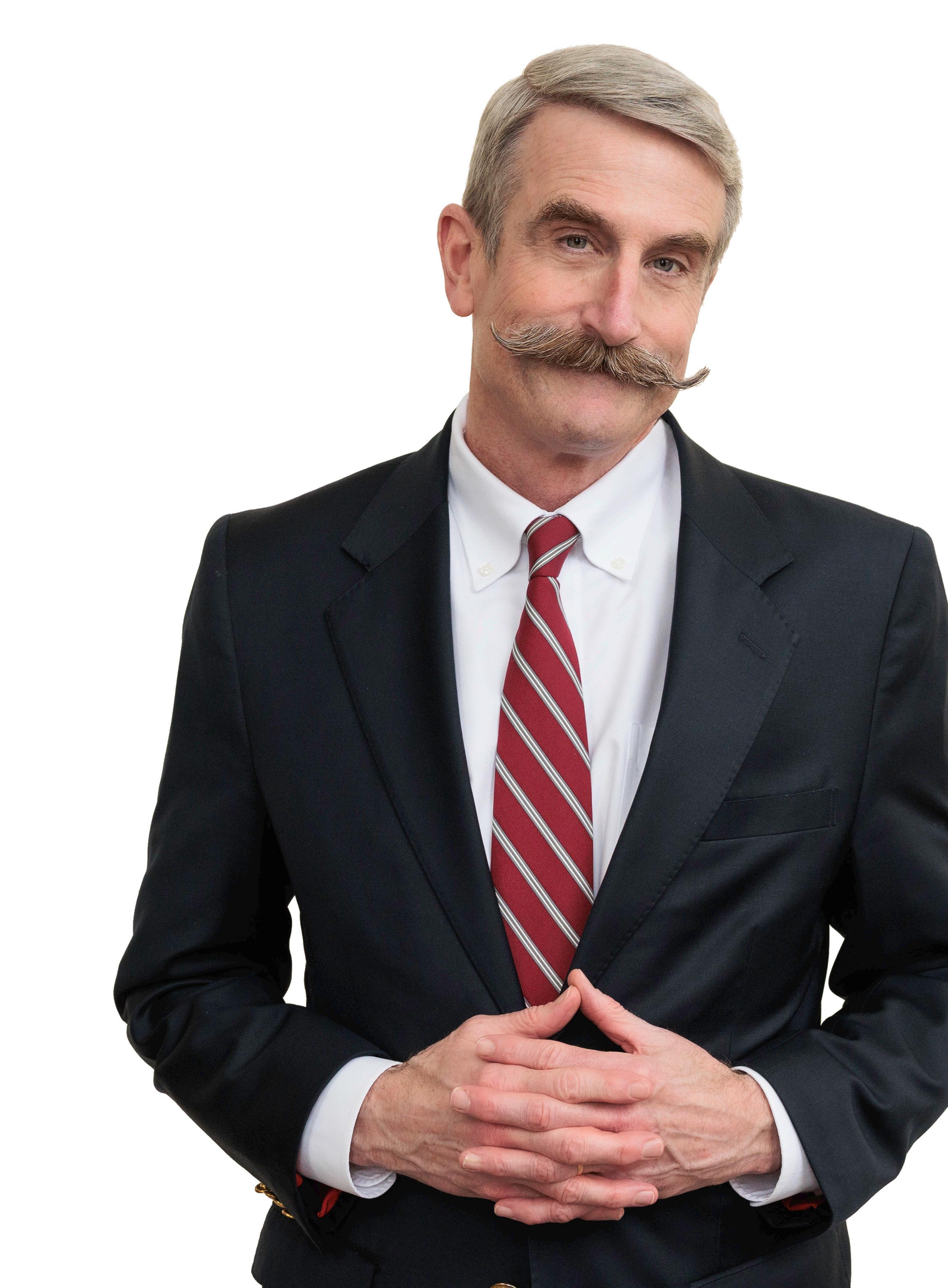
Tenyearsafterarriving atLawrenceville,Head ofSchoolSteveMurray H’54 ’55 ’63 ’65 ’16 P’16 ’21reflectsonhisevolving senseofkinshipwithhis twelvepredecessors,the enduringpowerofthe Harkness table—and the originsofhissignaturelook.
INTERVIEWBYSeanRamsdenH’65



IYOU A QUESTION
Thevery first time I met Steve Murray H’54 ’55 ’63 ’65 ’16 P’16 ’21 was inside his office in the Mackenzie Administration Building early on a sultry late July morning in 2015. I had begun my role as editor of The Lawrentian just a month before, and Steve was still unpacking after his move from suburban Cleveland, where he had led the University School for the previous ten years. I was there to interview him for the cover story in that fall’s issue of this magazine, the first comprehensive portrait of Lawrenceville’s 13th head of school its alumni would read.
We had a wide-ranging conversation that day, in which I learned much about him and his values as they pertained to his stewardship of Lawrenceville. I had a list of questions, but we let the conversation lead us. Only when I returned to my office did I realize I had forgotten to ask Steve about his signature mustache. So, as we checked in again this past November in the same office — now filled with mementos and other markings of his first ten years at the School — I made sure to get that one settled straightaway.
This interview was conducted, prior to Murray’s announcement that he would step down at the end of the 2026-27 academic year. It has been edited and condensed for length and clarity.

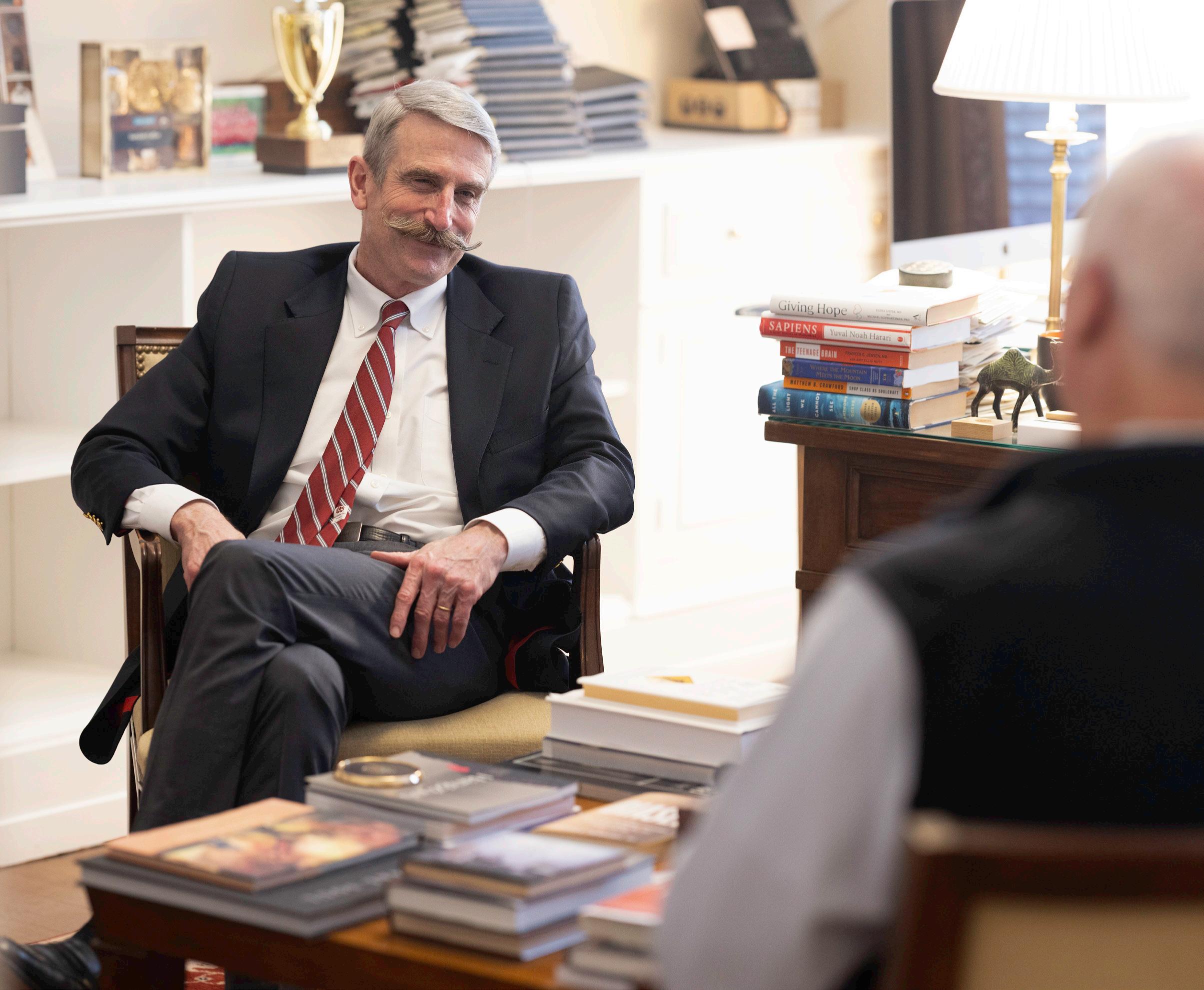
“I do still feel an obligation to be worthy of their respect, but I might call it, at this point, more of a kinship.”

The Lawrentian: Your mustache is your signature physical trait. I recall you telling the tale once at School meeting, but I don’t think we’ve ever actually addressed it for our readers, so what is its origin story?
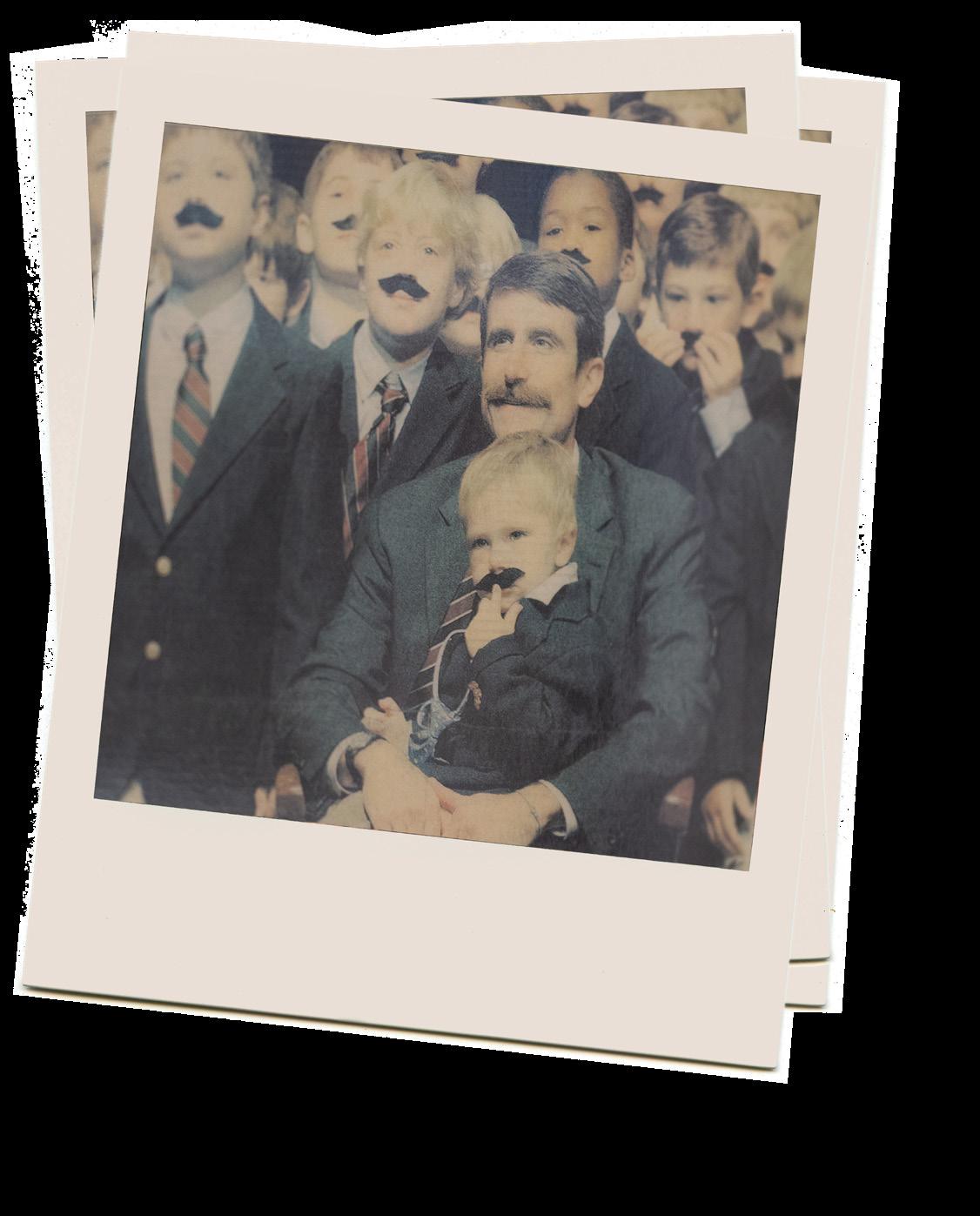
Steve Murray: I’ve had it for 42 years. I had tried a couple of times earlier in college to grow a mustache, and those were failed attempts. And then I was 20, studying for the year in Paris, and it just suddenly came in the way you see it now, essentially. I was pleasantly surprised that I actually could grow a mustache. And it wasn’t until a number of years later, I was up in the attic of my grandparents’ house, and I saw a portrait up on the wall from an ancestor from probably the late 19th century. My wife [Sarah Murray P’16 ’21] said, “Hey, look, there’s your mustache!” It felt kind of reassuring that this, maybe, is a family trait.
The Lawrentian: And you’ve never shaved it?


Murray: I did shave it once. It was a fundraiser in Cleveland for St. Baldrick’s, where students were shaving their heads and raising money for pediatric cancer research, and they were raising quite a bit of money. There was a “Shave the ’Stache” versus “Save the ’Stache” contest within the school to raise money, and I said, “Well, whoever raises more money, that’s what we’ll do.” Shave the ’Stache won, so I shaved it in front of the whole school. I grew it right back, but briefly, I was without a mustache, and my wife of 37 years commented that it was a little bit like having an affair. I said, “Well, good thing it’s with me!”
The Lawrentian: We had a conversation similar to this one at your five-year mark in which you mentioned that every time you are in Alumni Study, you feel the eyes of your twelve predecessors, whose painted portraits hang on the walls there, and of feeling “a keen obligation to build on their good work, to be worthy of following in their footsteps, and to not let them down or disappoint them.” Do you still feel that duty to them?
Murray: Yeah, I definitely do. I think back on the challenges that they endured over time, and they all had them. There was the Depression, World War II, the 1960s and that whole period of social transition, obviously the Vietnam War … there’ve been some major challenges to their leadership, so I still think they’ve “done their time.” I do still feel an obligation to be worthy of their respect, but I might call it, at this point, more of a kinship, because I’ve had my share at this point. And so, I hope — I think — I would’ve earned their respect, or have earned their respect. But we all stand on the shoulders of the giants that have preceded us, and I’m pretty aware of that. They built a great school that I have had the privilege of being a part of, and I don’t want to let them down.
The Lawrentian: That’s an interesting shift, where there’s more of a kinship now than there was when you were “the new guy” here and looking up to them, with all that history and trying to meet the moment.
Murray: I guess you could say as I walk around Alumni Study, I feel a little more like I can look them in the eye and say, “I now know what it feels like.”
The Lawrentian: During that same conversation, you brought up the Louis Auchincloss novel, The Rector of Justin, which presents a portrait of the main character, the head of a fictional New England boarding school, from a series of different perspectives, each written by another character. Reading it later made me appreciate how the head of a school has to be so many things to so many very different constituencies. How hard is that to do, knowing that many times, these folks will want different things from you and that those things aren’t always aligned with the others?
Murray: That’s a great question. It is one of the difficult aspects of the job, I suppose. One of the things I’ve learned over time, when people come to you and express their concerns, is to not take things personally, and understand that part of what’s being expressed is what people need from your position. Sometimes there are things that I can and should do differently, and so you listen to what people need from you.
I also have learned over time I can’t rely on people assuming my good intentions if there’s something difficult happening. People don’t always give you that grace at first. An example would be if you’re making hard but responsible decisions around budget. We are a very well-resourced school, but we can’t continually kick the can down the road for the next generation. I can’t always rely on people to understand that or to accept that, but I try to approach things with integrity and transparency, and if you do that steadily over time, even if people don’t always immediately respond, they come around. At least that’s how I operate.
The Lawrentian: Yours is a unique job, being the most visible person at one of the nation’s most visible independent schools. You seemed keenly aware of this ten years ago, but in the time since, we have had a once-in-a-century pandemic, seen a dramatic rise in political polarization, and the internet has become an efficient accelerator for misinformation. Now, we see the rise of AI, which offers so much promise, but also a myriad of challenges. Does any of this change your role from how you might have seen it in 2015?
Murray: I don’t think it really changes my role. My goal is to offer steady, unwavering leadership, and I think it’s all the more important as things are rapidly changing. I wouldn’t call myself a “North Star,” but I think people are looking for things to believe in, and Lawrenceville, as an institution, is an entity people can believe in, and leadership is important.
I sometimes think my most important role, precisely because of how fast things change and the speed with which a crisis can erupt, is to stay calm and help people keep the faith that our institution is far stronger and far more resilient than they might feel at a tenuous moment, especially in the midst of a challenge.


The Lawrentian: We also talked then about the role of tradition at a place like Lawrenceville and how while it is always important, it is also often a matter of perception. Something as radical as the Harkness method became fundamental to this school, despite how disruptive it was in 1937. You said that “Great schools don’t remain great by sitting still.” How difficult is it to know when it’s time to move on from a long-standing tradition in order to move Lawrenceville forward?
“Great schools don’t remain great by sitting still.”
Murray: We had a gathering of the heads of the Eight Schools Association last spring, along with our board leadership and our board presidents, and we had a guest speaker, Brian Rosenberg, who was the longtime president of Macalester College. He’s written a really great book called Whatever It Is, I’m Against It, about faculty culture and resistance to change in higher education, and I think a lot of it is rather applicable to places like Lawrenceville. He’s very funny and very thoughtful in his observations, and he’s very self-effacing; his aim is not to criticize faculty, but he was really speaking for himself as a former faculty member who was very much part of that mindset.
Rosenberg said one of the great strengths of higher ed and institutions of learning is their dogged insistence on staying true to their enduring purpose, and one of the great vulnerabilities is their dogged insistence on staying true to their enduring purpose and failing to see moments where they need to adapt. It can blind you to the need to innovate.
The Lawrentian: So, when you look ahead, what sorts of adaptations can you imagine?
Murray: I’ve been encouraging the Board of Trustees recently to take a 30-year view of change and evolution at the School, asking, “What are the things that you really need to be looking at beyond the horizon?” And I framed it around three questions. One is: What are the kinds of things that are core to the Lawrenceville experience that mustn’t change and how we deliver them mustn’t change? And those might be the relational teaching, built on trust and care around a Harkness table, we need to deliver on that as core to the Lawrenceville experience. And the way we deliver it — in person around a Harkness table — shouldn’t change.
The second question is: What are the kinds of things that must endure, but how we deliver them might change? So, if you think about traditional rigor and high aspirations for academic achievement, while AI is dramatically changing how we assess students, how we communicate, what are vital skill sets and what are less vital skill sets? That’s rapidly evolving. And so, it may be that how we define rigor and how we deliver rigor will be different. Asking a great question will become all the more important, and having it be the result of rigorous analysis and thought may even more important. Writing a lengthy creative computer program might be less important, because maybe AI can do that better.
And the third question is: What are the kinds of things that can or should change? And that might include the financial model of the School; should we try to rethink our reliance on the endowment? Transitioning from that could take a few decades. Is the size of the School right? The mix of day students and boarding students — do we have that right? Those things need time to evolve.
The Lawrentian: Advances in technology so often influence changes in behavior. You’ve said when you and Sarah were moving here from Ohio, you came across boxes of old letters you had written to each other as students, which you saved because you both considered them to be important. With so much of what today’s student do existing solely in digital spaces, do you think they miss out on creating these sorts of tangible artifacts that animate personal histories, things they will be able to look back upon to make sense of it all? Or have things like this simply taken different forms?
Murray: I think both are true, in a way. In other words, I think certain tangible artifacts will take on an even greater importance because they will become more of a rarity. An athletic letter from a team, a baseball cap, various things that I think will still be tangible artifacts of their time will be that much more treasured.
I think the digital culture and things like social media are a real challenge to this generation, but at the same time, they will have a much more complete and thoughtful archive of, for example, digital photographs that almost can be a digital journal of sorts. Back in the day, people kept handwritten journals. I have a number myself from my younger days. And as you say, I’m a collector of letters. My wife and I, during times that we weren’t together, corresponded and we saved those letters. I teach a whole French course on the tangible nature — the intimate nature — of a written exchange between two people. And yet, they’ll have a different version of that.
Once upon a time, human culture, human civilization, was more built around oral traditions. The mark of a learned person was someone who could memorize prodigious amounts of information. That’s why The Odyssey is written in rhythmic rhyming schemes. And once paper and writing and printing
became fairly ubiquitous, it at first seemed a bit of a shortcut: People will lose the rigor of a mind that can memorize prodigious amounts. But no one thinks of a book these days as a shortcut. They think of it as a rigorous exercise of thinking.
The Lawrentian: That’s a great point.
Murray: With the digital age and AI, I think we’re at one of those moments of transition, where right now, we’re worried that AI represents a lot of shortcuts, which I agree is challenging, to rethink the very act of writing. I still believe students need to exercise their own voice in their writing and critical thinking. But things are changing, and my optimistic self believes that what will emerge is a new version of what rigor and deep thinking look like.
The Lawrentian: Finally, there was a long-standing tradition of outgoing U.S. presidents leaving a note of advice for their successors on the desk in the Oval Office. Now, to be very clear, you have not made any public indication that you are winding down your time at Lawrenceville, but if you were to leave such a note for your successor, what might you say?
Murray: I’d say “keep the faith” would be one thing. And I think part of my faith comes from a deep belief in the importance of what we do here. I sometimes illustrate that by telling stories. I collect stories about what I see and observe around campus that remind me, and I tell these stories to parents and alums to help them understand that what we believe deeply in at Lawrenceville is alive and well.
For example, I was in a U.S. history class not long ago, and they were studying legal traditions and the judicial branch. And the teacher invited a recently elected state supreme court justice to Zoom in and talk to the students about what she does. One of the first questions from one of the students was, “Well, what is it that you do?” And she said, “Well, it’s interesting. When I was a trial lawyer, I knew exactly what my job was. It was to give my client the most robust, vigorous defense that I possibly could. When I became a circuit court judge, I knew exactly what my job was: to review the facts of a case and examine the laws and statutes, and render a decision that would decide, at least for that day in my courtroom, what the law actually meant.”

And then, she said, “When I became a state supreme court justice, I had to pause, because I found myself sitting in a room with six other very accomplished jurists, and we were all looking at the same basic set of facts and the same basic sstatutes and, at times, were arriving at completely different conclusions. So, I thought to myself at first, Well, what is my job? Is my job to try to convince them of my perspective and change their thinking? Is my job to dig my heels in and not compromise at all on what I’m thinking and believing?” And she said, “I finally concluded that my job actually was to be curious, and that whether or not I changed my basic position, my understanding would be enriched deeply by pausing to try to understand and be curious about their perspective and to try to work to understand how they arrived at their conclusions, and that really became how I approached my job.”
And so, I, sitting in the classroom and hearing this, said to her, “Your honor, that’s what we do every day around the Harkness table. We encourage our kids to be curious and to enrich and deepen their understanding of something precisely at those moments when they disagree with a peer and examine how their peer is thinking about something.”

And so, it was just a reminder of how important that exercise around the Harkness table is, and how well-prepared, I think, our students are to navigate the world.
Hear a similar conversation by listening to the latest episode of 18:10 — The Lawrenceville School Podcast, “Discussing a Decade: Steve Murray on Traditions and Transitions,” available at Lville1810podcast.castos.com or by searching on Apple Podcasts or Spotify. You can also scan this QR code to listen.
THE BASEMENT OF WOODS MEMORIAL HALL, erected in 1890, was long ago a hive of activity for students, serving as a darkroom to process photographic prints, a range for an old rifle club, and rehearsal space for burgeoning rock bands. But since the School’s facilities have expanded, the Mem basement has been largely off-limits to students for years. Still, as generations of graffiti attest, there have been breaches over the years.
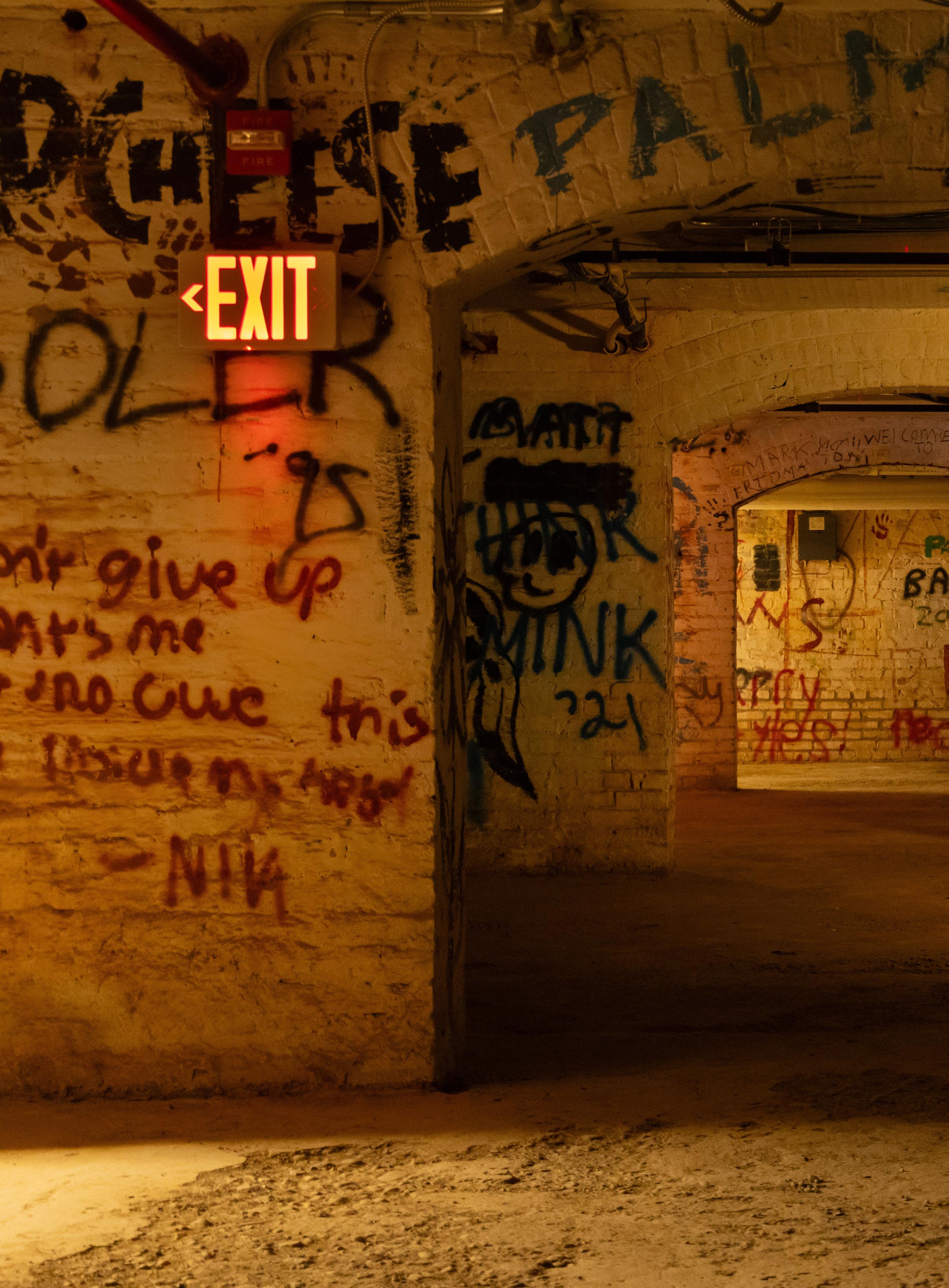
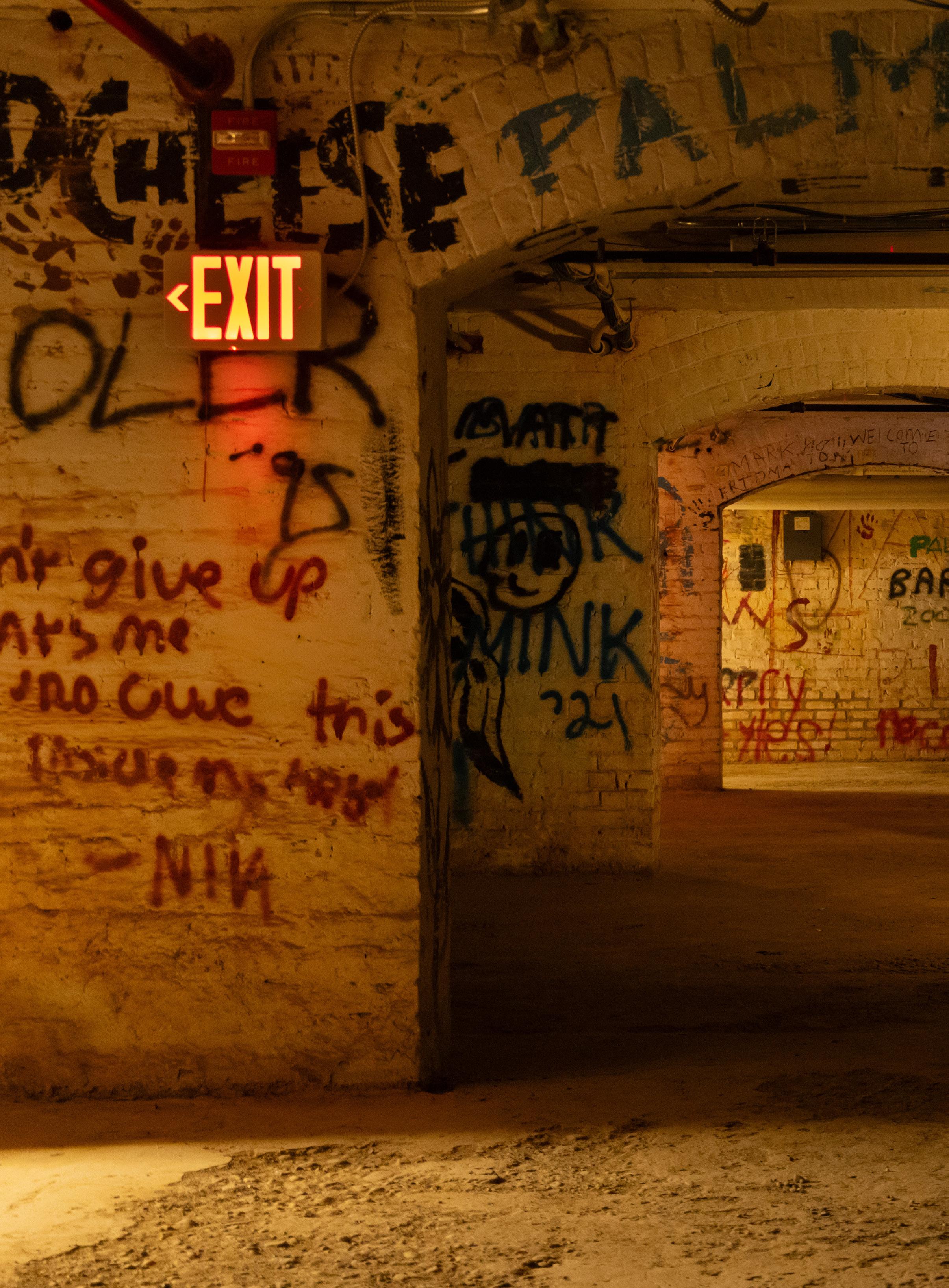
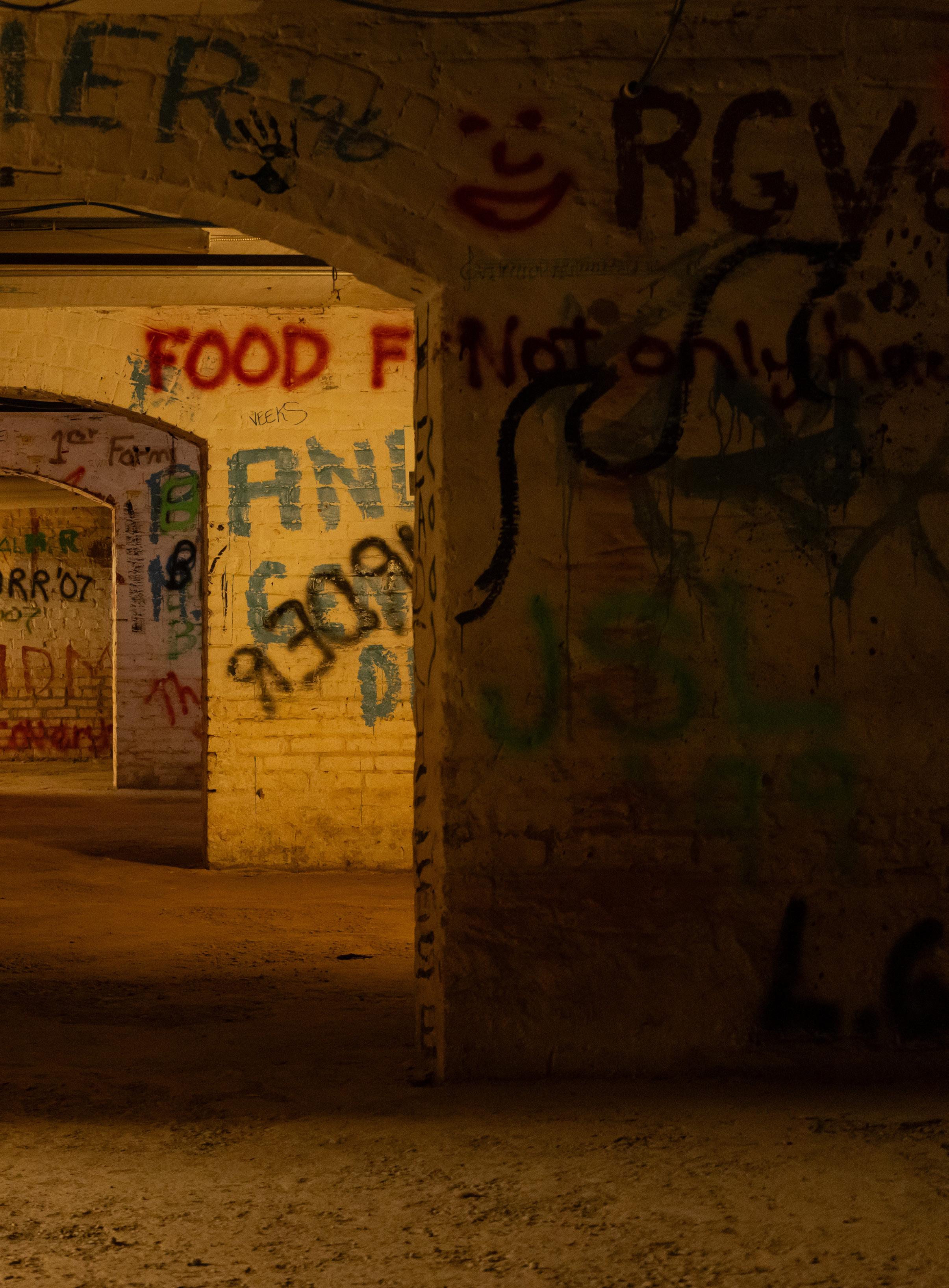
THE H DDEN LAWRENCEVILLE
PHOTOGRAPHY BY MICHAEL BRANSCOM
Everyone who has ever passed through its gates knows well the beauty of Lawrenceville’s campus. It’s a National Historic Landmark, after all. The iconic Romanesque and Georgian styles and scenic landscapes, interspersed with so many other thoughtfully conceived modern structures, provide an enviable luster to the classrooms and living quarters of some of the world’s finest students. They also animate the vivid background to the fond memories of the generations of alumni who preceded them.
But there are also the dimly lit spaces, the domain of cobwebs and dust, that exist out of the public view. Though they belong to the School’s history, these locations are part of no campus tour. Lost to obsolescence or intended to be unseen, they are concealed within the historical architecture we celebrate. These are spots we imagine few Lawrentians have seen over their years in school. They are the hidden Lawrenceville.
— Sean Ramsden
H’65
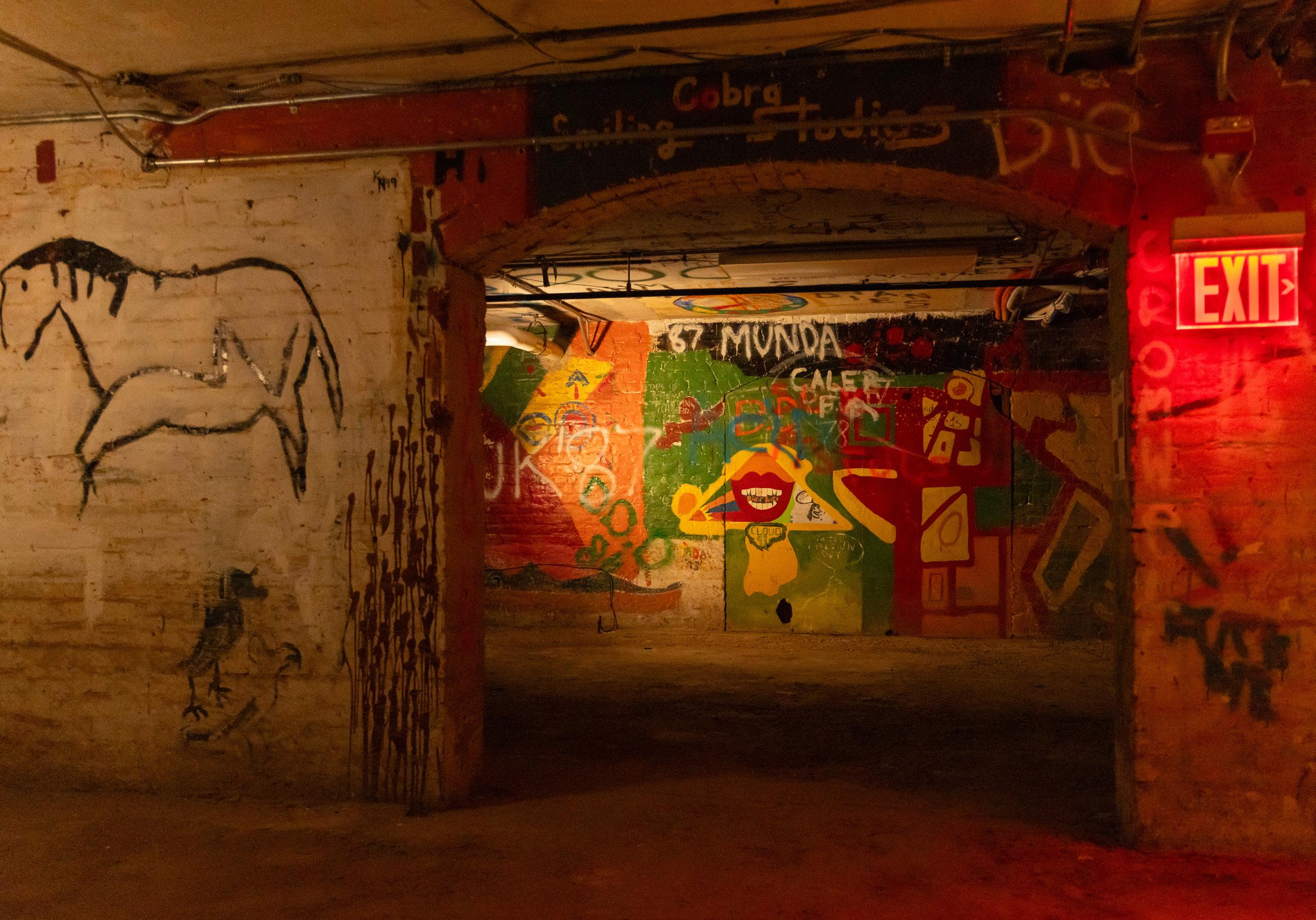
In the WOODS MEMORIAL HALL BASEMENT, the graffiti ranges from crudely sprayed names and line drawings to more elaborate mural art, with each room like its own gallery. Some students chose to make themselves known, while others left their marks vague.
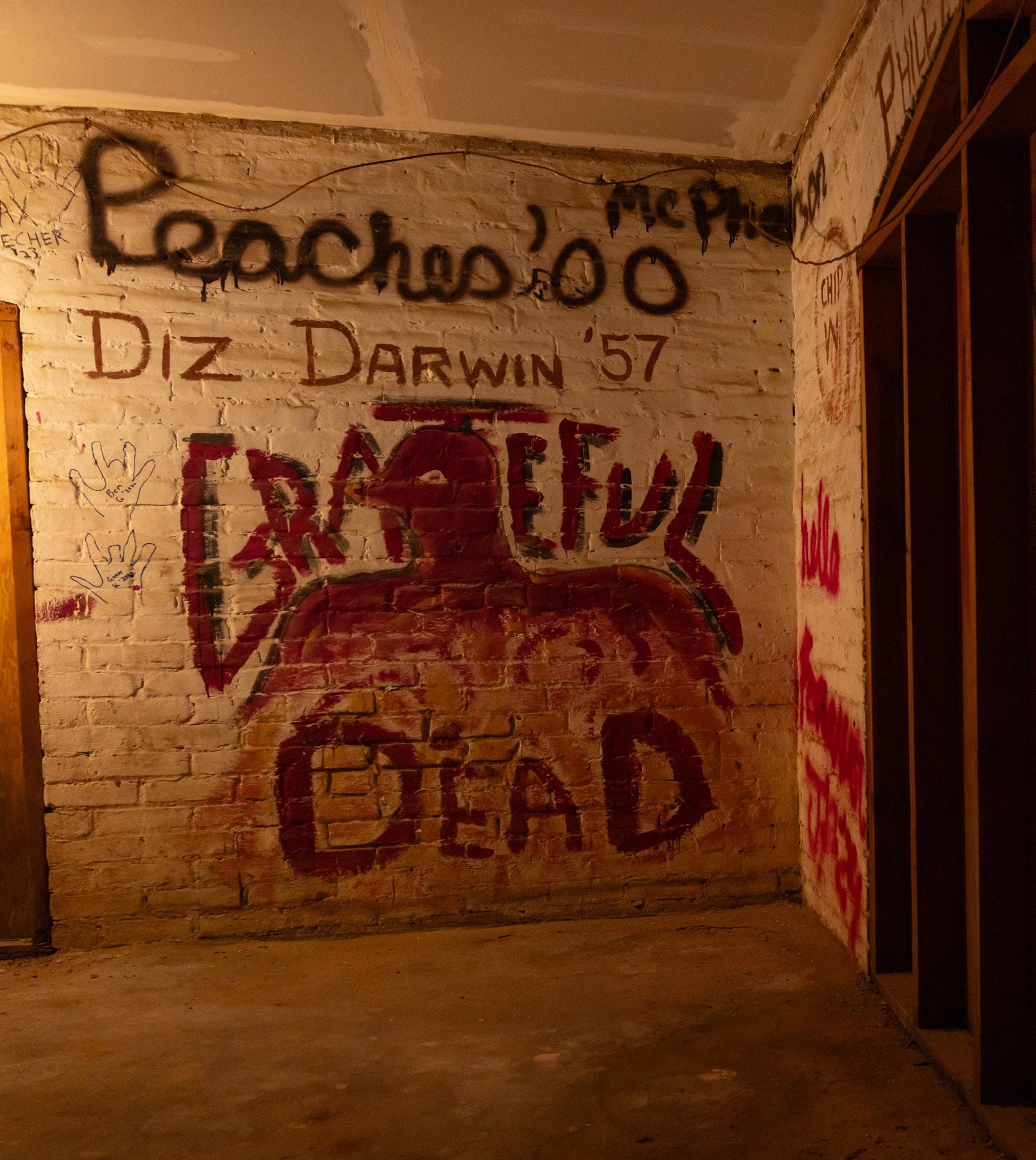
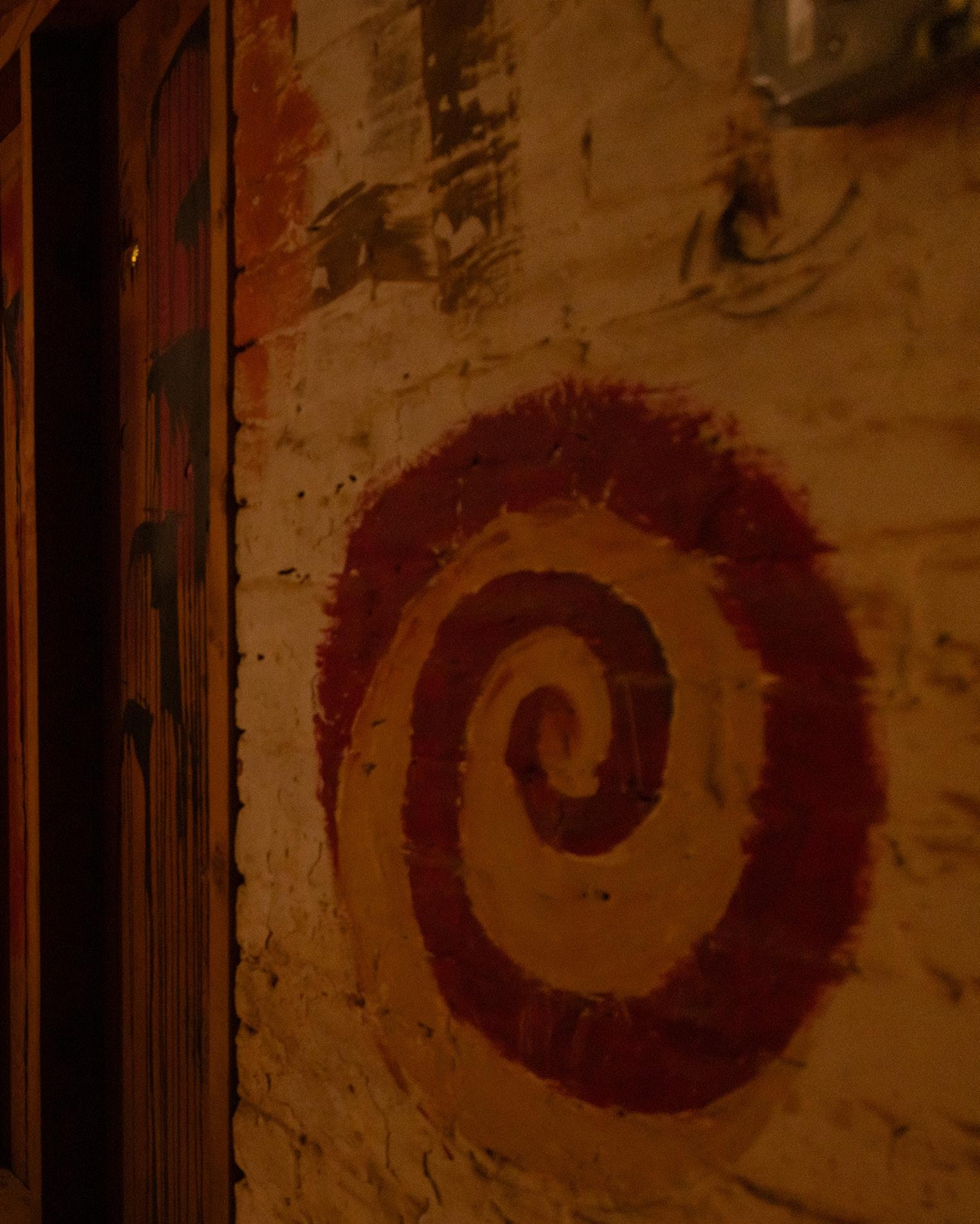
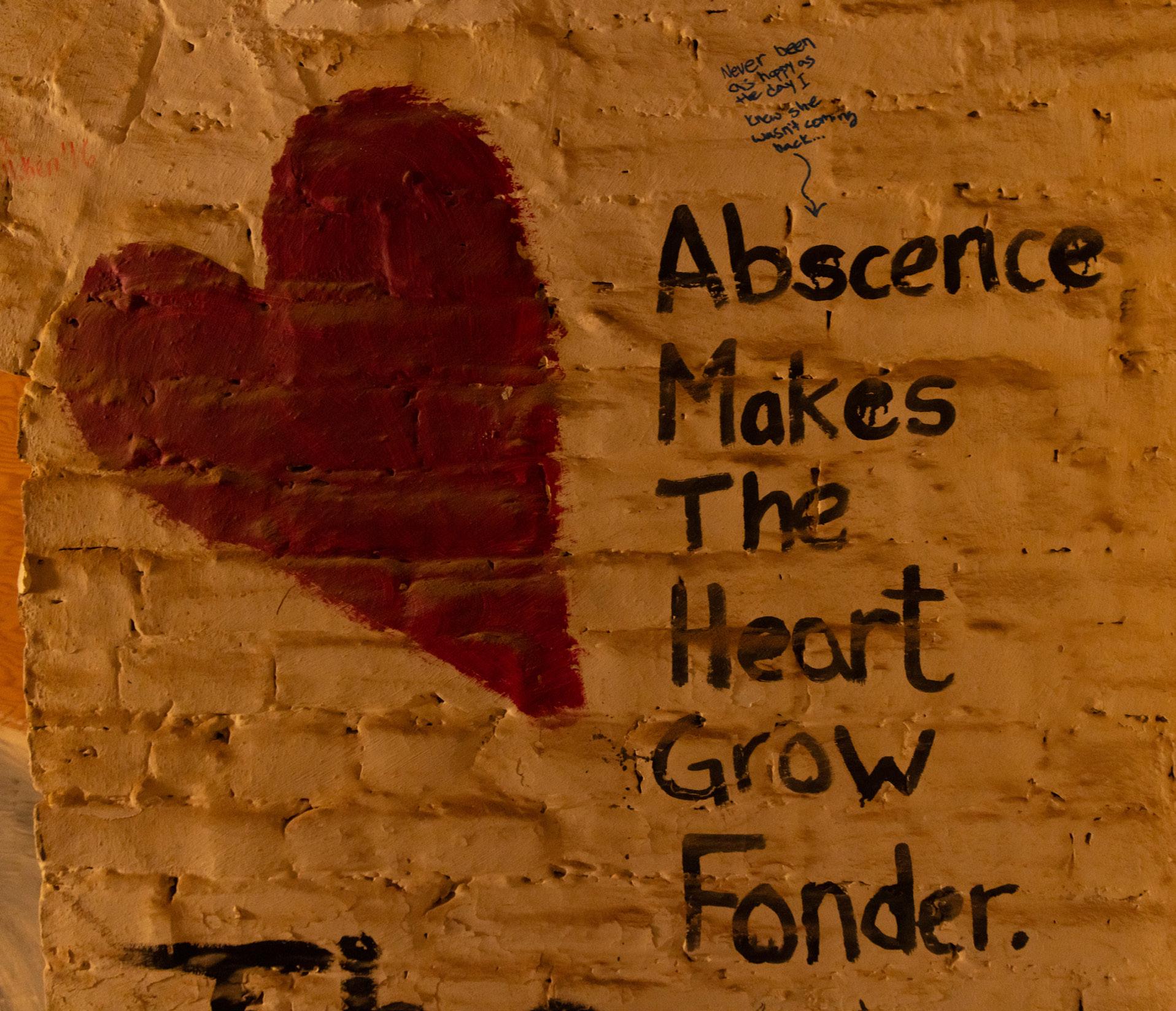
Even when the sentiment is sweet, proper spelling can remain elusive.
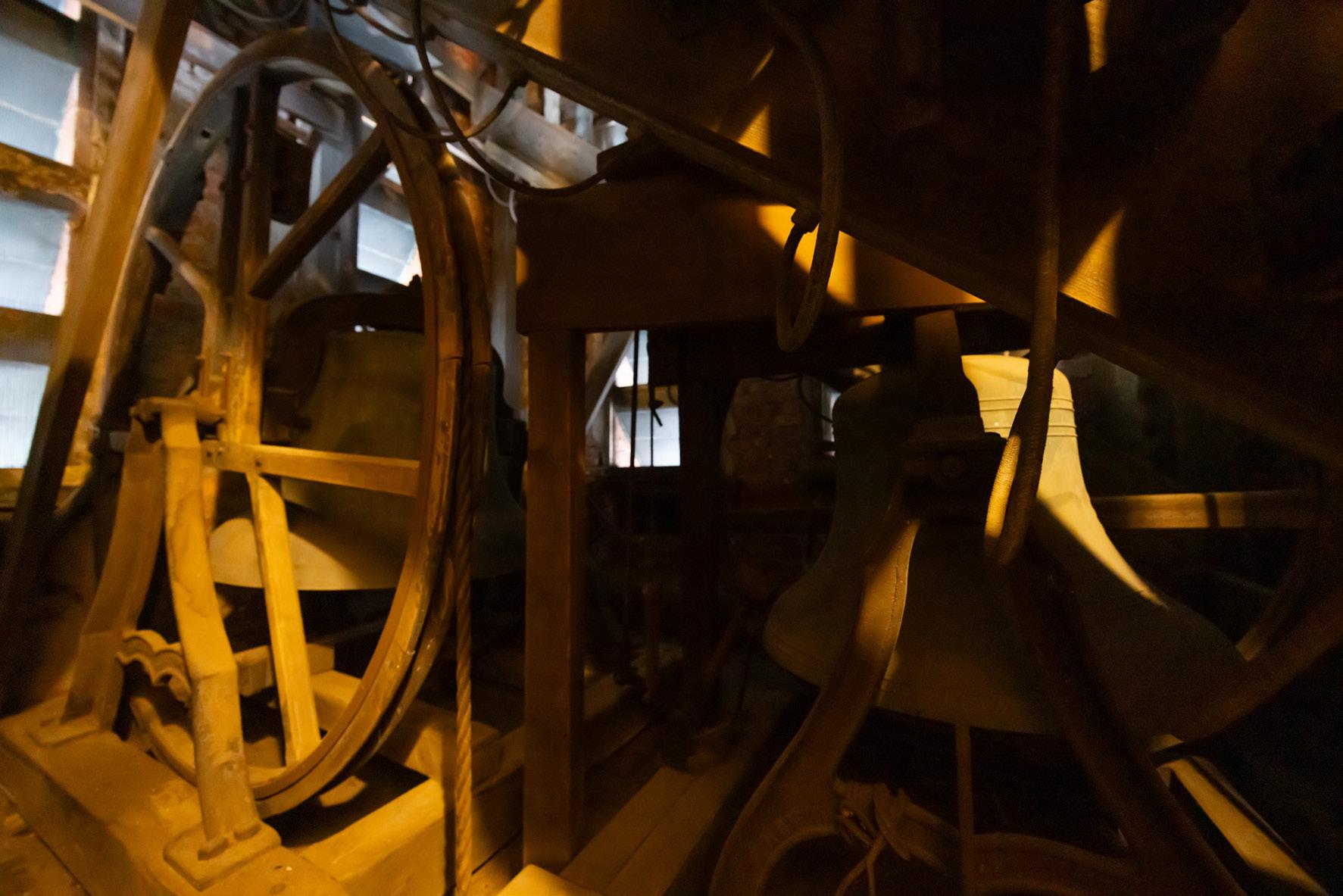
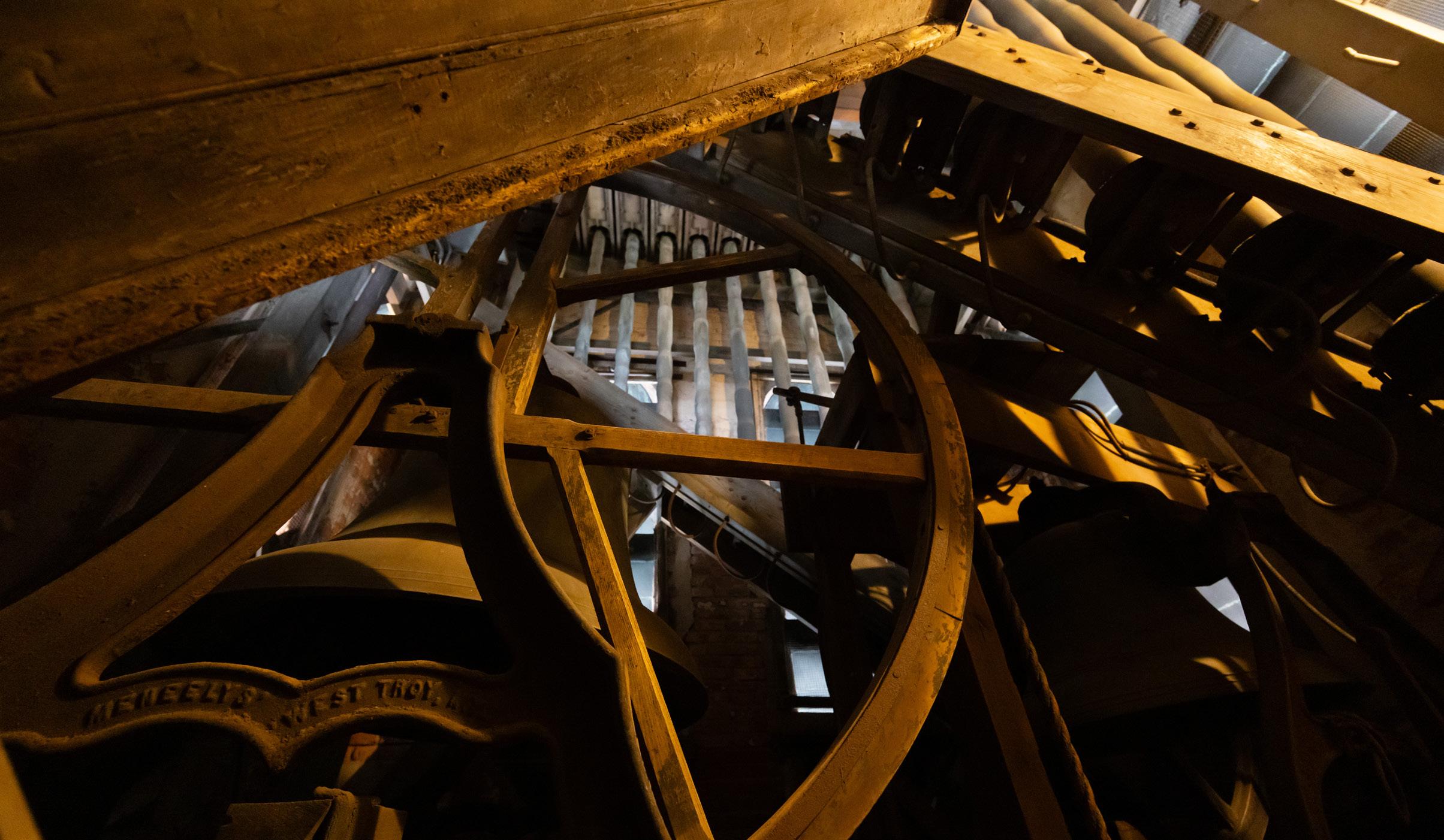
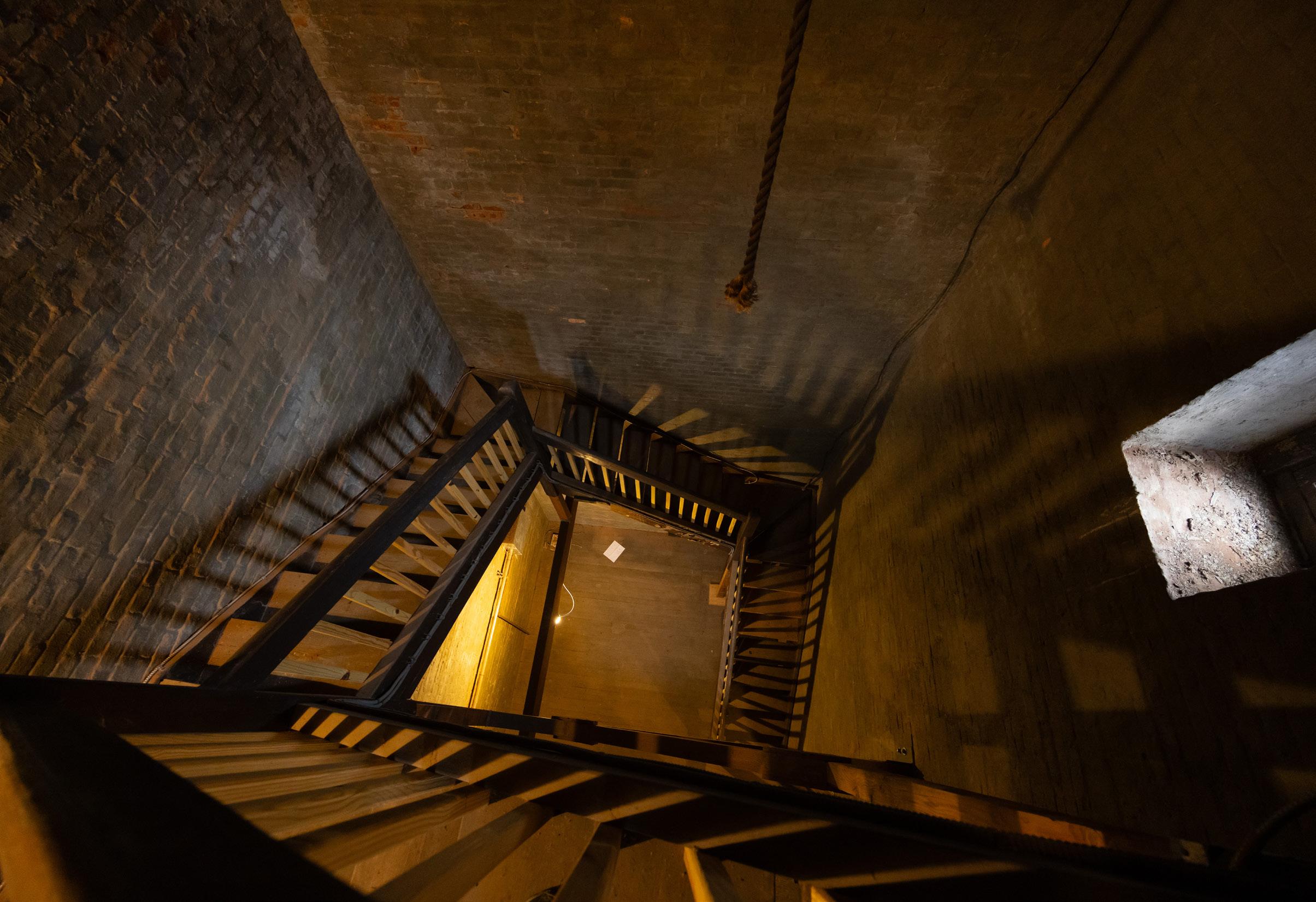
A spiral staircase behind a locked door begins the ascent toward a flat landing in the BELL TOWER OF EDITH MEMORIAL CHAPEL , built in 1895. From there, you begin the perilous climb up four flights of old wooden steps, each turning left at one of the tower’s walls on your right — with a long drop down on your left. At the top, you reach the belfry, housing the two large bells that have rung for many special occasions over the years. At the landing level, a centuryold sticker of the school seal, touting the John C. Green Foundation, is affixed to the side of the bell tower staircase.

The Georgian-style McPherson House originally functioned as the LAWRENCEVILLE SCHOOL INFIRMARY from 1929 until 1976, when a new infirmary was built. But even a half century later, the basement contains plenty of reminders of its origins, including a huge, century-old decommissioned wood-clad refrigerator and a window used to dispense medications, nestled within the sterile white tile that runs the length of the hall.
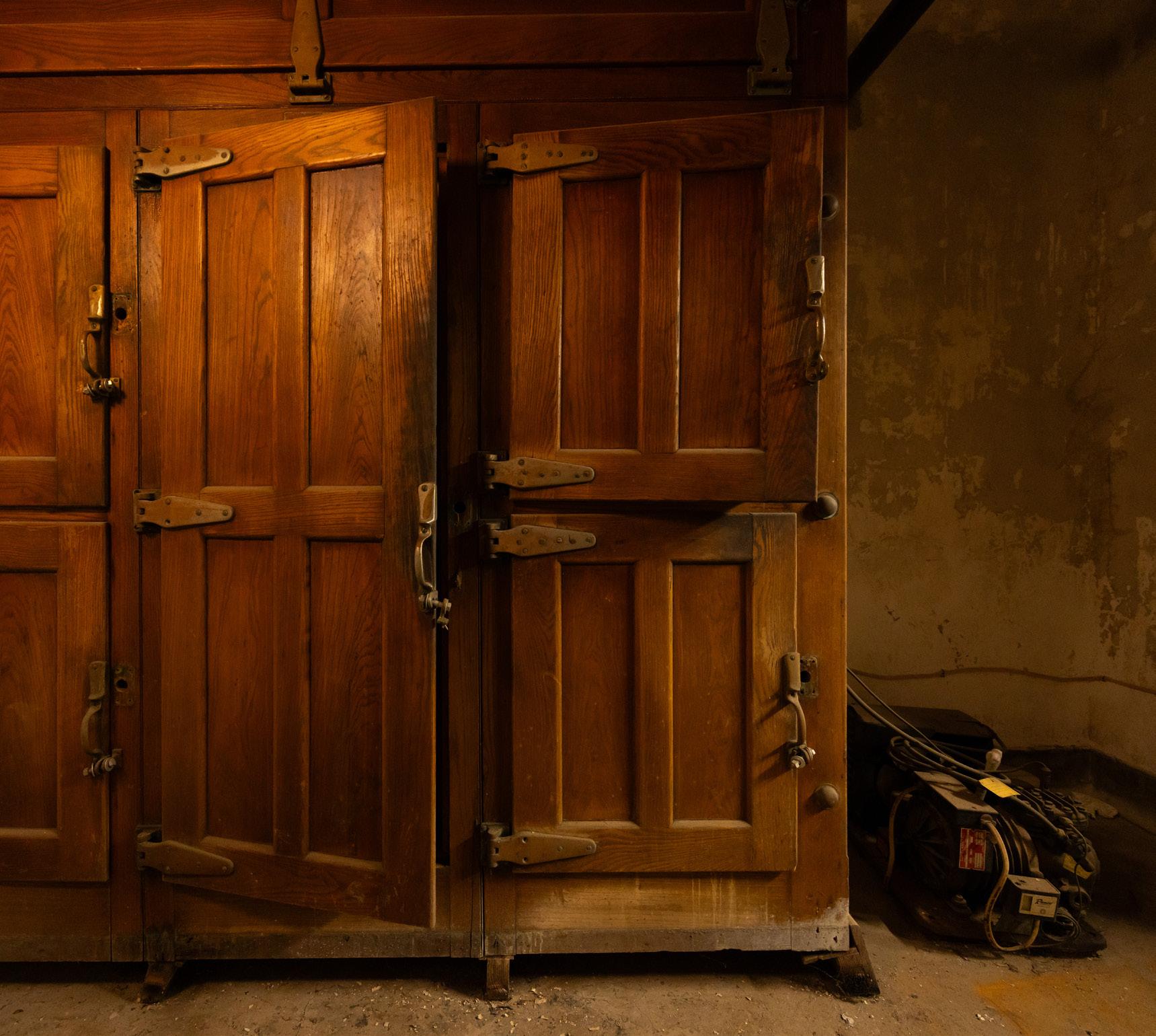
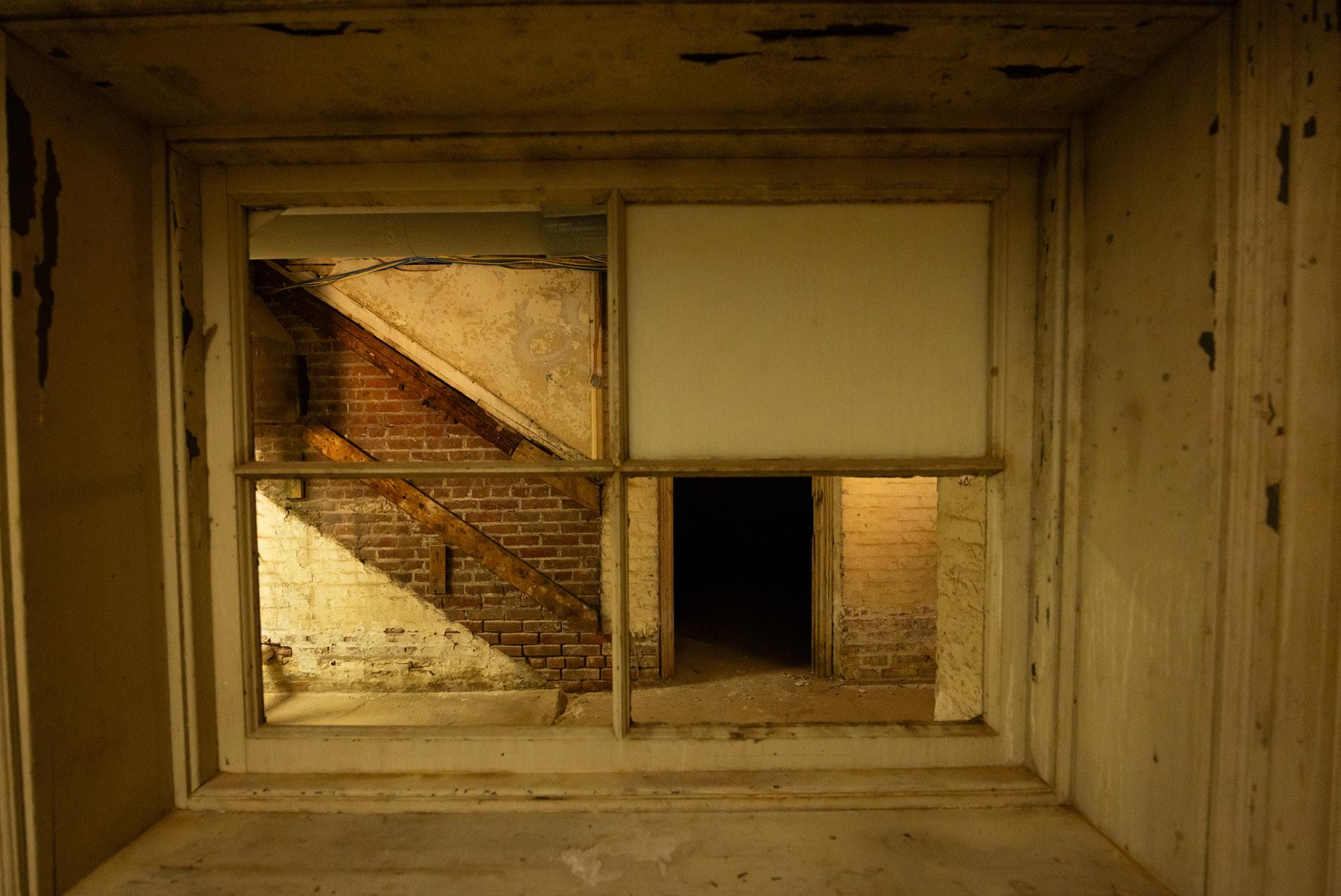
The former exterior entrance to the UPPER HOUSE BASEMENT was sealed off after the construction of Abbott Dining Hall in the early 1960s, but remnants, such as this window, set in what was a thick exterior wall, looking through to where a staircase once rose to the ground floor of Upper East.
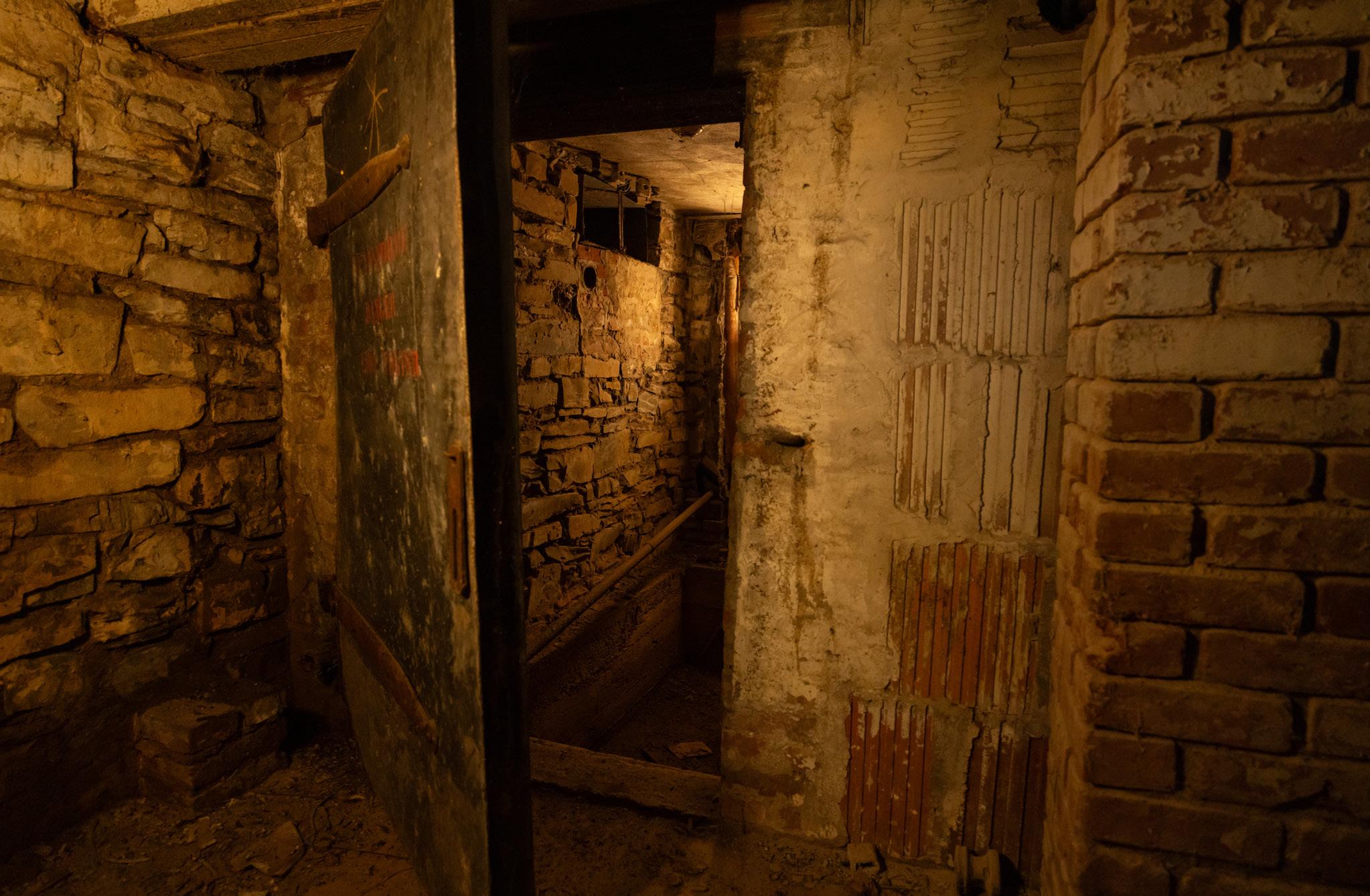
One of the oldest structures on campus, HASKELL HOUSE , built in 1837, once featured an ice house in its basement. About 100 years ago, that space was converted to a housing for Haskell’s electrical transformer. That has long since been deconstructed, with the only hints remaining being the ceramic shackle insulators screwed into its interior walls and the military-style stenciling on the steel door reading “TRANSFORME DANGER 2300 VOLTSR” (sic)

Meet Casey
Since childhood, Casey Rogerson ’20 could often be seen peering through the lens of his camcorder. The cinephile son of oenophile parents, Casey always preferred horror, but his student work at Lawrenceville, where he co-created the sketchbased SNLville, also underscored his distinctive sense of humor. Still, it was only after a wine-tasting at a family vacation in France, where a sommelier described a wine as having a “bloody” characteristic, that the three elements came together in Casey’s mind. And just as Grenache, Syrah, and Mourvèdre produce a fine Châteauneuf-du-Pape, Terroir — written and directed by Casey — is an expressive blend that won for Best Student Short at the 25th annual Screamfest 2025 film festival. Shot over three days in October 2023 at a South Jersey winery, Terroir (TerroirFilm.com) features a group of friends who return to a French vineyard to find the quality of its pinot noir to be implausibly improved. The reason lies in the way wine takes on the taste of its terroir, or natural environment — which, in this case, is bloody terrifying. Casey, who studied film theory at Columbia, is now a directing fellow at the American Film Institute in Los Angeles. “I think there’s just something beautiful about doing something while you’re still learning how to do it,” Casey told the Columbia Daily Spectator. “And learning by doing.”
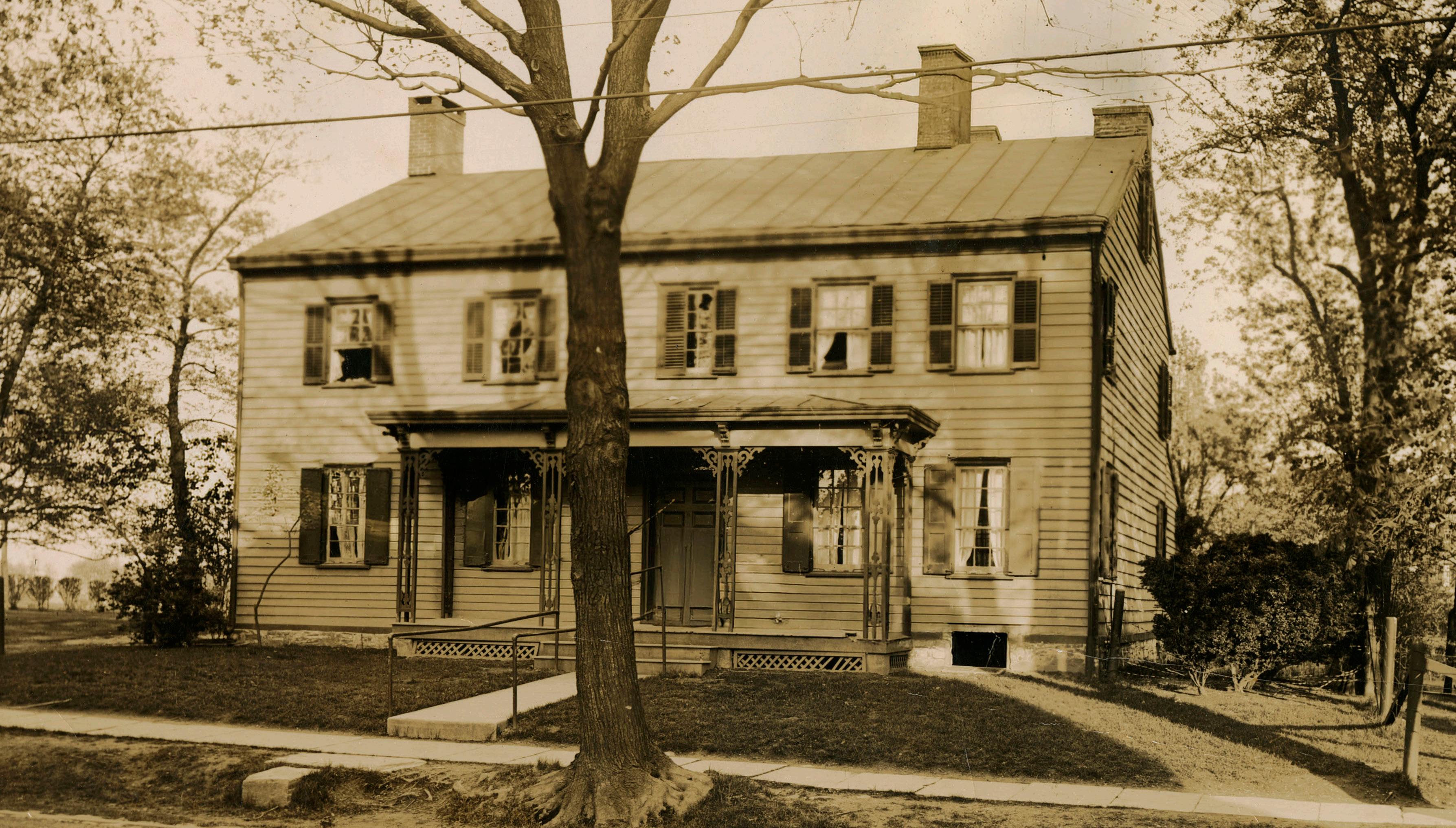
Built to Adapt
Lawrenceville’s current housing system may seem like a timeless tradition, but since its earliest days, the School has perpetually pivoted in response to the needs of students.
BY Jacqueline Haun H’65
For Lawrentians of a more recent vintage, student housing has followed a smooth and generally orderly pattern: Second Formers reside in either Dawes or Raymond on either side of the Bowl, then advance in the Third and Fourth Forms to either the Circle or Crescent, and finally, as Fifth Formers, move into senior houses on the southern side of campus.
However, this systemized flow approach to housing is a relatively new development in the two centuries of Lawrenceville student life. Alumni who arrived as the School made the shift to coeducation in 1987 also know that housing for students of different grades and genders in those early years was flexible and based on practical needs. Since the School’s founding, students have lived in more than twenty different residences that today are no longer part of their housing system. Some of these older structures remain homes to faculty; another is now a Main Street pizza hotspot. So, while the current configuration seems like a timeless tradition, it’s easy to see from a historical perspective that it merely reflects Lawrenceville’s adaptation to the everchanging needs of its students over time.
The School’s very first boarding students resided with the Rev. Isaac Van Arsdale Brown in his home, where today stands the village post office at the corner of Main Street and Craven Lane. By 1814, the demand for spots at the fledgling academy dictated the construction of what is now Hamill House. Even so, a handful of boys still required housing in the village, although the identities of their hosts are lost to history.
When the John Cleve Green Foundation purchased the School in 1879, its leadership decided to build an entirely new campus, with four new houses for students as well as a new academic building and a home for the new head of school. Even as the new campus construction progressed,
Wayside, located next to Kinnan House, is still in use as a faculty residence.
the reorganized school opened in the fall of 1883 with 112 students, but with so many eager prospective students, still more space was needed.
The solution? To rent a nearby and recently shuttered school building that had spent the previous half century as the Lawrenceville Female Seminary. The building, north of the current golf course, was designated as Davis House and could hold an additional 25 students.
This did little to stem the tide. By the second year of the new Lawrenceville School and with the rising campus houses still incomplete, the Foundation was forced to rent at least five more local homes to accommodate the swelling enrollment: the Richard Montgomery Green House, Lawrence Cottage (also known as Green Cottage), “Mr. Brearley’s house” and “Mrs. Brearley’s house” (most likely Wayside and a home later known as the Van Dyke house). This also included a location on Main Street known as the “Conover Phalanx,” which abutted a local shop owned by “Auntie” Emma Conover, who sold students the pancakes and waffles immortalized by Owen Johnson, Class of 1895, in his Lawrenceville Stories.
By the fall of 1885, the new campus houses — Cleve, Griswold, Woodhull, and Dickinson — were complete and could hold 100 students among them, but with about 40 additional students to accommodate, both Davis and Green House remained in use. Kennedy House joined the Circle in 1889, but the ever-increasing number of students — 226 were enrolled that fall — forced Hamill House to be pressed back into service along with several other local accommodations, and plans to raze Hamill were abandoned.
The constant lack of adequate space for students at the rapidly growing School meant that some local abodes became fixtures in the Lawrenceville experience. Davis House would remain active for 56 years before the lease was finally ended in 1930, and the Green House held students for 49 years until 1933. Other houses such as The Lodge, Belknap, and George House, which came into use much later, also served long tenures as student residences: The Lodge for 61 years; Belknap for 27; and George House for 24 before all transitioned to faculty quarters.
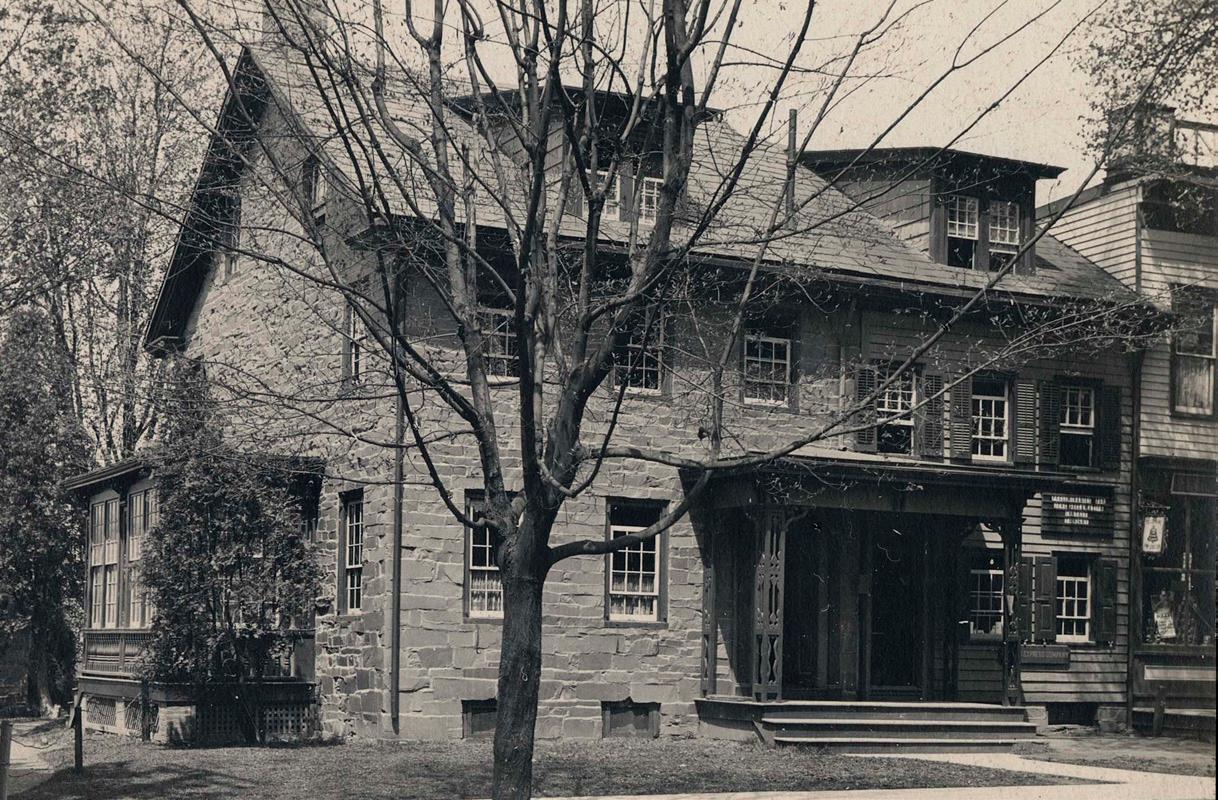
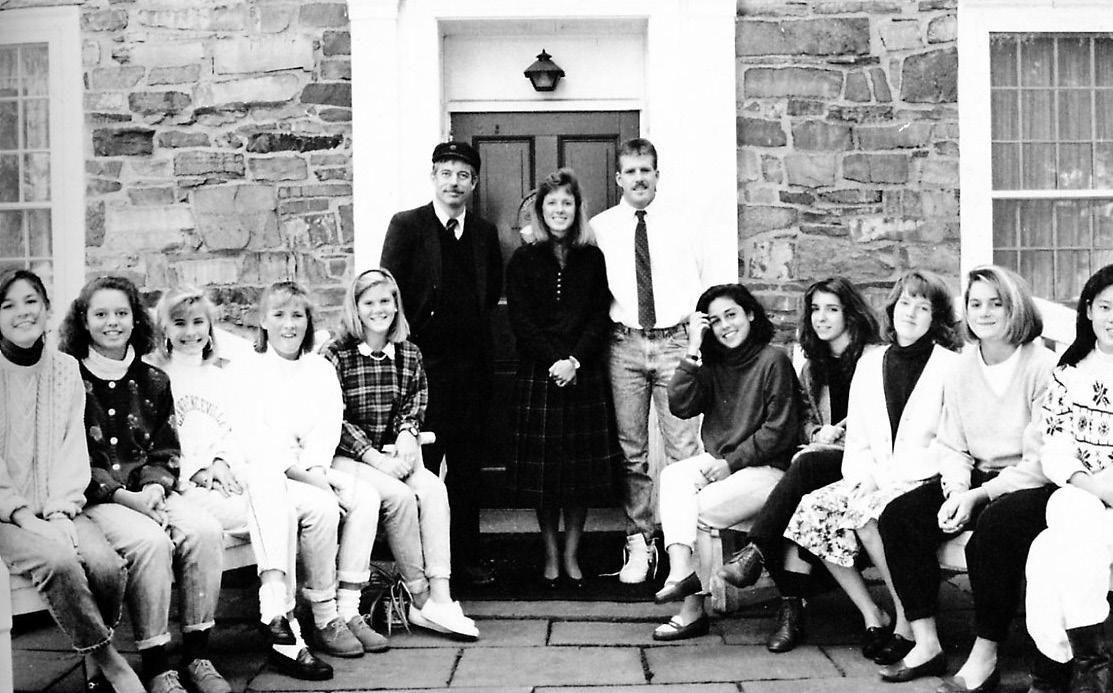
Prior to the construction of the Alumni War Memorial Building, or “Old Lower,” as the new Lower School in 1924, it was common practice for the youngest students to be distributed in small groups among the village houses. Older students were given space in large buildings that today’s Lawrentians know well, including Kafer Flats, now the home of TJ’s Pizza & Pasta.
The emergence of Old Lower largely marked the end of smaller, off-campus residences for students, though some, such as Green House, Wayside, and George House, were retained as overflow housing for both Circle and Fifth Form students. Many living Lawrentians can recall their peers living in Wayside, which they did until 1960, Belknap (1973), The Lodge (1975), and George House (1980). With traffic increasing on Main Street in the 1970s, the School consciously decided to ensure all boarding students were housed on campus to minimize crossings of the now-busy road.
Lawrenceville’s decision to introduce coeducation beginning in 1987 created a need for additional beds, now divided by gender as well as grade level. The first four of what are now known as the Crescent Houses were barely enough to accommodate the incoming group of approximately 175 girls. Only Stanley and Stephens Houses held Third and Fourth form girls; Lower School girls resided in what would eventually become Kirby House, while McClellan House served as the senior girls’ house.
From 1987-90, Lawrenceville attempted several allocations. The Dawes building had served the Lower School since 1972, but from 1987-90, it was temporarily converted into Fifth Form boys’ housing, while McPherson, which had been a senior boys’ House since 1976, became a Fifth Form girls’ House in 1988. Even the addition of Reynolds House in 1988 was not quite enough to hold senior girls, so between 1988-90, they lived in Haskell, Lawrenceville’s second-oldest building. Haskell would again hold senior girls in 2012-13 and 2014-16, with the interim year of 2013-14 acting as an “overflow” house for Fourth Form McClellan girls.
Lawrentians often remember “their” Lawrenceville as an unchanging place, but in truth, it is always shifting in ways large and small to accommodate the needs of each new generation. Fortunately, the strong alumni culture allows Lawrentians of all ages to introduce “their” Lawrenceville to each other through their memories and experiences.
Jacqueline Haun H’65 is the senior archives librarian in the Stephan Archives in Bunn Library.
Fifth Form girls who could not all be accommodated by McPherson and Reynolds Houses resided in Haskell House in 1989.
Stone Cottage, a multifamily structure across Main Street from Hamill House, remains in use as faculty housing.
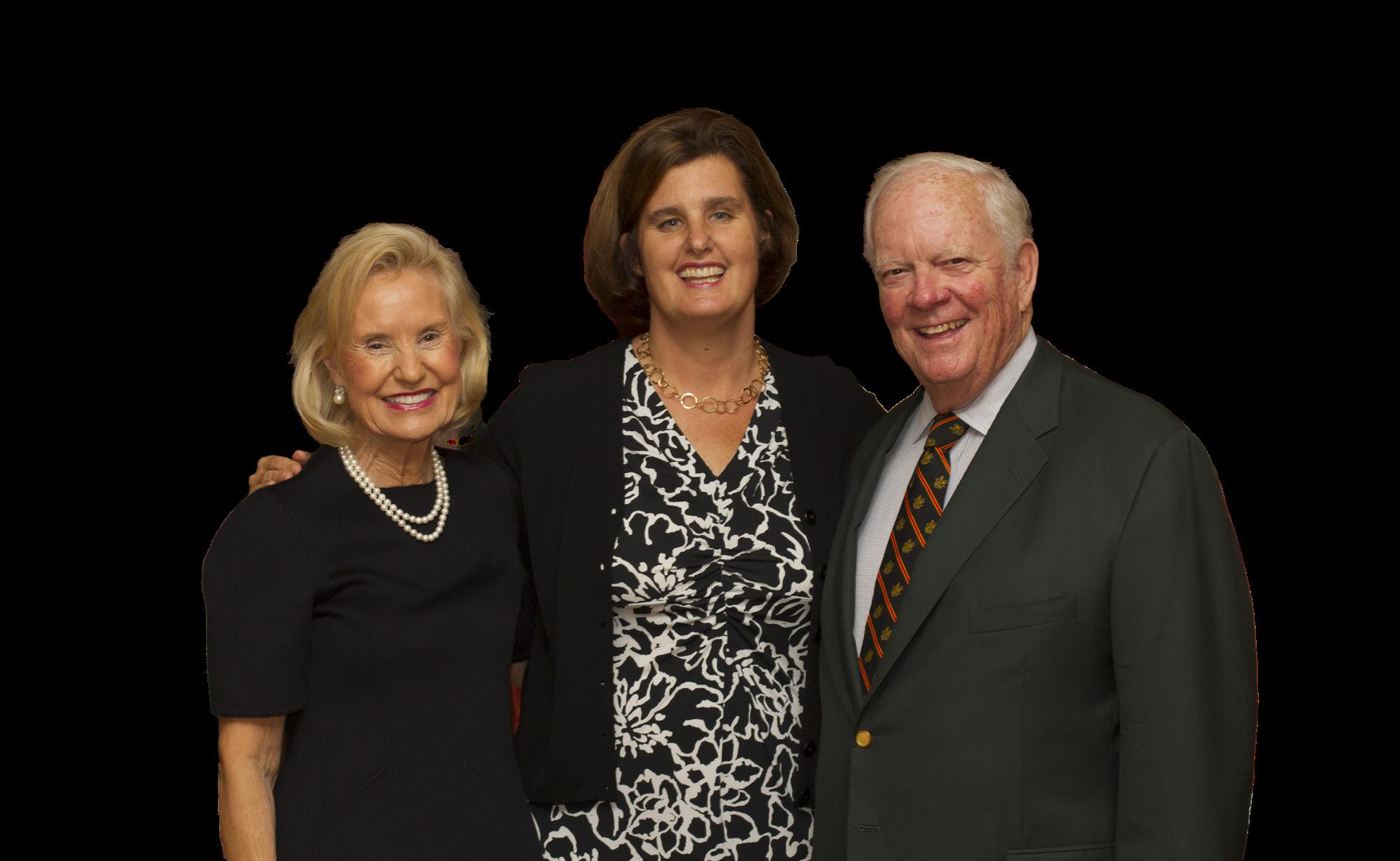
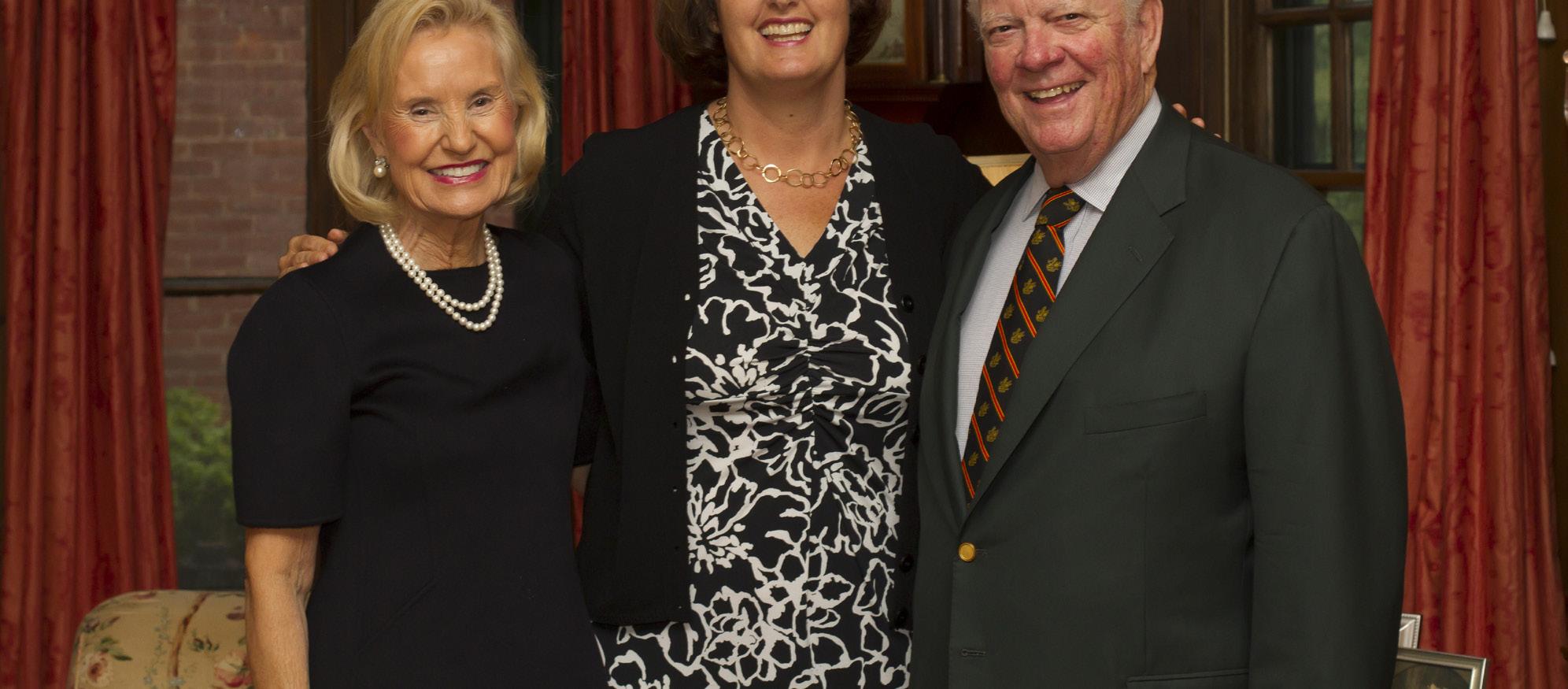
One Last Thank You
An original resident of McClellan House shares a final note of gratitude for someone who facilitated her opportunity as much as anyone.
By Jennifer Rose Savino ’88
Avery busy fall day in 1987 found the front door and stairway of the McClellan House bustling with the arrival of the Fifth Form girls. These twenty-nine girls were joining the Class of 1988, bringing coeducation to The Lawrenceville School for the first time.
We were a melting pot that included academics, thespians, athletes, and a few legacies. Even our house counselor was noteworthy; beloved English master Leita Hamill H’65 ’88 ’97 ’99 P’96 ’99 and her husband, Bill Hamill ’65 P’96 ’99, moved from their beautiful Princeton home with their three small children to shepherd us through that year, with Shannon Duffy H’88 in the other House counselor spot.
While this whole crew are often the spotlighted characters in the tale of coeducation, it is the people who actually built the stage that ensured the transition who should be remembered as the stars. And Bert A. Getz ’55 H’56 P’85 GP’18 ’20 is at the top of that list.
Lawrenceville’s Board of Trustees had voted on coeducation three other times, in 1969, 1973, and 1978, with the opponents of the move winning each ballot. When the vote came up again, in the spring of 1985, with Mr. Getz sitting as the president of the Board of Trustees, the decision finally passed. We can read the history of our School going “coed,” including the fundraising to build the Crescent Houses and the transition from Bruce McClellan H’57 ’58 ’60 GP’10 to Josiah Bunting H’37 ’59 ’88 ’91 ’93 ’94 ’95 P’88 ’97 in the
leadership of the School. Those are big moments and big movements. Yet, it is the quiet leadership of Mr. Getz that I believe is his legacy. And his legacy gave me the gift of my time at Lawrenceville.
By design, the first house on the Crescent is the McClellan House, named for Bruce and Mary Elizabeth McClellan H’50 ’52 ’57 ’58 ’59 ’65 ’79 GP’10 and their impact on bringing coeducation forward. That House, with its prestigious name and location, was a gift from Bert and Sandy Getz P’85 GP’18 ’20. It was weeks into the school year, at the House dedication, that I realized that Mr. and Mrs. Getz were the benefactors. With their warm and friendly smiles, they made me feel totally comfortable in conversation; this in spite of his stature at the School and the broken nose and black eyes I had received that afternoon in my game.
They would return to campus often that year, and those visits often included a stop at McClellan, delivering giant pillows and other items to warm up our new spaces. The McClellan girls had a lot of people looking out for us, including our beloved classmates. Mr. and Mrs. Getz were not just the benefactors of the house itself, but to the young women living inside it as well.
I have been lucky to be in touch with Mr. and Mrs. Getz since I graduated many years ago. I found myself feeling compelled to say “thank you” to them, given the chance. Mr. Getz’s leadership gave me an experience that changed my life. What he did and how he did it is a model for impactful leadership. He was a humble leader who wasn’t afraid of change. His belief in that kind of leadership gave me the privilege of knowing this extraordinary man.
Thank you, Mr. Getz.
Jennifer Rose Savino ’88 is the director of alumni engagement at Phillips Academy — Andover. Bert Getz ’55 H’56 P’85 GP’18 ’20 passed away last August at 88.
Former Head Master Liz Duffy H’43 ’55 ’79 ’15 P’19 ’20 is flanked by Sandy Getz P’85 GP’18 ’20 and Trustee Emeritus Bert A. Getz ’55 H’56 P’85 GP’18 ’20 in October 2012.
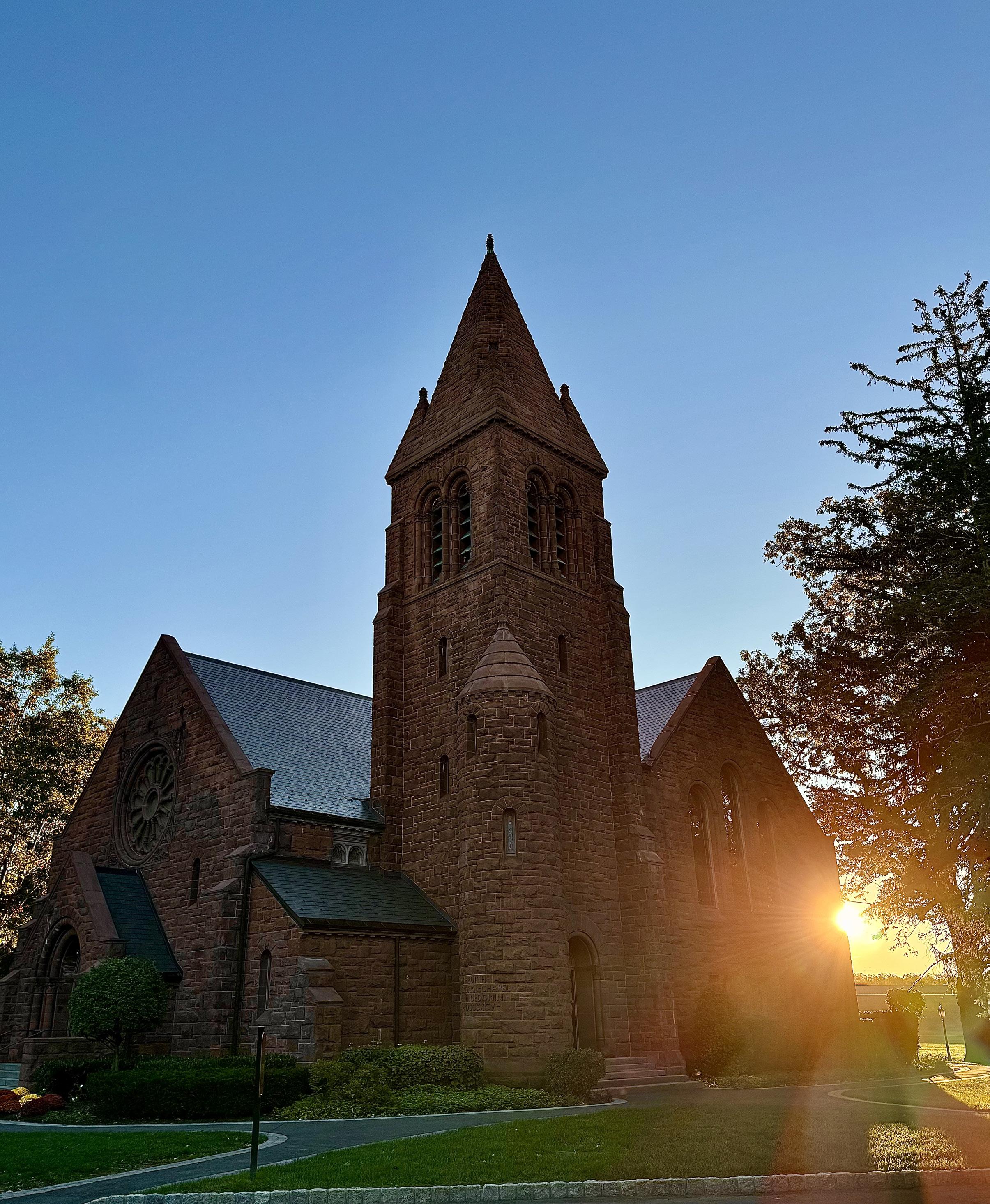
The Promise of Sunrise
From behind the reassuring and seemingly timeless presence of Edith Memorial Chapel, another day in Lawrenceville’s long history began with an October dawn.
Photo by Kelly Wise
USPS no. 306-700
The Lawrenceville School Lawrenceville, New Jersey 08648
Parents of alumni:
If this magazine is addressed to a son or daughter who no longer maintains a permanent address at your home, please email us at contactupdates@lawrenceville.org with their new address. Thank you!