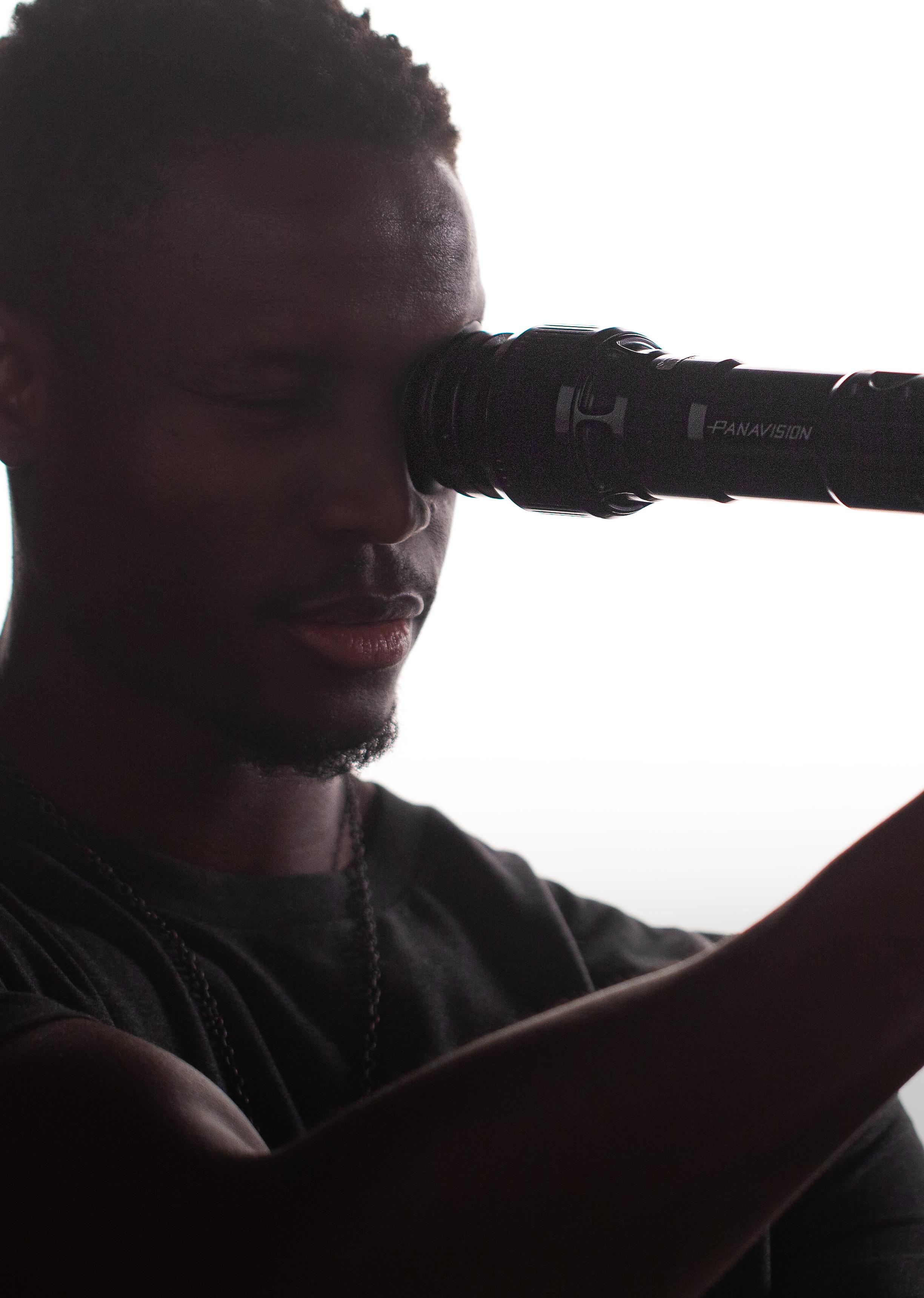
Ron Prince has over three decades of experience in the film, TV, CGI and VFX industries, and has written about cinematography for 20 years. In 2014, he won the ARRI John Alcott Award from the BSC. He also runs the international content marketing and PR communications company Prince PR. Darek Kuźma is a film and TV journalist, translator/interpreter, and a regular collaborator/programmer of the EnergaCamerimage Film Festival. He is an ardent cinephile who has a lifelong romance with the visual language of cinema.
David Wood is a freelance journalist covering film/TV technology and production He was a former technology editor at Televisual, and is a regular contributor to Worldscreen, TVB Europe and Broadcast.
Kirsty Hazlewood has over two decades of editorial experience in print/online publications, including reporting for the IBC and ISE Daily, and is a regular contributor to folk/roots music website Spiral Earth.
This isn’t about me anymore. It’s about so much more.
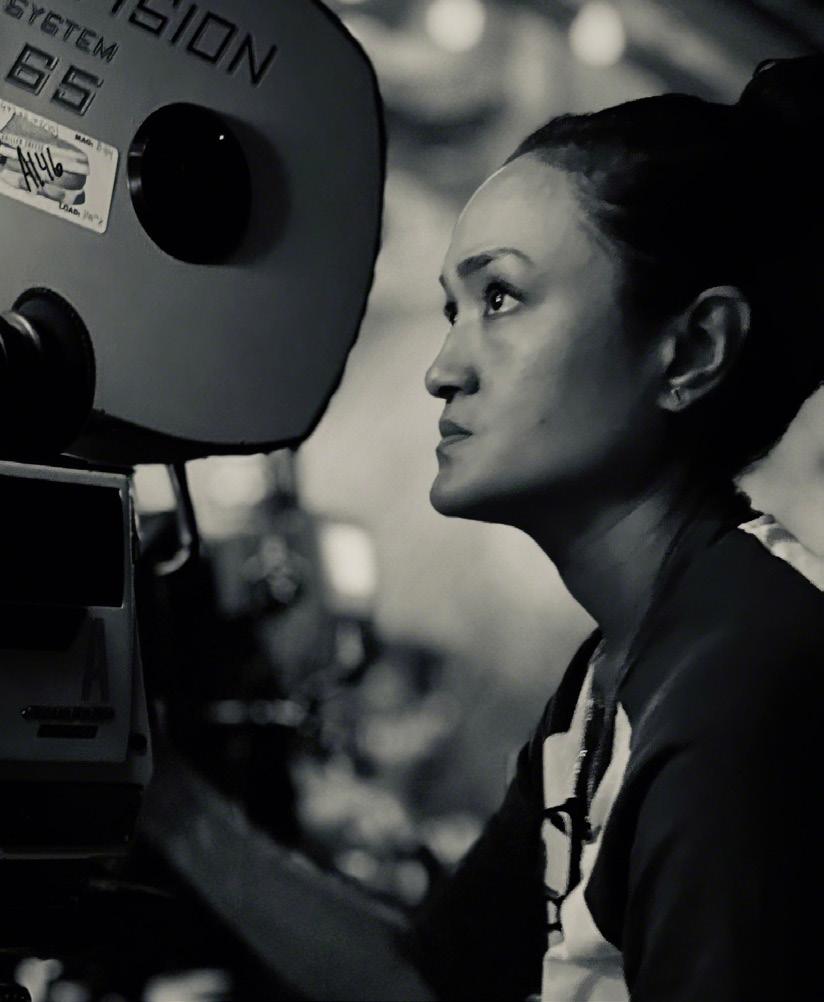
Autumn Durald Arkapaw ASC during her press room speech at the 2026 Oscars
DIAMONDS ARE FOREVER
The 2026 awards season delivered a landmark and a wee surprise!
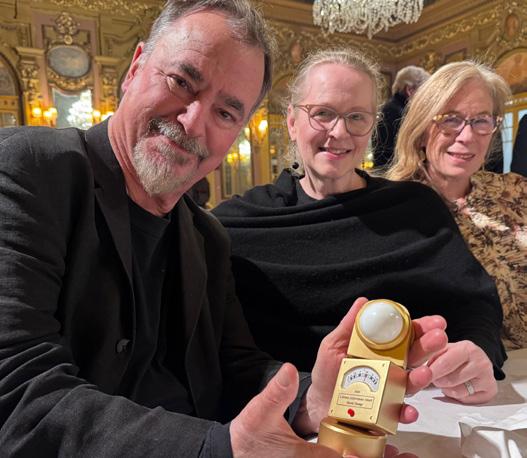
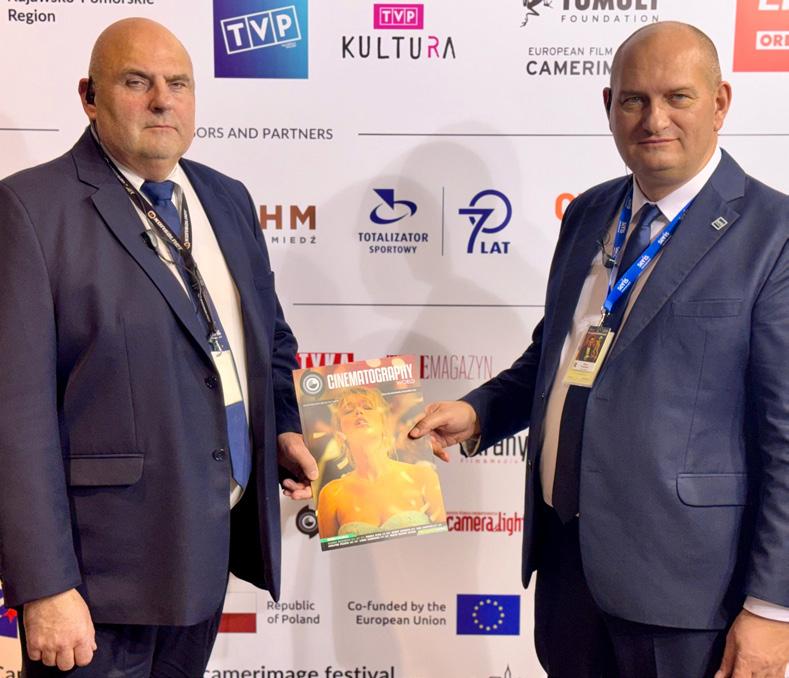
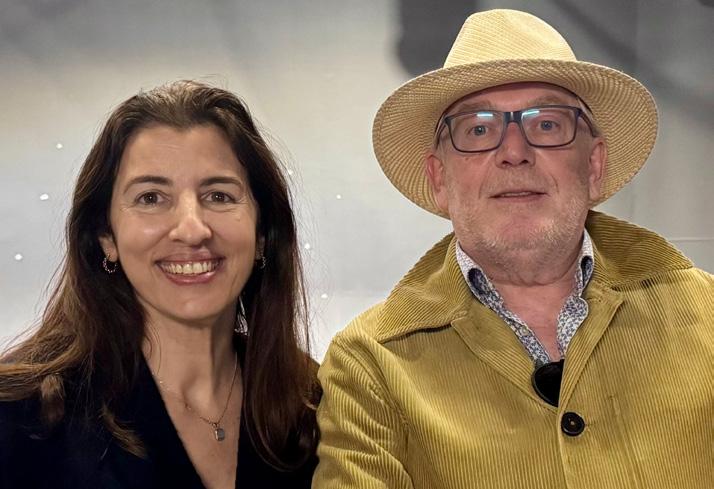
First, the surprise. It came as quite a shock when, quite out-of-the-blue, Alan Lowne and I were invited to collect a Special Award from the AIP (Portuguese Society Of Cinematographers) for chronicling the art and craft of cinematography across a quarter of a century. We both feel honoured, but truly humbled, to have been recognised for our work, and convey our heartfelt thanks to the AIP for such an unexpected tribute.
As for the landmark, hats-off and congratulations to DP Autumn Durald Arkapaw ASC on her historic, aweinspiring Academy Award win for Sinners – a feat forever carved into the annals of cinematographic achievement by a consummate talent, who also stands as a splendidly gracious and articulate role model. Brava!
Let’s hope Autumn’s success and recognition prove inspirational to others, and that it also encourages those who decide, to think differently and more inclusively about representation when making their hiring choices.
The world, surely, can only be a better place with more tolerance and understanding, our industry enriched with greater diversity. And it’s with this in mind that we dedicate this edition to Autumn and her wonderful success.
Wishing you success in your endeavours too. See you at Eurocine 2026 in Budapest. Long live cinematography!
Get your free digital subscription by scanning here NOW!
SUBSCRIBE
You can subscribe to the print, digital, or print and digital, versions of Cinematography World. This will cover you for the six issues delivered over a 12-month period. Your email will also be added to our monthly newsletter update, unless you decide to opt out of these news feeds.
Cinematography World is part of Rascals Publishing & Media Ltd. The publishers emphasise
Ron Prince Editor in Chief
Official Media Partners
Embrace the Soul of Your Cinematography
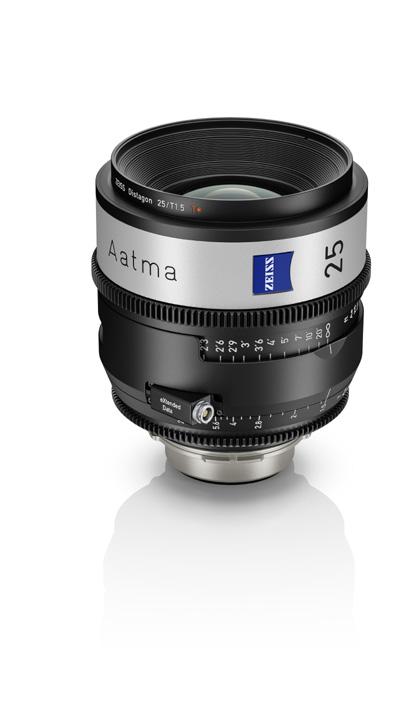
ZEISS Aatma zeiss.com/aatma
ZEISS Aatma lenses are inspired by characteristics of some of the most beloved classic ZEISS lenses of the 20th century. Their legacy look evokes emotion with softly painted skin texture, a rich bokeh with gentle soap bubble effect, and smooth and vibrant focus transitions. Combined with all conveniences of modern cine lenses, the Aatma lenses let cinematographers put their signature in every frame to fully embrace the soul of their craft.
Pictured cinematographer: Pascale Marin, AFC
DP AUTUMN DURALD ARKAPAW ASC MAKES HISTORY WITH OSCAR WIN
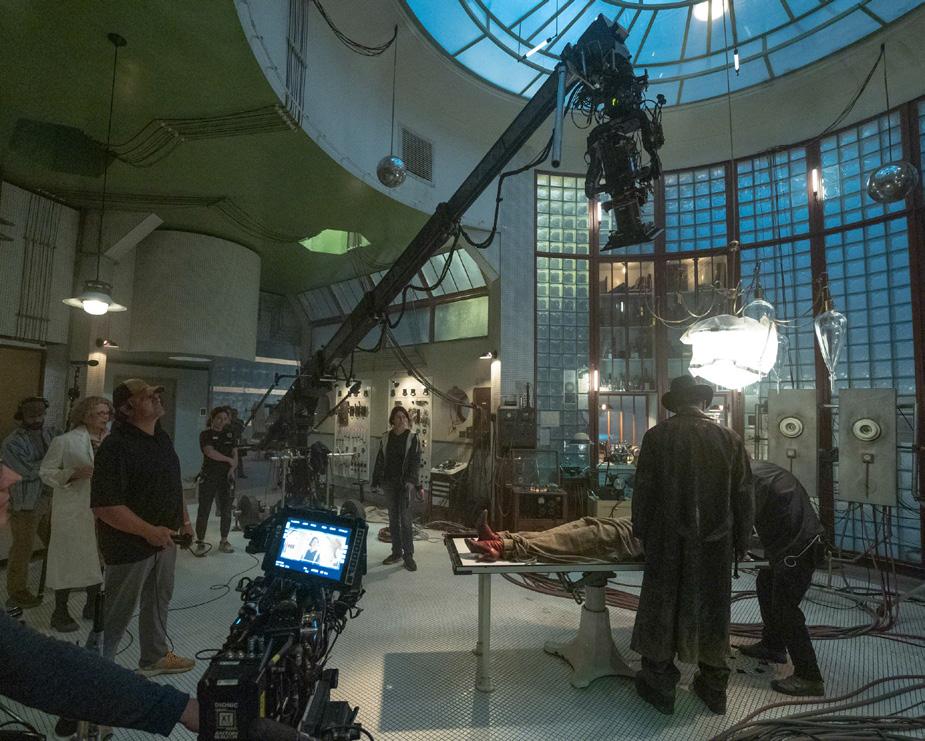
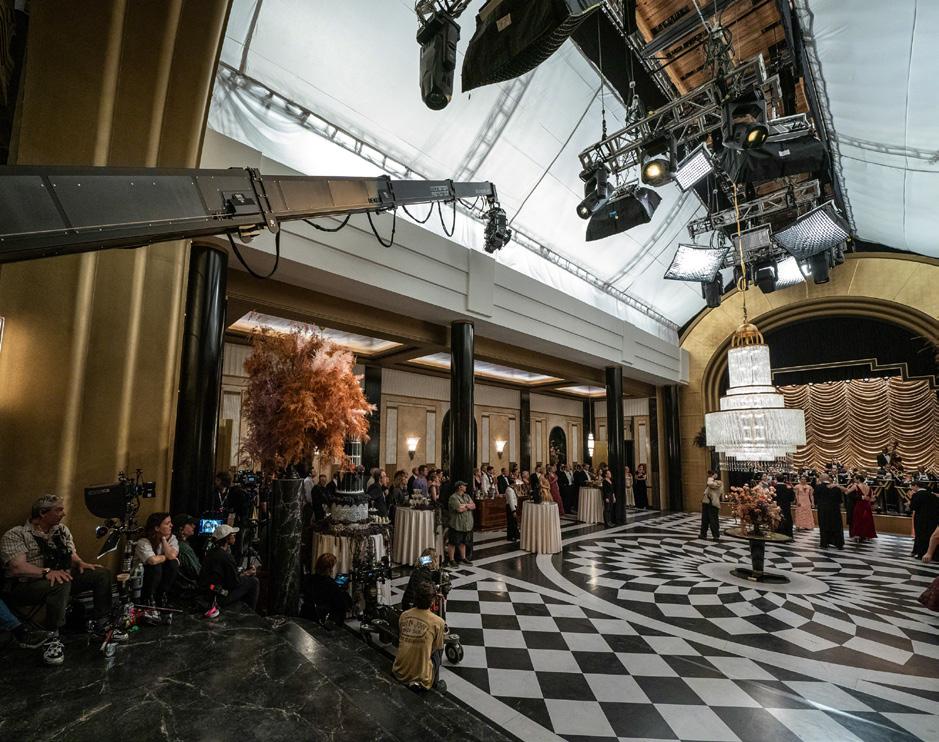
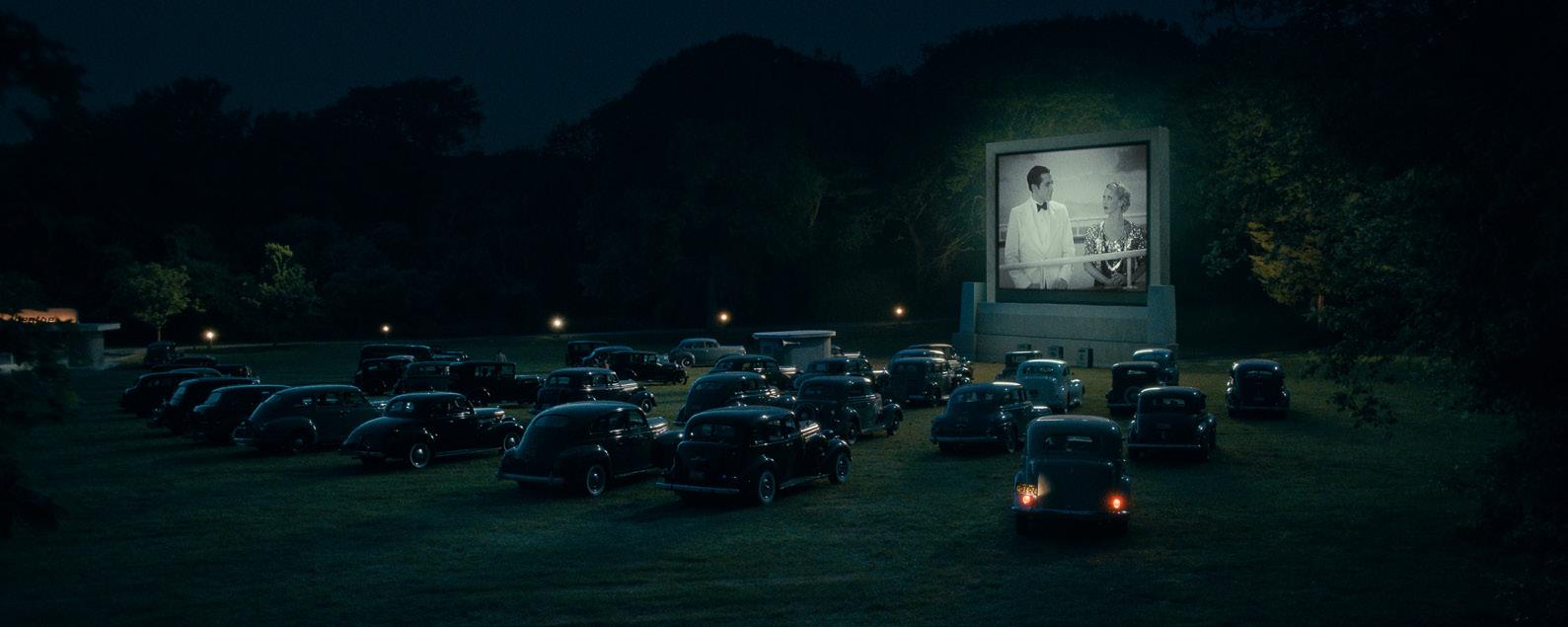
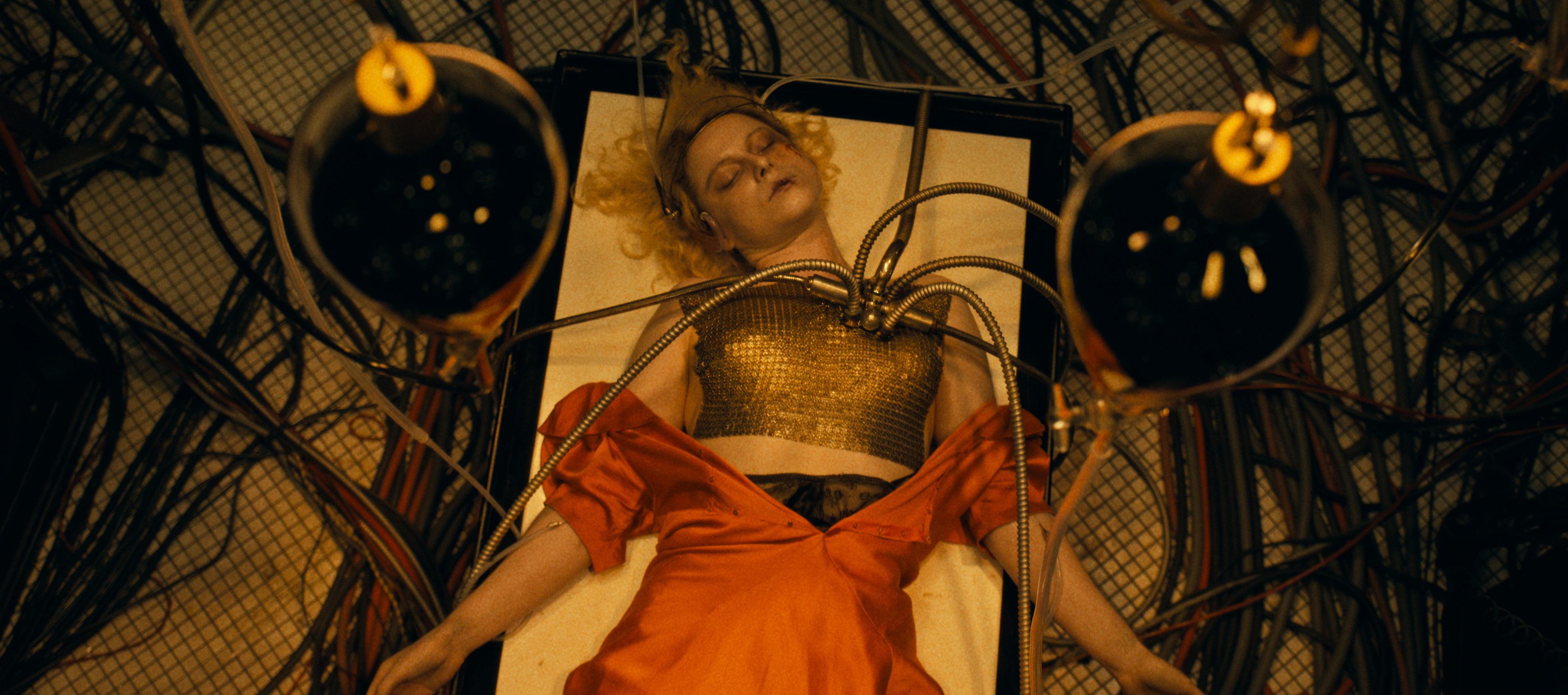
Autumn Durald Arkapaw ASC made history at the 2026 Academy Awards by becoming the first woman – and the first person of colour – to win the Best Cinematography Award for her work on Sinners, directed by Ryan Coogler. The landmark win, announced at the Dolby Theatre, Hollywood, on 15th March, marked a defining moment for the craft and capped a highlycompetitive awards season.
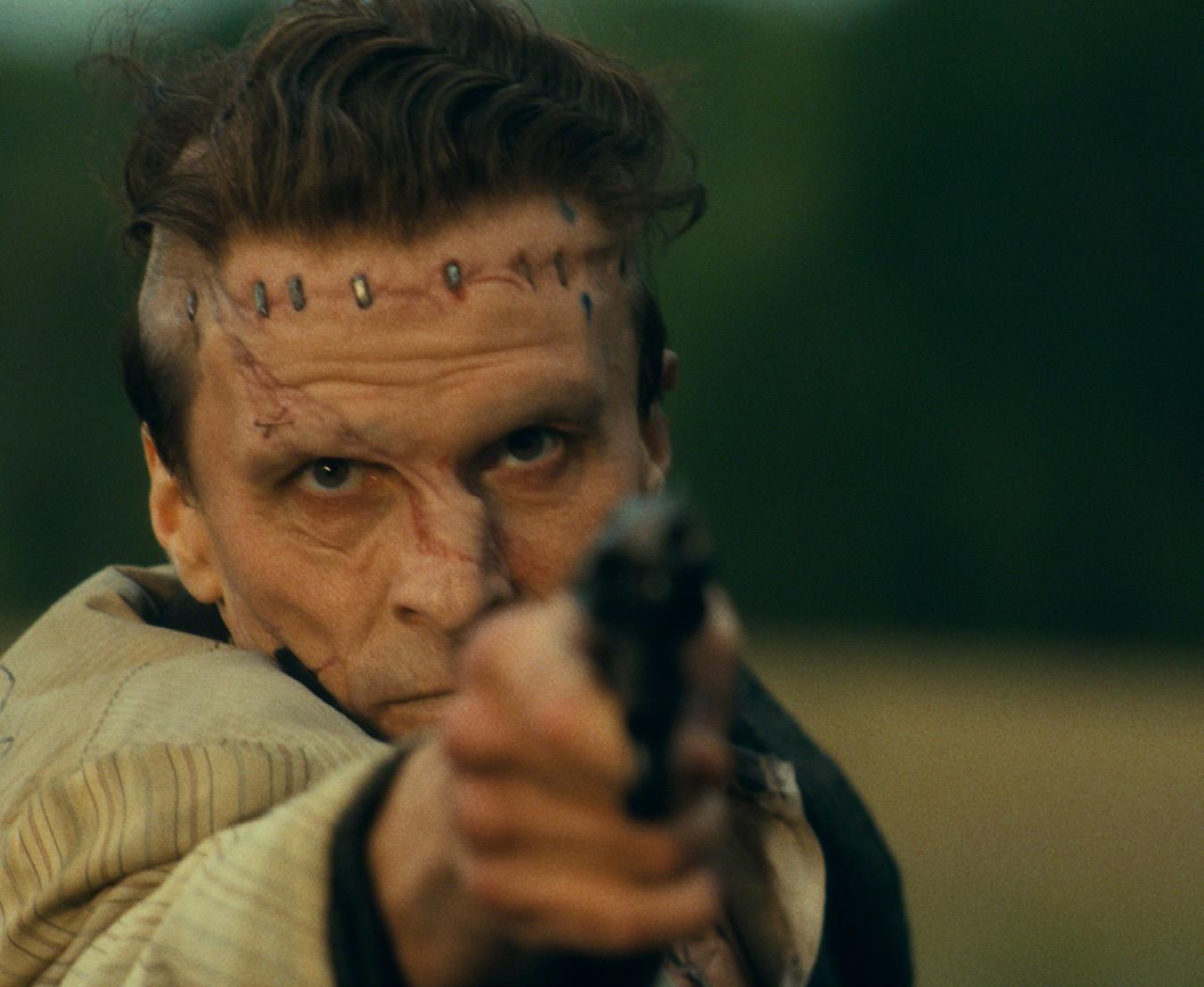
In the category, Durald Arkapaw beat fellow nominees Darius Khondji AFC ASC for Marty Supreme, Michael Bauman ICLS for One Battle After Another, Adolpho Veloso AIP ABC for Train Dreams and Dan Laustsen DFF ASC for Frankenstein Ahead of the ceremony she had already collected several critics’ awards and earned nominations from BAFTA , Critics Choice, the American and British societies of cinematographers
Collaborating again with Coogler after Black Panther: Wakanda Forever (2022), Durald Arkapaw delivered a technically-ambitious film, becoming the first female cinematographer to shoot with both IMAX 65mm and Ultra Panavision formats. Accepting the award, she thanked Coogler for his trust and paid
tribute to the women in the industry who supported her journey. Sinners entered the ceremony with a record 16 nominations and went on to win four awards.
Whilst Durald Arkapaw took the Oscar, Bauman emerged as a major force across the wider season for One Battle After Another, directed by Paul Thomas Anderson. The gaffer-turned-DP secured BAFTA, ASC and BSC awards as the film itself claimed six Oscars, the most of the night.
Elsewhere, Seamus McGarvey BSC ASC ISC added to his long list of honours with a seventh Irish Film & Television Academy Award for Die My Love Together, this year’s results underline historic milestones and strong competition, with cinematography firmly at the centre of the 2026 awards conversation.
CINEMATOGRAPHY WORLD’S ALAN LOWNE & RON
PRINCE HONOURED WITH PRESTIGIOUS
AIP AWARD
Cinematography World’s Alan Lowne and Ron Prince have been honoured with a Special Award from the AIP (Associação De Imagem Cinema E Televisão Portuguesa) (Portuguese Society Of Cinematographers) in recognition of their contributions to promoting the art of cinematography.
The 2026 AIP Awards, which celebrate the talent, creativity and excellence of Portuguese cinema, were hosted by the society’s president Tony Costa AIP in Lisbon, Portugal, on March 6th.
Alan Lowne and Ron Prince have worked together for over 25 years in publishing
for cinematography. Supported by a dedicated team they now lead Cinematography World, the independent print and online platform that champions the art of cinematography internationally. The pair previously won BSC ARRI John Alcott Awards in 2010 and 2014 for their work.
Thanking the AIP, Ron Prince, editor-in-chief, said, “Alan and I are honoured, but truly humbled, to be recognised for our work now spanning a quarter of a century. We do it because we love it, and are constantly inspired by the global community of visual storytellers and the innovation of the manufacturers and service companies who support the creation of moving images.”
During the evening David Stump ASC BVK was awarded
a Lifetime Achievement Award in recognition of his contribution to cinema, particularly his expertise in special effects. Cinemate presented the Fernando Costa Prize to renowned key grip Manuel Manuel ‘Dos Cavalos’ Ramos. DP Rui Poças AIP ABC earned the award for best cinematography in a feature film for his work on (Enterre Seus Mortos) (Bury Your Dead ). Other awards included: Leandro Ferrao (TV Series) for Finisterra, Tomas Brice (Short Film) for A Fronteira Azul, Pedro Patrocinio (Music Video), Martim Vian (Advertising) and Rafaela Elias (Student).
BFI 2025 STATS REVEAL £6.8 BILLION SPEND
Official figures by the BFI’s Research & Statistics Unit show that film and high-end TV production spend in the UK was £6.8 billion in 2025, a 22% increase on 2024, demonstrating the sector has regained solid momentum and continues to generate billions to the UK economy.
The majority of the total £6.8 billion production spend was contributed by HETV, which accounted for £4 billion, up 17% on 2024 figures and the third highest since the introduction of the tax relief. Feature film production contributed £2.8 billion, up 31% on 2024 figures, and the highest annual spend on record.
Inward investment films
and HETV shows combined delivered £5.8 billion, or 85% of the combined production spend, continuing to demonstrate the UK’s global reputation as the world-leading centre for international film and TV production. Across film and HETV, the total number of productions in 2025 is lower than in recent years but the spend is higher.
A Minecraft Movie was the highest earning release at the UK and ROI box office with £56.9
million, and UK-shot films in the top 10 were: Wicked: For Good (DP Alice Brooks ASC) at number two (£47 million); Bridget Jones: Mad About The Boy (DP Suzie Lavelle ISC BSC) at number three (£46.4 million), Jurassic World Rebirth (DP John Mathieson BSC) at six (£36.1 million), Mission: Impossible – The Final Reckoning (DP Fraser Taggart) at nine (£26.4 million) and The Fantastic Four: First Steps (DP Jess Hall BSC ASC) at ten (£24 million).
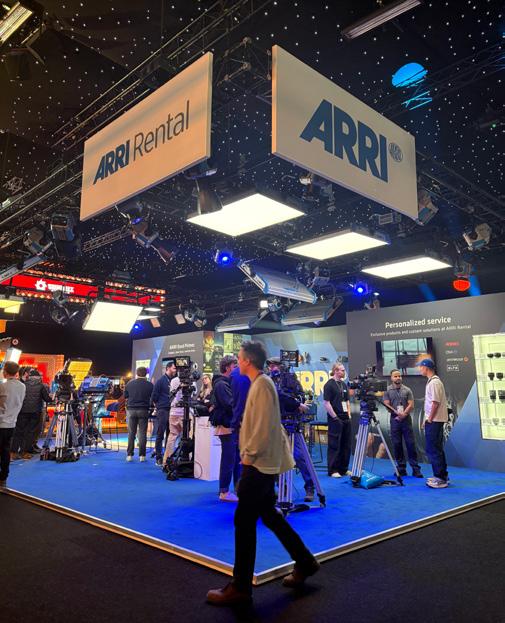
THOMAS RIEDEL ACQUIRES ARRI
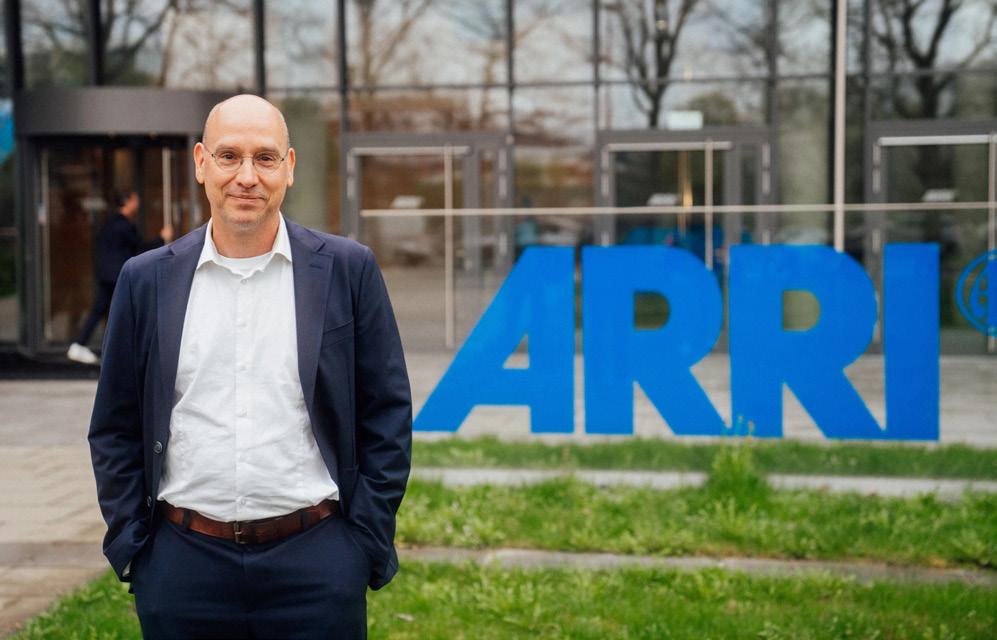
Thomas Riedel, founder and owner of Riedel Communications and the Riedel Group, has acquired ARRI, the Munich-based manufacturer of camera and lighting technology for motion picture and live entertainment. The entrepreneur from Wuppertal in western Germany was chosen in a competitive international process.
The Riedel Group is a global specialist in advanced audio, video and data technology, delivering infrastructure solutions for broadcast, live event and sports productions. Through the acquisition of ARRI, Riedel aims to establish a close strategic alignment between ARRI and the Riedel Group, expanding expertise across the entire production chain — from camera optics to distribution. ARRI’s ecosystem of camera, lighting and systems technology are deemed to perfectly
complement the Riedel Group’s existing portfolio, opening-up new technological and strategic market opportunities for both companies. Through close collaboration, ARRI and Riedel aim to unlock new areas of growth, especially in live entertainment and sports. By combining their respective technologies, the companies plan to develop integrated solutions that offer new creative and technical possibilities for customers. As the first joint milestone of this collaboration, ARRI will debut its camera technology at the 2026 Eurovision Song Contest, where Riedel serves as the technology provider and NEP oversees production.
ARRI’s existing management team will continue to lead the company, and the company will remain headquartered in Munich.
CAMERIMAGE 2026 SUBMISSIONS NOW OPEN
Submissions are now open for the 2026 edition of Camerimage Festival, as preparations get under way for the event’s 34th outing. Organisers are inviting filmmakers, producers, film schools, distributors and music companies to put forward their work for consideration, with the festival set to return to Toruń, Poland from 7th to 14th November.
Widely regarded as one of the leading showcases dedicated to the art of cinematography, Camerimage will once again present a broad programme
spanning both competitive and non-competitive sections. Entries are being accepted across a wide range of formats, including feature films, documentaries, student productions, music videos and television series episodes.
The official selection will feature several key competitions, covering feature films as well as Polish cinema, and debuts by cinematographers and directors. Television projects will also be represented through a dedicated strand for first episodes and pilots, whilst documentary storytelling will be split across feature-length and short-form categories. Additional sections will highlight music videos and work from film and art school students.
ABBI COLLINS ANNOUNCED AS NEW MARK MILSOME FOUNDATION CHAIR
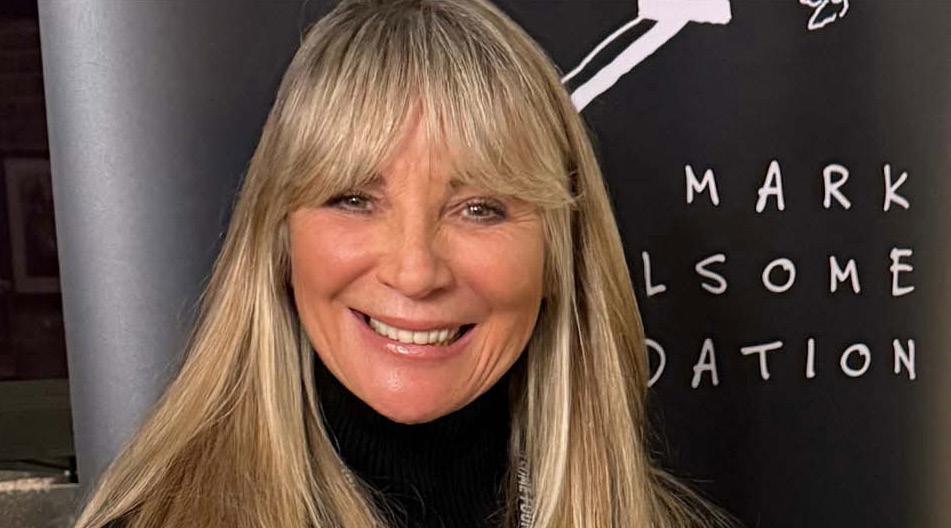
Following a successful four-year term as chair of The Mark Milsome Foundation (MMF), Samantha Wainstain has stepped-down and the post has been taken-up by Abbi Collins, a respected and seasoned stunt co-ordinator, fight arranger and horse master.
With more than 39 years of industry experience, Collins was instrumental in forming The British Stunt Register. She is a passionate advocate for safety on all levels, and maintaining the highest possible standards of best practice and work ethics in the film and television industry.
Collins steps into this new role after being an MMF Trustee since 2024. She is particularly interested in addressing the cultural issue of long working hours in film and TV.
“I feel honoured and excited to accept the position of chair of this innovative and progressive foundation,” said Collins. “I am deeply committed to supporting our mission and confident that together we can build on MMF’s immense achievements so far. I believe in the importance of collaboration, respect and openness and with this in mind, we will campaign to make our industry a safer environment for all.”
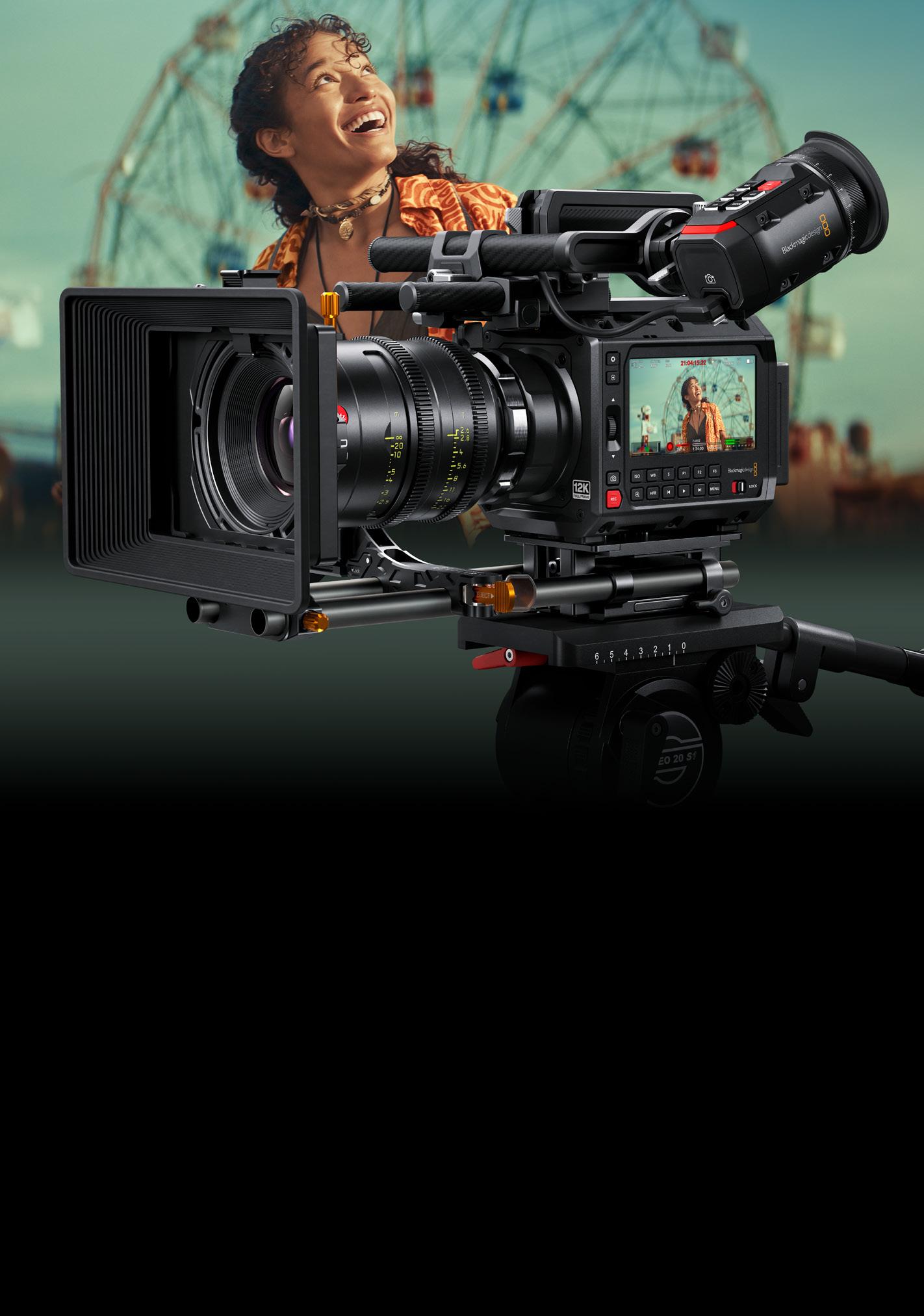
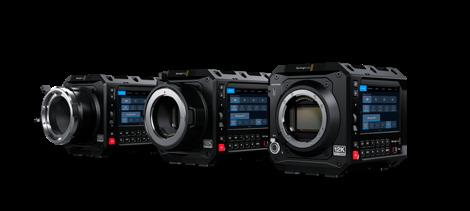
Blackmagic PYXIS 12K
Get URSA Cine’s large format sensor with 16 stops of dynamic range recording into Blackmagic RAW!
Introducing the next generation customizable cinema camera!
It features an extremely versatile design that lets you build the perfect camera rig for your production! You get a full frame 36 x 24mm 12K sensor with wide dynamic range and a built in optical low pass filter that’s been designed to perfectly match the sensor. Plus there are 3 models available in either EF, PL or L-Mount.
Designed for Maximum Customizability
With multiple mounting points and accessory side plates, it’s easy to configure Blackmagic PYXIS into the camera you need it to be! PYXIS’ compact body is made from precision CNC machined aerospace aluminum, which means it is lightweight yet very strong. You can easily mount it on a range of camera rigs such as cranes, gimbals or drones!
Get the “Hollywood Look” with Digital Film
Blackmagic PYXIS has the professional features you need for feature film, television programming and documentaries, however now this same quality can be used to create cinematic content for social media, YouTube videos and more. Imagine shooting with large format digital film on low budget independent films, TV commercials or even corporate video!
Large Format Cinematic Digital Film Sensor
Blackmagic PYXIS 12K features a large full frame sensor with a native resolution of 12288 x 8040. That’s almost three times larger than a Super 35 sensor and lets you shoot with a shallow depth of field or use anamorphic lenses uncropped for a true cinematic look. This amazing sensor combined with Blackmagic color science gives you the same quality as the most expensive digital cinema cameras.
Blackmagic RAW Fueled Image Capture
Blackmagic RAW is a revolutionary format designed to capture and preserve the quality of the sensor data from your camera. It also saves camera settings as metadata so you can set ISO, white balance and exposure in camera or override them later while editing, all without any loss of quality! Blackmagic RAW files are also small and fast to use making them easy to work with.
Blackmagic PYXIS 12K
£3,825
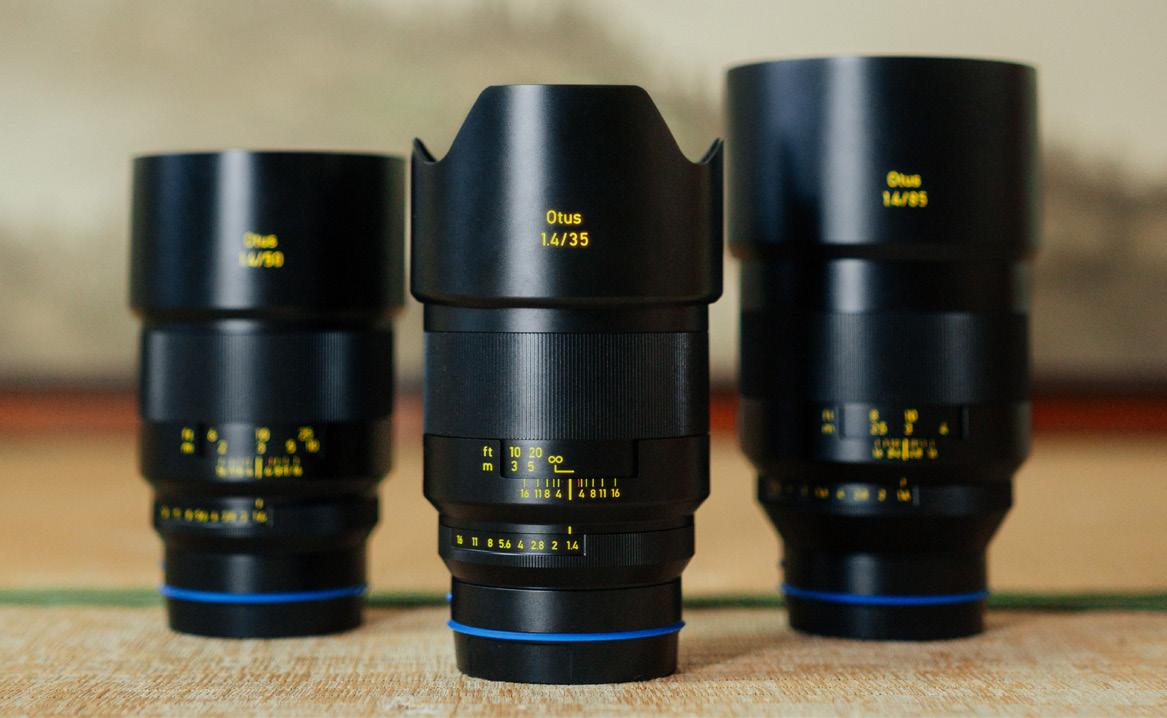
ZEISS EXPANDS OTUS ML LINEUP WITH THE NEW 1.4/35 LENS
Zeiss has expanded its Otus ML lens family with the introduction of the new Zeiss Otus ML 1.4/35. This manual-focus lens is designed for photographers who live to tell visual stories with deliberate narratives – from street and travel to documentary work.
Inspired by the legendary Otus lineage, the ML generation brings Zeiss’ optical excellence and mechanical precision to the latest mirrorless systems, with mounts available for Sony E, Canon RF and Nikon Z.
The Zeiss Otus ML series delivers
natural colour rendition, exceptional sharpness, and signature micro contrast.
A fast f/1.4 aperture provides accurate depth-of-field control, directing the viewer’s attention with clarity while producing a soft, elegant bokeh that separates subjects from the background.
An advanced aspherical Distagon lens design minimises distortion and chromatic aberrations, further enhancing image fidelity. Combined with the legendary Zeiss T* coating, reflections are reduced, flare is minimised, and both contrast and colour accuracy are elevated.
SEVDIJE KASTRATI-DILL ASC LIGHTS JENA MALONE MUSIC VIDEO WITH ASTERA
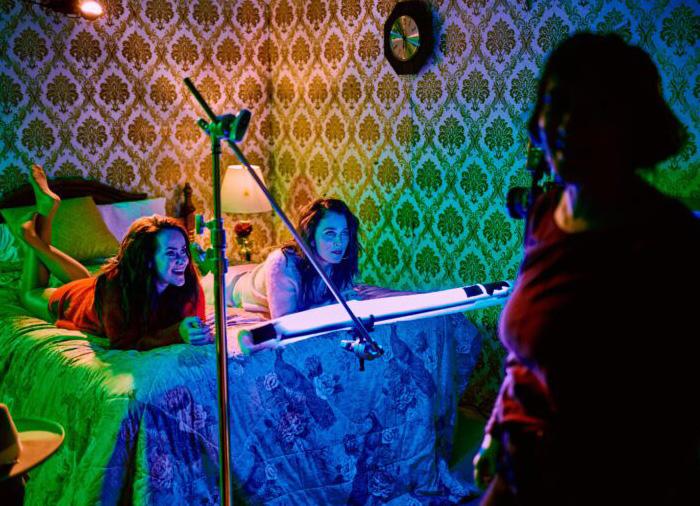
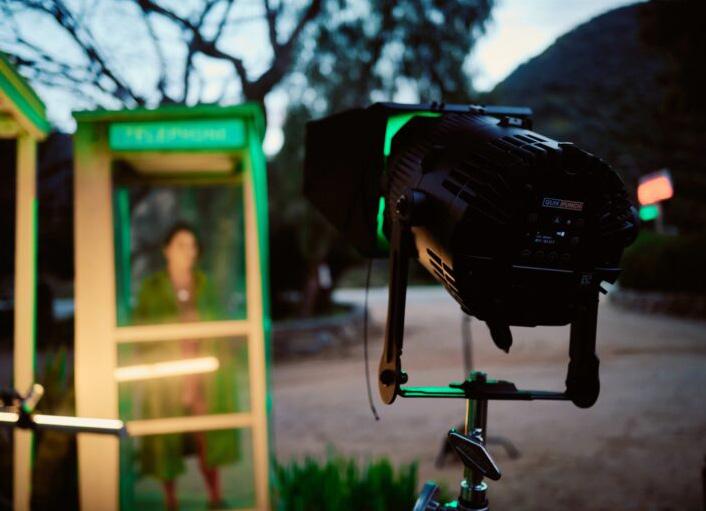
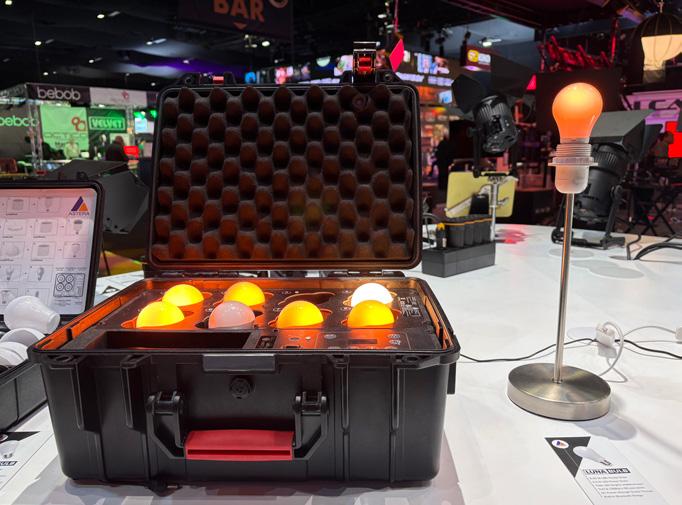
DP Sevdije Kastrati-Dill ASC joined director Jennifer Reeder and actress-musician Jena Malone for a two-day music video shoot for Malone’s single ‘Barstow’. The piece is vividly coloured and embraces a hard neon-noir clash of colours. The palette expands naturally from the location itself, particularly a red and green motel vacancy sign. On the first day Astera’s QuikPunch served as the saturated green source (a proxy for the
sign light) outside the motel. During the phone booth sequence, a single QuikPunch provided a powerful green backlight, whilst a Titan tube handled the warm fill from the other side, gracefully wrapping Malone in colour.
The QuikFamily and Astera Tubes both utilise Titan LED colour science, making the fixtures instantly
compatible. Gaffer Sika Stanton used the Astera ART7 app to control colour and brightness in real time.
The Titan Tubes were used across multiple other setups: as a backlight to create a pink bedroom wash, a TV flicker effect, and rigged in pairs to light Malone from inside the phone booth.
AVATAR: FIRE AND ASH GRADED WITH DAVINCI RESOLVE STUDIO
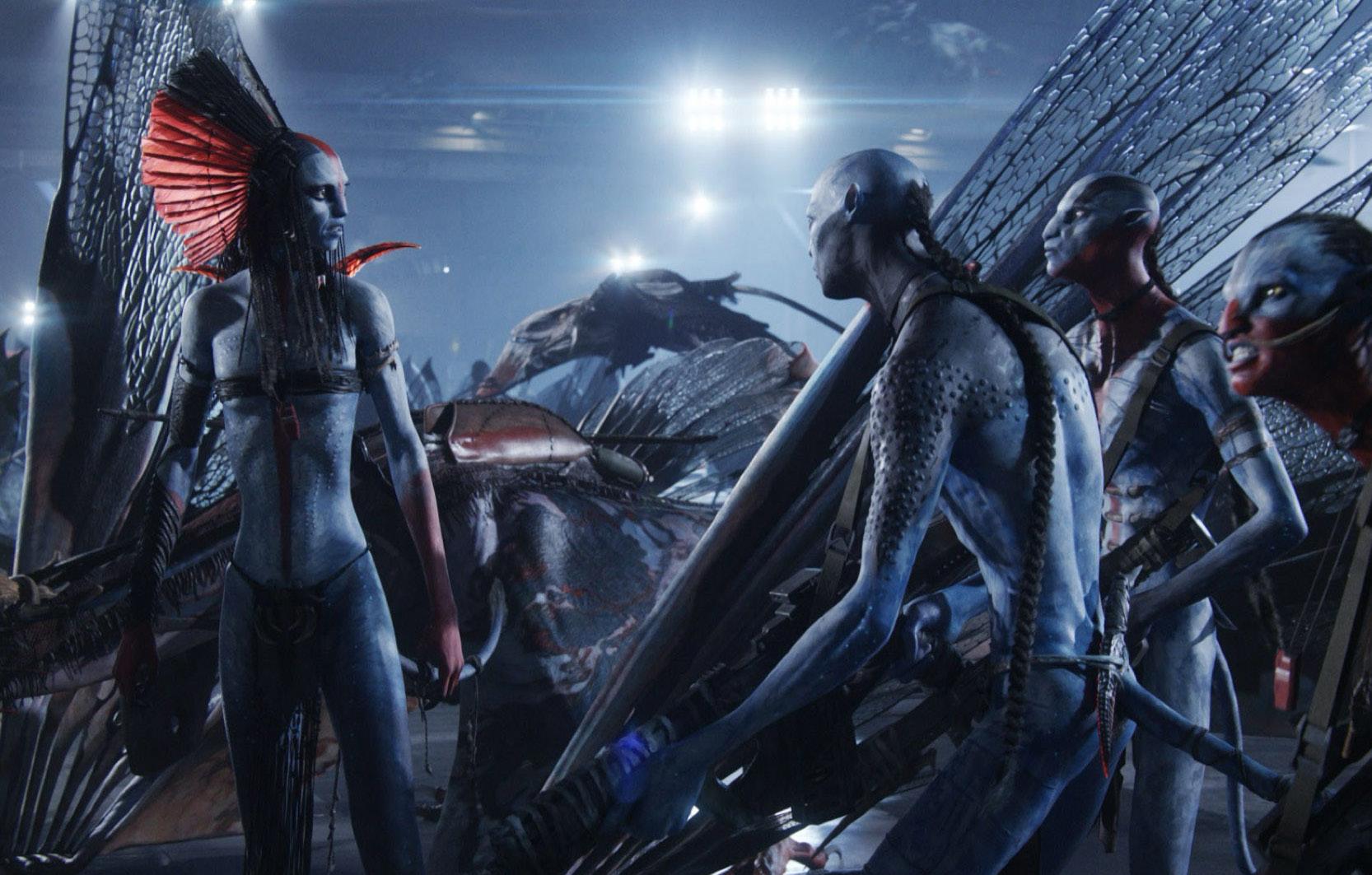
Blackmagic Design has announced that colourist Tashi Trieu used DaVinci Resolve Studio editing, colour grading, visual effects (VFX) and audio post production software for director James Cameron’s Avatar: Fire And Ash (2025, DP Russell Carpenter ASC).
Returning to the series after his work on Avatar: The Way Of Water (2022, DP Russell Carpenter ASC), Trieu had a strong sense of what Cameron responds to creatively and how he likes to work.
“My job is twofold: fulfilling Jim’s aesthetic vision for the film and maintaining creative parity across all these different versions, which are each tailored for various exhibition formats to maximise audiences’ experiences,” said Trieu.
Trieu managed an expanded theatrical mastering pipeline for Avatar: Fire And Ash, delivering 16 versions, including HDR by Barco in both 2D and 3D. The film was split into 15 reels, each handled as
a separate project in DaVinci Resolve Studio, with multiple timelines created for different deliverables.
A Dolby 3D version served as the hero grade, with other formats derived and refined as reels neared completion. To maintain consistency, Trieu used a fixed node tree structure covering technical fixes, grading
and trims, alongside Resolve’s tracking tools to monitor changes during reviews. Features such as ColorTrace helped propagate adjustments across timelines, particularly where aspect ratios matched.
To keep up with on-going VFX updates and stereo reviews, Trieu developed a set of custom scripts tailored to the Avatar workflow. These automated processes such as conforming new shots, merging stereo elements, copying grades and applying updates across multiple versions, significantly reducing manual work. This efficiency allowed more focus on creative decisions, particularly in complex sequences where colour continuity was critical.
APUTURE LAUNCHES THE SPOTLIGHT MOUNT II
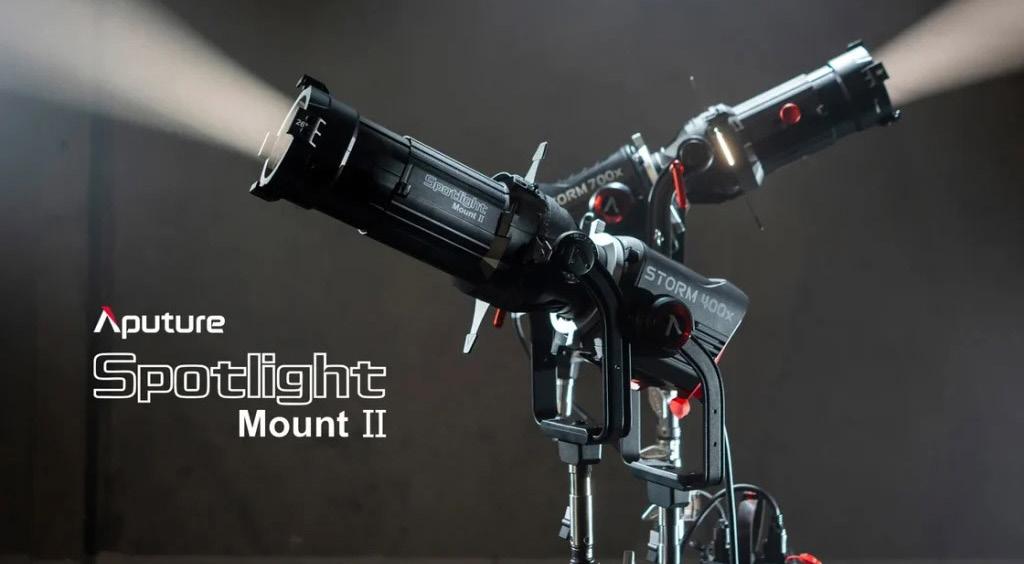
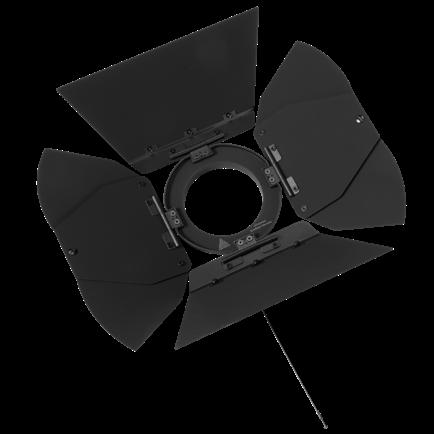
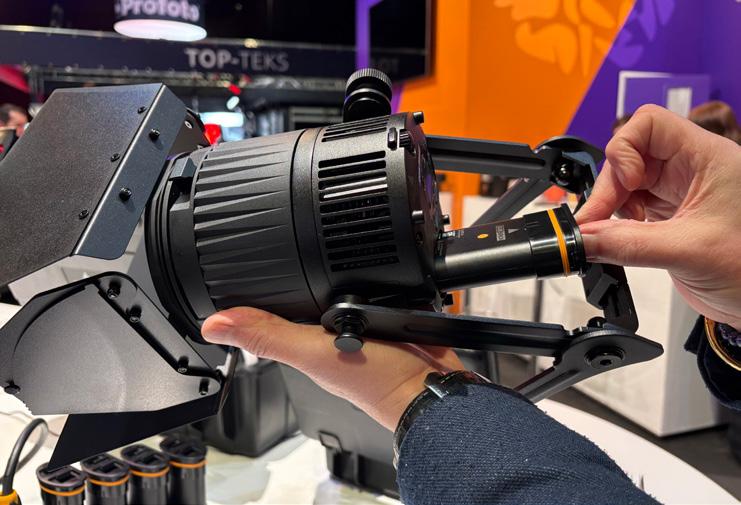
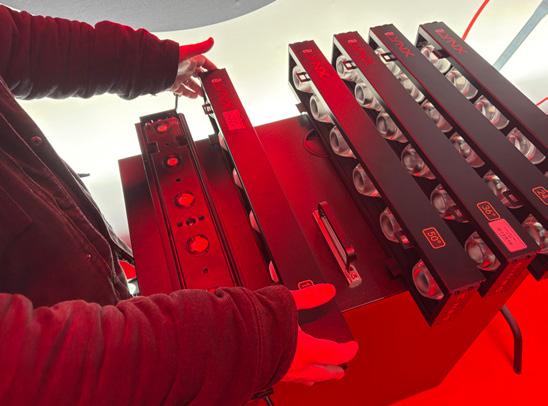
Aputure’s new Spotlight Mount II is an ellipsoidal optical modifier for ProLock and Bowens mount lights up to 800W and is optimised for use with the Storm 400x and Storm 700x. There are four lenses available for the Spotlight Mount II: 19°, 26°, 36°, and the ultra-wide 50°.
The Spotlight Mount II features a rotating barrel for precision alignment and an advanced new optical design for higher brightness with a sharp, even beam. B-size gobos are accepted in metal or glass, expanding the projection options remarkably.
“Aputure has dramatically improved our game with the Spotlight Mount II,” said Mitch Gross, Aputure director of marketing. “We looked at all of the feature requests clients have made and completely overhauled the design of the projector. The new optical design is significantly brighter with a more even beam when used with our modern Storm 400x and 700x lights.”
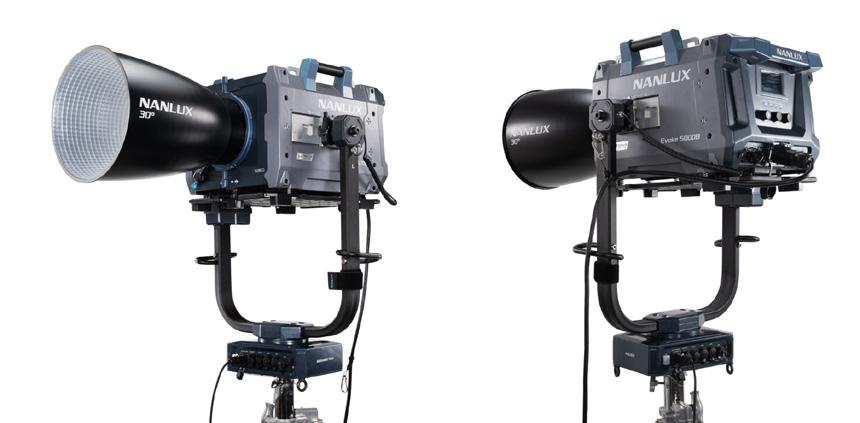
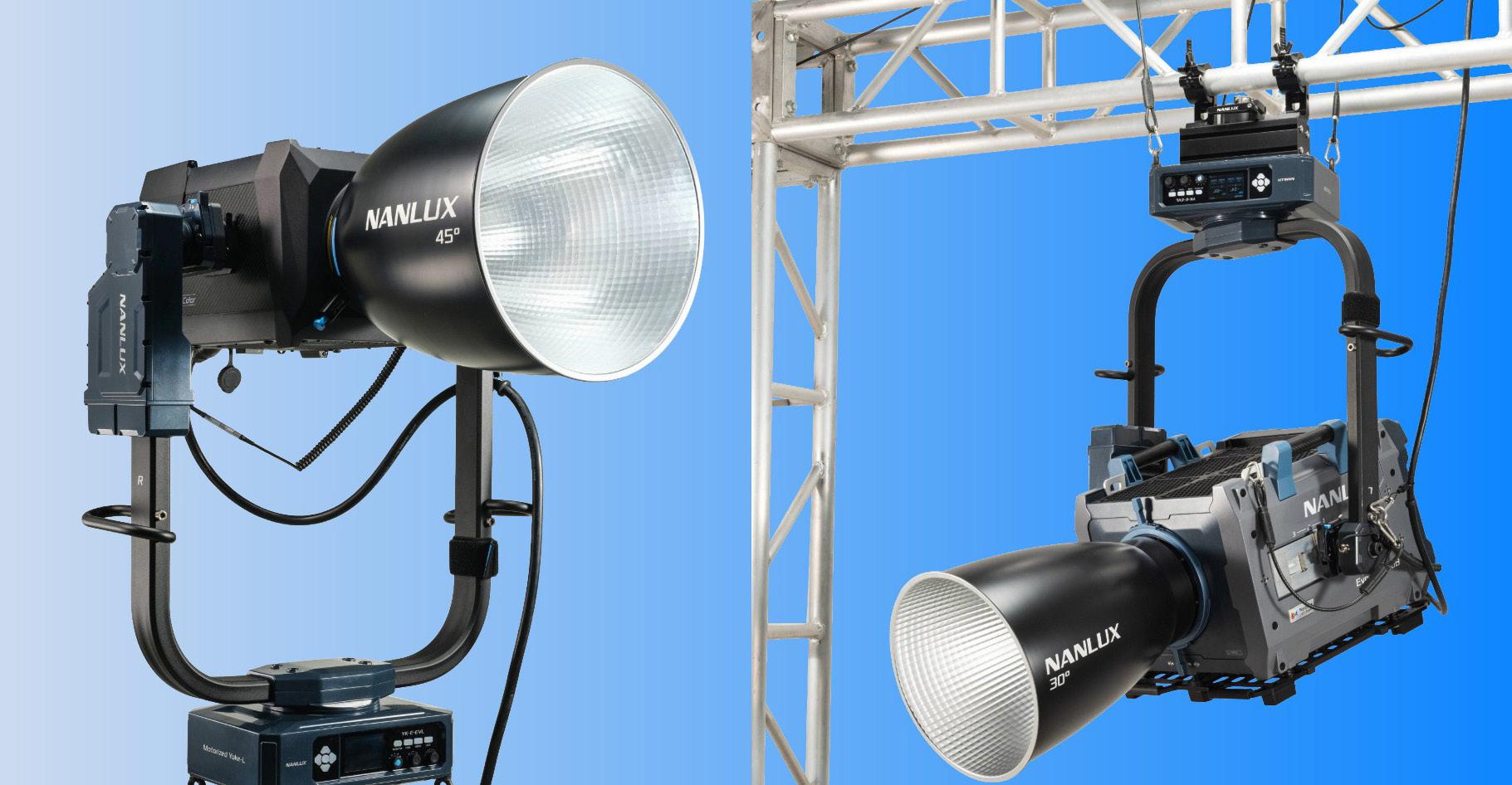
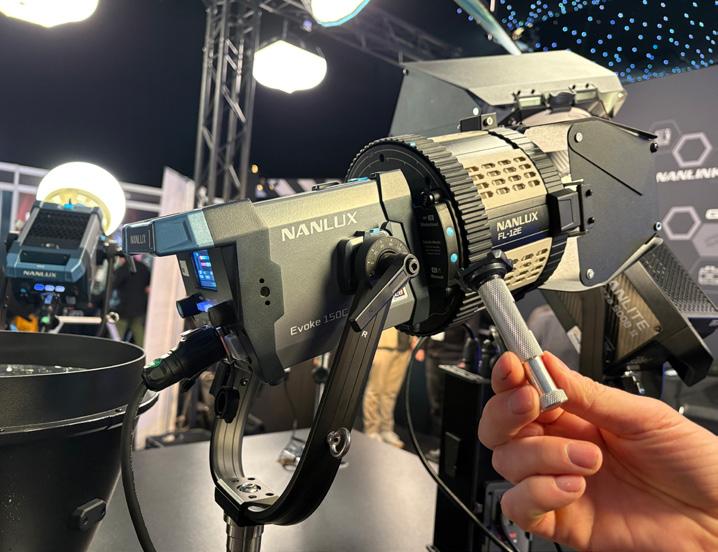
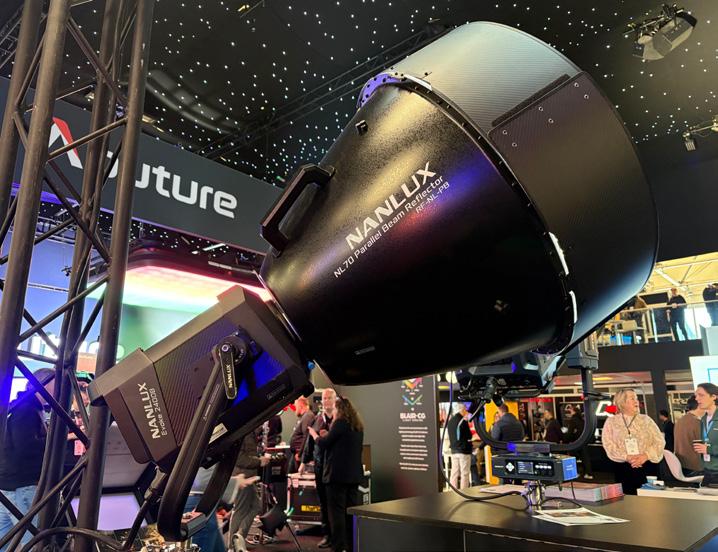
NANLUX INTRODUCES MOTORISED YOKE-L FOR EVOKE 5000B/2400B
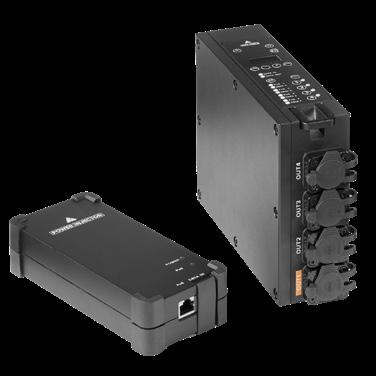
Nanlux has introduced the YK-E-EVL Motorised Yoke-L, bringing remote pan and tilt control to its Nanlux Evoke 5000B and Nanlux Evoke 2400B fixtures. Designed to streamline on-set workflows, the system reduces the need for manual repositioning while improving safety, particularly when working with large, high-output lights.
Built to match the rugged design of the Evoke series, the motorised yoke features an IP66 rating for reliable operation in demanding environments. It offers 540° of pan and 270° of tilt, enabling broad coverage without physically moving the fixture. Motion is smooth and controlled, supported by a high-strength motor delivering up to 40 N·m of torque on the tilt axis, allowing it to handle heavier setups such as the 5000B with accessories attached.
Constructed from magnesium alloy, the yoke balances durability with manageable weight, while an internal self-locking mechanism ensures the fixture remains securely in position, even when powered off. Manual adjustment is also possible via a quick release system and T-handle for easier handling during setup or removal.
Installation is designed to be straightforward, with quick release plates and simple cable connections depending on the fixture. The yoke can be mounted on standard light stands or trusses, offering flexibility across different rigging set-ups.
LCA MAKES NEW APPOINTMENTS IN EUROPE AND FRANCE
than 15 years of experience within the photo and imaging industry, having most recently served as sales manager Germany at Kaiser Fototechnik.
LCA Lights Camera Action, a leading provider of professional lighting solutions for the film and broadcast industries, with offices in the UK, France, Germany and Spain, has made new appointments to strengthen its business operations.
Frank Deutschländer has joined LCA Lights Camera Action Europe as business development manager, bringing more
In his new role at LCA Europe, Deutschländer will be responsible for developing the company’s cine and broadcast business in Germany and Austria, working closely with customers and partners to support the distribution of professional lighting and production equipment.
To augment its presence in France, LCA has also appointed of Jean Charles Pasquier. With more than two decades of experience in professional lighting, Pasquier brings technical knowledge and a deep understanding of lighting design in film production, TV studios, theatre, museums and entertainment lighting.
Based in Paris, Pasquier will focus on expanding the company’s activities in Francophone countries, supporting rental houses, broadcasters and production companies, whilst also contributing his experience in studio design and system integration projects across the LCA group.
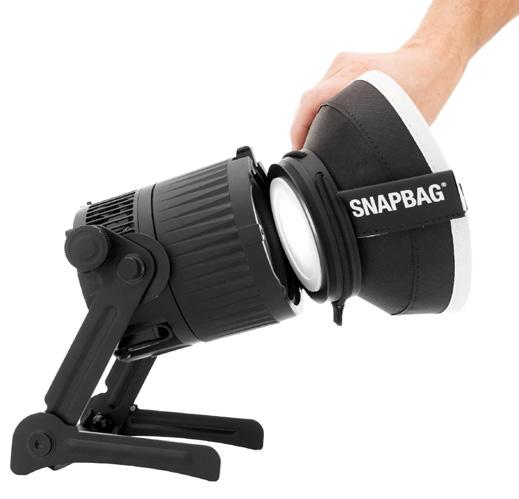
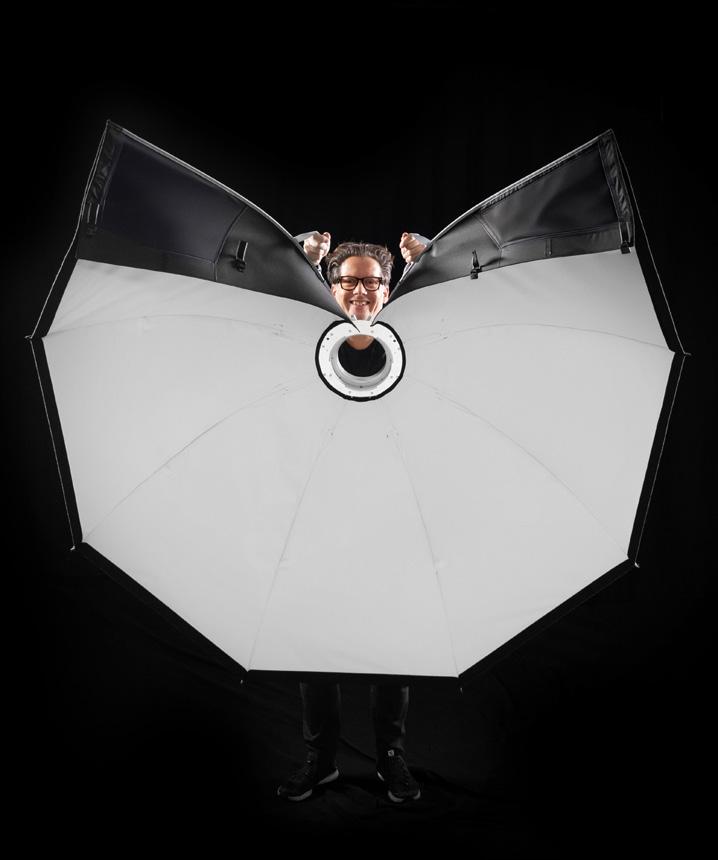
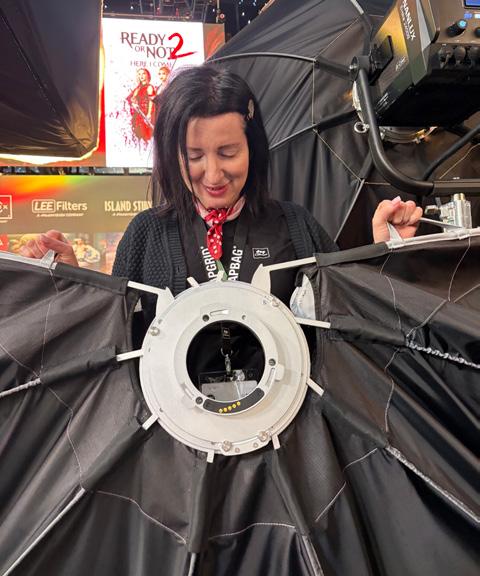
DOPCHOICE INTRODUCES SNAPBAG ROUND AND SNAP RABBIT OCTA 5 SNAPBAG
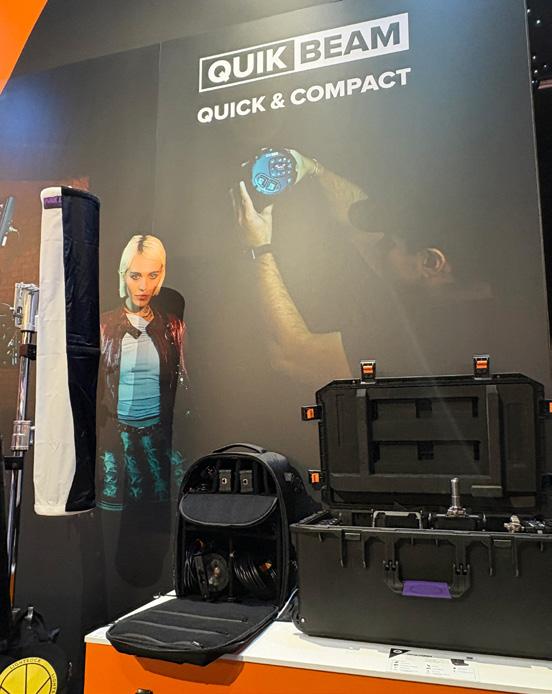
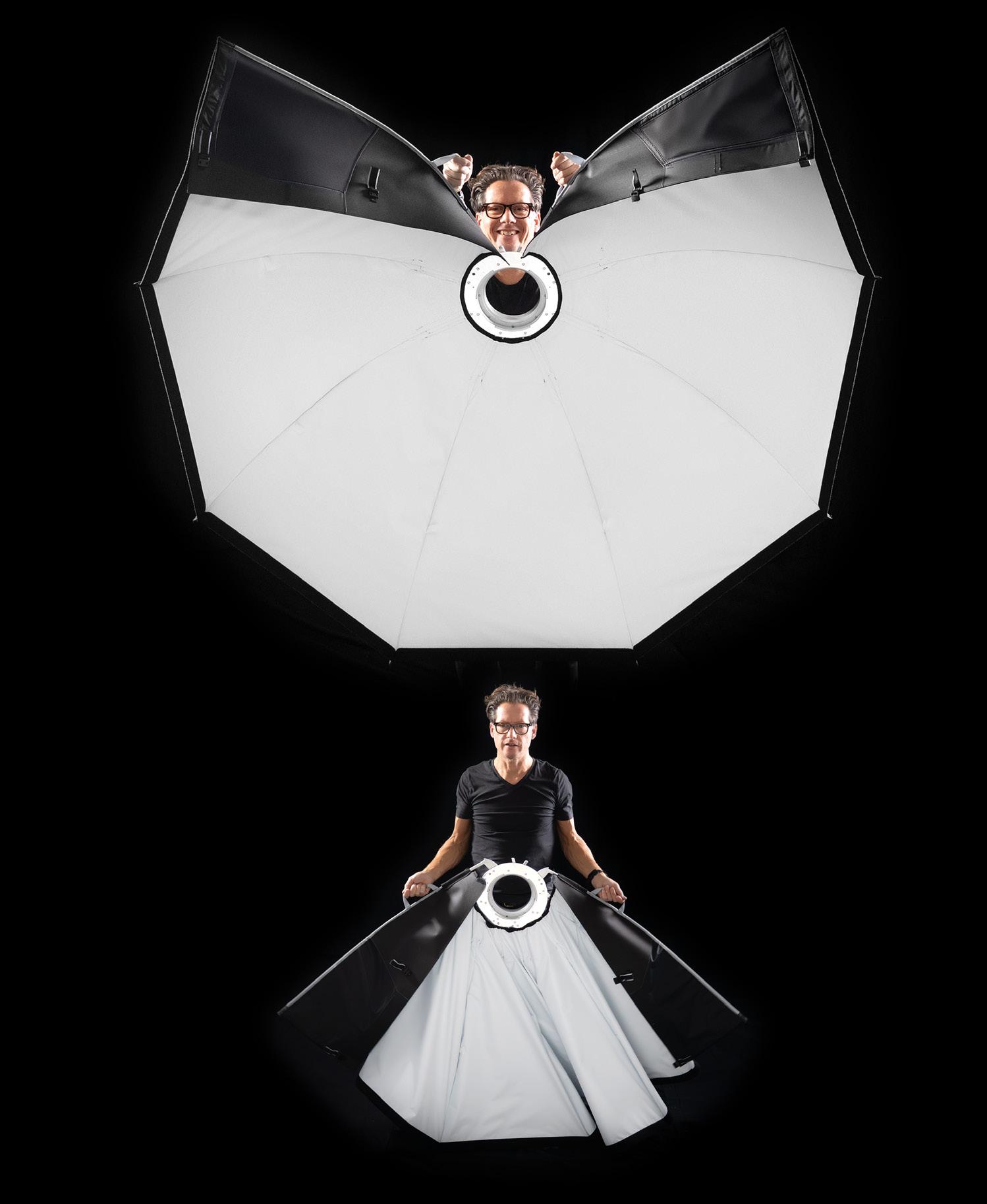
DoPchoice has expanded its range of light-shaping tools with two new modifiers. The Snapbag Round for the Astera QuikBeam, and the Snap Rabbit Octa 5 Snapbag, are both designed to enhance versatility whilst keeping set-ups fast and portable.
Developed specifically for the Astera QuikBeam, the Snapbag Round transforms the compact fixture into a larger, softer circular source. Despite its minimal footprint, it delivers broader, more flattering illumination suited to interviews, close-ups and eye light. A silver reflective interior maximises output, whilst multiple diffusion options – including a Quarter Grid Cloth baffle, Half Grid and Snapcloth front diffusions – allow users to fine-tune softness.
The unit can also be used open-face for higher intensity. Designed with portability in mind, it pops open instantly and mounts quickly via a simple
ring and strap system, packing neatly into existing QuikBeam case kits.
The Snap Rabbit Octa 5 Snapbag is a shallow, 5ft octagonal softbox built for rapid deployment and efficient storage. Its fan-style design opens with a single motion and secures via magnetic closures, forming a curved dome that produces smooth, even
light via its white reflective interior. An included internal baffle adds further diffusion when needed.
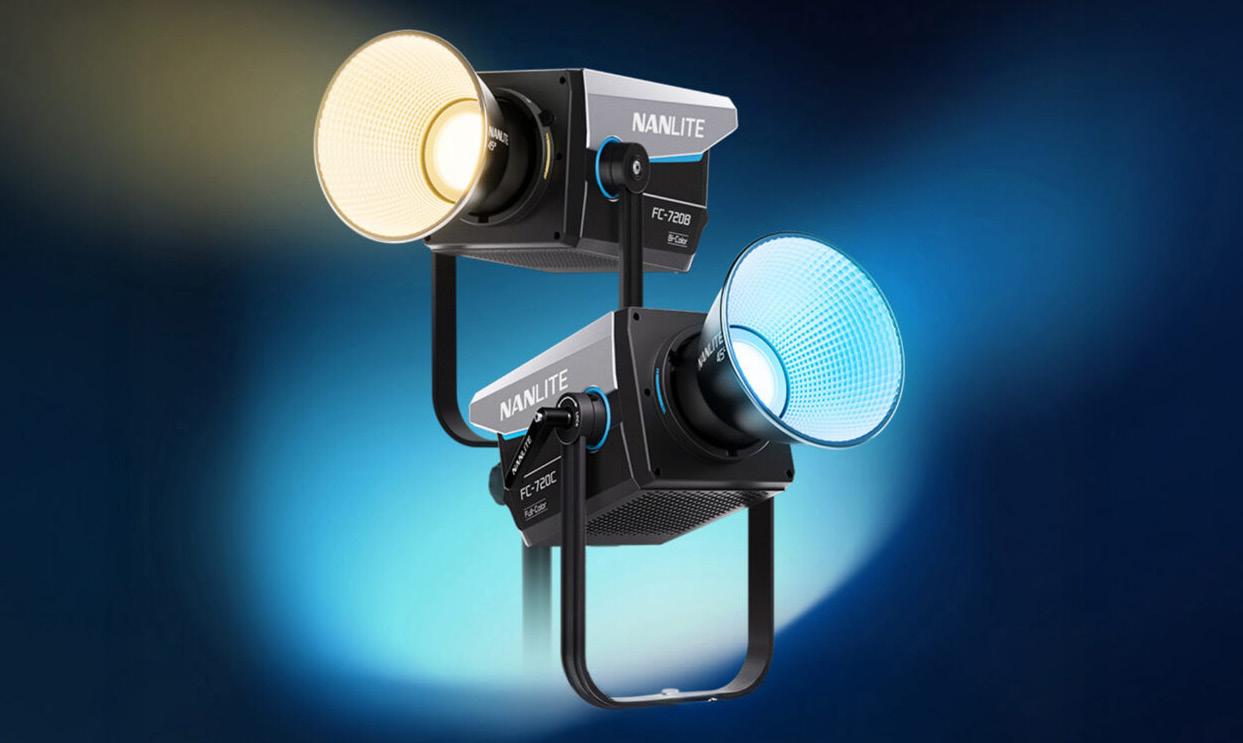
NANLITE EXPANDS FC SERIES MODELS
Nanlite has expanded its FC series with the new FC-720B and FC-720C, two high-output LED spotlights designed for creators and videographers working across a range of productions. Delivering up to 750W, both models provide strong illumination suitable for large scenes or simulating sunlight in more confined spaces.
The FC-720B is a bi-colour fixture with a colour temperature range of 2,700K to 6,500K, offering accurate reproduction of both warm and cool tones. It delivers up to 12,690 lux at three metres (5600K, with 45° reflector) and features CCT and Effect modes, including options for maximum or constant output.
The FC-720C builds on this with full-colour capability, covering 2,400K to 12,000K and including ±150 green/magenta adjustment for fine-tuning in mixed lighting conditions. It offers five modes – CCT, HSI, RGBW, Gel and Effect – and outputs up to 11,400 lux (5600K) at three metres.
Both fixtures share a consistent FC series design,
weighing approximately 4.4kg and featuring a Bowens mount for compatibility with a wide range of accessories. Control is available via on-board controls, DMX/ RDM or the Nanlink 2.0 app, with NFC support for batch set-up.
A 2-inch display and dual control knobs enable quick adjustments, including 0.1% dimming increments. The yoke
allows 360° tilt, and four fan modes – including a low-noise Smart mode at around 26 dB(A) – make the lights suitable for sound-sensitive environments.
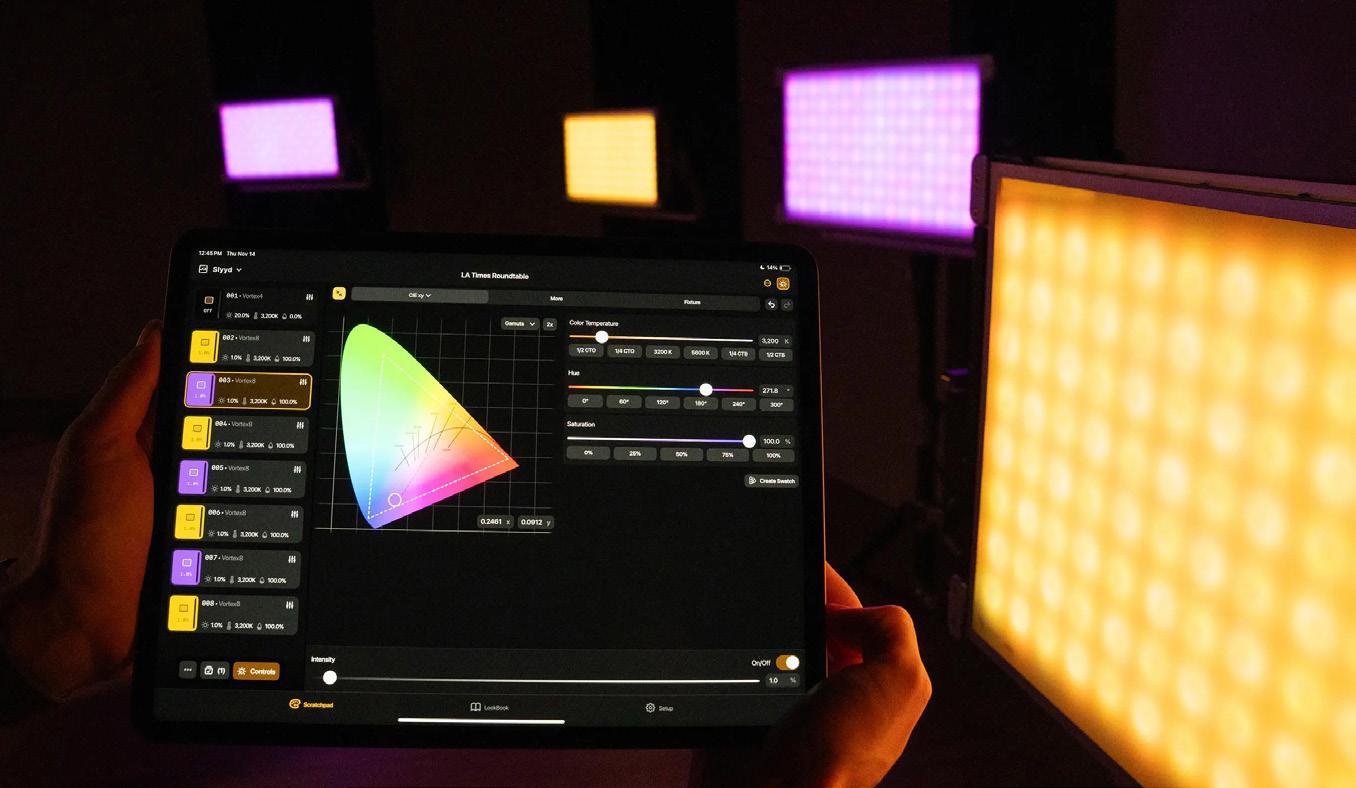
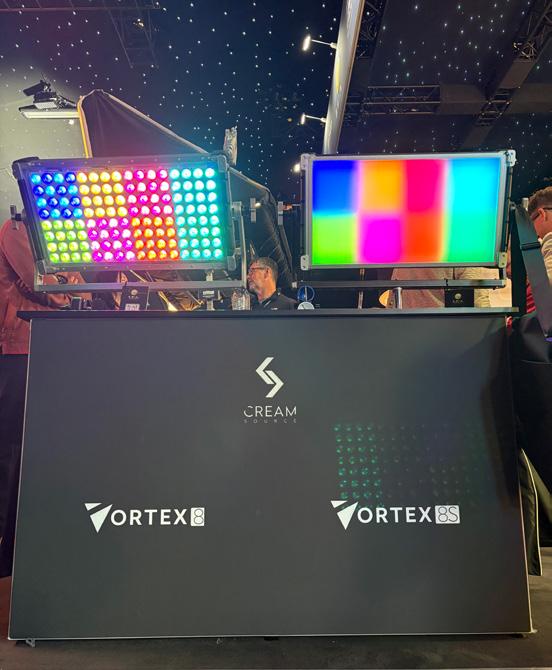
CREAMSOURCE RELEASES SLYYD
Creamsource has released Slyyd v1.5, the latest update to its professional lighting control app for iPadOS and iOS. Shaped by user feedback, the update introduces high-demand workflow features that expand how lighting looks are created, adjusted and played-back in real-world environments, whilst extending control to larger set-ups with support for up to four DMX universes.
Key additions in Slyyd 1.5 include LookStacks, a new way to build and play-back lighting looks using a simple, layered workflow. Users can create animated sequences with defined fade times and delays, keeping cues synchronised across multiple fixture brands and fixture types. Looks can be saved, recalled and stepped-through as production needs change.
The Relative Encoder lets users scale intensity, colour temperature or colour values proportionally, and the CIE xy colour picker now displays multiple selected fixtures simultaneously, with expanded
reference gamut support, including AdobeRGB and DCI-P3.
Slyyd 1.5 adds ArtNet output alongside sACN, with configurable sACN priority, making it easier to integrate Slyyd into a wide range of existing lighting networks.
Alongside these additions, Creamsource has launched Slyyd Pro, a
V1.5
new subscription tier intended for larger rigs and more complex set-ups.
LISBON CINE EXPO 2026 ROUND-UP
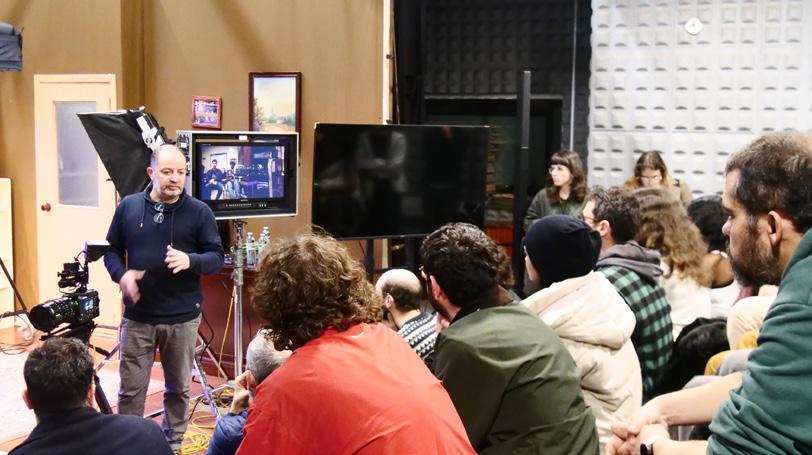
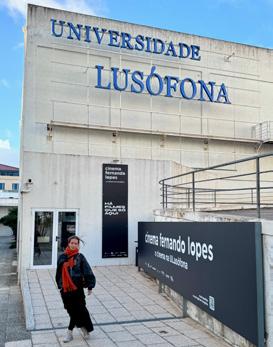
Lisbon Cine Expo 2026 – organised by the Portuguese Society Of Cinematographers (AIP) in partnership with production guide Cineguia and Lusófona University – took place on 12-13 February.
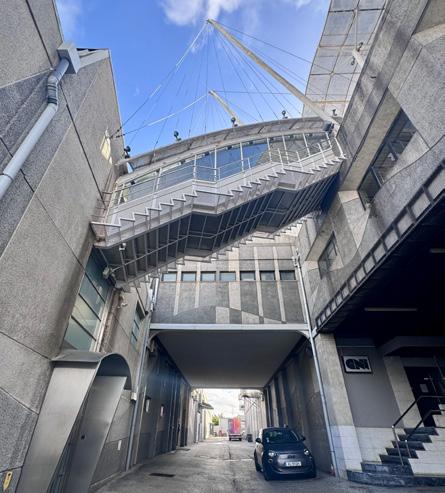
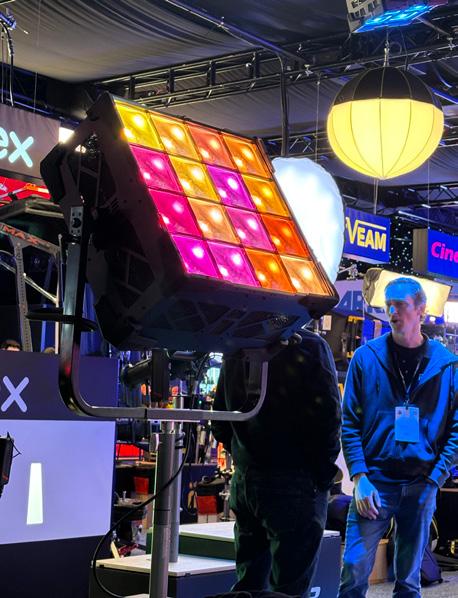
Launched in 2012, the biennial show is a showcase for cameras, lighting and production technology aimed at DPs, technicians and students. The event took place in the large studio at Lusófona University, which also supplied its other studios and auditoriums for presentations and workshops, with professional education and student engagement keystones of the event.
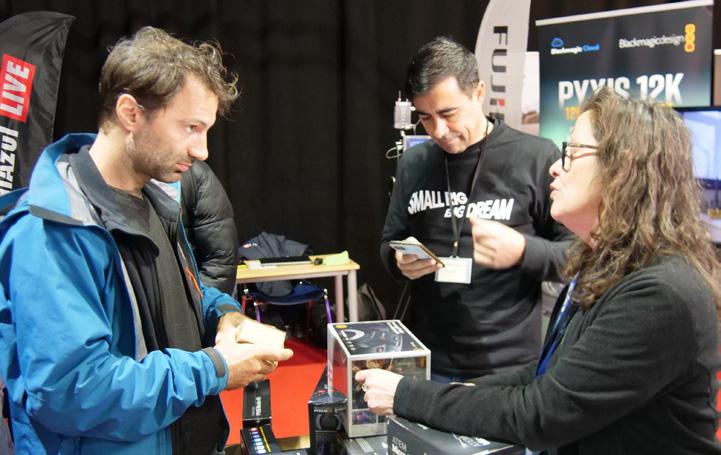
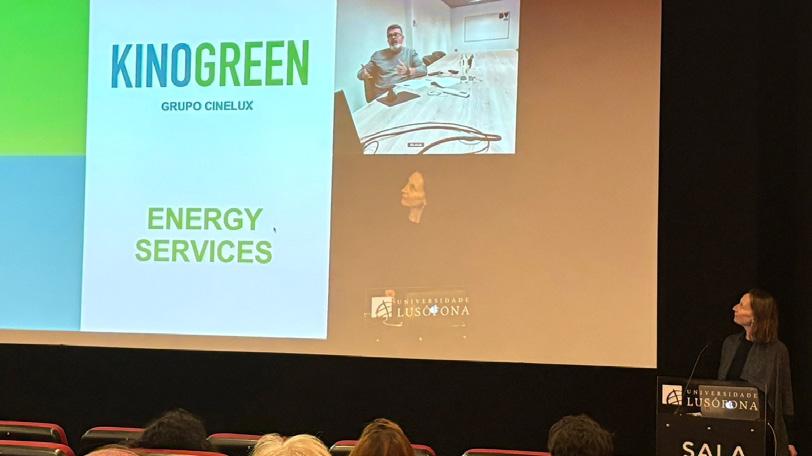
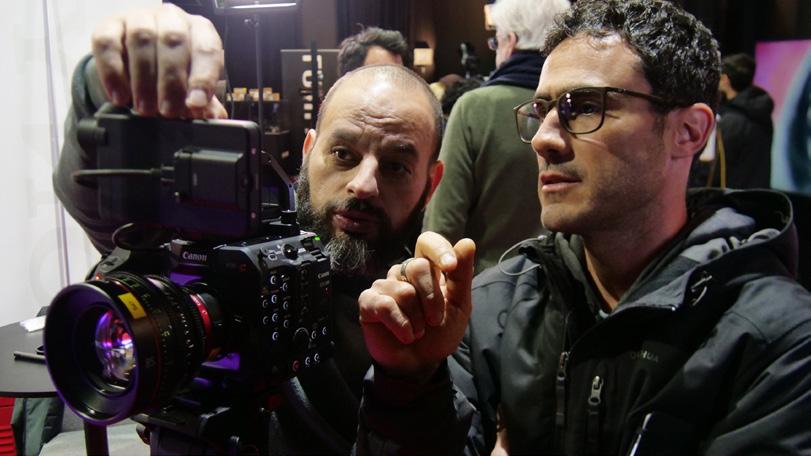
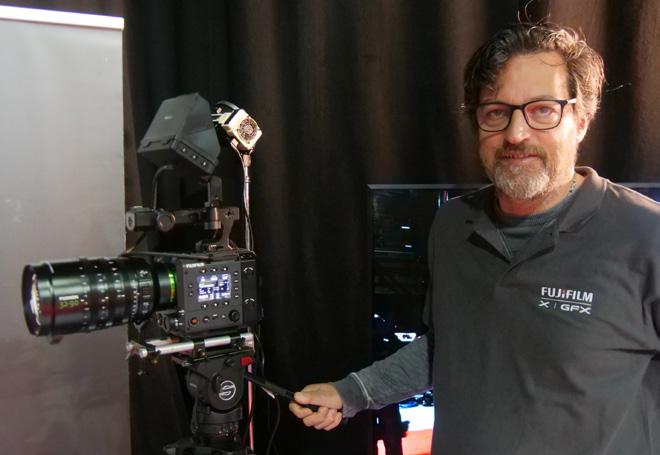
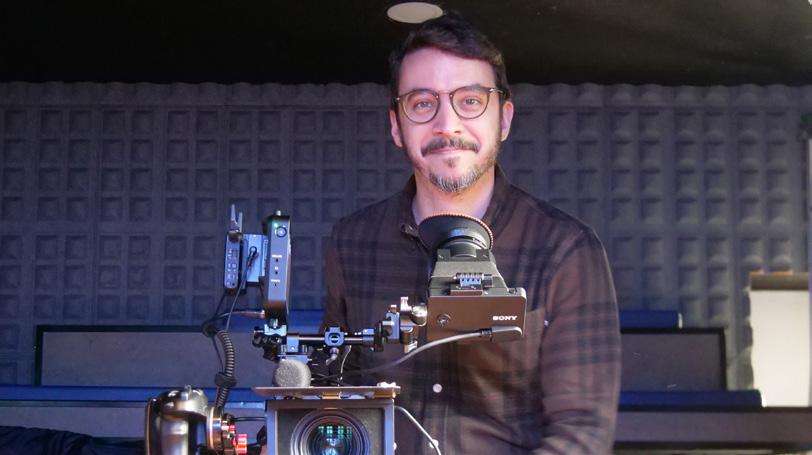
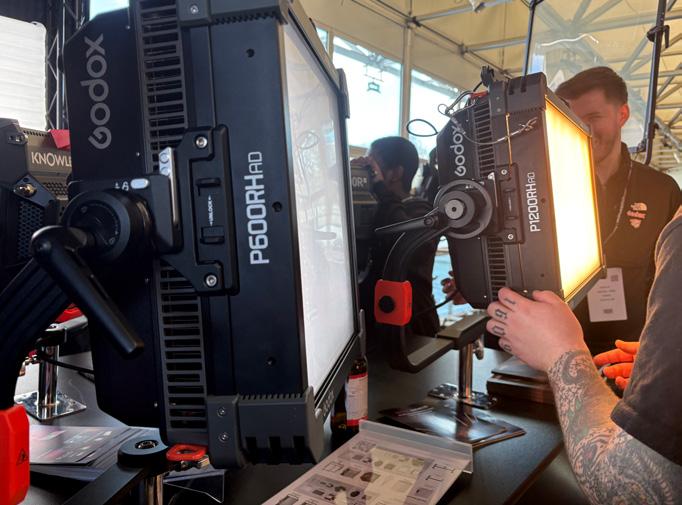
The expo included demos of the Fujifilm Eterna 55, Sony Burano, Blackmagic Pyxis and Canon’s line of cine cameras, along with the latest from Godox lighting, plus an online talk from Spain about sustainability and replacing fossil fuel generators with battery power. The AIP has formalised a “green” approach, promoting equipment and practices to reduce pollution and fossil fuel emissions.
Despite competition between vendors and exhibitors, that didn’t stop them exchanging knowledge, discussing shared interests and providing mutual services and sales. For the AIP, the
strong, loyal relationships and partnerships amongst peers create synergies that improve the quality of services and equipment offered to the community.
Visitors were also able to assess the state-of-theart. Conversations about AI dominated the agenda, with concerns about job displacement and reduced sales. There were some long and nuanced debates, ranging from pessimistic to optimistic, reflecting the industry’s search for strategies to adapt and thrive.
Looking ahead, the AIP is preparing for Lisbon Cine Expo 2027, February 10-11, with a central theme of the event being a ‘Colour Summit’.
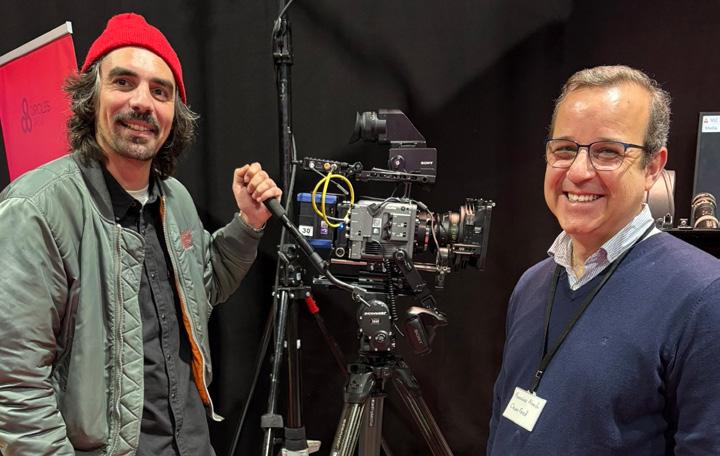
DP Duarte Domingos AIP (l) with Francisco Almeida (r) of Cleanfeed, an enthusiastic supporter of Lisbon Cine Expo
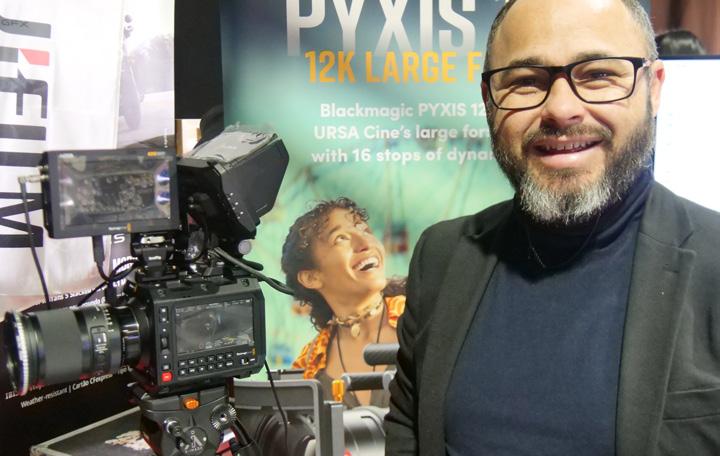
DP Ney Goltara came all the way from Porto in bad weather to demo Blackmagic’s Pyxis 12K on ETCINE’s stand
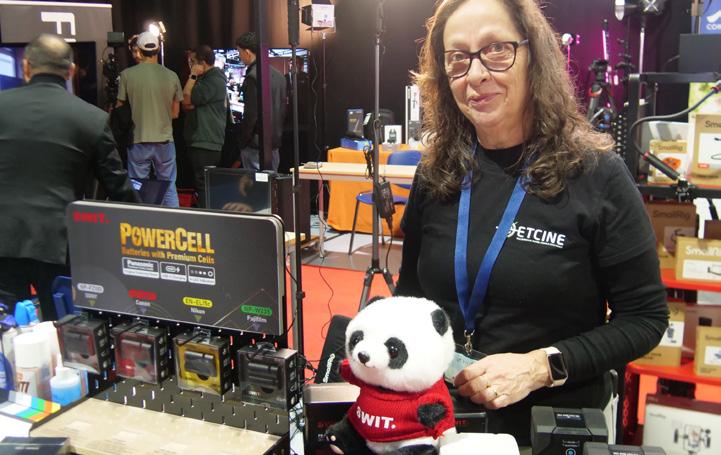
Rosa Jacinto from ETCINE – a keen supporter the expo since it started
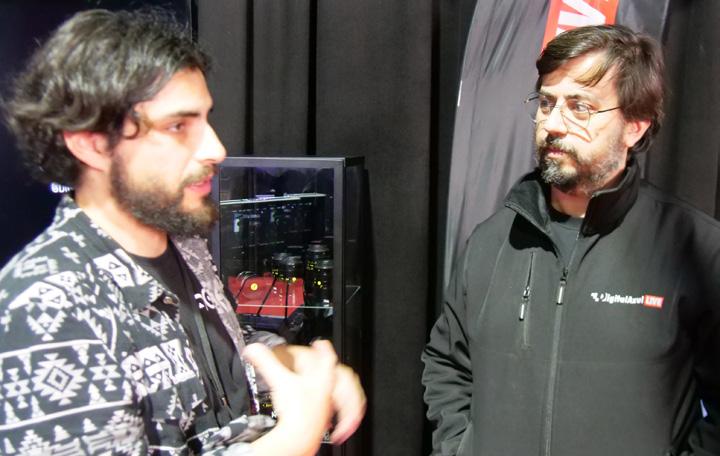
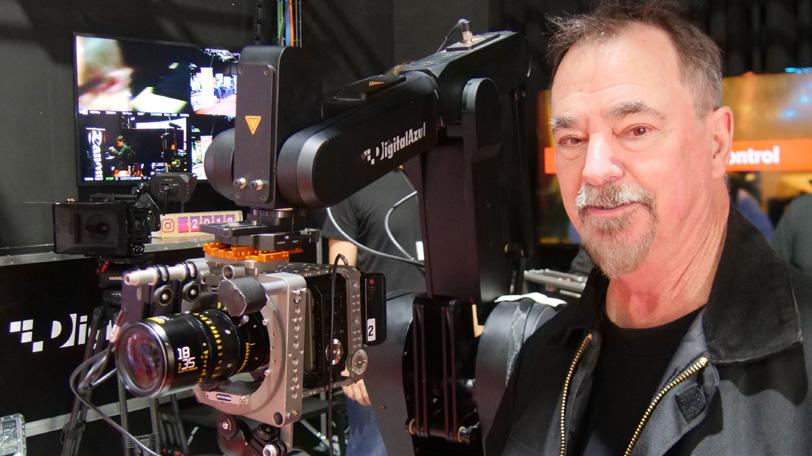
Lecturer Danilo Cares (l) and João Tocha (r) from Digital Azul talking about equipment
João Pedro Placido AIP talking to Rosa Jacinto, with Fernando Lacerda also from ETCINE
Live from Barcelona, a conference on green production by Tito Arcas of Kinolux
Max, an aspiring camera assistant, now an intern at Planar camera rentals, admires the world of analogue filming
DP David Stump ASC BVK now lives in Portugal and teaches in the cinematography department at Lusófona University
Camera assistant Daniel Bustamante with videographer Abel Andrade checking-out a Canon C400
The Fujifilm Eterna 55 was one of the stars of the show
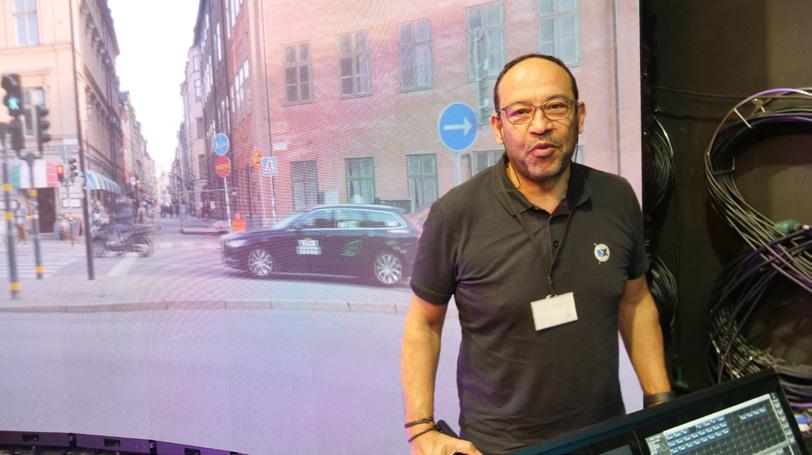
Helibrando Videira from FX Roadlights and its LED wall
António Morais AIP preparing Sony Burano for a workshop
DP Aurélio Vasques gave a lecture about the Fujifilm Eterna55 to a packed house
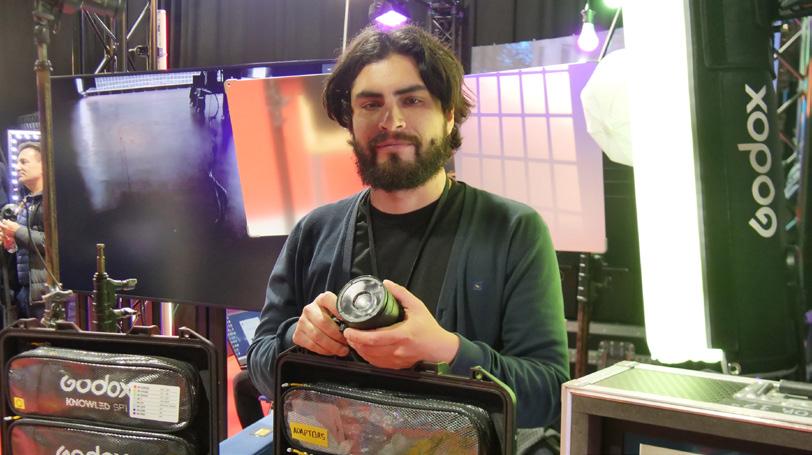
Chilean DP Danilo Cares’ presentation at Godox was a great success with the young audience
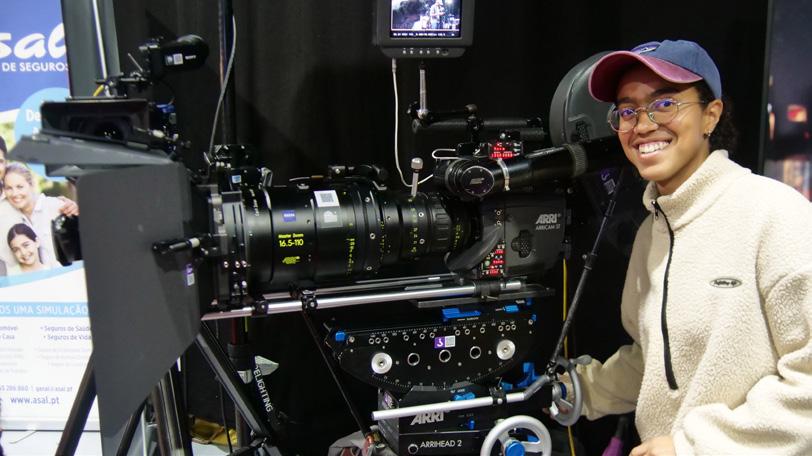
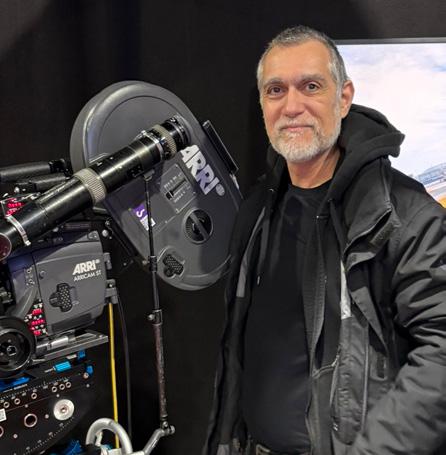
DP Miguel Sales Lopes AIP taking a nostalgic look at ARRICAM ST 35mm camera
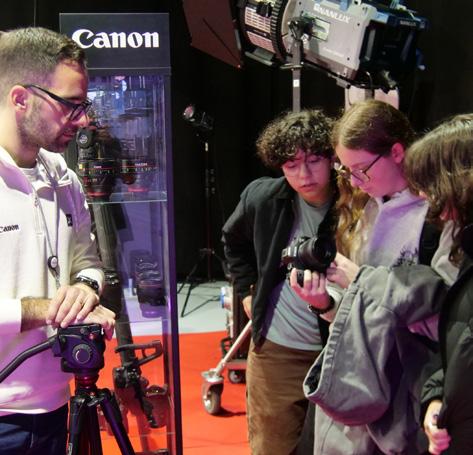
Sérgio from Canon observes the interest of students with one of the Canon products
LISBON, PORTUGAL •
THINK PORTUGAL!
By Ron Prince
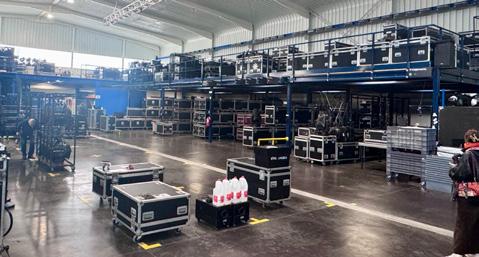
FX ROADLIGHTS: offers the very latest lighting for concerts, events, commercials and film/ TV production, from an extensive inventory encompassing all manner of LED fixtures, dimmers, distro, lighting consoles and rigging. It also has studio spaces and is the first in Portugal with LED wall technology for virtual production (VP). Bruno
CINEMATE: a family-run lighting/grip rental house, occupying a 4km² lot, with over 50 years of cinematic know-how in servicing commercials, features, documentaries, TV shows, photo shoots and music videos. It has a large selection of the latest lighting from the likes of Creamsource, ARRI, Nanlux, Astera and Aputure, plus traditional HMI, fluorescent
STP: an independent rental company founded by professional gaffer Sérgio Pontes. Tomas Oliviera gave us the tour. STP stocks all the key brand names in lighting, like ARRI, Creamsource, Astera, Aputure,
DIGITAL AZUL: an independent script-to-screen production house, run by CEO João Tocha, providing diverse services for audio/visual production and livestreaming across film, advertising and TV. Cameras include Sony, Red, Canon, Blackmagic and
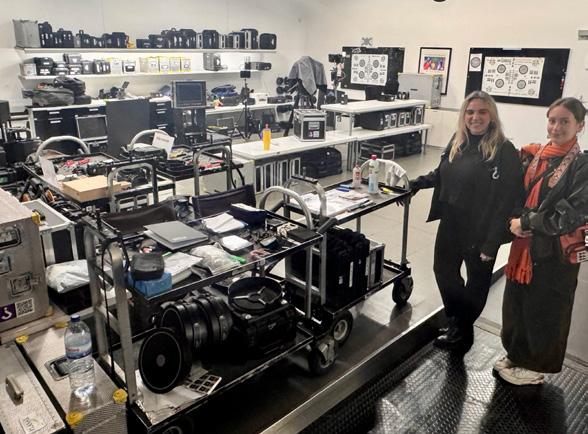
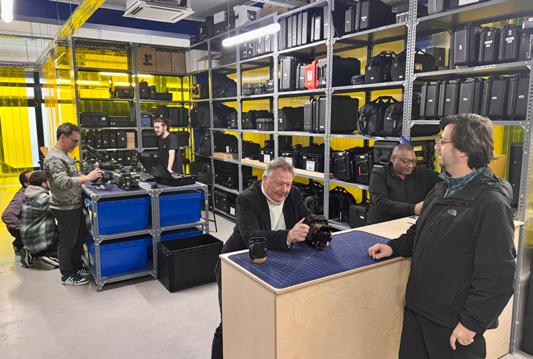
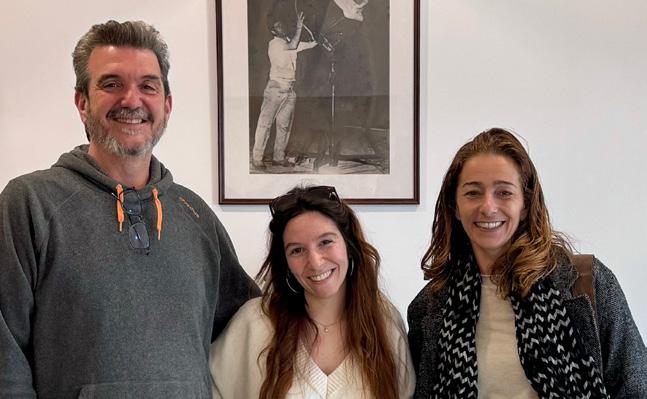
During our trip to collect the Special Award from the AIP, Tony Costa AIP toured us around some of Lisbon’s leading film/TV service companies, accompanied by Eunice Figueiras, a student of cinematography at Lusófona University.
Whilst the film/TV business is small
in-comparison to London, its facilities are perfectly formed – experienced/passionate people, the very latest kit, and quality being the priority. With sandy beaches along miles of coastline, lush forests, around 300 days. sunshine and tax incentives, it’s an attractive place to bring a project to life.
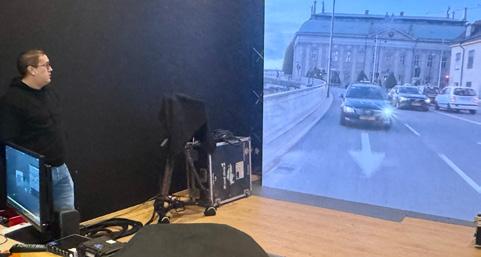
Nunes noted that the challenge of VP adoption is giving producers, directors and crew the knowledge and confidence to use the technology successfully, and they are helping with open days in their ‘Brain Bar’ for learning/testing, and with partners, such as Lusófona University, amongst others. www.fx-rl.com.pt
and Tungsten units, along with generators and power banks. It also offers dollies and cranes amid a panoply of grip gear. There are three professional studios at the site, including a cyclorama, plus dressing rooms. Since 1996, the company has produced several features every year. Real film people! www.astera-led.com
Dedo and LiteGear, and a fleet of vehicles to ferry it all around, plus generators. Grip gear encompasses dollies, including a Motion Impossible Agito, tracks and trussing. It’s the first in Portugal with a 45ft Scorpio
PLANAR: a mini-Panavision, established in 1998, and run by former DP Jose Tiago. Operating under the mantra, “We Care For Your Picture”, Planar is a leading destination for cameras, lenses and associated paraphernalia. Equipment includes the latest digital cinema cameras from ARRI, Sony Red and Blackmagic,
crane, and an electric motorbike offering multiple camera mounting opportunities. Oh, and it has a 200m² studio too. www.stpaudiovisuais.com
plus a broad collection of modern and vintage lenses from Cooke, Zeiss, Orion, ARRI, Kowa and Leitz. If you want something off-menu, they will get it for
GoPro, with high-speed Phantom and Freefly Ember, together with sliders, cranes, Easyrigs, gimbal stabilisers, magic arms and matte boxes. For remote productions, there’s an inhouse control room to receive audio and video feeds from PTZ cameras in far-flung locations. The company has
NOVA IMAGEN GROUP: run by Tania Nunes, this family-owned group encompasses Showreel and Contra Campo, offering multiple studios, plus lighting and grip equipment, along with cameras and lenses, and a fleet of vans, trucks and generators – all focussed on servicing local and incoming productions of size and scale. The company previously ran the largest film lab on the Iberian Peninsula,
LUSÓFONA UNIVERSITY – FILM & MEDIA ARTS DEPARTMENT: the cinematography course is headed by Tony Costa AIP, and students have their own enclave on-campus, where the focus is all about hands-on training and creative growth. The equipment warehouse stocks digital and
you. With workshops, plus test/prep spaces for DPs and DITs, everything is geared towards helping clients from prep to production, including a 24/7 standby service, whether they are supporting features, documentaries, TV dramas or commercials. They also put on a splendid home-cooked lunch! www.planar.pt
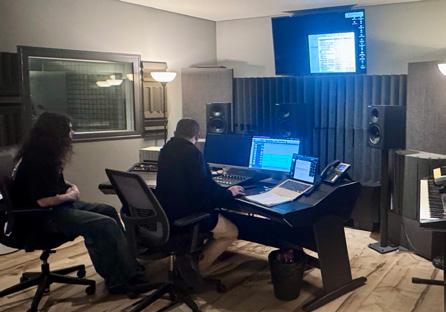
a small, sound-proofed packshot studio, with makeup and wardrobe areas, and two fully-equipped sound studios for audio post. Switched-on! www.digitalazul.pt
but kept the name, Light Film which is now a full-service post house, offering storyboards, animatics, look-development, grading, VFX compositing, 3D CGI, motion graphics and editing, for blue-chip advertising brands. Always set. Always ready. www.gruponovaimagem.pt
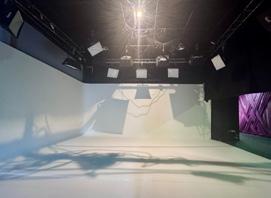
film cameras, modern LED and traditional lighting gear. There’s an 85m2 filming studio with lighting gantry, and a 96m2 TV studio with multiple cameras, lighting console
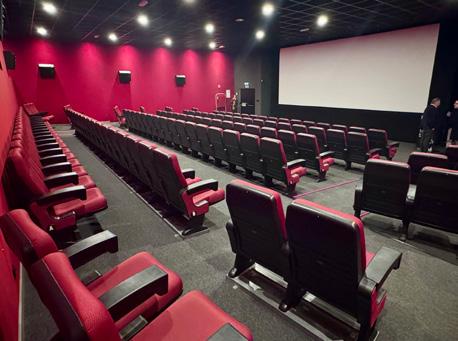
and various backgrounds, plus sound studios, dressing/make-up rooms, motion capture and colour grading facilities. And… a 125-seat cinema with Christie 4K projection and Dolby 5.1 surround sound.
https://cinemaeartes.ulusofona.pt/en/
Family team: Rui Guerra, Rita Guerra and Joana Costa Gasper, with company founder Fernando Costa pictured above.
CAMERA VISION
Our regular round up of who is shooting what and where
LOOP TALENT:
Johanna Coelho recently wrapped on The Pitt S2 in LA. Bebe Dierken BSC has graded the HETV series The Rapture Oona Menges BSC is filming in Wales. Darran Bragg has been working with longtime collaborator Lucy Brydon. Denson Baker ACS NZCS is shooting the feature No Way Off, and will also grade The Butler Ryan Eddleston has graded About A Bell Ali Asad is prepping the feature Tottenham Rules Matt North graded a returning series and is in prep for BBC series Shetland Martyna Knitter shot the feature Foxtrot One One and the documentary Extragrades Tom Turley is lensing the documentary Epic Iran Thomas English has been shooting ads for Just Eat and McCains. Emma Dalesman has been lensing for Visa. Paul Mackay recently shot football commercials in Madrid and Milan. Nick Bennett lit spots for Sky Creative and ITV. Jon Muschamp is shooting a feature with director Guy Pitt. Chris O’Driscoll framed shortforms for Coca Cola and C4. Olly Wiggins has been lighting TVCs with longtime collaborator Chris Faith. Dave Miller has been filming short form. Natalja Safronova and Marti Guiver are back in the UK after travels abroad. Loop Talent Crew welcomes Steadicam/Camera operator Junior Agyeman-Owusu ACO to its roster. Steadicam Operators James Anderson ACO and Ben Mitchell ACO have been operating dailies. Ben Eeley ACO SOC shot on The Split Up as A-Camera/ Steadicam and is back to the world of ads. Sebastien Joly ACO, Gary Kent, David Pulgarin ACO, Grant Sandy-Phillips ACO and Michael Vega have been operating Steadicam in short form. Camera operators Toufique Ali and Jack T. Smith have been operating on commercials. Laura Van De Hel is prepping for a Band 3 HETV series.
PRINCESTONE:
Of the agency’s Camera/Steadicam operators… Simon Baker ACO is shooting the feature Eloise, directed by Amy Sherman-Palladino for Netflix, starring Ryan Reynolds. Michael Carstensen ACO has done recces on Kennedy, a Netflix TV series with Michael Fassbender as Joe Kennedy Sr, directed by Tommy Schlamme and Thomas Vinterberg, with DP Manuel Alberto Claro. Matt Fisher ACO is filming Luther in London with director Jamie Payne and DP Martin Ruhe ASC. Rob Hart ACO is in Slovakia shooting the next season of Buccaneers for DP Tasha Back BSC. Justin Hawkins has been lensing Rivals S2 with DPs John Lynch ISC and Carlos Catalan BSC, starring David Tennant and Aidan Turner. James Layton Associate BSC ACO is framing Apple TV+’s Silo S4, with DPs Ollie Downey, Anna ValdezHanks and Zac Nicholson. Peter Robertson Associate BSC ACO recently wrapped on Narnia for DP Seamus McGarvey BSC ISC ASC, directed by Greta Gerwig, with a cast including Daniel Craig and Carey Mulligan. Joe Russell ACO has started on Frankie Boyle’s drama Meantime with director Jon S Baird and DP Kate Reid BSC. Fabrizio Sciarra ACO recently wrapped on Werewulf with director Robert Eggers and DP Jarin Blaschke, starring Aaron Taylor-Johnson and Willem Dafoe. Of the agency’s DPs… Diego Rodriguez has been shooting two projects with Renowned Films under working titles Southern Harm and Bad Guru. Diego is still shooting a Netflix documentary with 22 Summers looking at the work of the King’s Trust.
WIZZO & CO:
The agency welcomes Belgian cinematographer Maxime Lahousse SBC to its roster. Maxime shot the drama Northern Lights directed by T. Hall, R.
A. Schattenman in
Tim Sidell BSC recently graded an embargoed documentary directed by Caroline Katz. Dan Stafford-Clark has graded Big Mood S2. Jan Richter-Friis DFF has completed the colour work on The Walking Dead: Daryl Dixon Luke Bryant is shooting Honey directed by Michelle Savill in Lithuania. Scott Coulter lit a pilot for C4. Dmytro Nedria has done the DI on the feature Merry Christmas Aubrey Flint, directed by Jack Spring. Mike McMillin shot 2nd Unit on a new Apple TV drama. Ashley Barron ACS is prepping a recurring Netflix drama. Felix Cramer has been filming in Germany. Maximiliaan Dierickx SBC is prepping a feature in the UK. Darius Shu shot a documentary for Dash Pictures. Steven Ferguson is prepping an embargoed drama. Nick Dance BSC is prepping a recurring drama in Croatia. Chas Appeti continues on an embargoed project. Mathias Pilz continues on a Netflix project. Fede Alfonzo is prepping
Meehan and
Ireland.
This page: DP Johanna Coelho on-set; Aman K. Sahota on the period short Sister Anna in Wales, with director Emma Morley by the monitor; and DP Darius Shu, 2nd unit DP on Last Days, directed by Justin Lin.
www.astera-led.com/quikbeam
an embargoed feature. Aman K Sahota has graded the short, Sister Anna, directed by Emma Morley. Hamish Anderson has done the DI on the feature A Rare Breed Shaun Harley Lee SASC is lighting an embargoed series. Susanne Salavati BSC is shooting an Apple TV drama alongside director Josephine Bornebusch. Franklin Dow is filming a documentary with Steven Leckart. Simon Stolland lit the feature, Matched, directed by Gav Mukerji. Arran Green shot a pilot with Tommy Davis. Ryan Kernaghan ISC is prepping a Rich Peppiatt feature. Aaron Reid BSC continues shooting Supacell S2 alongside director Rapman. Gary Shaw continues shooting Black Doves S2 with director Kieron Hawkes. Theo Garland filmed with Andre Maat. Will Bex lit for Edward Andrews. Sverre Sørdal FNF recently graded a project in Norway. Rasmus Arrildt DFF is prepping a drama in Denmark.
Murren Tullet shot with Stuart Rideout. Ben Magahy filmed with director Warren Fu. David Procter BSC lensed with director Toby Dye. Charlie Goodger is on an embargoed drama. Henry Gill shot with Nathan Burland. Chaimuki lensed a commercial directed by Jocelyn Anquetil. Joe Douglas filmed with Giles Ripley.
INDEPENDENT TALENT:
Stuart Bentley is shooting Walk The Blue Fields, directed by John Crowley. Ole Birkeland is prepping for The Last Of Us S3, directed by Vincenzo Natali, Andrew Bernstein and Hiromi Kamata. Jermaine Canute Edwards is confirmed on the new BBC series Wahala Oliver Curtis BSC recently wrapped on Block 2 of War, directed by China Moo Young. Ben Davis BSC is shooting Jumanji 3, directed by Jake Kasdan Michael Filocamo recently started prep on The Secret Diary Of Adrian Mole, directed by Alex Winckler. Suzie Lavelle ISC BSC is shooting Hillside Drive, directed by Lenny Abrahamson. Seamus McGarvey BSC ASC ISC recently finished shooting Narnia, directed by Greta Gerwig,
and has been in prep for Bare, directed by Lorna Tucker Stephan Pehrsson BSC is filming on Blocks 1 & 5 of Mobland S2, directed by Guy Ritchie. Kate Reid BSC is on Meantime, directed by Jon S Baird. Ashley Rowe BSC is shooting Block 2 of Mobland S2, directed by Brady Hood. Martin Ruhe ASC is lighting Luther 2, directed by Jamie Payne. Erik Wilson BSC is prepping for the live-action Tangled, directed by Michael Gracey. Miguel Carmenes is busy on ads with directors including Jonnie Malachi, Luke Brookner, Josh Cohen & Elliot Simpson. Chris Clarke has been shooting TVCs with Adam Wells & Bugsy Steele. Billy Kendall has been filming spots with Relta, Liam Gleeson, Alpernia & Charlie Rees. Patrick Meller has been filming ads with Fred Rowson & Alex Boutell. Mark Patten BSC lit a commercial with Dominic O’Riordan. Chris Sabogal has been lensing ads with Sam Hibbard and Charlotte Regan, having finished grading on Mint, directed by Charlotte Regan. Linda Wu has been shooting with Merman directors Rachel Stubbings, Tash Tung and Billy Boyd Cape. Caroline Bridges is lighting on Ting, directed by Maximilian Dejoie. Arni Filippusson has recently wrapped on This City Is Ours S2 and is confirmed on Down Cemetery Road S2 with director Börkur Sigþórsson. Erik Kress is filming The Great Christmas Carol, directed by Morten Boesdal Halvorsen. Donna Wade recently wrapped on Forever Home with Paul Gay. Toby Lloyd has recently lensed Bananaman with Spike Curtis and shot the short,
(clockwise
setting-up a
Iceland; DP
wrapping Sad
for a
DP
WORLDWIDE PRODUCTION AGENY:
Congratulations to Jake Gabbay on winning the prestigious BSC Award for Best Cinematography In A Music Video for Chains & Whips, working alongside director Gabriel Moses Baz Irvine ISC BSC continues shooting Mobland with director
Zetna Fuentes for Paramount+. Jamie Cairney BSC is lighting the new BBC series, Legacy Of Spies, with director Michael Lennox. Edouard Le Grelle shot the feature film Sandy Banks with director Tony O’Donnell in Ireland. Stephen Murphy ISC BSC has graded the second season of The Gentlemen for Netflix. PJ Dillon ISC ASC continues shooting the third season of Netflix’s Wednesday with director Tim Burton. Christophe Nuyens SBC is filming the first series of Harry Potter for Warner Brothers/HBO with director Ben Caron. David Ungaro AFC is prepping for
This page:
from top) David Procter BSC shooting a commercial with Framestore Pictures in Prague, (photo by Ondra Kos); Darius Shu on Last Days; DP Karl Oskarsson IKS
shot
short in
Darius Shu again; Simon Stolland and crew after
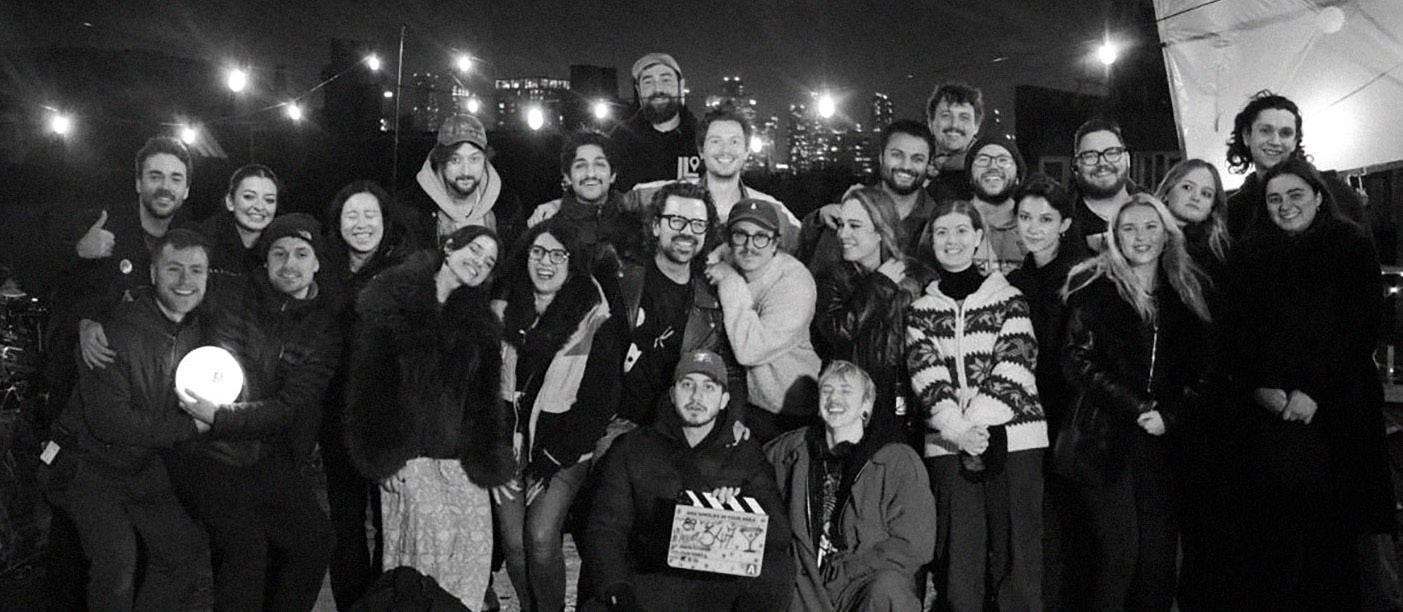
Singles In Your Area;
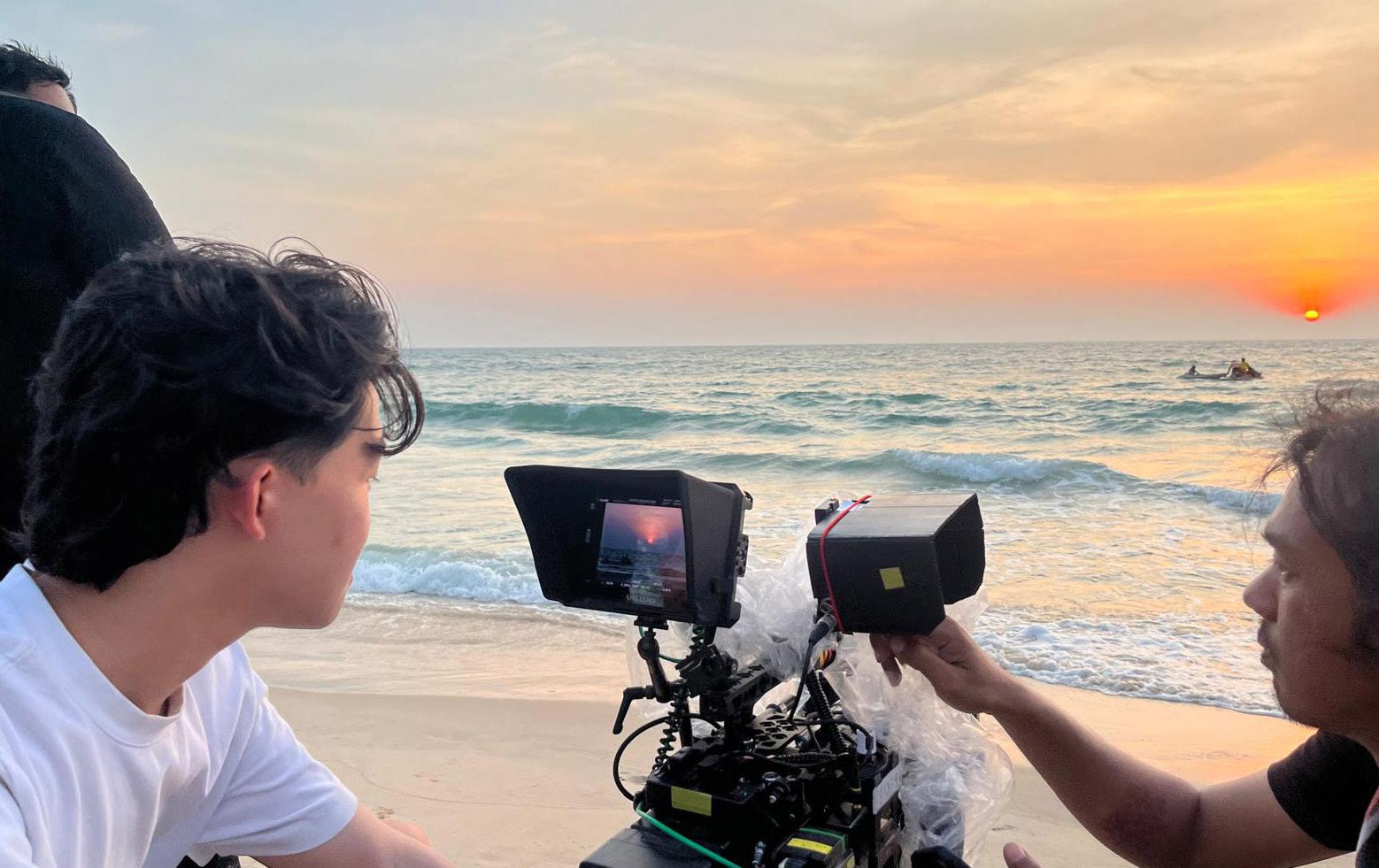
Darius Shu again; DP Ashley Barron ACS on How To Get To Heaven From Belfast, with gaffer Adam Slater, photo by Christopher Barr; and DP David Procter BSC with producer Harvey Ascott on an Old El Paso ad in Kosovo.
Tussle with Gabrielle Torreborre. Carmen Pellon Brussosa was the B-camera operator on Hestia with Dawn Shadforth.
WHO, WHAT, WHEN & WHERE
Netflix’s Dept. Q S2 with director Scott Frank. Maja Zamojda BSC continues shooting Red, White And Royal Wedding for Netflix with director Jamie Babbit. Joel Devlin BSC lit the final Block of BBC’s This City Is Ours S2 with director John Hayes. Anna Patarakina FSF is shooting the new BBC series Shy & Lola with director Samuel Donovan via Clerkenwell Films. Xavier Dolléans AFC is filming the new
and directing duo Zite & Léo in Paris, before returning to London for a Hiscox commercial with Uncommon Creative and Matthew Walker. Matthew Fox lit multiple spots, shooting with You Are Here for Lidl, Bite Collective for Marks & Spencer and C4 for Married At First Sight. Edward Gibbs framed a commercial with Fresh Films and director George Hall. Adrien Lallau shot a Nia Archives promo for Stink and Claryn Chong.
prepping for Ibelin, directed by Morten Tyldum. Pat Aldinger shot campaigns for MLS directed by Romain Chassaing and a Brookfield ad directed by Henry Scholfield Eigil Bryld is shooting Somewhere Out There directed by Alexander Payne. Ben Fordesman BSC lit a spot for Coinbase directed by Oscar Hudson, and Doordash directed by Sam Brown
Paramount+ series Treasure Island alongside director Jeremy Lovering. Ruairí O’Brien ISC BSC is lensing The Day Of The Jackal S2 for Peacock alongside director Neasa Hardiman. Jake Polonsky BSC continues shooting a Lewis Hamilton documentary for Apple Studios. Tony Slater-Ling, BSC has graded the first Block of The Crow Girl S2 with director Charles Martin. Mattias Nyberg BSC recently wrapped on the second Block The Crow Girl S2 with director Bex Rycroft for Paramount+. Bryan Gavigan continues shooting C4’s new series Maud with director Lee Haven Jones. Rotem Yaron is shooting the upcoming series Safe Houses with Otto Bathurst for Apple TV+. Mattias Troelstrup DFF is lighting the second Block of new Netflix series Breakers Job Reineke has graded the feature, Hungry, with director James Nunn. Emily Almond Barr wrapped the third season of Vigil with director Faye Gilbert. Dan Holland continues shooting an upcoming docudrama for MBC. Tony C. Miller recently completed on the upcoming feature, His Weakest Creatures, with director Omar Hilal. Pieter Snyman shot in Ireland with director Charlie Sarsfield and Untold Studios for a Dermot Kennedy live promo. Eira Wyn Jones wrapped in Barcelona with Doomsday Entertainment and Gerogry Ohrel for an Extensur spot. Eira and Gerogry then travelled to Lithuania for a Logitech spot with Friend. Jaime Ackroyd shot a McDonalds ad with Academy Films’ director Sophia Ray Benjamin Cotgrove lit a Flore Benguigui promo for Hiersoir
Benjamin Todd wrapped a TVC for Opel Corsa in Bucharest with Mark Jenkinson and LA Pac, and lit an untitled commercial with Smith & Foulkes at Riff Raff Films Alexandre Jamin shot a Nintendo spot with The Jacks and Paul Mignot. Marcus Domleo lit a spot with Sticker Studios and director Kyle Jon Shephard for CeraVe.
LUX ARTISTS:
Ben Carey shot a music video for Charli XCX ,
directed by Mitch Ryan Darius Khondji AFC ASC shot a Gucci ad with Jonathan Glazer, a Prada spot with Wes Anderson, and a Rabane TVC with Paul Gore. Tasha Back is filming on Apple TV’s The Buccaneers Jarin Blaschke has wrapped Werewulf, directed by Robert Eggers. Nicolas Bolduc CSC is shooting on the Netflix series Dans Les Brumes De Capelans. Henry Braham BSC is prepping for Mister directed by Wade Eastwood. Jakob Ihre FSF and Manuel Alberto Claro continue prepping the Netflix series Kennedy, directed by Thomas Vintenberg. Lol Crawley BSC ASC is prepping for an untitled Damien Chazelle film. Matyas Erdely HCA ASC is shooting Deep Cuts directed by Sean Durkin. Oscar Faura started
Crystel Fournier
AFC is lighting A Town In Nova Scotia directed by Babak Jalali. Wyatt Garfield continues shooting Netflix series The Body Ruben Impens SBC is filming The Custom Of The Country directed by Josie Rourke. Benjamin Kračun BSC continues shooting Tom Ford’s Cry To Heaven John Lynch ISC lit Block 4 of Rivals S2. Michael McDonough BSC ASC is prepping for Paramount+’s Mayor Of Kingstown S5. Adam Newport-Berra is shooting Apple TV’s The Studio S2. Julien Poupard AFC is prepping for Dumas directed by Ladj Ly. Jonathan Ricquebourg AFC lit A Head Full Of Ghosts directed by Severin Fiala and Veronika Franz. Benjamin Roux is lighting Nord Loire directed by Antoine Chevrollier. Nanu Segal BSC, continues shooting on Apple’s Slow Horses S7 Ben Seresin BSC ASC wrapped Dalton directed by Ilya Naishuller. Bobby Shore CSC lit on the Netflix series The Body Bradford Young ASC lensed a Macmillan Cancer Research campaign directed by Child and Melina Matsoukas Arnaud Potier AFC shot a commercial for McDonald’s Trust directed by Sara Dunlop, a Nespresso ad directed by WAFLA , and a Peugeot TVC directed by Romain Chassaing Rik Zang
SBC has wrapped Netflix’s The Empres S3 Jasper Wolf NSC lensed a Zalando campaign directed by Walid Labri, as well as two NDA projects with Spike Jonze and Elliott Power Rob Hardy BSC ASC filmed a Twix as directed by Dougal Wilson
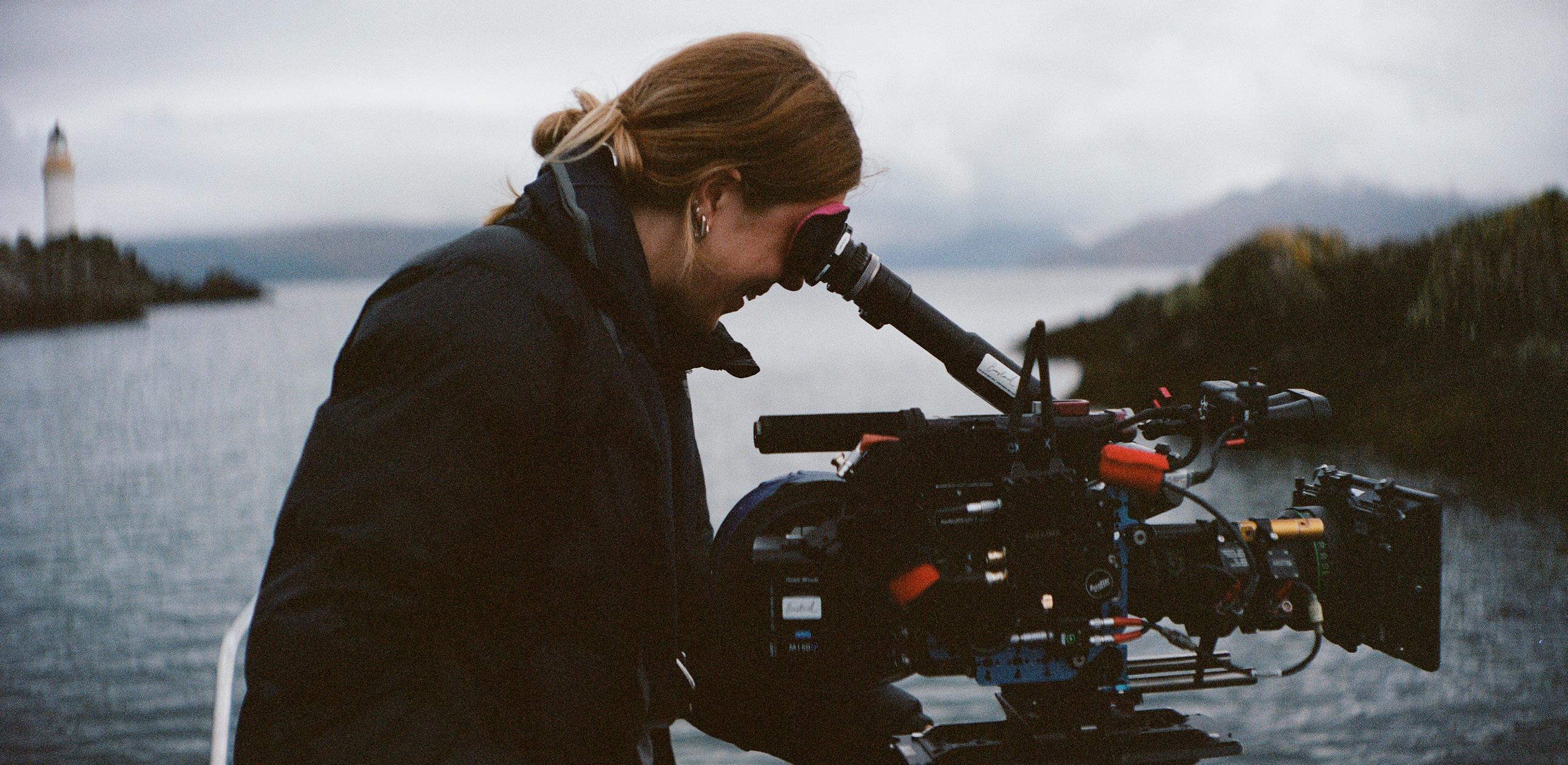
This page: (clockwise from top) Natasha Duursma at the film camera; multiple photos of Alejandro Martinez on a Bitso ad starring Eisa Gonzalez in Mexico; and DP Giuseppe Favale standing on the dolly.
WHO, WHAT, WHEN & WHERE
Monika Lenczewska PSC shot a Burberry project with Jonas Lindstroem Arseni Khachaturan lensed a ChatGPT commercial directed by Derek Cianfrance, and a Rimowa ad directed by Pantera Daniel Landin BSC lit an NDA music video with Torso Harry Wheeler shot an Adidas spot directed by Mark Molloy, a Nothing ad directed by Aidan Zamiri, and a commercial for The Guardian directed by Paul
Weiland Olan Collardy wrapped an HBO ad with Raine Allen Miller. Justin Brown BSC filmed a Lego TVC directed by Jonathan Entwistle Giuseppe Favale lensed a Tesco spot with Bradley & Pablo Mauro Chiarello lensed campaigns for Virgin Atlantic directed by Martin De Thurah, Atissu with Mau Morgo, and M&S with Bradley & Pablo. Patrick Golan shot an NDA project with Elliott Power and a Toki Whiskey spot directed by David Helman
UNITED AGENTS:
the next series of Line Of Duty. John Sorapure recently wrapped on Greta Gerwig’s adaptation of Narnia: The Magician’s Nephew as Second Unit Director. Principle photography is underway on the third series of Sherwood, with Simon Tindall at the helm. Álvaro
Gutiérrez AEC is shooting the feature Ghosts, based-on the BBC series of the same name. Frida Wendel FSF lit 4-part mini-series, Rinnan, for TV2 Norway/Amazon Prime with director Kenneth Karlstad Alasdair Boyce has graded the BBC drama Counsels David Rom is shooting Ted Lasso S4 Laurens de Geyter did the DI on the Agatha Christie series Tommy & Tuppence Sam Heasman shot on Supacell S2 for Netflix. Si Bell BSC filmed Cry Wolf for FX Productions. Bonnie Elliot is grading The Dispatcher for Apple TV. Rachel Clark BSC shot Finding Emily, which is set for a UK release in May. James Friend ASC BSC is in New Zealand prepping on Lord Of The Rings: The Hunt For Gollum, directed by Andy Serkis. Neus Ollé AEC BSC was nominated for a BSC Award for her work on What It Feels Like For A Girl. Xenia Patricia shot Filipiñana, which premiered at Sundance and Berlinale. Ed Rutherford BSC lit on
Delight abounds that Remi Adefarasin OBE BSC received the BSC Lifetime Achievement Award in February. Søren Bay DFF has graded the Block 2 of The Dark for Poison Pen/ITV. Adam Etherington BSC has graded Apollo Has Fallen for Canal+ and Paramount+. Philippe Kress DFF lit a TV series in Denmark. Mark Nutkins has done the DI on The Dark for Poison Pen/ITV. Danny Cohen has graded John Madden’s feature But When We Dance. Matt Lewis was in New Jersey prepping Netflix’s Rabbit Rabbit with Philip Barantini. Kieran McGuigan is shooting
Rivals S2 for Happy Prince. Juan Sarmiento G. ADFC BVK shot The Voice Of Hind Rajab, nominated for a BAFTA and Academy Awards. Anna Valdez Hanks BSC lit a Block of Silo S4 for AMC Studios/ Apple TV+. Ben Wheeler BSC finished shooting on Sister Pictures/Netflix’s Black Doves S2 and
started prep on the new series of Peaky Blinders for BBC/Netflix. Felix Wiedemann BSC is shooting ITV’s Saviour, directed by Leanne Welham. Barry Ackroyd BSC recently shot in Sofia with director Tom Green at Stink, London for a Native ad. Alex Barber has been busy with commercials, including shooting in Bulgaria for directors The Sacred Egg via Riff Raff, US. John De Borman BSC was awarded the ARRI John Alcott Memorial Award at the BSC Awards. Daniel Bronks was in Cape Town shooting a Bank Of Ireland spot with Lorcan Finnegan at Butter Films, Dublin. Simon Chaudoir filmed in Portugal with director Terry Hall for Psyop LA, and in Paris for Givenchy with Massimiliano Bomba at Division, Paris. Lasse Frank shot in Chile with directors Spek Gordon on a Hellman’s spot for Spindle. Nick Gillespie has been shooting on I Jack Wright S2 for director Jon East. Florian Hoffmeister BSC is shooting The Riders with director Edward Berger. Rick Joaquim SASC lit a Lenor TVC for director Matthys Boshoff through Moremilk. Ali Little lensed in Belfast with director Michael J Ferns on a DFI spot via The Gate Films. Tim Maurice Jones BSC lit a TVC with directors Traktor through Stink. Neus Ollé AEC BSC was in Lisbon on an Amazon ad with Traktor. Simon Richards filmed a Tesco spot with director Jonathan Gregson, through Newland. Oli Russell BSC is shooting the HBO series War Glynn Speeckaert ASC AFC SBC is shooting the feature Fantômas in Paris. Simon Susnea lit the feature Faith with director Paul Andrew Williams.
VISION ARTISTS: Benedict Spence has wrapped on the A24/ Apple TV series Husbands
,
This page: (clockwise from top) DP Pat Aldinger; DP Giuseppe Favale; Cordelia Lawler shooting Nepenthe for director Jordan Chandler; two shots of Willow Bidwell with an eye at the camera; Cordelia Lawler shooting Nepenthe again; and Natasha Duursma travelling on the dolly/track.
based on the popular novel and executive produced by Craig Gillespie. Jonas Mortensen shot pickups on Counsels, a new Glasgow-set legal drama produced by Brian Kaczynski, directed by Lynsey Miller for BBC, and is now shooting a feature directed by Catherine Morshead. Jonas’ work on Daddy Issues S2 can now been seen on BBC iPlayer. Kia Fern Little’s BBC short Jealous People Are Ugly People had its premiere on BBC iPlayer month, directed by Theo James Krekis for The Fold. Will Hanke graded the TV series Alice And Steve for Clerkenwell Films, and shot pick-ups for the new BBC comedy series Break Clause, directed by Alice Snedden. Fola Abatan lensed Remi Moses’ new short, Hindsight, funded by the BFI’s short film scheme and shot in a volume.
ECHO ARTISTS: Nicolas Canniccioni has wrapped Marie
Madeleine with director Gessica Généus in Haiti. Alison McAlpine’s Perfectly A Strangeness, which Nicolas worked on, has been nominated for an Academy Award for Best Documentary Short Film. Nadim Carlsen DFF recently wrapped on The Ancient Tree in Taiwan with director Singing Chen. Shane F. Kelly worked on Blue Moon, with longstanding collaborator Richard Linklater, which received two Golden Globes and two Academy Award nominations. Isabelle Stachtchenko recently shot Shimmering Shadows with director Nicolas Dufour-Laperrière for Embuscade Films. Federico Cesca ADF ASK is shooting the second season of an HBO series. Andrew Commis ACS recently graded Tilda Cobham-Hervey’s feature It’s All Going Very Well No Problems At All, and is shooting Robert Connolly’s feature film, Shiver. Andrew was also recently honoured with the Best Cinematography Award at the Film Critics Circle of Australia Awards for his work on Inside, directed by Charles Williams. Nick Cooke has wrapped Ruth Greenberg’s boxing feature with Wild Swim Films. Ruben Woodin Dechamps has been shooting an art project with Rosa Barba and commercials with directors such as ThirtyTwo. David Gallego ADFC has graded the Colombian Netflix series Palace, directed by Jayro Bustamante and Samir Oliveros. Yunus Roy Imer has done the DI on the new season Netflix’s
WHO, WHAT, WHEN & WHERE
Doppelhaushälfe Jo Jo Lam shot Nick Sandow’s feature The Florist, and continues lensing a featuredocumentary based on The Preppy Murder Case Toby Leary shot the teaser for Maisie Peter’s new album with director Amelia Dimoldenberg. Toby has also been collaborating with director Rebecca Salvadori for Adidas, and lit music videos for artists such as Villanelle and James Blake. Sean Price Williams recently shot a feature with director Eugene Kotlyarenko and shot a Jack Harlow promo. Will Pugh filmed a documentary about Idi Amin for BBC2 in London and later in Uganda, and will also be working on a C4 documentary with director Karen McGann. Korsshan Schlauer shot a Merman series for HBO, penned by Sharon Horgan and directed by Dawn Shadford. Ben Smithard BSC recently wrapped on Florian Zeller’s feature, Bunker, a psychological thriller starring Penélope Cruz, Javier Bardem and Stephen Graham. Chloë Thomson BSC is lensing a new series written by Anya Reiss, produced by The Forge Entertainment for BBC1, directed by Mahalia Belo. Maria von Hausswolff DFF has graded Annie Baker’s feature film, Ancient History Ailsa Aikoa, a recent sign to the agency, shot a Home Start campaign with Agile director Lucy Bridger, and working as part of the Second Unit on the new season of Sweetpea
MCKINNEY MACARTNEY MANAGEMENT:
Stuart Biddlecombe is shooting Phantom Son, directed by David Yates. Ben Butler has been shooting commercials. Wes Cardino recently completed shooting Do You Want Kids? for ABC and then started on Netflix’s Nobody Wants This S3. Sergio Delgado BSC AEC is filming on Amazon’s The Assassin S2, directed by Sarah O’Gorman. Gavin Finney BSC has wrapped filming on The Lord Of The Rings S5 for Amazon, directed by Stefan Schwartz. Jean Philippe Gossart AFC is shooting on Disney’s Shōgun S2 Richard Mott is lensing on Sherwood S3, directed by Jack Casey. Richard Stoddard is shooting Forever Home, directed by Claire Winyard, for C5. Robin Whenary is lighting ITV’s Saviour in Liverpool, directed by Annetta Laufer.
SARA PUTT ASSOCIATES:
Maroš Žilinčan is lighting Block 3 of Playground/Paramount+’s Treasure Island Ben Wilson recently picked up
Second Unit work on Rivals S2 for Happy Prince and Day Of The Jackal S2 for Carnival. Chris Dodds has been picking up commercials, plus documentary work around suicide prevention. Chris Fergusson latest short We Dream In Colour premiered at The Picturehouse Ealing in late February. Giulio Biccari is lighting Rebus S2 for Eleventh Hour. Helena Gonzalez recently lit the short Alive In The Garden Jan Jonaeus is filming BBC Studios’ Blue
This page: (clockwise from top) three photos of Nicolas Canniccioni shooting the experimental doc Perfectly A Strangeness; two shots of Ailsa Aikoa at work, (photos by Matt Farrant.) A-camera operator Chris Maxell with B-camera operator Chris Shaw on Blood Of My Blood.
WHO, WHAT, WHEN & WHERE
This page: (from top) Chris Dodds on the short Albatross, directed by James Kibbey. friendship beyond filmmaking, camera operators Ashlea Downes and Aga Szeliga on-set of Red, White & Royal Wedding, lensed by DP Maja Zamojda BSC; and (below) Maros Zilincan operating on Afterburn with DP Jose David Montero.
Lights S4. Lorena Pagès recently finished lighting Death In Benidorm for Clapperboard. Martyna Jakimowska is shooting her debut feature, The Crossing. Toby Moore was C-camera and Second Unit DP on Sonic The Hedehog 4 alongside DP Brandon Trost. Yinka Edward recently wrapped on the Netflix feature Old Scores with director Editi Effiong. Aga Szeliga picked-up dailies on Elsinore, and operated B -camera on Buccaneers for Apple TV+. Akhilesh Patel shot Second Unit dailies on Wednesday S3 in Ireland. Alastair Rae worked on Kate Winslet’s directorial debut, Goodbye June, available on Netflix. Andrei Austin is working on a documentary with Box To Box, and picking up dailies on War for New Pictures. Andrew Bainbridge operated A-camera/Steadicam on Hartswood’s series Number 10 with DP Nick Martin. Ben Mankin recently operated A-camera on the Untitled Netflix Newfoundland Series with director Jamie Childs and DP Will Baldy. Chris Maxwell did pick-ups for Blood Of My Blood, and wrapped on a
shoot with Aussie Co Pro Careless with DP Campbell Brown. Dan Evans is collaborating with DP Bani Mendy on Death In Paradise S16. Danny Bishop operated on Protagonist Pictures’ The Return Of Stanley Atwell with DP James Friend BSC ASC, and won the BSC Operators Award for his incredible work on Ballad Of A Small Player Ed Clark operated A-camera on Apple TVs Slow Horses with DP Nanu Segal BSC. Ilana Garrard was A-camera/ Steadicam on Amazon’s Tomb Raider James Frater is operating on Highlander for Amazon with DP Dan Lausten DFF ASC. James Leigh picked-up dailies on Buccaneer’s The Crow Girl S2. Jessica Lopez was B-camera Second Unit on I, Jack Wright S2 with DP Andrew Butler. Julian Morson is operating on Sam Mendes’ Beatles Film Ringo Starr with DP Greig Fraser ACS ASC. Michael EshunMensah did dailies, operating the Technodolly, on Rings Of Power, Eagle
Unit. Rick Woollard operated steadicam and AR across multiple commercials for Pretty Bird and Art Production. Tanya Marar was B-camera on The Kennedys with DPs Jakob Ihre, Manuel Claro and Richard Rutkowski. Tom Walden operated on War S2 for New Pictures, and was nominated for the BSC Operators Award for his work on A Thousand Blows Vince McGahon recently operated on But When We Dance with DP Danny Cohen BSC. Vince was recently nominated for the BSC Operators Award for his work Slow Horses Will Lyte was A-camera/ Steadicam operator for DP Jamie Cairney on The Ink Factory’s Legacy Of Spies Zoe Goodwin-Stuart recently operated B-camera on Narnia for Heyday Films/Netflix.
CASAROTTO:
James Aspinall BSC recently wrapped on Unforgotten S7. Annika Summerson BSC recently completed shooting on The Age Of Innocence, working with Shannon Murphy. Balazs Bolygo BSC HCA is shooting First Woman for Mammoth with Philip Martin. Julian Court BSC is shooting Tomb Raider for Amazon/MGM. Edward Tucker has finished on Ellie & Natasia S2 with director Paul Taylor. Fernando Ruiz lit a music video for The Editors. David Pimm has been shooting commercials.
HUNGARY FOR MORE GET TOGETHER AT EUROCINE!
By Ron Prince
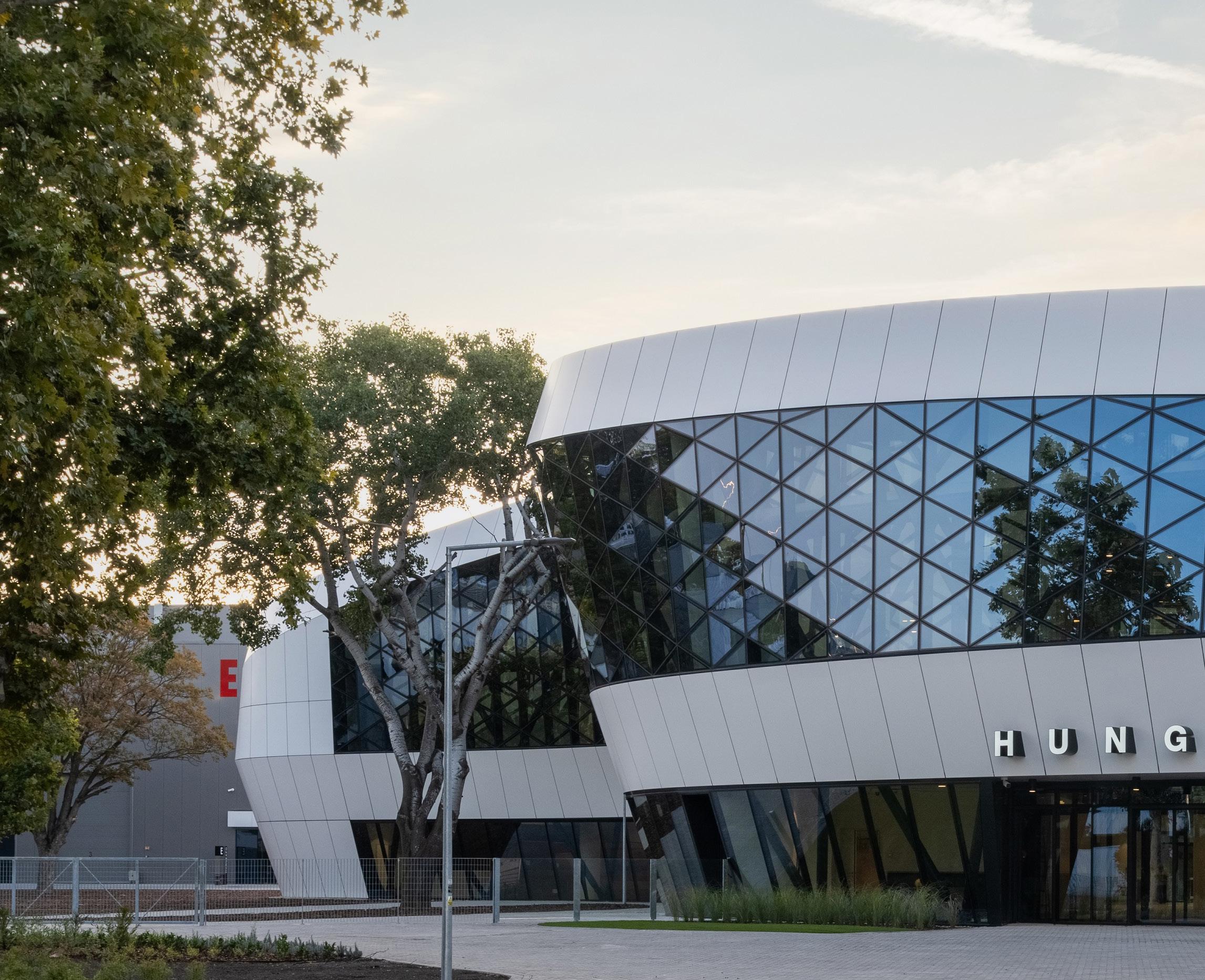
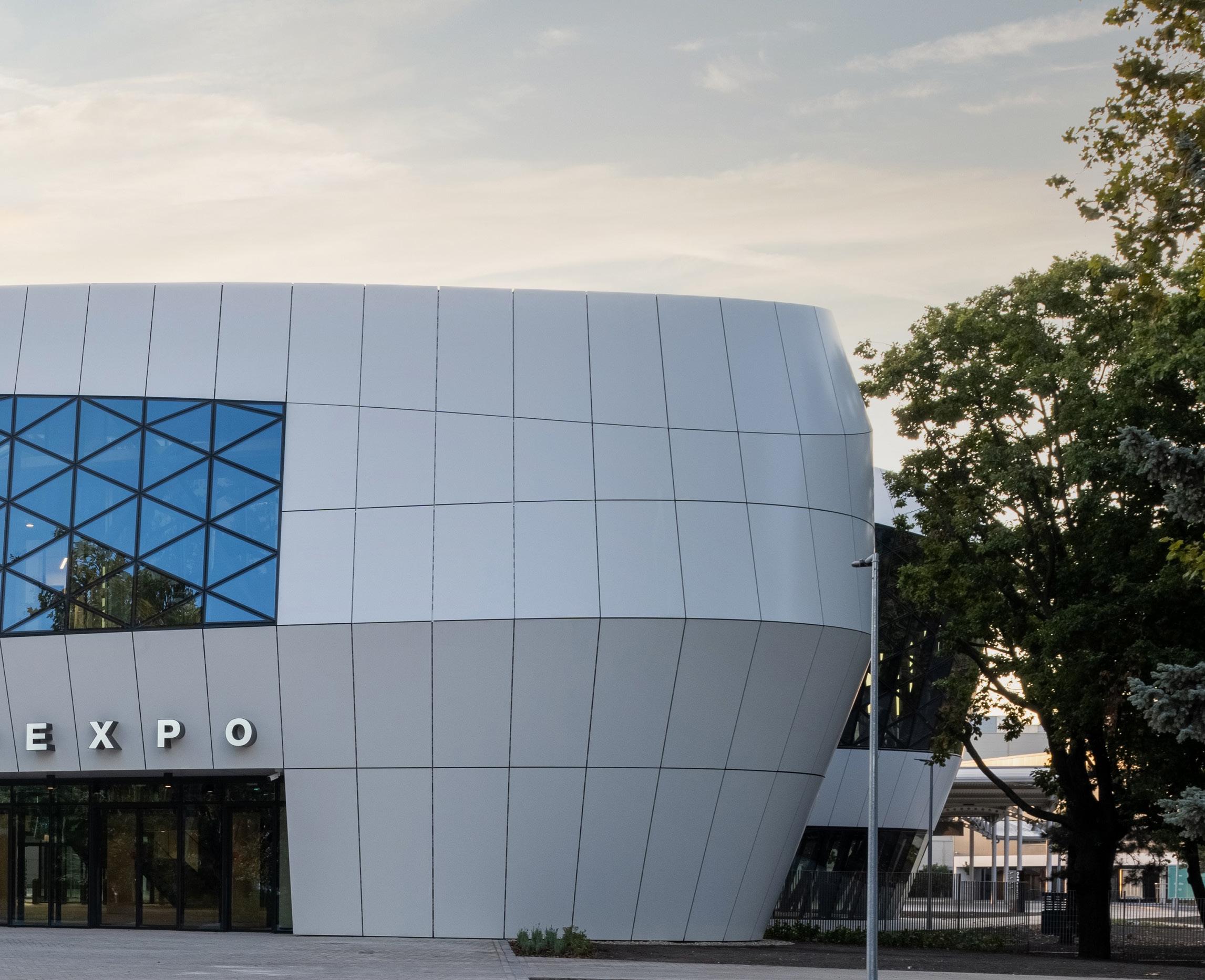
The fifth edition of Eurocine takes place at the Hungexpo congress and exhibition centre in Budapest on 8th and 9th May, and will unite professionals across cinema, streaming, television and emerging formats, all under one roof, with Cinematography World as the principal media partner. Book now, as spaces are going fast.
As a celebration of the moving image and the European screen industry, Eurocine offers a platform for every department across the industry – from cinematographers and directors to editors, gaffers, producers and educators. With demand growing year-on-year and the event evolving, the 2026 edition is expected to offer a completely new experience and to reach a fresh audience.
Throughout the years since the event started, the team behind the show has always had a vision to develop it into more than just a technology expo, by supporting it with high-level seminars, workshops and symposiums.
From the first event, which featured eight keynote sessions, the level of content has grown exponentially. This year over 40 sessions will take place over the two days. These include sessions with ITC (Imago Technical Committee), HCA (Hungarian Cinematographers Association), NFI (National Film Institute Hungary), WIC (Women In Cinematography), plus a Sustainability & Green
Event and an Education Forum.
“Working in partnership with international groups and associations is a key part of the ongoing vision for Eurocine,” commented event director Rob Saunders. “Eurocine is something unique and we will continue to develop it into a hybrid of expo, festival and international symposium, delivering a platform for a global audience to connect and engage with like-minded professionals and individuals”.
The relocation to Hungexpo marks a significant move for the event. Set in one of Central Europe’s key production hubs, the new venue reflects Eurocine’s ambition to expand its reach and strengthen European partnerships.
Hungexpo is a venue already well-known to international production companies as a filming location, and the Eurocine team has been working closely with the on-site team to connect with the local and wider film and production community, and alongside a network of international cultural and industry partners.
Eurocine will also welcome many associations, including the Production Guild Of Great Britain as partners for 2026, marking a collaboration focused on inclusion, growth and shared opportunities across the sector and delivering a hosted buyer programme.
Attendees can expect a packed two-day programme built around four core areas: expo, screenings, symposium and academy. The expo floor will bring together leading manufacturers and service providers across camera, post-production, sound, lighting and virtual production.
Other features include a locations event, a focus on greener and more sustainable production, Talent Bar and an education hub, as well as an exclusive display of the works of the late, great Hungarian cinematographer Vilmos Zsigmond ASC, making this a true gathering for film and TV professionals and enthusiasts. A curated programme of screenings will showcase work from across Europe, each followed by a live Q&A.
Sessions will explore craft, ethics, production workflows and future industry trends, with contributors including Hollyland, Leitz and Aputure, Judit Romwalter, head of Sparks Camera & Lighting, DPs Bill Bennett ASC, David Stump ASC BVK, Balazs Bolygo BSC HCA, plus Tim Kang, principal engineer for Imaging Applications at Aputure, Nic Sadler, the founder of Chemical Wedding and inventor of many ingenious cinematographic tools, alongside the IMAGO Technical Committee.
Attendees are encouraged to register early to secure access to sessions, which are expected to draw strong interest. All symposium sessions taking
SCAN HERE FOR EVENT GUIDE
place at the 2026 edition will be captured for the Eurocine academy platform, giving registered attendees continued access to learning beyond the show.
The event will also host a rooftop party on the evening on May 8th, when free drinks and live DJ sets will provide the backdrop for networking,
SOME SYMPOSIUM SESSION HIGHLIGHTS
A New Vision Of Film Production Reality – The Future Of The Profession: Tomorrow’s world today. Judit Romwalter, head of Sparks Camera & Lighting in Budapest, will join IMAGO’s Technical Committee – Aleksej Berkovic, Philippe Ros AFC and David Stump ASC BVK – plus Henning Rädlein, formerly in ARRI’s product marketing team, to discuss where technology, especially metadata, will lead filmmaking in the future, and how you can get to grips with that now!
Register early to secure access
developing industry relationships and continued discussions late into the night.
With its new location, expanded programme and free entry to all aspects of the event Eurocine 2026 is a key date in the European production calendar. Register now and be part of it. www.euro-cine.com
The Invisible Journey from Inspiration To Image:
Cinematography is often discussed in terms of tools and technique. But what happens between the creative reference and the final frame? In this session, DP Flora Fecske HCA AAC explores the invisible journey from inspiration to image. The talk explores how references feed visual memory, how preparation and intuition coexist, and how originality lies not in purity, but in transformation.filmmaking in the future, and how you can get to grips with that now!
Eco-friendly Energy Supply:
Presented by Green Film Shooting, with panellists including Julia Tordai of Green Eyes Productions, Gergö Balika of Mid Atlantic Films and Tamas Pal of Ionova Energy, this session investigates energy demand and energy supply in film and TV production, and the different types of mobile energy storage solutions on the market that can replace the use of the traditional diesel generator.
Succeeding As A Woman Cinematographer In China:
Moderated by David Stump ASC BVK, DP Nana Zheng will discuss her success as a cinematographer in China, working with actors and drones, working with drones indoors and on stages, working with wildlife and drones, and shooting in harsh conditions such as the Gobi Desert, as well as stunts, water and pyrotechnics.
SENSORIAL EXPERIENCE
By Ron Prince
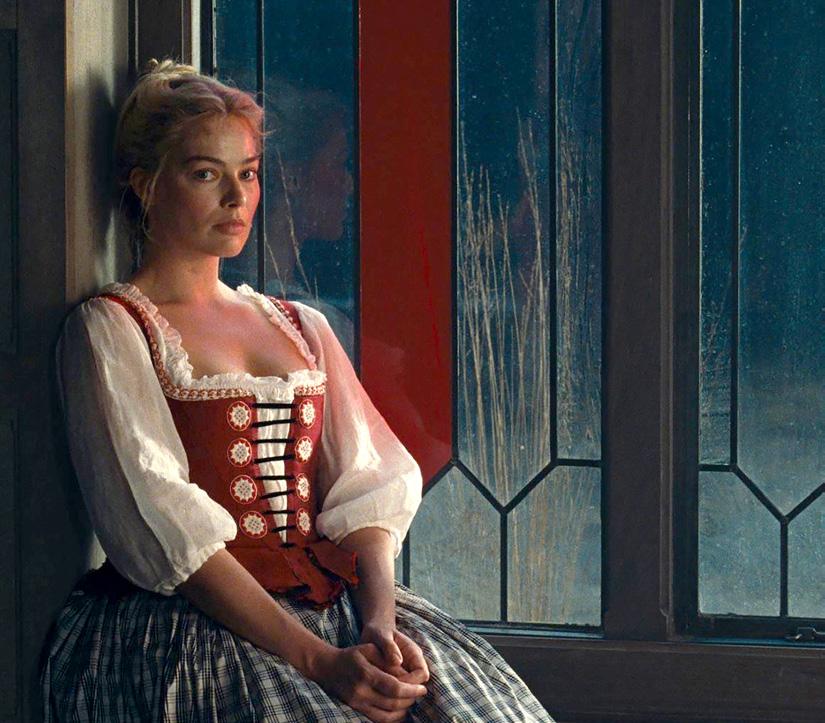
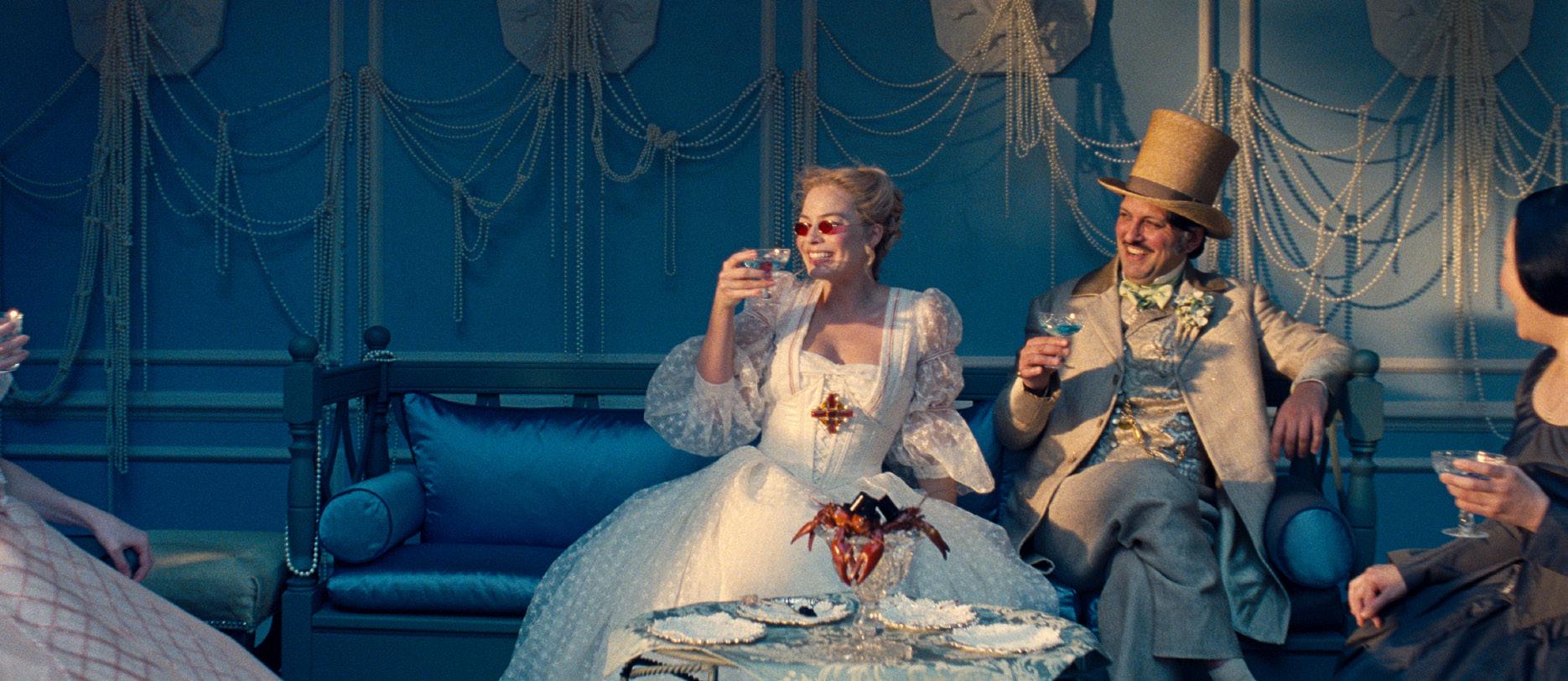
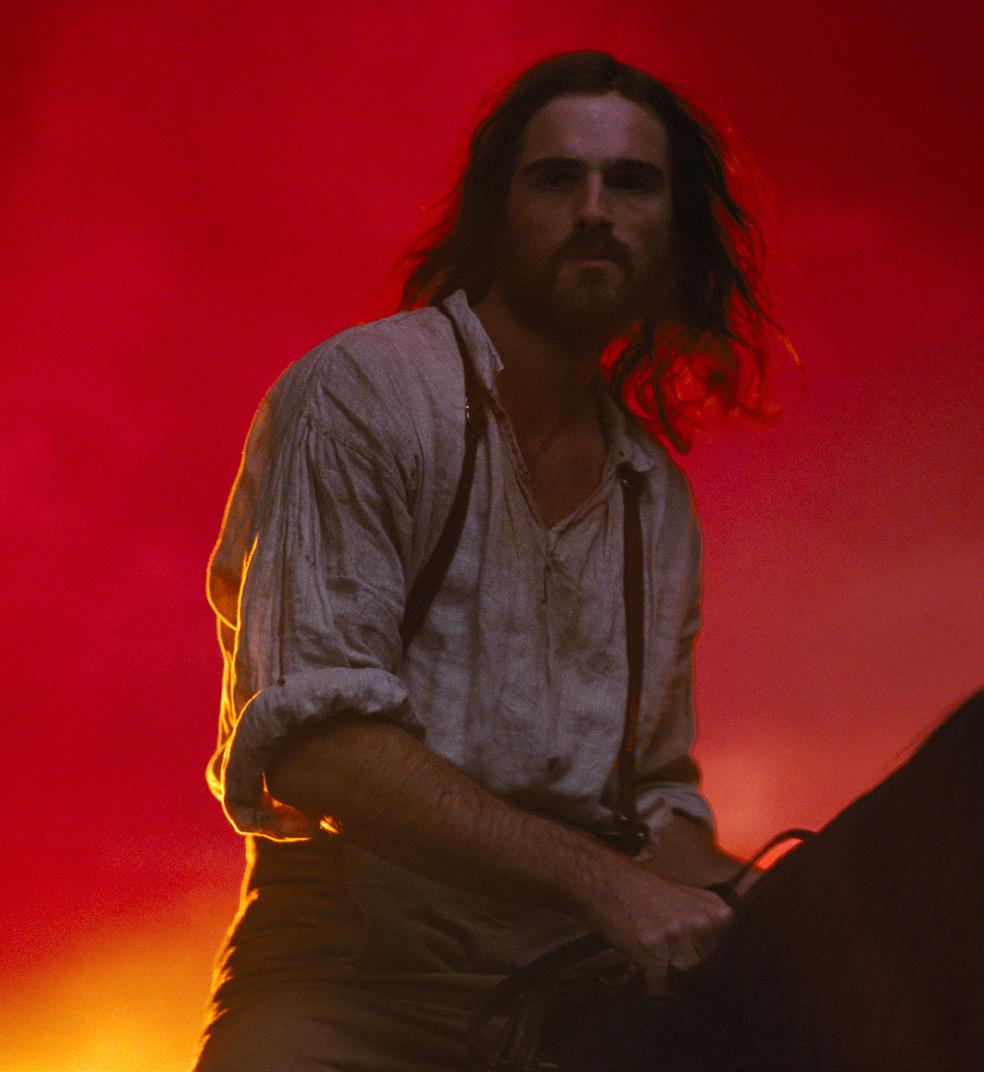
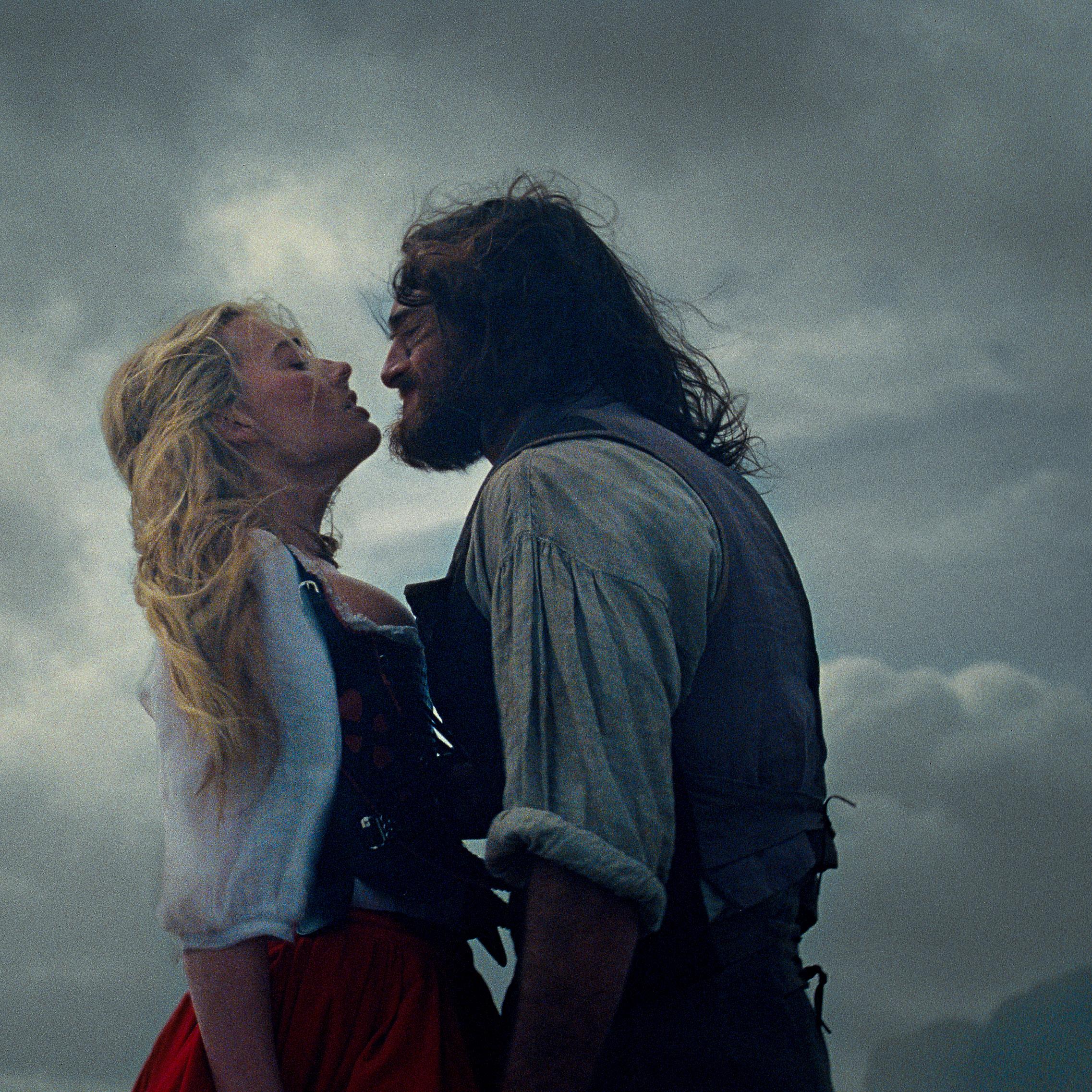
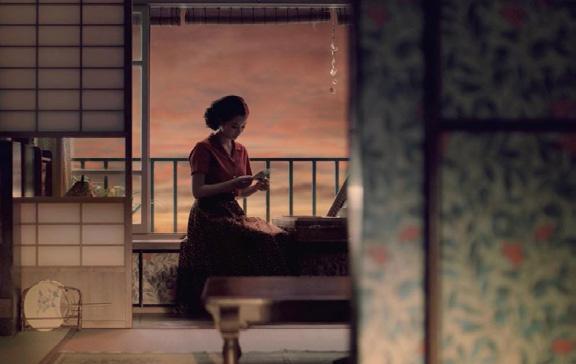
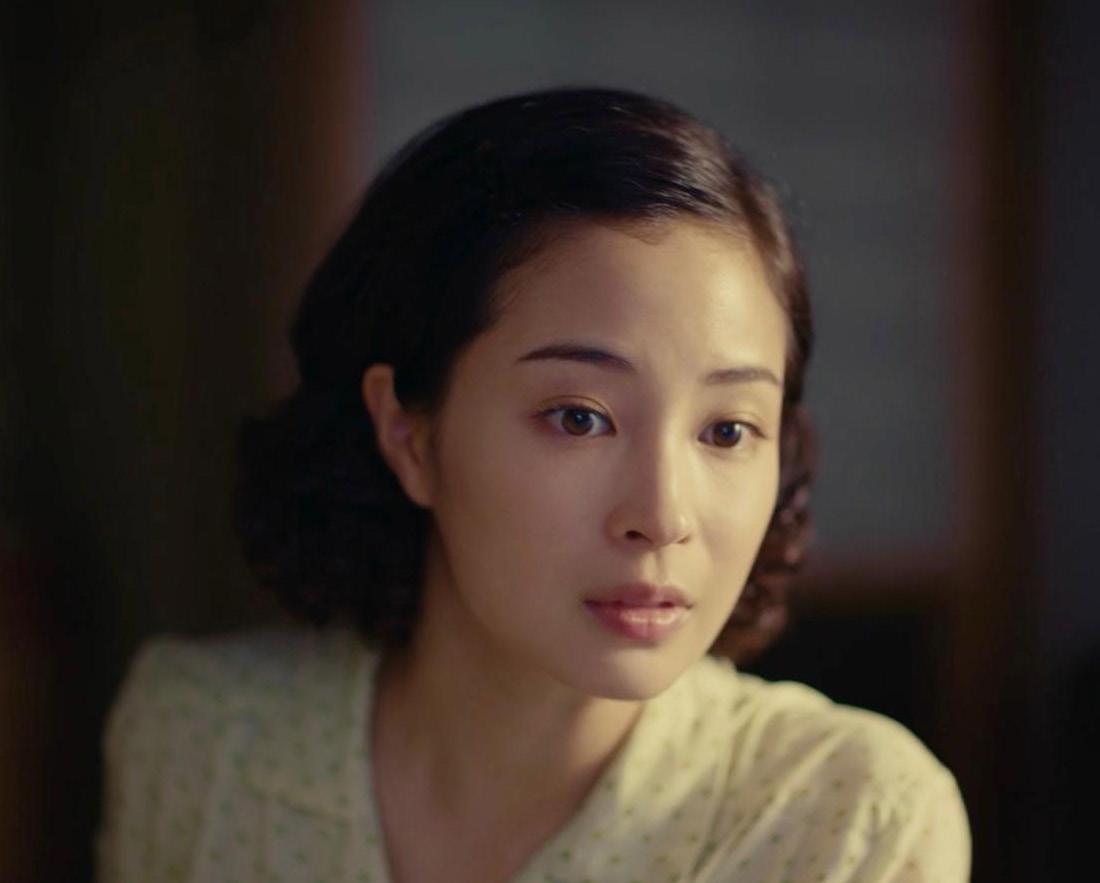
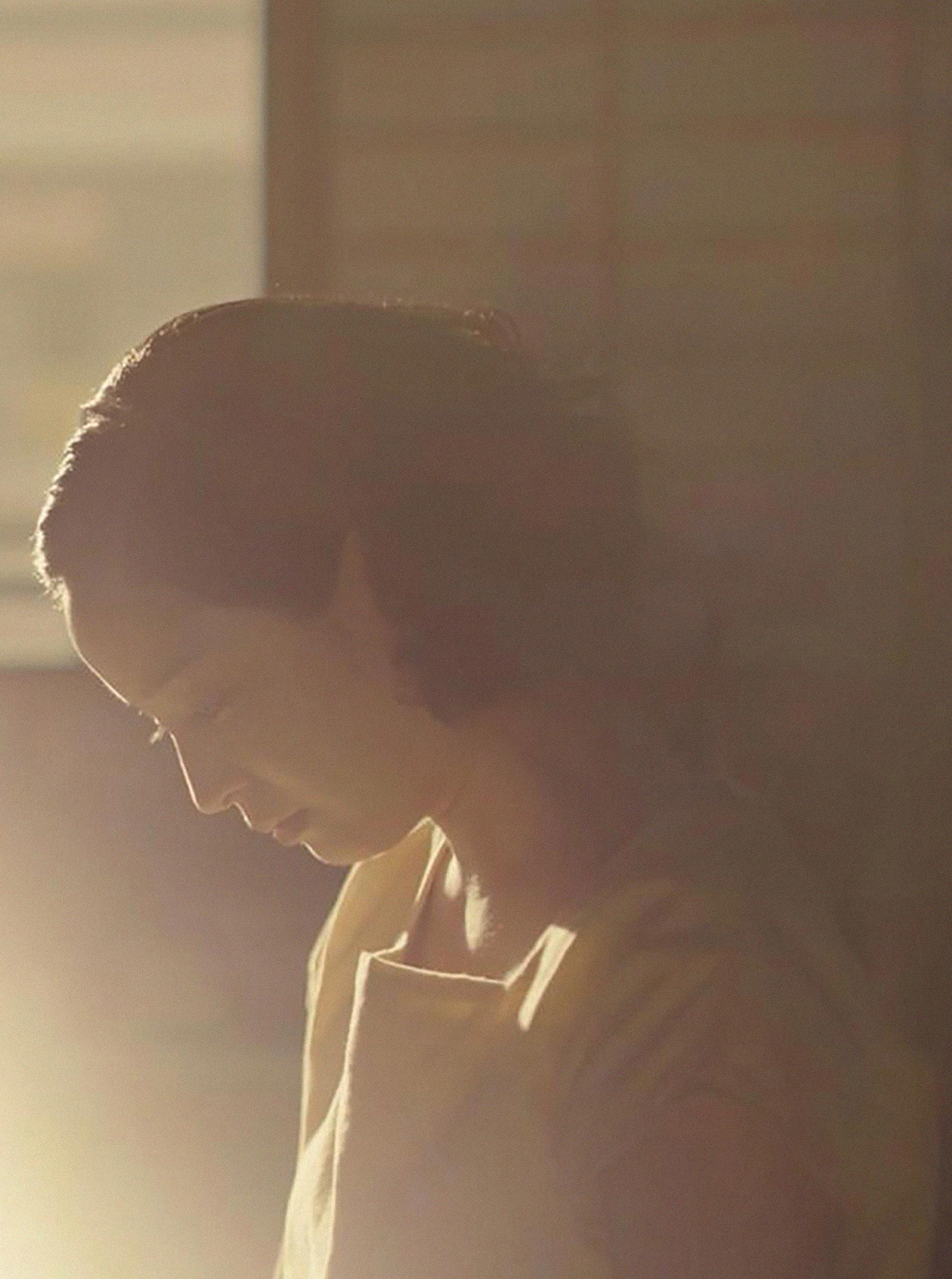
Directed by Emerald Fennell, and captured on KODAK film in 35mm and VistaVision formats by Swedish cinematographer Linus Sandgren FSF ASC, Wuthering Heights delivered a passionate and sensorial take on forbidden love, intense desire and bitter revenge. Fennel has described it as a “primal fantasia” designed to provoke audiences and elicit strong feelings.
The film is loosely-based on the classic 1847 novel of the same name by Emily Brontë, and stars Margot Robbie and Jacob Elordi respectively as Catherine Earnshaw and Heathcliff, with Hong Chau, Shazad Latif, Alison Oliver, Martin Clunes and Ewan Mitchell in supporting roles.
The movie is the second collaboration between Fennel and Sandgren, following Saltburn (2023), which was also shot on Kodak 35mm film. Sandgren has shot most of his feature productions on film, including La La Land (2016, dir. Damien Chazelle), for which he won Academy and BAFTA Awards, The Nutcracker And The Four Realms (2018, dirs. Lasse Halström & Joe Johnson), 007 James Bond No Time To Die (2021, dir. Cary Joji Fukunaga), and Jay Kelly (2025, dir. Noah Baumbach).
A story like this could only be shot on film
The story follows the tumultuous relationship between Cathy and Heathcliff, an orphan-boy adopted by the Earnshaw family at Wuthering Heights, a dark, rustic farmhouse on the Yorkshire Moors. Although being inseparable as children, and despite their deep and passionate bonds, Cathy decides to marry Edgar Linton, the wealthy neighbour at Thrushcross Grange, for the sake of social status. Consumed by heartbreak and betrayal Heathcliff leaves Wuthering Heights, only to return some years later as a polished, wealthy man, still in love with Cathy, but with a desire for ruthless revenge against the Earnshaw and Linton families.
The Warner Bros. movie opened with a $150million haul at the box office, now over $225million, plus critical praise for the way it captures the essence of aching desire though the spectacle of Sandgren’s spellbinding and painterly cinematography, along with stylish production
“For Emerald, Wuthering Heights represented one of the greatest-ever love stories – about forbidden passion, heartbreak, jealousy, obsession, class conflict and revenge,” recalls Sandgren about his early conversations about the production.
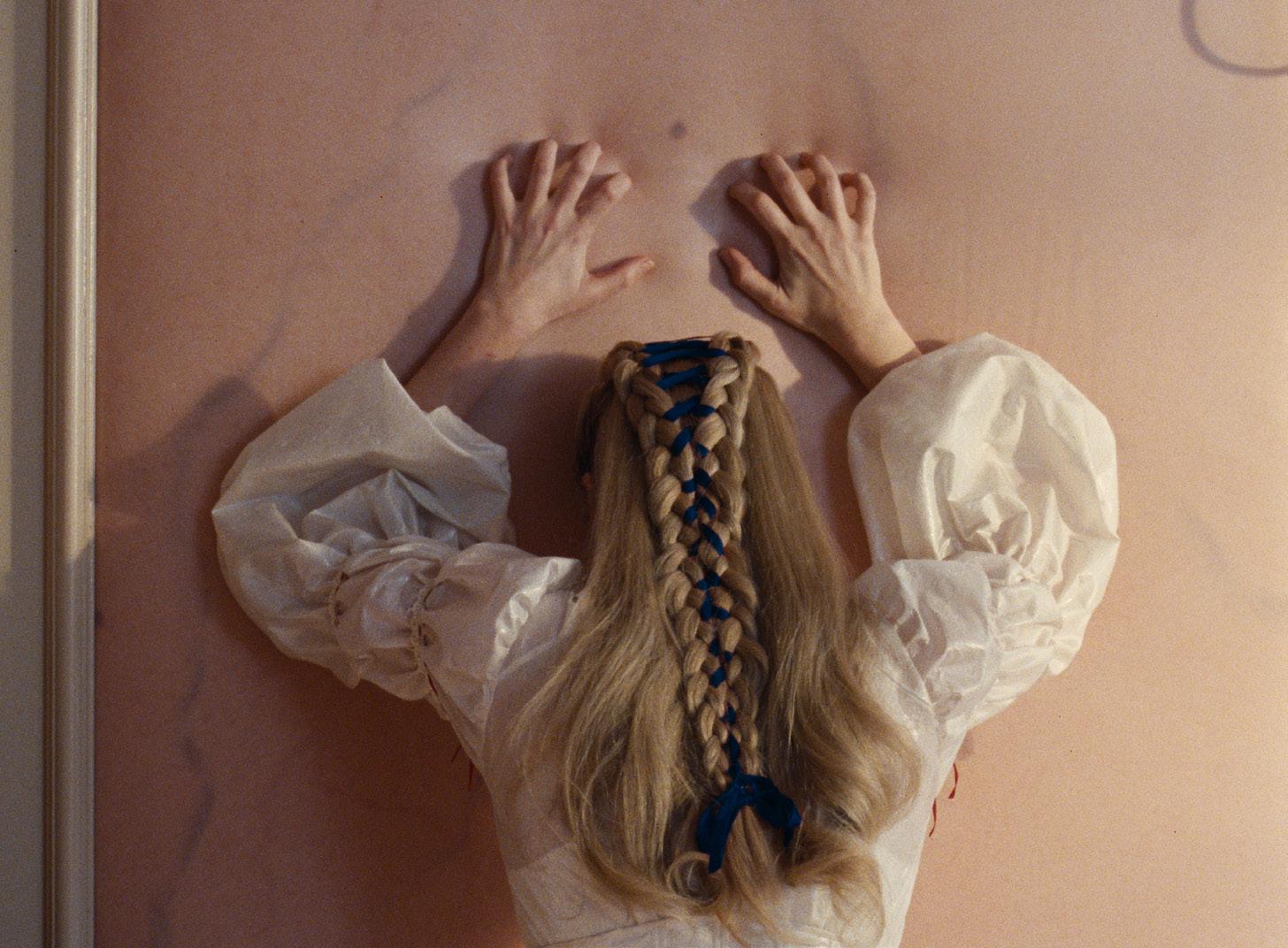
“This was her own personal interpretation, largely-based on the intense emotional experience she had while reading the novel as a teenager and the images that filled her mind and her imagination back then. Rather than it being a faithful translation or literal re-telling of the original story, she wanted this film to be a stylised and sensual reimagining of the doomed relationship between Cathy and Heathcliff, incorporating fantastic costumes, production design and bold cinematography. She also wanted it to provoke intense emotional reactions from the audience.”
Sandgren also confides, “I didn’t know the story, as it’s not a novel that was ever on the school curriculum in Sweden. I avoided reading the book, because this was
For Emerald this represented one of the greatest-ever love stories
Emerald’s personal vision. I felt it was important to honour that by not being influenced by things that might be different in her version. So, I preferred to read the script and to listen intently when she spoke about the film in any regard, not just the cinematography.
“Having worked with her before on Saltburn, I knew that Emerald is quite ‘Baroque’ as a visual storyteller, in the way that she likes to engage the senses and express emotion through theatricality and ornate details. She loves beauty and how it clashes with ugliness too. She had lots of visual references, some that were fun and inspiring, others that were super-gross.
“But Emerald is always open to ideas, and that
design by Suzie Davies and the emotive soundtrack from Charli XCX.
LINUS SANDGREN FSF ASC • WUTHERING HEIGHTS
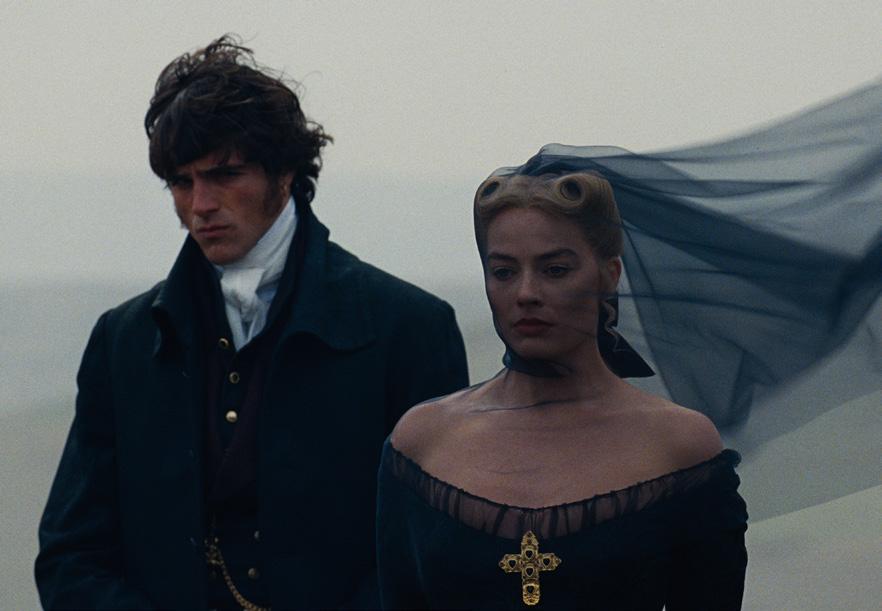
meant there weren’t many restraints as to how expressive the film might be visually with the compositions and lighting. If anything, she wanted to make a modern-looking, old-Hollywood movie, full of movie-star looks, whilst also being painterly and expressionistic. Fundamental to the visual approach was to make a contrast between the dark intensity of Wuthering Heights and the seductive social status at Thrushcross Grange, with the wild and desolate landscape of the moors separating the two.”
With this in mind Sandgren says he watched the early 1939 B&W adaptation of Wuthering Heights (dir. Wiliam Wyler, DP Gregg Toland ASC), regarded as a masterpiece of emotional, romantic filmmaking, noted for its dramatic use of light and shadow, with atmospheric, studio-bound sets evoking the rugged beauty of the Yorkshire moors.
Other filmic references included, Gone With The Wind (1939, dir. Victor Fleming, DP Ernest Haller ASC), widelyrecognised in pioneering the “Golden Age Of Hollywood” aesthetic, with its opulent visual style, involving pastel and luscious colour, painted backgrounds, silhouettes and wide-angled landscapes.
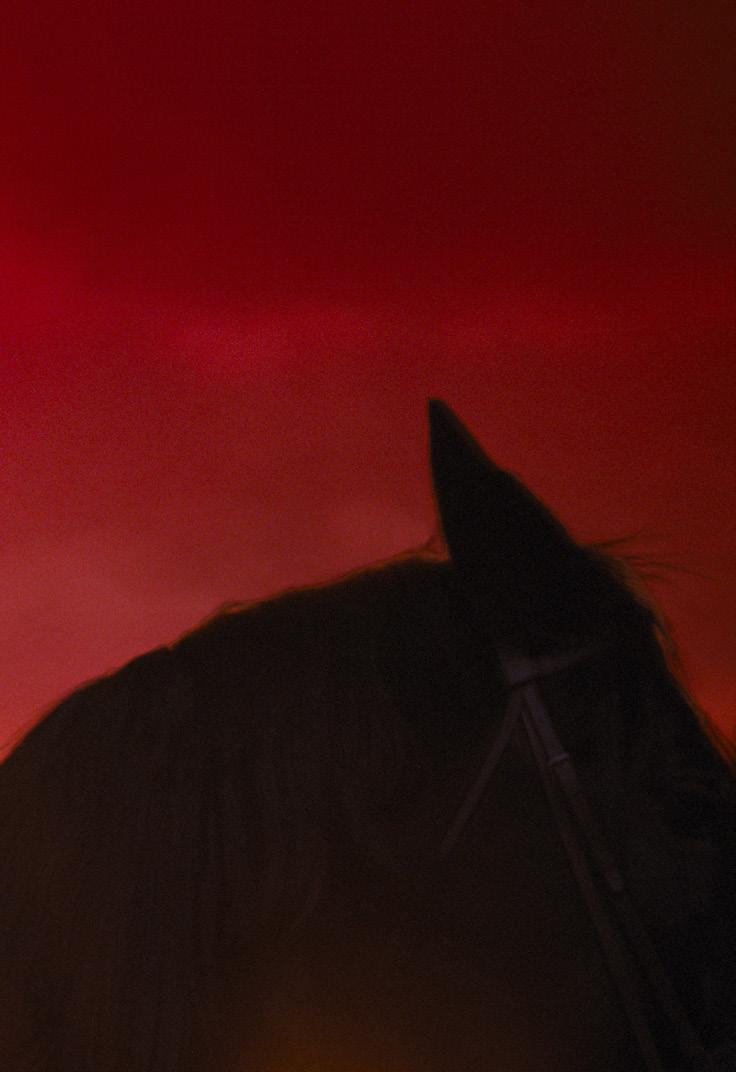
A further cinematic inspiration was Cries And Whispers (1972, dir. Ingmar Bergman, DP Sven Nykvist), characterised by its dominant red colour-palette, naturalistic but symbolic lighting and claustrophobic, melodramatic chamber-drama atmosphere.
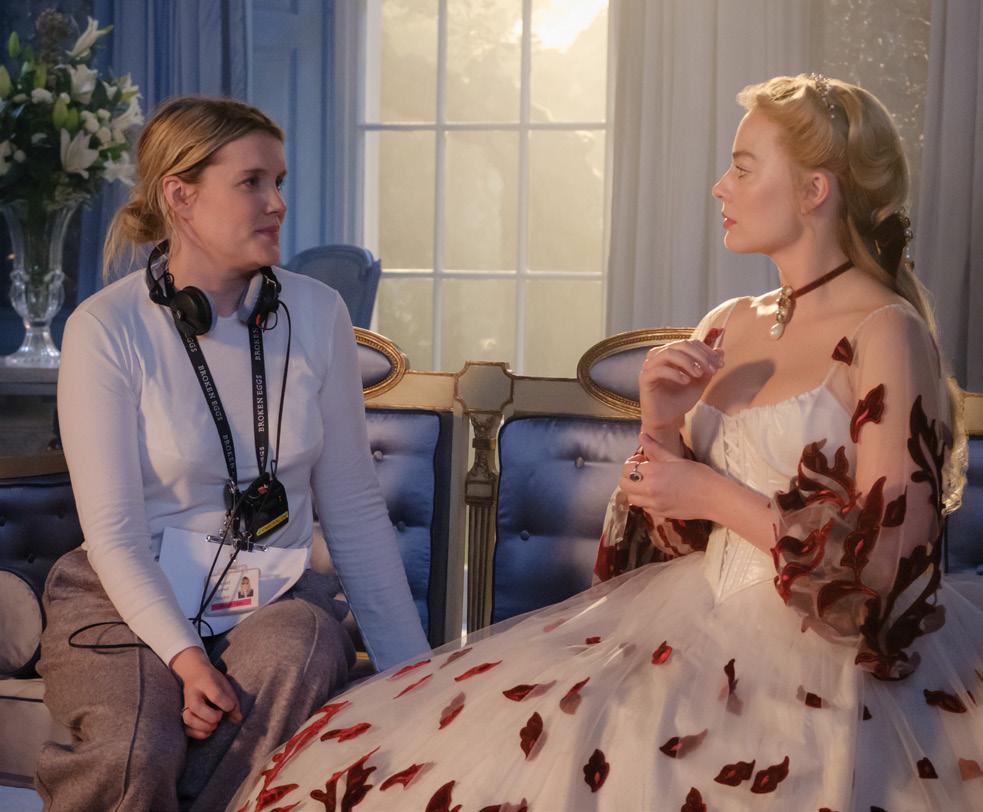
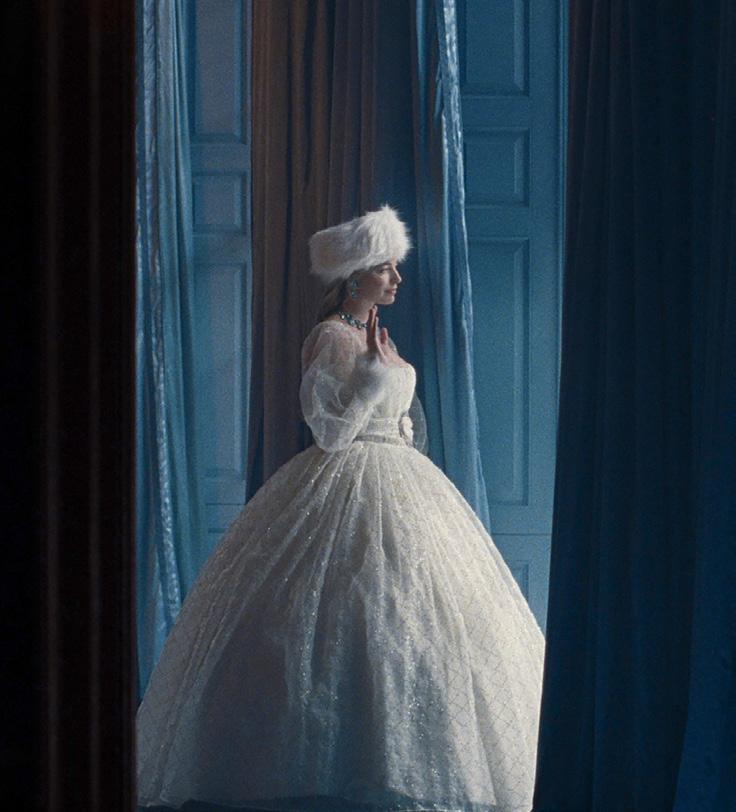
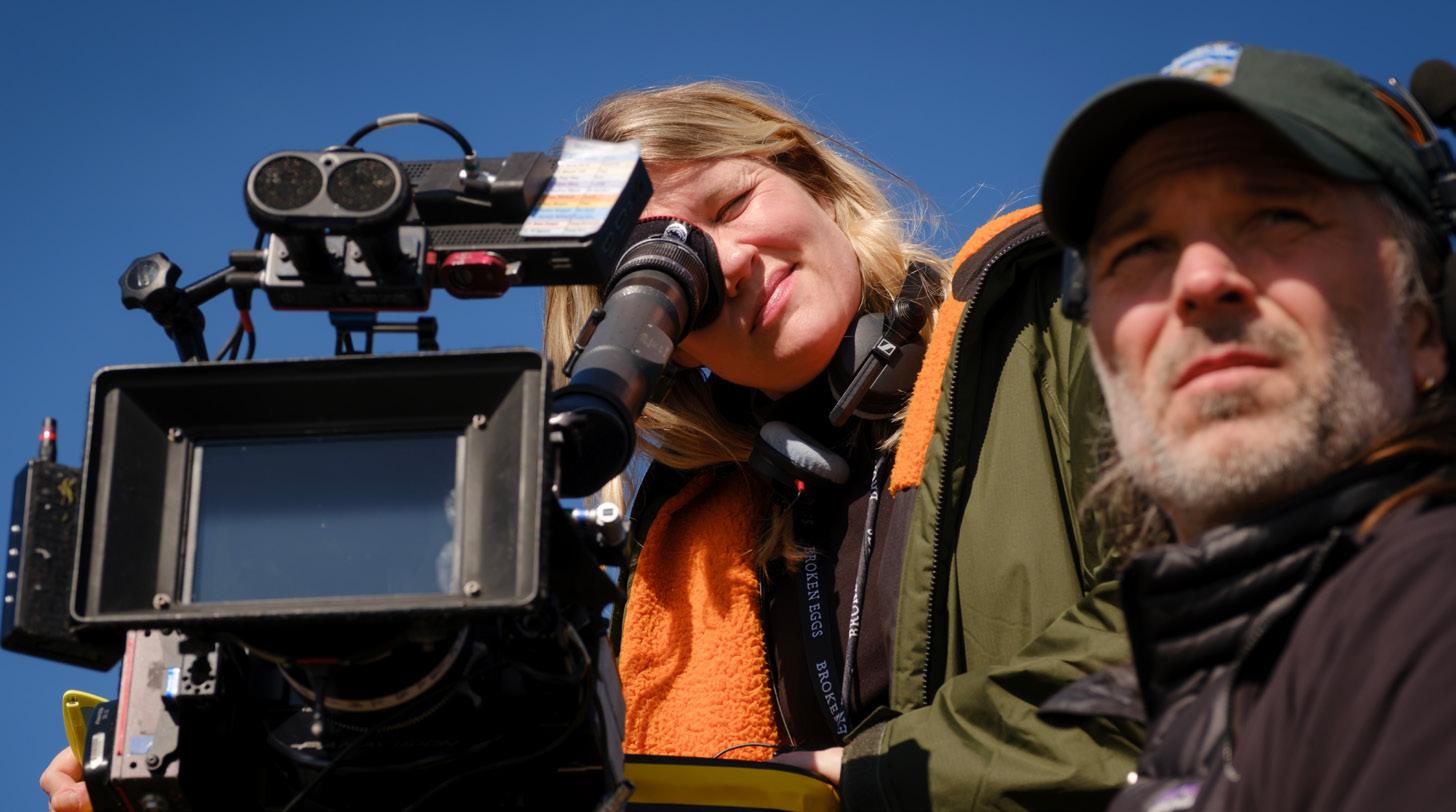
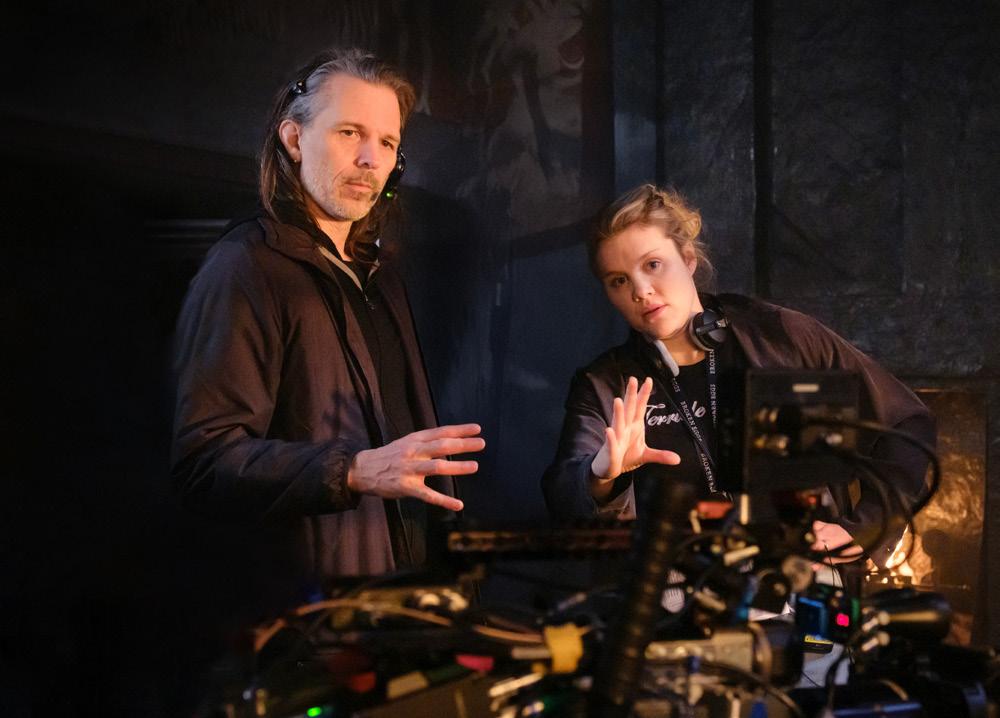
Amongst many artistic references, Sandgren cites the work of romantic painters, such as Caspar David Friedrich and Johan Christian Claussen Dahl to invoke the moodiness of the moors, along with the Rococo style of Jean-Honoré Fragonard’s ‘The Swing’ (1767) to inform the looks of Thrushcross Grange. Production on Wuthering Heights took place over 50 shooting days between midJanuary and the end of March 2025, under the codename of Broken Eggs. The interiors and exteriors of Wuthering Heights and Thrushcross Grange were filmed on sets constructed at Sky Elstree Studios.
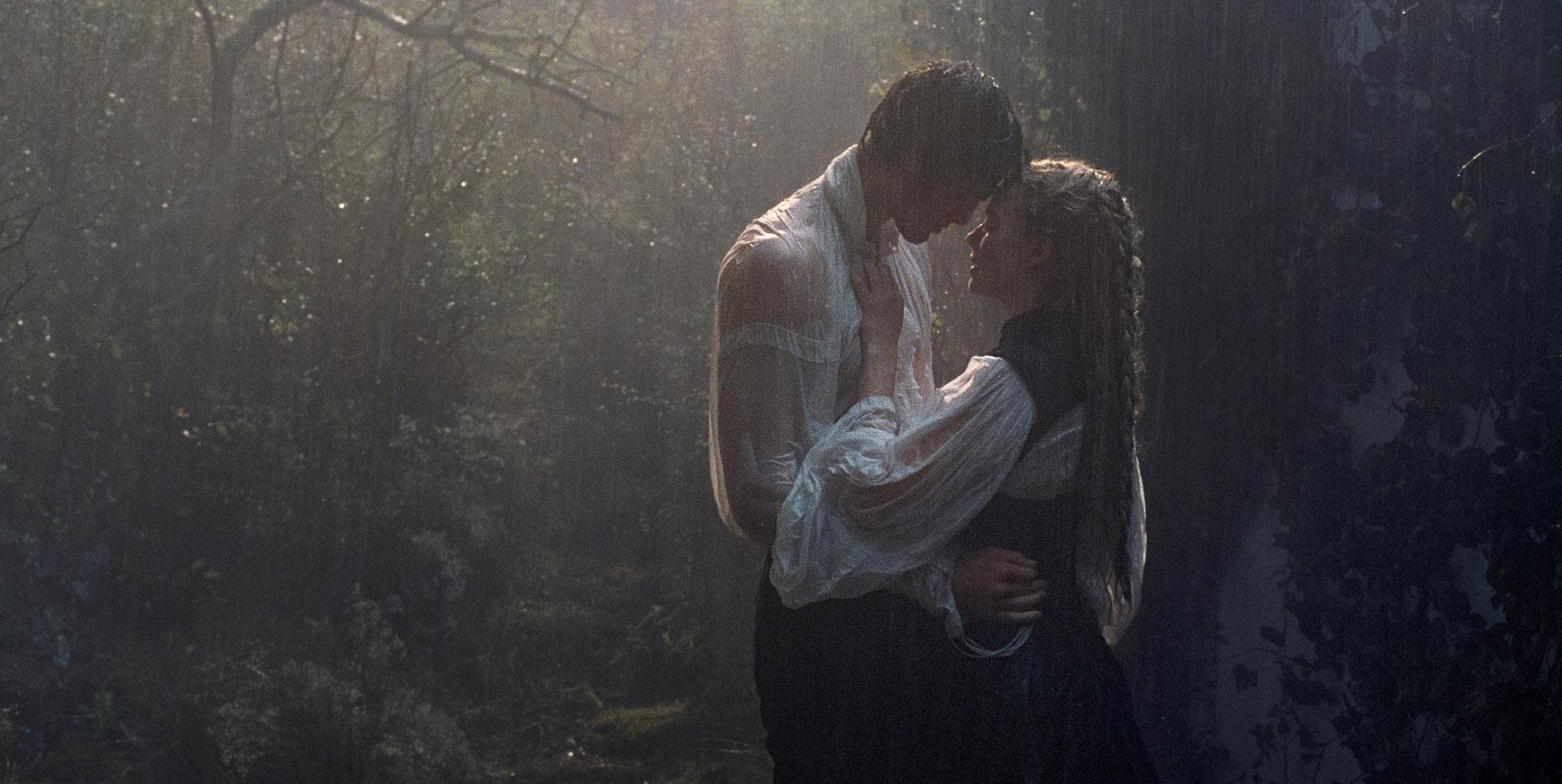
The large Wuthering Heights set, which included a track for carriages and horses, plus stables and the farmhouse itself, was built to enable shooting with fog and torrential rain effects, and was
surrounded by large Rosco printed backdrops – called Softdrops – of the moorlands. The movie’s exterior scenes were shot in the Yorkshire Dales National Park, including the valleys of Arkengarthdale and Swaledale, and the village of Low Row.
Sandgren framed Wuthering Heights in 1.85:1 aspect ratio, using 3-perf 35mm Aaton Penelopes as the main cameras, plus a pair of Beaumont 8-perf VistaVision cameras for wides and landscapes, both adapted to take Panavision Primo lenses. The camera package was provided by Panavision in London.
“Emerald and I considered shooting in 1.33:1, as
we had on Saltburn, but felt it would be better to have a wider image on the big screen,” Sandgren recounts. “1.85:1 represents classic Hollywood cinema and offered a good way of composing painterly frames of the interiors and the landscapes.
“To me, the Aaton Penelope is unbeatable. It’s small and exceptionally-quiet on-set, making it suitable for sync-sound recording, plus it has a bright, high-quality viewfinder and a good video-tap. Additionally, the instant-load magazines help you work efficiently. You can easily swap-out a 400-foot magazine in just a few seconds. Using the Penelope meant Emerald and the cast could immediately go for another take, without having to hang around for us. They never knew we were reloading.”
Regarding the use of VistaVison in the visual recipe, Sandgren explains, “Emerald really appreciated the grain from the 35mm 3-perf, and we actually tested 65mm 5-perf initially, but the grain was simply too fine.
“However, as we composed some scenes that had wide vistas, with the actors small in frame, we used VistaVision. This was really because your eyes focus-in on smaller parts of the frame, and therefore the grain of the 8-perf VistaVision negative was much more preferable. Also, as Beaumont cameras are noisy, the proximity of the camera to actors on those wides would not interfere with the sound recording.”
Discussing his choice of optics, he remarks, “I know the Panavision Primos having used them previously on The Nutcracker And The Four Realms, Saltburn and Jay Kelly They’re sharp and work well with film, bringing a lovely contrast and depth to the image, with luscious colour. I could have had them tweaked and adjusted, but they are naturally beautiful as they are with a painterly look, so I used them as they were right off-the-shelf.”
Sandgren’s 35mm film stocks-of-choice were KODAK VISION3 500T 5219 for low-light and night interior/exterior shots, with KODAK VISION3 200T 5213 for day exteriors and some of the day interiors. The exposed negative was processed and 4K-scanned at Cinelab in the UK. Dailies were overseen by Doychin Margoevski and final DI grade was conducted by Matt Wallach, at Company3.
“I tested all of the stocks in the KODAK VISION3 range,” Sandgren says. “It’s important and always interesting to see the results they give and to be open to what will suit the story best. I also looked at the effect of push/pull processing at the lab versus standard
I really loved working with Rosco SoftDrops
processing, but didn’t go for that in the end.
“I tend to prefer KODAK’s 200T and 500T Tungsten stocks, as they both deliver lovely natural looks and match well together. The 200T has a little more contrast than the 500T and it worked well on our interiors. The really dark nights, plus scenes lit with fire or candlelight, were all shot on the 500T – it’s my go-to stock for that. I generally overexposed both stocks by one stop, rating the 200T at 100ASA and the 500T at 250ASA, but did normal process at the lab. This gave a kind of 4K-scanning sweet-spot to take into the DI grade.”
Delving into his preferred workflow, Sandgren
explains, “The look of the movie as captured in-camera on-set, was adjusted and maintained on a daily basis. Doychin, my dailies colourist, sent me multiple stills of each scene and then made very simple printer-light or primarycolour adjustments – warmer/cooler, darker/lighter –wherever I felt changes were necessary.
“Essentially, we got the look of the movie right there, and it made everyone feel comfortable during production. It also helped to make the DI more straightforward, because the starting point was exactly as I expected it to be. All that remained was to balance things out, with a power-window here or there to target the corrections a little more on faces, objects or backgrounds.”
Wuthering Heights was mainly a single-camera shoot, with Ossie McLean operating A-camera and Steadicam, supported by Jorge Sánchez as 1st AC. When a second camera was required, to capture reactions in group scenes for instance, Sandgren operated B-camera supported by Chloe Harwood on focus. DP Jo Eken Torp led the second unit and filmed insert shots throughout the production using the Penelope and Beaumont VistaVision cameras, aided by Harry Gamble as 1st AC. David Appleby was the key grip, with Jack Flemming working as A-camera dolly grip.
“We sometimes worked with longer lenses on the intimate scenes, and because of the emotional nature of those scenes, Emerald really felt it best to film the rehearsals. Some of the camera moves were on a dancefloor Dolly, so shooting with a 150mm at T2 was very challenging for our focus pullers, but they proved very, very good and things worked out really well.”
For lighting, Sandgren reteamed with gafferbrothers David and Ian Sinfield. “I previously worked with David on The Nutcracker And The Four Realms,
No Time To Die and Jay Kelly, and then with David and Ian on Saltburn. They are wonderful lighters, very knowledgeable, who work closely together and have a great team behind them.
“During prep, David took the lead in helping to plan the lighting requirement, sort out the lighting grids and make sure everything was set-up correctly. Although he had to leave about half-way through the shoot, for a previously-booked production elsewhere, Ian stepped-in by my side as the gaffer, and the transition was flawless.”
Along with the vast set of the Wuthering Heights farmhouse and grounds, a notable feature of the production was the use of enormous Rosco printedcotton SoftDrops for the moorland background and skyscapes. These were carefully suspended to accommodate both front and backlighting, and included a gap beneath the broad bottom edge, specially-requested by Sandgren to enable him to fill the scene with additional atmospheric lighting effects, such as a blazing sunset on the horizon.
To support the feeling of more ominous and inclement weather, and to help seamlessly merge the sky and backdrops together, Sandgren also used grey silks above the stage, rather than traditional white-coloured silks. Together with rain and fog effects, the grey silks helped to provide a diffracted
patina to the lighting being shone from the lighting fixtures in the studio gantries above the overall set.
“I really loved working with the Rosco SoftDrops and the grey silks in combination with the lighting and atmospheric effects. Normally you would use white silks above a backdrop, but they just didn’t look right. So, I wondered what it would be like to use grey silks that would colour-match to the top of the Rosco Softdrop. When we adjusted the lights and the scene was foggedup, it was like a kind of in-camera VFX solution, and the results looked insanely good.
Speaking about his general approach to the lighting, Sandgren remarks, “This film had to encapsulate how passion and obsession feel, how you can be overwhelmed. So the main concern was to make sure that we could create different moods for different moments.
“For example, we pre-lit every direction that the camera would look at around the Wuthering Heights
set, using a mixture of LED and traditional fixtures – typically Creamsource Vortexes and Cineo Quantum Studios, mixed with 5K/10K HMIs and 12K Maxi Brute open-faced Tungsten Pars for the keylights, plus a lot of lights above the grey silks.
“I could dim or switch-off any of the lights from the lighting board, and was able to shape and sculpt the illumination, using cool or warm light as appropriate to each scene. For the day exterior/ interior scenes of Thrushcross Grange we had two 100K SoftSuns on a track, on either side of the stage, which gave us the ability to easily adjust an exact sun angle, covering the entire set, from a single source. We gelled them usually with full CTS to match the Tungsten bulbs in colour.”
“We also lit using real fire or candle light as much as possible. I prefer real burning flames, as LEDs lack the full range of colour in real firelight, especially red. When we needed a more intense effect, we used an
array of small Tungsten bulbs that could be flickered individually from the dimmer board.”
Sandgren says he is conscious about the environmental impact of filmmaking and, just as he had done on Saltburn, used sustainable power to mitigate emissions, powering many of the location set-ups with equipment from GreenVoltage.
Sandgren concludes, “Making Wuthering Heights was another great collaborative experience with Emerald. On this film, there were no restraints in
the emotional expressiveness of the visual language. It was very freeing and creative for me in terms of the framing, compositions and lighting.
“A story like this could only be shot on film. Film brings a special magic to the images – from the innate grain and texture, the details in the highlights and shadows, and the way it renders the shades of colour so beautifully. And, once again, it delivered a truly engaging and cinematic experience for the audience.”
SHOOT FOR THE STARS
By Darek Kuźma
In Phil Lord and Christopher Miller’s Project Hail Mary, Greig Fraser ACS ASC turned a mission to save our dying Sun into an emotionally-offbeat, technically-audacious scifi spectacle, where light seems to empathise, science dares to hope and wonder never has to wear a lab coat.
I like to do as much as possible in-camera
Project Hail Mary begins with a man who wakes up alone on a spacecraft, light-years away from Earth, uncertain of who he is and why he is there. But unlike most space films, it is not interested in turning this situation into a test of endurance. As Dr. Ryland Grace (Ryan Gosling) slowly pieces his memory back together, the mission becomes clear – to stop the Sun, and with it Earth, from dying of a microscopic menace known as ‘astrophage’.
The ultimate message is about hope and friendship
What could have been a story of isolation (Grace is the only human for most of the film), gradually turns into a tale of risk, finding solutions to impossible problems, and a story with an unexpected interstellar companionship.
The cosmos of Lord and Miller remains vast, dangerous and humbling, but also curiously hospitable to both scientific plausibility and a childlike
appetite for wonder. Adapted from Andy Weir’s celebrated 2021 novel of the same name, the film balances hard science with warmth and humour, and pairs large-scale spectacle driven by practical effects with a moving story of survival, curiosity and hope.
Fraser, who had spent much of the past decade working on the first two episodes in director Denis Villeneuve’s Dune (2021 & 2024) film series, was not necessarily looking for another space project, but the prospect of collaborating with Lord and Miller, whose body of work includes several CG-animated Lego and Spider-Man franchise movies, proved difficult to resist.
“I’ve been a massive fan of theirs since they started making movies. They come from the animation world and see things differently. For me, it was about trying to grow and learn from them, as they were from me,” he explains.
That attitude translated into crucial visual decisions – such as stepping away from greenscreen in favour of practical sets and in-camera solutions, embracing the IMAX format on the ARRI Alexa 65 using Atlas Mercury lenses, Viltrox Luna zooms and custom glass, as well as resisting the genre’s instinctive bleakness in favour of something more emotionally-generous.
“We didn’t want the film’s tone to be too dark. There are moments of sadness and psychological darkness, but the ultimate message is about hope and friendship. You come out of it feeling like the world
can be a good place.”
As Grace moves from one problem to the next, testing and failing to make the mission work, and as science becomes both tool and lifeline, the sense of awe does not fade. You see it most clearly in the design of the spaceship that keeps him alive.
“We didn’t want the interior to be cold, sterile, white-walled and fluorescent-lit,” Fraser says. “I pulled out a lot of space movies from the last 50 years as references, and most of them didn’t ring true for us. It wasn’t Star Wars or Alien. Most of Project Hail Mary is based on real science, and we wanted as much of the ship as possible to be grounded in reality.”
Which is why they built it. “It made more sense to take over five or six stages at Shepperton and construct the interior of the ship, and as many physical elements as possible – including a puppet of Rocky, Grace’s alien buddy – rather than leaving the cool stuff to be added later with VFX. It also meant Ryan was inside a real environment, surrounded by something tangible. Sure, it made our life a lot harder, but we didn’t really see another way.”
When considering how to light, Fraser kept returning to a simple question: what kind of place would keep a human being functional for years in space?
“Apart from the flashbacks to Earth, Ryan remains the only human on screen. We could’ve had fluorescent lights turn on at 7am and off at 10pm, but
I did a lot of research into the psychology of lighting
Images: Photos by Jonathan Olley. All images
that would have been like putting somebody in a torture chamber. So we tried to design a ship that would keep a person healthy, both physically and mentally.”
For Fraser, that meant going deeper. “I light for a living, but for this project I did a lot of research into the psychology of lighting: what happens when you wake up, what red light does before bedtime, how blue light affects sleep.”
Working with production designer Charles Wood and gaffer Jamie Mills ICLS, he built those ideas into the set.
“I wanted to create circadian rhythm lights I’d probably want as an astronaut. There’s no sun coming through a window to wake Grace up, so the ship uses softer, cooler light in the morning, gets brighter as the day goes on, shifts toward bluer tones, and later moves into Tungsten, orange and red light for sleep and repair.”
Combined with the Alexa 65 and its large-format sensor, as well as the decision to shoot Earth scenes in 2.39:1 aspect ratio and space sequences in tall IMAX 1.43:1, the result is more than just aesthetic. Light became the ship’s language, communicating time, state
and emotion.
“We needed light to carry that hope and positivity that the film lives or dies by,” Fraser states. “That’s why we gave ourselves the license to justify light sources in a way that let the ship feel bright – almost as if you’d opened a window in a house, even when there wasn’t one.”
That approach naturally led him towards LED sources. “We used a lot of Creamsource Vortex 4s instead of the 8s that everybody uses, because they’re square panels and felt like they belonged in the ship. We also had Kelvin Play Pros and Digital Sputniks.”
The same lighting logic carried over to the Earth scenes, shot mostly on stages at Shepperton Studios and on location in Portsmouth and Cambridge during a roughly 100-day shoot between June and October 2024.
Lighting-wise, the only real exception was the tunnel that becomes a bridge between Grace’s ship and an extraterrestrial spacecraft. Even that, however, was built physically on-set, another decision that keeps the film grounded in something tangible.
“It was so long that we couldn’t move an HMI on a crane, because it would’ve felt like a small point source,” Fraser explains. “It was so massive that we had to use Tungsten Dinos – we simply couldn’t find enough LEDs. We designed a rig where we effectively created pixels out of Dinos and mapped them as one continuous source.”
It was also one of the reasons Fraser and his team stayed away from greenscreen. “VFX supervisor Paul Lambert and I love it when the screen behind the actors
there’s going to be a red wall, we’d use a grey screen with red light on it. If it’s space, then it was black. We ended-up lighting against grey screens and shaping the light as needed – taking light away, adding more or projecting colour to match the environment.”
Fraser used LED volume only once – in the ship’s so-called ‘Don’t-Go-Crazy Room’.
“It’s a place where Grace could sit in silence, surrounded by a beach or whatever, and pretend being back on Earth. So we used a kind of mini-LED volume. The rest was light, camera, lenses,” he explains.
Format was another key decision, both technical and emotional. Fraser briefly tested Fuji GFX, but it was not ready as a production camera. Instead, he returned to the Alexa 65, which he had already used on Dune, and pushed it further.
“It has great colour science, but the most important
thing was its 2.2-wide sensor. I started wondering if we could squeeze it vertically to 1.4, 1.5 or 1.6. I tested various lenses and landed on Atlas Mercuries, used horizontally, and the Viltrox Luna zoom for the Earth scenes. For the space sequences, ARRI Rental helped us rebuild some glass to de-squeeze vertically.”
That approach shaped not just the image, but the transitions between worlds.
“We matched Earth and space through framing and match-cutting. On location, we shot with the same lens set-up and then cropped to 2.39:1, so that when it opened up to 1.43, it matched.”
One of the film’s most striking moments comes when Grace is engulfed in a red, pulsating wave of astrophage –a sequence that pushed Fraser to take the Alexa 65 even further.
“The visible spectrum is only a narrow bandwidth: roughly 400 to 800 nanometres. Beyond that, there’s ultraviolet and infrared, light we can’t see, but cameras can. Normally that’s a problem, so filters are used to block IR. But in this case, we wanted the audience to see it. So, like on Dune: Part Two, we removed the infrared filter but kept the pinkish hue that occurs naturally. And we did it entirely in-camera.”
DP Geoffrey Unsworth BSC), Silent Running (1972, dir. Douglas Trumbull, DP Charles F. Wheeler ASC) or E.T. The Extra-Terrestrial (1982, dir. Steven Spielberg, DP Allen Daviau ASC).
“But we still wanted to shoot digitally, because that suited how Phil, Chris and Ryan like to work. So Chris Rudkin, my dailies colourist, and I designed a LUT with that in mind, working with FotoKem.”
By the time the film reached the final grade, most of the work was already done.
Like Grace, Fraser approached the problem with a scientific mind. “I could’ve used a mini-LED volume, but it felt staged. So we used infrared diodes – flashing, fading – and a filter in front of the lens that I could run water through. That changes how the light behaves: it starts to feel like it’s moving, almost alive. And the beauty was that we could shoot with all the lights on, because the camera only saw the IR.”
That preference for tangible solutions carried into post. Fraser opted for a film-out process, transferring the digitally shot image onto analogue film stock as an extension of the film’s visual logic.
“It was a decision we made in prep. We needed the film to feel worn, more analogue, like films such as 2001: A Space Odyssey (1968, dir. Stanley Kubrick,
“I like to do as much as possible in-camera. I like to find what the movie is between me, my DIT (Dan Carling), my dailies colourist and the final colourist. It’s a group effort.”
The DI, handled by Dave Cole, was less about reinvention and more about refinement.
“There’s always work to be done in the DI, but the feel of the film was already there, so Dave could focus on VFX and final adjustments. I wasn’t there for the grade, but by that point, the film already knew what it was.”
Looking back, Fraser speaks less about scale and more about process.
“I’m not a scientist by any stretch of the imagination, but I do like to bring a bit of science-based thinking into what I’d call the artistry of cinematography. That’s what’s fun about this job – being able to grow on every project, to take something with you and carry it forward. But at the same time, I like to throw things out and start again, make meaningful decisions, try things that might not work – and then try something else,”
Fraser concludes. “We had a fantastic cast and crew. I want to keep working with people from different backgrounds, people who make me think differently and surprise me.”
Which, in a way, is exactly what Project Hail Mary does. It refuses to behave like a traditional space film. The void is still vast, the mission is still impossible, but the ship is friendly, the light invites wonder, and the universe feels just a little less indifferent.
There’s always work to be done in the DI, but the feel of the film was already there
HOW TO GET TO HEAVEN FROM BELFAST • ASHLEY BARRON ACS
A COLOURFUL TALE
By Ron Prince
Cinematographer Ashley Barron ACS took an assured step along a blossoming career path with her work as the lead DP on Netflix’s How To Get To Heaven From Belfast, produced by Hat Trick Productions.
The darkly-comedic episodic thriller, from Derry Girls creator Lisa McGee, follows three lifelong friends in their late 30s as they reunite in Knockdara, a quiet town in Country Donegal, to pay respects to their estranged schoolfriend Greta, who has died in suspicious circumstances. Aiming to figure-out exactly what happened to Greta, the trio quickly find themselves entangled in a dangerous murder mystery that leads them across Ireland and Europe, and into their past lives too.
The series hit the number-one spot on Netflix’s trending charts in both the UK and Ireland within days of its February 12, 2026, release as viewers quickly consumed all eight episodes.
Working with director Michael Lennox, Barron shot the first three episodes in the series. Her challenge was to bring a distinctive look to the sharp-witted, high-stakes drama, that would delineate the show’s multiple timelines and depict the emotional states of the characters, whilst marrying different genres – chiefly the shadowy world of a complex mystery and the broad, bright requirements of out-and-out comedy.
Barron’s previous credits include: the SBS series The Tailings (2021, 6 eps); Starz’s Dangerous Liaisons (2022, eps 5, 6, 7 & 8), which earned her a Silver ACS Award for lensing on the perioddrama; plus Disney’s Rivals S2 (2025, eps 4, 5 & 6) and BBC/Disney+’s Doctor Who (2025, 1 ep), helping to solidify her reputation in high-end episodic work.
How To Get To Heaven From Belfast, however,
was her first outing as the lead DP on a major streaming series. Following-on from Barron, Nathalie Pitters shot episodes 4, 5 and 6, with Daniel Stafford-Clark lensing episodes 7 and 8.
“I love doing middle-series block work, as it gives you a real opportunity to compare and learn from other DPs who have shot before you,” says Barron. “But this was the first time I had the opportunity to take on the responsibility of defining the grammar and the approach of the show.”
“I hadn’t worked with any of the production team before, but I was fully-aware of Derry Girls, so it was excited to embark on a journey combining Lisa McGee’s genius writing and Michael’s skilful directing.
“I thought the script was wildly-entertaining and explored Ireland in a way that I hadn’t seen before. My main task was to uphold the comedy in a world that would feel grounded in reality, whilst suggesting something strange was always bubbling beneath the surface – to give the audience a beautifully creepy feeling.”
Regarding her creative discussions with Lennox, Barron says understanding the style he envisaged and learning the intuitive nature of his workflow were fundamental in crafting her approach.
She remarks that TV series such as Twin Peaks (1990) and Fargo (2014 – 2024) were amongst Lennox’s inspirations to imbue familiar settings with heightened, uncanny and surreal atmospheres.
For the flashbacks to the protagonists’ teenage experiences, Steven Spielbrg’s E.T. – The Extra-
Terrestrial (1982, DP Allen Daviau ASC) was also referenced, due to the way in which it captured a sense of childlike wonder and mixed-in supernatural themes, particularly for the series’ opening sequence – a tense, atmospheric night scene in a forest, lit by the characters holding torches as they approach an abandoned, possibly haunted cottage.
Barron adds, “Michael particularly wanted the visual styling to actively avoid a traditional perspective of Ireland, with overcast skies and a picture-postcard look. We wanted to avoid traditional comedy too – to move beyond realism into more enigmatic and mysterious visual territory by embracing a vibrant and expressive colour palette that would give the storytelling a vivid unease.
“So I did a lot of testing – of faces, hair and make-up with key cast members – in different lighting scenarios, using different lenses, framing,
ASHLEY BARRON ACS • HOW TO GET TO HEAVEN FROM BELFAST
camera angles and practicals – and we pored over the results together.”
Barron reveals she had six weeks of prep for her stint on the series. “It was tight, but Michael, production designer Tom Conroy and I made the most of it by having many conversations on-the-road when we were recceing locations. This was very helpful in working-out everything from blocking to scheduling. For example, we used LIDAR scans to determine how to optimise the locations. To maximise our time shooting the exterior night scenes, we decided to schedule all of those for October when the nights were getting much longer.”
Production on How To Get To Heaven
From Belfast took place between July and November 2024, with the working schedule generally being 10-hour days plus lunch across five-day weeks.
The chief locations included Belfast, Donegal, which stoodin as the fictional town of Knockdara, and Dublin. Along with London, production also shot in Malta, which doubled as Portugal. Several sets were built at Titanic Studios in Belfast, including aeroplane interiors and the lighthouse where the characters are imprisoned. The car stunt was also filmed onstage there using a Bickers Action Vehicle spit-roast revolving car rig, which brought a plethora of lighting challenges.
Barron framed How To Get To Heaven From Belfast in
widescreen 2.39:1 aspect ratio using ARRI Alexa 35, opting for Atlas Orion Anamorphic lenses, supplemented Cooke Anamorphics. The camera and lens package was supplied by Acorn/Sunbelt in Belfast.
“Although I had not used the ARRI Alexa 35 before, I was curious to work with its ability to hold details in the highlights and its extended ISO capabilities,” Barron notes. “Our night work held a lot of responsibility in terms of setting the tone of the drama – with the opening sequence and the fulcrum of the mystery through the series – so it was imperative to work with a sensor that could support the vision, whilst mitigating the need to do much tweaking in the final DI grade.
I thought the script was wildlyentertaining
“Shooting in widescreen format with the Orion Anamorphics gave me many opportunities to underline the comedy through compositions that would allow dynamic blocking and interplay between the three leads within the frame. I also knew I could harness the innate attributes of the lenses, such as optical distortions and chromatic aberrations at the periphery of the frame, plus the bokeh and lens flares, to support the surreality of the storytelling. The Cooke Anamorphics allowed us to create tension and suspense in key scenes.”
“The Orion 21mm T2 became a go-to tool, as it gave a subtly-strange and immersive quality and helped to support the craziness of a particular situation or the hilarity in a comedic performance.”
During test and prep, Barron worked with colourist Gary Curran at Outer Limits Post Production in Dublin to develop a single LUT that provided the flexibility to adjust the intensity and
HOW TO GET TO HEAVEN FROM BELFAST • ASHLEY BARRON ACS
hues of the on-set lighting depending on the scene.
“The LUT we created was relatively neutral, in that it did not do a lot in terms of altering the colour rendition of the images, but it gave good contrast ratio and a gentle roll-off,” Barron explains . “They key thing was that it gave us a good grounding in terms of what we were actually seeing during the day, and enabled us to change the colour of the lighting without a knock-on effect down the line.
“A further benefit of working closely with Gary, was that although we were shooting and monitoring on-set in SDR, the final grade would be done in HDR. Working with him and my DIT Alex Cheung on the test footage, I was able to get a good handle on how to incorporate things like practicals and neon signage into the SDR image.
“I knew how far we could go with the colour onset, how far we could go with the practicals before they started peaking, as well as things like underexposure and false colour. This meant that when we did the final grade in HDR we could get the most out of the colour, but not to the detriment of elements like skin tones.”
Barron says the ethos behind the camera movement was inextricably linked to the characters being constantly on the move.
“To all intents and purposes, the show is a road movie as well as a murder mystery. The characters are on a physical journey and one of discovery. Camera movement would reflect this and give the image energy, whilst giving the actors freedom to move around and being responsive to their performances at any given moment.
“My A-camera operator Declan O’Grianna, supported by Paul Christie on focus, and key grip Donovan Gallagher, were ninjas in wielding the camera using a DJI Ronin 2. We used a multijib to lower the camera down from overarching, world-setting shots into the certain scene. We also incorporated sliders into more static scenes to create a sense of motion or suspense.”
Barron’s gaffer on the project was Adam Slater, who also went on to light the whole series. The lighting package was supplied by Sunbelt Rentals.
“Adam and I studied the locations carefully, always thinking about how the stylised nature and colour of the lighting could give a kind of lurid, neon Technicolor look. We also planned many of the lighting set-ups with a 360-degree approach to allow the actors to embody their characters and the comedy. This in-turn allowed the audience to stay grounded in that emotional reality, even as the tone shifts. Such a tonally-fluid piece requires a process of discovery, the ability to respond to the moment, and this approach also allowed us to be agile.
“Inspired by the colour theory in Patti Bellantoni’s book, If It’s Purple Someone’s Gonna Die, I wove the colour purple throughout many scenes as a motif to evoke the feverish undertone of our main ghost, either directly using Astera tubes, or ambiently through Fiilex Q10 LED fixtures.
“For scheduling purposes, windows in locations, such as the hotel in Knockdara hotel were blacked-out. For darker sequences, such as the cathedral scenes in episode two, we employed an up-lightingbased strategy using 5K and 10K Tungsten units and, along with candles, we used Creamsource Vortex lights to create isolated pools of light and give a sense of vastness.
“To create the effect of directional light from an otherworldly moon, Adam and I used two ARRIMAX 18Ks, two ARRI M90s, plus two Creamsource Vortex 8 on rigs, supplemented by Skylite LED balloons and LiteGear LiteMats casting a colourful glow into haze, adding depth and a haunted quality to the imagery.”
Summing-up her experience of shooting How To get To Heaven From Belfast, Barron remarks, “Some of the hardest experiences are the ones that breed the most interesting work, and I love working on projects that push me out of my comfort zone.
“One of the many reasons I was drawn to this project was that it marked a series of firsts for me, alongside Lisa and Michael’s vision for cinematography that
captures a tonal balance between comedy and suspense. There’s was lot of creative and technical responsibility in being the lead DP, and I loved every moment.”
We embraced an expressive colour palette that would give the storytelling a vivid unease
There’s was lot of creative and technical responsibility in being the lead DP, and I loved every moment
HOT PICKS!
Reporting and photos by Kirsty and Iain Hazlewood and Dylan Bruce. Additional photos by Ron Prince.
ACO – ASSOCIATION OF CAMERA OPERATORS
Speaking for the ACO, new president Zoe Goodwin-Stuart ACO Associate BSC SOC, explained that the idea behind the association’s more prominent stand position on the showfloor was to display what the organisation really represents. The stand was dressed with posters for each of the ACO’s committees: events, editorial, merchandise, membership, social media, training, illustrating how much is driven by engaged volunteers.
Positioned alongside major industry patrons,
APUTURE
The expanded Nova family drew strong interest as the Nova II has recently started shipping. The Nova II series is a panel-light line-up built around the BLAIR-CG light engine, designed to deliver bright, highfidelity illumination
ARRI / ARRI RENTALS
ARRI exhibited its S60 Pro, the upgraded successor to the SkyPanel S60-C. Designed for film, broadcast and live production, it features four LED zones, RGBW colour accuracy, vastlyimproved low-end dimming and an integrated power supply. It is loaded with innovations such as ARRI’s digital twin and ready for the digital, remote maintenance tool, CloudIO from Claypaky. The S60 Pro also features ARRI’s smooth low-end dimming capabilities.
All ARRI SkyPanels are part of the same ecosystem and the new SkyPanel S60 Pro can
ASTERA
The QuikBeam is Astera’s newest luminaire, a compact spotlight that delivers the power of a 200W Tungsten equivalent, a 13º to 60º Fresnel-based zoom, swappable QuikBrick batteries, and built-in power over Ethernet.
The spotlight is powered by the Titan LED Engine, producing highfidelity colour. It’s lightweight, versatile and optimised for both indoor and outdoor shooting. QuikBeam includes LumenRadio’s wireless DMX and RDM, ensuring seamless integration with lighting consoles.
the ACO stand was both a showcase and a hub, where visitors could learn about its Q&A screenings, awards and highlevel operator training.
GoodwinStuart outlined the membership path, from friends and associates to full members proudly using “ACO” after their name, whilst emphasising the association’s
Your A-to-Z of super-cool cinematography and lighting gear, services and organisations, as exhibited at the 2026 BSC Expo.
international, increasingly-diverse community and its central role in supporting the director’s and cinematographer’s vision on-set.
“Fifteen years ago, the ACO started as a simple idea: operators wanting more of a voice and a sense of ownership over what we do,” she said. “From those early conversations, it’s grown into a thriving, international community that we’re incredibly proud of.”
www.theaco.net
and deeplysaturated colour. Its emitters cover more than 90% of the Rec.2020 colour space, including an Extended Red emitter for greater gamut and saturation.
The Nova II also introduces
be seamlessly integrated into existing workflows and wireless set-ups with builtin CRMX and Bluetooth for app-based control, such as the ARRI LiCo app, or use 5-Pin DMX in-and-out for robust traditional control and Ethernet in-andout for newer studio installs.
Also at the show was the modular SkyPanel X, and many powerful SkyPanel 360s hanging above the stand, illuminating visitors in a brilliant blue.
www.arri.com
www.arrirental.com
The PoE feature combines power and data in a single cable, simplifying set-ups, and reducing footprint, giving the fixture extreme flexibility. It’s
a three-stage “ focus-then-blend” optical design. Demonstrated by Mitch Gross, focussing TIR lenses sit over densely-packed LEDs to maximise output. These emitters are arranged in a neutralising pattern that produces smooth, even illumination without visible colour fringing. The Nova II panels are available in both 2×1 and 1×1 formats.
Displayed alongside them was the Nova 9°, a 650-watt, tuneable-white, ultra-narrow-beam panel delivering exceptional precision lighting. It uses the BLAIR engine for accurate white reproduction. www.aputure.com
a widely used and future-ready technology that integrates seamlessly with existing networks. If foregoing the PoE, the QuikBrick, swappable battery, powers the fixture in seconds. Astera also presented the QuikSpot, QuikPunch and LunaBulb, further extending its
BSC EXPO 2026 ROUND-UP •
BLACKMAGIC
Blackmagic Design’s presence at BSC Expo this year was a clear statement of intent about where it believes high-end digital cinematography is heading.
At the heart of the stand was the new Pyxis 12K, a deceptively small, rugged cube camera aimed squarely at independent filmmakers and
Bcamera roles on larger productions. Its party trick is in-sensor scaling, delivering 8K and 4K without windowing while maintaining full sensor width and robust RGBW colour science that flows naturally into DaVinci Resolve.
Stepping-up in scale, the Ursa Cine 12K extends that same imaging pipeline into a workhorse cinema body with Bmount power and professional connectivity, whilst the flagship Ursa Cine 17K 65 targets IMAXstyle, 65mmequivalent production.
CINEO LIGHTING
Illuminating the stand in a brilliant red, Cineo Lighting presented their new Lynx 2’ and 4’ bars. Sean Hise pointed towards a Lynx 2’, completely submerged in water and surrounded by rubber ducks, and explained that the bars feature an IP68 rating, making them Cineo’s first completelysubmersible LED light for indoor and outdoor applications. The Cineo Lynx 2 and 4 also include options for lens control, from full diffusion to a 15° lens tray.
Weighing less than 10lbs for either the 2’ or
CREAMSOURCE
The Vortex family of LED panels stood everstrong at the Expo this year chez LCA – Lights Camera Action. This included the Vortex 8, Vortex 8S, Vortex 4 and Vortex 4S, and slightly newer at the stand was the Vortex 24S, which was launched at IBC in September 2025 and started shipping in October.
4’ Cineo Lynx bars, these 110w and 220w fixtures, respectively, pack a punch using full-colour, high-quality LEDs. The fixtures are also fully pixel-mappable, allowing for increased creativity and image-based lighting applications. Offering flexibility when powering multiple lengths of LYNX bars, there are three power supplies to choose from: 2,000W, 1,000W and 500W.
The Vortex24 Soft is built on the same RRGBBW colour engine, delivering efficiency and
CVP
CVP’s presence at BSC Expo underlined how the company is actively responding to a rapidly changing production landscape while staying rooted in its film and TV heritage.
consistency that lighting crews have come to
Rather than simply showcasing high-end cameras and accessories,
Suspended above LCA’s Fireside Chat area, the Airglow Float 8’ caught attention from afar. Whilst below, a compact demonstration model offered a closer detailed look at its efficient construction.
The Airglow Float is an inflatable, round top-light modifier designed to create soft, even overhead illumination for film and photography productions. Available in 4ft, 8ft, and 12ft diameters, it uses inflatable rings, diffusion fabric, and adjustable skirts to provide precise light control, fast set-up, and compatibility with many LED fixtures.
Together, they form a unified, RGB-driven ecosystem, tightly integrated with camera-to-cloud workflows that slash turnaround on dailies. The result is a line-up that feels less like incremental iteration and more like a cohesive vision for modern, cloud-connected cinematography.
“We’re giving cinematographers a complete RGB workflow, from compact 12K production to 65mmequivalent IMAXclass capture, with seamless integration into DaVinci Resolve,” said Craig Heffernan, director EMEA, Blackmagic. www.blackmagicdesign.com
www.cineolighting.com
CVP is focussing on how creators are actually using content today, across broadcast, streaming, brands and internal communications.
Central to this is the Creative Hub, positioning CVP as a partner for both established professionals and emerging storytellers who already have an audience, but need to elevate their production values.
The message was clear: audiences may
This year’s BSC expo was the premiere for DoPchoice’s new SnapRabbit Octa 5’ SnapBag. While some lighting modifiers can be tricky and cumbersome, the SnapRabbit springs to life – popping-out of its storage bag and snapping into shape with a fan-style flourish. The set-up completes itself, with two integrated buckles which are magnetically guided into position. Featuring a super shallow profile, the Snap Rabbit saves valuable space, especially in low-ceiling environments. www.dopchoice.com
count on, with a durable IP65 rating. Where the Vortex 24 Hard is the heavy hitter with powerful directional punch, the Vortex 24 Soft provides softness at scale. It’s a huge native soft source, spreading double the output of the Hard across a 110° beam.
The Vortex 24 Soft also features a new intensifier, an optical accessory that narrows the beam from 110° to 80° while increasing output.
All Creamsource fixtures in the Vortex range are fully compatible with the LNX system, enabling fast, secure multi-unit array configurations for streamlined rigging on-set.
www.creamsource.com
happily consume more “informal” or “behind-thescenes” style pieces on platforms like YouTube, but they still expect polished, easy-to-watch content.
As John Fry, managing director explained, “We’re still here to make the best film and TV we can, but audiences now find that work in very different ways. Our challenge is to match high craft with formats and platforms that feel authentic, whether it’s a polished broadcast piece or a relaxed conversation online.”
www.cvp.com
DOPCHOICE
GREAT GEAR GUIDE • BSC EXPO 2026 ROUND-UP
FIILEX
The K40 Color (and Moto K40), K10 Color, G Series and Q Series lamps were all on display. The K40 and K10 were garnering much attention, with the motorised version spinning above our heads.
The K10 Color is a powerhouse LED light in a sleek 12” X 12” package, delivering
FUJIFILM
Fujifilm used its stand to underline just how ambitious the GFX Eterna 55 really is. Officiallylaunched at IBC 2025, and now quietly bedding into the market, the camera is moving beyond a headline product into real-world production, with units shipping since late November.
On the stand, three GFX Eterna 55 bodies were flanked by an eclectic lens line-up: upcoming native G-mount Leitz Hektors, Iron Glass Airs, plus a spread of Anamorphic and spherical lenses more-
GFM – GRIP FACTORY MUNICH
Grip Factory Munich (GFM) used BSC Expo to reinforce its reputation for inventive, productionfriendly grip gear with the launch of a new, electric, carbon-fibre column, the GF Neo, and an expanded ecosystem around the Modulus X truss system.
The GF Neo column, weighing just 16kg, is designed to travel light yet support camera packages up to
GODOX
often seen on large format systems.
The aim was about hands-on exploration, inviting cinematographers to see how familiar glass behaves on a medium format sensor that still comfortably covers much large-format optics.
Marc Cattrall, Fujifilm, said, “The GFX Eterna 55 is designed to be versatile. Now that it’s out in the world, it’s exciting to see it turning-up everywhere from fashion and corporate shoots to reality TV.”
www.fujifilm.com
Palette Lab is Godox’s brand-new colour engine. Where previous Godox systems relied on RGBWW, this is an entirely new approach built around achieving a more accurate and consistent colour rendition. It was an early preview at the show, so for now, much of what makes Palette Lab so effective remains under the hood of the ML150RF, SL200, SL600 and SL1200.
Alongside the brand-new fixtures were the recently created KNOWLED P1200R Hard P8 2x1 and P600R Hard
KINO FLO
900W of colourful illumination. Fiilex’s Dense Matrix LED technology ensures stunning colour accuracy and optical versatility. With swappable lenses, pixel level control, smooth 0-100% dimming, high CRI and built-in CRMX, it gives complete creative control.
The K10 is lightweight and versatile, it can sit on a stand, hang in a grid, or line up side by side on a tele handler, as used in Fallout S2
It’s older brother, the K40 Color emits 3600W of LED illumination, providing the same optical and colour control in a 24” X 24” format. www.fiilex.com
30kg, making it a compelling option for crews who want the versatility of a column without hauling a full-sized dolly.
It can be used both over and underslung and is engineered to work not only on tracking systems, but also on more traditional set-ups such as doorway dollies and bazooka bases.
“It’s extremely light, but it can actually carry proper 30-kilo camera packages, and you don’t need a
P4 1x1. These are full colour RGB panels, offering 1800K - 10,000K CCT, high CRI accuracy and multizone pixel control. Both feature a 55° beam angle and support professional control via DMX, CRMX, Ethernet and Bluetooth for on set adaptability.
Excitingly, both of these lamps now come with an adjustable, ‘AD’ electronic diffusion system, allowing users to adjust the light from hard directional output to soft and diffuse in seconds.
www.godox.com
Amongst Kino Flo’s latest innovations, was the brand-new Ikon 12 alongside the more compact Ikon 6. A 1200W, RGBWW, IP65-rated lamp, the Ikon 12 is a game-changer for punchy, high-output LED lighting. It offers a slim, lightweight form, with superior colour accuracy, smooth dimming, and
heavy dolly, you can just carry this light thing with you,” said Henning Magee, chief operating officer at GFM.
Alongside the column, GFM highlighted its role as exclusive worldwide reseller (outside Canada and the US) for the Modulus X truss, backing it with a mature range of 30–40 accessories. These include camera rigs, rotating rigs, turntables, sliders and mounting options, allowing Modulus X to function as both a structural and creative rigging platform.
www.gripfactory.com
flicker-free performance. Its versatility makes it perfect for on-set use, whether mounted on a stand, rigged in a grid, or paired with other units for larger set-ups. The Ikon6 was featured as a trio, in a new accessory that allowed three heads to be mounted on a single yoke.
Alongside this was Kino’s big stepper in the video lighting world, the Mimik 120. Patented Kino
Flo technology translates an incoming RGB video signal into five individual emitters (warm white, cool white, red, green and blue), generating synchronised foreground lighting that creates the utmost realism on virtual sets. www.kinoflo.com
BSC EXPO 2026 ROUND-UP • GREAT GEAR GUIDE
KODAK
Once again, the Kodak team were particularly buoyant at the show, due to the preponderance of films that have been shot-on-film, garnering major awards and serious critical attention along the way.
Analogue film-originated movies – variously captured in 15-perf IMAX, 5-perf 65mm, 8-perf
LCA – LIGHTS CAMERA ACTION
Cinematography World partnered with LCA at the show to record a series of “Fireside Chats” with some renowned DPs and gaffers, plus representatives from leading lighting firms, to be published in due course.
A particular eye-catcher at stand was the GVKube 10K, Green Voltage’s newest battery in its line-up. Offering 10kW capacity with a 6kVA output, two can be combined to reach 20kwH. The battery includes 16a/13a connections, is fully-weatherproof, weighs 130kg and features a modular, replaceable design. It also supports solar input, allowing connection of up to 8kW of panels via standard MC4 connectors, alongside wireless telemetry for live and historical data monitoring.
VistaVision, 35mm and 16mm formats –
Also on display was SetSync, showcasing a
LEE FILTERS
Lee Filters showed how a heritage brand can still innovate for a rapidly shifting production landscape.
Managing director Paul Mason highlighted 599, a new day-for-night gel, designed to replace the traditional multi-layer stacks with a single, precisely tuned product. Launched
LEITZ
include: Sinners (DP Autumn Durald Arkapaw ASC), One Battle After Another (DP Michael Bauman ICLS), Marty Supreme (DP Darius Khondji AFC ASC), Wuthering Heights (DP Linus Sandgren FSF ASC), The Testament Of Anne Lee (DP William Rexer ASC), Sirāt (DP Mauro Herce AEC), My Father’s Shadow (Jermaine Edwards), Die My Love (DP Seamus McGarvey BSC ASC ISC), Bugonia (Robbie Ryan ISC BSC) and Sentimental Value (DP Kasper Tuxen DFF) – to name just a few. Of course, last year The Brutalist scooped a multitude of gongs in the 2025 awards season, including Academy and BAFTA Awards for its DP Lol Crawley BSC ASC. The message remains you can shoot on film too. So give Kodak a call! www.kodak.com/go/motion
range of LED drivers and dimmers including the IL2200, a compact single-channel 2.2kW dimmer, a 200W plug-top dimmer, and a 6-channel LED Driver with linear or logarithmic dimming, smoothing control, and short-circuit protection. The Bridge Duo 2 CRMX transmitter with pass-through power was also featured.
only four months ago for a US client, it’s already proving a strong seller, giving crews faster onset workflows, lower material costs and less waste.
Lee Direct is the company’s steadily scaled ecommerce
Rosco’s Window Cling allows for window brightness control in three different neutral densities and in a unique day-for-night layer. These ultra-thin filters quickly attach to windowpanes using static electricity to attenuate the amount of window light in a scene. The patent-pending Slideys repurpose unused flags into reflectors, bounce surfaces, or small chroma screens, creating dual-purpose on-set tools.
LCA also housed Creamsource, Litegear, Nanlux and DoPChoice at the expo this year, see their separate entries for more details.
www.lcauk.com
channel. Whether you’re a major feature producer or part of the content economy, Lee now wants its filters to be a click away via Lee Direct, dealers, Amazon or Panastore. Backed by significant stock held in the UK, US, and Canada, the pitch is simple: reliable supply, lastminute responsiveness, and filters that now turn-up everywhere from car commercials to longrange defence applications.
“Our USP is stock and service,” added Mason. “Production has become last minute, so we’ve built our ecommerce and internal processes to make sure the gels are there when crews need them.”
www.leefilters.com
Leitz used this year’s BSC Expo to highlight how lenses, filters and daytoday practicality now sit side-by-side in its optical story. The new Hektor mirrorless lenses were shown across multiple mounts, paired with Leitz filters on a mix of current digital cinema bodies. The focus really on how small optical and workflow choices add-up on real productions.
A recurring theme was user serviceability. Hektor mounts are designed to be userinterchangeable, and Leitz is backing that up with stepbystep online tutorials that show owners how to swap mounts, replace a scratched front element and even adjust back focus themselves. The message was that basic maintenance shouldn’t require shipping a lens to a technician.
Visitors could watch as Hektors – new spherical designs that nod to classic Leica M glass from the ‘30s and ‘50s and R glass from the ‘70s and ‘80s – were put through their paces with different filters, highlighting gentle vignetting, controlled aberrations and a measured softness that still reads as modern.
“We’re not trying to imitate the past; we’re giving cinematographers a precise toolbox to create their own signature look on today’s cameras,” remarked Tony El Tom, regional sales manager for Europe at Leitz.
www.leitz-cine.com
GREAT GEAR GUIDE • BSC EXPO 2026 ROUND-UP
LITEGEAR
Standing tall at the BSC Expo this year was the LiteTile Spectrum, a powerful addition to the LiteGear family. The series combines a redesigned light engine with a weatherproof, lightweight, durable and foldable fabric housing – making it highlyadaptable across studio or location set-ups. The 2x8’
NANLUX
Nanlux presented a complete line-up of fixtures, spanning the tiniest units to heavy hitters. First-up, the Evoke 150C LED Full - Colour Spot Light is a compact RGBLAC fixture that delivers impressive output with full colour control in a highlyportable form factor. Featuring the Nebula C8 Light engine, it offers a wide CCT range from 1,800K to 20,000K, it supports advanced lighting modes including HSI, Gel and Effects, making it ideal for creative on-set work. Built with Nanlux’s robust fixture design and compatible with NL mount modifiers, the 150C bridges the gap between lightweight versatility and professional-grade performance.
format of the Spectrum 8 and 2x4’ of the Spectrum 4 feature 64 and 32 large format, controllable pixels respectively.
The Spectrum Ultra light-engines feature a new RGBALC colour mixture, created by LEDs that provide a wide colour gamut spanning 90% of
Rec.2020. The fixtures offer a colour temperature range from 1,700K to 20,000K and continuous 0–100% dimming
Notably, The LiteDimmer Spectrum AC/DC 200 and 400 were introduced alongside the LiteMat Spectrum Gen 2 in 2023. Despite the LiteTile Spectrum having a completely new light engine and design, the LiteDimmer Spectrum AC/ DC 200 and 400, and the LiteDimmer Spectrum AC 600 will work seamlessly. www.litegear.com
Loomingover this fixture on the showfloor, was the Evoke 5000B, the well-known powerhouse that is capable of producing 57,000 lux at 5-meters. Lastly, a new fixture at the Expo was the PavoSlim 360C, a 4x2 RGBWW Panel drawing 360W and delivering 27,000 lux at 1 meter. It builds on the existing PavoSlim series, with an expanded 2400K to 12,000 CCT range. The company also teased a “tiny Evoke” at the Expo, details were limited but a formal introduction will happen soon!
www.nanlux.com
www.nanlite.com
NIKON / MARK ROBERTS MOTION CONTROL
Nikon’s stand was centred on the Nikon ZR, introduced by Peter Alderson, B2B manager, as the company’s move into a dedicated cine body developed in partnership with Red. The camera’s featureset is practical rather than flashy: 32bit float audio, recorded internally, on-board microphones with adjustable direction, and a fourinch screen aimed at making field-use more straightforward. The Z mount, with its wide diameter and short flange distance, remains a key part of Nikon’s approach, allowing the use of Sony, Canon and other lenses via adapters and keeping the system open to different glass choices.
Cinebot Nano on display. It is designed to make professional-grade motion controlled camera movement more accessible and portable than ever.
Weighing-in under standard luggage air travel limits and packing into just three cases, this nine-axis robotic arm system supports a 7kg camera payload, with an impressive 1m reach, and integrates seamlessly with Tilta’s zoom and focus control. On a precision ball-bearing track, it can travel at 1m per second.
Mark Roberts Motion Control had the
PANALUX
Panalux showcased a selection from its extensive rental inventory, including proprietary and third-party fixtures. Highlights included the Panalux Sonara 4:4, featuring an innovative LED engine for soft, colour-accurate white light with a 1,600–20,000K CCT range and built-in LEE Filters emulations.
The Cinebot Nano is controlled by Flair Lite software that has a newly-designed interface and allows users to create moves quickly. The whole shooting match comes with a groundbreaking is the price point, with basic packages
starting from £20k GBP. www.nikon.com www.mrmoco.co
Demand is currently high for lightweight, flexible solutions, with RodLight Spectron fixtures proving popular across fast-paced productions. Panalux has recently supported projects including H Is For Hawk and Young Sherlock , alongside hundreds of commercials and short-form shoots. www.panavision.com/lighting
Also on display were the Ayrton Karif, GLP
Creos and S500 Profile, plus the Robe Lighting LEDBeam 150. New additions to Panalux’s roster include the Nanlux Evoke 600C and 150C, Profoto LP2000C panel and L600C, plus LiteGear Auroris X and V systems.
BSC EXPO 2026 ROUND-UP • GREAT GEAR GUIDE
PANAVISION
Panavision used its presence to show how much of its development is shaped by working cinematographers.
Speaking on the stand, Kate Priestman, technical marketing, outlined how classic glass has been adapted for modern demands, with expanded lens options for the ARRI Alexa 265’s
ROSCO
larger sensor, including reworked Ultra Panatar IIs and Panaspeeds used on productions such as Spider-Man: No Way Home Priestman also highlighted on-going investment in film. Millennium XL2 cameras were on display, with a new HD tap in development, signalling that film-based workflows are still being actively refined.
From the Beaumont VistaVision line, bodies fitted with new faceplates, mounts, HD taps and magazines reflected a process of gradual, systemwide updating rather than a single headline launch. Above all, Priestman framed Panavision’s work as collaborative, driven by the specific needs of DPs and sustained by the conversations that happen around the kit as much as the physical hardware itself.
www.panavision.com
Rosco showcased a focussed line-up of new lighting control solutions tailored for film and TV production. Firstly, Window Cling, a brand-new range of ND (neutral density) filters that adhere to glass using static, allowing crews to quickly control incoming light without adhesive or permanent fixtures.
Rosco also previewed Grip Strip, due to launch soon, a six-inch ND material with an adhesive backing. It’s designed for practical problem-solving on-set, such as covering car headlights or exit signs
SONY
Centre stage was the Burano, now transformed by successive firmware updates. Version 3.0 and beyond bring-up to 240fps (including 120fps in 4K), enhanced virtual production synchronisation, and new high-speed and Anamorphic modes to maximise usable pixels and file efficiency.
Already paired with Venice 2 on productions like Mission
SUNBELT RENTALS
Sunbelt used its stand to signal a quiet but significant shift in the film and TV support landscape. Jenny Clark, head of film and tv partnerships and marketing, outlined how the company is moving beyond its established base in cameras, lighting and grip.
to cut distracting glare from natural or ambient light sources. Finally, Rosco introduced Slidey, a textile range of reflectors and grid cloths that slip over existing flag frames. Steve Ramos, Rosco’s UK business director, said, “Many productions and rental houses have
damaged or unused flags, so Slidey helps them bring those frames back into service, using a practical, cost-effective and more sustainable way to get extra life out of gear they already own.”
www.rosco.com
Outside, Sunbelt showcased a new hybrid generator truck, one of seven now in the fleet, with more in commission. Clark framed this
ZEISS
Zeiss representative Christophe Casenave, head of business unit cinematography, arrived with a surprisingly emotional pitch… “character”. Long associated with clinically precise optics, Zeiss is leaning into “perfectly made imperfections” with its new Aatma lens family, inspired by classic Contax and Super Speeds. These lenses soften skin tones and use a deliberate over-correction to create a distinctive, beautifully-balanced bokeh front and back, sidestepping the sterile sharpness many DPs are moving away from.
Casenave also teased a new family of ten 65mm lenses, due to ship from June and aimed
Impossible 8 and Bridgerton, Burano is being used by top DPs as a versatile hybrid for broadcast, documentary, drama and live work.
As Daniel Listh, cinema business
as part of a broader industry move away from traditional diesel lighting trucks towards loweremission, hybrid systems combining HBO and battery power.
Inside, the focus turned to an expanded lens offering and a recent push into LED and virtual production, following the
development manager for Europe, explained, Sony is reaffirming Venice 2 as its longterm flagship, backed by a multi-year firmware roadmap and the ultracompact Venice Extension System Mini, a 550g remote head sharing the same 8K sensor.
Also on show was the Ocellus tracking system for rapid location mapping in virtual production, and upgraded FR7/ AM7 PTZ cameras whose AI now tracks faces, bodies and sports action, targeting costsensitive sports, education and smaller events. www.sonycine.com
acquisition of an event technology company. The stand’s changing LED environments, from industrial to art deco cinema to neon beach party, served as working examples of that capability, reflecting Sunbelt’s diversification into television, corporate events and virtual production work.
Clark commented, “We’ve always been strong in cameras, lighting and grip, but the move into LED and virtual production means we’re no longer relying on just one part of the market.”
www.sunbeltrentals.co.uk/sectors/ film-tv/
at the growing large-format ecosystem, from high-end 65mm systems to cameras from Blackmagic and Fujifilm. The look is closer to the familiar Supreme Prime aesthetic, but with gentler character. Completing the story, Zeiss showed its now feature-complete camera tracking system, pitched as the “iPhone” of tracking: powerful, flexible, and simple to set up. www.zeiss.com/cine
TÊTE-À-TÊTE
LCA (Lights Camera Action) conducted a series of Fireside Chats at the 2026 BSC Expo. Hosted by Ron Prince, editor-in-chief of Cinematography World, well-known DPs, gaffers and business leaders talked about their love of light, advice for getting into the industry, thoughts about sustainability, favourite movies and much, much more. LCA’s Fireside Chats will be published online soon. Watch out for them!
The fireside chat was so much fun
Cristian
Arroyo, president
global sales & distribution at ROSCO
DP
Adam Baker, co-founder and director of Green Voltage
DP Lara Vilanova AEC, vice president of the Spanish Society Of Cinematographers
Gaffer Peter Assmann
Markus Zeiler, group managing director at Creamsource
Phil Greenstreet, head of technical development (imaging) at ROSCO
Ron Prince with Vicci Clayton, marketing manager at LCA
Nick Shapley managing director of LCA
DP & virtual production guru
Sarah Thomas Moffat BKS
Pat McEnallay, founder/owner of Greenkit
Stefan Karle, managing director & owner of DoPChoice
NO HOPE IN HELL
By Ron Prince
K
odak Super 16mm proved a sure-fire winner for DP Mauro Herce AEC on Óliver Laxe’s hypnotic and existential desert odyssey Sirāt.
With visuals captured on KODAK film in S16mm, often accompanied by a thundering techno soundtrack, director Óliver Laxe’s existential drama, Sirāt, defies easy genre-categorisation, but it has proven a hit on the festival circuit and, in time, may well become a cult classic too.
Co-written by Laxe and Santiago Fillol, with cinematography by Spanish DP Mauro Herce AEC, Sirāt takes its title from the Arabic word for the narrow and perilous path connecting Paradise to Hell.
The €6.5m-budget film follows Luis, a Spanish father, traveling through southern Morocco desperately searching for his missing daughter, Mar, who was last seen at an off-grid rave in the desert several months before. Accompanied by his son, Esteban, and the family dog, Pipa, Luis wanders among blissed-out partygoers at a hedonistic bash, and eventually encounters a group who claim to have potentially seen Mar.
When the army arrives to break-up the event and evacuate the land for military purposes, Luis decides to follow the sympathetic troupe in his car as they drive-off in their beaten-up motorhomes in search of a second, seemingly mythical, rave near the Mauritanian border,
with a hunch that Mar might be found in that direction.
With an apocalyptic global crisis looming, Luis and Esteban soon find themselves on an extraordinary odyssey deep into the scorched, primal landscape, replete with burning sunshine, fierce sandstorms and narrow mountain roads overhanging precipitous drops, navigating a tightrope between life and death.
Amongst many accolades, Sirāt won the Jury Prize at the 2025 Cannes Film Festival, and received glowing reviews for the combination of Herce’s striking cinematography with the pulsating techno soundscape by Kangding Ray, to create a meditation on the loss of hope. Herce earned the prestigious Manaki Brothers’ 2025 Bronze Camera, plus the 2026 European Film Award for Best Cinematographer. Sirāt is also nominated for Best International Film at the 2026 Oscars.
Óliver always wants to shoot on film, and I adore it too
“Óliver always wants to shoot on film, and I adore it too,” Herce declares. “Film delivers something different, there’s a kind of magical aura in the colours and shades it registers, especially when you’re shooting landscapes and exteriors in hard, overhead sunlight, like we did on Mimosas. We knew it would be perfect again for Sirāt.” Herce reveals that he and Laxe prefer to bypass direct cinematographic references, so as to avoid replicating anything to similar in their work. They did, however, imbibe the gripping, sweatsoaked aesthetics in The Wages Of Fear / Le Salaire De La Peur (1953, dir. HenriGeorges Clouzot, DP Armand Thirard), the tense visceral
Sirāt represents Herce’s third collaboration with Laxe as director, following the award-winning Mimosas (2016), also set in the rocky terrain and desert landscapes of Morocco, and Fire Will Come (2019), both lauded for their majestic camerawork, and both shot on Kodak 16mm film. Herce also previously worked, with Laxe as the producer, on The Fifth Gospel Of Kaspar Hauser (2013), directed by Alberto Gracia, which the DP shot using a 16mm Bolex camera.
You have to shoot each production with the right tool, and film was the right choice for this
nihilism of Sorcerer (1977. dir. William Friedkin, DPs John M Stephens/Dick Bush), plus the dieselpunk style of Mad Max movies (1979-2015, dir. George Miller).
“We like shooting characters in cars in the hot desert sunshine, and it was all about finding our own visual language for the film,” Herce remarks. “In that respect, Óliver gave me a lot of creative space. He’s more interested in the overall world-building, the characters and their emotions, rather than shot-listing and the specific framing, those were down to me.
“I knew the music and the soundscape would play big parts in the film. So, when there was little or no dialogue, those sequences needed to convey the sense of what was going-on in the storytelling, but have an air
of mysteriousness, unease and suspense.
“Unlike spectacular action-films, where there’s often a lot of coverage of a scene from different angles, we decided to be much more sober and restrained with the camera – to have long takes of the characters in the desert landscape, to give the audience an immersive and sometimes strangely-heightened experience.”
Principal photography on Sirāt took place between May and June 2024. Funding requirements meant part of the feature being shot in Spain. Supported by the Aragon Film Commission, filming took place for a month around the striking red-stone canyons of Rambla de Barrachina, plus the provinces of Teruel and Zaragoza. The production then moved to Morocco for four weeks to shoot around the mountainous eastern province of Errachidia and the desert around town of Erfoud.
“Also, some scenes were not shot in chronological story-order. For example, the river crossing and the rocky mountain road scenes were shot in Morocco. But scenes around those moments, including the ascent of the mountain at night in the rain and dramatic accident scene, were filmed in Spain. So, it was quite a jigsaw puzzle for me to work these out correctly.”
Although Herce says he would have loved to have shot Sirāt on 35mm film in Anamorphic, logistical elements proved more expensive than originally-anticipated, plus there were concerns as to whether those optics would survive the rough terrain and dusty conditions.
“Essentially, we thought it was far too risky to go into the desert for seven weeks without direct replacements being easily-available,” he explains, “and our thinking switched to Super16mm. As we knew from previous experience on Mimosas and Fire Will Come, the beauty of shooting on 16mm is that the camera package is quite small, compared to 35mm, light and manoeuvrable, which would be important part of the production. The lenses would still be precious but much less expensive in the event of any calamities.”
For the shoot, Herce selected ARRIFLEX 416 16mm cameras, framing in 1.85:1 aspect ratio, using ARRI Zeiss Ultra Prime lenses. The camera package was supplied by Cine Técnico in Barcelona.
His chosen filmstocks were KODAK VISION3 250D 7207 for the day exteriors and some interiors, plus KODAK VISION3 500T 7219 for the movie’s night sequences. Film processing and 2K scans were done at TransPerfect Media (formerly Hiventy) in Paris. Final colour grading was done at Cube in Barcelona, by Rafa Marmodoro.
“All of the films I’ve done on film in the last ten years have been shot on Kodak,” says Herce. “I like KODAK VISION 3 50D 7203 for day exteriors, but for me the contrast between it and the 500T would have been too great.
“So I went with the 250D and 500T as they are closer in terms of the grain and texture, and much easier to match organically during the colour grade. The 250D always delivers lovely, eloquent results and the 500T is incredibly versatile. I knew I could let highlights bloom or burn-out and still be confident of having detail in the darker parts of the image.
He adds, “I was perfectly happy with the 2K scans, as there’s not a great deal of difference between 2K and 4K when you shoot 16mm film. I didn’t do any push or pull processing at the lab, as we were never in situations that required exposure compensation or changes in grain, colour or contrast. I was satisfied with what came out of the camera, and knew the 2K scanned rushes would have enough latitude to make any changes we wanted in the final colour grade.”
“It’s was easy to find locations in Morocco, but much harder to find places in Spain that would match and therefore keep the continuity of the narrative,” Herce says.
Herce operated throughout, supported by Javi Barbero on focus, and Rachid Talidi working on Steadicam. Alfredo Arcos led the grip team, with Pep Zueras working as the gaffer. Second unit camerawork was done by Diego Romero.
“I don’t like using an EasyRig, as I am quite a tall, and always think I can detect the movement of my stride in the camera movement. So, we used Steadicam to move the camera in the minefield, or just shot handheld. Scenes that involved panning between the characters, were done off the tripod. For travelling shots with the
Images: Sirāt, directed by Oliver Laxe. Courtesy Neon/Mubi. BTS photos by Quim Vives.
actors, we attached the camera to a 3-axis Black Arm and had a simple three-wheeled rig that could be pushed around. We also had a camera car with the camera mounted on a kind of three-axis Russian/ Moroccan Arm driving scenes, and used a telescopic crane, for the train sequence, all with me operating pan/tilt on the wheels.
In keeping with Laxe’s desire for a realistic aesthetic, the day scenes were filmed in available light, which was generally bright overhead sunshine.
“The cinematography of the day
exteriors necessarily revolved around plotting where the sun would be at any given point,” says Herce, “and then controlling the light to protect continuity, using frames for bounce, diffusion and negative fill.
“For night scenes, our approach involved finding locations where powerful sources, such as HMIs, could be positioned high-above for general illumination, as if by the moon. We then used an array of Creamsource Vortex, ARRI Sky Panels and Astera Titan tubes close to the actors. We also upgraded the lightbulbs in the vehicles to give stronger light.”
Herce says one of the biggest challenges was working in intense heat and dust. “In Morocco, the temperature reached 45°C/110°F almost every day, with sand and particles everywhere. We got through lots of sunblock and drank a lot of electrolytes to keep hydrated and maintain our energy levels.”
He also admits that, “We had some tense moments whilst filming some of the set-pieces, plus the vehicles were very old and needed to be constantly repaired, which required us all to remain calm and be patient.
“While Óliver gave me a lot of creative freedom with the shot-listing and framing, there were technicalities at many locations. For instance, for the accident scene that we shot in a quarry, we had to pay for a road to be cut for the vehicles to move
along, which also had to have the right orientation for our camera shots, using greenscreens for background replacements in post. The sequence was difficult to shoot as we could only cover a 90° angle. This meant we had to work on the upper side of the hill in the morning, before re-orienting the greenscreens and shooting from the lower side in the afternoon.
“The explosive denouement of the film was
My mental muscles got a real work-out
also a challenge because of the abstract nature of the setting – a flat stretch of desert with nothing else apart from the motorhome, the characters, their loudspeakers, a distant horizon line and some mountains in the background.
“We had to shoot a dozen different scenes there, one after another. Doing the shot-list for those, while keeping track on the movement of the sunlight for continuity, took a lot of thinking about. When a
sandstorm developed, and we had the opportunity to shoot Luis being covered with sand for real, but had to react very fast, more like a documentary. Respecting those situations meant my mental muscles got a real work-out.”
Reflecting on shooting Sirāt, Herce says, “I devoted 40 weeks of my life – from prep to production and post – to this film, but even though it was extremely challenging, I am very proud of the results. I really didn’t expect the awards and attention it has received, and all of has been a very good surprise.
“We put a lot of trust into the way the images and sound would work together. We also put trust in the process of shooting with film, like trusting the light meter. I’d go to sleep every night with the images I had seen through the viewfinder in my mind, but not sure what was going to happen. But when the results arrived back from the laboratory, we were nearly always positively surprised. Film has this kind of magic, that makes you say ‘Wow,’ and it was nearly always better than you think it will be. You have to shoot each production with the right tool, and film was the right choice for this.”
REBEL YELL
By Darek Kuźma
Agenre-defying reinvention of Mary Shelley’s classic story became a playground for cinematographer Lawrence Sher ASC, whose expressive lighting and technical bravado help Maggie Gyllenhaal transform The Bride! into a riotous cinematic experiment.
There are films that follow their literary sources with reverence, treating them as maps whose coordinates must be respected. Then there are films that treat sources more loosely, reshaping the stories until something new emerges.
loneliness and yearning for companionship while refusing to obey the rules audiences expect.
It is a post-genre rollercoaster in which visual and verbal anachronisms collide with anarchic musical interludes, turning it into something rare in mainstream cinema: a large-scale studio film that still dares to behave like a genuinely unruly cinematic experiment.
The script was bold, wild and full of challenges
And then there’s The Bride!, Maggie Gyllenhaal’s deliriously-eclectic reimagining of the Frankenstein myth, that is part Gothic romance, part road movie, part musical fever dream, part emancipatory narrative.
Frank (Christian Bale) wanders the world long after his creator’s demise until he reaches 1930s America, where a scientist is mad enough to resurrect a bride for the creature. The woman who emerges, Ida (Jessie Buckley), is a sharp-tongued firecracker who unknowingly carries the restless spirit of Mary Shelley herself. Are they a good match? No, but all is fair in love and war, and science.
What follows is a restless journey across America, carrying Frank and his bride from Chicago to New York, from the cornfields of Indiana to Niagara Falls, as The Bride! gleefully bends cinematic traditions, fusing Shelley’s imagination with road-movie wanderings, outlaw folklore evoking Bonnie and Clyde, and bursts of madcap dancing.
The film pushes the story far beyond its familiar contours, bringing to life a universe of comedy, horror, and corporeal grotesqueness, borrowing the creature’s
Recommended to Gyllenhaal by The Bride! producer Emma Tillinger Koskoff, Sher joined the project without hesitation.
“It was one of the most original scripts I’d ever read,” he enthuses. “Bold, wild and full of challenges.”
Sher’s eclectic career –spanning the melancholic romance of Garden State (2004), the anarchic comedy of The Hangover (2009), the psychological darkness of Joker (2019), as well as its subversive musical sequel Joker: Folie A Deux (2024) – made him ideal for a project that refuses to sit comfortably within any single genre.
“During prep, the key conversation concerned the tone: how this world should look and feel. Maggie wanted to free us from strict historical or genre rules to
create something fresh. It’s not about continuity or what the world looked back then. It’s about serving the story.”
Finding the visual language for such a hybrid, where two undead characters rebel against the world that made them who they are, meant walking a fine line between authenticity and stylistic defiance.
“These are not the real 1930s. We respected the era but refused to be trapped by it. I researched what lighting looked like at the time – streetlights, practical lamps, the colour – to stay close to reality but broke it when needed. Maggie’s desire to free us from conventions allowed me to be more expressionistic”, he says.
References ranged from the sharp shadows and noir feel of The Third Man (1949, DP Robert Krasker BSC) to the decadence of the Babylon Berlin TV series, but the final aesthetic – including the blackand-white limbo where Shelley’s ghost appears – was unmistakably their own.
“We looked at many images and films, but ultimately it was sort of 1930s by way of 1980s punkera New York, occasionally breaking free of period altogether.”
Sher’s approach extended across the film’s many environments.
“Frank takes Ida on a sort of first date to a seedy club with loud music and strobe lighting, full of outcasts
like them. We wanted it to feel chaotic and out-ofcontrol. Strobe light was invented in the 1920s, but the way we combined it with bare bulbs on dimmers and fluorescent fixtures was modern and unhinged.”
The result is a space that feels less like a controlled film set and more like a volatile organism reacting to the characters inside it, which reinforces Frank’s growing envy of the attention his newly revived bride receives.
“I tend to light 360-degrees and focus on spaces, not faces. You start by figuring-out where light would realistically come from: streetlights, windows, practicals, and then shape the emotional temperature of the scene, which here was filled with shadows and visual anxiety, giving the characters yet another thing to escape from,” Sher explains.
“I didn’t have a go-to lighting unit, because every part of The Bride! was different. When Frank and Ida climb a brownstone to escape the lab, it’s a night exterior on the Upper West Side, so with gaffer Steve Ramsey we put 1,000W bulbs with a sodium-vapour warmth into the lamps. Then we used Condors with Creamsources or Parcans to cut through the trees and add light to parts of the building or the ground.
“In other cases, like the Niagara Falls sequences, we used Tungsten sources and a small top box of Creamsources through diffusion. In the stand-off
sequence with the detectives, I lit mostly with practicals to have 360 or at least 270-degrees and echo 1940s or 1950s noir with pockets of light and characters emerging from shadow. Sometimes LEDs, sometimes Jem Balls and softer sources. Modern and older lights, whatever a scene needed. The only real rule was limiting stands on-set and keeping the lighting minimal.”
Maggie’s desire to free us from conventions allowed me to be more expressionistic
At one point, the film opens into a ballroom sequence bathed in cyan-blue tones that give way to a bizarre musical number, with Frank leading the dance floor before the cops turn the scene into dark drama.
“Frank and Ida suddenly find themselves in an elegant space full of rich people and warm white light. The room had a cove that needed very soft, ubiquitous light, like a Harris Savides look. So again, it was about lighting the space, especially since we enter with a shot following Ida and then Frank while the camera sees the whole room twice in 360 degrees,” remembers Sher, who operated the B-camera whilst his trusted Geoff Haley SOC
controlled the A-camera.
“When they burst into dance, the lighting goes berserk. Who cares if we can explain it. It goes with the film’s energy. Then when the cops raid the room, we turned-off the theatrical lights and brought light into places that were dark before, but we didn’t return to the first lighting. The contrast ratio changed. There was no real rationale. But it worked because we stayed consistent with the approach.”
This attitude dictated many of The Bride’s technical decisions, including the choice of formats and cameras. The film alternates between a 2.39:1 Anamorphic frame and spherical IMAX ratios of 1.90:1 and 1.43:1, creating subtle shifts in spatial perception.
“The Anamorphic lensing gives you that classic cinematic compression, but the spherical IMAX image allows the environment to breathe differently,” Sher says.
He shot the film mostly with two or three Sony Venice 2s. “I did a lot of tests in prep – LED, Tungsten, early make-up, Anamorphic, spherical. I tested 35mm film, ARRI Alexa 35 and Alexa 65, Red Raptor and several other cameras – in sunlight, dusk and night. What pushed Venice 2 over the line was that I knew the 3200 Base Dual ISO would help us light dark locations with practicals while preserving textures. I also appreciated its colour rendition.”
He also had Red Raptor and Sony FX3 cameras to make some scenes stand-out visually.
“When Ida falls down the stairs and dies at the very beginning of the story, we wanted it to be more pronounced and shot it with the Raptor so we could shoot faster than 120fps. When Frank and Ida escape the drive-in and drive through dark woods, I used the Sony FX3 at 12,800 ISO, because the sequence was lit with practicals, mainly the car’s headlights. We augmented them with parcans to create a broader, softer sweep of light into the woods, and boosted the real headlights with hood-mounted and POV shots, plus
For Anamorphic photography Sher relied on Technovision 1.45x lenses ranging from 40mm to 150mm, along with 40–70mm and 80–200mm zooms. For spherical work he turned to a mix of optics: Sigma wides (20mm-24mm), Leica R primes (35mm280mm), vintage Nikon telephoto and specialty lenses like the Ottoblad series (80mm-150mm).
The film was shot in spring 2024 mostly in and around New York, including Manhattan, Staten Island and Ancram in Columbia County, with a number of interiors built on the stages of Steiner Studios in Brooklyn.
One of the film’s most playful visual inventions revolves around Ronnie Reed, a fictional movie star played by Jake Gyllenhaal whom Frank idolises. In several sequences, Reed appears inside reconstructed fragments of real musicals from the 30s like Gold Diggers (1933, dirs. Mervyn LeRoy & Busby Berkeley, DP Sol Polito ASC) or Broadway Melody (1929, dir. Harry Beaumont, DP John Arnold ASC).
“In wide shots from the source films we shot the actors on-stage against recreated environments. We often used two or three cameras in an on-axis set-up popular at the time, like in old Frank Capra movies,” he shares.
“We reverse-engineered the lighting by studying the footage: where the key lights were, what shadows they created, what contrast they had. Then we inserted shots with Jake, or with Christian, into existing films – a bit like Forrest Gump (1994, dir. Robert Zemeckis, DP Don Burgess ASC).
“At the drive-in, where they watch a film with Ronnie that has no historical source, we built a front-lit painted backdrop of the sea, raised a couple of meters off the ground. No blue screen.” The result is a visual game that mirrors the film’s themes: cinema becomes a dream factory capable of reshaping identity.
Maintaining visual coherence across such different techniques required a carefully orchestrated postproduction process. Sher began collaborating with colourist Jill Bogdanowicz at Company 3 in New York before shooting started.
“Early in pre-production and during testing, I kept sending Jill material, even FX3 tests in the woods. We created a LUT that was used throughout the shoot, so
Problem solving is the best thing about making movies
the dailies we saw on-set were already close to the final look. Much of the work with Jill in post was about refining the image shot-by-shot – colour separation and other adjustments when things started to feel too monochromatic.”
That early integration helped the production maintain consistency even as the film moved between formats, lenses and visual styles. Large sequences –including those involving complex compositing — were planned alongside the colour pipeline to ensure practical lighting and digital imagery blended seamlessly.
For Sher, the real pleasure of The Bride! lay not in the scale of its technical ambition but in the constant act of discovery filmmaking demands.
“Problem solving is the best thing about making movies, and this project had loads of it. Each location posed new questions: how to photograph Chicago so it felt both historical and contemporary; how to stage Niagara Falls so it became part of the story. In the drivein theatre we wanted the field to stay dark, as movie watching should be, even with 40 cars and a 50×50 screen lighting the space, so I used a LED wall as a controllable light source, supported by Condors pushing light into the trees to preserve a sense of geography.
“It was like that everywhere: constant adventure fuelling a sense of exploring and reinventing the rules, which fits the film’s road movie-horror-love story.”
And if The Bride! feels so alive, it may be because its creators approached it with the same spirit that animates its heroes: a refusal to remain what others expect them to be.
I tend to light 360-degrees and focus on spaces, not faces
REVELATIONS
By Ron Prince
Shooting on KODAK 16mm, DP Jermaine Edwards depicted a touching odyssey about childhood, parenthood and nationhood for Akinola Davies Jr’s acclaimed debut My Father’s Shadow.
Co-written by Davies and his brother Wale, with a budget of around £2.5million, the film follows Akin and Remi, two young brothers who accompany their estranged and enigmatic father, Folarin, from their remote countryside to the big city in order to collect his overdue salary.
Their journey together takes place on the day of the pivotal 1993 Nigerian presidential election –widely-hoped as a turning point in the nation’s tense transition from military rule to democracy – during which the wide-eyed boys witness their father’s torments and personal frailties, whilst political unrest threatens to engulf their journey back home.
Rituals, but didn’t tell me much,” Edwards confides. “I absolutely loved the script when it was sent to me later, as the story chimed with me personally.
The story chimed with me personally
The coming-of-age film stars Sope Dirisu as Folarin, with Akin and Remi played respectively by real-life siblings Godwin Chiemerie and Chibuike Marvellous Egbo. It had its world premiere at the 2025 Cannes Film Festival, the first Nigerian film to do so, winning a Special Mention in the Caméra d’Or for first features.
It also earned widespread critical acclaim for the gentle style of Davies’ direction, and the emotional intelligence of Edward’s cinematography in addressing themes such as familial love, absence, memory and identity. The film has since garnered many other wins and nominations at film festivals around the world.
Edwards, also making his feature film debut as a cinematographer, had previously worked with Davies shooting several vignettes on 16mm film for Rituals: Unionblack (2025), the director’s immersive audiovisual experience project that documents worship, carnivals, weddings and daily moments as part of an authentic archive and celebration of Black British life.
“Akinola mentioned My Father’s Shadow to me when we were filming a birth scene in Birmingham for
“Although I had never been to Nigeria, and didn’t know a lot of about its culture, I had an innate feeling that this film shouldn’t be framed in a conventional way as the narrative was quintessentially African, and I put a pitch-deck together along those lines. This proved a great leaping-off point during my initial interview about finding emotional truthfulness, and although I was hugely nervous, I got the job.” Edwards recounts, “During those early stages, Akin, Wale and I sat down and went through the script for over several days, talking about how the beats in the narrative were meant to feel. It was all about connections – to the physical landscape and the urban locations, and connecting to the children’s point-of-view, as well as their father.
“The general idea was that the camera should inhabit the world from the Akin and Remi’s perspective, to keep them together in-frame, with the camera down at their eye-level as much as possible, so as to emphasise their shared curiosity about their father and his vulnerabilities, and how they pick-up on the nuances of what adults are saying, but with the image getting gradually wider as their world expands with wonderment along their journey.
“For their father Folarin, it was the opposite, with the camera at his eye-level and keeping tighter-in. All with a slightly magical tone, focussing on the beauty of dark skin tones and the vibrant colours of Nigeria and its culture.”
A plethora of references shared between Edwards and Davies included We The Animals (2018, dir. Jeremiah Zagar, DP Zak Mulligan), a coming-of-age drama, shot on 16mm film, for the magical nature of its visual storytelling, along with the Senegalese feature Touki Bouki (The Journey Of The Hyena) (1973, dir. Djibril Diop Mambéty, DP Pap Samba Sow) for the dreamlike rhythms in its camerawork and construction. The pair also considered A Thousand And One (2023, dir. A V Rockwell, DP Eric K. Yue) for the ways in which its naturalistic camerawork relied on character actions, gestures and reactions rather than verbal exposition.
Edwards says the decision to shoot My Father’s Shadow on film was made before his attachment to the project, although the precise format had yet to be decided.
“We went for 16mm in the end as we believed it would be more grounded in time and place,” Edwards recalls. “Also, the equipment rental is more cost-effective than 35mm, and the infrastructure around camera is smaller too. Some might say that shooting on film, onthe-ground in Nigeria, whilst dealing with child actors, might have been constricting, but it was the opposite, actually. It was very liberating.
“Akin wanted me boots-on-the-ground in Nigeria as early as possible. So, I flew-out in early January of 2024 and, apart from a week doing prep at Panavision, I spent three months there on scouts and recces before we started filming. As I was an outsider, and it was my first time there, what you see in the film is what Nigeria is, rather than an idea or an impression.
“I found it to be beautiful, intriguing, refreshing and overwhelming. It was also the first time I’d experienced The Harmattan, the cool, dry, dusty trade-wind that brings particles of sand from the Sahara and makes the skies hazy with a really beautiful, soft, pink light.”
Principal photography on My Father’s Shadow took place in Nigeria over the course of five weeks, during
JERMAINE EDWARDS • MY FATHER’S SHADOW
March and April 2024, taking-in rural and urban locations around The Federal College Of Forestry in Ibadan, as well as Lagos, the country’s largest city.
Edwards framed the production in 1.66:1 aspect ratio, using ARRIFLEX 416 and ARRIFLEX SR3 16mm cameras, fitted with Zeiss Super Speed lenses, supplemented with vintage Canon 8-65mm and 11-165mm Cine Zooms. The camera package was provided by Panavision in the UK.
“As the story is set in 1993, we went 1.66.1 as it’s the native aspect ratio for Super 16mm film, and has a feeling of being antiquated, a little bit outdated,” he says.
“Regarding the cameras, I remember when I was film-loading on ‘71 (2014, dir. Yann Demange, DP Tat Radcliffe BSC) and really liked how quiet, robust,
lightweight, easy-to-handle and reliable the ARRIFLEX 416 proved to be. Knowing that we’d need a second camera for some of the action/dialogue-heavy scenes in Lagos, I went with the ARRIFLEX SR3, as I had used it on the Rituals documentaries, and whilst it’s a little heavier than the 416, its quiet and perfectly portable.”
We went for 16mm as it would be more grounded in time and place
Edwards selected KODAK VISION3 50D 7203 for the film’s day exteriors, plus KODAK VISION3 500T 7219 for the daylight interiors and low-light/night scenes. Film processing was done at Kodak Film Lab, on the lot at Pinewood Studios.
“I could have used the 250D 7207 for the day exteriors, but the light in Nigeria is really striking and bright and I knew it would be much easier to work with the slower 50D filmstock, and avoid strong ND filters. The way the 50D rendered the colours of our locations and the production design by Pablo Rodriguez and Jennifer Boyd, was quite breath-taking.
“I also liked the contrast between the crispness of the 50D and
the beautiful sensitivity of the 500T, which delivers even richer and more tonally-vibrant colour rendition. I trusted both stocks and it’s amazing to see the level of detail at both ends of the exposure curve.”
Although this was Edward’s debut feature, and would be captured on film, he is no stranger to the analogue medium.
“I started out in 2007 when pretty much everything was still shot on celluloid,” he says, “and worked my way up from video assist, on 16mm films like Bronson (2008, dir. Nicolas Winding Refn, DP Larry Smith BSC ASC), then to film loader, before becoming an operator and now a cinematographer.”
A decade into his career, Edwards enrolled at the UK’s National Film & TV School, where he recalls the counsel of award-winning cinematographer Brian Tufano BSC, who then headed the course.
“Brian’s advice to me was to shoot on film as much as I could and to keep learning from those experiences. I love any opportunity to use my trusty Spectra Cine light meter that I bought whilst at film school, and have shot lot on 16mm and 35mm with my friend Sanvir Chana, such as Luminaries (2023) and Too Brown For The Crown (2024). I also shot The Walk (2023) for Michael Jobling on 35mm.
“There’s and aura of mystery in the filmed image. It’s important to retain a culture of knowing how to shoot on film and to make it attainable, especially to people who wrongly presume that they can’t afford it. If it was my decision, I would shoot everything on film.”
Edwards operated A-camera during production, either shooting off a dolly/slider with a geared head, or working handheld. Cristina Cretu, who worked as 1st AC throughout, operated B-camera during the film’s riot scenes, a 15-page chunk of the script, spread over three days, with multiple characters and background elements
Images: My Father’s Shadow directed by Akinola Davies Jr.
“The idea behind the camera movement, and especially, the handheld style, wasn’t to have the camera agitated at all. It’s was all about connecting the audience to our characters through the portraiture and the landscape of the face, showing the body language and tender moments, like a hand on someone’s shoulder. I also wanted the camera to float and observe in the way children might watch and discover the world.
“When it comes to
I don’t use an Easyrig as I don’t like the micro vibrations or pendulum effects that can come from the tension of the string. So, I used a Cine Saddle around my shoulders to cradle the camera and rest my elbows. Working this way is more intimate, the camera felt attached to me, and I responded to the performances as I saw fit.”
Whilst the visual approach was to keep the look real and naturalistic, Edwards says it involved a great deal of lighting expertise. He was supported in this task by gaffer Tamu Bakr Jr., who came from New York especially for the project.
“On the exteriors, it was a massive job trying to shape the hard sunlight at our locations, and we regularly used 20x20, 18x18 or 12x12 silks to cut or soften the light. For the 360° shot of the boys
are running out of the bedroom we had lost the light and it was nighttime. So had 18, 10 and 5K HMIs shining-in through foliage from the outside,
plus Aputure Infinibars bars, smaller heads and silks to bounce creating shape and atmosphere.”
Reflecting on his experience of shooting My Father’s Shadow, Edwards says, “After 17 years in the industry, shooting my first feature on film was the biggest challenge of my career, and I worried a lot.
If it was my decision, I would shoot everything on film
“Understanding and being so intertwined in the visual storytelling about a different culture was one thing. The physicality and insane heat from day one, chasing round the two boys with the 416, was another.
“But it was a magical experience to work with Akin, the actors and my crew. The nuances in the look and feel of the colours, and the tactility of film, are unsurpassed. I suspect that if we’d shot it digitally, I think it would’ve been a completely different movie. I’m incredibly proud of the result and touched by the reactions.”
WHAT DREAMS MAY COME
By Darek Kuźma
Cinematographer Piotr Niemyjski PSC JSC shaped Kei Ishikawa’s A Pale View Of Hills into a visual landscape of drifting memories and elusive truths.
A Pale View Of Hills unfolds as a ghost story without ghosts. It’s a film haunted not by apparitions, but by unresolved trauma and the capricious workings of memory itself.
Loosely-adapted from Kazuo Ishiguro’s debut novel, it meanders between two continents and two women bound by an unspoken history: 1950’s Nagasaki, still echoing with the aftermath of the atomic bomb, and 1980’s England, heavy with Cold War anxiety and emotional inertia.
At its centre stands Etsuko, a mother whose recollections form the only bridge between these worlds, and her daughter, Niki, an aspiring journalist trying to imagine a life she has never witnessed, piecing it together from stories that feel half-remembered, halfinvented. The film’s structure deliberately resists realism, treating memory not as a record but as an act of imagination: unstable, selective and closer to a fragile fairy tale than to historical reconstruction.
For DP Piotr Niemyjski PSC JSC, the project marked another chapter in a collaboration with Kei Ishikawa that has gradually evolved into a shared way of thinking about cinema.
“At some point you realise that one of the best things in this job is finding someone you can walk through the world with. Once you do, you don’t really care what the project is anymore, because whatever
you do with that person becomes interesting,” he states. Their partnership now spans five films, each different in tone and scale, yet grounded in the same principle of mutual growth.
“Each film adds something to the journey,” Niemyjski adds.
“Sure, it’s great to work with the incredible literature of Kazuo Ishiguro, but that wasn’t the main thing. Especially since A Pale View Of Hills wasn’t about being faithful to the book in a literal sense, but about creating an interpretation of it.”
The production unfolded across Japan from late April to July 2024, before moving to the UK through August and September, for a total of 39 shooting days.
Kei didn’t want the camera too close to the characters
Finding a visual language for a world that no longer exists, and for memories compromised by being filtered through Niki’s imagination, required embracing invention rather than attempting to recover a lost reality.
“Our Nagasaki is based to an extent on historical materials, but it is essentially
imagined. Even Ishiguro’s novel was written from England, relying on childhood memories and borrowed imagery from films and literature,” Niemyjski recalls.
That double remove became the foundation of the film’s visual grammar. Niemyjski’s research led him through photographs by Domon Ken, Shōmei Tōmatsu, and the rare colour work of Robert Capa – sources that offered mood and a sense of dignity amid post-war fragility, rather than strict reference points.
Equally important was the protagonist’s longing for a different life. “The young Etsuko loves American films,” he explains. “The way she looks at her friend Sachiko, the way she imagines her troubles, all of it comes from her fantasies of a more cinematic existence.”
My cinematography was about becoming both witness and participant
Additionally, in prep, Ishikawa imposed a set of strict rules that defined the film’s tone.
“Kei didn’t want the camera too close to the characters, drawing instead on traditions associated with directors like Ozu or Naruse. It’s about observation rather than psychology. You’re not entering their heads –you’re watching them within a context.”
distance from her husband gradually increases.
“We wanted to see characters together whenever the bond mattered,” Niemyjski elaborates. “Etsuko and Ogata slowly share their vulnerabilities, yet they are also shaped by the social and cultural forces of post-war Japan. That’s why Ozu was an important reference, but I was careful not to copy him or slip into homage. We wanted restraint, especially since Etsuko’s apartment and Sachiko’s house had to be built in the Toei Studio in Tokyo, whilst the surrounding landscapes were found nearby. We didn’t want A Pale View Of Hills to be branded as neo-Ozu.”
This interplay of restraint and stylisation extended into the film’s technical choices. Niemyjski shot the entire story on the ARRI Alexa LF paired with Cooke S8 lenses, provided by SANWA. They were chosen less for effect than for how the camera–lens combination related to space.
“I proposed a 1.37:1 aspect ratio, which would’ve been historically-accurate and opened-up interesting compositional decisions, but Kei felt it had become too fashionable. He wanted something close to a square without being one, so we chose 1.66:1. It created a boxed-in world that suited the idea of people navigating their memories. The Alexa’s large-format sensor was the best way to capture that space without sacrificing composition.”
The Cooke S8s followed the same logic. “Their T2 aperture allowed shallow depth even in medium and wide shots, separating characters from imagined surroundings without pushing the camera too close. The drawbacks – weight, size, lack of close focus – didn’t matter in built environments.”
That restraint extended to the film’s treatment of the atomic bomb and its impact on Nagasaki and Japanese society.
“Kei was extremely careful not to abuse that experience through imagery,” says Niemyjski. “He has a deep respect for it, and an awareness of how little he knows. The bomb shaped Etsuko’s life and personality, which the film explores throughout, but Kei wanted no emotional shortcuts. Trauma, like memory, remains present in everything the characters do but is never explicit.”
There are no direct references to the bomb, only fragile words that shape relationships between individuals. As a result, most of the subtle visual metaphors Niemyjski proposed were rejected.
“I suggested things like ripples on water, but even that felt too much to him. The only idea I could persuade Kei about was light as a force that is both creative and destructive. We use sunlight, the poetic glow of sunset turning into dusk and night, in spaces where it becomes symbolic.”
Emotional relationships dictated the composition. Etsuko and her father-inlaw, Ogata, often share the frame, whilst the
The consequences of that decision come into focus during a violin scene Niemyjski considers the film’s emotional core. Etsuko, a former music teacher, has not touched the instrument since the bombing, but when Ogata insists she play, suppressed memories rise to the surface.
“The idea was for it to happen at sunset. We wanted light to reflect off another building and throw a strong glare into the lens. We built a system of mirrors inside and outside the set, synchronised with the camera. As it moves, the angle aligns perfectly, just for a second, to burn the image and evoke what cannot be represented literally. Then it’s gone, darkness follows, and Etsuko’s husband enters with his friends, breaking the ritual. Everyday life returns, but everyone, Etsuko,
Images: courtesy of Hiroyuki Ishiguro.
We wanted strong colours still tied to reality
and 18k Fresnels, giving the image a timeless quality. LED use was kept to a minimum, limited to mostly ARRI SkyPanel S360s, Creamsource Vortex8s, Astera Helios and Titan tubes, or LiteMat 2, 3, and 4 units.
The film’s most overtly stylised passage, the so-called red sky sequence, presented a different challenge. The script called for a crimson horizon in an emotionally pivotal scene with Etsuko and Sachiko, something uncanny, where Niki’s imagined version of events fully takes shape. Niemyjski looked to Kurosawa’s Dreams (1990, DPs Takao Saito & Shoji Ueda) and Dersu Uzala (1975, DPs Asakazu Nakai, Yuri Gantman & Fyodor Dobronravov) for guidance, but the key reference was Shôhei Imamura’s The Ballad Of Narayama, (1983, DP Masao Tochizawa).
“That film is insane. Green skies, red skies, everything shot in a studio, very artificial, yet emotionally resonant. We wanted strong colours still tied to reality. I didn’t want to rely on CGI, so I decided to stretch massive planes of red fabric above the set, turning the landscape into a practical filter that coloured every face and surface. It looked like propaganda for a communist utopia, but it gave us the intensity we needed.”
VFX entered only where unavoidable, such as replacing the sky in night scenes, a process complicated by a mid-edit switch of VFX companies. “It’s a proof that the more you can do on-set, the better,”
he says. “CGI promises a lot but doesn’t always give what you need.”
A different challenge defined the film’s night
Trauma, like memory, remains present
exteriors, all of which were shot day-for-night.
“We had a child actor in most of them and in Japan children can only work until 8pm, whilst sunset was at 7:30pm” Niemyjski remembers. Inspired by Hoyte van Hoytema NSC FSF ASC’s infrared work on Nope (2022), he began developing alternatives in Warsaw a year before shooting.
“I’d love to follow Hoyte’s ideas, but they require
insane budgets and custom rigs, so we chose a more restrained approach, combining LUTs, exposure control, filtration and some CGI. Together with my team, gaffer Kenjirou Soh, focus puller Yasushi Miyata, DIT Takeshi Yamaguchi, and others, we implemented it on-set.”
The locations posed a deeper problem. Nagasaki of the 1950s no longer exists. Whilst textures were gathered from the modern city, Etsuko’s and Sachiko’s homes were built in Tokyo’s Toei Studio, designed to feel like memories rather than reconstructions.
Production travelled through Japan for weeks, stitching
together landscapes that no longer existed, as if the shoot itself were re-enacting the act of remembering.
When the story shifts to 1980s England, the grammar tightens without fundamentally changing. The camera is still observing rather than pushing into the characters’ personal space.
“There are more close-ups, more faces, more muted colours: damp greens, greys, ochres. The relationships are more open, as this is the real world, not the imagined one. What changes is colour. Japan is stylised, almost Technicolor in its separation of hues, whilst England is stripped-back, shadowed, heavy.
“For me and my team, gaffer Carolina Schmidtholstein ICLS, focus puller AJ Golesworthy, DIT Sam Spurgeon, and others, England meant Ken Loach. Simplicity, no visual tricks, no metaphors.”
England becomes the inverse of imagined Nagasaki: a realism haunted by what Etsuko refuses to revisit. Shot from mid-August to September, the UK section absorbs the chill of early autumn, grounding the story without dispelling its spectral undertones. The choice of location reinforced this.
“We found this house called the Japanese Garden. Built by an architect returning from Japan, it is dark and enclosed, buried in greenery, with no view. Everything is shadow.” Cameras for the British section were provided by Ice, with lighting supplied by MBS.
In post, Niemyjski returned to the central question of how to honour memory without rendering it too explicit. Working with colourist Michał Herman at Warsaw-based DI Factory, his long-time collaborator on Ishikawa’s films, he reinforced the sensation of Technicolor in the Japanese sections while preserving the stripped-down realism of the English ones.
“Our LUTs, created during prep, became the skeleton of the film. We calibrated all scenes around them, adjusting the delicate shifts between the imagined and the real. References to Ozu and mid-century Japanese photography returned, but only to help us
understand the mood we were after.”
In the end, A Pale View Of Hills remains what it set out to be: not a film about history, but about the human instinct to rewrite what hurts and about identities shaped by memories of imagined past selves. A ghost story without ghosts, where truth surfaces only briefly, like light flaring into the lens, before fading again.
“My cinematography was about becoming both witness and participant in the stories the characters tell others and themselves. About finding the connection between Kei’s ideas and what images can or should show. Despite the challenges, I’m very happy with the result and ready to go on another journey with Kei.”
SHINING A LIGHT ON...
BEN MANWARING
By David Wood
Age// Place of birth// Lives// Hobbies & passions// 38 UK
Frome, Somerset, UK
Photography, trad climbing & highlining
Selected Filmography:
(as gaffer unless otherwise stated)
Gone (2026) Towards Zero (2025)
The Famous Five (2025)
Bad Apples (2025)
Rabbit Trap (2025)
True Things (2021)
The Souvenir: Part II (2021)
Boys Will Be Boys (2021)
In The Earth (2021) (Best Boy)
Mogul Mowgli (2020)
Clique (2019)
Saint Maud (2019)
Greed (2019) (Best Boy)
Postcards From London (2018)
Beast (2017) (Best Boy)
Modern Life Is Rubbish (2017) (Best Boy)
Daphne (2017) (Best Boy)
Couple In A Hole (2016)
How did you get into lighting?
Growing up I was really into photography, had cameras, took pictures and made little films. My uncle was a director for the BBC, so when I was very young I got onto a film set and got the bug. I then managed to get work as a runner on a feature film when I was 17.
After studying photography at university, I started-off in the camera department and was a photographer and focus puller for a good five years.
Gaffering was a bit of a coincidence. I got asked to gaffer a short film because they didn’t have anyone. I was handy-enough to be able to help out and I discovered that I really enjoyed it.
I realised that with film lighting you control the look of the shoot more than as a camera tech and it was really creative. I also realised at that stage that I didn’t know how to do it properly, so needed to work on it!
Influences?
I think the best DPs are always very strong with their lighting. I always found that film lighting had such a big influence on how the overall film felt, so I quickly started being much more hands on with gaffering.
My classic influences are DPs such as Robbie Ryan ISC BSC and Sir Roger Deakins CBE BSC ASC, but also photographers such as Irving Penn and Robert Mapplethorpe – all masters of photography and lighting. Deakins especially being such an advocate of how lighting is one of the most important parts of filmmaking.
Working with DPs?
As I’ve come from the camera team, and have done some DP work myself, I feel I have a fairly good understanding of the relationship between DP and gaffer from both ends. From the gaffer’s viewpoint, it’s more than just putting a light down somewhere, it’s more about understanding the look the DP is after and finding the best way to achieve it.
I find that reading the script carefully three or four times and studying mood boards are really good starting points for any film lighting job. Often DPs whose background are in the camera team don’t necessarily know what exact lights or combination of lights will work best. So, by understanding the script and the look I can come with a set of lighting ideas in my head for them.
Once I have got into a flow with a DP I find I
automatically get lights ready because I am able to anticipate what they are going to need. I have worked that way with Álvaro Gutiérrez AEC on a few things recently – we got each other straight away. I’ve also worked well recently with Annika Summerson BSC (Mogul Mowgli) and Laura Bellingham (Towards Zero).
Lighting kit
I used to run a company with gaffer Tim Jordan, called Haze Lighting, for around 10 years, which was a great way to find out about film lighting kit. That time was great fun – we’d hire our kit and hire ourselves and our kit, plus extra bits from places such as MBS, onto jobs. We sold-up when I went to live in Vancouver for a few years. But since I’ve been back, I have been getting more equipment and partnering with my Best Boy.
We have things that get used all the time. You are always going to want a Titan or a Helios somewhere on most jobs. And we have a selection of wireless DMX controls like LumenRadio’s Stardust.
I find that if you don’t have a desk op full time on a job, and you are lighting everything with Blackout, then it’s best to own that kit rather than get it from a
rental house, simply because you don’t really know how well it’s been looked after, and if it’s going to work. If there’s something wrong with a light you can just swap it out but DMX is the one bit of kit you don’t want to go wrong because it controls all your lights. I still have spares with the same linking key just in case.
Most wanted?
I’d really love to get some of the new Nanlux Evoke heads – like the 2.4K and 5K – which would be a sizeable investment. But my next purchase will be batteries, particularly with production heading in a greener direction. There’s been a lot of innovation in on-set batteries and a lot of generators are now hybrids; a 4x4 genie might have a 9K battery which runs much more efficiently. I can now run high-output LEDs for quite a long time off a battery, so brands such as Wattmans and Instagrids have become very handy.
Most memorable moments?
I was very happy with some scenes on Gone with Álvaro, a drama on ITV. There was one very challenging scene to light in a second-floor school staffroom, because we needed something soft at height with a lot of output, but access was very limited.
BEN MANWARING • GAFFERS
We built a 20x20 softbox cube with 4 x 18Ks packed into it on a big roto and it looked fantastic – the source had to be quite big to get that soft look. In fact, that’s what I like best –figuring out solutions to lighting problems through chats with the rigging team, spit-balling ideas and finding answers that will work within a particular budget.
Working with Andreas Johannessen FNF on Rabbit Trap
I was really keen on Rabbit Trap. Although I hadn’t worked with Andreas before, I found that he had a very strong vision for the look of this mystery/horror film about two musicians who decamp to a cottage in rural Wales to work on their next album.
It was an interesting collaboration where we had lots of discussion about how we were going to achieve a look that would suit a 1970’s horror set in rural Wales about fairies, myths and legends. Part of the aesthetic was that it was shot on Kodak 500T
Reading the script carefully three or four times and studying mood boards are really good starting points for any job
35mm film in 2-perf, although we switched to 500D for the last few scenes. Shooting on film is always fantastic because it makes you think a lot more about T-stops and the colours you are using.
For the lighting Andreas was after a softer
look, leaning further into the darks and the blacks. Working on film was fairly crucial to get that graininess. As a lot of it was about the outdoors and the relationship with nature it had to feel organic, naturalistic and not key-lit.
We used a lot of HMIs mixed with Tungsten units like the Mole Beam 10K spot adding a warmer, late-afternoon sun in some scenes. For night interiors, we carefully planned practical lighting which would fit the time period, with just a hint of light hitting the windows and curtains to keep the outside world alive. We mainly used Tungsten for night scenes, with ARRI SkyPanel LEDs in the windows tuned to a specific blue and a touch of green for extra depth as moonlight.
For the cottage interiors, it was really important that our main key light came through the windows, keeping the characters connected to the nature outside, almost like it was trying to push its way in. Andreas and I experimented with different materials – Mylar and other reflective textures – to create subtle yet strange highlights and vibrations in the light. We wanted the daylight coming through the windows to feel pure and heightened.
Images: photos by Annika Summerson BSC, Edwin Hasler and Robbie Gray.
My next purchase will be batteries, particularly with production heading in a greener direction
What I discovered was that shooting in a tiny Welsh cottage has its challenges – tiny rooms with impenetrable 4ft thick walls made lighting more difficult.
For exteriors, we relied almost entirely on natural light and just shaped with negatives. We spent a lot of time during prep planning each setup around the best lighting conditions, revisiting locations to track how the light shifted throughout the day. This let us take full advantage of golden-hour sunsets and deep twilight
My crew!
Just as my relationship with the DP is critical, so is having the right best boy and team. My regular best boy Matt Grace is very experienced. He can follow me around on a recce and I know he’ll be there making notes, getting all the important stuff down.
I also rely on Matt to get the best crew. At the end of the day that crew is going to make you
look good (or otherwise!). It’s really important to make sure you have the right people with the right qualifications to do the right jobs.
I think the idea of the gaffer who just lumps around cable and handles the sparks is gone these days. Now it’s a lot more involved. An understanding of lights and what they can do is more and more important.
People skills are very important as well – so you either have them, or you have to develop them. It’s also important to be communicating with the crew and getting some idea of what they are going through and their needs – particularly on tough days. It’s important to be a good listener.
Giving trainees experience
We always try and have a trainee on-set, although things have changed a bit. We used to find that gaffers and sparks would to come up from the
rental sector, but I don’t find that so much these days. Now people contact me directly. I am mainly looking for a good attitude, somebody who can listen well. We don’t expect them to know everything, but if they listen they will know next time. I need to know that I can work with them on a busy set, as they will be somebody I’m going to spend the next few months with.