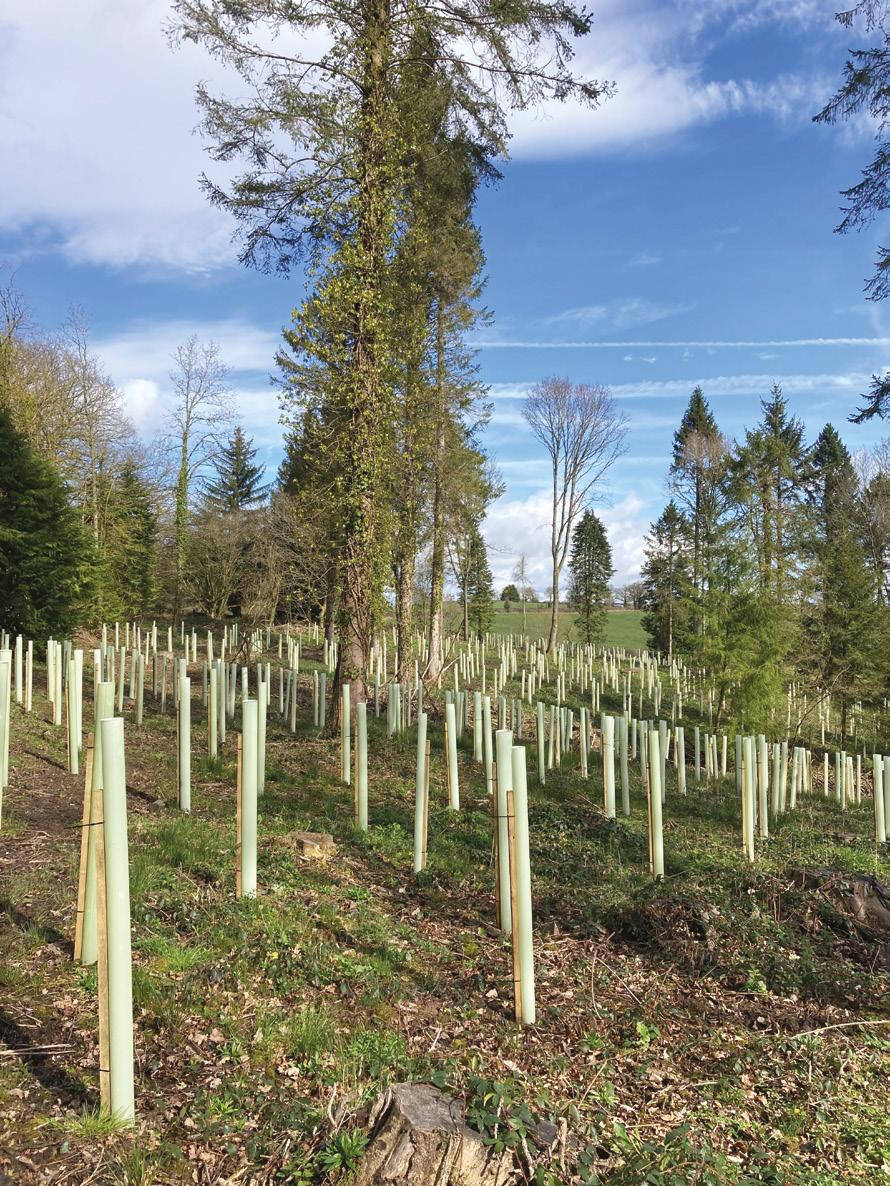
Recent heat waves have once more emphasised how key climate resilience measures are to everyday living. The community value of trees as heat sinks in urban settings is ever more evident as temperatures nudging 40 o C trigger red alerts signalling risk to life.
Major players such as The National Trust and The Royal Parks are already acting on the clear and present danger climate change poses to animal and plant life. So too are some local authorities.
There’s no space anymore to entertain those denying climate change. The scale of biodiversity loss over frighteningly short timescales leaves little if any room for prevarication over the actions to take. It’s firmly within the remit of landscape
Paula Warman | Lynne Taylor | Gillian Taylor | Paul O'Grady
Paul Hadley | Niall Gallagher
Advertising sales
Helena Hughes | 07376 130 208 | helena@landscapermagazine.com
Design and production grant@lucas-studio.co.uk Circulation and subscriptions
The Landscaper is owned and published by Purple Ash Media Limited. The Landscaper is an entirely independent magazine. It is not a member of any trade association or society. Purple Ash Media Limited Unit 14, West Yoke Farm Michaels Lane
Sevenoaks
architects, designers, engineers and installers to join up the dots and deliver climate mitigation methods and solutions to help futureproof life as we know it. The clock’s ticking. Let’s ensure we listen to it.
Greg Rhodes, Editor greg@landscapermagazine.com
Next issue advert copy deadline: 17th August 2026 To advertise please email us at helena@landscapermagazine.com
“Act now to cool overheated Britain”
Government must act now to cool UK cities with green infrastructure, as extreme heat is threatening our way of life, warns a tripartite alliance.
The Woodland Trust, Horticultural Trades Association (HTA) and Royal Horticultural Society (RHS) are renewing their call to ministers, amid repeated extreme heat they fear could become the summer norm.
The UK has suffered record-breaking heat this year, with London recording an all-time May high of 35.1°C before further national peaks in June.
“More trees and green infrastructure and a stronger domestic tree production sector to supply the planting the country urgently needs,” is the solution.
Lingwood, Norfolk recorded 37.7°C on 26 June, while the Mayor of London’s Heat Ready London plan warned rising temperatures were already putting homes, schools, hospitals, care services and infrastructure under pressure.
Awaiting the government’s England Trees Action Plan, the organisations, which make up the Strong Roots trees alliance, urged inclusion of two “vital” recommendations from its own report in a 17 June letter to Minister for Nature Mary Creagh MP, sent ahead of the recent heatwave.
• Feasibility study into what proportion of imported tree material could be produced domestically
• Use the study to develop a dedicated action plan for increasing productive and ornamental tree production in England.
The Strong Roots report, published last October, suggests the government’s Net Zero Strategy to plant 40,000 ha of trees annually by 2030, is likely to be hampered by lack of a designated action plan and shortage of skilled workers.
Stressing trees’ “essential role in sustaining biodiversity, mitigating climate change and enhancing wellbeing”, it
outlined how to boost availability of home-grown trees across Britain.
A Manchester study revealed that concrete surfaces reached 40°C in full sun, compared to 23°C for grass. Adding tree shade further cooled concrete 12°C and grass 9°C.
The annual value of urban cooling by UK vegetation was an estimated £430 m in 2020 (£547 m pa in 2025).
Green infrastructure was not a nice-to-have but essential, said Fran Barnes, HTA chief executive. “Plants, gardens and trees can make a measurable difference to how hot our streets, homes and communities feel. In dense urban areas, where hard surfaces trap and retain heat, trees and green spaces provide shade, cool the air and reduce the heat absorbed by buildings, roads and pavements.
If we wanted safer, healthier, more liveable places in extreme heat, we needed to plan, grow and plant the trees and green spaces to protect communities, government must give businesses the confidence to invest in the domestic production needed to deliver it, she stated.
Recent extreme temperatures showed how poorly prepared the country was for rapidly changing climate, said Andy Egan, the Woodland Trust’s head of conservation policy, with “millions living in tree deserts”. Government should prioritise planting high-quality homegrown trees in these areas, “protecting communities and restoring nature”.
“Trees are one of the most effective natural tools for cooling urban environments, said Prof Alistair Griffiths, RHS director of science and collections, “improving air quality and supporting biodiversity . . . “but we must urgently grow, establish and provide long-term care for more resilient, home-produced ones.”
Vanity, sanity and reality
To confuse being busy with being profitable could prove costly, warns
If there’s one conversation I've had more than any other this year, it’s: “We're flat out, Paula. The diary is full. The team is busy. But there's never any money left.”
Sound familiar?
The landscaping industry remains strong. Homeowners continue to invest in their outdoor spaces and the sector is worth billions to the UK economy.
Yet many landscaping business owners are working harder than ever while feeling less financially secure.
The problem?
Too many business owners confuse being busy with being profitable.
They’re not the same thing.
I’ve worked with landscapers turning over £200k, £500k and beyond who still don't know their profit margin. They know how many jobs they’ve got booked in. They know what’s in the bank today. But they couldn't tell you whether the last project actually made money.
That's a dangerous place to be.
The pricing trap
One of the biggest issues I see is underpricing.
Not because landscapers don’t value their work but because they’re afraid of losing the job.
So they shave a bit off the labour. Trim the margin on materials. Leave out contingency. Promise themselves they’ll make it back elsewhere.
They rarely do.
Every time you lower your price to win work, you’re making a decision about your future profit. And if your pricing isn’t based on real numbers, you’re simply guessing.
Hope is not a pricing strategy.
Labour costs more than you think Many businesses know what they pay their team. Fewer know what that team actually costs.
Wages are only part of the picture.
Paula Warman is the Landscapers' Coach, working with landscapers to develop and grow their businesses through her Levelling Up mastermind and 1:1 coaching package. If you need her help please get in touch on the details below to book in for a free discovery call. paula@thelandscaperscoach.co.uk | www.thelandscaperscoach.co.uk Or, check out Paula's The Limitless Landscaper’s Podcast
Add National Insurance, pensions, holiday pay, vehicles, fuel, tools, training, insurance and downtime and suddenly that ‘cheap’ labour isn’t so cheap.
If your quotes are based on day rates you’ve used for the last three years, there’s a good chance your margins are being squeezed without you even realising it.
The cashflow catch
Profit and cashflow are not the same thing.
You can make money on paper and still struggle to pay suppliers.
I’ve seen profitable businesses under pressure because deposits weren't large enough, stage payments weren't structured properly, or too much money was tied up in materials and labour before invoices were paid.
Cashflow problems rarely arrive overnight. They creep up quietly until suddenly everything feels tight.
That’s why every landscaping business owner should know what’s coming in and going out over the next 90 days, not just what's sitting in the bank today.
More leads won’t fix it
When things feel uncomfortable, most landscapers immediately focus on generating more enquiries. But often, that’s not where the problem lies.
More leads won’t fix poor pricing. More leads won’t improve cashflow. More leads won’t solve a lack of systems. In fact, winning more work can make those problems worse.
The businesses that thrive aren’t always the busiest. They’re the ones that understand their numbers, price confidently and have systems in place to support growth.
Three things to review this month
If you want to improve profitability, start here:
1. Review your last three completed projects. Did they achieve the margin you expected?
2. Calculate your true labour cost. Not just wageseverything.
3. Look at your cashflow forecast. Do you know exactly where the business will be in 30, 60 and 90 days?
If the answer is no, that's where your attention needs to go.
Because the goal isn’t to be busier but to build a landscaping business that makes money consistently, supports your family, rewards your team and gives you the freedom you started the business for in the first place. And that starts by understanding that turnover is vanity, profit is sanity, and cashflow is reality.
Stepping up to the mark
Managing level changes in the landscape is crucial, advises Lynne Taylor
The world is not flat and neither are our gardens. Whether working on a new build plot, mature garden or simple patio install, landscapers regularly face changes in levels from access to the property door to large sloping sites. While steps and terraces can transform a garden, they also introduce additional technical and construction considerations.
In my experience as an expert witness, level changes are not only a common source of disputes but can also create health and safety risks within domestic landscaping. Poorly designed or constructed steps, terraces and access routes can quickly turn everyday garden features into hazards for homeowners and visitors alike. In some cases, the consequences extend beyond civil dispute into more serious legal scrutiny.
Here’s my top five reasons for level change disputes and where landscapers can often get caught out:
1. Step treads and risers
Step configuration is one of the most common defects encountered in expert witness work when assessing level changes. Even relatively small variations can create trip hazards and make steps uncomfortable to use.
These issues often arise without adequate planning to ensure equal goings and risers, or using materials that don’t provide consistent dimensions. While the matter may seem trivial, users instinctively expect every step to be the same, and minor differences can often lead to accidents.
Having inspected a set of steps where risers and treads varied so significantly that descending them required complete concentration is an experience I do not wish to repeat. What should have been a simple access route had become a genuine safety hazard.
2. Movement and settlement
Many level-change failures are blamed on the visible surface but the underlying cause is often hidden below ground. Tree roots, lack of drainage, ground construction
and environmental changes can all cause ground movement and settlement if not addressed correctly at the time of construction and integrating level changes.
Water is frequently a key factor. Surface water, groundwater and poorly managed drainage can soften supporting soils, wash out bedding materials and create pressure behind retaining structures.
Once movement occurs, steps can become uneven, retaining features can lean and access routes can become unsafe. Understanding the ground conditions and drainage requirements at the outset is often far more important than the choice of surface material itself.
3. Structural integrity
Significant changes in levels often require retaining structures or terracing to provide stability. In split level gardens, ensuring the construction of retaining walls is strong enough to hold the materials is key to prevent ground movement and sinkage. Forgetting to include drainage channels or building from the wrong material could cost you thousands in remedial work and cause safety issues if the wall is at risk of collapse.
Where retaining structures are substantial or complex, seeking engineering advice can help avoid costly problems later.
4. Regulations
One of the biggest misconceptions is that external landscaping sits entirely outside regulation. While no single set of regulations focus solely on garden steps, building regulation requirements may apply depending on the location, use and relationship to the property.
Access requirements, retaining structures, changes in level and safety considerations can all fall within the scope of statutory requirements.
Understanding where responsibilities begin and end is an essential park of construction works.
It’s time
to spring commission your irrigation systems.
5. Access (future-proofing)
When we think about access, we mostly focus on getting to the front door but access starts the moment someone enters the site, and as such often falls under building regulations. This flow of movement can be overlooked and not considering how it will function long term. From routine maintenance activities to users with mobility difficulties, each garden has its own demands. With more clients driven by budget constraints, neglecting this stage and consideration for flow can create long term usability issues that can be difficult and expensive to rectify.
A well-maintained irrigation system is key in saving you time & money while allowing you to protect your landscape’s health & appearance.
is often not the visible finish but decisions made much earlier in the design and construction process.
We also maintain water features & fountains
Well-constructed steps and terraces should feel effortless to use. When they don't, the underlying cause
Taking the time to consider construction, structure, compliance and long-term access from the outset can help ensure that steps and terraces remain safe, functional and resilient for years to come, and avoid any unnecessary conflicts.
Lynne Taylor is an independent landscaping expert witness and owner of VirtuScapes, who has carried out various reports on landscape disputes for commercial and domestic projects.
@waterscapesltd 01963 824166 waterscapes.co.uk
KING FEEDERS UK
When an inspector calls
Horticultural business consultant Mark Pitman joined the Garden Centre Association’s inspectors earlier this year. An accomplished leader from horticulture and wildlife sectors, he brings more than 40 years’ experience from operational management, retail leadership, environmental stewardship and executive positions to the role.
“Mark will be integral in helping us ensure consistency and high standards through our membership and will visit some 40 of our members’ centres this spring,” CEO Peter Burks said at the time, “scoring each one against given criteria, using our detailed inspection form, and giving objective and honest feedback on what he has seen. He will also make presentations at our regional meetings this summer and during our annual conference in January 2027.”
Most recently, Mark had spent six years with Wildlife World Ltd (2019-2026), first as general manager and later as managing director of both Wildlife World Ltd and The Wildlife Community Ltd, the organisation’s retail operation.
During his tenure, he strengthened operational
performance, expanded product innovation and helped grow the company’s reputation as a leading provider of sustainable wildlife products, the GCA states.
Before moving into wildlife-focused leadership roles, Mark built a 23-year career with Hillier Garden Centres, progressing from garden centre manager to retail operations manager. He later brought his horticultural know-how to Waitrose’s Longstock Park Nursery, where he led nursery and landscaping operations for six years.
A non-executive director of the Horticultural Trades Association, Mark says: “I’m thrilled to be working with the GCA to maintain their high standards of excellence in retailing across all members and to be able to bring my experience to the role.
“It’s going to be very interesting and I relish the opportunity to go out and visit centres and chat to members in my new professional capacity.”
Through sharing information and its inspection programme, the GCA helps members achieve high standards in customer service, plant quality and reliability.
The Landscaper spoke to Mark to learn more about how it works.
Mark Pitman, GCA Inspector
Why is the inspection process important?
“For member centres it’s really important to have a benchmark inspection at the peak trading period of the year, to ensure membership standards are being met, and constantly improved on. It allows for sharing best practice across the members, so all can benefit to build more profitable businesses.
“Most importantly, GCA inspectors look at the centres 'as they find them', and through a customer’s eyes at all times - very different from internal inspections/audits. There are no trick questions, the visit is unannounced, and we look at the customer journey, the shopping experience and product availability, access, presentation and highlight good practice/innovation when we see it.
“We feed back to the staff team on the day of the visit and the full results are available a few weeks later. Members can use the inspection as a means throughout the year to self-audit and constantly improve and of course the regional and annual awards celebrate those achievements.”
What key criteria are included within it?
“We look at all areas, starting roadside and moving through the car park, entrance and then each department in turn - plants, seasonal, garden care, pets, and so on, including the cafe and any concessions accessible from the main garden centre flow route, through to the tills and exit.
“We engage with staff and customers during the visit, as it all builds a picture of the experience. We
also review social media, websites and members are sent a number of emails prior to a visit to see how that customer experience works, and whether it would prompt a visit.”
Which inspection criteria apply to landscaping provision and which are most important for these buyers?
“How easy is it to purchase the products, which are bulky and difficult to handle at times, are there trolleys available, is there a home delivery service, can I easily see all the products (are there sample bags open), is the POS clear and easy to understand and does the store make it easy for the customer to work out the volumes of product they might need to cover a certain area, for example. Does the area inspire with demonstration sections so I can see the products in situ?”
How has the inspection process evolved over time?
We share photos of each visit via an online system but the inspection process has come on in leaps and bounds. My previous experience was filling in the inspection form on an Excel spreadsheet; now we have a tablet-based form, which is far easier to complete, with easy 1-10 grading, a section for comments (which you can even do using voice commands), the form is uploaded to our system and once complete and submitted, members can view their scores and form via our website - far easier, consistent and professional.”
Mark Pitman, GCA inspector with fellow inspector Peter Walker
Kickstarting historic gardens’ adaptability
A major project to spur climate resilience forms a key data source for action, finds Gillian Taylor
A ground-breaking garden opened in 2025 at The National Trust's Sheffield Park and Garden in East Sussex.
The Garden for the Future, designed by three-time RHS Chelsea award-winner Joe Perkins, was the first major renovation project since the garden came under the Trust's care in 1954, and is a BALI award-winner.
An experienced garden designer and landscape architect, Joe has designed, built and planted gardens for more than 20 years in the UK, Southern France and Spain.
Sheffield Park and Garden is renowned for its bold, innovative planting schemes, predominantly the work of Arthur Gilstrap Soames, who, 100 years ago, pushed boundaries with experimental planting and use of exotic species from around the world.
In recent years, the garden team has recognised an urgent need to address climate change impact on plant and tree health, with significant specimens in the collections suffering with extremes in temperature and rainfall.
Accordingly, the project addresses the need for succession planting with increased resilience to climate change and will help inform future garden development.
I visited this April, a year after planting was completed and met site manager Pippa Reece and head gardener Jodie Hilton.
Developing the Garden for the Future came with many challenges including root protection zones of veteran trees which had to be considered, irrigation and drainage problems. These were successfully overcome by the
Approach April 2026. Image credit Gillian Taylor
team from The Landscaping Consultants, who worked with Joe to bring his plans to life.
Designed as a ‘garden within a garden’, this new area addresses the challenges posed by climate change and shows how historic gardens can adapt.
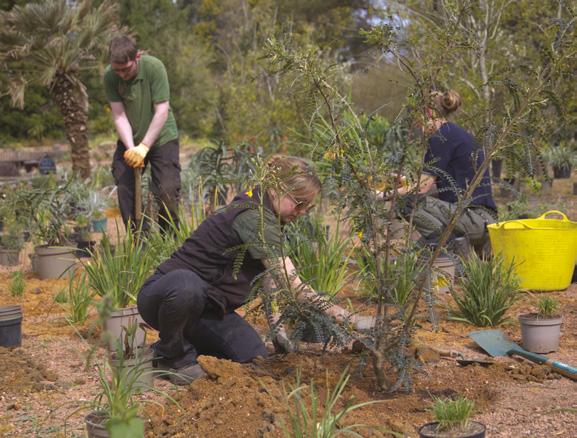
The planting of more than 5,000 plants and 30 new trees was a collaborative effort, with the help of volunteers, local community groups, and National Trust gardeners from across the region.
Hard landscaping and furniture installation were completed in 2024, and due to quarantine requirements, the permanent plants could not be installed immediately.
A temporary wildflower mix was sown to provide seasonal interest and support biodiversity throughout the summer. Unusually for a NT property, Jodie was keen to leave the area open to the public while the building work was conducted to allow visitors to experience the changes first hand.
Approaching from the Conifer Walk takes you from darkness into light, and a sense of increased energy in the new Garden. The impressive stone banks create privacy and interest, encouraging exploration to see what lies beyond.
The drought-tolerant species were planted in a growing medium of crushed brick and sand. Paths are permeable and, in keeping with the sustainability theme, reclaimed marine timber was used for the boardwalks and stone sourced locally.
Close to the site is a 300-year-old oak tree whose root protection zone had to be carefully considered. Instead of bark mulch, the team used a living alternative of plants, including Azula and Mahonia Soft Caress.
I was visiting early in the season, with the peak being later in the summer months. Two standout plants were the Euphorbia x pasteurii ‘John Phillips’ and the Sophora microphylla – the latter a New Zealand native, which flowers in late winter through spring. The unusual, charred Sequoia ‘pebble’ seats were surprisingly comfortable.
“The garden provides an opportunity to engage visitors with a different style of planting,” Jodie told me, “adapted
GFF Rocks. Image credit Gillian Taylor
Planting out. Image credit Laurence Perry, April 2025
Gillian Taylor
might see in the rest of the landscape at Sheffield Park.
“Early on, we identified the need for plants that can tolerate both extended periods of drought, and potentially heat, as well as cold winter temperatures. We’ve created different planting habitats which will allow the team to explore plants from around the world that could be better adapted to future conditions.”
The team at Sheffield Park is working with Kew and Royal Holloway University to collect data on the trees, plants and wildlife in the garden to see which are coping with the shifting weather patterns and which may not be good choices for the future.
It has been an interesting journey for designer Joe Perkins – as this new venture will be a long-term relationship, relatively unusual in the world of garden design. There is the opportunity to observe and track how new and old species respond together in their new environment and Joe is keen to learn from the science behind the plantings’ future performance.
“It’s a kickstarter for how we can adapt historical gardens to be able to cope with the challenges we’re going to face in the future climatically,” he said.
The garden is innovative and experimental, and data obtained will be used to expand adaptive planting across the National Trust.
The Garden for the Future has already received awards from BALI and Sussex Heritage Trust, an acknowledgement of its skilful design, excellent construction and planting . Congratulations to the whole team and I look forward to seeing its progression over the coming years.
The National Trust. www.nationaltrust.org.uk
Landscape Architect: Joe Perkins, Joe Perkins Design www.joeperkinsdesign.com
Contractor: The Landscaping Consultants. www.thelandscapingconsultants.co.uk
Craftspeople: Oli Carter Adventurous Joinery. www.olicarter.co.uk
Kelways Plants Ltd. www.kelways.co.uk
CED Stone. www.cedstone.co.uk
Bourne Amenity. www.bourneamenity.co.uk
NT Sheffield Park Euphorbia x pastuerii. Image credit Gillian Taylor
Summer 2025. photo credit Natalia Perkins
NT Sheffield Park Sequoia Pebble seat. Image credit Gillian Taylor
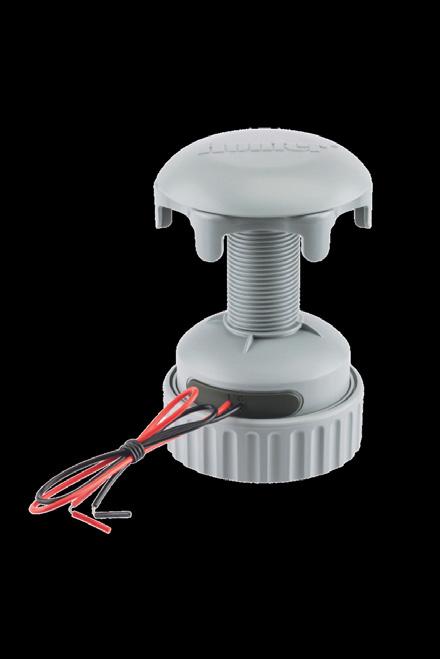
Wireless Valve Link
The Ultimate in Wire-Free Irrigation Control
Simple installation
Licence-free LoRa® Technology enables wireless communication directly to the valve box — no copper field wiring required
Combines with conventional ICM or EZDS Modules for ultimate flexibility
Combines with conventional ICM or EZDS Modules for ultimate flexibility
Compatible with Centralus™ and Hydrawise™ Software for Remote Irrigation Control
CV Show draws landscaper interest
Growing numbers of landscapers are visiting one of the mainstays of road transport and logistics.
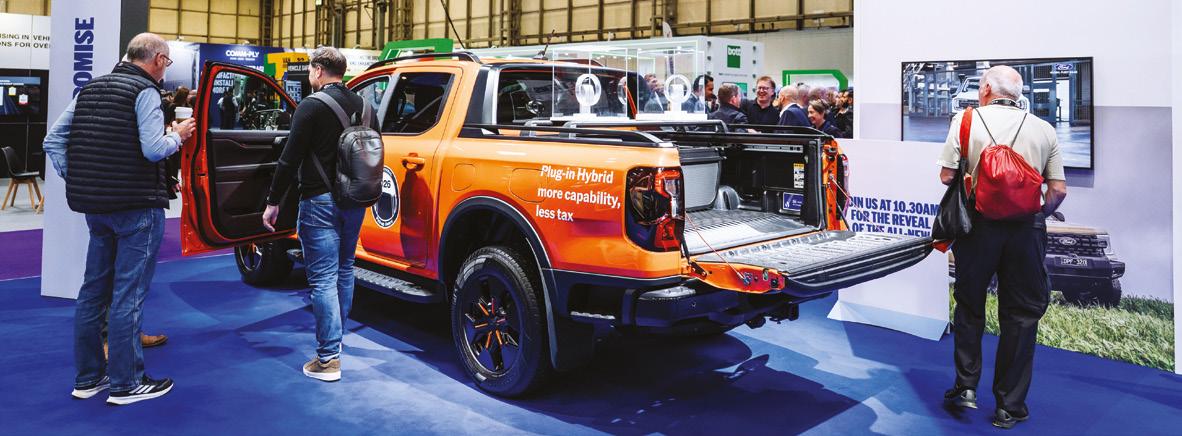
The Commercial Vehicle Show is seen as the UK’s premier event for these sectors but the 2026 edition underlined why it is becoming increasingly relevant to landscape contractors, arb businesses and local authority groundcare teams.
While heavy trucks and distribution fleets remain a core element of the event, the show floor reflected the changing needs of a much broader audience. For businesses responsible for transporting crews, machinery, tools and materials, there was a strong focus on vehicle electrification, specialist conversions, fleet technology and next-generation pickups.
One of the dominant themes throughout the show was the continued shift towards lower-emission vehicles. As local authorities work towards netzero targets and contractors increasingly encounter environmental requirements within procurement frameworks, interest in electric commercial vehicles continues to grow.
For landscape professionals, however, the key question is not simply whether vehicles can be electrified but whether they can perform the demanding tasks required on a daily basis. Payload, towing capability, durability and operating range remain critical considerations, particularly for contractors working across multiple sites or in rural locations.
Rapid response
Ford’s commercial vehicle range attracted major attention, with the Ranger continuing to reinforce its position as one of the UK’s most popular pickups among contractors and fleet operators.
For many landscaping businesses, pickups remain
indispensable, offering the versatility required to tow machinery, carry equipment and access sites where larger vehicles may struggle.
Alongside established brands, visitors were also able to explore an increasingly diverse range of commercial vehicle manufacturers. Maxus showcased its growing portfolio of electric commercial vehicles, while Iveco demonstrated solutions suited to specialist fleet applications. FOTON was among a number of manufacturers highlighting new opportunities for operators seeking alternatives to traditional vehicle suppliers.
The expanding variety of vehicles on display reflected a wider trend across the industry. Fleet operators are no longer limited to a small number of established brands, with new manufacturers bringing fresh approaches to electrification, connectivity and vehicle design.
For landscape contractors, this increased competition is likely to accelerate innovation while broadening the range of vehicles available for specialist applications.
Vehicle conversion
Few landscaping businesses operate standard off-the-shelf vehicles. Instead, many rely on bespoke configurations incorporating tipping bodies, dropsides, crew cabs, lockable tool storage, racking systems and towing solutions tailored to operational requirements.
The Commercial Vehicle Show remains one of the best opportunities to see these solutions in action. A significant number of bodybuilders and conversion specialists exhibited at the event, demonstrating how commercial vehicles can be adapted to maximise productivity, improve safety and support increasingly complex operational demands.
For local authority groundcare teams, the ability to compare vehicle and conversion options side by side is
particularly valuable. With budgets under pressure and sustainability targets becoming more demanding, fleet decisions are increasingly focused on achieving long-term operational efficiency.
Tech focus
Modern telematics systems are now capable of delivering detailed insights into vehicle utilisation, maintenance requirements, driver behaviour and route planning. For organisations managing multiple crews and vehicles, these technologies can play a significant role in reducing operating costs and improving fleet performance.
Safety technologies continue to evolve at a similar pace. Advanced camera systems, driver assistance features and connected vehicle solutions are becoming increasingly common across commercial fleets, helping operators improve compliance while reducing risk.
The show also reaffirmed its status as one of the industry’s leading launch platforms. Manufacturers continue to use the event to introduce new vehicles, technologies and services to a concentrated audience of
fleet professionals and purchasing decision-makers. For visitors, this provides a valuable opportunity to assess emerging products and gain an early understanding of future market developments.
What became particularly clear during the 2026 event is that the challenges facing logistics operators and those facing landscape contractors are increasingly aligned. Decarbonisation, vehicle safety, operational efficiency and fleet optimisation have become priorities across virtually every sector that depends on commercial vehicles.
As a result, the Commercial Vehicle Show is attracting growing interest from organisations beyond traditional transport and logistics, including local authorities, utilities providers, environmental services operators and contractors managing specialist fleets.
For businesses involved in landscaping and grounds maintenance, the event offered a useful insight into the future direction of commercial vehicles. From electric pickups and alternative fuel technologies to specialist conversions and fleet management systems, many of the innovations on display are likely to influence purchasing decisions across the sector in the years ahead.
The next Commercial Vehicle Show will take place at the NEC Birmingham from 21 to 23 April 2027, where the industry will once again gather to showcase the technologies, vehicles and services shaping the future of commercial fleet operations.
Husqvarna tackles triple jeopardy
The triple whammy of rising costs, labour shortages and higher environmental expectations continues to impact landscaping but, states manufacturer Husqvarna, autonomous mowing is helping the sector maintain highquality green spaces with “more efficiency, environmental consideration and innovation”.
Founded in the late 1600s, the Swedish business launched reportedly the world’s first robot mower in 1995 to lay the groundwork for what has become “a mature, proven technology applied across thousands of properties worldwide”.
Its commercial robot mowers span multiple applications, from smaller, complex green spaces to larger areas such as parks, sports grounds and multi-site facilities.
The need for the shift to robots is clear, Husqvarna maintains. “Industry data shows labour shortages remain one of the most pressing challenges facing landscaping businesses, with a significant proportion of contractors reporting difficulties in recruiting and retaining staff.”
Rising fuel prices and mounting expectations around sustainability add further pressure to maintain margins while delivering consistent quality, it adds.
Husqvarna’s autonomous mowers seek to address these challenges by automating one of the most timeconsuming tasks in groundcare. Operating continuously and independently – apart from charging times – robotic mowers limit reliance on manual mowing “to allow teams to focus on higher-value activities such as detailing, landscaping enhancements and client service”.
Labour can account for 60 to 70% of total lawncare costs, research referenced in Husqvarna’s white paper, Commercial Robotic Mowers for Landscapers, notes. “Autonomous mowing offers the potential to significantly reduce those costs depending on application,” the company states.
“Because robotic mowers remain on site and recharge automatically, they reduce the need to transport heavy machinery between jobs – saving time and operational expense.”
Performance and turf quality also factor in the equation of benefits. “Husqvarna robotic mowers cut frequently, removing only small amounts of grass at a time to produce fine clippings that are returned to the turf, supporting a consistently maintained finish and contributing to a healthier sward.”
Wired and satellite-based EPOS® mowers are both available, “enabling precise boundary definition – including virtual zones – and site specific mowing patterns”. Connectivity via mobile apps lets operators manage and monitor fleets remotely, adjust cutting heights and schedules and receive real-time alerts and performance data.
Battery power delivers lower decibel output than petrol kit, a major plus in noise-sensitive areas, while helping reduce exhaust emissions, Husqvarna concludes.
“Time to transition to battery tech”
Landscapers are being urged to transition to battery tech to ease mounting pressures of resourcing and environmental strictures, in a far-reaching study that seeks to quell any lingering doubts over the benefits of robotic machinery.
“Autonomous, battery-powered mowing is no longer a futuristic concept but a fully proven, commercially viable solution available today,” concludes manufacturer Husqvarna in its white paper Commercial Robotic Mowers for Landscapers.
“To survive the dual pressures of labour shortages and green regulations, the landscaping industry must transition away from heavy, noisy, high-emission machinery,” it adds.
“Adopting robotic mowing is the most effective way for contractors to protect their profit margins, achieve superior lawn quality and meet modern environmental standards.”
Commercial landscaping faces an “unprecedented squeeze. Landscapers are trapped between severe labour shortages, rising operational costs and growing pressure from clients and governments to meet strict sustainability and noise-reduction targets”.
The current status quo is unsustainable for several reasons, Husqvarna argues.
• The labour crisis: Finding and retaining qualified labour is the key barrier to growth. A cited industry survey reveals 84% of professional landscapers struggle to find staff, while 51% cannot fill vacant positions. Labour accounts for 60% to 70% of total lawn maintenance costs.
• Environmental and regulatory pressures:
Conventional, fossil-fuelled "high-energy" mowers are becoming unmanageable due to rising fuel costs, strict noise controls and carbon-reduction mandates. Bans on chemical fungicides and insecticides are making traditional turfcare more labour intensive.
The white paper advocates a paradigm shift from heavy, fossil-fuelled machinery to lightweight, battery-powered, autonomous "low-energy" technology.
• Fifty per cent cost reduction: Transitioning to robotic mowers can slash lawn maintenance costs by about half, largely by reallocating costly human labour to higher-value landscaping enhancements, edging, and pruning.
• Massive carbon reduction: A Life Cycle Assessment (LCA) by Ramboll reveals a batterypowered commercial robotic mower has an 83% lower climate impact (Global Warming Potential) over
its lifecycle compared to a conventional diesel front mower.
• Dramatic energy efficiency: Conventional diesel mowers require almost nine times more energy (in kWh) than autonomous battery-powered equivalents.
• Superior health for turf: Continuous, frequent mowing with lightweight robots (typically weighing 15 to 75 kg, compared to 1,000+ kg ride-ons) prevents soil compaction, with micro-clippings acting as natural fertiliser.
• Elimination of noise pollution: Low-decibel, battery-powered operation allows 24/7 mowing without disturbing residents or violating local noise laws.
• Unsupervised operations and smart fleets: Modern commercial units utilise satellite-based navigation (RTK-GNSS) to operate wire-free down to centimetre accuracy, scaling up to handle areas up to 50,000 m² or working together in remotely managed digital fleets. Contracts can have grass maintained without supervision with complementary landscaping tasks completed periodically.
Autonomous technology is expected to evolve from simple mowing to active data collection, utilising AI and machine learning to gather real-time data on soil health, pests, weeds and irrigation.
They will even "speak to each other" to co-ordinate tasks, safeguard local biodiversity and give landscape architects more design freedom to create tighter spaces and complex terrains heavy machinery couldn't previously navigate.
Download Commercial Robotic Mowers for Landscapers: https://www.husqvarna.com/uk/learn-anddiscover/whitepaper-commercial-robotic-mowers-forlandscapers/
Commercial series delivers the X factor
Designed for large gardens, parks and sports fields, the Sunseeker Elite X9 series is claimed to be the industry’s most technologically advanced robotic lawn mowers.
Powered by a 10 TOPS AI chip, the X9 features AONavi™ 2.0, fusing nRTK and VSLAM 2.0 for “wirefree, centimetre-precise navigation”.
The mower needs no antenna station and comes with 4G module as standard to offer “hassle-free” outdoor operation. “Even under RTK signal blockage, VSLAM can maintain accurate positioning and path planning for up to one hour,” UK distributor FGM Claymore states.
Mowing area is mapped automatically, with boundaries and obstacles intelligently recognised. “No manual control or intervention is required throughout the entire process.”
Fitted with the 360° OmniSight™ 24 h Full Scene System, omni-directional cameras enable “precise avoidance, edge protection and close-range navigation”.
The X9 can detect and avoid static, dynamic and lowprofile obstacles, day and night, the company adds, with infrared night vision ensuring “animal-friendly navigation, spotting even hidden animals”.
The ATC Pro drive system – 10 in all-terrain anti-flip front wheels, 4-wheel drive, 4-wheel suspension and two rear-steering motors – lets the X9 handle rough and slippery terrain “with ease, remaining gentle on turf, with a world-leading climbing capability up to 42°/90%”.
By ensuring the cutting path follows the machine's
movement, the Centred Blade System eliminates uncut patches during sharp turns, FGM Claymore states.
An X9 optional extra but standard on the X9 Plus, the EdgeZero™ trimming attachment ensures zero-distance cutting at right angles in lawn areas, at the bottom of fences and other boundary areas.
The Side ToFView Camera works with the trimmer, scanning boundaries first and guiding it to avoid obstacles, “for precise edge cutting”.
“Mowers with front-wheel steering tend to crush the grass while mowing,” the company says, resulting in uncut patches but rear-wheel steering means the X9 mows first, then turns, to deliver “healthier, betterlooking grass”.
Dual floating cut discs “seamlessly” adapt to undulating landscapes and obstacles while prioritising turf integrity for “a pristine, damage-free finish”.
The 190W dual ultra-powerful magnetic cutting motors, 43 cm wide dual-cutting discs (six blades each disc) and 20-100 mm electric cutting height combine to heighten mowing standards. Together, the X9’s tech supports mowing areas up to 24,000 m2 in 48 hours.
By signing in to the official Sunseeker fleet management website, multiple mowers can be controlled and personalised settings chosen, based on requirements.
Available from Sunseeker Elite dealers nationwide, the X9 costs £4,599.00 (inc VAT) - £5,899.00 (inc VAT) for the X9 Plus.
What is it that really matters? Power, performance, and productivity?
Does it matter if you can work wherever you’re needed, charged for a full day’s work? Does using the latest technology matter? Does the impact you have, and what you leave behind? Does networking with old friends and colleagues matter?
For the things that really matter, Husqvarna delivers, and that’s why we’re returning to GroundsFest this September. Robotic mowers that free up crucial extra time, a flexible range of handheld battery machines, and smart, mobile charging solutions. Because, in the end, it’s all about what matters most to you. Find out more about what we’ve got planned for GroundsFest 2026 at husqvarna.com/groundsfest
Mitie launches landmark Voyager mowbot mission
Tech-led facilities management, transformation and compliance company Mitie will deploy 24 Kress Voyager AI-powered mowbots in one of UK landscaping’s largest autonomous mowing deals of its kind.
Mitie will roll out the units on sites across the UK to create “a new model for grounds maintenance that blends intelligent automation with skilled human oversight”.
Its operatives are developing capabilities as robot pilots, programming and mowbot management using digital tools to map sites, monitor performance and optimise operations in real time.
Working alongside landscaping teams, the units safely navigate sites using advanced AI and positioning technology, undertaking routine grass-cutting throughout the day.
The fully electric Voyager fleet supports both companies’ shared sustainability ambitions by producing zero direct emissions during operation.
The mowbots run entirely on battery power to improve air quality and reduce carbon emissions across customer estates. Battery power also eliminates risk of fuel and oil spills, to support cleaner, safer site management, states Kress, a leading innovator in battery OPE and autonomous mowing.
Sensitive settings
“Significantly quieter” than petrol mowers, the Kress units suit sensitive settings such as schools, healthcare facilities, corporate campuses and public spaces where noise reduction is key.
They also aid healthier, more sustainable grounds management, Kress adds. Via grass cycling, the robots
Tim Howell, left and Spencer Funnell, right
mow little and often, naturally returning fine clippings to the soil, improving soil health, reducing fertiliser reliance and fostering stronger, more resilient lawns.
The deployment of the Kress Voyager fleet is the latest innovation within Mitie’s growing robotics programme, joining its successful cleaning robot (‘cobot’) initiatives, including the deployment of 32 autonomous cleaning robots at Heathrow Airport.
Together, these technologies are supporting frontline colleagues, enhancing service delivery and helping customers achieve their sustainability goals: "The rollout marks an important step forward in how we deliver grounds maintenance services,” said Tim Howell, Mitie’s managing director for landscaping. “Our partnership with Kress, will bring innovative autonomous technology into our landscaping operations while creating new opportunities for colleagues to develop valuable digital skills as robot pilots.”
The Voyager platform “supports our commitment to sustainability through quieter, zero-emission operation, allowing our teams to focus on higher-value landscaping activities”, he added.
The tie-up showed how “robotics and AI can work alongside skilled landscaping professionals to transform grounds maintenance and deliver a safer, more sustainable and highly efficient solution that benefits customers, colleagues and the environment”, said Spencer Funnell, Kress managing director.
Designed for large gardens, sports fields and parks, the Sunseeker Elite X9 series is the industry’s most technologically advanced robotic lawn mower. A wealth of features include: AONavi™ 2.0 for precise, antenna-free navigation; 360° OmniSight™ for obstacle avoidance and depth perception, 24/7; ATC Pro drive system enabling the X9 to tackle rugged and slippery terrain; fleet management capabilities for controlling multiple mowers.
Contact: robotics@fgmclaymore.co.uk |
Mammotion scales up with commercial offering
Hard on the heels of Mammotion's recent massive impact on the domestic robot mower market comes its biggest product to date – a commercial grade unit.
Shenzhen-based tech manufacturer Mammotion has made major inroads into the domestic robot mower market in the last few years. They are now embarking on their largest machine yet - a commercial grade robotic lawn mower.
The Shenzhen, China-based tech manufacturer unveiled the Maston mower at CES in January 2026 – it's a machine targeting public parks, large grassy areas, golf courses and sports fields and will have fleet management to allow operators to control multiple mowers over a site, UK distributor Mower Magic states.
Modular design allow technicians to easily repair and replace parts when required - including the batteries being removable from the rear of the machine.
For navigation, the Maston is powered by Mammotion’s Tri-Fusion positioning, which combines 360° LiDAR, Net RTK and Dual Camera AI Vision.
The technology has already been successfully deployed
in the 2026 Luba 3 range of domestic robot mowers with thousands sold through their UK dealer network.
The system ensures centimetre accuracy during cutting so no area is missed. The cutting deck is a triangular triple disc set delivering a total 680 mm cutting width.
Ultra-fast charging will be available on the machines to minimise downtime between mowing sessions, while the removable battery feature allows operators to slot in spare ones so they can resume mowing immediately.
Robust and rugged, the Maston is built to cope with all kinds of terrain and stand the test of time, the company states.
The Maston is passing through the final stages of testing, so it won’t be long before the first batch of machines will be ready for distribution, with sales prices to be announced.
To register your interest scan the code, right.
www.MowerMagic.co.uk
BALI strengthens 2026 tie-up
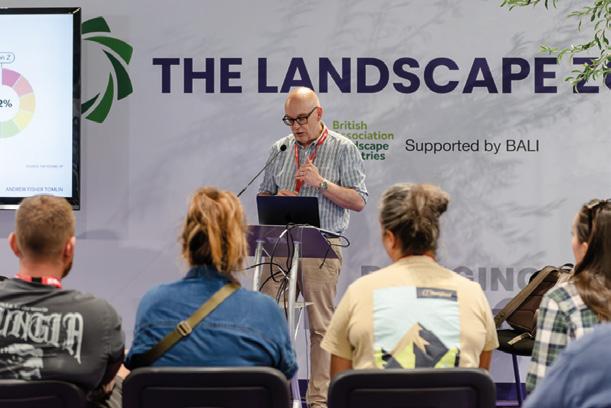
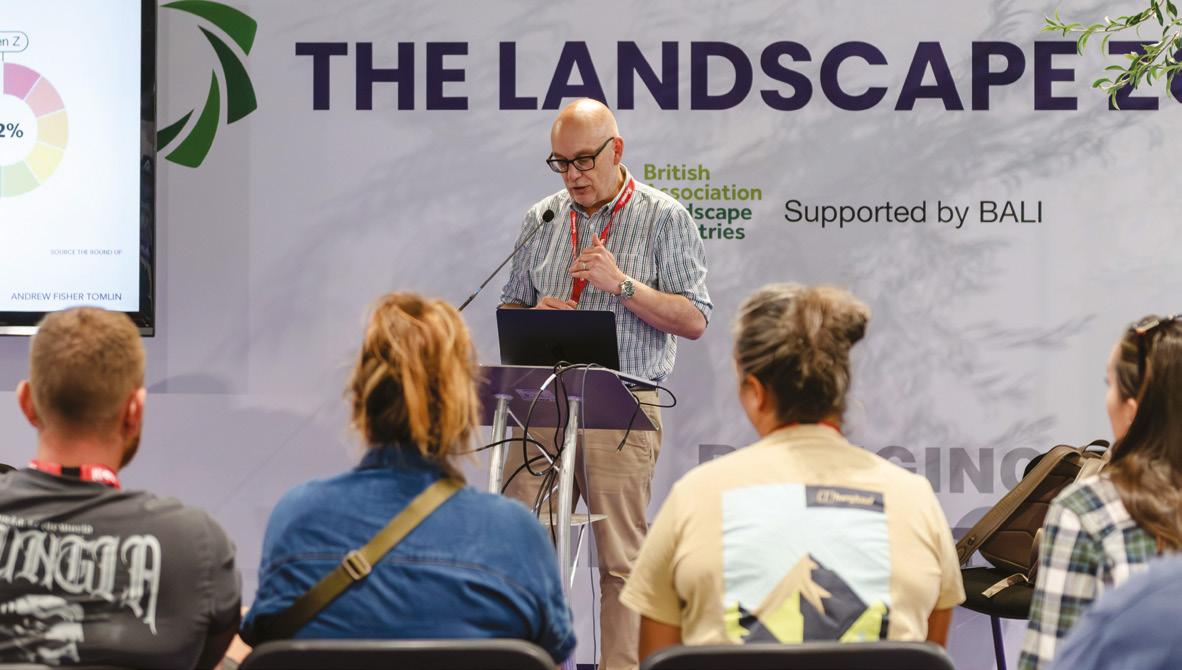
The British Association of Landscape Industries (BALI) has reaffirmed its commitment to GroundsFest by exclusively sponsoring The Landscape Zone for the 2026 event, to run from 16 to 17 September at Stoneleigh Park.
Under what is an expanded partnership with the member body following BALI's successful sponsorship of the Zone last year, the deal marks another major advance for GroundsFest as it unites landscaping, grounds management and outdoor sectors through a fresh, inclusive and engaging event experience.
BALI will have a major presence throughout the show, including sponsorship of The Landscape Zone and a seminar theatre. Working closely with HortWeek, it will help deliver an engaging seminar programme packed with expert insight, industry discussion and valuable educational content.
Alongside its own stand in The Landscape Zone, BALI will host a dedicated podcast area where landscaping’s leading lights will be interviewed throughout the two-day event – a feature expected to give visitors considered insight into key topics, trends and challenges, while spotlighting those shaping the industry’s future.
The partnership will also extend into GroundsFest’s popular live music festival, staged on the evening of the first day. BALI will host its own dedicated festival area, offering members the opportunity to continue networking in a relaxed and enjoyable setting with food, drinks, live music, bumper cars and entertainment.
Natural fit
“We see a natural alignment with BALI,” said GroundsFest event director Christopher Bassett, “with a shared commitment to raising standards, supporting professionals and strengthening the future of the landscaping and grounds sectors.
“The Association’s proactive, forward-thinking work mirrors what we’re striving to achieve with GroundsFest, making the partnership feel like a really natural fit and bringing added value for visitors and exhibitors.”
The 2026 expanded package follows “a hugely positive experience” for BALI at the ’25 event, said Rosie Sayers, its head of marketing and communications.
"GroundsFest has quickly become one of the most important events in the industry calendar, bringing together professionals from across landscaping and groundscare to share ideas, discover innovation and build meaningful connections.
“Its strong commitment to supporting and collaborating with the landscaping industry closely reflects BALI’s own values, which makes this continued partnership such a natural and exciting fit for us."
GroundsFest 2026 will once again bring together professionals from across landscaping, grounds management, local authority, estate management, sportsturf and related sectors for two days of hands-on demonstrations, live entertainment, networking and industry-leading exhibitors.
Register free at www.groundsfest.com
Racing that won't Kramp your style
Lawn mower racing returns to GroundsFest by popular demand this year with parts and accessories specialist Kramp UK again sponsoring the frenzied two-day showpiece.
Organised by the West Midlands Lawn Mower Racing Association (WMLMRA), the action-packed competition will deliver thrills, spills and entertainment to visitors throughout the show as competitors battle it out on a custom-built track to bid for the second-ever GroundsFest Cup.
Racers in the Association’s junior section will also showcase their skills for what is an exciting new dimension for the GroundsFest audience.
Racing will be staged at timed intervals throughout the show to ensure visitors have plenty of opportunities to witness the action while exploring everything else GroundsFest has to offer.
“Lawn mower racing is a great feature to be sponsoring once again,” said Kramp UK marketing manager Lexi Gilders, “bringing a real sense of fun to the event and reflecting the friendly, community atmosphere that makes GroundsFest unique.”
Grab your giveaways
The company’s stand will be housed in a distinctive red shipping container packed with products to explore, she explained. “We'll be giving away free lawn mower air fresheners and trimmer line while stocks last, as well as offering some exclusive account sign-up deals. Whether you're a sole trader, contractor or larger business,
there's a Kramp account for you so please come and say hi if you'd like to know more."
Lawn mower racing was a standout attraction last year, drawing large crowds and creating a fervent atmosphere. Its return further reinforces GroundsFest's commitment to delivering a unique event experience that combines industry-leading exhibitors, live demonstrations, education and entertainment, said GroundsFest marketing director Chris Bennett.
"The lawn mower racing created a real buzz around the showground and is a feature perfectly capturing the spirit of GroundsFest – fun, engaging and bringing people together.”
Winning ways: left to right, Chris Humphries, third, Kevin Bradford, second, and champion Carl Humphries
Chelsea shines as showers descend
Blustery wet weather failed to wipe the shine off the Chelsea glow-up as Monday media descended on the Royal Hospital site to report on the world's most famous gardening event, sponsored this year by Range Rover.
Celebrities were out in force too. Walking among the glitterati, what struck me most, writes Greg Rhodes, was the glitz and glamour of the RHS Chelsea Flower Show – floral suits and dresses striding out at every twist and turn. The stunning and the outrageous.
Some truly special gardens adorned the show. The Parkinson's UK, Eden Project, Tate Britain, Campaign to Protect Rural England and Lady Garden Foundation’s Silent No More presentations proved show-stoppers for me, as did The Bat Conservation Trust’s Nocturnal Garden, featuring a giant wooden bat sculpture, unveiled by singer Will Young.
Inside the Great Pavilion, with its glorious floral displays, Blue Diamond Garden Centres’ immersive walkthrough its home-grown plant selection, complete with fountain, sank me deep into the Chelsea culture.
Engaging with trade exhibitors – some first-timers, others celebrating a generation of appearances – left me in no doubt Britain has much to celebrate about both innovation and tradition, as new entrants and ‘old stagers’ stood side by side among Chelsea's riot of colour, elegance and chutzpah.
Gillian Taylor was spot on once again in predicting glory for the gardens below in our March/April issue.
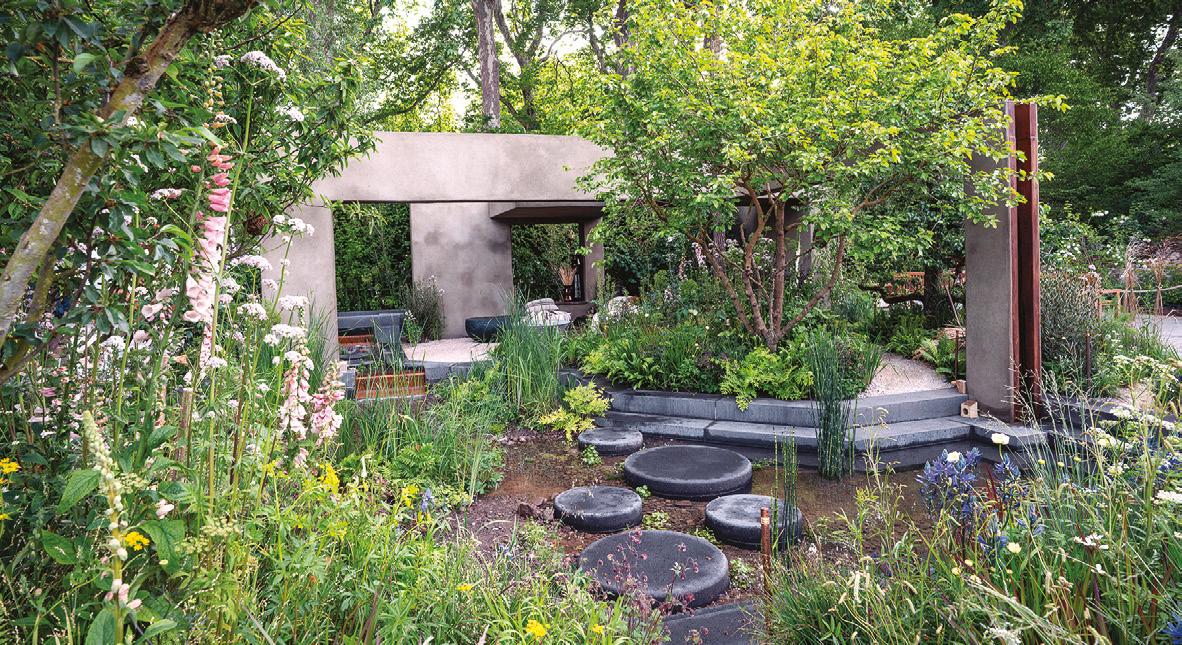
The Killik & Co A Seed in Time Garden
Designed by Baz Grainger
Built by Landform Consultants Ltd
Sponsored by Killik & Co
The Killik & Co gardens designed by Baz Grainger have won consecutive Gold Medals at the RHS Chelsea Flower Show.
2026: The Killik & Co A Seed in Time Garden – a serene, sustainable retreat celebrating traditional wetland crafts and rainwater harvesting – was awarded a Gold Medal.
2025: The Save for a Rainy Day Garden – an innovative, climate-resilient space utilizing 3D-printed structures to manage floods and droughts – also secured a Gold.
The Tate Britain Garden
An engaging and sustainable landscape which presents a new vision for how art, nature and community come together. The garden is an evocation of the new Clore Garden at Tate Britain
Designed by Tom Stuart-Smith
Built by Crocus
Sponsored by Tate Clore Duffield Foundation Project Giving Back
Balcony garden banks Gold
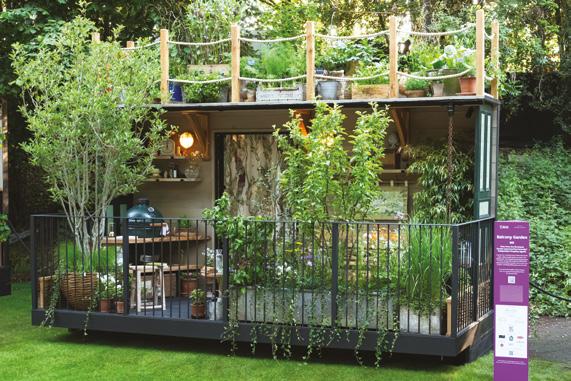
Paint producer Protek supported Tales from the Riverbank, the gold medal-winning Balcony Garden designed by Susie Kennedy and Kate Henning.
Inspired by traditional riverside living and life on a houseboat, the garden showcased how beautiful, functional outdoor spaces can be created within a
The Killik & Co A Seed in Time Garden. Image credit Rachel Warne
The Tate Britain Garden. Image credit Jason Ingram Tales from the Riverbank
compact footprint. Protek supplied premium, waterbased woodcare products, including Royal Exterior in Nude Taupe, French Lilac and Carmine Red, selected for its durability, extensive colour range and environmentally
considerate credentials, helping to protect and enhance the garden's timber features. The result was a scheme that balanced craftsmanship, sustainability and longlasting design. Photo credit www.poshyams.co.uk .
Timber “speaks” in Parkinson's UK winner
The impact of the Parkinson’s UK garden was recognised across the show, lifting BBC/RHS People’s Choice and Silver awards.
Designed alongside 15 people living with Parkinson’s and in collaboration with architects Millimetre, the garden was created to deliver a deeply sensory and emotional experience and response, not simply a visual one.
Timber sat at its heart, chosen for its warmth, tactility and ability to encourage interaction and movement through touch, sound and texture.
Accoya played a key role in enabling refined architectural detailing, with dimensional stability allowing delicate timber elements to be achieved with long-term durability.
“Every material choice had to feel empathetic to the lived experience of Parkinson’s,” said Darrin Andrews, specification manager, UK & Nordics, Accsys Technologies. “and timber became central to that conversation because people instinctively want to touch it. It brings warmth, tactility and a softness more industrial materials simply cannot replicate.”
The material palette balances sensory experience with performance. Some timber elements were reduced to around 10 mm thickness, which would usually risk movement or distortion in a conventional wood.
“Accoya’s exceptional dimensional stability and low swelling and shrinkage rates made it possible to achieve the delicate architectural detailing and refined finish the design required, while maintaining durability over time,” Darrin added.
The tactile handrail and flowing water help stimulate the senses and encourage movement, recognising that those with Parkinson’s can experience freezing episodes. The sound, movement and touch elements combined to create moments of reconnection and calm within the space.
Supporting metalwork complements the timber, while a pre-aged finish maintains a soft, natural tone and allows the beauty of the material to remain central to the experience.
“That circular approach aligned closely with Accoya’s Cradle to Cradle Certified ® credentials and wider focus on long-life, sustainable design,” Darrin said.
Following Chelsea, the garden was due to be moved to the John Radcliffe Hospital, giving the project “a meaningful second life”.
The mission to attract more women into landscaping and groundcare continues as sector bodies and training colleges strive to reach an audience seemingly shy of entering what's touted as a stimulating and rewarding profession.
Women are answering the call but it's a painfully slow process. But who better than women already working in these sectors to put out the message about what drew them into a working life where grass and turf figure so strongly.
Within member body the UK Lawn Care Association’s numbers has sprung up a group committed to attracting women into its ranks. The emerging Women in Lawn Care working group is starting to make its mark in seeking to reach out to would-be fellow professionals, so The Landscaper asked group members for their thoughts about the sector, its benefits and how to move forward.
“Prioritise representation and active outreach”
Katie Arnold, director and chief finance officer, TopGrass UK Ltd, who leads the Women in Lawn Care working group
“Having co-directed and grown my family business for over a decade, I have observed distinct demographic trends within the lawncare sector. Historically, women in this industry have primarily occupied administrative or office-based roles, entering the field through family connections.
“While our industry excels at supporting women in corporate and administrative positions, a noticeable gap remains in field-based roles. In recent years, however, it has been fantastic to see more women-owned new start-ups, and long may that continue.
“To diversify our workforce and attract more women to field positions, we must prioritise representation and active outreach. Because the lawn care sector is frequently unknown and thus overlooked by jobseekers, our recruitment strategies often target parallel industries, such as delivery and postal services, which share similar operational demands.
“To bridge the gender gap, we must ensure women are visibly represented in industry media, supplier brochures and company social channels; quite simply, candidates need to see themselves in these roles to consider them.
“Furthermore, establishing a presence at school, college and university career fairs will allow us to showcase the scientific, academic, and practical merits of the industry to the next generation of diverse talent. As an industry, it is our joint responsibility - and each company can contribute - to increase visibility and reach female jobseekers.”
“Social
media has a huge role to play”
Laura Abbott, owner of The Lawn Ritual
“One of the biggest reasons we don’t see more women in lawncare is that many simply don't realise it's an option.
“Before starting The Lawn Ritual, lawncare wasn't an industry I had ever considered. Like many people, I assumed it was just mowing grass. It was only once I started learning more that I realised how much knowledge, problem-solving and customer care is involved. No two lawns are the same, and that's one of the things I enjoy most about it.
“For me, the answer is visibility. The more women we see out treating lawns, running businesses and sharing
their experiences, the more likely others are to think, ‘I could do that too’. Social media has a huge role to play here because it gives us the opportunity to show the reality of the job and the people behind the businesses.
“I’ve found the lawncare industry to be incredibly supportive, with people willing to share knowledge and help others succeed. Continuing to build those networks and encouraging new people into the industry will make a real difference.
“Lawncare can offer flexibility, independence and the opportunity to build something of your own. Sometimes all it takes is seeing someone else doing it to realise that it’s a path worth considering.”
“Attitude, reliability and willingness to learn matter most”
Clare Miller, owner of Absolute Lawncare
“One of the biggest misconceptions about lawncare is that it’s all about physical strength. Modern lawncare is as much about communication, observation, problemsolving and customer service as it is about practical work.
“Interestingly, around 75% of my customers are actually the women of the house. They’re often the ones making decisions about the garden, noticing changes in the lawn, asking questions and valuing reliability and good communication. Building trust with customers is a huge part of the job.
“The industry itself is changing too. We’re seeing more robotics, more focus on sustainability, more awareness around climate challenges and far more emphasis on professionalism than there used to be. Lawncare today involves understanding soil health, diagnosing problems, managing expectations and adapting to changing conditions - it’s a skilled industry with many different sides to it.
“There’s a real opportunity to encourage more women into lawncare through better training and
support. In my experience, attitude, reliability and willingness to learn matter far more than whether somebody fits the traditional image of the industry.
“For me, variety is one of the best parts of the job. You’re outdoors, active, meeting different people every day and seeing tangible results from your work. No two lawns, customers or challenges are ever quite the same.
As the industry continues to modernise, bringing more women into lawncare will only strengthen it further - not just through representation but through the wider range of skills, perspectives and professionalism that helps any industry grow.”
“More focus on the many transferable skills women can bring to the job”
Abbie Latham, co-owner of AJ Lawncare
“My introduction to working in lawncare came when my husband set up a business in 2011 and I helped him with his admin work around my own separate job. At that time, it wouldn't have occurred to me that I would ever become more involved, as it felt like a job that I wouldn't have the physical strength to do.
“My role in the business has increased and adapted over the years, and I'm now full time, spending around 80% of my time on lawns rather than in the office. The role certainly requires a reasonable level of fitness but I've yet to come across any job that I've been unable to do due to not being strong enough.
“I'd love to see lawncare companies focusing on the many transferable skills that women can bring to the role. Customer service, problem-solving, ability to deal with last-minute changes when the weather isn't co-operating and a willingness to learn are all just as
important as physical capability. Women from a variety of work backgrounds, and those who have taken time out of work, can bring so much value even if they're new to the industry.
For women who may be considering a move into lawncare, my experience has been nothing but positive. Taking on a new lawn and seeing the improvement with each visit is hugely rewarding and it's a really friendly industry, with many support networks available for people at any stage of their career.”
“The more women who step into the industry, the more it will evolve”
Ellie Shutt,
customer service manager for TopGrass UK Ltd
“I grew up with parents who always pushed me to try anything, so stepping into a male dominated industry never really put me off. If anything, it felt like a challenge
you’re expected to have from the start; you learn it bit by bit. That’s exactly what I did. And now, with the experience I’ve built, I’m able to teach others
Turf Mixtures for Professionals
Heyday for haymaking
As summer mellows, meadow management cuts in, writes Paul Hadley, DLF wildflower specialist
Autumn's a critical stage in managing a native wildflower meadow long term. Following the peak flowering period, the focus shifts from visual performance to ecological balance and regeneration.
Well-timed intervention during this period maintains species diversity and ensures the meadow continues to function as a resilient, sustainable habitat.
Established meadows should receive a primary cut at the end of the flowering period, typically between August and October, followed by removing all arisings. This late-season cut mirrors the traditional hay-cut approach, which remains the most important task in long-term meadow management.
Cutting the meadow to between 50 and 75 mm removes most spent vegetation, preventing the sward from collapsing and forming a dense mulch layer. Removing this material is essential, as it allows light and air to reach the base of the sward, creating favourable conditions for existing perennial species to survive winter and re-emerge strongly in spring. At the same time, it prevents decaying material smothering plants and promotes successful germination and establishment of shed seed.
Vital role
Removing cuttings also plays a vital role in nutrient management. Wildflower meadows generally thrive in low-fertility conditions and returning organic matter to the soil through decomposition can increase nutrient levels.
This in turn favours more vigorous grasses and dominant species, which can outcompete finer wildflowers and newly germinated seedlings. Removing arisings and, in turn, reducing fertility, helps maintain the balance required for species-rich swards.
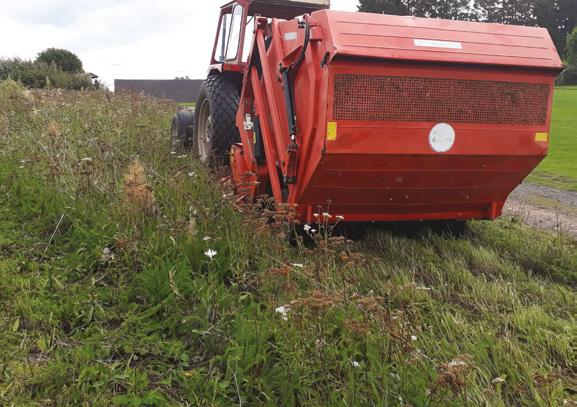
Several cut-and-collect methods can be employed depending on site scale and accessibility. Smaller areas may be managed using pedestrian mowers or strimmers, then raking and removal of material. Larger meadows typically require tractor-mounted, flail-and-collect mowers. Sometimes, cuttings may be left briefly on the surface to allow remaining seed to fall before removal, helping natural regeneration.
Autumn’s also a fitting time for targeted weed management. Digging out or spot treating persistent perennials where necessary, helps control invasive or dominant species without negatively impacting the wider sward.
This selective approach prevents problem species such as docks or thistles establishing long-term dominance, while early summer rouging is also critical to remove seed heads before they mature, so in autumn you are dealing with just the plant, not its offspring.
Light scarification can expose small areas of bare soil, improving seed-to-soil contact and aiding germination of that season’s seed. Similarly, carefully timed operations - ensuring most desired species have set seed before cutting - maximises the meadow’s regenerative potential.
Autumn cut-and-collect is not simply a tidy-up operation but a fundamental ecological management tool. By removing cut vegetation, controlling nutrient levels and creating opportunities for regeneration, it underpins the long-term success of species-rich wildflower meadows.
When carried out correctly, this approach sustains diversity, supports biodiversity objectives and ensures that the meadow continues to thrive.
www.dlf.co.uk
Makita cordless tools connect with Royal County Down
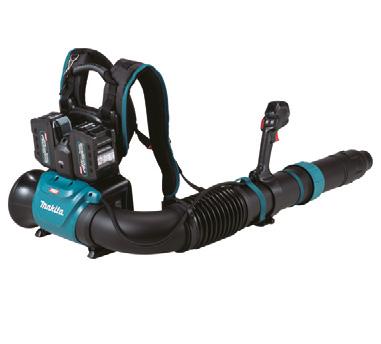
Historic Royal County Down Golf Club has entered a new era of grounds and course maintenance with the selection of Makita 40Vmax XGT and 18V LXT tools.
The cordless range has helped streamline tasks, improve safety and reduce noise disturbance to players, the club reports.
One of the oldest courses in Northern Ireland, Royal County Down is famed for its challenging play and stunning scenery on the Irish Sea coast with a backdrop of the Mountains of Mourne.
Established in 1889, it evolved quickly into the 18-hole links it is today and soon gained a reputation among golfers; the course has been played by some of the best of every era – competitively, for practice or recreationally.
Royal County Down has also hosted championships throughout its history, including five times as the venue for the Irish Open, part of the European Tour.
Given the demanding task of maintaining the course and the areas around the clubhouse, the Royal County Down team need tools fully meeting their needs. Following
an initial introduction to the range by Shea McKernan, Makita innovation on-site specialist, links manager Eamonn Crawford agreed to a demo of key products.
Trials success
Eamonn and his team were impressed and agreed to trial line trimmers, multi-function split shafts, blowers, mowers, pressure washers and vacuums – the latter identified as useful for clearing water.
Mechanics maintaining the club’s equipment also trialled Makita products and Royal County Down invested in XGT 40vMAX blowers, edgers, saws and hedge trimmers.
“Quality is an important factor for us,” said Eamonn. “We only use the best. Our approach is to always select what we feel is the best tool for the job and we have invested in the cordless machines carefully.
“The Makita tools have proved to be very good to use and a valuable addition to our kit - the first big test being their use in the run-up to and during the Irish Open.
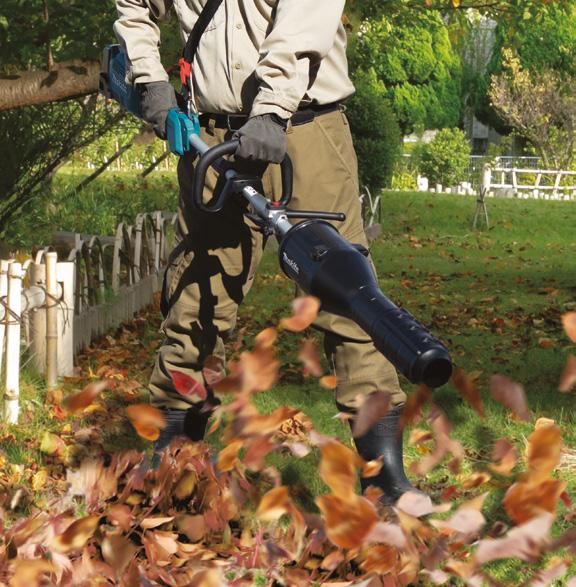
“The blowers are considerably quieter than the petrol machines we had been using, which means we can work easier around the course and buildings without disturbing the golfers. The handheld pruning saws are popular among the team and have allowed us to do away with the manual bow saws we had been using for jobs like cutting gorse. The battery runtimes have also impressed us with less charging - so we can finish our work without interruption.” www.makitauk.com
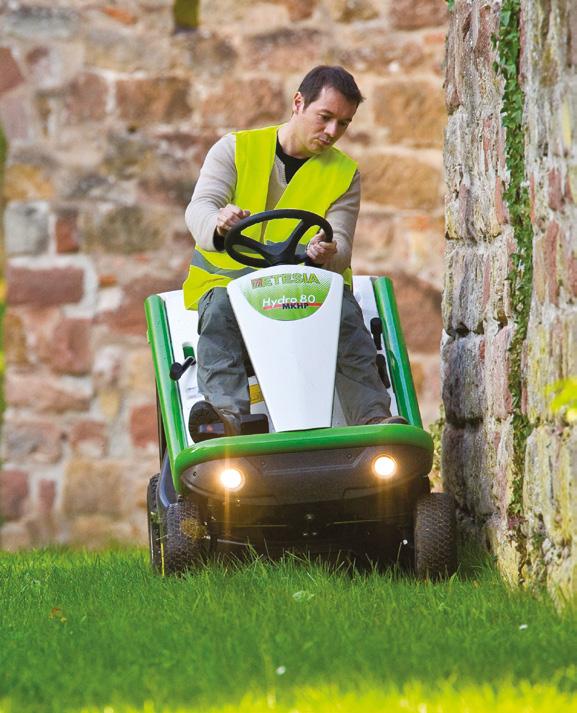
The Etesia Hydro 80: geared to tackle tough terrain
The Etesia Hydro 80 mower's compact, agile design gives it a cutting edge in challenging conditions, discovers Paul O'Grady
Gardens are not always flat and rectangular but are often built around the landscape. Hilly terrain is tricky to tend, as is narrow access, swings, tables, and other awkward features.
Those too big for rotaries or too awkward for conventional ride-ons offer opportunity for a fresh approach - a mini-rider. Many are available but tend to be underpowered and collect clippings poorly in the wet. Roll forward the Etesia Hydro 80 MKHP5.
Green space machinery maker Etesia has spent a generation fashioning high-end commercial direct-collect mowers - and the Hydro 80 is no exception. It’s adaptability to ground conditions is just the ticket for professionals.
Cutting width: 80 cm
Fuel capacity: 12 l
Weight: 240 kg
Wheel drives: 2
Power: 16 hp
Forward/reverse speed: 9 km/hr
Transmission: hydrostatic
Dimensions: (L x W x H) 197 x 82 x 117 cm
Among standout features, the Kawasaki FS481V twincylinder engine delivers 9.4 kW power, the bonnet-free front allows greater visibility when mowing awkward areas and the hydrostatic foot-control transmission offers smooth, responsive, fully variable control of speed and power.
Sturdy cast iron front axle and steering quadrant, larger front tyres and upgraded seat add comfort and safety, while a full turn of the steering wheel allows the rider to move the machine deftly, via simple, well positioned controls with easy-to-use levers and switches.
The Hydro 80 cuts from 44 to 102 mm, while the driver can adjust the linkage for finer increments between those heights. The 240 l box includes a buzzer to indicate when full, gas-assisted lift mechanism tackles heavy loads and fully adjustable seat and step-through operator platform ease access and exit. Lawn rake or snowplough with optional front linkage and mulching insert under the cutting deck make for a versatile, multi-purpose machine that can rear discharge too.
Etesia’s wet cut-and-collect hallmark is stamped all over the Hydro 80. Locking the differential limits wheel spin as it forces both drive wheels to turn together to
deliver extra traction and stability on difficult, uneven and undulating terrain.
Front-located anti-scalping wheels allow the cutting deck to adjust to lawn undulations and the machine excels in the wet due to the blade’s large high-lift tips, which improve grass collection.
Compact, capable
A hit with commercial contractors, the Hydro 80 slots easily into a van crossways by removing the grass box and will pass through most garden gateways.
But don’t be deterred by a smaller machine if you’re handling a rough country garden and worry that the potential for bending a blade or damaging something underneath is high.
The Hydro 80 has a ‘safety net’ to keep you going when mowing a challenging, obstacle-filled lawn. On the blade underneath, a set of shear bolts are built to break off to stop any real damage. Just replace them, and resume.
Expert view
Joshua from Machinery Nation tried the unit in a typically rough garden. “Absolutely phenomenal turning circlegoing round all those obstacles, little stumps and stuff. You’d feel every lump and bump with a cheap machine. This feels absolutely solid, has pretty good grip and is clearly geared to the professional market. I really like its
power, compactness and simple controls - nothing’s going to confuse you.
“There are hydrostatic pedals, grass lever, parking brake, height adjuster and a few switches on the console behind the steering wheel – that’s it. It’s simple to service. Slide the seat off, undo a couple of clips and you have access to the engine, air filter, battery and cutting deck, if you need to clean it out. On top of the deck, a fan stops grass build-up.
“Remove the three clips on the side cover to find the oil filter, spark plugs and exhaust. There’s also a deck wash port to connect a hosepipe if you wanted to wash out the underneath of the deck, for example.
“The Hydro 80 has stayed very much the same through history. Why change something that works. In the wet, the damp, long grass – for the size, this machine isn’t going to be beaten.”
Stihl HLA 140 cordless long-reach hedge trimmer
Hedge trimmers and cutters come in all shapes and sizes and differing power options with pros and cons, writes Jon Brocklebank , Barnsdale Gardens head gardener
Petrol - heavy, noisy, smelly but free to go anywhere and operate all day, with fuel to hand.
Cabled electric - more restrictive – plugs, sockets and cables to deal with - but generally lightweight, quieter than petrol and no smelly fuels.
Battery powered – all the benefits of cabled electrics with the added weight of a battery, either on the machine or in a backpack attached to the machine with shorter cable.
I’ve used many different Stihl machines and regard them as the highest quality out there, along with a few other brands. Well designed and engineered to do the job, they’re extremely user friendly, reliable and built to last.
But I hadn’t used a battery long-reach hedge trimmer so was looking forward to giving this one a go.
Out of the box
The trimmer comes in two main pieces with a few other parts to attach. Cutting blade and shaft have to be connected to the transmission then tightened with two screws (a star key is supplied to tighten them), plus a loop handle to attach with a couple of clamps/nuts and bolts. The shoulder strap is attached to a carrying ring on the shaft with a carabiner. Once set up it shouldn’t need dismantling again.
Batteries and charger
This trimmer is sold without batteries or charger so need to be bought separately. I received an AL501 hi-speed
charger and three 36 V lithium ion batteries, which accepts Stihl AK, AP and AR batteries only and charges one battery at a time.
The 1X AP200 S (187 Wh, 4.8 Ah and 1.3 kg) and 2X AP300 S (281 Wh, 7.2 Ah and 1.8 kg) I received have charge times that can vary depending on temperature. I gave them all a full charge before first use and was amazed at the speed.
Each battery charged in under an hour from flat - very impressive and a key consideration when choosing a battery powered machine. Having two or three batteries available means work can continue, especially when they charge so quickly.
Stihl estimates maximum and minimum run times but this will vary depending on the speed setting being used and thickness of the hedge material.
AP200 S 69-86 minutes
AP300 S 104-130 minutes
LED charge indicators allow you to check battery levels easily, its IPX4 weather resistance rated and improved cold start feature optimises power in the cold for peak performance.
The batteries and trimmer can integrate with the Stihl connected app via built-in Bluetooth module to track operating hours, manage maintenance and monitor fleet utilisation.
Specifications
The fully assembled unit weighs 5.6 kg plus the battery so matched in weight to a similar-sized petrol machine, while the cutter head can be adjusted by up to 145 degrees to allow all cutting angles. The 12 fixed positions are
selected with a simple sliding sleeve mechanism.
The 60 cm cutting blade has a protective scabbard to cover it when not used. The whole length with blades in the straight position is about 245 cm, reducing to about 190 cm when they are folded back on themselves for easier storage, while sound pressure level is rated at 85 dB and sound power level 96 dB.
Blades are laser-cut, double-sided, double-edged and diamond ground so extremely sharp and frictionoptimised so should retain their edge well. The antilock mechanism actuates automatic reverse the blade movement when you release the trigger if cutters jam on a thicker branch.
The illuminated control panel is easy to understand and has 3200, 3600 and 4000 RPM cutting speeds, selected by a button on the panel, which can be changed during operation,
A release slide turns the trimmer on and off. Press it, then press the trigger lockout – sounds complicated but it’s not. If the triggers are released for more than five seconds, the LED panel and power switches off, and the release slide needs pressing to restart. The removable metal mesh air filter cleans easily.
Use and verdict
Barnsdale has a mix of hedges - beech, hornbeam, laurel and mixed native hedges, mostly blackthorn. This hedge trimmer comes into its own for taller hedges, with limited or no access for cutting platforms.
I tackled one of our mixed native hedges (finished cut height 8 ft, just under 2.5 m). The hedge cutter was comfortable to use, the shoulder strap taking weight off the arms. The blades easily cut through young growth and year-old woody stems and I could reach over the top of the hedge by adjusting the cutter angle without feeling strained or off balance. It’s far less noisy than a petrol cutter, so more enjoyable for users and our garden visitors.
Power
On a par with petrol trimmers. No struggle, even with thicker stems. Double-sided, extremely sharp cutter blades allow use in either direction and give a pleasingly clean cut. The Constant Power function maintains power level until the battery’s flat.
I’d recommend this hedge trimmer to anybody wanting to invest in a top quality battery powered machine - a joy to use and I’d struggle to find a better alternative.
Photos credit: Steve Hamilton
PTOs: Steps to stay safe
Power take-off (PTO) driven equipment may not be always in daily use by most landscapers but it poses a significant risk when tractor-driven implements, such as wood chippers or flail mowers, are in action, writes Adam Hubbard, product specialist at parts and accessories technical wholesaler Kramp.
And when accidents involving them occur, results can be catastrophic, he cautions.
A 2015 US study found that 40% of PTO entanglements resulted in fatalities and a further 40% involved amputations.
“A strong person can generate about three-quarters of a horsepower, whereas a tractor transmits nearly all of its horsepower into the PTO shaft,” Adam explains. “Even with a compact tractor generating just 40 hp, if entanglement occurs, a PTO shaft can wrap an arm or leg around it nine times in less than a second.”
Adam is one of a team of product experts based at Kramp’s Biggleswade head office that supports end users and dealers with tailored training courses and technical queries. “Several of us have operated the same machinery, so we understand the practicalities and can offer these to landscaping contractors on request,” he says.
Adam’s specialism in transmissions and PTOs has allowed him to develop steps that those working with PTOs in landscaping can take to keep themselves safe while working with them.
Starting point
To alleviate risk, he recommends starting with the tractor. Before working on a PTO, ensure it is made safe, set the handbrake fully on, put all controls and gears in neutral, stop the engine, and remove the key. Most PTO accidents occur because operators fail to take these safety measures, Adam reports.
“It’s always best to maintain a PTO before and after it is last used, before taking a break, or at the end of the day. A quick visual check of the guard and chain, to ensure it is sufficiently greased, may be all that’s needed mostly. Also, check that the PTO guard is secured to the PTO,” he adds.
To protect the PTO guard from unnecessary wear, Adam has a tip for landscapers that’s often overlooked. “When hooking up the chain, double it back through the D-link and hook it on to itself. This will shorten the chain length and prevent it from being wrapped around the guard tube.
“The guard should then only be able to turn 90 degrees with the available slack on the chain. If it is much more than that, it will wrap around the shaft and eventually wear through it, requiring replacement,” he explains.
New regulations for PTO connections
Landscapers should be aware of the EN12965 standard, Adam advises. The EU legislation came into force shortly before Brexit and was copied into UK law. Only collar locks are allowed on the primary drive shaft connected to the tractor, meaning push-pin or certain collar locks with exposed springs are prohibited on new machines.
“Push pins may be used on second-hand machines but it is imperative for new machines or repairs that an authorised collar lock is fitted. If a new machine is delivered, I recommend that a landscaper verify the PTO connection is compliant. They can contact their local dealer or Kramp for advice if unsure which is legal for a replacement.
Adam Hubbard
“The other statutory requirement to be aware of is for the PTO guard to overlap the joint by a minimum of 50 mm when in a straight position to ensure the guard covers moving parts,” adds Adam.
Reducing wear
The most common cause of PTO failure is an insufficient overlap of the PTO profile tubes, Adam says. “When the PTO is correctly installed, the overlap should be
less than 33% longer than the shaft length. In practice, a closed shaft measuring 1,000 mm should have a working length of less than 1,330 mm. I recommend that the maximum closed centre length is at most 1,410 mm due to vibration.”
If the PTO is installed and there is insufficient overlap, excessive vibration will result when the PTO is operating, he says, producing a whipping motion, which adds stress to the universal joint. “In the most extreme cases, heat generated from this force can cause catastrophic failure.”
Avoid using PTO adaptors on the main drive and limit the maximum power they transmit to less than 30 kW, Adam urges. “An adaptor is an additional point in the drivetrain and can cause excessive vibration. Instead, to be safe, change the PTO yoke to suit the implements it needs to operate.”
All new operators driving a tractor powering a PTO must be fully briefed on PTO safety, Adam states, “because otherwise, they may not know any different and how dangerous a PTO can be.
“This is especially important in the landscaping sector, where regular PTO use may be uncommon. Even more experienced operators should also be wary of complacency and treat a PTO seriously and with their full attention,” he concludes. www.kramp.com
ISEKI - Stowe School - SXG 326 2
Head-to-toe line “covers all options”
“Tough, considered and built for real working environments” is power tool maker Makita's claim for its new workwear line, available through dedicated trade stockists across the UK.
Developed by Castle Clothing - the team behind TuffStuff Workwear - and drawing on more than 50 years industry experience, the head-to-toe collection covers everything from base layers to outerwear, trousers, shorts and safety footwear, including dedicated womenswear sizes.
“Every piece is designed around the realities of site life: kneeling, climbing, lifting, stretching and working through all conditions,” states managing director Rob Ansell.
“The difference is in the detail - durable fabrics, high-quality components and smart detailing that improve comfort, flexibility and long-term wearability. Performance features are built in where they matter most,” he adds.
• CORDURA reinforcements in high-wear areas
• YKK zips specified for durability
• Ripstop fabrics for strength without unnecessary bulk
• Durable PFC free water-repellent finishes for reliable weather protection
• Dedicated use of recycled fibres and responsibly sourced 100% BCI cotton
• Work-focused fits designed for movement and all-day comfort.
Exacting standards
Engineered to the same standards tradespeople expect from Makita tools, the range delivers durability, comfort and technical performance without compromise.
Every element of the new workwear range has been developed with trades in mind, says Rob “They expect their clothing to perform properly on site, and that’s what this collection is designed to do. Tough, practical and built for demanding environments.” he adds.
“When researching the UK workwear market, we spoke to several well-known workwear brands,” explains Kevin Brannigan, Makita UK marketing manager, “and conducted further research with our dealers before deciding on a partner who could provide products and service levels that matched the standards our customers expect from the Makita brand.
“Following intensive market research, the decision to establish a partnership between Makita UK and Castle Clothing soon followed, and we feel certain our dealer and end user customers will appreciate the quality, durability and styling of this Makita workwear range.”
Explore the full range at www.makitaukworkwear.com or contact enquiries@castleclothing.co.uk
“Fit for anything” pants
Women in skilled trades are no longer the exception, they’re on site every day, from landscaping and groundworks through to roofing, fabrication and site management.
These are professionals shaping the environments we live and work in across Europe, the Middle East and Africa - and they need kit that performs accordingly.
Global premium workwear brand Carhartt’s Women's Steel Pants are made to do just that - designed to meet recognised European standards across safety, comfort and on-site performance.
Certified to Oeko -Tex Standard 100, the fabrics have been tested for harmful substances to ensure they’re safe against the skin during long working days. They also comply with EN ISO 13688:2013, the core benchmark for protective workwear design, covering everything from fit and ergonomics to durability and labelling.
The pants are certified to EN 14404-4:2024 Type 2, so are approved for use with integrated knee pad systemsoffering reliable protection and comfort for trades that spend extended time working at ground level.
Although numbers of women working in landscaping are difficult to quantify currently, they represent around 9 to 10% of the construction workforce across Europe, growing year on year, Carhartt states.
“This shift is being driven by the industry’s increasing reliance on a broader, more diverse and skilled workforce, particularly as labour shortages persist.”
Against this backdrop, providing durable, well-fitting workwear specifically for women “isn’t just a response to demand”, it adds, but “a clear opportunity to support a growing segment of the market while strengthening longterm business performance”.
Key characteristics
An 8 oz stretch ripstop fabric is engineered to move with the body while holding its shape over time, blending cotton for durability, polyester for structure and elastane for controlled stretch, “to deliver comfort without compromising resilience”.
“In high-wear areas, the trousers are reinforced with Cordura fabric, precisely where it’s needed most, including pockets, seams and key tool contact points.”
Mobility is built into the construction; a gusseted crotch reduces tension when kneeling or stepping up, while the Comfortflex waistband provides support without restriction. “The overall fit is designed to allow full freedom of movement without unnecessary bulk.”
Finally, the pocket system is shaped around real on-site use, offering practical storage, easy access and balanced distribution to support productivity throughout the day.
Carhartt has been developing durable products for workers on and off the job since its foundation in Detroit, Michigan in 1889 and is known for rugged construction, innovative designs, exceptional quality standards, sturdiness and comfort.
Since 2000, Carhartt EMEA in Amsterdam distributes and manages all its business in more than 20 European countries.
The workwear range spans tough, comfortable work trousers, rugged, durable work jackets, stain-wicking and odour-fighting work T-shirts and certified safety shoes and work boots.
www.carhartt.com
Build rodent protection into your projects
Availability of food, water and shelter can make outdoor human environments an ideal home for rodents but we can mitigate risk, writes Niall Gallagher, technical manager at the British Pest Control Association (BPCA)
Understanding species difference, characteristics, potential risks and relevant legislation are vital in creating landscaped spaces that deter rodents from moving in and settling down.
More than one in three professional pest management jobs focus on prevention - including pest professionals working with landscapers, architects, designers and engineers to build in barriers tor pests.
Species difference
Rats can pose a problem in some areas of the UK. They are adaptable, agile, can be hard to spot and breed rapidly if undisturbed.
The brown or Norway rat is most likely to be seen, however the black rat may be spotted near coastal areas and ports.
Landscapers may well also encounter several mouse and vole species including:
• Bank vole - prefers earth banks and wooded areas
• Field vole (Microtus agrestis) - often found in rough grassland
• Yellow-necked field mouse ( Apodemus flavicollis)
- most associated with broadleaved woodland, hedgerows and rural gardens
• Common vole (Microtus arvalis) - mainly spotted in meadows, heathland and agricultural fields
• Water vole – found near rivers, streams, ponds and marshes
• Shrew – not a rodent but sometimes mistaken for a mouse or vole.
To the untrained eye it can be tricky to differentiate between species - a mouse may look like a young rat and vice versa, while water voles can be mistaken for rats.
Tip: Identification is key. Understanding the species dictates how to avoid or tackle the problem and how to remain compliant with the law. Two of the above are protected under the Wildlife and Countryside Act 1981 for example.
Characteristics
While most rodents share some characteristics - both rats and mice have rapid breeding cycles and need to gnaw to maintain their teeth - distinct differences need to be taken into account for effective prevention, proofing, management and control.
Rats can jump large distances relative to their size, can fall from a height of up to 50 feet without injury and will return repeatedly to feast at one food source but need access to water.
Wood mice will excavate burrows or dens anywhere that protects them from predators such as cats, foxes, birds and rats.
Mice are crepuscular – mainly active at dawn and dusk - and can travel at speed along ropes, cables and wires. They don’t need water but will mark their territory with urine and visit many sources of food.
Tip: Expert insight and understanding of the different characteristics of rodent species can be crucial in understanding how landscape features can attract or deter pests.
Potential risks
Many common features of gardens, parks and outdoor amenity spaces can attract rodents because they provide
Niall Gallagher, technical manager at the British Pest Control Association (BPCA)
Mission to eradicate pests
The BPCA is the UK trade association representing organisations with a professional interest in the eradication of public health pests. It is a not-for-profit organisation which acts in the interests of members and on behalf of the pest management industry in the UK.
shelter, food or water or route of travel.
Rats and mice will nest in rarely used sheds and storage areas, particularly if there are any entry points around cables or pipework, as well as outdoor furniture covered and stored outside, or permanent street/park furniture with hollow components such as tubular table legs, bollards, climbing frames or signage.
Woodpiles and compost bins can also offer potential harbourage, although hedgehogs may also make use of these.
Planting choices can inadvertently create multiple opportunities for rats and mice. Planting too close to a building can damage mortar or undermine foundations, allowing access into cavities, while tall grass or hedgerows can create sheltered highways and climbing plants on buildings can effectively become a rodent ladder.
Fallen fruit from shrubs and trees towards the end of
the year can become a feast for rodents, while vegetable beds are also prime targets along with bird feeders.
Finally, human activity plays its part. Rodents will mostly avoid high-traffic areas during the day but in quieter hours, dropped litter and easily accessible public bins offer an easy food source.
Landscapers can also fall foul of legislative risks due to lack of knowledge or understanding of rodent activity.
Water voles and all species of shrew are protected in the UK under the Wildlife and Countryside Act 1981. It is an offence to kill, injure or take them away from their homes or disturb them or their place of shelter.
Tip: Working with a pest professional such as a BPCA member can help identify ways to incorporate features without attracting rodents, from placement of wildflower corridors to avoid creating hidden rat highways to protecting key infrastructure such as power supplies and pipework.
The government endorses BPCA member businesses via the TrustMark quality scheme and they must carry the correct insurances and be trained and qualified technicians assessed to the British Standard in pest management EN 16636 and follow BPCA’s Codes of Best Practice.
To find a BPCA member visit: bpca.org.uk/find
A sound solution for client wellbeing
As urban development continues to intensify and infrastructure projects expand, noise pollution has become an increasingly important consideration in landscape design.
Whether beside busy roads, railway corridors, industrial facilities or high-density residential developments, outdoor spaces are under growing pressure to balance functionality, aesthetics and occupant wellbeing. Acoustic fencing is emerging as a key solution in achieving that balance, argues fencing specialists Birkdale.
“Unlike conventional boundary fencing, acoustic fencing is engineered to reduce the transmission of airborne sound,” states Birkdale founder and chairman John Abernethie. “Its primary purpose is not simply to define a perimeter or provide privacy but to create measurable reduction in noise levels to help improve comfort and practicality outdoors.
“Acoustic barriers work by interrupting the path of sound waves, reflecting some energy away while absorbing or slowing transmission of the remainder through dense, carefully constructed materials,” John explains.
“The effectiveness of a system depends largely on its mass, density and overall construction. Heavier, wellsealed barriers are generally more successful at reducing noise than standard garden fencing.”
Wide application
For landscape professionals, acoustic fencing is increasingly relevant across a spread of sectors.
“Residential developments are among the most common applications,” John reports. “As housing schemes are built closer to transport corridors and urban centres, planners and developers are often required to show how external amenity spaces will be protected from excessive noise.
“Acoustic fencing can help create more pleasant gardens and communal areas while supporting planning requirements and improving resident satisfaction.”
Commercial environments also benefit significantly from acoustic barriers,” John maintains. “Offices, retail parks and business campuses often use acoustic fencing to reduce noise generated by traffic, loading areas or neighbouring operations.
“In these settings, quieter outdoor spaces can contribute to employee wellbeing and enhance the overall quality of the environment. Similarly, schools, healthcare facilities and care settings increasingly utilise acoustic fencing to create calmer surroundings that support concentration, recovery and general wellbeing.”
Transport infrastructure remains another major area of application. “Highways, railways and major infrastructure projects often rely on acoustic barriers to mitigate the impact of noise on nearby communities. In many cases, reducing noise levels can help ease planning concerns, minimise complaints and improve community relations over the long term.”
Choice of material
The effectiveness of sound reduction is largely determined by the materials chosen. Timber remains one of the most widely specified solutions for acoustic fencing but not all timber performs equally, says John.
“Dense, pressure-treated softwoods such as slowgrown redwood are often favoured because they combine durability with the mass required for sound reduction. Treatment quality is particularly important, as acoustic barriers are long-term installations that must withstand demanding external conditions while maintaining structural integrity.”
For specifiers, selecting the right acoustic fencing system involves more than simply choosing a thicker panel. “One of the most important considerations is independent testing. Acoustic performance should be verified against recognised standards, with testing conducted on complete systems rather than individual components.
“This ensures posts, panels, seals and fixings all contribute to the stated performance and that realworld installation conditions are reflected in the results. Independent certification also allows meaningful comparisons between products and reduces the risk of over-specification.” John states.
Valued component
As expectations around environmental quality continue to rise, acoustic fencing is becoming an increasingly valuable component of landscape design. “By combining robust specification, independently tested performance and thoughtful integration into wider schemes, landscape professionals can help deliver quieter, more comfortable outdoor environments that support both people and place,” John concludes.
“Manufacturers such as Birkdale have responded to growing demand with purpose-designed acoustic fencing systems, including its Sound Shield Pro ® range,
which has been developed for applications spanning housing, healthcare, commercial developments and transport infrastructure.
“The continued evolution of tested, highperformance solutions is giving specifiers greater confidence in their ability to address noise challenges while meeting increasingly stringent performance and compliance requirements.”
www.birkdalesales.com
A RANGE OF PRODUCTS CREATED BY NATURE
Mansfield Sand is one of the UK’s leading providers of silica sand based products to the landscaping sector.
The final word on timber finishing
As garden and outdoor living spaces continue to evolve, client expectations demand landscapers deliver wooden structures that look amazing on installation day and keep their finish long-term.
For timber-heavy projects – whether decking and fencing, pergolas, sheds or screening - delivering a pristine, lasting finish is essential to satisfy clients. Homeowners are paying closer attention to colour retention, maintenance requirements and timber wear over time.
Harriet Farquhar
Conversations and queries paint producer Protek is having with landscapers are also changing, reports director Harriet Farquhar. “There’s more consideration around lifespan and appearance of timber structures, rather than coatings simply being viewed as the final decorative step,” she notes. “Landscapers are looking for finishes that work hard long term and fit the wider design of the project.”
Alongside more traditional fencing and decking products, the company sees huge interest in specialist products such as ESP Panels, particularly across outdoor building and renovation projects from trade customers.
“More landscapers are working on projects that blur into outdoor living and construction,” Harriet adds. “Garden rooms, outdoor kitchens, screening features - far more use of engineered boards and panel products - so naturally there’s more focus on protecting those materials properly from moisture and long-term exposure.”
Design-led timber finishes
On top of bolder colours in garden spaces, demand is growing for softer, more naturallooking timber finishes - particularly on projects where clients want new structures to feel cohesive within established outdoor spaces, or they’re reusing existing timber within the space.
“Our spring 2026 sales confirm a clear shift in the landscaping sector,” Harriet confirms. “Trade landscapers are increasingly choosing premium, long- life coatings such as Royal Exterior and Timber Eco Shield.”
Demand is strongest for contemporary greys, soft neutrals and natural timber tones, she adds, reflecting the rise of modern outdoor living spaces and high - end garden buildings. “Landscapers are moving away from basic fence treatments and towards durable, decorative finishes that deliver long - term performance and a premium aesthetic.” Products now deliver better finish but correct preparation, timing and application of product still matter.
1. Don’t rush wet timber
“We understand the pressure landscapers are under during the summer months, with the drive to turn around projects quickly while the weather’s good,” says Harriet. “But timber has a mind of its own sometimes. What may look surface dry might still hold moisture underneath.”
Giving pressure-treated timber time to dry properly and stabilise before coating can make a major difference to finish consistency and long-term performance.
“Nobody wants that awkward phone call a few months later where a client’s asking why part of the decking’s started lifting or peeling,” Harriet adds. “A bit of patience up front can save headaches later.”
2. A proper clean-up goes a long way
Algae, dust, site residue and general grime can all affect how evenly coatings perform, particularly on fencing and decking that’s been exposed to the elements before installation.
“The simple things sometimes get overlooked when everyone’s busy,” says Harriet. “Timber can pick up dirt, or algae on the deck or fence can grow underneath the stain and result in peeling and a finish that doesn’t look as clean or consistent as it could.”
Even a quick clean and proper prep before application can help improve coverage and avoid patchy areas later down the line, she advises.
3. Spraying’s growing but a brush is still big Spraying systems continue to become more popular on larger fencing projects because of speed and consistency, although many landscapers still prefer traditional brushes for detailed work and rough sawn timber, Harriet reports.
“There’s still healthy debate about this one. Some love spraying because it saves so much time on big runs of fencing - others will never give up a good chunky brush because they trust the coverage more.”
The right approach often depends on the timber, the scale of the project and the finish. “A decent brush really does make a difference,” Harriet maintains, “particularly on textured timber where you want the product worked properly into the grain rather than sitting on the surface.”
4. Weather watch
“We’ve all been there when you think ‘great, finally some sun’ and then the product’s drying quicker than you can
work with it,” says Harriet, “especially on darker timber that’s been sat baking in direct sunlight all afternoon.”
Drying conditions can vary dramatically across the same project, particularly where shaded sections retain moisture for longer than exposed areas, she advises.
No hiding place for shortcuts
With more landscapers erecting everything from pergolas and outdoor kitchens to full garden rooms, woodcare forms far more part of the build process.
“Timber’s not a ‘paint and forget’ material, especially outdoors in the UK,” Harriet says. “Landscapers who really understand that are usually the ones whose projects still look great long after they’re finished.
“Most issues we are asked about aren’t dramatic disasters, but usually patchiness, inconsistent weathering or one area ageing differently to another,” she says. “And that’s normally down to timing, moisture or what the timber was like before the coating even went on.”
•
•
•
•
•
It’s helped us work more effectively, maintain high standards and make better use of our time. I genuinely think robotics are the way forward for schools.
Shaun Crowley, Grounds Manager, Farleigh School
Robotic Mowers
are giving Farleigh School more time where it matters
At Farleigh School, Kress robotic mowers are helping the grounds team maintain exceptional standards across 76 acres while saving around ten and a half hours of mowing each week. Combined with Kress batterypowered equipment, this solution has improved efficiency, reduced noise and emissions, and given the team more time to focus on maintaining the school’s extensive grounds.