To find archived articles from The Lamp, or to borrow from the NSWNMA nursing and health collection, contact: Adrian Hayward, Coordinator. T 8595 2175 E gensec@nswnma.asn.au
The Lamp ISSN: 0047-3936
General Disclaimer
The Lamp is the official magazine of the NSWNMA. Views expressed in articles are contributors’ own and not necessarily those of the NSWNMA. Statements of fact are believed to be true, but no legal responsibility is accepted for them. All material appearing in The Lamp is covered by copyright and may not be reproduced without prior written permission. The NSWNMA takes no responsibility for the advertising appearing herein and it does not necessarily endorse any products advertised.
Authorised by M.Whaites, General Secretary, NSW Nurses and Midwives’ Association, 50 O’Dea Avenue Waterloo NSW 2017
Privacy Statement
The NSWNMA collects personal information from members in order to perform our role of representing their industrial and professional interests. We place great emphasis on maintaining and enhancing the privacy and security of your personal information. Personal information is protected under law and can only be released to someone else where the law requires or where you give permission. If you have concerns about your personal information, please contact the NSWNMA office. If you are still not satisfied that your privacy is being maintained, you can contact the Privacy Commission.
Subscriptions for 2026
Free to all Association members. Professional members can subscribe to the magazine at a reduced rate of $30. Individuals $84, Institutions $140, Overseas $150.
VOLUME 83 NO. 3
12
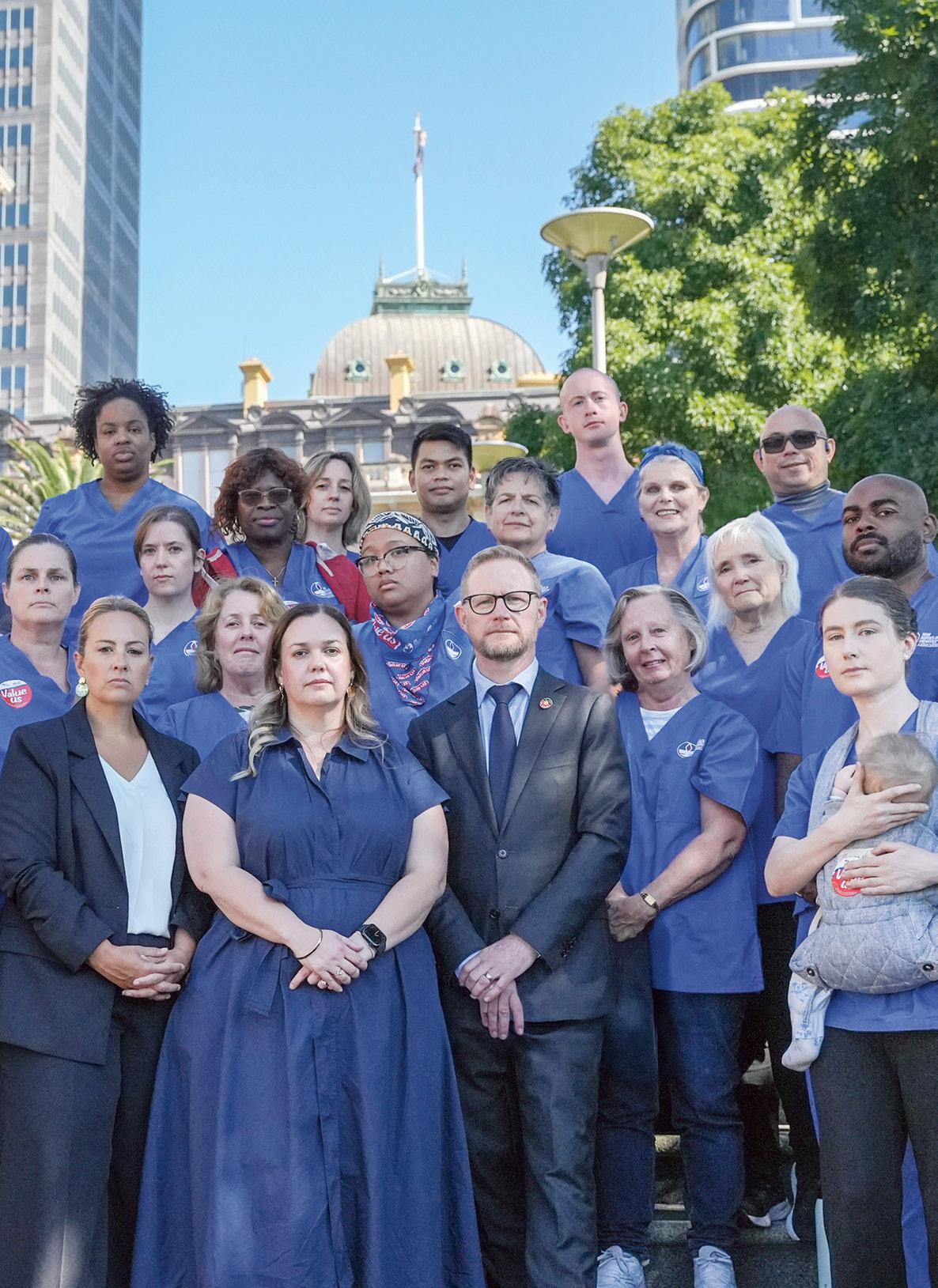
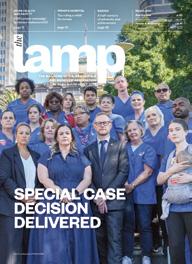
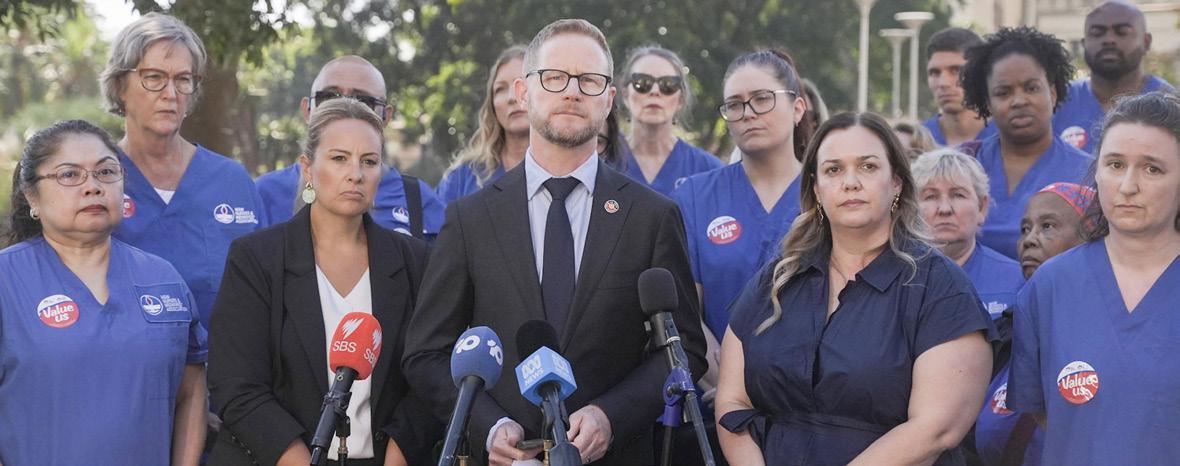
Progress on wages but more must be done
The Industrial Relations Commission decision on our pay claim is a step forward but more must be done to keep up with rising costs and to close the gender pay gap.
WORK HEALTH AND SAFETY
HSRs power campaign to reduce violence in ED Westmead Hospital emergency department will get a new unit for patients presenting with acute behavioural disturbances following advocacy by the NSWNMA.
14
WORK HEALTH AND SAFETY
Workplace violence on the rise
A survey of nurses, midwives and carers found that 88 per cent had experienced one or more forms of occupational violence in the previous six months.
17 CHIEF MIDWIFE
Nurse and midwife Donna Garland appointed to new Chief Midwife role
A midwife and registered nurse has been appointed the state’s first Chief Midwife.
18
PRIVATE HOSPITAL
Tax ruling a relief for nurses
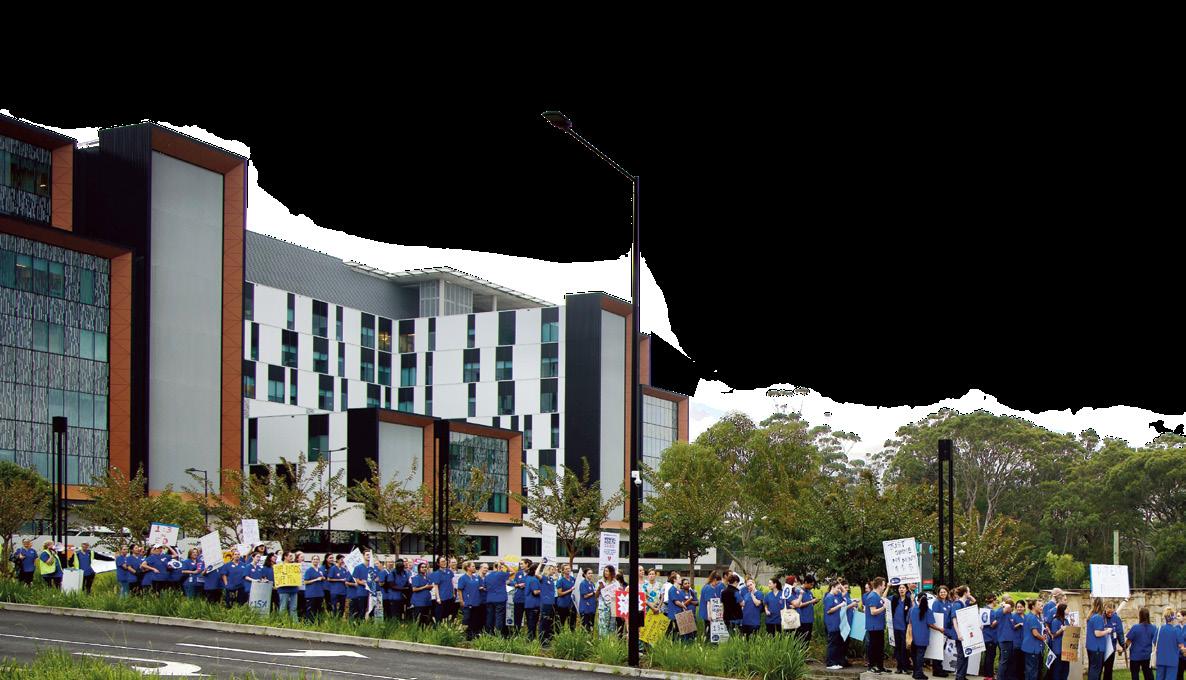
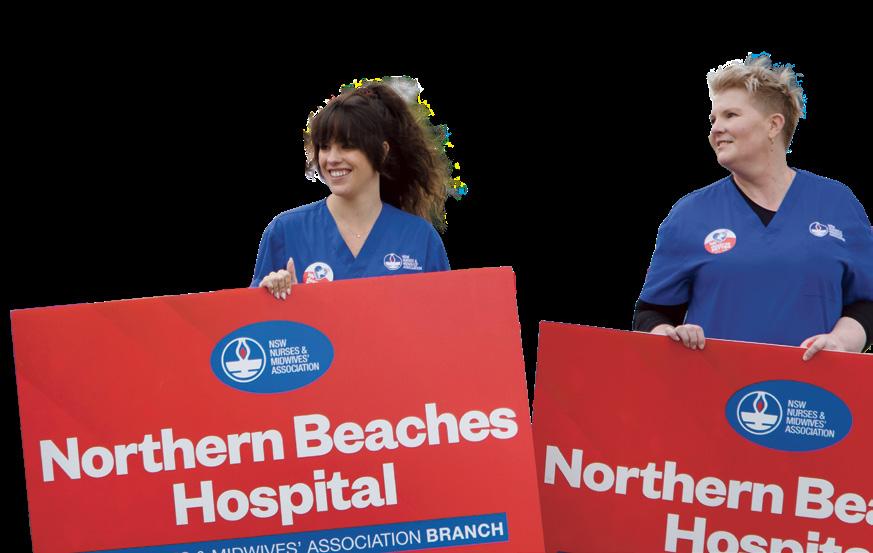
Northern Beaches Hospital nurses have escaped higher tax bills thanks to NSWNMA lobbying.
20 PRIMARY CARE
New branch to champion primary care nurses
A new NSWNMA branch aims to address the historic under-recognition of primary health care nurses.
26 NAIDOC
A half-century of adversity and achievement
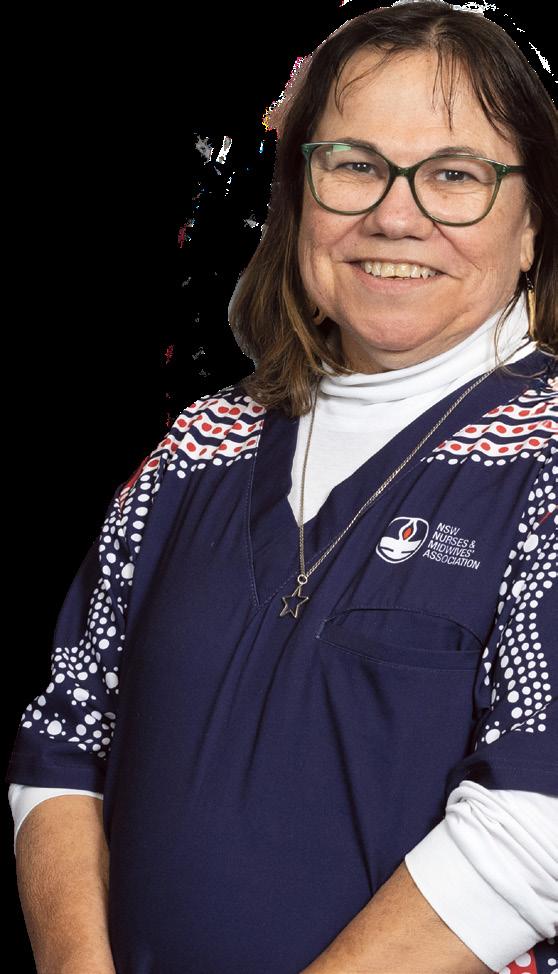
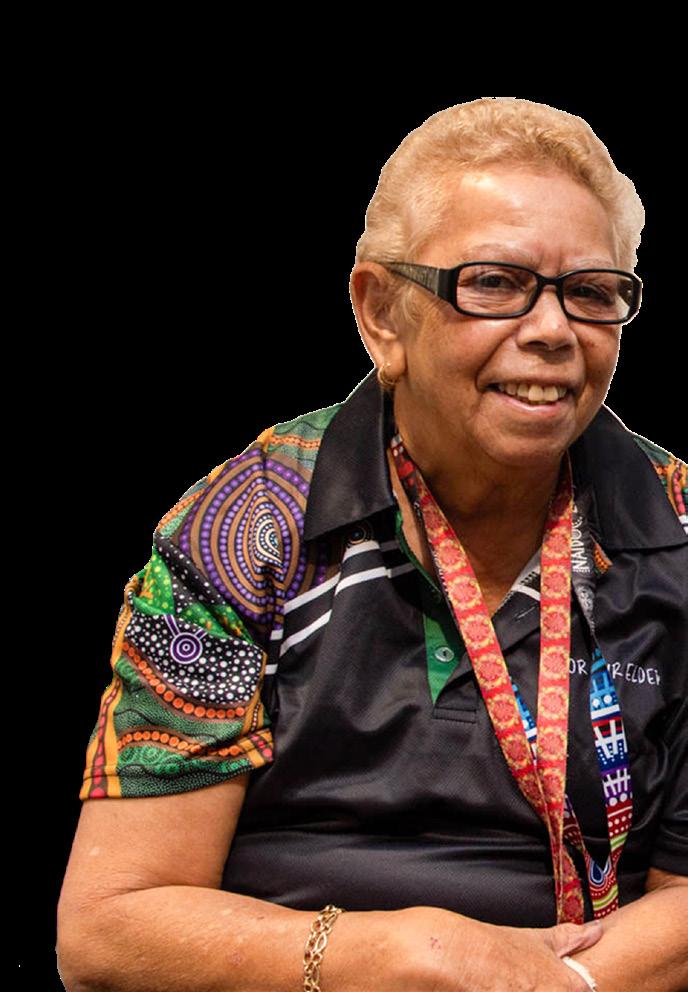
The Lamp spoke to Michelle Cutmore and Noeloene Brown.
Invisible skills now visible, but wages are stuck in the past
The NSW Industrial Relations Commission agreed that nurses and midwives have been historically undervalued because of gender, but female-led workforces must still pay the price for the state’s shaky bottom line.
For well over a century, the nurses and midwives of this state have transformed the landscape of care, evolving clinical practice into a highstakes, technical science. Every day, our members navigate a world of complex pharmacology, life-saving technology, and acute clinical decision-making, expertise that was once unimaginable.
And yet, while the clinical reality of your work has moved into the future, the industrial value assigned to it remains anchored in the past.
When the Industrial Relations Commission (IRC) awarded a threeyear wage deal from 1 July 2025, including 16% for Registered Nurses and Midwives, 18% for Enrolled Nurses and 28% for Assistants in Nursing and Midwifery, the decision was rightly met with mixed emotions from our members.
The wage increase for Assistants in Nursing is fantastic and well overdue. However, for Enrolled Nurses, Registered Nurses and Midwives, who make up the overwhelming majority of our impacted workforce and are predominantly women, it is not enough to make up for decades of gendered wage suppression.
Following the decision, Health Minister Ryan Park labelled it “historic,” and he’s right, inasmuch as it is a reminder of the historic undervaluation that hinders feminised labour. Amongst NSW public sector workers, entry-level nurses and midwives are paid less than teachers, police and firefighters (often by margins of 10%-20%).
In handing down the ruling, the court agreed the work value of nursing had been historically undervalued, principally because it involves the exercise of caring or interpersonal skills, often referred to as “invisible skills.” The IRC also noted that while the visible skills of registered nurses have been recognised, the invisible skills have been consistently overlooked.
In a witness statement tendered during the case, Professor Rae Cooper AO, a leading expert in Gender and Employment Relations at the University of Sydney, explained why.
“These skills are often treated as ‘natural’ to women rather than specialised,” argued Cooper. “Which has led to them being excluded from, or valued less in, job and skill evaluations and in classifications in awards and other instruments.”
As Professor Cooper established, categorising clinical care as a “natural capacity” of women renders that work economically invisible. Subsequently, the IRC agreed that a one-off increase was necessary to address the possibility that your work is undervalued for gender reasons, but with the caveat that any conclusion must consider the government's fiscal position, as required by the legislation.
For members, this felt like a case of the more things change, the more they stay the same. Once again, you were being asked to shoulder the burden of the state’s bottom line.
There’s no denying that our case has put the gender undervaluation of nurses and midwives under the microscope.
Compounding the issue is the reality that the gender pay gap continues to worsen (most recently sitting at 7.3% in 2025, up from 6.2% in 2023 and 4.5% in 2022) under the Minns’ Labor government; a worrying sign considering that same government is the largest employer of women in Australia.
As of June, 66.6 per cent of the 478,303 public sector employees were women, with nursing boasting the highest number of female employees. Rather than using the size of your workforce as a scapegoat, the government should seize the opportunity to actually listen to the issues being tabled by its largest cohort of employees.
We know that nurses and midwives feel overworked and undervalued, with workloads and pay regularly cited as the most common reasons for leaving the industry or moving interstate. But the welcome news is that we’re making headway on both fronts.
After more than a decade of campaigning, staffing ratios will finally be introduced across medical, surgical and specialty wards - the next stage of the nurse-to-patient ratios rollout – delivering well overdue workload relief for members. On pay, the IRC’s confirmation of gender undervaluation provides us an inarguable platform to build from as we fight to improve wage conditions in the future.
We will never stop advocating for the NSW Government to pioneer a budget for a health system that values your work. We remain committed to finding solutions that make a difference to our members today, tomorrow and into the future.n
Progress on wages but more must be done
The Industrial Relations Commission decision on our pay claim does not adequately address the systemic issues. More must be done to keep up with rising costs and address the gender pay gap.
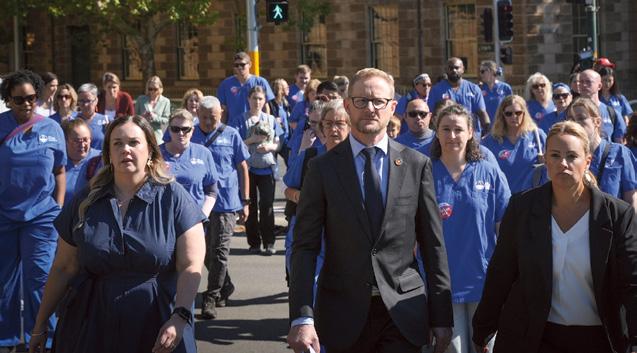
NSWNMA organisers have been visiting workplaces to hear members’ response to the IRC decision on our special pay case.
General Secretary Michael Whaites urged members to attend branch meetings and discuss what they think the next steps should be.
“We will consider our options to continue to put pressure on the government to ensure more improvements are made,” he said.
“We will make that decision through our democratic processes.”
In April, the IRC full bench awarded a three-year wage increase of 16 per cent for Registered Nurses and midwives, 18 per cent for Enrolled
‘This is an outcome that says that women’s work has to remain undervalued because of the economy – that’s an appalling position.’ — General Secretary Michael Whaites
Nurses and 28 per cent for Assistants in Nursing.
The first payment backdated to 1 July 2025 includes a 10 per cent increase for RNs and midwives, 12 per cent for ENs and 22 per cent for AiNs.
These amounts include the three per cent interim rise paid last year.
All classifications will get additional increases of three per cent from 1 July 2026 and 1 July 2027.
All increases and back pay should be received by members no later than the week ending Friday, 5 June.
MIXED RESULTS
Michael described the outcome of the Special Case as “a fantastic result” for AiNs that recognised the undervaluation of their work and rewarded them for that work.
“A specific equity issue concerning the meal allowance for patient transport nurses has also been resolved.
“However, for ENs, RNs and midwives, it is not enough to ease cost-of-living pressures or stop experienced nurses and midwives leaving the NSW public health system for better-paid roles.
The Special Case decision
16% for Registered Nurses and Midwives
(this includes the positions above RN8 e.g. CNS, CNC, NUM, NM etc)
18% for Enrolled Nurses
28% for Assistants in Nursing and Midwifery
On 16 April 2026, the Full Bench of the NSW Industrial Relations Commission awarded a three-year wage increase from 1 July 2025: 22% increase in wages backdated to 1 July 2025 (inclusive of 3% interim pay already granted). 3% increase in wages and salary-related allowances from 1 July 2026.
3% increase in wages and salary-related allowances from 1 July 2026.
increase in wages and salary-related allowances from 1 July 2027. 12% increase in wages backdated to 1 July 2025 (inclusive of 3% interim pay already granted). 3% increase in wages and salary-related allowances from 1 July 2026. 3% increase in wages and salary-related allowances from 1 July 2027. 10% increase in wages and salaryrelated allowances backdated to 1 July 2025 (inclusive of 3% interim pay already granted).
+ Meal allowance for Patient Transport Services
“Nor will it be enough to fix the current gender inequality in this state, given that the workforce is primarily RNs and midwives who are overwhelmingly female.
“This is an outcome that says that women’s work has to remain undervalued because of the economy – that’s an appalling position.
“We respect the IRC’s decision, but it leaves further work for the NSW government to do for RNs and midwives’ pay.”
While the IRC agreed with the Association’s argument that nursing has been undervalued because it is mainly done by women, it said the government could not afford a bigger increase (see story page 8).
“The message our RNs and midwives continue to hear is that they ought to be paid more, but the state can’t afford it,” Michael said.
“In 2026, women should not have to accept lower wages because of poor economic management.
“The government cannot hide behind this IRC decision; they must take responsibility for the ongoing crisis
3% increase in wages and salary-related allowances from 1 July 2027.
that will continue to be driven by a rate of pay that does not address gender undervaluation of RNs and midwives.”
He said the NSWNMA “will maintain our focus on the government for failing to address the issues”.
“The time for action will be decided in consultation through branch meetings and our committee of delegates and annual conference processes.”
WITNESSES
The full bench, comprising two judges (including the IRC president and vicepresident) and one commissioner, heard the Special Case over six weeks.
The Ministry of Health’s witnesses included members of the ministry executive, NSW Health managers and economic analysts.
Their 6000 pages of evidence attempted to undermine the NSWNMA’s arguments about changes to the work of nurses and midwives, changes in the acuity of patients and the impact of technology on the workforce.
The Ministry argued that the cost of the Association’s claim would
damage the NSW economy, and that the state could not afford a rise above nine per cent over three years.
The NSWNMA filed 37 witness statements from members spanning multiple specialties, geographical areas, and classifications.
This evidence was supported by 12 witness statements from academic and other experts in nursing, midwifery, gender and economics.
“We presented more than 17,000 pages of evidence to demonstrate the work value of nurses and midwives and the historic gendered undervaluation of the professions,” Michael said.
“Our legal team advocated strongly on behalf of the members over more than six weeks of hearings. They put forward our case clearly and passionately.
“We should all be incredibly proud of the tremendous amount of work members have put into this campaign over the last two years. In particular, the time and effort of our member witnesses. Their evidence was critical in the formation of the case.” n
What the IRC said about our pay claim
Three factors underpinned the NSWNMA’s Special Case: the impact of inflation, the changed nature of nurses’ work, and the historical gender-based undervaluation of the nursing and midwifery professions.
The Full Bench of the Industrial Relations Commission (IRC) agreed that nurses and midwives deserve a pay increase that recognises three factors: inflation, work value and gender undervaluation.
They were the basis of the Association’s claim – along with our argument that wages were too low to recruit and retain the workforce needed.
The Association told the IRC that nurses and midwives deserved a wage increase on cost-of-living grounds.
We argued that the COVID-19 pandemic had restrained wage increases and fuelled inflation.
Wages were also deliberately suppressed by the state government’s cap on public sector wages growth between 2011 and 2023.
In that period the government restricted wage increases to a maximum of 2.5 per cent per year.
The Association asked the IRC to award a wage increase that restored the real value of wages to pre-2020 levels, provided for real wage growth, and protected the real value of wages in future years.
In its decision, the IRC agreed that the real value of nurses and midwives wages had fallen since the last time it heard a major case to set their rates of pay.
“The extraordinary and unexpected high inflation caused by the COVID-19 crisis provides a proper basis for a one-off reset,” the IRC concluded.
‘We consider it necessary to address the uncontested expert evidence that nurses and midwives perform invisible skills and that there is (at least) a real possibility that their work is undervalued for gender reasons.’
WORK VALUE
The Association argued a wage increase was also justified because the work done by nurses and midwives had changed since the IRC last examined it.
The Association said there had been “a tectonic shift” in the complexity, responsibility and level of skill required by nurses and midwives.
This was due to the continuing transformation of the NSW public health system in response to increased demand, chronic disease, acuity and diversity of patients.
The IRC noted that the last major arbitration of wage rates in 2002 and
2003 had lifted rates by a combined 9.5 per cent in two stages.
The combined increase recognised “significant changes to the way that nurses and midwives work in the seven years since their work value had been assessed”.
The IRC said it was satisfied by the evidence that “since the most recent datum point of 1 July 2009, there has been a further significant change to the way that nurses, midwives and assistants in nursing work.”
“Given those changes, the work of nurses, midwives and assistants in nursing are currently undervalued and they deserve a one-off increase.”
$20,000
Comparison of NSW public sectors
*as at 1 July 2025, following the Special Case decision. Comparisons above are sourced from the relevant published state awards, which can be found on Lawlink: www.lawlink.nsw.gov.au/irc/IRCGazette.nsf/gsearch
GENDER UNDERVALUATION
The IRC agreed that, “Historically, the work value of feminised industries such as nursing has been undervalued.”
“The reasons are multifaceted, but a key reason is that they involve the exercise of caring or interpersonal skills that women were considered to have a natural capacity to perform which led to those skills not being expressly recognised, considered and valued.”
The IRC noted that in 1990, NSW RNs “were for the first time recognised as professionals and paid accordingly”.
“That change properly recognised the technical and professional skill of degree-qualified nurses and addressed a significant undervaluation to that point.
“However, neither then nor before or after, has any work
‘The extraordinary and unexpected high inflation caused by the COVID-19 crisis provides a proper basis for a one-off reset.’
value review expressly considered caring, communication and related interpersonal skills, skills which historically have been overlooked when valuing female-dominated occupations such as nursing (and which are considered ‘invisible skills’ as a result).
“Against that background, we consider it necessary to address the uncontested expert evidence that nurses and midwives perform invisible skills and that there is (at least) a real possibility that their work is undervalued for gender reasons.”
The IRC said it was given extensive evidence that established that caring
and other interpersonal skills are not only integral to the work of nurses, but of high work value.
“We have determined to reset pay for nurses and midwives having express regard to those skills.”
“Further, following findings of the Fair Work Commission at a federal level in respect of gender-based undervaluation of enrolled nurses and assistants in nursing in aged care nursing, those classifications require higher increases than the increases for registered nurses to properly value their work and to ensure they are set at or above the federal minimum pay standard.”
Government must act on gender pay gap
The Industrial Relations Commission confirmed that nursing is undervalued because it is mainly done by women – but said the state can’t afford to address the pay gap.
The IRC decision in the Association’s Special Case does not fully remedy the historic undervaluation of nurses’ work on gender grounds, said Dr Michael Lyons, senior lecturer at University of Western Sydney’s School of Business.
He said the IRC agreed that nurses and midwives work is undervalued on a gender basis.
However, it also said the government's financial position constrained the size of the pay increase.
This "capacity to pay" consideration has historically limited progress on closing the gender pay gap in femaledominated industries including aged care and children’s services, Dr Lyons noted.
He said the government should take further action to address gender undervaluation in relation to state employees because “it is essential to the legitimacy of the public sector pay-fixing system.”
‘Identifying the problem and its causes is important, even if the remedy is incomplete.’
— Dr Michael Lyons
Caring skills undervalued
Professor Rae Cooper AO of the University of Sydney was a witness for the NSWNMA at the Special Case hearings.
The Commission acknowledged her as “an internationally recognised expert in gender equality at work and industrial relations policy and practice”.
It accepted her conclusion that the work of nurses “involves the exercise of certain invisible skills, sometimes referred to as caring skills, that have historically not been adequately valued; and such skills have not previously been expressly considered by the Commission in setting rates of pay”.
It noted her opinion that “feminised frontline sectors are essential for, and not merely peripheral to, the functioning of the economy and society” as revealed by the
“She gave evidence that it impacted heavily feminised frontline workers through a combination of job loss, exposure to health risks, more intense unpaid care responsibilities, and more insecure work, with 55 per cent of people who lost their jobs in the first year of the pandemic being women.
The Commission also referred to
In its decision, the IRC said that as of May 2025 there were 69,300 nurses and midwives in the NSW Health service costing about $7.5 billion annually.
“Professor Cooper explained that at the same time the closure of schools and childcare facilities drove a spike in women’s unpaid work and a ‘traditionalisation’ of domestic labour, with women taking on a greater load and share of home-learning and household work, constraining labour market participation.”n
Every one per cent increase in their pay would cost the government an additional $74.5 million per year and any pay increase would have to be funded with debt, the IRC said.
“A consequence of the fact that so many nurses work in the NSW Health service is that any increase in their pay has a stimulatory effect not only on the economy of NSW but also on that of Australia, with the potential in a tight economy to put upward pressure on interest rates,” it added.
EXPERT EVIDENCE
Dr Lyons and his UWS colleague Professor Meg Smith co-authored two expert reports to the IRC in support of the gender undervaluation component of the NSWNMA’s pay claim.
They were among 12 experts called by the Association to give evidence in person or in writing on genderbased undervaluation and work value changes.
Dr Lyons said the full bench’s formal finding that nurses and midwives work is undervalued on a gender basis is an important outcome.
“Identifying the problem and its causes is important, even if the remedy is incomplete,” he said.
He added that the decision helped to establish “caring” as a core element of work value in health roles involving patient interaction and not solely a gender issue.
Dr Lyons said the IRC awarded bigger increases to ENs and AiNs than to the much larger cohort of registered nurses and midwives partly for cost reasons.
It also reflected the IRC’s view that the work of ENs and AiNs involves a greater component of historically undervalued “invisible caring skills”.
The IRC maintained that the 1989 professionalisation increases for nurses partly addressed gender undervaluation of RNs work.
Dr Lyons disagreed; the 1989 decision was a work value case focused on education and qualifications, with no explicit consideration of gender or caring, he said.
What we achieved prior to the Special Case
The NSW Ministry of Health made an interim offer in August 2025 which was accepted by public sector members, and then incorporated into the Award:
3% interim pay rise back paid to 1 July 2025
Night Duty penalty rate increased to 20%.
Two consecutive days off.
INVISIBLE SKILLS
He described gender undervaluation as a broad social issue across all caring-focused roles where skills are often "invisible."
“With women comprising two-thirds of the NSW government workforce, failing to address this undervaluation undermines the legitimacy of the state’s pay-fixing system.
“Therefore, government action beyond the IRC’s order is necessary.”
Changes to published rosters now require consultation with you before the change is made.
No night duty immediately before annual leave unless you request it.
Paid time for branch officials undertaking union activities (UDAT).
Dr Lyons said the NSWNMA presented a comprehensive and robust case.
“The Association’s evidence on gender undervaluation was sufficiently strong that the Health Secretary did not directly contest much of it.
“Notably, some of the Health Secretary’s own witnesses didn’t directly challenge the Association’s evidence and some even supported it.” n
‘With women comprising two-thirds of the NSW government workforce, failing to address this undervaluation undermines the legitimacy of the state’s pay-fixing system.’
—
Dr Michael Lyons
HSRs power campaign to reduce violence in ED
Westmead Hospital emergency department will get a new unit for patients presenting with acute behavioural disturbances following advocacy by the NSWNMA.
The state government has agreed to fund an Acute Behavioural Disturbance Unit (ABDU) in the emergency department of Westmead Hospital to improve staff and patient safety and clinical outcomes.
This follows almost two years of sustained action by NSWNMA Health and Safety Representatives (HSRs) in the workplace and advocacy by Cumberland Hospital branch officials to government.
Construction of the multimilliondollar fit-out is due to begin in August, with the ABDU expected to open in January 2027.
NSWNMA worked closely with Western Sydney Local Health District on the design of the unit, which will receive patients with complex needs related to mental health, substance abuse and intellectual disability.
Cumberland – the state’s biggest mental health facility – and nearby
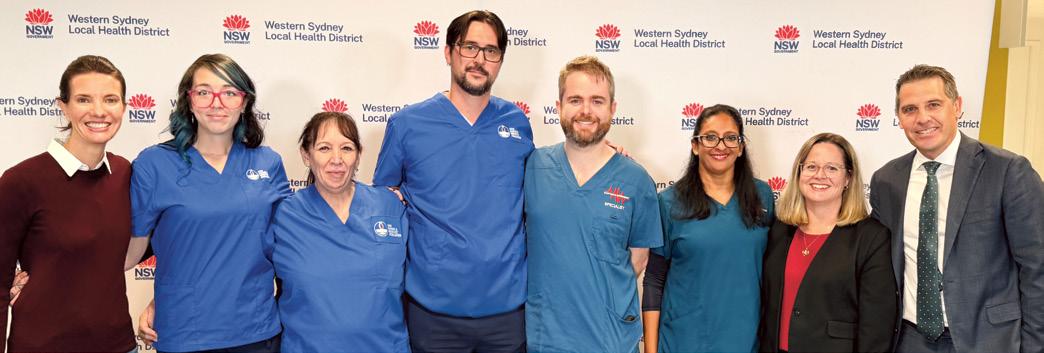
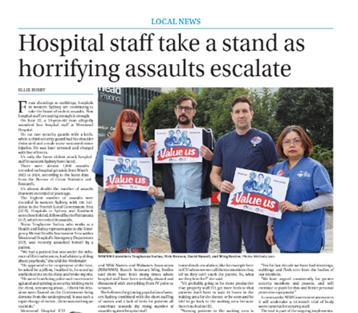
‘Our concerns were reinforced when a patient stabbed a security guard and injured nurses after cornering staff in a corridor.’ — NSWNMA Cumberland branch secretary Fran Cavallaro (third from left, with Minister for Mental Health Rose Jackson, branch assistant secretary Teaghanne Sarina; branch president Nick Howson; and Minister for Health Ryan Park)
Westmead tertiary hospital have historically operated as separate facilities but are moving toward closer integration under the broader Westmead Health Precinct redevelopment, scheduled for completion in 2027.
Cumberland branch secretary and HSR Fran Cavallaro said that before the government committed to the ABDU, Cumberland mental health nurses were allocated to a mental health assessment area in Westmead ED.
NO CONSULTATION AT FIRST
“That area was established rapidly, without consultation, in a space not fit for purpose,” she said.
“Cumberland branch consistently
raised serious safety concerns from 2022 but these did not lead to meaningful improvements.
“In 2024, our concerns were reinforced when a patient stabbed a security guard and injured nurses after cornering staff in a corridor.”
Fran, a workplace health and safety representative,issued three provisional improvement notices under the Work Health and Safety Act six days after the incident, that required improvements to safety systems and facilities to prevent violence in the ED.
Branch executive members and NSWNMA officials subsequently met several times with Minister for Mental Health Rose Jackson to voice member's need for urgent safety improvements.
BLACK AND BLUE
By Kate Aubusson
CODE BLACK
“The Minister was very supportive and took the time to listen carefully to the issues being presented,” Fran said.
“As a result, she visited Westmead ED to see first-hand the safety concerns that the branch had been highlighting.”
These discussions led to the establishment of a Safety Improvement reference group chaired by NSW Health Secretary Susan Pearce with representatives from Western Sydney Local Health District, NSWNMA and Cumberland branch HSRs and officials.
The group included a work health and safety officer from the Association, who supported Fran and other branch representatives through the consultation and planning process.
HSRs IMPROVED COLLABORATION
Fran said collaboration with WSLHD and NSW Health Officials improved as the project progressed and a shared view emerged that the ED would significantly benefit from the new unit.
“We conducted site visits to Nepean and Prince of Wales hospitals before determining that the Nepean model was best suited to managing our patient cohort,” she said.
“The ABDU is designed for patients presenting in acute behavioural crisis – including those who are highly agitated, distressed or affected by drugs or alcohol.
“They require close monitoring and de-escalation before clinicians can safely assess and determine the most appropriate care pathway.
“The ABDU is intended to provide dignified care while improving safety for staff, patients and visitors.
“Clinical Nurse Consultants and Nurse Practitioners have been identified as critical to the success
Assault and abuse on the rise
NSWNMA General Secretary
Michael Whaites welcomed the government’s support for the ABDU at Westmead Hospital as “a strong investment in the future of our public health system.”
“Hard work and meticulous planning between the NSWNMA and Western Sydney LHD have gone into establishing this specialised unit to address the violence being experienced in the ED,” he said.
“This outcome was made possible by the advocacy and action of our members in their role as HSRs,
and the strong support of Minister Rose Jackson.”
Michael said Westmead ED had seen a 31 per cent increase in patients presenting with mental health and behavioural related issues in the last five years and a 51 per cent increase in episodes of clinical aggression in Western Sydney LHD between 2022 and 2024.
“Physical assault and verbal abuse are on the rise in hospitals across the state,” he said.
“While the ABDU within Westmead ED will help locally, there are many other hospitals with the same urgent need for safer, fit-for-purpose units.”n
‘This outcome was made possible by the advocacy and action of our members in their role as HSRs, and the strong support of Minister Rose Jackson.’ — NSWNMA General Secretary, Michael Whaites
of the unit. It is expected that these experienced nurses will bring backgrounds in emergency, mental health, or drug and alcohol nursing.
“The ABDU project would not have been possible without the strong support and collaboration of the ED medical and nursing staff.”
UNDERLYING CAUSES
Fran, who has worked in mental health for 38 years, said that while the ABDU is a significant step forward, it is not a stand-alone solution.
“An ABDU plays an important role in managing immediate risk, but it does not address the underlying causes of increasing aggression in emergency departments,” she said.
“Aggression in emergency settings has been linked to systemic pressures, including long wait times and overcrowding, limited access to inpatient mental health beds, and gaps in community-based services and early intervention.
“Mental health services have been in crisis for years.
“Population numbers have exploded in parts of western Sydney over the last 10 years, but our bed numbers have declined.” n
Need HSRs at your workplace?
Get in touch to see how the union can help.
Workplace violence on the rise
A survey of nurses, midwives and carers found that 88 per cent had experienced one or more forms of occupational violence in the previous six months.
The 1,300 NSWNMA members who took part in the survey reported a range of incidents, from verbal abuse, shoving, kicking and choking to sexual assault and being threatened with a weapon.
The report, ‘Occupational Violence: has no place in my workplace’, showed a worrying increase in violence and aggression, up from 80 per cent of respondents reporting in 2019.
Public sector nurses and midwives reported the highest frequency of occupational violence, with 92 per cent subjected to incidents in the six months covered by the survey. Residential aged care workers, meanwhile, are more likely to experience physical violence compared with other types of violence.
Specialties with severe clinical workforce shortages, such as midwifery, experienced higher worker-on-worker violence.
Concerningly, occupational violence was significantly underreported at work, with only a quarter of respondents saying they report all incidents.
NSWNMA Assistant General Secretary Katrina Bough said that a lack of user-friendly reporting procedures and poor responses from management has led to a loss of confidence in the system.
“We know there are significant barriers to reporting incidents of violence and aggression, which results in many physical and verbal cases going undetected and unreported,” she said.
Violence against nurses and midwives in NSW is escalating
3.79% had been choked
17.9% had been sexually or indecently assaulted
Occupational Violence: has no place in my workplace
18.42% had been threatened with a weapon
“Hate speech and sexual assaults were experienced at a higher rate by CALD members, yet members from culturally and linguistically diverse (CALD) backgrounds were less likely to report violence in their workplace.”
“Less than two in 10 respondents who reported occupational violence believe any action was taken as a result of their report.”
NSWNMA General Secretary Michael Whaites said the findings reinforced what the union already knew was occurring in member workplaces.
“We know occupational violence has a significant impact on our members, with many reporting psychological harm and trauma as a result,” he said.
“This leads to higher rates of burnout and workers compensation claims among nurses and midwives.”
The survey identified adequate nursing and midwifery staffing, more secure physical environments and additional security staff as among the most effective violence prevention measures.
“We need to see governments and aged care providers bolster staffing to prevent violence and aggression from occurring in the first place,” he said.
The report makes more than 30 recommendations under key themes, including risk management, sufficient staffing, incident reporting, secure health facility design and management systems for patients with a propensity for violence. n
The cost of one violent shift
Registered nurse Carol Arndell had just begun her afternoon shift on a ward at a northern NSW hospital in March 2025 when a patient’s attack changed her life.
An elderly patient with Alzheimer’s was being “verbally and physically abusive to staff,” Carol explained.
When he left his room in a pair of pull-ups and a sheet around him, Carol followed him through the ward “to make sure he didn’t fall.”
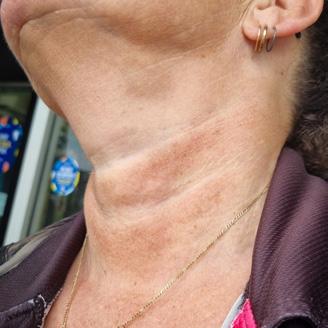
But as Carol turned to close another patient’s door, the male patient placed his arm around her neck, pulling her into him. “He completely squashed my throat, and he had both my arms pulled to my sides. I was wearing a duress button, but I couldn’t get to it.”
“I completely lost my hearing, and I dissociated from my body. I didn’t know whether I was going to live or die.”
The next thing Carol recalls is two nurses running towards her. “They pulled their duress simultaneously.”
The attack left Carol unable to speak, eat or sleep properly. “I couldn’t swallow properly, I couldn’t talk. The pain that I had in my throat was unbelievable.”
Prescribed Panadeine Forte for pain relief, she couldn’t drive. For weeks, she had to communicate by text message, change her diet and learn how to swallow.
Twelve months on, Carol still experiences pain, and while she can now speak, her voice has changed. “I won’t get it back again, not the way it was.”
While traumatised by the attack, it has been just as difficult for Carol to come to terms with the hospital’s response.
“After the attack, they just took him back to his room,” Carol explains.
“I cannot go back to my original workplace because of the lack of safeguarding.”
— Carol Arndell
Code Blacks continued over the following weeks as the patient attacked other people.
A management promise to install a Health and Security Assistant on the ward if there were any behavioural patients “happened for a little while, but then it went out the window,” Carol said.
“I cannot go back to my original workplace because of the lack of safeguarding.”
During a medication review for her attacker, Carol was horrified to discover his doctors had decided against prescribing a medication that could have helped manage his behaviour because it could have “caused him to fall.”
A cold debrief was held a couple of weeks later to discuss how work colleagues could have handled things differently, but Carol says she felt embarrassed about not being able to speak and did not attend. “Instead, I emailed my thoughts on the attack and the situation.”
Carol says she was appalled when a manager later compared the incident to her own experience at work of “being slapped on the cheek.”
She is still waiting for a genuine apology and recognition of what happened to her from NSW Health.
She has only recently been able to go back to work, but medical appointments and psychological therapy continue.
She has lost income: ongoing fatigue means she can no longer earn shift work penalty rates.
Unable to return to the ward, she is working day shifts in outpatient care.
“There is so much that I wanted to do in nursing,” she said.
“I’m not the same happy person I was before this happened. I still go through the memory every day, and so do the nurses who saved my life. If we had a security guard on the ward, it wouldn’t have happened.” n
Because your smile can be the best medicine
Carly, Union and
Nurses & Midwives Health member
Nurse and midwife Donna Garland appointed to new Chief Midwife role
Donna Garland, a midwife and registered nurse who was most recently the general manager of the Royal Hospital for Women in Randwick, has been appointed the state’s first Chief Midwife.
Donna has been in the NSW public health sector for more than 40 years, working across both rural and metropolitan environments.
A former Chair of the Australian College of Midwives Council and a Board Director, Donna is also an adjunct professor in the School of Midwifery at the University of Technology Sydney. Before her general manager role at the RHW, Donna was the Operations Director, Women’s and Newborn Health, at Westmead Hospital, where she focused on continuity of care for women.
“It is a privilege to be appointed as the inaugural Chief Midwife for NSW,” Donna said.
“Midwives are central to the provision of maternity services, and they are trusted clinicians, advocates and leaders in healthcare. I look forward to working closely with midwives across the state to strengthen midwifery practice, support workforce development, and ensure women and families receive safe, high-quality, evidence-based care.”
NSWNMA General Secretary Michael Whaites said the union had long advocated for the crucial leadership position.
“We look forward to working constructively with Ms Garland in her new leadership position. This role was a key recommendation in the Birth Trauma Inquiry report, so we are thrilled to see it fulfilled,” he said.
In the newly created role, Donna will also focus on workforce planning, training and retention, and provide expert policy advice to the Minister for Health and the NSW Health Secretary on matters relating to midwifery services.
NSW Health Minister Ryan Park announced the creation of the new Chief Midwife role at the NSWNMA’s annual conference in August last year. At the time, Mr Park noted that the role was created in response to the NSW Birth Trauma Inquiry, saying “Nearly 90,000 women give birth in NSW each year and I am committed to ensuring that all women in the state receive respectful, evidencebased, and equitable maternity care.”
SAFE STAFFING LEVELS INTRODUCED
Minimum staffing levels of one to every three women are being introduced in postnatal wards at seven NSW hospitals.
The rollout of Safe Staffing Levels (SSL) will initially be across the Royal Hospital for Women, Campbelltown, Liverpool, Nepean, John Hunter, Royal Prince Alfred and Westmead Hospitals.
“This is the reform that midwives have been crying out for,” Michael said.
“This is the reform that will start to address workload issues. Alongside ratios, increased pay and significant investment in midwifery and midwifery-led continuity of care models are critical to improving outcomes and fixing the staffing crisis in maternity.”
NSWNMA Assistant General Secretary, Katrina Bough, said this phase of the SSL rollout would build on the ratios already introduced in public emergency departments.
“The NSWNMA has been campaigning for ratios for more than a decade, so we are extremely pleased to see the next stage of this crucial reform taking shape,” she said.
“We know maternity services, particularly in regional and remote areas, have been under enormous strain in recent years. We hope to see ratios extend to these areas in the future.”n
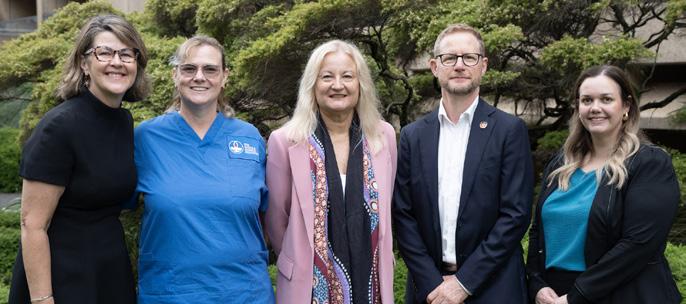
New Chief Midwife Donna Garland (centre) with (from left) Susan Pearce AM, Secretary NSW Health; Nichole Flegg, Campbelltown Hospital branch member; NSWNMA General Secretary Michael Whaites; and Assistant General Secretary Katrina Bough.
Tax ruling a relief for nurses
Northern Beaches Hospital nurses have escaped higher tax bills thanks to lobbying by the NSWNMA.
The mood among Northern Beaches Hospital (NBH) nurses turned from anxiety to relief when they learned they would avoid the risk of higher tax bills and loss of welfare benefits.
This follows almost two years of sustained advocacy led by NSWNMA’s Northern Beaches Hospital branch.
This was the effect of an Australian Tax Office ruling favourable to NBH staff who switched employment from Healthscope to NSW Health.
NSW Health formally took control of NBH on 29 April, following Healthscope’s collapse into receivership.
The Fair Work Act does not consider transfers of business from the federal system to state government ownership, which created a number of complexities for members at NBH
in transferring their entitlements, as well as how they are taxed.
Without the ATO ruling on the NBH workforce, the ATO would have treated annual leave transferred to NSW Health as taxable income in the 2025–26 financial year.
For example, a nurse with $20,000 in leave value on top of $120,000 annual income would have been taxed as if she or he had earned $140,000, potentially pushing them into a higher tax bracket with negative impacts on means-tested benefits.
Worse, they would be taxed a second time when they took the transferred annual leave as NSW Health employees.
After lobbying by the NSWNMA, the ATO decided Healthscope did not have to withhold tax from any
accrued annual leave entitlements transferred to NSW Health.
The ATO also advised Healthscope did not have to report the value of transferred accrued annual leave as part of an employee’s income for the 2025–26 financial year.
This means nurses fortnightly incomes will not be artificially inflated which would risk higher tax rate and negative impacts on Centrelink payments, Higher Education Loan Program repayments, child support payments and family tax benefit.
Louise Russell, vice-president and delegate for the NSWNMA branch at NBH, said members were “very relieved and happy” when the news came through.
‘We said from the very beginning that privatisation wouldn’t work. It was never a viable option.’ —
NSWNMA Northern Beaches Hospital vicepresident and delegate Louise Russell
“The tax issue was a major issue for our branch. People were really worried,” she said.
“We had to wait a long time for a decision, but thankfully it was answered in our favour, which was great.”
In a related decision, Healthscope agreed to a NSWNMA demand for more flexibility in how employees handle their accrued annual leave.
Healthscope agreed to give staff three options: transfer all accrued unused annual leave to NSW Health, have all of it paid out, or transfer some leave to NSW Health and have the rest paid out.
Previously, the company gave staff only two options: cash out all annual leave, or none of it.
Louise said this was another important win for Healthscope nurses.
“Many nurses and midwives were given large amounts of accrued annual leave late last year,” Louise said.
“This was because Healthscope had under-accrued a lot of our annual leave since NBH opened.
“This (along with unpaid leave loading) was won back after a long
‘We
lobbied anyone who would listen.’
NSWNMA General Secretary Michael Whaites described the wins on annual leave and tax for NBH nurses and midwives as “a direct result of collective action taken by members who were relentless in ensuring the transition to NSW Health didn’t come at a cost – and strong advocacy from your union by bringing the issue to state and federal governments.”
He said the Association and NBH branch members “left no stone unturned; we lobbied anyone who would listen”.
“They included state and federal MPs, the Health Minister, Federal Treasurer, the Federal Assistant Treasurer, the ATO and Healthscope.” n
“The best option for a lot of members was to get have some leave paid out –getting money in their pockets – and still have leave to take over.”
Louise said members appreciated the Association’s role in achieving the ATO ruling and greater flexibility over annual leave.
“The branch lobbied state and federal MPs and eventually the matter made its way to federal treasury and the ATO. It was time consuming and technical, but with support from NSWNMA officials, the right decision was made for Northern Beaches nurses and midwives.”
She said there was bipartisan recognition that “the situation was
“No matter what side of politics you
a private entity. We said from the very beginning that privatisation wouldn’t work. It was never a viable option.
“It was a political decision; the staff didn’t want it to happen and it wasn’t widely supported in the community.”
Louise said the double taxation risk for annual leave could impact any worker transferring from a private business to a state government agency.
“The NSWNMA will work with the ACTU and Unions NSW to investigate permanent protections for all workers.”
Louise said NBH’s transition to public management was progressing smoothly from the perspective of nurses who experienced the chaotic early days when the hospital opened as a public-private partnership under Healthscope management in 2018.
New branch to champion primary care nurses
A new NSWNMA branch aims to address the historic under-recognition of primary health care nurses and midwives.
Au stralia’s hospitals and nursing homes were at the frontline when COVID-19 swept across the nation from early 2020.
Facilities imposed strict visitor limits and enforced mask mandates in an effort to protect patients and staff.
However, most of the 3,500 to 4,500 primary health care nurses in GP clinics and community settings in NSW had fewer resources, less protection and little visibility.
“Primary care nurses felt their needs were being overlooked,” said RN Annabel Wood, who was nursing at a Sydney GP clinic when COVID-19 hit.
“Unlike hospitals, many primary care settings remained fully accessible to the public,” she said.
“We couldn’t close our doors and we had people coming in who refused to wear masks.
‘We recognised that a statewide specialist branch was the best vehicle to give a unified voice to isolated nurses in metro, regional, rural and remote areas.’ — NSWNMA primary health care branch president, Annabel Wood
“There was aggression, uncertainty and a constant need to adapt – and we were largely navigating that without a collective voice.”
Annabel sought advice from the NSWNMA on ways to protect herself and colleagues.
“The Association was able to support me as an individual member, but there was no clear way for primary care nurses to engage collectively.
WORKING IN ISOLATION
“We couldn’t form workplace branches due to small team sizes, and many of us were working in isolation.”
That experience led to a sustained push for better representation – a process that began during COVID19 and took several years to navigate through formal structures.
Annabel has been advocating for a dedicated primary health care voice within the Association since that time.
“Through ongoing collaboration with the NSWNMA, a new model emerged: a statewide Primary Health Care Branch,” she said.
“We recognised that a statewide specialist branch was the best vehicle to give a unified voice to isolated nurses in metro, regional, rural and remote areas.
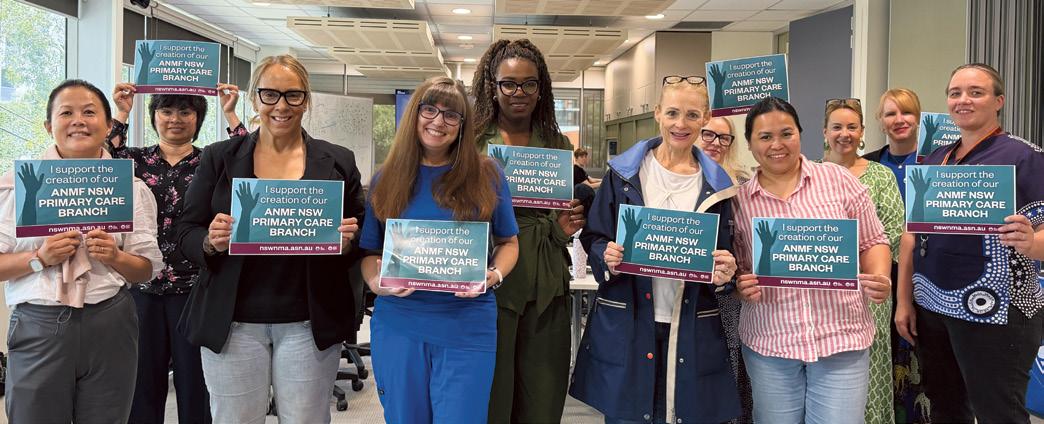
Annabel (fourth from left) with NSWNMA primary health care members at the 2025 Primary Health Symposium.
PRIMARY CARE
The branch represents nurses in settings ranging from GP and specialist clinics to Aboriginal community-controlled health services, school nursing, correctional health, refugee health, community health, and occupational health nursing.
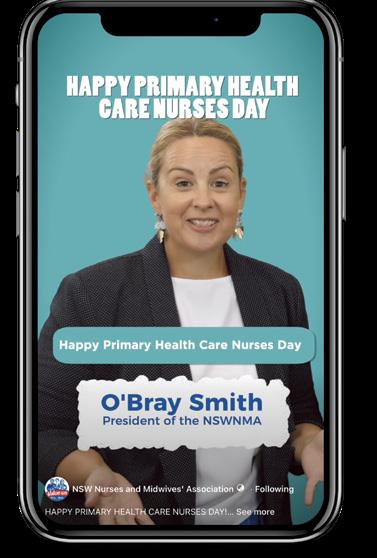
The NSWNMA has promoted the branch to potential members through social media groups, a Primary Health Care Nurses Day video produced by the Association, and an expression of interest form on the Association website.
FAST GROWTH
Interest has grown rapidly and more than 100 members registered within weeks of the branch’s first meeting held online in April.
Annabel said responses to the new branch range from strong, enthusiastic support, to cautious scepticism.
“After years of feeling overlooked, it makes sense that not everyone is ready to trust that change is possible.
“And that’s exactly why this work matters.”
Annabel says the timing of the branch is critical.
“COVID exposed the gaps and also highlighted how essential primary health care nurses are.
“What we’re seeing now is a shift in expectations – nurses are being asked to manage more complexity, take on expanded roles, and deliver more care in the community.”
Emerging changes, including nurse prescribing and broader scope of practice opportunities, are increasing both responsibility and potential impact.
COMPLEX NEEDS
At the same time, patient needs are becoming more complex.
“We’re no longer managing single conditions in isolation,” she said.
“Many patients are living with multiple chronic diseases, which require more coordination, more clinical judgement and more time.”
Primary health care is also central to chronic disease prevention – an area under increasing pressure.
“Preventative care has never been more important, and primary care nurses are in one of the strongest positions to deliver it.
“We’re the ones championing health assessments, care planning, education, and follow-up – the work that keeps people well and out of hospital.
“However, systemic barriers are limiting that potential.
LIMITED SUPPORT
“Workload pressures, limited support and a lack of understanding of our role within some practices make it harder for nurses to consistently deliver this level of care – if at all in some cases.”
Annabel said these pressures are reflected in the issues being raised by members of the new branch.
They include meal break and overtime violations, significant pay disparities, scope-of-practice breaches and heavy workloads contributing to burnout.
“People are not getting paid overtime for missing meal breaks and they are subject to unlawful deductions for breaks that they actually worked.
“Minimum wage rates remain significantly below the Public Health System Nurses’ and Midwives’ (State) Award and some nurses are paid even less than the minimum rate.
“Currently, a Level 1 RN (pay point 8 and thereafter) general practice nurse who is paid under the federal award will be earning around $15.80 an hour less than an RN at the same level in the public system.
“That’s a difference of about $600 per week for a full-time nurse.”
Other issues flagged by primary health care members include nurses being required to work outside their scope of practice and ENs being asked to work without direct supervision by a RN.
Some nurses report they cannot get a copy of their employment contract and are not given pay advice slips.
KNOW YOUR RIGHTS
Educating primary health care nurses on entitlements is a priority.
“A fundamental problem is low awareness of entitlements due to the absence of structured orientation programs,” Annabel said.
“The branch is working on practical ways to educate members about their rights.”
Annabel says these challenges are interconnected and increasingly urgent.
“The risk is already visible. The causes are already understood. There is a clear opportunity to address this now.
“Without meaningful change, we will continue to see workforce attrition, reduced capacity in primary care and increasing pressure on the broader health system.” n
Scan QR to watch video
Scan QR to join primary care branch or go to nswnma.info/ join-primary-branch
Are you the only nurse on duty?
The new Primary Health Care Branch offers connections and support for members who work in isolation.
In 2023, RN Adama Luminous–Akazua left her position at a major aged care facility to take a job at an urgent care clinic. There, for the first time in her career, she became the sole nurse on duty.
“When I saw that I was alone I realised I needed a backup – some kind of protection,” Adama said.
“Who could I call if I needed advice? Who could I reach out to? That was my initial reason for joining the NSWNMA.”
She said her decision was soon validated when advice from the Association’s Visa Assist service (in collaboration with Unions NSW) proved crucial to her gaining permanent residency in Australia.
“I can’t praise the union enough for that help alone,” said Adama, who was born in Nigeria and trained as a nurse in Malaysia.
While reassured to know she could always call on the Association for help, she still felt isolated as the only nurse on shift at her Western Sydney clinic.
“I didn’t have nursing colleagues to talk to who had similar issues to me. There was no avenue to share ideas about how to go about things in the workplace.”
In 2024, the Association’s primary care sector coordinator visited her clinic to discuss forming a Primary Health Care Branch.
“I was very happy to see a union representative at the clinic for the first time. The union taking the trouble to do that had a big impact on me deciding to join the branch.”
As branch secretary, Adama’s role includes keeping branch
membership records, notifying members about upcoming meetings, and summarising branch discussions and decisions.
“I think we are doing really well for a new branch,” she said.
“We are getting good numbers of people to our Zoom meetings, and the numbers are increasing. Members are really excited and happy to be heard. They are happy to have a place where they can talk about similar issues.
“Our members want to know their rights; they want to know more about what they’re entitled to.
“Some of them ask are we entitled to uniforms? Most employers do provide staff uniforms but some nurses have to buy their uniforms themselves.
“Other common questions are, how many breaks are we entitled to? What is the penalty if we have to work through our breaks?”
Adama said the increasing growth of job roles is a concern for many primary health care nurses.
“Nurses are asking if they are allowed to do this or that, if it is within their scope of practice. Are they protected and supported?”
She said primary health care nurses have many common issues despite working in different settings and for many hundreds of employers.
“Urgent care nurses may face different circumstances from GP nurses
or cosmetic nurses, for example. But at the end of the day, I think our similarities are more than our differences.”
Adama cites occupational health and safety as a common concern.
“How do we talk to management about health and safety when we are the only nurse in the workplace?
“As a branch of the union we can get together to talk about these issues, and then the union can push it on our behalf to the management. We do not have to go to speak to the management alone.” n
‘Our members want to know their rights; they want to know more about what they’re entitled to.’
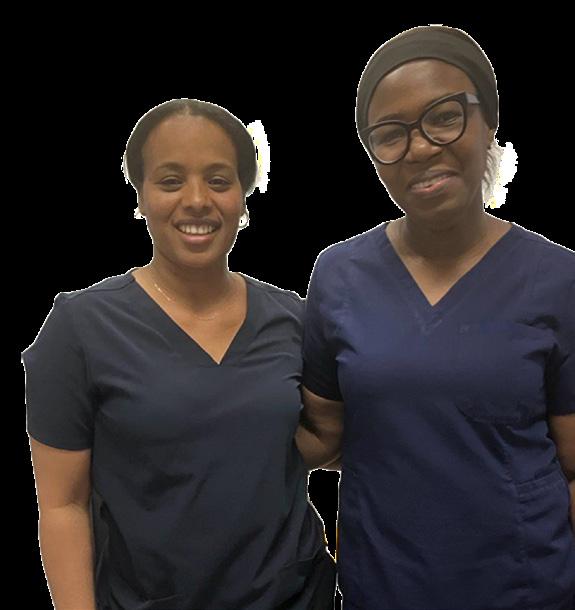
— NSWNMA primary health care branch Secretary, Adama Luminous-Akazua (right, pictured with
Who’s who in the Primary Health Care Branch
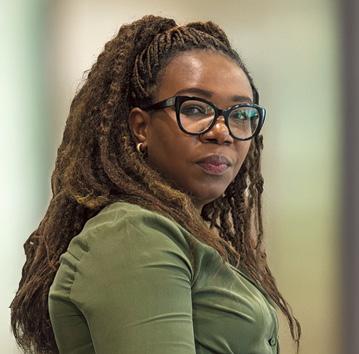
President, Annabel Wood
Sydney based, with experience in GP clinics, COVID-19 respiratory clinics, correctional health, aged care, various acute settings including ED and ICU, policy and change management, education, leadership and nurse coaching. Annabel holds a Cert IV in Training & Assessment and is studying for a Diploma of Counselling.
Vice President, Luna Manandhar
Sydney based, with experience in GP and urgent care clinics, ED and acute care in rural areas, and campaign management. Luna is studying for a Master of Public Health.
Secretary, Adama Luminous-Akazua
Sydney based, with experience in GP and urgent care clinics, leadership and nursing overseas. Adama holds a post-grad certificate in Primary Health Care and is studying for the Cert IV in Training and Assessment.
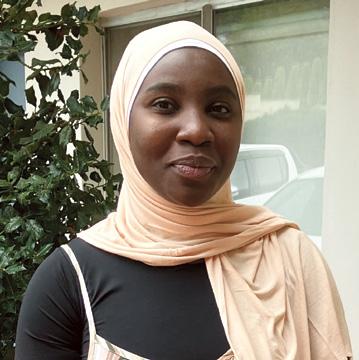
Assistant Secretary, Halimah Sadiya Omowumi Adam
Rural based, with experience in GP clinics, specialised holistic clinics, acute COVID-19 nursing and nursing overseas. Holds a Master of International Healthcare Management.
MC
JAMILA RIZVI
Jamila is an author, podcaster and diversity, equity and inclusion expert. She is Deputy Managing Director of FW (formerly Future Women) and co-founder of the FW Jobs Academy, supporting Australian women to find work and build careers. Jamila was Mamamia’s Editor in Chief. She is a columnist in the Sydney Morning Herald and The Age’s Sunday Life, and a commentator on The Project, The Drum, ABC News Breakfast and Q&A
speakers
DR MICHELLE GUNN
Confidence, compassion and impact: nursing leadership across practice, policy and regulation
Michelle is a registered nurse and lawyer with over 25 years of experience. She is Head of Nursing Practice and Regulations at the International Council of Nurses, leading global e orts to strengthen nursing practice, regulation, and standards for safe, e ective care worldwide.
TY SIMPSON
Equipping the workforce
Ty is a CAR-T Nurse Practitioner Candidate at Alfred Hospital Melbourne, coordinating care for patients with blood cancers and autoimmune conditions. He leads HSANZ nursing, cochairs the Australasian CAR-T Nurses Group, and was awarded 2025 HESTA Australian Nurse of the Year.
MELANIE BRIGGS
Birthing on country: embedding cultural safety and care
Mel is an Endorsed Midwife at Waminda, South Coast Women’s Health and Wellbeing Aboriginal
Keynote speaker
PETER GRESTE
Peter is an award-winning journalist, academic, and leading media freedom advocate, with 25 years as a foreign correspondent for the BBC and Al Jazeera. He won the International Association of Press Clubs’ Freedom of Speech Award; the Australian Human Rights Commission Medal, and the Australian Press Council’s 2018 Press Freedom award. Peter is a prominent campaigner for journalist safety and press freedom, and author of The First Casualty.
Corporation. She is a proud Aboriginal woman, descendant of the Dharawal and Gumbaynggirr peoples. Mel was the first Endorsed Aboriginal Midwife in NSW, and the second in Australia.
DR. VIRGINIA MAPEDZAHAMA
CARM women in leadership: nurses, midwives and care workers in health and aged care contexts
Virginia is Director of Racial Equity and Intersectionality at Diversity Council Australia and Adjunct Professor at Charles Darwin University. She leads DCA’s RISE Project and specialises in racial equity, intersectionality, gender, migration and workplace diversity. Virginia is advocating for systemic change and greater equity in Australian workplaces.
CATELYN RICHARDS
Social justice & leadership: our business
Catelyn is the new Federal ANMF Assistant Secretary, a paediatrics Registered Nurse and co-founder of Climate Action Nurses. She is working to ensure that nursing and midwifery professionals have a voice in the development and implementation of national climate change policies.
Panel: Influencing systems & driving change
EDWARD SANTOW
Edward is Director of Policy and Governance at the UTS Human Technology Institute, focusing on AI regulation, digital governance, and emerging technologies. He previously served as Australia’s Human Rights Commissioner.
FRANCES RICE
Frances is Chief Nursing O icer at the Australian College of Nursing. She advocates for workforce sustainability and education reform in modern healthcare.
ANNA THORNTON
Anna is Chief Nursing O icer at the Australian Commission on Safety and Quality in Health Care. She is a vocal advocate for nurse wellbeing, patient safety, and clinical excellence.
HALEY HODGSON
Haley is a Registered Nurse and founder of Maclean Medical in the Clarence Valley. She is a winner of APNA Nurse of the Year for her innovative nurse-led models of care.
A half-century of adversity and achievement
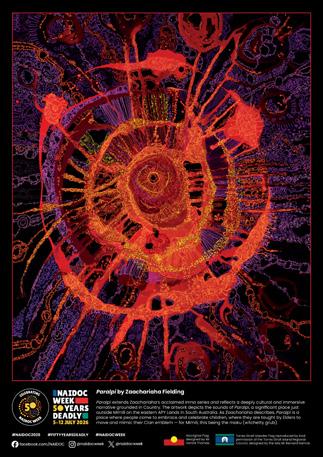
NAIDOC Week (5-12 July), the annual celebration of Aboriginal and Torres Strait Islander cultures, histories and achievements, turns 50 this year. Its theme for 2026 is ‘50 Years of Deadly’, in honour of leaders and communities who helped build the movement. The Lamp spoke to NSWNMA member Michelle Cutmore, inaugural president of the Association’s Aboriginal and Torres Strait Islander Member Circle.
Australia’s first Aboriginal Medical Service (AMS) opened in 1971 as a shopfront on Regent Street in Redfern, an inner suburb of Sydney.
Founded as a co-operative, Redfern AMS pioneered the concept of Aboriginal health care controlled by local communities.
Today, Redfern AMS is one of 41 healthcare organisations (ACCHOs) in NSW governed by Aboriginal communities and funded by the NSW Ministry of Health.
NSWNMA member RN Michelle Cutmore started as an Aboriginal Health Worker at Redfern AMS in 1993.
There were no formal training courses for the role, but it launched her 33-year career in Aboriginal health in both ACCHOs and state health departments in NSW and Queensland.
“We were learning in a demountable building on site with doctors, dentists, nurses and Aboriginal leaders as our teachers. The course was funded by the former ATSIC (Aboriginal and Torres Strait Islander Commission),” she said.
Michelle, who comes from a family of five children, was the first to complete university studies, in 2008.
She did a Bachelor of Nursing as a mature aged student at the University of Western Sydney, because “I realised that nursing would allow me a greater scope of practice and management of the issues faced by Aboriginal and Torres Strait Islander people”.
Michelle currently works as a nurse at Aboriginal medical services in Gamilaroi country of Moree (her hometown) and Bowen, Queensland.
‘Racism is about taking away people’s power. It’s not seeing them. It’s not hearing them.’— Michelle Cutmore
She says access to training for Aboriginal health workers has greatly improved since she started out in the 1990s.
“There are now registered training organisations that conduct Certificate III and IV training that can ultimately lead to registration with AHPRA as an Aboriginal Health Practitioner (AHP),” she says.
Michelle believes AHPs working at the top of their scope of practice can play a greater leadership role in how Aboriginal community health services are delivered.
AHPs who are embedded in their communities are best positioned to lead community clinics and thereby foster culturally safe care and better community outcomes, she says.
“AHPs live and work in their home community, and they understand kinship and community relationships. They know what’s going on with sorry business and why people aren’t able to make it to appointments, for example.
“AHP-led clinics are our future because they are key to self-determination.
“While a few services are transitioning to AHP-led models, most still operate under a medical model of care with doctor–nurse.”
Michelle says many Aboriginal and Torres Strait Islander peoples experience a loss of dignity through being treated as second-class citizens in the healthcare system, which undermines their health outcomes.
In The Lamp (Letters, February–March 2026 edition) she welcomed the formation of the NSW AntiRacism Collaborative, which brings together the NSWNMA, state government, healthcare professionals and the Australian Human Rights Commission to tackle racism in the health sector.
The Collaborative arose from a 2024 NSWNMA survey of racism in the health and aged care sectors.
It found that 70 per cent of nurses, midwives, AiNs, and care workers believe racism exists in their workplace.
“Being part of the NSWNMA AntiRacism Collaborative matters to me because racism is finally being named,” she said.
“Too often, [racism] operates quietly through systems of power and control, directing the narrative of who feels safe, respected, and heard.
“The same systems that uphold culturally unsafe workplaces for staff also compromise the quality of care provided to our communities.”
Michelle’s own attempts to raise issues relating to cultural safety have met resistance.
She cites two recent examples: being told not to use the term “Blak” (intentionally spelled without “c” to reject colonialism) and being asked to be “less proud” of her Aboriginal identity because it made others uncomfortable.
“Racism is about taking away people’s power. It’s not seeing them. It’s not hearing them,” she said.
Michelle said NSWNMA’s formation of an Aboriginal and Torres Strait Islander Member Circle more than two years ago has “created space” for Aboriginal nurses and midwives to put issues before Association decision-making forums. n
Sally Goold’s pioneering legacy
Michelle Cutmore paid tribute to the late Sally Goold, who achieved a series of ‘firsts’ in Aboriginal nursing.
Dr Goold, who died in 2025, left school at 14 and became the first Aboriginal nursing student in NSW – at Royal Prince Alfred Hospital – at just 16. She was the first Aboriginal nurse in NSW, the first nurse employed at the Redfern AMS in 1971, and the founding director of Congress of Aboriginal and Torres Strait Island Nurses (CATSIN), later renamed CATSINaM to incorporate midwives.
Her studies culminated in a master’s degree in nursing at Flinders University, researching the question, “Why are there so few Aboriginal registered nurses?”
In marking her passing, CATSINaM said Dr Goold’s findings of racism imposed upon Aboriginal and Torres Strait Islander students, and the lack of student support, inspired her leadership and advocacy as the organisation’s founding director.
Dr Goold received the Medal of the Order of Australia in 1986 for her services to nursing education and Aboriginal health, was awarded a Doctor of Nursing, Honoris Causa, from the Royal Melbourne Institute of Technology in 2002, and was Senior Australian of the Year in 2006.n
Nursing a community
NSWNMA member Noeloene Brown thinks she might be Australia’s oldest Aboriginal nurse still working full-time. At 74, she reflects on a career spanning almost half a century – from shy young hospital trainee to veteran nurse deeply committed to her community.
Noeloene Brown had low expectations when she applied for an enrolled nurse traineeship at Kempsey Hospital on the mid north coast in 1977.
“Someone told me there was funding for an Aboriginal person to do some training,” she says. “Nursing was my lifelong dream but I had no qualifications – I left school at 15. I was very surprised to be accepted.”
Noeloene may have lacked formal education but she had plenty of life experience when she started the traineeship, at age 25.
She grew up around shearing sheds where her father Noel worked as a rouseabout. An uncle taught her to hunt rabbits with a .22 rifle and use a .410 shotgun. “I had the best upbringing,” she says.
Noel refused to accept government funding for 13-year-old Noeloene to buy schoolbooks and stationery as part of a program for Aboriginal families. “I’ll look after my children. I don’t need the government to support me,” Noeloene remembers him saying.
“He may have thought that if he couldn’t support his children, the government would take them. They were still removing Aboriginal children from their families in those days.”
Noel died of a heart attack at 43, leaving Noeloene’s mum Bertha to raise nine children.
“Noel ruled with an iron fist but I loved him dearly. Mum did a really good job of raising us on her own. She died at 62.”
Noeloene left the family home in Walcha on the northern tablelands and travelled to Sydney, where she found factory work. “I came home when I was 18 and married my husband Greg – and we’re still married today.”
At Kempsey Hospital Noeloene found the children’s ward had a separate room for Aboriginal children. They were required to use silver mugs – “presumably so they could be sterilised.”
“One morning I got up in the staff tearoom and said, ‘I forgot my silver mug.’ You could have heard a pin drop. The silver mugs disappeared from that day on.”
BUS CRASH
Noeloene was on call on the night of 22 December 1989, when Kempsey Hospital became the main triage and treatment facility for 41 survivors of Australia’s worst road accident.
Two tourist coaches collided head-on on the Pacific Highway at Clybucca near Kempsey, killing 35 people.
‘Dad may have thought that if he couldn’t support his children, the government would take them. They were still removing Aboriginal children from their families in those days.’ — Noeloene Brown
‘Nursing was my lifelong dream but I had no qualifications – I left school at 15.’ — Noeloene Brown
“I got a call at two or three o’clock in the morning to say, there has been a disaster come to work quickly.”
Medical teams with surgical capabilities were flown in to help Kempsey staff assess, stabilise and treat passengers who arrived with severe trauma, fractures and lacerations.
In 1979, soon after qualifying as an EN, Noeloene took a short break from Kempsey Hospital to help out at Durri Aboriginal Medical Centre (Durri is a Dunghutti word that means "to grow in good health”) which had opened in Kempsey three years earlier.
In 2002, Noeloene left the hospital to return to Durri AMC where she still works full-time as an EEN.
Her role extends well beyond her base at the clinic.
She is on call 24/7 to help community members navigate the healthcare system and explain medical information in understandable terms.
“Everyone knows me as Aunty Narn. That’s how I introduce myself,”
“I make people’s doctors appointments and I make sure they’ve got the funding to pay for those appointments. If they need transport, if they need me to go with them, I do whatever they want me to do.
“I also know when to step back if they don’t want my help.
“Community nursing is something that I’m very passionate about. I just love doing what I do.
“I’m also a mentor on cultural learning for the junior doctors and registrars that visit Durri and other medical centres.”
Noeloene says Aboriginal medical centres have greatly improved health outcomes and reduced hospitalisations.
FEWER CHILD ADMISSIONS
She has observed a significant drop in hospital admissions for Aboriginal children, particularly for conditions like otitis media and roundworm.
She attributes this to preventative care and community support provided by the centre, which is controlled by the local Aboriginal community.
“When the medical centre opened, we secured funding to get medications to give to the mothers, so the children didn’t end up in hospital for long periods of time.”
She says community control of Durri AMC ensures that “services meet community needs, as defined by them”.
“We provide comprehensive support, including funding for specialist appointments, transport and accommodation, which is crucial for improving health outcomes.”
Durri AMC recently set up a social and emotional wellbeing team including community health workers and nurses.
“This is a big project that’s just started to take shape. It aims to support mental health including during sorry business (grief and loss) within the community,” Noeloene says.
She describes her career as “very happy and fulfilling”.
“I’ve done a lot, from assisting with hip replacements and knee replacements to helping deliver babies.
“I’m very privileged and very proud to be a nurse. It’s a career that needs dedication and commitment, and I think I’ve given that to the nursing profession over almost 50 years.” n
Working towards reconciliation
The Association expects to launch its Reconciliation Action Plan in August to guide our reconciliation efforts with Aboriginal and Torres Strait Islander peoples.
NSWNMA General Secretary Michael Whaites said the plan would provide a practical and structured approach to reconciliation.
It is being developed in consultation with Aboriginal and Torres Strait Islander members.
The Association has established an Aboriginal and Torres Strait Islander Member Circle and recently appointed two Aboriginal and Torres Strait Islander councillors.
“While there is a growing awareness of the importance of reconciliation, there is an opportunity to deepen staff and member understanding and engagement across all levels,” Michael said.n
Ask Katrina
Workplace consultation
on
roster changes
I work in the public sector and my ward has been informed that we will be changing from 12-hour shifts to eight hour shifts effective from the next roster in six weeks’ time. Can my employer do this?
Your employer can cease 12-hour shifts on your ward, but they must meet certain obligations under the Public Health System Nurses’ and Midwives’ (State) Award . Under clause 5(v)(m) of the Award, management must consult with staff first. Once consultation has concluded and a decision has been made to cease the 12-hour shifts, three months’ notice must be given to employees.
Additionally, under clause 6 the employer must notify both NSWNMA and employees who may be affected by changes which are likely have a significant effect. Significant effects include the alteration of hours of work for a class or group of employees.
Discussions should commence as soon as practicable, and employees should be given an opportunity to provide feedback for consideration.
Union support when facing workplace complaints
Yesterday I was handed a letter with some allegations and told to come to a meeting with the nursing home manager to explain. It said I could have a support person. Can the union help?
We certainly can. It is your right to have a witness or support person with you at any investigation or disciplinary interview. This could be a work colleague (if not involved in the incident) or a friend or family member. NSWNMA can also provide you with support and assistance before and at the meeting to ensure your rights are upheld.
It is generally not the role of a
When it comes to your rights and entitlements at work, NSWNMA Assistant General Secretary Katrina Bough has the answers.
witness or support person to speak for you at the meeting and answer questions. This is an opportunity for you to relay in your own words what happened. But, a time-out can be called so you can regroup, as these meetings can be challenging
Please contact NSWNMA for further advice if you receive a direction to attend any meeting that may have a potential disciplinary outcome.
Confidentiality when contacting the NSWNMA
I need help about my employment but don’t want my employer to know if I ring NSWNMA. Is contact with the union kept confidential?
NSWNMA regularly provides information and support directly to members. Often this is sufficient to resolve the issue or allow the member to undertake more informed discussions with their employer. NSWNMA would never contact an employer on your behalf without your consent.
Preparing for a complaint-related meeting
I am an enrolled nurse working in an aged care facility. I have received a letter from my manager requesting I attend a meeting with her and a person from Human Resources. The meeting is apparently to answer questions about a complaint from a resident’s relative that was made some months ago. I have no idea what it is about, can they do this?
Anyone accused of wrongdoing is entitled to procedural fairness. This means you should be provided with any allegations in writing, which include sufficient details to allow you to properly prepare and provide an informed response. This should include access to any documentation maintained by you pertaining to the care of that resident over the time of the alleged incident. The employer
should also ensure you are aware of your rights to have a support person at the meeting. Please contact NSWNMA for further advice if you receive a direction to attend any meeting that may have a potential disciplinary outcome.
Rights when contracted hours are reduced
I work part time and have a contract for 24 hours work per week. My manager recently told me they would be cutting my hours due to a roster review. I cannot afford to reduce my hours. Can they do this?
Your employer cannot change your contract of employment without your agreement. Your contract of employment is an agreement between you and your employer, and your employer cannot unilaterally change any term, especially your minimum contracted hours of work. It is not uncommon, however, for employers to give employees the impression that they are able to make changes without your agreement. You should:
(a) make it clear to your employer that you do not wish to reduce your contacted hours and seek clarification of what will occur if you do not agree to any reduction and
(b)ask for their proposal or position regarding this to be put in writing. If your employer continues to pressure you to agree to a reduction in hours, or if your hours are reduced on the roster, you should contact NSWNMA immediately.
Sick leave and workplace expectations
I work for a private hospital and my manager recently told me that she will need to speak to me about my sick leave. I’m worried that this may become a formal disciplinary
matter. I have had to take some sick leave lately but no more than I am entitled to. Should I be worried?
There are several reasons why an employer may wish to speak to you about your sick leave. For example, your employer may wish to discuss how you notified them of your need to take sick leave, the evidence you provided to support your absence or the number of sick days you have taken.
During any formal or informal discussion regarding your sick leave, it is important for your employer to provide clarity as to the precise nature of their concern or allegation.
The National Employment Standards provides that an employee must give notice of the taking of personal leave, including the period or expected period of the leave, as soon as practicable. In some circumstances this may be after the leave has commenced. When taking personal leave, an employee will also, if required by the employer, provide evidence that would satisfy a reasonable person the leave is taken for an applicable reason. This may be a medical certificate or a statutory declaration.
You should also refer to any local policies or applicable industrial instruments for provisions relating to these matters.
If your employer is taking issue with the number of sick days you have taken, remember that you cannot be treated adversely for accessing your lawful entitlements. You are allowed to take the personal leave you have accrued and your employer cannot discipline you for doing so. To prepare for any discussion regarding your use of sick leave, it would be wise to review the dates of your leave and whether you were paid personal leave (or any other form of leave) for such days.
If you have needed to access unpaid sick leave or have a complicated recent history associated with illness or injury, you should contact the NSWNMA for further advice and representation.
Options after claim rejection
I have made a workers compensation claim but this has been denied. I have been told I need to get some specialist medical evidence to support this claim but I know this is expensive and I can’t work at the moment. What are my options here?
It is possible for legal representatives to apply for funding on behalf of injured workers to the Independent Review Office (IRO) to cover the costs of an Independent Medical Examination, The IRO assess applications for grants to cover costs reasonably necessary to obtain medical information and pursue a claim. If you have such circumstances and wish to pursue this process, please contact the NSWNMA for further assistance and a referral to Lawyers who can assist with disputed workers compensation claims.
Annual leave on resignation
I work in Community Health in the Public Sector. My Nurse Unit Manager has told me I am not entitled to have pro rata annual leave paid out to me if I resign from my RN position as I have not been employed for a full 12 months. Is this correct?
No. Clause 30(xi)(c) of the Public Health System Nurses’ and Midwives’ (State) Award provides that on termination of employment, employees are to be paid for untaken annual leave due together with payment for any leave in respect of an uncompleted year of employment calculated in accordance with the Award. This entitlement is also set out in PD2024_046 Leave Matters for the NSW Health Service provides at section 2.3.
It should be noted however that this will not apply to an employee who elects to transfer his or her leave entitlement to another Public Sector employer in accordance with NSW Health Policy Directive PD2024_046
Leave Matters for the NSW Health Service, as amended from time to time. You should direct your manager’s attention to these references and contact the Association if the matter remains unresolved.
Appropriate patient records access
I’ve just started my New Grad program, and the senior nurses have been pushing me off my computer to look up details about their patients. I’ve challenged them on this but have been told that it’s okay because they are only checking blood results. Is this true?
No. Health organisations are required to maintain the confidentiality of their patient records. You are also required to ensure that you are only accessing the records of patients who are under your care as a part of your registration requirements. Additionally, many organisations have internal policies that mandate staff are to only view electronic health records while logged into the system with their own credentials, and to log out when their computer is unattended.
You are right to challenge colleagues when they sought to access records while you are logged into the system. If they were to do so, an electronic fingerprint would be created showing that you accessed the records of a patient you are not providing direct care to. This could create a disciplinary matter for you should the organisation conduct an audit of your electronic medical record access, which they do periodically.
All nurses and midwives should make sure that they are familiar with their local policies concerning the use of electronic medical records. If your colleagues continue to try and take over your computer, you might consider educating them around their privacy obligations and the potential for them to be unnecessarily involving themselves in a workplace misconduct matter, or you can ask your manager for support.n
PROFESSIONAL EDUCATION CALENDAR 2026
Waterloo
Medications: How we do it better
Friday 10 July, 9am – 4pm, 6 CPD Hours
Cost: members $95 / non-members $190
Law, Ethics and Professional Standards in Nursing and Midwifery
Wednesday 9 September and Tuesday 10 November, 9am – 4pm, 6 CPD Hours
Cost: members $95 / non-members $190
Clinical Communication and Documentation
Wednesday 14 October, 9am – 4pm, 6 CPD Hours
Cost: members $95 / non-members $190
Wound Care:
Wound Care Essentials
Wednesday 18 November, 9am – 4.30pm, 6 CPD Hours
Cost: members $120 / non-members $240
Perinatal Loss and Bereavement Support Workshop
Friday 27 November, 9am – 4.30pm, 6 CPD Hours
Cost: members $95 / non-members $190
Blacktown
Kate Maid Diabetes Workshop
Monday 14 September, 9am – 4pm, 6 CPD Hours
Cost: members $95 / non-members $190
Central Coast (Gosford)
Aged Care Nursing Seminar
Friday 25 September, 9am – 4pm, 6 CPD Hours
Cost: members $75 / non-members $150
Co s Harbour
The Deteriorating Patient
Wednesday 28 October, 9am – 4pm, 6 CPD Hours
Cost: members $95 / non-members $190
Dubbo
The Deteriorating Patient
Thursday 20 August, 9am – 4pm, 6 CPD Hours
Cost: members $95 / non-members $190
Newcastle
Wound Care: Compression Assessment and Diagnosis of Lower Leg Wounds
Thursday 13 August, 9.30am – 4pm, 6 CPD Hours
Cost: members $120 / non-members $240
Port Macquarie
Wound Care: Wound Care Essentials
Thursday 25 June, 9.30am–4pm, 6 CPD Hours
Cost: members $120 / non-members $240
Shellharbour
Wound Care: Understanding Wound Care Products
Wednesday 1 July, 9am – 4.30pm, 6 CPD Hours
Cost: members $120 / non-members $240
Taree
Medications: How we do it better
Wednesday 18 November, 9am – 4pm, 6 CPD Hours
Cost: members $95 / non-members $190
Wagga Wagga
Clinical Communication and Documentation
Thursday 11 June, 9am – 4pm, 6 CPD Hours
Cost: members $95 / non-members $190
Port Macquarie • Thu 25 June
Wound Care: Wound Care Essentials
Thursday 25 June, 9.30am to 4.30pm
The Westport Club, 25 Buller Street, Port Macquarie NSW 2444
Join this fun and interactive education day in Port Macquarie designed for healthcare professionals who want to build confidence and skills in wound care.
This workshop covers clinical application of a comprehensive assessment, identifying wound types, the importance of reliable communication and documentation, pain management, infection control, dressing choice and compression competency.
With thousands of wound products available to choose from, it is important for the clinician to understand what a wound product is designed to do and how it will achieve this, when it is not appropriate to use a particular product and when it is appropriate to change the wound management including wound product.
Cost: members $120 /non-members $240
Newcastle • Thu 13 August
Wound Care: Compression Assessment and Diagnosis of
Lower Leg Wounds
This understanding will lead to better and more cost-effective patient care. The workshop will focus on wound products in relation to wound aetiology and wound shape and the overall objectives of wound care.
Thursday 13 August, 9.30am to 4.30pm
Best Western Plus – Apollo International Hotel , 290 Pacific Highway, Charlestown NSW 2290
Cost: members $120 /non-members $240
This interactive and practical workshop focuses on comprehensive assessment and diagnosis of lower leg wounds, an in-depth exploration of compression therapy and the correct application techniques through hands-on practical sessions. You will also complete a competency assessment in the application of compression bandaging to ensure confidence and clinical readiness. 6
Dubbo • Thu 20 August
The Deteriorating Patient
Thursday 20 August, 9am to 4pm
Dubbo RSL
Cnr Brisbane and Wingewarra Streets, Dubbo NSW 2830
Cost: members $95 / non-members $190
Lunch and refreshments provided
As health professionals we need to ensure people in our care who are having difficulty can be appropriately managed and cared for.
The lack of recognition and appropriate management of patients, whose condition is deteriorating, has been identified as a contributing factor for many adverse events worldwide.
Clinicians need to be concerned and have the skills to recognise and manage the deteriorating patient. This requires the ability to identify signs of deterioration and escalate as needed.
This workshop will cover key elements of deterioration such as:
• When to worry
• A-G Assessment
• Urinary system changes
• Neurological changes
• Respiratory system changes
• Circulatory system changes, and
• Communication for detecting and maintaining patient safety.
Member Foundations
Member Foundations is designed to empower members with the knowledge and confidence to take an active role in union life. This course is the ideal starting point for new activists and a valuable opportunity for experienced members to reflect and strengthen their skills. Join us to build a foundation for meaningful union involvement and collective action.
Supporting and Representing Members + Negotiation and Issue Resolution
This course is designed for Delegates, Member Leaders and Branch Officals seeking to enhance their confidence and capability in supporting members and resolving workplace issues. Through interactive discussions and practical exercises, you will refresh essential skills and explore real experiences of member representation.
Waterloo 21-22 July • 9-10 September • 10-11 November
Delegate Skills
Who should attend? Current and aspiring Branch Delegates who want to enhance their knowledge and engagement within the Association. You will gain a clear understanding of your responsibilities, the democratic processes within the Association, and the rules that guide your role. You will be equipped to actively contribute to our democratic structure.
Waterloo 16 June • 13 October • 8 December
Roz Norman was an outstanding activist, branch official and Councillor of the NSWNMA and ANMF. In honour of her outstanding contributions, the Roz Norman Scholarship was created to further humanitarian, social or community causes.
The scholarship covers fees for an approved course promoting activism and the development of campaigning skills or public advocacy, including ongoing financial support for reasonable costs associated with campaigning for a period of one year, up to a maximum of $5,000.
NSWNMA Branch Officials or highly active members who can demonstrate leadership qualities are encouraged to apply. Successful recipients are required to report back to Committee of Delegates (COD) at the end of the scholarship period.
Branch Beat
Branch Beat with NSWNMA General Secretary
Michael Whaites
Nurses at Shoalhaven Place Care Community on the NSW South Coast were surprised and dismayed when management abolished a weekend registered nurse (RN) shift last year.
That sudden move left only one RN to cover morning and afternoon shifts on weekends. They can be even busier than equivalent shifts on weekdays when two RNs are on duty.
Shoalhaven Place is a 55-bed aged care facility owned by Opal, Australia’s biggest for-profit provider.
Individual nurses separately raised the weekend RN staffing issue with Opal without success.
Members came together and collectively signed a request for ANMF NSW to establish a local workplace branch, which gave them an effective structure to act as a group.
Officials of the new branch attended an ANMF NSW statewide Aged Care Summit, which raised their confidence and understanding of union resources. It also put them in touch with experienced campaigners at other nursing homes.
With branch organisation and Association support, members succeeded in getting the cancelled RN shift reinstated.
The branch plans to build on this success to tackle other workplace issues.
Workplace branch is a platform for success
More and more local branches are forming at Opal ‘Care Communities’, with nurses and carers uniting to make their voices heard. Across the state, members have identified understaffing as a result of Opal’s care minute misreporting and branches have led the way in challenging this.
“We never had a branch before – I think we didn’t feel the need for it,” said RN Wadzanai Nahiya, who was elected branch secretary. “On my part, I wasn’t sure how important a branch was.”
She said individual nurses complained to management after it removed a 10-hour (9am–7pm) RN shift on weekends.
In response, management added an extra AiN to handle administrative tasks such as visitors and calls on weekends.
“This did not address our clinical workload and skills mix concerns. The basic issue was RN coverage not admin tasks,” Wadzanai said.
“We discussed the problem through our WhatsApp group (for union members at Shoalhaven Place). We decided we needed a branch structure so we could deal with issues as a team rather than as individuals.”
An ANMF NSW Organising Officer reminded members they had won useful protections like the Standard Roster Clause 56 of the Opal HealthCare (NSW) Enterprise Agreement 2023 challenge when the usual roster fails to provide “safe staffing or quality care”.
They had the right to be represented as a group with the Association and could escalate to a dispute if the problem was not fixed.
‘Every one of us believes that if we did not get organised, we were going to be ignored.’ — NSWNMA
Shoalhaven Place Care Community branch secretary, Wadzanai Nahiya (right, with Asha Antony)
Members could also use Workload Management Clause 10 of the Agreement to hold discussions with management, refer matters to senior management, and escalate to a dispute if there was no resolution.
TEAMWORK
Before their first group meeting with management, members met to prepare their case.
Seven members then attended the meeting. Members explained how understaffing was affecting them and
‘When I went to the summit and saw how members at other nursing homes are doing things without fear, it was kind of eye opening.’ — NSWNMA Shoalhaven Place Care Community branch secretary, Wadzanai Nahiya (middle back at the NSWNMA statewide Aged Care Summit)
Management defended reduced weekend RN coverage by claiming they were complying with mandatory care minutes and acuity of residents had decreased over time and refused to hand over the standard roster.
This approach reinforced staff suspicions that cost-cutting was the only reason for the roster change.
Meanwhile, 13 financial members signed a form asking the NSWNMA/ANMF NSW to support formation of a branch, which the Association approved.
The branch held its first meeting at work around lunchtime with an option for online attendance. It elected office bearers including Asha Antony as president and Wadzanai as secretary.
The branch passed a resolution to refer the dispute to Opal national office, adding that the next step could be to take Opal to the Fair Work Commission.
AGED CARE SUMMIT
On 1 May, Wadzanai and Asha represented the branch at an ANMF NSW Aged Care Summit in Sydney,
where they spoke to members from other nursing homes.
Wadzanai said the summit gave her increased confidence that union activism is common and legitimate.
“You have a degree of fear that the employer might try to target you. So, when I went to the summit and saw how members at other nursing homes are doing things without fear, it was kind of eye opening.
“I realised it is proper to have the union, to be a member of the union and fight for your rights.
“I had never been that much involved with the union. I thought you only use them when you are in trouble. That’s what I thought the union was for.
“I found out there are a whole lot of other things that we can support each other with through our union, such as immigration help.”
As branch representatives prepared to meet Opal’s national HR manager, Opal offered to reinstate the weekend RN shift as a 9 to 5 shift (eight hours) instead of the previous 9 to 7 (10 hours).
After clarifying that other staffing by EENs and AiNs would remain unchanged, members agreed to accept the reinstated 9 to 5 RN shift.
“Every one of us believes that if we did not organise together, we were going to be ignored,” Wadzanai said.
She said the branch would provide a focal point for issues – enabling systematic discussion, resolutionmaking, and action.
“We intend to talk to experienced people from other branches to see how they are achieving things and how they are running the branches.
“We want to make it easy for staff to come to branch officials when they have a problem. We don’t want to lose our momentum.”
Opal branch elections were also held at Chiswick Manor in May, with two more Opal facilities approved to form branches this month. If you work at an Opal workplace without a branch, reach out to get one started.n
Professional Perspectives
Counting school nurse hours for RN registration
I’m an RN applying for a role as a school nurse casually at a private school but the job title is Health Officer. Can I count these hours towards my annual registration?
Under the Nursing and Midwifery Board of Australia (NMBA) Registration standard: Recency of practice, “practice” is defined broadly. It includes any role, paid or unpaid, where a person uses their skills and knowledge as a nurse, regardless of whether your title contains the word "nurse".
Examples of practice you might undertake in your role that would support this include:
• conducting health assessments
• providing first aid or clinical care
• medication administration or supervision
• care planning or clinical decision making
• health education delivered from a nursing scope
• managing health plans for students with chronic conditions.
The Association’s professional team answers your questions about professional issues, your rights and responsibilities.
Note: if you were audited, you would need evidence such as a position description, statement of service or employer confirmation that shows your school-based role involves nursing skill and knowledge.
You can read more about the standard here: www.nursingmidwiferyboard. gov.au/codes-guidelines-statements/ faq/recency-of-practice.aspx
Redeployment of MidStart student
I am a MidStart student. Can I be redeployed to another nonmaternity unit while on shift as a student midwife?
Postgraduate student midwives may be redeployed without notice to other areas of the hospital if activity in maternity services is low.
Your facility has committed to providing you with the clinical experiences you need in order to complete your training. If you feel that these opportunities are not being provided, we encourage you to escalate your concerns to your assigned mentor and Clinical Midwifery Educator, as well as your University Program Convenor.
Access to midwifery shifts for dual-qualified nurses
I am dual qualified but only currently employed as a nurse, I want to do some casual shifts as a midwife to keep up my registration, but the casual pool manager is saying I can’t as I am not employed as a midwife. If you can provide your midwifery qualification, prove recency of practice, continuing professional development, and professional indemnity insurance then you will be able to practice as a midwife. Please refer to local hospital policy for specific guidance.
Police statement after clinical incidents
There was an incident at work where a patient came in with cuts and wounds. During the assessment, the patient disclosed the weapon used to inflict the wounds and who the attacker may have been. The police have attended and asked me to provide a statement. What do I do, what will happen next, can the NSWNMA help?
If you are ever asked to provide a statement or be a witness in a criminal case, please call the NSWNMA to speak to one of the legal officers for information and advice so you can better understand the process and what might happen next.
A statement is a formal written document outlining what you saw, heard, and did. At the start, it states that you are telling the truth in the statement, and it requires your signature before a witness.
Often the police will ask you to give them a statement in the immediate aftermath of an incident. You are entitled to take the time you need including to seek advice or review any documents you consider will assist you with your recollection before you provide a statement.
You cannot be forced to provide a statement or forced to sign one you don’t agree with.
Let the police know that you wish to seek advice. You are entitled to seek independent legal advice from the NSWNMA before you provide a statement.
When to inform AHPRA about legal charges
I had a Christmas function on the weekend and was stopped by the police for a random breath test. I have been issued a notice to attend court for a mid-range drink driving offence. Do I need to tell AHPRA?
If you are unsure of your obligations and you receive a charge or court outcome, please contact the NSWNMA immediately. Our in-house team of lawyers can provide you advice and support. This article is for information only and does not constitute legal advice.
Section 130 of the Health Practitioner Regulation Law (National Law) requires you to notify AHPRA of a charge with a possible term of
Middle Range PCA – Reporting to AHPRA
Offence Details Penalty under Road Transport Act 2013
Do I need to report charge to AHPRA?
Do I need to report the court outcome – finding of guilt or conviction to AHPRA?
First Offence 20 penalty units or imprisonment for 9 months No Yes
Second or subsequent offence 30 penalty units or imprisonment for 12 months or both Yes Yes
imprisonment of over 12 months. This applies to students and registered health practitioners. You can do this by completing a Notice of Certain Events form and posting or e-mailing it to AHPPRA notifications. The failure to notify the National Board is considered noncompliance and may result in disciplinary action.
Section 130 requires you to notify AHPRA again if there is a conviction or, even if there is no conviction, if there is a ‘finding of guilt’. This can all be very confusing so please seek advice from the NSWNMA early.
With a middle-range PCA whether you notify of a charge depends on whether this is a first offence or second/subsequent offence. The table above provides an explanation of your reporting obligations in this very specific circumstance.
You also need to check the code of conduct for your employer to see if you need to report to them.
S130: https://legislation.nsw.gov. au/view/html/inforce/current/act2009-86a#sec.130 n
A super fund for health workers
health+wellbeing
Financial wellbeing: caring for yourself without breaking the bank
For many nurses and midwives, the rising cost of living adds extra pressure to already demanding roles. Financial stress can affect sleep, mood and overall wellbeing, making it harder to stay balanced both at work and at home.
The good news is that supporting your wellbeing doesn’t have to involve expensive retreats or spa days. Small, budgetconscious choices can make a meaningful difference.
Why financial wellbeing matters
Financial stress can impact wellbeing just as much as workload pressures. When money worries build up, they can contribute to fatigue, anxiety and burnout. Taking steps to manage spending and build simple, supportive habits can help create a greater sense of control and stability.
Budget-friendly self-care is also more sustainable. Rather than relying on occasional expensive treats, consistent low-cost habits can support your wellbeing over the long term. Many effective strategies are simple, accessible and even free.
Small changes, lasting benefits
If financial pressure or other challenges are affecting your wellbeing, confidential support is available through Nurse and Midwife Support and the Nurse Midwife Health Program Australia.
Top tips for budget-conscious wellbeing
Make the most of free resources
There are many free options available, from online yoga or workout videos to mindfulness and meditation apps. These can help you unwind and recharge from the comfort of home.
Prepare meals and snacks in advance
Planning ahead can reduce stress and save money. If you’re unsure what to cook, try using AI tools to generate recipes based on ingredients you already have at home.
Swap small habits that add up Daily purchases like takeaway coffee can quickly accumulate. Brewing coffee at home or bringing your own snacks can save money and free up time for a short walk or fresh air.
Some Employee Assistance Programs (EAPs) may also offer financial wellbeing support, so it’s worth checking what your workplace provides.
Use community spaces
Libraries, local parks and community events offer relaxing environments at little or no cost. Spending time outdoors or reading can help reset after a busy shift.
Try simple DIY self-care
At-home self-care can be surprisingly effective. Stretching, creating a calming routine, or simply getting an early night can provide valuable moments of restoration.
Think ahead
Look at your roster and anticipate any income boosts from penalties or night shifts. Setting aside a small portion for savings, reviewing salary packaging options, and checking your superannuation regularly can all support longterm financial wellbeing.
NMHPA 1800 001 060 www.nursemidwifehpa.org.au
NMS 1800 667 877
www.nmsupport.org.au n
Conference r d ?
Knowledge
ACROSS
1 Birth control choice (4.13.4)
12 Foreheads (9)
13 Evaluation of memory and executive function (9.4)
14 Go back to a previous state (9)
16 Introduction into tissues, by electric current, of ions of a medicament (13)
19 Unit of dietary energy (7)
21 Symbol for terbium (1.1)
22 Symbol for methyl (1.1)
23 To take solid food (3)
24 Triangular structures with two equal sides (9)
26 Relieve, palliate (11)
30 Towards (2)
31 Relating to the stomach and intestine (1.1)
32 Publicly funded healthcare system in the UK (8.6.7)
40 Neuroleptic responsive (1.1)
41 Relating to the ear (4)
42 Glycoprotein shell of an egg (4.9)
43 Alone (4)
44 Speech patterns (7)
45 Conflict-related trauma source (3)
46 Infantile paralysis, a highly infectious viral disease that attack the central nervous system (5)
47 A body fluid, such as blood, lymph, or bile (5)
48 A prosthetic device serving to close an opening in the body (9)
50 Our neighbouring nation (9)
51 Very small pill (6)
52 Supportive tissue framework (6)
53 Ocular tension (1.1)
54 Baghdad native (5)
56 Ninth cranial nerve, provides for swallowing reflex and back of the tongue taste buds (16.5)
DOWN
1 Blockage, clogging, or impeded flow (11)
2 A nursing peak body (1.1.1)
3 Back pain specialist (12)
4 Sound (5)
5 Sudden-onset psychosis triggered by stress (8.13)
6 Birth defect (10.11)
7 A B vitamin that is essential for metabolism of amino acids and starch (9)
8 Perception; intuition; understanding (7)
9 Attract, charm, captivate (6)
10 Unusually large (7)
11 A person with a slender, thin, or frail body (9)
15 Bony fish group (7)
17 Compel (6)
18 Discharge, send out (4)
20 Snakelike fish (3)
25 A long period of time (3)
27 Epichlorohydrin (1.1.1)
28 Basis for a "hover" gurney (3.10)
29 Negative pressure therapy (1.1.1)
33 Anterior to the elbow (11)
34 Sceptical; disbelieving (11)
35 Paramedics (5)
36 An old method of medical documentation and transcription (11)
37 Thickening and hardening of the skin due to new collagen formation (11)
38 Ice spikes (7)
39 Pertaining to moisture loss (11)
43 Layers of tissue (6)
49 Choose (3)
55 Alveolar contents (3)
AUSTRALIA
$3b aged care package “welcome,” but not enough
Aged care nurses and carers have welcomed the Albanese Government’s $3 billion funding package for aged care in the May 2026 Budget but say it’s not enough to fix the ailing sector.
$3.7 billion
Federal aged care funding package 2026-27
+20
Specialist Dementia Care units
+5,000
Residential aged care beds
$1 billion to fully subsidise personal care services for things such as showering, through the Support at Home program.
The Federal Budget included some substantial investments in the sector, including 5,000 more residential aged care beds annually from July 2027, an increase to the Accommodation Supplement and $200 million in funding for 20 additional Specialist Dementia Care units, as well as an expansion of the Hospital to Aged Care Dementia Support Program.
While the multi-billion dollar investment is welcome, advocates indicate it’s still not enough to fix chronic issues within the aged care sector.
“While we’ve seen some significant reforms in aged care since the Royal Commission, our members continue to tell us that the system is still not fixed,” said Australian Nursing and Midwifery Federation Federal Secretary Annie Butler.
“The Budget funding package is an important acknowledgment from the Government that aged care is struggling under ever-increasing demand for services – and we welcome its commitment to structural improvements to the system.”
— ANMF Federal Secretary Annie Butler
Workers in the sector are continuing to advocate for further systemic changes, including transparency around mandated care-minutes and accountability around taxpayer funding for private aged care operators.n
AUSTRALIA
NDIS inquiry targets “rorters” to protect at-risk participants
A landmark inquiry into the National Disability Insurance Scheme (NDIS) has recommended a rigorous regulatory overhaul to eliminate systemic rorting and safeguard the nation’s most vulnerable citizens.
The Federal Parliament’s Inquiry into the Integrity of the NDIS identified that a lack of stringent oversight has allowed unscrupulous providers to exploit the scheme, diverting essential funds away from at-risk groups, including those with complex neurodevelopmental and physical disabilities.
The inquiry heard of providers using the NDIS to launder money, hide assets and pay cash kickbacks to organised crime, seriously undermining the $50 billion program.
The inquiry made 26 recommendations based on the evidence. These include the introduction of a universal registration system, the implementation of mandatory price caps to prevent price gouging, and a review of “over-servicing” by predatory operators.
NDIS Minister, Mark Butler, said it was to “clean up rorts” and end the “let it rip” market of NDIS providers.
“We want to see more quality, more confidence for participants that when they’re engaging a provider to give them some service, that provider has been vetted, that they can be confident they’ve got the right qualifications, the right character, that the money
AUSTRALIA
Blood donation rules expand eligibility for LGTQIA+ community
Australian Red Cross Lifeblood has officially implemented genderneutral blood donation rules, removing decades-old barriers that prevented members of the LGBTQIA+ community from donating blood and platelets.
“Under the updated rules, most people in longterm monogamous relationships will be able to donate blood, and many who remain ineligible will be able to donate plasma instead.”
— Lifeblood CEO Stephen Cornelissen
From 20 April, the updated eligibility criteria shifted from gender-based restrictions to a universal assessment of sexual activity. All donors, regardless of gender or sexual orientation, are now asked the same questions regarding recent sexual partners.
Rules restricting trans people and gay and bisexual men from donating blood were implemented during the HIV pandemic in the 1980s. However, medical and technological advancements have paved the way for these groups to be eligible to donate blood while keeping blood recipients safe.
Lifeblood Chief Executive Officer Stephen Cornelissen AM described the policy shift as an important milestone for blood donation in Australia.
“This is something we’ve been researching and working on for some time together with governments, LGBTQIA+ advocacy groups and the broader community, and we’re excited to be welcoming many more new donors into our centres to donate blood and platelets,” Mr Cornelissen said.
“Under the updated rules, most people in long-term monogamous relationships will be able to donate blood, and many who remain ineligible will be able to donate plasma instead.”
Lifeblood expects an increase of up to 20,000 blood donations per annum as a result of the eligibility update.n
AUSTRALIA
Property tax reforms “re-balancing system” for early-career workers
The Australian Nursing and Midwifery Federation (ANMF) has welcomed the federal government’s major property tax reforms, as announced in the May 2026 Budget.
The Albanese Government’s most recent budget has proposed some major changes to Australia’s property tax system including new restrictions on negative gearing on investment properties, the winding back of Capital Gains Tax (CGT) discounts, and minimum tax rates on family trusts.
The Budget measures are aimed at supporting younger workers and alleviating concerns around housing affordability.
ANMF Federal Secretary Annie Butler lauded the Budget’s tax reforms for being focused on increasing fairness and supporting the next generation of nurses, midwives and carers.
“A growing number of ANMF members, particularly younger nurses, midwives and carers starting their career, have been locked out of affordable housing,” Ms Butler explained.
“As the country’s largest union, the ANMF believes this re-balancing of the tax system is a way of levelling the playing field and giving younger workers, especially early-career nurses, midwives and carers, the chance to own their own home. We commend the Government for taking these tough measures to overhaul the current tax system.”n
CROSSWORD SOLUTION
New South Wales Nurses and Midwives’ Association
Summary of Financial Information for the Year Ended 31 December 2025
The financial statements of the New South Wales Nurses and Midwives’ Association have been audited in accordance with the provisions of the Industrial Relations Act 1991, and the following summary is provided for members in accordance with Section 517(2) of the Act, as applied by section 282(3) of the Industrial Relations Act, 1996
A copy of the Financial Statements, including the independent Audit Report, will be supplied free of charge to members upon request. Certificates required to be given under the Act by the Accounting Officer and the Committee of Management (“Council”) have been completed in accordance with the provisions of the Act and contain no qualifications.
INFORMATION TO BE PROVIDED TO MEMBERS OR REGISTRAR
In accordance with the requirements of the Industrial Relations Act, 1991 [NSW] the attention of members is drawn to the provisions of Sub-Sections (1) and (2) of Section 512 which read as follows:
(1) A member of an organisation, or the Industrial Registrar, may apply to the organisation for specified information prescribed by the regulations in relation to the organisation.
(2) An organisation must, on the making of such an application, make the specified information available to the member or the Industrial Registrar in the manner, and within the time, prescribed by the regulations.
REPORT OF THE INDEPENDENT AUDITOR ON THE SUMMARY FINANCIAL STATEMENTS TO THE MEMBERS OF THE NEW SOUTH WALES NURSES AND MIDWIVES’ ASSOCIATION
Opinion
The summary financial statements, which comprise the summary balance sheet as at 31 December 2025 and the summary statement of profit or loss and other comprehensive income for the year then ended are derived from the audited financial report of New South Wales Nurses and Midwives’ Association for the year ended 31 December 2025. In our opinion, the accompanying summary financial statements are a fair summary of the audited financial report.
SUMMARY STATEMENT OF PROFIT OR LOSS AND OTHER COMPREHENSIVE INCOME FOR THE YEAR ENDED 31 DECEMBER 2025
of
SUMMARY BALANCE SHEET AS AT 31 DECEMBER
Represented by:
Summary Financial Statements
The summary financial statements do not contain all the disclosures required by section 510 of the Industrial Relations Act 1991 [NSW] or Australian Accounting Standards. Reading the summary financial statements and the auditor’s report thereon, therefore, is not a substitute for reading the audited financial report and the auditor’s report thereon.
The Audited Financial Report and Our Report Thereon
We expressed an unmodified audit opinion on the audited financial report in our report dated 19 May 2026. Our Independent Auditor’s Report to the members on the Financial Report did not contain any particulars of any deficiency, failure or shortcoming as referred to in the Industrial Relations Act, 1991 [NSW], as applied by section 282(3) of the Industrial Relations Act, 1996.
A copy of the Financial Report, including the Independent Audit Report, is available to members on the Member Central portal accessed via www.nswnma.asn.au . Members can obtain a hard copy by emailing the General Secretary, NSWNMA at gensec@nswnma.asn.au or calling 1300 367 962
Council’s Responsibility for the Summary Financial Statements
The Council is responsible for the preparation of the summary financial statements.
Auditor’s Responsibility
Our responsibility is to express an opinion on whether the summary financial statements are a fair summary of the audited financial report based on our procedures, which were conducted in accordance with Auditing Standard ASA 810 Engagements to Report on Summary Financial Statements.
Daley Audit
Michael Mundt Partner 19 May 2026, Wollongong
Liability limited by a Scheme approved under Professional Standards Legislation
INSURANCE PROTECTION when you need it most
The NSWNMA is committed to protecting the interests of nurses and midwives by purchasing a range of insurances to cover members.
Journey Accident Insurance
provides cover for members who are injured as a result of an accident while travelling between their home and their regular place of employment.
Professional Indemnity
Insurance* provides legal representation and protection for members when required.
Make sure your membership remains financial at all times in order to access the insurance and other benefits provided by the NSWNMA.