






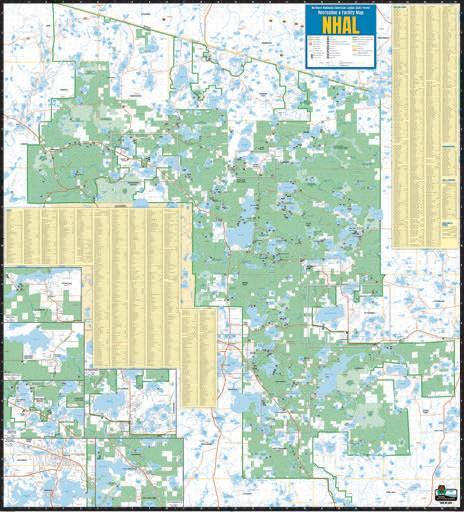
The Northern Highland American Legion State Forest (NHAL) is home to more than 930 lakes, contains the headwaters of the Wisconsin, Flambeau, Manitowish, and Tomahawk Rivers and encompasses more than 236,000 acres. The NHAL was sculpted by glaciers and eventually grew massive timber that helped build the Midwest. In 1925, Wisconsin’s legislature determined this location to be of significant importance. It was decided to secure the future of this particular region and set it aside as the American Legion State Forest (in Oneida County) and the Northern Highland State Forest (in Vilas and Iron Counties).
NHAL SF PROPERTY MANAGER NHAL ASST. PROPERTY MANAGER
Welcome to the Northern Highland American Legion State Forest! My name is Beth Feind Property Manager for the Division of Forestry. My career, with the Department, started in 2010. In the past year my role as the Property Manager has heightened my awareness that the love people have for the outdoors, especially the Northern Highland American Legion State Forest, is priceless. From local staff collaborat-
ing with each other to manage this vast forest, to residents enjoying daily pastimes with their family, or vacationers coming for the Forest’s widespread recreation opportunities, the love for this land and water is always present. Each year I am excited to get to know all users, stakeholders and partners of the property and make lasting relationships and memories. I See Welcome. . . page 3

By Joe Fieweger NHAL RECREATION SUPERINTENDENT
hank you for visiting the state forest and taking the time to read our annual Visitor Guide. In these pages you will find a wealth of information about the state forest and the natural environment – written by staff here on the forest, other local DNR staff and some of our local partners. A lot of time and effort goes into the content of this Visitor Guide, so I hope you enjoy it!
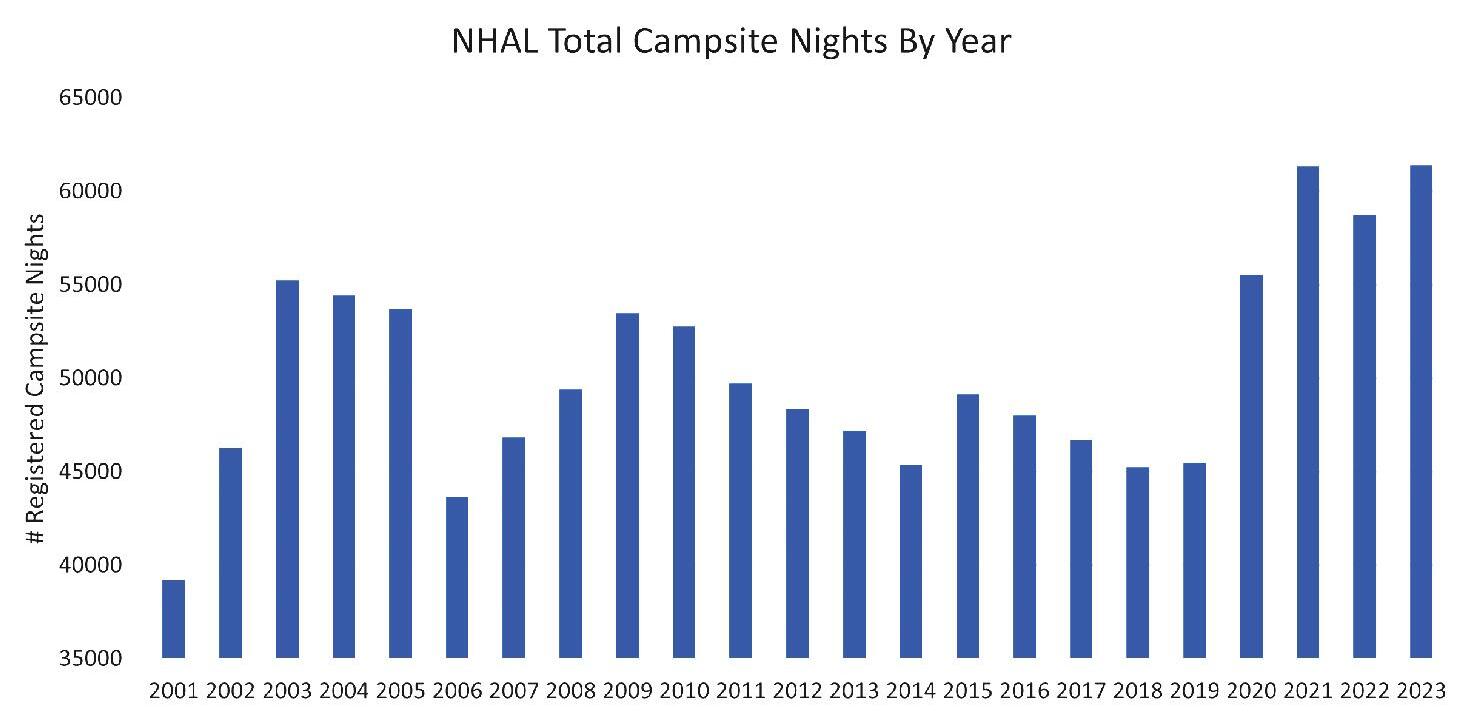
Similar to the past few years, 2023 was another very busy year on the state forest. Our campground usage in 2023 was up 4.5% from 2022 and slightly surpassed our record high camping year in 2021 (in available records back to the year 2001). Other recreation on the forest – use of boat landings, trails, beaches, picnic areas, etc continued to be very busy as well. If you find numbers and statistics interesting like I do, look for an article with a lot more of the numbers of camping on the forest elsewhere in this Visitor Guide.
With so many visitors to the forest, it takes a lot of work to keep everything in good condition and provide the best possible experience that we can. I’m proud of our hardworking staff and volunteers who help to make your visit enjoyable. We love to see lots of people enjoying the forest –ultimately that’s why we do what we do.
If you are interested in joining our team, reach out to me or any of our staff for more information. We hire many seasonal limited term employees (LTEs) every year. These LTEs are a very important part of what we do to make the forest a great place to visit and working on the state forest is a pretty cool gig. We also have volunteer opportunities available, particularly as volunteer campground hosts in some of our campgrounds. If you or someone you know might be interested in seasonal employment or a volunteer position on the state forest, I strongly encourage you to reach out to any of our staff for more info. We typically start the hiring process for our seasonal positions in January of each year.
In the rest of this article, I’d like to provide an update on some of the more notable things happening in the “recreation world” on the state forest.
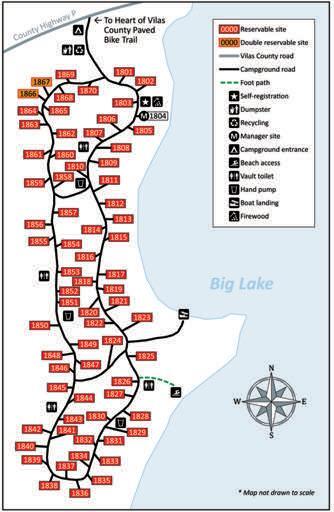
Early 2023 saw the wrap up of a project from fall of 2022 that installed three new vault toilets in our campgrounds (two at Big Lake and one at Clear Lake). A related project to restore the beach path at Big Lake Campground was completed later in the year. We’re very happy to have these new toilet buildings and have gotten a lot of positive feedback from campers about them. They replaced buildings that were built in the 1960s and had outlived their useful lifespan. Some of our campgrounds still have those 1960s era toilet buildings and we should see several more of those get replaced in the next couple of years.
Also in early 2023 we did some repairs to the exterior of our Crystal Lake Nature Center and re-stained it in anticipation of installing our new “donation tree”. This is a really neat way to recognize those who wish to make donations to the recreation program on the state forest. Reach out to our visitor stations or to me directly if you would like to learn more.
In fall 2023 a large project began in all four of our campground shower builings. The main facet of this project was to install tile on the walls in all of the shower stalls in the shower buildings. If you’re a past NHAL camper and have used our shower buildings, you have probably noticed that we’ve had issues with the durability of the prior finishes that have been on the shower stall walls. This has been a long-term issue and we expect the installation of tile to be a big im-
Emergency: 911
Emergency Telephones: Emergency telephones are located outside the entrance doors at the Clear Lake and Crystal Lake Visitor Stations (yellow phones).
Hospital: Howard Young Medical Center, 240 Maple St., Woodruff WI 54568, 715-356-8000, Marshfield Medical Center, 9576 Highway 70, Minocqua, WI 54548, 715-359-1710
Urgent Care: Marshfield Clinic and Urgent Care, 9576 Highway 70, Minocqua WI 54548
General DNR Information: 1-888-WDNRINFo (1-888-936-7463), 7 days/week, 7 a.m. – 10 p.m.
Non-Emergency Law Enforcement – 1-800-TIP-WDNR (1-800-847-9367 call or text to report suspected recreational, fish and game, and environmental violations, available 24 hours a day, 7 days / week)
State Forest Visitor Stations: Clear Lake Visitor Station
715-356-3668
8282 Woodruff Road, Woodruff WI 54568
Crystal Lake Visitor Station
715-542-3923
3237 Crystal Lake Rd, Boulder Junction WI 54512
provement and hold up much better over time.
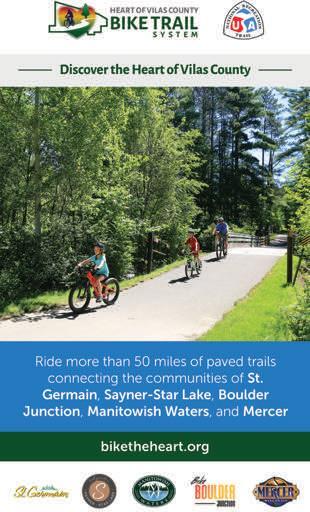
One of our partner projects on the state forest that took a big step forward in 2023 is the Town of Boulder Junction’s project extending the paved bike trail along Highway H. The trail was completed and opened in fall from Highway K to Ritzke Trail Road. The remainder of that connection to North Creek Road is expected to be completed in 2024. There continues to be a lot of interest in expanding the paved bike trail system on the state forest and surrounding areas so stay tuned for other new segments in coming years.
Another partner biking project that really took off in 2023 is the construction of mountain bike trails at Musky Mountain off Highway N between Crystal Lake Campground and Sayner. Construction of mountain bike trails at that location was approved in a 2017 recreation amendment to the state forest’s master plan and Lakeland Area Mountain Bike Organization (LAMBO) entered into a land use agreement with the state forest in 2023 and started building those trails. Not only did they start, they opened the first 5 miles of trails in fall. In coming years LAMBO will continue to expand this trail system up to the 15 miles of trails that are authorized.
One bike trail project on the forest that unfortunately didn’t see progress in 2023 is extension of our “Clear Lake” bike trail toward Lake Tomahawk. Our paved trail currently ends at Tomahawk Road along Highway 47. In the past bicyclists continued on the railroad grade along Highway 47 into Lake Tomahawk. With ATV/UTV use on the railroad grade that has become a less desired route for bicyclists. In 2022 a corridor for this trail extension was cleared by DNR forestry staff. This trail will initially be gravel, but plans are to eventually pave the extension which will extend to just prior to Gritzmachen Road. At that point bicyclists will hop back onto the railroad grade. The Town of Lake Tomahawk completed



a project in fall 2022 on the railroad grade from Gritzmachen Road into Lake Tomahawk to improve the trail surface for bicycling. We hope to see completion of the DNR connection in 2024.
Another trail project that has been in the works for a long time that we hope to see completed in 2024 is the ATV/UTV route that we call the “Woodruff North/South Route”. The southern portion of that route, which begins at the railroad grade along Highway 47 in the Town of Woodruff and goes north on the east side of Clear Lake to Bass Lake Road, creates a connection between the Highway 47 railroad grade and Highway J and first opened to ATV/UTV traffic in October 2022. The remainder of that “Woodruff North/South Route” will eventually continue north all the way to Ross Lake Road in the Town of Arbor Vitae. The project to finish development of that should be completed in 2024.
One last big recreation project on the forest for 2024 is the reconstruction of the Tomahawk Lake Boat Landing adjacent to Indian Mounds Campground and Big Arbor Vitae Boat Landing on the north end of Big Arbor Vitae Lake. These landings are both very busy and the ramps have been deteriorating, as well as needing a relatively high level of maintenance. This project is scheduled for late summer/early fall 2024 and unfortunately will cause a significant disturbance with the landings being closed to use during the construction project, but there is alternate access to both of these lakes. We look forward to the new boat ramps that will be more functional and easier to maintain.
In closing, I again want to thank you for visiting the state forest. This forest is a very special place, the concentration of lakes in this area makes it unique in the world and the surroundings forests and recreation amenities all combine to draw many visitors and those lucky enough to call this area home. I hope you enjoy your visit and come back frequently.
DNR Offices DNR Service Center 8770 Co Rd. J. Woodruff WI 54568 Phone: 715-356-5211
Office Hours: Monday – Friday 8:30 a.m. – 4:00 p.m. General Customer Service number: 1-888-936-7463
State Forest Personnel: Joe Fieweger Recreation Superintendent joseph.fieweger@wisconsin.gov 715-385-3355 ext. 119
Nikki Kloes Deputy Recreation Superintendent nicole.kloes@wisconsin.gov 715-385-3355 ext. 113
Beth Feind Property Manager beth.feind@wisconsin.gov 715-892-0095
Tom Shockley Forestry Team Leader tom.shockley@wisconsin.gov 715-356-5211 ext. 259
Chris Bartelt Woodruff Area Conservation Warden Supervisor christopher.bartelt@wisconsin.gov 715-892-0695

hope this year the Forest brings everyone a special place to connect (or disconnect) and enjoy life. Please feel free to reach out with any questions. My number is 715-892-0095.
I’d also like to welcome you all to explore everything the NHAL State Forest has to offer! My name is Adam Wallace and I’m the Assistant Property Manager for the NHAL Forest. I’m also the Property Manager for the Willow Flowage Scenic Waters in southwestern Oneida County. I’ve been working on the NHAL and Willow properties for the Department since 2011. These really are two “gem” properties in the state, and I invite you to reach out to myself or Beth anytime with questions. My number is 715-892-0143.
The Northern Highland American Legion State Forest (NHAL) is home to over 930 lakes, contains the headwaters of the Wisconsin, Flambeau, Manitowish, and Tomahawk Rivers and encompasses over 236,000 acres. The NHAL was sculpted by glaciers and eventually grew massive timber that helped build the Midwest. In 1925 Wisconsin’s Legislature determined this location to be significantly important. During that time, it was decided to secure the future of this region and dedicate it as the American Legion State Forest (in Oneida County) and the Northern Highland State Forest (in Vilas and Iron Counties). Interestingly, the first State Forestry Headquarters was officed on the property, at the Trout Lake Forestry Headquarters (Boulder Junction), along with the first tree nursery in the state. In addition, the first ever documented aerial detection flight for wildfires was performed by Jack Vilas from a float plane based at Trout Lake.
For a more in-depth discussion of forestry history in Wisconsin, check out Forest Historian, Jim Bokern, in his article on Wisconsin’s Early Forest Rangers, on our property web page. Or take a trip to Trout Lake Forestry Headquarters, Ben Bendrick Drive and Cathedral Point, to read the historical signage recently placed. Presently, the Forest is managed to balance economic, ecologic, and social values. This means that the forest is actively managed to provide forest products and a healthy, vigorous forest. This provides other benefits like wildlife habitat, clean water, clean air, aesthetics, and wild areas. The NHAL, managed by the DNR Division of Forestry, is the largest State Forest in Wisconsin. As a State Forest we are mandated to provide timber to the forest products industry in a sustainable manner. Forestry staff are tasked with coordinating management activities throughout the entire property while still being able to offer the full spectrum of high-quality recreational opportunities. This balanced approach produces enough timber to build 3,500 houses a year while continually growing our forest and meeting our social and recreational needs
Many years ago, loggers, without knowing it, were the first to pave the way for our present recreation opportunities in the NHAL. Skid trails
used by loggers, long ago, to remove timber have been upkept to the standards of woods roads or trailstoday. Old railroad grades which were originally used to transport lumber to mills across the state are currently being employed as trail systems. The utilization of old logging roads and rail grades have created additional recreation and access opportunities for the public. Silent and motorized recreationalists use these hundreds of miles of logging roads on the property during all times of the year. This encompasses multiple nature trails, hiking trails, groomed ski trails, an estimated 400 miles of snowmobile trails, along with a few ATV trail/route segments. Open roads on the Forest offer access for hunting, berry picking, wildlife viewing, and other exploration. Recreationalists of the NHAL still benefit from the skid trails and railroad grades loggers left behind.
Generations ago people also started camping and picnicking at the NHAL in hopes to find a place to recreate peacefully. Some of the popular areas to camp were Crystal Lake and Clear Lake Campgrounds. In the 1960s the Outdoor Recreation Action Plan created and allowed the construction of more campgrounds, boat landings, trails, and picnic areas in the Forest. Along the way, some of the early campgrounds faded away. But the Forest now offers 18 family campgrounds with a total of 857 campsites and two group campgrounds. These campgrounds provide a variety of modern, rustic, group and primitive camping. Most campgrounds offer swimming beaches. Paddlers of all sorts can also explore these waters within the campgrounds and across the Forest. Further, there are eight picnic areas spread across the property, with most providing an
additional swimming opportunity.
To secure a campsite within the NHAL, make a reservation (same day reservations are allowed) or stop into the Clear Lake or Crystal Lake Visitor Stations for availability. All campsites are reservable, except for 88 remote water access only campsites. Campers utilizing these remote water access only campsites, may stay one night at no fee and move to another site the next day. In addition, there are 17 remote water access campsites that can be reserved. Backpack camping permits are also available under special conditions, ask one of our Visitor Stations for more information. Lastly, for a one-of-a-kind experience, winter camping is offered at Clear Lake Campground.
The Forest is also home to a rich abundance of plants and wildlife. The highest concentrations of eagles and ospreys are found in Vilas and Oneida County. The lakes of the NHAL are also home to numerous nesting pairs of loons. Additionally, numerous endangered, threatened, and sensitive species like wood turtles, spotted salamanders, and goshawks are found within the Forest. Many other animals call the Forest home including well known species such as: wolves, deer, and bear, which are found throughout the entire property. With the Forest being rich with wildlife, hunters are given the opportunity to utilize mowed corridors and wildlife openings for their hunt.
The NHAL State Forest offers everyone a place to recreate, explore, and to make memorable experiences with family and friends. The Wisconsin Department of Natural Resources, Division of Forestry and all Staff welcome you to the Northern Highland American Legion State Forest.
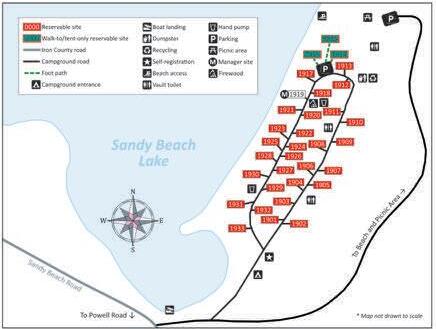
April 1st through December 1* *Snow conditions permitting (no plowing in any of these campgrounds) April 30 through Columbus Day (Oct. 14) Thursday before Memorial Day (May 23) through Columbus Day (Oct. 14) Sandy Beach East Star April 30 through November 1 Thursday before Memorial Day (May 23) through Labor Day (September 2)





The Wisconsin Department of Natural Resources’ (DNR) Conservation Wardens and Community Service Officers (CSOs) welcome you to the Northern Highland – American Legion State Forest (NHAL).
Whether you are here for just a day or an entire week, you will likely encounter DNR wardens and CSOs. Our duty is to protect Wisconsin’s natural resources and the people who enjoy them.

I’m Lieutenant Chris Bartelt, the warden supervisor for the DNR’s Woodruff Warden Team. My team uses the nearby community of Woodruff as its home base and serves the larger territory that includes the NHAL.
We are happy you are here and want you to enjoy your time in this remarkable forest. Here’s a look at who we are, what we do to serve you and how you can help protect our resources while you’re here.
WHO ARE THE DNR WARDENS AND CSOs?
There are six full-time conservation wardens – including myself – on the Woodruff Team serving Oneida and Vilas counties. We will also have one or two CSOs on hand at the NHAL for the 2024 season.
Wardens seek to protect hundreds of thousands of acres of land and wildlife. We monitor more than 1,000 lakes in this region to ensure they remain clean and safe for future generations. We patrol hundreds of miles of local ATV, biking, hiking and snowmobile trails to ensure everyone’s safety. And, importantly for you, we are the primary law enforcement presence on stateowned lands such as the NHAL.
Our CSOs fill a similar role, providing a presence and a resource for all of our Forest visitors. 2022 was the inaugural year for the DNR’s CSO program and we’re excited to
bring it back for 2024. While not credentialed like our wardens, CSOs will still be out and about in our campgrounds and other use areas, able to educate visitors on the rules mentioned below, provide some enforcement, and answer questions. Our CSOs also find themselves out on our lakes and in the woods, providing an extra set of hands as our wardens and CSOs work jointly to protect our natural resources.
Starting in 2018, the DNR Conservation Warden Service became the primary law enforcement in Wisconsin’s state parks and forests. Before this change, law enforcement on state properties was handled by credentialed DNR park rangers. Today, DNR rangers remain a vital part of the state park and forest system, assisting with enforcement, maintenance and visitor service duties. However, the rangers no longer serve in credentialed law enforcement roles.
Our DNR conservation wardens, and CSOs, are incredibly passionate about the outdoors. While hunting and fishing enforcement may come to mind when you hear the word warden, our work goes well beyond that.
DNR conservation wardens work with nearly anything that impacts our amazing natural resources. This includes air pollution, solid waste disposal, fish stocking, wildland fire, taxidermists, recreational vehicles, timber theft, commercial fishing, septic hauling and disposal and more.
You can also help protect Wisconsin’s resources by keeping the following in mind.
BE A GOOD NEIGHBOR AT THE CAMPGROUNDS
Staying in a campground for a weekend (or a couple of weeks if
you’re lucky) is like becoming a part of a new community – new neighbors, new friends, and sometimes new issues.
As with any community, a little understanding and cooperation between neighbors goes a long way.
Here are a few of the common issues DNR wardens respond to.
•Noise – This is the top complaint. NR 45 states that “no person may engage in violent, abusive, indecent, profane, boisterous, unreasonably loud or otherwise disorderly conduct, or conduct which tends to cause or provoke a disturbance or create a breach of the peace.” This applies at all times of the day, not just late at night.
•Pets and Leashes – Pets are part of our families, but they also have the potential to impact other forest visitors negatively. NR 45 states that when in a designated use area (e.g., campground, day use area or trail) pets must be on a leash no greater than 8 feet in length. Also, at no time may a pet interfere with another’s enjoyment of the property. Pets are not allowed on any designated beach or where otherwise posted.
•Camping and Timing – All NHAL campers must be registered before setting up camp unless at a firstcome, first-serve water-access only site. All camping permits expire at 3 p.m. on the last day of the permit and all camping equipment must be removed by that time to make room for the next set of campers. Camping is only allowed on designated sites. Only registered campers are allowed in the state campground after 11 p.m.
•Vehicle Admission Stickers – Admission stickers are required when a motor vehicle is operated within a designated public use fee area. The sticker must be fully attached to the windshield by its own adhesive –simply laying the sticker on the dash does not meet the legal requirement.
•Firewood Rules – Firewood that originates more than 10 miles from

On any given day or night, our wardens and CSOs might be in a campground, on an area lake, patrolling a local ATV trail or following up on many other environmental issues, so we need your help to respond to the above issues and any other issues that may arise.
Report violations directly to DNR staff or via our Violation Hotline by calling or texting 1-800-847-9367. Using the 24/7 hotline, callers can confidentially report suspected wildlife, recreational and environmental violations. You do not have to leave your name when reporting a violation, but it is often useful for warden follow-up. If provided, any identifying information is protected under Wisconsin State Stature 23.38.
your campground on the NHAL is prohibited – this is to protect the state forest from infesting pests or diseases. To remedy this, consider purchasing certified firewood that
Again, welcome to the NHAL. We hope you have a safe and enjoyable experience in the area – there is no better playground than the forests and lakes at your feet right now. The DNR thanks you for remembering the importance of community during your time here, even if you’re searching for solitude in Wisconsin’s great outdoors. Thanks for doing your part to protect our state’s resources. See Serve. . . page 5
From page 4
has been heattreated to kill the organisms mentioned above or by obtaining firewood from nearby.
Speed Limits Are For Safety – There are many children, pets, bicycles and others recreating across the NHAL, so always be aware and observant while driving. Follow applicable speed limits, one-way road and stop signs and all other traffic laws.
Fires – Fires are allowed in designated fire rings and cannot be left unattended. If leaving, fully extinguish the fire first. Never burn garbage as not only is it illegal, but it produces harmful pollutants.
Fireworks – It is illegal to possess or discharge fireworks in the state forest.
As a general guideline, anything that makes noise, throws sparks or lifts off the ground cannot be used in the state forest.
•Boats – No person may operate a boat within a water area marked by buoys or other approved regulatory devices at a swimming beach.
For the full set of rules, read Wisconsin Chapter NR 45, Use of Department Properties here: https://docs.legis.wis consin.gov/code/ad min_code/nr/001/45/ 04.
The following are some interesting statistics about camping on the NHAL in 2023. The total number of campsite nights on the forest for 2023 was 61,397 (one campsite night = one campsite occupied for one night). That was up 4.5% from 2022, and the highest annual total in our records that go back to 2001 – 72 campsite nights ahead of our previous high in 2021. This far surpasses our “pre-covid” camping totals of approximately 45,000-50,000 campsite nights per year. The busiest month was July with 19,629 campsite nights. The least busy month was February with 18 campsite nights. The busiest night of the year on the forest was Friday, July 1 with 857 campsites booked, which is 99.8% of our campsites booked (only 2 campsites on the forest not reserved). That is likely the busiest night of camping on the state forest ever! For the entire year Saturday nights were the busiest night of the week for camping and Tuesday nights were the least busy night of the week for camping. The average length of camping stay on the forest for the year was 3.78 nights. In 2023 campers came to NHAL from 46 U.S. states, the District of Columbia, and five other countries. The only U.S. states not represented were Connecticut, Hawaii, Rhode Island, and West Virginia. The top states NHAL campers were from and percentage of all NHAL campers they represent were: Wiscon-
sin (88.1%), Illinois (5.3%), and Minnesota (2.5%). Other countries represented were Canada, Mexico, France, Germany, and Chile.

By Joe Fieweger NHAL RECREATION
Although wheeled camping units are very popular, NHAL still sees a lot of tent campers. 51.6% of NHAL campers reported using some type of wheeled camping unit, while 48.4% reported tent camping.
The busiest campgrounds on the forest in 2023, measured by percent occupancy for June-August, were:
1. West Star Lake – 82.9% occupancy
2. Firefly Lake – 77.6% occupancy
3. Crystal Lake – 76.4% occupancy
The least busy campgrounds on the forest for the year by the same measure were:
1. Big Lake – 33.9% occupancy
2. Sandy Beach Lake –38.4% occupancy
3. Cunard Lake – 40.6% occupancy
The biggest changes in use for campgrounds on a yearto-year basis (2022 to 2023) were:
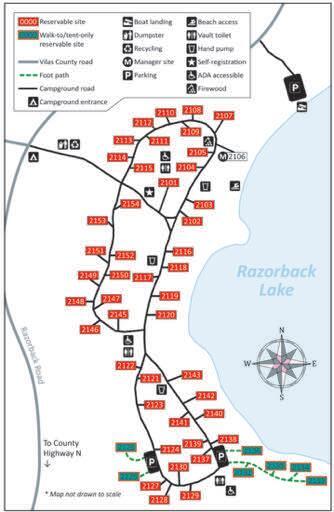
Increase: Razorback Lake +16.1%
•Decrease: Starrett Lake0.3% (Starrett Lake was the only campground on the NHAL that saw less use in 2023 than 2022)
For the year there were 176 campsites on the forest that were booked 100 or more nights. Those 176 are included in the 638 campsites on the forest that were booked 50 or more nights.
The 5 most used campsites on the forest and nights booked in 2023 were:
1. Clear Lake Site 711 – 154 nights
2. Indian Mounds Site 33 –153 nights
3. Indian Mounds Site 37 –152 nights
4. West Star Lake Site 1714 – 151 nights
5. Firefly Lake Site 209 –150 nights
The least used campsites for the year were:
1. Starrett Lake Site 1303
2. Big Lake Site 1803
3. *6 site tie*: Big Lake 1858
•Big Lake 1862
•Big Lake 1868
•Starrett Lake 1319
•Sandy Beach 1904
Sandy Beach 1911
The 3 most used reservable water access campsites on the forest and nights booked in 2023 were:
1. Nebish Lake Site 631 – 93 nights
2. Bittersweet Wild Lakes Site 655 (Oberlin Lake) – 90 nights
3. Allequash Lake Site 611 –79 nights
The 3 least used reservable water access campsites for the year were:
1. Clear Lake Site 643
2. Day Lake Site 621
3. Clear Lake Site 644
Reservation/booking stats:
Of all camping bookings on the state forest in 2023, 97.1% were advance reservations and only 2.9% were booked on the day of arrival. 17.0% of camping nights were booked at the maximum 11 month reservation window and 36.9% were booked within one month of arrival. 90.3% of all bookings were completed online, 7.0% by phone, and 2.7% at one of our visitor stations.
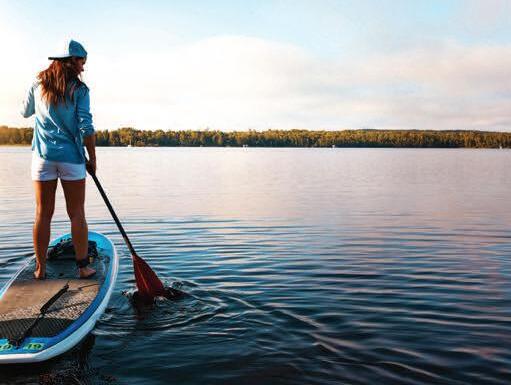




Have you ever wondered what it would be like to work in Wisconsin’s largest state forest? Each year the NHAL State Forest hires approximately 25-35 LTEs (limited term employees) for a variety of seasonal jobs to help do everything it takes to make the forest a great place to visit. Without our LTE staff, it would be impossible for the forest to provide all the recreational opportunities that we have. Many of these positions last from mid-April to mid-October, while others are for a shorter period, from Memorial Day to Labor Day. We have a range of positions from maintenance based to customer service based, and even a combination of both. We are always seeking candidates at all skill levels for our positions.
Recruiting for the season typically begins in January of the year. Visit the DNR’s website, dnr.wi.gov and enter “employment” into the search window.
Here is a brief description of the positions we offer:
Visitor Services Associate: work in our Clear Lake or Crystal Lake Visitor Station greeting visitors, registering campers, selling admission stickers, and answering questions about the forest and general area.
Campground Manager: live and work in one of our outlying campgrounds, clean and maintain the campground, provide customer service, explain the campground rules, and sell admission stickers.
Maintenance Positions: We have a variety of maintenance positions that include work in our campgrounds, trails, and boat landings. We have our positions split up into different crews based on needs.
Campground Crew: maintain our largest and busiest campgrounds, cleaning shower buildings, vault toilet buildings, mowing, trimming, and performing a variety of other light maintenance duties.
•Trails Crew: work on the forest’s vast trail system by keeping the trails mowed, cleared of downed trees and brush, and maintained.
•Boat Landing Crew: work to maintain the 100+ boat landings, seasonal dock installation/removal, general maintenance throughout the season, and maintenance of our water access campsites.
Dormitory style housing may be available for our seasonal staff. The housing is located within close proximity to the work locations of the positions. If any of these positions interest you or if you would like more information about the positions please stop by or contact either Crystal Lake Visitor Station (715-542-3923) or Clear Lake Visitor Station (715-356-3668).
A vehicle admission sticker is required on all motor vehicles parking (whether camping or just visiting) anywhere within the state forest campgrounds, in any beach area parking spot located within a state forest campground, or at the Crystal Lake beach and picnic area, shelter building or nature center. Buy your sticker when you get to the forest or in advance. Stickers can be purchased in multiple ways on the forest. Visitor services associates at the Clear Lake or Crystal Lake visitor station will be happy to sell you your admission sticker. Selfregistration stations are available when the visitor stations are closed, and at the entrance to the Big Lake, East Star Lake, Buffalo Lake, West Star Lake, Cunard Lake, Starrett Lake, North Trout Lake, Upper Gresham Lake, Razorback Lake and Sandy Beach Lake campgrounds. There is also a new E-Kiosk located at
Firefly Lake campground near the entrance where you can purchase your passes. Online sticker sales are available at https://yourpassnow.com/ParkPass/wi.
You can buy an annual sticker for admission to all state parks and forests for the calendar year, or a daily sticker which is valid for the date of issue. Any camper using a state forest dump station must have a daily or annual vehicle admission sticker. (Non-state forest campers must also pay an additional fee to use the dump station.)
The 2024 annual stickers are valid through Dec. 31, 2024.
If you have a motorcycle
The vehicle admission sticker rule applies to motorcycles as well. If your motorcycle does not have an adequate windshield or the sticker may damage the windshield, fasten the sticker in one of these places:


•on the front fork; •behind the license plate; or •under the seat.
Replacement stickers
If you have a valid, current-year sticker and you are trading in your car or replacing a windshield with a vehicle admission sticker on it, you can get a replacement sticker for your new windshield at no charge by following the steps below.
•Note the type and serial number of your currentyear sticker.
•Scrape enough of the old sticker off (it will come off in pieces) to prove you have it.
•Print out the annual admission sticker replacement application form (9400-188) [a copy can be found on the DNR website or at the Crystal or Clear Visitor Stations].
•Fill in the form completely.
•Take or mail the form and old sticker parts to any state park or forest office.
Annual Reduced RateDaily Annual*
the island city



Chase Christopherson NHAL FORESTER
It’s going to be a big year of tree planting on the NHAL. The state forest will be planting 481 acres in spring of 2024 with approximately 440,000 seedlings. That’s the most seedlings planted in one year since 1984! Over the last 25 years, an average of 250 acres per year have been planted and/or replanted.
This year is higher than the recent average, but there have been a lot of ups and downs since tree planting started on the state forest in 1911. That year 154 acres were planted using tree seedlings from a Michigan nursery as the DNR nursery at the Trout Lake Forestry Headquarters was just being established. The first seedlings produced from the Trout Lake nursery were planted at the Star Lake plantation in 1913. The seed source for the first seedlings came from mature trees behind the headquarters, near Cathedral Point, that escaped logging during the cutover. Tree seedling production and reforestation ramped up and reached a peak during the era of the Civilian Conservation Corp (CCC), between 1933 and 1942. In 1934 alone there were 4,276 acres planted! The tree nursery at Trout Lake closed around 1965 but planting efforts have continued nearly

every year using stock from other DNR nurseries.
Today we get our tree seedlings from the Wilson nursery located in Boscobel, WI. The seed used to start the trees is collected by public seed collectors from different zones around the state. Tree planting on the NHAL is typically done in late April or May with contracted crews. The tree planting crews work very fast and can get everything done in less than two weeks. Once planting is complete the job isn’t over.
Foresters will monitor the newly established plantation for the first ten years. Occasionally sites will need to be interplanted as some seedlings die. When the plantations are about three to five years old, they will receive what is called a release. This means crews with brush saws go in and cut down unwanted vegetation that may be competing with the planted trees.
Think of it like tending to and weeding a garden.
The NHAL typically only plants three species of pine which are jack pine, red pine and white pine. Occasionally, other tree species will be planted such as red oak, black spruce or tamarack. The reason other species are not planted is because the NHAL mostly relies on natural regeneration. For different forest types, different management techniques are

used. These techniques mimic natural disturbances to regenerate the forest naturally either through tree seeds or from root and stump sprouts. In general, only about five percent of the annually harvested acres on the NHAL require replanting.
The NHAL has a long history of planting trees that continues to this day and will likely carry on long into the future. The Star Lake Plantation is a great place to see and learn more about tree planting history. Visitors to the state forest can enjoy the benefits from the trees planted over 100 years ago and future visitors will benefit from the trees we plant today.
NHAL is planting trees on 481 acres in Spring 2024.
•440,000 seedlings will be planted this year which is the most since 1984.
•An average of 250 acres per year have been planted over the last 25 years.
•A nursery at the Trout Lake Forestry Headquarters operated from 1911 to 1965.
•The first WI DNR produced tree seedlings were planted at Star Lake in 1913.



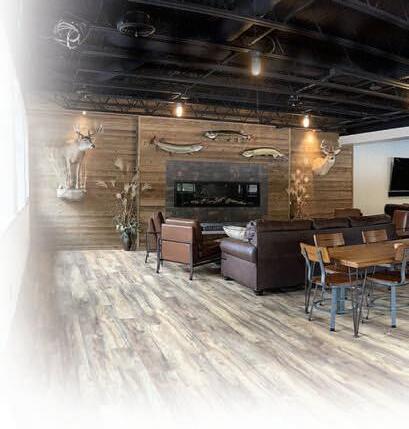

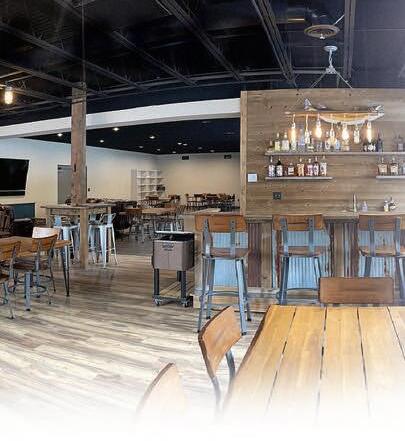
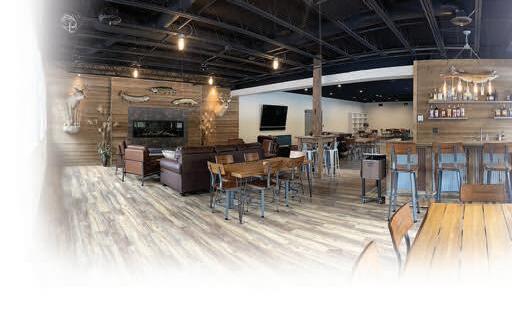

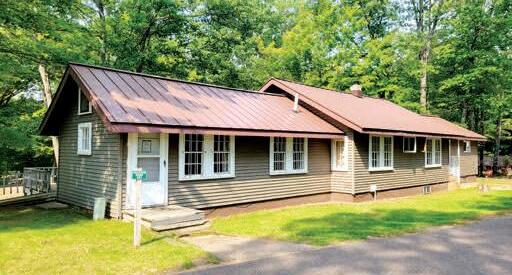
The Crystal Lake Nature Center is nestled in the heart of Wisconsin’s largest state forest, the Northern Highland American Legion State Forest.
Historically, the nature center holds a unique connection to our past. In 1933 a Civilian Conservation Corps (CCC) camp planned for the shores of Crystal Lake was, for some reason, developed instead on White Sand Lake to the north. Called “Camp Crystal”, 154 men stationed there pioneered in forestry and conservation work.
They established a tree nursery, planted trees by the thousands, fought wildfires, maintained fish hatcheries and rearing ponds and constructed roads, bridges, and phone lines.
The CCC camp fell idle during the years surrounding World War II but later found life as the Region 7 National Boy Scout Canoe Base from 1940 to 1983. At full capacity 250 boys from
throughout the Midwest practiced outdoor skills at the camp. In the late 1980s, following a life-time of use, most well-worn, half-century old buildings were removed.
During the mid-1990s, as a fitting tribute to “Camp Crystal”, a Wisconsin Conservation Corps crew rescued a remaining, but more recently built structure from the old CCC camp. It was carefully deconstructed, then transported and re-assembled timber by timber at Crystal Lake for public use as the Crystal Lake Nature Center.
Today, Crystal Lake Nature Center is a favorite stop for visitors of all ages and interests, from campers and sight-seekers, to hikers, bikers and picnic goers. Located within the Crystal Lake Campground and Picnic Area, the nature center is a short walk from picnic facilities and the beach. The accessible facility sits among the trees adjacent to ample
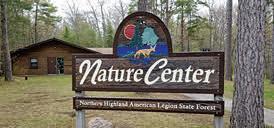
parking and rest rooms. The nature center is a trailhead for the Tom Roberts Memorial Nature Trail that meanders the surrounding northern forest. Wandering this accessible, half-mile paved trail reveals native wildlife, wildflowers and views of nearby Muskellunge Lake.
To satisfy your outdoor curiosity, the nature center offers a variety of self-service educational opportunities including nature-theme brochures, interactive exhibits, field guides and a children’s exploration area. Additionally, check out our nature program schedule as
we have volunteer presenters that share their knowledge of woods, water and wildlife as a service to natural resources education.
The Crystal Lake Nature Center is open each year from Memorial Day Weekend through Labor Day Weekend. We are always seeking volunteers for our nature programs and for staffing our nature center.
Additionally, the Crystal Lake Nature Center is donation based. We appreciate everyone that has donated in the past as this has helped us update material, host children’s programs and activities, and host weekend




programs. Please consider donating to the Crystal Lake Nature Center as you are able, so we can continue to provide educational opportunities to all our visitors to the wonderful Northwoods. Visit the Crystal Lake Nature Center this summer. Have a chat with our friendly volunteers. Explore a field guide to identify that strange critter that visited your campsite and check out our program schedule.
For additional information, nature center hours, volunteer opportunities, or comments contact Crystal Lake Visitor Station at 715-5423923.











The National Weather Service plays a key role in protecting American lives and properties from severe weather. They announce dangerous weather by issuing “watches” if conditions offer potential for severe weather. “Warnings” are issued if there is a likelihood of severe weather or if it is directly reported. Weather forecasting has evolved to become very accurate, and warnings should be taken seriously.
One easy way to receive weather announcements is from a weather radio, available at a low cost from many stores. Battery operated, they will work just fine in our campgrounds and remote campsites. Our visitor stations, as well as our campground managers and
campground hosts all have weather radios. The SAME codes for our counties are Vilas 055125, Oneida 055085, and Iron 055051.
Local radio stations will broadcast warnings, and these may be able to better pinpoint a storm’s location and direction of travel for you. That being the case, it is helpful for you to be aware of where you are geographically.
The most local radio stations for the NHAL area are FM 91.7 WXPR (Rhinelander), 100.1 WRHN (Rhinelander), 92.5 WJJQ (Tomahawk), 94.5 WRJO (Eagle River), 95.9 WMQA (Minocqua), 98.3 WCQM (Park Falls) and 99.7 WIMI (Ironwood / Hurley).
There are several apps for smartphones that can provide
weather alerts and high-resolution radar.
Do not depend on law enforcement or other staff to provide warnings to you. To the degree that we are able we will do so, but our staff is spread too thin and may not be positioned to be effective, nor do we staff 24 hours a day. Your safety is ultimately in your own hands.
If severe weather threatens, begin to form a plan of what you would do if a warning were announced. You might consider: Roll up your awning.
Pick up camp chairs and other loose items around your site.
•Consider where you would seek shelter and how you would get there.
•Make plans with your family to establish a meeting place if
you get separated.
When you receive a warning, seek shelter. As safe as your vehicle may seem, many people have been injured or killed within them during violent weather. Seek shelter in low lying areas or within sturdy buildings like our shower buildings or concrete toilet buildings. Our newer solid concrete toilet buildings are built to sustain very high winds. Campers in remote locations have improvised and sought shelter in a low, flat location or at the shoreline.
Severe weather can lead to tragedy. Modern forecasting and planning on your part can help to keep you safe. Please take a few minutes to plan how you would respond to a severe weather warning.




Teresa Schmidt MERCER PUBLIC LIBRARY
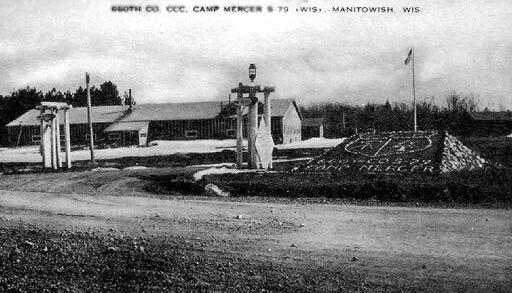
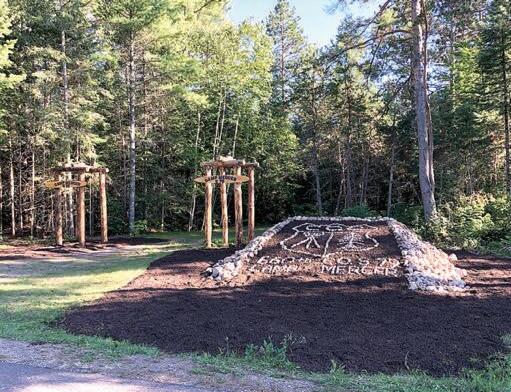
The Camp Mercer interpretive trail highlights one of the major historical happenings on the Northern Highland American Legion State Forest. Camp Mercer was a Civilian Conservation Corps (CCC) facility which operated on the property between 1933 and the start of World War II.
Over twenty interpretive signs with photos are placed along the 1½ mile interpretive hiking trail at the site of the camp. The signs tell the story of life in the CCC and at Camp Mercer, two river drive logging camps on the Manitowish River, and the Camp Mercer staff’s inadvertent involvement in the infamous shootout between the FBI, John Dillinger, and his notorious gang at Little Bohemia.
The trail saw further development in 2023 with the installation of historic signage modeled after the original Camp Mercer entrance. Under the direction of historian Jim Bokern, the Manitowish Waters Historical Society worked with the Iron County Outdoor Recreation Enthusiasts (ICORE) and other area partners to enhance visitors’ trail experience by recreating the post gates, tamarack sign, earthen berm and rocks that welcomed visitors to the original Camp Mercer.
The CCC was a work relief program that provided employment for young men during the Great Depression. Camp Mercer served as an important administrative camp for ten other camps in the region and supported sub-camps in Pine Lake, Presque Isle, and Springstead. The men of Camp Mercer focused on reforestation, fire suppression, and fish and wildlife habitat.
This trail was conceptualized by Jim Bokern of the Manitowish Waters Historical Society in cooperation with a number of area stakeholders and operates under a land use agreement with ICORE. Other stakeholders involved in its development and maintenance include MECCA Trails, the Forest History Association of Wisconsin, the Mercer Public Library, and the Wisconsin Historical Society.
The paved bike trail system running through the property is located along the north side of the
trail, making the Camp Mercer trail a nice destination when biking on the trails. There are also two canoe campsites on the Manitowish River in the area of the trail, allowing visitors to access the site by water. The western portion of the trail can be accessed from the DOT wayside along Highway 51 and the Manitowish River.
The Camp Mercer trail is located 25 miles north of Woodruff in the Iron County Town of Mercer. Take Highway 51 north to the west entrance of Manitowish River Access Road. The main trailhead is on Manitowish River Access Road about a ½ mile east of Hwy 51 (Lat: 46.141725, Long: -89.942631).

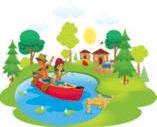


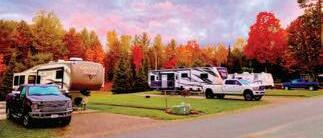
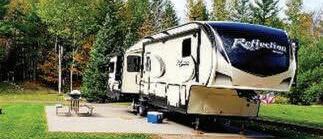
Camping is a versatile activity, and the Northern Highland American Legion State Forest provides a variety of camping experiences where almost any camper can find their favorite site. The NHAL has over 900 total campsites which provides many opportunities to camp at different campgrounds and campsites. We encourage you to try as many of them as you can, because they all offer a different and unique way to experience the NHAL State Forest.
Modern family campgrounds
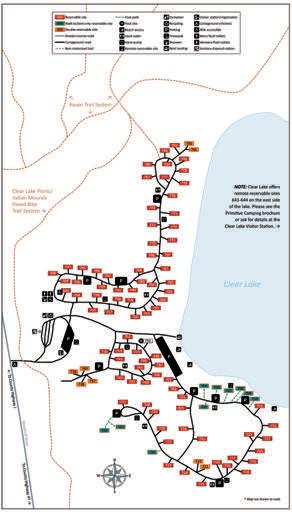
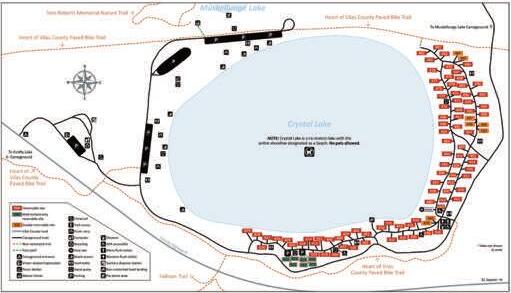
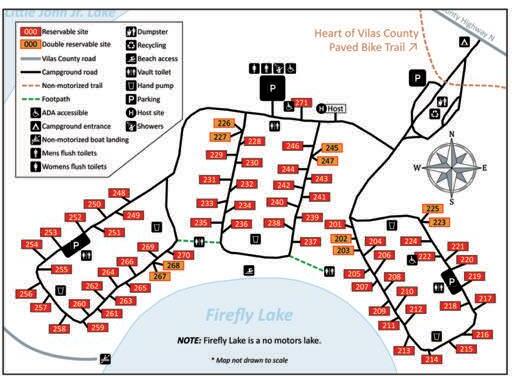
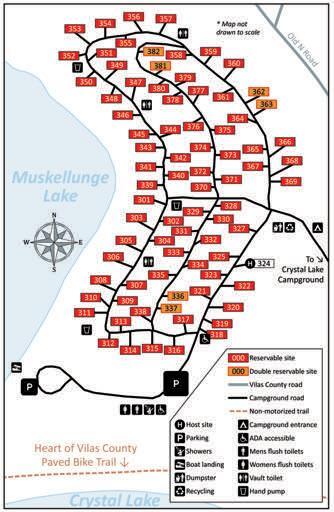
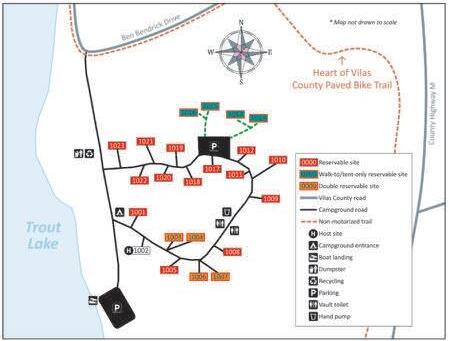
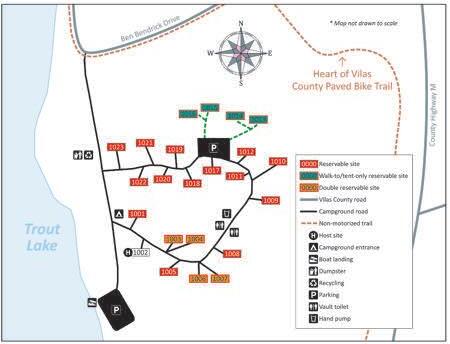
NHAL has four modern family campgrounds, Crystal Lake, Musky Lake, Firefly Lake, and Clear Lake, with a total of 355 sites. These campgrounds have paved roadways, flush toilets, and showers, but no electrical hook-ups. There are also hand-pumps for water and vault toilets
throughout these campgrounds. Clear Lake and Crystal Lake have dump stations. These sites may be occupied up to 14 nights per visit.
Rustic family campgrounds
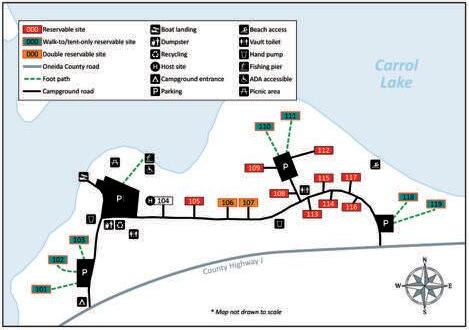
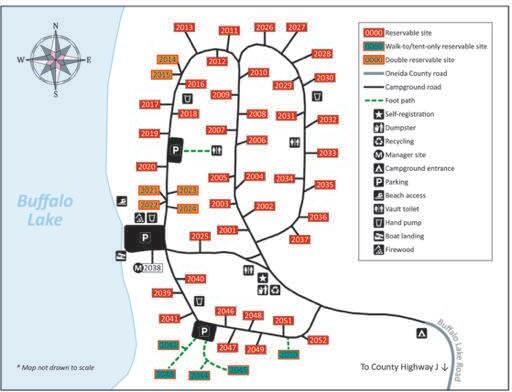
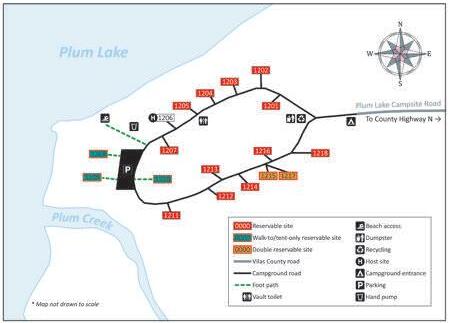
Many people have come to associate traditional, rustic-style campgrounds with the NHAL. One special attraction is their small, quieter nature, and these campgrounds typically range from about 20 to 70 campsites, and sites are spaced out more than the modern campgrounds. The facilities are minimal and include hand-pumps for water, vault toilets, and no electricity. NHAL has 14 rustic campgrounds totaling 502 campsites. These sites may be occupied for up to 14 nights per visit. Our rustic family campgrounds are: Big Lake, Buffalo Lake, Carrol Lake, Cunard Lake, Indian Mounds, Plum Lake, Razorback Lake,
Group campgrounds


There are two group campgrounds on the NHAL, and there is space for up to 80 campers at each location. These campgrounds, located at Jag Lake and North Muskellunge Lake, are equipped with vault toilets and hand-pumps for water. Group campgrounds provide an important camping opportunity for large groups such as scout groups or church groups to have a rustic camping experience while not affecting other campers. Jag Lake is a tent only group camp. These sites may be occupied for up to seven nights per visit.

Primitive camping
Primitive campsites are widely dispersed and have a minimal clearing and primitive soil surface. They are limited to a tent clearing, fire ring, box latrine, and a picnic table. Currently we have two types of primitive campsites: non-reservable water access campsites and reservable water access campsites.
Non-reservable water access campsites: There are currently 88 primitive remote non-reservable water access campsites located on more than 20 waterbodies across the NHAL’s lakes and rivers. These sites are accessible only by water, limited to a one-night stay, and are non-reservable.
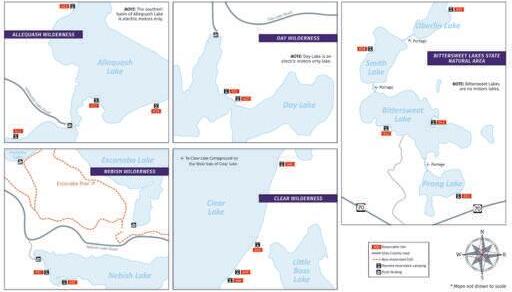
Reservable water access campsites: The NHAL has 17 reservable water access campsites. They are located on Allequash Lake, Day Lake, Nebish Lake, Clear Lake, and at the Bittersweet Wild Lakes Area. They are accessible only by water. These sites may be occupied for up to 14 nights per visit.
Backcountry camping is allowed on the NHAL. A free permit must be obtained prior to setting up camp and permits can be obtained at Crystal Lake Visitor Station and Clear Lake Visitor Station. Camping is limited to 14 nights and no more than six individuals or one family. You must move your camp every night. Backpackers should have an idea where they would like to camp before applying for the permit. Camping is not allowed within sight of any trail or body of water. Campsites must be at least one-half mile from your vehicle. Practice leave no trace – minimal impact camping.
Accessible Camping
Firefly and Crystal each have one accessible site with electricity for campers with disabilities. Clear, Crystal, Musky and Firefly have accessible sites and shower facilities.
Registration
All campsites in our modern and rustic family campgrounds and reservable water access campsites are reservable for the entire du-
ration of the camping season. Before setting up on a campsite you must make a reservation. Camping reservations are automatically checked in at 3:00 p.m. on the day of arrival. Once you arrive at your campground you may go directly to your campsite and set up starting at 3:00 p.m.
You must have a vehicle admission sticker on each vehicle in the campground which can be obtained at Crystal Lake Visitor Station, Clear Lake Visitor Station, the electronic kiosk at Firefly Lake Campground, or at self-registration stations at some campgrounds.
Campsite reservations
Campsite reservations can be made for same day camping and may be made up to 11 months in advance. A reservation is required before you can set up on your campsite. All campgrounds, group campgrounds, and reservable water access campsites in the NHAL require reservations.
Reservations are made by calling Camis at 888-947-2757 or visiting the website at wisconsin.goingtocamp.com.
Firewood
Firewood is sold at the following campgrounds: Crystal, Clear, Buffalo, North Trout, Sandy Beach, Big Lake, Upper Gresham, Starrett, Razorback, and West Star. Firewood is also available from private vendors in the area. Firewood can be brought to the campgrounds if the wood is from within 10 miles.
Trailer dump station
Trailer dump stations are located at Clear Lake, Crystal/Musky, and North Trout campgrounds. The dump stations are for draining holding tanks and filling tanks at the freshwater fillup tower. Non-campers will be charged a fee, in addition to having a valid WI state park admission sticker, to use the dump stations. Campers may not drain dish wastewater or sewage onto the ground.
Lost and found
A lost and found service is maintained at the Crystal Lake and Clear Lake Visitor Stations. Found items may be turned in and lost items reported at the visitor sta-

tions. Please help us return items to their rightful owners.
Garbage pickup and recycling
Trash and recycling receptacles are located at each campground. Please cooperate by taking garbage and recycling to the dumpsters. Please leave your campsite cleaner than it was before you arrived. Be concerned enough to pick up after careless visitors. Trash should always be taken to the proper receptacles and should never be burned in your campfire ring.
Generator Use
Generators are allowed in the modern family and rustic campground sites as long as the following rules are followed:
Campers may operate their generators between 10 a.m. and 5 p.m. and only when they are present on the site.
•Permission to operate may be revoked if generator is excessively noisy.
Generators are not allowed at Cunard and Starrett Lake Campgrounds.
















Swimmer’s itch, also called cercarial dermatitis, is caused by an allergic reaction to the larvae of certain flatworms that infect some birds and mammals. Before infecting birds and animals, the hatched parasites must live within a snail. Infected snails release these parasites into the waters of our lakes. The microscopic parasites preferred hosts are specific birds or mammals, most notably waterfowl in our forest lakes. The larva is always looking for new hosts to penetrate, which is where humans come into play. Humans are not suitable hosts for the parasite, so they die shortly after burrowing into the skin, but the burrowing in the skin is where the issues can start.
Swimmer’s itch appears as a rash, but other symptoms include tingling, fever, or itching of the skin. While swimmer’s itch is neither dangerous nor contagious, it can be very uncomfortable depending on a person’s sensitivity. Most symptoms will be gone within a week, but redness may last longer. Most cases of swimmer’s itch do not require medical attention and many people use items such as a corticosteroid cream, cool compress, or Epsom salt bath to try and provide some relief from a rash.
Although we don’t typically hear of many cases, swimmer’s itch could potentially be obtained from swimming in any lake on the forest. There doesn’t seem to be any special characteristics of lakes where swimmer’s itch is present, as it all
kind of depends on the waterfowl and snails in the area. If swimmer’s itch is present at a lake one weekend that doesn’t necessarily mean it will be present the next time you are there. It is common for lakes to have occasional outbreaks de-
pending on environmental factors, and we can see minor to severe outbreaks at varying times and in varying lakes.
Swimmer’s itch is ever changing from year to year and lake to lake and sometimes may be hard to get an
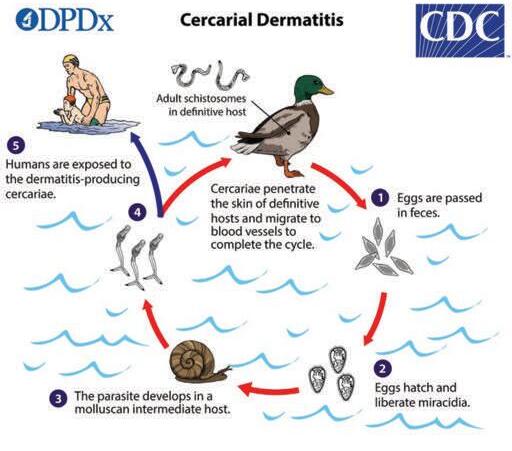







understanding. Since swimmer’s itch is hard to predict, it is best to make yourself aware of steps you can take to prevent swimmer’s itch. It is best to avoid swimming in weedy areas and avoid sitting or standing still in shallow water. If you are in deeper water and keep moving in the water, you will be less likely to encounter larvae. Waterproof sunscreens are a good option to help prevent the larva from burrowing in the skin as the sunscreen will create a barrier. Once you are done swimming or even if you just leave the water for a little while it is very important to towel off briskly to crush the larva. Additionally, it is a good idea to shower shortly after leaving the water. While we would consider the larva that cause swimmer’s itch to be pests, they are a sign of a healthy and diverse environment. We should think about swimmer’s itch in the same regard as ticks, mosquitoes, and deer flies in that there is nothing we can do to eliminate them, but we can take steps to reduce our exposure to them. As you are visiting different forest lakes, you should be aware of swimmer’s itch and if you take preventative steps it should not discourage you from enjoying a fun outdoor activity.































Wisconsin Resident: $20 per night
Non-Resident: $25 per night
Wisconsin Resident: $16 per night
Non-Resident: $21 per night

Bryon Black LAMBO PRESIDENT
As president of the Lakeland Area Mountain Bike Organization (LAMBO), my
mantra has become, “It is a great time to be a mountain biker in Northern Wisconsin.” Something special is happening here, and it’s

being driven by dedicated volunteers, business supporters, and key partners like the Northern HighlandAmerican Legion State Forest (NHAL) and area municipalities. Whether it’s providing opportunities for active and healthy outdoor lifestyles or more revenue from tourism, business owners, residents, and municipalities are noticing the benefits these trail systems create.
If you are just introducing your kids to mountain biking, looking for an adrenaline rush, or itching for some of that sweet oldschool single track, you will find new trail systems and well-maintained legacy trails to fit whatever style of mountain biking you are looking for.



The Musky Mountain Bike Trail System is one of the new trails that LAMBO is building in partnership with the NHAL, and the Town of Plum Lake/Sayner that will have something for everyone. Built on and around the old Mus-Ski Mountain downhill ski area, this system offers incredible terrain. The NHAL’s master plan allows for 15 miles of trail, so we have spent the last three years hiking and exploring the area to ensure we get the best use out of it. Through that effort, we have identified the best topography for beginner-friendly trails, gravity trails and jump lines, flowy cross-country trails, scenic overlooks, and even some “old-school” technical single track.
In October of 2023, we opened the first five miles of trails. Travis Bellman Home and Trail built four miles of flow trail, and another mile of single track was hand-built by LAMBO volunteers. This summer, we plan to have Travis build three more miles of gravity trails on Musky Mountain and the surrounding ridges and valleys. Not only does the Musky Mountain Bike Trail System benefit from fantastic terrain, but it also benefits from a great location. It is right off Hwy N, between Sayner and Boulder Junction, close to Crystal Lake Campground, Firefly Lake Campground, and Musky Lake Campground. The trail is also accessible from the Heart of Vilas County paved trail network. So, when camping at one of these beautiful sites, you can jump on the paved trail and be at the Musky Mountain Bike Trail in just a few minutes! We invite you to bring your bikes and check out the Musky Mountain Bike Trail. Why not make a mountain biking vacation out of it and check out all the other mountain biking trails in the area? We are sure you will have a great time, and we will see you out there! For more information on Northern Wisconsin mountain bike trails, group rides, races and more, please visit us



G reg G. Sass, Ph.D. FISHERIES RESEARCH TEAM LEADER, OFFICE OF APPLIED SCIENCE, WISCONSIN DEPARTMENT OF NATURAL RESOURCES
At the time of this writing in late January 2024, I am looking out of my office window at the boat launch to Escanaba Lake and see exposed asphalt, melting snow, and a lake with maybe 8 inches of ice covering it. It is 33 degrees and foggy this morning. The 10-day
forecast suggests temperatures in the 30’s and approaching 40 to come. Ice anglers must still be very cautious (as they always should be), the snowmobile trails remain closed, and winter sports such as cross-country skiing and snowshoeing are not a reality right now. Hardly the conditions that northern Wisconsinites or our visitors are accustomed to in late January. Yet, these kinds of unseasonal spring, winter, and fall
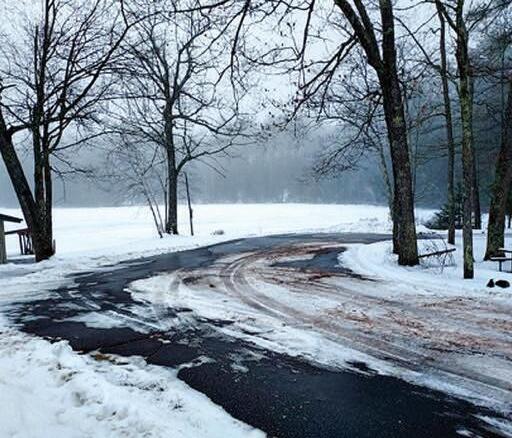


conditions and the associated variability in ice-on dates, ice duration, ice-off dates, snowfall (or lack thereof), storms, and temperatures have become more common over the past couple of decades.
The Northern Highland Fishery Research Area (NHFRA, Wisconsin’s experimental fisheries research lakes located in Boulder Junction) has tracked many of these environmental changes since
its inception in 1946 and monitored the responses of the lakes and their fish populations to these changes. Long-term environmental monitoring at the NHFRA has included recording daily weather conditions, water temperatures (during the open water season), ice-on and ice-off dates for Escanaba, Mystery, Nebish, Pallette, and Spruce
From page 20
lakes. Ice-on and ice-off dates are strong indicators of environmental
change. For Escanaba Lake, the average ice-on and ice-off dates since 1946 have typically been around Thanksgiving and midApril, respectively. With environmental change, ice-on and ice-off
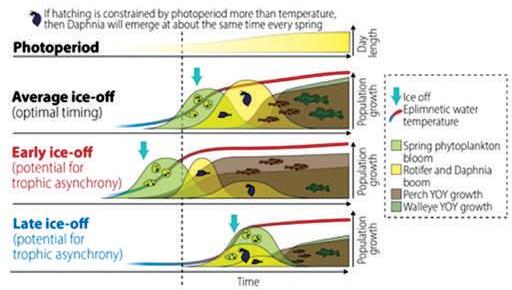
Schematic diagram showing ice-off dynamics and implications for fish recruitment. In average ice-off years, important resources that juvenile fish need for survival and growth are aligned. In early or late ice-off years, those resources are misaligned with the needs of juvenile fish and survival and growth are compromised. Schematic from Feiner et al. (2022) in the Canadian Journal of Fisheries and Aquatic Sciences.
dates have become highly variable over the past couple of decades with ice-on occurring after Christmas in some years and ice-off dates ranging from late March to mid-May. This environmental
change has phenological (i.e., the annual timing of biological events) implications for lakes and their fisheries, particularly for our
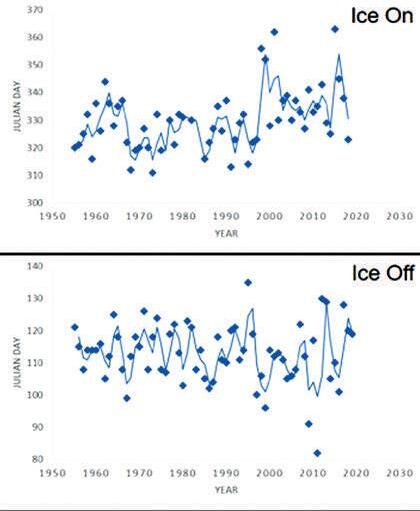
Ice-on and ice-off dates for Escanaba Lake from the mid-1950’s to present. Note the later ice-on dates and more variable ice-off dates over the past 25 years. Julian date corresponds to January 1 = 1, December 31 = 365.





From page 21
spring spawning fish species and the annual replenishment of their populations through the recruitment of new individuals.
For most northern Wisconsin fishes, spawning occurs immediately or shortly after ice-out each spring, and depending on species, is cued by water temperature and to a lesser extent photoperiod. Photoperiod is a static cue that does not change from year-toyear. The same amount of daylight and dark occurs on April 15 every spring, for example. Water temperature is much more variable and depends on weather conditions, air temperatures, wind, and precipitation after ice-out. Therefore, water temperature cues for fish spawning are also subject to environmental change and associated variability. For popular spring spawning sportfishes in northern Wisconsin, northern pike spawn immediately after ice out, followed by walleye and yellow perch, and then muskellunge. Northern pike, muskellunge, walleye, and yellow perch are broadcast spawners meaning that once eggs are fertilized and deposited on lake substrates, the eggs and juveniles are not provided any parental care. In broadcast

spawning fish species, juvenile survival is often dictated by environmental conditions. At slightly higher water temperatures after ice-out, often in mid-May to mid-June, the nest building and parental guarding centrarchids (e.g., black crappie, bluegill, largemouth bass, smallmouth bass) initiate spawning. When ice-out occurs earlier than average, fish spawning generally occurs over a prolonged period because water temperatures often remain cold, and the photoperiod does not align with the spawning conditions that these fishes have evolved with over time. In contrast, later than average ice-out generally results in a very rapid and contracted spawning period by most species to try to “catch up” with rapidly warming water temperatures and a misalignment with photoperiod cues. For Escanaba Lake walleye, recruitment (i.e., the survival of age-0 or young-of-year fish to the first fall) is generally highest in springs when ice-off is around the long-term average of mid-April.
Differences in juvenile fish survival from year-to-year are often explained by what has been termed match-mismatch dynamics. A match occurs when juvenile fish hatching aligns with abundant zooplanktonic resources (i.e., microscopic animals in the water column that young fish rely
upon for survival and growth).
As the juvenile fish grow into summer, it is also critical that invertebrate and prey fish resources are readily available and at the right time for the juvenile fish to continue to grow, survive to their first fall, and acquire enough energy to survive through a long, winter season where prey resources may be depleted. When all these factors align, a match occurs, and we get a strong year class of fish. In contrast, a mismatch occurs when juvenile hatching is misaligned with abundant zooplanktonic resources. This misalignment results in juvenile fish hatching into an environment with insufficient resources to support their growth and survival. Mismatches result in a weak or entirely absent year class. So, how do ice-out dynamics and spring phenology influence match-mismatch dynamics? In short, the highly variable ice-out dates and spring weather northern Wisconsin has been experiencing over the past couple of decades has resulted in the timing of abundant zooplanktonic resources being misaligned with the hatching of some fish species more frequently than in the past. If annual mismatches occur too frequently, adult fish abundances decline. Because mismatches have inSee Research. . . page 43




At NHAL there are a few different options to share feedback from your visit with our staff. In our Clear Lake and Crystal Lake Visitor stations, we have physical comment cards that can be placed within the comment boxes or mailed. Additionally, we have a QR code at each of our campground and trail kiosks that is linked to a survey where you can share your comments. Here are some highlights, lowlights, and suggestions as well as our response to some of our 2023 comments.
Keep the comments coming! We love to hear from our visitors, and we do consider your suggestions.
It is becoming impossible to get a campsite because of the reservation system.
We often camp on short notice when it looks like the weather will be nice. It’s impossible to get a campsite without the first come first serve sites like before.
Response: Thank you for your comment and we have heard these comments often. The Wisconsin State Park System as a whole has moved to completely reservable campsites. Many campers liked the non-reservable option and are worried the reservation system means they can’t get a campsite same day. Same day reservations are an available option through the reservation system and if you are in the area you can stop by our Crystal Lake or Clear Lake Visitor Stations to purchase a campsite as well. The past few years we have seen higher camping attendance than prior years, so you may be thinking you have no chance at a campsite unless you reserve 11 months in advance. That is not true and even with our increased camping attendance we still have campsites available each weekend. Your favorite campsite is likely many other campers’ favorite campsite, so use this opportunity to explore more campgrounds to see what they have to offer.
We don’t want the trees at Big Lake cut. Logging shouldn’t be allowed in campgrounds. It ruins the beauty of the campground.
Logging has ruined McNaughton Trail just like Madeline Trail. There is plenty of forest, why can’t they log somewhere else? The trails won’t be the same.
Response: Thank you for your comment. Forestry staff practice sustainable forest management and are able to remove trees that are suppressed, deformed, or unhealthy which helps eliminate hazards to campsites and trails and also makes room for healthy trees to thrive. Aesthetically your favorite campground or trail may not be what you are used to, but after even just one growing season the landscape will continue to grow and cover up slash from logging. While we know that logging can alter your favorite trail or campground, it is used as a forest management tool to keep the forest healthy for many years to come.
We got a warning from park staff for being too loud at 10:00 p.m. We didn’t feel it was late enough to warrant anyone talking to us.
The campsite next to us was very noisy and using profane language all evening. We have young kids and thought about packing up because of that campsite.
Response: Thank you for your comment. NR 45 states that “no person may engage in violent, abusive, indecent, profane, boisterous, unreasonably loud or otherwise disorderly conduct, or conduct which tends to cause or provoke a disturbance or create a breach of the peace.” This applies at all times of the day, not just late at night. Many more noise complaints are reported during the nighttime hours, but it is important to be respectful of fellow campers at all times of the day. We have many different campers that visit the campgrounds at NHAL, so please be courte-
ous of others. If you are being disturbed by other campers, feel free to contact a campground host/manager, visitor station, or the DNR violation hotline (1-800-847-9367) to get the issue addressed.
The DNR should invest in public Wi-Fi at the visitor stations so we can reserve online and check the weather.
Response: Thank you for your comment. Each year we hear that it would be great to have public Wi-Fi at our visitor stations for various reasons. This is not something that is currently under consideration. To address your concerns about reserving online and checking the weather, we have options for both at our visitor stations. At both Crystal Lake and Clear Lake Visitor Stations you will notice yellow phones to the left of the front door. These yellow phones are pre-programmed with numbers to contact the reservation system (Camis), the DNR customer service hotline, the DNR violation hotline, and 911 for emergencies. So, if you find yourself here without great cell phone reception and without Wi-Fi, those phones are available for your use to reserve campsites. Additionally, each day both visitor stations post a 7-day weather forecast in the front window and many campground hosts post the weather on the kiosks located within the campgrounds. If you truly do need Wi-Fi, you could travel into many of the surrounding towns and visit the local libraries.
I want to compliment the campground hosts Les and Darlene at Plum Lake. They did an excellent job keeping the pit toilet building clean. When we arrived to our site, it was neatly raked up.
Campground hosts Mike and Julie were the best
See Comments. . . page 27

From page 26
we've encountered.



This is a beautiful campground and the camp hosts (the Winkler’s) do an amazing job at keeping things clean and safe and they are very friendly! We will be back next year for sure!!
Response: Thank you! We really enjoy receiving positive comments about our volunteers. Our volunteer campground hosts work hard to provide the best customer service and quality work to ensure our visitors can enjoy their time.
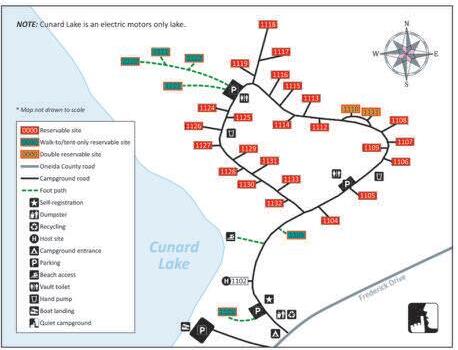
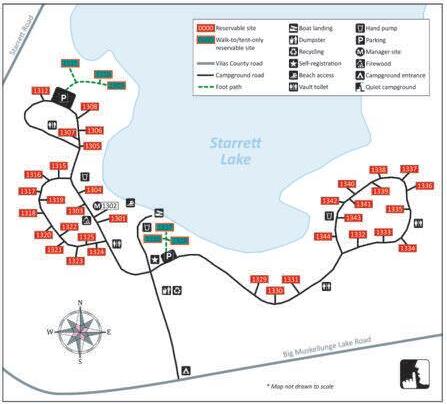
We appreciate that Starrett is designated a quiet campground and hope that designation will always remain in place. We also appreciate the lake is motorless as well as other lakes nearby for canoeing. We love Cunard especially since it has become a quiet campground. We hope this never changes and love the tranquil setting.
Response: We’re glad you have enjoyed your stay at both Starrett Lake and Cunard Lake. Our quiet campground designations at Starrett Lake and Cunard Lake have been popular with many campers. Our visitors enjoy varying types of recreation, and we have something for everyone.






Erika Segerson-Mueller DNR INVASIVE PLANT PROGRAM SPECIALIST FOREST HEALTH
Have you spotted plants that seem out of place while camping, hiking or biking this year? You may be right: several invasive plants have been found at campgrounds and trails at the Northern Highland American Legion (NHAL) State Forest.
Throughout 2024, contractors will perform surveys at nine campgrounds and nine trails to create an inventory of invasive plants in the forest. This list will be used to update an ongoing invasive species management plan.
Invasive plants are non-native plants that cause harm to the environment, economy or human health. These plants did not originate in the NHAL, and they can outcompete and crowd out native plants, impacting the ecological function and diversity of the natural communities. Invasive plants can spread quickly and easily through a variety of pathways.
The good news is that there are
some simple ways to help prevent the spread of invasives. Take action during your time in the forest to be

sure you don’t bring any invasive plants along with you by doing the following:
1.Arrive clean and leave clean. Check clothing, camping equipment and pets before and after hiking because seeds and plant debris can cling to surfaces and fall off in new locations, creating new infestations.
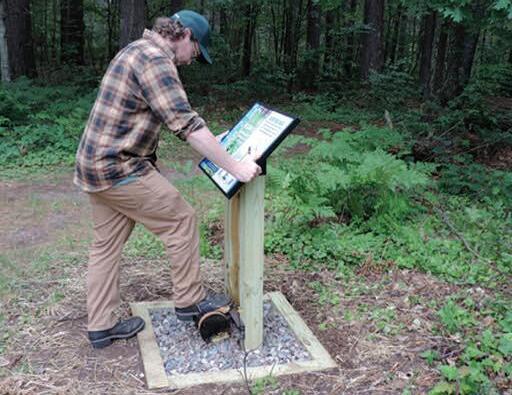
2.Use boot brushes to carefully clean your shoes or boots. Several boot brush stations have been recently installed at NHAL – each one features Scrusher brushes so you can scrape off your shoes and avoid spreading invasive plants.
If there isn’t a boot brush station at your trail or campground, consider carrying a hand-held boot brush with you. Clip a boot brush on your hiking pack or leave it in the side panel pocket of your car for easy access.
3.Follow “Leave No Trace” principles. Carry out what you carry into the woods, including any food or plant material. Dumping waste in the woods is never a good idea, and yard and garden waste can cause invasive species to spread and create infestations.
You can also help identify and report invasive species at NHAL. If you suspect you’ve found invasive species, please email invasive.species@wisconsin.gov and include photos, a description of the
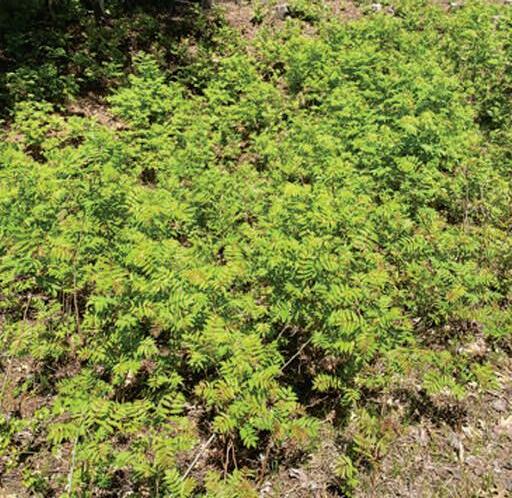
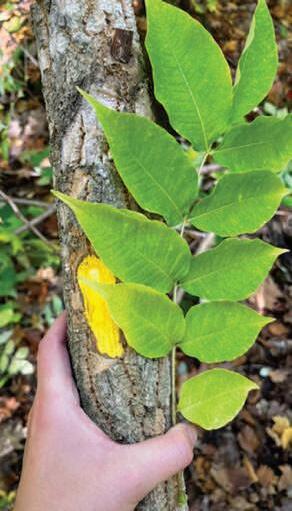
location and GPS coordinates when possible. Species like the Amur Cork tree, Japanese barberry, Japanese knotweed, garlic mustard, glossy buckthorn and false spirea have been found at NHAL.
To learn more about these and many other invasive plant species, navigate to https://dnr.wisconsin.gov/topic/Invasives/RegulatedSpecies or scan the QR code below.

lated species webpage: https://dnr.wi.gov/tiny/2096
If you have been to the Big Lake Campground recently, you probably noticed trees with orange slash marks painted on them. The marked trees and most of the paper birch in the campground will be harvested as part of a timber sale on the state forest. The campground trees that are slated for harvest were identified as hazard trees or as having the potential to become hazard trees within the next decade.
Paper birch, also called white birch, is a shortlived tree species that reaches maturity around 60 to 70 years of age. They are a sun loving, pioneer species that take over a site following a disturbance such as a fire or logging. The birch in the campground germinated after the last timber harvest in that area in the 1960’s, before the Big Lake Campground was established. While the birch may appear healthy now, they will start to decline and die over the next several years and become hazards to campers. By removing these trees and thinning the campground, growth on remaining trees will be enhanced through the increase in available sunlight. Overall tree health in the campground should improve as well.
Logging operations will be restricted to the winter months when the ground is frozen and snow covered to prevent soil disturbance in the campground. This is also the time of year when no campers are around. The timber sale was bid out to the highest bidder in fall 2023 and will be administered under a three-year contract. Logging should be completed sometime before 2027. Selling the wood to a logger will help support jobs in the area and provide an income to the DNR for funding various programs. Harvesting hazard trees while receiving proceeds from the activity is more efficient than having to pay someone to cut the trees. It’s a win-win. The larger pine and oak trees will be sent to a sawmill in the region and made into dimensional lumber used in construction. The smaller trees will go to pulp mills and made into various paper products. Very little of a harvested tree will go to waste. The treetops and branches left over from logging operations (the slash) typically remain in the woods, left for wildlife habitat or to decompose and return nutrients to the forest soil. Because this is a campground, however, only a small amount of the slash will be left on site and will be available for campers to use as campfire wood. Larger amounts of slash will be chipped or removed from the site for safety and
aesthetic purposes.
Harvesting trees in campgrounds is a continuous process and all campgrounds have trees removed periodically for safety reasons. Many of the campgrounds on the NHAL state forest have had commercial timber sales in the recent past. Below is a list of campgrounds and the years when timber sales took place:
•Big Musky Group: 2010
•Buffalo: 1991 windstorm damage harvest
•Crystal: 1997 and 2012
•East Star: 2021 tornado damage harvest
•Firefly: 1994 and 2008
•Indian Mounds: 1999
•Musky: 1997 and 2012
•North Trout: 2022
•Sandy Beach: 2014
•Starrett: 2006
The benefits of having timber sales in campgrounds include the removal of hazard trees, increased tree growth on residual trees and a generation of revenue. An added bonus is that the DNR will not have to pay a tree service to manage the campground trees. This is a win-win and a great example of staff from Forestry working together with staff from Parks and Recreation to manage our high-use areas on the property in a sustainable manner.
Madelyn Anderson KEMP STATION COMMUNICATIONS
When my friends and family asked why I was moving to a tiny town in the middle of the woods for the summer, I answered with a question: “Why not?” It seemed like a simple response at the time. I had been searching for an internship to merge my passions of art and science, and when my professor recommended this one, applying felt like common sense. Little did I know those two words would become the genesis of my experience at Kemp Station.
Want to jump into Tomahawk Lake after a morning run? Why not! Interested in holding a golden-winged warbler or dissecting a deer? Why not! Ready to board a boat at midnight and interview re-
searchers while they electrofish? Why not!
Don’t get me wrong, a large piece of my role as Kemp’s Natural Resources Communicator involved creating spreadsheets, editing photographic details, and planning content. But for every mappedout moment, there was another totally unexpected memory.
For example, one July morning I was lucky enough to join The Loon Project and observe their fieldwork. My eyes were so heavy from sleep when I met up with technician Claudia Kodsuntie, I had to rub them to believe what I was seeing. Our site for the day was a pristine lake, and there were two life vests and a canoe waiting for us on the dock. As the sun rose we paddled the body of water, searching for a tagged loon to collect
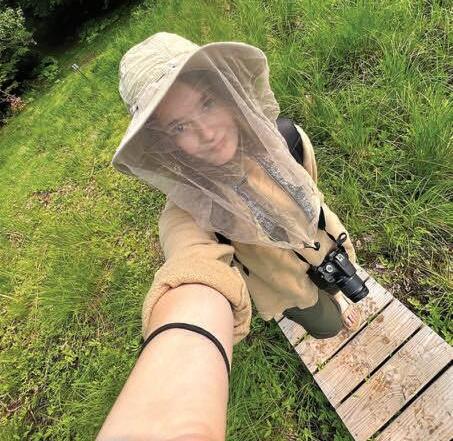
data on.
I will never forget the way my heart leaped when we found one. I photographed my new feathered friend for an hour, all the while getting a lesson in loon behavior. We watched an intruder fly into the property and the two performed a circle dance. Feelings of awe and wonder flooded me. Those emotions only heightened throughout the summer. Everywhere I looked, there was another story to tell.
Thanks to those passing through the station, I got to talk with a truly unique and engaging group of people. I interviewed researchers in diverse locations, from the top of carbon flux towers to the bouncy floor of bogs. My camera ventured between tree branches, on top of boat seats, and underneath bird wings. I felt like a constant student -- of experts in scientific fields, of local community members, and of the world around me.
Although each week was a new adventure, with tasks ranging from field tag-alongs to outreach sessions, Kemp Station provided a sense of peace. I had the opportunity to acquaint myself with Northwoods flora and fauna, identifying what I saw while paddleboarding or hammock-
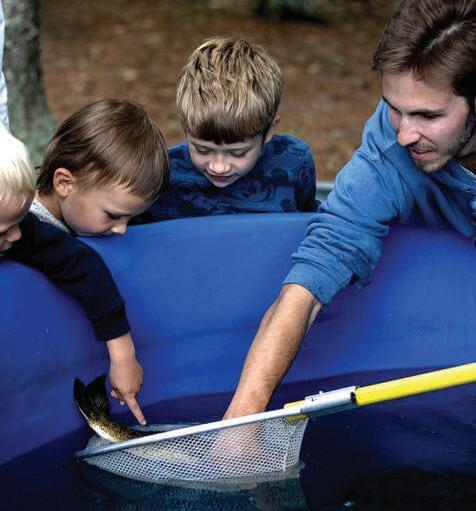
ing each day. Beyond this connection with nature, I bonded with the amazing residents and staff at the station. There are few places where folks will gather around a campfire or help you jump your car at the drop of a hat, but Kemp is one of them. I am so thankful to have lived and worked here, and to have brought a slice of sanctuary to those outside of Kemp. As I continue
my science communication journey, I will carry the lessons I learned this summer with me. And, who knows, they might even lead me to come back and visit the place where I fell in love with my field again someday. After all, why not?
Note: Kemp Natural Resources Station located on Tomahawk Lake in Woodruff Wisconsin is one of twelve Agricultural
Research Stations managed by the University of WisconsinMadison. Kemp Station is dedicated to research, instruction, and outreach concerning the management, conservation, and the sustainable use of northern Wisconsin’s natural resources. For more information about Kemp Station, visit our website at https://kemp.wisc.edu







Are you interested in donating to the Northern Highland American Legion State Forest in honor or in memory of someone? In 2023 we began a new donation recognition program here on the state forest in the form of a ‘Donation Tree’. This tree was installed on the exterior wall of the Crystal Lake Nature Center facing the parking lot and the ‘leaves’ of the tree contain names of those for whom donations have been made. The tree is shown in the included photo.
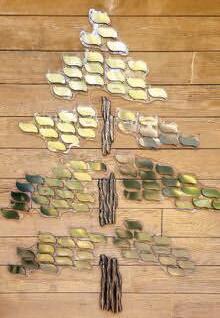
A leaf on the tree can be secured for a donation of $750. Donations will be used to enhance recreational offerings on the state forest. We add names to the tree 1-2 times per year, depending on volume of donations. All donations are greatly appreciated and will help maintain and improve recreation on the NHAL State Forest for future generations. For additional details regarding the NHAL State Forest donation program please ask at our Clear Lake or Crystal Lake Visitor Stations or contact:
Joe Fieweger
Recreation Superintendent joseph.fieweger@wisconsin.gov 715-385-3355 ext. 119 OR Nikki Kloes
Deputy Recreation Superintendent nicole.kloes@wisconsin.gov 715-385-3355 ext. 113
Rosy Richter
As the non-winter of 2023-24 rolls along, the above normal temperatures and lack of snow has me thinking of an early spring? The groundhog says so, and why not wish for an early spring since last year the winter seemed to last forever! Only time will tell. As the days grow longer and the sun gets stronger, the earth starts to feel the warmth and hence the spring season starts once again. As the frost works out of the ground, the fun begins. Every person has their favorite harbingers of the season, and mine is twofold. They are the tiniest of harbingers, and to the common eye, may go completely unnoticed. The first one is the return of the frog songs of the wood frog and spring peeper. You can’t see them, but you sure can hear them! The swamp or pond may still have ice around the edges, but if the center is open, those two will be the first “singers” of the season. The wood frog sounds like a crotchety old man rattling away chewing on some wood, and the peeper sounds just like its name. With thousands peeping at one time, they can be quite deafening until you try to sneak up on them! How those little half inch frogs can sense you are there, and turn off like a light switch to silence, is amazing to me, and I welcome their voices every year.
The second harbingers of spring are the tiny wildflowers that offer their brief presence in the forest. Many visitors think Memorial Day and the glimpses of trilliums and daisies are the start of the wildflower season, but many of the most beautiful and delicate wildflowers have long since faded and gone to seed. The first flower of spring and my favorite is the trailing arbutus. It crawls along the ground, has leathery evergreen leaves, and produces the most heavenly smelling clusters of tiny white or pink tubular flowers. You almost have to lie down on the ground to get your nose up to the blossoms and take in the scent. If you like the smell of the lily of the valley, you will love trailing arbutus. They are hard to find, but the reward is great. They like sandy forest openings, shady pine areas and ditches and don’t like to be disturbed.
The second flower I always look for is hepatica. My sis-
ter and I used to call them mayflowers. We would pick tiny bouquets on our property for our Mom and some of the teachers for Mother’s Day if the blooming period lasted that long. They are tiny 5/6 petaled flowers that shoot up before their leaves start to grow. With hairy stems and colors from white to pink to purple, they sure can dress up a brown spring landscape, even though they are just a few inches tall. Hepaticas will close back up on a cloudy or cool day to save their pollen for another day when the insects can visit them. They have a very faint scent and are very delicate.
Another early bloomer that only opens when it is warm enough is the showy white bloodroot. This spring flower evaded me for years until finding a large patch of it when I was in my 30’s. If you know of a spot that supports trilliums, you should search for bloodroot shortly after the snow melts, as they like the same rich soil. They can form large colonies of single flowered plants from their underground rhizomes, can be 6+ inches tall, and sport a white 6 petaled flower with a yellow center that may last up to a week.
Yellow dog toothed violet is another springtime flower that can slip by you if you are not aware. It likes the same type of rich soil as the trillium and bloodroot, and will also close up on cool days, saving its pollination for the right conditions. It is not a violet at all, but a lily, commonly known as trout lily. One yellow flower pops up between two tulip shaped leaves that are mottle brown, just like a trout, hence the nickname. The flowers may only last a day, but they form huge colonies where you can see many blooming under the spring hardwood stands.
Spring beauty, wood anemone, cowslips, forget me nots, polygala, wild and barren strawberries, and the many violets are but a few of the many wildflowers that grace our landscape before the usual forest visitor arrives. You must look for them before “the green wall” of vegetation and leaf out occurs. Some may take a lifetime to find, if you are lucky, which is okay, since learning is a lifetime process. If you are easily entertained o ut in the woods, as I am, finding a new flower, or enjoying some of my lifelong favorites never grows old!










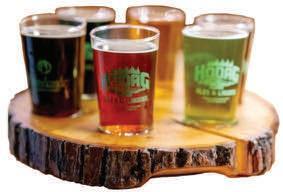

Cathy Higley
LAKE CONSERVATION SPECIALIST
WITH VILAS COUNTY LAND & WATER CONSERVATION
Don’t worry – these fleas won’t bite, don’t make you itch, and can’t physically hurt you. Whew! I’m referring to the native waterfleas living in the lakes of Northern Wisconsin (and in most parts of the world.) Waterfleas are very small creatures and are considered plankton – they move along with the currents of the water. Many are from the Daphnia genus and under a microscope look something like a transparent water chicken with antlers. Not only are they completely harmless, Daphnia eat algae in our waterbodies which helps keep the water clearer and more desirable for activities like swimming.
Another type of waterflea now found in some lakes in northern Wisconsin is the spiny waterflea. The spiny waterflea is considered an invasive waterflea, and originates from Europe and Asia. Spiny waterfleas are also considered to be a type of plankton, but instead of eating algae they eat other plankton – including Daphnia, our native waterfleas. Spiny waterfleas might look a bit more scary than other waterfleas like the Daphnia, but they do not bite people and their spine will not hurt human skin. However, small fish can have a hard time eating spiny waterfleas as food – the spines can get stuck in their digestive tract if the fish are small.
As mentioned before, spiny waterfleas are predators of Daphnia, our native waterfleas. In some situations, the spiny waterfleas can become quite dense. This happened in Lake Mendota in the Madison area. In an attempt to increase water clarity, the lake was managed to be artificially high in Daphnia before the spiny waterflea were introduced, and the spiny waterfleas had quite
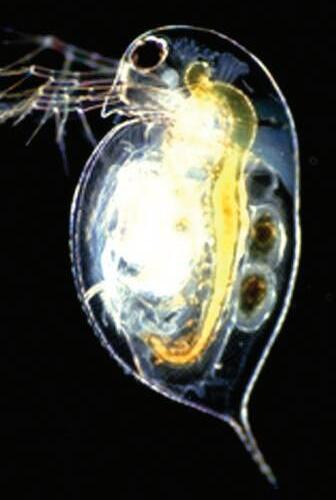
the feast waiting for them! Unfortunately, this resulted in a loss of water clarity of about 3 feet in Lake Mendota because there were no longer enough Daphnia to consume sufficient algae in the lake. Loss of water clarity can have many more impacts on a lake system – it can limit where aquatic plants can grow because the plants need sunlight to filter through the water depths. If plants are limited, then fish habitat is also limited. Other factors can further be impacted, like fish predator-prey interactions.
This scenario on Lake Mendota might be one of the more extreme instances of spiny waterflea impacts in the state. But since there are no methods for removing spiny waterfleas from a waterbody once they are introduced, preventing their spread is important. In Northern Wisconsin, lakes with verified spiny waterflea populations are Butternut Lake, Gile Flowage, Ike Walton

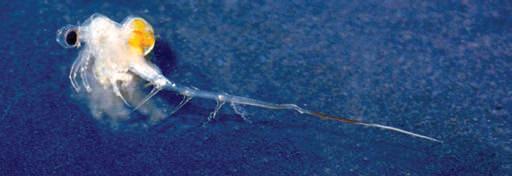
Lake, Plum Lake, Star Lake, Stormy Lake, Trout Lake, and the West Branch of the Montreal River. Several of these might be lakes you are planning to visit while you are visiting the Northern Highland American Legion State Forest!
To prevent the spread of AIS, remember the steps required of every boater: inspect your boat and equipment; remove any aquatic plants or animals that are attached; drain all lake water (there are some specific exceptions here for bait fish); never move live fish away from a waterbody. These steps would take care of most issues with transporting AIS to new waterbodies. However, some of these species are just easy to overlook during inspections. For example, spiny waterfleas are about ¼ inch and transparent. Invasive zebra mussels have a juvenile life stage that is microscopic. This is where taking some extra steps is a best practice to prevent their spread.
The WI DNR requires of themselves and their grantees, but not of the public, to also decontaminate their boat and equipment in addition to the above steps before moving to their next waterbody. Even though decontamination is not required of the public, it is best practice to prevent the spread of AIS that are hard to see with the naked eye. A few of the more common DNR approved
methods for boat and gear decontamination are:
-Dry your boat and equipment for 5 days.
-Use a solution of 1 gallon of water and 2.5 tablespoons of bleach and maintain a contact time for 10 minutes. You’ll need to rinse off the bleach with tap water to prevent corrosion. Make sure the bleach solution and rinse water do not enter any lake, river, or wetland. If you are on the Lac du Flambeau Tribal Reservation, bleach is not promoted as an acceptable decontamination method.
-Use water at 140ºF with a contact time of 10 seconds to kill AIS on your boat or equipment. Many agencies across the country offer these services with heated pressure washers and special attachments for boaters.
The Vilas County Land & Water Conservation Department is sometimes able to offer free hot pressure washing services for boaters at some lakes in the Northern Highland American Legion State Forest. Get your boat cleaned for free and prevent the spread of AIS!
For more information about spiny waterfleas, AIS prevention, and decontamination of boats and equipment, contact Cathy Higley with Vilas County Land & Water Conservation at 715-479-3738 or cahigl@vilascountywi.gov.



We love to see folks enjoying the state forest – and that includes photos of folks enjoying the forest in years gone by. As we approach the 100th anniversary of the NHAL State Forest which will be celebrated in 2025 it would be great to collect some historic photos of visitors camping, picnicking, hiking, skiing, or partaking in other adventures on the state forest. The older the photos are the better! We hope to use some of the photos in future Visitor Guides. Please send photos to joseph.fieweger@wisconsin.gov, put “Vintage NHAL Photos” in the subject, and include as much info about the photo as you can, including the date the photo was taken and location on the forest if possible. Note that by submitting photos, you give permission for the DNR to use them in future publications or other areas as appropriate.
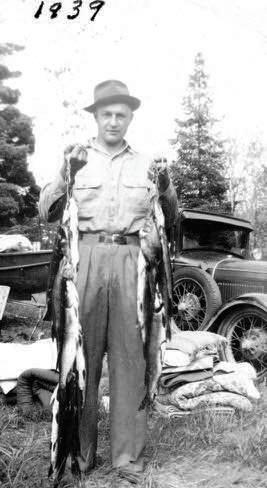
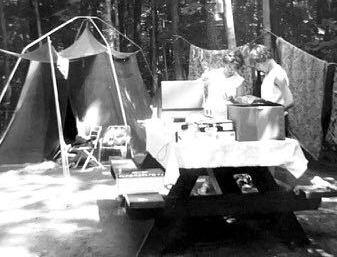
Tony Martinez NHAL TRAILS COORDINATOR
Nestled in the heart of Wisconsin, the Northern Highland American Legion State Forest (NHALSF) stands as a testament to the state’s natural beauty and offers a myriad of land-based trails and recreational opportunities for outdoor enthusiasts.
There are many ways to enjoy the state forest. Some activities are seasonal and include hiking and biking in the summer and skiing, snowshoeing and fat tire biking in the winter. Please check our webpage or the trailhead kiosk for information on the NHALSF trails and activities associated with them.
We are constantly working on how we can better manage the manpower and resources we have with the needs of our patrons, wildlife, and economic impacts. At times there may be disturbances to the trail due to logging. When this happens, we try to use it as an opportunity to improve the section of trail impacted.
Land-Based Trails:
The forest boasts an extensive network of trails that wind through its diverse landscapes, providing hikers, bikers, and nature enthusiasts with a chance to explore the region’s breathtaking beauty.
Biking Bliss:
Mountain bikers can find solace in the forest’s well-maintained biking trails, providing an adrenaline-pumping experience amid the serene surroundings. The varied terrain caters to different skill levels, ensuring that both beginners and seasoned riders can enjoy the thrill of two-wheeled adventures. Trails range from primitive singletrack handbuilt by local volunteers to developed paved trails. Across from the Raven trailhead there is a mountain bike skills course with challenges for all skill levels. Lumberjack and Shannon trails are currently groomed for fat tire biking in the winter.
Hiking Adventures:
For avid hikers, the forest presents a range of trail options, from easy strolls suitable for families to



challenging routes that test the mettle of experienced trekkers. The trails showcase the forest’s rich flora and fauna, making each step a discovery in the heart of nature. We have two paved trails which are very friendly for families with young members. Several nature trails have shorter loops available for hiking and snowshoeing year-round. For a longer trek in the winter try the Raven mountain bike/snowshoe trail.
Shannon and Lumberjack trails are currently groomed for fat-tire biking in the winter. Hiking is allowed and pets are welcome. Please be courteous and clean up after your pet.
Wildlife Encounters:
Nature lovers will appreciate the abundance of wildlife that call the NHALSF home. From majestic white-tailed deer to elusive black bear, the forest is a haven for observing and appreciating the region’s diverse fauna. Birdwatchers will delight in the chance to spot both migratory and resident avian species. The four nature trails have interpretive signs with information on features of the trail or something to look for on your future journeys.
Seasonal Splendors:
Each season paints the forest with a unique palette, offering visitors a reason to return throughout the year. Spring blossoms, summer’s vibrant greens, the fiery hues of autumn, and the winter wonderland transform the landscape, ensuring a different and captivating experience with each visit.
In conclusion, the Northern Highland American Legion State Forest is a haven for outdoor enthusiasts providing an extensive network of land-based trails and a plethora of recreational opportunities. Whether you seek the thrill of adventure, a peaceful escape into nature, or a chance to observe wildlife in its natural habitat, this Wisconsin gem has something for everyone. Lace up your hiking boots or grab your bike and embark on a journey through the enchanting landscapes of the NHALSF.





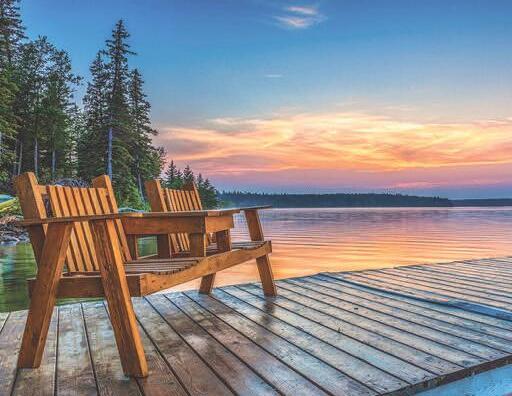

The Northern Highland American Legion State Forest is very unique among Wisconsin State Parks and Forests in that we allow generator use in most of our campgrounds under a specific set of rules. Nearly all other Wisconsin State Parks and Forests do not allow any generator use or only allow generator use in extremely rare instances. One of the reasons generator use has been allowed here at NHAL is due to our lack of campsites with electrical hookups –the only sites with electrical hookups on the whole forest are a couple of handicap accessible sites. Current visitors often require electrical power for a variety of purposes so here at NHAL that often requires a combination of batteries and generators to supply the desired power.
Generators are consistently one of our biggest sources of complaints. Opinions tend to be fairly evenly split between folks who
think our current generator rules
do not allow for enough generator use and those who think our current generator rules allow for too much generator use. We see that we will never be able to make everyone completely happy with our generator rules, but the current policy seems to be a pretty good compromise.
Since generators are one of our biggest sources of complaints, it is important that everyone knows the generator rules and follows them. First and foremost, be aware that generator use is NOT ALLOWED for any reason at Cunard Lake and Starrett Lake campgrounds. These campgrounds have been designated as “quiet zones” for campers who are looking for a place to camp where they won’t hear generators (radios, musical instruments, and other noise producing devices are also prohibited in these two campgrounds). In all other NHAL campgrounds generators can be used
between the hours of 10:00 a.m. and 5:00 p.m. and only when the occupants are present on the campsite. If generators are excessively noisy, permission to operate can be revoked. Please be aware of where the sound and exhaust from your generator are directed and be considerate of neighboring campers.
Occasionally, visitors have a medical need to operate a generator outside of the normal generator hours. In these circumstances, we will issue a permit allowing such use. These special permits can be obtained by contacting visitor services associate Rosy Richter or ranger Chanice Pitzke. If visitors have this need, they should plan ahead and request that permit well in advance of their camping trip. Since having a generator running through the night can be extremely disruptive for other campers, we strongly encourage folks who need a medical device through the night to check into options for running
these devices on battery power. Many, if not most, of these devices can easily run through a night (and often multiple nights before recharging) on battery power. Battery power can also be more reliable than a generator for these devices.
Please be aware of and follow the NHAL generator rules. Many campers come to the NHAL to enjoy the natural sounds of the forest, so if you do need to use a generator while here camping, please use your generator only as long as needed to meet your electrical needs. Many of our campers are also finding ways to eliminate generator use on their camping trips, which may involve installing a more robust battery bank in an RV and often includes the use of solar panels to recharge those batteries. Thank you for following the generator rules and being respectful of other campers with your generator use.
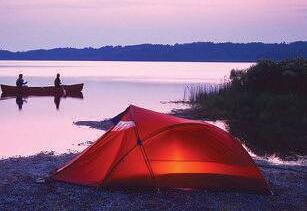



There is an active sustainable forestry program in place on the Northern Highland – American Legion (NHAL) State Forest. Sustainable forestry means the management on the NHAL focuses on meeting the economic, ecological, and social needs of current users while protecting the forest’s ability to fulfill this role for future generations. It’s difficult to imagine but just over 100 years ago, nearly all the trees in northern Wisconsin, including most of the trees in this state forest, were cut down to help build our nation. Many of the red and white pine trees were sawn into lumber to build homes and businesses in Chicago and other cities on the east coast. Timber harvesting for lumber production peaked in 1904 and began a steady decline due to the exhaustion of the resource. Throughout the 20th century, trees were planted, remaining stands of pines and hemlocks were protected, and the forest was allowed to recover. During this time, with the advantage of hindsight and lessons

learned, the concept of sustainable forestry was born. In the last 100 years, the occupation of ‘forestry’ evolved into its current form as a professional vocation. Today the foresters on the NHAL state forest use art, science, history, and new technology to protect and sustainably manage these forests for our use and enjoyment today and for future generations.
By Tom Shockley
The forestry program on the NHAL state forest not only produces wood fiber for Wisconsin’s paper and lumber industry but also helps support over 60,000 jobs throughout our state.
Wisconsin is the number one paper producing state in the U.S. and many of the trees grown right here on the state forest help keep that industry alive. In all, there are over 1,200 companies in the state that rely on wood products to produce lumber, paper, furniture, and many other items.
The skilled team of foresters establish approximately 3,500 acres of timber sales every year on the NHAL state forest. Many forest visitors inquire about why we man-


age the NHAL state forest in areas that are visible to the public. Wisconsin State Statute Chapter 28 defines Wisconsin’s public forests and guides all management on the NHAL state forest. This statute, along with the property master plan, serve as cornerstones for our timber sale program and the other management that occurs here. In short, unless state law or the master plan prohibits timber harvesting in an area, the forest will be managed. The forestry team are cognizant of the social impacts that may occur from managing the forest and they work closely with the NHAL recreation staff when timber harvests occur in campgrounds or along one of the trail systems. The foresters often incorporate special considerations into the set-up and design of timber sales in highly visible locations. Many of the most popular locations on the NHAL state forest owe at least some of their beauty to the sustainable forest management that is practiced by the forestry team. Hiking areas like the trails at Madeline, Fallison, McNaughton, and Raven have all undergone extensive timber harvest in recent years. The forests in an around the campgrounds at Crystal, Musky,



Firefly, North Trout, and Clear Lakes have also been managed over the past 20 years. The foresters have carefully removed many of the suppressed, deformed, and diseased trees to provide more growing space for the healthy, dominant trees. Not only do these areas look more beautiful because of forest management, they are safer, healthier, and contribute to a very important portion of Wisconsin’s economy.
The forestry team relies on information known as forest reconnaissance (recon) to determine when and where trees are ready for harvest. Another practice known as silviculture is used to manage the individual tree species in an effort to either maximize growth or to encourage regeneration in the form of new seedlings and saplings. The foresters design timber sales to promote natural regeneration and today only about 5% of the acres harvested every year require replanting with nursery trees. The foresters also take great care to protect water quality on our lakes and rivers by following best management practices and by using





















buffers in riparian areas. In many cases, management is not readily visible from the water. Foresters consider many ecological aspects and attributes of the forests and trees when practicing silviculture. For example, some of our tree species such as birch, balsam fir, jack pine, and aspen rely on full sunlight to regenerate. This means that when these tree species are old enough to harvest, most of the trees in the area are cut all at once. This type of practice is essential for these species to fully regenerate. The foresters on the NHAL state forest utilize several different tactics to minimize the aesthetic impact of this type of harvest including leaving un-harvested buffer zones along roads and trails, leaving islands of trees to diversify the age class and to break up the visual impact of the harvest, and by not cutting scattered white pines, red pines, and spruces in the harvest area. The trees that regenerate after these harvests create a young forest that provides food and habitat for some of the most popular game animals like deer, grouse, and turkeys. Young forests also create age and structural diversity that help our resource remain resilient and healthy. Not all areas of the NHAL state

forest are subject to active forest management. There are many locations embedded in the forest that are passively managed, where human intervention is kept to a bare minimum. These areas, known as state natural areas (SNAs), are left to the whims of Mother Nature to determine their fate. In rare cases salvage harvests may occur if a significant number of trees are blown down in a tornado or wind storm. To see examples of some of the most profound natural areas on the NHAL state forest, use the search tool on dnr.wisconsin.gov to look for Lake Laura Hardwoods, Van Vliet Hemlocks, and Frog Lake and Pines. These are all prime examples of areas that are evolving on their own without human-influenced forest management. Compare and contrast these areas with other locations where foresters have been actively managing the trees What do you notice as the key differences?
The NHAL state forest is unique for many reasons, including the large, sustainably managed forest that surrounds our lakes, trails, and campgrounds. The NHAL forestry team is comprised of some of the most highly skilled professionals in their field. Not only do they consider the economic value of the forest, they also care deeply for the ecological and social values that are so important to the well-being of our environment, our community, and our visitors.













Lynn Wright PARK MANAGER-NHAL WATER RECREATION
Water recreation is one of the most popular activities on the Northern Highland American Legion State Forest (NHAL). In order to enjoy a day on the water, many folks will be utilizing a boat landing to launch their motorboat and begin their adventure. However, the boating adventure of some is causing destruction for others. That’s right, powering loading your boat on and off your trailer is creating massive destruction to boat landing ramps, trailers, and boats. It’s called the dreaded motor hole. Before you launch your boat, you should always take a look at the ramp to scope out the area. Chances are you’ll get a good look at the motor hole, and I recommend polarized sunglasses for the full effect. If you’ve seen one, you know what I’m talking about. If you haven’t, don’t be shocked, this hole can look like a crater, an asteroid strike, or I’ve seen some competing with depths of the Grand Canyon. Be aware, this motor hole is a serious hazard and might prevent you from launching your boat. In addition to the motor hole, there is a mountain sized pile of displaced sediment that gets deposited on the back side of the motor hole. This berm is ultimately a navigational hazard, just inches below the surface that can wreck your propeller or the hull of your boat. However, with a little education on power loading, properly launching and loading your boat, hopefully we can all get on board and avoid contributing to the dreaded motor hole. Before we jump into a motor hole, let’s talk a lit-
tle about boat landing and watercraft evolution. These precious boat landings were created years and years ago. A lot of landings on the NHAL and surrounding areas saw their beginnings at a time when boat motors were still being patented and people were propelling themselves manually in row boats. As water recreation continued to grow, one of the first outboard motors was pioneered in Wisconsin by Ole Evinrude. Our state has a personal connection to Ole Evinrude, as his invention came about while rowing a boat on Lake Okauchee. As story has it, he rowed his boat to get ice cream for his girlfriend, however, upon his return, his paddle provided a melted mess. This inspired Ole Evinrude to forsake the paddle forever as a means of water propulsion and patent one of the first outboard motors. We’re not going back in history anymore, as most folks are not rowing their boats or worrying about melted ice cream. Ole Evinrude’s hand-cranked outboard was later improved to today’s 400-plus horsepower modern engine. Rest in peace Ole Evinrude. Another change over the years came in boat trailer design, with the invention of carpeted bunks and slides instead of rollers. We’ve certainly come a long ways with motors, trailers, and watercrafts over the years, however, earthen-bottom boat landings have only improved with concrete planks. Boat landing evolution vs. watercraft evolution is not an even balance. This has resulted in more destruction than what the landings and concrete ramps can withstand. More people are wanting bigger boats/motors, more people are power loading, less people are manually winching their boats back on the
trailer and now we have the evolution of the dreaded motor hole.
Let’s get into the motor hole and cover the basics: What is power loading, why is power loading a problem and what can you do to prevent the motor hole?
What is power loading? It’s simple, power loading is using the boat motor to load and unload a boat onto and off the trailer. We can’t be doing this if you want to keep using the boat ramp. Why is power loading a problem? Power loading erodes the sediment and lakebed that is holding the ramp in place. The end of the ramp becomes unstable, undermined, and no longer level. The smooth transition from the ramp to the lakebed is eliminated and can cause your trailer to be tipped to one side, making unloading/loading very difficult and aggravating. In extreme cases, trailer frames and axles can hang up on the end of the concrete ramp and trailer tires can get stuck in the motor holes. This can cause substantial damage to your boat trailer. The energy generated from the propeller blows out the sand, muck, gravel, and rocks, creating the “Grand Canyon” and mountain effect behind the ramp. The eroded sediment creates a shallow berm or mound directly behind the ramp and is a navigational hazard that can damage your boat/motor and really wreck your day. The bigger problem is that main-




From page 36
tenance and operations crews cannot fix these holes. Crews can place stone/gravel to ease the transition between the concrete ramp and the motor hole. However, aggressive power loading will just blow the stone/gravel into the motor hole and eventually onto the shallow berm, just adding to the problem. The destruction of power loading will cost millions of dollars in boat landing renovations, for something that can easily be prevented. An even bigger problem is getting funding to completely rebuild a boat ramp. With all that said, it’s just better for everyone to not power load!
What can you do to prevent power loading, power unloading and the motor hole?
•Know your trailer and the proper depth to launch your boat safely

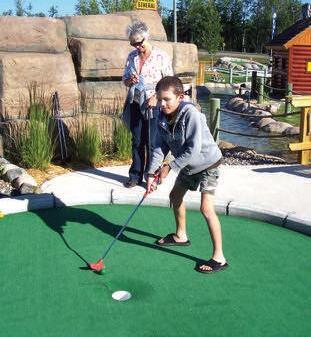
and effectively without needing the motor. Every trailer has a “sweet spot” for unloading/loading. Once you figure that out, the motor is not needed.
•Best practice is to unload/load using a bow line. With your trailer in the “sweet spot”, using a bow line to align your boat onto the trailer and then winch the rest, causes no damage at all.
•Trim your motor up so only surface water is being pushed and only use enough power/velocity to coast onto your trailer.
•Always use your winch to crank the boat onto the trailer the rest of the way. Big power blasts create the big “ole” motor holes and the “Grand Canyon”.






•For unloading, make sure the hull is not being supported on the bunks or rollers, and the boat is almost free floating. You should not need an aggressive reverse to get your boat off the trailer. Aggressive reverse causes just as much damage as forward power loading.

Let’s keep all our favorite boat landings safe and functional for everyone to utilize. Water recreation depends on the ability to access the water. If power loading continues, I foresee many of the landings on the NHAL being very difficult to utilize. Many residents, tourists, businesses, and water recreation enthusiasts depend on these boat landings. The maintenance of these landings is funded from your purchasing of fishing equipment and licenses. Please do your part to help protect your investment. I hope people realize the damage they are doing by power loading and practice better boat unloading/loading techniques. Let’s pay our tributes to Ole Evinrude by enjoying a day on the water and not using the motor to contribute to the big “ole” motor hole.

The safety of forest visitors is always a priority so please be careful, and please impress safety precautions on your children. The following are some precautions to keep in mind.
Swimming
Swim safely. Swim at a designated beach where available; swimming at a boat landing is not recommended due to conflicts with boat traffic. None of the state forest beaches have lifeguards. Don’t swim alone, at night, or in unfamiliar places. Use caution when wading in unknown waters, as water depth may change abruptly. Watch small children closely near the water.
Boating/Canoeing
Every watercraft must carry a Coast Guard approved lifesaving device for each person aboard, and passengers should always wear lifejackets. This includes paddleboards! Don’t overload your craft. When boating, be aware of your wake and stay well away from swimmers. Please do not power load boats, this will help keep the lake bottom in place.
Hiking
Hike safely. Be aware that trails vary in difficulty. Not all trails are surfaced. There may be steep climbs or descents or stairways. Watch small children closely. Trail surfaces can become slippery when wet, covered by leaves or pine needles, or where there is loose gravel.
Biking
For your protection, wear shoes, pantleg clips and helmet when bicycling. Wear reflective clothing for bicycling at night. Always keep your bike under full control. Pull off the road or trail to view wildlife, flowers or scenic views. Be cautious in areas with loose gravel or sand, wet leaves, or other loose material. Always be alert to traffic. Park and forest roads follow the terrain and often have steep grades, sharp corners and intersections. Burrowing animals and tree roots may leave bumps and holes in the trail.
Skiing
Be aware that groomed trails cannot be groomed daily. The quality of groomed trails can vary depending on heavy use, weather and terrain. Skiers should not ski beyond their abilities or allow speed to build up beyond the skier’s ability to control.
Insect Hazards
The state forest can be prone to high populations of mosquitos, ticks, biting flies, yellow jackets and other nuisance insects. To protect yourself, use insect repellant, wear long-sleeved shirts and pants, treat clothing and gear, and avoid wooded and brushy areas with high grass and leaf litter. Be sure to check your clothing and yourself after being outdoors, and don’t forget about your pet!
Plants
Never eat berries or plant parts unless you are certain of their identity.
Severe Weather—The time to prepare for severe weather is before the storm hits. Please develop a plan with your family on what you will do if threatening weather approaches.
Questions to Consider
▲ What county and city are you visiting?
▲ Where will you go if threatening weather is approaching?
▲ How will you find out if a storm is moving toward your area?
▲ How will you receive warnings and forecasts before the storm strikes?
Nature Center
We are looking for volunteers to help us out at the Crystal Lake Nature Center. The nature center is open from Memorial Day weekend to Labor Day weekend. The volunteers would staff the nature center when it is open to answer questions from visitors. It would be great if you had a background in, or interest in, conducting drop-in programs for children. If you are interested in volunteering stop by or call the Crystal Lake Visitor Station (715-542-3923).
Campground Hosts
Calling for hospitable, energetic, knowledgeable campers to serve as volunteer campground hosts for the Northern Highland American Legion State Forest.
Duties: Provide visitor services by answering questions and giving out information, assist with firewood sales, and light maintenance in campgrounds – some positions require staffing Crys-

tal Lake Nature Center, some positions require daily cleaning of toilet buildings.
Location: Nine of the forest’s campgrounds, ranging from the modern campgrounds where hosts have electric hook ups, to the some of the rustic campgrounds where there is no electricity in the campground (but generator use is allowed 10 a.m. - 5 p.m. daily or a solar unit is available).
Commitment: approximately 5 weeks, minimum 20 hours of work per week (a free campsite is provided).
For more information on volunteer opportunities stop by or call either Crystal Lake (715-5423923) or Clear Lake (715-356-3668) Visitor Stations. You can also find opportunities by clicking “volunteer in the parks” link on our state parks DNR website (dnr.wisconsin.gov/topic/parks) towards the bottom of the page. On the volunteer page, click the link to the Volunteer Impact System to find a list of opportunities for our property and statewide.
Chanice Pitzke NHAL RANGER
Ticks are very common in Wisconsin and here at Northern Highland American Legion (NHAL) State Forest is no exception. Ticks can carry various diseases such as Lyme, Anaplasmosis, and Babesiosis. Within this article I will address the illnesses listed above, some prevention, and what to do if you get bit by a tick. I hope you will find this a friendly reminder of what you might already know.
Illnesses
There are several more diseases that can be contracted by a tick bite, but I will be talking about a few that are the most common here in Wisconsin.
The most well-known and common illness spread by ticks would be Lyme Disease. In Wisconsin alone there were 5,327 cases reported in 2022. According to the Wisconsin Department of Health Services (WI DHS), reported cases have doubled over the past 15 years. Wisconsin
is one of the states with the highest numbers of cases reported to the CDC each year. The signs and symptoms of Lyme Disease are a circular reddish rash that resembles a bullseye, fever, headaches, fatigue, stiff neck, or muscle/joint pain. Some or all of these may be present. The second most common according to WI DHS is Anaplasmosis (bacterial infection) spread by deer tick nymphs. Early signs and symptoms are fever, severe headache, muscle ache, nausea/diarrhea, and tiredness. Another prevalent disease spread by deer ticks is called Babesiosis. The number of cases per 100,000 has been on the rise since 2011. In 2022 there were 91 confirmed by the WI DHS. This can be a tricky disease to diagnose since many people who are infected do not have the flu-like symptoms that are associated with it. Babesiosis infects the red blood cells so this may cause hemolytic anemia. This can be severe or life threatening to people who do not have a spleen, have a weak immune system, have serious health conditions, or are elderly. The diagnosis of babesiosis is by ex-

amining blood under a microscope.
Although there are many different types of ticks, the tick that is the most common to spread diseases/illness is the deer tick or blacklegged tick. Not every tick is going to be infected, meaning not every tick bite is going to lead to illness.
Each tick has 4 stages of their life cycle: egg, larva, nymph, and adult. Here I will discuss the life cycle of the blacklegged (deer) tick. A female tick can lay thousands of eggs that can be found under leaf litter or warm soft places outside, often laid in the spring. One good thing about ticks is they cannot be attached to a host when they lay their eggs.
When the eggs hatch in the summer, this is known as the larva stage. Larvae emerge with 6 legs. They will get the last two legs at the nymph stage. Larva will begin looking for their first host which could consist of small rodents, birds, and/or lizards. It is unlikely to attach to humans at this stage. If the ticks feed on an infected host, then they will become in-
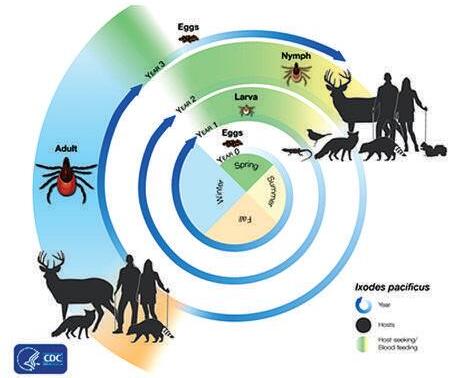
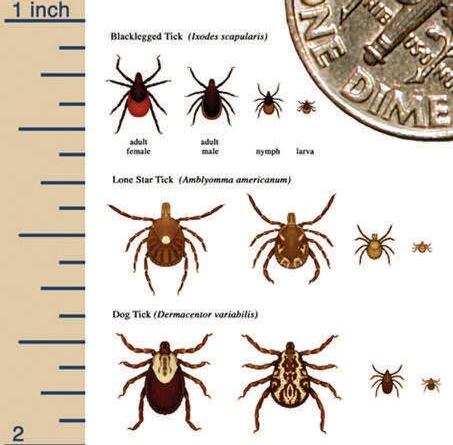
fected for the remainder of their two-to-threeyear life. Sometimes, but not often, ticks are born infected having gotten the disease from the adult ticks.


Once the ticks have completed their feeding on the first host, they will detach to start molting into the nymph state. Once the ticks have molted into nymphs between fall and spring the ticks look for their second host, which could be small mammals or large mammals including deer or humans. This is another stage where deer ticks can become infected with various illnesses but only if the host is infected prior to the tick attaching. There is also the possibility of
the nymphs getting a second illness. Nymphs will feed on their hosts for about four to five days before detaching to transition into their final adult life stage. Once the ticks are adults and have feasted on their final host they will then try to mate. The male ticks die shortly after mating and the females will die shortly after they lay their eggs when the whole cycle begins again. The blacklegged ticks find a new host for each life cycle so this is why they are the ones that typically transmit diseases/illnesses to humans and other animals.
Prevention and Removal
The best way to prevent ticks from getting

on you is to spray yourself with insect repellent containing DEET, Picaridin, IR3535, or oil of lemon eucalyptus before heading out into tall grassy areas or the woods. Another great help is to spray your clothes with permethrin before adventuring outside. When you spray your clothes make sure they are completely dry before wearing them and make sure to wear gloves and safety glasses, so it does not get on you. Another helpful tip is to tuck your pant legs into your socks and tuck your shirt into your pants. Always make sure to check yourself and others for ticks after being out in the woods or in tall grass. If you happen to find a tick attached to you remove it as quickly as you can. Some tick bites can spread the illness to you quickly and some must be attached for a while to spread the infection to you. The best way to remove an attached tick is with tweezers. Grasp the tick as close to your skin as possible and pull it upwards with even pressure until the tick is removed. Once the tick is removed clean the area with soap and water or rubbing alcohol to disinfect the area. You will want to watch for signs or symptoms of illness for up to 10 weeks after you have been bitten. Spending any significant amount of time on the forest will likely bring you in contact with ticks at some point. Keeping the information shared here in mind should help keep you aware of ticks and the illnesses they can spread and hopefully help you avoid contracting an illness spread by ticks.















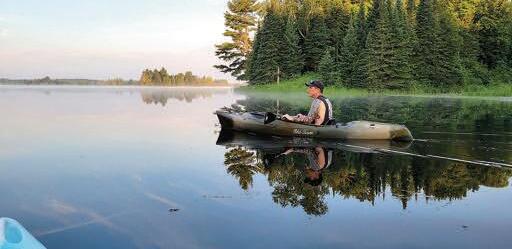



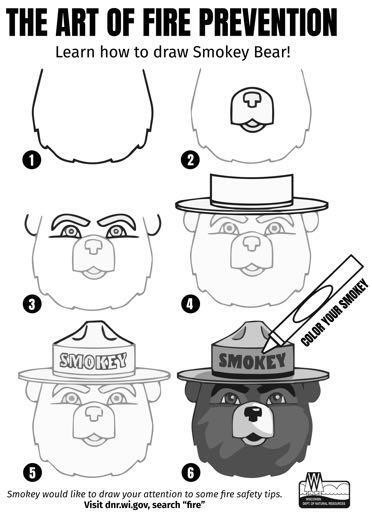

Alaina Roth
WILDLIFE BIOLOGIST VILAS COUNTY, NHAL WILDLIFE LIAISON
I had a friend who recently moved to the Northwoods tell me a story about how they heard their neighbor trying to start an old engine up in their backyard time and again over several months, but the engine would thump and thump and would never turn over. It wasn’t until months later he talked to his neighbor and realized that curious sound he was hearing all this time was a ruffed grouse drumming! The Northern Highland American Legion State Forest is home to a large and widespread ruffed grouse population. This special bird can be heard in the spring practicing its unique drumming display, thumping air between its wings while posted on a log or rock, to attract mates and display territory boundaries. Although this unique critter only requires about 10 acres for a total home range, they have a few key requirements that land them in the category of a habitat specialist.
Ruffed grouse thrive in youngaged forest stands. In northern Wisconsin this typically means aspen, but they can also thrive in other early successional forest types like oak in the driftless area of the state. But more than just young forest, grouse truly require a diversity of age classes to meet all their needs. The higher the diversity, the higher quality habitat for grouse. Not only grouse will benefit from habitat diversity, but a host of other species including deer, bear, turkey, rabbits and more. So, what do grouse need to survive? In the simplest terms they need food and cover, but the forms of each of these can change throughout the seasons. For example, a drumming male needs a good log to drum on, but he also needs thick overhead cover, so when his drumming attracts the attention of an aerial predator, they aren’t able to easily fly down and pick him off his log. Young aspen full of thick saplings will make it difficult for a hawk to spot, much less fly down and attack. In the summertime when a female grouse is out with her newly hatched brood, she will take them to open areas rich in forbs and weeds that host insects full of protein for her growing youngsters. Ideal openings will be adjacent to thick young cover that the hen can scoot her flightless brood back into quickly should a predator arrive. In the wintertime grouse are often seen perched on mature trees that are old enough to produce male flowers, known as catkins, a favorite food for grouse through winter.
As you can see, although young forest is the main part of a grouse’s


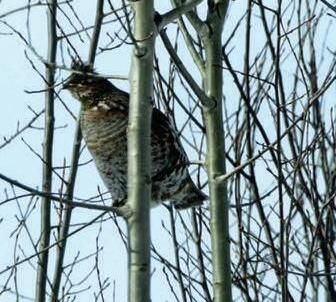
home range, they really thrive in a diversity of age classes. This accounts for different habitat types as well; young aspen are often synonymous with grouse, but other habitat types are excellent too. While muzzleloader hunting this year on the NHAL I flushed 10 grouse while tracking a buck through a small dense jack pine stand. It was incredible! The thermal cover provided by these thick conifers was too good for grouse to pass up. It was neat to track a deer through the stand and see little grouse tracks weaving through.
So how do we create ruffed grouse habitat on the Northern Highland American Legion State Forest? Our most effective tool is through sustainable timber harvest. A mosaic of different size harvests across the forest creates a patchwork of different habitat types that allow grouse to thrive! We also create and maintain wildlife openings and trails through brush mowing which create important areas for nesting on the edge of and feeding on protein rich insects within them. Alder shearing projects aimed at woodcock enhancement often benefit grouse as well.
Unfortunately, ruffed grouse abundance has declined in recent decades statewide, and the biggest reason is due to loss of habitat. Especially the aging of forests, parcelization of large tracts of timber company lands, declining paper markets, and hesitation by small private landowners to harvest timber. When grouse have access to high quality habitat, they are better able to handle other stressors they encounter in their lifetime including predators, climate and disease. It’s not unlike us when we get sick with the flu, we are going to recover much faster if we stay home in our cozy warm house where we have a big bed and fridge stocked full of soup and Gatorade.
So next time you see a recently harvested timber stand on the NHAL, smile because it’s ruffed grouse habitat in the making.
Samuel Boone NHAL RANGER
Providing ample opportunities and a unique hunting challenge, ruffed grouse are one of ten species of grouse native to North America and the most abundant species in the state of Wisconsin. Ruffed grouse are small chicken-like birds that inhabit much of Northern Wisconsin and one of the primary gamebird species of the Northern Highland American Legion State Forest. One of Wisconsin’s more sought-after small game species, the ruffed grouse provides an excellent opportunity for hunters to recreate on many of our Northern State Forests.
Grouse hunting in Wisconsin is an excellent pastime and a great way to get outside and enjoy our state’s public lands whether individually or in groups. Ruffed grouse thrive best in habitats in which forests are kept young through a variety of factors such as logging practices and naturally occurring fires. Primarily grouse are solitary in nature but can be found in small groups called coveys on occasion. Male ruffed grouse will take place in an action known as “drumming” which is where the bird will rapidly beat their wings against the air to create a vacuum and has a similar sound to that of a bass drum being rapidly beat. Drumming is not only used for male grouse to establish their territory but is also used to attract potential mates. Given the natural landscape, tree species and logging practices the Northern Highland American Legion State Forest provides excellent habitat for these gamebirds.
Grouse can be hunted with a variety of shotguns, but ones of a lighter variety prove best as they are easier to carry and due to the relatively small size of the birds can help prevent from damaging the meat too much. In general, the best way to get shots off on grouse is when they take off and fly, otherwise known as a flush. When grouse flush it is very audible as the natural movement of their wings makes a very similar sound to their drumming noise. So, while one does not have to necessarily sneak about the woods it is very helpful to keep an ear open.
The state is split up into two zones for hunting, Zone A being primarily the northern half of the state and Zone B the southern half. Be sure to check the zone and season map on the Wisconsin Department of Natural Resources website or Wisconsin DNR hunting brochure to know for sure where the zones are located. The NHAL is well within Zone A meaning the season runs usually from mid-September through the first week of January. A daily bag limit of 5 birds may be harvested by an individual hunter. Given the natural habitat of grouse it can prove to be rather difficult to spot birds let alone get an adequate shot off. A good place to start is hunter walking trails or old logging routes which provide for much easier walking, better shooting lanes and often provide prime locations to find grouse. One of the most ideal ways to go grouse hunting is with the use of a good hunting dog. There are several breeds of dogs that are optimal for grouse hunting such as English Setter, English Pointer, German Shorthair Pointer and a personal favorite of mine English Springer Spaniels among several others. A common theme in a number of these breeds is their high energy, eager demeanor and instinct. A good bird dog is going to do all the dirty work in terms of flushing and seeking out birds. Hunting in a setting such as the hunter walking trails or old logging routes as mentioned previously allow for the hunter to remain on the trail where shots are the most open and allow for the dog to ideally flush birds into the open and out of their brushy hideaways. Not only man’s best friend, but also a bird hunters most loyal companion. With around 236,000 acres of public land the NHAL provides ample opportunities for hunters both novice and experienced alike to get out and enjoy the state forest. Remember to always practice safe firearm practices and always communicate with family or friends where and when you are hunting when going out alone. Most importantly, enjoy the great outdoors and the resources our state and public lands have to offer.



creased in frequency over time, particularly for walleye, NHFRA researchers along with their Great Lakes Indian Fish and Wildlife Commission and university collaborators have worked diligently to better understand how environmental change is influencing lake ecosystems and fish populations and what we can do to pro-
mote resilient and robust fisheries now and in the future.
Environmental change is also influencing fish community composition in northern Wisconsin lakes, favoring some fish species or species groups over others. Fishes can be classified as coldwater, coolwater, or warmwater species. A relatively common coldwater fish to northern Wisconsin lakes are cisco. Coldwater fishes require cold, well-oxygenated water and are often found in the deeper portions of lakes in sum-



mer. Coolwater fishes in northern Wisconsin include muskellunge, northern pike, walleye, and yellow perch. Fish like black crappie, bluegill, largemouth bass, and smallmouth bass are common warmwater fishes. Environmental change appears to be favoring warmwater fish species over cold- and coolwater species due to variable ice dynamics, lake warming, and fish species interactions. Most notably, black crappie, bluegill, and largemouth bass abundances have increased with environmental change. Due to match-mismatch dynamics and environmental change, cold- and coolwater fish species may continue to be stressed due to conditions favoring warmwater fish species. As two examples from NHFRA lakes, bluegill and largemouth bass have greatly increased in abundance within Escanaba Lake and largemouth bass have been observed in Nebish Lake. Except for being present very early in our monitoring of the Escanaba Lake fishery, bluegill and largemouth have been almost entirely absent from this lake until very recently. Nebish Lake has been dominated by smallmouth bass and yellow perch for much of its history, and now largemouth bass are starting to appear. Where are these emerging species coming from? That is a difficult question to answer, and I offer two hypotheses. First, these species were likely present in each lake; however, at very low or undetectable abundances and were likely suppressed by other more dominant species until recently. Environmental change is altering fish communities and these formerly low or undetectable species are now emerging. Second, and perhaps more troubling, is that anglers or lake visitors have inadvertently or purposefully introduced these emerging fish species to the lakes. It is important for anglers and lake visitors to know that emptying bait buckets or introducing new fish species to a lake is illegal. These occurrences are the same as accidentally or purposefully introducing an aquatic invasive species, of which northern Wisconsin lakes have several. Rusty crayfish, rainbow smelt, spiny water flea, and Eurasian watermilfoil to name a few. Even if the fish species is native to northern Wisconsin lakes, we strongly discourage any intentional or inadvertent introductions of new fish species by anglers or lake visitors. The introduction of native fishes to a waterbody where they have not previously existed is akin to an aquatic invasive species introduction, which may result in negative ecosystem and fisheries consequences.


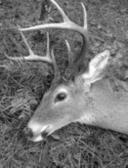
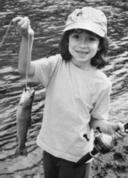
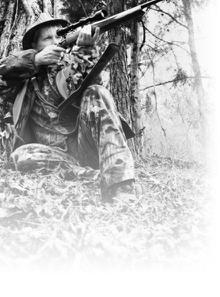
The NHFRA and its staff of scientists, biologists, and technicians are committed to the continued monitoring of Escanaba, Mystery, Nebish, Pallette, and Spruce lakes to better understand the responses of the lakes and their fish communities to environmental change. We are also committed to environmental change research on Wisconsin’s fisheries to conserve these important resources now and into the future. If you would like to directly participate in or learn more about NHFRA research, please pay us a visit at the Escanaba Lake Check Station. For more information about the NHFRA, please visit: https://dnr.wisconsin.gov/topic/research/AboutNHFRA and https://dnr.wisconsin.gov/topic/research/FishTheNHFRA.



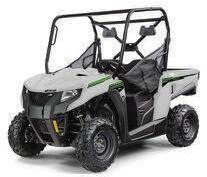





Linda Williams DNR FOREST HEALTH SPECIALIST WOODRUFF, WISCONSIN
Movement of firewood around the state can threaten the trees that you enjoy. You might know about insects that can be moved in firewood, but there are tree diseases that can move on firewood as well. One of them is the fungal pathogen that causes oak wilt.
Oak wilt is a deadly fungal disease that is uncommon in much of the Northwoods, including the Northern Highland - American Legion State Forest (NHAL). Visitors to the NHAL can help prevent new oak wilt infections by not moving firewood around the state and by not wounding living oak trees. If an oak is wounded from April to mid-July, sap-feeding beetles carrying the oak wilt fungus are attracted to the wound and can infect the tree while they are feeding. Once infected, the tree will usually be dead by the end of the year.
Oak wilt was first identified within NHAL in 2013, near the Clear Lake Campground. It was likely first introduced when diseased oak firewood was transported from southern or central Wisconsin, where oak wilt is more common. Since then, the deadly fungus has been discovered in other NHAL locations. Each time oak wilt is discovered, the DNR implements control measures as soon as possible to limit further impact.
Oak wilt can be difficult and costly to control after it’s established, so prevention is key. New oak wilt infections can be prevented by following these guidelines:
1. Don’t wound oaks from April 15-July 15 in the north (April 1-July 15 in southern Wisconsin).
2. Don’t move firewood that could harbor the fungus.
3. If you suspect a tree within the NHAL is dying from oak wilt, contact park staff or a forester.
4. Stay informed – find the latest oak wilt information at bit.ly/WIOakWilt.
You can help keep the forests of the Northwoods healthy for the benefit of Wisconsin’s wildlife and your enjoyment by preventing new oak wilt infections.
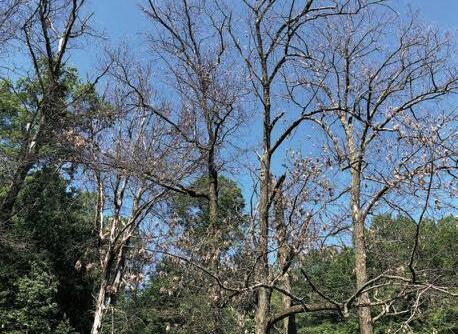
CONTRIBUTED PHOTOGRAPHS/WISCONSIN DNR
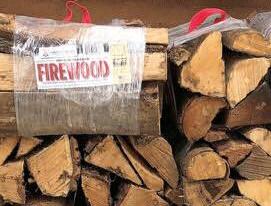
Scuffing the tree's bark, whether with a vehicle, trailer or hatchet, can attract beetles that can carry the oak wilt fungus.
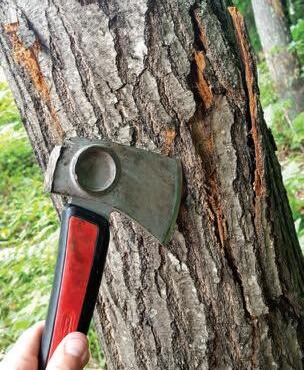


The high-risk period for oak wilt transmission is April 15July 15 in northern Wisconsin (April 1-July 15 in southern Wisconsin). Injuries to oak trees during that time of year, whether caused by humans or natural causes, can leave the trees susceptible to oak wilt. Trees may be injured by:
• Knife and hatchet wounds
Pounding nails into trees
• Hanging lanterns on trees
• Pruning oak branches or cutting oak stump sprouts
• Using tree spikes to climb a tree for pruning and maintenance
• Removing bark, which can damage the tissue underneath
• Bumping the tree or scuffing bark with a vehicle or trailer
•Root damage from driving over roots, parking on them, or mowing
• Cutting down neighboring trees that break branches on the oak as they fall
• Storm damage

Jordan Truitt NHAL FORESTER
If you spend time around the NHAL State Forest, chances are at some point you will come across trees that have been marked with paint in a variety of colors. These areas are often timber sales that have been or are in the process of being established by our foresters. Orange, red, blue, and green are a few of the colors you may see – but what in the world do they mean? This article will give a brief overview of the many colors that our foresters on the NHAL use when working on timber sales and what they typically represent. Keep in mind that on private, county, or federal land, the colors used could mean something entirely different!
Orange: Orange paint on NHAL timber sales is used to indicate trees that will eventually be cut. They are determined using an order of removal which includes the trees’ risk of mortality, crown vigor, stem form, spacing, and species.
Green: These trees are typically designated as “leave” trees. They will remain on site after the timber sale has been completed. Green marked trees often have wildlife value or will retain diversity of species after the timber harvest.
Red: If you see red paint, it will normally be marking a stand boundary or the edge of the timber sale. These red marked trees are left as the cutting progresses throughout the timber sale area and serve as a stop sign to loggers in the field.
Blue: On the NHAL, blue paint is used to mark the boundary line between state owned land and parcels

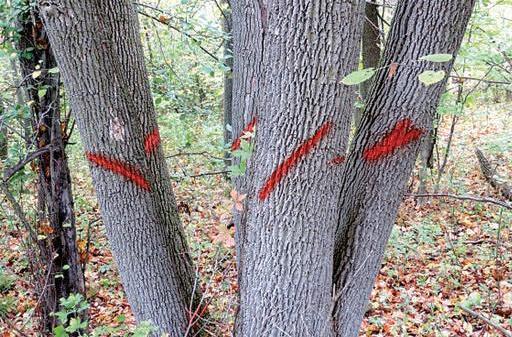
owned privately or by other agencies. Blue is also used to help identify corner pipes, bearing trees, and other survey markers to protect them during harvesting operations.
Purple: This color is less common but will sometimes be used to mark gaps that will have all trees within them harvested. Sometimes the
purple marked trees will be left, and other times the purple marked trees will be cut along with the trees within the gap.
Yellow: Another less common color on the NHAL. Yellow may be used to mark interior sale boundaries or RMZ’s (Riparian Management Zones). The perimeter boundary of plantations (areas that
will be prepped and planted with trees) are often marked with yellow paint.
Now while you are enjoying the beautiful NHAL State Forest, you will know the basics of how our foresters mark timber sale areas to sustainably manage this one-of-akind property for generations to come.