A review of Interpack 2026
Interpack 2026 signals the next chapter in the packaging industry
Onpack tech sparks marketing boom
Onpack’s direct-toobject revolution has been driving its success
A review of Interpack 2026
Interpack 2026 signals the next chapter in the packaging industry
Onpack tech sparks marketing boom
Onpack’s direct-toobject revolution has been driving its success
The job update tracking from the courier was comprehensive, so I was able to keep the client fully posted on delivery which was great. The programs arrived on Friday and look fab –we’re all so happy with them!
Thanks again for turning it around so quickly.
Dom 12/2/26 1
2
As a small business, we know we’re a very small fish in the industry. However small our orders may be, I truly appreciate more than anything that we’re not made to feel like a low priority in any way.
Our experience in the past with other companies have left us feeling a little helpless and not important due to our size, this is certainly not the case with Hero.
Liv 6/11/25
3
This job was delivered yesterday morning!!!! MIND BLOWING turn around time. Less than 24 hours!!!
You guys have really impressed us.
Gary 26/11/25
4
You’re a legendeverything was brilliantproduct through to service - and a day early in peak season.
I can’t thank you enough!
Steve 17/12/25
MCC’s financial restructure P05
Company wraps up financial restructure
Agfa and Hybrid partner P06
Join forces for folding carton production
Lemorau signs on UMS P06
Inks distributorship deal with UMS Australasia
Abbe finalises Oji integration P08
Comes with renewed customer focus
Zipform/PulPac ink new deal P08
Zipform becomes new PulPac licensee
Fuzed buys new HP machine P09
Invests in a new HP Indigo 7K
New name for Flint Group P09
Is now named Flint Group Packaging Solutions
Horizon Graphics buys laminating machine from Graffica P10
The deal is for a world-first, customised order
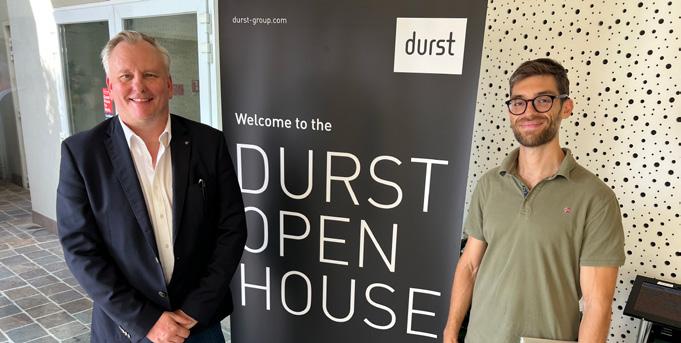
Durst hosts successful open house at Pixartprinting in Italy P12
Attendess saw many Durst machines in action
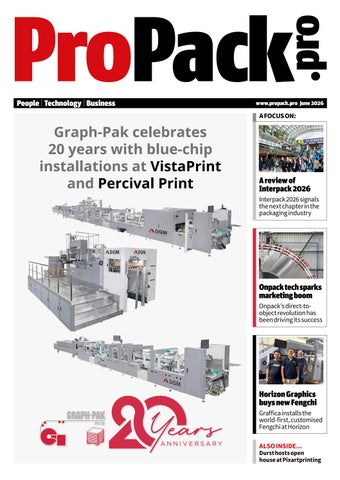
COVER STORY: VistaPrint and Percival Print make investments through Graph-Pak P14-15
Investments add value to the offerings that both companies provide their clients
New tech ignites marketing bonanza at Onpack P18-20
The direct-to-object revolution has been driving the success at Onpack
Interpack 2026: the next chapter in the packaging industry P22-25
Highlights the latest innovations, global collaborations, and future-focused solutions
AIP makes strong showing at Interpack P26-27
Participates at several panel discussions and catches up with exhibitors at the show
A/NZ winners shine at WorldStar Packaging Awards P28-29
A/NZ companies won 11 honours at the 2026 WorldStar Packaging Awards
QLM helps businesses scale with custom packaging P30
Supports the growth of Hydrate the People through its packaging
LOUPE becomes a tradeshow that reflects a wider industry P32-33
FINAT addresses the power of connection
AI is the analyst you should have already hired in your business P34
How to combine AI capability with strong commercial instinct
Australia takes second place in WorldStar student medal tally P35
Local innovations win big at the awards
Personalised packaging becomes a strategic brand tool P36
Personalisation is no longer optional
Rigid plastic packaging market defends market share P37
An analysis of rigid plastic packaging trends
Pack diary P38
A guide to upcoming events around the world


With the industry continuing to evolve at a fast pace, this month’s issue of ProPack.pro reflects a sector embracing innovation, collaboration, and transformation. At Interpack 2026, one message rang clear: automation, sustainability, and connected workflows are today’s competitive advantage. From smart packaging solutions and advanced converting technologies to integrated production ecosystems, exhibitors demonstrated how rapidly the industry is adapting to changing consumer demands and economic pressures.
In this issue, we also spotlight the technologies, partnerships, and market trends that shape the next chapter for packaging, while celebrating businesses that drive the industry forward. We hope you enjoy the read.

Multi-Color Corporation (MCC) has successfully completed its financial restructuring process and emergence from its prepackaged Chapter 11 process.
The company’s prepackaged restructuring was said to reduce net debt by approximately $3.8 billion, reduce annualised cash interest expense by more than $330 million, and extend long-term debt maturities to 2033.
The company said more than 99 per cent of voting stakeholders voted to accept its Plan of Reorganisation.
Upon emergence, MCC also received a significant $889 million new common and preferred equity investment from CD&R and a group of MCC’s existing secured lenders to support its long-term growth and investment.
“Today marks a significant milestone for MCC, as well as our customers, teammates, and partners
who have supported us throughout this process,” MCC president and CEO Hassan Rmaile said.
“Over the last several months, we continued to diligently serve and win clients, sharpened our operations, and now – with a significantly stronger balance sheet – we have the financial foundation needed to accelerate investing in the capabilities that make us the global partner of choice for innovative, premium labelling solutions across verticals.
“We enter this next chapter focused on driving profitable growth, ramping operational excellence, and investing in our people and culture as we work to deliver sustainable long-term value for all stakeholders.”
With the financial restructuring completed, CD&R remains MCC’s majority owner. CD&R is joined by a certain number of MCC’s existing lenders as minority equity holders.


As brand owners increasingly demand shorter runs, faster turnaround times, and greater versioning, folding carton manufacturers are under growing pressure to evaluate traditional production models.
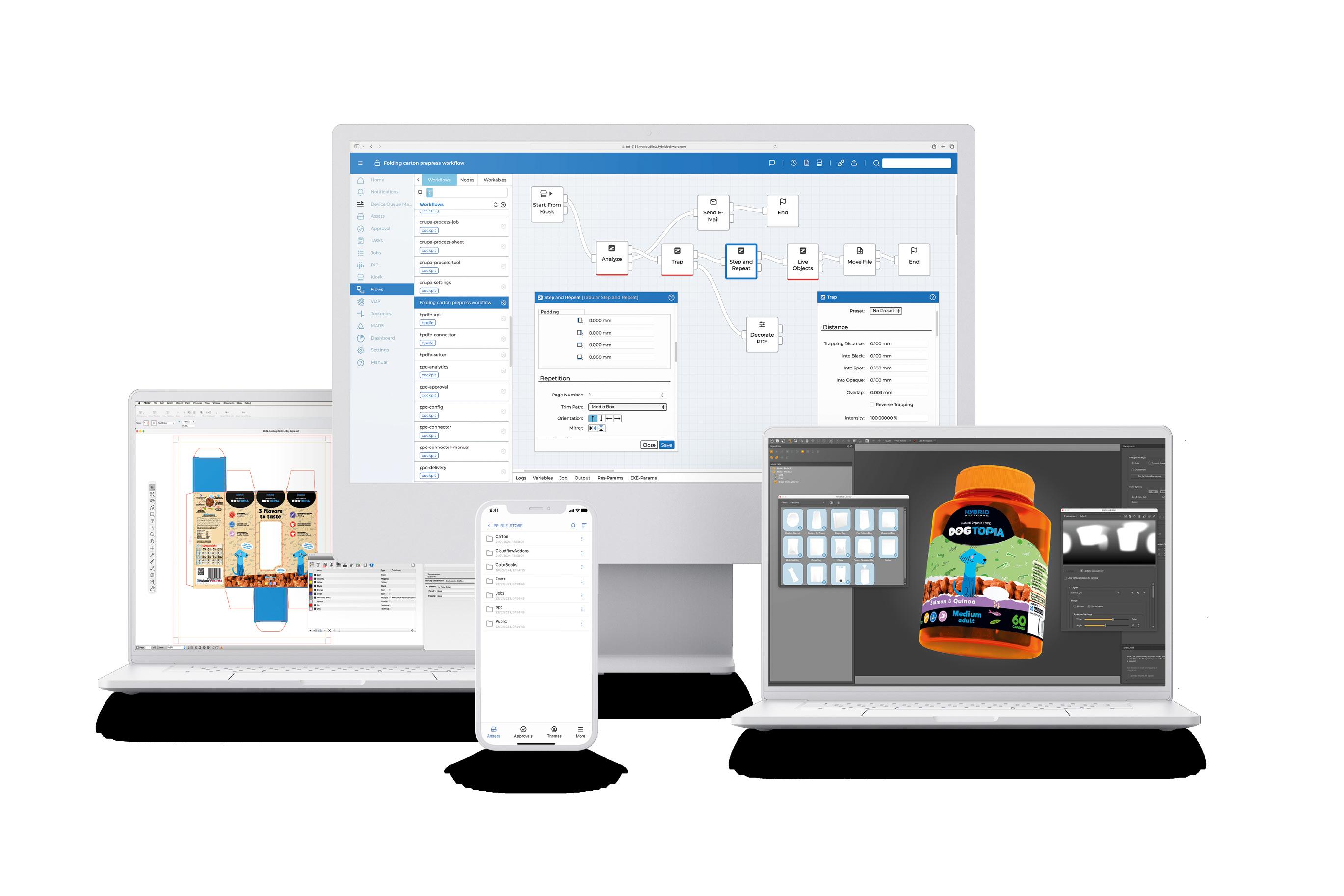
The integration of Hybrid Software’s packaging design, prepress, and digital front end workflow software with Agfa’s digital printing solutions – notably the SpeedSet Orca single-pass digital packaging press and Asanti software – is enabling converters to produce folding cartons with changing graphics, text, languages, or artwork from carton to carton.
Together, Agfa and Hybrid Software can provide a scalable digital production environment while maintaining the high quality and consistency required for packaging applications.
Agfa’s SpeedSet Orca digital folding carton press brings the advantages of digital production – including rapid job changeovers and reduced waste – into highvolume folding carton environments.
Lemorau, manufacturer of finishing machines, has inked a distributorship deal with UMS Australasia, enabling the latter to distribute its range of products in Australia and New Zealand.
According to the company, this partnership represents a key milestone in expanding Lemorau’s footprint across Australia and New Zealand, bringing together its expertise in label converting and finishing with UMS Australasia’s strong local insight and customer-focused support.
“This collaboration marks an important step in strengthening Lemorau’s presence in Australia and New Zealand, combining our expertise in label converting and finishing with UMS Australasia’s local market knowledge and close customer support,” Lemorau said.
“Together, we look forward to supporting the Australasian market with efficient solutions, proximity, and a long-term partnership approach.”
UMS Australasia is headed by director Sean Keogh, who recently visited Lemorau’s
SmartDFE from Hybrid Software’s OEM business can be integrated with Agfa’s digital printing solutions
Designed to operate where traditional production models begin to fall short, this apex predator combines digital primer, advanced water-based inks, and inline varnish. Broad substrate compatibility across paper and micro-flute supports a wide range of packaging applications within one digital production platform.
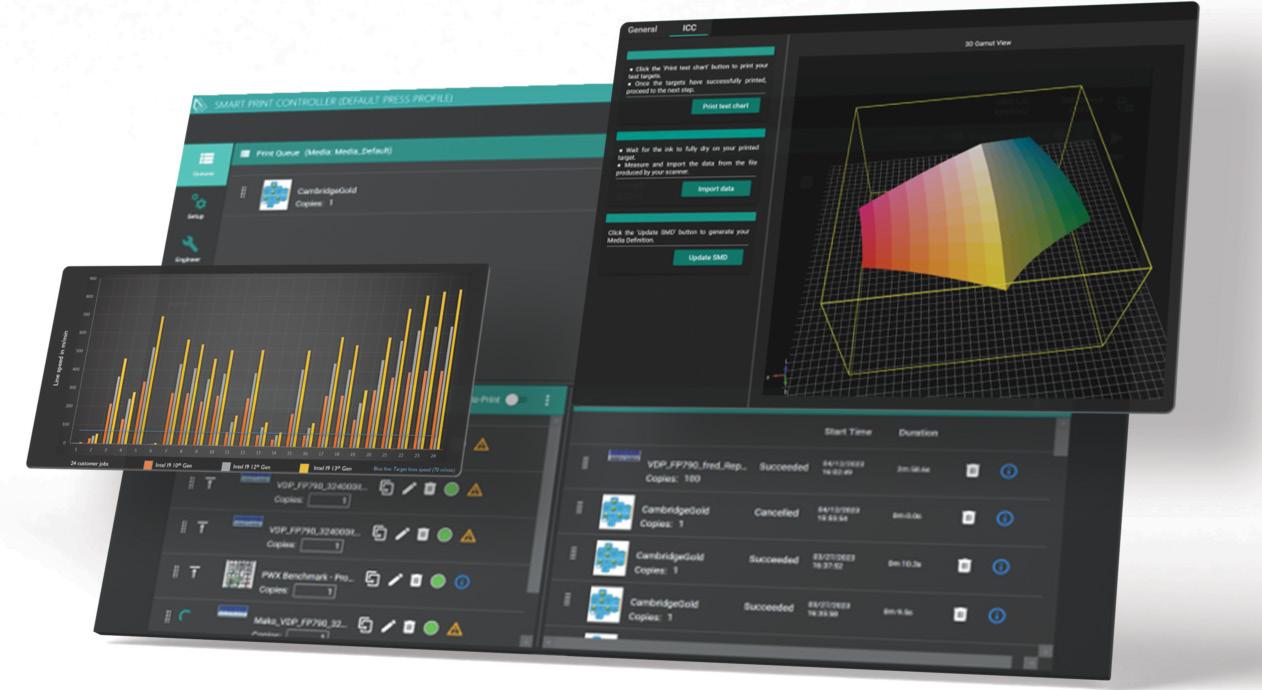
The integration of SmartDFE from Hybrid Software’s OEM business, Helix, enables complex inline variable data printing. SmartDFE uses patented AI software to optimise system configuration in real time, resulting in faster, more efficient production – even for highly versioned jobs. The addition of colour management software from Hybrid’s ColorLogic ensures
consistently accurate brand colours across versions and substrates.
Agfa head of software digital printing systems Michael Dupré said, “This collaboration reflects a shared commitment to helping folding carton producers navigate the shift from analogue to digital production, especially as demand for versioning and customisation continues to grow”.
Hybrid Software Helix OEM sales director EMEA Lawrence Geere added, “By combining the expertise of the Agfa and Hybrid Software engineering teams, we aim to help converters unlock the full potential of digital production. This collaboration provides a clear, practical path to compete in a rapidly evolving market”.
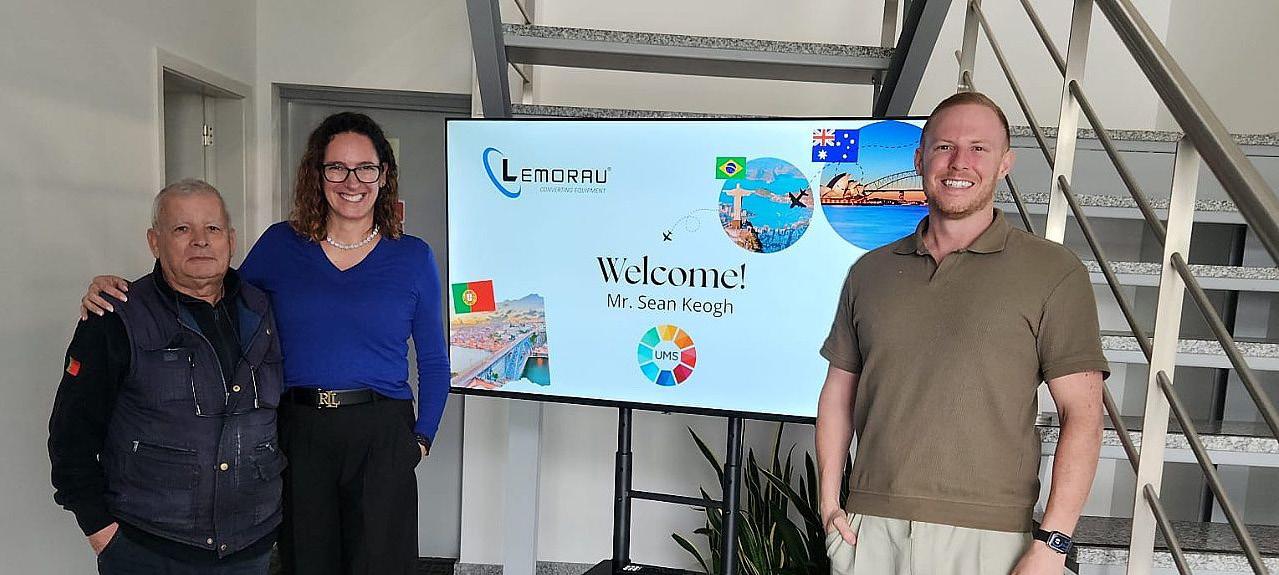
headquarters in Portugal to solidify the deal.
“This collaboration brings Lemorau’s 39 years of label converting and finishing expertise to our region for the first time –delivering a dedicated local presence with faster access, service and support, training, and business development for label converters across Australia and New Zealand,” Keogh said.
“Lemorau’s portfolio… is engineered for efficiency, long-term reliability, and costeffective performance. These machines help converters boost productivity, streamline operations, and stay competitive in today’s market.
“This partnership marks the next stage in UMS Australasia’s ongoing commitment to
supporting our label converter customers with world-class, reliable solutions tailored to their needs.”
With a legacy spanning over 39 years, Lemorau has solidified its position as a pioneer in the label industry. Founded in 1987, the company has been at the forefront of designing and manufacturing finishing machines that aim to redefine the standards of excellence in the sector.
The company’s offerings include advanced inspection slitter rewinders, rotary and semi-rotary die cutters, and modular finishing equipment.
Lemorau is now present in more than 80 countries across all five continents.


Enterprise workflows
Native PDF editors
Color management
3D prototyping & visualization
High-speed RIPs and DFEs
Printheads electronics




complete, with renewed
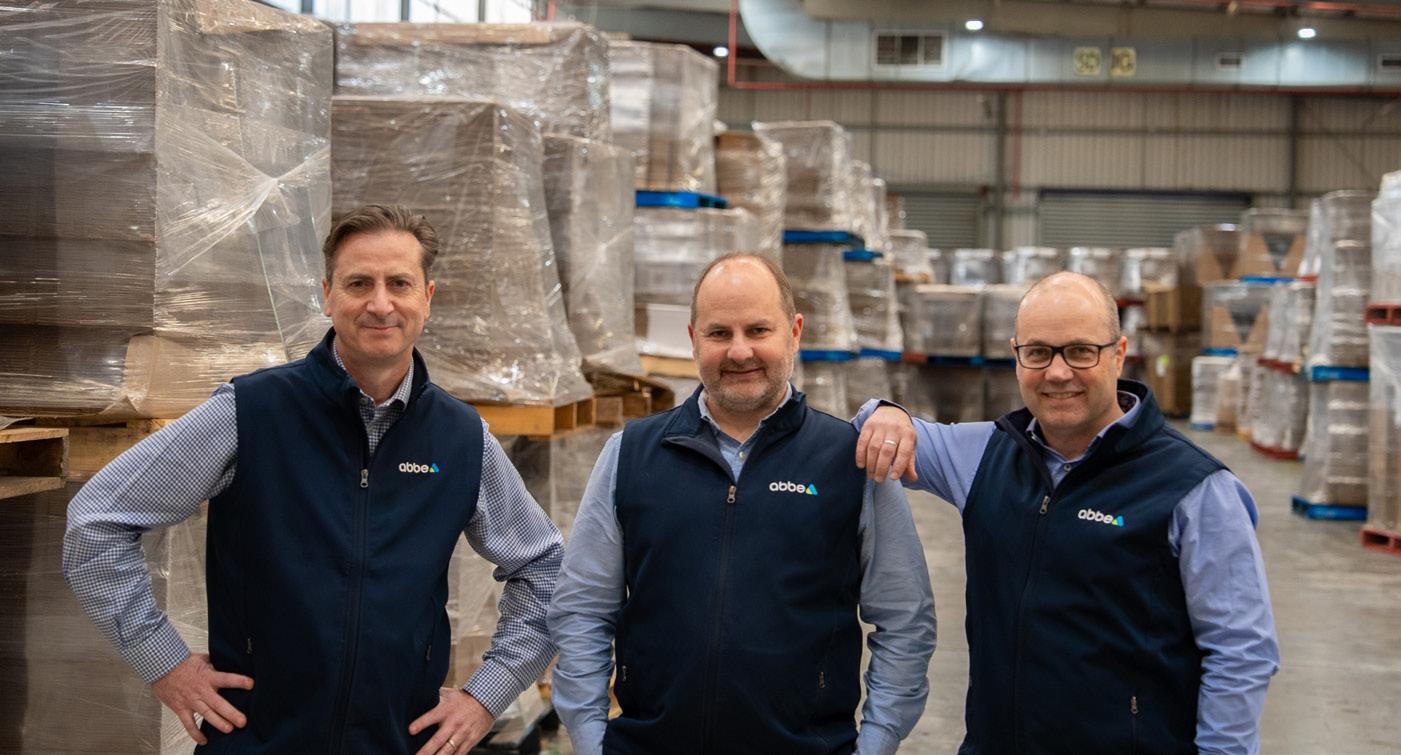
Following its landmark acquisition of Oji Fibre Solutions in November 2025, Australian independent, family-owned packaging manufacturer Abbe has signalled the successful and complete integration of the business into its wider national operations.
Blending two operational systems and welcoming over 300 new staff members, Abbe has delivered this transition seamlessly, ensuring minimal disruption to the market.
The company said the integration was not merely an acquisition of physical assets, but a strategic integration of industry expertise and manufacturing capabilities, which are now fully embedded across its systems and workforce.
It added that with this process finalised, Abbe is positioned more strongly than ever to service the market with the care and culture of a family-owned and operated business.
“The complete integration of the Oji Fibre Solutions Australian business marks a transformative milestone for Abbe,” Abbe CEO Anthony O’Sullivan said.
“We haven’t just expanded our footprint; we have unified an incredible pool of talent and manufacturing capability, allowing us to offer a genuinely independent, robust, and
PulPac has signed Australia-based Zipform Packaging as a new licensee of its Dry Molded Fiber technology, marking a step forward in scaling fibre-based solutions into demanding food packaging applications.
The license agreement gives Zipform access to PulPac’s patented technology, enabling the company to develop and industrialise new fibre-based packaging solutions within its existing business and customer base.
Building on this, Zipform is developing a Dry Molded Fiber meat tray designed to meet the specific requirements of fresh food packaging, supported by R&D funding from Meat & Livestock Australia.
The product development is being carried out in collaboration with PulPac’s partner, PA Consulting.
The first proof of concept has been tested with selected industry players, showing positive
national alternative for corrugated packaging.
“The true measure of this integration was how smoothly our dedicated team executed it for our customers.
“We are now bigger and better equipped than ever, but our core DNA and market focus hasn’t changed. We have the scale to serve any customer, but the agility to cut through red tape and keep our fundamental promise: making packaging easy for our customers.”
A cornerstone of Abbe’s national growth strategy is the addition of its Yatala manufacturing plant, establishing a permanent footprint for the business in Queensland.
The Yatala site expands Abbe’s overall square meterage and technological capabilities, supporting local job creation while bolstering the supply chain for businesses across the eastern seaboard. Forthe Queensland market, this means
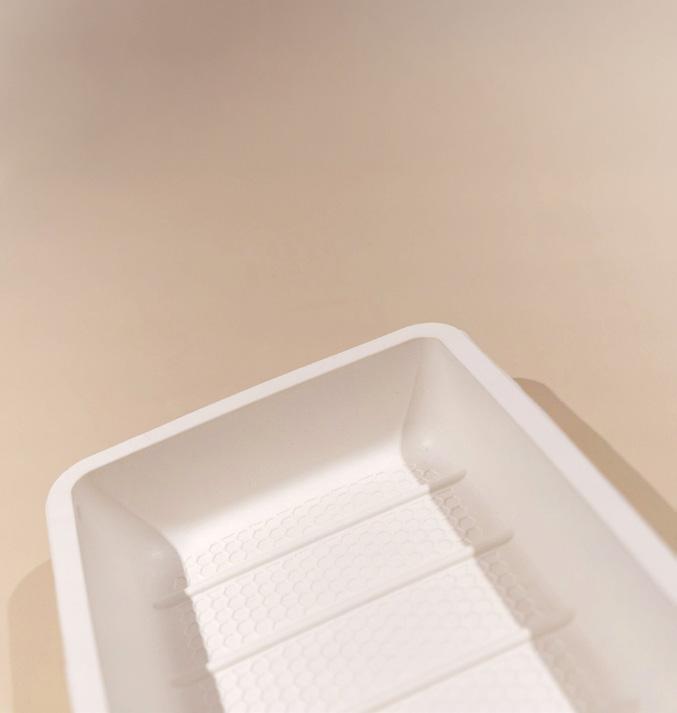
Building on the partnership with PulPac, Zipform is developing a Dry Molded Fiber meat tray
access to a modern manufacturing hub that operates with speed, responsiveness, and localised care.
For Abbe’s customers in Victoria and New South Wales, the success of this acquisition translates to a doubling of corrugated capacity in each state, increasing security of supply and improving flexibility, while enabling shorter lead times and enhanced delivery in full, on time.
While the expansion significantly increases its capacity and reach, Abbe said it remains committed to the core values that built the business: sustainable packaging design, rapid innovation, and deep, customer-centric partnerships with Australian brands.
It also added the success of the acquisition has brought a renewed enthusiasm nationally, and a shared, forward-looking focus on delivering outstanding results.
results. The next phase includes broader market validation, followed by industrialisation and planned investment in production capacity via PulPac’s partner network.
This approach illustrates how PulPac’s licensing model is put into practice, enabling partners to move from concept to commercial applications by combining technology access with industrial scale-up.
Zipform CEO David Bigley said, “We at Zipform Packaging are very excited about this development which demonstrates the forming capabilities of dry moulded fibre”.
As part of the development, Zipform is also exploring how functionality can be built directly into the packaging. One example is integrated liquid (purge) management within the tray structure, reducing or potentially eliminating the need for a separate absorbent pad and simplifying the overall packaging system.
PulPac chief commercial officer Sanna Fager said, “This is exactly how we see Dry Molded Fiber scaling globally, through our licensees who take the technology into real applications. Zipform combines strong packaging expertise with a clear focus on solving customer challenges, and this project shows how performance, design and functionality can come together in a commercially viable solution”.
For converters and brands, the development highlights a practical shift –from adding components to solve individual requirements – to designing performance directly into the product from the start.
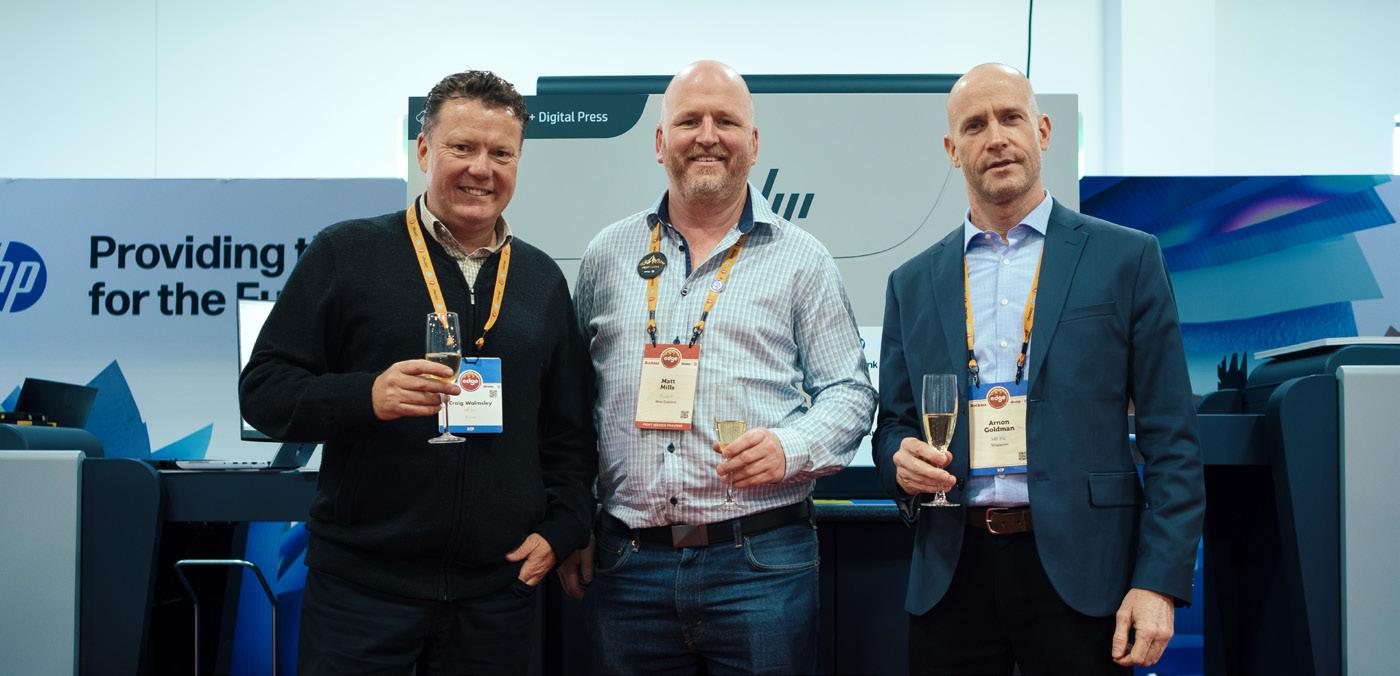
New Zealand print agency Fuzed has bought an HP Indigo 7K Digital Press, reinforcing its commitment to premium digital print and continued growth in the New Zealand market. The investment was confirmed during the recent Dscoop Edge event held in Denver.
Fuzed managing director Matt Mills attended the event in his role as New Zealand Dscoop chairman, joining HP Indigo users from around the world.
According to Mills, this investment underscores both Fuzed’s commitment to the latest HP Indigo capability and its position within a progressive, internationally connected print community.
“This investment here reflects our ambition. The HP Indigo 7K gives us more control, more consistency, and more capacity to produce high-value, complex work. It opens up new opportunities across premium applications while strengthening what we already do well. For us, it is a clear step forward, not just in capability, but in how we deliver for our clients,” Mills said.
The HP Indigo 7K is globally recognised for its colour consistency, substrate versatility, and production stability, enabling premium
short-run, personalised and high-impact commercial applications.
The investment also reflects broader confidence across New Zealand, where commercial printers continue to prioritise high-value digital capability, automation and shorter-run production models.
Currie Group New Zealand country manager Craig Paul said this demonstrates that A/NZ businesses are investing with intent and remaining closely connected to global innovation, and that the commitment sends a strong signal for the local industry.
“Fuzed is a business that consistently invests ahead of the curve. This move isn’t simply about adding equipment. It’s about reinforcing their position as a premium digital print provider in New Zealand,” Paul said.
“We are seeing continued confidence from progressive ANZ businesses who understand that high-value digital production is central
to future growth. Matt and his team are leaning into that opportunity.
“This investment reinforces the strength of the partnership between Fuzed, HP, and Currie Group, and the shared focus on delivering high-value digital print capability.”
HP Industrial Print A/NZ country manager Craig Walmsley said the acquisition reflects the ongoing transformation of commercial print across the region.
“Across A/NZ, we are seeing a clear shift toward higher-value, digitally driven production. Customers are demanding shorter runs, faster turnaround, versioning and measurable quality, and the HP Indigo platform is built precisely for that environment,” Walmsley said.
“Fuzed’s decision to invest reinforces the strength of the HP Indigo ecosystem and demonstrates the confidence progressive printers have in a digitally enabled future.”
Flint Group moves forward with a new name and focus
For more than a century, Flint Group has been a well-known name for the supply of printing inks and coatings. Now, the company has unveiled the next step in its journey with its new name – Flint Group Packaging Solutions.
The company states its new name reflects its commitment to the packaging industry and marks a key milestone in its strategic transformation.
While Flint Group has focused for some time on delivering expertise and innovation in packaging, the company said the brand rename to Flint Group Packaging Solutions consolidates its move forward in this area.
Flint Group Packaging Solutions has stated that customers can be assured nothing else will change in the way its team works, with the same teams, products, and service all still in place.
The major change in this name change is, however, a move forward to a brand identity

which embodies the company’s packagingfirst strategy.
Flint Group Packaging Solutions CEO Pepyn Dinandt said, “We are seeing a market evolution across substrates, packaging formats, and coatings to enhance recyclability while replacing complex structures.
“As a true platform supplier, we are committed to leading with innovation, sustainability, and service, delivering solutions that meet the needs of packaging printers and brand owners today and in the future.
“We have evolved into a solutions-driven
organisation committed to packaging, shaped by the expertise and dedication of our global teams. We have the scale, portfolio, and technical expertise to navigate the dynamic landscape of packaging and grow alongside our customers.
“Our future lies in the attractive packaging market with its high exposure to resilient, growing consumer sectors. Flint Group Packaging Solutions is well-positioned to lead the way.”
While this rebrand looks to the future, it also reflects back to the Flint Group’s roots in the world of print. From the company’s early beginnings, Flint Group was carrying out publication printing and then growth led the company to become very much involved in the sale of inks and coatings.
As printing evolved and the prominence of packaging grew into a key growth engine for global brands, Flint Group adapted by investing in technologies, materials, and people to help meet the demands of key stakeholders – brands, retailers, and consumers.
The result is the Flint Group Packaging Solutions, which has launched as a unified global leader in inks, coatings, services, and equipment, working across the major packaging segments.
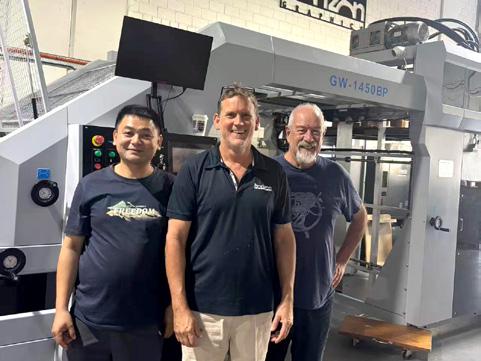
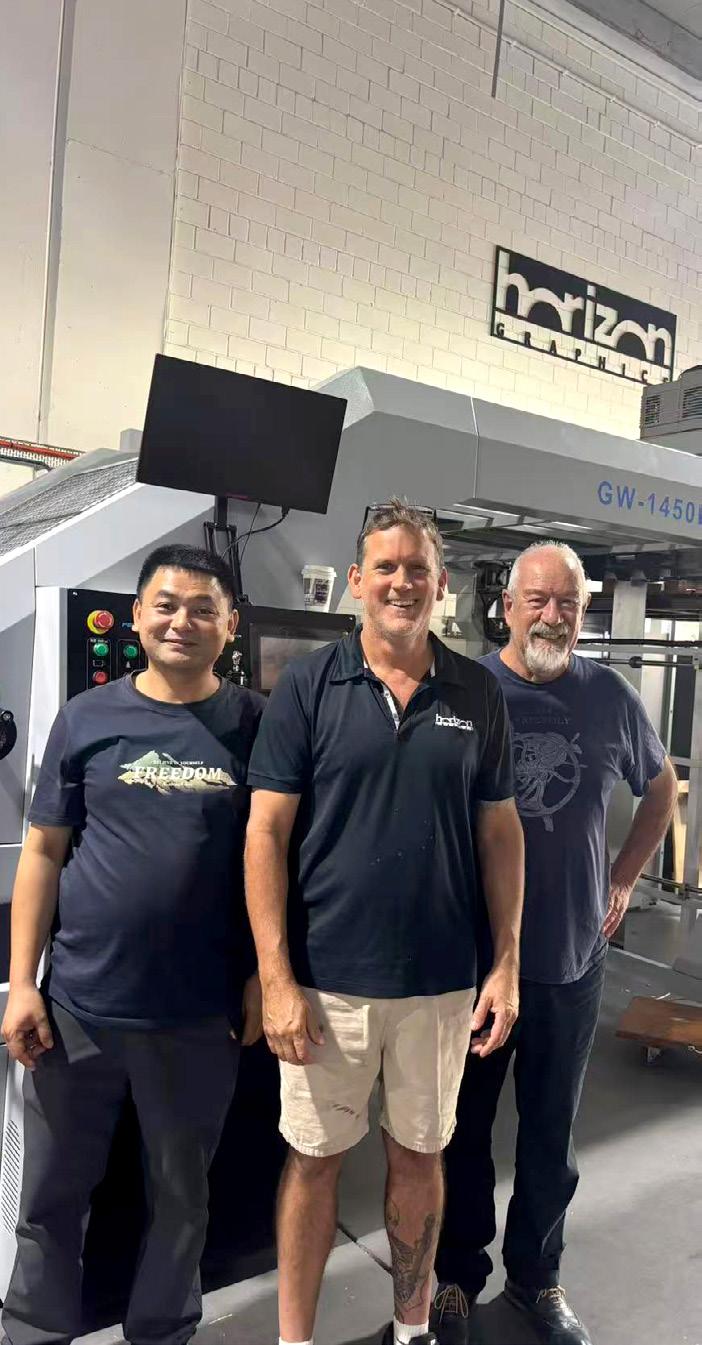
Since the install, Horizon Graphics has improved its operations with efficiency, quicker setups, faster production times, and an ease on the operator
Horizon Graphics, a Sydney-based trade supplier specialising in screen-printed coatings, digital spot UV, mounting, and die cutting, has installed a world-first, customised laminating machine through Graffica. The deal was for a customised Fengchi GW 1450 A Series, with the inclusion of a new sheet size of SRA3 (up to 1400mm), which Horizon Graphics purchased earlier this year and installed in May.
Graffica director Neil Southerington said, “Fengchi typically doesn’t make machines to take on SRA3. But we had an enquiry from Horizon Graphics that required us to be able to process A3 size as well as A1 and A2.
“Plus, our standard machine was too long for the allocated space. But Fengchi took all of these challenges on board and produced a customised machine based on Horizon Graphics’ requirements – with the works and delivery all done within 40 days. And the shortened machine was without detriment to quality or performance.”
Horizon Graphics owner Adam Mezgec said the new deal with Graffica was forged when the company was looking for faster, quicker options for its legacy mounting machine.
“It was time for us to renew the machine we had, so we did some research over the six months prior. We then did a comparison of the technical specifications and costings of several similar machines, and the Fengchi came up top in value for product,” he said.
“The Fengchi’s speed, ease of setup, and suitability for the range of substrates that we mount on was a further appeal to us. We were then introduced to Neil by someone within the industry, and we went through our prerequisites with him – including the need to take on SRA3 and having a smaller footprint to fit our factory – and were very happy to hear they could make the machine to suit our needs.”
The Fengchi GW 1450 is a high-speed flute laminator that is ideal for medium to large-
scale corrugated packaging manufacturers. It features a maximum speed of 16,000 sheets per hour for 24/7 production to reduce lead times and increase capacity. A ±1.0mm accuracy reduces material waste and improves quality.
Advanced automation ensures stable and reliable performance, while the machine enables jobs to be switched in just two to five minutes, resulting in minimal downtime. In addition, its servo motors and drives are built with a 35 per cent load reserve for more than 15 years of consistent performance.
Since the install, Horizon Graphics has improved its operations with efficiency, quicker setups, faster production times, and an ease on the operator.
“We can set up now in about a quarter of the time of what we used to and run speeds at probably five or six times as fast as before. The cost of running is a saving too, as it uses less glue,” Mezgec said.
“It’s also a lot more user-friendly for our staff as it’s all digital and servo-driven – we just need to punch in the sheet size, and all the adjustments are done electronically.
“The industry of today wants delivery on-time, so with the Fengchi GW 1450, we can now not only keep customer job requirements on-time and meet deadlines but also have the capacity to take on more work while looking after the welfare of our staff.
“The Fengchi GW 1450 requires no tools and features a touch screen and servo motors that result in very fast set-ups and high outputs,” Southerington added.
“With SRA3 being a popular digital print size, and usually in small lots, fast job changes are important. Being a trade printer, Horizon has some challenging jobs too, such as back-to-back printed cards, so this machine best delivers on Horizon Graphics’ needs.
“The installation and training also went smoothly. It helps when you have a very experienced team to work with. This install in Sydney has given Graffica a trifecta – in the first five months of 2026, we’ve had machines installed in Melbourne, Auckland, and Sydney.”
According to Mezgec, Horizon Graphics is looking forward to building its new relationship with Graffica over time and strengthening the collaboration further.
“It is a new partnership, but Neil was very informative and easy to work with. This deal started off as one but could and will continue as we need more products or anything else in the Fengchi world in future,” he said.
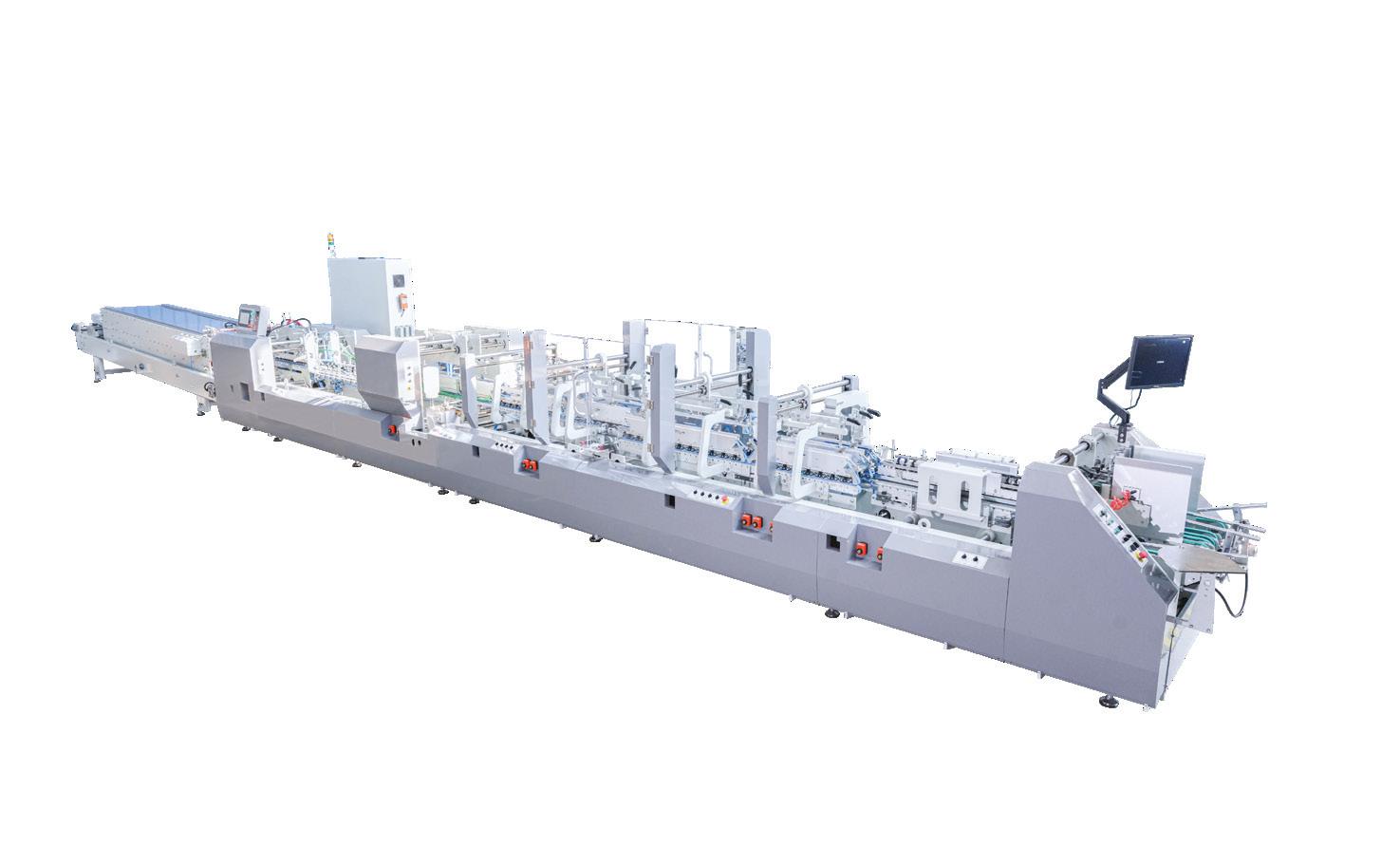
See our range of folding box gluers, board slitters, creasing machines, auto loaders, unloading cutting tables and more.

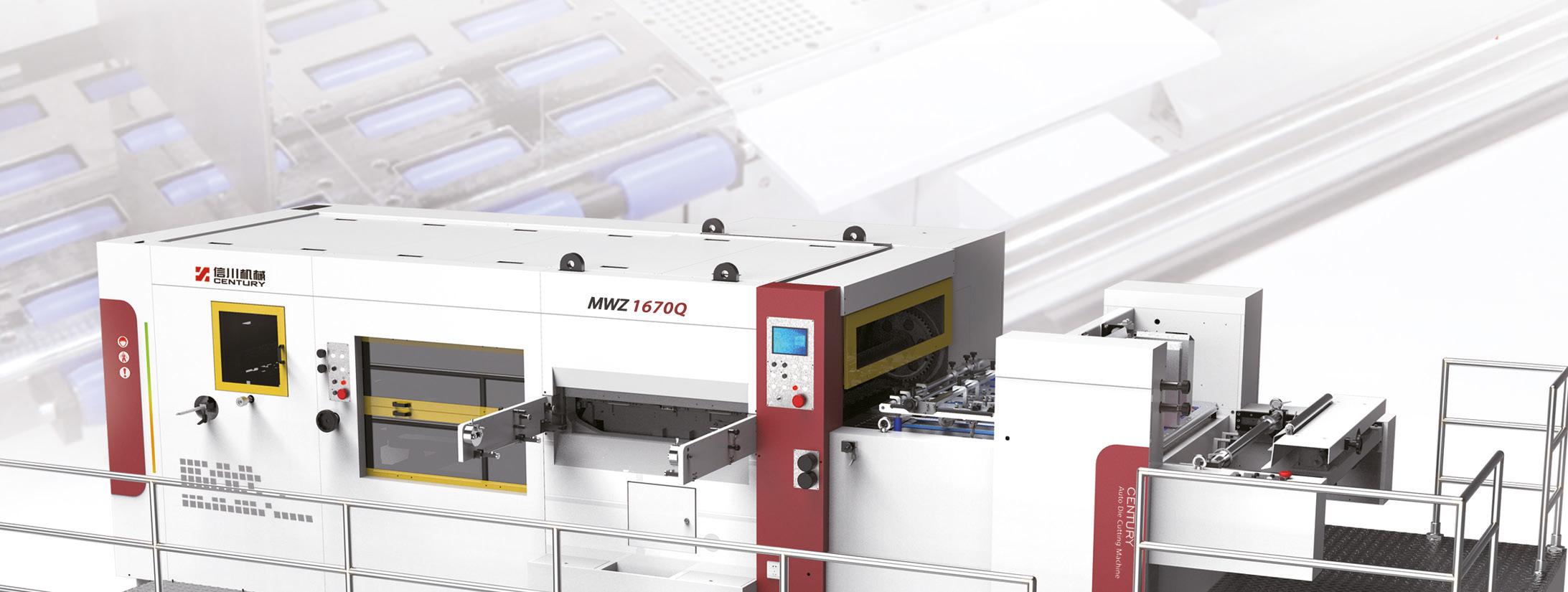
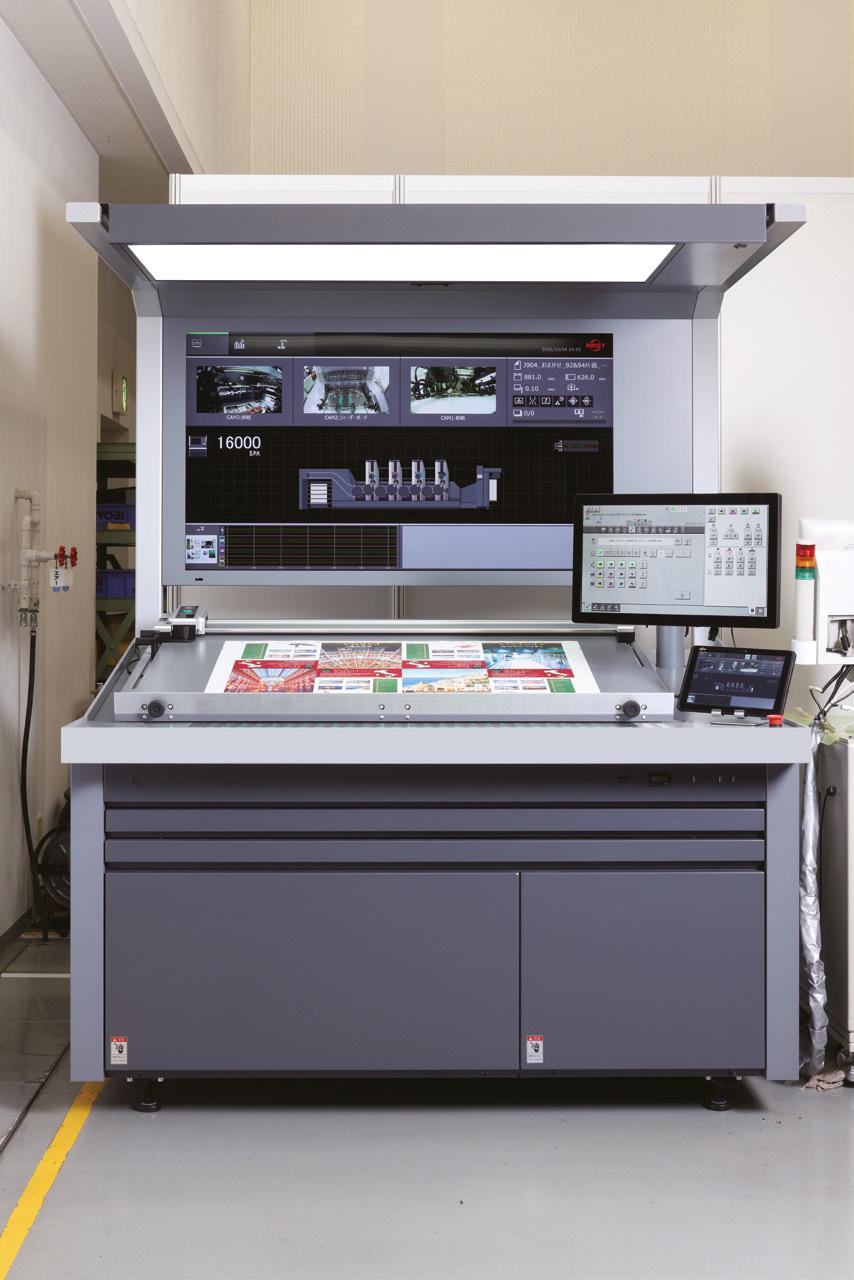
Fengchi GW Series, 16,000 SPH
• Handles single face, F flute up to 10mm
• Top sheet range: 120 gsm – 700 gsm
• Single-sided, double-sided, and partial laminating 3-minute job changeover
• Available sizes: 1060 / 1450 / 1700 / 2200
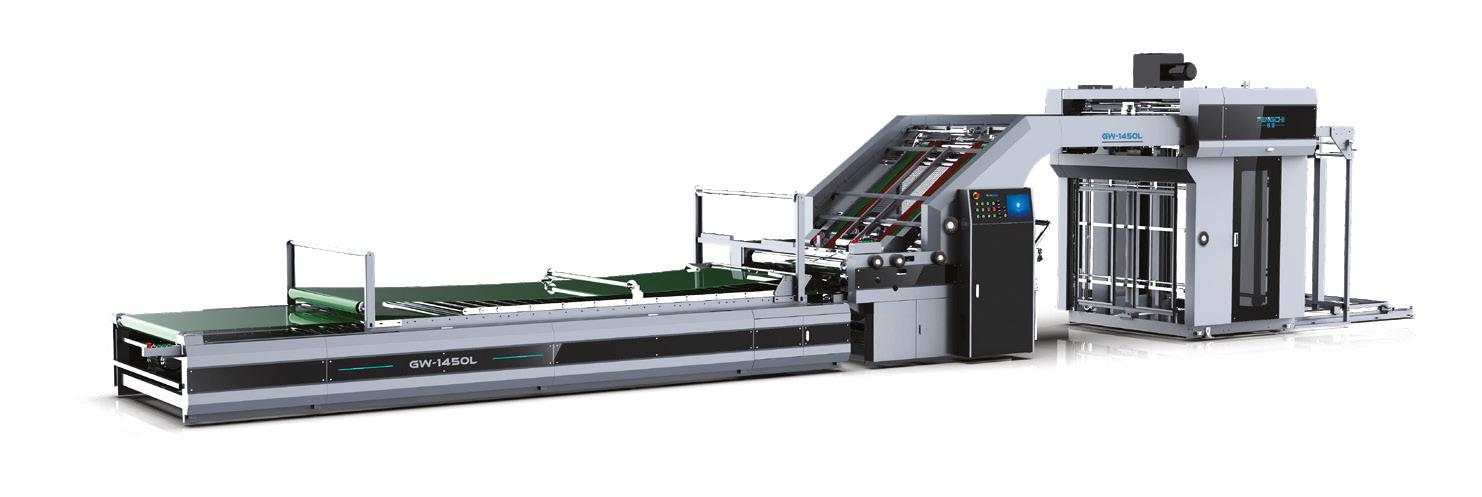
Available in 650, 850, and 1100 with auto-set and job recall. Features crash-lock and 4/6 point gluing. Optional pre-feeder/ packer operates at 450 M/min.
The CorrFold range is also available in 1450, 1700, 2100, 2300, 2800, and 3200, also with crash-lock and 4/6 point gluing. Includes auto-set/recall, pre-creasing unit, and pre-feeder/stacking, operating at 300 M/min.
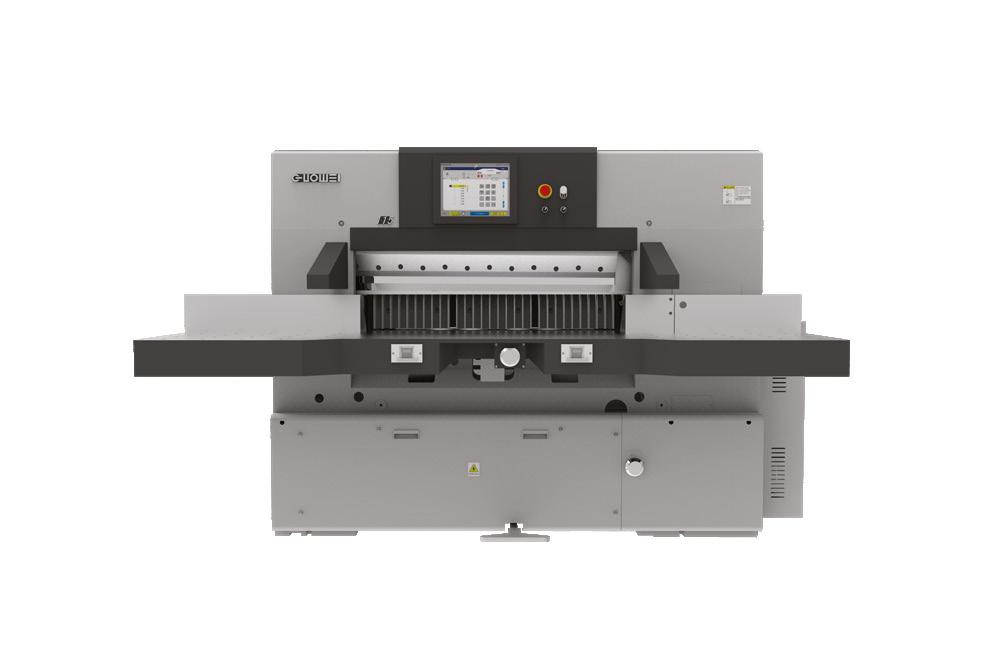
• Available from 52 cm to 300 cm, and everything in between
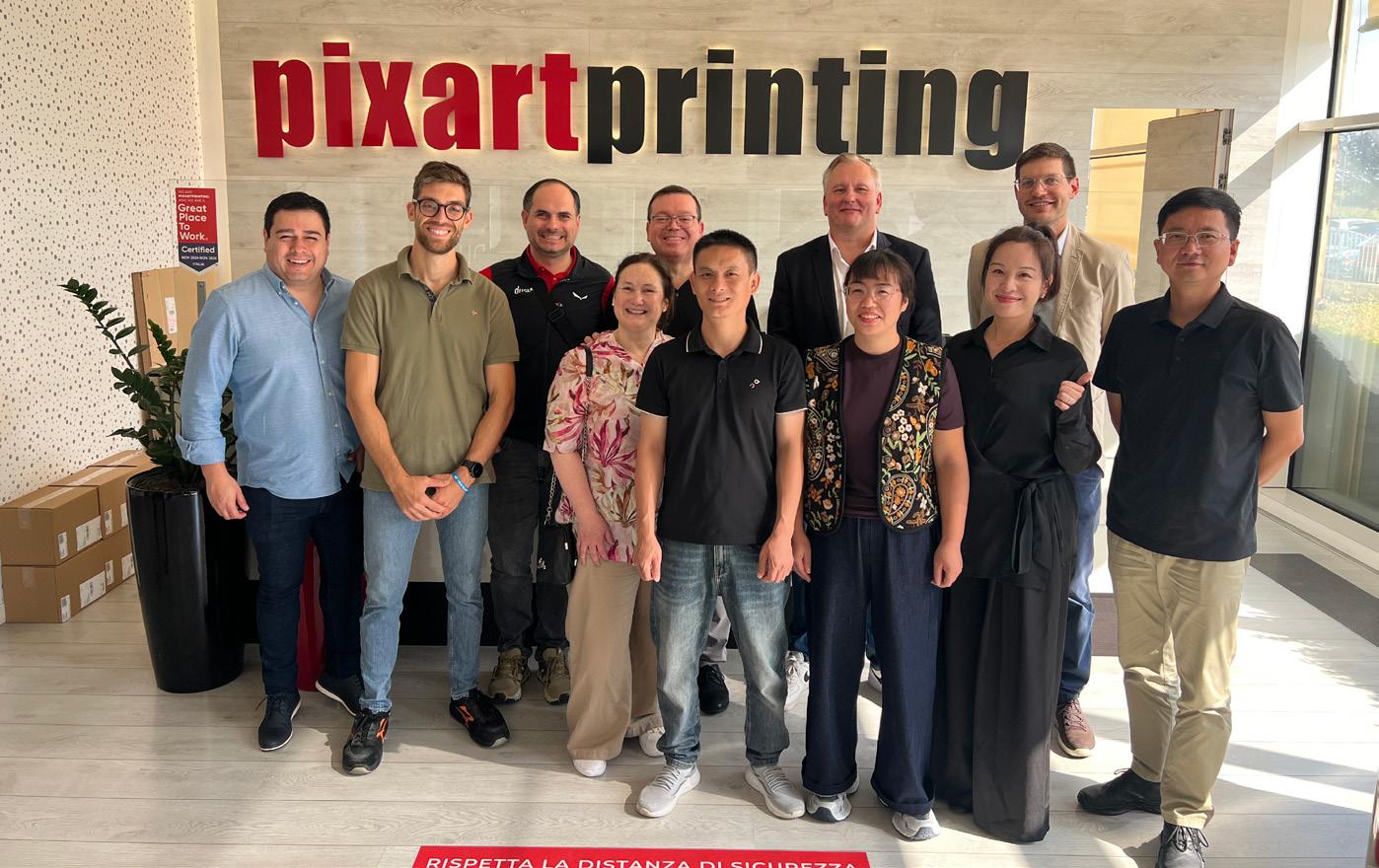
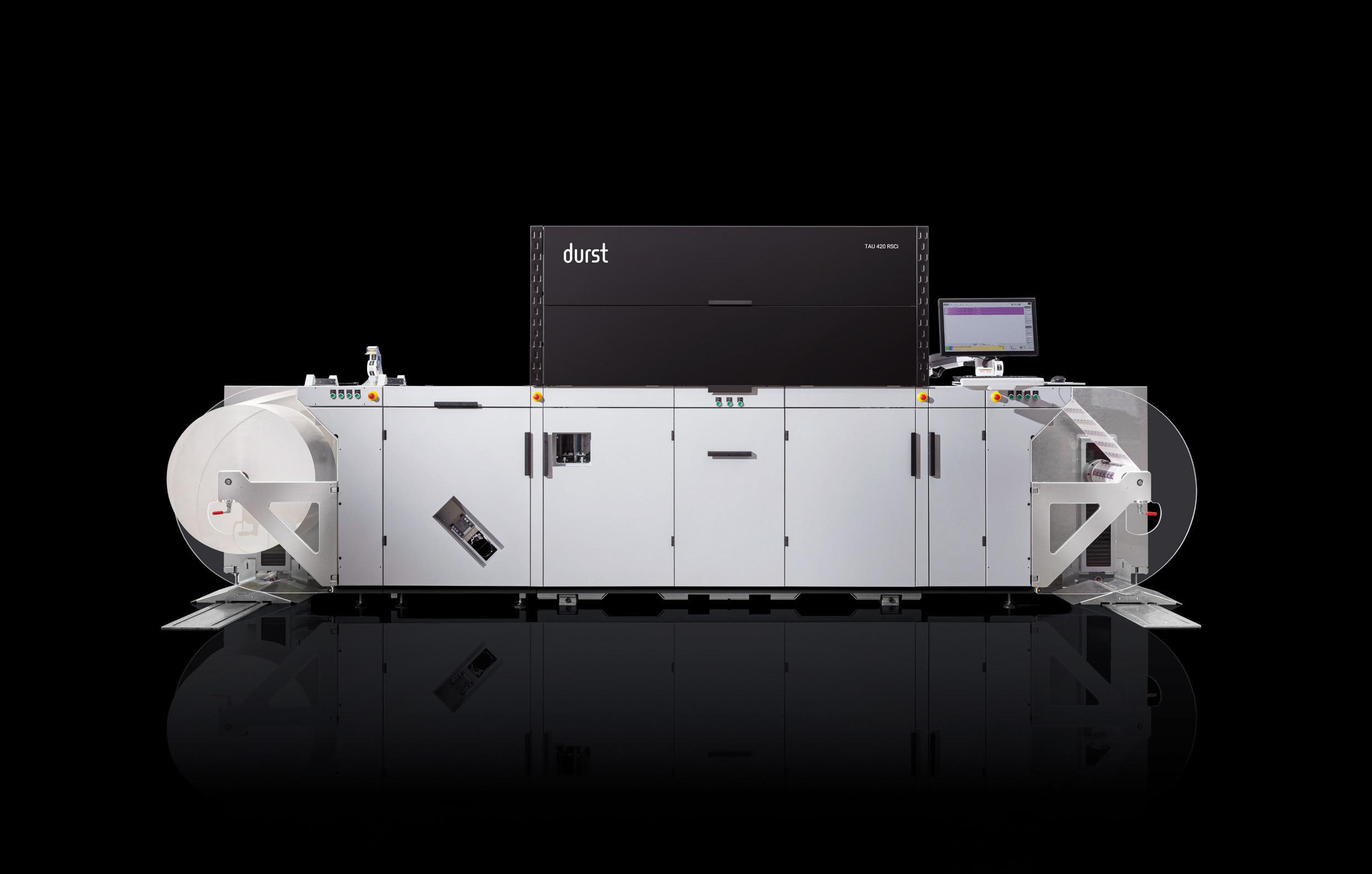
Attendees were able to see two Durst label printers and a number of Durst P5 machines in operation at Pixartprinting and learn more about the business
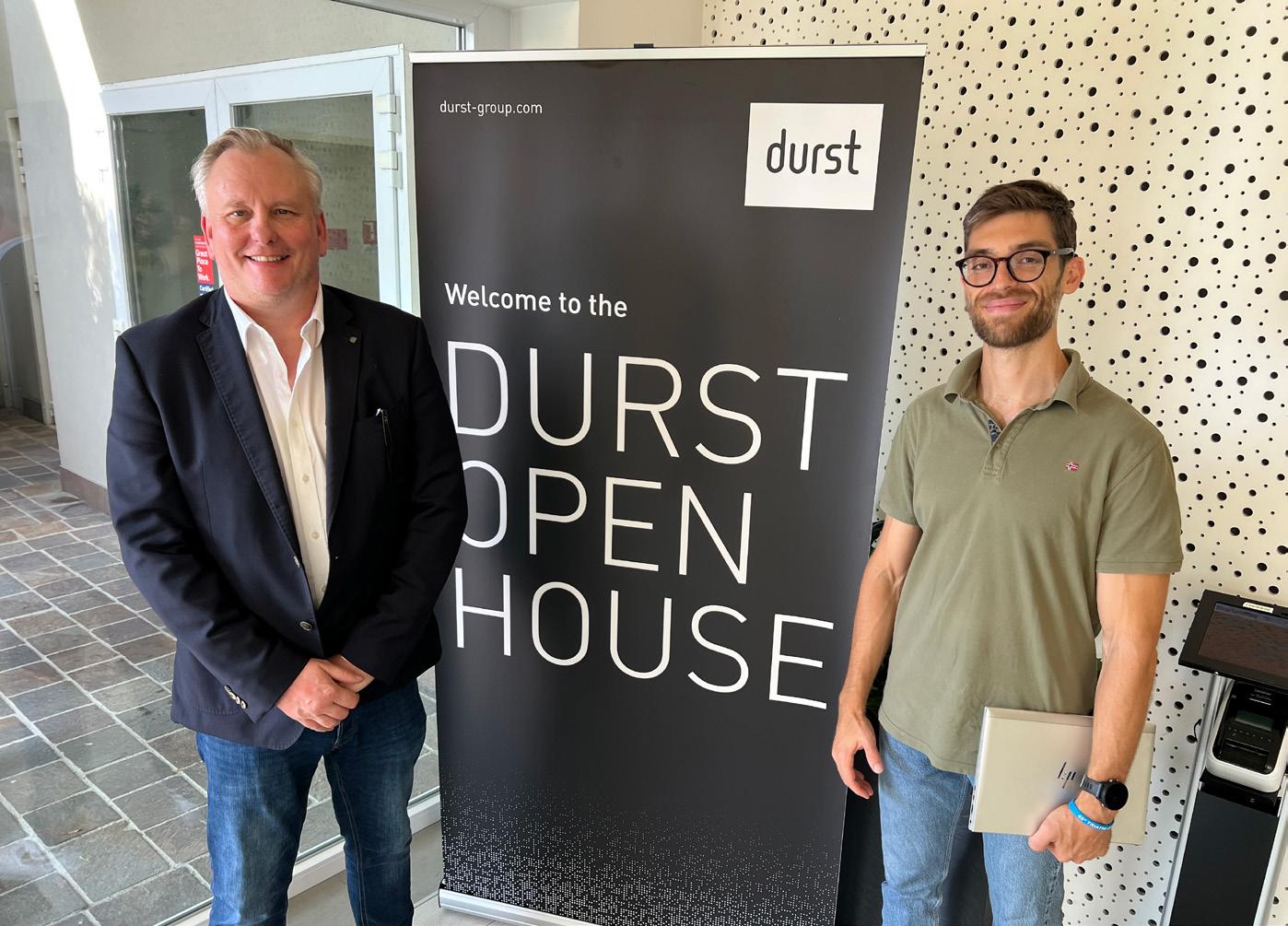
Durst recently hosted an open house event for international visitors at Pixartprinting near Venice in Italy.
Pixartprinting was founded 31 years ago and is now part of the Ireland-based Cimpress Group with over 17,800 employees globally and $US3.3 billion in group revenue.
Pixartprinting operates two Durst label printers within the business – a Tau RSCi and a Tau RSC-E – as well as a number of Durst P5 machines for its wide format printing.
The Durst open house event was held as part of a series of events held prior to Labelexpo Europe in Barcelona and included representatives from various Durst subsidiaries and agents from across the world including Oceania (Australia and New Zealand), Brazil, China, Indonesia, Malaysia, Taiwan, Japan, Chile, Colombia, Mexico, and Venezuela.
In addition to the Pixartprinting open house, the international visitors also visited the Durst head office in Brixen and were flown on a privately-chartered jet from Brixen to attend Labelexpo Europe in Barcelona.
“We are market leaders in on-demand production of small quantities of print including labels – starting from just a single copy,” Pixartprinting head of labels Andrea Albanese told the Durst delegation visiting the company’s head office in Venice.
“We process 15,000 orders per day for over one million customers across our three production sites. We deliver products
within 24 hours in Italy and in 48 hours across Europe.
“Our online shop is one of the largest in Europe. We offer a wide range of more than 1000 products including labels and stickers.
“Pixartprinting began in Italy with a bold vision to make high quality professional printing simple and accessible for every business. Since our founding in 1994, we have turned that vision into a reality – becoming an international leader in on-demand printing and a proud member of Cimpress – one of the world’s largest mass-customisation groups.
“Pixartprinting offers over four million product combinations and serves thousands of customers every day. Our team of more than 1200 people drives operations across 12 European markets and delivers to over 50 countries worldwide including Italy, France, Spain, UK, Ireland, Portugal, Germany, Switzerland, Austria, Belgium, The Netherlands, and Sweden.
“One of our core values is never stop innovating and we also offer a platform where clients can load their own products and create their own designs. We have a large IT department that helps support us with creating this type of solutions.”
durst-group.com/label
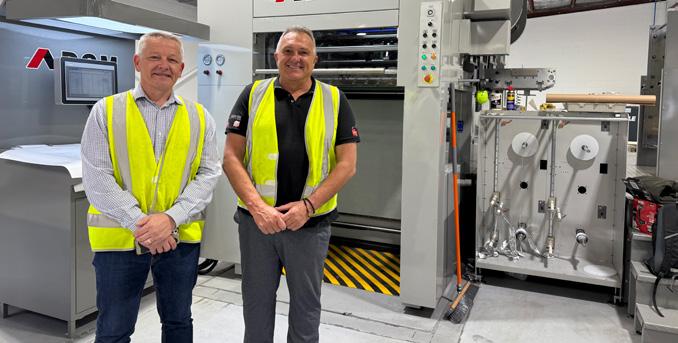
Makes the investment after seeing the opportunity to be a little different in Perth and to offer services that aren’t as freely available to the Western Australian market
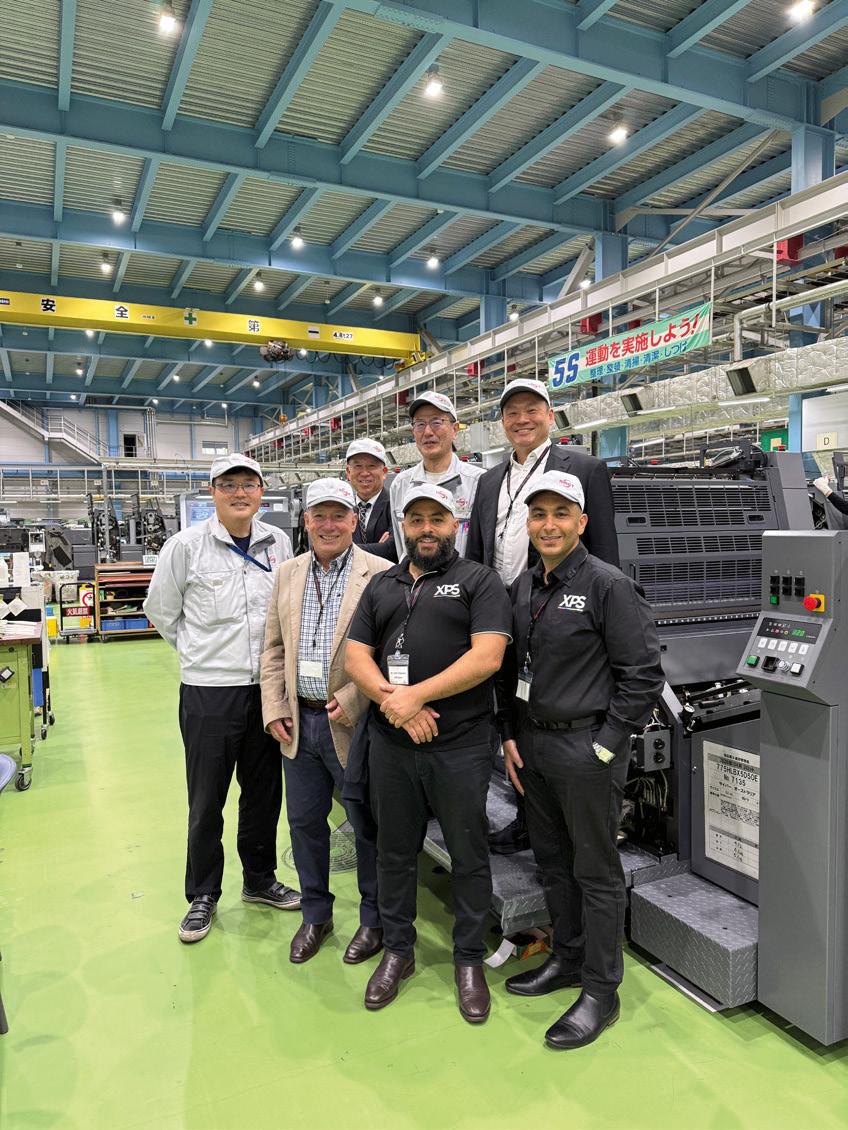
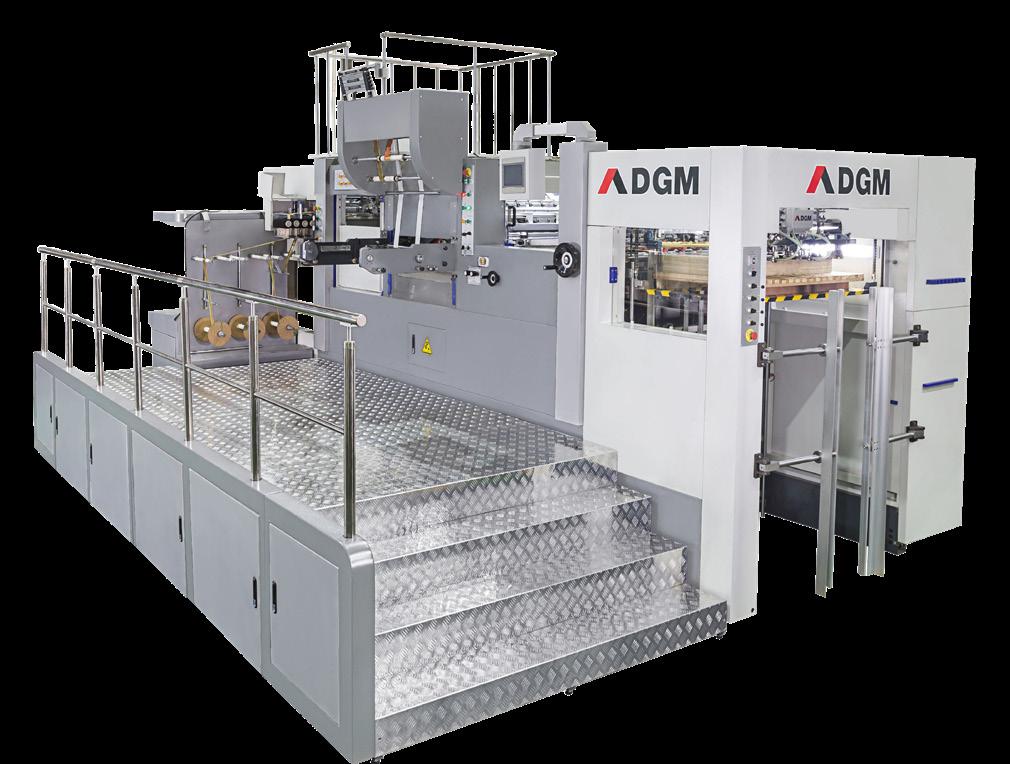
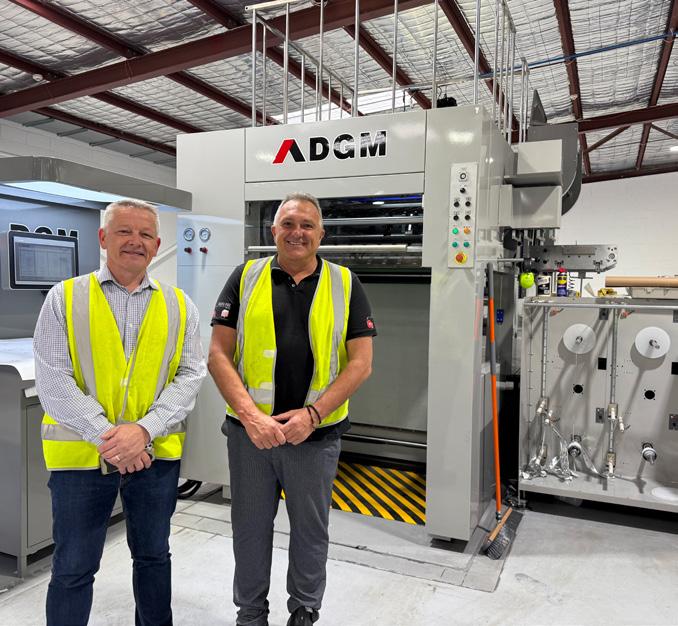
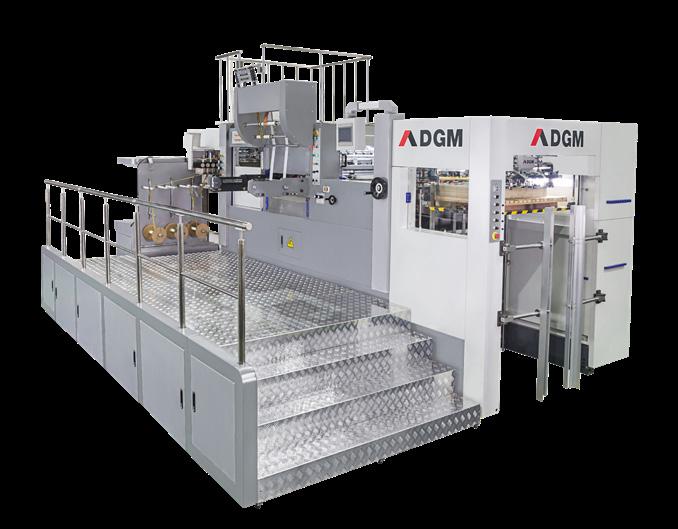
Perth-based Percival Print & Packaging has invested in a large, fully automatic intelligent DGM Technofoil 1050-FLC flat die cutter and hot foil stamper from Graph-Pak, amplifying the specialised print solutions and added value it offers clients, in addition to bringing this type of work in-house. The deal was inked early last year, and the installation was completed by July 2025.
Percival is a manufacturer of paperboardbased packaging that delivers packaging solutions Australia-wide. Its experience includes all aspects of soft folding and corrugated packaging, extending across the Fast-Moving Consumer Goods (FMCG) sector including food, beverage, health and beauty, pharmaceutical, and other industrial packaging.
The Technofoil 1050 automatic platen hot foil stamper and die cutting machine can run large format die-cutting and stamping with its longitudinal, transversal foil pull system, hologram, and human-machine interface. With high precision and high speeds, the machine is easy to operate and offers quick changeovers, durability, and stable performance.
Depending on the selected model, the Technofoil can process die-cutting and embossing jobs, with or without a stripping unit. It can also work with two different stamping systems, using longitudinal or transversal foil feeding, or it can even have both installed on the same machine and working at the same time. Using a longitudinal axle, users also have the option of making holograms, making this machine a high-capacity production solution.
Percival made the investment in the DGM Technofoil as it was facing challenges in foiling work due to old, inefficient equipment used by its outsourcing contractor. It decided to purchase a machine that could both die-cut and foil, addressing bottleneck issues and giving it extra capacity.
“We were losing out on quite a bit of foiling work, which we were outsourcing to a local third party. But they use manual-fed, old equipment for B1 size, so all our B1
work had to be reduced in size to suit their B2 machine,” Percival Print & Packaging managing director Colin Lamond said.
“We were actually looking for a die-cutter and upon researching, found that most hot foiling machines in the format we wanted could die-cut as well. So, this investment kills two birds with one stone.”
Having bought several machines from Graph-Pak over many years, Lamond chose to trust managing director Tom Ralph again in acquiring the DGM Technofoil.
“It wasn’t until I went to Drupa 2024 that I noticed the presence of a lot more Chinese manufacturers for this type of technology. I had the impression that European machines deliver a higher standard, but when I visited DGM’s site in China and saw its manufacturing capabilities first-hand, I was impressed – in fact, it stood out far superior to the other companies I visited, ” Lamond said.
“And being able to go through a local agent – Tom – who we have dealt with for so many years gives us peace of mind if anything was to go wrong.”
Ralph said, “Hot foil stamping appeals to the prestige market in packaging so this machine gives Percival versatility. The Perth market isn’t enormous, but it gives Colin something that completely covers it. Percival also services the South Australian and Northern Territory markets, so it improves on his speed to deliver.
“And with several trade houses using legacy equipment, bringing all this work in-house gives Percival the ability to process its work five times faster than outsourcing it.”
The installation was smooth, despite logistical challenges.
“It was a bit of a concern trying to get it into the building because we don’t have much of a clearance for the roller door. We had to get an 80-tonne crane to lift it out of the open top container. We’re unfortunately also on a one-way street, so had to get traffic management for about eight to 10 hours,” Lamond mentioned.
“But once we had the machine in, it was pretty much up and running within three or four days.”
The new machine has now increased capacity, improved lead times, and allowed for in-house control at Percival.
Lamond praised Graph-Pak’s honesty and service, emphasising their long-standing relationship.
“I’ve known Tom for over 15 years. He doesn’t beat about the bush and tries to find the best solution for a company. I’ve got nothing but good things to say about his work,” Lamond said.
“This deal with Percival is a real pat on the back for Graph-Pak and it’s a warming feeling knowing that after all these years, we continue to get good recognition and repeat business from prestige companies like Percival,” Ralph added.
With the install, VistaPrint has significantly reduced changeover times, boosted performance, and opened up opportunities for new packaging products
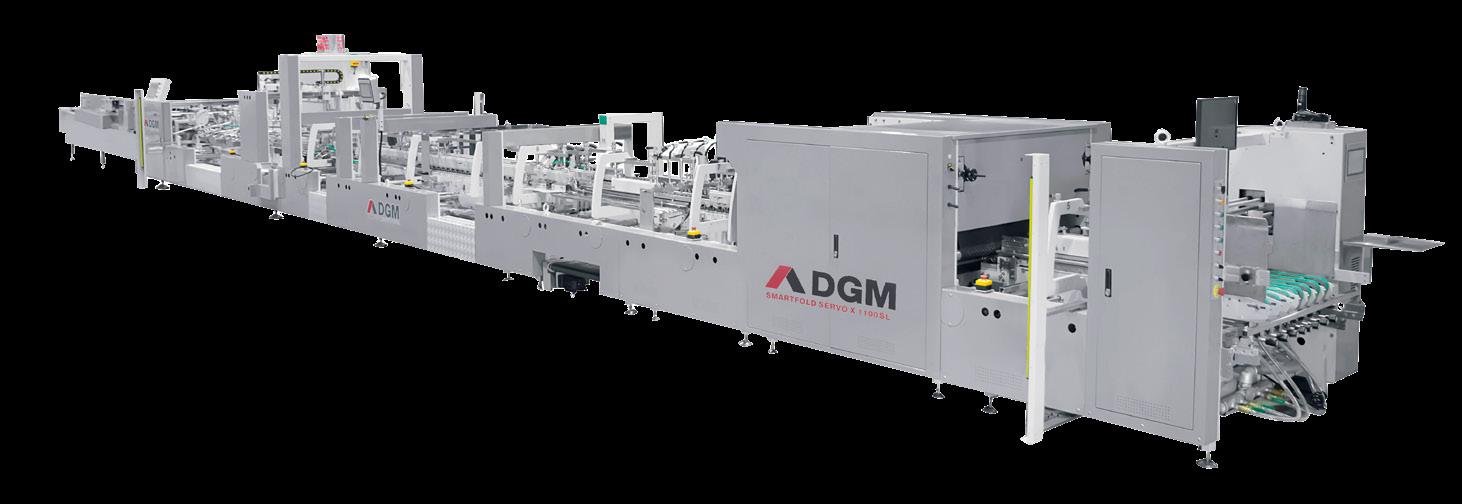
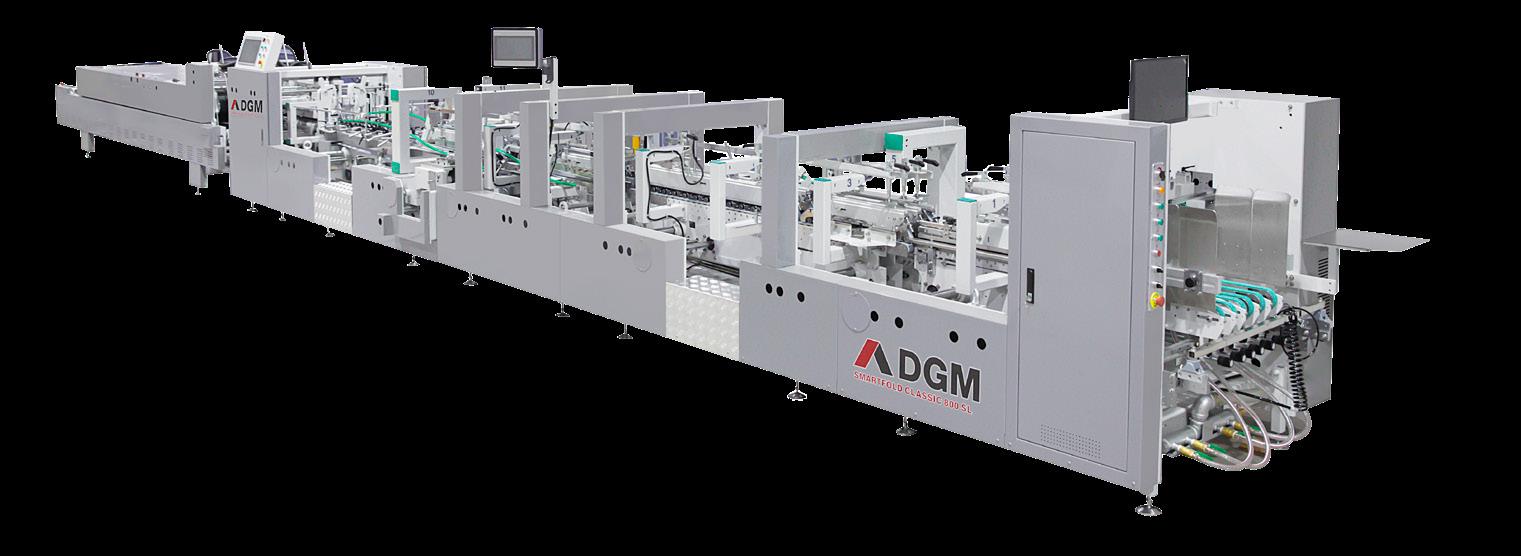
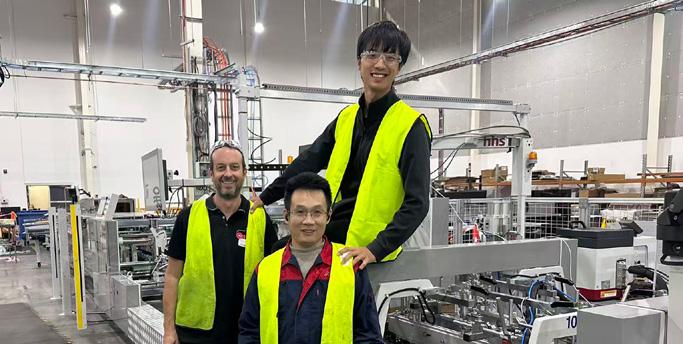
VistaPrint has grown its fleet of printing and packaging machinery with the addition of a DGM ServoX 1100 folder gluer plus Smartfeeder and a Smartpack from Graph-Pak. VistaPrint inked the deal with Graph-Pak as a firsttime customer in December 2025 and the install was completed in April, with the machine up and running soon after.
VistaPrint started this process several years ago with many discussions with Graph-Pak, focussing on folder gluers before taking the leap with the DGM ServoX 1100.
VistaPrint representative Chris Thorburn, said the company invested in this machine as changeover times with its existing folder gluer equipment were very time consuming.
“Multiple products mean lots of changeovers, leading to many hours of non-productive waste. The mechanically laborious changeovers of the non-servo machines were a stumbling block,” he said.
“Graph-Pak managing director Tom Ralph reached out to me with the DGM ServoX option which ticked all the boxes.
“Since the install, changeover and production times are now a fraction of what they were. We worked very closely with Tom as we cautiously entered the market with a Chinese machine.
“We visited the DGM manufacturing site and were blown away by its modern manufacturing plant. The team had a real willingness to address our safety concerns and modify the machine to our requirements.”
VistaPrint has now reduced its labour and increased its performance. It has transitioned some of its simple and less complex products to this machine, but has plans to introduce additional packaging products onto the machine as it ramps up its technical expertise.
“The DGM ServoX 1100 opens up a huge opportunity to allow VistaPrint to produce a variety of new products. VistaPrint puts a lot of emphasis on flexibility, and this machine offers this,” Thorburn said.
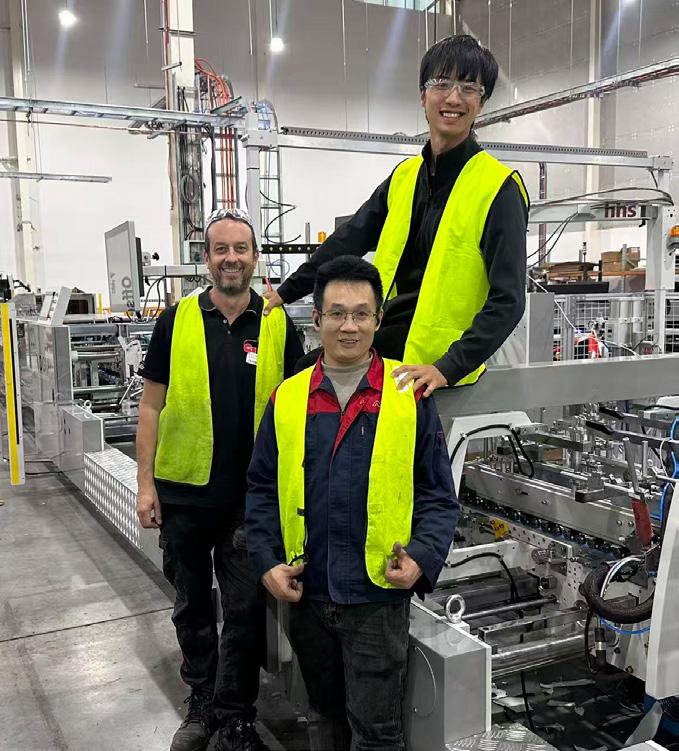
According to Ralph, the machine is the latest high speed folder gluer from DGM and the carton converting machine is capable of speeds at up to 500m/min.
“DGM has committed to offer the industry an affordable and complete state-of-theart solution for today’s market demands, becoming the best equipment combination to be offered in terms of cost, value, and productivity,” he said.
The DGM ServoX 1100 features motorised carriers, full and sectional job/memory recall, and an extended pre-folding section that measures 3m total in length. It also has a new “universal multi-function section” with integrated “bump and turn”, which allows the machine to turn cartons 90-degrees in alignment.
In addition, with an extra folding and closing section with a collapsible central carrier, the machine can produce complex carton structures, straight line, lock bottom, four and six corner cartons and more.
However, speed wasn’t the driving factor behind VistaPrint’s investment – it was the machine’s advanced automation capabilities that stood out.
“The machine needs a lot less skill for make ready than any other machine of its kind. In addition, the computer in the folder gluer holds a memory of the jobs and activates up to 38 servo motors at one time to set the machine, saving up to 70 per cent of the set-up time, which we all know is key for speed to market,” Ralph said.
“It has the most automation onboard any other folder gluer in the region.”
Thorburn added that the install process went well, with Graph-Pak going to great lengths to ensure it was as smooth as possible.
“As the install involved DGM engineers to fly down to Australia, Tom even went to the extent of hiring an interpreter for the training sessions,” he said.
“Tom and the Graph-Pak team provided excellent support from the initial discussions right through to the install and ramp up. Hopefully this is the start of a long relationship with Graph-Pak, and we can explore other hardware options in the future.”
Ralph added that the DGM ServoX is becoming a popular folder gluer model in the region.
“We have sold and installed three more ServoX machines in Australia in the past three months, making this the busiest period in my 20 years at the helm. Celebrating our 20th anniversary with an accolade like this is proof that we are doing it right in service and price. My best salesman is my installation base,” he said.
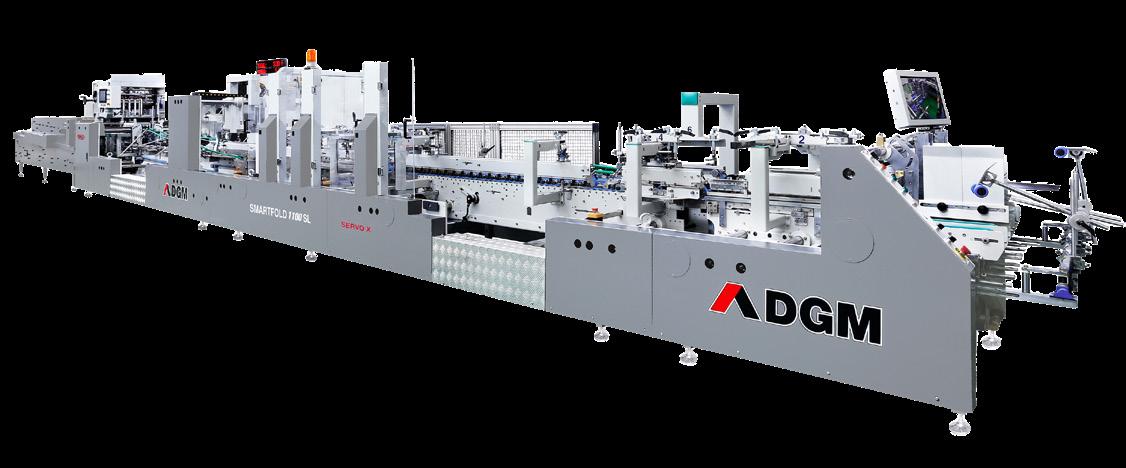


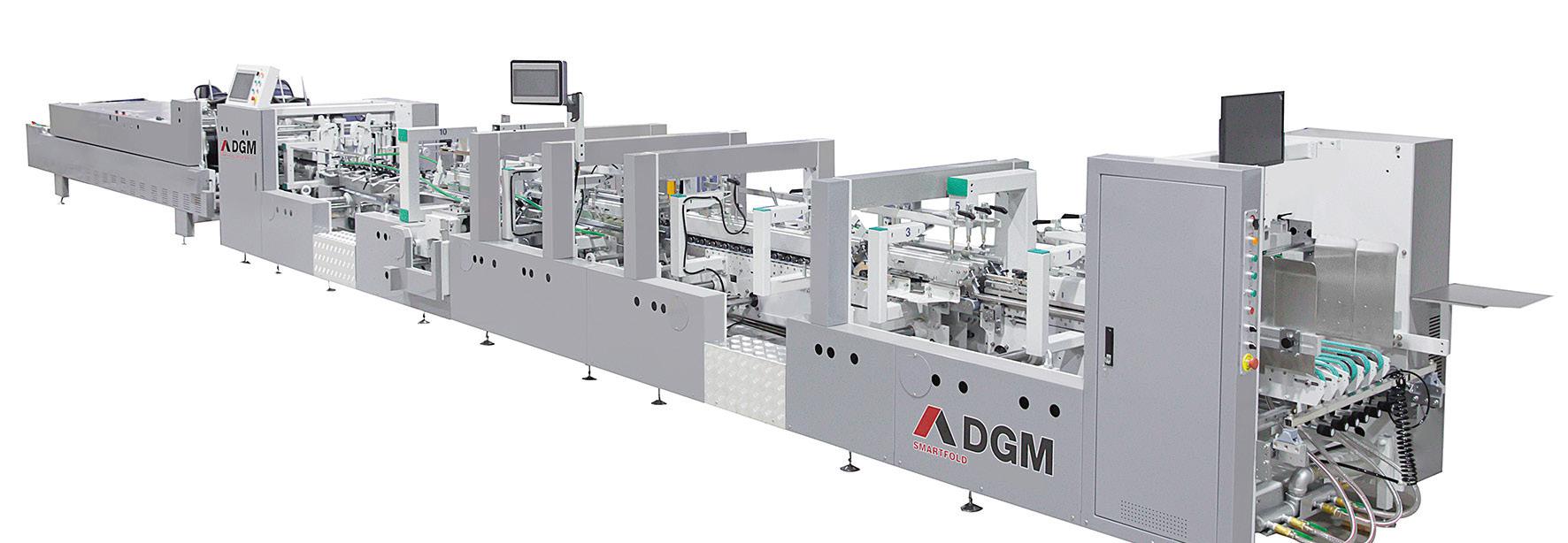
NEW SMARTFOLD SERIES - The New Generation of Folder-Gluers
• High‑performance folding‑gluing platform for productivity, precision, and flexibility.
• Designed for small‑ and medium‑format cartons in pharma, cosmetics, food, and consumer goods.
• PC and SL model ranges cover standard to complex box styles, including 4‑ and 6‑corner boxes.
• Total servo control with intelligent Job Manager enables automatic setup and precise adjustments.
• Faster changeovers and high repeatability reduce setup time and operator dependency.
• Robust mechanics and modern electronics ensure stable, reliable production.
• Modular design with automation options adapts easily to changing production needs.
• A smarter, faster, fully automatic folding & gluing platform.
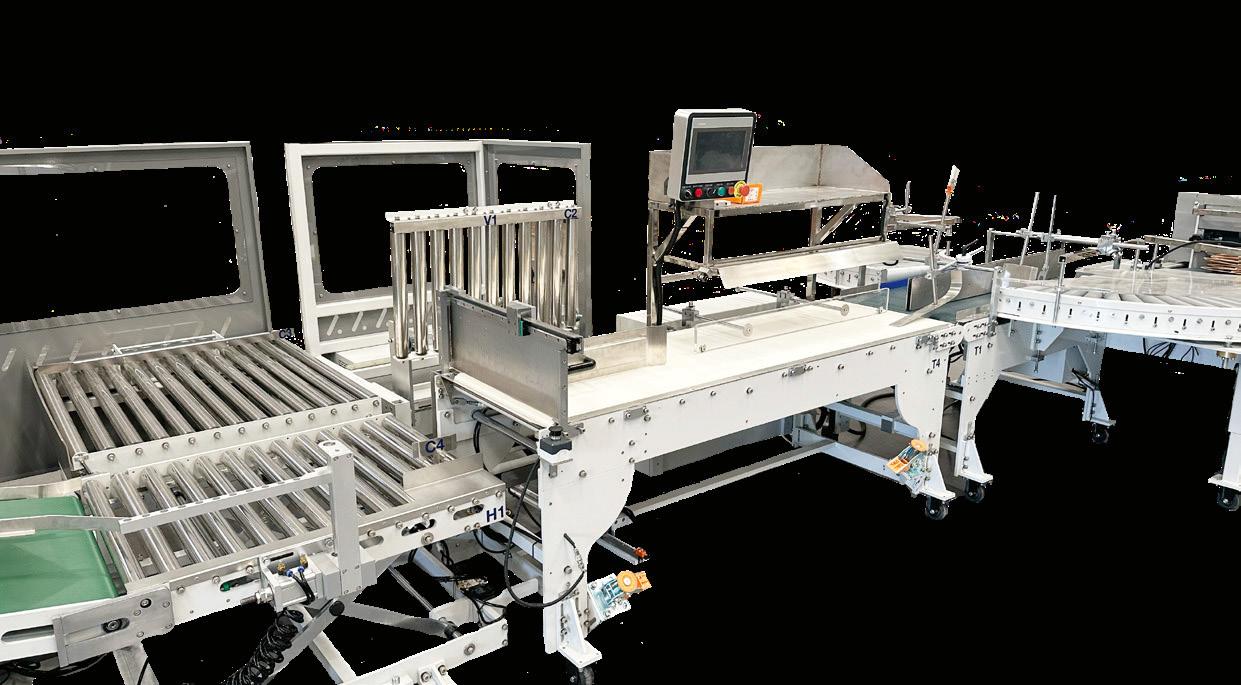
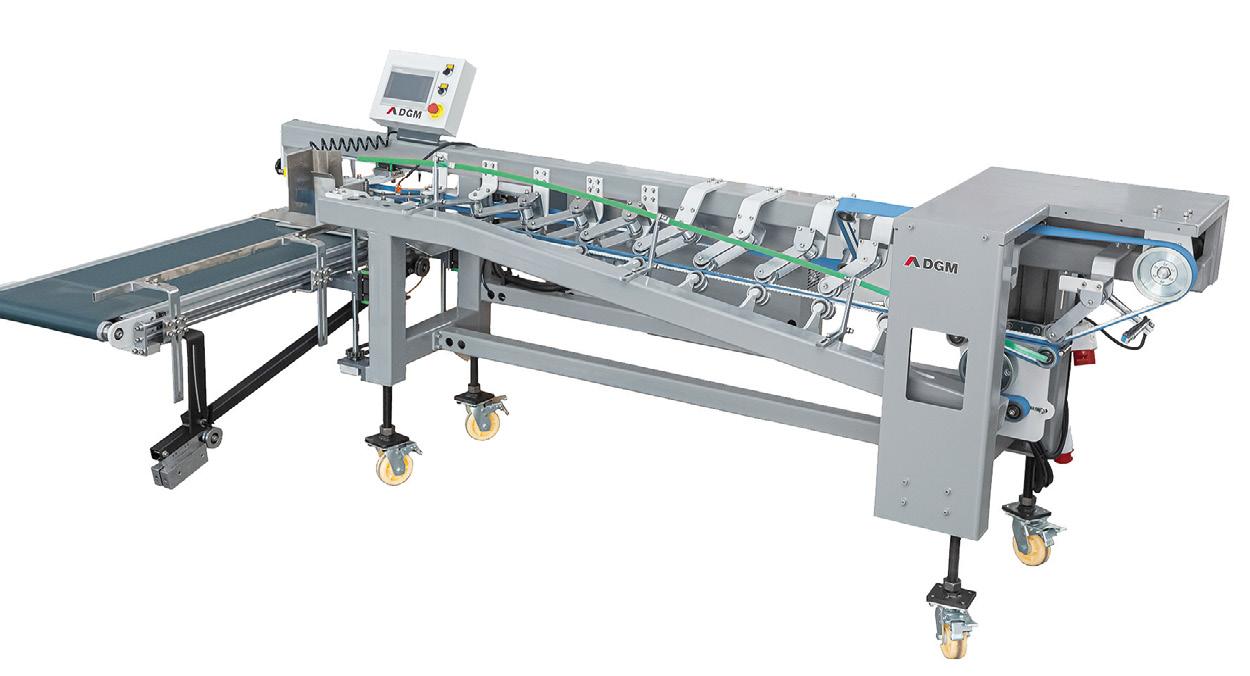
• Semi‑automatic end‑of‑line collection system.
• Controlled flow with 90° carton rotation.
• Preserves counting marks for easy bundle handling.
• Right‑ or left‑hand discharge, belt‑based execution.
• Improves ergonomics and line efficiency.
• In-line semi-automatic collection after pressing section
• In-line semi-automatic collection after pressing section
• Collects, rotates, and groups finished cartons.
• Collects, rotates, and groups finished cartons.
• Horizontal or vertical box presentation.
• Horizontal or vertical box presentation.
• Less manual handling, better ergonomics.
• Less manual handling, better ergonomics.
• Suitable for carton, solid board, and micro‑flute.
• Suitable for carton, solid board, and micro‑flute.
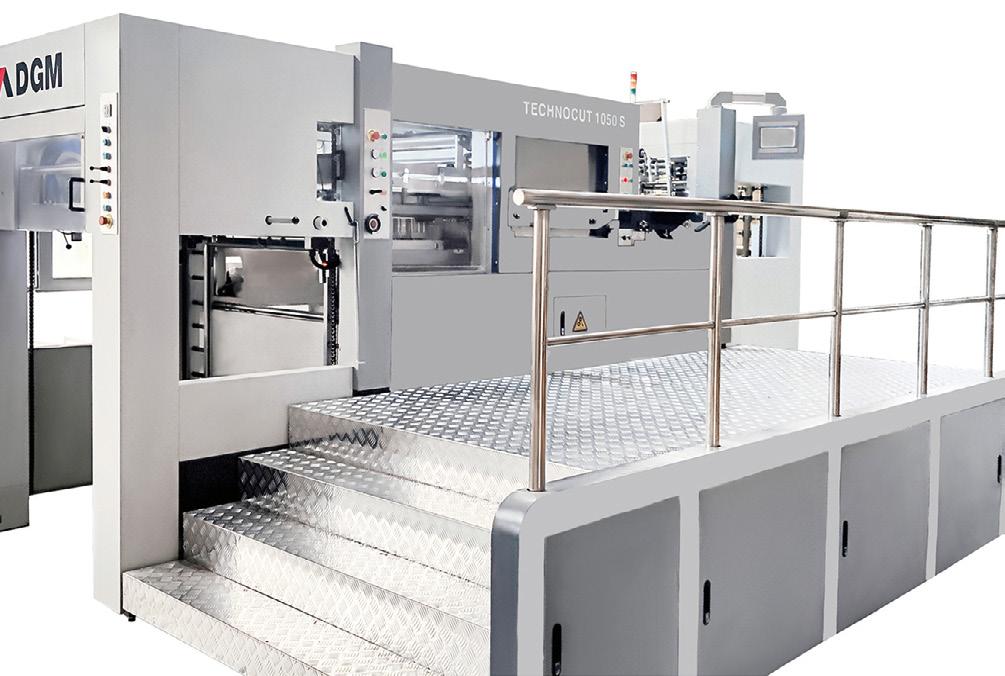
• High‑performance automatic flatbed die‑cutter
• Non-stop feeder with precise registration
• Powerful die‑cutting for clean, repeatable results
• In-line stripping unit reduces handling
• Fast job changes with PLC control
• New Version 1200: 1200 × 950 mm format, 400‑ton cutting force
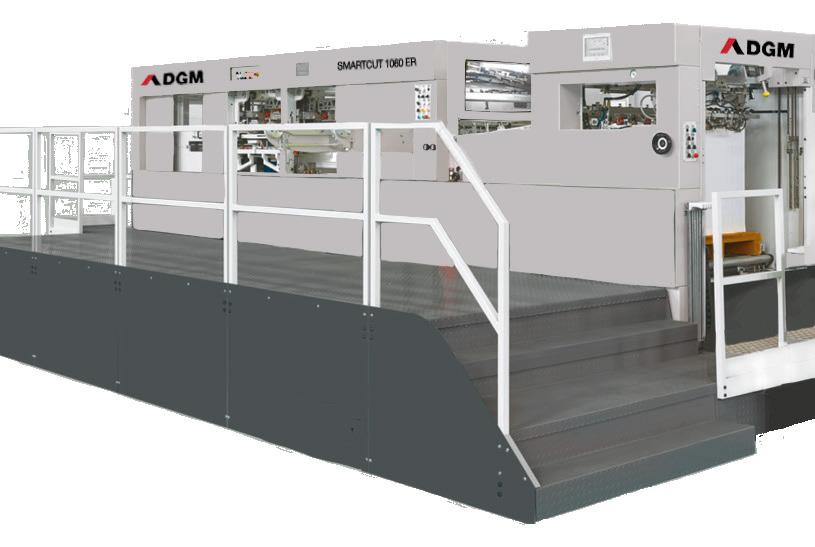
• Automatic flatbed die‑cutter for cartons.
• High‑speed, stable cutting platform.
• E version with in‑line stripping.
• ER version with in‑line blanking.
• Non‑stop operation and fast changeovers.
• Precise registration across the full sheet.
• Designed for medium to long production runs.
• Safe, intuitive, and easy to operate.
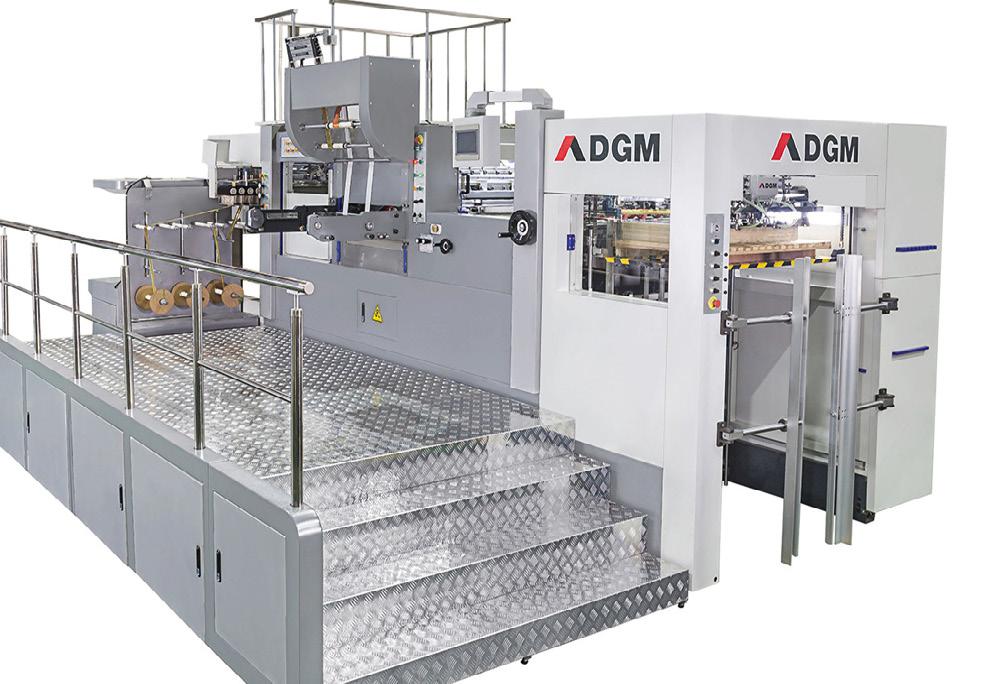
• Automatic hot foil stamping, format 1050x740mm
• Processes paper from 80 g/m² to 2,000 g/m²
• Foil system with longitudinal and transverse axes
• Supports details, large foil areas, holograms, and embossing
• Fast job changeovers with stable, high‑precision performance
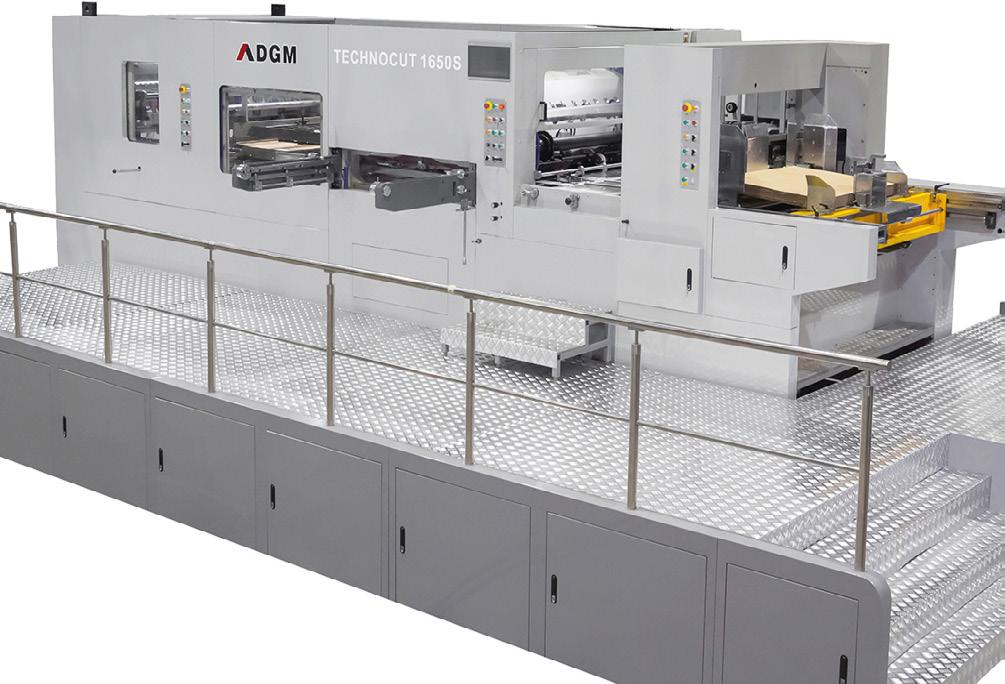
• Heavy‑duty large‑format flatbed die‑cutter.
• 1650 × 1200 mm format, 400‑ton cutting force.
• Processes corrugated up to 10 mm.
• Flexible feeding with precise sheet control.
• In‑line stripping for automatic waste removal.
• Built for continuous industrial production.
72 Grady Crescent, Erskine Park, NSW, 2759
Email: info@graph‑pak.com.au · Toll Free: 1300 885 550
Printing directly to containers is fast overtaking the traditional label market for FMCG.
Peter Kohn speaks with Onpack managing director Michael Nankervis about its direct-to-object revolution, which has been driving success at the company
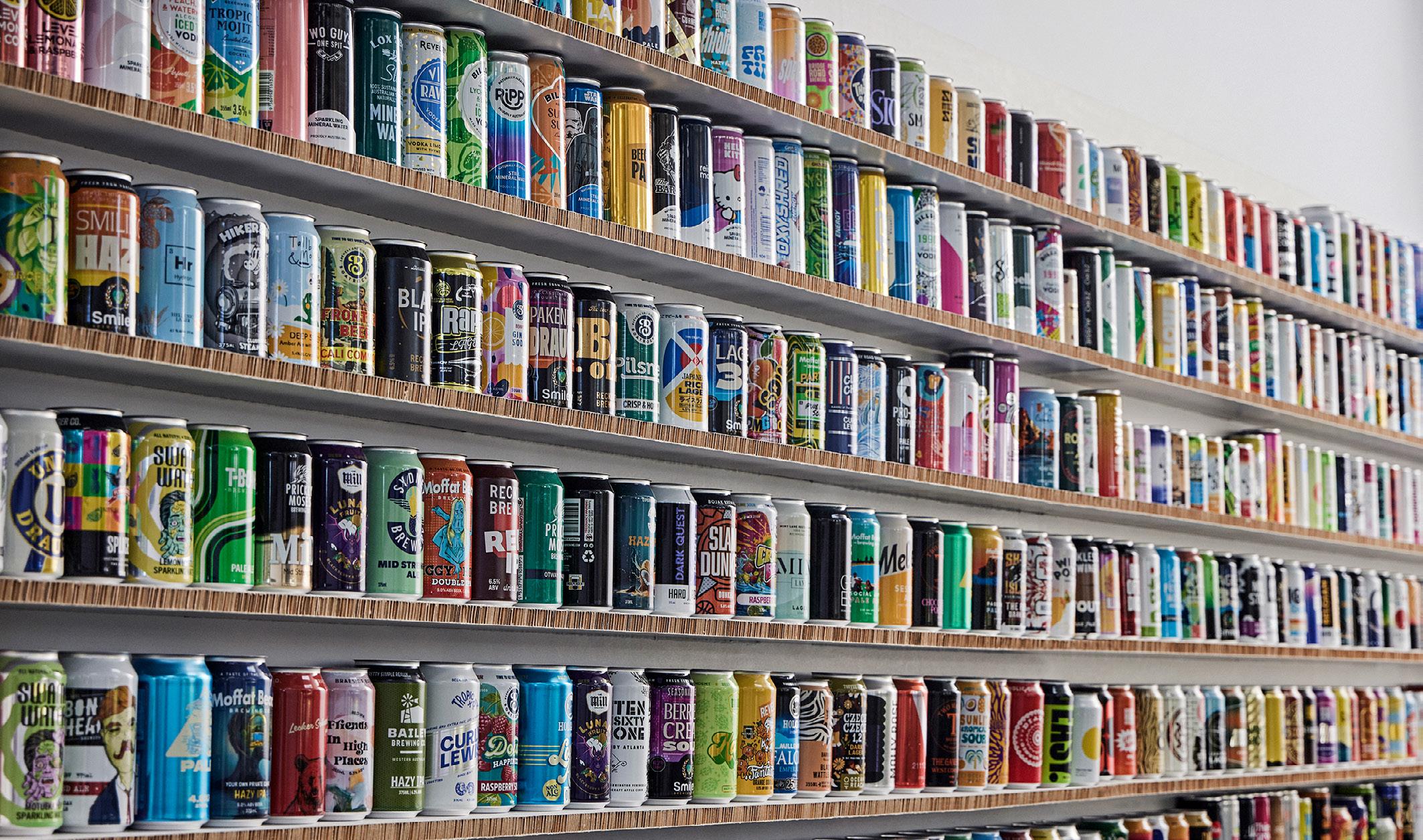
Michael Nankervis is excited about the future of the food, groceries, and fast-moving consumer goods (FMCG) sector in Australia, and the revolution that’s now underway in direct-to-object printing.
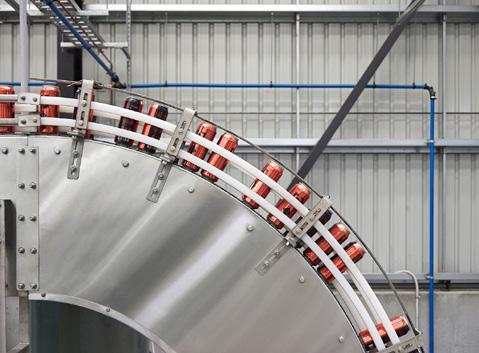
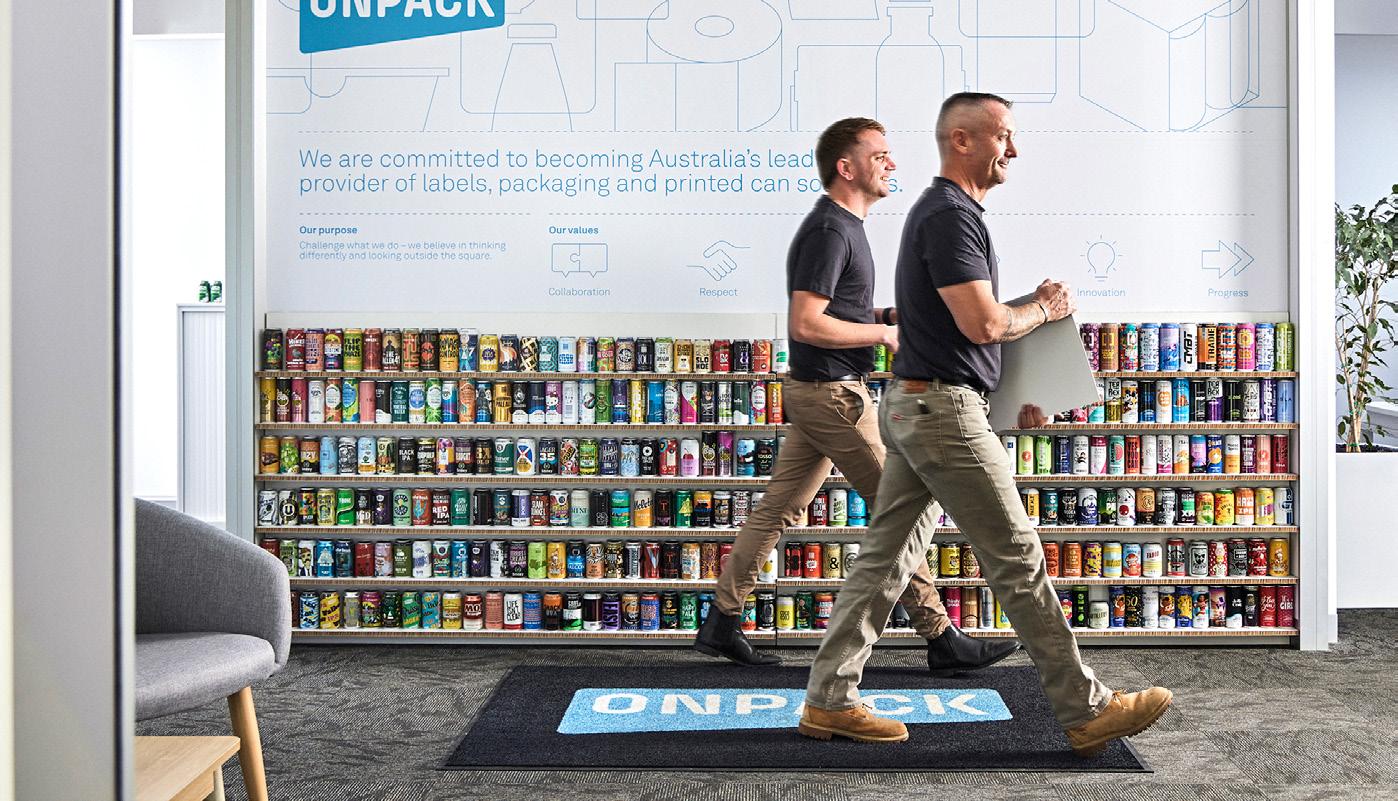
It’s a development that the managing director of Onpack sees as maximising market impact and minimising the environmental footprint, as the focus moves from self-adhesive wraps affixed to plastic PET or glass containers to printing directly onto fully recyclable aluminium containers.
Welcoming ProPack.pro to Onpack’s Melbourne headquarters in Mount Waverley, Nankervis reflects, “In 2022, we were producing seven to 10 million self-adhesive wraps a year for cans. That volume of single-use plastic didn’t sit right with us, commercially or environmentally. Either someone else was going to disrupt that market, or we were going to do it ourselves.
“We moved quickly and invested in directto-can, which at the time was almost entirely beverage-focused. From day one the plan was to extend it into aluminium bottles, aerosols and other cylindrical containers, and we’re continuing to expand that range.”
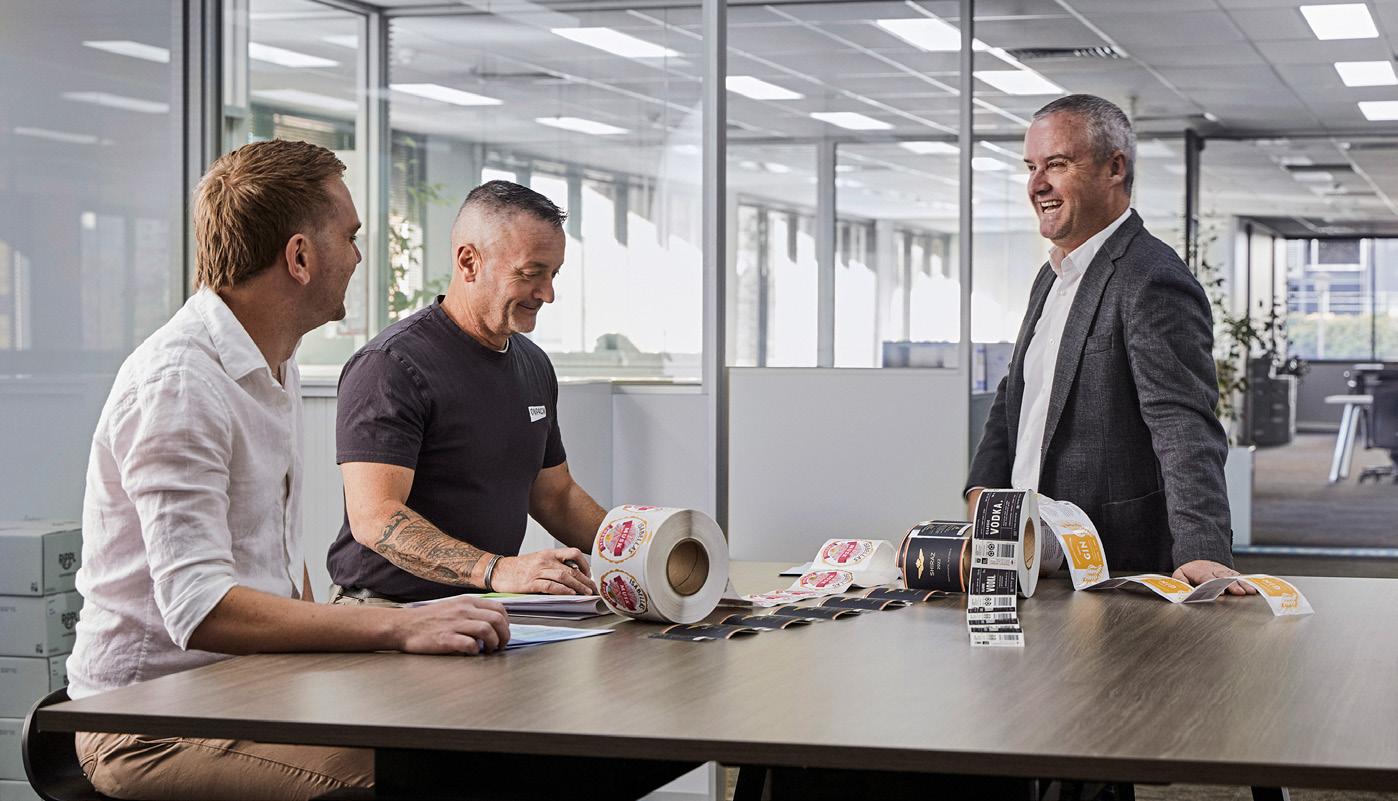
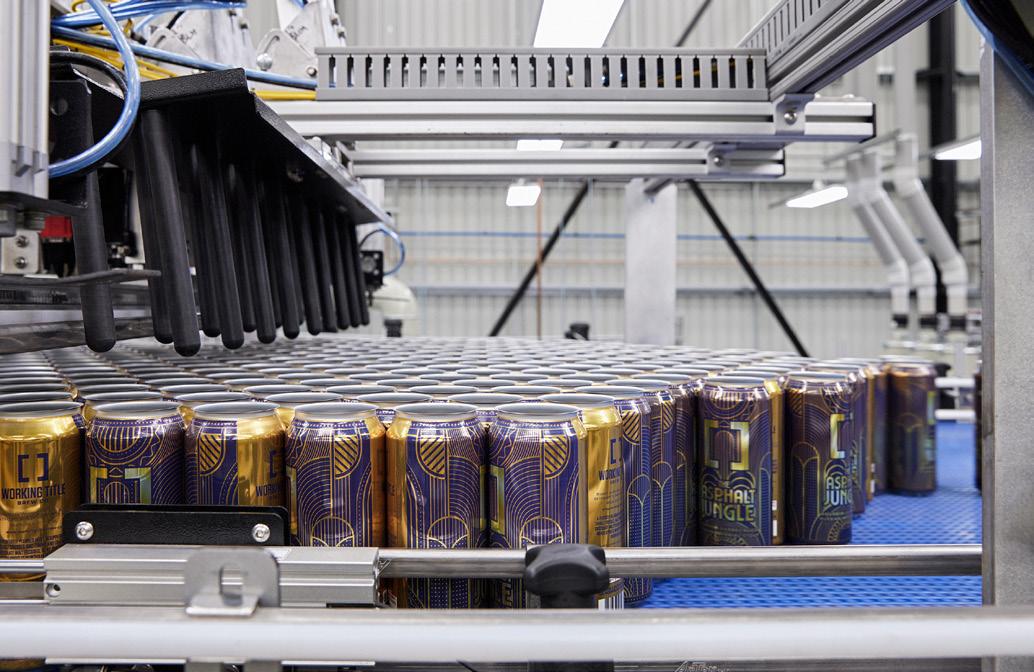
One of the key clients for Onpack’s directto-can technology is Rippl, which manufactures a range of still and sparkling mineral waters in Sleek 330ml cans that use Variable Date Printing (VDP) for corporate, retail, and events industry clients.
The marketing appeal of segmented VDP in direct-to-object printing is contagious and loaded with potential. It is limited only by the imagination, says Nankervis. The promotional potential is enormous.
“We have a few other ideas in the market where they could be doing variable packs within a carton of drinks. We have a key
customer in water that has a significant number – over 250 company brands –where they’re getting it down to 10 to 20 cases per brand order,” he said.
For Rippl and similar customers, the segmentation means low volumes and rapid lead times, so the key to serving that market has been Onpack’s ability to optimise its production efficiencies.
Nankervis estimates that currently Onpack’s volumes for self-adhesive and direct-to-object printing are around 50-50, with the latter “having grown rapidly over the past three years” and he expects it to become dominant soon.
“We were one of the first label converters globally to shift from self-adhesive into direct-to-can printing. Once we saw the technology, the logic was obvious. It
removes the label, removes the application step, and delivers a better product,” Nankervis said.
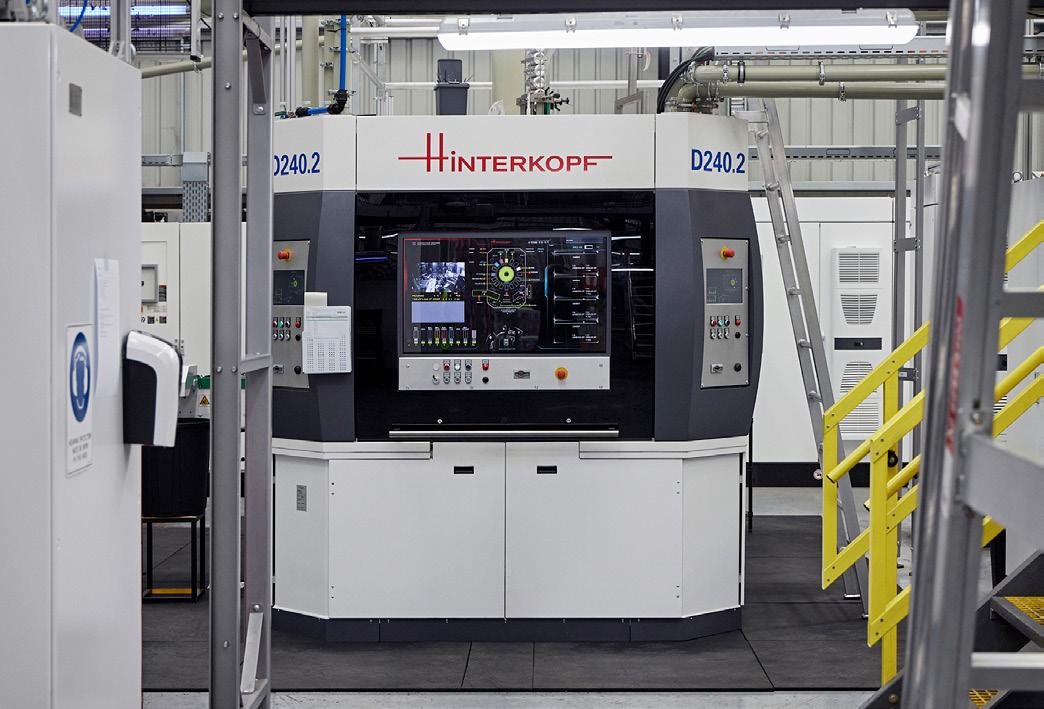
“A single Hinterkopf direct-to-object press at half capacity replaced the selfadhesive labels we produced in a year. The commercial case made itself.”
Onpack continues to leverage its early strengths in UV digital inkjet, printing high-build labels using digital screen and hot-foil on uncoated stocks.
“Ever since we adopted UV digital inkjet early on, we’ve been looking for some volume clients that we could transition to flexo production, and that’s been a very good move for us,” Nankervis mentioned.
Folded carton production continues apace at Onpack, with rising demand for soft cartons and inner cartons from retail merchandising clients for which the company supplies in-store signage such as shelf talkers, wobblers, and tags.
“We support some of our self-adhesive labels and beverage customers with folded carton production,” Nankervis said.
“That business is complementary with our self-adhesive labels and complementary with our beverage business, such as for four-packs and cluster packs.
“Combined with the UV digital inkjet HP Indigo technology and flexo, we have a very wide gamut of offerings in the label sector.”

The company has invested in two Germanmade Hinterkopf direct-to-object flexo presses – the first commissioned in 2023, the second the following year.
Both are located at Onpack’s direct-to-can facility at Dandenong South in Melbourne’s outer southeast, which handles volume production of printed aluminium cans and bottles for the beverage market and plans to shift into other formats through 2026.
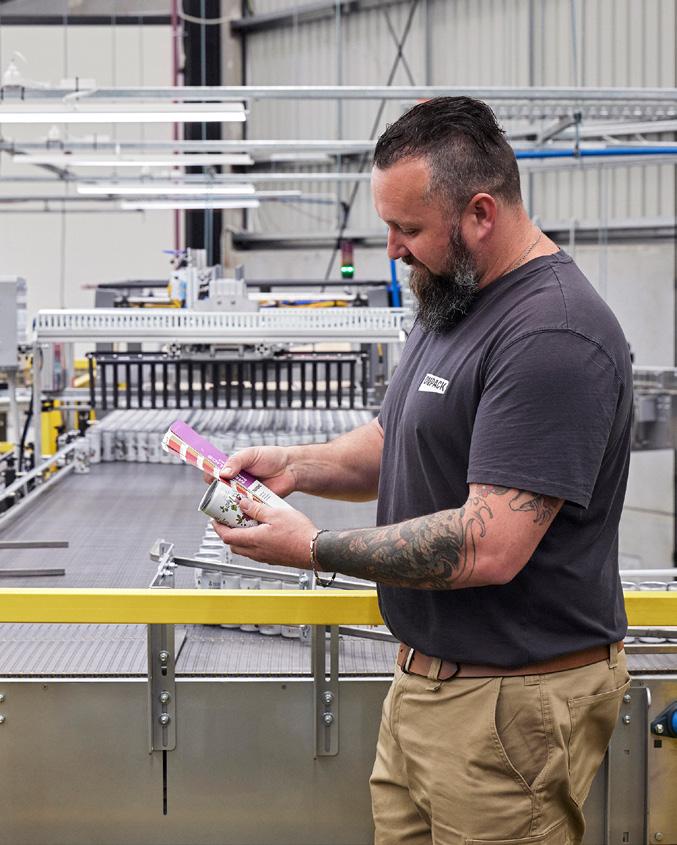
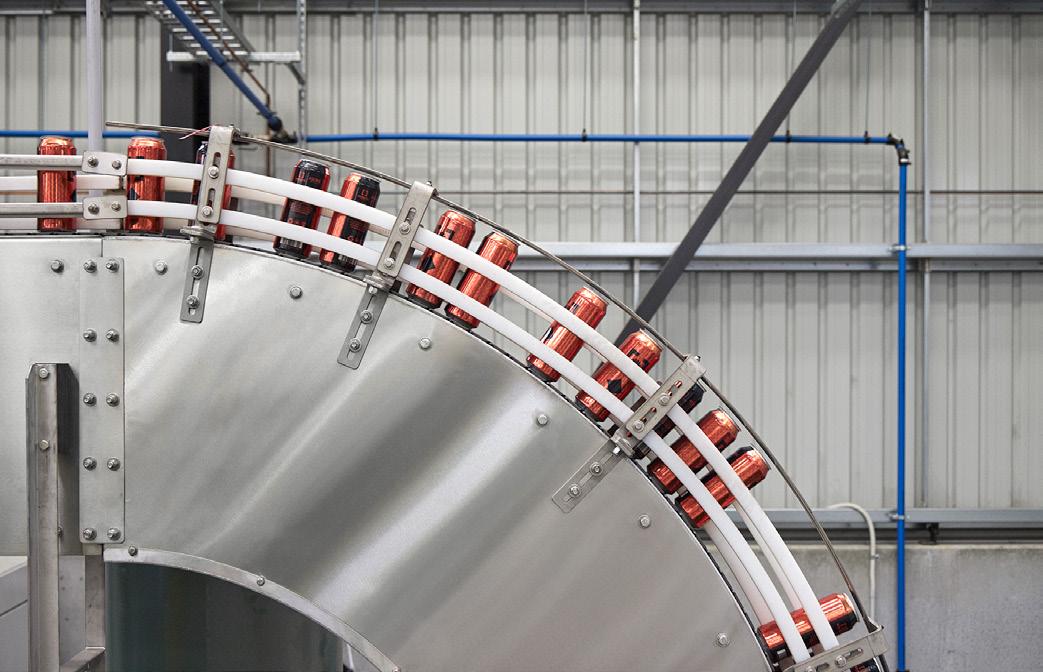
The Hinterkopfs offer high-speed, highresolution photorealistic decoration directly onto aluminium or steel cylindrical containers. These machines proved ideal for small-to-medium batches, seasonal editions, and highvolume, multi-SKU runs, reducing setup times and eliminating labelling.
“The Hinterkopfs are German-engineered and proven, from a manufacturer with a long track record in the industry,” noted Nankervis.
“Integration was straightforward for us –we’ve had more than 20 years of digital printing experience in the business, so there was no learning curve on the fundamentals.
“Our experience with digital printing, and digital inkjet in particular, put us ahead of the curve. It’s why we were able to adopt the technology quickly and bring it up to production standard with very little friction. Since commissioning, we’ve lifted output from 90 cans per minute to 125 –a 40 per cent productivity gain, and a real achievement by the operational team.”
The Hinterkopfs join a Screen L350 UV digital press, the second Screen L350 that Onpack has invested in through Jet Technologies, and from Currie Group a range of narrow-web solutions, including an Omet Xflex X6.0 press which integrates
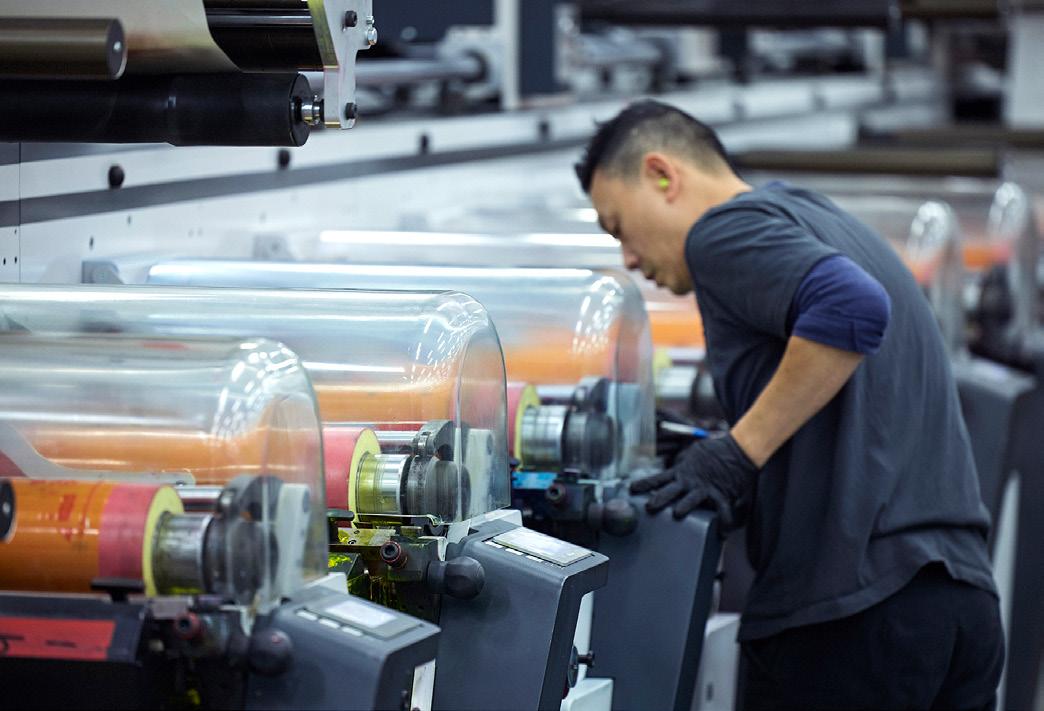
several printing and converting technologies inline and processes a broad range of substrates, from 12-micron film to light carton. Also from Currie Group, there’s an HP Indigo 6K narrow-web press and an AB Graphics Digicon 3.
Hardware meets software
The hard kit is wrapped in a Hybrid CloudFlow workflow platform. Nankervis noted that Onpack became an early adopter of the Hybrid workflow brand in 2017.
CloudFlow is custom-developed for labels and packaging, featuring automated filehandling, pre-flighting, soft-proofing, and MIS/ERP integration. It supports on-premise, cloud, or SaaS deployment.
Meanwhile, a MIS from Belgium developer Cerm, customised for narrow-web production, handles tasks from estimating complex label jobs to managing digital and flexo workflows, including die-cut libraries, roll management, variable data, and versioning.
Quality and consistency are deeply held values at Onpack, says Nankervis, with the company certified to ISO 9001.
Customer files are securely stored in the pre-press system, hard-copy press proofs are produced to tight tolerances, and
advanced vision-camera systems run inline to flag defects during production. A Certificate of Conformance or Authenticity (COC/COA) is available on completion of a project.
The Mount Waverley facility, established in 2020, has become a one-stop centre for Onpack and the co-located Southern Impact, formed that year from a merger between well-known legacy brands, Southern Colour, Impact Digital, and Intelligent Media.
The Nankervis family is an acclaimed name in Australian printing with businesses pioneered in the 1970s by brothers Garry, Ray and Greg Nankervis. In 2023, Heath Nankervis became managing director of Southern Impact.
Michael Nankervis, who was a recipient of a ProPrint Printer 50 award last year, worked in the UK in the railway industry, then in investment projects for Australia Post, before founding Onpack in 2017. The company’s genesis came from opportunities he identified in digitally printed self-adhesives after visiting drupa the year before.
“We established Onpack as a greenfield site operating on 180 square metres of space in Brunswick. At that time, it was a 100 per cent digital operation with a very small
footprint. The aim was to provide high levels of customer service and fast turnarounds, which we achieved. It was co-located in close proximity to Impact Digital and was a sister company to Impact Digital and to Southern Colour at the time. We grew quite rapidly through that journey,” he said.
In 2020, the business relocated into the much larger premises at Mount Waverley. The direct-to-can and warehousing operation at Dandenong South came onstream in 2023. Onpack now has an operational staff of more than 30 across two sites.
Nankervis sees a massive future role for artificial intelligence in all businesses, not just Onpack.
“AI is a major focus for me – probably half my time. The goal is practical: automate repeatable tasks, integrate our systems, get cleaner data into decision-making, and give the business the ability to scale without adding proportional headcount,” he said.
“Our view is that packaging should be simple. It should just work, every time. Our repeat customer base tells us we’re getting that right.
“Direct-to-can is where Onpack is having its biggest impact on the market and this will continue with new products formats in development.”

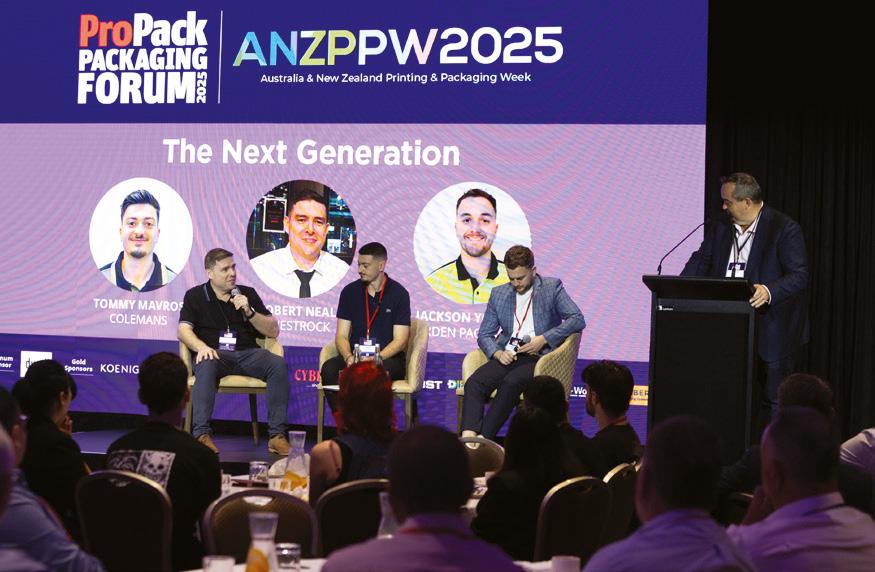
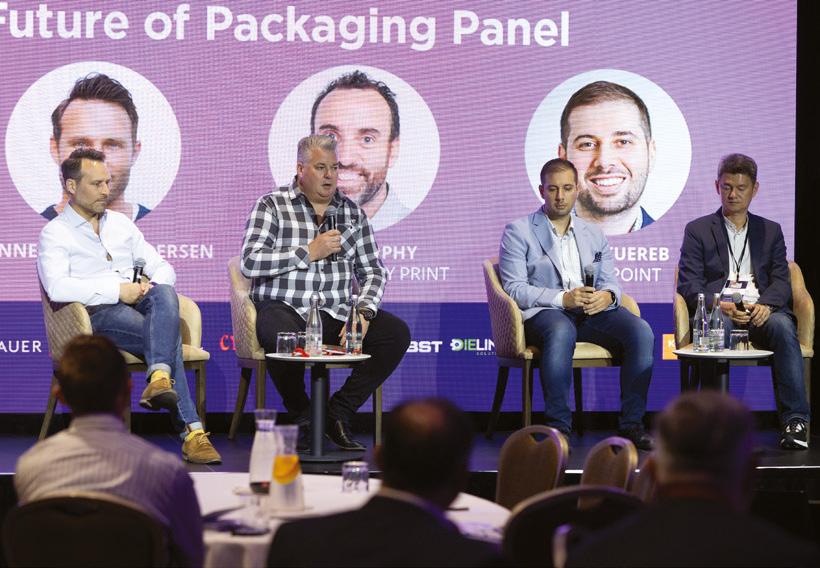
Interpack 2026 highlighted the packaging industry’s latest innovations, global collaborations, and future-focused solutions across the full value chain
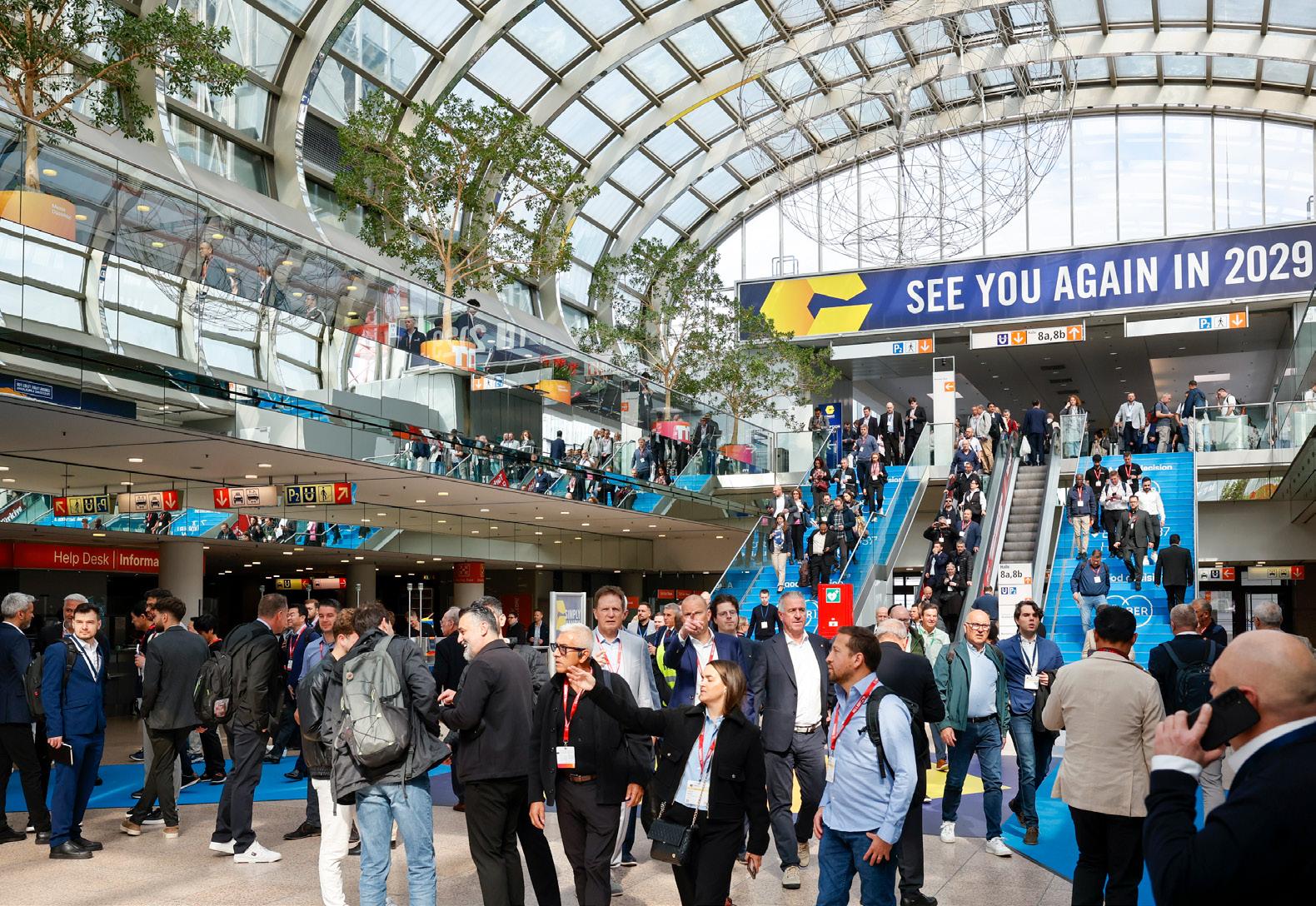
Interpack 2026 was the meeting of technologies and minds
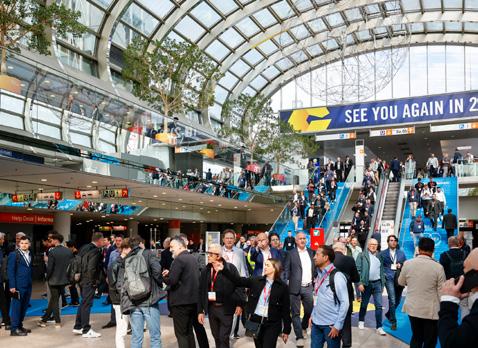
From revolutionary innovations across all sectors of packaging to conversations that will shape the next decade of the industry, Interpack 2026 recently played host to the packaging world.
Interpack 2026 sent a clear signal: the packaging industry is more closely connected, more innovative, and more dialogue-oriented than ever before. This momentum was immediately visible in the exhibition halls.
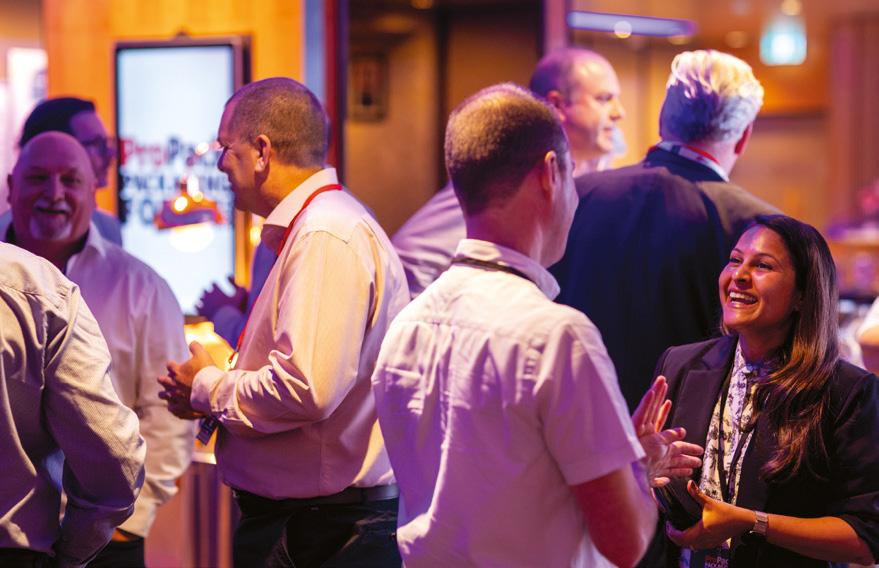
High visitor traffic, intensive discussions and a consistent international presence shaped the atmosphere. Everywhere, it was possible to experience the determination with which companies are working on solutions for the future. Ideas were discussed, tested, and decisions were made. The entire value chain was presented live.
Here’s what some exhibitors showcased: ACTEGA
At Interpack, ACTEGA showcased its advanced solutions for paper and
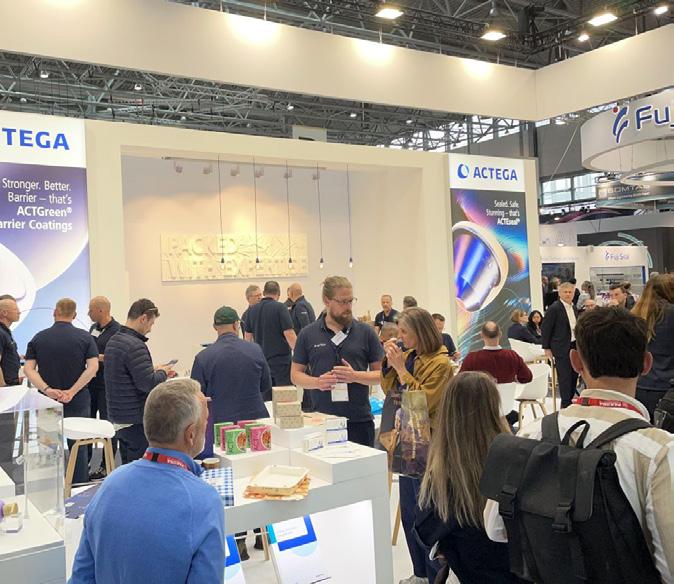
board packaging, flexible packaging, and labels applications.
Under the theme “Packed with Expertise”, ACTEGA showcased an array of advanced coating solutions that combine aesthetics, feel, and durability without compromising high-quality. A key element of this portfolio is the ACTGreen Barrier Coatings which are well-suited for applications such as baking and food trays, soap boxes, fast food packaging and other packaging formats.
Furthermore, ACTEGA showcased coatings designed for both indirect and direct food
contact applications including its WESSCO FCM UV and FoodSafe water based coatings. Another highlight at Interpack was TERRAFLEX F, ACTEGA’s coating portfolio designed for both flexographic preprint and post-print applications.
The showcase also included the ACTDigi LEP Primer, an advanced water-based primer expertly developed for HP Indigo 6K, 6K+, and 8K digital presses.
The ACTEGA booth also highlighted a wider portfolio of advanced UV, LED, and water-based coatings for various applications, including pressure-sensitive, shrink sleeve, and in-mold labels, empowering converters to achieve exceptional aesthetics, such as gloss, matte, and motion effects, whilst overcoming technical challenges like scratch resistance and adhesion.
Show visitors to the ACTEGA stand also explored the full capabilities of the company’s ECOLEAF technology, a new standard in label metallisation that merges premium embellishments with responsible production.
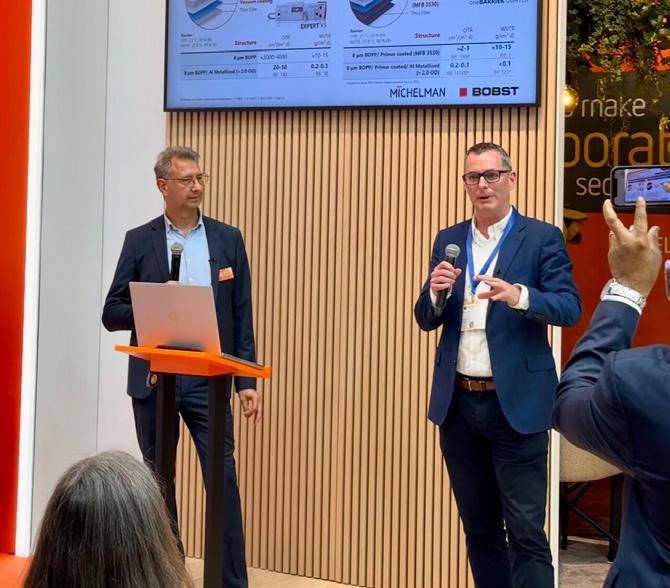
Bobst made an impact at Interpack 2026 through a coordinated program of partner collaborations, joint presentations, demonstrations and events. Spanning labels, flexible packaging, folding cartons and corrugated board, the company highlighted the future of packaging production.
At the Michelman booth, Bobst and Michelman presented the latest joint R&D
developments in a session entitled ‘Expanding the Collaboration into new solutions for PPWR’. The presentation explored how deepening collaboration between technology and chemistry partners can address both immediate production challenges and longer-term market requirements.
Away from the exhibition halls, Bobst and Reifenhäuser co-hosted an exclusive evening event aboard The Grace Kelly, a private yacht on the Rhine. The dinner and evening gathering offered a chance to connect with peers and industry leaders in a more informal setting.
For visitors who went further, the Bobst Packaging Center in Bielefeld was an ideal complement to the show. Located within easy reach of Düsseldorf, the centre gave printers and converters across all sectors the opportunity to experience the company’s end-to-end solutions firsthand, with demonstrations fully tailored to individual substrate, application, and production requirements.
BOBST Bielefeld also hosted a series of dedicated events centred not only on technology, but on production profitability and operational best practice. The session introduced Demo 3.0, a new approach to machine demonstrations built around the ‘first pull right’ jobchangeover methodology, developed in partnership with consulting partner Co-ëfficiënt.
Interpack visitors are also invited to explore Bobst’s wider network of European Competence Centers, where the full breadth of solutions for labels, flexible packaging, folding cartons, and corrugated board were seen, tested, and discussed in depth.
Esko
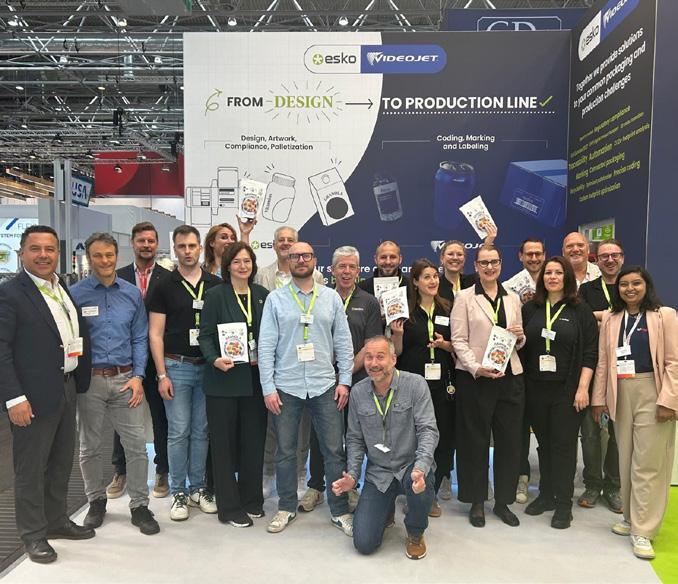
Esko joined forces with its technology partners to deliver a fully immersive, endto-end packaging experience at Interpack 2026, offering print professionals, converters, and brand owners a unique opportunity to witness the complete packaging journey in action.
It hosted the guided “From Design to Production Line” experience that gave visitors an opportunity to see behind the scenes of a fully connected packaging ecosystem – from initial design through artwork, print production, coding and marking, and finally into logistics and pallet optimisation.
Developed in collaboration with some of its key print and packaging technology partners, the one-hour experience demonstrated how integrated data and workflow automation can accelerate speedto-market, ensure compliance, and enable more sustainable packaging production.
The four-phase journey developed by Esko and Videojet Technologies was in association with partner companies Amazon Transparency, CarbonQuota, ePac Flexible Packaging, io.tt, Laetus, Recyda and RegASK.
Phase 1 showed how packaging concepts are created and refined using advanced 2D and 3D design tools, including structural packaging and retail-ready displays. Phase 2 focused on the ‘middle mile’ of packaging, highlights how AI-driven compliance, connected data, and partner integrations simplify complexity.
Phase 3 enabled attendees to observe a previously printed pouch, produced using both digital and flexographic technologies, illustrating how converters can achieve superior print quality while reducing ink usage and supporting sustainability goals. Finally, phase 4 brought the packaging to life on the production line, showcasing real-time coding, marking, and traceability.
Key benefits highlighted throughout the tour included achieving faster packaging development cycles through connected workflows, enhanced compliance with evolving global regulations, improved sustainability through data-driven decision-making, greater supply chain transparency and traceability, and reduced costs through optimised production and logistics.
Heidelberg
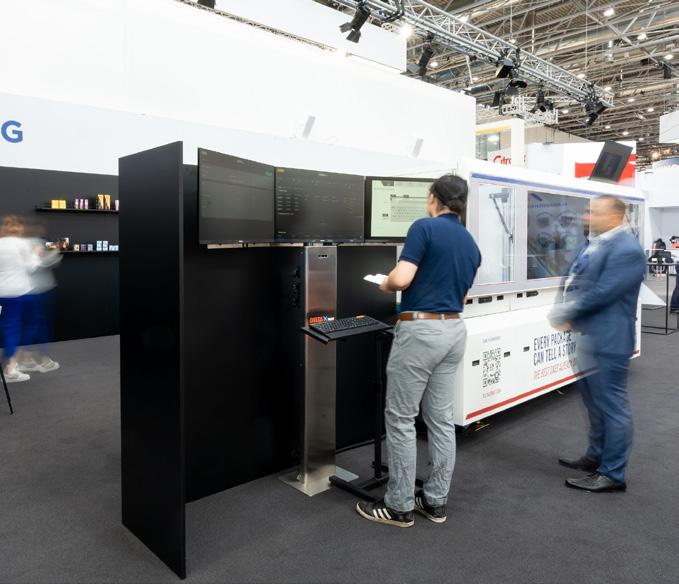
This year, Heidelberg, together with its partners, demonstrated how innovative solutions can elevate safety, sustainability, and automation across industries such as pharmaceuticals, cosmetics, food, and beverages.
Heidelberg’s cooperation with Pack-Smart, Inc. is the central building block for integrating intelligent, data-driven processes into packaging production. Pack-Smart’s inkjet printing solutions for serialisation, authentication, and traceability of packaging are being integrated into a seamless production workflow in collaboration with Heidelberg.
This applies to high-value packaging – for example, in the cosmetics sector – through sensitive pharmaceutical applications to high-volume food packaging in the food and beverage industry. In doing so, both companies aim to develop integrated, standardised packaging systems for clearly defined application areas, such as folding cartons, flexible packaging, or labels.
With Metsä Board, Heidelberg is partnering with a leading supplier of highquality, fibre-based paperboard solutions for folding carton production as part of its packaging production ecosystem. The offering is specifically geared toward high-quality consumer goods packaging. The partnership combines sustainable substrates with Heidelberg’s printing and process expertise, enabling new, highperformance packaging concepts where material efficiency and consistent performance are essential.
The collaboration focuses on joint research and development projects, pilot production runs, and customer demonstrations at Heidelberg’s Print Media Center as well as at Metsä Board’s Excellence Centre and Design Studios. The goal is to enable packaging printers to develop sustainable packaging solutions and produce them using Heidelberg systems.
As for the cooperation with pfenning group, it focuses on integrated material flow in the packaging value stream. The collaboration aims to create a holistic process that seamlessly links production and logistics, addresses the potential in goods transport and data flow, and thus adapts more flexibly to repackaging processes in pharmaceutical logistics.
Hybrid Software made its first appearance at Interpack presenting new AI-driven innovations that help brand owners and packaging service providers streamline artwork management, automate production workflows, and improve operational efficiency.
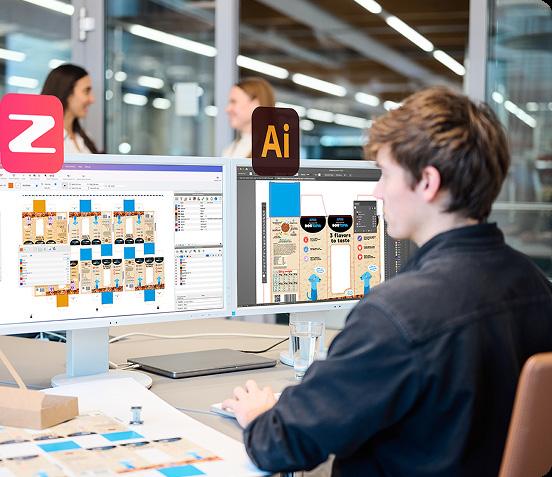
Visitors saw demonstrations of Smart PDF, a new solution developed for brand owners and prepress service providers. Smart PDF enables artwork compliance checks across the entire artwork management process, ensuring accurate, compliant, and highquality printed packaging while accelerating time to market.
CLOUDFLOW Matches was also featured at the show. Matches is an AI-powered visual search engine for all packaging assets produced by a printer or trade shop, built around a proprietary and secure large language model (LLM). Many packages are similar but differ in key areas such as size, flavour, or language, so identifying jobs produced in the past with similar text, barcodes, and even image content helps ensure fast and accurate production of new ones.
Also on display was Version 12 of Hybrid’s PACKZ PDF editor, now enhanced with AI-powered capabilities. The integrated AI tools are designed to make PACKZ operators more productive with an integrated support agent, and assistance with complex tasks like scripting and custom actions.
Hybrid Software’s next-generation colour workflow solution, Colorspace, combines powerful automation with ColorLogic’s advanced colour management.
Hybrid Software’s recently acquired software consultancy Conics showcased jAImes, an AI-powered solution that automates the processing of customer orders and requests via email. By automating routine communication and order handling, jAImes helps customer service reps meet deadlines, reduce manual data entry, and get production orders to press quickly.
Hybrid Software’s artwork management business unit, Hybrid Brandz, presented the latest release of Artflow, its enterprise artwork management platform. The new version features enhanced project visibility, improved copy management capabilities, and new AI-powered tools designed to simplify compliance and artwork validation.
& Bauer
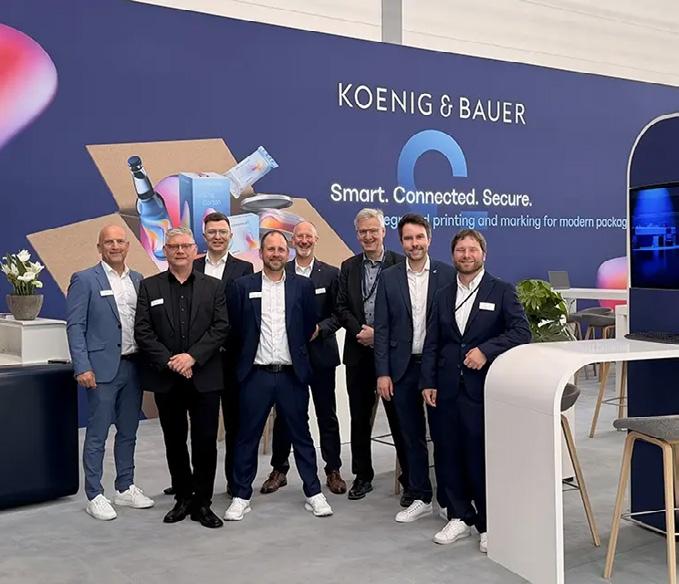
Under the theme “Smart. Connected. Secure. Integrated printing and marking for modern packaging,” Koenig & Bauer not only showcased future visions at Interpack, but also established a functional, comprehensive end-to-end ecosystem.
In this role, Koenig & Bauer acted as the central architect, linking brand owners, converters, and end consumers in a seamless process chain – all from a single source.
At the heart of the trade fair appearance was the company’s ongoing transformation. With the ‘IMPACT’ strategy (Intelligence, Market, People, Adaptability, Competitiveness, Technology) introduced in March 2026, Koenig & Bauer underscored its commitment to significantly shaping the digital future of the industry.
Based on a complementary portfolio ranging from high-volume inkjet (RotaJET) to sheetfed offset and CI flexo, as well as post-press solutions (flatbed and rotary die-cutters and folder gluers), the company acted as the central architect for the packaging production of the future. The backbone of this connectivity was an integrated software architecture: myKyana, which maximises production efficiency for converters through predictive real-time analytics. AuraVeo transforms physical packaging into a dynamic digital interaction channel at the Point of Sale.
Through the strategic initiative “protected at print”, Koenig & Bauer integrated innovative security technologies like Stegano directly into the printing process, while the accompanying verification app – ava – served as a robust multitechnology platform.
This ecosystem was further enhanced by highly integrated coding solutions that ensure precise late-stage personalisation and seamless track-and-trace via GS1compliant serialisation.
Consequently, Koenig & Bauer provided much more than pure hardware; the
company introduced the digital infrastructure for the Digital Product Passport (DPP) and enabled brand manufacturers to generate valuable firstparty data directly at the customer interface.
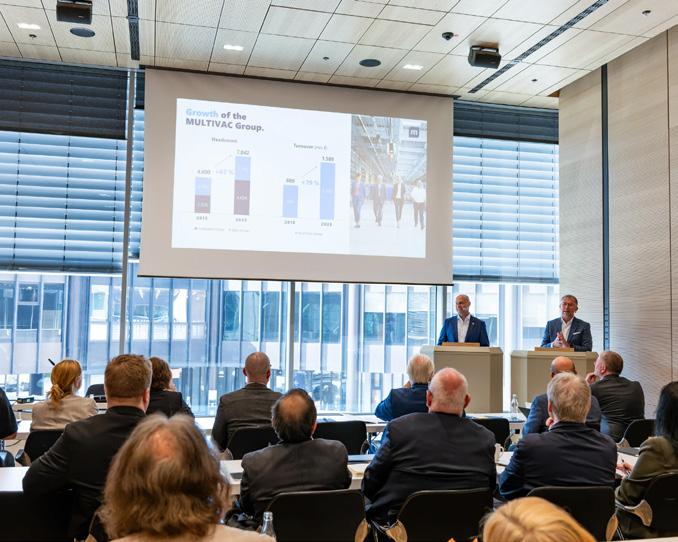
The MULTIVAC Group showcased how efficiency, automation, digitalisation, and sustainability can be combined into integrated packaging solutions. At the event, CEO Christian Traumann and CSO Dr Tobias Richter gave an insight into the development of the business and the company’s strategic focus.
They said MULTIVAC Group is continuing to invest in its future with various building projects: In 2025 a new production plant for highly automated manufacturing and spare parts logistics was completed at the company’s main site in Wolfertschwenden, and this has already been gradually put into operation.
“We have invested around €100 million for the new factory in Wolfertschwenden. This is the largest investment for our future in the company’s history, and it is very consciously intended to strengthen our main site, the security of our staff and the long-term capabilities of the MULTIVAC Group,” Traumann said.
When it comes to smart production, the company’s focus at Interpack was on digitally networked and integrated processing and packaging solutions. The aim was to make production data usable in real time, as well as to control processes intelligently and reduce the consumption of energy and materials sustainably.
Exhibiting under the motto “Think connected. Make it smarter”, MULTIVAC also presented a range of networked solutions for the food industry as well as innovative health packaging concepts for the medical and pharmaceutical sectors.
At Interpack, PulPac showcased a new generation of caps currently under development. The caps were presented publicly for the first time at the event,
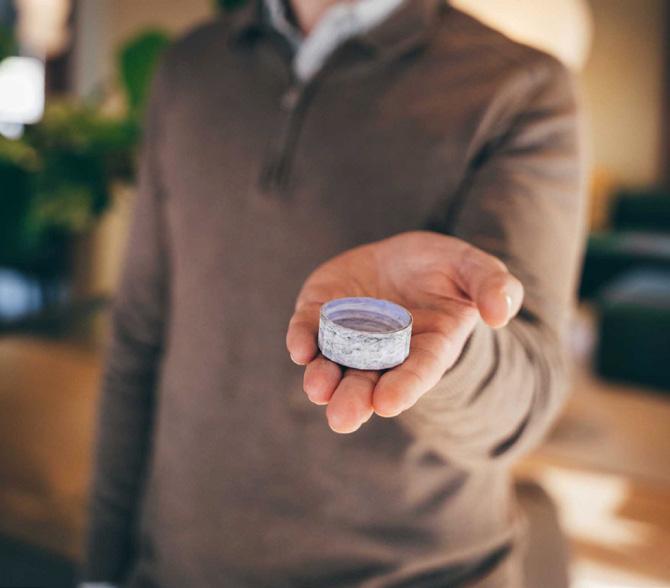
demonstrating how fibre can move into one of the most widely used and technically demanding components in packaging.
The new caps are designed to meet the functional and consumer expectations typically associated with plastic alternatives, while moving toward a fibrebased solution.
The company said early tests indicate promising performance across several key parameters, including thread engagement, opening and closing functionality, sealing architectures, and overall tactile experience. The caps also enable a high level of design flexibility, including the ability to differentiate the inside and outside of the cap, opening new possibilities for both function and brand expression.
The development is carried out together with PA Consulting and in close dialogue with industry stakeholders including PulPac’s designated machine partner for this segment, Optima.
It also builds on ongoing work within the Bottle Collective initiative, where complete fibre-based bottle systems, including closures, are being explored and evaluated as integrated solutions, with participation from several global brand owners and packaging players.
Early versions of the caps have already been produced and tested in real-life environments as part of ongoing bottle and packaging evaluations.
“When we showed the cap to customers, the reaction said a lot. The first response is often disbelief that they’re made from fibre. The look, the sound when you tap it against a tabletop, and especially the tactile feel challenge expectations of what fibre can be,” PulPac chief technology officer Charlotte Walldal said.
Ricoh made its debut appearance at Interpack 2026, unveiling a powerful combination of inkjet printhead technology and integrated service solutions designed
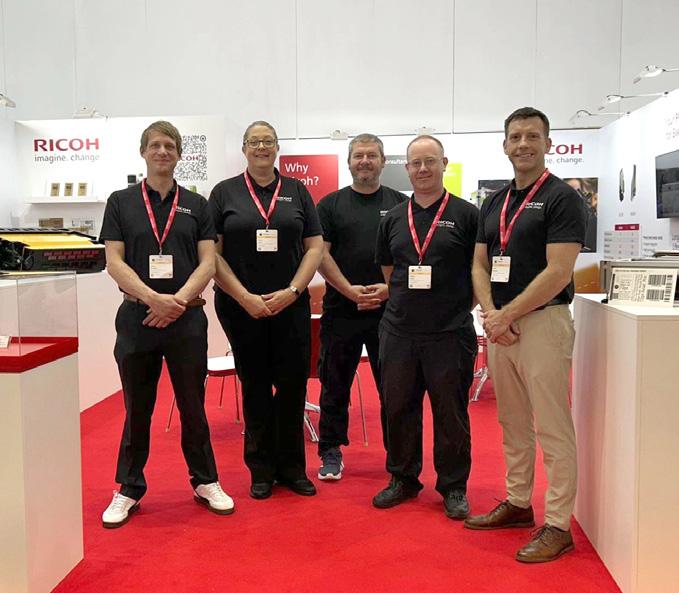
to transform the coding and marking and wider packaging markets.
At the heart of Ricoh’s presence was the launch of its new printhead, the MH3820. Designed to meet evolving industry demands, the new printhead sets a benchmark in performance, durability, and flexibility. Meteor Inkjet will provide collaborative support with critical electronics to help accelerate testing adoption of the new printhead technology across the market.
Designed for performance and efficiency, the new printhead offers a unique combination of compact design and high capability. Measuring just 13mm in width with a label matching print height of 108mm, its ultra slim, tall form factor enables the design of compact coders whilst removing the need to stitch multiple smaller printheads together, giving greater print quality.
Constructed with a metal body for maximum lifetime and a stainless-steel nozzle plate for durability, the printhead is built to deliver robust, reliable output in demanding industrial applications.
In addition to the new launch, Ricoh presented its full range of printheads designed to cover the complete spectrum of coding and marking requirements, including, primary coding for small, precise marks and secondary and tertiary coding for larger applications.
Beyond Coding & Marking, Ricoh demonstrated how its versatile printhead technologies allow clients to expand their opportunities in a wide range of packaging applications, including: corrugated and flexible packaging, label production, Direct to Object (DTO) printing, multicolour and full process colour applications, and imprinting solutions.
At Interpack, Ricoh also launched its Integrated Services offering. Utilising Ricoh’s inhouse engineering and development expertise, the service is designed to deliver scalable, inkjet integrated solutions for those who do not have the resources or expertise themselves.
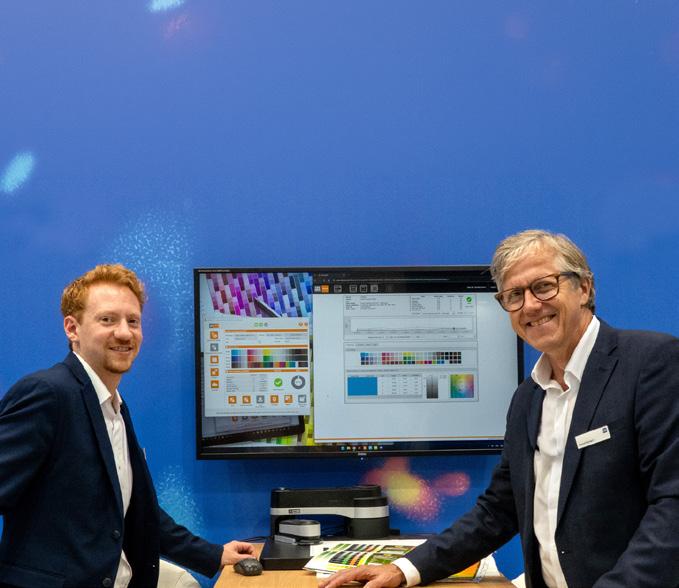
Screen Europe, together with colour management company CGS ORIS presented their latest workflow collaboration around how integrated colour management innovations are enhancing accuracy, reliability, and costefficiency for packaging converters using digital inkjet printing solutions.
Through this collaboration, CGS ORIS’ PRESS MATCHER and CERTIFIED software suites were fully integrated into Screen’s proprietary EQUIOS workflow management system, included with all Screen digital inkjet presses for labels and flexible packaging.
This advanced solution centralises and standardises colour management, enabling converters to reproduce consistent brand colours across multiple converting runs, printing workflows systems, and production environments.
PRESS MATCHER is also designed to accurately profile the colour gamut of printing equipment against widely used industry standards. By measuring and evaluating colour patches on proofs or printed substrates, the software allows converters to achieve the lowest possible Delta E (ΔE) values across both spot and process colours, ensuring precise and repeatable colour reproduction.
On the Truepress LABEL 350UV SAI, these capabilities complemented the press’ recently awarded G7 Digital Press Certification, supporting highly accurate colour matching in demanding production environments.
Screen said this functionality is particularly valuable for converters operating hybrid workflows that combine digital inkjet as a complementary solution to analogue processes like flexo, where maintaining visual consistency across printing methods is essential for brand packaging.
The result was a uniform and highly streamlined approach to colour consistency across digital production environments, designed to meet the growing expectations of packaging brands and converters alike.
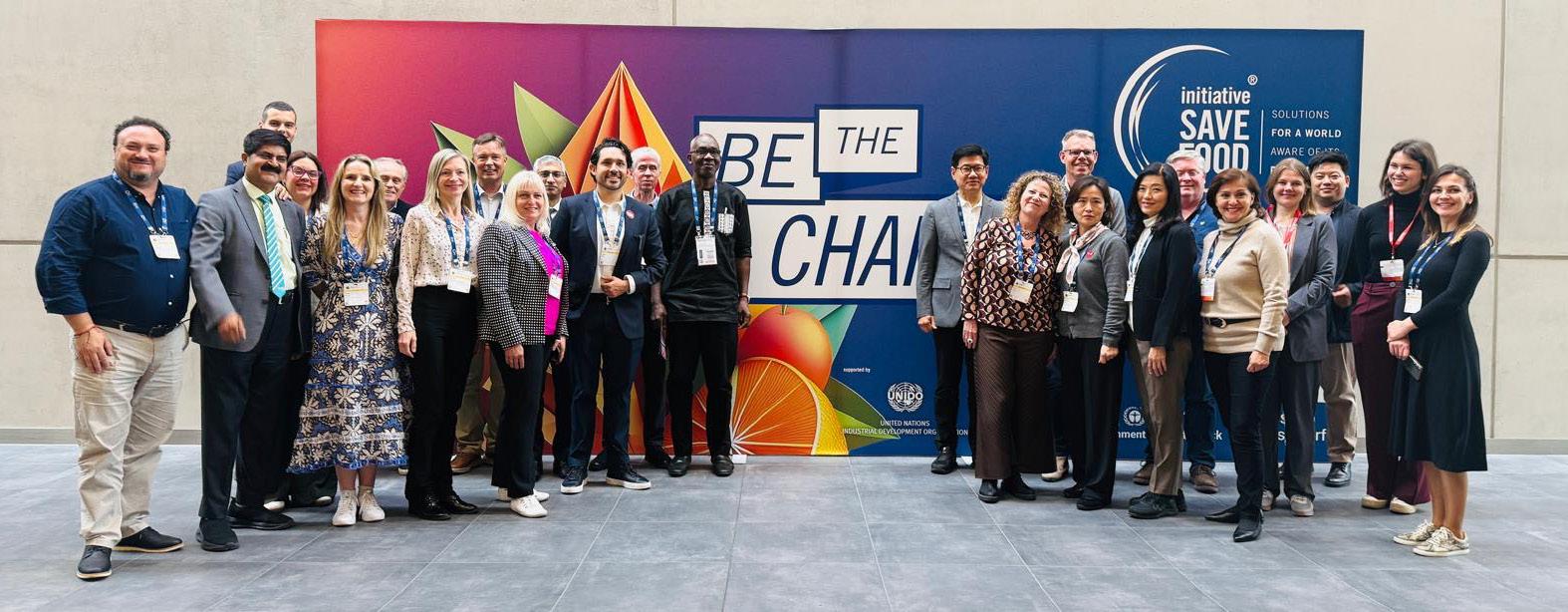
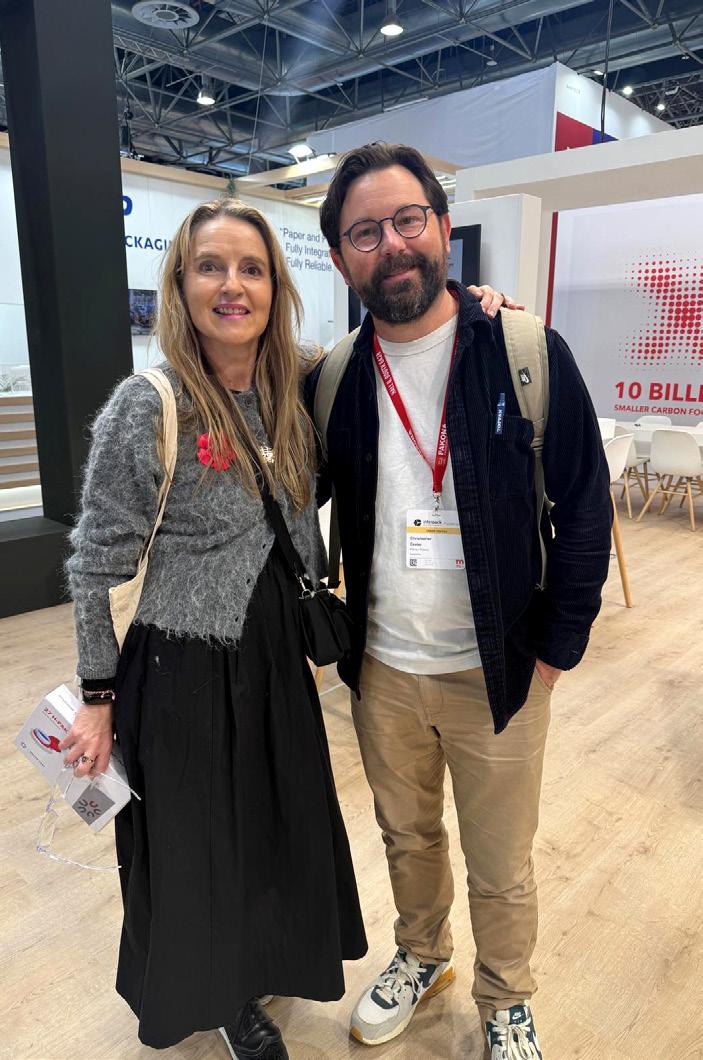
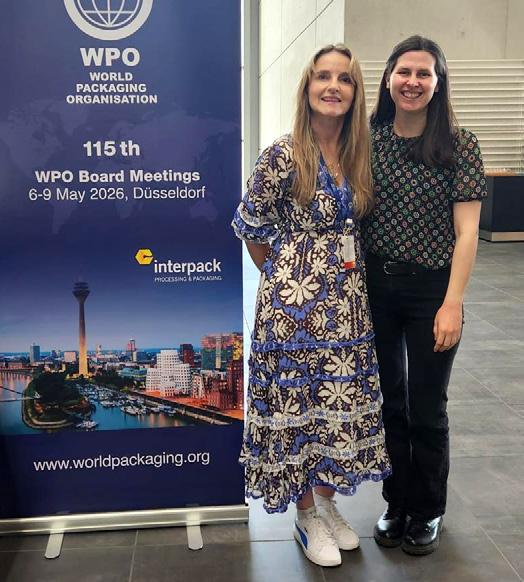
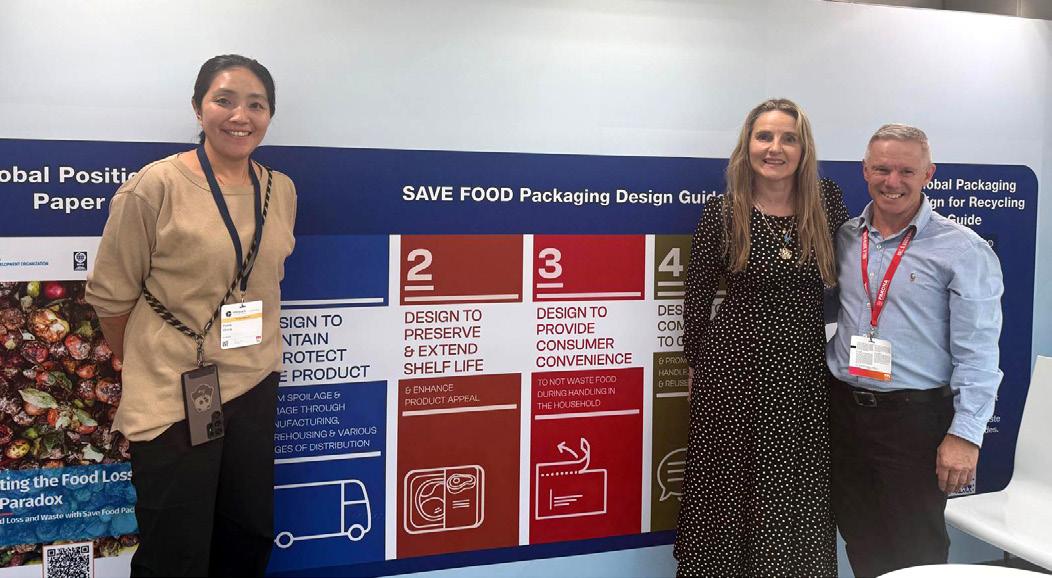
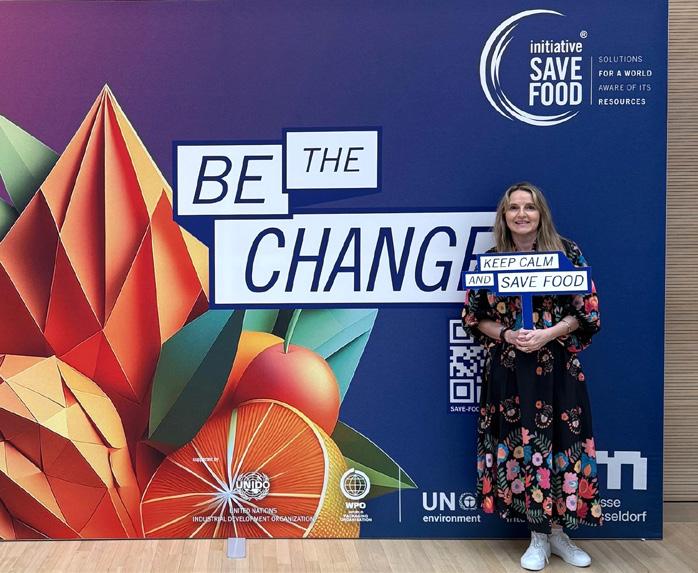
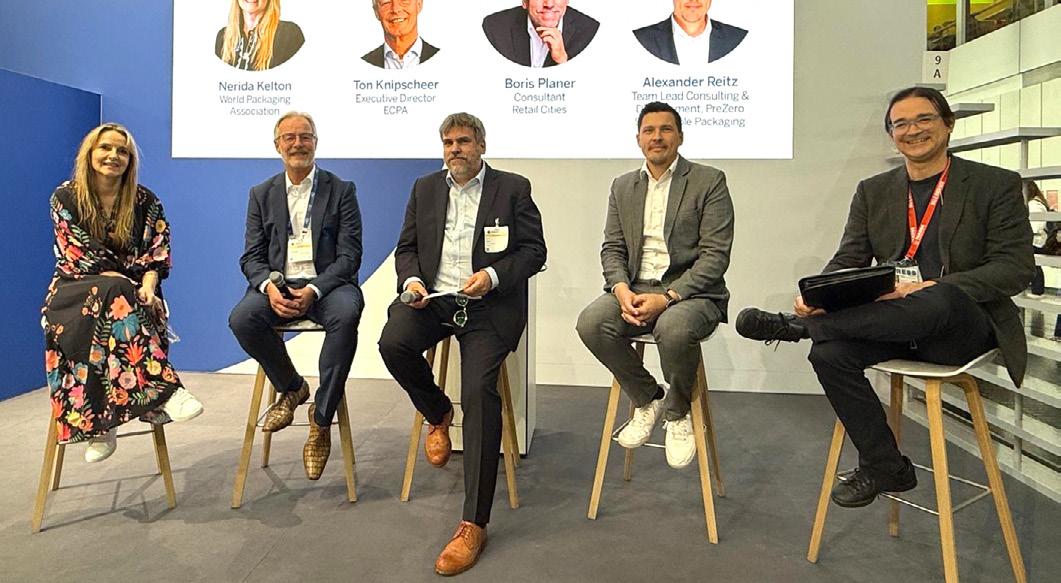
The AIP had a busy week at Interpack 2026 in Düsseldorf as it was speaking at several panel discussions and catching up with exhibitors at the show
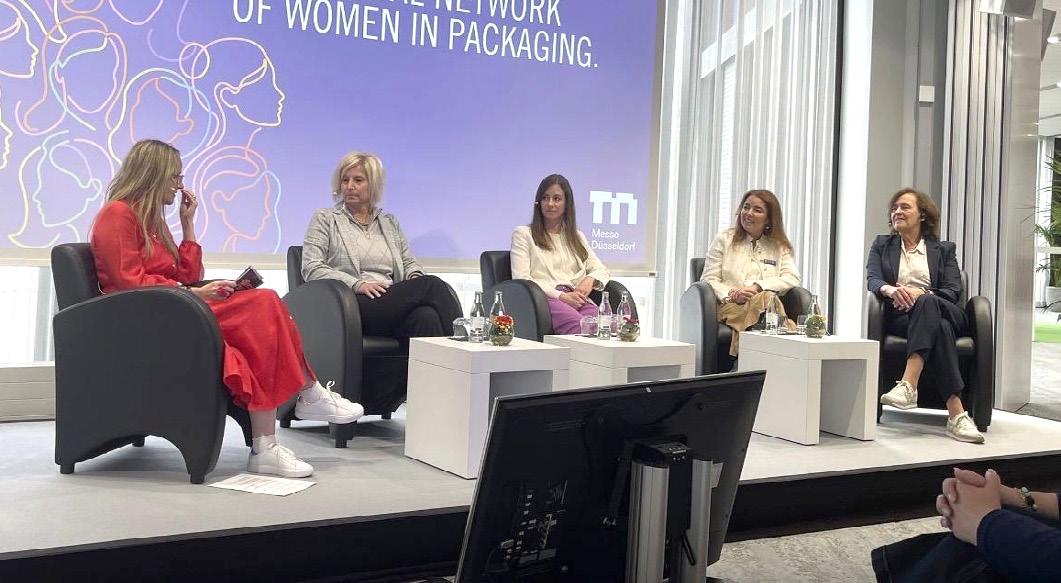
The Australasian Institute of Packaging (AIP) had a busy and productive week at the recent Interpack 2026 tradeshow, with representatives participating in several industry panels and reconnecting with exhibitors from across the global packaging sector.
Throughout the event, the team engaged in discussions around innovation, sustainability, and the future of packaging, while also strengthening relationships with industry peers and suppliers on the show floor.
The packed schedule highlighted the organisation’s ongoing commitment to industry collaboration, knowledge sharing, and in keeping Australasian packaging professionals connected to the latest international trends and technologies shaping the sector.
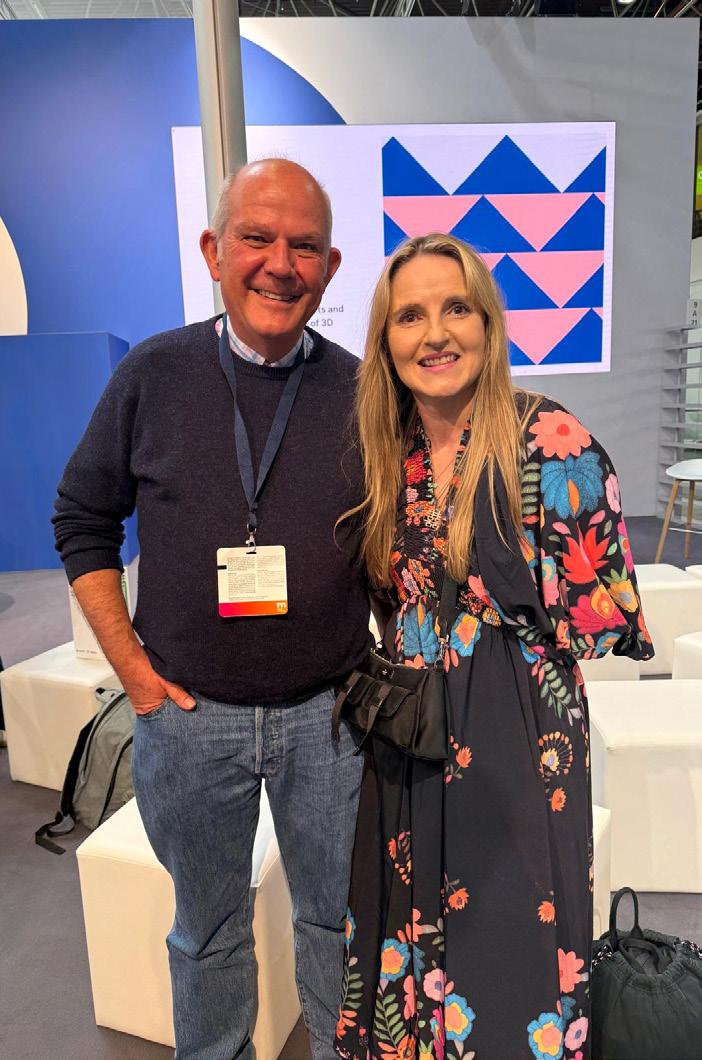
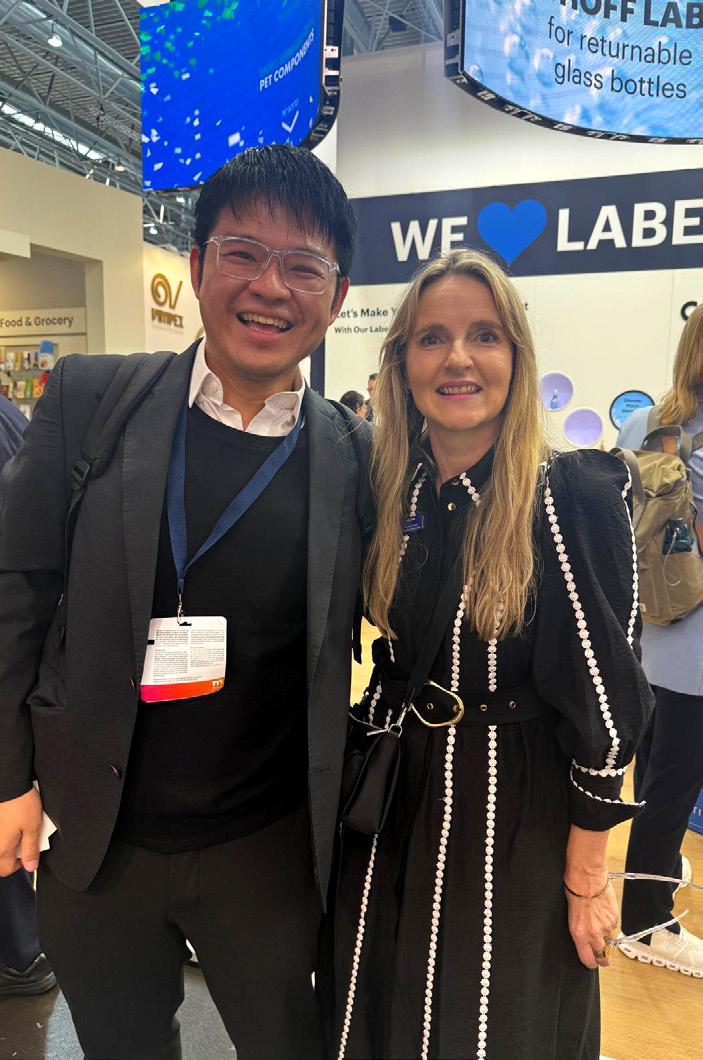
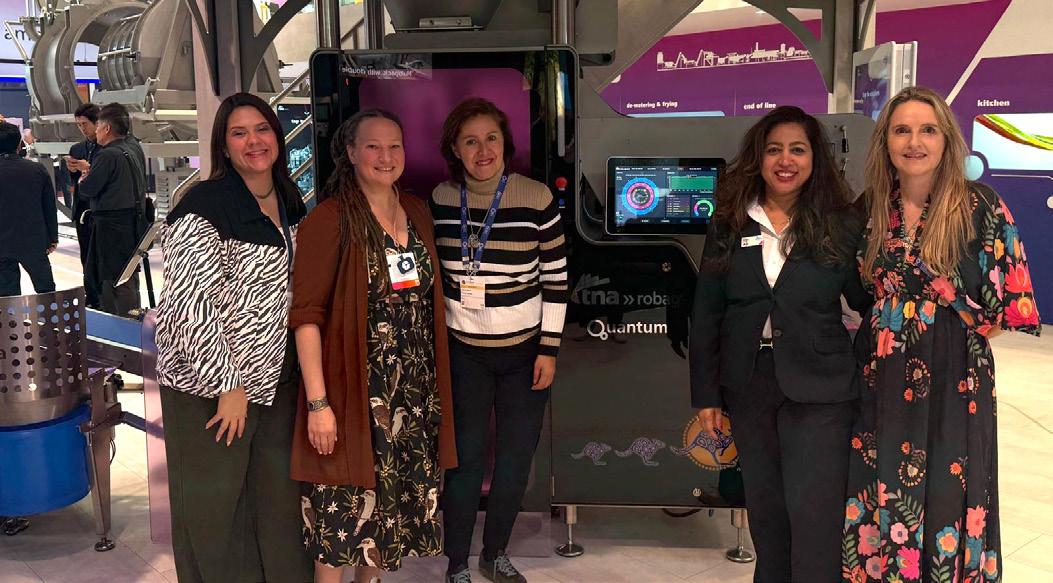
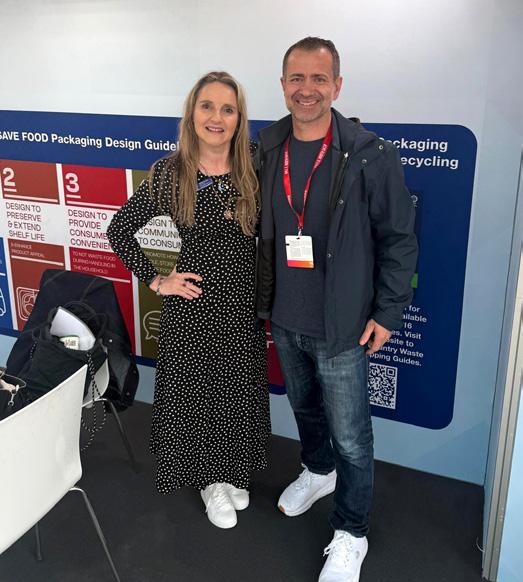
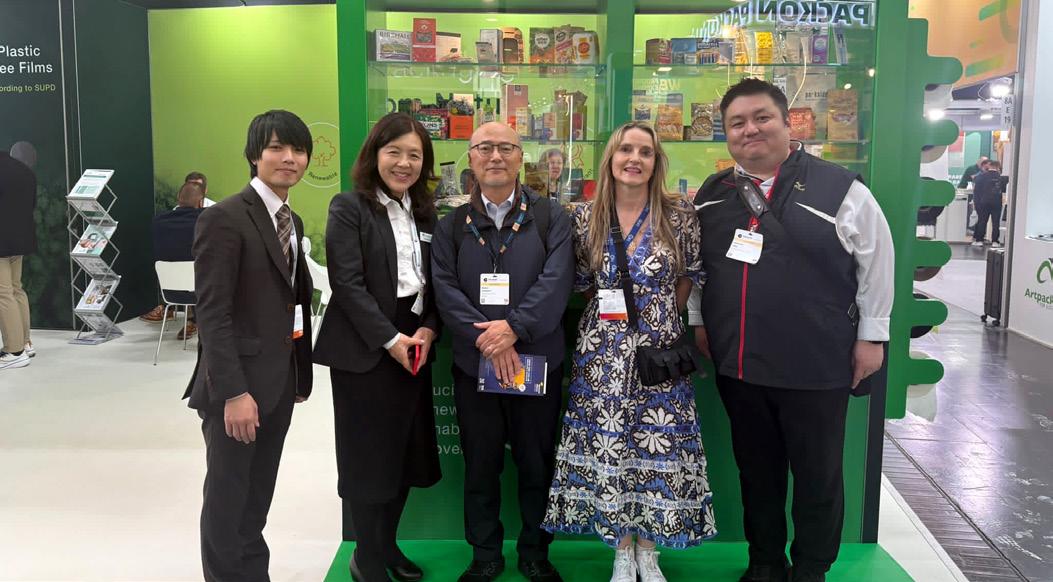
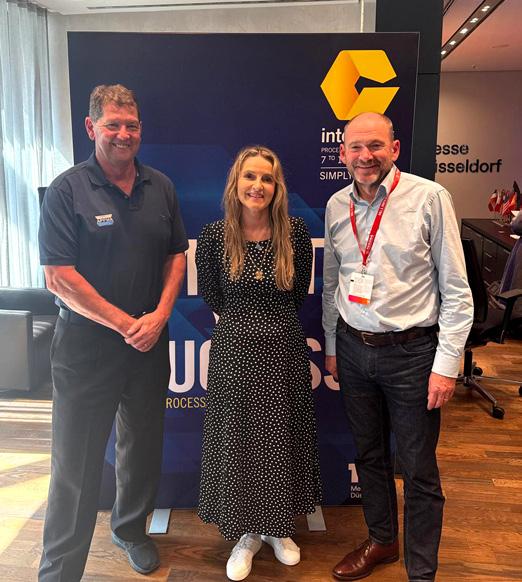
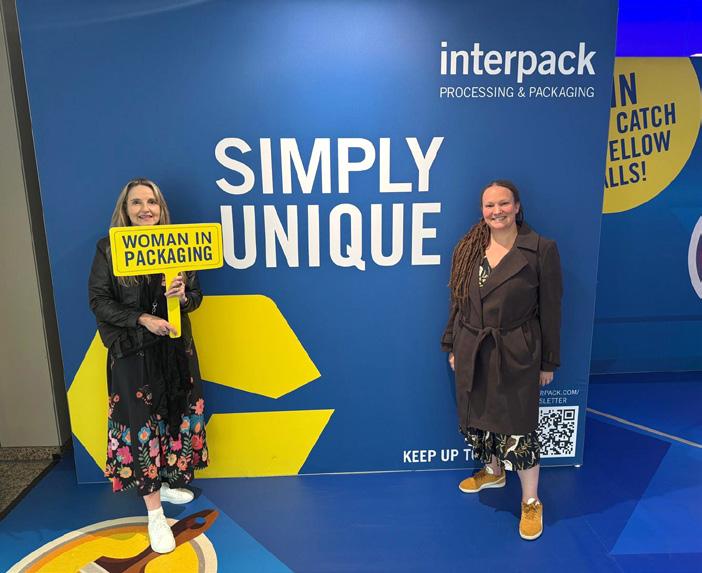
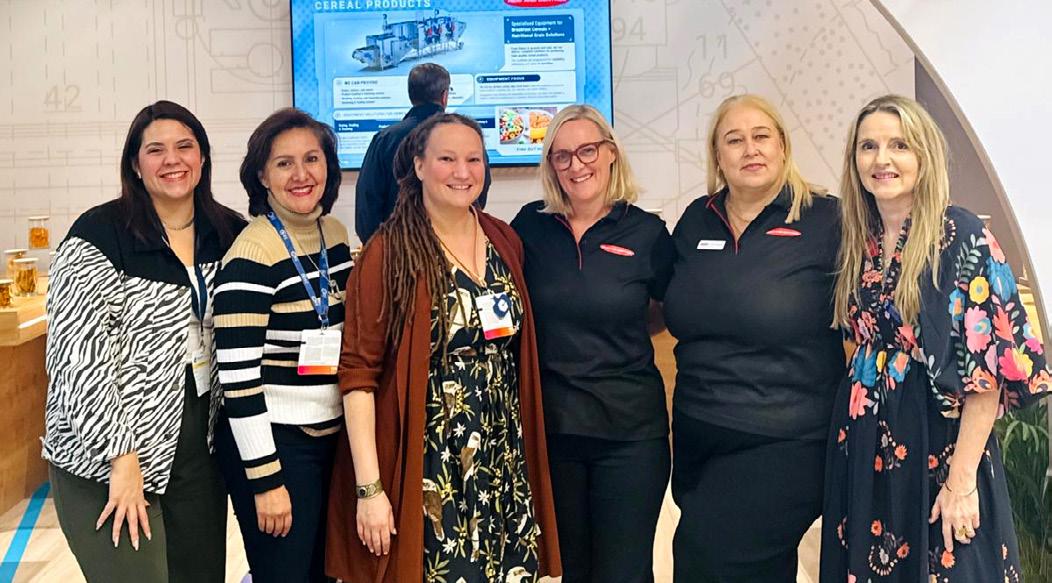
Here are some photo highlights from the institute’s time at the event in Düsseldorf, as captured by AIP’s executive director Nerida Kelton.

A/NZ companies won 11 honours at the 2026 WorldStar Packaging Awards,
while Professor Pierre Pienaar received the World Packaging Organisation
Lifetime Achievement Award at Interpack 2026
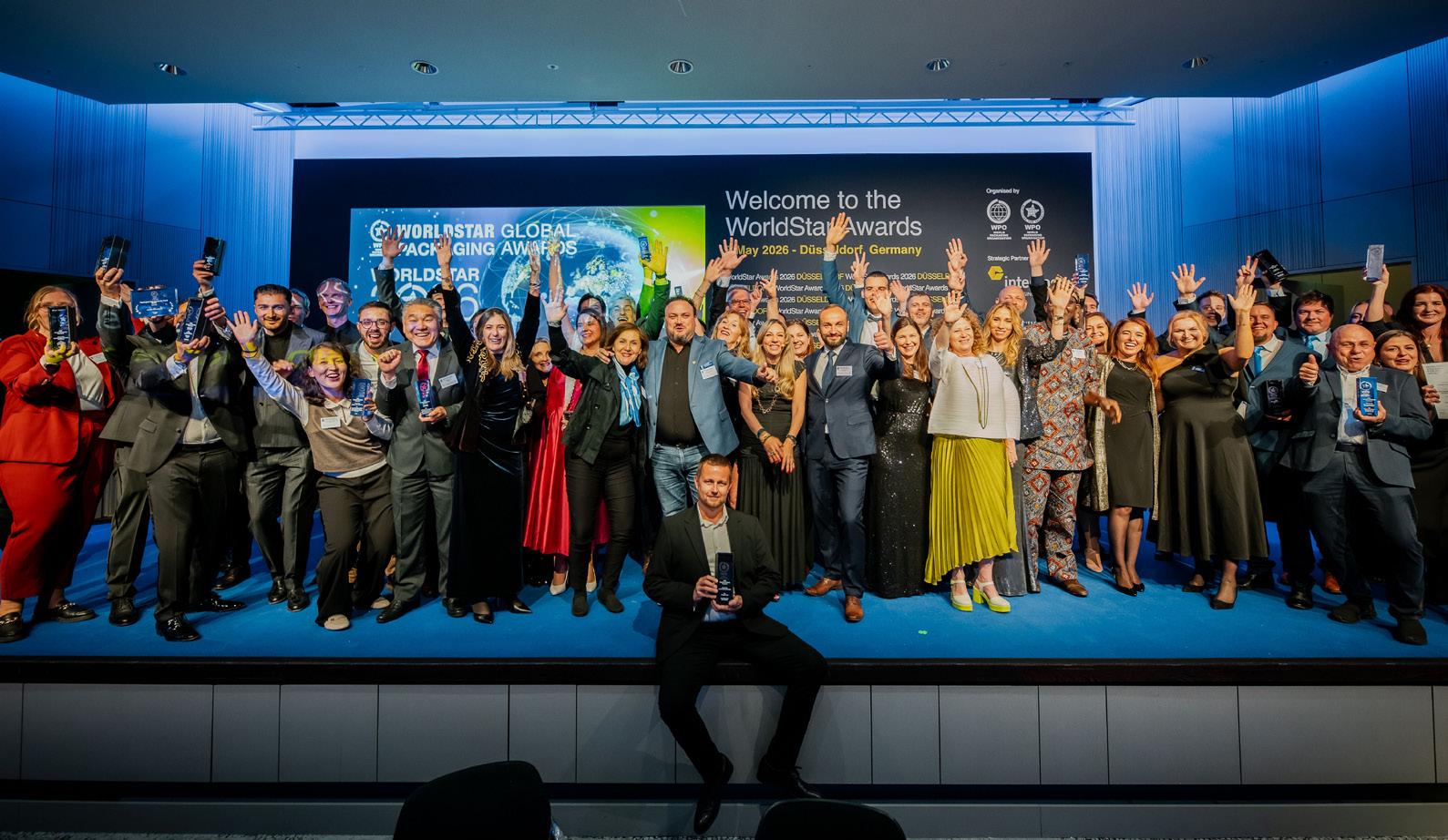
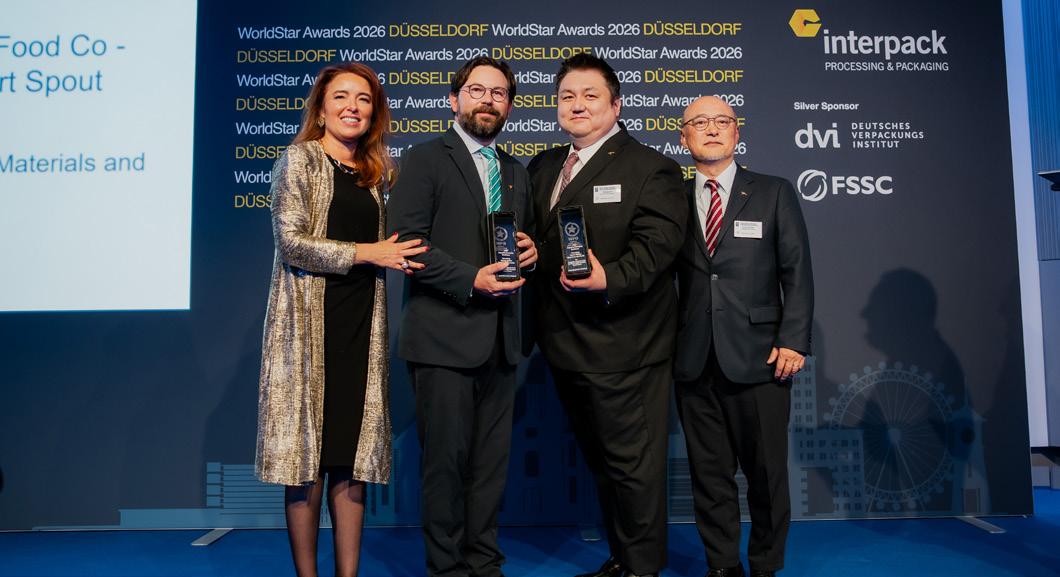
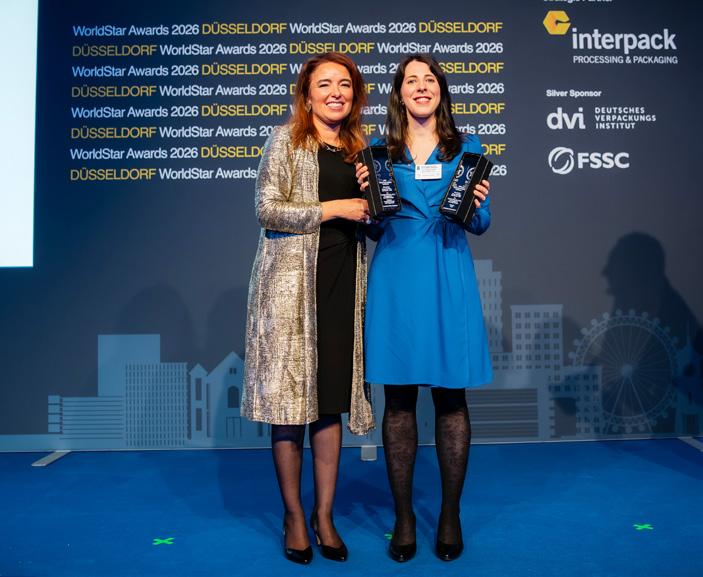
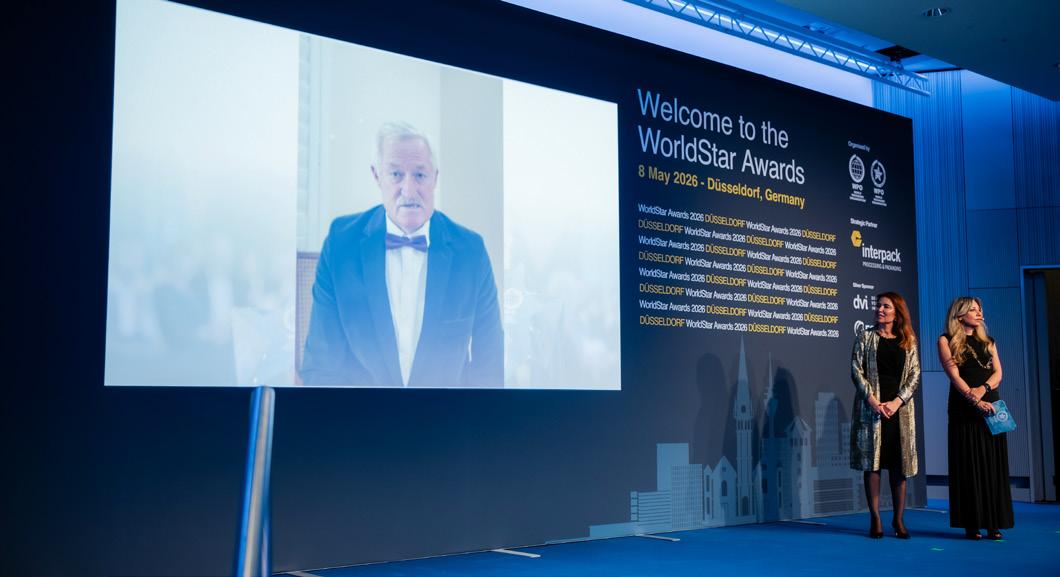
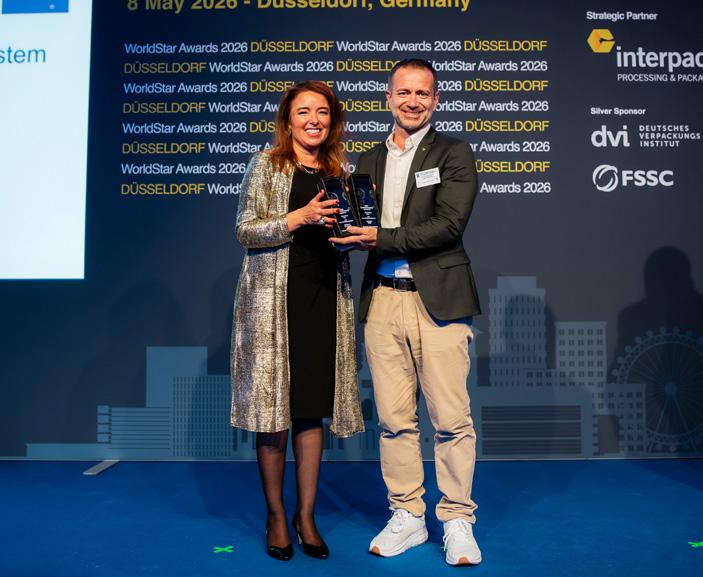
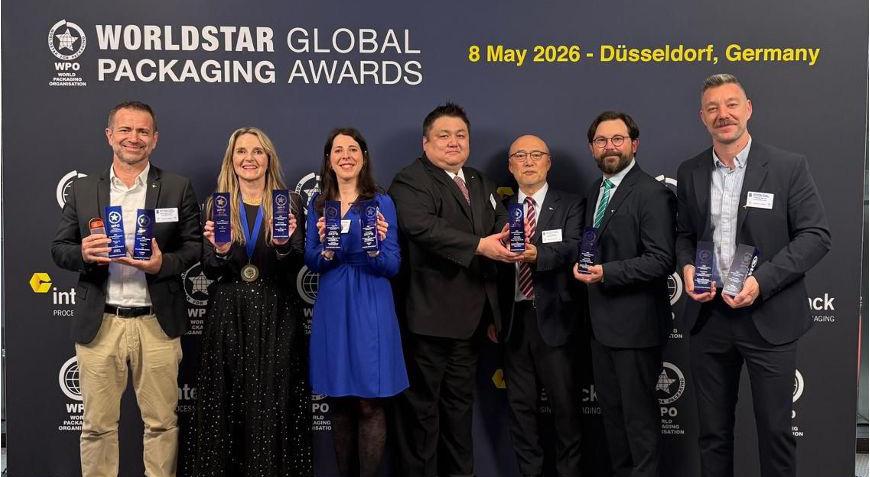
The 2026 WorldStar Packaging Awards winners were recently announced, and several A/NZ award recipients travelled to Interpack in Düsseldorf, Germany, to celebrate their success at a global awards function.
Seven Australian and New Zealand companies received 11 WorldStar Packaging Awards this year, which included:
• Food and Packaging Materials & Components categories: Australian Organic Food Co Mono Material Spout Pouch (Flavour Makers + Cheer Pack Asia Pacific)
• Food and Packaging Materials & Components categories: AmPrima recycle-ready packaging for shredded cheese (Amcor Flexibles Asia Pacific A/NZ)
• Food category: Katermaster Regen Reusable Food Container (Bunzl Australia & New Zealand)
• Food and Household categories: Koor refillable system (Koor)
• Fresh Fruit & Vegetables category:
Opal Paper-based fresh produce punnet (Mountain Blue + Opal)
• Labelling & Decoration category: Carman’s Gourmet Snack Mix (Zipform Packaging)
• Packaging Materials & Components category: Advantage 9um Pallet Wrap (Bunzl Australia & New Zealand)
• Other category: Reusable Ecommerce Tote (Woolworths Reuse Co + Viscount Reuse)
“Bunzl has been recognised with two WorldStar Awards: our Katermaster Regen Containers in the Food category, and our Advantage 9um Pallet Wrap in the Packaging Materials and Components category,” Bunzl A/NZ said of its wins.
“These awards reflect the dedication and collaboration across Bunzl A/NZ – from concept and development through to delivery. Congratulations to everyone involved.”
“Huge congratulations to all the Australian recipients of WorldStar packaging awards this year. Flavour Makers was proud to
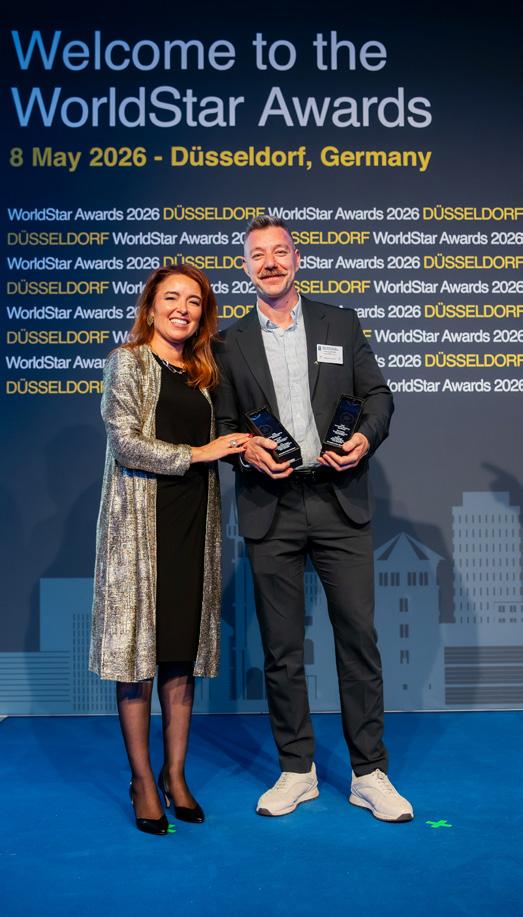
receive two awards for developing our monomaterial spout pouches for retort applications – a tremendous breakthrough offering customers a sustainable packaging solution for products like baby food, dessert sauces, stocks, and gravies,” Flavour Makers said.
“[A] proud moment for our team at the WorldStar Awards, celebrated at Interpack in Düsseldorf. Our AmPrima solution for shredded cheese has been recognised on the global stage, a great reflection of what’s possible when innovation meets real customer needs,” Amcor said.
“Now commercialised at scale, this recycle-ready solution is designed to meet Australasian Recycling Label guidelines and perform in a technically demanding dairy application.
“Produced at scale from our Christchurch site, and delivered through collaboration with teams in New Zealand and North America, this is a strong example of how we bring capability together to solve complex applications.”
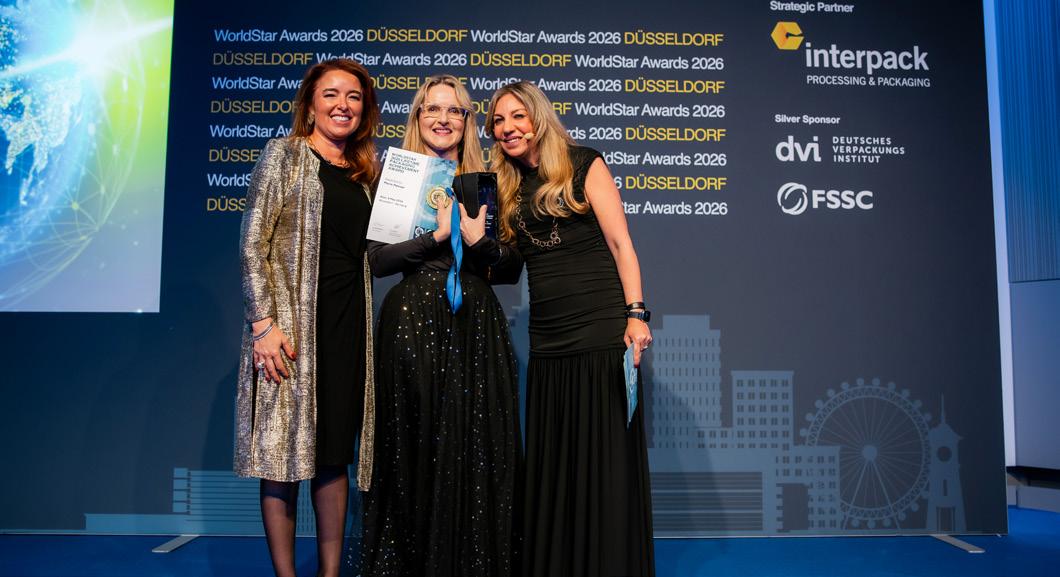
“We are proud to announce that the Carman’s Kitchen Gourmet Snack Mix Pack has won a 2026 WorldStar Awards accolade for Labelling and Decoration,” Zipform Packaging said.
“What a great way to start 2026 and again demonstrate Zipform Packaging’s innovation pathway in paper-based packaging, which continues apace. Well done to all our fellow Australia and New Zealand winners especially, but also to all the WorldStar Awards winners that highlight the global packaging community’s strong innovation credentials.”
In addition, the Australasian Institute of Packaging (AIP) education director Professor Pierre Pienaar was also named as the World Packaging Organisation (WPO) World Packaging Organisation Lifetime Achievement award winner for 2026.
“The AIP was proud to nominate Pierre for this pinnacle award for all that he does for the institute, our industry, and within the global community,” AIP executive director Nerida Kelton said.
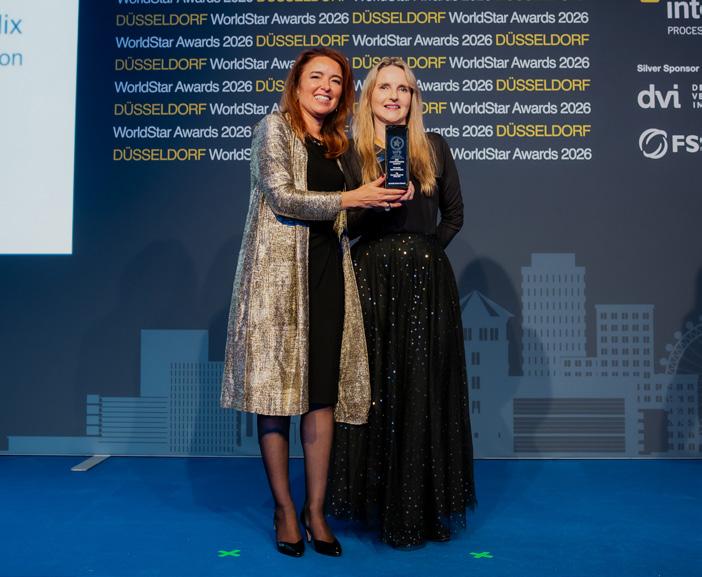
“I was honoured to collect his award and we all celebrated this most deserving recognition of a man who has made such a difference in so many people’s lives across all corners of the world.”
“I am humbled and proud simultaneously. Thank you to the AIP for nominating me. I thank the WPO for this honour being bestowed on me. This award is not mine alone but the many people that I have had the privilege of working alongside these past 40 years,” Professor Pienaar stated.
“I also thank the Institute of Packaging South Africa (IPSA) in my earlier years in the industry. A big thank you to my family for their incredible support… and most of all, my dear wife, Deanna Pienaar, who has been my rock throughout the journey.”
The packaging industry extended its congratulations to Professor Pienaar in force.
“Well done to all the Australasian trophy winners... and a special well-done Prof Pierre Pienaar, a very well-deserved
accolade and recognition for your ongoing devotion to the global packaging industry,” Zipform Packaging CEO John Bigley said.
“Congratulations Pierre on winning the 2026 World Packaging Organisation Lifetime Achievement Award. You are a most deserving winner,” AIP education coordinator Ralph Moyle said.
“Congratulations Pierre on this amazing achievement. A very deserving winner for sure as you do so much for the world of packaging,” Foster Packaging Australia business owner and managing director Joe Foster mentioned.
“[This win is] something special for a man that sees far more than what is in front of him… he sees the future and that is something we can all aspire to,” Result Packaging Group general manager Michael Dossor added.
A detailed review of the A/NZ WorldStar winning products was featured in the April 2026 issue of ProPack.pro.
QLM Label Makers has supported the growth of Hydrate the People through the supply of custom labels, pouches, sachets, and packaging boxes
Hydrate the People, a Perth-based company delivering Australia’s leading blend of premium electrolytes, recently came together with QLM Label Makers and its design arm Thirsty Fox to create labels and packaging for its products, bringing them from idea to shelf.
The collaboration kickstarted when Hydrate the People prepared to scale its business, resulting in the need for a label manufacturer and packaging provider that could make its products look premium on shelf. Packaging became a critical touchpoint, not just for protection and function, but as a primary driver of shelf impact, brand perception, and customer trust.
Hydrate the People was co-founded by Nick Psanoudakis and Cameron Hutchins who said when the company first launched its product in a tub form, it wasn’t very happy with the colour matching between the tub and label. Entering a highly competitive category dominated by established global and local players, Hydrate the People faced a clear challenge back then – looking premium, credible, and distinctive from day one.
The initial product relied on basic stick-on labels, which limited shelf presence and brand perception. As the business grew, the team needed a packaging system that could:
• Elevate the product to a premium standard suitable for retail
• Create a strong, recognisable brand presence across multiple formats
• Work consistently across four flavours without becoming visually cluttered
• Appeal to a fitness-driven audience with a clean, no-nonsense aesthetic.
At its core, the design direction needed to be simple, strong, and performance-led.
“And so, we started working with QLM Label Makers to make sure the colour match was great. The end product is a seamless label on the tub. You can’t even see that there’s a label on the tub from a distance,” Psanoudakis said.
Since then, Hydrate the People’s portfolio has evolved beyond just product in a tub.
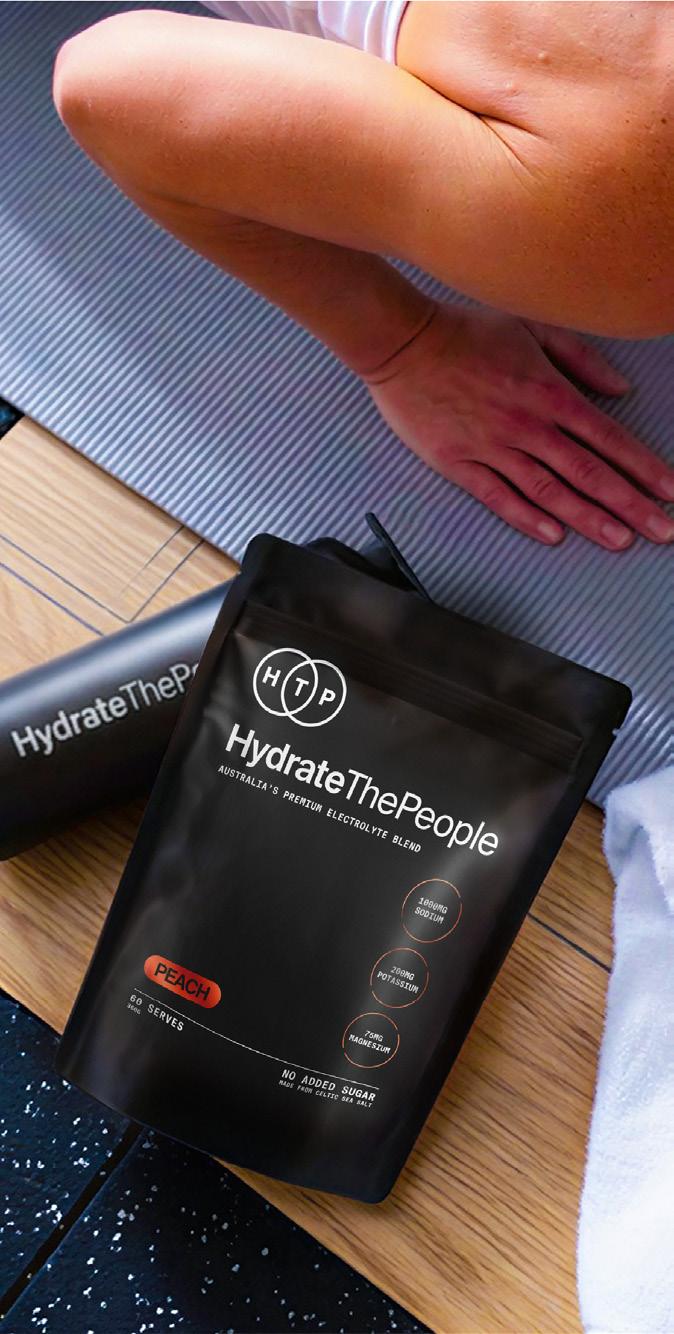
Its product range now includes electrolyte powders across multiple flavours, offered in stand-up pouches, sachets, and tubs, designed for convenience, portability, and daily use.
It has been using QLM Label Makers to produce labels for the tubs, and directly prints on its stand-up pouches, sachet boxes, and sachets.
“We also worked with Thirsty Fox to help design our stand-up pouch, because this was the first time we’re using stand-up packaging, and we weren’t sure how it was going to look. But we’re happy with the quality of the design and the finished product, which comes in a matte finish,” Psanoudakis said.
QLM Label Makers Australia general manager Andrew Siwicki said, “[It’s] great to see passionate Australian businesses like Hydrate the People continuing to grow and evolve.
“Nick and Cam have built a strong brand with great energy behind it, and at QLM, we are proud to support part of their journey as they continue to scale. From labels and packaging through to design support, it is always rewarding to work alongside growing businesses and help bring great products to market.
“Thank you to the Hydrate the People team for allowing QLM to be part of the journey. [It is] exciting to see what the future holds.”
Siwicki added that the company’s strength at QLM is the way it cares and services its customers.
“We can see a project from the start to finish, and we get excited about the success of our customers’ journeys. QLM Label Makers is the most diverse label and packaging manufacturer in Australia,” he added.
QLM Label Makers managing director Simon Pugh said the vision for the business is to be the complete labels and packaging solutions partner for its clients.
“But more importantly, the mission that drives QLM is to maintain mutually beneficial and sustainable long-term relationships with all of our stakeholders –making sure that as a company, we continue to do the right thing at a corporate level, whilst growing our teams internally and ensuring our clients have access to the latest in technology and investment,” he said.
“As our technology has grown up with our clients, so too has our offering. QLM offers a wide range of services to our clients – from printed labels, blank labels, thermal printers, colour printers, flexible packaging, and printed cartons. We also offer printed rewind – this includes many industries including supplements and pet food.
“The facility at QLM has also invested heavily in the digital space – having a fleet of HP presses to produce digital labels and packaging, as well as a digital sheet offering in its Vietnam facility. For digital printing, it’s great for startup businesses that just want to test the market. And then, they can progress into the BOBST machine, which is good for larger run printing.”
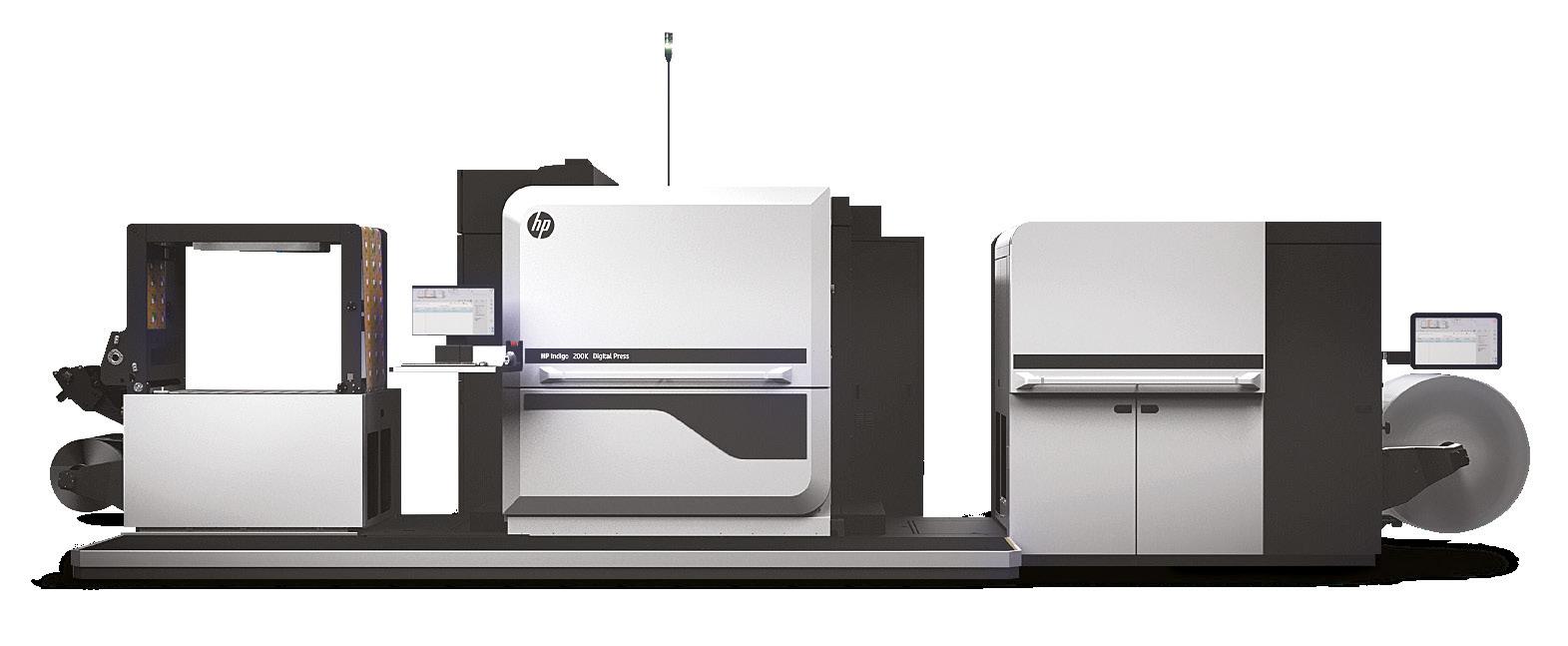
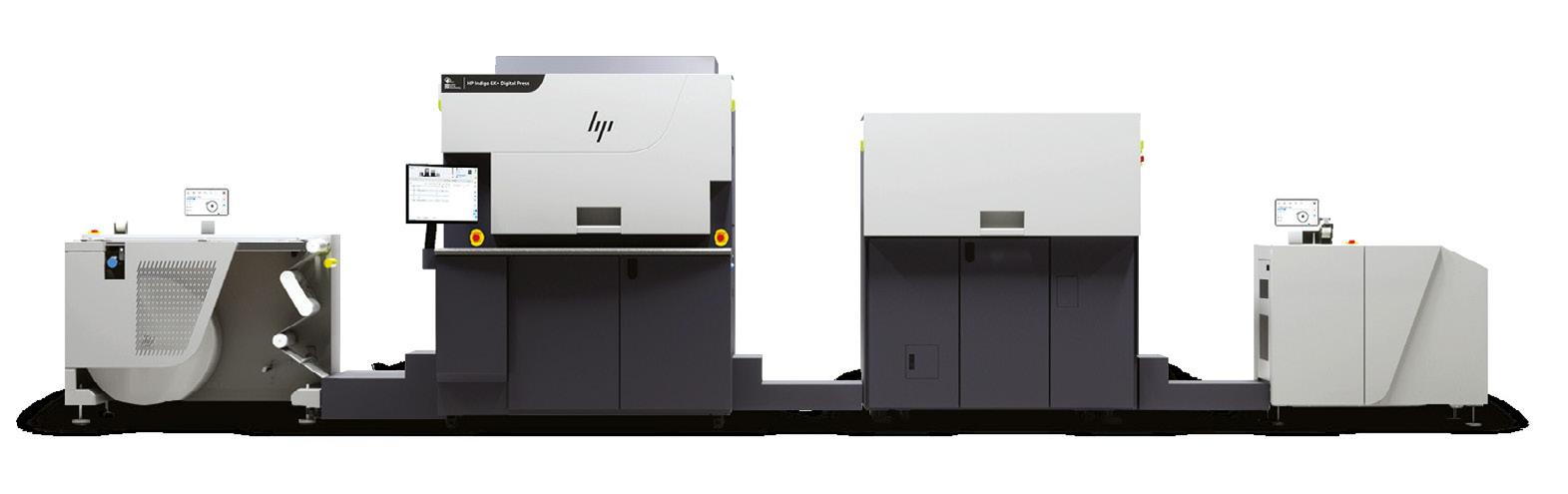
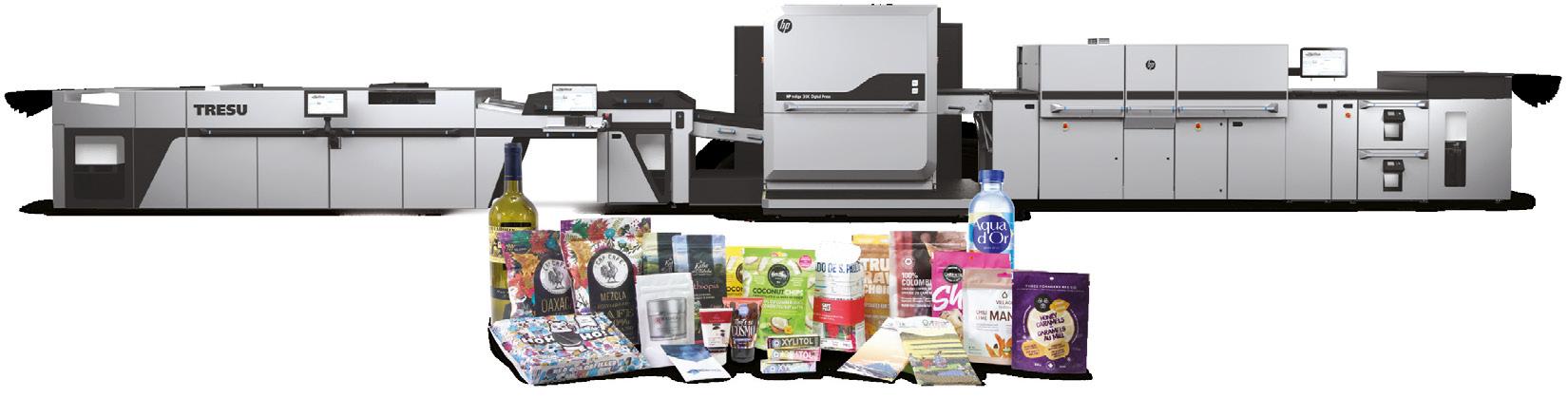
FINAT addresses the power of connection: from Labelexpo to LOUPE and the next decade of narrow-web, with some insights from its latest report, RADAR
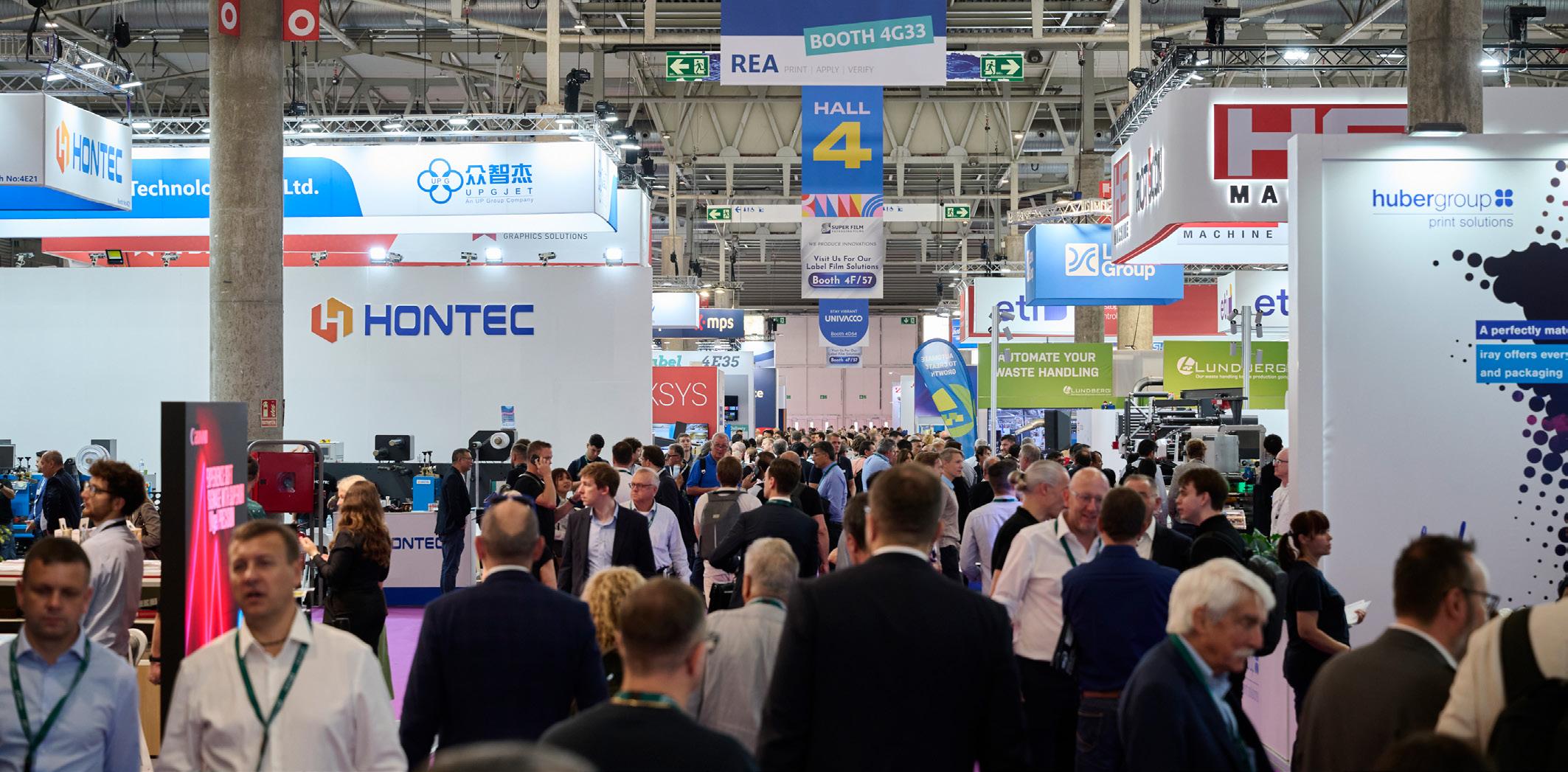
For more than three decades, Labelexpo Europe has been the global meeting point for the label and narrow-web community, and FINAT has been proud to stand alongside it as a long-term association partner.
The move from Labelexpo to LOUPE (Labels and Outer Packaging Embellishment) from 2026 is more than a rebrand. It signals a structural shift: (selfadhesive) labels remain the anchor, while the ecosystem widens, geographically and technologically, towards adjacent narrowweb and outer-packaging embellishment.
FINAT’s scope: rooted in self-adhesive labels, evolving with narrow-web
FINAT is the European home for narrowweb label converters and their suppliers. Our goal is to empower the European narrow-web label industry as it evolves and offer clear value to current and nextgeneration professionals, at both small and large companies.
We are rooted in self-adhesive labels, and we actively track and support other current and emerging narrow-web applications such as sleeves, pouches,
IML, and selected flexible packaging, where customer expectations and technology pathways increasingly overlap.
Our role is not only to describe change, but to help members prepare for it, turning trends into practical options: roadmaps, skills, guidance, and credible connections across the wider packaging and recycling ecosystem.
How we got here: 20 years of change, 10 years of acceleration
Over the last 20 years, labels have evolved from a mainly print-and-convert selfadhesive application into an increasingly integral packaging and information layer, intensifying their critical, high-value role in branding, protection, compliance and, increasingly, traceability.
The last decade accelerated the shift: shorter runs, faster changeovers and rising SKU complexity put a premium on flexibility, speed, and repeatability.
Technology also moved from incremental press improvements to workflow-led competitiveness: automation, inspection, colour control and data discipline.
But the biggest change is structural: convergence. Self-adhesive labels remain the anchor, yet the industry shift towards the broader application of narrow-web technologies stands at the core of where we are going.
Sleeves, IML and selected flexible packaging increasingly share the same technology base and skillsets: printing, finishing, substrates and digital workflow. Converters are exploring where narrow-web capabilities translate into new value, and where embellishment is becoming a stronger part of brand differentiation.
Where we are now: from recovery to recalibration
From a European market perspective, the past cycle has been challenging. 2025 marked a shift from recovery into recalibration, with a recorded growth in the self-adhesive label materials consumption at 2 per cent, in line with GDP.
The market is more stable entering 2026, but growth is modest and uneven, and uncertainty remains the baseline.
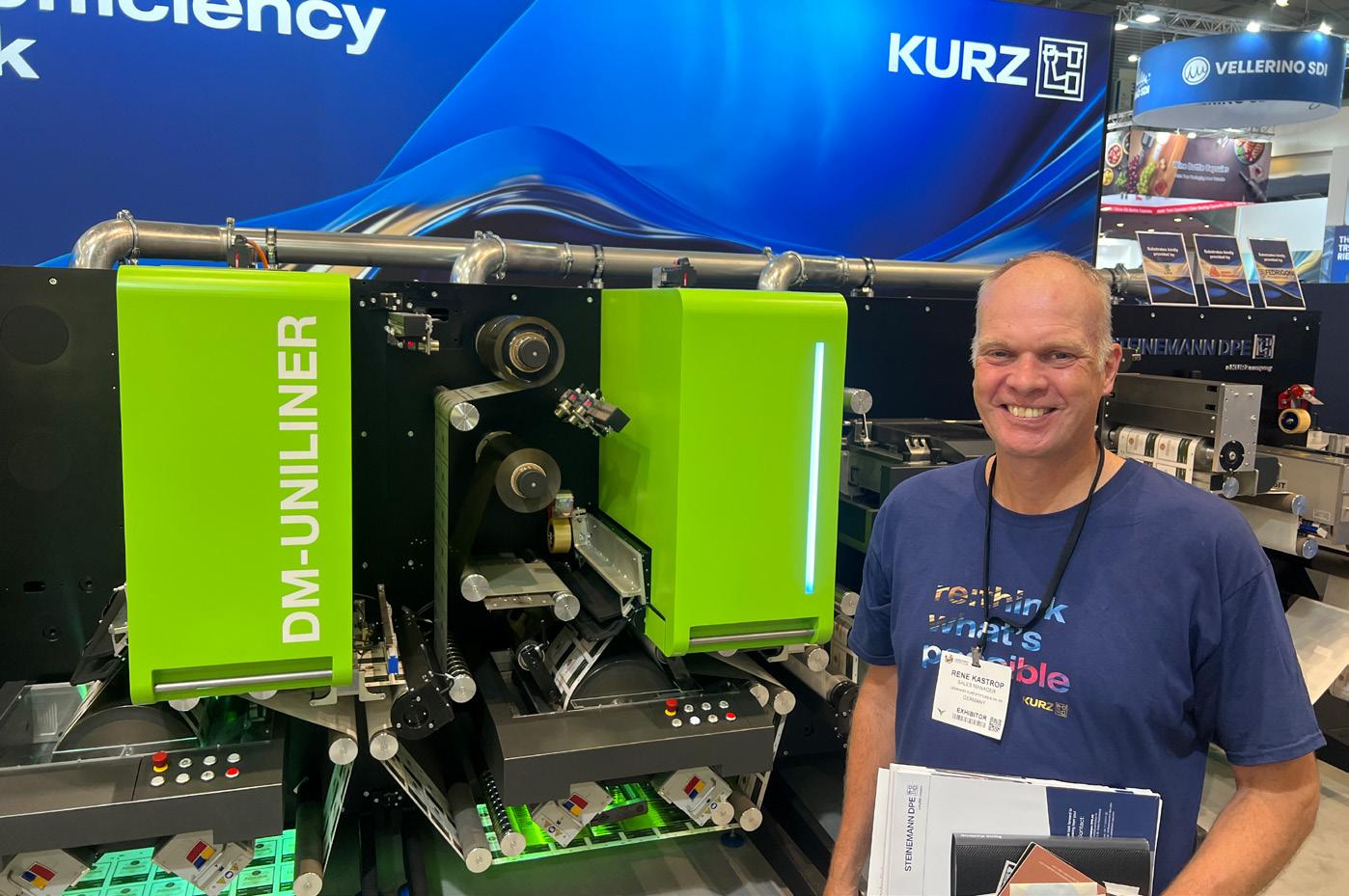
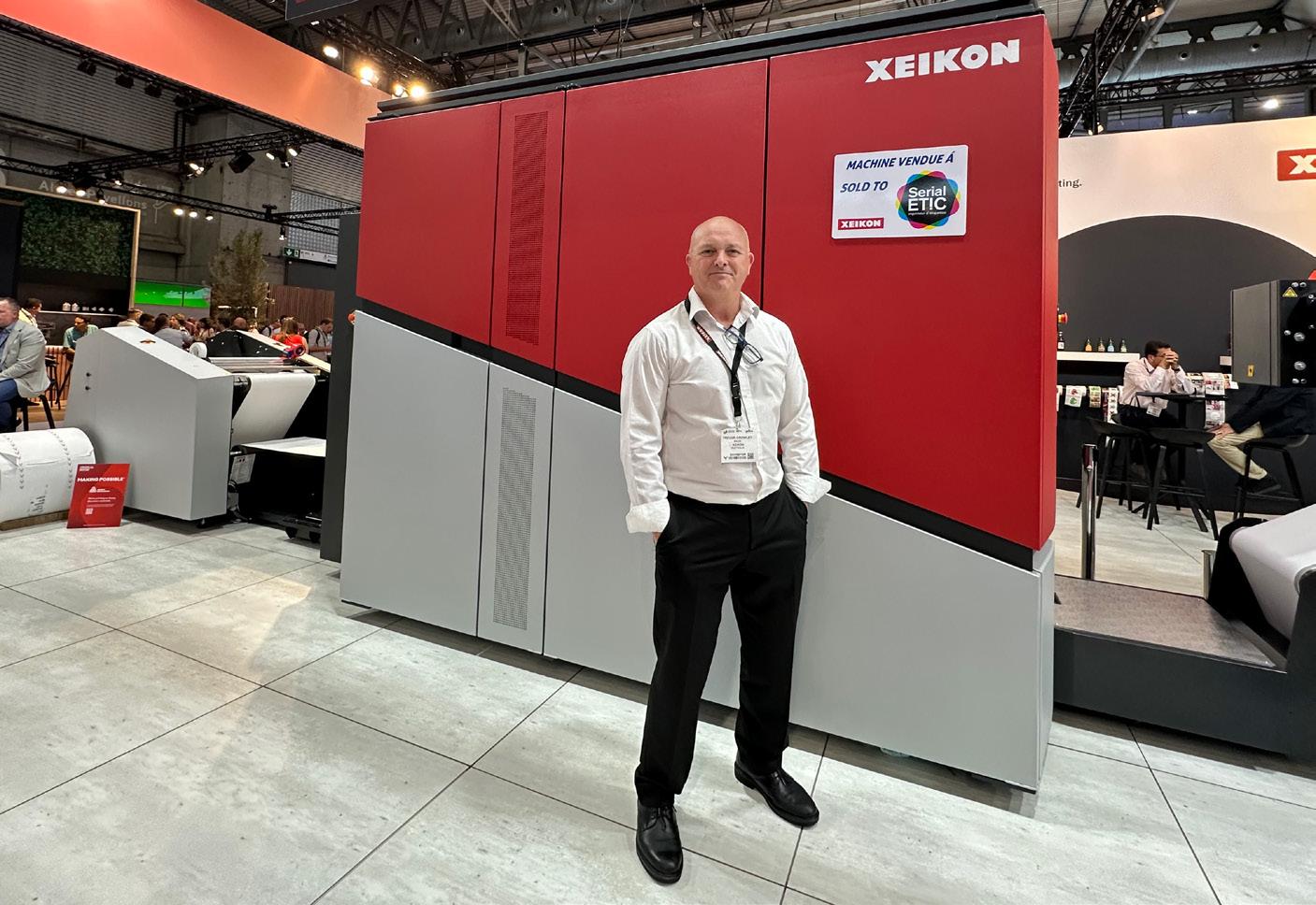
Two signals stand out. First, demand is increasingly mixed by application: variable information printing linked to logistics and distribution has been structurally stronger than primary product labelling during periods of cautious consumer spending.
Second, the mix of materials and functionality continues to evolve, driven by sustainability requirements, performance demands and the growing role of traceability. Proof is becoming the new currency: solutions must be compatible with recycling systems and compliance expectations.
What comes next: high-tech, circular and compliant
Looking ahead, we see three trendlines shaping the next few years:
1. Sustainability moves from ambition to execution. In Europe, regulations like PPWR and customer requirements
are pushing the market from intent to implementation.
Companies increasingly need evidence-based design-for-recycling compatibility, credible data, and scalable end-of-life solutions. This is not only a European story: global brand owners and supply chains carry these requirements across regions.
2. Circularity becomes a system challenge. It will scale when collection, sorting, recycling capacity and end markets become economically viable.
That is why FINAT (and the CELABEurope consortium that it hosts) works, where needed, with key players in the wider packaging and recycling ecosystem: converters and their endcustomers need solutions that are technically sound, operable at scale, and compliant as requirements evolve.
Collaboration is not “nice to have”; it is strategic infrastructure.
3. Digitalisation – and increasingly AI – become the productivity lever. Short runs, SKU proliferation and tighter turnaround expectations make automation, workflow discipline, and data-driven process control more central to competitiveness.
Traceability is also gaining momentum as a practical tool for supply-chain efficiency, compliance, and circular systems.
Why LOUPE matters: where strategy becomes investment
LOUPE’s relevance is that it mirrors where narrow-web is heading. As converters and suppliers explore adjacent applications (and as embellishment grows in importance) innovation increasingly happens at the intersections: materials, software, finishing, inspection, compliance, and recycling.
LOUPE also matters as a format. Every two years, it creates a peak moment where converters can see technologies running, compare options in person side by side, and turn strategy into real investment decisions.
It is one thing to discuss convergence, automation or circularity in theory; it is another to evaluate presses, finishing lines, inspection systems, workflow tools, and materials in one place –together with partners who can make implementation real.
A European perspective with global relevance
FINAT’s scope is European, but the challenges are increasingly shared: circularity economics, traceability requirements, supply-chain due diligence, and the need to stay competitive while adapting to sustainability and compliance expectations.
Our role is to keep the community informed, connected, and empowered: through market intelligence, education, technical work and standardisation, and pre-competitive collaboration platforms.
In the end, LOUPE is a timely signal. The industry is broadening, expectations are rising, and progress runs through connection: across applications, technologies, and the wider ecosystem that makes high-tech, circular, and compliant solutions possible.

Jules Lejeune is the managing director of FINAT.
The companies that combine AI capability with strong commercial instinct will have a material advantage, says BrightCast Advisory’s Peter Fotiadis
There’s always someone in the room who rolls their eyes when AI comes up in discussion. Usually it’s followed by a confident, “data analytics is not new”, or “we already get all that from Power BI”.
It’s not wrong. The packaging industry has never been short of data. SKU margins, volumes, run rates, raw material inputs, wastage, freight, rebates, and customerspecific pricing quirks… we’ve been drowning in data.
What we’ve always been short on is time, because no matter how sophisticated the ERP system or how many reports get generated, most of that data ends up in spreadsheets, and most spreadsheets end up in debates. Someone builds a view of margin. Someone else pulls it apart. A third person adds another layer. Weeks go by, distractions emerge, and whenever it is eventually re-surfaced, the conversation goes back three steps and is still about what’s right, not what to do.
What’s changing now is not the volume of data or even the availability of analytics. It’s the speed at which you can move from raw data to something you can act on with confidence.
We tested that recently on what would be a typical packaging dataset – many order lines across customers, products and regions, layered with volumes, pricing, freight and an array of other related fields you see in any business. Our objective? Test whether our product pricing strategy can be improved with initiatives such as standardising delivery charges.
Historically that becomes a project. You assign people to it, iterate through versions, and hope to land on something robust enough to support a pricing or sales conversation.
Instead, we ran it through an AI-assisted workflow. In the space of a few hours, we had a commercially useful view of the potential solutions. After a few days applying our business judgment and commercial realities, the options became

clearer and the findings and insights were useable – not theoretical, not academic, but something we could present to the CEO and CFO with enough level of confidence that it could be actioned (we pre-agreed this approach, for the record).
It highlighted several improvement actions required to the freight estimation and quoting process, all the free-freight customers (which will enable sales to review and address if required), and most impressively, prepared several permutations of an Australian-wide standardise freight pricing structure that could maintain an acceptable net freight recovery outcome for the business.
It also gave us a clear sense of where to focus the improvement efforts. And this is the real shift in AI. AI is not replacing commercial judgement, but it is compressing the time it takes to apply it. It provides a highly directional, highly usable answer quickly, then apply experience and instinct over the top.
Ensuring org-wide consistency
I can say with 100 per cent confidence that many of the team members in your business are already using AI. But they’re using it in a way that would make most CFOs, CIOs and boards very nervous if they understood it properly. Commercially sensitive information is being copied and pasted into public tools without much thought about where that data is going or how it might be used.
If you take one thing out of this piece, let it be this. Stop uploading confidential and commercially sensitive information into
public AI tools. It is not good practice, and in many cases, it is not defensible.
The smarter approach, and the one BrightCast is starting to see emerge strongly, is the use of contained or enterprise-grade environments where data remains under your control and governance is built in from the outset.
There is a growing ecosystem of solutions doing this properly, and it’s worth acknowledging players like Kiraa (Melbourne based tech player, kiraa.ai) who have developed a practical, businessfirst, secure solution that the business can rely on (as opposed to something your team quietly use on the side).
This is where our conversations are right now which our clients. Not whether AI is real or overhyped, but whether you are using it in a way that strengthens your decision-making without introducing unnecessary risk.
Look for the following in you selection:
• Retain control of your data
• Bring consistency in how analysis is performed
• Insist on an ability to embed your own commercial logic and assumptions
• Non-negotiable: insights pulled from your data, not a predictive response based on the big wide world
The businesses that combine AI capability with strong commercial instinct will have a material advantage. They will be quicker to respond, more confident in their pricing, and more deliberate in how they manage customer relationships.
So, whilst others are still debating the spreadsheet or whether the dashboard is correct, you instead have real time actionable insights on your desktop daily. It’s the analyst you’ve always wanted, so make the hire!

Peter Fotiadis is a co-founder and partner at BrightCast Advisory, an industry expert supporting businesses through critical moments of change.
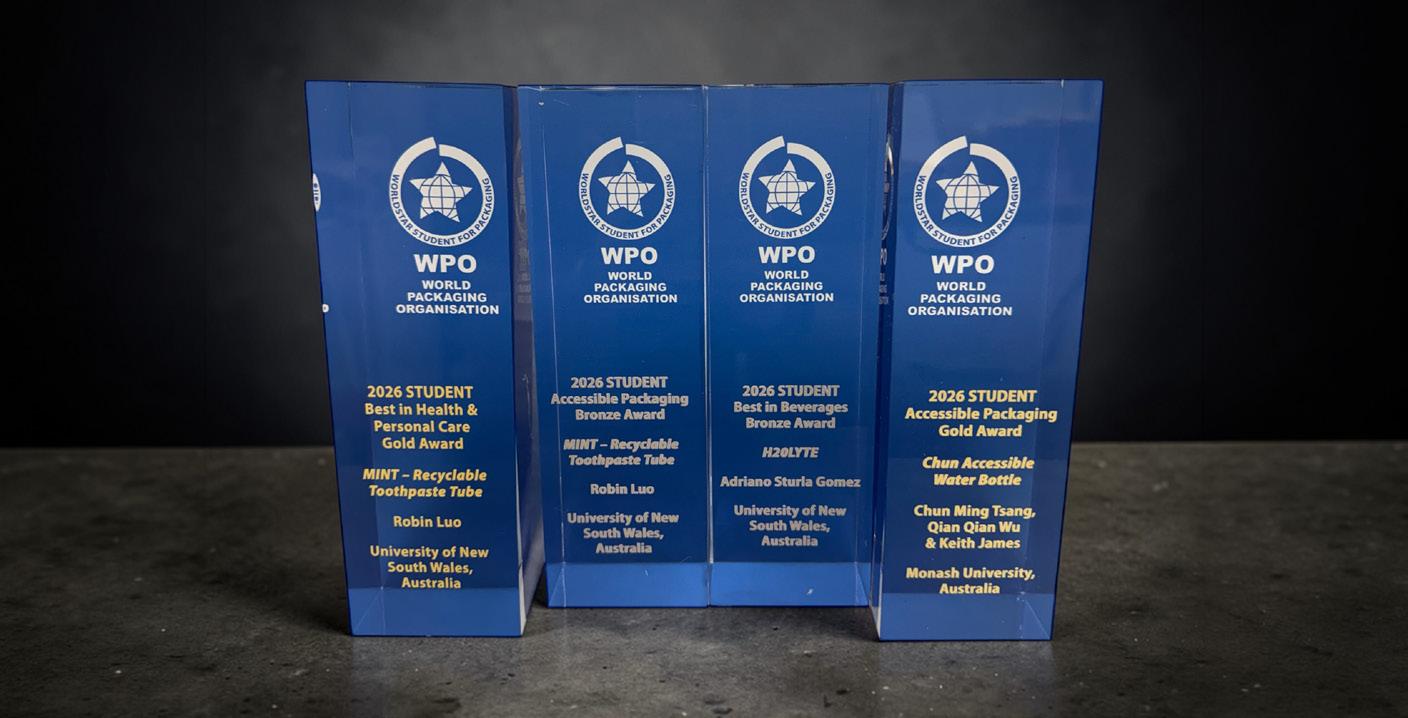
With 246 entries from 90 educational institutions across 23 countries entering the 2026 round of the WorldStar Student Awards, the competition this year was fierce.
Twenty-one Australian University students from the Industrial Design School at UNSW and the Master of Food Science and Agribusiness program at Monash University took on the strong competition and received two Gold, two Bronze and 16 WorldStar Certificates. Australia also placed second in the medal tally behind China, which is an incredible feat for such a small country.
Mint Recyclable Toothpaste Tube receives Gold and Bronze
The standout student from Australia was Robin Luo from the Industrial Design School, UNSW, who received a Gold Award in the Health and Personal Care category and a Bronze Award in the inaugural Accessible Packaging category for his project Mint Recyclable Toothpaste Tube.
The Mint toothpaste tube was designed in response to the significant waste and environmental impact caused by traditional toothpaste tubes. The mixedmedia composition renders them unrecyclable through standard kerbside recycling programs and Mint aims to offer a more sustainable packaging solution.
Additionally, toothpaste residue often remains trapped inside, making recycling
more difficult and product waste an issue. To address these issues, Robin Luo designed the Mint toothpaste tube entirely from polypropylene. This rigid, monomaterial construction allows the tube to be easily recycled through standard kerbside programs. The design, inspired by a glue stick mechanism, features an auger and plunger system. This innovation ensures users can extract nearly all the toothpaste, thereby reducing product waste, leaving the tube cleaner for recycling. The result is a more user-friendly and environmentally responsible solution.
Chun Accessible Water Bottle –Inaugural Gold winner of the Accessible Design category
A team of students from the Master of Food Science and Agribusiness program at Monash University – Chun Ming Tsang, Queenie Wu, and Keith James – received a Gold award in the inaugural Accessible and Inclusive Packaging Design category for the Chun Accessible Water Bottle.
The water bottle was designed to support individuals with neurological impairments, particularly post-stroke users who experience limited mobility. Chun Ming Tsang personally suffered a stroke in childhood, which caused a loss of mobility on the left side.
Through the daily experiences, Chun Ming Tsang realised how challenging it can be to perform simple tasks like opening a traditional water bottle, which typically
requires twisting the lid with two hands. This design aims to address that barrier by enabling single-handed and even hands-free operation, empowering users with limited mobility to drink water independently, safely, and with dignity.
The bottle was developed under the inclusive design and accessibility category, guided by criteria such as ease of use, ergonomic function, and sensory guidance. Key innovative features include a spring-loaded, mouth-activated opening that allows users to push down with their top lip to drink; once released, it automatically seals to prevent leakage. A bayonet-style twist mechanism replaces the traditional multi-turn cap, requiring only a short turn with one hand.
Together, these features make the bottle significantly more user-friendly, reducing reliance on two hands and making everyday hydration more accessible to people with motor impairments.
H2OLYTE – electrolyte packaging
Adriano Sturla Gomez, also from the Industrial Design School, UNSW, received a Bronze Award in the Beverage category for his project H2OLYTE. The redesigned electrolyte container prevents landfill waste by addressing sorting challenges at recycling facilities.
Its optimised shape ensures compatibility with filtration systems, while reducing material usage by 30 per cent. Enhanced stacking and accessibility features maximise transport efficiency and consumer usability making this a standout pack on the shelf.
Only winners from the Australasian Packaging Innovation & Design (PIDA) Student Awards are eligible to enter the WorldStar Student awards from across Australia and New Zealand.
Nerida Kelton is the executive director of the Australian Institute of Packaging (AIP) and vice-president, sustainability and save food of the WorldPackaging Organisation (WPO).

As packaging evolves under the influence of digital printing, sustainability, and e-commerce, personalisation is no longer optional – it’s expected
Personalised and customised packaging has evolved rapidly over the past decade. What began as attention grabbing campaigns – perhaps most famously Coca Cola’s ‘Share a Coke’, which put consumer names on bottles across more than 80 countries – has matured into a strategic capability that affects how brands design, produce and connect with consumers.
As digital printing, sustainability pressure, and e-commerce reshape packaging, personalisation is no longer a novelty; instead it’s becoming a norm.
At the heart of this transition is digital printing. Unlike traditional analogue processes, digital print allows brands to create multiple design variants, regional editions or even one to one personalisation without the cost and complexity of printing plates.
This has made short runs and rapid, multiple iterations commercially viable, turning packaging into a flexible marketing channel rather than a fixed asset.
For FMCG brands in particular, this means the ability to test concepts in market, tailor designs by geography or occasion and react quickly to trends, all while keeping inventory levels low.
For the print service providers and converters enabling these capabilities, it represents a meaningful change in the value they can offer brand clients: away from volume driven commodity work and towards design flexibility and campaign agility.
Beyond novelty: packaging that earns its personalisation
While early personalised packaging was often produced as part of an attentionseeking stunt, brands today are focused on more insight-led, meaningful and sustainable applications.
Consumer research by Innova Market Insights suggests that the strongest
engagement with personalised packaging comes from designs that reflect identity, culture, or context – such as local language, gifting cues or seasonal relevance – as personalisation evolves beyond simple name -based executions.
This more considered approach to personalisation aligns closely with premiumisation, particularly in beverages, confectionery and personal care, where packaging plays a central role in perceived value.
Corrugated packaging finds a new role
Once purely functional, corrugated packaging has been turned into a brand ambassador by digital print. High quality graphics, variable data and smart features can now be printed directly onto shipping boxes and retail ready packs, thanks in large part to advances in inkjet technology.
For e-commerce brands, this transforms the delivery box into the first brand touchpoint, enabling tailored unboxing experiences, personalised messages or campaign specific artwork.
Meanwhile, in retail, digitally printed corrugated board can support customised displays and store specific promotions without the long lead times traditionally associated with bespoke packaging.
Personalisation without the sustainability penalty
One of the biggest challenges facing customised packaging is sustainability as consumers increasingly expect packaging to be both personalised and sustainable. The industry response has been to combine digital printing, which enables on demand production, with recyclable substrates and water based inks, reducing overproduction, waste and environmental impact.
Right sized, fit to product corrugated boxes can further support this trend, allowing brands to customise both
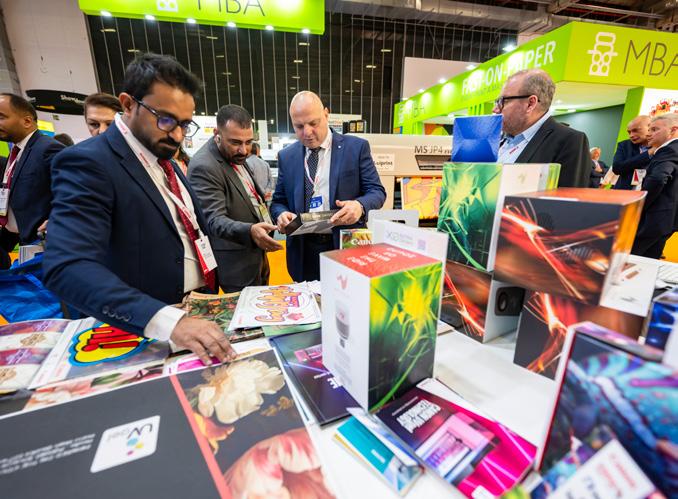
structure and graphics while using less material overall.
Smart packaging extends personalisation
The next phase for personalised packaging is going beyond what consumers can see. Technologies such as QR codes, variable data printing and, increasingly, NFC and blockchain make it possible for every package to be unique and digitally connected.
Scanning a code can unlock personalised content, authenticity checks, usage tips or loyalty rewards, turning packaging into an ongoing brand interaction point. And as digital product passports and traceability requirements grow – particularly under evolving EU regulation – this blend of physical and digital personalisation will only become more important.
Personalised and customised packaging is therefore no longer about one off, attention-grabbing moments. It’s about building flexibility into packaging systems, so that brands can develop and adapt designs, messages and experiences responsibly, efficiently and at scale. Those that get it right will not only stand out on shelf or doorstep, but will also create stronger, more relevant connections with consumers.

Duncan MacOwan is the head of marketing and events at FESPA
The Future of Rigid Plastic Packaging to 2030 report provides an analysis of rigid plastic packaging market trends and consumption forecasts for 2025-30
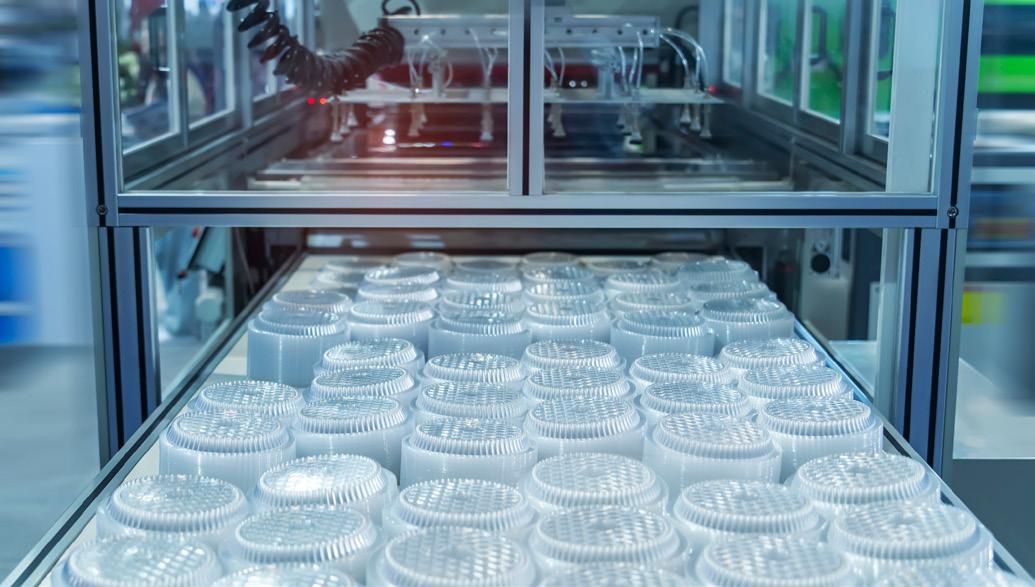
The global market for rigid plastic packaging was worth $220.2 billion in 2025, and is forecast to grow by 3.6 per cent CAGR to $262.7 billion in 2030, according to the latest research from Smithers, the worldwide authority on the packaging industry.
A new expert market report from Smithers – The Future of Rigid Plastic Packaging to 2030 – finds that improving recycling, managing volatile raw material costs, and integrating new technologies are among the top priorities for rigid plastic bottles, trays, tubs, pots, and other packaging formats across the next five years.
Rigid plastic packaging is defined as the manufacture, supply, and conversion of plastics that are used separately or in combination for primary retail food packaging and non-food applications.
This report provides an analysis of rigid plastic packaging market trends and consumption forecasts for 2025-30 by polymer type, end-use sector, packaging format, production process, and geographic region, including leading national markets.
The report identifies that although demand will slow in mature markets, especially Western Europe, this will be balanced by expansion of modern retail infrastructure and packaged goods consumption in developing economies.
Across the Smithers forecast period, the volume of plastics used in rigid packaging will increase from 67.9 million metric tons in 2025 to 80.8 million metric tons in 2030.
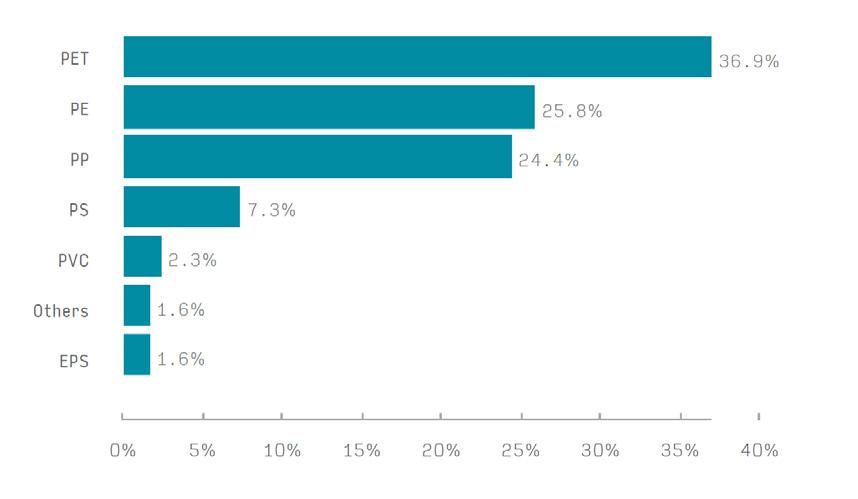
Polyethylene terephthalate (PET) remains the most widely used polymer. It accounts for 36.9 per cent of world demand in 2025, ahead of polyethylene (PE), 25.8 per cent; and polypropylene (PP), 24.4 per cent.
PET will grow its market share across the next five years, assisted by greater demand for bottled beverages, hot-fill food bottles and jars, ready-meal trays, pharmaceutical and personal care formats.
Smithers forecasts increased demand for rigid PP packaging as it proves a lowercost option to both high-density PE and polystyrene (PS) in multiple injection molding applications. The polymer is increasing its market share in several food segments, and the development of clarified PP grades and better processing technology will see these penetrate the blow molded bottle market further.
While PE and PP are harder to recycle than PET, improvement is predicted to come on stream soon, including food-grade resins from the first generation of advanced (chemical) recycling lines.
There will be a wider use of mono-layer rigid plastic packs to improve recyclability across the sector. This will increase demand for coatings that can replicate the barrier performance previously delivered by multi-layer bottles for fruit juices, milk, wine and hot-fill foods.
In beverages, large bottle-making companies are shifting manufacturing to, or near to, major brand owner sites, thereby pooling expertise and reducing logistics costs.
Beverage brand owners are increasingly bringing preform and bottle-blowing activities for PET bottles in-house, using blow-fill-cap processes. This eliminates the need for palletising, banding, stretch wrapping, storage, shipping, depalletising, and conveying – which saves warehouse space and offers multiple cost efficiencies.
The report also found that the market for rigid plastic packaging is strongly influenced by economic, demographic, and social trends. Global demand will continue to be driven primarily by the faster-growing emerging and developing economies of Asia, the Middle East, and Africa during the forecast period.
A shift towards a more centralised structure of grocery retailing has also inevitably led to higher levels of rigid plastic packaging.
Key questions that businesses should consider, include:
• Consumers’ sustainability values are pushing brands to prioritise the development of more sustainable rigid plastic packaging products. What technologies are gaining traction?
• How are supply chain disruptions impacting raw materials used for rigid plastic packs?
• Where will the rigid plastic packaging market show the largest growth over the next five years?
• How are developments in barrier solutions adding value and opening up new applications for rigid plastic packaging?
foodpro
July 26-29, 2026 Melbourne, Australia foodproexh.com
2026 PIDA Gala Dinner
July 28, 2026 Melbourne, Australia aipack.com.au
FPLMA 2026 Conference August 27-28, 2026 Melbourne, Australia fplma.org.au
Visual Impact Conference & Expo September 2-4, 2026 Sydney, Australia visualimpact.org.au
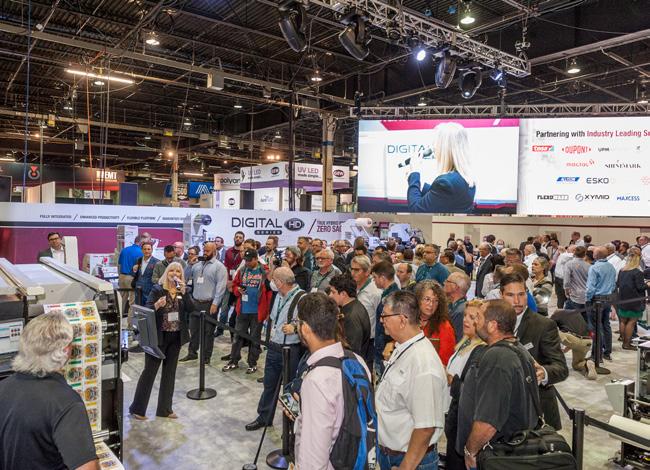
LOUPE Americas 2026 September 15-17, 2026 Chicago, US loupe-global.com
London Packaging Week September 16-17, 2026 London, UK londonpackagingweek.com
ProPack Packaging Forum October 16, 2026 Sydney, Australia propack.pro
ProPrint Awards October 16, 2026 Sydney, Australia proprintawards.com.au
Pack Expo International 2026 October 18-21, 2026 Chicago, US packexpointernational.com
LOUPE South China 2026 December 2-4, 2026 Shenzhen, China loupe-southchina.com