WWW.PROFESSIONALBEAUTY.COM.AU
BEAUTY. AESTHETICS. WELLNESS. BUSINESS AND EDUCATION SINCE 1995.
Issue 04 2026
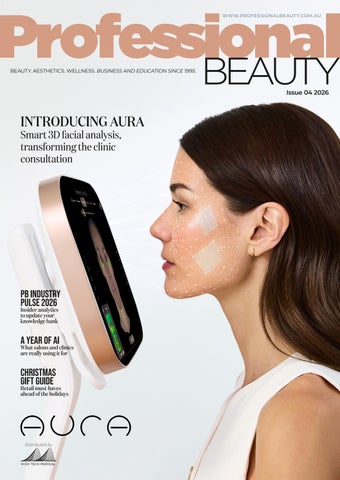
INTRODUCING AURA Smart 3D facial analysis, transforming the clinic consultation
PB INDUSTRY PULSE 2026 Insider analytics to update your knowledge bank
A YEAR OF AI
What salons and clinics are really using it for
CHRISTMAS GIFT GUIDE
Retail must-haves ahead of the holidays
Distributed by
The original corneotherapy-based skincare system.
○ ○ ○ ○ ○ ○
BREAKTHROUGH DUAL M I N I P R OT E I N S™
Real customer testimonial. Individual results may vary. 5* ratings based on customer feedback.
“My Holy Grail Product” S E E W H Y ST E P H M & T H O U S A N D S O F OT H E R S VOT E D I T 5 *
BREAKTHROUGH DUAL M I N I P R OT E I N S™
Real customer testimonial. Individual results may vary. 5* ratings based on customer feedback.
www.medik8.com.au
@medik8anz 1800 242 011
PB CONTENTS
CONTENTS
20
31
8
Ed's Letter
10
News
16
Cover Story: High Tech Medical
20
Investigation: Retinal
26
Add to Cart
28
In Salon: Miss Jay's
30
In Salon
32
Forecast: PB Industry Pulse
EDUCATION 40
The Skills Gap
42
Beyond the Barrier FAQs
44
Consistency in Communication
BUSINESS
46
32
80
66
PUBLISHER BHA MEDIA
SUBSCRIPTIONS subscriptions@intermedia.com.au
MANAGING DIRECTOR Simon Grover
Professional Beauty magazine is published by BHA MEDIA ABN 23142047943 41 Bridge Road, Glebe NSW 2037 Ph: 02 9660 2113 Fax: 02 9660 4419 www.intermedia.com.au
GROUP PUBLISHER BHA MEDIA Laina O'Donnell lodonnell@intermedia.com.au EDITOR IN CHIEF Hannah Gay hgay@intermedia.com.au NATIONAL ADVERTISING MANAGER Julie Davidson jdavidson@intermedia.com.au ART DIRECTOR Sanja Spuzanic sspuzanic@intermedia.com.au PRODUCTION MANAGER Jacqui Cooper jacqui@intermedia.com.au
6 | WWW.PROFESSIONALBEAUTY.COM.AU
AUSTRALIAN SUBSCRIPTION RATES 1yr (4 issues) for $60.00 (inc GST) 2yrs (8 issues) for $110.00 (inc GST) To subscribe and to view other overseas rates visit www.intermedia.com.au or Call: 1800 651 422 Email: subscriptions@intermedia.com.au
46
Clinic Sameness
48
Salon Recruitment
52
How to Retail
BEAUTY 54
The Recovery Ecomony
56
Ingestible Stack Audit
58
Christmas Gift Guide
62
Opposites Attract
66
Brand Evolutions
68
Topical PDRN
70
The Tech Utilisation Gap
74
A Year of AI
78
Inkless Tattooing
80
F2F Makeup Award Winners
This publication is published by BHA MEDIA, a division of The Intermedia Group Pty Ltd (the “Publisher”). Materials in this publication have been created by a variety of different entities and, to the extent permitted by law, the Publisher accepts no liability for materials created by others. All materials should be considered protected by Australian and international intellectual property laws. Unless you are authorised by law or the copyright owner to do so, you may not copy any of the materials. The mention of a product or service, person or company in this publication does not indicate the Publisher’s endorsement. The views expressed in this publication do not necessarily represent the opinion of the Publisher, its agents, company officers or employees. Any use of the information contained in this publication is at the sole risk of the person using that information. The user should make independent enquiries as to the accuracy of the information before relying on that information. All express or implied terms, conditions, warranties, statements, assurances and representations in relation to the Publisher, its publications and its services are expressly excluded save for those conditions and warranties which must be implied under the laws of any State of Australia or the provisions of Division 2 of Part V of the Trade Practices Act 1974 and any statutory modification or re-enactment thereof. To the extent permitted by law, the Publisher will not be liable for any damages including special, exemplary, punitive or consequential damages (including but not limited to economic loss or loss of profit or revenue or loss of opportunity) or indirect loss or damage of any kind arising in contract, tort or otherwise, even if advised of the possibility of such loss of profits or damages. While we use our best endeavours to ensure accuracy of the materials we create, to the extent permitted by law, the Publisher excludes PEFC Certified all liability for loss resulting from any inaccuracies or false or Paper from misleading statements that may appear in this publication.
Copyright © 2026 BHA MEDIA Pty Ltd.
sustainably managed forests and controlled sources
PEFC/21-31-119
pefcaustralia.org.au
PB EDITOR’S LETTER
EDITOR’S LETTER T
ake a collective deep breath, beauties - the silly season is among us and the days are heating up (literally). Preevent facials, spray tans and manicures are filling the books at great pace, with vouchers at the ready for those gifting them. It’s a delirious time that serves to showcase the acclimation of communication, upselling and treatment practices therapists have been learning all year. The good vibes in salon don’t come without their challenges (see: long days, fatigued therapists and last-minute cancellations). But for our seasoned beauty professionals, navigating the Christmas rush is all part of the job.
We’re thrilled to present our new, inaugural Industry Pulse (from page 32). We spoke with 30 beauty and aesthetic business owners on their pain points and plans for 2026/27. Unpack the stats to gauge the state of the industry as it stands. For further industry news, check out our regular Beauty Bites section (from page 10) and a detailed analysis on this year’s proposed retinal importation changes (from page 20). And last but certainly not least, we welcome High Tech Medical to this issue’s cover, featuring the impressive Aura skin analysis device. I experienced my first trial of Aura at this year’s Beauty Expo and consider it a stand-out launch set to change the consultation game. I caught up with the admirable
EDITOR’S PICKS
I’ve been leaning on DOCTORS SECRET’s PGA Recovery Serum Plus to support the skin barrier on my scalp and regenerate healthy hair. info@headspasolutions.co
8 | WWW.PROFESSIONALBEAUTY.COM.AU
Matt Moncrieff ahead of the company’s move to a bigger facility. Head to page 16 to read all about it. Wishing you nothing but happy clients, busy books and strong coffee this holiday season! See you in the new year, and enjoy the issue. Hannah Gay Editor-in-Chief
@pro_beauty_aus
ProfessionalBeautyAust
The fluffy texture of Epicutis’ Enzyme Exfoliating Powder is a favourite in the treatment room and on the skin. 0428 986 681
professional-beauty
mesoestetic’s Brightening Foam provides a comfortable cleanse without stripping the skin. I love it for both AM and PM use. 1300 346 448
Photography: Joseph G Media/Supplied
While 2027 may feel like a lifetime away, savvy business owners are already in planning mode. This issue of PB is all about growth - for the business owner, her team, and for the business itself. We consider what growth means through the lens of education and hear from The Australasian College of Health and Wellness on exactly which skills the industry is seeking out (from page 40). We hear from experts in the fields of recruitment (48) and retail sales (52) to fill in the gaps to bettering business operations. And deep dive further into the topic of AI to understand how salons are using it to get ahead (from page 72).
NEW
Exo-PDRN Prismatic+ P R O C O N C E N T R AT E Powered by Medik8’s Exclusive PDRN Technology, it features a prismatic PDRN ingredient available only in the UK, Australia and New Zealand, ensuring practitioners and clients access a truly unique, first-to-market innovation
P R I S M AT I C PDRN
T R I P L E E XO S O M E COMPLEX
DUAL M I N I P R OT E I N S™
www.medik8.com.au
@medik8anz
PB NEWS
BEAUTY BITES
PB’s eye to the ground on the Australian beauty industry.
At Your Service
1.
Australian booking, payments and client management platform, Timely has launched a chatbot specifically designed to help salons draft their client cancellation policy. The tool helps users set notice periods, decide whether to take deposits, and draft terms that suit their business ahead of the busy Christmas period. Learn more at www.gettimely.com.
2.
Words: Hannah Gay | Photography: Supplied
My Beauty Swap has made its official debut in Sydney, allowing beauty professionals to exchange services via an app. Verified members can sign up for free and collect Swap Points for use on beauty services by other members. Points are also accruable by way of referrals, loyalty and streak rewards, Instagram engagement, and monthly challenges. Access the platform via www.mybeautyswap.com.
3.
Service Cue was built to provide a structured digital consultation process that generates tailored treatment plans and product prescriptions for salon clients. INSKIN COSMEDICS has partnered up with the platform to offer support to its entire partner network. The aim of the program is to generate confident therapists, increase revenue, improve client satisfaction, and gain more consistent bookings. Learn more at www.servicecue.com.
10 | WWW.PROFESSIONALBEAUTY.COM.AU
PB NEWS
Skincare News
4.
HydroPeptide’s biggest launch of the year is the Syner-C+ Multi-Action Brightening Serum, featuring patented peptide technology. The formulation is amplified with 3-o Ethyl Ascorbic Acid and Tranexamic Acid for a serious brightening fix. Call PBS on 1800 625 387.
5.
Founder’s Formula has twice won gold at the 2026 Global Green Beauty Awards for its Botanical Barrier Balm: a clean, plant-based answer to the viral ‘slugging’ trend. The five-ingredient balm heroes nourishing certified organic macadamia seed oil, cucumber seed oil and kakadu plum oil. Email hello@foundersformula.com.au.
6.
iS Clinical’s Daily Active Smoothing Toner is designed to provide the ultimate skin reset, blending AHA, BHA and PHAs to gently exfoliate without stripping. Hyaluronic acid and aloe vera feed the skin with hydrating and soothing properties in a single swipe. Call HTM on 1300 309 233.
12 | WWW.PROFESSIONALBEAUTY.COM.AU
7.
ZO SKIN HEALTH has announced three new retinol reformulations, each containing 0.3% retinol: Clear Renewal for blemish-prone skin, Wrinkle + Texture for anti-ageing, and Retinol Skin Brightener for brightening. Call ZO SKIN HEALTH on 1300 503 679.
PB NEWS
8.
GlowSense Pty Ltd, a Melbourne-based cosmetic manufacturer, has been named one of two global finalists for Best Breakthrough Technology (Supply Side) at the 2026 BeautyMatter NEXT Awards. Recognised for its patent-pending One-Pot Process (OPP), the technology is said to solve a fundamental gap in cosmetic manufacturing whereby conventional hot-process methods destroy heat-sensitive peptides, growth factors, and biological actives. Winners will be announced in NYC this December.
Co-Working Salons Take Melbourne
9.
MUA and brow specialist Ellie Davidson is celebrating two years at The Suite in Highett. The luxury communal salon welcomes independent female beauty professionals to rent a dedicated chair, station or treatment space. Nine spaces are available, with the business built on the goal of ‘collaboration over competition’. Visit www.thesuitehighett.com.
10.
Salon Lane is set to open its sixth Australian location and first for Melbourne in early 2027. The co-working hair, beauty and wellness space will sit across two levels and 675sqm, creating availability for up to 50 independent professionals. The Richmond hub will host 21 private studios and 14 open workstations alongside a Client Lounge and coffee bar, wash lounge, nail and colour bars, Member Lounge and retail store. Visit www.salonlane.com.au. ■
14 | WWW.PROFESSIONALBEAUTY.COM.AU
Next level cleansing. Extreme results. A HIGH-PERFORMANCE, SOPHISTICATED CREAM CLEANSER. - CREAMY COMFORT - POWERFUL CLEANSING - STIMULATES SKIN RENEWAL
A NEW CATEGORY in CLEANSING This is not another cleanser following an established formula. It is Derma energy setting a new benchmark. It is for those who want their AHA’s in a cream cleanser!
CREAM CLEANSER with AHA’s Cream Clean Extreme transforms cleansing into a true treatment step. Uniting sophisticated cleansing technology with skin-renewing 6% mandelic + 3% lactic hydroxy acids that delivers exceptional performance without treating comfort as an afterthought.
A WORD FROM our CHEMIST “I’ve reached an age where I demand more from my cleanser. I want it creamy, comforting and enriched with AHAs. The industry wasn’t making it - so, I created it myself.” Sean Abel. Founder & Cosmetic Chemist.
THIS IS REAL INNOVATION
PB COVER STORY
Growth
WITHOUT COMPROMISE Hannah Gay sat down with High Tech Medical’s Matt Moncrieff to talk facial imaging, operational pivots, and the power of community.
16 | WWW.PROFESSIONALBEAUTY.COM.AU
seemingly encapsulated in an instant. “We’ve run the business as a small business of friends and family that love working together, and so it was really important to us as the business has grown that we can hold on to that,” Moncrieff shared. New offices will comfortably house the entire HQ team, its expanded device portfolio, plus temperature-controlled rooms for skincare storage.
All Eyes on Aura
Channeling innovative global technologies into Australia and New Zealand is what High Tech Medical does best, recently evidenced via the launch of Aura - a revolutionary 3D facial imaging system. Powered by Hexagon, a world-leading measurement technology company, Aura seeks to provide clinicians and their clients with measurable data that can be used to track and assess cosmetic outcomes; and with 0.1mm accuracy, to be exact. This degree of assessment has come to be expected as consumer knowledge of aesthetics increases. Aura helps to bypass misinformation and provide clients with a system backed by R&D and Swiss craftsmanship. “It’s going to be a step forward in how clinicians can use it as an analysis tool and as a way of communicating better with their clients, giving their clients a better understanding of what’s happening when they undergo these treatments,” Moncrieff explained. To Moncrieff, Aura’s points of difference were evident from the get-go: 13 integrated cameras, photo-realistic face and neck imagery captured in 0.2 seconds, advanced simulation capabilities, use in flexible lighting conditions, and
Photography: Supplied
S
caling High Tech Medical doesn’t come at the sacrifice of support. At the heart of the distribution company, a sense of community, trust and camaraderie is evident at every level, filtering through to its clinic partners. And despite its seemingly overnight success - with movement to a brand new facility in 2026 - the company stands strong on 25 years of experience, and with the same conservative view of success it leant on in its early days. I caught up with Founder & Managing Director Matt Moncrieff off the back of a trip to the USA where he spent time with iS Clinical’s global leaders to talk distribution, and to award Australian clinic recipients with Blue Diamond Awards in recognition of their achievements working with the brand in-clinic. As this magazine goes to print, High Tech Medical’s 40-strong team will shift to a new, much larger premises - three times the size of its current offices, located in North Brisbane. The move is symbolic of the company’s quarter-century of work,
PB COVER STORY
BRINGING ON THE LATEST TECHNOLOGIES ISN'T SIMPLY AN EXERCISE IN OFFERING SERVICES MADE TO COMPETE ON PRICE, BUT BY ADOPTING SERVICES THAT LEAD IN DIFFERENT FIELDS WITHIN AESTHETIC MEDICINE.
a user-friendly display. A user’s digital twin is produced and shared in seconds, featuring skin and facial structure analysis. Details on a user’s skin type, wrinkles, texture, red areas, brown spots, and pores are trackable between treatments. Even the most intricate of facial measurements are quantifiable. Software updates are ongoing for enhanced feedback. To the likes of Dr Davin Lim of Curtis Clinic, “Aura has been the biggest breakthrough in aesthetic medicine over the past few years, more so than any other device for clinicians.”
Investment with Intention
High Tech Medical began by introducing laser cavity protection and in-office teeth whitening to the local dental market. Later movement into aesthetics didn’t slow High Tech Medical’s ability to spot a worthwhile investment from the crowd. An entirely new space for Moncrieff, the business managed to pivot seamlessly with the adoption of Deka SmartXide Dot, Hydrafacial, CoolSculpting and Ulthera within a few short years. All of a sudden, Moncrieff said, High Tech Medical was a major industry player. Arguably the company’s crown jewel rests in DEKA, which brought to market the first CO2 fractional laser at Cosmetex in 2007. Moncrieff said this launch helped propel the business to new heights. CoolSculpting, Hydrafacial
and Ulthera followed with investment in body contouring, skin health and skin tightening respectively. While each launch then paved the way for macro-scale innovation and the inevitable copycat devices, Matt stated that High Tech Medical’s good fortune has in no way come in the form of “flash in the pan, overnight successes.” DEKA, for example, has innovation in its lifeblood. Bringing on the latest technologies isn’t simply an exercise in offering services made to compete on price, but by adopting services that lead in different fields within aesthetic medicine. Following a company growth spurt, the 2008 Global Financial Crisis also marked an operational shift. “It forced us to go into survival mode and at the time I, as the business owner, had to personally put everything on the line to allow the company to reset,” Moncrieff said. “Since then, we haven't looked back.” As part of the reset, a focus on consumables would become the brands’ most marketable commodity - a rarity at the time. “What that taught us was that we could partner with clinics to build a brand.” Clients would then learn to seek out a treatment for their reputational value. “It meant the manufacturer, us as the distributor, and the clinic were all motivated to work together with the same goal, because we were stronger together and we could all benefit if our joint efforts were successful. And when you think through the success we’ve seen with these brands in ANZ, the results speak for themselves.” Diversifying High Tech Medical’s portfolio, with future investment into skincare, has become increasingly important in creating company security, making irrelevant the idea that “you’re only as good as your next sale,” Moncrieff said. The company hopes to expand its portfolio with skincare brands that complement iS Clinical. ➤ PROFESSIONAL BEAUTY | 17
PB COVER STORY
“MY OVERARCHING MESSAGE TO THE TEAM IS THAT EVERYTHING WE'RE DOING IS ABOUT PROVIDING BETTER CUSTOMER SERVICE.” “We’ve grown into a business that’s 50-50 skincare and devices. That’s been driven even further by bringing Hydrafacial back into the fold with its own dedicated division managers overseeing the renowned brand.” A full circle moment, High Tech Medical first brought Hydrafacial to the Australian and New Zealand markets in 2009, bringing with it the start of the industry’s love affair with the treatment and the brand.
High Tech Support
Education and ongoing clinic support remain central to High Tech Medical’s approach long after a device has been sold, with training tailored to each business. While some clinics prefer online modules, webinars and remote training, others benefit from more direct support through the company’s network of trainers and BDMs. “Being a brand partner, to help them grow the brand, to educate their team, and to keep them updated as new innovations and technologies become available, so that they have the option to introduce the latest treatments as they become available. It’s about working together and building a partnership,” Moncrieff explained. “My overarching message to the team is that everything we’re doing is focused on providing better customer service and support.” For Moncrieff, that means
Matt Moncrieff
recognising that challenges are inevitable and how a distributor responds can define the relationship. “When a clinic has a problem we’ve helped them deal with, once it’s resolved, they often recognise that we’ve taken a more thoughtful approach and focused on what’s most important to them. I believe it’s this approach to customer service that has built the loyalty we have with our clinic partners.” The same philosophy extends to High Tech Medical’s internal culture. Moncrieff repetitively turns his attention back onto his team and his focus on providing a positive company culture. He points to team members who have remained with the business for more than two decades, reflecting a commitment to creating a workplace where people feel invested in its future. “We want this to be an enjoyable place for them, and that they feel part of it; that it’s done organically.”
The Growth Phase
High Tech Medical’s next phase centres on three divisions: device technology, cosmeceutical skincare and Hydrafacial, which spans both categories. Further investment in sales and logistics will support the expansion, alongside the move to its new facility. Moncrieff appears settled and confident. “We’re ready. We’re ready to be better, to grow and to provide better service, and have what we believe are the best products; to work it out in such a way that each of these products are complementary to each other. We’ve got the infrastructure in place, we’ve got the people in place, and we’re improving what we’re doing every day.” For Moncrieff, the next stage of growth is less about scale for its own sake and more about ensuring the business can deliver on the relationships and service that have defined it - no doubt driven by that magnetic human touch. ■ 18 | WWW.PROFESSIONALBEAUTY.COM.AU
PB COVER STORY
Explore High Tech Medical Aura
DEKA TORO
A revolutionary facial imaging system that analyses facial structures, skin condition and volumetric changes to generate an immersive 3D model, all within 30 seconds.
A multi-wavelength system designed to deliver advanced, customised solutions across pigment, tattoo and skin rejuvenation indications.
EndyMed PRO Max Combines four advanced radiofrequency technologies into a highly versatile modular platform that delivers maximum speed, optimal power and superior RF results for the face and body.
DEKA Tetra PRO A CO₂ laser resurfacing treatment that harnesses CoolPeel technology to deliver precisely controlled energy, duration and peak power for exceptional results with minimal downtime.
Hydrafacial A non-invasive skin treatment that combines cleansing, exfoliation, painless extractions and hydration using patented Vortex-Fusion® Technology to improve skin clarity, texture and radiance.
DEKA Onda PRO The world’s first and only device to harness revolutionary microwave technology for non-surgical face and body contouring.
Glacial® Skin CryoAesthetics® Glacial Skin offers the latest in soothing skin treatments to support clients experiencing redness and dullness via four treatment modalities.
iS Clinical Pharmaceutical-grade cosmeceutical skincare range backed by independent clinical testing. Globally recognised for results-driven formulations that use the highest quality active ingredients to deliver dramatic, visible results.
PROFESSIONAL BEAUTY | 19
PB INVESTIGATION
Australia’s Between expanded pathways to prescription tretinoin in Victoria, Australia’s retinal rules changing almost overnight and proposed new limits for retinol, 2026 has been a big year for retinoids. Erin Berryman unpacks what’s changing, why and what it means for the industry. 20 | WWW.PROFESSIONALBEAUTY.COM.AU
SEVERAL MONTHS HAVE passed since Australia dramatically changed its regulatory treatment of retinal, leaving brands, importers and professional skincare businesses scrambling to understand what came next. Since 27 June, retinal, also known as retinaldehyde, intended for consumer use can no longer be imported or manufactured under the Australian Industrial Chemicals Introduction Scheme’s (AICIS) lower-burden Exempted or Reported categories. Instead, businesses introducing retinal into Australia for use in
Photography: Supplied/iStock
RETINAL RECKONING
PB INVESTIGATION
Instead, EVA00186 was a targeted human health hazard assessment for developmental toxicity, conducted to determine how retinal should be categorised under Australia’s industrial chemicals framework. AICIS ultimately classified retinal as Reproductive Toxicity Category 1B, H360D: “May damage the unborn child.” As a result, retinal can no longer qualify as an Exempted or Reported introduction where there is consumer end use. Future introductions must instead move through the Assessed category, where AICIS considers the risks associated with the proposed use and any necessary risk-management measures.
Hazard Versus Real-World Risk
cosmetics must hold, or be covered by, an AICIS assessment certificate. But what initially appeared to be a regulatory story about one ingredient is becoming part of a much broader conversation. Retinol and retinol esters have since come under further scrutiny through a separate TGA proposal, while Victoria has expanded pharmacists’ scope to initiate prescription tretinoin for mild acne. These are separate regulatory developments involving different vitamin A derivatives and frameworks. But their convergence in 2026 is raising bigger questions for the professional beauty industry about risk, access, regulation and the role of skin professionals in the decisions shaping their work.
How Did We Get Here?
On 26 June, AICIS published its final evaluation of retinal. Importantly, this was not a safety assessment of finished retinal skincare products, nor did AICIS conclude that retinal cosmetics currently on Australian shelves had been demonstrated to cause developmental harm.
One of the most debated aspects of the decision is that AICIS acknowledges no developmental toxicity data are available for retinal itself. Instead, it relied on evidence from related retinoids, including retinol, retinyl palmitate and retinoic acid, to infer retinal’s developmental toxicity. The biological rationale is that retinol converts to retinal, which then converts to retinoic acid, a well-established teratogen. Retinal is its immediate precursor, so AICIS expects it to be more potent than retinol or retinol esters. But that does not automatically translate to the real-world risk posed by a cosmetic serum. In one human study cited by AICIS, Sass et al. (1996) applied 0.05 per cent retinal daily for 14 days to 40 per cent of the skin of ten male volunteers. No retinal was detected in plasma, although AICIS concluded existing studies remain insufficient to establish the effects of regular dermal exposure. The regulator also considered animal studies and research on oral vitamin A intake. A 1995 prospective study of 22,748 pregnancies reported a higher prevalence of certain defects among women consuming more than 10,000 IU per day of preformed vitamin A from supplements, although other human studies reviewed by AICIS did not find consistent associations. More recently, a 2026 Nordic cohort study, described by AICIS as the largest to analyse topical retinoid use during pregnancy, found no significant increase in congenital malformations. However, exposure primarily involved prescription adapalene and tretinoin rather than cosmetic retinal. The distinction is critical: AICIS considered the evidence sufficient to classify retinal as a developmental hazard. That is not the same as evidence that normal use of a topical retinal cosmetic causes developmental harm in humans. It is a distinction Elixir Skin Fitness Director Rose Bonasera believes needs to be communicated carefully. “My first thought was that we need to be very clear about the distinction between hazard and actual risk,” she tells Professional Beauty. “I absolutely support consumer safety and evidence-based regulation. Retinoids are biologically active and deserve appropriate scrutiny.” But Bonasera would like to see greater consideration of “real-world exposure, concentration, formulation, frequency, dermal absorption and systemic exposure through normal cosmetic use.” “Education should create informed caution, not unnecessary fear,” she says.
Not a Retinal Ban
Despite “retinal ban” circling online, retinal has not been prohibited from sale in Australia. AICIS regulates the introduction of industrial chemicals, meaning their import or manufacture. Retinal products already legally introduced into Australia can continue to be sold and used, while retinal already in the country can continue to be used in local cosmetic manufacturing. The change applies specifically to retinal. AICIS says it does not apply to retinol and retinol esters already listed on the Australian Inventory of Industrial Chemicals. The problem for businesses is what happens when they need their next shipment.
The Costs to Businesses
Affected businesses must now obtain, or be covered by, an appropriate assessment certificate before introducing more retinal for consumer use. Because AICIS has already completed the retinal hazard assessment, a comparable hazard assessment pathway is available. From 1 September, the application fee increased from $18,060 to $20,385, while a standard health-focused assessment increased from $24,100 to $34,760. But application fees are only one part of the cost. An application can require information about chemical identity and ➤ PROFESSIONAL BEAUTY | 21
PB INVESTIGATION
To Watch: New Retinol Limits Proposed The TGA is separately considering changes to the concentrations of retinol and retinol esters permitted in topical products without prescription scheduling. 11 September: The TGA opened consultation on proposed amendments to the Poisons Standard covering vitamin A. What’s proposed: The existing exemption for topical preparations containing up to 1 per cent vitamin A would be replaced with limits of 0.05 per cent retinol equivalents (RE) in body lotions and 0.3 per cent RE in other topical preparations.
“EDUCATION SHOULD CREATE INFORMED CAUTION, NOT UNNECESSARY FEAR.” - Rose Bonasera composition, proposed uses, concentrations, consumer exposure and relevant hazard endpoints. Applicants must also prepare a chemical dossier in IUCLID6. For finished-product importers, obtaining that information can require cooperation from an overseas brand, manufacturer or raw-material supplier. Where the Australian applicant does not own relevant technical or toxicological data, the data owner can participate as a third-party chemical data provider. Time is another constraint. AICIS has a statutory assessment timeframe of 70 working days, but the clock can stop if further information is requested. For importers and manufacturers, the consequences are significant. Introducing retinal into Australia has become a far more cumbersome process, with lengthy formal assessments, extensive documentation requirements, substantial fees and months of regulatory work potentially standing between a supplier and its next shipment. For a multinational supplier, the cost of an Australian-specific assessment may be absorbable. For smaller Australian brands and independent importers carrying only a handful of retinal SKUs, the equation can look very different.
Brands Weigh Their Next Move
At the time of writing (October 2026), brands contacted by PB were still working through the implications, with the longer-term impact on individual products and supply yet to become clear. Advanced Cosmeceuticals Skin Group (ACSG) CEO Shaunte Mears-Watkins confirmed that new commercial imports of Medik8 Crystal Retinal were paused, while existing Australian stock remained available. Medik8, ACSG, regulatory advisers and industry bodies said they were working through the assessment process with the intention of resuming compliant imports. The company said it had no plans to permanently withdraw or reformulate Crystal Retinal. Murad also confirmed it had temporarily suspended shipments of retinalcontaining products to Australia. “We are working closely with our regulatory team and our partners at Unilever to assess the new requirements and determine the best path forward,” the company told PB. INSKIN COSMEDICS, which distributes O COSMEDICS and its Retinal V8 Fusion, also confirmed it had been impacted. The company told PB that Australian users 22 | WWW.PROFESSIONALBEAUTY.COM.AU
Important distinction: The proposal concerns retinol and retinol esters, not retinaldehyde, and is separate from the AICIS retinal decision. 12 October: Public consultation closed. November: The proposal is scheduled to be considered by the Advisory Committee on Chemicals Scheduling (ACCS). What happens next: Submissions and the ACCS advice will inform the Delegate’s decision. The proposed limits are not yet in force.
of retinal were “currently working collaboratively to navigate the updated requirements and the pathway forward regarding the necessary licensing and assessment processes”. Together, the responses illustrate the range of decisions now facing suppliers: pursue assessment, pause supply while the pathway is worked through or determine that an individual retinal product is no longer commercially viable in Australia.
The Clinic Perspective
For clinic owners, the issue is not necessarily whether retinoids should be regulated at all, but whether regulation reflects how these ingredients are actually used. Gry Tømte, founder of HÜD skin clinic in Melbourne, has long advocated against the “stronger is better” approach to vitamin A. She says the professional industry has become overly focused on accelerating cell turnover at the expense of barrier health and preservation. But she is emphatic that this does not make her anti-retinoid. ➤
PB INVESTIGATION
For Australian businesses, the commercial concern is obvious: could tighter domestic regulation ultimately shift retinal sales offshore, rather than reducing Australians’ access to the ingredient?
Who Gets a Say?
“TIGHTER REGULATION ISN’T NECESSARILY A BAD THING. BUT I’M NOT CONVINCED THIS IS THE ANSWER.” - Gry Tømte “There’s good evidence for retinoids and they can be incredibly effective,” she says. “What I have consistently talked about is how aggressively we need to use them.” That makes her reaction to the AICIS decision more nuanced. “Tighter regulation isn’t necessarily a bad thing. But I’m not convinced this is the answer,” Tømte says. “A finding around developmental toxicity needs to be taken seriously. Where I struggle is making the jump from identifying a potential hazard to assuming that normal topical use presents a significant risk.” For Tømte, context is critical. “What was the exposure? What was the dose? How does that compare to someone applying a retinal product to their face a few nights a week?”
Could Tighter Regulation Push Consumers Elsewhere?
AICIS guidance states that Australian consumers can continue to buy retinal products directly from overseas online retailers for personal use, despite the tighter requirements facing Australian commercial importers. Bonasera believes reducing professional access does not necessarily reduce consumer use. “Clients may simply move online, purchase internationally or choose alternatives without understanding concentrations, formulations or how those products interact with the rest of their routine,” she says. “In clinic, we are not simply recommending an ingredient. We are assessing the person using it, their barrier, sensitivity, pigmentation risk, treatments, medications and other active ingredients. Removing professional guidance from the equation can create its own risks.” Tømte raises a similar concern. “If we make retinal products harder to get or significantly more expensive and some consumers respond by buying a much stronger retinoid overseas without clinical guidance, have we actually made them safer?” 24 | WWW.PROFESSIONALBEAUTY.COM.AU
For Tømte, the changing regulatory environment also raises another issue: whether the expertise of dermal clinicians is being adequately recognised. The question has become particularly pertinent in Victoria, where recent reforms have expanded pharmacists’ scope to assess mild acne and initiate certain treatments, including prescription tretinoin, following additional short-form training. Tømte points out that a dermal clinician can complete a four-year Bachelor of Dermal Sciences, studying skin, skin disorders, wound healing, clinical assessment and treatment, yet has no equivalent prescribing pathway for tretinoin. “This isn’t suggesting pharmacists aren’t qualified,” she says. “It’s questioning whether our regulatory system properly recognises different areas of clinical expertise.” She argues that managing acne extends beyond prescribing medication, encompassing barrier condition, concurrent skincare and treatments, irritation and recognising when reactions have progressed to dermatitis. Bonasera similarly believes qualified skin professionals should have a greater role in regulatory discussions. “Regulatory decisions need toxicologists, scientists, medical professionals and regulatory experts but they can also benefit from the realworld experience of qualified skin professionals,” she says. “We see how clients actually use these ingredients: frequency, combinations, reactions, tolerance and adherence.” Dermal professionals, she argues, can provide “an important bridge between scientific evidence, regulation and what actually happens in the treatment room and at home”.
What’s Next?
The Australian retinal category is unlikely to disappear, but the businesses participating in it may change. Larger suppliers may pursue assessments. Others could share regulatory costs, reformulate, substitute another retinoid or conclude that an individual retinal SKU no longer makes commercial sense in Australia. The bigger question now extends beyond retinal. These developments have put real-world exposure, professional expertise and unintended consequences firmly on the industry agenda. As Tømte puts it: “I’m not arguing for less regulation. I just think regulation needs to look beyond whether something has the potential to cause harm and consider the actual risk at normal exposure, as well as what people are likely to do when you restrict it.” “Sometimes education, clear warnings and sensible limits may protect consumers better than simply making something harder to access.” ■
Your skin. Your shot.
SPICULES
Ameson Spicules The new innovative Spicule Shot Essential & Advanced serums combine science and nature, harnessing the innovative technology of spicules, natural microscopic needles derived from freshwater sponges. Spicules create microchannels in the skin surface, activating its natural renewal mechanisms and enhancing the absorption of active ingredients. The advanced formula contains Bioplacenta, a complex of five growth factors, amino acids, and vitamins, as well as copper peptide to boost collagen production, low molecular weight hyaluronic acid, niacinamide, and Centella asiatica. During application, a mild tingling or prickling sensation is normal and characteristic of spicule technology. REGISTER FOR A WHOLESALE ACCOUNT
WWW.JULIETTEARMAND.COM.AU FOLLOW US @ JULIETTEARMAND_ANZ
People4Ocean Mineral Bioactive Shield Pearlescent Cream SPF 50+ Advanced Cosmeceuticals Skin Group 1800 242 011 BABOR Oil Infused Cleansing Wipes BABOR Cosmetics Australia 1800 139 139 Vita-Sol Serenity Hot Chocolate Vita-Sol admin@vita-sol.com Muez Cicachiol Body Peeling Pad HeadSpa Solutions info@headspasolutions.co Prêt à Prep Brown Tubing Mascara Prêt à Prep hello@pretaprep.com.au Synergie Skin EyeDration Biomask Synergie Skin 1300 689 619
26 | WWW.PROFESSIONALBEAUTY.COM.AU
Words & Styling: Hannah Gay | Photography: Brandee Meier
PB PRODUCTS
PB PRODUCTS
ADD TO CART
SHOP THE LATEST RETAIL STAPLES, HAND-PICKED BY PB’S EDITOR IN CHIEF.
ekseption Ice Cream Lift Professional Beauty Solutions 1800 625 387 Bio Sculpture The Colour Nail Polish in Berry Nights & Pearl Frost Bio Beauty Concepts 02 8218 4500 Rayne + Sol Gradual Face Tan Serum Rayne + Sol hello@rayneandsol.com.au Glow Culture Australia Glow Brush Glow Culture Australia admin@glowcultureaustralia.com Doctor Eckstein Antioxidant Booster Complex Doctor Eckstein 1800 026 306 aleph Hybrid Eye Pigment in Atmos aleph www.alephbeauty.com Holme Beauty Brow Pencil in Blonde & Auburn Holme Beauty 0488 111 950 EMBRYOLISSE Moisturizing Cream Make-up Base EMBRYOLISSE www.embryolisse.com.au PROFESSIONAL BEAUTY | 27
PB IN SALON
BEAUTY HAS NO BINARY By Rachel Medlock
A MURAL at Miss Jay’s Nails and Beauty says “we all grow differently,” and you can feel it as soon as you step inside. The space is bright pink, with art covering the plant-draped walls and everyone from Ariana Grande to Dolly Parton, with a side of millennial punk nostalgia playing throughout the salon as if it’s an unconscious nod to their welcoming of all walks of life. Instead of product photos or price lists, you’ll find affirmations on painted hearts, each one reminding you that you belong just as you are. Founder Chelsea Johnson is as vibrant as her salons: tattooed, bright and full of energy. She owns two, in Melbourne’s Thornbury and Footscray, and after years of being told to tone herself down, 28 | WWW.PROFESSIONALBEAUTY.COM.AU
Photography: Supplied
At Miss Jay’s, opened the first in 2015 to create something personal, not a production line. Her salons take nail health as seriously as the finish, with judgementfree care for chronic biters and pickers and methods like BIAB and IBX that strengthen the natural nail while they beautify it. The nail art, meanwhile, is out of this world. Miss Jay's is notably known as a safe and inclusive space for everyone, regardless of gender, sexuality, race, religion, or ability. That reputation didn’t happen overnight. Johnson, who is part of the queer community, learnt a lot from LGBTQIA+ friends and clients. Fast-forward to today, and championing inclusivity within the professional beauty industry has become Johnson’s purpose.
PB IN SALON
Beauty services take a particular kind of trust, and for transgender and gender-diverse clients it’s hard-won. Working alongside two queer hairdressers early on, Johnson found their clients settling into her chair too, and felt safe enough to tell her what they needed. “I was able to sit and listen, and they just felt comfortable talking to me,” she says. The waxing menu shows this approach best. At Miss Jay’s, services aren’t labelled for gender, but instead are listed by body part. Traditional menus, like “brazilian wax for women,” can make transgender and non-binary clients feel unsafe. Johnson realised this and asked a transgender client for advice. “Just use the anatomy,” they told her. “We use body parts for every other part of waxing, so why not?” she adds. Since then, she has encouraged her supplier to use genderless categories in their training. For most people, a beauty appointment is routine. For many of Johnson's clients, it’s about being authentically seen. This is the part of the work she could talk about all day. A transgender woman comes in for her first eyebrow wax. Johnson starts soft, asking how far she wants to go, which early on is often not far at all. With each visit, as she feels safer, she leans a little further into a feminine shape. When she finally meets her own eyes in the mirror and recognises herself, that, Johnson says, is why she does the work. Safety is the word Johnson keeps returning to. The Miss Jay’s door carries pride and trans flags, “You are Welcome Here” stickers that signal transphobia won’t be tolerated, a doorbell for accessibility support, and an Acknowledgement of Country. First Nations clients recieve ten per cent off. For salons who want to champion inclusivity, Johnson shares practical advice. You don’t need pink walls; you need to picture the visit for someone whose body, identity or needs aren’t your own. Can a client reach your front door without stairs, or fit a wheelchair between your stations? Does your treatment menu assume people’s gender? Does your intake form let people share important notes so no one repeats themselves each visit? For the barriers you can’t see, pay someone who can, as Johnson did with Transgender Victoria’s consulting services. Neurodivergent clients’ needs are also considered, with headphones, fidgets, and quiet appointments available. The same care reaches her team. New hires hear it on day one: she’ll correct them, often, and they’re never in trouble for it. The gendered language most people grew up with is generational, and unlearning it takes time, so she forgives the stumble as long as the learning never stops. That care shows up in smaller ways too, like never having to make small talk, beyond the consultation, on a low-energy day. There’s an obvious question: Johnson doesn’t believe in mainstream beauty standards, but she runs a beauty business. How does she balance the two? Her response is that you won’t hear anyone suggest you need to change or remove hair you didn’t mention. There’s no upselling, and the usual six-week rebooking isn’t pushed. She tells clients, “These are the options, but I can’t tell you what’s right for you.” Johnson has built something bigger than a salon. Sit down, and you feel it: a place that lets you be exactly who you are, and means it. We all grow differently, and Miss Jay’s is the proof. ■ PROFESSIONAL BEAUTY | 29
PB IN SALON
Restoration, In Every Sense
Inside Boronia House, a restored heritage-listed Victorian residence in Mosman, sits All Saint Clinic’s fourth Sydney location. Founder Dr Joseph Hkeik knew immediately he’d found the natural next home for the clinic, drawn to the building’s “sense of permanence and quiet dignity that you cannot manufacture”. Designed by Blainey North in consultation with heritage advisors, the space preserves the residence’s ironwork verandas, ceiling heights and original proportions while creating a more sanctuary-like setting for care. The treatment menu spans advanced skin rejuvenation, resurfacing, tightening and restorative treatments, from HydraFacial and iS Clinical facials to technologies including Sofwave, Thermage, RF microneedling, Fraxel and PicoWay.
From the moment guests arrive, Èliva Spa is designed to shift the mood. Newly opened within InterContinental Sydney Coogee Beach, the experience begins at a Signature Herbal Ritual Bar, where therapists create personalised essential oil blends to carry through each treatment. Adjustable lighting, music and temperature add another layer of customisation, while facials are powered by Hungarian skincare brand Omorovicza. The thermal wellness area spans magnesium mineral pools, saunas, cold plunges, a crystal steam room and vitamin C-infused showers, plus recovery technologies including PEMF, LED and compression therapy. Together, it’s a compelling example of how beauty, wellness and recovery can be seamlessly intertwined. 30 | WWW.PROFESSIONALBEAUTY.COM.AU
Words: Erin Berryman | Photography: Supplied
Check In to Check Out
PB IN SALON
Skin in the Game
After more than a decade in medical aesthetics, dermal clinician Cee Marcell is going all in on skin with the launch of Shape of You - a boutique aesthetic clinic in North Perth. Focused on advanced rejuvenation, skin longevity and natural-looking results, its offering reflects growing demand for treatments that enhance rather than dramatically alter. Personalised plans combine offerings including Hollywood Spectra, Venus Viva, Lumenis and Cosmelan, alongside hero treatment Ultraformer MPT, which uses ultrasound technology to stimulate collagen and visibly lift and firm the skin without surgery or significant downtime.
A New Flagship
After 15 years in its former Sydney CBD home, Amy Jean Brow Agency has opened a new flagship on King Street, directly above Hermès in the historic Trust Building. Designed by Jacob Olsen and brought to life by Arrivain Projects, the space was conceived to feel more like an intimate residence than a traditional salon, pairing the building’s heritage character with Italian stone, custom joinery and bespoke Zuster pieces. The flagship offers signature treatments including Brow Sculpt, Korean Lash Lift, Mist Brow Tattoo and laser tattoo removal, marking the next chapter for a business built on more than two decades of brow artistry. ■ Photographer: Pablo Velga | Stylist: Olga Lewis
PROFESSIONAL BEAUTY | 31
PB FORECAST
Photography: iStock/Natalia Riabchenko
INDUSTRY PULSE
Professional Beauty surveyed Australian clinic and beauty business owners to uncover what changed in 2026, where pressure is building and what businesses are prioritising next.
HOW CLIENT BEHAVIOUR CHANGED
57%
Researching more before booking
30%
Spending more on fewer, higher-value treatments
30%
Spending less on homecare
23%
Seeking promotions/packages
20%
Spending less per visit
20%
The temptation might be to reduce all of this to cost-of-living pressure, but the responses suggest something more nuanced. The emerging client appears more selective rather than disengaged.
recorded revenue growth
“
CLIENTS ARE PURCHASING MORE SKINCARE FROM LARGE ONLINE RETAILERS.
“ “
LESS ON INJECTABLES AND INVASIVE TREATMENTS.
CLIENTS WANTING MORE FOR THEIR MONEY [AND HAVING] HIGHER EXPECTATIONS.
Source: Professional Beauty Industry Pulse, October 2026. Research & Words: Erin Berryman
Respondents could select multiple options.
Taken together, the numbers suggest businesses are charging more, but not necessarily seeing those increases translate into stronger revenue.
32 | WWW.PROFESSIONALBEAUTY.COM.AU
Booking less frequently
33%
90% 37% 33% recorded a revenue decline
57%
Asking more about results/evidence
PRICES UP, REVENUE MIXED
raised prices somewhere in 2026
More price-conscious
“
PB’s inaugural Industry Pulse captures an industry recalibrating in real time. The results point to more discerning clients, persistent cost pressure and a willingness among businesses to keep investing in skills, software and growth heading into 2027.
A PICKIER CLIENT
“ “
SOME clinics grew. Others contracted. Almost all raised prices somewhere, yet more than a third will finish the year with lower revenue. Clients became more price-conscious and booked less frequently, but they were also researching more and, in some cases, concentrating their spend into fewer, highervalue treatments.
PROFESSIONAL SERVICES At your fingertips
o fess i on
s
By
al
Pr
al
ro
o
n
r
Before
s
Fo
P
fessi
After
SMOOTH • FIRM • LIFT Scientific fast acting bespoke formulas with LYCON Skin powerhouse ingredients. Results begin from the first use.
Contact LYCON or scan the QR code for further details ─ T 07 3004 6200 E info@lycon.com.au W lycon.com.au IG @lyconcosmeticspro FB facebook.com/lyconcosmetics
PB FORECAST
INSIDE THE BUSINESS
WHERE THE MONEY WENT IN 2026
What’s eating into margins? 53%
Consumables/products
50%
Wages
37%
Reduced client spending/frequency
30%
Rent
50%
Education/training
43%
Marketing Devices/equipment
37%
Staff
37%
New treatments/services
23%
Retail
20%
Client experience
23% 13%
Software/technology
20%
Insurance/compliance
INVESTMENT IN 2026
Fit-out
0%
Respondents could select up to three.
The pressure is coming from both sides of the ledger. Consumables and wages were among the most commonly cited drags on profitability, while more than a third of respondents were also feeling the impact of clients spending or visiting less. Every business reporting a revenue decline said clients had become more priceconscious, were booking less frequently, or both.
Education/training and marketing were the two leading areas of investment in 2026. Devices and staffing also attracted substantial spend, pointing to a broad mix across skills, client acquisition and treatment delivery rather than one dominant priority. That mix looks set to shift again in 2027, with education, marketing and client experience featuring more prominently in businesses’ plans.
CANCELLATIONS ADD TO THE PRESSURE
33%
reported an increase in cancellations or no-shows
In a separate question, one in three businesses said cancellations or no-shows had increased compared with 2025.
COSTS
Wages, rent, supplier increases, tax, super, insurance and cost-ofliving pressure.
CLIENTS
THE TIME SPENT FILLING GAPS AND CHANGING CLIENTS AROUND IS ALMOST FULL TIME.
“
“
“
WHAT OWNERS ARE WATCHING
THE BIGGEST CHALLENGE… IS BALANCING THE RISING COST OF RUNNING A HIGH-QUALITY CLINIC WITH KEEPING TREATMENTS ACCESSIBLE.
“
34 | WWW.PROFESSIONALBEAUTY.COM.AU
Acquisition, retention, maintaining volume, increased expectations and more cautious spending.
PEOPLE
Finding experienced staff, retaining them and the cost and time required to train from scratch.
Other themes raised included medi-aesthetic competition and regulation, misinformation from social media and AI, changing injectables demand, cancellations and balancing professional development with running the business.
PB FORECAST
HOMECARE OUTLOOK
IN THE TREATMENT ROOM
HOW IS RETAIL PERFORMING?
57%
33%
nominated microneedling among their strongestgrowing treatment categories TOP FIVE STRONGEST-GROWING TREATMENT CATEGORIES 57%
Microneedling
33%
Facials Chemical peels
27%
Laser/IPL skin treatments
27%
Massage/lymphatic treatments
13%
Other treatment categories were also included as response options. Respondents could select multiple options.
“
43%
decline
”
WE’LL BE LOOKING TO DIVERSIFY OUR OFFERING OUTSIDE OF INJECTABLES.
The strongest growth was concentrated in skin-focused treatments promising visible outcomes. Microneedling was the clear standout, nominated by 57% of respondents, ahead of facials at 33%, chemical peels and laser/IPL skin treatments at 27% each.
growth
23% stable Even amid greater price sensitivity, 43% of respondents reported growth in homecare sales to clients, while 23% said sales were stable and 33% reported a decline. That resilience may also reflect a broader shift in how clients think about skin health, with homecare increasingly seen as part of maintaining results between professional treatments rather than a nice-to-have. One respondent pointed to increased competition from online retailers, particularly when clinics invest considerable time in consultations, education and product recommendations, only for the eventual repurchase to happen elsewhere. It suggests the homecare market is becoming more competitive, rather than simply contracting.
Interestingly, facials tell a more complicated story. While they were among the strongest-growing categories, they were also the most cited declining treatment in another question. One respondent pointed specifically to softer demand for “surface level or more relaxing facials”, while another nominated “shorter facials”. Injectables were another category to watch, with 13% reporting decline and several open-ended responses raising falling or changing injectables demand. 30% reported no noticeable decline in any treatment category. Photography: iStock/Irina Chetverikova
36 | WWW.PROFESSIONALBEAUTY.COM.AU
Martine
SAVED^
Beautician from NSW
$100
Earn Qantas Points for every dollar spent on a new small business insurance policy*
bizcover.com.au
1300 805 821
*Must be a Qantas Business Rewards member. Maximum of 10,000 Qantas Points earned per policy. Available to new BizCover policy purchase only and not available with any other offer. See Terms & Conditions at bizcover.com.au/qbr. ^Savings made in November 2025 on Business Insurance Pack. This information is provided as a guide only and may not reflect pricing for your particular business, as individual underwriting criteria will apply. BizCover Pty Ltd (ABN 68 127 707 975; AFSL 501769) © 2026 BizCover. BC3883
COMPARE QUOTES
PB FORECAST
THE AI QUESTION IS NO LONGER ‘IF’
83%
HOW AI IS BEING USED
are already using or experimenting with AI
No respondent ruled out using it. The remaining 17% said they were not yet using AI but planned to. Among the respondents already using or experimenting with AI, the most common applications were practical rather than clinical:
WHERE INVESTMENT IS HEADING
Marketing/content
76%
Administration
76%
Research/education Client communications
Imaging/skin analysis
28% 8%
The clearest takeaway is how far AI has moved into dayto-day operations. Marketing and administration lead the way, while clinical applications such as imaging and skin analysis are an emerging area to watch as more devices come to market. On page 72, The AI Reality Check goes deeper into how clinic owners are using AI day to day, and which platforms are proving useful.
→
2027
Education/training
50%
→
67%
Marketing
43%
→
63%
FEELING POSITIVE
Client experience
23%
→
37%
Devices/equipment
37%
→
23%
Staff
37%
→
23%
Software/technology
13%
→
20%
43%
Retail
20%
→
13%
New treatments/services
23%
→
13%
Fit-out
0%
→
7%
ABOUT THE SURVEY
40%
Consultation notes
2026
On page 70, The Device Utilisation Gap looks at how clinics can unlock more growth from the technology already on the floor.
44%
Reporting/data
INVESTMENT AREA
The comparison suggests a shift in emphasis heading into 2027. After a year of investing in devices, staff and new treatments, owners appear to be turning to getting more from what they already have, with education, marketing and client experience all featuring more prominently in their plans. Interest in software and technology is also up.
48%
are very or extremely confident about their business outlook for 2027
A further 27% described themselves as moderately confident, while 30% were slightly confident. Not a single respondent selected “not at all confident”. Owners are managing cost pressure and more cautious clients, but most are heading into 2027 with confidence and plans to keep investing in skills, marketing and the client experience.
THE WELLNESS CROSSOVER One owner offered a glimpse of how some clinics may be broadening their view of skin health. They described clients as “blending wellness modalities with their skin treatments in a quest for holistic health” and said that demand had prompted further study in naturopathic medicine.
Professional Beauty’s inaugural Industry Pulse was distributed directly to more than 80 Australian clinic and beauty businesses in October 2026, receiving 30 completed responses. Almost half of respondents (47%) represented skin or dermal clinics and 30% medi-aesthetic clinics, with the remainder spanning beauty salons, spas and other professional beauty businesses. Respondents ranged from sole operators to teams of 11 or more. Responses were anonymous. Percentages may not add up to 100 because of rounding or because respondents could select multiple options. ■
38 | WWW.PROFESSIONALBEAUTY.COM.AU
EDUCATION
Photography: iStock/Nizas
Professional Beauty
Corneotherapy training, consistent client communication, and shortening the skills gap.
PB EDUCATION
MIND THE GAP
Photography: iStock/Alter_photo/Supplied
Ekta Tandon RN, MNSc, Dermal Therapist, and Head of School at The Australasian College of Health and Wellness (ACHW) questions whether beauty students are facing a skills shortage, or simply a skills mismatch.
CLINIC OWNERS regularly ask me who our top students are. When I ask what they are looking for, the conversation usually moves beyond a particular treatment. They want someone who can assess a client properly, explain their decisions and recognise when a treatment should not go ahead. That tells us something about the workforce challenge. Recruitment matters, but so does the match between what practitioners can do, what employers expect and the conditions that encourage people to stay. From my perspective in dermal education, we need to look at all three.
What Employers Need
In clinics offering laser, IPL, radiofrequency, skin needling and peels, being able to perform a treatment is only part of being ready for work. Practitioners also need to understand why they are using it, who it is suitable for and when to seek advice. We see this in our student clinics at ACHW. Learning a technique takes practice. Applying that knowledge to a client whose history, skin condition or 40 | WWW.PROFESSIONALBEAUTY.COM.AU
expectations do not fit the usual protocol takes another level of thinking. The gaps employers describe include consultation, skin assessment, adapting treatment plans, recognising an unexpected response and communicating clearly. These skills affect the whole appointment, from the initial history to aftercare and follow-up. There is a commercial side too. Graduates need to manage appointment time, maintain accurate records and work within a busy team. They need to understand how a clinic operates while still allowing time for a proper consultation. That balance needs to be taught and supported.
PB EDUCATION
Judgement Beyond the Protocol
Consider a client asking for laser treatment for pigmentation. The first question should be what is causing the pigmentation, rather than which device to use. A practitioner needs to consider the client’s history, skin type, previous treatments and expectations, and recognise when further assessment or medical review is needed. Sometimes the appropriate decision is to delay treatment, change the plan or refer. Explaining that decision well is a clinical skill in itself, particularly when a client arrives expecting an immediate result. Evidence-based practice means being able to question a treatment claim, look beyond a supplier presentation and weigh the available research alongside professional experience and the client’s goals. It also means reviewing outcomes honestly through clear notes, consistent photographs and follow-up. Educators need to give students opportunities to explain their reasoning, receive feedback and learn from cases. Employers need to continue that process once graduates enter practice.
Why the Gap Persists
Education has to keep pace with changing treatments and technology. Training on a particular device is valuable, but it cannot carry the whole responsibility for developing judgement. Practitioners need a foundation in skin science, assessment and the limits of their role that they can apply across treatments. Employer expectations also deserve an honest look. A new graduate brings knowledge and supervised experience, but still needs time to learn a clinic’s equipment, protocols and workflow. Expecting immediate independence without structured support can undermine confidence. Keeping someone indefinitely in entry-level work without a development plan can be equally discouraging. Retention is part of this discussion. Pay, evening and weekend work, physical demands and workplace culture all influence whether a career feels sustainable. So does the opportunity to progress. If further qualifications and growing expertise do not lead to greater responsibility or better pay, practitioners have less reason to stay. Retail expectations need care too. A practitioner should feel able to recommend what is appropriate for the client, including no treatment, without worrying that the decision will count against them.
Give People a Reason to Stay
A structured first year can make a substantial difference. Give graduates a named mentor, supervised time on unfamiliar devices and regular opportunities to discuss cases. Agree which treatments they can perform independently and review that as their competence develops. Progression should be visible. A practitioner might develop expertise in a particular service, support junior colleagues or move into clinical leadership. These responsibilities should come with recognition and a clear discussion about pay. Learning also needs space in the working week. Paid training time, regular feedback and workable rosters show staff that development is part of the job. Supporting someone to decline an unsuitable treatment sends an equally clear message about the clinic’s priorities.
Education and Careers
Educators have a responsibility to prepare students for these realities. Science and practical skills need to be connected through supervised client care, case discussions and assessments that ask students to justify decisions. Access matters as well. At ACHW, online theory and supervised clinic blocks allow many students to continue working while studying. Pathways that build on previous qualifications help experienced practitioners develop further without having to begin again. The career possibilities extend beyond the treatment room. Dermal professionals can build careers in clinical practice, education, equipment and product companies, leadership or their own businesses. Employers who make room for these interests within a clinic can offer experienced staff a future worth staying for.
“TRAINING ON A PARTICULAR DEVICE IS VALUABLE, BUT IT CANNOT CARRY THE WHOLE RESPONSIBILITY FOR DEVELOPING JUDGEMENT.” Where Clinics Can Start
For clinic owners, a few practical changes are within reach: • Write job descriptions that distinguish essential skills from those you can develop after appointment. • Give each graduate a mentor and a realistic plan for their first year. • Link increasing competence and responsibility to pay progression. • Protect time for learning and support appropriate referral or treatment refusal. • Work with educators to share feedback on where graduates need stronger preparation. The recruitment conversation should include what happens after someone is hired. We need practitioners who can think carefully and work safely, and workplaces that give them the support and opportunity to keep doing it. The Australasian College of Health and Wellness (ACHW) offers higher education pathways in dermal therapy and clinical aesthetics, from undergraduate certificates to associate and bachelor degrees. Combining scientific knowledge with practical clinical training, ACHW prepares graduates for careers across the aesthetics sector. PROFESSIONAL BEAUTY | 41
PB EDUCATION
Beyond the Barrier
CONFERENCE 2026
Can you explain Derma Membrane Structure (DMS)?
Derma Membrane Structure, often referred to as DMS, is designed to mimic the natural lipid structure of the skin barrier. The skin barrier is not simply a surface layer; it is made up of organised lipid layers that sit between the corneocytes and help keep the skin protected, hydrated and resilient. A physiological lipid composition means the formulation uses lipids that are similar to those naturally found in healthy skin. This helps the skin recognise and integrate the ingredients more effectively, rather than treating them as foreign or disruptive. 42 | WWW.PROFESSIONALBEAUTY.COM.AU
Key ingredients that support this lamellar lipid organisation include: Phosphatidylcholine (lecithin): A skin compatible phospholipid that supports membrane structure and plays an important role in liposomal and nanoparticle delivery systems. Ceramides from yeast: Help reinforce the skin barrier and support the spaces between skin cells, improving barrier strength and reducing TEWL. Triglycerides from coconut oil: Provide nourishing lipids that help soften and support the skin’s surface. Squalane from olive oil: A lightweight, skin compatible lipid that helps support suppleness and barrier comfort. Sterols from shea butter: Support barrier function and contribute to the skin’s lipid balance. Fatty acids from phosphatidylcholine, palmitic and stearic acid: Help maintain the structure and stability of the lipid matrix.
Words & Photography: Supplied by Derma Aesthetics
Photography: Supplied
Your questions, answered following Derma Aesthetics’ day of skin education.
PB EDUCATION
In simple terms, DMS works by providing the skin with the types of lipids it naturally needs to maintain a strong, organised barrier. Rather than sitting on the surface like a traditional occlusive cream, it supports the skin’s own structure by helping restore physiological lipid organisation and barrier function.
Does Phosphatidylserine or Phosphatidylcholine support delivery of actives?
Phosphatidylcholine (PC) is the key player when we talk about dermaviduals’ delivery technology. PC is a major physiological phospholipid and can form liposomes and nanoparticles, allowing selected active ingredients to be encapsulated and delivered into the skin. Because of its structural similarity to the skin’s own lipid components, PC also supports compatibility with the skin barrier. Phosphatidylserine (PS) is also a phospholipid and can contribute to the formation and properties of lipid-based delivery systems, but within dermaviduals formulations we primarily value PS for its skin-supportive and anti-inflammatory properties, rather than positioning it as the main delivery vehicle. So, in simple terms: PC = delivery and barrier compatibility; PS = primarily skinsupportive and calming, with potential to contribute to lipid-based delivery. Both are valuable, but they have different roles within the formulation.
“IN SIMPLE TERMS, DMS WORKS BY PROVIDING THE SKIN WITH THE TYPES OF LIPIDS IT NATURALLY NEEDS TO MAINTAIN A STRONG, ORGANISED BARRIER.” In relation to the acid mantle and microbiome, if this is disrupted by the use of peeling agents, can pre- and postbiotics help restore the barrier?
The acid mantle and microbiome are closely connected. Treatments such as peels, medical interventions and aggressive cleansing can temporarily disrupt the skin’s pH, barrier and microbial balance. However, the goal isn’t necessarily to replace every microorganism that has been lost, but to create the right environment for the skin’s microbiome to re-establish and function normally. This is where pre-, pro- and postbiotics may be useful: Prebiotics provide substrates that can support beneficial microorganisms. Probiotics introduce live microorganisms, although their use in topical skincare requires consideration of stability and formulation. Postbiotics provide beneficial microbial-derived components or metabolites without needing live organisms. From a Corneotherapeutic perspective, we would always put the barrier first. If we restore the lipid structure, support the acid mantle and reduce unnecessary disruption, we are essentially creating the conditions in which the microbiome can recover naturally. So yes, these technologies may be helpful — but they shouldn’t be viewed as a quick solution. It’s therefore fundamental to always support the barrier, maintain the right pH and reduce disruption for long term skin health. PROFESSIONAL BEAUTY | 43
PB EDUCATION
Consistency:
THE QUIET DISCIPLINE THAT BRINGS CLIENTS BACK By Neil Osborne
THINK BACK to your childhood. The homes that felt safe were rarely exciting - they were predictable. You knew what to expect, what came next, and which mood the house would be in when you walked through the door. Where and when that safe predictability broke down, so did the trust. Your clinic runs on the same mechanism. Consistency is the undercurrent of every business - invisible when it’s running and quietly dragging you backwards when it isn’t.
The Blind Spot Isn’t Where You Think
“THE BIGGEST BLIND SPOT FOR MOST CLINIC OWNERS ISN’T THE FRONT DESK OR THE MARKETING - IT’S THE TREATMENT ROOM.” Your Team Models You, Not the Manual
Watch what happens when you’re running late or the day’s falling apart: the corners that get cut, the standards that quietly hold their place. Your team is watching too - and copying. Let a standard slide “just this once” and, in their eyes, you haven’t made an exception. You’ve reset the standard. 44 | WWW.PROFESSIONALBEAUTY.COM.AU
When consistency runs clearly from an owner, through the team, to a client, it produces something genuinely scarce right now: certainty. And certainty is what brings people back.
Three Ways to Build Certainty:
1. Make the experience the same, whoever’s rostered on. Walk your client journey and agree what ‘consistent’ looks like at every touchpoint - not as a wish, but as a described behaviour your whole team can repeat. 2. Then focus on the consultation. When you break the client journey down into its steps, the consultation carries more weight than any other. Get it right and your turnover benefits. Get it wrong and it quietly leaks away. 3. Build repeatability into every consult. The same structure, the same depth of questioning, the same attention to how the client feels - regardless of who’s in the room or how full the schedule. After three decades working with clinics, I’ve yet to see a business undone by a single bad day. They’re always undone by the variable ones. None of this is about scripting your team into robots. It’s about making sure every client, on every visit, experiences the brand you built - not whatever version happened to show up that day. Neil Osborne is the co-founder of Clinara, an industry-specific consultation coaching and clinical documentation platform, powered by AI, that helps clinics turn every client conversation into a more valuable outcome. Learn more at www.clinara.ai.
Photography: iStock/SolStock
In an aesthetic clinic, consistency shows up everywhere: customer service, treatment delivery, communication, pricing, availability, even the uniform your team wears. Clients don’t average out their visits. They judge you by the one they’re experiencing - and an inconsistent one costs you trust. The biggest blind spot for most clinic owners isn’t the front desk or the marketing - it’s the treatment room. You know what happens at reception. But you rarely know, in any detail, what’s said and done once the consultation room door closes. That’s where consistency quietly breaks down, no matter how clear the training or thorough the shadowing. “The biggest blind spot for most clinic owners isn’t the front desk or the marketing - it’s the treatment room.”
STRAP
BUSINESS
Photography: iStock/ultramarinfoto
Professional Beauty
Making money off retail, hiring the best, and standing out from the competition.
PB BUSINESS
White, Beige and Bouclé: IS SAMENESS COSTING BEAUTY BUSINESSES THEIR IDENTITY?
THERE’S A STRANGE paradox happening in the beauty and wellness world. All the business advice points to one thing: stand out. Yet, looking at beauty salons and clinics nationwide, they often share a similar visual code. Muted, neutral colour palettes. Minimalist architecture and statement furniture. Even our noses recognise familiar ‘spa-scented’ hand soaps and candles wrapped in white labels with sans-serif fonts. Mix expectations around how an aesthetic environment should appear with constant algorithm exposure, and the result can be a rather predictable look. “There’s an association between beauty, cleanliness and clinical environments, so white and beige can feel like a safe way to communicate hygiene, calm and professionalism,” explains Laura Stanton, Co-Founder and Principal Architect at Stanton Architects in Sydney. (Notable work includes Diandra Politano’s clinic in Balmain.) “Social media has also reinforced a very recognisable ‘beauty clinic’ aesthetic. The problem is that when everyone follows the same visual language, spaces can start to lose their individuality and feel interchangeable.” Associate Professor Bish Soliman and Toni Soliman co-own The Woollahra Clinic, which opened earlier this year. Conscious of not replicating what other beauty spaces look like, they prioritised creating a space that feels warm, welcoming, and comfortable. “We wanted to move away from the feeling of a traditional clinical environment and instead create a space that acknowledged emotion, prioritised patient wellbeing and supported every stage of the patient journey,” Toni Soliman shares. “Authenticity is difficult to replicate, and patients can feel when a space and its philosophy have been created with genuine purpose.” 46 | WWW.PROFESSIONALBEAUTY.COM.AU
Photography: Supplied
Certain looks are seen as ‘safe’ but following trends can compromise memorability, writes Amy Hadley.
PB BUSINESS
“THE SENSORY EXPERIENCE (LIGHTING, SOUND, SCENT, TACTILITY, AND SPATIAL PLANNING) IS A HUGELY IMPORTANT DESIGN CONSIDERATION YET OFTEN OVERLOOKED.” Working with interior designer Nina Maya, Bish and Toni Soliman wanted their clinic to feel emotionally compatible with their clients, particularly those stepping in with vulnerabilities and expectations from previous experiences. Ample natural light and soft textures counteract the sterile, clinical feel that healthcare environments typically possess. Elegant curves, marbled finishes, and a touch of foliage help foster a sense of calm and ease. When looking at space as an expression of your brand, Stanton believes “it still needs to function exceptionally well as a treatment environment, but the goal is to create something that feels specific and memorable rather than simply following a trend.” She encourages clinic owners to explore beyond what they like visually and ask why they like it. Question how you want clients to feel walking in, and what your clinic experience says about your brand more broadly. Stanton adds that the sensory experience (lighting, sound, scent, tactility, and spatial planning) is a hugely important design consideration yet often overlooked. “Constraints are an important part of the design, but they don’t need to dictate the aesthetic,” she says. “The challenge is to integrate the clinical requirements seamlessly so that hygiene,
functionality, lighting, storage, acoustics and treatment requirements are all resolved without the space feeling clinical. For us, the most successful beauty and wellbeing spaces are those where the technical requirements are almost invisible within the overall experience.” Toni Soliman adds that in working with their interior designer “[…] this wasn’t simply about creating a beautiful interior; the space needed to have meaning and function. I believe patients recognise when a space has been created with genuine thought, purpose and empathy. A beautiful clinic may catch someone’s attention, but it’s the way you make them feel that they will remember.” For beauty clinic owners interested in designing or renovating a space, Stanton encourages them to look beyond what they see online or in competitors’ spaces. Visual references can be helpful when working with an interior designer, “but they shouldn’t become the brief.” “The opportunity is to create something that could only belong to that particular business,” she concludes. “From there, we can create a design language that is authentic to the brand and has longevity. […] Create a genuine emotional response and make the client feel that the entire experience has been carefully considered around them.” PROFESSIONAL BEAUTY | 47
RECRUITING FOR GROWTH: WHEN TO HIRE AND HOW FAR AHEAD TO PLAN By Louise Guilfoyle
SALON AND clinic owners will spend months planning a new treatment room, investing in a device or opening another location. Yet planning for the people who will deliver the treatments and patient experience often comes later. In my experience, more than half the clinic owners I speak with have no clear workforce plan for growth. Your team drives both patient care and revenue. Workforce planning belongs at the centre of operational decisions. Start with your business plan. Are you adding rooms, services or trading hours? Who is taking leave over summer? How many patients can your current team realistically support? Regular one-to-one conversations can reveal staff members’ development goals and whether they feel supported. If someone is considering a change, an early conversation gives you a chance to address their concerns and plan ahead. After recruiting for more than 20 years and hiring thousands of roles, I advise allowing 30–60 days to search, interview and secure the right person. A new salon or clinic opening or specialist hire may take 60–90 days or more. Then add the candidate’s notice period and time to onboard. These are planning guides, not guarantees: finding an experienced laser technician or injector who meets your clinical standards and fits your team can take longer. The most common mistake I see is waiting until a vacancy becomes urgent. When a laser tech resigns and the diary is full, pressure to hire quickly can narrow your options and lead to a poor fit. Hiring managers sometimes expect to fill a role in one or two weeks. They may not see the hours needed to meet a range of candidates, search the market, interview, complete background checks and plan onboarding. Before going to market, decide what success in the role looks like. Agree on the salary range, who will interview and which skills are essential from day one. Put those expectations in a clear job description so everyone involved is aligned. Consider which skills you can teach. A promising 48 | WWW.PROFESSIONALBEAUTY.COM.AU
graduate can build future capacity if you can provide structured training, supervision and feedback. Upskilling and promoting existing staff can also create a succession plan. Keep building relationships even when you are not hiring. Set aside 30 minutes each week to review capacity, potential vacancies and your talent pipeline. Ask for staff referrals, meet people at industry events and invite expressions of interest through your website and Instagram. Once you are hiring, make time for it. Schedule interviews promptly, communicate clearly and move decisively when you meet the right person. After they join, stay close during their first 90 days: agree on expectations, give feedback and ensure they have the support to succeed. The salons and clinics that grow well plan and have people at the heart of their business, as passionately as they plan for a new brand identity design or treatment offering. Hiring ahead gives you time to find the right fit; supporting that person helps you keep them. Louise Guilfoyle is the founder of Skin Deep Careers - an international exclusive search agency for the medical, beauty and aesthetics industry.
Photography: iStock/aldomurillo
PB BUSINESS
PB PARTNERSHIP
A Long-Term
BEAUTY PLAN
Words: Erin Berryman | Photography: Supplied
For The Beauty Plan founder Charlene Hamilton, a chance skincare purchase sparked a lasting relationship with Advanced Cosmeceuticals Skin Group (ACSG) that would become an integral part of her business. NINE YEARS ago, Charlene Hamilton picked up a bottle of Medik8 Clarifying Foam, unaware it would mark the beginning of a long-standing professional relationship. Coincidentally, the following week, she started working at a clinic that had just introduced the brand. “I quickly fell in love and started attending ACSG events and workshops in my own time because I loved them so much,” she recalls. When Charlene opened The Beauty Plan in Sydney in January 2022, partnering with ACSG felt like a natural decision. Having moved from Ireland, Charlene spent years considering starting her own business before finally putting her vision on paper one day on Bondi Beach. “I wanted to create a clinic where clients are heard, supported and confident that there is a considered approach behind every recommendation.” Today, that vision is reflected in The Beauty Plan’s personalised treatment plans, which take a 360-degree approach to skin health, considering lifestyle, diet, hormones and overall wellbeing. That tailored approach extends to the clinic’s product offering, which includes Medik8, Par Olive and DMK.
Medik8’s focus on skin barrier health resonates with Charlene, whose own experiences with acne first inspired her to study skin therapy. “I believe that building a healthy, functioning skin barrier is the foundation of good skin,” she explains. Medik8’s Calmwise has been a mainstay of her recommendations for almost a decade. More recently, Niacinamide Peptides has become a “huge hit” with clients, while the brand’s professional chemical peels are among the clinic’s most frequently performed treatments. Charlene recalls one client who initially visited for a cosmetic consultation but mentioned struggling with eczema, which she had managed with steroid creams for more than a decade. A year later, Charlene says the improvement in the client’s skin and confidence has been “incredible”, with the client no longer using steroid creams. “One of the most rewarding parts of my job is seeing the difference healthier skin can make to someone’s confidence and life.” The same attention to individual needs extends beyond the treatment room, with consistent homecare playing a crucial role. “We see our clients usually once a month, but it’s their twice-daily skincare routine and the consistency they maintain at home that really support their treatment results in the long run.” Beyond the treatments and products, Charlene also values the education and ongoing support provided by ACSG. “Having a supportive partnership with ACSG helps us continue to learn, grow and build confidence in the brands we offer.” PROFESSIONAL BEAUTY | 49
PB PARTNERSHIP
BTS OF THE
SYNSPIRATION2026 GALA PB joined Terri Vinson Jones and the Synergie Skin team for an evening celebrating industry excellence and connection. SYNERGIE SKIN salon and clinic partners descended on Sydney’s Ivy Ballroom in October to celebrate the year that was. Hosted by Founder Terri Vinson Jones, those in attendance included Synergie Skin’s professional partners, educators and BDMs. The event was created to acknowledge the efforts of those working with the Australian skincare brand, and provide an opportunity for national business owners and therapists to connect. Inside Industry’s Tamara Reid served as the evening’s MC. She shared some of the company’s major achievements for the year, including the onboarding of 87 new clinic partners. Addressing the audience, Vinson Jones spoke of her belief that there was more to the industry than there was during the early days of her career. She flagged her continued passion for visiting her partners in person, and credited them for their ability to inspire innovation in the brand. “Tonight is about the gratitude we have for you,” she said. And on the brand’s ongoing professional presence?
50 | WWW.PROFESSIONALBEAUTY.COM.AU
“Never will we be seen in retail,” she shared to a crowd of cheers. To backdrop the evening, music was performed live by Soul Empire. Entrees of fresh burrata and kingfish crudo were followed by mains of grilled salmon and roast chicken. Dessert included alternating sticky date pudding and vanilla pannacotta. The highlight of the evening came via the announcement of this year’s Synergie Skin award winners. Reid also welcomed 2025 award winners to the stage to acknowledge their achievements and have them share advice for incoming winners. Medical Aesthetics Geraldton won the Legacy Partnership Award. Owner Karen Rowe said: “We’ve been stockists of Synergie Skin for nearly 15 years. We’re very passionate about the products because, as a team, we love giving clients the most incredible transformations in their skin, their wellbeing and in their confidence. That inspires us to do what we do every day. Synergie is a huge part of the success of our clinic, which I’ve had for 18 years.” “To someone considering becoming a Synergie Skin stockist, you won’t regret getting on board - not just because of the products, but because of the whole team and the collaboration… it just keeps getting better. You get incredible education, training, and support all the way through, and the products are just sensational. The results we see in clients across the board are just incredible. It’s not about selling - it’s about prescribing what’s right for the individual skin.”
PB PARTNERSHIP
Synergie Skin 2026 SynSpiration Award Winners: Boutique Brilliance Award Winner: NES Aesthetics Premier Clinic Award Winner: Porcelain Skin Momentum Award Winner: Skin Wellness Academy Marketing Excellence Award Winner: Skinphoria Clinician Excellence Award Winner: Row Ellard (Skin Wellness Academy) Legacy Partnership Award Winner: Medical Aesthetics Geraldton
“TONIGHT IS ABOUT THE GRATITUDE WE HAVE FOR YOU.” - Terri Vinson Jones
Client Transformation Award Winner: Sage Aesthetics Premium Affiliate Award Winner: Skin Society Recognition was similarly provided to Maitri Aesthetics’ Owner and Clinical Nurse, Heidi Eastcott for her exemplary before-and-after skin results. To join Synergie Skin’s partner network, call 1300 689 619.
PROFESSIONAL BEAUTY | 51
Retail Without the Ick: HOW TO MAKE MORE FROM THE CLIENTS YOU ALREADY HAVE By Emelly Simons
RETAIL. For a lot of therapists, it’s still the ‘ick’ word. I may or may not want to shake them when I hear it, but I get it. Back in the day, I was no different. But here’s the reality: if a client comes to you for a result (they all do, no matter the treatment), making sure they know how to look after that result is part of doing your job well. Your discomfort around retailing means nothing. Instead, leave the decision-making to the client. Commercially, retail is one of the biggest opportunities sitting inside your business. I lovingly call it “free mother-trucking money”. Yes, you buy the product, but you haven’t needed another treatment room, therapist or hour in the day to generate that revenue. The client’s already there, your team is already being paid. It’s a no-brainer. So how much should you be selling? I want the businesses I work with receiving minimum 30% of their revenue from retail. If your business sits below this, I want to know why the hell you want to work harder than you have to? On $400,000 annual turnover, 15% retail is $60,000. At 30%, it’s $120,000. Assuming a 50% gross margin, that’s around $30,000 in additional gross profit without finding another treatment hour. What would that do for your business or lifestyle? So, how do you increase retail without feeling salesy? Start the retail conversation before every treatment begins. Have your client know that part of your service is explaining how to maintain their results, what you would recommend for home use, and what would come next. Alternatively, you could be waiting until checkout and casually throwing in, “How are your products going, need anything?” The latter places in sales-pitch territory. Set the expectation early and your recommendation becomes part of the service. Next, look at the buying behaviours you’re training. If your socials, conversations and client journey only talk treatments, don’t be surprised when clients only buy treatments. Homecare is crucial to results, so talk about it. 52 | WWW.PROFESSIONALBEAUTY.COM.AU
Look at your shelves and ask yourself: are they full? Are promotional and impulse products in hotspots? Do I have testers? Can clients touch and experience products? Make it EASY for someone to give you money. Finally, opportunity-plan. Look at tomorrow’s bookings and ask: where can we improve this client’s result or experience? Who’s due to replenish? What ingredient should come next? Who could benefit from the new packs or treatment? It’s not about finding something else to sell; it’s making sure you haven’t missed something that could improve their result. If you don’t, someone else will. To my leaders, I say this with love: for goodness sake, do NOT just tell your team, “We need to sell more retail.” Your retail number is the end result. Build the conversations, behaviours and processes that make recommending part of how you do business. Do that well and everybody wins. You’re welcome! Emelly Simons is The Cosmetic Industry Coach, a Behavioural Strategist and keynote speaker. She helps clinics build the behaviours behind stronger teams, better client experiences, and more profitable businesses. Download your free Opportunity Planning Template at https://tinyurl.com/5n7terk3.
Photography: iStock/ilyaliren
PB BUSINESS
BEAUTY
Photography:iStock/Zastavkin
Professional Beauty
Ingestible overload, inkless tattooing, and award-winning makeup looks.
PB WELLNESS
ECONOMY Erin Berryman explores whether the real pull of recovery is less about better health than about the time and permission to stop.
54 | WWW.PROFESSIONALBEAUTY.COM.AU
Photography: iStock/CoffeeAndMilk
The Recovery
PB WELLNESS
COLD PLUNGES, infrared saunas and hyperbaric oxygen therapy have travelled from elite sporting environments into beautifully designed wellness clubs, bathhouses and longevity centres. Now they are bundled into weekly memberships, carefully programmed “recovery” routines and social experiences. It raises a uniquely modern question: when did resting and recovering become something we needed appointments to do?
From Locker Room to Lifestyle
Take cold-water immersion, the research term for practices including ice baths and cold plunges. A 2026 Edith Cowan University-led umbrella review of 15 systematic reviews and 161 studies found potential benefits for muscle soreness and some aspects of performance recovery, but the certainty of the evidence was low to very low, and effects varied by timing, protocol and context. Crucially, the evidence centres largely on postexercise recovery, much of it in athletic or physically active contexts. Yet the person stepping into a cold plunge is unlikely to have just played 120 minutes of football. They’re more likely to have spent eight hours sitting at a laptop.
Why Are We All Suddenly Recovering?
The answer may have less to do with physical recovery in the sporting sense and more to do with the way modern life consumes our time. In her research paper 'Not all hours are equal: could time be a social determinant of health?' Professor Lyndall Strazdins of The Australian National University argues that time should be understood as a social determinant of health, much like money. Exercising, resting, caring for others and accessing health services all require it. But the issue is not simply how many free hours we have. Her research also looks at the intensity of modern time: rushing, multitasking and trying to do more as technology makes activities faster and downtime scarcer. Work has become more portable, expectations have accelerated and many of us now spend our days physically sedentary while mentally switched on. Activities that were once incidental to daily life, such as movement, now have to be consciously carved out. Convenience has not necessarily lightened the load. Same-day delivery and groceries on the doorstep within the hour arrive alongside work emails, Teams chats, WhatsApp groups, school portals and constant notifications. There is always something to check, and the tools designed to save us time can just as easily give us more to manage. “There’s a lot of incentives to pack things in, but then people get exhausted,” Strazdins told PB. Recovery, in turn, becomes something else requiring a slot in the calendar. Strazdins believes paying for it may partly be a strategy for protecting time. Once an hour is booked, travelled to and paid for, there is a boundary around it. The phone can go unanswered and the email can wait. “It’s very hard to protect time,” she says.
The Recovery Boom
Overseas, the trend is further along. Recovery is no longer synonymous with the ice bath. An analysis of more than 3,000 US recovery studios in Praxium’s directory found infrared sauna the most common offering, followed by red light therapy and cryotherapy, with cold plunges just one part of a mix that includes compression, IV therapy and hyperbaric oxygen. A recent Los Angeles Times feature, 'The Santa Monification of New York City', chronicled the migration of LA-style wellness culture east, where 20- and 30-somethings moved between ice baths, DJs, matcha and socialising. Wellness, it suggested, was filling the role once occupied by bars and nightlife. Othership, for example, operates immersive sauna and ice-bath venues across New York and Toronto, while Remedy Place describes its venues in New York, Los Angeles and Boston as “Social Wellness Clubs”. Recovery is no longer just something you do. It’s somewhere you go.
Australia Next … Or Already Here?
If the recovery economy were to find fertile ground anywhere, it would be Australia. The Global Wellness Institute valued its 11-sector wellness market at US$126.7bn in 2023, with Australia ranking seventh globally for per capita spending at US$4,824. It also named Australia one of the world’s fastest-growing wellness economies. An iSelect analysis published in May found Australian searches for bathhouses with cold plunges and saunas had risen 426 per cent over five years, alongside increases of 271 per cent for ice baths and 190 per cent for home saunas. The appetite is already here, and the way these businesses talk reveals who they are built for. In Surry Hills, Bionik Wellness explicitly lists “High-Performing Professionals” among those it serves: ambitious professionals, executives and entrepreneurs who “strive for excellence in every area of life”. In Melbourne, Wellness Social Club markets its hyperbaric oxygen therapy not only to professional athletes but to “busy professionals who need an hour off” and “parents who want a protected hour of recovery”. P3 Recovery, with locations across Australia, is more revealing still: “Modern living demands a lot of the human body. We must prioritise recovery to cultivate mental and physical resilience – so that we can achieve everything we are capable of. And more.” There is some irony in “and more”. Recovery is being sold as an antidote to modern overload while being folded back into the same obsession with optimisation: recover better, so you can do more.
Well-thy?
The suburb is part of the story, too. Double Bay is becoming a laboratory for premium recovery, with multiple operators betting that the same customer who pays for boutique fitness, beauty and dining will also pay to recover better. CURE8 is already there. Fitness First’s incoming Black Label Double Bay club will combine premium fitness with cold plunge therapy, infrared and traditional saunas, magnesium bathing and LED red light therapy. Ultimate Longevity Center has also nominated Double Bay for the first of up to 50 planned Australian locations, due in early 2027. The price of recovery can escalate quickly. At the time of writing, a 50-minute sauna and ice-bath session at CURE8 Double Bay costs $75, while a 60-minute hyperbaric oxygen session is $199, or $1,600 for a pack of ten. In Melbourne, Wellness Social Club charges $99 a week for its All Access membership, with hyperbaric oxygen extra. Those prices raise a question of accessibility. As the latter puts it, “You don’t need to be elite to choose premium”, but you do need to be able to afford it. Strazdins describes the obvious customer as someone who is “time poor, but money rich”. “They’re really the people who can pay for expensive, protected time,” she says. Others, she points out, are short on both, and for those without spare time or spare money, even an hour of sanctioned nothingness can be out of reach. None of this means the recovery economy is selling nothing. Relaxation has value. Ritual has value. Environments change behaviour, and there is something genuinely useful about paying for an hour in which doing less is the entire point. We talk about consumers paying for cold water, heat or compression. But my guess is that a large part of what makes these services feel so good isn’t the product itself. It’s being unreachable. As Strazdins puts it: “People are hungry for time.” PROFESSIONAL BEAUTY | 55
PB WELLNESS
The Stack AUDIT
SKIN THERAPISTS stopped treating the face in isolation some time ago. What happens inside the body rarely stays there, and the skin is often among the first places it shows. Clinics still refer out when a concern moves beyond their scope, yet more of them now retail supplements alongside skincare, which puts the client’s supplement routine squarely in the treatment room. Between the magnesium, creatine gummies, NAD+ booster and last month’s gut powder, many stop supplementing and start collecting. Ask why each capsule made the cut, and the answer usually traces back to a video or a friend (parasocially or not) who swears by it. Clinical nutritionist Katherine Hay, founder of supplement brand All Things Better, has limited 56 | WWW.PROFESSIONALBEAUTY.COM.AU
patience for the trend. “I absolutely dislike this ‘maxxing’ trend. It looks at supplements as a quick fix, which they are absolutely not,” she says. Terri Vinson-Jones, Cosmetic Chemist and Founder of SynTernals, puts it more bluntly. “I see people stacking fifteen, twenty different capsules a day with no real idea why. That’s expensive guessing.” Much of it ends up, as Hay puts it, as “expensive urine”. Once the body has enough of a water-soluble vitamin, such as vitamin C or the B group, the kidneys filter out the excess within hours. A client doubling up on B vitamins across a multi and a focus gummy is paying for something that leaves her body the same day. A long stack can also cause problems no label will mention. Hay explains that some nutrients compete to be absorbed, so a high dose of one can crowd out another. High-dose zinc, for example, can block iron and drain copper over time. “None of this shows up when someone’s reading a label ingredient by ingredient,” she says. Vinson-Jones is especially frustrated by what the industry calls ‘pixie dusting’, where a brand adds a trendy ingredient at a dose too low to have any effect,
Photography: Supplied
Rachel Medlock wonders just how layered our approach to beauty ingestibles ought to be.
PB WELLNESS
just so it can go on the label. “A dose that hasn’t been shown to create a beneficial outcome in real people is really just an expensive placebo with good marketing,” she says. The trick works because a well-known name on the front sells the product, and few clients turn the box over to check how much is in it. In Hay’s view, the highest cost is what the stack replaces. A client spending $200 a month on supplements, instead of seeing a health professional, is “no closer to knowing what’s actually going on,” she says. Whatever sent her shopping still has no explanation, and the basket keeps growing. Even a blood test needs a careful read. According to Hay, standard tests for magnesium, iron and B12 can all read normal while the body runs low, so a result on paper doesn’t always reflect the whole person. “Don’t trust a single number in isolation,” she says. When a client says her bloods came back normal, but she still feels flat, her therapist can encourage her to go back to her GP. Permission to push for answers can matter more than any product on the shelf. On skin, the two experts land in the same place. Hay rates hydrolysed collagen peptides as the most consistently supported option. VinsonJones admits she was once one of the loudest sceptics in the room, until the peptide research changed her mind. It suggests small hydrolysed fragments reach the dermis and prompt fibroblasts to make new collagen themselves. She pairs them with vitamin C, which the enzymes that stabilise collagen need as a cofactor.
“‘PIXIE DUSTING’: WHERE A BRAND ADDS A TRENDY INGREDIENT AT A DOSE TOO LOW TO HAVE ANY EFFECT, JUST SO IT CAN GO ON THE LABEL.” For skin therapists, it’s a useful reminder that results rest on how well the whole body is running, and no single trending capsule fixes that on its own. Vinson-Jones wants owners to remember the importance of the mitochondria, the parts of each cell that produce energy. “Mitochondrial health isn’t a niche longevity concept; it underpins everything,” she says. “Fibroblasts need ATP to manufacture collagen, elastin and hyaluronic acid. Immune cells need it to defend your barrier. Your brain needs it to function. When mitochondrial output declines, it shows up everywhere at once.” Hay and Vinson-Jones each run supplement brands, and a market of twenty-capsule stacks should suit them nicely. Neither is cheering it on. Both keep coming back to fewer products at doses that work, and when two people with something to sell argue for less, owners should take note. Vinson-Jones also urges owners to invest in staff education, so therapists can explain the science behind a product instead of reading from a sell sheet. The smartest clinics know when to refer out. They’re also the ones confident enough to tell a client she can drop half her stack. That advice costs a sale this month, but it earns the kind of trust that creates a lifetime client. PROFESSIONAL BEAUTY | 57
PB PRODUCTS
‘TIS THE SEASON sans [ceuticals] The Grounding Kit sans [ceuticals] sales@sansceuticals.com 58 | WWW.PROFESSIONALBEAUTY.COM.AU
Curation: Hannah Gay | Photography: Supplied
FILL YOUR SALON SHELVES WITH THE MOST DECORATED GIFT PACKS OF THE YEAR.
PB PRODUCTS
White Lotus Beauty Amethyst Crystal Facial White Lotus Beauty kamila@whitelotusbeauty.com
sans [ceuticals] The Protection Kit sans [ceuticals] sales@sansceuticals.com
CareCL TECH FIT Kausmeditech 0434 478 456
O COSMEDICS Immortal Core Four INSKIN COSMEDICS 02 9712 8188
Dermalogica Expert Protect + Renew Dermalogica 02 8437 9600
Payot Roselift Coffret Payot 1300 367 969
asap Super Serum kits asap 1300 131 970
Youngblood Weekender III Palette (exclusive to the Destination Glow Travel Set) Professional Beauty Solutions 1800 625 387
Medik8 The Glow Edit Advanced Cosmeceuticals Skin Group 1800 242 011
Airyday Summer Set Airyday allday@airyday.co
Dermalux LED Face Mask Professional Beauty Solutions 1800 625 387 PROFESSIONAL BEAUTY | 59
PB PRODUCTS
Synergie Skin Skin Integrity Synergie Skin 1300 689 619
Bio-Therapeutic bt-sculpt GEN2 Professional Beauty Solutions 1800 625 387
COSMEDIX Elite Balance Advanced Skin Technology 1800 648 851
Eminence Organics Superfood Icons Holidays Box Green Living Collective 07 3357 6277
dermaviduals Holiday kits Derma Aesthetics 1300 420 223
Natural Spa Body Wash Travel Pack Artav Australia 1800 805 276
Bio-Therapeutic bt-micro FUSION Professional Beauty Solutions 1800 625 387
60 | WWW.PROFESSIONALBEAUTY.COM.AU
INIKA Organics The Lip Ritual Total Beauty Network 03 8544 8000
HydroPeptide At-Home Glass Facial Professional Beauty Solutions 1800 625 387
Ultraderm Skincare kits Ultraderm 1300 660 297
PB SKIN
ATTRACT THE MERGING of traditionally distinct service offerings reflects what clients increasingly expect of the beauty industry: more from their 60-minute appointment. A visit to a salon, spa or clinic is an investment in self-care, both in time and money. Clients want to see results, often immediately, while feeling they’ve had an experience worth the spend. A cosmetic treatment complemented by a neck and décolletage massage offers greater perceived value; a pampering facial with a dose of active ingredients delivers both relaxation and results. Consequently, the service menu at a nurse-led clinic may look increasingly similar to that of a day spa down the road. Despite its surgery-facing model, One Cosmetic features a dedicated skin treatment room with a distinctly spa-like feel, complete with warm apricot walls, curtains and cosy bedding. Dermal therapist to-the-stars Christie Cameron was brought on to administer hands-on facials before and after aesthetic procedures. She sees manual facial work as an important part of recovery, particularly following treatments that trigger a controlled trauma or inflammatory response. “I believe there is real value in shifting the focus from stimulation to restoration, creating an environment where the body can soften, the nervous system can move towards a more parasympathetic state, and the client can feel safe and deeply relaxed,” Cameron says. In an increasingly technology-led industry, she sees value in treating the skin, underlying tissues, lymphatics, muscles and nervous system as interconnected. 62 | WWW.PROFESSIONALBEAUTY.COM.AU
As spa and clinical skin services converge, Hannah Gay explores what’s driving the shift and how businesses are redefining the treatment experience.
Furthering this human-centric approach, One Cosmetic has partnered with Swiss Perfection, a luxury, plant-based skincare brand with an established presence in international spas, including The Ritz-Carlton and Hotel Bvlgari. The partnership reflects a broader shift towards integrating treatment disciplines and cross-referrals under one roof. Swiss Perfection’s professional positioning is complemented by consumer appeal, combining high-end presentation with performance-led formulations. “There is a real sense of ritual around the protocols. The textures, layering of products and massage techniques allow the therapist to create an experience rather than simply perform a sequence of steps,” Cameron explains. The brand has developed a suite of professional protocols, with its Glowing Bloom Facial the first available in Australia. Inspired by Iris Germanica, the treatment is designed to support elasticity, circulation and overall skin vitality. Across the 60 minutes, Cameron applies each Swiss Perfection
Photography: Supplied
Opposites
PB SKIN
“CLIENTS ARE HIGHLY INFORMED NOWADAYS, AND EXPECT POSITIVE OUTCOMES WHEN THEY SPEND MONEY.” - Vivien Gardiner product in slow, sweeping movements, allowing time between steps. Broad, firm hand placements across the chest and forehead give way to feather-light brush and fingertip strokes. A prickly lactic acid cleanser and gentle granular exfoliant provide a sensory shift midway through the treatment, while spoken mantras at the beginning and end lend a sense of ritual and completion. Cameron also offers insight into the client’s nervous system and guidance on addressing physical and mental tension. The result is a treatment that leaves the client with a renewed sense of calm and self-awareness. Further north, Gillian Adams is taking a similar science-meets-spa approach. Named Australia’s Best Day Spa at the 2026 World Spa Awards, the business offers everything from hair and beauty treatments to sessions in its signature aquamedic pool. For 25 years, Adams has partnered with Marini SkinSolutions for its facials. “I look for beauty and spa offerings that deliver visible results, support wellbeing and create a memorable experience,” Adams says. “Every treatment and product must earn its place through quality, expertise and the difference it makes to our guests.” Marini’s place at Gillian Adams is deliberate. Adams describes it as her “antiageing” brand, reflecting its investment in peer-reviewed research and ingredient innovation. Its high-performance protocols may seem at odds with the slower pace of a traditional spa, but introducing the brand was a considered business decision that has continued to serve her as demand for advanced skincare grows. “Our guests come to relax and restore their wellbeing, but they also want to see meaningful improvements in their skin, and we take them on a journey. Marini complements our approach to wellness by combining personalised treatments with a targeted homecare routine, so the care continues beyond their spa visit. For me, a complete spa experience brings together visible results, wellbeing and the feeling of being fully cared for,” Adams says. For Vivien Gardiner, Managing Director of JMSR Australia, Marini SkinSolutions’ distributor, the distinction between a spa, clinic or salon matters less than its ability to deliver clinical outcomes and service excellence. That alignment, she says, underpins Marini’s place at Gillian Adams. “Gillian is highly ethical in business and her focus on excellence is exemplary.” Gardiner also challenges the perception that spas are limited to pampering. “Clients are highly informed nowadays, and expect positive outcomes when they spend money. This is just as true of a destination like Gillian Adams Day Spa as it is of a plastic surgery practice or high-tech laser clinic.”
For Cameron, the convergence reflects a growing appreciation for treatments that address more than the skin alone. “When you combine beautiful skincare with skilled touch, lymphatic and sculpting techniques and genuine relaxation, you are creating something much more complete than a facial that focuses solely on the surface of the skin,” she says. Ruth Stonier, Training and Development Director at Prestige Brands, describes Swiss Perfection as sitting “at the intersection of ultra-luxury skincare, advanced cellular science and the professional spa experience”. For her, luxury and clinical performance are complementary, bringing sophisticated formulations together with a sensorial treatment experience. Commercial considerations are also driving the shift. “Businesses are having to be more strategic and develop new ways of attracting and keeping customers, so it’s a natural evolution,” Gardiner says. As luxury-led businesses invest in clinical equipment and expertise, medical aesthetics practices are recognising the value of a more nurturing approach. “From the client’s point of view, a one-stop shop is very appealing,” she adds. Adams agrees that the opportunity lies in combining both disciplines without losing the human connection at the heart of the experience. “Guests increasingly want visible results alongside relaxation and personal care,” she says. “Clinical precision and spa nurturing can complement each other beautifully.” Ultimately, the opportunity lies in offering both without compromising either. As the boundaries between spa and clinic continue to soften, the businesses that stand out will be those that deliver results without losing sight of the experience — and the person behind it. PROFESSIONAL BEAUTY | 63
PB PARTNERSHIP
THE HYDROPEPTIDE
Hype
Considering partnering with cosmeceutical brand HydroPeptide for your beauty or aesthetics business? Two skin authorities share their feedback.
What sets it apart for me is the combination of performance and adherence. Texture, comfort and how products fit into someone’s life all matter. A routine only has the opportunity to deliver results if the client keeps using it. Ultimately, my clients want the freedom that comes with feeling good about their skin. They don’t necessarily want more products—they want to understand which products are right for them and feel confident in their choices.”
2. What results are you seeing with your clients? Which skin concerns respond best, how quickly do clients notice a difference, and is there a treatment or product you couldn’t do without?
With Dr Tina Roche, Nurse Practitioner at Tina Roche Skin & Aesthetics 1. With so many cosmeceutical brands on the market, why did you choose HydroPeptide for your clinic, and what sets it apart?
“As a Nurse Practitioner with a PhD and around 30 years in nursing, I bring a clinical perspective to skincare. I want to understand why I’m recommending something, where it fits within a client’s treatment plan and whether it is something they can realistically use consistently. HydroPeptide appealed to me because it brings together a science-led, peptide-focused approach with an experience clients genuinely enjoy. My work is very much about skin quality and supporting the skin barrier. I see clients who are overwhelmed by skincare advice, using too many products or pushing their skin with actives that aren’t appropriate for them. My approach is to step back, assess what their skin actually needs and build a purposeful routine. HydroPeptide gives me the flexibility to personalise both professional treatments and homecare around that approach. 64 | WWW.PROFESSIONALBEAUTY.COM.AU
“I’ve seen improvements in barrier-compromised, redness-prone, acne-prone and ageing skin as part of individualised treatment plans, with my monthly VIP clients experiencing noticeable, sustained improvements over time. One of my favourite introductory treatments combines the Honey Tri-Zyme Peel with Gua Sha, HydroLock and Moisture Reset—the immediate improvement in how skin looks and feels is often what gets clients excited about committing to ongoing care. That initial experience is valuable, but the longer-term changes are what I’m most interested in. I tailor the peels, serums and masks to the client’s skin on the day, then connect that treatment with their homecare. Timing varies with the concern and the individual, so I distinguish between that lovely immediate postfacial result and the improvements we work towards through consistent care. A particularly meaningful example is Claire’s acne transformation. HydroPeptide formed part of her personalised treatment plan, which won Best Client Transformation at the 2026 PBS Skin Summit. Her journey demonstrates the value of an individualised plan, regular review and consistent homecare. It was a complete treatment approach, and I’m incredibly proud that this work was recognised. The Honey Tri-Zyme Peel is a favourite because of its place in that introductory treatment experience. Solar Defense is another staple, while Eye Authority and the targeted masks are products clients continue to come back
PB PARTNERSHIP
for. I value having a range that supports both the professional treatment and what happens between appointments.”
3. What impact has HydroPeptide had on your business? For example, retail sales, rebookings or client loyalty.
“HydroPeptide has become a core part of both my Stanthorpe clinic and my national online skincare business. It has helped me create a clear connection between professional treatments and homecare, so clients understand that their daily routine is part of the plan we are building together. An introductory facial is often the starting point. When clients experience a difference in their skin and understand what we are trying to achieve, it opens a conversation about ongoing treatments and appropriate homecare. My monthly VIP programme allows us to build on that relationship, review progress and adapt their care over time. There is also a very practical retail impact. Solar Defense sells consistently each week, and products such as Eye Authority and the targeted masks generate repeat purchases. Those returning clients are especially meaningful to me: they have lived with the products, incorporated them into their routines and chosen to purchase again. I want retail recommendations to be grounded in the same care and reasoning as my treatments. That helps build trust, which is central to longterm client loyalty. Receiving HydroPeptide Stockist of the Year at the 2026 PBS Skin Summit was a wonderful milestone. Alongside Best Client Transformation and Best Owner/Operator, it recognised different aspects of what I’ve worked hard to build: client outcomes, a sustainable business and a strong relationship with the brand. For an independent clinic in regional Queensland, that was particularly special.”
4. How has partnering with Pro Beauty Solutions supported your clinic?
“Julie and Heather have been involved in much more than supplying products. Their support has included client education, VIP events, treatment and product discussions, and practical conversations about how to develop the business. They bring expertise that complements my clinical background, and I really value being able to work collaboratively with them. Our VIP events are a good example. At our first event, clients specifically commented on how much they valued Julie’s knowledge. Having that direct access to product education helped them understand the range and ask questions about their own routines. It added something valuable to the experience we could offer in the clinic. We’ve also worked together on online consultation strategies, website and merchandising ideas, and ways to connect professional treatments with homecare. That is particularly useful because I’m supporting both local clients and people shopping with us online. The education needs to carry through beyond the treatment room.
The opportunity to spend time with HydroPeptide’s leadership and formulation team at the Skin Summit was another highlight. As someone who wants to understand the reasoning behind the products I use, I really value access to that depth of knowledge. Running an independent regional clinic means wearing a lot of hats. Having people I can call, exchange ideas with and turn to for practical support makes a real difference. There is a lovely personal rapport with the PBS team, but there is also a substantial working partnership behind it.”
“I’VE SEEN IMPROVEMENTS IN BARRIERCOMPROMISED, REDNESS-PRONE, ACNEPRONE AND AGEING SKIN AS PART OF INDIVIDUALISED TREATMENT PLANS, WITH MY MONTHLY VIP CLIENTS EXPERIENCING NOTICEABLE, SUSTAINED IMPROVEMENTS OVER TIME.” - Dr Tina Roche With Dr Lauren Jamieson, HydroPeptide’s First Medical Director
On Innovation
“HydroPeptide has always been on the cutting edge of high-performing, scienceled skincare, and their commitment to innovation and skin health mirrors my own clinical values,” said Dr Jamieson. “I’m honoured to have the opportunity to help shape the future of this exciting brand and expand its peptide-powered product line that beautifully combines transformative results with a luxurious user experience.”
On Ingredients
“By combining antioxidant protection with ingredients that support skin tone and collagen health, Syner-C+ offers a well-rounded approach to brighter, healthier-looking skin. It’s an excellent example of how modern skincare is evolving to deliver multiple benefits within a single, thoughtfully formulated product.”
On Peptides
“HydroPeptide is a brand like no other. They are at the forefront of the regenerative skincare movement through their innovation and commitment to the quality and quantity of their peptide technologies, as well as their intentionality in terms of becoming the brand of choice for the aesthetic clinician. Their extensive product portfolio allows for a truly customisable experience for every individual.”
On the Partnership
“I’m proud to work with HydroPeptide exclusively in my clinic as best in class treatments and products for patients at every level of their aesthetic journey.” For more information on HydroPeptide, call Pro Beauty Solutions on 1800 625 387. PROFESSIONAL BEAUTY | 65
PB SKIN
To Change
FACE Hannah Gay learns why a brand refresh is about more than appearance.
A More Considered Collection
For Australian small-batch cosmeceutical brand Derma Energy, a refresh represents more than a packaging change. Founder and in-house formulator Sean Able sees it as a celebration of a decade spent refining his formulations. Today, he considers each product “world class” and uses this as his benchmark for release. “I’ve graduated… After ten years, I’ve arrived,” he tells Professional Beauty. 66 | WWW.PROFESSIONALBEAUTY.COM.AU
Derma Energy has long been recognisable in clinics for its black-and-white cylindrical bottles and clever, colour-coded product names. Soon, a condensed collection will arrive in silver bottles, housed in pronounced silver boxes and designed to sit like jewellery on a bathroom countertop. For Able, the new packaging is a visual expression of the work behind the formulas. “I want to join the dots of art meets chemistry. I’ve always wanted to create things that are really masterful and beautiful. I’m an artist at the end of the day with high ethics, really.” In the 24 months leading up to the refresh, Able reassessed every formulation against a more refined set of criteria. Saturday evenings in the lab and 4am bursts of inspiration prompted further revisions, with a focus on improving each product’s sensory experience. The result is a curated collection of skincare essentials built around ingredients designed to meet the skin’s needs, rather than social media trends or buzzwords. “I’d rather have twelve that absolutely shine than 24 or more that don’t ... I want world class for all of them.” Sales performance helped determine which products stayed, with at least 25 per cent of the range cut.
Built to Grow
For years, Isabella Loneragan’s name was synonymous with her clinic, skincare line Ragan Skin and facial training. That changed in 2025 with the launch of Skinformé, marking a strategic shift from a founder-led business to an interconnected brand designed to grow beyond Loneragan herself. “The industry already knew the work; the name simply gave it a clearer shape.” Building a business around a personal name can make it harder to scale, license or eventually step away from, she explains. “It is also harder to protect.
Photography: Supplied
THE PROFESSIONAL beauty industry is intimate. When a brand tries something new, the industry notices. Whether updating a cult product formulation or an entire brand identity, change often signals evolution, with a clear message to consumers: we’re getting bigger and better. 2026 has been a year of considerable change in professional beauty branding. Updated packaging, reimagined ingredient lists and creative marketing campaigns filled the inboxes of Professional Beauty’s journalists. At this year’s Beauty Expo, familiar favourites appeared in new guises, making for a fun game of spot the brand. Ultraceuticals captured the industry’s attention with a slick marketing campaign and successive launches in modern packaging, featuring on the cover of PB’s last print edition. For others, brand extensions have opened doors to new professional partnerships and strengthened existing supplier relationships. O COSMEDICS’ Clinical Care and Elleebana’s Brick & Pearl are two examples of curated product lines sitting under established, well-loved brand names. For Aesthetics Rx, a rebrand reflects scientific progress and a growing commitment to sustainability. Developed by a New York-based design agency, the new identity introduces the A Rx initials and recyclable, metal-free packaging aligned with APCO guidelines. “Sustainability has moved from a nice to have to a baseline expectation, and regulation is heading the same way,” says founder Nicola Kropach. The refresh also reflects the brand’s growth from nine SKUs in 2019 to more than 100 today, supported by clinically validated formulations. “I felt we’d earned the right to be bolder with A Rx,” Kropach says. “I believed we had a portfolio with real momentum, so I was prepared to take the risk.” Organic Spa has also embraced a contemporary look, replacing its clinical white packaging with earthy browns and chartreuse, alongside a new logo and brandmark. GM Katrina Main says the refresh better communicates the brand’s luxury, Earth-first positioning. “For Organic Spa, the refresh has been about expressing our longstanding values with greater clarity and confidence.” Glass, post-consumer recycled plastic and 100 per cent rPET bottles now feature across the range, alongside continued investment in sustainable ingredients and formulation updates.
PB SKIN
Sean Able, Founder of Derma Energy
Under my personal name, growth meant more of me. Under Skinformé, growth means more people delivering the method to the same Skinformé standard.” The new identity now spans products and services for clinic clients, retail customers and skin professionals at every career stage. Its development was prompted in part by the success of Loneragan’s Intrinsic Intensive training course, which attracted 100 students in its first year. The Skinformé Academy’s courses have also been refined. The name combines ‘skin’ with the French word informé, meaning ‘informed’, reflecting Loneragan’s mission to empower skin health and wellness through education. ‘Form’ references facial anatomy and the importance of correct technique and therapist posture during treatments. For Able, the timing of Derma Energy’s refresh is about finding the confidence to express a brand voice refined over a decade. “I’ve learnt to read skincare... my fingertips speak skincare now.” While a rebrand can communicate growth, it can also resolve confusion around a brand’s identity. Loneragan recalls clients falling in love with products without realising they were formulated by the same person treating their skin, while therapists completed training without connecting the product range to the methodology they had learnt. A clearer brand identity brings those elements together, helping customers and professionals understand how the business’ products, services and education relate.
Isabella Loneragan, Founder of Skinformé
The Cost of Change
Rebranding comes with challenges, from financial investment and time to temporarily losing some of the recognition built under an existing name. “Marketing dollars were also necessarily split across multiple brand names, with each one having to build its own recognition,” Loneragan says. The transition to Skinformé required an overhaul of brand touchpoints, including logos, packaging, websites, social channels, educational materials, legal documents, customer communications and clinic signage. A new brand shoot brought the clinic’s imagery into line with the identity, adding to the cost and complexity. Yet the investment has helped create a more cohesive business. For Loneragan, the payoff is worth it “because it made sense to people”. Any lingering confusion also presents an opportunity to educate customers and professional partners. Kropach sees a similar benefit in revisiting a brand: it can encourage businesses to reassess their offerings and ensure every product continues to earn its place. “Regularly reviewing your brand helps ensure it continues to meet the needs of both consumers and professional partners,” Main explains. “Expectations evolve, formulation science advances and packaging options improve. A thoughtful refresh gives brands an opportunity to respond while staying true to their foundations.” Not every change needs to arrive as a major rebrand. Regular product reviews
and ongoing conversations with customers can help brands evolve incrementally, rather than waiting for a forced or significant change. For businesses considering a refresh, Loneragan recommends auditing every touchpoint before announcing the change and allowing more time than expected. “And don’t scrimp on the cost. Do it properly: it will hurt financially, but it will be worth the investment.” Ultimately, changing the face of a brand is a way to better communicate the research, passion and dedication behind it. For Able, the refresh is a statement of confidence in both his work and the brand he has spent a decade building. The difference is that the packaging is finally catching up with the product. PROFESSIONAL BEAUTY | 67
PB PRODUCTS
Powered by PDRN
Medik8 Professional EXO-PDRN Prismatic+ Pro Concentrate Advanced Cosmeceuticals Skin Group 1800 242 011 Intraceuticals Professional PDRN Serum and Retail PDRN Serum Intraceuticals sales.au@intraceuticals.com My Skin Chemistry Global Bright Radiant Cream and Infinite Nourishing Cream Monesthetica team@monesthetica.com.au
68 | WWW.PROFESSIONALBEAUTY.COM.AU
Words & Styling: Hannah Gay | Photography: Brandee Meier
INVEST IN THE SKINCARE INGREDIENT OF THE YEAR WITH THESE TOP PROFESSIONAL PDRN OFFERINGS.
PB PRODUCTS
REJURAN Repairing Eye Gel c-PDRN 0.2% K Bridge Medical info@kbridge.com.au Marini Skin Solutions Marini Reboot PDRN Face Serum JMSR Australia 1800 330 855 Juliette Armand AMESON PDRN Rejuvenation Cream G & F Distributors 1300 522 690 PREIME PDRN Booster Serum Monesthetica team@monesthetica.com.au
PROFESSIONAL BEAUTY | 69
PB TECHNOLOGY
THE DEVICE UTILISATION GAP Before investing in more equipment, could your clinic be overlooking the potential of technology already on the floor?
When the Novelty Wears Off
Moncrieff believes getting the most from a device means treating its purchase as the beginning of the investment, not the end. “Devices rarely fail clinically. They fail operationally,” says Green, who identifies five common pitfalls: • Staff turnover. When the trained practitioner leaves, their knowledge goes with them and bookings quietly decline. • One champion, no system. When one enthusiastic clinician drives demand, utilisation depends on their diary. • Launch, then silence. After the initial marketing push, treatments gradually disappear from the conversation. • Pricing that is never revisited. Treatments priced too high to convert, or too low to feel premium, can struggle to attract bookings. • No consult-room pathway. If practitioners don’t have a clear, confident answer to “what would you recommend for my concern?”, the device never gets prescribed. 70 | WWW.PROFESSIONALBEAUTY.COM.AU
Brody Cook, National Sales Manager at BTL Medical Technologies, also stresses the importance of education beyond installation. As practitioners gain experience, further training can help them explore additional applications, refine treatment plans and combine the technology with other services. “Refresher education can also be particularly valuable when new staff join the clinic,” he says.
More Treatments, Same Technology
For Renee Sheane-Smith, National Sales Manager at High Tech Medical, the biggest opportunity often begins in the consultation room. “By listening to patients and understanding their concerns, practitioners can identify other clinically appropriate applications that may help achieve the outcomes patients are seeking,” she says. Cook recalls a clinic that primarily used its EXION platform for RF microneedling. After further education, practitioners expanded their use of its Face applicator for non-invasive facial wrinkle treatments, including around the mouth where appropriate. “The device itself hadn’t changed, but the clinic’s understanding of its capabilities had,” he says. Another opportunity lies in rethinking how existing treatments work together. Sheane-Smith points to clinics adopting a strategic approach known as treatment stacking, which combines complementary technologies within personalised plans.
Words: Erin Berryman | Photography: Supplied
MODERN PLATFORMS are rarely single purpose, says Mat Green, Director of Aesthetic Technology ANZ at Professional Beauty Solutions / Pro Aesthetic Solutions. With adjustable settings, multiple handpieces and modalities, many can address a range of concerns and treatment areas. Yet underutilisation is far more common than most clinic owners would like to admit, Green says. He identifies two gaps: breadth, where available indications are overlooked, and depth, where a device is on the menu but remains underbooked because it hasn’t been built into the clinic’s treatment pathways. “When a clinic only ever runs one protocol, it is effectively paying for the whole platform but only monetising a slice of it,” he says. Matt Moncrieff, Founder & Managing Director of High Tech Medical, has encountered the same missed opportunity many times. “I’ve seen some fantastic technologies over the years that have never reached their full potential in a clinic, and it’s rarely because the technology itself wasn’t capable of delivering results,” he says.
PB TECHNOLOGY
A clinic might, for example, pair DEKA fractional CO2 CoolPeel treatments with RedTouch PRO for collagen stimulation and pigmentation concerns, or with Onda PRO powered by Coolwaves, while Hydrafacial supports skin health throughout. Any new applications or combinations must remain clinically appropriate and consistent with each device’s Australian intended purpose, the manufacturer’s instructions and the practitioner’s scope of practice.
Turning Potential into Profit
“The best clinics treat a device like a business unit, not a piece of furniture,” says Green. That means knowing what it earns, who is responsible for its performance and where it fits into the client journey. Selling programs and courses rather than single sessions can help create more consistent bookings. Green suggests asking: over the past 90 days, how many hours was each device used compared with the hours it was available? What profit did it generate after consumables and
“THE BEST CLINICS TREAT A DEVICE LIKE A BUSINESS UNIT, NOT A PIECE OF FURNITURE.” - Mat Green Brody Cook, BTL
Mat Green, PBS/PAS
wages? And how many clients rebooked or moved on to a treatment program? Moncrieff also encourages owners to ask practitioners which treatments they feel confident performing and where they need more education. “Sometimes the difference between a device being underutilised and becoming a valuable revenue generator is simply additional training and education,” he says.
When is it Time to Move On?
“Just because a device is getting older doesn’t necessarily mean it needs replacing. There are technologies that have been around for many years that continue to deliver excellent clinical outcomes,” says Moncrieff. “For me, the first consideration is always whether the technology is still delivering safe, effective and consistent results for patients,” he says. Green lists other warning signs: outcomes that no longer compete with newer technologies, rising servicing and consumable costs, difficulty accessing parts or supplier support, or consistently poor demand despite renewed training and marketing. Newer technology can also offer improvements in treatment outcomes, patient comfort and efficiency, Moncrieff adds, making an upgrade worthwhile when the clinical and commercial benefits stack up. And before signing the next purchase order? Moncrieff has one final piece of advice. “Pick up the phone and speak to your equipment supplier. A good supplier should be able to help you identify opportunities, provide refresher training and support you with ways to introduce additional treatments.” PROFESSIONAL BEAUTY | 71
PB PARTNERSHIP
WHY MORE PROFESSIONALS CHOOSE DERMALUX LED The cheapest LED can sometimes end up costing the most. Here’s why leading skin professionals invest in the Dermalux Tri-Wave MD.
LED PHOTOTHERAPY has moved from optional addon to clinical essential, with practitioners prescribing it as a standalone treatment, alongside more advanced treatments or to speed up skin healing. But in a crowded market, a device that underdelivers costs you twice: in results that don’t show and rebookings that don’t come. Dermalux sets a benchmark relied on by medical professionals. The Tri-Wave MD is the only LED device that can deliver all three of the most clinically evidenced wavelengths (blue 415nm, red 633nm and near infrared 830nm) at the same time, with independent control of each.
“THE DERMALUX TRI-WAVE MD STANDS ALONE IN THE SPECIALITY, THERE IS NO COMPARISON. THERE IS NOTHING ELSE WHICH IS ABLE TO ACHIEVE WHAT IT CAN ACHIEVE. ”
From the treatment room
What would you say to skin professionals considering bringing LED into their salon, spa or clinic?
Dermalux LED combines clinically proven devices and results with medical certifications for four separate indications: acne, wound healing, psoriasis and musculoskeletal pain. Nurse practitioner Kate Monteith-Ross believes Dermalux is a necessity in her clinic, and in everyone else’s.
Why Dermalux?
“Dermalux’s Tri-Wave MD is an incredibly powerful device. It works brilliantly in a medical setting, and the clinical applications allow you to truly tailor your treatment. The wavelengths are vital – they ensure you are getting targeted energy delivery to the area we want. This is key for optimum absorption, activating cells to get the maximum results. Yes, we use Dermalux Tri-Wave MD to enhance results, but we also use it to improve the treatment journey, which helps to increase patient compliance.”
72 | WWW.PROFESSIONALBEAUTY.COM.AU
– Kate Monteith-Ross
“The Dermalux Tri-Wave MD stands alone in the speciality, there is no comparison. There is nothing else which is able to achieve what it can achieve. In my opinion, in a few years’ time having a Dermalux device in every clinic will be a necessity and not a choice. It’s not a matter of if, but when.”
What can Dermalux do for your business?
“We know a lot of clinics choose it based on how it treats acne, psoriasis or rosacea, but you can integrate it across your entire platform and treatment menu. Take our polynucleotides treatment for instance. We used to charge £250 (approx. A$477) per treatment and increased that to £295 (approx. A$563) and added in 10 minutes of LED. Within nine months, just that one addition had brought in an additional £26,000 (approx. A$49,600).”
PB PARTNERSHIP
Kate Monteith-Ross, Nurse Practitioner
Dr George Christopoulos, Plastic Surgeon & Aesthetic Doctor
Dr Ian Strawford, International Cosmetic Doctor, Owner of Skin Excellence Clinics
The key to commercial viability
Successful skin professionals need to consider LED’s commercial opportunities alongside its skin health benefits. One approach is a light lounge, where practitioners can offer hands-off treatments with a trusted brand. Monteith-Ross says: “We’ve created set courses, along with processes that remove the need for staff involvement. Patients simply fill in their forms before they come in. We have one room that is always free for those memberships and subscriptions. Staff literally put the patient under the device – leaving them with a buzzer for if they need help – and get back to work until the time is up.” Dr George Christopoulos, a plastic surgeon and aesthetic doctor, adds: “It works as a single
Fast facts: Dermalux Tri-Wave MD • Blue 415nm, red 633nm and near infrared 830nm, delivered individually or simultaneously from one device, with independent power and dose control for each • Up to 240 J/cm² in a single treatment session • Peak emission tolerance of ±2nm, compared with up to ±50nm in competitor devices • Largest adjustable four-pod head in the Dermalux range, with patent-pending forced-air cooling • British-made, with ISO 13485 and ISO 9001 certification; ARTG listed • Medical CE for four separate indications: acne, wound healing, psoriasis and musculoskeletal pain
treatment modality for conditions like rosacea, redness, acne, pigmentation issues and sun elastosis. It is also the ideal adjunctive to other energy-based devices, or even injectable treatments.” “Once a patient is under the Tri-Wave MD they do not need any further input from me as the clinician.” Dr Ian Strawford, an international cosmetic doctor and owner of Skin Excellence Clinics, agrees. “It is a great cost-effective standalone treatment, with exceptional results. From a business perspective, my wider team can deliver the treatment, freeing up my time. The hands-free treatment can lead to a high profit margin for practices.”
The bottom line
Whether it runs as a hands-free light lounge or as a 10-minute add-on that lifts the value of treatments you already offer, the Dermalux Tri-Wave MD earns its place in the treatment room. Dermalux is available in Australia through Pro Aesthetic Solutions, with clinical training, launch and marketing support for partner clinics. Visit www.dermaluxled.com.au or call 1800 625 387 to see what it can do for your business.
PROFESSIONAL BEAUTY | 73
PB TECHNOLOGY
AI REALITY The
CHECK
Erin Berryman speaks to clinic owners and industry consultants about where AI is saving time, where it is falling short, and which decisions remain firmly human.
THERE IS a new team member inside many Australian aesthetic businesses. It is drafting emails, polishing captions, transcribing consultations, organising rosters, forecasting supplier orders and informing business decisions. Yet, for all the talk about AI, how it is actually used in the industry remains curiously hush-hush. Perhaps many of us remain guarded about whether we use it and how much we rely on it. But with AI changing faster than policy or training can keep up, openness helps businesses see what works, what fails and where others draw the line.
The Human Upside
The Mundane Work Adds Up
Of all the concerns raised, the one that came up repeatedly was AI’s ability to be wrong without so much as a flicker of self-doubt. Three words remain notably absent from its vocabulary: “I don’t know.” “It can occasionally give you an answer that sounds incredibly convincing and still be wrong,” Ferrari says. Knowles similarly describes AI as “confidently wrong”. Jade Spehr, beauty business coach and co-founder of JADESTART, points to a 2026 study that asked more than 3,000 people questions AI usually answered incorrectly. Without AI, 44 per cent admitted “I don’t know”. With AI, only 3 per cent did. Their accuracy of their responses fell from 27 per cent to 9 per cent, even as confidence rose from 30 per cent to 76 per cent. Spehr has seen the consequences first-hand. One owner used AI to create an employment contract that appeared professional but lacked clauses they later needed. The gaps emerged only when they tried to rely on it. AI can help owners understand published information, she says, but it cannot replace the experience of a lawyer, accountant or financial adviser. “It is also biased towards your preferred outcome. The more it learns about you, the more likely it is to give you the answer you were hoping for,” she adds.
74 | WWW.PROFESSIONALBEAUTY.COM.AU
AI is Not Always Right. It is Almost Always Certain.
When AI Goes Wrong
Not every failure carries legal consequences. Some simply waste the time the technology promised to save. Knowles discovered this after asking an AI platform to create an advertisement starring Bella Pelle team member Jodie. Despite being given footage and a detailed brief, it produced an “alien-like” Jodie and little more ➤ than a slideshow.
Photography: Supplied/iStock/FreshSplash
Across interviews, the clearest measurable benefit was not a dramatic revenue spike. It was time. At The Parlour Room, founder Natalie Ferrari uses ChatGPT less as an answer machine and more as an always-available “sounding board”, asking it to test decisions involving targets, commission structures, profitability and management issues. Tasks that once took hours can now be worked through in 15 to 20 minutes. “It doesn’t make the decision for me, but it helps me get to a decision much faster.” At Beauty By Doctor, General Manager and CoFounder Nick Souter uses ChatGPT and Gemini across administration, research and operations, including forecasting supplier orders from historical product usage. Bella Pelle Body Clinic founder Carly Knowles has used AI to streamline appointment preparation. Phorest’s AI-supported Cheat Sheet now surfaces relevant details from client histories, replacing handwritten notes once compiled before appointments. “It’s not always about reinventing the wheel,” Knowles says. “Sometimes it’s about making the wheel turn a whole lot faster!”
“One of our earliest and most meaningful experiences with ChatGPT had nothing to do with marketing or making money,” Knowles says. When a trainee therapist with dyslexia found technical material challenging, Bella Pelle used ChatGPT to translate it into simpler, more accessible language. “Watching her confidence grow was incredibly rewarding. It was a reminder that AI isn’t just about productivity or profit; it can also help create a more inclusive, supportive learning environment.” Souter has observed another accessibility benefit, with AI helping clients for whom English is not their first language organise their thoughts and communicate more clearly.
Visibly firms and smooths the skin
Improves hydration and strengthens the barrier
Helps reduce fine lines and wrinkles
Enhances skin radiance and texture
PB TECHNOLOGY
The cost wasn’t just the subscription but the hours spent trying to coax it towards something usable. There is also the sameness of AI-generated marketing. “You can almost spot it before you’ve finished reading the first sentence,” Knowles says. Spehr calls it the “marketing slop trap”: more content, produced faster, that resembles every competitor doing the same. AI can also shift the workload. Souter says clients are sending long, AIgenerated enquiries seeking extensive advice before a consultation. “For a busy practitioner, responding properly to that level of detail outside a consultation isn’t always practical,” he says.
Natalie Ferrari, The Parlour Room
“Sometimes the smartest use of AI is knowing when to close the laptop, pick up the camera and let your real team do what they do best,” adds Knowles.
Rules Before Tools
Encouragingly, everyone interviewed had clear boundaries. Identifiable client details, photographs, medical histories and treatment records do not enter general-purpose AI platforms, while clinical information and marketing claims require qualified human review. “With my legal background, I start by telling owners they are more responsible than they realise,” Spehr says. “If client information leaks through an AI tool, the clinic is accountable, not the software company.” Spehr recommends a written policy naming approved tools, prohibited information and who signs off on outputs, as well as where information is stored and when consent is required. Aesthetic Business Masters Founder Nicole Montgomery says the clinics seeing value start with a specific problem. “My advice is to start with one task that consumes too much time, set a clear measure of success and build from there. You don’t need to master every new platform to see a worthwhile return.” Spehr agrees. “How many calls go unanswered each week? How many minutes a day do therapists spend on notes? How long does your weekly report take? Without a before number, you will never know whether the tool worked.” Samantha Mitchell, Co-Founder of beauty marketing agency The Foundry, suggests a 30-day test: one tool, one task, tracking the time saved and the editing still required. “If it isn’t giving you back at least an hour a week, it’s not worth another subscription,” she says. 76 | WWW.PROFESSIONALBEAUTY.COM.AU
Emails, EDMs, captions and Google review replies Chatbots and virtual reception Consultation transcription and summaries Appointment prep using purchase history KPI, booking and retention analysis Stock forecasting and equipment ROI
Carly Knowles, Bella Pelle Body Clinic
Nicole Montgomery, Aesthetic Business Masters
Is Another Subscription Worth It?
How Clinics Are Using AI
Jade Spehr, JADESTART
Samantha Mitchell, The Foundry
She also suggests checking what is already built into existing salon software and platforms before paying for something new. Knowles raises another often-overlooked cost: “the time spent experimenting, the cost of subscriptions and whether the end result is actually better than simply creating the content authentically, ourselves.”
The 2027 Skill Set
If owners expect AI to take on more of the doing, their people will need the skills to direct it, question it and decide what happens next. Spehr believes clinic teams will increasingly need three capabilities: writing a useful brief, critically assessing output and interpreting data well enough to act on it. The aim is not to turn every therapist into a prompt engineer, but to return time to the work they entered the industry to do. For Ferrari, AI will never replace the human side of that work: “Empathy, instinct, relationships and professional judgement still have to come from a human.” Tools mentioned: Aura 360, Canva, CapCut, ChatGPT, Claude, Clinara, Gemini, Heidi, Klaviyo, Mailchimp, ManyChat, OpusClip, Phorest and Podium.
PB PARTNERSHIP
Fuse and Seal. Throughout the four-step protocol, DYNAMiQ supports the skin's natural barrier processes by activating calcium-ion flow and enhancing delivery of actives. Those actives are introduced progressively: lactic acid and allantoin help prepare the compromised barrier, while DYNAMiQ helps remove impurities and cuticles. Niacinamide then supports barrier lipids and reduces moisture loss. Panthenol, zinc, calcium carbonate and five hyaluronates support repair, calcium balance and hydration, before ceramides, free fatty acids and ectoin help reinforce and seal the barrier. Together, the protocol is designed to deliver an immediate improvement in skin appearance alongside progressive barrier support.
BETTER BARRIER, BETTER RESULTS Once largely confined to the post-treatment conversation, skin-barrier health is now being placed at the centre of treatment with EMFUSION.
FOR MUCH of professional aesthetics, barrier care has been associated with what happens after treatment: calming, hydrating and supporting skin through recovery. But what happens when strengthening that defence layer becomes part of the treatment objective itself? That is the premise behind BTL Aesthetics’ newly launched EMFUSION, a non-invasive treatment designed to support barrier function while improving hydration and overall skin quality. “Clients are increasingly seeking visible improvement without the inflammation or downtime often associated with more intensive treatments,” says Brody Cook, National Sales Manager at BTL Aesthetics. “That is changing how clinics think about skin quality, particularly where barrier health can become part of the treatment strategy rather than simply the recovery phase.”
Beginning with the Barrier
At the heart of EMFUSION is patented DYNAMiQ® technology, which interacts with the skin’s outermost layer, sending sonic waves through the applicator tips to induce transepidermal resonance. This activates ion channels in the epidermis, triggering an influx of calcium ions that restarts formation of the epidermal calcium gradient and supports natural barrier formation. The technology works alongside topical products across a four-step protocol: Refine, Activate,
The Point of Difference
It’s not just hydration. DYNAMiQ and the formulated actives work together to support skin longevity by reactivating the skin’s own barrierforming processes rather than simply hydrating or delivering ingredients. This also helps distinguish it from approaches that rely on controlled skin injury to initiate a repair response. For clinics, it offers an accessible, noninvasive option with minimal downtime that can sit within broader skin-maintenance plans, including for clients not yet ready for more intensive procedures. Always read the label and follow the directions for use. This product is intended for use by qualified healthcare professionals only. Consult a healthcare professional to determine if this treatment is appropriate for your needs. Patient experience and results may vary. SCAN QR CODE Or visit btlaesthetics.com.au/forproviders/emfusion-providers PROFESSIONAL BEAUTY | 77
PB COSMETIC TATTOOING
“INKLESS TATTOOING IS FOCUSED ON CREATING A CONTROLLED WOUND HEALING RESPONSE WITHIN THE TISSUE.” aim is to stimulate the skin’s natural wound healing response and encourage collagen remodeling. I also work with specialised skin repair serums during treatment to support the healing and regenerative process. Rather than covering the area with skin toned inks, we are working directly on the quality of the skin itself. Over a series of treatments, the goal is to soften texture, improve the appearance of irregular or fibrotic tissue, and help the area blend more naturally with the surrounding skin.”
INSIDE INKLESS
Tattooing Emma McKechan is a dermal therapist and paramedical tattoo artist based out of The Woollahra Clinic in Sydney. She details the bespoke art of inkless tattooing for Professional Beauty. Emma, share your qualifications across beauty and aesthetics.
“I’ve been working in the beauty and aesthetics industry for over 14 years and started my career as an apprentice. Since then, I’ve completed various qualifications across skin therapy, laser and light-based treatments, and paramedical tattooing, along with extensive advanced training in scar management.”
What is inkless tattooing?
“Inkless tattooing offered at The Woollahra Clinic is a form of paramedical tattooing that uses a tattoo machine and ultra fine needles to create controlled micro-injury within scar tissue or stretch marks, without implanting pigment. The 78 | WWW.PROFESSIONALBEAUTY.COM.AU
“The biggest difference from traditional tattooing is that no ink is implanted into the skin. Traditional tattooing is primarily about depositing ink, whereas inkless tattooing is focused on creating a controlled wound healing response within the tissue. It also differs from conventional microneedling because the treatment can be much more targeted. Rather than treating an entire area uniformly, I can follow individual scars and stretch marks and adjust my technique according to their width, depth, texture and maturity. The tattoo machine also gives me a great deal of control over needle configuration, depth, movement and angle. I find being able to angle the tattoo needles in different directions is particularly helpful when working with stubborn or fibrotic scar tissue, as I can target the tissue from multiple directions and work more precisely through areas of restriction. For stretch marks specifically, inkless tattooing has been by far the most effective treatment I’ve used throughout my career. I’ve worked with a wide range of skin devices and technologies over the years, and I’ve found inkless tattooing gives me a much more targeted way of working directly within each individual stretch mark. Another thing I really love about it is how much faster my clients tend to heal compared with resurfacing laser treatments I’ve used in the past. The downtime is generally much more manageable, while still allowing me to create a strong remodelling response within the tissue. That combination of precision, versatility and comparatively quick healing is a big part of why inkless tattooing has become one of my favourite treatments for stretch marks and scar tissue."
What does a typical inkless tattoo treatment involve, from consultation through to aftercare, and what can clients realistically expect? “Every treatment begins with an assessment of the scar or stretch marks. I look at factors such as
Interview: Hannah Gay | Photography: Supplied
How does inkless tattooing differ from traditional tattooing or other skinneedling techniques?
PB COSMETIC TATTOOING
colour, texture, thickness, age, skin type, previous treatments and how the area has healed. Not every scar should be treated in the same way, and sometimes another modality should come first. During treatment, I work directly through the affected tissue using an appropriate tattoo needle configuration and a specialised serum. The goal is to create a controlled treatment response without unnecessarily traumatising the surrounding healthy skin. Clients can usually expect redness immediately afterwards, followed by some dryness, flaking or temporary darkening as the area heals. The initial healing period is relatively short, but collagen remodelling continues for weeks to months afterwards. I generally explain to clients that this is a progressive treatment rather than an instant result. Improvement can often be seen after one session, but most clients achieve their best outcome through a small series, commonly around 3-6 treatments depending on the severity of the area. It is also important to set realistic expectations. We are improving the appearance of the scar, not erasing it completely.”
As a dermal therapist, what knowledge or skills from your dermal background have proved particularly valuable when performing inkless tattooing?
“My skin background, combined with 14 years in the industry and eight years working in plastic surgeon-owned clinics, has probably been one of the biggest advantages in the way I approach paramedical tattooing. I have spent many years working with different skin types, scars, pigmentation, inflammation and wound-healing responses, as well as modalities such as laser, light-based therapies, microneedling and skin rejuvenation treatments. That means I don’t look at inkless tattooing as an isolated treatment. I look at where that client is within their overall skin or scar journey and what modality is actually going to be most appropriate at that point. Sometimes inkless tattooing is the best option, and in other cases a client may benefit from laser or energy-based treatments, skincare, or even scar revision surgery first. Having worked with so many different devices and treatments over the years also gives me a useful point of comparison. With stretch marks in particular, inkless tattooing has consistently given me some of the most impressive improvements in skin quality and texture compared with other modalities I’ve used. Being able to recognise when not to tattoo a scar is just as important as knowing how to treat one.”
What are the key contraindications, risks or potential complications therapists need to understand before offering the treatment?
“Therapists need to be particularly cautious with active keloid scarring, unstable or inflamed skin conditions, active infection, compromised wound healing and scars that are not mature enough to treat. I would also be more cautious with clients who have a history of abnormal scarring, significant post-inflammatory hyperpigmentation or certain medical conditions or medications that may affect healing. Potential complications can include prolonged redness, inflammation, post inflammatory hyperpigmentation or hypopigmentation, infection, delayed healing and, if the tissue is treated too aggressively, worsening of the scar. Scar colour is also important. A red, vascular, raised or actively changing scar often needs a completely different treatment approach from a mature, flat scar. This is why a thorough consultation and a strong understanding of scar biology are so important before deciding to proceed.”
List the advantages of operating out of a medi-aesthetic clinic, where crossreferral takes place between specialists.
“Working within a multidisciplinary environment has been a really important part of my career. I’ve built relationships with a number of surgeons across Sydney who now refer patients to me for scar management and paramedical tattooing. One of the biggest advantages is being able to support a patient through the entire scar journey rather than only seeing them at one stage. I can begin working with clients very early after surgery with simple treatments such as LED to support healing, then progress to vascular laser and other scar treatments as needed. Once the scar is mature enough, we can introduce inkless tattooing to work on
“FOR STRETCH MARKS SPECIFICALLY, INKLESS TATTOOING HAS BEEN BY FAR THE MOST EFFECTIVE TREATMENT I’VE USED THROUGHOUT MY CAREER.” residual texture and, if required further down the line, camouflage tattooing with skin toned pigments for suitable hypopigmented scars. Clients really value having someone who can follow their scar from the early post-surgical stages through to the final refinements. It also means each treatment can be introduced at the appropriate time, rather than trying to use one modality to address every aspect of the scar. Working alongside plastic surgeons and other medical and aesthetic practitioners also gives me a strong referral network. If something falls outside my scope, I can refer the patient back for medical assessment, and similarly, surgeons can refer patients to me when they reach the stage where my treatments are most appropriate. For me, that multidisciplinary approach is one of the most valuable aspects of scar management because it allows us to treat the scar according to what it needs at each stage of healing.” PROFESSIONAL BEAUTY | 79
PB MAKEUP
The Winner Is… Winners of the 2026 Face2Face Makeup Awards showcased their creative expertise at Beauty Expo Australia. They share their workings with Professional Beauty.
BEAUTY EDITORIAL Colour Alchemy (Photographic) WINNER: Laura Hohua
BRIDAL The Signature Bride WINNER: Maysun Yeo “My signature bride is editorial and edgy, toned down into a romantic soft glam. I wanted my personal style to be really recognisable, so I made sure to incorporate editorial elements while keeping it wearable as a real bridal look. The skin was most important to me. The goal was flawless but undetectable, so I used M.A.C.’s Studio Face and Body Foundation which is my go-to for editorial skin. Cool tones were a must, so I used the shimmer shade Heroine from Blend Bunny’s Masterclass Pro Cheek Palette on the eyes, and M.A.C.’s Blush in La La Lavender on the cheeks.”
80 | WWW.PROFESSIONALBEAUTY.COM.AU
Compiled by Hannah Gay and Isabelle De Vries | Photography: Supplied
“Self Reflection imagines colour as a fleeting reflection of light upon water, settling gently across the skin. The first image captures colour in its purest expression, blooming like refracted light as harmonious and complementary hues create balance, contrast and movement, transforming the human form into something almost otherworldly. In the second image, the spectrum surrenders, washing away to reveal the humanity beneath. What remains is not absence, but truth - the skin, texture and vulnerability. Together, the images explore how intentional colour placement transforms perception, first elevating the human form into something almost otherworldly, then surrendering to reveal the quiet beauty within. I wanted the model to be completely featureless so I blocked out the brows, and covered the face entirely using P.Louise Cosmetic Paints. I then intensified the colours and set them down using the Made by Mitchell Head in the Clouds, Feet on the Ground, and Do You Want Some Milk? palettes.”
PB MAKEUP
CREATIVE MAKEUP Haute Entomology WINNER: Bethany Hall “This body art look was completely inspired by the bright, metallic colours and bold patterns of the jewel wasp. I used the idea of armor to simulate an exoskeleton, transforming those sharp natural lines into what became my insectoid character. To build the base, I initially applied a coloured foundation layer, then locked it in with coloured setting powder to keep the saturation of my colours super rich. From there, I used ProAiir Face & Body Airbrush Makeup over the top to layer on smooth color fades, sharp contouring, and vibrant shapes. Finally, I added rhinestones and 3D details to bring the whole look to life with real texture and shine.”
FASHION EDITORIAL Runway Ready WINNER: Maysun Yeo “To me, Iris Van Herpen’s designs are heavily focused on motion and fluidity, so I wanted to make sure I incorporated that element into my editorial look. To achieve this, I used white feathers around the eyes that would float to follow my model, Navina, when she moved. To support the otherworldly feel of Van Herpen’s work, I prepped the skin with M.A.C.’s Skinfinish Lightstruck Liquid Highlighter in the shade Lilac Haze. This gave Navina’s skin an uncanny, alien-like glow from within, adding another element of movement when the light caught her cheekbones.”
PROFESSIONAL BEAUTY | 81
SUBSCRIBE NOW AND READ IT FIRST Scan here and subscribe
www.professionalbeauty.com.au/subscribe
ADVANCED COSMECEUTICALS (Medik8) 4, 5, 9, 49 AESTHETICS BUSINESS AWARDS 35 BizCover 37 BTL (EMFUSION) 77 DERMAenergy 15 derma aesthetics (dermaviduals) 2, 3, 42, 43 Doctor Eckstein 13 HIGH TECH MEDICAL (Aura) OFC, 16, 17, 18, 19, 84 HIGH TECH MEDICAL (Hydrafacial) 83 Juliette Armand (AMESON) 25 Lycon 33 NATURAL LOOK AUSTRALIA (Artav) 23 Professional Beauty Solutions (Dermalux) 11, 72, 73 Professional Beauty Solutions (HydroPeptide) 7, 64, 65 Spa Circle 61 Synergie Skin 50, 51, 75
Photography: iStock/CoffeeAndMilk
AD INDEX
The Foundation of Every Skin Health Journey! One Device,
Endless Possibilities for your Business.
Skin Health treatments that go beyond the Face.
Backed by over 26 Years of Research & Innovation Endorsed by Global Industry Leaders. Book a Demo Today!
High Tech Medical is the authorised distributor for Hydrafacial in Australia and New Zealand Call: 1300 309 233 (AU) - 0800 888 135 (NZ) or Email: info@hightechmedical.com.au hydrafacial.com.au | @hydrafacial_anz | #hydrafacialanz
MEET YOUR DIGITAL TWIN The World’s First Intelligent 3D Imaging Platform • Clinically accurate 3D twin of face and neck, captured in 0.2 seconds. • Full analysis of facial structure, skin and volume within 30 seconds. • Six diagnostic tools, single capture. • 13 cameras. 0.1mm accuracy. Swiss engineered.
BOOK A DEMO
For more information, call 1300 309 233 or email info@hightechmedical.com.au www.hightechmedical.com.au
Distributed by
HIGH TECH MEDICAL