Issue 5 September–October 2019
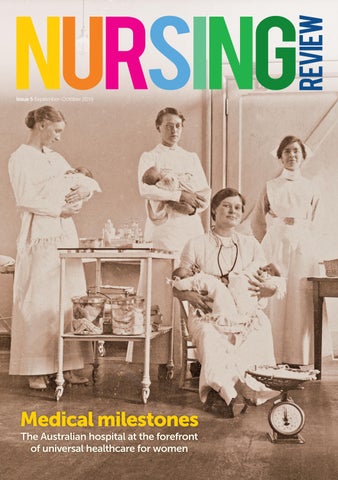
Medical milestones The Australian hospital at the forefront of universal healthcare for women
Silentia’s PhotoPanels help create not only privacy and security, but peace of mind and reassurance. Studies show, that images and colors can have a positive influence on the elderly and mental health patients by creating a calm space and a feeling of well-being, unlocking memories, stimulating positive thoughts and relieving stress, pain and anxiety.
Available in wall mounted & mobile. Various heights & lengths.
Find images & examples at our website photo archive. You can choose from a large variety of imagery. Alternatively you can also use your own photo. Find your image at medeleq.com.au Made in Sweden
Albahealth Patient Safety Footwear combines soft, cozy comfort with classic coverage in multiple sizes and styles for superior protection against falls. Essential Steps, Care-Steps & Confetti
Essential-Steps
Care-Steps
Confetti
• Double tread with smooth side construction • Multiple sizes • Risk Management colours • Fall Prevention Solutions
Office & Showroom: 23/9-15 Sinclair St, Arundel QLD 4214 Phone: (07) 5529 0753 or Free Call: 1800 677712 General enquiries: sales@medeleq.com.au Shop online now www.medeleq.com.au/Shop Distribution all States www.medeleq.com.au
contents
news
MANAGING EDITOR
2 4 5 6 7
Richard Garfield 02 9936 8628 richard.garfield@apned.com.au NEWS EDITOR
Dallas Bastian 02 9936 8637 dallas.bastian@apned.com.au
industry & reform
8
HEALTH EDITOR
Conor Burke 02 9936 8638 conor.burke@apned.com.au
Pooing on the clock Fake nursing director fined ‘World’s No. 1’ health system Pill organisers not always best Ancient breastfeeding habits ‘I felt like killing myself’ The problems of young people in aged care
10 Legal corner
04
07
Nurse faces trial after lapse in needle technique
12 Unpaid care
SUBEDITOR
Carers feeling stigmatised
Robert Santos
14 Lifelong pursuit PRODUCTION EDITOR
How postgrad study boosts nursing’s influence
Kate Prendergast
16 History of ‘The Women’s’
SALES MANAGER
Melbourne hospital a trailblazer
Ben Long 02 9936 8664 ben.long@apned.com.au
specialty focus
18 On the roof of the world A nurse’s experience working in China and Tibet
SUBSCRIPTION ENQUIRIES
Nina Boyle 02 9936 8602 subs@apned.com.au
08
16
20 Breaking the cycle MSF nurses on the frontline in Misrata, Libya
22 Recovery Camp Nursing students connect with mental health
PUBLISHED BY
clinical practice
25 Feeling their pain
APN Educational Media GPO Box 4245 Sydney NSW 2001 ABN 58 090 900 999 ISSN 1326-0472 PP100001944
How well do nurses understand what patients experience?
workforce
26 Down the hatch Nurses’ drinking habits examined
28 Great Scot
PUBLISHER’S NOTE
© Copyright. No part of this publication can be used or reproduced in any format without express permission in writing from APN Educational Media. The mention of a product or service, person or company in this publication, does not indicate the publisher’s endorsement. The views expressed in this publication do not necessarily represent the opinion of the publisher, its agents, company officers or employees.
18
25
WA nursing graduates heading to Scotland
30 Take a deep breath Tips to help nurses diffuse challenging situations
32 Eyes wide open Seeing the profession in a new light
34 Experience shows How working in aged care can make for better nurses
technology
36 Hearing is believing
26
36
App helps people with cochlear implants nursingreview.com.au | 1
news
#itspootime Does your roster give you ‘the shifts’?
N
urses around the world are reporting that shiftwork is affecting their gut health, causing issues like diarrhoea and irritable bowel syndrome. And now Australian researchers want to explore those ties across all spectrums of work. Lead researcher Dr Phillip Tully from the University of Adelaide said there has been a high prevalence of gastrointestinal disorders reported in nurse shiftworkers, with recent data coming from Brazil, South Korea, Iran, Iceland and Turkey.
“The specific gastrointestinal disorders and related symptoms documented among shiftworkers include Helicobacter pylori infection, duodenal ulcer, irritable bowel syndrome, functional disorders, constipation, diarrhoea, abdominal bloating, gastro-oesophageal reflux and regurgitation,” he said. University of New England psychologist Dr Suzie Cosh said while it’s known certain gastrointestinal disorders are more widespread in people who do shiftwork, how it unfolds is still quite poorly understood. “Our study wants to better understand the effects of the workplace and working conditions on people’s gut health. “We hope to learn more about possible associations by investigating work settings, sleep, bowel movements and gastrointestinal symptoms,” Cosh said. So why might shiftworkers be facing these issues? Tully said diurnal rhythms on gut microbiota and patterns of food intake and satiety are important to worker health, and added: “Shiftworkers experience disruption in circadian rhythms, change in hormonal
metabolism, change in diet, and irregular timing of eating.” Shiftworkers may also face high job demands like long work hours or burnout, or limited access to toilets or toilet breaks, he added. “Research to date has neglected psychosocial stress when we know shiftwork is associated with a higher likelihood of burnout, workplace conflict, and disruption to life outside work. “Stress is heavily implicated in gut-brain axis disorders such as irritable bowel syndrome, while ‘bowel shyness’ is a specific form of anxiety surrounding bowel movements.” The team hopes to break down the ‘poo taboo’, and 500 people are already on board, but researchers want at least another 700 to take part in the survey. The research is open to anyone older than 18 and employed, but nurses, paramedics and other shift and fly-in fly-out workers are especially encouraged to sign up. “The #itspootime research is anonymous, can be completed online – even on the porcelain throne – and takes 20 minutes,” Tully said. ■
Police outside the Rehabilitation Center in 2017. Photo: Charles Trainor Jr/Miami Herald
Hollywood police issued warrants for the arrest of the centre’s chief executive Jorge Carballo, charge nurse Sergo Colin and nurses Althia Meggie and Tamika Miller. The chief executive and charge nurse both face 12 counts of aggravated manslaughter and neglect of an elderly adult, while Meggie faces charges of aggravated manslaughter and tampering with evidence. Miller’s charges are as yet unknown. At the time the news broke of the first eight deaths, the home said that health and administrative staff diligently prepared for the impact of Hurricane Irma but the centre lost a transformer that powers the air conditioning unit. Staff said they repeatedly contacted the local power company for updates and reached out to local emergency officials and first responders. They also set up mobile cooling units and fans to bring the temperature down. The governor of Florida, Rick Scott, issued a statement urging all assisted living facilities and nursing homes to obtain ample resources – including a generator and the appropriate amount of fuel – to sustain operations and maintain comfortable temperatures for at least 96 hours following a power outage. ■
Homicide Irma Aged care nurses in Florida arrested over hurricane deaths.
F
our aged care employees in the US are facing charges for the deaths of aged care residents who fell
2 | nursingreview.com.au
victim to extreme heat in the aftermath of a hurricane. Fourteen residents of Floridian aged care home Rehabilitation Center at Hollywood Hills died after the site lost air conditioning following Hurricane Irma in 2017. Months later, 12 of the deaths were ruled to be homicides.
Take the next step! Health Administration studies for NUMs and Allied Health Managers 10720NAT Diploma of Health Administration - Exclusive to AMA Training Services AMA Training Services has proudly been partnering with the healthcare industry for over 20 years in supporting the growth and development of our workforce, with training programs designed for everyone from new care workers to the frontline leaders that help deliver outstanding care in often challenging circumstances. To support the growing demands placed on Nurse Unit Managers and health leaders, AMA Training Services developed the nationally accredited 10720NAT Diploma of Health Administration. This 16-unit Diploma was developed with extensive input from the healthcare industry to ensure the outcome was more confident, business capable and agile managers.
What will your studies look like?
What subjects are covered?
hhThe Diploma is delivered using the AMA’s unique
The Diploma consists of 16 units – 10 Core and 6 Electives.
Assisted Study Program (ASP). The Assisted Study
You will have the opportunity to enhance your skills in:
Program ensures that you are given every opportunity
hhTeam leadership hhChange management hhBudgeting and funding management hhStaff recruitment hhManaging quality customer service hhManaging legal and ethical compliance hhManaging infection control hhEmotional intelligence hhWork health and safety
to succeed and develop yourself as a manager, even if you haven’t studied for some time.
hhUnit competencies are assessed via coursework. There are no examinations.
hhThe ASP guides you through two units of competency per school term, supporting your studies with weekly live online lectures in our virtual classroom. Throughout the term you will also have the opportunity to attend workshops and seminars relevant to your studies. The online lectures and seminars are recorded, so can be viewed later if you cannot attend.
hhThis approach keeps your school holidays free from study requirements whilst ensuring there are other students and dedicated trainers sharing your learning journey with you.
Plus you have a broad choice of electives, encompassing statistics, advanced spreadsheets, project management, risk management, medical terminology, compliance management and more!
hhThe Assisted Study program strikes a balance between providing you with a rich learning experience and maintaining your work/life balance.
Find out more and commence your learning journey with us at amatraining.edu.au or speak with one of our friendly staff on 1800 248 292. AMA Services (WA) Pty Ltd – RTO Provider Code 2010
news
Fake nurse convicted Unlawful aged care nursing director guilty.
A
man who falsely claimed to be a nursing director at an aged care facility has been fined $60,000. The Victorian man was convicted in the Ringwood Magistrates’ Court of charges laid by the Australian Health Practitioner Regulation Agency (AHPRA).
He pleaded guilty to four counts of holding himself out as a registered nurse, one count of unlawfully using the protected title ‘registered nurse’ and one count of unlawfully claiming to be authorised or qualified to practise in the nursing profession. An AHPRA investigation into the allegation revealed that the man had claimed to be a registered nurse to land a job as the director of nursing at an aged care facility. He was not and had never been registered with the Nursing and Midwifery Board of Australia (NMBA) and has never held any qualifications as a nurse. He narrowly avoided jail time, as new penalties for this type of offence were not yet applicable. NMBA chair Associate Professor Lynette Cusack said the man’s actions jeopardised the public’s confidence in the profession. “Integrity and trust are central to the role of a nurse, and this individual’s actions endangered this integrity. “It is never okay to pass yourself off as a nurse. However, doing so and being in a senior position of influence and responsibility as a director of nursing is a serious abuse of trust. “Nurses are always in a position of trust when working in our healthcare services, but particularly in this case that trust was abused by someone working with one of our most vulnerable patient groups, our elderly.” Cusack added that had the man’s actions not been uncovered, he “may well have committed further offences”. Magistrate David Starvaggi ordered the man to pay AHPRA’s costs in the amount of $4000. ■
Shifting weight in shiftworkers Study aims to help night‑shift workers slim down.
A
ustralian researchers are looking into ways to shift the weight gain associated with shiftwork. University of South Australia researcher
4 | nursingreview.com.au
Dr Crystal Yates said the nature of working at night makes it harder for people to maintain a healthy weight and lifestyle. “Night-shift workers not only work irregular hours but have the added challenges of irregular sleeping and eating patterns, making traditional weight loss plans hard to follow,” Yates explained.
“Our research shows that when a person routinely eats at irregular hours, they’re more likely to gain weight. “Plus, we know that shiftworkers often snack on high energy, sugary foods at night, which can increase their chance of weight gain.” Associate Professor Maxine Bonham, from Monash University, said these workers do not always have access to healthy foods in the workplace. ICU nurse Louise Vos, who took part in a pilot study, attested to the dietary struggles that come with working nights and in a hospital with limited healthy food options. “When you get home, you are often too tired to prepare a healthy meal or to exercise,” she said. For that study, Vos was asked to rearrange her eating habits to avoid eating overnight, for a window of five hours, while on night shift. Now, the research team has secured a $1.43 million grant from the NHMRC to compare three diet strategies – continuous energy restriction with two novel intermittent fasting approaches – to help shiftworkers lose weight and improve their health. The team is looking for 420 shiftworkers in Adelaide and Melbourne to join the SWIFt study. ■
news
Long term health blueprint Government announces health system improvements and Medicare priorities. By Conor Burke
T
he government has released Australia’s Long Term National Health Plan, promising to make the health system “the world’s number one”. “The story of health in Australia is sometimes viewed through the prism of large numbers, such as $435 billion for the health and aged care system over the next four years,” Health Minister Greg Hunt told the National Press Club. “In reality, though, the story of health in Australia is the story of each individual life – their fears, their challenges, their hopes and their triumphs.” He told stories of patients who have achieved “a better future” because of the Australian system, like five-year-old Scarlett who has access to PBS-listed cystic fibrosis drugs which would normally cost $300,000. He boasted that the Australian health system is “ranked number two and ranked number one for clinical outcomes” and put this down to the “extraordinary” doctors, nurses and other health professionals that work in it.
The government has outlined areas for improvement with a blueprint made up of four key pillars. • Guaranteeing Medicare and improving access to medicines through the PBS • Supporting our public and private hospitals, including improvements to private health insurance • Prioritising mental and preventive health • Investing in health and medical research. Hunt pointed to increases in Medicare funding in 2019–20 ($104 billion, up from $75 billion in 2012–13) as proof of progress and said the government will invest $435 billion in health over four years. There will also be a focus on improving the mental health sector. In the plan, $55 million has been set aside for suicide prevention, with an extra $12 million for suicide research. Hunt added the government wants to decrease the rate of avoidable admissions and re‑admissions and plans to invest up to $1.25 billion in innovation for hospitals. Alison Verhoeven, Australian Healthcare & Hospitals Association chief, welcomed the investment, along with the government’s renewed commitment to mental health. “The $90 million Intergenerational Health and Mental Health Study announced by [the minister] is a great boost to reforming our health system for better value and
affordability for patients and for the nation,” she said. “It is also pleasing to see mental health, nutrition and physical activity added to the characteristics being surveyed. [It] has been several years since these areas were surveyed comprehensively. “All these data will provide up-to-date valuable intelligence to address the burden of chronic disease through providing better targeted and better value healthcare.” Elsewhere, the National Rural Health Alliance welcomed government commitment to rural health outcomes. It pointed to the plan to “bring an additional 300 extra doctors and 3000 extra nurses to rural Australia over 10 years”. “The plan also needs to offer suitable incentives to attract and retain allied health staff, in the same way that incentives are offered to GPs,” said alliance chief executive Dr Gabrielle O’Kane. However, she believes the government has missed an opportunity to address the effect climate change has on health outcomes. “Much of the country is in the midst of a severe ... drought, with rural, regional and remote communities experiencing high rates of poor mental health and suicide, yet a long-term commitment to a plan to address these links is missing,” she said. The national health plan also pledges $1.45 billion for medical research through the Medical Research Future Fund, including $185 million in dementia research and a future $600 million investment in research for better treatment of rare diseases. “This system depends on a vision of being the best in the world, and we can only achieve that with a strong economy. And we can only deliver that with a long-term national health plan and a blueprint for mental health development out to 2030,” Hunt said. ■
SubScribe for leSS than $2 Per week The laTesT news for nursing & healThcare professionals Nursing Review is essential reading for anyone involved in the healthcare sector in Australia. It provides unrivalled coverage of specialist topics from features and opinion pieces, to international news and profiles. • Latest news and resources for all healthcare professionals • Comprehensive coverage of a diverse range of topics • Analysis of the major issues facing the health sector as a whole • Delivered free of charge to your home or place of work monthly
Please call 02 9936 8666 to find out more. nursingreview.com.au | 5
news
Sorting it out Are pill organisers doing more harm than good?
T
he humble pill organiser could be doing harm, a new study says. UK researchers have developed a guidance system to help prescribers and pharmacists decide which patients should use a pill organiser. Their study shows that, over the last decade, double the number of pill organisers are being prescribed in the UK, and pharmacists are not considering the potential implications of patients suddenly taking all their medicine.
Time bomb Research reveals hazards of vicarious trauma.
V
icarious trauma cannot be wished away, say the authors of a new report that explores the issue in a frontline community services setting. “It needs to be managed, worked through and monitored by workers and clients alike,” they say. Staff interviewed for the work spoke of absorbing trauma “through osmosis” and that something as seemingly innocuous as a television advertisement would leave them in tears. 6 | nursingreview.com.au
“The fact that using a pill organiser could cause harm to patients sounds rather counter-intuitive. But our research showed that patients were more likely to become unwell when they switched from taking their medication straight from the packet to using a pill organiser. In some cases, older people can even end up being hospitalised,” said lead researcher Dr Debi Bhattacharya, from the University of East Anglia. “This is likely because when the patients had been taking their medication sporadically, they weren’t getting the expected health improvements. Their doctor may therefore have increased the dose of the medication to try to get the desired effect. “When these patients were switched to a pill organiser and suddenly started taking all of their medication as prescribed, they experienced side effects of the medication.” The researchers found that with regular medicine packets, if a particular pill doesn’t agree with a patient, they can easily identify and miss this pill, but with organisers this is more difficult, and patients tend to skip all of their pills instead.
This led to the development of the Medication Adherence Support Decision Aid (MASDA). This attempts to discern who will most benefit from pill organisers. The algorithm helps prescribers consider barriers which may lead patients to miss medications. “Emotional barriers to taking medication as prescribed can include things like whether the patient is anxious or lacking confidence, lacking motivation or experiencing unwanted side effects. In all of these cases, using a pill organiser is likely to be inappropriate,” Bhattacharya said. “Better solutions are likely to be identifying social support to boost the patient’s confidence, providing information on medication benefits, agreeing goals or even stopping the medication.” Other barriers may be a patient’s physical abilities to use an organiser, their manual dexterity, visual abilities and memory. “When switching from usual packaging to a pill organiser, we recommend that patients speak to their GP or pharmacist to check that the doses of their medication are appropriate.” ■
Workers described the ways trauma transfers and “sits in their bodies” and how the sensory experiences associated with their job seeps in. One worker put it this way: “I am not sure what you do with it, because even if you tell the facts to somebody, they are not sitting in the house smelling the smells or taking in visually what you are.” Lead researcher Dr Jonathon Louth from the University of South Australia said frontline workers are experiencing high levels of trauma that will impact their everyday lives well into the future. “They represent a generation of veterans who are not returning from war but from working within vulnerable communities and families within our cities, suburbs and regions,” Louth said. “This situation cannot and should not be ignored.” While the report focused on community services workers – and warned that the sector’s rapid expansion means vicarious trauma is a ticking time bomb – nurses in other settings are also at risk, as described by clinical nurse specialist Ravina Raidu in an interview with Nursing Review. “The emotional toll and exhaustion sustained from dealing with sensitive information, with the potential of developing debilitating conditions like depression and anxiety, means that
vicarious trauma could be very costly for nurses professionally and personally,” Raidu said. Louth and his team unpacked the ways community service institutions can better recognise and respond to compassionbased stress. “Ensuring ‘space between’ is a really important consideration, whether that’s time between clients, time for lunch, reflection or just chatting with colleagues,” Louth said. “The boundaries between work and home also need to be protected, and workers need to be supported to better distinguish between their personal and professional lives.” He added that within the workplace culture, celebrating wins can help develop resilience among workers. The team also stressed the importance of peer relationships, though Louth added that care must be taken to ensure traumatic experiences are simply not offloaded onto other staff. As one professional put it: “On top of your own caseload, you hear the stories of other cases, and I know for myself I have been at points where [I feel like saying] please don’t talk to me at all about anybody else because I have got enough here without hearing another story.” ■
news
Artist’s impression of Australopithecus africanus. Image: Garcia and Renaud Joannes-Boyau
How our early ancestors sucked Pre-human breastfeeding habits unlocked. By Dallas Bastian
O
ur two-million-year-old ancestors continually breastfed infants from birth until they were about one year old, an analysis of teeth has revealed.
Led by Southern Cross University and Monash University, the international team behind the study looked at teeth from Australopithecus africanus, which hailed from what was likely a somewhat harsh limestone landscape in South Africa. Study contributor Professor Andy Herries, head of La Trobe University’s Archaeology and History Department, said the research potentially shows that living in these environments was difficult for our early ancestors, particularly as the climate began to change around two million years ago. The species faced long alternating periods of abundance and scarcity of nutritious food. And it wasn’t long until Australopithecus africanus became extinct. Those tough conditions caused mothers to supplement gathered foods with breastmilk, said geochemist Dr Renaud Joannes-Boyau from Southern Cross University. As teeth are the only part of the human skeleton that has direct contact with the environment and form through incremental layers of enamel and dentine, they are valuable for reconstructing biological events
from an individual’s early life. Chemical signatures locked in the teeth reveal what young fossil humans were eating from day to day, explained Dr Alistair Evans, an expert in hominin palaeoecology from Monash. One chemical the team zeroed in on was barium. Previous research shows that the levels of barium in teeth correspond with increases in mother’s milk intake and slowly decreases during weaning. Published in the journal Nature, the study found that barium, along with lithium and strontium, increased for the first year after birth and then continued in a cyclical pattern in the child’s early years. University of New England Professor Stephen Wroe, a collaborator on the study, said this switching on and off of milk supply to sustain offspring when times were tough reveals mothers developed strong and persistent relationships with their children. Dr Luca Fiorenza, an expert in the evolution of the human diet from Monash University, said these findings are making researchers rethink the social organisations among our earliest ancestors. ■
Complete our fully online
Master of Health Care Management If you’ve been thinking about progressing your career in a clinical health care workplace, you can develop the skills you need to succeed with a Master of Health Care Management at Murdoch University. Our online degree can be completed full-time, or part-time to suit your work schedule and lifestyle. With flexibility to choose from a range of units that teach key technical skills, you can gain further knowledge in the area that suits your work or area of specialty. When you study at Murdoch, you join a community of forward-thinking individuals ready to address the future issues of health care. CRICOS Provider Code: 000125J
Apply now and be surrounded by some of the world’s most progressive thinkers. murdoch.edu.au nursingreview.com.au | 7
industry & reform Catherine Roche leaves the Victorian County Court after giving evidence. Photo: AAP/Stefan Postles
Too young for aged care Royal commission told about the problems of putting young people in aged care. By Conor Burke
MELBOURNE: “EVERY DAY I FELT LIKE KILLING MYSELF” Lisa Corcoran is sworn in to give evidence to the aged care royal commission in the usual fashion. Counsel assisting Eliza Bergin then begins the day with the regular formalities. The unusual part is that Corcoran is giving her evidence through her speech pathologist and therapist, Liz Chard. Corcoran is seated in her wheelchair, paralysed, with speech difficulties, and Chard is translating for the court. 8 | nursingreview.com.au
You can make out the odd word here and there, but for the most part, the court waits while she speaks and Chard takes notes, ready to relay the message. “Ms Corcoran, what are your goals for the future?” Bergin asks. “My number one goal is to get the fuck out of the nursing home,” Corcoran replies matter-of-factly through Chard, to some laughter. “My number two goal is to hug my children. I don’t need to tell you this, you know. My number three goal is to communicate better.” Corcoran, 43, has good reason to be frustrated. She is one of the 6048 people aged under 65 living in permanent aged care in Australia.
She describes her six-year stay in aged care as a “nightmare” and says: “Up until recently, every day I felt like killing myself. I can’t move, so I can’t do this – I would have if I could.” Corcoran says she’s had to fight at times to get her message across to staff at the facility, exemplified by her struggle to get more than one shower a week. “I have an NDIA plan which initially only gave me 60 hours of therapy and not much more, but it’s been reviewed and they’ve fixed it up,” she says. “But before that, it was a nightmare. My hygiene – I had to fight for a shower every second day. I called a meeting with the manager because I wanted to be washed more than once a week,” she says. As a vegetarian, she describes the food as “crap” and talks about struggling to socialise with other residents as they often pass away, so she doesn’t like to make friends. Recalling a recent spate of six deaths over two weeks at her home, she tells of the emotional hardship of dealing regularly with death. “I just can’t get it out of my head. I heard about these people dying as the nurses told me. I saw one body being moved. I saw his head in a red bag. This was at 12 noon when everyone was eating lunch.” More concerning was the issue of safety. In her statement, Corcoran said she had been left outside in the sun for hours on one occasion. She has also been pinched and punched by staff, and she told the commission she had been sexually assaulted. Corcoran is currently waiting to move to a specialist disability facility and feels lucky that she has “good people” around her. When asked why it was important for her to give evidence, she replies that it is about fighting for respect for people with disability. “We all crave respect,” she says. “I feel like I’ve lost that respect. “I could be here with nothing on and I wouldn’t feel any different.”
MELBOURNE: “WE DON’T HAVE TO WORRY ABOUT HIM NOW, HE’S IN AGED CARE” Catherine Roche talked about her late husband, Michael Bird, who spent two years in aged care after he had a stroke aged 56. She described the hard time she had navigating the space between the aged care system and the disability system.
industry & reform
After the stroke, Bird spent time in a hospital rehab unit, where Roche faced a “constant battle” to keep him there. The hospital put “enormous pressure” on her to move Bird to other accommodation, telling her three months is the usual time allowed. Bird stayed in rehab for nine months before Roche was forced to move him to aged care for lack of any other options. Roche said she reached out to about 20 other rehab centres and approached community care to find alternatives for her husband, but she felt that “when they heard that Michael had moved into the aged care, they quietly put his file away and basically said, ‘We don’t have to worry about him now. He’s in aged care’.” After an initial period where Bird’s health improved, Roche said the aged care environment began to take a toll on the young man. Most residents were older than him and half had dementia, Roche said, so he struggled to find common ground. “Over time, what it meant was Michael became more and more isolated. And ... he would just remain in his room day in, day out,” she said. Unfortunately for Roche and Bird, when the stroke first occurred, the NDIS had yet to be fully rolled out. When it reached their area, it was not a simple process, even for someone with project management experience like Roche. “[For] somebody who doesn’t have that work experience, I think it would be very difficult for them to actually meander their way through the miasma of getting funding,” she said. In the end, Roche believes that if she had not been forced to move Bird into aged care and had other options for his rehabilitation, “he would still be here today”. “In my experience, case management is fundamental to helping younger people who have a disability. “The biggest challenge I faced was a lack of a road map or any pathways for Michael other than aged care. “In Michael’s case, aged care was clearly not an appropriate place for a younger person with a disability. Residential aged care facilities are seen as a place for people to be made comfortable as they prepare to die. Michael was not there to die and quite the opposite. He wanted to recover and recreate his life,” she said.
MILDURA: “MAYBE I JUST END IT” “I just cried silently all the way home so Don couldn’t see. And I just thought, ‘Well, maybe I just end it for both of us’,” said
People Care director Arthur Miller outside the royal commission in Brisbane. Photo: Darren England, AAP
Rosemary Cameron, describing a low point she experienced as an informal carer. Cameron, 69, cares for her husband Don, who is living with Lewy body dementia, and she was one of many carers who told the commission of the realities of informal care in Australia. As of 2015, almost 2.7 million Australians identified themselves as informal and unpaid carers – that’s 12 per cent of our population. Of those, around 420,700 are primary carers of people older than 65. Females make up 68.1 per cent of all primary carers, and this has a massive impact on income and employment opportunities for women. Deloitte Access Economics estimated that carers provided 1.9 billion hours of care in 2015. This is equivalent to each carer providing 673 hours per year or 13 hours per week. Cameron, and others, spoke about the difficulties in dealing with respite, loss of earnings and the effects of all of this on mental health.
BRISBANE: FALSE HAVEN The commission also heard evidence from the players involved in the closing of the Earle Haven facility in Queensland. The sudden closure left 68 residents temporarily homeless, and during testimony there was confusion, due to the
complicated nature of the arrangement between People Care and subcontractor HelpStreet, as to who bears responsibility. Further confusion reigned when it was asked why Earle Haven was able to operate after frequent sanctions, and whether it was the responsibility of the health department or the Aged Care Quality and Safety Commission to deal with complaints. Also giving evidence was Professor Ron Paterson from the University of Auckland. He was damming in his assessment of
I saw one body being moved. I saw his head in a red bag. This was at 12 noon when everyone was eating. providers who “pay lip service” to resolving instances of poor care and more so on the lack of transparency surrounding complaints and investigations in the sector. “These are publicly funded providers, and they are providers who are caring for the most vulnerable members of our community. Why would the default position be secrecy of information about the providers? That strikes me as odd,” he said. ■ nursingreview.com.au | 9
LEGAL CORNER
Needle and the damage done
A moment of carelessness lands a nurse in court. By Scott Trueman
I
n any action alleging negligence by a nurse, it is for the plaintiff to prove a number of ‘ingredients’. One ingredient is whether the actions of the nurse fell below the reasonable standard expected of the skill and knowledge of the nurse in question. Hence, reference is made to the skill and knowledge of the nurse in question. This can be a factually difficult test to ‘defend’ if the nurse, over time, has no recollection of the alleged negligent action. In such a situation, the court must make a factual determination. A recent case involving the giving of a heparin injection is illustrative. The plaintiff (patient) in 2013 had embarked on a program to improve her fitness and lose weight. She succeeded in losing 35kg. This resulted in excess abdominal skin. On 17 May 2014 she saw Dr M, a plastic surgeon, who discussed with her the possibilities of treatment by abdominoplasty. Dr M operated on the plaintiff on 11 August 2014. The plaintiff returned to the ward at about 2pm. Dr M also ordered the administration of heparin to be given by subcutaneous injection twice daily. The plaintiff received the first injection of heparin at 8am on 12 August. That injection was given by a nurse who “pinched” the plaintiff’s left thigh and administered the injection just beneath the skin. The plaintiff
10 | nursingreview.com.au
had no pain at the time of the injection and no complications afterwards. The second injection was administered by Nurse N, at about 8pm on the same day. The plaintiff gave the following evidence: “He came into the room. He was holding a green tray … He prepared the injection and then put it straight into my thigh, and he did not pinch my skin. I had instant pain, it was like a bee sting, and I said ‘Ouch’.” The plaintiff’s husband, who was at the bedside, supported the plaintiff’s evidence. Nurse N did not remember at trial giving the injection. He gave evidence that he had significant experience giving various types of injections, including subcutaneous injections. He said that as a result of his training, he adopted a “standard practice, an invariable practice”. He described his technique for giving a heparin injection in detail. This involved “gathering” as much subcutaneous tissue as he could and then gently inserting the needle at a 45-degree angle. He would then slowly inject the medication, taking about 30 seconds to empty the syringe. His nursing notes made no mention of the heparin injection. The plaintiff asserted that after the injection she had pain in her thigh. The next morning, she noticed a lump in the area of the injection. The plaintiff described the pain to an RMO as extending across her thigh to the top of the knee and the back of her leg, and further, that the area hurt when touched. This remained the situation until the plaintiff was discharged on 15 August. This situation continued post discharge, despite follow-up consultations and various treatments. In essence, the plaintiff alleged that the defendant (Nurse N): 1. Failed to pinch the skin up, lift or pull the top layer of skin away from the muscle before administering the heparin injection, so as to inject into the superficial subcutaneous fat and avoid injecting into the deeper subcutaneous region of the
lateral femoral cutaneous nerve, thereby damaging the nerve. 2. Injected the needle into the deeper subcutaneous region of the lateral femoral cutaneous nerve and damaged the nerve. The decision focused on factual findings by the trial judge, who stated: “I accept that for a nurse such as Nurse N, the giving of a heparin injection was a reasonably routine mechanical task ... However, Nurse N’s complete lack of recollection of the specific injection … means he can only assert what he believes he would have done by reference to his usual, or ‘invariable’, practice. I should note that I have some difficulty with the notion of an invariable practice. Ordinary human experience suggests that there can always be momentary lapses or careless errors in the performance of mundane or routine tasks. “That being said, Nurse N impressed me as an earnest and hardworking nurse. However, I have no doubt he had a busy workload and I infer that he was probably under time pressure to complete his tasks before the end of his shift at 10pm. “I am satisfied that Nurse N did administer the injection in a manner which fell below the standard of care to be expected of a nurse in his position. Whether due to the pressure of work, or just momentary carelessness, he inserted the needle at an angle which allowed the point to penetrate the deeper tissues overlying the plaintiff’s left thigh muscle. “I find that he probably did not attempt to ‘pinch’ the skin on the plaintiff’s thigh, or that if he did make that attempt, he did not do so effectively. The injection did cause immediate sharp pain to the plaintiff who made an exclamation to the effect of what both she and her husband testified to.” Accordingly, judgement was entered in favour of the plaintiff. Damages recoverable by the plaintiff amounted to over $250,000. A momentary lapse of concentration in not pinching the skin or inserting the needle correctly can have serious monetary consequences for a nurse’s employer – in this case, over a quarter of a million dollars. No matter how small the issue, nursing notes are a nurse’s best friend. Why? Because memories fade and we cannot be expected to remember every nursing care task we undertake years later, particularly those that are minor and routine. In this case, the time between the injection and the trial was about five years. n Scott Trueman is a lecturer in the School of Nursing, Midwifery and Nutrition at James Cook University.
Find your specialty, we have over 20 to choose from.
Mental Health/ Psychiatric Nursing
Perioperative Nursing
Anaesthetics & Recovery Nursing
Acute Care Nursing
Cardiovascular Nursing
Gerontological Nursing
Leadership in Practice
Clinical Nursing & Teaching
Emergency Nursing
Neonatal Intensive Care
Study postgraduate nursing online, part time and applied in your workplace. Develop in-depth knowledge within your field of nursing and support your lifelong learning goals.
> utas.edu.au/nursing-postgraduate
CRICOS Provider Code 00586B / OOM0656984
industry & reform
Carers being sidelined
The status of unpaid carers in a competitive aged care market. By Michael Fine
I
s the unpaid assistance provided in the main by family caregivers or other close relatives, friends or associates still necessary, or have carers become a problem? Do they require a new specialised management approach to ensure they don’t get in the way of the competitive process of service provision or go on to become long-term welfare dependents? It is commonly, if wrongly, argued that formal services substitute for unpaid carers. We’ve all heard this argument before – for example, that the reason we need so many residential care facilities is that people no longer help their own family members. Could that be the logic behind the new approach in Australia where carers are no longer part of the target group for support by the services that assist those for whom they care, but are instead directed to specialised support services designed to help them cope better and to seek employment ASAP? One of the key characteristics of carers is that they share a personal relationship with the person they assist. Informal care
12 | nursingreview.com.au
has long been understood as an expression of the sense of long-term reciprocity, responsibility and familiarity that arises from a close familial, marital or intimate relationship. That’s how people start caring and why they keep going once specialised services come in to play their part. Even when services are used, experience in Australia and overseas has consistently shown that family support remains strong in old age. This is reflected in data collected by the ABS over the past 30 years that clearly demonstrates that informal and formal care are not mutually exclusive alternatives. But carers will tell you today that they are no longer consulted when individuals they assist are assessed for the Home Care Package and for residential care. Nor are they included in the decision making about what is needed by the intended care recipient, the consumer. Instead, they are referred to their own specialised support available through the online Carer Gateway. In the coming months, it is planned to extend this with the launch of the Integrated Carer Support Service (ICSS). The ICSS, we learn from the website, will provide “digital counselling services to help carers manage daily challenges, reduce stress and strain, and plan for the future”. Carers are now eligible to access online peer support, online coaching resources that help them develop “simple techniques and strategies for goal-setting and future planning”. This is in addition to the educational resources intended to help carers build confidence and improve their wellbeing.
A second-stage rollout is currently scheduled from September 2019. A network of “regional delivery partners” will help carers access local services such as carer needs assessment and planning, support packages that focus on supporting participation in employment and education, coaching, counselling and peer support provided by phone and in-person, as well as information and advice, access to emergency crisis support, and assistance with navigating relevant local services. My goodness, what must the politicians and officials who designed such an approach think of carers? Informal caregivers no longer seem to be recognised as an important source of support or as a team member to be consulted and included in decision making. Carers Australia has noted that carers in the ageing and disability care fields have become what is termed ‘collateral damage’ as policy has sought to develop markets based on the concept of consumer choice in Australia. The concern no longer seems to be about recognising and supporting carers by providing assistance to those for whom they care. Instead, we have what is perhaps most kindly described as a therapeutic approach that focuses on a carer’s supposed deficits. A consequence of this is that it has left many carers feeling that they are now being excluded, stigmatised, patronised and targeted as just another problem that needs fixing. Instead of being pathologised, carers must be recognised as a resource and acknowledged as team members to be consulted and included in decision making when issues of assessment and service delivery are considered. Skilled assessors, especially those seeking to elicit a clear expression of the consumer’s choice, need to learn to hear from both the care recipient and their carers. This needs to be very clearly put back into the objectives of the aged care legislation and the associated regulations. An emphasis on individual consumer choice must not be used as a justification of the failure to recognise carers as important co-clients in aged and community care. Nor should it be the basis for excluding carers from direct engagement with the support services received by those who rely on care. ■ Michael Fine is honorary professor of Sociology at Macquarie University.
A combination anaesthesia that endures*
For use with:
Helps prevent pain and unnecessary expense
Vaccinations
Minor cosmetic procedures
Tattoos
EGO PHARMACEUTICALS PTY LTD
Always read the label and use only as directed. References: 1. Data held on file at Ego Pharmaceuticals Pty Ltd.
‘Ego’ and ‘Numit’ are trademarks of Ego Pharmaceuticals Pty Ltd. ©2019 Ego. ask@egopharm.com www.egopharm.com Date of Preparation: September 2019
0486-34/NR
* Lidocaine (Lignocaine) 2.5% w/w Prilocaine 2.5% w/w provides skin analgesia for 2 to 4 hours1
21–31 Malcolm Road, Braeside 3195 Australia australia +61 3 9586 8800 toll free 1800 033 706
industry & reform
Skilling up: the postgrad edge Raising nursing’s influence in the health system. By Conor Burke
In comparison to other disciplines, Australian nursing has only come relatively lately to academia. Traditionally, academic qualifications were not viewed as necessary for nurses. The movement of nursing education to the tertiary sector has seen many changes from the traditional apprenticeship model, and the characteristics of nurse academics reflect these. – Kay Roberts and Beverley Turnbull, Collegian, 2002 Jan;9(1):24-30
T
hese changes are still relevant today, for a profession that has only been recognised as a tertiary qualification since the 80s and continues
14 | nursingreview.com.au
to fight for better recognition within the healthcare system. But how many nurses do you know who complete more than the minimum CPD required for each registration period? At a time when conversations are being had about increasing nurse leadership in the Australian health system, continuing education at the postgraduate level could be key to achieving this. “One of the things people underestimate is that they think a nurse is a nurse is a nurse,” says Australian College of Nursing chief executive Kylie Ward. “[But] your junior doctors and your training doctors come and go. The doctors in those areas ... are not employed to be in the ward or a hospital unit all the time. They have heavily relied on the expertise and leadership of nurses.” Ward sees undergraduate qualifications as the minimum education that allows a nurse the opportunity to practise, but she wants nurses to think about progressing their skills sooner rather than later. “What we would expect and advocate as
the professional body is that a nurse would spend a year consolidating the learnings at a novice level, and then I would expect by second year a nurse should be entering postgraduate certificate qualification with an intention to moving towards a master’s at some stage,” she says. This was the path that Ammu Nandi followed. Nandi is an oncology nurse at the Peter MacCallum Cancer Centre in Melbourne and is currently studying for a master’s degree. Originally doing an undergraduate degree in teaching, she made the switch to nursing and has continually upskilled since graduating in 2015. Keeping up to date in an evolving field is her motivation. “I finished university, did my grad year, then I had a year of just regular nursing,” she says. “Once I got into the graduate certificate, I had two years out of uni and I was a little bit nervous about it. “But I actually really enjoyed it, and I realised I’m the type of person that if I’m not doing something or keeping myself
industry & reform
but she believes her subsequent success is down to hard work. “Every time the offers came out and it wasn’t mine, I was heartbroken,” she admits. “I don’t believe that a PhD’s got anything to do with being smart, because I didn’t do very well in Year 12 either, which I think is the other interesting thing.” Education and confidence go hand in hand for Dufton. Completing her postgraduate certificate and working on her PhD has given her the skills to implement researched knowledge into her practice. “Some of the stuff that you learn in postgraduate education is about finding evidence, and using evidence, and making your practice reflect the evidence that’s out there. “It’s given me confidence in decision making, confidence in communicating, advocating for my patients, and I can back it up with evidence. “And often now that’s met with, ‘Okay, great. [You] taught me something,’ from the doctors,” she says proudly. Undertaking study while working day to day can be challenging. For Dufton, her PhD coincided with a pregnancy, but in tough times you find skills you didn’t know you had. “It’s very different now because I can’t spend my evenings working and I can’t spend my weekends working. It’s much more challenging now trying to find the time,” she says.
“I’ve become incredibly productive in the hours that I do have to do work, which is quite the skill that I have mastered. But it’s very hard with a family and other commitments,” she adds. Nandi agrees that postgraduate study is a big commitment and that every nurse
I would expect by second year a nurse should be entering postgraduate certificate qualification with an intention to moving towards a master’s. should consider what they are interested in and if it is really for them. “If you’re not sure about doing it, I think look into what your end goal is,” she says. “But I don’t think, at the end of the day, any knowledge is wasted knowledge. “There’s nothing to lose from it. It will always help you. And it will always look good on your CV as well.” And much like Ward, Dufton says lifelong education is about nurses gaining recognition for the integral role they play in healthcare. “It’s about giving nurses the credibility as being professionals and being a really important part of that team that cares for people.” ■
Care for your future Take your unstoppable career in Nursing and Midwifery further. With our suite of specialised nursing and midwifery qualifications, take your career to the next level. Gain advanced knowledge and experience, and learn from prominent researchers, academics and industry-experienced clinicians in areas such as mental health and perinatal mental health, health and ageing, critical care and cardiovascular nursing. Enjoy flexible postgrad study options designed to suit working professionals. Apply now to study in 2020. unisa.edu.au/postgrad/nursing-midwifery
CRICOS PROVIDER NO 00121B
busy and not having that progress, I guess I feel like I’m a bit stagnant.” The combination of work and study can be daunting for some, but Nandi says she is lucky to have the support of her course supervisor as well as her workplace. “I think if you don’t have a supportive workplace you’d really struggle. But in the case of my master’s degree, no, because I get five extra study days. I get five extra exam days,” she says. “Everything that I’ve requested I’ve received, and I’ve got about 10–15 days of study leave. “So that’s a lot of time that I can work on my master’s and also not be worried about my financial situation because I’m being paid for it.” Polly Dufton, clinical nurse consultant at the Olivia Newton-John Cancer Wellness & Research Centre and current PhD student, wasn’t always a natural academic, but it is the pursuit of the unanswered questions that drives her to study. “When you’re perhaps a little bit more junior, you come across these questions and you go, ‘Oh, well, what can I do about it?’” she says. “I feel like now I have more ability to actually make changes with some of my work, because I try to keep some of my work as translational – for lack of a better term – as possible so that it impacts the work I do every day.” Polly entered nursing through an enrolled nurse program and, surprisingly, struggled to get into a bachelor of nursing,
nursingreview.com.au | 15
industry & reform Drs Ellen Balaam, Annie Bennett and Gweneth Wisewould and a nurse at the Women’s Hospital, c. 1915, gift of Lois Parr, niece of Ellen Balaam. Photo: Medical History Museum, University of Melbourne
Hospital. That was the model for what was created in Melbourne. The Women’s committee, led by Perry, was not keen for unmarried mothers to be admitted – that is, single, pregnant women. And it was those two doctors, based on their experience overseas, who insisted that the Melbourne Lying-In Hospital be available to all women in need of help. That was in direct relationship to their experience in Dublin.
What was the knowledge around women’s health like before we started to have these specialised hospitals?
After the gold rush
The history of the Women’s Hospital in Melbourne. Jacqueline Healy interviewed by Conor Burke
T
he 1850s was a decade of immense change in Melbourne. The rush for gold was frantic – about half a million people descended on the area – and as the men set off for the goldfields to find their fortunes, the women were left “abandoned, pregnant and destitute”, according to historian Janet McCalman. The immense wealth and pursuant social upheaval led to a growing number of infants and women dying in childbirth. This set a committee of women on a mission to solve the problem. The committee – led by community worker Frances Perry and two doctors, Richard Tracy and John Maund – set to work establishing a facility that would provide universal healthcare and treatment for women.
16 | nursingreview.com.au
In 1856, the Melbourne Lying-In Hospital and Infirmary for the Diseases Peculiar to Women and Children was established. It’s now known as the Royal Women’s Hospital, or simply ‘the Women’s’. A new exhibition at the University of Melbourne’s Medical History Museum, titled The Women’s: Carers, Advocates and Reformers, charts the hospital’s rise and with it significant medical milestones in Australian history. Displays include ovariotomy instruments owned by hospital co-founder Tracy and used in Australia’s first ovary operation; the record of the first baby born in the hospital, which was sadly stillborn; and 1880s nipple shields. Stories also include the ground-breaking role the Women’s played in IVF treatment, after the birth of quads in the 1980s. Nursing Review spoke with the museum’s curator, Dr Jacqueline Healy, to find out more about the medical history of the Women’s.
There were practices that had been around for a very long time. However, there was the problem of people being destitute. The Women’s was a charity hospital set up for destitute women. In Melbourne, you just had a major influx of population in relation to the gold rush, and the city was overwhelmed by these people living in very difficult conditions. The tradition would’ve been that of home birth, and there would have been practices in the places where these people had come from that would have connected them to midwives in the traditional sense, and also to the care of their families. But that was not necessarily in place in that early formation of Melbourne. The city came into existence as a settlement in 1835, and the Women’s hospital was formed in 1856, so it’s very early on in the history of the city. Melbourne Medical School was formed in 1862, so it was before we had a medical training facility here in Melbourne.
How involved were women, if at all, in the formation of this hospital? There was the Women’s committee, and the chair of that was Frances Perry. So there was a group of women who had an ongoing role on the board of the hospital. And you had those two doctors, Tracy and Maund. Women were there and they were giving their views on things from the very beginning.
NR: How exactly was the Women’s in Melbourne founded?
What was the profession like for midwives and nurses?
The Women’s was formed in partnership between a committee that was run by Frances Perry, who was the wife of Melbourne’s first Anglican bishop, and two doctors newly arrived in Melbourne. What’s interesting about those two doctors, Richard Tracy and John Maund, is that they had experience of the Dublin Lying-In
The first training of nursing and midwifery happened at the Melbourne Lying-In Hospital in 1859. People came from overseas, so the doctors were trained overseas, and they usually came to Australia as ship doctors. In fact, Tracy is a really interesting example because he was a protégé of one of the leading
industry & reform
obstetricians in London, Spencer Wells. Tracy was far more successful in the operation techniques developed by Wells than his mentor was. A lot of very talented medical people came to Australia. Some came because they wanted new opportunities, and some came because of health. John Maund had severe chest problems, and he actually died from these problems. Other people came as ship doctors and then decided to stay. But you had good people who had been trained elsewhere. In fact, Tracy went on to be one of the first lecturers at Melbourne Medical School. He was appointed there in 1865.
could work out how to ensure that didn’t happen, that in fact IVF would result in one baby. It was joyous, and just because people like to know, those quads – four boys – have grown up and have great lives. But the innovation that came out of those births was the hospital worked out how to ensure people could have just one baby. There are countless examples throughout the history of the Women’s hospital of the forward steps taken in relation to women’s rights and the health of women in such an important area.
Were there any interesting innovations or techniques that came as a result of this new hospital?
We have in the exhibition various contraceptive techniques and items that were used in relation to contraception. What might shock people is that, in the 1880s, in entries relating to patients, there was a printed line which said “Abortion”. In the records about women, in terms of assisting them when they came into the hospital, one of the lines was about abortion, and they would say that person had four abortions and had given birth to three children. So, although
It’s a complex scenario. The great thing that came out of the hospital was that pregnant women who were destitute, whether married or unmarried, had somewhere to go so they weren’t on the streets. They had somewhere to go where they could be looked after, and they could have their baby in far safer circumstances than otherwise were available. So, that was really an extraordinary step forward. It’s also in an era where germ theory is still being debated, so in some instances the danger of infection was far less with a home birth than it might’ve been going to a hospital. There were contradictions here. In many ways it was much better, but in some ways it was worse.
Did you encounter anything that happened in the past that would shock or surprise someone today?
it wasn’t necessarily legal, abortion was something that was regularly used – it points to abortion being used as a form of contraception for a very long time.
The exhibition is called The Women’s: Carers, Advocates and Reformers. Why this title? ‘Carers’, because it was in fact a duty of care for destitute women in the community. ‘Reform’, because on many
So, although it wasn’t necessarily legal, abortion was something that was regularly used. health issues in relation to IVF, abortion and contraception, the Women’s has been at the forefront of reform. And ‘Advocates’, because they have advocated for many of these issues in the broader community. It was, in fact, the actions of a staff member of the Women’s that enabled IVF to be offered to unmarried single people. So, they have always been all those things from the very beginning. ■
Did any individual stories stand out as you were creating this exhibition? What has been marvellous to have is the first register of births at the Women’s. We’ve got the very first book that began in August 1856, and I think it shows you the sign of the times that the entry of the first child was not delivered alive. I think that sort of sets the scene. Then you have other births that are successful, but you see that path on the different conditions that women had. I think what’s so important about the history of the Women’s is that it has continued to be an advocate for women and at the forefront in many areas of women’s health. A very interesting example that comes to mind is the birth of the quads in 1984. That was celebrated because it was the first time four IVF babies were born. But the importance of those births was in fact the number. The number meant that they
Florence Green’s midwifery case, 1916; a gift of Margaret and Eric Smith (great-nephew of Florence Green). Photo: Royal Women’s Hospital Collection
nursingreview.com.au | 17
specialty focus Evan Ulbricht in China. Photo: supplied
Love and leprosy A nurse spends 11 years in a Tibetan prefecture. By Conor Burke
T
he first time Evan Ulbricht went to China he was 17 years old and it was a big trip. He went with his church to help out on medical, educational and agricultural projects, and he came back having met his future wife, having found what he wanted to do for a living, and having gained a love of China. Evan grew up in Orange, NSW, and after university and a short stint at Orange Base Hospital in the mental health unit, he and his wife Olivia, an orthoptist, decided to move back to where it began for them, China. “I went into nursing because I wanted to see if I could do something with this organisation in China,” he says. “So that’s how it all came about, but obviously I didn’t just decide to pack up and move to China one day. It takes years of planning.” Evan and Olivia moved to China in the early 2000s when the internet was new, so preparing for a new language involved trips to the library and self-teaching. “I did make some progress, but as I was not living in the country, it was very, very slow,” he says. “But once we moved there, things accelerated quickly. We devoted ourselves to studying Mandarin full‑time for a year to get a good grasp of the language.”
REMOTE CARE Moving to a new country can be tough, with or without the language, and China can be a shock to the senses. Horns beeping, 18 | nursingreview.com.au
chaotic traffic, humidity and the sheer scale of the place can make for quite an adjustment period. Evan and Olivia faced tougher conditions still as they moved to rural China. They lived in Kunming, the capital of Yunnan Province, about a day’s drive west of Shanghai, while they learnt Mandarin, before venturing to a small town in the northwest, in the Tibet Autonomous Region. Evan started to work in an international clinic assisting operations on cleft lips and palates, and skin grafts on burn victims. He also visited villages affected by leprosy, helping with wound care and dealing with tuberculosis. “Our best opportunity presented in about 2007, which was when the Disabled Federation approached our team about running a medical and rehabilitation centre,” he says. “We essentially fitted the whole thing out. We put in mirrors and handrails, and made it wheelchair accessible.” The centre provided vital free services for those with disabilities – physiotherapy, surgeries, prosthetics – which, at the time, didn’t exist in those areas. Working within the Tibet Autonomous Region as a foreigner was not always easy. Evan and Olivia came home for the births of each of their three children. On one occasion, his return was delayed by political unrest in the region. “You might remember in 2008, with the Beijing Olympics, there was a lot of rioting going on in Tibetan areas,” he says. “After the birth of our third child, we weren’t able to go back. We had to delay returning, because it was so politically
sensitive. There was always a degree of suspicion: ‘Why are you here?’ “As it was a Tibetan area, even though it wasn’t in Tibet proper, their suspicion was that you were inspired by some political motive. But over the years we managed to establish quite a lot of trust. Eventually, I believe, we managed to convince some people that we were genuinely just there to help people.” Evan remembers his time in China and the people he met fondly. He even keeps in touch with former patients to this day. “We were received very warmly, and the people were very happy to be able to access our services. “Once you were really able to help someone, it felt very meaningful, and they became a part of your life,” he says. “They’d always insist on having you to their home for a meal, and pouring tea for you, and often I’d visit patients in their homes and have a meal, and they really became a part of your life. “Heaps of my former patients became friends on WeChat [a Chinese social media platform], and we still stay in touch.”
REASSIMILATION The financial realities of life in rural China coupled with familial responsibilities back home eventually led to Evan and his family moving back to Australia. After 11 years immersed in a different culture, adjusting to life back home was tough, especially when Olivia suffered a massive brain aneurysm not long after they returned. But eventually things settled down and Evan has found his feet working as the tuberculosis (TB) area coordinator for Western Sydney Local Health District. “I feel really happy where I am. I enjoy working here at the Chest Clinic,” he says. His prior experience has prepared him for his current role, where TB can be complicated due to the population makeup. “In Western Sydney, there is [a lot of TB], because many people who live in Western Sydney come from high-risk TB countries.” His cultural sensitivity and language skills also come in handy in a state where over 250,000 people were born in China. “We actually have a lot of Mandarin speakers who don’t speak English, and I’m really happy that I can use my Mandarin to help those people. “They’re always very, very shocked,” he says, “particularly if I’ve spoken to them on the phone, and then they present, they generally assume that it was a Chinese person that they were speaking to.” ■
EEsstt.. 1 96677 19
Oxford Aunts Care PROVIDER SPECIALIST LIVE-IN CARE PROVIDER
Time for your big overseas adventure? Broaden your horizons and see the world!
Earn monEy to fund your travEls by working as a livE-in carE givEr. Person specification: l Previous formal hands-on care experience l Eligibility to work in the UK (British or EU passport, youth mobility visa or ancestry visa) l Ability to work on own initiative and to remain calm in difficult situations l Enthusiastic, reliable and compassionate Enjoy the rewards: l Flexible, live-in care work to suit your availability, lifestyle, working holiday or travel plans l Earn up to £8484 plus holiday pay for up to 12 weeks work l Holiday pay and good time off l Free induction training and paid ongoing training l Free lodging in our Oxford Aunts dedicated house whilst training l Experience English life in city or countryside locations: Oxford, the Home Counties and more l Free DBS check
INTERESTED?
Take a look at our website and register online: www.oxfordaunts.co.uk enquiries@oxfordaunts.co.uk Tel: +44 1865 791 017 fax +44 1865 242 606
specialty focus MSF provides care for people in detention centres in Libya. Photo: Sara Creta/MSF
Cycle of violence
A Médecins Sans Frontières nurse shares her stories from Libya. By Jai Defranciscis
I
t was completely heartbreaking to see people caged up in the detention centres, standing behind bars. Their eyes held nothing. Yet when I spoke to them, every single person had a story. There were child soldiers escaping a horrific life for a new beginning; people longing for an education or more opportunity for their family. They would say to me, “I’ve done nothing wrong – why am I in a prison?” In Libya, Médecins Sans Frontières/ Doctors Without Borders (MSF) is providing emergency assistance and medical care to migrants, refugees and asylum seekers who are caught in a cycle of violence and exploitation. We have two mobile teams working across four detention centres in Misrata, Khoms and Zliten to deliver basic healthcare to people held in centres under the authority of the Directorate for Combating Illegal Migration. We also have an outpatient clinic in Misrata. In Bani Walid, a region where the kidnapping of migrants and refugees and the use of torture for ransom are widespread, we have been working in partnership with Libyan actors to run regular medical consultations
20 | nursingreview.com.au
in a compound for people who are released or escape from the illegal prisons run by traffickers. The patients there have often endured horrific torture and require ongoing care. We organise medical referrals for the most severe cases. The living conditions in the official detention centres are shocking. You might assume that people arrive in Libya quite sick from fleeing their home countries, but in reality most of the physical health issues affecting people are directly caused by these living conditions. We see skin conditions like scabies, respiratory tract infections and gastrointestinal problems, and all are linked to unhygienic living conditions, overcrowding and an exceptionally poor diet. We also see old injuries from torture inflicted in Libya and wounds that have worsened due to a lack of treatment. Many people are mentally broken and traumatised by what they have experienced, and by being held in detention indefinitely.
ENDLESS CYCLE OF SUFFERING During my time working in Libya, our team was able to access disembarkation points on several occasions where we met people who were brought back by the coastguard after attempting to escape Libya by boat. We assessed their needs and handed out hygiene kits, which contained shoes, underwear, towels, washing detergent, toiletries, and feminine hygiene products for women. We provided emergency medical care, which often included treating chemical fuel burns, generalised body pain, respiratory tract infections, dehydration, nausea and vomiting (from sea sickness), hypothermia and inhalation of water. We then referred serious or complicated
cases to the hospital. The remainder of the people were taken to detention centres by the authorities. In Libya, I became aware of the devastating cycle within which migrants, refugees and asylum seekers become endlessly trapped. We started to see the same people turning up in the boats at disembarkations. As soon as they were brought ashore, people were trying to organise the next boat out. Besides the endless flow of people between the sea and detention, there is a hidden cycle of people trafficking occurring in the detention centres. It is through these cycles that authorities, armed forces and traffickers are capitalising on the suffering of these vulnerable people, who have virtually no alternative but to leave Libya and continue their journey in search of safety.
DISAPPEARED IN THE NIGHT There was one patient, a little girl about eight years old, who was among a group of people I met at a disembarkation point. I told her that when I visited the detention centre her family would be assigned to, I’d bring her some shoes that were her size. When I arrived, she came skipping through the yard to meet me – when I noticed her mother standing behind her with their belongings. I looked around and there were 20 people, all grabbing belongings and walking to waiting cars. The girl said, “We’re going to live in a house in Tripoli!” I realised all these people were being smuggled out in front of my eyes. This was a common occurrence, and it was happening to everyone – men, pregnant women and babies. I knew their names and I knew their faces; I’d built up a relationship with these people as we had cared for them over time. We would attend a detention centre one day, and the next day people were missing. They had disappeared in the night. Sometimes they manage to bribe the guards to get
A mother with her two children in a Libyan detention centre. Photo: Sara Creta/MSF
specialty focus
out, or smugglers will bribe guards and organise another attempt to cross the sea. But sometimes people are forced into labour, and they can too easily fall again into the cycle of human trafficking. People would say, “Please send me to a hospital, because I don’t think I’ll be here tomorrow if you don’t.” It is an ongoing challenge for MSF to reach people who need our care in Libya; there are so many blind spots. We need to constantly negotiate with the authorities to maintain access to the detention centres. Sometimes, the guards conceal patients by only bringing certain people to the consultation rooms for us to treat. Follow-up of patients is extremely difficult when we can’t trace where they have been moved. If MSF wasn’t in Libya providing care, many of these people would likely have no access to medical treatment. We can’t free people from detention. But being there and treating someone for a severe wound or a chest infection, and listening to their story, I could see that we’d at least done something to help that individual in this awful situation.
A young couple, kept apart in a detention centre, meet over the window when guards allow them. Photo: Sara Creta/MSF
We were able to make their time in that horrible place at least slightly better. We are also doing advocacy and remain committed to exposing this terrible cycle of violence, as well as the responsibility of European Union countries, who are deliberately feeding this inhumane system in the name of managing migration and protection of borders. ■
Jai Defranciscis, a nurse from Queensland, recently returned from an assignment as a nursing activity manager in Misrata, Libya, where Médecins Sans Frontières is providing care for migrants, refugees and asylum seekers facing arbitrary detention and extreme suffering.
Take a break on us Your organisation may be eligible for Australian Government-funded support to help alleviate the pressure of finding a temporary replacement when you or your colleagues go on leave. You will be given all the support needed to recruit, screen and place highly experienced health professionals that can hit the ground running from the moment they arrive.
For more information visit www.rurallap.com.au
nursingreview.com.au | 21
specialty focus Recovery Camp. All photos: Conor Burke
Into the wild Nursing Review spent a day at Recovery Camp, a joint program for health students on clinical placement and people with lived experience of mental illness. By Conor Burke
I
put my left foot in and take it back out. I put my left foot back in, as told, and out again a couple of more times. I then find myself shaking it all about. This is occurring on a cheek-numbing but sunny winter Thursday morning. Normally I would be ensconced safely in the warmth of a stuffy Surry Hills office, but today I am out bush (says the city boy), in a circle of strangers, doing the hokey-pokey. I then find myself heaving a non-existent watermelon into the air. I’m instructed to chop it up, and like a poor man’s Daniel‑san, I do, slowly carving my karate hand through the air. This is all part of our morning warm‑up before a full day of group activities at Recovery Camp. I’ve driven 70-odd kilometres west of Sydney this morning to Yarramundi, a suburb flanked by the Nepean River on one side and the Blue Mountains on the other. It’s technically Sydney, but has a country town feel to it. I almost didn’t notice my serene surroundings as I sped along the motorway blasting some early 2000s indie music, until suddenly I start to feel more relaxed. As I take the last exit, buildings fall away and clear pale blue sky now fills my eyeline. The car starts to weave and wind along the now tight roads, and across the river as trees emerge either side of me.
22 | nursingreview.com.au
I pull into the YMCA for a day at Recovery Camp, an award-winning program that has been changing lives since 2013. For one week several times a year, the camp brings nursing students on placement, together with people living with a mental illness. It’s a joint educational and wellness experience. The campers abseil, climb, do team exercises, karaoke and quizzes, live together and eat together, but above all they try to break down the stigma that surrounds mental health. And by the end of the day I hope to see and hear first-hand what makes a good mental health nurse. Kate McGregor stands next to me, chopping watermelons too. We’re both slightly embarrassed. Kate, an RN and mental health nurse, is one of the facilitators here. “I get involved so they see I’m not some airy-fairy academic. I’m on their level, I still practise,” she tells me in her soft Mancunian accent, just recognisable despite her 30 years in Australia. Kate, along with fellow University of Wollongong colleague Professor Lorna Moxham and Illawarra Shoalhaven Local Health District nurse Bridget Hayes, is a clinical facilitator. They use the week as a practical – if intense – way of teaching aspirant nurses how to be good mental health clinicians. The consumers (the term ‘patient’ is avoided in mental health I’m told) are here voluntarily. The conditions that the group face range from schizophrenia and depression to borderline personality disorders and complex trauma. Interestingly, as I stand in the circle – by this point turning into a line, as our next task is to get in order of age without speaking, a communication exercise we
are later told – I can’t tell who are the consumers and who are the students. Everyone is happy, mingling, at ease with one another. I can make a guess. Like the two older guys sitting off to the side, watching on, not taking part. Kate tells me that one of the men, Stephen, didn’t take his meds before bed and had a tough night, so he’s tired. The other man, Andy, is sitting with one leg up on a chair because of an injury, but you can tell he is tall. I’m told he is the man to talk to about Recovery Camp. He is spoken about with reverence by other consumers. “He is our rock; he always knows the right thing to say,” someone tells me. He is their unofficial spokesman. Andy, 55, is on his 13th stay at Recovery Camp. Formerly a nurse and later a disability services worker, he was diagnosed with bipolar at age 45. Bipolar type II to be exact, which is “rapid cycling”. He can go from being “pretty normal” to quite manic in a quick period of time, he says, and generally drops down from these fleeting highs to a depression that can last weeks. Looking back on his life, he believes he’s been bipolar since his early 20s, but it went undiagnosed or sometimes misdiagnosed as depression. He spent lots of that youth filling his manic hours with fast cars, fast motor bikes, drugs, alcohol, promiscuity, you name it. One turning point in his life was the manic episode he suffered in front of his psychiatrist, who was then able to diagnose and treat him accordingly. The other was finding Recovery Camp. He heard about it after a particularly tricky stay in hospital.
I get involved so they see I’m not some airy-fairy academic. I’m on their level, I still practise. “I haven’t had an admission [to hospital] since I’ve been coming to Recovery Camp,” he tells me over a cuppa. “During bad years, I had five maybe six [stays in hospital], and that’s three weeks a pop, some of those were five-week stints.” And that includes three or four weeks either side of the hospital stay which were “a bit dodgy” while he was still recovering. He tells me he can’t be sure if the camp is
specialty focus
the reason he’s doing so well, but he isn’t going to tempt fate by not coming either. The research Moxham and her team have done suggests the camp is the reason Andy is doing so well. They’ve found that those who attend camp show 67 per cent less hospital admissions than a control population. Those who do end up in hospital have a 38 per cent reduction in length of stay. “My psych thinks this is the best thing that has ever happened,” Andy says. “My wife gets a week’s respite as well. She knows where I am. She knows I’m safe. She knows the food’s pretty good, and she knows I’m surrounded by nurses and professionals,” he says. Sitting across from Andy, I note that he cuts a relaxed figure in his cap, faded red jumper and trackies. He is the definition of the hidden nature of mental illness; I would never know. Our conversation veers away from camp at times to our shared enjoyment of golf, to family life and travel. But we always come back to how he treats camp now: his recovery is secondary to what he sees as a teaching role. “I come for a number of reasons. One of the main reasons is to educate the nurses,” he tells me. “I love giving back, because when I’m unwell, I take a lot from the nurses, they have to work pretty hard around me.” Throughout the day, I’ve heard Andy call out to students as he passes: “You thought of any questions yet?” He wants them to ask “the hard questions” so they can learn. Especially questions about the “three S’s”. “What are they?” he quizzes me. I feel awkward guessing. “Suicide, sex [drive and dysfunction] and self-harm,” he answers. Nursing student Vanessa has been on the end of this ‘teaching’ experience. “The first consumer brought up [these difficult questions] without me asking,” she says. “I wasn’t prepared for it. It was hard, and I did go to bed that night and it did feel really heavy. But the next day I was prepared and I asked the questions.” She has enjoyed the week, even the tough conversations, and likes the contrast to placements she has had in hospitals. “It’s very different because you don’t just walk away: you have time to sit and chat, you have meals with them. You don’t get that time on the ward.” Another student, Sarvinder, has had a clinical placement on a mental health ward and tells me that she believes the camp’s
“holistic approach” is beneficial for both students and consumers. “Here you are connecting with a person, creating a therapeutic relationship,” she tells me over our chili con carne lunch, well earned after our morning running around. “Wards can be very routine, very regimented,” she says. “Whereas here boundaries are blurred.” “They are living, breathing textbooks,” Vanessa chimes in. We break from our lunch after a healthy serving of cake and a typically out of tune rendition of ‘Happy Birthday’ for a consumer, Alana, who has turned 21. We gather around the fire for a debrief of the morning’s activities before we head out into the wild again. The consumers seem most comfortable here, and they’ve told me the best therapy often happens around the fire, telling “war” stories. They like to try to shock the nurses. I’m waiting on Lorna, who has promised me five minutes to chat, but out of the corner of my eye I notice that she and two students are down on their haunches in front of Stephen, listening intently with looks of soft concern. Lorna and Stephen then disappear. Soon after Lorna returns alone and tells me, rather mater-of-factly, that Stephen is having a psychotic episode. I’m taken aback. This is the first time today that mental illness has felt real to me. Until now, it’s all been fun and games in the outdoors. “He is having visual hallucinations and auditory hallucinations,” she says. “When he saw our faces, he said: ‘You look like robots, you look like tin people, your faces are distorted and it’s really scary, and you’re all talking like robots and you’re all speaking really quickly’.” Lorna the clinician kicks in, as well as facilitating the learning of the 35 nursing students present, Lorna and her colleagues are responsible for the health of the 32 consumers for the week. At other camps, those numbers can be in the hundreds. “I worked through the usual stuff. I told him he was safe, validated. I told him I didn’t see [the hallucinations] but I understood that he did.” She rattles off another few steps, one of which included Stephen having to take a medication to quell the hallucinations. “When I’m working as a clinician in this setting, I always take a student with me. Everything is a learning opportunity,” she says. We walk together to the next activity for the day, an obstacle course called the high
ropes. This activity is about trust, teamwork and overcoming fears. As the group get their safety briefing, Lorna and I sit down among the tress next
You feel like you are going to explode, and self‑harm is the release. to Stephen, who is quiet, small and hidden behind the peak of his baseball cap. Lorna’s clinical check-in seamlessly turns into a casual conversation between the two: quiet, intimate. Stephen slowly opens up as the medication and Lorna’s care take effect, working in tandem. “I’m being silly,” Stephen says softly. Lorna whispers something I don’t quite catch. They laugh, then embrace. He slowly acknowledges my presence and I join the conversation. He tells me how glad he is that the episode happened here. If he had been at home, he would have been sent to hospital, sedated and potentially left in a psychotic state for 24 hours or so. Nurses and doctors are often too busy he says. He also likes the camp, as he doesn’t feel judged the way he does in the community. “You know who has changed those attitudes?” Lorna interjects. She points at him. “You are shaping the future of nursing practice.” “Thank you, that’s a nice feeling,” he says. He seems physically larger now, a different person. Within the space of an hour, I’ve seen Stephen come back from extreme anguish. He is now sitting next to a first-time camper who, through tears, tells him about her NDIS problems. He lives near her and
Andy, the “rock” of Recovery Camp.
nursingreview.com.au | 23
specialty focus
they’ve bonded over the shared postcode. He is coaching her on the best ways to get help in the community. In this moment, the impact of the camp, this intense therapeutic experiment, feels immense. Lorna, Kate and Bridget are passionate about this project. That may be a clichéd description of clinicians who like what they do, but ‘passion’ is the word that comes to my mind most throughout the day. Lorna and I watch on as the consumers and students navigate the high ropes. Rod, who has made it halfway around the course, suddenly gets stuck and can’t move. The whole team participate in the ‘rescue’. Lorna looks proud, cheering Rod on now and then, telling me how important it is to build him up. I ask whether this project has any government engagement or funding, given the obvious benefits and potential savings it could have for the health system. There is anger and frustration in Lorna’s reply. Conversations have occurred and politicians show interest, but every time she comes back to them, they move the goal posts. Funding could help so many, she says. This is a sentiment echoed throughout the camp. Snapping out of her frustration for a moment, she sees the bright side. She’s coming towards the end of her academic career, so she’s just happy to do some good, she says. As we watch Rod – who has a dual diagnosis of schizophrenia and OCD –
SO, YOU’RE THINKING OF FURTHER STUDY? That’s a big step in itself and we’re here to help you make the right decision and lead change in your career.
Lorna thinks of his parents, who care for him. They are so pleased when he can come to camp, she tells me, as they get some respite – not to do anything special, just the break is nice. Lorna puts her head in her hands as frustration creeps in again. She feels so strongly for the consumers and their families. As I listen, the sting of tears coming to my eyes hits me so quick that I turn my head from her involuntarily. Luckily, we’re standing side by side looking at the obstacle course; I’m sure she didn’t notice. “I have to check my recorder,” I say to get away for a moment. At several points, the weight of the day creeps up on me. These times are sudden and come out of nowhere, and the reason I am here, the detached observer, goes out the window. It happens again later during the sharing activity towards the end of the day. The question is: “What makes a good mental health nurse?” All the consumers take turns sharing as the students listen on. Alana talks about her experiences with mental health nurses. She “was raised by nurses from age 14 to 17”. She has borderline personality disorder and selfharmed in the past. “You feel like you are going to explode, and self-harm is the release,” she explains to the group. She says the best nurses she encounters don’t judge her. They are not selfish and are calm. They try to be nice and, very simply,
Consumers and students negotiate the high ropes.
they are interested and ask questions. The other consumers nod in agreement. Alana has a youthful energy and a large, bright smile. She could be one of the students. This could be me, I think to myself as the sting comes back to my eyes. The pain of mental health is hard to listen to. You need empathy. This week the students have learned that first-hand, and no matter where they end up, they will be better nurses for that lesson. “Take it back with you girls,” Kate says in between shares, urging the students to soak up the experience. “Take it back.” ■
We offer a variety of courses across a wide range of specialisations, some offering Commonwealth Supported Places (CSP)*, meaning your fees could be partially covered by the Federal Government! Study in a way that works best for you and your life, with flexible and modular courses and gain the opportunity to play a leading role in developing evidence-based best practice in healthcare. So be at the forefront of the next generation of nursing and midwifery leaders, challenging preconceptions and leading the way in new techniques, evidence-based practice and innovative ways of working.
With us behind you, you can be sure that when it matters you’ll make the difference! Your time is now, so we’re here for you today. Discover what’s on offer for you at monash.edu/nursing-graduate LEAD CHANGE WITH MONASH NURSING AND MIDWIFERY
*CSP is subject to availability and eligibility. CRICOS provider: Monash University 00008C
24 | nursingreview.com.au
clinical practice
You found that older people believed the pain care was based on a formulaic assessment and that it often wasn’t good enough.
Does it hurt when I do this? You conducted an ethnographic study. What does that involve?
Study asks how well nurses understand patient pain. Joanne Harmon interviewed by Conor Burke
R
esearch has found that pain care for hospitalised patients over 65 years old is assessment driven and lacks sufficient patient input. The study revealed that pain care was hampered due to a lack of appropriate and meaningful pain care provision, and that nurses lacked insight and understanding on the nature of pain for the older person. In addition, for people with dementia who come to hospital from residential aged care, the lack of an advocate and the inability to communicate can hinder pain care further. The study raises questions about the current pain assessment models used and whether pain management needs to be re-evaluated. To find out more, Nursing Review spoke with lead author Joanne Harmon from the University of South Australia’s School of Nursing and Midwifery.
NR: What prompted your research? JH: I undertook this research as part of my nursing PhD. I was interested in the culturally mediated barriers nurses face when they assess and manage pain for the older person in a hospital setting. I went to two different hospitals and watched the nurses when they were providing pain care for the older person. I interviewed the nurses and patients to get their views on the pain care.
That’s when you explore a situation. You come in with a preconceived question, and you immerse yourself in the setting to discover the insider’s view of something. When I was in the hospitals, I spent over 1000 hours doing observation. We had acute care, medical/surgical oncology and sub-acute, and I watched nurses during the day, night and evening shifts. You watch and observe what is going on, then you undertake interviews, which are semi-structured, so you have a basic set of questions. As you go through the process, your questions become more focused until you try to experience all the different ways in which a process happens, so you can have saturation of your data. I did multiple interviews of non-registered nurses over about six months. I interviewed about 11 older people over that time as well.
What sort of questions were you putting to the nurses and the older people? The questions you ask are very open, like: “Why are you in hospital?”, “Can you talk to me about what it’s like to do all the tests?”, and “What’s it like to have a nurse provide pain care provision for you?” Older people are very talkative and quite happy to discuss what it’s like to have a nurse providing pain care. As for the nurses, I would ask: “What’s it like to care for an older person in an acute care setting?”, “What’s it like to provide pain care for an older person?”, and “What are your perceptions about providing pain care for an older person?” I would follow them on, but generally assessing multiple interviews when the nurse says: “Well, in this situation I would do this or that.” You can always tie it back to the observation you saw. And then you get the variances and the social rules, or the reasons, for why they did it that way.
For an older person, good pain care should be safe, effective and provide relief. I found a massive disconnect, because the nurses were focused on gaining a numerical value for the intensity of the pain at that point in time. They’d ask the older person to rate their pain out of 10, but the older person responded differently – and importantly, they didn’t use numerical values when talking about their pain. What I found was that the lack of inclusion of the older person’s input makes us have to rethink what is evidence-based best practice in this context.
The other important research finding was that nurses lacked an understanding of the nature of the older person’s pain. It was a common theme. The nurses spoke about the older person denying they had pain, or that they wouldn’t tell the nurses they had pain. They were listening, but they weren’t hearing the context of what the older person was saying. There was a disconnect or dissonance between what the nurses thought the nature of the older person’s pain was, and what the older person thought of the nurses’ thinking about the nature of their pain. It was interesting to see the representation of something as intensely personal and subjective as pain, and the difficulties nurses have when trying to encapsulate that and put it into an objective measurement. They tend to skew more towards the organisational compliance for auditing, as opposed to gaining an understanding of what is happening for the older person and being able to transfer that onto the next nurse, the next ward, or even the next hospital the older person goes to.
Do we need different assessment tools or more training for dealing with older patients? The last thing any nurse wants to hear is: “We need another form.” The fact is, these pain assessment tools for the older person – particularly those with dementia, cognitive impairment or a disability – do exist and are in position. What we need is to have the tools in the patient’s notes or medical records, so they follow the older person on the journey through the hospital system. ■ nursingreview.com.au | 25
workforce
On the sauce Are nurses drinking too much? Robyn Dwyer interviewed by Conor Burke
A
ustralia is a country that likes a drink. Recently deceased former prime minister Bob Hawke was lauded for his larrikin persona and prowess with a yard glass. And, like many other countries, our national holidays often centre around getting on the sauce. According to the World Health Organization, Australians drink above world averages, and our own Australian Institute of Health and Welfare says that one in seven Aussies “consume alcohol at levels placing them at lifetime risk of an alcohol-related disease or injury”. Studies show that nurses engage in risky drinking at a “markedly” higher rate than the general population. Looking at alcohol consumption in different workforces, nursing has been shown to have overtaken hospitality as the industry that most engages with “drinking at levels associated with harm”.
26 | nursingreview.com.au
Researchers at La Trobe University have been given funding to research heavy drinking cultures among nurses and lawyers in Victoria. The two professions were chosen due to their large workforces and some prior observed trends towards drinking cultures. Lead researcher Dr Robyn Dwyer said: “Collective drinking such as after-work drinks and networking is a part of the occupational activities of nurses and lawyers, and while we know that heavy drinking occurs among these groups, little is known about the drinking cultures that support these drinking patterns.” Dwyer joined Nursing Review to discuss the project.
NR: Why did you look at nurses and lawyers in particular? RD: We decided to look at drinking cultures within occupational groups because Australians spend a lot of their time working and drinking collectively with work colleagues in a common practice. That means that a lot of different occupational groups are likely to have what we call drinking cultures. By drinking culture, I mean the social norms and customs about what is and is not socially acceptable for the group around drinking and drunkenness. We specifically chose nurses and lawyers to study because there’s some research that shows that larger proportions of these groups drink above recommended guidelines, compared with averages for the general population.
workforce
occupational group identities. Because of this, we think that they could be open to drinking culture change interventions, which target campaigns to that level of the social group. Also, because the workforces are fairly large, any health promotion campaigns and activities we might develop from this study have the potential to shift drinking practices among a relatively large number of people.
Lawyers and nurses deal with people who are experiencing difficult times in their lives and people who have issues or problems. Is that a good reason to look into these groups, because of who they deal with?
Research shows that 35–40 per cent of nurses and lawyers report regularly drinking more than four drinks on a single drinking occasion. This is compared with 25 per cent of the general population. Importantly, we do know generally that collective drinking is an important part of the occupational activities of nurses and lawyers. Things like after-work drinks, networking, or informal get‑togethers – this collective drinking offers important opportunities to socialise with co-workers, relax, receive briefs about work and build strategic relationships. But it can also have negative impacts for work if you drink too much. Research suggests that workplace cultures and practices, like long hours of work, shift work, stress and even alcohol-related reward practices, may influence the drinking among nurses and lawyers. Because of these things, we think it’s likely that the occupational social worlds of both nurses and lawyers have drinking cultures that contain many social and cultural elements that might support unhealthy drinking. I will take the time here to say it, because it’s important to note: nurses and lawyers are not the only occupational groups where collective drinking occurs and where drinking is above recommended levels. There’s not any evidence that alcohol-related problems are especially common within these two groups. But we picked them because we do know that both of them have fairly strong
Partly. Unhealthy drinking can of course have impacts on individual nurses and lawyers, but there is a potential that unhealthy drinking practices among those groups could have some impacts on patient care or the support that they give to clients. We do know that both those occupational groups, along with many other occupational groups, are regularly dealing with vulnerable members of the Australian community. Our ‘drinking cultures’ approach is a new approach to understanding alcohol consumption and developing interventions to shift unhealthy drinking. It’s being led by VicHealth, which is the Victorian Health Promotion Foundation. It’s an approach that recognises that a lot of the drinking that we do in society occurs within social groups and that these special groups all have their own drinking cultures. We think that if you understand those drinking cultures, you can design better health promotion interventions that are really targeting the meaningful drinking practices within that group, and we can do interventions that try to disrupt any unhealthy drinking norms and practices. This is a new and exciting way to approach the reduction of alcohol problems in society, and it contrasts and complements traditional approaches that have either tried to change individual drinking practices or do very broad interventions at the whole population level – things like policies that restrict access to alcohol, for example. VicHealth has been doing a few projects in this area for probably the last five years or so, but this is the first time that any of this work is being done looking at nurses and lawyers.
Are you going to go out and get on the sauce with these two groups? How are you going to collect data and measure findings? We are indeed. That’s the other exciting part of the project. We’ll be collecting the information in the settings where nurses and lawyers drink with each other. The first part of the project is to scope some of the likely places. So, it’ll be pubs and bars around hospitals and law courts. We’ll also use our contacts with our partners and with other research colleagues to identify members of the population who might allow us to come and spend time with them and see them engaging in their usual collective drinking. It’s a long-term project. The project is over three years, and we’ll be collecting information for probably 12–18 months. It will be two researchers who will try to make contacts with groups of nurses and lawyers and then spend time with them regularly as they engage in their usual practices. It’s called ethnographic research, and it’s just a great way to build relationships with people and observe them as they go about their everyday lives. ■ nursingreview.com.au | 27
Workforce Photo: Supplied
Fair swap Australia’s new big export to the land of tartan. By Conor Burke
A
ustralia and Scotland have longstanding cultural links, and the Scots have given Australia many important historical figures. Sir George Houston Reid, for example, was the fourth prime minister of Australia. Peter Dodds McCormick, the composer of the national anthem ‘Advance Australia Fair’ was born in Port Glasgow before migrating down under. More recent imports include the Young brothers and Bon Scott of AC/DC, as well as Colin Hay and Jimmy Barnes. And in turn we gave them Home and Away, Neighbours, the Walkabout pub chain and backpackers by the truckload. But WA Health is seeking to redress that imbalance by sending much needed nurse recruits to the NHS in Scotland. In a world-first arrangement, nurses who graduate from WA universities have been offered the chance to take up graduate positions in the NHS Grampian region, which provides health services to the 500,000 people living in the Aberdeen City, Aberdeenshire and Moray regions. In 2017, the executive director of nursing from NHS Grampian visited Australia with a view to filling their nursing shortages; however, rules that stated nurses needed 12 months’ experience to get registration in the UK scuppered any plans. Eventually, after lobbying from the NHS in Scotland, the rules were relaxed by the UK’s Nursing and Midwifery Council, allowing this mutually beneficial exchange to happen. As it stands, approximately 1100 graduate nurses in WA don’t get a job each year due to limited places in recognised grad programs. Leesa Kerr, principal nursing adviser in WA’s Department of Health, sees this as a great way for nurses to upskill while gaining necessary experience, and that’s how Kerr and her colleagues sold the idea to the government.
28 | nursingreview.com.au
“Unfortunately, it’s actually seen that our graduate program is a necessity, where really it’s not,” she says. “It’s just something we have developed over the years to help support people. It shouldn’t stop you from getting a job. But it seems ... that’s the way it’s sort of gone. “[WA health minister] Roger Cook is really supportive of it … and so is the health department, because they can understand that while we’re going to lose [the nurses] now, they’re actually going to come out with all of this global experience and knowledge, and then they’ll be really valuable for us because they’re our future leaders in health.” WA Health sent emails to nurse graduates who were unable to land a job, informing them of the opportunity to go overseas, and after an interview with recruiters, 90 per cent of nurses had job offers, with 110 placements. The nurses then sit tests to gain registration in the UK, and the program offers placements of two years, after which the nurses can decide to stay or move on. “I’m so excited and can’t wait to go,” says recent graduate Cameron Lawrence. “I’m excited not only to work in a different country, but being based in Scotland for approximately two years will give us a great opportunity to travel to different parts of Europe, as everywhere is so close.” Lawrence and partner Christopher Dann, both Notre Dame grads, are preparing to make the journey together. They say they will miss the WA weather and their families, but the small town of Aberdeen has its own appeals. “I will miss bumping into people I know when I go for walks or go to the shops,” Dann says, “but I think with Aberdeen being so small, I will get this back.” “I will miss my family,” Lawrence says. “It’s going to be difficult living away from them. But, I did go to boarding school for three years, so I have some experience being away from them. I definitely will miss the ocean, though. I love the water – swimming and scuba diving. However, with the weather, I don’t think I’ll be doing much of that in Aberdeen!” Apart from missing home, and potential run-ins with haggis and deep-fried Mars bars, not much scares the pair, although they concede the Scottish accents might be a struggle to decipher. “I think it will be a struggle on both ends, but I will learn quickly being exposed to it every day ... at least, I hope so,” Dann says. “Honestly, I am very scared about the accent,” Lawrence says. “I think it sounds amazing, however I think I will struggle with understanding my patients. Hopefully, I will get used to it quickly.” More than anything, Dann and Lawrence are worried they will like the experience too much and won’t want to come home. “I am way more excited than I am scared,” Lawrence says. “I am slightly worried about being in a new place, but having the support of Christopher coming with me, as well as all the support from everyone involved both here in WA and in Aberdeen, I think it will all be okay.” For Kerr, the excitement is evident as she talks about the future research exchange between the two nations. Kerr says the World Health Organization has taken notice also. They acknowledge the benefits of an exchange model that sees one nation helping another, where too often they see nurses poached from developing nations with no help in return. They also plan to publish future research between NHS Grampian and WA Health on the project. “It’s great for us. It’s supporting them and it’s a really good thing to show that we’re actually listening to our nurses and midwives, and we’re actually acknowledging that they can’t get work, but we can provide them with something else,” Kerr says. ■
LATEX FREE
Syringes
Needles
Hypodermic Syringes
AGANI™ Hypodermic Needles
The clear barrel with easy to read measurements allows for quick recognition of air bubbles and accurate dosing.
Suitable for all major applications, AGANI is available in a wide range of sizes from 18G to 30G and come individually packaged in a sterile colour-coded blister pack for easy gauge identification.
CATHETER TIP
ECCENTRIC LUER SLIP TIP
LUER LOCK TIP
LUER SLIP TIP
Safety Syringes
Safety Lancets
VanishPoint® Retractable Syringes
Haemolance Plus® Lancets
The passive safety mechanism of VanishPoint® minimises the risk of needlestick injuries.
Haemolance Plus® is a single-use product that cannot be re-loaded, providing improved safety for patients and healthcare professionals.
Activation cannot be by-passed No change in clinical practice Needle automatically retracts into the syringe
BEFORE
It’s ergonomic shape and grip makes the lancet easy to use, helping provide a controlled, uniform and accurate sampling result.
AFTER
Terumo Australia Pty Ltd Macquarie Park NSW 2113 Australia Mount Albert Auckland 1025 New Zealand
T: 1800 837 866 T: 0800 66 77 57
AGANI™ is a trademarks of Terumo Corporation. Haemolance Plus® is a registered trademark of HTL Strefa SA. VanishPoint® is a registered trademark of Retractable Technologies Inc. © 2018 Terumo Australia Pty Ltd. GHP181112D1137V1 | PBD00302
workforce
assess your physical, mental, emotional and behavioural reactions in order to determine the best course of action. Two people may experience the same situation and have different stress reactions. Being able to determine whether your reaction is normal for you, or one that suggests you are at risk, is vital in deciding the next steps and ensuring your own safety. Before engaging further, ensure you are able to think clearly and calmly.
RESPOND RATHER THAN REACT
What’s your stress signature?
Strategies for defusing challenging behaviours in the workplace. By Marcela Slepica
N
urses are more likely to suffer violence at work than police and prison officers.1 Nurses and healthcare workers also suffer almost 70 per cent of all workplace violence injuries and are nearly five times more likely to experience violence on the job than the average worker.2 Challenging behaviours in the workplace come in many forms, but they generally occur when one individual’s actions or behaviours negatively impact another’s. Challenging behaviour may come from a peer, colleague, patient or the public. These situations are difficult and impact all parties involved. If not managed correctly, they can become a workplace hazard. It is important that organisations clearly define policies, procedures and unacceptable behaviour to help employees understand what they can do to help themselves.
30 | nursingreview.com.au
Unfortunately, nurses and other healthcare workers are often threatened or verbally assaulted at work, so learning the skills to respond to emotionally charged situations is crucial. We are receiving reports from our healthcare clients of an increase in aggressive and threatening behaviour from patients and the public. We have designed training programs for frontline employees who may be at risk of physical or psychological harm. This training is based on constructive conversations and using words to prevent, de-escalate or end an attempted verbal of physical assault while maintaining mental and emotional safety. The best outcome involves managing emotions and using skills to ensure that the conversation progresses toward a peaceful conclusion. Participants learn to assess the level of psychological risk present in any given situation by better understanding their own signs of distress so as to identify what sort of action to take. Here are some effective strategies for defusing challenging behaviours in the workplace.
YOUR STRESS SIGNATURE When faced with a threat, our bodies experience a collection of responses and our brain activates a threat response even before our conscious mind can process what’s happening. This stress response reduces our capacity for logical thinking, so it’s important to take a step back and
It is more effective to respond to a situation than to react to the moment. Responding allows us to control the situation, whereas reacting lets it control us. It is important not to ignore or dismiss a question. Try not to justify or defend yourself; let the other person express their frustration, and once they have finished, speak with confidence – explain, educate and win their respect. Do not argue with the other person, as this escalates their emotions. Avoid statements such as “You wouldn’t understand”, “It’s none of your business”, or “Be reasonable”. Use empathy to absorb tension and instead try statements like, “Let me be sure I understand you correctly”. Your interest allows them to calm down and they will be open to listening because they have been heard. If the situation continues to present a risk, you must withdraw to guarantee your own safety: “I will end this conversation if you continue to yell at me.”
DEBRIEFING & SELF-CARE If you experience challenging behaviour in the workplace, you should seek immediate support from a manager. For less serious incidents, a team discussion and debrief, peer support or other self-care strategies may be sufficient. For serious incidents, trauma support from an employee assistance program or counselling may be required to help process what has happened. When challenging behaviours occur, the most important thing to remember is to maintain the personal safety of educators. ■ Marcela Slepica is clinical services manager at AccessEAP. References 1. Violence in Nursing and Midwifery in NSW: Study Report, UTS (2019) 2. US Bureau of Labour Statistics
A UNI THAT KNOWS YOU WANT TO ADVANCE “The qualification helped my career by allowing me to move forward and experience more senior positions. I was able to go from being a registered nurse to a clinical nurse in a specialist field with more responsibility.” – Tania, Master of Mental Health Nursing If you’re looking to advance your career in Australia’s complex and dynamic healthcare environment in correctional nursing, clinical nursing, management or mental health nursing, a postgraduate degree from CQUniversity can help you. Enjoy the flexibility of studying online and choose from: » Master of Clinical Nursing » Graduate Certificate in Correctional Nursing » Graduate Certificate in Hospital and Health
Services Management » Graduate Certificate in Mental Health Nursing » Graduate Diploma of Mental Health Nursing » Master of Mental Health Nursing.
You’ll gain a world-class education from a university ranked in the top two per cent of unis worldwide*, and the edge you need to advance.
*Times Higher Education World University Rankings 2019. Visit www.cqu.edu.au/reputation.
CRICOS: 00219C | RTO: 40939 | C_AD_1904_NurseReview
Discover more at our website and apply now to start in Term 1, 2020. cqu.edu.au
workforce Veronique Murphy. Photo: Alfred Health
Open eyed How being temporarily blind led one nurse to see the profession in a whole new light. By Veronique Murphy
HESTA award winner Veronique Murphy, an associate nurse unit manager at Alfred Health in Victoria, was recently invited by Deakin University to be a guest speaker at the School of Nursing and Midwifery’s awards night. Below is an edited transcript of the speech she gave about her journey from graduation to her current role and the work that led to her award win.
I
guess the only way for me to start this speech is to say that I adore nursing, and I hope you all love it as much as I do, or soon will, because I don’t think nursing is the kind of job to bother with if you don’t love it. There are far too many bodily fluids. The theme for this year’s International Nurses Day – ‘Nurses: a voice to lead health for all’ – is something I really believe in. Some of you, I imagine, are already working in the field, and some are about to begin, but I wanted to share why nursing is such a great job, and why we really are “a voice to lead health for all”. I came to nursing in a roundabout way. After high school, I began university studying global development – the goal was to do international aid and community development work. During this time, I volunteered for some months in Nepal, and there I met an American nurse who had spent many years bringing medical aid and knowledge to Nepal. She would visit the hospitals and fundraise for equipment they needed, share resources, and teach things like CPR and hand hygiene.
32 | nursingreview.com.au
Through her, I realised that it was all well and good to be learning at university about international politics and history – but real work that created real change would be done with my hands, like a nurse, giving an immunisation, or dressing a wound, delivering antibiotics or nutritional support. I was sold on nursing. So I came to Deakin University in Burwood to study at the School of Nursing and Midwifery, and got my graduate year at the Alfred. Just after my grad year, I finished off my original degree in global development and then did an internship in South Africa – it was a community health promotion and health research program. I’m now an ANUM on my ward at the Alfred, but I also work part-time in a clinic, where we use principles based on a ketogenic diet in the management and reversal of a range of chronic health conditions. I didn’t expect to like hospital-based nursing – and I really didn’t expect to like gen med. But I did. I think there are a few things that make nursing a super special job – despite all the poo. Nurses are lucky to be part of a profession that places an emphasis on continuous learning and professional development. I know that’s something nurses older than us really fought for: the right for us to keep developing our skills in order to lead the way towards safer and higher quality care. We also get to be part of a profession that places the utmost importance on evidence and evidence-based practice. I love the constant undercurrent of nurses all over the country working to ensure policies and procedures are updated to best match the available evidence. There’s a recognition that the rationale behind any action is just as important as the action. Why was that the best way to do it? Is there any way we can do it better? We all know from our exams that we can’t just get away with quick answers – we have to tell our professors the ‘why’. But this is relatively new. For many years, nurses weren’t really able to speak up or question – just do. Each day you work, you act as a leader, perhaps without even recognising it. You have to integrate a huge range of skills into one role – you’re a little bit physio, part teacher, a bit of a therapist, a bit of an engineer on the bed mechanics and IV pumps that suddenly stop working, a postie, a mum, as well as trying to swat away questions you were really hoping the doctor would answer.
Sometimes I think nursing should actually be retitled to ‘project manager’ – you are constantly coordinating discharges, or coordinating the doctor and the wound nurse and the clinical photographer and the occupational therapist to assess your patient together, your patient who also needs a shower and their IV medication and their breakfast and some pain relief … and if you could, their TV connected. Nursing is a little bit of everything. Frustrating, yes, sometimes, but also exciting: no two days are the same, and you will never stop learning. And a nurse is privy to information about the human condition that few others ever get to hear or see. Have you ever noticed that if you tell people you are studying nursing, suddenly they share their stories with you – the good, the bad and the ugly? They trust you. We are a profession that is trusted. And this is why we are so well positioned to be a voice to lead healthcare for all. We know what’s going on, right there at the bedside.
SEEING A PERSON, NOT AN ILLNESS Patient-centred care begins with the nurse. It’s very easy for a person to get lost in the chaos that is a hospital, to be seen as their illness, not as a person. Especially close to my heart when I say this is the nurse’s key role in looking out for patients who can’t speak for themselves – in gen med especially, the majority of our patients have some form of dementia or cognitive impairment, probably with a delirium on top. It was this that gave me the idea to make a ‘patient preferences’ prompt sheet for the acute care environment, which contributed to the HESTA award I received. The aim of the tool was to facilitate improvements to patient-centred care, especially for patient populations who rely heavily on nursing staff to help keep them safe and comfortable while navigating their way through the unfamiliar acute care setting. I wanted to address specifically our interactions with patients experiencing delirium, dementia or any other communication barriers. There is no shortage of evidence to say that patient-centred care improves outcomes. But handover is a busy time, and on my ward we felt like a lot of ‘non-clinical’ information was being lost during handover, in preference, of course, for clinical information like medications, vital signs and cognition. The tool simply gave us on
workforce
the ward the opportunity to keep track of important non-clinical information, so we could use it to preserve a sense of personhood for our patients. The tool was simple: just a structure to keep track of the ‘little things’. It has space for patient preferences around food, routine and family, as well as pertinent information about the patient’s past, present and future, and their likes and dislikes. The information could then be used as a springboard to start a conversation, guide a person away from the brink of delirium, give ideas to find appropriate activities, promote nutritional intake, or contact the right family member at the right time. Like at 3am, when you’re able to encourage your patient back to bed because you know the name of the person who is looking after their dog. By knowing the little things, you might prevent a code grey, relieve anxiety enough to encourage a person to eat, or be able to guide a patient back to their room, preventing a fall. Here’s an example. I had a patient who had trouble producing language due to a brain tumour. He knew he couldn’t speak properly, and this visibly upset him when he was trying to speak with the nurses, but his anxiety only made the problem worse. His visiting cousin showed me photos of the patient six months before – he had been a passionate and dedicated personal trainer. Encouraged by his cousin, I spoke about the gym with the patient, and the patient appeared wonderfully calmer, with an improved mood, and a significant reduction in his dysphasia. By chatting to him about the gym, he calmed down enough to eat dinner and have his medication, even when his family wasn’t around. But a key part of the project was that the information wasn’t meant just for nurses. As nurses, we sometimes get more opportunity to learn about the who behind the patient, being with them 24 hours a day. By having a place where all clinicians can learn and record more about the person behind the patient – a person who can’t always speak for themselves – each individual experience can be better based on the patient, not the illness, building higher quality care. It wasn’t rocket science. But that’s what quality improvement can look like. It doesn’t have to begin with a state-wide policy shift or program rollout. Every day, as a nurse, you have the opportunity to notice a gap or a weakness, initiate a practice change, and see if it makes a difference. With one patient and then with
two. With one other nurse and then with two, and then with your manager. Quality and safety begins at the bedside – a bedside change, a team dynamic change, a change in the way we manage and report risk, a policy change. Nurses are a voice to lead health for all.
BLINDNESS AND A UNIQUE VISION When I started at the Alfred – one of 100 graduate nurses sitting in an orientation hall – a hospital executive stood at the front of the room. I’ll tell you what he told us because it has always stuck with me. He said that despite the fact that we were relatively inexperienced, we brought fresh eyes, fresh vision, a unique perspective. He told us to speak out if we saw something that could be done differently, better, something that should be investigated further or stopped altogether. And soon, you’re all the next wave of exactly that. To finish, I want to tell a story that I wasn’t expecting to tell because this experience only happened to me about two weeks ago. But it so perfectly represents the pivotal role of the nurse in healthcare that I’d like to share it. I was in Peru a few weeks ago, travelling alone, when suddenly I partially lost my vision. Everything was blurry. I couldn’t make out faces, signs or symbols. I wouldn’t have been able to see any of you. I wouldn’t have been able to read this speech. Needless to say, I was a tad anxious. The doctor didn’t speak English, but the nurse did. She translated for me. The doctor didn’t know what the problem was, and so began days of specialists and CT scans in multiple clinics across the city. Right at the start, the nurse realised I wasn’t going to be able to do this alone. She took charge, making my appointments for me, and even accompanying me to my scans because – well, I couldn’t see, or speak the language. She kept records for my insurance claim and took my mobile number, sending me messages to check in on me between appointments. One doctor told me I needed urgent eye surgery. Another said just some eye drops and anti-inflammatories. I was ready to go home and not about to jump into eye surgery in Peru. Luckily, after about five days of being basically blind, my vision began to improve. The point is ... the nurse. Travelling alone in a foreign country, blurred vision, barely any Spanish. My night vision was even worse. I could hardly work out what food I was eating – there was a lot
of canned tuna that week. I had two doctors giving me completely different diagnoses and they weren’t communicating with one another. But the nurse was there, helping me every step of the way. A delirium or dementia, or even simply not speaking English in any hospital – I thought I was scared; I can’t imagine how our patients feel every single day. Most of the time, our patients don’t know where they are, they can’t communicate easily with us, they have poor eye sight, poor hearing, they’re fighting an infection and their family (if they have any) aren’t always around. They’ve got doctors and other clinicians rushing in and out, and I think it’s safe to say many of our patients have been given conflicting information by different
I was in Peru a few weeks ago ... when suddenly I partially lost my vision. practitioners. Don’t eat anything, you’re on the afternoon list. Actually, we won’t operate – have these antibiotics. Don’t wander around too much, you might fall, but make sure you get as much exercise as possible. You’re the nurse and the nurse can hold it all together for the patient. You can speak up for them when they can’t for themselves. You can make sure their family is updated, you can find out what they like for breakfast to make sure they eat. You can sit down with them and go through the plan for the day, encourage them out of bed for the morning, remind them that their granddaughter is coming to see them that afternoon. You can translate this crazy, rushed, busy world of healthcare into something a little calmer, something that is based on them and their journey, not the ‘machine’ that is a huge acute care hospital, bright lights and buzzers in every direction. I’m not saying you won’t be busy or that it is an easy job. I’m just saying that the great thing about nursing is that if your patient needs it, you really can be their advocate. And because you’re working in a way that sees the person, not just the patient, you really can identify processes that aren’t working and initiate a project to make it better. And when your project is successful, you really can take it up the ladder to initiate hospital and even state-wide improvements. Because, as a nurse, you really are a voice to lead health for all. ■ nursingreview.com.au | 33
workforce
Better with age Does aged care experience make for better nurses? Cris Algoso interviewed by Conor Burke
R
esearchers at Western Sydney University have found that nursing undergrads who work in aged care while completing their studies are learning valuable skills and enter the profession ahead of their graduate peers. The researchers surveyed new graduate nurses who were previously employed as undergraduate assistants in nursing in an aged care facility and found that they believed aged care work improved their communication skills, understanding of the health system as a whole and, importantly, their time keeping.
34 | nursingreview.com.au
“It made me far more comfortable in just communicating with patients and family,” said one participant. “It made me confident in my ability to care for patients to some extent, which relieved any anxiety when starting as an RN,” said another. “I believed I was one step ahead of many other nurses who had no prior experience in the field. I was also comfortable quickly building rapport with patients.” Lead author Cris Algoso spoke with Nursing Review to discuss why aged care work can produce better nurses.
NR: You’ve done research into what skills nursing students learn when they work in aged care homes as nursing assistants, and how these skills prepare them to graduate as RNs. One of these skills was communication. Can you elaborate on that? CA: That was one of the major themes that came up. Communication is often considered quite a soft skill, but it underpins a lot of the nursing practice relating to patients. It was a big part of them understanding the role of a nurse in that
workforce
healthcare environment in inpatient care, and what they mean to a patient in a way. When you’re starting out, communicating to a stranger may not be something that’s comfortable. Working in aged care, novice nurses tend to have a little more time with the patients or residents than they would if they were in an acute care setting. So, they were able to really develop those communication skills and understand that human side of caring and essentially patientcentred care because they got to know the patient very well.
You’re getting to know how the healthcare system works in a way. Even simple things like knowing who to call, whether it’s a social worker or even something as simple as a wardsman. How to access that is quite difficult for a new grad to get their head around, but if you’ve worked in an aged care facility, you become familiar with the structures.
What is unique to aged care that is important to a nurse’s development that they wouldn’t get elsewhere?
That’s right. And because aged care is considered a little bit of a slower pace, which I don’t agree with because there’s a lot going on in aged care, but in the eyes of a novice nurse, that slower pace actually gives them a little more time to get to know the nursing profession. When they interact with other colleagues, they’re not in a rush to do so. In an acute care setting, when you talk to a patient, you might be rushed or it might be considered a waste of time. In aged care, it’s quite therapeutic for the residents. So, that immersion occurs in aged care just by spending time with patients or residents, family and other nursing colleagues.
It’s more the humanistic side of nursing that comes out in aged care a lot, so a lot of patient-centred care. Reading through the interviews I did recently, one of the most interesting things is that the participants who worked in aged care were very personcentred. They moved away from the medical model a little bit. Whereas someone else might give a patient a Panadol, an AIN who worked in aged care would go: “They just need a back rub.” So, it was very non-medical, very person-centred. It was interesting to see that some of the participants who were acute-care focused, they focused a lot on clinical skills. I suppose it’s because acute care has that list of things to do for a patient, so they were a lot more clinical-skills focused, whereas aged care tends to bring out that caring side of nursing. I suppose it’s because they’ve got a lot of that interaction with the residents that instils that perception of nursing in aged care, AINs or RNs.
You saw also that they learnt how to prioritise patient care. Why is this specific to aged care work?
It sounds to me like these nurses are getting the jump on their graduate peers.
Being an undergraduate AIN in an aged care facility, they don’t have that status of a student. That’s important because, again, that leads to the immersion bit. They’re part of the team and so they get to know the patients’ needs. I think a lot of younger nurses don’t realise that older patients tend to have a lot of comorbidities. Their needs are quite complex, and being able to get to know these needs allows them to prioritise what’s more important in terms of that immediate situation that they might be dealing with.
They are. They also sound like they’ve got a bit more of a grasp of that unique nursing quality. In terms of being ahead of their peers with clinical experience or healthcare experience per se, there’s a bit more of a professional growth there. There’s a bit more of that, “I’m a nurse, I care for patients.” Those things that they call basic nursing skills, like showering and feeding, are quite important to a person when they’re ill. They’re not skills you brush to the side or don’t want to do. They’re important for a person when they’re ill.
A lot of the responses to your survey talked about time management. Why do you think that is?
Where did you come from with this research?
You also found professional growth was occurring through immersion. Where normally they might just do clinical placements here, there and everywhere, these nurses are working in a constant environment.
It was actually quite strange that time management came up. It’s one of the areas that new graduate nurses struggle with: time management and prioritising patient needs, especially when they’ve got their own patient load. In the aged care setting, they’ve got a lot of things happening all at once, and so they develop that time management prioritisation skill. That helps them transition into new graduate RN practice. It might not necessarily reduce that transition shock per se, but it prepares them for that transition experience. They get to know what to expect in terms of having a patient load, managing what they need to do for different patients or residents.
Another response I thought was interesting was when people wrote: “I never learnt that at uni. I learnt that on the job.” And that is how they get to understand the structure of a healthcare organisation. That again relates to the whole immersion in the profession. As a student, they just sort of follow the RN around. They’re prescribed what to do and they follow that script. But when you’re an AIN in aged care, you’re part of the team.
I was an AIN, but I worked as an AIN in a hospital, which was the difference. And the research came about because I was doing my honours about how being employed as an undergraduate AIN could help with nursing education. The participants I interviewed who came from aged care were consistently saying: “We didn’t learn anything from being an AIN in aged care. It was so basic and routine.” When I went into my PhD, I thought, “That can’t be right. They’ve got to be learning something, they’re just not aware of it.” So, that’s how the research came about.
What can we learn from this research? I would like to see undergraduates being more involved in aged care. If they were, it would challenge that ageist attitude that surrounds a lot of the issues happening in aged care at the moment. That increase in workload, the staff shortages, that kind of thing. I think it would challenge those ageist attitudes, which would have a long-term effect on how novice nurses view aged care. And it might strengthen the partnership between the aged care sector and the university sector. It might help us partner in educating the nurses of the future. ■ nursingreview.com.au | 35
technology
and sentences. We create a whole learning pathway. Within those modules are game designed activities, with the help of the Royal Brisbane and Women’s Hospital, and specialised content that allows you to focus on different parts of the learning pathways, from when you perhaps just get switched on to when you’re learning words and sentences.
Are there problems that come with suddenly gaining better hearing?
Appy medium 2013 after a lifetime of deafness, but found there were few tools to help him learn at his own pace. “Getting a cochlear implant is like being given the keys to a really fast car, with absolutely no idea how to drive it,” he said. Miller joined Nursing Review to discuss his app and how it can help people come to terms with what is a life-changing event.
New mobile app helps people interpret the sounds from their cochlear implants. Elliot Miller interviewed by Conor Burke
I
n an Australian first, an app has been developed to help people adjust to life with a cochlear implant. The game-based Hearoes software is a collaboration between audiologists at the Royal Brisbane and Women’s Hospital and Brisbane-based app creator Elliot Miller. Audiology team leader Carla Rose said switching on a cochlear implant was just the first step in a long and often frightening journey, even for those who lose hearing in their later years through an accident or degeneration. “A hearing implant is not going to replicate natural sound, so it’s a new experience for every patient, no matter the circumstances behind their hearing impairment or previous hearing level,” Rose said. Patients can struggle to adjust to seemingly simple sounds such as a child’s laughter or birds in the trees, as well as social cues like sarcasm or auditory memory retention. Miller has first-hand experience of the potential issues that emerge when one gains the ability to hear suddenly. He was inspired to develop the app after he received a cochlear implant in December
36 | nursingreview.com.au
NR: What inspired you to make this app? EM: I’ve been deaf in both ears for different reasons all my life. I wore a hearing aid, and in 2013 I received a cochlear implant. It was a life-changing experience. I remember not long after my implant, I was jogging down the street and I could hear a jingling sound. I stopped to try and identify it, but the sound stopped as well. And it wasn’t until I got home later that day that I realised it was the coins in my pocket. This became a life-changing realisation because although I could hear new sounds, it was challenging to identify them. I came to the understanding that we use different feedback to help compensate for other feedback. I became very visual to help compensate for the auditory feedback. There isn’t a way to learn sounds in a comfortable environment. So, I developed a couple of activities around auditory feedback with sounds that I found very valuable in life. And I ended up showing them to my clinician, who thought there was a lot of value in not only helping myself but also helping others.
How does the app function? Hearoes focuses on an engaging way to learn new sounds and words in a self-paced environment, anywhere at any time. And so, it’s an android or iOS that contains several different modules, from environment sounds to identifying vowels, consonants
It’s an interesting experience in that you realise that almost everything makes a sound. So you might have the fridge beeping or the smoke alarm, and they’re generally things I never thought would make a sound, especially something like a car indicator where you have that visual element but also the auditory element. So, every now and then there’ll be a sound I’ve never heard before, and it becomes challenging to identify. The bigger challenge perhaps is around words and sentences. When learning words, luckily, in my case, I learnt the syllables of the words and then the phonetics of the words. Perhaps after a couple of months, you would start combining them to make the words themselves, rather than just hearing the word straight out. There’s quite a learning curve behind syllables, phonetics and then the word itself. I look at it in three stages. You have the hearing of the sound or the word, then you have the familiarity of the sound or the word. And then, following that, we have the identification of the sound or the word. And they can take quite a long time to reach each stage. Sometimes many months or sometimes longer.
Have you received feedback from people who’ve used the app? I’ve had incredible feedback, not only from those with cochlear implants but also those with hearing aids. We have a teacher of the deaf using it with students. One of the activities in Hearoes stems from challenges I faced personally – listening retention and auditory memory. One of the activities we have is called ‘What’s that Order?’, where you replicate a hamburger order. The students really liked that activity. We’ve had feedback from older people too who are identifying many environmental sounds and words for the first time. Being able to provide that experience in a comfortable environment has really made a difference to a lot of people. ■
Leaders in practical, professional development and education for nurses Get back to work in acute care with confidence
Nursing Refresher Program
Midwifery Refresher Program
Neonatal Refresher Program
This award-winning program provides qualified, out-ofpractice nurses with practical, evidence-based knowledge.
The course is designed to build on your previous midwifery skills, knowledge and experience to prepare your return to safe practice.
Learn contemporary best practice and refresh your knowledge and skills in an acute critical and special care setting for neonates.
Apply at: matereducation.qld.edu.au
A reflection of care at the highest level. It takes a special person to perform in the most challenging situations. That’s why QSuper is proud to partner with the Royal Flying Doctor Service (Queensland Section) to support the Flight Nurses with the necessary training and professional development so they can continue to do what they do, for the ones we love.
Together, we’re with you for the long haul. www.flyingdoctor.org.au/qld/QSuper