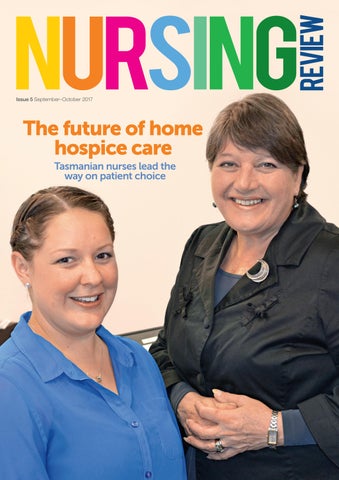
Issue 5 September–October 2017
The future of home hospice care Tasmanian nurses lead the way on patient choice
Products designed for your safety TERUMO is dedicated to providing innovative devices that help reduce the risk of sharps related injuries, that are easy to use and provide the best health outcomes for patients and increased safety for healthcare workers.
SurGuard2™ Safety Needles A simple one-handed technique activates the safety shield of SurGuard2™. Easily confirm activation of the safety shield: Hear the ‘click’ Feel the ‘click’
BEFORE
See the needle locked inside SurGuard2™ safety needles fit all luer lock and luer slip syringes.
AFTER
VanishPoint® Retractable Syringes Passive safety-engineered devices (PSEDs) are most effective for NSI prevention1. Activation cannot be by-passed No change in clinical practice Needle automatically retracts into the syringe
Terumo Australia Pty Ltd Macquarie Park NSW 2113 Australia Mount Albert Auckland 1025 New Zealand E: cs_australia@terumo.co.jp
BEFORE
AFTER
T: 1800 837 866 T: 0800 66 77 57
SurGuard2™ is a trademark of Terumo Corporation. VanishPoint® is a registered trademark of Retractable Technologies Inc. Reference: 1. AOHP Journal, Spring 2014. Reducing Needlestick Injuries from Active Safety Devices: A Passive Safety-Engineered Device Trial. © 2017 Terumo Australia Pty Ltd. GHP170626D949V1 | PBD00236
contents
MANAGING EDITOR
news
Richard Garfield 02 9936 8628 richard.garfield@apned.com.au
02 Compulsory flu shots 04 Emoji tool for sick kids 05 Ending offshore detention 06 Nurse nicked defending patient 07 Nurses face rising violence 08 Marriage equality a health issue
NEWS EDITOR
Kirstie Chlopicki 02 9936 8660 kirstie.chlopicki@apned.com.au
industry & reform
10 The death you prefer Innovative in-home palliative care
HEALTH EDITOR
Dallas Bastian 02 9936 8637 dallas.bastian@apned.com.au
04
12
12 GFC aftershocks The effects of austerity on health
PRODUCTION COORDINATOR
specialty focus
Conor Burke 02 9936 8638 conor.burke@apned.com.au
14 Battling stress PTSD in returned soldiers
16 Barriers to men’s health Primary healthcare nurses and male patients
SUBEDITOR
Robert Santos robert.santos@apned.com.au
clinical practice
18 Bulking up
SALES MANAGER
Ben Long 02 9936 8664 ben.long@apned.com.au SUBSCRIPTION ENQUIRIES
Dietary fibre boosts microbiome
20 Painkiller solutions
14
18
Opioid misuse rife in Australia
22 Standout strategy
02 9936 8666 subs@apned.com.au
Yellow Envelope makes clinical handover safer
COVER IMAGE
Leanna Woods and Kim Macgowan Photo: The District Nurses
24 Mixed messages
PUBLISHED BY
workforce
Understanding the Indigenous patient
26 Grief on the job APN Educational Media GPO Box 4245 Sydney NSW 2001 ABN 58 090 900 999 ISSN 1326-0472 PP100001944
Coping with workplace loss
28 Uniting theory and practice The role of the lecturer-practitioner
26
30
The ethics of conscientious objection
PUBLISHER’S NOTE
© Copyright. No part of this publication can be used or reproduced in any format without express permission in writing from APN Educational Media. The mention of a product or service, person or company in this publication, does not indicate the publisher’s endorsement. The views expressed in this publication do not necessarily represent the opinion of the publisher, its agents, company officers or employees.
30 Right to refuse
legal corner
32 Overstepping the boundary Inappropriate relationships
technology
34 Cultural exchanges Translation app to help older CALD patients
36 Sketchy diagnosis
32
34
Screen for Parkinson’s with pen and paper nursingreview.com.au | 1
news
Flu jab law mooted Deaths spark move to make influenza vaccine compulsory for aged care staff.
H
ealth Minister Greg Hunt has announced the government will investigate ways to make the flu vaccine compulsory for workers in aged care facilities. The investigation follows the deaths of seven elderly residents at St John’s Village in Wangaratta in Victoria and reports of fatalities from flu at Uniting AgeWell’s Strathdevon facility in Tasmania. Minister for Aged Care Ken Wyatt said while older people are always vulnerable to the flu, the many deaths this year are unacceptable. Hunt said he will work with medical authorities, healthcare workers and aged care providers on how to make jabs compulsory
for those working in aged care facilities. Australia’s chief medical officer, professor Brendan Murphy, will spearhead the investigation. “We cannot continue to have a situation where people whose immunity is already low are at risk from others who may be infected,” Hunt said. COTA Australia backed the move. Chief executive Ian Yates said he had for some time been concerned that rates of flu vaccination among aged care staff, and even among doctors who visit facilities, were unacceptably low and inconsistent between facilities. “Aged care residents are especially vulnerable to the flu and all precautions must be put in place to protect them,” Yates said. “Vaccination is less effective among very old people, which makes them more susceptible if exposed to others with symptoms, and many residents have other health issues that make them more vulnerable. “Keeping flu out of aged care homes is also critical because it can spread so quickly from resident to resident. “Aged care providers have a legal obligation to achieve optimum physical health for care recipients and to ensure they live in a safe environment. “In our view, this includes ensuring that staff are not carriers of the flu virus into nursing homes.” The health minister’s office said 90,000 cases of influenza have been reported this year, which is 2.5 times the amount recorded in the same period last year. ■
Nursing linked to arthritis Researchers have looked at occupations with a possible elevated risk of rheumatoid arthritis.
F
indings published in Arthritis Care & Research show certain work-related factors, such as airborne agents, may contribute to an increased risk of rheumatoid arthritis. Researchers, led by Anna Ilar of the Karolinska Institute, analysed 3522
2 | nursingreview.com.au
individuals with rheumatoid arthritis and 5580 controls from the Swedish population-based Epidemiological Investigation of Rheumatoid Arthritis (EIRA) study. The study ran from 1996 to 2014 and drew its data from environmental, genetic and immunological factors. It is believed that the environmental factors play a role in the development of rheumatoid arthritis through the triggering of autoimmune reactions in susceptible individuals.
It was found that male workers in manufacturing were more at risk of developing rheumatoid arthritis than men working in professional, administrator or technical sectors. When workers within manufacturing fields were separated into sub-sectors, bricklayers and concrete workers were identified as having a threefold risk of developing the disease. Within the female population, assistant nurses and attendants were identified as having a slightly increased risk of developing the disease. Further research will be required to identify exposures that may cause the increased risk of the disease. Some potential suspects include silica, asbestos, organic solvents and motor exhaust fumes. “Previous studies have not considered these lifestyle-related risk factors to the same extent. Our findings therefore indicate that work-related factors, such as airborne harmful exposures, may contribute to disease development,” said Ilar. “It is important that findings on preventable risk factors are spread to employees, employers and decisionmakers in order to prevent disease by reducing or eliminating known risk factors,” she added. ■
no butts about it We’ve implemented a portfolio-wide tobacco exclusion. Has your super fund?
hesta.com.au/no-butts
porter Sup
Issued by H.E.S.T. Australia Ltd ABN 66 006 818 695 AFSL 235249, the Trustee of Health Employees Superannuation Trust Australia (HESTA) ABN 64 971 749 321. Before making a decision about HESTA products you should read the relevant Product Disclosure Statement (call 1800 813 327 or visit hesta.com.au for a copy), and consider any relevant risks (hesta.com.au/understandingrisk). 2016
HESTA-No butts about it-210x297-CMYK.indd 1
23/06/2017 10:16 AM
news
Sick kids open up to emojis Hospital uses innovative communication tool to ease young patients’ fears.
S
taff at the Sydney Children’s Hospital, Randwick, have broken out the happy, teary and angry emojis as a way to open up dialogue about treatment and enable younger patients and their families to communicate their feelings. A patient suggested the concept to staff who ran with the idea, incorporating
emoji choices such as wheelchair, x-ray, tablet, and food and drink into patient communication boards. The hospital’s clinical nurse educator, Maria Brien, said the emojis prompt a conversation with and between the patient and/or family, which may be difficult to initiate with words. She added this is especially significant for young people who are unable to express their needs and feelings verbally. “In doing this, we have modelled how the patient voice is not only about words,
My Health Record headed for ED
Plan to improve access to patient records for emergency department clinicians.
T
he Australian Digital Health Agency has announced an emergency department My Health Record pilot to develop a model that optimises clinician access to patients’ health information, such as medicines, test results and GP consultations, that may not otherwise be available in the hospital information systems. The pilot, a partnership between the agency and the Australian Commission on Safety and Quality in Health Care, will build on the My Health Record participation trials conducted by the Nepean Blue Mountains and the Northern Queensland Primary Health Networks. The commission will work with hospitals within the two
4 | nursingreview.com.au
and changed how nurses interact with young people,” Brien said. “The boards are an opportunity to show how children and adolescents can be actively engaged in the co-production and implementation of a change to improve the hospital experience for children and young people.” Brien, along with colleague and quality officer Laurel Mimmo, presented the idea to a room of nurses, nursing students and health professionals at the recent Australian College of Nursing’s National Nursing Forum in Sydney. ACN said hospitals can be an overwhelming place for children and adolescents, where their thoughts and feelings can be overshadowed by confusing conversations about their treatment and care. Chief executive adjunct professor Kylie Ward said using innovative communication tools likes emojis that would appeal to younger patients makes the hospital setting less intimidating. “[It] gives younger patients a real sense that what they have to say is important and matters.” ■
health networks to develop a pilot model over the course of the project, which will then be trialled in other hospitals in Australia. Agency chief executive Tim Kelsey said My Health Record is associated with reductions in duplicated testing and lower hospital readmission rates, but added the agency needs to identify potential barriers to its uptake in hospitals and enable better integration with primary and secondary healthcare providers. The commission’s chief executive, adjunct professor Debora Picone, said it can be time-consuming for hospital staff to gain information on a patient’s medicines, what their GP has been doing to manage the condition, and the procedures provided by other hospitals. “This time could be better used treating the patient.” To date, over five million people have signed up to the digital system, which enables healthcare providers to share secure health data, and over 10,000 healthcare providers are connected. Prior to the pilot’s announcement, the Australian College of Nursing said nurses believe a national shared electronic health record has the potential to be an important tool in improving health outcomes, but must be assured their patient’s confidential medical information is secure and protected. Adjunct professor Kylie Ward, chief executive of ACN, added that nurses must be involved in the development, implementation and ongoing maintenance of My Health Record. “The majority of frontline health services in this country are delivered, at least in part, by nurses, so it is critical they have a real say in how our national electronic record is designed to make it as user-friendly as possible,” she said. The pilot will be led by a senior emergency department clinician and is expected to take two years, with an interim report due to the agency in June 2018. Stakeholders and consumers will also be consulted via roundtables, workshops and targeted interviews. ■
news
#BringThemHere – we will help
Health organisation joins campaign to end offshore detention.
A
n Australian not-for-profit health and aged care organisation has reaffirmed its willingness to provide medical support and healthcare to asylum seekers currently held in offshore detention centres on Manus Island and Nauru. St Vincent’s Health Australia has lent its voice to the #BringThemHere campaign, which calls for people in offshore detention to be evacuated and for those unsuccessful in being resettled in the US to be transferred and housed in Australia.
Toby Hall, SVHA chief executive, said the group’s hospitals have a history of supporting the health needs of people seeking asylum through the delivery of primary healthcare and free diagnostic services. “Our experience providing care to asylum seekers in the community is that mental health issues represent the highest burden of disease, and antidepressants are the highest prescribed medication in this population,” Hall said, adding the situation is much worse in offshore detention centres. “Medical experts with the United Nations High Commission for Refugees who visited Manus Island and Nauru last year found alarming rates of mental health problems in people who have been held there for the last four years. They found that 88 per cent of asylum seekers and refugees on Manus Island were suffering from a depressive or anxiety disorder or post-traumatic stress disorder. These rates were considered far in excess of comparable populations such as refugees resettled in Australia or asylum seekers in the Australian community. “We cannot ignore the body of clinical and research evidence about the detrimental effects of holding people indefinitely in detention,” Hall said. Group mission leader Lisa McDonald’s explanation of SVHA’s decision to offer healthcare and medical support to people currently held on Manus and Nauru is simple: it’s the right thing to do. ■
Nurse’s back – are you suffering in silence? Nurses are 60% more likely than all other occupations to report chronic soreness and pain, with the majority of injuries caused by overexertion. But you don’t need to suffer in silence. If you’re experiencing back pain and your injury happened at work, you might be entitled to compensation or a lump sum payment. Don’t wait for it to get worse – just call our free advice line and one of our specialist injury lawyers will explain what your options are.
Helping nurses get the compensation they deserve. That’s our specialty.
Find out where you stand.
Maximum 100% No win, no fee guarantee. compensation.
Over 99% success rate.
NSW . VIC . ACT
nursingreview.com.au | 5
news
Nurse arrested defending patient A US police department is reviewing its policies after an officer arrested a hospital nurse who challenged his orders.
T
he videotaped arrest of a Utah nurse in the US who refused to allow blood to be drawn from an unconscious patient has led to scrutiny of the Salt Lake City Police Department.
What happened? Police body-camera video shows Salt Lake City detective Jeff Payne handcuffing nurse Alex Wubbels on 26 July after she refused to allow blood to be drawn from an unconscious patient after a car crash. In the video Wubbels says she’s protecting the patient’s rights and she can’t take the man’s blood unless he is under arrest, police have a warrant or the patient consents. None of that applied, and the patient was not a suspect. Payne’s written report says he wanted the sample to show the victim did nothing wrong. The dispute ended with Payne telling Wubbels: “We’re done, you’re under arrest.” He drags Wubbels outside while she screams: “I’ve done nothing wrong.” Wubbels is being praised for her actions to protect the patient, while Payne and another officer are on paid leave. Criminal and internal affairs investigations are underway.
Legal issues at play? A 2016 US Supreme Court ruling says a blood sample can’t be taken without patient consent or a warrant. But in this case, the officer reportedly believed he had ‘implied consent’ to take the patient’s blood. Implied consent assumes that a person with a driver’s licence has given approval for blood draws, alcohol breath screenings or other tests if there’s reason to believe the driver is under the influence. 6 | nursingreview.com.au
Paul Cassell, a criminal law professor at the University of Utah, says state law doesn’t permit a blood draw in this situation – especially since the blood was being sought to prove the patient was not under the influence. Wubbels’ lawyer, Karra Porter, said the state’s implied consent law “has no relevance in this case whatsoever under anyone’s interpretation”. “The officer here admitted on the video and to another officer on the scene that he knew there was no probable cause for a warrant.”
Medical personnel vs police Charles Idelson, a spokesman for National Nurses United, said a nurse’s prime responsibility is to be a patient advocate and protect patients, especially when they can’t consent themselves. Meanwhile, police are investigators and have to capture forensic evidence, which in the case of a blood draw, is decaying with every passing minute, said Ron Martinelli, a forensic criminologist and certified medical investigator. “For the officer, the clock is ticking,” Martinelli said.
The officers A second officer who was put on leave has not been formally identified, but officials have said they are reviewing the conduct of Payne’s boss, a lieutenant who reportedly called for Wubbels’ arrest if she kept interfering. Wubbels, who was not charged with a crime, has said that Payne “bullied me to the utmost extreme”. The Salt Lake City police chief and mayor also apologised and changed department policies on blood draws. A police spokeswoman said the new policy does not allow for implied consent for any party and requires a warrant or consent. She also said the agency has met with hospital administration to ensure it does not happen again and to repair relationships. ■ AAP
news
Workplace violence rising in Queensland Researchers say there is a perceived lack of action by managers to curb the problem.
A
bout half of Queensland’s nurses and midwives said they experienced workplace violence in the three months prior to a survey of state union members. This is up from about 40 per cent reported in 2001.
The survey of 2397 nurses and midwives, conducted by several Queensland universities and the Queensland Nurses and Midwives’ Union (QNMU), found violence against nurses and midwives was worse in aged care facilities and in hospitals in outer regional, remote and very remote areas than in large regional centres and major cities. Research lead and CQUniversity professorial research fellow Desley Hegney
said patients, clients and residents were the most frequent perpetrators. “Relatives were more frequently the perpetrators in the acute public sector than in other sectors, maybe reflecting the demographics of the patients,” Hegney said. “However, in aged care – public or private – there was very little difference. “After patients and relatives, doctors and other nurses/midwives were more frequently the perpetrators in the acute private sector.” Hegney said there should be concern about the perceived lack of real action by managers to curb this rising problem. She said a partial solution would be to limit patients from leaving the ward, especially at night, in case they accessed drugs or alcohol. Other measures suggested in the study included adequate staffing and better security equipment, facilities and procedures on wards, and that people be held more accountable for acts of violence. Staff also wanted appropriate resources to ensure safety when they are away from the clinic. ■
1
PBS Information: This product is listed on the National Immunisation Programme (NIP) for children only and is not listed on the PBS. Refer to the NIP Schedule.
Please review full Product Information before prescribing. Product Information is available on request on 1800 675 229 or at www.pfizer.com.au Minimum Product Information. Prevenar 13 suspension for IM injection. Indications: Active immunisation for the prevention of disease caused by Streptococcus pneumoniae serotypes 1, 3, 4, 5, 6A, 6B, 7F, 9V, 14, 18C, 19A, 19F and 23F in adults and children from 6 weeks of age. Dose: 0.5 mL I.M. Infants 6 weeks to 6 months of age: 3 doses at least one month apart. A single booster should be given in the second year, at least 2 months after the primary series. Previously unvaccinated children: Varies with age at first dose, see full PI. Children previously vaccinated with Prevenar (7vPCV): Children 12 months to 5 years who have completed primary infant immunisation with 7vPCV and children 6 to 17 years who have received one or more doses of 7vPCV may receive 1 dose, at least 8 weeks after the final dose of 7vPCV. Adults: 1 dose. Special Populations (higher risk, e.g. HIV, SCD): 1 dose. HSCT: 4 doses. If sequential administration of Prevenar 13 and 23vPPV is considered, give Prevenar 13 first. Contraindications: Hypersensitivity to any component of the vaccine, including diphtheria toxoid. Allergic or anaphylactic reaction following prior administration of 7vPCV. Precautions: Do not administer intravenously, intravascularly, intradermally or subcutaneously. Avoid injecting into or near nerves or blood vessels. Do not inject into gluteal area. Postpone administration in acute, moderate or severe febrile illness. Only protects against Streptococcus pneumoniae serotypes included in the vaccine and may not protect all individuals from pneumococcal disease. Consider the risks of I.M injection in infants or children with thrombocytopenia or any coagulation disorder. Appropriate treatment and supervision must be readily available in case of a rare anaphylactic event. Prophylactic antipyretic medication is recommended for children receiving concomitant whole-cell pertussis vaccines, and for children with seizure disorders or history of febrile seizures. Consider the potential risk of apnoea when administering to very premature infants. Very Common/Common Adverse Effects: Children 6 weeks to 5 years: Injection site reactions (redness, pain, swelling), fever, diarrhoea, vomiting, decreased appetite, drowsiness/increased sleep; restless sleep/decreased sleep, rash, irritability. Children and adolescents 5 to 17 years: Irritability, Injection site reactions (redness, pain, swelling), somnolence, poor quality sleep, injection site tenderness (including impaired movement), fever, decreased appetite, vomiting, diarrhoea, headaches, rash. Adults: Diarrhoea, vomiting, nausea, chills, fatigue, injection site reactions (redness, pain, swelling), limitation of arm movement, fever, new or aggravated joint or muscle pain, decreased appetite, headaches, rash. Adults >65 years reported fewer adverse effects than younger adults. Adverse effects were generally most common in young adults 18 to 29 years. See full PI for details (V10516). References: 1. PREVENAR 13® Approved Product Information. ®Registered trademark. Pfizer Australia Pty Limited, 38–42 Wharf Road, West Ryde, NSW 2114. PP-PNA-AUS-0060. PFA2413HP/NP. 08/17. GHG
nursingreview.com.au | 7
news
Marriage equality would provide health benefits to LGBTIQ Australians, health organisations argue.
T
he Australian Healthcare & Hospitals Association has joined a host of leading health organisations calling on the Australian government to make marriage equality a reality. AHHA let its stance be known via its recently released Position Statement on Marriage Equality and Health. The statement read: “Marriage equality would confer societal acceptance and would provide significant health benefits to LGBTIQ Australians. “Studies, such as the 2016 evidence review from the Centre for Social Research in Health, show that the introduction of marriage equality results in greater feelings of social inclusion along with better health outcomes for LGBTIQ people.”
Boost for dementia care Dr Kate Laver. Photo: Flinders University
Researchers to investigate improvements to postdiagnosis dementia care.
E
vidence-based occupational therapy, exercise and carer support will be the key focuses of a new project that aims to improve post-diagnosis care for people with mild to moderate symptoms of dementia.
8 | nursingreview.com.au
Dr Kate Laver, from the Rehabilitation Aged and Extended Care research group at Flinders University, said the three guidelines focus on promoting independence, delaying functional decline and reducing carer stress and ill health. She added they are relevant for up to 85 per cent of people with mild to moderate symptoms of dementia who are living in the community.
The research team will recruit up to 30 health professionals across Australia who will take on the role of implementation clinicians. These clinicians will be trained and supported to develop and enact a sitespecific implementation plan. Laver explained: “The implementation clinicians will come together to form three groups. One group is dedicated to increasing opportunities for exercise for people with dementia, one group is committed to increasing delivery of comprehensive occupational therapy treatment, and the third group aims to improve support and information for informal carers. Each clinician will be upskilled in quality improvement, which will assist them to make changes within their workplace, increasing the quality of care.” The Agents of Change project will also involve establishing a national quality collaborative to implement guideline recommendations. It is being funded through a $770,517 NHMRC grant and will involve other Flinders researchers – professors Maria Crotty and Monica Cations, associate professor Billingsley Kaambwa and associate professor Craig Whitehead – along with experts from Griffith University and the University of Sydney. ■
CRICOS registered provider: 00004G
Health bodies back marriage equality
AHHA chief executive Alison Verhoeven also cautioned against a national plebiscite on the grounds of the mental health of LGBTIQ people. “Evidence from overseas shows that plebiscites on this issue and others involving the rights of a social minority have significant negative mental health impacts on the group in question, in this case LGBTIQ people, through exposure to an adversarial and devaluing public and social debate,” she said. “Rather than having divisive discourse, the Australian government and the community could be acting to reduce marginalisation and discrimination, improve equity, and enhance the health and wellbeing of LGBTIQ people and their families.” AHHA was also one of 36 leading health organisations, including the Australian Nursing & Midwifery Federation, headspace, Australian Primary Health Care Nurses Association, Black Dog Institute and the Public Health Association of Australia, to endorse the United Statement for Marriage Equality by ACON and the Victorian AIDS Council. Both statements draw on an ACON and University of New South Wales evidence review of the impacts of marriage equality, and marriage denial, on the health of lesbian, gay and bisexual people. Verhoeven said the evidence review shows that LGBTIQ people form a minority population group that experiences poorer health outcomes than the general population. “This can be attributed to ‘minority stress’, where LGBTIQ people struggle for validation and social acceptance,” she said. “One of the more recent examples of institutional discrimination against this group is the exclusion of same-sex couples from civil marriage.” ■
news Anne ACU graduate
Care with confidence
CRICOS registered provider: 00004G
for nursing excellence.
Study clinical nursing yourfuture.acu.edu.au
nursingreview.com.au | 9
industry & reform
A good death Kim Macgowan (right) with clinical nurse specialist Leanna Woods. Photo: The District Nurses
A Tasmanian pilot program that delivers in-home palliative care is giving patients the death they prefer. By Dallas Bastian
I
n 2004, chief executive Kim Macgowan was chatting with her District Nurses team and came across a student nurse who was sobbing. The nurse felt she had just made the last visit to one of the service’s clients. The man she had been caring for had terminal cancer, and she was concerned that he would die alone and in pain. Macgowan told her that while those things might be true, he would also be dying at home, in the place of his choosing, and that while many Australians would like to do the same, they were not always able to. That was a turning point for Macgowan, who knew something had to be done to ensure more people would have a good death. Fast forward to 2013, speeding past several years of knockbacks trying to get a program off the ground, the District Nurses won an Australian government tender for $35 million to improve access to palliative care. Its program, called hospice@HOME, has now been running for four years and has helped about 2500 people from all over Tasmania to die in the place of their choosing. The program aims to fill gaps in home hospice care, such as overnight assistance, levels of care on weekends and public holidays, equipment access and
10 | nursingreview.com.au
service provision to people in rural and remote areas. Macgowan says: “The whole purpose of our program is to keep people out of hospital for as long as possible, with the view that we will do whatever we need to do for people to be able to die at home, and within their own community.” Almost two-thirds of people cared for under the hospice@HOME program have been able to die at home, and Macgowan says all have stayed at home far longer than would have been possible before. “In order to achieve this, we had to train an entire workforce [of community support workers] in the entire state,” she says. “I gave an undertaking to the Tasmanian people that every Tasmanian would have access to hospice@HOME. We’ve achieved that, with patients being seen on every mountain, in every valley and on every island. “As the District Nurses, we didn’t come riding in on our big white bikes and take over. We used a brokerage model where we engaged the smaller organisations that are already there in the community and usually staffed by people that patients already know. We would pay those organisations to be able to put in the extra care that these clients needed to stay at home.”
IRONING OUT THE KINKS BEFORE THEY ARISE One of the challenges the service faced was the availability of medication. Macgowan says: “In Tasmania, there is not any access to medications after 8 o’clock in the evening. There are no pharmacies open. And the only place you would get medication after 8 o’clock is in a hospital, or sometimes through a 24-hour call-out
doctor. But end-of-life medication is really quite specific. So, even if you got your GP to visit you at home, you still couldn’t get the medication until the next day. “We knew from our research at the very beginning of this that if we could prevent the phone call to an emergency department or an ambulance, we could prevent people being admitted to acute care, and not only then all of the costs of the acute care system, but also they very rarely go back home.” One of hospice@HOME’s solutions was the ‘just in case’ box. Inside it was an internationally recognised suite of medications required to manage someone at end of life. “That way, if the after-hours nurse goes in, if the ambulance service goes in, if a GP goes in, they can access the medication, and it prevents people being sent to emergency departments,” Macgowan says. Another workaround the team thought up was to provide patients with an iPad loaded with information to ensure people had after-hours access to support. The team also uploads the patient’s favourite photos, music and books. The device would not only give people information and entertainment at their fingertips but also allow them to videoconference with a nurse. Macgowan says: “In the middle of the night when you might be sitting with your mum, who’s at end of life, and she starts to make horrible noises, you can pick up the phone and call one of our nurses, and be reassured that this is normal, and this is what we expect, and this is what you can do for it.” Macgowan says: “We covered off all of the possible reasons why someone ends
industry & reform
up calling an ambulance, going into an emergency department, then remaining in acute care and not getting home.”
THE FUTURE OF HOSPICE IN THE HOME IN AUSTRALIA The funding for the project is coming to an end in December. The District Nurses team has been busy presenting the results of the program to the government through the Productivity Commission and federal and state budget submissions. Macgowan says: “We would like to see a consistent approach to palliative care/ end-of-life care across Australia and for the Australian government to now look at introducing a model of care across the country that supports people to remain at home and takes that burden away from the acute care system.” The Australian College of Nursing (ACN) has echoed that call. Chief executive adjunct professor Kylie Ward says it’s time to investigate how to enable trained healthcare professionals to provide end-oflife care in a person’s home.
“States and organisations are currently successfully delivering this type of care in locations around the country, but what we are saying is support must be provided so all Australians are given the right to die in the place of their choosing.” ACN says programs like hospice@ HOME demonstrate that in-home palliative care not only enables people to stay in an environment where they are comfortable and with their family and friends, but offers significant healthcare savings. “The Tasmanian experience shows that providing palliative care in a person’s home costs around $39 a day, yet a hospital bed costs $1500 a day,” Ward says. According to Macgowan, the program has been so cost effective that the service was able to run it for an additional year to the three for which the funding was allocated. On top of that, she says the program has saved the Tasmanian public hospital system an estimated $12.4 million since
its inception in 2013. “Added to that is the incalculable cost of all these families who, after the death of their loved one, are not in that terrible bereaved, traumatised state where they wish things had been different and are exhausted from travelling to hospital. What our families tell us is that because they’ve been able to contribute to that end-oflife period and give Mum [for example] a good death, and a death surrounded by her loved ones, they’re in a better place as well.” Ward says: “While we are fortunate enough to have one of the best health systems in the world, we must not become complacent and opposed to consumerdriven ways of delivering care. In particular, we must constantly work to make sure we are delivering healthcare in the manner and place that is best for individuals. “People’s preferences change. We can see this in the increasing desire Australians have to age in place, and now we know they want to extend this to being supported to die at home.” ■
Take the next steps in your health career. Take the next step in your health career with Murdoch's postgraduate Health Care Management degree. Learn how to be a leader in the health industry with this fully online course.
Counsellors, here's WA's only Creative Arts Therapies university course.
SCH-517 CRICOS Provider Code 00125J
Looking for leaders in health.
In this postgraduate degree, you'll learn how to enrich your patient's lives and enable them to increase their expressive abilities and mental wellbeing in our purpose-built facilities.
Apply online at murdoch.edu.au nursingreview.com.au | 11
industry & reform
Accounting for missed care GFC aftershocks are still being felt by nurses, a new paper argues. Eileen Willis interviewed by Dallas Bastian
F
ollowing the global financial crisis of 2007, countries have tightened their purse strings, but is this austerity making patients sicker? Researchers, led by emeritus professor Eileen Willis from Flinders University, unpacked this question in a paper, published in the Journal of Advanced Nursing, by exploring the link between austerity and missed nursing care. The authors said as nations continue to cut health budgets, nursing services are seen as a major target and burden, rather than a resource. “There is a real danger that healthcare professionals, particularly nurses, will be blamed for any sentinel or adverse events that might occur as a result of missed care,” the paper said. “What may not be admitted is that understaffing, casualisation, long hours of work and overtime, along with unrealistic targets, cannot be sustained over the long term and should only be seen as temporary measures where governments wish to provide quality healthcare.” To evaluate the impact of budget cuts on missed care, the research team drew from its own data from a survey of over 7000 registered nurses and midwives. Nursing Review spoke with Willis about the findings of that research and how they’re linked to a culture of austerity arising from the GFC.
NR: To evaluate the impact of budget cuts and missed care, your research team used its own data. What were some of the key areas of missed care and the reasons participants gave as to why care was missed? EW: We did this survey in South Australia, NSW, Victoria and Tasmania. We used and adapted the Kalisch MISSCARE Survey. Kalisch has a number of items in the scale in which she asks nurses: “Here’s a list of tasks. Have you missed them?” Or “Here’s a list of cares”. 12 | nursingreview.com.au
The major things that are regularly missed are patient ambulation, mouth care, responding to bells when patients wished to go to the toilet, responding immediately for patient medication, patient education and good discharge planning. All 26 of the items that Kalisch lists are missed at some point, but these ones tend to be at the top of the list. When we asked nurses why these were missed, the sorts of things they come up with are: “There weren’t the resources on my ward and I had to go somewhere else to get them.” For example, a patient is going to be discharged and their drugs haven’t come up from the pharmacy and they had to go down and get them. Or they didn’t have enough staff. Now the staffing one is interesting. If you asked nurses if there’s enough staff on the ward now, they would probably say yes. The minute there is some sort of disruption – a patient is admitted or you have to find a piece of missing equipment, or there’s an acute event and you’ve got to attend to a very sick patient – then all of a sudden there isn’t enough staff. It’s as though public and private hospitals are being staffed at that tipping point, and the minute something happens, the work becomes so intensified that the nurse begins to make decisions about what care will be missed. That’s an important point to make, that nurses have always prioritised care. They’ve always made decisions about the order of care in the interests of the patient. What nurses are saying now is: “I’m prioritising the care, but I’m actually having to miss some of them or delay them or leave them to the next shift.” If you’re leaving them to the next shift and their work is just as intensified, it’s possible that certain care is not done at all.
How does austerity tie into it? We argue that if you haven’t got enough staff to do the things that need to be done, then clearly the hospital budget isn’t adequate. We’ve used the framework of new public management in the paper. What we’ve argued is that since the late 1970s we’ve had what we would call ‘new public management’ – a neo-liberal economic policy that says you can make the hospital system more productive and efficient if internally you treat it as a competitive private sector. You get the sorts of things we’re seeing here in Australia in the public sector, where they outsource non-core services like meals and cleaning to a private company. Now, more readily you get: “Let’s outsource pathology and radiology services and privatise
industry & reform
them or make them into quasi-private companies because of the budget cuts.” You also get things like the National Emergency Access Target (NEAT) program under the Medicare agreement. Public hospitals get incentive funding, which is taken from their core funding if every patient who comes into their accident and emergency department is seen within four hours and is either discharged or admitted. Now, what we found in the interviews was that, in order for a hospital to get their patients out of A&E and into the hospital if they needed to be admitted, you had general patients being admitted to midwifery wards because they needed a bed or general patients being admitted to beds along the corridor because the hospitals need the money.
How might austerity affect nursing in the long term? I think we’ll see a crunch in the next two years. The Independent Hospital Pricing Authority has just announced this year that as of 1 June 2018, the federal government, under the Medicare agreements, will not pay public hospitals for any sentinel events – the real serious events that may happen to a patient. As of 2018 in June, no adverse events will be funded by the federal government. The first year will be what they call a shadow year, so it will be just a kind of recording of adverse events, and the funding won’t be affected. But by 2019, it will be. Let’s take the issue of patients’ mouth care. If you miss patients’ mouth care continuously, you might see that as a fairly mundane nursing care task. It’s possible that that could be part of what we call a cascade of care tasks, left undone, that lead to the patient getting hospital-acquired pneumonia. Now if the patient gets hospital-acquired pneumonia, under the legislation for next year, the federal government will not fund public hospitals for that adverse event for the entire episode of care. What we found, and what has been found worldwide in the missed care research, is that nurses are prioritising the medically directed tasks and they’re delaying or missing what we would call the nursing tasks, so ambulating the patient, mouth care, that sort of stuff. The research also shows that those sorts of nursing tasks or cares are central to the therapeutic process. They are the things that stop an elderly patient from getting hospital-acquired pneumonia or a urinary tract infection. I think there are two directions here. One is to say that the whole critical surveillance that an experienced nurse engages in
when caring for a patient post-surgery or in a medical ward, that the nursing component is very important and we ought to take it seriously and staff appropriately. Or you could get a more punitive approach in which those kinds of tasks start to get ticked off and checked by nurse managers or something. We’ve seen a little bit of this. There’s been a kind of nursing initiative or managerial initiative called rounding, where nurses in particular hospitals will be asked to check their patient every hour and check for the position they’re in: Do they need to go to the toilet? Have they got their bell with them? They have to tick that off every hour, whether the patient needs to be seen or not at that point. That’s a managerial approach to making sure that nothing is missed. What I’d like to see is a real appreciation of the fact that nursing surveillance is an approach to nursing the patient in which you use your assessment and critical skills to make sure many of these nursing care activities have been done because the patient is at risk of not getting better or getting a hospital-acquired complication of some sort. It could go either way. I’m not optimistic. Unless there’s a shift in our thinking around austerity and new public management – a realisation that you cannot squeeze the public sector any more – you’ll get these punitive managerial approaches.
What can nurses do to move that shift along? Nurses are doing a lot about it. There’s certainly a lot of research. In fact, nurses have been doing research in this area back into the 1970s and ’80s. There’s certainly been a lot of work done in America and in Europe on the impact of nurse staffing on patient mortality and morbidity. What we say in the paper is that, given this move toward austerity – which we think is a government, a political movement – we draw on the work of Colin Crouch, an English sociologist. He reminds us the GFC was not caused by an inflated welfare state. It wasn’t caused by hospitals getting too much money or social services being too generous. It was caused by a crisis in the capitalist side of capitalism, in the banking system – it was unregulated – and in the housing system in America. But the solution the major global banks and nations have taken is to squeeze the welfare system. We’re arguing that even in Australia, where we sailed through the GFC reasonably unscathed, this same political ideology of austerity is there. ■
Postgraduate TRANSFORM YOUR Nursing NURSINGProgram CAREER With over 20 online specialisation streams – more than any other university in Australia, we can help you pursue your passion in Nursing. Our program is designed to develop your existing skills and knowledge, whether you’re in the early stages of your career, or looking to specialise. With pathways including Graduate Certificate, Graduate Diploma or Masters of Clinical Nursing, our postgraduate programs will transform your nursing career.
Apply now. utas.edu.au/PG-Nursing
A NEW STATE OF MIND CRICOS Provider Code: 00586B
nursingreview.com.au | 13
specialty focus
Peace of mind
An Army nurse is undertaking a study on the effects of PTSD on the relationships of soldiers returning from war. By Sally Hodder
A
new study into the intimate relationships of Australian Army personnel sent to war zones will reveal the triggers most likely to cause marital breakdown and will help to prepare couples for the unique challenges of deployment. Kerri-Ann Welch, a Brisbane nurse and Queensland University of Technology paramedic science academic, presented the preliminary findings of her study on how deployment affects relationships at the recent PTS17 Forum. The forum brought together national and international health workers, researchers, veterans and emergency responders to present and discuss the latest findings on diagnosing, treating and preventing posttraumatic stress disorder (PTSD). Held by StandTall4PTS and sponsored by RSL Queensland, the forum was an opportunity for healthcare professionals to hear from some of the world’s leading PTSD experts, equipping them to provide specialised help to some of their most vulnerable patients.
14 | nursingreview.com.au
For Welch, 37, the forum had both professional and personal meaning. In addition to presenting findings of her longitudinal study, she spoke on her personal experiences as a carer for her husband, who has PTSD. “He served in the Army for 15 years and was deployed to Afghanistan,” Welch said. “He remained in the ADF [Australian Defence Force] for six years postdeployment, and they were some of the most difficult times for him and for our family. We were, and remain, totally committed to each other, but there were many dark, dark days in those years. “He was medically discharged late 2016, and we have been adjusting to our new life post-Army.” Welch also served in the Army as a nursing officer from 2007 to 2012 and remains a reservist. “I was also attached to the non-deployed element of 6 RAR [6th Battalion, Royal Australian Regiment]. Four soldiers were killed in the time that I was in that unit, and so I saw the guys as they came back home and many were not well,” she said. Welch said the transition from service to civilian life was the hardest challenge for veterans and their families. “That process is really difficult to start with, and guys with PTSD are having to do it at a time when they are really not well,” she said. “There’s a lot of information to take in and a lot of change to absorb and many of those people leaving the service have either never lived a civilian life – they went into service very young – or it’s been a long time and the civilian world has changed dramatically from what they knew.” Welch said dealing with the Department of Veterans’ Affairs was often overwhelming and stressful, and many
veterans were unsure where to seek support or assistance. “Medical claims and other things can also take a long time to process, and they often feel like they’re out of the loop, which heightens their stress levels,” she said. “Couples who are already struggling with their post-Defence life can see this added uncertainty really start to tear at the fabric of their relationships.” Welch’s study of 19 couples revealed factors that both helped and hindered relationships during and after deployment. “The ADF is an insular sub-culture defined by mateship, hierarchy, unquestioning loyalty and strict discipline,” Welch said. “This workplace culture can make intimate relationships difficult for military members and their partners, and characterises an environment different from mainstream culture. “When deployment is added to the mix, this may result in a volatile combination of experiences that strain partnerships in ways not usually explored by traditional relationship health analyses.” Welch said people who made a solid plan for after deployment tended to have more resilient relationships. “For instance, those who decide they will buy that dream house or go on a cruise, and it’s booked and they know the date they’re sailing and it’s a really solid plan, tend to fare better with deployment,” she said. “Support structures for the person who is not deployed have also emerged as very important. “Those with a strong network of a mix of people seem to do best – some friends who have no experience or understanding of military life and some who are in a comparable situation.” Welch said the results of the study would be used to better prepare ADF members and their partners for deployment while also educating ADF commanders of likely relationship impacts of deployment. ■ Sally Hodder is a media and public relations liaison for StandTall4PTS. StandTall4PTS is a not-for-profit organisation established by Tony Dell, a Vietnam veteran who was diagnosed with post-traumatic stress 40 years after returning home. Stand Tall works to raise awareness of PTS in the community and reduce the stigma often associated with it. For more information, go to standtall4pts.org.
FOR FORMULA FED INFANTS
specialty focus
Do you treat infants with regurgitation?
• Aptamil Gold+ AR is clinically shown to significantly reduce the severity and incidence of regurgitation episodes.1,2
• The only AR formula^ which maintains thickness in the stomach and resists digestion in the mouth, through carob bean gum.1
The #1 selling anti-reflux formula in Australia.*
YOUR RECOMMENDATION CAN HELP RESOLVE SYMPTOMS OF MILD REFLUX AND REGURGITATION1,2
HCP SITE For Healthcare Professionals www.aptaprofessional.com.au
NUTRICIA CARELINE For Healthcare Professionals & Parents 1800 438 500
ONLINE STORE For Parents & Caregivers www.mumstore.com.au
BREAST MILK IS BEST FOR BABIES: Professional advice should be followed before using an infant formula. Introducing partial bottle feeding could negatively affect breast feeding. Good maternal nutrition is important for breast feeding and reversing a decision not to breast feed may be difficult. Infant formula should be used as directed. Proper use of an infant formula is important to the health of the infant. Social and financial implications should be considered when selecting a method of feeding. ^ In Australia as at October 2016. * Market scanned data. Source AZTEC April 2017. References: 1. Wenzl et al. Journal of Paediatrics. 2003; 111:e355–e359. 2. Borelli et al. Ital J Gastroenterol Hepatol. 1997; 29:237–42.
FOR HEALTHCARE PROFESSIONALS ONLY
Nutricia Australia Pty Limited, Level 4, Building D, 12–24 Talavera Road, Macquarie Park, NSW 2113. July 2017. ANZ/AAR/17/0017. 14346-NR. nursingreview.com.au | 15
14346 Aptamil AR Print Ad - NR FA.indd 1
12/07/2017 1:51 PM
specialty focus
What men want
One explained: “You get in when you can and not at the right time of the day [that suits work commitments]. You wait too long to get what you need [prescription or medical certificate]. It costs too much and it kind of works like a drive-through.” Some of the barriers to healthcare access both participant groups identified were the culture and environment in general practice and the funding limitations of the Medicare Benefits Schedule. In an interview with Nursing Review, Lovett discussed some of the other factors at play and how the relationship between PHCNs and men can be strengthened.
NR: Why did you decide to look into this area?
Australian researchers have examined the perception of nurses in primary healthcare and the expectations of male patients. Del Lovett interviewed by Dallas Bastian
C
ost, waiting time, lack of confidence – these are some of the healthcare barriers men and primary healthcare nurses identified in a new study published in the Australian Journal of Primary Health. Led by Del Lovett, a PhD candidate at Charles Darwin University, the research explored the perception of primary healthcare nurses (PHCNs) in men’s health services and men’s expectations of the nurse. The study authors said both PHCNs and men were unclear about the role of the nurse in men’s healthcare services. “PHCNs reported their lack of clarity was due partly to poor knowledge of the concept and definition of men’s health, which affected their confidence to deliver healthcare and health promotion for men,” the paper said. One nurse participant argued that to better engage men and provide quality healthcare services, she would need to attend relevant training. “I haven’t had any formal training in men’s health or health promotion, and if the right type of education was provided, I would do it,” she said. The men in the study said they became annoyed by the cost, waiting time and lack of extended hours, and also identified being seen as a whinger as a barrier to accessing primary healthcare.
16 | nursingreview.com.au
DL: I’ve had a 16-year involvement in general practice as a nurse and a nurse educator, and over time this created a special interest in men’s healthcare. I realised that during my own progression of providing specific men’s healthcare I’d had a change in my own mindset of how best to approach and engage men to improve their healthcare outcomes. So when I started to read Australian studies, reports and policies, particularly from the last 10 years, I realised that although a lot of men’s health in Australia has improved, there’s still a large proportion of the male population whose health needs are not being effectively met. In Australia, we know that the average life expectancy of men is shorter. They have higher levels of preventable earlier death from heart disease, cancer, cancerous lung disease and suicide. And in fact, there’s not one country in the world where men overall aren’t dying earlier than women. PHCNs are the largest number and most widely distributed health professionals working in general practice in community areas, in rural and remote areas, in schools and jails, and they’re in an ideal position to support and care for men. There is little in the literature globally or in Australia that has studied this relationship, and this presented a serious gap in what PHCNs needed to know to provide equitable health services for men.
One of the key findings of the research was that both groups deemed confidence as being very important for effective communication and in establishing rapport. How is this confidence communicated by the nurse, and what do you think men are noticing or looking out for? Most men in this study felt effective communication could help break down barriers in receiving healthcare. Some felt they could sometimes tell or ask the nurse something they couldn’t discuss with the doctor. The first couple of minutes were identified as being very important, particularly if men hadn’t seen a nurse or doctor in the last few years. And men didn’t like the use of medical jargon or terminology, they didn’t necessarily understand it, and they wanted things explained simply. Most nurses felt they did communicate with men
specialty focus
effectively. However, the study demonstrated that for PHCNs to be effective in communicating and establishing that rapport with men, they needed to be clear about their role in men’s health, and have the education and knowledge to support that role. And most nurses in this study had not had specific men’s health training or education, and they weren’t clear about their role, particularly in the areas of men’s sexual health, mental health and health promotion.
What else did men expect from nurses? Well, men were unsure of what the role was in general practice, and they often confused the nurse with the reception staff. But what we found in the study was that there were five qualities that men highlighted. These were humour, a non-judgmental approach, a caring approach, an empathetic approach, and a father-inclusive approach. So I’ll explain briefly what the findings were. They felt humour broke the ice and made them feel at ease, and it was very, very important. It was strongly identified by most men I interviewed. The men talked about a non-judgmental approach: not to blame them for not being interested in their health, or for not looking after themselves. In fact, most men are interested in their health. A caring and empathetic approach: some men emphasised the detachment of some of the healthcare professionals they’d come in contact with, and feeling rushed quite often through appointments. They appreciated the time that nurses spent with them, and men felt they needed time to be able to seek health advice, and that sometimes the time that was allocated wasn’t sufficient for them to ask the questions they wanted to or needed to know the answers to. I also found that the younger men in the study would appreciate that health professionals had a father-inclusive approach. That is, if a man attended the medical practice with his family, the men expected to be acknowledged equally to the mother and the child during the consultation, and not ignored. Most men in the study saw that the nurse could have a greater role in their healthcare, and this could free up the doctor to concentrate on diagnosing and treating patients, the things they do best. And some of the barriers that men identified were cost and time. Some thought the extra costs of some GPs were too expensive, and they were annoyed about it, and they were also annoyed that they weren’t getting value for money. Men thought that the services should be provided at times that suited men, particularly if they were working. The other thing, and this I found very interesting, was being seen as a whinger or complainer, and not wanting to take up the doctor’s time if there was nothing wrong with them. And that was quite a strong theme that came across. Some men felt the environment of a general practice was unfriendly and they felt uncomfortable. They commented that it was often mostly female staff and maybe not catering as much for men. The things men told me that helped were good relationships with health professionals, the GP or the nurse, and what they liked to see in a medical practice – which I found very interesting – was teamwork, and the relationships with all the staff. So that was something we hadn’t realised before. Certainly, they also talked about their partners, how that made a difference, that the partner was often the person that motivated
them to see the GP. They also wanted good health information that was male-friendly. And they wanted to see more healthcare providers under the same roof and easily accessible.
What else did nurses in the study have to say about approaching men’s health? Well, many were uncertain about what men’s health meant, and this led them to feel they had less opportunity and less emphasis on providing an overall or holistic approach to the healthcare they provided. They were uncertain of their scope of practice in men’s health – and by that I mean the person has been educated, is competent and is authorised to perform activities. And many nurses felt they hadn’t had those types of opportunities, and that some areas of men’s health might not be within their scope of practice. They said that often they had inadequate education in specific men’s healthcare. This was seen by several of the PHCNs as being a gap they could provide in the services that they would like to provide for men. And most expressed the view that they required more training and education in gender-specific men’s healthcare needs. Some of the PHCNs want a greater role in men’s healthcare, but this was at times limited by the focus of the general practitioner or the general practice. Some catered more for children and women, so that determined sometimes what the nurse could do. Also, one of the things they commented on was the fact that the Medicare Benefits Schedule funding scheme didn’t necessarily take onboard an item number for nurses to provide care. And the timeframe – they are very busy, and it’s another thing they probably would have to do. Finally, little or no education in the area of health promotion, which the nurses in this study thought was a large part of their role. This area of health promotion, or PHCNs providing this type of care, was clearly identified by the Australian National Male Health Policy, which was released in 2010. So it’s been identified as an area that nurses should be involved in. Some of the nurses described their approach to men’s health as opportunistic.
Based on the findings, what other ways can the relationship between PHCNs and men be strengthened? This was a small study, so it’s hard to generalise the findings across Australia. However, we identified some main areas. In the clinical area, or the work-related area, the nurses said they needed stronger collaborative relations between nursing and allied healthrelated disciplines, that even though there was a lot of discussion about these relationships, many nurses found it was not always the case where they worked. In the area of education, the study revealed that there needs to be a men’s health curriculum in schools of nursing; greater awareness of at-risk or hard-to-reach men; greater awareness of health literacy levels; an emphasis on health promotion, illness prevention and wellbeing; and basic mental health skills for nurses. In the area of research, we need a national population study of the primary healthcare role in men’s health and health promotion, as it can vary greatly from workplace to workplace. We also need to investigate how we can improve men’s access to healthcare, and health promotion needs to be studied in more detail. And finally, we need a multidisciplinary approach to research, to develop evidence-based strategies to improve men’s healthcare and health promotion. ■ nursingreview.com.au | 17
clinical practice
Gut reactions
How dietary fibre interacts with the microbiome. By Katherine Baqleh
T
he food we eat, particularly plant-based fibre, influences the composition and metabolic activity of the dense and diverse microbial community living in our guts, called the microbiome. This in turn has an impact on a number of health conditions. The interaction between dietary fibre and the microbiome is under the spotlight as it could offer an avenue to maintain or improve the microbiome.
TYPES OF FIBRE Edible plants contain insoluble and soluble fibre, including cellulose, lignin and non-starch polysaccharides such as pectins. Insoluble fibre, found in foods such as wholegrain breads and cereals, wheatgerm, nuts, seeds and the skin of fruit and vegetables, is needed to add bulk to faecal matter and keep bowels regular. Soluble fibre, found in foods such as pulses, oats, fruit and vegetables, dissolves in water to form a thick gel in the intestines, slowing down digestion. Foods containing soluble fibre can help lower LDLcholesterol, promote satiety and stabilise blood glucose levels. Other dietary fibre components include non-digestible oligosaccharides such as 18 | nursingreview.com.au
inulin and oligofructose, as well as resistant starch, which is found in foods such as al dente pasta, under-ripe bananas, and cooked and cooled potatoes and grains. Given their resistance to digestion in the small intestine, they pass largely intact into the colon where they increase the viscosity and bulking of faecal matter. They then undergo fermentation in the colon by the resident anaerobic caecal and colonic microflora into short-chain fatty acids (SCFAs), the fermentation endproduct and primary carbon energy source for colonocytes, the epithelial cells of the colon. It is thought resistant starch may have a positive impact on the stability and diversity of the microbiome; however, more research on humans is needed, as the specific effect of resistant starch has been observed as being highly variable between species and individuals. The microbiome plays an important role in key nutritional, metabolic and immunological processes. Fibre affects the microbiome in a few ways, namely the overall composition, the intestinal bacteria-epithelial interactions, and the levels of SCFAs. Interruptions in its composition have been implicated in many diseases and disorders, including inflammatory bowel disease, obesity and diabetes. High luminal concentration levels of SCFA lower the colonic pH and inhibit growth of harmful bacteria, with the SCFA butyrate being shown to protect against the development of colitis and colorectal cancer.
IMPACT OF DIETARY CHOICES Vegetarian and vegan diets high in dietary fibre from fruit, legumes, wholegrains and seeds are associated with greater microbial diversity, a reduced risk of constipation, diverticular disease, haemorrhoids, bowel cancer and cardiovascular disease,
and a predominance of Prevotella over Bacteroides, a critical bacterium associated with a healthy microbiome. Animal-based diets, Western-style diets that are high in fat and sugar and low in fibre, and the popular short-term rapid-weight-loss diets involving smaller intakes of low-fermentable carbohydrate/ fibre, decrease the beneficial bacteria needed to metabolise dietary plant-derived polysaccharides to SCFAs and increase mucosa-associated bacteria, which have a negative effect. This, alongside the increased abundance of Bacteroides, increases the risk of colonic disease. Given that low-carbohydrate diets cause changes in the gut microbiome that could potentially have a negative impact on health, dietary intervention studies have shown that supplementation with dietary fibre can benefit the microbiome.
PREBIOTICS AND PROBIOTICS Prebiotics, non-digestible dietary fibres found in foods such as aromatic vegetables, bananas, garlic, soybeans and green vegetables, benefit intestinal health by selectively stimulating the growth of a number of indigenous bacteria, especially Bifidobacterium and/or Lactobacillus. Benefits include enhanced gut mucosal barrier integrity and function, increased host mucosal immunity, and increased SCFAs production, reducing the mucosal interaction of opportunistic enteric pathogens. Prebiotics work in conjunction with probiotics, active living microorganisms that are found in various food sources such as fermented milk drinks, yoghurt, cottage cheese and tempeh. Probiotics can also be obtained in supplement form, particularly for individuals opposed to dairy products. Both prebiotics and probiotics positively impact the microbiome.
MORE INFORMATION The Australian Dietary Guidelines encourage people to eat a wide variety of high fibre foods such as fruit, vegetables and wholegrains. For further discussion about fibre intake and individualised advice, refer patients to an accredited practising dietitian. Visit www.daa.asn.au and search under ‘Find an accredited practising dietitian’ or freecall 1800 812 942. ■ Katherine Baqleh is an accredited practising dietitian, nutritionist and founder of Health Victory Nutrition Experts.
advertorial
CLINICAL NURSING SPECIALISATIONS AT ACU If you choose the Graduate Certificate of Clinical Nursing at ACU, you’ll focus on one clinical specialisation to develop your skills in providing holistic care and health promotion. You will need to be employed in your chosen area of specialty with one of our partner health facilities, where you’ll complete two units of study (specialty practice units). Areas of specialisation include:
Clinical nursing. A passionate calling. Fiona Faulkner Graduate Certificate in Clinical Nursing Australian Catholic University
“I
always wanted to go into nursing. My grandma had dementia, and I loved going to visit and look after her in the nursing home. My grandpa was unwell too, and I was always interested in what was going on with him. My mum isn’t a nurse, she’s a teacher, but she’s a very caring person, and I’ve probably got that from her. I love my patients and seeing where they come from in life. I’m a people person. I love knowing that I can make a difference, make their day better, and do something for someone else. I’d seen a couple of people from my ward at Royal Melbourne Hospital do ACU’s postgraduate course. It looked interesting, it looked supportive, and it was very relevant to the area I was working in.
With all that I’ve learnt, I know I’m giving patients the best care possible. I love the fact that every day I wake up and look forward to going to work, and that I’m going to do something that I might not have ever done before. I asked my partner the other day what he would do if he could choose any job in the world, and he said he’d do something totally different. Then he said, ‘I don’t even need to ask you – I know you’d do nursing.’ At the moment I’m back in my old role as a clinical nurse specialist at the Royal Melbourne Hospital, on a surgical ward. But for nine months of the year I work as an undergraduate educator, with students who come and do clinical placements on the wards, from ACU and other universities. In my role as a clinical nurse specialist, part of the job is buddying up with the graduate nurses and undergrad students, and I’ve found that I enjoy teaching them.” ■ Learn more about studying nursing at ACU. Visit acu.edu.au
• Acute stroke care • Aged care • Anaesthetics • Cardiac care • Cardiothoracics • Cardiothoracics and heart/ lung transport nursing • Child and adolescent health • Emergency • Intensive care
• Interventional cardiology • Medical • Neonatal care • Neuroscience • Oncology • Orthopaedics • Palliative care • Perioperative • Plastics/ orthopaedics • Plastics reconstruction • Renal • Surgical
We also have fully online specialties for students not employed in one of our partner health facilities. You’ll still need to be working in your chosen specialty, or able to negotiate supernumerary clinical practice in your chosen specialty. Online areas of specialisation include: • Aged care • Child and adolescent health • Palliative care • Perioperative
• Cardiac care • Oncology • Renal • Medical • Surgical • Emergency
The graduate diploma focuses on the development of knowledge and skills in ethics, leadership, and quality and safety in health care. Interpretation of health research is also featured. In the masters program, you can choose to pursue either a project or research stream. The project stream consists of a combination of projects and electives, while the research stream consists of a research dissertation. For more information, acu.edu.au/ courses/nursing_and_midwifery
nursingreview.com.au | 19
clinical practice
Opioid nation
P Australians are increasingly misusing opioids and need to be educated on alternative pain management options, a peak body says. Carol Bennett interviewed by Dallas Bastian
ainaustralia has cautioned Australians against using opioids to treat chronic pain, and says the public and health professionals need better education about alternative treatments. Chief executive Carol Bennett said opioids are still widely used to treat chronic non-cancer pain in Australia despite evidence of their ineffectiveness for long-term pain. “Unfortunately, many consumers believe opioids are of benefit for their chronic pain, and they find it difficult to reduce their use,” Bennett said. “We need to ensure better awareness and provide more effective support to people with chronic pain if we are to reduce misuse of opioid medication in Australia. Dependence and unwanted side-effects can have a devastating impact on people’s lives.” Bennett added greater awareness of appropriate opioid use is needed, as are sound alternative treatments and supports for people experiencing chronic pain. “Although chronic pain is difficult to treat and may be lifelong, evidence shows that multidisciplinary pain management is the most effective approach for minimising the impact of pain, improving function
20 | nursingreview.com.au
and quality of life, and avoiding or minimising reliance on painkillers,” she said. “There are no simple fixes for a complex problem.” Nursing Review spoke with Bennett about alternative pain management options and the support Australians need.
NR: How often are opioids being misused and how it is affecting the lives of those Australians? CB: We know that one in five GP consultations involve a patient with chronic pain, and we know that the latest general practice data is showing that opioids are prescribed in three out of four occasions of multi-site pain management. So we know that this means that the prescribing of opioids has exponentially increased. Between 1992 and 2012 we saw a 15-fold increase, and of course, when that happens you’re going to get all the opioid-related harms that also increase with that associated use. It’s a huge issue around the world, and governments are dealing with this, but clearly in Australia it’s an issue that we also need to manage, while ensuring that people still get access to pain management that’s appropriate to their needs.
clinical practice
There is no ideal here, and it’s a complex problem. We have alternative medications like paracetamol or ibuprofen that could be prescribed, but it’s not so much just prescription medication that needs to be prescribed. It’s also a range of multidisciplinary care options, and they’re often not available, and this is one of the problems. If you just simply remove opioids from the market, there’s a whole range of people who will not get access to quality pain relief. The standard in this area for best practice is multidisciplinary care, ensuring that people get access to the range of care and treatment options they need to support their particular circumstances.
So besides offering alternatives and ensuring that people have access to multidisciplinary care, how can Australians be supported to stop misusing opioids? We need to also educate the public, and health professionals as well, who aren’t always aware of the options when it comes to chronic pain. It’s a complex, difficult issue, and the reality is we often think that opioids are the go-to treatment for pain, and it’s become the go-to treatment in many instances for chronic pain, when
in fact the evidence shows that it’s not particularly effective for chronic pain. There may be some cases in which it is appropriate to use, but they’re pretty limited, really. On balance, we know that for chronic pain, we shouldn’t be prescribing opioids. So, we need to educate the public and the health professional community about the alternatives, about how chronic pain can be self-managed, and what the alternatives are in terms of prescription medication, and what the alternatives are in the instance of multidisciplinary care options. Because we know that physio, exercise, a different range of treatments and support can be very effective for people who experience chronic pain.
What does stopping opioid treatment mean for people with chronic pain? It can be quite serious. People experience all sorts of things, from fogginess in the mind, through to severe depression. People have even experienced suicidal ideation when it comes to removing what is a treatment that has become important to them. So the consequences of this can be quite serious, and that’s where we need to ensure that if we are changing a treatment regime, we are able to replace it with something that’s equally effective. That’s where we need to do a lot more when it comes to ensuring we have pain clinics that can work with people who experience severe chronic pain, and we really don’t
have a lot of those. There are some really good ones in this country in major public hospitals, and some private clinics, but we don’t really have good access across the board to quality, multidisciplinary pain relief, and that’s going to be a big issue when, for instance, the new codeine upscheduling legislation comes into place in February 2018.
You said the establishment of a national, real-time monitoring system would provide an opportunity to identify those at risk of dependence and enable better support. What impact do you think this could have on opioid use Australia-wide? It’s potentially very significant, and certainly it’s a key ingredient if you are going to change the way you enable access to opioids in this country. We need to see a national system that’s consistent, because we know that these sorts of issues don’t stop at state borders, so we need a national real-time monitoring system that enables us to detect when people may be ‘doctor-shopping’, or they may be at risk of dependence. Getting that system right, and making sure it’s not a ‘stick’ approach to people who may be at risk of dependence, or experiencing dependence, is going to be important. It’s potentially the key to enabling us to move people off to other treatments, where they are becoming dependent, and it could enable us to intervene and provide more effective options for pain management. ■
Registered Nurse?
YOUR TIME IS NOW! Now has never been a better time to become a Nurse Practitioner with a number of Commonwealth Supported Places (CSP) available for 2018. This means your fees could be partially covered by the Federal Government!
extend your scope of practice and undertake the extensions to practice that include; prescribing medications, referring to specialists, writing certificates, admission and discharge of patients, and ordering and interpreting of diagnostics.
The aligned employment model allows you to work in advanced and extended clinical practice in hospital and community settings whilst developing the skills and knowledge to advance your career.
This course is intended for registered nurses working in advanced practice nursing roles intending to seek endorsement as a Nurse Practitioner, via Pathway 1 or 2, with the Australian Health Practitioner Regulation Agency (AHPRA).
As part of the Master of Advanced Nursing degree, the Nurse Practitioner specialisation prepares you to expand your knowledge and proficiency in regards to health assessment, diagnosis and management and consequently allows you to
Our high quality mentoring and flexible course design allows you to make the difference and TAKE YOUR CAREER AND YOUR NURSING TO THE NEXT LEVEL – NOW! Apply NOW monash.edu/medicine/nursing
17P-0965. Sept 2017. SMC, Monash University. CRICOS provider: Monash University 00008C, Monash College Pty Ltd 01857J
You said it’s not good enough to just tell people to stop taking opioids, and that sound alternative treatments for people experiencing chronic pain are needed. What are some other options out there at the moment, or potential future options?
nursingreview.com.au | 21
clinical practice
Pushing the envelope Redcliffe Hospital, Brisbane North PHN and Queensland Ambulance Service staff at the relaunch of the Yellow Envelope in June. Photo: Brisbane North PHN
B Yellow envelopes and geriatric outreach are helping to minimise resident transitions. Michele Smith interviewed by Patrick Avenell
risbane North PHN has recently rolled out two initiatives – Yellow Envelope and the Geriatric Outreach Assessment Service – to help or minimise the transition of aged care residents from facilities to hospitals. “The Yellow Envelope is a document in which residential aged care facilities can enclose a resident’s key healthcare information if they need to go to hospital,” said Brisbane North PHN executive manager, aged and community care, Michele Smith. “It supports safer clinical handover between the aged care facility and the hospital. “The Geriatric Outreach Assessment Service provides specialist medical advice and support to GPs who care for aged care residents in Chermside and surrounding suburbs to avoid the need to send residents to the emergency department to access this treatment.” Nursing Review spoke to Smith about these initiatives and related issues, such as patient data security and privacy.
NR: Can you give us an overview of the initiatives? MS: Part of the Primary Health Network charter is to keep people well and at home and out of hospital. So we want to avoid people going to hospital if there’s a better care option, and we do a lot of work across the aged care and health sectors, both primary health and secondary. We talk to GPs in hospitals and residential aged care and community service providers, and try to get a feel for what the needs are in the local community. A lot of the feedback that we received through that consultation process last year was that many people in residential aged care are transferred 22 | nursingreview.com.au
via ambulance to emergency departments for conditions that could be treated in their place of residence, in their home, if there were sufficient support services to do that. GPs are very busy in their practices and it’s difficult for them to get out and visit people. They have appointment schedules and so it’s hard for them to provide that service. Also sometimes it requires some specialist expertise that is difficult for them to access. Likewise for the residential aged care facilities, staffing-wise it can be difficult for them to care for people, and emergency departments are not the best place for older people to be waiting around on trolleys, becoming more confused in an unfamiliar, chaotic environment. Hospitals likewise, there’s a lot of evidence that says that people should be in hospital for the smallest possible amount of time; it’s important to get people out fast. That’s particularly true for older people. It’s not good for people to be lying in bed longer than they need to. It puts them at risk of lots of complications. Taking all of that into account, we worked with the people involved in consultation to come up with some strategies. One of those strategies was that we needed a better handover process between residential aged care staff, the Queensland Ambulance Service and emergency departments. So for people who do need to be transferred, we had to have a better way of sharing that information about the person across the system, and then likewise on discharge, for that to go back to the residential aged care facility with some interim medication
clinical practice
management strategies, just to make that all work a lot better for the residents. That’s where the Yellow Envelope came into play. Ultimately, My Health Record may provide the long-term solution, but in the meantime we have this system of a yellow envelope, so it stands out, where the care plan, the person’s usual functional status and medications, all that sort of clinical information, along with any advanced health directives, or enduring power of attorney type information, can all go in the envelope and then be handed over to staff at the hospital. Likewise, the information goes back to the residential aged care staff about what changed while that person was in hospital. So, what happened? What medications may have been changed? What treatment is required? And so it’s useful for the staff, for the facilities, but also for the GPs when they come back out and see their patients. So that’s the Yellow Envelope. We’re using it across all of the Metro North Regions from the river up to Caboolture, so at Caboolture, Redcliffe, Prince Charles and Royal Brisbane hospitals. We’ve just done a launch recently and we’ll be going out and doing lots of education and promotion across the hospitals and also residential aged care facilities to increase the uptake. So far the response has been great. The residential aged care staff say it’s going to make things much easier for them, and likewise for the staff in the emergency department, and also for the Queensland Ambulance Service, that it’s not so difficult for them to get the information that’s needed for them to hand over.
I know there’s a lot of concern regarding patient privacy and the security of documents that detail people’s health. What precautions have you taken to ensure this physical resource is secure? Well, historically, whenever anyone has gone to hospital, they’ve needed some information with them – like their usual medications, for instance – so that the treating medical staff in the emergency department know what it is that they’re ordinarily on and can do a proper assessment. But the envelope keeps it all together in a visible way that is then taken from the secure file in the facility, through the Queensland Ambulance Service staff’s hands, to the emergency department where it once again joins the physical medical file, and then likewise on the way back. So it’s probably more secure than what was happening before, because it is like a central, easily recognisable place to hold that information.
Has there been a call to expand this initiative outside your area and go statewide or national? Yes, there has. We’ve been working with Queensland Health and the Health Improvement Unit to look at the opportunity on a state level, certainly.
I understand you have several other initiatives? As a result of that consultation work and workshops, we’ve established a jointly funded geriatrician-led outreach service from Prince Charles Hospital to the Prince Charles catchment area. That provides a geriatrician, a registrar and two clinical nurses, and they provide support for general practitioners who would like some advice on how to manage the patients they have in the facilities, and it’s also to provide advice for the residential aged care staff. They can go out and do physical outreach visits to implement care, do a full geriatric assessment, implement some interim care,
Suzi Richens, clinical development manager at Peninsula Palms aged care facility (Rothwell). Photo: Brisbane North PHN
conduct some staff training and support, and can, over a sevenday period, provide that kind of ongoing support. The service commenced in June, and so far more than 20 people have avoided going to hospital. For the few people who have needed to go to hospital, they bypass the emergency department and go straight to the ward or the diagnostic services that they need, so they’re not waiting around emergency departments. It’s streamlining the care in that way. Also, people are able to be discharged back home quickly. It reduces the amount of time they need to be in hospital for to receive care that can be provided with support back in their home, which is the residential aged care facility.
Would you like to add anything more? The feedback so far is that the general practitioners who have referred to the service are really very happy with it and have found it to be a great support, because it does still keep them as the central coordinator of the person’s care and recognises their role in that. Also, the staff in the facilities find the service extremely useful, and also the training that they get when the staff come out is good at building their capacity and to manage people in those facilities. The residents themselves have also reported a great deal of satisfaction with that service, so we’re very encouraged by that. We’re hoping that we’re going to collect some really good data about the health outcomes improvement that might then inform investment into having a whole regionwide approach across the various hospitals, so that’s what we’re hoping the ultimate outcome might be.
Is there a website that people can go to if they’d like to learn more? Yes, certainly. There’s some information on the Brisbane North PHN website (brisbanenorthphn.org.au) under Community Care. There’s a phone number and an email address where we can be contacted. ■ nursingreview.com.au | 23
clinical practice
Communication breakdown
Health workers need to be wary of mixed messages when talking with Indigenous patients from remote communities. Robert Amery interviewed by Dallas Bastian
H
e chucked his guts up.” Writing in the Medical Journal of Australia, Dr Robert Amery, head of linguistics at the University of Adelaide, said he’d used this term when teaching a short course in medical interpreting to a group of Yolngu students and soon realised the problem with such a turn of phrase. “The Yolngu students interpreted this idiom literally, thinking he ripped out his intestines and threw them in the air,” Amery said, and added this is an example of the communication gap between health professionals and Indigenous Australians living in remote communities. Amery said while many speakers of Indigenous languages living in remote areas can converse in English about everyday matters, they often have a poor grasp of the language when it comes to health communications. Miscommunication isn’t just about
24 | nursingreview.com.au
language, he added. “Some of these difficulties also arise from the interface of communication and culture, which are often derived from differences in worldview.” Nursing Review sat down with Amery to find out more about the misunderstandings between health professionals and Indigenous Australians living in remote areas, and how they can be overcome.
they answering this question according to English or Indigenous norms? If we think about worldview, we’re thinking in one set of terms about disease causation – viruses, bacteria, some organ failing. They’re thinking from a very different perspective about disease causation. They’re thinking about sorcery. Indigenous people often say to me: “Medicine tells us how we get sick, but it doesn’t tell us why we get sick. Why one person gets cancer and another person doesn’t. Why one person gets meningitis and another person doesn’t.” But their explanation about sorcery certainly does explain that. In northeast Arnhem Land there’s a term that means ‘wild, untamed disease’. And, when I first heard this term, I thought it was something serious – cancer, leprosy or something. But actually, these are trifling ailments: a sniffle, a little diarrhoea, nothing too serious. These are ailments which are just going around of their own volition. They’re untamed. They’re wild. They’re not under the control of a sorcerer. But if that sniffle was to develop into something serious, say pneumonia, then there would be some sorcerer behind it. There would be some cause. People are thinking about the same thing in very different ways. We’re coming at it from very different perspectives.
NR: In what ways are the conversations between health professionals and Indigenous Australians in remote communities not hitting the mark?
What impact might this miscommunication be having on the health of Indigenous people?
RA: Well, when we use language, we often use metaphors and idioms without thinking. We might say: “You’ve got high blood pressure, you better be careful.” From the viewpoint of the doctor or nurse, that means you should get your blood pressure checked regularly or ensure you take your medication every day. But from the viewpoint of the Indigenous patient, it may mean something else. [Writer and Indigenous rights campaigner] Richard Trudgen has suggested that perhaps they think they might have to avoid hot drinks, because maybe that’s what’s sending their blood pressure up, or something else. So it’s best if we talk in clear terms. We need to avoid double negative questions. If we say, “You didn’t take all those tablets, did you?”, an English speaker is going to answer no if they didn’t take them all. Whereas from an Indigenous language perspective, the answer is yes to the proposition that “I did not take all the tablets”. And if you have someone who’s reasonably bilingual, you never quite know where they’re coming from. Are
Often we’re not aware of this miscommunication. Both on the Indigenous side and the health professional side, people might think they’re communicating perfectly. But if this communication is not good, then people are misunderstanding what their condition is, and I know Richard Trudgen uses this example of where a patient wasn’t familiar with the term ‘tumour’. And the health professional tried to explain it by likening the tumour to a big boil, which put the patient’s mind at ease. “Oh, nothing to worry about. It’s just a boil. We’re familiar with those.” So they didn’t understand the seriousness of the situation. If people don’t understand their condition, and if they don’t understand the action of, say, antibiotics, from my experience the entire course of antibiotics are often not taken. People feel okay after taking the antibiotics for two or three days. Okay, yes, they’ve been told they should take the entire course, but if they don’t know why, they throw away the antibiotics. But if they knew how those antibiotics worked, they might be more likely to finish the course.
clinical practice
You said miscommunication isn’t just about language, and in your article you gave the example of silence on the part of the Indigenous person. What does silence mean in conversations, and how should health professionals approach it?
deference. They avert the eyes, which gives totally the wrong signal to the health professional, police officer or judge.
In English, we have a low tolerance for silence. We answer questions quickly, and if there’s a silence, we tend to ask another question. But speakers of Indigenous languages tend to have longer silences, particularly if the question is important. They give it a longer period of silence to give it more consideration and to formulate their response. So there’s a mismatch between the length of silence that’s tolerated. Also, in English, if someone asks us a question, we feel dutybound to answer it, even if the answer is “I don’t know”. But in the norms of communication in Aboriginal languages, if it’s not appropriate for someone to answer, or they don’t know the answer, they’ll leave it unanswered. There’s no feeling that they have to respond. Eye contact is another thing which often leads to a breakdown of communication. In English, in wider Australian culture, when we communicate we expect eye contact. It tells us the person is paying attention. But in traditional Aboriginal cultures, eye contact is really an assertion of authority, and if the person is talking with a police officer, judge, doctor or someone in authority, the last thing they are going to do is give direct eye contact, because that’s a challenge to that person’s authority. If they’re going to be respectful, they pay
First we need to take Aboriginal languages seriously, and do our best to learn something of those languages, even if we can only say hello or goodbye. It helps to build rapport. Even a few words make a huge difference. When I worked in the Kimberley, we had a flying doctor visit. He’d be in Balgo one day, Fitzroy Crossing the next. All over the place. He probably encountered a dozen different languages. Now, I can’t expect that doctor to have a good command of all those languages, so the next best thing is to employ medical interpreters. Interpreters are reasonably well taken up in the legal sphere, but they’re under‑utilised in the health area. There were Aboriginal health workers who were expected to be that cultural broker, but while they’re expected to do that job, they themselves – and I’m pretty sure this is true to this day – have no training in interpreting and translation, which is a specialised skill. It’s quite different to, say, interpreting in Spanish, Chinese or another major world language. Of course, most interpreters of Spanish or Chinese haven’t got a background in health, but if they encounter terms they haven’t heard before, they can pull out their iPhone and look it up. However, most of those specialised Western concepts are not yet encoded in Aboriginal languages. ■
How can the gap in communication be reduced?
For formula-fed babies
Supports easy digestion
1,2
With a unique blend of patented prebiotics*
Enriched with Omega-3 DHA† fish oil which supports brain and eye development3
BREAST MILK IS BEST FOR BABIES: Professional advice should be followed before using an infant formula. Introducing partial bottle feeding could negatively affect breast feeding. Good maternal nutrition is important for breast feeding and reversing a decision not to breast feed may be difficult. Infant formula should be used as directed. Proper use of an infant formula is important to the health of the infant. Social and financial implications should be considered when selecting a method of feeding. *Nutricia’s patented blend of prebiotic fibre = 90% short chain Galacto-oligosaccharides (scGOS) from milk, 10% long chain Polyfructose (lc Polyfructose) formerly known as Fructo-oligosaccharides (lcFOS) from chicory inulin. †DHA = Docosahexaenoic Acid. References: 1. Moro G et al. J Pediatr Gastroenterol Nutr 2002; 34(3):291–295. 2. Costalos C et al. Early Hum Dev 2008; 84: 45–49. 3. Koletzko B et al. J Perinat Med 2008; 36:5–14.
FOR HEALTHCARE PROFESSIONALS ONLY
Nutricia Australia Pty Ltd, Level 4 Building D, 12–24 Talavera Road, Macquarie Park NSW 2113. July 2017. ANZ/KC/16/0053a. 14340-NR.
14340 Karicare AU Ad resize_HalfPg_NR FA.indd 1
nursingreview.com.au | 25 11/07/2017 9:17 AM
workforce
The right to grieve
I How to cope with workplace grief and loss. Marie-Anne Schull interviewed by Dallas Bastian
t’s normal to feel grief when a patient or client dies. Marie-Anne Schull, from palliative care provider Karuna, offered this reassurance in an interview with Nursing Review. Her comments followed Karuna’s survey of 100 nursing, health and aged care staff that revealed nearly 70 per cent felt that the grief and loss they experienced was an issue for them at work. “Healthcare and nursing home staff form significant relationships with their clients, patients and residents, so it is not surprising that they can experience grief and loss as a result of their work,” Schull said prior to the interview. “Their experience of loss is often overlooked and ignored and many report burnout and mental health problems as a result.” Schull said workplace grief and loss impacted on the ability of employees to perform their roles, and added they were more likely to be absent, struggle to concentrate, lack energy and experience fatigue, indecisiveness and a short temper. “What we found is that health staff overwhelmingly want further support to cope with the day-to-day reality of grief and loss that surrounds them at work,” she said. Schull sat down with Nursing Review to discuss the complexities of losing a client or resident as well as some of the potential coping strategies.
26 | nursingreview.com.au
NR: Why did Karuna decide to focus on the way health and aged care workers deal with the loss of a patient, client or resident? MS: It’s an important part of Karuna’s work. Karuna is a palliative care service, and over 25 years we’ve supported about 10,000 families. We have a clinical team that goes out and works with all of these families, so we recognise that it’s an important component of our role as an organisation. We have grief and bereavement staff who support the clinical team as well as the families that use our services.
Based on the survey, how often is this an issue for staff? We had about 100 nursing, health and aged care staff respond to a survey, and we were looking to identify the topic of greatest interest to them that related to their work. Workplace grief and loss had the strongest interest. When we asked in the survey how many people had been impacted by workplace grief and loss, 75 per cent of respondents replied. We saw this as very significant, and that led us to develop a program on managing workplace grief and loss.
What are some of the strategies that will underpin that program? How can staff work through the grief and loss they may be experiencing? We looked at it at an individual level: What can you do at an individual level to support your mental
workforce
happen sometimes is you might have a lot of losses and you start to think and focus on the negatives. For instance, with gratitude, it’s really about sitting down and reflecting on some of the good things that happened today too, not just the bad things, because we can get caught up in that negative thinking and then we can’t find the positives at all. Gratitude is a very useful strategy for all of us for our mental health, but you need to sometimes cultivate gratitude. You need to purposely reflect on it and think about it. Mindfulness is, again, a good strategy for your mental health. It builds resilience, because often we’re so caught up in what we’re thinking about. It could be you had a bad day and you’re thinking about these things; you go home and you’re still thinking about them. But you’re not turning off from that and enjoying family time or just enjoying your downtime. You’re living in your head and you’re reliving the events that you experienced that day. Mindfulness can give you that peace in a way; it can give you a break from that constant mental chatter that sometimes can be quite destructive for us. health? We also looked at what you can do at a team and a management level to support staff. For instance, at an individual level, we’re looking at things that build resilience. We look at mindfulness, for instance, as a strategy for building resilience. We also look at gratitude as another strategy. In relation to team and management strategies, we looked at the research. For example, most nurses find that peer support is very important and very helpful. While peer support can be encouraging and create that feeling of community among nurses, reflective practice actually helps enable growth. What I mean by ‘reflective practice’ is actually thinking about what happened, and what you might do differently next time. That reflective practice will occur through employee assistance programs or talking to a counsellor, that type of thing.
You mentioned that mindfulness and gratitude are two individual strategies that staff can employ. How might they be used to manage workplace grief and loss in practice? Well, I suppose they’re good strategies for your own mental health. What can
Why do you think so many nursing, health and aged care staff find peer support helpful? I suppose I understand it as a nurse and why nurses find that sort of support helpful, because it’s your peers saying, “You have done a good job,” and they know the situation that you’re working in. Of course, as a nurse you’re surrounded by other nurses, so getting that immediate support from nurses is great because it reduces that isolation as well. I can understand why they’re so common and so popular among the nurses. As I said before, I think the important thing is that to enable growth, we need to reflect on our experiences. That might be outside of immediate peer support.
You are running a training workshop on this topic in October. What will that focus on? We’re going to look at current grief and loss theory, and the concept of disenfranchised grief, which is something that nursing, health and aged care staff can experience because their grief is not acknowledged. For instance, if you’re working in aged care, you could be caring for a resident for a long time, because sometimes residents
can be in aged care for long periods, and then that person dies. There might not be the time to focus on how you’re feeling when that person dies, and it can lead to this concept of disenfranchised grief, where the person doesn’t feel as if they have the right to grieve, yet they’ve had a relationship with that person. We look at disenfranchised grief and we also look at the links between workplace grief and loss, burnout and mental health conditions. Then, the last half of the program focuses on the strategy – what you can do at an individual level – including some of those things I was talking about before like mindfulness, gratitude, positive reframing, and what you can do as a team at a management level to support staff when they’re experiencing workplace grief and losses.
What other pieces of advice would you give to nursing, health and aged care staff who are dealing with workplace grief and loss? It’s not abnormal to feel grief when a client or resident dies. It is important for you to be able to support your mental health by dealing with these situations. You can look at some individual strategies, you can make sure that you consider self-care. You might be working at a time when there’s a series of losses and it’s really having an impact on your mental health. Well, then you need to think about a few things. Are you getting enough exercise, or doing some exercise you really enjoy that’s good for your mental health? What are you doing socially? How is your inner health, whether it’s your spirituality or religion or whatever? Self-care is a concept that’s very well known to social workers and other healthcare staff, but less understood by nurses and aged care staff. For instance, there are self-care care plans that staff can complete too. If they encounter these situations, they can stop and reflect: “Okay, I need to start thinking about how I’m looking after myself and what I should be doing.” Self-care is important. You might develop some personally meaningful rituals that you adhere to when a client or a resident dies that you’re particularly attached to. Whether it’s just contacting the family, going to the funeral or participating in a memorial, they can certainly help build resilience. ■ nursingreview.com.au | 27
workforce
Bridging the gap
Lecturer-practitioner aims to unite the theory of nursing with its practice. Sam Miller interviewed by Dallas Bastian
N
ursing academics are often viewed as being out of touch with clinical practice and preoccupied with research, while clinical nurses are viewed as too busy to educate or research.” To tackle this concern, noted by the authors of an article on closing the theorypractice gap in nursing education, La Trobe University researchers established the role of the lecturer-practitioner. Sam Miller, an Intensive Care Unit lecturer-practitioner and postgraduate course coordinator, unpacked the appointment in the Australian Nursing and Midwifery Journal. “The vision for this role is a clinician endorsed as an expert nurse within a speciality area and recognised by the academic environment as a professor. However, in reality, appointments are commonly made to nurses who are experts in their fields and working towards achieving nurse practitioner and professor titles,” Miller and her co-authors wrote. “This dual accreditation across
28 | nursingreview.com.au
both academia and advanced clinical practice places the individual in a unique position to move seamlessly between practice, education and associated research activities.” Nursing Review sat down with Miller to find out more about the lecturerpractitioner role and the impact of the model on the theory-practice gap.
NR: What does the lecturer-practitioner role entail? Who would be an ideal candidate? SM: An ideal candidate for the lecturerpractitioner position is someone who wants to work in nursing education, but also someone who wants to maintain a strong clinical practice portfolio. So, usually someone who’s quite advanced in the nursing practice – either a nurse consulting position or nurse practitioner, that sort of level of practice within a specialty. We’re also looking to design a curriculum and deliver that teaching. And because of the integration between theory and practice, it’s someone who’s able to move between the two areas. So, someone who’s keen to deliver the education but also have strong links with practice and maintain their own clinical caseload.
What does research tell us about the impact this role can have on postgraduate education? There’s not a huge amount of research on the topic, which is something the team here at the Alfred Clinical School are working on. We’re going to look at how that works for the students and the
educators, and what we call industry partners – the nurse managers and clinical educators that work in these sites that we integrate with. The research comes from undergrad – it’s moved from nursing education coming out of the bedside, as it was 40, 50 years ago, to universities. That created the theory-practice gap, so that’s what you were taught in university, in a separate building. And then you would go on placement and you would be expected to move that knowledge across, even though the two settings were very different. So, as that has evolved, we then tried to bridge that theory-practice gap. And the lecturer-practitioner positions allow us to be visible in the clinical area as well as in teaching. So even if there’s a teaching session I’m not delivering, I’m always visible to the students. And they know that I’ve quality-assured the teaching that’s been delivered by other practitioners, and they also see me in a senior position in Intensive Care, so that helps assure them I am a clinical expert and also dedicated to their education.
Why else do you think the addition of this role makes a difference to how students view their education? I think it helps with transparency, and speaking to some students that study at universities that don’t have these positions, I think they still feel that the university and its clinical area are very separate. There’s no communication between the two. Undertaking postgraduate studies is very separate to the clinical practice. It’s very difficult for them to align the two. So even if they just see me walking around the unit in a senior position, they’re able to relate the understanding that they have from the theory into clinical practice. And they can see that these are not two distinct bodies of their professional development. Any academic learning that they do does immediately transfer over to their clinical practice. And that’s the purpose of us delivering the postgraduate education. It’s not a purely academic qualification that they get. It’s something that’s recognised clinically to ensure that they are in fact practitioners.
What challenges does this role bring about for the professional? You know, having a foot in both camps? The job is you have dual lines of reporting, both academically to the head of schools, to your professor, and to the nurse
workforce
student manager, and for me that’s Intensive Care. And that means keeping both lines happy. Usually there is an agreement between whatever I’m undertaking in terms of specific tasks. I will be well supported by both sides. But if there was to be any discrepancy between the academic viewpoint and the clinical viewpoint, that would then sit with me and I would have to resolve that between the two areas. In terms of what roles, it can be quite difficult. I don’t have designated days with the university and designated days in clinical practice. I work from an office in the university. If I’m needed in the clinical area, I’ll walk over there where I physically can. And in terms of teaching, I have a teaching commitment both to postgrad and to undergraduate teaching as well. So, it’s very difficult to juggle all of that workload. It’s a case of being proactive when you know you’ve got lots of marking to do. But sometimes you need to be reactive, especially for the demands from the clinical area. If I’m required to go over there to help them, that needs to happen there and then. You need to plan your workload where you can and know your personal limitations. And try not to take too much work home in the evening.
What does it take to ensure the position is as beneficial as possible? What advice would you give to anyone setting up a new lecturer-practitioner position? The most important thing is that there is understanding and transparency from both partners – the university and the healthcare providers – on the terms of the agreement that will underpin the lecturer-practitioner appointment. For me, that ensures that I’m paid by the healthcare organisation because that gets me better conditions, rather than if I moved over to the academic pay scale. So, transparency in discussion at that high level before you create a lecturerpractitioner position. And just continually review to make sure that both partners are happy with what they get from the position, and that the position is working well for the individual that’s there. For me, that’s very frequent catch-ups with both lines of reporting that
I have, so both the professor in the clinical skills and the nurse manager over in Intensive Care. Anything they want to discuss, I’m very accessible to them. So we have conversations around the development and the projects that are ongoing, rather than having me in an office and nobody knows what’s happening between the two interfaces.
You mentioned earlier that the team will be looking to address the lack of research in terms of this role in postgraduate education. What will the team be looking into? At the moment, we don’t have a narrow research question, but we’re really interested in how this role works. Anecdotally, everyone from the university and the clinical practice areas are very happy with the role. No one has had any negative feedback that we’re aware of. But we need to quantify that by producing research. So we will be looking at the opinions of students. At the moment, the group of students I manage come from the hospital that I’m in a partnership with and also from other hospitals. The other hospitals don’t see the full benefit of the lecturer-practitioner role. For them, I just act as a student coordinator for their academic programs. It’d be really interesting to survey both groups of students to find out whether the students that view me as a lecturerpractitioner have any difference of opinion in terms of bridging the theory-practice gap. As for the other students, they follow more traditional routes where they have academic teaching with me and then go back to their clinical areas, which I’m not related to. It’d be good to follow that. It would also be good to investigate how other partners or senior nurses feel the lecturer-practitioner role benefits them, in terms of accessibility and understanding of the course in comparison to if they’re accessing any courses that don’t have a lecturer-practitioner. So, they just send their students off to university one day a month for their workshop days and they don’t have any other interaction. It would be good to evaluate that link and that relationship we have and see if there are any gaps we could work towards improving. ■
MASTER OF NURSING Avondale’s Master of Nursing is designed to extend and deepen a registered nurse’s knowledge, skills and appreciation of advanced practice within complex health care environments. Students are given the choice to develop nursing specialist qualifications in either Clinical Nursing, Clinical Teaching or Leadership and Management. Mode: Distance education (Online)
APPLY NOW FOR 2018 for February and August intakes. To find out more or apply, visit www.avondale.edu.au/nursing, phone +61 2 4980 2377, or email study@avondale.edu.au
Avondale College Ltd trading as Avondale College of Higher Education CRICOS Provider No: 02731D | TEQSA: PRV12015 | ABN: 53 108 186 401
nursingreview.com.au | 29
workforce
Grounds for objection Examining the ethics of conscientious objection in healthcare. Doug McConnell interviewed by Dallas Bastian
T
o what extent should healthcare be left up to a clinician’s discretion? Dr Doug McConnell, from Charles Sturt University’s School of Humanities and Social Sciences, unpacked this question at a recent conference in Sydney on the role of conscientious objection in healthcare. McConnell delved into the issue of discretionary space and argued for it to be relatively narrow and limited by professional policies. Co-hosted by CSU and Macquarie University, the conference saw international and Australian philosophers and bioethicists explore the ethical challenges posed by healthcare professionals who opt out of taking part in treatments or practices on the grounds of conscientious objection. McConnell said conscientious objection by healthcare professionals is one of the most important issues in healthcare ethics. “Refusing to treat a patient or perform a medical procedure poses obvious problems for patients and limits their access to the care they are entitled to receive,” he explained. “This dilemma will only grow with medical advancements such as embryonic stem cell therapies, genetic selection, or human enhancement.” Nursing Review spoke with McConnell about the complexities of conscientious objection.
NR: How does conscientious objection play out in the modern Australian context, and what are some examples 30 | nursingreview.com.au
patients or healthcare workers might come across? DM: In many ways it plays out the same as in other cultures around the world. We have a general problem that arises from the fact that we need a structure in public healthcare. We need some laws and some policies to guide our healthcare as providers. This will allow us to avoid rogue doctors providing clearly bad treatments, and it lets patients know what to expect from the healthcare system. You might say we’re not going to allow terminations of pregnancies after, say, 24 weeks, and these laws and policies will prevent physicians from doing that if we’ve decided that this is a bad thing to do. Then it also lets patients know what to expect, so it helps the system be efficient as well. Then of course the problem arises that we disagree on exactly what those laws and policies should be, even though we might agree that we need some laws and policies. We get the situation where we’ve settled on some, but we inevitably have a subset of people who disagree with exactly where we’ve set the policy. Say we’ve set 24 weeks for when you can terminate a fetus, some people are going to object to the fact they can’t terminate fetuses later, and, of course, some are going to object to the fact that we’re terminating fetuses at all. Essentially, a problem that arises from having a set of laws and policies on how to provide public health is that we have a tension between those who are more in favour of a thoroughly secular public health system, which could make for less, if any, room for objections on religious grounds, and those who think that religious viewpoints should be more thoroughly integrated in public health decisions, or at least accommodated in some form. In Australia, it’s hard to get a grip on how frequently healthcare professionals are objecting to providing treatments, but we definitely see it coming out with pharmacists failing to provide emergency contraceptive medication on occasion, and
we also see doctors refusing to perform terminations of pregnancy. At least the professional bodies, the doctors, the pharmacists, and some nurses in Australia make provision for conscientious objections, so these professionals have the right to object on conscientious grounds, but the guidelines are that you have to make sure, if you are an objector, that the patient receives the therapeutic response they’re supposed to get, so that means referring them to someone who will do it, essentially. And if there is no one nearby in an emergency situation, you’re still supposed to treat. So, that’s the situation in Australia. And of course, if we let euthanasia come up, it looks like we’re not too far from having policies that are going to allow euthanasia, so that’s also an issue where we would expect people to have conscientious objections.
You presented on discretionary space, and how wide that should be to ensure for the best healthcare. What are some of the key considerations? The reason we might want discretionary space, or that physicians or healthcare professionals should have some discretionary space, is that because of the complexity of clinical decisions, we can’t have a set of rules that would guide every clinical decision. So, we’re going to get idiosyncratic situations coming up, and sometimes it’s going to be better to let the clinician make a judgement based on what they see in front of them, rather than trying to imagine a set of rules that would be able to guide the decision in all these cases. You just can’t imagine what’s going to come up. So, we can agree that some discretionary space is important for good medicine. And as I’ve mentioned, we would want to still limit this discretionary space in some ways, so if we think that fiduciary duty is an important aspect of good medicine, then we should think there should be some rules that ensure that professionals fulfil that duty to their patients. I argue for the idea that discretionary space should be relatively narrow and limited by rules or professional policies that are appropriate for the profession. And I argue against Daniel Sulmasy, who argues for a wider discretionary space limited only by ideas of religious tolerance. So, he thinks we should allow physicians space to practise medicine in ways that won’t be destructive to society. I think that’s overly generous and will result in worse medicine than if we go for my narrower discretionary space. ■
advertorial
High risk patients are on your records, but are they on your radar?
Pneumococcal Pneumococcal disease: disease: Give your most most vulnerable patients a shot patients
P
neumococcal infections can cause serious diseases including bacteraemia, meningitis and pneumonia. Prevenar 13® (Pneumococcal polysaccharide conjugate vaccine, 13-valent absorbed) is used regularly in infants as part of the Australian National Immunisation Program (NIP),1 but it may not be common knowledge that Prevenar 13 is also indicated for use in adults.2 Adults become more susceptible to infections like pneumococcal disease when they have conditions which compromise their immune system3. The Australian Immunisation Handbook (AIH) is the most informed resource for identifying at-risk patients and understanding which vaccines are recommended.1 The AIH defines conditions associated with the highest risk of invasive pneumococcal disease (IPD) as Category A conditions:1 Asplenia e.g. splenectomy Functional asplenia e.g. sickle cell disease Haematopoietic stem cell transplant Chronic renal failure or relapsing/persistent nephrotic syndrome
Intracranial shunts Haematological and other malignancies
HIV/AIDS Solid organ transplant Congenital or acquired immune deficiency Immunosuppressive therapy (including corticosteroid therapy ≥ 2 mg/kg per day of prednisolone or equivalent for > 1 week) or radiation therapy, where sufficient immune reconstitution for vaccine response is expected Cerebrospinal fluid (CSF) leak Cochlear implants
Pneumococcal vaccines, including Prevenar 13, are recommended for these patients. Prevenar 13 is recommended upon diagnosis,1 but it may not be this straightforward in daily practice. Your patients may have been diagnosed with their condition some time ago, received another pneumococcal vaccine previously, be unaware of their vaccination status, or even missed out on vaccination altogether.
Nurses make a difference by championing vaccination Successful nurse-led vaccination initiatives include: • Screening and identification programs4,5 • Telephone reminders +/- face-to-face reminders6 • Electronic health record reminders7 • Pre-visit care planning for preventative health7 • Standing orders8,9 Growing evidence shows a combination of interventions integrating vaccination checks into routine clinical care increases vaccination uptake.6,9,10
A combination of strategies can help protect your most vulnerable patients against pneumococcal disease You can: • Use your patient management system to screen and identify your patients with Category A conditions. • Use the PneumoSmart Vaccination Tool to help navigate the pneumococcal vaccine recommendation pathway. Input patient information via www.pneumosmart.org.au/clinicians/ vaccination-tool/ to determine what pneumococcal vaccine they need, and when. • Integrate this into your recall/reminder systems to ensure pneumococcal vaccination status is discussed at their next appointment. • Document vaccines administered in the Australian Immunisation Register (AIR). For patients with compromised immune systems and multiple touchpoints within the health system it’s critical their records are up-to-date. Nurses are in an ideal position to help protect vulnerable adult patients against pneumococcal disease. Using a multicomponent, collaborative approach in advocating pneumococcal vaccination is helpful – by establishing systems in your practice to prevent patients falling through the cracks, updating all practice staff on vaccine recommendations, administering the vaccines, documenting in the AIR and in providing patient education.
This article is supported by Pfizer.
For PBS information refer to the primary advertisement in this publication
BEFORE PRESCRIBING, PLEASE REVIEW THE PRODUCT INFORMATION AVAILABLE IN THE PRIMARY ADVERTISEMENT IN THIS PUBLICATION. Limited safety and immunogenicity data on PREVENAR 13 are available for patients with sickle cell disease, allogeneic haematopoietic stem cell transplant, or HIV infection, and are not available for other immunocompromised patient groups. Efficacy/effectiveness has not been established. Vaccination should be considered on an individual basis. Immunocompromised individuals or individuals with impaired immune responsiveness due to the use of immunosuppressive therapy may have a reduced antibody response to PREVENAR 13. Immunisation schedules for PREVENAR 13 should be based on official recommendations. References: 1. Australian Technical Advisory Group on Immunisation (ATAGI). The Australian Immunisation Handbook 10th Ed (2017 Update). Canberra: Australian Government Department of Health, 2017. Available at www.immunise.health.gov.au. Accessed September 2017. 2. PREVENAR 13® Approved Product Information. 3. National Centre for Immunisation Research and Surveillance, Adult Vaccination factsheet. Available at http://www.ncirs. edu.au/assets/provider_resources/fact-sheets/adult-vaccination-fact-sheet.pdf. Accessed September 2017. 4. Serre J, et al. Eur J Intern Med. 2017; pii: S0953-6205(17)30220-0. 5. Byrnes P, et al. Aust Fam Physician. 2006; 35(7):551-2. 6. Chan SS, et al. Int J Nurs Stud. 2015; 52(1):317-24. 7. Wright WL, et al. J Am Assoc Nurse Pract. 2017; 29(7):384-391. 8. Rhew DC, et al. J Gen Intern Med 1999;14:351–356. 9. Rittle C and Francis R, American Nurse Today 2016; 11(9):42-43. 10. Koch JA, J Gerontol Nurs. 2012; 38(2):31-9. ®Registered trademark. Pfizer Australia Pty Limited, 38–42 Wharf Road, West Ryde, NSW 2114. PP-PNA-AUS-0105. PFAPRE2412. 09/17. GHG. nursingreview.com.au | 31
Legal Corner
Professional boundaries
A nurse has an intimate relationship with a patient’s spouse and is brought before the tribunal. By Scott Trueman
I
f a nurse has an intimate, consensual relationship with a patient, it is deemed unacceptable to the profession. But what if the relationship is with a patient’s spouse? A recent hearing examined such a case. CB was an enrolled nurse at a rehabilitation centre. One of his patients, JX, had become a paraplegic due to an accident in September 2009 and had been admitted to the centre in November 2009. Throughout the admission, CB cared for JX. During this period, JX’s wife, HX, lived with their two children in the matrimonial home and visited the rehabilitation centre. JX was discharged in January 2011. At the hearing, CB agreed he had engaged in an improper sexual relationship with JX’s spouse while employed to provide inpatient nursing services at the rehabilitation centre. CB admitted that on or about 17 December 2010, he and HX engaged in intimate communication by text messages
32 | nursingreview.com.au
and Facebook, and that HX texted him provocatively posed photographs of herself. This led to an intimate sexual encounter in a pre-booked hotel room on 29 January 2011. CB admitted that his sexual relationship continued without the knowledge of JX until March 2012, when HX left her matrimonial home and moved in with CB. This living arrangement continued up to and beyond the time of the hearing. Noteworthy are sections of JX’s complaint to AHPRA: “My wife … has been greatly affected by my accident and the damage it has done to my body, and sex was never going to be the same again, so all of this has been on her mind. “I had feelings that a relationship was forming between the nurse and my wife, and I asked the nurse some questions, and any relationship was denied. “In March 2012 my wife left myself and her two children to live in a two bedroom unit ... I didn’t realise at the time that there was a relationship with the nurse, and simply assumed she just needed to get away from myself, as I considered I ought to be no longer considered as a suitable husband. “I looked up her mobile phone record on the internet and discovered a mobile phone number which was called quite often. I rang the number and tried to get the person to determine if I knew the voice. I immediately identified the nurse ... and then I hung up. “This has hit myself harder than the tree. I feel useless, weak, defeated, hopeless. I was very angry too.
“The behaviour of this one particular nurse [CB] makes myself feel disgusted. He broke my trust, he lied to myself, deceived myself, he stole from myself, he had sex with my wife, he took my wife away from myself and my children, and he posed as a good person helping my family.” Patient JX’s wife sought to contextualise the relationship. In a letter to the tribunal, she stated: “[CB] was good to my husband during his stay at [the rehabilitation centre] and was nothing but kind and professional towards me. “After my husband’s release … [CB] was kind enough to come over a few times to help me out around the house, fixing our lawn mower, servicing our car and helping with a clean-out in the garage. I do not believe that [CB] has done anything wrong. He never pursued or harassed me in any way while my husband was in [the rehabilitation centre]. We did not become close friends until at least a year after my husband’s discharge.” An expert psychiatric witness told the tribunal that nurses have a responsibility to maintain a professional boundary between themselves, patients and others, such as a patient’s partner and family. The witness added that CB had access to HX only because of JX’s hospitalisation, and that it would be irrelevant to suggest that any responsibility to maintain professional boundaries in relation to JX and his family disappeared at the point of discharge. After all, regardless of when CB and HX had their first act of intimacy, the relationship was already an established sexual relationship involving explicit, sexualised communications from as early as December 2010, at a time when JX was still hospitalised. Such communications were considered inconsistent with the maintenance of professional boundaries. The tribunal found that the nature of these communications demonstrated a breach of professional boundaries. The tribunal unanimously viewed CB’s behaviour as professional misconduct. It reprimanded CB in the strongest possible terms, cancelling his registration and disqualifying him from reapplying for two years. ■ Scott Trueman is a lecturer in the School of Nursing, Midwifery and Nutrition at James Cook University.
Essential information on conditions affecting the elderly. The AMH Aged Care Companion is a trusted, practical reference for nurses and health professionals who work with older people. It contains the latest evidence-based information on the management of more than 70 conditions common in older people. Available now in print or online. Go to www.amh.net.au
technology
Found in translation
A new project aims to develop technology that translates conversations between older CALD adults with dementia and carers. Frances Batchelor interviewed by Dallas Bastian
Bowe said: “Talk2Me will be a fantastic resource for our community care team and will no doubt help strengthen the close bonds they already share with our clients.” Nursing Review spoke with Batchelor about the accuracy of translation tools and how Talk2Me will differ from the technology currently on the market.
NR: How does voice-to-voice translation technology work?
T
he ability to talk into a device and have it translate and relay the message to another person could be a game changer for people with dementia from culturally and linguistically diverse (CALD) backgrounds, improving care and reducing the need for potentially avoidable hospitalisations. This is the thinking behind Talk2Me, a project by the National Ageing Research Institute (NARI), Curve Tomorrow and Mercy Health that has received funding from the Department of Health. Talk2Me aims to fill a gap in the marketplace through the development of a voice-to-voice translation tool, designed with the needs of older people, particularly those living with dementia, in mind. Dr Frances Batchelor, NARI’s director of health promotion, said people from CALD backgrounds with dementia living at home do not always receive care from ethno-specific organisations or from people who speak the same language. “Talk2Me has the potential to make long-term changes to the way older people with dementia from CALD backgrounds receive care in the community by helping them remain in their own home for as long as possible,” Batchelor said. Amanda Bowe, Mercy Health operations director, home and community care, said her organisation cares for people from a variety of cultural backgrounds living with dementia and that it’s essential its community care team members can clearly communicate with clients to ensure their needs are being met.
34 | nursingreview.com.au
FB: Voice-to-voice translation is something that already exists. So people might be familiar with voice-to-voice translation that’s already out there such as Google Translate. What generally happens is that someone has a device – for example, a smartphone or a tablet – and they open an application such as Google Translate. They select two different languages – so it might be English to Greek – and speak into the microphone. Then the voice-to-voice translation processes that in the background and then talks back, if you like, in the other language.
As you mentioned, the technology already exists, but the research team said current tools haven’t been designed for the needs of older people, including those with dementia in mind. What are some of the limitations of the technology that’s already on the market? How will the Talk2Me Project go about addressing some of those shortcomings? Some of the limitations are that people using the existing technology need to be very familiar with things like smartphones and tablets. Sometimes that interface is quite difficult for people to navigate, not only older people but in general. Additionally, people from different cultural backgrounds may not have as much experience at navigating devices and apps. So what is really needed is an interface that’s easy to use, that’s suitable for older people, and that people with some form of cognitive impairment can use.
technology
Will you be looking to create a new tool or just use one that’s already on the market? What we’re anticipating is that we’ll use available technology and then adjust it so it’s more suitable. So, not designing all aspects of the technology, but making sure how it’s used is easy to navigate for older people.
How accurate is voice-to-voice translation technology? How confident can a user be that the person they are conversing with has received the correct message?
everyday care needs to carers who don’t speak the same language. Having access to something like this can ensure that those people with dementia from CALD backgrounds can communicate things like pain, and that simple safety messages can be communicated to them, and that they remain at home as long as possible with support from carers. That ability to talk to the person who’s coming to care for you and communicate your needs and your wants and desires will make a huge difference to your life.
That’s a great question. We know that voice-to-voice technology can be quite accurate for very common languages, particularly if what sits behind has a dictionary of words and phrases within it. But for less common languages, it appears that the current voice-to-voice technology is not necessarily always accurate. What we’re going to do is use interpreters to ensure that when we finally get to the point of implementing this new approach there is accuracy in the translated text.
When might we see this form of the technology used in the community? What’s the timeline like for the project?
What difference do you think an intervention like this could make to the everyday lives of people with dementia from CALD communities?
Definitely. At the moment, we are just trialling this within the aged care sector. But certainly, there is potential application for use in hospital settings and within other dayto-day interactions – for example, at the shops – for those everyday needs. ■
I think it could have a huge impact. Currently, it’s very difficult for people from different backgrounds to communicate their
We have a two-year timeframe for this project. We anticipate doing some pilot work towards the end of those two years. Depending on the outcome of that, further refinement and development of the technology would have to happen to see it implemented on a larger scale.
Could this technology have broader applications or be adopted by other community groups or services?
STUDY POSTGRADUATE NURSING OR MIDWIFERY. Our suite of specialised nursing and midwifery qualifications range from short courses through to Master degrees. You will learn from prominent researchers, academics and industry-experienced clinicians in areas including perinatal mental health, nurse education, cardiovascular nursing and more.
8098831_CRICOS PROVIDER NO 00121B
Apply now to study in 2018.
Plus, flexible study options including part-time, online and on-campus learning will enable you to fit study around your life. Join Australia’s University of Enterprise. unisa.edu.au/postgrad/nursing-midwifery
Sacha Palmer, Master of Nursing (Nurse Practitioner) graduate and Clinical Nurse Consultant Allergy/ Immunology at Women’s and Children’s Hospital.
nursingreview.com.au | 35
technology
Parkinson’s in the picture Photo: RMIT
Neurology test diagnoses Parkinson’s disease by analysing a patient’s drawing ability. By Dallas Bastian
A
simple drawing test is being hailed by researchers as the first tool to diagnose Parkinson’s disease when there are no obvious physical symptoms. RMIT University researchers have developed diagnostic software that analyses the way people draw an Archimedean spiral and detects signs of Parkinson’s. Chief investigator professor Dinesh Kumar said researchers have long known that Parkinson’s disease affects people’s writing and sketching abilities, but efforts to translate that insight into a reliable assessment method have failed – until now. Working with Dandenong Neurology, the team studied 62 people diagnosed with Parkinson’s disease. Half had no visible symptoms and half ranged from mildly to severely affected. Kumar said: “The customised software we’ve developed records how a person draws a spiral and analyses the data in real time. The only equipment you need to run the test is a pen, paper and a large drawing tablet.” The pen used in the study senses the location of contact and pressure between the tip and the paper, and researchers developed proprietary software to record and analyse the data in real time. Kumar said: “With this tool we can tell whether someone has Parkinson’s disease and calculate the severity of their condition, with a 93 per cent accuracy rate. “While we still have more research to do, we’re hopeful that in future doctors or nurses could use our technology to regularly screen their patients for Parkinson’s, as well as help those living with the disease to better manage their condition.” Parkinson’s is the second most common neurological disease in Australia after dementia and affects about 80,000 people nationally and 10 million worldwide. Every day 32 Australians are diagnosed with the disease. A fifth of these are under the age of 50 and 10 per cent are diagnosed before the age of 40. According to Parkinson’s Australia, the four key symptoms of the disease are tremors, slowness of movement, muscle rigidity and instability.
36 | nursingreview.com.au
Professor Dinesh Kumar and PhD researcher Poonam Zham. Photo: RMIT
The peak body says current diagnostic interventions include magnetic resonance imaging, to rule out other neurological conditions that may resemble Parkinson’s, and computed tomography scans, to rule out structural abnormalities that may result in Parkinson’s-like symptoms. The RMIT team hopes its technology could one day be used as a standard screening test to spot the condition in its earliest stages. Kumar said many treatment options for Parkinson’s were effective only when the disease was diagnosed early. “Pushing back the point at which treatment can start is critical, because we know that by the time someone starts to experience tremors or rigidity, it may already be too late,” he explained. PhD researcher Poonam Zham led the study, published in the journal Frontiers in Neurology, by the RMIT biomedical engineering research team, which specialises in e-health and the development of affordable diagnostic technologies. The research compared the effectiveness of different dexterity tasks, such as writing a sentence, writing individual letters, writing a sequence of letters and sketching a guided Archimedean spiral, and determined that the spiral was the most reliable option and easiest for participants to complete. Zham said: “Our study had some limitations, so we need to do more work to validate our results, including a longitudinal study on different demographics and a trial of patients who are not taking medication, but we’re excited by the potential for this simpleto-use and cost-effective technology to transform the way we diagnose Parkinson’s, and the promise it holds for changing the lives of millions around the world.” ■
1
As a practice nurse, you know the importance of protecting your most vulnerable patients. Prevenar 13 is well established for the protection of infants (>6 weeks) against pneumococcal disease. It’s not just babies who can be vaccinated though; help protect all your patients who are at increased risk.1 Adults may need protection too, help protect them today. The Immunisation Handbook recommends that all patients at highest risk of pneumococcal disease (Category A) receive Prevenar 13. Refer to the Handbook for details.2
To learn more about Prevenar 13, call 1800 675 229
PBS Information: This product is listed on the National Immunisation Programme (NIP) for children only and is not listed on the PBS. Refer to the NIP Schedule.
BEFORE PRESCRIBING, PLEASE REVIEW THE PRODUCT INFORMATION AVAILABLE IN THE PRIMARY ADVERTISEMENT IN THIS PUBLICATION.
Limited safety and immunogenicity data on PREVENAR 13 are available for patients with sickle cell disease, allogeneic haematopoietic stem cell transplant, or HIV infection, and are not available for other immunocompromised patient groups. Efficacy/effectiveness has not been established. Vaccination should be considered on an individual basis. Immunocompromised individuals or individuals with impaired immune responsiveness due to the use of immunosuppressive therapy may have a reduced antibody response to PREVENAR 13. Immunisation schedules for PREVENAR 13 should be based on official recommendations. References: 1. PREVENAR 13® Approved Product Information. 2. Australian Technical Advisory Group on Immunisation (ATAGI). The Australian Immunisation Handbook 10th Ed (2017 Update). Canberra: Australian Government Department of Health, 2017. Available at www.immunise.health.gov.au. Accessed August 2017. ®Registered trademark. Pfizer Australia Pty Limited, 38–42 Wharf Road, West Ryde, NSW 2114. PP-PNA-AUS-0103. PFAPRE2413FP/NR. 09/17. GHG.
FOR FORMULA FED INFANTS
Pioneers in science, experts in allergy protection and management
PROTECTION
BREAST MILK IS BEST FOR BABIES: Professional advice should be followed before using an infant formula. Introducing partial bottle feeding could negatively affect breast feeding. Good maternal nutrition is important for breast feeding and reversing a decision not to breast feed may be difficult. Infant formula should be used as directed. Proper use of an infant formula is important to the health of the infant. Social and financial implications should be considered when selecting a method of feeding.
MANAGEMENT
of in Allergy – 20 years 40 years 55 Scientific Prebiotic Science Immunity Research Publications
For more information visit aptaprofessional.com.au
FOR HEALTHCARE PROFESSIONALS ONLY Nutricia Australia Pty Limited, Level 4, Building D, 12–24 Talavera Road, Macquarie Park, NSW 2113. July 2017. ANZ/APT/16/0066. 14347-NR.
14347 Aptamil Press Ad_FP Resize NR FA.indd 1
14/07/2017 10:46 AM