Issue 5 Oct/Nov 2025
CAREER COMPASS
Making your CPD work for you page 17
AGES & STAGES A guide to planning and managing your finances p10
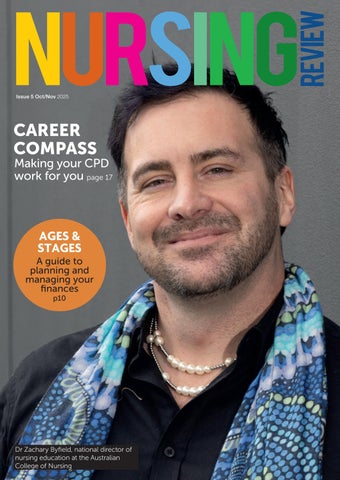
Dr Zachary Byfield, national director of nursing education at the Australian College of Nursing
ONLINE
Advanced nursing degrees
Grow your skills. Expand your impact. Explore over 20 postgraduate nursing specialisations Extend your professional expertise with a postgraduate nursing degree. Our courses are taught by expert clinicians, and offered online, part-time, so you can fit study in around your life and your career. We offer a broader choice of specialisations than any other postgraduate nursing degree and – if you work for one of our many industry partner employers – you could be eligible for a generous scholarship to greatly reduce the cost of studying. Whether you’re in the early stages of your career, ready to specialise, or moving into a leadership role, our courses will support your health career goals.
Scan here to learn more
contents
news
MANAGING EDITOR
Rebecca Cox rebecca.cox@news.com.au
2
NSW nurses’ interim pay deal is just the beginning of a continuing negotiation
4
Qld nurses and midwives a step closer to 11 per cent pay rise
6
Government announces 1000 scholarships for aged care workforce
8
Peak bodies announce leadership moves at APNA, ACN and ANMF
HEALTH EDITOR
Stefanie Schultz stefanie.schultz@news.com.au SALES MANAGER
Sarah Licence sarah.licence@news.com.au SUBSCRIPTIONS MANAGER
Lee Burrell lee.burrell@news.com.au
02
08
finances
COVER
Dr Zachary Byfield, national director of nursing education at the Australian College of Nursing. Picture: Supplied/ Pam Hutchinson.
10 A guide to planning and
managing your finances, from your first job in the sector, through mid-career decisions to retirement
industry & reform
PUBLISHED BY
Nationwide News Pty Ltd GPO Box 4245 Sydney NSW 2001 ABN 98 008 438 828 Print Post 100008043 ISSN 1326-0472 OCLC 536881479
17 Decide which direction
17
22
20 Productivity Commission looks at regulation, integration and prevention in the care sector
PUBLISHER’S NOTE
© Copyright. No part of this publication can be used or reproduced in any format without express permission in writing from Nationwide News Pty Ltd. The mention of a product or service, person or company in this publication, does not indicate the publisher’s endorsement. The views expressed in this publication do not necessarily represent the opinion of the publisher, its agents, company officers or employees.
your working life is going by choosing the continuing professional development that suits you best
22 Australia has 120 health
workforce policies but with no national plan, we’re missing the big picture
culturally informed care
24 Nurses union calls out
Queensland government on First Nations policies
24
25
clinical practice
26 The ACN is calling on the
government to establish nurse-led wound care models
27 New aged care medication laws support nurses working to full scope
technology
28 Urgent call for AI, digital
records to be used in hospitals
27
28 nursingreview.com.au | 1
news NSW nurses and midwives have been in negotiations with the state government for months. Picture: NCA NewsWire/Monique Harmer.
Financial relief NSW nurses’ interim pay deal is just the beginning of a continuing negotiation By Stefanie Schultz
N
SW public sector nurses and midwives have voted to accept an interim pay and conditions offer from the NSW government, marking a significant, albeit temporary, step in their ongoing industrial dispute. The agreement provides immediate financial relief and improved work-life balance, while the broader fight for a substantial pay increase continues. The interim offer includes a three per cent pay increase, backdated to 1 July 2025, along with an additional 0.5 per cent in superannuation. Crucially, the night duty penalty rate will increase from 15 to 20 per cent, bringing it to parity with Queensland nurses and midwives. Beyond monetary gains, the agreement also addresses longstanding concerns regarding working conditions. Nurses and midwives will now be guaranteed two consecutive days off, and there will be no night duty before annual leave unless specifically requested. Furthermore,
2 | nursingreview.com.au
any changes to published rosters will require prior consultation. NSW Nurses and Midwives’ Association (NSWNMA) general secretary Shaye Candish announced in early September that union members had voted to accept the interim offer. “Nurses and midwives are struggling to pay their bills in this cost-of-living crisis so any financial relief is welcomed,” she said. “Improvements to rosters will also provide staff with greater work-life balance.” However, Ms Candish emphasised that this acceptance does not signal the end of their campaign. “Our case for a 35 per cent pay increase over three years will begin in the NSW Industrial Relations Commission (IRC) later this month,” she affirmed. “As part of this case, which is one of the biggest industrial cases this state has seen, we will present evidence around the gendered undervaluation of nurses and midwives’ work and the work value changes our professions have seen over the past 16 years.” Minister for Health Ryan Park said his government is “turning things around” for the state’s health workforce, previously commenting that this interim deal was crucial for giving nurses and
“We will present evidence around the gendered undervaluation of nurses and midwives’ work midwives a pay “boost” before the IRC case progressed. “This vote is a major step to addressing the chronic shortage of nurses in our hospitals but there is more to do,” he said. “We have an independent process underway to determine what we need to do to ensure NSW nurses have the pay and conditions needed, including to address the gender pay gap that exists.” Minister for Industrial Relations Sophie Cotsis added that the agreement is a “long overdue recognition for nurses and midwives who have been campaigning for a long time.” “We are proud to support those who care for our communities day and night.” This interim agreement allows public sector nurses and midwives to receive a pay rise now, while still maintaining a clear pathway for the remaining matters to be determined by the independent IRC. The next IRC hearing on the matter is from September 30 to November 7. ■
Take your nursing skills further with Rural LAP You’ll experience the adventure of exploring some of Australia’s most breathtaking rural and remote destinations. From stunning landscapes to unique cultural experiences, every placement is a chance to immerse yourself in new communities, broaden your clinical expertise and grow both personally and professionally. Best of all, you’ll be making a real difference by supporting communities that need your skills the most.
Learn more
1800 RURALLAP (78725 527) enquiries@rurallap.com.au
news Queensland Treasurer David Janetzki has approved the hit to the budget. Picture: NCA Newswire/Kevin Farmer.
‘Continue to fight’ Qld nurses and midwives a step closer to 11 per cent pay rise By NCA Newswire
Q
ueensland Nurses and Midwives’ Union (QNMU) members have overwhelmingly voted to accept the state government’s offer of an 11 per cent pay rise. Three-quarters of the union’s 57,000 members voted to support the offer and now a final ballot will open to all Queensland Health nurses and midwives for their final say. The state government struck the historic deal with the union, which included an 11 per cent pay rise over three years and double-time overtime for shift workers. QNMU secretary Sarah Beaman said that after nine months of intense negotiations the union was able to secure a much improved offer that “has something for everyone”.
4 | nursingreview.com.au
“This offer has been won on the hard work of nurses and midwives taking protected industrial action. Their strength, their determination, their professionalism, has seen this offer be a significant improvement on the first two offers, and they should be proud of themselves,” she said. “This is an offer that will recruit, retain and respect nurses and midwives now and into the future. We know that there is more that needs to be done, and we will continue to fight hard on our members’ behalf to continue to grow the professions.” Over the next few weeks there will be consultation with the state’s workforce on the offer, before it is put to a ballot. The deal, brokered with the union, exceeds the eight per cent pay rise budgeted for frontline workers by Treasurer David Janetzki. Health Minister Tim Nicholls revealed the deal would cost taxpayers $1.8 billion, but said it would be covered within Queensland Health’s $33bn budget and had Mr Janetzki’s approval.
“This is an offer that will recruit, retain and respect nurses and midwives now and into the future The union was the first to challenge the LNP government when frontline worker wage contracts expired this year, demanding a 13 per cent rise. Double time and additional worker conditions, including a new pay point for registered nurses and midwives will lift the earning potential for 23 per cent of members. Other conditions include a midwife and enrolled nurse allowance, as well as rural and remote incentives. Ms Beaman said if the ballot was successful, they would be pushing for nurses and midwives to receive the back pay from April as soon as possible. ■
The largest ever ‘yellow book’! Australia’s essential frontline nursing resource AIDH is available in its ninth edition... and it’s bigger than ever.
New AIDH9 highlights • up-to-date and vital information on more than 500 injectable medicines • information on more than 60 new medicines, and paediatric information extended to cover 240 monographs, including intramuscular (IM) and subcutaneous routes for over 100 medicines.
“AIDH is an integral resource utilised by nurses multiple times a day to safely prepare and administer medicines. “It is embedded at every level of education and part of the Registered nurse standards for practice, Midwife standards for practice and the National Safety and Quality Health Service Standards.” Kelli Wain, CCRN, Deputy, Self Directed Learning Lab Manager and Lecturer, Bachelor of Nursing and Midwifery at Victoria University
Order AIDH9 today! adpha.au/bookshop
news Nurses have the opportunity to upskill into specialist roles.
Upskill and study Government announces 1000 scholarships for aged care workforce By Stefanie Shultz
T
he Albanese government has announced it will provide $21.5 million in scholarships to support the aged care workforce to pursue nursing, and for nurses to advance their careers. The Aged Care Nursing Scholarships Program provides crucial financial support for education and training, ensuring the aged care nursing workforce possesses the skills necessary to meet the increasingly complex needs of the nation’s ageing population. The program offers more than 1000 scholarships, with guaranteed places specifically reserved for Aboriginal and Torres Strait Islander aged care workers and nurses in a bid to increase inclusivity and address workforce disparities. Scholarship recipients can pursue formal nursing qualifications ranging from a Certificate III to a Masters’ degree, or undertake specialised nursing training in areas such as clinical leadership, palliative care, dementia care, and infection prevention and control,
6 | nursingreview.com.au
allowing them to progress their careers in aged care. Minister for Aged Care and Seniors Sam Rae emphasised the pivotal role of aged care workers in the government’s reform agenda, and highlighted the program’s potential to attract more individuals to the sector and enhance the skills of existing staff, ultimately leading to improved care outcomes for older Australians. “Workers are at the frontline of our government’s aged care reforms – giving them the development opportunities they need to build meaningful careers will help us deliver better care to every older Australian,” Mr Rae said. “Thanks to Labor’s reforms, there is now a registered nurse onsite in aged care more than 99 per cent of the time – programs like these will help us deliver even more care for even more older Australians.” Recognising the diverse and evolving needs of older Australians, the scholarships also support training in specialised areas. The federal government hopes this targeted approach will equip the workforce with the expertise to provide holistic and person-centred care, addressing a wide range of health and wellbeing needs. The Australian College of Nurse Practitioners (ACNP) has been selected to
“Giving them the development opportunities they need to build meaningful careers will help us deliver better care deliver the Aged Care Nursing Scholarships Program until June 2027. Leanne Boase, managing director of grants and scholarship programs at ACNP, expressed her enthusiasm for the initiative, “We look forward to raising awareness of the roles of aged care workers and nurses, while supporting them to aspire to more advanced clinical roles and career paths to provide more advanced and complex care for older Australians,” she said. “Aged care workers and nurses interested in applying for a scholarship can find more information and submit their applications through the Australian College of Nurse Practitioners website. “This investment represents a significant step forward in strengthening the aged care workforce and ensuring that older Australians receive the high-quality, compassionate care they deserve.” ■
SubScribe for leSS than $2 a week
The laTesT news and resources for healThcare professionals Nursing Review is essential reading for anyone involved in the healthcare sector in Australia. We provide unrivalled coverage of specialist topics from features and opinion pieces, to international news and profiles of industry leaders and those at the coal face. At Nursing Review we pride ourselves on being at the forefront of the ever-changing healthcare sector, with all the latest on industry reform, pay issues, clinical updates, what's happening in the workforce, and technology.
• Analysis of the major issues facing the health sector today • Can be used as a professional development resource • 6 issues per year • Interviews and opinion pieces from professionals in the industry • Written by an independent voice • Tax deductible
Please email edmedia.subscriptions@news.com.au to find out more
news APNA CEO Ken Griffin (centre) with (l-r) immediate past president Karen Booth, new president Denise Lyons, board director Maurice Wrightson and APNA founder Sam Moses. Picture: Supplied
Changes at the top Peak bodies announce leadership moves at APNA, ACN and ANMF By Stefanie Schultz
T
he Australian Primary Health Care Nurses Association (APNA) has found its new chief executive officer, after announcing in early June that current chief Ken Griffin would be departing the role in January 2026. Dr Stephen Duns will take on the top job, commencing September 29. “I am honoured to be appointed the CEO of the Australian Primary Health Care Nurses Association, championing the work of primary health care nurses who are such a critical part of the health system,” Dr Duns said. “Our purpose is clear – to champion and strengthen primary health care nurses, so that communities across Australia can thrive.”
8 | nursingreview.com.au
With a doctorate in business leadership, the new CEO comes to APNA after holding a number of senior executive and CEO positions in professional associations, health organisations and local government. Outgoing CEO Ken Griffin said that he is excited to see where Dr Duns leads the Association. “Now more than ever, the work of APNA is critical in disrupting the status quo and addressing the challenges facing primary health care nurses and the health sector more broadly.” This isn’t the only leadership change APNA has been through in recent months, with a new president being named on June 22. Denise Lyons took over from long-time president Karen Booth, bringing with her more than three decades experience as a registered nurse and endorsed nurse practitioner. “As I look ahead, I see both challenges and opportunities. Health care systems are under pressure everywhere because
of workforce shortages, rising costs and ageing populations,” Ms Lyons said. “But this is also a chance to reshape how we deliver care and how we value the role of nurses, putting them at the frontline of these transformations.”
MORE LEADERSHIP CHANGES Australian College of Nursing The Australian College of Nursing (ACN) has also made some changes at the top, with both a new president and new chief nursing officer appointed since June. Group Captain Kath Stein FACN GAICD was named president of the College on July 23, replacing Professor David Plunkett FACN, who served as ACN president for the past two years. Group Captain Stein has more than 30 years of experience in the Australian Air Force. She has been responsible for the delivery of health care to Defence members nationally as the Director of National Operations, has headed up the Command Joint Health Unit Northern NSW
news
New APNA CEO Dr Stephen Duns. Picture: APNA/Supplied.
New ACN president Group Captain Kath Stein. Picture: ACN/Supplied.
New ACN chief nursing officer Frances Rice. Picture: ACN/Supplied.
and has spent time serving as the director of defence force nursing. Group Captain Stein said leading the ACN is “an honour.” “Demands on nurses are becoming ever greater, due to the growing complexity of patient care requirements and strains on the system. ACN has an incredible opportunity to transform the support provided to nurses throughout the various stages of their career,” she said. “At the same time, the profession is evolving and growing to meet the needs of our populations, including with the establishment of the new endorsement for prescribing for registered nurses. It is a remarkable time for nurses to be able to grasp the opportunities to use all their skills and experience, operating at their optimal scope to deliver high quality patient care. These new opportunities and our incredible nursing workforce will improve access to health care for our patients, and ACN advocates for each and every one of them. “I look forward to engaging more closely and personally with members; continuing to provide educational offerings delivering academic excellence; and, through this, continuing to improve our health care system. Nurses are the solution.” Also appointed to the ACN leadership team, senior federal Health Department nursing executive Frances Rice takes on the role of chief nursing officer – an evolution of the previously named director of professional practice. Ms Rice comes to ACN from the Department of Health, Disability and
Ageing where she worked as the senior nursing advisor to the commonwealth chief nursing and midwifery officer. At ACN she will lead the development of the College’s health policy and nursing practice leadership programs. “Frances is eminently qualified and experienced to drive CAN’s policy and advocacy processes at a critical time for policy reform for the nursing profession,” ACN chief Kathryn Zeitz FACN said. “There are unprecedented opportunities for patients to benefit from enhanced access to safe and quality nursing care and nurse-led models of care. “These include the reforms proposed in the Scope of Practice Review, as well as the groundbreaking changes to nurse prescribing, and the impending release of the National Nursing Workforce Strategy.”
New ANMF federal vice president Astrid Tiefholz. Picture: ANMF/Supplied.
Australian Nursing and Midwifery Federation At the Australian Nursing and Midwifery Federation (ANMF), Tasmanian Astrid Tiefholz will take over as federal vice president. With both a nursing and midwifery degree behind her, Ms Tiefholz is committed to representing Tasmanian nurses and addressing the continued underutilisation of nurses and midwives across the country. “There are a lot of barriers for advanced practise nurses to upskill to become NPs. There is a lot that we can do within the
ANMF as well as aligning with the Australian College of Nurse Practitioners,” she said. “Expanding the scope of practice and developing a larger NP workforce is really important.” As an ANMF member for over 20 years, Ms Tiefholz is well positioned to help lead the Federation. “I’m passionate about making sure that we can band together and make our voices be heard. When it comes to any kind of negotiation in the workplace about pay entitlements, workplace safety, and standards, we are always stronger as a united voice than as individuals.” ■ nursingreview.com.au | 9
Ages & stages A guide to planning and managing your finances, from your first job in the sector, through mid-career decisions to retirement By Stefanie Schultz
Finances
T
he dedication of Australia’s nurses and midwives forms the backbone of our healthcare system. But while you’re busy caring for others, who’s looking after your financial health? Making informed financial decisions is a lifelong journey, one that evolves with each stage of your career. Whether you’re just starting out, firmly in your mid-career stride, or contemplating a well-deserved retirement, understanding your financial landscape is paramount. This guide aims to illuminate the path, offering practical insights for every stage.
YOUR FIRST JOB: BUILDING THE FOUNDATION Stepping into your first nursing or midwifery role is the ideal time to establish sound financial habits. It’s time to start thinking about your immediate financial goals and do some long-term planning. Intrafund advisor Lucy Claxton, who is part of Verve Super’s in-house financial coaching team, noted that for young professionals entering the workforce for the first time, financial goals are a balancing act. While, paradoxically, the earlier that you can contribute to super the better, Ms Claxton acknowledged that “the reality is that when you’re younger […] you’re just not going to have the extra cash.” “Super and then retirement can feel a long way off for young people and there’s
always going to be other goals that need to be considered first. “Whether it’s building up an emergency fund, whether it is saving for your first property, whether it’s saving for time out of the workforce, family planning as well [...] obviously they’re more immediate goals. So there does have to be a balance with that one.” Superannuation might seem a distant concern, but understanding its basics now will literally pay dividends. Ms Claxton highlights that many new professionals, especially those who’ve previously only had casual jobs, might have super in a few different places. “The first step is actually understanding where your super is, which you can do through myGov, and then thinking about consolidating and having it all in one place,” she said. “Just ensure that you actually complete the super choice form [when you start a new job], so that you can make sure that your super guarantee payments are actually going into your super fund.” This is a vital step to save paying multiple fees and capitalise on compound interest. Super funds don’t charge fees to do this. However, when consolidating super accounts there are a few important considerations. For example, you may have insurances linked to an existing account that you want to hold onto, so check these first.
“Superannuation might seem a distant concern, but understanding its basics now will literally pay dividends
Lucy Claxton. Picture: Supplied.
Although superannuation is a trilliondollar industry, in her time as a financial advisor Ms Claxton has noted that many people are not really engaged with their super; they might not actually understand that it is invested in the share market, or > know what shares it is invested in. nursingreview.com.au | 11
Finances
<
She suggests considering whether your investments align with your values, whilst also suggesting that your age should also factor into your investment portfolio. This is of particular interest to her, as Verve Super’s ethos is about “creating a future that’s actually worth retiring into” through ethical investment choices. It was also set up by women, and looks at super through the lens of what is good for women and gender diverse people. “It tends to be the case that younger people can afford to consider a higher growth or a higher risk portfolio because they’ve got time in the market,” she said. Australian government initiative Moneysmart is a great starting point for those wanting to learn more and make confident money decisions.
MID-CAREER: GROWING YOUR WEALTH AND MANAGING LIFE’S DEMANDS As you progress in your career, your financial web will likely become more complex. You may be juggling a mortgage, family expenses, and perhaps even considering further education or a career change. 12 | nursingreview.com.au
“You get the advantage of contributing and building your super balance but also paying less tax as a result
Dr Gemma Doleman. Picture: Supplied.
Although this is the time to think about growth and protection, it’s also where systemic inequalities can become more apparent. Research by Dr Gemma Doleman, a registered nurse and research fellow at Edith Cowan University, confirms that the gender pay gap is still prevalent in the nursing profession.
Her observational study looked at the career progression of 4,250 graduates who had completed a Bachelor of Nursing or Bachelor of Nursing Honours degree (excluding midwifery), at six months and three years after graduation. “Males were earning more than females at six months and as well at three years,” she said, with men earning around four per cent more at six months, increasing to 13 per cent by three years. “Nearly 70 per cent of the gap was due to factors which we couldn’t measure, suggesting that as nurses gain experience in the workforce, men’s work is being rewarded more than the women’s.” Dr Doleman said this disparity is deeply rooted in historical gender assumptions, where skills such as “emotional labour, communication and care have traditionally
Finances
been seen as natural for women and less worthy of financial recognition.” These patterns contribute to women in nursing taking home less income, affecting their financial independence and ability to build savings, and ultimately leading to significantly lower lifetime earnings and superannuation balances. “On average in Australia, women retire with 25 per cent less superannuation than men,” Dr Doleman said, with female nurses being particularly vulnerable due to career interruptions and part-time work. “These factors not only impact financial security, but they also increase the risk of economic hardship in retirement,” she added.
Navigating time out of the workforce Career interruptions, particularly for childbirth and caregiving, are common for Australian women, however, Ms Claxton highlights several strategies to help mitigate the financial impact during these times: •C heck admin fees: Some super funds have policies in place that mean they will refund a portion of administration fees if you are taking time out of the workforce for family planning. Anyone who is considering taking time out of the workforce for any reason should contact their super fund to see what’s possible. •K eep insurances active: If you do have insurances within your super account, and you are not making contributions for a period of time, your insurances may be at risk of lapsing. Consider either making a contribution (even just a dollar!) to keep the account active or filling out the appropriate paperwork to opt in to keeping insurances active. •C ontribution splitting: If you have a partner, contribution splitting allows them to split their super contributions with you – your spouse may be able to transfer up to 85 per cent of a financial year’s taxed splittable contributions. •S pouse contributions: This is different to contribution splitting in that it means your spouse can make a direct non-concessional (post-tax) contribution to your super that they then may be able to claim as a tax offset. •G overnment co-contribution: If your income is below a certain threshold, and you decide to make a non-concessional contribution into your super account, you will be entitled to up to $500 in government co-contribution. As a bonus, the co-contribution is processed automatically, so you do not need to do extra paperwork in order to benefit.
With any time out in the workforce, Ms Claxton recommends engaging with your super provider to find out what is available in your specific circumstances.
Boosting your super If you reach a position in your career where you are able to contribute more to super, salary sacrifice is an option. “I quite like salary sacrifice because it means that your employer is taking your pre-tax income and contributing it into super on your part,” Ms Claxton explained. “You get the advantage of contributing and building your super balance but also paying less tax as a result.” You can also make voluntary contributions into your super at any time, however, Ms Claxton warns that the right type of contribution depends on many other factors. “It depends on what your income is for that year, it depends on how much your employer is already paying on your behalf because there are certain caps for each type of contribution.”
Buying a home For those looking to buy property, Healthcare Home Loans’ head healthcare lending specialist Carla Nesci pointed out a number of unique opportunities for nurses and midwives. “A couple of the banks actually opened up their policies to nurses specifically,” Ms Nesci said. These policies allow nurses to buy a property with as little as a 10 per cent deposit, be eligible for larger loan sizes, and, in some circumstances, not have to pay Lenders Mortgage Insurance (LMI). Ms Nesci explained that for those who work in the Australian healthcare system, banks will take 100 per cent of overtime and penalty shift rates and any bonuses into account, which is a major advantage as other industries often see their income ‘shaded’ by 20 per cent when applying for a traditional home loan. Furthermore, nurses and midwives may also be eligible for discounted interest rates. “As a nurse or a doctor or anyone that works in healthcare If you put a 10 per cent deposit forward, you’ll be paying interest rates as if you’ve put a full 20 per cent deposit for it, which sometimes looks like a 50-basis point discount, which is huge,” Ms Nesci explained. For example, on a loan size of $600,000, most people right now would pay an average interest rate of around
“If you want to get into the market in the next few years, I’d be talking to a mortgage broker sooner rather than later 5.99 per cent, making their monthly repayments around $3,593. But with a health care discount, rather than paying 5.99 per cent, your interest rate may be somewhere around 5.34 per cent. This would make your mortgage repayments reduce to $3,332, which is a difference of $261 per month, or $3,132 per year. Ms Nesci encourages anyone who is feeling apprehensive or confused by the housing market to proactively engage with professional advice. “If you want to get into the market in the next few years, I’d be talking to a mortgage broker sooner rather than later,” she said. “It takes away that fear, because taking the first step forward is having that conversation so you understand. “Otherwise, if you don’t understand, you’re going to sit in this state of, ‘I don’t know what I can and can’t do’, and that limits you.” This early conversation can help you understand costs, applicable policies, and steps to prepare. She suggests calculating potential mortgage repayments and saving the difference between that and your current rent to build good financial habits quickly. “Talk to a professional [...] because we’re able to show you what’s possible.”
WINDING DOWN: SECURING YOUR RETIREMENT The prospect of retirement, even if it’s still a few years off, requires planning. This stage is about consolidating your assets and ensuring a comfortable transition from full-time work. “The best time is yesterday,” to start planning for retirement, Ms Claxton says, but realistically, “the home stretch would probably be from age 50.” “That’s when you’ve still got 10, 15 years until you’re planning on accessing super and that gives you a really good lead time to start maximising contributions, if that’s viable for you.” For those nearing retirement, you need to start thinking about your superannuation options and > nursingreview.com.au | 13
Finances
•U nderstanding your age pension entitlement: The age pension kicks in from 67, and importantly, it excludes the home you live in when calculating your entitlements.
< how to best draw an income, whether that’s an account-based pension, the age pension, or a combination, the right strategy depends on your individual circumstances.
EMPOWERING YOUR FINANCIAL FUTURE
How much super do you need to retire? The answer to this question is highly personal, and depends on so many factors, including where you live, whether you own your home, if you have dependents, your outgoings, and many others. However, the Association of Superannuation Funds of Australia (ASFA) retirement standards are a great place to start. ASFA publishes quarterly budgets for a ‘comfortable’ versus ‘modest’ retirement, providing an idea of the combined or single super balance needed. “That can be a really good benchmark to understand if you are on track, but then in terms of actually how much that person is going to need, it really depends on what they value and what type of retirement they want,” Ms Claxton says. Other things to consider when heading towards retirement include: 14 | nursingreview.com.au
Carla Nesci. Picture: Supplied.
•D ownsizing your home: This can free up capital and reduce ongoing expenses – seek professional advice on the tax implications of selling assets and accessing your superannuation. •E state planning: Look at updating or doing wills and powers of attorney that ensure your wishes will be respected and your loved ones are provided for.
From your first pay cheque to your final shift, your financial journey as a nurse or midwife working in Australia is unique. While the demands of your profession are immense, dedicating time to your financial wellbeing is an investment in your own future. Seek advice, stay informed, and empower yourself to make decisions that will support you through every stage of your career. ■ Advice given in this article is general in nature and is not intended to influence readers’ decisions about investing or financial products. Always seek your own professional advice that takes into account your personal circumstances before making any financial decisions.
Are you a Nurse Buying Property This Year? Smarter home loans with exclusive benefits tailored to your profession I couldn’t have asked for a better broker. They helped us get a great deal, made the entire process less stressful & were incredibly patient every step of the way. Cheryl, Nurse, Sydney hospital, NSW
The Nurses Lending Advantage™ Built for busy healthcare professionals who dedicate their time to helping others Waived LMI – Save up to $88,000¹
Borrow up to 90% with no LMI¹
Discounted rates & access to 50+ lenders
Buy your first home, next home, or investment
Pre-approval in as little as 48 hours
Premium broker support from start to settlement
(subject to eligibility)
Trusted by
1,000+
healthcare professionals
Book Your Free Discovery Call
Scan to get started in 30 seconds Suite 86/Mezzanine, 388 George St, Sydney NSW 2000 info@healthcarehomeloans.com.au
healthcarehomeloans.com.au
02 8357 1612
Healthcare Home Loans is a credit representative of Connective Credit Services Pty Ltd (CRN 565583). All loans subject to lender approval. This is general information only and does not constitute financial advice. Eligibility criteria apply.¹
The laTesT news for aged care professionals
IN OUR VOLATILE INDUSTRY, AGED CARE INSITE KEEPS YOU UP TO DATE ON ALL THE LATEST NEWS Aged Care Insite provides the best in original journalism, and is the authoritative source of news and analysis for the residential and community care sectors. We pride ourselves on being at the forefront of what's happening in the ever-changing aged care sector. We provide an independent source of news, and cover the issues relevant to you.
• Comprehensive coverage of a diversity of topics affecting the aged care sector • News and information on medical matters and products • Analysis of the major issues facing the aged care sector as a whole • 6 issues per year • Editorial integrity and industry relevance • Keeps industry professionals up-to-date on the politics and policy that matter • Tax deductible
Please email edmedia.subscriptions@news.com.au to find out more
industry & reform
CPD: Your career compass Decide which direction your working life is going by choosing the continuing professional development that suits you best By Stefanie Schultz
F
or every nurse and midwife across Australia, continuing professional development (CPD) isn’t just a regulatory requirement – it’s a cornerstone of lifelong learning and a pathway to professional excellence. While the thought of accumulating a minimum of 20 hours of CPD per registration period might sometimes feel like a chore, it needn’t be. By
approaching CPD strategically, you can transform it from a compliance exercise into a powerful tool for career advancement and personal growth. The Nursing and Midwifery Board of Australia (NMBA) mandates that all registered nurses and midwives, except those with student and non-practising registration, engage in CPD activities annually. This commitment ensures that practitioners maintain, improve, and broaden their knowledge, expertise, and competence, ultimately safeguarding public health. But how can you make this ongoing commitment genuinely beneficial and, dare we say, enjoyable? Nursing Review sat down with Dr Zachary Byfield, national director of
nursing education at the Australian College of Nursing (ACN), to get his best tips on how to make your CPD hours work for you. “Continuous professional development really plugs into the very essence of what is nursing practice, which is that nurses are in art and science and we work in an everevolving field in the healthcare system,” he explained. “It should be about closing that knowledge gap and contributing to your further career.”
1. D EFINE YOUR CAREER GOALS Chart your desired career path and consider selecting CPD activities relevant to your scope of practice that may help you reach your career goals. nursingreview.com.au | 17
>
industry & reform
“Transform it from a compliance exercise into a powerful tool for career advancement and personal growth Microcredentials are bite-sized learning that can be ‘stacked’ towards a graduate certificate. “Rather than committing to a full programme of study, learners can come along and have a taster [...] and then they can add that to their record and it sits there ready for them to stack the next one on top, until eventually, at the end of the day, they can look at building a whole programme and be awarded a graduate certificate,” Dr Byfield explained. Beyond the formal training, becoming a member of a professional nursing body also allows you to connect with a community of peers, foster networking opportunities and share learning experiences that are themselves a form of professional development.
3. D ON’T LEAVE IT TILL THE NIGHT BEFORE!
Dr Zachary Byfield. Picture: Supplied/Pam Hutchinson.
<
The most effective CPD is purposeful. Instead of simply accumulating hours, consider where you want your career to go. Are you aiming for a leadership role, specialising in a particular area, or perhaps transitioning into education or research? “The thing that a nurse can really have direct control over is their education,” Dr Byfield said. “Education is really that pathway and that tool that lets a nurse take charge of their career and decide what they would like to do and how they would actually like to meet that definition of nursing profession.” By aligning your CPD with your aspirations, each learning experience becomes a stepping stone towards your ultimate professional destination. “It’s just going to make it easier for you if you actually do CPD that is 18 | nursingreview.com.au
meaningful for you and you can see a point in doing.”
2. M AKE USE OF PROFESSIONAL BODIES Become a member of your professional nursing body as they usually offer free or discounted, quality CPD training programs. It’s one of the most practical steps you can take to streamline your CPD journey. Professional bodies are designed to support their members’ growth and often provide a wealth of high-quality, evidence-based CPD activities, from webinars and workshops to conferences, many of which are free or significantly discounted for members. For instance, ACN currently partners with the Department of Education to deliver subsidised microcredentials in Parkinson’s care and diabetes management.
The Australian Health Practitioner Regulation Agency (AHPRA) asks that you spread your CPD learning out over the year. Don’t treat it as a box-ticking exercise – get the best return on your investment of time, and use your CPD learning to grow professionally. The NMBA guidelines also strongly recommend spreading your CPD activities throughout the year, rather than cramming them into the final weeks before re-registration. CPD isn’t just about making sure you do the hours required; it’s about maximising the impact of your learning. Dr Byfield said the best way to think of CPD is as a continuous cycle, not a one-off event. “Every day it seems like there’s a new policy or a new way of doing things, so continuing professional development is the pathway in which the nurse keeps up to date with that best practise, and makes sure that when someone says they’re a nurse in Australia that it means that they are practising in that best practise mindset,” he said. Rushing through hours diminishes the opportunity for meaningful reflection and application, turning a valuable exercise into a mere administrative task.
industry & reform
4. LOG YOUR HOURS Effective record-keeping is crucial, not only for audit purposes but also for your own professional reflection. The NMBA requires you to keep records of your CPD activities for five years. Dr Byfield advises nurses to ensure they “chart contemporaneously,” by noting it down at the time, warning that leaving it until later means you’ll be scrambling to remember when you attended a conference or where you put that certificate. “I’m still very much a pen and paper person and still record all my CPD in just my booklets and my folder,” Dr Byfield said. Fortunately, there are now also excellent digital tools available now that make logging your CPD hours quick and easy. Platforms like the ACN Professional Portfolio, Florence from APNA, or the Ausmed CPD App allow you to easily record your activities, upload evidence, and reflect on your learning in one centralised place.
Whether you prefer an app or a traditional pen and paper system, the key is to use whatever works for you and make sure that it helps you be efficient.
5. LEARN WHICH ACTIVITIES COUNT AS CPD CPD can now include listening to a podcast or reading a journal article – as long as you document your learning, and reflect on how it’s contributed to your professional development Perhaps one of the most liberating aspects of the NMBA’s CPD guidelines is the breadth of activities that qualify. It’s not just about formal courses or conferences. The key is that the activity must be relevant to your area of professional practice, have clear aims, and, critically, be documented with reflection. “One of the good things about CPD is that it can be anything that you make it,” Dr Byfield explained. “The rules of CPD are that they have to contribute to your professional
development and that you have to engage in reflection around them.” This means that engaging with a relevant podcast during your commute, reading a peer-reviewed journal article, participating in a clinical debrief, or even mentoring a junior colleague may all count towards your CPD hours. The crucial element is your ability to articulate what you learned and how it will impact your practice. Meeting your CPD requirements doesn’t have to be a burden. By adopting a strategic, proactive, and reflective approach, leveraging the resources offered by professional bodies, utilising digital tracking tools, and embracing the diverse range of learning opportunities available, you can transform CPD into a powerful catalyst for your ongoing professional success and satisfaction. It’s an opportunity to invest in yourself, ensuring you remain at the forefront of nursing and midwifery practice in Australia. ■
ELEVATE YOUR EXPERTISE IN NURSING. Explore the range of CQU’s Graduate Certificates and open doors to specialised roles. › Clinical Nursing › Correctional Nursing › Mental Health Nursing › Domestic and Family Violence Studies › Positive Psychology
LEARN MORE
cqu.edu.au
CRICOS: 00219C | TEQSA: PRV12073 | RTO: 40939 C_AD_2507_ NURSREVIEW
Success comes in chapters. Decide what comes next.
nursingreview.com.au | 19
industry & reform
Choice, care and cost Productivity Commission looks at regulation, integration and prevention in the care sector By Stefanie Schultz
T
he Australian Productivity Commission has released its interim report into how the nation can deliver safer, more affordable care. The report, Delivering quality care more efficiently, has made a set of recommendations to the federal government that fall under three key themes: quality and safety regulation; care service integration; and investment in preventative healthcare. Commissioner Angela Jackson said that the recent increase in choice for care services in Australia has created a health system that is struggling
20 | nursingreview.com.au
to deliver high-quality services at a sustainable cost. “Our proposed reforms seek to break through government’s siloed approach to decision-making and lift national productivity by improving the quality and efficiency of care services,” she said. The federal government says the nation’s productivity growth has slowed over the past 10 years, and has tasked the Productivity Commission to undertake a series of inquiries to identify reform areas of priority and reignite productivity in “an uncertain global environment.” Part of the reason behind the Australian economy’s current sluggishness was the vertiginous rises and subsequent falls of measured productivity during the height of the Covid-19 pandemic, from which the country is yet to recover.
However, as the data also identified slowing growth in the years leading up to Covid-19, the government has suggested there are a variety of systemic factors at play. Delivering quality care more efficiently is the fifth and final interim report to come out of the current productivity inquiries. Prior to this, interim reports have been released for the four other ‘pillars of productivity’: •C reating a more dynamic and resilient economy • I nvesting in cheaper, cleaner energy and the net zero transformation •H arnessing data and digital technology •B uilding a skilled and adaptable workforce. The delivery of quality, accessible and affordable care – be it in aged care, primary health, disability support, or early childhood education – is the foundation upon which a highly engaged, participative
industry & reform
“The Commission’s first recommendation centres on breaking down existing silos in our health system
Productivity Commission chair Danielle Wood. Image: Aaron Francis
and productive population is built, the report says. The Commission’s first recommendation centres on breaking down existing silos in our health system in favour of improved alignment of safety and quality regulation that extends across the entire care economy.
1. R EFORM OF QUALITY AND SAFETY REGULATION The interim report says the Australian government “should pursue” greater alignment in the quality and safety regulation of the healthcare system, starting with aged care, the National Disability Insurance Scheme (NDIS), and veterans’ care services. Recommendations include establishing a national screening process for workers, creating a singular set of practice and
quality standards, and ensuring there is a consistent approach to the regulation of artificial intelligence (AI), reporting and data handling. “Fragmented regulation across the care sector reduces productivity, heightens the risk of harms, limits access to care and creates unnecessary burdens for care providers,” Commissioner Martin Stokie said. “Previous reform efforts have faced roadblocks and lost momentum – we need a fresh, concerted approach.” This unified national approach to carer accreditation, including a single portal through which workers are required to be registered, would improve workforce mobility, the Commission says. In turn, it goes on to say, resources would be able to be redirected more easily and efficiently as provider needs ebb and flow and consumers would benefit from access to more comprehensive information and, therefore, choice.
2. I NCREASING THE INTEGRATION OF CARE SERVICES ‘Collaborative commissioning’ is the practice of organisations working in partnership to plan, procure and evaluate services for their local communities, supporting the delivery of more integrated care, addressing service gaps, and tailoring services to the needs of individual communities. The Commission recommends that governments should establish governance and funding arrangements between Local Hospital Networks (LHNs), Primary Health Networks (PHNs) and Aboriginal Community Controlled Health Organisations (ACCHOs), to
increase collaborative commissioning in the next addendum to the National Health Reform Agreement. Further recommendations include the removal of current barriers preventing local health organisations from pooling their funding, and the provision of dedicated funding to LHNs and PHNs to embed collaborative commissioning programs.
3. A NATIONAL PREVENTATIVE HEALTH FRAMEWORK Australia’s first (and only) dedicated Minister for Preventative Health, Sabine Winton, was appointed to the Western Australian government following Labor’s landslide state election win in March of this year, prompting questions about whether this approach should or could extend to other states and territories. The Commission again highlighted intergovernmental collaboration as the key to effective, efficient and lasting change for the health and care sectors. It is calling for the establishment of a National Prevention Investment Framework, through which the federal government can funnel money into preventative health programs, to improve outcomes for the community, and save money on the delivery of more costly acute services later on. An independent Prevention Framework Advisory Board would work alongside the Framework to assess requests for funding and provide expert advice, the recommendations say. “Our reform proposal is about encouraging governments to invest now to save later,” Commissioner Alison Roberts said. “It will help ensure governments work together to support the most effective prevention programs.” The Productivity Commission’s Five pillars of productivity inquiries interim reports will now undertake a period of public consultation, before delivering the final reports later in the year. The final Delivering quality care more efficiently report is expected in December 2025. ■ nursingreview.com.au | 21
industry & reform Image: iStock
One plan, please Australia has 120 health workforce policies but with no national plan, we’re missing the big picture By Stephanie M. Topp, Lana Elliott and Thu Nguyen
A
ustralia’s health workforce is under pressure. Wait times are growing. Burnout is rising. Yet the country is awash in policy – just not the kind that solves these problems at the root. This can explain why you’re struggling to see a GP, can’t find a dentist, or struggling to coordinate care between a mental health professional and aged-care nurse. These issues aren’t isolated problems. As we outline in research published in the Medical Journal of Australia, they reflect a deeper issue in how Australia plans and governs its health workforce. Despite long-standing concern about shortages of health workers in both rural and urban areas, there’s no overarching national strategy for health-workforce planning in Australia. That’s the type of long-term strategy that helps a country make sure it has enough trained health workers in the right places to meet people’s health needs, now and in the future. Instead, there is fragmentation. When we reviewed all 121 current federal health workforce policy documents, we found a patchwork of policies for specific professions (for example, doctors, nurses
22 | nursingreview.com.au
and midwives) that were often short term. These rely heavily on grants and programs rather than long-term strategies and operate in parallel rather than in concert. They also don’t seem to pay attention to key professions – especially pharmacy, public health and emergency care. So with more than 850,000 registered health professionals, there are still not enough to meet demand, particularly in regional and remote areas. This is also the case in sectors with rising demand, such as aged care, mental health and rehabilitation.
WHAT SHOULD WE DO? More than a decade of reports have recommended improvements to national health workforce governance or strategy. Our study shows why those recommendations still matter. In 2025, the challenge isn’t just to add more staff – it is to coordinate the system and the policy better, and plan for a future where health care is sustainable, equitable, and fit for purpose. Australia once had a national body to guide health workforce planning – Health Workforce Australia. It was established in 2009 but disbanded in 2014 (ironically) as part of a government efficiency drive. Since then, the responsibility for workforce planning has been split across multiple government departments, statutory authorities, and state and territories.
For instance, five states have their own individual 10-year health workforce strategic plans. Some professions have their own national strategies. There’s a national medical workforce strategy, a nurse practitioner workforce plan and a mental health workforce strategy. Others are still being developed, such as the allied health workforce strategy, which would cover health workers such as physiotherapists, occupational therapists, speech therapists and podiatrists. But there’s no effective mechanism to ensure these strategies work together coherently – or to ensure important professions or service areas aren’t left behind.
MORE PROGRAMS, FEWER SOLUTIONS Of the 121 federal policies we analysed, 81 per cent were time-limited grants, programs or sub-programs. These types of policies are typically designed to respond quickly to a specific gap – such as with scholarships, rural relocation bonuses, or individual professional development. But they’re not necessarily designed to create sustained change. We found 23 policies that could set longer-term direction. But it was not clear how these relate to each other. Few documents cross-referenced one another or reflected on the way solutions in one would impact on the solutions in another.
industry & reform
Nurses and midwives hold a 24-hour statewide strike in demand for fair wages. Picture: NCA NewsWire/Gaye Gerard.
Most federal documents focus on workforce supply – such as training or recruitment. Fewer tackle the arguably harder, but equally important, issues. These include how to improve workforce performance, such as by addressing skills mismatch or under-use (where individuals are not able to use their qualifications or skills as part of their job), or how to better distribute staff across regions.
SO WHAT NEEDS TO CHANGE? In Australia, the federal government funds most of primary care, aged care and Indigenous health. But states and territories employ most health workers. So governance is decentralised. Private providers, Primary Health Networks (federal government-funded organisations that support services to meet local health needs) and Aboriginal and Torres Strait Islander Community Controlled services (which provide primary health care to Aboriginal and Torres Strait Islander people) add further complexity to the health workforce landscape. So without national coordination, workforce policy and planning risks being
reactive, inconsistent, and susceptible to political cycles. This risks focusing on what’s most visible, and apparently urgent, rather than what’s systemic and enduring. Here’s what needs to change: •A ustralia needs to re-establish a national body for health workforce planning, similar to the former Health Workforce Australia. A recent independent review agrees the current meeting of health ministers is not an effective way to govern health workers. Without a national hub, the current patchwork approach will continue. •P olicymakers must shift from profession-specific and short-term responses to a system-wide approach. This means recognising how different parts of the health workforce interact as part of a broader labour market, and how policies for doctors, nurses, pharmacists and allied health professionals need to work together, especially in rural and remote care. •W e need fewer ad hoc grants that turn over with each new federal government. Instead, we need greater emphasis on durable
“In 2025, the challenge isn’t just to add more staff – it is to coordinate the system and the policy better strategies and agreements that can guide action over time, while allowing states and territories to adapt them if needed. These should be backed by clear data, and be evaluated and accountable. ■ Stephanie M. Topp is Professor, Global Health and Development, at James Cook University; Lana Elliott is Senior lecturer, School of Public Health and Social Work, at Queensland University of Technology, and Thu Nguyen is Research Fellow, Health Policy and Systems, at James Cook University. This article is republished from The Conversation under a Creative Commons license. Read the original article at theconversation.com/au nursingreview.com.au | 23
Culturally informed care Government’s have failed on multiple Closing the Gap objectives, a new report has revealed. Picture: Roni Bintang/Getty Images.
‘Decisive action’ Nurses union calls out Queensland government on First Nations policies By Stefanie Schultz
T
he Queensland Nurses and Midwives’ Union (QNMU) has called out the state government for its inaction on the health and wellbeing of the nation’s Indigenous children. Raising her voice on National Aboriginal and Torres Strait Island Children’s Day (August 4), union secretary Sarah Beaman said there is a genuine lack of health services that focus on culturally respectful policies and practices for First Nations youth, and “that needs to change.” “We continue to see higher infant mortality, higher rates of hospitalisations, over-representation of First Nations children in child protection, and higher rates of suicide,” she said. “We have policy positions on crime that are targeting Aboriginal and Torres Strait Islander children when what we need are policies that address the historical
24 | nursingreview.com.au
disadvantage, impacts of current targeted and systemic racism, and the vast failure to invest in the physical and mental health of First Nations children.” Last October, Queensland Premier David Crisafulli led the Liberal National Party to victory in the state election with Adult Crime, Adult Time at the forefront of its law-and-order campaign. First Nations people have a long history of over-representation in both the youth and adult justice systems in Australia. In 2023-24 more than half (57 per cent) of all people under youth justice supervision aged 10–17 were First Nations Australians. Furthermore, on average, First Nations children under supervision are younger than their non‑Indigenous counterparts. Ms Beaman said the government should not be focussing on locking children away, and should instead be taking decisive action to address the ongoing disparity between health outcomes for Aboriginal and Torres Strait Islander children and non-Indigenous children. “Disadvantage and the disparity in health outcomes is a generational
Queensland Nurses and Midwives Union Secretary Sarah Beaman wants decisive action from the Qld gov’t to improve the health of First Nations children. Picture: NCA Newswire/ Richard Walker.
Culturally informed care
Catherine Liddle, chief executive of SNAICC., said that change comes when governments work in true partnership with Aboriginal and Torres Strait Islander communities. Picture: Arsineh Houspian.
and transgenerational issue that will only be solved by looking at the ways in which policies in this country perpetuate that disparity and disadvantage,” she said. “We need to look at the shortsighted policies that have failed First Nations children and look at all of the causes contributing to poor health outcomes and invest in solutions.” The union is calling on the LNP to release information on how it will ensure the state’s First Nations nurses and midwives are utilised in respect to their cultural authority, as well as how it plans to address the significant disparity in social determinants of health for Aboriginal and Torres Strait Islander children. “Children need to be supported, and they need to be healthy,” Ms Beaman said “They need to fully enjoy their right to family, community and culture.” The latest Closing the Gap annual report from the Productivity Commission had disappointing results. The Annual Data Compilation Report (ADCR) revealed outcomes for four key targets are continuing to worsen:
adult imprisonment; children in outof-home care; suicide; and children developmentally on track. Catherine Liddle, CEO of the Secretariat of National Aboriginal and Islander Child Care (SNAICC), said the update lays the failings of governments bare. “Closing the gap starts with our children and that means investing in quality, culturally strong early education and care, and systems that support families rather than continue cycles of removal and criminalisation,” Ms Liddle said. “Early childhood education and care is a foundational building block for lifelong outcomes but we’re seeing a decline in children being developmentally on track which tells us that access alone isn’t enough. “The update shows that when governments work in true partnership with Aboriginal and Torres Strait Islander communities, we see real change. Progress in areas like land rights and employment shows what’s possible when communities are empowered and governments step up.” Just four of the 19 socio-economic targets of the federal Closing the Gap
“Children need to be supported, and they need to be healthy. They need to fully enjoy their right to family, community and culture initiative are on track, with the other 15 either worsening, improving but not on track to meet target, or assessed as having no change. Productivity Commissioner Selwyn Button said the data shows that “the transformational change that governments committed to is falling well short of what has been promised.” “What the outcomes in the Agreement reflect most of all is the limited progress of governments in collectively acting on the Priority Reforms: sharing decision making and data with communities; strengthening the Aboriginal Community Controlled sector; and changing the way governments operate.” ■ nursingreview.com.au | 25
Clinical Image: iStock
“Wounds can profoundly impact an individual’s life, affecting mobility, mental health, and social engagement
‘Not skin deep’ The ACN is calling on the government to establish nurseled wound care models By Stefanie Schultz
T
he Australian College of Nursing (ACN) is urging the federal government to prioritise nurseled models of care, asserting they are crucial for improving access to holistic wound management. Chronic wounds continue to affect nearly half a million Australians, and despite nurses being the primary caregivers for these complex conditions, current Medicare rebate structures prevent them from independently billing for wound care. The College says this barrier stifles the development of accessible nurseled services, and doesn’t recognise the profession’s expertise. ACN chief Dr Kathryn Zeitz said nurses’ comprehensive understanding of patient needs and wound progression uniquely positions them to deliver effective ongoing care.
26 | nursingreview.com.au
“Nurses are the healthcare profession that spends the most time directly caring for people with chronic wounds,” she said. “In hospitals and in primary care settings, nurses – such as wound clinical nurse consultants – often take lead responsibility in the multidisciplinary team for managing ongoing wounds, such as venous or arterial leg ulcers, diabetic foot ulcers, and pressure injuries.” As chronic wounds can profoundly impact an individual’s life, affecting mobility, mental health, and social engagement, ACN is pressing the government to swiftly implement recommendations from last year’s Expert Advisory Committee for the Scope of Practice Review, which advocated for reforms to foster innovative care models. While advocating for further change, Dr Zeitz acknowledged existing government initiatives, including the Chronic Wound Consumables Scheme, which covers dressing costs for eligible individuals, and funding for the ACN wound care scholarship for nurses and First Nations health workers.
“But now is the time to take the next step and enable the establishment of nurseled wound care models to provide the essential holistic care that is lacking for people with chronic wounds,” she added. “Nurses know that chronic wounds run more than skin deep. They can affect every facet of a person’s life. “We can do much better for our population experiencing this debilitating condition and provide the holistic support they need to put non-healing wounds on the right track.” The ACN envisions a future where more nurses can operate their own woundcare clinics, not only enhancing specialist access but also elevating the visibility of chronic wound issues within the health sector and community.
CHRONIC WOUND CONSUMABLES SCHEME The Australian Consumer Insights into Wound Care Report 2024 by Wounds Australia found that many Australians have little understanding of how to treat wounds and how they become chronic. The report revealed that 50 per cent of people don’t recognise recurring wounds as a chronic condition, that one in three mistakenly believe wounds should be left to dry out, and that almost one in five (18 per cent) avoid seeking care due to cost. The national Chronic Wound Consumables Scheme (CWCS), announced in June, fully subsidises wound care products for the country’s most vulnerable, including people with diabetes aged 65 or older and First Nations people over 50. In a recognition of the significant costs for individuals associated with chronic wound care – around $4,000 per year – the Albanese Government has invested almost $50 million in the scheme. “The Chronic Wound Consumables Scheme is an innovation program that will help a vulnerable group in our society with the cost of their treatment,” Wounds Australia chief Jeff Antcliff said. “It’s a crucial first step towards helping more Australians living with chronic wounds on a path to healing.” ■
Clinical Minister for Ageing Ingrid Stitt said the changes are about putting the safety of residents in aged care first. Picture: NCA NewsWire/Valeriu Campan.
Safety first New aged care medication laws support nurses working to full scope By Stefanie Schultz
T
he Victorian state government has introduced new legislation to protect older people living in residential aged care from medicationrelated harm. In an Australian first, new laws will dictate that authorised health professionals – registered and enrolled nurses, pharmacists and GPs – will bear the responsibility of the management of strong medications in residential aged care. The Drugs, Poisons and Controlled Substances Amendment Bill 2025, unveiled by the Victorian Health Department in August, will apply strict rules to how certain drugs can be administered to older people living in aged care. This will mean only highly qualified health practitioners are able to provide medications such as anaesthetics, antibiotics, opioid analgesics and clinical trial medications from July 1 2026. Minister for Ageing Ingrid Stitt said the Bill is part of the Allan government’s continued commitment to the improvement of aged care for all Victorians. “These changes are about putting the safety of residents first – making
sure our older Victorians living in aged care receive the right medication, safely and at the right time, from the right professionals.” For over two decades personal care workers in aged care have been allowed to administer medications without clinical oversight. The Royal Commission into Aged Care Quality and Safety lifted the lid on significant medication misuse within the sector, in particular, the widespread administering of psychotropic agents and chemical restraints. Evidence suggested that these medications were often used as a strategy to manage staff workload and changed behaviour, rather than out of clinical necessity. The Drugs Amendment Bill was developed in collaboration with the Australian Nursing and Midwifery Federation Victorian Branch, as both a direct response to Royal Commission recommendations and an acknowledgment of the increasingly vital role nurses play in caring for the nation’s ageing population. The Federation says the changes will reduce clinical risk, improve health outcomes for residents and reduce incidences of hospitalisation. “Medication administration is a core nursing responsibility and these changes support nurses to work to their full
“For over two decades personal care workers in aged care have been allowed to administer medications scope – delivering safe, high-quality, person-centred care and improving job satisfaction,” ANMF Victorian Branch secretary Maddy Harradence said. The state’s budget papers, released in May, delivered an additional $50m for public aged care, to fund more beds and nurse‑to‑patient ratios. Of that, $7.6m was allocated to the improvement of medication management in residential aged care homes alone. Victorian Health Minister Mary-Anne Thomas said the Bill builds on the Labor government’s investment into the nursing workforce. “These reforms will ensure that medication in aged care is handled with the same care and clinical oversight you would expect in any hospital or health service across the state,” she said. The new measures will allow for exceptions to the rule in emergencies or other situations where delaying medication will put a resident at risk. The reforms will be reviewed after five years. ■ nursingreview.com.au | 27
technology Picture: iStock
‘Outdated tech’ Urgent call for AI, digital records to be used in hospitals By NCA Newswire
A
ustralia’s hospital system is being hit by the triple whammy of an ageing population, a shrinking workforce and a health system “still based off a model from the era of Florence Nightingale,” an influential business body has said. According to a new report, Supporting a Healthy and Productive Nation, from the Business Council of Australia the use of AI could allow clinicians to dedicate up to 30 per cent of their time to seeing patients and reduce burnout. It also said digitised health records and a connected system would save up to $5.4bn in hospital costs, $255m of which would be through fewer duplicated tests. BCA health care services committee chair and Australian Unity chief executive Rohan Mead said urgent action was
28 | nursingreview.com.au
needed to ensure Australia’s health system remained world-leading. “Our health system is still based off a model from the era of Florence Nightingale, and we need to look at how technological changes and new models of care can provide better outcomes and make Australians even healthier,” he said. Mr Mead noted outdated technologies like faxes were still used at hospitals and said technological innovations like telehealth had already increased access to health services and saved Australians up to $895m a year. “In 2025, it would astound many Australians that the majority of hospitals are still paper based and that up to 75 per cent of global fax traffic comes from medical services – it is time the health and care system came into the modern era,” he said. “We need to be able to equip workers with technology and digital skills to make their jobs easier. That is
“Telehealth had already increased access to health services and saved Australians up to $895m a year fundamental if we want to attract more workers to the sector.” Quoting figures from the 2023 Intergenerational Report, the BCA said spending on health and aged care was set to exceed 10 per cent of Australia’s GDP by 2062-63, which will result in “significant” funding challenges. Australia’s ageing population will also increase the demand for health services while reducing the number of working Australians, the report says, with the member of working age Australians per retiree set to drop from four to three in the next 40 years. ■
SubScribe for leSS than $2 a week
The laTesT news and resources for healThcare professionals Nursing Review is essential reading for anyone involved in the healthcare sector in Australia. We provide unrivalled coverage of specialist topics from features and opinion pieces, to international news and profiles of industry leaders and those at the coal face. At Nursing Review we pride ourselves on being at the forefront of the ever-changing healthcare sector, with all the latest on industry reform, pay issues, clinical updates, what's happening in the workforce, and technology.
• Analysis of the major issues facing the health sector today • Can be used as a professional development resource • 6 issues per year • Interviews and opinion pieces from professionals in the industry • Written by an independent voice • Tax deductible
Please email edmedia.subscriptions@news.com.au to find out more
The laTesT news for aged care professionals
IN OUR VOLATILE INDUSTRY, AGED CARE INSITE KEEPS YOU UP TO DATE ON ALL THE LATEST NEWS Aged Care Insite provides the best in original journalism, and is the authoritative source of news and analysis for the residential and community care sectors. We pride ourselves on being at the forefront of what's happening in the ever-changing aged care sector. We provide an independent source of news, and cover the issues relevant to you.
• Comprehensive coverage of a diversity of topics affecting the aged care sector • News and information on medical matters and products • Analysis of the major issues facing the aged care sector as a whole • 6 issues per year • Editorial integrity and industry relevance • Keeps industry professionals up-to-date on the politics and policy that matter • Tax deductible
Please email edmedia.subscriptions@news.com.au to find out more