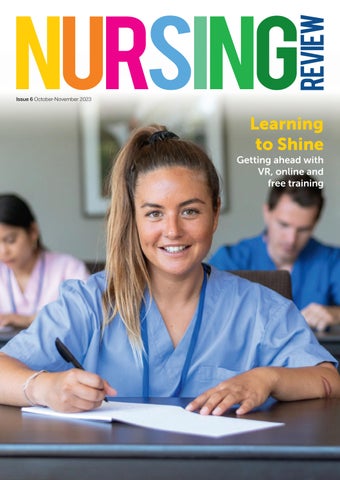
Issue 6 October-November 2023
Learning to Shine Getting ahead with VR, online and free training
Australia’s Premier HOME CARE OFFICE NETWORK TAKE CHARGE OF YOUR FUTURE Have you reached a crossroads in your life and looking to make a change for the better? Secure your family’s future and make a difference in your community, whilst building a business in the thriving and dynamic home care industry with Right at Home. You’ll enjoy the freedom to grow your own business, with the full support of a top quality, national, home care brand delivering domestic support, personal care, skilled nursing, and allied health services. Your experience in nursing will assist in maintaining our high quality standards in delivering nurse supervised home care. You will be provided the necessary business training to ensure the success of your own local office. The home care market is guaranteed to grow for the next 20 years. The entry costs and overheads are very low compared with most businesses. Following rapid growth In QLD, NSW and WA, Right at Home is expanding into VIC, SA, TAS, ACT and the NT with prime territories up for grabs. Make your dreams come true… talk to Right at Home about a home care franchise today.
Apply to be a Right at Home office owner now! Go to www.rightathome.com.au/business-opportunities and fill in a form to be sent further information.
1300 363 802 | www.rightathome.com.au.
contents
MANAGING EDITOR
news
Rebecca Cox rebecca.cox@news.com.au
2
Merging of ACT clinics
HEALTH EDITOR
4
Pay rises for Tas nurses
Arshmah Jamal arshmah.jamal@news.com.au
6
Rural maternity shut down
NEWS EDITOR
industry and reform
Erin Morley erin.morley@news.com
8 SALES MANAGER
Nicola Mohtram 02 9936 8666 nicola.mohtram@news.com.au
04
08
NSW mental health budget
10 ACT inquest into child’s death 12 AMA calls for at-home recovery 13 New patient record system
SUBSCRIPTIONS MANAGER
Lee Burrell lee.burrell@news.com.au
workforce COVER
14 Rural nurse credentials
Training and upskilling, see pages 14, 15, and 28.
15 More masters for NPs PUBLISHED BY
Nationwide News Pty Ltd GPO Box 4245 Sydney NSW 2001 ABN 98 008 438 828 Print Post 100008043 ISSN 1836-1501 OCLC 536881479
specialty focus
14
18
18 Q&A: NICU nurse clinical practice
PUBLISHER’S NOTE
© Copyright. No part of this publication can be used or reproduced in any format without express permission in writing from Nationwide News Pty Ltd. The mention of a product or service, person or company in this publication, does not indicate the publisher’s endorsement. The views expressed in this publication do not necessarily represent the opinion of the publisher, its agents, company officers or employees.
16 What happened at PCH?
20 Best approach to vaccines 22 Fluctuating blood pressure 23 Uptick in endometriosis 24 VAD in the ACT
22
23
technology
27 Generative AI and healthcare access
28 VR stroke training in bush
24
28 nursingreview.com.au | 1
news The Minister for Health and Aged Care Mark Butler announced the UCC's on October 18. Picture: NCA NewsWire/Martin Ollman
“Canberra families are under pressure with the rising cost of living, and it will be a relief for them to know that treatment at these centres will continue to be free
Pressure valve Discord over merging of urgent care and walk-in clinics in ACT to free up emergency departments By Erin Morley
E
xisting Canberra walk-in health clinics will be able to treat a wider range of conditions through merging with new Medicare Urgent Care Clinics (Medicare UCCs). The scheme will be joint funded by the ACT government and will attract an extra $7.1m in federal government funding over three years to the sites from early 2024. “We know that Canberrans have embraced the nurse-led Walk-in Centres across the ACT, and that’s helping take pressure off our two emergency departments,” said senator for the ACT Katy Gallagher. “Canberra families are under pressure with the rising cost of living, and it will be a relief for them to know that treatment at these centres will continue to be free.” The five locations at Gungahlin, Belconnen, Dickson, Weston and Tuggeranong will receive new equipment, three more nurse practitioners (NPs) and three advanced practice nurses (APNs) each. The Weston clinic will see a new physiotherapist and radiographer.
2 | nursingreview.com.au
In a statement, the federal government said half of the patients that visit Canberra and North Canberra hospitals have ‘semi’ or ‘non-urgent’ injuries, clogging up a system that is supposed to be fast and accessible for those with life-threatening emergencies. The clinics, open from 7.30am to 10pm 365 days a year, are meant to further take pressure off the ACT’s emergency health departments, which have been overwhelmed as have all emergency departments across the country. The Australian Medical Association’s (AMA) latest data says in 2020-21, 13.7 per cent of ACT patients were transferred from ambulances to emergency departments within 20 minutes, and 62.3 per cent were transferred within 40 minutes. This is a 1.5 per cent and 3.1 per cent deterioration respectively from 201819, and significantly under the target of 50 per cent transferred within 20 minutes, and 90 per cent within 40 minutes. However, AMA president Professor Steve Robson said the clinics do not align with federal government policy, and ignore the wants of GPs in the ACT. “What we have is an ACT Government driven by rebranding of existing centres led by nurse practitioners, which doesn’t align with the federal government’s own policy of these centres being led
by GPs working collaboratively with other health professionals,” Professor Robson said. “This clearly reflects the ACT Government’s ideological need to market its nurse practitioner led network of clinics despite the only available evaluation of these showing they are expensive and do not alleviate pressure on emergency departments.” The chief minister for the ACT Andrew Barr said the new services will bring together assessment, imaging and treatment for minor injuries under one roof, taking the pressure off hospitals. “We will continue to work closely with community-based health services, including general practitioners, to ensure we are delivering an integrated health system where Canberrans can access the right care in the right place and at the right time,” he said. The Department of Health and Aged Care’s Operational Guidance for Urgent Care Clinics says “UCCs will be GP led, with staffing mix based on availability, local need and context”, which wasn’t reflected in the UCC upgrade announcement. It also stresses the clinics should not replace long-term care relationships with general practitioners; they must refer patients to their GP for follow-up appointments and personal consultations. ACT AMA president elect Dr Kerrie Aust said the disregard for the guidelines undermines trust and potentially makes future primary care reform discussions more difficult. “The ACT Government decision to impose this model is extraordinarily disappointing, with thoughtful input from ACT AMA ignored and local GPs written out the model,” she said. The AMA suggests additional funding towards CALMS, an after-hours medical service, or placing additional nurses in practices already operating for extended hours to relieve emergency departments. ■
SCAN TO LEARN MORE
news HACSU Tasmania assistant secretary Lucas Digney (front-left) and ANMF Tasmania secretary Emily Shepherd (front-right). Picture: Alex Treacy
‘Not a silver bullet Tasmanian nurses and midwives accept new pay deal, however it might not fix staff vacancies By Arshmah Jamal
T
asmanian nurses and midwives have accepted a deal with the state government, which will pay them in the same league as other Australian states. Although welcomed by unions, one advocate said it wouldn’t be “a silver bullet” to the sector’s staffing problems. After nearly a year of negotiations, 80 per cent of members of the Tasmanian branch of the Australian Nursing and Midwifery Federation (ANMF) and the Health and Community Service Union (HACSU) supported the offer. The deal contained an average pay increase of between 14 and 15 per cent over three years, including a 3.5 per cent rise starting in December of this year, a $1,500 base salary raise, and a $1,000 costof-living payment. There were also changes to entitlements and conditions, such as extended Sunday night penalty rates, increased allowances for staff who undertake a PhD, and a commitment to change the staff ratio model.
4 | nursingreview.com.au
Tasmania Premier Jeremy Rockliff said the agreement would help attract and retain nurses and midwives to Tasmania. “The respective unions indicated there was overwhelming support from members in favour of this offer, which is an excellent outcome following months of productive, good faith negotiations,” he said. “This offer will help decrease the number of unfilled shifts, reduce the need for overtime and double shifts wherever possible, and improve vacancy rates. “Importantly, the new agreement will also provide nurses and midwives with a range of improved standard leave and conditions, which are consistent with other public sector agreements.” However, the ANMF Tasmania’s secretary Emily Shephard said the agreement was “not a silver bullet”. “This agreement will now see nurses and midwives in Tasmania paid in line or above the national average,” Ms Shephard said. “It’ll also assist in recruitment to fill vacant positions, particularly in regard to keeping graduate nurses here, who might have chosen to work in other states and territories for higher wages.” “We were hearing that members were receiving up to 80 phone calls and text messages outside of their work shifts, asking them to pick up more shifts, work overtime, or help out.”
“How do we get young people into university to undertake nursing? And then how do we recruit and retain them to work in the public sector here in Tasmania? HACSU assistant state secretary Lucas Digney welcomed the pay deal, however, said it did not go far enough to build the next generation of workers. Last year, the Victorian government announced free uni degrees for 10,000 nurses and midwives. In August, healthcare workers in NSW were offered $20,000 worth of incentives to relocate to regional and rural NSW. Mr Digney said the state was unlikely to completely fix its workforce shortages unless Tasmania offered free education. “There’s a lot of evidence around that simply not enough nurses have been trained to fill the vacancies, and it’s certainly something that the Tasmanian government should maybe sharpen its pencil and focus on,” he said. “How do we get young people into university to undertake nursing? And then how do we recruit and retain them to work in the public sector here in Tasmania?” ■
Ready to get ahead in your career? Now is your moment. Upskill with the University of Notre Dame’s postgraduate nursing and midwifery programs including: • Graduate Diploma of Midwifery • Graduate Certificate in Mental Health • Graduate Certifcate in Clinical Leadership (Aspiring Leadership) • Graduate Certificate in Contemporary Nursing • Graduate Certificate in Contemporary Midwifery.
Joe
Nursing student
Some programs can be completed in as little as 6 months Blended learning with online study and on-campus intensives Clinical placements in a variety of settings.
CSP places may be available for eligible students
Apply Now
notredame.edu.au/postgraduate ND6077_26 | CRICOS 01032F
news Bendigo hospital has seen a 20 percent increase in births while St John of God considers closing its maternity ward. Image: NCA
“He cited issues such as a drop in demand, staffing shortages, significant cost increases, and a trend in consumers cutting back private healthcare services
‘Just a review’ Fight to save Bendigo private hospital’s maternity ward By Arshmah Jamal
U
ncertainty over the future of the maternity ward at Bendigo private St John of God Hospital has led midwives and parents to fight to save it from closing. Chief of the hospital Michael Hogan said that closure may be an option due to “ongoing concerns about the long-term sustainability”, citing issues such as a drop in demand, staffing shortages, significant cost increases, and a trend in consumers cutting back private healthcare services. “[The maternity wards] are a higher end of cost and service delivery but has a lower activity,” Mr Hogan told the ABC. “Private health insurance has plateaued – more people don’t use their private health insurance all the time because they may as well use the public health system rather than have the extra out-of-pocket costs.”
6 | nursingreview.com.au
Public hospital Bendigo Health has had a 20 per cent increase in births in the past three years, with almost 2,000 babies delivered per year. St John of God Hospital’s maternity ward averaged about five babies per week. Mr Hogan went on to reassure the staff that no jobs were on the line. “This is just a review ... we’re not closing anything,” he said. “We have until the end of November to decide if it’s closing.” The announcement came after Geelong Epworth closed its maternity wards in March this year, citing “midwife shortages”. President of the Rural Doctors Association of Victoria Dr Daniel Wilson said the closures were “really disappointing” and impacted both private and public patients. “The two are so intimately connected that when one falls down, the other is impacted,” Dr Wilson said. “The public sector is already blown out with massive waiting for outpatient services and can’t particularly handle additional significant increases.”
The announcement has also caused concern among midwives and parents in Bendigo, with one mother campaigning hard to stop the closure. Emma Jensen had both of her children at St John of God Hospital but was taken to Bendigo Health ED after haemorrhaging both times. Ms Jensen said that while she was grateful for the care at Bendigo Health, her experience was drastically different to the private hospital as two days after her surgery, she left without any debriefs or referrals. “They did their best, but when you go into shock, you’re unable to use your voice, and when you lose your voice, you lose your choice,” she said. Ms Jensen said the continuity of care she had received at St John of God made a huge difference. “I remember being in the wheelchair and not wanting to move, not wanting to get up,” she said. “The head of maternity said, ‘we’ve got you’.” “I was treated as a person, not a patient – that’s the difference.” Head of maternity at St John of God Hospital Nicole Harris said midwives were also working hard behind the scenes to save the private hospital. Ms Harris said she felt optimistic the service could be saved. “Since the announcement [of the review] was made, we have worked so hard with the executive team, with local doctors, with Bendigo Health to come up with some sustainable solutions,” she told the ABC. “It’s not bad to modernise and change the service you provide to make it more suitable for the community.” “If everything comes to fruition, it will be an even better service than we provide right now.” St John of God is the only private hospital in the area, covering areas up to Mildura, Deniliquin, and Shepparton. If closed, the nearest one would be in Melbourne – almost 200km away. ■
bank differently
Earn up to
5.50
%
p.a.^
variable interest with our Target Saver account.
That’s a rate worth examining. hpbank.com.au
^5.49% p.a. variable bonus rate, 0.01% p.a. variable base rate. Rates are subject to change. Membership criteria, fees and T&C’s apply. T&C’s and the TMD are on hpbank.com.au. General advice only. Health Professionals Bank is a division of Teachers Mutual Bank Limited ABN 30 087 650 459 AFSL 238981
Industry & Reform
A 2019 study found 40 per cent of Australian nurses were experiencing high levels of psychological distress and 30 per cent symptoms of depression. Picture: Supplied NCANewswire
‘Lost opportunity’ NSW’s budget the lowest for mental health in Australia By Erin Morley
N
SW has been criticised for the lack of mental-health funding in the new state budget, which was released mid-September. It is the only state in which mental-health funding has decreased per capita over the last 10 years. A 2019 study of Australian nurses found that 40 per cent of participants were experiencing high levels of psychological distress, and 30 per cent symptoms of depression, which were caused by the high-stress and demanding nature of their long work hours and unsupported working environments. Mental-health related issues make up a total of 13 per cent of NSW’s burden of disease, at the same time as there is a shortage of mental health nurses in the workforce. Acting president of the Australian College of Mental Health Nurses (ACMHN) Matt Ireland says that the lack of funding in the budget is increasing burnout of the existing mental health nurses and increasing costs and wait times for patients seeking care. “The lack of funding for mental health reform in this first Labor budget was a lost opportunity to do some real good,” he said. “When new funding is made available, the extent of the problem will be much greater.”
8 | nursingreview.com.au
A concern contributing to poor mental health in registered nurses over the past few years has been pay. In the new state budget there is some good news for healthcare workers. The public sector wage cap is being abolished and there is a $3,000 pay rise to 50,000 healthcare workers’ salaries. Lower-paid nurses will receive a pay increase of up to eight per cent, and a $419 million fund will allow the hire of an additional 1,200 nurses; with another $572.3 million to convert 1,112 temporary nurses and midwives to permanent positions. Although there is a lack of mental health funding directly for nurses and care workers, the registered nurse workforce is 89 per cent women, and investment in women’s health is clear. The $100 million women’s wellbeing package includes a $34.3 million investment into 20 Women’s Health Centres in NSW providing mental-health services for women. The budget also pledges a $669.8 million investment into mental-health infrastructure through its big spend on new and upgraded hospitals. Campbelltown Hospital will receive $53.5 million for its redevelopment stage two: mental health and southwest paediatric service. This is part of the broader $632 million redevelopment of Macarthur’s health services, which will also initiate online mental health support services. The Westmead Integrated Mental Health Complex will relocate from Cumberland
“The lack of funding for mental health reform in this first Labor budget was a lost opportunity to do some real good Hospital to a new facility connected to Westmead Hospital, through an investment of $409.0 million over four years to 2026-27, as part of a larger $460.0 million project. The government’s ‘Living Well’ strategy, developed by the NSW Mental Health Commission in 2014, is designed to tackle the mental health needs of the community. The 10-year plan had a mid-term review and focuses on improving community mental health and building a well-resourced mental health services workforce in its 2020 to 24 agenda. Although this year’s NSW budget says it focuses on combating stressors caused by the understaffed nursing sector, the Black Dog Institute said more needs to be done to combat mental health issues among nurses. The Institute and its supporters would like to see the government conduct an independent gap analysis of state-funded mental health services, allocate more funding for mental health proportionate burden of disease, and develop a recurring revenue stream to provide dedicated ongoing funding for mental health services. ■
Industry & Reform Canberra Hospital where the incident occurred. Photo: NCA
‘It was too late’ Rozalia Spadafora inquest: mistakes and miscommunication in 5 year old’s death By Arshmah Jamal
T
he ACT Coroner’s Court inquest has found a lack of communication and preventable mistakes among Canberra Hospital’s staff led to a delay in her diagnosis and, ultimately, Rozalia’s death. The five-year-old is believed to have died of myocarditis brought on by influenza A in July last year – a day after her fifth birthday. She was taken to the hospital’s emergency department on the advice of a GP who had been treating her. But Rozalia’s mother and grandmother said they waited for hours despite her deteriorating condition and weren’t taken seriously after nurses gave Rozalia water, Hydralyte, and Panadol.
10 | nursingreview.com.au
“Please take mothers seriously when we come in there with our children,” Rozalia’s mother told A Current Affair last year. Rozalia underwent a number of tests and shifted multiple times around the hospital. A decision was made to transport her to Sydney for specialist treatment, but she died from cardiac arrest – 28 hours after her admission. Rozalia’s mother said they were kept in the dark until it was too late. “We lost our daughter at Canberra Hospital. No one helped her until it was too late. No one told us what was happening before it was too late,” she said in a statement. “My family has no answers, and we are broken.” “This was an entirely avoidable incident with consequences that will now last a lifetime.” Dr Tze Hoa Wong, who was the first doctor to treat Rozalia, told the inquest
he wasn’t particularly surprised she waited for five hours in the ED despite being triaged as category three – an urgent patient who should have been seen within 30 to 45 minutes. That night, Dr Wong was the only paediatric emergency doctor responsible for six beds and two consultation rooms within the ED. However, he agreed with the coroner when asked if he could have been called to another more urgent patient. Evidence by Dr Wong appeared to reveal poor communication between the paediatric and ED Dr Callum Jarvis, a children’s doctor from another hospital, told the coronial inquest he was concerned Rozalia needed more help than what was available at the current paediatric ward. “We had a very unwell child that was likely to need further treatment,
Industry & Reform
Rozalia Spadafora was just five when she died. Image: Facebook
possibly including heart medication,” Dr Jarvis said. He said he spoke to intensive care unit doctors, but they did not want to review the five-year-old before senior paediatrician Dr Anne Mitchell assessed her. Dr Jarvis thought these doctors were reluctant because they did not often care for children in the ICU. Senior paediatrician Dr Anne Mitchell cried when asked by the coroner how the death impacted her. “It had a significant effect,” she said. “I cannot imagine how her family cope.” “I’m very, very sorry that this happened to her.”
Dr Mitchell became involved with Rozalia’s care almost 12 hours later, just before 6am on the day Rozalia died. She ordered a test an hour later that would confirm Rozalia had myocarditis. The results came back at 10am. However, Dr Mitchell wouldn’t see it until midday. “I would’ve expected a quick turnaround on that test,” she said. The result was found handwritten on a sticky note inside Rozalia’s file, which upset Dr Mitchell. “I recollect being surprised it had come back earlier, and I wasn’t alerted,” she told the coroner. “It was a highly significant result and should have been acted on when it was received.” Registered nurse Sarah Retford told the coroner that she notified other nurses and moved Rozalia to another bed, which she had been asked to do when she found the sticky note after 8am. “Minutes” after moving Rozalia, Ms Retford said she informed two paediatric doctors, Dr Jade Stewart and Dr Aidan Watters, of the result. Dr Stewart told Ms Retford to call if Rozalia got any worse and left. Two consultant doctors, the most senior positions in the ED, gave conflicting accounts about who was responsible for overseeing Rozalia’s care. Both were questions about a July 5th roster document, with a pre-filled section indicating Dr Amy Ting was responsible for overseeing R1 and R2 – two beds in the resuscitation ward, which included Rozalia’s. A note, however, written in pencil indicated she would be covering a different section. Previously, a nurse working on the ward said reallocations were common and could
C_AD_2302_185x64_Mental_Health
WE SEE YOU INVEST IN YOURSELF STUDY MENTAL HEALTH NURSING Developed with industry and experienced academics, our postgraduate Mental Health Nursing courses are evidence-based and clinically relevant to prepare you to practice as a specialist mental health nurse. Available to start online anytime via our self-paced and affordable hyperflexible Be Different mode.
happen due to staffing levels or how sick each patient was. The nurse also said it could happen during a shift, but she was more likely to refer to the allocation at the bottom of the page, which Dr Ting was working off. The coroner questioned the inconsistency, asking Dr Ting if this was a bad system. “But the inconsistency leads to the change that R1 and R2 would not be covered by a consultant, do you agree?” “Correct,” Dr Ting said. Dr Ting then told the court Kirsty Dunn was responsible for seeing Rozalia. Dr Dunn said she interpreted the sheet as giving Dr Ting responsibility due to the hand-written addition. When asked if Dr Dunn understood the day sheet to give her responsibility for Rozalia, she became emotional. “No, I’m sorry, I did not,” she cried. “I’m so sorry, I feel terrible.” The coroner ended Dr Dunn’s evidence early, judging she was in no state to continue. “The last thing we want is for these proceedings to cause you unnecessary distress,” he said. “There was a legitimacy for confusion.” “This has caused you great distress, I’m sorry for that.” The first block of hearings finished as the coroner addressed Rozalia’s parents and family in the gallery afterwards. “It’s been a fairly confronting sort of experience,” he said. “I think it has been for everybody in the room, frankly.” “Everybody feels for you and your loss.” The next hearings are scheduled for early December. ■
APPLY NOW, START ANYTIME
CRICOS: 00219C | TEQSA: PRV12073
nursingreview.com.au | 11
Industry & Reform The AMA would like to see a private health regulator to improve post-treatment care for private health patients. Picture: NCA NewsWire/Martin Ollman.
‘A dog’s breakfast’ AMA report calls for private health regulator to boost at-home recovery By Erin Morley
T
he Australian Medical Association (AMA) president Professor Stephen Robson has called for a private health authority to regulate out-of-hospital care, a practice he said could save the sector millions. The AMA ‘Out-of-hospital models of care in the private health system’ report, released on October 5, found the public sector is significantly better at delivering ‘innovative’ care at home, while private hospitals are lagging behind. Professor Robson said this is an issue of concern as two-thirds of the two million planned operations in Australia every year are conducted by private hospitals. “At the moment, it is a mishmash of different systems that is poorly regulated,” he said. “It’s absolutely critical that we put patient safety at the forefront of out-of-hospital care, and the only way that you can do that safely is to have an independent, arms-length, private health
12 | nursingreview.com.au
authority to oversee the implementation of these systems.” Out-of-hospital care can free-up hospital beds by moving patients to their homes to recover from treatment, saving the industry a predicted tens of millions of dollars per year. The AMA calculated that if out-of-hospital care was extended to all eligible private health patients having knee replacement surgery in 2024, it would save hospitals between 47,000 and 94,000 bed days, and between $31.3 million to $62.7 million. “It is really a dog’s breakfast at the moment, with two patients having the same operation, the same surgeon, in the same hospital, [and] depending on their private health insurer, one being able to have safe out-of-hospital care, and the other not having access to this,” Professor Robson explained. “It’s not equitable for patients, and it removes a lot of the incentive to actually have private health insurance.” The AMA stressed the public system is better at delivering at-home care because of its blanket governance, which the private system does not have. The report states ‘It is clear that a lack of leadership and coordination of reform
“It is clear that a lack of leadership and coordination of reform in the private health system is holding back this reform in the private health system is holding back this reform.’ This reform was a key topic discussed among stakeholders, such as private health insurers, physiotherapists and rehabilitation specialists, at an AMA meeting on October 20, where there was general agreement that the out-hospital-care models need to be reformed. Although there were differing views on what the reform should be and on how to achieve it, Professor Robson said that it was encouraging that everyone was willing to talk about the range of possibilities. “Any discussion about reform needs to consider the views of all stakeholders in the system, and today we had some great debate on the issues in the system and possible solutions to those,” he said. ■
Industry & Reform
Single file New patient record storage system to be built for NSW By Erin Morley
N
SW Health is building a single digital patient record (SDPR) system that will store all patient records in one place to streamline health services. The state government said there are currently nine systems used for electronic medical records, 10 administration systems and five pathology information systems, some of which are not connected state-wide.
This can cause gaps in the decisions made for one patient between health providers, because information may get lost and be hard to access or share in real time. The new system hopes to avoid unwell patients having to recall and repeat information when receiving care at different locations or from separate treatment teams. Health Minister Ryan Park said SDPR systems will benefit both patients and clinicians. “The new single digital patient record will deliver healthcare workers and their patients with consistent, timely and secure health information,” the minister said.
“A consolidated and centralised record-keeping system will provide a holistic and integrated view of the care a patient receives right across the NSW public health system.” NSW Health said the system will reduce manual administration tasks for clinicians, giving them more time to spend face-to-face with patients. The tool also aims to remove current barriers that stop some health services from accessing their patient’s full medical history, which can negatively impact or slow down their care. Patients should also be able to access care faster and receive treatment that caters to their existing health issues more effectively. The system will house records from 228 public hospitals, over 600 community health centres, 60 pathology laboratories and 150 pathology collection centres, and is expected to be completely rolled out across the state by 2030. ■
Future Health Skills
Enhance your skills and employability through industry-recognised training Online microcredentials Short and affordable modules Designed by industry for industry Immersive video-based learning
Introductory offer:
to receive a 1 0% discount, use code N ursing2023
futurehealthskills.edu.au
nursingreview.com.au | 13
WORKFORCE
Rural nursing Free enrolments for RNs at La Trobe’s Bendigo Rural Health School By Arshmah Jamal
L
a Trobe University’s Rural Health School has opened new enrolments to retain and strengthen the rural nursing workforce. Once completed, the short online course results in a certificate, allowing nurses to brush up on skills in a rural setting. The certificate includes micro-credentials covering digital health and assessments for rural paediatric, adult, and older patients. Associate professor in rural nursing Dr Melissa Deacon-Crouch said that registered nurses often found their education did not fully prepare them for rural nursing.
“These programs are designed to equip registered nurses with the tools, skills, and confidence to thrive in their roles and make a real difference to rural health,” Dr Deacon-Crouch said. Twenty-eight per cent of the Australian population resides in rural and remote areas – often having poorer health outcomes with higher rates of hospitalisations and limited access to health services. In 2021, the Australian Institute of Health and Welfare reported there were 1,234.8 nurses per 100,000 in regional areas, with very remote areas having 1,170.1 per 100,000. Dean of La Trobe’s Rural Health School Professor Jane Mills said, rural nurses needed all the support they could get. “With the shortages of GPs across many parts of regional Australia, nurses
“They often work in relative isolation and are expected to be the masters of all trades, looking after everything from physical trauma to mental health carry much of their communities’ healthcare burden,” she said. “They often work in relative isolation and are expected to be the masters of all trades, looking after everything from physical trauma to mental health.” Currently, 20 free places are available for a 2024 start, with rural and regional nurses who miss out being eligible for a discounted rate of 70 per cent of the original course fee. ■
SubScribe for leSS than $2 Per week The laTesT news for nursing & healThcare professionals Nursing Review is essential reading for anyone involved in the healthcare sector in Australia. It provides unrivalled coverage of specialist topics from features and opinion pieces, to international news and profiles. • Latest news and resources for all healthcare professionals • Comprehensive coverage of a diverse range of topics • Analysis of the major issues facing the health sector as a whole • Delivered free of charge to your home or place of work
Please call 02 9936 8666 to find out more. 14 | nursingreview.com.au
WORKFORCE
‘Crucial service’ Nurse practitioners continue to be key to GP crisis By Erin Morley
M
asters degrees in nursing are now on the curriculum at a number of universities in Australia to allow nurses to become qualified nurse practitioners (NPs). Once qualified they are able to prescribe medication and conduct health assessments, which can take the load off overstretched GPs. Registered nurses (RNs) need to complete a master’s course and have an endorsement from the Nursing and Midwifery Board of Australia (NMBA) to become a NP who are able to write specialist referrals and directly treat patients with medication. The federal government’s 2023 Nurse Practitioner Workforce Plan says that demand and cost for health services and aged care is growing rapidly as it our ageing population. Increased NP services and workforce participation is one way to relieve the demand that currently falls primarily to GPs and hospital emergency departments. The plan, which aims to remove barriers affecting the workforce,
also projects that demand for NPs is expected to grow, referencing domestic and international evidence that demonstrates how they improve access to healthcare. Federation University Australia’s (FedUni) new Masters of Nursing program offers the opportunity for registered nurses to become nurse practitioners in regional Victoria. Students can study the course online, part time or fulltime, while continuing to work as an RN. Latrobe Regional Hospital chief nurse Anita Raymond said that because of the FedUni course’s location in regional Victoria, it will provide access to allow nurses to progress in their career. “We have actively worked to build our NP workforce for more than a decade but unfortunately nurses have had to travel to Melbourne or interstate to advance their skills.” “[Nurse practitioners] bring another level of expertise to our organisation and have made a significant contribution to reducing wait times for care and addressing gaps in service delivery,” Ms Raymond said. The federal government’s MyMedicare scheme, launched in October, aims to formalise relationships between GPs, patients, and their primary care team
“Nurse practitioners bring another level of expertise to our organisation and have made a significant contribution to reducing wait times through voluntary registration. This has sparked further discussion about how NPs could work in increasing workforce size to meet the demand this scheme might create. Bass Coast Health (BCH) acting manager Mandie Heffernan said hospitals in regional Victoria are also anticipating the nurse practitioner workforce will grow. “Currently BCH employs NPs in our aged care area and emergency department, providing a crucial service to our community at a time of significant regional growth,” she explained. “With the projected population expansion, increasing demand and enhancement of capability across multiple services at BCH, the need to strengthen the nursing workforce has never been so important.” ■ nursingreview.com.au | 15
specialty focus
‘Number of failures’
The WA Government’s comments about the staff on shift during the alleged rape have been contradicted following a former PCH worker and a new report. Picture: Paul Kane/Getty Images.
Whistleblower contradicts WA government’s comments on alleged PCH rape By Arshmah Jamal
A
former Perth Children’s Hospital (PCH) healthcare worker has come forward to dispute the WA government’s claims regarding the alleged PCH rape. At the beginning of October, the ABC published an essay written by Florence (not her real name), in which she described a fellow male patient towering over her bed before allegedly raping her in January of last year when she was 13. The day the allegations were made public, Western Australian Health Minister Amber-Jade Sanderson spoke to the
16 | nursingreview.com.au
media. During the press conference she said that staff working on the ward that night had hidden themselves in the nurse’s station out of fear of the alleged male perpetrator. “There are a number of failures in that night – staff on the floor, but also their support,” Ms Sanderson said. “It is inexplicable why security wasn’t called when they are available to staff 24/7.” “Their supervisor also should have attended that incident and supported the staff.” However, ABC Investigations revealed in mid-October that a Clinical Incident Review (CIR) stated security was called – a claim backed up by a whistleblower who was on shift at the time of Florence’s alleged rape.
She claimed that two staff members in ward 5A, where Florence was a patient, had called security a few hours before the alleged rape because of safety concerns about the male patient. The ABC obtained a page from the CIR, which was commissioned by WA’s Child and Adolescent Health Service, that confirmed this. “On this occasion, security was attempting to build rapport with the patient and did not allude directly to the reason for the presence,” the CIR stated. “They did not want [the boy] to think that the nursing staff has called them because they felt threatened, and thus avoided telling him the reason for their attendance.” Security personnel had assessed the male patient and concluded he was not
specialty focus
behaving in a physically threatening manner, as previously reported by nursing staff. However, the former healthcare worker has claimed the male patient was “physically large and was very unwell”. “The male patient verbally threatened to other patients that he was going to hurt the nurses,” she told ABC Investigations. “And the nurses were terrified of him.” Florence’s essay claimed the accused rapist had told her earlier in the day that he was “going to drug the nurses so he could do stuff to her that night”. This claim was backed up by the former health worker stating there were two cups of water found in the fridge that looked to have crushed medication in them. The 13-year-old boy had also allegedly asked the nurses to drink them.
The CIR examined the drugging claim but stopped short of confirming it. “It is possible that [the boy] may have had a plan to drug the nursing staff while on shift,” it stated. “The behaviour is thought to have included placing pillows under his sheets to fool staff and offering staff cups containing water with possible crushed medication to drug them.” “The panel was uncertain as to why this was not escalated further to the [shift coordinator] and why the cups of water that were offered to the nursing staff were not kept as evidence. The panel considered this matter to be serious with the potential for staff to involve WA police.” The CIR stated that it was told “the optimal number of staff for the ward on the evening of the incident would have been eight staff”. “[A staff member] had been called in for a shift but did not attend, leaving the ward short one staff member.” “In lieu, a Registered Nurse (RN) was asked to act up into the shift coordinator position … This was the second evening the shift coordinator had performed at this higher level, having acted up on the previous evening.” The former healthcare worker supported the report, claiming to ABC Investigations that staff had raised multiple “alarm bells” on the night to senior management about their safety concerns regarding the male patient, but they weren’t followed up. “The junior nurses on that night didn’t have adequate experience to respond to high-risk situations like this, and an experienced staff member called in sick,” she claimed. “The ward was down one staff member, and the nurses on shift had to act up in roles they weren’t fully trained for.” This comes as the Cook Government defended the staffing levels that night, saying 5A was “fully staffed”. Janet Reah, state secretary of the Australian Nursing Federation WA (ANFWA), characterised the government’s response as “throwing the nurses under the bus”. “I found the Minister’s comments to be out of line,” Ms Reah told Nursing Review. “There has been no actual evidence produced such as CCTV, which is reported to show nurses actually making rounds on the ward on their rostered run.”
“The ward was down one staff member, and the nurses on shift had to act up in roles they weren’t fully trained for “We need all the evidence before we’re going to draw conclusions; the only thing we can conclude is that this happened in a public hospital under the Minister’s watch.” Concerns over the availability of the security footage were also raised by the parents of Florence – who say they have been waiting for the tapes for over a year – as well as by Ms Reah. “CCTV footage must be provided to the family as requested to see what happened,” Ms Reah said. WA Premier Roger Cook denied any claims from the whistleblower and Ms Reah that nurses on duty that night had been made “scapegoats”. “Any nurse or medical practice health practitioner, when they step into a clinical setting, have both a collective and an individual responsibility about the way they carry out their duties,” the Premier said. “No one’s been thrown under a bus here… we have undertaken the stringent inquiry and investigation into those events of the evening.” In October, the WA government repeatedly assured the public that PCH was safe, further investing $7.7 million to redesign the wards and increase staffing levels – a move the ANFWA slammed as no more than “a quick dollar fix”. The former healthcare worker agreed, claiming the “ward was still unsafe”. Colleagues at PCH who still worked in the ward told her of a slew of recent assaults involving children and staff. A report by the Mental Health Advocacy Service (MHAS) found that four sexual safety issues were among 68 potential serious issues regarding young people in mental health facilities across WA in the 2022/23 financial year. This was an 80 per cent increase from the previous year. The whistleblower healthcare worker said the staff on shift that night were devastated about what had happened. There are now calls for a Royal Commission into the safety at PCH, and for gender-segregated mental health wards. ■ nursingreview.com.au | 17
specialty focus
Our smallest patients Challenging and rewarding – Q&A with NICU nurse Seona Emanuelli By Arshmah Jamal
I
n 2021, over 300,000 babies were born in Australia, with 17 per cent requiring admission to a special care nursery (SCN) or neonatal intensive care unit (NICU). Despite only making up two per cent of the nursing workforce, the number of NICU nurses has grown since 2016, with an increase of 55 per cent.
18 | nursingreview.com.au
To honour the babies born prematurely or sick, Life’s Little Treasures Foundation (LLTF) hosts an annual walk to fundraise for families needing support – Walk for Prems. Since it started 14 years ago, Walk for Prems has raised $3.8m without government support. This year’s walk in October raised over $500,000. NICU nurse and chair of LLTF Seona Emanuelli, said the walk was important, especially with the current cost-of-living crisis. “The funds raised will go towards providing families with practical support through items
such as fuel, accommodation and food vouchers, breakfast boxes during their hospital stay and emotional support, by ensuring we can host in-hospital morning teas and our online NICU Connections parent support groups,” she said. Aged Care Insite spoke with Ms Emanuelli about her work as a NICU nurse and the importance of LLTF.
ACI: What is it like being a NICU nurse? SE: Most days are challenging but completely rewarding. I have been in neonatal care since 1998 in various
specialty focus
NICU nurse and chair of LLTF Seona Emanuelli. Picture: Supplied / Bidibots
“This can be very challenging, but when you work with a great team, you can lean on each other for support, decision making and assistance. those babies that didn’t make it home, appreciating how special the care was in those final moments. I am in touch from time to time with families from years ago, which is so special.
You are the chair of LLTF. What has that been like for you?
paediatric ward. When I arrived, the hospital had placed me in surgical NICU. I really had no idea; it was a bit of a sink-or-swim experience. I had two great mentors in the NICU, one a nurse who really took me under his wing in teaching, and another [who was] a surgical neonatologist who I would go into theatre with, and he would teach me different complex operations and neonatal anatomy. I moved back to Sydney and into NICU from the UK and haven’t looked back.
What’s the most challenging and rewarding part of the job? positions from management, research, education and clinical bedside, and it’s satisfying. You don’t just care for the neonate and their medical needs but care for the whole family throughout their journey. Most families don’t expect to be in the NICU/SCN during pregnancy, so developing relationships as a nurse is a vital part of the role as they navigate this quite confronting environment.
Can you tells us how and why you became a NICU nurse? I fell into NICU accidentally. I had only some paediatric experience while working in Sydney and decided to move and work in the UK. As a sick children’s nurse, I thought I would be placed in a medical or surgery
Babies who are critically unwell or extremely premature have days of endless interventions and tests. Adjustments to care can be made hourly for stabilisation. This can be very challenging, but when you work with a great team, you can lean on each other for support, decision making and assistance. The culture in a NICU is extremely important for effective care from the health professionals and the baby and their families. I think the greatest reward is the value you can bring to the family during their journey through the nurseries and seeing babies go home. There are so many experiences that I will never forget! Families have sent me photos of their baby’s first day at school and kindergarten. Mothers’ letters of
I have been on the board for nearly three years and chair for the last 12 months. I have seen firsthand the positive impact the Foundation’s work has on families in the NICU/SCN. It is great to be part of a dedicated and passionate team that solely supports families of sick and premature babies.
What are the goals for LLTF? LLTF has several initiatives to assist families and health professionals. We have dedicated teams in each state that provide directly into the hospitals’ practical support, information, and assistance. This can be resources, food and travel vouchers, emotional support groups, precious prem packs, and health information. LLTF’s vision is to ensure that all families enduring the difficult and life-changing experience of having a premature/ sick baby have easy access to critical information and community support.
Is there any advice you would give aspiring nurses interested in pursuing a career in NICU? Entering the area of neonatal care is rewarding and challenging. It has growth opportunities for those who want to branch into the areas of education, research, discharge coordination, and special interest groups. Like all areas of the nursing profession, dedication to a healthy work-life balance is a must. I wouldn’t have it any other way to dedicate my career to care for our smallest patients and their families. ■ nursingreview.com.au | 19
clinical practice
Immunosenescence addressed The Australian Immunisation Handbook preferentially recommends high dose and adjuvanted influenza vaccines over standard influenza vaccines for older adults
How to improve flu vaccines for older people By Paul Van Buynder and Michael Woodward
I
n Australia, influenza-associated mortality and hospitalisation rates are highest among older adults aged over 65 years. It is estimated that each year, flu causes more than 3,000 deaths and more than 13,500 hospitalisations among Australians aged over 50 years. Influenza can have a severe and long-term impact on older adults. In 2020, measures taken to suppress the Covid-19 pandemic – such as temporary lockdowns, mask-wearing, social distancing, enhanced personal hygiene, reduced travel and increased influenza vaccine uptake – reduced flu cases. This continued into 2021 with almost no influenza notifications seen. In 2022, however, the lifting of these non-pharmaceutical interventions, coupled with the opening of external borders, led to an early intense influenza season with over
20 | nursingreview.com.au
230,000 notifications in Australia, the third highest number on record. In most years, older adults with flu are four to six times more likely to be hospitalised compared to younger adults. Hospitalisation in older adults due to acute respiratory illness, including influenza, can cause a decline in mobility and function. Recovery following hospitalisation is also poor in these individuals, with a substantial proportion of older adults not returning to their prior baseline of health and functional status. This decline in mobility and function, and poor recovery following hospitalisation in older adults is associated with greater reliance on community care and increased risk of mortality. In older adults, avoiding hospitalisation by preventing and managing acute respiratory illnesses (including influenza) is therefore important.
vaccination, and circulating strains of the influenza virus change from year to year. When considering flu vaccination for older adults, it is important to note that the antibody response to flu vaccination diminishes with age. Older adults experience an age-related decline in the immune system known as immunosenescence, impairing their ability to fight natural infections. This can lead to decreased immunogenicity (the ability of an antigen to provoke an immune response in the body) and reduced vaccine effectiveness in older adults. Therefore, vaccines that can address immunosenescence are required to provide adequate protection in older adults.
VACCINATION IS ONE OF THE BEST DEFENCES AGAINST INFLUENZA
High-dose influenza vaccines (i.e., increasing the dose of antigen with the aim of improving antibody response to vaccination) High-dose influenza vaccines contain three to four times the dose of each of
Vaccinating older adults could reduce hospitalisations from influenza. Annual revaccination is recommended as immunity declines during the year after
STRATEGIES TO ADDRESS IMMUNOSENESCENCE FOR INFLUENZA VACCINE
clinical practice
the influenza antigens in comparison with standard-dose vaccines. Several studies have shown that this strategy induces higher antibody response in older adults. In 2022, a high-dose influenza vaccine was available in Australia only on the private market and primarily for those aged 60 to 64 years. All adults 65 years and over are able to access an adjuvanted influenza vaccine on the National Immunisation Programme (NIP). Adjuvanted influenza vaccines (i.e., adding agents [adjuvants] to vaccines, with the aim of improving antibody response to vaccination) Adjuvanted influenza vaccines contain MF59 adjuvant, an oil-in-water emulsion based on squalene, that acts by stimulating the recruitment of immune cells at the site of injection. This facilitates greater uptake, transportation and processing of the antigens, allowing for improved T-cell priming. The addition of an adjuvant to influenza vaccine is thought to increase
the magnitude of the antibody response based on a statistically significantly higher haemagglutination inhibition (HI) antibody titre against influenza A and B strains for adjuvanted trivalent vaccine recipients than non-adjuvanted vaccine recipients in a systematic review and meta-analysis. However, caution is required in interpreting these results because these HI antibodies have not been correlated with influenza virus protection. Adjuvanted influenza vaccines are also believed to lead to a broader range of antibodies than standard dose non-adjuvanted vaccines because they were shown to induce higher HI antibody levels to a panel of A/H3N2 influenza strains that were related to, but distinct from the vaccine A/H3N2 strain. This may be important for protection in years when vaccine strains do not match circulating strains, though antibodies to a specific variant of influenza might not protect against either a new variant of the same type or subtype.
“When considering flu vaccination for older adults, it is important to note that the antibody response to flu vaccination diminishes with age The most commonly reported adverse effect was injection site pain, with the majority of events being mild or moderate and resolved within three days. Co-administration of influenza and Covid vaccines In 2023, both flu and Covid-19 vaccinations are important for older adults. There are no longer any recommendations to separate these two vaccines – they can be given in opposite arms on the same day. Giving both at the same time is “safe” and “does not affect an individual’s immune response to either vaccine”. ■
subscribe for less than $2 a week The laTesT news and resources for healThcare professionals Nursing Review is essential reading for anyone involved in the healthcare sector in Australia. It provides unrivalled coverage of specialist topics from features and opinion pieces, to international news and profiles. • Latest news and resources for all healthcare professionals • Comprehensive coverage of a diverse range of topics • Analysis of the major issues facing the health sector as a whole • Delivered free of charge • 6 issues per year • Only publication in the country dedicated to reporting issues important to nurses
Please call 02 9936 8666 or email subs@apned.com.au to find out more. nursingreview.com.au | 21
clinical practice
‘Reduced cognitive performance Fluctuating blood pressure linked to dementia and heart disease By Arshmah Jamal
N
ew research has shown that fluctuating blood pressure can increase the risk of dementia and heart problems in older people. Researchers from the University of South Australia have found short blood pressure fluctuations within 24 hours and over several days or weeks were linked with impaired cognition. The study also found that higher systolic blood pressure variations – the number that measures the pressure in arteries when a heart beats – are also linked with stiffening of the arteries, usually associated with heart disease. Lead author of the research Daria Gutteridge said it was common knowledge that high blood pressure was a risk factor for dementia, but little attention was paid to fluctuating blood pressure. “Clinical treatments focus on hypertension while ignoring the variability of blood pressure,” Ms Gutteridge said.
22 | nursingreview.com.au
“Blood pressure can fluctuate across different time frames – short and long – and this appears to heighten the risk of dementia and blood vessel health.” More than 400,000 Australians live with dementia. That number is estimated to jump to 900,000 in the next 25 years, with the recent Intergenerational Report estimating Australia’s older population to triple. Seventy per cent of aged-care residents live with moderate to severe cognitive impairments, including dementia. The Australian Institute of Health and Welfare found high blood pressure to increase with age – from 10 per cent or less among 18 to 34-year olds to 47 per cent for 85 and over. The study recruited 70 healthy adults, aged 60 to 80, with no signs of dementia or cognitive impairment. Their blood pressure was monitored, and arterial stiffness in the brain and arteries was measured. “We found that higher blood pressure variability within a day, as well as across days, was linked with reduced cognitive performance,” Ms Gutteridge said.
“Blood pressure can fluctuate across different time frames – short and long – and this appears to heighten the risk of dementia and blood vessel health “We also found that higher blood pressure variations within the systolic blood pressure were linked with higher blood vessel stiffness in the arteries.” “These results indicate that the different types of blood pressure variability likely reflect different underlying biological mechanisms, and that systolic and diastolic blood pressure variation are both important for cognitive functioning in older adults.” The links were present in older adults without clinically relevant cognitive impairment, meaning that blood pressure variability could serve as an early clinical marker or treatment target for cognitive impairment. ■
Clinical Practice
‘Long way to go’ Endometriosis health issues double in last decade By Erin Morley
A
2023 study has found that endometriosis-related hospitalisations in Australian women (people assigned female at birth) has increased 24 per cent in the decade, and doubled in the 20-24 age bracket from 2012-2022. The Australian Institute of Health and Welfare (AIHW) reported there were 250 hospitalisations per 100,000 females in 2011-12, compared to 310 per 100,000 in 2021-22; with a decreasing median age of hospitalisations. Expert in chronic conditions at AIHW Katherine Faulks said these numbers don’t necessarily represent a growth in the disease itself, but instead, a rise in understanding of endometriosis. “This increase may reflect increased awareness of endometriosis among the general public and health professionals, leading to increased diagnosis and/or
reporting of diagnosis among women born more recently,” Ms Faulks said. By age 31, 9.2 per cent of women born between 1989-95 were diagnosed with endometriosis, compared to 6.9 per cent of women born between 1973-78 at the same age. Endometriosis is the third-leading reproductive health disease in Australian women, and is known for its misdiagnoses and the long time it takes to diagnose. In fact, women wait an average of six to eight years after first reporting symptoms to receive a proper diagnosis of endometriosis. Maddy Forster, a 25-year-old from Melbourne, said although endometriosis awareness is increasing, it still took doctors six years and four surgeries to diagnose her with stage four endometriosis and adenomyosis. Ms Forster said she felt the three doctors she saw before her current endometriosis specialist weren’t educated about the disease at all and disregarded any signs of her being seriously ill, putting her on a birth control pill as a ‘set it and forget it’ measure.
“Women wait an average of six to eight years after first reporting symptoms to receive a proper diagnosis of endometriosis. “When [my previous doctors operated on me], and realised they weren’t able to do what they needed to, they should’ve closed me up and told me and referred me to someone else,” she said. Ms Forster explained even though her diagnosis experience was long and damaged her health, young women now contact her on social media to share their diagnosis stories, which are gradually becoming more streamlined. “I think there is more reach out there for women to trust their bodies and say ‘hang on, this is not right’,” she said. “There is still a really long way to go in terms of the first step of women going to their GP, and saying ‘this is what I’m feeling’, [without immediately] being put on the pill.” ■ nursingreview.com.au | 23
clinical practice “Momentous” and “historic”: if passed voluntary assisted dying laws could start in late-2025.
VAD and ACT NPs Nurses in Canberra might get green light on euthanasia By Arshmah Jamal
A
ustralian Capital Territory (ACT) has become the latest jurisdiction to introduce voluntary assisted dying (VAD) legislation – with the proposed legislation differing from existing laws across Australia by including nurse practitioners (NPs) in the process. The introduction of the bill comes almost a year after the federal parliament lifted a 25-year-old ban that prevented Australia’s territories from legislating on VAD. VAD laws will be accessible to people over 18 who have an advanced and progressive condition expected to cause death, are intolerably suffering, are acting voluntarily and have decision-making capabilities throughout, and have lived in the ACT or can prove they have a connection to the territory. If eligible, the patient would then need to go through what the government has called a “multi-step request and assessment process”. “An assessment will be conducted by two independent and suitably qualified, trained and authorised health professionals,” the government said. Because of the reference to “health professionals”, the ACT laws differ from other states nationwide, with nurse practitioners able to assess and administer VAD. Kerstin Braun, law and justice expert and professor at the University of Southern Queensland Law, said ACT’s definition of “health practitioner” broadened those involved in the decision-making process. “Queensland, for example, nurses can only be the administering practitioners,
24 | nursingreview.com.au
not the coordinating practitioners who can give VAD,” Ms Braun told Nursing Review. “The bill outlines a set definition and rules such as undertaking training and getting a registration.” “There also has to be two independent health professionals, and both cannot be a nurse practitioner.” Another deviation of ACT’s bill is that there is no time frame for life expectancy. NSW VAD laws specify “on the balance of probabilities”, with medical professionals needing to determine if the patient’s condition or conditions will cause their death within six months, or 12 months for neurodegenerative diseases. The bill’s explanatory statement said those who contributed to the consultation said a six-month time frame could mean an individual would “continue to suffer until they are close to death”, and they could also lose their decision-making capacity during that time. Ms Braun said existing time frames in other states were arbitrary and could be dangerous for those who did not fit the six or 12-month frames. “The number is not based on any research ... it’s arbitrary,” she said. “Let’s say a person’s estimated endof-life expectancy was 17 months, but due to the six-month frame, they can’t access VAD.” “It’s a severe impact and potentially dangerous as they may try to find other ways to end their life.” Minimum standards will be put into place for individuals and organisations that object to or cannot assist with VAD, with health professionals who are against VAD letting the patient know as soon as possible so they can seek advice elsewhere.
“The ACT laws differ from other states nationwide, with nurse practitioners able to assess and administer VAD Care facilities are also not allowed to hinder access to VAD and can face penalties, including a fine of up to $81,000 in the most extreme circumstances. Aged care facilities across NSW have yet to have conversations and practices in place about the upcoming VAD laws, with the Anglican Church’s synod advising its aged care homes to discourage residents from accessing VAD. The August report stated the practice would be highly “morally corrupting” for church-run facilities that may have to exit the industry. “The Board of Anglicare Sydney decided … VAD will not be available at its residential aged care homes, and the organisations and staff will not actively participate in the provision of any VAD services.” “It should be recognised that the existence of VAD may well become an intolerable corruption to the service, thus precipitating the need for withdrawal from residential aged care provision in the future.” Once introduced in the assembly, the bill will be sent to a committee inquiry to allow anyone to share their thoughts via submissions. The committee will then report back with recommendations before the bill is debated by ACT lawmakers. If passed, the laws will come into effect 18 months later, and a review will be undertaken three years after that. ■
The laTesT news for aged care professionals
Aged Care Insite provides the best in original journalism and is the authoritative source of news and analysis for the residential and community care sectors. At Aged Care Insite we pride ourselves on being at the forefront of the ever-changing care sector. We provide an independent source of news, and cover the issues relevant to you. • Comprehensive coverage of a diversity of topics affecting the aged care sector • News and information on medical matters and products • Analysis of the major issues facing the aged care sector as a whole • 6 issues per year • Editorial integrity and industry relevance • Keeps industry professionals up-to-date on the politics and policy that matter • Tax deductible
please call 02 9936 8666 to find out more.
SubScribe for leSS than $2 a week
The laTesT news and resources for healThcare professionals
• Analysis of the major issues facing the health sector today
Nursing Review is essential reading for anyone involved in the healthcare sector in Australia. It provides unrivalled coverage of specialist topics from features and opinion pieces, to international news and profiles.
• Can be used as a professional development resource
At Nursing Review we pride ourselves on being at the forefront of the ever changing healthcare sector. We provide an independent source of news, and cover the issues relevant to nurses and the sector giving an informative, practical and insightful view into day to day life in hospitals and in surgery.
• 6 issues per year • Interviews and opinion pieces from professionals in the industry • Written by an independent voice • Tax deductible
Please call 02 9936 8666 to find out more.
Technology
Smart asks Can ChatGPT improve healthcare access? By Elise Hartevelt
W
e’ve all heard about the dangers of ChatGPT – from cheating in exams to fabricating reports – but it’s not all terrible. Associate Professor Beena Ahmed, from UNSW’s School of Electrical Engineering and Telecommunications, says that ChatGPT could play a critical role in optimising access to healthcare services. We spoke with Professor Ahmed about how generative AI could improve health practitioner based relationships through improved communication, and what dangers to be aware of.
NR: Can ChatGPT be used in healthcare settings? BA: It’s a generative AI system, meaning that you can ask it questions, and it will give you responses. So, within the healthcare system, it can be used for various purposes. You can use ChatGPT to translate technical or medical terms to a patient in a more straightforward language. When a healthcare worker might be struggling to communicate with a patient because of a language barrier, you could ask ChatGPT to translate medical information into various languages. Or when a nurse is trying to discuss a very difficult topic with a patient, the nurse can ask ChatGPT to describe the situation in more sympathetic language.
It can produce anything from general text to pamphlets, brochures and videos for patients to read or view. So, those functions are helpful to improve the relationship between a healthcare worker and patient. A healthcare worker can also use ChatGPT to create text to communicate within the healthcare system. It can write emails, prepare summary reports and create an information sheet based on a patient’s records. It can produce discharge papers a person could use for Medicare or insurance claims and create transcripts of conversations. ChatGPT can also prevent miscommunication within teams that could’ve led to issues. Now, the caveat here is that somebody always has to check whether ChatGPT’s output is correct. It can prefill everything and prepare anything, but a healthcare worker has to review it before it goes out. It’s a time-saver for administrative tasks, which is very useful for healthcare workers who are overworked and short-staffed.
What downsides are there to using ChatGPT in a healthcare context? The single biggest issue for me is, ‘how do we ensure data protection of all that medical information we might collect?’ I think the government or another autonomous body needs to take control of and implement guidelines that everyone must follow. At the moment, the data belongs to whoever is collecting it, and that is very
“When a nurse is trying to discuss a very difficult topic with a patient, the nurse can ask ChatGPT to describe the situation in more sympathetic language often a tech company that can then just sell that information to the highest bidder. Another huge risk is that data can be incorrect and biased, giving someone in the medical field the wrong information. The last thing you want to do as a healthcare professional is make a wrong diagnosis or give the wrong advice. There’s also a cultural sensitivity aspect to ChatGPT because it’s predominantly trained on English text. The majority of the internet text also comes from the USA, so it’s very skewed. Then you can have gender bias too, not just cultural. But it’s open AI, so the company that created ChatGPT is not the only one working on models like this. There’s Google’s version, Bard, and the Chinese search engine, Baidu, also works on one called Ernie. So, ChatGPT is not going to be the only solution – there will be others that can cover other information written in different languages. Like with every technology, we can’t stop progress from happening. But what users should be aware of is that we can’t blindly trust technology like this. It’s got its deficiencies, and we should be wary of them. ■ nursingreview.com.au | 27
Technology NSW Health Minister Ryan Park (middle) was joined by NSW Premier Chris Minns (left) at the Royal North Shore Hospital. Picture: NCA NewsWire / Nikki Short
‘Essential practice’ VR stroke training in first critical minutes for NSW nurses By Arshmah Jamal
E
mergency department nurses across New South Wales are set to benefit from a new virtual reality (VR) training program about stroke care. Developed by the NSW Agency for Clinical Innovation and the Centre for Advanced Training Systems at the University of Newcastle, the program will enable ED nurses to train in a realistic environment without real-world risks. NSW Health Minister Ryan Park officially launched the program at Royal North Shore Hospital, in October. “A total of 27 VR headsets have been distributed to regional, rural, and metropolitan hospitals, with a focus on smaller hospitals where staff may have limited exposure to stroke presentations,” Mr Park said. “Stroke is a time-critical medical emergency, and this technology will help to improve outcomes for people presenting with stroke.” “It’s really pleasing to see this innovative technology being used to train nurses.”
28 | nursingreview.com.au
The Australian Institute of Health and Welfare estimated that 1.6 per cent of the population have experienced a stroke. In 2020-21, there were around 67,900 hospitalisations, and stroke was the underlying cause of 4.9 per cent of all deaths. The program will run in 27 hospitals, with 21 located in major rural and regional centres. Six hospitals – Royal Prince Alfred, Prince of Wales, St Vincent’s, Royal North Shore, Blue Mountains, and Lithgow – will take part in the program. Program director Professor Rohan Walker said fast response and treatment times were essential in saving lives and improving recovery. “The aim of the training is to increase awareness of nursing processes in hyper-acute management and emphasise the critical importance of effective communication and team coordination in the first 24 hours after stroke,” Professor Walker said. “By simulating real-time scenarios, the TACTICS VR training program gives emergency nurses essential practice in how to handle those first critical minutes when a patient presents with stroke.” “This VR training is particularly critical in rural, regional and remote areas where there is a greater chance of less
“This VR training is particularly critical in rural, regional and remote areas where there is a greater chance of less experienced staff treating stroke patients experienced staff treating stroke patients, where they treat fewer stroke cases and have limited access to high-quality training.” NSW Health clinical innovation and research deputy secretary, and chief of the NSW Agency for Clinical Innovation, Dr Jean-Frédéric Levesque said the training was an opportunity for local regional hospitals to provide the best care. “VR training gives patients and nurses access to best-practice stroke care, especially in regional areas where a local hospital does not receive the same volume of stroke patients as its city counterparts,” Dr Levesque said. “This new training program complements the successful NSW Telestroke Service, which uses video consultation to provide people living in rural and regional NSW with rapid access to specialist stroke diagnoses and treatment.” ■
The laTesT news for aged care professionals
Aged Care Insite provides the best in original journalism and is the authoritative source of news and analysis for the residential and community care sectors. At Aged Care Insite we pride ourselves on being at the forefront of the ever-changing care sector. We provide an independent source of news, and cover the issues relevant to you. • Comprehensive coverage of a diversity of topics affecting the aged care sector • News and information on medical matters and products • Analysis of the major issues facing the aged care sector as a whole • 6 issues per year • Editorial integrity and industry relevance • Keeps industry professionals up-to-date on the politics and policy that matter • Tax deductible
please call 02 9936 8666 to find out more.
SubScribe for leSS than $2 a week
The laTesT news and resources for healThcare professionals
• Analysis of the major issues facing the health sector today
Nursing Review is essential reading for anyone involved in the healthcare sector in Australia. It provides unrivalled coverage of specialist topics from features and opinion pieces, to international news and profiles.
• Can be used as a professional development resource
At Nursing Review we pride ourselves on being at the forefront of the ever changing healthcare sector. We provide an independent source of news, and cover the issues relevant to nurses and the sector giving an informative, practical and insightful view into day to day life in hospitals and in surgery.
• 6 issues per year • Interviews and opinion pieces from professionals in the industry • Written by an independent voice • Tax deductible
Please call 02 9936 8666 to find out more.