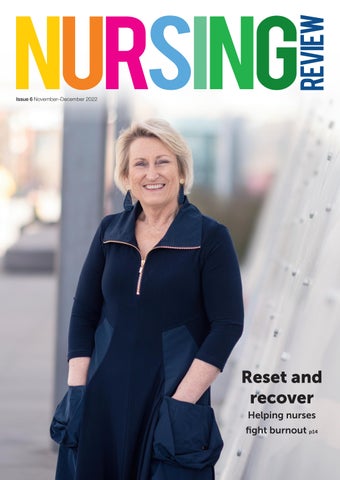
Issue 6 November–December 2022
Reset and recover Helping nurses fight burnout p14
Infant with cow's milk allergy? ASCIA Guidelines recommend rice
Introducing Alula Gold Allergy premium rice infant formula
ASCIA* recommends rice formula as a 1st choice for infants with Cow's Milk Allergy (CMA)1 New Alula Gold Allergy:2 ✓ Does not contain the top 8 allergens2 including milk, fish and soy ✓ Lactose Free ✓ Omega 3 DHA and Omega 6 AA from vegetable sources
DHA=Docosohexaenoic Acid AA=Arachidonic Acid
For more information, please visit www.alula.com.au or contact our Careline to find out more 1800 552 229 IMPORTANT STATEMENT: Breastfeeding is best for babies. It has benefits for the infant, such as reducing infection risk, and for the mother. It is important to have a healthy balanced diet in preparation for, and during breastfeeding. Infant formula is designed to replace breast milk when an infant is not breastfed. Breastfeeding can be negatively affected by introducing partial bottle-feeding, and reversing a decision not to breastfeed is difficult. Infant formula must be prepared and used as directed. Unnecessary or improper use of infant formula, such as not properly boiling water or sterilising feeding equipment, may make your baby ill. Social and financial implications, including preparation time and the cost of formula, should be considered when selecting a method of infant feeding. References: 1. * Australian Society of Clinical Immunology and Allergy Guide for Milk Substitutes in Cow’s Milk Allergy. 2022. Available from: https://www.allergy.org.au/hp/papers/guide-for-milk-substitutes-cows-milkallergy (accessed August 2022). 2. Data on File. 01/08 2022. S-26 is a registered trademark. Used under licence. Distributed by Sanulac Nutritionals Australia Pty Ltd. ABN 31 160 607 509. Level 1, 42-44 Chandos Street, St Leonards NSW 2065. 05782. Date of preparation: August 2022. Healthcare Professional Use Only. For formula-fed infants. Use under medical supervision.
contents
MANAGING EDITOR
news
Eleanor Campbell 02 9936 8629 eleanor.campbell@news.com.au
2
Budget talk
3
Nurse fined 25k
4
Rural doctor shortage
5
New assault laws
6
Hospitals secure boost
7
Nurses named top job
HEALTH EDITOR
Elise Hartevelt elise.hartevelt@news.com.au SALES MANAGER
Sarah Licence 02 9936 8666 sarah.licence@news.com.au
03
06
SUBSCRIPTIONS MANAGER
industry and reform
8
Graduation day Health students face barriers
Isabella Galea 02 9936 8666 isabella.galea@news.com.au
10 Nobody’s martyr Why public image impacts nurses
COVER
12 Long haul
Nurse coach Michelle Deroubaix. Picture: Supplied.
Australia’s Covid-19 rules eased
14 The good fight
PUBLISHED BY
Dealing with burn out
specialty focus APN Educational Media GPO Box 4245 Sydney NSW 2001 ABN 58 090 900 999 ISSN 1326-0472 PP100001944
16 Safe haven
08
12
18 Self care Mental health expert weighs in
19 Disaster relief Floods bring challenges
PUBLISHER’S NOTE
© Copyright. No part of this publication can be used or reproduced in any format without express permission in writing from APN Educational Media. The mention of a product or service, person or company in this publication, does not indicate the publisher’s endorsement. The views expressed in this publication do not necessarily represent the opinion of the publisher, its agents, company officers or employees.
Nurses’ role at music festivals
clinical practice
20 Early detection Could it be sepsis?
22 From the heart Vital research pipeline at risk
24 Getting ahead
16
24
Using AI to fight virus strains
25 Blood test New ways to detect Alzheimer’s
workforce
26 Simulation lab New program to support future nurses
Technology
28 Mannequins to ‘metaverse’ The evolution of nurse training
26
28 nursingreview.com.au | 1
news
“It’s going to be a real challenge for all health systems to keep their heads above.
Federal Treasurer Jim Chalmers said this year’s budget was full of ‘hard decisions’. Picture: Martin Ollman/Getty Images.
Hard decisions What Labor’s 2022-23 Federal Budget means for nurses and midwives. By Elise Hartevelt
T
he recent budget tackles key issues facing the nursing workforce such as gender inequity and cost of living, according to key nursing advocates, but skims over the essential needs of nurses and midwives. Treasurer Jim Chalmers handed down Labor’s first budget in a decade on October 25, affirming the new governments focus on improving female workforce participation. Key policies included expanding the government’s paid parental leave scheme up to 26 weeks, increasing childcare subsidies over the next four years, and establishing a pay equity and care sector expert panel in the Fair Work Commission. ACN chief professor Kylie Ward welcomed the move, but said the budget lacked specific funding to ease greater pressures on nurses and midwives. “I’m disappointed to see nothing about nurse practitioners,” Ward told Nursing Review. “It’s a conservative budget based on election promises – there wasn’t really anything surprising. “I’m hoping to see a real commitment to innovative nurse-led models of care in primary and community health in the next budget.” Labor allocated $235 million over four years to roll out additional care clinics to reduce pressure on hospitals’ emergency departments.
2 | nursingreview.com.au
They also set aside $750 million to improve Australians’ access to Medicare and $1.4 billion to reduce the costs of medicines. Yet, Ward said there’s no extra funding going to hospitals despite inflation rising to 7.3 per cent. “It’s going to be a real challenge for all health systems to keep their heads above water because the CPI has not kept up with the budget estimates,” she said. The budget expects an extra annual health and aged care spending of over $2.3 billion after its initiatives are fully implemented by the end of 2026. But Ward is concerned about the client inflation rates and how the war in Ukraine and global geopolitical challenges “will affect the price at the counter for every Australian.” “We need to use taxpayer dollars wisely, and I’d like to see more of that in the future budget because, in this budget, I saw only reinvestment and redirection,” she said. Nevertheless, Ward welcomed the funding towards gender equity and, particularly, to ending violence against women and children. Nurses and midwives face the highest rates of occupational violence for any profession. Over 80 per cent of the workforce reported between one and ten incidents of violence over the past six months. The budget committed $1.7 billion towards strengthening safety measures for women, of which $1.3 billion is going towards enforcing the National Plan to End Violence Against Women and Children.
Labor also introduced laws to offer victims ten days of paid domestic and family violence leave. “I’m pleased to see this initiative focusing on women’s health and safety and plans to stop gender-based violence,” Ward said. “We’ve been pushing for this for some time, and it really concerned me.” The ACN has been running the Nurses and Violence Taskforce for two years, of which the Domestic and Family Violence is one of its committees, to end violence against nurses and midwives. “We need to invest in social equity, in [the safety] of women and children, and closing the gender pay gap if we want to be considered in global leadership,” Ward said. ANMF’s federal assistant Lori-Anne Sharp said it’s been “hard fought for decades, and that it’s an outstanding win.” She also welcomed Labor’s $25 million promise towards a National Nurse and Midwife Health Service, especially after years of working through the pandemic, bushfire seasons and national floods. “There’s been a significant turning of the ship,” Sharp said. “There’s always work to do, but in terms of a week – what a difference.” The budget’s delivery coincided with the passing of legislation that will officially see 24/7 onsite nurses in aged care. Employment minister Tony Burke also released the details of the Industrial Relations bill last Friday that will seek to change outdated laws to give employees, such as women experiencing violence and abuse, more rights to access flexible work arrangements. “Some very significant things happened for nurses and midwives,” Sharp said. She said the paid parental leave extension to 26 weeks will free-up nurses and midwives to work full-time and boost female participation in the workforce. The government is also investing $4.7 billion over four years to cut childcare and education costs for families and ease the burden of higher living costs. “That’s a huge win,” Sharp said. “It’s going to take time for these things to play out in people’s real lives, but they’re coming.” ■
news
A woman has pled guilty to working in a nursing home while knowingly infectious with Covid.
Safety breach Aged care nurse fined $25k for working with Covid-19. By Eleanor Campbell
A
nurse who attended work at a south-east Melbourne residential care facility while infected with Covid-19 has been fined $25,000. On July 26 and 27 2020, Kamaljeet Kaur Brar worked two casual shifts at Menarock Life in Highett, after she had been instructed by stay home and isolate by her doctor. The 36-year-old told staff conducting morning checks on both occasions that she had received her flu vaccine and did not have any symptoms. After attending a pathology clinic on July 30, Brar tested positive for COVID-19. A resident was then sent to hospital two days later after contracting the virus, prompting the facility to go into lockdown.
Brar clocked in for an evening shift the following day. The nurse then became the first person to be charged over pandemic-related workplace safety violations by WorkSafe in Victoria. She pleaded guilty on Wednesday to one charge of failing to take reasonable care for the health and safety of her patients and colleagues. Magistrate David Starvaggi said Brar’s actions showed a “flagrant and persistent disregard” for other people’s safety. “As we all know, tragically many people passed away as a fault of outbreaks of Covid in aged care facilities, amongst other care places,” he told the Magistrate’s court. “Fortunately, that did not occur in this particular instance.” The court heard Brar had only been working as a nurse for a few months when
the pandemic hit, and was struggling financially. Her lawyer said said she “wasn’t thinking right” at the time of the offending and had expressed remorse for her actions. Brar was fined $25,000 and has been disqualified from working as a registered nurse in Australia. WorkSafe executive health and safety director Narelle Beer said the former nurse had failed to take reasonable care for her colleagues and residents at the facility. “Every worker in Victoria has a duty to ensure their actions do not put the health and safety of others in their workplace at risk,” Beer said. “This includes cooperating with their employer’s efforts to control health and safety risks by following any instructions, policies and procedures and using supplied protective equipment.” ■ nursingreview.com.au | 3
news
Rural shortage Queensland town offers $500k and house to fill job of town doctor. By NCA NewsWire
M
ore than $500,000 and a free house haven’t been enough to attract a doctor to a small town in rural far-north Queensland, leaving residents forced to drive two hours to receive treatment. McKinlay Shire Council in Julia Creek – 600 km west of Townsville – has offered an enviable package for a GP looking for a tree change in their tight-knit community. The job includes a salary of up to $513,620 and a rent-free house on a decent-sized block of land, but no doctors have taken up the call yet. Temporary doctors have been flying in for two days a week to help support the small healthcare staff at the local hospital. If a local needs to see a GP on the other five days of the week, they need to make a 200km or two-hour trip to Mount Isa. Deputy Mayor Janene Fegan told NCA NewsWire the jaw-dropping salary package was offered up three months ago, but they’ve been looking for a permanent GP for around 18 months. “It’s not only about the money, it’s also about the lifestyle,” she said.
4 | nursingreview.com.au
A nurse by trade, Fegan moved to Julia Creek for a three-month posting almost three decades ago and never left. “It’s just a nice, easy, simple lifestyle,” she said. “We have plenty of room, plenty of space.” In April, the town is host to the Dirt N Dust Festival, featuring bull riding and live music. “We have wonderful events here; there’s never a dull moment, you could go somewhere every weekend,” Fegan said. “You don’t have to book a hotel, you can just put a swag in the back of the car.” Julia Creek is home to a tight-knit community of just 500 residents. According to Fegan, it boasts warm sunny days, a gym which costs $30 a month and a swimming pool which sets you back just $2 to use. The council has received two applicants for the role, but both requested a fly-in, flyout arrangement. Locals are desperate for the return of a permanent doctor to provide some stability and – more pressingly – to provide urgent care when it’s needed. “If you had a sick child in the middle of the night, they might have to send you on,” she said. “And some things aren’t quite serious enough to need an ambulance, but serious enough that you want care quickly.”
“It’s not only about the money. Fegan said the community has gotten by without a doctor through the sheer good will of neighbours. “I guess that’s why we’ve survived so long without the doctor, because we are such a tight-knit community and someone will also help someone else out,” she said. The council has also committed to providing the new GP’s partner with employment should they desire it. “We would definitely make all our effort to find something suitable,” Fegan said. “And also with the internet, you don’t need to work in the city anymore.” Queensland’s ambulance ramping is the ‘worst in the nation’ Queensland’s ambulance ramping is the “worst in the nation,” says Qld Opposition Leader David Crisafulli. “There’s three things the government could do immediately that would help heal the health crisis – better triaging, sharing data in real time, but above all putting doctors and nurses back in charge,” Crisafulli told Sky News host Peter Gleeson. “There are solutions on the table, you just got to get the frontline people to have their say.” ■
news
Maximum jail terms for assaulting NSW health workers will now match those for attacking police.
Jail time Tougher legal penalties to protect state health workers. By Eleanor Campbell
P
eople convicted of wounding or causing grievous bodily harm to a NSW frontline health worker will face up to 14 years in jail under tough new laws passed by the state government. As of October 19, legislation has passed creating a new offence for assaulting state frontline and emergency service workers, including nurses, paramedics, hospital staff and pharmacists. New penalties range from up to 12 months in prison and/or a $2200 fine,
to a maximum 14 years’ jail for the worst offenders. Premier Dominic Perrottet said the new laws will better protect those who “commit their working lives to keeping our community safe.” “These new laws reinforce the NSW Government’s commitment to strengthening frontline services and supporting those who selflessly serve in these critical roles,” Perrottet said. The laws were passed in response to a 2021 NSW Sentencing Council report which found there were insufficient protections for health workers facing workplace violence. It cited a 2020 study which revealed that over 20 per cent of nurses
and midwives across the state had experienced physical assaults at least once during their careers. Australian College of Nursing chief Kylie Ward said she hears stories of nurses enduring assault and aggression on a daily basis. “It has always been unacceptable that nurses have been faced with harm for providing quality care for our communities,” Ward said. “We should not have to wait until after a nurse has been harmed to act.” In August, Sydney’s Local Health District (SLHD) announced it would make 24/7 behavioral support teams available to state hospitals in response to a string of violent attacks at Royal Prince Alfred Hospital during 2019. The move was initiated as part of an enforceable undertaking with the state’s workplace safety regulator. A SafeWork NSW representative told Nursing Review that “planning is already underway regarding the new care model, including the recruitment of personnel.” ■
subscribe for less than $2 a week The laTesT news and resources for healThcare professionals Nursing Review is essential reading for anyone involved in the healthcare sector in Australia. It provides unrivalled coverage of specialist topics from features and opinion pieces, to international news and profiles. • Latest news and resources for all healthcare professionals • Comprehensive coverage of a diverse range of topics • Analysis of the major issues facing the health sector as a whole • Delivered free of charge • 6 issues per year • Only publication in the country dedicated to reporting issues important to nurses
Please call 02 9936 8666 or email subs@apned.com.au to find out more. nursingreview.com.au | 5
news
Federal Health Minister Mark Butler. Picture: Gary Ramage/NewsCorp Australia.
Covid boost $1.4 billion boost to strengthen hospitals against Covid. By Elise Hartevelt.
F
ederal Health minister Mark Butler has announced that the government will fork out an additional $1.4 billion dollars over the next three months to prevent Covid outbreaks in hospitals and aged care homes. The Covid package, which was due to expire by the end of September, will provide additional Covid support until December 31st, with the bulk of the funds ($840 million) earmarked for aged care. “Since the peak of that wave in late July, case numbers are down by about 85 per cent, hospitalisations are down by about 70 per cent,” Butler said. “The number of aged care facilities who are experiencing outbreaks right now is down by more than three quarters, and the mortality rate is down by more than a half. “But there is still a tragic loss of life being felt by about 45 families on average every single day because of Covid. And there is
6 | nursingreview.com.au
still very real pressure on our health and our hospital system because of ongoing infections.” Chief of health policy at Catholic Health Australia Caitlin O’Dea welcomed the financial aid. “Our hospitals are still well and truly in the thick of Covid and are reeling from the huge burden of costs of protecting patients and staff. We welcome the extra assistance,” she said. O’Dea was particularly pleased to see an extra $5 million for antivirals to be prescribed through telehealth. “Telehealth came into its own during the pandemic and we should continue to develop our telehealth capacity and utilise it where it makes sense,” she said. The package also includes over $142 million set aside for Medicare Benefits Schedule (MBS) items and rebates from October 1st to improve Covid testing. Another $48 million will see the expansion of 100 GP-led Respiratory Clinics and $5.5 million on rebates for face-to-face GP visits for patients with Covid.
“The pandemic is not over. The package plans to dedicate over $235 million to ensure frontline healthcare workers, aged care homes and primary care have enough rapid antigen tests and protective equipment. RACGP President adjunct professor Karen Price, said these measures will make a “real difference.” “GPs, practice managers, nurses, receptionists, and administrative workers are doing a tremendous job after a gruelling two-and-a-half years,” she said. “I stress that the pandemic is not over, and we can’t be complacent. It’s vital to keep fighting this virus and do all we can to keep vulnerable members of our community, including older people and the immunocompromised, as safe as possible. “I encourage everyone to help limit the spread of this virus and ease pressure on our entire health system. We all have a role to play, it’s as simple as that.” ■
news
Registered nurse have consistently ranked as one of Australia’s most heavily advertised occupations.
Hot demand Nurses the most in-demand profession in Australia. By Eleanor Campbell
C
hronic demand for qualified nurses in Australia has prompted sector leaders to call for greater investment in workforce development and leadership. New statistics from the National Skills Priority List, released in early October, shows there are currently 9,266 advertised vacancies for registered nurses across the country. The report said nationwide demand for nurses has more than doubled over the past two years, reaching a ‘historical peak’ in June 2022. The quarterly list ranked nurses among other staff stricken professions, including aged and disability care workers and child carers, both of which had more than 5,000 active job ads seeking workers. Australian College of Nursing CEO Adjunct Professor Kylie Ward called the data ‘unsurprising’.
“When nurses lead, society follows, and an investment in nurses is an investment in the health of all Australians,” she said. “A message we hear again and again is to invest in our nurses to prevent the exodus of our highly skilled nursing leaders. “An easy-to-implement solution is to support nurses of all ages and career levels to receive leadership training and professional development.” The impacts of Covid-19 and burnout were named as the two main drivers pushing nurses out of the industry. The report quoted a 2020 online survey of nearly 8,000 frontline health workers which found that 70 per cent had experienced ‘moderate to severe burnout.’’ “The impacts of reployment and burn out could be lingering/and or ongoing as since the initial Covid-19 outbreak in Australia, there have been multiple waves of outbreaks,” it said. Following the release of the data, federal and state ministers met on
“When nurses lead, society follows. Friday to discuss strategies to address workforce gaps. In a joint statement, they quoted the government’s commitment to an extra $1.1bn to the TAFE sector to create 180,000 fee-free places, and pledged to lift the permanent skilled migration intake from 160,000 to 195,000. Federal Jobs and Skills minister Brendan O’Connor said the aged care sector was an area of “critical” priority. “We need to retain and attract aged care workers and we need to make sure we’re training and, through skilled migration pathways, finding ways to supply those workers,” he told reporters. O’Connor said he would also not rule out other measures, including making more tertiary qualifications free. “I think everything has to be on the table when it comes to supplying the skills and labour we need,” he said. ■ nursingreview.com.au | 7
industry & reform
Graduation day Research says workforce shortages will stay if nurses can’t graduate. By Elise Hartevelt
F
inancial barriers for students and an unwillingness of hospitals to provide practice placements are hindering studying nurses from graduating, a new study has found. Lead researcher, Professor Lesley Andrew from Edith Cowan University, says that it’s critical nursing students are able to graduate and enter the workforce. “It’s one thing to attract people to study nursing, but another to keep them at university until they graduate,” Andrew said. Nursing Review spoke with Andrew about how practice placements are preventing nurses from entering the workforce.
NR: How has nursing study changed over the years? LA: Nurse students originally were between 16 and 18-year old and they were all women. Men weren’t allowed into nursing until the last century. Today, it has changed 8 | nursingreview.com.au
hugely. It’s still mainly girls – only 10 per cent of our students are men despite many efforts to get males into the profession. But people start their nursing careers much later than before. The average age of the nursing student is at mature age, so over 25. So, they’re older, which means that many live with partners or not with parents, and are more likely to have mortgages, children and rent. Nurse education has also changed in recent decades from a model where the student is a passive recipient of information, to a critical model where the student is engaged in the process of developing autonomy and empowerment. Embedding gender theory within nursing studies would allow women nursing students to be comfortable in enacting changes in their home lives to support studying their degrees, enrich the profession and protect the future workforce supply.
What problems are more likely to arise from them being older, and what can we do to resolve these issues? Older students are, of course, still really valuable: they bring lots of life experience
to the job and are more empathetic. But they’re less likely to work as long because they graduate later in life, so they have a shorter lifespan in nursing. They also tend to work more part-time if they have families. So we don’t want to lose those students, but instead make it easier for them to graduate because they’re currently facing real difficulties. After all, the degree can make it hard for them to prioritise university over family. It’s challenging for these students to do that. We also have the issue of younger students. We want to attract more younger and male students, but when you look at Generation Z, they are interested in fair pay, respect, and flexibility – these things are just not there in nursing. Nurses earn less than other graduates in health professions, and there’s a lot of bullying in nursing; there’s not a lot of respect from other occupations. Some other disciplines subjugate nurses, as we found in research. And also, within nursing, bullying and hierarchy can cause a problem within the profession. Our generation Z students don’t want to live to work. They want to live with a job rather than it being everything to them.
industry & reform
What are some barriers for students that would cause delays in graduating? Particularly women with children and full-time jobs, there are some significant barriers. Most students don’t just study anymore – they work. And for those with family and childcare, the degree can be a real issue, especially practice placement. So students will go out on placements for between two and eight weeks at a time, four or five times during their degree, and they have to do that full-time. During that placement, they can’t work, so they receive no income. Some have to give up their permanent jobs because they can’t get eight weeks off. So, that’s a real financial problem, especially if these students have mortgages or rent to pay. Another issue is that practice placement might be arranged one or two hours drive away from their home, which means the student has to have access to a car to get there. The real problem is that we’re not organising practice placements in collaboration with students. We’re not looking at where they live or try to make it easier for them to have placements at home. And a lot of the hospitals are really problematic in that they will not let students park at the hospitals, so how do they get there? It’s seven in the morning, the seven o’clock shift, and some hospitals don’t give students their rosters until the day they start. Can you imagine getting a month of duty, not knowing your roster until the day you start and having children and work to think of? How do you get childcare? How do you arrange that? And also, how do we get childcare for a seven o’clock start in the morning, or a nine o’clock end in the evening, or weekends or nights? These students struggle if they don’t have a supportive family or a partner. And we lose these students, so the university and the hospitals need to realise that if they want a strong workforce, they have to work with the students to complete their degrees. These students are no longer 17-year-olds living at home with mum and dad with loads of money. Of course, some still are, but it’s changing. Over time, it can become more difficult for students to shield their family as the expectations of university study competes for their time and energy. This creates a conflict for these women, leading to feelings of guilt and distress and ultimately impacting their capacity to engage in the range of study opportunities offered by the university.
Why are hospitals not too keen to take on students for practice placements? One reason a hospital wouldn’t be interested in taking on placements is the extra time to educate them. When I was young, as a student, we worked part-time in the hospital and actually did things. We gave drugs out under supervision, we did wound checks, and we did observations, but students now are supervised much more closely, so you need that one-to-one supervision all the time. So that’s supernumerary, and obviously, that staff member is already working overtime and burned out. Then they’ve got to have the students following them around, asking questions and being watched and supervised, so that’s a real issue in the Australian system.
“Most students don’t just study anymore – they work. What has the government done to address these issues? The government has made the degree less expensive, but there’s no funding to cover these placements. People are living hand-to-mouth with the rising fuel costs and living at the moment. In Victoria, they talked about bringing in three degrees, so there are no fees, but we’ve still got the issue of the fact that there is no payment during placement. That’s eight unpaid weeks multiple times during a degree. It’s still an issue. ■ nursingreview.com.au | 9
industry & reform
Nobody’s martyr
Why society’s perception of nurses needs to change. By Elise Hartevelt
I
n an attempt to plug staffing gaps, the Victorian government has started offering free degree places in nursing, but experts say this solution ignores the elephant in the room. According to Dr Lesley Andrew from Edith Cowan University, nursing has become an unattractive career prospect that is in dire need of redirection and reimaging. “Nurses are seen in the role of oldfashioned and sexist ideas of women as conforming, obedient, and self-sacrificing,” she says. “The idea of nurses as martyrs persists and are, in some ways, celebrated: nurses are ‘angels’ who sacrifice their own needs for others. “It’s really convenient for our governments to rely on this image of the nurse because then they can ignore issues of pay and poor working conditions that are just getting worse for our nurses.”
10 | nursingreview.com.au
Nursing Review spoke with Andrew about the need to reinvent nursing’s ‘martyr’ image.
NR: What is the current image of the nursing profession in Australia and why do you think this needs to change? LA: The image of nursing in Australia, and many other countries across the world, is really seen as a very traditional ideal of females. We’re seeing nurses as ‘angels’ or a ‘martyr’ rather than a highly skilled professional. This can cause real problems for the nurse and the profession. Seeing the nurse as an angel or martyr can really affect expectations that they’re going to put their career before their family, finances, et cetera, which isn’t expected of many other health professions. This can cause a real problem and nurses are now waking up more and more to the realisation that they can have more fulfilling careers where they can use their skills elsewhere. Women have more career options than they did 30, 40, 50 years ago.
What barriers does this image pose for nurses in their work? To start with, it’s causing workforce attrition, and making the nursing degree less appealing. Especially to our younger students who really don’t agree with the idea of working to live. They want more balance in their life and more respect. We’re having a lot more older women in nursing now, who bring an awful lot of skills, but they’re also more likely to work part time or casual. Overall, we’re losing nurses from the profession and we’re not having enough people to look after us and our ageing population. The barriers really are the lack of respect for the professionalism of nurses. We’ve seen nursing as an extension of the women’s role, and it’s seen as a natural part of being a woman, caring and nurturing. And that affects respect, and it affects the pay that we offer to nurses, which is generally much lower than other graduate professions in Australia, and in some other countries. Similar situations are happening now in Australia with childcare workers. It’s seen as a woman’s role and they are now striking because of that situation.
industry & reform
Other consequences are expectations in hospitals and administrators, expectations that nurses will fit in with the shift requirements of the hospital. Really, it’s all about sacrificing family and own social needs for the hospital which really isn’t seen to the same extent in other health professions.
In what way does the fact that this is a predominantly a female dominated profession play a role? Nurses are put in that role of the oldfashioned, sexist ideals we often associated with women, which is conforming, obedient, and self-sacrificing. It’s really convenient for our governments to rely on this idea and image of the nurse because then they can ignore issues of pay and poor working conditions that are just getting worse for our nurses. This idea that as a woman, we will be happy to accept whatever’s thrown at us, and also to bend to the needs of others. Women obviously continue to be subjugated in wider society and obviously this occurs within the hospital and other healthcare settings, and unfortunately people who are subjugated tend to go on to subjugate others. We do have issues of hierarchy and bullying and manipulation in nursing, rather than assertive discussion in many situations. We often find people who are in positions of limited power trying to find ways to control their own lives and dominate others, and that can happen through bullying. That really can be a consequence of nursing being a highly female profession. Like the military, another hierarchical profession, this can really cause attrition and deep stress, and PTSD. And also the idea that as women, nurses must fit into the health system and build their own resilience, which really is looking at the idea of they need to bend to the increasingly unrealistic expectations of hospital administration, rather than finding a way that everyone can compromise so that everybody’s needs are met.
as the martyr. We’ve seen the public celebrating nursing sacrifice, we’ve seen nurses leave their families to move in with patients in nursing homes, for example. There’s been more clapping and celebrating of this sacrificial behaviour, which is strange. When we really think about it, looking at for example President Trump calling nurses warriors, running into death like soldiers, running into bullets. This image of the nurses as a martyr. It really makes it easier for the public to accept the death of our nurses from COVID as natural, as part of a martyr role. Rather than being outraged about the situation, the lack of personal protective equipment, loss of resources, et cetera.
What do you think needs to change to improve the image of nurses? It’s a double edged sword, but we do need to remove the profession’s image away from traditional ideas of women as the self-sacrificing person. We really need to educate our administrators and the members of the multidisciplinary team about the nurse’s role, to increase respect for the nurse and support communication
“We’ve reinforced the idea of the nurse as a martyr, rather than as an empowered professional. I still think that we’re trying to do more and more at university, so that nurses are training with medical students, physio, so they have collaboration. We need to really improve respect and mutual communication, so that’s another way we can really promote the nursing image, and we really need to challenge the idea of the nurse as the angel or martyr that’s portrayed in the public and stop celebrating this. Women and men in nursing need to have more power and control in their everyday lives. Planning their off duty, planning their career advancement. They’re at the coalface of care and nurses have been protesting for decades about clinical status and pay and we really need to be listening to these nurses rather than silencing them. ■
How has COVID changed the way society perceives the nursing profession? This is a really complex one. In some good ways, the public are waking up to the idea that the nurse has a key role in health protection and public health. And they’re more aware of the struggles they have, in an under-resourced health environment. But some of the negatives are that maybe we’ve reinforced the idea of the nurse nursingreview.com.au | 11
industry & reform Picture: Cole Burston/AFP.
Long haul
Australia’s nursing peak responds to relaxed Covid rules. By Elise Hartevelt
T
he Australian Nursing and Midwifery Association have warned the government’s significant lowering of Covid-19 restrictions will place increased pressure on the nation’s healthcare system. As of October, mandatory self-isolation for people with Covid ended across Australian states and territories, along with the Pandemic Leave Disaster Payment for casual workers. An exception was made for those working in high-risk settings, such as hospital, aged and disability care, where employees can receive payments of $450 or $750 to isolate if they’ve tested positive. NSW joined Victoria in scrapping the mandatory reporting of positive RAT tests. AMNF federal assistant secretary Lori-Anne Sharp said she is worried the eased restrictions will send the wrong message to the public. “We know it’s not over,” she said. “It’s a risk to remove all Covid safety precautions that will increase cases and place further stress on our already stretched health and aged care systems. “We were yet to see the real impact of dropping the isolation period from seven to five days, let alone removing the isolation period altogether.” Australia has clocked in over 10.3 million Covid cases since 2020, with the largest number of infections in NSW and Victoria. The average number of 7-day hospitalisations is at its lowest since
12 | nursingreview.com.au
the start of this year, and the figures of hospitalised Covid cases have fallen by 4 per cent compared to the previous week. While most restrictions have eased, those employed in high-risk settings such as disability and aged care are still required to wear facemasks and be fully vaccinated. “We’re concerned that removing most Covid restrictions and all isolation periods, particularly in the context of uncertainty regarding the emergence of all the new variants and potential waning of immunity, will put extra pressure on the healthcare systems,” Sharp said. The decision to let go of the compulsory self-isolation period came from the national cabinet last week after Australia had seen a period of low Covid cases and high vaccination rates. Although casual workers outside highrisk settings have to decide between going into the office sick or using up their leave, the government kept the funding for healthcare workers. If, for example, a nurse would’ve worked 20 hours or more during the self-isolation period, they can receive a payment of $750. When someone would’ve had shifts covering fewer than 20 hours but more than eight, they are eligible to receive $450. This claim can only be used three times within six months. Sharp said that those working outside of high-risk settings might not self-isolate and spread the virus through the community. “We’re going to see people out there who don’t even know they have Covid and who might spread it in the community, and
“We must do all we can to prevent further pressure on our healthcare system. that’s going to have consequences on the healthcare system,” she said. “The suggestion that Covid-isolation is a matter of ‘personal responsibility’ is just a way of governments shifting their responsibility onto the individual when it should be theirs. “The government must also be ‘flexible enough’ to reinstate public health precautions to prevent escalating cases, further healthcare crises, and risk of increases in chronic disease burden from long Covid.” A recent study found that more than one in ten Australians’ have been diagnosed with long Covid, with nearly 5 per cent reporting virus related symptoms after more than three months. The complexities of the longer-lasting infection, which include extensive healthcare management and psychological relief, have taken a toll on hospitals and GP, Sharp said. She said nurses in particular have become exhausted and are experiencing moral distress due to a lack of resources. “It has placed so much stress on the healthcare workers.” “But while we all want the pandemic to end, the sad reality is that Covid is not over. “We must continue to do all we can to prevent further pressure on our healthcare system and the precious nurses, midwives and carers who hold it together.” ■
SubScribe for leSS than $2 a week
The laTesT news and resources for healThcare professionals
• Analysis of the major issues facing the health sector today
Nursing Review is essential reading for anyone involved in the healthcare sector in Australia. It provides unrivalled coverage of specialist topics from features and opinion pieces, to international news and profiles.
• Can be used as a professional development resource
At Nursing Review we pride ourselves on being at the forefront of the ever changing healthcare sector. We provide an independent source of news, and cover the issues relevant to nurses and the sector giving an informative, practical and insightful view into day to day life in hospitals and in surgery.
• 6 issues per year • Interviews and opinion pieces from professionals in the industry • Written by an independent voice • Tax deductible
Please call 02 9936 8666 to find out more.
industry & reform Registered nurse Michelle DeRoubaix has been active in the sector for over 40 years. Picture: Supplied.
The good fight A registered nurse and mentor is supporting nurses to tackle burnout. By Elise Hartevelt
A
n exhausted nurse finishing a 12-hour shift for the third time in a row is no longer an uncommon scenario since Covid has made its mark on the world’s healthcare systems. Over 75 per cent of Australia’s frontline workers are burned out, according to recent studies, and at least one in four nurses have indicated they plan to quit in search of less stressful positions. As the pandemic fuels the ‘great health resignation’, long-time registered nurse Michelle DeRoubaix is offering support to her fellow nurses by coaching them through feelings of insecurity, tiredness and loneliness. “Many nurses are not receiving the guidance they need to improve their mental, emotional and physical health and wellbeing,” Michelle told Nursing Review. “It’s obvious they’re not coping with what’s happening. “They are the backbone of society, but they don’t realise just how amazing they are.” With a career spanning over 40 years, including a decade in the emergency department, Michelle knows the ins and outs of the nursing profession.
14 | nursingreview.com.au
Her programs are devoted to building confidence, self-care and skills so nurses can reach their full potential while facing challenging job expectations with unyielding tenacity. “Empowered nurses flourish through awareness of their potential and knowing how to shift their focus to improve their performance,” she said. As a profession with high expectations and responsibility, stigma, minimal authority and complex demands, Michelle has seen many nurses bring that stress home. “There’s a lot of pressure on them, and some feel quite trapped,” she said. “I often hear from different groups that there’s a lot of bullying and negativity, and they feel disillusioned and fed up. “They’re just asked to do more and more, and it’s just not working because that’s why they’re leaving. So the proof is in the pudding, really.” Michelle said nurses are also “unfairly” under scrutiny as media reports of medical errors in healthcare services trickle in and authorities worry about patient care safety. The prolonged stress on the workforce, exacerbated by significant shortfalls estimated to reach over 100,000 in less than seven years, has made nurses and doctors more prone to making mistakes during their service.
“We just need to look after each other. As a result of exhaustion and burnout, one in 20 medical prescriptions contain mistakes and close to 20 per cent of Australian in-hospital care leads to harmful adverse events. “We’re tired, and it’s not fair because we’re trying to do a good job, and no one wants to make a mistake,” Michelle said. “Everyone’s doing such an amazing job; we just need to look after each other.” At 48, Michelle said she decided to go to university to achieve her dream of helping other nurses. There, she obtained a graduate certificate in nursing and a master’s in business coaching. But that was not enough – she also went to Melbourne University to study positive psychology. “Teaching in nursing has meant that I’m very current with the issues that the students are facing, and I found that’s really helped me become a very good teacher, too,” she said. “I think there’s just a magic to nursing that I see so often, especially with the experienced nurses who can magically change a challenging situation into something really effective.” ■
industry & reform
Wage battle Western Australian nurses escalate industrial action. By Eleanor Campbell
E
scalating industrial action by nurses and midwives in Western Australia has seen an overtime work ban put in force by the state’s union. In early October, the Australian Nursing Federation WA (ANF) initiated a ban on
overtime work and double shifts after a union poll found that 84 per cent of members supported the move. The ANF is asking the state government for a 10 per cent pay rise per annum and legislated nurse-to-patient ratios. Newly-elected AND State secretary Janet Reah said double shifts were compromising patient safety. “For the longest time, we’ve had a double shift culture and the question has
A hard day’s work ANMF pushes for a four-day working week. By Elise Hartevelt
T
he Victorian branch of the Australian Nursing and Midwifery Federation, in their submission to
a federal parliament Senate committee, has called for a one-day reduction in the working week. The ANMF told the Select Committee on Work and Care, which is due to hand down an interim report next month, that the reduction “would enable all employees a better opportunity
to be asked, when did we normalise double shifts?” Reah told reporters. “There’s no such thing as a safe double shift.” As part of its industrial action plan, the union has said it will begin gradually closing beds and go indefinite strike later this month. Nurses rejected an offer submitted by the WA health department which said the government supported mandated nurseto-patient ratios ‘in principle’. The offer included ratios of 1:4 in the morning and afternoon shifts and 1:7 at night by 2025. “It is unnecessary and in fact, poor form to continue industrial action when there is genuine bargaining afoot,” Western Australia’s state health minister Amber-Jade Sanderson told parliament last week. “That is actually not the premise of good faith bargaining.” Ongoing negotiations continue as Western Australia’s state of emergency is set to end this Friday after 963 days in place. ■
to balance work with personal responsibilities”. In their submission, the ANMF also called for the circumstances in which carers can apply for personal leave to be broadened beyond illness, injury and emergency to events such as placing a parent in a nursing home or attending your child’s school. It comes as author Alex Soojung-Kim Pang told Sky News Australia recently that “a few dozen” Australian companies were due to begin trialling the four day working week in October for six months. Soojung-Kim Pang said the signs from earlier trials in the UK were promising. “More than half of them, I think about 55 per cent, say that productivity is at the same level it was when they were working five days or higher,” he said. “Only five per cent say that it might have dropped a little bit and across the board, people say that they are happier, they’re less stressed, they feel like they have a better work-life balance.” In Iceland, as many as 85 per cent of workers now work four days a week, while more trials are underway in Canada, the US, Spain and New Zealand. ■ nursingreview.com.au | 15
specialty focus
Safe haven
Why nurses are pivotal to keeping festival goers safe: Q&A.
induced harm and what role drug testing at festivals plays to keep people out of hospitals.
By Elise Hartevelt
A
s Australia’s festival season fast approaches, an expert has warned the public and the nation’s healthcare staff to be wary of the consumption of illegal drugs. There’s been a rapid increase in illicit drug-related fatalities across the country - the death rate in 2020 was four times higher than in 2000, according to the AIHW. Last year, over 150,000 hospitalisations nationwide were due to drug-related injury. Dr Stephen Bright from Edith Cowan University says nurses are ideally situated to assist young people to speak openly about these issues. His recent research into drug checking at festivals came after several coronial inquests were made into a string of deaths and hospitalisations due to a batch of adulterated drugs. “It’s concerning when young people don’t seek out medical assistance because they’re concerned of alerting them they’ve taken illegal drugs. “It’s vital we have ways of understanding the issue without stigmatising individuals who are using these drugs.” Nursing Review spoke with Bright about how nurses are on the frontline of supporting people experiencing drug-
16 | nursingreview.com.au
NR: What role do healthcare professionals play in reducing illicit drugrelated harm? SB: It’s important from a nursing perspective to promote the idea of harm reduction because nurses, paramedics and healthcare workers encounter a lot of drug use. So, I think it’s vital that they have ways of understanding the issue that is not going to stigmatise individuals who are using drugs. And if they have tools, it’s vital to maximise the likelihood that those interactions will result in decreased harm and not increased harm. At the New South Wales coronial inquest in 2019 following six deaths at New South Wales music festivals, what I thought was concerning was that the young people and those that were around them didn’t seek out medical assistance because they were concerned about the impact of alerting someone to the fact that taking drugs might have. After all, they’re doing something illegal. Nurses are ideally situated to assist young people and to be approachable so that young people can speak with them about these issues. They have good knowledge about drugs and aren’t going to take a judgemental view on the person’s behaviour. Of course, it’s different in each state because the culture is quite different. That
“Nurses are ideally situated to assist young people. was just stark when I was in New South Wales, seeing the difference in culture there. I think, more broadly, healthcare professionals could try to challenge that culture so that there’s less fear when people are in danger. Young people shouldn’t be fearful of accessing medical services. We want them to know that they can access those services and will not get into any trouble with the police for doing so.
How can healthcare professionals and harm reduction services support each other? There’s a lot of communication that occurs in both directions. For example, my experience has been that the nursing staff on-site at a festival appreciate the harm reduction services there. One, it means that they do not have to take care of people that don’t require medical care. And the harm reduction services can reach out to the nurses when they’re not sure if it’s a medical issue or not. And if the medical services observe a strange case or they’re not sure what particular drugs a person is talking about, they’ll usually contact the harm reduction service to get some advice.
specialty focus
Could you explain a bit about what your study looked at and what you found? The research involved a community-led drug checking or pill testing service at a large Victorian festival. Unlike other data that’s been published on the effectiveness of these sorts of initiatives, this particular one was not government sanctioned. Instead, it occurred due to concern within the community about a number of deaths in the weeks prior to the festival. And there was concern that the same batch of ecstasy that had killed half a dozen people was also potentially circulating at this festival. People within the community put their hand up, saying that they recognised that doing this sort of thing would involve breaking the law. But they saw that the benefit to the broader community was more important than the law at that time. What makes it a little more complicated when looking at this as a study is that multiple groups were engaged in drug checking or pill testing at this festival. We tried to coordinate some of that and ensure they could collect data that might be able to tell us whether or not what they were doing was helpful. We reported on 131 samples that were analysed, and the results were fed back to the person who had provided the drug sample. There were more samples, though, that weren’t included in the paper because it was happening on such a big scale at the festival. We only had the capacity to speak with a limited number of groups and try to get them to all collect the same data. We wanted to make sure everybody was measuring the same thing and recording it so that we could use it later to look at how effective it was.
How did you get people to speak up about this and be open about the fact that they were carrying pills? This particular festival had quite open drug use occurring at it. So, a harm reduction service was already engaging and looking after people who were having challenging experiences. That harm reduction service had a really good working relationship with the medical services on-site at the festival because there are benefits for all the different parties to have those services working well together. After we identified that some problematic drugs were circulating at the festival, the festival organisers were approached and informed. There was concern obviously that people could die. And the festival organisers asked that
some pill testing or drug checking occur at the festival. Obviously, they knew it was breaking the law, but they explicitly said that they didn’t want people to die at this festival either. So, they just told everybody to do it, but not to be too public about it; to make sure it was back-of-house. We had to get the information out as quickly as possible to as many people as possible to maximise its utility.
What were the drugs sold as? It was as MDMA capsules. But these capsules contained only a very small amount of MDMA and held 25C-NBOMe, a novel psychedelic drug. It also had amphetamine. This particular batch had caused several deaths a couple of months earlier in Queensland. Then it turned up in Melbourne, leading to fatalities in Chapel Street and many more hospitalisations. There was a pretty good chance that that batch of drugs was going to turn up at the festival. We had several people attend the festival with reagent testing equipment, which is just a chemical test that you put on a substance that changes colour to indicate what that substance is likely to contain. It’s a presumptive test. It’s rudimentary at best, but we wanted to ensure that the groups doing this public back-of-house pill testing were doing it consistently with at least three different reagents because then you can start to triangulate the results. What was really interesting about that batch of drugs going around was there was no internet on site, and the charts that people had brought with them didn’t contain that particular batch of drugs that had been seen earlier in Queensland and Melbourne. So, an inference was being made that there was a strange pattern that didn’t match any of the coloured charts that people had brought with them. As this pattern was coming up more frequently, people assumed that it was probably this batch going around Melbourne. Fortunately, someone was able to obtain, or at least keep, a sample of the drugs that were being discarded. That was then sent for GCMS analysis, confirming that it was the batch going around Victoria. So the assumption people were making that this batch would show up at this festival was, in fact, correct.
How often is this occurring in Australia? To my knowledge, this is only the second time something like this has
been published where some illicit or unsanctioned drug testing has taken place, and the results have been published. But I think it happens more frequently because, in the absence of government-sanctioned intervention, there are more often occasions like this where the community takes action themselves. It’s probably a tough combination in that it is illegal, while the government is also trying to intervene or ensure that people don’t take harmful drugs. It certainly makes it complex. Even in a government-sanctioned service, it almost seems like the government is saying it’s okay to use illegal drugs because they allow drugs to be tested. It comes from a harm reduction perspective, accepting that some people will use drugs. We can put sniffer dogs at festivals. We can do all kinds of things, but there will always be drugs there. So rather than reducing the use of drugs, harm reduction is about just trying to reduce the harm associated with using those drugs without any effort to reduce the drugs themselves.
What effect does it have on younger people taking pills and drugs and their chances of ending up in a hospital? When people are going to a festival and they’re using drugs, they know they’re taking a risk. People aren’t stupid. They know they’re taking a chance, but it’s hard. The risk isn’t necessarily real because you don’t see the effects or the harms directly. And so one of the things pill testing or drug checking does is make the risk real because people see this signage, for example, saying that there’s a particularly bad batch going around, so go and get your drugs tested. In turn, that impacts not only the behaviour of people using the pill testing service but also the behaviour of people at the festival more broadly. So I think that’s how pill testing straddles the issue with it being illegal but, at the same time, operating in a way that’s complex in the legal space. It’s around making the risk real because people can see it. And in terms of the impact on people who use the services, it’s been demonstrated to significantly reduce the number of patients who are then required to be transported to the hospital because fewer overdoses and fewer adverse reactions occur at the event. ■ nursingreview.com.au | 17
specialty focus
Self care A mental health expert says self-compassion is the superpower nurses need. By Elise Hartevelt
A
s Covid numbers begin to ease in Australia, a mental health professional says it’s time for nurses and health workers to focus on self-compassion. His recommendation comes after a recent study found that healthcare staff were at a severe risk of burnout, with respondents scoring the highest on emotional exhaustion and depersonalisation. Earlier this year, the RACGP also found that nearly 80 per cent of nurses said they felt severely fatigued and stressed due to Covid’s strain on public hospitals. Professor and registered nurse Nicholas Procter, chair of the University of South Australia’s Mental Health Nursing, has had first-hand knowledge of how taxing the past two years have been on nurses’ wellbeing. Throughout the height of the pandemic, Nicholas hosted over a hundred one-hour community practice meetings across the state involving 400 people, primarily nurses, to talk about mental health. “These times call for self-compassion,” he says. “Nurses have been through a lot of uncertain times. And if you want to rock someone’s mental health – give them a dose of uncertainty.
18 | nursingreview.com.au
“What nurses need now is to turn things around and give what we normally provide for others to ourselves instead.” Nursing Review asked Nicholas how nurses can best check in on their mental health and promote calmness in a stressful working environment. He recommends the 30-3-30 approach, developed by a United Kingdom-based mental health initiative. The technique revolves around mindfulness. In time slots of 30 seconds, 3 minutes and 30 minutes, a person can practice small meditation exercises depending on the time available throughout the day. “If you have 30 seconds, you might look out of the window and enjoy the view, or close your eyes and take deep breaths,” Nicholas says. “For 3 minutes, you might call a friend for a chat, make yourself a hot drink or listen to soothing or calming music. “During a 30 minutes break, you might pamper yourself with a bath after a long shift or take in some fresh air and listen to your favourite podcast.” Mindfulness has successfully been shown to reduce psychological stress, and symptoms of burnout and depression in recent studies. Another study found that meditation reduced stress by over 30 per cent after participants practiced mindfulness for a year. “Just being in the present moment helps you focus on things you can control
“We need to identify your needs and what is right for you. and let go of what I cannot control,” Nicholas says. He has used this approach throughout his conversations with nurses and healthcare workers to help them cope with the increased work pressures. “Some nurses will brush their teeth or comb their hair in a mindful way, even though they don’t really need to, but it’s about stopping and just pausing,” he says. A previous Nursing Review article highlighted that the mental health of Australia’s nurses had rapidly declined during 2021. The study found that nearly a quarter of respondents experienced moderateto-severe depression and post-traumatic stress symptoms, and one in seven had symptoms of moderate-severe anxiety. Nicholas says that although the height of the pandemic has waned for now, research is showing that nurses are still operating in a sequel of mental health-related distress. “Covid has changed how we see ourselves and relate to one another. “People are very keen to get on with their lives. “As nurses, we’re hardwired to give compassion to other people, but now we need to identify your needs and what is right for you.” ■
specialty focus
“They have the responsibility of treating their friends, family or peers.
Disaster relief Nurses urged to care for their emotional health during floods. By Elise Hartevelt
A
s flash flooding across five Australian states intensifies the community’s reliance on emergency services, nurses have been urged to take care of their mental health. Emergency flood warnings for NSW, Queensland, Victoria, Tasmania and South Australia were issued in mid October as heavy rains battered regional towns and cities. Registered nurse professor Alison Hutton says nurses working in flood-affected areas face an additional layer of distress during disasters due to their personal connection with their communities. “It’s just the emotional burden nurses have to deal with in these environments,” the chair of ACN’s disaster faculty told Nursing Review. “These nurses are helping people they know in their community that’s being devastated or flooded. “They have to push those emotions of distress aside because they have the responsibility of treating their friends, family or peers.” Areas in the South-Eastern sides of Australia have seen one of the nation’s worst downpours in history, leading to major flooding of towns and cities. South Queensland, including Brisbane and the Sunshine Coast, endured significant damage in the first months of 2022, killing 22 people.
In July, large parts of the Central Coast and Sydney were flooded, prompting over 85,000 people to evacuate their homes. As the weather has moved southward, towns in Victoria, Tasmania and NSW are facing devastation as rivers such as the Lachlan River and Murrumbidgee River are causing floods in the nearby cities. The affected states have responded by offering a range of emergency payments and placing evacuation and recovery centres with healthcare staff. Since the flooding started midSeptember, NSW state emergency services have responded to 3,874 calls and saved 141 people. Volunteers received the lionshare of calls (1,008) during the weekend of October 7th, when the southern and western parts of NSW experienced massive flash fooding. “I’ve known of many occasions where nurses have been trapped in hospitals and emergency healthcare settings, so they end up staying with the patients, sleeping in the same location all night,” Hutton says. “They can’t get to their own family, so they have to find someone to look after their children or their pets or partners.” The main health risks and related deaths during a flood are not necessarily drowning, Hutton says, but the damage caused by the debris. “People can get injured from debris in the water. They’ll get cuts and bruises on their body that can get infected,” she explains. “Then there are snakes, the risks of gastrointestinal infections due to contaminated water and the spread of diseases, such as the Ross River virus, by mosquitoes breeding in stagnant water.
“But there’s also just the genuine distress among people that nurses have to navigate – they worry about their livelihoods, properties, families and friends.” Earlier this year, the ACN released an emergency report to provide nurses with guidelines and support during disruptive events like bushfires and floods. They put forward five recommendations, such as crisis prevention, mitigation strategies and a work plan for nurses to follow during disasters. For example, the report suggests that during disruptive events, ‘all non-nursing duties should be removed from nurses to ensure safe and adequate care can be provided’. Hutton also underlines that people should acknowledge the critical role nurses play as skilled professionals in improving health outcomes. “It’s really about just giving nurses a scope so they can understand what they should be doing or what they can do in a safe, confident manner,” Hutton says. “I think that nurses are generally prepared because we will use our general nursing skills to help people in a disaster.” A nurse might still be in the same environment they live in during catastrophes, but the circumstances will have changed, Hutton explains. As a result, nurses must rely on their skills and be flexible and creative in finding solutions. “People will be displaced and in stress. They might not have brought their medication, so a nurse will need to find alternatives.” The resilience of nurses has been tried and tested over the past three years as they provided care for people during bushfire seasons, drought and a pandemic, Hutton says. She emphasises that it’s vital that nurses have someone to talk to about their experience; otherwise, they might face emotional distress in the long term. “You don’t have the resources you usually would have or the staff to help you,” she says. “To have high expectations of yourself in an already stressful environment will only bring on more stress. “Just being there and doing what you can is the best any nurse can do.” ■ nursingreview.com.au | 19
clinical practice Sepsis is the leading preventable cause of death worldwide. Picture: Supplied.
“Nurses have a crucial role in supporting timely recognition of sepsis.
Early detection Ask yourself: could it be sepsis? By Marghie Murgo and Wayne Varndell
S
epsis is a life-threatening and timecritical medical emergency with long-ranging consequences for patients that survive. This is the message set out in the Sepsis Clinical Care Standard (the Standard), recently released by the Australian Commission on Safety and Quality in Health Care. Nurses play a pivotal role in recognition of sepsis, time-critical treatment and ongoing coordination of care – all key elements of the new national Standard. The World Health Organization recognised sepsis as a global health priority in 2017, since it is the leading preventable cause of death worldwide. World Sepsis Day is held on 13 September each year and reminds people globally of the urgent need to improve education and ‘Stop Sepsis, Save Lives’. The burden of disease from sepsis in Australia is high, with over 55,000 cases and more than 8700 deaths annually. It was clear that the Australian health system could provide more support for recognising and responding to patients with sepsis – and this was recognised in Australian Government funding to the National Sepsis Program in order to support better patient outcomes. The Sepsis Clinical Care Standard will help to reduce variation in care for patients with sepsis in Australia and support health service organisations to prioritise improvements to sepsis care throughout a patient’s journey – including increasing the urgency of early intervention. It provides guidance from symptom onset, to discharge from hospital and survivorship care.
20 | nursingreview.com.au
THE CHALLENGE OF RECOGNISING SEPSIS Despite sepsis being described as the most common preventable cause of death and disability, it can be difficult to diagnose sepsis in patients who deteriorate in hospital or present to emergency departments. While many states and territories already include specific actions to recognise and respond to patients with sepsis as part of their rapid response processes, some members of the community remain at greater risk. The very young, the elderly and Aboriginal and Torres Strait Islander populations are disproportionately represented. Many patients who survive sepsis have serious complications, ongoing health concerns and increased risk of death post-discharge. It is important that health service organisations have processes in place for nurses and other clinicians to recognise not only the signs of deterioration but also the possible underlying causes, and to act early to improve outcomes. This major change in the National Consensus Statement: Essential elements for recognising and responding to acute physiological deterioration occurred in the third edition, released by the Commission last year. The National Consensus Statement emphasises the importance of determining the reason for any patient deterioration, including forming, testing, communicating, managing and documenting potential diagnoses like sepsis. Response systems can be tailored to individual patient circumstances so that the early activation of care aligns with the patient’s diagnosis. Sepsis pathways have gained traction to help expedite treatment
in rapid response systems, as well as emergency departments, and are a key part of the clinical care standard. As nurses, it is important to understand what we can do within our scope of practice to recognise sepsis and provide interventions as soon as possible. This can include: • Using the rapid response system to ensure care is escalated and patients are managed in the most appropriate care setting • Taking blood cultures and initiating other tests like lactate measurement, that are part of sepsis pathways • Initiating antimicrobial therapy and intravenous fluids in line with hospital policies • Ensuring families and carers know and can escalate care when they are concerned.
COORDINATING ONGOING SEPSIS CARE The Standard emphasises the need for care coordination, in recognition of the complex care needs of many sepsis survivors. This is because up to half of people who suffer sepsis and survive have ongoing medical problems which affect their physical, psychological and cognitive wellbeing. Seven quality statements and corresponding quality indicators in the Standard focus on the time critical aspects of early intervention through to followup after episodes of care in hospital. The aim is to reduce the impact of sepsis on patients, support clinical decision making and ensure the system is geared to improve outcomes in Australia. Nurses have a crucial role in supporting timely recognition of sepsis and escalation of care – and embedding this in clinical practice will help to reduce death and disability from this devastating condition. ■ Marghie Murgo is senior nursing advisor at the Australian Commission on Safety and Quality in Health Care and Wayne Varndell is a clinical nurse consultant, associate lecturer at UTS School of Nursing and Midwifery, and presidentelect of the College of Emergency Nursing Australasia.
Infant with cow's milk allergy? ASCIA Guidelines recommend rice
Introducing Alula Gold Allergy premium rice infant formula
ASCIA* recommends rice formula as a 1st choice for infants with Cow's Milk Allergy (CMA)1 New Alula Gold Allergy:2 ✓ Does not contain the top 8 allergens2 including milk, fish and soy ✓ Lactose Free ✓ Omega 3 DHA and Omega 6 AA from vegetable sources
DHA=Docosohexaenoic Acid AA=Arachidonic Acid
For more information, please visit www.alula.com.au or contact our Careline to find out more 1800 552 229 IMPORTANT STATEMENT: Breastfeeding is best for babies. It has benefits for the infant, such as reducing infection risk, and for the mother. It is important to have a healthy balanced diet in preparation for, and during breastfeeding. Infant formula is designed to replace breast milk when an infant is not breastfed. Breastfeeding can be negatively affected by introducing partial bottle-feeding, and reversing a decision not to breastfeed is difficult. Infant formula must be prepared and used as directed. Unnecessary or improper use of infant formula, such as not properly boiling water or sterilising feeding equipment, may make your baby ill. Social and financial implications, including preparation time and the cost of formula, should be considered when selecting a method of infant feeding. References: 1. * Australian Society of Clinical Immunology and Allergy Guide for Milk Substitutes in Cow’s Milk Allergy. 2022. Available from: https://www.allergy.org.au/hp/papers/guide-for-milk-substitutes-cows-milkallergy (accessed August 2022). 2. Data on File. 01/08 2022. S-26 is a registered trademark. Used under licence. Distributed by Sanulac Nutritionals Australia Pty Ltd. ABN 31 160 607 509. Level 1, 42-44 Chandos Street, St Leonards NSW 2065. 05782. Date of preparation: August 2022. Healthcare Professional Use Only. For formula-fed infants. Use under medical supervision.
clinical practice
From the heart Dwindling heart research pipeline may be at risk. By Elise Hartevelt
C
ardiology research is facing a substantial loss of expertise due to a lack of funding for basic science, according to researchers. Cardiovascular disease (CVD) is a major contributor to Australia’s overall disease burden. It remains the leading cause of death and morbidity worldwide. One in twenty deaths is caused by heart attacks in Australia, with nineteen people dying from CVD daily. Associate Professor Mary Kavurma from the Heart Research Institute worries that reduced cardiac research will lead to fewer breakthroughs in heart disease treatment. “It’s a huge issue,” Kavurma says. “Medical research is like a pipeline, moving research ideas from discovery to implementation at patients’ bedsides.” “Without basic science, there are no medical breakthroughs, yet today we see a significant decline in funding and support for the researchers.”
22 | nursingreview.com.au
CVD is ranked as our healthcare’s second highest expenditure – 8.7 per cent of Australia’s health system’s total costs are spent on CVD treatment, accounting for $11.8 billion. The most costly heart conditions are coronary heart disease ($2.4 billion) and atrial fibrillation ($1.2 billion). Kavurma says that symptoms often go unnoticed and is a major contributor to CVD’s high number of hospitalisations. “Many people don’t know they are living with a heart disease until they have their first stroke,” she says. “There’s so much researchers and frontline healthcare workers don’t understand when diagnosing and treating heart conditions.” “It’s central and fundamental to form new treatments and interventions, for which you need research and evidence.” On September 29th, the government announced that they’d allocate $156 million in funding towards medical research, with ($33.6 million) going towards 41 heart health projects. Although Kavurma says she welcomes the funding, it doesn’t solve the issue of scientists leaving the field.
“Today we see a significant decline in funding and support for the researchers. People who pursue other types of research, such as longitudinal and explanatory studies, rely on private or philanthropic organisations for funding. Kavurma says the grant funding success rate is about 10 percent, so the industry is facing a massive loss of expertise. Dr Belinda Dibartolo is one such researcher, who after 20 years in cardiovascular research now works as a Chief Operations Officer for an Australasian biotech company. “You’ve got to live and die by your next grant. I loved what I was doing. Let’s face it, you don’t go into research for the money, you do it because you are passionate about it,” Dibartolo said. “I dedicated my life and soul to research, but stepping away was the hardest decision and I felt like I’d thrown away 20 years of my life, but without grants you have no research.” ■
clinical practice
Spray off New sprayable coating helps to combat bacteria and Covid-19 infections. By Elise Hartevelt
A
first-of-its-kind spray coating has been developed that may help to prevent Covid infections and bacteria-related deaths by reducing the spread of pathogens on surfaces. The coating fends off infections by resisting the uptake of bacteria and viruses that accumulate on surfaces through touch and droplets. A new study from the University of Melbourne, published in the journal Advanced Science, could be a welcome development for hospitals and medical centres that have already faced three Covid waves during 2022. Professor David Nisbet, director of the University of Melbourne’s Graeme Clark Institute, says viruses such as Covid can remain infectious on surfaces for up to a week. “Our coating successfully prevented up to 99.85 per cent and 99.94 per cent of the bacteria strain growth. We also saw an 11-fold reduction in virus contamination,” he says.
Although the spray coating has advantages in preventing Covid, Nisbet says it’s most valuable in fighting the global war against antimicrobial resistant (AMR) pathogens. When a microbe becomes AMR, it evolves specific mechanisms so it no longer responds to medicines, hindering the treatment of infections and diseases. “Antibody-resistant bacteria are a hidden pandemic at the moment,” Nisbet says. “We’re finding more and more bacteria resistant to antibiotics on a daily basis.” A global survey recently revealed the staggering death toll of these ‘superbugs’ – it estimated that in 2019, 4.95 million people died from illnesses where AMR bacteria played a key role. AMR infections killed more people than HIV/AIDS or malaria that year, as 1.27 million deaths directly resulted from drugresistant infections. “This is where the spray coating is a knockout performer because bacteria are all surface-based transmissions.” The coating can be applied to surfaces such as lift buttons, stair rails, surfaces in hospitals and nursing homes, and even sticks to blotting paper and bricks.
That’s because the spray coating is made with a combination of plastics strong enough to be considered an alternative to bullet-proof glass. “People have done other things, particularly with making nanostructures out of silica, which is pure sand,” Nisbet says. “But the problem is they’re not stable. You wipe your finger across and the coating is gone, which is not practical if you think about hospitals, food preparation areas, etc. “We’ve managed to make those durable, so we’ve stabilised that structure where it can remain in service for up to 18 months to two years.” The team has set up a start-up company to advance the spray coating’s technology and make the spray available commercially within three years. “There’s a whole bunch of different variants that we have: we can make the coating transparent or a little bit hazy,” Nisbet says. “The science is done, so we’re ready to sell. “But we need to go through approval first for objects that come in direct contact with people.” ■ nursingreview.com.au | 23
clinical practice Victoria’s chief health officer Brett Sutton. Picture: Andrew Henshaw/NewsWire.
Getting ahead Researchers reveal AI could show how Covid-19 might evolve. By NCA NewsWire
A
rtificial intelligence could be used to explore how the Covid-19 virus might evolve, according to a team of international researchers. William Kelton, from the University of Waikato in New Zealand, has been involved in the ETH Zurich research, aimed at preparing for future coronavirus variants using AI. Dr Kelton’s concept was to take proteins from the coronavirus surface and create multiple artificial mutations, screening them to discover which ones allowed binding to cells. Sai Reddy and his team at ETH then expanded on the concept by adding antibodies to mimic the selection pressures a virus might undergo in a human. Information was then used to train machine-learning models to predict how well a new variant might bind to cells and
24 | nursingreview.com.au
escape antibody binding from tens of billions of possibilities. Kelton said the model was very accurate at predicting potential pathways by which new variants might evolve. He said it might also provide a path to fighting future variants. “If we can get ahead of Covid, we can make drugs and antibodies before these variants emerge and design solutions to combat them,” he said. “We can also test to see how existing drugs work against panels of potential variants.” It comes as Victorian chief health officer Brett Sutton warned this week Australia was in a Covid-19 “trough”. “It’s clear we’re in the ‘trough’ part of Covid-19 activity now, with fewer cases and hospitalisations than we’ve seen for months,” he tweeted. “That’s very welcome, of course. It may also be that the coming wave is lower and slower than the waves we’ve seen in 2022, for different reasons. “Most previous waves have been driven predominantly by new variants of concern.
“It’s clear we’re in the ‘trough’ part of Covid-19. “The coming ‘wave’ – if that’s the term – may be driven more by the waning hybrid immunity (recent infection plus vaccination) than by any particular variant. Make no mistake, the variants will come.” Professor Sutton said there could be a peak closer to the end of the year. “We never know what’s around the corner, however, and BA2.75.2 is causing concern in immunological circles, for good reason – immune evasion,” he wrote. “So peaks and troughs will continue and we therefore have to focus on the key protections that can mitigate their impact. “There’s a legitimate debate about what potential impact protections have and what’s reasonable to take up or prioritise. “What shouldn’t be in dispute is that 50 Covid deaths in Australia a day is huge as a cause, and that long Covid is emerging as a very significant, ongoing burden of illness for thousands and thousands of people.” ■
clinical practice
Blood test Could blood tests to detect Alzheimer’s be on the horizon? By Elise Hartevelt
G
round-breaking research presents new hope in catching early signs of Alzheimer’s by gauging a specific biomarker in the blood that increases the odds of developing the disease by a third. A Macquarie University and CSIRO study has revealed that people with elevated metabolite 3-HAA were 35 per cent more likely to progress to Alzheimer’s than those with normal levels. It’s one of the most comprehensive longitudinal studies worldwide, where the researchers followed nearly 300 older people for 12 years over intervals of 18 months. “We need more research, but there are so many exciting possibilities here,” said co-researcher Dr David Lovejoy. “This particular metabolite predicts your risk of mild cognitive impairment or dementia that occurs several years before you are diagnosed. “We hope to progress to a simpler blood test, where, if someone has a positive test, it would be a wake-up call to modify your lifestyle.” Dementia was the second leading cause of death over the past decade in Australia, while effective treatment or early detection of the disease is yet to be uncovered. Alzheimer’s pathology is characterised by a build-up of amyloid plaques and tau proteins in the brain, and the neurological
system’s inflammation is considered a key culprit. “It’s becoming clearer that chronic inflammation plays a significant role in Alzheimer’s disease and dementia by increasing amyloid toxicity,” Lovejoy said. “We found that inflammation of a particular pathway could reliably predict who would eventually develop dementia.” The kynurenine pathway (KP) produces metabolites involved in immune regulation and protecting the brain, spinal cord and nerves. When this pathway is not functioning well, it produces higher levels of neurotoxic metabolites, such as 3-HAA, that can kill neurons. “In the past, 3-HAA has been observed to drop after a diagnosis of dementia, but nobody has ever looked at the lead-up of the disease,” Lovejoy said. “We were surprised to see increased 3-HAA levels strongly predicting risk of developing mild cognitive dysfunctioning that leads to a diagnosis of dementia.” Although 3-HAA has a protective, antioxidant effect on the brain, it’s toxic to T-cells, which play a crucial role in clearing amyloid plaques in the brain. Lovejoy said there’s still debate in the scientific community whether the increase in amyloid plaques is a mediator of neuronal damage or just a standby product. “There’s still some doubt, but there is some suggestion that 3-HAA has a negative effect on the immune system, specifically on T-cells. “Or what might be happening is that for people who are going to progress to
“There are so many exciting possibilities here. Alzheimer’s, the KP kicks into action and produces 3-HAA, which has antioxidant properties. “So it might also be a mechanism showing the body’s trying to clean up the problem.” While the research is still in its infancy, Lovejoy said there’s a convincing argument that future rapid blood tests for 3-HAA will emerge on the market. “In theory, if you found your levels were high, you could get a brain scan to determine whether there’s a buildup of amyloid plaques and begin taking preventative measures,” he said. “But we don’t know yet whether the increased levels of 3-HAA leading up to dementia can be reversed.” Lovejoy emphasised that pursuing a healthy lifestyle offers a surplus of benefits in preventing inflammation in the body and preventing other diseases that may develop later in life in the bud. Lifestyle changes such as following a Mediterranean diet, cutting back on alcohol intake, and daily exercising can help stave off the onset of the disease. For example, exercise has been shown to boost blood flow to the brain and stimulate cell growth and survival. “You’ll reduce your risk of several serious diseases, and you’ll have a sweeter life as you get older,” Lovejoy said. ■ nursingreview.com.au | 25
workforce
Remote vision Using clinical simulation to prepare nurses for rural challenges: Q&A By Elise Hartevelt
A
university in the Northern Territory is refurbishing their clinical simulation suites to better prepare their nursing workforce for the state’s healthcare challenges. Dean of CDU’s College of Nursing and Midwifery professor Karen Francis says NT’s health system is in dire need for nurses with a specific skill set. “We’ve got problems with renal disease and undiagnosed mental health in our indigenous population up here and everything that goes with disadvantaged people,” Francis says. “So, we need to prepare our nurse students for the difficulties they might face working in the NT.” Nursing Review spoke with Francis about recruiting young nurses into the rural workforce and how technology has been used to help them prepare.
NR: So what does the new building look like, and why did it need to be built? 26 | nursingreview.com.au
We had at our site here in Casuarina in the Northern Territory, which has a fairly old building with a couple of well-established simulation rooms, and traditionallooking simulation rooms. They look like the Nightingale ward with its 20 beds, roughly ten students per suite, and we’ve got three suites. So, now they’re being upgraded with new technology. But they don’t look like a healthcare environment; they look like a simulation lab of yesteryear. So we have taken some office spaces used in the same area as the simulation labs and turned those into other health environments where midwives operate. For instance, we now have a procedure room day with reclining chairs. It’s not currently being used but will be used to simulate when students have to do renal dialysis, chemotherapy, and short-stay lab work after the operation theatre. When you walk into it, it’s all pressurepainted; vinyl is put right through the floors. So it looks like a hospital or a health care service. We also have small procedure rooms and consulting suites, all the things you would find in modern-day health services.
How would this help prepare future generations of nurses? We argue that what we’ve traditionally done, like most universities, is provide a suite in which students practise skills. But the suite needs to reflect the diversity of places in which nurses truly work. That’s what we’re trying to create while setting up an environment where students track other disciplinary paramedicines, medicine, social work, pharmacy, and psychology. They may or may not be doing the same-based scenario learning, but the fact that they’re in the same space and have to work out how to interact in that space as they would if they were working in any suite is beneficial to their learning process. We’re trying to increase the reality and, at the same time, without definitively having an interprofessional curriculum yet, provide the opportunity for shared learning so that they start to understand the roles of other discipline groups. That way, they learn how to interact together so that when they go into practice, they have the skill set to recognise where other disciplines step in, how they receive and pass information, and how they navigate the system.
workforce
The other thing is that we have access to green space where we can create different scenarios that might happen in uncontrolled environments. So students then have to simulate how they can carry out whatever the work is that they do but in uncontrolled environments.
What future challenges do you think nurses will face, and how can we prepare them? We know, for sure, within the NT that people will need to work in a broad range of environments. That means that they have to be able to think quickly. They must make informed, critical decisions about how they perform, often when making those decisions themselves. Obviously, there’s always a backup up in terms of at least being able to contact the home base. We don’t do that role currently, so that’s part of what we know we have to do for our workforce in the NT, and I suggest most of Australia and outside our major cities.
Have recent graduates reported any significant barriers or issues when entering the workforce? We continually get criticised about the
work readiness of graduates; my personal opinion is nobody’s going to graduate from a university program and be ready to hit the floor without support. I think it’s an unrealistic expectation. But we can improve what we do during their time at the university so that they are sufficiently prepared for reality. Many of our students will work in primary healthcare settings, such as aged care, not in an acute care hospital. Each of those environments we’re recreating now in the simulation-based space. So, for example, in primary healthcare, if someone had a throat trauma or an accident, and the typical symptoms are often confused with non-verbal patients, so how do we work with those? How do we ask questions? How do we understand and read signs and symptoms that they’re in pain or there’s something wrong with them that they can’t verbalise? So they’re what you would consider norms of practice, but they’re not necessarily always taught. It also relates to undiagnosed mental health conditions, which we see a lot of in the territory. At the end of the day, this all boils down to excellent assessment and
“Non-verbal and verbal communication is critical to any healthcare practitioner’s toolkit. communication skills. So that’s what we’re aiming for.
What issues do you see in Northern Territory, specifically in primary care, that you can prepare nurses for? We’ve got problems with renal disease and undiagnosed mental health in our indigenous population up here and everything that goes with disadvantaged people. We also have an ethnically diverse population because we have many international people coming to the NT on different types of visas to work up here until they can apply for residency. So, for many, English is not their first language or even a language spoken. So non-verbal and verbal communication is critical to any healthcare practitioner’s toolkit when working in environments such as the NT where we’re working. ■ nursingreview.com.au | 27
technology
“Hospitals are pushing innovation.
Mannequin to metaverse The evolution and future of training nurses. By Tina van Weelderen
F
rom once being bedside support to the doctor, to evolving into fearless decision makers, leaders and advocates for patient outcomes, the role of a nurse has changed exponentially, with education and technology representing the largest difference between past and present. Advances in medicine and technology have created more educated nurses, and training for nurses has shifted from in-hospital experience to specialised university degree programs; the practice has accelerated so much in the last decade that now nurses are drawing on critical thinking, technical knowledge and high level clinical reasoning to make an immensely positive impact. I have been fortunate enough to experience the industry from different perspectives, and have observed the evolution of training and education for nurses from various angles. After a decade of working as a nurse in Liver and Renal Transplantation and Intensive Care at Royal Prince Alfred Hospital and Hornsby Ku-Ring-Gai Hospital, my career took off in Oncology when I became a Nurse Unit Manager for the Day Oncology Unit at Sydney Adventist Hospital in Wahroonga NSW. There, I was responsible for procuring vascular access devices from medical device companies which would deliver therapies such as chemotherapy and blood transfusions.
28 | nursingreview.com.au
I also organised staff education sessions like in-services, that were given by company representatives, because I believe that ongoing training for nurses is important at every touchpoint. My clinical roles and later medical devices roles have allowed me to have a versatile, results-driven attitude and desire to help shape the market with new technology which can help improve patient outcomes. And I’ve seen how incredibly important technology is in the evolution of training for our country’s nurses. Nursing training has always operated on a see-one, do-one, teach-one premise, bolstered by didactic presentations within classrooms. In an emergency department, to be competent in IVC, nurses are generally required to do five IVCs on a mannequin before their first supervised one on a patient, each time under the watchful eye of an educator. I have worked as a nurse at multiple hospitals across New South Wales and for every 100-120 nurses, there were only 3-5 educators to deliver education, training and competency assessments, so accessibility was, and continues to be, a significant barrier to progression. It’s also easy to imagine how damaged the mannequins become and it doesn’t take long until they are rendered useless. That, coupled with the equipment required to set up each time (such as a dressing pack) means an incredible amount of medical waste ends up in landfill each year. But there are other options out there. Technology has now advanced to the point where nurses can enter a virtual reality environment, practice their skill safely, become confident and competent
in performing fundamental and complex clinical procedures, all before interacting with a patient. For example, nurses can easily put on a headset and complete five IVCs from the comfort of their home or training rooms, with no set-up of medical equipment and no wastage, well before doing an IVC on the mannequin for their competency assessment. This advancement in training helps to develop proficient workforces, standardise care and ultimately optimise patient outcomes by reducing medical error. Further, there is no risk of injury to nurses either; they’re not going to get a needle stick injury in VR. And most importantly, if they make a mistake, it’s okay; it’s a safe environment to practice and learn critical decision making, before moving on to interact with a real patient. And it’s also a really enjoyable way of learning. A report by HealthWorkforce Australia, including planning projections for the nursing workforce, showed that Australia’s demand for nurses will significantly exceed supply (with a projected shortfall of approximately 85,000 nurses by 2025, or 123,000 nurses by 2030 under current settings). In response to this growing need for trained and skilled nurses, the Victorian government recently announced plans to pay the entire HECS debt of more than 10,000 nursing and midwifery graduates. Under the $270m scheme, all new domestic students enrolling in undergraduate nursing and midwifery courses in 2023 and 2024 will receive up to $16,500. While the financial support is great, nursing can still be an emotionally taxing and physically demanding role. Virtual reality can certainly play a role in supporting a nursing workforce, helping to reduce stress and aid in improving staff retention rates. Hospitals are pushing innovation, and virtual reality is a perfect platform to build into the future of nursing accreditation and curriculum. ■ Tina van Weelderen is the National Business Development Manager for Vantari VR.
The laTesT news for aged care professionals
Aged Care Insite provides the best in original journalism and is the authoritative source of news and analysis for the residential and community care sectors. At Aged Care Insite we pride ourselves on being at the forefront of the ever-changing care sector. We provide an independent source of news, and cover the issues relevant to you. • Comprehensive coverage of a diversity of topics affecting the aged care sector • News and information on medical matters and products • Analysis of the major issues facing the aged care sector as a whole • 6 issues per year • Editorial integrity and industry relevance • Keeps industry professionals up-to-date on the politics and policy that matter • Tax deductible
please call 02 9936 8666 to find out more.
SubScribe for leSS than $2 a week
The laTesT news and resources for healThcare professionals
• Analysis of the major issues facing the health sector today
Nursing Review is essential reading for anyone involved in the healthcare sector in Australia. It provides unrivalled coverage of specialist topics from features and opinion pieces, to international news and profiles.
• Can be used as a professional development resource
At Nursing Review we pride ourselves on being at the forefront of the ever changing healthcare sector. We provide an independent source of news, and cover the issues relevant to nurses and the sector giving an informative, practical and insightful view into day to day life in hospitals and in surgery.
• 6 issues per year • Interviews and opinion pieces from professionals in the industry • Written by an independent voice • Tax deductible
Please call 02 9936 8666 to find out more.