Issue 6 November-December 2018
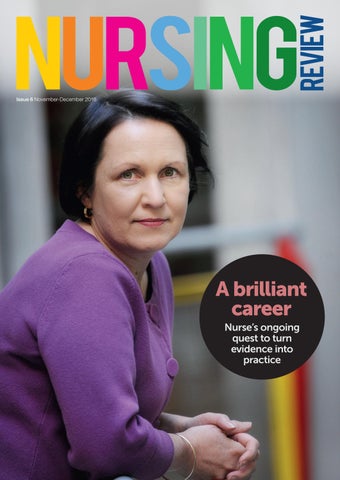
A brilliant career Nurse’s ongoing quest to turn evidence into practice
NR6_C1.indd 1
9/11/2018 3:18:51 PM
For formula-fed infants. For healthcare professional use only.
S-26 GOLD NEWBORN …brings you closer ®
Built on 4 key pillars of the Alula Newborn PlatinumCare Complex ®
TM
These 4 key pillars provide nutritional support for key areas of infant development and function. Here we take a closer look at the Digestion pillar: Physical growth & development
Brain development
Contains a lower protein quantity of 1.28 g/100 mL. Feeding a lower protein formula* during infancy may encourage appropriate weight gain closer to breast-fed infants during early childhood development up to 6 years1-3
Increased DHA content (0.32%)† – closely aligns with expert recommendations, and the average DHA content of mature breast milk (0.32% ± 0.22%)4,5 Alula ® Newborn
PlatinumCare Complex ™ Immunity
TM
Contains nucleotides, zinc and alpha-lactalbumin naturally found in mature breast milk, which may help support immunity 3,10,13-18
Digestion S-26 GOLD NEWBORN contains: • easy to digest whey-dominant, alphalactalbumin enriched, high-quality whole (intact) protein at a level closer to mature breast milk10-12 • added sn-2 palmitate^: sn-2 palmitate is a fat structure naturally found in breast milk.6,7 sn-2 palmitate enriched formula may result in softer stools 8,9 ^0.33 g/100 mL
TM
Only available in hospitals
Alula ® Newborn
PlatinumCare Complex ™
DHA = Docosahaexanoic Acid *vs higher-protein infant formula † Increased from 7.1 mg/100 mL (0.20%) to 12 mg/100 mL (min. 0.32%)
IMPORTANT STATEMENT: Breastfeeding is best for babies. It has benefits for the infant, such as reducing infection risk, and for the mother. It is important to have a healthy balanced diet in preparation for, and during breastfeeding. Infant formula is designed to replace breast milk when an infant is not breastfed. Breastfeeding can be negatively affected by introducing partial bottle-feeding, and reversing a decision not to breastfeed is difficult. Infant formula must be prepared and used as directed. Unnecessary or improper use of infant formula, such as not properly boiling water or sterilising feeding equipment, may make your baby ill. Social and financial implications, including preparation time and the cost of formula, should be considered when selecting a method of infant feeding. References: 1. Weber, M., et al., 2014. AJCN, 99: 1041-1051. 2. Koletzko, B., et al., 2009. AJCN, 89: 1836-1845. 3. Trabulsi, J., et al., 2011. EJCN, 65: 167-174. 4. Koletzko, B., et al., 2008. J. Perinat. Med., 36: 5-14. 5. Brenna, J. T., et al. 2007. AJCN, 85:1457-1464. 6. Bar-Yoseph, F., et al. 2013. PLEFA 89(4), pp.139-143. 7. Innis, S.M., 2011. Adv.Nutr., 2(3), pp.275-283. 8. Kennedy, K., et al., 1999. AJCN, 70: 920-927. 9. Yao M., et al. JPGN 2014;59: 440–448. 10. Davis, A., et al., 2008. EJCN, 62: 1294-1301. 11. Lonnerdal B. 2011; Nestle Nutr Inst Workshop Ser Pediatr. Prog. ;67,42-54. 12. Hoffman, J. & Falvo, M. J. 2004. J. Sports Sci. Med., 3: 118-130. 13. Yu, V. 2002. J. Paed. Child Health, 38: 543-549. 14. Singhal, A.,et al., 2008. AJCN, 87: 1785-1792. 15. NHMRC 2014. Nutrient Reference Values for Australia and New Zealand. Canberra: NHMRC. 16. Donangelo, C. M. & King, J. C. 2012. Nutrients, 4: 782-798. 17. Ortega, R., et al. 1997. EJCN, 51: 253-258. 18. Affolter, M.,et al. 2016. Nutrients, 8: 504-518. ® Alula is a registered trade mark of Aspen Global Inc. ™ is a trade mark of Aspen Global Inc. ® S-26 GOLD is a registered trade mark, used under licence. Distributed by Aspen Nutritionals Australia Pty Ltd. ABN 31 160 607 509. 34-36 Chandos Street, St Leonards, NSW 2065. 01322-150518. ASP3818_NR
NR6_C2.indd 2
9/11/2018 2:31:11 PM
contents
MANAGING EDITOR
news
Richard Garfield 02 9936 8628 richard.garfield@apned.com.au
2 4 6 7 8
NEWS EDITOR
Dallas Bastian 02 9936 8637 dallas.bastian@apned.com.au
industry & reform
10 Call for more scrutiny Staffing levels, skill mix and private-for-profit ownership
HEALTH EDITOR
Megan Tran 02 9936 8660 megan.tran@apned.com.au
Stop working after hours Preventing ‘killer’ clots More disaster training needed ‘Second skin’ to track health Thermal imaging foot ulcers
02
08
12 Under surveillance Is CCTV in rooms the key to stopping abuse?
PRODUCTION COORDINATOR
legal corner
Conor Burke 02 9936 8638 conor.burke@apned.com.au
14 Suspicious minds Accessing medical records can be dangerous
SUBEDITOR
specialty focus
Robert Santos
16 Cultural safety More Indigenous training needed for remote work
SALES MANAGER
Ben Long 02 9936 8664 ben.long@apned.com.au
clinical practice
18 Leprosy on the rise? SUBSCRIPTION ENQUIRIES
02 9936 8666 subs@apned.com.au
12
14
Twenty cases of leprosy reported in WA in last five years
19 Hard to swallow Dry mouth in the elderly can’t be ignored
COVER IMAGE
Distinguished Prof Patsy Yates Photo: QUT
20 By any other name Clinical nomenclature in question
22 Sedation negation
PUBLISHED BY
Managing residents without meds APN Educational Media GPO Box 4245 Sydney NSW 2001 ABN 58 090 900 999 ISSN 1326-0472 PP100001944
workforce
23 On the up and up Jobs to soar for nurse graduates
16
20
24 Making you the priority Self-care important for nurses
PUBLISHER’S NOTE
© Copyright. No part of this publication can be used or reproduced in any format without express permission in writing from APN Educational Media. The mention of a product or service, person or company in this publication, does not indicate the publisher’s endorsement. The views expressed in this publication do not necessarily represent the opinion of the publisher, its agents, company officers or employees.
26 For the pursuit of knowledge A nurse’s career rewarded
technology
28 A day at the museum VR tech to aid nurse empathy
30 Staying informed Informatics improving outcomes
32 Beyond the bubble
23
30
Transforming information into intelligence nursingreview.com.au | 1
NR6_P1.indd 1
9/11/2018 2:43:10 PM
news
Beware of 'work creep' The home habits bad for job recovery.
will just reply to this email.” Health care professionals have likely found themselves saying this in their head or to a loved one, but a new study has warned that continuing to work after hours affects productivity, sleep and stress.
Lead researcher Adjunct Professor Jan de Jonge said these latter activities are both resource-depleting and enhancing, helping people to disengage from the job and get a better night’s sleep. De Jonge said low-effort activities such as reading, watching television or listening to music also help people detach from work and ensure good sleep. “In general, we believe that employees should spend leisure time on leisure activities that they like most,” the study’s authors said.
THE BAD
THE MIXED
The University of South Australia study followed 230 healthcare employees over two years and found that work-related tasks like emailing and checking devices after hours make it harder to recharge for the next day. In a paper published in the International Journal of Environmental Research and Public Health, the researchers, along with those from the Netherlands and Japan, said employees seem to continuously draw on identical resources as those needed during working hours. This can empty an employee’s resource reservoir, they said. “Modern technologies such as smartphones and tablets, as well as social media, imply that employees stay tuned to work while having leisure time,” the study read. “This could create a 24/7 availability for work-related tasks, and makes boundaries between work and home invisible.” The researchers said while there is mounting evidence on the consequences of high job demands, less attention has been paid to the role of out-of-work recovery from job strain. So they decided to look into the different types of off-job recovery activities to find out which help people bounce back.
De Jong added previous research has shown that a daytime nap of around 30 minutes helps to restore alertness and improve productivity. But the researchers were unable to confirm this positive effect in their study and said only short naps are able to restore daytime arousal levels and improve cognitive functioning and emotional state. Naps taken during the post-lunch dip seem to be particularly effective, compared to those taken in the morning or evening, they said. The team also warned that frequent and longer naps may lead to adverse health effects in the long run. The study also suggested employees with sleep troubles be wary of working out too close to bedtime. “Adrenaline and cortisol levels are high, the brain is active, and it is difficult to wind down,” they wrote. “If people fall into that group and have experienced trouble sleeping after a late-day workout, it is recommended that physical exercise is minimised within three or four hours of bedtime.” Professor Maureen Dollard, director of UniSA’s Asia Pacific Centre for Work Health and Safety, said employers need to take some lessons away from the study findings. “Managers need to create a climate in which working beyond regular hours is not ‘business as usual’, as taking work home impedes cognitive function and productivity,” Dollard said. “Both managers and employees should find creative ways to accomplish job demands within regular work hours.” ■
By Dallas Bastian
I
THE GOOD While the study confirmed that work-related activities affect people’s mental and emotional recovery states after work, other tasks that might seem exhausting like housework, cooking and looking after children are actually positively related to sleep quality in the long run. 2 | nursingreview.com.au
NR6_P2.indd 2
9/11/2018 2:43:51 PM
“I want a super fund that understands my industry.” Anne Mitchell, HESTA member
We’re the national industry super fund dedicated to health and community services, and have been for over 30 years. We know how important your work is. And how well you do it. We’re your fund. For life.
Before making a decision about HESTA products you should read the relevant Product Disclosure Statement (call 1800 813 327 or visit hesta.com.au/pds for a copy), and consider any relevant risks (hesta.com.au/understandingrisk). Issued by H.E.S.T. Australia Ltd ABN 66 006 818 695 AFSL 235249, the Trustee of Health Employees Superannuation Trust Australia (HESTA) ABN 64 971 749 321.
HESTA_Testimonials_210x297mm_4.indd 1 NR6_P3.indd 3
25/05/2018 2:00 PM 9/11/2018 2:44:44 PM
news
‘Little known killer’ New standard of care for blood clot patients. By Dallas Bastian
B
lood clots kill four times more Australians than car accidents – and not enough is being done to curb them in hospital settings. That’s why the Australian Commission on Safety and Quality in Health Care has released a new nationally agreed standard of care. The commission said blood clots, also known as venous thromboembolisms (VTE), account for an estimated 10 per cent of all hospital deaths in Australia – an estimated 5000 people die each year as a result of hospital-acquired VTE. Yet, the body added, they are largely preventable, with intervention reducing the incidence of VTE by up to 70 per cent for both medical and surgical patients. Associate Professor Amanda Walker, clinical director at the commission, said it’s concerning that a recent Australian report found that fewer than half (44 per cent) of clinical units surveyed assessed patients for their risk of developing VTE on admission to hospital. “Of those who were assessed to be at risk, not all were offered VTE prevention,” Walker said. “This clearly indicates that
many patients who should be receiving preventative treatment for blood clots are not getting the care they need.” Dr Sally Cockburn, a GP and health advocate, said the system needs to change so that fewer people die unnecessarily. Cockburn added that often people don’t know what to look out for. “Many people don’t realise they have a blood clot in a vein,” she said. “It may not be until after a clot breaks off and the blood supply to the lungs becomes blocked that signs are noticed.” Cockburn had her own experience with this. She suddenly collapsed at home when a clot in a vein moved to block her lung causing a pulmonary embolism. “Mine was a close brush with death and I want others to learn the warning signs.” Walker said the new standard offers guidance on appropriate blood clot prevention methods and the importance of ongoing care after the patient leaves hospital. “We know that up to 60 per cent of all VTE cases in Australia occur within 90 days of hospitalisation, and it can happen to both medical and surgical patients. “We can do better, and the new standard aims to support clinicians and health services to deliver quality care to prevent blood clots in hospital and following discharge,” she said.
“In fact, the evidence suggests that appropriate use of VTE prevention methods is the top intervention hospitals can make to improve patient safety.” Leading haematologist Associate Professor Huyen Tran, based at the Alfred Hospital, said blood clots can be significantly reduced through timely assessments that are documented and discussed with the patient, and appropriate use of prevention methods such as medicine, during and after discharge from hospital. “It is shocking to consider that patients who have been admitted to hospital are at 100 times greater risk of developing a blood clot,” Tran said. “This is a little known killer but one of the biggest preventable health threats facing Australians.” There are signs that can point to blood clot risk, Tran added, such as pain, tenderness or swelling of the leg, shortness of breath, coughing up blood, or chest pain after a hospital stay. “Improved uptake of appropriate clot prevention strategies will help reduce the impact – on both patients and the health system.” The Venous Thromboembolism Prevention Clinical Care Standard and fact sheets for consumers and clinicians can be found on the commission’s website. ■
4 | nursingreview.com.au
NR6_P4.indd 4
9/11/2018 2:45:21 PM
Transform your life... your career... your passion
Individual Franchises Available! • Established 1990
• Proven track record
• Finance available to approved purchasers
• No Beauty Therapy experience required
• 10 year franchise agreement
• Full training and support
With 70+ salons and franchising experience for nearly two decades, Essential Beauty franchisees have achieved high levels of success. We can help you do the same! Enquire now. Essential Beauty is a strong and trustworthy brand. The systems and processes in place are cutting edge and easy to follow. We are always looking for highly motivated individuals to build a life outside the nursing industry by joining our successful team. Essential Beauty is committed to making the transition from nursing into your own business as seamless as possible by offering a complete ‘turnkey’ solution ready for you to operate from Day 1.
Ask about our
$
75,000p.a.
INCOME Guarantee *Conditions apply
No beauty experience is necessary and ongoing training and support is provided. You can rest assured you are joining Australia’s number 1 Beauty Salon Franchise!
Are you ready for a change? or call Paul Gogia on 0404 088 946 Peter Grzesch +61 0404 088 946 E: peter@essentialbeauty.com.au W: ebfranchise.com.au
NR6_P5.indd 5
9/11/2018 2:46:03 PM
news
Nurses in the dark ED staff need more training to work in black system events.
W
eather events so severe that they shut down electricity supplies, like the one South Australia saw in 2016, aren’t common – but they could have dire consequences for those in the ED. That’s the reminder Dr Karen Hammad, a senior lecturer at Flinders University, is giving to staff.
“We were lucky that the blackout [in 2016] didn’t include mass casualties, but it presents an opportunity to consider how these relatively infrequent events could have high consequences,” Hammad said. “While other cities around the world are more prone to disaster events, Australian cities are not immune to the risk of largescale disasters and major incidents.” She said a major incident or disaster could significantly overwhelm existing resources and added ED staff will be
Flinders University. Photo: Supplied
A timely boost University and union partner to tackle mental health nurse shortage.
T
he university and nursing sectors have teamed up to boost the number of mental health nurses in South Australia.
front-line responders if this happens. “It is imperative that they are prepared.” Hammad and her research team – all of whom worked in emergency departments the day of SA’s blackout – wanted to hear more about the impact of a statewide black system event on emergency departments, so surveyed 42 nurses and seven doctors, most of whom worked in a metropolitan ED. While the majority had never been involved in a major incident or disaster, they had taken part in some form of disaster education or training. The nurses and doctors said a lack of lighting and radiography, and communication and patient tracking systems not working were the most common ways the EDs were impacted. On top of more training for staff to prepare for future events, the study recommended better communication systems and testing of electrical systems. Hammad said that health systems should have regular reviews of resources shortfalls and areas for improvement in case of large-scale disaster. ■
Flinders University and the Australian Nursing & Midwifery Federation (SA Branch) joined forces to tackle statistics showing the state is set to lose up to half of its nursing and midwifery workforce over the next few years. ANMF SA secretary, Adjunct Associate Professor Elizabeth Dabars, said mental health is already chronically understaffed. “There are hospital beds right now that remain unopened because there aren’t enough qualified nurses across the country, let alone in South Australia,” Dabars said. “Without strategic partnerships of this nature, the future of mental health looks extremely grim, particularly as an area set to lose the most nursing staff to retirement over the next decade.” The joint project will see nurses granted more streamlined access to postgraduate studies at Flinders University by allowing them to springboard from a related continuing professional development (CPD) course at Australian Nursing and Midwifery Education. It diverts registered nurses from the previous requisite path, where they could only access postgraduate university studies via the SA Tertiary Admissions Centre application process once or twice a year (course-dependent). Professor Alison Kitson, Flinders University vice-president and executive dean of the College of Nursing and Health Sciences, said the partnership reflects the university’s ability to adapt to meet workforce demand. “The university prides itself on identifying ways to make it easier for people to access tertiary education, particularly for shiftworkers like nurses who require more flexible study options to upskill in a specialised field,” Kitson said. She said the partnership will make it easier for nurses to engage in “timely, relevant and manageable ‘bite-size’ learning” from CPD level all the way through to a master’s qualification. ■
6 | nursingreview.com.au
NR6_P6.indd 6
9/11/2018 2:46:45 PM
news
Photo: Monash University
Electronic ‘skin’ Australian researchers invent stretchable, wearable device that tracks health signals.
A
second skin for patients that provides real-time monitoring is on the horizon. Researchers at Monash University have patented a stretchable electronic device that can track health signals, from muscle strain
and blood pressure to cholesterol and glucose levels. Health professionals can monitor the information on smartphones using Bluetooth. Professor Wenlong Cheng said the device is highly durable and portable which allows it to be worn or implanted into any part of the body. “Current wearables are rigid and bulky, which cause discomfort to the
human body, and can cost thousands of dollars,” Cheng said. “If we can design skin-like diagnostic materials that are thin, soft, portable and comfortable, we can fundamentally change the way healthcare is managed in Australia.” The skin-like device is made up of very thin gold nanowires, each with a diameter equal to one thousandth of a human hair, in an elastomeric sheet that can be stretched up to nine times its original size. Trials have shown that the wearable skin can still provide 93 per cent data accuracy even after 2000 stretches. The next step in the research is to apply the wearable electronic skin to real-world cases. Cheng said: “Current healthcare treatment is hospital-centred because of our dependence on expensive, heavy diagnostic tools that are only available in specialised medical practices and require trained personnel to operate. “Wearable biodiagnostics can overcome this limitation and move towards better patient-centred healthcare.” ■
A smart fob watch for nurses designed by a nursing student wins prestigious award.
N Smart fob gets gong
Photo: Murdoch University
urses using an award-winning fob watch would be able to access their Apple data should it hit the market. The Smart Fob watch, designed by nursing student Jordan Kidd, was the winning idea at Murdoch University’s 2018 Young Entrepreneur Program (YEP). It replaces a nurse’s analogue fob watch, allowing them access to the Apple smart watch while remaining bare below the elbows. “Using default apps, the Apple watch can be used to set times or reminders, or use Siri for quick calculations,” Kidd said. Kidd took out the YEP Award pitch final held at Australian High Commissioner Bruce Gosper’s residence in Singapore. He pitched his idea to a panel of four judges and a crowd of 55, including industry bodies and potential investors. His innovation was praised for being a practical solution, while addressing a current technological gap in the market. Kidd said he was hoping to develop a referencing app that will have useful information, such as normal vital sign ranges, electrolyte levels and drug calculation formulas. “As a final-year nursing student, I started Murdoch’s Young Entrepreneurial Program with zero experience in marketing, starting a small business or making a financial plan,” he said. Chris Vas, director of Murdoch’s Singapore Centre for Research in Innovation, Productivity and Technology, said YEP enables students to think outside the box, go beyond the books and laptops and ideate solutions to real world problems. nursingreview.com.au | 7
NR6_P7.indd 7
9/11/2018 2:47:24 PM
news
New use for thermal imaging Innovative technique predicts delayed healing in foot ulcers.
A
ustralian researchers have used thermal imaging to assess the wound size and predict the healing trajectory of diabetes-related foot ulcers – and they say it works.
Principal investigator Associate Professor Elif Ekinci, University of Melbourne principal research fellow and head of diabetes at Austin Health, said thermal imaging can pinpoint more accurately which wounds will heal quickly. For their study, the researchers took thermal and colour images of 26
Comic relief at work Laughter could help with workplace aggression.
I
t might be a good time to thank a colleague who made you laugh today, if a new study by Australian researchers is to go by.
neuropathic diabetes-related foot ulcers, while podiatrists measured the wounds manually over four consecutive weeks to create a healing reference. For healing cases, the research found the wound bed’s isothermal area was lower at two weeks compared to baseline, which corresponded with a 50 per cent reduction in area of diabetic foot ulcers at four weeks. RMIT’s Dr Behzad Aliahmad said the study demonstrated that isothermal maps of thermal images of the wound bed from week one to week two were suitable for predicting healing trajectory. “Thermal imaging of diabetic foot ulcers has the advantage of incorporating both area and temperature, allowing for early prediction of the healing,” Aliahmad said. “The wound monitoring by the eye of the clinician is not accurate in identifying the chronic wounds in week two.” The study’s authors want to see thermal imaging used as an inexpensive and realtime option to identify wounds that may have delayed healing. ■
They’ve found a bit of humour goes a long way in the workplace. Researchers from the Australian National University (ANU) found it helps employees deal with workplace aggression and stressful situations. Lead researcher Dr David Cheng of the ANU College of Business and Economics said workplace aggression is a widespread problem, but added humour might go some way to reducing its negative impact. “While obviously the best solution to workplace aggression is to stamp out the poor behaviour, our research shows if something stressful does happen to you at work, a bit of laughter can help,” Cheng said. Study participants were exposed to a simulation of a colleague aggressively shouting at them and then shown one of two short videos, one of which was humorous. “The experiments consistently showed exposure to humorous stimuli is useful for victims of aggression,” he said. “Humour helps reduce some of the damage caused to a victim’s psychological wellbeing by bolstering their sense of power.” Cheng added participants also felt others would be more likely to listen to them. “That’s important because with workplace aggression, when you get yelled at you feel belittled, you feel weaker. So humour can help counter that by making you feel more empowered.” His previous research showed those engaging in boring, repetitive work were able to keep it up longer after being exposed to funny videos during a 10-minute break than those who didn’t get to laugh. ■
8 | nursingreview.com.au
NR6_P8.indd 8
9/11/2018 2:47:54 PM
SUBSCRIBE FOR LESS THAN $2 A WEEK
THE LATEST NEWS AND RESOURCES FOR HEALTH CARE PROFESSIONALS
• Analysis of the major issues facing the health sector today
Nursing Review is essential reading for anyone involved in the healthcare sector in Australia. It provides unrivalled coverage of specialist topics from features and opinion pieces, to international news and profiles.
• Can be used as a professional development resource
At Nursing Review we pride ourselves on being at the forefront of ever changing healthcare sector. We provide an independent source of news, and cover the issues relevant to nurses and the sector giving an informative, practical and insightful view into day to day life in hospitals and in surgery.
• 6 issues per year • Interviews and opinion pieces from professionals in the industry • Written by an independent voice • Tax deductible
Please call 02 9936 8666 to find out more. NR6_P9.indd 9
9/11/2018 2:48:55 PM
industry & reform
A job for the royal commission The impact of poor staffing levels and private-for-profit ownership on quality of care. By Julie Henderson
T
he recent announcement of a royal commission into aged care has brought into focus the staffing levels and skill mix of residential aged care facilities. Demand for aged care services is increasing due to the ageing of the Baby Boomer population and post-war migration, leading to concerns with the costs of providing aged care services. To address perceptions of rising costs, the current federal government has made changes to aged care funding and legislation, making it easier for private-for-profit groups to purchase and manage residential aged care facilities. The changes made include increased user payments to facilities through the reintroduction of a refundable deposit to pay accommodation costs, the capacity to charge for additional services, and legislative changes to make it easier to transfer ownership of aged care beds. These changes, along with guaranteed funding from the federal government through ACFI payments, make aged care attractive for investors. At the same time, concerns have been raised about having enough staff to meet service demand. Currently, care services in residential aged care are provided by a combination of nursing and care worker staff, with the balance of staffing shifting towards care workers in the last 10–15 years. Care workers are cheaper to employ and provide a means of achieving cost savings and increasing returns to investors. Cost savings can also be achieved by employing fewer staff. As a consequence, residents are receiving fewer hours of care. In 2015, residents in Australian residential aged care facilities received 39.8 hours of direct care/fortnight, which averaged up to 2.86 hours/resident per day. A recent study which used activity timings for the care tasks required for residents with a range of diagnoses determined that between 2.5 and 5 hours of care were indicated, suggesting that residents are experiencing shortfalls in the number of hours of care they receive. A team from Flinders University and the University of South Australia recently conducted a study of nurses’ and care workers’ perceptions of the level of care which was missed in residential aged care and the reasons why care was missed. The study, which was commissioned by the ANMF, surveyed 3206 staff
working in aged care settings across Australia, including aged care wards in public hospitals and multipurpose services. Missed care for this study was defined as required resident care that is omitted (either in part or in whole) or delayed due to multiple demands and inadequate staffing and material resources, and/or communication breakdown. The central finding was that staff believed that care was being missed in all facilities, with higher levels of missed care reported in facilities which are privately owned. Unscheduled tasks, such as responding to call bells and to toileting needs within five minutes, were most likely to be missed, although there were deficits in completing all tasks. When asked to indicate the reasons why care was missed, staff in all facilities viewed too few staff, the complexity of resident needs, inadequate skill mix of nursing and care work staff, and unbalanced resident allocation as the greatest reasons for missed care. Government employees reported significantly lower scores for 16 of the 27 items than staff employed in privately owned facilities, with staff in private-for-profit owned facilities rating 14 of the 27 items as being a greater cause of missed care than staff in other settings. These differences were most notable in relation to access to resources. Staff/resident ratios were also found to be higher in privately owned facilities, meaning each staff member was delivering care to more residents and had less time with each resident to complete care tasks. There is also some evidence from responses to open questions that enrolled nurses were being replaced by care workers and of employment of recently graduated registered nurses over more experienced registered nurses in private-for-profit facilities. Given that people are being admitted to residential aged care when they are frail and more dependent on services than previously, and that residential aged care facilities are dealing with higher proportions of residents with dementia, staff are dealing with residents who have more complex needs and greater need for nursing care. At the moment, there are no mandated staffing levels for residential aged care, with the standards only stipulating that adequate staffing be provided. This allows residential aged care facilities to reduce running costs through cutting staffing levels. It may be timely, therefore, for the royal commission to explore the impact of private-for-profit ownership on quality of care and to consider the establishment of mandated staffing levels to ensure resident safety. ■ Dr Julie Henderson is a research associate at Flinders University where she undertakes nursing and public health research.
10 | nursingreview.com.au
NR6_P10.indd 10
9/11/2018 2:49:24 PM
Blackmores.com.au/nutrition
Blackmores infant formula for longer, better sleep
Australia’s
most trusted brand*
1–4
#Winning
For formula fed infants, Blackmores can help ease the stress of parenting, with OPO^ to reduce crying and improve sleep duration,1,2 and alpha-lactalbumin to improve sleep quality.†3,4
Blackmores supports breastfeeding as the best nutrition for babies. Toddler Milk Drink to be consumed as a supplement to a normal diet, to boost intakes of energy and nutrients. *Australia’s Most Trusted vitamin and supplement brand as voted by Australians in the 2009-2018 Readers Digest Most Trusted Survey. ^Oleic and Palmitic Fatty Acid Structure. †Infants receiving tryptophan-fortified formula fell asleep significantly quicker than infants fed with unsupplemented formula or through breastfed milk. References: 1. Litmanovitz I et al. BMC Pediatr 2014 Dec; 14(1):152. 2. Bar-Yoseph F et al. Clinics Mother Child Health 2017; 14(263):2. 3. Lien L. Am J Clin Nutr 2003; 77(6):1555S-8S. 4. Steinberg LA et al. J Nutr 1992; 122(9) 1781-1791. 15191/NR
15191 Blackmores NR6_P11.indd 11 IF Yoga Dad HCP 210x297-FP_NursRev_FA.indd 1
1/11/182:49:52 10:14 PM am 9/11/2018
industry & reform
Big brother is watching you Cameras in aged care rooms raise the question of privacy versus peace of mind. By Dallas Bastian
T
he minister for aged care has indicated the installation of cameras in all aged care homes is on the table, following the airing of the second part of a Four Corners investigation into the sector, but industry reaction has been tentative. Aged care and older persons’ bodies have stopped short of publicly backing the call – and of rebutting it. The Four Corners episode showed hidden camera footage of residents being struck by aged care staff, prompting viewers to question whether cameras should be installed in all rooms. When asked about that by ABC radio, Aged Care Minister Ken Wyatt indicated he was at least open to the idea. “I can appreciate the families who are very strongly supportive now of cameras within those rooms,” he said. “None of this would have been known without that footage as to how those individuals were treated.” COTA Australia chief executive Ian Yates backed Wyatt’s comments about the action taken by family members to bring issues to light. Yates said: “We understand that – and the authorities have been very clear that – they are not overly concerned about the breach of privacy and recording legislation because there were genuine reasons for doing that. “On the other hand, I think that we don’t really want to propagate an ideal of aged care that involves high levels of CCTV surveillance.”
Instead, the ideal propagated should be on improving quality in ways that mean such intervention is unnecessary, he said. The home where this assault occurred still has a 100 per cent accreditation rating. There’s no mention of the assault on its website. Matthew Richter, chief executive of the Aged Care Guild, an association of eight of the largest private residential aged care providers, said while the group recognises that cameras can give peace of mind to residents and families – and potentially help prevent rogue behaviour and criminal incidents – it’s important to remember that residential aged care facilities are not hospitals, but rather a person’s home. “Residents deserve the same level of privacy and dignity that we are all afforded in our homes,” Richter said. “Decisions concerning the installation of cameras should be made between an individual resident, their family and their care provider.” Karl Rozenbergs, a partner at Hall & Wilcox lawyers, said should a provider decide that the safety of the resident trumps privacy concerns, there are still a number of workplace surveillance laws across the country to contend with – and they differ between states and territories. “What that means is that people running the facility can’t just put in the surveillance. The only way to get around that legislation is if the parties consent. “Then you have issues around the capacity of the person to consent, especially in circumstances where the resident has the onset of dementia.” Yates said there are many residents who might want to have their own privacy and freedom to do whatever they want to behind their closed doors. He added that family members who consent to CCTV surveillance on behalf of their loved
12 | nursingreview.com.au
NR6_P12-13.indd 12
9/11/2018 3:20:09 PM
industry & reform industry & policy
their loved aged not caremake mightthe not make the decision one in agedone careinmight decision their relative their relative would have. would have. Indeed, this potential discrepancy discrepancy was was highlighted highlightedby bya survey aconducted survey conducted inBritish 2014 by British care HC-One, provider which in 2014 by aged careaged provider HC-One, which Rozenbergs pointed to in afor piece heCare Insite. Rozenbergs pointed to in a piece he wrote Aged wrote Care that Insite In it,for he Aged explained of. those surveyed, only 47 per cent it, he explained thatthe of idea those only 47inper cent ofIn residents supported ofsurveyed, CCTV cameras aged care of residents supported the CCTV cameras in agedfacilities, compared with 87idea per of cent of relatives. care facilities, with 87 per cent ofarelatives. “This meanscompared that in circumstances where resident “This can no means that in circumstances wherecameras, a residentit can no longer longer consent to the use of CCTV is highly likely consent to the use of CCTV cameras, it is highly likely that that a relative’s decision would be against the resident’s wishes,” aRozenbergs relative’s decision wrote. would be against the resident’s wishes,” Rozenbergs Fellow Hallwrote. & Wilcox lawyer Melinda Bell said making Fellow Hall & Wilcox surveillance lawyer Melinda making decisions surrounding is a Bell waysaid for older people decisions surrounding is a way for older peopleand moving into aged caresurveillance facilities to maintain independence moving into aged care facilities to maintain independence and feel in control. feel in control. Bell added privacy is considered a fundamental human right Bell added privacy is gap considered a fundamental human and contemplated the in surveillance legislation in that it right andreally contemplated the gap surveillance legislation in care doesn’t address the use ofin CCTV in a residential aged that it doesn’t reallyregarded address the use of CCTVand in a aresidential situation – a place as both a home workplace. aged care situation place asfacility both aand, home “Someone could – goa into anregarded aged care as and part aofworkplace. their documentation when they go in, indicate that they “Someone into agedLater, care the facility and,ofasattorney part don’t consentcould to thego use of an CCTV. power of theirbe documentation when they gochange in, indicate that they might in place and the family may the wishes of don’t consent to the use of CCTV. Later, the power of attorney that person.” might besaid in place and issue the family maymismatch change the wishes Yates a further with this is that the of ageist that person.” attitudes permeating society also apply within families. As an
Yates said a further issuemight with this is that the needs ageist of example, family members notmismatch consider the sexual attitudes permeating society also apply within families. As an older, frailer loved ones. example, family members consider the sexual needs of “We need to look to the might rights not of people to enjoy agency older, ones. in theirfrailer lives,loved and they can, even if they don’t have full legal “We need to look capacity,” Yates said.to the rights of people to enjoy agency in their lives, and can, even if of they have for fullthis legal capacity,” “There’s alsothey the whole issue thedon’t potential kind of Yates said.surveillance to itself end up in an unsavoury way in proposed “There’s alsoisthe whole of and the potential this kind of terms of who looking atissue whom what getsfor kept.” proposed itself end unsavouryThey way in Bell andsurveillance Rozenbergsto agreed thatup thisinisan a concern. terms of who is looking at whom and use, whatthere gets are kept.” said even if there is consent to CCTV issues Bell and Rozenbergs agreed that this is a concern. Theyofsaid even surrounding storage and handling, including questions who ifcan there is consent to CCTV use, there are issues surrounding access the footage, how long it can be stored for, who storage can and including questions of who can access the footage, viewhandling, it and how it is used. how long it can be stored for, who can viewadults it andand howsurveilling it is used. Yates said rather than infantilising older Yates ratherinthan infantilising oldershould adults and surveilling them atsaid all points time, the discussion focus on them at allhow points in time, thebediscussion should focus on exploring exploring CCTV might used if there is due cause. how CCTV might be used if there is due cause. Rozenbergs agreed, saying: “If you really want to tackle elder Rozenbergs agreed, saying: “If you–really toyou tackle elder abuse – and it’s an increasing issue then want maybe look abuse – and an increasing – then maybe look at reforms toit’s surveillance lawsissue to allow aged care you providers at to surveillance lawsintocertain allow aged care providers to reforms implement CCTV cameras circumstances. The to implement CCTV certain circumstances. circumstance might cameras be when in they suspect elder abuse.”The circumstance might they abuse.” He added there is be alsowhen scope forsuspect the royalelder commission addedcircumstances there is also scope the Royal Commission toHe explore wherefor consent is not required to explore circumstances consent is not required and and providers move aheadwhere with the installation of cameras, providers move ahead with thebe installation cameras, and added: and added: “Ultimately it may that the only real solution “Ultimately it mayabuse be that thehave onlysome real solution tackling to tackling elder is to form ofto CCTV in elder abuse is to have some form of CCTV in the room.” ■ the room.” ■
THE LATEST NEWS FOR AGED-CARE PROFESSIONALS For the last 15 years, Aged Care Insite has remained the respected industry journal aimed squarely at the growing number of Australians working in the burgeoning aged-care industry. At Aged Care Insite we pride ourselves on being at the forefront of the ever changing care sector. We provide an independent source of news, and cover the issues relevant to you. • Latest updates in technology and research • Community stories from facilities just like yours • Comprehensive coverage of a diverse range of topics • Regular updates via email • Tax deductible • Delivered bi-monthly directly to your door
Please call 02 9936 8666 to find out more. agedcareinsite.com.au| 13 13 nursingreview.com.au
NR6_P12-13.indd 13
9/11/2018 3:20:48 PM
Legal Corner
Illegally accessing patient records
Nurse caught accessing patient records without proper authority. By Scott Trueman
A
n increasing number of hospital and health services are collating, storing and utilising medical and nursing records in electronic databases. These databases are usually protected with individualised passwords which can be monitored and checked to preserve patients’ privacy and ensure that confidential medical information is accessed on a ‘need to know’ basis. Like any system, nothing is fool proof or guaranteed. Unauthorised access, whether for personal gain or just idle curiosity is no excuse. A recent nurse’s disciplinary tribunal hearing is an example for all nurses to heed. Nurse A was an experienced nurse who had been registered since 2007 and held postgraduate qualifications in public health and health management.
On 14 August 2014, Nurse A while working on a casual basis in Hospital B, accessed a Hospital B computer in the early hours of the morning (during night shift) which had been logged on and left unattended by another permanent nurse employee. Nurse A took this opportunity to access district-wide electronic health records concerning himself and six other patients (A–F) whom Nurse A had previously cared for. Nurse A did not have authorised log-in credentials that would have allowed him to access those patient records by himself, nor did he have any legitimate reason to access them. The access to all seven records involved multiple pages of each patient’s record being opened and viewed. At the time of the incident, Nurse A was engaged in longstanding disputes with patients A–F and was at a critical juncture in acrimonious legal and administrative proceedings with Patient A. The details of those relationships and proceedings are deliberately omitted from the judgement for all patients to remain unidentified. Needless to say, it appears that all the disputes and disagreement proceedings were bitter and protracted. The alarm and/or suspicion was raised when Patient A suspected Nurse A of using his professional position to access Patient A’s health records, based on
some information contained in court and administrative documents that Nurse A filed in late 2014. One other particular piece of confidential information related to a specific incident involving Patient B, which was not general knowledge in the proceedings and only contained in Patient B’s medical records. Knowledge and disclosure of this (and other information) was of ‘benefit’ to Nurse A in advancing his position in his various litigious proceedings. Suspicions widened concerning Nurse A’s access to confidential medical records in late 2014 and early 2015 concerning patients A, D and C to such a level that they requested a privacy internal review from the relevant Local Health District under the Privacy and Personal Information Protection Act 1998 (NSW) and Health Records and Information and Privacy (HRIP) Act 2002 (NSW). The HRIP Act regulates health information through the 15 Health Privacy Principles, something all nurses should have knowledge about.
THE INVESTIGATION On 9 March 2015 Nurse A was interviewed by a panel comprising of Hospital B’s human resources manager, privacy information compliance manager and director of nursing. During that interview, Nurse A acknowledged accessing the
14 | nursingreview.com.au
NR6_P14-15.indd 14
9/11/2018 3:21:29 PM
Legal Corner
relevant records but denied using or disclosing their contents. Nurse A stated in the interview that all of the information he had relayed in court documents was information that he was already aware of. Nurse A stated that he knew much of the health information by his previous personal interactions with Patients A–E and because of a phone call from a friend over a year earlier reporting the incident in detail related to Patient B. To Nurse A’s credit, in oral evidence, Nurse A readily acknowledged that his access to the health records was improper and in breach of the relevant policies and codes as particularised in the complaint. He conceded that this amounted to unsatisfactory professional conduct. The tribunal’s peer expert, CM, was strongly critical of the practitioner’s conduct. CM noted that all staff working in the public health system are bound by law, by policies and by a strict code of conduct, to maintain confidentiality of patient information. CM characterised Nurse A’s conduct as an improper use of their
professional position and a violation of patient privacy, which evinced a disregard for the potential harm to the professional reputation and career of the actual staff member whose log-in was used. Interestingly during the hearing, Nurse A initially sought to dispute the allegation that he had used another staff member’s log-in to access the records. This dispute rested upon a characterisation of what it means to ‘log on’. Nurse A contended that he had not ‘logged in/on’ because he did not actually type in the other staff member’s credentials. Rather, when Nurse A accessed the computer, the system had already been logged in and active for some period under the other staff member’s credentials. This novel submission was rejected as it was uncontested that Nurse A’s access to the relevant records was unauthorised and involved the use of a database which was accessible only because of the other staff member’s credentials. Accordingly, the tribunal found that this aspect of the complaint was established. Nurse A ultimately conceded this and abandoned
this submission. The only real issue in dispute was Nurse A’s motivation in accessing the relevant records. The tribunal found that Nurse A opportunistically sought access to the health records to seek information which he could use to his advantage in his disputes with the patients and to damage some of the patients’ reputations, whose privacy he breached. The tribunal found that this was a most serious abuse of Nurse A’s professional position and thereby was characterised as professional misconduct. Nurse A was reprimanded and his registration suspended for six months. No matter what the intent or purpose, if nurses in an unauthorised manner access patient medical records – they need to remember: curiosity may kill the cat, but it will most certainly kill your career. Just don’t do it! ■ Scott Trueman is a senior lecturer in the School of Health at the University of New England.
SUBSCRIBE FOR LESS THAN $2 A WEEK THE LATEST NEWS AND RESOURCES FOR HEALTH CARE PROFESSIONALS Nursing Review is essential reading for anyone involved in the healthcare sector in Australia. It provides unrivalled coverage of specialist topics from features and opinion pieces, to international news and profiles. • Latest news and resources for all health care professionals • Comprehensive coverage of a diversity of topics • Analysis of the major issues facing the health sector as a whole • Delivered free of charge • 6 issues per year • Only publication in the country dedicated to reporting issues important to nurses
Please call 02 9936 8666 or email subs@apned.com.au to find out more. nursingreview.com.au | 15
NR6_P14-15.indd 15
9/11/2018 3:21:40 PM
specialty focus
Remote possibilities
Call for more training in cultural safety and sensitivity for nurses in remote areas. Melissa Haydock interviewed by Megan Tran
S
tronger specific cultural training for working with Indigenous communities is needed prior to nurses being deployed, in order to provide culturally safe and holistic care. That’s the message one assistant in nursing wants heard. Melissa Haydock says while nurses are given an overview of Indigenous history and cultures, concepts like cultural safety and education should be in place to improve cultural sensitivity. Haydock says her time in remote settings emphasised the need for Indigenous and non-Indigenous healthcare providers to intensify the sharing of knowledge, known as ‘working malparara way’, or sharing experiences both ways. She adds that while the orientation course for her work provided insight to her employment, she did not know she was heading into an environment of such pronounced diversity.
The aged care facility covered 250,000km2, and comprised 11 communities and six skin groups. Since 2012, Haydock has worked in various aged care facilities. Her 10-week stint at a facility in the Gibson Desert in Western Australia was the only remote work she had done, but she is returning for another tenure and hopes to work as an RN in remote areas after graduating. She describes the opportunity as “most certainly an experience like no other I have had”. Haydock says she rapidly became conscious that she was underprepared and questioned how she could uphold the nursing code of ethics, as she could not communicate with the elderly. She set about learning basic words in the residents’ language through a language dictionary found in the staff room, and asking the Indigenous lifestyle employee, who helped her interpret and pronounce the words. “Every morning when showering one of the residents, she would teach me how to say body parts in her language. “But just when I felt like I had some of the basics under control, another female resident became clearly distressed. I could not understand what she was saying and was desperate to help her. When I asked [the lifestyle employee], she replied, ‘I don’t know what she is saying.’ “I later discovered there are four languages spoken on these lands,” Haydock says. Nursing Review spoke with Haydock to learn more about her experiences and her thoughts on improving cultural safety.
16 | nursingreview.com.au
NR6_P16-17.indd 16
9/11/2018 3:22:11 PM
specialty focus
NR: Tell us about the remote-area aged care facilities you worked in. MH: They’re nothing like what we have in our urban settings. I really loved it. Big concrete-block buildings with lots of space. The walls were painted in the early days by the residents, so they have big, beautiful, bright traditional artwork on them. There’s a large communal area for the residents to just hang out in, but mostly they love to be outside where they’ve also got lots of space and trees. They wander around and sit down and watch the world go by – they just love to do that. It has a capacity for 15 residents, but while I was out there, there were 10 elders to care for. But it’s low and high-care residents with the ages ranging from 60s to early 90s. They have an Indigenous lifestyle worker who comes in daily, unless of course she has her own personal cultural duties to attend to. And she helps the elders participate in cultural activities. It was just a wonderful atmosphere. In the mornings, the RN would put on music for the elders, which was played outside through two small speakers, and country and western was the favourite.
What was the cultural diversity like? It was pretty amazing. I had no idea that there was so much diversity among the Indigenous people of Australia. I grew up in a little country town called Narrandera in NSW, side by side with Indigenous people, but I was ignorant of the diversity before this journey out to the desert. It was pretty much everywhere. The residents had different languages that were spoken within their group. Some of them had come from the missions, some from the bush. A couple of the men had been involved in the 1946 Pilbara strike. Cultural activities such as paintings clearly demonstrate the diversity through the different styles of paintings. So the residents would all sit around and paint their own stories which was just very diverse. Some of them had religious beliefs and others were not so keen. Significant for me were the different rules and ways of living. Things that most of us don’t understand. I most certainly didn’t, and I can’t even say that I really do now. For example, the kinship systems and skin groups determine who Indigenous people can marry and who they can interact with. So one of the residents out there was the son-in-law to one of the female residents, but due to these skin groups, they weren’t allowed to interact, or be anywhere near each other.
What is cultural safety? It’s really defined by those who are receiving the care. So they decide whether their cultural needs are being met, whether they feel safe. It’s about recognising the diversity that exists within the different cultures. It’s about how people are treated and recognising the needs of individuals. What this does is ensure the delivery of person-centred and holistic care. And this delivery of culturally safe care really requires nurses to continually self‑reflect and to advocate for people when they see any form of racism.
And what happens when cultural safety conflicts with medical needs? When they feel disrespected and humiliated, it may mean they don’t speak up or seek the help they need. My most poignant experience of this while I was out in the desert was
caring for the Indigenous males. There was a real lack of male carers while I was out there, which meant female nurses were providing personal care to Indigenous males, and this is taboo. This was something that made me really sad. Every time I attended to the men, and one male in particular, I could see he was really humiliated by the experience. And I felt really disrespectful, even abusive to a point. But there was really no choice, due to that lack of male nurses. So as a side note, I’d like to say this is another really good reason why we need to encourage males to become nurses.
How do Indigenous and non-Indigenous health providers collaborate to share knowledge? My experience was that there was very little collaboration prior to me entering the community. So for me, I really had to facilitate that myself. During my time in the aged care facility, I tried to learn as much as I could. I talked with the elders and with the Indigenous lifestyle worker. I was taught the basics of their language and about certain cultural activities and principles. I spoke to the Indigenous lifestyle worker a fair amount actually, and she shared with me that she did feel that the Indigenous and non-Indigenous were doing a pretty good job working together in running the facility. But she also said that much more could be done. Much more talking between Indigenous and non-Indigenous is needed, but it needs to be open and honest. It needs to be free of judgement and bias. I know I made a lot of mistakes while I was working with the elders, but what really helped me was engaging with them and the other Indigenous people out there. So talking and
Much more talking between Indigenous and non-Indigenous is needed, but it needs to be open and honest. It needs to be free of judgement and bias. listening to them and learning about the culture, I think that’s what’s needed.
How can culturally safe and holistic care be provided in remote and regional areas? Honestly, I don’t have the answers, and I don’t know if my experience was one of isolation or if this is the experience of many. I have been attempting to find this out but have been unsuccessful, but I am keen to explore this further and I’m hoping to generate discussions around this to try and gain some understanding and find a way forward. I was provided – before I entered the community – with some written information, which was helpful, but I just don’t feel that it’s quite enough. In this particular circumstance, where there are only a few residents, I believe that discussions could take place, knowledge could be shared, so culturally safe care can be provided. And, for example, why couldn’t it be shared which of the residents are in avoidance relationships, so I knew how to interact with them? And I’m not trying to lay any blame, because I don’t think that it’s anybody’s fault. I just think that there’s a real lack of preparation and it needs to be addressed on many levels. ■ nursingreview.com.au | 17
NR6_P16-17.indd 17
9/11/2018 3:22:23 PM
clinical practice
The forgotten disease
Has leprosy made a return to Australia? Colin Martin interviewed by Megan Tran
T
here have been recent reports that leprosy is on the rise in Australia, with 20 cases reported in Western Australia in the last five years. A common myth is that it has been eradicated; however, it still exits. Every two minutes one person in the world is diagnosed with the condition. Aged Care Insite spoke with Leprosy Mission Australia chairman Dr Colin Martin to find out more.
NR: Why is leprosy still here? CM: Leprosy is a bacterial disease caused by Mycobacterium leprae which is in the same family as TB and Buruli ulcer. It’s still around because it’s most unusual in how it works. One issue is that it replicates every 15 days rather than every 10 or 15 minutes. You can come into contact with leprosy but then have no symptoms for years. And during that time, you're still shedding bacteria. It’s usually spread by coughing.
It’s a disease of poverty. It has to do with your nutritional status, your immune capacity, your ability to clear the bacteria out of your system. In Western countries, most people who come into contact with leprosy will be able to combat it by themselves, but we still have pockets in Australia, particularly among the Indigenous population in Arnhem Land and the Kimberley, where leprosy is still endemic at very low levels. In an average year, there are 3–6 people in those areas who develop leprosy. The balance of the leprosy in Australia comes from people who have emigrated from leprosy-endemic areas like the Middle East, Asia and Africa. They often develop clinical leprosy many years after they arrive in Australia.
Which groups are most affected? There are about 215,000 new cases worldwide, and the WHO says there are still 3.5 million people living in the world affected by leprosy. About 60 per cent of those cases occur in India. Brazil has the next highest incidence, followed by Indonesia. But it’s also in Nepal, Bangladesh, quite a few sub-Saharan African countries, and other parts of the Pacific. Papua New Guinea, close to us, has a high incidence, about 500 new cases a year in a population of only eight million people. So it is in our area.
How does leprosy affect the patient? The initial presentation with leprosy is
not an illness. You don’t develop a viral or febrile illness. You usually develop insensitive patches on your skin. If you happen to have brown skin, they’ll usually be pale patches. If you have a white complexion, then it will probably be a pink patch. And there can be more than one of them. They can be an inch or so across, and the interesting thing is they have no sensation. That would be the sign for most old people as well. Other times, though, you will notice that there’s swelling in the truncal nerve. Leprosy is interesting in that it affects nerve tissue specifically, and it’s the only bacteria we know that does that. Even though it seems to be a skin condition, it's actually a nerve condition and the skin complications are secondary. It likes to live at 35°C, so it tends to stay in the superficial tissue. And it particularly builds up in the nerves, at the ulnar nerve in the elbow, the median nerve at the wrist, in the supraorbital nerves above your eyes and in the posterior tibial nerve at the knee. And as the bacteria builds up and damages those nerves, it can also cause nerve damage which will result in claw hands or drop feet or an inability to shut your eyes properly. That tends to be a later presentation, but as people often have no idea that the insensitive patches represent leprosy, they often present late with disability.
What do they need to do to protect themselves? Nothing. Leprosy is an interesting disease in that 95 per cent of people who come into contact with a leprosy patient are able to completely eradicate the bacteria from their system just with their own immune system. The other 5 per cent are usually people who have issues with their immunity, and that’s why it's a disease of poverty, of malnutrition and poor hygiene, and of poor health services, which is why we have very little of it in Australia. The reality is, it’s completely curable. With the antibiotics now – multidrug therapy with three different antibodies – the disease is completely curable. There’s no reason why any of us should have any fear of leprosy, despite the stigma that unfortunately still exists worldwide about the disease, which is one of the biggest issues that leprosy-affected people have to deal with. ■
18 | nursingreview.com.au
NR6_P18.indd 18
9/11/2018 2:54:18 PM
clinical practice
Complex medical conditions, compromised health and the simultaneous use of multiple medications are common among the elderly. This makes them highly susceptible to the risk factors and consequences related to dry mouth.
WHY IS SALIVA SO IMPORTANT?
Investigating dry mouth Why dry mouth in the elderly is hard to identify, but can’t be ignored. By Jo Purssey
I
n Australia, our population is ageing. In order to support our overall health, this means we need our teeth and mouth to remain healthy for much longer. There are many oral health issues that can particularly impact the aged and elderly population. Some are obvious – like tooth decay, tooth loss or gum disease – while others can be much more difficult to identify and therefore treat. One example of a condition that is hard to identify is ‘dry mouth’. While the name might give the impression that this condition is merely an inconvenience, it can, in fact, have very serious health consequences.
WHAT IS DRY MOUTH? Xerostomia is the professional term for dry mouth. As a condition, it has been defined as a personal perception of dry mouth. Salivary Gland Hypofunction (SGH) is a physiological condition where there is a reduction in the quality or quantity of salivary flow. Xerostomia may or may not be accompanied by SGH. Low saliva flow is most commonly caused by inadequate hydration, although other factors can also play a part. These can include the side-effects of certain medications or damage to the salivary glands by disease, or treatments like radiation therapies.
Saliva plays an important role in protecting and lubricating the mouth, and assists us with eating, chewing, swallowing, taste and digestion. It also has many other significant purposes, including: • assisting with speech • managing acid levels in the mouth • protecting against bacterial and fungal infections • protecting tooth enamel • transporting nutrients, enzymes and minerals. Conversely, a lack of adequate saliva can contribute to negative outcomes. These can vary from mild conditions, through to more serious complications. Some examples of these issues are: • bad breath • oral soft tissue soreness • burning mouth • altered taste • dental decay • gum disease • oral infections such as thrush • difficulty retaining dentures, and soft tissue infections occurring under dentures • bacterial disease resulting from complex restorative surgery. In many cases the symptoms of dry mouth are alleviated by drinking sweetened and acidic drinks, sucking on lozenges or eating lollies – all of which contribute to dental decay. With a reduction in the protective factors provided by saliva, and an increase in risk factors like sugar, acids and poor oral hygiene, there is a much higher risk and incidence of dental decay and oral disease in the aged and elderly.
HOW TO DETECT DRY MOUTH When it comes to dry mouth, early detection is paramount in order to help avoid some of the significant quality of life issues it can cause. Regardless of living circumstances, family members and carers should be aware of how to identify low saliva and its consequences. The easiest way to identify dry mouth is to simply ask questions like: • Does your mouth feel dry?
• Do you have difficulty in chewing or swallowing food? • Do you have trouble wearing dentures? • Have you noticed any decrease in taste sensation? • Do you need to sip or drink to help swallow your food? The World Health Organization’s International Classification of Functioning, Disability and Health (ICF) is a tool that can be used by staff and carers in residential care situations. The ICF checklist can assist in identifying chewing, eating, swallowing, and speech issues. It can also assist with determining oral pain or weight loss and a level of self-care ability. For those in high care, where communication can be difficult or limited, identifying symptoms can be the only method of early detection for dry mouth. Symptoms to look out for can include: • dry, cracked, raw inflamed tongue and / or lips • refusal to eat • choking on food • inability to swallow • food pooling in the mouth. Ideally, regular checks by an oral health professional are recommended to ensure these individuals are monitored. For the aged and elderly, maintaining adequate
Oral health is an important factor of general health and quality of life. oral health is vital to ensure an ability to smile, talk, eat, socialise and function at a level synonymous with a happy and dignified lifestyle. While these levels are subjective, it is important for family and carers living and working with the aged and elderly to support a basic level of oral health and functionality. ■ Jo Purssey is an Oral Health Therapist who has worked in private general dental practice throughout her career. Jo is also a founding member of the Oral Health Advisory Panel. The Oral Health Advisory Panel (OHAP), is a group of independent healthcare professionals with the aim of raising awareness of the importance of good oral health and its impact on general wellness. The Panel aims to take oral health beyond the dental clinic. nursingreview.com.au | 19
NR6_P19.indd 19
9/11/2018 2:56:10 PM
clinical practice
PC gone mad?
Political correctness could obscure obese patient data. Kim McClean interviewed by Megan Tran
N
SW Health recently warned doctors against using the term 'obese' to preserve the dignity of patients, but a work health and safety manager has argued the term is important for patient admissions data. At the Australian College of Nursing’s recent National Nursing Forum, WA Country Health Service’s (WACHS) Kim McClean spoke about the importance of obesity coding accuracy in mitigating patient handling risks to healthcare staff. She said the guidelines instructed doctors to use positive language when discussing the weight of their patients as well as talking in a non-judgmental manner. Doctors were advised not to use words like ‘skinny’, ‘malnourished’ and ‘morbidly
obese’, and instead use terms like ‘well above healthy weight’, she said. McClean said the problem with this is that obese is a clinical term, not a derogatory one, and is defined by a BMI rating of above 30. The use of subjective words doesn’t result in clinical findings, so the use of data will be voided, meaning we can’t identify those who are obese, she said. Her pilot study examined the use of obesity terms and indicators in WACHS patient admission data to quantify obese patient admissions, determine the accuracy of obesity coded data within the patient admission data, and examine the availability of alternate methods of determining and recording obesity. It reviewed 310 records of adults who were admitted to WACHS hospitals between 2015 and 2017 with type 2 diabetes (associated with obesity). “Seven methods of quantitative analysis were used to determine accuracy of obesity coding between medical file content and admission data,“ the study said. “An examination of current coding practices and clinical note taking was also conducted in order to provide recommendations for improved obesity coding.“
McClean said the study would support what she suspected – that the use of the word obese would be able to lead to improvements in data recording and accuracy, and in turn better support staff. She added that, with accurate data, we can show trends, and the data can be used to increase resources like wheelchairs, which will reduce the risk of injury to nursing staff. Nursing Review spoke with McClean to find out more.
NR: Why has NSW Health warned doctors against using the term 'obese'? KM: NSW Health released a policy in 2017 advising doctors not to tell patients they’re obese. The aim of this policy is about respect for patients and preserving dignity, and these are themes that all Australian health services support. The guidelines instructed doctors to use positive language when discussing the weight of their patients, as well as talking in a non-judgmental manner. And doctors are being told to not use words like 'skinny', 'malnourished' and 'morbidly obese', and instead use terms like 'well above healthy weight'. The problem we have, and where my research is certainly pointing towards, is that obese is a clinical term. It’s not a
20 | nursingreview.com.au
NR6_P20-21.indd 20
9/11/2018 3:22:58 PM
clinical practice
term that is derogatory. It is a term which is defined by the use of a BMI or body mass index rating of above 30. So, the use of subjective terms such as 'well above healthy weight' will not result in clinical findings according to the Australian coding rules, and therefore the use of the data will be voided. And therefore, the issue is that we cannot identify how many obese patients we have in the health system, and therefore we can’t protect our nurses and healthcare staff who are conducting patient handling tasks on these patients.
What would be an appropriate word to use in place of 'obese'? We consider that the term obese is appropriate. It’s a clinical terminology, and it is used throughout Australian and international healthcare.
How will political correctness affect how nurses treat patients? If we cannot record people as obese, and if we are being instructed to use subjective terms, as NSW Health says, such as 'well above healthy weight', the Australian coding rules do not correlate to this argument. So how we record the data and how the data can be used to protect our nurses and healthcare staff will be significantly affected.
What did the pilot study show? We examined obesity recording and data in the WA Country Health Service, and this is a follow-on of some research conducted
in 2016 where we actually looked at the recorded data and expectations around obese patients. So, in 2015–16, we expected 32,000 obese patients throughout our healthcare system; however, the actual true recorded data of obese patients in WA Country Health was around 220 patients, so you can see there’s a huge discrepancy with the data. Now, this also is not supported by the Australian Bureau of Statistics data, which shows that, in 2012, 28 per cent of the Australian population was obese. And even more worryingly, Australian obesity projection rates show that in the year 2035, it will be 42 per cent of the population. So the initial research is about how the increasing obesity rates will result in increasing risks to nurses who are managing these patients, unless we intervene and have appropriate controls in place. The research is actually looking at the data within the healthcare system, and then a physical examination of the patient notes, and to see how accurate the data is. We had seven analyses reliability indicators, and the actual pilot study looked at around 400 files, and the initial results were that the current obesity data is inaccurate, particularly in areas of sensitivity and false negatives. So this actually showed that there were low sensitivities where their obesity is recorded in the patient files, however, it has not been translated into the data. And high false negatives, where people are recorded as normal weighted despite file notes recording as obese.
How can nurses treat obese patients? Nurses are encouraged to continue treating obese patients as they do every normal weighted patient. However, what we’re asking of nurses, and what the research would likely demonstrate, is improvements around the data recording and data accuracy. What we are anticipating through this research for the nurses is for improved recording in the patient files of weight,
The issue is that we cannot identify how many obese patients we have in the health system. height and BMI recordings, or the term obesity used early in the patient notes. This will assist the clinical coders. They’re staff who are responsible for the recording of the data, and to translate the patient notes into obesity codes, and therefore the data will become more accurate. If we have accurate data, we can then show trends and hot spots around obese patients, and therefore the data can then be used for increased resourcing if you have an increased number of obese patients, or an increased ability to fund bariatric wheelchairs or bariatric hoists. All of this data can point towards additional resources, which then will reduce the risk of injury to nurses and other health care staff. ■
MASTER OF ADVANCED CLINICAL MIDWIFERY PRACTICE
WHEN IT MATTERS The combination of our high-quality mentoring and flexible course design allows you to MAKE THE DIFFERENCE.
18P-0658 NR - MNM Midwifery Ad.indd 1
NR6_P20-21.indd 21
With the flexibility to study on campus or online, Midwives undertaking this degree will be assured that they are able to balance this degree with the work responsibilities. Master of Advanced Clinical Midwifery Practice offers the quality and recognition of a Monash graduate degree with the potential to be used as a pathway to a PhD in any of our research topics including Education; Leadership; Clinical midwifery practice; Inter-professional practice; Maternal wellbeing and Women’s health. Find out more now monash.edu/medicine/nursing
CRICOS provider: Monash University 00008C
Build upon your existing specialist midwifery knowledge to develop advanced skills with this flexible Master’s degree that enables midwives to take on leadership and/or research. You can complete this course either entirely by course work or include a research project in your studies.
6/9/18 9:01|am nursingreview.com.au 21
9/11/2018 3:23:12 PM
industry & reform
Reducing sedative use Exploring the RedUSe intervention in aged care. By Juanita Westbury
W
hen our intervention, RedUSe (Reducing Use of Sedatives), was delivered to 150 aged care homes across Australia from 2014 to 2016,1 we often heard staff say that when residents came off sedating medication they became more engaged and less confused. For many, reducing the drugs made little difference to their agitation level or other behaviours. Staff also told us they felt a sense of achievement when they managed an agitated or anxious resident without resorting to medication. It is important to acknowledge that some residents do require psychiatric medication with sedating properties (i.e. antipsychotics, benzodiazepines, sedating antidepressants) if they have mental illness such as bipolar disorder, schizophrenia, severe anxiety states and major depression. Further, some people with dementia experience very high levels of distress, hallucinations and/or pose a risk of harm to themselves or others. Prescribing antipsychotics to these residents is justified provided their effectiveness and adverse effects are closely monitored and the lowest effective dose is taken for a time-limited period (usually three months).2 However, when these medications are given to older people with less serious symptoms such as calling out, agitation and wandering, the risks associated with use often outweigh any benefit. To give an example, about one in five residents with dementia experiencing agitation will benefit from taking antipsychotics, yet taking these medications increases the risk of stroke, pneumonia, death from all causes, cardiac problems, falls, tremor and confusion.2
My own qualitative research, and that of researchers overseas, has found that care staff will often request psychotropic medication from prescribers with the aim of ‘providing comfort’ or ‘to calm’ residents.3 Most staff don’t want to ‘dope up residents’ for their own convenience. Many staff and health practitioners also have a strong belief in medication, trusting that these drugs are much more effective than the evidence suggests. When we gave staff a psychiatric drug knowledge quiz, we found that most care staff and health practitioners were unaware of their adverse effects.4 Few could name a guideline they referred to when prescribing or administering these medications. There is also marked resistance to take residents off sedating medication for fear that behaviours will escalate. Yet, withdrawal studies suggest that most people with less severe symptoms can be taken off these medications successfully with minimal impact on behaviour.5 What does the RedUSe intervention involve? It’s a program lasting six months involving awareness raising, education and sedative review. To raise awareness of sedative medication use, we audited each home and then compared their use to others. One large Queensland home assured me they didn’t have a problem, only to find that over a third of residents were taking antipsychotics. If you don’t measure or compare use, it’s difficult to assess if use is too high. After, the audit results are provided to staff, along with education on sedative use by trained pharmacists. These sessions aimed to promote discussion by asking if these drugs improved quality of life, provoking some very spirited debates. Finally, a structured review process was conducted where a nurse, pharmacist and GP reviewed all residents at the home taking sedatives.1 Over the past few weeks, when bad news stories about aged care prevail, we found that most aged care staff want to do the right thing – as do the operators. When we approached a large for-profit provider and a
not-for profit religious group in Australia to be involved in our intervention, they quickly committed to include 50 of their homes, leaving us a target of 100 to recruit. The aged care industry bodies LASA and ACSA offered to promote RedUSe in their online magazines. To our surprise (and delight!), we were inundated by homes wanting to participate. Over 330 homes across the country contacted us in the next four weeks wanting to take part – a powerful indicator of the willingness of operators and staff to ensure appropriate sedative use. RedUSe, funded by the Department of Health as a Dementia and Aged Care Service (DACS) fund was provided to 150 homes from 2014 to 2016. Over 2500 aged care staff attended training sessions, 300 GPs participated in detailing, and over 150 pharmacists were involved in the initiative in six states and the ACT. The project made a significant impact. Overall use of antipsychotics and benzodiazepines was reduced by 13 and 21 per cent, respectively. Of our total sample, two-thirds of participant homes reduced the use of both psychiatric drug classes, with 142/150 homes recording a reduction in the use of either class. When residents taking sedative medications at baseline (over 4000 aged care residents) were tracked throughout the six-month intervention, 40 per cent had their sedative dose reduced, with most having their agent totally ceased. Importantly, 95 per cent of staff ranked the education provided by the project as very good/excellent.6 Unfortunately, the DACS initiatives from 2014 to 2016, including RedUSe, were not continued, nor are training materials available for use, although we have been informed this is planned.7 Interim economic modelling has shown that RedUSe is costeffective through medication cost reductions alone.6 Ideally, with appropriate support, the project could be delivered through federally funded community pharmacy as a series of Quality Use of Medicines (QUM) strategies, currently administered through the Pharmacy Guild. The objectives of the QUM program are to advise members of the home’s healthcare team on medication management issues, provide education to carers and other healthcare providers, and assist homes to undertake continuous improvement activities, including ensuring accreditation standards are met.8 ■ Dr Juanita Westbury is an aged care pharmacist. *References at nursingreview.com.au
22 | nursingreview.com.au
NR6_P22.indd 22
9/11/2018 2:57:53 PM
workforce
Job success for nursing graduates
The demand for nurses is set to keep rising, research shows. Ross White interviewed by Megan Tran
E
ducation and employment trends for nurses are ready to soar as statistics in the Good Universities Guide show. Published by the Good Education Group, data shows that more than 250,000 jobs will be created over the next five years in healthcare. Head of data and analytics Ross White said nurses do quite well when it comes to starting salary, with the national rate being $58,000 per year. Dentists came in at $80,000, while pharmacist graduates start at $43,000. Nurses are well employed, with the average graduate employment rate around 80 per cent, White said. While most people think nurses work exclusively in clinical practice (looking after the sick or injured) and in hospitals, there is more variety than first appears. For example, many work in community education, pharmaceutical companies, offices and schools, to name a few. Nursing Review spoke with White to learn more.
NR: Tell us about the starting salaries for nursing.
Do you think that’s the same for aged care?
RW: Starting salaries for graduate nurses
I can’t speak specifically to aged care, but there’s no question that aged care is contributing to the really high employment rate for nurses over all.
fare pretty well. The average starting salary nationally is $58,000 per year, and that ranks about 10th overall in a set of 21 broad fields of study. At the top of the tree, we found dentistry graduates earn the most. They’re around about the $80,000 mark. And at the other end of the scale, pharmacy graduates get the least. They earn $43,800 per year in their first role.
How does university study make up for the challenges of practical knowledge? Nursing students do have to do a lot of practical study as part of their studies anyway, so I think there’s probably a pretty good balance in that field of studies.
What education and employment trends are you seeing at the moment? Employment-wise, nurses are really well employed. The average graduate employment rate for nurses is around the 80 per cent mark, and that’s really high. That puts them sixth out of 21 fields of study. The national average across all fields of study is around 70 per cent, so the employment rate for nurses is really strong.
Why do you think there is such a high employment rate? There’s a high demand for health service graduates generally. We see pharmacists are really well employed, rehabilitation graduates, dentistry graduates – those fields of study pretty much occupy the top quarter of all fields of study that we look at. So it’s definitely good to be in there.
Where do you see the nursing and aged care industries heading in the future? Graduates are in really high demand for those industries at the moment, so it’s tipped for big growth.
Can you tell us about the student experience of nursing? The Good Universities Guide breaks student experience up in to six broad categories. We look at things like how students feel about the quality of teaching they receive, how satisfied they are with their experience of university, what they think about the quality of learning resources – there are six metrics overall. What we find is, almost across the board in every field of study, students are generally pretty satisfied. We found with nurses that the thing they’re most satisfied with is the quality of their learning resources. Nationally, the average was 85 per cent of all nursing students are satisfied with the quality of the learning resources they’re engaging with and able to access at university. Interestingly, at the other end of the scale, we found that the level of learner engagement they’re satisfied with was probably the lowest metric for student experience for nursing. So only 63 per cent of nursing students were satisfied with the quality of learning engagement. ■
nursingreview.com.au | 23
NR6_P23.indd 23
9/11/2018 3:00:44 PM
workforce
Fit for the task
Campaign encourages nurses to take stock of their health. Kylie Ward interviewed by Megan Tran
T
he Australian College of Nursing (ACN) has launched the NurseStrong campaign aimed at encouraging nurses to focus on their health and wellbeing. CEO Adjunct Professor Kylie Ward said that while nurses provide care to all communities in different sorts of settings on a daily basis, they often neglect themselves. “As nurses, we do not always give taking care of ourselves the same priority as taking care of others,” Ward said. Research shows that nurses have lower than average levels of physical activity, and many have lifestyle factors that place them at high risk of developing
non-communicable diseases, which “are now the leading cause of mortality and morbidity in Australia”, Ward said. The NurseStrong campaign will see 1000 nurses complete a free 12-week exercise and healthy eating program run by personal trainer Lauren Hannaford. Ward, who will be completing the program herself, said it is designed so nurses can take part anywhere and at any time of the day, taking into consideration shiftwork and long hours, which often deter nurses from exercising. “For some, the benefits of this program will include weight loss, for others stress reduction, and for others improved mental or physical health. The impact of leading a healthier lifestyle can be immense; for example, bringing our blood pressure down can significantly reduce the chance of stroke or heart attack,” she said. Nursing Review spoke with Ward to find out more.
NR: What is the aim of this campaign? KW: I’m really excited about the NurseStrong campaign. My intention in putting this campaign together is to help nurses, including myself, to make sure we are a priority, to put a little bit of attention on the nursing workforce. There are 390,000 nurses and midwives in Australia, and I couldn’t help but think:
what if I want to do a little bit more to get myself healthy and make sure that I’m not a consumer of the health service, then what if 100 nurses or 1000 nurses or 10,000 nurses joined me? We’re the leaders in the health industry, we’re the largest profession, but we’re just such natural givers that we’re not very good at prioritising ourselves. I’m really wanting nurses to know that they are worth being a priority, that we put ourselves equally first for a while and make sure that our own health and wellbeing is in check going into the future.
How did you come up with the idea for this campaign? It came to me when I was in Geneva at the International Council of Nurses meetings in May, then I went onto the World Health Assembly. I noticed there was a lot of discussion about universal healthcare and non-communicable diseases, and when I was looking around – certainly not with judgement, but with compassion – I realised that, here are people from all over the world, the leaders in our field, but we didn’t really look like examples of the health profession. I got to thinking, even myself in almost three years in this job, somehow 10 kilos has crept up on me, and I thought, “We’re all working so hard and we’re committed,
24 | nursingreview.com.au
NR6_P24-25.indd 24
9/11/2018 3:23:59 PM
workforce
but somewhere we’re forgetting to look after ourselves.” It just kept seeding in my mind, and then on the plane on the way home I couldn’t sleep, so I started writing all of these thoughts. I thought, “Well, if I need to lose 10 kilos, and what if 10 other people needed to do that? Or 100? Or 1000? If 1000 people in Australia needed to be like me and lose 10 kilos just to make sure that we don’t have any predeterminates for chronic disease, particularly diabetes, then that’s 10 tonnes off the system.” What difference would that make to the burden of disease in Australia, or taking the burden of disease off the healthcare system, if we actually were proactive in our own health? I had all these ideas running around, and when I came home I connected with Kristin, our media expert, and said, “What do you think?” It just evolved from there about the possibilities of what we could do, how we could engage. I’m here for nurses, but I would love to see all health professionals join in on this, because I’m really caring about everybody’s health and wellbeing.
What are non-communicable diseases? Non-communicable diseases are now the leading cause of mortality and morbidity in Australia. Non-communicable diseases are not contagious; they are often due to lifestyle factors. So diseases like diabetes, hypertension and even some cancers. Lifestyle factors could also lead to strokes or sleep apnoea – all sorts of diseases that if we changed our lifestyle, we could influence or prevent.
How would this campaign benefit the Australian economy? Well, non-communicable diseases are also known as chronic diseases, and they tend to have long durations. Sometimes they can be genetic or physiological, but it’s those environmental or behavioural factors that I’m concerned about. In terms of benefiting the economy and the community, if nurses are healthy themselves, and if we prioritise our own health and wellbeing, the fact that we would prevent chronic disease for ourselves or be able to manage chronic disease if there is already the onset of chronic disease, to stop hospitalisation or further deterioration would be a huge impact. I don’t know the economic value, I’d have to link up with the health economist to talk about what that could mean.
For example, I talked to a friend of mine who is a cardiologist, and one of my personal goals is to lose 10 kilos. It’s not about looks, it’s about not having weight in places around my organs. I said to my friend, “What would 10 kilos do?” He said, “Well, if you’re on blood pressure medication, it’s one blood pressure tablet.” Now, I’m not on blood pressure medication, I don’t have high blood pressure. I actually have no chronic disease, I’m completely healthy. But at this stage, the average age of a nurse is 44. I’m 48. It’s about being preventive and going into the next years of our lives healthy.
So, how should nurses take better care of themselves? It’s not rocket science. I think we all know what to do. One of the challenges for nurses is the competing demands and how much we take on in managing and running the health services. We need to consider the basic rules of having some time out, being mindful, and making sure we have work-life integration. It’s really about the good messages for the community, about doing some exercise. They’re not necessarily really big things, but it’s actually about competing priorities. The most important thing for nurses to do is put themselves as an equal priority. There are nurses who are burnt out, worn out, unwell. What worries me is the amount of actual or perceived bullying of all nurses, and health professionals not looking after each other. We’re in pretty stressful situations. We tend to always know to deliver really good or exceptional care, but sometimes we can be a bit tough on each other. So, a little bit of time out and having higher levels of energy and a good approach to health and strength could help workplace relations as well.
Why do nurses have lower levels of physical activity than average? Nurses often neglect to look after their own health, and it really is as a result of caring for others. I was talking to a nurse the other evening who used to work for me when I was a director of nursing. She’s been an after-hours nurse manager for 44 years. She’s now retired and in her mid-tolate 60s, and I was telling her about this initiative. She said, “Kylie, we were never trained to take care of ourselves. It was always, ‘The priority is the patient’.” I don’t know that that’s actually changed in all of our undergraduate curriculum and for any health professional. Compared
to the Australian population, nurses go into this profession to look after others. Somewhere along the way, you give and give and perhaps forget to give to yourself. We’re pretty selfless individuals. There’s also the nature of the work that we do, needing to provide care all day, every day, everywhere, means that for hundreds of thousands of nurses, we commit to a life of shiftwork or at least very long hours to meet the demands of the role. There’s a sense that you never really get on top of your work day. There’s always more to do. How do you balance that with it being okay to say no or to put something on hold? That’s something that I would like to see invested. Part of it is also about where do we find our own support to nourish us, or just about potentially being exhausted. Night shift workers are working under the light; where’s the sunshine? Your sleeping is all out. There are just so many reasons why nurses have lower levels of physical activity.
What lifestyle behaviours place them at risk for developing non-communicable diseases? The irregular hours and the long hours. Even myself, I don’t do shift work now, but I certainly do very long hours. There are student managers and nurse managers who spend all day in their units, or with the staff in the communities and aged care, and then into the early hours of the evening to get on top of emails and all of the management side of work. Part of it is also poor diet and definitely lack of exercise. If you’re starting a shift at 7am, it’s pretty challenging to get up before then and exercise. Then at the end of the day, there are families to care for and are other responsibilities that many of us have in our busy lives. There are private organisations that give workers, as part of their package, access to gyms, and everybody’s popping off at lunchtime to go to the gym or for walks, but nurses will get their half an hour and there’s probably work to do, so they’re in the tea room. If you’re a registered nurse in aged care, you can’t leave the environment because there are no other registered nurses on in many facilities. So, there’s not too far that you can go so that you’re supporting all of the other staff while you just grab a cuppa and something to eat. ■ nursingreview.com.au | 25
NR6_P24-25.indd 25
9/11/2018 3:24:10 PM
workforce
Researcher recognised for her work in cancer and palliative care nursing. Patsy Yates interviewed by Megan Tran
T
A nurse most distinguished
he Queensland University of Technology has honoured Patsy Yates with the title of distinguished professor, in recognition of her achievements and research in cancer and palliative care nursing. Yates, who is head of the School of Nursing and director of Queensland’s Centre for Palliative Care Research and Education, was the 10th academic to be awarded the title at QUT. She has been a nurse for nearly 40 years and says she has one of those jobs that offer many opportunities to make a difference in people’s lives. “It’s about discovering and learning new ways to improve the healthcare system,” Yates says. “I didn’t necessarily know what I wanted to do when I left school, but I’m so glad I chose nursing as a career, and I have never looked back.” She says some highlights of her career include that light-bulb moment when her students recognise how important their roles are, and her team’s research findings that influence how people provide end-of-life care. QUT vice-chancellor and president Professor Margaret Sheil says Yates is highly regarded for her leadership in improving the quality of life for people who have cancer, and for forging strong links between research, policy and practice. “Professor Yates is a researcher of national and international distinction. Earlier this year, she became the first researcher from outside of North America to receive the prestigious Distinguished Researcher award from the international Oncology Nursing Society,” Sheil says. “Furthermore, Professor Yates has received continuous competitive funding for her research program from a range of sources and has demonstrated an extraordinary track record across a breadth and depth of cancer-related research over some 20 years.” Sheil adds that Yates was also recognised for her work in translating evidence into practice through innovative education and health service delivery initiatives at state, national, and international levels.
26 | nursingreview.com.au
NR6_P26-27.indd 26
9/11/2018 3:24:54 PM
workforce
Nursing Review spoke with Yates to discuss her career and improving the quality of life for cancer patients.
NR: Distinguished Professor Patsy Yates, what does the title mean to you? PY: Oh, it’s a great honour. It’s an award that recognises the program of work that we’ve been involved with over many years and a program that I’m very passionate about. What’s really wonderful about it is it recognises such a great team of people that have worked with me to try and understand more about how we can care better for people with cancer and people at end of life.
How did you get into nursing? I went straight into nursing after I left school. It was one of those things – I didn’t necessarily know what I wanted to do when I left school, but I’m so glad that I chose nursing as a career, and I have never looked back. I’ve been nursing now for nearly 40 years. It is just such a wonderful career. It’s one of those jobs that has offered so many opportunities to understand people, to make a difference to people’s lives. When I was practising clinically, or when I’ve been an educator, and now in a lot of my research roles, it’s really about discovering and learning new ways to help improve our healthcare system. So, it’s provided such great opportunities for me in my career.
through, I was responsible for caring for many of those patients who died, sometimes without very good symptom support or very good psychological and spiritual support. I think I found in my early experience that it was really critical that I came to understand and feel that I was in an area of practice in which nurses had a special role, and this is something I have continued to pursue through all of my career.
What needs to be done in the oncology space to raise more awareness? Oncology has advanced so much in the last few decades. We now have such great treatment and survival rates for most people and most cancers. It’s such a good news story. We know that what’s causing much of the cancer is lifestyle. We now know if we change our lifestyle we can prevent it. We also know that if we detect cancers early, the survival rates are so positive now in our healthcare system in Australia – we’ve got some of the best outcomes in the world. So those are the messages that I think need to get out. But for those people who do have cancer, and perhaps their treatments aren’t successful, and maybe they do progress, there’s plenty of research now which tells us that if we integrate good support and palliative care early, we can improve their quality of life enormously.
What does the future hold for you? What’s been the standout of your career so far? That’s a tough question, but the standout of my career, I think, has been the opportunity that I’ve had to learn about what the needs of people at end of life are through my clinical participation and research, to really then try and actually understand how we need to change our system, how we need to help nurses and other healthcare professionals to be more able to provide the best possible support. I think the standout of my career is when I see, whether it’s in the students that I teach, and the way in which they have these little light bulbs and come to understand how important their role is, or whether it’s been in some of the research we’ve done where we’ve taken many years to complete a study which produces findings for us, which we can then work hard to get taken up in practice. The standouts are really those moments when we can all say, “Well, that evidence that we’ve created is actually influencing how people are providing their care.” That’s really exciting and meaningful to see, that the work you’re doing is really at the coalface of influence in care, and much less locally with one patient, but with many people nationally and internationally.
Why did you choose to specialise in palliative care? When I was a young registered nurse, my first job was in a medical ward. I had a lot of patients. I had experience with a lot of patients with lung cancer, and I came to understand at a young registered nurse age that these patients had a lot of needs, a lot of symptoms, and that there was a lot of things that we as nurses weren’t able to do. So it inspired me to try and understand how we might develop more, better ways of caring for people. A couple of years later, I went to work in infectious diseases, and in the mid-’80s when we had our first HIV/AIDS patients coming
The more research you do, the more you ask questions, the more you understand just how much work needs to be done. The future for me is continuing to identify those gaps in our knowledge and how we need to develop the evidence to address those. Also, importantly, one of the things with our research is ensuring our findings get taken up into practice, so part of my future is in very much continuing to be actively involved in the profession, as an educator and in professional groups, so the opportunities I‘ve had to learn and understand might make a difference, and that we can move that more into practice.
What do you want people to take away from this interview? What I’d like people to take away is the important contributions that nurses make to the outcomes for patients and their care. I think sometimes people underestimate that difference that
Sometimes people underestimate that difference that good nursing care, good evidence-based nursing in care, can make to patients and their families.
good nursing care, good evidence-based nursing in care, can make to patients and their families, and I’ve had the privilege in my career of being a researcher, being an educator, and I think that my main message is continuing to support the development of nursing, so that we really can provide the best possible care for patients at the end of life. ■ nursingreview.com.au | 27
NR6_P26-27.indd 27
9/11/2018 3:25:03 PM
technology
Nursing with feeling
Virtual museum to inspire empathy in healthcare. Tracy Levett-Jones interviewed by Megan Tran
A
team of academics at the University of Technology Sydney are leading a first-of-its-kind Virtual Empathy Museum – an innovative digital resource funded by an Australian Technology Network of Universities grant. The museum is a collection of educational resources that health professionals and students can use to improve empathy in healthcare. UTS professor of nursing education Tracy Levett-Jones said empathy is a basic component of person-centred care and therapeutic relationships, and that patients define it as essential to quality care. It is a critical skill to have, she added. The museum was set up in conjunction with the Empathy Symposium which takes place in December. Levett-Jones said the symposium will bring together healthcare educators, clinicians and researchers committed to better understanding the power of empathy to transform education and practice. The symposium was created with the intention of starting a conversation that would lead to empathy being integral to every healthcare curriculum. The forum will also explore the relationship between empathy and patient outcomes to promote practical strategies for enhancing and evaluating empathy. Levett-Jones said the Virtual Empathy Museum includes evidenced-based teaching materials such as simulations, digital stories and other resources designed to enhance healthcare students’ empathy skills and enable them to make a positive impact on patient care. The project is being led by Levett-Jones, with team members from UTS and Curtin University. Nursing Review spoke with Levett-Jones to learn more about the museum and the role of empathy in nursing.
NR: Why is empathy so important in nursing? TLJ: Empathy is considered to be a basic component of both person-centred care and therapeutic relationships, and certainly patients define empathy as one of the key elements of quality care. There are more than 200 studies that have demonstrated the positive impact of empathic healthcare interactions on patients’ outcomes, and things like empathic encounters with healthcare professionals have been shown to result in decreased levels of depression, anxiety, distress, increased levels of emotional wellbeing, satisfaction, and adherence to treatment regimes and medications. There are also interesting physiological consequences from empathic healthcare interactions, things like reduced rates of infection, improved wound healing, higher cancer survival rates, and reductions in diabetes and pain. Even the duration of the common cold has been shown to be influenced by an empathic interaction with a healthcare professional. So empathy is quite profound. We often think of empathy as a nice thing to do, or a something we should do, but in fact empathy is critically important to a patient’s healthcare outcomes.
Can you tell us about the concept of ‘compassion crisis’. There’s an increasing body of compelling research that shows that contemporary healthcare is besieged by a generalised lack of empathy or compassion. It can manifest as apathy, indifference, callousness, cruelty and even dehumanisation. And it certainly results in an increased risk of harm to patients. There are studies that show that while 75 per cent of patients believe empathy is critically important, only about a third can recall an empathic healthcare interaction with somebody that took care of them in a hospital or another setting. Over the last decade, a number of reports have come out that have detailed stories of appalling suffering, of people left in wet beds for hours at a time, of non-English-speaking people being ignored or discriminated against, of people with a mental illness or disability subjected to indifference and abuse. In the UK, there was the Francis Report. In Australia, we’ve got a royal commission into aged care, and many of the behaviours that have been evidenced in these reports demonstrate an absolute lack of empathy. At the same time, healthcare professionals, who are wellintended and hard-working, are experiencing compassion fatigue and burnout as a result of workplace environments that they don’t
28 | nursingreview.com.au
NR6_P28-29.indd 28
9/11/2018 3:25:42 PM
technology
experience as empathic, and environments that are demanding, exhausting and stressful. So there really is a crisis.
What’s changing, and why has it been increasingly important to talk about? There are some really interesting and important studies that have shown a real generational shift in empathy levels, particularly over the last decade. There was a large study with nearly 14,000 young people in it in the US that identified that empathy levels have declined by more than 40 per cent over the last 30 years, with the steepest decline occurring in the last 10 years. And a lot of that has been attributed to the increased use of social media, but obviously there are other reasons. And in healthcare, we generally expect graduates to have an empathic disposition. However, a body of evidence has shown that empathy levels generally decline by up to 50 per cent during the period of enrolment in an undergraduate nursing or medical degree. So whereas students may start off with relatively high levels of empathy, and the research shows that they do, it really does drop off while they’re enrolled. And it’s been attributed to lots of factors. Curricula tend to focus on knowledge and skills – technical skills – and we prioritise those as a humanistic value, such as empathy, and we don’t usually teach or directly assess empathy skills. So that’s problematic. And we expose students to human suffering without adequate preparation and support. We don’t help them to become resilient. We don’t focus on students developing their own empathic skills. We just kind of present them in healthcare settings and expect them to maintain empathy, and it doesn’t actually happen. Although more and more healthcare programs are starting to implement educational interventions specifically focused on empathy levels, very few of them have been evaluated. So that’s one of the things we’re doing in our project.
So how can nurses and aged care professionals be more empathetic? They can become more empathic through a number of different mechanisms. For example, we know that mindfulness – and in particular, loving kindness meditations – really allows people to be more empathic. In universities, we’re actually focusing on teaching empathy. There are a number of different strategies: we’re introducing digital stories, simulations, activities and experiences that allow students to walk in the patient’s shoes, to see the healthcare experience through the eyes of a patient, so that they understand what it feels like, what it looks like. And then we challenge them through lots of discussion, debriefing and debates to reconsider their attitudes, biases and preconceptions, and to imagine how they can provide more empathic care.
Is empathy nurtured or learned? Both. Most people are hard-wired with empathy: even a baby will cry if it sees another baby cry. So we are hard-wired. About 98 per cent of people have an empathic disposition, or what we call a trait empathy. However, empathy is also a stake or a skill. So we could be empathic to one group of people, and to another group of people we may be indifferent, and yet to another group we may actually be biased against them, because our empathy levels fluctuate at different times in our lives depending on what we’ve got going on based on our experiences and knowledge of other people, and our understanding of other people. But there is a body of research that says we can target empathy. And targeting empathy is actually key to changing attitudes and
the behaviours of healthcare professionals, particularly towards the vulnerable and stigmatised patient groups. And they are the ones that we worry about most, because we know that people who are from a vulnerable group – for example, older people, people who don’t speak English, people with a mental illness, homeless people – are the people that need empathy the most, but ironically they are the people who are least likely to experience empathic healthcare interactions.
What did your research focus on? Our research was founded on a quote that came from a Bristol Royal Infirmary report, which said that it’s in the formative years of undergraduate education that attitudes are forged and skills imparted which shape the quality of engagement with patients for years to come. So that’s the quote that really drove us, and what we were focusing on is, how do you teach and evaluate empathy? Our research is multifocused and very collaborative, so members of the Empathy Initiative group, which is developing the Virtual Empathy Museum, have conducted a wide range of projects over the last four or five years, designed to enhance healthcare students’ and professionals’ level of empathy towards people from vulnerable groups. And the Virtual Empathy Museum was designed to capitalise on that work, that previous research that had been done, and to disseminate it and get it out there. So the museum’s quite unique, because it’s a digital resource, and it is a repository of web-based, authentic and engaging curriculum materials. And we’re collecting, creating and curating them in a format that means they will be readily available to educators, both in universities and in healthcare settings, so they can use them to enhance people’s empathy levels. And you know, it’s a wide range of different curriculum materials. It includes simulation, tool kits, digital stories and meditation resources. And they can be used flexibly. They’re authentic, because they’ve been co-created with patients and people that are the recipients of healthcare, and they’re very engaging and exciting. What we’ve done is not just create them, but evaluated them. So we know they work.
How did the ATN grant for the Virtual Empathy Museum come about? The museum is funded by the Australian Technology Network of Universities Strategic Initiative Grant. That network of universities includes UTS, Curtin, RMIT and the University of South Australia. They provide a small amount of funding each year directly aimed at facilitating scholarship and research into learning and teaching, and to supporting innovative teaching and learning approaches that will promote systemic change. We were fortunate because we already had the Empathy Initiative research group, so we were already doing work in this area. When the grants were announced, we came together and submitted an application and we were successful.
Is there anything else you’d like to add? I should mention that we’re launching the Virtual Empathy Museum on the 7th of December in Sydney, at the Mercure Hotel, and we’ve got our Empathy Symposium, where we’ve got a whole range of plenary speakers and a really exciting day planned. Our aim is to create a conversation or even a movement where people come together and network and brainstorm about empathy, how it can be taught, and why it matters. ■ nursingreview.com.au | 29
NR6_P28-29.indd 29
9/11/2018 3:25:53 PM
technology
The power of data
The power of nursing informatics in streamlining patient data.
years, with the introduction of electronic health records across the nation. “More recently in Australia we have seen attempts to bring nursing informatics to the fore and develop prioritised actions to ensure all nurses have the skills and knowledge to undertake nursing informatics activities at a range of levels,” she said. Nursing Review spoke with Downman to find out more.
Sharon Downman interviewed by Megan Tran
NR: What is nursing informatics exactly?
A
SD: Nursing informatics is a specialty that integrates our nursing science with multiple information and analytical sciences. It’s about supporting nursing with digital healthcare, but analysing the information and putting it into information for nurses. So, data and analytics, computer and nursing science, all together.
t the Australian College of Nursing’s recent National Nursing Forum, assistant director of clinical services at Cairns Day Surgery, Sharon Downman, spoke about nursing informatics and why it is important to nurses. While the concept isn’t new, it has resurfaced within the health sphere. Nursing informatics is a speciality that integrates nursing science, computer science and information science to manage and communicate data, information and knowledge in nursing practice. Downman said nursing informatics facilitates the integration of data and information to support patients, nurses and other providers in their decision making. She added there has been a resurgence in the importance of the specialty in recent
How does this data help nurses and patients? Healthcare is a very busy environment. It’s very information intensive. Nurses are a highly skilled part of the healthcare workforce, and informatics and data help us, to put evidence-based care in the hands of nurses at the point of care. The technology allows us to have the same information in front of us while we’re communicating with another member of the healthcare team, and they can look at the same information, at the same time.
Along those lines, we also have a lot of technology in providing care – we have robot surgery, we have physician-based medicine. We have patients coming to us now with information – sometimes they’ve done their research and they may know more than we can remember, but we can then look it up, and research that information and data, at the bedside, at the time.
This concept isn’t new. Why is there a renewed interest? The concept of nursing informatics has been around for a long time – at least 25 years plus in Australia. As technology has grown, it’s had a resurgence. There’s also been a lot of development in Australia in the electronic medical record sphere, and along with the Australian Digital Health Agency and the My Health Record, it’s come to the fore – this is the way of the future. Therefore, as nurses, we need to not only keep up with it, but be ahead of it, and make sure these systems are developed and support us in our practice, and also capture nursing care data and how it impacts on patients and their outcomes.
How does nursing informatics relate to your day job? I manage a day surgery. I actually have paper records where I am at the moment, but informatics, even for me as a manager,
30 | nursingreview.com.au
NR6_P30-31.indd 30
9/11/2018 3:26:26 PM
technology
would help in capturing information, such as turnaround time in theatre, the types of case mix of patients we have rostering in systems, and ensuring we have the right staff and delegation in the right place at the right time. It would also help with access to tools – we have microscopes, robots and other high technology in our theatres these days. In my previous role with developing systems to ensure they work for nurses, clinical analysts ensure they work with all the stakeholders, so that we can build the evidence-based practice into our systems. We’ve always, as nurses, done risk assessments, for instance on patients. We do it on paper, or in digital systems. In the digital health system, we don’t just make a computerised piece of paper. We can build smarts in there which help support us in our work flows, which reduces duplication. Once, I counted 17–20 places where we wrote that a patient was allergic to something. In a digital system, the smarts that you can map mean that, once you record it once, it appears everywhere you need to it to appear. So that saves duplication, and it saves errors where you may miss the page that says someone’s allergic to something. So, in the digital system, that could help reduce adverse events, because you record something once, and it’s there all the time. And it also helps capture the work that nurses do. Nurses do a lot of risk assessment. They’re often the first and last contact for patients within our health systems. As for communication between flows, digital will help reduce those practitioner silos – so your GP, your hospital, your community health and other services. Digital will eventually allow communication across all of the places where patients will present, and it will be consistent and in the same language.
In what setting does nursing informatics work the best? I don’t think there’s any setting in which it works the best in particular. All settings are available. I’m not an aged cared worker, but I have friends in aged care, so it allows for information to be clearly communicated between teams and across sites between staff. Yes, some of it is used for funding, but most of the nursing is for communication or care of patients. In the hospital setting, where I’ve worked, it’s particularly good at making sure that we complete our risk
assessments, prevent harm for patients, put in plans of care, and have consistent communication across teams. Gone are the days when you ring the emergency department to ask to speak to a medical officer and they can’t see what you’re talking about. They can now open and look at the same EKG you’re looking at. They can look at the observations you’ve already taken. You can compare what you are looking at, data for data. You’re definitely looking at the same information, which reduces communication errors. Sometimes you communicate with someone and what you think you’ve said and what they’ve heard are two different things. When you’re looking at the same data, that improves care. As I said, we put evidence-based practice at the bedside, so we may have a patient who comes in with a rare condition. We can look up that condition and discuss it with the patient while we’re there in front of them and compare notes. With our patients, we have both spectrums. We have some with poor health literacy – they don’t quite understand the healthcare system and the information provided to them – and we have others who are very engaged, empowered, and who’ve done their own research before coming into hospital. So it’s good that the nursing staff can look up that information, engage with the patient and discuss their care, and that we’re all on the same page.
although it’s growing rapidly, we’ve often been given systems to use that simply don’t work for us, and we need the systems to support us. We’re accepting that the systems are coming, that we need a seat at the table, and to make sure that they actually work for the end user.
What should nurses take away from this interview? That the future is now. The technology is here. Nurses need to accept it. I’m personally in the age group of the average nurse – early 50s – and we need not be scared of the technology, but use it for the advantage it can give us. Nurses need to become engaged in the systems around them, and what’s happening, and make sure they understand and contribute to the development. Put their hand up if they don’t understand, ask someone how it works or how they can become involved. The Australian Nursing & Midwifery Accreditation Council is reviewing the current nursing requirements for training nurses in the undergrad programs.
Informatics and data help ... put evidence-based care in the hands of nurses at the point of care.
What advice would you give to nurses on implementing informatics in their work? The first step in nursing informatics is recognising that it is a discipline, and that there are different levels of the discipline. So, at the bedside, nursing informatics is understanding how the tools work, understanding so that there is a standard language. If we’re talking about a patient who needs assisted mobility, what does that actually mean, how do we document that, and how does that affect our nursing care? And in the digital system, understanding decision support. If you put in your patient’s observations, and the alert comes up to say that your patient is at risk of deteriorating, and there are suggested actions, that’s decision support. It’s about understanding how that works, to help it support the care that the nurses do and escalate care. Nurses are the biggest third person percentage of the healthcare workforce as a single profession, and up until recently,
So nursing informatics is now being embedded in the undergrad courses. I was marking for Central Queensland University, and one of their subjects had patients engaging in telemedicine and coming in with the information on their own app to maintain their own healthcare.
How can that data contribute to their care? There are lots of apps on phones these days, and lots of patients engaged in their own care. Australia’s a big country. Telemedicine’s a big part of it. With mental health, for example, there are gamification apps now to help people monitor their own mental health. So it’s a big sphere. We must embrace that nursing informatics is here and what it actually means. A lot of nurses are doing it or touching on it, and they don’t realise that’s what they’re doing. n nursingreview.com.au | 31
NR6_P30-31.indd 31
9/11/2018 3:26:43 PM
technology
So what does it mean if healthcare organisations continue to rely on the use of silos of data?
Beyond data silos
Creating a national digital health ecosystem. Evelyn Hovenga interviewed by Megan Tran
T
ransforming information into intelligence requires the adoption of interoperability approaches, including a key set of standards. That’s the message from the managing director for the Global eHealth Collaborative, Dr Evelyn Hovenga, who addressed delegates at the World Hospital Congress in Brisbane last month. Hovenga said there was a gap in technical knowledge and a lack of appreciation of technologies that severely limited the potential use of digital platforms. “Most healthcare organisations continue to rely on the use of silos of data, where data accuracy or consistency is in doubt, and where data retrieval, sharing, linking and machine processing is a time consuming and expensive exercise,” Hovenga said. “Our work is about bridging e-health silos by building communities, capability and making a difference though the adoption of innovative interoperability approaches, including the use of key standards and data governance protocols, enabling the implementation of future proof systems,” she said. Nursing Review spoke with Hovenga to learn more.
NR: Where does nursing informatics sit in the current climate? EH: Well, nursing informatics is not sitting
very well in Australia, because first of all, we’ve got a chief nursing information officers’ group now, because the hospitals that are implementing major enterprise-based electronic record systems are appointing nurses to be the conduit between the nursing profession and the IT project people that are implementing the systems. However, while most of these nurses are very experienced senior nurses, they know very little about informatics. Therefore they really don’t know how to communicate and how to identify what the possibilities are with the existing systems, nor do they have a specific agreed plan of exactly how we want to ensure, from a professional point of view, that the nursing information needs are actually being met, or how to ensure the systems can support the nursing profession and provide evidence about the contribution that nurses make to healthcare. A lot of education is needed to maximise the use of the systems for nursing.
What national strategies are currently in place? We had a national strategy for the My Health Record, but that’s not a strategy for a national digital health ecosystem – it’s just a one‑off. It’s not really appropriate, in my view, and that means that everybody is just doing their own thing within each state. There is not necessarily a lot of collaboration. The other problem I see is that the expertise we have in Australia is not really being listened to, and it’s primarily because the people who are making all the decisions, at the enterprise level and at the government level, don’t seem to appreciate the major initiatives that have been undertaken internationally in terms of standards development and so on, so the strategy doesn’t include anything about mandating any particular standard or architecture for any of the systems that are being implemented.
It means everybody has a much smaller sample of data to work with, and in the health industry, it’s really important to have clinical data available from lab samples in a very timely manner, so that people can start making use of real-time data for decision making, and also get evidence about current practices of care. So, it means that if we’ve got silos, the data just can’t be connected and made good use of. We can’t automate a whole lot of routine reporting or performance monitoring and so on, and we continue to have very costly systems as a consequence. There’s lots of fragmentation.
How can technology help nurses overcome obstacles? Well, the technology is there, but it can only help if we have a shared view of where we want to be and what the vision is, and architecture that is set up accordingly, and that we have a national strategy from a professional point of view. We really need to make sure that nurses are educated accordingly, so we’ve been successful in being granted the opportunity to host an international nursing informatics conference in Brisbane in, I think, 2019, and hopefully, when we get more nurses involved and participating and learning about what’s going on elsewhere, we can learn a lot from nurses around the globe who have been making use of the technology for a very long time.
What privacy issues does this kind of technology pose? It’s not the technology that has the privacy issues, it’s the legislation. It’s the people who make decisions. It’s the people who design systems. It’s the people who don’t comply with the standards that are available to minimise the privacy issues.
How do you maximise connectivity and data sharing while reducing cost? The maximising of the connectivity begins when you start adopting an open platform that’s readily available, a standard platform that everybody can make use of, so that it’s not going to be vendor-dependent, because at the moment people who are engaging and buying and making use of systems that are proprietary don’t have access to the source code, for example, to be able to do things. ■
32 | nursingreview.com.au
NR6_P32.indd 32
9/11/2018 3:05:47 PM
re for Healthlscaon ly Professiona
Breastfeeding is the natural infant feeding method However, if a mother is unable to breastfeed or decides to mix feed or move on from breastfeeding, the choice of formula matters
Diamond pro+ Premium Infant & Follow-on Formula and Toddler Milk Drink + With Prebiotics & Probiotics + Lower protein levels in Stage 1* + Higher iodine levels* + Australian owned and made
Complementing first foods
Lower protein formula
When their diet is inadequate
Australia’s Own Diamond pro+ Premium Infant & Follow-on Formula and Toddler Milk Drink, with Prebiotics & Probiotics, combines leading scientific knowledge and nutrition expertise to support healthy growth and development. Brought to you by Australia’s Own trusted Australian dairy cows.
Careline Australia (Freecall): 1800 646 231 | professionals@aodiamondnutrition.com.au | aodiamondnutrition.com.au/hcp
*Compared with other leading brands
Healthcare Professionals are well placed to provide infant feeding education to families
NR6_C3.indd 3
9/11/2018 2:40:37 PM
4
$
NR6_C4.indd 4
9/11/2018 2:41:34 PM