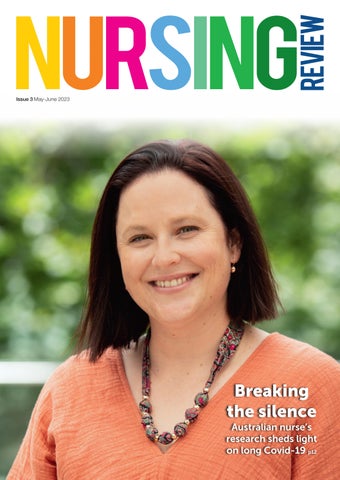
Issue 3 May-June 2023
Breaking the silence Australian nurse’s research sheds light on long Covid-19 p12
Infant with cow's milk allergy? ASCIA Guidelines recommend rice
Introducing Alula Gold Allergy premium rice infant formula
ASCIA* recommends rice formula as a 1st choice for infants with Cow's Milk Allergy (CMA)1 New Alula Gold Allergy:2 ✓ Does not contain the top 8 allergens2 including milk, fish and soy ✓ Lactose Free ✓ Omega 3 DHA and Omega 6 AA from vegetable sources
DHA=Docosohexaenoic Acid AA=Arachidonic Acid
For more information, please visit www.alula.com.au or contact our Careline to find out more 1800 552 229 IMPORTANT STATEMENT: Breastfeeding is best for babies. It has benefits for the infant, such as reducing infection risk, and for the mother. It is important to have a healthy balanced diet in preparation for, and during breastfeeding. Infant formula is designed to replace breast milk when an infant is not breastfed. Breastfeeding can be negatively affected by introducing partial bottle-feeding, and reversing a decision not to breastfeed is difficult. Infant formula must be prepared and used as directed. Unnecessary or improper use of infant formula, such as not properly boiling water or sterilising feeding equipment, may make your baby ill. Social and financial implications, including preparation time and the cost of formula, should be considered when selecting a method of infant feeding. References: 1. * Australian Society of Clinical Immunology and Allergy Guide for Milk Substitutes in Cow’s Milk Allergy. 2022. Available from: https://www.allergy.org.au/hp/papers/guide-for-milk-substitutes-cows-milkallergy (accessed August 2022). 2. Data on File. 01/08 2022. S-26 is a registered trademark. Used under licence. Distributed by Sanulac Nutritionals Australia Pty Ltd. ABN 31 160 607 509. Level 1, 42-44 Chandos Street, St Leonards NSW 2065. 05782. Date of preparation: August 2022. Healthcare Professional Use Only. For formula-fed infants. Use under medical supervision.
contents
MANAGING EDITOR
news
Eleanor Campbell 02 9936 8629 eleanor.campbell@news.com.au
2
Federal budget
3
New sleep app
HEALTH EDITOR
4
Move on ratios
Elise Hartevelt elise.hartevelt@news.com.au
5
State health minister
6
Vaping crackdown
7
Nurse of the year finalist
SALES MANAGER
Nicola Mohtram 02 9936 8666 nicola.mohtram@news.com.au
02
05
SUBSCRIPTIONS MANAGER
industry and reform
8
‘Bub-hub’ New private kids hospital
Asher Morris asher.morris@news.com.au
10 Lead the charge Union pay push
COVER
Registered nurse and University of South Australia lecturer Kim Gibson. Picture: Supplied.
11 Fair day’s pay Aged care wage rise
12 Breaking ground PUBLISHED BY
Nurse’s long Covid journey
14 ‘Critical’ APN Educational Media GPO Box 4245 Sydney NSW 2001 ABN 58 090 900 999 ISSN 1326-0472 PP100001944
Nursing home closures
08
14
16 Global leaders World nursing day
17 ‘Thick-and-thin’
PUBLISHER’S NOTE
© Copyright. No part of this publication can be used or reproduced in any format without express permission in writing from APN Educational Media. The mention of a product or service, person or company in this publication, does not indicate the publisher’s endorsement. The views expressed in this publication do not necessarily represent the opinion of the publisher, its agents, company officers or employees.
specialty focus
QLD nurse awarded
18 No excuse Harassment claims
clinical practice
20 First class Rapid pregnancy test
22 Healthy living
18
22
Chronic disease project
23 Far-reaching Pandemic performance ranked
24 ‘Seriously concerned’ Mental health training
workforce
26 At a crossroads Workforce racism
technology 28 New potential
26
28
ChatGPT in health
nursingreview.com.au | 1
news
Treasurer Jim Chalmers. Picture: NCA NewsWire/ News Corp Australia.
Big spend What the 2023 federal budget delivered for nurses. By Eleanor Campbell
P
ay rises for registered nurses working in the aged care sector and incentives to boost the number of nurses in general practice were key health
measures included in this year’s federal budget. In May, Treasurer Jim Chalmers handed down his second federal budget which included a $2.2 billion dollar package designed to address issues in Australia’s primary healthcare sector. The bulk of spending was geared towards the government’s four-year plan
Sweden has the greatest access to human health resources on the globe. Picture: Jonathan Nackstrand.
Global concern Excess deaths linked to health staff shortages. By Eleanor Campbell
H
igher death rates are closely linked to shortages of healthcare professionals, including doctors, nurses, and midwifery staff, a major international study has confirmed. A new report published in the British Medical Journal analysed global health
2 | nursingreview.com.au
databases across 172 countries to determine how the number of healthcare workers corresponded to mortality rates. Countries with fewer healthcare workers were more likely to have higher rates of excess deaths, especially for pregnancy and birth complications, diabetes, kidney diseases, malaria and some tropical diseases. Sweden had the highest number of healthcare professionals, with 696 health workers for every 10,000 people.
to overhaul Medicare, which included incentives for GPs to hire more practice nurses. The reforms are hoped to ease pressure on overwhelmed public hospitals and emergency departments. The government increased its spending on aged care by 23 per cent, rising from $24.8 billion to an $29.6 billion. The highly-anticipated pay rise for aged care staff, expected to come into effect July 1, will to cost $11.3 billion over four years. Registered nurses working in aged care will see their yearly salaries increase by more than $10,000 under the changes. “This important investment is a positive step to improving women’s pay in general as women make up more than 85 per cent of Australia’s aged care workforce,” the treasurer said. The budget included funding for up to 6,000 nursing students to complete clinical placements in struggling primary care services nationwide. Funds were also allocated support the return of 500 enrolled and registered nurses who have left the health system. ■
Ethiopia had the lowest numbers globally, with only 14 health workers for 10,000 people. The total global health workforce per 10,000 population increased from 56 in 1990 to 142.5 in 2019. “The findings highlight the importance of strengthening political commitment to develop equity oriented health workforce policies, expanding health financing, and implementing targeted measures to reduce deaths,” the authors said. According to the World Health Organisation there will be a projected shortage of 10 million health workers by 2030. Among the OECD countries Australia has one of the higher numbers of nurses per 1,000 people. According to 2014 modelling by the now-abolished federal health body Health Workforce Australia, there could be a shortfall of up to 123,000 nurses by 2030. Recent data from the Australia Bureau of Statistics showed about 20,000 more people died in Australia last year than anticipated, with just more than half dying due to COVID-19. The 10 to 15 per cent rise in excess deaths during 2022 was recorded in all states and territories except for the Northern Territory. ■
news
Off to sleep New app to help nurses sleep better. By Laura Mazzitelli
A
“world-first” mobile phone app to assist shift workers improve their sleep and mood has been created by university researchers.
A group of 27 shift workers, including intensive care and emergency department nurses who, were at “high risk” of shift worker disorder, tested the SleepSync app over a two-week trial period. The research led by Dr Jade Murray at Monash University found that the app improved total sleep time, ability to fall asleep, sleep quality and observations of recovery on days participants weren’t working. “This has the potential to improve shift workers’ health and wellbeing and how they function day to day,” Dr Murray said. Shift work disorder is commonly experienced as symptoms of insomnia and excessive sleepiness and if left untreated, it can lead to major health concerns, according to the Sleep Foundation. The app incorporates a calendar detailing day-to-day activities of the participants, and provides tailored recommendations for sleep based on this information such as work shifts and important personal activities.
The app also provides daily logging of sleep and wake times and mood, where users receive a ‘recovery score’ which measures their adherence to the app’s suggested sleep times. “Each person has different underlying biology and specific work patterns, which need to be accommodated in a personalised schedule to help them sleep better,” report co-author Dr Tracey Sletten said. The app analysed each participant’s routine and found 70 per cent of participants said they fell asleep easier, and more than 80 per cent reported better quality of sleep by using the app. The study found that participants slept an average of 29 minutes longer each night. Dr Sletten said 67 per cent of participants said the app positively modified their behaviour and habits. “They also reported improvements in mood (depression, anxiety and stress), insomnia symptom severity, sleep hygiene and sleep-related daytime impairments,” she said. ■ CRICOS PROVIDER CODE: 01032F
Ready to fit postgrad study into your life? Now is your moment.
Midwifery Student
Notre Dame Uni’s postgraduate programs are flexible, so your study works for you. • Graduate Diploma of Midwifery Qualify to become a Registered Midwife • Graduate Certificate in Contemporary Midwifery Prepare to return-to-practice in the midwifery profession • Graduate Certificate in Clinical Nursing* Newly qualified Registered Nurses in their first year of practice can complete our program to hone their clinical knowledge and improve their decision-making skills. *Fremantle campus only
Upskill in as little as 18 months. Blended learning with online study and on-campus intensives in Sydney, Fremantle or Broome. Clinical placements in a variety of settings.
Apply now for Semester 2, 2023 notredame.edu.au/pg/nursing
nursingreview.com.au | 3
news
emergency departments, maternity wards and intensive care units. Newly-elected state Premier Chris Minns said it was critical to have government and representatives for health staff ‘working together towards this important reform.’ “When I visit hospitals and EDs, the issue I hear about most is experienced nurses and midwives leaving because they’re overworked and under resourced,” he said. “This is the first step to safe staffing in hospitals – ensuring there’s one nurse for every three patients in EDs.”
During the state election, Mr Minns pledged to recruit 1200 additional nurses and midwives in his first term. Mr Minns said the group would work towards support for patients and essential frontline workers. Members of the group include representatives from NSW Health and the NSW Nurses and Midwives’ Association (NSWNMA). The NSWNMA said the move was a “historic step” to implement nurse-topatient ratios in NSW public hospitals. NSWNMA General Secretary Shaye Candish said the announcement will help implement important and “urgently needed” reforms. “The introduction of ratios will bring a level of transparency to staffing levels for each shift so nurses and midwives can turn up to work confident there will be enough staff in the relevant wards,” Ms Candish said. “We welcome the opportunity to work collaboratively with the NSW government to undertake this important reform.” ■
It’s estimated the aged care sector needs close to 11,800 registered nurses to supply all facilities with a round-the-clock RN. Under the Aged Care Industry Labour Agreement, employers no longer need to negotiate company-specific labour agreements for each aged care provider. “Australia can address workforce shortages for crucial jobs in our society while also protecting workers and promoting good jobs,” Immigration Minister Andrew Giles said. “This process speaks to the broader goals of the Albanese Government’s approach to migration and visas, facilitating important social and economic outcomes for all Australians.” The new agreement will allow employers to sponsor skilled workers in direct care occupations, such as nursing and personal care assistants, on a Temporary Skill Shortage visa (subclass 482). The policy also offers incentives for employers, including an expedited pathway to permanent residency, and provides access to union support. Mr Giles said employers could already apply for the agreement, which would be processed with priority by the Immigration Department.
“The agreement is designed to balance the opportunities migration can facilitate to build a workforce while recognising the challenges workers face on temporary sponsored visas,” he said. “This has only been possible due to the work undertaken over the past 10 months to clear the visa backlogs and reset Australia’s approach to visa policy.” Last week, Home Affairs Minister, Clare O’Neil, branded Australia’s migration system’ crazily complex’, calling for urgent reform to the ‘outdated’ skill lists and employer sponsorship programs. Aged care unions suggested last April the government establish a specific visa for skilled migrants to attract overseas staff. Aged & Community Care Providers Association (ACCPA) chief, Tom Symondson, said he was pleased the government stood up for the aged care workforce. “This will be a key driver of successful aged care reform,” Mr Symondson said. Aged Care Minister Anika Wells said the agreement helped to deliver a skilled and diverse workforce to Australia’s aged care sector. “We want every older person in Australia to have access to aged care that is high quality, safe and meets the needs of older people as their needs change,” Ms Wells said. ■
‘Working together’ Nursing union to work with NSW govt on nurseto-patient ratios. By Laura Mazzitelli
T
he NSW government will establish a staff working group with Australia’s largest nursing union in a bid to improve to staffing levels in state hospitals. In April the state government announced NSW hospitals would have one nurse for every three patients in
Andrew Giles. Picture: Catherine Duffy/News Corp Australia.
‘Crucial jobs’ Govt launches new visa to attract overseas nurses. By Elise Hartevelt
T
he federal government has unveiled a simplified policy for employers to sponsor overseas skilled workers. The move is expected to streamline the hiring process and supply the care and assistance sector with more staff outside Australia’s borders.
4 | nursingreview.com.au
news Ryan Park. Picture: Jeremy Piper/NewsWire
‘Renewed optimism’ Ryan Park sworn in as NSW Health Minister By Eleanor Campbell
A
former PE teacher who has expressed support for mandated nurse-to-patient ratios in public hospitals has been sworn in as New South Wales’ new Health Minister. Ryan Park, a University of Wollongong graduate and longtime Labor member for Keira, was sworn in at government house in Mau alongside newly-elected NSW premier Chris Minns. He said his first point of business would be drafting terms of reference for a royal commission into the state’s public health system. “It’s a priority of mine because it will provide an opportunity to examine how we are allocating precious taxpayers’ dollars,” Park said during a visit to Liverpool hospital. “Over the coming weeks and months we will finalise the terms of reference and will make sure funding is allocated to commence this important work.” Nearly 100,000 people, including 4000 children, are currently on elective surgery
waiting lists in NSW according to the state government. One in six people are waiting longer for elective surgeries than clinically recommended. A February report commissioned by the Health Services Union (HSU) said the NSW health system was currently at “breaking point.” The report said that from 2012-13 to 2017-18 there was a 25 per cent increase in preventable admissions to NSW hospitals. Speaking at his first press conference as premier, Chris Minns said a new surgical task force would be established to audit and implement improvements over the next three months. Park also wrote on Twitter on March 30 that he would also be meeting with NSW Chief Health Officer Dr Kerry Chant this week to “discuss Covid and other health issues.” NSW Labor did not commit to implementing nurse-to-patient ratios in public hospitals during the election, despite pressure from the nurses and midwives union. Labor has campaigned for a staff ratio policy for nurses in two state elections
“Those who have been shouldering the weight of our health system will hopefully be energised again. but decided in May not to support an upper house recommendation to mandate increased staffing levels. Chris Minns said in November that enforcing a minimum number of nurses and midwives per shift would be a more “fiscally responsible plan”. Labor has also promised to recruit an additional 1,200 nurses and midwives over four years on top of the 10,000 extra health staff pledged in the government’s budget. NSWNMA General Secretary Shaye Candish said Labor’s state election victory would deliver “renewed optimism” among the states nurses and midwives. “Many nurses and midwives who have reduced their clinical hours, changed roles, or left the profession altogether will be able to look to the future with a sense of hope, while those who have been shouldering the weight of our health system will hopefully be energised again,” Candish said. ■ nursingreview.com.au | 5
news
Up in smoke Nurses ‘crucial’ in educating public on vaping risk. By Elise Hartevelt
N
urses will play a critical role in educating the public on the risks of e-cigarette use as the Australian government moves to crack down on recreational vaping. During last week’s budget, health minister Mark Butler said the department will allocate $737m to tackle rising use of e-cigarettes and tobacco, including banning the import of all vaping products sold without a prescription. Lung Foundation Australia, the nation’s peak body supporting people living with lung disease, said nurses will be “instrumental” to support the changes. “Nurses are a source of help and advice,” senior lung cancer support nurse Nicole Parkinson said. “The new changes to vaping laws will be an incredibly effective tool in stopping the wave of vaping in young people. “This will ultimately prevent untold cases of lung damage and future respiratory symptoms, thus reducing future pressures on the healthcare system.” Despite being illegal to use, sell or buy without a prescription containing nicotine, Australia has seen high rates of e-cigarette use with two in five people using over the past year.
6 | nursingreview.com.au
Nearly 25 per cent of those considered themselves non-smokers at the time. Ms Parkinson, who has worked as an oncology nurse for nearly five years, leads a multidisciplinary team offering counselling, education, and support to people with lung disease. Her team assesses patient’s smoking status and respiratory symptoms and provides them with self-management tools to quit smoking. Tobacco use is one of Australia’s largest preventable causes of death and disease, accounting for the deaths of over 20,500 people each year. Young people using e-cigarettes are three times more likely to take up smoking. The health minister has said that ‘through stronger legislation, enforcement and education’ Australia’s daily smoking rate, which sits at 11 per cent, will be brought down to 5 per cent by 2030. Cancer expert Professor Bernard Stewart said the rise of e-cigarette use has led to a sharp increase in patient care in paediatric and adolescent respiratory health settings. “We have an obligation to explain to the community that there’s a great likelihood of long-term harm, including some burden of cancer,” Professor Stewart said. “Although we can’t define that with certainty yet, to remain silent would amount to criminal negligence. “We don’t have decades of data, and I don’t yearn to have this.”
“ We have an obligation to explain to the community that there’s a great likelihood of long-term harm. A recent study found that all e-liquids contained one or more potentially harmful chemicals and an estimated 62 per cent of e-liquids were toxic if ingested repeatedly. There is still not enough data currently available to determine the risk of cancer and disease. One major issue associated with e-cigarette use is the behavioural impact people experience when transitioning back to regular smoking, according to Professor Stewart. “If e-cigarettes result in more people smoking or individuals being likely to smoke, their role in causing cancer cannot be denied,” he said. National Asthma Council Australia chair Professor Nick Zwar said he expected increased pressure on GPs from people seeking help with nicotine addiction related to vaping. “The changes are unlikely to reduce pressure on nurses treating people with airway diseases in the short term but in the long term may assist if more people stop smoking,” he said. “If vaping is effective in helping a smoker to quit, this will help decrease the incidence of smoking-related diseases.” ■
news
Remote Area Nurse Caitlin Clayer. Picture: Supplied.
In the spotlight Nurse of the year finalist empowering First Nations health. By Elise Hartevelt.
C
aitlin Clayer, a remote area nurse, is leading the way in improving the health and wellbeing of First Nations communities in the Northern Territory. Indigenous Australians have a lower life expectancy compared to non-Indigenous Australians, and are at least twice as likely to report their health as fair or poor. It’s estimated that one-third of unequal access to primary healthcare and substandard health infrastructure in Indigenous communities are influenced social factors such as income and schooling. In March, Ms Clayer became one of HESTA’s 2023 Nurse of the Year finalists for her exceptional care and cultural sensitivity towards First Nations peoples. Based at Ti Tree Health Clinic (NT), two hours from Alice Springs, Ms Clayer provides diverse healthcare services including cervical screening, sexual health, primary healthcare, and emergency management. It’s not unusual for Ms Clayer to drive over 100km on a day to visit a clinic. “You spend a lot of time on your own, so it’s incredibly important to have a great team to work with,” she told Nursing Review. In this interview, Caitlin shares her experiences of working in remote parts of Australia and discusses the challenges and rewards of being a remote area nurse.
NR: What was your response to becoming one of this year’s finalists?
What is it like to be a nurse in remote Australia?
CC: It was definitely a surprise to be nominated for this award! I feel honoured that someone would take the time to nominate me. So many fantastic remote nurses work out in communities, and it’s nice to see our job put in the spotlight. Before working as a remote nurse, I knew absolutely nothing about the job and had never seen any information about remote nursing. It would be amazing if this award would encourage other nurses to look into remote nursing. It’s incredibly rewarding with so much capacity to expand your nursing skills, travel across the country and see parts of Australia that you wouldn’t ordinarily visit. You build some unique relationships working in the community, so it would be fantastic if this award promoted interest in jobs in remote area nursing, if nothing else.
It can be a challenge initially because it is such a change from working in the city. You spend a lot of time on your own, so it’s incredibly important to have a great team to work with and outlets. I have done some postgraduate studying whilst being out remote, and that really helped with the isolation. Remote work can be a perfect opportunity to undertake further study, and it helps when you have a goal or something you are working towards. For myself, I had ambitions to complete my qualification to become a Nurse Practitioner. I have been fortunate enough to start that process with the support of the NT Health primary health team. It’s a new program for the Central Australia region of remote nursing, but I see it as a natural progression for remote area nurses. Working in this environment absolutely prepares you with the foundation to undertake advanced nursing practice. There are always going to be difficult days in the clinic. The most important factor is having a good team to work with. Being able to debrief on situations and talk everything out is so vital for our mental health, and we thankfully have a fantastic team here in Ti Tree. We’re also lucky in the community I work in to have excellent relationships with our local police. So, we not only have a great working relationship, but we can support each other. We try and organise regular dinners together as a social outlet, and I credit that for managing tough days or situations. I am very fortunate to be surrounded by amazing and supportive service providers that are here for the right reasons and care so much about the community and our services.
What does your day-to-day look like? A typical day in the community can be anything. We service a number of outstations – which are very small Aboriginal communities – so a normal day could be driving over 100kms to run a clinic. We could be dealing with primary health concerns, managing chronic disease and care planning for individual patients or acute emergency presentations. We don’t run by appointments but work by walk-ins. So, each day is different. We work across all lifespans, so the scope of practice is significantly higher. We work alongside other service providers such as police and attend motor vehicle accidents. This is all in addition to working on call and providing 24/7 emergency care for the community. What are some of the major barriers you come across in your work? The hardest part of our job is staffing shortages. Unfortunately, many clinics are facing nursing shortages. So, without full staffing, we can’t provide as good a service as we want to. For many remote nurses, that plays on their minds – feeling as though they aren’t about to do enough purely due to staffing limitations.
What makes you passionate about nursing? I love the challenges associated with remote nursing. We are fortunate to have a fantastic clinic GP passionate about education and supporting the remote nursing staff. Every day is an opportunity for me to learn something new and expand my skill set. ■ nursingreview.com.au | 7
industry & reform The George Centre will open its doors in June 2023. Picture: Supplied.
‘Bub-hub’ NSW’s first private paediatric hospital to open. By Elise Hartevelt
O
ne of Sydney’s largest private hospitals is set to open this year.
‘Triple virus threat’ Health experts urge Aussies to get vaccinated. By NCA NewsWire.
T
here are fresh calls for Australians to get vaccinated ahead of the winter cold and flu season amid warnings of a virus’ triple threat.’ Health insurer Bupa is leading the charge, claiming this year’s flu season will arrive earlier than expected and lead to a higher hospitalisation rate. Bupa’s chief medical officer Dr Tony MacDermott said Australians should get
8 | nursingreview.com.au
Located in Gregory Hills of Sydney’s Southwest, the George Centre is a $100m project that began construction in September 2021 under Acurio Health and Buildcorp. The hospital will become the only private paediatric-focussed facility in NSW and offer four birthing suites in its maternity ward. Michelle Stares was named chief of George Centre in November 2021. Stares previously oversaw Victoria’s St John of God Bendigo Hospital for two and a half. “My goal is to build a great team of medical specialists at the George Centre and deliver the best healthcare to the community in which I grew up,” Stares said. “One of our priorities will be the safety of babies and their mums in the new maternity unit, so it’ll have strictly controlled access through swipe cards.” The maternity unit will hold 26 rooms, led by the maternity nurse manager and a team of midwives. Stares said the maternity ward would boast one of Sydney’s first K2
monitoring systems and several specialist obstetricians that’ll start holding tours for expecting parents from April. “George Centre is designed with a strong focus on patient well-being, choice and control, such as type of birth, what postnatal care is received and even hospital food and mealtimes,” she said. Once completed, the nearly 10,000m2 facility will service over 78 people, including 57 overnight patients, across specialist paediatric, adolescent and maternity wards. Construction on five operating theatres, two endoscopic and four delivery suites is also expected completion before opening. The hospital expects to employ over 100 staff. Stares told The Daily Telegraph that existing private health facilities were ‘overburdened’, leading to long waitlists and patients travelling outside of Sydney to receive medical help. “The centre will not only provide surgical services but will focus on the improved health of the community through ongoing education in our bubhub and education hive,” she said. ■
their flu and Covid-19 boosters before the end of May. “The flu season will be worse than last year,” Dr MacDermott said. “It’s building to a perfect storm of Covid and other flu-like illnesses. “The best protection will always be prevention, and our advice to people who are due for their Covid booster is to get their flu shot together with their Covid booster ahead of the winter season.” Dr MacDermott made the estimations based on modelling from the northern hemisphere’s recent flu season. Last month, health experts warned the healthcare system of the ‘triple virus threat’ after cases of influenza and respiratory syncytial virus (RSV) spiked since the start of 2023. NSW reported a nearly 43 per cent increase in RSV cases from early March to mid-March. Last week, over 260 people infected with Covid were admitted to NSW hospitals, with a seven-day rolling average of 38. Australia’s health minister, Mark Butler, reiterated last week that the pandemic ‘was not over’ after an uptick in Covid numbers in March. He urged all Australians over 60 to get oral antiviral Paxlovid treatment to protect themselves this winter.
Griffith University infectious diseases Professor Paul van Buynder said subvariant H3N2 nearly always led to a longer flu season and more severe illness among high-risk groups. “If we combine Covid with the H3N3 variant, we’re likely going to see a dramatic mark on all Australians,” Professor Van Buynder said. Dr MacDermott said Australians getting the flu and Covid vaccination helped protect themselves and reduce pressure on the health system. “Australia’s hospitals remain under strain,” Dr MacDermott said. Recent research showed that flu vaccination among adults reduced the risk of being admitted to an intensive care unit with flu by 37 per cent. The flu jab also reduced the risk of ICU admissions due to the most severe forms of flu by 82 per cent. “With Australians effectively back to normal lifestyles, we expect to see more Covid and flu cases this year,” Dr MacDermott said. “Each virus is different, affecting individuals in different ways, so getting both shots is essential – they’re perfectly safe to receive on the same day.” ■
WE SEE YOU INVEST IN YOURSELF STUDY POSTGRAD CLINICAL NURSING Take your clinical and leadership skills to the next level with an online course from CQU.
APPLY NOW
CRICOS: 00219C | TEQSA: PRV12073 | RTO: 40939
C_AD_2302_210x297_NursingReview-May
industry & reform
‘Lead the charge’ Nursing unions and NSW premier to negotiate wages. By Elise Hartevelt
N
ursing and public sector unions have urged NSW’s newly elected Premier to keep his end of the bargain on removing wage caps for essential workers. NSW Labor leader Chris Minns was elected the state’s 47th Premier after the March 25 election. During its campaign, state Labor campaigned heavily on a promise to abolish the public sector wage cap that would raise salaries for essential workers, including nurses and midwives. The move means that the Minns government will have to amend the Industrial Relations Act with approval from Parliament. Minns said he ‘probably would to sit with parliament in May.’ “We need to make sure that we are recruiting and retaining essential workers in our hospitals and our schools, and I’ll be speaking with senior members of both of those departments,” he said. Kos Samaras, a former Labor strategist, told ABC that public sector workers were ‘the dominant cohort in those seats’ that led to Minns’ victory. “They have effectively now become, across the country, but particularly in NSW and Victoria, Labor’s new working class,” Samaras said. “This particular group, largely females, tertiary educated, are overwhelmingly the biggest supporters of the red side of politics.”
10 | nursingreview.com.au
The award covering the state’s nurses and midwives is due to expire in June this year, and nursing unions have expressed urgency to start pay deal negotiations. The state’s Nurses and Midwives Association (NSWNMA) assistant general secretary, Michael Whaites, said the union would push for a wage increase of at least 7 per cent. “Removing the wage cap would make a huge difference to how we negotiate,” Whaites said. “We look forward to the decade-old public sector wage cap being abolished, and the return of a fair collective bargaining process for our members.” Minns promised a week before the election that public sector workers would receive wages above the current 3.5 per cent by slashing the costs of private labour hire and saving $1.6bn. Yet, the Perrottet government raised significant question marks, flagging that Labor’s promise was a ‘miscalculation’ and exceeding the state’s budget by billions. Minns defended its policy, telling The Guardian that the Parliamentary Budget Officer found removing the cap could increase the state’s award wage ‘higher or lower than the government’s target.’ “In a time of higher inflation, it is more likely that the IRC would approve higher wage increases,” it found. “We know we’re going into these negotiations with economic principles in mind, but there is a [opportunity] to talk about what we can do in NSW and have a genuine negotiation, as I said during the campaign,” Minns told Nine Radio. “Every other state doesn’t have a wage cap in place.”
One of Australia’s public workers’ representatives has made no secret it wants Minns to make good on his promise, saying ‘negotiations will start as of Monday.’ “There’s no doubt they have a mountain to climb to address the structural issues created over the last 12 years,” Public Service Association (PSA) general secretary, Stewart Little, said. “There are chronic worker shortages and the legacy of a lack of investment, which isn’t going to be fixed overnight. “But there’s no question our members will be seeking a fair wage rise. “It won’t be anything like current inflation, but I expect anything less than the realm of upwards of about 4 per cent would be met with concerted opposition from the trade union movement.” While Labor was hesitant to commit to staffing ratios, it pledged to hire 1,200 extra nurses and midwives to the state’s workforce over four years. Chief of the Australian College of Nursing (ACN), adjunct professor Kylie Ward, welcomed the Minns government’s ‘ambitious target’ to employ extra nurses. “It will be crucial that Labor introduces a framework to ensure there is an adequate workforce with the appropriate skill and skills mix across the new roles to support our profession,” Professor Ward said. “We can only improve recruitment and retention if the government works with nurses to fix the issues plaguing the dedicated but exhausted nursing workforce.” Labor said it would introduce 600 new hospital beds across the state, including a $700m injection into Rouse Hill Hospital to supply 300 beds. Sydney’s Canterbury, Fairfield, Mount Druitt and Blacktown hospitals will also receive an upgrade. “If you have no nurses to take care of the 600 people laying in those beds, then that money, which could be used for workforce improvements, will be wasted,” Professor Ward said. “This is the moment for the NSW government to lead the charge and make a real difference in ensuring everyone in the state has access to high-quality health care. “I look forward to meeting with premier Minns to discuss how we can work together to implement the solutions required to recruit and maintain a healthy nursing workforce.” ■
industry & reform Federal Treasurer Jim Chalmers. Picture: Dan Peled/News Corp Australia.
‘Fair day’s pay’ Govt pledges $11.3bn towards pay rise for aged care workers. By Elise Hartevelt
T
he federal budget is set to bear the weight of a much-anticipated salary increase for aged care workers as Labor seeks to attract more staff to the sector through $10,000 pay hikes. In May, the government announced it would fully fund the 15 per cent pay rise for over 250,000 aged care workers, costing $11.3bn over four years. The move will see registered and enrolled nurses, assistants in nursing, personal care workers, head chefs and cooks, lifestyle workers, and home care workers secure ‘a historic increase’ to their award wages. “Every worker deserves a fair day’s pay for a fair day’s work, and that’s what this will deliver for thousands in aged care across the country,” Mr Chalmers said. “For too long, those working in aged care have been asked to work harder for longer without enough reward, but with this budget, that changes.” Mr Chalmers said the pay rise would help attract more staff to work in aged care homes and move the government closer to fulfilling its election promise of round-the-clock nurses in facilities. From July 2023, the price of AN-ACC will be raised to $243.10 for residential aged care providers to deliver pay boosts for direct care staff and lifestyle workers. The government will also set up supplement of $10.80 per resident per day to pass on funding for salary increases for head chefs and cooks.
For providers delivering home care services, the government will increase the value of packages. “This investment is a historic and deserved pay rise for a workforce undervalued for far too long,” Aged Care Minister Anika Wells said. “This wage decision will help more families to make ends meet and ensure that quality aged care workers are less likely to contemplate leaving the sector because of pay concerns.” A registered nurse in the aged care sector can expect a weekly increase of up to $200, equivalent to an annual salary rise of $10,000. Personal or home care workers will receive a raise of $141 per week, and assistant nurses an additional $137 per week. The decision to raise wages reflects the Royal Commission 2021 final report, which recommended better remuneration for aged care staff. Last year, the Fair Work Commission made an interim decision of a 15 per cent increase for ‘direct aged care workers.’ But sector representatives and stakeholders pushed for a 25 per cent raise for all staff employed in aged care. While the government agreed to pick up the bill, it raised concerns about whether the budget could deliver the 15 per cent in full by July this year. The Commission responded in February by including all aged care workers in its final decision and rebuked the government’s plan to fund the raise over two years. Australia’s peak advocacy organisation for older people, Council on the Ageing
(COTA), chief Patricia Sparrow called yesterday’s announcement ‘fantastic.’ “Raising wages in aged care is essential to achieving better outcomes in the system,” Ms Sparrow said. “This funding boost will, among many things, help ease the workforce pressures and ensure we have nurses available 24/7.” Ms Sparrow said it would make a marked difference to the sectors’ ability to attract and retain aged care workers. “But it’s also critical there’s transparency in the system to ensure the money is going directly to the workers and isn’t just going to the provider’s bottom line.” The Australian Nursing and Midwifery Federation (ANMF) said that without policies, 95 per cent of staff would miss out on a pay rise, where employers would ‘pocket unspent wages.’ The federation continues to receive reports from members that many aged care employers would only pass on the money to its workers if they’re legally required. “Without accountability and enforceability, this pay rise means next to nothing,” ANMF (Vic Branch) Secretary Lisa Fitzpatrick said. “So far, the promise lacks any detail about a mechanism to legally require aged care employers to pass on all the funding to their staff in pay rises. “This decision will entrench the private aged care staff shortage.” Some aged care providers, including Catholic Health Australia and HammondCare, responded that ‘every dollar from the $11 bn would go towards increasing the wages of frontline aged care staff.’ Catholic Health Australia Director, Jason Kara, said delivering a pay rise to the hardworking staff was ‘the right thing to do.’ “Aged care providers will be incredibly relieved to see this government funding confirmed,” Mr Kara said. “I know providers are greatly looking forward to passing on this wage increase so they can reward their teams with more than thanks.” HammondCare Chief Mike Baird said the announcement was a message to the country that aged care work matters. “It is very much deserved recognition for their commitment to helping vulnerable people in need,” Mr Baird said. “Anyone that’s had someone in aged care knows the impact that these frontline workers have – each day and night, they change lives.” ■ nursingreview.com.au | 11
industry & reform Kim Gibson has a clinical background in neonatal intensive care nursing. Picture: UniSA.
Uncovering long Covid Nurse’s research sheds new light on virus.
NR: Can you tell us a bit about what happened to you last year?
By Elise Hartevelt
KB: Essentially, I did a case study on myself. I had a relatively mild case of Covid in April last year and spent about a week in bed. I was otherwise a healthy 39-year-old and had ongoing cold-like symptoms. It took me a while to shake them off, and then five weeks after my Covid infection, I woke up one Sunday morning with a blocked ear and a feeling of ear fullness. I was off-balance, and over the next 24 hours, my hearing disappeared in one ear. I went to my GP, who found my ear looked relatively normal but referred me to an ENT surgeon. I got worse that day, and I had severe vertigo.
R
egistered nurse Kim Gibson has used her own personal experience with Covid-19 to pioneer new research linking the virus to hearing loss. In April last year, the University of South Australia lecturer came down with a “relatively mild” case of Covid which sent her to bed with cold symptoms for a week. The 39-year-old a month woke up five weeks later with a blocked ear. Nursing Review spoke with Ms Gibson about her experience navigating long-Covid and her research findings.
12 | nursingreview.com.au
I got to the ENT surgeon roughly 48 hours after the symptoms started, who also agreed that my ear looked normal. I had an MRI, which showed no apparent cause for my hearing loss. I had profound hearing loss in my right ear. Then, I had two weeks of steroids and betaine, a sort of antihistamine. It helps improve blood circulation by increasing blood flow to the affected area, while Prednisolone works as a steroid to reduce inflammation. It was a slow recovery over the following six months. At six months, my hearing in my right ear had returned to normal limits, but I have ongoing tinnitus and noise sensitivity, which may be a chronic problem now.
industry & reform
But it gave me severe stress and anxiety even though my hearing has returned to normal limits. It made me realise how much I relied on my hearing, particularly conversing withpeople. In terms of hearing, you don’t value something until it’s gone. The vertigo was exacerbated when I was looking at a computer screen. Any kind of concentrating on eye work or computer screen work made me feel even worse, so it affected my professional life as well as my personal life.
During testing, did they link Covid infection to hearing loss? With any sudden onset hearing loss, you need to look for a major pathological cause like a tumour or a stroke. So anyone who presents with hearing loss, according to our national guidelines, should get an MRI and steroids early. Because everything else was ruled out, my blood test came back normal, and by looking at the literature and the studies done on this, it’s very safe to say that my hearing loss was associated with Covid. They studied the inner ear of mice and human tissue and could see the effect of Covid on the inner ear. Globally, we see that sudden onset hearing loss has increased during and after the pandemic versus before, and people are presenting to their doctors with hearing loss and testing positive for Covid. There have been studies overseas where they’ve done hearing tests on people hospitalised with Covid. So, now, they’re screening for hearing loss in people with Covid.
How does the Covid virus affect a person’s ability to hear? Research suggests that in almost 90 per cent of the cases, there’s no apparent cause for the rapid hearing loss, and it’s almost always unilateral. While there’s not much research yet on Covid and hearing loss, studies proposed that the virus attacks the auditory cortex in the temporal lobe, stimulating excess cytokine release. These cytokines can then harm the nerve responsible for hearing and the tissues in the inner ear, which can cause problems with hearing and balance. Based on the literature, we know that getting steroids early on leads to better outcomes. If your hearing loss isn’t as severe, your chances of recovering are also better. Despite having moderate hearing loss, I received steroids within 24-48 hours, which helped me recover. Studies have shown that early steroid treatment can predict hearing recovery. Unfortunately, this research wasn’t available when I experienced hearing loss. However, more research on this topic has been published in the last year.
How have you tried to spread awareness about hearing loss and Covid? As an academic, I felt responsible for publishing my findings. I wanted to share my knowledge and raise awareness about Covid, especially since we may have become complacent after three years. If we face another wave, it’s crucial for clinicians, especially GPs, to recognise sudden hearing loss as a potential symptom of Covid. Even if the patient doesn’t have a history of Covid infection, they could still have it.
“If we face another wave, it’s crucial for clinician to recognise sudden hearing loss as a potential symptom. Understanding that hearing loss due to Covid can affect people of all ages and the severity of infection is crucial. Even those with mild infections and those in their thirties to seventies can experience hearing loss. Therefore, being younger does not mean you are not at risk. I’ve had two Covid vaccinations and a booster, and still, I experienced hearing loss after a Covid infection. It’s highlighted in the media, in our health promotion, that if you lose your taste, that’s a sign of Covid. If our taste goes, we know where to go and get screened. But there’s nothing really about hearing. That’s also a critical message we may need to send to the community. And we don’t know what will happen to this virus as it mutates. It could be affecting other organ systems. Unfortunately, we have yet to see many of the mutations and follow up on what could happen. So it’s essential not to go, ‘Oh, well, it’s only my taste that hasn’t gone’ or ‘I’ve still got my taste, but my hearing’s going.’ We don’t know if it will affect other organ systems as it mutates. I hope to encourage people to seek medical attention if they experience any hearing problems because early treatment can improve their chances of hearing recovery. ■
The laTesT news for aged care professionals For nearly 20 years, Aged Care Insite has remained the respected industry journal aimed squarely at the growing number of Australians working in the burgeoning aged care industry. At Aged Care Insite we pride ourselves on being at the forefront of the ever‑changing care sector. We provide an independent source of news, and cover the issues relevant to you. • Latest updates in technology and research • Analysis of the major issues facing the health sector • Full online access and also bi-monthly directly to your door
Please call 02 9936 8666 to find out more. nursingreview.com.au | 13
industry & reform ANMF federal secretary Annie Butler. Picture:
‘Critical’ More aged care homes close due to nursing shortage. By Elise Hartevelt.
A
ustralia’s nursing union has urged aged care providers to foster healthier work environments in order to attract nurses meet a new nationwide 24/7 nursing requirement by July. In April, Sydney-based aged care home Wesley Mission said it would close its remaining three residential homes due to severe financial and staffing pressures. Brightwater Care Group, which delivers care services in Perth, also announced it will shut three of its 12 residential homes by 2024.
14 | nursingreview.com.au
By July 2023, all aged care homes must have a registered nurse present at all times. Australian Nursing & Midwifery Federation (ANMF) federal secretary Annie Butler said aged care providers were not acknowledging the needs and concerns of nurses. “Rather than recognising what matters to nurses, aged care employers are trying to hide their failure to create work environments where nurses want to work,” Mrs Butler said. “Any organisation failing to recognise the real causes of staff shortages in aged care is also failing to recognise the urgent and critical need to improve care for older Australians.” Mrs Butler said nurses would return to the sector if it established policies and specific care minute
requirements for nurse care, along with a wage raise. The aged care sector’s reforms are projected to lead to a shortfall of 11,800 registered nurses by the upcoming financial year. Together with the implementation of the new care minute standard of 215 by October 2024, the workforce will also require close to 10,000 personal care workers. Despite the government’s initiative to raise the minimum pay standard by 15 per cent from July to attract more staff, the sector still needs thousands of workers. The salary increase of 15 per cent for workers in the aged care sector is expected to cost nearly $8bn across four years.
industry & reform Wesley Vickery Sylvania aged care facility in Sydney’s Sutherland Shire.
But Mrs Butler said the federation continued to hear that many employers would only pass on the money to its workers if they’re ‘legally required.’ “There is no way this can be considered a successful recruitment strategy,” Mrs Butler said. Australia’s nursing union is currently in the midst of a court case with NSW government due to reports of widespread understaffing and mistreatment in public hospitals. The court case’s first listing in the Supreme Court is anticipated on the 8th of May. Prime Minister Anthony Albanese said the government’s ‘ambitious’ staffing requirements were necessary to improve aged care following the Royal Commission’s recommendations. Mrs Albanese said he stood firm on his approach to aged care reforms despite Perth-based provider Brightwater announcing the closure of three of its 12 residential homes by 2024. Brightwater said it faced severe financial and staffing pressures ahead of the new national standards around 24/7 onsite nurses. “The fact that 90 per cent have met the (staffing) requirements already shows that we make no apologies for being ambitious in this area,” Mr Albanese said. “But we’re also being very practical about the way that these issues are dealt with.” Federal data estimated that 80 per cent of facilities already met the 24/7
nursing requirements, and ‘nine per cent were very close.’ Yet, increasingly more providers are announcing home closures as staffing pressures rise ahead of the July deadline. Brightwater told Nursing Review it would close three of its smallest and older residential aged care facilities over the coming 12 months. Brightwater chief Catherine Stoddart said the age and size of the facilities and the increasing care needs of its residents played a significant role in the decision. “Modelling of our rosters to meet the new minimum staffing requirements showed that our smallest facilities would not be best placed to deliver the quality of care in a financially sustainable way,” she said. “On behalf of all families and residents who call Brightwater home, we have a responsibility to ensure the long-term delivery of high-quality care and ensure the sustainability of our business.” Roughly 75 residents living across the three facilities in Joondalup, Huntingdale and South Lake will need to relocate. Over 160 staff will also be offered new positions in Brightwater’s other aged care facilities. Earlier this year, Brightwater opened a new 128-bed facility at Inglewood, where some of the staff and residents are expected to relocate to. “We’re committed to ensuring the safety and care of our residents and to the
long-term sustainability of our aged care facilities,” Mrs Stoddart said. “Decisions like this are not easy; however, it is critical for the ongoing delivery of our business.” The government reiterated that providers failing to meet the new mandates by July would not need to close their doors and that it ‘would work closely with them to get the support they need.’ Earlier this year, Victoria-based aged care provider VincentCare withdrew from Home Care Packages, citing difficulties meeting new government requirements. Sydney-based aged care provider Wesley Mission announced last week it would close its remaining three residential homes due to staffing challenges. The move is expected to impact 200 residents and 2,000 staff. Aged care minister Anika Wells took to social media to defend the government’s decision to mandate staffing levels. “I will not apologise for being ambitious to improve the quality of aged care,” Wells wrote on Twitter. “Providers making genuine efforts to follow the rules and keep their residents safe should not be concerned.” The Albanese government conceded in March the nursing deadline would be unachievable given widespread staffing shortages. It said that facilities unable to meet the 2/47 nursing requirements, such as those in regional areas with less than 30 beds, would be exempt from the mandate. ■ nursingreview.com.au | 15
specialty focus
or significant person, and ensuring that the workforce caring for them is appropriately prepared and supported.
How would you compare the profession to when your mother was a nurse to now?
‘We are leaders’ Celebrating International Nurses Day. By Elise Hartevelt
A
nurse educator has reflected on the profession’s evolving role on International Nurses Day. Deputy head of Monash University’s nursing school Associate Professor Helen Rawson said nurses are no longer just seen as caregivers, but as leaders who make a significant impact on their patients’ lives. “You’re never ‘just a nurse’,” she said. “We are leaders – leading care at the bedside, education, research and policy. “Nurses are highly skilled and educated healthcare professionals.” International Nurses Day serves as a tribute to the remarkable contribution of British nurse Florence Nightingale but as a recognition of nurses’ vital role in worldwide healthcare. Nursing Review spoke with associate professor Rawson about how the profession has changed over the years and what it might look like in the future.
NR: Why is it important that we celebrate international nurse’s day? HR: It’s crucial to celebrate International Nurses’ Day as it brings global attention and recognition to the vital and fundamental role that nurses play in society’s care and wellbeing. Nurses comprise the largest proportion of the healthcare workforce and perform a myriad of tasks. 16 | nursingreview.com.au
So, it’s essential to highlight their work. Plus, the pandemic emphasised the significance of healthcare and the essential role of nurses. As we transition through the pandemic, nurses continue to do their important work.
Why did you become a nurse? My nursing journey began when I was in high school. I worked as an auxiliary nurse in a nursing home in England, the equivalent of a personal care worker. It was an unconventional Saturday job, as most people worked at places like McDonald’s or the shops on High Street. I am also a second-generation nurse, as my mother, who came from the West Indies, moved to England to train as a nurse. So, a passion for nursing runs in the family. I went on to earn my nursing degree in London and continued working at a major hospital in the same city. After focusing on working with older patients in hospitals, I transitioned into clinical work in residential aged care in Australia as a registered nurse. Alongside my clinical work, I continued my education, earning a Master’s degree and eventually a PhD and becoming involved in research. My research focuses on the care and wellbeing of older adults wherever they receive care – whether in the hospital, community, or residential care settings. It’s essential to have the older adult at the centre of their care, involving their families
So many things have changed! Even when I was doing my nursing degree – when my mom trained as a nurse, they were not educated at a degree level. She underwent hospital training, and then when I completed my nursing training, I earned a degree. Nurses are now able to pursue leadership roles, including senior leadership roles. So, the nursing profession stretches from being at the bedside with patients or people receiving care right through to being prominent in policy in government and the United Nations. There are many differences between our experiences. One of the things is critical thinking and understanding the importance that we as a profession have to instigate change, make decisions, and have an impact on policies. People now recognise that our role is vast in terms of the care we provide. It’s so much more than just nurses being carers; nurses are also leaders. They may lead at the bedside, in healthcare, academia, research, policy development, or even at the government level. People often think of nurses as just being at the bedside, but their role is much more diverse and equally important. And society values nurses for what they do. Society does understand that nurses are involved in every aspect of someone’s life, from the moment they are born to when they go through their lives. Whether an individual goes on to have children or comes to the end of their life, nurses are involved everywhere throughout our life trajectory. People engage with nurses when they engage with healthcare. As a result, there is an understanding of the different things that nurses do. ■ The International Council of Nurses theme for this year “Our Nurses, Our Future” which aims to reinforce the importance of nurses as an essential and integral part of society.
specialty focus Queensland nurse Grace Fearon has been recognised as a ‘super hero’. Picture: Supplied.
‘Through thick-and-thin’ Dedicated hairdresser-turnedpaediatric nurse honoured. By Elise Hartevelt
A
paediatric nurse has been recognised for her unwavering dedication to caring for young patients with terminal illnesses and longterm health issues. Grace Fearon, 24, received the Juiced TV Super Hero Awards for her outstanding work at the Queensland Children’s Hospital.
One of her patients, 16-year-old Isabelle, nominated Grace after the nurse stood beside her “through thick and thin” while fighting a lifethreatening illness. “I was a bit overwhelmed because we don’t usually get a lot of recognition in nursing,” Grace said. “There are a lot of times where you leave and think, ‘did I do the right thing?’ “So, it was nice to feel I’m on the right track.”
Grace landed her job at the South Brisbane-based hospital last year, which she said had always been her dream. Every year over 40,000 people across Queensland and NSW are admitted to major specialist hospitals for children. While Grace said she always loved children, including her friends’ babies, she said her work can be very demanding. “There’s a professional boundary aspect that I’m really keen to keep,” she said. “It’s really hard not to get attached and pretty much impossible to walk out at the end of the day and not feel anything for these families. “It will always be my biggest challenge because it does affect me.” Grace said she heavily relies on her colleagues for support to keep her mental health in check. “Not many people can understand what we see and go through every day,” she said. “I’ve seen many nurses who just have to go because they can no longer cope.” Grace started to look after Isabelle two years ago, after which they faced some ‘tricky situations.’ “We weren’t always able to just laugh and be happy,” Grace said. “There were definitely some troubling and tense moments. “But we always come around and hug each other at the end of the day, knowing it’s all going to be okay.” Grace’s nurturing nature and outgoing attitude have made her a favourite among her patients, many of whom seek her out for haircuts and braids. She recalled one patient who had just come out of brain surgery and had lost a large chunk of hair. “It’s such a self-care thing for them,” Grace said. “We’ve just had great moments and made beautiful memories grooming patients and making them look stunning.” Isabelle was recently discharged from the hospital and hoped to advocate and help other children going through similar situations. She started working as a PCYC junior gymnastics coach and mental health coordinator at Borderline, a camp program for teenagers. Grace said Isabelle is one of her patients that will always stay with her. “When you watch patients like Isabelle grow up, it’s an honour to be a part of their journey and see the impact you have had,” she said. ■ nursingreview.com.au | 17
specialty focus NSWNMA’s Michael Whaites. Picture: News Corp Australia.
‘No excuse for harassment’ State nurses told to avoid OnlyFans. By Elise Hartevelt
O
ne of Australia’s leading nursing unions is calling for more research to battle the sexualisation of the workforce. In early March, 120,000 NSW registered nurses and midwives received an email from the Nursing and Midwifery Council of NSW warning them not to post content on OnlyFans. Some email recipients took to social media labelling NMC’s move ‘moralising and slut-shaming.’ NSW Nurses and Midwives’ Association assistant general secretary Michael Whaites said state nurses had the right to make individual choices. “There’s this significant concern about sexual exploitation driven by economic circumstances,” he said. “But we don’t have any evidence of that, which is problematic.”
18 | nursingreview.com.au
Over 60 per cent of Australia’s nursing workforce have reported experiencing sexual harassment and violence in the workplace at least once. Whaites said the way the NMC chose to express their concerns was ‘problematic’. “There’s no excuse for sexual harassment - full stop,” he said. “The council was ill-advised on the scenarios they used to get their point across.” The NMC works with the NSW Health Care Complaints Commission (HCCC) to receive and manage complaints about registered nurses and midwives in NSW. Of the 120,000 registered nurses in NSW, the council said it had received complaints against less than 1 per cent in the last financial year. “The most recent newsletter aimed to reinforce professional standards for nurses and midwives, including the appropriate behaviour on social media,” an NSW NCA spokesperson said. “And how inappropriate behaviour can lead to complaints of unsatisfactory professional conduct or professional misconduct.
“This needs to be assessed on a case-by-case basis. “The social media guidelines ensure that nurses and midwives meet their obligations under the National Law.” The industry’s professional complaints body said that nurses and midwives posting content on OnlyFans could pose a ‘distraction to patients’ and be ‘deemed unprofessional.’ It said it held the authority to consider social media use in an employee’s private life if it questioned a practitioner’s fitness to hold registration. “If a practitioner is recognised for publishing photographs in uniform, they could be reported for their conduct,” a NCA NSW spokesperson said. “The social media guidance is clear on the obligations of nurses and midwives to maintain professional boundaries.” According to the NCA’s social media guidelines, a nurse could receive complaints if endorsing ‘activity that
specialty focus
contradicts public health orders or reputable scientific evidence.’ It said that any online activity ranging from commenting to posting likes or dislikes without comments would be seen as an endorsement. It was also considered inappropriate if nurses and midwives engaged in activities not in line with their professional responsibility while being photographed or videoed. NSWNMA’s legal team told Nursing Review that participation in unlawful behaviour or not upholding professional standards was generally considered the benchmark for bringing the profession into disrepute. “Importantly, this needs to be assessed on a case-by-case basis,” the NSWNMA legal team said. “Being a content creator for OnlyFans is not illegal – it’s up to the individual to assess any risk of being a content creator.” The team said the NMC should not ‘have grounds to interfere’ with a health practitioner as long as the content creator on OnlyFans used an alias or hadn’t identified themselves as such. “If the NMC wanted to apply the code of conduct, it must be in line with unlawful behaviour that ‘may or may not damage the profession’s reputation,” they said. “Technically, the council does not cross any borders, but it’s perhaps a conservative view towards the use of social media in 2023.” Whaites said the issue addressed the challenge of whether or not clarifying potential ‘damaging behaviour to the reputation’ meant. “The conundrum is that you cannot bring the profession into disrepute, but the ‘how’ is not defined,” he said.
“It’s difficult because when you become prescriptive, you automatically cancel other scenarios out. “And once you become prescriptive about what is bringing a service into disrepute (and what is not), every scenario would need to be refined and challenged through time.” Whaites said that people should be able to express their sexuality – with the caveat of not harming others, being of legal age of consent, and being within the nurses’ conduct guidelines. Media outlets like The Guardian have suggested that nurses and midwives are turning to other income streams like OnlyFans to make ends meet. The number of Australians working two jobs increased by 1.7 per cent over the last quarter of 2022 to nearly 1 million people. People working in healthcare and social assistance are among the country’s top three industries holding a second job. “If they feel this is needed because their current wages are insufficient in helping them make ends meet, then that’s a problem,” Whaites said. “Because that would demonstrate that broader issues are at play here.” Of OnlyFans’ 1.5 million content creators, it’s estimated that 1 per cent of the accounts earned 33 per cent of all the global website’s money. One of the top-tiered content creators is said to earn over $100,000 each month. But generally, a consistent OnlyFans creator received about $151 monthly. The average wage for a registered nurse or midwife in NSW is just over $7,000 a month, or $84,000 a year. The code of conduct requires that a working nurse or midwife in NSW discusses
taking up secondary employment with their primary employer. If there is a potential conflict of interest with NSW Health employment or the total work being undertaken raises issues about excessive working hours, the code guidelines read. “Such approval for other employment must not be unreasonably withheld.” Generally, any secondary job must not impact the performance in the primary position, the NSWNMA legal team said. “Being an OnlyFans creator may be intended by someone as a pass-time or an income stream,” they said. “The employer would need to establish that the employee was damaging the organisation’s reputation in creating content. “However, employers and health practitioner regulators can face challenges when understanding emerging trends in social media and related complaints.” They emphasised that any complaint against a health practitioner should be assessed on the individual case and not influenced by assumptions or moral judgements. Whaites said whether nurses and midwives needed to discuss their earnings from OnlyFans with their primary employer was questionable. “If, for example, in my spare time, I made jam. “And then I sell jam at a local fare every weekend. “I don’t need to talk to my employer about that because it clearly doesn’t impinge on my contract with them.” ■ nursingreview.com.au | 19
clinical practice
‘First-in-class’ Experts develop rapid test for potentially fatal pregnancy complication. By Elise Hartevelt
A
ustralian researchers have developed a new test to enable the early diagnosis of preeclampsia, a potentially fatal pregnancy condition and one of the leading causes of maternal death worldwide. Experts from the University of Technology Sydney created the 15-minute test based on the discovery of two new biomarkers, FKBPL and CD44. Preeclampsia, the most dangerous form of high blood pressure during pregnancy, can lead to severe organ damage and affects roughly 5 to 8 per cent of pregnancies in Australia. Lead researcher Associate Professor Lana McClements said the test will enable clinicians to make a faster and more accurate diagnosis. “We believe this test has the potential to revolutionise the way preeclampsia is diagnosed and managed,” Professor McClements told Nursing Review. Preeclampsia most commonly develops during the later stages of pregnancy and often occurs in first-time pregnancies. Direct causes of the condition are unclear, but recent studies indicate that genetics may account for up to 55 per cent of cases.
20 | nursingreview.com.au
Early indicators of preeclampsia include a sudden rise in blood pressure and the appearance of proteins, called proteinuria, in the urine. Other symptoms include dizziness, headaches, nausea, abdominal pain, and swelling around the ankles, hands and feet. If left untreated preeclampsia can lead to serious complications such as seizures, kidney and liver failure, blood clots, or death. “A reliable, fast test with a clinical assessment whilst the patient is still at the doctor’s office will increase the likelihood someone receives care at a critical time,” Professor McClements said. “The novel biomarkers also show potential as drug and cell therapy targets of emerging treatments for preeclampsia, offering hope for a future cure to this terrible disorder.” The 15-minute rapid test is a strip-based lateral flow test that involves adding a plasma sample extracted from blood to quantify concentrations of the two biomarkers. `Professor McClements said the team was inspired by the Covid-19 rapid test and used a similar approach in the preeclampsia design. “This is the first-in-class rapid test for preeclampsia using this platform,” Professor McClements said. “There are other points of care tests for preeclampsia; however, these are based
on different platforms and biomarkers, and less sensitive.” The current method for diagnosing preeclampsia includes measuring blood pressure, testing for protein in the urine, and assessing other clinical signs and symptoms. Professor McClements said the condition could express itself differently for every pregnancy, making diagnosing challenging. Someone might not experience any symptoms until it becomes very dangerous, she said. “Diagnosis is often delayed, which has potential negative consequences for the mother and her baby. “Timely diagnosis is key in preventing complications and fatal outcomes.” She said the rapid test could prove especially useful in rural and remote parts of Australia and developing countries with poor access to prenatal care. While most mothers giving birth in Australia’s remote areas had healthy pregnancies, they were at a higher risk of adverse outcomes when complications did occur. Professor McClements said she hoped the rapid tests would reach the market within two to five years. The team is looking for industry partners to make it available to clinicians and healthcare professionals. “We hope the test has great potential to make a real difference for both mothers and babies,” she said. ■
clinical practice
Healthy living Project to investigate chronic disease across Torres Strait Islands. By Elise Hartevelt
A
research team has embarked on a two-year project to design individual health screening tools and community-level interventions in the Torres Strait region. James Cook University’s Healthy Ageing Research Team (HART) researchers joined forces with Aboriginal and Torres Strait Islander communities to combat chronic disease. The ‘Strong Communities, Strong Health’ project received $470,000 from the National Health and Medical Research Council Medical Research Future Fund grant. HART researcher Mel Kilburn said it responded to communities voicing a need for dietary and physical activity assessment tools to support their healthy lifestyles. “The tools are being explicitly developed in these centres, making them accessible to nurses and Indigenous health workers,” Ms Kilburn said. “They will serve as valuable resources for clinical assessments and supporting patient care, allowing healthcare professionals to utilise them when needed.” Nursing Review spoke with Ms Kilburn about empowering Torres Strait communities in strengthening their wellbeing and fostering longevity through healthy living practices.
NR: What do you hope to achieve with this project? MK: Over the past 20 years, our team has conducted clinical services and research in the Aboriginal and Torres Strait Islander communities. We conducted research projects focusing on the prevalence of dementia in the region. At the end of these projects, when we shared the results with the communities in the Torres Strait, they expressed a desire for dietary and physical activity assessment tools to support their healthy lifestyles in the region. So, that was the catalyst for why this project exists.
There is a crucial knowledge gap is partly due to the geographic isolation of many communities, as well as the lack of culturally appropriate health assessment tools. In turn, this has inhibited the development of sustainable health programs that are relevant and acceptable within communities. Currently, no tools are available that meet their needs, so we have decided to collaborate with the community to develop culturally relevant tools. The project explores lifestyle behaviours, specifically dietary and physical activity patterns, and examines the environmental and personal factors influencing these behaviours. Using this information, we will co-design strategies and programs with the Aboriginal and Torres Strait Islander communities to promote healthy living. The project is divided into several phases, with the first phase focused on developing and validating the dietary and physical activity assessment tools. Traditionally, the lifestyles in the Torres Strait were holistically healthy in terms of diet and physical activity. However, colonisation interrupted these practices, and the lasting effects are not well understood. The tools we’re developing will benefit the community by enabling clinicians to provide dietary and physical activity assessments and advice, even without access to a dietitian or other healthcare professionals who would typically fulfil that role. From a research perspective, the project will provide valuable data on the existing lifestyle patterns in the Aboriginal and Torres Strait Islander communities. In the second phase, we will conduct a desk-based exercise to map out the determinants of these lifestyle behaviours within the region. Phase three of the project involves community engagement activities, such as building meaningful relationships in each community and yarning circles. These circles provide a platform for interested individuals to come together and share their perceptions and views on the factors that influence health, specifically within their communities. The insights gathered from these discussions will be taken back to each community. Subsequently, co-design workshops will be held, where the research team collaborates with the communities. The aim is to bring all the gathered information and co-design locally and
culturally relevant strategies and programs that support healthy living.
How will this project contribute to prior research? The elements contributing to healthy living and support are poorly defined in the literature and evidence base. It’s essential to consider the positive aspects as well. We know some individuals in the Torres Strait live healthy, long lives. The project aims to identify and harness the contributing factors from these success stories to improve health for everyone. Instead of focusing on what is wrong, we are taking a strength-based approach, which aligns with the community’s perspective. This research project emphasises understanding what is vital and working towards building upon those strengths. Strategies like “closing the gap” have been implemented to address health disparities. While progress has been made in some areas, other regions still face challenges. In our specific work, we focus on the Torres Strait region, where there’s a higher prevalence of chronic diseases such as type 2 diabetes, kidney disease, and heart conditions compared to the broader Australian population. Our goal is to explore new opportunities and innovative approaches to improve health outcomes and reduce risk factors in the region. These diseases’ ongoing higher incidence rates require a holistic approach to address this complex issue. It’s essential to consider various factors and develop comprehensive strategies to effectively tackle the health challenges faced by the communities in the Torres Strait region.
How can nurses use these tools? From a healthcare perspective, it would be more appropriate to say that Aboriginal health workers and Indigenous health workers, particularly those affiliated with nursing, would be the primary users of the tools. These individuals are commonly found at primary healthcare centres in the Torres Strait region. The tools are being explicitly developed in these centres, making them accessible to nurses and Indigenous health workers. They will serve as valuable resources for clinical assessments and supporting patient care, allowing healthcare professionals to utilise them at their discretion. ■ nursingreview.com.au | 21
clinical practice Sydney’s Royal Prince Alfred Hospital. Picture: Jenny Evans/Getty Images.
‘Immense efforts’ NSW health professionals performed highly during pandemic: report. By Elise Hartevelt
P
eople living in NSW were more likely to be satisfied with the care they received in public hospitals than those living in other states, according to a new analysis. Last week, The Bureau of Health Information released a report examining the performance of NSW’s public health system during the first two years of the pandemic. The survey reflected the views of nearly 22,000 NSW residents. Close to two in three people rated the state’s public hospital services as 'very good', a contrast to the lesser 59 per cent reported in other states. Nearly eight in ten reported that their confidence in the NSW health system had either stayed the same or increased since 2020. According to bureau chief Dr Diane Watson state hospitals were operating at or close to peak activity levels before the virus landed. "The Covid-19 pandemic had farreaching impacts on the NSW public health system, and the way care was delivered," she said. "Despite significant fluctuations in activity during the pandemic, it has continued to get busier." Nearly 4 million Covid infections have been reported across NSW since 2020.
22 | nursingreview.com.au
State-wide hospitalisations surpassed 7,300 between January 2020 and June 2021, with 2,600 occurring in 2019-20 and 4,700 in 2020-21. In 2019-20, 8.6 per cent of hospitalisations required ICU stays, 5.3 per cent needed Continuous Ventilatory Support (CVS), and 4.0 per cent resulted in a patient death in hospital. The arrival of the successive Delta and Omicron strains wave mid-2021 saw a sharp increase in cases "While ambulance, ED, admitted patient and elective surgery activity fluctuated throughout the pandemic, the NSW health system was once again experiencing high levels of demand by the end of 2022," Dr Watson said. "During this period, patients tended to wait longer to receive care than before the pandemic." Dr Waton said that patients' overall experiences of care in NSW public hospitals had been improving leading up to 2020. While ratings of care did decrease at times during the pandemic, they generally remained above mid-2019 levels. Dr Watson said that virtual care, such as telehealth and videoconferencing, grew rapidly during the pandemic as the health system adapted to patients' needs. The report found that 38 per cent of NSW residents had accessed healthcare services via the phone or video in the past 12 months. In 2021, in-person outpatient appointments increased by 27 per cent, while virtual outpatient appointments rose by 118 per cent.
Virtual care continued to account for a larger share of total services, increasing from 12 per cent in 2019 to 22 per cent in 2022, even as outpatient appointments returned to pre-pandemic levels. Urban areas experienced a significant shift towards virtual care, with a more than 20-fold increase in video appointments compared to rural areas (3.6). "The pandemic has reaffirmed the flexibility and adaptability of the highly skilled healthcare staff who continued to provide essential care under different circumstances," Dr Watson said. The BHI published another report the same week on how well public hospitals' emergency departments (ED) performed during the height of Covid. In July 2021-22, nine in ten NSW residents rated the care they'd received in ED as very good (61%). Over 65 per cent reported that the ED staff treated them very well. NSW Health Deputy, Adjunct Professor Matthew Daly said the results reflected the dedication of the state’s health workforce "The workforce has worked hard to adapt health services during Covid while also balancing unprecedented demand, infection control measures and high numbers of staff furloughing," Mr Daly said. "The overwhelmingly positive ratings are a clear testament to the immense efforts of the staff across the state's public hospitals." ■
The laTesT news for aged care professionals
Aged Care Insite provides the best in original journalism and is the authoritative source of news and analysis for the residential and community care sectors. At Aged Care Insite we pride ourselves on being at the forefront of the ever-changing care sector. We provide an independent source of news, and cover the issues relevant to you. • Comprehensive coverage of a diversity of topics affecting the aged care sector • News and information on medical matters and products • Analysis of the major issues facing the aged care sector as a whole • 6 issues per year • Editorial integrity and industry relevance • Keeps industry professionals up-to-date on the politics and policy that matter • Tax deductible
please call 02 9936 8666 to find out more.
clinical practice
Professor Mike Hazelton. Picture: Supplied.
‘Seriously concerned’ Nursing degrees require more mental health content, union says. By Elise Hartevelt
T
he Australian College of Mental Health Nurses (ACMHN) has called to urgently revise nursing programs to ensure at least one-third of content involves mental health. ACMHN president, Mike Hazelton, said graduate entry and abridged pre-registration qualifying degrees leading to nursing registration offer an inadequate mental health curriculum. “Alarmingly, many two-year ‘Masters’ programs feature only two-week placements in a mental health facility,” Professor Hazelton said. “Newly-registered nurses are very under-prepared to work within mental health services.” Nursing Review spoke with Professor Hazelton about the issue.
24 | nursingreview.com.au
NR: How has mental health in nursing education evolved over the years? MH: A number of decades ago, we moved nurse education from being pretty well fully hospital-based, into the higher education sector. And over about a 10-year period did that across every state territory in Australia. The process basically started in the mid-1980s and it was pretty well complete everywhere by the early to mid-1990s. While that was going on, nurse registration located at the state territory level. So when I registered as a nurse decades ago, I did so in New South Wales, and that was the only state I was registered in. In the early 2000s we went to national registration. the idea was if you link that idea of the move to national registration with the shift from hospital-based to higher education nursing, when we first transferred nurse education, we brought together training programmes from a number of distinct areas of nursing, one of which was psychiatric nursing. It was a standalone registration category in
“I think doing nothing is not an option. its own right. So there was psychiatric nursing, general nursing, and several other types of nursing. Now, the basic idea originally was that we would combine all of these different types of nursing into a comprehensive programme so that nurses who were qualified, henceforth to become registered nurses, would have some sort of reasonable grounding in medical surgical, child adolescents, community nursing and mental health nursing. In the early days, there probably was something approximating a reasonable component of mental health and mental health nursing content in those earlier programmes. But over the three and a half decades since then, bit by bit, we’ve seen an ongoing erosion of that content. We’re now at the stage where it’s no longer even mandatory to have a clinical
clinical practice
placement in a dedicated mental health service setting to become a registered nurse. In fact, it’s no longer mandatory to have even one semester full-time equivalent course that specialises in mental health. What we are concerned about is that registered nurses coming out today are very under-prepared to be able to work within mental health services. Yet increasingly, because of the workforce demands, they are getting work. They’re being employed as new graduate registered nurses. And indeed, even more experienced registered nurses are being employed in specialised mental health services and that’s their sole qualification. And there’s no guarantee they’ve had even a minimally satisfactory education in the area of mental health to be able to work in those areas. It would be multiple reasons. There’s no doubt that health services right across the board have been struggling in the last couple of years. The other thing is that we’re simply not producing enough registered nurses and enrolled nurses every year. So we’re importing people from overseas. Now, that certainly slowed down, if not almost completely stopped during Covid, and it’s starting to be wound up again now. So you’re getting more people and we’re trying to recruit from overseas as well. But even doing that, we’re not filling all the necessary positions. So you can look at workforce pressures. One of the other things we’re very concerned about is that we have plenty of anecdotal evidence going back years, if not decades, of non- mental health nurses, teaching in undergraduate and postgraduate programs who are quite actively dissuading students from considering mental health as a career option.
Typically, things like, “Well, if you want to be a real nurse, you should be doing medical surgical nursing, not mental health nursing,” which we think is just that kind of thing is really poor. And in fact, mental health nursing, to do it well is a very highly skilled area.
What clinical issues are linked to insufficient mental health training? Much the same as you would imagine if you put people who are nonmidwives into a midwifery area and expect them to safely and effectively deliver babies. It’s basically the same argument. If you do a postgraduate qualification in mental health nursing, or indeed, if you’ve trained under the old system and you’re still working, you’ve had extensive experience working in mental health services, you’re very comfortable working with people. But equally importantly, what you develop is the capacity to be able to see the strengths that people have, even when their life is being sort of severely impacted by mental ill health. People still have remarkable capacity to be able to work towards recovery, and one of the concerns we have is that people who are not particularly well-trained or have had all of no training in these areas, they tend to only ever see the negative. So you get a lot of therapeutic pessimism and no expectation of a person’s capacity to manage their illness or to recover.
Why do you think the stigma that mental health is not an important aspect of nursing exists? I think that many nurses would pay lip service and they’d say that they think metal health is a really important part of health overall. But when it comes to
practical realities, I think they imagine that somehow to do it well, you don’t need the same high level of skillset that, say, a nurse working in intensive care or a midwife or someone working in an emergency department has. And indeed, that’s just not true. I’m both general nursing trained and mental health nursing trained, and I’ve been working in the field for over 40 years. I’ve worked in coronary care units and intensive care units, and I’ve worked in acute inpatient psychiatric units. So I think I’m in a pretty good position to be able to make some comparative judgements. And I think the skillset, that an experienced nurse working in coronary care needs to be able to do that job well, would be roughly the same that an experienced mental health nurse needs to be able to work really effectively and safely with people with severe mental health problems in an inpatient hospital setting, or in the community, or indeed, mental health nurses working alongside general practitioners in primary care in the community. They’re highly skilled physicians and the people who do those jobs well are highly skilled practitioners. And typically, many of them will have graduate diplomas or master’s degrees through which they’ve developed that knowledge and skills sitting above their basic nursing qualification whenever that was gained.
How can we resolve these issues? I think the best way to resolve this issue is for the regulatory authorities, the Australian Nursing Midwifery Accreditation Council, to go back and have a really serious review of some of its decisions surrounding the mental health component of undergraduate nursing programmes. They should pay attention to some of the commentary that’s coming out of reports, such as the Productivity Commission Report of a few years ago, the Royal Commission Report in the Mental Health Services of Victoria. Because all of these things are raised within those kinds of reports. They should listen to the kind of industry feedback that they’re getting from registered nurses, and certainly the feedback from our college, and consider what ought to be done. I think doing nothing is not an option. ■ nursingreview.com.au | 25
workforce Monash University’s Professor Bianca Brijnath. Picture: Supplied.
‘We’re at a crossroads’ Influx of overseas staff ‘opportunity’ to address racism. By Elise Hartevelt
R
ecruiting overseas staff to fill workforce shortages in aged care could prompt the sector to become more culturally safe, a gerontology expert has said. Australia has become increasingly dependent on overseas personal care workers and nurses to cover the anticipated shortfall of over 200,000 full-time aged care staff by 2050. An estimated 40 per cent of the aged care workforce is estimated to come from a culturally linguistically diverse background.
26 | nursingreview.com.au
Monash University’s Professor Bianca Brijnath, director of Social Gerontology at the National Ageing Research Institute, said racism remains highly prevalent in aged. “The cornerstone of the aged care system that everybody agreed on is the importance of person-centred care,” Professor Brijnath said. “You cannot put anybody at the centre of care if that person or the people around them are abusive to you. “It’s very difficult to deliver quality care and to form a relationship with someone who abuses you on a day-to-day basis because of the colour of your skin or your accent.” Nursing Review spoke with Professor Brijnath about racism in the aged care industry.
NR: How common is racism in aged care? BB: Racism, anecdotally, we know is really common in aged care. It’s not reported or discussed in a kind of quantitative way. We haven’t done a survey, although there is now one underway. So from anecdotal reports, we do know it’s very, very common, and from qualitative research studies where interviews have been done with aged cared workers, we know it’s really common.
Why is there so little research available on the issue? There is research that has looked into it, but it’s really on the margins and a lot of it is qualitative. So what that means is
workforce
the people have interviewed aged care workers and managers for the most part. There’s not really been a concrete survey, definitely not in Australia. But what has been done in Australia shows very clearly that there is racism. It’s very widespread. It’s reported across all migrant worker communities. So it’s not just restricted to particular communities. We know that some communities or some workforces experience it in much higher and more severe degrees than others do. So we know, for example, that African communities which work in aged care encounter a lot of racism on a dayto-day basis.
How are people generally affected by racism in the aged care sector? Abuse is really levelled at this workforce, and they’re abused on the basis of their skin colour. So it’s very common that you will hear people saying, “Well, we don’t want the black girl to come and look after us or to treat us or to assist with feeding or bathing or whatever.” We often hear people’s accents been critiqued. So, oh, they’ve got a very heavy accent, they don’t speak English properly. We can’t communicate effectively. Where’s this person come from? And lots of “go back to your own country” and assumed incompetence on the part of the staff just because they have a thick accent or don’t speak English with an Australian accent.
Do you feel that it has become more prevalent recently? It has definitely gone up in prevalence over the last few years, and that is a large part driven by the fact that the aged care workforce is a more multicultural one, especially the frontline staff. So your personal care assistants, they and some of
your nurses are much more multicultural than they’ve ever been before. It’s a workforce that typically comes from India, the Philippines, and parts of Africa. So it’s those areas that soon, often new migrants, new arrivals, aged care is offers a good opportunity to secure employment and let’s build your new life. But also by virtue of that fact, the workforce is more multicultural. So at the moment, running in about 40% of the aged care workforce being from a culturally linguistically diverse background and that will rise.
Aged care and nursing are highly female- dominated sectors. What role does gender play in people’s experiences of racism? Definitely, I mean, we sort of use the academic term of intersectionality, but the more, I guess, blunt answer is it’s a female-dominated workforce that is poorly paid and high casualized. When you add cultural conflict and racial abuse into the mix, you are basically piling on what is already a very vulnerable workforce. So without sounding too harsh, it’s easy to beat down on those who are already beat down. It’s much harder to push back against those who are already advantaged. What happens here is we, as a community, in some ways when there is racism, we are reinforcing existing vulnerabilities and disadvantage.
Do you expect that racism will become even more prevalent in healthcare as overseas recruitment ramps up? Well, it’s an opportunity, and we’re at a crossroads. So by bringing in more overseas workers to staff aged care facilities, they are coming from low and middle income
countries and typically from the Asia Pacific region. We don’t have to see an increase in racism. This is really an opportunity for us as a sector to educate residents, families, other staff, and the management about treating people in a culturally safe way, treating people with respect and therefore getting the best out of that workforce. Will it affect retention in the long term? Well, I would suspect yes it will. That would be an absolute tragedy because very often in these situations what happens is workers are disenfranchised. They’re not likely to complain, they’ll leave, they’ll find another source of employment, a safer workplace, and they will leave. That is to everybody’s detriment. So that’s one level of the tragedy. But the other level of the tragedy, and again, this also goes back to that earlier point I was saying about opportunities. The research that we did showed that migrant workers, especially women, intend to stay in aged care. They want to work in that sector. They like working in the sector because it aligns often with their values. Many people come from countries that culturally revere older people, so it aligns with their values. They see it as a way to give back care to older people in a way that they can’t do because they’re away from their families. They also like the kind of, I guess, the stability, the employment, but the flexibility of it because then they can often work their rosters around their children and other family commitments. So if all of those positives are outweighed by kind of racial abuse in a day-to-day basis, then we really missed out.
Do you think we can see any changes in the near future? On the one hand, we are bringing in a more migrant workforce. This workforce has a lot of skills and talents that we need to harness and then we can do a lot with it if we engage productively and positively. I’m very much of the view when we are talking about care, that you cannot necessarily take an advocacy approach. You can’t take an adversarial approach. You have to take a more relationshipbuilding approach where what we want to do is take everybody along on that journey with us. We don’t want to fight with people. We want to sort of change hearts and minds to promote a bigger culture of respect and engagement because only under those circumstances can you really deliver good person-centred care, which is so important. ■ nursingreview.com.au | 27
technology
New potential Can AI enhance nursepatient communication? By Elise Hartevelt
A
s artificial intelligence gains more traction in global healthcare, experts are drawing attention to how chatbots can assist nurses in clinical settings. ChatGPT, a chatbot which makes predictions based on a vast dataset of words and natural human dialogues, gained over 100 million users in the first two months after its launch last year. UNSW’s engineering expert Associate Professor Beena Ahmed said chatbots could play a critical role in optimising access to healthcare services. She also acknowledged barriers around protecting sensitive patient data. “It’s got its deficiencies, and we should be wary of them,” Professor Ahmed said. Nursing Review spoke with Professor Ahmed about how ChatGPT can improve nurse-to-patient relationships.
NR: How ChatGPT be used in healthcare? BA: It’s a generative AI system, meaning that you can ask it questions, and it will give you responses. So, within the healthcare system, it can be used for various purposes. You can use ChatGPT to translate technical or medical terms to a patient in a more straightforward language. When a healthcare worker might be struggling to communicate with a patient because of a language barrier, you could ask ChatGPT to translate medical information into various languages. Or when a nurse is trying to discuss a very difficult topic with a patient, the nurse can ask ChatGPT to describe the situation in more sympathetic language. It can produce anything from general text to pamphlets, brochures and videos for patients to read or view. So, those functions are helpful to improve the relationship between a healthcare worker and patient. 28 | nursingreview.com.au
A healthcare worker can also use ChatGPT to create text to communicate within the healthcare system. It can write emails, prepare summary reports and create an information sheet based on a patient’s records. It can produce discharge papers a person could use for Medicare or insurance claims and create transcripts of conversations. ChatGPT can also prevent miscommunication within teams that could’ve led to issues. Now, the caveat here is that somebody always has to check whether ChatGPT’s output is correct. It can prefill everything and prepare anything, but a healthcare worker has to review it before it goes out. ChatGPT can also develop personalised medicine by generating treatment plans based on an individual’s health data and medical history. So, it’s a time-saver for administrative tasks, which is very useful for healthcare workers who are overworked and short-staffed. There are also major educational uses and resources in a similar way.
How do you think ChatGPT will be used in the future? I don’t see it being used for diagnostic purposes. ChatGPT can be useful in an assistive mode for, for example, administrative task documentation or help mine the literature for information. But it’ll be long before we can use it for diagnostic purposes. Because, at the moment, there is no way of analysing massive amounts of medical data over a longer period of time. So far, the AI used in ChatGPT doesn’t have that immense power to comprehensively evaluate and interpret such information. Some medical researchers are building individual AI systems to analyse specific images for certain diseases, such as types of cancer. But that’s just one medical issue in one group of patients in a small number of hospitals.
“It’ll be long before we can use it for diagnostic purposes. What would be transformative would be for all the medical and health data currently being collected to be brought together and for an AI system to be built to analyse everything as a whole. We look at ChatGPT and see what it’s capable of producing by using tremendous amounts of data to predict and generate text. Nothing like that is happening in the medical field, even though we’ve probably collected the equivalent amount of data.
What downsides are there to using ChatGPT in a health context? The single biggest issue for me is, ‘how do we ensure data protection of all that medical information we might collect?’ I think the government or another autonomous body needs to take control of and implement guidelines that everyone must follow. At the moment, the data belongs to whoever is collecting it, and that is very often a tech company that can then just sell that information to the highest bidder. Another huge risk is that data can be incorrect and biased, giving someone in the medical field the wrong information. The last thing you want to do as a healthcare professional is make a wrong diagnosis or give the wrong advice. There’s also a cultural sensitivity aspect to ChatCPT because it’s predominantly trained on English text. The majority of the internet text also comes from the US, so it’s very skewed. Then you can have gender bias too, not just cultural. But it’s open AI, so the company that created ChatGPT is not the only one working on models like this. There’s Google’s version, Bard, and the Chinese search engine, Baidu, also works on one called Ernie. So, ChatGPT is not going to be the only solution – there will be others that can cover other information written in different languages. Like with every technology, we can’t stop progress from happening. But what users should be aware of is that we can’t blindly trust technology like this. It’s got its deficiencies, and we should be wary of them. ■
The laTesT news for aged care professionals
Aged Care Insite provides the best in original journalism and is the authoritative source of news and analysis for the residential and community care sectors. At Aged Care Insite we pride ourselves on being at the forefront of the ever-changing care sector. We provide an independent source of news, and cover the issues relevant to you. • Comprehensive coverage of a diversity of topics affecting the aged care sector • News and information on medical matters and products • Analysis of the major issues facing the aged care sector as a whole • 6 issues per year • Editorial integrity and industry relevance • Keeps industry professionals up-to-date on the politics and policy that matter • Tax deductible
please call 02 9936 8666 to find out more.
SubScribe for leSS than $2 a week
The laTesT news and resources for healThcare professionals
• Analysis of the major issues facing the health sector today
Nursing Review is essential reading for anyone involved in the healthcare sector in Australia. It provides unrivalled coverage of specialist topics from features and opinion pieces, to international news and profiles.
• Can be used as a professional development resource
At Nursing Review we pride ourselves on being at the forefront of the ever changing healthcare sector. We provide an independent source of news, and cover the issues relevant to nurses and the sector giving an informative, practical and insightful view into day to day life in hospitals and in surgery.
• 6 issues per year • Interviews and opinion pieces from professionals in the industry • Written by an independent voice • Tax deductible
Please call 02 9936 8666 to find out more.