Issue 3 May–June 2022
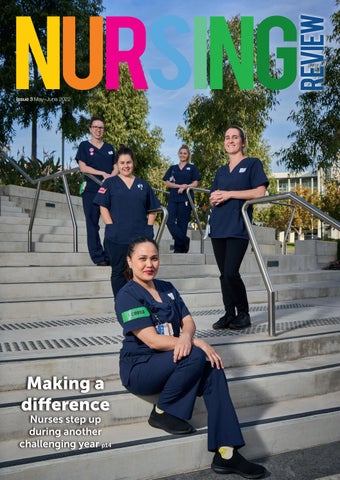
Making a difference
Nurses step up during another challenging year p14
Important information for Healthcare Professionals. For Formula-fed infants.
New name. Same formulation.
S-26 has changed its name to Alula For more information, please visit www.alula.com.au or contact our Careline to find out more 1800 552 229 IMPORTANT STATEMENT: Breastfeeding is best for babies. It has benefits for the infant, such as reducing infection risk, and for the mother. It is important to have a healthy balanced diet in preparation for, and during breastfeeding. Infant formula is designed to replace breast milk when an infant is not breastfed. Breastfeeding can be negatively affected by introducing partial bottle-feeding, and reversing a decision not to breastfeed is difficult. Infant formula must be prepared and used as directed. Unnecessary or improper use of infant formula, such as not properly boiling water or sterilising feeding equipment, may make your baby ill. Social and financial implications, including preparation time and the cost of formula, should be considered when selecting a method of infant feeding.
® S-26 is a registered trade mark. Used under licence. Distributed by Sanulac Nutritionals Australia Pty Ltd. ABN 31 160 607 509. Level 1, 42-44 Chandos Street, St Leonards NSW 2065. 05657-14/04/2022
For Healthcare professionals use only. For Formula-fed infants.
contents
MANAGING EDITOR
news
Richard Garfield 02 9936 8628 richard.garfield@apned.com.au
2
Rural nurse ratios ‘paramount’
3
ACT inquiry launched
4
Pandemic’s toll on mental health
5
Negative blood types decrease
6
Extent of nurse violence revealed
NEWS EDITOR
Eleanor Campbell 02 9936 8638 eleanor.campbell@news.com.au HEALTH EDITOR
Elise Hartevelt elise.hartevelt@news.com.au
02
05
SALES MANAGER
Sarah Licence 02 9936 8710 sarah.licence@apned.com.au
8
Freedom of choice? Telehealth changes could be unconstitutional
10 Trouble brewing Looming dispute over Support at Home Program
SUBSCRIPTION ENQUIRIES
Daniel Omelia 02 9936 8607 subs@apned.com.au
12 No guarantee Increased nurse hours won’t fix aged care
COVER
Ashlee Routley, Chenae Spencer-Attard, Megan Frankenfeld, Sophie Dohnt and Arianne Pancho. Picture: Matt Loxton
industry and reform
14 Making a difference Celebrating International Nurses Day with Kylie Ward
10
14
specialty focus
16 Listening and learning Fixing rural aged care
PUBLISHED BY
18 The fast track From reality TV to academia APN Educational Media GPO Box 4245 Sydney NSW 2001 ABN 58 090 900 999 ISSN 1326-0472 PP100001944
clinical practice
20 Speak up Addressing elderly suicide
21 ‘Deeply troubling’ Antipsychotic use still rife
PUBLISHER’S NOTE
© Copyright. No part of this publication can be used or reproduced in any format without express permission in writing from APN Educational Media. The mention of a product or service, person or company in this publication, does not indicate the publisher’s endorsement. The views expressed in this publication do not necessarily represent the opinion of the publisher, its agents, company officers or employees.
23 New thinking PhD student’s new smart plaster
18
20
24 Not over yet Underdeveloped nations need COVID-19 help
workforce
26 Scrubbing up Showing style in your workwear
27 Different perspective Virtual tour into Indonesia’s health system
Technology
28 Data driven
26
28
Tracking nutrients and hydration
nursingreview.com.au | 1
news
NSW regional Health Minister Bronnie Taylor. Photo: NCA NewsWire/Nikki Short
“The urgent implementation of safe staffing ratios is paramount.
Call for rural ratios NSW rural healthcare inquiry gives scathing review. By Eleanor Campbell
N
urses have condemned the “shocking” findings of a NSW government report which highlighted chronic understaffing, lack of access to services and discrimination in regional, rural and remote healthcare. The report included harrowing accounts by people who say the system failed them, including an 85-year-old whose daughter said he had to beg hospital staff for food and water before he died. The NSW Nurses and Midwives’ Association (NSWNMA) said the NSW government must implement statewide nurse-to-patient ratios. “As this inquiry uncovered, there’s a myriad of short staffing concerns in regional health settings, which has put unrelenting pressure on nurses and midwives during every shift,” said NSWNMA president Brett Holmes. “The circumstances they face while trying to deliver acute care is unreasonable and, on many occasions, unsafe. “The urgent implementation of safe staffing ratios is paramount and would help to address these issues.” Regional Health Minister Bronnie Taylor said it was her “absolute commitment” to
2 | nursingreview.com.au
make sure rural residents could access health care. “Making sure that people are able to get the care that they need if it isn‘t available locally, that’s my absolute commitment,” she told reporters. The report said rural residents had been failed by a health system that favours big cities and leaves people in the bush with poorer health and inferior care. Labor MP and committee chair Greg Donnelly wrote in the foreword that regional residents had been “repeatedly … let down by the health system”. “This evidence is by no means a reflection on the NSW Health staff working tirelessly in challenging circumstances; rather it is an indictment of the system that has allowed this situation to develop. “Overall, the committee has found that residents of rural, regional and remote NSW have poorer health outcomes and inferior access to health and hospital services and face significant financial challenges in accessing these services compared to their metropolitan counterparts. “This is a situation that can and should not be seen as acceptable.” The committee made 44 recommendations, including that NSW Health should seek to urgently increase nurse and midwife staffing numbers and co-ordinate with the commonwealth to fill healthcare coverage gaps.
The inquiry accepted more than 700 submissions and held hearings in several regional communities last year. The stories submitted to the committee included an account of the final days of western NSW man Allan Wells, whose daughter Jamelle said the 85-year-old had been “treated like a bed blocker” when he fell ill. “He had two operations in five days after something went horribly wrong with the first one,” Wells told the inquiry. “Just hours after we fought an attempt to discharge him, he went into cardiac arrest. Staff then suggested not resuscitating him, even though he had a full resuscitation plan in place.” After Wells pulled through, his daughter said he had to “beg for food and water” because the hospital wouldn’t roster on a doctor during a long weekend. “An unsupervised junior intensive care unit doctor fought back tears over the distress he caused dad by three botched attempts to insert a tube in his nose,” Wells said. After being discharged from Cobar District Hospital to a nursing home, Wells believed he wasn’t “worthy of a hospital bed”, his daughter said. “He grabbed my arm and cried as he said, ‘They’re giving up on me’. My father died five days later,” Wells said. Taylor said the government would seek to formally respond to the inquiry sooner than the mandated six months. “I’m not going to disagree with the findings of the inquiry. That would be disrespectful and that’s not the way I operate,” she said. “But what I will do is make sure that we have the best possible system we can but also acknowledge for all the people who are working out there every day that really good things happen in our health system (as well).” Premier Dominic Perrottet said earlier that while he hadn’t yet read the report, he was familiar with the evidence the inquiry had heard. “My understanding is that a lot ... of those issues that came up during that inquiry have already been addressed or are in the process of being addressed,” he said. ■
news
ACT Liberal Elizabeth Lee said nurses at Dhulwa face “shocking violence”. Picture: Supplied.
Safety inquiry launched Unsafe conditions and violence prompt ACT state inquiry. By Eleanor Campbell
A
fter nurses reported escalating rates of workplace assault, a state inquiry has been launched into the working conditions inside a Canberra mental health facility. The ACT government announced an inquiry into the Dhulwa Mental Health Unit following repeated calls from the nurses’ union to investigate high rates of occupational violence.
According to the Australian Nurses and Midwifery Federation, there have been 100 physical assaults against nurses at Dhulwa over the six months to February. In April, AMNF ACT branch president Matthew Daniel told reporters that a nurse had lost part of his finger during an incident over the Easter weekend. He said staff were afraid to speak out about experiencing violence due to fear of being blamed by management. “One of my own staff heard one of the managers at Dhulwa tell a staff member it was her fault that WorkSafe was coming into the facility,” Daniel said.
“I think giving a voice to this issue is making more of our members come forward.” Victoria’s workplace safety regulator issued the unit multiple improvement and prohibition notices on April 20, after the union said a nurse likened working at Dhulwa to “being sent into the killing fields”. The $43 million-dollar mental health unit, which opened in 2016, has capacity to house up to 25 adult patients. The facility focuses on rehabilitation for individuals who have had contact with the justice system. ACT Minister for Mental Health Emma Davidson said the inquiry will address the “immediate issues” at Dhulwa and will regularly consult with the nurses’ union. “Our nurses should feel safe, supported and confident at work so they can deliver the best possible care across our health system,” Davidson said. “Following the recent incidents at Dhulwa, it is clear more must be done to ensure nurses feel safe.” ■
WE SEE YOU DOING MORE AND GOING FURTHER SAVE WITH AN ONLINE POSTGRADUATE NURSING COURSE
» Clinical Nursing » Correctional Nursing » Mental Health Nursing
APPLY NOW
cqu.edu.au/jobready See website for current pricing
^
C_AD_2202_185x133_PG_Nursing
Take advantage of significant savings with the Australian Government’s Job Ready Graduates package, and choose to study a Graduate Certificate for under $2,000^
nursingreview.com.au | 3
news
Taking its toll Nurses’ mental health declining during the second year of the pandemic. By Elise Hartevelt
P
aramedics and nurses reported poorer mental health and higher levels of social isolation than other health care workers during the pandemic, a new study has found. The pandemic has impacted nurses heavily, leading to higher chances of psychological stress such as burnout. A multidisciplinary group of chief Investigators led by Professor Karin Leder and Dr Sarah McGuinness from the School of Public Health and Preventive Medicine, Monash University, aimed to examine the impacts of COVID-19 by surveying over a thousand healthcare workers. “Nearly a quarter of respondents experienced moderate-to-severe depression and post-traumatic stress symptoms, and approximately one in seven had symptoms of moderate-severe anxiety at this time,” the authors said. “Nurses and paramedics generally reported a higher prevalence of psychological symptoms than doctors and allied health professionals. “And in the 18 months since the start of the pandemic almost half of the nurses had considered leaving their profession.”
4 | nursingreview.com.au
Media reporting suggests that chronic workforce shortages, COVID-19 restrictions and prolonged patient-contact time may have contributed to what nurses and paramedics are experiencing. Leder and McGuinness’s research found there has been an increased need to provide emotional support to patients and residents due to visitor restrictions. Close to half of the health care workers surveyed also encountered increased social isolation, with family and friends avoiding contact since they were working in a high-risk setting. “Interviews [with the healthcare workers] highlighted the difficulties of working in a complex, ever-changing environment, concerns about the care being provided to patients, and feelings of disconnection,” Leder and McGuinness said. “But they also revealed positive messages related to renewed perspective and a sense of pride from rising to emerging challenges.” One-third of the health care workers were optimistic about the future and just over half of respondents felt that their organisation responded to their concerns. “Our survey’s results echo findings from other earlier studies performed in 2020 that demonstrated similar psychological impacts on health care workers, suggesting a minimal worsening of psychological
“Nearly a quarter of respondents experienced moderate-to-severe depression and posttraumatic stress symptoms. distress in the first 18 months of the pandemic,” Leder and McGuinness said. “However, as the pandemic has progressed, and case numbers have increased, we anticipate that the psychological impacts of the pandemic on HCWs may worsen, and our study will continue 6-monthly monitoring of participants.” The authors argue that understanding the state of mental health in health care workers is essential to ensure their wellbeing and that their work is psychologically sustainable. Leder and McGuinness said that it’s vital for health care workers to be able to voice concerns and have these concerns acted on by their organisation. “We are currently writing up findings from qualitative research assessing health care workers’ perceptions of organisational responses and suggestions for how the healthcare sector should respond, and will be publishing these in a separate manuscript.” ■
news
Negative impact New findings may change how blood transfusions are performed. By Elise Hartevelt
A
decrease in negative blood types in Australia may change how emergency blood transfusions are performed in the future, experts have said. In the first major blood group assessment done since the early ’90s, scientists from the Australian Red Cross Lifeblood analysed over 1.3 million samples to determine how the population’s blood types have changed.
They found that RhD+ blood group donations had increased at the expense of RhD- blood group units. Lead researcher Dr Rena Hirani said this may have implications for future blood supply. “It’s important for us to realise that Australia does have a very stable blood supply at the moment, but it will become increasingly challenging to collect negative blood, particularly O negative blood which is used in emergencies,” Hirani said. “If more individuals are found to be positive, we could consider O+ as an alternative blood group that could be used in emergencies.
“Using blood group data, we can see how collecting specific blood types can be matched up with patient requirements.” The study also found that RhD positive had increased along with increased proportions of B and AB individuals, suggesting a migrational contributor. “The fact that we found B and AB groups have increased, we know that from other studies that these groups are more prevalent in South East Asia, India, and China, along with most of the population in those countries being RhD positive,” Hirani said. “It’s from these countries that we’ve seen most immigration into Australia in the last 10 years, so this blood group change has been reflected in our study to match what’s been happening in immigration.” The onset of COVID-19 saw a dramatic reduction in blood donations worldwide, resulting in a decrease of 40 to 67 per cent. “We encourage everybody to talk about blood donation with their family so there’s more blood donation in general in Australia,” Hirani said. ■
Take a break on us Your organisation may be eligible for Australian Government-funded support to help alleviate the pressure of finding a temporary replacement when you or your colleagues go on leave. You will be given all the support needed to recruit, screen and place highly experienced health professionals that can hit the ground running from the moment they arrive.
For more information visit www.rurallap.com.au
220317_Nursing Review Advert_185x133.indd 1
17/3/22 10:36 am | 5 nursingreview.com.au
news
Any number is too high The extent of violence against ED nurses revealed in new survey. By Elise Hartevelt
S
ome emergency department nurses are suffering with PTSD after routinely experiencing high levels of verbal and physical violence, according to a James Cook University survey. Fourteen nurses at a major rural hospital in NSW told the researchers that they expect to go to work searching patients for weapons and to be touched inappropriately. Lead author and research officer Alycia Jacob said it’s a “persistent and concerning problem,” where around 95 per cent of health care workers globally are impacted by violence from patients. “Violence at a rural ED has become the new normal,” said Jacob. “It occurs regularly and has a significant impact on staff. “Tolerating and being able to manage violence has become a rite of passage.” Violence against health care workers can be subjective, making it hard to say what behaviour crosses the line. They can never be a 100 per cent sure when behaviour is unacceptable, said Jacob. “One of the difficulties is around categorising what the actual definition of aggression is. “Nurses may not feel like they’re actually right in saying whether that’s
6 | nursingreview.com.au
aggression, ‘if they say the f-word, is that too much?’. “In some cases, people who turned up were already aggressive before they got to the hospital, [leaving nurses to manage] an issue that started in the community.” Repeated exposure to violence has serious psychological and physical health implications. Nurses who were regularly subjected to violence were two to four times more likely to develop PTSD, anxiety and depression, a 2021 study found. They are also more likely to normalise violent encounters in an effort to cope, Jacob said. “We had a lot of people talking about other people who had PTSD from their experiences, but none of the people that we spoke to actually admitted being impacted themselves. “There is no way to cope in a situation like this that’s really sustainable because the situation itself is not good.” Nurses may minimise the incident, where one participant reported that “the most I’ve had was a fractured cheek bone”. Others had a knife thrown at them through the triage window or had been hit in the head by an IV pole. Violence against nurses was not limited to rural or metropolitan areas, though the location impacts ED nurses differently. They were at higher risk of running into perpetrators on the street in rural areas because of the lower population levels.
“Tolerating and being able to manage violence has become a rite of passage. “It wasn’t so much the difference associated with the in-hospital environment; it was the association with living in smaller communities,” Jacob said. “People had had an aggression incident in the hospital, and then later on, they actually met someone on the street who’d been involved in that incident. “They refused to wear their uniform on the street because they’d be associated with the hospital.” The survey respondents said interventions are more focused on fixing the issues rather than prevention, and felt education might not be the solution either. While training can make nurses feel more confident, most felt it put the responsibility on them rather than the perpetrators. “There is little evidence that staff education, or any other interventions, have a significant impact on reducing the number of violent incidents,” said Jacob. “Violence in healthcare is a societal issue that cannot be solved without a multifactor approach that considers the characteristics of the perpetrators. “It needs to be tackled on an organisational and societal level.” ■
industry & reform
Freedom of choice? “There are constitutional issues around that because it is a type of practical compulsion.” Faux joined Nursing Review to chat about the new VPR scheme and what it means for medical practitioners and patients across Australia.
New telehealth changes may be unconstitutional, warns expert. Margaret Faux interviewed by Eleanor Campbell
A
new voluntary patient registration scheme is set to come into effect in July as part of the government’s primary care health plan. Under the new reforms, all public health care patients in Australia will be required to register with a GP before they access telehealth services. The scheme, which has yet to pass the draft phase, has been heavily advocated for by peak primary healthcare bodies who say it will encourage greater continuity of care for patients. One of Australia’s leading Medicare experts, Dr Margaret Faux, says the changes raise significant concerns over consumer rights and constitutional law. “Under voluntary registration it appears that GPs will retain their constitutional right to charge whatever fees they choose, but consumers will lose their reciprocal rights to choose their GPs if they want to access telehealth.
8 | nursingreview.com.au
NR: Tell us about the VPR scheme. What’s it all about? MF: We understand that from July this year the MBS Telehealth system is going to change again, and there will be a new controversial, voluntary patient registration or VPR system that is going to come into effect. That is based on recommendations in the 10-year primary healthcare plan. What it means is that MBS Telehealth will not be available to a patient unless they’re registered with a GP practice. Although the new law is described as voluntary, patients will be unable to access a doctor or seek medical treatment via telehealth if they are not registered. That actually leaves them with no other option but to register. That leads to a whole host of potential problems.
Many legal experts including yourself have said there are potential constitutional implications of this plan. What are they? There’s both constitutional problems and consumer law problems. The first is that the High Court has settled the fact that in this country, the relationship between a privately practising doctor and a patient is a contract. It’s governed by general principles of contract law, like contracting
with your electrician in that you negotiate a price and decide to go ahead or not. What it also means is that doctors are free to set their fee for their services in this country, and they cannot be constricted or compelled to become a public service and work for the government. That’s why doctors can set their fee. With the voluntary patient registration it appears GPs will retain their constitutional right to charge whatever fees they choose, but consumers will lose their reciprocal rights to choose their GPs if they want to access telehealth. There are constitutional issues around that because it is a type of practical compulsion. While it’s called voluntary, it isn’t really if you want to access telehealth, which all Australians should be able to access. The questions are, does this arrangement intrude, impermissibly into that private contract between a doctor and a patient? There is also a consumer law issue because it effectively creates a type of third line forcing, which is illegal in this country. Under consumer law, third line forcing and misleading and deceptive conduct are both illegal. Again, to my legal mind, there are really important questions that need to be considered here because you’re forcing patients into exclusive dealing with a GP who can charge them whatever they want. It’s worrying in the sense that it’s described as voluntary patient registration, but again, it really isn’t. In any other area of trade or commerce, if you described something, or marketed something as voluntary, when in reality it
industry & reform
compelled people to act in a certain way and was really mandatory, you would have the ACCC on your case very quickly. So, there’s some really important legal issues here that are very concerning because there’s really nothing voluntary about being forced into having a potentially expensive telehealth consultation with your usual registered GP for a short consultation. Whichever way you spin it, the loser is the consumer because they’re paying outof-pocket costs and being denied access to Medicare entitlements that they pay for through their taxes. It’s very, very complex.
Do you think there will be specific cohorts of patients who will be most affected by this? The people I think will be the worst affected will be those in regional, remote and rural areas. I’m very concerned about the potential impact on them because firstly, some of them don’t have a GP practice nearby. It’s not that they wouldn’t like to register for a GP practice, there just isn’t one. The practices that are there can be booked up months in advance. You can’t just jump online and get a quick script on the weekend because you can’t get in for three weeks. I think it is a real area of concern that, perhaps, is not being properly thought out.
How about doctors and primary care practitioners? How does this plan affect them? In my view it’s a really old-fashioned way of structuring primary healthcare, because it’s locking them into bricks and mortar practices on the street corner. That isn’t where the future of health service delivery and medicine is going. The conversations I’m having with GPs suggest they don’t want that anymore: they want to be more mobile and digitallyenabled, and they don’t necessarily want to be tied to a practice. They’d like to be able to deliver really good health services from home via telehealth, and see patients face to face when they need to. It feels quite, paternally speaking, like a very retrograde, backward step, tying not just patients but also a modern, new, digitally-savvy cohort of doctors and GPs into this old-fashioned world that they are not that interested in. What might happen also is that some patients who can will probably go to the nearest public hospital emergency
department instead of the GP. That might actually move patients away from GP practices, which will make their situation worse, not better. Then, of course hospitals are under great pressure because of the pandemic and so many other problems, so that would put further pressure on the public hospital system as well. There’s all these downstream effects that will happen.
Do you think this plan will improve patient outcomes, or do you think that there’s a better way? I don’t know that the evidence is strong that it’s going to deliver what it promises. One of the arguments I’ve heard is, based on the NHS in the UK, where you do have to register with your GP. The difference in why you can’t really run that argument here is that when you go to your GP in the UK you will not ever be charged any money whereas here in Australia, it’s the opposite. GPs can charge whatever they want, so you are not comparing apples with apples. The other argument I see in support of VPR is continuity of care. Continuity of care is very important. The question is, how do you deliver continuity of care in a modern, digitised health system? To my mind, the way we do that here is My Health Record. It is not by locking patients’ records into a desktop computer sitting in a bricks and mortar practice. Continuity of care should be all practitioners engaging with My Health Record. It’s incumbent upon all practitioners to put all the records there so that anyone who sees the patient can jump on there and see everything that has happened. Where the patient’s been, when they’ve been to an emergency department, or filled a script, or all the things that have happened to them, and ensure that they continue that care. I just don’t know that it’s going to achieve the desired outcome. In 2018 a study reported that 80 per cent of Australian patients report having a usual GP, and 90 per cent report having a usual GP practice. If 80 per cent of patients are already doing what GPs argue is best for them, and 90 per cent are happy to see another GP in the same practice if theirs isn’t available, why are we forcing them to do something that they’re already doing? I find that perplexing. That same study reported that 25 per cent of people seek care from multiple practices each year; one of the reasons is to avoid out-of-pocket costs. Why would
“Does this arrangement intrude into that private contract between a doctor and a patient? you deny them that? Consumers are struggling to meet out-of-pockets costs. Why would you take that away from them? They need to be able to manage the cost of their healthcare, and it seems that we’re hell bent on not allowing them to do that.
These VPR changes are expected to come into effect in July, yet we haven’t seen anything beyond a draft plan. How can practitioners keep up to date and best navigate it? It’s really difficult, and that’s a very, very good point. In fact, it’s probably a starting point, in that we need to stop making changes to Medicare and allow everyone to catch up. I really feel for doctors out there in grassroots practice. They haven’t got a clue when a rule changes because they’re too busy seeing patients. There’s really nowhere they can go that is reliable because Medicare is a legal system. There has to be a process where those changes that are on the Federal Register of Legislation are translated and transferred on to the MBS Online website, which is where some doctors go, though my research found, most of them don’t bother going there anymore because they can’t navigate it. Often the law and what is on that website are out of step with each other. What you might find on the MBS Online website may be incorrect because it hasn’t kept pace with changes in the law. My research found that there is literally nowhere for doctors to go for reliable advice and support on Medicare, and that is a very big problem. I offer online, free information for doctors, but it’s not enough. We need a national curriculum, but we also need to slow down changes. In the US system, when they do an update it’s done in a way that enables everyone to be prepared. Here, we will change MBS items and rules, literally twice in a day, very often once a week. When changes are made over there, it’s usually done about once every two years. Everybody gets a six-month warning period. ■ nursingreview.com.au | 9
industry & reform
More trouble brewing?
The looming dispute over the Support at Home Program. By Michael Fine
A
number of reports and planning documents released without fanfare by the Commonwealth Department of Health in January and February this year spell out the direction that the Federal Government seeks to take the proposed new Support at Home (SAH) program. Scheduled to begin operation in mid2023, the plans spell out some of the crucial details of a scheme that would radically change the existing system of community-based and home care in this country, converting it to something that seems to closely resemble the NDIS. But the department’s plans for the SAH do not look like they will receive the smooth ride that the senior public servants responsible for their implementation seem to think. They are facing scrutiny and criticism, with opposition led by a number of senior industry figures and alliances. Foremost among the other voices is the Support at Home Alliance, which includes ACSA, the Ethnic Communities’ Council of NSW and a range of more specialised peak organisations from the CHSP, including
10 | nursingreview.com.au
Community Transport (NSW), Home Modifications Australia, Meals on Wheels Australia and the NSW Neighbour Aid & Social Support Association. Their campaign is a national one, with detailed arguments set out in a discussion paper released in December 2021 entitled Seamless Aged Care: How to set up ‘SUPPORT AT HOME’ Right, the first time. It certainly raises some very fundamental concerns about the Federal Government’s plans which have national implications. The central idea behind the SAH program is that of reducing complexity by integrating a number of existing programs into a single, much larger one. Hence, from July next year it is proposed that the Commonwealth Home Support Programme (CHSP) will be amalgamated with the Home Care Packages (HCP) Program and the (little known) Short Term Restorative Care (STRC) Programme to form the SAH Program. It will certainly help overcome the spelling inconsistencies that have crept into our programs. Or is that programmes? Gone, too, is that sensitive word ‘care’. It will now be replaced by the less intense and personal form of assistance referred to as ‘support’. As those skilled in manipulating them will confirm, words matter.
So too does funding, eligibility and entitlement categories. The SAH plans are to replace the complexity of the existing funding schemes for the CHSP, based on ending annual block funding grants, despite the clear call from the Royal Commission to continue this form of broad investment in service development. Similarly, the four levels of funding for home care packages are to be abolished, replaced by what sounds like a single mechanism – the ‘point-of-delivery payment’. This is what we all know in health care as the fee-for-service system. Before it is destroyed, it is worth stopping for a moment to think about the relative merits of what is being replaced. The CHSP operates as a block-funded system of support, paid for by Federal and State governments to provide an alternative to reliance on institutional facilities. It provides basic home support services such as prepared meals, day care, home nursing, community transport, as well as social and home support which may include cleaning, showering, help with dressing and so on. It supports over 800,000 people annually: by far the largest number of them being aged care consumers. Importantly, this care can keep people more active and independent and defer the time when they may have
industry & reform
to go into residential care. Yet its costs are low: just under $70 for each consumer per week, according the data released in 2021 by ACFA. Home Care Packages, provided to a much smaller group, cost $387 per week on average. Both forms of support, it should be added, are far less costly than residential care, which comes in above $1,000 per week per recipient. Looking at these figures, the question needs to be asked, why would anyone seek to abolish such an effective and efficient program as the CHSP? For the department’s advocates, the amalgamation of the two programs and their common adoption of fee-for-service funding is all presented as a done deal. It has not been tested in practice. Nor has any modelling of the potential explosive rise in costs been released. Yet if we look at the costs for the NDIS, it seems likely that costs per individual will rise. To manage this those with lower levels of support may miss out, as happens in the disability field. Similarly, the approach
would damage prospects for developing a more professional and secure workforce employment system. The SAH Alliance rejects the fee-forservice model and calls for a common approach to payments across the aged care field. Its scheme would be similar to the new funding system being introduced for residential aged care, the Australian National Aged Care Classification (ANACC). This, they argue, would be able to respond to a mix of both ongoing (fixed costs) and episodic (or variable) service interventions, and would combine some of the clear benefits of the existing block funding provided to the CHSP, and the flexibility of case-mix funding. The new program and the proposals for regulation seem to have a low profile at present. It has been presented as a modernisation of regulation that would enable the SAH program to operate like the NDIS. But there are many who argue that such a system would undermine care standards entirely, and promote the development of insecure employment
“The question needs to be asked, why would anyone seek to abolish such an effective and efficient program? based on the labour system evident in the US – hardly the model of professional career focused workforce called for by the Royal Commission. But if the SAH Alliance and others concerned about the future of aged care at home have their way, the future of aged care in Australia is not yet a foregone conclusion. Before we destroy the social capital built up over the past 40 years through the largely non-profit CHSP system, there is still time to get it right. And there is a federal election. ■ Michael Fine is honorary professor in the School of Social Sciences at Macquarie University.
Nurses play a critical role in domestic and family violence prevention. By attending a DV-alert workshop, you will have the opportunity to support the community and bring about real change in people's lives. Enrol for free workshops and find out more at dvalert.org.au.
BE DV-ALERT TRAINED
nursingreview.com.au | 11
industry & reform
No guarantee Why increased nurse hours aren’t enough to fix aged care. By Claire Hewat
A
llied Health Professions Australia strongly supports increasing the hours of registered nurses in aged care, just as we support all the recommendations of the Royal Commission. Unfortunately, cherry picking recommendations does people in aged care a disservice. A single nurse is not going to be able to undertake rehabilitation of residents, improve mobility, address malnutrition and poor food services, assess swallowing risks and communication issues, provide counselling and psychological support and all the other interventions that are the skill set of allied health professionals. The Royal Commissioners were very clear that there was insufficient access to allied health services, and that to effectively address reablement and quality of life for residents, adequate access to the breadth of allied health services was required. The response of the government was to accept Recommendation 38 for allied health in residential aged care ‘in principle’, which commits them to nothing. The Opposition has largely ignored allied health in aged care. Instead of any clear plan there appears to be a passive approach in the hope that the new AN-ACC funding model will somehow solve the problem, but it was never designed to address poor access to allied health services, a point reinforced by Professor Kathy Eagar, its lead designer.
12 | nursingreview.com.au
This is also well understood by all the key players in the sector, who are calling for dedicated funding for needs-based allied health services. The National Aged Care Alliance (NACA), made up of 52 organisations from all facets of the aged care sector, has released a position paper in support of this. Currently the inadequate ACFI model mandates that around 4% of its budget be spent on a limited range of allied health services. The AN-ACC funding model, which will be implemented in October, mandates nothing. Allied health care minutes will be required to be reported, but there is apparently no benchmark. The spend is unlikely to be more than 4% of the budget under AN-ACC although it is a slightly larger pool of funds. There is no plan to increase access to allied health services as part of core funding. The assumption is that aged care facilities will undertake full clinical assessments, though by whom remains unclear. Allied health will then be engaged according to a resident’s needs. The (frankly naive) assumption is that engagement of allied health will ultimately reduce care costs and therefore the facility will gain a ‘return on investment’. Maybe, in some cases, but this cannot be guaranteed. The recent $10/day basic care funding increase for residential aged care facilities provides a stark reminder of why a passive approach is unlikely to be successful. The evidence is clear that there has been no improvement and that the extra funding has been consumed to address general underfunding. The federal Budget’s $22m investment in a ‘pilot’ to explore multidisciplinary in-reach services from hospitals, while
welcome, misses the point. This approach is likely to be useful after an acute episode such as a fall or development of a pressure sore, but there would simply not be the capacity to address the ongoing needs of the majority of residents requiring access to a range of allied health services. Neither of these funding options (ANACC or Hospital in-reach) ensures a systems approach that meets the needs of residents, such as providing training to personal care staff to support ongoing therapies for individual residents, or ensuring appropriate food and fluids are provided. Older Australians have overwhelmingly indicated a desire to stay at home and age in place as long as they possibly can. Ultimately, strong investment in wellness and reablement in the person’s own home will also reduce the overall costs in the aged care system. However, there is grave concern that the design of the ‘Care at Home’ program is being rushed, and that the value and breadth of allied health is still poorly understood by policy makers. The risk then is that allied health may not be effectively incorporated into the program in a way that serves the best interests of older people at home. To address all the identified issues in aged care a comprehensive approach is needed, not just headline-grabbing announcements that make people think something effective is being done. The sad fact is that there are not enough nurses to provide 24 hour coverage in every nursing home in the foreseeable future, and meanwhile, other valuable opportunities are falling by the wayside. ■ Claire Hewat is CEO of Allied Health Professions Australia.
Upskill your nursing career at the No.1 university in NSW & WA for Skills Development*.
Apply now for Semester 2
Nursing Graduate
notredame.edu.au/pg/nursing *2020 Student Experience Survey, postgraduate coursework categories category, QILT.edu.au
CRICOS PROVIDER CODE: 01032F
industry & reform Nurses Ashlee Routley, Chenae Spencer-Attard, Megan Frankenfeld, Sophie Dohnt and Arianne Pancho in front of the RAH in Adelaide, for International Nurses Day in 2020. Picture: Matt Loxton
Making a difference Kylie Ward shares what International Nurses Day means to her, and her hopes for the future of nursing. Kylie Ward interviewed by Elise Hartevelt
P
rofessor Kylie Ward loves her job and is proud to be a nurse. Ahead of International Nurses Day on May 12, Nursing Review asked ACN’s chief executive what the day means to her. She said that 2022’s theme: ‘A voice to lead: Invest in nursing and respect rights to secure global health’ is very fitting considering the past couple of years. “I’d say that if the nursing profession didn’t step up and didn’t continue to
14 | nursingreview.com.au
go to work when we were all scared and uncertain, we would’ve had an extraordinarily different outcome in Australia.” In the conversation she recalls the hundreds of instances of outstanding service from nurses. “Nurses are always talking about the unique way they know they’re making a difference.”
NR: What does International Nurses Day mean to you? And why is it important that we celebrate this day? KW: It is an important day. It celebrates the collective achievements of nurses across the world. There’s around 24 to 28 million nurses worldwide working in different ways
in different rural, regional and city areas. And it really reflects on the global impact of the nursing profession towards universal healthcare. This year’s theme is ‘A Voice to Lead, Invest in Nursing and Respect Rights to Secure Global Health’ and I think off the back of the last couple of years of the pandemic, but even what we’re seeing with climate, with wars, with the very unstable environment, the respect to secure global health is now more important than ever.
What key roles have nurses played in healthcare over the past year? We’re probably are a little bit fatigued of hearing about COVID and the pandemic, but we’ve seen the leadership role of the
industry & reform
nursing profession through COVID, not only in the primary healthcare setting in keeping people safe at homes, in hospitals, and in aged care facilities, but particularly we’ve seen the nursing leadership with the vaccination rollout. Nursing has always been key in national immunisation rollouts within the country anyway, and nursing’s response to all the evolving barriers and the testing clinics, and to be part of all those clinics, has been profound. I would say that if the nursing profession wasn’t here, or didn’t step up and didn’t continue to go to work when we were all scared and uncertain, that we would’ve had an extraordinarily different outcome in Australia. And I think in some ways, that’s been at the cost to our own profession.
What role have nurses played rolling out the vaccinations for COVID-19, and how are they going to help during the upcoming winter vaccinations? I’m the CEO of the Australian College of Nursing. We were very fortunate last year to win the tender from the government to actually develop the vaccination training, and it’s the first time that a nursing organisation has done that. We had a large consultation group with all professionals, but we developed the training for nurses, midwives, pharmacists, doctors, paramedics, Aboriginal health workers: anybody who was likely to vaccinate needed to do the mandatory government training. That gave us great insight obviously into nursing leading the way and developing and educating. We also saw thousands of nurses through the Australian College of Nursing undertake formal studies as nurse immunisers. It was a really poignant example for me of how nurses step up and step in to do their civic duty. It says everything about the essence of not only what a nurse does, but who a nurse is. Someone who’s courageous, and strong, and wants to be there to help people during vulnerable times. We’ve now trained hundreds of thousands of people. But certainly in those early days, when the majority of the clinicians that we trained were nurses, they stepped up in the tens of thousands. And really, the safety of the nation could not have occurred from the most remote areas of Australia, to the busy clinics and vaccination hubs in the cities, without that contribution.
That did mean nurses left their jobs in other sectors, so it was a popup health system. It did provide challenges, and I had people calling me, from doctors to governments, saying, ‘We need nurses to go back to primary care’ or to ICU. But nurses do have the right to choose where they want to work, and how they want to help deliver healthcare in Australia. There’s over 400,000 nurses in Australia and there’s 23,000 GPs. So even the pharmacy model or the primary healthcare network model could not have vaccinated the country without all of those facilities employing nurses and nurse practitioners, as well as governments and councils employing dozens of nurses to deliver the vaccine. I think nurses are very well positioned. We’re still seeing great numbers of nurses wanting to do the nurse immuniser qualification to not only vaccinate against COVID, but there’ll be the flu shots coming, there’ll be all of the other standard vaccinations for preventative health that the country delivers. Then the other role I’ve seen when we look at nursing leadership is running the health system: the executive directors of nursing and midwifery, the directors, the NUMs, the managers, the educators, the CNCs. The clinicians themselves, who are in every interface where people need care. In the universities, in the prisons, in the schools. It really is quite phenomenal when you think about our profession. We are the largest profession in the country, not just the largest health profession. I had that conversation with the minister and I mentioned that. And he said, ‘What about teaching?’ There might be about 230,000 teachers, another female dominated profession, but nursing dominates this country and has kept this country healthy and as safe as it can be. I’d go as far as to say there is no healthcare system without nurses. If every nurse stopped working tomorrow, the system couldn’t function. And we did see that through COVID. Wards and units were closed in some of the largest tertiary hospitals in the country because of the furloughing, and nurses contracting COVID, and it did cripple some of our systems.
What are some of the obstacles and challenges that nurses face in society? I’m going to go to gender inequality here. Certainly, pay disparity continues to be a haunting legacy from the past. Nursing is one of the oldest professions, and certainly
“Different jurisdictions are treating nurses differently. for women, where they had no other opportunities to be employed, nursing was an opportunity years ago. And many great nurses took that up, to be able to travel or to work. But I think the byproduct of being a female dominated profession is that we do way too much. We give way too much. We’ve been undervalued, underrepresented, and underappreciated. And the pay disparity still is a legacy from the past that should be addressed. Another shameful legacy of our culture in our society is occupational violence. When nurses experience more violence than prison guards and police officers, that really also mimics the toxic tolerance of domestic and family violence. And then that spills over. Nurses will experience occupational violence. There’s nurses in relationships that have occupational violence. So I would really like to see the same resources that have gone into battling the pandemic go into changing the culture of tolerance of violence in society. Another significant obstacle and challenge that we’re still facing today, which is a last century legacy, is nurses are still limited and not able to work to their full scope of practice. That’s both as nurse practitioners and as registered nurses. The only way Australia will be able to deliver the healthcare that Australians deserve is for nurses to be able to work to their full scope. And we have to stop tolerating and allowing it. We are regulated, we’re a profession in our own right, and we should decide what can do. We shouldn’t have the resistance that we’ve seen by our colleagues in other professions inhibiting that. And even having access to MBS item numbers is a great example of how we’re disadvantaged in that way. And if nursing is disadvantaged, then communities are disadvantaged.
Do you feel that nurses have received the recognition they deserve from the government? I think that this is a really interesting question. Because nursing is jurisdictional, the majority of nurses are employed through state and territory governments, and we don’t have just one government, or one health system. Continued on page 22 nursingreview.com.au | 15
specialty focus
Listening and learning Fixing Australia’s ‘broken’ rural aged care system. Nikita Weickhardt interviewed by Eleanor Campbell
A
ged care policy experts are calling on the federal and state government to introduce a stewardship based model to fix the nation’s rural, regional and remote aged care sector. Recent figures from the Australian Institute of Health and Welfare show that over half of older Australians living outside of cities will travel hundreds of kilometres to access residential care. Aged care policy expert and director of Nous Group, Nikita Weickhardt, says the government should harness local knowledge to help close the service gap leaving older generations behind. “It’s not just about adding more beds, it’s about understanding the needs of the communities and the needs of the people living in these communities,” Weickhardt told Nursing Review. “The public are ready for change, the government is ready for change and I think providers are ready for change.”
16 | nursingreview.com.au
Weickhardt joined Nursing Review to discuss reworking regional and rural aged care in 2022.
NR: What do you think are the greatest challenges facing rural and aged care providers? NW: I think the challenge for rural and remote providers will continue to be the viability of their services. Even with the additional $10 coming through per resident, per bed, the aged care providers in regional, rural and remote communities are still going to grapple with the viability of service. In addition to that, there are challenges in understanding how the other recommendations from the Royal Commission will translate into their service delivery. I’m originally from the Caribbean, and when my husband and I moved to Australia we spent two years living in Roxby Downs, pretty much in the dead centre of Australia, and then another two years living in central Queensland. We’ve spent a bit of time living in places that most people in Australia haven’t been to, and I think the challenge for rural, regional and remote communities is providing the type of service that the people in those communities deserve, and
being able to access the care that they need close to home. For these providers it’s challenging just finding staff, which is the case for all providers but more so for those in rural and remote areas. And then also having the clientele to fill the beds so they can offer viable, sustainable services for those communities.
How do you think the current COVID situation is contributing to this problem? I think we’re hearing across all of the aged care community that the workforce is tired. It’s been a very big two years for everyone, but more so for the aged care community. In addition to having to safeguard their residents from the impact of COVID, they’ve also had to, in many cases, step into the role of being the family and main support for a lot of their residents.
How do you think families and communities living in rural areas are being affected by not having this access to quality aged care services inside their local areas? According to the AIHW over half of the ageing population in very remote communities has to move more than 100 kilometres to get access to an aged
specialty focus
care facility. As an older Australian, you’re losing your support network when you do that because your family and friends can’t come and visit you when you’re really far away. For these communities that have lost these elders or older people, you’re also losing a part of the community every time this happens. It actually has a big impact, not just on the person, but also on the community that they’re leaving behind.
You’ve raised stewardship by the government as a solution to fixing the rural system. Could you tell us more about this approach? During some of the work that Nous has done we’ve started to think about what stewardship could look like. At its heart, stewardship is really about enabling access, providing really good sustainable services, and having responsive policy. It takes into account the three key actors of the aged care system: the consumer, giving them access to good quality services; the provider, making sure that the services are sustainable so that they can have successful businesses; and how the government can develop responsive policies that reflect the needs of the community and the provider. It’s not just about providing extra beds, because potentially most of these people that are living in rural and remote communities actually want to be able to access aged care services at home. It’s about understanding the needs of the communities and the needs of the people in those communities, and then figuring out along with the providers, government and other local or community representatives how to deliver services that meet the needs of our older Australians in these communities, and do it sustainably and to a really high quality.
What are your thoughts on the government’s commitment to a new clinical governance structure, specifically in rural aged care? The government has already started to put into effect some of the recommendations from the Royal Commission. For instance, in Dorrigo in New South Wales, there’s already a facility that offers this multipurpose service that doesn’t just have an emergency department and general medicine, but it also has residential and respite aged care, and home care packages. It was a collaboration with New South Wales Services and Services Australia
and it just offers a range of services within that community based on the needs of that community. Based on the Budget response, the government’s also starting to invest in the regional network, which was a key recommendation from the Royal Commission that suggested that Department of Health staff be broken up – I want to say decentralised – but put into these regional offices so they can really get a deep sense of what was happening in these communities, understand the needs of the older Australians within that community, and then help design sustainable services to deliver on those needs.
In looking at a stewardship model, what would you say are the most important things we need to keep in mind when designing better aged care for people in regional areas? I would say the first thing to do is to listen to the people in those areas. Really ask the people within that region or the older Australians within those communities what their needs and preferences are. It’s also about tapping into a lot of these community groups or peak bodies that are already out there doing really good work, and working with them to understand what the needs of the community are, and asking where are the gaps, and how can we work to close those gaps? The second thing is using data. It’s really important to balance what we’re hearing with any information or data that we have on that region to really make sure that whatever efforts or response we have in those different communities is backed up, not just on that local intelligence gathered from community groups, but also from the data.
How can we get rural or indigenous communities to be more engaged in this process, especially when public trust in the sector is quite low? I think that’s where gathering that local intelligence and really working with the groups in the community comes in, because there are already groups that are working, whether it’s community organisations, peak bodies, special interest groups, PHNs or outreach services, in these communities. I think it’s really a matter of sitting down with these groups and understanding what’s working and what’s not, and, if there are providers in that area, speaking to the providers or PHNs.
“The stewardship model is about leveraging the information that’s already in these communities. The stewardship model is not about going out and starting from scratch, because a lot of these communities already have the knowledge that we need for the stewardship model to hit the ground running. It’s really about leveraging the information that’s already in these communities and using that to build a better aged care model.
What role would providers have in strengthening this approach? There’s three groups that have to play a part in this: the government, the consumer and the provider. The Royal Commission talked about building provider capacity and capability, so it’s about what we can do to help support providers to, one offer good quality services, but two, make sure their services are financially sustainable so it is a good environment for them to operate in. If you look at the Kimberley region in WA for instance, there’s one provider out there. That provider would have a very good understanding of the community, of where the gaps are, so they would be very important in terms of gathering that local intelligence about what’s working and what’s not, and how we can improve. They are very much part of this process.
How long do you think something like this would take to really refine and get right in these communities? I just think we have to get started. I think from the Budget response the plan is to initially start in some areas and test what this might look like with the regional offices, then expanding from there. I think we just have to get started. I wish I could say how long it would take. I think aged care as a whole and the public are ready for change. I think the government’s ready for change. The providers are ready for change. I think everyone is keen to see that this is high up on the agenda within the upcoming election. I think it’s important for everyone. You could tell from the Royal Commission this is something that is important to everyone in Australia. Overall, we’re all going in that direction, but it’s important that we think big. ■ nursingreview.com.au | 17
specialty focus Maddy Bowers on the set of Emergency. Photo: The Royal Melbourne Hospital
On the fast track From trauma nursing to reality TV to educator: meet the nurse who has done it all. By Eleanor Campbell
I
t was a life-changing event at a local football club that led Maddy Bowers to pursue nursing. The former NSW state junior equestrian champion was just 17 when her father collapsed and had a massive heart attack during a game. Two nurses who happened to be attending with their children performed CPR on him for two hours, keeping him alive until he was flown to hospital. “I was in the ward with Dad and his nurse was the best person for me at that time,” said Maddy. “She made me feel so safe and answered all of my questions from the point when I first attended until we were sent home. I remember that person had such an influence on my life.
18 | nursingreview.com.au
“It showed me how amazing this work was and I knew that I wanted to be that person to someone else.” After witnessing her father’s cardiac arrest, Maddy changed her mind about becoming a veterinarian and moved to Albury to study nursing. She then began applying for graduate programs in Melbourne, where she felt the stigma of coming from a small rural country town. “There was a lot of stigma about being regional and going straight down to Melbourne; you were made to feel like you weren’t good enough,” Maddy said. “You really do put yourselves in that box from where you’re saying, ‘Oh, I’m just from the country’, which is so, so wrong.” Less than a year into her postgraduate job, Maddy was offered a coveted position as a critical care nurse at Royal Melbourne Hospital. Coming from a place where she was constantly surrounded by people she grew up with to one of Australia’s largest hospitals came as a sudden change.
“You were one of 240 nurses at once, so it went from feeling very comfortable to not knowing anyone,” she said. “The pace was extremely different, the requirements and expectations were different, only purely because demand was higher. “In some aspects, we have more help and more resources down in Melbourne, so we can handle more than two hundred patients without concern.” After settling in, Maddy took the pathway into resus and trauma and triage and was eventually promoted to clinical nurse specialist. It was during this time she was approached to appear on the first season of the Nine Network’s popular documentary reality series Emergency. The show, which follows the dayto-day lives of doctors and nurses on Royal Melbourne’s trauma frontlines, garnered over half a million viewers on its premiere night. “The thought of opening up my life to the public was scary,” Maddy said.
specialty focus
“There were times where I would be treating a patient and turn around and have a camera straight in my face,” she said. “But at the end of the day, when I’m there with a patient, that is the only thing that matters to me.” One dramatic scene from the second episode shows Maddy and the emergency team treating a gunshot victim. What viewers didn’t see amid the chaos was the eight other patients allocated to her watch. “I feel as if that is the only thing they didn’t highlight, just how much we are actually juggling at one time,” she said. One of the most rewarding aspects of being on television was giving her family and friends a glimpse into what she and her colleagues experience each day. “The stigma around nursing is that we give out Panadol and read charts and give showers, when it’s so much more than that,” Maddy said. “It’s all that scientific knowledge and industry knowledge we are applying every
day and it’s not really recognised by the public.” During the beginning of the COVID-19 pandemic, Maddy was the nurse allocated to triage when the first flight from Wuhan landed in Melbourne. She and her colleagues then tested the 280 passengers who were transported to the emergency ward. As nobody understood what COVID-19 was at the time, the passengers wore no masks, gloves or shields. After Maddy fell pregnant towards the end of 2020, she then made the difficult decision to leave the frontlines to become a nursing educator. “I just don’t know if there are enough support systems in place to nurture our nurses because we did cop such a brunt of this pandemic,” she said. “I felt so guilty for so long because I had this desire to help people and duty to be there for my community, but I also had to think about my child and husband. “My entire prioritising of life and work changed,” she said.
“Take those opportunities, go the extra mile and put yourself out there. Maddy then moved back to Albury with her family and became an Associate Lecturer of Nursing at Charles Sturt University. She plans to complete her Masters’ degree in nursing by 2023. Reflecting on her career, the now 28-year-old says being clear about her early goals and objectives has helped the most to establish herself from day one. “Don’t ever feel like you are stepping on other people’s feet,” she says. “If there’s ever an opportunity to put a catheter in, or take a blood sample, take those opportunities, go the extra mile and put yourself out there. “I always say to my students, go to the space where you feel less comfortable because that’s where you grow the most.” ■
subscribe for less than $2 a week The laTesT news and resources for healThcare professionals Nursing Review is essential reading for anyone involved in the healthcare sector in Australia. It provides unrivalled coverage of specialist topics from features and opinion pieces, to international news and profiles. • Latest news and resources for all healthcare professionals • Comprehensive coverage of a diverse range of topics • Analysis of the major issues facing the health sector as a whole • Delivered free of charge • 6 issues per year • Only publication in the country dedicated to reporting issues important to nurses
Please call 02 9936 8666 or email subs@apned.com.au to find out more. nursingreview.com.au | 19
clinical practice
Speak up
New program aims to address high rates of elderly suicide. By Eleanor Campbell
N
early one in five men who die of suicide in Australia are aged over 60, with suicide rates for males aged 85 the highest of any age group, meaning the need for targeted and tailored prevention training is growing. Anglicare’s Suicide Prevention for Seniors Program, created in mid-2021, aims to educate aged care workers about the different risk factors which can lead to suicidal behaviour in older people. The online workshop is the only known prevention program specifically designed for people in aged care. “I think generally when people think about suicide, they don’t think about older people,” said Anglicare’s program coordinator Nancy Gewargis. Currently, people aged over 60 have some of the highest age-specific rates of suicide in the world, according to the World Health Organization. Studies have shown that older people who live in rural and remote areas, access residential care, or identify as LGBTIQ+ or Indigenous are increasingly vulnerable to suicide. Gewargis said older adults are often far more reluctant to seek mental health support, making early intervention essential.
20 | nursingreview.com.au
“Older people are less likely to see a mental health professional and they’re less likely to talk about suicidal ideation in general. “I think one of the main things [for aged care staff] to do is to make them feel comfortable, build that trust, and help them to see that other people feel the same way.” Asking indirect questions such as ‘do you wish to sleep and never wake up?’ is a safe way to build rapport with an older person before initiating a direct discussion, Gewargis said. “The biggest myth, I think in general is that you shouldn’t talk about it or that if you talk about it, you’ll plant the idea in someone’s mind. “That actually prevents people from getting close and talking about it and actually asking the question, ‘Are you thinking of killing yourself?’ “By talking about it, you’re relieving some of that emotional burden, and then it opens the door to actually seeking help and getting better.” Over 180 people in NSW have completed Anglicare’s prevention program, which is funded by the state government. Participants learn about the risks and protective factors of suicide that are specific to seniors, such as loneliness and ageism. Participants are also encouraged to share their own experiences with elderly suicide.
“By talking about it, you’re relieving some of that emotional burden. Anglicare employee Yolanda Couchman, who finished the program in January, works in housing for older women at risk of homelessness. She said two hours after completing her training she was able to assist an elderly resident struggling with her mental health. “She displayed signs of a possible suicide attempt, as she had taken herself to an unsafe place and we were able to contact rescue, police and ambulance,” Couchman said. “I shared some of the learnings from the program with a colleague who was able to keep talking with the resident whilst I spoke to the police. “After three hours, the resident was able to be made safe and taken to hospital.” There are hopes to expand Anglicare’s program nationally to offer tailored workshops for GPs, geriatricians and pharmacists working with older people. More information about the Suicide Prevention for Seniors program can be found at www.anglicare.org.au. ■
clinical practice
‘Deeply troubling’ Report suggests antipsychotic use still rife in residential care. By Eleanor Campbell
O
ver half of elderly residents on antipsychotics have no diagnosis for psychosis, a national report has shown, reigniting calls to embed trained pharmacists into aged care. In March the Australian Institute of Health and Welfare (AIHW) released its first quarterly quality indicator report for
residential care to include polypharmacy rates and antipsychotic usage. It showed between July and September 2021, 41 per cent of older residents were taking nine or more medications. Of the 20 per cent of residents prescribed antipsychotics, only 11.6 per cent had been diagnosed with psychosis. Recommendations from the royal commission called for antipsychotic medicines to be a “last resort” in residential care due to their minimal benefit and increased harms of falls and stroke.
National President of the Australian Pharmaceutical Society, associate professor Chris Freeman, said the findings were “deeply troubling”. “It feels like groundhog day when it comes to medicine-related problems in aged care,” he said. “The evidence is clear, the more medicines someone is prescribed, the more likely it is to cause harm. “Embedding pharmacists in aged care is the obvious solution to address the longstanding issue of polypharmacy and chemical restraint in aged care facilities.” The quality indicator report included data from nearly 90 per cent of eligible residential care services across Australia. It found during July and September 2021, 23 per cent, or 38,914 elderly people in care, had been physically restrained. A total of 57,599 falls were recorded, with 3,840 leading to major injury. The report also found that 12,500 elderly residents had significant unexplained weight loss. ■
The laTesT news for aged care professionals For nearly 20 years, Aged Care Insite has remained the respected industry journal aimed squarely at the growing number of Australians working in the burgeoning aged care industry. At Aged Care Insite we pride ourselves on being at the forefront of the ever-changing care sector. We provide an independent source of news, and cover the issues relevant to you. • Latest updates in technology and research • Community stories from facilities just like yours • Comprehensive coverage of a diverse range of topics • Regular updates via email • Tax deductible • Delivered bi-monthly directly to your door
Please call 02 9936 8666 to find out more. nursingreview.com.au | 21
industry & reform
Continued from page 15 The ACN is bipartisan, so we certainly don’t take a political side, and we’re not industrial. We’re the professional body, so from my perspective I think that there’s certainly been a lot of acknowledgement and recognition from leaders about the importance of the profession. When I hosted the national summit on the nursing workforce last year, the minister turned up to listen without hesitation. Some of the issues are at a jurisdictional level though and what I’m seeing, which really does go to our federated country, is different jurisdictions are treating nurses differently. I was shocked last year when nurses in New South Wales didn’t get a pay rise, even a basic CPI. What we need is sustainable, systemic increases in pay that match the professional qualifications, the education, and are on parity with other professions. I think that there’s certainly been a lot of verbal recognition. But because of the working conditions and the challenges, I think there was a point in time when that wasn’t being received as maybe people had intended. We were really looking for some more substantial ways of showing our value. Not just a verbal thank you or recognition. And we’re yet to see that.
Have you recently encountered any memorable experiences or outstanding services from nurses? Oh my gosh, every day. I love my job. I’m very proud to be a nurse and I receive hundreds of messages every week from nurses. Some are struggling, some are telling me of the terrible conditions that they’re working in, and the challenges with the increase in occupational violence, and that verbal and physical abuse, even from loved ones, more than they’d ever seen before. But certainly then there’s always people who really talk about the unique ways that they know that they’re making a difference. We’re highly educated, highly trained, and the way that the nursing profession and our philosophy deliver that is in the strength in our behavioural sciences, in our emotional intelligence; in bringing the academic intelligence but being able to deliver that in a way that very much relates to the populations that we care for. That time that the nursing profession gets to spend with the patients, the consumers, the residents, the clients that they’re seeing and their loved ones, and making those 22 | nursingreview.com.au
memories all throughout their experience, to the point where they support them in a dignified death, is really what fills my heart. It reminds me of why we do it. A few years ago we introduced with the federal health minister the Nursing Trailblazer Awards. And this is the first time in Australia’s history a federal health minister had created an award category. There are many excellence awards, and Nurse of the Year awards, so it was different to that. It was really about a trailblazer, somebody who’s doing something that is nursing-led, that is making a phenomenal difference, and a major contribution that’s evidence based. It’s demonstrating innovation, and that could be rolled out across the nation. Nikki Johnston won the first award for her work in the interface of palliative care and aged care, and had been able to demonstrate multiple millions of dollars of saving. Professor Sandy Middleton was a finalist. Her work on stroke intervention, early intervention, and the difference that can make for patients is internationally renowned, and should be showcased. Our 2021 winner, Sonia Martin, is the cofounder of Sunny Street. The work that she’s been doing is just tremendous in nursing-led models of intervention to support homeless and vulnerable communities out in the streets. We know we have demand of who gets seen in facilities or in the institutions, for want of a better word. But who are we missing? She’s gone from a NUM, having great ideas, and then bravely set off with a colleague, a doctor, to establish Sunny Street. And they’ve delivered thousands of vaccinations in the streets, in care, to people in Queensland, and that should be a national organisation now. I am fortunate in that I do see all of the wonderful stories and get to meet the incredible people who are leading excellent and innovative care in this nation.
What do you hope for the future of nurses working in Australia? There’s a couple of different levels in my hopes. Sadly, I have to say that I hope no nurse should experience violence in their personal or professional lives. Isn’t that a terrible hope? We should be able to live in a beautiful country like this, in a first world country, where we are safe. But that definitely is a hope, and I’d like to see that in my time so that the nurses, the women, children, the people in queer relationships, anyone that’s experiencing any kind of violence can live a life free of that.
“I think that we’ve stretched ourselves too far, and the system is stretching us. I certainly want to continue to see the profession supported, educated, and a sustainable workforce created where we have enough resources so that people have time to reflect, to think. Nurses are so committed to professional development, but I think that we’ve stretched ourselves too far, and the system is stretching us, and the elastic is probably in some instances about to break to be honest. I think the investment in leadership is going to be paramount, because the leaders of organisations, including our nursing leaders, must not only have clinical or management qualifications, but need to understand how to lead people, how to champion people, and advocate for people. That’s why we did the Nurse Executive Capability Framework years ago, because otherwise what I’m seeing is nurse executives are getting in positions where they don’t have the budget. They’re influential, they’re figureheads, but they’ve lost access to the money. And then they have to spend their time influencing, which is fine I guess. We all do that in a certain way. But we’re influencing general managers, or operational managers around quality, and safety, and what the profession needs. To me, that is a loss of power in a way. So we’re going to need the best of the best people who understand how to influence, how to champion, how to advocate. I hope that nursing doesn’t go down the route of being a logistical exercise, but that we maintain that professional integrity. Certainly I hope for the future of nurses working in Australia that they get full access to be able to work to their full scope of practice. Nursing has been around for 153 years in Australia in its formal sense, but people have been nurses for thousands and thousands of years. People will always need to be nursed so it’s really up to us now, about how the nursing profession will look, who will be attracted to it, and how our image, our reputation, and our standards are maintained by the efforts that we’re prepared to make now, and what we’re prepared to fight for. ■
clinical practice
PhD student Janitha Jeewantha with Associate Professor Jayantha Epaarachchi. Picture: Supplied
Old problem, new thinking New smart plaster a ‘turning point’ in orthopaedic care. By Elise Hartevelt
W
ith 170,000 Australians breaking a bone annually, University of Southern Queensland PhD student Janitha Jeewantha thought it was time to rethink the old way of casting injuries. With help from his professor, Jeewantha developed a hybrid shape memory polymer ‘smart plaster’ which has been shown to wrap around a fractured limb more efficiently than traditional Paris (POP) and fibreglass casts. “The smart plaster is lightweight, has less setting time, is easy to apply, and the process is cleaner and quicker,” Jeewantha told Nursing Review. “A major benefit is that it allows multiple alterations, which is not possible with a traditional cast.” Most hospitals in Australia still use the 19th-century POP and fibreglass casts, which have been found to be unhygienic, heavy and cumbersome. “POP and fibreglass casts often report pressure sores, create compartment syndrome, and limit blood flow to arteries and muscles during swelling,” Jeewantha said.
“Therefore, cell damage may occur sooner when temperature and pressure are coupled, leading to ulcers, nerve damage, or permanent loss of body parts.” The new plaster allows doctors or nurses to control the pressure between the fabric and skin, reducing the chance of nerve damage. The process also takes less than 10 minutes, whereas POP requires around 45 minutes to set completely. “We included a secondary locking mechanism, which makes it easy to remove and doesn’t require a saw that can scare kids,” Jeewantha said. Proper cast care is important in lowering the risk of complications after the cast is removed. Jeewantha says his creation can greatly assist nurses in rural areas who often lack staff or medical equipment. According to federal health statistics, people living in rural and regional areas are more likely to obtain an injury and have poorer access to medical services than those living in metropolitan areas. “Smart plaster is ideal for first aid and emergencies in remote or isolated locations where required medical facilities and assistance are not available or accessible,” Jeewantha said. Jeewantha’s plaster is also made of biocompatible material, which releases less
“It allows multiple alterations, which is not possible with a traditional cast. environmentally unfriendly chemicals in the air than POP plasters. “Shape memory polymers can recover their original shape after being deformed, which means our smart plaster can also be reused,” he said. “Well-known biocompatible polymers are expensive and not freely available in the commercial market. “Therefore, we were careful to use commercially available low-cost biocompatible epoxy polymers during the smart plaster synthesis process.” Associate Professor Jayantha Epaarachchi, who supervised the development of the plaster, said the new plaster could be the new standard of injury care in the years to come. “We have done our part to produce a material that can provide comfort to patients, flexibility to doctors for frequent observation, easy and less time-consuming application for nurses and is relatively cheap and recyclable,” Epaarachchi said. “This would be a turning point in the orthopaedic treatment process.” ■ nursingreview.com.au | 23
clinical practice
Not over yet
The need to maintain COVID-19 vaccine donations to developing countries. Karen Price interviewed by Elise Hartevelt
T
he Royal Australian College of General Practitioners (RACGP) has pressed the federal government to step up its COVID-19 vaccine dose donation efforts as the existing $300 million Pacific support package expires in June. During the pandemic, the Pacific support package has delivered economic assistance for countries in the Pacific and Timor-Leste, and RACGP President Doctor Karen Price says it’s not advisable to stop the funds now. Many developing countries still have very low vaccination rates, including Papua New Guinea, where only 3.5% of the population has received a single dose. “The entire developed world, including Australia, needs to wake up and do much more to boost vaccination efforts in the developing world. This includes ensuring that excess stock isn’t simply thrown in the bin,” Price said. “These vaccines will save lives and if we want to stop new variants and
24 | nursingreview.com.au
sub-variants emerging, which may be more transmissible or deadly, we can’t just vaccinate people in wealthy countries and hope the virus will go away.” Price joined Nursing Review to discuss the role of GPs and nurses in advocating for vaccine dose donations for developing countries.
literacy is relatively low, and also the distribution capability for vaccines through lower-functioning health systems is not great. So, even if we get the vaccine doses there, there’s some challenges in being able to distribute them adequately. It won’t be the same sort of procedure that we’ve experienced in Australia.
NR: Why should the federal government improve its COVID-19 vaccine dose donation efforts?
What is currently happening to unused vaccine doses in Australia?
KP: It’s very important. We’ve got three billion people overseas who have not yet received a COVID vaccination in lowincome countries, and the COVAX facility, which is a combination of a few other countries, was created to make sure that we could get doses into low-income countries. Twenty-five million doses have been donated so far, which has been excellent, but obviously we need a lot more. The trouble is that donating doses into lowincome countries is good, of course, and very important in terms of managing a global pandemic and keeping potential variants out. However, we’re very lucky in Australia, and we’ve got to remember that in many of these countries, health
We’ve done pretty well. We’ve got over 90 per cent of our population vaccinated. There’s still some potentially vulnerable groups that we’re looking at. And particularly with our booster, our third dose. I was in a meeting with Department of Health this morning and many of our aged care citizens are certainly taking up the third booster, and in many cases the winter dose as it’s called, or the fourth. The winter booster is that fourth dose for people over 65 and Aboriginal or Torres Strait Islanders over 50, and those with chronic health conditions or who are immunosuppressed. We are actually doing well in our targeted and vulnerable populations. It’d be good to see more of the population take up that third dose for
clinical practice
those people who are not in the high-risk categories, just because that keeps the circulation of the virus a bit lower and gives us a stronger force shield against the current Omicron variant. Our wastage is sitting at around 10 per cent of vaccine doses, which is disappointing. But again, on clarifying with the Vaccine Operations Centre, there’s no benchmark for this, but around about 15 per cent of wastage is expected when vaccine programs are rolled out in campaign mode, when there’s a high degree of advertising, and around about 40 per cent of wastage is expected in a routine context. While 10 per cent is a significant number and it’s disappointing we can’t give it to people in need, certainly, it’s been calibrated into part of the vaccine rollout and well-known in international literature. We’re doing okay. We can always do better, as we know, but multi-dose vials present their own challenges, and also expiry dates and logistical transport makes some of that a challenge.
A lot of low-income countries still have a low vaccination rate, such as Papua New Guinea. How is this possible? I did talk with one of the senior chief medical officers regarding Papua New Guinea, and there’s a lot of challenges regarding language, distrust of white person’s medicine, and collating people together. We know as doctors and nurses there’s a lot of social and psychological issues to get through in administering a vaccination campaign. It’s very evident in places like Papua New Guinea that those social, emotional and cultural factors are fairly high in terms of challenging our ability to vaccinate that population.
Do you know how this has affected the nurses and GPs working in underdeveloped countries? Doctors and nurses are fatigued. They’ve had such a challenging time over the last two years and continue to be faced with very challenging situations with patients and politicisation of the pandemic, as well as facing their own issues with protective equipment and available resources. I imagine in low-income countries there’s an even greater challenge morally and ethically about how this is rolling out for their communities, and also their own families and for themselves. We have effects on us as healthcare providers, which are as yet unknown and
unquantified, but there’s certainly some people who are going to investigate that effect and impact upon healthcare workers more broadly: about how this pandemic has affected them, both psychologically and obviously physically and materially.
What important role do GPs and nurses play in general in the rollout of COVID-19 vaccinations? General practice teams have been absolutely fabulous. I know at my practice, the nurses have been instrumental with our practice managers in setting up the clinics and basically running them with support from the GPs themselves. And that collaborative environment is one I hope that nurses value as much as doctors. We really enjoy working with our nursing staff and working together as a team. In terms of how we’ve impacted Australia, we’ve done an enormous job. We’ve done so much heavy lifting in this space. And even though general practice had less access to protective personal equipment in terms of government supplies, we still stepped up and did the majority of the community vaccination. I think much of Australia’s success in being able to open up and economically get back, and the impact on our children of being able to send them back to school: there are many great outcomes we’ve seen due to the fact that general practice teams, nurses and doctors have worked together really hard, under really difficult circumstances to deliver what was needed as a public health response in Australia.
What do you recommend for the future regarding COVID-19 vaccination plans? I think it’s going to be interesting to see whether or not there’ll be further doses beyond the third booster for most people who are not in high-risk categories. It remains an open question. We’ve also got the possibility of getting other variants and we still don’t yet know what that might mean. It might be a less severe one, but there’s no guarantee. We’ve seen recurrent infections, where people who’ve had COVID are getting it again. And we’ve seen also the potential impacts of long COVID. So, there’s a lot still to be worked out through research and evaluating the statistics on the impacts of this pandemic. And then there’s the collateral impacts of the chronic disease, mental health and so forth. There’s still a lot to go on.
“Social, emotional and cultural factors are fairly high in terms of challenging our ability to vaccinate. In terms of more vaccinations, there may well be second and thirdgeneration vaccines coming. There is nothing particularly showing up on the horizon just yet, but I know there’s lots of researchers and hundreds of labs working very hard to try and develop a vaccine that might deliver that magic, really convincing immunity. I know Professor John Skerritt at the TGA said, ‘Look, the magic vaccine that gives you one shot and then you’re immune for life is really not on the cards.’ It’s very rare for any vaccine against an infectious disease. It looks like we may all be considering further vaccines going forward in the next few years or so, but that’s still a question on notice and I think we’ll wait and see what ATAGI and TGA come up with in terms of prevailing the data around the world and also locally.
Do you have a positive outlook on the progress of the vaccinations and postCOVID in Australia? I think I do have a positive message, and that is that we really should celebrate what we’ve achieved as healthcare workers under very difficult circumstances. Not only have we vaccinated, we’ve also provided over the last two years an enormous amount of health literacy to a population that was really hungry for good information. We’ve also had to bear some of the abuse as people who were politicising this and people who were I think basically existentially frightened by the impact of a global pandemic. We’ve provided psychological care, we’ve defended our profession, and we’ve performed amazingly. We really can take great pride in how we work together under difficult circumstances to deliver. I know John Skerritt at the very start of this when we sat down and talked about how this was going to roll out, said ‘this really was and is like a war effort,’ in terms of the capacity and the amount of people we needed to vaccinate. And we really have stepped up. And I think that story should be told more widely. ■ nursingreview.com.au | 25
workforce
Scrubbing up Showing your personality can help ease your patients’ minds. By Eva Tucker
S
crubs are day-in, day-out uniforms for nurses and other healthcare providers. From the outside looking in, it may seem like the uniform is just a singular part of the job that we don’t think about much, but the truth is that scrubs can make a huge impact on how your patients feel during their medical treatment. Scrubs are an important way to convey your personality, and showing off your sense of style can help make you more relatable to your patients.
BE ORIGINAL It’s okay to have a signature style, but don’t try to force it. Instead, be confident enough to pick out your look and make it your own. Make it easy for your patients to identify you and connect with you as a person while you are wearing scrubs. Pick out fabrics that are comfortable to wear while also showing off your personality.
just a uniform, they are still important to you and your patients. Try to make sure that you mix it up so that no two days look the same. Your style will feel fresh and new if you’re able to add unexpected touches to your wardrobe.
“Make it easy for your patients to identify you and connect with you as a person.
BE CREATIVE WITH ACCESSORIES Think outside the box. Scrubs are a place where you can be as creative as you want to be. You can incorporate decorative elements or accessories into your scrubs that support your unique style. Some advantages to personalising your scrubs include:
1. Enhance patient relationships Scrubs are another way to improve your relationships with your patients. Your personality will be easier to see and connect with if you have a unique style and wear them consistently.
you, they will feel more at ease, and they will be more likely to ask questions and engage with you. It increases the chances that they will be satisfied patients.
4. Incorporate a personal touch more easily Scrubs are the perfect way for those who love to get creative to show their style and add a personal touch. Wearing scrubs allows you to continuously make changes without sacrificing the professional aspect of your uniform.
5. Look more approachable 2. You will be more comfortable The truth is that wearing scrubs will make you more comfortable while performing your duties. It not only means that you’ll be able to work more efficiently, but also that you’ll feel better while at work.
When you show your personality while wearing scrubs, you can make it easier for patients to approach you. It will give the patient the confidence to feel better while dealing with their medical treatment. ■
BE CONSISTENT Don’t be afraid to do what you do all the time. Although it may seem like scrubs are 26 | nursingreview.com.au
3. Help patients get to know you better When patients find it easy to connect with
Eva Tucker is a writer at Harmony Surgical Designs.
workforce Nurses at a Covid-19 vaccination booster program in Yogyakarta, Indonesia. Photo: Krishna Tedjo
A different perspective Virtual tour gives unique insight into Indonesia’s healthcare system. By Elise Hartevelt
T
hird-year nursing student Shamsiya Hassam Mooradun recently attended a virtual Public Health Study Tour (PHST) program about Indonesia’s public health sector to help develop her nursing career. The two-week intensive program is intended to equip students with practical in-depth knowledge and was the result of a partnership between Charles Darwin University (CDU) and the University of Indonesia (UI). Described as “an eye opener”, Shamsiya said that it had improved her understanding of health challenges faced in a different country. “It was quite interesting, not as boring as watching lectures, and it was broken into different segments where we could visit different places virtually,” she said. “We had seminars from different people from universities, hospitals and organisations that came to introduce different parts of the health care and public health. “You were also able to interact with Indonesian students who were taking part in the course.” Indonesia’s healthcare system is facing numerous challenges, including diseases
like malaria that affect 1.32 million citizens every year. Moreover, the country has experienced a surge in HIV cases and is still ranked third in the global prevalence of leprosy. “In Australia, you would not really hear about neglected diseases like malaria, leprosy, stunting or HIV,” Shamsiya said. “[The course] helped me to gain a better understanding of different issues of public health.” Other challenges are related to Indonesia’s geography and complicate the extension of healthcare services to remote areas. On average, people living in rural areas have access to one doctor for every 16,792 inhabitants compared to a ratio of one doctor to 2,763 citizens in urban areas. “One nurse would be placed in a remote community, and she’ll be responsible for that community by herself, and that’s one of the challenges. “In Australia, you would specialise in different types of nursing, but over there, they get trained to go on field and look after the community.” Poverty in rural areas also increases the risk of crippling health-related costs when an epidemic strikes. While Indonesia offers a similar healthcare plan as Medicare, it doesn’t cover the expenses as effectively. Research suggests that only half of the fees are covered by the government, leaving Indonesians to cover most of the
costs by themselves and through insurance schemes. “If you work and you can afford it, you can have private health cover and then you get better care and go into private hospitals,” Shamsiya said. “For those who cannot afford to have this, you would still have out-of-pocket expenses.” The virtual study program also addresses cultural differences and how they influence health care systems. Cultural beliefs impact how people seek care, perceive their health and how they would like to be treated medically. “You learn how to interact in a different culture, communication wise, and gain a bit of understanding of how health is also related to culture,” she said. “[With] some diseases they look at it from a different perspective, like black magic or that a person is possessed. “You need to promote health but understand the patient as well.” The importance of personalised care is emphasised by Australia’s high immigration numbers. In 2020, over 7.6 million people living in our country were born overseas, while one-third of Australia’s nurses are foreign-born. “Australia is a multicultural country, so you meet lots of people, including Indonesians,” Shamsiya said. “If you happen to be nursing someone from Indonesia, you have a bit of understanding of what they’ve been through in their country public health wise.” Though cultural competence training is often included in educating nurses, the program has an added benefit because of its practical nature. Shamsiya said that it can help nurses in the future and would encourage any nurse to join the program. “Overall, the program was an eye opener to the Indonesian public health system and the various challenges associated.” CDU Associate Lecturer in Nursing Donna Diffley, who coordinates the Nursing Practice Project (NPP), said that it is crucial for nursing students to gain experience beyond the classroom. “The program connects our students with leading health professionals, policy makers and community health workers in Indonesia to discuss approaches to health issues with their Indonesian counterparts.” ■ nursingreview.com.au | 27
technology
Data driven Using technology to ensure residents get enough nutrients and hydration. By Tammy Sherwood
C
ertain considerations must always be contemplated before implementing changes to an environment where an elderly person resides, to ensure they are as comfortable, safe and happy as possible. One area of growing concern is hydration and nutrition, which should be at the forefront of care practices year-round. According to Independence Australia, up to 10 to 44 per cent of older Australians are at risk of malnutrition, while a third of Australians admitted to hospital aged over 65 are malnourished. Of those living in aged care, between 20 to 65 per cent are malnourished and almost 75 per cent are at risk. Health Direct Australia defines malnutrition as a health condition that develops when someone does not have enough nutrients to meet their body’s needs. It can happen over time if someone does not have enough food, if they do not eat the right types of food, or if their body cannot absorb enough nutrients from food. Unfortunately, malnutrition amongst those residing in aged care facilities is often a hidden problem of which the consequences can be severe. In the worst cases, older people can become extremely ill and be admitted to hospital. Thankfully, in recent years, we as a sector have an increased awareness of the symptoms of malnutrition and dehydration and strive to empower
28 | nursingreview.com.au
caregivers to detect them through digital care technology. With digital care plans in the palm of their hands, carers and nurses can immediately see whether residents have had sufficient nutrients or fluids and take appropriate action. The fluid offered to residents, and the amount of fluid drunk in cups, for instance, is quickly evidenced at the point of delivery. Reminders to offer drinks or specific food groups can also be set up as part of a planned person-centred routine, with a traffic system of flags alerting staff to when a care task is due, or to a resident falling below the recommended nutrition/ hydration threshold for the rolling 24-hour period. Digital care plans can also measure the malnutrition risk of an individual by monitoring any unplanned weight loss, which automatically updates their body mass index on the system. So, when the risk increases, caregivers can be alerted and take appropriate action to avoid that person becoming malnourished or dehydrated. Any action taken, whether that be foods or fluids, is then pulled through to the system so everyone can instantaneously see the individual’s real-time nutrition and fluid charts. Monitoring a person’s oral health is another important factor to consider when avoiding malnutrition. For example, if a person is suffering from an injury to the mouth, then they will be less likely to eat and drink their daily intake as it could be uncomfortable and unpleasant. However, through the utilisation of technology, caregivers have the tools at their disposal to monitor and share sore or swallowing issues that contribute to how well
someone can eat and drink. For example, someone with dysphagia may need to be put on a textured diet to ensure they get their required nutrients. With all these risks to malnutrition, a score can then be given, which categorises an individual into low, medium, or high risk. This allows everyone with access to their care plans to instantly see who requires attention. Again, it is all about being able to review someone’s needs by measuring all risk factors such as height, weight, age, allergies, medical conditions, etc. All data is pulled through the digital care management system, allowing caregivers to provide the appropriate level of person-centred care. It is clear to see the benefits of technology – and care providers are quickly learning how its flexibility can drive improvements in ensuring that they understand the fundamental need for older people in Australia’s aged care system to get the appropriate nutrients and hydration required to live a healthy and happy life. Overall, digital care technology allows aged care providers to get a full picture of an individual’s nutrition and hydration plan, which can be monitored and updated in real-time – something that simply isn’t possible with paper-based or outdated digital systems. Going forward, digital care plans will be the benchmark for providing a holistic approach to care that ensures people working in aged care facilities have a significantly lower chance of dealing with malnutrition and dehydration. ■ Tammy Sherwood is the CEO of Person Centred Software Australia.
SubScribe for leSS than $2 a week
The laTesT news and resources for healThcare professionals
• Analysis of the major issues facing the health sector today
Nursing Review is essential reading for anyone involved in the healthcare sector in Australia. It provides unrivalled coverage of specialist topics from features and opinion pieces, to international news and profiles.
• Can be used as a professional development resource
At Nursing Review we pride ourselves on being at the forefront of the ever changing healthcare sector. We provide an independent source of news, and cover the issues relevant to nurses and the sector giving an informative, practical and insightful view into day to day life in hospitals and in surgery.
• 6 issues per year • Interviews and opinion pieces from professionals in the industry • Written by an independent voice • Tax deductible
Please call 02 9936 8666 to find out more.
Dedicated to our members and their future
Visit QSuper.qld.gov.au today QSuper products are issued by Australian Retirement Trust Pty Ltd (ABN 88 010 720 840, AFSL 228975) as trustee for Australian Retirement Trust (ABN 60 905 115 063). QSuper is now part of Australian Retirement Trust. Read the product disclosure statement (PDS) to consider if this product is right for you and Target Market Determination (TMD) available at qsuper.qld.gov.au/pds or call us on 1300 360 750 to request a copy.