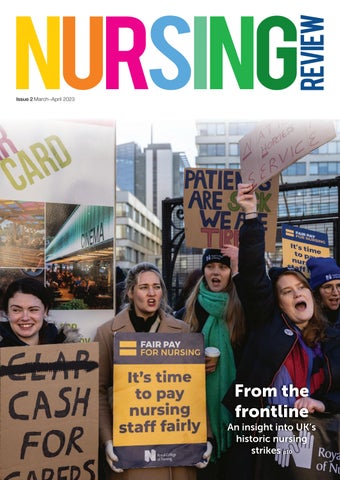
Issue 2 March–April 2023
From the frontline An insight into UK’s historic nursing strikes p10
Important information for Healthcare Professionals. For Formula-fed infants.
New name. Same formulation.
S-26 has changed its name to Alula For more information, please contact our Careline on 1800 552 229 IMPORTANT STATEMENT: Breastfeeding is best for babies. It has benefits for the infant, such as reducing infection risk, and for the mother. It is important to have a healthy balanced diet in preparation for, and during breastfeeding. Infant formula is designed to replace breast milk when an infant is not breastfed. Breastfeeding can be negatively affected by introducing partial bottle-feeding, and reversing a decision not to breastfeed is difficult. Infant formula must be prepared and used as directed. Unnecessary or improper use of infant formula, such as not properly boiling water or sterilising feeding equipment, may make your baby ill. Social and financial implications, including preparation time and the cost of formula, should be considered when selecting a method of infant feeding.
® S-26 is a registered trade mark. Used under licence. Distributed by Sanulac Nutritionals Australia Pty Ltd. Level 1, 42-44 Chandos Street, St Leonards NSW 2065. 05676-18052022
For Healthcare professionals use only. For Formula-fed infants.
contents
MANAGING EDITOR
news
Eleanor Campbell 02 9936 8629 eleanor.campbell@news.com.au
2
New care program
3
Union sues NSW
HEALTH EDITOR
4
Virus alert
Elise Hartevelt elise.hartevelt@news.com.au
5
PTSD takes a toll
6
St Vincent’s inquest
7
WA’s Nurse of the Year
SALES MANAGER
Nicola Mohtram 02 9936 8666 nicola.mohtram@news.com.au
02
05
industry and reform
8
SUBSCRIPTIONS MANAGER
Promising results Driving nurses into care
Asher Morris asher.morris@news.com.au
9
Reduced risk Medicine harm report
COVER
10 Into a corner
Picture: Dan Kitwood/ Getty Images.
UK’s nursing strikes
12 Health pledge
PUBLISHED BY
Key NSW promises APN Educational Media GPO Box 4245 Sydney NSW 2001 ABN 58 090 900 999 ISSN 1326-0472 PP100001944
14 ‘Impossible’ Struggle to recruit RN’s
08
14
16 Key player Cervical cancer
17 Through the maze
PUBLISHER’S NOTE
© Copyright. No part of this publication can be used or reproduced in any format without express permission in writing from APN Educational Media. The mention of a product or service, person or company in this publication, does not indicate the publisher’s endorsement. The views expressed in this publication do not necessarily represent the opinion of the publisher, its agents, company officers or employees.
specialty focus
Being a nurse navigator
18 New frontier Hospital tech in 2053
clinical practice
20 High risk JE vaccine access
22 Adopt a midwife New birth program
18
22
23 Silent pandemic Hospitals face ‘superbug’
24 Family first Person-centred care
workforce
26 Top of the queue Faster visas to fill gaps
27 Redouble efforts WA bids to recruit
28 ‘Just the beginning’
26
28
Dementia wave
nursingreview.com.au | 1
news
Transition to practice University program to address registered nurse shortage expands. By Elise Hartevelt
A
new placement program run by a regional university and aged care provider to attract nurses to the aged care sector is gaining momentum. The University of the Sunshine Coast (UniSC) and Lutheran Services have expanded their ‘Transition to Practise Program’ to 28 places across three facilities on the back of the successful first pilot earlier this year. UniSC’s senior nursing lecturer and aged care expert, John Rosenberg, said nurses who complete final placements in aged care are more likely to stay in the sector. “We know is that students’ decision about where to work after graduation is strongly influenced by where they do their final placement,” Rosenberg said. “Most third-year graduate nurses don’t pick aged care, even though it can be such an exciting career path.” He said most nursing schools in Australia select aged care as one of the first placements. The idea behind this is so the sector exposes them to the basic skills of nursing care and personal care, Rosenberg said. “There’s this perception in nursing that aged care is easier to practise than other areas. “Yet, if you look at who is receiving care – these are people with chronic medical
2 | nursingreview.com.au
conditions and cognitive challenges like dementia. “It’s clinically complex; it’s workload challenging. It’s a really different environment to acute care.” The program prepares newly qualified registered and enrolled nurses for entering the aged care workforce by providing specialised training and mentorship over eight weeks. Rosenberg said the program’s pilot was ‘a great success’ – two of the five selected student nurses were hired by Lutheran services. Another one moved interstate to work in older people’s rehabilitation. “We have one starting in July and another in November,” Rosenberg said. “We’ve also received interest from four other aged care providers likely to join soon.” Last November, the Aged and Community Care Providers Association (ACCPA) launched a program recruiting over 75 undergraduate nurses for a sixmonth placement in the sector. The program started enrolling a new intake of graduate nurses earlier in February and expects to open up places for another batch in August 2023. Rosenberg said they’d received 50 enquiries for the 14 places available for this year’s first round. They recently placed 13 student nurses across three Lutheran Services facilities. “Lutheran Services has embraced this program so enthusiastically,” Rosenberg said.
“They’ve had a chance over eight weeks to work closely with the nurses, assess their suitability as potential employees, and get to know them personally.” Lutheran Services has 20 aged care services sites in Queensland, of which 11 residential facilities. Their Gympie-based facility, Cooinda Aged Care, was the first home to welcome the five student nurses during the pilot. Cooinda Aged Care service manager, Gill Hyett, said it was a one-of-a-kind experience for nursing students to gain practical, hands-on learning that fast tracks a career in aged care. “The program is already making in-roads to address staff shortages,” Hyett told Nursing Review. “After the successful pilot, we are expanding the program to three of our aged care sites this year, with 14 students selected for the program.” One of the nurses now working at Cooinda is Wendy Williams, who said she was glad she chose aged care as her final placement instead of a clinical hospital setting. “Aged care, in particular palliative care, was a career goal when I began my studies,” Williams said. “It requires a lot of critical thinking to combine your practices and education to work out the optimal care for residents with complex needs, which is hugely rewarding. “The placement was so valuable – and securing a job at the end with Lutheran Services was icing on the cake.” ■
news
NSW Nurses and Midwives Association General Secretary Shaye Candish with members of NSWNMA. Picture: Tim Hunter/News Corp Australia.
Legal action Nurses sue state government over loss of 100,000 care hours. By NCA NewsWire
N
urses and midwives across NSW are filing a major case in the Supreme Court over claims patients are missing out on more than 100,000 hours of care in public hospitals. Health Minister Brad Hazzard has argued the action is “purely politics” and claims the disputed shifts make up for 1,500 out of a total 1,587,000 shifts. The essential workers will begin rallies and stop work actions today to bring attention to what they say are “repeated breaches” of their employment agreement. NSW Nurses and Midwives Association general secretary Shaye Candish hosted a media conference outside the Supreme Court just after 10 am before court proceedings were filed. “For years, we have argued that the public health system is broken,” Candish said.
“The government has ignored our warnings.” The union said public hospital patients are missing out due to a broken staffing system that they claim cannot deliver safe care to vulnerable patients. The union claims the staff system’s failings equate to more than $18m in taxpayer funds not being spent on patient care. “The shift by shift ratio system is the solution, but the NSW government refuses to acknowledge this, despite all other mainland states having them,” Candish said. She claims multiple disputes involving staff have prompted the union to request staffing data, resulting in the exposure of the broken system. “It paints an alarming picture of our hospital system,” she said. The union will allege that more than 7,000 contraventions of the award occurred at Gosford public hospital between 31 December 2018 and 30 October 2022. “This shows the NSW government’s preferred staffing model is no longer fit for purpose,” Candish said.
“The government has ignored our warnings. HAZZARD: ‘CLEARLY POLITICAL’ NSW Health Minister Brad Hazzard said the industrial action is “political” and has criticised the nurses union for taking action over 1,500 shifts out of a total 1,587,000. “That clearly indicates that this is purely politics,” he said. “In my view, the union action will not get a lot of substance in court trying to get action ten days out from an election. “It is the ultimate hypocrisy by the union, using union members’ money to run a campaign for a Labor Party they know is not going to deliver them ratios.” At least a dozen nurses and midwives joined Candish on the steps of the Supreme Court to announce the move. Workers from the Royal Prince Alfred, Gosford, Wollongong, Westmead, Liverpool and John Hunter hospitals were involved in industrial actions during March. ■ nursingreview.com.au | 3
news
Australian Medical Association President Professor Steve Robson. Picture: Supplied.
‘Triple threat’ Virus alert as winter looms. By NCA NewsWire
H
ealthcare staff have been warned of a ‘triple virus threat’ this winter, prompting medical experts to push Australians to get up-to-date with their vaccinations. Cases of influenza and respiratory syncytial virus (RSV) have spiked across
northern hemisphere nations since the start of 2023, raising concern among the medical communities. RSV is considered a highly contagious virus that is the leading cause of acute respiratory infections worldwide. NSW reported a 62 per cent increase in RSV cases from mid-February to early March. While the rolling 7-day average of Australia’s Covid-19 cases has plateaued at around 3,000, experts anticipated the start of winter could reignite a surge in cases. Australian National University infectious disease expert, Dr Nick Coatsworth, said that access to healthcare services could become a major concern. “There is a triple threat this year, and the urgency for early protection is real,” Dr Coatsworth said. “As GPs and hospitals across the country stretch their capacity to record levels, the demand will only worsen if we all get sick. “Many will still rely on their GPs to get vaccinated, but this may become
problematic with already overstretched GP clinics and extended waiting times.” Australian Medical Association (AMA) president, Professor Steve Robson, said that while Covid measures might have eased, the virus still posed a real threat to the community. “We’ve seen that the Covid virus is very capable of mutating – it’s inevitable there will be further variants and new waves in the community,” Professor Robson said. “With winter just around the corner, we really want to encourage people to get their booster shot if they are eligible. “Clearly, there is no room for complacency.” It’s estimated that 96.2 per cent of Australians over 16 have had their second Covid vaccination. Yet, data suggests that less than half of eligible Australians received a fourth booster. Professor Robson emphasised that boosters lower the chance of getting Covid and reduce the chance of becoming very sick when infected. ■
$800* PER DAY PLUS LOADING AS APPLICABLE
*Subject to terms and conditions as outlined during the Rural LAP placement process.
Join our team
As an Aged Care locum for the Rural Locum Assistance Program (Rural LAP), you’ll have the opportunity to travel, meet new people, develop new skills and work in some of the most beautiful places, from the countryside to Outback Australia. You’ll receive an hourly wage, a $150 incentive allowance per working day and $100 meal allowance per day plus we also arrange and pay for your travel and accommodation. 4 | nursingreview.com.au
SCAN QR CODE TO APPLY
news
‘We have had it’ Nearly one-fifth of NSW nurses living with PTSD. By Elise Hartevelt
A
n estimated 15 out of 100 registered nurses and midwives working in NSW could be experiencing symptoms of post-traumatic stress disorder due to Covid, a new report has revealed. The Rosemary Bryant Research Centre surveyed 2,300 nurses and midwives across NSW on the challenges they have faced on the front over the past three years. They found that nearly 300 respondents suffered from high-stress levels and met the clinical classification for PTSD. Shaye Candish, secretary of the Nurses and Midwives Association NSW branch, called for urgent investment to protect the mental well-being of nurses and midwives. “They’re constantly being asked to do more than they’re capable of doing, which leads to significant guilt that then creates this sort of cycle of trauma,” Candish said. “We need to combat the growing levels of psychological harm experienced across the workforce. “It needs to stop now.” PTSD is characterised by an inability to recover after a person experiences or witnesses one or multiple traumatic event(s). A person with PTSD might experience anxiety, heightened reactivity to specific triggers, depression, flashbacks and nightmares. Nurses and midwives surveyed flagged overwork, exhaustion and burnout as key
contributors to their poor mental and physical health. One respondent expressed feeling ‘stressed out and lonely’ while working 12-hour shifts alone with a tubed patient in one room. Another nurse on the Covid ward shared how she supported staff through ‘countless traumatic deaths’ and had received ‘repeated phone calls from families telling her that she was responsible for killing their loved ones.’ “I reached out to executives, and they told me that I had it easy and shouldn’t be difficult and complain,” she said. Nurses and midwives are at increased risk of developing PTSD due to their direct and indirect exposure to traumatic events in clinical settings. Moreover, it’s estimated that 95 per cent of nurses and midwives have at least once experienced violence or aggression in the workplace. During the pandemic, healthcare workers faced high levels of psychosocial distress because of understaffing, extended shifts and little support. Candish said the need for adequate staffing and skill mix has never been higher. “Rather than trying to normalise the trail of destruction Covid has left, we need a system-wide, solutions-driven focus,” Candish said. “We need improved reporting of workplace psychosocial hazards and increased risk mitigation measures to address occupational violence. “We must restore professional pride and fulfilment, which will enable nurses and midwives to stay motivated and keep
“We need improved reporting of workplace psychosocial hazards. delivering the clinical care we trust only them to provide.” The NSWNMA commissioned the Rosemary research report last year to better understand the force’s workload and mood after two years of Covid. Half of the nurses and midwives surveyed reported working significantly harder and more during the pandemic. Ninety per cent said it had increased overall since the pandemic started. Around one-fourth of the respondents said they worked ‘a lot more than they would like. On average, nurses and midwives worked an extra three unpaid hours each week. Despite the reduced pressure of Covid on Australia’s healthcare, half of the nurses and midwives said they continued to work the same hours as during the pandemic. Over 40 per cent said it decreased only a little. One senior registered nurse told the Rosemary research team that the workforce was ‘emotionally on the verge of a breakdown.’ “We have had it,” she said. “I would not recommend nursing to anyone – we work like dogs and are expected to keep going. “No one should have to work with the pressure, physical demand and disrespect that we do. “We give and give and give until one day we can give no more.” ■ nursingreview.com.au | 5
news
‘Unacceptable’ Inquest into St Vincent Hospital after sepsis death. By NCA NewsWire
T
he death of pregnant mother could have been prevented if she was given antibiotics at the correct time by a doctor, an inquest has found. Melbourne-based Annie O’Brien, 37, passed away due to a fatal sepsis infection in August 2017. O’Brien received antibiotics hours after she attended Holmesglen Private Hospital in Moorabbin. By the time of her admission to a second hospital after midnight, it was unlikely she could have been saved, State Coroner Judge John Cain said on Tuesday last week. Cain handed down his findings in the Coroners Court after the two-week inquest into O’Brien’s death was heard in August last year. The inquest exposed failures regarding the Toorak lawyer’s treatment, who was 18 weeks pregnant when she attended Holmesglen on August 14 with a temperature of 40, severe back pains, diarrhoea and vomiting.
6 | nursingreview.com.au
She was incorrectly diagnosed with gastro, having eaten a chicken salad with colleagues earlier that day. It was reported that O’Brien deteriorated rapidly after her second admission at St Vincent’s Private Hospital and died the next day following a miscarriage. However, Cain has decided against forwarding the conduct of Dr Hui Shi, who first treated O’Brien at Holmesglen, or the conduct of her obstetrician Dr Vicki Nott, who treated her at St Vincent’s, onto the Australian Health Practitioner Regulation Agency, despite the wishes of O’Brien’s father, Dr Brian Moylan. Cain said Dr Shi, who first saw O’Brien at about 8:30pm on August 14, should have given her antibiotics and considered the possibility of sepsis when her condition deteriorated for a second time at 10:15pm. At 11:30pm, when O’Brien’s membrane ruptured, Cain said that Dr Shi should have reviewed O’Brien’s diagnosis and have administered broad-spectrum antibiotics. He said while O’Brien had her greatest chance of survival if they were administered at 8:30pm, it was still more likely she would have survived if she’d received them at 10:15pm or 11:30pm.
Cain said there was an “unacceptable” miscommunication between Dr Shi and Dr Nott when it was agreed that, following to her membrane rupture, O’Brien would be transferred to St Vincent’s and to Dr Nott. Dr Shi said she had impressed on Dr Nott the severity of O’Brien’s condition in her two phone calls prior to the transfer, while Dr Nott insisted she had “no appreciation” of how sick the patient was. O’Brien arrived at St Vincent’s at 12:15am and appeared “very distressed,” according to the evidence of a midwife. When Dr Nott first got to her bedside at 1:30am, O’Brien became convinced of the presence of sepsis due to her “altered state of mind”. The first dose of antibiotics wasn’t delivered until 2:46am, more than three hours after O’Brien’s membrane had ruptured, and she died shortly before 2pm that afternoon. Cain’s recommendations included for specific advice on maternal sepsis to be provided in the Safer Care’s “Think Sepsis, Act Fast” guidelines, and for Safer Care to develop statewide tools assisting in the proper delivery of handover notes. ■
news
Professor Lisa Whitehead. Picture: Supplied.
‘Groundbreaking’ Meet Western Australia’s nurse of the year. By Elise Hartevelt
P
rofessor Lisa Whitehead has been awarded the WA Nursing and Midwifery Excellence Award. The Edith Cowan University professor was handed the state’s most prestigious awards by the health department to
honour her contribution to the nursing and midwifery profession. Over her 30-year career, she’s improved health outcomes for people with chronic conditions and published ground breaking studies on nursing, rehabilitation and public health. She’s particularly passionate about advancing treatment for people living with chronic conditions by developing selfmanagement interventions. “I’m deeply honoured to receive this recognition,” Professor Whitehead said. “I am passionate about improving the health outcomes of individuals, families and communities, and I’ve had the privilege of working with many amazing nurses and midwives to make this happen. “With further support for nursing and midwifery-led innovation, I know we can achieve even more, and I’m excited for the future.” Last November, Professor Whitehead became editor-in-chief of one of Australia’s leading academic journals Collegian, the official peer-reviewed journal of the Australian College of Nursing (ACN).
She was awarded a $1.11M grant from the Health Research Council of New Zealand to study factors that may reduce the risk of developing diabetes. ECU’s Nursing and Midwifery executive dean, Professor Karen Strickland, said Professor Whitehead’s work has led to remarkable health improvements for people with chronic conditions. “Lisa leads the research portfolio in the school and across several industry collaborations,” professor Strickland said. “Her leadership provides an inspiring role model and mentor for early and midcareer nurses and researchers.” ECU Vice-Chancellor professor Steve Chapman said the award acknowledged professor Whitehead’s longstanding contribution to the nursing profession. “This amazing award is fabulous news for professor Whitehead and ECU,” professor Chapman said. “Her dedication to nursing spans decades, and she continues to enrich the field in many ways, from her top-quality research to educating the next generation of nursing professionals.” ■
St John of God Mt Lawley hospital in Perth, WA. Picture: Justin Benson-Cooper/News Corp Australia.
the inner-northeastern Perth suburb of Mt Lawley. During the operation it’s understood a surgeon cut into an artery, resulting in massive blood loss, with the woman transferred to Royal Perth Hospital for an emergency transfusion. St John of God Mt Lawley chief executive Vanessa Unwin confirmed “a clinical incident” had occurred, “resulting in an adverse outcome for a patient”. “We advised the family immediately,” Unwin said in a statement. “It is clearly a difficult time for them and we remain in contact. “Patient safety is our highest priority. We treat incidents with the utmost seriousness and will undertake a full investigation.” Nine reports the family now has concerns the woman affected may have suffered brain damage as a result of the blood loss. It’s the second serious surgical incident at a St John of God hospital in Perth in three weeks. A man, aged in his 60s, suffered severe burns following a fire breaking out in an operating theatre at St John of God Subiaco Hospital on February 14. ■
Hospital probe Probe into second serious incident at Perth hospital. By NCA NewsWire
T
here’s fears a woman may have suffered brain damage as a result of a routine surgery.
It’s the second serious incident at a hospital run by Catholic healthcare provider St John of God in less than a month. It happened when the woman went in for, what Nine News reports was, a standard gynaecological procedure at St John of God Mt Lawley Hospital, in
nursingreview.com.au | 7
industry & reform
“Working in aged care creates a sense of personal fulfilment.
Promising results New program to drive nurses into aged care. By Elise Hartevelt
T
he Aged and Community Care Providers Association (ACCPA) has launched a new graduate program to attract more registered nurses into residential care facilities. Since its launch in November, over 75 nursing graduates have participated in the Aged Care Transition to Nursing Program, with ten registered nurses joining the program for six months in other areas. ACCPA chief Tom Symondson said the program has recorded promising results. “There is a critical shortage of RNs in aged care, so every one of our graduates lights the way for others to follow,” Symondson said.
“With the number of people requiring aged care set to double by 2050, we as a sector need to encourage more nurses to take that step and enter the sector In 2021, Australia employed 286,149 registered nurses, 54,193 enrolled nurses, and 20,990 dual-registration nurses. Federal data estimates that just under 40,000 nurses currently work in aged care. Research suggests that by 2050, Australia will need over 200,000 RNs employed in the sector. One factor contributing to the increasing need for RN in aged care is Australia’s ageing population, where men live on average 81 years and women 85. Since 1999, the average life expectancy rose for men by nearly 10 per cent and for women by 6 per cent. Research also anticipates a dramatic increase in dementia cases where RNs
need to be present in administering medication and providing high-level care. While there are currently over 400,000 Australians living with dementia, it’s estimated that in 35 years that number will grow to 800,000. “Australians are living longer and well beyond their retirement years,” Symondson said. “Research to better understand dementia is critical as it will improve the lives of those older people who will need support either at home or in residential care at some time in their lives. “We welcome all the nurses who decide to stay in the sector and continue to support vulnerable older Australians – for now and in the future.” Bronwyn Doyle, National Team Leader for ACCPA’s program, said the program supports aged care nurses to start their careers in the sector with confidence. “Nurses in aged care and community care have the privilege of building strong relationships with older people and supporting quality of life to the end,” Doyle said. “Working in aged care creates a sense of personal fulfilment that is difficult to find elsewhere.” The program started enrolling a new intake of graduate nurses earlier in February and expects to open up places for another batch in August 2023. ACCPA is also working with aged care providers to ‘make the aged care sector an employer of choice.’. ■
SUBSCRIBE FOR LESS THAN $2 PER WEEK THE LATEST NEWS FOR NURSING & HEALTHCARE PROFESSIONALS Nursing Review is essential reading for anyone involved in the healthcare sector in Australia. It provides unrivalled coverage of specialist topics from features and opinion pieces, to international news and profiles. • atest news and resources for all healthcare professionals • Comprehensive coverage of a diverse range of topics • Analysis of the major issues facing the health sector as a whole • elivered free of charge to your home or place of wor monthly
Please call 02 9936 8666 to find out more. 8 | nursingreview.com.au
industry & reform
Reduced risk On-site pharmacists halved medicine harm in aged care. By Elise Hartevelt
O
n-site pharmacists conducting regular reviews in aged care could lower medication-related harm by 50 per cent, a new study has found. It’s estimated that one in five older people living in aged care homes has an adverse response to medication each month despite over half of those being preventable. Studies suggest that frequent medication reviews by a pharmacist can significantly reduce medicine-related harm. During the study, researchers from Canberra University and the Pharmaceutical Society of Australia (PSA) followed on-site pharmacists for 12 months across 15 ACT-based aged care facilities. Canberra University’s Associate Professor of Pharmacy, Sam Kosari, said periodic medication reviews could significantly reduce unplanned hospital admissions. “Having an on-site pharmacist lowered the number of residents taking potentially inappropriate medicines,” Professor Kosari said. “We also saw that on-site pharmacists assisted in upskilling staff in medication
knowledge and improved communication within the care team.” Medication-related harm in aged care has been linked to nearly 20 per cent of unplanned hospital admissions. Overall, up to 95 per cent of people in residential care could have medicationrelated issues, Professor Kosari said. Research suggests that mistakes in medication management are mainly due to human error, such as organisational mistakes and challenging working conditions. Over 50 per cent of people in residential aged care could consistently be prescribed the wrong medication due to factors such as miscommunication. Professor Kosari said we needed to provide more training for aged care staff and family members around medication use and management to minimise medication-related harm. One family member who participated in the study said he felt ‘more confident talking about medication use with doctors and knew better what questions to ask.’ A residential facility manager said the number of complaints had gone from six or seven in a month to zero after more frequent pharmacist reviews were introduced. Professor Kosari also found that fewer incidents related to anticholinergic drug use occurred.
“We also saw a reduction in the dose of antipsychotic medicines prescribed for residents,” he said. Anticholinergic drugs are frequently prescribed in aged care to treat health conditions such as overactive bladder, gastrointestinal disorders, and asthma. They are also used to reduce symptoms of Parkinson’s disease, depression, anxiety and other psychiatric conditions. Yet, common side effects of anticholinergic drugs are drowsiness, dizziness, blurred vision and confusion – and are linked to increased risk of falls, fractures and injury in aged care. The 2021 Royal Commission report emphasised the need for more allied health professionals, including pharmacists, to downsize medication-related harm into aged care. Professor Kosari said there is a growing recognition that a more integrated approach to pharmacists’ involvement in residential aged care is required. “Optimising medication management is crucial to reduce the likelihood of adverse health outcomes resulting from medications,” he said. In December 2022, the federal health department announced it would invest $345.7m to implement a program to install more on-site pharmacists in aged care. ■ nursingreview.com.au | 9
industry & reform Members of the Royal College of Nursing and other NHS staff gather outside St Thomas’ Hospital in London. Picture: Dan Kitwood/Getty Images.
‘Into a corner’ Unsafe staffing ratios pushes UK and Australian nurses to the edge. By Elise Hartevelt
B
ritish nurses are staging a 48-hour strike and ‘won’t back down’ in a bitter row with the government over wages and nurse-to-patient ratios. Members of the Royal College of Nurses (RCN) have walked off their jobs six times since December 2022 to push for a pay rise of 19 per cent to meet the rising living costs. The union’s repeated strike actions has affected over a 100,000 appointments and treatments. Since the start of 2022, Australian and British nurses have been calling for safer nurse-to-patient ratios amid a rapidly growing workforce shortage. The Australian NSW Nursing and Midwifery Association (NSWNMA) led four state-wide strikes last year which prompted talks with the government to address the workforce crisis. UNSW Business School lecturer Dr Greig Taylor, who moved from the UK to Sydney four years ago, said the living and working
10 | nursingreview.com.au
pressures in both countries could lead to more strikes in the future. “Both NSW and the UK government have responded somewhat muted and stubborn to the pleas of nurses,” Taylor said. “But any nurse on strike shows the gravity of the situation. “It shows they feel forced into a corner and see no other way to recourse with the government aside from industrial action.” Earlier this month, members of the British nursing union announced they would hold its most extensive strike in the 75-year history of the National Health Service (NHS). The NHS board makes wage decisions similar to Australia’s Fair Work Commission (FWC). However, the NHS is solely responsible for healthcare workers, whereas the FWC rules over most professions. British nurses under the NHS are planning a two-day strike of twelve hours each from the 1st of March in an attempt to finally break the headlock with ministers over pay. Contrary to previous strikes, this action will include nurses working in intensive care units, cancer care and emergency
departments, with an expected turnout of 12,000 workers. The announcement has raised the alarm with senior NHS board members, warning the impact on patients would be ‘significant.’ The pressure on the government was further emphasised when young British doctors announced this morning that they were preparing for a 72-hour strike in March. RCN general secretary, Pat Cullen, said the union would make ‘a priority of honouring its legal obligation not to endanger life.’ “These strikes will not just run for longer and involve more people but will leave no area of the NHS unaffected,” Cullen said in a statement. “I will do whatever I can to ensure patient safety is protected. “But we’re not backing down – it’s time to pay nursing staff fairly.” The ANMF expressed solidarity with the UK nurses on Facebook, agreeing that their work must be valued appropriately. Taylor said there’s ‘quite a gulf’ between what nurses are asking for and what the
industry & reform Nurses march on Downing Street in December 2022. Picture: Getty Images/Dan Kitwood.
government is willing to offer through the NHS pay review board. In July 2022, the NHS published a review recommending a pay rise of roughly £1,400, worth about 4 per cent for nurses. “It looks like the British nursing union is willing to be flexible and negotiate,” he said. “Unfortunately, the government is sticking to its guns, hiding behind the NHS pay review, arguing that they could only afford 4 per cent.” Yet, last week, the Welsh government agreed to a 7 per cent pay rise for nurses, after which the industrial action was called off. The RCN said they’d also be willing to suspend strikes if the government agreed to a 7 per cent wage raise in the first year. Taylor said that nurses wondered why the Welsh government could afford a pay rise but not the British government despite being subject to the same external pressures, such as Brexit. “Let’s not forget that this 7 per cent pay rise probably isn’t even keeping up with inflation this year,” he said. “They’re not asking for some sort of mega-blockbuster pay rise – they’re just asking to get a real pay cost in inflation with service rise.” The overall cost of living in the UK became 10 per cent more expensive over the past twelve months.
In Australia, the CPI grew by 7.8 per cent over the same period. “Rising inflation, energy and grocery bill rises, and wage freezes that have fallen behind the CPI over the last decade or more have led to an explosion in wage claims,” Taylor said. “The cost of living in the UK and Australia look the same but, comparatively, British nurses are paid less than those in NSW.” A nurse is paid roughly 58 per cent more in Australia than in the UK. The wage of a newly qualified Band 5 NHS nurse in the UK is £27,055, whereas Australian starting nurses are paid $77,000 (or £44,000) per annum. Aside from financial stress on the British government due to Brexit and Covid, Taylor said that systematic differences in healthcare provision play a crucial role in whether nurses receive a pay rise. “The British government in charge is not dissimilar to the Australian government in so far that its pro-privatisation and anti-state involvement attitude toward public assets,” Taylor said. The NHS was set up after WWII so that every person, regardless of socioeconomic status, should be provided for. Whereas Australians contribute to receive medical services, the UK health sector is
“We’re not backing down. completely funded by the government-led NHS through taxation. “The public opinion is still very pro-NHS,” Taylor said. “But the current British government would like to see it privatised. “So, it’s deliberately underfunding the NHS so that waiting lists get so long and service provision becomes so stretched that the public will eventually clamour for more private involvement. “Which is also affecting whether nurses will receive a pay rise.” The UK government insisted it would not re-examine the NHS pay for this year after receiving word of RCN’s plans for a 48-hour strike. Nevertheless, Taylor said that the government’s ‘tough attitude’ would unlikely result in nurses backing down. “There’s a lot of strong feelings on the nurse’s side from the public and the press. “This isn’t a gang of militants we’re talking about here – these are nurses with a small fee who are usually unwilling to go on strike. “Everything is on the nurse’s side. They’re not abdicating their duties to their patients, but they are getting tougher on the government and rightfully so.” ■ nursingreview.com.au | 11
industry & reform NSW Opposition leader Chris Minns and Dominic Perrottet. Picture: NCA NewsWire/Tim Pascoe.
“Nearly 6,500 NSW nurses have quit in the last 12 months.
Health pledge Major healthcare promises in the NSW state election. By Elise Hartevelt
N
SW’s two major parties have committed to employing more healthcare staff, upgrading hospitals and allocating funding towards women’s health, with less than a week out of the election. On March 25, millions of East-coast Australians took to the polls and vote on who should lead the state. The NSW Coalition promised to employ 10,000 extra healthcare workers within four years if re-elected this year. Labor leader Chris Minns said it would introduce ‘minimum and enforceable safe staffing levels to public hospitals’ and hire 1,200 additional nurses and midwives over four years. “We’re gonna focus on people — you can’t run public services without people,” Minns said during an election speech. “There’s no replacing a nurse who’s got the skills to understand what’s in their emergency department, and that’s been absolutely neglected by the government. “Unless we start dealing with the people skills crisis, particularly in essential services, we won’t turn around our hospitals and schools.” The Perrottet government will commit $1.2bn to build and upgrade 20 NSW
12 | nursingreview.com.au
hospitals, including Concord, Cowra, Rouse Hill, Tweed and Royal Prince Alfred Hospital. Of the $1.2bn, the Coalition earmarked $260m to expand critical care services at Concord Hospital and $102m for Scott Memorial Hospital. In late February, the state premier and Liberal leader, Dominic Perrottet, visited St George Hospital, currently in the third stage of its $740m redevelopment plan. “The investment will help future-proof our health system and ensure our communities continue to have access to world-class healthcare,” Perrottet said during a press release on the construction site. “These critical investments in health infrastructure are only possible thanks to the Liberal and Nationals’ long-term economic plan to keep our state moving forward.” The Opposition promised to install 600 additional beds across Western Sydney’s hospitals, including a $700m injection into Rouse Hill Hospital to supply 300 beds. Canterbury, Fairfield, Mount Druitt and Blacktown Hospitals are also scheduled for an upgrade, and the new Eurobodalla Hospital will be opened at Level 4 capacity. Minns reiterated it would abolish the public sector wage cap, calling it a ‘failed ideological tool’ that hindered the retention of key workers. Labor said it hoped removing the wage cap would lead to a pay rise of 3 per cent
for essential workers, including nurses and midwives. “We need to do it because nearly NSW 6,500 nurses have quit in the last 12 months, 2,500 constables have left the police force in the last four years, and there are 3,000 teacher vacancies in NSW schools,” Minns said last week. To improve rural and remote NSW healthcare services, Minns pledged to set aside $70m for three helicopter ambulance bases. Labor also plans to recruit 500 additional paramedics to the rural healthcare workforce. The Perrottet government vowed to enforce free parking at all of NSW’s regional and remote hospitals. As for women’s health, the Coalition said NSW would be on track to becoming the first state in Australia where women can renew prescriptions for the contraceptive pill at their local pharmacist. Perrottet said it would be easier and cheaper for women to visit a pharmacist about UTI treatments. The program is to run for a 12-month trial period. “This is about making it easier and quicker for people, particularly women, to access important prescription medications and treatments,” Perrottet said. “It’s harder than ever to get into a GP, and that’s why these changes will make a real difference to people who need to access a range of prescriptions and treatments.” The Coalition will set aside a $52.6m package for female health, including $16.3m to fund endometriosis centres and $7m for gynaecological cancer research. The package will also contain $2m to provide more support for women and families experiencing miscarriage and stillbirth. The Perrottet government furthermore committed to expanding fertility treatment places by 14,000. Under the state Labor’s plan, Minns pledged it would boost women’s health centres by injecting a $100m funding deal. Women diagnosed with breast cancer will also receive access to a free-ofcharge cancer nurse. ■
THE LATEST NEWS FOR AGED CARE PROFESSIONALS
Aged Care Insite provides the best in original journalism and is the authoritative source of news and analysis for the residential and community care sectors. At Aged Care Insite we pride ourselves on being at the forefront of the ever-changing care sector. We provide an independent source of news, and cover the issues relevant to you. • Comprehensive coverage of a diversity of topics affecting the aged care sector • News and information on medical matters and products • Analysis of the major issues facing the aged care sector as a whole • 6 issues per year • Editorial integrity and industry relevance • Keeps industry professionals up-to-date on the politics and policy that matter • Tax deductible
Please call 02 9936 8666 to find out more.
industry & reform Rural aged care provider Shepparton Villages announced last month it would close Hakea Lodge in northern Victoria by April due to a lack of staff. Picture: Supplied.
‘Impossible’ Rural Australian nursing homes struggle to find registered nurses. By Elise Hartevelt
R
ural aged care providers have said having enough 24/7 nurses on-site by July would be ‘impossible’ as they struggle to recruit registered nurses to live and work in regional areas. Sue Thomson, chief of regional aged care provider McLean Care, said their advertisements were not yielding any applicants despite offering accommodation, travel expenses and above award pay. “It’s been incredibly difficult,” Thomson told Nursing Review. “It’s putting a lot of pressure on us and our existing staff. “It’s almost like the 24/7 nursing mandate is an impossible target, especially for regional and remote Australia.” She said pressure had quadrupled after the health department released
14 | nursingreview.com.au
the exemption rules late last month, indicating that only 5 per cent of Australia’s aged care providers would be eligible. “There are simply not enough registered nurses around to get the 24/7 coverage across all aged care facilities and the healthcare sector,” Thomson said. “We’re competing for what is becoming one of the most precious resources in the country.” Last July, federal aged care minister Anika Wells announced major reforms to improve quality care, transparency and accountability of providers. The Aged Care Amendment Bill 2022 required that providers should have a registered nurse on-site and on-duty at all times from July 1st, 2023. The bill also raised resident care time to 200 minutes per day, including 40 nursing minutes, by October 1st, 2023. Yet, rural aged care providers said they’re scrambling to employ enough nurses to meet the deadline amidst a nationwide staffing shortage.
“There are simply not enough registered nurses around to get the 24/7 coverage. Federal data from late last year estimated that the reform’s impact on the aged care sector would lead to a shortage of 11,800 registered nurses by the next financial year. A Wells office spokesperson later said the ‘workforce gap had shrunk since that briefing note was produced’, lowering the estimate to 8,400 registered nurses. “If the government wants us to meet the requirements, they need to provide us with more nurses,” Thomson said. “But in order to do that, they need to understand the actual depth of the nursing shortage across all sectors. “That’s the next logical step that needs to be taken.” Not-for-profit provider McLean Care is one of Australia’s largest aged care
industry & reform
organisations in the North-West region of NSW and Darling Downs region of QLD. They provide residential, community and home-care services to over 3,200 people in predominantly rural and remote parts of Australia. One in four of Australia’s aged care homes is estimated to operate in rural, remote or very remote areas. Aside from a national nurse shortage, data anticipated that facilities in regional areas have over 10 per cent more homes operating at a loss. As a result, accountancy firm StewartBrown estimated that over 50 aged care homes could be closing their doors within a year. Aged care provider Shepparton Villages was one of those who had to close Hakea Lodge in northern Victoria last month due to a lack of staff and financial challenges. “The burden of proof is on us when the whole nation knows there are not enough registered nurses,” Thomson said. “It just seems counterproductive to put a burden like that on us when we’re already putting in so much work in trying to meet the mandates.” Last year, over 500 rural homes indicated they would seek exemption from roundthe-clock nurses after the Aged Care Amendment bill was announced. But the current exemption rules would suggest that just 5 per cent of aged care homes could apply. The department said that only small facilities of under 30 registered beds in rural and remote Australia (MMM 5-7 locations) could apply for a one-off 12-month immunity. Under these rules, none of McLean Care’s five residential facilities is eligible. However, the government is yet to announce the official penalties involved when a provider fails to meet the requirements. A department spokesperson told ABC News last year that those seeking exemption would ‘need to prove they had taken steps to ensure clinic care needs were met.’ He continued that it would advise the Aged Care Quality and Safety Commission before approving exemptions. Commissioner Janet Anderson told the Sydney Morning Herald last year that only providers who seemed ‘uninterested in meeting the 24/7 nursing mandate would fall within the regulator’s sights.’ Anderson also said the commission would ‘take a risk-based and proportionate
approach to regulating the new requirement.’ Nevertheless, Thomson said the lack of clarity around sanctions has led to significant stress across the board and within their workforce. “You can imagine the anxiety this causes,” Thomson said. “The commission has already said they would take proportionate action – so, what does that mean for services that can’t recruit the numbers? “We’re already paying our staff above the award rate and have also put a bonus structure in place to meet salaries with the healthcare sector – we can’t do much else.” The average annual salary for a registered nurse in aged care in NSW ranges from $70,000 to $90,000. On the other hand, registered nurses working in NSW hospitals earn between $85,000 to $120,000 a year. While the Fair Work Commission (FWC) ruled a 15 per cent pay rise for aged care staff, including nurses, in December last year, Thomson said it would do little to solve the issue. Other rural providers, including Adina Care in Cootamundra, NSW, have been offering incentives, including pay above the award rate – but to no avail. Thomson said they frequently fly in agency staff from Brisbane to fill the roster gaps in their rural QLD facilities. She estimated that McClean care is spending an average of $28,000 a month on agency staff accommodation, excluding their wages. “We’ll offer them a roster that suits their lifestyle, and we’ll pay for their travel and provide accommodation,” Thomson said. “It’s a real juggling act at times to offer that to agency staff without impacting a nurse that has remained true to the organisation.” Uniting NSW/ACT, one of the country’s leading aged care providers, said nurse recruitment was significantly harder in regional parts of Australia. “It will be next to impossible to meet the new staffing requirements by the July deadline,” a Uniting NSW/ACT spokesperson told Aged Care Insite. “The challenge will be exacerbated with the new mandates. “Although we applaud the government setting higher quality standards, we need them to be realistic and have enough people available to make the new standards achievable.”
Uniting has hired an additional 100 registered nurses in response to the upcoming minimum staffing requirements. Of the 580 nurses employed in 2018, they now have 700 working across 74 aged care facilities. While the provider said it also raised wages to compete with hospital salaries, it called for more government resources to compensate for the increased labour cost. Uniting also urged for clarity around the compliance processes and consequences of not meeting the new requirements. “Being draconian with imposing consequences for services not meeting minimum staff levels could see further bed closures,” the Uniting spokesperson said. “Such an outcome would be particularly acute in regional areas, where homes are already experiencing significant financial viability pressures due to workforce shortages and increased costs.” Chief of WA aged care provider Baptistcare, Amanda Vivian, said agreed the sector faced a number of pressing issues, not least of which is staff recruitment and retention.’ Earlier this week, BaptistCare announced a merger between the NSW & ACT provider and WA organisation to improve financial sustainability and staffing levels. Vivian said she hoped the merger would better align the organisation with the federal government’s coming reforms, including the 24/7 onsite nursing mandate. “No one in the industry is immune to the pressure on the existing aged care workforce and the current staffing crisis in health care in general,” Vivian said. “We are working towards meeting the mandated care minutes and on-site nurses, although we highlight that even the health department has acknowledged the staffing shortage. “But as a larger organisation, we’ll be better equipped to meet this challenge.” Aged care provider RSL LifeCare told Nursing Review were on track to meet the standards of aged care personnel as required by the government. “We appreciate that the sector is under pressure, like many healthcare sectors,” an RSL LifeCare spokesperson said. “It’s important that governments and stakeholders continue to work together to encourage more workers to take up aged care. “We must ensure that those in aged care and assisted living are provided the highest standards of care.” ■ nursingreview.com.au | 15
specialty focus
‘Key player’ Nurses promoting selfscreening cervical cancer. By Elise Hartevelt
A
new project has highlighted the role of nurses in significantly reducing cervical cancer cases in Australia. Globally, cervical cancer is the fourth most common cancer in women, resulting in over 600,000 new cases and 342,000 deaths yearly. Australia has been at the forefront of cervical cancer prevention since establishing a screening program in 1991 and a school based vaccination program in 2007. It’s currently on track to becoming the first country worldwide to eliminate cervical cancer. Nowadays, women can choose to selfcollect their sample to screen for cervical cancer risk using a swab only slightly larger than the Covid-19 testing swab. University of Melbourne’s public health researcher Dr Claire Nightingale and her team are collaborating with Cancer Council Victoria to examine the rural nurses’ view on self-screening. “Nurses we have spoken to are largely supportive and see opportunities to engage under- and never-screened people,” Nightingale said. “Some pointed out the benefits of gaining time, and others saw themselves as portals for doctor education.
16 | nursingreview.com.au
“Most agreed they could become a key player in adopting and promoting the choice of self-screening for cervical screening.” In the 90s, Australia adopted a screening program that lowered cancer rates by nearly 50 per cent within the first ten years. “We used pap smears to screen for cervical cancer, like many other countries,” Nightingale said. By the end of 2017, Australia switched to human papillomavirus (HPV) testing. HPV is a sexually transmitted infection that can cause various types of cancer, such as vaginal and anal. Prior to the introduction of the HPV vaccine, it was estimated that 80 per cent of the Australian population contracts HPV at one point in their lives. While the body usually clears the virus within two years, a persistent HPV infection accounts for almost all cases of cervical cancer. Last year, roughly 900 women in Australia were diagnosed with cervical cancer, of which 222 died. Nightingale said that the overwhelming majority of cervical cancers were preventable – up to 70 per cent of cases occur in women who do not routinely screen. “Self-screening offers a promising alternative,” she said. “It gives people a sense of autonomy and privacy without having to undress in front of clinicians.
“If we optimise the use of self-collection, we could get a lot more people to screen. “If we optimise the use of selfcollection, we could get a lot more people to screen.” Everyone from the age of 25 to 74 can be screened every five years to check for the HPV virus, and can choose to collect their own vaginal sample, or have the clinician collect a cervical sample. Approximately 70 per cent of female Australians are up-to-date with their cervical checks. Nightingale said that nurses help create awareness and ensure patients and doctors are comfortable with offering a choice of self-collection. She highlighted that the nurses’ specific skill sets played a crucial role in reducing the incidence of cervical cancer worldwide. “Nurses often have connections with the community and have skills to work with under-served and vulnerable groups,” she said. “They provide equity in service delivery and promote education for both doctors and patients. “It’s essential they continue their contribution so we can eliminate cervical cancer as a public health issue in the future.” ■
speciality focus
“You have to know who to contact, how to point things in the right direction and how to plan it all.
Dr Adele Baldwin is a registered nurse, midwife and senior lecturer at CQUniversity Townsville. Picture: Alix Sweeney/News Corp Australia.
Advocate for care Navigator nurses named ‘the modern Mary Poppins.’ By Elise Hartevelt
A
CQ University-led project has underpinned the significant role of navigator nurses in promoting better health outcomes for people living with chronic illnesses. A nurse navigator is an experienced registered nurse who helps patients in finding quality and timely care while answering questions about the treatment process. The four-year research report comes after the Queensland government released funding in 2016 for 400 nurse and midwife navigators to enrol in 16 hospitals and health settings. Seven years later, 388 nurse and midwife navigators still stand, of which over half reside in local and regional Queensland. Nursing Review spoke with CQUniversity Associate Professor Adele Baldwin about the challenges nurse navigators face working in rural parts of the state. “We found that they greatly improved care delivery for patients with complex health conditions and also their quality of life,” Baldwin said. In the report, one parent compared a navigator nurse to Disney’s Mary Poppins. “Everyone believes she’s there for the children, but really, she’s there putting back the pieces of parents and keeping the family together.”
NR: What challenges do nurse navigators encounter when treating people with complex chronic conditions? AB: Nurses employed with navigator roles are often very senior and experienced. They have the clinical skills and knowledge to understand what’s happening physically and psychologically for the patient as a result of the diseases they have. But nurse navigators also understand how the health system works and how these services are delivered. So, they are very good at helping patients ‘navigate’ different specialty areas across locations and health services. In most cases, patients who are very unwell have challenges in working through the system – understanding the language, the way the service is provided, and the impact of engagement or non-engagement. As you can understand, if you’re feeling unwell, any task becomes even more difficult. In addition, parents and family members close to the patient are often exhausted, mentally and physically. And that’s where a nurse navigator can really help lighten the load.
What difficulties are there specifically in Queensland for nurse navigators? In Australia, the way healthcare is provided can be very complex. In Queensland, geography adds another layer of difficulty in navigator nurses performing their duties. For example, planning appointments and co-managing over long distances can
complicate situations and make it more demanding for a nurse navigator. Access can also be an issue for people who don’t live in major urban areas or are close to facilities. They often require extensive travel and overnight costs in paid accommodation. Learning this as a nurse navigator in Queensland can be such a hidden skill.
What other aspects of the nurse navigator role can be challenging in treating patients? One of the significant challenges is engaging with the patient, working alongside the patient and building a relationship. They also have to develop a connection with the health services and the service providers, as well as understand it. You have to know who to contact, how to point things in the right direction and how to plan it all. Then there are also skills involved in the consultations they have with the patient, their carers, and family. From a nursing perspective, it’s an area of advanced nursing practice that allows these experienced nurses to practise more fully or potentially to their full scope of practice. So, it creates a new professional pathway.
Was there anything in the research that surprised you? We were pleasantly surprised by the evaluation that showed that the services delivered by nurse navigators were received positively on all levels of care. It allowed us to optimise the effectiveness of the services. Another important finding was the level of impact on the patient. These people are really sick and, by the very nature of the chronic disease, won’t get better. It’s how it’s managed. So, over the four years that we did the study, many of these people progressively became more unwell; unfortunately, some died. But when we looked at the measures of the quality of life, how they were feeling about everything, even though they were getting sicker, they were happier. ■ nursingreview.com.au | 17
specialty focus
A new frontier What tech in hospitals could look like in 2053. By Elise Hartevelt
A
cademics have offered a sneak peek into how artificial intelligence (AI) could revolutionise hospitals over the next 30 years. Professor of Economics David Orsmond and artificial intelligence expert Dr Hamid Alinejad-Rokny said a machine that provides nurses with patient-specific data could be on the fore. Orsmond said that these machines would give nurses a summary about a patient’s current and future treatment based on data from the past. “How the nursing world will look like tomorrow won’t be very different from today,” Orsmond said. “But it will look very different ten to twenty years from now.” Join Nursing Review in a conversation about how close healthcare is in implementing new AI technology and how it could change a nurses’ day-to-day life.
18 | nursingreview.com.au
ACI: How could AI solve issues in the future the healthcare industry is currently facing? HR: AI has a lot of potential to improve hospital healthcare quality. For example, we’re currently using electronic health records. They enable us to access a patient’s medical history, treatment plan and test results, among other things. In the future, we might be able to predict diseases in earlier stages using AI. Or if you look at genome sequence testing. We use genetic testing to check if the patient’s observed phenotype results from a genetic abnormality. At the moment, genome sequence testing generates a large amount of data that is not easy to interpret. AI could analyse and reduce large amounts of patient data to a summary. It would help summarise the data so that nurses and health professionals can associate genetic abnormality and the observed phenotype. We could also use AI to identify rare diseases using facial morphism.
“We’re past the days where nurses would go around, give pills to someone and smile. Currently, we look at facial morphism and genetic testing to check if someone is at risk of carrying rare diseases. But with AI, we can make this process automatic. AI would look at the facial demo of an individual and tell us if there’s a risk of a rare disease, and it may also tell us the origin.
What types of technology might the nursing profession be expected to work with in the future? DO: In the future, they may be working with technology that provides the nurse with patient-specific data generated by AI. I would imagine that, over time, we’ll start seeing machines that can provide nursing staff with quality information about the disease or condition of a patient, what specific drugs to use, what side effects
specialty focus
to expect and more, because it’s all been calculated and worked out by AI from information from the past. Nurses could use that AI information to decide on a patient’s treatment and procedures on a day. These machines would draw information from what we’ve learnt in the past - what worked for patients, what drugs were used, how and when they were administered and what side effects they produced. It’s based on the premise that what we’ve seen in the past will be a pretty good prediction of what you can expect today. The nurse can then focus on a more personalised touch to health provision because the medical information will be clearer. You can compare it to when you google a search term, and it comes up with all this data and information. In comparison, the AI will develop one text summarising all that information. So, that’s a very powerful way of drawing from past information that can be used in today’s practices. The AI could also personalise that message to a patient’s case. For example, the patient is a male of 43 years, fairly fit, and has a history of high blood pressure. The AI can make recommendations that the nurse and doctor should watch out for in this particular case. For example, ensure he drinks enough water for the upcoming seven days to reduce the risk of common complications. It also lends itself to nurses assisting in patient education and patient-focused care. However, that this information is available doesn’t mean a nurse just takes that input and follows it blindly. They would take that information, tailor it even more to the patient, and ensure it’s accurate for the particular circumstances. A third benefit would be that nurses can use the information from the AI to help them with their own education and learning process. Now, is any of this going to happen? Probably, yes. Will it happen tomorrow? Absolutely not.
How soon, then, could we expect these types of AI machines to be introduced to healthcare settings? DO: These things take a great deal of time to develop and diffuse into hospitals and medical settings.
Additionally, nurses and healthcare professionals need to get used to working with AI and technology. There need to be maintenance people with the skillset to set up the technology and keep it up to date. Even patients need to get used to the technology being around - playing a more prominent role in their medical services etc. Patients might initially say, ‘I don’t want something from a machine. I want a real person.’ Like with all new technologies, we need to change to use them. And one thing you must change is your knowledge set about how to use the technologies. You wouldn’t want things to change too radically because it takes time for society to accept them. Generally, this technology diffuses at a pace where the end-stage career people don’t have to get used to because they retire. But it’s imperative that the new people entering the profession are being brought into these skill sets because it will be a big part of their working career over 30 years.
What skills do they need, what do they already know, and how would the technology fit into their day-to-day tasks in the hospital, seeing patients? DO: It’s essential that universities and other education providers constantly update their curriculum so that people coming into the profession have these capabilities to deal with technology and AI. An extension of that is the whole combination of AI and the healthcare system in developing countries. AI could help people in developing countries who may lack the skill sets and availability of nurses and doctors. If they have an internet connection, we could deliver information and health services to people on the ground. It poses an excellent resource for being able to extend the kind of generation of knowledge in advanced economies into the developing world. But it still requires that the nurse sitting in whatever country can understand how to use the information, how to personalise it appropriately, and how to adjust it for the specific requirement of the child or the adult before them. So even there, although it’s nice to think that we can socialise the knowledge to a range of countries, that’s a real challenge in setting this up soon.
It all needs upskilling by all health providers, whether they be here or whether they be in those countries as well. So that’s a challenge that we all have to face. We should already be starting to change how we educate nurses and other healthcare professionals.
How would you suggest universities go about this? HR: It’s difficult to predict something that’s a moving target. Where we used to be in AI five years ago and where we are now is a very different state. What’s more important is not so much the specific capabilities of using AI, because, in five years, we might not use that particular type of AI anymore, but how to teach the workforce generic skills of accessing information through technology. For example, how do you amend the information to be patient-specific, apply the output generated, and alter data so that the final result provides the best information for this patient? These very raw skills will be critical in the future. DO: We’re past the days where nurses would go around, give pills to someone and smile – nursing is not like that anymore. It’s become very personalised and challenging. It’s become very complex, and it will become even more complicated. Nurses will have to pick up all these skills in working with new types of machines, such as the predictive machine we discussed. They need to know how to use them and apply this to patient care. While this can sound daunting, it’s actually very exciting. It’ll result in better healthcare provision, and more people saved. It’ll be a time saver and enable a higher quality of care through the nursing profession. But again, none of this is going to happen tomorrow. Instead, it will be a process to see what works best, what doesn’t, and what technology we need in the future. That’s just the nature of all new technology. How the nursing world will look like tomorrow won’t be very different from today. But it will look very different ten to twenty years from now. ■ nursingreview.com.au | 19
clinical practice
working in high-risk local government areas. “Now is a great time to vaccinate, not just because we're in the midst of mosquito season but because the eligibility criteria are now expanded to include a much broader group within affected regional areas," NSW health director Keira Glasgow said. “It's important the community continues to stay vigilant and take precautions against mosquito bites altogether because, aside from Japanese encephalitis, mosquitoes carry a range of viruses for which there are no vaccines.” There have been 45 human cases of JE identified in Australia since January 2021, with seven reported deaths.
The disease is spread through mosquito bites and can lead to a raft of symptoms including fever, headaches, fatigue, muscles aches, joint pains and rashes. Most people with the virus are asymptomatic and roughly one per cent infected will develop severe neurological symptoms including seizures, paralysis or coma. The NSW Australian Medical Association said after months of flooding rains the peak summer season will be "high risk" for infections. “Anyone west of Dubbo should check if they are in a local government area of high Japanese encephalitis virus concern,” NSW AMA president Dr Michael Bonning wrote in a statement. “In addition, if you spend more than four hours a day outdoors, or live in temporary or floor damaged accommodation, or have been involved in prolonged flood recovery efforts, then you may be eligible for a free vaccine.” The JE vaccine is available through local GPs, Aboriginal health services and pharmacists and is free for all residents. ■
The Australian Commission on Safety and Quality in Health Care released the Sepsis Clinical Care Standard last year to provide guidance and improve early sepsis detection for health professionals. Sepsis is when the body's response to an infection damages its own tissues, which can potentially lead to heart or organ failure and septic shock. Clinical Director at the Commission and emergency physician Dr Carolyn Hullick said she's seen high-profile cases, such as children, pass away because of sepsis. "It's heartbreaking for everybody involved," she said. "Sepsis is still such a big problem around Australia. "It kills more people each year than road traffic accidents." It's estimated that of the 55,000 cases, roughly 8,700 people pass away because of sepsis each year. Hullick said it's a complex disease that's difficult to recognise, prompting the Commission to develop the clinical standard to support nurses. The two new quality tools were created last month in line with the standard to provide further guidance and improve
understanding of sepsis among health professionals. The Self-Assessment Tool allows clinicians to see how well they understand the key elements of the standard, and the Indicator Monitoring Tool is a data analysis and reporting instrument. "We created these tools because families identified the issue in the system and asked the health minister to have a standard approach across Australia," Hullick explained. "These are tools nurses can use to reflect on their practice and improve." She said nurses play a crucial role in recognising and diagnosing sepsis early on since they're usually the first person a patient sees when arriving at the emergency department (ED). "Many people in the ED present symptoms that could be sepsis, such as children with viral infections and gastro, and flu. "Nurses will see a lot of people with infections and fevers, and picking out the person with sepsis is like a needle in a haystack. "It's challenging, but it's the person that needs access to urgent critical care." ■
‘High risk’ Access to Japanese encephalitis vaccine expanded. By Eleanor Campbell
N
SW and Victoria have expanded eligibility for the Japanese encephalitis (JE) vaccine after new cases were detected. Last month, Victoria’s health department confirmed the second locally acquired case of JE in this mosquito season. This came after NSW recorded its first case of the summer in December, from a man living in Lake Cargelligo, located seven hours inland from Sydney. Both states have recommended the JE vaccine for residents living or
Early diagnosis Commission launches two supportive tools to boost sepsis detection. By Elise Hartevelt
T
he Commission has released two new quality improvement tools to help healthcare services implement the Sepsis Clinical Care Standard launched earlier this year. 20 | nursingreview.com.au
SUBSCRIBE FOR LESS THAN $2 A WEEK
THE LATEST NEWS AND RESOURCES FOR HEALTHCARE PROFESSIONALS
• Analysis of the major issues facing the health sector today
Nursing Review is essential reading for anyone involved in the healthcare sector in Australia. It provides unrivalled coverage of specialist topics from features and opinion pieces, to international news and profiles.
• Can be used as a professional development resource
At Nursing Review we pride ourselves on being at the forefront of the ever changing healthcare sector.
•
nterviews and opinion pieces from professionals in the industry
•
ritten by an independent voice
We provide an independent source of news, and cover the issues relevant to nurses and the sector giving an informative, practical and insightful view into day to day life in hospitals and in surgery.
• 6 issues per year
• Tax deductible
Please call 02 9936 8666 to find out more.
clinical practice Dr Dianne Bloxsome from Edith Cowan University. Picture: Supplied.
“Every woman’s pregnancy and birthing experience is unique.
Adopt a midwife Pregnant couples can ‘adopt’ a midwife student. By Elise Hartevelt
E
dith Cowan University (ECU) has spearheaded a program to better prepare the midwifery workforce for future population challenges. The ‘Mothers Adopt Midwifery Students program’ connects expecting parents and midwifery students to accompany each other through the ups and downs of pregnancy, birth and early parenthood. ECU Associate Dean of Midwifery Di Bloxsome has seen how mothers and students have benefited immensely from experience. “For midwifery students to experience pregnancy and parenthood, and everything in-between, poses an invaluable lesson outside the classroom,” she said. “The real experience can be a rollercoaster ride. “It’s an often-difficult process for many reasons, so it can help to have people along for the ride to provide support — especially if they have a passion for midwifery.” All midwifery students have to follow at least ten parents to graduate. The university finds pregnant couples through social media and online advertisements. Although the program launched in 2010, Bloxsome said it continues to address current issues midwives in the workforce face. Australia is facing ongoing challenges in providing adequate learning opportunities for student midwives. One major issue is the rising pressure on the healthcare industry, which makes hospitals reluctant to take on students for clinical internships. Another aspect is the rising costs of living in combination with escalating fees of program implementation. Nevertheless, Bloxsome is pushing for midwives to receive the best hands-
22 | nursingreview.com.au
on experience to prepare them for the workforce. “It’s now needed more than ever,” she said. “With this program, we ensure that students receive the full continuum of what it means to be a midwife.” It’s anticipated that Australia will need more than 85,000 midwives and nurses by 2025 and 123,000 by 2030. Additionally, there have been reports of midwives leaving the sector due to unsafe working conditions and unrealistic staff-topatient ratios. Bloxsome said the program delivered an authentic clinical experience to midwives while supporting soon-to-be parents. “The student learns what pregnancy really means out there in the real world and how antenatal appointments, labour and birth are undertaken,” she said. “Because every woman’s pregnancy and birthing experience is unique. “At the same time, midwifery students can offer vital support to mums and their partners while bonding with them.” First-year student Taylor Boelema followed two couples very early in her degree, which left a deep impression on her. “It reaffirmed my aspirations to become a midwife,” she said. “I feel like I’ve learned a lot – I’ve been able to get hands-on and do things like feel a baby’s position inside the womb. “Jasper’s was the first birth I’ve been to in person, which was incredible and so beautiful.” Boelema said the experience helped her gain confidence and realise that what she learned in the classroom had real-world relevance. “When I first started, I always felt a bit nervous, but then as I learned more, I became more confident,” she said. “Each of the births was very different, and once I’ve had the chance to help more women birth their babies and support
more parents, I’ll be even more confident and capable when I graduate.” One of Boelema’s expecting parents was mother-of-two Sharni Hughes. Unfortunately, Hughes’ first journey as an expecting mother was more difficult than most. While 16 weeks pregnant with her first child, the couple discovered that they both carried genes for a genetic disorder called ‘short rib polydactyly syndrome (SRPS).’ SRPS is an extremely rare inherited disorder characterised by short ribs and limbs, and defects in bone formation of the skull, spine and organs. Unborn babies with the condition pass away in all cases due to respiratory failure before the end of the prenatal period. The risk of conceiving a child with RSPS is one in four for every subsequent pregnancy, and pregnant women are generally tested during prenatal USG. In the following years, Hughes and her partner went through numerous pregnancies, which ended in heartbreak. When Hughes became pregnant with her second child, she knew she needed support to go through the many check-ups and medical appointments. She found midwifery student Boelema after a healthcare provider suggested the program. “We had quite a complicated journey to having a healthy baby, so it was really important to have Taylor by my side,” Hughes shared. “She helped me manage my anxiety while waiting to find out if our baby was healthy. “The people who support you are the ones who make or break your pregnancy, really. “The ability to have someone who is learning and passionate about maternity care is amazing.” Hughes and Boelema formed a strong bond that endured after the program ended. “Taylor was amazing, so supportive: she still sends me messages to find out how Jasper and the rest of the family are doing,” Sharni said. “I would 100 per cent have another student midwife and have recommended the program to a few pregnant friends. “I wish I’d done it with my first child.” ■
clinical practice
“There is a risk losing these life-saving interventions and returning to a pre-antimicrobial era.
Silent pandemic ‘Catastrophic’ superbug could flood hospitals. By NCA NewsWire
E
xperts have sounded the alarm on the growing crisis of antibioticresistant superbugs that could potentially lead tens of million Australians into hospital. More than 10 million people could be killed by antimicrobial resistance (AMR) each year, costing the world economy close to $150 trillion. AMR occurs when bacteria and other microbes become resistant to the drugs designed to kill them, such as antibiotics, usually from misuse or overuse. The chilling new report from the Australian Academy of Technological Sciences and Engineering (ATSE) and CSIRO warned Australia is at risk of a ‘silent pandemic.’ By 2050, it estimated that simple infections would be deadly and some surgeries too dangerous to perform unless urgent action is taken. ATSE and CSIRO have urged hospitals to take immediate action in designing a model to prevent AMR infections and to reduce the overuse of antibiotics. The safety and quality commission reported that hospitals continue to overprescribe antibiotics, where in
2017, nearly one out of four antibiotic prescriptions were rated inappropriate. Branwen Morgan, lead of CSIRO’s Minimising Antimicrobial Resistance Mission, said AMR had the potential to undermine modern medicine since these bacteria learn to adapt over time. As soon as the first family of antibiotics was developed in the 1920s, its effectiveness began to decline. Within six years, penicillin was no longer effective against a quarter of staphylococcal infections in hospitals. “Resulting infections caused by these resistant microbes are hard – or impossible – to treat with available therapies,” Morgan said. “Without action to stop the prevalence of antimicrobial resistance (AMR), there is a risk losing these life-saving interventions and returning to a pre-antimicrobial era. “This is catastrophic for human health outcomes, which can rapidly and severely decline without availability of effective treatments for infections.” Another report expected AMR infections lead to the death of 1.3 million people worldwide in 2019 - a number greater than the death rate of HIV/AIDS and malaria combined. Australian hospitals have one of the highest number of outbreaks of antibioticresistant E. faecium, where resistance rates have been above 40 percent since 2016.
Of the nation’s five most common AMR bacteria found in hospitals (Enterococcus spp., E. coli, K. pneumoniae, P. aeruginosa and S. aureus), P. aeruginosa was found to result in the highest death and hospitalisations rate. Overall, AMR bacteria contributed to the highest hospital costs in bed days (nearly 13,000), costing them over $24,000 each year compared to other infections. The World Health Organisation has listed AMR among the top 10 global threats to health. In 2019, 1.27 million deaths were directly attributed to drug-resistant infections globally. Morgan said there was a ‘social imperative to act now.’ “From our perspective, we feel there must be more of a preventive approach to tackle this issue before it manifests in total treatment failure,” she said. The report, released on Tuesday, calls for greater national co-ordination and a focus on streamlining commercialisation processes for new AMR solutions and technologies. “Australia has the potential to be a strong global contributor in the development of technologies to combat AMR and should aspire to be a world leader in its management,” it said. “Australia has a wealth of creative and practical solutions for detection and prevention of AMR emerging in our own backyard.” Surface sprays that change colour when pathogens are present and toilets that detect and disarm harmful microbes before they reach our waterways are two examples of the innovation that could be used in the superbug fight. ATSE fellow and chair and MTPConnect non-executive director Sue MacLeman said it was time to move beyond alarm and for sectors to work together. “These technologies would help Australia and the rest of the world maintain and extend the effectiveness of antibiotics or antimicrobials for longer,” she said. ■ nursingreview.com.au | 23
clinical practice
Family first Midwives champion personcentred care during pandemic. By Elise Hartevelt
A
major international study has highlighted how midwives and nurses continued to go the extra mile to deliver person-centred care in birth units during the pandemic. The Murdoch Children’s Research Institute study examined data from nearly 700 babies in 13 neonatal intensive care units across ten countries, including Brazil, France, and the US, from March 2020 to October 2021. They found that despite strict infection control measures in hospitals, nurses and midwives found solutions to support mothers and newborns. “Family-centred care is very much a nursing-led initiative,” Murdoch Children’s Professor David Tingay said. “They’ve shown doctors and other clinicians how important this level of care is, even during the pandemic.” Nursing Review spoke with Tingay how nurses helped women unwell with Covid breastfeed their newborn
24 | nursingreview.com.au
and how midwives supported one mother separated from her baby due to quarantine for ten days.
NR: How is person-centred care critical during the perinatal period? How was this impacted during the pandemic? DT: Family-centred care involves breastfeeding, co-habitation and skin-toskin contact. As we know, these are critical to the wellbeing of mothers and neonates and to facilitate the start of a strong bond. Unfortunately, hospital infection control measures led to over half of the mothers in this study being isolated from their babies immediately after birth. Only 7 per cent of the babies had had physical contact with the mother before separation. Most babies born to mothers with Covid at any stage during their pregnancy, not just delivery, were separated from their mother after birth, even when the mother and the baby were well. If the baby was Covid positive, the infection was often mild, and many were asymptomatic.
Maternal breastmilk feeding rates were also much lower (53%) than pre-Covid data, with just 24 per cent exclusively fed with their mother’s breastmilk. We know isolating a baby from its mother is one of the last things you want to do, and the concept was quite difficult for most clinicians. We know that such a short time could have a massive impact on children. We can estimate the effect of low breast milk feeding on baby and mother, but we can’t make direct causation without a long-term study and data focussing on mother and child’s wellbeing. However, we can raise concerns because we know that when rates of family-centred care are very low, it has significant longterm and short-term effects on the baby and the family.
What were the major reasons clinicians were extra careful with babies and pregnant women at the start of the pandemic? At the pandemic’s start, we hardly knew anything about Covid, particularly among pregnant mothers and babies.
clinical practice
“Family-centred care has always been a nursing-led initiative. The nursing staff supported her through daily video chats and by keeping a diary with photos. We saw that some critically unwell mothers could still get breast milk into their babies, which tells us that midwives and nursing staff were finding ways to get breast milk from the mothers and feed their babies. Another example was nurses and midwives allowing mothers to take off their PPE gowns to breastfeed. So, nurses and midwives got better at looking at more directed and lateral ways to adopt family-centred care and still be safe with infection control measures. I reckon that’s the most positive finding: nurses and midwives came up with strategies to provide family-centred care, even when mothers were really unwell.
We know that mothers and babies are at higher risk of being negatively impacted by other viruses. Particularly, the transmission of a virus from the mother to the baby in late pregnancy can be devastating for a newborn. So, early in the pandemic, it was appropriate to be very concerned about what could happen to babies and mothers after that. Clinicians were airing on the side of caution and putting good infection control in place to ensure the risk was as minimal as possible. But when we started to understand that the virus wasn’t as dangerous as some other viruses, we began to worry about the impact of safety measures on the mother and baby’s wellbeing. Early in the pandemic, most of our infection control policies and how we managed Covid were based on guidelines from adult medicine. Many of us know that how you treat an adult in a hospital is very different from how you treat a child or a mother and baby. So, it took time for us to realise that an adult can generally be more isolated than mothers and babies because they’re not necessarily as involved in the interactive care that a child has with its parents.
But an encouraging finding was that family-centred care practices increased as the pandemic progressed, even when the mother was sick. One reason behind this is that clinicians became more familiar with the treatment and management of Covid.
How did nurses and midwives try to provide family-centred care despite the infection control measures in place? Obstetric midwifery, neonatal nursing, and medical practitioners started to have a better dialogue with the infection control teams. They emphasised the importance of family-centred care. Nurses told us in the ICU how critical family-centred care was. So, they found solutions by using the hospital design to their advantage. For example, family-centred care is much easier if there aren’t many large, shared rooms that increase the risk of transmission. So, they could have a mother with Covid and her baby in an incubator next to her. Another example was of a woman who spent ten days in quarantine at home, apart from her daughter, who was born prematurely at 23 weeks and in hospital for 160 days.
What can we learn for future pandemics or emergencies? We should learn from this study outside of the context of the pandemic. It didn’t matter what part of the world people were in - the problems were the same. So, we need to consider the baby’s wellbeing, even if the mother is very unwell, by trying to get family-centred care in place. We must consider the mother and her baby as a pair and look at them as such, not just the immediate problem of infection control. We should also ask ourselves: how do we implement reasonable infection control while respecting the mother and baby? Nurses and midwives played and continue to play a crucial role because family-centred care has always been a nursing-led initiative. From my experience as a neonatal medical practitioner, the nurses and midwives have taught the doctors familycentred care. The outcomes are nursing initiated, and we should support nursing staff to advocate for this. I hope from this study that clinicians interested in family-centred care will use this to highlight how important it is that we overcome these barriers to family-centred care no matter where they are. ■ nursingreview.com.au | 25
Workforce
“If you’re a nurse applying for a visa, you should be on top of the priority list.
Immigration Minister Andrew Giles said the visa backlog has run through 600,000 unprocessed visas since December 2022. Picture: NCA NewsWire/Gary Ramage.
Top of the queue Is faster visa processing the key to solve Australia’s health shortages? By Elise Hartevelt
M
ore overseas nurses are expected to take up work in Australia after a federal move slashed waiting times for visa processing for health workers, a migration agent said. In December 2022, the federal home affairs department started fast-tracking skilled migration visa applications to boost the influx of overseas nurses. It introduced a new ministerial direction, number 100, that requires immigration staff to prioritise visas from healthcare workers and teachers. The move came after the department named the immigration system ‘outdated that no longer reflected the critical workforce shortages across Australia.’ Constantine Paxinos from PAX Migration Australia said visas were processed significantly faster compared to last year, where some receive an answer within three days. “After lockdowns for two years, it’s imperative to get skilled workers and talent into Australia to meet the job market demands,” Paxinos said.
26 | nursingreview.com.au
In June 2021, the immigration department reported a backlog of nearly 1 million visas. It’s estimated the global nursing workforce would need to fill between 13 to 15 million positions. The UK is currently trying to attract 60,000 international nurses, with Australia projecting a shortfall of 123,000 nurses by 2030. Nurses are one of the nation’s most in-demand professions, with healthcare jobs expected to make up a quarter of the overall job market within five years. Paxinos said the pandemic had significantly slowed down the processing of visas because of closed borders. “When you lock down for two years and suddenly open up, there’s an influx,” he said. “That whiplash takes time to work through, but they’ll get there eventually.” He said the department had added staff over the last year to raise its capacity and boost visa processing to meet Australia’s urgent workforce needs. “It’s an unenviable task to find a way to deal with all the different competing needs,” he said. “They don’t have a magic wand and can’t just grant visas to everyone.”
Shortages of healthcare workers have significantly impacted Australia’s rural and regions, with citizens reportedly waiting up to eight weeks to see a doctor or drive over four hours to see a specialist. As a result, those in rural communities have poorer health outcomes, higher rates of hospitalisations and death than metropolitan areas. A lack of affordable housing in rural towns and cities has also made attracting and retaining nurses more difficult. Overseas nurses wanting to work in rural communities should have similar processing times compared to nurses applying for jobs in the city, Paxinos said. “The department does not differentiate between rural and metropolitan areas – they’re pretty much equal,” he said. “So, immediately, nurses are at the top of the queue.” However, the government does distinguish between applications lodged outside of Australia compared to those already in the country. The Subclass 887 Skilled Regional Visa has been flagged ‘unfair’ due to significant delays of up to 27 months in visa processing. “From the government’s point-of-view, they’re trying to get as many overseas skilled workers in as soon as possible,” Paxinos explained. “But that has meant that everything else has to fight for its place. “People who wait long are being treated very poorly by giving them a stone wall of silence.” People apply for the permanent subclass 887 Skilled Regional visa when they’ve held a temporary 489 visa, lived in Australia for two years, and worked for at least one. While the visa is on the department’s priority list, Paxinos said people often wait much longer because the form doesn’t ask for the applicant’s occupation. As a result, nurses waiting on an 887 visa are not being prioritised. Paxinos recommended healthcare workers currently staying on an 887 visa to write to the department to explain their situation. “The direction 100 is very clear: if you’re a nurse applying for a visa, you should be on top of the priority list,” he said. ■
workforce WA Police and Defence Industry Minister Paul Papalia. Picture: Colin Murty/News Corp Australia.
‘Time of crisis’ WA bids to recruit UK nurses and doctors. By NCA NewsWire
A
ustralia’s plan to recruit healthcare staff from Britain to fill more than 30,000 job vacancies has been met with overseas backlash. The British Medical Association is up in arms over a plan to lure thousands of doctors from the UK to Western Australia, to help with staffing shortages. A Western Australia delegation, led by Police and Defence Industry Minister Paul Papalia, is set to visit the UK later this month, with the aim of recruiting more doctors, miners, plumbers, builders, teachers and mechanics. Papalia said WA is a fantastic place to work, with a campaign promising Brit’s can expect cheaper energy bills, and higher wages if they make the move. “We are here to steal your workers by offering them a better life in one of the most beautiful places on the planet,” Papalia said. “Our wages are higher and our cost of living is lower. Our health system is world-class. “Most of Perth’s population lives a short drive from the beach. There are no tolls on our roads. We don’t have anything close to what would be considered a traffic jam by UK standards.”
The main lure for British workers is the significant pay difference between the UK and Western Australia. A nurse is paid 58 per cent more in Australia than in the UK and doctors can earn an extra 82 per cent down under than they can in Britain. Bills and the cost of living crisis will also be a bargaining point, with the average electricity bill in WA around AUD$2000 less than a British power bill per year. However, the poaching of essential health staff will hit the UK National Health Service while they’re down, as exhausted health workers continue to leave the industry understaffed. Around 12,000 doctors, and more than 50,000 nurses and midwives have reportedly left the industry, sparking concerns from the British Medical Association. In December, the Association revealed almost a third of junior doctors in the UK had plans to leave the country, with Australia and New Zealand the most popular choices for relocation. UK politicians have hit back at Western Australia’s bid, saying Papalia’s definition of “stealing” workers was unfortunate. Conservative MP and Chairman of the Health Select Committee Steve Brine said any country was entitled to import health care workers from overseas, as the UK does themselves.
“We need to redouble our efforts to recruit new nurses. “But there’s nothing to say our people have to go,” he said. Tory MP Paul Bristow said the UK needed to demonstrate benefits of working in the country to keep them there. “It shows that we need to redouble our efforts to recruit new nurses, new doctors and demonstrate the benefits a career in the UK offers,” he said. National chairman of the UK Police Federation, Steve Hartshorn expressed concern about police officers moving in “this time of crisis.” “The impact of these experienced and trained officers leaving will also affect the ability of those newer in service to learn and develop, and to provide the best service possible to the public.” Western Australia is facing a job crisis of its own, with unemployment figures unexpectedly rising 0.1 per cent over the last two months. Papalia highlighted the beauty of moving to Western Australia, tempting Brits with hospitality down under. “Perth is a beautiful, clean and vibrant city, with food, bars, pubs and restaurants to cater to all tastes,” he said. “We have free buses in our entertainment precincts and business district.” ■ nursingreview.com.au | 27
workforce Professor Matthew Kiernan is co-director at Sydney University Brain and Mind Centre. Picture: Russell Melanie/News Limited.
‘Just the beginning’ Dementia expert urges providers to upskill staff. By Elise Hartevelt
A
neurology professor has foreshadowed a rapid increase in dementia cases within the next five years and has advised health care providers to speed up staff training and improve facility design. Over 400,000 Australians are living with dementia, and the number is expected to grow to over 800,000 in the next 25 years. While current data estimated that over half of the people in residential care are living with dementia, research suggested the disease could be ‘severely underdiagnosed.’ Sydney University’s Brain and Mind Centre professor, Matthew Kiernan, said more and more industry groups have reached out for help developing dementia care facilities. “It hasn’t hit home yet, but this is just the beginning,” Kiernan said. “The number of dementia cases will increase rapidly within the upcoming years. “This will cause a massive problem for society, including aged care.” February last, federal data reported that dementia had become the lead disease burden for people over 65. It estimated that people collectively lost nearly 230,000 years of healthy life to dementia in 2020 – a 61 per cent increase in overall impact since 2011. Overall, dementia is associated with higher levels of care, requiring more staff and sometimes specialised facilities. Over 80 per cent of people with dementia needed high levels of care for cognitive and behavioural help.
28 | nursingreview.com.au
Kiernan said that it would ‘take a lot of planning’ for aged care and society to prepare the future for the high number of people living with dementia. “The cost to society of managing this large population of dementia patients is going to overwhelm Australia,” he said. “So, we’re much better off putting in work now, which includes more funding, research, and preparing the aged care sector.” Kiernan said that as the idea of aged care shifts from hospital-like facilities to home-like environments, we should think about how to implement dementiafriendly spaces better. He also said there needs to be more dementia training for staff. Training on managing and caring for someone with dementia is not mandatory, and research has indicated a lack of understanding among staff. “We want to create an enriching environment for people living with dementia,” Kiernan said “And it can all go very well - it could become a boom for society. “But we have to, as a society, take this message on board.” Dementia is an overarching term for various types of diseases that progressively cause brain damage and affect a person’s memory and cognitive skills. Alzheimer’s disease is the most wellknown and most common form of dementia, accounting for 60-70 per cent of all global cases. Vascular dementia and Lewy Body disease are the second and third most prevalent, respectively. As of today, no definitive cure for dementia has been identified.
“We have to, as a society, take this message on board. Kiernan said it could be that each form of dementia would also need a different type of treatment as most have different pathologies and proteins involved. Whereas Alzheimer’s has been associated with a build-up of the protein amyloid, frontotemporal dementia has been linked to protein TDP-43. On the other hand, various research has connected the protein α-Synuclein with Parkinson’s disease. “We have an idea of what proteins in the brain are involved, but we don’t know what causes the development/ initiation of those proteins in the brain,” Kiernan said. “Nor do we know the cause of the spread of those proteins in the brain. “And without understanding the pathophysiology of the disease, we can’t come up with decent treatments.” Another challenge is designing medication that can pass through the blood-brain barrier. The blood-brain barrier protects the brain against toxins or pathogens circulating in the bloodstream. Consequently, Kiernan said no medicine is available to treat the specific brain areas affected. “It’s a real problem,” he said. “Whereas most medications can be sent to other systems of the body, we currently can’t give focus treatment. “So, we should prepare not only for aged care but also society for significantly more dementia cases soon.” ■
THE LATEST NEWS FOR AGED CARE PROFESSIONALS
Aged Care Insite provides the best in original journalism and is the authoritative source of news and analysis for the residential and community care sectors. At Aged Care Insite we pride ourselves on being at the forefront of the ever-changing care sector. We provide an independent source of news, and cover the issues relevant to you. • Comprehensive coverage of a diversity of topics affecting the aged care sector • News and information on medical matters and products • Analysis of the major issues facing the aged care sector as a whole • 6 issues per year • Editorial integrity and industry relevance • Keeps industry professionals up-to-date on the politics and policy that matter • Tax deductible
Please call 02 9936 8666 to find out more.
SUBSCRIBE FOR LESS THAN $2 A WEEK
THE LATEST NEWS AND RESOURCES FOR HEALTHCARE PROFESSIONALS
• Analysis of the major issues facing the health sector today
Nursing Review is essential reading for anyone involved in the healthcare sector in Australia. It provides unrivalled coverage of specialist topics from features and opinion pieces, to international news and profiles.
• Can be used as a professional development resource
At Nursing Review we pride ourselves on being at the forefront of the ever changing healthcare sector.
•
nterviews and opinion pieces from professionals in the industry
•
ritten by an independent voice
We provide an independent source of news, and cover the issues relevant to nurses and the sector giving an informative, practical and insightful view into day to day life in hospitals and in surgery.
• 6 issues per year
• Tax deductible
Please call 02 9936 8666 to find out more.