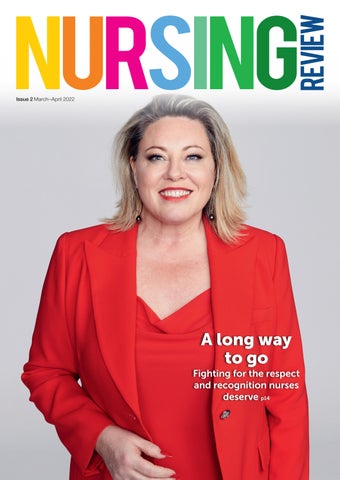
Issue 2 March–April 2022
A long way to go Fighting for the respect and recognition nurses deserve p14
CO New name. SO MIN ON G Same formulation.
S-26 is changing it’s name to Alula Alula S-26 Gold Newborn contains a lower-protein quantity of 1.28g/100mL. Feeding infants a lower protein# formula during infancy may encourage appropriate weight gain, closer to breast-fed infants during early childhood development up to 6 years.1,2 GROWTH & DEVELOPMENT
Enriched with sn-2 palmitate. Sn-2 enriched infant formula is associated with increased bone mineral content.†3 # Versus higher-protein formula † At 4 months of age
For more information, please visit www.alula.com.au or contact our Careline to find out more 1800 552 229 IMPORTANT STATEMENT: Breastfeeding is best for babies. It has benefits for the infant, such as reducing infection risk, and for the mother. It is important to have a healthy balanced diet in preparation for, and during breastfeeding. Infant formula is designed to replace breast milk when an infant is not breastfed. Breastfeeding can be negatively affected by introducing partial bottle-feeding, and reversing a decision not to breastfeed is difficult. Infant formula must be prepared and used as directed. Unnecessary or improper use of infant formula, such as not properly boiling water or sterilising feeding equipment, may make your baby ill. Social and financial implications, including preparation time and the cost of formula, should be considered when selecting a method of infant feeding. References: 1. Koletzko, B., et al., 2009. AJCN, 89: 1836-1845. 2. Weber et al. 2014. Am. J. Clin. Nutr., 99: 1041-1051. 3. Béghin,L et al.,2019, Clin. Nutr. Jun; 38(3):1023- 1030. S-26 is a registered trade mark. Used under licence. Distributed by Sanulac Nutritionals Australia Pty Ltd. ABN 31 160 607 509. Level 1, 42-44 Chandos Street, St Leonards NSW 2065. 05613-22/02/2022
For Healthcare professionals use only. For Formula-fed infants.
NURSEREVIEWSNA
®
contents
MANAGING EDITOR
news
Richard Garfield 02 9936 8628 richard.garfield@apned.com.au
2
Mental health nurses step up
3
Gay patient ‘uncomfortable’
4
‘Shut up pill’ given
NEWS EDITOR
before death
Eleanor Campbell 02 9936 8638 eleanor.campbell@news.com.au
5
COVID pill on the way
6
Mosquito virus strikes
HEALTH EDITOR
Elise Hartevelt elise.hartevelt@news.com.au
industry and reform
02
06
8
Long-term issues at Westmead
SALES MANAGER
9
Sarah Licence 02 9936 8710 sarah.licence@apned.com.au
Intense pressure
Too much information Reducing medical errors
10 From the front line
SUBSCRIPTION ENQUIRIES
How nurses in aged
Daniel Omelia 02 9936 8607 subs@apned.com.au
care are feeling
14 ‘A long way to go’ Achieving gender equity and tackling violence in nursing
COVER
Kylie Ward Photo: Supplied
specialty focus
16 Tackling the taboo
PUBLISHED BY
10
14
APN Educational Media GPO Box 4245 Sydney NSW 2001 ABN 58 090 900 999 ISSN 1326-0472 PP100001944
treat endometriosis
18 Pursuit of happiness Addressing ‘toxic’ positivity
clinical practice
20 System ‘shake up’ Dementia experts urge reform
PUBLISHER’S NOTE
© Copyright. No part of this publication can be used or reproduced in any format without express permission in writing from APN Educational Media. The mention of a product or service, person or company in this publication, does not indicate the publisher’s endorsement. The views expressed in this publication do not necessarily represent the opinion of the publisher, its agents, company officers or employees.
How we can better
22 Suffer the children Improving outcomes for injured children
workforce
18
22
24 Blue sky thinking Flight attendant switches to nursing career
25 Under pressure Benefits of focusing on self-care
26 Pay it forward Rethink retirement to avoid labour shortage
27 Talk it through Emotional pain needs to be heard
28 Time for action
26
28
Addressing critical care shortages
nursingreview.com.au | 1
news
Willing and able Call to give mental health nurses bigger role.
T
he Australian College of Mental Health Nurses (ACMHN) has urged the Federal Government to consider greater access to MBS items for Credentialed Mental Health Nurses (CMHNs) as a means of dealing with high demand for mental health services.
This comes in response to a call from the Royal Australian College of General Practitioners (RACGP) for a Medicare restructure and extra mental health training for general practitioners. RACGP president Dr Karen Price said: “The reality is that general practice is the most accessible service for many people who require mental health care. “In some areas outside of major cities, GPs are the only option.” ACMHN interim president Professor John Hurley responded by saying that while the college acknowledged people facing mental health issues needed all the assistance they could get, GPs shouldn’t
The maternity ward in Zhytomyr Hospital. Photo Fadel Senna /AFP
Nurses stand with Ukraine World’s nurses urge end to Ukraine conflict.
T
he world’s largest nursing federation has expressed solidarity with the nurses and health workers trapped in Russia’s ongoing invasion of Ukraine.
2 | nursingreview.com.au
The International College of Nurses (ICN) released a statement urging for an end to the conflict. “The protection and safety of our nurses and health systems are paramount and enshrined in international law,” said ICN President Pamela Cipriano.
be “the first and only group of health clinicians to consider when planning to tackle Australia’s growing mental health crisis”. “If GPs were better trained at treating mental health issues and worked closely with CHMNs, they could make a real difference for those who are currently missing out on adequate treatment,” Hurley said. “CMHNs are highly-skilled mental health clinicians who’ve undergone a meticulous assessment by the ACMHN. Instead of relying on a workforce that still needs mental health training, the government would be well advised to consider the readily-available CMHN workforce first.” Hurley added that CMHNs can only provide limited services under current Medicare arrangements. “That’s despite the fact that they have qualifications that are equal to those of other mental health clinicians.” With one third of psychologists closing their books to new patients, Hurley said not giving CMHNs more access to MBS items was “simply illogical”. ■
“Access to healthcare and the delivery of humanitarian assistance must remain a priority as we see cities under attack and tens of thousands of people being displaced. “We call on all parties involved in the conflict and the international community to do everything in their power to protect the safety of our nurses.” According to the WHO, trucks have been unable to transport oxygen from plants to hospitals across the country, placing thousands of lives at risk. “The oxygen supply situation is nearing a very dangerous point in Ukraine,” said WHO Director-General Tedros Adhanom Ghebreyesus and Europe Regional Director Hans Kluge in a joint statement. “Critical hospital services are also being jeopardised by electricity and power shortages, and ambulances transporting patients are in danger of getting caught in the crossfire.” President of the Russian Nurses Association, Valentina Sarkisova, said Russian nurses were “extremely concerned” for their neighbouring colleagues. “Politics is far from nursing, and armed conflicts are opposite to the main designation of our profession,” she said. “Together with the whole world, we hope for a rapid resolution of all conflicts and a return to a normal and peaceful life.” ■
news
St Vincent’s CEO Anthony Schembri. Photo: NCA NewsWire / Christian Gilles
Out of place Hospital CEO felt ‘uncomfortable’ as a gay patient
S
t Vincent’s Hospital chief executive Anthony Schembri has shared his eye-opening experience of feeling out of place in the healthcare system. Earlier this year, Schembri was diagnosed with a “rare and random life-changing
illness” and recently returned to work after spending time in hospital. “As a patient I was asked if my wife was coming to pick me up after a procedure or whether my partner – pronoun she or her – was joining the consultation,” Schembri said. “There was an assumption that I was heterosexual in these healthcare settings – not always but enough to feel uncomfortable at times,” he said. Having worked in various facets of the NSW Health system for more than 25 years, Schembri said he was shocked to discover health staff still lacked the training to create an inclusive healthcare experience. “I considered whether I should ‘out’ myself, but I wondered, ‘Will I be treated any differently? Will it affect my care?’” he said. Schembri shared his story during the launch of the NSW LGBTQIA+ Health Strategy 2022-2027, which announced the opening of Australia’s first state-funded LGBTIQIA+ healthcare centre. While the location has yet to be confirmed, an additional $700,000 has
been committed to develop the facility somewhere in Sydney. Services ranging from expert sexual to mental health care will be offered at the centre, which will be run by the AIDS Council of Australia (ACON). The ACON-run Sydney healthcare centre received a $3.5m investment as part of an election promise made in March 2019. The additional investment brings the centre’s funding to $4.2m, with the state government providing an additional $3.4m towards specialist trans and gender diverse support, $2.65m for education and training of health staff and $1.78m to mental health and suicide prevention. Robyn Kennedy, a 78er and former board member of the Sydney Gay and Mardi Gras, spoke of the particular challenges experienced by ageing LGBTQIA+ people. She explained that the experience Schembri detailed was something dealt with daily in aged care facilities that she said were “almost universally framed by heteronormative experiences.” ■
Take a break on us Your organisation may be eligible for Australian Government-funded support to help alleviate the pressure of finding a temporary replacement when you or your colleagues go on leave. You will be given all the support needed to recruit, screen and place highly experienced health professionals that can hit the ground running from the moment they arrive.
For more information visit www.rurallap.com.au
nursingreview.com.au | 3
news
‘Not the right treatment’ Teenager given ‘shut-up pill’ before death. By NCA NewsWire
A
teenage girl was given Panadol by a remote north-west Queensland hospital and sent home on multiple occasions before succumbing to a serious heart condition that went untreated, Four Corners has revealed. Yvette “Betty” Booth was just 18 when she died from rheumatic heart disease (RHD) – a rare heart condition that in Australia occurs almost exclusively in remote indigenous communities. Booth attended the town of Doomadgee’s hospital emergency department 12 times in under two months. Despite needing weekly check-ups and urgent surgery, the teenager was on some occasions given Panadol through a security window and told to go home. “We know that it’s not the right treatment, but unfortunately, Panadol’s easy to give out, so you know, people will get the Panadol and we’ll say, ‘oh, that’s the shut-up pill’,” Director of lobby group RHD Australia, Vicki Wade said. Paediatric cardiologist, Bo Remenyi visited Doomadgee in July 2019 to screen children for RHD and diagnosed Booth with a severe case of the disease. Her team left detailed instructions regarding Booth’s care with multiple health
4 | nursingreview.com.au
bodies, including that she needed urgent surgery to repair the valves in her heart. However, Four Corners reported that no record of her illness was kept on Doomadgee Hospital’s file. Just four days after her diagnosis, Booth presented at the hospital at 11pm with a cough, fever and vomiting. She was given Panadol and treatment for dehydration and told to come back in the morning. Remenyi said it was common for patients who present on weekends or after hours, to be assessed through a locked security screen. “The conversation takes place over a cage, without actually touching the patient or examining the patient or giving that real opportunity to discuss the symptoms,” she said. “How many times can you present, with the same symptoms, pressing symptoms, coughing up blood, shortness of breath, tachycardia, and each time the outcome is not different?” In September 2019, Booth again became seriously ill and returned to the hospital. Due to there being no record of her illness on file, Booth was kept waiting for several hours while her condition deteriorated. Staff determined she should be flown to a larger hospital for treatment, however, they categorised her as “low dependency”. An hour later, a plane was ordered from Townsville, rather than from the closer large hospital in Mount Isa.
“[It feels] like they treat us like animals. Relative of Booth, Marilyn Haala and her husband Clennon Bob were not allowed in the hospital to see the girl as she awaited transfer. “No one would let me go in, even the nurse or the doctors,” Bob says. By the time the plane landed in Doomadgee, Booth had been dead for almost two hours. “[The] doctor that was treating her, came out and gave us the bad news: Betty didn‘t make it,” Bob says, slowly shaking his head. Within a year of Booth’s death, two other women died of RHD after seeking treatment at Doomadgee hospital. One of them was 17-year old Shakaya George, the other was her aunt, Adele Sandy. Haala said the system needs to drastically change if the deaths of more young people with RHD are to be avoided. “Because what they did there, they just going to keep killing people,” she said. “[It feels] like they treat us like animals. They going to keep killing them. And get away with it.” Multiple investigations into Doomadgee Hospital are now underway. ■
news
Molnupiravir capsules. Photo: AFP Photo/ Merck and Co, Inc
New COVID treatment Vulnerable Australians first in line for new COVID-19 pill.
A
ged care residents, people who are unvaccinated and other at-risk communities will be among the first in the country to receive a newly approved at-home COVID-19 treatment. Antiviral pill Lagevrio, also known as molnupiravir, was recently listed on the Pharmaceutical Benefits Scheme. Under the guidelines, doctors will be able to prescribe the drug to
eligible adults with high risk factors, including age, other medical conditions or being moderately or severely immunocompromised. It also must be prescribed within five days of symptom onset following a positive PCR or RAT test result. It’s expected the oral treatment will cost just $6.80 for concession card holders or $42.50 for general patients. But the treatment will not be made immediately available to the wider population.
Chief medical officer Paul Kelly previously outlined the nation’s most vulnerable communities would be the first to receive the pill. “Once the treatments do start to come into the country, the Australian government will be working closely with the state and territory governments to ensure these treatments get distributed to those people who are most at risk,” he said in January. “This, in the first instance, is likely to include people infected in outbreaks in remote Aboriginal and Torres Strait Islander communities and those infected in outbreaks in residential aged care and disability care settings. “Then, over coming months, as supply increases, we may see more wide distribution available across the population.” Lagevrio was approved by the nation’s medical regulator for use in January along with Pfizer’s oral treatment Paxlovid. Both drugs are aimed at reducing hospitalisation of mild and moderate illnesses and will be welcomed by many in remote and rural communities without access to a hospital. ■
Dementia Practice Health Check An online assessment tool helping residential aged care homes assess the dementia knowledge, skills and attitudes among staff. Dementia Practice Health Check: • Assists your organisation in meeting the Aged Care Quality Standards and consumer expectations. • Identifies knowledge gaps and prioritises areas for staff development. • Helps to demonstrate internal improvement and measure performance against other organisations. To find out more and complete your first free assessment visit: dementialearning.org.au/practice-health-check
nursingreview.com.au | 5
news
New virus threat Warning over dangerous mosquito virus. By NCA NewsWire
R
esidents in NSW, Victoria and Queensland are being warned to protect themselves from mosquito bites after the detection of a virus that can turn into a potentially life-threatening condition. Traces of the mosquito-borne Japanese encephalitis (JE) virus were found in samples from commercial pig farms at five locations in southern and western NSW, indicating the disease is likely circulating in the mosquito population, a NSW Health spokesman said. Additional traces were also found in the northern Victorian town of Echuca and in southern Queensland. The JE virus is spread through mosquito bites and can affect humans and animals and develop into encephalitis, which can be “potentially life-threatening”, Victorian health authorities said. “Less than one per cent of people infected with JE experience symptoms, which typically include fever, joint pain, and rash,” NSW chief health officer Kerry Chant said. “Occasionally, JE can cause severe a neurological illness with headache, convulsions and reduced consciousness.” Victoria’s chief health officer Brett Sutton said there were no confirmed human cases of the JE virus strain in the state. Professor Sutton said anyone who develops a sudden onset of fever, headache and vomiting should see their doctor immediately.
6 | nursingreview.com.au
“People with these symptoms can deteriorate over just a few short days, including suffering a loss of coordination, disorientation, generalised weakness and in some cases issues with movement which can last for years,” he said. The virus can’t be passed between humans and the simplest step to take is to avoid being bitten, he added. “We can all protect ourselves by avoiding mosquito bites, including covering up, wearing loose fitting clothing and using mosquito repellents,” Professor Sutton said. People with increased exposure to mosquitoes may be at a higher risk of infection, particularly those in regional areas and who work with or are in contact with pigs, and people camping, working or spending time outdoors in these regions. Children aged under five and older people who are infected with JE are at a higher risk of developing more severe illnesses, such as encephalitis. Simple actions to avoid mosquito bites include: • C over up as much as possible with light-coloured, loose-fitting clothing and covered footwear when outside • U se an effective insect repellent on exposed skin and reapply within a few hours. The best mosquito repellents contain Diethyl Toluamide (DEET), Picaridin, or oil of lemon eucalyptus • U se insecticide sprays, vapour dispensing units (indoors) and mosquito coils (outdoors) to clear rooms or repel mosquitoes from an area • C over all windows, doors, vents and other entrances with insect screens
“JE can cause severe a neurological illness with headache, convulsions and reduced consciousness. • R emove any water-holding containers outside the house where mosquitoes can breed.
FOURTH CASE DETECTED IN NSW NSW has recorded its fourth case of Japanese encephalitis as the disease spreads across the state. The mosquito-borne virus had never been detected in the state before this year. The latest person to be infected was a woman in her 60s from the Griffith area, acting chief health officer Marianne Gale told a parliamentary hearing. A man in his 70s who was also from the Griffith area has died from the disease. “It‘s concerning and there’s a lot of work being done,” Dr Gale said. Health Minister Brad Hazzard said the spread of the disease — which is usually found in southeast Asia — so far south was a clear example of the impact of climate change. “It’s quite concerning that we’ve suddenly got it moving so far south, and it goes to earlier commentary about, is climate change a matter for health? Well, of course it is,” he said. There have been 16 human cases in total, including seven in Victoria and one in Queensland. A Victorian man died with the disease on February 28. Several people are undergoing testing in NSW and more cases could emerge. ■
nursingreview.com.au | 7
industry & reform Wing Besilos at an ICU nurse protest at Westmead Hospital. Photo: John Feder/NCA NewsWire
Intense pressure Issues at Westmead ICU began long before Covid, says senior nurse. By Eleanor Campbell
W
hile COVID-19 hospitalisations have plateaued across NSW, the state’s intensive care nurses remain under intense pressure. “People are tired, people are angry, and helplessness and hopelessness are creeping in,” said ICU nurse and NSW Nurses and Midwives’ Association (NSWNMA) Councillor Wing Besilos. “Nurses are emotionally, mentally and physically drained.” A group of 60 ICU nurses recently rallied outside Westmead hospital in Sydney to protest two years of excessive overtime and heavy workloads. They called on NSW premier Dominic Perrottet to enter the hospital to see the conditions for himself. “COVID has highlighted the short staffing that’s been happening in the ICU at Westmead,” said Besilos, who has been working at the hospital since the 1990s. “But even before the pandemic, the conditions in general ICU have been really bad in terms of staffing and working conditions for the nurses.” Staffing issues inside Westmead ICU began in 2016-17, according to Besilos, when the general ICU nurses were
8 | nursingreview.com.au
divided into two sections under new management. She said they later restructured in 2019, transferring all 12 ICU beds into one area. “The layout is so unsafe because you’ve got a piece of wall in between two rooms so the nurse in there won’t be able to see other rooms. “So if you’re doubled up and one of your patients is there and the other is on the other side, then you won’t be able to see both patients.” When the pandemic began, staffing issues worsened as nurses deemed close contacts were furloughed, and a lack of replacement workers left the remaining staff doubled up with patients. “We’ve become the parking area of the hospital,” said Besilos. “Even if a patient is booked out, they won’t transfer the patient out because there’s no bed outside and there’s a bed in ICU. “It’s just really bad how management has been treating us.” According to Besilos, patient safety has been compromised as a result of the ongoing shortages. “Today I was doubled up with a patient who was basically dying, and then the other was on a vasopressor,” she said. “So I was with that patient for most of the day and didn’t get to look after the other patient and their family on the other side.”
“We’ve become the parking area of the hospital. According to Besilos, Westmead hospital policy requires people on vasopressors to receive one-to-one care. A spokesperson from Western Sydney Local Health District told Nursing Review that the ICU “continues to provide single rooms for safe and effective infection control as well as patient comfort and privacy”. “To support Westmead Hospital’s ICU workforce during the current COVID-19 outbreak, WSLHD has adapted our workforce models, bringing non-ICU nursing staff and experienced allied health staff together to work with ICU staff to provide additional support. “The implementation of this hybrid structure was done in consultation with our nursing staff and the NSW Nurses and Midwives’ Association (NSWNMA). “The layout of the Westmead Hospital ICU has not changed.” NSW Health Minister Brad Hazzard said he recognised the pressures facing health workers and was “considering some of the operational challenges they have”. “All I can really say at this point is the government is doing everything possible to address these concerns,” Hazard told reporters. ■
industry & reform
Information overload
“Multitasking and frequent interruptions are a feature of nurses’ daily lives. At the same time, nurses spend a significant portion of their day on documentation. One study found that nurses spend at least 25 per cent of their time charting, updating and reviewing patients’ electronic health records.5
GERMANE COGNITIVE LOAD
Decreasing medical errors by reducing nurses’ cognitive overload. By Alan Stocker
I
n Australia, medical errors result in as many as 18,000 unnecessary deaths, while more than 50,000 patients become disabled each year. Estimates suggest that 86 per cent of these events occur in a hospital setting.1 Medical errors can be caused by a number of preventable factors, such as incorrect diagnoses or choosing the wrong medication.2 Improving communication in hospitals can help lower the incidence of medical errors by reducing nurses’ cognitive overload. Nurses in hospital settings constantly segment what’s important and urgent. When they receive too much information at once, they can become overloaded and have difficulty segmenting, which can lead to mistakes. The amount of information nurses need to deal with can quickly escalate. A constant stream of information means that nurses must maintain total concentration, make sense of that information, and decide how to act based on that information. There are three types of cognitive load that can contribute to nurses becoming overwhelmed.
INTRINSIC COGNITIVE LOAD This is the amount of effort required to complete a problem or task. In ordinary circumstances, completing each task correctly and efficiently is likely to be well within a nurse’s cognitive capabilities. However, this intrinsic load can
be affected by stress factors that are known to compromise a person’s working memory. This can include things like lack of sleep, challenging relationships with colleagues, or previous errors. Large, deep emotions such as shame, guilt or grief can contribute to an increased intrinsic cognitive load. In a busy hospital environment, nurses are receiving messages and instructions from colleagues and physicians, and they can be hindered by barriers such as multiple standards, conflicting protocols, and disparate communication tools. They often have to adapt their working style to suit the physicians on duty. Furthermore, nurses are often overnotified regarding even minor changes to their patients’ conditions. All of this combines to create a drain on working memory.
EXTRINSIC COGNITIVE LOAD This is the level of cognitive effort that the clinical environment demands. Nurses have very little control over this type of cognitive load because it comes from external stressors such as being bombarded with information, being given conflicting or confusing messages, or being given lots of information at once. Nurses often have to split their attention between multiple patients, information sources and tasks. Added to that, they are often working at the top of their licence or accreditation, which means the work they do tends to be challenging.3 Multitasking and frequent interruptions are a feature of nurses’ daily lives. One study revealed that nurses were most likely to be interrupted and to multitask during the administration of medication, which creates risk for patient safety.4
This is the effort that people have to expend to make sense of new information. If all the information is provided to a nurse in one message, they can make sense of that information relatively easily and determine the next best correct action to take. However, if they’re presented with information out of context and need to check other systems or past notes and files to understand that information, then their germane cognitive load gets heavier. Too often, nurses are given pieces of information in isolation. For example, they may be provided with a lab value but, without contextual information, that lab value isn’t useful. This creates additional work as the nurse seeks the right data on which to base their actions. When all three of these types of loads are heavy at the same time, it becomes clear that nurses are labouring under significantly adverse conditions. The demands being placed on them can quickly lead to minor and major errors, and can culminate in burnout, leading highly trained and otherwise-capable nurses to seek new careers. Hospitals can overcome these issues by standardising on a single clinical communication and collaboration platform that minimises cognitive overload. By removing the need for retrieve, retain, and record information, these solutions can reduce the cognitive burden and make it easier for nurses and other healthcare colleagues to communicate effectively, thus reducing the risk of errors. ■ For references go to www.nursingreview. com.au Alan Stocker is the acting general manager of Connected Health AU nursingreview.com.au | 9
industry & reform
From the front line A perspective on how aged care staff are feeling about the sector right now. Lez Moore interviewed by Eleanor Campbell
A
s news headlines and political debates about Australia’s embattled aged care sector rage on, frontline staff have been entirely left out of the conversation, industry advocates have said. After 12 years in the industry, former aged care nurse and aged care consultant Lez Moore says frontline staff want to be included in discussions around workforce reform and COVID-19 management. “We’re not letting them be part of the conversation and letting them be part of the bigger picture,” Moore said.
10 | nursingreview.com.au
“Hopefully we can get some great people on board and be able to steer it in the right direction, because without the aged care industry, we are in trouble.” Moore currently oversees over 100 frontline care staff and line managers across NSW. He joined Nursing Review to discuss the current state of aged care from the eyes of those working inside the industry.
NR: As we speak, members of the military are being deployed into nursing homes, more than 40 per cent of which are managing active outbreaks. Can you describe the morale of people working in the industry right now? What are they struggling with the most? LM: Just considering what we’ve been through, morale is obviously quite low at
the moment. That’s based around a lot of uncertainty, and there’s increased stress and anxiety out there at the moment, and quite frankly a lot of people aren’t wanting to come to work and actually play a part in the industry. And this is talking to people who want to get up every day, looking forward to going to work, questioning whether they should be going to work. It is quite tough for them at the moment, and that impacts on their work and their life and their health balance. And if morale’s low in the workplace, it obviously is going to impact other aspects of your life as well. If there’s one thing about aged care, the constant thing is change, so we’re always changing and things are always adapting and moving on and moving forward.
industry & reform Australian Army nurses Lance Corporal Reeana Davies and Private Cody Hitchcock don PPE before entering an aged care facility in Queensland. Photo: CPL Jesse Kane
leadership to help retain people in our workforce? For me it’s about being more transparent from a leadership perspective around issues that impact the frontline workers. I think a lot of times when you talk to them, they don’t really know what’s happening until after the fact and there’s a lot of stress, anxiety, fear and uncertainty. They’re not aware of what’s going on, so they are faced with that until the news comes. For me, having that sort of transparency is a great way to build trust to create the culture you’re looking for in the aged care space. We’re dealing with people’s lives and people’s emotions here. That’s what we’re built upon, and often I think that isn’t stressed and focused on enough from a leadership perspective.
How do you think the media’s contributed to this in terms of the way it’s framing the sector, and do you think it’s going to affect the number of people who would want to enter the sector?
The communication has had a big impact as well due to what’s been happening in the last couple of years, and quite often the guys on the frontline just feel a bit left out from some of the communication, and they don’t feel they know exactly what’s going on at times, then that creates that little bit of isolation as well. The big elephant in the room is the fear of COVID as well, because when COVID hit, nothing really changed for them workwise. The only thing that did change was a lot of restrictions and guidelines and managing infection control, so it was pretty big for them. There’s really been no let-up for over two years now that we’ve been dealing with this.
What do you think we need right now from management and
Yes, I think so. When you look at the way things have transpired over the last few years, with a lot of aged care reforms and then we had the royal commission, and then we’re hit by COVID. That’s quite a massive three changes within the industry. The media highlight what’s going on, and now more than ever it’s out in the open for everyone to see. And the public are seeing a lot of negative stuff around the industry. The industry’s been struggling for a while, but I think with those three things, that impact has now escalated and it’s out in the open for people to see, and I think it will impact someone’s decision to want to work in the industry. I remember back when I did nursing close to 20 years ago aged care was looked upon a lot differently to other sectors, and it was almost the case that you would go and work in aged care if you couldn’t get a job anywhere else. I found that quite fascinating. I was a mature-aged student as well, so I guess I’d had my time in the sun a bit more than the younger ones, but that was really interesting to see that that the ‘sexy’ options were ED and ICU. But when I did work in aged care, I loved it so much because you need to have so many different skills and you need to have all your body system understandings in place, because quite often you’re on your own and you don’t have a lot of backup.
“We need to make sure our staff are empowered and ready to make a difference. I think the media plays a massive role in the future of the aged care system, and I think it’s needed – we need to highlight what’s going on so we can make improvements.
How do you think we can work to shift that mindset around aged care work and attract people to the sector? When you talk to the guys out there on the frontline, quite often it’s not just about money. That gets thrown around a lot. ‘Pay them more money, they’ll stay and we’ll get more people.’ But ultimately, you only work for more money if you need the money and if there’s other circumstances, but I haven’t heard too many people say to me that they left the job because they didn’t get enough money. It was generally because the workplace culture was poisonous or negative and they didn’t like being there. Or they had a bad manager. That’s pretty popular. Or the perception that they weren’t being treated the way they thought they should be or the way they would like to be in their role. I think they deserve more money because of the work they do and the industry they’re in, but I don’t think that’s the answer. I think the answer lies in looking after the people who look after the people we look after. There’s this huge focus on clients as it should be. But there needs to be a better balance between that and the focus on the frontline staff, because the people who look after the people you look after, they’re the ones that we need. If we look after the staff who look after our clients, they’re going to do an amazing job because they’re going to want to be here, they’re going to want to deliver quality service because they’ve got pride in themselves and their job.
I understand you work with a lot of line managers. Are there any challenges that they are facing right now that we might not be aware of? I think we’re all aware of them and it’s more about workload, stress and the impact Continued over page nursingreview.com.au | 11
industry & reform
that has on work-life balance. Everybody is just so caught up in that COVID bubble, and it’s really hard to get out of that at the moment. For lot of managers most of their dealings on a daily basis now are probably issues around COVID. The issue is how do we get away from that and start bringing back that focus on the role that we have, on the great parts of the role, the reasons why we get up every day and do our job. We need to start getting our confidence back.
The government offered a one-off $800 payment for staff. What were their thoughts on this and do you think this will help to retain workers? I think staff would love the $800, to be honest. Who wouldn’t? I know I wouldn’t mind it. But unfortunately that’s not the answer, and I don’t think it’ll keep staff long term. It might keep somebody until they get the $800 maybe, but it’s obviously a payment for doing amazing things over the last couple of years, and we get that, but the fact is that’s not going to be the thing that keeps them wanting to be part of the aged care system. It’s about changing their perception and changing the culture, while reframing the way they look at their role and try to get them to understand that the job is still there. All the wonderful things that we love about aged care have not gone anywhere. At the moment it’s just slightly clouded with COVID and other issues that are taking precedence, but there are still amazing parts of our role that exist, and I think we need to try and recapture that and remember that’s why we do what we do, and not let COVID or the ramifications of what that’s caused actually stop us from pursuing and pushing forward. Like everything, once we get through this, we will be better for it, and I think it was a great learning curve, especially around infection control. But I really think we’ve forgotten that this is still a great job. We have the privilege of looking after elderly people every day and getting paid for that. So I think we need to try and recapture some of that.
With an upcoming federal election there’s a lot of talk about aged care being a topical issue, but what do staff actually say they want in terms of government assistance? They don’t really talk too much about it to be honest. When they think of the 12 | nursingreview.com.au
government, they know they have their policies and fund a lot of aged care. They understand that side of it, but from a government and from a federal perspective, those decisions and what happens at that level ... the guys aren’t really privy to that. They don’t really understand that. From a frontline worker’s perspective, they just want to be heard and they want to feel valued. If you give them that, I think it will change the shape of aged care. Paying them a one-off bonus is going to make them happy for a little while, but it’s not going to keep them. There’s also that workplace and management and great leadership that’s going to keep them in an environment where they feel like they’re part of the bigger picture, not just a pawn in the game of aged care – that their manager or their leaders are working with them and side by side, not necessarily leading from the top, which it quite often is the case in this industry. It’s about giving them the opportunity to speak up, making you feel like you’re an important part of the team and the organisation. I guess compassion’s probably the word that we should put in there and I think if there’s ever a need for compassion, it’s probably right now, given the last two years that we’ve experienced.
The next two years are huge for aged care. There’s a lot of reforms coming in. Do staff feel supported and ready for these changes? I don’t think so. To be honest, I’m not sure they’re ready to discuss or go into that at the moment. I think it’s about trying to deal with the issues happening now and giving them some insight into that, and then slowly transitioning to what we’re going to do and where we’re going to go in the future – and ask for and get some contributions from the guys on the frontline. There are some amazing people who work on the frontline and have got such great insights and could actually make a big difference on some of the decisionmaking that happens, so don’t rule them out.
What do you think the sector needs so it can emerge from this current crisis? It’s about being more involved in what the frontline staff are doing, and that
“All the wonderful things that we love about aged care have not gone anywhere. way you can adapt and change and work with them, rather than giving them the directives and just hoping that it works. If you’re managing a team of staff, work with them, don’t just be that manager or director from the top who says ‘this is what we’re doing now’. You’re not letting them be part of the conversation and part of the bigger picture. We need to make sure our staff are empowered and ready to do the job and make a difference for the clients because they love what they do. We’ve all had jobs where the environment was amazing. Maybe the jobs weren’t always that great, but because of the environment, because of a great manager and the people that we are working with, we always put our hands up and do that little bit extra. That’s not going to happen in an environment where it’s negative and people feel like it’s poisonous.
What would your advice be for a care worker who is struggling in their job at the moment? I think the first thing for a care worker, no matter how long you’ve been in the industry, is to reach out to your peers and those you know, work with and trust, so that you can have those important conversations to help you. If you’ve got something to talk about or need to get something off your chest, that’s the best way to do it. Don’t just decide to end it and go and do something else, because the grass isn’t always greener on the other side. You just need to find that person, and generally someone you know that you work with is probably the best person to start with and then, if you’ve got a great manager, reach out to them. I would expect a manager at the moment to talk to me and be comfortable in doing that, and knowing that you can share anything, and nothing’s off the table if you need to talk about it. So don’t hold it in, just get out there and talk to someone about it. ■
SubScribe for leSS than $2 a week
The laTesT news and resources for healThcare professionals
• Analysis of the major issues facing the health sector today
Nursing Review is essential reading for anyone involved in the healthcare sector in Australia. It provides unrivalled coverage of specialist topics from features and opinion pieces, to international news and profiles.
• Can be used as a professional development resource
At Nursing Review we pride ourselves on being at the forefront of the ever changing healthcare sector. We provide an independent source of news, and cover the issues relevant to nurses and the sector giving an informative, practical and insightful view into day to day life in hospitals and in surgery.
• 6 issues per year • Interviews and opinion pieces from professionals in the industry • Written by an independent voice • Tax deductible
Please call 02 9936 8666 to find out more.
industry & reform Australian College of Nursing CEO Kylie Ward. Photo: Supplied
‘A long way to go’ The fight to achieve gender equity and end violence in nursing. Kylie Ward interviewed by Eleanor Campbell
T
his years’ International Women’s Day enabled us to honour the achievements and contributions of women in health who have kept communities safe during the pandemic. And yet nursing, the most female dominated profession in the world, continues to grapple with record rates of occupational violence, gender based discrimination and harassment. “Nurses are still fighting for equity in pay, we’ve got gender-based discrimination, we’ve got gender-based violence, so there’s still a lot more to do,” said Australian College of Nursing chief executive, Adjunct Professor Kylie Ward, who began her own career in nursing at Sydney’s Westmead hospital 30 years ago. Ward spoke with Nursing Review to celebrate female nurses and reflect on the battle for gender equality in healthcare.
NR: What progress do you think we have made to achieve gender equality in nursing in the past 30 years? KW: I wish I could say that I’ve seen huge advancements, but unfortunately we still have such a long way to go. Nurses are still fighting for equity in pay. We’ve got 14 | nursingreview.com.au
gender-based discrimination, we’ve got gender-based violence: so there’s still a lot more to do. I’m in a female-dominated profession, so I’ve had a lot of advantages throughout my career. But I’ve also seen many disadvantages, not only in nursing and health, but in other disciplines and career pathways.
What stories have you heard from your members about their experiences with workplace violence, harassment or discrimination? Women have really led the war – and I do call it a war against the virus. We couldn’t see our enemy, but it certainly paralysed every society in the world and changed the way that we’ve lived and worked and even behaved. Unfortunately, we’ve seen a deterioration in behaviour. Nurses already experience more occupational violence than prison guards and police officers. I think as a society that really stems from domestic and family violence and the way that women are portrayed. With nursing being about 90 per cent female dominated, that then flows over. What I’ve been really alarmed about in the last couple of years is the frequency of incidents. We do understand the stress and the frustration that people go through, but there is that underpinning tolerance in society of abuse to women, and nurses then feel the brunt of that.
“Nursing represents the best of humanity. Last year the ACN established a taskforce to combat workplace violence. Can you tell us about that? This was very important to me. I’m proud to chair the task force and I’m humbled by all the members who have continued to volunteer their expertise to it, considering the nature of what we’re going through. There’s four committees. One of them is occupational violence, and the second is nurses caring for people who experience domestic and family violence. As the most trusted profession, I want every nurse and undergraduate nurse in the country to be trained to know what to look for, how to have the conversation, and to maintain the integrity of that therapeutic relationship and the safety of people and how they confide in us. The third committee is nurses who experience family and domestic violence themselves. We’ve known through the years that nurses have experienced partner violence and unfortunately have died. That committee is very important in how we support each other as a profession, and obviously anyone in our industry. It may well be at work that a nurse might need their own support systems in
industry & reform
place, and a safety plan to able to navigate leaving a relationship with family or domestic violence. The fourth committee is again important because of the nursing profession’s role with children and violence. There are just too many adults who were children and experienced family and domestic violence that go on to work in our industry, and to be cared for by our industry, including children who need us right now all over Australia.
How do you think policymakers have responded to these rates of workplace violence? To be fair, everybody is concerned. I’ve had nurses tell me they’ve been spat on, sworn at and abused. I’ve had nurses tell me, ‘I’m used to getting abused in my shift, but not this much.’ It’s alarming that it’s considered normal that you’re going to get abused. Everybody I talk to definitely has empathy and concern, and I think part of the challenge is asking, what can we do about it? How can we change this? In my meetings with influential leaders, politicians and department heads, it’s about what policies we need, but I’m also acutely aware that we also need a societal change. Policy can do a certain amount, but then if we as a society keep tolerating this and it’s just part of our job, then we are never going to help the daughters of the future and those that come into the nursing profession.
How are nurses affected by gender bias in their day to day working lives? This year’s IWD theme ‘Break the bias’ is so incredibly important because I think we have our own bias as well in what we tolerate, and what we’re expected to tolerate. It really is around safety and equality and equity, and all of the discriminations that we face. Whether it’s pay, promotion, opportunities, or whether it’s around having flexibility in the workplace. We need that diversity and inclusiveness to say, how can we support people to be able to have career pathways?
What sort of practical solutions do you think we need in hospitals and healthcare? Somebody who chooses to go into nursing represents the best of humanity. We should be paid for the time that we care and for what we do.
But effectively, we’ve got the health system and the aged care system in Australia being held up and boosted by the incredible generosity of individuals, particularly nurses, who always give more, and we don’t get the time out that has been negotiated in other professions for leave, or to do research or pursue education. All we get is industrially negotiated meal breaks. I mean, sometimes I’ve done a shift in aged care and you’ve got 15 minutes to get a handover and do drugs. Really? It’s really important to me that we’re not seen as a number, and that we’re seen for our values-based approach to care, and not as an item on the cost sheet. In fact, if every nurse stopped work today, there is no health system. What we’ve seen through COVID is that we are very generous. We want to do more, we want to give more. There’s nothing wrong with that, that’s part of being professional. But that also needs to come with appropriate recognition. A lot of that’s financial – to be paid as graduated experts with multiple qualifications. There’s so many nurses with graduate certificates and masters still fighting for basic access and basic rights, as well as the time out as a professional to be able to practise autonomously, to invest in leadership, and study and contribute to policy, research and to excellence in clinical practise, and to have that higher level thinking and reflective practice. I would also like to see that every nurse has access to clinical supervision and a really supportive environment of knowing that what we give in our therapeutic relationships is more than transactional, and that there should be an allocated time out to go and talk to a professional and debrief. The lack of ability for nurses to be able to congregate together and come together with other health professionals, support each other with nights out or in the tea room, I think that’s taken its toll. The humanness of what we do and how we care for each other has been very important. If we go back a hundred years to World War I, women stepped up and really kept the economies and communities going. Then when the men returned, they were expected to go back. I’m hoping for something different. It’s been women who have turned up in the shopping centres and the schools and the health facilities that have kept this nation safe, to have the outcomes
that we’ve been able to experience. I would hope that respect would be shown by decision-makers and politicians and those that could then change the game for the pay that we deserve, and to get an equal seat at the table and ask for the opinion and the voice of the nursing profession. That’s really what I’m for through this. We’ve actually led this nation incredibly through this time, and that should be proportionately represented everywhere a decision is made.
What’s your message for the emerging generation of nurses and our younger female graduates? The nursing profession has been formally in Australia for 152 years, but people have been nursed throughout history for thousands of years and people will need to be nursed for thousands more. So what will nursing look like and who will choose to do our profession is a very important question that I ask myself regularly. For me, it’s not transactional. It’s not for the faint hearted. People who choose to do nursing need to understand that it’s not just what we do, it’s who we are. The best you can do for the people you look after, the people you work with, and the people you’re responsible for is to take care of yourself, to invest in yourself and be the best version of yourself and keep evolving as a person and keep your own health and wellness in check. It’s the reason I started Nurse Strong a few years ago, because I realised nurses are very classic givers and sometimes forget to take a bit of time out to care for themselves. Know that you will be committing to the most honourable and noble profession. Surround yourself with good people, whether that’s digitally or in your physical environment, and work to the highest level that you can. That does mean fighting for our rights and fighting for equity, and doing a little bit extra when it’s called upon us on behalf of the profession. There’s being a nurse, and then there’s being part of the nursing profession. There’s about 400,000 nurses in Australia. We all have different personalities and do different roles, but I think that for me, I’ve always been very proud to be a woman in this day and age that can get educated, that can have financial independence and that can own property. Our grandmothers and those that went before us couldn’t. ■ nursingreview.com.au | 15
specialty focus
Tackling the taboo
How we can better diagnose, treat and help people manage endometriosis. Mike Armour interviewed by Eleanor Campbell
R
ecent research has told us that one in six women in Australia have lost their jobs due to endometriosis, with one in three being passed over for a promotion at work. A national survey of 389 women diagnosed with the condition found a lack of flexible work arrangements and locations made it difficult for them to manage their symptoms. The study’s co-lead author, senior research fellow in reproductive health from Western Sydney University, Dr Mike Armour, says there is still a stigma and a lack of understanding around the impacts of endometriosis. “One of the most important things is believing in people’s pain,” he told Nursing Review. “On top of that, we still have the taboo about talking about menstruation.” One in nine women have a diagnosis of endometriosis in Australia by the age of 44, however many will experience delays in diagnosis. Health practitioners and nurses play an important role in empowering women and helping them to believe in their symptoms and to not brush them off, said Armour. “We need to get past this idea that everyone’s period pain is the same,” he said.
16 | nursingreview.com.au
Armour joined Nursing Review to discuss his co-research and the current state of endometriosis in Australia.
NR: How prevalent is endometriosis in Australia, and can you give us an idea of the kinds of symptoms that women and people who are gender diverse might experience when they’re suffering from this condition? MA: Around 1 in 9 women in Australia has a diagnosis of endometriosis by the age of 44. Our research has shown some really common symptoms, especially in the beginning, include severe period pain, and severe dysmenorrhea is the most common initial symptom and it tends to be the one that persists throughout the reproductive lifespan. Sever, chronic fatigue is one that we’re really starting to understand more and more now as a characteristic symptom, and then very commonly pain on or before urination, pain on or before bowel motion, and pain either during or in the 24 hours after sexual intercourse. On top of that gastrointestinal symptoms, which are often misdiagnosed as irritable bowel syndrome, are also really common.
And your most recent co-research surveyed 389 women who were diagnosed with endometriosis. Could you tell us how they spoke about how the condition affected them at work, and how they were treated by their colleagues? We did some preliminary research on this a couple of years ago. As part of a much
larger study we looked at the impact on work, and we noticed that a lot of people reported that they had been fired or passed over for promotion. We also knew about the huge impact on work productivity, in having to take a lot of sick days. The reason for this research was COVID, and it was the perfect experiment because, especially in the initial lockdown phase, a lot of people were working from home. We felt this was a good time to be able to see what those changes might have done to those with endometriosis in terms of their ability to manage their symptoms and their productivity. We know from our previous research that around two-thirds said that they had to take unpaid leave to manage their endometriosis. On average, our previous work said it was about 4 to 4.6 sick leave days per month on average that people with endometriosis would take. You can imagine it doesn’t take a long time to exhaust all of your sick leave. Well over half felt that they were judged when they were trying to manage their symptoms, or they felt like they had a burden of trying to hide being unwell at work. That judgement came from both employers and fellow employees. I think the headline grabbing one is that 1 in 7 people with endometriosis reported that they had been fired as a result of managing their endometriosis. Even for those that weren’t fired, over a third said they missed out on a
specialty focus
promotion, and about 1 in 7 again said they were passed over for projects or work was given to someone else because of the condition.
Is there just a lack of awareness about endometriosis? Why do you think it is so stigmatised? That’s a very good question and a very complex one at the same time. The answer is we really don’t know, but there’s some things we can hypothesise. One of the main issues is that pain, especially menstrual pain, is normalised. When we talk to people more broadly, even those without endometriosis, even if they have severe period pain, they’ll often say, ‘Oh, it’s normal; it’s just part of being a woman we have to put up with.’ In some focus group work we did, we regularly heard that if they had a female boss they often found it difficult because their boss said to them, ‘Well, I had period pain and I didn’t need to take any time off.’ There’s this idea that all pain is somehow the same, despite the fact that period pains can obviously vary from very mild all the way through to what a lot of people with endometriosis have, which is vomiting and passing out in the bathroom. We still have this taboo about talking about menstruation and about the painful symptoms. We did a focus group a few years ago and someone said, ‘I can’t tell my boss that I can’t sit here anymore because I have pain in my vulva.’ Whereas if you contrast that with something like having a headache, that’s much more socially acceptable to talk about.
Can you tell us what some of the participants in this most recent study said their employers could do to assist them? I think the biggest thing was providing people with endometriosis some sense of agency; that they had some more control over their time management. I think about 87 per cent in total said it was either extremely important or very important to have flexibility and some level of freedom of time management. That means, if you wake up and you’re having a pain flare, being able to postpone starting work for 90 minutes or so while the pain medication is kicking in, and then perhaps working longer into the evening. Being able to take a break in the middle of the day if you need to get up and move around because sitting for too long exacerbates your pain.
The second most important thing was some physical aids that could be implemented, like access to heat packs and, being able to work in a slightly different position like a couch or bed. Obviously not every workplace is going to be able to implement these, and there’s some work that still needs to be done. We’re now working on developing these guidelines for endometriosis-friendly work environments.
Could you give us an update on how the National Action Plan for Endometriosis is going? I think the National Action Plan was announced in 2018 but the funding really only started to get released last year for a lot of us, so it’s hard to say. A lot of the changes and priorities of the action plan still are not even close to being implemented yet. There has been the organisation and rollout of the National Endometriosis Clinical and Scientific Trials Network, or NECST, which is great. That’s going to allow us to be able to collect longitudinal data, which is incredibly important. That’s something that we surprisingly don’t have in endometriosis. A lot of effort and funding has been put into improving education for doctors. There is also a lot of work that’s been put into improving education for the community. When it comes to diagnostic delays, there’s two components to that. There’s the time between the symptoms first onsetting: when you first start to feel, say, severe period pains, and the time that you present to a doctor. At the moment in Australia that’s about 2.6 years. That’s quite a long time. And then there’s the time between presenting to your doctor and getting a diagnosis. In Australia again, at the moment, that’s about another 4 to 4.8 years. So it’s a long time. By empowering young people to understand the symptoms of endometriosis, we’re hoping to reduce the time it takes to seek medical attention. We are also exploring new ways to diagnose, because one of the barriers is the fact that we still need a laparoscopy to diagnose endometriosis. There’s some new techniques and technologies, so for example there’s the Imagendo project at Robinson Research Institute. They’re looking at using ultrasound and artificial intelligence to speed up that diagnostic process.
“One of the most important things is believing people’s pain. There is some great stuff happening, but unfortunately we’re probably not going to see the benefits of that for a couple of years.
What do you think is the role for nurses in all of this: what can they can do to help their patients? I think one of the most important things is believing people’s pain. One of the recurring themes we get in ours and other people’s research is pain is being dismissed: people are being told it’s all in their heads. My advice would be if they’ve gone to their GP and they’ve brushed them off, tell them to go and seek a second opinion. Don’t just put up with things, because that is still, unfortunately, what happens most of the time.
Could you give us an overview of some of the treatment options that might soon be available? There’s still two main sets of treatment options. One is excision and ablation surgery. There is a very little research looking at the difference between the two, so that’s an area which still needs considerable research around it. But surgery is still the gold standard, and it’s really about having a surgeon who’s trained properly so they can make the correct decision. Then there’s medical management. At the moment that still tends to be based around pain management in the beginning: anything from ibuprofen all the way to opioids like Endone are really common. There’s also neuroleptics like pregabalin and gabapentin, although those are being used less now as the research tends not to support their effectiveness. There’s also hormonal treatments, and again everything from the contraceptive pill to a Mirena, to things like Visanne or dienogest. There’s lots of treatments, but unfortunately it’s not one-size-fits-all. So there is quite a bit of trial and error. There are some promising suggestions that medicinal cannabis might be an option for pain management, and we have some research planned in that area for next year. ■ nursingreview.com.au | 17
specialty focus
The pursuit of happiness When staying positive becomes bad for your health. Brock Bastian interviewed by Eleanor Campbell
F
or many, staying positive and optimistic has been key to navigating the uncertainties and perils of the COVID-19 pandemic. But those harbouring an obsession with staying upbeat, or viewing negative emotions as a failure or weakness, may have fallen into the trap of toxic positivity, according to mental health experts. Dr Brock Bastian, a social psychologist, author and Associate Professor of Psychology at the University of Melbourne, says that placing too much value on staying happy can hinder our response to bad emotions. “When we inevitably experience setbacks and hassles, or some depression or anxiety at various stages in our lives, it leads us to respond poorly to those experiences,” he said. In his latest research, Dr Bastian and his colleagues explored what vital element makes overvaluing happiness lead to lower wellbeing. Dr Bastian joined Nursing Review to unpack the trap of toxic positivity and ways we can pursue happiness without taking it too far.
18 | nursingreview.com.au
NR: Can you tell us a little bit about what toxic positivity is and what makes it that step above just having a positive mindset? BB: There’s certainly been a number of people talking about this idea of toxic positivity, and I guess it comes off the back of that sort of positivity movement that has been around for some years now. I think positivity and happiness are obviously important, but I suppose there’s been a recognition that it can become toxic sometimes, and the actual reason or the underlying mechanism about regarding how it happens was something that we wanted to focus on in our research. There’s this idea that people might try and pursue happiness by valuing it very highly and wanting to maintain or assess how happy they are in each moment of their lives, and feeling that they need to maintain that happiness in each moment of their lives in order to feel successful, that they’re living in good life, that they have a high level of wellbeing and they’re as happy as they want to be. The problem is that when we inevitably experience setbacks, hassles, some depression or anxiety in various stages of our lives, it leads us to respond poorly to those experiences. We see them as somehow getting in our way of our goal to be happy and therefore of our ability to
be successful and to live life the way we want to live it. When we respond to those negative experiences in that kind of way, it actually makes them worse. It’s not a good way of responding to our negative experiences. Given that we invariably are going to have some of those sorts of experiences in our lives, including our working lives, we want to be able to respond to them productively and well. When our pursuit of positivity leads us to respond to those experiences poorly, that’s when it becomes toxic in our view.
What are some of the most common forms of toxic positivity? What should we be looking out for? In relationships or with friendships, maybe at work with a boss or colleagues, it might just be that inability or lack of confidence to have a conversation about something that isn’t positive, or to allow someone to express some feelings, thoughts or an attitude that isn’t as positive or happy as you might want, and that sense of not being uncomfortable with that. Sometimes we are in environments where we do feel some pressure on us to maintain a happy perspective, and to express only that side of our emotional experience. Certainly other research has shown that when people feel that social pressure it actually is a central contributor
specialty focus
to depression and anxiety, so that sort of pressure is actually itself quite harmful. It may also happen when someone tells us about something that’s not going so well, and we tell them to cheer up, ‘come on, it’s not that bad’ or ‘turn the frown upside down’. It’s the difference between being willing to sit with that and to actually acknowledge how a person really feels, versus trying to move away from it quickly and turn it into something which is more positive and therefore more comfortable.
What are some of the mental health implications you’ve seen through your research on toxic positivity? Most of our research is actually centred more on that unwillingness or that social pressure to avoid negative emotion, which I think is the thing that defines toxic positivity. Our other research has shown that when people do feel that they have this pressure on them to maintain positive emotion and they can’t experience that negative emotion, they feel bad about themselves. Of course, that leads to more negative emotion, more rumination, more depression and reduced satisfaction with life. If people have an experience of failure, and we know failure is an important part of learning, they often worry about it more, they feel worse as a result of having had that failure, and again, responding poorly to failure is not only bad for our mental health it’s also bad for innovation, creativity, psychological safety in the workplace, and a range of other things. Other work has certainly shown that this perceived social pressure is quite central to people’s depressive symptoms. It actually sits quite centrally to their experience of depression. When people do feel that pressure around them, rather than making them happier and forcing them out of their negative mood it actually makes them feel more isolated, lonely, disconnected and therefore more depressed.
We’ve seen these ‘stay happy’, ‘look on the bright side’ messages ramp up during the pandemic. What is it about these kinds of crises that encourage this? It’s probably the outpouring of negative thoughts and feelings that people actually do have and people’s discomfort with that. I guess people think they’re doing the right thing. Most people are not trying to be toxic, they’re trying to be helpful. They think, ‘if we can just move away from all that uncomfortable negative stuff quickly,
the better we’ll all be for it’. But it actually doesn’t work that way. If people aren’t able to sit with their own uncomfortable negative emotions and thoughts, it tends to exacerbate them. A lot of psychological therapy is actually targeted at getting people to feel more comfortable with some of those experiences because it’s a better way to respond to them, it tends to reduce not increase our experience of them, and it makes them weaker, not stronger. Sometimes our best intentions and our best intuitions lead us astray.
What are some useful remedies to combat toxic positivity? Just realising that talking about some of these negative experiences with other people is actually really important. And it’s not that we are going to open up a Pandora’s Box or become endlessly depressed if we actually acknowledge how we feel or let someone else acknowledge how they feel. I think managers often worry about this if they let the team express some of their discontent. I don’t think that’s the case at all. In fact, it’s a very important pathway to good effective engagement, to creating a sense of meaningful engagement and connection between people in the workplace. I think we’ve got to move away from the idea that we are best off avoiding these experiences. That means understanding how to be comfortable with them not only in ourselves, but also in our interactions with other people. One of those key tools is just recognising that sometimes turning around and sitting with them, and not struggling with them, not trying to escape from things which are uncomfortable, is actually the best way to deal with them and the best approach to manage them. It can be difficult, and I suppose there are issues of power and status, and how much you can influence the culture of the environment that you are in. But I think being a bit more authentic with that and feeling that it’s okay to respond, well actually I haven’t been feeling fantastic, and being a bit more honest and open. When you do express it in that way the other person will be forced at least to acknowledge, ‘okay, well that’s what you said’. They may not feel comfortable with it, but maybe they’ll learn to. I guess as with any cultural change, it’s always brought about by small steps from individuals.
“Sometimes our best intentions and our best intuitions lead us astray. One of the interesting things is its often through sharing and talking about some of our negative and unpleasant experiences that we actually breed stronger connections. Often we worry that this is going to break down relationships, and if we don’t always just make it pleasant and positive that people won’t want to be around us and our relationships will suffer. But actually it’s not that way at all, and often our relationships grow and strengthen as a result of sharing some of that unpleasant and uncomfortable content, even when it’s about each other.
What are some ways we can find balance between remaining positive, while also being honest with ourselves about how we feel? Being honest with ourselves about how we feel is a pathway to being happy. It’s the first step in the journey to actually building better, to improving, to gaining a bit more of that wellbeing in life. It is better to be happy more often than not, but I think it’s how we pursue that happiness, and again, when we pursue it in a way which leads us to respond poorly to those experiences we do inevitably have, then it’s not a good way doing it. There are other avenues, and they are often more indirect. Often our happiness is best facilitated by doing things that are meaningful or worthwhile in and of themselves. Not just because we feel happier or because it’s going to make us happy, but because it makes a difference, because it helps somebody else, because it contributes to the world in a meaningful or fruitful way. That will probably make us happy. But again, we’re not betting our happiness on it, and we’re not assessing constantly: ‘Well hang on a sec, am I as happy as I thought I was going to be after I did this?’ Our happiness is actually now just sitting in the background, but that tends to be a good thing, and actually it tends to work best in that way. So we should focus our attention elsewhere. There’s a lot of good and important, meaningful things that we can do in this world, and if we focus our attention there happiness tends to follow up from behind. ■ nursingreview.com.au | 19
clinical practice Professor Michael Woodward. Photo: Eugene Hyland
“Advocacy by the aged care industry and advocates is going to help.
System ‘shake up’ Dementia experts urge for health system reform. By Eleanor Campbell
A
ustralia’s healthcare system will buckle under an increase in cases of Alzheimer’s disease unless systemic reform is introduced, experts have warned. The nation’s top brain doctors and advocates outlined a number of strategies to better treat the condition in the Future for Alzheimer’s disease in Australia White Paper. Associate Professor Michael Woodward, who helped to develop the paper’s key recommendations, said there are not enough resources to give future generations the care they will need. “We’ve estimated that all of the memory clinics in Australia can only assess only about a quarter of all people with new cognitive disorders,” Woodward told Nursing Review. “Private specialists can do some of the work, but they have difficulty accessing neuropsychology and other investigations, which can be very expensive.” The number of Australians with Alzheimer’s disease is expected to rise to one million by 2058. According to the treasury, estimated costs for treatment rose to more than
20 | nursingreview.com.au
$15 billion in 2018, a figure expected to nearly triple as the population ages. Woodward, who heads the Austin Memory Clinic in Victoria, said that general practitioners and nurses should be armed with better training to help meet growing demand. “We don’t have any such specialist training of general practitioners here in Australia,” he said. “We know GP’s talk about preventing heart disease and preventing cancer, but preventing cognitive decline is important because Alzheimer’s will be the main cause of death in our society.” In response to rising rates of dementia, the UK introduced admiral nurses in 2012 to give specialist support to patients and their families. Studies have shown the program reduced pressure on the public hospital system and helped to initiate more personalised forms of care. Establishing a similar program in Australia could help to minimise delays in diagnosis and treatment, said Woodward. “We need primary health care teams to better recognise cognitive disorders and to have a clearer root or pathway into diagnosis,” he said. “A recent patient of mine I saw just a few days ago has been struggling to work out where to go, the GP finally referred
him to me, but he just said to me that the precipitant was the people in his golf club who contacted his wife. “His mates knew that there was something going on but the health professionals hadn’t really done much about it and didn’t know what to do about it.” Experts are also calling for increased awareness around the development of treatment options for Alzheimer’s disease. Last year the US Food and Drug Administration approved the first new drug in nearly twenty years designed to slow the progress of the condition. Aducanumab, sold under the brand name Aduhelm, has divided the scientific community due to its side effects and efficacy on symptoms. “This is a major breakthrough, no question about it, but it’s one of several,” said Woodward. “We need our colleagues to better understand that even though these drugs aren’t absolute miracles, they are the beginning of a process whereby we are only going to have better and better drugs as time goes on.” In preparation for the shifting treatment landscape, the public should continue to demand better quality drugs, Woodward said. “We saw the same with other conditions such as AIDS where it was argued that the healthcare professionals were a bit slow, but the public didn’t lie down and accept that. “Unfortunately, older people with Alzheimer’s are not quite as good at advocating as 40-year-olds with HIV, but nevertheless I think that advocacy by the aged care industry and advocates is going to help.” Following the recommendations outlined in the report, an expert brain health committee has been formed to continue to advocate for reform. “There’s no doubt that if we start treating hundreds of thousands of people with very expensive drugs it will put a huge cost on the health care sector,” said Woodward. “We need to significantly shake up the system for the tsunami of Alzheimer’s and dementia which is upon us.” ■
The laTesT news for aged care professionals
Aged Care Insite provides the best in original journalism and is the authoritative source of news and analysis for the residential and community care sectors. At Aged Care Insite we pride ourselves on being at the forefront of the ever-changing care sector. We provide an independent source of news, and cover the issues relevant to you. • Comprehensive coverage of a diversity of topics affecting the aged care sector • News and information on medical matters and products • Analysis of the major issues facing the aged care sector as a whole • 6 issues per year • Editorial integrity and industry relevance • Keeps industry professionals up-to-date on the politics and policy that matter • Tax deductible
please call 02 9936 8666 to find out more.
clinical practice
Suffer the children Improving quality of life and recovery outcomes for injured children. By Tona Gillen
W
hile Kasey Chambers was inspired to write the song entitled ‘Not Pretty Enough’ about her feeling that she did not fit in to the music industry, many injured children can relate to the sentiment of not being pretty enough: feeling that they no longer fit into society as they once did, particularly those who have cosmetic changes or scaring or those that have physical limitations as a result of their injury. Kasey describes her feelings of vulnerability with an array of introspective questions, such as ‘Do I cry too much?’ ‘Should I try harder?’ Trauma patients often gain perspective and maturity following their injury and they may struggle with society’s superficial value of physical appearance, which may impact peer status or popularity.
TRAUMA Broadly speaking, trauma patients are children who have sustained physical injury, ranging from minor trauma that has resolved within a short period of time to major trauma that can leave children with 22 | nursingreview.com.au
lifelong disabilities that require ongoing care. Minor injury tends to have self-limiting consequences and heal and repair quickly. Major injury is often described as having life-altering effect, with approximately 10 per cent of all patients sustaining an enduring physical disability or significant scarring. Physical trauma is usually treated with a well-established systematic clinical approach to the injured individual, and high rates of survival are in part due to the benefits of high-cost equipment and technology. However, this is just one trauma domain. There are at least two other realms of ‘trauma’ which are best managed with a tailor-made approach after individual assessments are conducted. The second type of trauma is psychological trauma. This is the emotional impact of an event that may ultimately affect the amygdala in the brain of these children, and in severe cases this may impair their neurophysiological and cognitive function. The third type of trauma is referred to as medical trauma. This is a set of psychological and physiological responses related to medical procedures. It is usually associated with pain, injury, serious illness and frightening medical treatments. While these are distinct domains, they may overlap in all three
“Many injured children feel they no longer fit into society as they once did. areas for children that have sustained a significant injury, depending on the event itself, the experience of the event, and the effect of the event on the person.
STATS In Australia, approximately 85-90 per cent of all trauma (adults and children) is blunt trauma, predominately secondary to falls, sports injuries, bicycle injury, burns and motor vehicles incidents. Penetrating injures are rare at approximately 10 per cent, these may include wounds from firearms, or secondary to stabbing or impaling objects. Children are vulnerable to certain types of injuries depending on their age, reflecting their stage of development. In 2015–17, the leading causes of death in children aged 1–14 were injuries, followed by cancer and diseases of the nervous system (AIHW). It has been estimated that for every child that is fatally injured, 10 children will survive major trauma, but endure long-term disability requiring hospitalisation and medical care (AIHW – Pointer 2014 / WHO 2008).
clinical practice
Consider why children may be involved in trauma; 3-5-year-olds are surrounded by superhero cartoon characters that perform incredible feats of strength, speed, power, durability and extraordinary ability. Their vulnerability is increased as they cannot adequately assess the risks involved (eg toddlers falling from balconies). As children get older, they enjoy computer games and action movies often filled with death defying behaviours that may entice 5-12-year-olds to emulate these characters. It is well known that adolescents while exploring their own limits and abilities may be involved in risk taking activities. When risk taking behaviours are combined with illicit drugs or alcohol, the outcome can be disastrous, and the result may be that the adolescent becomes a statistic – one of the 85-90 per cent of injured patients.
THE INJURED PATIENT COHORT Physical injuries include catastrophic head and spinal injuries, severe burns, or occasionally injuries associated with domestic and family violence (shaken babies). Other significant injuries may include degloving injuries or amputations, open globe eye injuries, asphyxia or hanging, or the more unusual injuries from electrocution. There are minor injuries such as contusions and lacerations, soft tissue injuries, minor fractures and animal bites. There are injuries that may be minor or major depending on the outcome such as caustic ingestions or non-fatal drownings. These well recognised trauma patients usually fit into a surgical sub-speciality, for example the lacerated liver or spleen patients will be admitted to the general surgical ward, a head injury patient will be admitted to a neuro-surgical ward and a patient with an extremity fracture will be admitted to an orthopaedic ward. However, there is a cohort of trauma patients that may not be ‘pretty enough’ to fit neatly into a sub-specialty category, where the lines may blur at times. A multitrauma patient, (eg following a high speed MVA that catches fire or an explosion in a confined place) may suffer from head and facial injuries, solid organ injuries, plus fractures and some burn injuries and will be admitted to a trauma HDU (high dependency unit) or trauma ward. However, not all hospitals have a dedicated trauma ward or HDU and ironically the multi-trauma patient may not
‘fit in’ to one of the defined sub-specialty wards. Some patients may struggle with anxiety or depression, and they may harm themselves while trying to deal with their pain, but occasionally they may not be considered acute enough for the subspeciality child youth mental health team – not ‘acute enough’. The numerous severe head injuries and spinal cord injuries ensure the rehabilitation team is working at their capacity. The patient with a mild to moderate head injury may not fulfil rehabilitation criteria for their subspecialty service, and these children could potentially be left to flounder – ‘not severe’ enough. Some patients may not be admitted to hospital for a sufficient period of time, and that may preclude the full gamut of medical and allied health services being offered to them – not admitted for ‘long enough’. They may not be fluent enough in English to advocate well enough for their child – not ‘Anglo-Saxon’ enough. Some adolescents display adult like behaviours such as involvement with crime, drug taking, violence, pregnancy etc. A paediatric facility may be reluctant to admit such adolescents and adult hospital may not have the specialist teams to deal with such adolescents – not ‘paediatric enough’. Or indeed, they may not be wealthy enough to choose a private consultation and perhaps transfer to a private facility – not ‘wealthy enough’. These patients may be collectively called outliers, patients whose injuries don’t ‘fit in’ to one particular body region or into a defined diagnostic related group or sub-specialty.
THE TRAUMA SERVICE TEAM Trauma service teams are often small multidisciplinary teams, usually comprising of a mix of medical, nursing, allied health, social work or psychology that ensure safe coordinated care and expertly manage all domains of trauma. Predominately hospitals and major trauma centres cater for physical trauma when children have sustained either minor or major injury. Trauma resuscitation is based on highly skilled personnel, preparation and training, guided by EMST principles and governed by well-honed processes as well as key performance indicators. Severely injured children require trauma teams that respond with lifesaving pre-hospital care, rapid evacuation, ED
management and surgical intervention, stabilisation and early rehabilitation. Expert clinical skills are vital in addition to the qualities of human dignity, respect and empathy, integrity, autonomy and effective communication skills. In addition, trauma service teams need to be able to handle the emotional strain that is involved with caring for these injured patients, as sometimes there are poor outcomes. The impact of caring for multi-trauma patients on an ongoing basis can be subtle, insidious and emotionally draining and it requires a certain personality type to ‘fit in’ to the team and ensure longevity in this chosen profession.
THE INJURED PATIENT How an injury affects the individual patient depends on many factors, including the characteristics and personality of the child, the type and severity of the injury, the mechanism of injury, the child’s developmental processes and their sociocultural heritage. Coping styles vary from patient to patient from reflection and introspection to emotionally expressive reactions. There are tools that may assist in the assessment of post-traumatic stress symptoms such as ‘age-related’ trauma symptom checklists for children or paediatric quality of life inventories. The results from these checklists may assist the trauma service team to direct additional support services in the highlighted areas. In addition, there are therapeutic models of trauma informed care to guide the trauma service team to understand and work effectively with these children and their families. The injured child needs time to process the injury and the events surrounding the injury, in addition to assistance with the physical, emotional, financial, and in some cases the legal impact that the injury has on their lives. It is important that they ‘fit in’ once again and contribute in a meaningful way to society. The overall aim is to maximise the quality of life and functional outcome of the child after their injury, to ensure they not only survive but also thrive, with the least morbidity possible. They need to believe they are ‘pretty enough’ and can reintegrate and ‘fit into’ society with a sense of purpose and fulfilment. ■ For references go to www.nursingreview. com.au. Tona Gillen is nurse manager, trauma, at Queensland Children’s Hospital. nursingreview.com.au | 23
workforce
Blue sky thinking Flight attendant swaps blue skies for scrubs. By Eleanor Campbell
W
hile standing on a church roof with a group of schoolchildren in Papua New Guinea, Louise Dingle, a former flight attendant and trained psychotherapist, had an epiphany. The 59-year-old had spent decades exploring the world, seeing first-hand the impacts of the lack of health services and infrastructure in developing countries. One day, while helping some local kids install a satellite dish onto a tin roof, Louise noticed a group of pregnant women, waiting on the side of the road for a bus to the local hospital. Hours passed, and the bus never came. “I felt a combination of compassion towards them and then anger at the injustice of them not having anything,” Louise told Nursing Review. “I just got sick and tired of the health disparities between us and the countries that are only 30 minutes away. “I got down off the roof and said to the priest, ‘I’m coming back as a nurse.’” After almost 36 years in aviation, Louise took the plunge in 2020 and left her
24 | nursingreview.com.au
lifelong love of flying to pursue a career in nursing. She chose to enrol in a three-year nursing diploma at Mater University. By that point, just over a million people had died worldwide from the COVID-19 virus. “I realised very strongly from my refugee work over 20 years that this would go on for a long time,” Louise says. “And I figured with my mental health background, the two things that would be significant would be health promotion, vaccinations and mental health. “I know if we come together collectively in health, we can make enormous changes, and I decided I was going to be part of it.” Leaping into one of the most stressful professions of the times, the Queensland native says, has been exciting, overwhelming and also nerve-wracking. Her experiences as an airline pilot trainer, psychotherapist and refugee worker, she says, has helped motivate her through a new learning journey. “I think it’s just trusting yourself that you can do it and to just work out the details afterwards. I think that’s the way to go,” she says. “I always tell my kids, because I’ve become a bit of a mother duck in my
“If we come together collectively in health, we can make enormous changes. group, that if you ask for help and you get that good support, then you really can do anything.” With plans to graduate in May, Louise hopes to travel to America to sit the NCLEX nursing exam. She also wishes to become a travel nurse, flying from country to country to assist with health education and promotion. One of the greatest motivations for her career, Louise says, is to push changes to allow nurses to spend more time with their patients. “When I used to fly, I used to say that the best thing about being cabin crew is if you can make the patient feel part of the team,” she says. “I think the same thing with nursing: that a person doesn’t feel like a number. They feel like they’re with a friend, that they’re with someone who cares. “What we need is nurses to be able to have time to sit beside their patients and truly connect with them.” ■
workforce
Under pressure The benefits for nurses from focusing on self-care. By Aletha Ward
T
wo years into the pandemic, the healthcare system has been under unprecedented pressure to plan, respond, adapt and ‘step up’ to the evolving health crisis. Nurses, at the forefront of the response, are reporting high levels of burnout, fatigue and anxiety, with some deciding to leave the profession. With no end in sight to the pandemic and an increasingly complex healthcare environment, what can we practically do to address this? There is no magic bullet, however selfcare has been shown to decrease anxiety and improve overall health and wellbeing of nurses. When we are in survival mode, our prefrontal cortex (the decision-making centre of our brain) shuts down which makes behavioural choices that support our selfcare not as dependable. That is why, in the heat of our everyday life, we will reach for Netflix and a glass of wine instead of going on a walk, as a way to manage our stress. So, how can we move out of survival mode and start making self-care choices that help us build our health and resilience? Building routines and rituals is one key component.
For example, when we get home from work, we can jump into the shower straight away. This is a bit of ‘you’ time where you can visualise washing away the stress and burden of the day. If you feel like you are bringing work worries home with you, you can sit in the car and write those worries down before you walk into the house. That way you do not need to take them with you, but you can pick them up again on the way back to work. Pre-planning self-care priorities and making it part of your roster is another good strategy. As soon as you have your work schedule, book in non-negotiable self-care time. Schedule a catch up with friends, a walk on the beach or that overdue pedicure. When something else comes up, say no – your self-care is your priority and as important as turning up to work. Pre-planning for when the wheels fall off is also another good strategy, and the wheels do invariably fall off – and that’s OK! When your work schedule is released, schedule in an appointment with a counsellor or support person in advance and regularly. Do not leave it until crisis point to get help. That way, when our crisis point hits, we are well armed with strategies and we can quickly reach out to our support person, who we have already established a relationship with.
“Your self-care is your priority and as important as turning up to work. Lastly, nurses traditionally bend over backwards to help others, even to the detriment of our own health and wellbeing. We often say “yes” to a request without having the energy reserves to undertake it. Instead of automatically responding “yes”, let’s make our new default response: “Let me think about that and I will get back to you.” That way you can consider if you have the energy and capacity to undertake that request. “Sorry I don’t have capacity at the moment,” is a very adequate answer, especially if undertaking the request impacts on your health and wellbeing. Just like a car, we need to frequently service ourselves with self-care to keep us on the road and functioning at high performance in a very stressful work environment. When we make self-care a priority, we will be able to care for others with greater effect. ■ Dr Aletha Ward is a public health and nursing academic from the University of Southern Queensland.
nursingreview.com.au | 25
workforce
Passing it on
Rethinking retirement could ease impending labour shortages. By Eleanor Campbell
S
lowly reducing work hours and reshifting traditional retirement plans may help fulfil older workers and relieve worker shortages, new research has shown. A recent study from Edith Cowan University analysed data taken from 398 mature workers in the Australian public sector. The use of inclusive, mature age HR practices and increased opportunities for leadership enhanced their overall wellbeing and in turn, made them happy to stay at work, researchers found. According to study lead Professor Tim Bentley, hospitals and healthcare organisations could benefit from implementing more age-inclusive workplace policies. “There is a tendency to think that older workers are not really worth training or giving them senior roles or redesigning their work to make it more comfortable,” he told Nursing Review. “In order to retain nurses and stop them retiring, particularly those that retire early,
26 | nursingreview.com.au
the workplace needs to be much more accommodating.” Up to 100,000 skilled workers are expected to retire from the Australian workforce by 2023. The healthcare sector will be among the worst hit, with around 85,000 nurses expected to retire by 2025. This is projected to reach 123,000 by 2030. With the average nurse aged around 49, management should consider tweaking shift schedules, easing workloads and learning to accommodate physical ailments, according to Bentley. “The most effective things are always going to be the hardest and that’s the problem,” he said. “Managers need to accept that it’s really important they recognise the value of older workers. “If you ask older workers generally across the board what they value most, it’s that they feel valued and that the organisation values them, and that is what would make them want to stay engaged in work.” Workplace issues such as bullying, age discrimination and a lack of qualified staff, are also pushing more older nurses to retire. Allowing veteran nurses to slowly delay their retirement may also give them time to
“Managers need to accept that it’s really important they recognise the value of older workers. pass on their skills to early career staff and students, said Bentley. “That way people don’t leave on one day, they slowly transition into their non-work life and also enable their employer to retain their expertise over a period of time,” he said. “While they’re doing that, they can be training others and mentoring others, passing on those skills and helping address what is already and is going to be even more a massive skills shortage.” While COVID-19 has no doubt been a global disaster, the pandemic may be an opportunity for workplace changes, according to Bentley. “It’s a huge step-change and I don’t think there’ll be any going back,” he said. “We know all the research done prior to COVID and during shows us it’s a massive retention factor when people have flexibility. “There’s huge value in this, and this is something that can be extended to the nursing profession.” ■
workforce
We need to talk The emotional pain of frontline healthcare experiences during COVID. By Olivia Ong
T
he pandemic has impacted many of us around the world, especially the frontline healthcare workers, myself included, as a pain physician in Melbourne. Politicians talk about revitalisation postCOVID-19 but they fail to talk about the emotional pain that the frontline health care workers have been through during the pandemic. Caring for colleagues who were ill, offering comfort to dying patients who were isolated from their loved ones, and informing and consoling patients’ family members remotely. Some frontline health care workers were burdened with emotionally and ethically fraught decisions about resource rationing and withholding resuscitation or ICU admission. They shared the pain of patients without COVID-19 who had their surgery or other essential treatments cancelled or postponed. The fear of transmitting COVID-19 led many health professionals to isolate themselves from their families for months; working remotely and being shunned by community members further contributed to their loneliness. Words cannot describe the extent of their emotional pain. The stress on doctors and nurses preCOVID was already apparent. They are known to be at risk of anxiety, depression, burnout, insomnia, moral distress and
post-traumatic stress disorder. Under usual working conditions, severe burnout syndrome affects as many as 33 per cent of critical care nurses and up to 45 per cent of critical care physicians.
AN ALREADY STRAINED HEALTHCARE SYSTEM COVID-19 has certainly worsened the dilemma of severe burnout in the frontline health care workers, and unfortunately, many are still fighting the war of the pandemic at the time I’m writing this. Strained and poorly resourced health systems certainly added to the dilemma of severe burnout in these health care workers. Severe burnout can certainly cause physical, emotional, spiritual and mental pain in these frontline health care workers. As a consequence, some health care workers end up self-medicating with alcohol and drugs, which is detrimental to their health in the long term. Their relationships are impaired, marriages break down. In the worst cases, suicides arise. This has to be addressed as these stoic workers naturally do not complain or seek assistance for these burnout problems. They suffer in silence.
THE VOICES OF THE EXHAUSTED NURSES I had conversations with my nursing colleagues who are currently working in the frontline in Victoria. In Victoria, nurses who have never been in intensive care or on COVID wards are now working 10-hour shifts in acute care, being trained as they work and high infection numbers are filling
them with terror as they look around at their dwindling resources. One nurse spoke about the heartbreaking conversations she was having with her unvaccinated patients as she gently untied the knots of information they had anxiously wound around themselves. Her patients wanted the vaccine now, and they asked for it with struggling breath. Some nurses even had anger projected at them by distressed patients whose elective surgery was cancelled and even some emergency surgery were moved offsite to private and other medical settings.
THE UNSPOKEN PANDEMIC IN FRONTLINE HEALTHCARE WORKERS RECOGNISED Our freedoms out of lockdown are being borne on the shoulders of healthcare workers who end their days with cuts on their faces from their PPE and who hadn’t had a break in months. If we are going to ask our healthcare workers to do the work, I think we should say their name. Suffering something similar in my career, I know the detrimental impact of not having a voice or being heard in the medical community. Medical professionals alongside their nursing colleagues do not want to appear weak, so they continue until something breaks. I understand where the frontline health care workers are coming from. Please remember that you are not alone. ■ Dr Olivia Ong is a resilience leadership consultant, life and business coach for doctors, and established pain physician. nursingreview.com.au | 27
workforce
Time for action Governments must act to address critical care nursing shortages. By Margaret Fry
W
ith the Covid-19 pandemic highlighting the shortage of nurses, including critical care nursing, governments need to act now to implement measures to ensure there are enough nurses in hospitals to supply quality healthcare and avoid poor patient outcomes. The reasons for the shortfall of nurses are complex and include ever-increasing demand for hospital healthcare. There has been an increase in hospital admissions and a 7 per cent annual increase in emergency department presentations since 2019-20. In 202021, over 8.8 million people presented to emergency departments. Other longer-term factors have pushed up demand for critical care nurses, including the increasing burden of disease due to an ageing population, and improved survival rates from chronic diseases, including cancer. Total numbers of full-time equivalent nurses have been rising at 4.3 per cent a year since 2014-15. There are now 432,885 practising registered and enrolled nurses across Australia and, as of September 2021, another 2,277 nurse practitioners who are legally entitled to autonomously assess, diagnose and manage a range of patient conditions in line with their scope of practice.
28 | nursingreview.com.au
Even so, the Federal Government has predicted there will be a shortfall of approximately 85,000 nurses by 2025, and 123,000 nurses by 2030. This will result in significant service gaps, sub-optimal care for patients and the potential for a rising number of adverse events in hospitals. Hospitals are being forced to increase triage, deciding who and who does not receive care due to an inability to roster nurses to clinical areas. In addition, the nursing staff shortage may lead to an increase in the lengths of stay in clinical areas such as emergency departments, something that may compromise the timeliness, efficiency and appropriateness of patient care. Several factors are leading to this shortfall. Since the Covid-19 pandemic began, many Sydney hospitals have been unable to recruit nurses, resulting in a deficit of permanently employed nurses. Those who remain are becoming overworked and burnt out due to ongoing shortages. Nurses are also being redeployed to the Covid-19 response, away from other crucial areas and elective surgery. Shortages of nursing staff may increase the rate of adverse events and near misses in hospitals as the quality of care and patient safety is compromised, leading to greater patient dissatisfaction. The risk of nursing staff shortages can also negatively influence the organisational culture of care and push up nurse dissatisfaction, leading to burnout and poor retention.
No single policy will remedy the projected shortfall of nurses able to meet service demands. The use of unregulated workers in aged care settings, for example, has led to significant adverse events, poor outcomes and sub-optimal care. These workers need to be regulated by state and federal governments to optimise care and patient safety. Nurse practitioners need to be empowered to operate more independently to manage a range of patient conditions. Legislation needs to be revised to expand nurse practitioners’ scope, for example, nurses are unable to sign work certificates as under the law only doctors are authorised to sign these forms. The federal government also needs to increase Medicare rebates for care by nurse practitioners to give rural and regional nurses a greater scope of practice. This would improve access, timeliness and equity of care across Australia. A prolonged and persistent effort is needed to address the nursing shortfall and educate people about nursing careers and thus to stimulate greater output of trained and skilled nurses. Governments need to devise strategies to minimise nursing curriculum creep to ensure integration and a coherent relevant education program. We need to encourage postgraduate study, such as the Master of Advanced Nursing and Graduate Certificate in Critical Care and postgraduate training should be funded by governments. The process of defining nursing ratios for all critical care areas such as emergency departments should be mandated by governments, which would support a reasonable patient load and factors in acuity and not simply patient numbers formalised. The government should consider incentivising rural and regional placements for nurses, as it does for other medical staff. There also needs to be better defined career pathways for nurses and greater time for transition to practice programs that support an environment of learning overseen by experienced senior nursing clinicians. Researchers also need to explore strategies to increase diversity and the number of men in nursing. Only by introducing such strategies now will the nursing shortage be alleviated. ■ Margaret Fry is a researcher, clinician, supervisor and teacher in the School of Nursing and Midwifery at UTS.
SubScribe for leSS than $2 a week
The laTesT news and resources for healThcare professionals
• Analysis of the major issues facing the health sector today
Nursing Review is essential reading for anyone involved in the healthcare sector in Australia. It provides unrivalled coverage of specialist topics from features and opinion pieces, to international news and profiles.
• Can be used as a professional development resource
At Nursing Review we pride ourselves on being at the forefront of the ever changing healthcare sector. We provide an independent source of news, and cover the issues relevant to nurses and the sector giving an informative, practical and insightful view into day to day life in hospitals and in surgery.
• 6 issues per year • Interviews and opinion pieces from professionals in the industry • Written by an independent voice • Tax deductible
Please call 02 9936 8666 to find out more.
Dedicated to our members and their future
QSuper continues as part of Australian Retirement Trust QSuper products are issued by Australian Retirement Trust Pty Ltd (ABN 88 010 720 840, AFSL 228975) as trustee for Australian Retirement Trust (ABN 60 905 115 063). QSuper is now part of Australian Retirement Trust. Read the product disclosure statement (PDS) to consider if this product is right for you and Target Market Determination (TMD) available at qsuper.qld.gov.au/pds or call us on 1300 360 750 to request a copy.