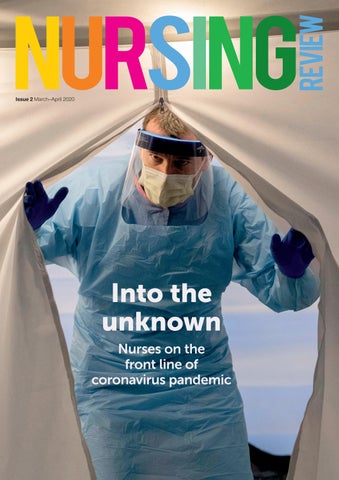
Issue 2 March–April 2020
Into the unknown Nurses on the front line of coronavirus pandemic
For formula-fed infants For healthcare professional use only
S-26 GOLD® NEWBORN …brings you closer Supporting for the 4 key areas of paediatric development and function Digestion
Physical growth & development
S-26 GOLD NEWBORN enriched with sn-2 palmitate, a main saturated fat structure found in breast milk.3,4 Infant formula enriched with sn-2 palmitate may result in softer stools5,6 S-26 GOLD NEWBORN is whey dominant and contains whole (intact) proteins7
Contains a lower protein quantity of 1.28 g/100 mL. Feeding a lower protein formula* during infancy may encourage appropriate weight gain closer to breast-fed infants during early childhood development up to 6 years1,2
Brain development
Immunity
DHA content (min. 0.32%) – closely aligns with expert recommendations, and the average DHA content of mature breast milk (0.32% ± 0.22%)8,9
Contains nucleotides and zinc, naturally found in mature breast milk, which may help support immunity 11-15 DHA = Docosahaexanoic Acid
*vs higher-protein infant formula
Let’s take a closer look at the digestion pillar
S-26 GOLD NEWBORN contains sn-2 Palmitate. Infant formula enriched with sn-2 palmitate may result in softer stools Infants that consumed sn-2 palmitate enriched formula vs. standard infant formula.5-7
Percent of stools (mean, %)
90
Formed stools
Mushy soft stools p=0.026
80 70 60 50 40
P=0.003
30
20% higher at week 8
20 10 0
50% less at week 8 Control term formula
Formula with sn-2 palmitate enriched fat blend
Control: Standard formula (not sn-2 palmitate enriched)
Control term formula
Formula with sn-2 palmitate enriched fat blend
Test: sn-2 palmitate enriched formula
Available only in hospitals
Adapted from Yao et al. 2014. Data from randomised, double-blind study of healthy, term formula-fed infants 7-14 days old (n=300), 296 completed the study.
IMPORTANT STATEMENT: Breastfeeding is best for babies. It has benefits for the infant, such as reducing infection risk, and for the mother. It is important to have a healthy balanced diet in preparation for, and during breastfeeding. Infant formula is designed to replace breast milk when an infant is not breastfed. Breastfeeding can be negatively affected by introducing partial bottle-feeding, and reversing a decision not to breastfeed is difficult. Infant formula must be prepared and used as directed. Unnecessary or improper use of infant formula, such as not properly boiling water or sterilising feeding equipment, may make your baby ill. Social and financial implications, including preparation time and the cost of formula, should be considered when selecting a method of infant feeding. References: 1. Weber, M., et al., 2014. AJCN, 99: 1041-1051. 2. Koletzko, B., et al., 2009. AJCN, 89: 1836-1845. 3. Bar-Yoseph, F., et al., 2013. PLEFA 89(4), pp.139-143. 4. Innis, S.M., 2011. Adv.Nutr., 2(3), pp.275-283. 5. Kennedy, K., et al.,1999. AJCN, 70: 920-927. 6. Yao M., et al. JPGN 2014;59: 440–448. 7. Nowacki J, Lee H-C, Lien R, Cheng S-W, Li S-T, Yao M, et al., Nutr. J. 2014;13(1):105-15. 8. Lönnerdal, B., 2003, Am J Clin Nutr: , 77, pp. 1537S-43S. 9. Koletzko, B., et al., 2008. J. Perinat. Med., 36: 5-14. 10. Brenna, J. T., et al. 2007. AJCN, 85:1457-1464. 11. Yu, V. 2002. J. Paed. Child Health, 38: 543-549. 12. Singhal, A.,et al., 2008. AJCN, 87: 1785-1792. 13. Donangelo, C. M. & King, J. C. 2012. Nutrients, 4: 782-798. 14. Ortega R, Andrés P, Martinez R, López-Sobaler A, Quintas M. Eur J Clin Nutr. 1997;51(4):253-8. 15. NHMRC. Nutrient Reference Values for Australia and New Zealand: Macronutrient balance. Canberra: National Health and Medical Research Council; 2014. ® Alula is a registered trade mark of SOMALAC S.A. ™ is a trade mark of SOMALAC S.A ® S-26 GOLD is a registered trade marks used under licence. Distributed by Sanulac Nutritionals Australia Pty Ltd. ABN 31 160 607 509. Level 1, 42-44 Chandos Street, St Leonards, NSW 2065.
80329 S26 gold newborn digestion - Nursing Review A4.indd 1
20/3/20 12:33 pm
contents
news
MANAGING EDITOR
2 3 4 5 6 7
Richard Garfield 02 9936 8628 richard.garfield@apned.com.au NEWS EDITOR
Dallas Bastian 02 9936 8637 dallas.bastian@apned.com.au
royal commission
8 HEALTH EDITOR
Conor Burke 02 9936 8638 conor.burke@apned.com.au
02
07
SUBEDITOR
9
Let’s back up Govt abandons plan to privatise ACAT Commission on hold Coronavirus pauses proceedings
coronavirus special
Robert Santos
10 In the thick of it How Westmead’s nurses are taking on the virus 12 The rise of COVID-19 How it began and how the world is coping 14 What we know so far Australian virologist breaks down the situation
PRODUCTION EDITOR
Kate Prendergast SALES MANAGER
Ben Long 02 9936 8664 ben.long@apned.com.au
specialty focus
SUBSCRIPTION ENQUIRIES
Daniel Omelia 02 9936 8607 subs@apned.com.au
Protecting against COVID-19 Nurses’ coronavirus scare NHS trains nurses as surgeons How you wake up matters Mum on poisoning charge Nurse-led visiting service for Indigenous mums
16 Write to life
9
10
COVER
A nurse at the University of Washington Medical Center. Image: John Moore, Getty Images/AFP
A biography service for palliative care patients 18 A way forward Indigenous scholarships for rural nurses 19 Carb your enthusiasm Busting potato myths and celebrating pasta
legal corner
20 When duty calls
PUBLISHED BY
Can nurses legally refuse to work during a pandemic? APN Educational Media GPO Box 4245 Sydney NSW 2001 ABN 58 090 900 999 ISSN 1326-0472 PP100001944
clinical practice
22 Double for nothing Astronomic rise in opioid use
12
18
How rethinking sepsis detection could save lives
workforce
PUBLISHER’S NOTE
© Copyright. No part of this publication can be used or reproduced in any format without express permission in writing from APN Educational Media. The mention of a product or service, person or company in this publication, does not indicate the publisher’s endorsement. The views expressed in this publication do not necessarily represent the opinion of the publisher, its agents, company officers or employees.
23 Putting the flame out early
24 Nursing for 50 years Lyn McBain shares her half-century career 26 Super housing plan Affordable housing for healthcare workers 27 NHS nap time UK health system invests in sleep pods for staff
technology
28 Simulating suicide
24
28
Game helps professionals identify the at-risk nursingreview.com.au | 1
news
Clinical nurse Janice Geary performs a mock coronavirus examination inside the fever clinic at the Prince Charles Hospital in Brisbane. Image: Darren England
On the frontline How do healthcare workers protect against COVID-19? By Dallas Bastian
G
rey’s Anatomy actress Ellen Pompeo recently shared an Instagram video explaining to her 7.2 million followers that while many citizens are able to follow government advice to self-isolate to avoid contracting COVID-19, nurses and other healthcare workers don’t have that same privilege. The video has been viewed over 3 million times. Many of the 13,000 comments posted are messages of support from across the globe for those on the healthcare frontline of the coronavirus crisis. Two Australian academics, writing for The Conversation, echoed Pompeo’s points. Matt Mason, lecturer and program co-ordinator for nursing at the University of the Sunshine Coast, and Peta-Anne Zimmerman from Griffith University said: “Regardless of COVID-19, doctors and other healthcare staff often feel some level of expectation to turn up to work even when ill. They’re often worried about placing strain on co-workers and affecting patient care. “The practice of quarantining healthcare workers who may have been exposed to the virus puts additional pressure on health
2 | nursingreview.com.au
services and is expected to increase as the outbreak continues.” The lecturers said as much as possible, healthcare workers should follow guidelines issued by their place of work or health department. On top of the standard health precautions used all year round, Mason and Zimmerman said workers are using two classes of transmission-based precautions: droplet and contact precautions. “Contact precautions involve putting on gloves and a gown upon entry to the patient care area, to ensure clothing and skin do not make contact with surfaces that have potentially been contaminated with the infectious droplets,” they wrote. “Droplet precautions involve wearing a surgical mask so infectious droplets don’t get in the mouth and nose.” They added that while normally coronavirus is spread only via droplets, some medical procedures such as inserting a breathing tube can aerosolise the virus, meaning it can stay in the air longer. “Healthcare workers may take additional airborne precautions when they’re undertaking aerosol-generating procedures, such as intubating a critically unwell patient. These precautions include wearing a properly fitting P2/N95 respirator and caring for the patient in a special isolation room.”
Researchers from Hong Kong found that health systems can protect healthcare workers during the COVID-19 outbreak when best practices for infection control are “diligently applied”. The researchers, from Queen Mary Hospital in Hong Kong, reported that zero healthcare workers contracted COVID-19 and no hospital-acquired infections were identified after the first six weeks of the outbreak, even as the health system tested 1275 suspected cases and treated 42 active confirmed cases of COVID-19. “Appropriate hospital infection control measures can prevent healthcareassociated transmission of the coronavirus,” study authors said. “Vigilance in handhygiene practice, wearing of surgical masks in the hospital, and appropriate use of personal protective equipment in patient care, especially when performing aerosol-generating procedures, are the key infection control measures to prevent hospital transmission of the virus.” Enhanced infection control measures were put in place in each Hong Kong hospital shortly after the reports of the disease surfaced, including training on the use of personal protective equipment, staff forums on infection control, face-to-face education sessions, and regular handhygiene compliance assessments. Mason and Zimmerman said while international studies have shown additional measures do protect healthcare workers from contracting infectious diseases, there’s often a gap between the recommended practices and their application in healthcare settings. “Studies have indicated reasons for this, including staff attitudes, insufficient knowledge of procedures, inadequate supplies, time pressures and staffing levels,” they said. “Education and training around these procedures must be routine so that in the face of an outbreak like coronavirus, healthcare workers are supported and prepared to implement these critical protocols.” The duo added that it’s critical that healthcare workers can access the appropriate supplies so they can follow the proper infection prevention and control protocols. “We also need consistent messaging for the public and healthcare workers on when to contact a healthcare professional, how that should be done and what to do to minimise coronavirus risk.” ■
news
Nurses among 14 cases of COVID-19 at medical centre in Japan. By AAP and Dallas Bastian
T
Nurses test positive
Drug violence Saliva tests reveal level of drug use in ED.
T
here’s a good chance that nurses who encounter threatening patients in the emergency department are dealing with people who have taken methamphetamine. Researchers from the University of Melbourne and Melbourne Health tested saliva from patients who sparked a code grey over the course of six months. Of the 229 valid samples they gathered from point-of-care tests, 40 per cent tested positive for an illicit substance, and of that number 92 per cent tested positive for methamphetamine.
wo nurses at a medical centre in Japan’s Oita prefecture have tested positive to COVID-19, bringing the total number of cases at the facility to 14, Kyodo newswire says. The nurses who work at the Oita Medical Centre, one in her 20s and another in her 50s, were confirmed as being infected with the coronavirus though they showed only mild symptoms, Kyodo said. The new cases follow 12 others at the medical centre, including other nurses and doctors. The southwestern prefecture is conducting virus tests for about 600 staff and patients who are or were hospitalised, the newswire said, with the view that they may be linked to a cluster. As of March 26, Japan had recorded 1271 cases of COVID‑19 across the country, with 44 deaths linked to the virus, according to public broadcaster NHK. The official national tally does not include the 712 cases of infections from a cruise ship moored near Tokyo last month. Due to the rising number of cases, the International Olympic Committee and the Tokyo 2020 Organising Committee announced that the Tokyo Olympic and Paralympic Games will be postponed until next year. ■
One-fifth of the sample tested positive for two or more substances: 17 per cent testing positive for opiates, 8 per cent for cannabis and 7 per cent for cocaine. On top of this, only 22 per cent of those who were tested admitted to using illicit substances within the 24 hours prior – pointing to poor self-reporting. Professor Marie Gerdtz, head of the University of Melbourne’s Department of Nursing, said this research clearly demonstrates the need for point of care saliva testing of these patients by skilled emergency nurses. “Self-reporting of drug use is unreliable, and our research shows we can’t rely on people who are under the influence to tell us what drugs they have taken,” Gerdtz said. Associate Professor Jonathan Knott said knowing information about the patient’s drug use was useful for staff to determine treatment strategies. “These saliva tests can demonstrate quickly and efficiently if there are drugs involved,” he said. “If there are no drugs and the likely outcome is mental health, then staff can work towards putting in place measures for providing the best care.” Royal Melbourne Hospital is working to set up a hub based in its emergency department that will specialise in mental health, drug and alcohol support. “With the introduction of the Behavioural Assessment Unit three years ago, we do have resources to settle patients,” Knott said. “However, we don’t have strategies in place to help change behaviour long term. The crisis hub will create more resources to pathway patients to specialised help.” Researcher George Braitberg said drug use by patients in EDs was a growing problem and “needs to be approached with a different model of care where emergency, mental health, addiction and allied health clinicians work together in the same space to provide the best care for these patients”. ■ nursingreview.com.au | 3
news
Slice of the action UK looks to ease NHS waiting lists by training nurses to perform surgery.
N
urses in the UK will be trained to perform minor surgical procedures in a radical plan to slash NHS waiting times. Nurses with a minimum of 18 months’ post-registration experience will be encouraged to undertake a two-year course to become a “surgical care practitioner” (SCP), and will be able to perform surgical procedures such as wound closure, removing some skin cancers, harvesting veins and carpel tunnel surgery.
Breathing easy Petition launched to fund specialist lung cancer nurses.
L
ung cancer advocates have launched a petition calling for government funding for 15 specialist lung cancer nurses. Led by Lung Foundation Australia, the petition was launched at the 2020 Australian Lung Cancer Conference to ask for the specialist nurses to be funded in this year’s federal budget. The signatures gathered will be handed to the House of Representatives in March. Lung Foundation Australia CEO Mark Brooke said the petition draws attention to the “disparity in treatment faced by Australians diagnosed with lung cancer”, given that the federal government
4 | nursingreview.com.au
The Royal College of Surgeons in the UK describes the scope of practice of SCPs – who have been around since the early 1990s – as pre-, peri- and post-operative environment, including theatre, wards and clinics, usually within a specific surgical specialty. New plans to actively recruit for the role will be announced by the UK government in its upcoming NHS People Plan. The NHS is currently struggling with an ever-increasing demand for services, and with 4.42 million patients on the waiting list as of September, the highest number ever, the government is desperate for a fix. The Daily Mail reported that there are already 800 surgical care practitioners working in hospitals in the UK, but leading surgeons say there will need to be thousands before a reduction in wait times is felt. In the lead-up to the UK general election last year, it was reported that the NHS was experiencing a nurse deficit of 43,000, and there is some debate as to where the nurses will be found to fill these SCP positions. UK Liberal Democrat health spokesperson Munira Wilson said: “This is a sticking-plaster solution to a very serious staffing crisis across our NHS workforce.” Professor Michael Griffin, president of the Royal College of Surgeons of Edinburgh, said: “We are totally supportive of this. We have very little anxiety about this. “A lot of the procedures are very reproducible, straightforward, very important, but they are relatively small operations that can be managed quickly and efficiently.” ■
funds 98 specialist breast and 62 prostate cancer nurses – but none for lung cancer. This is despite it being Australia’s leading cause of cancer death and accounting for more deaths by cancer than breast, ovarian and prostate cancers combined. Australia currently has the full-time equivalent of only 12 specialist lung care nurses supporting more than 12,000 new lung cancer cases diagnosed each year. “The critical shortage of specialist lung cancer nurses in Australia is simply unacceptable, and it is compromising quality of care,” Brooke said. “Our lung cancer patients are tired of being treated like second-class citizens. They need and deserve the same access to quality care as those diagnosed with any other cancer.” The key role of specialist lung cancer nurses is to advocate for patients and support them and their families by helping them to understand their cancer and treatment options. They also make sure patients get appropriate initial treatment and coordinated follow-up attention in the longer term. Lung Foundation Australia says studies show access to specialist cancer nurses improves patient quality of life, increases survival rates and reduces rates of hospital admissions. “The shortage of lung cancer nurses is inconsistent with evidence-based clinical practice guidelines and international bestpractice, and is in stark contrast to the support provided to other cancer patients,” Brooke said. “We urge everyone to sign this position to help us call on the government to fund this essential life-changing support for lung cancer patients.” ■ To view and sign the petition, go to www.lungfoundation.com.au/petition
news
Alarming find
Does your alarm tone affect how well you wake up?
R
esearch from RMIT University suggests that the sounds you wake up to could determine how groggy and clumsy you are in the morning. They found that waking to melodic alarms could improve alertness levels, and this could be particularly important
Preventing a broken heart Lowering health risks following bereavement using common treatment.
R
educing the risk of heart attack in the early stages of bereavement has been the focus of new research by the University of Sydney. Professor Geoffrey Tofler, lead author of the study published in the American Heart
for workers who need to hit their mental peak soon after waking – especially shift workers. The study’s lead author, RMIT doctoral researcher Stuart McFarlane, says that if you don’t wake properly, your work performance can be affected for periods of up to four hours, and this grogginess has been linked to major accidents. “You would assume that a startling ‘beep beep beep’ alarm would improve alertness, but our data revealed that melodic alarms
may be the key element. This was unexpected,” he said. “Although more research is needed to better understand the precise combination of melody and rhythm that might work best, considering that most people use alarms to wake up, the sound you choose may have important ramifications. “This is particularly important for people who might work in dangerous situations shortly after waking, like firefighters or pilots, but also for anyone who has to be rapidly alert, such as someone driving to hospital in an emergency.” Co-author Associate Professor Adrian Dyer, from RMIT’s School of Media and Communication and Digital Ethnography Research Centre, said the research could help people create more efficient ways to wake up properly. “We think that a harsh ‘beep beep beep’ might work to disrupt or confuse our brain activity when waking, while a more melodic sound like the Beach Boys ‘Good Vibrations’ or The Cure’s ‘Close to Me’ may help us transition to a waking state in a more effective way,” he said. ■
Journal, said there is an increased risk of heart attack and death among bereaved people, particularly those grieving for a spouse or child. The randomised clinical trial looked at 85 people, the average age being 66, and showed that it is possible to reduce several cardiac risk factors during this time, without adversely affecting the grieving process. “We already knew from previous studies that following bereavement there are often increases in heart rate, blood pressure and ... blood clotting, as well as increases in symptoms of anxiety and depression,” Tofler said. “However, there have been no interventions to address this with the goal of lowering cardiac risk, so we aimed to provide this with an approach that does not adversely affect the grief process.” Forty-two participants received low daily doses of a beta blocker and aspirin for six weeks, while 43 were given placebos. Heart rate and blood pressure were carefully monitored, and blood tests assessed blood clotting changes. “The main finding was that the active medication, used in a low dose once a day, successfully reduced spikes in blood pressure and heart rate, as well as demonstrating some positive change in
blood clotting tendency,” Tofler said. The investigators also carefully monitored the grief reaction of participants. “We were reassured that the medication had no adverse effect on the psychological responses, and indeed lessened symptoms of anxiety and depression. “Encouragingly, and to our surprise, reduced levels of anxiety and blood pressure persisted even after stopping the six weeks of daily beta blocker and aspirin.” While advocating for the treatment to be considered a potential heart health preventive therapy, Tofler also highlighted the importance of attention to the health of a person following a bereavement, as well as for awareness of it among family and friends. “Social support is important at this time, and any health symptoms should be brought to the attention of a health professional,” he said. Associate Professor Thomas Buckley, co-investigator on the study from the University of Sydney Susan Wakil School of Nursing and Midwifery, said: “While beta blockers and aspirin have been commonly used long term to reduce cardiovascular risk, they have not previously been used in this way as a short-term preventive therapy during bereavement.” ■ nursingreview.com.au | 5
news
Poison via pee Ex-nurse allegedly injected urine into daughter. By AAP
A
NSW mother injected urine into her immune-deficient daughter, before police uncovered used syringes and urine sample jars in her handbag, a court has been told. The 47-year-old woman – a former nurse – pleaded not guilty in Newcastle District Court to three counts of using poison to endanger the life of her daughter between December 2013 and March 2015. In an alleged poisoning episode in March 2015 – when the girl was aged nine – she became acutely unwell with deteriorating renal function in Westmead Children’s Hospital in Sydney, the court was told. Blood cultures showed a “sudden, unexplained increase” in chemical waste products urea and creatinine, Crown prosecutor Wayne Creasey said. “The evidence will establish, I expect, that the accused was almost always at [her daughter’s] bedside during her admissions,” he said in his opening address.
Teacher’s Pet breakthrough? Lyn Dawson ‘spotted’ by former neighbours working as a nurse. By AAP
F
ormer neighbours of Lynette Dawson claim they saw her alive and working at a Sydney northern beaches hospital two years after her disappearance and alleged murder. Peter Breese created a stir in Downing Centre Local Court when he claimed he saw the missing housewife in June 1984 less than 20km from the Bayview home she disappeared from in early 1982.
6 | nursingreview.com.au
“I expect a clinical microbiologist ... [will] support the contention that the accused interfered with the indwelling intravenous central line by introducing urine to the line.” The other two charges relate to hospital admissions in early 2014 for constant diarrhoea and vomiting. A gastroenterologist is expected to say the diarrhoea was “factitious and likely caused by the surreptitious administration of a laxative agent”, Creasey said. He added that the girl, born in 2005, has a genetic condition and an associated immune deficiency. Between the age of two and nine, when police intervened, the girl was regularly admitted to hospital with serious conditions later resolved with medical intervention, he said. “The senior doctors at John Hunter Hospital and Westmead Hospital became concerned that some of [the girl’s] admissions were as a result of deliberate harm by the accused,” Creasey said. Police who interviewed the mother in March 2015 discovered two empty urine sample containers, medical equipment, a syringe containing a liquid, five used plastic syringes and a stool sample container in her handbag. The mother – who had multiple children – denied ever giving her daughter laxatives or injecting urine, and said she had gathered the medical supplies when her daughter was being transferred to a new hospital. She told police she “missed being a nurse” and liked “being involved” in her daughter’s care, the Crown said. The trial before Judge Christopher Robison continues. ■
Breese and his wife, Jill, told magistrate Jacqueline Trad they had seen Dawson alive at the hospital two years after her disappearance. Chris Dawson, who has been charged with murdering his wife, is facing a committal hearing to decide whether he should stand trial. The ex-Newtown rugby league player has pleaded not guilty, maintaining Lynette abandoned her family to start another life 38 years ago. He says several people have seen her alive since she went missing on 9 January 1982. Family friend Elva McBay, 101, told the court that she spotted Lynette at a public reception for Prince Charles and Princess Diana in Sydney’s CBD in March 1983. Breese said he was lying in his bed at Rockcastle Hospital in Curl Curl (now South Pacific Private Hospital) when a nurse who bore a striking resemblance to Lynette entered the room before quickly turning around and exiting. “I believe I saw Lynette Dawson,” Breese told the court. “I recognised her, she recognised me, but she turned on her heels and I never saw her again.” Breese said the interaction lasted five or 10 seconds but left a lasting impression. He claimed the woman’s hair, appearance
and glasses all resembled his former neighbour’s. He said his wife later confided in him that she also believed she had seen Lynette working at the hospital during his stay. Mrs Breese told the court she spotted through a doorway a woman walking past a nurse’s station. “I believe I saw Lyn Dawson,” Mrs Breese said, adding she had seen the woman “more from the side than the front” and “just in passing”. But she was confident it was her exneighbour, whose property at Gilwinga Drive backed on to her Torumba Avenue house. “I don’t believe I was mistaken, but maybe it’s a possibility,” Mrs Breese said. The couple did not make much of their interactions until they saw a newspaper article in either 1987 or 1988 in which Lynette was listed as a missing person. They contacted Mona Vale Police Station to offer information. A constable rang Mrs Breese back a few hours later and told her a detective investigating the case said “she was under the pool”. “What did the police say then?” Dawson’s barrister, Phillip Boulten, SC, asked. Mrs Breese replied: “That was the end of the conversation.” ■
news
The ANFPP team at the Rapid Creek Open Day. Photo: supplied
There for first-time mums CDU takes on nurse-led visiting program for Indigenous mums, infants.
L
ast year marked a decade that the Australian Nurse-Family Partnership Program (ANFPP) was launched on the lands of the Arrernte people. A health initiative of the Australian government funded as part of the Closing the Gap Strategy, it aims to empower and inform first-time, low-income Aboriginal and Torres Strait Islander mothers, while boosting outcomes for their children through a registered nurse-led visiting program, which provides culturally appropriate assistance and support from pregnancy through to toddlerhood.
Over two years, the Charles Darwin University College of Nursing and Midwifery will now take the lead in providing workforce training, technical support and professional support activities to health providers to advance the program’s mission. The team will also be conducting research work: collecting, analysing and reporting on ANFPP performance of duties and outcomes data. “Our intention is to bring together nurses, family partnership workers and other implementing site staff to work together to ensure the ANFPP is contemporary, responsive and contextualised to each individual woman and community,” said CDU professor of primary healthcare and ANFPP director Sue Kruske. The team working on the national service “consists of strong Indigenous leadership”, said Indigenous public health researcher Associate Professor Sandra Campbell, who will lead the data team. “The highly experienced team have careers that span decades working in Indigenous maternal and child health and will ensure that information is provided to the implementing sites in a way that is accessible and meaningful,” Campbell said. The ANFPP was adapted from the US Nurse-Family Partnership program, and is delivered by 12 organisations across four states and two territories, including several sites in remote communities. A 2018 study into the program found that its delivery was at times hindered by the complicated and diverse circumstances of clients – with many experiencing extreme poverty, insecure housing and domestic violence. ■
Julianne Mead. Photo: USC
Pen mightier than the pain Nurse turns to creative writing to help young people in chronic pain.
A
nurse who cares for patients with chronic pain is working on a novel that tackles its impact on young people’s lives.
Julianne Mead wants more young people with chronic pain to see themselves in fiction, so she enrolled in a doctoral degree at the University of the Sunshine Coast to research and start writing a young adult book. She will draw on more than 20 years’ experience as a nurse at Queensland Children’s Hospital. Her work has
included helping to establish a holistic pain management service for young people, working with allied health teams to help kids understand their pain and the journey ahead. “A lot of health is about people telling their stories, and I think often in health we’re very rushed when we talk to people, and we don’t always allow the time for people to tell their stories. “I’m interested in the problems relating to chronic illness – reduced social interactions, family tensions, peer assumptions such as ‘you’re faking it’ – and how these affect young people at a time when they are still forming their identity,” she said. The story will follow a 16-year-old girl as she tries to come to terms with both the physical and emotional pain she is experiencing. Mead said creative writing was another way to educate young people in the community about chronic pain, as they’re unlikely to seek out information for themselves on websites and textbooks. “People need to know the pain is not all in the [young person’s] head – they’re not making it up. It’s is very real, and people in the community and we as health professionals need to have an understanding of that and be supportive.” ■ nursingreview.com.au | 7
ROYAL COMMISSION Prime Minster Scott Morrison. Photo: AAP Image/Mick Tsikas.
Govt U-turn Move to privatise Aged Care Assessment Teams ditched. By Conor Burke
T
he federal government has announced that it will abandon its controversial plan to privatise the ACAT assessment process. A communiqué released from the recent COAG Health Council meeting said: “The Commonwealth has confirmed that it is not proceeding with the current tender process. Over the longer term, the Commonwealth will take advice from states and territories and from the royal commission about what the exact delivery mix should be.” This comes after months of anger from the public, the sector and several politicians over the plan, which some say would lower the standard of assessment and focus on profit over care. Earlier this year, the federal government’s state Liberal colleagues questioned the logic of the plan. NSW Health Minister Brad Hazzard claimed that at a meeting of state and federal ministers there was no mention of the plan. “It seems pre-emptive and unreasonable to be effectively privatising health aged-care services while the royal commission into aged care is still underway. Not a lot of logic there,” reported The Sydney Morning Herald.
8 | nursingreview.com.au
Meanwhile, federal Liberal backbencher Russell Broadbent recently told Parliament that there was no justification for the privatisation plan. “I’ve been in situations where areas have been contracted out in my past life and there is a great loss of experience,” Broadbent said. In a rare statement, aged care royal commissioner Tony Pagone came out against the plan and rebuked Aged Care Minister Richard Colbeck over his claims that the royal commission advocated the privatisation of the ACAT system. “I take this opportunity to make clear that the Interim Report did not endorse the government’s stated position but noted that we would monitor with interest the implementation which the government had announced,” he said. “It is desirable in view of the public concerns and statements which have been expressed that it is made clear that the work of royal commissioners is intended to be, and is, independent of government. “Our tasks as commissioners are detailed in the terms of reference, and we have not yet made recommendations about which sector or mechanism will best achieve an integration of Regional Assessment Services and the Aged Care Assessment Teams.” The Australian Nursing and Midwifery Federation welcomed this about-face and reiterated that any move to privatise
government aged care functions goes against the findings that the royal commission has made so far. ANMF federal secretary Annie Butler said: “The ANMF questioned why the federal government’s pre-emptive decision was made before the royal commission into aged care had a chance to deliver final recommendations. “It would have affected existing assessment services expertly delivered by a skilled workforce of registered nurses, geriatricians, allied health professionals, social workers and others, jeopardising the jobs of hundreds of skilled practitioners. “And most importantly, consumers in need of expert support could have been directed to a for-profit provider, not independent of the care provider, effectively leading to the privatisation of ACAT, where older members of the community in need of care could have been placed at the mercy of businesses. “As has been clearly demonstrated by the royal commission so far, the failures of the ‘market’ in aged care are profound. The ANMF was therefore deeply concerned that these failures would spread to ACAT and destroy this expert service. “We are very pleased that the COAG health ministers’ meeting has reversed the federal government’s decision, and we thank all of those who advocated to retain ACAT and maintain a focus on safety, respect, reassurance and continuity of care for our elderly.” Queensland’s Health Minister Steven Miles has also welcomed the news, as any planned changes to ACAT “was bad for
The failures of the ‘market’ in aged care are profound. patients waiting in hospital for an aged care place, and because more than 250 Queensland jobs were at risk”, he said. “We are pleased the Commonwealth has heard our concerns and will work with the states to ensure aged care assessments are undertaken by the public system. “The royal commission has so far found that the Morrison government is failing our elderly Queenslanders. “The last thing Australia’s aged care system needed was more privatisation. A lot still needs to be done to fix aged care, but we welcome this announcement today.” Aged Care Minister Richard Colbeck was contacted for comment. ■
Royal commission
ANMF federal secretary Annie Butler. Photo: Kym Smith.
Royal commission update Commission looks at staffing, pay and tech before being shut down. By Conor Burke and Dallas Bastian
COVID-19: Royal commission suspended, new restrictions The Royal Commission into Aged Care Quality and Safety has suspended all hearings and workshops due to the spread of COVID-19. In a statement, the royal commission said the decision would affect all hearings, workshops and group consultations until at least the end of May 2020. The commissioners said they were considering the implications of this decision on the schedule and added the future work program would be informed by public health advice. They added: “Meaningful engagement with the sector is paramount to the work of the royal commission’s inquiry into aged care quality and safety, which is why we have decided to suspend all hearings and workshops. We must allow service providers and government to focus fully on their response to the pandemic.” They also recognised that substantial efforts are being made by aged care service providers and health services, and their staff, to support the needs of older people during the coronavirus crisis. The announcement came just days before Prime Minister Scott Morrison announced tighter restrictions to slow the spread of the virus.
From midday on Monday 23 March, all pubs, clubs, gyms, indoors sporting venues, cinemas, casinos and entertainment venues were closed. Restaurants and cafes were restricted to takeaway or home delivery. The government expects the measures to remain in place for at least six months. Schools will remain open across most of Australia, with the exception of Victoria, which has moved forward its Easter break. Parents in NSW are being encouraged to keep their children at home. In a statement, Morrison thanked members of the public who were adhering to social distancing measures but scolded those who were ignoring advice. “Leaders expressed their disappointment at some members of the community who are disregarding social distancing measures and, by doing so, putting the lives of older and vulnerable Australians at risk,” he said. “If we want to slow the spread, everyone must implement appropriate social distancing in accordance with state and territory laws.”
Royal commission urges mandatory staff minimums, better pay for aged care The royal commission has urged the aged care sector to reform its approach to the workforce, with counsel assisting Peter Rozen telling those gathered that “the time for action … is now”. At the third Adelaide hearing, Rozen handed the commission a submission made by the counsels assisting which said that the sector should be subject
to mandatory minimum staffing requirements and to make sure there is an RN on duty for every shift, among other recommendations. “The staff in our aged care homes … are not well paid. All too often, there are not enough of them to provide the care they would like to – for example, to sit and have a chat over a cup of tea,” Rozen told the commissioners. “Many work in stressful and sometimes unsafe workplaces; some are untrained, and others have inadequate training. As a community, we owe these workers a lot.” The submission also stated that RNs and NPs should make up a greater proportion of the workforce, that regulated care workers should be registered and show a minimum qualification level, and that all aged care workers should be better paid and trained. Rozen said that, ultimately, change in the sector will occur only if those in leadership positions change their approach to aged care. “The organisations for which they work should be better managed and better governed. And finally, the Australian government should provide practical leadership in relation to all these things,” he said. The submission was welcomed by the Australian Nursing and Midwifery Federation (ANMF), which has for a long time called for minimum staffing levels and nurse-to-patient ratios. ANMF federal secretary Annie Butler said: “On behalf of our members working in aged care, the ANMF welcomes Mr Rozen’s practical recommendations put forward to the royal commissioners. “As we’ve heard from our members in aged care and in the harrowing evidence from residents and their families, workforce issues, particularly inadequate staffing levels, have been the cause for much of their pain and suffering. “The ANMF supports Mr Rozen’s recommendations to mandate the minimum numbers of nurses and qualified care staff that would be rostered, ensuring better, safer, continuity of care for residents. “Better wages, training and regulation would also improve the retention and recruitment of the beleaguered aged care workforce.”
Continued on page 21 nursingreview.com.au | 9
coronavirus Special A patient suspected of contracting the coronavirus arrives at Westmead Hospital, Sydney. Picture: Steve Tyson
Ground zero Westmead’s director of nursing on fighting COVID-19. Kate Hackett interviewed by Conor Burke
K
ate Hackett is the director of nursing at Westmead Hospital in Sydney, ground zero for the treatment of COVID-19 in Australia. Like everyone else, Hackett saw the virus develop from afar over the summer period but could not imagine the situation we find ourselves in today, with nearly 470,000 confirmed cases and 22,000 deaths worldwide. The week coronavirus became real for Australians is still fresh in Hackett’s memory. She came back from leave on January 20 and it was on her doorstep a few days later. “My initial thought was, ‘How big could this be?’ And I don’t think we could foresee back in January the position we are in now,” she says. And like everyone else, Hackett couldn’t imagine that the virus would cause the health, social and economic disruption we see today. She describes this period as the “most exhausting two months of my career”. You wouldn’t know it to talk with her. Immediately positive, Hackett has approached the pandemic as a once-in-a-career learning experience for her and her team.
10 | nursingreview.com.au
“It was a lot of learning, I suppose. That first patient, then those first four patients arrived within a few days, so it was a big learning curve for us. And I’m obviously reaching out nationally and internationally to seek advice,” she says. Westmead is one of NSW’s designated infectious disease sites. The doctors and nurses involved are all well versed in PPE and protocols around highly infectious diseases. Nurses involved with positive cases of the virus wear gloves, a mask, face protection – shield and/or goggles – and work in a patient’s isolated single room with negative pressure – where the air is sucked out and not recycled throughout the other areas of the hospital. They also follow a strict process of “donning and doffing” their PPE to stop an infection spread. “Staff have been always willing to look after these types of patients,” she says. “So I don’t face circumstances where staff feel anxious or not trained to look after these patients. “I think the nursing staff have really taken it in their stride and we update them regularly with all the information we have about the disease. And we also do a lot of progression training.” Nursing Review talked with Hackett about how this virus is affecting her staff and day-to-day care at Westmead.
NR: What does it look like from presentation to treatment and what are the differences between this and normal procedures? KH: We have two ways in for positive patients. If a patient presents with
symptoms and they need a level of hospital care, they’d obviously be tested for COVID-19, along with a wide range of other respiratory illnesses if they’ve got respiratory symptoms. And while they await their results, if they need hospital care, then we have a unit set up where we isolate those patients. And they would wait in there for the results and be receiving that hospital care. We’ve got a lot of patients with comorbidities. So, it might be that they’re unwell due to their renal function or they’ve got cancer and they’re having other treatments. They would go to our COVID unit and obviously commence treatment for whatever symptoms they’ve got until that result comes back. If they’re negative, then they’re moved out of that unit and just remain receiving care by the specialty that they should be under. If they’re positive, they remain in that unit we have and continue to receive the hospital care they require, and obviously once we’ve treated whatever they had, they would be discharged home. Now as it stands, they might still be positive when they’re transferred or discharged home, or they may be negative by that stage. We’ve had both scenarios. The other way positive patients may come into a hospital is if someone is being flagged in the community and then they get a call from Public Health to say their result is positive, and a decision is made, I suppose, where they look at the contact they’ve had in their home situations. So if Public Health feel that they need hospital care, whether it’s just the isolation reasons or they’re unwell, then
coronavirus SPECIAL
they will be transferred into the hospital and we transfer them straight into that COVID ward.
Has the level of PPE and infection control changed? What’s changed is our refresher-type training. All our nursing staff are trained in PPE already, but I suppose it’s that timely reminder. That’s where we have a lot of educators in infection control around the facility, ensuring the staff feel trained and supported, and they can answer any questions the staff have. For example, ‘Do I put the gown on first, or do I put the mask on first?’
What is the advice to patients when they leave, and how have you charted the recovery of those who have recovered? Normally, Infectious Diseases call when that patient can go home. Public Health and Infectious Diseases would determine what that patient needs to do if they are being discharged, in terms of home isolation or other things like that. That’s not really a nursing decision. The advice would obviously change depending on the patient and where they are at with the COVID-19 disease process. In turn, they are followed up at home or they come back to be re‑swabbed. It depends on their disease process. Also, if there are any comorbidities or other factors, as it’s often not just the respiratory symptoms, our patients will come in. There are chronically unwell medical patients – diabetes, cancer, renal disease, pre-existing respiratory issues. COVID is often just one part it.
How has the hospital been forced to adapt? Has there been a strain economically or on PPE? I think the hospital has adapted really well. As I said, I think people have got on board. When you work in a major trauma statewide quaternary centre, people like new things, they like change. It’s an evolving disease. We have supply of PPE; we’re working closely with our suppliers on that, but our stock levels are fine. And it has taken extra workforce to staff a COVID-19 clinic and a COVID-19 ward. But I think, given the size of the hospital, we’ve been able to absorb that very well. We haven’t had any real concerns at this point with staffing.
I imagine annual leave has been cancelled and perhaps extra nurses put
on. Can you talk about the numbers that have been put on? In terms of leave, there was a directive from the NSW Ministry of Health about reviewing leave over the next six months. Our local managers are obviously looking at people’s leave, but I personally haven’t seen any cancellations at this point with nursing. I suppose we’re a little bit fortunate that we’ve come out of that December, January period and a lot of our staff were able to have a break during that time. We are just continuing to review our rosters and our leave allocations at this point. We’re unsure exactly how it could look in two weeks, six weeks, three months. And with the travel ban, they’re not able to go overseas anyway. I’m getting calls to say, ‘I can’t go to the UK. I’m happy to cancel my leave’.
You’ve said you are well set up to tackle infection, but this is something totally different. How are the nurses coping physically and mentally? We’ve had two months of COVID-19 now, and I think the bulk of nurses here have had some exposure to what’s going on at the hospital. But my focus is predominantly with those who have been working in the clinic and the COVID ward and the AD and the ICU, that have also had workload due to this. I mean, we’ve tried to keep our ward ‘business as usual’ a little bit. Overall, I think the staff are feeling well supported. That’s the feedback I get from going into these spaces each day. And I think it’s on us to try to keep the morale up. I think the education and training piece, particularly about PPE and the disease, is really important to them. A lot of the feedback I’ve got is about communication and information sharing. So we put in place with the CE daily communication and broadcast to all staff, so that everyone is across the latest information, because I think a lot of anxiety can come from people not knowing what preparations the districts put in place in the hospital and not having the most current information.
How are nurses coping outside of work? Our nurses are working really hard at work and trying to juggle their homelife. I have two primary-aged children, and am trying to decide whether to keep them at home or send them to school. Yes, we’re essential workers, but there is a level of parental guilt I’m hearing from my staff. We don’t have the luxury of working from home at this
time; we need to be here planning. And that causes a lot of stress with staff. They’re also concerned about their ageing parents. I have parents in their 70s, and I’m concerned for their welfare. I think the staff are tired … We’ve gone from a bushfire season straight into COVID, so there is a bit of tiredness. And then they go to the shop and can’t get everything they need, so that adds pressure as well.
Are there extra mental health supports available to staff? Yes. We’re doing a lot of work around wellbeing and culture, and we have an employee assistance program – a phone or face-to-face service to support staff. We’re also making sure staff walking around are checking in with other staff, asking, ‘Are you okay?’, ‘How are you travelling?’, ‘What can we do to help?’
You and your workforce are best placed to talk to this because you’re the first hospital in Australia to deal with it. But for any nurses and health departments around Australia who are yet to face the virus, what would your advice be? Seek information and support from your peer hospitals. We’re all learning from this, and I suppose there are people and organisations that are at different stages of their planning and work in this space, and I think we can all learn from each other’s experience. That’s really important to communicate across hospitals. My other bit of advice is the team. Having a real crack team of senior clinicians and infection control experts, hospital executives, public health. Looking at the first six weeks of this response, it’s exhausting, and no one single person can organise or facilitate this for an organisation. It does take a team of highly specialised people, and I suppose as a leader, my job is bringing that group together and making sure people are heard and come out of our huddles or our teleconferences with an action plan and a way forward, and reassuring your team, but also your wider staff base, that we have a plan, and providing that communication down through every level of the organisation – exactly how we’re placed, what we’re working on and listening to their concerns. n Editor’s note: Nursing Review would ask everyone to be extra compassionate and grateful when dealing with nurses (and any healthcare workers) through this period. nursingreview.com.au | 11
Coronavirus Special A nurse starts her shift at the Cremona Hospital, Milan, Italy. Photo: Paolo Miranda/AFP
COVID-19: How it happened We take a look at how the global pandemic began, how it spread, and how countries responded. By Conor Burke
T
he COVID-19 pandemic came to light on 31 December 2019 with an alert to the WHO China office, and the speed with which it has spread across the globe has been rivalled only by how rapidly it has changed the lives of billions of people worldwide. As countries head into a period of lockdown, economies tank and people lose jobs, we find ourselves in the midst of a crisis with no end in sight. At the time of publication, the Australian government has just announced a slew of new restrictive measures on once-takenfor-granted freedoms. From midnight on March 25, Australians will no longer be able to go to weddings with more than five people present (including the couple and the celebrant) or attend funerals with more than 10 mourners, and Australians are now officially banned from leaving the country. No more real estate inspections, auctions, cinemas, pubs, swimming pools, tattoos, saunas, gyms or museums, and if you want a haircut, you now have to keep appointments to 30 minutes or less. Staying in and keeping socially distanced from friends and family has already become the norm, but how did we get here?
12 | nursingreview.com.au
WHAT IS COVID-19 AND WHERE DID IT COME FROM? Coronaviruses (CoV) are a large family of viruses that cause illnesses from the common cold to more severe diseases such as Middle East respiratory syndrome (MERS-CoV) and severe acute respiratory syndrome (SARS-CoV), and this particular strain causes pneumonia-like symptoms. COVID-19 is an infectious disease caused by a newly discovered coronavirus, and it spreads primarily through droplets of saliva or discharge from the nose when an infected person coughs or sneezes. The origins of this new coronavirus are unclear. However, scientists believe it may have mutated and jumped species from a bat or pangolin (a scaly armadillo-like mammal), much like the cases of SARS (2003) and MERS (2012), which found their origins in civet cats and camels respectively. Scientists have ruled out rumours of a lab-based origin for the coronavirus, and have identified markers in the way COVID-19 reacts with the human genome which suggest that it is a result of natural selection and not bioengineering. Cases were first identified in Wuhan, the capital of Hubei province in Central China, which has a population of more than 11 million. On January 7, officials announced they had identified a new virus, according to the WHO. On January 11, China announced its first death, and two days later the first foreign case was confirmed in Thailand.
HOW THE VIRUS SPREAD By January 23, Wuhan had been effectively shut down, with all planes, trains, buses, subways and other forms of transport cancelled and stopped from leaving the city. At this point, only 581 cases had been confirmed globally (571 in China) with seven deaths, all in Hubei. January 25 saw the first Australian cases, as four men, three from NSW and one from Victoria, presented with symptoms. All four had recently flown back to Australia from China and had been in Wuhan. By January 30, the WHO declared the new coronavirus a “global emergency”.
CONFUSION REIGNS As the virus started to gain a hold in Australia, the states, territories and various health bodies argued about how best to tackle a crisis not seen before in modern history. In February, the Royal Australian College of General Practitioners (RACGP) and its president Dr Harry Nespolon criticised the government’s response to the outbreak, saying the lack of government planning was “risking people’s health”. “Australia needs to implement a national plan for dealing with potential pandemics,” he said. “This isn’t the first and won’t be the last. If we don’t address these problems now, we’re risking people’s health. “While we have a national plan for pandemic influenza, it has not been implemented. Not implementing a plan is as good as not having a plan.”
Coronavirus SPECIAL
Nespolon pointed to the confusion around which type of masks were appropriate for GPs to wear as one of the many failures of communication between states and territories. “We are also getting different advice from the states and territories on the tests for coronavirus and who should be taking them. Should they be done by a GP in a clinic, or should they be done in a hospital in a negative pressure room? “So, at a time when GPs are on heightened alert and may be seeing more patients than usual, we have the extra burden of needing to call around to various health agencies to work out what the current advice is.” Europe’s first large outbreak of the virus, occurring in Italy, prompted officials to cancel sporting events and stop passengers travelling by train to and from the country. The number of cases of the virus in Italy exploded from five to 152 with three deaths in mid-February. Roadblocks were set up in at least 10 towns in Lombardy at the epicentre of the outbreak, to keep people from leaving or arriving. Buses, trains and other forms of public transport – including boats in Venice – were being disinfected, Veneto regional governor Luca Zaia told reporters. Museums were ordered to shut down in Venice, as well as in neighbouring Lombardy, which, with at least 110 confirmed cases, was the epicentre of the viral outbreak in the country. Italy is now in complete lockdown and is seen as the worst-affected nation after
WHO chief Tedros Adhanom Ghebreyesus. Photo: AFP
South Korean nurse Him Do‑yeon with sores caused by wearing protective equipment while treating COVID-19 patients. Photo: Ed Jones/AFP
China, with 63,927 cases and 6077 deaths as of March 24. Italy has now surpassed China with the most COVID-19 deaths.
FIRST AUSTRALIAN CASUALTY By March, the first Australian death due to COVID-19 occurred, and cases of the virus were found in an aged care home. James Kwan, 78, passed away in a Perth hospital on March 1. He had been recently airlifted from the Diamond Princess cruise ship docked in Japan after an outbreak. Shortly after, it was confirmed that a 50-year-old woman working at a BaptistCare aged care facility in Sydney’s north had contracted the virus, and this led to 11 residents being put into isolation. Three subsequently passed away. There have since been other cases in residents and staff reported around Australia, which has led to facilities enforcing strict visitation rules, such as allowing only two visitors per day and barring non-essential outside workers from entering facilities. A positive COVID-19 presentation at Brisbane’s Mater Hospital led to 15 staff members, including 10 nurses, being tested. All eventually tested negative to the virus and have returned to work, a spokesperson confirmed. On March 11, the WHO officially declared the COVID-19 outbreak a pandemic. Since then, countries such as the UK and India – with populations of 66 million and 1.3 billion respectively – have announced lockdowns, restricting any movement apart from work and shopping for food and medical supplies. By that point, terms such as ‘social distancing’ and ‘self-isolation’ had become part of the global lexicon.
AUSTRALIA’S RESPONSE As of March 26, Australia had 2613 confirmed cases of the virus and 11 deaths. It had implemented strict congregation restrictions while emphasising the importance of social distancing (1.5m from others) to flatten the curve and avoid the ‘pinch’ – the point at which there would not be enough respirators for the patients who need them. Australia enforced restrictions on people entering the country from China seven days after the first case was confirmed here. Anyone entering Australia who had been in China within the previous 14 days had to go to another country for a period before entering Australia. In comparison, the US stopped all arrivals from China 11 days after its first confirmed case; the UK enforced selfisolation on arrivals from China on the same day it announced its first confirmed case; and New Zealand enforced selfisolation on arrivals from China 25 days before it had announced a confirmed case. Then it banned any entries 15 days after its first confirmed case. Australia closed non-essential businesses 58 days after its first COVID-19 case, similar to the US (56 days, though not all states) and the UK (51 days) but behind New Zealand, which acted within 25 days. Wuhan has announced an easing of its lockdown measures 62 days after they were announced and after five days of no newly confirmed cases. People are now allowed into Wuhan if they are healthy and without fever, and residents can leave their isolation and return to work if they have been tested for COVID-19 and are free of symptoms. n nursingreview.com.au | 13
coronavirus Special
What do we know now about the virus that we didn’t know three weeks ago?
Viral thoughts An Australian virologist on what we know so far about COVID-19 and what we should do about it. Ian Mackay interviewed by Conor Burke
I
an Mackay is an adjunct associate professor at the University of Queensland and has a PhD in virology. He has been sought for comment by many news outlets worldwide during the COVID-19 crisis. This is an edited extract from two conversations Nursing Review had with Mackay during March 2020 about the novel coronavirus.
We know it can survive in aerosols as an infectious virus, and it can do that for at least three hours. That doesn’t mean that’s a major transmission route, but it does mean that it’s a possible route. We have now some evidence to suggest that could happen. We also know the virus can survive on surfaces for up to 72 hours, especially shiny, hard surfaces. We assumed that based on other coronaviruses, but now we have the evidence for this particular virus. We now know that when kids are infected they can get a range of illness, not just mild illness. They can get more moderate and severe illness as well, but we still don’t know how much they transmit the virus, which is obviously important to know for school closures and monitoring. We know asymptomatic cases can have RNA detected and for quite some time, and there’s a growing body of evidence that suggests that they can pass that virus onto other people and infect them, so it does seem that they can transmit the virus. We also know it has caught a lot of asymptomatic transmissions, a lot more than we probably initially thought, based on some modelling and some analysis of different outbreaks around the place. So there’s quite a bit of new stuff.
Do we have a better idea of how many people on average a single person can infect if they have the virus? We’re still looking at about 2–4 people, but it does depend on the situation. One good example is the cruise liner. I think about 20 per cent of the people on that cruise liner were infected. It was something like 700 out of about 4000. You might have to recheck my maths. And the death rate there was, I think, seven people out of about 700, so about 1 per cent. Now, while that’s not typical of any other situation, it gives us an idea of what sort of an enclosed group can do before intervention is put in place to stop the spread. So, we’re looking at maybe 20 per cent of the population becoming infected. That’s interesting.
NR: What do we know about COVID-19?
We’ve seen comment from ‘experts’ that everyone will get it. Is that a true statement?
IM: It’s a coronavirus, which is a virus we already have experience with. There are four that exist and circulate among us, peaking every winter. It’s mostly a virus in children. We can get reinfected with them, and they can cause things like the common cold and sometimes pneumonia. They’re associated with croup and can affect the elderly as well. We know that we’re not all going to get infected and ill. We might get infected, but we may not become ill, and that all still needs to be teased apart. We know that the people who die are mostly the elderly and those with some sort of underlying cardiac, lung or kidney disease. In that sense, it’s a bit like another coronavirus called MERS, or Middle East respiratory syndrome. Unlike the SARS coronavirus, this virus, SARS-CoV-2 [the technical name of the virus that causes the disease COVID-19], seems to be able to shed when we’re mildly sick, not just when we’re really sick. With the original SARS virus, you needed to be quite sick before you’d see the virus coming out. With this one, you can be asymptomatic and still have the infectious virus in your upper respiratory tract. Whether that’s the source of transmission remains to be proven, but the potential is there.
We’re looking at anywhere between maybe three and 80 per cent of the population being infected. We’re all susceptible because we don’t have antibodies or any sort of immune cells, as far as we know, that will protect us from an infection, so we’re all likely to be infected. It’s just that concept of an infected person walks into a bar, how many people walk out that are infected? We don’t know that. But we do know that it’s likely, certainly in the years to come, if this virus goes pandemic, that we’ll all experience an infection at some point, the same way we’ve all been infected by flu or by other coronaviruses or rhinoviruses or RSV. Eventually, we get infected by them. With these other viruses, though, we mostly get them as kids, because that’s when we spread all our viruses. However, this one at the moment is just going to keep moving, because it’s going to find host after host who is susceptible so it can keep jumping from person to person. And yes, we’ll see a big chunk of people infected initially, and then over time it’ll come back in other waves, because it’s unlikely that we’ll ever get rid of this virus. So we will all, eventually, be infected.
14 | nursingreview.com.au
coronavirus Special
What myths are you seeing out there about this coronavirus? That it’s an airborne virus; we have no evidence for that. It’s a droplet-spread virus, as far as we can tell, and that accounts for all the spread that we’ve seen. Also, that this virus is a bioweapon – that’s a pile of crap and should be dismissed as such. There are lots of myths, but a lot of them are technical and rubbish.
Is the government currently, in your opinion, doing as much as it could possibly do? Everything in terms of planning and response that’s going on is fantastic. Australia’s really well placed, and we’ve been doing it all year, ever since we first found out this thing had a pandemic potential, which scientists suspected early on. The only thing I would say is we need a bit more communication to the community about the specifics, the details of what they can do to feel like they’re in control. Also, we need to explain the use of words like ‘pandemic’ and what they really mean, and not speak too technically to the wider community. When people are in front of microphones, they should try to keep it as simple and clear as possible. Allowing people to be anxious, but not in any way encouraging panic, is a really important message, and it’s very subtle and hard to get across, but it’s one that would probably save us some time.
Should we have used our natural defence as an island continent and potentially shut borders much earlier by watching the spread in other countries?
As we know, a lot of asymptomatic and mild cases happen that get buried in the noise and the common causes of the cold, the flu season, and that sort of thing. It will still be easy to miss cases coming into a country, so it could well flare up again. And China knows that, and it’s prepared for that.
I believe I saw you tweet about stocking up on supplies, and I believe you were probably the first one to say that we should all be doing it, and there’s been some criticism about your comments. Why do you think people are critical of that idea? Oh look, I’m going to wear the criticism. I don’t care. I would rather be prepared by having two weeks’ worth of stuff as is recommended by various authorities; for example, NSW Health’s planning webpage, where it talks about planning for pandemics and various things like that. We based it off facts. We think it’s important to have something in the pantry in case, not because there’s a zombie apocalypse coming, but because truck drivers, people who deliver our food around the country, are also going to get sick. They’re also going to have kids that get sick, and they may have to stay home and look after them. This could lead to interruptions in supply. I don’t think it’ll be continuous. I don’t think it’ll affect water or power, but I think it could happen, and we need to have something in the cupboard so that if we have to stay home for a while because the government says, “Let’s try to mitigate the spread. Everybody stay at home, don’t go to work, don’t go to school,” then we’re prepared.
Hindsight is always 20/20, so really that question is something you’re probably not going to know for a little while. If we all wanted to live in our own houses and not make contact with anyone, that would be perfect, but we kind of can’t do that either. It’s got to be a balance, and everybody’s responding to the evidence at hand. We’ve seen a big and fairly dreaded modelling study come out recently giving us all an indication of how bad things could be if we don’t enact drastic measures, but perhaps we could do some other things like improve testing and case and contact finding through that. That also has the benefit of reducing any peaks or preventing us from having a big peak. At the moment, with the cases going up at the speed they are, we aren’t going to see a peak. Obviously, we’re going to see the cases rise to large numbers. It’s just whether that will continue on or stop. And that depends on how we react.
I’m thinking back to a conversation I had around January with someone who told me that SARS completely disappeared and no one knows why. Is this true?
China recently recorded a day without a new case, and Wuhan has gone five days. If we look at the rates in China and how it’s peaked and fallen off, can that give us an estimate of how long it might last here?
Would you stick with all the recommendations we’ve had so far: social distancing, washing hands, testing if needed?
It can give us an estimate. We can be looking at the numbers there to give us a rough idea, but we are really doing things differently from China. I think everybody’s doing things differently from China. We know what we want to see, but we can’t predict whether it’ll work. We need to wait and see. China has done well, but of course it has a lot of [imported cases now due to travel], so it’s seeing what the rest of the world has already seen. And it has to keep on top of that as well. And as more and more things come back online in China, those cases could become sources for new outbreaks.
SARS is an extinct virus. We do know why. There’s some guesswork that it’s because of summer, but more likely and more realistically it’s because of all the massive amount of hard work from public health that went into finding every case, tracing all the contacts, and quarantining and isolating the sick or soon to be sick people. That process is what worked. China did it brilliantly and has done it pretty well this time too, because it has experience. It’s managed this one quite well, but it’ll probably get overwhelmed at some point. But that’s why SARS was stopped, not through some magic weather change. Also, the virus didn’t spread as well as this one does. This one already spreads almost like a common cold and flu-like virus, so it has an ability to spread.
Yes. We should do everything we can to control things as individuals, such as hand washing, not touching our face, staying away from sick people, not going to work if we’re sick, and listening to the authorities. However, on a grander scale, social distancing is going to be the best way to keep us apart. That’s what we have to do. This is a very old-fashioned way of doing things, but humans haven’t changed their biology through their evolution to prevent viruses from infecting them. We have to use these old fashioned measures to stop what is just a biological process, essentially. It’s the only thing we’ve got. Apart from that, there’s not a lot of other things that we can do until we get a vaccine to prevent more spread and transmission. n nursingreview.com.au | 15
specialty focus
Looking back The biography service helping palliative patients leave a legacy. By Conor Burke
N
orm wasn’t having a bar of it. Talk to a stranger about his life? No way. What did he want to tell someone all of his secrets for? “My life is very boring,” he told his wife of 25 years, Christine. Undeterred, Christine sought the help of the volunteers at palliative care services in Mount Druitt Hospital, NSW, and they organised a meeting with a biographer anyway. “When the gentleman arrived, he introduced himself, and Norm is sitting in a chair, and he said, ‘And what do you do?’ “The man said, ‘I’m Don. I’m here to write your biography,’ and Norm says, ‘No, you’re not.’ And he just went off, and he was adamant,” Christine remembers. Norm was a stubborn man. She tells me his ‘no’, normally, meant ‘no’.
16 | nursingreview.com.au
“I said, ‘Well, I’ll leave you to it,’ and left the room,” she says. “About 10 minutes later I came back, and Norm’s lying in his recliner, Don’s sitting on a chair in front of him, there’s a dictaphone on Norm’s lap, and they’re both chatting and laughing. “Don stayed for about an hour, and after he left, Norm said, ‘Oh, I forgot to tell him this and this.’ I said, ‘Well, write it down.’ And he couldn’t wait for Don to come back a week later.” Don is Don Stewart, a former nurse in mental health and now a volunteer biographer. He remembers that first meeting with Norm much the same way – in what was only his second biography experience. “I was anxious because, well, I’m anxious every time I meet a new person because you do not know how it’s going to go,” he tells me. “And then Norm says, ‘I don’t want to do this. No, no, no.’ I thought, oh well, this is going to go nowhere. But I just stayed there talking to him for about 10 minutes
and all of a sudden the story started – and six sessions later we had a book,” he says with a chuckle.
Family “I was born in Mitchelton on the 2nd of September 1931 to Dorothy Maude and Albert Victor Green. I was one of 11 – six boys and five girls. The oldest was Nancy, then Iris, Albert (Digger), Dorothy, Ivy, Ronnie, Gordon and then me. So, I would be eighth down. They had Roy, Carol and Noel after me.” The Western Sydney Local Health District (WSLHD) biography service is based on a similar program that runs at St Vincent’s Hospital, also in Sydney, and the project was driven by Kylie Clark, volunteer manager of the district’s Supportive and Palliative Care Services. “I worked in a nursing home,” Clark says. “It was one of my first jobs, and ever since
specialty focus
I’ve loved sitting and listening to life stories, to people talk about their life. “It’s about humanity. Listening to other people’s stories and valuing whatever it is they want to share is hugely important. And I enjoy working in palliative care. It can be sad, but I also think it’s about humanity, and not turning away when people need someone to be there and see that they’re still a person.” The volunteers spend time with the terminally ill patients, normally between four and six visits, and record each conversation. They then transcribe and edit the stories to the subject’s liking, adding photos, then printing and binding the story into a book the family can take home. The process of making these biographies can act as a form of therapy for people in palliative care.
Boxing “My dad, who was in both World Wars, did a bit of boxing in his army days. So, he was interested in boxing. When I started work, I used to go to a gym where there were different soldiers and sailors coming in training. They’d teach me a few different punches and that. [I had one fight that I won] with me left jabs. I was lucky. I won on points. The next morning, I woke up and my hand was all swollen. I had to go to the doctor and get tetanus needles. I decided this is too rough a game. If you’ve got to go like that, I think I’ll go canecutting. That ended my boxing days. My dad was proud I’d won my fight; he was telling everyone on the bus going home. He wouldn’t let me carry my bag with my togs and that in it. It made his day. I’ll never forget it. He thought it was wonderful. That was the end of my boxing career. I still owe my trainer five bob.” Telling one’s life story to a stranger, like Don, can give people something to look forward to, give them the pleasure of conversation with someone interested in them, and help them to reflect on the good times they have lived. Christine thinks Norm’s sessions with Don “opened him up” and allowed him to face some of the philosophical questions that come with mortality. “I think being able to talk freely with Don about his life made it easier for him to talk to me and discuss the funeral
Christine “I met Christine when I was working for Davis Van Lines in 1975 ... We were standing on the loading dock when she arrived to start work. Boy, she had on a little mini dress. I said to my big Irish mate, Tom Beattie, “Get a load of that. What a good sort!” Never thinking that we’d be married…” Reconnection “One day I got a phone call at Davis’. They called me in and said, “You’re wanted on the phone.” I lifted the phone and it was Chris. She said, “I’m just ringing to check on you.” From there we just started to see each other. I won the lottery. It was 1994 when Chris phoned, and we married in 1996. So that’s 25 years together. She says she’s known me for 42 years, but that’s probably because we worked together. She’s a great kid, and nothing’s a hassle…” arrangements,” she says. “Norm talked to me about his life and getting the biography done [and that lead to a] discussion about how he wanted to leave this world.” Christine says the only thing Norm couldn’t decide on was what to do with his ashes. But one decision he did make was to forgo the usual flowers atop the coffin, choosing instead an arrangement of vegetables – he loved to spend time in his veggie patch. Norm also used the biography as an opportunity to leave a piece of himself behind for his children and grandchildren. “You could ring up my grandkids now and say, ‘What do you remember about Pa?’ And they’d say, ‘Oh, his handshake.’ “He would always tell the boys, especially the boys, ‘Always give someone a good firm handshake and look them in the eye’,” Christine says. Compiling his life story, reflecting on all he’d done, helped Norm exorcise some demons. He had a family prior to his life with Christine, she tells me, and passing on some wisdom to his grandkids was a way to make amends for times when, perhaps, he wasn’t the best father. “Sometimes, things he wouldn’t normally say to me in a conversation – you know, raw emotions and feelings – he would actually say to Don, and then they’re put into words,” Christine says. Don was drawn to this volunteer role as he faced a similar experience when his wife died of breast cancer. He also
felt well placed to give back given his experience as a nurse. “I was a mental health nurse when I worked, and I worked in general practices a lot,” he says. “So, I saw a lot of people with chronic disease and some with terminal illness, and I saw how they struggled when they knew that perhaps things were coming towards the end. “Also, my wife had breast cancer and died about 12 years ago, and I saw her struggle over how to leave something behind and all of that sort of stuff. “When I heard about the biography service, I just went, yes, this is the answer. I was used to talking with people about distressing things at difficult stages of their life, so it’s somewhat easier to sit there and listen to people talk about their fondest memories. And I’ve never laughed so much as with some of these people – they tell some pretty funny stories.” The biography program has benefits for the friends and families of the subjects as well, and Christine says it often allowed her to nip out and have some time to herself for an hour. The experience also brought her and Norm closer together. “It brings back a lot of memories for the person as they’re talking about it. Once Don was gone, Norm would still speak for an hour or so with me afterwards, just discussing or remembering things,” she says. The biography service has given Christine something to look back on when she misses Norm, and made a tough time a little easier for them both. “It gave Norm something to look forward to each week,” she says. “It made him positive. His memory was great. He remembered things, and he and Don would just laugh with all the stories,” she says. “It definitely helped me, and his family. The grandchildren and the kids have the biography, and they read it. They all knew he was dying, and it just changed everyone’s emotions. Now that they’ve got copies of the biography, they can just sit and read it. I’ve read it many times. I find it a comfort.” ■
A good life “I have been truly blessed with those that have entered my life over the years, for good or for bad. I may not be rich in terms of dollars, but I am extremely rich in wonderful memories.” nursingreview.com.au | 17
specialty focus Leilani Greene and Ketisha Gill. Photo: Supplied
Helping hand New Indigenous scholarship helps students to work in rural and remote nursing. By Louise Durack
A
goal to work in rural and remote nursing has been the driving force for students Ketisha Gill and Leilani Greene, as they become the first recipients of QUT’s new $10,000 Argent Indigenous Nursing Scholarship. Studying double degrees in nursing and paramedic science, the two students will receive the financial boost they need to help pay for the travel and living costs associated with their vital final-year practical placements in communities in Queensland and the Northern Territory. Following a six-week paramedicine placement in Cherbourg this semester, Gill, 24, will head to Alice Springs Hospital in June for a six-week nursing placement in its intensive care unit. “I have big dreams to work in rural and remote nursing after I graduate, and I have already spent a lot of time in the NT,” she says. “I volunteered a lot of my time through Primary Health Network Northern Territory and also Indigenous Allied Health Australia, spending time out in their communities. I think it’s very important to be closing the
18 | nursingreview.com.au
gap, and this is a place that I don’t think has enough funding or people to help. “Nursing is just such a great way to communicate with people and hear their story and contribute to their lives. I love that nursing is becoming more holistic – it’s not just about medication, it’s ‘What can we do for you, what do you need, how can we help you be the healthiest person you can be?’ “We’re looking at the big picture of nursing, and I think it’s really cool to be part of this changing workplace atmosphere. “Paramedicine is also wonderful because it’s different every day. People are calling you for help at their most vulnerable point – it’s really humbling to do what we do.” Gill grew up in regional Western Australia, the eldest of four girls, and initially thought she was destined for a research career. “I did a neuroscience degree in WA and was planning to research Parkinson’s and Alzheimer’s disease, but I decided I needed to be more hands-on and help people in my community,” she says. “I chose QUT’s double degree in nursing and paramedic science because I need a lot of variety and stimulation, but it was really the Oodgeroo Unit [QUT’s Indigenous Support Unit] that sealed the deal for me. “The amount of support they offered their students was amazing. Moving
from WA, I didn’t know a single soul, but the Helping Hand Oodgeroo Unit welcomed me with open arms, and I have been part of that big beautiful mob ever since.” In addition to studying, Gill also works in retail, does tutoring, is a first aid officer for a netball club and even conducts weddings, having been a marriage celebrant for the past five years. “The scholarship is going to be so much help for me financially, as we have to pay our own travel costs for the practical placements; this will mean I can dedicate more time to my studies and placements,” she says. Greene, 23, will gain six weeks of extra nursing experience at a Brisbane hospital this semester and will also head out to a western Queensland ambulance station for six weeks’ experience. Originally from Cairns, Greene moved to Brisbane in 2017 to start at QUT as a mature age student. Last year, she returned to her hometown as a student ambassador and had the opportunity to talk at a careers expo with students from her old school, Cairns State High. “I hadn’t thought university was an achievable goal because of the difficulty of moving away from my strong family and community connections in Cairns,” she says. “This is something I know a lot of Indigenous kids struggle with. But the Oodgeroo Unit became my home away from home. The sense of community that they have built here at QUT is the reason I’m here four years later and about to graduate. “So at the Cairns expo, I spoke about QUT and the pathways school students could take. “We all have different stories and different journeys, and to be able to pass that on to someone else who might one day get to experience uni is a real benefit – and hopefully makes it easier for them. “For me, one of the best things has been getting to know the people who work at QUT and benefiting from their experience,” Greene says. “I also knew that they had paramedic simulation rooms and practical experiences for nursing, and I’m a very hands-on learner. I think having that double degree opens up job prospects. “If I go into nursing after I graduate, I’m hoping to get a graduate position in a rural/ regional area where there’s a lot of variety and responsibility.” ■
specialty focus
Restoring balance The five commandments for healthy carbohydrates. By Teri Lichtenstein
C
arbohydrates often get a bad rap, especially with the increasing prevalence of low and no-carb diets. Many people shy away from foods like bread, pasta and potatoes due to the misconception that it will lead to excess weight gain. However, restricting carbohydrates in a bid to slim down can leave our bodies feeling lethargic and fatigued. If you’re feeling conflicted between pro-carb and anti-carb, I’m here to tell you that not all carbohydrates are created equal, and they aren’t all ‘bad’, with some more nutritious than others. The carbohydrate portion of our diet should include plenty of wholegrain and low-glycaemic-index foods, as these provide long-lasting energy to fuel our bodies and brains, as well as a range of micronutrients to keep us healthy. Carbohydrates, alongside protein and fat, make up the three vital macronutrients required for our bodies to stay alive and function optimally. That’s why a diet low in nutritious wholegrain carbohydrates can often leave us feeling slow and sluggish. To help break through some of the misinformation about carbohydrates, I’ve compiled five recommendations for incorporating healthy carbs into your diet to support energy levels, increase brain power and lift your mood. However, if you regularly feel fatigued and suspect your carbohydrate intake may be too low, speak to your healthcare professional about taking an energyboosting supplement that may improve cellular energy production.
Look for natural supplements that contain nicotinamide adenine dinucleotide (NAD) – often referred to as the molecule of youth – and is responsible for turning nutrients into energy.
THE FIVE COMMANDMENTS FOR HEALTHY CARBS: • Low carb does not equal low body weight. There is a common misconception that cutting back on carbs will result in weight loss, but this is not necessarily the case. When people embark on a low-carb diet, dropping a few kilos is more likely to be caused by reducing overall calorie consumption and staying away from highly processed foods, rather than the absence of carbs. Many health professionals do not support low-carb diets, as they tend to be high in saturated fat, low in fibre, and lacking in essential vitamins. They can also be difficult to maintain, which can lead to more weight gain in the long run. If you regularly lack energy and suspect it could be due to a low-carb diet, you may benefit from an energy-boosting supplement to assist in converting food sources into energy. • Know your serving size. When it comes to healthy eating, there’s no one-sizefits-all solution. The Australian Dietary Guidelines recommend basing the number of servings of core food groups on age and gender. For example, men and women aged 19–50 should aim for six servings of grains each day, whereas this is reduced to four serves for women aged 51–70. 1 The guidelines recommend eating mostly wholegrain carbohydrates, and one serving could be one slice of bread (go for grainy varieties) or half a cup of cooked brown rice. While this is a helpful rule of thumb,
individuals may need to adjust portions based on their nutritional requirements. However, be sure to consult a healthcare professional before making major dietary changes. • Keep it natural. There is an oversupply of packaged and processed foods on the market these days, which are usually made with refined carbohydrates and added sugar. Simplify your diet by eating food in its most natural state possible to ensure you are fuelling your body with vitamins and minerals. When grocery shopping, look for the word ‘wholegrain’ on the packet, as this means the grain itself is intact, minimally processed, and retains key vitamins and minerals. Replace processed carbs like white bread and white rice with natural wholegrain versions like wholegrain bread and brown rice to leave you feeling fuller for longer and to boost your nutrient intake. • Low GI, not low carb. The glycaemic index (GI) is a scale that measures how quickly blood sugar levels spike after eating certain foods. For example, high‑GI foods will produce a surge of blood glucose in the body, whereas low‑GI foods are digested slowly for long‑lasting energy. A diet of high GI foods like white bread and cornflakes tend to cause dips and spikes in energy, and some have little nutritional value. Incorporate more low‑GI carbohydrates into your diet, including sweet potatoes, most fruit, grainy bread, oats and legumes such as beans and lentils. If you often reach for sugary snacks as an energy pick-me-up, consider incorporating low‑GI foods into your diet, and perhaps a daily energy supplement could help. • Look for the grain. You may think you’re incorporating enough healthy grains in your diet, but most Australians eat less than half of the recommended quantity of wholegrains every day.2 Products advertised as ‘healthy’ can still be highly processed and lacking in nutrients, such as white bread, which may contain brown colouring to appear more natural. Instead, look for textured grains that have little chunks and lumps of goodness to ensure you’re getting real wholegrains. And don’t forget to look on the packet for the word ‘wholegrain’. ■ Teri Lichtenstein is an accredited practising dietitian and consulting dietitian at Entity Health nutraceuticals. For references go to nursingreview.com.au nursingreview.com.au | 19
legal corner
Pandemic obligation
The legal duties of nurses working during a pandemic. By Scott Trueman
N
urses are presently working amid the COVID-19 pandemic. But can a nurse legally refuse to work? Most nurses are employed pursuant to a contract of employment. This is a legally binding arrangement between the employer and nurse. It sets out the terms (and there are implied terms also) concerning the legal obligations that both parties have towards each other. Of course, every contract cannot take into account every eventuality. Hence the terms of mutual obligation are drafted broadly and generically. Some general employer duties include: • An employer (e.g. health service) has a duty to protect the health, safety and welfare of its employees – that is, to provide a safe workplace. Employers must do whatever is reasonably practicable to achieve this. • An employer must, so far as is reasonably practicable, monitor the health of the employees (e.g. by monitoring the conditions in the workplace). Some general employee duties include: • To take reasonable care of their own health and safety and others (e.g. fellow nurses and clinicians). • To cooperate with anything the employer does to comply with OH&S requirements. • To cooperate and work in the best interests of the employer. • To comply with a lawful and reasonable direction. • To be punctual and attend ready, willing and able to work, unless there is a lawful reason or excuse not to.
20 | nursingreview.com.au
Both parties are required to protect the health and safety of the employee (nurse). But how and to what degree in a pandemic? This is a vexed question, but a starting point is to ask: What are reasonable acts or omissions in the circumstances? To measure this, one must objectively look at or examine all the circumstances. Obviously, the resources and staff available in a pandemic crisis are greater than in a remotely located primary health centre. Hence, on this area of examination, the standard of ‘reasonableness’ would be higher. But all cases are different and hence vary as to what is reasonable. For employers to comply with their duties and obligations, they are required to identify risks in the workplace and do what is reasonably practicable to eliminate those risks, or where this is not reasonably practicable, to minimise those risks. This is usually undertaken by implementing control measures, i.e. measures designed to eliminate or reduce the risks as far as practicable. Whether a control measure is reasonably practicable to implement requires considering what can be done to control (not necessarily eliminate, for this may be impossible or unknown) a risk, and whether it is reasonable in the circumstances to do so. The likelihood of the risk occurring, the degree of harm that might result and the availability and suitability of a control measure are key considerations in determining what measures are reasonable. No employer will be able to completely eliminate the risk of nurses contracting COVID-19 while carrying out their duties. However, employers must do all that is reasonably practicable to minimise that risk. This usually means during a pandemic implementing control measures, such as the wearing of disposable gowns and facemasks, and having hand sanitiser and access to handwashing facilities. Again, what is reasonably practicable depends on the work being carried out by nurses, in the
particular workplace and with the resources reasonably available. Generally, employers should: • Determine appropriate control measures (e.g. establishing protective management procedures after a patient tests positive). • Measures should be clearly communicated to all nurses, including providing clear direction and guidance about what is expected of them. • Nurses should know when, and in what circumstances, they should stay away from the workplace. • Continually update control measures (including policies and procedures) when and if necessary. • Provide information and education to nurses as the situation develops. • Provide nurses with appropriate protective equipment and facilities, and information and training on how and why they are required to be used. • Mandate that nurses practise good hygiene according to best practices. • Limit access to the workplace by other people, including other clinicians, unless necessary. • Remind nurses they have a duty to take reasonable care for their own health and safety, and to not adversely affect the health and safety of other clinicians (nurses or otherwise). • Provide nurses with avenues/persons to discuss any or their concerns. • Clearly educate nurses of their right to access available entitlements. If an employer undertakes the above measures, a nurse employee has a mutual and reciprocal obligation to work and provide their skill and care, provide suggestions for any improvements concerning safe practices, and undertake their skills diligently and with due care. If nurses have any concerns, they should firstly raise them with their employer, followed by an appropriate representative body. Nurses are expected to air their concerns and allow time for a reasonable response before taking action such as refusing to work. It is a challenging time for nurses working at the coalface of this pandemic. Most do so out of a sense of professional and moral obligation without regard to their legal rights and responsibilities. A fact that seems not too readily acknowledged in the media, by politicians and by society at large. To borrow the phrase, 2020 is truly the year of the nurse. ■ Scott Trueman is a lecturer in the School of Nursing, Midwifery and Nutrition at James Cook University.
Royal commission
Continued from page 9 Aged & Community Services Australia (ACSA) agrees that workforce levels need to be addressed and said that the sector will need additional resources to raise overall numbers. “ACSA supports a star rating system in principle, provided it doesn’t create a twotiered system,” said ACSA chief executive Pat Sparrow. “The proposed system includes a range of staff and occupations and acknowledges that residents have different needs which require different levels of support and skill combinations, which will also better reflect and support the increasing acuity of residents.” ACSA said that were the aged care sector to implement a star rating system, for residents to receive at least a four-star level of care would mean an increase of 37.2 per cent in total staffing. “ACSA strongly supports comments that additional resourcing is required to achieve this increase in staffing,” Sparrow said. “What we know now is that aged care simply isn’t funded to provide the level of care people expect and deserve. “A new direction like this could be exactly what we need to force a rethink and set up Australia for our ageing population and the decades to come.” Leading Aged Services Australia (LASA) agreed that raising staff levels is not possible in the current system, but disagreed with the recommendation to implement mandated minimum staffing requirements, suggesting this may hinder innovation in the sector. “We agree with counsel assisting’s observation that realising more staff in
including a reasonable financial margin, to maintain viability. “Achieving the best quality care is paramount, and we note that more staff can only be implemented with adequate funding. “At the same time, we proposed in our submission to the royal commission that staffing numbers be aligned to ‘if not, why not’ benchmarks that are a better alternative to a mandated minimum staffto-resident ratio. We believe this approach warrants further attention. “LASA supports increases in overall staffing levels in aged care facilities, and our sector tells us they want more staff who are well-skilled and well-paid,” Rooney said. “But we need more funding to achieve this goal.” In his concluding remarks, Rozen told the commission that poor conditions of employment, low staffing levels and poor training is why the sector is struggling with staff retention and attracting future workers. “Most workers are on minimum award rates,” he said. He quoted evidence given previously by the ANMF’s Paul Gilbert, who said that when it comes to staff numbers, it’s time “to stop kicking the can down the road”. “Commissioners, counsels assisting agree with that observation,” Rozen said. “We submit that if the goal of this royal commission is to make recommendations to achieve high quality, safe and personcentred aged care services, as it must be under the terms of reference, then the time for real action – on staffing numbers and mix, skill levels, remuneration, conditions of work and registration of the unregulated portion of the aged care workforce – is now.”
Tech and teaching constraints laid bare
What we know now is that aged care simply isn’t funded to provide the level of care people expect and deserve. aged care is not possible under the current funding system,” said LASA chief executive Sean Rooney. “The problem is that the average aged care operator struggles to cover their current costs at existing funding levels. We have long advocated for funding for good quality care to be linked to the cost of delivering good quality care,
In mid-March, the royal commission turned its attention to the role of research, innovation and technology in aged care, noting that those areas were vital for the sector to meet the many challenges it faced in the coming years. Specifically, the workshops were about investigating whether the sector and the Australian government were doing enough to foster “much needed” developments. The royal commission heard from Jennene Buckley, chief executive of Feros Care, which has kept technology as a centrepiece of its approach to care in recent years. Buckley said technology is the future but added that rolling it out across residential aged care has been difficult.
“We need to make sure the funding model and the pricing model of all aged care services allows an organisation to invest in technology and to invest in
Better wages, training and regulation would also improve the retention and recruitment of the beleaguered aged care workforce. quality,” she told the royal commission, explaining that current funding models don’t allow providers to innovate. “[When] a piece of technology off the shelf, that’s already been developed, comes into our service, there is so much work for a service provider to do to put that innovation in the hands of a client. “We need to test it. We need to make sure we understand its limitations – the risks around the technology, who it can help, who it can’t help. Then we have to develop assessment tools and guidelines and training material. “There’s a lot of work involved in just one small piece of technology. So we need to be able to create the ecosystem for that technology to be evaluated, but then we need funding and systems to be able to allow providers to actually implement that innovation. It’s not so simple.” The following day, the royal commission heard about teaching and research in aged care, with researcher Dr Kate Barnett comparing the aged care sector’s teaching model with that of teaching hospitals, calling it “the poor cousin”. “It hasn’t had the kind of funding support that the health sector model has had,” Barnett explained. “And that’s a pity, because there’s huge scope, you know, if we want to break down silos between health and aged care, and particularly acute care, to have teaching hospitals and teaching aged care services as considered fairly equal players in the field of educating current and future workforces.” She added ageism is a factor in the inequity. “Why is it perfectly acceptable to have a network of teaching hospitals, but for the aged care sector it’s a bit of a luxury and a bit of an add-on? Why isn’t it a central part of an evidence-based quality system of care?” nursingreview.com.au | 21
clinical practice
Pain gain
Opioid prescriptions double over the past quarter century. By Conor Burke
N
ew research has found that opioid prescriptions for non-cancerrelated pain have doubled over the last 24 years. Academics from the University of Sydney, University of Warwick (UK), University of Notre Dame, University of New South Wales and Monash University looked at data from eight countries and evaluated 42 published studies that included more than five million people with chronic pain conditions (other than cancer). The data revealed that between 1991 and 2015, one in three patients were prescribed an opioid medicine, and in the early studies,
opioid medicines were prescribed to about 20 per cent of patients experiencing chronic pain, while the later studies report rates of more than 40 per cent. “We noted that a higher proportion of people were prescribed a strong opioid medicine such as oxycodone compared to weak opioid pain-relieving medicines,” said lead author Dr Stephanie Mathieson, from USyd’s School of Public Health in the Faculty of Medicine and Health. The average age of people prescribed opioids is 55.7 years of age, but the study’s authors noted a significant evidence gap in global data. The study aimed to establish a baseline for how commonly opioids are prescribed for people with chronic pain conditions (other than cancer). But the authors discovered a lack of prescription data in countries outside of the US.
“While we have sufficient data for this purpose for the US, we have little or no data for other countries,” they wrote. In the Australian context, data from the Australian Institute of Health and Welfare shows around 3.1 million people were dispensed opioid prescriptions in 2016–17, and between 2007–08 and 2016–17 there was a 25 per cent rise in the rate of hospitalisations due to opioid poisoning. The rate of opioid deaths also rose by 62 per cent from 2007 to 2016. Previous research carried out by USyd has found that opioid prescription for muscle and joint pain in older people – aged 60 and older – may offer little benefit and may in fact increase the risk of harmful side-effects. “Our findings show that, in this group, opioid painkillers have only a small effect on decreasing pain and improving function, while the risk of side effects is high,” said Associate Professor Manuela Ferreira, senior researcher at the Institute of Bone and Joint Research. “Patients experienced around a 7 per cent decrease in pain compared to placebo pills, which is considered too small to be of clinical importance. “Only small improvements on physical function was found. “We also found that older people taking opioids for musculoskeletal pain are almost three times more likely to have an adverse event associated with treatment. The most common being nausea, constipation, drowsiness, dizziness, headache and dry mouth. “The impact of these side effects on the older patient can be very significant, leading to more serious events such as falls and confusion.” ■
SubScribe for leSS than $2 Per week The laTesT news for nursing & healThcare professionals Nursing Review is essential reading for anyone involved in the healthcare sector in Australia. It provides unrivalled coverage of specialist topics from features and opinion pieces, to international news and profiles. • Latest news and resources for all healthcare professionals • Comprehensive coverage of a diverse range of topics • Analysis of the major issues facing the health sector as a whole • Delivered free of charge to your home or place of work monthly
Please call 02 9936 8666 to find out more. 22 | nursingreview.com.au
clinical practice
Early detection key Sepsis needs national approach, say researchers. By Conor Burke
A
cademics are calling for a national approach to sepsis detection, after new research discovered that an internationally recommended early detection system for sepsis is less effective than the Australian alternative. Statistics show that sepsis kills more than 5000 Australians each year, and the new research warns against the adoption of the internationally recommended Quick Sequential (Sepsis-related) Organ Failure Assessment (qSOFA) for early detection of suspected sepsis in hospital patients – instead suggesting the widespread adoption of SEPSIS KILLS Adult Sepsis Pathway (ASP). The lead author of the paper, Associate Professor Ling Li, from the Australian Institute of Health Innovation at Macquarie University, says ASP would have triggered a warning for more than 90 per cent of cases who died in hospital, and the warning would have been triggered eight days before death for half of the cases; while in two-thirds of cases qSOFA would have triggered no warning at all before the patient died. “For a patient with sepsis, every hour of delay in the commencement of treatment with antibiotics significantly reduces their chance of survival,” Li explains. She believes the ASP system should be adopted nationwide. “We know this is a serious problem, and all these simple criteria introduced by the Adult Sepsis Pathway basically give clinicians some judgement. “I think there are other studies that have been done as well on this adult sepsis program that prove it’s effective and saves lives,” she says. According to the Australian Sepsis Network, sepsis is defined as organ dysfunction due to an infection. The annual incidence in the adult Australian population
treated in an ICU has been estimated at 0.77/1000, which corresponds to more than 15,700 new cases each year, with an estimated cost of $39,300 per episode. Kelly Thompson, global program manager of the Women’s Health Program at the George Institute for Global Health, agrees that a national response to sepsis is needed but does not discount the efficacy of qSOFA out of hand. She points out that qSOFA is quick and accessible in comparison to other detection methods and is particularly helpful in rural and remote areas. “You don’t need access to arterial blood gap monitoring to test blood,” she says. “It’s a very accessible tool, and I think what’s happened is a lot of people globally have looked at the performance of qSOFA and there’s a lot of criticism against it. “But I suspect the point of developing the qSOFA in the first place was to create something that could be truly accessible globally. It doesn’t matter if you’re in rural and remote Australia or you’re in Africa with no access to blood testing or the fancy equipment that a lot of hospitals in the inner-city areas have; you can still implement a test that might identify patients that are at a higher risk of dying.”
SEPSIS NUMBERS ‘TWICE AS HIGH AS PREVIOUSLY THOUGHT’ Thompson believes that initiating a national approach to sepsis will require a lot of cooperation between states and tweaking of the pathways in accordance with the needs of the various states. The issue has become increasingly urgent with the emergence of more accurate sepsis numbers coming to light in recent months which show that sepsis has been under-reported globally for years. “They’ve done the first really comprehensive analysis, and what they’ve found in this study is sepsis incidence is twice as high as previously thought, and
the reason for that is because previously they were only really able to measure incidence and mortality from data in high income countries,” Thompson says. “But now they’ve got access to this global burden of disease study, which has a lot of low and middle-income countries, and the findings here show 48.9 million incident cases of sepsis, so that’s new cases a year – 11 million deaths, more than double what they previously estimated.” These new stats would put the number of Australian cases at 55,000 and deaths at 8700 per year. Sepsis is a challenging issue as it can happen to anyone at any age in any part of the body, and for this reason educating the public about sepsis is an important way to combat the issue, Thompson says. “I think in a hospital setting, most particularly in NSW, I know the Adult Sepsis Pathway has been really well implemented and evaluated in terms of improving sepsis recognition,” she says. “However, 80 per cent [of cases] come through the community, and I don’t know, specifically in the primary care setting, for example, what kind of recognition [there is] of sepsis, if they’re using any tools. “I think that better integration of care across the healthcare system – so from primary care settings to tertiary settings – is really important in reducing bad outcomes from sepsis.” Both Li and Thompson emphasise the crucial role that nurses play in any sepsis detection. “They are the first contact of the patients, and they actually observe the patient,” Li says. “They can probably identify the signs early and then refer to the senior clinicians. “Another thing I want to emphasise is our study focused on the ward patients. A lot of the private studies will focus on ICU and ED, but actually the majority of people have sepsis in general ward.” Thompson says there’s a “misconception around sepsis being hospital-acquired”. “About 80 per cent of sepsis cases come through the emergency department,” she says. “The first point of contact with the healthcare system in the emergency department specifically, when you’re presenting that way, is a triage nurse. They’re really important. “And also, outside of that setting, in a hospital setting on a ward, even in clinics, nurses are often the ones that are doing the vital signs checking for patients. They’re incredibly important to picking it up.” ■ nursingreview.com.au | 23
WORKFORCE Lyn McBain (left) is now teaching the next generation of nurses. Picture: Tim Carrafa
50 years a nurse Long-time nurse celebrates half a century in the profession. Lyn McBain interviewed by Conor Burke
L
yn McBain will celebrate 50 years as a nurse in this, the World Health Organization’s Year of the Nurse and the Midwife. Leaving school at 15 and working as a registered nurse across the areas of brain injuries, aged care, disability, and palliative and rehabilitation care, Lyn has touched many lives – those she’s cared for and those she’s trained. “When I see the people I care for, I see their stories,” she says.
24 | nursingreview.com.au
“At times, it makes me very emotional to see where they’ve come from and what they can achieve.” As the recently appointed community support and development nurse for Absolute Care & Health, she’s sharing these stories and her half-century of experience with the next generation of nurses and carers. Nursing Review spoke with McBain to find out more about her journey so far.
that was it. It was all over – I never wanted to do anything else.
Wow, so I’m guessing then you left school and went straight into the job? To be a nurse back then, you had to be 16 years and nine months. So, I never got my VCE [Victorian Certificate of Education] because you didn’t have to back then to get into nursing. I left school before my VCE, because I kept saying, “I just want to be a nurse.”
NR: It’ll be 50 years in May since you started your career. How did you come to nursing?
You learnt on the job – it was more like a trade than it is now.
LM: Well, at three years of age, my grandmother gave me a nurse’s outfit, and
That’s exactly right. I’ve actually done both. I did my original training at Austin Hospital
WORKFORCE
in Heidelberg. I really wanted to work with people in spinal, because I had a brother who had a disability. In those days, you did on-the-job training, but over the years I decided to go back and do uni training, because you had to keep up. It was very different when I did my training. The amount of information you learnt was much less than what you learn now. Much, much less. I was actually in hospital myself and had a university nurse look after me and I thought, “You know what, that’s what I’m going to do.” I was much older than many of the other students, but I wanted to go back and do it, so I did. And at that time, I’d fallen into rehabilitation and didn’t like working anywhere else except rehabilitation and brain injury.
How did you find going back to study at a later age? You probably had a lot of knowledge and maybe a leg-up on many of the other students. That’s right. And it was all done by distance education – people from all around Australia, and outside of Australia too, could do that course. But then you all had to come together and do a competency block somewhere in Australia. I did mine in Perth. That was good too, because you were all on the same level at the same time, and finishing around the same time. Distance education was better than going to uni and listening to young kids talk about their boyfriends.
Did becoming a nurse live up to your expectations? Definitely, and it was very different when you wanted to become a nurse in my day. You went to a hospital and – are you ready? – you had to take your mother to the interview. The matron of the hospital had to see, and these were her words, “that you are of good stock”, that you come from a good family background. Can you imagine in this day and age taking your mother to an interview? But that’s what you had to do back then.
You’ve seen massive changes in nursing over your career. What things have you seen change for good or bad? When I started, if you were, say, in the office writing your notes into a patient’s file, and a doctor walked into that office, no matter what you were doing, you literally had to stand to attention. You
couldn’t sit down and continue your notes while the doctor was in the room – you weren’t allowed to. Also, the second and third-year nurses used to be in charge of a ward. That would be unheard of now. Even now when I train nurses, I think about the risks of doing that, because that’s how it was – second and third-year nurses on rotations used to be in charge at the worst times, like in the afternoons and overnight. The nursing charge used to shout the food – literally. They used to bring a hot box onto the ward and they had to make sure each patient got enough meat and vegetables. They had to work out a diet on the spot. That never happens now. When you were a training nurse, you worked six days a week. If you were lucky, you might be able to get a weekend off, if you had a wedding or something like that, but you had to apply for it. Another thing I find fascinating is that we had to wear dresses and hats with removable buttons, because each week we had to take off the buttons and send the uniform to the laundry. And when it came back, you had to put all your buttons back on your dress and hat. You know the nurse’s hats we used to wear? They had buttons on the back to keep them on. Your hat and dress had to be boiled and starched, and then you had to put all your uniform back together. But I think the level and quality of care has definitely improved over time.
Is that the result of professionalisation and knowledge requirements? Yes, it’s the knowledge. The knowledge is really one level below a doctor. So after I did my master’s, I also did my nurse practitioner training. And then I did a Certificate IV in training and assessing, so I could train carers and other nurses, which is what I do now. I do some things with nurses, but mostly I train carers. Absolute Care & Health supports me in that, and at the end of last year, my role changed from being an assessment nurse across the board full‑time – to being a full-time educator, but I still oversee and complete the assessments on the complex clients.
How do you like being in a training role and passing on everything you’ve learnt? I love it. When I went to work for the first company that was similar to Absolute, I found I was working with carers, but they didn’t have the knowledge they needed,
and they were thirsty for that knowledge. The carers do a very basic course, so any extra knowledge they can get from me is what they really love. And then you can build up sequences. Let’s say we’re talking about brain injuries: you get a brain injury client, you get a group of carers who want to work with that person, and so you can do a whole lot of brain injury education. So then the next time you’ve got a client with a similar injury, you’ve already trained those people, so you can then use them for the next one. They just keep on adding to the training.
What has been the worst moment in your 50 years of nursing? Gosh, there are lots of them, but probably the absolute worst moments would be when I’ve been hit – I’ve been punched in the face. But, you know, you’ve got to
Can you imagine in this day and age taking your mother to an interview? But that’s what you had to do back then. bounce back, otherwise you wouldn’t stay in the field.
And your best memory? Well, you could say this over and over really – and that’s why I like rehabilitation – people do get better. They can be in a really bad way in hospital, and then they’ll go home, and then all the things they couldn’t do in hospital, all of a sudden they can now do in the community. And that’s why I like community, because once they’re discharged from hospital, they really start to rehabilitate and try to get back some normality in life. And there are lots of services out there that will help them, like physio and speech therapy. So I think my best moments are when I see people improve. For me, that’s what keeps me in the game.
What would your advice be to a graduate nurse starting today? Don’t steer away from your training, and listen to your gut. If you think something’s not right with that patient and someone’s trying to tell you, “No, don’t worry about it,” always stick by your gut feeling if that’s what you think. I’ve always felt that’s really important. ■ nursingreview.com.au | 25
workforce
Keeping it in-house Super fund invests in affordable housing for health workers. By Conor Burke
A
ustralia’s major cities are becoming increasingly expensive to live in, with many people priced out of city centres entirely. Figures show that in Sydney, less than 1 per cent of rental housing is deemed affordable, and researchers say that Australia will need over one million more social and affordable homes by 2036, with a current deficit of 651,300. Victoria currently has an affordable housing shortfall of 42,700, according to figures from the UNSW City Futures Research Centre, and this is impacting on essential workers. In Melbourne, nine out of 10 hospital workers live more than 4km from their work and face an average commute time of 47 minutes: 32 per cent longer than the state average. For health and social service workers in Melbourne, that commute time increases to 56 minutes: 38 per cent longer than the state average for their industry. To address this issue, First State Super has announced the acquisition of 55 new key worker affordable rental units that are 6km from Melbourne’s CBD. The fund has so far committed nearly $200 million in NSW and Victoria, believed to be the largest investment in key worker affordable housing by any institutional investor in Australia.
26 | nursingreview.com.au
The properties will be available to key workers – in areas such as healthcare, aged care, disability services, teaching, law enforcement, emergency services and childcare – to rent at 80 per cent of the market rate for the area. The units also boast short commutes to several leading Melbourne hospitals and schools. Robyn Bourke is a nurse at Melbourne’s Royal Children’s Hospital and has moved into the new affordable accommodation. Her new commute will take just 15 minutes. “When I first saw the apartment advertised online, I couldn’t believe it,” Bourke says. “They were specially available for key service workers. I’ll save around $100 a month, and it feels like a bit of a perk to be able to live in such beautiful but affordable accommodation. The area feels so safe, and I am really enjoying living here so far.” Victoria’s Housing Minister Richard Wynne said: “No one likes a long commute to and from work, and I can only imagine that it’s even harder for our hospital staff and other care workers who work odd hours and long shifts. “Projects like this which help workers in these key industries access safe, affordable housing closer to where they work go a long way towards easing that burden, and I hope these tenants enjoy their new homes and shorter commute.” The addition of these affordable homes can also make relocating easier for health professionals. Zarah Pollock recently moved to Melbourne from Cairns and is thankful for the proximity to her new job at the Peter MacCallum Cancer Centre.
“I recently relocated to Melbourne, and wanted to live somewhere convenient for work, but wasn’t sure what I’d be able to afford in a close commuting distance to my new job as a nurse. It’s really good to have affordable housing so close to work, and it’s made my move to Melbourne that little bit less stressful.” First State Super chief executive Deanne Stewart said housing affordability posed unique challenges to the fund’s members, many of whom were subject to inconsistent shiftwork hours. “This is our first investment in key worker affordable housing in Victoria. We chose this development for its prime location – just 6km from the CBD and 4km from Parkville health precinct – and exceptional facilities. Through initiatives like this we hope to try to address some of the barriers our members and other key workers are facing to renting affordable housing near their work and families,” she said. The new apartments in Moonee Ponds are close to major health facilities, including the Royal Melbourne Hospital, Royal Children’s Hospital, Peter MacCallum Cancer Centre and Royal Women’s Hospital, as well as 15 primary and secondary schools. In addition to the new Moonee Ponds investment, First State Super has purchased 35 residential units in Sydney’s Hurstville (15km from the CBD), 17 residential units in Waterloo (4km from the CBD), 61 residential units in Epping (22km from the CBD), and 35 residential units in Northmead (27km from the CBD). ■
workforce
Sleeping on the job NHS rolls out sleep pods for staff. By Conor Burke
S
leep pods are being installed in a number of hospitals across the NHS in the UK to help combat fatigue among health workers. The pods were first trialled by the Royal Wolverhampton NHS Trust in June 2018, and a number of other hospitals have followed suit. Studies show that when a nurse has fewer than six hours of sleep at night, the probability of making an error rises by 3.4 per cent. In a hospital with 1000 nursing shifts per day, this could translate to 34 extra errors per day. Experts say nurses need to ensure they get 7–8 hours of sleep a night, and that
hospital policies must ensure that nurses get their breaks and are allowed to sleep during their breaks if need be. Walsall Healthcare NHS Trust has installed the ‘Energy Pods’, provided by the MetroNaps company, with the hopes of improving patient safety and, importantly, the safety of workers, especially outside of work hours. Dr Esther Waterhouse, director of postgraduate medical education for Walsall Healthcare, said: “We expect our staff to provide safe and effective care to our patients, and it’s just as important that we look after the health and wellbeing of these staff. “Many junior doctors have placements in hospitals a good distance from their homes, and Walsall is no exception. “There have been cases across the country where junior doctors have died
while driving home after a night shift. If they can have a short power nap before setting out, research shows that this helps the body to refresh. “But the pods and chairs are for all to use, and we look forward to hearing staff feedback following this trial period.” Hereford County Hospital introduced the pods as part of the national Fight Fatigue campaign, which was launched after the tragic death of a trainee anaesthetist who died while driving home tired after a night shift. The campaign is a joint initiative of the Association of Anaesthetists, the Royal College of Anaesthetists, and the Faculty of Intensive Care Medicine. A survey by the group found that: •n early three-quarters of respondents reported that fatigue had a negative effect on their physical health or psychological wellbeing •8 4 per cent had felt too tired to drive home safely after a night shift • l ess than a third had access to a suitable rest facility •5 7 per cent had experienced an accident or near miss when driving home after a night shift. Sue Smith, director of human resources at Wye Valley NHS Trust, said: “We welcome the installation of the new sleep pods, which have been funded by the NHS and form part of our staff wellbeing plans to improve working conditions and rest areas for doctors and all of our shift workers. “We’re encouraging staff to fight fatigue by taking breaks, staying hydrated, eating well, getting extra sleep before a night shift and taking a power nap during their break when working a night shift to improve alertness.” The pods, which cost about $30,000, have been a hit with staff. Catherine Griffiths, director for people and culture at the Walsall Trust, told The Guardian that “the feedback was overwhelmingly positive”. ■
A MetroNaps Energy Pod in use. Photo: Supplied.
nursingreview.com.au | 27
technology
The emphasis in our project is to train health professionals to have more compassionate conversations with people experiencing suicidal thoughts.
First-person saver Innovative project uses games technology to tackle suicide. By Wade Zaglas
C
urtin University is using games technology to create web-based video simulations aimed at helping mental health experts identify and better communicate with people contemplating suicide. As the World Health Organization points out, suicide is the second leading cause of death in people aged 15–29 worldwide, and one person dies of suicide in the world every 40 seconds. Research also shows that most people who suicide have been in contact with a health professional in the year leading up to their death. Such statistics are concerning, given the high rates of mental health issues in Australia and other Western countries, and the introduction of a wide range of mental health services and initiatives that are seemingly being underutilised. In light of this, Dr Anna Fagence from Curtin’s School of Nursing, Midwifery and Paramedicine developed a project to help make identification and treatment of people with suicidal ideation more effective. The project was recently awarded a grant by the WA Department of Health. Nursing Review spoke to Fagence about some of the issues surrounding suicide and the benefits of the web-based video simulations in identification and prevention.
NR: Is suicide on the rise, and if so, why? AF: In general, as a trend, yes. The Australian Bureau of Statistics’ rates have fluctuated over the last 20 years, with a low in 2006 (10.2 per 100,000 people) and a peak in 2015 (12.9 per 100,000). Currently, the rate is 12.1 per 100,000. It’s the 14th leading cause of death for 28 | nursingreview.com.au
all Australians and the leading cause for Australians aged 15–44. The reasons are multifactorial, but often it’s when we become overwhelmed by things that are happening in our lives. This can occur in the context of a mental illness or when we’re under considerable life stress such as financial trouble, a relationship breakdown or loss, loneliness and social isolation, or chronic illness. The person begins to see death as a way to end pain. Most of us experience fleeting, low-level suicidal thoughts at least once in our lives – for example, wishing we would not wake up tomorrow. What is much less common is acting upon those thoughts.
What are some of the challenges faced by health professionals in identifying and helping suicidal people? Health professionals often assess suicide risk by counting how many risk factors someone has for suicide, but research shows that these risk factors aren’t very good in practice at accurately identifying who is at risk. Health professionals currently aren’t able to reliably predict who will move from thought to action. What does seem to help identify people who are at risk is a solid empathetic relationship between the health professional and the person. Health professionals who have better relationships with people and communicate respectfully and with compassion provide a safe environment where people can discuss their suicidal thoughts without fear of judgement from the health professional. However, health professionals often don’t do this, so people may not feel comfortable enough to share their thoughts with them. For example, some health professionals ask questions like: “So, you’re not thinking of doing something silly are you?” This signals to the person that it isn’t safe to discuss their suicidal thoughts because the health professional is going to judge them.
How will games technology be used to develop these video simulations? Based on gamification principles, serious games simulations incorporate engaging game design elements into healthcare simulation, where players have objectives, make decisions during the game, and get to see how those decisions and choices influence outcomes. Our project uses live-action serious video game simulations to train health professionals to be better communicators with people experiencing suicidal thoughts (e.g. to not use stigmatising or judgmental language).
How will the simulation help healthcare professionals practise and improve their communication skills when talking with people experiencing suicidal thoughts? Upon entering the game, point-of-view videos will play where a person will advise the health professional player that they have been experiencing some distressing thoughts but will not disclose the nature or extent of those thoughts. Health professional players will then be asked to make a series of decisions about how to proceed with the conversation. Some choices will lead to the health professional player developing a good relationship with the person, who will then share more of their suicidal thoughts. Some choices will lead to the person not sharing their suicidal thoughts because the health professional player has chosen to poorly communicate with the person. Health professionals will receive a score based on how well they communicated with the person and will be able to play multiple times to better their score. We’re heavily involving people with lived experience of suicidal thoughts to help us construct these serious game simulations to ensure we capture the right sort of communication. Once completed, these simulations will initially be made available to health professional students and practising health professionals in WA (including rural and remote areas). However, being web-based, there’s considerable scope to make them available nationally and internationally with additional research funding. ■
SubScribe for leSS than $2 a week
The laTesT news and resources for healThcare professionals
• Analysis of the major issues facing the health sector today
Nursing Review is essential reading for anyone involved in the healthcare sector in Australia. It provides unrivalled coverage of specialist topics from features and opinion pieces, to international news and profiles.
• Can be used as a professional development resource
At Nursing Review we pride ourselves on being at the forefront of the ever changing healthcare sector. We provide an independent source of news, and cover the issues relevant to nurses and the sector giving an informative, practical and insightful view into day to day life in hospitals and in surgery.
• 6 issues per year • Interviews and opinion pieces from professionals in the industry • Written by an independent voice • Tax deductible
Please call 02 9936 8666 to find out more.
TERTIARY EDUCATION WOMEN’S LEADERSHIP WORKSHOP PRACTICAL STRATEGIES FOR ENHANCED LEADERSHIP CAPABILITY & CAREER SUCCESS
18 - 19 JUNE 2020 ONLINE DELIVERY
EXPLORE ▶ Recognise your unique strengths as a Higher Ed leader
▶ Gain insight into alternative leadership styles that will enable you to maintain authenticity
EXPERT FACILITATOR Dr Karen Whittingham Director Impact Psychology Pty Ltd
▶ Understand how to exercise leadership and the impact it has upon others
▶ Identify different techniques that will aid
strategic communication and relationships
▶ Recognise and overcome conscious and unconscious gender bias
▶ Generate a professional network of sponsors and mentors to maximise your professional opportunities
▶ Develop skills for self-promotion and accelerated career progression
START YOUR LEADERSHIP JOURNEY! Call +61 2 8239 9711
Priority Code - AA1
WE ARE GOING VIRTUAL! Events will be delivered live with the assistance of Video Streaming technology to allow delegates and speakers to participate and interact from their office, their home or wherever they may be. Some events may include both in person and remote access elements depending on the situation. Information regarding these arrangements will be sent to affected delegates and speakers directly.