Issue 3 June/July 2024
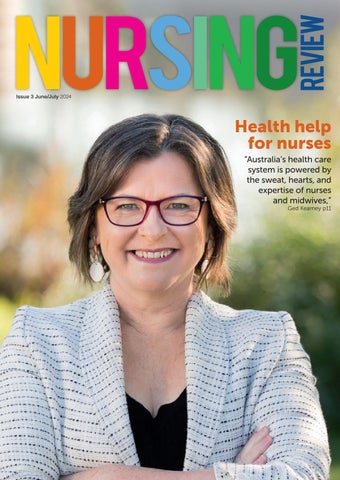
Health help for nurses “Australia’s health care system is powered by the sweat, hearts, and expertise of nurses and midwives,” Ged Kearney p11
ADELAIDE 25-27 JULY 2024
FESTIVAL OF NURSING
KEEPING PEOPLE WELL AND OUT OF HOSPITAL
GET YOUR TICKET NOW THE FESTIVAL IS BACK IN 2024, YOU THOUGHT 2023 WAS GOOD... 2024 WILL BE EPIC!
VIEW MORE DETAIL AND BOOK YOUR TICKETS: APNA.ASN.AU/EDUCATION/FESTIVAL OR SCAN THIS QR CODE.
contents
news
MANAGING EDITOR
Rebecca Cox rebecca.cox@news.com.au
2
ACN execs axed after alleged “financial irregularities”
HEALTH EDITOR
4
What’s in the budget to benefit nurses, midwives and the health sector?
6
Leave and conditions secured for Hawkesbury workers
7
NSW nurses’ union calls for 15% pay rise amid cost-of-living crisis
Arshmah Jamal arshmah.jamal@news.com.au SALES MANAGER
Sarah Licence sarah.licence@news.com.au SUBSCRIPTIONS MANAGER
Lee Burrell lee.burrell@news.com.au
04
06
industry and reform
COVER
8
Ged Kearney knows first-hand how hard it is to nurse, p11
EN times to be included with RN care minutes in aged care
10 Nurse-to-patient ratios introduced for NSW public hospitals
PUBLISHED BY
Nationwide News Pty Ltd GPO Box 4245 Sydney NSW 2001 ABN 98 008 438 828 Print Post 100008043 ISSN 1836-1501 OCLC 536881479 PUBLISHER’S NOTE
workforce
11 Government funds program to help nurse burnout
12
16
© Copyright. No part of this publication can be used or reproduced in any format without express permission in writing from Nationwide News Pty Ltd. The mention of a product or service, person or company in this publication, does not indicate the publisher’s endorsement. The views expressed in this publication do not necessarily represent the opinion of the publisher, its agents, company officers or employees.
12 The economic power of nursing enhances global resilience
15 NSW offers nurses pay rise, short of union’s demands
clinical practice
16 Depression training for SA nurses working in prisons
17 Endo nurses to be delivered to regional, rural and remote communities
19 New SA initiative to enhance maternal and child health through midwives
17
22
20 Why do loved ones with dementia sometimes ‘come back’ before death?
specialty focus
22 Florence Nightingale brought modern science and statistics to nursing
26 Young mothers ignored: Final day of NSW birth trauma inquiry
higher education
26
28
28 North Queensland nurses secure QUT scholarships nursingreview.com.au | 1
news
After a third-party investigation, ACN chief’s employment has been terminated. Picture: Supplied/Kylie Ward
Chief sacked ACN execs axed after alleged “financial irregularities” By Arshmah Jamal
T
he chief of a nursing peak body has been fired following an investigation finding alleged “financial irregularities” within the organisation. In April, Kylie Ward and two other Australian College of Nursing (ACN) executives were suspended following an independent investigation by third-party legal and forensic financial experts. Specific details have not been made public, and the board declined to answer any questions. A statement by the college announced the “termination” of ACN’s chief, Ms Ward, and the national director of partnerships, Karoline Dawe. “The investigation, which was carried out by third-party legal and forensic financial experts, concluded that in relation to Ms Ward and Ms Dawe there were financial irregularities and that actions by them were undertaken despite the clear established policies, delegations and ethical standards of the ACN. “As a result, Ms Ward’s and Ms Dawe’s employment has been terminated by the Board.”
2 | nursingreview.com.au
Ms Ward rejected the claim through her Facebook page, saying she only found out about her termination when a company-wide email was sent to staff. “The recent mercury retrograde was certainly a turbulent time for me,” Ms Ward said. “I have met the most wonderful people, but recent events [have left me] feeling humiliated, broken, violated of my rights to a fair process, my confidentiality breached and given to the media, as well as not natural justice have shattered my spirits. “Every day for the past [six] weeks, I have been inundated with hundreds of messages of love, strength, solidarity, and support.” Ms Ward said she was disappointed by how the situation was handled, telling the ABC that she had always acted with professionalism, ethics, and integrity. “I deny the allegations made and any wrongdoing, and I will pursue my legal options,” Ms Ward said. “All finances of ACN were independently audited and signed off by the Board during my appointment as the CEO. “I am a proud nurse, someone who has dedicated my life to a profession I love. I have always stood up for nurses across our country and have dedicated over 30 years of my life to the Australian
“Ms Ward rejected the claim through her Facebook page, saying she only found out about her termination when a company-wide email was sent to staff College of Nursing, including as a Fellow of ACN and in my service as its CEO for the past 8.5 years.” The college’s chief operating officer, Neil Haynes, was also stood down in April and decided to leave the college. The board has alleged that Mr Haynes had “failed to uphold acceptable governance practices and policies”. In a statement to the ABC, Mr Haynes denied the accusations. “The investigation found that Mr Haynes was not responsible for financial irregularities and did not establish any dishonest conduct by him.” A fourth employee was also asked to stand aside in April but is back in their role after the investigation found nothing wrong in relation to them. Professor Leanne Boyd, who was acting as interim chief, will continue the role as the college undertakes recruitment. ■
news
Federal Treasurer Jim Chalmers during Question Time at Parliament House in Canberra. Picture: NCA NewsWire/Martin Ollman
Budget 2024 What’s in it to benefit nurses, midwives and the health sector? By Arshmah Jamal
T
he 2024-25 Federal Budget was announced by Treasurer Jim Chalmers in May, with $8.5bn being invested into health. There are many indirect and direct measures, such as for placement payments for students studying nursing, that the Australian College of Nursing (ACN) chief Professor Leanne Boyd said would keep attracting nurses. “This Budget contains measures that respect nursing and recognise the unique and valued role that nurses play across the health system in so many settings,” Professor Boyd said. “Nurses, Nurse Practitioners, and Midwives stand ready to work to their full scope of practice to complement a stressed and strained medical workforce. “An unleashed nursing workforce will provide quality care where it is most needed, particularly in rural, remote, and regional communities where other health professionals are leaving, retiring, or are in short supply.” Here’s a breakdown of what’s being invested in and for nurses and midwives.
PLACEMENT POVERTY ADDRESSED FOR NURSING AND MIDWIFERY STUDENTS At the beginning of May, the Federal Government revealed it would wipe $3bn worth of student debt through changing the way HECS debts are indexed. 4 | nursingreview.com.au
Over the next 11 years, the Federal Government will also provide $1.6bn to support student nurses and midwives undertaking mandatory placement through a $320-a-week payment. Benchmarked to the single Austudy per week rate, the payment is expected to help about 68,000 university students and 5000 VET students annually. Education Minister Jason Clare said it would help students who are struggling to pay the bills to finish their courses. “Placement poverty is a real thing,” Mr Clare told ABC Radio. “We’ve got lots of people, whether they’re teaching students or nursing students, telling me they can afford to do the degree … but they can’t afford to do the prac,” he said. “This will provide that bit of extra help to pay the bills, put food on the table, pay for transport, and sometimes the relocation costs that come with practice.” The Budget papers stated that the funding for placement would help women get back on their feet, especially as completion rates plummeted. “Women make up around 87 per cent of nursing ... in higher education,” the budget papers stated. “Many students in these cohorts also juggle full-time or part-time study with paid work as well as caring and parental responsibilities. “Four-year completion rates [for students commencing in 2019] showed nursing fell from 64.3 per cent to 54.1 per cent over [students commencing in 2005].” The scheme will start July 1 next year.
“This Budget contains measures that respect nursing and recognise the unique and valued role that nurses play across the health system in so many settings However, not all students will be eligible as the payment will be means-tested and paid in addition to any income support the student may already be receiving. The Australian Nursing and Midwifery Federation (ANMF) federal secretary Annie Butler said the payments would finally recognise the financial and social pressure students, nurses, and midwives face while completing their minimum of 800 hours in placement. “It’s a huge financial and social burden on them to complete their nursing and midwifery course at a time when the cost-of-living pressures continue to grow,” Ms Butler said. “We have seen an increasing number of students dropping out of courses – which means Australia has lost future nurses and midwives because they can’t afford to complete their studies. “This new payment will help alleviate these costs and better support students who need to complete their clinical placements before starting their career. Alleviating financial burdens will also encourage more students into the nursing and midwifery workforce – supporting them through their, often, challenging courses.”
news
REINFORCING AND RETAINING THE AGED CARE AND HEALTH WORKFORCE The Budget included $88.4m to attract and retain the aged-care sector’s dwindling workforce. A joint statement from Aged Care Minister Anika Wells and Health Minister Mark Butler said the final award wages decision was anticipated around mid-year. “Last year, we invested $11.3 billion to deliver fairer wages for aged care workers in support of the Fair Work Commission’s 15 per cent wage increase decision,” the statement read. “In March this year, the Fair Work Commission made a further work value decision to increase award wages for many aged care workers.” The Federal Government will also provide $116.2m over five years to “strengthen and support” the health workforce. The funding will include $90m over the next three years, which will be used to fund the implementation of the Kruk Review – a review that covers health practitioner registration, skill and qualification recognition for overseas trained health professionals and international students who have studied in Australia. Over five years, $4.7m will be invested to increase the number of First Nations medical practitioners and to address recruitment and retention challenges in the NT.
MORE URGENT CARE CLINICS TO OPEN UP With the successful opening of 58 UCCs across Australia, the Treasurer allocated $227m for a further 29 to open up. “Since June last year, almost 400,000 visits have been made to our 58 Clinics in suburbs and regions all over Australia,” Mr Chalmers said. “And because these clinics open early and close late, more than one in three visits were outside normal working hours, taking pressure off emergency departments and making it easier for Australians to access free healthcare.” Early data published by the Queensland State Government found that in areas where UCCs had opened, non-urgent and semiurgent presentations in the ED were down. Logan Hospital was down by 10 per cent, and Ipswich 25 per cent. However, the clinics have created controversy among GPs, labelling them a “PR stunt” and nothing more than a “band aid”.
Royal Australian College of General Practitioners president Dr Nicole Higgins said the investment into UCCs was “misguided”. “There is no substitute for personalised quality care delivered by a GP who knows you and your history,” Dr Higgins said. “Every year, more than 22 million Australians choose to see a GP for essential healthcare. They deserve an affordable system. “Instead, the Government has chosen to continue its misguided policy of rolling out what it calls urgent care clinics.”
ACCESS TO IMPROVED HEALTH SERVICES Initiatives to improve access to sexual and reproductive healthcare gained $56.1m, including support for women’s health services on miscarriages, pre-term or early-term births, stillbirths, early pregnancy, and menopause. Over three years, $8m will be used to support the development of datasets on miscarriages and sexual and reproductive health and evaluation activities for early pregnancy assessment services. Over four years, $7m will be used to support the development of miscarriage education and awareness materials and provide funding for bereavement care services for women and families experiencing stillbirth or miscarriage. $5.8m is allocated over two years to continue strategies to prevent preterm and early-term birth, and reduce the number of babies born too early in participating maternity services and First Nations communities. $5.2m will be invested to support placement costs for health practitioners to undertake long-acting reversible contraception insertion and removal training. A further $3.5 million will expand the Midwife Professional Indemnity Scheme to include indemnity insurance coverage for privately practising midwives providing low-risk homebirths and intrapartum care outside of a hospital, and for specified entities providing Birthing on Country models of care. For health practitioners to treat, care and manage women’s health during menopause there is a further $1.2 million to support training. Under the Women’s strategy, access to pregnancy terminations is one of the key measures, especially since many states and territories
have expanded laws to include nurse practitioners. From November 1 this year, nurse practitioners under the Medical Benefits Schedule (MBS) will have the right to request ultrasound imaging to ensure safety and eligibility for abortion. In accordance with the MBS Review Taskforce, the government has committed to invest $56.5m for participating midwives to extend antenatal and postnatal attendance times, introduce a birth debrief and mental health screening, and ensure continuity of care. The government has also committed to removing the requirement for an eligible nurse practitioner or midwife to collaborate with a medical practitioner to prescribe PBS medications. The Budget papers stated the arrangement would remove barriers to primary care, especially for those in rural and remote areas. “It will support more effective use of the existing health workforce by recognising that nurse practitioners and midwives are autonomous professionals who can deliver high-quality care to patients within their scope of practice.”
NATIONAL PLAN TO END VIOLENCE AGAINST WOMEN AND CHILDREN The National Plan is a framework that will “guide actions” towards ending violence against women and children. The National Plan includes four domains, and nurses will continue to be funded as the “response” for accredited training in sexual violence responses.
ENDOMETRIOSIS The Albanese government has also announced a $49.1m investment into tackling endometriosis. From July 1 2025, women affected by the disease will have longer specialist consultations of 45 minutes or more covered under Medicare. Previously, an initial gynaecologist appointment received an $81.30 rebate, which covered only 10 minutes of a gynaecologist’s time. The size of the rebate had resulted in patients being crammed into short sessions, barely scratching the surface of their issues. As of July next year, Medicare will cover $168.60 for an initial appointment and $84.35 for follow-up appointments, compared to the previous rate of $40.85. ■ nursingreview.com.au | 5
news A rally to protest the loss of leave entitlements for Hawkesbury Hospital staff. Picture: Supplied/NSWNMA
‘Great relief’ Leave and conditions secured for Hawkesbury workers By Arshmah Jamal
N
urses and midwives at Hawkesbury District Health Service hospital have secured their leave entitlements following months of bargaining. From July, Hawkesbury District Hospital Health Service – which had been operated by St John of God Health Care for eight years – will be transferred to the public health Nepean Blue Mountains Local Health District. Staff at the hospital had been told their accrued annual leave and long service leave would not be transferred due to legal implications between the private and public sector systems. In April, nurses and midwives took to the streets to call on the government to ensure their leave entitlements would be transferred. Negotiations between the NSW Nurses and Midwives Association (NSWNMA) and the NSW government finally came to a halt when an agreement
6 | nursingreview.com.au
for staff to take their leave entitlements was reached. NSWNMA Hawkesbury District Health Service branch secretary Ben Wright said staff were immensely relieved by this decision and it was a “complete turnaround”. “This news comes as a great relief to my colleagues, many of whom were incredibly distressed by the thought of losing control of their leave entitlements,” said Mr Wright. “In early March, we were facing a forced leave payout, a loss of accrued sick leave entitlements and a drop in take-home pay due to changes in salary packaging arrangements. “We’ve now been assured that all our sick leave will be transferred, our current salary packaging arrangements will continue for another two years, and members will have the choice to transfer their long service and annual leave entitlements.” Mr Wright thanked the community and was immensely appreciative. “We are grateful for the support of the Hawkesbury community,” he said.
“We are grateful for the support of the Hawkesbury community. It’s good to know that the Hawkesbury cares for us, as much as we care for the Hawkesbury “It’s good to know that the Hawkesbury cares for us, as much as we care for the Hawkesbury. “This community’s overwhelming support lifted our spirits when we despaired over the possibility of having our leave taken out of our hands.” NSWNMA general secretary Shaye Candish said it was a fantastic result for Hawkesbury’s hardworking nurses and midwives. “We thank the NSW Government and St John of God Health Care for working collaboratively with us on this issue to achieve a positive outcome for staff,” said Ms Candish. “We know this has been an incredibly stressful and anxious time for our members, so this decision means a lot to them and their families.” ■
news
NSWNMA general secretary Shaye Candish (left) and assistant general secretary Michael Whaites (right) are seeking more for NSW nurses. Picture: News Corp Australia/Tim Hunter.
‘We deserve more’ Claim from NSW nurses’ union calls for 15% pay rise amid cost-of-living crisis By Arshmah Jamal
A
nurses’ union has warned the state government that it will be pursuing more action to build up the depleting public hospital workforce. In a statement released May 13, the NSW Nurse and Midwives’ Association (NSWNMA) called for a 15 per cent pay rise and improved conditions to repair the nursing and midwifery workforce across public NSW hospitals. As part of its claim, the NSWNMA is seeking a 30 per cent penalty rate for night shifts, increasing sick leave to 20 days, 100 percent salary packaging, more midwives working in midwifery group practices, and funding to meet nurse-to-patient ratios across all NSW public hospitals. The union has also demanded a better work-life balance for the workforce, including rostered days off and no changes to already published rosters unless the staff member has been consulted. NSWNMA general secretary Shaye Candish said the 15 per cent pay increase was justified due to the current economic climate. “A committee of our members combed through strong economic evidence from industrial relations and economic experts to
reach a pay claim we believe is reasonable and achievable,” Ms Candish said. “The rate of pay for this female-dominated workforce is failing to keep pace with male-dominated professions. “If we’re serious about closing the gender pay gap, if we’re serious about providing women economic security, then raising the pay of nurses and midwives will go a long way in achieving those aims.” New research from the economic consulting group E61 Institute found there was a wage gap of 15 per cent between men and women working in the same occupation – for the healthcare sector, the average is 18.2 per cent. Ms Candish said the pay rise would also help the cost-of-living pinch that many nurses and midwives are affected by. “They’re struggling to find affordable and secure housing in reasonable proximity to their workplaces and they’re being slugged parking fees at many public hospitals,” Ms Candish said. “It is time their pay reflects and respects their contribution to people’s lives and the economy.” Despite only being five months into the year, nurses and midwives in NSW have had many clashes with the state government. In good news, Hawkesbury District Health Service hospital workers secured their leave entitlements after months of bargaining, and at the beginning of April, aged care AINs and PCWs “finally” secured a 23 per cent pay rise.
“A committee of our members combed through strong economic evidence from industrial relations and economic experts to reach a pay claim we believe is reasonable and achievable Earlier this year, nurses and midwives across Westmead Hospital and Concord Hospital walked out and threatened to quit after parking fees meant they would have to fork out hundreds of dollars a week after the government lifted the subsidised pandemic parking fee. NSWNMA assistant general secretary Michael Whaites said the pay claim would make the state more attractive and competitive compared to other states. “Nurses’ and midwives’ wages in NSW have been eroded over time,” Mr Whaites said. “This is a necessary pay rise that addresses inflation and considers the productivity gains we’ve missed out on. It will lead to less overtime, reduced staff turnover, and ensure rosters are filled. “This will attract more people into the professions, as well as retain our experienced and skilled nurses and midwives, so we don’t continue to lose them across the border or see them leave the industry early.” ■ nursingreview.com.au | 7
industry & reform In a surprise announcement, minutes from ENs will be included into the RN care minutes. Aged Care minister Anika Wells. Picture: NCA NewsWire/Martin Ollman
‘Important role’ EN times to be included with RN care minutes By Arshmah Jamal
T
he Federal Government has announced that there will be adjustments to the care minutes target in aged care facilities to include enrolled nurses (EN)
8 | nursingreview.com.au
From October 1, care minutes will increase from the current 200 minutes of direct care per resident per day to 215 minutes. A registered nurse’s (RN) care time will also increase from 40 to 44 minutes. However, the Department of Health and Aged Care has altered the requirement, saying providers can also meet the 10 per cent of the RN targets –
4 minutes and 24 seconds – with care time delivered by an EN. “This small adjustment recognises the important role of ENs in aged care and will improve recruitment and retention of these skilled workers,” the update said. “It will also help [providers] to meet the care minutes if [they] are facing RN workforce shortages.
industry & reform
Chief of the Aged Care Industry Association Peter Hoppo welcomed the changes. Image: supplied
“This adjustment has been informed by stakeholder feedback including from providers, workers (particularly ENs), workers representatives, older people, state governments, and the TAFE sector.” Last month, Aged Care Minister Anika Wells said residents were receiving an “additional 3.6 million minutes of direct care every single day” – with an average of 201.93 care minutes per resident per day, including 38.76 by a registered nurse. “This represents an increase of 20 total care minutes per day since 2020-21,” Ms Wells said.
“This is in addition to delivering our 24/7 nursing requirement, with registered nurses now onsite 98.79% of the time, or 23 hours and 42 minutes per day.” However, only 32 per cent of homes reached both the 200 minutes and the additional 40 minutes of nurse care. The nationwide nursing shortage contributed to the low numbers, with figures from the Department of Health and Aged Care finding residential aged care faced a nursing gap of 5,918 nurses. Since September 2022, 54 aged care homes have been closed due to the staffing reforms. Currently, care time provided by ENs, personal care workers (PCW), and assistants in nursing (AIN) count towards a facility’s total care minutes time, but is separate from the direct RN care time requirements. The announcement is a major win for the sector’s stakeholders who have campaigned for recognition of EN care. Chief of the Aged Care Industry Association Peter Hoppo welcomed the changes and the acknowledgement of ENs. “This adjustment acknowledges the essential role that ENs play in the aged care sector,” Mr Hoppo said. “It not only enhances our ability to recruit and retain these crucial workers but also provides critical support in delivering care requirements amidst workforce shortages. “Not recognising the time enrolled nurses spend caring for residents as part of nursing care minutes has always
“It not only enhances our ability to recruit and retain these crucial workers but also provides critical support in delivering care requirements amidst workforce shortages been a disappointing flaw in the targets. This change is a significant first step in rectifying it.” Providers will continue to receive funding from October 1 to meet their care minutes as if the full 44-minute target is met by RNs. This means providers can still reach their full nursing target using RNs whenever possible. The Department has also announced that from July 1, providers must meet a new RN coverage threshold to receive the 24/7 RN supplement. “The registered nurse coverage threshold will increase to an average of 21 hours a day or 87.5 per cent of total hours for the month,” the statement read. “You may get 50 per cent of the supplement if you average up to 30 residents per month with at least 50 per cent (but less than 87.5 per cent) RN coverage. “From 1 October 2024, you will get more funding to meet your care minutes. We will be reducing the supplement rate at this time. You may get it if you have up to an average of 50 residents.” ■
The laTesT news for aged care professionals For more than 20 years, Aged Care Insite has remained the respected industry journal aimed squarely at the growing number of Australians working in the burgeoning aged care industry. We pride ourselves on being at the forefront of the ever-changing care sector, providing the workforce with an independent source of news, and covering the issues most relevant to you. • Latest updates in technology and research • Community stories from facilities just like yours • Comprehensive coverage of diverse topics • Weekly news update emails • Tax deductible • Free online access • Delivered bi-monthly directly to your door
Please email subs@apned.com.au to find out more. nursingreview.com.au | 9
industry & reform NSW Health Minister Ryan Park welcomed the ratio rollout. Picture: NCA Newswire/Gaye Gerard
More work to do Nurse-to-patient ratios introduced for NSW public hospitals By Arshmah Jamal
A
boost to staffing numbers has been welcomed by the nurses’ union with the immediate introduction of nurse-to-patient ratios for NSW public hospitals. The NSW Nurses and Midwives Association (NSWNMA) has welcomed the hiring of around 70 additional full-time equivalent nurses at the Royal North Shore and Liverpool Hospitals. The additional hires will meet the minimum ratios of one to one in resuscitation bays, and one to three in the emergency departments. NSWNMA general secretary Shaye Candish said the implementation of minimum and enforceable ratios meant patient safety would not be compromised. “After a decade of campaigning, we are very pleased to see this important piece of healthcare reform finally come to fruition in NSW,” said Ms Candish. “It will provide crucial workload relief for our members, who have been struggling with chronic understaffing for too long. It will also ensure our public hospitals are safer for patients, so they receive the care they deserve.
10 | nursingreview.com.au
“We are confident this staffing model will help to rebuild the workforce and lead to higher retention levels, while providing savings within health in the long run.” NSW Health Minister Ryan Park also welcomed the ratios, stating the reforms were a way to make nurses “feel supported”. “We are up on the number of nurses this time last year – around about 2100,” Minister Park said. “Recruitment is a challenge – there are no two ways about it. “But we are confident this initiative will not only deliver safer patient care but encourage people to embark on a profession as a nurse and keep those in the profession who are nursing.” NSWNMA assistant general secretary Michael Whaites said the ratios beginning was a relief, but said there was still a lot more work to be done. “We are eagerly anticipating the expansion of ratios to other EDs, and then ICUs, adult in-patient wards, maternity services and our state’s multi-purpose service sites, with the government committing to 2480 FTE nurses and midwives to achieve this,” said Mr Whaites. “We are seeking further funding from the government to ensure these five clinical areas receive ratios. “Current funding means the rollout won’t cover all wards and units in every hospital.”
“We are confident this staffing model will help to rebuild the workforce and lead to higher retention levels, while providing savings within health in the long run In May, the NSWNMA warned the state government that it would be ramping up its industrial actions to support its claim to build the depleting public hospital workforce. The claim includes a 15 per cent pay rise, a 30 per cent penalty rate for night shifts, increasing sick leave to 20 days, 100 per cent salary packaging, and more midwives working in midwifery group practices. “The pay claim also takes into account a decade of wage suppression by previous governments,” Mr Whaites said. “Nurses and midwives must not be forced to choose between safe workloads and fair pay. “They deserve more in 2024.” The union has been working with the state government to implement nurse-to-patient ratios through the Safe Staffing Levels Taskforce since May 2023. ■
Workforce Federal Assistant Minister for Health and Aged Care Ged Kearney said the program was long overdue. Image: supplied.
‘Long overdue’ Government funds program to help nurse burnout By Arshmah Jamal
A
$25.2m government program for nurses and midwives is being funded in hopes of combatting burnout, stress, and abuse that leads them to leave the industry. The Nurse Midwife Health Program Australia is already in its first phase with a support service through telehealth (1800 001 060) and a website where nurses and midwives can seek advice and referrals when needed. The next phase will see four in-person hubs set up – one to cover Victoria and Tasmania, NSW and the ACT, South Australia and Western Australia, and Queensland and the Northern Territory. These services will offer both face-to-face and telehealth services. Under the program, nurses will be employed to counsel the nurses and midwives who are stressed, burnt out, or abused.
Assistant Health and Aged Care Minister Ged Kearney said the program was long overdue. “Australia’s health care system is powered by the sweat, hearts, and expertise of nurses and midwives – it’s vital that we look after the health and wellbeing of the people who look after us,” she said. “As a former nurse, I understand just how challenging nursing and midwifery can be. “They’re physically demanding and psychologically taxing jobs.” Data from the Department of Health and Aged Care shows that since 2016, there has been a 60 per cent increase in nurses and midwives who have taken an extended leave of absence. Research by the Australian Primary Healthcare Nurses Association also found that 30 per cent were planning to leave their job within the next five years. According to media reports, a new poll by the Queensland Nurses and Midwifery Union (QNMU) has also found nearly half of Queensland nurses and midwives could quit in the next year. The QNMU has launched a new campaign calling on all Queensland
“Australia’s health care system is powered by the sweat, hearts, and expertise of nurses and midwives – it’s vital that we look after the health and wellbeing of the people who look after us politicians to commit to recruiting 11,800 additional nurses and midwives over the next four years with the upcoming budget. The initiative follows the introduction of the new Medicare and PBS rebates for nurse-led care to be autonomous, which prevented them from providing care they were qualified to perform without a sign-off from doctors. Federal assistant secretary of the Australian Nursing and Midwifery Federation Lori-Anne Sharp welcomed the program. “It’s nurses helping nurses,” Ms Sharp said. “Some of the emotional stresses of what they witness every day when dealing with people so closely and looking after them and their families can put them at risk of burnout.” ■ nursingreview.com.au | 11
Workforce
More than just care
The economic power of nursing enhances global resilience By Howard Catton
A
ny country that is serious about meeting the United Nations Sustainable Development Goals and providing Universal Health Coverage needs to realise that it cannot be done without nurses. Nursing is the golden thread that runs through health care, but it is not just about care when you are sick. Nursing is about the prevention of illness, health education, rehabilitation and supporting recovery and independence across the whole life cycle. Health is a fundamental platform on which people build their lives and become active members of society. And that is why this year’s International Nurses Day theme highlighted the benefits of access to nursing and the often-hidden economic power of care.
THE VALUE OF NURSES Globally there are 28 million nurses working to provide for the majority of the world’s health care needs. In hospitals, higher registered nursing staffing levels are associated 12 | nursingreview.com.au
with lower mortality among patients, to the extent that increasing registered nursing staff by an hour for each patient per day could reduce the risk of death by three per cent. For me, while the hospital is a place of repair, true health comes from our daily behaviours and nurses hold an expertise that goes beyond treatment. Nurses, especially those working in primary healthcare, are integrated and embedded deep into their communities where they work hands-on with those most in need. For example, infection control nurses in America and Australia are at the forefront of care for homeless people. Their contributions do not stop at the traditional boundaries of health care: instead, they are working with housing departments and employment agencies, going upstream from the problems that the patients manifest, and helping to get them off the streets and into dignified and affordable housing where they can truly regain their health.
INNOVATING TO CREATE NEW MODELS OF PATIENT-CENTRED CARE By supporting a shift from a hospital-centred model to community-based care, nurses
“Nursing is multifaceted and does more than help individuals who are sick; it drives advances in how we deliver healthcare, and in turn it promotes healthier, more stable, happier and wealthier societies are able to address the root causes of health issues. This means they are well placed to empower people with tools to manage their own health, which helps prevent illness and stop the deterioration of existing conditions. It is in this way that nurses play a crucial role in building health literacy and trust in a population. We recognise patients as partners and through self-care they have the tools to securely manage their health between check-ups. Nurses can then play the role of care coordinator, helping people navigate health and social support systems to access the interventions they need. Owing to this broader scope, we at the International Council of Nurses have
Workforce
updated our code of ethics for nurses, which outlines the role nurses play in promoting human rights, sharing unbiased information and balancing social injustices by placing patients’ needs first.
BARRIERS TO PROVIDING APPROPRIATE CARE What I hope to make clear here is that nursing is multifaceted and does more than help individuals who are sick; it drives advances in how we deliver healthcare, and in turn it promotes healthier, more stable, happier and wealthier societies. But its potential to do all this is being undermined by a long-standing global shortage of at least six million nurses, which has been exacerbated by the effects of the Covid-19 pandemic. Alongside individual nurses being ill and burned out by the pandemic, increased international recruitment is widening disparities in the global burden of disease. For instance, while 16% of the world’s
population is in the continent of Africa, Africa has 23% of the global disease burden, but only has access to three per cent of the nursing workforce. Too often we hear governments discuss health sector spending as though it is a luxury. But research suggests that investing in health accelerates economic growth, reducing admissions to hospital and the cost of health care. It also allows people with long-term conditions to remain economically active. The $2.7 trillion lost from the global economy during the pandemic should highlight the repercussions of weak health systems and why we need to direct resources into training, retaining, and replenishing our global nursing workforce. Nursing often comes top of the list of the most trusted professions, and it is this highly trusted status that encourages people to follow the advice that nurses give them. But this trust is built on having sufficient quality time spent understanding patient
needs and desired health outcomes, which becomes more difficult if there are staff shortages and health care becomes a mechanical list of procedures.
THE POWER OF NURSING The pandemic showed us that economic resilience is built on health security, and that this is only possible through a properly funded and well-staffed nursing sector. Our 10-point Charter for Change highlights how we can reorient health systems to provide proper human care. And our recently released report, with contributions from the OECD and World Bank, highlights the investment case that we want politicians to use to bring forward better policies (Link to May 12th Report). Investing in the economic power of nurses is essential to building universal health coverage and achieving sustainable development for all. ■ Howard Catton is the CEO of the International Council of Nurses.
subscribe for less than $2 a week The laTesT news and resources for healThcare professionals Nursing Review essential subscribe forisless thanreading $2 Perforweek anyone involved in the healthcare sector in Australia. It provides unrivalled coverage of
from features The laTesTspecialist news topics for nursing andand opinion pieces, to international news and profiles. healThcare professionals
• Latest news and resources for all Nursing Review is essential reading for anyone involved healthcare professionals in the healthcare sector in Australia. It provides • Comprehensive coverage of a diverse unrivalled coverage of specialist topics from features range of topics and opinion pieces, to international news and profiles. • Analysis of the major issues facing the • Latest news and resources for all healthcare health sector as a whole professionals • Comprehensive coverage diverse range of topics • Delivered free of of acharge • Analysis of the major issues facing the health sector as a whole• 6 issues per year • Delivered free of publication charge to your home or place of • Only in the country dedicated work monthly to reporting issues important to nurses
Please email to find outoutmore. Pleasesubs@apned.com.au email subs@apned.com.au to find more. nursingreview.com.au | 13
The laTesT news for aged care professionals
IN OUR VOLATILE INDUSTRY, AGED CARE INSITE KEEPS YOU UP TO DATE ON ALL THE LATEST NEWS Aged Care Insite provides the best in original journalism, and is the authoritative source of news and analysis for the residential and community care sectors. We pride ourselves on being at the forefront of what's happening in the ever-changing aged care sector. We provide an independent source of news, and cover the issues relevant to you.
• Comprehensive coverage of a diversity of topics affecting the aged care sector • News and information on medical matters and products • Analysis of the major issues facing the aged care sector as a whole • 6 issues per year • Editorial integrity and industry relevance • Keeps industry professionals up-to-date on the politics and policy that matter • Tax deductible
Please email subs@apned.com.au to find out more.
Workforce The Minns Government has offered pay rises to nurses that are under what the unions are asking for. Picture: NCA NewsWire/Gaye Gerard.
“The treasurer said the offer is higher than those for public sectors in other states and will deliver wage growth that surpasses the projected cost of living increases over the next three financial years
‘Starting point’ NSW offers nurses pay rise, short of union’s demands By Arshmah Jamal
T
he NSW government has offered public sector workers, including nurses, a three-year pay rise worth 10.5 per cent, which is well under the demands of some of the unions. The Minns government announced the offer late in May, and it applies to workers whose industrial agreements are due for renewals, including nurses. The offer includes a four per cent pay rise in the first year, 3.5 per cent in the second, and three per cent in the third, including a superannuation increase of 0.5 per cent in July this and next year. Workers will also receive a $1000 ‘cost-of-living’ protection payment if inflation exceeds 4.5 per cent in any year. State Treasurer Daniel Mookhey said the offer is higher than those for public sectors in other states and will
deliver wage growth that surpasses the projected cost of living increases over the next three financial years in accordance with the Sydney Consumer Price Index (CPI). “This is about giving certainty for hard-working families across NSW, with a [three-year] offer to see pay and conditions improve,” he said. “It creates a new, fair framework that can deliver a better outcome for everyone.” The recent forecast by Mr Mookhey is for Sydney CPI to be 3.1 per cent in 2024-25, 2.7 per cent in 2025-26, and 2.5 per cent in 2026-27. The government said the new offer was a starting point and hoped to have a “collaborative approach to bargaining” with the unions. “Crucially, unions and agencies can now sit down to find these mutuallyagreed improvements during the life of an agreement – something unavailable under the former government,” the statement read.
Industrial Relations Minister Sophie Cotsis said the government was delivering on their promises of “scrapping the wages cap”. “After 12 years of neglect – of no industrial relations reforms and no award reforms – we are now fixing the system,” Ms Cotsis said. “The work of rebuilding essential services is not well underway. “This baseline offer lays the foundation for a fairer system for workers and their families in NSW.” The NSW Nurses and Midwives Association (NSWNMA) has been calling for a 15 per cent pay rise and warned that it would pursue more action to build up the depleting sector. As part of their claim, the NSWNMA seeks a 30 per cent penalty rate for night shifts, increasing sick leave to 20 days, 100 per cent salary packaging, more midwives working in midwifery group practices, and funding to meet nurse-to-patient ratios – which was introduced last week at Royal North Shore and Liverpool Hospital. NSWNMA general secretary Shaye Candish said the “blanket” proposal was not in response to the claim, nor was it a formal offer to the union. “Our members are angry that the government could consider [three per cent] as a starting point to redress the many years of wage suppression under previous governments,” Ms Candish said. “The NSWNMA’s one-year 15 per cent pay claim takes into account the decades of neglect by successive Liberal governments. It’s now up to the Labor government to fix this and pay nurses and midwives properly. “If the government is serious about attracting and retaining nurses and midwives in the public health system, it must pay them a wage that is competitive with other states like Queensland, and make NSW a rewarding and robust location to work in once again.” ■ nursingreview.com.au | 15
clinical practice
‘Reduce reoffending’ According to experts people in custody have very high levels of depression.
Depression training for SA nurses working in prisons By Arshmah Jamal
P
rison nurses in regional South Australia are receiving specialist psychosocial training under a new program aimed at improving the mental health of people in custody. The University of South Australia’s trial aims to equip nurses with the necessary skills to administer evidence-based mental health treatments within the correctional health system. Currently, the trial is being conducted in rural SA prisons at Port Lincoln, Port Augusta, Mobilong, and Cadell. Associate professor and lead researcher Martin Jones said the study highlights the need to address the mental health needs of people in custody, especially those in rural areas. “People in custody face extremely high rates of depressive disorders,” Professor Jones said. “Yet, too often, people in custody encounter significant barriers to accessing psychological treatments such as cognitive
16 | nursingreview.com.au
behavioural therapy or specialist mental health workers.” Under the program, Nurses complete the Professional Certificate in Behavioural Activation for Depression. “We’re hoping that this opportunity could present custodial nurses with a convenient and accessible means to enhance their skills and contribute to a more responsive local care community,” Professor Jones said. “Beyond this, the program has the potential to extend across Australia.” One nurse taking part in the program, Jolene Murray, who is based at Mobilong Prison, said the UniSA course was filling a much-needed gap in the system. “This program will be extremely beneficial for … clinicians in providing a psychosocial treatment for depression, especially those clinicians working on mental health portfolios,” Ms Murray said. “I am very excited to be a part of the behavioural activation clinical trial and I believe that addressing high rates of depression within the prison population through psychosocial treatment, will not only have a positive effect on consumers but also reduce re-offending.”
“We’re hoping that this opportunity could present custodial nurses with a convenient and accessible means to enhance their skills and contribute to a more responsive local care community Behavioural activation refers to a psychosocial intervention that focuses on supporting people living with depression to engage in meaningful activities to improve mood and motivation. Custodial nurse at Port Augusta Prison Janice Scott said the program presented a new approach to patient-centred care in prisons. “This course has been a great resource for people in custody who have depression,” Ms Scott said. “Already, it has helped many of our patients to overcome their depression and gain employment in the prison. “But importantly, it has also helped them to communicate with their family on the outside.” ■
clinical practice
Specially trained endometriosis nurses will help shorten the diagnosis process and help women suffering from the disease.
Upskill nurses Endo nurses to be delivered to regional, rural and remote communities By NCA NewsWire and Arshmah Jamal
O
ne hundred endometriosis nurses will be specially trained and stationed in regional, rural and remote parts of the country to help improve the outcomes for the hundreds of thousands of Australians with the chronic disease. An estimated one in seven Australian women and girls are affected by endometriosis, a condition where tissue similar to the lining of the womb grows outside the uterus. It takes about seven to 10 years on average to get a diagnosis, while those living in regional and remote parts of the country experience even more significant delays. Now, Endometriosis Australia, in partnership with the Australian College of Nurses, will launch a scholarship
program to upskill nurses to help speed up diagnosis. A trained endo nurse is able to help identify the signs and symptoms of endometriosis and assist in the treatment of management. Lucy Downey recently graduated from the Australian College of Nursing with a specialisation in endometriosis and chronic pain and is now working in her rural community of Woolgoologa on the NSW mid-north coast. She said upskilling more nurses would improve lives. “Nurses are advocates for patients, and we have so much more time to spend with them than doctors or other healthcare professionals,” she said. “If we are upskilled in conditions like endometriosis, it means we have the potential ability to recognise the signs and symptoms faster, even through seemingly unrelated conversations with patients, ultimately improving the quality of care patients receive. “The fact that this new scholarship is focused on upskilling nurses in regional
“A trained endo nurse is able to help identify the signs and symptoms of endometriosis and assist in the treatment of management and rural areas is important to improving care for those who could have potentially gone undiagnosed, or experienced a significant delay in diagnosis.” Endometriosis Australia will use government grants and community donations to deliver the 100 trained endo nurses, with each scholarship to cost $2900. It follows the announcement in the Budget of $49.1m investment into tackling the disease including that from July 1, 2025, women suffering from endometriosis will have longer specialist consultations of 45 minutes or more covered by Medicare. ■ nursingreview.com.au | 17
SubScribe for leSS than $2 a week
The laTesT news and resources for healThcare professionals Nursing Review is essential reading for anyone involved in the healthcare sector in Australia. We provide unrivalled coverage of specialist topics from features and opinion pieces, to international news and profiles of industry leaders and those at the coal face. At Nursing Review we pride ourselves on being at the forefront of the ever-changing healthcare sector, with all the latest on industry reform, pay issues, clinical updates, what's happening in the workforce, and technology.
• Analysis of the major issues facing the health sector today • Can be used as a professional development resource • 6 issues per year • Interviews and opinion pieces from professionals in the industry • Written by an independent voice • Tax deductible
Please email subs@apned.com.au to find out more.
clinical practice
‘Pivotal role’ New SA initiative to enhance maternal and child health through midwives By Arshmah Jamal
N
ew research could see South Australian midwives taking on an even more crucial role in supporting pregnant women to address alcohol and other drug use. A new initiative between Flinders University, the University of Adelaide, and the Northern Adelaide Local Health Network (NALHN) is set to explore the potential of midwives in promoting vital public health messages and providing support for abstinence during pregnancy. The project aims to investigate the pivotal role midwives play in engaging with pregnant women during routine hospital antenatal clinic visits. It seeks to enhance systems for identifying and supporting the reduction of alcohol and other drug use during pregnancy. Dr Matthew Stevens, the lead author of the study from The University of Adelaide, said it was important to address substance use during pregnancy. “Alcohol, tobacco, and illicit drug use during pregnancy can cause significant harm to women and their developing babies,” he said. “Despite recommendations for abstinence during pregnancy, some women require additional advice and support, making screening and early intervention crucial for risk reduction.”
It is estimated that approximately 60 per cent of Australian pregnancies are alcohol-exposed. According to the Australian Institute of Health and Welfare, 2.3 per cent of women used an illicit drug while pregnant. Almost 49 per cent drank alcohol before they knew they were pregnant, and 25 per cent drank after they knew. The initiative comes at a time of shifting attitudes and habits surrounding substance use, with emerging trends such as vaping posing new challenges. “We’ve seen a significant shift in the availability and attitudes towards substances like alcohol, tobacco, and cannabis,” Dr Stevens said. “We hope this program will evaluate current practices and provide midwives and other health professionals working with pregnant women with the knowledge and skills to support them to stop using substances, alcohol or smoking in pregnancy to improve both their and their baby’s health.” “Midwives are ideally positioned to help women navigate these changes and make informed decisions for their health and the well-being of their babies.” Dr Annette Briley, professor at NALHN and Flinders University, said the study aimed to improve the rates of screening and intervention for substance use among pregnant women, including appropriate referral for those who may be substance-dependent. “We have outlined a protocol which focuses on a multi-stage approach in implementation. “With periods of abstinence promoted during pregnancy, this time presents
“[The project] aimed to improve the rates of screening and intervention for substance use among pregnant women, including appropriate referral for those who may be substance-dependent an ideal opportunity to discuss lifestyle practices and seek help to make change to healthier lifestyle choices.” Dr Briley emphasised the importance of evaluating and enhancing current practices to equip midwives with the knowledge and skills to support pregnant women effectively. “A prize example is vaping, with conflicting advice in the media about its impact on the persons’ health, but also the unborn child,” said Dr Briley. While midwives are well-equipped to initiate referrals for support to quit smoking, substance use, and alcohol intake, the research team aimed to assess their awareness and confidence in addressing current trends. The research team has completed the initial phases of the project, including a retrospective case note review and a Training Needs Analysis of midwifery staff. It will now focus on providing training around identifying and responding to alcohol and other drug use, with the ultimate goal of improving maternal and child health outcomes. ■ nursingreview.com.au | 19
clinical practice
Terminal lucidity Why do loved ones with dementia sometimes ‘come back’ before death? By Yen Ying Lim and Diny Thomson
D
ementia is often described as “the long goodbye”. Although the person is still alive, dementia slowly and irreversibly chips away at their memories and the qualities that make someone “them”. Dementia eventually takes away the person’s ability to communicate, eat and drink on their own, understand where they are, and recognise family members. Since as early as the 19th century, stories from loved ones, caregivers and health-care workers have described some people with dementia suddenly becoming lucid. They have described the person engaging in meaningful conversation, sharing memories that were assumed to
20 | nursingreview.com.au
have been lost, making jokes, and even requesting meals. It is estimated 43% of people who experience this brief lucidity die within 24 hours, and 84% within a week. Why does this happen?
Terminal lucidity or paradoxical lucidity? In 2009, researchers Michael Nahm and Bruce Greyson coined the term “terminal lucidity”, since these lucid episodes often occurred shortly before death. But not all lucid episodes indicate death is imminent. One study found many people with advanced dementia will show brief glimmers of their old selves more than six months before death. Lucidity has also been reported in other conditions that affect the brain or thinking skills, such as meningitis, schizophrenia, and in people with brain tumours or who have sustained a brain injury.
Moments of lucidity that do not necessarily indicate death are sometimes called paradoxical lucidity. It is considered paradoxical as it defies the expected course of neurodegenerative diseases such as dementia. But it’s important to note these episodes of lucidity are temporary and sadly do not represent a reversal of neurodegenerative disease.
Why does terminal lucidity happen? Scientists have struggled to explain why terminal lucidity happens. Some episodes of lucidity have been reported to occur in the presence of loved ones. Others have reported that music can sometimes improve lucidity. But many episodes of lucidity do not have a distinct trigger. A research team from New York University speculated that changes in brain activity before death may cause terminal
clinical practice
lucidity. But this doesn’t fully explain why people suddenly recover abilities that were assumed to be lost. Paradoxical and terminal lucidity are also very difficult to study. Not everyone with advanced dementia will experience episodes of lucidity before death. Lucid episodes are also unpredictable and typically occur without a particular trigger. And as terminal lucidity can be a joyous time for those who witness the episode, it would be unethical for scientists to use that time to conduct their research. At the time of death, it’s also difficult for scientists to interview caregivers about any lucid moments that may have occurred. Explanations for terminal lucidity extend beyond science. These moments of mental clarity may be a way for the dying person to say final goodbyes, gain closure before death, and reconnect with family and friends. Some believe episodes of terminal lucidity are representative of the person connecting with an afterlife.
Why is it important to know about terminal lucidity? People can have a variety of reactions to seeing terminal lucidity in a person with advanced dementia. While some will experience it as being peaceful and bittersweet, others may find it deeply confusing and upsetting. There may also be an urge to modify care
“One study found many people with advanced dementia will show brief glimmers of their old selves more than six months before death plans and request lifesaving measures for the dying person. Being aware of terminal lucidity can help loved ones understand it is part of the dying process, acknowledge the person with dementia will not recover, and allow them to make the most of the time they have with the lucid person. For those who witness it, terminal lucidity can be a final, precious opportunity to reconnect with the person that existed before dementia took hold and the “long goodbye” began. ■ Yen Ying Lim is Associate Professor, Turner Institute for Brain and Mental Health at Monash University and Diny Thomson is a PhD (Clinical Neuropsychology) Candidate and Provisional Psychologist at Monash University. This article is republished from The Conversation under a Creative Commons license. Read the original article at theconversation.com/au
The laTesT news for aged care professionals For more than 20 years, Aged Care Insite has remained the respected industry journal aimed squarely at the growing number of Australians working in the burgeoning aged care industry. We pride ourselves on being at the forefront of the ever-changing care sector, providing the workforce with an independent source of news, and covering the issues most relevant to you. • Latest updates in technology and research • Community stories from facilities just like yours • Comprehensive coverage of diverse topics • Weekly news update emails • Tax deductible • Free online access • Delivered bi-monthly directly to your door
Please email subs@apned.com.au to find out more. nursingreview.com.au | 21
SPECIALTY FOCUS
Florence Nightingale.
Called to serve 22 | nursingreview.com.au
SPECIALTY FOCUS
Florence Nightingale brought modern science and statistics to nursing By Melissa Pritchard
F
or nearly 200 years, Florence Nightingale’s name has been synonymous with gentle compassion and mercy. In the mid-19th century, Nightingale became perhaps the most celebrated woman of her era – second only to Queen Victoria – for instituting sanitation practices that sharply cut death rates among British soldiers fighting in the Crimean War. A handsome bronze statue in London’s Waterloo Place has immortalized Nightingale as a slight, graceful figure carrying a lamp, the embodiment of selfless womanhood. But this iconic image overshadows many other accomplishments. Nightingale also transformed nursing into a respectable profession, founded the world’s first nursing school, used the relatively new science of statistics to improve health care outcomes and redesigned hospitals. She was also one of Western history’s first advocates of health care for all. Over the five years I spent researching and writing my biographical novel about Nightingale, “Flight of the Wild Swan,” published March 12, 2024, my vaguely sentimental notions about her were replaced by respect for her visionary achievements. I resolved to bring into sharper focus this woman who, along with her legendary work as a war nurse, spent half a century pioneering advances in health care. The 19th century ushered in a series of revolutionary medical advancements. Nightingale’s contributions were a significant part of this era.
CALLED TO SERVE THE SUFFERING Florence Nightingale was born in Florence, Italy, on May 12, 1820, to William and Frances Nightingale, a wealthy British couple. The Nightingales raised their two daughters, Florence and her sister Parthenope, on two estates in England. William homeschooled the girls, giving them the equivalent of his own Cambridge University education. From an early age, Nightingale displayed a formidable intellect, with a particular interest in mathematics. At 16, she experienced a transcendent call to serve the suffering, a call that eventually coalesced into her
determination to become a nurse. Her family objected, however, because nursing was an unsuitable occupation for young Victorian women of privilege. It was considered disreputable work with a status even lower than that of servants. But Nightingale gradually overcame her family’s objections, receiving training in Germany and France. In 1853, she became the superintendent of a small hospital in London for “distressed gentlewomen.” The majority of her patients were educated, unmarried governesses whose health had broken down under the strain of long hours of work and negligible pay. A little over a year later, she was on her way to the Crimean War.
BRINGING SANITATION TO MEDICINE In October 1854, Nightingale brought 38 female nurses under her supervision to Scutari Barrack in Constantinople – today’s Istanbul. Originally a gargantuan stone barracks for the Turkish army, Scutari was now a British hospital housing thousands of wounded English and Irish soldiers. At Scutari, she and her nurses found few provisions, little medicine or edible food, and overcrowded hospital wards full of rats, lice and raw sewage. More soldiers were dying of cholera and other infectious diseases than of battle wounds. Nightingale and her nurses set to work cleaning and procuring food, soap, bandages, medicine, clean bedding and clothes for patients. As living standards improved, Scutari’s appalling death rate began to decline. It was there that Nightingale’s reputation as the “Angel of the Crimea” and the “Lady with the Lamp” began. Wartime journalists telegraphed their newspapers with dramatic accounts of her work. These stories ignited the public’s imagination and created the indelible image of a slight, feminine figure carrying her lamp through hospital wards at night. In January 1855, British Prime Minister Henry John Temple, 3rd Viscount Palmerston, dispatched a newly formed Sanitary Commission to the Crimea to investigate high mortality rates in the military hospital. Nightingale observed firsthand the dramatic decline in death rates as the commission cleaned out the hospital’s befouled sewer systems, limewashed its walls – in effect killing surface bacteria – and made numerous other sanitation improvements.
“Nightingale also transformed nursing into a respectable profession, founded the world’s first nursing school, used the relatively new science of statistics to improve health care outcomes and redesigned hospitals Nightingale was already a proponent of hygiene, fresh air and proper diet in medical care; this experience made her a committed sanitarian. When the war ended in 1856, Nightingale returned home, permanently bedridden with chronic brucellosis, then called “Crimean fever.” This didn’t stop her from spending the rest of her life applying herself to improving health care systems in Great Britain and other countries.
USING NUMBERS TO CURE Statistics was a relatively new science in Nightingale’s time, but it aligned with her early interest in mathematics. Ultimately, Nightingale would come to believe that statistics used to help reduce mortality rates were “the true measure of God’s purpose.” Collaborating with William Farr, a leading figure in applying statistics to epidemiology, Nightingale analysed extensive data on army mortality rates during the Crimean War, proving that most deaths were attributable to preventable diseases rather than battlefield injuries. She was particularly innovative in her use of graphic diagrams such as her famous “rose,” or “coxcomb,” diagram, rightly believing that attractive visuals were more impactful than the dry numbers tables favoured by the era’s statisticians. Nightingale used statistical data to create her famous ‘rose chart’ – one of the first pie charts ever created – showing that the vast majority of deaths among British soldiers during the Crimean War were from preventable diseases, not battle wounds. Wikimedia Commons/Public Domain As a result, in 1858, in recognition of her use of the statistical method in army sanitary reform, Nightingale was inducted into the Royal Statistical Society as the organisations’s first female fellow. In 2020, the Royal Statistical Society established an > nursingreview.com.au | 23
SPECIALTY FOCUS
annual Florence Nightingale Award for Excellence in Health and Care Analytics. In a revolutionary step, Nightingale extended her statistical methods and data visualization to other areas, ranging from hospital administration and health care management to public sanitary reform and the sources of preventable diseases. These analyses further exposed the causes of both military and civilian mortality.
EDUCATING FUTURE NURSES In 1860, seeking to elevate nursing into both a science and an art, Nightingale founded the world’s first school of nursing: the Nightingale Training School for Nurses at St. Thomas’ Hospital, London. The female students – numbering 20 to 30 at a time – lived at school and wore nurses’ uniforms to rigorous classes on
A memorial statue to Nightingale is part of the The Guards Crimean War Memorial in Waterloo Place, Central London.
24 | nursingreview.com.au
SPECIALTY FOCUS
anatomy, surgical nursing, physiology, chemistry, sanitation and ethics. By the 1880s, Nightingale had accepted the newer “germ theory” of disease spread, and this became part of the curriculum. At the conclusion of the one-year program, Nightingale sent her nurses into the world as certified and paid health professionals. By the turn of the century, the school had graduated nearly 2,000 certified nurses. Known as “Nightingales,” they fanned out across Great Britain to practice skilled patient care, develop nursing care systems, teach, train and mentor. The Nightingale Training School became a pioneering model for nursing education throughout Great Britain. Similar schools would be established in Africa, America, Australia, Canada and other countries.
Nightingale also wrote a bestselling book, 1859’s “Notes on Nursing,” that guided Victorian wives in keeping members of their households healthy.
ADVOCATING FOR PUBLIC HEALTH Nightingale’s long, ultimately successful effort to bring trained nurses and midwives into England’s and Ireland’s notorious workhouses has gone largely unacknowledged. During Victorian times, paupers in workhouses who became ill could be cared for only by other destitute workhouse residents. Nightingale wrote numerous articles emphasizing the need for public health nurses to care of the sick in these institutions, and during the 1860s she called for the abolition of England’s harsh poor laws.
As a result of these efforts, workhouse nursing reforms gradually spread across England. I believe that a more fully realized understanding of Nightingale’s life and achievements beyond being “the lady with the lamp” can provide an inspirational role model for those considering careers in nursing, medical science and public health today. ■ Melissa Pritchard is Professor Emeritus of English and Women’s Studies at Arizona State University. This article is republished from The Conversation under a Creative Commons license. Read the original article at theconversation.com/au
Nightingale used statistical data to create her famous ‘rose chart’ – one of the first pie charts ever created – showing that the vast majority of deaths among British soldiers during the Crimean War were from preventable diseases, not battle wounds. Wikimedia Commons/Public Domain
nursingreview.com.au | 25
SPECIALTY FOCUS A record 4000 submissions were received over a six-week period, detailing trauma during childbirth.
When things go wrong Young mothers ignored: Final day of NSW birth trauma inquiry By Arshmah Jamal
T
he final hearing of the New South Wales birth trauma inquiry in April heard from two young mothers about their traumatic experiences when giving birth. The inquiry has received more than 4000 submissions detailing the disrespectful – and sometimes dehumanising – treatment women have received in NSW’s maternity system.
Cassidi-Rae Amosa said she felt violated during her birth. Picture: Supplied/NSW Parliament
26 | nursingreview.com.au
POST-PARTUM TREATMENT Mum of three, Cassidi-Rae Amosa gave evidence via video link, sharing her story of a post-traumatic stress disorder (PTSD) diagnosis following a traumatic birth. At 21, Ms Amosa suffered multiple strokes nine days postpartum allegedly due to hospital negligence. “After giving birth to my youngest child, my placenta split and got caught and was unable to pass by itself,” Ms Amosa told the inquiry. “Rather than sending me to the theatre, after multiple attempts of pushing out the remains of the placenta by pushing down on my stomach, the doctor decided to perform the most inhumane procedure I’ve ever heard, and quite frankly, it still gives me nightmares and flashbacks.” Ms Amosa detailed how the doctor had given her gas for the pain, and then “her whole fist entered” her vagina to grab the missing placenta out without asking for consent or explaining what was happening. “I was violated. There’s no other word for it. No is no. It’s non-consensual. It’s disgusting. I would put it in the same category as rape,” Ms Amosa said. Nine days postpartum, she had five small strokes and one life-threatening one, which left her having to learn how to walk, talk, and live life again.
“I believe my strokes could have been avoided by many things,” Ms Amosa said. “I am not just a mother of three anymore; I am more than that. I am a victim of medical negligence, I’m a survivor of multiple strokes, and I’m a woman with PTSD and severe anxiety.”
KEPT IN THE DARK ABOUT HER FULL-TERM STILLBIRTH Larissa Palamara was not told about the death of her daughter, Amber, in utero while giving birth in 1997. The now 46-year-old told the inquiry while she was pregnant as a teenager in 1997, doctors put her under a general anaesthetic and delivered her stillborn daughter via emergency caesarean section without informing her that Amber had died. In her testimony, she showed the committee a photo of Amber. “This is my little girl. She was perfectly formed, she was ready to be born, and I was the only person in the room who didn’t know she was already gone, and that was taken from me,” Mr Palamara said. In a lengthy investigation process, the hospital admitted the medical staff were aware her daughter had died before the caesarean but did not tell her.
SPECIALTY FOCUS
“They knew, and they’ve admitted it was too hard for them to face me until I was sedated,” Ms Palamara said. “I was told that they apologised, that I went to the hospital on a long weekend. It was Easter weekend, and they were operating on insufficiently trained skeleton staff.” Ms Palamara was diagnosed with PTSD following her postpartum experience, however, she told the inquiry the trauma began before the death of Amber. She recounted ongoing bullying from her assigned midwife, who humiliated her because of her age and ignored her concerns about the lack of movement from her baby, who ultimately died in her womb. “I was described by my primary care midwife as a neurotic first-time motherto-be, that I was problematic at every appointment,” she said. “I was told in front of all of those midwives that because I was protecting my ‘bikini body’ and consistently losing weight, my big baby had nowhere to move, and I couldn’t expect to feel it move. “[One] time, she turned around to the student midwife and stated, ‘When you get to the time of wanting to have a baby of your own, don’t worry about the stretch marks. You’re
not going to look like her because I’m sure your hygiene will be far better.’”
CALLS FOR FREE PSYCHOLOGY SESSIONS Psychologists and mental health advocacy groups have called on the government to fund 40 free psychology sessions for mothers after birth trauma and raise the rebate for all psychologists to at least $150 per session. Psychologist and researcher AlyshaLeigh Fameli said the fourth-leading cause of maternal death was suicide, and 10 sessions were “grossly insufficient” and not relevant to the “trauma experiences” mothers go through. “It is unfeasible to expect that someone is going to come in and they’re going to go, ‘Here are all the things that have happened to me in my life and how they might be contributing to where I am now,’ and be able to wrap that up neatly in 10 sessions,” Ms Fameli said. “In terms of trauma therapy, [it] often involves a more intensive approach. If we were doing best practice, sometimes things like EMDR therapy, we would be looking at two sessions a week for blocks of time. “Once you’ve built rapport in 10 sessions, you are done within three weeks. It’s not practical for anyone, really, unless you Larissa Palamara showing a photo of her and her baby, Amber. Picture: Supplied/NSW Parliament
“I was told in front of all of those midwives that because I was protecting my ‘bikini body’ and consistently losing weight, my big baby had nowhere to move, and I couldn’t expect to feel it move were potentially coming in with a very, very mild anxiety or something like that, which you could probably benefit from other programs for.” President of the Australian Association of Psychologists Sarah Behardien O’Doherty said a single rebate across all psychologists would help. “For clinical psychologists, it’s roughly $136 per rebated session. For registered psychologists – that includes all other endorsement areas and all of the other psychologists – the rebate is roughly $93. There’s about a $40 gap between that,” Ms O’Doherty said. “I also just want to call attention to the perinatal or pregnancy counselling rebates that Medicare allows. Only three Medicare rebated sessions are able to be provided under that service, and that could be in addition to the mental healthcare plan of 10 sessions. However, the rebate for this is substantially lower – it’s only $63 per session. “What the [association] is advocating for is one single rebate that actually exceeds the current rebated amount that clinical psychologists are currently able to provide. We’re advocating for a $150 rebate per session across the board for all psychologists who are qualified to provide services in this space.”
REPORT DUE IN JUNE The inquiry has been called the “MeToo movement” for birth, when midwifery researchers estimated one in three mothers reported birth trauma following delivery. The committee has heard from almost 30 women about their personal experiences of birth, as well as from advocacy groups, medical professionals, and NSW Health. The NSW Upper House committee will now prepare its final report and recommendations to the NSW government, which is due to be published by 3 June 2024. ■ nursingreview.com.au | 27
Higher Education
Career pathways North Qld nurses such as Katrina Hughes (pictured) have accepted scholarships to QUT. Picture: Supplied/NQPHN
North Qld nurses secure QUT scholarships By Arshmah Jamal
N
ine North Queensland nurses have officially accepted scholarships to study for their Master’s at the Queensland Unversity of Technology (QUT). Partnering with the Northern Queensland Primary Health Network (NQPHN), scholarships for a Master of Nurse Practioner or Graduate Certificate (Primary Healthcare) were given by QUT to nurses from Cairns, Townsville, Mackay, Collinsville, and Moranbah. Three of the nurses have enrolled to complete their Master’s, while the others have enrolled for the Graduate Certificate so they can be eligible for their Master of Nurse Practitioner course. NQPHN chief Sean Rooney said the scholarships would help the nurses advance their skills and enhance the delivery of primary health care services within the North Queensland regions. “We are proud to partner with QUT to fund the scholarships and congratulate the recipients,” Mr Rooney said.
28 | nursingreview.com.au
“These scholarships have been designed specifically for nurses working in general practice, primary health care, and Aboriginal Medical Services. “It’s encouraging to know that many of the Graduate Certificate recipients have stated they intend to use this qualification as a pathway into the Master of Nurse Practioner course at a later date.” Katrina Hughes is a registered nurse at Hyde Park Medical Centre in Townsville and has enrolled in the Graduate Certificate at QUT. She intends to use the certificate to enter the Master of Nurse Practioner course. “I’m enjoying the course, and I know advancing my skills will benefit our patients,” Ms Hughes said. “Once I finish the Graduate Certificate, I’d like to go on to study to become a nurse practitioner.” Ms Hughes currently works at the Medical Centre while also balancing her studies. “Hyde Park Medical has been really supportive of me studying for the Graduate Certificate, with my practice manager and the practice principal writing letters of support. “They have also been supportive as I balance my work, studies, and family.”
“The scholarships would help the nurses advance their skills and enhance the delivery of primary health care services within the North Queensland regions Sarah Stevenson is an RN at Pioneer Medical Centre in Mackay and is studying for a Graduate Certificate, intending also to become a Nurse practitioner. “I am passionate about nursing and making a positive difference in people’s lives,” Ms Stevenson said. “The scholarship for the Graduate Certificate will enable me to upskill so I can provide the highest level of care to our patients. “I am thankful to Pioneer Medical Centre for supporting me with the scholarship and my studies.” A second round of scholarships will be announced later this year as part of the NQPHN’s ongoing commitment to empowering health professionals in primary care. ■
The laTesT news for aged care professionals
IN OUR VOLATILE INDUSTRY, AGED CARE INSITE KEEPS YOU UP TO DATE ON ALL THE LATEST NEWS Aged Care Insite provides the best in original journalism, and is the authoritative source of news and analysis for the residential and community care sectors. We pride ourselves on being at the forefront of what's happening in the ever-changing aged care sector. We provide an independent source of news, and cover the issues relevant to you.
• Comprehensive coverage of a diversity of topics affecting the aged care sector • News and information on medical matters and products • Analysis of the major issues facing the aged care sector as a whole • 6 issues per year • Editorial integrity and industry relevance • Keeps industry professionals up-to-date on the politics and policy that matter • Tax deductible
Please email subs@apned.com.au to find out more.
SubScribe for leSS than $2 a week
The laTesT news and resources for healThcare professionals Nursing Review is essential reading for anyone involved in the healthcare sector in Australia. We provide unrivalled coverage of specialist topics from features and opinion pieces, to international news and profiles of industry leaders and those at the coal face. At Nursing Review we pride ourselves on being at the forefront of the ever-changing healthcare sector, with all the latest on industry reform, pay issues, clinical updates, what's happening in the workforce, and technology.
• Analysis of the major issues facing the health sector today • Can be used as a professional development resource • 6 issues per year • Interviews and opinion pieces from professionals in the industry • Written by an independent voice • Tax deductible
Please email subs@apned.com.au to find out more.