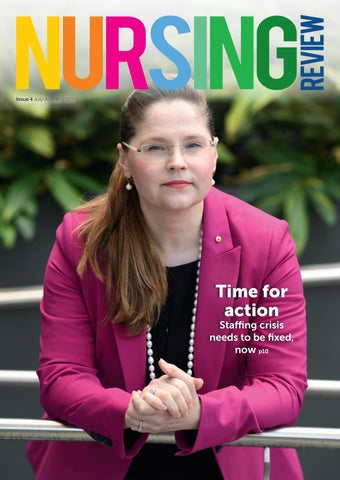
Issue 4 July-August 2022
Time for action
Staffing crisis needs to be fixed, now p10
Important information for Healthcare Professionals. For Formula-fed infants.
New name. Same formulation.
Also Available: Alula S-26 Gold Reflux, Lactose Intolerance and Soy
S-26 has changed its name to Alula For more information, please visit www.alula.com.au or contact our Careline to find out more 1800 552 229 IMPORTANT STATEMENT: Breastfeeding is best for babies. It has benefits for the infant, such as reducing infection risk, and for the mother. It is important to have a healthy balanced diet in preparation for, and during breastfeeding. Infant formula is designed to replace breast milk when an infant is not breastfed. Breastfeeding can be negatively affected by introducing partial bottle-feeding, and reversing a decision not to breastfeed is difficult. Infant formula must be prepared and used as directed. Unnecessary or improper use of infant formula, such as not properly boiling water or sterilising feeding equipment, may make your baby ill. Social and financial implications, including preparation time and the cost of formula, should be considered when selecting a method of infant feeding.
® S-26 is a registered trade mark. Used under licence. Distributed by Sanulac Nutritionals Australia Pty Ltd. Level 1, 42-44 Chandos Street, St Leonards NSW 2065. 05676-18052022
contents
news
MANAGING EDITOR
Richard Garfield 02 9936 8628 richard.garfield@apned.com.au NEWS EDITOR
Eleanor Campbell 02 9936 8638 eleanor.campbell@news.com.au
2
Nurses strike for 3rd time
3
Alzheimer’s breakthrough
4
Omicron variants on the rise
5
Staff shortage strains hospital
6
Fast-tracking refugee nurses
7
Taking a stand on fossil fuels
HEALTH EDITOR
industry and reform
Elise Hartevelt elise.hartevelt@news.com.au
8
New era begins New Labor ministers sworn in
9
A matter of choice VAD laws could lead to conflict
02
05
SALES MANAGER
Sarah Licence 02 9936 8710 sarah.licence@apned.com.au
10 Time for action
SUBSCRIPTION ENQUIRIES
12 Caring about care
Nurse chief calls for staffing gap to be filled
Isabella Galea 02 9936 8607 subs@apned.com.au
Recognising the care economy
14 A year to remember HESTA’s 2022 Nurse of the Year
COVER
ANMF South Australia CEO Elizabeth Dabars. Picture: Tricia Watkinson/ NewsCorp Australia
specialty focus
16 Sharing her story
10
14
Clinician shares cancer survival story to help others
17 On call Telehealth nurse saves lives by phone
PUBLISHED BY
18 Pushing forward Telehealth’s future in residential care
APN Educational Media GPO Box 4245 Sydney NSW 2001 ABN 58 090 900 999 ISSN 1326-0472 PP100001944
clinical practice
20 Tech generation Training nurses for a digital future
22 Beginning of the end
PUBLISHER’S NOTE
© Copyright. No part of this publication can be used or reproduced in any format without express permission in writing from APN Educational Media. The mention of a product or service, person or company in this publication, does not indicate the publisher’s endorsement. The views expressed in this publication do not necessarily represent the opinion of the publisher, its agents, company officers or employees.
Nurses take the lead on care planning
23 Breaking barriers
18
20
Humour sheds light on palliative care
24 Staying on top Adjusting to change in mental health nursing
workforce
26 More than a headache A nurse shares her migraine battle
27 Skills for success Learning key to improving care
Technology
28 Ready to wear
26
28
Wearable tech improves care
nursingreview.com.au | 1
news
In threes
marking the third strike held by the union this year. The action went ahead despite a ruling from the Industrial Relations Commission (IRC) which ordered the union “must immediately cease organising and refrain from taking industrial action on 28 June 2022”. The union went ahead with a mass meeting at Sydney Town Hall, with regional members participating via Zoom.
NSWNMA acting general secretary Shaye Candish said the government has continued to ignore nurses’ calls for staffing ratios and targeted health funding. “The government is continuing to ignore the pleas of highly-skilled clinical professionals who remain extremely worried about the delivery of safe patient care now and into the future,” she said. “Our members need these taxpayer dollars to be delivered directly into nursing and midwifery staffing, rather than the thousands of dollars our members report being spent right now on cupcakes. “The insensitivity is offensive, given we still have nurses and midwives working understaffed every day.” NSWNMA general secretary Michael Whaites said nurses were “desperate to be heard”. “Until our members experience improvements to their workloads or witness meaningful changes to address workload fatigue, sadly, we’ll continue to see nurses and midwives leaving,” Whaites said. ■
With the impact of recent flooding, stocks in NSW have been particularly hard hit. Supplies of platelets are being sent to the state from Queensland and Victoria, but an additional 5500 donors are required this week to meet national demand. “Many Sydneysiders and those on the north and south coasts of NSW have been impacted by devastating flood events; the inability to leave home to donate blood or prioritise this right now is
understandable,” Lifeblood spokesperson Cath Stone said. “In addition, colds, flu and Covid are continuing to sideline donors, with one in two appointments not being attended. Disruptions to public transport and school holidays could also be keeping donors away. “As a national organisation, we need others around the country to step up and ensure patients continue to receive the blood and blood products they need.” Platelets are the part of blood used to stop bleeding in accidents, emergencies and chemotherapy. However, they also only have a shelf life of seven days and therefore cannot be stockpiled. On a normal week, 33,000 donations are needed. Around one third of them usually come from donors in NSW. All blood types are required, but the call is particularly strong for O negative donors – the universal blood type used in emergencies. “We need an additional 700 O negative blood donations over the next week to meet demand,” Ms Stone said. “If you are O negative, someone in your family could be too, so please talk to your family and encourage them to donate.” ■
Photo: Lisa Maree Williams/Getty Images
NSW nurses and midwives strike for the third time this year.
H
undreds of nurses and midwives across 80 NSW hospitals walked off the job on 28 June to demand the government raise wages and address staff shortages. Members of the NSW Nurses and Midwives Association (NSWNMA) stopped work for between two and 24 hours,
‘Step up’ Australian hospitals running low on blood.
A
ustralian hospitals have issued a plea for blood donations after back-to-back disasters have diminished supplies. Floods, road closures, the flu season and Covid-19 are all being blamed for reducing people’s ability to donate lifesaving blood.
2 | nursingreview.com.au
news
“We have shown that this new concept has therapeutic potential.
Piece of the puzzle Scientists unravel a key driver of Alzheimer’s disease. By Eleanor Campbell
A
new Flinders University study has shown how a protein called tau, a critical factor in the development of Alzheimer’s disease, turns from normal to a disease state. Researchers say the discovery could help to prevent the tau transformation process from happening and lead to better and earlier diagnosis. “We have shown that this new concept has therapeutic potential,” said study lead author Kristie Stefanoska. “Tau modification in Alzheimer’s disease is a complicated process. “Ours is the first study to link an initial change in tau with multi-site modification along the entire protein.”
There are an estimated 487,500 Australians currently living with dementia, with Alzheimer’s disease accounting for up to 70 per cent of diagnosed cases. Alzheimer’s, the most common form of dementia, has no cure or effective therapy, in part due to gaps in our understanding of how the progressive neurodegenerative disorder arises in the brain. While researchers have known for decades that tau accumulates in deposits inside brain cells and gets heavily modified, affecting memory function, it has remained unclear how this process occurs. The new findings, recently published in Science Advances, may help to explain the relationship between tau and protein kinases, which are enzymes that introduce changes in tau. “Usually, protein kinases target specific spots, called phosphorylation sites, in tau and other proteins, and introduce
changes only at these specific spots,” said Stefanoska. “However, we suspected that some of these enzymes are able to target several spots in tau and would do so even more efficiently if tau were already modified at one spot to begin with.” The study examined mice with both amyloid, a small peptide protein that lumps around brain nerves in plaques, and tau. Both proteins are found in the brains of people with Alzheimer’s and have long divided researchers over which is a key cause of the disease. The Flinders research found that mice did not develop memory deficits when they had a version of tau that lacked one of the identified “master sites”, compared with mice that had the usual version of tau. Researchers will now see whether master sites could be targeted to reduce the toxic properties of tau in Alzheimer’s and translate it into a treatment. This new mechanism could be used to treat a range of neurological disorders in which tau is involved, including Parkinson’s disease, concussion-induced chronic brain injury and stroke, said study author Dr Arne Ittner. “Slowing down the changes at master sites of tau in these diseases may put the brakes on tau toxicity and dementia,” she said. “This new mechanism helps us understand why there is extensive tau modification in Alzheimer’s disease in the first place.” ■
SubScribe for leSS than $2 Per week The laTesT news for nursing & healThcare professionals Nursing Review is essential reading for anyone involved in the healthcare sector in Australia. It provides unrivalled coverage of specialist topics from features and opinion pieces, to international news and profiles. • Latest news and resources for all healthcare professionals • Comprehensive coverage of a diverse range of topics • Analysis of the major issues facing the health sector as a whole • Delivered free of charge to your home or place of work monthly
Please call 02 9936 8666 to find out more. nursingreview.com.au | 3
news A man receives a 4th Covid booster shot on July 11 in Melbourne. Photo: Asanka Ratnayake/Getty Images
“We weren’t expecting them to get COVID again, but here we are.
Not over yet Omicron sub-variants likely to push up COVID cases. By Elise Hartevelt
F
ully vaccinated Australians are becoming sick again as Omicron’s newest mutations cause a surge in COVID cases across all states. Experts worry that sub-variants BA.4 and BA.5, coupled with low influenza immunity in the community, will increase the strain on hospitals. Research officer Ashleigh Porter from the University of Melbourne specialises in how viruses emerge and evolve in new hosts. She foreshadows the new variants’ increased transmissibility will lead to many Australians being unable to fight off another COVID infection. “Just the reinfection – everyone out there who’s had a vaccine or was sick recently – we weren’t expecting them to get COVID again, but here we are,” Ashleigh says. The new strains are particularly growing in NSW and currently represent 35 per cent of specimens, prompting NSW’s weekly respiratory surveillance report to say BA.4 and BA.5 sub-variants will likely become the dominant strain. Ashleigh says the new strains have the ability to reinfect individuals who have
4 | nursingreview.com.au
been fully vaccinated and/or had a recent COVID-19 infection. “It’s definitely concerning,” she says. “It can spread in populations that have really high vaccination rates. “So with the little restrictions that we have at the moment on global movement, or even move between states, it means they will be able to spread quite rapidly.” Alarming research proving BA.4 and BA.5 can evade immunity is quickly piling up, raising concerns among researchers and the community. Another study found that these strains displayed the ability to bypass the human antibody response. Not only can they reinfect the 95 per cent of fully-vaccinated Australians, but they may also overlap with other variants of COVID-19, Ashleigh says. “The main concern is that they’re capable of reinfection. “And with the ability to evade vaccine immunity, or even if you’ve had a previous case and evade that immunity, it also means that it can co-infect with other lineages of SARS-CoV-2. “We’re also seeing these recombinant lineages, which is when you get infected with two different types of SARS-CoV-2 at once, and they can swap DNA and form lineages, which is pretty concerning as well.”
Because of differences in spike glycoprotein, which influences how the virus engages with cells, the subvariants are ‘tougher’ than its previous strain, BA.2. For example, research found that they bind to particular proteins in the lung’s linings more effectively than other sub-variants. Yet Ashleigh says there’s no certainty that BA.4 and BA.5 are more harmful. “The mutations in the spike protein are concerning, which is how the virus attaches to human cells,” she says. “So any mutations are usually ones that we would look at pretty closely. “But they’re so new it’s really hard to say whether or not they’re going to be more virulent or not.” Ashleigh is particularly concerned about new mutations from animals bouncing back to humans. Yet, peak bodies have hardly been tracking the evolution of the virus in animals. She says it’s unsettling, considering that the spread of early SARS-CoV-2 most likely originated from a mammal host. Transmission across non-human species can present the virus with new possibilities to mutate into other lineages and take on selective adaptations. “We’ve already seen it before,” Ashleigh said. “I think there’s a lot of potential for the virus to keep evolving while we’re not keeping track of it. “Especially because there’s a proven risk of the virus spilling out of other animal populations to humans.” To tackle this issue, she recommends that surveillance be set up for SARS-CoV-2 in animals that it can infect. She also emphasises that the community has to continue to be vigilant and stay protected. “Stopping the transmission of COVID is the best way to prevent it from generating mutations. “I’m still a big believer in the nonpharmaceutical interventions as well, such as mask-wearing, social distancing – they worked well when we didn’t have a vaccine. “Even though we have the vaccine now, we should still keep them around.” ■
news Protesters outside the Shoalhaven Hospital. Photo: Nathan Schmidt
Nurses ‘at risk’ Staff shortages strain regional hospital. By Eleanor Campbell
P
eaks have called on the government to address severe staffing shortages in a state hospital after a nurse was allegedly stabbed by a patient during a busy emergency shift. According to the NSWMWA, emergency patients at Shoalhaven Hospital on the
NSW South Coast are waiting up to 48 hours to be admitted into a bed. This has led to a spike in reports of violence and aggression, the union said, which came to a head in April after a senior nurse was reportedly attacked by a female waiting overnight for a transfer. “We have serious concerns about the number of vacant nursing positions left unfilled, as well as the Local Health District’s efforts to try and retain staff,”
said NSWMWA acting general secretary Shaye Candish. “We are aware treatment spaces in parts of the emergency department are not funded around the clock, meaning not enough nursing staff are available to care for the volume of patients. “This is why it’s crucial shift by shift ratios in all emergency departments are supported by the NSW government and opposition.” The union has said Shoalhaven Hospital agreed to provide more on-site security for health staff after concerns were first raised 12 months ago. NSWNMA Shoalhaven branch secretary Michael Clarke said despite this staff have been put “constantly at risk” due to ongoing roster shortages. A recent parliamentary inquiry into regional hospitals recommended the NSW government “urgently engage” with the federal government to address reoccurring workforce shortages. The report found healthcare workers reported a “culture of fear” in speaking out about understaffing and lack of resources. ■
nursingreview.com.au | 5
news
“Many refugees who are nurses have vast expertise but face challenges gaining registration to practice in Australia.
Safe haven Free program helps refugee nurses and addresses workforce shortage. By Elise Hartevelt
N
urses forced to flee their homeland have been given a new chance to use their skills in Australia’s healthcare system thanks to a recently launched program. The pilot ‘Scholarship for Refugee Nurses’ program, organised by Edith Cowan University (ECU), will enrol 10 refugee nurses in its graduate course. ECU School of Nursing and Midwifery executive dean Professor Karen Strickland says it’s also a savvy way to address the nation’s workforce shortages. “WA is currently experiencing an acute shortage of RNs, which puts significant pressure on the delivery of clinical services, as well as affecting the wellbeing of the existing workforce,” she says. “We need more experienced nurses in the workforce.” In response, ECU and non-for-profit MercyCare put their heads together to find potential refugee and asylumseeking nurses looking to enter the program. Once selected, the nurses will embark on the ‘International Adaptation Program’ for free and, after graduation, be eligible to work in Australian hospitals and healthcare providers.
6 | nursingreview.com.au
Strickland says refugees and asylumseeking nurses in particular need support, as they’ve often experienced considerable trauma. “We recognise many refugees who are nurses have vast expertise but face challenges with gaining registration to practice in Australia,” she says. “Our ECU course helps those nurses gain registration to allow them to practice and make a significant contribution to our community health. “Furthermore, we want to help those refugees who are part of our nursing community to settle in Australia and be welcomed into our community.” Currently, one in three nurses working in Australia were born overseas. While many people arrive by choice, some are forced to leave their country and need protection. Australia saw the number of refugees applying for asylum reduce drastically from 28,000 in 2018 to around 13,000 in 2021 during the COVID restrictions. However, the government has pledged to provide an additional 16,500 places for Afghan refugees and increase the budget for offshore humanitarian assistance. Although many refugee nurses are experienced in their home country, Strickland says they’re often unable to work in Australia. “For some countries, the registration for nursing and the education for nursing is not recognised here in Australia, so they
have to do an international adaptation program which can be quite costly,” she says. “The ‘Scholarship for Refugee Nurses’ will help provide an additional workforce ethically rather than recruiting from overseas.” MercyCare employment liaison officer Jacqui Wheland says the partnership with ECU will relieve some of the obstacles faced by refugees seeking work in Australia. “As a refugee or asylum-seeker new to Western Australia, it can be a daunting process to register to practice your profession locally,” Jacqui says. “There is a lot to navigate and understand while adjusting to a new country, as well as the overwhelming financial barrier. “This pilot program offers a clear path to build on existing professional skills and transfer them to the local context.” Overseas nurses need to complete the adaptation program to be able to work in Australia, but many are struggling to meet the requirements. Jacqui says the first years of settling in are also turbulent, as people are busy finding housing and getting their children into school. “As time goes on, the majority discover the disparity between enrolling into the program and meeting the requirements becomes larger,” she says. “It’s overwhelming for many. It’s not impossible, but it’s a long bridge to cross.” MercyCare walks refugees through their journey by offering support to meet the language requirements and get documentation in order. Over the past months, they’ve seen refugees arriving from Ukraine and Afghanistan seeking asylum. “Many of our refugee and asylum-seeker clients have existing skills, qualifications and experience and are yearning to help others and be contributing members of their new community,” Jacqui says. “In the case of registered nurses, it’s a perfect scenario to gain meaningful employment whilst helping alleviate pressure on the Western Australian health system.” ■
news
Fuelling the problem Nurses take a stand against fossil fuels. By NCA NewsWire
H
ealth workers have withdrawn their savings en masse from a major Australian super fund with the aim of sending a powerful message. A group of over 130 nurses and doctors divested their money from industry fund HESTA in direct response to the company’s investment in fossil fuels. According to the climate advocacy group behind the move, Market Forces, HESTA has around $2 billion invested in fossil fuel companies including oil and gas giants Woodside and Santos. Paediatric anaesthetist Dr Richard Barnes said he was particularly concerned about the health impacts of the climate crisis. “I’ve been a member of HESTA for a long time and I’m very conscious now they continue to have significant holdings of a number of companies that are primarily involved in fossil fuels,” he said. “I’ve decided to move my retirement money elsewhere I can be sure it won’t be supporting fossil fuel companies.” All up the savings of those involved in the action is estimated to see $11.7 million drained from HESTA. Across its more than 930,000 members, HESTA has roughly $68 billion in managed funds. It is believed to be the single biggest, single-climate divestment day targeting a superannuation fund in Australia’s history.
“Clearly, the amount of money we’re going to move out of HESTA is a tiny fraction of their total super pool, but I hope our action will send a message,” Barnes said. Former nurse and chief executive at the Mental Health co-ordinating Council, Jenna Bateman, said with many members in the health and welfare sector, HESTA should be a leader in tackling climate change, which will disproportionately affect the most vulnerable. “It’s kind of past planning time; it’s time to do it now. They have to divest from fossil fuels and I think taking your money out or at least raising the issue is just putting that pressure on them,” she said. HESTA chief investment officer Sonya Sawtell-Rickson said immediate divestment from fossil fuels was not necessarily the best way to affect positive change from companies. “Simply selling shares in these companies, without first attempting to change their behaviour, does not contribute to reducing emissions or reduce systemic risk,” she said. “As a shareholder, HESTA can directly engage with companies exposed to transition risk to push for greater climate action.” According to Sawtell-Rickson, HESTA has used shareholder meetings to vote against plans by Woodside and Santos which did not align with the Paris agreement. She added where companies were not responsive or failed to improve their practices, divestment was one option it could take “where it’s in the best financial interest of members”.
“I hope our action will send a message.
HESTA is not alone in struggling to balance divesting from fossil fuels with broader economic concerns and impact on its investment portfolios. Smaller fund, NGS Super, has a more ambitious target of making its $12 billion worth of holdings carbon neutral by 2030, with an interim target of a 35 per cent reduction in carbon by 2025. Bateman said she is yet to choose a better alternative super fund, as she is struggling to discern genuine sustainability claims from “greenwashing”. “It should be really transparent; I shouldn’t have to, as a punter, wade through a whole lot of information and words that aren’t actually telling me what I need to know. In fact, they’re kind of hiding the truth from me,” she said. Bateman added that immediate divestment from all fossil fuels was not a deal-breaker, but institutions needed to demonstrate clear and concrete timeframes if they were to extend the process over several years. “If I can see a clear exit plan, then I am more likely to stay with an institution – but it needs to be very clear and very real,” she said. “I don’t want ‘we will consider in five years that we may divest’. I want to know that in five years they will.” ■ nursingreview.com.au | 7
industry & reform Mark Butler replaces Greg Hunt in the Federal Health and Aged Care portfolio. Picture: Dean Martin/NewsWire
New era begins New aged care ministers sworn in by PM Albanese. By Eleanor Campbell
M
ark Butler has been named as the new Federal Minister for Health and Aged Care. The deputy leader of the lower house was sworn in early this month along with Queensland MP Anika Wells, who was appointed Minister for Aged Care and Sport. Butler, who has acted as Labor’s health spokesperson since 2021, was previously minister for Ageing and Aged Care under the Rudd and Gillard Labor governments. It was under the Gillard government in 2012 where he ushered in the ‘Living Longer Living Better’ aged care reforms. The $3.7 billion dollar program rolled out over 10 years and saw the replacement of ‘community care’ with the introduction of home care. A 2019 independent review of the package concluded it had successfully made the sector more “consumer-driven and sustainable”. The program’s focus on marketisation, however, has been critiqued for “transferring part of the financial burden from the government to users”. Following the final report of the royal commission, Butler slammed the Coalition’s handling of workforce issues and rising COVID-19 infections in aged care homes.
8 | nursingreview.com.au
“Aged care workers want to provide quality care for their residents, but they are exhausted, undervalued and stretched to their limit and as we saw during the pandemic, they lack the resources they need to take care of vulnerable older Australians,” he wrote in a 2021 statement. “Only a Labor government will fix this crisis and give older Australians the care they deserve.” Butler is considered a senior member of Labor’s left faction, previously voting in favour of same-sex marriage equality and a royal commission into violence and abuse against people with disabilities. As the new aged care minister, Butler will be responsible for overseeing a raft of reforms pledged by Labor during the election. This includes 24/7 nurses for all residential care facilities, greater financial accountability for providers and better pay for aged care workers. Speaking to the ABC, the new Minister for Aged Care and Sport Anika Wells said she was “looking forward to getting started”. “I know that Australians care deeply about fixing aged care,” she said. “We need tens of thousands more workers in this industry into the coming decades, and I just don’t feel like people who work in aged care or who have considered working in aged care feel that position is valued enough.” Former nurse Ged Kearney has been appointed Assistant Minister for Health and Aged Care.
“I know that Australians care deeply about fixing aged care. Clare O’Neil, who was previously Shadow Minister for Aged Care, has moved to the position of Minister for Home Affairs and Cyber Security.
PEAKS WANT ‘AMBITIOUS AND IMMEDIATE ACTION’ Following the news, the nation’s top aged care organisations have called for immediate reform to be prioritised by the Albanese government. The Australian Aged Care Collaboration (AACC) said aged care must be nominated as a key issue in the first 100 days of the new government to ensure reform is included in upcoming crossbench negotiations. “The election has helped focus attention on the need for ambitious action for older Australians and for greater respect and better pay for aged care workers,” a statement read. “The care economy was at the heart of the Labor pitch for election and it should be top of its agenda in government. “We look forward to working in partnership with the new Minister for Aged Care and the whole of government on the transformation needed to deliver better support and care for all older Australians.” ■
industry & reform Voluntary assisted dying was in legalised in NSW after years of debate. Picture: Jeremy Piper/NewsCorp
“There’s a clash between the conscientious objection rights of organisations and the rights of patients.
A matter of choice Experts forecast disputes in aged care as voluntary assisted dying is legalised in NSW. By Elise Hartevelt
E
xperts have said aged care providers will face considerable challenges when voluntary assisted dying (VAD) laws come into force in NSW in 2023. The bill was recently passed in the NSW parliament after decades of debate and will allow those who are terminally ill to access euthanasia. While polls indicated that over 85 per cent of older people supported access to VAD, experts expect not everyone will be willing to follow the legislation. Penny Hackett, president of advocacy organisation Dying with Dignity has been pushing for the legalisation of VAD since the ‘70s. “There have been stories in other jurisdictions like Canada and Victoria of aged care providers refusing to allow people to access it on their premises,” she says. “Healthcare is a person’s right – they’re entitled to have the medical care of their choice without being impeded by the operator. “Unfortunately, there’s a clash between the conscientious objection rights of organisations and the rights of patients in aged care. “They may require that their staff don’t be involved and that’s understood, but they can’t prevent doctors from coming to
consult with patients and administering the VAD substance,” Hackett says. Victoria spearheaded the legalisation of VAD and has since reported that 836 people had sought a permit, of which 331 people had passed away from the prescribed medications. Though the state has overcome its initial teething problems, it still grapples with a lack of access to telehealth and trained practitioners. Hackett anticipates similar roadblocks in NSW, and says that “it has proven quite difficult for people to access VAD because the medical profession is not prepared for it”. “Certainly, in the early stages, it will be hard to find enough doctors willing to sign up to do the training and be prepared to participate in the VAD process,” Hackett says. Opposed aged care facilities have said the bill forces them to comply with VAD and disregards their principles and beliefs. “We acknowledge that some people have a religious objection to this, but denying those who don’t have access to available medical treatment is akin to abandoning their duty of care to the patients,” Hackett says. State director of the conservative Christian organisation FamilyVoice Australia, Greg Bondar, has also been campaigning during talks about the VAD bill. “It’s a very dark day for NSW because it has removed the levity of conscientious
objection from people who do not want to submit or be part of VAD,” Bondar said. Bondar is backed by the Anglican Church and Catholic Church, who echo that “from a Christian point of view, life can only be given and taken away by the creator”. Homes such as Catholic Health Australia and HammondCare have voiced strong objections, while Uniting Care has agreed to VAD in their facilities. Aged Care Insite asked the general manager of Health and Palliative Care at HammondCare, Andrew Montague, how they expect to implement VAD in their facilities. “HammondCare will be working with the relevant departments to ensure we follow the legislation. “As an organisation, we have to be very conscious of how we will participate and that will become much clearer once we’ve had these discussions with NSW health,” Montague says. “We’ll also make it really clear to staff on the ground if they’re asked about VAD, what information they can actually provide. During the bill’s passage, HammondCare endorsed palliative care as the best approach for those who are terminally ill. Yet, Montague says that “access to palliative care for aged care residents is quite a small percentage of people who actually get and are able to receive formal palliative care”. In 2021, just under 2 per cent of older people in aged care received palliative care. “What really concerned us was that the whole palliative discussion was lost in the VAD debate,” Montague said. COTA NSW CEO Meagan Lawson says palliative care will continue to play a significant role in end-of-life support, alongside VAD. “I hope politicians keep talking about palliative care and provide additional funding to ensure that every person who needs palliative care gets access to it,” she says. “It’s about a level of respect for the people who are paying you for the services they are using, and respecting their rights and agency to make decisions about their own bodies.” ■ nursingreview.com.au | 9
industry & reform
Time for action ANMF South Australia CEO Elizabeth Dabars. Picture: Tricia Watkinson/NewsCorp Australia
Nursing chief calls for the staffing gap to be filled. Elizabeth Dabars interviewed by Elise Hartevelt
N
urses and midwives have recently taken to the streets demanding more staff, and better pay and work conditions. Organised by NSW’s Nurses and Midwives Association, this year’s third strike came in response to the state’s health workforce boost that’s planning to fork out $4.5 billion over four years to relieve staffing pressures. The ANMF believes the budget to be ‘all smoke and mirrors’. “We stand in solidarity with our sister branch,” says Elizabeth Dabars, CEO of ANMF South Australia. Dabars estimates SA will be short of thousands of nurses and midwives by 2025, as staff are exhausted and weighing up early retirement. She Joined Nursing Review in an honest discussion about addressing workforce shortages and ANMFSA’s plans to push for health care reform.
10 | nursingreview.com.au
NR: The New South Wales branch recently held its third strike this year. What do you hope they’ll achieve? ED: We do stand in solidarity with the nurses and midwives in New South Wales, because it’s really important that they achieve what they need to, which is appropriate quality care. They’re going to achieve that by getting a staff-topatient ratio. We are a bit different here in South Australia insofar as before the last election, the now incumbent state government actually committed to staffto-patient ratios in its first term. So we are in a different environment here, but we certainly are in full support of them and their decision to take action because they need to do what’s best for their patients and each other.
How would you currently describe the situation for nurses in South Australia? It’s extremely difficult, to be perfectly frank. I have been out and about talking directly with nurses and midwives, and the message is that they’re fatigued, stressed and stretched. I have heard from people who are contemplating early retirement, people who are looking to
reduce their hours because the work pressures are just so high. I think it’s a really dangerous period for us because we don’t currently have those ratios, and we have had and will continue to have a very large problem with workforce availability. Even in circumstances where the employer is being very helpful and wanting to put on additional nurses, there’s simply not enough staff. We raised this issue of workforce with the previous government and with the new government. We have very warmly welcomed their commitment to putting more than 300 additional beds in the system. That’s fantastic: the only issue is that they’re struggling already to staff the beds that they’ve already got. We know that there’s an impending workforce shortage. It’s actually nationwide, but in South Australia, the figures will be approximately 10 to 15,000 nurses and midwives short by the year 2025. Those estimations were made well before COVID and that’s the last data we’ve got, which goes to show the problem. There hasn’t been any workforce analysis and planning for a significant
industry & reform
amount of time. It used to happen but then the state government gave it up because the federal government was going to look into that space, but then abandoned it and left it to the states. In the end, no one was doing it. So we have a local shortage, there’s a national shortage and an international shortage. We just need the new government to do some workforce planning, because we need some strategies to ensure that the beds they’re proposing to provide can actually be staffed. What we’ve also been advocating for is some short term measures, which really boils down to incentives and allowances and arrangements to encourage people to stay in the profession. We are looking at trying to incentivise people to delay their retirement, for instance, or incentivise people to increase their hours from part-time to full-time. We also need to incentivise people to go out to country and rural areas, because there is an increasingly significant problem in those areas as a direct result of the inability to staff the beds and units. And we’ve also been talking to the government about what we managed to convince the former government to do, which is to employ every single nurse and midwife graduating from their course in a university in South Australia and offer them a job now. We also need to offer all of the people who did get offered a job last year a permanent ongoing position.
The recent CEDA report said the number of people needing assistance has increased by more than 700,000 since 2016. What are your thoughts on this? Definitely in terms of aged care and even in the hospital system, the complexity and intensity of patient needs are increasing. And so too is what I describe as churn through the hospitals. There are some long stays, which is another problem that is blocking up the system, and that’s not fault of the people in those beds in most cases, but there’s also increasing workload intensity everywhere. I think the issue in residential aged care really has been heightened by an absolute and abject failure to provide staffing levels that enable the nurses and care staff to provide adequate and safe care. Even though the needs of those residents is increasing, all we ever see is cuts to staff and to the skill mix of those staff.
But it does also boil down to workforce. One of the issues with workforce is that there has been a failure to recognise and reward people for the skills and expertise they bring and the value of their work. Care staff are being paid less than people who work in the fast food sector. While I think all workers should be respected, I think we can also equally appreciate that people who are dealing with vulnerable, elderly people should be recognised and rewarded appropriately for the work they’re doing. We had a situation in Whyalla recently where one of the residential aged care facilities shut down because they couldn’t attract and retain staff: the staff that they did have in the system were basically going over to the hospital to work, because they could see for themselves that they had better workloads because there were better nurse-to-patient ratios. They also were being paid more. This is an environment where you have to start recognising people’s worth and paying them accordingly. And quite frankly, to date, that’s something this sector has not appeared to be willing to do.
Do you think the government will be able to achieve the promised 24/7 nurses in aged care homes? I think they will. I think they’ve made a very clear commitment, which we have all really welcomed. It might take some time to achieve, but I think it is absolutely possible. And I do think it is absolutely necessary. These are people who are extremely dependent, often with very high care needs and their health is failing. They really do need and deserve expertise and help 24/7. They actually need someone in attendance. Quite frankly, if they address some of these issues in the residential aged care system, it would take a significant amount of pressure off our hospital system. Part of the problem is that residential facilities have such a low tolerance for risk because of the low staffing levels that they end up sending residents with a urinary tract infection, for instance, off to hospital very quickly. If they had appropriate and proper care that would lead to a reduction in urinary tract infections in the first place. That would be a huge success for everyone. But if they still contracted a urinary tract infection, for example, if they
“There has been a failure to recognise and reward people for the skills and expertise they bring. had appropriate staff and care at the facility, they wouldn’t need to go to a hospital. They should be able to access adequate treatment and care within the facility. So we have a lot of elderly people, who through no fault of their own, are stuck in the hospital system.
What is the SA branch of the ANMF planning for the future to advocate for reform? We’ve been putting a huge range of solutions forward to the government, but our primary one is about having appropriate step-down care and out-ofhospital care. The aim should be about prevention rather than cure. When people do need their acute phase of treatment, they should be able to, as seamlessly and quickly as possible, get out of the acute care setting and into the community or a step-down unit, or some other appropriate combination. People shouldn’t be housed in an acute bed when they don’t actually have an acute problem anymore. Another one is to get that workforce planning going. Again, we’ve been very heartened by the state government who has increasingly committed to doing that planning. What we now need to see is the implementation for it. Thirdly, we need to see those short term incentives. We’ve put those incentives forward and the proposition of employing all those graduating nurses and midwives this year, and the continuing appointment of the ones that were employed last year. We’re waiting for a response from the government on that. We have been encouraging our members to send a letter to the Minister for Health and the Attorney General here in South Australia. The last time I checked we had about 3,000 signatories, which I think is a really important way of showing how deeply that issue is felt. And we’ll continue to work well with the new government. I think they’ve made some really, really positive commitments that we’ve been absolutely supportive of, but what we now need to see is some action. ■ nursingreview.com.au | 11
industry & reform
“Access to care is essential and markets have failed to provide acceptable solutions.
Caring about care Why it is vital we properly recognise the care economy. By Michael Fine
F
ixing aged care is set to be a key priority of the new government under Prime Minister Anthony Albanese. So is a more affordable and improved system of child care, reform of the NDIS, and strengthening Medicare and the health care system. What binds these issues together is their recognition as part of the ‘care economy’. Data on the size and significance of the care economy can be alarming. Reflecting the huge growth in the provision of formal services in these fields since the 1960s, there has been a continuing rise in employment in aged and child care, disability and health care. Employment in the ‘health care and social assistance’ sector, as the ABS calls it, has been the most rapidly growing form of work and is now the largest field of employment in Australia and in comparable countries. Most workers in the care economy are women. Wages are low in comparison with those in comparable fields, and employment conditions are increasingly precarious. Income growth and career prospects lag well behind most other areas. No wonder there are staff shortages. Much care continues to be provided by women and men, working in their
12 | nursingreview.com.au
own homes, families and neighbourhoods without pay. They work as family carers, volunteers and members of a wide range of non-profit community organisations. But the meaning of the term is not really captured by simply adding up all the statistics. The point of identifying care as an economy that is essential to the functioning of the modern world is to recognise that in a global market system, the complexity of the way that care is produced, exchanged and used can no longer just be ignored or taken for granted. Nor can it be understood simply as just another specialised sector of the larger economy. Instead, recognition of the care economy draws attention to the unique way that care is produced, distributed and used. It serves to meet fundamental needs in a manner that shapes and reshapes the lives that all people lead. It is both a product of the system of our market society, and a force that in turn helps shape the families, communities and nations in which we live. Recognising the care economy in this way is comparable to the acknowledgement of climate change and the environment. Both are foundations on which the world as we know it depends. Meanwhile, the ongoing policy failures in aged care and problems with childcare, disability and health care have typically been regarded as essentially local. But problems in the care economy are experienced internationally and require a
longer-term, global perspective alongside one that focuses on national policies and local solutions. There is also much to be learned from the experience of other countries. It is often argued, correctly in my view, that these problems are an expression of gender-based discrimination leading to the disadvantage and unequal treatment of women. In Australia, for example, national governments over the past decade have promoted the virtues of employment in traditionally male dominated industries such as mining, while presiding over deteriorating wages, staff ratios and employment conditions in aged care and childcare. But the care economy perspective also helps identify other factors involved. In contrast to many other areas of the economy where production costs have fallen, care services are delivered on-site, at the point of consumption and continue to be produced almost entirely by people working one-to-one. Not surprisingly, the overall proportion of GDP spent on costs of care have risen. Attempts to drive the costs of care down have focused on reducing the core costs, ie wage costs. Is it any wonder that these career-killing strategies have not attracted sufficient highly qualified staff? While markets have been promoted as a solution to all problems, the care economy, internationally as well as in Australia, would not exist without government funding, support by non-profit community groups and unpaid family care. This mix came about because access to care is essential and markets have failed to provide acceptable solutions for the majority of citizens. We should not forget how these foundations need to be maintained and improved, not abolished. Drawing attention to the way that care operates as a social investment and not just a cost, can lift debate about care, both paid and unpaid, and help create hope for a better future. ■ Michael Fine is Honorary Professor in the School of Social Sciences at Macquarie University.
SubScribe for leSS than $2 a week
The laTesT news and resources for healThcare professionals
• Analysis of the major issues facing the health sector today
Nursing Review is essential reading for anyone involved in the healthcare sector in Australia. It provides unrivalled coverage of specialist topics from features and opinion pieces, to international news and profiles.
• Can be used as a professional development resource
At Nursing Review we pride ourselves on being at the forefront of the ever changing healthcare sector. We provide an independent source of news, and cover the issues relevant to nurses and the sector giving an informative, practical and insightful view into day to day life in hospitals and in surgery.
• 6 issues per year • Interviews and opinion pieces from professionals in the industry • Written by an independent voice • Tax deductible
Please call 02 9936 8666 to find out more.
industry & reform Ovarian Cancer Nurse Sue Hegarty is presented with the 2022 HESTA Nurse of the Year award. Picture: Supplied
A year to remember Meet HESTA’s 2022 Nurse of the Year. Sue Hegarty interviewed By Elise Hartevelt
N
urse practitioner Sue Hegarty recently had the honour of receiving the 2022 HESTA Nurse of the Year award. She was one of three nominated nurses this year and won because of her exceptional contribution to the not-forprofit organisation Ovarian Cancer Australia. “It was such a lovely acknowledgment of the work we’ve done at Ovarian Cancer Australia in supporting women,” she said. Aside from her tireless advocacy to help women with ovarian cancer, she also spearheaded the first Australian telehealth program for the treatment of the disease. Nursing Review caught up with Sue to hear about her passion for nursing and what’s coming up next.
NR: When you were nominated did you think that you were going to win the prize this year? SH: No, I didn’t. When I read about the other incredible nurses and the work that 14 | nursingreview.com.au
they’d been doing, especially in the last couple of years with the COVID pandemic, I think it’s never been a harder time for the nursing workforce in Australia, so it really was a great honour. I think winning the award was such an acknowledgement of the work that our team has done throughout the pandemic supporting women with ovarian cancer, and particularly launching our Teal Support Program, where women get access to their own ovarian cancer nurse consultant: they have their mobile number, they can call the nurse and speak with them about what’s happening to them in their treatment, if they’re experiencing side effects, and support for their family. I think it was a really lovely acknowledgement of the work that the team has been doing, and we did establish the first ever ovarian cancer telehealth nurse consultant program that’s available to women across Australia, regardless of where they live.
How did you get into nursing? My mum Denise was a nurse. She worked in aged care for a lot of my childhood. I used to go along with my best friend
“You get so much more back from working with people and helping to support them. while mum was doing her shift, and we’d be walking around chatting to the residents when they were having their morning tea, and I really loved that. It just put a fire in my belly, I think. My auntie Sue is also a nurse. I think I saw what you can get from being a nurse and how rewarding it can be. I always wanted to be a nurse from when I was very little. I used to dress up as a nurse. It was always my plan to be a nurse. I don’t think that actually wavered at any point.
What makes you so passionate about it? I think it’s a great privilege to be able to work with people. We know, particularly when people are living through a cancer diagnosis, it can be the toughest time in their life; particularly for ovarian cancer, which we know only has a 48 per cent five-year survival rate and the majority
industry & reform
of women are diagnosed with advanced disease, and 70 per cent of those will relapse within three years. Being there with people at their most vulnerable is a real trusting relationship. It requires a lot to give a lot of help at that time, but I think you get so much more back from working with people and helping support them and the wisdom that they give you of facing their own mortality. I’ve learned so much about life by working with people who have to confront their own mortality.
will be diagnosed this year, and we want better outcomes for those women that are diagnosed. Chrissie has been one of my main motivators. When I saw the role, I thought, ‘Yeah, this is an area that I think we need to do more in.’ I’d looked after women with ovarian cancer throughout my nursing career, be that in a ward situation, chemotherapy or in palliative care, and I just knew that the unfortunate statistics and the relapse rate make it a really, really difficult disease for the women and also for all of those around them.
What roles have you played in nursing, especially in helping women with ovarian cancer?
You’ve been heavily involved in raising funds and awareness with Ovarian Cancer Australia. What do you hope to achieve in the future?
Probably the thing I’m most proud of is the Teal Support Program. That’s enabled us to provide support to women across Australia. We know that about 40 per cent of women with ovarian cancer are living with anxiety and depression. My colleague, Cheryl, who works as a director of our support program, has really widened the services to offer a psychologist, social workers and grief counsellors to support women. That’s what I’m most proud of. I’ve worked with our incredible CEO, Jane Hill, in the advocacy space and advocating for more research funding. Ovarian cancer is the deadliest female cancer, and it requires more research funding, and more partners to come on board and support us. We’ve had some really wonderful supporters at Ovarian Cancer Australia, but we know we need more people behind our cause. Our mothers, daughters, sisters and aunties are still dying of this disease, and we really need to mobilise the Australian community to improve outcomes for women with ovarian cancer.
Is there a specific reason why you specialised in ovarian cancer? There is, actually. My uncle Paul’s partner Chrissie was diagnosed with primary peritoneal cancer, which is treated as an ovarian cancer would be, and she was diagnosed in the prime of her life. Unfortunately she had the classical late diagnosis. Primary peritoneal cancer is always usually diagnosed at Stage IV. To see how she suffered and not having that access to her own ovarian cancer nurse consultant was one of the motivators for me working in ovarian cancer care. We know about 1,700 women
Apart from the Teal Support Program we’ve got a Younger Women’s Network. That’s an online group that meet monthly, and I’m really proud of it. It’s a really hard path for women when they’re diagnosed with this disease, particularly as it impacts their fertility when they’re younger women. We’ve also got our Male Partners’ Program that supports the male partners of women who are diagnosed. We’ve done some fantastic research into the experiences of male partners, and up to 90 per cent of them will have fear of recurrence anxiety about their partner’s cancer returning. We also have a suite of support groups across Australia. We’re launching some really exciting programs this year around sexuality counselling. We know that many women are impacted by issues related to their sexuality, and it can be a bit of a taboo to talk about it. From research, we know only about 26 per cent of women raise their sexuality and any issues and how that’s been impacted with a health professional. So we’re establishing a sexuality counselling service, an exercise and nutrition program, and we’re broadening our support services with a psychologist and social worker, and we’ve brought on a team member to look at those more practical issues. An area that we’re going to be doing more work in is financial toxicity. We know that cancer is very expensive for people, and we know that their finances can cause them quite a lot of worry. We know that just over 50 per cent of women will have worries about their finances, and we want to work with those women to understand what it is that they’re worried about and how we can better support them.
Looking at our telephone-based case management service, we’re working with the ovarian cancer registry at Monash University. We’re looking to see how we can use registries and telephone support to actually bring those two pieces together and have a more digitally focused service, where women can provide some of that information to us digitally to help us really target the care for them.
Do you have any plans for how you use the award money? Yes. We are using that to have Dr Peter Martin – a palliative care consultant and a lead communication skills trainer in this country – do communication skills work with our support team. We do know from the data that the more confident health professionals are in their communication skills, the less at risk they are of burnout. I think women are talking about really complex issues with our team. One of our nurses said: ‘You’re probably the only person I feel comfortable to ask, what does it look like to die of ovarian cancer?’ The skills of our nurses and our psychosocial support team need to be really strong to enable them to have those conversations in a way that’s beneficial to the women, but also a safe conversation that the nurse and psychosocial team feel really skilled to have.
Is there anything else you’d like to say to nurses in Australia? I’d like to say thanks to all the nurses. I think it’s never been a harder time for our profession than in the last two years, and I’m so thankful to the team that I work with and the many nurses that I’ve worked with throughout my 26-year career in nursing. I think we give a lot as a profession, and probably what I’ve learned over the years is the importance of looking after ourselves, and we really try and do that at Ovarian Cancer Australia by running our wellbeing program for the nurses. Each month they have debriefing with a psychologist, we do really strong communication skills. Nursing’s an amazing career path, but it can be taxing if you don’t look after yourself. That’s probably the message I’d send out: look after yourselves so we can be there to look after the many vulnerable Australians across the country, and particularly, in a global pandemic. ■ nursingreview.com.au | 15
specialty focus
“People can be very honest and upfront about what’s actually happening to them.
Sharing her story Clinician shares her bowel cancer survival story to help others. By Elise Hartevelt
A
fter surviving bowel cancer, Professor Teresa Mitchell-Paterson has dedicated her life to supporting people along the same trajectory by offering them guidance and advice. As a clinical nutritionist for over 20 years, she’s also spreading awareness by lecturing at university and speaking about bowel cancer on TV and radio. She received her own diagnosis back in 2009 and is now 12 years in remission. “There will always remain an amount of fear after you’ve had one type of cancer – you’re always on the lookout for what might come next,” she says. “I was very fortunate in that mine was stage one. “But I’m very vigilant and ensure I’m in contact with my gastroenterologist to do the required follow-ups.” Teresa is the leading spokesperson of Bowel Cancer Australia and helps people wanting to prevent colon cancer or those already living with it. She says her medical background in nutrition has given her a major advantage in advising people who call the community-funded charity. Since joining them 12 years ago, she estimates to have received over 10,000 calls.
16 | nursingreview.com.au
“I often speak with patients going down the cancer journey, who may be having chemotherapy or radiotherapy. “People can be very honest and upfront about what’s actually happening to them.” Bowel cancer is the second most deadly cancer in Australia, affecting one in 15 people and claiming over 5,000 lives each year. Early warning signs of the disease include unexplainable weight loss, extreme fatigue and lumps or swelling in the abdomen. Interestingly, bowel cancer is not necessarily associated with pain; as the disease progresses, patients might only feel dull aches or cramps. In fact, colon cancer often goes undetected for years before people reach out, by which time they might already be at the metastasized stage. Teresa says there are specific symptoms people may call in with that will immediately raise red flags for her. “Without a doubt, if anyone is experiencing any rapid changes in their bowel habits without explanation, they should seek help.” Particularly if there’s a familial history of bowel cancer, she says. Teresa says newly-diagnosed patients can expect significant changes to their diet depending on their stage. “If we’re talking pre-surgery, then it’s simply a normal diet with a focus on a high fibre diet,” she explains. “But post-surgery, the first four to six weeks, usually a low fibre diet is
the best to follow, partly because the bowel doesn’t like to be poked around during surgery. “Then, we progress to a higher fibre intake as the bowel heals.” However, she says the digestive tract will probably never work the same way again. During Teresa’s cancer treatment, surgeons removed a percentage of her bowels, affecting how she tolerates specific types of food. “It changed my life in terms of what I can eat, so there are certain foods that I cannot have,” she says. “You have to ensure you don’t accidentally eat those foods or otherwise at least know what you’re up for the next day. Every six months, she visits her GP for blood tests to check up on the embryonic cancer antigens. While she keeps up with her regular medical tests, she admits that emotions associated with surviving cancer never truly pass. She finds strength in speaking with callers from Bowel Cancer Australia and often tells people of the damaging effect alcohol has on the digestive tract. Research shows that medium to heavy alcohol consumption is associated with a higher risk of colon cancer than no alcohol consumption. “People should stay within the limits of alcohol consumption daily,” she says. She also recommends people include plenty of fibre in their diet, where whole grains, such as brown rice and oats, can help prevent colon cancer. “There’s a common misconception that vegetables and fruits have large amounts of fibre, whereas, in fact, they do not. “The majority of fibre comes from grains, nuts and seeds.” Although Teresa’s life has changed substantially after her diagnosis, she enjoys working as a clinical nutritionist and gives regular lectures at Torrens University. “Nutrition is one of those sciences that’s constantly changing, so what might have been true five years ago may not be true today because you’ll find it’s a rapidly evolving science,” she says. ■
specialty focus Registered nurse Cora O’Brien has a background in theatre nursing and has lived in 20 countries. Picture: Supplied
On call Meet the telehealth nurse who saves lives from home. By Elise Hartevelt
F
rom children swallowing coins to a man being crushed by his truck – a telehealth nurse’s life is unlike any other. Cora O’Brien, the clinical lead of 20 triage nurses at Medibank Health Solutions, keeps herself busy managing the day-today processes of helping people in need. A registered nurse for 20 years, Cora’s worked across the world in places like Canada and the Middle East, but she enjoys her current job the most. Nursing Review caught up with Cora to find out what it’s like working as a telehealth nurse in Australia.
NR: Tell us about your experience in nursing over the years. CO: I received my Bachelor of Science and Nursing in Canada. I started my career up in Nunavut, a town in the remote northern part of Canada, working in a rural outpost. From there, I travelled to the Middle East, where I supplied medical equipment for the army in Israel. After nursing in New Zealand for a while, I ended up in the rural outback of Australia. I cared for the Aboriginal population there, which was a really exciting opportunity. And then I started to work for Medibank, which I find the most enjoyable job I’ve had so far.
What would you say are the necessary skills for working as a nurse in telehealth? You need to have very good communication and clinical assessment skills. Critical thinking is also important and
you need to be patient. Interpersonal skills are also necessary, especially with children, as they sometimes make an appearance on phone calls.
What skills have you found harder to develop for the job? Being able to communicate with the caller without seeing them. As nurses, we’re used to looking at our patients during an assessment, and removing that major aspect is by far the most challenging.
Showing empathy to people who might be in a challenging situation must also be hard via telephone. It can be, but as a registered nurse, you develop these skills over time and with experience. You have to have the ability to convey empathy regardless of whether it’s in person or over the phone. We have to show compassion because we sometimes have people calling about their mental health, such as people wanting support after a loved one has died.
What types of phone calls do you receive on a day-to-day basis? On a typical day, we get everything from little ones swallowing coins, car accidents, febrile children, mental health callers, maternity issues and sports accidents. It could be someone who’s had an injury who wants to speak to us before going to the emergency department. Abdominal pain and chest pains are also common, but there are many respiratory illnesses at the moment because of the season. We receive anything from neonates, maternity, aged care, emergency calls, general health inquiries and queries about provider referrals every day.
Is there a particular call that you still remember clearly to this day? One that stands out for me was a very urgent call wherein a parent said their child was blue and not breathing. I transferred them to the emergency services and the child survived. It showed me how important we are in the community – that we provide an essential service to the Australian public and that it matters.
How has the current flu season, in combination with COVID-19, affected telehealth? Our calls have dramatically increased due to COVID, and we had to adapt our calls to respond to the crisis. At the moment, we’re having more calls concerning colds and cases of flu than before because of the season.
What does telehealth service look like for someone living in rural Australia? Say a caller is in a rural area and has an injury or an accident; they might not have the resources you would have in an urban setting. So, they would call us and we would do two things: we first prioritise the symptoms and give them a timeframe in which to be seen by a doctor. Then, we tell them where to go and video call with that provider to inform them that the caller will come to their service.
What do you love about working as a telehealth nurse? Nursing is both an art and a science: understanding the science of physiology and the art of how to speak to someone after their loved one has just died. Both are equally important skills to have in telehealth. ■ nursingreview.com.au | 17
specialty focus
Pushing forward The future of telehealth in residential care. By Mark Williams
C
OVID-19 is seen as the catalyst for many changes to entrenched behaviours and practices across society. Of all sectors these changes have been no less in aged care. The reality is that Covid accelerated existing slowly evolving trends. It also brought into the spotlight, and into use, technology capabilities that had been available for years but without widespread adoption. So where have we come from and where are we going? Telehealth is a phone call with a medical professional: which has been available since Alexander Graeme Bell invented the telephone over 140 years ago, however, not widely adopted. Telehealth 2.0 saw the addition of video call capability using platforms such as Zoom, Skype and Facetime. Interestingly, when Covid restricted the possibility and desirability for the community to visit medical professionals, much of the industry leapt on the idea of doing consultations by video. However, people soon realised that in many cases video wasn’t much better than a phone. In some cases it was worse because of unreliable connection quality. And while many of us found a phone call to the doctor to be handy, there was no method for the doctor to gather reliable clinical data. The gap between what telehealth is for most and what it could be for all is the ability for medical professionals to conduct a reliable clinical examination remotely.
18 | nursingreview.com.au
Enter Telehealth 3.0 which sees the augmentation of a video call with devices that are purpose-built to accurately capture and share that clinical data, with the patient in one location and the medical professional in another. With this evolution comes many other benefits to patients, carers and medical professionals.
Benefits for aged care residents Responsive care Where a medical issue requires a quick response, elderly residents are frequently rushed to hospital, which brings with it a myriad of issues for the resident and carers. Especially when a resident is frail, immunocompromised or highly transmissible illness is circulating in the wider community. In many cases this move to another facility could be avoided with responsive telehealth care.
“Uncertainty regarding the adoption of telehealth comes from a fear of the unknown. history than physical artefacts stored in filing cabinets across multiple locations.
Telehealth 3.0 benefits for aged care staff and management Care staff empowerment Whenever a resident leaves their aged care facility staff are immediately distanced from what follows until the resident returns. And what often remains is an accurate knowledge gap of what transpired. This disempowers staff and negatively impacts their ability to provide the best level of care possible. Telehealth appointments enable and often require staff to play a greater role in the process which reduces the gap.
Specialist care at the bedside Across the globe medical specialists are in short supply, with regional areas significantly more affected. Using Telehealth 3.0, specialists can provide care directly without the resident leaving their bed.
Collaboration in care Another benefit of the technologies used to support telehealth is that the data is captured and recorded, enabling it to then be shared with others; perhaps family or specialists when a matter needs to be escalated or second opinion sought. All of this without the trauma and upheaval of further attendance at a hospital and examination by a doctor. Equally, this high quality of examination data can be uploaded to an electronic health record, providing a better medical
Build capability and clinical skills Playing a greater role in the examination and assessment process will inevitability improve the capability of care staff. Which isn’t to replace doctors and specialists, but can contribute to more accurate sharing of resident symptoms and response to care regimes. Equally, it can better equip staff to identify matters of concern that should be escalated.
Operational efficiency When a resident is moved outside a facility for medical reasons this can not only be traumatic for them but lead to great disruption for staff. This disruption generates operational inefficiency for staff that are already stressed. Reducing resident movement improves operational efficiency.
specialty focus
What is required to make Telehealth 3.0 work? Mindset shift People involved in providing medical care are typically and justifiably risk adverse. For this reason, historically, health related industries are slow to adopt new technologies and lag behind all other industries in technology adoption. Covid forced a change in this mindset which progressive organisations need to harness and continue to push forward. Dr Paresh Dawda is the director of Prestantia Health and Next Practice Deakin in Canberra. Both practices have a strong focus on providing services in to aged care and increasingly embedding telehealth. Dawda agreed that there has been hesitation to adopt telehealth on both sides, among providers and care recipients. However, “when done well, in the right circumstances”, he says, “it can be at least as effective”. Dawda is seeing a growing number of aged care facilities who are successfully using telehealth with increasing frequency and says that staff are becoming more proactive in asking if they can engage with it. This is a major hurdle overcome and would be further supported by all care providers being trained to identify when an in-person appointment would be more appropriate than a telehealth appointment. From a patient point of view, uncertainty regarding the adoption of telehealth comes equally from a fear of the unknown. However, again, Covid 19 saw many grandparents learn how to video chat with their loved ones. This alone has broken down perceived barriers to technology adoption.
Government support It would be fair to say that pre Covid, Australian governments were largely unsupportive of telehealth initiatives. And Australia was not alone when compared with countries around the globe. While Australian Governments are now better funding telehealth appointments there are still many restrictions in place which could be reduced to improve telehealth adoption across the community.
Infrastructure Any telehealth initiative adopted by an aged care facility must be underpinned by appropriate infrastructure. For example, video calls and examinations dropping out due to poor WiFi and internet will quickly kill off initial enthusiasm for telehealth. Devices such as tablets and smartphones that support the gathering of clinical data must meet the minimum requirements determined by the suppliers. Cutting corners will only prove counterproductive. A telehealth initiative and associated infrastructure requirements should be part of a broader technology strategy that supports the achievement of organisational goals. The majority of aged care organisations do not have such a strategy. So, when funding becomes available, they invest in what seems like the most immediate need. However, without a holistic strategy there is very real danger that this investment, at this time, will miss the mark and generate other unforeseen longer-term issues; or simply prove to be a wasted purchase. Many organisations that rushed to improve their technology capability in response to Covid are already witnessing this.
With this is mind it is important for any organisation to understand the broader technology landscape of where they are now and where they want to go. Equally they must ask: what technology is widely available that would help us get there and what’s coming that will help us get there quicker and with more successful outcomes for all stakeholders?
What’s next? No one is pushing for a 100% telehealth approach. However, many agree that a hybrid approach that combines in-person and telehealth care would deliver very positive outcomes for all involved. Telehealth and technology in general offers aged care providers great opportunity to improve care, reduce stress on staff and deliver better outcomes with less budget. One of the challenges is trying to predict what technologies are around the corner. If an organisation is cognisant of the direction technology is moving and underpinning infrastructure requirements they don’t have to try and read the tea leaves. The lead time between technology being available and its widespread adoption is many years. So, organisations have the opportunity to develop 3-5+ year strategies for the adoption of technologies that will support the achievement of organisational goals. In doing so, variables such as budget, staff training and change management can all be incorporated. It all starts with a plan. ■ Mark Williams is managing director at Quigly Independent Consultants and researches technology in aged care.
SubScribe for leSS than $2 Per week The laTesT news for nursing & healThcare professionals Nursing Review is essential reading for anyone involved in the healthcare sector in Australia. It provides unrivalled coverage of specialist topics from features and opinion pieces, to international news and profiles. • Latest news and resources for all healthcare professionals • Comprehensive coverage of a diverse range of topics • Analysis of the major issues facing the health sector as a whole • Delivered free of charge to your home or place of work monthly
Please call 02 9936 8666 to find out more. nursingreview.com.au | 19
clinical practice
Tech generation Training the next generation of nurses for a digital future. By Elise Hartevelt
N
ursing Review spoke with the course director of Nursing at Swinburne University, professor Karen-Leigh Edward, about the role of digital technologies like interactive dummies to prepare future nurses for their profession. Edward said there is a high demand for tech-savvy nurses who can lead the next generation into a digital healthcare world.
NR: What do you think makes a next-gen nurse? KE: I think the demand for nurses has never been as high as now. It is being driven by the population and the imminent retirement of older nurses. We expect a shortfall of nurses in Australia of about 23,000 by 2030. Healthcare is changing and the burden of disease is shifting. There are more people with chronic diseases and multimorbidities. Nurses are already evolving to continue providing good quality and efficient care amidst these changes and emerging technologies. I think the future nurse will need to incorporate these digital technologies as they’re increasingly affecting nurses.
patients through nursing practice. For example, this is where nurses can provide data monitoring and education, which drives down emergency department admissions. This also includes mobile phones, particularly smartphones, with help applications which can be used by nurses offering care management, for example, for a patient who’s battling cancer.
You also said there is an urgent need for digital health technology and leadership in nursing. Why is that? The integration of technology has been predominantly driven out of the US. But other countries and regions are expanding their digital nursing workforce. It is slow progress, but I think we could support nurses in championing these initiatives. In nursing education, I believe we must urgently create opportunities for our undergraduate nursing students to determine how, where and why technology fits into nursing practice. The patients are increasingly empowered, especially by the internet and any personalised self-management approach. As a result, the profession has now reframed a nurse’s interpretation of care for patients in this digital world.
What role does technology play in the future of nursing?
What environment does Swinburne create to train nurses, and how does it help in their education?
I think that there are many ways digital technologies are already affecting
Our Bachelor of Nursing program uses a blended learning approach and face-
20 | nursingreview.com.au
to-face learning such as the clinical environment calls for. In addition, the program’s third year has a compulsory course about digital technology and leadership in nursing. We believe it will help our graduates be ready to interact with patients and their loved ones using digital technologies, and be leaders in reshaping how nurses interact with patients in a digital world.
The program also uses interactive dummies. What benefits do they provide and how life-like are they? We have learning opportunities to simulate them with high-end simulation manikins. These support the simulation of clinical practice for student learners and provide the learners with a chance to conduct nursing assessments, interventions and evaluations. Learners can also develop and refine their communication skills. They also learn in clinical settings and communicate with other healthcare professionals. It is quite immersive for students to practise these soft and hard skills to assist them in the future. I’ve spoken with students of nursing who have over 800 clinical placements over the three years of their Bachelor’s degree. And of course, they progress in intensity and complexity as the student advances, but in terms of our modern medical equipment and technology to support the learning of our students, we’re the most staffed medical equipment technology
clinical practice
that uses AOI, VR and other forms of digital learning.
fundamental skills for a graduate nurse in the future.
How do nurses in training respond to these course simulations?
Why do you think it’s essential for a nurse to be prepared for the unpredictable nature of the profession?
Our students love these clinical learning environments. During the simulations, they regularly interact with our registered nurses and their experience increases within their nursing profession. Our students have expressed very resoundingly that these experiences have been significant for their learning. When students interact in a simulated clinical moment, they have said that moment has stayed with them throughout the rest of the program. So the graduate students have come back and shared their experience beyond the program and mentioned these sorts of clinical learning have helped them learn the skills they needed in clinical practice. Practical skills such as nursing assessment in and around communication with patients in their care were very valuable. These are
The world has changed with the pandemic. We know that the sheer volume of DIY health and wellness applications, social media and commercial conservations that people are now using to support their health is vital in how we practice nursing going forward. We need to challenge our students to extend their knowledge around the changing health reforms of patients as we go into the future towards 2030 as leaders. We want our graduates to be job takers and job makers, and leaders in their own right.
What do you hope to accomplish in educating future nurses? We want to provide our students with an experience of relating with other professionals. We’ve been very fortunate
“We want our graduates to be job takers and job makers. that we have a department for nursing that gives us a lot of opportunities to have our students interact interdisciplinary-wise, which is authentic. The other day we talked about clinical bedside handover and the interdisciplinary nature of the job as a nurse and how it matters for the patient. We want to achieve that experience for our students going forward. We also have a vision of our students being immersed in workplace experiences and real-life experiences, so we support students in terms of fellowship and leadership. We also have medical technology equipment that’s being developed and tested, so nurses have a higher degree of tech knowledge. So that’s a massive part of our protocol and uniqueness. ■
subscribe for less than $2 a week The laTesT news and resources for healThcare professionals Nursing Review is essential reading for anyone involved in the healthcare sector in Australia. It provides unrivalled coverage of specialist topics from features and opinion pieces, to international news and profiles. • Latest news and resources for all healthcare professionals • Comprehensive coverage of a diverse range of topics • Analysis of the major issues facing the health sector as a whole • Delivered free of charge • 6 issues per year • Only publication in the country dedicated to reporting issues important to nurses
Please call 02 9936 8666 or email subs@apned.com.au to find out more. nursingreview.com.au | 21
clinical practice
Beginning of the end Nurses take the lead in encouraging Advance Care Planning. By Elise Hartevelt
N
urses advise patients about Advance Care Planning two decades earlier than GPs, a study has found. ACP gives people the opportunity to write down their preferences for their future health care. Behavioural scientist Dr Stephen Whyte from Queensland University of Technology’s Behavioural Economics Society and Technology department partnered with Professor Patsy Yates and Joanna Rego from QUT’s Faculty of Health to look at how patients go about addressing ACP. “Planning the end of your life or your healthcare in a significant health event is a pretty large decision,” Whyte says. “Understanding how GPs, nurses and patients perceive, engage, and choose to communicate about ACP and end-of-life (EOL) decisions is critical for increasing future uptake and efficient future healthcare provision.” Yet, data suggests that only 14 per cent of the Australian population has documented an ACP. “We found one of the main reasons the uptake of ACP is so low is a lack of patient
22 | nursingreview.com.au
knowledge. Even when older people express clear preferences for future EOL care, healthcare communications are often inadequate.” Whyte looked at how to help patients better understand the process of ACP and how doctors and nurses can assist them in making the best decision for themselves. The catalyst to instigate ACP is often a significant health event, such as a diagnosis of a severe illness. However, Whyte emphasises that planning your future healthcare is relevant for all ages, regardless of sickness. “Interestingly, our study shows most people and GPs consider it apt to start such a discussion in the late 50s,” Whyte says. “Nurses, on the other hand, consider it a priority from a person’s early 40s, probably because they are the ones most involved in the day-to-day provision of EOL care.” According to Whyte, nurses are on the frontline of informing patients about ACP because “they’re already highly engaged”. “They’re the ones bringing it to the fore.” Who advises the patient during the ACP decision-making process has shifted over the past year in health care, the study noted. Whereas patients used to prefer an authoritarian structure, such as the doctor in charge, the standard has now
“It can improve the quality of their end-of-life experience. become a shared decision-making model, where patients are included in the process. “It’s hard because it’s a sort of patriarchal model where you have this informed expert that’s trying to give advice and you have a novice patient who can’t possibly, even if they wanted to, completely understand the gravity of all of the processes and risks involved,” Whyte explains. Instead, he suggests that we should change our overall perspective of speaking about ACP. “In almost all facets of life, we tend to use either the carrot or the stick, like ‘Don’t speed in your car, you’ll get a fine’. “We advertise to people about their behaviour in either encouraging them with a positive instrument or discouraging them with a negative of the stick. “Selling it as a positive to them is a much better way to approach it because people will engage with it more.” For Whyte, the benefits of ACP are clear. “It can improve the quality of their endof-life experience, ensure their wishes are explicitly met, and alleviate stress and anxiety for loved ones.” ■
clinical practice Sean Choolburra performing at the Adelaide Fringe 2022. Photo: Trent White
Breaking down barriers Using humour to shed light on palliative care. By Elise Hartevelt
A
new animation starring Indigenous characters uses humour to destigmatise palliative care, grief and death for Aboriginal and Torres Strait Islander peoples. The ‘Indigenous Program of Experience in Palliative Approach’ (IPEPA), created by the Queensland University of Technology, will be shown in health care settings to improve the quality of palliative care across Indigenous communities. The five animations each address a different topic, such as illness, grief and pain, using a light-hearted, witty approach. Executive Dean of the QUT Faculty of Health, Professor and nurse Patsy Yates spearheaded the project. “We were very well aware that our First Nations peoples have particular needs and perspectives on care at the end of life, and that there are several barriers to delivering good care,” she said. “We wanted to contribute to a better understanding of palliative care and try to dispel some of those barriers.” Behind the scenes, the draw-up of the animation involved healthcare professionals and palliative care workers providing expert insight. Most of the content was led by Aboriginal and Torres Strait Islander people, who drew inspiration from their cultural strengths and perspectives. They decided that humour was the best way to engage people and turn a difficult topic into a more approachable one. The hero of the animations, ‘Sean’, was voiced by Girramay, Kalkadoon, Pitta and Gugu Yalanji comedian Sean Choolburra.
He said he didn’t know of the existence of palliative care until he learned about it first-hand. “I was yarning with Mum one week and the next, she was in palliative care. I didn’t know what palliative care was,” Sean said. “We only had a week or so left, but palliative care allowed me to prepare for Mum’s death and say my final goodbyes.” In the animation, Sean ventures on a journey to explore what palliative care is and what happens when people are diagnosed with a severe illness. Because of his previous experience, Sean said he was able to relate to the main character. “Once you experience someone close going through palliative care, you want to give them the best possible comfort and send off that you can do,” he shared. “And also because people can relate to comedy, it’s a really good way of breaking down barriers.” Yates said that many people in Aboriginal and Torres Strait Islander communities are unaware of the healthcare services available to them. Aboriginal and Torres Strait Islander peoples tend to experience poorer overall health, particularly those living in remote areas. 65 per cent of Australia’s Indigenous peoples reside in regional or remote areas, compared to 29 per cent of the non-Indigenous population. Underlying factors that cause poorer health outcomes for these groups are due to a lack of transport, private healthcare cover and cultural differences when seeking care. “There are particular cultural ways of words and communication and ways of talking about people in different
communities that we don’t always do well in mainstream health,” Yates said. “So because of how we even talk about death and dying across different communities, it’s essential that we understand what those differences might be because of culture, because of history, for example.” Yates saw that people within the communities still found it difficult and frightening to speak about death. “Through consultation with communities, we learned that the passing of a loved one can re-traumatise Indigenous communities and disconnect people spiritually and physically from each other. “Knowing a loved one was fulfilled and had everything they wanted can reduce conflict and emotion caused by their passing, so the community can instead focus on healing.” It sparked the idea to create IPEPA and to engage a comedian like Sean in the process. “If we use humour, we can perhaps raise these concepts and help people to engage in what can be issues and concepts that people typically avoid,” Yates said. IPEPA aims to build the capacity of both Indigenous and non-Indigenous healthcare workers to offer a holistic and culturally-aware approach to palliative care. The five short animations will be shown in specialist placements and workshops and can be viewed within 15 minutes. “We want to support people to change a potentially distressing experience of serious illness into a healing experience grounded in sovereignty, dignity and self-determination,” Yates said. ■ nursingreview.com.au | 23
clinical practice Professor Michael Roche has worked in clinical environments across both in-patient and community mental health care. Photo: University of Canberra
Staying on top Rapid changes bring a shift in mental health nurses’ perceived identity. By Elise Hartevelt
M
ental health care in Australia has undergone a dramatic transformation since the 1980s. Old-fashioned institutions where patients received psychological care in hospital wards made way for flexible, communitybased environments with an individual-focused approach. Mental health nurses were compelled to adjust to these rapid changes but often encountered significant barriers. And as we know today, the nursing profession is still facing many challenges such as a lack of staff and recourses.
24 | nursingreview.com.au
During Professor Michael Roche’s recent public lecture, he said society’s perception that the mental health sector is not a great place to work is still held by some today, and is affecting staff and patient care. He’s advocating for a change; not only in mental health education but also in the nursing work environment. “It takes courage to overcome our fear of change and the inertia of organisations – but the time to do so is now,” he said. Nursing Review had a conversation with Michael, the Clinical Chair of Mental Health Nursing at the University of Canberra, on how their role has shifted over the past decades and what barriers the profession is currently facing.
NR: In your lecture as part of the university’s Research Week, you pointed
out that the mental health profession has seen drastic changes since the ‘80s, which changed how nurses perceive themselves in their roles. What were those changes and how did they affect the mental health profession? MR: Two things happened at a very similar time. First, in the 80s and 90s, mental health services were, up until that time, traditionally institutionalised and based in large, old-style hospitals. Then, those services moved out into a more community-oriented and mainstream environment. That shift meant that many mental health units moved out of wards of old institutions into public hospitals. While that was a positive change, it also created a significant disruption. It altered how mental health nurses practise their profession because they transferred from
clinical practice
a somewhat static environment to a much more flexible one. Teaching nursing in Australia also moved from a hospital-based model to education at colleges and universities. That transformed the nature of nursing education from attaining a psychiatric nursing qualification and working in a psychiatric hospital ward to a comprehensive education where mental health has a postgraduate approach, and someone can obtain a master’s degree in mental health nursing. These changes were essential but also created an enormous amount of disruption, with the focus of nursing care moving to an unfamiliar and much more dynamic environment, and a lag in developing accessible postgraduate mental health nursing to replace the previous system. It wasn’t unique to the mental health sector because there were many other times in health care that change occurred. However, it was significant in mental health nurses’ experience because it resulted in a loss of their perceived identity in their role. It actually took us a long time to realise how that change impacted mental health nursing and what we could do about it. For example, there were a lot of nurses doing fantastic work in setting up community services and establishing mainstream mental health services, but at the same time, those nurses were struggling to adapt. Sometimes, they couldn’t adjust simply because of the magnitude of the change. So, it significantly impacted the way people worked and lived their lives. While there was a perceived loss of role and identity, it also resulted in significant growth in other professions, such as psychology and social work groups, which altered how some teams work and collaborate. Although it was disruptive and confusing, it also had major benefits. Probably the best thing of all was that the voice of people with experience in mental health was getting heard, which became even stronger as it progressed. Plus, services started to consider personal recovery, not necessarily only the alleviation of the symptoms, but to the extent that the patient was satisfied and felt the service was productive. There was also a shift in philosophy. Where nursing used to have a very biomedical approach, which is still the case sometimes, there became an emphasis on
services with a personal focus. And that meant that in addition to the structural change, the care focus changed to a personal recovery service. So rather than saying ‘we are providing care to you’, it changed to ‘we are working with you towards your personal recovery’. Those things inspired and changed the role and the identity of mental health nurses. It took a long time for those processes to become established – to get a universal and consistent view of mental health services across the country. And we’re still facing challenges; this is not a done deal. And as we learn and move further down the track, we must continue that cycle of learning to work with people.
So, while change is ongoing, are most processes now well established? If we had the opportunity to study every mental health service in this country, we would find wonderful services, nurses and other professionals providing care in Australia. I’ve worked with many of those nurses and mental health professionals, and it’s evident that people have gained experience, are fully engaged in this service and have partners and support in their care delivery. But I’m sure there are also services out there that are not operating in their business model and are still making that transition, which is unfortunate. But I don’t want to paint too bleak a picture. We must simply move into this and look at the best way to approach these challenges in the future. Change has to be ongoing, and we have to learn from evidence.
One of the most pressing issues at the moment is how to address the workforce shortages in healthcare. How do you suggest we work on retaining and attracting mental health nurses? Well, it’s a broad basket issue with a long history. First, we need to grow the mental health workforce in nursing and across psychiatry, psychology, social work and occupational therapy in the country. We’ve had a long COVID tail, so there will be an ongoing need for all mental health professionals across Australia. To do that, we need to enhance the pathway to grow the number of nurses entering mental health nursing. We need to sustain – and I use the term sustain rather than retain – those nurses in the profession. But we also need to sustain nurses already working in the occupation.
“We’re still facing challenges; this is not a done deal. The average age of mental health nursing in Australia is slightly older than other nurses, who are a few years shy of their mid-40s. Therefore, a high proportion of the older age groups are closer to retirement. So, many nurses in this area can’t stay in the workforce unless we properly sustain them. At the moment, we’re not providing them with the skills and opportunities to look after themselves adequately, and that’s organisational rather than personal. There are several techniques we can apply to sustain nurses. Not just in the way of retention – retaining people who are not working to their optimum is not ideal, and we want people to work at their best level. We need to sustain them, so they’re psychologically well and supported, at their optimum, and provide the proper health care.
Recently, the Fair Work Commission lifted minimum hourly wages. Do you think this increase will help retain nurses in any way? There are different schedules for salary changes across other jurisdictions in the mental health sector. Unfortunately, mental health nurses happen to be at the wrong end of the curve. It’s a minimal increase. And to be honest, I’m also not sure whether it’s entirely about salary for them. Yes, I think there’s a valid justification for well-paid health workers across the board and to hold onto many of those salaries for many years. But I think it’s more about the work environment and, most importantly, health professionals’ ability to conduct the care they’re trying to deliver. That means it’s about better and more flexible staffing so they can perform their work to the highest possible standard. There’s ample evidence to suggest that if we give people the opportunity to practise at a higher standard, they will. That’s what drives health professionals and mental health nurses. We need to develop a system so people can deliver better care to keep people in the profession and ensure they practise to a higher standard. Those are the key things that need to change aside from the appropriate salary. ■ nursingreview.com.au | 25
Workforce
‘It’s not just a headache’ A nurse shares her battle with migraines. By Elise Hartevelt
C
hronic migraine can be a debilitating condition that affects multiple aspects of someone’s life. Nearly 5 million Australians live with migraine, which is equivalent to 20 per cent of the population. Nurse and midwife Liz Durant has been having frequent migraine attacks since her late teens. She’s worked as a registered nurse for over 23 years in various settings, including First Nations medical services and aged care. “Living with migraine has always impacted my work and personal life,” Liz told Nursing Review. “But when you’re on a shift, you can’t just say, ‘well, I’m feeling sick, so I’m going home’ – you just have to do it. “Unfortunately, there are days that I haven’t been able to get out of bed, so I had to call in sick and I feel bad about that.” Migraine attacks are episodes of complex neurological symptoms that include severe headaches, nausea, dizziness and problems with vision. Genetic and environmental triggers, such as stress, can initiate a migraine attack. Liz says that she knows many nurses who have migraines and that the profession can “sometimes be very stressful”. She believes that the high-pressure environments nurses work in often have numerous trigger points that can set off an episode.
26 | nursingreview.com.au
“A lot of these offices and hospitals have fluorescent lights where lighting can start a migraine attack. “Everything is digitalised now and our work has a lot of computer tasks, such as logging medications when you’re administering them,” Liz says. “Cleaning products, such as disinfectants, also have fumes that can start a migraine episode.” Once an episode begins, it can take as long as 72 hours to recover. Research suggests that some Australians experience up to 15 migraine days every month. “My work colleagues and managers didn’t really understand,” Liz says. “I used to use my sick leave up for migraine every year and then some more. “Some organisations would actually end up letting me use my annual leave as sick leave so I could still be paid, but they don’t let you do that in the public system. “So, if I used up my sick leave, I was put on notice that ‘We’d have to put you on a management plan because you’re taking so much time off,’ because they don’t understand migraine.” Over the past 12 months, Liz has significantly reduced her stress levels, which has positively impacted the frequency of her migraine attacks. She says that since she’s had her daith pierced, the intensity of her migraine episodes settled. A daith piercing is considered an alternative treatment thought to pierce an acupuncture pressure point in the ear to relieve pain.
“I had to call in sick and I feel bad about that. “I stopped having painful migraine attacks and the symptoms changed again where I now get a silent migraine. So I get the migraine with aura,” Liz says. “It does still happen, and if I’m having a conversation with my husband, my right eye flickers, and he’d say, ‘You’re getting a migraine’. “Or if I’m talking about something and the wrong word comes out, he says, ‘Oh, you are getting a migraine’. “He still hasn’t learned that we always live with migraine – It’s always there.” Liz calls for a change in how we speak and think about chronic migraine in Australia, saying “it’s not just a headache”. “You live with migraine and have a migraine attack,” she explains. Organisations such as Migraine Australia have been pushing for broader community understanding to correct miscommunication and change awareness. They found that 94 per cent of Australians living with migraine experienced stigma, most often from doctors and co-workers. “I think it would be good for health and nursing managers to do a bit of education and listen to people who live with migraine,” Liz says. “There’s a lot more to it that it affects every part of our life because it’s not just affecting us being able to work. It affects us at home as well.” ■
workforce
Skills for success Prioritising learning is key to improving patient care. By Tim Morris
T
oday, nurses are increasingly playing a greater role in diagnosing and prescribing treatments. The digitalisation of healthcare systems in recent years also meant that nurses had to upskill to keep up with new administrative demands in addition to their extensive list of responsibilities. To compound matters further, they faced immense pressure from coping with increased workloads and had to deal with dynamic clinical changes throughout the global pandemic. Beyond the physical and mental toll on nurses, these conditions have resulted in an increased frequency of care fragmentation and a greater occurrence of adverse events. It is undeniable that the above factors have contributed to the low retention of nurses in the workforce today.
STARTING RIGHT BY PRIORITISING TRAINING New and returning nurses are expected to operate in environments of high stress and staff shortages, with increased responsibilities. In a 2022 study for Elsevier conducted by Ipsos on nurse training, a nursing respondent with less than two years’ experience shared that they have had to supervise and sign off on decisions made by juniors new to the profession. The past few years of the pandemic have further disrupted training priorities, evolved patient expectations and fast-tracked innovations in the healthcare industry through technology.
Due to the demands of urgent care provision, training was either put on hold, rushed or moved online. Both nurse educators and new nurses had to adapt quickly to the shift on top of taking on more responsibilities with limited guidance very early on in their careers. While it was necessary at the time to prioritise caregiving for patients, providing comprehensive training to nurses should not have been neglected. Consequently, it would have benefitted nurses and strengthened their confidence to execute clinical decision making, leading to better efficiencies, quality of care and safety for patients under their management. Critically, training will help student nurses and returning nurses cope better with the additional responsibilities, armed with new skills required for them to be practice ready.
REDUCING WORKLOAD BY OPTIMISING TRAINING Providing training can sometimes be easier said than done. Part of the World Health Organization’s global patient safety action plan 2021-2030 ‘Towards eliminating avoidable harm in health care’ highlights the need to adopt a global approach towards the establishment of a safety culture and comprehensive training across health systems to build competencies. The challenges of implementing continuous and comprehensive training for nurses is related to the scarcity of time. In the same Ipsos study, a significant number of nurses reported that changing policies and procedures as well as guidelines were other deterrent factors they faced. Making time to attend regular courses that required a fair amount of paperwork could cause additional mental burden.
To ease these burdens, standardisation and cutting down text-heavy trainings to bite-sized update sessions could lead to greater learning outcomes, allowing nurses to stay current with the latest technologies and healthcare developments. It is imperative that the adoption of technologies consider the existing workflow of interdisciplinary teams, enabling an evidence-based, single plan of care to be documented against, minimising the stress of administrative and bureaucratic tasks on nurses.
IMPLEMENTING PRACTICAL SIMULATION TRAINING TO BUILD CONFIDENCE Insights from Elsevier’s Clinician of the Future report showed that 69% of clinicians agreed digital health technologies will be a challenging burden, and of those clinicians that took part in the corresponding survey, 83% agreed their training needs to be overhauled to keep pace with the introduction of new technologies. As clinical information grows and progresses hand in hand with the innovation of digital technologies, we must advance nursing competencies and educational curriculums proactively to keep apace across all specialisations. Training also needs to be revamped to introduce the latest advancements and equip users with the confidence to utilise these new clinical support platforms. Beyond using existing simulator tools to prepare for actual patient care procedures, nurses should also be trained to use newer digital tools as such exposure improves their inclination towards adopting and adapting in a healthcare system which is fast becoming digital-first. To develop the next generation of nurses to succeed, we must focus on creating an environment that values lifelong learning, which includes the evaluation and evolution of training according to healthcare systems of the future. The role of nurses will always evolve alongside healthcare systems. It is ultimately a culture that invests in the nurses, one that allows for alternate pathways for growth that will create more opportunities for further development of skills and knowledge to improve quality of care for patients. ■ Tim Morris is commercial portfolio and partnership director at Elsevier. nursingreview.com.au | 27
technology
Ready to wear Wearable sensing technology coming to the fore to improve wellbeing in aged care. By Elise Hartevelt
T
he wellbeing of older people in residential aged care might improve soon due to the development of new health monitoring technologies. Together with the NSW Smart Sensing Network (NSSN) and Australian small businesses, a project has started to innovative sensor technologies combined with artificial intelligence to provide accurate health data to carers quickly. Businesses such as Vlepis and CARETEQ will work on a $1.48 million project with research teams from the University of Technology Sydney (UTS) and the Royal Melbourne Institute of Technology (RMIT). Vlepis CEO Bill Dimopoulos told Nursing Review the project hopes to deliver “low-cost, unobtrusive wearable sensors that will actively monitor biomarkers such as heart rate, blood oxygenation and temperature”. “Today’s technology is very manual; it’s very siloed and haphazard,” Dimopoulos said.
28 | nursingreview.com.au
“Some residential aged-care providers or care-in-the-home providers have some degree of technology, but it’s not connected. “We aim to build an integrated smart triaging platform that leverages data science and new Australian-manufactured sensing technologies to automatically identify health and wellbeing events that notify the relevant care staff.” The proportion of Australians aged over 60 is expected to double by 2031, putting pressure on the aged care industry with surging anticipated costs beyond $40 billion. The Royal Commission’s Report called for technological innovation by establishing the Aged Care Research and Innovation Fund and allocating 1.8 per cent of the government’s total annual expenditure on aged care. Improved sensing technology can offer a vital supportive role in the sector, such as early detection of health risks. “We’ve tried to design a simple way to stick a practical patch or plaster style form factor on an elderly person. They’re not threatened by it, and it passes on wellbeing KPIs to insights tools, where carers, nurses, management staff can then act on that data,” Dimopoulos said. “So, if someone has a fever and the temperature is measured, the provider can act upon it.
“If we target our efforts based on strengths that organisations have and collaborate effectively, we can get the bigger picture outcomes. “They can say: ‘All right. We need to visit Mrs Smith more frequently. A social care worker needs to sit down with her and make sure that she’s taking her medicines and that she’s not deteriorating to a point where it becomes an emergency,’ which usually happens with things like UTIs and other preventative illnesses.” Dimopoulos said the technology industry needs to back up the aged care sector and continue to look at the big picture by working closely with key organisations like NSSN and the Aged Care Industry Information Technology Council. “If we target our efforts based on strengths that organisations have and collaborate effectively, we can get the bigger picture outcomes rather than just solving a problem and then working on the next. “Then, [we can] create the tools that help aged care facilities and related organisations operate better.” ■
The laTesT news for aged care professionals
Aged Care Insite provides the best in original journalism and is the authoritative source of news and analysis for the residential and community care sectors. At Aged Care Insite we pride ourselves on being at the forefront of the ever-changing care sector. We provide an independent source of news, and cover the issues relevant to you. • Comprehensive coverage of a diversity of topics affecting the aged care sector • News and information on medical matters and products • Analysis of the major issues facing the aged care sector as a whole • 6 issues per year • Editorial integrity and industry relevance • Keeps industry professionals up-to-date on the politics and policy that matter • Tax deductible
please call 02 9936 8666 to find out more.
Upskill your nursing career at the No.1 university in NSW & WA for Skills Development*.
Apply now for Semester 2
Nursing Graduate
notredame.edu.au/pg/nursing *2020 Student Experience Survey, postgraduate coursework categories category, QILT.edu.au
CRICOS PROVIDER CODE: 01032F