Issue 4 July–August 2019
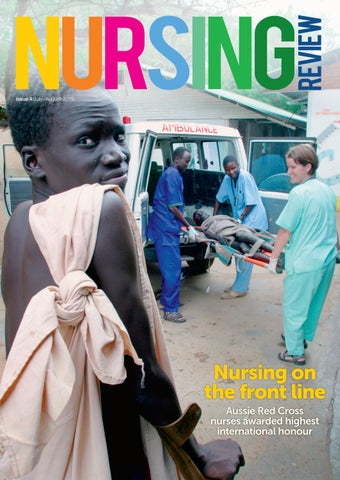
Nursing on the front line Aussie Red Cross nurses awarded highest international honour
SUPPLIERS OF SURGICAL & MEDICAL ELECTRONIC EQUIPMENT
NEW F O R
39 Years
DF-660
2019
Professional Suction Unit
120 Litre/Minute Flow Rate DF-770
Portable General Purpose Suction Pump
Shop online now
www.medeleq.com.au/Store
40 Litre/Minute Flow Rate TR800
Equipment Trolley with Drawer
MDQCMC
Mobile Roll Stand for Monitors WM001-1-BS004
ADE M320600
Patient Monitor Wall Mount with Basket
Premium Hospital Scale BMI, Capacity 250kg
Silentia Privacy Screen
NOW WITH
Photo prints!
“They don’t rest until you do”.
www.medeleq.com.au Free Call: 1800 677712 sales@medeleq.com.au
contents
news
MANAGING EDITOR
2 3 4 6 7
Richard Garfield 02 9936 8628 richard.garfield@apned.com.au NEWS EDITOR
Dallas Bastian 02 9936 8637 dallas.bastian@apned.com.au
Are you prepared for disaster? Nurse joins Team Albanese Geriatric outreach saves millions Sick kids tell of top needs
industry & reform
8
HEALTH EDITOR
Conor Burke 02 9936 8638 conor.burke@apned.com.au
WHO boss backs nurses
02
07
SUBEDITOR
Return to country Royal commission hearings highlight rural issues
10 One size doesn’t fit all Improving remote neonatal services
12 Her choice
Robert Santos
Nursing association says abortion should be legal
PRODUCTION COORDINATOR
14 Wealthy is healthy
Kate Prendergast
The class gap in preventable chronic illness
SALES MANAGER
Ben Long 02 9936 8664 ben.long@apned.com.au
specialty
SUBSCRIPTION ENQUIRIES
19 Recognition for rads
Nina Boyle 02 9936 8602 subs@apned.com.au
16 Modern Nightingales Red Cross medal winners share their stories
08
12
Giving rad-onc nurses their due
clinical practice
20 There at the end Nurse-led palliative care
COVER IMAGE
Denise Moyle Photo: Supplied
workforce
22 People and planet Good habits for the green-minded
PUBLISHED BY
23 More manpower Male nurses key to filling workforce shortfall
APN Educational Media GPO Box 4245 Sydney NSW 2001 ABN 58 090 900 999 ISSN 1326-0472 PP100001944
24 That specialisation feeling The benefits of being really good at one thing
16
26 Vietnam travel diaries
20
PUBLISHER’S NOTE
USQ nursing students bring lessons home
28 Back scratching?
© Copyright. No part of this publication can be used or reproduced in any format without express permission in writing from APN Educational Media. The mention of a product or service, person or company in this publication, does not indicate the publisher’s endorsement. The views expressed in this publication do not necessarily represent the opinion of the publisher, its agents, company officers or employees.
The moral swamp of corporate gifting
30 Worn down Stress forcing mental health nurses to quit
technology
31 Dr Death detector Algorithm flags high‑risk health workers
32 Appy solution
22
32
Mobile phone tool reduces gestational diabetes visits nursingreview.com.au | 1
news
Tedros Ghebreyesus at the 2017 UN conference. Photo: VOA
‘The world must hear their voices’ WHO director-general sends message of support to nurses. By Kate Prendergast
A
day after attending the G20 Summit in Osaka, at which world leaders pledged to strengthen health systems, the director-general of the World Health Organization made a surprise visit to a peak nursing conference to express his support for nurses worldwide. In a speech presented on the penultimate day of the International Council of Nurses (ICN) congress in Singapore, Dr Tedros Ghebreyesus urged the audience to “hold the G20 leaders to the commitments they have made ... Not only because that’s what health workers deserve, but because it’s what the world needs”. “We simply cannot achieve universal health coverage and the healthrelated targets in the Sustainable Development Goals unless we empower and equip nurses and midwives, and harness their power,” he said. The delegate’s presence at the five-day conference, which attracted thousands of nurses this year, was welcomed by many in the profession. As part of his organisation’s commitment to health workers, and to celebrate the Year of the Nurse next year, WHO
2 | nursingreview.com.au
is proposing that each country bring one nurse and one midwife to the 2020 World Health Assembly. “The world must hear their voices and their stories,” said Ghebreyesus. WHO also hopes to introduce an annual award for nurses and midwives globally to recognise and celebrate their good work. Nurses are pivotal in preventing, reducing and reporting patient harm, said Ghebreyesus, and they do so in environments which are often high-pressure and dangerous. Greater recognition and investment is an important step towards creating a sustainable healthcare workforce – which is currently under threat. WHO predicts that by 2030, the world will be facing a shortfall of 18 million health workers needed to achieve and sustain universal health coverage, with half of this shortfall in nurses and midwives. “We can have the best medicines, the best diagnostics, the best hospitals and the best health insurance, but if we don’t have health workers delivering safe, effective, people-centred care, we don’t have a health system,” said Ghebreyesus. “Health workers are not a cost, they’re an investment – an investment that pays a triple return for health, gender equality and economic growth.” Ghebreyesus also called for greater protection of nurses against workplace discrimination and abuse,
describing the present realities as “a stain on our sector, and a betrayal of our calling as health professionals”. Australia’s own Louisa Lam, deputy dean at Federation University Australia, presented a talk later the same day on the “intractable” issue of the workplace aggression experienced by Australian nurses. Increasingly, nurses are made vulnerable in other ways too. Ghebreyesus noted a disturbing trend in recent years which has seen healthcare professionals targeted by violent groups. This year, WHO has documented 478 attacks on health facilities, with 72 deaths. To provide a snapshot of the workforce in all its dimensions globally, WHO is currently working on the first State of the World’s Nursing report, which will be presented to the World Health Assembly next year. “This will not be a snapshot to put in a frame and admire,” said Ghebreyesus. “We hope it will be more like a photo of a house before a major renovation. “We hope that countries, regions and partners will use the data from this report to engage in policy dialogue and make evidence-based decisions on how and where to invest in the nursing workforce.” Ghebreyesus called for contributions from every country, to ensure the snapshot is accurate and reliable and represents the world of nursing and midwives. ■
news
Health workers at the epicentre of the Ebola outbreak in the Congo. Photo: Mark Naftalin
Before it hits Preparing nurses for a future of frequent natural disasters. By Kate Prendergast
I
n the last decade, over 2.6 billion people worldwide have been affected by destructive natural phenomena, from the 2013 Ebola virus outbreak in West Africa, to the 2017 mudslides in Sierra Leone, to the 2009 Black Saturday bushfires in Victoria. Scientists predict that global warming will exacerbate the frequency and intensity of many such events, making an even greater number of people vulnerable. How prepared is our international nursing workforce to meet this challenge? This was the question addressed by Flinders University professor Kristine Gebbie, appearing at a talk at the International Council of Nurses (ICN) 2019 congress. Held this year over five days in Singapore, the event attracted over 500 delegates. The professor, who is also associate director at the Torrens Resilience Institute in Adelaide, has spent the last few decades thinking about the competencies of individuals and professionals when confronted with extraordinary, largescale peril. She co-authored a paper for the Australian Institute for Disaster Resilience on building a household resilience toolkit, and another on assessing community disaster resilience. Her ICN talk brought focus to the pivotal role of nurses in disasters and emergencies. Nurses are often present at multiple points
in the disaster timeline, whether it’s as “the first person to notice a sick family member, or the first person on the scene of a house that collapsed”, she said. To bolster the nursing workforce’s capacity and capability in these high stakes conditions, said Gebbie, it is critical to establish and apply a set of common competencies. These are not only common across organisations, but across the profession as it exists worldwide, and encompass such domains as preparation and planning, safety and security, law, communication and recovery. Produced in collaboration with a steering committee and major nursing organisations, Gebbie introduced ICN’s Building Core Competencies in Disaster Nursing, Version 2.0, a unifying framework intended to establish this set of competencies globally. Designed to be consistent with national laws and policies, as well as local nursing practice, it creates sets of competencies for three different ‘levels’ of nurse – from the freshest nursing school graduate, to a cross-discipline professional who is prepared to leave their home institution and even country to respond to disaster. The essential feature of competencies, Gebbie emphasised, is that they are visible. They’re “something we can see a nurse do, and can measure against a standard”. They also require clearly defined knowledge, skills and attitudes. In the case of an Ebola outbreak, for instance, this could encompass knowledge of germ theory, training in the proper use of gloves and masks, instilling behaviours which limit the spread of disease, and an
understanding of the cultural sensitivities that may come to bear in infection control. Another common competency put forward by Gebbie is fluency in disaster terminology. If attained, when crisis strikes, a nurse has the ability to effectively communicate to all responders, improving the flow and accuracy of information. She is aware, for instance, that she mustn’t request the assistance of her supervisor by her first name (“Get me Juanita!”) but by her position title (“Get me the logistics supervisor!”). Discipline under pressure, in other words, is a must. Common competencies benefit systems, professions and individuals, Gebbie said. On a systems level, action is better coordinated between people, reducing obstacles and promoting efficiency. Within a profession, these competencies create a standard against which performance can be measured. They also help nurses to individually self-assess and work against a defined framework to advance and develop. At the most fundamental individual level, of course, they can also save lives. ICN is urging for the framework to be adopted by all nursing organisations and education programs nationally, as well as all institutions that employ nurses, and all organisations that participate in emergency/disaster responses. Ideally, the framework would be able to be updated like a mobile phone app, so new versions could be rolled out immediately and simultaneously. ICN’s Building Core Competencies in Disaster Nursing, Version 2.0 will be made available on the ICN website soon. ■ nursingreview.com.au | 3
news
Ged Kearney. Photo: Supplied
Ged on board Nurse named in Albanese’s shadow aged care team.
M
P and nurse Ged Kearney has been added to Opposition Leader Anthony Albanese’s aged care team. The former union leader, who won the federal seat of Batman for Labor, was named shadow assistant minister. Speaking to Nursing Review in the lead-up to last year’s Batman by-election, Kearney said her experience as a nurse would play a key role in parliament should she win.
When asked about the workloads aged care professionals face, Kearney said: ”We do know the aged care system is under pressure at the moment and needs a great deal of attention, and there’s been tinkering around the edges here and there with funding, and always bits and pieces of changes, but it really needs a good, hard look at the whole system and how it works. “I’ve dealt with the issue of workloads around patient ratios – there are many, many ways in other states that we can set up workloads that make life safe for nurses, and that’s really all we want to do. “I really understand all the permutations and combinations, if you like, of how to go about making change so that workloads are manageable. And aged care – boy oh boy, we really need to look at it very carefully in aged care.” Aged care peak body Aged & Community Services Australia (ACSA) welcomed Kearney’s appointment, along with the retention of Julie Collins as shadow minister. “Julie Collins is an experienced minister and Ms Kearney has worked in aged care in previous roles which makes both well placed to understand and respond to the challenges facing our sector,” ACSA chief executive Pat Sparrow said. “There is reason to feel optimistic about what can be achieved through the big national conversation we are now having about ageing and aged care. Bipartisan cooperation, and the involvement and engagement of the Opposition, will be required to realise this.” Chris Bowen was named shadow minister for health. ■
Dr Rakime Elmir. Photo: WSU
Brand faith Australian university unveils special hijab for clinical practice.
M
uslim nursing and midwifery students at Western Sydney University now have the option to wear its first branded hijab for clinical practice. Dr Rakime Elmir, co-creator of the program and WSU deputy director
4 | nursingreview.com.au
of clinical education, said the hijab – which is an optional part of the clinical uniform – has attracted a great deal of interest across the university. In fact, it’s set to be introduced in other courses where there is a clinical component. The branded hijab was created alongside guidelines and digital assets that are available to teaching staff, clinical facilitators and Muslim students.
Elmir said the project involved collaboration across the university and broader community. “As a Muslim, I knew it was vital that community spiritual leaders, the broader community, our students and staff all had the opportunity for input,” Elmir said. “This ensured that a balance could be achieved between equipping Muslim nursing and midwifery students with the skills and tools needed to be confident in the job, while encouraging the practice of their beliefs.” Co-creator of the program Sue Willis, the university’s director of academic programs (clinical), said there is a significant gap in available resources addressing the unique cultural and religious beliefs and requirements of Muslim nursing and midwifery students. The resources aim to address such issues as clinical uniform requirements, nursing care of different genders, bearing forearms to undertake aseptic hand wash, and taking time from the clinical environment for prayer. “The appetite for these resources was overwhelming,” Elmir said. “When we put a call out for a student discussion forum on this topic, more than 150 students registered – so there is clear support and interest for these resources.” ■
Leaders in practical, professional development and education for nurses Get back to work in acute care with confidence
Nursing Refresher Program
Midwifery Refresher Program
Neonatal Refresher Program
This award-winning program provides qualified, out-ofpractice nurses with practical, evidence-based knowledge.
The course is designed to build on your previous midwifery skills, knowledge and experience to prepare your return to safe practice.
Learn contemporary best practice and refresh your knowledge and skills in an acute critical and special care setting for neonates.
matereducation.qld.edu.au
news
$2 million saved Geriatric outreach service avoids unnecessary ED presentations.
A
n outreach service running out of Bankstown-Lidcombe Hospital in Sydney is saving the NSW government about $2 million a year and reducing pressure on its emergency department. According to the Australian Institute of Health and Welfare, there are approximately 270,500 people aged 65 and over in aged care, and these residents make up 20–40 per cent of all emergency department presentations.
Figures from Bankstown-Lidcombe Hospital show that cohort makes up 25–30 per cent of all patients on its geriatric wards. For geriatrician Dr Frank Liu, this can be problematic, as these older patient presentations often wait longer, take longer to be assessed, and are likely to be more complex. And, more often than not, these ED referrals can be avoided, Liu believes. To ease the strain, Liu started the Geriatric Outreach Service, whereby a geriatrician or nurse would be called to treat a resident at their nursing home. Since its inception in 2013, ambulance presentations from the 12 nursing homes in the Bankstown area reduced by 10 per cent and there was a 26 per cent reduction in referrals to ED from RACFs. The service has been shown to make a total average saving of $2953 for each individual treated and, according to Liu, nearly $2 million in savings for the state. The service has now been taken up in the Sutherland and St George areas of Sydney. Liu believes that apart from the cost savings, patient outcomes are also improving. Avoiding unnecessary ED admissions can help prevent complications such as patient delirium. “Patients get to stay in their own home to receive medical treatment and are cared for, rather than being in hospital,” he said. “Our services have reduced about 200 admissions yearly for Bankstown Hospital, which saved about $2 million per year. We will expand this service for the weekend cover if there is additional funding from our hospital.” ■
‘Game changer’ New app in pilot test against flu outbreaks.
A
s of June this year, there has been a recorded 75 flu outbreaks in NSW aged care facilities, with 86 residents requiring hospitalisation and 18 recorded deaths. And in early July, an aged care facility in NSW was put into lockdown after three deaths due to an influenza
6 | nursingreview.com.au
outbreak. Twenty staff and 20 patients fell ill with flu-like symptoms, with five residents being hospitalised. To create better responses to these types of outbreaks, a new app has been developed by the team at the Public Health Unit at Sydney Local Health District. The unit won a grant of $48,000 for the design of the app, known as FluCARE (the InFLUenza outbreak Communication, Advice and REporting app) in 2017 and spent the last two years in development.
The app is set to be piloted in 30 aged care facilities in the district. “The app has been created to help staff at residential aged-care facilities quickly recognise and respond to an outbreak of the flu, which is critical to minimise its spread and impact,” Sydney Local Health District epidemiologist Dr Emma Quinn said. The app’s algorithm will analyse the data and trigger an alert when the criteria for an outbreak is reached, sending email notifications to aged care staff and management as well as the district’s on-call public health officer and designated GPs. During the 12-month pilot, staff will record data concerning flu and flu-like illnesses, further helping to refine the app before a planned rollout to all district facilities in 2020. The unit’s clinical director Dr Leena Gupta said FluCARE uses technology in an innovative way to address an issue faced by residential aged-care facilities every year. “It’s a game changer,” Gupta said. “It also has the potential to be adapted to respond to other outbreaks, like a gastroenteritis outbreak in a childcare centre, which are of public health concern in the district. And, it could be applicable beyond our district. It has the potential to be implemented across NSW.” ■
news
Out of the mouths of babes
“T
o know I’m safe and will be looked after.” This is one of the most important needs of children in hospital, according to new Australian research. The study team, from Edith Cowan University, developed a questionnaire to get a sense of the needs of sick kids in paediatric settings.
They assessed 193 school-aged children and found that other important needs included getting enough sleep at night and having staff listen to them. Other needs were about the role of parents, such as: “To have places my parents can go to for food and drinks.” “To have my mum, dad or family help care for me.” Lead researcher Dr Mandie Foster, a nursing lecturer and paediatric nurse, said the literature on children’s needs and experiences in healthcare settings has been largely limited to surveys completed by adults answering for them. “To our knowledge, no instrument has been available to assess the perception of the needs of school-aged children during a hospital stay,” Foster said. “As adults, we often make assumptions about children’s needs and wants, but hospitals can be a scary and unfamiliar environment for many children, and we shouldn’t assume we know how they are feeling. “Being listened to and understood can give children an added sense of confidence about the situation they find themselves in.” She said the creation of the Needs of Children Questionnaire is part of an international movement to place children as central to care delivery. ■
Take a break on us Your organisation may be eligible for Australian Government-funded support to help alleviate the pressure of finding a temporary replacement when you or your colleagues go on leave. You will be given all the support needed to recruit, screen and place highly experienced health professionals that can hit the ground running from the moment they arrive.
For more information visit www.rurallap.com.au
nursingreview.com.au | 7
industry & reform Aboriginal elder Mildred Numamurdirdi giving evidence at the hearing in Darwin. Photo: Greg Roberts
The royal commission heads west Hearings focus on remote and rural access to care. By Conor Burke
BROOME: MAGGOTS FOUND IN PATIENT’S MOUTH Maggots were found in the mouth of a respite patient at an aged care facility in Broome and the incident was reported anonymously to the aged care complaints commissioner. The Broome hearing of the Royal Commission into Aged Care Quality and Safety was told that one evening during the wet season, flies entered the mouth of the patient – who had a poor ability to chew – and laid eggs, which produced maggots. The commission was told that the incubation period for maggots is usually about eight hours. The commission also heard from Martin Laverty, chief executive of the Royal Flying Doctor Service (RFDS). He told the commission that the excuse of small populations and workforce shortages is not good enough to explain poor care to remote communities. 8 | nursingreview.com.au
“Medicare is one of this nation’s greatest assets, but it does not serve the health interests of remote Australians, and because of the interdependence of primary care access with aged care, we are letting older Australians down by a failing primary care system in remote Australia,” he said. “Until we articulate an expectation as to what is a reasonable standard of access to primary care, in both volume of access [and] quality of access, it is insufficient to just have access to GPs without palliative care, without geriatrics, without dental care in remote Australia. And the commission has an opportunity to articulate a reasonable standard.” Laverty told the commission that in the opinion of the RFDS, there was insufficient “prevention, primary and rehabilitation healthcare access in many parts of rural and remote Australia”. He pointed to statistics that show remote areas have half the coverage of doctors compared with cities – with 459 per 100,000 people in cities compared with 225 per 100,000 people in remote areas. The commission heard about the issues specific to the Aboriginal and Torres
Strait Islander community in Broome and surrounding areas. Lack of access to respite, poor cultural safety and awareness in aged care facilities, and staff turnover were recurring issues. Leon Flicker from the University of Western Australia told the commission that although Aboriginal and Torres Strait Islanders make up 3 per cent of the population, they only occupy 1 per cent of aged care beds. In his opinion, this could be due to a number of reasons. The Aboriginal population often develop age-related syndromes at a younger age and therefore aged care might not be appropriate. Remoteness is another problem, as well as a belief among the community that residential care is not culturally safe as, in his opinion, “racism is commonplace”. Navigating My Aged Care is another barrier to care, he said. “It’s tortuous for a literate middle-class Melburnian. It’s impossible for a remote Aboriginal Kimberley person who may not be literate, may not own a computer, may not even own a landline or a mobile phone … The idea that this is a system
industry & reform
that is navigable by the average client is basically absurd.” Flicker was asked what he would include if he could have a wish list of reforms that the royal commission could propose. Navigators for the My Aged Care system was one wish. Another was Aboriginal owned and operated aged care facilities. “My last wish is supporting the traditional roles of the elders, which is part of the Uluru Statement.”
PERTH: JAPARA CEO UNDER THE SPOTLIGHT One hundred assaults over four-and-a-half years is not evidence of systemic issues among staff, according to Mark Sudholz, chief executive of aged care provider Japara. Sudholz appeared uncomfortable at the recent Perth hearing, and by the end of his testimony he was visibly upset. He was taken to task regarding the incidents reported the previous day concerning the assault of Noleen Hausler’s father Clarence at a Japara facility in 2015. He and the senior counsel assisting the commission, Peter Rozen, went back and forth over Japara’s definition of ‘rough handling’. They also couldn’t agree on a definition of the word ‘vexatious’, which Sudholz used to describe Hausler. In an email to his board, Sudholz wrote: “Hi all, you will be pleased to hear that we have achieved 100 per cent occupancy at Mitcham ACF for the first time ever despite the ongoing complaints and vexatious approach by Noleen Hausler and her activist group.” Sudholz was also asked about another email in which he seemed to imply that Hausler’s complaints were financially motivated. “This has been about financial gain to her, and the action she has taken is for the
The idea that this is a system that is navigable by the average client is basically absurd. purpose of putting us under pressure and forcing a settlement, which we will not do,” the email to a senior employee said. Most surprisingly were his statements regarding the prevalence of assault across Japara’s 49 facilities.
Rozen quizzed Sudholz over the 298 allegations of assault and the process of investigation used by Japara. Sudholz replied that they were “alleged” assaults and that the number of actual assaults was much less. “The number at the moment that I understand is under 100. And under that basis, it isn’t 298 assaults that Japara has had over four-and-a-half years. It is a figure much less than that,” he said. As his testimony ended, he was at pains to apologise to Hausler and teared up as he did so.
being away from her homeland, magnified as she is the eldest in her family. “My heart is crying, yes. My heart is crying because I far away from my family. Because if I pass away here, I’ve got my spirit, my culture, my ceremony way back home at
They drive me, put me on the ambulance ... and I didn’t know this place, and I was crying for four weeks.
DARWIN: ‘MY HEART IS CRYING’ The royal commission hearing in Darwin looked at aspects of care in residential, home and flexible aged care, as well as the issues faced by those living in rural and remote communities. Day one opened with testimony from Dr Meredith Hansen-Knarhoi, a GP who visits the Terrace Gardens aged care facility in Darwin, and her patient Mildred Numamurdirdi, an elder and traditional owner from Numbulwar. Hansen-Knarhoi met Numamurdirdi in 2018 when she was moved from Numbulwar, about 800km from Darwin, after a stint in hospital due to pneumonia. Hansen-Knarhoi told the commission that Numamurdirdi has been unable to return to her community and that the nearest aged care facility is a five to six-hour drive away. This has left Numamurdirdi isolated from family, friends and, importantly, her culture. Numbulwar has a small population of about 750, but this can swell up to 1500 depending on community events, funerals or football matches. “They drive me, put me on the ambulance, and they drive me, and I didn’t know this place, and I was crying for four weeks… sad for my family,” Numamurdirdi said via pre-recorded video testimony. Terrace Gardens is too far for her daughter and grandsons to visit, with dangerous dirt roads and “lots of accident along the road”. She talked of her life before she moved to Darwin when her “family never missed me”. They used to surround her, sit with her, talk and laugh with her. Her family would eat damper and whatever they had hunted, “sharing, family sharing”. “They love me so much and I love them so much, my children and my grandkids,” she said. Numamurdirdi described to the commission the spiritual hurt she endures
home and my family, they don’t want that way, because we’ve got everything there in the home,” she said. “I’m the eldest out of my family and that’s my motherland, Numbulwar.” She misses the freedom of her home, and of things like going to the beach in her wheelchair. “We don’t have aged care closer … in our community. I’m asking to build aged care in our community … please,” she said. Kim McRae, team manager at Ngaanyatjarra Pitjantjatjara Yankunytjatjara (NPY) Women’s Council (Aboriginal Corporation), tries to facilitate Indigenous clients’ wishes to remain on country. “We do a lot of advocacy for people around their desire to continue living on country,” she said. “At times, that puts us a little bit at odds with other service providers who may feel it would be more appropriate for someone to live in town and get additional supports,” she told the commission. McRae suggested more needs to be done to help people return to country for cultural events (if a move to city care is needed) through better funding, and this will result in better health outcomes for the patient. “I think return to country is really critical to people’s emotional and social wellbeing. “The difficulty is the threshold around where someone’s care needs have increased and yet they’re still saying they want to continue to live on country. There’s a tipping point, I guess, where perhaps the medical service is starting to be concerned about that person.” McRae often helps residents visit home when she has reason to drive “out bush”, be it a festival or outreach program, but it is not always possible. “Actually finding specific funding for that to occur is getting harder and harder,” McRae said. ■ nursingreview.com.au | 9
industry & reform
Closing the neonatal health gap Improving neonatal outcomes in rural and remote communities. By Conor Burke
T
he health gap between Indigenous and non-Indigenous people starts at birth. The target to halve the gap in child mortality rates is not on track. In fact, it has widened to 2.4 times higher for Indigenous children. Preterm births are also higher for Indigenous women, which can lead to childhood disability and potentially chronic diseases in later life, including diabetes, cardiovascular disease and renal disease. One reason put forward for these poor outcomes is access to care in rural and remote regions. “Access is not just about physical access – you know, where something is close enough that you can get to it – [but also] whether services are accessible for people and acceptable,” says Dr Geoffrey Clark of James Cook University. “And then it’s also about the availability of the service when you need it. You might, for example, have a great midwifery group practice, but if the numbers that
10 | nursingreview.com.au
the midwifery group practice can take are limited and you can’t get in, then there’s no availability, even though the service exists. “So, accessibility takes in lots of factors.” As it stands, Aboriginal and Torres Strait Islander women are three times more likely to die as non-Indigenous women, with a maternal mortality ratio of 16.4 deaths per 100,000 Indigenous births. Clark takes issue with current polices that state women in rural and remote areas must move to the nearest city at 36 weeks. “They’re uplifted in RFDS aircraft normally and flown to wherever they’re going to give birth, and they wait in a hostel until such times as they have their baby. “So quite often, this is ... why people don’t turn up at 36 weeks, because they don’t want to be taken away from their family. And that’s understandable when you understand the strong link between birthing on country and the cultural identity of Indigenous people,” Clark says.
IMPROVING OUTCOMES Academics argue that increasing term birth will impact all other Close the Gap targets such as life expectancy, literacy, Year 12 completion and employment targets.
Babies born preterm can be at risk of developmental delays that impact school readiness and attainment. Sue Kildea and Yvette Roe from the Molly Wardaguga Research Centre, College of Nursing and Midwifery, at Charles Darwin University, insist that a lack of Indigenous input into health services is another reason for poor outcomes. “If you don’t have Aboriginal and Torres Strait Island people at the table helping to design the services, then it’s not surprising that they don’t necessarily meet the need, which means they’re just not appropriate in many instances,” Kildea says. “Once the Aboriginal and Torres Strait Island community is engaged, they’ve got to be at the table in the planning, in the co-design, in the implementation and in the monitoring. That’s why embedding a community governance and control is so important,” Roe says. The two women have worked on a scheme aimed at reducing preterm births called ‘Birthing in Our Community’. Based in Queensland, the maternity support program has halved the odds of preterm births for Aboriginal and Torres Strait Islander women compared to those
industry & reform Sue Kildea and Yvette Roe. Photo: supplied
families, and Embed Aboriginal and/ or Torres Strait Islander community governance and control. “We don’t know exactly what has worked so well here, but we know that the combination has worked really well. We don’t want to sit back and wait 17 years to see research put into practice, and see another one of these services set up,” Kildea says. “We are pretty convinced that you actually have to do all four of them. You can’t take one or two and not the others, because they’re so reliant on each other. “What we’d like to do is get some largerscale funding to be able to help services to move much faster, to embedding and implementing service models like this.” A key tenant of the ‘birthing on country’ service is the I in RISE. This is centred on building an Indigenous and culturally capable non-Indigenous workforce. The bond created between the women involved and their midwives has been integral to the success of the service.
WHITE SCIENTIFIC VIEW OF RISK receiving standard care. The women in the program received their own midwife, help with transport, food and financial support if needed. The service was run in conjunction with the Institute for Urban Indigenous Health, the Aboriginal and Torres Strait Islander Community Health Service and Mater Health, all of which pooled resources, with the Queensland government eventually coming on board with more funding. “Having a community hub that’s funded and supported by two communitycontrolled health organisations has been critical,” Roe says. “The women are saying, ‘We feel this is our space.’ Again, it hasn’t got the sort of smell and feel of the hospital. Women feel this is our community, in the community, so that’s been really critical.” Kildea and Roe don’t single out one part of the service that helps most; instead, each small detail creates the environment for safe and successful birthing. “We think, at this stage, it wouldn’t be advisable to try and take bits of those pieces out, because all of them have a strong evidence base behind them,” Kildea says. Using the results and insights gleaned from the service, Kildea, Roe and others have developed the RISE framework. RISE stands for Redesign the health service, Invest in the workforce, Strengthen
When looking at current models of care, it is easy to forget that one size does not fit all. “It’s a white scientific view of risk,” is how Clark puts it. “Part of that is around what’s acceptable, and what’s acceptable from the point of view of risk, and because we think of risk in terms of a non-Indigenous perspective of risk, and that doesn’t necessarily accord with everyone’s idea of what risk is.” Roe and Kildea agree. They argue that, going forward, any successful health service must involve co-design and implementation. “We’ve had decades where health systems have been imposed on communities. And so now we’ve got systems that communities are at the table designing, monitoring and refining,” Kildea says. Clark’s work at JCU involves mapping using geographical information to access physical accessibility. The data obtained will be used to improve services for consumers and support the effective allocation of resources for both urban and rural populations. “One of the things that we’re interested in doing is looking at mapping – particularly in North Queensland, where of course we have some of the highest Indigenous population rates. Indigenous people accounted for more than 10 per cent of the
births in Queensland last year,” Clark says. “This is around trying to look at it from a pure access point of view. Where are services and where do people live? But then overlaying over the top of that acceptability. “So, you can do geo-social mapping that shows from post codes how far people have to travel to a service. But then if you overlay that with ‘acceptability’ and find out where the acceptable services are, you can often get a very different picture of accessibility.” For Kildea and Roe, RISE and the ideas behind birthing on country can be used elsewhere as part of a common-sense approach to maternal safety. “It can be definitely customised. Can we do this for women on Sydney’s North Shore? Definitely,” Roe says. “We know that addressing the cultural and social determinants of health, regardless of Aboriginal/Torres Strait Islander status, is a key area, and that’s often outside the birth practice. “Strengthening family capacity and community engagement is really important. They’re things people often don’t think about when you’re talking about maternity services. Being innovative and having leadership and strength-based problem solutions is critical.” Kildea and Roe hope to see more funding for the service. If the government funds health systems now, it will save down the track by reducing the poor health outcomes of communities. “If we can give how much a preterm baby costs the system ... You could start at $90,000 to $300,000 for one three-term baby in hospital,” Kildea says. “And that’s not taking into account any of the downstream costs,” Roe says. “We know that preterm babies are much more likely to need readmission in the first year of life. “They’re more likely to get diarrhoea and respiratory tract infections. Cognitively, at school, they don’t do so well and can sometimes have hearing troubles, and they’ve ongoing help for hearing and eyesight, and other conditions that are associated with prematurity.” “Actually,” says Kildea, “this is a social investment in choosing healthy babies and allowing them to flourish. We believe the birthing on country program is the best start to life for baby and mum. “Birthing is such a crucial part of a journey in a person’s life,” says Roe. “It’s important to get it right.” ■ nursingreview.com.au | 11
industry & reform
Supporters of safe access zones gather outside NSW Parliament House in June 2018. Photo: AAP/Peter Rae
‘Not a criminal issue’ Nursing association joins push to decriminalise abortion in NSW. By Kate Prendergast
A
peak nursing body has thrown its support behind a campaign to decriminalise abortion in NSW. The New South Wales Nurses and Midwives’ Association (NSWNMA) is one of 70 signatories of the NSW Pro‑Choice Alliance, a campaign launched by the Women’s Electoral Lobby in early May. Other signatories include family planning centres, women’s health centres, lawyers’ groups and domestic violence prevention groups. After a historic vote in Queensland parliament late last year, NSW remains the only Australian state yet to legalise abortion. Under sections of the NSW Crimes Act, enacted 119 years ago, women who access abortion, and health practitioners who help facilitate this choice, are criminals under law. While there have been no prosecutions in recent times, the potential penalty is up to 10 years’ imprisonment. The only circumstance which gives exception to criminality is if a doctor is of the honest opinion that “the operation was necessary to preserve the woman involved from serious danger to her life or physical or mental health which the continuance of pregnancy would entail”. ‘Mental health’ has since been interpreted to include “the effects of economic or social stress that may pertain either during pregnancy or after birth”. Irrespective of this leeway, NSWNMA general secretary Brett Holmes contends the
12 | nursingreview.com.au
law violates women’s reproductive rights, infringes on their autonomy, and places an unfair burden on both patient and provider. “Abortion is a health issue, not a criminal issue,” Holmes told Nursing Review. “Firstly, we believe in the right of patients to self-determine the health choices they make. And we particularly believe that women should have a choice to decide on medical issues around their own body.” These women deserve to be cared for by professional staff, he continued, who do not feel they are risking their professional or personal lives by assisting a patient in need. This encompasses not only the risk of criminal prosecution, but “their right to provide services and expertise”. Indirectly, those involved in ethical abortion procedures may be emotionally, professionally and psychologically harmed through social persecution, whether that be “intimidation or threats of attacks from well-meaning but misguided people trying to change minds that have been already made up”. Safety and privacy measures to mitigate this harm were introduced last year, when NSW parliament made it illegal for protesters to harass people within 150 metres of clinics and hospitals that provide terminations. Under the current arrangements, NSW nurses approached by women seeking abortion must refer them to another service – the vast majority of which are privately run. This, said Holmes, further punishes and alienates both women from lower socioeconomic backgrounds, and women living in regional or remote communities. To afford this private service, and potentially the travel cost on top of it, such women may be forced to negotiate a loan
from Centrelink. This notoriously impersonal and occasionally bungling bureaucratic program subsequently becomes the arbiter of this very personal choice at an intensely time-sensitive and pivotal moment. “If they’re unemployed, then they’ve got to spend months, if not years, paying that advanced payment back,” Holmes said. “This is a cruel way to deal with people in crisis … While the legislation doesn’t guarantee that that would occur, the public health system seems to have de-risked itself by not undertaking this health procedure. “Any woman who has to make this choice shouldn’t be unnecessarily punished or impeded by our laws or our health system.” The debate around abortion has flared up in recent months, as states across America take a progressively hardline approach on the issue, emboldened by a Supreme Court newly weighted with conservative justices. Four US states have so far adopted the ‘heartbeat bill’, which bans abortion before a woman may be aware she is pregnant. As reported by the Chicago Tribune, in Ohio, an 11-year-old carrying her rapist’s child is not eligible for the procedure. Alabama’s Human Life Protection Act, signed in May, bans abortion completely, even in the case of rape or incest. Any doctor who performs an abortion there could be sentenced to up to 99 years behind bars. Holmes acknowledged that in Australia’s last conservative pro-life stronghold, the issue remains divisive. One NSWNMA member resigned after the association made its stance clear. “But it comes down to principles about choice and rights and dignity of people,” Holmes said. “Principles are principles, and hopefully more people will join than leave.” He is also convinced that the majority of the public would like to see the legislation brought into the 21st century, with parliament reflecting a minority of “louder voices who are passionately against giving women the choice on how to manage their own bodies”. This view is backed by research conducted by the University of Sydney and James Cook University in September last year, through a survey involving 1000 NSW residents. Seventy-three per cent of respondents thought abortion should be decriminalised and regulated as a healthcare service. The survey also found, however, that 76 per cent of respondents were unaware that abortion is a criminal offence in NSW. One in three Australian women will have an abortion in their lifetime, with 80,000 carried out each year across the country. ■
advertorial
Sleep problems in infants The importance of healthy sleep Getting enough good quality sleep is vital for babies’ brain development (including memory consolidation and language learning) and physical growth.1 Inadequate sleep can have a significant emotional impact on both the baby and parents.2 Around 30% of parents report problems with their baby’s sleep in the second six months of life.3 How much sleep does a baby need? Sleep patterns and duration are different for everyone, but as a guide:1 At birth infants typically sleep around 16 to 17 hours a day, in short bouts day and night, since their circadian rhythm is not yet established.1 y By 6 months old babies need less day and more night sleep, requiring an average of 13–14 hours.1 y
Signs that a baby may need more sleep are if they’re wakeful and grizzly.4 Poor sleep and excessive crying: impacts on baby and parents Sleeplessness and unsettledness can impact a baby’s cognitive development.1,5 Anxiety in parents and family stress are common flow-on effects.5 Infant crying and sleeping problems are associated with maternal post-natal depression.4,5 Some solutions you can suggest for parents of sleepless infants: Encourage parents to learn to identify when they are feeling stressed and to have an action plan in place. An action plan may include:2 y Take a break: Give yourself a break – take a few breaths and make a conscious effort to calm down – before you go back to settling your baby.2 y Relax: Perhaps take a shower, make yourself a hot drink, or – if someone else can stay in the house – go for a walk.2 y Call a friend or a support service: Blackmores maternal health & infant nutrition advisory service on 1800 808 669.
Techniques for settling infants vary by age and individual, but routine and relaxation are important.6,7 In general, parents should be encouraged to do whatever works for them and their baby within safe sleep guidelines, including: Establish a bedtime routine: A positive bedtime routine can help a baby settle to sleep.6 y Set a relaxing vibe for sleep: Reduce entertainment, toys and stimulation at night. When baby wakes, keep noise down and lights low to help them settle again.7 y Let their baby see daylight: Safely exposing a baby to natural daylight, and letting night time be a dark time, might help build healthy sleep patterns. Having artificial lights on all the time might slow a baby from understanding the natural patterns of night and day and affect their sleep.7,8 y Avoid moving their baby around: Keeping their baby still and safe in a relaxed environment might make it easier for them to drop back to sleep.6
y
Infant nutrition can affect sleep and settling9 Breastmilk is best for babies, and breastfeeding mothers should be encouraged to continue. Parents should be referred to a board-certified lactation consultant (IBLC) to asses and assist with any feeding issues that may contribute to unsettled behaviour in infants. Where breastmilk is unavailable, a suitable alternative is infant formula.10 Differences in the composition of infant formulas can affect sleep and settling.9,11–13 OPO for longer sleep and less crying12 The OPO (sn-2 palmitate) used in Blackmores infant formulas is a special oil blend that mimics the structure and benefits of human milk fat.11,12
Blackmores.com.au/nutrition
In addition, infants fed high OPO cried for shorter periods of time than infants fed low-beta-palmitate formula (14.9 ± 3.8 vs. 63.9 ± 21.7 min/day; P=0.047).12 Alpha-lactalbumin helps to support quality sleep9,13† Blackmores Infant Formula contains added alpha-lactalbumin, a special whey protein found in high concentrations in human breastmilk.13 Infant’s that are fed formula enriched with alpha-lactalbumin demonstrate higher plasma tryptophan concentrations than those taking un-supplemented standard formulas. This provides a range of benefits including the reduction of time taken to fall asleep (sleep latency).13 Other benefits of Blackmores infant formulas Blackmores Infant Nutrition range is made using premium fresh Australian milk. y
y
Containing prebiotics (GOS) and essential vitamins A, C, D & E, it also contains alpha-lactalbumin, giving it a lower protein concentration than regular cow’s milk whilst still providing amino acids that babies need. Blackmores Newborn Formula has a Whey:Casein ratio the same as breastmilk (60%:40%).13
For formula-fed babies and toddlers with sleeping or settling problems, consider recommending a gentle formula like Blackmores Infant Formula. Available for newborn through to toddlers.
OPO has been clinically shown to promote longer daily sleep vs standard formula fed infants.11 Daily sleep duration at 6 and 12 weeks was higher in the OPO group than with control formula (P<0.05).11
Blackmores supports breastfeeding as the best nutrition for babies. Blackmores Toddler Milk Drink to be consumed as a supplement to a normal diet, to boost intakes of energy and nutrients. References: 1. Tham EK et al. Nat Sci Sleep 2017; 9:135–149. 2. Better Health Channel: Sleep and your baby. Last accessed 26 April 2019 at https://www.betterhealth.vic.gov.au/health/HealthyLiving/ sleep-and-your-baby?viewAsPdf=true. 3. Bayer J et al. J Paeds Child Health 2007; 43(1–2):66–73. 4. The Australian parenting website: How much sleep do babies need? Last accessed 26 April 2019 at https://raisingchildren.net.au/babies/sleep/understanding-sleep/sleep-needs-for-babies. 5. Smart J et al. J Pediatr Child Health 2007; 43:284–290. 6. The Australian Parenting Website. Changing your baby’s sleep patterns. Last accessed on 26 April 2019 at https://raisingchildren.net.au/babies/sleep/solving-sleep-problems/changing-sleep-patterns#step-3-establishing-a-positive-bedtime-routine-nav-title. 7. Barbeau D et al. Children 2017 Oct 20; 4(10):90. 8. McGraw K et al. Sleep 1999 May 1; 22(3):303–10. 9. Steinberg LA et al. J Nutr 1992; 122(9):1781–1791. 10. Canfield LM et al. Eur J Nutr 2003 Jun 1; 42(3):133–141. 11. Bar-Yoseph F et al. Clinics Mother Child Health 2017; 14(263):2. 12. Litmanovitz I et al. BMC Pediatr 2014 Dec; 14(1):152. 13. Lien L. Am J Clin Nutr 2003; 77(6):1555S–8S. Blackmores, 20 Jubilee Avenue, Warriewood NSW 2102, Australia. www.blackmores.com.au Blackmores® is a registered trademark of Blackmores Limited. Date of preparation: May 2019. 15210/PT.
nursingreview.com.au | 13
15210 Blackmores IF Full Page Advertorial 210x275_FA2.indd 1
13/5/19 4:34 pm
industry & reform
Preventable burden
Rethink needed on preventable chronic disease, experts say. By Conor Burke
I
n 2007–08, just over 42 per cent of Australians had one or more chronic conditions. Ten years later, this figure had risen to over 47 per cent. Chronic disease accounts for 37 per cent of hospitalisations and is putting an enormous strain on the health system. A report from the Grattan Institute put the cost of preventable hospital admissions due to “ineffective management” of chronic disease at $320 million a year. The ABC’s 7.30 program recently investigated the issue. It put the figure at 11.4 million Australians living with chronic disease, or one in two. Ben Harris, a health policy expert at Victoria University’s Mitchell Institute, told 7.30 that this is too high. “About a third of chronic disease is preventable, yet we only spend 1.3 per cent of our health budget on preventing disease. “We need to do better with prevention and managing chronic disease. We need to start treating people, rather than treating diseases,” he said. The series, entitled The Health Divide, found that although Australians have one of the highest life expectancies in the world, with good access to healthcare compared to countries like the US, more could be done to tackle chronic disease. “Our health system is designed to cure, and that means something has to go wrong first,” Harris said.
WEALTHY IS HEALTHY AMA chief medical officer Brendan Murphy argued that the sustainability of the current system is a pressing issue. He told 7.30 that the cost of healthcare is growing faster than the GDP, and that this is resulting in higher out-of-pocket costs for patients. Harris argued that the fee-for-service medicine model is no longer helping 14 | nursingreview.com.au
Australians. He pointed to figures which show that wealthy communities do a lot better health-wise, and that people in lower socioeconomic areas are more likely to have chronic disease, and much more likely to die early. In fact, 49,000 more people die a year in low socioeconomic areas than in wealthy areas. “The best thing you can do for your health is be wealthy,” Harris said. He added that steep fees charged by specialists is another barrier to care, as are long waiting lists at public hospitals. There is also a stark health divide between cities and rural/remote communities. Although a third of the population resides in rural areas, some communities do not have full-time GPs, and if you live in a rural area, you are statistically more likely to have a shorter life than your counterparts in the cities. Government stats show that as of 2011, mortality rates in rural areas are 1.4 times higher than those in major cities. You are also 2.5–4 times more likely to die due to diabetes and, for suicide, between 1.8 and 2.2 times. Access to healthcare is an ongoing issue, as is convincing healthcare professionals to move to rural communities. Despite having one of the highest rates of doctors per person in the OECD, there are still significant rural shortages.
BRIDGING THE DIVIDE Alison Verhoeven, chief executive of the Australian Healthcare and Hospitals Association, said a recent announcement by Health Minister Greg Hunt that he would institute a national preventive strategy is a positive step, but more effort and funding are urgently needed. “One way to address this would be to better target health services at achieving outcomes, rather than simply funding more activity,” she told Nursing Review. “It will require funding different approaches to health service delivery, including using team-based approaches to care where
every health professional works to the top of their licence.” Verhoeven argued for more reliance on health coaches, allied health professionals and other such services. “Some services might be provided to groups of people, or using digital technologies such as remote monitoring and feedback, or mHealth apps. “While many of these ideas are already being put into practice across the health system, the funding has to be in place to ensure equity of access to care. “Co-designing services with consumers is needed to ensure that they meet patient needs and desired outcomes, and investment in new technologies and treatments needs to be undertaken in a way which ensures all Australians can access the best care, not just who can pay for it themselves.” Dr Amy Nguyen, of the Australian Institute of Health Innovation at Macquarie University, said that embracing digital transformation can ease the burden of chronic disease on the nation, especially in the elderly. Initiatives such as My Health Record give treating clinicians the tools they need to correctly treat disease. “Mobile health apps that educate the patient and support them in self-managing their conditions are helpful, as well as providing access to their health information such as through My Health Record,” she said. “Data is plentifully collected, but little of it is being used to predict chronic conditions. Use of big datasets from GPs, hospitals and aged care facilities to examine vulnerable groups, genetic causations and associations, medication usage and so on could provide more information about modifiable risk factors to prevent chronic disease.” The way we currently use data and treat chronic disease is costly to the health system and can cause misdiagnosis, poor medication management and avoidable presentations to emergency departments. “Health information being kept in data silos means that tests (pathology, imaging and so on) are being repeated, and this duplication is costly to the health system, as well as the patient,” she said. Overall, the experts suggest an overhaul is needed to reduce the burden that preventable chronic disease is placing on the economy and the wellbeing of the nation. “We need a mindset shift to recognise health expenditure by governments is an investment in a healthy country and a healthy economy,” Verhoeven said. “But that investment has to be well-targeted.” ■
SubScribe for leSS than $2 a week
The laTesT news and resources for healThcare professionals
• Analysis of the major issues facing the health sector today
Nursing Review is essential reading for anyone involved in the healthcare sector in Australia. It provides unrivalled coverage of specialist topics from features and opinion pieces, to international news and profiles.
• Can be used as a professional development resource
At Nursing Review we pride ourselves on being at the forefront of the ever changing healthcare sector. We provide an independent source of news, and cover the issues relevant to nurses and the sector giving an informative, practical and insightful view into day to day life in hospitals and in surgery.
• 6 issues per year • Interviews and opinion pieces from professionals in the industry • Written by an independent voice • Tax deductible
Please call 02 9936 8666 to find out more.
specialty focus
Four blasts in two days Florence Nightingale Medal winners talk Red Cross nursing. By Conor Burke Denise Moyle’s journal entry, 18 April 2010: Another day that after 13 hours of work I don’t have the energy to write, however a significantly profound day. I am exhausted. Thirty patients in 24 hours. Mass relocation of hospital patients. So, the story … I will find the time, it’s important I remember. Four blasts in two days. The first at a food distribution centre. The second, minutes later when rescue teams arrived. The third, later again, and the fourth, the following morning. Forty‑five dead, and many wounded. As the hospital’s head nurse, I somehow find the space to increase the hospital’s 16 | nursingreview.com.au
capacity from 80 beds to 105. The surgical team perform eight laparotomies, two craniotomies and many chest drains and tractions in less than 24 hours. I have hardly seen them, yet we have all worked alongside together. I’m teary, but I guess I am so exhausted. I arrive home late and find my housemate Luis (air-ops coordinator) watching a boxing movie on TV and I just had to leave – it was too much trauma for me at this point in time and I’m on the verge of tears again. Too much unnecessary fighting.
D
enise Moyle is now back in Australia, “hiding from a threeyear-old” as we speak, a far cry from any blasts or crammed wards. She was recently one of four Australian nurses awarded a Red Cross Florence
Denise Moyle in Bangladesh.
specialty focus Denise Moyle on the Kenya/Sudan border. All photos: supplied
Pakistan after an earthquake that had killed “100,000 people plus”. Moyle spent four-and-a-half months living in a “mini MCG-equivalent” style stadium, where she ate in tents, worked in tents and showered in tents, very rarely leaving the stadium. The Red Cross nurses are at the mercy of the elements, often in hot and dusty or freezing cold climates, and they try to decompress as best they can. Moyle would escape through her journaling. The dangerous conditions can also be tough on families of Red Cross nurses. Moyle’s family was hesitant when she put her hand up to fight the Ebola crisis (she eventually couldn’t go as she found out she was pregnant). Her family’s feelings were also in her mind when she was considering going to Syria. “Now, I would have to discuss the location and role before putting my hand up,” she says. “You used to be able to display [the Red Cross emblem] with pride all over the world. Whereas more and more there is less respect in parts of the world, and I don’t think we can fly under the radar with our protective emblem … At times it makes us more vulnerable.” Working to the tune of bomb blasts and shaking windows “turns up the dial on your awareness”, and these heightened stress levels can be tough mentally, as well as physically. There is also a need to be culturally and politically aware, and Moyle tells me about tense dealings with the Taliban and Nightingale Medal, the highest international honour a nurse can receive. Like a lot of nurses, Moyle says she fell into the profession. And still, after a number of years and different roles, she just wasn’t sure about nursing. She hadn’t found her niche. “I saw the advertisement for Australian Red Cross nursing and thought, ‘I’m going to give this a go.’ I think this was my last hit at nursing, giving it a go and trying to find my passion,” she says. “And bang, I hit the nail on the head.” She recalls her first deployment to the Kenya/Sudan border, treating people with war injuries. The ward had no ventilators, no oxygen tanks and no frills. But they made do and provided “really good clean surgical care” that was “really effective”. Living in these conditions can be just as difficult as working in them. She tells me about the posting to the Kashmiri ranges in
I don’t think we can fly under the radar with our protective emblem [any more] … At times it makes us more vulnerable. Pakistani government, leaving her mentally drained. Overall, she doesn’t think the effect trauma can have on nurses is talked about enough. After that tough 18 months in Pakistan, Moyle struggled to adjust to her old life. “I came back to Australia and the impact of how I’d been holding it together for so long, without batting an eyelid, was significant for me.” Moyle took three months off after that tour and suddenly simple things such as showing her arms in a short sleeve t-shirt became difficult after being on alert in a conservative country for so long. She went through, as she put it, “reverse culture shock”. Talking to parents and friends was hard too. “Often people say, ‘How was it?’ “And I remember the first time trying to explain how it was and after five minutes someone said, ‘Ah yeah, the lawnmower broke down on the weekend.’ And I’ve just been telling a story about someone riding
Yvonne Ginifer in Pakistan.
nursingreview.com.au | 17
specialty focus
a donkey for three days in labour and the baby’s dead.” Eventually she would tell people that it was a really good experience, just to move the conversation on. “But then I would think, ‘What kind of sicko am I? Who has a really good experience in war-torn Africa?’” she says. “The best debrief I had was with other humanitarian aid workers … They get it.” Despite all of this, Moyle loves what she does. And looking back on a time when she was at that crossroads, when perhaps nursing wasn’t in her future, Moyle is now sure in her chosen profession. “Clearly, I’ve found my niche, and I’ve had a great career. I’m very glad I stuck it out,” she says. Moyle feels incredibly lucky to have been recognised with the recent Florence Nightingale Medal – on a personal level, but also to highlight the massive role all nurses play in society. “It’s a good opportunity to signify the role of a nurse and how valuable nurses can be,” she says. “It’s a really valuable profession to get into … and I feel really honoured and proud to have been acknowledged.”
YVONNE GINIFER “I’m a bit of a gypsy,” Red Cross nurse Yvonne Ginifer tells me with a laugh. I’d asked her where she is currently and she lists off all of the places she has lived. Ginifer’s parents were teachers and they moved around a bit as she grew up, perhaps instilling an adventurer’s spirit in her. Travel has always been a big draw, Ginifer says. She went bush straight out of university and practised nursing in rural and remote communities for three years. She had to learn quickly, as she was the only nurse in town. “Working independently, you have to be really confident in your skills and make good decisions.” However, wanderlust persisted, and a stint backpacking in Europe led Ginifer to a job cooking on an overland truck driving through Africa. “There was one tour company that had a cook. So, I just rang them up and told them who I was, told them I’d done some cooking for shearers – which was a furphy – and they were really keen to take me on.” That trip lasted three years before Ginifer came home and started remote nursing again, picking up her midwifery qualifications along the way. But it took 18 | nursingreview.com.au
some personal turmoil for her to find the Red Cross. “I had a relationship breakdown and I couldn’t have kids, and I thought, ‘What am I going to do now?’ “I had to do something significant, something with my life that I can be satisfied with in the long term. And that’s when I thought, ‘Red Cross is it, I’m going for that’.” After a lengthy recruitment process, Ginifer found herself going to conflicts and disasters in Myanmar, Afghanistan, Pakistan, Somalia and Sudan, as well as a tour attempting to control the Ebola epidemic in Liberia. “Someone had to do it,” she tells me after I remark how scary that crisis was. “They needed as many people to go as possible, and I felt I had a responsibility to go, because I could go.” Apart from a couple of moments of contact with potential carriers, Ginifer felt safe in Liberia, as she has for most of her time overseas. “I have great faith in the Red Cross structures and systems for security,” she says. That doesn’t mean that the job is danger-free. We talk at length about some security incidents that have occurred in her time with the Red Cross, and one in particular, which she asks me not to print, brings the reality of this high-pressure nursing to the fore. You can hear the pain in her voice. “I came home a bit tired and a bit confused. It was an emotional stretch,” she says. “It is pretty tricky out there, and some places are more difficult than others.” Like Moyle, Ginifer tells me that the trauma of nursing is compounded when you are overseas, living and nursing in disaster and conflict conditions.
They needed as many people to go as possible, and I felt I had a responsibility to go, because I could go. Ginifer praises the Red Cross and its approach to psychological support. Nurses have a briefing prior to a mission and access to a psychologist during a mission and for as long as they need afterwards. She also praises the Australian Red Cross for its insistence that nurses take breaks between missions. Ginifer is now home, taking some down time, renovating her house and being recognised for her brave work with the Florence Nightingale Medal. “It was a huge shock. I didn’t know I was nominated. And then to receive the award, I was absolutely humbled and absolutely surprised. “And my first thought was that there are so many other amazing nurses out there. “I felt very honoured, and as time has passed it has settled down into: ‘This is really, really lovely’,” she says. The award is validation of that lifechanging choice Ginifer made, but like all of us, it is sometimes just nice to be noticed for what you do. “You are a bit invisible otherwise. My family and friends all know what I do, but it has brought to their attention that it has more value than they anticipated. “It’s what I do, and I think it’s important, and now they do too.” ■
Yvonne Ginifer in Pakistan.
specialty focus Michelle Roach (far left) and colleagues. Photo: Supplied
‘What about us?’ Radiation oncology nurse pushes for better recognition of the job. Michelle Roach interviewed by Conor Burke
M
ichelle Roach is a radiation oncology clinical nurse consultant, the first NSW has ever had. And she is passionate about ‘rad-onc’. She is passionate about, it seems, everything. “I’m a pain in the arse,” is how she describes it. I would say she is a ‘doer’. Like the time she convinced the Australian College of Nursing to start a cancer education day at Liverpool Hospital after, as she puts it, “I got on my soapbox”. Or like the time she approached eviQ – an online resource of cancer treatment tools – at a conference to bemoan the lack of specialist training for radiation oncology nurses. Roach wants more recognition for her specialty, and education is a big part of that. “I love it,” she says of the job. “But people go, ‘Who cares about rad-onc? All you do is dressing.’ People don’t know what it is.” Roach’s conversation with eviQ led to the development of RONKAS, or the Radiation Oncology Nursing Knowledge and Skills framework. It aims to create an in-depth knowledge of radiation therapy, its side-effects, and its management during and after treatment. Nursing Review spoke with Roach about RONKAS and why radiation nursing needs more recognition.
NR: You work at Liverpool Hospital as a clinical nurse consultant, and you’ve been developing RONKAS, a framework that explains the roles and responsibilities of oncology nurses. Tell us about that. MR: I’m a clinical nurse consultant for radiation therapy. In the world of oncology nursing, generally you have medical oncology nurses, so they’re the nurses who deliver chemotherapy, and you have radiation therapy nurses, who support the patient through their radiation therapy journey. To be a chemotherapy nurse, you have to be competent at what you do – you need assessments – and there’s never been anything like that for radiotherapy nursing. I stood on my soapbox and thought, “This isn’t fair. What about us?” I approached eviQ at a cancer nurses’ conference in 2017 and said, “What about radiotherapy nurses? Why can’t
we be seen as competent caregivers? Why don’t we have competencies out there for radiotherapy nurses?” For those who don’t know what eviQ is, it’s an online resource governed by the Cancer Institute NSW, and it has all sorts of oncology, chemotherapy and radiotherapy protocols. It’s got support packages for nurses, for patients, for doctors, and they’re an oncology nurse’s go-to online resource. I spoke to the eviQ girls at a conference and said, “Hey, what about us?” They went, “Oh, how very interesting. Let’s look at that and form a working party and work on it.” Which we did!
What specific things did you think radiation nurses would need to brush up on compared to other nurses? In my experience, if you talk to people in the community about cancer, people go, “Oh yeah, that chemotherapy, that was really tough.” You don’t hear a lot about radiotherapy from patients or in the nursing world. Not a lot of people know about radiotherapy, and we haven’t been highlighted, for want of a better word, as being an important part of the multidisciplinary team for the patient having radiotherapy. My own thoughts around that is you need a nurse to give chemotherapy. If every chemotherapy nurse was on sick leave today, not one patient would get treated. However in radiotherapy, nurses do not deliver radiation therapy. It’s the radiation therapists that do. People go, “Well, what do you do then? You just hold the patient’s hand.” They don’t know what radiotherapy nurses do, and there’s a lot more that we do than just sitting there holding a patient’s hand. I think it’s a way of building up the radiotherapy nurse, giving them the competencies and the knowledge and the skills to deliver appropriate care for the patient having radiation therapy. And on the other side, to show the nursing community that radiotherapy nurses are competent caregivers.
What are some of the specifics of this knowledge and skills framework? What can nurses learn? The framework has three domains: patient education, patient management and patient assessment. In each of those domains we have tools to assist the nurse on how to assess a patient, how to manage them, and how to educate. We also have a facilitator’s guideline to help those who are assessing those nurses on the appropriate questions to ask, and the skills they need to deliver that care.
Does it go into what to expect regarding side effects and how to manage patients after treatment as well? Yes. Before treatment, during treatment and after treatment. It goes into knowing about radiation therapy, how it works, what it does, and being able to predict the reactions the patient will experience from their radiotherapy, and then how to manage that.
I believe this was launched in 2018. Have you got feedback from the nurses? It was launched in November 2018. We have not as yet sought feedback. The team that was working on it was me, Maggie Hjorth (a nurse from the private sector), a radiation therapist from Liverpool Hospital, and the two content authors from eviQ. When we were developing the framework, we sought national consultation, and we had 13 clinicians give us feedback. They’ve given us their feedback, which is “Long overdue. Finally rad-onc nurses are being recognised”, and stuff like that. ■ nursingreview.com.au | 19
clinical practice
Lighting the way
Nurses should lead the way in palliative care. Patsy Yates interviewed by Conor Burke
B
etween 2011 and 2016 there was nearly 30 per cent growth in palliative care hospitalisation. Add to this the 160,00 Australians who die each year (70 per cent due to expected causes), a rapidly ageing population, and the commencement of voluntary assisted dying in Victoria as of July 1, and conversations about the quality of palliative care become increasingly important. The Australian College of Nursing certainly holds this view and believes nurses should take a leading role. The college recently released a white paper titled Achieving Quality Palliative Care for All: The Essential Role of Nurses. ACN chief executive Adjunct Professor Kylie Ward said: “The death of someone we love is exceptionally difficult to face, and I think that has made it challenging for us as
20 | nursingreview.com.au
a nation to have frank and fearless policy discussions about how we care for people who are confronting their mortality. “The nursing profession makes up the largest component of the palliative care workforce. ACN wants to see increased support for nurse-led models of care that will ensure people receive the physical, emotional, social and spiritual care they deserve.” Nursing Review spoke with Patsy Yates, chair of ACN’s End of Life Care Policy Chapter, to learn more about the paper.
NR: What challenges are nurses facing in palliative care? PY: Nurses have always been central to the care of people who are dying, but I think some of the challenges we face today are really around scaling that up to be able to provide the right level of care, at the right time, in the right place. I think some of our core nursing practices have always been there, but the main challenge we have is achieving that at scale to ensure everybody at end of life has the best possible care. That means being able to provide that person-centred individualised care, being able to work as part of a team, and being quite innovative about the sort of models we use to deliver care to ensure that it is the best quality and that it is reaching everyone who needs it.
The paper focuses on three urgent areas for action. Action one looks at the funding models for dedicated nurses in rural and regional areas. Action two looks at implementing relevant policy and legislative reforms to remove structural barriers. What do you want to see implemented, or what do we need to remove, to help nurses do their job in palliative care? At the organisation level, there are some very practical things. Even referral pathways, for example. Sometimes there are barriers in terms of whether a person needs palliative care – sometimes referral processes get in the way of referring to a nurse directly to do that initial assessment as part of a team. Referral pathways at the organisation level is one example of where there can be unnecessary blocks to getting care, which oftentimes, when it’s needed, is needed immediately. It’s the sort of care that can’t wait. But at the broader legislative area, it’s also around – for some of our advanced practice nurses in roles – making sure there are no barriers to things like being able to prescribe or to order appropriate investigations, or whatever it might be. Nurses need to be able to ensure that it gets that immediate care without those hurdles that might create disruption and stress for patients.
clinical practice
Nurses are appropriately qualified to do that. It’s not satisfactory anymore that those barriers are in place.
Action three looks at ensuring there are enough nurses to meet the demand for palliative care. That sounds simple, but that’s an ongoing problem for the nursing industry. How do we get to that point? There’s some important work going on that recognises the demand for palliative care is only going to increase. We’ve got an ageing population, and that end of life trajectory now happens over a long period. People might need support from palliative care services for a much longer length of time, and in a range of different settings. That might be in the community, or it might be in residential aged care settings. It might even be at points of time in that end of life care trajectory, where they may need short consultative services in acute care settings, or even end of life care in acute care settings. It’s not just about the specialist end of palliative care. Having specialist palliative care services is critical, but the workforce model also assumes that we’ve got all healthcare providers – whether they be nurses working in aged care or nurses working in an acute care setting – to recognise that they need some sort of palliative care skills, even though they might not be specialists, to be able to provide that support and work as part of a team, as part of consulting with specialist palliative care providers. With the growing demand, with the complexity of ensuring that this is not just the domain of a specialist service, this is actually a whole-of-workforce issue we’re facing.
Healthy returns
There really needs to be attention to some modelling to know what numbers we need, but also some really good researchassociated training programs to understand the level of capability that everyone needs to have across the workforce.
To meet this demand, is there a specific percentage we need to increase the nursing workforce by? I don’t think anyone has good, sufficient data on that. That’s one of the challenges we face. Particularly in specialist areas in the nursing workforce, there isn’t necessarily good data to know how that’s going to match the demand for the future. I don’t really know that, but it’s important that we do get better data so we can resource and plan for the future.
Kylie Ward, when talking about this paper, used the phrase nurse-led models of care. Can you unpack that a little bit? One of the things we did in preparing this paper was a review of the available evidence. What we looked at is studies where there had been some sort of nurseled model. And when we say nurse-led models, that’s not nurse-alone models. It's nurses who might be coordinating or leading a particular approach to care that’s part of a full-team approach, because that’s a critical part of palliative care. When we looked at the research and what was involved with that, we saw that nurses might have a critical role in that early stage of understanding that people might need end of life care. Particularly beginning early education around what might be advanced care planning, nurses can play a critical role in that early phase of transitioning people to understand
Straightforward investment options
what their choices and wishes may be in the future. There are plenty of examples in the literature of where nurses are delivering clinical services which focus on symptom management, patient education, and a really important area which is around coordination and navigation of the range of services that someone might need. When we looked at the literature, there were really good studies that showed when we’ve got appropriately qualified nurses who are delivering those sorts of interventions, there can be improvement in patient outcomes in terms of quality of life, symptoms and so on. We identified that based on the evidence, it was important that these sorts of models are supported and resourced even further, as part of a broader development of palliative care services. The nurse plays a fundamental and pivotal role in achieving good outcomes.
I imagine this paper was prompted by the introduction of voluntary assisted dying. Do you see much upheaval in the future with voluntary assisted dying coming in? The discussion around voluntary assisted dying is important for the community. This paper was really recognising that we can’t have conversations around things like voluntary assisted dying, if we haven’t even got good palliative care services in place in the first instance. Fundamental to good end of life care is having good palliative care services. This paper was really driven from that point of view. That’s something we’ve got to get right in our community, so that everyone has access and has the best quality of life possible. ■
Fair and transparent fees
Join Prime Super | 1800 675 839 | primesuper.com.au Prime Super Pty Ltd ABN 81 067 241 016 AFSL 219723 RSE L0000277 as Trustee of Prime Super ABN 60 562 335 823 RN 1000276
nursingreview.com.au | 21
workforce
5 ways to get greener
Nurses’ day-to-day role in creating environmentally conscious hospitals. By Ayelet Dahan
A
s a student nurse, you can’t help but become acutely aware of the unnecessary environmental waste that is involved in providing hospital healthcare. In fact, it has been estimated that the Victorian public health services will be generating as much as 52,000 tonnes of solid waste per year by 2022, which will cost over $17 million. Every day as part of patient care there is of course much energy, water and wastage involved. At the same time, this means there is a great opportunity for nurses to be part of a movement towards more environmentally sustainable hospitals and to help combat waste and climate change. Around the world, healthcare organisations are increasingly paying attention to environmental sustainability. In fact, the Global Green and Healthy Hospitals Network is connecting and supporting healthcare services globally to become more environmentally conscious. For example, it recommends 10 key areas in which healthcare could drastically improve its environmental footprint, including better management of waste,
22 | nursingreview.com.au
water, transportation, food, procurement of pharmaceuticals, and more sustainably designed hospital buildings. In Australia, many healthcare organisations have also joined the Climate and Health Alliance, which has been a strong advocate for greenhouse gas emission reductions from healthcare. It is notable that the Australian Nursing and Midwifery Federation has an ambitious climate change policy that recognises the importance of combating climate change and addressing the implications on human health (for example, the impact of rising atmospheric temperatures and the effect on vulnerable populations such as the elderly and the sick). Indeed, The Lancet medical journal has identified climate change as the greatest threat to global health and the greatest opportunity for change in the 21st century. But what does this mean for day-today nursing in hospitals, and what are some practical things that can be done immediately to instigate change on a local scale without compromising patient safety and quality of care?
1. Maximise recycling in the hospital setting For example, set up easily accessible paper recycling and soft plastic recycling on wards.
2. Reduce wastage, including of medications and food For instance, undertake regular medication reviews to ensure patients are prescribed only the necessary medications for their needs, and allow patients to choose their own meals, which will help reduce food wastage.
3. Consider the transport of staff and patients Encourage hospitals to provide facilities to make active transport like walking and bike riding easier (e.g. showers and bike storage), and encourage the use of public transport.
4. Encourage reflective practice Help staff to reflect on when and how much medical supplies are really needed for specific procedures. For example, take a moment to reflect on whether single-use plastic equipment is necessary to minimise infection depending on the particular clinical context (obviously avoiding clinical infection is still the first priority).
5. Get involved in your hospital green committee Contribute to the big decisions in your hospital such as advocating for sustainable building design and procurement (keeping in mind that hospital procurement is one of the greatest contributors to hospitals’ environmental footprint). Health practitioners have been leading the way on educating the community about environmental sustainability, and in fact the long-term health of populations is dependent on clean air, water and food supply. The nursing profession has an important responsibility to mitigate climate change as much as possible and engage in global efforts for a more sustainable future. ■ Ayelet Dahan is a final-year nursing student at the Australian Catholic University.
workforce
From tradie to nurse The men who could help fill the nursing shortfall. By Conor Burke
A
s our population continues to grow and age, the demand for nurses keeps rising. By 2023, the number of registered nurses that will be needed in Australia is expected to hit 330,900, up from 279,600 in 2018, leaving a shortfall of 51,300 positions. There will also be an estimated 147,000 job openings – from nursing turnover and new jobs – and it stands to reason that encouraging more men to the profession would be an important step in filling these gaps. Nursing is one of the few industries in which women are in the majority – 87.7 per cent of nurses are female, according to government figures. Australian College of Nursing chief executive Adjunct Professor Kylie Ward told the Nine newspapers last year that attracting and retaining men to the nursing profession “would certainly diversify the workforce and help address this looming shortage”. Ben Jones is one of a number of new male nurses hoping to fill that gap.
Aged 36, with a mortgage, a wife and a newborn, Ben decided he needed a change. He’d had enough of the physically demanding waste management trade he’d worked in since leaving school. “For some reason, I wanted to go to university and see if I was capable,” he says. “And when my daughter was born, I was in the hospital with my wife and really liked the service that was provided by the nurses, and I just thought, ‘What an awesome way to contribute to society’.” Financial realities meant Ben couldn’t go straight into a university degree. Instead, he chose to study a Diploma of Nursing at TAFE NSW, where he could become an enrolled nurse, continue his studies and be on the way to becoming a registered nurse while working and earning. “I hadn’t studied full-time since 1999 when I finished high school, so I think TAFE NSW was a good avenue to take. “I had completed a couple of other courses with TAFE. I found that the teachers were always helpful and knowledgeable, probably much more so this time around with the Diploma of Nursing course,” he says. After more than a decade since leaving school, however, Ben found academic life challenging.
“It was difficult. I was expecting it to be hard, but probably not as hard as it was,” he said. “I hadn’t studied biology or anatomy and physiology prior to doing the enrolled nursing course. A lot of people in my class were pretty proficient at the biology, even the computer studies and things like that … I just felt like I was clunkier.” But the TAFE system suited Ben. He says that they were understanding of people in his situation and provided him with the support and, importantly, the encouragement he needed to carry on. Another big change was being one of only a few men in the room after many years as a tradie. “I knew that would be the case,” he said. “But I like that nursing is a team. And if you’re unsure, so far with my 10 weeks of clinical placement, I’ve found that nurses as a whole are super willing to share their knowledge and experience and help. And that’s something that I didn’t anticipate, but I really have embraced.” As his TAFE graduation looms, and with a job at Sydney’s Concord Hospital lined up, Ben is excited. He eventually hopes to move into the mental health space, as he believes his local community needs more help in this area. He is also looking forward to getting a pay cheque again. “On a selfish level, I’m looking forward to getting back into paid work and the routine of work, even though it’s shift work. I’m looking forward to being able to provide for my family again,” he says. “And also, I’m looking forward to the next step, which hopefully for me will be university. And I’m looking forward to seeing if I’m capable and if I can better my life in a way that maybe I didn’t think was possible up until a few years ago.” Ben is much happier in general than before. He credits his supportive family and his wife, who was able to support him while he studied. He believes he has brought the problem-solving skills that nursing has taught him back to his family life. “I’m excited. I think my wife’s excited. She’s sick of me sitting at home in front of a laptop punching out assignments; she’s ready for me to be back at work,” he jokes. “I was stale in my old job, and I’m a lot happier now. I feel like the immediate payback is I’m contributing more positively to my family.” ■ nursingreview.com.au | 23
workforce
The Specials How specialisation and volunteering can advance your career. Vicki Evans interviewed by Conor Burke
V
olunteering and specialising are two things Vicki Evans thinks are important for a nurse’s development. Evans is a clinical nurse consultant and the vice-president of the World Federation of Neuroscience Nurses. “Some of my proudest moments have been helping nurses grow and seeing them succeed in this specialty. The most amazing thing to come out of WFNN for me has been the friendships – lifelong. Distance is not an issue. Global friendships are the real treasures,” she said recently. 24 | nursingreview.com.au
Evans believes that belonging to a professional body can be integral for good education, as well as for support and building networks. This year, the WFNN celebrates 50 years and Evans had a quick chat with Nursing Review about her time volunteering with the organisation.
NR: You recently spoke at Australian Healthcare Week about promoting specialisation and career paths for nurses. How did you come to specialise? VE: It was one of those things I just fell into. I did my training, graduated and I ended up in neurology. And I thought, there’s a lot to learn here. It was very interesting, and I branched into neurosurgery and neurosurgery intensive care, and I thought, this is a fascinating area, and you can do
a lot to help people. That’s what I liked about it.
I imagine there’s a lot of specific challenges, especially in your area or specialisation of nursing. There are a number of challenges. It’s a very emotional area. It’s a very heavy area to work in, because the brain controls everything from the personality of the person to what they can do or what they can’t do. So, not only are you dealing with the patient, but also their relatives and trying to get them through a really tough time as well.
Are hospitals active in promoting specialisation for nurses? Do enough nurses currently want to specialise? The hospitals do promote it in the fact
workforce
that the wards are dedicated to various specialties. Some of them have more than one specialty in their ward, but with neuro, we do have a neurology unit, a separate neurosurgery unit and a separate neuro intensive care. So, in that way, neuroscience is promoted very well.
What are the benefits of specialisation? Is it about development and career progression? One benefit of specialisation is that you’re constantly learning and keeping up to date with the changing trends. But also, nurses who specialise give more appropriate care to that particular patient with that particular disability or disease process. The more they know about what’s happening and what they can prevent or help the patient through, the better the patient is, and the better the outcome.
I wasn’t aware there was a federation for neuroscience nurses before I met you at Australian Healthcare Week. Why is there a federation for this specific area?
You find specialisations for various groups – orthopaedics, palliative care, all sorts of things – and neuro is just one of them. We do have the World Federation of Neuroscience Nurses, which covers over 8000 neuroscience nurses globally, from all the continents. I think the fact that there are so many neuro disease processes out there, the need for that sort of thing is great. Stroke is a very big thing. Tumours seem to be increasing for some reason. So, I think there are a lot of people interested in that area to help.
What’s a good pathway that nurses can take to specialise? Look out for courses in their own institutions. Look out for courses online. And there are always conferences, not only nationally but in the international arena. If we’re talking just neuroscience, the Australasian Neuroscience Nurses Association is fantastic for their annual conference, but the World Federation of Neuroscience Nurses has a conference every four years, pretty much like the
Olympics, where we go to various places around the world. The last one was in Croatia, and the next one is in 2021 in Darwin. When you get together with like-minded people, you get revamped and buoyed up, and you come back with a whole lot of different ideas and ways to do things, and you refresh yourself and your knowledge.
You also spoke about the importance of volunteering for nurse development. Put yourself out there! Put yourself out there and say, “Yes, I’ll help out on this.” Be it a committee in your hospital or something else. There are lots of volunteer organisations out there. I’m in the World Federation, and it’s a voluntary position. I think I’m the longestserving volunteer in that position – 25 years. However, I’ll be stepping down at the next conference. But you learn a lot and you have a lot of opportunities, so just go with it. It advances you, and the people you meet along the way are just amazing. ■
Help make End of Life care more comfortable for your clients using Confident Care’s
Individual Palliative Care Kits. These Kits contain Oral Hygiene Products along with a range of Cleansing Products Ask us about free Oral Care & Cleansing Education Today Free call: 1800 020 025 Kit Contains: 20 x X76075-C Oraswabs impregnated with sodium Bicarb 1 x 50ml Bottle of Oraclean Solution 2 x Denta-Med Sachets 1 x Bite Block 4 x Packs Confident Care Bed Bath with “Spot the Red” Skin Check System 12 x Perineal Treatment Gloves with 3% Dimethicone 1 x Rinse Free Shampoo Cap 1 x Pack of 50 Adult Wipes Order Code: X2000
Free call: 1800 020 025
www.confidentcare.com.au
sales@confidentcare.com.au nursingreview.com.au | 25
workforce Clinic day in Pung Village. All photos: Supplied
Nurses on tour Nursing students head to Vietnam for the work experience of a lifetime. Coralie Graham and Joanne Stefanaras interviewed by Conor Burke
Nursing Review caught up with Associate Professor Coralie Graham – who organised the trip – and student Joanne Stefanaras to hear more.
NR: Where did this program come from, and how long have you been running it?
T
he University of Southern Queensland recently welcomed home a group of nine nursing students from northern Vietnam. The students had placements in hospitals in Hanoi and Mai Chau as well as mobile clinics in rural areas. The group treated over 870 patients, with cases such as extreme high blood pressure and muscle and joint problems, with some patients still feeling the effects of wars long past. “I worked with a particular patient who had back pain, and on further questioning he reported having shrapnel still in his chest from the war,” nursing student Thomas Skerlj said. “The gravity of the situation hit me in the context that now I was able to help provide some care to a person that had been through so much.” The student nurses found that the experience increased communication skills and problem solving, and the importance of good healthcare was reinforced. At the end of the placement, the locals showed the group their appreciation. Nursing student Kristen Plazina said: “They treated us with local dances, and we treated them to a bit of our culture, which included dancing the ‘Nutbush’, singing the national anthem, and a taste of Vegemite.”
26 | nursingreview.com.au
CG: We had our first Vietnam clinical placement in January 2018. Initially it started with me finding out that Griffith University ran a program into Laos, and applying for New Colombo Plan funding. I contacted Griffith University and we put in what is known as a consortium application. They’ve generously provided a lot of education to us in terms of how to run a successful clinical placement in another country. We’ve now had two successful applications with a consortium application bid. We’ve sent two groups that are half Griffith students and half USQ nursing students.
It’s a great idea, but isn’t it throwing them in the deep end? Absolutely not. We don’t want to throw them in the deep end. I mean, obviously, they’re facilitated on the clinical placement, so the way that it works is that because this is a consortium application bid, USQ sends a supervisor and Griffith sends a supervisor. Basically we work with the local health workers in Vietnam. It’s very much supported. We work with the local communities, we have interpreters, so the students gain skills in using interpreters, which I think is a skill that we don’t necessarily have but desperately need in our multicultural society in healthcare.
I think that often patients and family members are not provided with an interpreter because of the lack of skills and the lack of knowledge of healthcare workers. I think it’s a great skill certainly for our students to learn, as well as the knowledge that they gain in assessing people, working in the clinics that we set up in terms of chronic disease and all of the social determinants of health, looking after conditions you wouldn’t necessarily see in Australia.
It sounds like the students are going to come back with greater cultural sensitivity. Is that part of it, that students are exposed to other cultures and will be able to bring that back to hospitals here? Yes, absolutely – being able to be culturally safe, and so being aware. In an environment like that, you’re exposed to your own views, and it gets you to reflect on how you interact with people from different cultural groups. A lot of those skills that the students are going to develop will be highly applicable in Australia, both with a multicultural society and also with our Indigenous population. I’ve been on the last two placements. And we’re now trying to develop some additional competency in other academics so we can have a team of people who are able to manage the clinical places.
You’re a vastly experienced nurse and professor. Did you learn anything going over there? I learnt so much. I learnt how lucky we are to live in Australia. I guess I knew that.
workforce
USQ student Thomas Skerlj and a patient.
could do. And she had young kids. It was heartbreaking to see. Then there was a man who came in and he had blood pressure through the roof. The junior doctor who was with us basically said the man could drop dead at any stage, but we couldn’t really do anything for him. We asked him to come back the next day so we could check it, but they just don’t have the services, or the care, or the money or the blood pressure medication.
Did you come back appreciating the Australian system a lot more?
I’ve travelled a lot in countries where their healthcare systems are not as developed. I always learn a lot about me and a lot about seeing health conditions that we just don’t see, certainly in a regional area or a metropolitan area. Maybe you would see extreme conditions that haven’t ever been managed in very rural Australia, and maybe in our Indigenous population. If people have the opportunity to go, then take the opportunity and have the experience. It challenges us, it’s certainly not a holiday. We’re up in the mountains, we’re up in the rural and remote areas, and it’s cold. And we don’t have the comforts of home. But it makes you realise the social determinants of people in Australia who don’t have access to heating, or all of the luxuries that most of us are used to. It really teaches us a lot about that.
We also spoke with Joanne Stefanaras. She’s in her final year of a Bachelor of Nursing degree based at the Ipswich campus of USQ. JS: Going over was nerve-racking. First, we were in Hanoi and Mai Chau in the hospitals there, then we headed out into the villages. Compared to what we normally do here in our placements in Australia, going over there and having interpreters and trying to get what we needed to do clinical assessments
was nerve-racking but exciting at the same time.
What skills do you think you learnt there that you wouldn’t have been able to get on a regular placement in a hospital in suburban Australia? It’s a developing country, so just improvising and even just getting the clinical skills to speak to interpreters. We’re such a multicultural country in Australia, and we have to speak with interpreters at times. But I think those skills were imperative to our nursing here in Australia. Also just learning the cultural differences, and why the way they do things is so different to how we do them. It’s very community and family-oriented.
Were there any instances you can think of where something popped up one day that you really weren’t prepared for? One heart-wrenching case involved a lady who had come in to see us and she had a tumour. They didn’t have the money to operate – they just don’t have the services over there to do the care that we would do here. Here, they’d be operating straight away. But over there, she just had to live with it, knowing that she is going to die from it, and that she has no treatment, no help. We could only give her pain medication – there was only so much we
Definitely. If they don’t bring their own linen, they sleep on a very thin mattress with no sheet, no nothing. The family has to bring in their food. Their toilets are outside, their showering areas are outside. They’d don’t have an ensuite like we do here. They rely on the family. The nurses aren’t there doing the care that we do here, other than giving them the medication. You don’t see them around the ward like you do in an external hospital over here. So that was a real wake-up. Even the cleanliness of the hospital, it’s just not there yet.
How was it living over there? What was your accommodation like? You’re staying in a home space. I loved getting involved in the culture. But it was a real culture shock because they all sleep in one area with mosquito nets over their mattresses. And some had openings on their roof, and it was winter time, so it was quite cold. And even when we were taking up their home space, the family were sleeping in the kitchen. You don’t appreciate what you’ve got till you go over and live it. But we’ve got a lot to learn from them as well. I felt like I learnt so much from them and the children. They’re so familyoriented, and they rely on each other and the community. It’s about the community feel when you go there. Every time we left the village, all the community would come together and we’d put on a performance. It was just a really nice celebration. There was so much that I personally took away from them as well. The things that we take for granted. We’ve got social media and all those things, and our kids are on iPads. And the kids over there, we’d bring a ball out, and they would be playing for hours with us outside, playing handball, or skipping, or just enjoying those little things that we take for granted here. ■ nursingreview.com.au | 27
workforce
Corporate courtship of nurses
When nurses are given financial incentives by big pharma, should we be concerned?
Emily Karanges interviewed by Conor Burke
N
ew data shows pharmaceutical companies are increasingly targeting non-prescribing health professionals, such as nurses, with financial gifts. Payments to doctors by pharmaceutical companies is commonplace and widely accepted, and there is currently no governmental regulation surrounding these types of payments. But this new study raises some ethical issues. The University of Sydney has analysed publicly available data of payments to health professionals, submitted by the pharmaceutical companies and submitted to regulator Medicines Australia.
28 | nursingreview.com.au
Looking at the period between October 2015 and April 2018, about 14,000 healthcare professionals received over $62 million in payments from pharmaceutical companies. Of that number, about 18 per cent were nurses. The study’s lead author, Dr Emily Karanges, said: “There is a mistaken idea that non-prescribing healthcare professionals don’t have much influence on medicine use, therefore their pharmaceutical industry ties aren’t that important. Yet healthcare professionals like nurses and pharmacists often assist with medication choice and encourage adherence to treatment – and the roles they play in chronic disease management are expanding too.” Karanges joined Nursing Review to discuss her findings.
We saw about 40 per cent attendance by nurses at these events. That’s partly why we wanted to look into this a little more. It’s an overlooked issue.
What is the form of these payments? Does anyone get monetary payments? The data encompasses just certain payments. One is sponsored attendance at conferences, where the registration fees are paid. There might be travel and accommodation given as well. So obviously that’s not a physical payment. But there are also payments for fees for service. So, speaking at a conference, participating on an advisory board, or consulting services and the associated travel and accommodation expenses.
NR: How did this research come about?
Is this practice, for doctors or anyone else, subject to any legal or health department regulations?
EK: We have access to pharmaceutical payment data on different healthcare professionals, and we were seeing the number of different health professionals that were coming up in that data. We’d also seen from other data in the past that nurses and other healthcare professionals attend a lot of companysponsored educational events.
Most of the regulation is through the pharmaceutical industry itself. They have a code of conduct that regulates what they’re allowed to do. For example, they can’t fly an Australian to an Australian conference in business class. They can only do it economy. But, they can fly them overseas in business class. They shouldn’t be treating them to a meal over $120.
workforce
It’s probably helping their bottom line more than anything else. Yes, I think so. And because it is industry regulated, it can be subject to erosion or strengthening more easily. But something we are concerned about is the erosion that can occur. This code is also under the view of the ACCC. So they do have some say, but they don’t intervene a great deal.
Would physical payments to any health professional ever happen, where a pharmaceutical company would literally write a cheque for X amount of dollars? I can’t really comment. It would not surprise me, and anecdotally I have heard that these occur. But I don’t have any data to draw upon.
Going back to non-prescribing clinicians. If pharmaceuticals are giving these ‘gifts’, or helping them in these ways, is there an ethical issue there? It’s a complex one. We’ve got to take into account the fact that nurses can really benefit the pharmaceutical industry – and this is a good thing, because they make our medicines. It’s good to have a nurse, say, on the advisory committee, or giving insights to the pharmaceutical industry on the medicines that patients are using or how they’re dealing with it, and so forth. But we can’t overlook the fact there is a danger as well, that these payments would subconsciously or otherwise
influence the sort of practice of the nurse who is receiving them. Or they could influence their colleagues to bias their clinical care in a way that benefits the pharmaceutical company. We have to remember that a lot of what the company is doing is marketing strategy. And we can see that, with doctors, it’s highly effective.
characteristics of the highest paid people that those companies are sponsoring.
It stands to reason that if you influence a doctor, they will more likely prescribe this medication. But how does a nonprescribing nurse influence a doctor?
In Australia we have quite good records, although they’re not very accessible. I think we could improve our capture. So, for example, we only capture 35 pharmaceutical companies out of all the companies in Australia. We don’t capture medical device companies, which we know are doing a lot of marketing. In the scheme of the world, we’re doing quite well because we’re capturing these non-prescribing healthcare professionals, which most aren’t. However, we aren’t capturing a lot of the types of exposure to
Something interesting coming out of the data are the areas being targeted in terms of the non-prescribing healthcare professionals. We’re seeing people targeted with roles in chronic disease and areas that may require high adherence to medicines. These are areas in which nurses are encouraged to play quite a big role. Nurses often have roles on formulary committees. They can influence or recommend things the prescriber might use, and they also become very close, I suppose, to the patient. They are a highly trusted source that can influence the sorts of medicines the patient might want. So I think nurses and other non-prescribers can really influence multiple points of the chain, from purchasing the product, to influencing the prescriber, to influencing the patient. I’m not using ‘influencing’ in a bad way there. But they have, I think, a lot more influence than we sometimes give them credit for.
What were the methods you used to find and make sense of this data? We got publicly available reports from Medicines Australia. Thirty-five large pharmaceutical companies who are members of that organisation submit reports to them every six months. This is where we obtained the data. We then tried to identify unique people. Sometimes that was a bit challenging, because their names might be presented differently and so forth. Then we did a descriptive analysis using what was in that data to pull out the types of payments that people are getting, the types of companies that are sponsoring non-prescribers, how much different people might be getting. Then we also did a little bit of a dig, almost like taking some case studies and looking at which of the companies are paying the most to these non-prescribing healthcare professionals, and what are the
Did you have any engagement with any of these healthcare professionals? No, we didn’t contact anyone.
Do you feel there needs to be more transparency on who’s being paid what in the healthcare profession?
Nurses can influence multiple points of the chain, from purchasing the product, to influencing the prescriber and the patient. industry that people get. These payments are really a very small part of exposure to industry.
Do you see your study having an effect on the way non-prescribing clinicians will accept payments? I think that, more than necessarily having an effect on whether individuals accept payments – although that would be beneficial – what I really like about our study is that it shows that the pharmaceutical industry isn’t ignoring non‑prescribing healthcare professionals. We’ve been a bit dismissive, I think, of their importance. There’s therefore an idea that payments or any kind of pharmaceutical industry interaction with non-prescribing healthcare professionals is sort of irrelevant. Our study shows the industry doesn’t think it’s irrelevant. Perhaps we need to think about whether our non-prescribing or non-medical, non-doctor healthcare professionals are well equipped to evaluate, understand the risks of, and know how to deal with the industry interactions they face day to day. ■ nursingreview.com.au | 29
workforce
Violence, aggression, stress Mental health nurse jobs hindered by workplace stressors. By Conor Burke
M
ental health nurses (MHNs) make up the largest group of mental health workers in the country, but by 2030 there is projected to be a shortage of up to 18,500 nurses. Researchers believe this is, in part, due to workforce attrition brought on by the unique workplace stressors MHNs face. A recent study stated that between 88 and 100 per cent of MHNs have experienced verbal aggression from patients and 70 per cent have encountered physical aggression. The study also found evidence that bullying between colleagues was an issue, and that conflict with colleagues leads to “lower caring practices”. Workplace aggression and bullying culture, coupled with other workplace stressors, such as time constraints and lack of resources, are causing MHNs to leave the workforce. The academics surveyed Victorian MHNs to find out more about the relationship between workplace stressors and the psychological wellbeing of MHNs.
30 | nursingreview.com.au
Stressors were grouped into categories. Organisational service was the most common stressor category named (37 per cent), followed by consumer/carer (28 per cent), organisational role (25 per cent), and colleague-related (10 per cent). The top ranked stressors reported by MHNs within these categories were violence and aggression followed by workload demands and time constraints. They also found that those who reported low psychological wellbeing were more likely to name patient/consumer-related care as their biggest workplace stressors, suggesting that staff confidence can be affected by patient interactions. The lead author of this study, Kim Foster of the Australian Catholic University, said that this work highlights the need for initiatives aimed at reducing violence in the workplace and improvements in staff resilience. “To address the looming mental health nursing workforce crisis in Australia, workplace stress needs to be an urgent priority for governments, industrial organisations, the profession and mental health services,” Foster said. “Assertive measures need to be taken to reduce these stressors, and to strengthen nurses’ wellbeing and resilience.
“Organisations need to take urgent steps to increase staffing levels and actively recruit and retain specialist qualified mental health nurses. This can be proactively supported by government funding for specialist postgraduate mental health nursing programs which lead to specialist qualifications, and by funding for more mental health nursing positions in mental health services.” Foster also pointed to interventions such as Safewards, which is a model used by nurses in Victoria to reduce conflict and containment and increase safety for clients and staff. “Organisations also need a safety culture for staff, which works to reduce bullying and staff conflict and build a positive workplace culture,” she said. “From an individual perspective, resilience programs can help strengthen nurses’ skills in dealing with stress. New graduates and early career nurses in particular need targeted wellbeing education and support to build their wellbeing and to reduce attrition.” Foster has been awarded a $317,500 Australian Research Council Linkage grant to conduct a large-scale trial of a workplace resilience program with nurses at NorthWestern Mental Health. ■
technology
Threat alert Algorithm predicts health practitioners who pose risks to patient safety. By Dallas Bastian
H
ealth profession regulators have their eye on an algorithm that can identify practitioners at high risk of complaints. Called PRONE-HP (Predicted Risk of New Event for Health Practitioners) and developed by a team from the University of Melbourne and Stanford University, the tool sought to fix a challenge regulators face: identifying health practitioners who pose substantial threats to patient safety. Among the characteristics and markers that the model uses to estimate risk are demographics like age, sex and practice locations; profession and speciality; and information of the number and nature of prior complaints. Associate Professor Matthew Spittal, ARC Future Fellow at the University of Melbourne, said if a practitioner had a high score then it would be “a ‘red flag’ to look more deeply to see, for instance, if there was a pattern of troubling behaviour or an imminent risk to patients”. In their paper, the study’s authors said: “Because the score can be re-calculated
each time a complaint is lodged, it could be useful for flagging cases that warrant deeper review – for example, reviewing previous complaints against a practitioner or other information held by the regulator to ascertain if there are troubling patterns of care or imminent risks to patients.” They said this may be the most appropriate way to use the model. Still, Spittal noted that the score is not perfectly predictive of risk. “There may be practitioners that have a high score, for example, because of the area of medicine that they work in, but do not pose a risk to patient safety,” he explained. “For this reason, a score alone will never be sufficient to classify a practitioner as risky or not. “A score isn’t a substitute for a thorough investigation, but it may assist in prioritising notifications for investigation.” So will the tool be used for the nursing profession in the near future? Spittal said the model is not likely to be useful for all professions. While the research team found that the tool showed promise for identifying high-risk doctors and dentists, and showed potential for identifying high-risk chiropractors, psychologists, pharmacists and podiatrists, it was less successful
when it came to other professions that the Australian Health Practitioner Regulation Agency regulates, like nurses and midwives, due to the number of false positives. There were far too many instances where practitioners were identified as high risk but did not have another notification, Spittal explained. “Partly, this is because the number of notifications relative to the overall number of nurses and midwives is
If a practitioner had a high score, it would be a ‘red flag’ to look more deeply to see if there was a pattern of troubling behaviour or an imminent risk to patients. low – much lower than for doctors and dentists.” The team said profession-specific algorithms might perform better. AHPRA was interested in seeing how the tool could be used in practice, Spittal said, but he added that will require more work. ■ nursingreview.com.au | 31
technology
Bluetoothing glucose New gestational diabetes app reduces the need for clinic appointments. By Dallas Bastian
N
urses at Fairfield Hospital in Sydney have trialled an app that can help cut the number of clinical appointments needed for pregnant women with gestational diabetes (GDM). Jenny Wright, diabetes clinical nurse consultant at Fairfield Hospital, found that since the implementation of the new World Health Organization diagnostic criteria in 2016, Fairfield has had a 23–25 per cent increase in the prevalence of GDM, which has created a substantial burden on the hospital’s resources. “We are having this increased high demand in our service, and we don’t have enough staff to cope with the workflow. So, in 2017, I started looking for innovative ways to help us with these pregnant women with GDM,” Wright says. “When I was doing a little search, I found a study from Oxford University in England, [where] they developed a similar model.”
32 | nursingreview.com.au
The hospital uses the existing Accu-Chek technology and app, which they can pair with a patient’s blood glucose meter via Bluetooth. The pregnant women can then input and keep track of all their levels on their smartphone. “Then a clinician, like myself, can sit at their desk and monitor those sugar levels in real time,” Wright says. Current standards of care will see an expectant mother with GDM have frequent clinic visits, normally 1-2 weekly. The women in the Fairfield pilot trial had four-weekly reviews at an antenatal clinic until 36 weeks’ gestation and then weekly until delivery. If blood glucose levels were seen to be abnormal via the information on the app, clinicians were able to intervene and arrange a clinic visit. The trial not only significantly reduced the burden on the health system, but also on the expectant mothers. “Some women, if they are diagnosed with diabetes a bit earlier in the second trimester or first trimester, that would significantly reduce [the need for] that clinic visit,” Wright says.
Wright found patient satisfaction rose with fewer clinic visits. The women who participated did not have to organise babysitters. Reduced travel and costs were also a big plus. “One woman, she had her P-plates and her husband would not let her drive because he thought she wasn’t a good enough driver. So, every time they paid $50 for the cab for her to come to the clinic,” Wright says. Importantly, the study found that using the app made no difference to pregnancy outcomes, including mode of delivery, admission to special care nursery, birth weight and neonatal hypoglycaemia. The next step is a trial for non-English speakers, and Wright hopes that hospitals will adopt the idea as standard practice. “I had a chat with a professor at RPA at one stage because she’s doing [a trial]. And I’ve been contacted by the Lower Hunter hospital and they’re adopting a similar model of care, and I’ve been contacted by [people in] WA,” Wright says. “Apparently, we are one of the first hospitals in Australia to implement such a model of care, so we’ve become a resource clinic.” ■
A reflection of care at the highest level. It takes a special person to perform in the most challenging situations. That’s why QSuper is proud to partner with the Royal Flying Doctor Service (Queensland Section) to support the Flight Nurses with the necessary training and professional development so they can continue to do what they do, for the ones we love.
Together, we’re with you for the long haul. www.flyingdoctor.org.au/qld/QSuper
LATEX FREE
Syringes
Needles
Hypodermic Syringes
AGANI™ Hypodermic Needles
The clear barrel with easy to read measurements allows for quick recognition of air bubbles and accurate dosing.
Suitable for all major applications, AGANI is available in a wide range of sizes from 18G to 30G and come individually packaged in a sterile colour-coded blister pack for easy gauge identification.
CATHETER TIP
ECCENTRIC LUER SLIP TIP
LUER LOCK TIP
LUER SLIP TIP
Safety Syringes
Safety Lancets
VanishPoint® Retractable Syringes
Haemolance Plus® Lancets
The passive safety mechanism of VanishPoint® minimises the risk of needlestick injuries.
Haemolance Plus® is a single-use product that cannot be re-loaded, providing improved safety for patients and healthcare professionals.
Activation cannot be by-passed No change in clinical practice Needle automatically retracts into the syringe
BEFORE
It’s ergonomic shape and grip makes the lancet easy to use, helping provide a controlled, uniform and accurate sampling result.
AFTER
Terumo Australia Pty Ltd Macquarie Park NSW 2113 Australia Mount Albert Auckland 1025 New Zealand
T: 1800 837 866 T: 0800 66 77 57
AGANI™ is a trademarks of Terumo Corporation. Haemolance Plus® is a registered trademark of HTL Strefa SA. VanishPoint® is a registered trademark of Retractable Technologies Inc. © 2018 Terumo Australia Pty Ltd. GHP181112D1137V1 | PBD00302