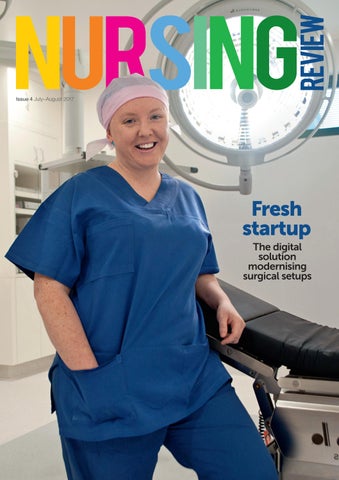
Issue 4 July–August 2017
Fresh startup The digital solution modernising surgical setups
For formula-fed infants
Made in New Zealand The brand your patients know, still made to standards you can trust. We’re pleased to announce S-26® ORIGINAL NEWBORN and S-26® ORIGINAL PROGRESS® have joined S-26 GOLD® NEWBORN and S-26 GOLD® PROGRESS® being made in New Zealand. Reconstitution rates remain the same, and nutrient levels are similar with minor nutrient adjustments – so you can continue to recommend and be confident they are manufactured to high standards. In addition they now offer: • A new in-can leveller
• A new scoop
For more information contact your S-26® product specialist, our Careline on 1800 552 229, or visit meandmychild.com.au
Voted READER’S DIGEST most trusted infant formula
IMPORTANT STATEMENT: Breastfeeding is the normal method of infant feeding, and is best for babies. It has benefits for the infant, such as reducing infection risk, and for the mother. It is important to have a healthy balanced diet in preparation for, and during breastfeeding. Infant formula is designed to replace breast milk when an infant is not breastfed. Breastfeeding can be negatively affected by introducing partial bottle-feeding, and reversing a decision not to breastfeed is difficult. Infant formula must be prepared and used as directed. Unnecessary or improper use of infant formula, such as not properly boiling water or sterilising feeding equipment, may make your baby ill. Social and financial implications, including preparation time and the cost of formula, should be considered.
®
S-26, S-26 GOLD and PROGRESS are registered trademarks. Used under licence. Distributed by Aspen Nutritionals Australia Pty Ltd. 34–36 Chandos St, St Leonards, NSW, 2065. ABN 31 160 607 509. 01958 - 23/05/17, ASP3461. FOR HEALTHCARE PROFESSIONAL USE ONLY.
contents
MANAGING EDITOR
news
Richard Garfield 02 9936 8628 richard.garfield@apned.com.au
02 Eradicating elder abuse 04 Unity for gerontological nursing 05 Alcohol fuelling ambo callouts
NEWS EDITOR
industry & reform
Patrick Avenell 02 9936 8610 patrick.avenell@apned.com.au
06 Modern slavery
HEALTH EDITOR
08 Budget boon
Dallas Bastian 02 9936 8637 dallas.bastian@apned.com.au
Healthcare organisation takes on human trafficking
02
06
Postgrad nurses set to benefit from health spending increase
specialty focus
10 Remote possibilities
SUBEDITOR
Robert Santos
RANs on how to reduce occupational stress
SALES MANAGER
Ben Long 02 9936 8664 ben.long@apned.com.au
12 Life as a fertility nurse
SUBSCRIPTION ENQUIRIES
clinical practice
02 9936 8666 subs@apned.com.au
14 Sustainable solutions
What to expect when they’re expecting
Nurses lead the way in recycling hospital waste
COVER IMAGE
Beth Wozniak Photo: Scrubit
10
18
15 Malnutrition and cancer Boost treatment outcomes with better eating
PUBLISHED BY
16 When words fail The best way to tell someone the worst news
APN Educational Media GPO Box 4245 Sydney NSW 2001 ABN 58 090 900 999 ISSN 1326-0472 PP100001944
workforce
18 Nurses in pop culture Stereotypes that hurt recruitment
20 Foot in the door Graduate nurses on the frustrations of gaining experience
PUBLISHER’S NOTE
© Copyright. No part of this publication can be used or reproduced in any format without express permission in writing from APN Educational Media. The mention of a product or service, person or company in this publication, does not indicate the publisher’s endorsement. The views expressed in this publication do not necessarily represent the opinion of the publisher, its agents, company officers or employees.
20
22
22 Nurses in the nick The pros and cons of clinical placements in prisons
technology
24 Drone on communities Supplying medicine to remote towns with unmanned aircraft
26 Surgical setup solved Nurse develops app to fix theatre fail
28 Brain drain
24
28
Are smartphones making us dumber?
nursingreview.com.au | 1
news
Nurses back elder abuse report Staffing levels in aged care need independent review: Law Reform Commission.
K
ey nursing bodies have supported the 43 recommendations from the Australian Law Reform Commission’s recently released report, Elder Abuse – A National Legal Response. Adjunct professor Kylie Ward, chief executive of the Australian College of Nursing, welcomed the recommendation that
the Department of Health commission an independent evaluation of research on optimal staffing models and levels in aged care. “We reiterate that there must be a legislated minimum number of RNs in residential aged care,” Ward said. The college said it is concerned by the trend in the makeup of the aged care workforce, which has seen a reduction in the proportion of regulated health professionals working directly at the bedside. Australian Nursing and Midwifery Federation acting federal secretary Annie Butler is calling for the introduction of a skills mix of 30 per cent RNs, 20 per cent ENs and 50 per cent AINs/PCWs as the minimum skills mix to ensure safe staffing in aged care. “Residents should receive an average of 4 hours and 18 minutes of care per day – compared to the current 2.84 hours being received,” she said. “Clearly, there are simply not enough staff in aged care, with one witness reporting that there was ‘one qualified nurse caring for 85 people in a nursing home on a public holiday’. “The report’s evidence and recommendations are a wake-up call for the government, regulators and industry stakeholders to act on the crisis in aged care. “One witness said ‘[we] tolerate a level of staffing and staff mix in aged care that would close wards in the acute system. Despite years of discussion and criticism it is still possible to work with extremely vulnerable older people while having no relevant qualification. This should be an outrage’.” ■
Desktop disease detective Artificial intelligence that predicts patients’ life expectancy could one day help tailor treatments. Scans of coronary arteries comparing mortality cases (left) and survival cases. Photo: Luke Oakden-Rayner
W
hat if a computer could tell you when you will die? The concept sounds like an elevator pitch for a science fiction novel, but University of Adelaide researchers are working to bring the idea to life. Recent research, published in the Nature journal Scientific Reports, explored the ability of artificial intelligence to predict a person’s lifespan using images of their organs.
2 | nursingreview.com.au
The research team, comprising experts from the University of Adelaide’s schools of public health and computer science, and Australian and international collaborators, used artificial intelligence to analyse the medical imaging of 48 patients’ chests. The analysis could predict which people would die within five years with 69 per cent accuracy. The authors said this is comparable to manual predictions by clinicians.
The team said the technology could have implications for the early diagnosis of serious illness and medical intervention. Lead author Dr Luke Oakden-Rayner, a radiologist and PhD student, said predicting the future of a patient may allow for tailored treatments. “Our research has investigated the use of deep learning, a technique where computer systems can learn how to understand and analyse images,” Oakden-Rayner said. “Although for this study only a small sample of patients was used, our research suggests that the computer has learnt to recognise the complex imaging appearances of diseases, something that requires extensive training for human experts.” The most confident predictions were made for patients with severe chronic diseases such as emphysema and congestive heart failure, and the researchers hope to apply the same techniques to predict other important medical conditions, such as the onset of heart attacks. “Our research opens new avenues for the application of artificial intelligence technology in medical image analysis, and could offer new hope for the early detection of serious illness, requiring specific medical interventions.” ■
do you know someone like Camille?
Loves her community. Serves her community. Volunteer. Registered nurse. Son with special needs. Raising funds for a wheelchair carousel. Selfless. 2016 HESTA Awards winner.
Nominate an aged care professional with a story worth celebrating.
Proudly sponsored by:
Nominations close 1 September 2017.
Issued by H.E.S.T Australia Ltd ABN 66 006 818 695 AFSL 235249, the Trustee of Health Employees Superannuation Trust Australia (HESTA) ABN 64 971 749 321. Nomination terms and conditions apply.
news
Gerontological nurses on the same page Professor Traynor and project officer Nicole Britten. Photo: UOW
A common vision for a competency framework for gerontological nursing is on the horizon.
R
esearchers and nurses have agreed on the content of a competency framework for gerontological nursing. Associate professor Victoria Traynor, from the University of Wollongong’s School of Nursing, said the idea of a framework or approach that could be considered standard came from a group of
not‑for‑profit aged care providers, called the Nursing in Aged Care Collaborative. “The providers were saying: ‘We’re all doing something slightly different. We think we’re doing the right thing but everything’s different, so let’s come together and develop a common vision’,” Traynor said. She added a competency framework would give the public reassurance that the aged care industry is going to deliver services of a similar high standard. “Developing a competency framework is one way to address all the issues these providers grapple with: recruiting staff, retaining them, deciding what education
Laughter not best medicine for bladder leakage Experts are concerned that women are treating incontinence as a normal part of ageing and not as a treatable health condition.
A
ustralian women are willing to tell others about their bladder leakage but the majority simply laugh off the health issue, a new survey has found. The Continence Foundation of Australia survey of 1000 women aged 30 years or older found that while women with bladder leakage bring up the condition in discussions with girlfriends, almost three 4 | nursingreview.com.au
in four laughed off the issue and eight in 10 failed to seek help for the problem. Of particular concern for the foundation was the finding that 85 per cent of women who laughed off bladder leakage mistakenly attributed the condition to ageing or having children. Academic nurse consultant Dr Joan Ostaszkiewicz, honorary research fellow with the National Ageing Research Institute, said the foundation wants people to know that incontinence, while common, is not normal and should be treated, just like any other health condition. “One of the barriers to treatment is a general lack of health literacy about
is delivered to the staff, and what specialist services are offered to older people in nursing homes and the community.” Traynor said the competency framework could also be used for career development and designing university courses for nurses. After reviewing the literature to find what competency frameworks and quality standards already existed, UOW researchers held a workshop with 80 senior registered nurses who reviewed a comprehensive list of competencies. From this, a draft list was created, on which a group of 409 registered nurses gave feedback through five rounds of online consultation. Traynor said: “We used a rigorous research approach and developed a competency framework that’s been wholly endorsed by experts, mainly from Australia but also an international cohort of experts. These are experts who mainly work in clinical practice, but also some academics and researchers in the field. “We reached a 95 per cent agreement on the content of the competency framework.” ■
incontinence, even among healthcare professionals and care workers,” Ostaszkiewicz said. “Education programs that prepare the healthcare and care workforce don’t usually include information about therapies to promote continence, or equip students with the knowledge and skills they need in order to conduct a comprehensive assessment. This is a long-standing issue that needs to be tackled at multiple levels.” Ostaszkiewicz said low literacy about incontinence deters efforts toward prevention and results in missed opportunities for therapeutic consultation. She added it also deters people from seeking help. “Prevention is always better than a cure, but early treatment is really key to fixing the problem,” said Continence Foundation of Australia chief executive Rowan Cockerell. “People who ignore the issue are often unaware of the impact incontinence has on their lifestyle, whether it be avoiding exercise or limiting social engagements for fear of an embarrassing accident.” ■
news
Rise in ambo calls due to alcohol WA figures show more young people are requiring emergency assistance after becoming intoxicated.
I
n 2016, an average of 14 ambulances per day were called for alcohol intoxication in Western Australia. This figure is up from the year before and represents an 11 per cent increase since 2014. The statewide ambulance call-out figures, released by St John Ambulance WA and the McCusker Centre for Action on Alcohol and Youth, show there was a total of
5063 ambulance requests related to alcohol in 2016, up from 4903 alcohol call-outs in 2015 and 4552 recorded in 2014. The 2016 calls resulted in 3239 people being taken to hospital. The data also revealed there were more young people who required urgent medical assistance due to alcohol intoxication, with 465 cases of young people aged 18 or younger – including two under 12 – compared to a total of 399 call-outs in 2015. “Alcohol can cause a lot of harm for those in the younger age group, and it can cause lasting brain changes, affecting mood, ability to learn and so on,” said St John Ambulance WA metropolitan ambulance general manager James Sherriff. “We’d encourage parents to educate their children more about the dangers of using alcohol.” McCusker Centre for Action on Alcohol and Youth executive officer Julia Stafford said while the initial findings of the 2016 National Drug Strategy Household Survey released this month included welcome news that more young people are choosing not to drink, are delaying starting to drink and are drinking at less risky levels, these new figures highlight that governments and communities must not become complacent. “I would urge the WA government to ensure that reducing harm from alcohol remains a priority, particularly as they draft reforms to WA’s liquor laws,” Stafford said. “We welcome the government’s ongoing commitment to informing parents and others that no one should provide alcohol to under-18s.” ■
Nurse’s back – are you suffering in silence? Nurses are 60% more likely than all other occupations to report chronic soreness and pain, with the majority of injuries caused by overexertion. But you don’t need to suffer in silence. If you’re experiencing back pain and your injury happened at work, you might be entitled to compensation or a lump sum payment. Don’t wait for it to get worse – just call our free advice line and one of our specialist injury lawyers will explain what your options are.
Helping nurses get the compensation they deserve. That’s our specialty.
Find out where you stand.
Maximum 100% No win, no fee guarantee. compensation.
Over 99% success rate.
NSW . VIC . ACT
nursingreview.com.au | 5
industry & reform
Breaking the chains
A What can healthcare organisations do to identify and help stop modern slavery? Lisa McDonald interviewed by Dallas Bastian
health and aged care provider is tackling Australia’s role in human trafficking head on. St Vincent’s Health Australia (SVHA) has joined forces with anti-human trafficking group the Australian Catholic Religious Against Trafficking in Humans (ACRATH) to change the way hospitals treat trafficked people. The Human Trafficking Project will look at how trafficked people can be identified and how to ensure they receive the necessary treatment, support, referrals and access to services. SVHA will also work to ensure the goods and services it procures are slavery-free. A recent report by the Australian Nursing and Midwifery Federation and the Australia Institute stated there are high levels of exploitation and human rights abuses among low-wage workers involved in the overseas production of everyday medical goods used by Australians. The report said mounting evidence shows that the production of goods in Australian healthcare settings is tainted by hazardous working conditions, labour exploitation, child labour and other abuses. ACRATH’s executive officer Christine Carolan said work to address this issue has begun through the development of new supply chain policies for SVHA’s procurement department. “Slavery-proofing supply chains also extends to the employment of people providing services,” Carolan said. “One example would be ensuring all staff
6 | nursingreview.com.au
working for third party cleaning contractors engaged by St Vincent’s are employed under Australian labour regulations.” SVHA group mission leader Lisa McDonald said most people who find themselves trapped in modern-day slavery attend a hospital at some point. “In healthcare, we have a unique window of opportunity to not only address their healthcare needs, but to invite an organisational response in a way that might bring wider hope and transformation. “This sort of change will take time, but within a year we hope to have taken some bold steps to address human trafficking that will provide a blueprint for the entire health system.” Nursing Review sat down with McDonald to find out more about the ways in which the provider is confronting the issue of human trafficking.
NR: Why did SVHA decide to try to improve the way trafficked people are treated in healthcare settings? LM: We just know that most people who find themselves kept in modern-day slavery will attend a hospital at some point, and it just strikes us that in healthcare we have a unique opportunity. There’s a window of opportunity when people present to not only address their existing healthcare needs, but then also to look to carefully identify them, and if possible, to even help them out of their situation. Although, we know that that’s tenuous, but healthcare practitioners
industry & reform
have a professional ability to be able to care for people who are vulnerable. That’s definitely the case for St Vincent’s. So we wanted to be able to make sure that we were putting the right information, practices and education into the hands of our clinicians and frontline staff, so they would be best equipped to be able to help people when they do present.
For those who may not be familiar with trafficking and modern slavery, what are some of the ways people are exploited? What might staff encounter? The three main ways that we understand people are coming into human trafficking, and the types of exploitation they experience, are sexual exploitation, forced marriage and forced labour. Our friends at ACRATH are helping us to understand this issue a lot more, but their information tells us that traffickers are well organised, and often they’re in large, international criminal organisations. People come into trafficking through different ways. It might be through ads offering opportunities to work here or to work abroad. Recruiters might even be someone that a person might know or trust – they might be a friend. In the case of forced marriage, it’s also family members that become the human traffickers that lead people into slavery. It’s often the case too that people who are vulnerable are exploited the most. So people coming from a range of backgrounds – they might be undocumented migrants or at-risk youth; they might be in a country not knowing the language, alone and therefore further at risk of being exploited into human trafficking.
What are some ways that treating or supporting trafficked people may be unique? Well, what we think about is that there’s an extra vulnerability to people who are trafficked, and for that reason it’s not as easy as just saying that a person might be able to escape by alerting someone to their scenario. People who are trafficked are vulnerable for a number of different reasons, and that might be that they first of all feel a sense of shame or foolishness, that they’ve made a terrible mistake and blame themselves, when in fact they’ve been a victim of a wider sting or wider situation. The threats that people who are in modern-day slavery encounter might be physical threats, or psychological threats against the person’s family, and the punishments that they’d receive through reporting or alerting the trafficker to the fact that they are looking to escape are very real. So people are stuck in a situation, they have no money, no passport, sometimes no friends, a language barrier, and are afraid of deportation, or afraid of the shame they might bring upon their family, or have been trapped because of a debt bondage. Now, when a person presents at our hospital, there’s a very limited opportunity to be able to understand and identify that they may be a victim of human trafficking. So it will require some really good education, and some really careful policies and procedures in our hospital setting, to help people to safely recognise that they are a victim of human trafficking, and then be able to put them in touch with the support they might need, which currently is through the Australian Federal Police. Although, sometimes people are nervous about going down that track because of the threats that they’ve received. So there’s a sensitivity about people identifying themselves as modern‑day slaves, and then the very real threat that they feel that if they
do report it or try and escape, that they or their family may be subject to violence. In a hospital setting, we have to tread really carefully. Our healthcare practitioners, our frontline staff are great at being able to identify and care for people with complex needs, but we know that they don’t want to further endanger the person who is coming to them for healthcare needs, but who also might be trafficked.
What are some of the ways that healthcare organisations may unknowingly be supporting human trafficking or modern slavery? Well, we’re going to go on a very big learning curve in this aspect. What we’re going to do is investigate our supply chains and the goods we’re procuring, and that might be everything from medical equipment to cotton sheets, gowns, maybe even chocolate sold in fundraising. Hospitals and healthcare do a lot of fundraising, and we want to make sure the goods have been produced without the use of enslaved or forced labour. So this is really what we need to look into, and there’s some great support in the community at the moment: Federal Labor’s call for the introductory of a Modern Slavery Act; the government’s inquiry into establishing a Modern Slavery Act; the Business Council of Australia’s support of this. So it’s a really good pace now that healthcare – perhaps St Vincent’s is the first, with others to follow – as an industry says: “This is important to us too.”
In what ways do you hope the project will create change within the health and aged care sectors? I think what it’ll do, or what will be fantastic if it could do, is if we’re able to help our practitioners to identify some of the signs, the health signs that people have been a victim of modern-day slavery. Some of those signs might be things that are fairly usual for people to present with in our emergency departments or our hospitals, but if we’re looking at them with different eyes, from the perspective of trafficking, it might reveal to us a different story. For example, people who present with workplace injuries. We know that traffickers, particularly those in situations where they’re putting people in forced labour, often have dodgy workplace practices. We also know that people who are forced to work and are exploited are expected to work even when they’re sick, so that exacerbates their illness and causes them to deteriorate even further, and not even be able to recover from minor ailments. We also think that it’s important to look at pregnancies that haven’t been monitored properly, and one of the unfortunate scenarios is when there’s been a forced marriage, there might be a 14-year-old girl who’s become pregnant. Often they won’t present to hospitals, because that would alert a person or a practitioner to the fact that there’s been an underage marriage or an exploitation of a minor. So pregnancies that are unmonitored would also be an interesting sign for us to notice, and for our practitioners to notice that something dodgy is going on here. Healthcare organisations – with the right education, the right frame, and the right support to know what to do when they identify a person that’s been trafficked – have a fantastic opportunity to help those people to realise the situation they’re in, to be able to make the right referrals and to help people as to what to do next. The fact that people who are trafficked do often present at hospitals gives us a unique opportunity to help. ■ nursingreview.com.au | 7
industry & reform
Opportunity knocking A federal increase in health spending will open up career opportunities for nurses with postgraduate qualifications. By Iain Graham
T
he federal government’s budget boost to healthcare spending will create more jobs in the sector, opening positions in management and administration that will prove financially rewarding for health professionals with postgraduate degrees. The health budget is significant, accounting for about a sixth of all government expenses. The recent Budget papers show the government expects to increase spending on health substantially compared to the current financial year. The rise will amount to $1.5 billion in 2017–18 and $3.7 billion in 2018–19. The increase in spending from 2017–18 through to 2020–21 reflects growth in a range of programs that will go to the states for public hospitals, sub-functions of health services, and programs such as mental health support and suicide prevention. This increased spending on health is influenced by population growth and by the ageing of the population together with developments in health technology and the resulting use of new products and services. Longer life expectancy, for example, means age-related diseases such as Alzheimer’s are becoming more prevalent.
GROWING JOB OPPORTUNITIES IN THE HEALTH SECTOR The healthcare and social assistance sector, which employs doctors, nurses, 8 | nursingreview.com.au
dentists, physiotherapists and many other professionals, now employs more than 1.5 million people, or about one in eight Australian workers. Over the past five years, the sector has added more than a quarter of a million jobs, making it the largest contributor to the nation’s jobs growth. As government spending on health services increases, skilled administrators will be needed in all these areas to manage the extra funding and ensure effective delivery of health services to the public. Completing a postgraduate degree and moving into a leadership position can significantly increase your chance of moving into a general health or nurse management position and boost your earnings potential. Just look at the ABS data on wages. Health and welfare services managers earned an average weekly wage of $2721 as at May 2016, compared to the national average wage across all occupations of just $1230. Nurse managers earned an average weekly wage of $1952, well above average weekly earnings of registered nurses of just $1383 a week. Separate ABS data reveal that the occupation groups with the highest mean weekly earnings were managers (across industries) at $1853, followed by professionals at $1545. Average weekly earnings for those with a non-school qualification were highest
for those with a postgraduate degree. At $1791, the figure easily outstrips the average salary of a professional. These ABS figures highlight the financial rewards that career progression and postgraduate study can deliver. And the management positions are there for nurses to move into. Over the five years to November 2019, the number of job openings for health and welfare services managers is expected to average between 10,000 and 25,000. The number of job openings for nurse managers is expected to be between 5000 and 10,000. So, there are good opportunities to move into these positions and boost your income and career satisfaction.
APPEAL TO EMPLOYERS Whatever your health background, completing a postgraduate degree will give you more flexibility, more career opportunities and more transferable skills you can take with you into a future management role. You will stand out to employers from those health professionals simply armed with a bachelor degree. When weighed against other job applicants for a management position, nurses with a postgraduate health degree will be able to demonstrate their dedication and professionalism, and it will earn you respect from your peers working in the health sector. You may be a registered nurse with many years of experience who wants to move out of direct care. Postgraduate health education can teach nurses how to critically evaluate the latest healthcare leadership research and translate it into policy, clinical practice and management of resources. From a clinical leadership perspective, you can learn through postgraduate study how to identify strengths and get the best out of your team, use reflective practice and how to inspire greatness in others. So, there are many benefits to postgraduate study in health and opportunities which are there for the taking. ■ Professor Iain Graham is head of Southern Cross University’s School of Health and Human Sciences. He has a background in advanced clinical practice, health service management and education. He teaches in the areas of leadership, nursing theory and health policy.
FOR FORMULA FED INFANTS
For infants with mild-moderate cows’ milk protein allergy
Allergy Management
Immune Support
Proven efficacy. Aptamil® AllerPro™ is tolerated by 97% of infants with mild to moderate cows’ milk protein allergy.1
An extensively hydrolysed formula of first choice available without a script #
Nutritionally supports the development of the immune system through Nutricia’s patented blend of prebiotic oligosaccharides (0.8g/100mL).*2–4
5, 6
AVAILABLE OTC IN PHARMACY ONLY BREAST MILK IS BEST FOR BABIES: Professional advice should be followed before using an infant formula. Introducing partial bottle feeding could negatively affect breast feeding. Good maternal nutrition is important for breast feeding and reversing a decision not to breast feed may be difficult. Infant formula should be used as directed. Proper use of an infant formula is important to the health of the infant. Social and financial implications should be considered when selecting a method of feeding.
For more information visit ONLINE STORE for parents and caregivers
mumstore.com.au
References: 1. Giampietro PG et al. Pediatr Allergy Immnol 2001;12:83–6. 2. Moro G et al. Arch Dis Child 2006; 91:814–819. 3. Arslanoglu S et al. J Nutr 2008; 138:1091–1095. 4. Hoffen E.V et al. Allergy 2009; 64:484–487. 5. Kemp AS et al. Med J Aust. 2008;188(2):109–112. 6. ASCIA Cows’ Milk (Dairy) Allergy 2016 http://allergy.org.au/patients/food-allergy/cows-milk-dairyallergy, accessed 8 February 2017. *Nutricia’s patented blend of prebiotic oligosaccharides (0.8g/100mL, 90% short chain galacto-oligosaccharides (scGOS): 10% long chain polyfructose (lc polyfructose); #Extensively hydrolysed formula such as Aptamil® Gold+ AllerPro™ is recommended as first choice for formula fed infants under 6 months of age for treating mild to moderate cows’ milk protein allergy (non-anaphylactic); OTC = Over the counter.
FOR HEALTHCARE PROFESSIONALS ONLY Nutricia Australia Pty Limited, Level 4, Building D, 12–24 Talavera Road, Macquarie Park, NSW 2113. March 2017. ANZ/AAP1/16/0005a. 14107-NR.
specialty focus
Isolation intervention Remote area nurses sound off on ways to reduce occupational stress. Sue Lenthall interviewed by Dallas Bastian
N
urses are often inadequately prepared for work in remote, isolated settings, and stress levels can be high. To combat this, Australian researchers have developed a roadmap for occupational stress intervention that targets the key concerns of remote area nurses (RANs) and health centre managers. An earlier study that forms part of the project found that RANs experience high levels of occupational stress and emotional exhaustion. However, they also reported high levels of work engagement and moderate levels of job satisfaction. “The job demands most strongly associated with increased levels of occupational stress … were emotional demands, responsibilities and expectations, social issues, workload, staffing issues, poor management, isolation, safety concerns, violence, the remote context, culture shock, difficulties with equipment and infrastructure, and lack of support,” researchers said. Following this study, the research team held workgroups with RANs and health centre managers to find out what interventions for occupational stress they felt were needed. Four common themes emerged: remote context and the resulting emotional demands, workload and scope of practice, poor management, and violence and safety concerns. Nursing Review sat down with Flinders University associate professor Sue Lenthall to discuss the changes that need to be implemented across remote health centres to start to reduce occupational stress and improve RAN safety.
NR: You ran a series of work groups with RANs and health centre managers working in remote Aboriginal communities in Central Australia and the Top End. What were some of the key stressors or areas for improvement that participants identified? SL: Participants identified four main areas of stress. The first one is just a remote context. It’s physically, personally, professionally 10 | nursingreview.com.au
isolating and it’s a very emotional, demanding role. That particular area is not something we can do so much about. The second one is the workload and the scope of practice. Most RANs work in a very broad scope of practice. It’s an advanced practice role where they often have to diagnose, prescribe medications, act in a public health manner, health promotion, all sorts of things which nurses working in a hospital probably wouldn’t have to do. With the advanced practice, many nurses identified that the levels of responsibilities and expectations by the health service and by the communities were too high to be met and that caused quite a deal of stress. The third area is basically poor management. The managers sometimes, I think, are an easy target, in that if something goes wrong, management is the broad group that gets blamed, but in remote Australia there’s a habit of putting people in management without very good management skills or with no management experience. It’s sometimes the last person standing who becomes the clinic manager. That causes a lot of stress on various people. The fourth main area was the level of violence and safety concerns. Unfortunately, that was highlighted last year when a nurse in a remote area of nursing in South Australia was murdered, and that has really raised the emphasis on looking at the issues about the violence and safety of RANs.
From those work groups, you created a roadmap for occupational stress intervention. What did that entail? Many of the interventions focused on trying to establish a better education, particularly orientation, and education for RANs so that they are properly prepared for the advanced practice role. We found that about 35 per cent of RANs in the Northern Territory had not received any orientation whatsoever to their roles, and of those who had received an orientation, less than half thought it was adequate. So that was a big area, and it’s complicated by the fact that there is an enormous turnover rate among RANs all over Australia, not just the Northern Territory. But in the Northern Territory, a recent research project showed the turnover rate for RANs was a 146 per cent, which is extraordinary. It’s very hard to do a proper orientation for that. There was what we came to call orientation burnout for many people that were there for more than a few months.
specialty focus
The numbers of RANs coming through that they had to orientate was just completely burning them out. The other key part was trying to establish a more stable workforce, and that’s very difficult with a turnover rate like that, and it’s very difficult to really reduce levels of occupational stress when you have such a turnover rate and an unstable workforce like that. One of the other major areas was trying to reduce the sense of isolation by increasing the use of internet in all the accommodation. In the Territory health department, there is internet available in the clinic but not in most of the accommodation, which is not ideal. There is a program now to increase the internet access in accommodation where people can email, video conference or FaceTime with friends and families, as well as accessing the internet for educational purposes and for professional development. I think another major area was to try to increase the number of permanent relievers. The relievers that are employed by the health department go back to the same communities, so it’s not a new person all the time and decreases the need for that orientation of everybody that comes through. There have been some situations where one nurse might be in the clinic and has seen 136 RANs go through the clinic in 12 months and has had to orientate each of them. The other area was trying to increase the education and performance of managers, to require managers to do some education around management. With the violence and safety, the main strategy was to increase the use of second responders, and since that horrible murder of a RAN in South Australia, it has become a real issue, the Northern Territory health department has made it mandatory now for RANs – if they go out on call at night – to be escorted with a second responder.
Some of the interventions laid out weren’t implemented in the 12-month study timeframe. What obstacles were there in terms of implementation? The main obstacles were the time period, for one. For real organisational change, the literature suggests you need at least three years, and we ran the work groups and tried to make changes within 12 months, which probably wasn’t realistic. We had found even though the project is technically finished, a lot of the interventions are still happening, so they’re still being implemented within the health department. We do hope to be able to repeat this survey in a couple of years’ time and see what the changes have been. The other main area is the unstable workforce – it’s a bit of a vicious circle. Until we can do something about stabilising the workforce a little bit and reducing the turnover, it makes it very difficult to introduce most of the other interventions and actually reduce the stress. I’m not sure exactly how that’s going to happen. The Commonwealth government’s intervention in the Northern Territory in Aboriginal communities occurred around the same time as the start of this project, before we did the interventions, and really created a limitation as to what we could do. They also put quite a bit of money into agency staff to try and increase the number of nurses from the east coast coming to remote Indigenous communities in the Northern Territory. We need those people, but they didn’t put money or strategies into developing a more semi-permanent workforce. The use of agency staff has increased dramatically in the
Northern Territory and has greatly increased the turnover rate. There were some unexpected consequences around the intervention that wasn’t positive for the workforce. At the moment, it’s still a major issue that it’s easier and often more financially rewarding to work for an agency than it is to work for a health department. That’s partly why the turnover rate is so high. Until we can bring down that turnover rate, I don’t think there’s very much we can do with really reducing stress levels, but we have been able to have some real wins on the board with this project. One of the things we identified was that there were a number of single nurse clinics, particularly in Central Australia, and the Northern Territory government had already made the decision to reduce those, or even get rid of single nurse posts. I think there’s no single nurse post left in Central Australia. Through this project, we managed to bring in better orientation and education. The other thing that’s needed to try and develop a more permanent workforce, or semi-permanent, is a career structure for RANs, which the Northern Territory government has done. There are areas where nurses can come in at a lower level, a Level 2 or a Level 3, and not be expected to go on calls straight away and have an educational process that would lead them to a Level 4, which is the normal level of RANs. So it allows nurses to be learners, which in the old structure really wasn’t there. People were expected to hit the ground running and know everything, which was totally unrealistic.
Moving forward, what would you say are some of the high priority changes that need to be implemented across all remote health centres to start to reduce occupational stress and improve the safety of RANs? One of them is to try and reduce the turnover rate. I think there has to be some creative strategies developed to make it a good option to work for a health department rather than to work for an agency. I know people are looking at that and they’re trying to introduce that. They have also introduced some more relievers employed by the health department that would go back to the same community. The huge turnover rate doesn’t just impact on RANs. I mean, it’s hugely problematic and it creates a lot of stress on various people, but it also isn’t great for the community or the delivery of health services. So, strategies that will go towards a more stable workforce? The education and orientation – everybody needs an orientation before they go out and work in the remote community. That needs to include agency staff and that needs to be mandatory for everyone. The standard of education should be increased. To reduce the sense of isolation, I think it’s important that internet is provided in all the accommodation so that people can access professional development by the internet after hours, and they can also talk to friends or email family. It’s about reducing personal/professional isolation. I think in many communities there is also a need to employ more Indigenous health staff. That’s an ongoing option. As far as safety and on-call, the main thing is that there needs to be a second responder for every call-out. Most people in cities, with doctors and nurses, don’t go on call-outs on their own, and RANs were one of the last groups who still went out on their own at night on call. Now, it’s just not acceptable. That needs to be implemented across the board. ■ nursingreview.com.au | 11
specialty focus
Fertile grounds for nursing
Catherine Bellantonio with a patient. Photo: Genea
A We talk to a fertility nurse about the highs and lows of working in this rapidly changing field. Catherine Bellantonio interviewed by Dallas Bastian
s part of our effort to spotlight the work of nurses across the country, Nursing Review sits down with Catherine Bellantonio, who has worked at IVF and fertility clinic Genea for the past seven years. In the interview, Bellantonio, a nurse coordinator, details the intricacies of speaking with fertility care patients and the technological advancements she’s been happy to see. Assisted reproductive technology is a constantly changing field, Bellantonio says, and being up to date with the science involved is essential to managing patient expectations at the beginning of contact and as they proceed through treatment. “Patients come to us already well informed; they can find everything out on the internet,” Bellantonio says. “So, as nurses, we need to have a broad range of answers for the treatments available, not just within Australia, but what is being offered all over the world.”
12 | nursingreview.com.au
Bellantonio shares her advice on keeping up with a rapidly changing industry and navigating complex conversations.
NR: What drew you towards fertility care? CB: It’s nothing I ever really considered when I was at university. I always had an interest in women’s health, and when I did my new graduate program, I spent a bit of time in the operating theatres, and also working on a postoperative gynaecological ward, and I always knew that I enjoyed working with women. I had a big interest in the science behind it all, as well, and the biology involved. I did two years of general nursing and then decided to go into fertility nursing, and I’ve been here ever since. So just over seven-and-a-half years now, I’ve been working for Genea. I worked in the day surgery unit for the first four years, and that gave me the ability to work up a rapport with the doctors and also the scientists in the lab. Then three years ago, I started
specialty focus
working as a nurse coordinator, which is basically a fertility nurse. I work with a small team of nurses. We work with three doctors and coordinate the care of patients going through assisted reproductive treatment. Not just IVF, but also giving advice on intercourse in a natural cycle as well, based on the timing of their cycle, and also their hormones with blood tests and ultrasounds.
I know better than to ask a nurse what a typical day involves, but what are some of the key elements of your current role? It’s a seven day a week clinic, and so we do work a rotating roster. We don’t have any night shifts, it’s usually 8am to 5pm. It’s less of a clinical role and more of a counselling, educator role for patients, and we coordinate the care of patients undergoing their assisted reproductive treatment. We liaise with doctors, embryologists and patients in regards to their treatment schedules and their results. It’s more just educating patients about their natural cycle, as well as how we tweak their cycle for the IVF process. We teach them about the medications they need to be using, the procedures that are involved, the side effects, and the embryology process. So what happens in the lab once we’ve collected their eggs and we fertilise them? I meet with patients face to face in our morning clinic, which we run daily, and for the initial consultations, and throughout their treatment. We chat to them over the phone and through email.
What are some of the conversations you look forward to having with patients? I think all of us love talking to a patient with a positive pregnancy result, particularly if they’ve been having cycle after cycle. It’s quite an emotionally draining process to go through, and you go through it with them. So definitely getting that outcome that they’ve been hoping to achieve for years, that’s certainly a bonus. Hearing from them after they’ve delivered a baby, and hearing about their pregnancy, and also hearing about how helpful we were at a time that was quite difficult for them, that’s quite rewarding.
we make the conversation. We do a lot of courses on how to share difficult news with patients. We have counsellors that work at Genea that we often have meetings with, who target how to approach providing that news to patients, but also what those patients are going through, and what’s going through their minds as well, so you can give that bit of empathy on the other end of the phone. And it’s hard when you’re over the phone. You often might not ever meet this patient face to face, so it’s about developing a rapport with someone over the phone.
How has fertility care changed in the time you’ve been working in the area? Like all avenues of medicine and science, fertility is a constantly changing field. As a fertility nurse, you need to have a strong understanding of the science and what goes on behind the scenes. You know, just 10 years ago all patient results, notes and instructions were handwritten in a book. We still refer to it as the book, but all these results are now electronic, and they’re in real time. So nurses, doctors and scientists can be updated on all aspects of a patient’s care throughout their cycle. We used to do all cycle blood tests externally. We do them all on-site now, so this means that we get same-day results. All patients know their results by lunchtime; they know what they need to do next with all their instructions, and they’re all coming automatically. There’s no processing of that information; we used to have to get them off a fax and enter them manually onto a spreadsheet on a computer, and ultrasounds were done the same way. It was a lot of running around. We talk to patients over the phone about their results, but we also use SMS and email – it just allows that extra means of communication so it works with their lifestyle. They might not be able to answer the phone, or they might work in an open-plan office and don’t want to talk about their treatment in front of colleagues, so we email them instead, and it means we’re available at different times of the day to be able to answer their questions.
How is technology impacting fertility treatment? How do you approach some of the more difficult conversations you might need to have with patients? Yes, certainly there’s a lot of success, but there’s also a lot of unfortunate and unfair news to have to give to patients. You know, not just the obvious – giving a negative result when they’ve not got a positive pregnancy test – but early on, telling them the reason behind their infertility and helping them deal with that. Speaking to patients that have been through a miscarriage that may not have been their first, it might be recurrent miscarriages that they’re having. Even at egg collection, they might not be able to yield any eggs at that time, and that’s quite sad to discuss with them as well. They often don’t tell a lot of their friends as well, because they’re trying to keep it as quiet as possible. They don’t know what the outcome’s going to be, so they don’t want to involve family or friends. So you tend to be the person that they speak to, the outlet that they have. I work on it with a great team of nurses; a lot of them have been doing this for a long time, and so I look to them and listen to them when they’re on the phone. You find your own way of saying things, but they always have a great rapport with the patients, and how they approach providing bad news over the phone, and making themselves available to patients as well. We’re each other’s sounding board. We’ll debrief at the end of a difficult conversation, or we might go through how best to tell a patient some disheartening news. We’ll talk about that before
Technologies at Genea are maximising the potential for couples to have a baby. Technology also provides more answers for patients as to why they are experiencing infertility. Screening tests that were once available only for patients who had a history of genetic conditions are now available to everyone at Genea, allowing for a thorough pre-IVF screen and pre‑conception screen, pre-implantation genetic screening. What can be tested at the 10/12-week gestation mark with natural conception – we have the ability to offer similar tests for patients at an embryo stage prior to implantation.
What advice would you give to a nurse thinking about working in fertility? I started in day surgery, and I’ve always found that so beneficial to understanding the procedures – and the complications that go along with those procedures. You’re able to develop that rapport with the doctors, working in the procedure rooms. The day surgery is alongside the lab; you can go in and see what’s happening in the lab, you can understand all the terminology. So I think that’s a great way to start off and then progress into a nurse coordinator role. Certainly, you can go straight into a nurse coordinator role first, but you also probably have to have a big passion for science as well, and an understanding of the science involved behind it. ■ nursingreview.com.au | 13
clinical practice
Nursing the planet back to health Theatre nurse Rebecca Pascoe. Photo: Baxter Healthcare
A nurse-led recycling program is helping to reduce the waste produced in hospitals. Rebecca Pascoe interviewed by Dallas Bastian
N
urses at Epworth Richmond are leading a hospital-wide effort to divert an estimated 12 tonnes of hospital waste from landfill each year. Theatre nurse Rebecca Pascoe has been heading a team of staff that drives the recycling of aluminium and PVC hospital products, as part of the new sustainability program. Pascoe said the team uses many consumables in theatres and saw that there was a lot of waste created that should be recycled. “I could see there was a massive gap and huge potential for us to be recycling more at Epworth Richmond,” she said. “We just needed the resources and staff education to get started.” Epworth HealthCare partnered with Baxter Healthcare for the sustainability program. Baxter and the Vinyl Council of Australia assist hospitals in the collection and recycling of the company’s intravenous fluid bags, oxygen masks and oxygen tubing. This year, the program has expanded to aluminium bottles of its gas anaesthesia products. Epworth said it expects its hospitals across Victoria will recycle about 3000 aluminium canisters each year as part of the program, as well as 80 cubic metres of PVC products, which it says is enough to fill an operating theatre. The executive director of Epworth Richmond, Nicole Waldron, said everyone at Epworth is supportive of the theatre team and the program. “Opportunities for further sustainability and environmentally friendly initiatives are integral to our ongoing operational processes and, ultimately, to our continued success,” she said. Nursing Review sat down with Pascoe to find out what goes into changing the way products are disposed of in hospital.
NR: What equipment are you targeting under this recycling initiative, and how much waste would you normally see? RP: At Epworth, we have four hospitals taking part in the program, and we are expecting to recycle about 12 tonnes of PVC a year and about 3000 aluminium gas bottles, canisters. That waste will be diverted from landfill, so it’s great.
Where will the waste now be heading? Baxter and the Vinyl Council of Australia give us special bins with signage on it for the aluminium and for the PVC. Staff are trained on how to use them and what can and can’t go in the bins. Then 14 | nursingreview.com.au
when the bins are collected, when they’re full, the PVC is recycled and used to make garden hoses and outdoor playground matting, and the aluminium bottles are recycled into other aluminium products.
What are some of the changes staff have made under the new initiative? Our staff here at Epworth Richmond have made big changes. There’s been a big cultural shift. The staff are now passionate about recycling and ask lots of questions about it and they’re always thinking about what can be recycled next.
Why did you decide to spearhead the initiative? I have always been passionate about sustainability and conservation of the environment. I saw a bit of a gap here at work. I saw that there was potential for us to be recycling some of the waste we were disposing of in the general waste and clinical waste. We use a lot of consumables here in theatre, so I just wanted to put together a team and implement a system to reduce our waste and therefore reduce our carbon footprint. It’s also good for the hospital budget, as it reduces costs for our waste management as well in some areas.
How much further could hospitals go to reduce waste? I can only speak for Epworth. I know there’s still a lot of work to be done and many more opportunities to reduce our carbon footprint. Organisations like Baxter and the Vinyl Council are helping hospitals to reduce waste. It’s really important that hospitals and healthcare companies do their bit, and as nurses we can be responsible and accountable for some of the waste that we produce. We can ask the question and get things started. Some hospitals have sustainability officers you can contact. You can always contact Baxter and the Vinyl Council to help start the PVC and the aluminium program. Everyone should do their part.
What advice would you give fellow nurses who wanted to see something similar happen in their hospital? A good way to start your recycling program is to get in touch with Baxter or the Vinyl Council. They can help train the nursing and hospital staff and organise the bins to be set up around the hospital. Once that program is in place, the culture of the staff starts to change and people start to ask questions about what else can be recycled. PVC and aluminium recycling is a great place to start because there are already resources in place and training to help set those things up. ■
clinical practice
Nutrition therapy Monitoring the nutritional status of cancer patients helps boost treatment outcomes. By Kellie Bilinski
M
alnutrition in cancer patients is often associated with loss of lean body mass and can be caused by a combination of factors such as inadequate food intake, decreased physical activity and metabolic derangements, often referred to as cancer cachexia. These derangements can be host- or tumour-derived, such as elevated resting metabolic rate, insulin resistance, lipolysis and proteolysis, which aggravate weight loss and are worsened by systemic inflammation and catabolic factors.1 Reduced food intake is common in cancer patients and a result of primary anorexia (loss of appetite). This can be compounded by secondary factors such as oral ulceration, xerostomia, poor dentition, intestinal obstruction, malabsorption, constipation, diarrhoea, vomiting, reduced intestinal motility, chemosensory alteration and uncontrolled pain. Total inability to eat requires immediate intervention, such as total parenteral nutrition, unless otherwise indicated, to avoid starvation.2 Numerous recommendations suggest cancer patients should be screened for risk or presence of malnutrition, due to its negative effect on treatment outcome. Both a low body mass index and weight loss have been shown to independently predict survival.3 Loss of muscle mass is the main aspect of cancer-associated malnutrition that predicts risk of physical impairment, post-operative complications, chemotherapy toxicity and mortality.4 Nutritional and metabolic therapy, therefore, must emphasise the maintenance or gain of muscle mass. The collective derangements of dietary intake and metabolism described can be optimised by nutrition therapy when used in conjunction with medical management of pain and symptoms, pharmacological agents and physical activity. Nutrient requirements should be met (unless contraindicated) in cancer patients by offering the appropriate nutritional interventions, which may range from counselling alone to parenteral nutrition. Professional nutrition counselling from an accredited practising dietitian (APD) is firstline therapy for cancer patients. This entails detailed and repeated communication aimed at ensuring patients have a thorough understanding of nutrition that will lead to a change in eating habits. Clearly, the best way to maintain or increase energy and protein intake is with normal food. However, as this is not always possible,
oral nutrition supplements may be useful. Oral nutrition supplements are mostly nutritionally complete and can be consumed in addition to food. However, if this is insufficient, supplemental or complete oral, enteral or parenteral nutrition may be indicated, depending on the level of function of the gastrointestinal tract.5 Although there are clear benefits to nutrition therapy, these benefits must be weighed against the risks, burden and cost. This is particularly apparent in advanced cancer where the expected benefits of nutrition therapy may be outweighed by, for example, being attached to a feeding device or gastrostomy placement, in the days preceding death. There is little data on the optimal time to start nutrition therapy. Patients who are likely to develop anorexia or gastrointestinal issues during treatment should be offered nutrition support before they become severely malnourished, whereas those who are already malnourished should be offered nutritional support immediately. Nutritional therapy in cancer patients who are malnourished or at risk of malnutrition has been shown to improve body weight, energy intake and quality of life but not survival. A recent systematic review showed that nutrition therapy improved quality of life in cancer patients who were malnourished or at risk of malnutrition.6 The overall goal of nutrition therapy is to provide patients with a nutritionally adequate diet which includes all essential macro- and micronutrients. As in all forms of malnutrition, there is a high risk of micronutrient deficiency, particularly the water-soluble vitamins. In view of this, the use of multivitamin/mineral supplements in doses that approximate nutrient requirements is safe and useful.7 Vitamin D deficiency has been commonly reported in cancer patients and has been associated with poor prognosis and survival in numerous studies.8,9 However, it is not known whether repleting vitamin D stores in cancer patients will improve prognosis. In general, high doses of any vitamin or mineral supplement is not recommended.10 A recent meta-analysis of 68 randomised prevention trials including more than 230,000 participants was unable to show any protective effects of antioxidants but did find a slightly raised mortality in subjects consuming beta-carotene, vitamin A or vitamin E.11 In another study of over 290,000 men, multivitamin supplements were associated with a significant increase in mortality from prostate cancer.12 In patients with early colon cancer, multivitamin supplements were not associated with improved rates of cancer recurrence or overall survival.13 Similarly, 5–8 years of dietary supplementation with beta-carotene (25mg) or tocopherol (50mg) in smokers slightly increased the risk of lung cancer.14 In summary, it is important that patients at risk of malnutrition be identified early and the appropriate intervention commenced. For those who are malnourished, oral nutrition supplements are recommended. Ideally, patients should achieve their nutrient requirements from food, although a multivitamin and mineral supplement is recommended if food intake is inadequate. For dietary advice for your patients that takes into account their current medical condition, seek support from an APD. ■ Dr Kellie Bilinski is a post-doctoral research fellow at NICM and Western Sydney University, and a spokesperson for the Dietitians Association of Australia. To find your local APD, search ‘Find an Accredited Practising Dietitian’ at or freecall 1800 812 942. References at www.nursingreview.com.au nursingreview.com.au | 15
clinical practice
Speaking of death
T Ceased to be, passed away, carked it, died – what’s the best way to tell next of kin that a loved one has died? Deb Rawlings interviewed by Dallas Bastian
elling someone their loved one is gone or has passed might seem like a gentle way to break the news of a death, but such euphemisms can lead to misunderstandings, a palliative care expert has cautioned. Writing for The Conversation, Deb Rawlings, along with colleagues from Flinders University, said while euphemisms do have their place, being able to talk openly and clearly about death and dying is important as it helps normalise death and avoids confusion. “If health professionals use euphemisms, they need to consider whether patients really understand what they’re trying to say,” Rawlings wrote. Nursing Review spoke with Rawlings about the confusion that using euphemisms can cause, the reasons they’re used and the potential situations in which they may be suitable.
NR: Tell us about the importance of terminology when discussing death and dying. DR: Let me first give you a bit of background so this has some context. I work for CareSearch, which is a free evidence-based palliative care website that 16 | nursingreview.com.au
has information for health professionals, but also for patients, carers and families. I go to conferences and such – we know what health professionals are talking about in the end-of-life space, but we don’t ever hear the voice of consumers. So, to start some conversations, we developed a MOOC, a massive open online course. They’re free. They run for a few weeks usually, and quite often run through universities. We ran one last year and again this year. It ran for five weeks and was targeted at the Australian public, and that was how we promoted it. In getting started, with the thought of people sitting in their homes at their computer talking about something or typing about something that could be quite complex and potentially confronting, we decided that the first week of the course would be a bit of an icebreaker, so we introduced a bit of humour – I put in a link to the Monty Python ‘dead parrot’ sketch – and if that didn’t get people talking, then I didn’t know what would. Then I did an activity. And this is the euphemisms one that we’re talking about today. It was about the language that people use to talk about, or not talk about, or avoid talking about death and dying. When we were explaining to participants, we said we wanted to hear about euphemisms or words or phrases that we use to avoid saying something directly. We provided the example ‘kick the bucket’ to get them started. We had over 3000 people join the MOOCs – the combined MOOCs. They were from all over the world, which was very interesting and not what we expected. All the activities were voluntary. We were only looking at the data from last year because that’s all we’ve had the chance to analyse yet, so just under 500 people did the euphemisms task. They provided over 3000 euphemisms at an average of about six each. These were things that they’d heard of or had found online, so obviously some of them just went on to have a look. There were also over 100 comments made about the use of euphemisms. Many people wanted to say that while they found quite a few, they didn’t generally use them in day to day language. Although the one that was commonly used was ‘pass’ or variations of that, such as ‘passed away’ and ‘passed on’. The second one was ‘gone’, and again variations of that, ‘gone to heaven’, ‘gone to a better place’. So it was an interesting activity to start the course.
What were some of the other euphemisms participants said they used? Mostly ‘pass’ and ‘gone’ were the ones they would use in everyday language. The rest of them they had heard of. The reason they gave as to why they used euphemisms was that the words ‘death’, ‘dead’ and ‘dying’ were too harsh and needed to be softened in some way. One participant said she had got the impression that it was disrespectful to be direct and
clinical practice
use ‘dead’ or ‘dying’. Another participant, who identified herself as a nurse, said ‘died’ was blunt and too direct and that ‘passed away’ was kinder. One participant said that even after 20 years she still can’t say that her husband had ‘died’. She can’t use the word ‘died’. And yet another one said that when she did use the word ‘died’ when talking about her dad, she could almost see people wince as she said it. And that’s the way it was received, I suppose. The general message was that some euphemisms are okay such as ‘passed on’ or ‘passed away’, but it wasn’t okay to use most of the terms they found, like ‘carked it’, ‘pushing up daisies’, ‘popped your clogs’ or ‘six feet under’. On the other hand, some participants argued the opposite, saying: “How could you soften death?” Another one said: “Why would using different words lessen or soften the emotion?” Someone, quite intuitively I thought, said that many people fear death and want to make it easier, I suppose, or sound nicer. I think it speaks to the way in which our language has changed over the years and our attitudes to death and dying.
More than two-thirds of participants were health professionals. How did they approach talking about death? This was interesting, as we specifically said when promoting the course that we were talking socially about death and dying and that it was for the general public. But lots of health professionals came in with their health professional hats on still not realising until the course actually started that we wouldn’t be teaching them about palliative care. But in saying that, most of them had a great shift in their thinking and embraced what we were doing. So rather than saying, ‘This isn’t about palliative care, I’m off’, they started to participate in the conversations. When they were doing that, they were mostly doing that as themselves as a person, as a nurse or as an occupational therapist. So there were occasions when they were relating experiences about caring for people who were dying at work, but they were just as likely to talk about their own personal experiences or express their own thoughts. Interestingly, many said that they’d learned a lot anyway, even if it wasn’t the course they were expecting. That was a great outcome, and it speaks to the fact that even though we were thinking we can’t hear the voice of consumers or the general public, there aren’t that many forums where health professionals can have these sorts of conversations as well.
In an article for The Conversation, you discussed the complexities of talking about death and dying. What issues may arise if a health professional uses a euphemism in some of those conversations? I think that one of the big problems is when health professionals aren’t clear in what they’re saying to people at what can be a very difficult time, so when emotions are running high, for example. This is especially true when breaking bad news and when people are vulnerable. We know from the literature that in these situations people hear only a fraction of what is said to them. They often take away an entirely different message than the one that was given. Now, when the public use euphemisms, it can cause confusion. For example, one participant spoke of an uncle in Tasmania who said his friend had gone over to the other side, and she just thought he’d gone to the mainland. So there were examples like that.
However, when health professionals use euphemisms, it can cause a lot of upset and distress. One of the participants talked about an elderly woman who was waiting for news about which of two nursing homes her hospitalised husband was going to be transferred to. When the nurse rang her and said he’d ‘gone’, the wife then said, “Which one did you send him to?”, only to be told that he had died. That was an embarrassing misunderstanding that should have been avoided by using clear and direct language. I think that’s something that health professionals need to be aware of.
When might a euphemism be an acceptable or better option? Despite the need to use plain language and be clear, it is important to be sensitive. As one participant said: “It’s about finding the words that people are comfortable with.” Many of the health professionals said that while they’re okay saying ‘dead’ or ‘died’ in general conversation to each other and quite often to some families, they would be guided by the person they were talking to, and that was a recurring theme. You have to judge the conversation that you’re having and how it’s being received, and what the language is that the person you’re talking to is using. This is particularly true with people from cultures where talking about death is taboo or you can only talk to a certain family member or an elder. This could also be true for people of different ages, so some participants talked about speaking to children or how they were spoken to as a child and/or people from another culture. So, for example, one participant said that after nursing in a multicultural area for years, she was aware of the cultural sensitivities that exist around death and dying, and certainly in talking to colleagues here who are working on other projects, many Aboriginal and Torres Strait Islander people prefer to use ‘finishing up’ rather than ‘dying’, and ‘passed away’ rather than ‘died’. So in some circumstances it’s preferable to use euphemisms.
Why is it important that health professionals use the right language and, in particular, direct language when appropriate? While the language that we use is important, it is more about the message that is being given and whether it’s been understood, and about the episode of communication as a whole. So it’s okay to use ‘passed away’ if that’s the language used by the person you’re talking to and they fully understand what this means. Though I did pause over the use of language when one nurse said: “I was told to write ‘passed away’ in the case notes, so it made me wonder why it would be offensive or too harsh to state a fact like that in the medical record.” So not only is our language changing, much of our culture is as well. The terms we found most likely to cause problems are ‘gone’ and ‘lost’, as they can cause a lot more misunderstanding and distress. Any health professionals saying these words need to consider the implications. For example, a few participants found it quite distressing when someone used the word ‘lost’ to them. One example that was given, and a couple of people said something similar, was: “The phrase ‘I’m sorry you lost your son’ implies carelessness on my part. I didn’t misplace him. I didn’t lose him in the supermarket. He died.” So you need to think about the words you’re using. Just as we would avoid jargon or acronyms when talking to patients, you should avoid euphemisms whenever possible. ■ nursingreview.com.au | 17
workforce
Smash the stereotypes Nurse Jackie poster. Photo: Showtime
S Images of nurses in popular culture and society are often negative and may be affecting recruitment, argues one academic. Anthony Tuckett interviewed by Dallas Bastian
ex object, battle-axe, doctor’s right-hand maiden – these are some of the historical stereotypes of nurses that researchers say must be challenged to encourage more school leavers to consider the profession. Published online in Nurse Education Today, a study led by University of Queensland researcher Dr Anthony Tuckett put forward suggestions of images and messages to describe the profession. He said there is a misconception among some school leavers that can be attributed to historical clichés as well as negative media, such as the nurse who set fire to an aged care facility in 2011. Tuckett said long-held and misinformed perceptions about the nursing profession needed to be challenged, so his research team turned to early-career nursing professionals to find out what keywords, phrases and images they would use in a recruitment poster to encourage school leavers to study the profession. The nurses who took part recommended highlighting the opportunities, rewarding aspects and travel prospects that a nursing career provides. Nursing Review sat down with Tuckett to discuss the images of nursing in popular culture, the importance of unravelling stereotypes and the role nurse leaders have to play.
NR: You say contemporary portrayals of nurses are mixed, what are some of the images or messages that students may be exposed to at the moment? AT: There’s a program called Call the Midwife, and if we compare that to another program that’s currently on called Nurse Jackie – and not confusing midwives with registered nurses – 18 | nursingreview.com.au
but you see very strong, independent and capable practitioners versus Jackie, who has an issue with medication and pain relief drug addiction. There are some strong messages that are positive. I’m thinking, for example, of 24 Hours in ER, and also a British production called One Born Every Minute. So, there are positive portrayals, but there are still some modern, strange portrayals, as in Nurse Jackie.
What impact do the negative portrayals or stereotypes have on the way school leavers or students view nursing as a profession? It’s people tapping into the negative images. We know that image will inform the quality of the people that we get. So, consequently if we portray, or if the media picks up on negative images, or images that are in any way scandalous, then students are simply not going to be swayed into a nursing career. But if the image is positive, we will attract positive, powerful and engaged potential students.
You asked nurses what they think should be communicated about the profession. What would an ideal recruitment campaign look like? We would be looking at phrases like opportunity, the profession is rewarding, and that there’s an opportunity to travel, and so typically I would like to see at least a text message that speaks of endless opportunity, that no two days are the same, that there’s a lot of variety, that it’s fulfilling, that you can make a difference, but it’s life-changing. And in terms of travel, this is a profession that can take you where you want to go. It can take you
workforce
anywhere. It’s transportable. So, they’d be the words that we would be using. In terms of the imagery, the imagery would pick up on care or caring, it would pick up on this idea of opportunity, and it also would pick up on images that portray nursing as technical, and dealing with technology. So, based on the data, I would say we would still want to see images of the nurse interacting with the patient: touching the patient, holding the patient’s hand, engaged with family and friends. In terms of opportunity, there’s a variety of settings. This is both in rural and remote, in ICU, the flight nurse. And in terms of the technology, this could be as simple as the nurse listening to someone’s heart sounds, someone working with a ventilator, taking blood, giving out medications. So, those kinds of images, those kinds of words.
Outside of, say, a recruitment campaign poster, how should nurse educators and leaders get some of the positive messages across? One of the recommendations that myself and my two colleagues suggest is that both nurse educators and nurse leaders can make use of social media. I think if we’re going to communicate with the millennials, the tech-savvy students, then we should be using Twitter, Facebook – the various forms of social media we know that particular cohort are using. So, I think there’s some really good opportunities to get positive messages out through those channels.
Call the Midwife still. Photo: BBC
Leaving the recruitment aspect aside, why is it important to change some of these messages and update the images of nurses in Australia? I think the answer lies in who best knows what the profession is about, and it’s those that are in the profession. So, I would argue that we keep it fresh and updated by the nurses who are in the field, and there are elements to nursing work now in this modern era that I’m not sure everyone is aware of. So, we do have very independent nurse practitioners now. There is quite a strong technical and advanced practice side to nursing, and we still hold to values that describe care and caring, and I think we just need to keep it fresh and let the voice of those that are in the field tell us what their world of work is all about. ■
For formula-fed babies
Supports easy digestion
1,2
With a unique blend of patented prebiotics*
Enriched with Omega-3 DHA† fish oil which supports brain and eye development3
BREAST MILK IS BEST FOR BABIES: Professional advice should be followed before using an infant formula. Introducing partial bottle feeding could negatively affect breast feeding. Good maternal nutrition is important for breast feeding and reversing a decision not to breast feed may be difficult. Infant formula should be used as directed. Proper use of an infant formula is important to the health of the infant. Social and financial implications should be considered when selecting a method of feeding. *Nutricia’s patented blend of prebiotic fibre = 90% short chain Galacto-oligosaccharides (scGOS) from milk, 10% long chain Polyfructose (lc Polyfructose) formerly known as Fructo-oligosaccharides (lcFOS) from chicory inulin. †DHA = Docosahexaenoic Acid. References: 1. Moro G et al. J Pediatr Gastroenterol Nutr 2002; 34(3):291–295. 2. Costalos C et al. Early Hum Dev 2008; 84: 45–49. 3. Koletzko B et al. J Perinat Med 2008; 36:5–14.
FOR HEALTHCARE PROFESSIONALS ONLY
Nutricia Australia Pty Ltd, Level 4 Building D, 12–24 Talavera Road, Macquarie Park NSW 2113. July 2017. ANZ/KC/16/0053a. 14340-NR.
14340 Karicare AU Ad resize_HalfPg_NR FA.indd 1
nursingreview.com.au | 19 11/07/2017 9:17 AM
workforce
Frustrated ambitions
Graduate nurses face many difficulties in gaining registered nurse experience. By Dianne Juliff
T
here are challenging times ahead for the nursing workforce due to the increasing global nursing shortage and the continued marked attrition rate of newly graduated registered nurses. A recent study on the lived experience of nine male West Australian GRNs in their first year has revealed that two of them, James and Oliver (not their real names), had trouble securing GRN positions post-graduation. Their experiences concur with the findings of a 2014 graduate nurse and midwife questionnaire. Respondents who were unable to obtain employment, even after applying for multiple positions, cited issues such as lack of nursing experience, lack of nursing positions for new graduates, and lack of jobs without the completion of a nursing graduate program. It had been over six months since James had completed his undergraduate nursing degree before he started in the mid-year GRN program, although he would have preferred to start straight after his registered nurse (RN) registration. James continued to work in patient care assistance while waiting for his program, as he knew many other new GRNs who had been unsuccessful in obtaining nursing positions despite copious applications to various health services. The reasons for this, according to James, included their lack of RN experience and novice status. He also revealed that as the months went on after graduating, he became more nervous about commencing as a new GRN and was not sure how it would go for him. He further recapped
20 | nursingreview.com.au
on his lack of confidence: “The responsibility of having a patient load on my own was definitely a big factor, coupled with the medications – ensuring not to make an error, etc.” This lack of confidence intensified as he neared his entry into the graduate program. He doubted his ability to perform as an RN and meet the team’s expectations of him in his new role, stating: “I fear not holding up my end when it comes to being in a team environment.” Although his previous career was in a team environment – his background in the army and the associate life experiences he saw as a big advantage – James still felt he required a transition platform such as the GRN program due to the nuances of the nursing profession and the socialisation required when entering a dynamic and ever-changing health environment. For Oliver, he did not apply for a GRN program as he could not find one that was specific to aged care, the area he believed was his best fit. The months after his graduation proved very challenging as he received rejection after rejection on his nursing job applications. His frustration is illustrated in one of his responses: “They keep saying I need more experience – this coming from both the acute and aged care jobs I applied for – but how can I get the experience if I can’t get jobs in the first place?” Finally, four months post RN registration, Oliver started working in a small private aged care facility as the casual RN. On the first day, he felt overwhelmed and overloaded with his duties. As the shift progressed, he found himself getting faster and becoming more confident: “I just needed to find my way around the ward and get my head around what I was expected to do. It was because of my limited experience but mainly due to the lack of support – no one there to ask how things worked, etc. It was really hard when I was the only RN on duty.” The next shifts, which were a few days apart, proved to be no better. Two residents needed hospitalisation and took up a substantial amount of his time, resulting in some uncompleted duties being handed over to the following shifts.
workforce
As a result of the uncompleted work, and with no consideration for Oliver’s overall workload and his novice status, he was not given any further shifts. He said: “I was not alone in this situation, as other graduates had faced the same fate.” He went on to comment: “I felt really let down and really disappointed, and felt very disillusioned. I am rethinking my career and if I should look for something else.” Oliver said finding a nursing position, as a new GRN, was very difficult. “Employers seem to seek out more-experienced nurses for permanent roles and use the inexperienced nurses as casual relief as a last resort. “I personally feel that in order to support myself and a family in the future, if this is the problem you face when entering the field of nursing, then it is quite discouraging. It has made me feel that nursing isn’t a stable career option and that I may need to consider other opportunities.” At the six-month post-RN-registration contact, Oliver acknowledged that he had persevered in his quest to gain a
GRN program, remarking: “I felt that after my aged care RN experience, the only way I would find the support needed to transition into a competent RN, and then be able to obtain a permanent position within nursing, was through doing a GRN program.” On his first attempt, he was given an interview but was not successful, due to very limited graduate positions, but he was offered a place on his second attempt. Oliver said: “I am excited and happy about this opportunity but a bit disappointed it will be nearly a full year before I gain entry into a GRN program.” He discussed his experience and voiced his disappointment at the lack of opportunities for new graduates who are unable to obtain entry into GRN programs in order to find a job for which they have been trained. He further reiterated that there is a very unrealistic view of what new GRNs should be able to do as they enter their new career environment. The challenging situation faced by Oliver and James in finding employment due to their novice RN status and lack of clinical nursing experience is a phenomenon common across the Australian nursing workforce. The concerns about decreased employment opportunities for Australian graduate nurses and health employers’ tendency to employ 457 visa RNs are outlined in the March 2016 Senate report, A National Disgrace: The Exploitation of Temporary Work Visa Holders. The report highlights the lack of transition support as a major issue, which is consistent with the experiences of James and Oliver. New GRNs require access to the professional practice environment to gain RN experience with given time to synthesise their nursing theory to practice. Therefore, the challenge to reduce graduate nurses’ frustration in gaining registered nurse experience requires health industry financial investment for GRN professional support and the opportunity for successful transition into the professional-practice environment with gainful nursing employment are paramount. Moreover, it can be argued that there is a need to establish quarantined graduate registered nurse positions within the health environment and to invest in nurse leadership in the form of mentor support and role modelling supportive transition for novice nurses in professional practice. ■ Dianne Juliff is a nursing PhD candidate at the University of Notre Dame Australia, Fremantle.
26th National Conference on Incontinence The latest in incontinence research and practice
15–18 November 2017
International Convention Centre Darling Harbour, Sydney Learn more at continence.org.au/national-conference
UroGynaecological Society of Australasia
nursingreview.com.au | 21
workforce
Nursing behind bars
I Are students prepared for clinical placements in prisons? Thea van de Mortel interviewed by Dallas Bastian
n casting a wider net to find clinical placements for nursing students, tertiary institutions have turned to prison health services to guide students on the job, but are undergraduates prepared for the experience? That’s one of the questions researchers unpacked as part of a study, published in Nurse Education in Practice, into how students feel about placement in a prison. While the majority (89 per cent) of nurses who participated in the study considered the experience effective, some felt psychologically ill-prepared for the physical and emotional aspects of placement. Nursing Review sits down with lead researcher associate professor Thea van de Mortel, from Griffith University, to discuss what students got out of prison placement, how they felt about the challenges it presented, and whether we will be seeing more clinical placements in prison health services in Australia.
NR: Are clinical placements in prisons common in Australian undergraduate courses, and will we be seeing more placements in less traditional environments in the future? TM: Certainly, some universities use them, but I don’t know that it’s widespread. For example, the four metropolitan prisons we use in Brisbane – to date, we’ve been the only institution that’s using them. So there is scope there to increase the numbers of students going through. Specifically in nursing, I know that we’re using them, and I know that in other countries other health disciplines are, but to the best of my knowledge in these particular 22 | nursingreview.com.au
prisons there aren’t any other health students going through.
You asked students how they felt about placement in a prison health service. What did they have to say? Most seemed pleased with the placement and felt it was meeting their learning objectives. They felt it was giving them opportunities to practise some vital skills, particularly around health assessment and medications. When prisoners first arrive at the prison they go through a health assessment, and the students took that as a great opportunity to practise those health assessment skills and to do a lot of medication rounds and build those skills up. So they really enjoyed that, and they also enjoyed the opportunity to develop their skills in therapeutic communication. They were some of the key things that they talked about in terms of the skills that they could practise. They did, I think, enjoy the environment in many instances in terms of the broadness of the type of conditions that people might have and the opportunity to practise their health promotion skills.
The study also found some students felt psychologically ill-prepared for the physical and emotional aspects of their placement. What brought on these concerns? What were some of the unexpected or challenging situations students faced in their placements? I think for one, there were some concerns from students around safety. For example, one of them talked about having to wear a pass around
workforce
interactive online orientation program for students that go out to those placements.
Can you tell us a bit more about that?
their neck and worrying that it would be an easy target for an angry prisoner to grab hold of and choke them or something like that. Some students found some of the staff a bit confronting. One of the things that also came out was that they found it difficult to develop the therapeutic communication strategy with prisoners, particularly when they were very distressed coming into the prison for the first time, and how to deal with that and manage it in a professional way. Some students did comment that it was a confronting environment and that they felt a bit overwhelmed. Having said that, over time they generally settled in, and at least one of them went back and had a second placement because they started to feel that they’d like to do that as a job once they finished and graduated, and they just wanted to have another go to see how it went for them. I think in the end the majority of them really enjoyed it and got a lot out of it. Several of them commented that it was only towards the end of their placement that they felt comfortable, and that kind of led us to think that we needed to find some way of helping them to adjust to the placement more quickly I suppose, so that they got more out of it earlier in the piece. Some students also said they found it hard to separate the prisoner from their crime and therefore had difficulty in dealing with prisoners. So many of the students commented on the fact that maybe we needed some sort of screening process to make sure that the right sort of student went there as well, which was quite an interesting comment I thought.
And what did preceptors have to say about the placements? Preceptors I think were generally happy with the students, but they did comment that they also felt that they could’ve been a bit better prepared for the environment. That led us to think about how we might do that better. One of the things we’re working on is an
We went through all the different things that students raised as issues and also the things that preceptors had talked about as being issues. Part of that was educating the students a bit more on the normal processes in the prison setting – you’re going to have to go through a screening, you’re going to have to leave your mobile phone behind, you’re going to have to bring your own lunch because you can’t leave to get lunch. It’s also about the types of conditions that prisoners typically have, so that they could be a bit more prepared and have done a bit of research in terms of what to expect there. We’ve done a lot of work on managing therapeutic communications. We’ve developed some scenarios that we’ve used actors for and videoed them. Then we’ve made decision points within those so that students can practise how they would respond to that kind of situation. Then in the decision tree, it takes you down different pathways and you can see which one works better, because one of the things that comes out in the literature about working in offender populations is the fact that the prisoners can be quite manipulative. There’s an interesting article out there somewhere that outlines how prisoners start to refer to people as ducks, and it sounds a bit weird, but prisoners can deliberately set out to manipulate staff into breaking the rules for them and then getting, I guess, a kind of blackmailing control over staff by doing that. So they set them up and use flattery and various things to try to get people to do minor infringements and then use that as a strategy to get what they want later on. So we put together some stuff around that in terms of the kinds of manipulative behaviour that people might try and how you can address that. Anyway, it’s a work in progress and will be a good resource when it’s finished. We’re collaborating with the staff from the prison health service to put that together.
What else could be done to ensure students get the most out of clinical placement in a prison health service and that the right students are learning on the job in the right environments? One thing that came out of our research was that perhaps the staff in the prison health setting needed to be a bit more au fait with exactly what we were wanting for our students, so that they could deliver that better to them. Also, there was a suggestion that we could perhaps do some screening of students to look at their attitudes towards prisoners. One of the things that came out of the data was that there were comments from some students that they had heard others say things like: “Oh, yeah. I’m going to go to prison health. It’s going to be really cool.” They saw it almost as a “I’ll sound really cool if I say that I’ve done my placements in prison health”. Then the reality when they get there is that ‘coolness’ is probably not the thing that we’re looking for. It can be a confronting place, and in turn people need to be serious about it and they need to have the right attitude about why they’re going to be there. In terms of preparation, they need some sense of what it’s going to be like, and for us, we need to look at a way of screening so that we’re getting people who can deal with the kind of setting they’re going to be placed in. ■ nursingreview.com.au | 23
technology
Flying maggots set to take off Long-endurance aircraft HQ-i60b in flight off the coast of Darwin. Photo: Latitude Engineering
W The future of medical transport in remote areas may lie in the use of drones. Peter Tatham interviewed by Dallas Bastian
hen a patient in a remote community needs medical supplies from the nearest major city, the best solution might be using a drone that can travel long distances. Researchers from Griffith University have explored the potential for long-endurance aircraft to support the provision of maggots, used in maggot debridement therapy, to remote locations. The research team interviewed people who either have experience in the use of these drones or in the provision of healthcare to remote communities in Western Australia. Nursing Review spoke with research lead and professor of humanitarian logistics at Griffith University, Peter Tatham, about the potential benefits of using drones to deliver supplies over long distances, the role health staff would play in the operation and what it would take to see this use of drones take off.
NR: Why did the team decide to look into longendurance aircraft in the medical context? When might one be needed? PT: There’s been a lot of publicity about the use of remotely piloted aircraft systems, or drones, whether it’s for delivering pizzas or whatever, and I was thinking about how we could engage that in the post-disaster context. Then, talking to [doctoral student] Frank Stadler about his research in maggot debridement therapy, I thought here is a great opportunity, potentially, to support remote communities in, for example, Western Australia. 24 | nursingreview.com.au
In such communities, there’s quite a percentage of trauma caused by traffic accidents, diabetes, burns, agricultural accidents, and so on. Therefore, supporting those patients at some distance from my medical centre has great difficulties, particularly for example in the wet season, where roads are often impassable. So the question was whether drones could be used to help circumvent this.
How would it work? Well, there are many different drones available. My recent research showed there are 270 companies worldwide in 57 countries. So the available technology is massive, from the handheld toy you might get in your Christmas stocking, to the top end of a military-specification Global Hawk, which comes in at about $130 million. Some of the smaller ones, which are typically battery-powered and have a range of about 30 minutes or 60–75km, have been used in the Amazon, Papua New Guinea, Malawi and Rwanda, for example. But nobody has really looked at these larger, or long-endurance, drones, as they’re known technically. And the one which we used as an example, and it is one of several on the market, was from a company called Latitude Engineering. In particular, it has a range of 1000km at a speed of about 70km/h and can carry a payload of about 5kg. So, how would this operate? One scenario was a community in the region of Broome in Western Australia. One would envisage this drone being located at the airport in Broome. If a medical staff
TECHNOLOGY in the community indicated that it would be helpful if some medicine, or maggots in this particular example, were transported, they would communicate this to the hospital in Broome, who would then load up the drone. It would then fly autonomously, and by that I mean it would have a preplanned flight path, so it would take off, fly across, and then land automatically with no intervention necessary other than from the controller at the Broome airport end. Clearly, such activity would have to be cleared with the air traffic control authorities, but that is not perceived to be a difficulty, particularly if one chooses a flight path that doesn’t interfere with that of regular aircraft. So it would land vertically – and it takes off vertically – and need a diameter of about five metres to be clear of people. The way this would typically operate is that somebody would be at the landing zone near the community where support is needed, and this could be anybody, really, just to make sure that the landing area is clear of any obstruction and clear of people, any passing kangaroos, or whatever it might be. Then you would communicate back to the operating authority to say that the place was clear to land. It would land, shut down, and then the payload could be removed. Once the payload’s been removed and the area is clear again, the operating authority back at Broome could launch the drone, and it would return back to base. So that’s the general operation here. Clearly, we would envisage nurses or medical staff getting involved, because of the material that’s being transported. We’ve got to make sure it’s being transported in a safe and secure way on the ground, so it’s safe to use on patients.
You conducted interviews with manufacturers, operators and people involved in the transportation of medical goods using these types of drones. Based on those interviews, how feasible is it to use long-endurance drones in this context? Like you said, we talked to people throughout this whole supply chain; for example, drone operators, people involved in terms of making sure that the technology aligns with the Civil Aviation Safety Authority (CASA) regulations, and also with medical staff associated with a community in Western Australia. We can look at these points in three different dimensions. First, the technology side. The simple response from most people we spoke to who had knowledge of this was that this is a viable technology that works. There aren’t any technological challenges here. Having said that, people are working on systems to make the drones even safer by using a ‘sense and avoid’ technology. In the example we looked at, the flight path that it would take is a straight line over the sea, well clear of regular airline passage. So again, there was not perceived to be any drama. Obviously, you would assess and manage risks, like making sure the drone is painted in bright colours, and putting a lock on the receptacle in which the medicines, or maggots in this case, are being carried, so that if it did come down in the wrong place, people couldn’t get hold of the medicine and use it inappropriately. So, from the technological point of view, there is no real problem. Turning to the processes, again, the advice we received was yes, we would have to get specific approval from CASA, but this was not perceived to be a major difficulty. We would have to put up a case, explain the operation, etc, but the general advice was that this should be achievable subject to the right examples and explanation being put out there. I guess the real question is the acceptability to people, particularly given that drones have a background as a warlike weapon, and therefore, we’ve got to transfer that from the warlike context to a peacetime context here, and a supportive context. This is probably the area where there’s the most sensitivity, but again, those working in this particular community feel that if we
work with the community, and in particular elders within the community, this could be a valuable and sensible way to proceed.
What would it take to see long-endurance drone technology used as part of common practice? The simple answer is that while our theoretical research – and I mean theoretical but advised by a large number of stakeholders – was that this is entirely feasible. We need to have a pilot trial. We need to find a relatively benign location, such as the one which we used in our example, where generally speaking, people are supportive of this, but give it a go and try and iron out any technical issues – so, working with the air traffic control authorities, working with the drone flyers, and working with the community. Then based on that, in any subsequent amendment to the operating procedures, we would feel confident that this could be used in support of communities, such remote communities throughout Australia. Clearly, depending on the exact location, there will be greater challenges. It depends, for example, on the location of the base hospital you’re supporting it from. If that is in a large, built-up area, simplistically a community on the periphery of Melbourne, then the challenges will be different from those on the periphery of a relatively small town such as Broome. The principle of what we’re trying to achieve here is entirely doable once we have a pilot trial and demonstrated that it works to everybody’s satisfaction.
How likely is adoption from a cost perspective? Well, that’s obviously the challenge. The actual capital cost of the drone that we looked at is commercially sensitive, but a broadly similar one on the market has been quoted to cost $100,000. Clearly, one has to recognise that this is not cheap, but on the other hand, one has to compare that with, for example, the standard aircraft used by the Royal Flying Doctor Service, the Hawker XP, which I understand is about $2.3 million. So, clearly, $100,000 is rather cheaper if one can treat the patient by means of the fast provision of medicines. The alternative, of course, is to take those medicines to the patient or the patient to the medicines. Clearly, depending on the location and the particular environmental conditions, and by that I’m talking about things like the wet season and so on, that may not be feasible, and therefore you may have to revert to the RFDS. Again, if we’re in the middle of a wet season, in the middle of some particularly bad weather event, the RFDS may not be able to access the location, whereas the drone almost certainly would. Drones similar to the one we’re talking about have flown through the centre of cyclones for about six hours and provided the data through the American air nautical organisation, National Oceanic and Atmospheric Administration. So that side is okay. In terms of the running cost, a similar drone from Aerison, a company based in Melbourne, flew for 26 hours from the US to Ireland, so it flew across the Atlantic for 26 hours without refuelling, and it consumed about seven litres of fuel. The fuel consumption is minimal compared to larger aircraft. So from the running-cost side, clearly there’s huge benefit. Obviously, the issue would be the capsule cost, so part of one’s rollout would be to decide a location where you might have a number of communities served by one drone. In terms of staff costs, they’re broadly going to be similar. The flight crew for an aircraft and the engineers supporting an aircraft, in numerical terms, would be similar to those supporting the drone. So that’s about like for like. ■ In addition to professor Peter Tatham, the wider research team included doctoral student Frank Stadler, flying officer Abigail Murray and professor Ramon Shaban from Griffith University’s School of Nursing and Midwifery. nursingreview.com.au | 25
technology
An award-winning app developed by a nurse is bringing surgical setups into the 21st century. Beth Wozniak interviewed by Patrick Avenell
B
eth Wozniak is a nurse in the Hunter Region of NSW. She is the founder of Scrubit, a new app that modernises hospital procedures. “Since completing my nursing degree in Queensland, I’ve worked in many operating theatres and often found that surgery setups were incomplete, meaning you’d see staff running from the theatre in the middle of a case to grab instruments needed to safely complete the surgery,” Wozniak said. “Outdated processes cost hospitals thousands in wasted time and money and add to patients’ safety risk. Currently, nurses setting up for surgeries flick through various printed Word documents to see what’s circled, then quickly try to find everything, which is time-consuming, difficult for younger and newer staff, and can be riddled with errors.” Nursing Review sat down with Wozniak to discuss the platform’s development, implementation and future.
NR: Tell us about Scrubit. What does it do and how did you get the idea?
Scrub app before surgery Photo: Scrubit
26 | nursingreview.com.au
BW: Scrubit is a software application used in operating theatres that assists nurses and staff to collect all the items and instruments for a surgery correctly and efficiently every time. I came up with the idea during my first year out of uni. I was consistently finding that the setups for surgery were either incomplete or incorrect. It meant that staff had to actually leave the operating theatre to go and grab the items or instruments that were required. Not only was this inefficient and slowed down the operating theatres, it meant the people gathering the items for surgery were taking far too long to do the setups. People are employed, often, purely to do that job. It takes hours and is inefficient and often leads to many mistakes. They’re currently using Word documents, so as you can see, written word is nowhere near as good as photos. So, our system provides photos, reference numbers, item locations. It actually sends the users on the quickest route to collect the items. Staff can do multiple setups in one go. It just improves the whole system. It means that people aren’t leaving the operating theatre to go and fix up the mistakes, and all in all it improves the process.
How did you go about building this program? I contacted a family friend [Lloyd Davies] from Newcastle – he’s a software developer. I spoke to him about the idea. He was kind of blown away that hospitals are still using archaic systems and Word documents. He was really keen to get involved. We worked together over a period of 12 months and came up with how we were going to run it and the
technology
features we wanted in the software. With Lloyd and now with the help of Paul Fisher, as well, who’s our technical expert, we’ve put it all together. We’ve all worked as a team to get it going.
Has it been hard to convince people to move to a digital platform? Surprisingly, no. I work in a hospital, and the demographic is a little bit older, and we did have one or two staff members that were a bit resistant. Since then, they’ve done a complete 180 switch. I’ve actually had somebody call me and say: “This is really great, Beth. I’m sorry. Everything’s working perfectly.”
How wide has your rollout been? At the moment, we’re fully deployed at Maitland Private Hospital. We’re talking to some large hospital groups at the moment, and on the verge of getting sign-off to one of the major hospital groups. Once we get that official sign-off, it should be, hopefully, within the next week or so, we’ll have another pilot up and going. We have plans to roll out Australia-wide.
Are you constantly working on the software to improve it and add features? Yes, I have plans to integrate with hospital systems and provide education for nurses as well. As they’re picking up an item, they can learn about the instrument and how it’s used. We do have the capability to do that now. You can write anything you want next to the item and people can learn. As they’re doing setups, they’re learning about all the instruments and which surgeons use it and in what function the instrument is used. I’d like to go further. I’d like to integrate videos and make it a full education platform.
Is it scalable? You’re talking about hospitals, but what about smaller day surgeries? It’s fully scalable. I’ve never worked in a day surgery, but I’ve spoken with day surgery staff who’ve told me that they want this for their area of work, as well as anaesthetics. The next hospital that we’re piloting at would like to get the anaesthetic preference cards on board as well, because they’ve had the same problems that they’d like fixed.
You recently picked up the 2017 Healthe Care Australia HESTA Innovation Award. How did you come to be nominated and what does it mean to you to win the award? I was nominated by my nursing unit manager over at Maitland. We got told we’d been nominated. We made the final list and attended the night, which was funnily enough in Merewether, which is close to home. It was a national award, so that was pretty handy. We were up against some really great innovations throughout the Healthe Care hospital chain – amazing ideas and things that people are doing all over Australia. To win that was such a great privilege. I just walked out feeling so inspired. I had the chief executive of Maitland Private jumping up and down and giving me cuddles as I walked up. It just pushed me. It drove me to push harder and faster and just get it out there, because I know that it is a problem that we’re solving.
Are you still working as a nurse, or is Scrubit taking up all your time? I am technically still employed as a scrub nurse, but I have devoted myself to this project full-time. I haven’t worked as a nurse in about four months now. I’ve just been working on Scrubit.
Photo: Scrubit
Do you think that you’ll ever go back to nursing full-time, or are you more into being a startup entrepreneur? I think this is the life for me now. I’d love to just work on Scrubit full-time. I love the startup life. I love being a female entrepreneur and learning about business and just getting out there and learning all the ins and outs. It’s a new world. It’s completely different to nursing, but it’s definitely something that I’ve loved doing. I’ve loved every minute of it.
If there are any nurses reading this that think they have an idea to improve practices, what advice would you give them? You’ve really got to work out if it is something. It might be a problem to you, but you’ve got to work out if it’s a problem to everybody. If this is something that others are noticing and they can see that it is a problem that needs solving, go out and talk to people. Get some advice. Get some feedback. Work out if it’s something that your idea is going to solve, and if it is, test it, iterate. Just constantly evolve, but start small. That’s the other thing. You start at the minimally viable product and you work up from there. Don’t go grand and work your way back, because you’ll find if you make something too big and it doesn’t work, it’s a lot of backtracking. If you start small and test, that’s the best way to go forward.
Is there anything you would like to add? I just want people to know that we’ve got a problem that we’ve seen needs fixing. We’ve spoken to people all over Australia. I actually spoke to a surgeon from Alice Springs recently who’s now retired, but he said when he was working, even up to last year, he had this problem. He said: “Just get it out there.” So, if anybody would like to have a chat, just look us up on www.scrubit.com.au, and we’d be happy to give you a call. ■ nursingreview.com.au | 27
technology
a group matched on age and education. We wanted to know how people were using smartphones and how it related to their performance on various memory tests.
You said some brain injury and stroke survivors fear that using memory aids may make their memory worse. What would you tell these people?
Appy memories A new study has looked at the potential of mobile phones to aid memory in people with a brain injury. Dana Wong interviewed by Dallas Bastian
A
re smartphones making our brains lazy? It’s a common concern about the devices and their handy memory tools, but Australian researchers say these applications are more helpful than harmful. Writing in The Conversation, Dr Dana Wong, researcher and senior lecturer in clinical neuropsychology at Monash University, said smartphone apps allow people to outsource remembering appointments or upcoming tasks. “It’s a common worry that using technology in this way makes our brain’s memory capacity worse, but the reality is not that simple,” Wong said. “In fact, these platforms can be useful, not only for people with memory impairments, but also the general population.” Wong and her fellow researchers explored the potential of smartphones as memory aids – such as calendars, alarms, contact lists and reminder text messages – by surveying people who have experienced traumatic brain injury or stroke. They discovered that memory apps can be helpful for people with brain injuries and that using these tools did not affect the memory of people without brain injuries. Wong said such apps can free people’s minds to focus on other things, without using up mental resources worrying about what needs to be remembered. Nursing Review spoke with Wong to find out more about her debunking of the myth that memory aids make brains lazy.
NR: How did you assess whether apps like calendars have a negative impact on memory? DW: We did a range of things across two studies where we asked people with traumatic brain injury in one study, and stroke in the other, about their smartphone use. We compared them with 28 | nursingreview.com.au
The results of our research, and other research as well, don’t support that notion. We found that the use of apps as memory aids was helpful for people with traumatic brain injury and stroke, and that it wasn’t associated with poorer performance on memory tests. In fact, we found that people with stroke, for example, who used more memory aids on their phones were actually more productive. We measured that by looking at their participation in work activities, in volunteer activities and in study activities. And we found that people who used memory apps on their phone more often, were more productive in their day to day life.
Why are smartphone memory aids so helpful compared to other options such as notepads? One is that they’re very portable. When you need to be reminded of something, you can just get it out of your pocket or bag and check what you need, rather than, say, something like a bulky diary or wall calendar, or a notepad, which might be too big to take around with you everywhere. Another advantage is that there are multiple apps in the one device. If you’re not using a smartphone, you might need to use a diary for one thing and an alarm for another thing, or other kinds of reminders for different purposes. But in your smartphone, you’ve got a whole range of different apps that you can use to help remember things, including your camera, which you can use to take photos of things you would like to remember. You’ve also got your GPS to help guide you to places that you need to remember. And of course, calendars and alarms. And finally, one thing that has been shown to be particularly useful for people with memory difficulties is time-dependent reminders. That is, being able to set an alert that tells you at the time that you need to remember something, and that differs from, say, a diary, where you have to remember to check it.
What barriers might there be to people with brain injury using these apps, and how can they be overcome? We found that people who are older tend to use smartphones less often. So I guess the implication of this finding is that that older adults who might benefit from apps on smartphones might need extra support in learning to use them, and that’s something we’re looking at in a research study we’re planning. Another thing is that people with stroke who have fine motor difficulties tend to use memory apps less often too. So there might be other options that would suit them better – an iPad or tablet, or you might need to modify the way a smartphone looks, so make the text larger or focus on apps that are voice controlled. For example, voice memos are good for people who don’t like to type. And finally, some people, particularly those with more significant memory impairment, might find it difficult to learn new apps, which can be quite complicated. I think in that situation you need to be careful about how you teach somebody to use a new app. That’s also something we’re looking at in our research. ■
NOW AVAILABLE FREE ON THE NATIONAL IMMUNISATION PROGRAM FOR 70-79 YEAR OLDS¹
HELP PROTECT YOUR 70-79 YEAR OLD PATIENTS FROM SHINGLES AND PHN² AVAILABLE FOR 70 YEAR OLDS, WITH A 5-YEAR CATCH UP PROGRAM FOR 71 – 79 YEAR OLDS1
PHN = Postherpetic Neuralgia Hypothetical patient profile. May not be representative of every patient’s experience of shingles.
Before prescribing, please review the Product Information available at www.seqirus.com.au/PI MINIMUM PRODUCT INFORMATION: ZOSTAVAX® Zoster Virus Vaccine Live (Oka/Merck), Refrigerator stable Indications: Prevention of herpes zoster (shingles) in individuals 50 years of age and older. Prevention of postherpetic neuralgia (PHN) and reduction of acute and chronic zoster-associated pain in individuals 60 years of age and older. * Contraindications: History of hypersensitivity to any component of the vaccine, including gelatin. History of anaphylactic/anaphylactoid reaction to neomycin. Primary and acquired immunodeficiency states due to conditions such as: acute and chronic leukaemias; lymphoma; other conditions affecting the bone marrow or lymphatic system; immunosuppression due to HIV/AIDS; cellular immune deficiencies. Immunosuppressive therapy including high-dose corticosteroids, but not topical/inhaled corticosteroids. ZOSTAVAX is a live, attenuated varicella-zoster vaccine and administration may result in disseminated disease in immunosuppressed or immunodeficient patients. Active untreated tuberculosis. Pregnancy (see PRECAUTIONS). Precautions: Adequate treatment provisions, including adrenalin injection (1:1000), should be available for immediate use should an anaphylactic/anaphylactoid reaction occur. Consider deferral of vaccination in the presence of fever >38.5°C. Safety and efficacy not established in adults known to be infected with HIV. Use in Pregnancy (Category B2): Do not administer to pregnant females; pregnancy should be avoided for 3 months after vaccination. Use in Lactation: It is not known whether VZV is secreted in human milk. Use in the elderly: The mean age of subjects enrolled in the largest (N=38,546) clinical study of ZOSTAVAX was 69 years (range 59-99 years). ZOSTAVAX was demonstrated to be generally safe and effective in this population. *Interactions with other medicines: ZOSTAVAX can be administered concurrently with inactivated influenza vaccine. ZOSTAVAX and PNEUMOVAX 23 should not be given concomitantly because concomitant use resulted in reduced immunogenicity of ZOSTAVAX. Consider administration of the two vaccines separated by at least 4 weeks. Adverse Effects: headache, erythema, pain/tenderness, swelling, pruritus, fatigue, haematoma, warmth, induration, pain in extremity. Post-marketing experience: varicella, zoster, nausea, arthralgia, myalgia, injection-site rash, injection-site urticaria, pyrexia, transient injection-site lymphadenopathy, hypersensitivity reactions including anaphylactic reactions, rash, necrotizing retinitis. Dosage and Administration: A single dose (0.65mL) administered subcutaneously. Administer vaccine immediately after reconstitution to minimise loss of potency. ZOSTAVAX is not a treatment for zoster or PHN. Based on Approved Product Information dated 26 April 2016.
*Please see change(s) in Product Information PBS Information: This product is listed on the National Immunisation Program (NIP). Refer to schedule. References: 1. Department of Health. Australian Government Department of Health. National Immunisation Program Schedule. Available at: http://www.immunise. health.gov.au. 2. ZOSTAVAX® approved Product Information, April 2016. Seqirus (Australia) Pty Ltd ABN: 66 120 398 067 63 Poplar Road, Parkville VIC 3052 www.seqirus.com.au; distributor for Merck, Sharp and Dohme (Australia) Pty Ltd. CSL Medical Information: 1800 642 865. ®ZOSTAVAX is a registered trademark of Merck & Co. Inc Whitehouse Station, NJ, USA. SeqirusTM is a trademark of Seqirus UK Limited or its affiliates. Date of preparation October 2016. SEQ/ZOST/0816/0148n. 02071SEQ/NR/FP.
FOR FORMULA FED INFANTS
Do you treat infants with regurgitation?
• Aptamil Gold+ AR is clinically shown to significantly reduce the severity and incidence of regurgitation episodes.1,2
• The only AR formula^ which maintains thickness in the stomach and resists digestion in the mouth, through carob bean gum.1
The #1 selling anti-reflux formula in Australia.*
YOUR RECOMMENDATION CAN HELP RESOLVE SYMPTOMS OF MILD REFLUX AND REGURGITATION1,2
HCP SITE For Healthcare Professionals www.aptaprofessional.com.au
NUTRICIA CARELINE For Healthcare Professionals & Parents 1800 438 500
ONLINE STORE For Parents & Caregivers www.mumstore.com.au
BREAST MILK IS BEST FOR BABIES: Professional advice should be followed before using an infant formula. Introducing partial bottle feeding could negatively affect breast feeding. Good maternal nutrition is important for breast feeding and reversing a decision not to breast feed may be difficult. Infant formula should be used as directed. Proper use of an infant formula is important to the health of the infant. Social and financial implications should be considered when selecting a method of feeding. ^ In Australia as at October 2016. * Market scanned data. Source AZTEC April 2017. References: 1. Wenzl et al. Journal of Paediatrics. 2003; 111:e355–e359. 2. Borelli et al. Ital J Gastroenterol Hepatol. 1997; 29:237–42.
FOR HEALTHCARE PROFESSIONALS ONLY
Nutricia Australia Pty Limited, Level 4, Building D, 12–24 Talavera Road, Macquarie Park, NSW 2113. July 2017. ANZ/AAR/17/0017. 14346-NR.