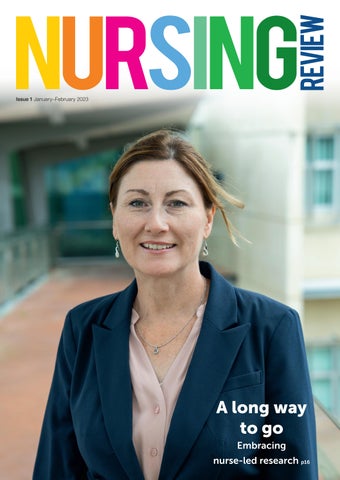
Issue 1 January–February 2023
A long way to go Embracing nurse-led research p16
Important information for Healthcare Professionals. For Formula-fed infants.
New name. Same formulation.
S-26 has changed its name to Alula For more information, please contact our Careline on 1800 552 229 IMPORTANT STATEMENT: Breastfeeding is best for babies. It has benefits for the infant, such as reducing infection risk, and for the mother. It is important to have a healthy balanced diet in preparation for, and during breastfeeding. Infant formula is designed to replace breast milk when an infant is not breastfed. Breastfeeding can be negatively affected by introducing partial bottle-feeding, and reversing a decision not to breastfeed is difficult. Infant formula must be prepared and used as directed. Unnecessary or improper use of infant formula, such as not properly boiling water or sterilising feeding equipment, may make your baby ill. Social and financial implications, including preparation time and the cost of formula, should be considered when selecting a method of infant feeding.
® S-26 is a registered trade mark. Used under licence. Distributed by Sanulac Nutritionals Australia Pty Ltd. Level 1, 42-44 Chandos Street, St Leonards NSW 2065. 05676-18052022
For Healthcare professionals use only. For Formula-fed infants.
contents
MANAGING EDITOR
news
Eleanor Campbell 02 9936 8629 eleanor.campbell@news.com.au
2
Support for Indigenous nurses
3
New virtual reality clinic
4
Visa processing
5
Midwife shortages
6
War nurse honoured
HEALTH EDITOR
Elise Hartevelt elise.hartevelt@news.com.au SALES MANAGER
industry and reform
Sarah Licence 02 9936 8666 sarah.licence@news.com.au
8
Under pressure Mental health claims rise
9
Medicare revamp Big changes underway
03
06
SUBSCRIPTIONS MANAGER
Isabella Galea 02 9936 8666
10 Wage growth
COVER
11 New attitudes
Nurses can bargain for more pay
Professor Lisa Whitehead. Picture: Supplied.
Guide to fight ageism
12 More nurses, not less Change to ‘push’ nurses out of aged care
PUBLISHED BY
14 IVF boost NSW reveals $80m program APN Educational Media GPO Box 4245 Sydney NSW 2001 ABN 58 090 900 999 ISSN 1326-0472 PP100001944
15 Hidden burden
08
12
specialty focus
16 A long way to go Looking into nurse-led research
17 Furry friends
PUBLISHER’S NOTE
© Copyright. No part of this publication can be used or reproduced in any format without express permission in writing from APN Educational Media. The mention of a product or service, person or company in this publication, does not indicate the publisher’s endorsement. The views expressed in this publication do not necessarily represent the opinion of the publisher, its agents, company officers or employees.
Surprising long Covid symptom
Dogs: vicious or valuable?
clinical practice
20 Not a choice Eating disorder recovery
22 Be prepared National standard to prevent stillbirth
24 Birth cycle
16
24
Shift in IVF treatment
25 Cup of tea New study on stroke
workforce
26 Front and centre Australia’s most ethical job
27 One hospital, two jobs NSW nurse of the year
Technology
28 Step forward Automation in care
26
28 nursingreview.com.au | 1
news
JHC Aboriginal liaison coordinator Katy Raftery, JHC CEO Dr Amanda Ling, Ramsay student placement coordinator Dani Barnes and Aboriginal liaison officer Tina Garlett. Picture: Supplied.
Nurses of the future New initiative to support Indigenous student nurses. By Eleanor Campbell
I
ndigenous student nurses in WA will be supported through their studies as part of a nationwide initiative to help fill chronic hospital shortages. Australia’s largest private hospital provider, Ramsay Healthcare, announced it will be expanding its undergraduate cadetship program in 2023. As part of the new scheme, up to 25 Aboriginal and Torres Strait Islander student nurses will receive assistance during their clinical placements. Cadets will also be offered a guaranteed graduate interview for ongoing employment after they finish their studies. Ramsay’s Chief Nurse and Clinical Services Director Dr Bernadette Eather said the program will help “develop leading nurses and midwives of the future.”
2 | nursingreview.com.au
“The program will support our student nurses in obtaining their qualifications, through providing them with valuable hands-on clinical experience, support and supervision,” Dr Eather said. “The student nurses will also have the opportunity to be employed in a Ramsay facility as an assistant in nursing, midwifery, personal care assistants or in a support service role.” Ramsay Health, which owns 72 private Australian hospitals, launched its undergraduate cadetship program in May last year. This came as countrywide nursing shortages reached critical levels during Covid-19, with the peak nursing union reporting at least 8,000 vacancies in July 2022. According to a company spokesperson, more than 500 students have been recruited into Ramsay’s cadetship program as of 2023.
“A diverse workplace improves productivity, innovation and customer service. As part of the new initiative, Indigenous student nurses will be offered placements in Perth’s Joondalup Health Campus, Hollywood Private Hospital, Glengarry Private Hospital and Attadale Rehabilitation Hospital. Joondalup’s chief executive officer Dr Amanda Ling said it was important to provide diversity, equality and inclusion in the workforce. “A diverse workplace improves productivity, innovation and customer service,” Dr Ling said. “This aligns with our goal to provide the best possible health outcomes for our patients.” ■
news
Westmead Health Precinct in Parramatta, Sydney. Picture: Monique Harmer/News Corp Australia.
Safety first New $10M virtual reality clinic at Westmead Hospital. By Eleanor Campbell
A
new multi-million dollar training facility in Western Sydney will use virtual reality and artificial intelligence to train nurses how to better manage violent situations. In January, the University of Sydney announced plans to build a $10M 16-bed simulation ward inside of Westmead Health Precinct’s innovation centre. Set to open in mid-2023, the facility will use virtual reality headsets to immerse nurses in virtual high-risk emergencies, including violent patient outbursts and cardiac arrests. “This new funding underlines our longstanding commitment to the
Westmead Health Precinct,” said University of Sydney Vice-Chancellor and President Professor Mark Scott AO. “The University has proudly been part of Westmead Hospital since its inception more than 40 years ago. “Today’s investment will help train the next generation of Australia’s health workers and bring vital new skills into Western Sydney.” The new facility will make use of the Code Black virtual reality app to give students a life-like experience of high stakes events, and help prepare nurses for formal accreditation. The course was developed in partnership between Western Sydney’s local health district and Sydney University. It came after a state-wide investigation heard “disturbing accounts” of violence and aggressive behaviour against doctors and nurses across NSW hospitals.
A key recommendation of the review, which was released in 2021, was an overhaul of violence prevention and refresher training made available to state hospital staff. This included increased use of clinical simulation and virtual reality. “Virtual reality is revolutionising healthcare by creating virtual experiences that allow medical professionals to be immersed in a low-risk environment where they can get hands-on experience,” Professor Robyn Ward AM, Executive Dean and Pro Vice-Chancellor, Faculty of Medicine and Health, said. “We’re thrilled to continue building our presence at the Westmead Health Precinct, and the partnership between the University, Sydney Children’s Hospitals Network and Western Sydney Local Health District.” ■ nursingreview.com.au | 3
news
Nationals Skills Commissioner Adam Boyton in Canberra. Picture: Sean Davey/NewsCorp Australia.
In-demand Health and care sector needs over 100,000 workers by 2025. By Elise Hartevelt
R
egistered nurses and aged care workers have been flagged as the occupations most likely to grow in-demand by 2025. A 2022 report from the National Skills Commission (NSC) said demand for health staff will rise by 40 per cent over the next four years. This would mean Australia will need to fill nearly 50,000 nursing positions and around 54,700 roles in aged and disability care. “Over the next five years, we anticipate around a quarter of new jobs to be in the health care and social assistance sector,” NSC chief Adam Boyton said.
4 | nursingreview.com.au
“In fact, the two occupations [nursing and aged care worker] alone are likely to account for 10 per cent of all the new jobs created by 2025.” The growth and demand for healthcare workers are due to coincide with a vast reduction of working-aged Australians. In 1980, there were 6.6 people of working age for every person aged 65 and over. There are currently four people fit to work for every older person in Australia as of 2023. “The impact of this combination of factors is already being seen,” Boyton said. The NSC report predicted that by 2060, there will be only 2.7 Australians to care for each older person over 65. Earlier last year, the NSC released the Care Workforce Labour Market Study, commissioned by the Morrison government to examine Australia’s care sector.
The study foreshadowed a shortfall of over 200,000 full-time care workers by 2050. “These findings show the growth in the care and support workforce has been three times faster than total employment across the Australian economy,” the study said. “This reflects the ongoing increase in demand for care and support in our country.” Boyton said that many care and health sector roles are “hard to automate as they are very human-centric.” “The level of skill required for these jobs reflects our analysis that the majority of growth will require more study after school,” he said. “It means that we must be prepared to reskill and retrain at many points across our lifetimes to navigate these trends in the job market.” ■
news
‘Extremely busy’ Midwives say staff shortages is sending mothers home too early. By Elise Hartevelt.
A
chronic shortage of midwives in state public hospitals is causing women to be discharged without proper postnatal care, midwives have said. Earlier this year, NSW hospitals had over 500 vacancies for full-time midwifery positions, resulting in women leaving hospital within two days after childbirth. Chair of NSW’s Australian College of Midwives branch Vanessa Scarf said while there’s widespread staff shortages in healthcare, postnatal care has been particularly impacted. “The throughput in hospitals is so intense that women are sent home without adequate postnatal guidance and education,” Scarf said. “After a woman has a baby, the care she receives is absolutely paramount to her success. “But this also impacts health service in general and contributes to hospital readmissions.” During postnatal care, midwives monitor the woman’s and baby’s health and provide education on looking after the baby. But when there’s poor postnatal care, health complications such as infections and anaemia are more likely to occur for mother and child. Additionally, midwifery support can provide mental support and combat anxiety and depression after birth, which affects one in five women.
Yet, Scarf said chronic staff shortages have put midwives in an ‘impossible’ position to provide adequate postnatal care. “The workload in the hospital is just extraordinary – it’s extremely busy,” she said. “And staff members are just dropping and dropping because the workload is just too extreme.” A lack of available staff has meant that in some hospitals, two midwives had to take care of up to twelve women with their babies. The NSWNMA also suspects a tool used by hospitals to calculate mandatory midwifery staffing levels may be faulty. Birthrate Plus helps hospitals plan rosters according to the minimum standard of one-to-one midwifery care for women throughout labour and birth. “Whether that algorithm or the way the hospital uses the funding is flawed, something is lost along the way,” Scarf said. The UK-designed birthrate tool was introduced to Australian healthcare in July 2010 and was initially welcomed by NSWNMA. Now, the union has seen a ‘mismatch’ in the number of mothers allocated to a midwife’s regular shift. “When a midwife is allocated their load for the shift, the tool has only worked out the mothers, not the number of babies they have with them, which can be more than one,” Scarf explains. “So, a great day might be when a midwife has four women with four babies, but those days don’t happen very often.
“The workload in the hospital is just extraordinary. “Most often, a midwife is allocated between six to eight women, which translates to up to 16 patients.” To meet safe staffing levels, Scarf said hospitals have replaced midwives with registered nurses, enrolled nurses, and sometimes assistants in nursing. “But they’re not actually trained to provide midwifery care. “In public hospitals, midwives should provide pregnancy, birth, and postpartum period exclusively.” Scarf said hospitals also prioritise assigning midwives to birth units and antenatal wards over postnatal care since registered nurses can’t replace them. “Postnatal care has always been a poor cousin of maternity care – it lends itself to being undervalued.” She emphasises the importance of postnatal care for women, especially those at a higher risk of health complications after childbirth. “Postnatal care is not just looking after a woman who’s just had a baby – it’s so much more,” Scarf said. “Overall, midwifery continuity of care has huge impacts on health outcomes, such as preterm births. “We need more staff and better midwifery models of care so that midwives can practice to their full potential.” ■ nursingreview.com.au | 5
news
Historic legacy First nurse honoured at Australian war memorial. By Elise Hartevelt
T
he Australian War Memorial will exhibit its first statue of a female nurse by the end of 2023 in honour of wartime nurses and their services to the country. The Australian College of Nursing (ACN) raised $1.5 million over four years to erect a memorial of Australian Lieutenant Colonel Vivian Bullwinkel, who served in World War II as a nurse. During her career, Bullwinkel advocated for better working conditions for nurses and became the first female member of the Council of the Australian War Memorial. “Her life work epitomizes the character traits we see in nurses throughout history,” ACN chief adjunct professor Kylie Ward said. “During the recent pandemic, nurses exhibited such character as they responded to their service with integrity
6 | nursingreview.com.au
and grace at great risks to themselves and their families. “This is a profession steeped in history.” Nursing Review spoke with Professor Ward about the bravery and sacrifices of nurses.
NR: ACN has raised over half a million dollars for this statue, and you’re working towards getting funding for scholarships too. Why did you do this? KW: We’ve been raising money in perpetuity for scholarships in of the 21 nurses who were beside Vivian Bullwinkle on the beach on the 16th of February in 1942 when they were marched in. She’s the sole survivor, and we like Viv would not want those nurses to be forgotten. Nurses that served in the military weren’t able to have families or children, so they’ve got no survivors themselves. And if we don’t do something to basically immortalise them now and capture their memories, it may well be forgotten in the generation to come. So that’s very important for us to do that.
What are the biggest challenges facing nurses in 2023? I wish I could say that we won’t be facing some of previous challenges we’ve had, but we will. One of the challenges for the nursing profession continues to be occupational violence. You know, we’ve, we’ve heard about the issues in Alice Springs, but that’s not new and it happens around the world. I started the Nurses and Violence Task Force in 2020 and we now have four committees. But we’ll be continuing to do the work of the task force and launch recommendations around not only occupational violence but also caring for those experiencing family violence, children at risk, and in relationships involving domestic violence. That’s going to be a high priority for us as a college. There’s also a lot of information coming out about the volume of nurses contemplating leaving the profession. And that’s something that we really need to tackle. I know I’ve said many times in the media, but nurses experience more occupational violence than prison guards and police officers. It’s unacceptable
news
Vivian Bullwinkel (third from left), matron of Fairfield Hospital, sole survivor of the Banku Island massacre in 1942. Picture: NewsCorp Australia.
“It’s tremendous what nurses are prepared to do and what limits they’ll go to.
that in 2023 we’re still facing this, and that’s something that we’re really going champion. Workforce shortages also remain a major issue. We feel we need to look at workforce modelling, workforce shortages, not only recruitment, but also retention. I think that a lot of the nation’s employers need consider that and they’ve got to think about tackling some of the gender disparities that exist. So that will continue.
On the other side of things, are there any promising developments that you’re excited for in nursing and healthcare? This is an exciting question because there’s so much doom, gloom and exhaustion. I think that it’s really important that we do promote what’s exciting in healthcare and what’s exciting in terms of developments for the nursing profession, because there are so many great opportunities. I mean, first and foremost, we just mentioned the, um, anticipated reforms to Medicare. I think that that would be incredibly important for the progression of this country and access and equity to healthcare for all
Australians. So I really welcome that. Many opportunities have come out of recent and disruptive events that have showcased the capabilities, the skills, and the leadership of nurses, and really how adaptive and versatile the profession is. Covid-19 obviously goes without saying, and the vaccination program that the country undertook to to limit the number of deaths so we didn’t have the same devastating outcomes as other countries. But you think about the natural disasters that just seem to keep coming, even before Covid, such as the black summer and all the floods. There’s so many areas where the response is from nurses taking on a leadership role. We’ve also just developed a disaster nursing course through our chair of the Faculty of Disaster, Nursing Professor Ali Hutton. And we’re going to offer that as a free tool for all of our members. Non-members will be able to pay to do that course, but we’re also going to gift that to the International Council of Nurses to offer to third world countries. That collective responsibility of how we look after our profession, not only
domestically, but internationally is very important to us. I think the leadership that nursing shows in our philosophy of holistic care during those times is absolutely paramount. And a great example to the nation. I’ve seen nurses in boats in floods, getting to diabetic patients to take care of them. It’s tremendous what nurses are prepared to do and what limits they’ll go to. Registered nurses also need to now take that next level of evolution to meet the nation’s needs. So we are very excited about the possibilities. We’ve been an organisation who’s championed skilled migration, even amongst enormous criticism. But I’m a strong believer in skilled migration. Australian born or trained nurses will go overseas to work. I think it’s important this nation is being built on diversity. I recently met with Minister O’Connor to discuss skilled migration. And one of the things that he shared with me was there was a backlog of about almost a million visas when they came into government. And that does not surprise me. The reality is countries all around the world are desperate for nurses. When I’ve spoken to my colleague in the UK, the CEO of the Royal College of Nursing, they have a target to attract 60,000 international nurses. So everybody’s looking for nurses and for us to be either ignorant or arrogant around people wanting to come here is unacceptable. I’ve spoken to many ministers about this and about the education that we could use to support cultural awareness, cultural diversity and cultural sensitivity. There’s a lot of education and support that’s needed to assist people to assimilate and feel supported, so that they can deliver care and understand our healthcare context. We don’t have one health system. We’ve got multiple health systems and in the last couple of years we saw pop-up health systems like the vaccination clinics. So we don’t have a national health system like other countries have, and we’re not without our nuances that take a while to get accustomed to. So I think that is one of the challenges around that is absolutely important to prioritise. ■ nursingreview.com.au | 7
industry & reform
Under pressure Nurses make up bulk of psychological injury claims in NSW By Elise Hartevelt
W
idespread understaffing in Australian hospitals could be significantly reduced if high rates of psychological injuries among nurses are addressed, a new study has said. Researchers from Australia’s three leading universities, Monash, Curtin, and Sydney, examined nine years of psychological injury claims of over 200,000 workers across NSW. They found the healthcare workforce had lost more than 170,000 working weeks to psychological injury, which equals to over 3,500 full-time working years. Psychological injuries were also twice as likely to occur in healthcare settings compared to other industries. Monash University’s health professor Alex Collie said it’s showed how mental health is impacting a workforce already lacking in numbers and projected to be short of another 123,000 staff by 2023. “That’s like having three and a half thousand workers out of the workforce for a year,” Collie said. “This data brings home how much proactive working time we’re losing to these potentially preventable conditions.
8 | nursingreview.com.au
“It’s already challenging to keep people in the healthcare sector, and one way to address that is by better prevention of psychological injury.” Psychological injury claims are made when a worker experiencing mental health issues due to work needs to take time off and requests financial compensation. Over 60 per cent of nurses and midwives reported they faced stress and anxiety in their day-to-day lives because of their workload and environment. The most common causes of psychological injury were harassment or bullying (38.4%), work pressure (23.1%) and violence (18%). As a result, the rate of claims made by nurses and midwives grew by 150 per cent – the steepest rise compared to other industry groups. Yet, Collie said that does not mean nurses and midwives are the most likely group to file psychological injury claims. “There are more claims on nurses, but that’s because there are many more nurses, as a rate,” he explained. “So, for every 1,000 nurses, they’re actually one of the groups that are less likely to make a claim and certainly not the highest.” Collie said it’s likely more people are experiencing mental health challenges working in healthcare settings but are not filing claims. “These results are just the tip of the iceberg,” he said.
“These results are just the tip of the iceberg. “One of the things we know about workers’ compensation is that it is harder to prove for a mental health condition than a physical injury. “You have to show that working in the policy rules significantly contributed to your condition. Unfortunately, that can be hard to prove.” Thousands of nurses and midwives in Australia have reported severe burn out and exhaustion over the past two years, with several Covid waves causing bucketing workloads and higher stress levels Other research showed nurses in major hospitals commonly experienced higher levels of psychological distress than those in regional settings. Collie said the profession’s workplace lends itself to high-stress and workloads, which impact a worker’s mental health. The report is part of a more extensive study working with health and social care organisations trying to redesign jobs, so they’re less harmful from a psychological point of view. “One of the things we know is that it’s the way these jobs are designed that influences the mental health of its workers,” Collie said. “So, we need to redesign healthcare jobs so they’re less stressful so we can prevent psychological stress and trauma. “But that’s hard work.” ■
industry & reform Minister for Health and Aged Care Mark Butler. Picture: Brenton Edwards Newswire.
System overhaul Medicare to undergo biggest funding overhaul in 40 year history. By Elise Hartevelt
T
he government’s medicare overhaul could give nurses a more prominent role in diagnosing and prescribing medication for patients in healthcare settings. In early January, Labor flagged Australia’s medicare system as ‘unfit for purpose’ after data revealed that bulk-billing rates had plummeted by 7 per cent over 2022, placing immense pressure on healthcare systems. Health Minister Mark Butler established the Strengthening Medicare Taskforce in July last year to design a new model aimed “modernise Medicare.” He said that Australia’s universal healthcare scheme is currently in its worst shape in 40 years. “I want to see out of this strengthening medicare process a much more liberated ability for all health care professionals,
including nurses, to deliver world-class health care to Australian patients,” Butler said. “That’s not going to be easy, but I sense a level of consensus around lifting that ability for healthcare professionals to use their skills and training more than I’ve ever seen before.” The government taskforce is due to deliver its recommendations by mid February. Butler said this could mean a move from an individual fee-for-service model to a multidisciplinary approach, which would give nurses a more significant role in prescribing medication and treating patients in primary care and hospitals settings. While Butler said he wasn’t going to ‘pre-empt’ the report’s content, he promised the taskforce would ‘consider all those things.’ “There is much more that nurses in primary care can do – that they want to do, have the skills and training, and that our current MBS system is not letting them,” he said.
“Nurses and midwives are integral to all parts of care delivery. “Doing more of the same is not going to deliver the quality of health care that Australians need and deserve. “I think that will be something that comes through the Strengthening Medicare Taskforce report very clearly.” NSWNMA general secretary Shaye Candish welcomed the revamp, saying she hoped the government would “seize this opportunity for change.” “Nurses and midwives are integral to all parts of care delivery,” Candish said. “They are continuously developing their clinical skills and should be afforded more opportunities for growth within the sector. “Allowing nurses to fulfil their scope would reduce the burden faced within acute care settings and allow patients to be seen quickly within their community, rather than delayed in an overcrowded waiting room.” ■ nursingreview.com.au | 9
industry & reform Employment Minister Tony Burke. Picture: NCA NewsWire/Gary Ramage.
Wage growth Australia’s nurses can now bargain for higher pay. By NCA NewsWire and Elise Hartevelt.
A
new bill has passed that will allow workers, including nurses and midwives, to push for higher pay from their employers. The ‘Secure Jobs, Better Pay’ bill introduced a new multi-employer bargaining system allowing staff to join forces with unions to negotiate for better pay and working conditions. Federal chief of the Australian Nurses and Midwives Association (AMNF) Annie Butler said the bill is critical in giving nurses wage-growth, improved conditions and increased gender equity. “Our existing bargaining system is outdated and unfair and severely disadvantages workers in smaller, care industries – nurses and carers working in aged care simply have no power,” Butler said. “Many of our members have been ‘locked-out’ under the existing bargaining system and haven’t had a proper wage rise in years. “We need a bargaining system which is fair and equitable for all workers across all industries.” Employment Minister Tony Burke revealed he had struck a deal on the Secure Jobs, Better Pay bill with independent ACT senator David Pocock, who holds the balance of power in the upper house. Burke made the announcement on the ABC’s Insiders program in November 2022. He said Labor will adopt the recommendations from a parliamentary
10 | nursingreview.com.au
inquiry into the bill including changing the definition of a small business that can be excluded from multi-employer bargaining from one that employs 15 people to one that employs 20. It will also be easier for a business with 50 employees or fewer to opt out of multi-employer bargaining by giving them a stronger ability to argue to the Fair Work Commission that they should be excluded. The responsible minister will be given the power to decide which occupations can take part in the low-paid bargaining stream, which was designed for workers in industries such as aged care and cleaning. The government will also set up a new statutory advisory committee to review welfare payments and provide independent advice before every federal budget on the structural challenges to economic inclusion for Australia’s poorest people. Senator Pocock had said he would wait to receive the report from the parliamentary inquiry before making a final decision on whether or not to support the Better Pay bill. He said the amended legislation was now “substantially different”, noting it included additional safeguards for both businesses and low-paid workers. “Taken together, all of these measures will strike the right balance between ensuring people start receiving long overdue wage rises, maintaining productivity and protecting the most vulnerable in our communities,” he said in a statement. “Given the pace at which this legislation has moved, my concern has been to ensure stakeholders are heard and any issues addressed.”
“Nurses and carers working in aged care simply have no power. The expansion of multi-employer bargaining — which essentially makes it easier for workers at different companies within one industry to band together to call for better pay and conditions — has been the most contentious element of the legislation. Under the “single interest” stream, workers will be able to negotiate a single enterprise agreement to cover different workplaces, as long as a majority of employees at each company involved agree to do so. But the Prime Minister wouldn’t be drawn on when Australians could expect the passing of the Secure Jobs, Better Pay Bill to result in an increase to real wages, which are lagging far behind inflation. Wages increased by 3.1 per cent in the year to September, much lower than the 7.3 per cent increase in consumer prices over the same period. Asked by reporters at Parliament House in Canberra when real wages would go up, Albanese said the new laws would incentivise employers to negotiate fairer enterprise agreements with their staff. He said the laws would ensure a “more level playing field” and prevent employers from “gaming the system” by allowing enterprise agreements to expire and then offering workers lower conditions set out by industry awards. ■
industry & reform
New attitudes Guide fights ageism through language By Elise Hartevelt
A
n advocacy group has released a manual for healthcare workers to help reduce the impact of ageism on older people. The guide from EveryAGE Counts hopes to assist workers in preventing and addressing ageist attitudes affecting older people through language. Ageism is stereotyping against people based on their age and negatively affects people’s health, reducing someone’s life expectancy by up to 7.5 years. EveryAGE Counts advocacy campaigner Joel Pringle says age stereotyping erodes unity between generations and devalues the acknowledgement of people as a person. “Ageist attitudes stem from our own fear of becoming older,” Pringle says. “We respond by distancing ourselves from that idea of ‘becoming older’, and we project that negativity onto older people. “But those fears are generally based on myths about what older life looks like.” From age four, we become aware of stereotyping through mediums such as language, which guides our feelings and behaviour towards people of other generations. Pringle says people tend to falsely believe they’ll lose control and
agency over their minds and bodies as they age. For example, people who think loneliness, depression and poor health are normal aspects of ageing are less likely to seek medical help, exacerbating their condition. Controversially, people with positive beliefs about ageing are at a smaller risk of developing age-related diseases like dementia. “When we believe in these myths, we’ve lowered our own expectations of life,” Pringle says. “We might not push for health treatment we otherwise have a right to, or we won’t be as active and engaged in our community. “That’s all because of the transfer of attitudes from people around us to ourselves – and that’s where healthcare workers can interrupt that process.” EveryAGE Counts says ageism is the main driver behind failures, including neglect and abuse cases, in aged care and healthcare settings So, the guide was created to take ‘ageism out of aged care’ and provide directions on what language to use best when interacting with older people. For example, when referring to older people, they suggest it’s best not to use phrases such as ‘the elderly’ or ‘the aged’. Pringle says language is never neutral and that the way we talk about and interact with older people matters.
“Ageism hasn’t necessarily been increasing, but awareness of ageism has. “Despite our best intentions, we can all fall into the trap of ageist language by some social attitudes that we’ve absorbed,” he explains. “If we are aware of it, we can actually use our language to undermine ageism and improve older people’s lives.” The advocacy campaign group found ageism was most prevalent in aged care, healthcare, workplace and community settings. But Pringle says age stereotyping is a persistent phenomenon that is ‘deeply ingrained in our society.’ A 2021 study found that 90 per cent of Australians believed ageism existed in society, of which 83 per cent agreed it was a problem. Over 60 per cent of people reported they experienced this form of prejudice in the past five years. Pringle hopes the guide will clarify and improve understanding of how ageism affects people of all ages. “Ageism hasn’t necessarily been increasing, but awareness of ageism has,” he says. “And also the awareness of the negative impacts it has on older people.” ■ nursingreview.com.au | 11
industry & reform
“There’s just not enough staff.
More nurses, not less Union fears household model will ‘push nurses out of aged care.’ By Elise Hartevelt
A
controversial decision to move lifestyle and admin staff into carer roles has raised significant concerns among one of Australia’s major nursing unions. Southern Cross Care Tasmania announced in mid-November 2022 plans to train lifestyle, kitchen and leisure staff to provide direct care to residents. The new model caused an uproar among workers and the ANMF, who rallied to oppose the changes that they say might ‘abolish specialist roles’, including enrolled nurses. The ANMF labelled the move ‘diabolical’ and said the overhaul would push nurses out of aged care. “We’re very concerned about how it will affect workload,” ANMF Tasmania branch chief Emily Shepherd said. “Providers certainly know the Royal Commission recommended more nurses in aged care, not less. “Unless the government steps in, we fear there’ll be even more sackings across the sector.” The nursing union has urged the government to set mandates around skill mix percentages or registered and enrolled nurse care minutes. Health minister Mark Butler expressed his opposition to Southern Cross Care’s decision ‘proposing to terminate the employment of longstanding, experienced and dedicated nursing staff.’ “We strongly urge Southern Cross Care to reconsider its decision,” he said. Southern Cross Care Tasmania’s chief Robyn Boyd said the move was a direct response to the Royal Commission’s recommendations.
12 | nursingreview.com.au
“This is all about residents and their quality of life and care,” Boyd said. “Everyone is so heavily focused on staff and nurses. “But what about the residents?” Southern Cross Care’s industrial overhaul came after three homes were issued notices for failing to comply with minimum aged care standards, including one in August 2022. The household model is expected to come into force over the coming months and will split up buildings into different communities with allocated carers. Indirect staff will be trained to qualify for Certificate 3, after which they will provide personal care, cook meals and administer medication. Boyd said the reforms would see that all of Tasmania’s nine aged care homes meet the minimum compliance standards. “We’ve responded and came up with a model we believe will provide our residents with better care, more stability and a better quality of life,” Boyd said. Boyd said the board consulted with the Commonwealth before introducing the new care model. They were advised that enrolled nurses would be included in the care minutes, meaning providers need to pay nurses as nurses but will receive funding solely for carers rates. “Southern Cross Care did not make a policy to exclude enrolled nurses from the registered nurse minutes – that was the Commonwealth,” she said. “We understand not everyone will be happy with the changes. “But we’re not forcing anyone to make decisions they’re not happy with.” Forty enrolled nurses will be offered voluntary redundancies or reemployment opportunities to, for example, their new Wellness program. Nursing Review also spoke with Janine, an aged care worker who works for one
of Victoria’s major non-profit aged care providers. Their home also adopted the household model a few years ago, after which residents gained weight and were significantly happier. “In theory, the household model is wonderful,” Janine said. “But there’s just not enough staff. “We should also not be administering medication to residents.” Janine said they faced issues around the household model due to a lack of staff, unsafe medication administration, and an unbalanced skill ratio. The provider initially changed the jobs of enrolled nurses to work as carers while receiving their original pay. But then, they started to pay them at the same rate as carers and were offered redundancies. Janine said they now have a handful of enrolled nurses who can only work in the traditional areas. “Mistakes started to happen when enrolled nurses left, and laundry people hadn’t done the core modules,” she shared. “We didn’t have properly trained workers nor enough staff to begin with.” Aged care provider Catholic Health Australia has applauded Southern Cross Care’s decision to come up with solutions to improve care despite the sector’s financial hardship. “It’s unfair to single out one provider to send a signal to the broader sector when that one operator continues to invest in its services and deliver care,” Catholic Health Australia chief Pat Garcia said. “Letting enrolled nurses contribute to the 40 nurse care minutes will ease the burden on registered nurses and help providers find enough staff.” Since Southern Cross Care’s announcement, Boyd has been meeting with its staff and residents to discuss the upcoming changes. She said she’d received overall positive feedback from workers. “We hope the household model will provide our residents with a better quality of life, more flexibility and stability and better decision-making about how they live their lives. “Because first and foremost, we need to think about our residents.” ■
The laTesT news for aged care professionals
Aged Care Insite provides the best in original journalism and is the authoritative source of news and analysis for the residential and community care sectors. At Aged Care Insite we pride ourselves on being at the forefront of the ever-changing care sector. We provide an independent source of news, and cover the issues relevant to you. • Comprehensive coverage of a diversity of topics affecting the aged care sector • News and information on medical matters and products • Analysis of the major issues facing the aged care sector as a whole • 6 issues per year • Editorial integrity and industry relevance • Keeps industry professionals up-to-date on the politics and policy that matter • Tax deductible
please call 02 9936 8666 to find out more.
industry & reform
IVF boost NSW reveals $80m program to help fund IVF for women, couples. By NCA NewsWire.
W
omen and couples undergoing IVF have been given a $2000 lifeline to help with the expensive procedure, in an Australiafirst policy introduced by the NSW government. Coming into effect from January, the $80 million NSW Affordable IVF Initiative will help 12,000 couples pay for out-ofpocket costs associated with assisted reproductive technology treatments. NSW Treasurer Matt Kean said the Coalition’s funding injection had been factored into the 2022 to 2023 budget and would also increase access to lower cost IVF treatment through publicly-supported clinics and fertility preservation services for patients undergoing medical treatment like cancer. Public servants will also get access to up to five days paid fertility treatment leave as well. “The high costs of fertility treatment can be a hurdle and add stress to those experiencing fertility issues but the NSW government is helping to lower these
14 | nursingreview.com.au
costs for families wanting to have a baby,” he said. Minister for Women Bronnie Taylor estimated that 16 per cent of all couples will face fertility issues and acknowledged the financial burden of IVF and assisted fertility on families. She also confirmed that same-sex couples will be able to access the scheme. “We want this rebate to be accessible to everybody, so it’s available to all couples and it’s available for (single) women to seek that treatment”, said Taylor. “Families are families and they come in all shapes and sizes. We want to support everybody through this process.” According to Monash IVF, a single IVF cycle can cost between $9,372 – $10,112. That amount can increase up to $11,217 if that includes Intracytoplasmic Sperm Injection (ICSI), when a single sperm is injected into the egg before implantation. The new $2000 rebate can also be used in conjunction with existing Medicare rebates which can partly cover specialist appointments, and testing. To access the rebate, the patient must be a resident of NSW and have incurred an out-of-pocket cost from a registered provider and accessed treatment from October 1, 2022 onwards.
“The rebate may help increase accessibility to more complex IVF treatments. As the policy stands, couples can only claim the $2000 rebate once, regardless of how many cycles are required to result in a successful pregnancy. Ms Taylor said if the policy exceeds the 12,000-couple cap, the government may extend the number of people who can access the rebate. “Now if that is the case (that we exceed that) then it’s my job to go to the Treasurer and say: ‘This program has been so successful, we might have to expand that’,” she said. While the cost of an IVF cycle can greatly differ depending on the clinic and treatment needed, the Director of Monash IVF clinic, Dr Katrina Rowan, said the rebate would “significantly” contribute to out of pocket costs. “It’s also possible the rebate may help increase accessibility to more complex IVF treatments that require extra care, extra services and are generally only available through the private health care system,” she said. ■
industry & reform
Hidden burden Surprising long Covid-19 symptom identified in children. By NCA NewsWire
T
he health system is not well set up to appropriately respond to long Covid-19 and post-Covid-19 conditions among children, including addressing serious mental health issues, a parliamentary inquiry has been told. Paediatric infectious diseases physician Philip Britton told a committee that while some children had pre-existing mental health issues before they became infected with Covid, others did not. Anxiety was the main problem and he said it indicated the “pressure and burden” of the pandemic on children. “In our post-Covid survey, those children who had ... long Covid were predominantly older than 10 and there was a slight female predominance,” he said. Among younger children, there was often a persistence of a cough and sometimes wheezing, which he said showed post-Covid conditions were
usually different in younger children than older children. “The health system in my setting, in NSW ... is not well set up to appropriately respond to long Covid and post-Covid conditions in children at this point in time,” he said. “The challenge is because we do not have a well-co-ordinated system ... we’re also not defining the condition well enough to then inform clinical practice at a primary care level.” Paediatric infectious diseases specialist and microbiologist Brendan McMullan agreed, adding there was a lack of dedicated funding for long Covid care. McMullen called for a community-based model for dealing with long Covid cases. “There’s some evidence that suggests that children who have family members with long Covid may be more likely to have it themselves,” he said. Asked about low Covid vaccination rates among children, McMullan said it was an “important and difficult issue”. “In general, health professionals ... have attempted to advocate for the importance of Covid vaccination in children,” he said.
“We do not have a well co-ordinated system. “Those vaccination rates seem persistently to lag well behind the vaccination rates for other diseases.” McMullan noted most children in Australia had experienced Covid at some point. “There is perhaps a perception among parents that the benefit of vaccination now is somewhat more limited if their child has had Covid,” he said. “The vaccine rollout happening in a staged process has meant that as the age of the child comes down the rollout of the vaccine has been later and later. “By the time we got around to being able to vaccinate five to 12-year-old’s — and certainly for the under five’s — many people’s perceptions of the dangers of Covid had waned.” The inquiry into long Covid and repeated Covid infections is expected to hand down its report by April 2023. ■ nursingreview.com.au | 15
specialty focus Professor Lisa Whitehead. Picture: Supplied.
conditions, including the area of multimorbidity, because so many people now are living with two or more chronic conditions. Multi-morbidity is on the rise, and it’s an area of focus in and of itself, because the treatment or the management, which is usually led by nurses on a day-to-day basis, needs to be quite different than just managing two or more conditions. So it needs a holistic approach, and there’s a lot of work that nurses can do in that space.
In what ways has your research helped us to better understand nursing? It’s always addressed real world issues, or real world problems, in relation to health, and in relation to the management of chronic disease. I’ve also undertaken some health work research as well, particularly in the area of nurse practitioners, and its practice. So I would say that all my research has high relevance to the nursing workforce, and to health more generally as well. And so the findings have always been applied to the real world setting, with the goal of really making a difference to practice. We always make sure that our findings have relevance to policy and practice, and seek to draw those out. And, of course, share that information as well, as widely as possible through publishing and conferences, but also presenting to groups as well, locally and nationally and internationally.
‘A long way to go’ ACN’s academic journal welcomes a new editor-in-chief. By Elise Hartevelt
O
ne of Australia’s leading academic journals on nursing has welcomed a new editor-in-chief. Professor Lisa Whitehead, who’ll take up position of ACN’s research journal by January next, has thirty years of experience in studying and providing work on nursing, rehabilitation and public health. “There’s a lot of really strong nursing research that’s been undertaken in Australia,” she said. “But there’s still a long way to go for nurse-led projects that focus on aspects of nursing and midwifery, because they’re still grossly underfunded.”
16 | nursingreview.com.au
Join Nursing Review’s conversation with Whitehead on what she hopes to achieve in her new role and the importance of research for the nursing profession.
NR: Can you share a bit about the research that you’ve done? LW: So my research is in the area of chronic diseases. Prevention and management of chronic diseases. And I’ve always maintained a focus on the role of the nurse and the family, in being able to support people living with chronic conditions, or to prevent chronic conditions, and how to do that in their community setting. I’ve done quite a lot of research around type 2 diabetes, and more recently around pre-diabetes, how to prevent people from progressing onto developing type 2 diabetes. But also across a range of
What was your attraction to the research area of chronic disease and diabetes? Chronic diseases, it’s an area where nursing can play a big role, and they do play a big role. But it’s definitely an area where we can grow, in terms of being able to provide the best possible care to individuals, but more importantly to their families as well, because managing a chronic disease is definitely a family affair. A community affair as well. And is best managed when a collection of people are involved in that management, rather than an individual on their own. And so it’s always been an area I’ve been interested in, because I know nurses play a really important role in managing chronic diseases, and in managing multi-morbidities as well. And I think that’s what really draws me to that area that we know we can make a difference. We can really improve people’s quality of life, and family’s quality of life. And also reduce the harmful impact of chronic
specialty focus
disease, which is also, of course, good for communities, but also good for society as a whole, because chronic conditions cost communities and countries a lot of money, and so it’s really important that we try to manage chronic conditions as best we can.
How has Australia done in terms of its quality nursing research? There’s a lot of really strong nursing research that’s been undertaken in Australia. Good quality research with some strong nursing leaders in the field of research. Across a range of areas, of course, in nursing and in health. So it’s a great place to work, in terms of the support for research, in terms of infrastructure, but also for collaboration too. We still need a lot more investment, of course, for nursing and midwifery research. It’s still the number of nurse led projects, projects that focus on aspects of nursing and midwifery, are still grossly underfunded. A very small percentage are funded in the nursing midwifery space by the main, the big name funded, like MHMRC and ARC, but mostly MHMRC. So there’s still a long way to go. There’s still a lot more that we need to do, in terms of supporting nursing and midwifery led research.
What specific research areas do you think deserve more attention? I would say all of them, in that whilst nurses and midwives have been quite active in research, what we haven’t seen a lot of, is the scaling up of research projects. There’s an awful lot of quite small projects that are happening. Not exclusively, but in general. But because nurses and midwives have found it really challenging to be able to access the larger pots of funding, that means that the research completed to date has been quite local, or quite small, which makes it very difficult to talk about the wider resonance of those findings, and to be able to scale projects up. And that’s where the value of being able to secure much larger grants is just so important.
Why do you think it’s harder for nurseled research to find funding? There’s probably a variety of reasons here at play. But stemming from real grass roots, in terms of nurses and midwives being aware that research is a career opportunity, that research is everyone’s business, regardless of whether or not you’re in a specific research role or not. So all nurses have a responsibility to deliver the most up-to-date evidence-based practice, but nurses can be much more than just
“Nurses can be much more than just consumers of research. consumers of research. They can also be generating that research. So I think it’s about the awareness of research, and the value of evidence-based practice, and being able to be a contributor to that. It’s about the training that we provide to nurses. Ensuring that we include evidence-based practise modules, and research methods in the training. And that it’s delivered in a way that’s accessible and exciting for people, so that it doesn’t put them off. And then once people are out in the workforce, of course, it’s about that support for nurses, and for midwives as well, to be able to undertake research. The vast majority of nurses are not supported through their employers to have research time. That’s not the case in other professions, for example, medicine. So if nurses, or a selection of nurses, if they have that opportunity to have supported research time, I think we would see a massive increase in the capacity of nurses to undertake research. ■
nursingreview.com.au | 17
specialty focus
Furry friends Dogs: vicious animal or valuable asset? By Tona Gillen
A
s a trauma nurse for more than a decade, I have seen some horrendous injuries caused by dog bites. These have been distressing for the child, families and indeed the staff involved. Much needs to be done to reduce the incidence of dog bites and there are some strategies mentioned in this article that may help mitigate this increasing emotional and financial burden on society. However, not all dogs are vicious (though any dog can bite) and over the centuries canines have been trained as valuable assets to assist people and indeed some have become a much-loved family member. The dog, our oldest pet, was domesticated 14,000 years ago and currently there are an estimated 700 million domestic dogs worldwide, with approximately just over five million dogs across Australia.
18 | nursingreview.com.au
It is unfortunate, though not surprising, that there are millions of people injured by dogs each year globally. In Australia, according to the Australian Institute of Health and Welfare (AIHW) dog attacks result in more than 2,000 hospital admissions per year. Dog bites make up approximately 1% of all Emergency Department (ED) presentations but are higher in the paediatric population. Children aged 0-4 years tend to sustain facial and head injuries and those between five and nine years tend to sustain extremity injuries and occasionally bites to the torso in addition to bites to the face and head. Children’s natural behaviours put them at risk for dog bite injuries, including actions such as running, yelling, grabbing, hitting, quick and darting movements and maintaining eye contact. The close proximity of a child’s face to the dog’s face also increases the risk that facial injuries will occur. Children are generally inexperienced when handling dogs, but with good early parental education, it is possible to reduce the incidence of dog bite-related injuries in children.
The types of wounds more commonly sustained following dog bites are puncture wounds or crush wounds. These injuries result in pain due to disruption of the skin integrity. Treatment considerations include antibiotics for infection prevention, and tetanus immunisation depending on the child’s vaccination status. Surgery is required to thoroughly clean and remove all debris, further surgery to repair the wound and surgical reconstruction is often required. The overall medical treatment of admission, medication, surgery and follow-up after dog bite injuries represent a significant financial burden to society. Additionally, there is psychological distress for the child and emotional distress for the family and often euthanasia for the dog. Dog bites have an incidence of infection of approximately 10%, these are predominately mixed aerobes and anaerobic infections. The dog mouth flora includes pasteurella caninus, gram negative and non-motile coccobacillus and these present in the
specialty focus
wound if left untreated, can cause skin necrosis and sepsis. Rabies, though rare, should also be considered if the bite was from a dingo, a stray dog, an unwell-looking dog, or if the owner cannot produce evidence of the canine vaccinations. At Queensland Children’s Hospital, there has been a staggering increase of almost 50 per cent of patients admitted for greater than 24 hours following a dog bite, when comparing data from 2020 to 2021. Recognising the potentially devastating and widespread effects of dog bites, there is a dedicated trauma nurse navigator and a post-trauma social worker that provides a clinical, counselling and support service for children (and their families) that have been admitted following a dog bite. The aim of this service is to improve the child’s well-being during their admission, with follow-up continuing up to two years after discharge. The National Coronial Information System noted on average that 1–2 people died due to dog bites each year in Australia, between July 2000 and November 2010. Sadly, there continues to be horrific and heart-breaking cases of fatal dog attacks.
As recent as January 2022, a 2-year-old boy was mauled to death in the Cassowary Coast region of Queensland. In March 2022 in the Isle of Wight, UK, a 17-month-old girl was tragically fatally attacked by a dog that her parents bought only one week preceding the event. To mitigate such incidents, more than 20 countries, worldwide, have tried to ban certain aggressive dog breeds under the well-intentioned auspices of Breed Specific Legislation. The pit bull terrier has been the most common subject of restrictions and was deemed responsible for the majority of dog bite fatalities in the 1980s. This breed was eclipsed by rottweilers in 1990. The Australian Royal Society for Prevention of Cruelty to Animals (RSPCA) does not support breed-specific legislation. Based on international scientific evidence they believe any dog may be dangerous, and dogs should not be declared as ‘dangerous’ on the basis of their breed. According to Professor Kimble et al (2011), there are some basic rules that children should be taught to reduce the incidence of dog bites, including but not limited to: • Asking for permission from the owner before slowly approaching an unfamiliar dog to pat them • Standing still if approached by a dog and if knocked over, rolling into a ball position, and lying still • Some other strategies include never disturbing a dog that is sleeping, eating or caring for puppies The Royal Australasian College of Surgeons (RACS) recommend the development of education programs for dog owners and potential dog owners, with the onus of responsibility for dogs, on the owner. They recommend the registration of all dogs, desexing of dogs, and a restriction on the number of dogs per household. The question remains, is there any value in dog ownership? Do you they serve a useful purpose? Several themes have emerged from the research on the owner-dog relationship including increase independence, confidence, improved social interactions, as well as providing companionship and safety. Kennel Club studies in the USA have shown that stroking and petting dogs lowers blood pressure and reduces levels
of the stress hormone cortisol and this in turn can lessen cardiovascular problems. Dogs have also been successfully trained into magnificent roles such as assistance or service dogs to assist people with disabilities. For over 30 years in Australia, highly trained mobility assistance dogs have been placed with people suffering from physical disabilities such as cerebral palsy, spina bifida, multiple sclerosis, and those that have been significantly injured in serious accidents. Some medical detection dogs have been taught to detect cancer, though odour signatures in a person’s skin, urine, and sweat, which if diagnosed early can lead to better outcomes for the person concerned. Delta Society Australia offer a Delta Therapy-Dog-program which is a worldleading provider of animal-assisted services with dogs that visit hospitals, aged care facilities, dementia wards, mental health facilities, palliative care units, disability services, health clinics, schools and correctional facilities every week. More recently, these therapy dogs have provided comfort to both hospital staff and patients during the COVID-19 pandemic. This too has been extremely successful with positive results reported by the healthcare staff. The University of Adelaide is now participating in an international research program, specifically training medical detection dogs to be able to rapidly screen and identify positive COVID-19 cases. These dogs are detecting COVID-19 faster, earlier and more reliably than any rapid antigen test currently used worldwide, with over 97 per cent accuracy. Today, approximately 40 per cent of Australian households include at least one dog, making them the most popular type of pet. To mitigate the incidence of dog bites, the responsibility lies firmly with the owner of the dog, in addition to puppy training and obedience classes, plus close supervision around children. The enduring relationship between canine and handler is a close symbiotic relationship born from the everlasting bond of companionship, loyalty, fun and friendship. Domestic dogs are our four-legged friends that provide constant entertainment and unconditional pristine love. Most responsible dog owners know that life is better with a dog. ■ nursingreview.com.au | 19
clinical practice
‘Not a choice’ Nurse raises awareness around eating disorder discovery. By Elise Hartevelt
A
nurse working in a recovery centre for people affected by an eating disorder says she hopes to turn around the stigma attached to the illness. Alanah began her job as an acting nurse at the Queensland-based Wandi Nerida unit, which is Australia's first residential recovery centre for people with an eating disorder. She's been a registered nurse for five years and received her Master's in Mental Health Nursing in 2019. Eating disorders are a type of mental illness typically characterised by problems around disordered eating or body weight control and a severe concern with body weight or shape. Alanah says negative attitudes cause additional health complications since the illness is often already shrouded in secrecy and shame. "Australians are getting better, but it's still very present," she told Nursing Review. "There are definitely people who don't understand and pass it off as a behaviour that isn't real.
20 | nursingreview.com.au
"But it's not a choice – it's a serious lifethreatening mental illness." It's estimated that one million Australians, or four per cent of the population, are living with an eating disorder at any given time. Eating disorders have one of the highest mortality rates of any mental health related illness, with sufferers one and a half to 12 times more at risk than the normal population. Yet, one in four Australians believes eating disorders are a choice and that people can change their behaviour if they want to. "It's a perfect storm of different things that happen to a person that will present this illness," Alanah says. "During Covid, more and more Australians are being diagnosed. "It's becoming its own epidemic." Alanah says the nursing role of treating people living with an eating disorder is 'quite unique.' Her team treats anyone over sixteen through a holistic care program in their 25-acre block in the Mooloolah Valley on the Sunshine Coast. Aside from medical monitoring and supportive meal therapy, nurses keep an eye out for any signs of physical or mental decline.
"As our patients start to re-nourish, some of their behaviours might change," Alanah shares. "Many of them will become more depressed because they don't have the eating disorder to numb their feelings. "So we watch out for things like that." Nurses also sit down during meal therapy and eat with the patients while modelling what would be considered a normal way to eat food. Although managing distressed patients during meal times can be challenging, Alanah says any positive developments are 'always very rewarding.' She says that when patients come in severely malnourished, their brains aren't working at capacity. "But as we feed them and their cognition comes back, we see their little personalities come out. "They become more engaging – a lot of them are funny. "So, seeing little bits of a true person and not just an eating disorder is really rewarding." Alanah says it's crucial the treatment centre offers an unbiased and safe space to prevent stigma from impacting the patients. "A lot of people are very adamant that this is a middle-class white woman disease, and that's the only people that we'll see. "So, there are a lot of cultural aspects that we're missing as well." In 2016, 95 per cent of hospitalisations diagnosed with an eating disorder were females. While it's estimated 63 per cent of people affected by an eating disorder are female, and 37 per cent are men, research suggests males are underrepresented. Australia's major peak advocacy group around eating disorders suspects health professionals could be overlooking the illness in men because of gender bias. Alanah says we can demystify and challenge stigmatised attitudes when the public starts to speak more openly about eating disorders. "Listening to and learning from people voicing lived experiences is a good way of spreading awareness. "It provides hope that people don't have to live like this and can recover. "I think those conversations just have to start happening because otherwise, how are we going to know?" ■
SubScribe for leSS than $2 a week
The laTesT news and resources for healThcare professionals
• Analysis of the major issues facing the health sector today
Nursing Review is essential reading for anyone involved in the healthcare sector in Australia. It provides unrivalled coverage of specialist topics from features and opinion pieces, to international news and profiles.
• Can be used as a professional development resource
At Nursing Review we pride ourselves on being at the forefront of the ever changing healthcare sector. We provide an independent source of news, and cover the issues relevant to nurses and the sector giving an informative, practical and insightful view into day to day life in hospitals and in surgery.
• 6 issues per year • Interviews and opinion pieces from professionals in the industry • Written by an independent voice • Tax deductible
Please call 02 9936 8666 to find out more.
clinical practice
Be prepared First national standard for nurses and midwives to help reduce stillbirth rates: Q&A By Elise Hartevelt
A
n Australian-first standard has been released to educate healthcare workers, including nurses and midwives, about the prevention of stillbirths and care for families. Each day, six babies are stillborn across the country. For 30 per cent of these cases, the medical reason is unknown. The Australian Commission on Safety and Quality in Health Care has issued a new Stillbirth Clinical Care Standard to support midwives caring for families who experienced a perinatal loss. Clinical director associate professor Liz Marles said that continuity of care is crucial to minimise trauma families might experience. "It's vital all workers involved in a person's care recognise what that person needs, but that's not always the case," Marles said. "There are quite a lot of practical things that we can do to make it easier for them." Join Nursing Review in a conversation with Marles about the role of healthcare workers in supporting families after a perinatal loss.
22 | nursingreview.com.au
NR: Why was this standard needed and what information does it include? LM: This is the first national standard we've had to try to reduce stillbirth rates in Australia. It has information about before you plan a pregnancy to the period during pregnancy and birth. Then, if a stillbirth occurs, the standard gives you guidance on managing the investigations and the conversations, bereavement care, and planning for another pregnancy if that's where the family wants to. So, it's a comprehensive roadmap that covers the entire journey and looks at how we can improve outcomes by standardising care across the board from that very first moment of planning a pregnancy, reducing risks before you even get pregnant, all the way through to following up after a stillbirth has occurred.
What are some of the causes behind stillbirths? Even though six babies are stillborn every day, roughly one in 140 pregnancies will result in a stillbirth. Thirty per cent of those stillbirths are still unexplained. We don't know what the cause is. Because of that, we think that maybe 20 to 30 per cent of these stillbirths are preventable. We know that other countries, like the United Kingdom, have managed to reduce the stillbirth rate.
Unfortunately, we're not going to be able to prevent every stillbirth. So where there are foetal abnormalities and unavoidable things that have occurred congenitally, we can't change that. But we can certainly try and reduce some of the other risks by optimising the mother's health, for instance, if she's got any underlying health conditions like diabetes. We need to ensure we address all the risks and have systems in place to support women, like high-quality ultrasounds, and also have regular reviews so we can notice a change in their baby's movements.
What stigma is there around stillbirths, and what challenges might that cause for nurses and midwives? First and foremost, we probably don't discuss the issue as a risk. When someone's just gotten pregnant or planning a pregnancy, we don't talk about the risk of stillbirth in the same way that we might speak of the risk of a miscarriage, for instance. We've become quite good at talking to women about reducing the risk of SIDS, sudden infant death syndrome, and occurrence for their child. But we're still not very good at talking about reducing the risk of stillbirth. When a stillbirth does occur, it happens when people are expecting a moment of joy, and instead, they're faced with the most enormous sadness and tragedy.
clinical practice
So that can be quite confronting for health workers and midwives to know how to manage that. We need to put in place guidance for nurses and midwives and for anyone involved in that birth. We must guide them on what they can do, how they can talk about it and why it is essential to talk about it. That way, midwives can help parents to create memories with their child, for example. We've got to help healthcare workers avoid adding to the stigma that may occur because they don't really know how they should respond.
How midwives and nurses can offer support and guidance after a stillbirth? First, after parents have had a perinatal loss, we need to provide verbal and written information about the care that meets their health literacy, language and cultural needs. So, ensure that the information we give them is appropriate.
It also helps to provide a private location that's quiet and separate - away from mothers and newborn babies if possible, because you can imagine how distressing that would be for the family. It also minimises a woman having to retell the story over and over. It's vital to assist all the workers involved in that person's care to recognise that the parents have had a perinatal loss. For instance, using a discreet symbol on the woman's room or healthcare record so that you know before going there that this person has had a perinatal loss. This allows the family to spend as much time with the baby in private, where healthcare workers and the family may want to consider taking the baby home to make memories like photos, take a lock of the baby's hair and make impressions of the baby's hand and footprints. When it comes to discussing investigations or why this happened, that's often a huge question, "Why has this happened?" It's important to allow the parents to talk through their experience
“We need to put in place guidance for nurses and midwives. and what they feel may have contributed to the stillbirth. There are quite a lot of practical things that we can do to make it easier. But it's also mostly about being prepared to talk about it in the first place in a way that is educated. For example, Stillbirth CRE has produced a module called IMPROVE, which is an educational module that educates midwives and other healthcare professionals. Continuity of care is crucial here. When the woman is discharged from the hospital, providing continuity of care through the general practitioner with good communication is essential. As much as possible, we want to minimise the trauma for women and families who have experienced a stillbirth. ■
The laTesT news for aged care professionals For nearly 20 years, Aged Care Insite has remained the respected industry journal aimed squarely at the growing number of Australians working in the burgeoning aged care industry. At Aged Care Insite we pride ourselves on being at the forefront of the ever-changing care sector. We provide an independent source of news, and cover the issues relevant to you. • Latest updates in technology and research • Community stories from facilities just like yours • Comprehensive coverage of a diverse range of topics • Regular updates via email • Tax deductible • Delivered bi-monthly directly to your door
Please call 02 9936 8666 to find out more. nursingreview.com.au | 23
clinical practice
Birth cycle Exploring the changing landscape of IVF treatment in Australia. By Elise Hartevelt
A
long-time fertility nurse says IVF and other reproductive treatments have come a long way from when she started her career back in the nineties. Nursing Review spoke with Jan Mackenzie, who works at Monash IVF as a nurse manager,in light of ‘Your Fertility’ awareness week. Jan started her career as a midwife but couldn’t find part-time work in Perth. After moving back to Sydney, she became an active member of Fertility Nurses of Australasia and fell in love with fertility nursing. Jan says IVF in Australia was still in its infancy and didn’t have big corporate providers like we have today. “The technology and success rates have certainly skyrocketed since then,” she says. “We’ve also seen more people of the same gender who want to try and have a child. “Or people transitioning from female to male and want to do fertility preservation.” One in six Australian couples experience fertility problems, of which 40 per cent can be attributed to a sperm factor and 40 per cent to the female reproductive system.
24 | nursingreview.com.au
Nearly 5 per cent of women who gave birth in 2020 had received some form of assisted reproductive technology, including IVF. In the past decade, the live birth rate per cycle went from 19 per cent to 23 per cent in women between 35 and 39. For women aged between 40 to 44, the success rate increased to 10 per cent. Yet, Jan sometimes sees people come in with ‘totally unrealistic’ expectations and emphasises IVF and other reproductive treatments are no guaranteed miracle solution. “From the get-go, you have to set realistic expectations and goals,” Jan says. “But tensions are often high because there’s also a lot of money and emotions involved.” People undergoing treatment spent up to $5,000 per IVF cycle after Medicare rebates. As a result, Jan says not everyone can afford to continue trying for a baby if multiple cycles have failed. “Sometimes, you have a day where you’re just delivering bad news, and that can weigh on you,” Jan says. In Victoria, a new clinic recently opened their doors providing Australia’s first free IVF services at The Royal Women’s and Monash Health, allowing people treatment despite the fees. Yet, Jan also highlights the impact of female age and the health of men on the success rate.
A recent report revealed that male infertility was a factor in one in three IVF cycles and that men often don’t realise the importance of protecting their fertility. A woman’s fertility peaks during their mid-twenties (25 to 30 per cent any given month) and starts to reduce once she hits her early thirties. Someone aged in their forties has an average 5 per cent chance of becoming pregnant. “A lot of people are astounded when they visit the doctor and realise their chances of a take-home baby is just so small when they’re in their forties,” Jan says. “But for a nurse, it’s not just about their ovaries, getting eggs out and making embryos. “You’re always treating a person, so you have to tap into their feelings and provide them with different levels of support.” Jan says she also gains strength from the personal aspect of working as a fertility nurse. “When I first went into it, I was captured by the successes,” she says. “Then I realised it was really about the people who didn’t succeed and needed the most support. “And that’s where the job satisfaction came from being there for them. But that requires some maturity in the role to get there.” ■
clinical practice
Cup of tea
Secret ingredient in black tea may prevent stroke. By Elise Hartevelt
A
cup of black tea with a piece of dark chocolate each day may help stave off heart disease in older people, a new study has revealed. Coronary heart disease is the leading cause of death for people aged between 75 and 84 and second for groups over 65 and 85. A research team from Edith Cowan University followed nearly 900 older women who drank a few cups of black tea each day to observe their risk of arterial calcification. Arterial calcification is a process where calcium is deposited in major arteries instead of the bones and is associated with higher risks of heart attacks, stroke and dementia. Women who drank between two to six cups per day were 42 per cent less likely to have a calcium build up in their arteries, the team found. "Vascular calcification is a major predictor of heart disease," study lead Ben Parmenter said.
"We've shown that protection against heart disease could be achievable through most people's diets." The secret ingredients in black tea that lowered heart disease risk were chemicals called flavonoids. They're found in diet staples we consume each day, such as green and black tea, nuts, berries, dark chocolate and apples. Flavonoids are not like vitamins or minerals – we don't need to consume them, but if we do, they appear to provide health benefits, Parmenter said. "This is the first study that shows a high intake of flavonoids can protect against vascular calcification," he said. Vascular calcification is considered an early marker of arteriosclerosis, where the build up of fats and cholesterol causes the major arteries to narrow and block blood flow. The main contributing factors that can lead to arteriosclerosis are high blood pressure, high cholesterol, an unhealthy diet, lack of exercise and older age. "We're talking about a very specific disease process," Parmenter said.
“Protection against heart disease could be achievable through most people's diets. "It doesn't have anything to do with your calcium intake. "Calcium is just being deposited in the wrong place." The research found that a high intake of flavonoids was also associated with lowered blood pressure and reduced risk of dementia. Once the body absorbs flavonoids, they signal pathways that provide anti-oxidant and anti-inflammatory mechanisms. Parmenter said these pathways might help reduce the progression of calcium build up in the arteries. "For people who don't drink tea, there are plenty of other flavonoid-rich foods and beverages," he said. "Higher non-tea flavonoid intake also helps to protect against calcification of the arteries and reduce your risk of heart disease." ■ nursingreview.com.au | 25
workforce
Front and centre Nurses named Australia’s most ethical profession. By Elise Hartevelt
N
urses have been ranked as Australia’s most ethical profession. The annual 2022 Ethics Index quizzed a thousand Australian’s on ethical challenges including topics such as Covid-19 and climate change. Nurses were considered as the most ethical profession in the healthcare sector, with an index of 77, followed by veterinarians (73) and GPs (72). Governance Institute of Australia chief Megan Motto said the pandemic had emphasised nurses tireless commitments to delivering care under stressful and dire circumstances. “We perceive them as highly ethical because they have shown us they are,” Motto said. “As Covid swept across Australia, nurses swung into action, working long hours under often difficult conditions. “Australians witnessed this incredible marathon of bravery, determination and care from nurses during the pandemic.”
26 | nursingreview.com.au
Nurses have consistently scored high on the nation’s ethics index – from 2020-22, nurses always ranked in the top four most ethical professions. In 2020, nurses had a net ethical score of 79; in 2021, that score rose to 80, only outranked by fire services at 85. Motto said nurses have proven Australia can rely on their workforce, even during a crisis. “Still, nurses continue to play an instrumental front-line role in the Covid health response,” she said. Australia has experienced increased cases of Covid as the latest Omicron subvariants have pushed infections up to an average of 15,000 reported cases daily. The number of hospitalisations grew by nearly 20 per cent since November 29th, with a seven-day rolling average of 2,689. Health authorities have said infections are likely to peak before mid-December and are not anticipating a repeat of last Christmas, where intensive care admissions caused severe pressures on hospitals. “We also continue to have strong trust in the health sector, which has secured the top spot for ethical behaviour,” Motto said.
“As Covid swept across Australia, nurses swung into action. “But while Covid is still a part of our lives, it seems as the intensity of the crisis lessens, we see other problems around us in the harsh light of day.” The index discovered a dip in the nation’s overall levels of ethics, which Motto said poses a significant concern. “We know that strong ethics are an indicator of a strong, well-functioning society,” she said. “It’s like we moved away from the ‘all in it together’ mindset witnessed at the onset of the pandemic when record highs were recorded in the Ethics Index.” The survey found that the gap had widened between Australia’s ethical expectations and the actual level of ethics. “The wider the gap, the bigger the indication that society is not performing the way we want it to,” Motto explained. “As we continue to traverse the ‘new normal’, it seems we are a little less trusting, more cynical and more divided.” ■
workforce NSW 2022 Nurse of The Year Cecilia Desousa. Picture: Supplied.
Nurse of the year One hospital, two jobs: NSW’s nurse and midwife of the year. By Elise Hartevelt
A
nurse and midwife working at the same hospital found out that their hard work during 2022 had not gone unnoticed by their community. Nurse Cecilia Desousa and midwife Kim Wood were celebrated for their outstanding service to Australia’s healthcare during the 10th annual Excellence in Nursing and Midwifery Awards. While both had been regularly rushing through Sydney’s Liverpool hospital wards, they officially met during the ceremony. “It was such a funny coincidence we were both selected from the same hospital,” Cecilia said. “I definitely didn’t expect to receive an award of such a calibre this early in my career. “It was such an honour but also quite overwhelming.” Cecilia kicked off her nursing career ten years ago in orthopedics and trauma but
soon realised her heart was in infection prevention. When a position opened up and was accepted for the role of clinical nurse consultant in infection prevention, she never looked back. Now, she’s educating and guiding staff on how to manage patients in clinical areas by setting up care plans. “I love the basics of infection prevention and educating people,” Cecilia said. “Some people find it boring, but I think it’s very interesting. “It’s different for every patient.” When Kim was assigned to the maternity ward during experience work in year ten of her studies, she knew this was her calling. After graduating as a midwife, she spent fifteen years in the birthing units, supporting mothers and families through labour and delivery. Then, Kim accepted the after-hours clinical midwifery specialist position at the Liverpool Hospital, where she works afternoons and weekends. She guides staff in performing their roles when most people have gone home for the day.
“It’s such a rewarding job,” Kim said. “There’s nothing more special than being there with the family during those important moments of their lives. “I love being a midwife.” Kim was ‘over the moon’ when she was awarded midwife of the year. “It was such a beautiful surprise,” she said. “This award is not just for me, but for everyone’s hard work in the hospital.” Cecilia and Kim agreed the workload increased drastically during the pandemic years. While Cecilia wasn’t directly involved in caring for people with Covid infections, she was heavily involved in contact tracing and managing patients on the wards. Kim said the strong work mentality of the nursing and midwifery team got them through the pandemic. “We got through a difficult time that was new to all of our careers,” Kim said. “But at the end of the day, we’re passionate about our jobs and made it work. “I can’t imagine doing any other job – I absolutely love it.” ■ nursingreview.com.au | 27
technology
Step forward Automation promises the support Australia’s care sector needs. By Rajith Haththotuwegama
I
n a sector that epitomises meaningful work, it’s only recently that technology has emerged that can aid staff and facilities to focus more on frontline care. Meaningful work, as a concept, has been discussed in academic, people and cultural circles for some time but really only burst into the collective consciousness of employees - and onto the radar of employers - over the past two years. Frontline carers know what they do is meaningful to the lives of those under their direct care and those individuals’ families. But they also know not all of their time can be put towards direct care. As the Royal Commission into Aged Care Quality and Safety concluded, “a highlyskilled, well rewarded and valued, aged care workforce is vital to the success of any future aged care system.” The Commission acknowledged the dedication and passion of aged care workers but found they were let down by systemic issues, among them a lack of technology-based aids that could ease administrative burdens that took them away from the frontline. “Many digital technologies can support aged care providers and their employees to deliver high quality and safe care,” the Commission stated. “These include tools that assist in human resource management, staff communication and training and education. “These technologies are particularly valuable when they enhance the
28 | nursingreview.com.au
relationship-centred nature of care by reducing the time workers spend on non-direct care tasks.” Another recent report by the RMIT-Cisco Health Transformation Lab emphasised “how using technology to automate and streamline non-care duties will vastly improve the quality of care by freeing up carers’ time”. “It will also streamline the achievement of the Royal Commission’s recommended 200 minutes of staff time per resident per day and enhance overall staff satisfaction.” But the challenge for the sector is to make the use of technology aids meaningful. As another study points out, “experiences with new technology are mixed, with 54 per cent of aged care workers reporting it has improved the quality and efficiency of their work.” Thirty-one per cent said it had no effect, and 15 per cent said it had harmed quality and efficiency. In any sector - and aged care is no different - the priorities of employers and staff should be aligned. Employers know they need to provide opportunities for people to perform work that has meaning if they are to attract and retain the best talent. By the same token, staff want to be given meaningful work that ignites their passion, harnesses their knowledge or skills and challenges them to strive to improve. In practice, the two parties can become out of sync on the issue. If you were to step back and look objectively at your role today, what percentage would you describe as ‘meaningful’, and what percentage might you categorise as ‘mundane’?
More than likely, only some things you do keep your internal fire burning brightly and consistently. There may be things that cause you to question whether or not your work or overall contribution is meaningful. Underlining the disparity, your employer may consider what you do to be ‘meaningful’ insofar as it actively and positively contributes to the provider’s financial position or compliance responsibilities. Whether or not that meets your standard for, or definition of, meaningful work is another question entirely, but it’s one that employers are trying to understand and address. Employers are becoming much more aware of these issues. To attract and retain aged carers, they oftentimes have no choice. Employers know they must do everything possible to keep existing carers happy. There is a considerable strain in the aged care sector today. Research shows 50 per cent of workers (139,000 people) intend to leave the Australian residential aged care industry within the next three years. Strikingly, “relationships with residents and their families” is the only reason many stay on, and carers are two to three times more likely to stay when they feel their work has purpose. That puts a timeframe on the window of opportunity for meaningful change. That work starts now. Leaders of aged care providers are likely to need to work on their skills to foster a meaningful work environment. The automation of repetitive, tedious work is an increasingly valuable action that can cleanse roles of the mundane so that only meaningful aspects remain. How much an employee’s role can be automated will need to be determined case-by-case, though some estimates indicate the automatable portion to be significant. McKinsey, for example, estimates that 25 to 46 per cent of current work activities in Australia could be automated by 2030. These are not insignificant percentages. They offer a view of the significant time savings possible from automating repetitive parts of current roles. Importantly, this time can be invested back into quality-of-care outcomes for residents, which is worth striving for. ■ Rajith Haththotuwegama is Manager Data Analytics & Automation at Tecala.
SubScribe for leSS than $2 a week
The laTesT news and resources for healThcare professionals
• Analysis of the major issues facing the health sector today
Nursing Review is essential reading for anyone involved in the healthcare sector in Australia. It provides unrivalled coverage of specialist topics from features and opinion pieces, to international news and profiles.
• Can be used as a professional development resource
At Nursing Review we pride ourselves on being at the forefront of the ever changing healthcare sector. We provide an independent source of news, and cover the issues relevant to nurses and the sector giving an informative, practical and insightful view into day to day life in hospitals and in surgery.
• 6 issues per year • Interviews and opinion pieces from professionals in the industry • Written by an independent voice • Tax deductible
Please call 02 9936 8666 to find out more.
The laTesT news for aged care professionals
Aged Care Insite provides the best in original journalism and is the authoritative source of news and analysis for the residential and community care sectors. At Aged Care Insite we pride ourselves on being at the forefront of the ever-changing care sector. We provide an independent source of news, and cover the issues relevant to you. • Comprehensive coverage of a diversity of topics affecting the aged care sector • News and information on medical matters and products • Analysis of the major issues facing the aged care sector as a whole • 6 issues per year • Editorial integrity and industry relevance • Keeps industry professionals up-to-date on the politics and policy that matter • Tax deductible
please call 02 9936 8666 to find out more.