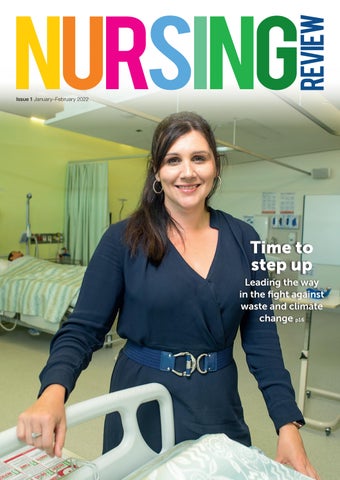
Issue 1 January–February 2022
Time to step up Leading the way in the fight against waste and climate change p16
For formula-fed infants For healthcare professional use only
S-26 Alula Gold Newborn
Providing nutritional support for key areas of paediatric development and function Growth and Development • • •
Contains a lower-protein quantity of 1.28g/100mL. Feeding infants a lower protein# formula during infancy may encourage appropriate weight gain, closer to breast-fed infants during early childhood development up to 6 years.1,2 Enriched with sn-2 palmitate. Sn-2 enriched infant formula is associated with increased bone mineral content. †3
• • •
Sn-2 palmitate enriched formula is associated with improved absorption of calcium and fat and may result in softer stools.3-7 Easy to digest whey dominant, whole (intact) protein.8,9 Whey:casein ratio 65:35
•
Contains Nucleotides and zinc. Naturally found in breast milk, they may help support immunity.10-15
•
The DHA content (min. 0.32%) of S-26 Alula Gold Newborn closely aligns with the average DHA content of mature breast milk* and expert recommendations.16-18
Digestion
Immunity
Brain Development
# Versus higher-protein formula
*Mean concentration 0.32%+/- 0.22%
† At 4 months of age
IMPORTANT STATEMENT: Breastfeeding is best for babies. It has benefits for the infant, such as reducing infection risk, and for the mother. It is important to have a healthy balanced diet in preparation for, and during breastfeeding. Infant formula is designed to replace breast milk when an infant is not breastfed. Breastfeeding can be negatively affected by introducing partial bottle-feeding, and reversing a decision not to breastfeed is difficult. Infant formula must be prepared and used as directed. Unnecessary or improper use of infant formula, such as not properly boiling water or sterilising feeding equipment, may make your baby ill. Social and financial implications, including preparation time and the cost of formula, should be considered when selecting a method of infant feeding. References 1. Koletzko, B., et al., 2009. AJCN, 89: 1836-1845. 2. Weber et al. 2014. Am. J. Clin. Nutr., 99: 1041-1051. 3. Béghin L et al.,2019, Clin. Nutr. Jun; 38(3):1023- 1030. 4. Kennedy et al. 1999. Am. J. Clin. Nutr., 70: 920-927. 5. Yao, M., et al., 2014. JPGN, 59: 440-448. 6. Bar-Yoseph et al. 2013. PLEFA, 89: 139-143. 7. Bronsky J, et al. J Pediatr Gastroenterol Nutr. 2019 May;68(5):742-760. 8. Lönnerdal, B. 2003. AJCN, 77:1537S-1543S. 9. Martin, C., et al., 2016, Nutrients, 8 (279), pp. 1-11. 10. Yu, V., 2002, J. Paediatr. Child Health: 38, pp. 543-549 11. Hess, J. & Greenberg, N., 2012,: Am. Soc.Par. Ent. Nutr., 27 (2), pp. 281-294 12. Singhal, A., et al., 2008. AJCN, 87: 1785-1792 13. Ackland, M. & Michalczyk, A., 2016, Archives of Biochemistry and Biophysics, 611, pp. 51-57 14. Aumeistere L.,et al., 2018, , Nutrients, 10 (1438), 1-9. 15. Carver, J., 1999, Acta Paediatr Suppl: 430, pp. 83-8.16. Brenna, J. T., et al. 2007. AJCN, 85: 1457-1464.17. Koletzko, B., et al 2008., J. Perinat. Med., 36, pp. 5-14. 18. European Food Safety Authority (EFSA), 2014, EFSA Journal, 12 (7): 3760, pp.1-106.
Or visit: www.alula.com.au
Phone: 1800 552 229 www.meandmychild.com.au
S-26 is a registered trade mark. Used Under licence. Distributed by Sanulac Nutritionals Australia Pty Ltd. Level 1, 42-44 Chandos Street, St Leonards, NSW 2065. AN-05377-03082021
contents
MANAGING EDITOR
news
Richard Garfield 02 9936 8628 richard.garfield@apned.com.au
2
‘Red tape’ stops nurse
3
Older nurses undervalued
4
Tackling stillbirth in Indigenous communities
5
Diet best way to fight ageing
6
Boomers driving change in aged care
NEWS EDITOR
Conor Burke 02 9936 8638 conor.burke@apned.com.au HEALTH EDITOR
Eleanor Campbell eleanor.campbell@news.com.au
02
06
industry and reform
8
A different epidemic Combatting violence in nursing
9
COVID burnout Nurses fed up and leaving
SALES MANAGER
Sarah Licence 02 9936 8710 sarah.licence@apned.com.au
10 Lessons learned
SUBSCRIPTION ENQUIRIES
How far should we go to care for older people?
Daniel Omelia 02 9936 8607 subs@apned.com.au
12 Alert, not alarmed Avoiding a 4th COVID wave
COVER
14 Safe hands
Aletha Ward Photo: Supplied
Anaphylaxis policy change PUBLISHED BY
10
14
APN Educational Media GPO Box 4245 Sydney NSW 2001 ABN 58 090 900 999 ISSN 1326-0472 PP100001944
Nurses can lead the climate change fight
specialty focus
18 More than band-aids School nurses in the pandemic
19 Visionary support Helping Tanzania’s midwives
PUBLISHER’S NOTE
© Copyright. No part of this publication can be used or reproduced in any format without express permission in writing from APN Educational Media. The mention of a product or service, person or company in this publication, does not indicate the publisher’s endorsement. The views expressed in this publication do not necessarily represent the opinion of the publisher, its agents, company officers or employees.
16 Stepping up
clinical practice
20 In harm’s way Finding inflicted injuries in children
18
20
22 Use it or lose it The muscle disease affecting 1 in 5
workforce
24 On the outside Rethinking nurse education
26 Laws of attraction Major workforce increases needed
technology
28 Try before you buy
26
28
Using VR to bridge service gap
nursingreview.com.au | 1
news
Locked out ‘Disgraceful’ reason nurse can’t get a job. By NCA NewsWire
A
n experienced nurse says she can’t get a job in Western Australia’s healthcare sector. The woman, Ebony, obtained her nursing degree in Australia and recently returned home after almost 14 years in the UK. She said it was “easy as pie” to get a job there, where she worked as an agency nurse in palliative care, intensive care and medical devices, but on returning to Australia, Ebony has been held up by red tape. Ebony had to reapply for her nursing registration after letting hers lapse last year, but the process with the federal Australian Health Practitioner Regulation Agency has taken two months. “I wasn’t anticipating it was going to take this long to get my nursing registration with AHPRA,” she told Perth radio 6PR. “Because I let mine lapse I had to fully apply for everything all over again.” Ebony said she and her husband, who have two children, were unemployed at the moment and “chewing through our money”. “The AHPRA is actually closed in Perth, due to Covid, which is a complete farce,” she said. “You’d be horrified to call them, the hours you spend on hold just to speak to somebody.
2 | nursingreview.com.au
“They’re not nurses who nurse anymore, they don’t see what’s happening on the front line. “Bureaucratic red tape is stopping people on the ground actually doing their job and the people who suffer are the patients and the public collectively, which is just completely disgraceful.” The WA government announced a $2m advertising blitz in this year’s state budget to recruit more health professionals to the state’s health system from here and overseas. WA opposition health spokeswoman Libby Mettam said Ebony was not the only worker being stifled by red tape in their bid to work in the state’s health system. “She is one of a number of cases who we have heard from who’ve been frustrated by not only the bureaucracy but the challenges in coming to work here in WA,” she told 6PR. “Many others as well have been frustrated, particularly by the government’s calls about a recruitment program on one hand but a system which doesn’t allow for health workers to simply get into this state in a Covid-safe manner to work in our health system. “You’d think given our health system is in such a dire state that moves would be made to ensure these health workers could get into our health system as soon as possible.”
“Bureaucratic red tape is stopping people on the ground actually doing their job and the people who suffer are the patients. An AHPRA spokeswoman said while its offices remained closed to the public due to the pandemic, its regulatory work continued and all practitioner applications were done online. “We are supporting practitioners to finalise their registration applications in a timely manner — the largest volume at present are applications from new graduates with the vast majority completed within two weeks,” they said. The registration process was not a “tick box exercise” and protecting the public by ensuring access to a safe, competent and qualified healthcare workforce was the priority. “We assess a number of documents to ensure only those health practitioners who are suitably trained and qualified can practise in Australia. This is a very important part of that public protection,” the spokeswoman said. “We continue to work with employers to understand critical programs and employment start dates so we can prioritise these applications.” ■
news
Undervalued, overworked Study reveals how older nurses are treated.
O
lder health workers in Australia are battling higher levels of fatigue and a lack of respect in the workplace, according to a new study.
Researchers from the University of South Australia spoke with 50 nurses and midwives aged between 47 and 74 about the unique challenges they faced at work. Age-related physical difficulties, discrimination and a lack of opportunities for promotion were the most frequent issues mentioned by participants. “The thing that the older nurses were really struggling with was more the fact that they had an ageing body,” said study lead, PhD candidate and registered nurse Julie Denton. “They became very tired and they also had to deal with the fact that people seemed to have a youth focus.” As the fastest growing group of healthcare workers in Australia, nearly half of nurses and midwives with an active registration are over the age of 45. While four million nurses globally are expected to retire by 2030, many will continue to work well into their late 60s and early 70s.
“There’s a lot of people that need to stay at work until they qualify for the age pension, and when you look now it’s 67, or by 2023, it’s going to be 66,” said Denton. “There are also people that do enjoy the work and they love the interaction.” For many of the participants, identifying as older came with a perception that they were “slow” or performed to a lower standard, said Denton. Several participants noted that, partly due to these stereotypes, they were not given equal opportunities for promotion or further education. In contrast, a small minority said that their knowledge was being utilised in the workplace and felt appreciated by colleagues and managers. “Allowing an older person as a wise worker to demonstrate, to teach, to mentor, to work alongside someone that’s not quite at that level would help the smooth running of healthcare,” Denton said.
Take a break on us Your organisation may be eligible for Australian Government-funded support to help alleviate the pressure of finding a temporary replacement when you or your colleagues go on leave. You will be given all the support needed to recruit, screen and place highly experienced health professionals that can hit the ground running from the moment they arrive.
For more information visit www.rurallap.com.au
nursingreview.com.au | 3
news
“The project will generate critical new knowledge to help prevent a significant number of Aboriginal stillbirths.
Holistic approach First ‘large-scale examination’ to tackle stillbirth in Aboriginal families. By Wade Zaglas
C
urtin university researchers will be carrying out a first-of-its-kind examination of stillbirths among Aboriginal families in a project supported by the federal government. Led by Associate Professor Carrington Shepherd from the Curtin medical school, the project will involve researchers and health professionals working in close partnership with Aboriginal elders, communities and local service providers. Professor Sandra Eades, Dean of Curtin Medical School and a member of the project team, said the research hopes to provide fresh insights into reducing the disproportionate number of Aboriginal stillbirths in the country. “Aboriginal and Torres Strait Islander women are two to three times more likely to experience the heartbreak of a stillbirth than non-Indigenous women in Australia,” Eades said. “By working with Aboriginal elders, communities and the relevant service providers, this research will undertake the first large-scale examination of stillbirths among Aboriginal families with the ultimate aim of helping to reduce these devastating outcomes.” Shepherd, who is also a member of the steering committee for the Stillbirth Centre for National Excellence (and has a specific interest in Indigenous health), said the project aimed to enhance our understanding of the risks of Aboriginal stillbirth and develop Aboriginal-specific intervention strategies to support stillbirth education and awareness.
4 | nursingreview.com.au
“The project will generate critical new knowledge to help prevent a significant number of Aboriginal stillbirths including culturally effective health promotion and education interventions,” he said. “While the work will primarily engage with, and focus on, communities on Noongar Boodja (south-west of Western Australia), the findings and outcomes have the potential to help Aboriginal families across Western Australia and nationally.” Other members of the research team include Professor Rhonda Marriott from the Ngangk Yira Research Centre at Murdoch University and Aunty Millie Penny as the lead Aboriginal elder. Researchers from Curtin University, the Telethon Kids Institute, the Centre of Research Excellence in Stillbirth at the Mater Research Institute, Still Aware and the Department of Health will also be in the team. Despite its importance, Shepherd told Nursing Review there has been little research to date on this topic. “Certainly there have been increasing efforts by the research, public policy and health service sectors to reduce stillbirth rates in Australia – and this recognises the profound burden of stillbirth and the tragedy of a stillbirth loss – but not much attention has been paid to addressing the distinctly higher stillbirth risk among Aboriginal and Torres Strait Islander peoples,” he said. “Our own research has highlighted that Aboriginal stillbirth rates have reduced to some degree in the last two or three decades in Western Australia, but they remain two-to-three times that of the non-Aboriginal population. “What is not known is the contribution of various risk factors to these disparities, and therefore which modifiable risk
factors to best target for the prevention of early life losses. We know that maternal characteristics, in particular, have been shown to elevate the risk of stillbirth and are generally more prevalent in Aboriginal populations – including smoking during pregnancy, obesity, diabetes, hypertension and teenage pregnancy. “Our data highlight, consistently, that around half of Aboriginal women report smoking during pregnancy – this proportion has started to drop but effective smoking cessation interventions targeted to Aboriginal women is an ongoing, urgent need.” The project leader added that socioeconomic disadvantage “has been shown to be associated with perinatal death and might also partly explain the persistent disparity in the rate of stillbirth between Aboriginal and non-Aboriginal populations”, but a range of other factors are also at play. Addressing these factors through education, more financial support and quality antenatal care is key. “Geographic remoteness is often discussed as a potential barrier to responsive and appropriate antenatal care services – and this has long been considered a critical issue in achieving equitable outcomes for Aboriginal women and their babies,” Shepherd added. “However, Aboriginal women are typically confronted with a number of barriers to quality antenatal care services which extend beyond the individual constraints of socioeconomic circumstances and location, to the cultural safety, security and competence of mainstream care providers and health practitioners. And this is a recognised critical issue that we need continued efforts to ensure that mainstream antenatal care providers have the capacity to respond to the needs of Aboriginal women. “Ultimately, we want to work sideby-side with our elder network and the community to develop a holistic understanding of the problem which can guide culturally safe and secure strategies for reducing stillbirth among Aboriginal populations.” ■
news
Food for thought Diet more powerful than drugs for anti-ageing.
A
nutritious diet could be more effective than drugs in preventing stroke, diabetes and heart disease, a new University of Sydney study has found. The research, published in Cell Metabolism, tested different combinations of three anti-ageing drugs with various mixtures of fats, protein and carbohydrates on young mice. It was discovered that the amount of protein in the diet, the ratio of fat and carbohydrates to protein, had significant impacts on key elements of metabolic physiology.
By comparison, the drugs had a much weaker effect. “The long and short of it was if you’re a mouse, you’re going to get a better bang for your buck in terms of improving your metabolic health and your ageing by manipulating your diet than you are by taking these three drugs,” said lead author Professor Stephen Simpson. Interestingly, the effects of the drugs on what the scientists considered to be the key measures of healthy ageing were not nearly as potent as they thought they might have been previously. Given that humans share the same nutrient signalling pathways as mice, Simpson said, people should focus on
incorporating a mix of nutrients in their diet to improve metabolic health. “Our diet is a complex mixture of many different micro and macronutrients and other constituents, which together influence our appetite systems and in turn, influence our metabolism,” he told Nursing Review. “This determines our health, our propensity to get various diseases, and how well and quickly we age.” According to Simpson, a person’s macronutrient needs shift as they reach into their 60s, 70s and 80s, to include a higher protein intake. “It’s very clear that as you go from your middle age to your early later years, in your 60s and then into your later years, 70s, 80s and beyond, the optimal macronutrient shifts,” said Simpson. “At any age, if you could track those nutritional optima, I think you would have a far greater impact on healthy ageing, especially of course when coupled with physical activity and healthy sleep,” he said. ■
Dementia Practice Health Check An online assessment tool helping residential aged care homes assess the dementia knowledge, skills and attitudes among staff. Dementia Practice Health Check: • Assists your organisation in meeting the Aged Care Quality Standards and consumer expectations. • Identifies knowledge gaps and prioritises areas for staff development. • Helps to demonstrate internal improvement and measure performance against other organisations. To find out more and complete your first free assessment visit: dementialearning.org.au/practice-health-check
nursingreview.com.au | 5
news
The charge to change Research suggests baby boomers will drive change in aged care. By Conor Burke
N
ew research suggests that the baby boomer generation will be a force for change in the way we care for older Aussies. The boomer generation, aged between 56 to 74, will want bang for their buck when it comes to aged care and want services to provide good food, travel and wellness support. The research, carried out by RSL LifeCare, took the temperature of 1,000 baby boomers across the country and found that this group will likely shun residential care, and attitudes towards aged care have changed for the worse due to the pandemic. “Our research shows when care is needed, more than three quarters (78 per cent) of baby boomers want to stay in their own homes with occasional nursing visits,” said RSL LifeCare chief executive Graham Millett. “Only three per cent want to enter communal aged care in its current format. This number has tripled in the last year. “COVID has likely further validated people’s attitudes towards aged care services. Today, almost a quarter of baby
6 | nursingreview.com.au
boomers feel more negatively towards residential aged care than they did before the pandemic hit, while 14 per cent feel more positive towards occasional home visits.” Unsurprisingly, most boomers want to stay at home if, and when, they need to access aged care. More than three quarters (78 per cent) want to live independently and only three per cent want to enter residential care in its current format. Living at home for longer is more of an option for boomers: as a society we are living longer, and are in better health, than ever before. Going by the survey, 91 per cent of older Aussies believe their overall wellbeing is good, very good or excellent, while 84 per cent rate their physical health on the same scale and 89 per cent believe they’re in good mental health. The research found that 63 per cent of baby boomers didn’t know how much aged care will cost them, but three in five expect to fund retirement from their super. The boomers are generally unsure of the aged care system, only 16 per cent of those surveyed believe that aged care is “very good or excellent”. The large majority of boomers (39 per cent) say that aged care is “less than satisfactory or poor”. The most important thing for the boomer generation in terms of aged care, is that they are “well fed, well supported,
“This is the generation that doesn’t want to age like their parents and grandparents. and well-travelled”, the survey found. Millett said that the findings give providers a good insight into ways they can meet the demands of future generations of aged care residents. “As more Australians begin their aged care journey through uptake of home care services, before transitioning to residential aged care, providers can work with clients to assist along that continuum of care,” he said. Boomers currently make up 25 per cent of the Australian population, while more than 3.8 million Aussies are aged over 65, a figure set to rise to 8.8 million by 2057, and it is increasingly apparent that future generations won’t settle for below par care. “Three quarters of baby boomers want to begin aged care services with occasional or full-time visits within their own home, compared to 4 per cent who would like communal residential aged care as their first step,” Millett said. “This is the generation that doesn’t want to age like their parents and grandparents. They want to balance lifestyle and socialising with personalised high-quality care, delivered on their terms.” ■
advertorial
Providing quality dementia care in the changing aged care sector By Dementia Australia
T
he past two years have seen an increasing focus put on the quality of care provided for people living with dementia in aged care and medical settings. Reform of Aged Care Standards, the recent Royal Commission into Aged Care Quality and Safety and other factors have brought focus to areas where sector transformation is needed. The organisations that are addressing gaps now, to better meet the needs of people living with dementia and their families, are reaping the benefits. Speaking to industry leaders we know that advantages can include improved staff morale, lower staff turnover, fewer complaints, increased consumer confidence and improved marketability. Most importantly, the people in their care are experiencing improved health outcomes, greater independence and a better quality of life. This is one of the reasons that the Royal Commission into Aged Care Quality called for dementia care to become a core part of the aged care industry, because when you cater for the needs of people with dementia, you cater for everyone. “Getting quality care right for people living with dementia will have a profound
and lasting impact for all – systemically, economically and as a human right. It is our responsibility as a society to provide appropriate care for those who are most vulnerable,” says Dementia Australia CEO Maree McCabe. The Royal Commission has brought focus to key themes for the aged care sector to better meet the needs of people living with dementia, their families and carers, including dementia support pathways. Along with specialist care services and dementia-friendly design, building workforce capacity was one of the major foci of the report’s findings. Another study, The National Institute of Labour Studies’ Aged Care Workforce, also found that Dementia education is considered the most needed training by both home care workforce and service providers. But delivering quality dementia care requires specialised skills and knowledge. If you work in the aged care space, the right education and support can help you quickly build your workforce capability and improve the physical environment for people living with dementia. With over 50% of aged care residents living with dementia, quality dementia care is the most practical, effective approach to raise standards across the organisation.
“Getting quality care right for people living with dementia will have a profound and lasting impact for all – systemically, economically and as a human right. Dementia Australia has been working with industry leaders and people living with dementia, their families and carers, as well as some important sector partners, to develop a series of educational resources to empower caregivers across the sector. Dementia Australia is a recognised leader in dementia education. The organisation’s Centre for Dementia Learning offers a comprehensive range of programs, from consultancy and environmental audits to virtual reality workshops and continued learning opportunities. Courses are offered both online and face to face, are costeffective and easy for staff to implement around work commitments. A quick and easy place to start is to request a 2022 Dementia Learning Guide and find out how Dementia Australia can help you achieve quality dementia care. Go to www.dementialearning.org.au ■ nursingreview.com.au | 7
industry & reform
“We have seen nearly a 30 per cent increase in reporting of incidents.
A different type of epidemic Inside Australia’s first dedicated unit to combat violence in nursing. By Eleanor Campbell
I
ncreased reports of violent assaults against nurses have shed light on a different type of epidemic facing the country’s front line workers. In NSW, Bureau of Crime statistics show assaults against healthcare staff have risen by 55 per cent since 2016. In Queensland, staff have reported a 50 per cent increase during the same period. Most recently, back-to-back reports of violent attacks against nurses have forced South Australian health authorities to hire 24/7 security, according to the ABC. Calls to address the scourge of workplace violence continues to gather momentum as reporting becomes more widespread. “You’d be hard-pressed to find someone across nursing who hasn’t in some way been exposed, whether it be that threatening behaviour or sexual connotation or inappropriateness, right up to the physical stuff,” says Lita Olsson, a registered nurse since 2004. “I don’t think that we’re even close to the actual volume that is actually reported.” Lita currently works as the clinical lead for the Queensland Occupational Violence Strategy Unit (QOVSU), a task force set up to tackle the complex issue of workplace violence in public hospitals. The unit was formed in 2016 after a major state review found that strategies to reduce violence against health workers
8 | nursingreview.com.au
were “unlikely to deliver sustainable outcomes”. As one of the first nurses assigned to the team, Lita drew upon her lived experience working in one of Queensland’s busiest emergency wards. “There wasn’t a day that went by where I didn’t hear of, experience or have that vicarious witnessing of an incident in the emergency department,” she told Nursing Review. “If I hadn’t had my own personal experiences, and they’ve varied from low level right up to some really significant incidents, I probably wouldn’t have gone down a path like this.” The QOVSU is currently the only dedicated unit in Australia dealing with occupational violence in health. The team, which has grown to eight, has helped to introduce standardised prevention training for staff and increased security in public hospitals. One of Lita’s initiatives, the rollout of incident response kits for workers, came from her experience of being unaware of how to assist a colleague after a violent incident. “You kind of hope that you do all that warm and fluffy stuff, but without any sort of clear process or tools to know that you’re actually doing it the right way, and that’s what led us to develop the kit.” As levels of reporting have changed, discussions about what constitutes workplace violence in health have also shifted within recent years. While there is no widely agreed-upon definition, state health authorities have refined their guidelines to include non-
physical acts, such as verbal abuse and sexual harassment. “Over the last couple of years, we have seen nearly a 30 per cent increase in reporting of incidents, and there’s a lot to do with that around changing the stigma as well,” Lita said. Education around violence prevention in public health has also begun to make strides. Research has shown that workplace education programs in hospitals teaching de-escalation strategies have helped to decrease recurring incidents. When Lita studied nursing at university during the early 2000s, there was very little training on occupational violence and prevention, she said. “I definitely think there is a gap in the undergraduate process, and I don’t just mean nursing either,” she said. “From a medical point of view, we talk so much about all of these medical conditions and comorbidities that can contribute to someone behaving in a way that’s aggressive. “But understanding the underlying conditions and what needs that individual person has and how we can meet those needs is really critical, and I think that that is a definite missing piece.” While it is difficult to tell whether occupational violence in Australia has grown more serious or is being reported more, advocates continue to ramp-up efforts to combat the issue. The QOVSU plans to embed covert security officers into the state’s public hospitals, as part of a new ambassador program. “We certainly don’t sit in an ivory tower and look on from afar: we are based in a health service, and we get out to all the health services,” she said. “It’s so critical for us to get out and meet the people on the ground, because I think it’s really ignorant to say, ‘Here’s a range of initiatives. Just implement them and you’ll be fine’. “It’s about staff feeling like it’s not okay, and that there is someone out there to help them, and I think that’s something that we will always have to continue to lobby for.” ■
industry & reform
“This was a career they thought they would be in for life.
Burnt out Healthcare workers less willing to work since COVID began. By Conor Burke
T
wo years into a global pandemic, and with catastrophic bushfires before that, nurses are at an emotional breaking point and less willing to work, according to researchers. Research from Edith Cowan University (ECU) has found that the healthcare workforce are less willing to work than before the pandemic. ECU researcher Associate Professor Erin Smith says that with concerns ranging from availability of personal protective equipment, family members’ worries, and risk of contracting the virus, healthcare staff are thinking twice about their profession. “As the pandemic continues, the risks of the ongoing physical, psychological and emotional toll on frontline workers and their families are of great concern,” she says. The study, which surveyed healthcare workers, was conducted during the first wave of COVID-19, but the issues remain, the researchers say. “Organisations may have improved their processes and procedures from what they were at the start of the pandemic, but we have to weigh this against factors such as fatigue and burnout,” Smith says. “During Australia’s first wave of community transmission, one third of participants reported at least one symptom of burnout (35 per cent), 30 per cent had
symptoms of depression and 16 per cent disclosed absenteeism.” Back in April 2020 Smith, a Professor of Disaster and Emergency Response, predicted that an uncontrollable pandemic may see healthcare workers simply walk off the job. At the time Smith said coming off the back of an unprecedented bushfire season, nurses were stretched to the limit. And in terms of PPE, Australia had used up a huge amount of our existing stockpile, particularly in terms of the face masks exacerbating the fear amongst staff – these predictions did come to bear. “We found that 42 per cent of our respondents were less willing to work and less willing to be doing those jobs that they were doing before the pandemic,” she told Nursing Review. She says the findings of her study were from early in the pandemic, and she predicts that after two years many doctors and nurses will be at breaking point. “You can only imagine with the ongoing onslaught that we’re now dealing with additional issues like burnout and moral distress and anxiety and PTSD. If anything, I think if we were to replicate that research right now, which is actually our plan, I think we would see those rates increase. “I’ve been speaking to colleagues and friends right across the healthcare workforce, particularly in New South Wales. These are lifelong career frontline workers here, 20, 30 years of experience. They’re expressing to me that they can’t keep going on, that many of them are actively looking for other jobs. Some of them have already
left the workforce and this was a career they thought they would be in for life.” Smith’s research found that three quarters of respondents said they had wrestled with their obligation to work and the risk of infecting themselves and their families. And while most healthcare workers said it was acceptable for them to face some level of risk of exposure to infectious diseases in their workplace, 35 per cent said they disagreed such a risk was acceptable. Adding to that fear and confusion is the effect that the last two years have had on a healthcare worker’s sense of self. “When healthcare workers compromise their core values, they can feel shame, guilt, and even isolation,” Smith says. “Unresolved moral distress can result in experiencing depression and other mental, emotional and spiritual health struggles. “The nursing profession, in particular, anticipates a high rate of post-pandemic staff exodus, largely due to accumulated and unresolved moral distress.” Going forward Smith says that authorities urgently need to address many of the fears that staff face, especially as we look to deal with COVID-19 in the community long-term. Providing safe accommodation away from the home for staff who may have been exposed is one idea, as is making sure there is access and timely access to the required PPE 24/7, she says. “We also certainly need to re-look at the way we are providing wellbeing support to people on the frontline,” she says. “We cannot keep expecting people, when they are mentally exhausted and potentially in crisis, to reach out for help. We need to be finding methods and systems that routinely reach in to people to identify those who are struggling.” And if we don’t address these issues soon, the great resignation may come to fruition. “We’re going to see a mass exodus of staff and I’ve seen various figures reported around the world, but some are suggesting up to 25 to 30 per cent of the frontline workforce will quit and never come back.” ■ nursingreview.com.au | 9
industry & reform
“It is possible to support ongoing social contact while preventing transmission of the virus.
Lessons learned
How far should we go to protect older people who need ongoing care? By Michael Fine
D
ecember in Australia is always a time of hope and enjoyment. While this year the celebrations were muted by the ongoing presence of the pandemic and the uncertainty it brings, there were at least a few signs of hope that better times are coming again. For those who work in, receive care or have family in aged care facilities, there was another good reason to celebrate. An important research report for Australian aged care was recently launched, online, in London. The report, with the catchy title Care home visitor policies: a rapid global scan of the latest strategies in countries with high vaccination rates, was written by 11 international authors and is published by the International Long-Term Care Policy Network, based at the famous London School of Economics (LSE). The lead listed author of the team is one of Australia’s best aged care researchers, Lee-Fay Low, Professor of Ageing and Health at the University of Sydney – one who certainly deserved a few days in the sunshine over the summer months.
10 | nursingreview.com.au
The report raises a vital question we should all consider carefully as we seek relief from the past year: how far should we go to protect older people who need ongoing care? The research, based on a detailed review of international policy and its outcomes, carefully examines a mountain of evidence on the impact of visitor policies in care homes over the first two years of the pandemic. It also provides detailed case studies of policy developments in six countries: Australia, Canada, Iceland, Israel, Norway and The Netherlands. Like Australia at the end of 2021, each of these countries currently has a high vaccination rate. But this was not possible anywhere in the world before the development and distribution of the new vaccines, which only commenced earlier this year. In each country the approach developed and changed over a period in which the mortality from the pandemic was particularly high in residential care settings. During the first and second waves of the pandemic in particular, drastic yet often ineffective measures were implemented by care home managers who were frequently left to their own resources by governments. There was much to learn from the international experience. It is clear that many mistakes were made along the way, not just in Australia. Our politicians like to tell us that they have followed the scientific advice throughout the pandemic, rather than playing politics. But the science was uncertain in the early months of 2020, and advice has changed considerably over the past two years. The painful, lonely, premature deaths of so many residents of residential aged
care facilities, worldwide, remains etched in our memories – as the ongoing public enquiry into the deaths at St Basil’s homes in Melbourne over the past fortnight have again reminded us. Almost as tragic has been the desperate loneliness and lack of contact inflicted by policies that denied residents any personal contact with family members or loved ones for many months. A few of the key recommendations from the study demonstrate how it is possible to both support ongoing social contact while preventing transmission of the virus. On the issue of resident’s rights, for example, the report recommends: •T he rights of care home residents to receive visitors and participate in community-based activities should be recognised and upheld. They should be no more restricted than communitydwelling people in the same jurisdiction. •T he views of residents or their proxy decision-makers should be considered when determining individual care home visitor policies. Importantly, the researchers emphasise the duty of public authorities to enforce these rights. “Agencies that accredit or monitor the standards of care in homes” the authors emphasise, “should investigate and report on whether the rights of residents to receive visitors are met”. In another recommendation that speaks to the policies needed in Australia in the coming months, the evidence compels the authors to point out that pre-designated family carers who have a history of routinely providing physical or emotional support to the residents should be permitted to continue visiting, even if casual social visitors are not allowed. The pharmaceutical development of vaccines in less than 12 months has been hailed as a modern medical miracle. The policies and advice intended to prevent transmission of the Covid virus have also evolved and developed, informed by high quality international evidence. ■ Michael Fine is honorary professor in the School of Social Sciences at Macquarie University.
Dedicated to QSuper members and their future
QSuper will continue as part of Australian Retirement Trust Issued by QSuper Board (ABN 32 125 059 006) as trustee for QSuper (ABN 60 905 115 063). Consider the relevant product disclosure statement (PDS) and target market determination (TMD), available at qsuper.qld.gov.au, before deciding whether any product is right for you. The merger of QSuper and Sunsuper to create Australian Retirement Trust is scheduled to be completed on 28 February 2022, subject nursingreview.com.au | 11 to outstanding conditions and approvals. Australian Retirement Trust PDSs (which will set out eligibility criteria) and TMDs are expected to be available from completion at australianretirementtrust.com.au.
industry & reform
Alert, not alarmed
How Australia can avoid a fourth COVID-19 wave. Adrian Esterman interviewed by Eleanor Campbell
A
s several countries in Europe and Africa battle a fourth wave of COVID-19, concerns as to whether Australia will follow have emerged. Top epidemiologist Professor Adrian Esterman said he is optimistic about the future but affirms that vaccines alone won’t be enough to fight off COVID-19.
12 | nursingreview.com.au
“We are going to see, or are already starting to see, an epidemic of the unvaccinated,” he said. Esterman, who is a professor at the University of South Australia, said people who have compromised immune systems or are older are at the highest risk. “Certainly everyone over 60 should be getting a booster shot as quickly as possible,” he said. Esterman joined Nursing Review to chat about the likelihood of a fourth wave, the Omicron strain and how we can best protect ourselves.
NR: What’s the likelihood of Australia seeing a fourth wave in the next year or so? AE: I think it’s less likely than what we’re seeing in Europe, mainly because Europe has roughly the same vaccination levels as in Australia, depending on the country, but they removed all restrictions.
Unfortunately, it’s now out of hand. What it shows us is that vaccination alone isn’t sufficient. Many of the European countries are now having to reintroduce lockdowns and other restrictive measures to try and curb the current outbreak. In Australia, we’ve been much more sensible, but we haven’t had freedom day. We’ve opened up very carefully. Importantly, hospitalizations are staying stable as well. I’m a bit more optimistic about Australia’s chance compared to Europe, with the one proviso, and that is any nasty new variants that come along.
You’ve said that vaccination isn’t enough to move forward safely. What do you think are the most important elements that we really need to keep in mind? One of the big problems is it’s all very well having high vaccination
industry & reform
levels, but that’s adults, and we’ve got all the young children who haven’t been vaccinated. Now, that’s not a worry for the kids themselves because they rarely get sick from COVID-19, but they can still transmit the virus. They can pass it on to the unvaccinated adults and their parents and grandparents. We’ve now got quite a large number of elderly people who’ve only had their two doses and cannot get their booster shot yet, and people with compromised immune systems. All those people are at great risk until they can get their booster.
Tell us about booster shots – how do they work, and are they just as effective as the vaccine? The first thing is that there’s a bit of controversy over whether they’re going to call it a booster shot or a third dose as part of a regular vaccination. What we are finding is that two doses is not sufficient. It basically wanes over four to five months, especially in the elderly and people with compromised immune systems. At the end of about five months, elderly people tend to have very little protection against infection and that’s why they need the third dose. There are many countries now where it’s mandatory basically to have your third dose, otherwise you are not considered fully vaccinated. I think that will eventually happen in Australia. I think we will have all adults getting a booster shot, certainly everyone over 60 should get a booster shot as quickly as possible.
How do home testing kits work and how effective are they in detecting COVID? They detect proteins on the surface of the virus. PCR tests work by locating some genetic material from the virus and then amplifying it many times until it’s big enough that they can detect it. But because there’s no amplification involved in the rapid antigen tests, they only work when you have a very heavy viral load. Because of that, they’re not as sensitive as PCR tests. In other words, if you are infected, they can often give you a false negative result because your viral load isn’t high enough for it to detect it.
The sensitivity isn’t that bad, it’s probably about 80 per cent. If you do more than one test, suppose you took one for two days in a row, then the sensitivity gets to almost PCR level. They are incredibly useful. For example, if you are invited to a family gathering and you are want to make sure that you are totally safe and you want to protect, then it might be worthwhile doing a home-based rapid antigen test just to make double sure that everyone’s safe.
What are some other things people can do to make sure they get a more accurate result when they are taking these at-home tests? It’s known that if the rapid antigen test is supervised by a health professional, you actually get more accurate results. Therefore, it’s important if you are using a home-based kit that you read the instructions incredibly carefully and follow them to the letter, otherwise you can get false results. These rapid antigen tests have been available for quite some time, but only under the supervision of a health professional. The reluctance of the TGA to approve them was purely in the sense that they wanted to make sure that if they were used at home, people would understand what to do, for example, if they had a positive result. They were waiting for all the manufacturers to give their instructions to customers.
There are calls to once again stop mask wearing inside places like shopping centres and restaurants. From a scientific standpoint do you think this is wise? No, not at all. The reason Australia’s done so well so far compared to Europe is because we’ve maintained these public health measures. The last thing we want to do is to remove them, especially things like mask wearing inside supermarkets. I mean, how difficult is it? It’s not a major imposition. I just think it’s crazy to try and remove those sorts of simple public health measures.
What are the key precautions we need to take now to keep safe? The majority of infections, certainly from the Delta variant are caused by aerosol transmission, therefore I think the really important things are mask wearing
“We need to be concerned but not alarmed. We just have to be a bit more careful than usual.
anywhere you could be exposed or you could expose others. Perhaps not in family gatherings, but certainly in places where you’re meeting strangers, I’d be wearing a mask. Hygiene is still also important. For businesses, making sure that you have a sufficient turnover of air in your business is incredibly important. Every business should have the air refreshed at least every six hours. For individuals, hand washing. Social distancing is still important, especially in places like lifts. The good news is if you’re fully vaccinated and do get infected, the chances are you won’t get very ill. It’s the usual thing: we need to be concerned but not alarmed. We just have to be a bit more careful than usual. We are going to see, or are already starting to see, it’s an epidemic of the unvaccinated. If you look at all the people in hospital in New South Wales or Victoria, the vast majority are unvaccinated. For those people who are unvaccinated, yes, it is a major issue. For those of us who are fully vaccinated, yeah, we can still get infected. Yes, if we are very unlucky or have underlying health conditions, we’ll go into hospital. But since the majority of the adult population are fully vaccinated, I would suggest that there’s less concern for them, or for us, because I’m fully vaccinated. Yes, we have to be concerned, and yes, we have to carefully monitor the situation. But unlike some countries, like the USA, governments by and large listen to the health authorities. They’ve done extremely well so far, apart from our very slow vaccine rollout. Australia is one of the safest countries in the world at the moment, and I think if they keep doing the same thing, we’ll continue to be safer than most other countries in the world. There are still lots of nurses who have refused to be vaccinated, which just amazes me, so, a message to nurses – vaccines are safe. That’s the best thing I can say. ■ nursingreview.com.au | 13
industry & reform
In safe hands Major policy change for anaphylaxis care. By Eleanor Campbell
H
ospital patients with anaphylaxis will have direct access to their adrenaline injector as part of Australia’s first clinical care standard for the condition. The Australian Commission on Safety and Quality on Healthcare (ACSQH) released the new guidelines which emphasise early treatment and continuity of care. ACSQHC clinical lead, Associate Professor Amanda Walker, said that the key takeaway for nurses was to “spot early and act promptly”. “We know that from a study of eight Australian hospital emergency departments that one quarter of patients with reactions that were consistent with anaphylaxis were not given adrenaline,” Walker told Nursing Review. “Sometimes in hospital or in emergency people may hesitate and give antihistamine or corticosteroids. “The first important message of the clinical care standard is if you’re thinking anaphylaxis, give intramuscular adrenaline as the first line of treatment.” An estimated 1 in 5 Australians currently live with allergies, and up to 20 people die each year from anaphylaxis. In the five years to 2019-20, the number of people admitted to emergency with an anaphylactic reaction rose by 51 per cent. Allowing patients to hold onto their own injectors while in hospital will help to avoid potentially fatal delays, said Walker.
14 | nursingreview.com.au
“Traditionally we ask patients’ family members to take all their meds home, or we lock them in the bedside drawer. “Because it is such a time sensitive, critical issue, and anaphylaxis is such a scary life-threatening experience, we’re making sure that it’s safe for patients to manage it themselves.” Victoria introduced a similar policy in 2019 after a 13-year-old boy died in hospital after an anaphylactic episode. In NSW, the Chief Nursing Officer has endorsed the change which is set to be rolled out with the standard across the country. Nurses who may be hesitant to allow people to take hold of their own treatment should remember that the benefits dramatically outweigh the risks, Walker said. “I think for people who are used to having control of medications, it’s hard to feel that there’s something out there that’s outside your control,” said Walker. “We’re often nervous about adrenaline because it’s most often used in intensive care and the operating theatre when people are critically unwell or when they’ve had a cardiac arrest. “But intramuscular adrenaline in a person with anaphylaxis is life-saving and the risks of overcalling it are minimal.” In partnership with peak health bodies, the National Allergy Strategy has also launched new guidelines for childcare centres that target staff education and increased incident reporting. While it has not been recommended for children, allowing patients and carers to carry their own adrenaline supply will
“Intramuscular adrenaline in a person with anaphylaxis is life-saving and the risks of overcalling it are minimal. help to offer a “safety net” for people, said Walker.
NATIONALLY CONSISTENT SAFETY PLANS Another significant change recommends that patients suffering from anaphylaxis be discharged with an action plan tailored to their needs. Developed by the Australasian Society of Clinical Immunology and Allergy, the ASCIA plans are designed to assist health professionals to help their patients better manage their allergies. Walker said that raising awareness around the plans will also help nurses in different departments and health settings identify ways to support a patient with anaphylaxis. “It is more targeted in the emergency department because they’re so focused on assessment and discharge and making sure people are safe to go home,” she said. “We want to make sure that whether you’re in a small multipurpose service in regional or remote New South Wales, or you’re in one of the big hospitals in the city, that people get the same standard of care.” ■
industry & reform
SubScribe for leSS than $2 a week
The laTesT news and resources for healThcare professionals
• Analysis of the major issues facing the health sector today
Nursing Review is essential reading for anyone involved in the healthcare sector in Australia. It provides unrivalled coverage of specialist topics from features and opinion pieces, to international news and profiles.
• Can be used as a professional development resource
At Nursing Review we pride ourselves on being at the forefront of the ever changing healthcare sector. We provide an independent source of news, and cover the issues relevant to nurses and the sector giving an informative, practical and insightful view into day to day life in hospitals and in surgery.
• 6 issues per year • Interviews and opinion pieces from professionals in the industry • Written by an independent voice • Tax deductible
Please call 02 9936 8666 to find out more. nursingreview.com.au | 15
industry & reform Dr Aletha Ward. Photo: supplied
Early warning How nurses can lead the way in fighting the climate crisis. Aletha Ward interviewed by Eleanor Campbell
I
f the Australian healthcare sector was a country, it would be the fifth-largest carbon emitter on the entire planet. Experts say that nurses, making up the largest group of healthcare workers, can use their trusted voice in the community to help combat the climate crisis. Dr Aletha Ward is a registered nurse and lecturer at the University of Southern Queensland, and is currently investigating the role of nurses in fighting for environmental sustainability. “It’s now more than ever that we are being impacted on as a profession and we need to stand up and take some accountability and provide some leadership,” she said. Ward joined Nursing Review to discuss the pivotal role of nurses in instigating systemic environmental changes inside parliament, on the ward and in their own homes.
NR: How much of an impact does healthcare have on our climate? AW: We actually emit about 7 per cent of overall emissions as a healthcare sector in 16 | nursingreview.com.au
Australia, and it’s a similar figure globally. In fact, globally, if the healthcare sector was a country, it would be the fifth-largest emitting country in the world. There’s a bit of a paradox there that we care for the most vulnerable people in climate change, yet we’re one of the largest emitters. In our profession, which cares for people and prevents harm, are we really preventing harm working in an industry that is one of the largest emitters? We often think about climate change as something that’s going to occur in the future. That’s just not the case. It’s already occurring. We’re seeing changing disease patterns. We’re seeing changes to communicable diseases and things like mosquito-borne diseases. We’re already seeing rising sea waters. We’re seeing some food insecurity from things like droughts and obviously high temperatures. We’re seeing, particularly in Australia, a lot of bush fires, which obviously has those respiratory effects, but also impacts on our mental health. Heat is impacting on our health and wellbeing, particularly of our most vulnerable – the elderly and young people. It’s going to be impacting and is already impacting on things like activity levels because I don’t know about you, but I don’t want to go outside for a run when it’s so hot.
This is our starting point right now, and we’ve got a long way to go in regards to our targets. COP26 discussed our targets both in 2030 and 2050, and we’re not on track to limit global warming. We’re in the firing line as nurses in the healthcare profession. Patients and additionally COVID has created a waste crisis, which is impacting this. It’s now more than ever that we are being impacted on as a profession, so we need to stand up and actually take some accountability and provide leadership both within the healthcare industry, but also in a wider political landscape. We’re a very trusted profession. We make up the largest profession in the healthcare workforce: about 65 per cent. And we’re in positions of leadership, so we’re really well positioned to start providing leadership and cutting emissions within our healthcare sector. We do have the support of bodies like the International Council of Nurses and the Australian College of Nursing. ICN first started making climate statements in 1999. So this is a dialogue nurses started many years ago, but it’s now more than ever that we need to step up and take that leadership position.
How much awareness of this issue do you think there is within the nursing community? We’re doing some research at the moment and one thing that came up from that is not all nurses think the same, not all nurses understand the impact of climate change on our patients and they don’t all understand what powerful emitters we are within the healthcare system. In our research we’re looking at the role of things like education to inform nurses about what is occurring and what can actually be done within their nursing role. We know that embedding climate health and emissions reduction in both undergrad and post-grad courses would go a long way to educating our profession. Obviously there’s waste management, which is a large part of emissions reduction. I know when I went through university many years ago we never had a session on waste management or how to recycle clinical components in my undergraduate degree. We are at the bedside and at the forefront of patient care, so we need to be educated, for example, to only open what we’re going to use, how to recycle and how to identify areas of waste. So there’s
industry & reform
a lot of different opportunities to educate nurses on how they can act, and how we can advocate and even activate in regards to our leadership, in regards to policy. It’s my belief, and certainly the research is supporting this, that we’ve not reached our full capacity to address the health impacts of climate change, and that’s due to our lack of knowledge and training. But we’re starting to become more active in this space and it is absolutely necessary.
In terms of hospital culture and attitudes to things like recycling, how do you see that playing out on the wards or in the clinics? We do waste management fairly effectively, traditionally, and I think it’s driven by the fiscal benefits. Hospital administrators, for example, know that there’s significant economic benefits if we can reduce use and reduce waste. We are seeing, however, with COVID now we’ve got all the PPE, we’ve got all of the syringes and things like that. So we’ve got a huge waste problem at the moment. I think it’s both within the hospital sector, but also outside of that, even in our primary care settings that we can go a bit further in regards to our waste reduction and recycling efforts.
What are some strategies that a bedside nurse could implement on their daily shift to better reduce waste and improve the situation? It’s about only opening what we’re going to use at the bedside, and identifying how we can dispose of that both in a safe manner but also in a way that can be recycled. We’re not just bedside nurses. Many nurses assume managerial and leadership positions and education roles, and we often sit on things like administrative policy committees within our hospital and healthcare sectors. So we can agitate and activate and advocate to implement policies within the healthcare organisation that invest in renewable energy, recycling and key infrastructure changes to reduce emissions. Even something like food waste, believe it or not, is adding to our emissions within the hospital and healthcare sector. There’s many opportunities in those managerial roles to actually start having those conversations in our larger healthcare organisations. This is beyond just being a good corporate citizen for a healthcare organisation. This is coming back to that paradox that we’re actually one of the largest industry emitters in the
world, and what are we going to do? How are we going to take responsibility for that?
On policy level, what sort of changes do you think we need to see to push this potential forward? I think that comes from a few different ways. There’s many challenges and opportunities there. I think it starts with good nurse-led research in the academic space so that we can say as a profession, ‘We have researched this and this is what works for our profession and this is how we can actually step up and take some of that leadership.’ We need some really strong leadership from our government to set the targets, and unless we have some actions behind it and funding to carry out those actions, we really struggle. This can also be infrastructure changes within our healthcare sector as well. The researchers are talking about leapfrogging nurses into powerful management positions so that we can take our very large workforce on that journey with us to shift some of those policy changes. In healthcare we straddle that federal government and state government sphere, and we need some very strong leadership at both of those levels to determine what it is that we want to achieve as a healthcare sector. If we’re sitting at 7 per cent emissions at the moment, do we want to take that down to 5 per cent, for example, and have some really tangible goals and then some tangible strategies and funding behind it for that to occur? This includes investing in our future, in our infrastructure. So how can we make, for example, our healthcare organisations run on renewables, have some really sturdy waste management practises in there, which are based on recycling. And even encouraging manufacturers of our single use products to start using some more recycled materials for those purposes.
In doing your research have you seen much progress, or are things moving slowly? I think things are moving too slowly. Outside of the nursing profession we’re not on track to reduce our emissions in the way that we need to limit global warming. It’s been interesting to have a look at the research 10, 15 years ago, which was very much about waste management and waste reduction. It was very much driven from the economic benefits of doing that.
“We’re really well positioned to start providing leadership and cutting emissions. Now I’m seeing the narrative shift and change more towards, ‘Okay, we need to take some leadership here.’ This is about more than just waste management. Obviously with the pandemic, that’s very much an issue still, but this is about us leading policy conversations. I think that’s starting to occur, but as a profession and as a very powerful profession within the healthcare industry, it is now time to be stepping up and taking some of that leadership role. It’s also about being an example to our patients, our community and our peers in how to reduce emissions. I think this is about more than just what we do within our jobs and our healthcare sector. This is what we do in our homes, and this is what we do in our community organisations. We’re seen as a very trusted profession broadly in our community. We need to lead the way and set an example in this conversation around how are we going to reduce emissions, both within Australia and globally.
Nurses have been under such enormous pressure, particularly over the past two years. How can we motivate them to join this cause? That’s the difficulty at the moment. Our nursing profession is under the most amount of pressure it’s really ever been under, and it’s difficult. We get into that survival mindset and I very much understand that. But we’re already starting to see the impact of climate on our patients. We’re getting more and more patients through the door who are impacted by things like bush fires, floods, food insecurity and heat stroke. So in a way, we’ll actually be reducing our patient loads when we can provide some leadership in this area, but it is difficult. It’s a constant juggle of that clinical space and providing the best patient care under very, very trying circumstances while trying to look forward to the future. I guess my key message is it’s not just about the future. I mean, obviously this will escalate and we’ll see more of a health impact on our key community, but it’s already occurring. ■ nursingreview.com.au | 17
specialty focus
“COVID’s really shone that spotlight onto school nurses, and who we are and the role we play.
More than just band-aids The important role of school nurses during COVID-19. By Eleanor Campbell
B
efore it had hit nine o’clock on a Monday morning, school nurse Lisa Chalmers had already been greeted with a raft of changes made to COVID-19 protocols and a student returning home from South Africa. “That involves then working through the timeline of that arrival, speaking to the dad, and ascertaining what our plans were, and speaking to New South Wales health of course,” said Lisa, who manages the health clinic at Barker College in Sydney’s north. “I also had a new Year 7 diabetic who spent last week at Royal North Shore Hospital returning this morning, so I had a parent meeting to work through his plan for this week.” This has been the daily life of a school nurse for the past two years, and it’s more than just ice packs and monitoring sickbay. “It’s been crazy, actually,” says Lisa. “My job was very busy anyway, and I think COVID has just layered on top of that a whole new level of responsibility and a role to play.” Since the beginning of the pandemic, school nurses have had to juggle their dayto-day duties with contact tracing, tracking quarantines, administering virus tests and overseeing vaccinations. They must also interpret the tsunami of changing health protocols for the school community.
18 | nursingreview.com.au
When the virus first hit, Lisa and Barker’s five other nurses were tasked with overseeing infection control for the over 2,000 young people who stepped through the school gates each morning. “I’ve never worked so hard,” she says. “There were months there in 2020 where we were standing out at seven o’clock in the morning with thermometers doing temp testing on the students when they came to school. Since the return from remote learning, schools have made up the bulk of COVID-19 clusters in Australia. While Lisa’s school has yet to report an infection, the threat of an outbreak is always looming. “I come to work every week and think, is this going to be the week?” she says. “But I think we are lucky, and I put that down to our community. We’ve got an incredible director of communications and we’ve got an amazing COVID safety team. “We’re a well-resourced school, and not all schools have that available.” According to a survey by The Sunday Age, 83 per cent of parents support having their younger children vaccinated once it’s made available. Nonetheless, dealing with vaccine hesitancy and misinformation has long been part of a school nurse’s resume, says Lisa. “I really believe that the best way to address those people is to try to get beside them and understand where they’re coming from,” she said.
“We do not want to alienate them and it’s important that they have all of the information.” Even before COVID-19, the duties of a school nurse reached far beyond handing out band aids and fixing playground injuries. School nurses respond to medical emergencies, oversee immunisations, and help students to manage their chronic conditions such as diabetes, seizures and allergies. They also assist students to manage their mental health and wellbeing and provide vital health education to the wider community. Lisa, who started her career as a paediatric nurse, says that the pandemic has reaffirmed a great sense of pride in her work. “It’s funny, you can sit down at a dinner party sometimes and people say, ‘You’re a school nurse?’ And there’ll be some joke about a band-aid or panadol or something,” she says. “I think it’s actually one of the best jobs in the world. You wake up in the morning and you think, what’s going to happen today?” Across the country, nurses are reportedly leaving in droves due to severe burnout and exhaustion after two years of fighting the virus. A national survey conducted by Monash University found that 30 per cent of nurses were currently considering leaving the profession. Lisa says that her school has been inundated with job applications from nurses hoping to exit the hospital system. “I think people are thinking, what else can I do in nursing that doesn’t have the demands of working in a hospital, and shift work and intensive care and all of the things that have been in the COVID experience,” she said. “It’s really interesting because it is one of those hidden professions. “I think COVID’s really shone that spotlight onto school nurses, and who we are and the role we play, and how important it actually is to have a school nurse in schools.” ■
specialty focus
“You want to empower them to be part of their solutions because their problems are so unique.
Visionary support Life as midwife in Tanzania. By Eleanor Campbell
W
hen clinical midwife Jan Becker first stepped into a busy delivery ward in sub-Saharan Africa eight years ago, it was both beautiful and horrifying. Every woman who gave birth was in the same room, on a sponge rubber bed, with no hand towels, soap, running water or electricity. “The smell is overpowering because you’ve got blood, faeces, liquor, drains and whatever else is coming through the windows,” Jan told Nursing Review. “There are no sanitary pads, so you’ve only got cotton wool, the bins are in the room, there’s no fans or air conditioner, so we just manage the best that we can.” Up to 30,000 babies are delivered annually in Amana Hospital, a small birthing clinic in Dar Es Salaam where Jan and her daughter Chase now visit each year. With some of the highest fertility rates in the world, around 44 per cent of newborn deaths in Tanzania occur on the first day. A lack of newborn training, shortages in midwives, and the prevalence of malaria, anaemia and malnutrition, all drive the country’s high infant mortality rate. “I remember saying to Chase at the end of the first week, that we will either never come back here again, or while God is my witness, we can’t stop coming back,” says Jan.
“But I’ve never been a quitter.” After witnessing six newborn deaths inside the clinic in one day, Jan and Chase decided to develop a training program to help local midwives learn infant resuscitation skills. It was then that Jan co-founded Midwife Vision, a global charity that supplies midwifery wards in sub-Saharan Africa with emergency drugs, training and critical equipment. Operating out of a small house in Tanzania, the non-profit has established a local training clinic that delivers programs aimed at empowering midwives and mothers in the community. “We’ve seen a huge difference in the care of the women and the inspiration of the staff,” says Jan. “It’s not just about the teaching, it’s about the midwives feeling proud and empowered. “Everybody wants to feel like they’re needed and making a difference, and that they’re not invisible and that the world sees them.” One of the most successful programs delivered by Midwife Vision, called SHINE, focuses on teaching midwives prevention strategies to avoid mortality in mothers. Currently, maternal deaths represent 18 per cent of deaths among all women aged between 15 and 49 in Tanzania. Unable to leave her home in Queensland due to COVID-19, Jan says that the Midwife Vision training program has been embraced by the local midwives and volunteers.
In a letter, the Ministry of Health in Tanzania informed her that the Amana Regional Hospital Training Clinic had seen the highest reduction in maternal death out of any hospital or clinic in the country. “The local midwives and local champions have taken up the mantle and just owned it,” she says. “I’m so proud because you want to empower them to be part of their solutions because their problems are so unique.” On top of the difficult working conditions, many midwives in Tanzania are often met with negative attitudes by their peers. A past survey of Tanzanian midwives found that they felt like they struggled to gain respect from others and were perceived as being of lower social status. Having come from a country where midwifery is highly respected, Jan embedded a final touch to the training program, which asks each midwife to read a pledge aloud to reaffirm their significance and value to their community. “They sign it and they stick it to the wall of the training clinic, and the pledge basically says that they will be kind and professional to both themselves, their colleagues and their patients. “And in that, I think they feel like it’s okay to feel proud to do a good job.” Reflecting on her experiences in Tanzania, Jan says she has seen many beautiful things over the years, the most striking being the camaraderie felt among the women. “I see mothers feeding other mothers because they’re so tired and so exhausted, sitting on the floor,” she says. “Every morning we would do a bath demonstration, and all the mothers would come down to this great, big, huge nursery to talk and share. “It makes me cry thinking about it, I don’t see that in Australia. We get women in their single rooms and they don’t get a chance to be part of a sisterhood.” ■ nursingreview.com.au | 19
clinical practice
In harm’s way Case studies of abdominal injuries related to intentional inflicted injuries in children. By Tona Gillen
T
he medical literature has detailed child abuse for over a century, from child slavery to battered children and shaken babies. Since the 1970s evidence of specific inflicted injuries has been documented by radiologists such as John Caffey and pediatricians such as Henry Kempe in addition to multidisciplinary health care professionals. Their evidence has increased our understanding of the injuries sustained when babies are shaken, and they suffer abusive head trauma (AHT). More than a decade ago Mary Clyde Pierce and her team introduced the TEN-4 bruising rule which has proved valuable in the identification of potential child abuse. Bruising in the body regions of the torso, ears and the neck in children less than four years may require further evaluation for child abuse. Inflicted injuries are not commonly associated with abdominal injuries. They are a rare occurrence that can have devastating results. Abdominal injury should be considered with any child being assessed for non-accidental injury. This article presents two children who sustained fatal abdominal injuries following blunt abdominal trauma.
CASE NO 1 – “JACK’S” CASE* Jack is a two-year-old male, who presented to the ED with an out of hospital cardiac arrest, he had no medical history and an unknown immunisation history. 20 | nursingreview.com.au
His parents phoned the Queensland Ambulance Service (QAS) when they found Jack unresponsive, not breathing and with no pulse. His parent commenced cardiopulmonary resuscitation. It was estimated to be 30 minutes before the paramedics arrived. The QAS documented that Jack was apnoeic, asystolic, cool and mottled, with an unrecordable BP. They immediately took over CPR and administered two doses of adrenaline plus a crystalloid bolus. He was intubated and ventilated and Jack was noted to have no gag reflex on intubation. They achieved return of spontaneous circulation (ROSC) after 20 mins with a weak central pulse, initially recorded as 44 beats per minute (bpm) which increased to 110 bpm. The patient then developed a sinus tachycardia. His GCS was 3 and his pupils were fixed and dilated. The primary assessment and resuscitation took place immediately upon Jack’s arrival in ED. A rapid airway assessment revealed the endotracheal tube was in the correct position in the trachea and capnography was attached. The ETCO2 was recorded as 25mmHg, significantly lower than the normal range of 35-45mmHg. This acidosis was deemed to be indicative of his hypovolaemia and reflective of his poor perfusion. His ventilator respiratory rate was increased to 28bpm. Pulse oximetry was attached. A chest x-ray was ordered. Analgesia, sedation and paralysis infusions were prepared and commenced; his GCS remained 3/15. Two 20-gauge intravenous cannulas were placed, and this enabled the administration of a warmed normal saline fluid bolus followed by an adrenaline infusion as well as sodium bicarbonate,
cefotaxime, metronidazole and hypertonic saline infusion. Bloods were taken for venous blood gas including lactate, a full blood count, electrolyte and liver function tests, lipase, coagulation profile and a group and hold. Jack remained extremely hypotensive (47/29mmHg) and tachycardiac (156bpm) with a sluggish central capillary refill of approximately 4-5 seconds. Jack was critically unwell with circulatory failure. In a heated resuscitation room, Jack was exposed when log rolled for inspection and examination of his posterior surfaces. He remained mottled both centrally and peripherally, with a core temperature of 32.6C. He had extensive wounds to the back of both legs and on his buttocks. The wounds did not appear acute in nature, some were a brown-green colour, soiled with faeces and urine. They extended from his sacral area down the medial aspect of both his thighs and calves. There was redness and cellulitis of the surrounding skin consistent with infection. He was wrapped again in warm blankets. A gastric tube was inserted to deflate his stomach, and a large amount of blood-stained fluid was aspirated from Jack’s moderately distended abdomen. A urine catheter was inserted, and the accurate volume of output used as a guide to his ongoing fluid resuscitation requirements. Jack’s chest x-ray revealed evidence of free peritoneal gas in keeping with hollow organ perforation. Diffuse interstitial and air-space oedema were present. Jack had a positive FAST scan performed in the resuscitation bay, with free fluid noted in the abdomen. He was then transferred to medical imaging for a CT of his head, neck, chest, abdomen and pelvis with contrast. This showed free gas and fluid in the abdomen, consistent with perforated hollow viscus. The spleen and pancreas were intact. He was too unstable for definite surgery and an abdominal drain was inserted as a temporary measure to aid resuscitation. He had a scalp bruise/haematoma of the forehead. His CT revealed early brain swelling but no intracranial haemorrhage or no fracture was identified. The various support lines and ET and NG tubes were appropriately positioned. Jack progressively deteriorated despite maximum medical support including inotropes and antibiotics and he died that evening.
clinical practice
A detailed history was taken from Jack’s parent surrounding the events of the evening and about the circumstances of the infected wounds. Jack’s parent reported that they thought Jack had ‘hand foot and mouth’ disease from day care and they had treated his wounds with an antiseptic which was purchased from the pharmacy. His autopsy noted that some of the wounds were deep with the presence of bacterial infiltration. He was noted to have 74 bruises mostly around his head and face, with 9 healing wounds some of which the postmortem indicated ‘could have been inflicted with the use of cigarettes’. Jack had a fracture of his lower right incisor tooth with oral soft tissue swelling. He had pneumonia in his lungs with a secondary fungal infection. At autopsy the internal examination noted the presence of air in the abdominal peritoneal cavity, a pneumoperitoneum. A common cause of pneumo-peritoneum is a perforation of the bowel which may be induced by blunt trauma. His autopsy revealed that he had fibrinous adhesions involving his small intestine, inflammation around the porta hepatis in his liver and a perforation in the second part of his duodenum (D2). Jack had a focal area of infarction demonstrating tissue death due to inadequate blood supply to his right kidney. Ultimately, Jack’s cause of death was overwhelming sepsis from his untreated infected wounds and or from his perforated duodenum. Porta hepatis injuries from blunt trauma are extremely rare and are usually associated with rapid deceleration or torsion that accompanies high speed mechanisms of injury.
Olivia was intubated and ventilated at the scene and on route to the ED she had no palpable pulse despite CPR being delivered by the paramedics. CPR and rounds of adrenaline were given every four minutes, in addition to two intravenous fluid boluses. After forty minutes of continuous CPR with no ROSC. Olivia was pronounced dead. At autopsy Olivia’s external body examination revealed a total of 46 separate bruises to her body, two on her head, twelve on her trunk, four on her buttocks, one on her forearm, 188 on her left leg and nine on her right leg. She had a contusion on her neck. She had healing fractures to her lower extremities, some of these were noted to have been caused by ‘moderate or severe force’. Her abdomen was swollen, and her autopsy revealed severe injuries to her abdominal and pelvic cavity with a tear of her small bowel. She had a 10mm full thickness perforation in the third part of her duodenum (D3) that was noted to be necrotic. There were haemorrhages within the soft tissue posterior to her duodenum and within the pancreatic tissue. The autopsy concluded that Olivia’s cause of death was abdominal injuries, and the blunt abdominal injury resulted in bacterial contents leaking from Olivia’s bowel into the adjacent abdominal cavity resulting in bacterial peritonitis. The infection progressed to the child’s blood stream leading to sepsis that led to her death. It could not be determined if this blunt force was caused by a single blow or by separate repeated incidents of trauma.
CONCLUSION CASE NO 2 – “OLIVIA”* A 000-call for a 23-month-old Olivia reported that this child was unresponsive, having an out of hospital cardiac arrest. The child had no known past medical history and an unknown immunisation status. On assessment the paramedics noted her stomach was swollen and her lips were dark purple. There was dried vomit on her face. Her eyes were open, and her pupils fixed. Although it was winter, the child was wearing a thin singlet and she had a soiled nappy with dried melena noted. Olivia was unconscious with a GCS of 3/15.
Young children (particularly those under four years of age) who present with an acute abdomen, with an unclear mechanism of injury should have inflicted injury (physical and sexual abuse) included as a differential diagnosis. The caregivers of abused children do not always seek timely medical attention; therefore, it is imperative that if a child presents for medical attention that clinicians are cognisant of the signs and symptoms of inflicted trauma. In Queensland registered medical officers and registered nurses are mandated to make a report to the child safety statutory authority, now called the
Department of Child Safety, Youth, Justice and Multicultural Affairs (DCYJMA) if they suspect maltreatment. In addition, a comprehensive assessment of the child should be undertaken, including a detailed history and an extensive clinical examination. Bloods extracted and analysed include hepatic enzymes (amylase and lipase) with clotting disorders and metabolic disorders ruled out. A urine specimen should be reviewed for toxicology with a drug screen performed in the laboratory. An ophthalmology referral will enable a retinal exam to detect the presence or absence of retinal haemorrhages, and ocular imaging to be captured. A skeletal survey may be undertaken and repeated after two weeks to detect any new periosteal bone. Bone scans using radioactive tracers offer greater sensitivity to detect a bone injury that may not be seen on a standard Xray. A CT scan of the head should be conducted to assess blood and bone injury particularly in the setting of abusive head trauma. In addition, a contrast enhanced CT of abdomen is the ‘gold standard’ to determine small bowel or duodenal injuries. A magnetic resonance imaging (MRI) scan is usually undertaken to assess more detailed soft tissue and organ injury. The TEN-4 clinical decision rule can be used if it aids the identification of potential child abuse and guides onward child protection consultations. Patterns of burn injuries should be referred to burns specialists for their expert opinion on accidental or inflicted thermal injuries. Mortality rates for critically injured children have decreased substantially in the last 20 years as trauma teams have streamlined their approach to diagnosis, prompt intervention and management. These inflicted abdominal injuries tragically led to the untimely death of Jack and Olivia who suffered gastrointestinal perforations with peritonitis and septicaemia. Both cases were complicated by a delayed presentation for medical treatment. Charges of child cruelty or manslaughter for the perpetrators, and bystander witnesses, is a matter for the justice system. ■ * Names and some specific details have been changed or omitted deliberately, to better de-identify these children. For references go to www.nursingreview.com.au. Tona Gillen is nurse manager, trauma, at Queensland Children’s Hospital. nursingreview.com.au | 21
clinical focus
The second one is malnutrition or inadequate nutrition, particularly around dietary protein. Remember, our muscles are essentially made up of protein or amino acids, and as we get older our protein requirements increase compared to when we were younger. Other factors include things like type two diabetes, various types of cancer that are linked to other inflammatory type diseases, which we know are associated or can be harmful to muscle in itself.
Are people in a specific age bracket more at risk of developing this condition?
Use it or lose it The silent muscle disease affecting 1 in 5 older Australians.
professionals can identify it, and the simple strategies we can use to take control over our muscle health.
Robin Daly interviewed by Eleanor Campbell
NR: Can you tell us what sarcopenia is?
D
o you have difficulty getting out of a chair, opening a jar or crossing the road? If yes, you may be showing signs of sarcopenia, which causes the accelerated loss or failure of skeletal muscle mass and function. An estimated 1 in 5 older Australians aged over 65 will live with the condition, and experts say we may see an increase in signs and symptoms as people sit more and move less due to COVID-19. Professor Robin Daly is the chair of exercise and ageing at Deakin University and the former president of the Australian and New Zealand Society for Sarcopenia and Frailty Research. He said the disease is clinically underreported and unrecognised, meaning that early prevention is critical to avoiding development in later life. Daly spoke with Nursing Review about the relatively unknown condition, how aged care
22 | nursingreview.com.au
RD: Sarcopenia basically means a lack or a poverty of flesh. It’s essentially a skeletal muscle disease characterised by a progressive loss in muscle mass, strength and function. So it’s not just a normal age-related loss; it really is an accelerated loss, which puts you below a threshold for muscle mass, strength and function, which will increase your risk of having various types of diseases or conditions.
What are some of the causes? As we get older, we lose muscle, but probably the key factor is physical inactivity or a sedentary lifestyle. Our muscles like stimulation. They like movement. They like to be overloaded. And clearly, if you live a sedentary lifestyle, they’re not getting that level of stimulation required for them to maintain their mass strength and function. So that’s probably one of the biggest causes.
The prevalence increases pretty much as age increases. Around one in three, maybe one in five people aged 60 to 65-plus have probably got signs and symptoms of sarcopenia, but it really starts to accelerate in the 70 to 75-plus age group where probably half the population may have some form of sarcopenia, whether it’s low muscle mass or muscle strength. Up to 75 per cent of elderly hospitalised people have some sarcopenia or have sarcopenia itself. But it can also occur in younger people or middle aged people who might be suffering various common chronic diseases or might have had repeated bouts of bedrest, where over the years they never really recovered their muscle function.
How does it affect someone’s quality of life and their ability to perform day-today tasks? I think skeletal muscle, which is really what sarcopenia is all about, is perhaps really under-appreciated and under-recognised for its clinical importance. Everyone knows that muscle is important for locomotion. It helps us move. It’s clearly important for posture. Muscles are connected to bones and so cause strains on bones to keep them strong and healthy. They also help stabilise joints. But what people perhaps don’t really understand is that muscle has unique metabolic functions and this unique capability to basically secrete these factors and communicate with other tissues and organs throughout the body. As a result, we know muscle is critically important for metabolic rate. Often people will undertake a weight loss diet, and they not only lose their fat but they lose their muscle as well, unless they do the appropriate exercise to maintain their muscle. Muscle has various immune-type functions as well. So if we’ve got really low muscle mass, people tend to be
clinical focus
more prone to infections and immunitytype issues or diseases. If people have low muscle mass and unfortunately have cancer, they have poorer outcomes and they have issues related to treatment toxicity when they’re undergoing chemotherapy, for example.
Are there simple things people can do to prevent it? There are no drugs or pharmaceutical agents available to prevent muscle loss, so the three approaches we typically recommend are, firstly, trying to reduce the amount of sedentary or sitting time. The most effective approach to prevent muscle loss and build your muscle mass and strength is undertaking resistance training, which involves typically lifting weights, but it can involve body weight resistance-type exercises. The unique capacity of muscle is it has this remarkable regenerative capacity. It can adapt really quickly to various stimuli. And so you could undertake resistance training and actually increase your muscle mass as you get older. That’s by far the most effective strategy. The third approach is really trying to ensure that your diet is well balanced and particularly contains an adequate amount of protein. It’s really this combination of exercise with an appropriate diet that will deliver the best benefit to try to reduce or prevent muscle loss.
Since we moved less and sat more due to COVID lockdowns, are you concerned this might become a growing issue? Absolutely. We know that we are living longer, but unfortunately we are living longer with chronic disease. And I think the average Australian will live their last 17 to 19 years with some disability or chronic illness. We know there is data coming out now showing that some people have been more physically active in terms of walking during COVID, but they’re spending much greater time sitting or being sedentary, and we know that’s probably one of the key factors which is contributing to muscle loss. Unfortunately, walking is great for cardiovascular health but it’s actually not that great for stimulating muscle growth. So with some targeted muscle strengthening exercises you’ll see rapid improvements in your strength and potentially your mass over a very short period if you can start to incorporate these into your daily life.
How can aged care practitioners, providers or nurses make sure they know how to spot this? We’re really trying to work on raising awareness around sarcopenia and how it can be screened, diagnosed or treated. There are some very simple tests that you can undertake to assess someone’s muscle strength and/or function. Muscle mass is a little bit more challenging to assess. But a simple test that we often recommend is where you literally ask someone to sit in a chair, stand up and sit down five times as quickly as they can. And if people struggle to do that within 15 seconds, it would be indicative of having impaired muscle strength, for example. We have other tools like a hand grip strength dynamometer, which you can purchase. Again, it gives you a very simple estimate of grip strength, which is a good global indicator of a person’s muscle strength as well. You can also just observe someone walking and how they get in and out of a chair, or if they’re struggling to walk up a flight of stairs – that’s probably an indication that they’ve got muscle impairment and could need treatment.
What are some of the biggest challenges that someone might face when seeking treatment? I think one of the biggest challenges we’ve got is clearly exercise is by far the most effective approach to prevent sarcopenia and muscle loss. But the problem is people don’t do it. And so we try to identify strategies to encourage people to do exercise, but more importantly, to do exercises which are going to target their muscle mass, strength and function, which is essentially resistance training or functional type movement exercises with some resistance element to it. I think we need to really reshape our thinking, particularly for older people, and encourage them to undertake some muscle strengthening activities. The current recommendations are around twice per week, which gives you a 30-minute session of muscle strengthening type activities where you will see some benefits. And so that’s probably going to be the best approach that we can offer. But I think we need to look into behavioural strategies of how we can encourage people to undertake these types of activities. And we need to think a little bit laterally because some people might not want to do a structured resistance training program in a gym,
“ We need to change the mindset that resistance training is just for younger people.
but you can do resistance or muscle strengthening activities in your home by yourself, using body weight or bands or even milk containers that are available to overload the muscles. We need to change the mindset that resistance training is just for younger people, and in fact, older people will get the greatest benefits probably from undertaking resistance training and they’ll get them very quickly if they can adhere to a program.
What are some of the improvements that we have seen in recent years in terms of identifying and treating sarcopenia? I think the greatest improvements are around the different tools that are available to assess sarcopenia and some of the simple tools that are available. The challenge we’ve got at the moment is there is no clinical consensus on what the different definitions and cut points are for the different tests, which has created some challenges globally and hindered perhaps the uptake of sarcopenia in the clinical setting. Having said that, there’s now a wealth of data for different tests where we’ve got cut points which we know are clinically relevant. As a result, we can use those cut points to determine whether someone is either pre-sarcopenia or might have sarcopenia. I think it’s now up to us having greater awareness amongst the clinicians and allied healthcare professionals that muscle should be part of routine screening. At the age of 50 or 60, we should be undertaking some muscle assessment to see where someone sits in terms of their muscle functional capacity. And then clearly, we know that exercise works, and we know that nutrition with exercise is important to help prevent muscle loss. We just need to be able to implement this into the real world. We need everyone to come on board, all the healthcare professionals and clinicians, to have a collective approach where we are recommending this as standard care for older people in particular. ■ nursingreview.com.au | 23
workforce
Standing on the outside
Rethinking the future of nursing education. Tracey Moroney interviewed by Eleanor Campbell
S
tudent nurses and midwives will be critical to assisting Australia’s recovery from COVID-19, but have gone largely unrecognised by the broader system, according to education leaders. Tracey Moroney, a professor of Nursing at the University of Wollongong, says there needs to be a shift in thinking about the value students and graduates add to the system. “I’ve noticed that students are often excluded from the work hospitals at the moment,” Moroney told Nursing Review. “Students are really being treated as outsiders of the healthcare team rather than integral members.” To prepare student nurses for an uncertain future, Moroney says, educators should encourage critical dialogue and focus on building resilience. Maroney joined Nursing Review to chat about rethinking the role of student nurses, enabling resilience through learning, and her future hopes for the next generation in healthcare.
NR: What are some of the greatest challenges you’ve seen the pandemic bring for our student nurses? TM: The first one is the on-campus experiential learning that programs of 24 | nursingreview.com.au
nursing rely so heavily on: being able to work with students in simulated laboratories to develop the skills and knowledge needed for safe practice. I’ve seen lots of creativity around the country as people have tried to address how to engage students in simulated learning that’s going to help them to develop the skills needed for safe practise. The second one is about clinical placements. I think this has been a really tricky space for us all over the last two years. Sitting on the sidelines, I’ve noticed that students are often excluded from the work of hospitals at the moment, and this is often because hospitals are in crisis themselves, as they’re trying to deal with the pandemic and just the uncertainty of how to care for patients during this really stressful time for everybody. We know that hospitals and other clinical environments have been really busy, but students seem to have been lost in the discussion. One of the things that I have started to talk about is that students are really being treated as outsiders, rather than integral members of the healthcare team. My colleagues and I at the Council of Deans of Nursing and Midwifery have been trying to push that students add value to healthcare systems – that they contribute towards and offer assistance with patient care. They listen to patients. They provide help to the busy registered nurse who’s actually working so diligently through their daily shift. But the problem is, students
have been largely forgotten from this, and so we haven’t integrated the student into the healthcare team, and I think that this has actually been a real problem for us.
Do you think that the pandemic has brought any potential opportunities for students and nurses? We’ve really had to look at our programs and ask: what are the elements of teaching that can be safely taught in an online space? Kudos to academics who have really, I think, demonstrated a lot of resilience during this time as they’ve pivoted from an on-campus experience to an online experience. I know at the University of Wollongong, where I work, that the academics there have been so responsive to thinking about the essence of teaching and learning and what needs to be delivered in terms of safe outcomes for patients. We’ve really worked through a lot of what needs to occur so that students can continue to learn on their journey to becoming an exceptional registered nurse. The second thing is that we’ve really had to think creatively about simulation learning. In the work I do lots of things come up all the time about the nursing lab and the resources that sit inside that lab. But for a lot of this year, we’ve not had students on campus, so we haven’t actually been able to use the nursing lab, and that’s taken some thoughts about how we can actually adapt experiential learning in an online space, and what we can do to assist that.
workforce
Many of us have adopted technology to help us structure our teaching approaches in school-based learning. We’ve done things live to students in their homes. We’ve continued to try to support students to develop skills by thinking differently about how we might teach those things in an online space. And I think that’s been quite beneficial for us all, because it’s really challenged us to think about how we might do things differently. I think when this is all over and done with, the thing that we will probably come down to is just to say, well, what were the really good innovations that we all adopted there, and what could we learn from each other that might mean that we can embed those technologies and those experiences to help learning as we move forward?
What do you think are the most important aspects of the curriculum that should be focused on? There’s a lot of talk at the moment about what might be the 10-year strategy for nursing in Australia, and certainly Greg Hunt has made a commitment to develop that strategy in collaboration with Alison McMillan, our chief nurse. I think this is a really important thing for us because we need to start to think about what is the nurse of the future, because once we start to think about who that person is, it will actually help us to think about how we should educate for that person. I don’t think that nursing is going to stay the same. When we think about alternative models of care, where we have nurse leadership, where we have nurse-led models of care, we need to start to educate for that. We need to help our students and our graduates to work in an environment that is uncertain, where students and graduates are comfortable to work in uncertainty. I see a lot of student stress around this at the moment. And while I couldn’t blame the student for that, sometimes I go back to think about how we’re actually preparing them, and are we actually preparing students to work in uncertainty? We need to start conversations about how we can produce a more resilient workforce, because uncertainty is here, and I think it’s probably never going to go away. Teaching a student how to care for somebody is only one aspect of what our educational strategy should be.
How do you feel that nursing education has evolved compared to when you were at uni? I don’t know whether much has actually changed. I think the way we do things is different, but as an 18-year-old graduating high school and heading off to Sydney Uni to become a registered nurse, I did the same things then as I’m teaching today. I don’t think that I was challenged at uni, and I think that programs of study that critically challenge students to be better, to be exceptional, to respond and take action, using what we might call critical pedagogies, that’s where I think some of the future lies. I think that this notion of challenging students to do things differently is something we need to start to think about, and I think that some programs around Australia are doing that. I know that we’re beginning some of this work at the University of Wollongong that actually looks at challenging students to take action, to think about what are the issues that we are being faced with in a world where things are changing, and to think about how students can take action at a local level and to learn the skills for that, so that they can take action at a global level.
How do you think workplaces can make students feel more included? We’ve just concluded a very large study with four universities – Uni Melbourne, Central Queensland, Western Sydney and Wollongong – looking into the value proposition of students in placement. It’s clear to me that people actually don’t understand the role of a student in a clinical situation. I’m sure many will remember back to a day when they were a student, and they arrived happy and excited to be on a ward only to be sitting in a room full of registered nurses who clearly did not want them to be there, where there might be an eye roll or, ‘Oh, do I have to take a student today?’ Workplaces are busy and stressful, but we don’t seem to remember or consider that the student is a member of the healthcare team and that they can be used to advantage – integrated into the healthcare team so that the healthcare team is more successful, and the student becomes more successful. We need to think about supporting staff on the ward or the unit to be
“Students are really being treated as outsiders, rather than integral members of the healthcare team. ready for students and to be prepared to support students to learn and to develop the skills, knowledge and attributes that are needed to be a registered nurse. And we need to help students to understand that.
In conversations that you might be having with students and graduates, how are they feeling about entering the workforce during a time like this? I think there’s a lot of graduating students at the moment that are really worried. A lot of them have not had what we might call a quality clinical placement. For a few months now, we seem to be obsessed with making sure our students get the 800 hours that are required of the standards, rather than considering what might be the quality of that placement for a student that helps them to actually learn to become a registered nurse. I think students are also concerned because they’ve done two-thirds of their degree in an online space, and so many might be questioning whether they’re actually ready for graduation and ready to enter the workforce.
We’ve seen some new data showing that nursing was actually one of the top degrees chosen by recent school leaders. I think that was really interesting. I thought perhaps people might be turned off about coming into nursing, because it just looks so challenging and such hard work, but I think that with nursing being front and centre on the news every night people have seen that nurses have made such a significant contribution. Many of us around the country, the nurse leaders, would say that we’re really uncomfortable with this notion that we’re superheroes. We’re actually highly educated individuals who learn how to manage the complexity of illness and dealing with patient vulnerability. That’s my expertise as a registered nurse. So I’m wondering whether people are actually seeing that and thinking, that’s a profession that I want to be part of. ■ nursingreview.com.au | 25
workforce
The laws of attraction Experts warn of major workforce increases needed by 2023.
NR: Your research looked at the existing and historical staffing levels in Australian aged care. Could you tell us about that?
Nicole Sutton interviewed by Eleanor Campbell
NS: In Australia the approved providers are regulated by the aged care act, and it specifies that providers are required to have a workforce that is sufficient in terms of being skilled and qualified enough to provide quality care. What sufficient means in terms of numbers has never been defined at a national level. There have been minimum standards that apply for some facilities around Australia. For example, Victorian and Queensland homes that are government owned and government run are subject to their own minimum standards. New South Wales had some requirements around registered nurses, but that was a legacy requirement that has slowly been wound back. Up until the Royal Commission, and what’s come since, there actually hasn’t been a national minimum standard in terms of the minimum number of staff that should be in an aged care home.
O
nly 3.8 per cent of Australian residential aged care homes are on track to meet the government’s new staffing standards set for 2023, a new study has found. As part of the federal response to the royal commission, providers must ensure that residents receive at least 200 minutes of care per day, with 40 minutes of care given by a registered nurse. A registered nurse will also be required to be present on at least two daily shifts. By comparing existing levels of staff across the country, researchers from the University of Technology Sydney found only 10 per cent of aged care homes will be able to meet the care time requirements. Lead author Dr Nicole Sutton said that urgent workforce changes will be needed within the next two years. She joined Nursing Review to speak about historical staffing levels in Australia, the new standards, and the greatest obstacles facing providers leading up to 2023.
26 | nursingreview.com.au
Is this something we’ve seen overseas as well? A lot of jurisdictions, including the US and Japan, Germany, the UK, Canada, have various different standards in place. The
“Having an RN on site is actually quite difficult for a small provider. US brought in requirements almost two decades ago for a national standard on numbers of registered nurses on site. Various states within the US have brought in additional requirements around how many minutes of care residents should be receiving. Likewise in Japan, they’ve got some standards around the minimum staffing ratio. There are minimum staffing standards in place in lots of countries around the world, though none of them particularly look the same.
Why do you think it’s taken so long to implement ratios? The reluctance about bringing in standards I imagine comes from this sense that having a one-size-fits-all approach is not necessarily going to result in the best outcomes in all circumstances, because we know there’s such variation in the sorts of care that is provided in different kinds of aged care homes. But the evidence shows that minimum standards are actually really important. For example, in the US we can see when
workforce
a minimum standard has been brought in there has been, in general, an increase in staffing levels, and that’s really crucial because having adequate and sufficient, good quality staffing is one of the key drivers of quality of care. Without a minimum standard, you run the risk of not having enough staff on hand, or you don’t have enough staff that are licensed nurses, and that can lead to some of the problems that we saw on display at the Royal Commission.
What are your thoughts on the new staffing standards brought on by the Royal Commission? I think they’re positive. From 2023, all aged care homes will be required to ensure that each resident receives on average at least 200 minutes of direct care per day, and of that, 40 minutes should be provided by a registered nurse. The third component is that there should be a registered nurse on site for the morning and afternoon shifts. If a home has a lot of residents that have much more complex needs, they’ll actually have to have higher levels of staffing, and a home that has residents with lower care needs will have less. It’s going to require a significant stepchange in the number of staff in aged care homes in Australia. If you look at the recommended levels that come from the US or our own researchers in Australia, this still is short of the top five staffing levels. It is a significant change and a significant increase, but I don’t think it’s unrealistic. It’s within the ballpark of the levels that are going to be required to ensure that all residents are able to enjoy adequate staffing levels to ensure both quality of life and quality of care.
Your recent co-research paper found that only 3.8 per cent of Australian homes would meet these new standards. How did you find that out? We were really interested to discover how close Australian residential homes are now. We looked at the existing staffing levels within a sample of aged care homes, representing about half the industry. We looked at their staffing characteristics, compared them to the standards that are coming in, and we looked at the degree to which they cleared each of those three hurdles individually, and then all three at once. That 3.8 per cent is the small percentage of homes that are able to meet all three requirements.
Then we unpicked which of the requirements are the ones that are going to cause the most problems. Almost 80 per cent of our sample were able to meet the requirement about having an RN on site for those two shifts, but it drops dramatically in terms of the percentage that could meet the requirements around daily care. It was about 10 or 11 per cent for both – having the 200 minutes of daily care and the 40 minutes of RN care.
Why do you think so few are able to provide the full scale of care? If you think about the way the standard is formulated, having an RN on site is actually quite difficult for a small provider. It’s quite a significant cost, but for most larger homes having an RN on site is much easier to accommodate. The two requirements around daily care minutes are going to require the big change in staffing, because it’s the one where you need to have enough care workers – personal care workers, enrolled nurses, and RNs – and it goes up by how many residents you have. I think that’s really exposing where the shortages are in terms of raw numbers and in terms of licensed nurses.
What are the biggest obstacles stopping homes from complying with these new standards? We have an issue in terms of staffing numbers: just actually having enough aged care workers, and being able to recruit and retain a sufficient number of personal care workers, enrolled nurses and registered nurses. A report from the Committee for Economic Development of Australia has projected that we need to be growing the aged care workforce by 17,000 workers every year between now and 2030. So it’s just the big challenge of getting enough aged care workers and hanging onto them. The second issue is getting enough staff members that are qualified nurses. The standard around having an RN on site and RN care minutes is going to require a significant increase in the number of registered nurses in aged care. The pockets of the industry that are probably going to struggle most with that are regional and rural homes, who potentially have less access to registered nurses. We can’t forget the other staff that are in aged care homes. One of the dangers we know from international evidence is that when you regulate to have a certain
number of particular staff, you might create a disincentive or have to deprioritise the staff you have in other roles. We’re concerned that potentially aged care organisations that need to increase the number of care workers may have to deprioritise social support, housekeeping and allied health – those roles that are not part of the standards – and we would hate to see that substitution effect, because those staff are really important for quality of care as well.
What kind of policy measures do you think we need to ensure that providers do have enough resources? In terms of staffing numbers and hanging onto staff, clearly wages and working conditions are an immediate priority. There are two cases around lifting the award rates for aged care workers before the fair work commission, which I think is important because there’s quite a gap between the amount aged care workers are paid compared to similar roles in other care industries, such as disability support. Ideally we’ll see at least aged care pay rates become on par with those other sectors so you’re not losing staff. A lot of workers have indicated that they are actually in one sense underemployed, so there is scope to ensure that the people who are working are getting enough shifts and working the hours that they want to. The government announced in the budget earlier this year there will be more funding to pay for staff as the new funding model rolls out. One thing we want to make sure is that there’s sufficient money in that funding model to pay for both wages and training. We need to update the qualification framework within aged care to make sure it provides a clear career path for workers, and opportunities for them to progress and get more responsibility matched against opportunities for training and development.
How urgent do we need to see some of these changes being made? It’s critical. Obviously the bricks and mortar are important, but it’s people that are providing the care to the residents. And it’s about making sure there’s enough staff that are qualified and enough registered nurses and enrolled nurses there. Otherwise, all we will see is a repeat of the sorts of instances that we saw at the Royal Commission. ■ nursingreview.com.au | 27
technology
Try before you buy
Using virtual reality to bridge the COVID-19 service gap. By Eleanor Campbell
A
s the aged care industry adjusts to COVID-19, providers will be expected to innovate to meet the growing demands for safe, age friendly living spaces. When Safdar Ali, a Brisbane-based aged care consultant, considered these future challenges under lockdown, it was virtual reality that came up as a viable solution. “When you are making such a large investment in your retirement, you want to be sure and feel confident that the proposed accommodation would meet your expectations,” he told Nursing Review. “When we did our research, the best tool we thought would be virtual reality – where you would create the entire virtual environment to give customers the option to walk the streets and go to their desired places or different points of interest.” After spending a year in his home office, Safdar recently completed the development of the ‘ImmersionEquation’ tool. The virtual reality headset enables potential aged care and assisted living residents, along with their families, to experience their future accommodation and lifestyle before they transition. “It took me some time to realise that we had developed a tool which has the potential to solve many problems,” said Safdar.
28 | nursingreview.com.au
“It is not a good environment for providers to attract interest and contracts for new projects or redevelopment. “There’s a service gap, and it can be overcome if we offer an immersive experience to customers, where they can choose the desired property with confidence, while also giving providers some security and motivation to keep going with those projects.” While prices do vary, the average price of a two-bedroom independent living unit in a retirement village in Australia costs around $463,000. According to My Aged Care, the cost of entering into a residential facility can range between $50,000 and $2,000,000, with the average price reaching $359,000. On top of the financial complexities, many prospective residents must also adhere to strict infection protocols and social distancing rules when searching for a new home. Using virtual reality to navigate these barriers may allow more flexibility for people entering care, said Safdar. “Another thing which we have noticed over the years is that often children and grandchildren are absent in the process, and we want their involvement,” he said. “It becomes more exciting and you’re more confident because you are receiving that validation from your family to purchase a particular apartment, room or unit. “Although anyone can access this tool from their home, ideally we would have different events organised where we would invite the families to come and experience that as a group.”
“The outlook of this sector should be more modern than other industries. Virtual realms: a trust exercise? Virtual reality programs continue to gain significant traction as a modern problemsolver within the healthcare industry. Simulators have been deployed to help prep nursing students for patient conflict, expose first year midwives to live childbirth and relieve loneliness among aged care residents. In addition to an oncoming wave of people seeking aged services, the sector continues to battle low levels of trust in the community. Looking to advanced technologies will play a key role in rebuilding people’s expectations moving forwards, said Safdar. “If we want to sustain this industry, we need to get that confidence back and gain that interest back,” he said. “The outlook of this sector should be more modern than other industries because we are facing additional challenges on top of what all these other industry industries are facing. “By using or by offering such technology or such tools, I think customers would appreciate the efforts that this industry is making to regain their confidence.” In the next few months, Safdar plans to test out his new tool with a select group of aged care providers and apartment living projects. He expects that people will be able to use the headset by early next year. ■
The laTesT news for aged care professionals
Aged Care Insite provides the best in original journalism and is the authoritative source of news and analysis for the residential and community care sectors. At Aged Care Insite we pride ourselves on being at the forefront of the ever-changing care sector. We provide an independent source of news, and cover the issues relevant to you. • Comprehensive coverage of a diversity of topics affecting the aged care sector • News and information on medical matters and products • Analysis of the major issues facing the aged care sector as a whole • 6 issues per year • Editorial integrity and industry relevance • Keeps industry professionals up-to-date on the politics and policy that matter • Tax deductible
please call 02 9936 8666 to find out more.
HEALTH ADMINISTRATION STUDIES
TO TAKE YOUR MANAGEMENT SKILLS TO THE NEXT LEVEL Available exclusively from AMA Training Services, the 10720NAT Diploma of Health Administration is ideal for Facility Managers, Nurse Unit Managers and Clinical Nurse Managers seeking to further enhance and develop their health management skills with this exclusive, nationally recognised qualification.
ABOUT THE DIPLOMA OF HEALTH ADMINISTRATION
Delivered using the AMA’s unique
ENTRY REQUIREMENTS
Assisted Study Program (ASP).
There are no specific entry requirements for
Unit competencies assessed via
this qualification, though appropriate language,
coursework, with no examinations.
16 industry-relevant units
Weekly live online lectures in our virtual classroom.
literacy and numeracy skills for a Diploma-level qualification are expected. Ideally, students will have current vocational experience within the health, aged and/or community sector at a supervisory or higher level.
COURSE FEES Total course fees will vary depending on any credit for prior studies that may be applicable. Fees are only paid as you go. Visit the Diploma of Health Administration page for a full list of unit costs.
READY TO ENROL? If you are ready to take the next step in your career and advance your health management skills, contact AMA Training Services today.
Visit amatraining.edu.au to enrol or contact us direct on 1800 248 292 AMA Services (WA) Pty Ltd – RTO Provider Code 2010