Issue 1 January–February 2021
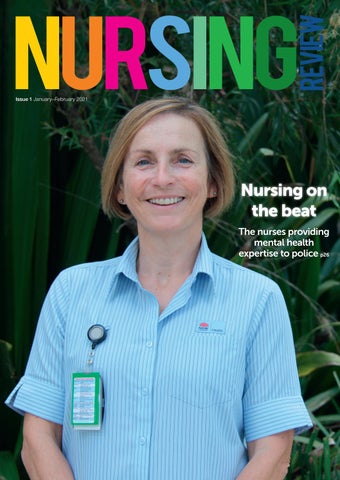
Nursing on the beat The nurses providing mental health expertise to police p26
FOR FORMULA-FED INFANTS AND FOR HEALTHCARE PROFESSIONAL USE ONLY
S-26 Gold Alula Our focus on GROWTH & DEVELOPMENT Benefits of lower protein up to 6 years* 1
“It is preferable to use a formula with a lower-protein level”
- (NHMRC 2012) 2
Formulated with lower-protein levels BREAST MILK
Breast milk naturally contains lower levels of protein (1.0-1.1g/100mL) 2 which may be a contributing factor in reducing later life obesity 1, 3
S-26 GOLD® ALULA INFANT FORMULA
Feeding infants a lower-protein formula** during infancy may encourage appropriate weight gain, closer to breast-fed infants during early childhood development up to 6 years.1, 3
S-26 GOLD ALULA NEWBORN contains 1.28g/100mL and S-26 GOLD ALULA PROGRESS contains 1.3g/100mL
Available in hospital only
*Weber 2014. Prevalence of obesity in the intervention groups at 6 years of age and the estimated adjusted odds ratio between the higher-protein and lower-protein intervention formula groups vs the control breastfed group. Adjusted odds ratio estimated from binary logistic generalised linear regression adjusted for baseline BMI z score, sex, parental BMI, smoking in pregnancy and parental highest educational level. The formulas differed in the content of cow-milk protein (2.05 vs with 1.25 g/dL in infant formula and 3.2 vs with 1.6 g/dL in the follow-on formula, respectively) but had identical energy contents achieved by adjustment of total fat content. All other compositional aspects of the two types of formula were similar.1 **vs higher-protein infant formula
IMPORTANT STATEMENT: Breastfeeding is best for babies. It has benefits for the infant, such as reducing infection risk, and for the mother. It is important to have a healthy balanced diet in preparation for, and during breastfeeding. Infant formula is designed to replace breast milk when an infant is not breastfed. Breastfeeding can be negatively affected by introducing partial bottle-feeding and reversing a decision not to breastfeed is difficult. Infant formula must be prepared and used as directed. Unnecessary or improper use of infant formula, such as not properly boiling water or sterilising feeding equipment, may make your baby ill. Social and financial implications, including preparation time and the cost of formula, should be considered when selecting a method of infant feeding. References: 1. Weber M, Am J Clin Nutr 2014;99:1041–51. 2. NHMRC, 2012. Infant Feeding Guidelines. Canberra: National Health and Medical Research Council. 3. Koletzko B, et al. Am J Clin Nutr 2009;89:1836–45. ® S-26 GOLD and PROGRESS are registered trade marks. Used under licence. ® Alula is a registered trade mark of SOMALAC S.A. Distributed by Sanulac Nutritionals Australia Pty Ltd. ABN 31 160 607 509. Level 1, 42-44 Chandos Street, St Leonards NSW 2065. SAN_05118-25082020
contents
MANAGING EDITOR
news
Richard Garfield 02 9936 8628 richard.garfield@apned.com.au
2
Health workers no vaccine certainty
3
Vaccine rollout on track despite deaths
4 5
Nurse sacked over TikTok video
6 7
Attracting young to aged care
NEWS EDITOR
Dallas Bastian 02 9936 8637 dallas.bastian@apned.com.au HEALTH EDITOR
Conor Burke 02 9936 8638 conor.burke@apned.com.au
02
06
8
Nurses face mass trauma Pandemic’s impact to linger
9
Nurse COVID deaths Higher than WWI
10 Shedding light Podcast explores nurse’s secret
SUBSCRIPTION ENQUIRIES
Daniel Omelia 02 9936 8607 subs@apned.com.au
12 Seal of approval RC says govt run homes are best
13 Get with the program The case for Mandatory Health Programs
COVER
Mental health nurse Sam Johnston. Photo: Supplied PUBLISHED BY
Nurse wins ‘trailblazer’ award
industry and reform
SALES MANAGER
Sarah Licence 02 9936 8710 sarah.licence@apned.com.au
Early start for selfharm prevention
10
14
14 Focusing on facts Dispelling myths about vaccines
16 Understaffing concerns Nurses at Blacktown take action
APN Educational Media GPO Box 4245 Sydney NSW 2001 ABN 58 090 900 999 ISSN 1326-0472 PP100001944
19 All in the family
PUBLISHER’S NOTE
clinical practice
© Copyright. No part of this publication can be used or reproduced in any format without express permission in writing from APN Educational Media. The mention of a product or service, person or company in this publication, does not indicate the publisher’s endorsement. The views expressed in this publication do not necessarily represent the opinion of the publisher, its agents, company officers or employees.
22 Checks and balances
Meet a 4th generation nurse
specialty focus
20 Art of nursing Nurse immortalised in portrait
Medication goes unchecked
23 Not just the aged
20
23
Childhood dementia brought to light
24 On the move New mobile palliative care units
workforce
25 Surgery to cinema Short film celebrates nurses
26 The thin blue line Nurses on the beat with police
technology
28 Tech potential
26
28
Technology’s role in improving care
nursingreview.com.au | 1
news
Jab or no jab?
Why Australia shouldn’t simply expect all health workers to get a COVID jab. By Dallas Bastian
W
hile healthcare workers will be able to join the front of the COVID-19 vaccine queue, some might skip it entirely. In an article written for The Conversation, Associate Professor Holly Seale from UNSW pointed out that health systems represent a microcosm of the community. Seale said: “Just like in the broader community, there will be health workers highly motivated to get the COVID-19 vaccine, driven by concern about risk to themselves, their family and their patients. There will also be those who have medical conditions, those that may not be able to get vaccinated, and staff who are hesitant. “There will also be health workers with questions about the vaccine, who perhaps need further support to help them decide.” The Australian Government said it plans to start rolling out COVID-19 vaccines to high priority groups from mid-to-late February. Adjunct Professor John Skerritt, deputy secretary for health products regulation at the Department of Health, heads up the
2 | nursingreview.com.au
Therapeutic Goods Administration and said it was his job to assure Australians any vaccine approved for use across the country was safe, effective and met the same standards required for all medicines. “If the TGA approves it, you can be assured it will work against COVID-19 by dramatically reducing the number of people becoming severely ill or who die from the virus,” Skerritt said. “Following approval, our role continues as we closely monitor vaccine safety and assess the quality of every batch being supplied in Australia.” He added that while other countries that have faced more COVID-19 deaths, like the United States and United Kingdom, have granted temporary emergency authorisations, Australia’s approach will “ensure people have greater confidence in the vaccines, to achieve the best possible public health outcome”. Seale said reports from the US put vaccine hesitancy among health workers at around 29 per cent but noted that rates can vary between countries. She added that protecting health workers isn’t just critical for their own protection, it will also support high levels of uptake among the general public. Chief medical officer Professor Paul Kelly said confidence was key to Australia’s vaccine plans. Kelly said: “There are some people that just don’t believe in vaccination… We know the majority of Australians are in favour of vaccination generally and our surveys that we’ve done in relation to the COVID vaccine have been very positive in that regard.
“People will be nervous, of course, and we need to give more information. There is a group, though, in between those two extremes… where confidence is absolutely the most important thing. “People will be nervous, of course, and we need to give more information and we’re doing that.” Seale said it’s important to remember that not all health workers are vaccine experts. “If we want to ensure they feel comfortable to receive it and advocate for it, then we must address any misunderstanding and concerns health workers may have. This may be focused on the vaccine itself (how it was developed, effectiveness and so on), or the necessity of vaccination.” One strategy she put forward to help was to support middle managers to act as vaccine advocates and agents of change. “If a COVID vaccine becomes an occupational requirement for health workers, hospitals and other organisations need to include middle managers in the development and roll-out of programs. They can then help ensure staff members understand the rationale for the mandate, which staff members are targeted and why. “Investing in the staff responsible for delivering vaccines in the workplace, as well as other potential vaccine allies such as managers, can help reduce COVID vaccine hesitancy among health workers. “That will benefit all of us,” Seale said. ■
news
Chief Medical Officer Professor Paul Kelly. Picture: NCA NewsWire/Gary Ramage
Pushing on CMO says Norway deaths won’t derail Pfizer vaccine approval. By Dallas Bastian and Conor Burke
A
ustralia’s chief medical officer has added some context to reports of about 30 deaths among elderly people in Norway who were given the Pfizer COVID-19 vaccine. At a press conference Professor Paul Kelly said in a normal week in Norway 400 people die in aged care facilities. “And so that has to be put into the context of what has happened after people have received vaccines,” Kelly said. He added that the Therapeutic Goods Administration (TGA) was still in contact with its counterpart in Norway about the deaths. “We know that Norway is looking into those issues very directly and very specifically for each of those cases.” After news broke about the 30 deaths in over 40,000 elderly individuals who were given the Pfizer jab, the Norwegian Medicines Agency’s medical director Steinar Madsen told a local broadcaster that the authorities were “not alarmed” by the news. “Doctors must now carefully consider who should be vaccinated,” he said.
“Those who are very frail and at the very end of life can be vaccinated after an individual assessment.” Responding to a question from a journalist, Kelly said while he doesn’t have detailed information about all of the deaths, “in general terms they were very old, they were frail, some of them were basically terminally ill”. “At least some of them have had the types of side effect of the Pfizer vaccine that we know about already from the clinical trials – so fever, diarrhoea, not eating, not drinking. “And so, if people are very frail to begin with, then those sort of things can be serious in that type of situation. But… the Norwegians are doing their due diligence in relation to that and going through every single one of those deaths and looking at them very carefully and we will have access to that information.” Kelly added that, at this stage, the news of the deaths will not delay the progress of Australia’s vaccine strategy but added that the timeline allows Australia to look at the information that’s coming from countries that are rolling out the various vaccines. Pfizer is slated to be the first of the vaccines to get approval. Writing for The Conversation, Associate Professor Nathan Bartlett, from the School
“For those who may be more susceptible, we may want to be a little more cautious. of Biomedical Sciences and Pharmacy at the University of Newcastle, said the biggest challenge for any vaccine is generating enough of an immune response to protect against the disease but not so much that a person experiences serious adverse effects. Bartlett said: “Where this line in the sand exists will vary across different people, but the oldest and frailest vaccine recipients are likely to be most at risk of severe, potentially life-threatening reactions. “So for those who may be more susceptible, we may want to be a little more cautious. In approving the Pfizer vaccine, the TGA may consider advising against this particular vaccine for people who are very elderly and frail, particularly those who have other conditions and are potentially nearing the end of their lives. “Ideally, the vaccine should be considered on a case-by-case basis for this group, carefully weighing up the risks and benefits in each situation, based on the best available data.” ■ nursingreview.com.au | 3
news
‘Cavalier disregard’ US nurse suspended for TikTok flouting COVID safety. By Conor Burke
A
nurse in the US has faced a backlash after posting a video to social media where she appeared to admit flouting COVID-19 safety measures. A hospital in Salem, Oregon, announced it had placed the nurse on administrative leave after public outcry over the TikTok video that, in their words, “displayed cavalier disregard for the seriousness of this pandemic and her indifference towards physical distancing and masking outside of work” – as reported by The Hill. The video from TikTok user @Loveiskind05 shows the nurse, in scrubs and stethoscope, mouthing along to audio from the movie How the Grinch stole Christmas with the caption: ‘When my co-workers find out I still travel, don’t wear a mask when I’m out and let my kids have play dates,’ across the video.
The video has since been deleted, but other concerned TikTok users have shared the clip. A spokesperson for Salem Health identified the person in the video as oncology nurse Ashley Grames and said the hospital launched an investigation into the incident. “Yesterday, a nurse employed with Salem Health posted a video on social media which displayed cavalier disregard for the seriousness of this pandemic and her indifference towards physical distancing and masking outside of work,” Salem Health said in a statement. “This video has prompted an outcry from concerned community members. We want to thank those of you who brought this to our attention and assure you that we are taking this very seriously. This individual does not speak for Salem Health and has been placed on administrative leave pending an investigation.” Oregon has been hard hit by the virus with 969 cases reported in the week leading up to the video and Salem Hospital
has the highest number of employee virus cases of any hospital in the state. This prompted many online to call for the nurse to be fired with more than 1000 people commenting on the Salem Health post. “Administrative leave? For knowingly exposing immunocompromised patients to Covid and then bragging about it? I’m an RN and I’m so disappointed in this response,” one commenter wrote. “No investigation needed. The video supplied should be evidence enough. She needs to be FIRED. Not on PAID leave,” said one poster. A week later, the hospital system confirmed to CNN that the nurse was “no longer employed with Salem Health.” The US is still battling the worst of the virus, reporting hundreds of thousands of new cases daily. At the time of reporting, there have been 24.5 million total cases with 406,000 deaths across the nation. Those numbers were the highest worldwide, well ahead of the 10.6 million cases in India and 8.6 million in Brazil. ■
SubScribe for leSS than $2 Per week The laTesT news for nursing & healThcare professionals Nursing Review is essential reading for anyone involved in the healthcare sector in Australia. It provides unrivalled coverage of specialist topics from features and opinion pieces, to international news and profiles. • Latest news and resources for all healthcare professionals • Comprehensive coverage of a diverse range of topics • Analysis of the major issues facing the health sector as a whole • Delivered free of charge to your home or place of work monthly
Please call 02 9936 8666 to find out more. 4 | nursingreview.com.au
news
Earlier the better Self-harm study prompts calls for earlier intervention.
A
ustralian children are reporting self-harm as early as grade 6, a new study shows. Researchers assessed more than 1200 children living in Melbourne each year from age 8-9 years to 11-12 years. Twenty-eight of the 1059 students in the study reported selfharm at age 11 and 12 years. Of those who self-harmed, two-thirds (64.3 per cent) were females and one-third (35.7 per cent) were males.
National blueprint Grattan Institute releases national plan to reform aged care.
A
national aged care system divided into 30 regions and an extra $7 billion a year are key parts of the Grattan Institute’s blueprint to reform Australia’s aged care sector. The report, Reforming aged care: a practical plan for a rightsbased system, held that Australia should be divided into 30 regions, each with a ‘system manager’ responsible for individual support plans for older Australians in their area.
In grades 3-5, predictors of future self-harm in grade 6 included persistent symptoms of depression or anxiety, bullying and alcohol consumption. For children aged 11-12, associations with self-harm were having few friends, poor emotional control, engaging in anti-social behaviour and being in mid-late puberty. Participants who reported having few friends, and those who had experienced bullying victimisation, were seven and 24 times more likely to have self-harmed at age 11-12 years, respectively. Those who self-harmed were also more than seven times more likely to report depressive symptoms and five times more likely to report anxiety than peers who had not self-harmed. Lead researcher Dr Rohan Borschmann said the research sheds light on the impact of peer relationships, including bullying, mental health problems, and puberty on children. “The transition from childhood to adolescence is a critical time for kids and challenging experiences can have a huge impact on their self-esteem and friendships during this development phase.” The research, led by a team from the University of Melbourne and the Murdoch Children’s Research Institute and published in PLOS ONE, prompted calls for intervention efforts to start earlier. Senior author Professor George Patton said: “These days many high schools participate in mental health and resilience programs, but our research shows that prevention strategies are needed much earlier. “Promoting and nurturing better relationships with other students is also particularly important.” ■
Local ‘assessment officers’ would work with each older Aussie to draw up support plans and a local ‘support manager’ would act as their advocate in obtaining necessary services. “Rather than a poorly-regulated and fragmented system far away in Canberra, 30 regionally-based ‘system managers’ across the country should be made responsible for the care of older Australians in a defined geographic area. They should manage the local service system and only accredit providers dedicated to the rights of older Australians,” the report read. And, under the plan, those who enter aged care would contribute to their accommodation costs by paying rent, but the Grattan team said a means test would be applied to ensure people who couldn’t afford the rent would pay less or not at all. Among the other reforms put forward were a national registration scheme for staff, mandated minimum staffing ratios and 24-hour nursing supervision in residential care. The Grattan model would require the Federal Government to spend an extra $7 billion a year. But, the team added, the move would create an extra 70,000 jobs and help lift the economy out of the COVID-19 recession. The report held that the new system should be phased in over three years, starting with a trial in the nation’s smallest states, South Australia and Tasmania. In the meantime, Grattan called on the government to offer up a one-off $1 billion national rescue fund to lift the standard of care across the country. “Australians already have universal access to health care via Medicare, and universal access to disability support via the NDIS. It’s time older Australians had universal access to aged care,” said lead author and Grattan Institute health program director Stephen Duckett. ■ nursingreview.com.au | 5
news
Aged care drawbacks Attracting younger workers to the sector.
W
hat pushes a worker to enter, stay or leave aged care? That was the question a Flinders University study unpacked as the sector braces for future workforce
shortages. It found work-related stress, lack of career progression and a dearth of up-skilling opportunities were among the key drawbacks. Published in the International Nursing Review, the study involved 32 aged care staff working for not-for-profit organisations. Lead author Professor Lily Xiao said more needs to be done by policymakers and employers to attract and retain workers seeking certainty and opportunities for their career development to help eliminate ongoing issues in the sector.
Counting the cost Aged care royal commission releases elder abuse estimates.
N
ew research is adding some depth to the picture of elder abuse in Australia, with a royal commission paper estimating more than a third of Australians living in aged care facilities have faced neglect, emotional abuse or physical abuse.
6 | nursingreview.com.au
“Participants perceived inadequate staffing levels were the main sources of stress they experienced in the workplace and influenced their intention to leave the job,” said Xiao. “They also reported managers who lacked nursing care knowledge and were not approachable for staff to share their thoughts and ideas. On the contrary, managers and supervisors who developed social bonds with team members and shared decision making with the team attracted staff to stay.” Xiao added that employer-sponsored education enables staff to develop their careers and could be a deciding factor for a nurse considering a new venture. “Staff expect paid education to develop their leadership and teamwork skills. “Continuing education and mentorship for managers and registered nurses to develop knowledge about staff issues and effective leadership will help reduce staff turnover.” These sentiments were echoed in the counsel assisting’s final report to the aged care royal commission. In their wrap up, the lawyers wrote that: “Inadequate staffing, skill mix and training are some of the key contributors to substandard care in the current system.” The counsel assisting added that difficulties attracting enough people with the right skills to work in aged care can be explained, in part, “by the lack of competitive employment conditions and poor workforce planning and strategy by the Australian Government and the aged care sector”. “There are also difficulties retaining workers. Approved providers could ensure better employee satisfaction and job retention through an improved work environment where employee feedback is valued and considered.” ■
Around 39.2 per cent of residents have encountered at least one of the three forms of abuse, according to the experimental estimates released late last year by the Office of the Royal Commission into Aged Care Quality and Safety. The figures were calculated using data from the royal commission’s residential aged care survey, previously conducted by the National Ageing Research Institute. It included 391 residents or their representative, all of whom were drawn randomly from a representative random sample of 67 aged care facilities. The most prevalent form of abuse was estimated to be neglect, with the research paper suggesting 30.8 per cent of people face it in aged care facilities. The term covers, among other issues, how residents are helped to shower, eat and toilet, and how concerns about medication and pain are managed. That was followed by emotional abuse – taking into account issues like being shouted at by staff and treated like a child – at 22.6 per cent, and physical abuse at 5 per cent, covering being restrained, not being allowed outside or out of their chair or bed, and being hurt or treated roughly by staff. While the survey comprised a number of questionnaires exploring quality of care, general life satisfaction and concerns and complaints, it was not designed to measure the prevalence of elder abuse. Still, with a dearth of knowledge about the extent elder abuse occurs in the sector, the royal commission used responses from the survey that best fit its definition to create its estimates. The paper did not explore estimated rates of financial, social and sexual abuse as the data didn’t appropriately cover those issues. ■
news
Nurse trailblazer recognised Ipswich nurse gets Health Minister gong.
A
n Ipswich nurse committed to managing chronic diseases in her community has taken out the Health Minister’s Award for Nursing Trailblazers. Shannon Wallis was recognised for her work on MeCare (Mobile enabled Care),
in which she developed a virtual nursing framework and education package to onboard nurses to the new mode of working. It included tips and tools to help nurses complete an environmental assessment virtually by guiding the patients in the use of their home tablet. MeCare now supports over 500 patients who experience one or more chronic illnesses and aims to deliver early intervention to prevent admission to hospital. Australian College of Nursing chief executive Adjunct Professor Kylie Ward said Wallis’ work reflected the innovative and insightful ways nurses continue to advance the delivery of primary health care services. “Work such as Shannon’s, which can support high-risk patients in isolating and treating their conditions from home, is crucial to ensuring those with co-morbidities are not exposed to the risk of infection from COVID-19,” Ward said. Minister for Health Greg Hunt congratulated Wallis and all Australian
nurses for their work throughout the COVID-19 pandemic. “As with many things in 2020, the COVID-19 pandemic has necessitated rapid change to models of care and how health professionals deliver care,” Hunt said. “Measures such as the introduction of telehealth have been a revolution in the delivery of primary care. “Nurses like Ms Wallis continue to put the needs of their patients first, while creating safe, effective practices to help our whole healthcare system.” Wallis took the win as an opportunity to highlight the work being done in West Moreton. “The collaboration that occurs from the executive sponsors through to the virtual care multidisciplinary teams and even our health partners and auxiliary staff continually work together to build a culture of continuous learning and overcoming barriers for adoption of digital health,” Wallis said. “I am blessed to be part of a wonderful team.” ■
Take a break on us Your organisation may be eligible for Australian Government-funded support to help alleviate the pressure of finding a temporary replacement when you or your colleagues go on leave. You will be given all the support needed to recruit, screen and place highly experienced health professionals that can hit the ground running from the moment they arrive.
For more information visit www.rurallap.com.au
nursingreview.com.au | 7
industry & reform
Generational impact
ICN says world’s nurses face mass trauma. By Conor Burke
T
he world’s nursing profession is reporting signs of “mass trauma” which experts believe will impact the profession for generations. In the wake of continually rising COVID-19 figures across most of the world, nurses are facing high levels of infections, increased workloads and psychological distress, and there are fears that many will leave nursing all together. New evidence from the International Council of Nurses (ICN) shows that since the first wave of the pandemic the proportion of nurses reporting mental health distress has risen from 60 per cent to 80 per cent in many countries. “We are witnessing a unique and complex occupational trauma that is affecting the global nursing workforce,” said ICN chief executive Howard Catton. “Nurses are dealing with relentless, unprecedented demands from their patients, resulting in physical exhaustion. But they are also facing enormous mental health pressures leading to serious psychological distress.” Using data from its 130-plus National Nurses Associations (NNAs), coupled with studies by its NNAs, the ICN found that COVID-19 inflicts a unique kind of trauma, in both the short and long term, on healthcare workers. With a global nursing shortage estimated at six million and another four million nearing retirement age, the data suggests a mass exodus of nurses which could be dire for health systems.
8 | nursingreview.com.au
The new data found that in Australia 61 per cent of healthcare workers reported burnout and 28 per cent have reported depression. Other nations fare much worse, such as Japan which reports that 15 per cent of hospitals across Japan had nurses resigning their jobs, and some 20 per cent of nurses reported that they had experienced discrimination or prejudice amid the spread of the first wave of the pandemic. In the US – which has seen 24 million cases, nearly 400,000 deaths and 100s of thousands of cases daily – the American Nurses Association reports that 93 per cent of healthcare workers were experiencing stress, 76 per cent reported exhaustion and burnout, and nurse-to-patient ratios increased three-fold. Anxiety is high among nurses around the world. Eighty per cent of Spanish nurses reported feeling burnt out and symptoms of anxiety, while 40 per cent of nurses in Israel admitted they feared caring for COVID-19 patients. The ICN report points to increasingly unsafe workplaces, where nurses are subjected to violence and discrimination, high workloads, lack of PPE and social and mental health support, as issues that could all have serious impacts on society going forward and longer term impacts of the pandemic, such as PTSD and long COVID, are looming. “This unique mass trauma is having an immediate and profound effect, but it is also highly likely to have a significant longterm impact as it contributes to a wave of post-traumatic stress disorder (PTSD), depression and anxiety, the scale of which we cannot yet determine,” Catton said.
“There can be no doubt there will be a large COVID-19 Effect on the size of the nursing workforce, which is already heading for a 10 million deficit. Even if only 10 to 15 per cent of the current nursing population quits because of the COVID-19 Effect, we could have a potential shortfall of 14 million nurses by 2030, which is the equivalent of half the current nursing workforce. Such a shortfall would impact all healthcare services in the post-COVID-19 era to such an extent that I would argue the health of the nursing workforce could be the greatest determinant of the health of the world’s population over the next decade.” “With the emergence of new, highly infectious variants of the virus, and increasing evidence of the effects of long COVID, ICN urges governments not to underestimate the scale of this crisis: COVID-19 has exposed the fault lines in our healthcare systems, but if nations do not take immediate action to shore them up unbreachable chasms will be created with potentially devastating effects.” Current estimates place the death toll of nurses due to COVID-19 at 2,262, based on reporting by 59 countries, with the US accounting for 60 per cent of fatalities. It is estimated that 10 per cent of all confirmed COVID-19 infections are among healthcare workers. While in some countries, such as Iran, up to 45 per cent of the nursing workforce has contracted the virus. To date there have been 95 million confirmed cases of the virus with 52 million recoveries and over two million reported deaths. Australia has had 28,721 cases of the virus with 909 deaths. ■
industry & reform A nurse in the isolation ward of the University hospital of Essen, western Germany. Photo: Ina Fassbender
VIRUS RAVAGES HEALTHCARE WORKFORCES ACROSS EUROPE
Counting the cost Nurse death toll from COVID-19 as high as WWI nurse casualties. By Conor Burke
T
he International Council of Nurses (ICN) has released figures showing that as many nurses have died from COVID-19 worldwide as died during World War I. The latest numbers show that 1,500 nurses have died since the pandemic began, the same as WWI, up from 1097 in August. Globally, current numbers of the virus stand at 46.8 million, with 31.2 recovered, and 1.2 million deaths, or approximately 2.6 per cent. ICN suggests that 10 per cent of all cases are healthcare workers. The nurse death figures were collated from only 44 of the world’s 195 countries, so the real figure could be far higher. The ICN says that if the case fatality ratio among the more than four million healthcare workers infected is only 0.5 per cent, in excess of 20,000 healthcare workers could have died from the virus. ICN chief executive officer Howard Catton said that the lack of accurate data is a “scandal”. “The fact that as many nurses have died during this pandemic as died during World War I is shocking. Since May 2020 we have been calling for the standardised and systematic collection of data on healthcare worker infections and deaths,” he said. “2020 is the International Year of the Nurse and Midwife, and the 200th anniversary of Florence Nightingale’s birth, and I am sure she would have been
immensely saddened and angry about this lack of data.” Catton said that Nightingale demonstrated during the Crimean War how important accurate health data is and how it can help us understand risk and improve clinical practices, ultimately saving lives, including those of healthcare workers. He said that the pandemic has also shown how interconnected the modern world is and governments need to respond to this accordingly. “I genuinely believe that global has never been more local in terms of the challenges we are facing, the lessons we need to learn and the solutions we seek. For example, getting personal protective equipment across borders requires governments to work together on customs and control issues, and when we have a vaccine, getting it to everybody who needs it, rather than just those who can afford to pay for it, will require multilateralism and cooperation,” he said. “Nurses will have a major role to play in what comes after COVID. Our experience and the data we have means we have a very powerful and legitimate voice that we must use to influence health systems of the future. “Nurses are angry about the lack of preparedness, but they are also angry about the lack of support that they have received. “We need to move on from the warm words into real action, because none of us are going to cope and our economies won’t recover if we don’t keep our healthcare workers and nurses working and able to look after all of us.”
As nations across Europe re-enter national lockdowns, hospitals are reaching capacity and thousands of their workforce have fallen ill with the virus. The Washington Post reported that The European Union found 1.2 million cases of COVID-19 in just one week. Weekly deaths rose by half and occupancy of intensive care units doubled in 17 days leading up to Oct 25. As reported by The Independent, tens of thousands of NHS staff in the UK are currently off sick or self-isolating because of coronavirus. According to the data, in some parts of the country more than 50 per cent of staff absences are COVID-19 related with more than 76,200 NHS staff absent from work on Friday October 30th – sparking calls for wider testing of NHS staff. Of the 76,200 staff absent that day 25,293 were nursing staff and 3,575 doctors, equivalent to 6 per cent of the total workforce. It has also been reported that staffing shortages in Belgium and the Netherlands have led to hospitals and nursing homes asking nurses and doctors to keep working even if they have tested positive for the virus, but are asymptomatic. Meanwhile, in the Czech Republic medical students, retired nurses, volunteers and even Prague’s mayor have all responded to a call for volunteers as Czech hospitals struggle to control the virus, as per Reuters. Nearly 70 per cent of Czech hospital beds are occupied in the country of 10.7 million while almost 3,000 doctors and 7,400 nurses were out of action due to COVID-19. The country currently averages 12,000 new cases a day and has Europe’s highest per capita death rate – 18.8 per 100,000. Belgium is second with 11.3. The WHO has advised that doctors and nurses are at risk of burning out due to the demands of working during the pandemic and this is as much a concern as lack of resources. “Our health workforce is exhausted, people are burning out,” Hans Kluge, WHO regional director for Europe, told ministers of health at an emergency meeting late last year. “We have no COVID-19 response if we do not care for our health-care and essential workers: their needs and wellbeing must be prioritised.” ■ nursingreview.com.au | 9
industry & reform
Into the light NR: Tell us a bit about Jim.
Podcast sheds light on alleged sexual abuse and mismanagement in Tasmania’s health system. Camille Bianchi interviewed by Conor Burke
J
ames Griffin was a paediatric nurse in Tasmania. A family man, he was well liked, a bit un-PC for some, but a model citizen in most people’s opinion. But Jim was allegedly hiding a dark and horrific secret that when revealed would shake the Tasmanian health system and other institutions to their core. This story is the subject of the new podcast ‘The Nurse’, by Camille Bianchi who spoke to Nursing Review to tell the tale.
10 | nursingreview.com.au
CB: I got hundreds of accounts of Jim from all different stages of his life. And they were really varied. The headline is that he was charged for offences related to sexual abuse of children and creating child exploitation material. But if we go behind that person and who we now know him to be, he was very different in terms of the Jim he presented to people. And if we’re talking about the Jim that people met on Ward 4K at Launceston General Hospital, he was a star nurse. I’ve had some of the most stark conversations in investigating this podcast with former patients. And no fewer than three of them have said to me he’s the reason they decided to eventually study nursing.
unemployment statistics, and that is really relevant here, because some of those vulnerable and marginalised communities have families where there aren’t two parents in the picture. Typically, there are really honourable, active, engaged parents that are going to call someone like that to account, if they’re noticing that someone’s behaving really strangely with their child. Some of the worst stories I heard were former patients who grew up and they look back in hindsight and they say: “Look, I didn’t have the best home life. No one was really looking out for me in the way that you normally would expect someone would look out for their kid, and that’s why I fell into the path of this abuser.”
Did he use his position as a nurse to groom people?
I was surprised that a lot of his behaviour seemed to be really out in the open. Tell us a bit about his trip to Gallipoli.
Not only did he groom the kids in his care, he was a paediatric nurse on a paediatric ward for 20 years in Launceston. He groomed their families. And what I know about that area, having lived there and worked there, is there are a lot of lower socioeconomic groups. There’s really stark disparity in wealth distribution across Tasmania, so you’ll hear a lot about
Jim’s trip to Gallipoli was with a girl who ended up becoming the first person to lay charges against him. But many years before that he would be seen in the company of a then 11-year-old up until she was about 17 on the hospital ward. She would come in, he would be in the company of her, in the netball team. There were a lot of questions raised, I now know about.
industry & reform Photo: Patrick Gee
person a trip overseas to Turkey, that’s a big deal and that’s often beyond the means of many families.
There’s some pretty awkward moments in the podcast of stories where colleagues feel like they’ve just interrupted him in the middle of something, but without being able to quite catch him. Without being too harsh on the nurses and the health professionals, it seemed like they didn’t really push the issue, or is that wrong?
In parliament estimates the other week in Tasmania, I actually heard that being argued: that different people made reports and it was centred around this person. People were really troubled. So that was the context with which he took this young girl with him overseas without his own children, without his family. He was married twice, I think, at that point, he may have separated from his second wife, I’m not sure. But I do know that there were a lot of people in the ward, certainly other nurses that were saying: “You can’t do that, that’s inappropriate.” And it was framed in a way that it was this culturally enriching experience, looking back at ANZAC history. One of the first things I found when I Googled his name originally was an article that said, ‘Gallipoli calling war hero’s son’, and he had this big article with a photo of him looking at images of his dad who had been in line for a VC apparently, before he died. And that was really important to Jim, this war history, and he absolutely used that to ingratiate himself and impress this girl. So it’s only in hindsight that you see how sinister it was. But even then, again, I get it. I can kind of see how that would be an attractive thing. So, you offer a young
You’re not wrong, because on the face of it, and certainly in my reporting, you can tell the tone of it changes in the series because you don’t know who knew what and when until you speak with more of these colleagues. From the outset, I was really concerned at the idea that so many of these people turned a blind eye. What later transpired, of course, was that they were complaining. They were raising issues but the complaint didn’t get resolved satisfactorily, to say the least. In some cases, their reports and complaints were shredded and allegedly were found in the wastepaper basket on Ward 4K in the early mid 2000’s in one memorable incident. Junior nurses came to me who were fresh out of uni and they were coming onto Ward 4K and they might have just seen a glimpse of him carry a patient from a shower. And when they told those stories to me, it’s with the wisdom of hindsight. It’s with that professional grounding that they now have, and they’re horrified. And I think we can’t underestimate the trauma that this story coming out has had on that ward. Unreservedly, the feedback is they’re glad it’s out, but in terms of finding out what Jim was, they are beside themselves, because nursing is a vocation and especially nursing kids, they love their jobs and the guilt is extreme. Look, there’s a place for guilt, I get it. I’ve had so much feedback from nurses who were saying: “I’m in paediatric care. No, this would never, never happen.” But something that I respond to them with is: “You’ve got to understand the context and the context of this culture in this hospital is very, very particular to this region and this hospital.” And I am privy to some pretty extraordinary things going on behind the scenes and it becomes a lot easier to understand how people can essentially be ‘gas lit’ into being told things are okay. It’s a really troubling, scary thing when you start to look at a lot of what people
“When the culture becomes toxic you start to create environments where predators can thrive. tried to raise in terms of Jim, and then [there are factors like] he was a union member that was suggested to me as being one of the reasons. It’s not to say anything about the union, they’d be horrified, but that was certainly [coming] from certain managers at the hospital. They’d get in the ear of the complainant and say things like, “Do you really want to get the union involved?” They’re so troubling because the outcome is hideous and it’s life-ruining for a generation of kids. It’s complicated. And it’s a really worthwhile question to ask: who’s responsible and at what point were the responsibilities not upheld?
At one point we find out that he abused a colleague’s daughter and he was eventually caught. What were the circumstances that led to police finally getting a hold of this man. He actually abused two colleagues’ children, which is horrific. One of whom I spoke with, who is a delight and I’m so proud of her. So the circumstances of his being investigated was one very brave young woman, the child he brought to Gallipoli. She grew up and she was the catalyst for four other women to come forward. So she isn’t part of the podcast, but she’s a true hero – she’s the reason that any of this happened, including now an inquiry that will hopefully protect another generation of kids. But yes, that complaint was really it. That was when the investigation could begin in earnest. And one of the troubling things is that he was on the ward for two-and-ahalf months after she raised that complaint in May 2019. Police were investigating him, but he retained his position caring for kids for two-and-a-half months until he was eventually marched off the premises and lost his registration a week after that. And people are interrogating that, with the health minister, with the police minister. It’s been the subject of the estimates hearings in Tasmania. That’s a big deal and I’m not privy to what normally happens in hospitals or indeed in criminal investigations, but oh, is that scary. Continued on p18 nursingreview.com.au | 11
industry & reform
Overall government run facilities provide 303 minutes of total staffing (which includes: in catering, cleaning, laundry, maintenance, administration, quality and education in addition to direct care) per resident per day. Not-forprofit provide 238 minutes and for-profit 244 minutes per day.
Seal of approval Government-run providers best performers: new royal commission research. By Conor Burke
T
he Royal Commission into Aged Care Quality and Safety has released the most detailed look into the quality of residential aged care homes published in Australia. Using data acquired under the legal authority of the commission, and not previously available to researchers, they present over 50 quality indicators about residential aged care – including how results are distributed across facilities. The indicators cover topics such as clinical outcomes, compliance, complaints, reporting of assaults and missing residents, consumer experience and workforce levels. On average government-run facilities showed the best average results for 31 of the quality and safety indicators, but only make up nine per cent of the organisations in Australia. Around 57 per cent of aged care facilities in Australia are operated by not-for-profit organisations and 34 per cent are operated by for-profit organisations. The data also shows that not-for-profit aged care-run homes had better average results than profitmaking providers on 25 indicators.
WHO CARES BEST? Many of the quality indicators showed close results and minimal difference in outcomes across the three types of providers. However, some of the more serious categories showed stark differences. In 2016/17 the data shows that governmentrun facilities delivered the best results for the ‘falls’ category. 12 | nursingreview.com.au
On average one in every 15 residents of a government facility attended hospital for a fall, compared to one in 8.2 in not-forprofit and one in 8.6 in for-profit. Similarly, on average one in every 30.6 residents of government facilities attended hospital for a fracture compared to one in 19, and one in 19.1, for not-for-profit and for-profit homes respectively. Another area of disparity concerns ‘medication-related events’. One in every 303 residents in a government run facility ends up in hospital for a ‘medication-related event’, while that figure jumps to one in 175.4 in not-forprofit and one in 232 for residents in profit making homes. Government homes come out on top again in relation to pressure injuries. One in 61.7 people living in a government facility end up in hospital with a pressure-related injury, compared to around one in 33.1 in not-for-profit homes and one in 27.2 in forprofit homes. This trend continues for the indicator concerning hospitalisations for ‘weight loss or malnutrition’.
WHO CARES LONGEST? The data from 2018/19 shows that, on average, government-run homes performed best when it comes to ‘nursing minutes’. In government run facilities nurses (including RNs, ENs and licensed nurses) spend on average 119 minutes per resident per day. This figure dwarfs the minutes put up by not-for profit and for-profit facilities, which both stand at 39 minutes per resident per day on average. For PCAs, not-for-profit providers narrowly performed best with 130 minutes per resident per day, compared to forprofit providers and government run facilities – 123 minutes and 114 minutes respectively.
COMPLAINTS AND NON-COMPLIANCE The data shows that there were fewer resident complaints to the Aged Care Quality and Safety Commission (ACSQC) from government-run facilities. The same goes for the number of individual issues raised to the ACSQC as part of the complaint. Residents of government-run facilities raised on average 4.98 issues per 100 occupied beds, compared to 7.29 issues in not-for-profit homes and 10.24 in forprofit homes. In 2018–19, unannounced site visits by the ACSQC were conducted on 195 government-run facilities and 26 (13 per cent) were found to be non-compliant. Seven (4 per cent) of these homes were non-compliant and then resulted in serious risk decisions. The ACSQC made 1309 visits to not-forprofit facilities and 215 (16 per cent) were non-compliant. Sixty-two (5 per cent) of which resulted in serious risk decisions. And 837 for-profit facilities had unannounced visits, 153 (18 per cent) of which were non-compliant. Fifty-five (7 per cent) of those visits resulted in serious risk decisions.
SMALL IS BEST The research also found that small facilities (homes with a maximum of 30 people) had the best average scores across 24 indicators. Homes this size are rare, making up just 11 per cent of homes Australia-wide. Most homes in Australia have between 61-100 places or 100 and above places, 32 and 31 per cent respectively, while 26 per cent of homes have between 31 and 60 places. Overall, government-run facilities showed the best average results for 31 indicators, compared to two indicators for not-for-profit facilities and one indicator for not-for-profit facilities. The research was conducted by the Office of the Royal Commission into Aged Care Quality and all of the findings are presented in Research Paper 15 – Residential Care Quality Indicator Profile which is available on the Royal Commission’s website. ■
Industry & Reform
Get with the program The case for a Mandatory Preventative Health Program. By Marcus Riley
T
he need for a new, far more effective approach to health and ageing services has become urgent across Australian communities. In my view, a Mandatory Preventative Health Program (MPHP) is one of the most vital necessities and opportunities for widespread health and wellbeing across our ageing population. The cracks in the existing system, which focuses on illness and dependency, have grown too wide with inflexibility, accessibility challenges, navigation difficulties and inevitable unaffordability – making the outcomes from it suboptimal for the growing number of system users and service providers within our communities. Solutions are needed, and they are within reach. New models must be embraced, with innovation an absolute imperative. There are numerous glaring consequences from the long-term engagement of our poor-performing system. Generally, people’s knowledge of the system and what is accessible to them is greatly lacking, as is their knowledge of associated costs and the overall scope of services. Health literacy across the community is well below par. Accurate information about health and ageing is difficult to access, if it exists at all. Similarly, individuals’ knowledge of their own health and the cognisance of issues to manage it is inadequate. So too is the actioning of prevention. These are solvable problems, and solutions must involve interventions at particular stages throughout the course of every individual’s life. This would provide a circuit breaker to the existing predicament, and indeed lead to prevention ahead of cures.
The objectives of such a concept include the easing of pressure on a failing health system (in the broadest sense), the reduction or prevention of a person’s need for (expensive) aged and other care, and thirdly to empower people to thrive in later life. An MPHP would involve a person accessing a funded overall health assessment designed to identify their holistic health status, which could then be used to plan and guide for their enhanced wellbeing and as healthy a future as possible. A variety of milestones in people’s lives could be used to mark these assessments. For example, at a particular phase of someone’s life, such as retirement, reaching a particular age (such as 65 years), their first access to the age pension or to their superannuation. These are just some of the possibilities and pertinent stages in people’s lives that could be very beneficial times to address their health and wellbeing at the time and going forward. There are a variety of health disciplines that could be endorsed and registered to provide the funded service through inperson consultations. There are a number of important components that would need to be individually addressed to ensure the success of an MPHP. These include an individual’s physical wellbeing, incorporating both biological and physiological health; as well as their emotional and psychological wellbeing. Also important is the availability and distribution of information regarding the health and ageing system, network, cover and access, sitting alongside community links. Other key components include increasing an individual’s health literacy through widespread health education to address risks, opportunities and selfmanagement. Also, a social focus designed to promote and foster meaningful
activity that will support the physical and emotional wellbeing of individuals. When desired or required, the MPHP would provide an introduction to services and assistance, be it proactively or restoratively. The standard deliverables from an optimal MPHP service would include future planning through recognising factors to monitor, immediate action where required, and identify options to address relevant issues. Also, the production of a high-level health plan templated and standardised across the program, adaptable to the individual. So too, guides to the health system specific to geographic regions combined with capacity to report, assess and plan to share information between personal health providers (eg GP, allied health providers et al) as directed by the individual. In terms of costs, an estimate of less than $3,000 per person over 65 years of age is reasonable. Cost factors to be considered include those involved in resources; marketing, advertising, as well as data collection and collation. Also, the expenses involved with community consultation and engagement, as well as with health professionals and other relevant parties. Finally, the costs incurred with registering, approving and administering service providers; and policy, rules and regulations. These financial outlays though should be seen as an investment. Other important considerations include whether we should start the program at a younger age to potentially benefit from the earlier adoption of preventative measures. Then there’s the role that medical insurers and Medicare can play within the system to create ease and effectiveness across the board. We should also look at how to best use member-based organisations such as National Seniors, the automobile associations and other state bodies to drive the take-up of the system. And the option of paying for more services in this engagement, along with incentives or penalties for engagement take-up should be considered. An MPHP has become not just an opportunity for the health and wellbeing of our ageing population, but a must-do intervention. ■ Marcus Riley is the director of the Global Ageing Network, author of positive ageing book BOOMING and CEO of BallyCara. nursingreview.com.au | 13
industry & reform
“We need to build confidence in this particular vaccine.
Kicking against the pricks Online course aims to correct vaccine misinformation. By Dallas Bastian and NCA Newswire
W
ith Australia’s timeline for COVID-19 vaccination shifting, talk has again turned to those opposed to jabs of any kind. And a Queensland academic is hoping to help boost vaccination rates across the country with the world’s first Massive Open Online Course (MOOC) dedicated to anti-vaccination and vaccine hesitancy. Dr Tom Aechtner from the University of Queensland’s School of Historical and Philosophical Inquiry said while most Australians support immunisations, “there remains a subset of the population which expresses vaccine hesitancy”. “This can involve concerns about the safety and efficacy of vaccinations, including fears about vaccine ingredients, overloading the immune system and the perceived likelihood of adverse vaccinetriggered side effects and ailments,” Aechtner said. The MOOC, called AVAXX101, works in tandem with website UQVaccinationChoice to provide evidence-based information, allowing people to make informed decisions about jabs. Research underpinning the course found that vaccination anxieties may be fuelled by small groups of media-vocal vaccine deniers.
14 | nursingreview.com.au
“Australian anti-vaccination media focuses more on promoting distrust in officials and experts and propagating conspiracy narratives about vaccines than spreading stories about the purported dangers of vaccines,” Aechtner said. “With this in mind, my research identifies the persuasion attributes of Australian anti-vaccination media and the ways that counter-vaccine messages employ persuasive cues when communicating to Australian publics.” An Australian National University survey released in late 2019 revealed 6 per cent of Australians are certain they won’t get a COVID-19 jab once one is made available. A further 7 per cent feel they’re unlikely to get a vaccine. The majority surveyed (58.5 per cent) said they will be sure to join the vaccine queue. About three in ten (28.7 per cent) said they were likely to opt in but were still unsure. Study co-author Associate Professor Ben Edwards said overall there are significant levels of vaccine hesitancy or resistance across the country. Australia’s Chief Medical Officer Paul Kelly said “confidence is the key” ahead of Australia’s rollout of the COVID-19 vaccine next month. He said the federal government’s $24 million advertising campaign would encourage Australians to get the vaccine when it becomes available. “We know there are some parts of the community who are more hesitant about vaccines,” he said.
“We need to build confidence in this particular vaccine. “The approvals and such have gone fast, much faster than usual – for a reason, because of that danger that we are in and trying to get back to some sort of normal life. “But absolutely, and I’ll say this again, as we’ve said many times, there are no shortcuts. “Every tick that needs to be ticked will be ticked before there is any rollout of this vaccine into the community.” Prime Minister Scott Morrison said the government hopes to vaccinate 80,000 Australians a week, and four million by the end of March. In an opinion piece written for The Conversation, Professor of Epidemiology Healthcare Infection and Infectious Diseases Control at UNSW Mary-Louise McLaws said the government’s plan to vaccinate Australians will require “NASA-like logistics”. “Intact delivery of Pfizer’s vaccine famously requires an ultra-cold chain of -70°C. Each “shipper box” holds 975 vials, each containing five doses. “According to Pfizer, once opened, a box requires dry ice every five days, delivered within 60 seconds of lifting the lid, to maintain its temperature. From the first opening of a box, the full contents of 4,875 doses must be injected within 30 days,” McLaws said. She added there are also challenges around having the right number of recipients at each vaccination session arriving at the right time and for those people to get the second dose at the correct interval for the type of vaccine. “Even with the best-laid plans, the vaccine rollout could still be derailed if resources are drained by having to respond to new COVID clusters,” McLaws added. “Ultimately, success hinges not just on vaccine logistics but also on tightening the remaining weaknesses in our processes for quarantine and handling returned travellers. Removing the distraction of outbreaks will give us the best chance of getting enough people successfully vaccinated.” ■
SubScribe for leSS than $2 a week
The laTesT news and resources for healThcare professionals
• Analysis of the major issues facing the health sector today
Nursing Review is essential reading for anyone involved in the healthcare sector in Australia. It provides unrivalled coverage of specialist topics from features and opinion pieces, to international news and profiles.
• Can be used as a professional development resource
At Nursing Review we pride ourselves on being at the forefront of the ever changing healthcare sector. We provide an independent source of news, and cover the issues relevant to nurses and the sector giving an informative, practical and insightful view into day to day life in hospitals and in surgery.
• 6 issues per year • Interviews and opinion pieces from professionals in the industry • Written by an independent voice • Tax deductible
Please call 02 9936 8666 to find out more.
industry & reform Blacktown Hospital nurses and midwives on strike in November. Photo: Supplied
Safety first Blacktown Hospital nurses and midwives say understaffing puts health at risk. By Conor Burke
N
urses and Midwives at the embattled Blacktown Hospital in Sydney have continued to protest against their employer, again voicing frustration at understaffing and what they see as a disregard for patient safety. Staff and members of the NSW Nurses and Midwives’ Association (NSWNMA) Blacktown Hospital Branch gathered outside the hospital in December, the latest in a long line of action which saw nurses walk off the job in November as well as 20 obstetricians threaten to resign en masse over issues in maternity services. “Midwives have demanded staffing numbers be increased for over a year now, and management have finally agreed that the service is understaffed,” said union general secretary Brett Holmes. “Even now that our members are at breaking point, these new positions still aren’t being advertised and there is no timeframe for when the Local Health District intends to start hiring the additional 15 midwives that our members
16 | nursingreview.com.au
have won by standing up for their community.” The issues at Blacktown hospital came to a head last year with the news that four newborn babies had died at the hospital over the previous 18 months, and staff say that these deaths could have been avoided had staff concerns been headed. Anna, a midwife who is a member of the NSWNMA Blacktown Hospital Branch, told Nursing Review that staff numbers, conditions and morale at the hospital have been going down slowly over the last few years. “Blacktown local government area is a growing area, there’s a lot of new estates popping up. So we noticed a trend where a lot of these young couples, young families were moving into the area and coming to have their babies at Blacktown. And we could feel that we were getting busier,” she said. “And so in 2018 we did a Birth Rate Plus which measures how much workload we were doing. And then from that, we did see a pattern that we have been getting busier.” Since 2015, births at Blacktown Hospital have increased 52.3 per cent, while staffing has risen 11.5 per cent over the same period, based on those figures.
“They’re not getting the support they need, especially these first-time mothers. Nearby Westmead hospital has 10 midwives rostered every shift for on average 13.7 deliveries every 24 hours compared to Blacktown, which has 11.5 births every 24 hours with seven midwives rostered. And the union says that staff are often rostered on for shifts totalling 64 hours over seven days, despite 56 hours being the maximum allowed. “And then they ended up closing half of the maternity ward, which puts more strain on them in the long run. Because although we are getting more women, a lot of these women have a lot more complex things that they need to stay in hospital longer for. But the birthing unit doesn’t close. “Mums are coming into labour, we can’t stop. So it would fill up in birthing unit, but then the mums who have had babies in the birthing unit can’t go up to the maternity ward because there’s a limited number of beds,” Anna said.
industry & reform
Anxiety and burnout are symptoms of this increased workload Anna and her colleagues experience, and the recent action is a last effort to ensure their voices are being heard, she says. “We wanted them to see how frustrated we have been that we get overworked, we get asked to do overtime. You get text messages on your day off, ‘Can you come in and do a shift? We’re short staffed’. “And then you start burning out because you can’t say no. Because you know that if you say no and no one comes in to fill in that spot, then your colleagues are shortstaffed and they’re going to get stressed and burn-out. And we know how busy it is, so you feel bad for them. But then if you are coming in on your days off, then how is that caring for yourself really? “And we all do it. We all do it because you don’t want to leave anyone feeling run-down. And the mums and babies that come through, we know if you have two midwives down in the birthing unit, every midwife on the floor is going to have two or three women for that shift. And what care do the mums and babies get? You get your midwife for like five, 10 minutes every hour, which isn’t enough for a firsttime mum really. They don’t have that support.” Anna says that she routinely skips breaks or simple things like going to the toilet or grabbing some water due to the high
workload and that the job has, at times, taken a mental toll. “I would get anxiety. I would check the day sheet for the next day to check if I was in charge, so I could mentally prepare myself for what’s to come. And then I thought, that’s not normal, is it? To have that pre-work stress that you have to mentally prepare yourself because you’re not going to get your morning tea, you’re not going to get your lunch or dinner break. You probably won’t get to the toilet because there’s stuff to do,” she says. The staff at Blacktown hospital can’t work out why their concerns are going unheard, as ultimately this is about patient health and safety. “If you speak to any of the women that come through the antenatal clinic, a lot of the time they do feel like they’re just a number. Because especially with COVID, they don’t see the doctor for that long. They see them for five, 10 minutes and they’re rushed out the door. And they could have been waiting an hour to see that doctor, only for a very quick consult and then they’re out the door,” Anna said. “So they’re not getting the support they need, especially these first-time mothers, often the immigrants, their families are overseas. This is such a disservice to them that is so frustrating. And it’s like, are we just a machine that you just get them in, get them out? Where’s the care?
Striking Blacktown Hospital nurses and midwives. Photo: Supplied
“And you feel it, you feel how strained everyone is. And you come into work, you try and be cheerful for the women, you try and be happy as much as possible, but it’s just like you’re putting on a front when you’re around them because you don’t want them to see how much pressure you are under.” Blacktown Hospital has said it will hire more midwives after an inquiry was launched into obstetrics in the Western Sydney Local Health District, but the union and its members say this is not enough. “Not only does the 15 FTE fall short of what’s required, but the midwives and the community are still being made to wait,” said Holmes. And in the meantime, the staff who have spoken out and taken industrial action in recent months have felt blowback from hospital management. Union members have been blamed for harming the hospital’s reputation, Anna says, and therefore making it harder to hire extra staff. “I don’t think it’s anything selfish, it’s really just so we can service the community better,” Anna says. “If we do have more midwives, then the customer satisfaction, which is a lot of what the managers are concerned about, the customer’s experience is there. So it’s really to everyone’s benefit if we have more staff.” ■
Picture: Facebook
nursingreview.com.au | 17
industry & reform
Continued from p11
The hospital itself was consistently one of the worst performing in the nation, and you touched on the idea that maybe a lot of times complaints were made that were swept under the carpet. What does this say about the healthcare system in Tasmania? It’s been put best to me by sources recently for upcoming episodes that it’s a fight for resources, and it’s astounding when you hear that phrase ‘follow the money’, how relevant that is in so many stories, even criminal ones. So when you look at the case, I’m starting to see patterns around money, I’m starting to see patterns around entitlement for those who perhaps toe the line in a way that suits certain people. It’s all very hierarchical and it seems very political. I’ve certainly seen a lot of accounts that both the Launceston General Hospital and the Royal Hobart are very political places to be. And I have a lot of family members that are doctors and nurses and things, and all hospitals are political, as your audience will know. This all plays into it. But when that culture becomes toxic, which is what I suspect and certainly what I hear from dozens and dozens of sources, you start to create environments where predators can thrive at the very worst end of it. But at the very other end, just a lot of bullying and a lot of young staff in particular not being believed, their complaints not being upheld, and I would say it’s a slippery slope. I don’t want to extrapolate too much or go too far beyond my pay grade, but the fact that this happened is a pretty damning indictment on the culture. And then when I start to look at some of the peripheral issues around it, and some of the different roads I’m going down, it isn’t good. It doesn’t look good.
Nurses who worked alongside Jim for a long time will be feeling guilt, but also they’re mourning the loss of someone who was a friend and a colleague. I would imagine morale is really low at the hospital for the nursing staff. He’s not allowed to be talked about anymore. There’s no aftercare for the nurses left behind. It’s pretty devastating. And I know it’s not my place to take responsibility for it, but in a way I do, because it’s just been such a profound trauma. First, the realisation that Jim was brought to the hospital and 18 | nursingreview.com.au
died in their intensive care ward at the LGH, that was one trauma. The next was finding out what he was. And then a year later, the story that broke on the podcast that was re-traumatising them again. And then in some cases it is genuinely safe to say, a lot of them didn’t know. They certainly have known since last year, but they didn’t know what Jim was and they lost a friend twice, as you said. I’m pretty heartbroken when I hear about how it’s been dealt with in the earliest stages. And I know that’s improving really rapidly with the public scrutiny, and I’m really grateful that the public has been so fabulous and the local media in Tasmania is amazing in holding the health minister and the Health Department in particular to account over some of these issues, because we need to ensure that these nurses are protected in particular, because they are doing such an important job. And the biggest tragedy of this would be a community, which I’m really scared is actually already happening, that doesn’t trust taking their child in when they’re sick. This is the main local hospital for a town that doesn’t have an alternative.
Have parents who had children in the hospital during Jim’s long tenure been notified? They have now by virtue of the press coverage, but I’ll be frank, there wasn’t community consultation before that. Parliament wasn’t notified before that. They had a year. That’s actually been brought up by the Labor and Greens parties as well. Why wasn’t there any kind of community consultation for those many, many parents and families and why on earth did it take a podcast and newspaper headlines to make that happen? I know that in the case of the child exploitation material, that those families have been notified, there’s certainly been a statement that’s been released by various departments. I have no reason to believe that’s not true. I had so many families come to me via texts, emails, calls, sobbing down the phone rightly beside themselves, because they had no idea and they found out in the press, and they were asking me: “Do you know if he hurt my daughter?” And I could never answer. It’s a terrible thing to have the community find out that way, because this is thousands and thousands of children that were exposed to him. And I don’t
want to catastrophise. Do I think all of them were harmed? No, not at all. But even within the anecdotes that some were telling me, my heart sank and I’m not qualified to counsel and certainly not privy to what actually happened in those moments when the child was in care, but it’s devastating and it seems to be that he was prolific in being a predator.
In your opinion, what’s the ideal outcome now that this has been brought to light? I go back to what the Nursing Union said: “Sunlight is the best disinfectant.” And I feel that way and that’s obviously why we do the job we do, because we’re telling these stories. But families tell me, and former patients, that they want a meaningful apology. One of the recommendations from the Australia-wide Royal Commission into institutional responses to childhood sexual abuse was an apology for an entire generation that had their childhood stolen from them. And I know that’s something that people want. I think that would be important. They want a continuation of the redress scheme, which already exists down there, but certainly more streamlined processes. Redress can take years and there’s a lot of faffing with documents. Whether it’s a sinister reason or not, you shouldn’t have trouble getting your own records and go to great expense in having to hire a lawyer and get out of pocket to find out what happened to you when you were a child. It’s just not on. So there’s a few red tape things that need to be ironed over, but acknowledgement, apology, redress where it’s due and asked for, I think that’s the best we can hope for. The most important thing that they’ve all said to me – whether it be parliamentarians, anybody who’s spoken to me, survivors – they don’t want this to happen to anyone else. And just by doing this interview, just by people listening, the pressure that I have already seen – I’ve already seen the fruits of that pressure when you have a big audience and an engaged audience, and everybody is doing their bit in this and making sure this doesn’t happen again. ■ The Nurse is available on Apple Podcasts, the Spotify app and via Google. Camille can be contacted at: thenursepodcast@protonmail.com.
industry & reform Kylie Rofe on graduation day. Photo: Supplied
“Seeing how rewarding it was for my mother and grandmother helped me.
Genetically predisposed Graduate becomes the fourth generation of nurses in her family. By Conor Burke
F
or some people a profession is what pays the bills, somewhere they go every day for eight or so hours. Others are more lucky and can say their profession is something they love to do, a calling, and for an even smaller group of people their profession seems pre-ordained as if it is in their blood. That could be said of Kylie Rofe, a recent graduate of nursing from La Trobe University who is now the fourth generation of her family to enter the nursing profession. The nursing lineage in her family goes all the way back to her great grandmother, Edith Seymour, then on to her grandmother Cynthia Barr and her mother Janine Rofe, who is still a practising nurse and local medical centre practice manager. “I’m really proud of her,” Janine tells Nursing Review. “She only decided late to be a nurse, but mum and I both knew she was born to be a nurse. She was always going to do it before she even realised. “She’s just that type. She’s a really caring, compassionate person.”
Edith Seymour started the tradition for the women of Kylie’s family back in London in the early part of last century. Inspired to enter the profession by memories of injuries her father suffered from World War I, and needing to help her family survive after his death, Edith lied about her age and became a nurse aged only 16, two years shy of the legal age. She worked her way through World War II in the UK and told her family stories of the scores of women who went into unexpected labour as bombs fell on London nightly during the Blitz. Edith moved to Australia in 1949 and spent the rest of her career as a bush nurse in Glenwills in rural Victoria, before her daughter Cynthia entered nursing training at Wangaratta Base Hospital in 1961. Cynthia nursed for 37 years in Benalla, Sale and Traralgon in the surgical, theatre and emergency departments. “When Mum did nursing there wasn’t a lot of choice. It was either you become a teacher or a nurse for women. If you were going to get qualified at anything they were the only two real jobs on offer,” Janine says. “My mum told me not to do nursing and I went and did it. I don’t think she loved it as much as Kylie and I do and my grandma did,” she remembers. “I think I was the same as Kylie, really. I kind of always wanted to do it. We used
to play with the little nurse’s kit when you were young. I was really fascinated with it and I loved going into the hospital to visit mum and the smell of it and everything. It was really weird. And I still love going into a hospital now.” Janine went on to work all over Australia as a nurse before settling back in Victoria and working for 10 years in Benalla’s emergency department, another family tradition that daughter Kylie will enter into. “She did six weeks of her training at the hospital and loved it. And I don’t know what it is with us. There’s something about emergency that suits us. We like the adrenaline rush, I think,” Kylie says with a laugh. “And you never get bored. That is one thing I remember my grandmother saying. It was good because you never knew what was going to come through the door.” Like many young nurses, Kylie has had a tough introduction to the profession this year, completing her emergency placement during the height of Melbourne’s second coronavirus wave. And as she awaits the start of her grad job at The Northern Hospital, she’s been spending the summer working at testing clinics and with the hotel quarantine sites as a COVID marshal with the Australian Open tennis. All good practice for someone who, it seems, was destined for the job. “I feel really proud, but it’s also a bit hard having to live up to the reputation,” she says with a nervous laugh. “But seeing the impact they had on people’s lives, I wanted to do something like that and this is the perfect profession to go into.” And she is now looking to put all that she has learned from three generations of hard working nurses to good use helping others. “I learned to trust your gut, go with your instincts. They seemed to have always done that in conflict situations at work and it worked out well. “Hospital can be a scary place, so being a person who helps people feel more comfortable and secure is important to me,” she says. “I want to help them feel better in what can be one of the worst moments of their life and when they’re most vulnerable.” ■ nursingreview.com.au | 19
specialty focus
Helen with the portrait painted by Ben Fuog. Image: Supplied
Everyday heroes Aussie nurse featured in Brisbane Portrait Prize. By Conor Burke
H
elen Zahos is stumped. It’s early on a Monday and we’re both a bit slow to start. Helen has been up late the night before on Zoom meetings with people in Europe and I have no good excuse other than, much like Bob Geldof, Mondays are not my favourite day of the week. But my question has stopped her in her tracks. I don’t know how I would feel either I tell her. Helen has been immortalised in a portrait by artist Ben Fuog as part of the Brisbane Portrait Prize, and for “a very ordinary nurse”, as Helen describes herself, it’s hard to digest. “I don’t even know how to answer that, because it’s almost overwhelming. I know that history is being written right now.
20 | nursingreview.com.au
Being in nursing now for 20 years, this pandemic is a once in a century event that’s unfolded,” she tells me. The image shows Helen, almost unrecognisable save for her bright green eyes and glasses, in full COVID-19 PPE. The image could be any nurse and is a homage to nurses across the globe in the WHO year of the nurse and midwife. This year, when it has become clear to many around the globe how important this role is to a functioning society. “I thought what a perfect on-point subject,” Fuog tells me. “A frontline worker during a pandemic. Someone willing to give her all against, at the time, the unknown, for others. “The piece is purposely harsh and hardlined. I was trying to encapsulate the seriousness of the situation we are all facing. The reality of a fully masked nurse actively saving lives in direct contrast to the lunacy of the many conspiracists and doubters of the COVID-19 in denial.”
specialty focus
Helen began the year by volunteering in Kenya and as the pandemic started to kick off, she returned to Australia and the Gold Coast University Hospital intensive care unit. Her career has been unconventional thus far, and her “transient” CV has perhaps prepared her for the upheaval the pandemic has wrought on the health system. She was born to Greek parents and grew up on the remote Groote Eylandt, in the Gulf of Carpentaria, before moving to Darwin for schooling at age 14. Helen says that she struggled to get into uni and struggled still when she eventually did. But she went on to complete her nursing and paramedic studies in Darwin, where she was working in the Emergency Department and was involved with the Royal Darwin Hospital Response to the Bali Bombings soon after her graduation. She is also a serial volunteer. Nursing in Iraq in IDP (Internally Displaced Person) Camps, in Nepal after the earthquake and Philippines after the Typhoon, as well as assisting during the Syrian refugee crisis on the border of Greece. Using her skills in tough situations has become something of an addiction: part adventure, part exercise in humanitarianism. “I don’t know how it started. I think once you start volunteering, it gets in your blood. There’s this really good feeling when you give. I don’t know how to describe it, but I feel that you actually come away receiving more than what you gave during those trips,” she says. “I arrived back from Kenya mid-February and COVID was very much in the headlines. People on the plane were wearing masks. But on arrival into the country, no one even checked our temperatures, no one asked us where we’d been or travelled. I thought, ‘Oh, this must not even be that bad if we’re just entering the country without these questions being asked or without our temperatures being checked. It can’t be that serious’. A few weeks later it all unfolded, and borders closed. Literally, it was two weeks later.” We joke about the macabre irony of a world-stopping pandemic hitting in the year of the nurse and midwife, and I tell Helen that it is perhaps what people needed to see the value of nurses and other healthcare professionals. Fuog tells me that it was the pandemic and the values that nurses represent which inspired him to paint Helen. “The painting, to me, reflects the beautifully innate qualities humanity should aspire to; care, self-sacrifice, responsibility, love, oneness,” he says. “Living in Melbourne, the effects of the pandemic have been front and centre, everyone here has been through so much. The deaths are hard to take. Two lockdowns that now feel like one. Financial struggle. A virus that is unknown. But, there is a great sense of late that we as a community have done something quite amazing for each other. We had a shared goal and despite some rotten apples trying to distract us, together we achieved something extremely impressive.” Eventually, as Helen and I warm up with the conversation and the Monday morning caffeine, she brings me back to the idea of being immortalised and getting some recognition as a nurse. “I don’t know ... When you talk about being immortalised, I just didn’t think of it in that way, I suppose. But I think it’s important.” “Last year, I was invited to Geneva to speak at a side event at the World Health Assembly. And I remember I was there when they announced that this year was going to be the year of the nurse and the midwife, and I felt so proud at that moment, and I was telling everyone, ‘Yeah, I’m a nurse’.”
Image: Supplied
“The piece is purposely harsh and hardlined … to encapsulate the seriousness of the situation. Helen does that nurse thing: ‘it’s my job’ she says often whenever I come close to paying a complement to nurses. But Helen is a 2020 Gold Stevie award winner (Frontline Medical Hero of the Year), TEDx talker, World Health Assembly speaker and selfless volunteer, so she is certainly worthy of a portrait. As is any nurse. Many, like Helen, are from humble beginnings, but perhaps if nurses were a little less humble, the profession would be the better for it. “I don’t like it at all because I really feel like we’re doing our job, where we’re doing what we love, we’re passionate about it. I don’t feel ... That word “hero” is a really hard one for me to hear,” she says. And how then was it to finally see yourself, hanging there in a gallery I ask? “I don’t know. To be honest, I don’t know how I felt when I first walked in. I spotted the painting as soon as I walked into the exhibition, and it was a striking picture. The colours, it was vibrant, it stood out to me, and I thought it was a really beautiful piece. I didn’t feel ... I don’t know how, actually ... I don’t know how. “So many people interpreted it differently. It’s interesting because you do stand there, and everyone takes something different away from it. That’s important, the sheer fact that we’re talking about [nurses], it’s raising awareness.” ■ nursingreview.com.au | 21
clinical practice
Checks and balances Research suggest medication goes unchecked in aged care. By Conor Burke
N
ew research shows that only one in five Australians receive a government-funded medication review after entering an aged care facility. Lead researcher Dr Janet Sluggett from the University of South Australia said the findings point to potential dangers for aged care residents, and she believes medication management demands greater attention. “Residents are taking an average of 10 different medicines each day and this often includes medicines that need close monitoring such as antipsychotics, opioids, insulin and blood thinners,” Sluggett said. “These medicines can have beneficial effects for some people. But we’ve seen a sharp increase in the use of medicines that, when used incorrectly, can cause side effects such as drowsiness, confusion, falls and hospital visits.” The safe prescription and management of medication in residential aged care has been an issue highlighted by the royal commission time and again, and they have advised that regular medication reviews should be a national priority area for people taking high-risk medicines such as antipsychotics. It has been estimated that about 80 per cent of people in residential care
22 | nursingreview.com.au
with dementia are on one form of psychotropic – be that antipsychotics, antidepressants or sedatives – but experts believe that only around 10 per cent of those might benefit. It has also been found that aged care residents are often prescribed antipsychotics for longer than two years on average. This was equivalent to more than 80 per cent of the time they had been living in care and without a single adjustment to the dose in over a year. Government guidelines limit the use of these medications to 12 weeks, and only for people with severe behaviours of a certain type. Sluggett said some welcome changes have been made to the program since the study was conducted, but more needs to be done. “People who receive a medication review can now get an extra two follow-up visits from a pharmacist and a variety of doctors can refer a resident for the service, in addition to the GP,” she said. “But we still urgently need strategies to address medication safety issues for all of those in aged care who aren’t getting their schedules reviewed.” The study, published by the Registry of Senior Australians at SAHMRI in the Journal of the American Medical Directors Association, reveals that the medication review service is chronically under-used; just 6 per cent of all facilities in Australia
“Residents are taking an average of 10 different medicines each day and this often includes medicines that need close monitoring. reviewed more than half of all new residents’ medication programs. COTA SA chief executive Jane Mussared said the findings show that medication reviews need to happen regularly in aged care homes. “The evidence base for regular medication reviews as we age is well established and compelling. That many residents of aged care miss out is appalling,” Mussared said. Meanwhile, Sluggett said that aged care residents who may be concerned about their medications should ask their GP for a review. “There is no charge for a medication review when your doctor provides a referral letter. If you, or a family member are living in an aged care facility and would like to have your medicines checked, ask your pharmacist, GP or nurse about how to access this free service,” Sluggett said. “There is a similar medication review service available for people living in their own home.” ■
clinical practice
Young and old Devastating effects of little-known childhood dementia revealed. By Conor Burke
T
here are an estimated 459,000 Australians living with dementia. It is estimated that this costs Australians $15 billion per year and without a medical breakthrough the numbers of people with the disease is expected to rise to 590,000 by 2028 and 1,076,000 by 2058. That paragraph, or one similar, has been written in this publication many times over the years. For those in the aged care sector, the facts are well established. What is less understood, or to be more accurate virtually unknown, is that one in every 2,800 babies is born with a genetic condition that leads to childhood dementia. There are over 70 conditions known to cause this in children, such as cystic fibrosis, and less than 5 per cent of these disorders have an effective treatment. It is estimated that 700,000 children worldwide are living with dementia and each year 129 children in Australia are born with a condition that will lead to Childhood Dementia. In 2021, it is estimated that there will be 2,273 Australians living with the disease. “Depending on what the condition is, it could come on as early as very early infancy, or even into the teenage years,” said Megan Donnell, chief executive of Childhood Dementia Initiative (CDI).
CDI is a new organisation tasked with raising awareness of this overlooked aspect of dementia. “There is quite a spectrum, but the trajectory is relatively similar regardless of the condition that the child has. So usually in the early days, children or babies may be hitting their milestones and at some point they’ll be getting slow in their development. And that development will eventually then tail off and become regression and they begin to lose their skills. So there are a lot of similarities between the ageing dementia and the childhood dementias in terms of the presentation,” Donnell told Nursing Review. Donnell says that a decline in cognitive abilities, memory loss, difficulties keeping attention and concentration as well as disorientation and anxiety are all common in children with dementia, and she speaks from experience. “I have a terrible story about my then 10-year-old daughter wandering from home and ending up on a bus and looking like a regular 10 year old girl, nobody questioned her. I’ve talked to a lot of people with ageing parents and that’s one of the big challenges that they face,” she said. Donnell has two children who have dementia due to a rare disease called Sanfilippo syndrome. Her daughter, now 11, had an intellectual disability but was still able to converse with Donnell and was toilet trained. However, in
the last 18 months she has shown severe regression. She no longer speaks and she’s incontinent. Her level of engagement is extremely low, and Donnell believes that she suffers a lot. “She’s very distressed a lot of the time. We don’t know if it’s physical pain or emotional pain,” she said. “But there is certainly that distress that I know imprisons even a lot of people with ageing dementia, and her personality has completely changed from the sassy, bright little girl that she once was, to the person that she is today. So it is a really tragic thing. “My son is nine, and he, so far, is faring relatively well, but we’re starting to see some early signs of regression in him. And obviously I’m very caring to what those signs are, having already been through it once with my daughter. “So it’s unimaginable. People who know him and know them both, say to me ‘I can’t imagine him being like her in two years.’ That’s the reality that we’re facing. It’s like a daily incremental loss every single day. It’s very, very hard.” The CDI launched with the release of a white paper and Burden of Disease report, to give people an insight into the impact and horrific nature of childhood dementia. The Burden of Disease report reveals that childhood dementia currently costs the Australian health system approximately $40.4 million per annum. It is also costing $39.7 million in indirect costs, $233.5 million in costs of life years lost and $75.0 million costs to the National Disability Insurance Scheme (NDIS) in an average year. The average lifespan of a child with dementia is 28 years according to Donnell, but most pass away before 18. For this reason the CDI want better recognition as well as collaboration between ageing and childhood dementia to produce better research and find effective therapies. “We really want people to know that dementia affects children too. We want people to talk about it as a problem for our society. We also are looking to drive research into childhood dementia disorders. “And when you think about those numbers and the opportunity that exists to really provide solutions and therapies that would change the lives of many, it’s a really important and urgent cause that we’re working towards.” ■ nursingreview.com.au | 23
clinical practice
Last goodbye New mobile units create instant palliative care rooms. By Conor Burke
A
research team from Monash University has designed portable units which can transform acute and sub-acute hospital rooms into temporary palliative care rooms. The Pal-care unit is the brainchild of the husband and wife team of Dr Thinn Thinn Khine and Dr Nyein Aung and looks to improve family togetherness during the palliative experience of a loved one. The unit features a fold-out bed for visitors and a digital connectivity module so end-of-life patients can connect with the outside world. Dr Khine was inspired to improve palliative care when she experienced the process first-hand with her late mother, Julia. “During this personal experience and journey, we have noted that there are significant knowledge and design gaps in health system infrastructure and service design in relation to facilitating family togetherness in end-of-life care,” she said. Her husband Dr Aung, senior design research officer at Monash Design Health Collab, was similarly inspired after nights spent of the floor of his mother-in-law’s hospital room. “Thinn Thinn took most of the night shifts, and I accompanied her every night,
24 | nursingreview.com.au
but the palliative care room and the furniture inside was not meant for two overnight visitors, so I had to sleep on the floor,” he said. “From this experience, we designed a system to help create better end-of-life care for palliative care patients.” In Australia, only about a third of palliative patients receive care in a designated palliative care room. Of the country’s 673 public acute hospitals, only 133 have dedicated hospice units, about a third of which are located in NSW. “We know from the data that the majority of the population want to die at home or close to home, but people are still dying in hospital because dying at home is still a huge task,” Khine said. “As clinicians, we have these thoughts in our mind when we are interacting with patients, but we have no idea how to turn this into an actual product or design, or something to touch and hold. So we are very fortunate to be able to collaborate with an industrial designer, Nyein, who is, fortunately, my husband. “When I am dying, something I would want might be quite different to what you would like. How do we define those things?” The unit is ideal for a health system which is under-resourced, said Aung, and the lack of fit-for-purpose palliative
“Pain doesn’t have to become trauma. That’s when design can be useful. care spaces can be offset by these space saving units. “Losing a loved one will always hurt,” said Nyein. “I don’t think we can design or invent our way around that. But that pain doesn’t have to become trauma. That’s when design can be useful.” The digital connectivity module can be used to charge and display any electronic devices a patient may have, such a iPhones, enabling patients to digitally spend time with family, beyond the hospital – particularly useful currently as COVID-19 places restrictions on visitation. For Khine, it’s all about being with a loved one in their final moments. “The main advantage of this system is improved family togetherness – both physically and digitally. The digital connectivity module is especially relevant now due to physical distancing and current jurisdictional requirements during the COVID-19 pandemic, and people are dying alone,” Khine said. The portable system is at the concept visualisation stage and the researchers aim to develop a working physical prototype by the end of the year. ■
workforce
From surgery to cinema Nurse turned filmmaker releases ode to the profession. By Conor Burke
A
new film by a registered nurse turned filmmaker has been released, with the help of Edith Cowan University, to celebrate the dedication of our nurses and midwives. Helen Hanson-Searle is an RN, actor, writer, director and sometime opera singer; and while that might seem a strange combination for some, Hanson-Searle believes it couldn’t be more natural. Nursing is one of those professions that starts conversations. At a barbeque, the pub or a family gathering, most nurses have been accosted by someone buffeting them with questions as soon as they find out what they do. Nurses invariably have good stories, some harrowing some funny or sweet, and day to day nurses see a range of human emotions and conditions which makes them good story tellers. Hanson-Searle says that storytelling is a huge part of the nursing tradition. “As an actor, we create freely. We have this wonderful opportunity to create characters and bring them to life. But also as nurses we’re engaging in stories every single day. We’re hearing stories, really tough stories, all the time. And storytelling has been a big part of our community for generations. It’s a really healing tool that we’ve been using for thousands of years to heal communities and to heal the spirit.” It was one such story that inspired the short film Shift, which charts a short part of one weary nurse’s journey home from a long shift and the people she encounters. A colleague told Hanson-Searle about a similar journey home.
“I was talking to a nurse at work and she talked to me about travelling home at the end of the day, and a young woman started speaking to her who was intellectually challenged. And she just thought afterwards how much joy she brought to the train. I thought what a lovely story that is. Because I’ve also had so many people talking to me on trains and on buses that I don’t know. They just come up if they recognise you in uniform, they’ll just start chatting with you. So I thought there’s a lovely opportunity for a story there.” For Hanson-Searle the film, in which she plays the lead character of the nurse, helps give some representation to nurses in the media outside of the traditional hospital drama. It shows a nurse as a real person as well as the effect nurses have on the community outside of a medical setting. “She’s de-stressing, unpacking from her shift. If you’ll notice at the beginning of Shift, there’s these subtle sounds of hospital noises when she’s standing at the bus stop waiting,” she says. “So if you imagine, she’s made a 12-hour shift. She’s on her way home. She’s been dealing with difficult things throughout the night, and then she just wants to be quiet. And also, she’s got her own things going on as well that she’s thinking about, having that time for herself. But on this particular night, it’s relentless... that people want to communicate and eventually she surrenders to that, which is part of the joy of the film, I think.” Shift was one of two films awarded ECU Commissions: the Arts in society grants earlier this year by the Western Australian Academy of the Performing Arts (WAAPA) and ECU’s School of Nursing and Midwifery to create artistic works that celebrated the 2020 International Year of the Nurse and Midwife, and was open to any ECU alumni.
“We have this wonderful opportunity to create characters and bring them to life. Hanson-Searle’s long journey to Shift started at age 17 when she trained at the Princess Margaret Hospital for Children (PMH) in the Perth suburb of Subiaco for in-hospital nurse training. She eventually went to WAAPA and more recently did bachelor’s degrees in communication, screenwriting and producing, all while acting on film and nursing casually. Professor Di Twigg AM from ECU’s School of Nursing and Midwifery said 2020 could not have been a more fitting year to celebrate the work of nurses and midwives. “COVID-19 has highlighted the amazing work that nurses and health care workers do every day,” Twigg said. “We wanted this project to highlight and recognise nurses and midwives for their courage, commitment, knowledge, resilience, advocacy and persistence in many varied circumstances.” And Hanson-Searle hopes her work, and her representation of nurses, will do just that, as well as highlight the importance of connecting with other people in tough times. “[Nurses] matter. The work nurses do is absolutely important. That compassion matters. That we need time for compassion, and we mustn’t lose that time as technology and efficiency increases in the workplace. We must be vigilant about the time that we need to be compassionate for ourselves and for our patients as well.” ■ nursingreview.com.au | 25
workforce
New nurse on the beat Mental health nurse Sam Johnston. Picture: Supplied.
The nurses swapping wards for police stations. By Conor Burke
P
aula’s regular shift is 2pm to 10pm, she tells me. It’s only ten past 2 and today a police officer has already come to her desk to fill her in on a domestic violence-related incident with mental health implications. The incident involved a female health worker who police believe is suicidal, which is why the officer comes her way. This is a regular day for Paula O’Brien, who is one of the 36 specialist mental health nurses deployed across NSW and embedded in police stations as part of the expanded PACER program. The program was announced in June last year by the Berejiklian state government after positive results from a pilot program that saw a 15 per cent reduction in mental health cases dealt with by police in some areas and a reduction in hospital presentations due to mental health issues by 9 per cent – according to NSW Police. Paula has a spot in the Gosford Police Station on the NSW Central Coast and she thinks the police are certainly feeling the benefits of her expertise already, although it keeps her busy. The mental health team were six weeks into their work at Gosford when I spoke to Paula, and an average shift sees at least two or three calls. And the close relationship with police has given her a new insight into the other side of mental health care. “Well, between corridor chats and then call outs… with my first Saturday night, I had five calls, which was ridiculous. But two or three a night, yes. And then on top of that lots of corridor chats and then meetings with people that present to Triple 0 often,” she says.
26 | nursingreview.com.au
“The police do an incredible job. They do so much more than I was aware of in terms of after hours, taking care of people with mental illness and very vulnerable people. We never knew about that. We never knew that some of our chronic clients would be calling the police three or four times a week because we never had that open communication.” That communication and relationship with police is key for Sam Johnston too. I catch her on her day off; she’s off to brunch with the family. And I can see how she can quickly bond with strangers. We joke about some shared misconceptions and stereotypes about our homelands (Scotland for her, Ireland for me) but she also uses that to her advantage. “I’ll ‘ethnic it up’ a bit to incite a reaction. After being in nursing for 30 years you just kind of know how to pick your audience. And I find that you can use it in a selfdeprecating way,” she says of her soft Scottish lilt. “You can get patients on your side because of the accent. They’ll maybe want to talk to me rather than an Australian sounding person. It’s quite handy at times. “It’s has been my ticket to actually get in with some of the senior police officers, because our station officer has a Scottish heritage... And that’s actually paid in dividends; it’s kind of got him on one our side a bit. So, it’s has been very helpful.” Sam is one of the mental health nurses embedded in Wyong Police Station, about 30 minutes north of Gosford, still on the Central Coast. And like any other work environment it took a while for the new people to settle in. Sam says it was challenging at first, and that perhaps there was a perception that the nursing staff were there to spy on the police officers or to critique the way they dealt with mental health.
“But I think once they realised the value of having mental health clinicians that they could call on between the hours of 2pm and 10pm, it’s been very helpful for them. It’s taken away some of the pressure,” she says. “They’re extremely busy. We can hear the jobs going down all the time. And on the surface, it looks like they’re not paying attention to the radio which goes constantly from a speaker in the ceiling above them. “And then there’ll be a phrase or a word that will come over the radio; they stop doing everything and they just run. And they’re out that door in a matter of moments. The room will clear, and it actually leaves you with goosebumps. They are very much attuned to what’s going on around them even though, on the surface, it doesn’t look like it. They do a fantastic job.” Much like Paula, Sam’s day is chock full. Most days she doesn’t have time to put her bag down before the officers have questions for her. “It’s like they’re waiting for you to come in,” she says. Even if she doesn’t physically leave the station, Sam and her team will have meetings and field multiple calls from different officers about real time issues. Police Minister David Elliott said in June that police in NSW currently deal with mental health-related incidents 1000 times a week and attended 55,000 incidents in 2019. Elliot said that the time an officer dealt with a case involving mental health was reduced by 45 minutes with the pilot program, so an expansion of the program “makes good economic sense”. Having people like Paula and Sam around frees officers up to do other things and, more than anything, can often deescalate scary situations for people when they are at their most vulnerable.
workforce
“So, the police get that job and then hopefully we’re there very soon at the address if mental health [issues] have been identified. Often they are clients that are known to us, but my last two weeks have been all people that I’ve never seen. They have no mental health history,” Paula says. “It’s very traumatic for people if they’re having a mental health crisis and they have two, four, six police officers, an ambulance. And when they see a mental health nurse and we are able to identify ourselves and what our role is and use de-escalation skills, you obviously build a little bit of rapport and often find that the person doesn’t need the police. “They don’t need to come into an emergency department. They need someone to listen to them there and then, and they can be referred to a community team and be followed up in the community in their home rather than the traumatic event of being taken by police or ambulance to an emergency department where they may have to wait for many hours.” The nurses can also act as a liaison between the police, community health or emergency departments, smoothing the way for successful and safe transitions for the consumer. “[Sometimes] we contact the emergency department and say that the police have already Section 22’d this person, or the ambulance services Section 20’d them, and they’re coming in, regardless of our involvement. We just kind of smooth that pathway to make it more of a seamless transition between the community and the hospital. We do a pre-arrival notification, basically, to ED mental health and our afterhours nurse manager,” Sam tells me. “One of the jobs we did the first week we were on board was where we had been called out to a man in his forties. I think he was one of the consumers of our Community Mental Health. He phoned in a state of distress. So, we attended with the police at the same time. They made sure it was safe for us to go in. And we were in, assessed the situation, had this fellow in the car with us, me driving, rather large police officer in the back with the consumer, and my colleague in the front seat. And we had him up at the hospital, handed over to the ED mental health team and back on station within the hour. “So that meant that we didn’t have to involve the paramedics. We could get him timely assessment. No waiting for hours on end for an ambulance crew or the indignity of being put into the back of a police
Nurse Paula O’Brien. Picture: Supplied
wagon, because that’s really not good for anybody’s mental wellbeing.” Paula recalls an incident involving a man who was previously homeless and with a history of drug abuse who got in an altercation with his new neighbours. “He apparently was suicidal, and the police were going to take him up to the emergency department. He was terrified of the police. He had a long history of living on the streets. But when they were able to speak to him, it was an altercation with a neighbour. They had a couple of drinks, but not in excess. The story got blown out of proportion,” she says. “He needed a bit of time to talk about what had gone on. And he needed a referral back to his GP. But he would’ve been headed for quite a traumatic evening.” Both Sam and Paula are glad that mental health is being recognised in this way. Both of their police districts have many issues often associated with low socioeconomic areas. Adding to that the strain and aftermath of last summer’s bushfire season and then the economy-crushing pandemic, mental health will be more important than ever in the coming year. Along with the expansion of the PACER program, the NSW government also pledged $73 million will be invested into mental health, and part of that package will see 180 mental health workers deployed across the state. This will also increase capacity for an extra 60,000 calls in the next 12 months to the 1800 NSW Mental Health Line and see the creation of pop-up mental health Safe Space sites to reduce pressure on emergency departments. Bronnie Taylor, NSW Minister for Mental Health, told Nursing Review that the program is about navigating a pathway to recovery, not incarceration, hopefully saving lives and changing them for the better.
“The PACER program is about getting the best outcome for a person on potentially their worst day. “The PACER program is about getting the best outcome for a person on potentially their worst day. “This is a great example of practical collaboration between police, first responders and NSW Health as we work together to find innovative ways to deliver supports to meet the unique needs of individual communities across regional and rural NSW. “We have had an overwhelmingly positive response from all parties, and several Police Area Commands have reached out to me to say they want to see it rolled out in their areas too,” she said. For Sam, it’s about helping the police, the consumers and ultimately the local community. “[Police are] swamped and they need extra support. Mental health is a growing trade basically. It’s not a problem that’s going to go away and they need help supporting them to deal with it so that there’s better patient outcomes,” she says. “We are crucial,” Paula tells me. “But I think we’ve got a lot to learn too. By sitting here, you can certainly see that there’s a whole lot of different organisations, police in health being one, and we need to work a little bit better together. “And because we’re able to exchange information freely, the police are able to give us a lot of information that we would never have had, and vice versa we’re able to exchange information with the police. So, it’s been incredible what’s come out of that partnership just in the short period of time.” ■ nursingreview.com.au | 27
technology
“Technology holds enormous potential for delivering better, fairer outcomes for those in need.
More than money
Technology key to preventing elderly Australians from going without care. By Craig Porte
W
ith its budget announcement of $1.6 billion for 23,000 additional home care packages to help care for older Australians in their own homes, the government has taken a significant step in the right direction to support the thousands of elderly Australians who need and want to receive care where they feel most comfortable. The government’s funding will also go some way towards helping to relieve the additional financial burden that has come about as a result of COVID-19. At present, aged care homes are facing a significant hit to their profit and loss statements with the additional necessary cost associated with operating safely during a pandemic. Yet funding alone cannot address the access issue at the heart of the Australian aged care sector. The problem is that complex and manual processes has often meant those applicants have to wait anywhere from six months to up to a year to access the funding. In the past two years alone, 28,000 people have died waiting for their home care packages to come through. The challenge for government now is how to support the aged care sector to become more efficient, both in terms
28 | nursingreview.com.au
of how it allocates funds and how it spends them. Current processes and the MyAgedCare Portal which require applicants and service providers to complete multiple forms for and repeat processes for eligibility criteria, assessments and guidelines, hinder timely and critical access to the funding. The government has set a goal of reducing wait times to 30 days, yet neither additional manpower nor funding will be effective. To ensure that the federal government’s $1.6 billion for home care packages is able to adequately support a growing ageing population, government must couple this with investment in technology to streamline workflows. Without cutting a significant chunk of red tape through increased efficiency supported by technology, the government will be throwing good money towards bad processes and more vulnerable, elderly Australians will wait an unacceptable amount of time for much-needed support. Through Civica’s work with many of the service providers who support Australia’s elderly, it’s become clear that some of the priority areas where technology could significantly improve outcomes include: • More accurately determining the needs in the community and ensuring the right type of home care packages are being made available in the required proportions. There simply are not enough appropriate packages for those who need them. While the majority of people need level three and four packages, only 10,000 of the packages were funded at this level. • Providing more visibility of the application process. At present, aged care providers do not receive critical information about the packages and clients until too late, making it difficult to plan efficiently. For example,
many do not even know whether the customer will be receiving a level one, two, three or four package and therefore have no insight into the level of care they are meant to provide and how frequently. By providing more visibility over where the process stands and ensuring more information – such as the physical risks at an applicant’s home – is shared between the government and the provider, providers can begin to prepare sooner to ensure the applicant has the care they have been approved for. • Enhancing the efficiency of the assessment process through standardisation and improved e-referral between business to government is fundamental to improving outcomes. At present there is an enormous amount of duplication of effort, rekeying of data across systems, and manual work involved in distributing packages from MyAgedCare to service providers. This creates unnecessary delays in providing care for vulnerable Australians. Civica has worked with the Department of Health across a number of divisions, including aged care, Medicare Online and the National Disability Insurance Scheme, co-designing API-based solutions that enhance the electronic transfer of information between government and service providers within the health ecosystem. These partnerships will help to improve the e-referral and business to government processes so that those who are referring patients to MyAgedCare and onto service providers – GPs and hospitals, for example – have a standardised electronic portal for capturing and sharing that information. As Australia’s aged population continues to grow, it’s critical we find ways to make sure more people get access to the care they need as soon as possible. Technology holds enormous potential for delivering better, fairer outcomes for those in need – let’s use it. ■ Craig Porte is managing director at Civica Care, Asia Pacific.
The laTesT news for aged care professionals
Aged Care Insite provides the best in original journalism and is the authoritative source of news and analysis for the residential and community care sectors. At Aged Care Insite we pride ourselves on being at the forefront of the ever-changing care sector. We provide an independent source of news, and cover the issues relevant to you. • Comprehensive coverage of a diversity of topics affecting the aged care sector • News and information on medical matters and products • Analysis of the major issues facing the aged care sector as a whole • 6 issues per year • Editorial integrity and industry relevance • Keeps industry professionals up-to-date on the politics and policy that matter • Tax deductible
please call 02 9936 8666 to find out more.
FOR FORMULA-FED INFANTS AND FOR HEALTHCARE PROFESSIONAL USE ONLY
S-26 Gold Alula Specialty Formulas
A Premium Specialty Range providing advanced nutrition for infants with specific dietary needs.
20%
S-26 Gold® Alula DELICATEEZE® S-26 GOLD Alula DELICATEEZE is a premium, nutritionally complete, specialty infant formula for babies from birth with delicate tummies who may experience digestive discomfort including constipation and colic.1-6 Not recommended for infants with cow’s milk protein allergy or lactose intolerance. Not suitable for infants with galactosaemia.
S-26 Gold Alula LI For lactose intolerance
more mushy soft stools1-3
EZE Constipation
S-26 GOLD Alula DELICATEEZE contains an sn-2 palmitate (OPO) enriched fat blend. sn-2 palmitate enriched infant formula may result in softer stools.1-3 Infants fed sn-2 palmitate supplemented formula vs standard formula resulted in 20% more mushy soft stools2,3 p=0.026. Yao et al. 20143
70%
of infants reduced flatulence and crying duration4-6
EZE Colic
S-26 GOLD Alula DELICATEEZE has a reduced level* of lactose. Infant formulas with a reduced lactose content may result in less colic related symptoms.4-6 Colicky infants fed a low-lactose formula for 15 days resulted in reduced flatulence and crying duration for 70% of infants4 p<0.001. Infante et al. 20114 n=20 infants, non-randomised, non-placebo-controlled study *Approximately half the amount in our standard infant formula
S-26 Gold Alula AR For regurgitation and mild reflux
S-26 Gold Alula SOY Dairy free or vegetarian alternative
IMPORTANT STATEMENT: Breastfeeding is best for babies. It has benefits for the infant, such as reducing infection risk, and for the mother. It is important to have a healthy balanced diet in preparation for, and during breastfeeding. Infant formula is designed to replace breast milk when an infant is not breastfed. Breastfeeding can be negatively affected by introducing partial bottle-feeding, and reversing a decision not to breastfeed is difficult. Infant formula must be prepared and used as directed. Unnecessary or improper use of infant formula, such as not properly boiling water or sterilising feeding equipment, may make your baby ill. Social and financial implications, including preparation time and the cost of formula, should be considered when selecting a method of infant feeding. References: 1. Kennedy K, Fewtrell MS, Morley R, Abbott R, Quinlan PT, Wells JC, et al. Am J Clin Nutr. 1999;70(5):920-7. 2. Nowacki J, Lee H-C, Lien R, Cheng S-W, Li S-T, Yao M, et al. Nutr J. 2014;13(1):105-15. 3. Yao M, Lien EL, Capeding MRZ, Fitzgerald M, Ramanujam K, Yuhas R, et al. JPGN. 2014;59(4):440-8. 4. Infante D, Segarra O, Le Luyer B. World J Gastroenterol. 2011;17(16):2104-18. 5. Kanabar D, Randhawa M, Clayton P. J Hum Nutr Diet. 2001;14(5):359-63. 6. Nayak S. Pediatric Oncall J. 2014;11:1-5. ® Alula is a registered trade mark of SOMALAC S.A. ® DELICATEEZE is a registered trade mark of Sanulac Nutritionals Australia Pty Ltd. ® S-26 GOLD is a registered trade mark. Used under licence. Distributed by Sanulac Nutritionals Australia Pty Ltd. ABN 31 160 607 509. Level 1, 42-44 Chandos Street, St Leonards, NSW 2065. San05163/13102020