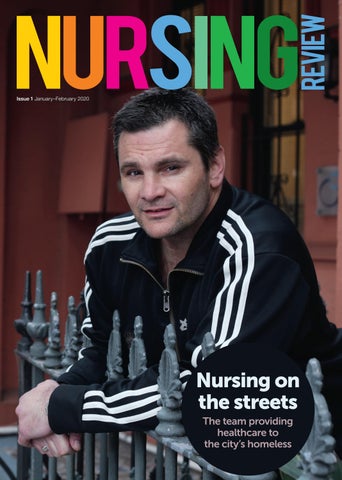
Issue 1 January–February 2020
Nursing on the streets The team providing healthcare to the city’s homeless
A combination anaesthesia that endures*
For use with:
Helps prevent pain and unnecessary expense
Minor cosmetic procedures
Vaccinations
Tattoos
EGO PHARMACEUTICALS PTY LTD
Always read the label and use only as directed. References: 1. Data held on file at Ego Pharmaceuticals Pty Ltd.
21–31 Malcolm Road, Braeside 3195 Australia australia +61 3 9586 8800 toll free 1800 033 706 ‘Ego’ and ‘Numit’ are trademarks of Ego Pharmaceuticals Pty Ltd. ©2019 Ego. ask@egopharm.com www.egopharm.com Date of Preparation: September 2019
0486-34/NR
* Lidocaine (Lignocaine) 2.5% w/w Prilocaine 2.5% w/w provides skin analgesia for 2 to 4 hours
1
contents
news
MANAGING EDITOR
2
Richard Garfield 02 9936 8628 richard.garfield@apned.com.au
3 4
NEWS EDITOR
Dallas Bastian 02 9936 8637 dallas.bastian@apned.com.au
5
HEALTH EDITOR
7
Conor Burke 02 9936 8638 conor.burke@apned.com.au
6
04
08
SUBEDITOR
royal commission
8
Govt and aged care royal commission at odds
legal corner
Robert Santos
10 Data dilemma Protecting your privacy at work
PRODUCTION EDITOR
industry & reform
Kate Prendergast
11 Home alone
SALES MANAGER
Ben Long 02 9936 8664 ben.long@apned.com.au SUBSCRIPTION ENQUIRIES
Daniel Omelia 02 9936 8607 subs@apned.com.au
Nurse slammed for sex-shaming on TikTok Young nurse saves yellow Wiggle’s life Can chronic pain change your personality? 2020: The Year of the Nurse and Midwife VR helps students manage ‘problem patients’ World reacts to Wuhan coronavirus outbreak
12
16
COVER IMAGE
Photo: St Vincent’s Hospital Sydney
Improving safety for healthcare workers on home visits 12 Wrongheaded on ratios? A chief exec questions quotas 14 $500m won’t fix neglect What comes after the royal commission’s interim report? 15 View from the hill Advocating for nurses from Canberra 16 Heating up Preparing hospitals for climate change
specialty focus
18 Finding your own light
PUBLISHED BY
Giving patients a good death
19 A quick chat with… Meet midwifery educator Kim Gotos 20 Helping the homeless Attending to society’s most vulnerable
APN Educational Media GPO Box 4245 Sydney NSW 2001 ABN 58 090 900 999 ISSN 1326-0472 PP100001944 PUBLISHER’S NOTE
clinical practice
20
24
© Copyright. No part of this publication can be used or reproduced in any format without express permission in writing from APN Educational Media. The mention of a product or service, person or company in this publication, does not indicate the publisher’s endorsement. The views expressed in this publication do not necessarily represent the opinion of the publisher, its agents, company officers or employees.
22 Foodies forever Bringing eating pleasures into aged care 24 Asking to die Survey gauges nurses’ responses to hard questions
workforce
26 This is your captain speaking Nurse’s journey from the ICU ward to the heavens 28 CALD confidence Boosting esteem and diversity 30 Fundraiser bows out Nurse reflects on a life of raising money for good causes
technology
26
32
32 Siri, I’m feeling blue Can AI help with mental health? nursingreview.com.au | 1
news
Sex shaming goes viral Nurses criticised for messages spread on TikTok. By Dallas Bastian
N
urses have made headlines in the US for using social media platform TikTok to spread health information some believe is unhelpful. One such nurse was spotlighted for her video claiming that the best way to prevent STIs was to wait until marriage to have sex. The now-deleted video featured the woman dressed in scrubs under the handle Nurse Holly. In an interview with BuzzFeed News, the woman explained that she wanted the young girls who follow her to know “that there can be benefits of saving sexuality for one partner”. “In the comments, I acknowledged that of course using protection will help prevent [STIs] if one is sexually active. I just wanted to present another option to my young audience,” she said. “I understand that my voice will not be accepted by many as it’s an unpopular view. This video was simply created with the intention of helping little girls see that saving sex for one partner may have certain benefits.”
2 | nursingreview.com.au
The nurse had around 400,000 thousand followers on TikTok before the video she made about STI prevention went viral. She has now amassed over 1.7 million followers. As the video was spread around social media sites like Twitter, other nurses took to TikTok to counter Nurse Holly’s point or to add their voice to the conversation about STI prevention. A nurse named Diego posted a video with the text: “Did you know that one of the best ways to prevent STIs is to stop stigmatising them so people feel comfortable talking about them? “While abstinence is a valid way to prevent the spreading of STIs, more comprehensive education about the spectrum of options available is important. Creating a safe space for people to talk about their intimate history, being nonjudgmental, and actually attempting to be helpful is best practice in healthcare.” ealthcare professionals that don’t H let judgment guide their practice let me hear y’all make some noise!!! #NurseTwitter pic.twitter.com/ JCxp8UEJRe — Diego (@hoodratdiego) 13 Jan 2020
Earlier, a nurse practitioner posted a tweet directed to Saint Thomas Health that read: “This is one of your nurses, and she seems to have missed the lectures on sexually transmitted infections, as well as refraining from shaming patients. It is very disturbing that she cares for anyone.” The video also helped fuel a broader conversation on social media about its misuse in relation to discussing health conditions and patients. A nurse named Sarah criticised a TikTok video posted by another nurse of her impersonation of patients with mental health conditions and the “screaming mother of a baby that was just coded unsuccessfully”. The Association for Healthcare Social Media (AHSM) recently published a statement saying the body “recognises the need to actively address social media behaviour that may perpetuate health misinformation, exacerbate distrust of health professionals, or result in professional consequences for the poster”. The group added that while there is a need to address such concerns in a timely fashion, the perception of a fragmenting medical community may further drive distrust in the medical profession. “Though disciplinary action is often necessary for social media misuse, we believe this should be executed through protocols set forth by hospitals, health institutions, training programs, and/or professional schools … rather than in a public forum.” Among other channels of reporting, AHSM called on people to notify the
Other nurses took to TikTok ... to add their voice to the conversation about STI prevention. individual or individual’s institution of observed social media misbehaviour prior to plastering it across social media. In the wake of the online debate, other health professionals were spruiking the benefits of using sites like TikTok responsibly to spread health information. US physician Dr Rose Marie Leslie, who has a background in health education, told the BBC that she gets hundreds of messages from teenagers asking for videos on specific topics. She also said that her followers have told her that social media is an easy way for them to learn something new and useful. ■
news
Paramedic Brian Parsell and RN Grace Jones. Picture: Toby Zerna
Yellow Wiggle saved by nurse RN praised for quick thinking to save performer Greg Page.
A
concertgoing nurse has been labelled a hero for her work treating Wiggles performer Greg Page after
he had a cardiac arrest at a bushfire fundraiser. Off-duty nurse Grace Jones was in the audience of the 18+ Wiggles concert that brought together the band’s original members. Towards the end of the event, Page collapsed and stopped breathing. Jones, who works at Sydney’s Royal North Shore Hospital, saw Page fall to the ground and offered her help. Red Wiggle Murray Cook told ABC TV’s The Drum program that Jones “knew what she was doing”. “When Grace turned up, she took control,” Cook said. “Our drummer and one of our staff members ... started the CPR, and then the defibrillator turned up. Grace Jones took over there and she was amazing.” Jones later described to reporters the “surreal” experience when her training kicked in. “I saw Greg collapse on the side of the stage,” Jones said. “I asked one of the security guards if they needed any medical assistance and they said yes.
Asylums as havens Academic defends history of mental health nursing.
T
he ‘evil nurse’ is a recurring trope in popular horror – whether it’s Poe’s nurse Ligeia or Nurse Ratched from One Flew Over the Cuckoo’s Nest.
The lunatic asylum is their typical haunt, and is depicted as an environment infused with dread, danger and the uncanny. But one academic wants to remind people that the role these asylums played in the community is often at odds with those depictions, and that mental health nurses should be proud of their roots.
“I was the only one there who had any training besides first aid training, so I just started to do what I do at work.” After administering CPR, Jones was handed a defibrillator to use. Intensive care paramedic Brian Parsell, who arrived shortly after, joined the chorus singing Jones’s praises, labelling the nurse a hero. He told reporters: “It was only through her efforts [and those] of the bystanders before we arrived that [Page] is alive today. “We are good paramedics, and we do a great job, but it helps when there are people there doing what needs to be done before we arrive.” Jones said: “I didn’t go to the concert expecting to do that, so it all feels a bit surreal. I do stuff like that every day at work, but I have never had to do it without equipment. “I’ve been trained to do that and I kind of flicked a switch. I went in and I just used all the knowledge that helped him, and saved him.” Page was discharged from hospital in less than a week. ■
Drawing on her PhD research, CQUniversity’s Dr Julie Bradshaw used her address to the recent 45th International Mental Health Nursing Conference to describe how early lunatic asylums provided physical, mental, social and spiritual care. Apart from works of fiction, some of the negative perceptions of these asylums came from their geographical isolation and resulting sense of silence, and connections to police action. “Asylums were seen as very punitive,” Bradshaw said. “There’s the idea that people stay in asylums forever. They get locked away because their relatives don’t want them and they are not well cared for.” She added that while there was a dark side to asylums, including violence and a dearth of medication, the work that happened there was the best staff could do at the time. “People went to lunatic asylums because they were physically ill, or socially excluded, or were victims of domestic violence, because they had nowhere else to go, and were provided with a sanctuary and care,” Bradshaw said. “We should celebrate our history and look at the positive things that we can take from that.” ■ nursingreview.com.au | 3
news
Feel the pain, be the pain Chronic pain can change your brain and personality, say researchers. By Conor Burke
A
new study has found that people with chronic pain experience changes to their brain which can cause negative personality changes. The Australian researchers discovered that people with chronic pain have smaller amounts of glutamate – the brain’s key chemical messenger – in the region that regulates thoughts and emotions. The lead author of the study, Associate Professor Sylvia Gustin from Neuroscience Research Australia (NeuRA) and the University of New South Wales, said the disruptions that pain causes between brain cells can make sufferers “more negative, fearful, pessimistic or worried”. Gustin, who is also a registered psychologist, has studied chronic pain for 20 years and says that perceived personality changes are a constant issue raised by patients. “They say, ‘I’m not myself anymore.’ And a lot of people with chronic pain are stigmatised. They are stigmatised to the
4 | nursingreview.com.au
level that other people say, ‘You developed chronic pain because of your personality,’ or, ‘You have a negative personality.’ And this is not true,” Gustin told Nursing Review. Chronic pain is thought to affect 3.24 million Australians, with 1.03 million of those aged 65 years or older. It is estimated that chronic pain costs the economy $140 billion a year in lost productivity and health system expenditure, among other things. The researchers studied participants with chronic pain and found that the lower the glutamate levels within the medial prefrontal cortex, the more a person experienced these negative personality changes. “We know that there are structural, functional and biochemical changes in the brain, particularly in the region which is responsible for regulating emotions and cognition. And this area is called the media prefrontal cortex. And it sits directly behind your forehead,” Gustin said. “However, we don’t know exactly the process. Is it immediately occurring? Is it occurring after two weeks of pain? After four weeks? It could be very individualised. So it could be different from one person
to the other. And I think it actually has something to do with stress.” Gustin said that stress from the pain incident destroys the brain cells’ ability to communicate properly with one another. This results in emotional dysregulation and a more negative-prone personality, where people can report feeling tired, unmotivated and constantly worried. “We know that stress really can kill brain cells because stress is increasing your levels of cortisol in the brain. And cortisol is also linked to glutamate, and an increase in glutamate is toxic and can kill brain cells,” she says. The next step will be developing medication that can target glutamate, which may be some way off. However, in the meantime, Gustin said this research should make us rethink our approach to chronic pain. Educating patients about the effect that pain can have on personality can go some way to combating these changes, and it is equally important for clinicians and carers to better understand chronic pain. “I’ve talked to a lot of family members and carers and one of the most problematic things for them is that they can’t help. And they’re trying to help, but it’s not so simple. So for them, understanding what is going on is also relieving,” Gustin said. “In regard to the medical professional, I think it’s always good if we understand why people with chronic pain sometimes have more negative personalities … and understanding that hopefully helps the medical field to feel more empathy and to understand that there is a pathological reason for it.” The research could also impact how we treat people in aged care, where chronic pain is often an issue. “Brain function is similar between old and young people. It’s biology. So, if a young person with chronic pain shows personality changes, an old person would show exactly the same,” Gustin said. “With Alzheimer’s and chronic pain, the changes are more exacerbated, because you have dementia and cognitive decline, and that is, a lot of times, due to the death of brain cells, plus pain also changes how the brain cells work.” Gustin plans to continue her work in this area, looking at ways in which glutamate can be restored in the brain as well as developing trials using DBT (dialectical behaviour therapy) to see its effects on chronic pain. ■
news
It’s our year Celebrating 2020 as the first Year of the Nurse and Midwife.
I
n May, it will be 200 years since the birth of Florence Nightingale, and the World Health Organization (WHO) is marking the date by declaring 2020 the first ever Year of the Nurse and Midwife. Early last year, WHO presented the proposal to member states at the 72nd World Health Assembly for consideration and endorsement. At the turn of the decade, WHO directorgeneral Tedros Adhanom Ghebreyesus said that during 2020, WHO and its partners will ask countries to improve the education and employment of nurses and midwives.
“With the start of a new year and a new decade, let’s take a moment to thank all of the brave health workers around the world. They’re doing lifesaving work every day, including during holidays when the rest of us are with our loved ones at home. But the world needs to do a better job in supporting our health workers, paying them, training them and protecting them.” International Council of Nurses (ICN) chief executive Howard Catton said WHO’s vision of improved global health will only become a reality if there is a massive investment in nursing. “The research evidence is clear: having more nurses leads to better health outcomes,” he said. “The potentially catastrophic shortage of nurses we face over the next decade can be avoided, but only if governments act swiftly and decisively to turn this situation around.” Catton added that ICN wants to use this year to bust myths and stereotypes about the profession and show the public the reality of 21st century nursing.
ICN president Annette Kennedy said 2020 is the greatest year in the history of the nursing profession. “This is your year to tell your story about the great work you do. Every day, nurses save lives, but they do it invisibly and silently and without telling anyone,” Kennedy said. “Now’s the chance for you tell your story, to tell the world what great work you do. Take this opportunity and use it.” To mark the theme, medical journal The Lancet announced it will dedicate a special issue this year to nursing, while in June last year, Nursing Now launched the Nightingale Challenge, which calls on employers to increase leadership education opportunities for nurses. Dr Barbara Stilwell, Nursing Now’s executive director, said: “Nurses are ready for this moment – 2020 is the chance to show what nurses can do to improve health for everybody, everywhere.” Nursing Now co-chair Lord Nigel Crisp said it was time for governments to step up and take decisive action to invest in their nursing and midwifery workforce. ■
Take a break on us Your organisation may be eligible for Australian Government-funded support to help alleviate the pressure of finding a temporary replacement when you or your colleagues go on leave. You will be given all the support needed to recruit, screen and place highly experienced health professionals that can hit the ground running from the moment they arrive.
For more information visit www.rurallap.com.au
nursingreview.com.au | 5
news
Photo: University of Newcastle
Meet ‘Angry Stan’ The new VR tool helping students resolve conflict.
A
new “world first” virtual reality simulator is aiming to equip student nurses at the University of Newcastle with conflict resolution skills. The VR program replicates a real-world emergency room and asks students to respond to a high-pressure mock scenario. The program, a collaboration between the School of Nursing and Midwifery and the university’s IT Services Innovation Team, is the first of its kind to respond to real-time biofeedback – for example, the human heart rate. Violence against healthcare workers is on the rise in Australia, and tools such as this could help clinicians de-escalate potentially dangerous situations.
NSW Bureau of Crime Statistics and Research recorded 361 violent incidents in hospitals in 2015 and 521 last year. As reported by the ABC, the Victorian Crime Statistics Agency recorded 335 assaults on healthcare premises in 2015 – last year the figure was 539. Victoria also saw a 60 per cent increase in assaults on nurses recorded over the last three years. Queensland Health puts the number of incidents of violence and threats in hospitals at a staggering 5514 – a 48 per cent rise during the last three years. As part of their mental health module, the students are faced with ‘Angry Stan’ – a VR avatar – through their VR headsets. They are faced with a number of situations and must remain calm and navigate the challenges, based on real-life scenarios. The simulations aim to give students insight into the clinical workplace, and they can practice managing conflict and building resilience. Dr Donovan Jones, project lead and lecturer in the School of Nursing and Midwifery, said: “Working in an
emergency environment can be incredibly demanding, with emotions running high and competing priorities. “Knowing how to effectively diffuse an escalating situation while keeping a clear head can make a life-changing difference in emergency care, which is why we want to ensure our graduates are well equipped with resilience training when entering the workforce.” Mike Hazelton, professor of mental health nursing, formed part of the team to develop Angry Stan based on his very real lived experience. “Stan represents someone health workers may come face to face with in an emergency environment,” Hazelton said. “He is looking for his friend who has been brought in as a patient, and he is becoming increasingly agitated.” He added: “We support zero tolerance for violence against healthcare workers, which is why it was imperative to develop an immersive training program where students can practise dealing with these potential situations in a safe, repeatable and realistic environment.” ■
Photo: Nike
A shoe in Nike releases new shoe for ‘everyday heroes’.
S
portswear giant Nike has released a new shoe specifically designed for “everyday heroes” – doctors and nurses. The Nike Air Zoom Pulse was designed and product tested with the insights of medical workers at the OHSU Doernbecher Children’s Hospital located in Portland, Oregon – a 20-minute drive from Nike world headquarters in nearby Beaverton. The shoe designers watched healthcare workers over the course of 12-hour shifts to get an idea of the rigours of the job
6 | nursingreview.com.au
and designed a shoe that is easy to get on and off with specific cushioning and traction fit for the hospital environment. The shoe also features a coated toe box to protect against spills, is laceless, easy to clean, and features “an elastic strap that keeps the heel securely contained, and allows for flexible and easy onehanded entry”. “Nurses, for example, walk approximately four to five miles and sit for less than an hour during the course of a 12-hour shift. The work is physically and mentally demanding. The design for the Air Zoom Pulse tackles those challenges with simplicity in mind,” Nike said in a media release. ■
news
Rapid response
Medical workers in protective gear talk with a woman suspected of being ill with coronavirus at a community health station in Wuhan in central China’s Hubei Province. Photo: Chinatopix via AP
Coronavirus outbreak leads to measures to prevent its spread. By Conor Burke
A
t the time of writing, authorities had identified seven cases of the Wuhan coronavirus in Australia. Globally there have been 6065 confirmed cases: 5997 in China and the rest in the Western Pacific Region, South East Asia, the US, Canada, Germany and France. Scientifically identified as ‘novel coronavirus (2019-nCoV)’, this outbreak is the first known instance of the disease found in humans.
WHAT IS IT? Coronaviruses (CoV) are a large family of viruses that cause illnesses from the common cold to more severe diseases such as Middle East Respiratory Syndrome (MERS-CoV) and Severe Acute Respiratory Syndrome (SARS-CoV). The Wuhan strain causes pneumonia-like symptoms. According to the World Health Organization (WHO), the main clinical signs and symptoms reported in this outbreak include fever, breathing difficulty and “chest radiographs showing bilateral lung infiltrates”. The WHO suggests that not enough is currently known about the full clinical features of the disease, nor the intensity of the human-to-human transmission and the original source of the outbreak. However, early theories suggest that, like SARS, the virus may have come from bats. “It’s these coronaviruses like SARS and MERS, and this new one, that when they jump species from bats or some other vertebrate host into humans, they can be
quite virulent,” says Roy Hall, professor of virology at the Australian Infectious Diseases Research Centre. This can make these types of viruses unpredictable, and it can be difficult to pin down how long an outbreak might last. “In the case of SARS, it came, it was explosive, it was highly transmissible. We had a roughly 10 per cent mortality rate … but it disappeared after six months and we haven’t been able to find the exact virus again in nature, and why it suddenly died out we don’t know,” Hall says. “With MERS, it’s a different story; there is the odd case,” he says. “We have no idea what this virus is going to do.” Writing in The Conversation, ANU infectious disease specialist Associate Professor Sanjaya Senanayake said that if this virus behaves like MERS or SARS, then droplets of saliva, urine, faeces and blood could all be infectious. “This is why prompt isolation of suspected cases and good infection control practices are so important,” he said.
HOW DID IT OCCUR? WHO was first alerted to the outbreak on 31 December last year when several reports of pneumonia in Wuhan City, capital of Hubei province in China, did not match any other known virus. Modelling by Australian academics working with the WHO suggests that one carrier may infect up to three people, which would suggest this virus is less infectious than both the previous outbreaks of MERS and SARS. There is currently no vaccination for this strand of the coronavirus, however scientists at the University of Queensland
have been asked to use its new ‘molecular clamp’ technology, created by UQ scientists in partnership with the Coalition for Epidemic Preparedness Innovations (CEPI), to produce a vaccine available worldwide within six months. “The University of Queensland’s molecular clamp technology provides stability to the viral protein that is the primary target for our immune defence,” said Dr Keith Chappell, from UQ’s School of Chemistry and Molecular Biosciences and the Australian Institute for Bioengineering and Nanotechnology. “The technology has been designed as a platform approach to generate vaccines against a range of human and animal viruses and has shown promising results in the laboratory targeting viruses such as influenza, Ebola, Nipah and MERS coronavirus.”
WHAT NEXT? Chinese authorities imposed travel bans on several cities near Wuhan, affecting more than 41 million people. Schools in the Hubei province postponed their return from Lunar New Year break indefinitely in an attempt to stop the spread. In Australia, some private schools told parents to keep children at home if they had travelled to China, unless they were medically cleared to come in. However, the Australian Government Department of Health said that children were fine to attend school as long as they had not come into contact with a confirmed case of the virus. The department advised that there is no need for alarm in Australia at this stage. The Royal Australian College of General Practitioners (RACGP) urged GPs to watch for patients with fever and respiratory symptoms returning from “specific” travel to Wuhan. The WHO has advised against restricting international traffic based on the information currently available. As for further outbreak, Hall believes Australia is well placed to deal with any cases that present themselves. “Medical practitioners and nurses had to prepare for the outcome of Ebola coming to Australia, so we know that Australia has contingencies set up for really good isolation and quarantine of patients with highly transmissible viruses. “They’ll have similar systems in place, and they’ll know how to protect themselves against an infectious disease.” ■ nursingreview.com.au | 7
royal commission
Schism opens Government and royal commission at odds over ACAT privatisation claims. By Conor Burke
T
he Royal Commission into Aged Care Quality and Safety has taken the extraordinary step of releasing a statement contradicting claims by Aged Care Minister Richard Colbeck that suggested the commission recommended privatisation of the ACAT assessment process. Since November, media outlets have reported that the government plans to amalgamate the current agencies responsible for aged care assessments –
8 | nursingreview.com.au
the Aged Care Assessment Team (ACAT) and the Regional Assessment Service (RAS) – and offer the tender to the private sector. The Department of Health Website states that the tender process will happen this year, and “the new arrangements will start from April 2021”. “Current assessment services provided by the Regional Assessment Service and Aged Care Assessment Teams will continue until the new arrangements start,” it said. This prompted concern from experts, the public and Colbeck’s colleagues at state level. NSW Health Minister Brad Hazzard claimed that at a recent meeting of state and federal ministers, there was no mention of these plans. “It seems pre-emptive and unreasonable to be effectively privatising health aged
care services while the royal commission into aged care is still underway. Not a lot of logic there,” reported the Sydney Morning Herald. In the statement, royal commission chair Tony Pagone acknowledged the public’s concern and made clear that in no way did the commission support any such moves. “I take this opportunity to make clear that the interim report did not endorse the government’s stated position but noted that we would monitor with interest the implementation which the government had announced,” he said. “It is desirable in view of the public concerns and statements which have been expressed that it is made clear that the work of royal commissioners is intended to be, and is, independent of
royal commission Senator Richard Colbeck, minister for aged care and senior Australians. Photo: Kym Smith/News Corp
respect the independence of the royal commission,” he said. Labor MP Julie Collins described Pagone’s comments as a “slap down” of Colbeck. “Senator Colbeck should correct the record and apologise for verballing the royal commissioners,” Collins said in a statement. The Liberals are obsessed with privatisation – aged care assessments are already being done by well qualified professionals, why would the Morrison government want to privatise them? — Julie Collins (@JulieCollinsMP) 30 Dec 2019
government. Our tasks as commissioners are detailed in the terms of reference, and we have not yet made recommendations about which sector or mechanism will best achieve an integration of Regional Assessment Services and the Aged Care Assessment Teams.” However, Colbeck fired back on Wednesday saying that the government refutes “claims that our intention is to privatise the assessment process for aged care”. “That assertion is incorrect. The government is completely cognisant of the view the royal commission has expressed in its interim report regarding the integration of these assessment services as reiterated by Commissioner Pagone ... The government continues to
Some fear that if the assessment buck is passed on to the private sector, the current standard of assessment will decrease and move to a KPI-focused model. Dr Timothy Woodruff of the Doctors Reform Society said: “A privatised ACAT will be a race to the bottom. “Poorly trained assessors will inadequately assess complex patient needs as they gouge government fees for their private owners and force the dedicated assessors out of the system because they will not be profitable. More taxes wasted and gifted to private businesses.” Neuroscience Research Australia professor of geriatric medicine Tony Broe wrote in a recent opinion piece that this is another misstep in a long history of aged care mismanagement by successive governments. “[The government] has failed to deal effectively with the country’s aged health care needs, and what has developed is an aged-care crisis with social, political and health-related ramifications,” he said. “Senator Colbeck is correct to say there are inconsistencies in the service that need to be addressed with a national approach. However, this does not mean throwing the ACAT baby out with the failed aged care bath water.” However, two of the aged care peak bodies say they are more concerned with the best possible outcomes for consumers than who delivers the assessments. Aged and Community Services Australia chief executive Patricia Sparrow told Nursing Review that she is supportive of the government’s announcement to integrate the RAS and ACAT teams to “deliver consistent and accurate assessment for older Australians”.
“Our concern is not with who delivers the assessment on behalf of the government, as many government services are contracted out to third parties. “It needs to be well resourced so that assessments are accurate and timely, allowing providers to confidently deliver the care that’s needed. “The issue is of the government providing enough funding to keep the residential care sector, who are struggling, as well as home care providers who are being forced to cut costs to remain viable and deliver the care older Australians require,” she said. Leading Age Services Australia CEO Sean Rooney said: “LASA supports an efficient and effective system that delivers the best outcomes for consumers, including accurate assessments that provide a strong basis for providers to develop care plans.” Elsewhere, the commission has announced that it will reconvene for 2020 in a slightly different format. Held over 10–11 February at the Adelaide Convention Centre, the hearing will be a workshop with a panel of witnesses who will have the ability to form discussions with each other, counsel assisting and the commissioners as they test propositions and ideas in preparation for the final report, due in November this year. This more informal set up will not take place in a hearing room or court-like setting and will focus on the redesign of the aged care system. The commission said that future workshops may be scheduled later. This announcement coincided with the release of two background papers conducted by Flinders University for the commission. The research looked at international systems and innovations in aged care and has identified many opportunities for improvement in Australia. In one paper, the researchers examined aged care systems in 22 countries and found Australia lacking in funding, transparency of staffing levels and regulation, when compared with better performing countries. In the other paper, which focuses on innovative models of aged care, the authors identify approaches which could benefit the Australian system, such as telehealth communications, training which supports people with dementia living at home and their carers, and remote support of independent living through ‘health smart homes’. Both papers can be found on the royal commission website. ■ nursingreview.com.au | 9
legal corner
Unfairly fingered Is your employer allowed to collect your biometric data? By Scott Trueman
I
ncreasingly, healthcare employers are using biometric and electronic databases and surveillance cameras to monitor their employees, who need to be vigilant about protecting their rights and personal information. This case dealt with an unfair dismissal claim in a non-healthcare workplace, but it has direct relevance to the health sector and issues of privacy. The case concerns a company that introduced fingerprint scanning of employees as part of a new attendance policy. One employee (Mr L) was a casual ‘general hand’ of more than three years standing. In a November 2017 meeting, he refused a request to provide his fingerprints. Mr L was not satisfied the company could guarantee no third-party access to the fingerprint database, a concern he provided in writing. The company responded with documentation from the scanner supplier that said the data could not be used for any “purpose other than linking your payroll number to a clock in/out time”. Mr L, however, continued to use the ‘sign in’ book. He was given a verbal and then a written warning that if he did not comply with the scanning policy, his employment would be terminated. Further discussions did not bring about a resolution, and in February 2018 he was dismissed. Mr L brought an application in the Fair Work Commission (FWC) for unfair dismissal. The employer submitted that its policy to use fingerprint scanning was lawful, reasonable and practical. Its justification was that fingerprint scanning improved safety in the event of an emergency, and that the policy formed part of Mr L’s contract of
10 | nursingreview.com.au
employment and he was therefore obliged to comply. Further, the collected biometric data was secure and confidential, and there was no breach of privacy due to an exemption in the Privacy Act 1988 (Cth) with respect to his records. Mr L’s submissions were that his fingerprints and associated biometric data constituted “sensitive information” according to the Privacy Act, and, in any event, were his private property. He asserted that once his personal biometric data was digitised, it would be difficult to contain its use by third parties, including for commercial purposes, and he was never informed exactly who was likely to have access and under what circumstances. Lastly, he submitted that the Privacy Act exemption did not apply to his records because the company failed to issue a ‘privacy collection notice’ as required by the Privacy Act. The FWC at first instance determined that the dismissal of Mr L was valid. It said the site attendance policy was “reasonably necessary” to improve safety and payroll efficiency. The commission said that despite the company not having a privacy policy, this was outweighed by the reasonable necessity of implementing a site attendance policy. The commission concluded that the dismissal was not, in all the circumstances, harsh, unjust or unreasonable. Mr L successfully appealed the decision to the full bench of the FWC on several grounds. Overturning the initial decision, the full bench found that the company’s reasons for dismissing Mr L were not valid and contravened Australian privacy laws – by not complying with its privacy obligations pursuant to the Act. As a result, Mr L was within his rights to refuse to provide his fingerprint data and was not in breach of his employment contract because at the time of entering into the contract such (electronic and biometric) policies were not part of it. Mr L’s concerns about data confidentiality were also found to be valid. The full bench found that prior to introducing the scanners, the employer should have provided employees with detailed information that it
was seeking to collect personally sensitive information. It should have had a privacy policy and a mechanism to manage and protect such data after its collection. In determining Mr L’s successful appeal, the FWC undertook a detailed review of the relevant Australian Privacy Principles (APP). APP 1 requires a company/business to have an up-to-date and clearly expressed policy about its management of personal information and how, in an open and transparent means, it manages storage of such personal information. The company did not have the required privacy policy or controls in place for the collection, use and storage of the information or data in question. In addition, the company tended no evidence that it was able to protect and manage information and data. Tellingly, FWC found that management had made little effort to make themselves aware of privacy laws and their obligations. APP 3 prohibits the collection of an individual’s sensitive information without consent, unless the information is “reasonably necessary” for the company’s activities or functioning. Any collection of personal information can only occur by lawful and fair means. The FWC found the company’s direction to Mr L for provision of his fingerprints was not “reasonably necessary”, and therefore not lawful. APP 5 provides that before or as soon as practicable after collection of personal information, reasonable steps must be taken to notify individuals of an entity’s privacy policy. Such notice must include details about who is undertaking the collection; the purposes of the private information being collected; any consequences if the information is not collected; how the information may be accessed and corrected; how to make complaints concerning breaches of the APPs; how complaints will be dealt with; whether it is likely the information would be disclosed to overseas recipients, and if so, in which countries those recipients are located. The company failed on these points. The FWC stated that Mr L was within his rights to refuse consent to having his fingerprints scanned and registered and therefore there was no valid reason to dismiss him. As more electronic devices are introduced into health workplaces, nurses need ever more vigilance. Such vigilance is often nothing more than reminding an employer of their legally mandated obligations. ■ Scott Trueman is a lecturer in the School of Nursing, Midwifery and Nutrition at James Cook University.
industry & reform
Home safe Protecting healthcare workers from violent attacks during home visits. By Alan Stocker
A
ccording to the World Health Organization, between eight and 38 per cent of healthcare workers suffer physical violence at some point in their careers, and many more are threatened or exposed to verbal aggression. An Australian study of 9951 doctors across all professions and stages of training revealed that 70.6 per cent reported experiencing verbal or written aggression and 32.3 per cent experienced physical aggression in their previous 12 months of practice. The Australian Institute of Criminology ranked healthcare facilities as the most violent workplaces in the country as far back as 1999. Worryingly, one study found that 44 per cent of nurses don’t report physical violence because they consider it just part of the job. In an audit of violence conducted towards healthcare workers in Victoria, some of the incidents that were categorised as ‘mild’ or ‘no harm’ included attempted strangulation, kicking a pregnant woman in the stomach, and being punched. It’s concerning that violence against healthcare workers has reached such a state that these events are categorised as ‘mild’. Violence in patients and their visitors occurs for any number of reasons. There may be an underlying or acute mental health issue at hand. The patient or their family members may feel frustrated with the medical process. Often, drugs are involved. Sometimes, the violent behaviour is the result of the patient’s medical condition and is therefore involuntary. Regardless of the cause of the violence, the outcome is the same.
While hospitals tend to have the highest rates of violent behaviour compared with general practice, for example, there are other situations where healthcare workers can be at significant risk. Home visits and after-hours work carries a high risk and, of the doctors surveyed in the Australian study, only 43 per cent had instituted any form of protective strategy when undertaking an after-hours home visit. The healthcare workers visiting people in their homes often work alone without the support of a colleague. In a hospital setting, security guards and other personnel are on hand to assist when violence erupts. Hospitals usually have duress buttons or even a mobile duress tag that staff can wear to sound the alarm if they’re attacked. These mobile duress tags show the staff member’s location in the hospital so help can find them sooner. By contrast, when working alone in someone else’s home, it can be difficult to call for help. This is especially true if the patient is acting in a threatening manner with intent to escalate to violence. Healthcare workers in this situation may be afraid to intensify the situation by calling for help or ringing the police, for example. Addressing the escalating scourge of violence in the community at large and against healthcare workers in particular is a complex challenge without a clear answer. Therefore, it’s essential for workers who will visit patients in their homes to protect themselves proactively, making sure they feel as safe as possible when making home visits. These protective measures can include, at a minimum, mobile phones and personal duress alarms for every worker, a procedure for contacting police in an emergency, and a system to monitor visits and ensure that staff return safely even after hours and on weekends.
A comprehensive solution goes further than these mandatory basics. It should include a dedicated alarm button that staff can press on their purpose-built smartphone that lets first responders track their location and find them faster. The device should include an automatically activated alarm if the device is not moving or is detected running or lying flat for pre-programmed time periods, as this inactivity or excessive activity could indicate that a violent attack is in progress. The automatic alarm eliminates the need for the healthcare worker to proactively notify authorities that they’re under threat or attack, which can help avoid escalating the situation with an unstable attacker. The solution should be smart enough to understand whether it’s in or outside a facility, and notify the proper authorities accordingly. If the worker is attacked inside the facility, the device can notify on-site security. Attacks outside the grounds would automatically notify police. Once a duress alarm is activated, the device should start automatically livestreaming video and audio to let first responders assess the situation remotely, and gather evidence if needed. However, to avoid detection by the aggressor, the screen should immediately go blank after duress has been activated. The device can let the caregiver know that help is on the way via low-intensity vibrations. Because seconds can make a difference when a person is under attack, it’s also crucial that the solution be able to accurately locate the person even inside a building. This means first responders don’t have to waste valuable time trying to locate the person’s precise whereabouts. And, finally, the solution needs to include an escalation so that, if the responders notified first don’t acknowledge that they’ve been contacted, the call for help is rerouted to a secondary responder. This ensures calls for help won’t go unanswered. Providing healthcare services for people in their homes is a noble and valuable service that shouldn’t be degraded by the potential for violence. By providing healthcare workers with a comprehensive personal safety solution, organisations can serve their patients while maintaining worker safety. ■ Alan Stocker is the health practice lead at Wavelink. nursingreview.com.au | 11
industry & reform Hundreds of nurses and aged care workers campaign for ratios. Image: AAP/Brenton Edwards
Ratios not the answer
Innovation, not ratios, key to fixing aged care, chief exec says.
Phil Usher interviewed by Conor Burke
R
“
atios, ratios, ratios. Everybody will tell you that.” This was the response of aged care resident Merle Mitchell at the royal commission last year when asked to nominate one thing she would change in the sector given the chance. The debate over staff to patient ratios has raged for years, and the issue has been front and centre during the aged care royal commission. The Queensland state government has committed to staffing level reports and mandated ratios. However, federally, the government has resisted, and the aged care sector is equally unsure of its merits. One issue consistently raised is the cost of adding more nurses to an already struggling sector. However, a report presented to the royal commission by the Australian Nursing and Midwifery Federation federal secretary Annie Butler – the Flinders University National Aged Care Staffing and Skills Mix Project report –
12 | nursingreview.com.au
made a cost-benefit analysis of the paper’s recommendations and found that although it would cost $5.3 billion to implement, any costs would be offset through tax measures and other features. Savings made by avoiding staff attrition is one such feature, which currently costs the sector $500 million. One industry veteran who doesn’t want to see ratios implemented is Odyssey Health Group founder Phil Usher. He sees innovation rather than staff quotas as the solution to improving Australia’s aged care system. “I don’t think a one-size-fits-all solution is the answer,” Usher says. “Cherry-picking with mandatory staffing isn’t going to fix the problem, because I think the whole aged care system needs an overhaul.” Nursing Review spoke with Usher to hear more about his ideas for a “consumer centric” aged care system.
NR: You fear that quotas could further complicate an already complicated system. Can you explain the thinking behind that? It’s quite interesting when you look at it from afar. For example, most people think that problems can be resolved by mathematical equations: somebody might look at a standard aged care facility and think, “Okay, the way to address the problem is to throw more people at it.” To me, that is not the answer, and it’s not the answer for a couple of reasons. First, it can be hellishly expensive to throw more people at it, and if you get this picture in your mind, for example, of perhaps having
an aged care facility that’s got a number of people that are quite well, yet are forced to have a whole pile of staff there that may be idle – it makes no sense. It becomes very expensive, and somebody has to pay for that, so if the consumer’s got to pay for that, it’s not fair on the consumer. If the government’s got to pay for that, it’s not fair on the government. I think that a better system is to be much more personalised and try to give the power to the people, if you like, which is more like the consumer directed care or the home care system, rather than the aged care funding instrument, the ACFI system, which is what we’re talking about with the standardised staffing. I think a much better system in the ACFI side of it is to be more customised in what the care program needs to be for the individual. If you’ve got a pile of people that are quite well, you have less staff. If you have a pile of people that are not well, you have more staff, so it has to swell and it has to recede like the tide, as the need is there. And the key behind that will be, how do you fund it? I don’t really think the answer is mandatory staffing. It’s about being more flexible, and where’s the money going to come from?
The ANMF funded a paper with Flinders University that found it would cost $5.3 billion to implement, but any cost would eventually be offset through tax and other features, and that savings would be made by avoiding staff attrition, which they’ve found costs the
industry & reform
sector about $500 million or so. What do you say to those ideas? Staff attrition is a significant problem in our industry, whether you’re in the home care side or the ACFI side, with the revolving door of staff. Again, I always look at it from a resident’s perspective, and everybody I speak to says it’s very frustrating getting to know somebody and then within two months’ time they’re gone and replaced with a new face they have to get familiar with. It’s quite impersonal when you get that revolving door side of it. There are a few innovations I’m aware of that can stem that, but again it comes back to “Yeah, it’s great that taxes theoretically are going to solve this problem”, but when I look at the coalface, and when I look at the frontline people which are our carers, just about every single one that I meet are beautiful people. They wear their heart on their sleeve, and they’re in this industry helping elderly people because they love them. It seems wrong to me that they are so poorly paid for what they do. I think that your coalface people need to be paid more, and whether that comes from people’s taxes, or whether the purse strings need to be loosened by the actual resident, patient or whatever, you’ve got to really look after the people at the coalface, because to me it’s not a financial equation. It’s got to be all about the resident. To make it all about the resident, you do need to make it all about the people around them being the right people, and the system behind them being the right system. I agree with the study in terms of a solution for payment is effectively that we all pay for it, but I think there are other options as well.
If not ratios, what about minimum staff levels? We saw recently, when the royal commission hit Tasmania, a case study where a provider was not only cutting staff, but taking staff off the floor to spend all day looking at maximising ACFI funding. I think there are two problems there. We’re all aware that for a standard aged care facility to make money, primarily they make it out of care. So, there is perhaps too much time spent on working out how to optimise payments so you can make a living and your business is successful. Taking staff off the floor to do that in my book is just not on. Again, it’s got to be all about the humanities side of it. It’s got to be about the residents, so I do think
there is potential for a minimum floor attendance, if you like, by staff. For example, at most places, like what I do, there are three rosters a day, and I have a registered nurse across all three rosters, and it’s a fresh RN for each shift. There’s always somebody on there that’s senior, and there are always enough people to cover it, and there’s a wellness manager over the top of that who watches it. I’m possibly a little bit overstaffed, but that sort of minimal staff presence is a good thing, but not to the point where it’s mandatory that you’ve got X amount of people irrespective of what the care levels are of the residents that need to be looked after. That, I think, is going to end up in a financial heap, but having a minimum requirement where you know you’ve got good staff on 24/7, as a basis, yes, I’m a supporter of that.
You favour innovation. What does this look like, and how does this equate to better care for the residents? I think the ACFI system is antiquated. It was good 30–40 years ago, where the care was with the organisation and they dispensed that as they saw fit. I think the consumer is not happy with that system. They’re not happy with the outcome, and they’re often not on the same page as the actual deliverer of the care. For example, if you’re in a standard situation, you as an operator make more money out of the people that are not well than you do out of the people that are well. So, from the business point of view, it’s pretty hard to make ends meet if you’ve got lots of well people and the funding you get doesn’t allow you to make a profit. Therefore, you tend to take people that aren’t well. But from the consumer’s point of view, they want to be well. They want people that wrap their arms around them, hug them, love them, and help them get back on their feet, and are as well as possible. It’s a little bit difficult to do that when it’s not viable from a business point of view for all of your residents to get well, if you read what I say. Whereas over on the other side, I really like the home care system. I really like the consumer directed care model, where it’s the resident who owns the care package, and that means that, from a consumer’s point of view, they retain the power. That side of the funding system is going to get a lot more attention, and I think there’s a lot of room for growth. It’s a good
system, it works really well, but there’s just not enough levels. For example, it goes up to about level four now and there are other bits and pieces you can get as well, but if it went up to a level five, six or seven, and the consumer was still in charge of their package, it means that market forces come into play. Whether they’re getting that care at home or, like in my scenario, where it’s really a community of people with home care packages, it means that they’re in charge. It means they’re in control, and that’s one of the things that all the elderly say to me: “I don’t want my independence taken away.” If they own the package and can utilise that in a home environment, or in a community environment like what I do, then it’s power to the people. And then in addition to that, an innovation that I think is important is that there are other ways for businesses to make money. I’m not a fan of making money out of care, because at times that can be a conflict of interest. If my residents want to be really, really well, and I don’t make my money or people in our industry don’t make their money so much out of the care side of it, then everybody’s on the same page because the staff are working hard, doing things the way they want to, because their heart is on their sleeve – they want people to be well, the resident
There are other ways for businesses to make money. I’m not a fan of making money out of care, because at times that can be a conflict of interest. wants to be well, so if you take your profit away from making it out of care, then your team, your business and your residents are all aligned. That’s a big move, and there are a few of us in the industry in Australia doing it. It seems to be working quite well. If you go ahead in five or 10 years’ time and all the boomers are there, believe me, they will not be told, “Take what you’re given.” They will be making choices and they will be saying, “No, I want things on my terms.” I think innovation will be forced because of the nature of the boomers coming through. ■ nursingreview.com.au | 13
industry & reform
There’s a hole in the bucket, dear Liza, dear Liza So fix it, dear Henry, dear Henry, dear Henry With what should I fix it, dear Liza, dear Liza? With straw, dear Henry, dear Henry, dear Henry But the straw is too long, dear Liza, dear Liza...
There’s a hole in the bucket
We know $500 million won’t solve the problem. So what will? By Michael Fine
T
he royal commission’s interim report, ominously titled Neglect, was released on 31 October. A great early Christmas present for all Australians, chosen especially with the government in mind. In response, Prime Minister Scott Morrison joined Aged Care Minister Richard Colbeck, Health Minister Greg Hunt and NDIS Minister Stuart Robert on 25 November to announce another early Christmas present: $537 million to fix the aged care system over the next year. As you probably know, this will fund an extra 10,000 CDC Home Care Packages for a year, as well as provide $25 million to help finance programs to reduce the use of psychoactive medicines among those who
14 | nursingreview.com.au
receive care. It also provides $10 million for dementia training for aged care workers, and $4.7 million to help reduce the number of younger people with disabilities in residential aged care. Somewhat predictably, it seems this wasn’t quite what most of the industry wanted. Sean Rooney from LASA quickly pointed out that although welcome, the extra places were clearly not enough. Pat Sparrow from ACSA was reported as saying that “with some 120,000 people waiting for a package, it wouldn’t even touch the sides of demand”. So, is more money really what is needed? If so, how much more would be enough and where would that come from? If not, what else do we require? Government ministers have often read us the sermon: Throwing money at such problems won’t fix anything. When such troubles are endemic, more money will, at best, just prop up the existing system. Perhaps that’s what most players in the existing game want. But what else might we expect government to do? And how might we expect the different players to engage? At the moment, we don’t have answers, just more accusations and questions. It reminds me of the old Calypso folk song about the hole in the bucket:
In the end, you’ll probably remember, the bucket can’t be fixed because water is needed to fix it. Water is needed to wet the stone, which must be done to sharpen the axe, which is needed to cut the straw. This is what we require to fix the hole. But how can we fetch the water when there is a hole in the bucket? That’s of course where modern plumbing comes in! Real brilliance comes when we realise we don’t even need the bucket, and we can forget about the straw and the axe as well. That’s the problem with which we enter the new year, the beginning of the third decade of the third millennium of this modern and oh so clever era. We all know there are problems. And while no one wants to have to rely on aged care, it is something we each may need before we die. We all want the problems fixed. It’s just that no one agrees on how to fix them. In the meantime, we keep doing more of the same things that caused the problems in the first place. That’s the real Christmas present we are left with. Like climate change, the cost of electricity, the problems of drought and bushfires, and so many other problems confronting us today, we expect someone to fix the problem. But the someone seems intent on just ignoring the problems. Now is officially not the right time to talk about it. Leaving the system to fix itself means that simple issues become complex problems, and then these in turn become wicked problems. Five hundred million dollars is not enough to fix the aged care system. We all know that. But what do we need? What do we want next year, and what do we want when we are the ones who need the help? We need to change the conversation for a start, and start talking about the next step. But how are we going to do that, dear Liza, when there’s such a big hole in the bucket? ■ Michael Fine is honorary professor of sociology at Macquarie University
industry & reform
The view from Canberra Nurses in parliament on how they advocate for aged care. By Conor Burke
I
“
sadly haven’t been surprised by the revelations of the royal commission. I know this is going to sound a bit weird, but it’s been a bit of a relief for me that, finally, it’s getting the attention that it deserves,” federal member for Cooper Ged Kearney tells Nursing Review. We are talking to discuss her time in parliament – Kearney was elected for the first time in 2018 as an ALP candidate in a section 44 by-election – and as she spent 20 years as a nurse, we inevitably talk about the royal commission. “Although, the other thing I must say from Canberra is that Canberra is an explosive place. There are explosions every day of different issues. So, one day it’s all about aged care, another day it’s all about cuts to vets, another day it’s all about ... some scandal in the Liberal Party. “And so, attention spans are kind of short in a way. I realised that my job in Canberra is to keep those bursts alive when they come, to keep bringing it up in committees and keep making speeches about it and keep doing media about it, so that it stays up there as one of the things that we have to worry about and becomes a priority.” Due to her clinical experience – as well as her time in the union movement – Kearney has moved up quickly within the Labor ranks and currently serves jointly as shadow assistant minister for skills and aged care. She has long campaigned for workers and has often spoken about the skills gaps and pressure faced by aged care workers in particular. She has also spoken about
staff-to-patient ratios in aged care in the past, but what does she think about the line Labor took on aged care pay in the last election? Then-leader Bill Shorten refused to commit to any pay increases, or action period, until the end of the royal commission, something which frontline workers were unhappy about at the time. “He was looking at low-paid workers, and there was broad support for wage rises for childcare. From the industrial relations perspective, there was a very strong focus on low-paid, female-dominated workforces, which of course nursing and aged care [are]… So, from my perspective, I was certainly hoping that we would be elected so that we could actually run a decent campaign for wage rises for aged care,” she says. “But I think one of the main reasons was the childcare stuff is pretty straightforward. The childcare industry has had ratios set up, they’ve had some wholesale reforms to the way it’s funded, and really the last piece of that puzzle was to make sure that the carers got a pay raise. “With aged care, I’m not sure it’s that straightforward. We don’t have minimum staffing levels; people aren’t accredited, so they don’t have standard qualifications across the industry; there’s no transparency and accountability about where the money is spent; and that is very much clearer in childcare. “Aged care is a bit of a mess, and it needs wholesale reform across the board before we can actually commit to any one little bit of it,” she says. Kearney argues that it might be time to re-think how we view residential aged care in general. She believes that more often people are going into care when they have dementia or for reasons which makes staying at home impossible, meaning stays
are shorter and more acute. Investment in primary healthcare and preventive care in the future will be just as important to the sector to keep people out of hospitals and aged care and at home for longer. However, with the current government, Kearney believes any bipartisan attempts to tackle the tough subjects, like aged care, are more difficult than ever. “The Scott Morrison government does not want to do that. And they are actually using partisan politics as a political tool. And it’s very worrying, if you ask me. And that’s why the crossbench is now so important [because] we don’t have numbers in the House, even with the crossbench anymore. But more and more you see people like Helen becoming important.” Helen is of course fellow nurse, academic and independent member for Indi, Dr Helen Haines. Her view of the general engagement in the aged care debate in parliament is one of surprise. “Well, I reckon what is surprising me a bit is that, in question time, that there’s been no push from the Opposition, or very little push around aged care,” she told Nursing Review. “Some of these things I don’t know any more [about] than you, to be honest, even though I’m inside. I suspect that at the moment, everyone is waiting for the royal commission to play out. “We’re hearing people say we can’t wait for the findings of the royal commission to act here. But in terms of hard-core questioning on the floor of the House, there’s not much being said at the moment. I might have to take this one on notice why that’s not happening.” Both women agree that the current government could be doing more on health and aged care, but as they fight for the health system from different seats in the Canberra political machine, both will be going about their business in their own way. “Me as an independent, I’m committed to working with the government for good policy wherever I can, but most certainly, calling out the government when I think they’re not doing enough. And I would say, right now, not doing enough for healthcare in rural and regional Australia,” Haines says. “My job is to make sure that if we are lucky enough to be elected at the next election, in 2022, that we have a very robust and excellent policy to take to the election for aged care.” ■ nursingreview.com.au | 15
industry & reform
Burning issue that nurses are a key group who “could be climate leaders” in our hospitals. She spoke with Nursing Review about her work and climate change in Australia.
NR: Your health district launched its environmental sustainability plan earlier this year. How did it come about?
How can the health system tackle climate change? Kate Charlesworth interviewed by Conor Burke
W
ith catastrophic fires engulfing many parts of the nation, climate change has been thrust to the forefront of national debate. And as Australian summers continue to have increasingly devastating health effects on the community, the pressure on the health system continues to rise. However, 7 per cent of Australia’s carbon pollution comes from healthcare, with hospitals and pharmaceuticals the major contributors. Dr Kate Charlesworth is a public health physician and the sustainability lead at the South Eastern Sydney Local Health District. She believes the health system could be doing more to tackle its waste. She points to the UK as an example of what can be achieved. In 10 years, it has reduced healthcare-related emissions by 20 per cent, despite an increase in healthcare activity, and has seen savings in the region of a billion pounds ($2 billion). Charlesworth argues that frontline workers have a big part to play and believes
16 | nursingreview.com.au
KC: We have quite a progressive and forward-thinking executive, and they’re recognising climate risk and the responsibility and the opportunity we have to act, thus my appointment. The interesting thing about this job is a number of health organisations across the country have a sustainability lead or manager, but this is the first time – as far as we know – that a physician has been appointed to a dedicated sustainability role. It signals that our executive understands that sustainable healthcare is about much more than recycling and energy efficiency. It’s also about how we develop a health and care system for an increasingly imminent low-carbon world. A lot of healthcare organisations are doing this. I look to the private sector as to what they’re doing as well.
Did they actively seek out someone with your dual abilities? I think they wanted someone with a broader perspective. I specialise in public health medicine, so I typically do the bigger-picture health issues – vaccinations, measles outbreaks, obesity – and not just individual patients, but big-picture stuff. And of course, climate change is the biggest health issue of all. I had some experience in the UK, which is well ahead of us, and I’ve got a PhD in
this area as well. It was a great opportunity for me. There’s overwhelming scientific evidence that we need to rapidly decarbonise. Every sector is going to have to do that: education, transport, housing and so on. The health sector has a particular responsibility to act because there are distressing health impacts on our patients and communities. The thing many people don’t appreciate is that the health sector itself is a big contributor to the climate crisis. We are part of the problem, which is harming human health. There’s this sort of double responsibility and opportunity for the health sector to act.
The health system is contributing to the poor health of a nation and fixing it at the same time? It’s kind of weird. It is. I’m reminded of a little story. In the 1990s, a group of clinicians at a paediatric unit in California began to recognise that dioxins are a potent carcinogen and cause cancer. Dioxins come from medical waste incineration, and we incinerate a lot of that medical waste. Those doses were causing children to be sick, and a lot of those children then presented to their hospital. There was this awful irony in that the system which is supposed to be protecting and looking after children is actually a major cause of paediatric disease. That was the start of Health Care Without Harm, which is our global organisation. In a way, now we’re essentially doing the same thing on a much bigger scale. We’re a big contributor to the climate crisis, which is harming human health. We’re making our own patients.
industry & reform
There’s a big piece of research called the Malik paper and it came out in 2018. It was published in lots of planetary health and leading medical journals in the world. It showed that the health sector’s carbon footprint is 7 per cent of our national emissions. That’s the same as the total emissions of South Australia. It’s very good research which shows what impact we’re having. But also, on the flip side, what an opportunity we have to get our own house in order. We talk a lot now about the co-benefits: what’s good for the environment is good for health. For example, walking and cycling rather than driving; eating more plant-based foods; renewable energy. Good for health, good for the environment. So there are lots of these win-win situations. But we can save money doing this as well. I did a lot of my training in the UK. About 10 years ago when I was there, they set up a national unit which was tasked with reducing the carbon emissions of the National Health Service. Over the past decade, they’ve reduced their carbon emissions by nearly 20 per cent despite an increase in healthcare activity. And they’ve saved nearly a billion pounds. That’s something that gets the attention of the executive and our healthcare leaders. Now, this is a win-win situation in health.
What does the sustainability plan in your own health district entail? We developed this plan in close consultation with our staff, which was really important. There are 10 areas under that. We used the Sustainable Development Assessment Tool, which is what they use in the NHS. I think we’re the first organisation in Australia to do that. We measured our carbon footprint, which I don’t think many organisations in Australia have done. I’ve personally run small group sessions with nearly 1000 of our staff – that’s only 10 per cent of our workforce. There’s that happening, and there are great little pockets of practice going on. What we need to do now is think about implementation and the broad changes we can make at a strategic level to do that. That’s what we’re grappling with at the moment. About a third of our carbon footprint is energy. So we’re working with Health Infrastructure NSW, which builds all the buildings and does all the capital work.
We’re also trying to work with HealthShare on procurements. There’s a bunch of things going on, but we’re only a few months in. There’s clearly a long way to go.
In the past, you’ve marched in protests under the banner ‘Doctors for Climate Action’. As someone who has this knowledge, how does it feel when governments and health systems ignore the science?
What are the biggest wastes in hospitals, and what areas are easiest to tackle?
That’s a tricky one. There are great opportunities to improve health and save money and save carbon. I think we really could be taking these on. Nurses are a key group. I think there are something like 400,000 nurses in this country and they’re all well educated, well trained, well organised and professional. They work in every setting: hospitals. healthcare centres, aged care facilities and so on. We really think that nurses could be climate leaders. If nurses stepped up and said, “This is a health issue, we’re really concerned about this, and we’re going to be acting on climate action,” then nurses could be climate leaders and a key group. Health professionals have a real responsibility and opportunity to act, and they have in the past on tobacco, asbestos and other key public health issues. This is now the issue for our age – it’s scientific fact.
A global carbon footprint was published just recently by Health Care Without Harm. They found that 70 per cent of the global footprint is procurement. So, it’s everything that we buy and use. The most surprising thing there is the pharmaceuticals. The pharmaceuticals are nearly 20 per cent of the carbon footprint of our whole health system in this country. It’s also food, medical devices, equipment and furniture. All of those things we buy and use.
What can healthcare professionals do day-to-day on an individual level? We can start to reconsider this in our clinical decisions. There’s a lot of literature now around the overdiagnosis mode of treatment. We know that there are significant harms and risks to patients in ordering too many tests and doing too many procedures. There are also costs from that: not just financial costs but carbon costs. The key thing of course, as a system, is to keep people well. Someone in my PhD, one of the interviewees, said: “The greenest system is the system in which people don’t get sick in the first place.” If you look at the health sector overall, we need a much stronger focus on broad and strong primary community-based care. If you look at the carbon footprint for our sector, about half of it is hospitals. Everyone’s concerned about what we do in hospitals, but in a low-carbon system, we wouldn’t have so many hospitals. We’d have much stronger and broader primary community-based care. We’re always going to need some sort of substantive tertiary care – somewhere to do heart transplants and things. So our hospitals will need to have renewable energy, and sustainable design and procurement, and low-carbon models of care and so on. But we need to think much more broadly and creatively beyond hospitals. Day-to-day, professionals can look at waste, keeping people well and out of hospital, procurements – all of those schemes are really important considering the clinical decisions.
You mentioned earlier your switch to the work you do now. Was there a moment or an incident that made you think: I’ve got to do this and I’ve got to tackle this at a hospital or health system level? Yes. I was working as a hospital doctor about 10 years ago, and I happened to go along to a university talk on climate and health. I hadn’t really thought much about climate change before that, and I really didn’t see how it was relevant to my day job on the ward or in the emergency department. Then I went along to this lecture and it was about an hour and they just set out evidence for climate change, what we’re on track for, what it would mean for health. That was the penny-drop moment for me. I remember sitting there, looking at the evidence. Health professionals are scientifically trained. In my experience, when you present the evidence to them – it’s overwhelming now – they’re really concerned. The second thing was that within a few months, I moved to London for a job. There was a huge amount happening in Europe and the UK in climate and health. I really got caught up in that and I was fortunate to work in a couple of leading organisations at that time. ■ nursingreview.com.au | 17
Specialty focus
Choosing a good death Doing ‘everything’ near the end may be inappropriate for seniors in ICU. By Magnolia Cardona, Ebony Lewis and Alex Psirides
N
o one wants to be a patient in an intensive care unit. But if you ever do require intensive care, would you or your family like to be better informed about the harms and benefits of intensive treatment? And would having better information about what may happen during the ICU stay and after help you make informed decisions, especially if you are no longer in a position to make decisions? A recently released review of 13 medical studies published over the past two decades investigated just that. The review involved 6194 older patients or relatives from Australia, the US, Canada and France. The researchers found that asking people about their preferences for intensive care was rare (1 per cent to 53.6 per cent). Less than a third (1 per cent to 34.7 per cent) were asked about ‘goals of treatment’ – whether they wanted everything at all costs in the hope of getting back to normal and how much suffering they would endure to do so, or whether they would want treatment focused mostly on their comfort. Understanding of fears or involvement in decision-making were also low. Phrases such as ‘dissatisfaction’ with end of life care or ‘discordance’ with clinicians about the benefits of ICU procedures were common. Some patients felt that ‘too much treatment’ causes unacceptable suffering; or when treatments were provided despite the likelihood of improving a patient’s
18 | nursingreview.com.au
quality of life; or if they were given to extend life for people in a coma with little to no chance of recovery. Two messages were clear. Firstly, people are aware of the concept of ‘futility’ – providing treatment that doesn’t change what happens to patients in either the short or long term – even if they call it something else. Secondly, seniors have strong opinions about such treatments but are not often given the opportunity to express them. Some of the reasons suggested for this lack of consultation included patients’ cognitive impairment or advanced age, doctors’ doubts about prognosis, paternalistic attitudes towards decision-making, and generally a difference of opinion between health professionals and members of the community regarding what is realistically achievable in the ICU. The review concluded that what was thought to be inappropriate treatments in ICU for families and patients were usually based on social circumstances and compassionate grounds, and not necessarily confined to the medical aspects. Clinicians are urged to place themselves in the patient and family’s shoes, and involve them in reconciling these differences of opinion. In short, by asking patients and their loved ones what they would want, based on the best and worst case outcomes. The theme of poor or insufficient communication between clinicians and the patient emerged repeatedly; unsurprisingly, this is not a new challenge. Sometimes families and patients themselves have not been told about prognosis or impending death, so despite the presence of frailty and multiple chronic conditions, when death comes, it can seem to be a sudden and unexpected event. There is ongoing debate about how far prognostic disclosure should go. We believe honest, clear and timely communication of expectations is an ethical obligation of clinicians. Quality end of life care encompasses many aspects: from the technical competencies of procedural staff to clinicians taking time to engage with empathy and compassion, to enabling the death to occur at a place and time of the patient’s (or their family’s) choosing. Older adults with life-limiting illness and informal bereaved caregivers of older Australian patients have told us before about their end of life priorities. They need some sense of control over what happens
near the end of their life. They have made it clear that they want to be involved in treatment decisions made about them. And they need clinicians to adhere to their wishes. A recent New Zealand study confirmed that the personal traits and behaviours of ICU clinical staff affected how families felt about the care provided for their loved ones nearing death from a critical illness. Suggestions for improvement included regular and sensitive communication with families of dying patients, more contact with physicians, and flexibility in allowing a larger number of visitors by the bedside towards the end. While clinicians are trained to save lives and cure disease, there is a point where ‘if they can’t save their lives, they should save their deaths’. Allowing a dignified death rather than prolonging the dying process could reduce unnecessary suffering as well as avoid giving families false hope and pathological grief. The concept of ‘inappropriateness’, in a system where ‘everything’ is both provided by default, and is an expectation of both society and medical culture, needs to be recognised and discussed. Treatments that do not impact on survival time or improve quality of life are not in seniors’ best interests, often prevent the achievement of a ‘good’ death and erode the sustainability of the health system. As one family member recently told an ICU clinician during a meeting to talk about realistic expectations for their loved one, “Sometimes, Doctor, there are things worse than death.” The often default process of ‘decisions made about me without me’ is only slowly changing. Empowering seniors and their families to challenge clinicians and ask about treatment burdens and realistic expectations, as well as encouraging open and honest conversation about dying, will only improve the care they receive. ■ Associate Professor Magnolia Cardona, Gold Coast Hospital and Health Service and the Institute for Evidence-Based Healthcare, Faculty of Health Sciences and Medicine, Bond University. Nurse Ebony Lewis, School of Public Health and Community Medicine, University of New South Wales. Dr Alex Psirides, Intensive Care Unit, Wellington Regional Hospital, New Zealand.
specialty focus
A quick chat with… A clinical midwifery educator shares what a typical day on the job is like for him and why he chose this career path. Kim Gotos interviewed by Conor Burke
What advice would you give yourself on your first ever day? Relax and calm down as extra support is just around the corner.
What is the next step in your nursing career? To educate more students and mothers.
What books are you reading at the moment? Which hospital do you work at and what do you do there? I work at Liverpool Hospital Postnatal Ward CC1A. I am a registered nurse/midwife and job share clinical midwifery educator.
None at the moment – I’ve been reading DIY forums/tutorials for building furniture, interior design and even automotive. I also watch DIY videos to expand my learning and skills.
Why did you choose this career path?
What was your first concert?
I had been a nurse for four years in the aged care ward at Liverpool Hospital and decided that I had seen the ‘end of life’ and wanted to see the ‘beginning of life’. So I studied midwifery and have never looked back.
First concert was Winter Beats (various R’n’B artists in one concert) and most recently Justin Timberlake.
What’s your ideal meal? It’s a Filipino dish: crispy pork binagoongan with rice.
What does a typical day on the job look like for you? My day is focused on educating women with their babies, working with staff and collaborating with the extended family of the women.
What do you love about your job? I love my job because I help women throughout the postnatal stage and interact with many babies. I also love being a mentor to student midwives.
What advice would you give to nurses entering the profession? Have good time management and really love the job.
What’s the best holiday you’ve ever been on? Japan – when I proposed to my fiancée. It was exciting and nerveracking. It was at Tokyo Disneyland, in front of the castle. I told her: “I can’t give you a big castle or a massive house, but I can give you a happily ever after…”
What’s your ultimate day-off activity? DIY stuff for my house. I pretty much built everything in my house. This includes my dining table, the ottoman for the living room, the feature wall made out of old vintage pallets for the living room, the vintage barn door set-up and shelving for the laundry room, the Aztec feature wall for the hallway – and the list goes on. ■ nursingreview.com.au | 19
specialty focus
Nursing rough We talk to a nurse whose job is to care for people experiencing homelessness on Sydney’s streets. Erin Longbottom interviewed by Richard Garfield
M
anaging your own health while navigating the health system can be hard enough for most of us, but imagine having to do it with the added burden of being homeless. That’s the scenario facing clients of Erin Longbottom, nurse unit manager of the Homeless Health Service at Sydney’s St Vincent’s Hospital. Longbottom and her team check in with homeless people who have been identified as potentially needing healthcare. The aim is to partner with other agencies (like housing or youth services) to provide a “one-stop shop” for people who are often preoccupied with simply surviving on the street. “People experiencing homelessness have a range of needs and priorities and often don’t have time ... to go and access all these different services,” she says. Collaboration is a critical part of the role. “We could never do our job alone,” Longbottom says, explaining that the various agencies work together to try to help people out of homelessness.
20 | nursingreview.com.au
Longbottom joined Nursing Review to discuss what it’s like to provide care to some of the more vulnerable members of society.
NR: What inspired you to get involved in nursing for the homeless? ER: I’ve been a nurse for a long time, and I think I’ve always been passionate about looking after people and passionate about social justice. But I didn’t know what direction I wanted to take in terms of my work. Not long after moving to Sydney, I was working at St Vincent’s Hospital and a job came up for the Homeless Health Team, and I’d never even heard of it before. But I was obviously aware that homelessness was a significant issue in Sydney and very visible in the CBD. And I thought, wow, this sounds like an amazing job and a way to potentially give back to the community and to learn something and move forward in my career in a way I want to.
What does a typical patrol involve? We have a group of services – all have different specialties – and we go to areas we’ve identified in the CBD that have people that need our assistance. So we might have flags from other services or from within the group saying, look, there’s a gentleman that we’re really worried about, and he’s sleeping on the street outside Pitt Street Mall. We would make sure that there was somebody in the group who was a health team member, and other team members who would help with housing. Then maybe if he was a young person, we’d have a youth worker, or if he was Aboriginal, we’d have an Aboriginal health worker. We also have peer support workers, so people who have lived the experience of homelessness.
specialty focus
We all have different aims, I guess, but I would look at housing someone as a health outcome, because until someone gets into long-term stable accommodation, any kind of health intervention we do is just a bandaid solution. They’re still on the street. They’re still exposed to the elements. They’re still just trying to survive and likely not engaging in their healthcare as much as they should be.
What’s the best part of the job? The people you meet, definitely. Our clients are amazing. Every day is new. Every experience is different. I never walk into a situation and know what I’m going to do. I mean, there’s your basic nursing care that you know, but it’s 100 per cent thinking on your feet all the time and trying to make sure people are linked in and have the support they need. And sometimes you do it in very creative ways.
What is the most challenging aspect of the job? Navigating services. I think about how challenging it is for me to access services – not only health services, but a lot of different government systems and sometimes non-government systems. There’s paperwork, employment times, costs, ID, there are so many things that need to go into ensuring somebody has these links to connect back to the community, to get into housing, to get support with healthcare. I myself struggle to understand it. And if I struggle to understand and access it, then somebody with poor health literacy and other things going on in their life will find it a huge challenge as well.
What are some of the coping strategies you use, and what support is available to you? We go out as a group, and generally the person would be approached by the team member who would initially engage. Generally, it would be a support service that could offer help with getting into accommodation and maybe an accommodation service. So they would meet with them together and identify what needs they have and then bring in the right people to speak to them. If it was a health issue or a cultural issue, or if the person was a youth, we’d bring in the right people. But our aim is to always have the right people at the table, so it’s kind of a one-stop shop and we’re not wasting people’s time. People experiencing homelessness have a range of needs and priorities, and often don’t have time – because of obviously just trying to survive on the street – to go and access all these different services. So trying to bring everything together at once is a simple and effective way to meet people’s needs.
I came into this without a huge amount of knowledge around maintaining personal boundaries, but I learned that really quickly working in this area, and I had so much support. I had a great mentor, and my manager was an amazing mentor, and she really helped me with that. Also, working with our clients teaches you many things. You learn that to survive in this job, you have to maintain those professional boundaries. But you also get access to clinical
Generally, people who have an acute or chronic health issue on the street are super happy to have a chat and figure out if they should see someone.
What kind of response do you typically get? Generally it’s really positive. Sometimes people don’t want to talk to you, and that’s their right. Sometimes people are not ready, or they have other things they need to do that day. But generally, people who have an acute or chronic health issue on the street are super happy to have a chat and figure out if they should see someone. If they already have a GP, just listening to them and acknowledging how they’re feeling and what barriers they may be experiencing to accessing healthcare can really help.
supervision, to peer supervision, to the employee assistance program, to other things like that. And to be honest with you, I find that when I finish work – I give 110 per cent when I’m there – I go home, switch off my phone and I’m present with my family. That’s what I need to do, and that really works for me.
How important are the relationships you develop with other agencies?
Have an open mind when you go into this job, and just embrace it and learn and take every opportunity. But go for it. It’s such an amazing job, and I’m really lucky to be where I am and to work where I am. ■
So important. We could never do our job alone. We work as a team to support people and help them exit homelessness.
What advice would you give someone considering a move into this field?
nursingreview.com.au | 21
clinical practice
Accounting for taste
Rekindling a love of food in older people. Duika Burges Watson interviewed by Conor Burke
L
oss of appetite and enjoyment of food is a continuous struggle for people in aged care, as well as those who have faced serious illness such as cancer and neurological disorders. Altered eating – the term applied to the inability to enjoy food and eat well through illness – can have serious health consequences and an overall impact on the ability to fully enjoy life. For these
22 | nursingreview.com.au
reasons, UK researcher Dr Duika Burges Watson is intent on helping people to love food again. “The key point is to raise the possibility that sensory systems are not fixed and can be improved with training,” Watson says. “Putting joy back on the menu is something I feel passionate about.” Watson is the co-lead of the Altered Eating Research Network in the UK and recently visited Flinders University to discuss some of her work. She spoke with Nursing Review while she was here.
There can be all sorts of different physical changes, but the other impacts are social. For example, if you have a problem that might involve the loss of control of muscles in the mouth, you might find that you start dribbling, and that makes it really difficult to go out in public. There can be a whole range of different reasons why your eating is altered. That’s what we’re trying to capture – all those issues and how they impact you and the way you live.
NR: What’s the science behind why we lose contact with food as we age or when we experience illness?
At Flinders University you presented outcomes from two altered eating studies you’ve been involved in. Can you run through these?
DBW: Some of the issues can be physical. It’s entirely possible that a lot of people will lose, for example, their sense of smell, which is so important to the experience of food flavour. Other people might have damage to the tastebuds. For example, they might find that suddenly food starts to taste metallic, or they can’t experience sweetness in the way they once did.
I started doing research about 12 years ago with survivors of head and neck cancer. These were people who’d been through treatment and come out the other side, and everything seemed fabulous. But for some of the people we were working with, they found that returning to normal eating was impossible. So we started working closely with them and a
clinical practice
research chef to try and better understand what it was like for them living with an eating difficulty, and then to see if we could find ways to improve their quality of life and food choices so that perhaps they might have a little bit more pleasure in life. That was our first study, and from that we developed two things. The first was a way of thinking through all of the different issues from the social, emotional and physical issues that can impact quality of life. Then we also realised that the way we were doing it was actually useful as a research method. We gathered patients together in a room with a chef and, over the course of a couple of years with the participants, the chefs would come up with new ideas about how to cook and prepare foods – the sorts of foods that might be more appropriate for them. We’ve discovered that sitting around together, sitting around the table and playing with food, was actually really helpful, not just in terms of food but in terms of gathering together with other people who had a similar experience. So we developed what we call a ‘food play’ methodology for researchers. Both of those things have become really useful, not just for participants but for researchers working in a whole range of different areas where eating can be affected.
I’m interested about this social aspect and why it affects people. Why is it important to eat as a cohort? For a lot of people, the social engagement around food is really important for their sense of wellbeing. Cooking and sharing food with others is a really important part of their social life. We know, for example, as people age, often the woman may be the person who’s been doing most of the cooking in the house. She loses her husband, and there is this loss of desire to cook and eat for herself. Bereavement can be a reason why some ageing people start losing a lot of weight – they’ve got nobody to cook for. You share love through cooking for other people. That loss can have a major impact, not just on your social relationships but also your ability to eat for yourself. Loneliness is a reason why we sometimes have an altered eating difficulty.
We’re having some interesting conversations in our aged care sector
here in Australia, and a lot has been written about the poor quality of food in aged care. This is having health and mental health implications on residents. Are you seeing similar things in the UK, and if so, how are you combating them? I don’t specifically work in aged care, but we do a lot of events for people of different ages outside of that sector. I’ve heard lots of comments about the food not being good and how to improve it. There have been lots of different projects to try to remedy that problem, and there’s a couple of points to make about that. Firstly, for a lot of people as they age, they lose their sense of smell. Now, it’s not always inevitable that you’ll lose your sense of smell, because it’s a bit like a muscle. You can keep working it – research is showing you can actually improve your sense of smell. So one of the things we are involved with is looking at smell training as a way of increasing your ability to smell and therefore your ability to enjoy the full flavour of food. In the ageing, what’s been discovered is that smell training is really good for preventing cognitive decline as well. For example, there’s been a very interesting study where they randomised two groups. One did sudoku – the number puzzles – and the other group did smell training over the course of several months. The ‘smell training’ group improved cognitive function more than the sudoku group. Smell training is a really interesting opportunity to improve not just cognitive function but the enjoyment of food.
If an aged care provider asked for your top tip to change the way they present food, what would it be? I think my best piece of advice would be that while it’s important to understand what people’s food preferences are, it’s also important to understand what their sensory abilities are. Some researchers say 80 per cent of the experience of food flavour is from smell. If you can imagine having a really bad cold and you try to eat some food, the food tastes bland. If you hold your nose and try eating something, you’ll find that all you experience is what happens on your tongue – the sweet, the sour, the bitter, the salty. Without a sense of smell, it’s difficult to enjoy the flavours in food. So, first of all, we need to understand if people
are smelling the food in the way we hope they would be. In a sense, a one-size-fits-all approach to making food more flavourful may not work if the person doesn’t have the sensory capacities to actually enjoy it. That’s the first bit. In my experience of working with head and neck cancer, I remember we went to a hospital once with our chef and we looked at the food that was being prepared for head and neck cancer survivors. The first thing that we all experienced was this overwhelming sense that it smelled horrible. So the first thing we started to
Smell training is a really interesting opportunity to improve not just cognitive function but the enjoyment of food.
do was think about the smell of the food, because this is so important. A top tip would be to start engaging with the sense of smell and how important that is to our enjoyment of food. That would be one top tip. But if somebody has lost their sense of smell, there are all sorts of other ways that we can increase the enjoyment of food by looking at the other elements and sensory perception. The reason we all enjoy the flavour of foods is because of taste (that’s what happens on your tongue), smell, colour, sound – there are all sorts of different elements that come into it, and once you understand all these sensory issues, it’s much easier to adapt or modify food to suit the person you’re feeding. If somebody no longer has a sense of smell, then you can use more colour and more sound. So, understand what the experience is like for them already, to understand what their sensory experience is. I find that you have to do a lot of listening and thinking and playing around with food and seeing what works for tasting. They might say, “Oh, I hate coffee. It just tastes awful.” They can’t smell it. To somebody else, the smell might be really intense, which means you need to be able to adapt to it. There’s not going to be one food that’s going to suit everybody. ■ nursingreview.com.au | 23
clinical practice
of continuous debate in state parliaments across the land. The full effect of voluntary assisted dying (VAD) on the health system is as yet unknown. Recently, Nursing Review spoke with Jac Mathieson, the chief nursing officer at the Peter MacCallum Cancer Centre, who said that safeguards are in place to avoid any misuses of the Act. She said that getting access to the drugs is a “longwinded process” that includes the patient having to make three separate requests before they can gain access. After an initial consultation with a doctor, a second doctor will make an assessment, then a person will have to make a written declaration verified by witnesses confirming they wish to undertake the process. In fact, no medical professional will be allowed to broach the topic of assisted dying with a patient, which could cause some teething problems initially. “I think the design [of the Act] is as good as it could be. There are unknowns because, for example, in the Act it says that every patient has the right to choose and the right to access,” Mathieson said. “But then it also talks about medical professionals not having to participate. So, if you’re the patient and you’re speaking to your doctor and they don’t have to participate, how do you actually get access? “Those sorts of things, the logistical things, hopefully, will soon iron out.” Michael Wilson, a PhD candidate at the Adelaide Nursing School, agrees that there are still kinks to work out. “Clause 8 of the Act prevents health professionals from initiating the discussion, and most elderly people don’t know to ask. One person’s safeguard is another person’s barrier,” he says. Wilson has sought to answer some of the unknowns as they relate to nurses. He surveyed nurses nationwide to find out how they would react to questions from patients regarding assisted dying and he spoke with Nursing Review about the results.
Shades of grey How would you respond to a patient who wants to die? Michael Wilson interviewed by Conor Burke 24 | nursingreview.com.au
I
t has been over six months since the Voluntary Assisted Dying Act came into force in Victoria, and the idea of statesanctioned euthanasia has been a topic
NR: Tell us about your study. What was involved and what were you trying to find out? MW: The first part of the study was just about understanding what the range of intentions are for nurses, and engaging with people who are requesting access to this new and evolving service of voluntary assisted dying.
clinical practice
Eventually, what I want to look at is all the predictors and the context for how nurses will respond. But to get there, I had to figure out what the responses probably even would be, in terms of big global kinds of intentions. And so this study then attempted to unpack one aspect of the larger study, and that was the range of intention. Most of the literature around nurses’ approaches to participating in assisted dying around the world where legal, or even where it’s not legal, has focused on their willingness to even participate, whatever form of assisted dying was prevalent in that country, and as if it were a yes or no decision. But looking between the lines of a lot of these studies, it was apparent that it wasn’t just a yes or no option, that there were actually many options, and those had never been explored. And so in between yes and no there is a whole lot of grey areas. And that is where I think most nurses actually tend to be. My hypothesis is that most nurses don’t know what they intend to do. And so I just wanted to find out.
Who did you look at? How many nurses, and were they already in areas where voluntary assisted dying was in place? This particular study interviewed 45 Australian nurses who were advanced practitioners in a variety of clinical areas – not necessarily where assisted dying was legal, but from across Australia. They completed a unique type of survey where they had to rank in order their preferences for different sorts of statements. So it wasn’t a survey in the sense of a Likert scale – I strongly agree, strongly disagree – it was more complex. It was a lot of work, and I really appreciate the time those 45 nurses put into it.
You received four distinct types of intentions to respond to requests. There was ‘refer and support’, ‘object to or deflect their request’, ‘engage and explore the request’, or ‘assess needs and provide information’. The ‘refer and support’ is probably the most active intention a nurse would have. Say that they were responding to a scenario where a person who was known to them, a patient who had a terminal illness, asked for the first time about access to assisted dying. How was the nurse going to respond to that request? And so when it came to the option of ‘I will help this person and refer this
request onto their doctor’, this is typically the kind of support that a patient who is seeking assisted dying would expect from a nurse. But not all nurses would expect to have to deliver that response. Interestingly, the majority of the nurses did say that this is the response that they would probably intend to deliver.
For nurses who do object, or want to deflect the patient’s requests, this suggests the public may have trouble getting access to these drugs. How likely is that outcome? Well, that outcome is possible. But it’s not particularly likely from the perspective of the nurses themselves. Because most nurses are able to engage with that request whether or not it coheres with their own particular moral stance. There is a distinct minority, about 2 per cent of nurses in Australia, that I can assess so far who might let their own objection to legal assisted dying get in the way of working with that person, and they would be what is called in the literature ‘conscientious objectors’. Now, those people are not likely to interfere with a person’s ability to access the service. What is more likely to interfere with that is the place where that nurse works. Because a lot of hospices, or a lot of areas where people are at the end of their lives, are often faith-based organisations. And as a function of their denominated religious affiliation, they are almost always opposed to assisted dying. And what we’ve seen overseas is that even though a nurse may support assisted dying, may support this patient’s right to it, they can lose their job if they help the patient to realise what they want. It’s less about the nurses than about the employers of nurses.
Do we need nurse training to include more of this work, and work on the ethical implications of VAD laws? Yes. I think there’s almost always a course on bioethics in any of these training programs. There will obviously need to be more attention paid to a self-reflection about where a person stands with regard to this. But also training about what the law actually requires, because there’s still quite a bit of confusion around that. And also just practising responding. One of the things I really learned was from one
of my interviews with a nurse practitioner who managed organ donation in a large urban teaching hospital. She said the thing that helped her team prepare for these difficult conversations was lots of practice simulation in professional development work. So the more people are exposed to it, think about it, and practise it, the stronger their intentions become, whatever those intentions are.
What does your study tell us and what do you think are the main implications for nursing practice? Basically, it tells us that the intention to respond to a patient’s request is not a binary intention. That it’s quite complex, it’s complicated. So it’s not an abstract or academic question so much, but
Even though a nurse may support assisted dying ... they can lose their job if they help the patient. there’s this complex area between yes and no where nurses have to respond, and there are many ways to make those responses. The second half of my study is going to be what predicts those. But I had to figure out what those were first.
Your PhD is looking into this in general. Can you tell us a bit about that, and where you’re going next? Now that I understand the range of intentions that nurses in Australia might have for responding to these requests, what is really needed to develop the professional development for nurses, and the preparation for it, is to understand what will predict these responses. Is it their attitude towards assisted dying? Is it what their colleagues think, or what their family thinks? Is it their own sense of competence, or selfefficacy, in being able to manage this situation? Is it their private, personal, moral conviction? All of these things come together to predict these kinds of intention. And it sort of focuses on a moment of truth for the nurse who has to confront this question, which is going to become a more frequent part of nursing practice as the decade rolls on and this becomes a common phenomenon across Australia. ■ nursingreview.com.au | 25
workforce
Aim for the sky
A former nurse’s journey from the operating theatre to the flight deck. Geoff Hay interviewed by Richard Garfield
M
aking the transition from nurse to commercial pilot might seem an unusual career trajectory, but that’s the path Geoff Hay took after training as a nurse at Sydney’s Royal North Shore Hospital in the 1980s and working in operating theatres and ICU. He has now clocked up over 30 years as an international airline pilot (including 19 as a training captain). His fascination with human behaviour and learning and teaching led him to write
26 | nursingreview.com.au
a book – ‘Ladies and Gentlemen, this is your Surgeon Speaking’: Exploring the Human Factor in Aviation and Surgery – where he draws a number of parallels between the surgical operating theatre and aviation, while offering insights that both parties can learn from. Hay says his nursing training and experience held him in good stead once he made the transition to flying. “Nurses are very good at looking at the big picture,” he says as an example. “And that’s something that really helps in anything you do, particularly in aviation.” Another key area in nursing with application in aviation is the focus on people, and developing “open and honest communication” skills. “It’s not just about flying, it’s not just about technology … there’s people involved as well,” he says. Hay joined Nursing Review for a discussion about the ways in which the ‘human factors’ in pilot training (such as teamwork, leadership, communication, decision-making and how people perform under stress) also apply in the nursing
environment, and what the professions can learn from each other.
NR: You were a nurse for a number of years before embarking on your aviation career. What inspired you to become a nurse, and which areas did you work in? GH: One of my friends had an unfortunate accident in the surf and broke his neck and ended up in the spinal unit at Royal North Shore Hospital for a long time, and we spent a long time in there with him. I was watching these young, motivated people doing this work – hard work – but with this incredible sense of purpose and humour. And it was just a lightning bolt. It just literally thought, “I could do that.” And as soon as I thought that, I just connected with it, then that was it. It’s one of those moments where you just know it’s right and I did it. I signed up the next day and I loved every bit of it. So it’s just one of those things that was meant to happen. I went through a hospital-based training, not a college-based one, so our rotations went through all of the areas, all
workforce
the whole picture, the big picture. Quite often the specialties will look at the broken bit. But it’s the nurse that looks at all of it, and looking at that big picture is something that really helps in anything you do, particularly in aviation.
You’ve given talks and written a book on things people working in surgery and nursing can learn from aviation – what are the key lessons?
the specialties: intensive care, operating room, maternity, paediatrics, ICU. After I graduated, I went to the Children’s Hospital and to general intensive care there, then more intensive care at St Vincent’s. And then in regional Australia with the operating room and recovery.
I’ve used a lot of accidents and incidents in the book, not always negative ones. There are some good outcomes as well. It’s pretty much around human behaviour, how the team works and what the dynamic is in the team, how it’s led, how people make decisions under pressure, how they communicate under pressure, and how they keep a sense of the big picture, how they work out what the aim is and get from A to B, in the case of aviation. But it gets complicated by things that we’re exposed to, and we’re vulnerable as humans. We’re vulnerable to fatigue, we’re vulnerable to distractions, we take stuff from our home life into our work sometimes without ever knowing about it. So it’s how we work as a team, and as a team under pressure when the lines change and things get more and more complex day to day. That’s the key areas. So it’s maintaining the big picture, communicating with each other, being in a team, leading a team, and also staying ahead of what could possibly come next. There’s a lot of threat and error management in there as well. Not just dealing with what you’ve got but being prepared for what you might have to do later on.
How did your training and experience as a nurse prepare you for your career in aviation?
What do you think pilots and other aviators can learn from nursing?
The focus of nursing is people. And I think it’s really easy in aviation, particularly now with the security in place, to forget what’s behind that flight deck door. It’s a big lockable thing that you can’t get through, and I think you tend to lose sight of the fact that, yes, it’s about flying, it’s about getting there safely, but it’s also about people. Nurses are very good at being peoplefocused, and they’re also very good at their workload management. It’s keeping all the plates in the air at the same time and prioritising and delegating under quite big workloads – multitasking. That really helped a lot. And the other thing is nurses are very good at looking at
Nurses are very good at seeing the big picture. They look at the physical and they look at the psychological and they look at the emotional side of their patients. I think pilots need to have that sense of ‘this is the big picture’ and all the factors that affect that. But also the fact that there’s 200 or 300 people behind that flight deck door as well. It’s not just about flying, it’s not just about the technology – and it’s pretty cool technology to play with – but there’s people involved as well. And particularly in a delay scenario, for instance, people deserve to be communicated with honestly and openly.
And that’s what pilots can take away from nurses that have to communicate openly and honestly every time they go to work.
In your book and presentations, you talk about the ‘human factors’ in aviation. What are they, and how do they relate to the nursing and medical environment? How a human and/or a group of humans respond to different challenges and different complexities in the workplace. So, how we interact with each other. How do we get to the goal that we are trying to achieve? How do we do it safely? And what things can actually get in the way? What are the roadblocks of that as human beings? I mentioned fatigue before and distraction – identifying those things first – but then finding out strategies to stay ahead of them. So, if you’ve got a long list of patients, say, in an operating theatre day, what are some of the things that, particularly towards the end of the day, could make it more difficult to achieve the best outcome that you’ve got? How are we going to continue that communication throughout the day? And then how do we deal with that situation that just comes out of nowhere? And those are some of the strategies in the book. And I use different accidents and incident stories to see what the learnings are that come out of them. For instance, there are cases where the big picture or the shared mental model, as we say in flying, tends to get lost because people are focused on the actual problem to the detriment of other stuff. There have been cases where the technical problem was so absorbing for the
Nurses are very good at seeing the big picture. They look at the physical, the psychological and the emotional side of their patients. crew that they ran out of fuel. Or they were so engrossed in a computer issue with the aeroplane that it was actually drifting off towards the mountains. So it’s about staying ahead of all that, being aware of how vulnerable we are as human beings, and how we can stay ahead of the game by putting strategies in place to minimise those. ■ nursingreview.com.au | 27
workforce
Confidence boost Researchers explore how confidence can affect the performance of CALD nurses. Alanna Piotrowski interviewed by Conor Burke
C
ommunication is the bedrock of nursing, and for nurses from culturally and linguistically diverse (CALD) backgrounds – a third of nurses in Australia were born overseas – this can sometimes be challenging. Researchers at the University of South Australia’s School of Nursing and Midwifery believe that lack of confidence in communication skills can adversely affect clinical practice in CALD nurses and have looked into ways in which we can improve
28 | nursingreview.com.au
the confidence of this cohort when communicating in English as a second language. The research, ‘An Intervention to Improve Confidence in Nursing Students from Culturally and Linguistically Diverse Backgrounds: A Pilot Study’, developed a method of improving a nurse’s self-confidence through immediate, personalised feedback. Lead researcher Alanna Piotrowski, who was a UniSA Master of Nursing Student, spoke with Nursing Review about her work.
NR: Alanna, what inspired you to tackle this issue? AP: During my time as a registered nurse and midwife, I have had several opportunities to work with students
while they are undertaking their clinical placements. Thanks to my additional postgraduate study in nurse education, I try to see opportunities to further enhance the students’ experiences while I am preceptoring them. As is the case for most nurses and midwives, I have seen a rise in the number of students from non-English speaking backgrounds come through our university systems and into our hospitals as students, and then also in their postgraduate programs and future careers. Over time, I have had discussions with students from culturally and linguistically diverse backgrounds and have tried to understand why they think they struggle as much as they do in the workforce. One student in particular explained that previously, nurses and educators hadn’t taken much time to explain language and cultural norms to her. She could speak English, probably better than those of us born in Australia, but she often struggled to understand and recognise body language, sarcasm and idioms. Students also acknowledged that in the past, nurses were seemingly frustrated with their lack of understanding, and often ‘took over’ the task just to get things done quicker, which meant the student didn’t have the chance to talk to the patient themselves and develop their skills. Additionally, students mentioned nurses who had made them feel as if they were asking too many ‘silly questions’ and causing more problems, so over time they learnt to stay quiet and stop asking for clarification. I realised that students’ confidence levels are impacted by the way they are treated by nurses, medical staff, educators, patients and family members, and even though they may have a high level of theoretical knowledge, their confidence is shattered, which leaves them second-guessing themselves and stammering over tasks, especially when needing to verbalise their thoughts and knowledge. In my unit, delivering post-operative education to patients before discharge is unavoidable, and ensuring the patient receives and understands this information is imperative. All the information we provide verbally to the patients is written down and given to them on discharge, so the role of the nurse is to ensure this information is heard and understood, and to provide the chance for patients to ask questions and seek clarity.
workforce
I could see that students’ confidence levels had been affected by their past experiences with nurses and educators, whether in the university or hospital setting. I thought that if a student was provided the opportunity to receive some feedback, both positive and negative, about their encounters with patients, they would have the opportunity to not only act on their faults, but also celebrate the positive aspects of their communication skills. Having good communication skills is essential for nurses, and it is up to us, as medical professionals and educators, to foster not only their communication skills, but also their confidence levels.
Tell us about the study itself. Who was involved and what did they do? I was assigned two supervisors from the university to support my minor thesis journey – Dr Angela Kucia and Mr Aaron Farquharson. I recruited seven students from the undergraduate Bachelor of Nursing program at the University of South Australia. The data collection occurred over three days on campus at the university. Each participant attended separately. The role of the patients in the scenarios were fulfilled by my supervisors as well as by friends who volunteered their time to act in the data collection. Each participant attended for approximately 30 minutes, and then no further action was required from them. During the data collection process, I watched the participants as they undertook the first scenario and made personal notes on their words, actions and behaviours when interacting with the ‘patients’. After the scenario was complete, I immediately had a conversation with them and provided feedback, both good and bad, about what I had observed. The participants then moved on to the second scenario before completing the post intervention questionnaire independently.
How did you measure confidence, and how did you improve it? Participants completed a questionnaire before and after the intervention. It covered 11 aspects of communication that I thought were integral to how nurses communicate with patients and other health professionals. The questionnaire asks the participant to rate how confident they are when doing various tasks and is measured on a Likert scale, from one to 10, with one being minimally confident and 10 being extremely confident.
Several previous studies have used communication assessment tools during their research, but none were able to be used as an exact replica for my own study. I took guidance from the format, wording and aspects of these tools, and developed my own. Elements included preparation, greeting, setting the scene, professionalism, establishing rapport, maintaining privacy and confidentiality, active listening, tone and cadence of speech, use of medical jargon and terminology, and closure. At the conclusion of the intervention (two scenarios and feedback provision) the participants completed an identical questionnaire with the aim that there would be a change (positive or negative) in their confidence levels. The integral part of the study was the intervention – provision of immediate and personalised feedback following the first scenario. When providing this feedback, I endeavoured to address the elements covered in the questionnaire and made sure to identify positives and well as areas of improvement for each participant. When discussing aspects they could work on, I made sure to talk about strategies they could use to improve their skills and asked questions about what (if anything) they had done in the past to make improvements. During this time, I also had discussions with each participant about any previous experiences that had an impact on their confidence levels in the hope that talking about these experiences would help to identify any further areas they could improve in. It was important to provide individualised feedback specific to behaviours I had witnessed during their interaction with the patient in the scenario. It’s not always possible to provide feedback when students are on placement in a timely manner, and having a quick conversation in the nurse’s station, or worse – at the patient’s bedside – is hardly ideal or conducive to positive improvements.
All participants involved in this study showed a statistically significant improvement in their perceived selfconfidence after the provision of immediate, personalised feedback about their communication skills. How could we put this work into a medical setting? The main thing I hoped to achieve during this research was identifying if an
individualised and personalised approach to feedback makes a difference. In the case of the seven participants in this study, it did. I think we can bring this into the healthcare setting by identifying these nurses (as undergraduates and postgraduates) that are from CALD backgrounds who may need extra support as they learn the ways of the Australian language, our behaviours and cultural norms. These nurses can then be offered additional mentorship and one-on-one support where they can continue to have the opportunities to receive this immediate and personalised feedback on a regular basis. However, I do think a really important aspect is the willingness on the part of the participants. All participants in our study came forward on their own terms – they identified themselves as someone from a CALD background who wanted the opportunity to improve their own confidence levels around their communication skills. This willingness and receptiveness to feedback is integral to see improvements. For this reason, it is important that we do not look at this as a blanket rule that all nurses from culturally and linguistically diverse backgrounds need additional mentorship, merely that we develop a program than enables them to have additional mentorship if they feel it is something they would benefit from.
What are the future implications for CALD nurses? The main implication I see in my daily practice is that we (as nurses and healthcare professionals) need to realise that confidence levels have an impact on our theoretical knowledge and our ability to perform. Self-doubt is likely something we have all had to deal with at one point in our career, and for CALD nurses it is no different. We need to understand that the language, behaviours and idioms of the Australian people are different to what people may have grown up with in their home countries. The Australian population, and our healthcare workforce, is only going to become more and more multicultural and diverse. We need to embrace the differences we all bring to the community and foster the newly graduated nurses that come into our workplace. ■ nursingreview.com.au | 29
workforce
Fundraising fun One nurse’s journey from the punch-card operator’s room to the boardroom.
Leanne Zalapa interviewed by Conor Burke
A
ssociate Professor Leanne (Lulu) Zalapa has forged an extraordinary career. Leaving school after Year 10, she found herself working in a punchcard operator’s room, but she harboured ambitions of becoming a nurse ever since first setting foot in a hospital to visit a friend. Her nursing dream came true and eventually led to an academic role at the University of Technology Sydney and a life of fundraising. Zalapa founded the Prince of Wales Hospital Foundation in 2004 and led the philanthropic outfit until retiring this month. The foundation has provided the hospital with $25 million in funds for infrastructure, research, equipment, professional development and patient care. Zalapa also helped start the Dry July Foundation and the Louisa Hope Fund for Nurses. The latter was launched in 2015 with Lindt Café siege survivor Louisa Hope, who suffered a bullet wound to the foot during the ordeal and spent the next three months in the Prince of Wales Hospital. As an expression of gratitude to the nursing profession, the fund for nurses provides
30 | nursingreview.com.au
help and seed money for any research or education that it deems worthy. Zalapa joined Nursing Review to look back on her career in healthcare and to discuss what nursing and philanthropy mean to her.
NR: You’ve spent the last 15 years raising money for Sydney’s Prince of Wales Hospital. Why retire now? LZ: Well, don’t tell anyone, but I’ll be 68 shortly. I thought it was time, and also after 15 years of being the CEO of the foundation, and being quite successful in what we’ve done, it was time to hand over to somebody who will take it to the next level.
I have to say you’ve had an interesting career trajectory. You started out your working life in a punch-card operator’s room, and became a CEO. Is it true that it was the smell of hospitals that drew you into nursing? Yes. I went to visit a friend at Sutherland Hospital when I was 14, and oh my God, the smell just got me. I loved it. Then I was a patient having my tonsils out, when I was about 16. And that was it. I finished school in only Year 10 and within two days my mother had me at the Daily Telegraph, applying for this position
as a punch-card operator, which I then got out of 40 young applicants. After a year, I knew nursing was where I had to go.
Many nurses say hospitals don’t smell like they used to. A lot of people were put off by that old smell, so it’s interesting that it drew you in. Yes. We used to use carbolic acid to clean the place, but I love the smell. Yes, I know, I’m a bit crazy.
How did your nursing career begin? I started with a group, a PTS group. I think there were 19 of us. Some dropped out, but we bonded together and went through the three-year program. We still meet every three years for a reunion – as if we were those young girls back in that day – and tell stories. It was scary, but you just accepted that this was the way you had to learn. You had to learn on the floor. Every day you’d get a new set of patients to look after, and every day you had to learn how to handle them. But the responsibilities, when you first went onto the floor, were minimal. Well, not minimal, but I was at the bottom end of all the tasks. As you continued through the progress and the different blocks of education, you were allowed to do more.
workforce Retiring Prince of Wales Hospital Foundation CEO Leanne Zalapa with incoming CEO Andrew Giles. Photo: Supplied
How did the idea of fundraising come about? What were the circumstances that led you to that point? I’ll go back a little bit. My late husband was a diplomat, an honorary consul here in Sydney, and then we were posted to Madrid with the Australian Embassy. I did some work there with the Queen of Spain’s charities, in my position as a spouse in the embassy. I quite enjoyed it. The other thing I did while I was there was work with the ambassador at the time, and there was no agreement between Spain and Australia for spouses of diplomats to work. So he and I worked very hard and we changed that. I thought that was a good thing to do. Then I did some work in an American school: I was a sub nurse, and I also helped change their health policies. I came back to Australia and reskilled as a cardiac nurse at Prince of Wales, and I said, “Why don’t you have a foundation? Everyone else has a foundation.” And then the general manager said, “Lulu, start one.”
Was it daunting? How do you go about becoming a fundraiser and starting a foundation and becoming a CEO? You eventually did a master’s degree and specialised as a cardiac nurse for many years. I finished my nursing and went to London, and I worked there for 18 months. Then I came back and decided I wanted to have a higher degree, so a girlfriend and I went to TAFE, and we went on to do our Higher School Certificate. There was a bridging course, and then I attempted sociology, but that didn’t help me. Years later, my friend Sally and I went on fairly quickly to do the bridging course in nursing. And then I did a master’s degree in health education and a graduate diploma in public health.
You were ultimately asked to become an associate professor at UTS. Was that a natural fit? No. I was one of their alumni. I was up for an award, and after that they asked if I would like to have this honorary position. I have a saying: Nurses are capable of anything. We get to be there with patients and their families in a very privileged position, in good times and in bad. I used to talk about that, and how my trajectory was extraordinary. I’ve had such great fun, and it’s not just been bedside nursing.
It certainly was daunting, but I had a very good steering committee. I had lawyers, and I put this committee together, and so there was a lot of support on the way. I had no idea of the things I had to do in getting the constitution, but little by little you get it. Then, one day, we were incorporated and I was the acting CEO, and then I got the position as the CEO. But it was very funny – and I said this in my farewell – as a nurse, you have humility, you’re with patients, and you provide a service. So I couldn’t call myself the CEO in the beginning. I used to say, “I run the foundation.” Mind you, when I started, there was only me, so I wasn’t running much. Then it grew, and when I left, it was 14 strong.
You basically have to go and ask people for money all day, most days, I would imagine. Do you think your background as a nurse helped? Yes. There are two things here. One is working in diplomacy. You learn to speak at different levels, and then in nursing, you also have to learn to be able to talk to whoever is sitting in that bed, no matter who it is. That is your patient, and you have to get to learn to understand them, and learn about them within one shift. Often by the next shift you don’t have the same
patient. Nurses have to be able to interact easily with people. Then when the opportunity came up, having been in diplomacy, I wasn’t frightened about asking for money. I wasn’t frightened about asking people to be on the board who had standing in the community. I look back and I think, “Gee, you’re gutsy, Lulu.” But I didn’t see there was an issue.
Looking back now over your career, you’re taking stock of your nursing work and your work in the health sphere in general. Are there things that stick out as really fond memories? It is a big question. I actually asked someone this the other day, a professor who had retired: “What did you find was the best part of your nursing?” She said there are so many different things and different opportunities and different places that you find yourself. I think being with patients and family has been, in my nursing career, very important. Then the fun after hours that you have as a nurse with your mates. Within the foundation, it was watching people who were prepared to give. I didn’t always have to ask. People would just give – that was astounding to me. That people are so generous and do want to look after others.
You’ve been retired now for two days. It’s an exciting time. What’s next for you? Actually, a friend in Thailand phoned me yesterday and said he wants to set up some sort of foundation for ex-pats with
I couldn’t call myself the CEO in the beginning. I used to say, “I run the foundation.” dementia in Thailand. So that was day two. Yesterday. I said, “Well, follow up, do a little bit of this, and then get back to me.” And I did say to him, “You know, mate, it’s only two days.” Well, yesterday was my first day, but you know, I hope there are opportunities that fall into my lap, but I will also search. I’ve registered a business so that I can do some consultancy, which I’m looking forward to, and whatever I do at UTS. And for me personally, I just want to be an international nomad for a while. ■ nursingreview.com.au | 31
technology
I, Robot, MD University of Melbourne professor says AI is the future for mental health assistance.
that “if we can navigate the ethical and privacy concerns”, artificial intelligence may help us keep up with the increasing demand for mental health services. Despite his enthusiasm, he cautioned that developing trust with AI will be harder than achieving it with a qualified health professional such as a psychologist or psychiatrist. Algorithms are a source of anxiety too, he added, particularly when they reach conclusions that are “incorrect, biased or even discriminatory”. What can’t be ignored, however, is that these algorithm-based digital platforms for accessing mental health have the potential to reach a much broader segment of the population, particularly those who feel stigmatised by their condition, live remotely, or whose socioeconomic status makes accessing traditional services difficult. There is a plethora of internet-based mental health interventions, often referred to as e-therapies or e-counselling, such as moodgym and myCompass, and many have proven to be effective. However, Blashki makes a distinction between these approaches and AI-based mental health solutions, which are “designed to learn and to adjust to change based on experience to make better decisions in the future”.
Artificial intelligence may help us keep up with the increasing demand for mental health services.
By Wade Zaglas
T
hankfully we’ve come a long way since people with mental health issues – such as depression, bipolar disorder or psychosis – were locked up in large, austere institutions or subjected to barbaric treatments. With the introduction of more targeted drugs, such as selective serotonin reuptake inhibitors (SSRIs) and mood stabilisers, including lithium, the lives of people with mental illness have undoubtedly improved. There have also been many psychological therapies trialled and approved over the years, the most common being cognitive behavioural therapy (CBT). However, while these developments have helped many mental health patients reintegrate into society, more needs to be done. Devising effective mental health treatments is a pressing issue. One in five Australians will experience a mental illness at some point in their lives, and services in rural and remote areas struggle to offer effective, lifelong treatment. The cost to the country from mental illness is also sobering. According to the Royal Australian and New Zealand College of Psychiatrists, in 2014 mental illness cost the Australian economy $98 billion, or 6 per cent of Australia’s GDP. So, when you consider the vastness of Australia, the prevalence of mental health conditions in the community, and the cost to the country, funding research in this area becomes critical. Enter AI, or artificial intelligence. Grant Blashki, an associate professor from the Nossal Institute for Global Health at the University of Melbourne, said recently
32 | nursingreview.com.au
As he points out, AI technology is already being trialled to ascertain someone’s predisposition to mental health conditions through the comments they make on Facebook. In that sense, it can help to detect depression before full onset begins. To test this, researchers in 2018 analysed 700 electronic Facebook records, with users’ consent, and found correlations between the types of language used online and the existence of a depressive disorder. Recurrent themes also popped up, with hostility, isolation, rumination and self-reference permeating many of the posts belonging to the group with depressive disorders. As research into the area of AI and mental health progresses, it is becoming apparent that it holds a lot of promise as a tool for both early detection and diagnosis. “Clinicians have for many decades utilised mood-tracking tools to help monitor patient progress, but AI brings a much more comprehensive – and perhaps intrusive – approach to tracking patient trajectories,” Blashki says. Singapore is forging ahead with an AI-inspired intervention for people with a mental health condition. The program, called Cogniant, uses phone data to monitor patient behaviour and inform the clinician of progress or relapse. The program can also monitor an individual’s daily routines and activities, which help inform how the person is dealing with the mental health condition. Of course, ethical and privacy concerns will need to remain at the forefront of researchers’ minds, as such information in the wrong hands could be dangerous, even life-destroying. ■
SubScribe for leSS than $2 a week
The laTesT news and resources for healThcare professionals
• Analysis of the major issues facing the health sector today
Nursing Review is essential reading for anyone involved in the healthcare sector in Australia. It provides unrivalled coverage of specialist topics from features and opinion pieces, to international news and profiles.
• Can be used as a professional development resource
At Nursing Review we pride ourselves on being at the forefront of the ever changing healthcare sector. We provide an independent source of news, and cover the issues relevant to nurses and the sector giving an informative, practical and insightful view into day to day life in hospitals and in surgery.
• 6 issues per year • Interviews and opinion pieces from professionals in the industry • Written by an independent voice • Tax deductible
Please call 02 9936 8666 to find out more.
No fees
to switch investments or make transactions.
No surprises.
Welcome to super without surprises.
Visit QSuper.com.au for more information. This information is provided by QInvest Limited (ABN 35 063 511 580, AFSL 238274), which is ultimately owned by the QSuper Board (ABN 32 125 059 006, AFSL 489650) as trustee for QSuper (ABN 60 905 115 063). All QSuper products are issued by the QSuper Board as trustee for QSuper. This is general information only, so consider whether the product is right for you by reading the PDS available from our website or by calling us on 1300 360 750 © QSuper Board 2020. Excludes the Self Invest option.