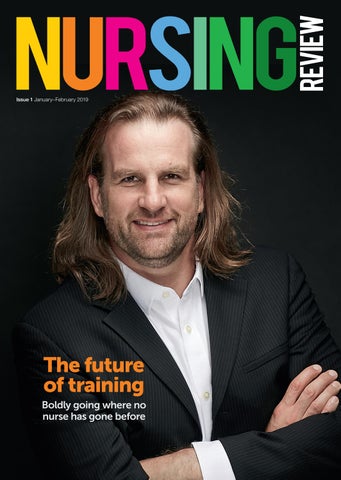
Issue 1 January–February 2019
The future of training Boldly going where no nurse has gone before
For healthcare professionals only. For formula-fed infants only.
S-26 GOLD Specialty Formulas ®
A Premium Specialty Range providing advanced nutrition for the management of infants with specific dietary needs, enriched with DHA.
S-26 GOLD® DELICATEEZE® For colic and constipation
S-26 GOLD AR For regurgitation reflux
S-26 GOLD DELICATEEZE is a premium, nutritionally complete, specialty infant formula for babies from birth with delicate tummies who may experience digestive discomfort including constipation and colic.1-6
S-26 GOLD AR is a premium, nutritionally complete, specialty infant formula for infants from birth, who have been diagnosed with regurgitation. Its ingredients include digestible, precooked corn starch that thickens in the stomach, not in the bottle and helps keep formula down.7,8
Not recommended for infants with cow’s milk protein allergy or lactose intolerance. Not suitable for infants with galactosaemia.
S-26 GOLD SOY For dairy avoidance
S-26 GOLD LI For lactose intolerance
S-26 GOLD SOY is a premium nutritionally complete, specialty infant formula for infants from birth who need to avoid dairy. S-26 GOLD SOY is also suitable for babies from 6 months of age with cow’s milk allergy.#9 It can also support a nondairy lifestyle that some parents may choose for their infant.
S-26 GOLD LI is a premium, nutritionally complete specialty infant formula for babies from birth who are lactose intolerant or unable to properly digest lactose. Not suitable for infants with cow’s milk protein allergy or galactosaemia or those requiring a galactose-free diet.
Not suitable for general use and should be used under medical supervision # For infants under 6 months extensively hydrolysed formula is recommended as first choice when diagnosed with cow’s milk allergy (non-anaphylactic), food protein-induced enterocolitis syndrome, atopic eczema, gastrointestinal symptoms and food protein-induced proctocolitis. For infants over 6 months of age, soy formula is recommended as first choice with immediate food reactions, and for those with gastrointestinal symptoms or atopic dermatitis in the absence of failure to thrive.
IMPORTANT STATEMENT: Breastfeeding is best for babies. It has benefits for the infant, such as reducing infection risk, and for the mother. It is important to have a healthy balanced diet in preparation for, and during breastfeeding. Infant formula is designed to replace breast milk when an infant is not breastfed. Breastfeeding can be negatively affected by introducing partial bottle-feeding, and reversing a decision not to breastfeed is difficult. Infant formula must be prepared and used as directed. Unnecessary or improper use of infant formula, such as not properly boiling water or sterilising feeding equipment, may make your baby ill. Social and financial implications, including preparation time and the cost of formula, should be considered when selecting a method of infant feeding. References: 1. Yao M,et al. JPGN. 2014;59(4):440 -448. 2. Kennedy K, et al. Am J Clin Nutr. 1999;70(5):920 -927. 3. Infante D, Segarra O, Le Luyer B. World J Gastroenterol. 2011;17(16):2104 -2118. 4. Nowacki J, et al. Nutr J. 2014;13(1):105 -115. 5. Kanabar D, et al. Hum Nutr Diet. 2001;14(5):359 -363. 6. Nayak S. Pediatric Oncall J. 2014;11:1-5. 7. Moukarzel AA, et al. J Clin Gastroenterol 2007;41(9):823 -829. 8. Gonzales, et al. Rev Obstet Ginecol Venez 2002;62(1):27-31 9. Kemp et al. MJA 2008;188:109-112. ® DELICATEEZE is a registered trademark of Aspen Nutritionals Australia Pty Ltd. ® S-26 GOLD is a registered trademark. Used under licence. Distributed by Aspen Nutritionals Australia Pty Ltd. ABN 31 160 607 509. 34–36 Chandos Street, St Leonards, NSW 2065. 03672-01112018. ASP3854.
ASP3854_DelicateEze_Specialty_NR_A4_210x297_R1_FA.indd 1
12/21/18 12:41 PM
contents
MANAGING EDITOR
news
Richard Garfield 02 9936 8628 richard.garfield@apned.com.au
2 4 5 6 8 9
NEWS EDITOR
Dallas Bastian 02 9936 8637 dallas.bastian@apned.com.au
industry & reform
10 Blow that whistle
HEALTH EDITOR
Conor Burke 02 9936 8638 conor.burke@apned.com.au
Nurses’ social media pitfalls Royal commission: Day 1 Nurse education scrutiny Cadaver exhibition under cloud Cultural safety course planned Heat hurting health services
02
08
Service aims to help insiders make anonymous reports
12 A few home truths Why giving birth at home is often the best option
SUBEDITOR
Robert Santos
14 Mind over matter
SALES MANAGER
Ben Long 02 9936 8664 ben.long@apned.com.au
How mindfulness can help make you a better nurse
specialty focus
16 Planning in advance
SUBSCRIPTION ENQUIRIES
Nina Boyle 02 9936 8602 subs@apned.com.au COVER IMAGE
Assoc Prof Winslow Burleson Photo: NYU/Sapna Parikh
Filling the knowledge gaps in end-of-life care
10
12
Scientists’ radical approach to the big ‘C’
clinical practice
PUBLISHED BY
20 Voluntary dying Act What new assisted dying laws mean for you
APN Educational Media GPO Box 4245 Sydney NSW 2001 ABN 58 090 900 999 ISSN 1326-0472 PP100001944
22 Demand and supply Education key to addressing rural nurse shortage
workforce
24 Grace under fire
PUBLISHER’S NOTE
© Copyright. No part of this publication can be used or reproduced in any format without express permission in writing from APN Educational Media. The mention of a product or service, person or company in this publication, does not indicate the publisher’s endorsement. The views expressed in this publication do not necessarily represent the opinion of the publisher, its agents, company officers or employees.
18 Forget curing cancer
16
20
Flourishing as a nurse in the 21st century
26 Past reflections Celebrating the history of nursing in Australia
28 Late admission Coming to nursing later in life
technology
30 Future insight Nurse training goes high tech
32 Machine learning
24
30
Questioning the role of robotics in care nursingreview.com.au | 1
news
Nurses behaving badly
Profanity, demeaning patients, product promotion – how nurses are ‘misbehaving’ on Twitter. By Dallas Bastian
S
ocial media is a great way to network and advocate for change. It’s also a great way to get in trouble. Nurses hear both of these pieces of advice in near equal measure. Indeed, international researchers, led by Associate Professor Jennie De Gagne from Duke University in the US, said that while social media can be a resource for nurses – allowing them to share health information and keep up with medical developments – when used inappropriately, it can degrade the working and learning environment, harm reputations and negatively affect patient safety. To find out what this inappropriate social media use looks like, the US and South Korean research team looked at the Twitter posts of nurses and nursing students to screen for ‘cyberincivility’ – the use of disrespectful, insensitive or disruptive behaviour in an electronic environment that interferes with another person’s personal, professional or social wellbeing. Of the 163 Twitter users included in the study, the team found over a third (36.8 per cent) tweeted inappropriately at least once and, on average, made six uncivil posts over a six-week period. Overall, 413 tweets were deemed uncivil. Of those, 240 related to the nursing profession, and the rest to personal life. So what exactly were the kinds of uncivil tweets nurses were sending out? Profanity was the most common offence. The researchers wrote: “Profane texts focused on users’ work environments and included obscenities aimed at patients and co-workers. “Some of the work-related tweets in this category included quotes from patients about genitalia, threats of sexual violence, and descriptions of assaults.” Product promotion, sexually explicit or suggestive posts, and demeaning remarks about patients were next in line, while tweets
2 | nursingreview.com.au
involving name-calling, rude comments and interprofessional aggression were also sent out, though in lower numbers. Perhaps fitting into a few of those categories, nurses used social media to call people names like “bitch”, “liar”, “idiot”, “complete c**k”, “fat virgin” and “f***ing savage”. The authors wrote that: “Of the 240 tweets related to nursing, there were 29 instances (12.1 per cent) of nurses demeaning patients, which included tweets that suggested tricking a patient by giving a fake name, inappropriately venting about a patient’s condition, making jokes about a patient’s situation, or otherwise tweeting unprofessionally about a patient. “This category also included the use of memes and GIFs, which were used to depict patient behaviours and often portrayed them negatively. For example, one GIF showed a head shaking to display disgust, while another exhibited eye-rolling to imply the patient was acting inappropriately.” Last year, a nurse at Texas Children’s Hospital was let go after she posted information about a boy who tested positive for measles on an anti-vaccination Facebook group. Following the incident, the hospital said in a statement: “We were made aware that one of our nurses posted protected health information regarding a patient on social media. “We take these matters very seriously, as the privacy and wellbeing of our patients is always a top priority. After an internal investigation, this individual is no longer with the organisation.” But should nurses be held responsible for their posts if they don’t breach codes of conduct or organisation guidelines? A survey of medical students, pointed to in the study, revealed that 42 per cent believed their online activity did not have any bearing on who they were as professionals. Respondents also voiced their frustration with the “unrealistic expectations that institutions had about their online behaviour and that institutional restrictions excluded normal social interaction”. Nevertheless, the authors suggested nurse leaders review their organisation’s social media policies and weigh up their effectiveness in terms of protecting the integrity of the profession and patient privacy. They also said educators should ensure students understand that they will be held accountable for their social media presence. ■
“I want a super fund that’s an expert at managing money.” Vindhya Mendis, HESTA member
We’ve been awarded a 15 year platinum performance rating from Australia’s most respected super research company, SuperRatings. That means we’re not only one of the largest super funds in the country, we’re also one of the best.
Product ratings are only one factor to be considered when making a decision. See hesta.com.au/ratings for more information. Issued by H.E.S.T. Australia Ltd ABN 66 006 818 695 AFSL 235249, the Trustee of Health Employees Superannuation Trust Australia (HESTA) ABN 64 971 749 321. This information is of a general nature. It does not take into account your objectives, financial situation or specific needs so you should look at your own financial position and requirements before making a decision. You may wish to consult an adviser when doing this. Before making a decision about HESTA products you should read the relevant product disclosure statement (call 1800 813 327 or visit hesta.com.au/pds for a copy), and consider any relevant risks (hesta.com.au/understandingrisk).
HESTA_Testimonials_210x297mm_4.indd 4
25/05/2018 2:01 PM
news
Commissioners Richard Tracey and Lynelle Briggs. Photo: Kelly Barnes, AAP
Royal commission begins Day one kicks off with drama in Adelaide. By Conor Burke
T
he hallmark of a civilised society is how it treats its most vulnerable people – and our elderly are often among our most physically, emotionally and financially vulnerable.” These were some of the final words from commissioner Richard Tracey on the first day of the keenly anticipated Royal Commission into Aged Care Quality and Safety in Adelaide, with those gathered given a glimpse into what to expect over the next year. Although proceedings were somewhat marred for some of the families and campaigners for the elderly – including Clive Spriggs, son of Oakden whistleblower Barb Spriggs – who were unceremoniously deposited in the outer spill rooms in favour of lawyers and heads of peak bodies. Prominent aged care advocate in attendance Stewart Johnston told Nursing Review that he and others, including Spriggs, were originally ushered to the front of the queue to enter the hearing by a security guard. “We’re standing there, and this woman appears and says, ‘You need to get to the back’,” he said. “They said, ‘You need to get to the back. You’re not important ... I’ve spoken to the commissioners, and these people have been here first’. We were dumbfounded.” The opening of the hearing itself had less drama. Dr James Popple, the official secretary, set the tone of the proceedings by recognising the contribution of elder
4 | nursingreview.com.au
Australians to our nation and the need for the commission to uphold their dignity. He reminded those gathered that as our population is ageing, the community expects government to have the best policy and frameworks possible. Tracey started by reaffirming the commission’s “broad remit” which includes investigating young people with disabilities in the aged care system, those with dementia and the overarching need to examine “sub-standard care and systemic failures” within the system. He also pointed to the commission’s interest in the newly formed Aged Care Quality and Safety Commission and said the royal commission will follow “the new regime to form a judgment about its efficacy”. In her address, commissioner Lynelle Briggs said it is extremely important to investigate current policy and practice in the sector in answer to the “rising torrent of concern that the system is faltering” and to “ensure all Australians have confidence that the system will serve them” when the time comes. Briggs conceded the commission has only a short time in which to conduct its inquiry but stressed it will consult extensively with experts, researchers, government stakeholders, the public and those affected by failures of the system. “We will give voice to them,” she said. Addressing concerns of privacy and whistleblowing, Tracey made clear that although at this point the commission is only asking for submissions, it will, if needed, compel witnesses. He added that any confidentiality clauses in contracts of current or former employees will not exclude people from summons and
that the commission would be “gravely concerned” if any provider or government told staff not to talk to the commission. Furthermore, he stated the commission will afford protections to any whistleblowers and outlined penalties should any repercussions be felt by those who testify. Assisting councils Peter Gray and Dr Timothy McEvoy laid out some of the finer details of the hearings to come, as well as observations of submissions received at this time. So far, 83 providers have responded, covering 2000 outlets. The tenor of responses include instances of elder abuse, medicine mismanagement, misuse of psychotropics, food safety, poor wound care leading to death and poor record keeping. Campaigner Johnston was, on the whole, pleased with the opening hearing. Although he did have some concern for the “5000 submissions received before the portal was up” apparently going instead to the Department of Health. “Somebody needs to be questioning those, because anyone who would be able to knock out a significant submission straight away would be the ones that are giving the really good information,” Johnston said. “And how did they send it to the Department of Health? That concerns me.” Johnston also stressed the need for the roundtables and community engagement to happened as soon as possible, as he believes consulting with the current providers and peak bodies is not enough. “I do hope they consult with people with lived experience,” he said. “LASA and all of that are in there talking to the commissioners on their own before the public are allowed into the hearing today. That’s the problem – there is a lack of trust from the community.” As for the immediate future, the first substantive hearing is slated for 11–18 February. It will be an overview of the current system of operations and will also hear witness testimony from those receiving care. Yet to be announced are the dates for any roundtables and community consultations, but all of those involved were at pains to stress that these are to be held in all of the major cities as well as regional areas where possible. The commission’s interim report will be released on 31 October this year, with 30 April 2020 as the deadline for a final report and recommendations. ■
news
Under review Nursing education to be reviewed for the first time in almost two decades.
N
ursing preparation might be set for an overhaul. Senator Bridget McKenzie has announced an independent review into the education of nurses. The deputy leader of the Nationals said the review, the first of its kind since 2002, will also look to ensure the nursing profession remains an attractive career option for students, that career
pathways remain relevant and that Australia’s nursing education system is internationally competitive. “It will also look at the nursing requirements of regional Australia, which is critical as we look towards increasing the number of health professionals outside of our capital cities,” McKenzie said. “Nurses hold a very special place in our community and the medical profession, and we want to make sure this continues to be the case.” Emeritus Professor Steven Schwartz will undertake the review, called Educating the Nurse of the Future. McKenzie said Schwartz brings real-world commercial involvement to the role. “In particular, his experience as vice chancellor for three universities demonstrates that he understands the changing role of these institutions and how they need to reflect the demands of the nursing profession,” she explained. Per its terms of reference, the review will examine: • the effectiveness of current educational preparation of and articulation between enrolled and registered nurses and nurse practitioners in meeting the needs of health service delivery • factors that affect the choice of nursing as an occupation, including for men • the role and appropriateness of transition to practice programs, however named • the competitiveness and attractiveness of Australian nursing qualifications across international contexts. ■
Leaders in practical, professional development and education for nurses
matereducation.qld.edu.au
nursingreview.com.au | 5
news
Questionable body of work Real Bodies exhibition reveals gaps in fight against human organ trafficking. By Dallas Bastian
A
controversial exhibition featuring plastinated human cadavers, organs, embryos and fetuses is “illustrative of an apparent gap in the current legislation”, a parliamentary inquiry says. Details of the exhibition were included as a case study in the inquiry’s final report, Compassion, Not Commerce: An Inquiry into Human Organ Trafficking and Organ Transplant Tourism. MP David Shoebridge told the subcommittee investigating human organ trafficking: “The proprietors … have been asked about the circumstances in which these bodies came into their possession, and they have been unable and unwilling to prove that any of the persons on display ever gave their consent.” The report also held that Thomas Zaller, president of exhibition organiser Imagine Exhibitions, stated the human bodies and tissue were sourced from China and were unclaimed by relatives of the deceased. “Mr Zaller has indicated that the cadavers were sourced from Dr Hong-Jin Sui of Dalian Medical University in China between 2000 and 2004,” the report said.
6 | nursingreview.com.au
In a statement to News Corp, Dr Sui said the cadavers were “originally received from the city morgue and then transferred to medical universities in China” and that they “have been legally donated [and] certified to have died of natural causes”. According to an investigative report by German weekly news magazine Der Spiegel, a number of human cadavers sourced from Dr Sui between 2000 and 2004 were later observed to have bullet holes in their skulls. The same report also claims that in email correspondence dated 29 December 2001, Dr Sui described two specific cadavers he had obtained as “very fresh”, having been shot that day and had their livers removed, allegedly for transplantation. The Compassion, Not Commerce report recommended that to protect the human rights of deceased persons and their families, only organs or human tissue that have the proper documentation recording donor consent should be approved for importation into Australia. The report made 12 recommendations for combatting human organ trafficking and organ transplant tourism. Among them were that the Australian government strengthen the nation’s involvement in international efforts to
combat human organ trafficking and “thoroughly investigate reforms that would enhance Australia’s domestic organ donation program”. While most Australians are willing to donate their organs, only one in three are registered as donors. Kevin Andrews, chair of the Human Rights Sub-Committee of the Joint Standing Committee on Foreign Affairs, Defence and Trade, said the demand for donor organs continues to outstrip supply – around 1400 Australians are on the waiting list for a transplant. This gap has enabled an illicit commercial market of organ trafficking and transplant tourism to flourish in some overseas destinations, he said. “This practice gives hope to the desperate but comes with serious medical risk, both for the donor and the organ reciprocates, and often exploits the poorest and most vulnerable in communities.” The report also recommended the government improve relevant data collection, support public health education programs, and strengthen Australia’s legal prohibitions on organ trafficking. “Compassion, not commerce, is the key,” Andrews said in the report’s foreword. ■
Blackmores.com.au/nutrition
Blackmores infant formula for longer, better sleep
Australia’s
most trusted brand*
1–4
#Winning
For formula fed infants, Blackmores can help ease the stress of parenting, with OPO^ to reduce crying and improve sleep duration,1,2 and alpha-lactalbumin to improve sleep quality.†3,4
Blackmores supports breastfeeding as the best nutrition for babies. Toddler Milk Drink to be consumed as a supplement to a normal diet, to boost intakes of energy and nutrients. *Australia’s Most Trusted vitamin and supplement brand as voted by Australians in the 2009-2018 Readers Digest Most Trusted Survey. ^Oleic and Palmitic Fatty Acid Structure. †Infants receiving tryptophan-fortified formula fell asleep significantly quicker than infants fed with unsupplemented formula or through breastfed milk. References: 1. Litmanovitz I et al. BMC Pediatr 2014 Dec; 14(1):152. 2. Bar-Yoseph F et al. Clinics Mother Child Health 2017; 14(263):2. 3. Lien L. Am J Clin Nutr 2003; 77(6):1555S-8S. 4. Steinberg LA et al. J Nutr 1992; 122(9) 1781-1791. 15191/NR
15191 Blackmores IF Yoga Dad HCP 210x297-FP_NursRev_FA.indd 1
1/11/18 10:14 am
news
Safety first Cultural safety training for nurses announced.
N
urses and midwives will soon have access to a cultural safety training course. Indigenous Health Minister Ken Wyatt has earmarked $350,000 to produce the Australian-first online course for those delivering frontline care to Aboriginal and Torres Strait Islander people.
The course will be spearheaded by the Congress of Aboriginal and Torres Strait Islander Nurses and Midwives (CATSINaM). CATSINaM chief executive Janine Mohamed said the organisation had been working on the project with the federal government and other partners for the past five years. “This training will not only support all nurses and midwives to meet the standards of their codes of practice, it will also embed cultural safety in the health system,
The wrong formula
The clean-up after Cyclone Yasi. Photo: AAP
Formula-fed infants sicker than other babies after natural disasters.
P
arents who use formula in the aftermath of fires or floods may be more likely to have a sick child, a new study suggests. Category 5 Cyclone Yasi, which hit in the summer of 2010–11, occurred during the Feeding Queensland Babies Study by the Child Health Research Network, allowing researchers to gain new insights into the health of babies and toddlers following natural disasters.
8 | nursingreview.com.au
improving healthcare and helping close the gap in Aboriginal and Torres Strait Islander health outcomes,” Mohamed said. The inclusion of a cultural safety component in the codes of practice made headlines early last year on the back of an opinion piece penned by Graeme Haycroft, president of breakaway union the Nurses’ Professional Association of Queensland. The codes were updated to describe a shift towards providing care that takes into account the needs of Aboriginal and Torres Strait Islander peoples. Haycroft voiced his concern that, should a nurse not acknowledge their “white privilege”, a complaint could be lodged and the nurse could lose their registration – a claim flatly denied by the Nursing and Midwifery Board of Australia. When announcing the course, Wyatt said: “Everyone using health services in Australia should feel valued and respected throughout their consultation and aftercare.” The new course will be adapted for Australia from a successful model developed by indigenous leaders in Canada. ■
Children who received formula during such disasters were almost 10 times more likely to visit medical practitioners than infants not receiving formula in the four weeks following. More than half the mothers sought medical treatment for their children for a range of symptoms, including fever, diarrhoea, irritable behaviour, coughs and colds. Eight of the infants were admitted to hospital. The authors said exclusive breastfeeding and supplementary breastfeeding had a protective effect against several illnesses compared with no breastfeeding. USC researcher and lead author Dr Ruth Newby said the study provided new insights into the difficulties families face providing nutrition to young children during natural disasters. Some of the mothers in the study suffered property damage, had been evacuated or isolated from family support or food supplies, or had lost power or water supply. A quarter of those who had to be evacuated were unable to pack food and/or feeding equipment for their infants prior to leaving home. Some of the women also said they used formula they believed may have been unsafe during the emergency. “In Australia we tend to assume we can always feed our babies and that clean water is a given – until suddenly it is not,” Newby said. “Emergencies can remove the infrastructure that usually makes formula feeding relatively safe, potentially exposing formula-fed infants to greater than usual risks.” Newby said there is a clear need for priority access to resources for those caring for infants and young children in emergencies, and for public health messages before and during such events. “Such support may reduce infant morbidity and may even save infant lives.” ■
news
The heat is on Heatwave puts pressure on health services. By Conor Burke
T
his summer Australia has endured record-breaking temperatures, with December 2018 the hottest on record and 27 December featuring the hottest nationally recorded mean maximum of 40.19°C. At the time of writing, the temperature across South Australia is 45°C, there are bushfires in Tasmania, and power outage warnings in Victoria. The rising temperatures are a danger to the most vulnerable in the community and put additional strain on public health infrastructure and emergency services.
Dr Doug Shaw, public health physician and member of Doctors for the Environment Australia, said that as well as the very young, very old and pregnant women, heatwaves are especially taxing on frontline health workers. “Our colleagues, particularly emergency services, will be required to be out today, and they need to keep themselves as well hydrated as possible,” he said. Shaw pointed to recent ramping issues in his native SA as a big issue during the heatwave, for patients and health workers, as well as general increased workload. “Another impact on our health worker colleagues is just increased workload. They may be in air-conditioned emergency departments or the wards, or the general practice, but [the heatwave] increases the workload of an already stretched healthcare system.”
Shaw suggested the SA government look at alternative ways to cope with future heatwaves and potential blackouts. “Doctors for the Environment Australia strongly advocated for a concentrated solar thermal power station to be built at Port Augusta – which will get to 49°C today. “The previous SA government has contracted that all government services will be supplied with energy from that plant when it is built, so that is 100 per cent renewable energy, including our hospitals, which is quite encouraging,” he said. There is a marked spike in heat-related deaths prior, during and up to 24 hours after every heatwave. However, this year Dr John Van Der Kallen has been pleased with government efforts to increase awareness in response to heat events. “I’m impressed by, say, NSW Health’s response, with media and video releases on how to manage the heat, which is really the first time I’ve seen this,” he said. Van Der Kallen advises increased vigilance when it comes to the elderly and implores the young or friends and family to check in on those at risk. Being proactive in regard to dehydration, especially as certain medicines dehydrate the elderly, is key before it gets too late to rehydrate, he adds. “Often the reason the elderly is at risk is they are on medication,” he said. “Their physiological responses to heat are not the same as those of a younger person. A younger person might feel thirsty earlier, might feel weak earlier, might get headaches earlier. An elderly person’s responses can be quite dulled.” “We have to start adapting to these events. This year has been unprecedented, but unfortunately this is what is going to happen as the world gets hotter,” he said. ■
5th Commonwealth Nurses and Midwives Conference Friday 6 and Saturday 7 March 2020, London UK
Celebrate … nurses and midwives, breaking
down barriers, leaving no-one behind
CALL FOR ABSTRACTS For more information and for abstract guidelines go to:
www.commonwealthnurses.org/conference2020 CNMF 2020.1 Nursing Review Ad 185x64.indd 1
25/1/19 9:38 am nursingreview.com.au |9
industry & reform
Calling it out The increasing role of the whistleblower in aged care. Nathan Luker interviewed by Richard Garfield
B
lowing the whistle or ‘dobbing in’ a manager or work colleague for illegal or unethical behaviour might seem at odds with Australian culture, but that’s the service a Melbourne-based company is providing for a range of businesses. In the current aged care climate of the royal commission, new quality standards and continued focus on elder abuse stemming from the Four Corners investigation among others, it’s a service that aged care providers may well find appealing – both as a means of finding out about improper practices before the media and others, and as a strong signal to prospective customers that they take their duty of care seriously and have nothing to hide. Your Call provides a 360-degree reporting service, enabling an individual to safely and anonymously make a report against anyone in the organisation. The company also provides advice and training for organisations. General manager Nathan Luker says that all contact is handled by Your Call to ensure anonymity and support. Once an issue is raised, the organisation has no direct contact with the individual. The service also makes sure the organisation follows due process and acts ethically throughout. Nursing Review caught up with Luker to find out more about the service, how it might apply in the aged care industry and the impact it can have on workplace culture.
NR: How does the process work? NL: Before the report even comes through the door, the process starts with the board and the executive leadership team. 10 | nursingreview.com.au
Generally, it’s due to them wanting to elevate and strengthen the approach to employee reporting. This may be in response to legislative, regulatory or, as we are seeing, royal commission requirements. It could be due to a recent occurrence or a situation of misconduct. It could be due to poor employee trust or engagement scores. Or just a general sense of wanting to cultivate a speak-up culture. So it starts at the top. When someone does decide to speak up, we’re here to help them do so without fear. And when they do, or when they report to an external service provider, it’s important that they’re treated with empathy, compassion and confidentiality. The importance of that is to help the person feel as though they’re speaking to the right person. You don’t want them to feel from the get-go that they’re doing something that isn’t right, or they’re going against social norms or what’s expected of them at the organisation. At the point of receiving a report, our role is to act as a conduit between the individual and the organisation from start to finish. It’s important to help the individual retain their anonymity, and handle evidence and supporting documentation in line with that. Support and protection are incredibly important to an individual. That’s been demonstrated recently in AJ Brown and Griffith University’s detailed work called Whistling While They Work. They uncover the stress impacts, productivity impacts and general wellbeing impacts in individual experiences pre, post and during a report. They can be mitigated and reduced through the proper provision of support and protection: helping the individual understand that something is going to be done about it; who will be doing something about it; who their point of contact will be; and the information identity, if they wish to remain anonymous, will be kept confidential. If it’s a person with a disability or an elderly individual, provisions will need to be made and service support required. So it’s not
a one-size-fits-all model. And that often comes right down to the gender of the person taking the report. From there, the organisation follows a range of steps. They’re generally documented in an accompanying whistleblower procedure, or in an investigation plan, and they’ll no doubt conduct a risk assessment. They’ll review information and then run a discreet review to substantiate, partly substantiate or unsubstantiate the allegations. We can frame this as an ‘iceberg’. An individual is providing some information about the tip of the iceberg. They might not have optics over the entire issue; they might not be sure of other scenarios connected to what they’re saying. It’s important that the offices at the organisation side are well trained, have support – such as individuals like us – and run a procedurally consistent investigation each time. From there, the whistleblowing service, if you choose to have an external pathway, needs to remain impartial. So it’s important that they don’t run the investigation for you or provide other services for you so there’s no conflict of interest, but it’s then up to the organisation to act. Lastly, and importantly, if victimisation is experienced – and we know through that Griffith University research quoted earlier that it happens a lot – we need to focus on mitigating that. A recent Human Rights Commission report found that very few people actually report sexual harassment, and when they do, more than 20 per cent are victimised, ostracised, ignored and/ or labelled a troublemaker. So it’s really important to focus on mitigating that threat. In terms of a resolution, each report needs to be assessed on its merits. The resolution might be no further action, if there is nothing further to act on. But the individual is definitely well informed: they have different pathways to continue to provide information or to answer questions throughout the process anonymously via us, as we act as the conduit between the individual and the organisation at all times. So we can help the individual make decisions and inform them of what’s happening. If they feel something does not seem quite right, we can potentially let them know that there are other circumstances at play that they’re not aware of, and so on. So it’s quite varied and based on the particular scenario.
Are your clients using this service to contain or mitigate problems before they
industry & reform
become public, or to present themselves as ethical corporate citizens with nothing to hide? It’s a bit of both. All organisations have a duty of care and want to ensure their people feel safe, protected and willing to speak up without fear. The service definitely helps leaders and organisations shine a torch on potential blind spots. Although it can be confusing that we’re external, it is part of an internal management process. It’s still broadening the perimeter of the organisation before it goes to the public, and we know that there are various impacts, and there’s a range of studies. The Medical Journal of Australia recently found that up to a half of doctors and nurses have been bullied, discriminated against or harassed at work. So we know that misconducts are occurring, and I guess this is one way to attempt to detect and also prevent and deter. Putting something like this in place can deter individuals from misbehaving, as long as it’s well communicated and trained.
‘Dobbing’ is often seen as being at odds with Australian values. Have you found this to be a barrier? Yes, it’s something we’ve heard quite a lot, and we’ve been around for over 14 years. However, we feel it isn’t so much the case these days, especially in the surveys and longitudinal studies we’re running at organisations that are clients of ours. That’s a generational change. Australians generally want to do the right thing by someone else.
Have your clients experienced positive changes in their company culture after using your service? What’s interesting, and this has been supported in a range of external studies, is that under-reporting is occurring. Sadly, in the last five years, 39 per cent of women and 26 per cent of men have experienced sexual harassment at work, according to the Human Rights Commission. Of those incidents, 40 per cent were witnessed by bystanders, and more than 70 per cent of those bystanders did not intervene, did not know how to, and chose not to move forward. So it’s really low levels of reporting, low levels of bystander intervention. There are a high number of individuals not saying anything, which causes new victims. The offender reoffends, the person may leave the organisation, and it creates a ripple effect at home. Also, we see this result in low employee engagement scores. We see this contribute
to low trust scores in the organisation or in its leaders. That can also manifest in other ways like higher stress count claims, high absentees, and so on. Understanding that landscape of measurement and indicators at the organisation, we can start assessing the pre-state with the organisation before our whistleblowing program is introduced, and then how that evolved overtime. Anything culture related, changemanagement related, is being well documented. Documenting takes a lot of time. So it’s important that it is maintained and thoroughly embedded within the culture, and committed to by the organisation, above and beyond the individuals of that organisation at the time, so it needs to be bigger than the CEO and bigger than the HR manager – it’s a permanent fixture of the organisation. So, from that we see those markers that I mentioned, they increase over time. It depends on the organisation, but retail shrinkage may drop; absenteeism may drop; trust and the engagement scores may increase. Also, it comes down to the types of reports you receive. We received a report recently at a retail client: a bit of time sheet manipulation. And over the last decade that has caused significant loss of a financial nature, and it was quite a complex matter. There were 16 other breaches, and these relate to the iceberg analogy I mentioned. So, 16 breaches and one major incidence of fraud. That’s at one location. There are over 150 locations in the portfolio of this client. They ran a quick compliance test and found at least seven potential threat areas at other locations and went on to substantiate a range of other issues. What I’m getting at is it was all interlinked. The tip-off was about issue one – they didn’t have full optics as I mentioned. But then an entire snowball effect occurred where the organisation was illuminated with procedural deficiencies, and then plugged those holes and took a continuous learning approach in which they embedded that into the future and for the range of innovations and different types of training, and making bystanders feel better in reporting problems. That’s a lot of work, a large finding, but it requires a thorough approach. Writing a policy and putting it in place on the intranet isn’t good enough. It’s going to yield poor results. So everything we’re talking about today is demonstrating aligning with the employee life cycle and actively managing the whistleblowing process. That is when
the best results are received by the deterrent and in the received reports.
Are there any issues or challenges in the aged care sector that you feel your service is particularly adept at solving? I think one is jumping outside of the organisation’s hierarchy. So, in organisations like aged care providers, there are key blockers: it might be the facility manager, it could be the person on rounds leading that shift, it could be a contractor in the kitchen who doesn’t know who to report to. And maybe your organisation doesn’t have the jurisdiction or the reporting pathway. So I guess what it does in summary is get a report in a very short timeframe outside of the hierarchy into the hands of senior executives who have a role and responsibility to act in accordance with the policies and procedures. If they have an external service like Your Call, they’re held to account – they can’t not act, they can’t delete reports, they have an obligation to act. So that’s one layer of oversight and governance. But it helps connect individuals of varying stakeholder groups at various locations to make reports of wrongdoing for the individuals at the organisation who are charged to substantiate or unsubstantiate. That’s one thing it does well, and we see that a lot in aged care. We’re out on site and there are OH&S breaches, compliance checks, a whole range of things that come through the service, and a really broad service lends itself to a broad type of reporting. Second, it extends to the families of residents and customers, or whatever name you choose to use for the beneficiaries of your service. It allows individuals who feel as though something is not quite right to bypass the individuals they have first contact with at the aged care centre to again follow that pathway. Now, not all of their clients have yet to open up our service to residents – but many have, and that changes the dynamic of how you can communicate. It changes the dynamic of the policy and procedure you need to put in place to handle that stakeholder group, so there’s a range of other items to consider, but it helps connect and evolve the individuals who are the beneficiaries of the service into the reporting process. Not to mention it demonstrates a strong positive commitment by the leaders of the organisation and the organisation as a whole that they’re committed to the personal safety of their loved ones. n nursingreview.com.au | 11
industry & reform
Bring it on home Homebirths often safer, study shows. Hannah Dahlen interviewed by Conor Burke
T
he Royal Hospital for Women in Randwick, NSW, is offering a homebirth option for low-risk pregnancies. One of only 14 public hospitals across the country currently doing so, the new scheme provides the support of two experienced midwives at no cost, an option normally only available privately. Contrary to popular opinion, recent research suggests that in the case of lowrisk pregnancies, homebirths are safer, and that women planning hospital births show “statistically significantly lower odds of normal vaginal birth than in other planned settings” (Midwifery 62 (2018) 240–255). “Women experienced severe perineal trauma or haemorrhage at a lower rate in planned homebirths than in obstetric units,” the authors wrote. This research has implications for healthcare costs countrywide, and for a more widespread rollout of the homebirth scheme. Nursing Review spoke to one of the study’s authors, Professor Hannah Dahlen, of Western Sydney University’s School of Nursing and Midwifery, to hear more about it.
NR: What is the thinking behind the Royal Hospital’s free homebirth scheme? HD: Around Australia, there are about 14 publicly funded homebirth programs 12 | nursingreview.com.au
attached to hospitals. They generally run out of a hospital’s caseload midwifery program, which is where midwives provide care to women throughout the pregnancy. They’re on call for your birth, and they do your postnatal care. That program is offered to women around Australia. Probably about 9–10 per cent of women are now able to access that. We know that the highest scientific evidence supports this as the best birth option for women. A team I’ve been involved with published a systematic review meta-analysis looking at all the literature on the safety of homebirths. We looked at over 28 articles for low-risk women who were having babies at home. We looked at things like morbidity and mortality for the baby and the mother. We compared low-risk women planning a homebirth with low-risk women planning a birth in a hospital or birthing centre. We found no difference in the number of babies dying by planned place of birth. However, we found much higher rates of normal births at home, like more than three times the rate of normal birth. We also found that women had less severe perineal trauma at home, less haemorrhage at home, and their babies were less likely to be admitted into a neonatal intensive care unit. So what homebirth offers now, with all the evidence we have, is a real option for women who are low-risk, who are attended by competent midwives, and who are well networked into a responsive system. We know that women have a lot less intervention, that satisfaction is really high, and that it’s equally safe for the baby, as long as you are careful that the woman is low-risk, the midwives are competent, and a responsive system is in place.
If you look at the Randwick program, you have that in place: experienced midwives who work in caseload and are across all areas of the childbirth continuum; a fantastic hospital with supportive obstetricians and a supportive management; and you have the ability to bring women into a system that will do what’s best for them. That is the ideal, because one of the worst scenarios we have in the homebirth situation, which unfortunately goes on too much, is a real hostility towards women who have a homebirth. If they’re transferred in, sometimes those midwives are treated like absolutely crap, not to mention the way the women are treated. That’s really unsafe, because it makes women reluctant to go in. It makes midwives nervous about transferring. In summary, the scientific evidence is now clear that if you are low-risk and have a competent midwife, or midwives, in your home, and a good system in place, homebirth is as safe physically for the mother and the baby. And it’s actually safer in many terms, regarding higher normal birth satisfaction and breast feeding, skin-to-skin, and a whole lot of other factors that are a huge benefit that you don’t necessarily get in hospital.
Do you think clinicians in Australian believe hospital births are always safer? I think Australia has a very conservative, medicalised approach to birth. We have one of the highest caesarean rates in the world: one in three women have major abdominal surgery to have a baby. Look at countries like the Netherlands, where 15–20 per cent of babies are born at home, and the caesarean rate sits at about 15 per cent – half of ours. Homebirth is normal in that culture. You only go to hospital if there’s a problem. You stay home if everything’s normal. Australia has a very medicalised approach. This attitude doesn’t appear in many other countries. In New Zealand, for example, 5 per cent of babies are born at home. In the UK, in some places, more than 10 per cent of babies are born at home. What a lot of people don’t realise, and this is something that’s really important, is we create a lot of problems by what we do to women in hospital. When we intervene unnecessarily, we start a cascade of intervention. To intervene when you don’t need to, which is often going on in hospital, you create more risk of things like bleeding emergencies. You’re not getting that risk at home. You’re having low-risk women who are having minimal intervention done, who are birthing and labouring in a physiological
industry & reform
environment with nothing disturbing it. But the other important point here is you don’t have midwives appearing in a pair of sandals and an incense stick. Those midwives arrive with equipment to resuscitate. They have drugs to stop bleeding. They have an incredible amount of skill in managing emergencies, and if that woman needs to be transferred to hospital, they call an ambulance. It’s not an either/or. It’s about the right woman in the right place with the right person at the right time. If we could get that balance right in our system, we would have much safer and more satisfying births for women.
Are homebirths beneficial for the health system from a cost perspective? Oh, definitely. The large Birthplace in Australia study is concluding at the moment. It’s being led by Professor Caroline Homer at UTS. The publication will come out soon looking, Australia-wide, at outcomes, costs and everything else. However, there’s no doubt that homebirth is significantly less costly for several reasons. These women stay in their own homes. They stay in their own bed. They eat their own food. They get fewer infections. Their babies have fewer issues because they’re kept with their mothers. The whole snowball effect of cost that occurs in our hospital system is completely negated. Plus, very little equipment is needed when you have a normal physiological birth. Caesarean sections, on the other hand, cost a huge amount of money in extra
days of stay, in extra equipment, in extra morbidity. They also affect subsequent pregnancies. Only about 12 per cent of women in Australia will have a vaginal birth after first having a caesarean. So every caesarean breeds more caesareans. So homebirths are definitely much more cost effective, but it’s not just about cost – it’s a very safe option for mothers and babies when women are low-risk and you have competent midwives in place. Also, it’s an important factor in reducing PTSD and trauma from birth, which we now know is rising in the Western world. Some studies show that about one in 10 women experience PTSD after giving birth. That’s not a great way to start motherhood. It’s not going to be a good influence on the motherbaby bond or the development of the child.
What has to happen for homebirth to become more mainstream? The first step is, if you look at the Royal Australian and New Zealand College of Obstetricians and Gynaecologists policy on homebirth, it basically says that it’s dreadful and don’t do it, and it’s very dangerous. They base their recommendation on one very highly criticised and now debunked US study, because that’s the one that they handpicked to support their belief system. The UK has a wonderful joint statement between the obstetricians and midwives that says homebirth is great for low-risk women. They have a national government guideline that says, if you’re low-risk, then homebirth probably gives you more advantage, so they recommend it.
In Canada, you’ve got the obstetricians and midwives again saying homebirth should be supported. Go to the US, and they say, “Oh, no, no. Homebirth is very dangerous.” So, we’ve got to get over the philosophical and ideological divide between the professions. That doesn’t help. Women are going to homebirth. Unfortunately, in Australia – and a lot of our research is now looking at this – a lot of women are choosing to do it themselves. So, they will have a baby with no professional in attendance, or they will have a doula or a birth worker who’s not professionally trained. They’re doing it because they can’t access midwives, because they can’t afford to pay for private midwives, because there are not enough homebirth programs. So, we’re creating fewer safe situations by putting our head in the sand, and it’s time we all got together and said, “This is when it’s safe. This is when it’s not. Let’s give women evidence-based information. Let’s support choice. Let’s get over our ideological divide.” Scientific evidence and government recommendations support homebirth for low-risk women. It’s really the obstetrics community that continues to have enormous fears about it. Partly, I can understand that. If you’re an obstetrician, and your job is only to deal with problems, of course, in your mind, birth is always a problem. But we’ve got to keep in perspective that birth can actually go very well. Midwives are the experts at caring for women having normal physiological labour. Let’s both do our jobs where our expertise lies. Let’s support each other and not continue this divide. ■
Avondale’s Master of Nursing is designed to extend and deepen a registered nurse’s knowledge, skills and appreciation of advanced practice within complex health care environments. Students are given the choice to develop nursing specialist qualifications in either Clinical Nursing, Clinical Teaching or Leadership and Management. Mode: Distance education (Online)
APPLY NOW FOR 2019 for February and August intakes.
To find out more about our courses or to apply online visit www.avondale.edu.au/nursing phone +61 2 4980 2377 or email study@avondale.edu.au Avondale College Ltd trading as Avondale College of Higher Education CRICOS Provider No: 02731D | TEQSA: PRV12015 | ABN: 53 108 186 401
nursingreview.com.au | 13
industry & reform
Mind on the job
evidence that it reduced depression, and seven papers that it reduced burnout. Therefore, we concluded that mindfulness meditation has the potential to build the resilience of nurses and other health professionals, given the huge positive impact in reducing stress, anxiety, depression and burnout, and in improving wellbeing and empathy. The other thing with mindfulness meditation is that it improves safety, because it makes people more attentive and more mindful of what they’re doing. However, in addition to our review, I think there’s still a need for further research in this area. The big thing is keeping nurses in the profession. My colleagues and I are seeking an ARC linkage grant to look at whether mindfulness meditation improves nurses’ views about staying on in nursing, because it’s a very stressful profession.
How does mindfulness meditation work?
The role of mindfulness meditation in relieving job stress. Pamela Van Der Riet interviewed by Conor Burke
I
n 2016, the National Mental Health Commission reported that the cost of mental ill-health to each Australian taxpayer is about $4000 a year, and more than $60 billion a year to the nation as a whole. Couple this with the statistic that nurses can suffer depression at up to twice the rate of the general population in some countries, and it is safe to say that finding ways to reduce stress and mental illness among our health professionals should be a priority. Associate Professor Pamela Van Der Riet and her colleagues from the University of Newcastle’s School of Nursing and Midwifery recently conducted an integrated literature review into the effects of mindfulness meditation on nurses and nursing students.
14 | nursingreview.com.au
Mindfulness meditation – described as mental and emotional control practices – can include yoga, meditation, breathing practices and body scanning. Studies have shown it can improve workplace safety, nurse performance and even slow the ageing process. Nursing Review sat down with Van Der Riet to find out more about her research and how it applies to nurses.
NR: Can you explain the concepts behind mindfulness and mindfulness meditation? There are many different forms, but meditation is a tool for mindfulness. What we particularly looked at in this paper was mindfulness meditation for nurses and nursing students. There are different types of mindfulness and different types of meditation. For example, there’s Zen, Tibetan meditation and mindfulness-based stress-reduction meditation. When we did the search, we found well over 1700 articles. After a critical appraisal, we included 16 papers in our review. And of those 16, there were 12 quantitative papers and three mixed methods, but only one qualitative paper. Essentially, we found that mindfulness meditation has a very positive impact on nurses. In fact, four out of five papers indicated there was statistical evidence that it reduced stress and anxiety. The other big one was depression. Five of those studies showed statistical
There is a science to meditation. There’s evidence that mindfulness meditation can cause changes in the structure and function in the brain. There’s an increase in the cortical fitness of the prefrontal cortices, and it can slow down the ageing process. The literature shows that there’s a neuroplasticity, and it’s affected by mindfulness meditation.
Was there much in the literature about the costs of implementing some of these things in nursing schools or hospitals? Not really. Mindfulness meditation is not that expensive. You just need a facilitator to teach the technique, and most of the programs run over about eight weeks. I did a seven-week program on mindfulness meditation with nursing and midwifery students and it produced really good results. They came back and said they had improved sleep, even though many of them only went for a couple of weeks, but they still had the benefits of that and they still used the technique of mindfulness meditation at home. They also commented about improving their cognition, concentration and learning.
Is mindfulness medication used in other areas of healthcare? Yes, these days it’s being used in a lot of mental health wards, and for many cancer patients as well, because of the stress. It’s also being used now in schools. ■
We’ve been looking after members’ retirement savings since 1912.
Welcome to super without surprises Product issued by the QSuper Board (ABN 32 125 059 006, AFSL 489650) as trustee for QSuper (ABN 60 905 115 063). Consider the PDS on our website to see whether QSuper is right for you. © QSuper Board 2018.
specialty focus
Planning ahead
NR: What barriers are there to advance care planning?
Tackling the gaps in health workers’ advance care planning knowledge. Rebecca Camilleri interviewed by Megan Tran
A
dvance Care Planning Australia has joined forces with Queensland Health and QUT to educate health professionals about palliative care. This includes hosting a seminar covering topics like advance care planning across sectors, legal considerations and implementation. ACPA manager of communications Rebecca Camilleri said although awareness is growing, the limits of medical intervention are still not widely understood. Camilleri added that there needs to be more awareness about the legal framework and coordination to ensure Queenslanders are empowered to make their end-of-life plans. Nurses and health professionals should tread carefully when discussing the issue, she said, particularly with patients with complex health conditions. Nursing Review spoke with Camilleri to find out more about the issues surrounding advance care planning.
16 | nursingreview.com.au
RC: I think the barriers come from society. We’re ultimately a death-denying culture. There is a poor understanding of the limits of medical treatment. We’ve all seen the medical dramas on television where people are brought back to life after a heroic effort, but we don’t really understand that there comes a time when there are limits to medical treatment. Sometimes, the burden of care is greater than the benefits offered. These conversations can be tough, and people can be reluctant to discuss them. We also have the situation with healthcare providers such as GPs. We know they’re very busy, and sometimes it can be difficult to find the time, and sometimes there’s a lack of confidence about starting these conversations. I think it’s becoming increasingly important, though. We do have an ageing society. People are living longer with chronic health conditions or life-limiting illnesses. In fact, we now know that most people die after a chronic illness, not after a sudden event. At the same time, we have a coming of age of a generation of people who’ve always made decisions about their life. They’ve planned ahead, and likewise, they want to maintain control, so it’s understandable that you would have this group of people wanting to take advantage of advance care planning. When doctors and families are left to make decisions in a situation where they don’t know what a patient wants, it can cause conflicts. So we believe it’s really important that advance care planning is better understood by both health professionals and the general public.
specialty focus
How does the concept of an advance care plan (ACP) change during primary care to aged and palliative care? Broadly speaking, advance care planning is about respecting an individual’s choices and empowering them with the right information to help them make their own medical treatment decisions. This doesn’t differ too much in different healthcare settings. An advance care directive – I believe in Queensland it’s called an advance health directive – is a legal document. Accordingly, it does apply in all those health settings. However, it’s important to remember that for an advance care directive to be legal, a person needs to have decision-making capacity. In situations of a dementia diagnosis or other progressive illnesses, it’s important that the advance care planning occurs when that person is of sound mind. While an ACP can change with a person’s life stage, people’s values often stay the same. But it’s important and recommended that people review and update their ACP or advance care directive from time to time.
you could ask them what the goals of care are for them. There’s lots of information, resources and videos on our website if health professionals would like more information and support about starting the conversation with patients.
Why are almost 50 per cent of people unable to make their own end-of-life medical decisions? Once upon a time, death was more likely to be as a result of a sudden event, rather than after a period of decline or a progressive illness. With people now living longer, and often with dementia and other life-limiting or progressive diseases, they are often unable to make their own end-of-life medical treatment decisions. It often falls to the family and medical team to guess at what that person would have wanted. Understandably, that can cause a lot of stress and conflict. Given that we know 50 per cent of people will be unable to make their own decisions, it makes sense to be prepared ahead of time and to document your preferences.
What’s the legal status of an ACP in the various states and territories?
What can be done to make an ACP a routine part of care or to improve its uptake?
Advance care planning laws and requirements differ from state to state. The jurisdictions generally allow people to make an advance care directive and appoint a substitute decision maker. That tends to apply in all states and territories, but the terms may differ. I would recommend that health professionals and individuals go to the ACPA website (www.advancecareplanning.org.au). They will find information and forms relative to their state or territory. Generally speaking, an advance care directive will apply in another state, but there are exceptions. There is detailed information about this on the website.
There are some myths and misconceptions out there about advance care planning that aren’t helping. A lot of people think the focus is on death and dying, but it’s really more about how people want to live and what matters most to them. I think people feel it’s a taboo subject, and that talking about it will make death occur sooner, which, of course, we know is not the case. Also, with health professionals, I think there’s a general feeling that it’s something that’s quite hard. But once they start with advance care planning, and have these conversations with people, they often comment that they found it a lot easier than they anticipated. The individuals who have done advance care planning often report feeling that a weight has been taken off their shoulders.
It’s sobering to think that less than 15 per cent of Australians have documented their preferences in an advance care directive, so clearly more work needs to be done to increase uptake. ACPA leads a range of initiatives to improve uptake of advance care planning. Educating the public is an important part of what we do. We all need to get better at starting difficult conversations. Last year, in April, for the first time, we launched the first national advance care planning week. We worked with health organisations and community organisations and ended up hosting over 100 events around Australia to help people start these conversations. We all need to get a little bit more comfortable about talking about death and starting these conversations at the micro-level within one’s family. I’d really like to see a time where advance care planning is more normalised. It’s normal for people to have plans for birth, for retirement, or even funerals. It stands to reason that you’d be able to make a plan for your future healthcare. It really should be looked upon as a part of routine care and healthy ageing. Also, we have an important role to play in ensuring health professionals are supported to better understand advance care planning, and to have those conversations and understand the legal frameworks around them. At a macro level, we need to ensure we have the right systems and processes in place to facilitate advance care planning in all health settings, be it primary care, aged care and so on.
How can health professionals start a conversation with patients?
What advice would you give to a nurse interested in learning more about this?
Like any conversation, an advance care planning conversation starts with questions. As I said before, the questions are actually more about how you want to live than how you want to die. But they are sensitive conversations, so you need to tread carefully, particularly with patients who have complex health conditions. There’s a range of questions that could be asked. You could start with asking about what they understand about their illness and the trajectory of their illness. You could ask them about what they value most about living, and what a good day looks like for them. You could ask them about who would speak for them if they were unable to speak for themselves. Depending on the situation,
When we speak to patients and individuals that have completed advance care planning, they often report feeling a sense of relief. There’s a lot of research that shows these benefits flow on to the family as well. I’d also say that you don’t have to do it alone. We offer free online education for health professionals. We have support and resources available through our website. And if you do get some difficult questions you’re unable to answer, we have a free advisory service you can call as a health professional, or you can give our number to the individual or family member with the question. ■
What are the perceptions of an ACP in the community?
nursingreview.com.au | 17
specialty focus
The lure of the cure NR: You recently wrote a piece for The Monthly entitled ‘A New Theory of Cancer’, in which you said you’ve tried to go back and understand cancer from an evolutionary standpoint. What did you mean by that?
Leading scientists spearhead radical rethink of cancer. Paul Davies interviewed by Conor Burke
I
t is time to think of cancer as a chronic disease and use cancer treatment as something that manages the disease, rather than eradicates it all together. These ideas are part of a new theory put forward by Professor Paul Davies and his colleagues, forming part of a new ‘bottom up’ approach to cancer theory. A theoretical physicist by trade, with an interest in cosmology and astrophysics, Davies’ career more closely mirrors that of the late physicist – and his friend– Stephen Hawking, than that of an oncologist. He was first approached to explore cancer research by the deputy director of the US National Cancer Institute, Dr Anna Barker, in 2008, as she sought some ‘out of the oncological box’ thinking. This led to 12 new cancer centres opening across the US, pairing physical scientists with oncologists and precipitating theories that viewed cancer through an evolutionary prism and positing new approaches to screening, as well as potentially revolutionary ideas on treatment. Nursing Review spoke with Davies to find out more about this radical rethinking of cancer.
18 | nursingreview.com.au
PD: It occurred to me at the outset when I was thinking about the nature of cancer, that something that is so stubborn, so hard to treat, is unlikely to be just some sort of recent aberration. It looks like it’s deeply integrated into the nature of multicellular life as part of, if you like, the whole great life program. And evidence for this soon came to my attention. People of course dwell on human cancers, but cancers are found pretty much right across the tree of multicellular life. So all mammals, birds, insects, fish, and even plants, fungi and corals, have cancer or cancer-like phenomena. So, if you just take an evolutionary perspective and ask, “Well, when did all these species intersect into a common ancestor?”, you’re basically going back to the origin of multicellularity itself, which occurred several times independently between about 1.5 billion years ago and 600 million years ago. So, somewhere in that window, the genetic apparatus or the program that runs cancer or drives cancer got incorporated into the genomes of pretty much all of the organisms. So it’s something that comes with multicellularity. That’s not such a heretical idea, because cancer is a disease of bodies, and bodies didn’t exist before multicellularity. And when you think about the way life is done in multicellular organisms, there has to be cooperation between the individual cells in your body, what are called somatic cells, and the body as a whole. The project of a multicellular organism is to get its genes
into the next generation, and those genes are conveyed through the germ line, like the sperm and eggs, but the rest of the body is a vehicle for that. But the DNA in all of your cells is all the same. It can all make a complete organism. It’s all got the plan for the whole thing. But the somatic cells have to cooperate, and they do divide, maybe 30 or 40 times, but then they reach a point where the body says that’s enough and then they commit suicide, a process called apoptosis. So the price that the somatic cells of our body pay for being part of this collective project in multicellular organisms is suicide – cell death. And cancer is a breaking of that contract between the individual cells and the body as a whole. It’s where somatic cells say, “Well, I know I’m supposed to just divide when I’m given instructions and then I’m supposed to commit suicide when the time comes, but I’m going to defy that and break out on my own and make a bid for immortality as life was two billion years ago.” So it’s a throwback to a more primitive and, in many cases, pre-multicellular type of lifeform. That’s the basic idea.
When you started to break away from traditional oncology and somatic mutation theories, your problem was the ability for those theories to predict cancer. So you and your colleagues looked at the age of genes is a means of cancer prediction. Why? There’s a new science which goes by the frightening name of phylostratigraphy, and what this basically means is you can date genes. And you can compare the homologues of a particular gene across many species. So, you’ve got a gene for hair colour, but you’ll find a similar gene in other animals, and if you go further back, you’ll find that there are genes quite close to that in insects. So you can put an age on any gene, including oncogenes – the genes responsible for driving cancer. We predicted that when you look at the genes driving cancer and the genes suppressing cancer – because the body has evolved genes to do that – the tumoursuppressor genes ought to be more recently evolved, because tumours have only been a feature of life in the last billion years or so.
I know this is a theoretical stage, but are there other ideas as to how these theories would be used practically in screening? Yes. At Arizona State University, my geneticist colleague Kimberly Bussey took
specialty focus
a list of oncogenes and asked questions about the ages of the genes and their function after they cluster around certain properties. What she found was that a set of these oncogenes are just like – the technical term is homologues – the genes you find in bacteria that can turn up the mutation rates of bacteria when they’re under stress. There’s a well-known phenomenon that if you starve bacteria – so if they normally feed on glucose and you deprive them of glucose – they can metabolise other sugars, and they will turn up their rates of mutation to find one that will enable them to metabolise other sources of food. It’s often called an SOS response, and it’s been much studied. So the mutation rate is actually not just God given, it’s partially under the control of organisms. They can tune their own mutation rates and, lo and behold, a subset of cancer genes has that property of being just like the genes in bacteria of turning up the mutation rate. Now, one of the hallmarks of cancer is its rapid rate of mutation. That’s what makes it so hard to treat with chemotherapy because it just evolves resistance to any particular drug. So the discovery that this is a sort of selfinflicted process, that the mode of mutation is the same when you look at the pattern of mutation in cancer cells and the pattern of mutation in bacterial cells in quite some detail, they really do match up. This is a very ancient stress response. So the therapeutic aspects of this are pretty obvious. The more stressed a cell feels, the more likely it is to invoke this SOS response. And so the standard of practice in cancer treatment – in many cases, not all – tends to be maximum tolerable dose: you flood the patient with a toxin in the hope that the cancer dies before the patient dies. We think we should get away from that, but that’s likely to be counterproductive because the elevation of stress on the cancer cell is much more likely to trigger this SOS response. What we would like to see is cancer that, instead of trying to annihilate it, we try to live with it. That is, use therapeutic agents, but use them in the lowest doses that can hold the cancer in check. This is rather a psychological issue. Many people react badly to cancer. They feel, “I’ve got cancer. I want every cancer cell in my body eradicated.” Well, that is simply impossible. We need to get used to the idea that cancer is a normal part of ageing, that you
have cancers in you and most of them are managed okay, and if one of them breaks out and the body’s not coping with it, we help the body to maintain it and treat it as a chronic disease, not something that we must eradicate with toxins and so on.
One of the ideas suggested in your piece was potentially treating cancer with the introduction of viruses. Yes. About 100 years ago, an American physician, William Coley, noticed that some cancers would spontaneously vanish if the patient got an infectious disease. This was more common before the era of sterilisation. So Coley started deliberately infecting his cancer patients with a particular disease. The great hope in cancer treatment at the moment seems to be immunotherapy, where you’d try to boost the body’s own immune system to take care of the cancer. The standard explanation for Coley’s results is that the infection boosted the immune system and the cancer was knocked off as collateral damage. We think that at least part of the story is that the cancer tumours themselves are more susceptible to infection than the healthy tissues. And part of the reason for that is one of the hallmarks of cancer is it decouples from the body’s immune system. It can screen the immune system out. That’s one of the ways it gets around the immune system trying to attack it. So we think that tumours are actually more vulnerable to infections than the healthy part of the body. This is another way to interpret Coley’s experiments. We should think seriously about injecting tumour tissue and with a variety of – it doesn’t have to be bacteria, it can be viruses, or even a fungal agent. The point being that tumours are more vulnerable to disease, so that gives another therapeutic line of attack that I think is worth investigating. And a few people do seem to be producing results around those ideas. But this is very much in its early stages.
What are the possible implications from your theories for the health system and our approach to cancer? It’s unrealistic to expect there to be a cure. I call this the ‘lure of the cure’ – the idea that there’s a pill that will make it go away. Some sort of general-purpose cancer pill I think is a complete waste of time and money. We’re not going to ever achieve that. There have been some success stories with individual cancers, and it would be wrong to belittle
that. Childhood leukaemia, for example, is largely conquered, if we’re going to use that sort of military expression. But I think in the vast majority of cancers, we have to get to this point of view that they should be managed rather than eradicated. I’m a fan of looking for ways of stabilising cancer other than using chemical toxins. One idea I’ve been interested in – though there haven’t been any real clinical trials – is hyperbaric oxygen therapy. The point here is that a cancer, in its reversion to this more primitive phenotype, switches to a different form of metabolism. Healthy cells use a process called oxidative phosphorylation to get their energy. Cancer cells use a different mechanism, called glycolysis. It takes sugar and it’s not very energy efficient, but it’s good at making biomass. So, if the name of the game is more bulk, which is what humans do, but they need less energy, then this glycolysis is a good way to go. It’s often called fermentation as well because it’s the same process. In a nutshell, healthy cells like lots of oxygen; cancer cells can work in very low levels of oxygen, a bit like it was on Earth two billion years ago. So, they like lots of sugar and not much oxygen. So the plan is you hold them in check. You turn this around the other way: you turn off the sugar, through diet, and turn up the oxygen through hyperbaric oxygen therapy, which is available for use for many conditions. This is something which is already familiar in various medical treatments: you put the patient into a chamber at two atmospheres, pure oxygen, for half an hour or something. So we think combined with something like a ketogenic diet, hyperbaric oxygen therapy could stabilise tumours, and that’s all you need to do. I should emphasise, again, that you don’t have to eradicate them, so long as tumours don’t spread, or if they do spread, they don’t cause problems in the secondary side. So long as it’s stable, what more could you want? It’s very hard, though, with the way the medical system works, to get much traction behind something that doesn’t involve a new chemical agent or something that a drug company can make. Oxygen is pretty much free; you can change your diet for nothing, and what I’m advocating here is not anything that’s likely to make money. So, under those circumstances, it’s hard to get anyone to pay for a clinical trial, because the only reason people do clinical trials is if there’s likely to be a large profit at the end of it – a sad state of affairs. ■ nursingreview.com.au | 19
clinical practice
Voluntary assisted dying: the nurse’s role As voluntary assisted dying becomes law in Victoria, nurses need to understand their role.
In an interview with Nursing Review, Adjunct Associate Professor Jenny Newton talked about the themes discussed at the event and ethical debates that surround the issue.
Jenny Newton interviewed by Megan Tran
NR: What did the ACN event aim to achieve?
V
ictoria will see voluntary assisted dying become law in June, but nurses are still working through what the change in legislation will mean for them. At a recent event at Monash Medical Centre, the Australian College of Nursing (ACN) walked nurses through the legal context of voluntary assisted dying within the Victorian healthcare system, and explored the potential implications and related ethical issues concerning the role of nurses. 20 | nursingreview.com.au
JN: The event aimed to raise nurses’ awareness of the fact that the voluntary assisted dying legislation comes into Act in June next year, so that’s actually not that far away. I’m very mindful as a nurse that I particularly wasn’t that familiar with the nuances of the legislation and how it might impact on my role as a nurse. So the event was really to raise that awareness, that nurses needed to start thinking about what might be some of the implications for themselves in their everyday practice.
What ethical debates arise when we talk about voluntary assisted dying? One of the key ethical issues is when you have a conscientious objection to voluntary assisted dying and yet you might have a patient or client ask you about their rights under voluntary assisted
clinical practice
So the Act establishes some clear eligibility criteria, and there is a step-through process for requesting an assessment, which includes requirements for medical practitioners, and the access part of the voluntary assisted dying permit process which authorises the prescribing and dispensing of the voluntary assisted dying substance. It also establishes a voluntary assisted dying review board. This board will provide for a range of additional safeguards, including substance monitoring, practitioner protections, offences and a five‑year review. To give you a little more about the eligibility criteria, to access voluntary assisted dying a person has to meet all of the following: they must be aged 18 years or more; they must be an Australian citizen or permanent resident and be ordinarily resident in Victoria for at least 12 months; and they must have decision-making capacity in relation to voluntary assisted dying. The individual also needs to be diagnosed with a disease, illness or medical condition that is incurable, advanced, progressive and is expected to cause death within six months. The exception to that is if the individual has a neurodegenerative condition, and then it’s up to 12 months. It needs to be considered that the disease, illness or medical condition is causing suffering that cannot be relieved in a manner the person considers tolerable.
So where do nurses come into this? Because there is every opportunity that they may be working on an acute care setting or out in the community where a patient or client might ask them what they know about voluntary assisted dying. They might be in a situation where someone has been admitted into hospital with their box of their substance to be able to end their own life, and they’ve actually come into hospital to finish their life in hospital, because there’s nothing stopping someone from doing that. So, nurses have to start thinking: “What are the implications if I find myself caring for someone and I’m not fully agreeable with, or I don’t particularly believe in, the actions that individual is taking?”
How aware are nurses of the legislation? dying, whether they’ve got access to it. So that’s where you’ve got to make that decision. You’ve got to base it on your own personal values about what you consider is ethically right or wrong in that scenario. The other ethical issue is where you might be in discussion with people at work and you find yourself being challenged about your perspective.
As for the Melbourne region for the Australian College of Nursing, we hosted two voluntary assisted dying seminars last year. Judging by the questions coming from the audience, many nurses had not
Under this legislation, nurses are not able to initiate the conversation.
Tell us about the Voluntary Assisted Dying Act 2017. The Act provides for and regulates access to voluntary assisted dying. It took two years of consultation and development, and reflects the balance between giving people choices at the end of their life and ensuring community safety. The guiding principles behind that are every human life is of equal value. A person’s autonomy should be respected. It involves informed decision making. It’s about quality care, so looking at minimising suffering and maximising quality of life. It’s also very much centred on therapeutic relationships that need to be supported and maintained, and that there are open discussions about death and dying, and conversations about treatment and care preferences. And that there is a genuine choice balanced with safeguards and, importantly, respect for cultures, beliefs, values and personal characteristics.
given much consideration to how the voluntary assisted dying legislation may possibly impact on their practice. One thing that’s very important is we cannot initiate the conversation as a nurse. Under this legislation, we are not able to initiate the conversation. If a patient asks us, then we can say, “Oh, I can get you some literature.” But we cannot start the conversation. That was one of the things that came out of the seminars, that nurses were not aware of that implication of the legislation. We are not required to participate because conscientious objection is enshrined in Victorian law, and as I said, a health practitioner must not initiate that discussion about voluntary assisted dying with a patient while providing a health service. ■ nursingreview.com.au | 21
clinical practice
Degree of confidence
Education can better equip nurses to ‘go bush’. By Melanie Birks
T
he healthcare industry is expanding quickly, with longer Australian life expectancies and a growing population increasing the demand for skilled nursing clinicians. However, much of this demand is not being met in the bush, and more funding and training are needed to better equip nurses for practice outside of metropolitan centres. Australians in rural and remote areas have less access to healthcare compared with people in urban areas, yet many nurses feel unprepared to transition from metropolitan centres to work in the high-demand, independent and resource-scarce settings outside of cities. Ironically, this is where we need nurses with expert knowledge and skills. According to the Australian Nursing and Midwifery Federation, “the majority of healthcare providers in these locations are nurses; therefore, nurse-led healthcare is an essential component of healthcare delivery in these areas”.1 The Australia’s Future Health Workforce – Nurses report predicts that Australia’s demand for nurses will significantly exceed supply over the medium to longer
22 | nursingreview.com.au
term, with a projected shortfall of about 85,000 nurses by 2025, and 123,000 nurses by 2030 under current settings. 2 While the supply of nurses has increased in recent years, with nursing graduate numbers and nurse registrations at historically high levels, the demand for nurses has also increased. Internet vacancies for nurses have increased strongly over the five years to June 2018 (up by 66 per cent). These job vacancies for registered and enrolled nurses and midwives were all at, or near, historical peaks in June 2018.3 Yet, in certain regional areas, there is already a lack of nurses. In 2015, the overall supply of employed nurses and midwives was 1138 full-time equivalent (FTE) per 100,000 population across Australia, up from 1107 in 2011 and around the same as in 2014 (1135). However, the supply of nurses and midwives varied across geographical areas, with supply the lowest in ‘outer regional areas’ at 1083 FTE per 100,000 population.4 So, what can be done to meet this need to educate more nurses and better equip them for practice in rural and remote areas? Quality education and training programs are key. It is crucial that higher education providers recognise the importance of upskilling nurses to deliver advanced patient care. Nurses need a comprehensive understanding of the complexities of practice in rural and remote communities, with a focus on health assessment, quality use of medicines and a stronger understanding of the diagnostic reasoning process to deliver effective healthcare.
Nurses need to be able to make rapid and astute decisions in challenging environments where they may be isolated from other professionals. Postgraduate education can arm nurses with greater skills for rural and remote practice and help nurses achieve the best outcomes for their patients. James Cook University’s College of Healthcare Sciences has recently expanded its Master of Nursing program by adding a major in Advanced Practice which can arm nurses with the knowledge and skills they need to enjoy the challenge of providing comprehensive advanced care in locations where nurses are often the primary providers of healthcare services. The federal government has made some positive moves too. From July 2018, it will pump about $8.3 million of funding over four years into the Nursing in Primary Health Care (NiPHC program), to be delivered by the Australian Primary Health Care Nurses Association (APNA). That program is part of the government’s Stronger Rural Health Strategy, 5 which targets expanding the crucial role of nurses in the delivery of team-based and multidisciplinary care in rural and remote settings. The faster governments and higher education providers act now, the less impact the predicted shortage of nurses is likely to have. In addition to preparing nurses to practise in diverse and complex settings, there can be career benefits from further study. With a master’s qualification, nurses can command higher salaries, and are in great demand for a variety of professionally satisfying roles. Nursing managers earned an average weekly wage of $1952 as at May 2016,6 compared to $1382 for registered nurses, highlighting the financial benefits that career progression into management can deliver. The same ABS data reveals health and welfare services managers earned an average weekly wage of $2721 as at May 2016. These salaries easily outstrip the average professional’s salary of $1545.7 So there may be financial benefits associated with postgraduate study, as well as career progression. ■ Professor Melanie Birks is the head of nursing and midwifery at James Cook University. References at www.nursingreview.com.au
workforce
From Florence to flourishing
Can anything be done to mitigate the looming nursing ‘crisis’? By Tona Gillen
N
ursing shortages have been predicted worldwide, with headlines reporting that this is one of the dominant issues in healthcare today. Nursing attrition is on the cusp of becoming a crisis, with perilous implications for patients and healthcare providers alike. Can anything be done to mitigate this nursing crisis? The Victorian era was known for its hierarchal social order, where upperclass males enjoyed a privileged lifestyle with great wealth and education. The expectation that women would marry and take care of the household and children meant access to higher education and the pursuit of careers were restricted. The medical profession in the late 19th and early 20th century is often characterised by male physicians and surgeons giving unambiguous orders to female nurses. The nurses dressed in demure colour-coded, floor-length uniforms identifying their level of rank. This depiction may reveal some insight into the sexual discrimination that was prevalent at this time.
24 | nursingreview.com.au
In 1820, Florence Nightingale was born to an upper-class English family. In 1851, despite the intense objections of her family, she was keen to join the noble profession of nursing. So keen in fact that she enrolled as a nursing student in Germany (there was no training for nurses in the UK at that time). Her nursing career started during the Crimean War (1853–56) where she is recognised for nursing the injured and dying soldiers as well as raising hygiene standards. In 1859 she wrote a book, Notes on Nursing, which is still considered a classic. Her achievements were truly remarkable given that, in 1860, she opened the Nightingale Nursing School, whose mission was to train nurses to care for the injured and sick. Her greatest work is said to be professionalising nursing roles for women, but arguably her lasting impact may be as a trailblazer and a feminist. Nightingale is credited as the founder of nursing, which in Australia is currently the largest single health profession.
HOW TO FLOURISH Nursing in the 21st century requires the provision of high-quality care to discerning patients while dealing with increasingly complex caseloads. In 2012, there were 273,404 registered nurses (RNs) and almost 60,000 enrolled nurses (ENs) registered in Australia, many with postgraduate or doctoral degrees. Patient and family-centred care, empathy and compassion are core fundamentals for all healthcare professionals. Empathy is the capacity to understand what another is feeling. Whereas, paradoxically, compassion is the capacity to co-suffer with another; it is the desire to alleviate another’s pain
or suffering. Emotionally intelligent nurses have both interpersonal social competence as well as intrapersonal self-awareness, which allows them to engage well with each other and with their patients. Most nurses adapt positively to stressful working conditions, manage their emotional demands, foster effective coping strategies and improve wellbeing and enhance professional growth, which in turn promotes optimism, humour and hope. Personal resilience is required if one is to survive and thrive in the healthcare sector. Fortunately, resilience does not have to be innate, it can be taught and developed if one is willing to engage in self-development that promotes psychological flexibility and positivity. After hearing harrowing stories told by patients, with intensity, sincerity or frequency, a nurse may be affected in a vicarious way – experiencing the emotional journey through empathetic imagination. This can have a heavy impact on one’s personal resources, including compassion, a well-recognised phenomenon known as ‘compassion fatigue’. To counter this would be to flourish. Flourishing is a central concept in positive psychology that includes positive perceptions, attitudes and expectations. It incorporates two dimensions: feeling good and functioning well. Nurses who feel appreciated and acknowledged, and where possible have a sense of autonomy in their workplace, are invariably energetic, dedicated, self-determined, focused and positive, and they will find meaning and purpose at work. Developing a positive mindset and flourishing was popularised by Irish philosopher Gertrude Anscombe, and this concept has been extended by Corey Keyes and Barbara Fredrickson. They hypothesised that optimal wellbeing and flourishing increased with age, education and confidence, therefore accommodating this in workforce planning may promote nursing tenure and endurance. It has never been more important with workforce planning to nurture new graduates as they gain experience, skills and proficiency in healthcare. Failure to do this may contribute to the worldwide shortage in registered nurses. Millennials tend to have more than one career over their lifetime given their heightened expectations of appropriate remuneration,
workforce
conditions and career opportunities. Unfortunately, there are global estimates that by 2020 there will be a deficit in registered nurses by approximately 20 per cent. In addition to recruiting new staff, it is important to retain senior staff, creating a multigenerational skill mix that has benefits, such as a broad range of skills, mentoring for new staff, better reasoning ability with greater clinical oversight as well as a greater depth of work experience. Ageing in this context is viewed as a positive attribute. Senior staff members tend to have higher levels of job satisfaction, are more committed to their organisations, are less likely to transfer to other healthcare facilities, and have fewer sick days and workplace accidents. Seasoned staff are also more likely to know how to wield the organisation’s culture and deal effectively with administrators and others to ensure the safety and wellbeing of patients and families. Professional development progression can be enhanced by using an array of online personality tests that highlight a person’s strengths. Flourishing nurses have a natural inclination towards positive energy, and these tests reveal emotional intelligence traits, and linguistic, logical, spatial and social skills. Introspective evaluations may provide the impetus for developing a positive mindset, particularly when supported by the team leader. Two such evaluation tools are Diener’s eight-item Flourishing Scale (FS), which measures self-perceived achievement, self-esteem and optimism, and the Losada Ratio which is used primarily to distinguish flourishing from floundering people. Harnessing employees’ natural positive traits and nourishing their strengths will inspire both accomplishment and productivity. In addition, professional performance, staff retention and flourishing teams can be enhanced with peer empowerment, encouragement and engagement. When these three factors are embedded in nursing, there is an increase in quality patient care, satisfied patients, greater productivity, motivation and a positive and healthy work environment. According to the 2017 survey Australia’s Healthiest Workplace, 50 per cent of Australians have at least one aspect of work-related stress. In the same year, a UK survey on wellbeing in the workplace, published by Damian Stancombe,
noted that 66 per cent of workers admitted to coasting, and 7 per cent of employees admitted to struggling or floundering. Being mindful of these ratios, organisations may need to change their culture, recognise and turn unfavourable situations into great opportunities, and be the vanguard of progressive healthcare. An innovative Swedish study, known as the Svartedalens experiment, promotes flexibility and a better work-life balance. This two-year study looked at the effects on nurses working a 35-hour week (paid for a 40-hour week). Though an expensive experiment, there was no sick leave reported over the two-year period, 20 per cent of staff reported being happier, and there was a 64 per cent increase in efficiency and productivity. Countries such as Japan and South Korea focus on the importance of job security, with most employees either on permanent or ‘lifetime’ contracts. Longterm strategic planning is possible due to workforce predictability, in addition to enhanced productivity given the seamless, consistent workflow. The OECD Better Life Index compares 35 similar countries in regard to work-life balance, social connections and work-life balance/health status. In the 2018 index, the Netherlands outperformed all other OECD countries, including Australia. Less than 0.5 per cent of Dutch people work more than 50 hours per week. This is similar to Denmark, where 75 per cent of Danes have a paid job, but only about 2 per cent of employees work very long hours. Denmark was ranked first in the 2013 World Happiness Report and first again in 2016. It is therefore vital to be innovative and flexible, provide job security and positive leadership, enhance education, and celebrate and validate members of the team who meet or exceed those expectations. We know from Viktor Frankl that meaningful purposeful engagement in the workplace has both immediate and long-term benefits, such as cognitive and physical longevity. Job satisfaction has a strong correlation with life satisfaction. It is known that dissatisfied employees are more prone to depression, including ill health and ischaemic heart disease. Depression has been linked with limited cognition and low engagement, burnout, resentment and apathy. Conversely, positive psychology and optimism aim to redress this imbalance with improved
levels of happiness and wellbeing as well as greater job satisfaction. Psychological wellbeing is associated with a reduced risk of heart disease. Aristotle believed that happiness depends on ourselves, and should be the central purpose of our lives both personally and professionally. Spector suggests that flourishing teams are happier, more co-operative, more helpful with their co-workers and more loyal to their organisation, and they tend to use time more efficiently as they pursue intrinsically satisfying goals with vitality and passion. A unified, robust workforce plan for the acute hospital sector (both public and private) with flexible working hours will positively impact on attrition rates and health service delivery. According to Rodolphe Dutel (founder of remotive.io), employees need flexibility to do their best work and enjoy life. High-quality nursing requires good governance, robust quality management systems, including a recognition and reward system for top performers and team milestones. Enforced human resources policies will promote respect and safety in the workplace. Regular professional development progress reports will provide an opportunity for maximising timelines and acknowledging accomplishments. If nurses are motivated by a belief, with evidence, that they are making a difference in the patient’s journey, this will keep them invested and enriched in the whole experience of healthcare. Research tells us that grit, determination and perseverance are in direct proportion to workplace satisfaction and happiness. Organisations that invest time in their staff will reap the benefits of individuals and teams working at maximum performance, despite the tensions and challenges of staff-to-patient ratios and busy caseloads. Teaching nurses to flourish is a powerful and worthwhile investment and this in turn will have a tangible impact on the organisation. In fact, it could be said that the achievements of Florence Nightingale in pursuing her nursing career in the 19th century have inspired females in the digital age to aspire to greatness, whether choosing careers within or outside the healthcare profession. ■ Tona Gillen is nurse manager, trauma, at the Queensland Children’s Hospital. References at nursingreview.com.au nursingreview.com.au | 25
WORKFORCE
The bolshie bunch New book looks at the history of Australian nursing. Deborah Burrows interviewed by Conor Burke
T
here are nearly 400,000 nurses registered in Australia and all of them can trace their nursing lineage back to Florence Nightingale. This is one of the fascinating facts from Deborah Burrows’ new book, Nurses of Australia: The Illustrated Story. Burrows traces the profession back to the First Fleet, through federation, wars and up to our modern-day nurses. “Nursing, in a wider sense, is as old as humanity,” the book begins. “Nursing came to Australia with the First Nations of Aboriginal people when they arrived in Australia over 60,000 years ago. They developed or brought with them systems of healing, tending to the sick and bush medicine which continue to this day.” Harrowing tales of wartime nursing, including a massacre of nurses, brought Burrows to tears, and her admiration for nurses grew as she wrote. “Reflecting on our past helps us to understand who we are today and what we want to achieve in the future,” says Adjunct Professor Kylie Ward, Australian College of Nursing chief executive, in her foreword for the book. “Reading the stories in this book reminds us how we weave through the fabric of society and how important we are to the health and wellbeing of the nation.”
26 | nursingreview.com.au
Nursing Review spoke with Burrows about the book, how Florence got involved, and what makes Aussie nurses unique.
NR: What did nursing look like in Australia before Europeans arrived? DB: [Aboriginal people] had very specific and long-held techniques for dealing with injury and illness. They had a knowledge of the various herbs and trees and things, but that we [Europeans] didn’t know. When the settlers came, they found that sick people got better if they used the Aboriginal treatments and the native trees. So, before white settlement, the Aboriginal people had their own methods, which were as good as anything in the pre-antibiotic era.
You put a lot of effort in researching this, but was there much to go on regarding Indigenous nursing pre-settlement? Not really. When I started writing about the Indigenous history, I said to the national library: “Look, I’m not that comfortable finishing this myself because I’m not an expert, and also I want to be culturally aware.” So they contacted the Congress of Aboriginal and Torres Strait Islander Nurses and Midwives (CATSINaM), and they gave me a lot of help. They wrote parts of the chapter, then I edited what they wrote.
You write that the first trained nurses arrived here in 1853. That’s the best part of 70 years after settlement. Weren’t there nurses on the First Fleet? Well, ‘nurse’ is a term that is a fairly modern construct. On the First Fleet, there were obviously women who were experienced in giving birth and they acted as midwives.
Also, each ship had its own surgeon, who had his assistant. But what we call nurses – patient attendants – were really convicts who were not trained, had very little knowledge and didn’t do that much. So nursing is something that really didn’t come to the fore in Western society until around the Crimean War in the 1850s because of Florence Nightingale, who really revolutionised it all. Before then, we had the nuns and women who used to nurse. Because nursing was done in the household in the families, women would be taught as part of their duties as mistress of the house, how to deal with cuts and grazes and how to bring a fever down, and the sort of poultices to use. Often if people had coughs, they’d put poultices on their chest to try and ‘draw out the bad humours’. So there was nursing, but professional nursing wasn’t a thing. The word ‘nurse’ was used more for people who looked after children.
I would imagine then, before we get on to Florence Nightingale, for that first 80–100 years, the mortality rate was quite high. It was because they didn’t realise how important antiseptic was. They didn’t realise that germs spread through dirt and not washing hands. They didn’t know anything about germs. So until that was known, all they could do was treat symptoms, not prevent things from happening. So they used enemas, poultices and some herbs they thought might work. Also, they used to let blood. In those days, nurses, or patient attendants, would assist surgeons in bloodletting – they’d hold the bowl for them. They’d give enemas; soap and water enemas were a tried and true technique. But yes, there was a lot of mortality, because people didn’t understand how disease happened. And Florence Nightingale realised – as I think earlier, more intelligent nuns and people realised as well – that a clean environment was one where disease had a better chance of being fought properly. So that was a huge innovation: bringing cleanliness into a hospital.
It surprised me to read that Florence Nightingale played an integral part in the professionalisation of nursing here. Oh, yes. She was famous after the Crimean War. She started a nurse training school at St Thomas’ Hospital in London. In fact, she raised money for that all over the world. And Sir Henry Cox, who was, I think, the minister
WORKFORCE
of state of the colony of NSW, raised money and sent money to her. She was the heroine of that time, an enormously influential woman. So when it became clear that the Sydney Hospital was in a terrible state, Cox wrote to her and said, “Could you send some nurses please, just to take control of the management of the hospital and train our nurses in your way?” So Florence Nightingale chose five nurses and the lady superintendent, who was Lucy Osburn, and sent them to NSW to do that.
I imagine then that they taught that next generation and it grew from there. Absolutely. The women they trained – and it was all women – became matrons of other hospitals. So they went right around and trained their own women. Lucy Osburn spent a lot of time with the Australian nurses she trained. Modern nursing in Australia started from there. Before that, the Sisters of Charity came out to Sydney in 1838 and started St Vincent’s Hospital in Sydney. They were training nurses as well, but Florence Nightingale is the one who really started it all – right around the world.
In researching this book, were there any stories that shocked you? There were quite a few. I was shocked by how Lucy Osburn was treated by the male doctors at Sydney Hospital. She was treated very badly. They didn’t like to give her control, so this petty nastiness went on. They said she was too Roman Catholic, although she wasn’t. I found it quite shocking that she was treated that way when they’d asked her to come out. But after a few years everyone had to admit that mortality had plummeted in the hospital, things were better run, and that it was a much better system. I was also shocked, but impressed, by the way our nurses coped with conditions in war time: the Boer War, the First World War, the Second World War. These were brave, amazing women who operated in terrible circumstances. A group of nurses were sent to Lemnos, an island off Greece, and when they arrived, there was nothing on the island, not even tents. The nurses had arrived before their supplies. Then all of the wounded from Gallipoli arrived – thousands of men. So the tents were being put up around the patients who were on the ground. The nurses ran out of bandages, so they tore up their petticoats and used everything they could just for bandages for these terribly injured men from Gallipoli.
Were they all professional nurses even at the time of conscription? Yes. They were all volunteers, and they were all properly trained nurses. They were just amazing women. I enjoyed writing that chapter. The thing that upset me the most was the massacre on Bangka Island in 1942. When Singapore was invaded by the Japanese, the nurses were eventually told they had to evacuate. They had been kept there for some time because General Thomas Blamey didn’t want the morale to drop. So as the Japanese were coming down and the bombs were falling, the nurses were evacuated. There were three ships. Only two got through. The one with the most nurses on it, the HMS Vyner Brooke, was shelled and sunk. There were 80 nurses onboard, as well as lots of other people. Many of them drowned – 12 nurses drowned right away. The others floated into shore at various parts on Bangka Island. Those who ended up on Radji Beach, 24 of them, were joined by a group of English soldiers who’d got a life raft. They surrendered to the Japanese. However, the Japanese marched the men up the beach and murdered them all. The Japanese then came back and told the nurses to walk into the ocean. And it’s just amazing: none of the nurses cried, none of them screamed, none of them did anything. The matron said, “Chin up, girls,” and they just walked into the ocean, and then they were machine-gunned from behind. We know about it because one woman survived, Vivian Bullwinkle. She had played dead after being shot and then escaped to the jungle with an Englishman who had also escaped by playing dead. Eventually they had to surrender, but they didn’t tell the Japanese they’d been part of that massacre. She was a prisoner of war for three years and later gave evidence at a war crimes trial. So that made me cry, because I thought it was so sad that these women were shot like that just for being nurses, or just for being there.
I have to say, when we talk about the ANZACs, I don’t straightaway think about the nurses or medical professionals. I know. I’ve got that in the book too. In the 1930s, someone wrote an article saying we never hear about the nurses, and it’s probably because they don’t put themselves forward. Yet, they’re just as brave. They were given the honour in World War I of marching with the soldiers in the Anzac Day parade, because everyone realised just how brave and important they’d been in saving lives.
When you were researching this, did you notice any traits or styles of nursing that are specific to Australia? One thing that comes through is that Australian nurses have to be very resourceful, and they have always been very resourceful, and perhaps a little bit more bolshie than nurses overseas. Typically in World War I, they found that the English nurses were very annoyed because the Australian nurses would muck in and do anything. The doctors loved them, and they were really well received. I think that shows too in the fight they had to be recognised legally. They had to really fight to get legal registration in nursing. Doctors had been registered since about 1835 or something, but nursing qualifications weren’t recognised legally until the 1920s. Once again, it was that the doctors didn’t like to give over control very much, so the nurses really had to fight, and they were prepared to fight hard for proper pay and conditions. When the 48-hour week came in and all of these arbitration courts were set up to help workers get a decent wage and working hours, nurses were exempted because of public interest. They said, “Oh, no, if nurses worked 48hour weeks like everybody else, the hospitals would stop.” So these women were working 50, 60hour weeks, and continued to do so for an awfully long time.
You’re a medical historian and former medical lawyer, but what is it about medicine and now nursing that draws you to write these stories and histories? I think it’s really interesting. I’m also a novelist, and because of that I love stories. I love people’s experiences, learning about them. I love that sort of thing. There’s something very visceral and real about health and the treatment of people who are in distress or have been put into situations where they have to deal with things. For that reason, I find medicine really interesting. I also find it interesting because it changes – everything’s changed so much. We take it for granted now that we know if you’re ill, it’s caused by a germ and that we can treat it with an antibiotic, and that you have to have cleanliness to prevent further infection occurring. Whereas that took a long time to happen. And I find it interesting to think about what’s going to happen in the future and how we’re going to treat disease then. ■ nursingreview.com.au | 27
workforce
Change for good One man’s mid-career shift to nursing. Jason Honnery interviewed by Richard Garfield
B
eing open to changing tack midcareer is something we’re told we need to get used to, and that’s exactly what Jason Honnery from the midnorth coast of NSW is about to do. Currently a patient transport officer at Macksville Hospital, the 44-year-old will soon graduate from TAFE NSW Coffs Harbour as an enrolled nurse. “It’s the best thing I’ve ever done,” he says of his career change. “With rising demand for nurses, there’s guaranteed job security in this career. There are so many opportunities.” Honnery believes his work history and life experience will hold him in good stead as a nurse.
28 | nursingreview.com.au
“I’ve found that my previous roles, which have been more hands on, manual-type jobs, have given me problem-solving skills I’ve adapted to nursing. And just my life experience in general has provided me with a good perspective that helps me empathise with patients from all walks of life.” He also sees the gradual increase in the number of men (he is one of three in a class of 16) taking up nursing as a positive development. “I think males have a lot to offer from a skills and experience perspective, and we tend to roll with the punches well. “Plus, we can help bridge the divide with patients who, for cultural or religious reasons, want a male nurse to attend to them. The health sector being able to service that need is really important.” Nursing Review caught up with Honnery to find out what prompted him to make the switch to nursing mid-career, and got his
thoughts on the important role men can play as carers.
You’ve come to nursing after a couple of decades in the workforce. What was the thought process behind pursuing a career in nursing at this stage? As I’ve been in the health system for a lot of years, I’ve actually worked with a broad number of people, and they all kept saying, “Go into nursing. You’ll be good at it. You’ve got what it takes.” And I always doubted myself. Then while I was doing transport with ENs and RNs, a couple of them said, “Just go and do it. Stop procrastinating over it. You’ve ummed and ahhed over this for a lot of years. Make a decision and back yourself.” So that’s what I did. I rang up NSW TAFE, made the booking and went from there. In saying that, by becoming a nurse, there’s a lot of job opportunities, a lot of chances to gain new skills. I’m 44, so as
workforce
better. I think that’s one of the great things about life skills. The other thing is, all your previous employment, every job you’ve ever done, there are little bits and pieces that you can bring forward into your new career. And they might only be little things, but overall they help you focus on what you need to do and how you need to go about it.
up to Coffs Harbour. And if I get a casual position as a nurse, that allows me to work anywhere in that catchment as a nurse. So, that’s what I plan to do. I’ve been thinking because of my training – I was a manual handling trainer in the past as a wardie – I’m hoping to get into rehab or something like that in health. But the first step is getting the initial first role as a nurse.
You’re one of three males in a class of 16. What are your thoughts on this gender imbalance, and do you feel it will change in the near future?
You’ve chosen to do your training through the NSW TAFE system. What’s your impression of the experience?
I think it’s great, because on a cultural level it brings balance. We live in a diverse country, culturally. And traditionally you’ve got female patients, and if they prefer a female nurse, they’ve got a lot of access. But for males, there hasn’t been too much support for that in the past, and now there are more males. So for a lot of Indigenous elders and some of the younger Indigenous men, they don’t like a female showering them or toileting them. And there are other cultures where that’s the same. So, we can now offer that. It gives more balance and makes it easier to fit and suit people’s needs.
Is there anything unique that you think men can bring to the nursing profession?
I’m getting older, I want a bit more job security; and later on in life, if I want to travel, you can actually do that as a nurse. A lot of my colleagues have done that. They’ve gone out west, they’ve gone on holidays, and they’ve done a lot of agency nursing. In my current role as a patient transport officer, if I was to leave, there wouldn’t be too many opportunities to get back in. Nursing offers so many avenues, so many doors.
How do you think your skills and life experience will translate into your nursing career? Well, as you get older, I think a lot of your life skills do help, especially for aggression minimisation, working with diverse people, and you’re a bit more mature. You don’t react as quickly. You can think things out a bit more clearly and have a bit more understanding of what’s going on. Therefore, you can handle situations a bit
Well, for instance, I rebuild cars as a hobby, and I grow orchids as a hobby. As a male, when you’re caring for somebody and they’re vulnerable, it’s quite good to have those life experiences where you can talk to your patient to put them at ease. It takes the focus off what’s actually happening to them and it relaxes them because you can talk to them more on a one-to-one level. And I think a lot of blokes – I see it even in my role now – like to talk about football, or about their cars, or the cricket, and I think that’s the great thing about a lot more males coming in.
Do you know where you’ll be working and what you’ll be doing once you start as a nurse? To be honest, although I’m a health employee already, I can’t just fit straight into a role as a nurse when I finish. I actually have to apply. So, over a year, there’s a lot of new grad positions. The idea is for anybody who’s thinking about getting into health and they’re going to graduate, you apply for everywhere within the catchment you want to work in. For me, I can work from Port Macquarie all the way
I can’t fault them. It’s a brand new program we’re doing. So we’re the second class to go through the new program. Some of the teachers, honestly, they go out of their way to help you. I did a certificate six years ago with NSW TAFE, and I was worried that I was going to struggle. So I contacted the Learn and Support service and got familiar with them, and got them familiar with me, and then I haven’t needed to access them. But every now and then they contact me and ask: “Are you coping okay? Is there anything we can help you with?” If you’re having trouble with assignments, you can sit down and talk to the teachers. A few teachers in particular have gone above and beyond their role in making sure we have access to the knowledge we need to gain. I can’t praise them enough. I wouldn’t be where I am now without some of the teachers and their support.
What would you say to any men who are considering a career in nursing? Well, for a lot of men – especially middleaged men who are in labour-intensive trades or very high stress roles and want to do something new – nursing provides great opportunities. You can travel, you can go anywhere around the world. You will never have to worry about employment again, because there are always jobs going. It’s a growing industry. And there are so many opportunities out there. You’re meeting new people all the time and accessing new skills. And for those who get a taste for it and really enjoy it, you’ve got the opportunity to go on to further study – to do the RNs and the master’s. So I really recommend it. It’s the best thing I’ve ever done. I have absolutely no regrets. My only advice is to just knuckle in, and when your assignments come, start on them straight away – don’t leave them to the last minute. If you do, you’ll fall behind. But if you keep up with them, you will get through. And if I can get through, anybody can get through. ■ nursingreview.com.au | 29
technology A nurse wears the Emotiv headset while undergoing a simulated emergency. Photo: NYU/Sapna Parikh
The next generation NR: The Holodeck project is a mixed reality environment that seems part patient simulation and part nurse monitoring. Tell us about the project.
The brains behind the Holodeck project to improve nurse training.
WB: The Holodeck is a major research infrastructure grant from the National Science Foundation here in the US, and it is to build a new instrument, an experiential supercomputer that will both create experiences but then also allow us to analyse those experiences.
Winslow Burleson interviewed by Conor Burke
Where did the idea come from?
A
cademics at New York University’s Rory Meyers College of Nursing are pushing the boundaries with their latest innovation in nurse training. As part of their Star Trek-inspired Holodeck project, Associate Professor Winslow Burleson and his team are using headsets to track nurse responses in patient simulations. Through skin conductance, the headsets can measure cognitive load, attention, boredom and other states of feeling in any given situation. Burleson aims for the technology to improve nurse performance, nurse-patient relationships and the connection between colleagues. The results could also help educational scientists design different scenarios in educational situations, and could one day have applications in measuring the mental health of nurses. Nursing Review spoke to Burleson for an insight into the future of nurse education.
30 | nursingreview.com.au
Currently, we have typically one or two individuals working around a robotic manikin and interacting largely with the interfaces but not creating the interpersonal connections we want to see in the training of nurses with patients and family members, and also not looking at the ability to connect with peers in the professional and interprofessional teams that are critical to appropriate healthcare.
You monitor the nurses through a headset and skin conductance, and it measures cognitive load, attention, boredom and other states of feeling. How do these findings affect or tailor your teaching to students? There are several different modalities to the Holodeck: the visual, the auditory, the physical or haptic, and then the human dynamic, which is the area you were asking about; that is, how we use diverse sensors of human physiology, cognition and affect to both acquire those signals but then create interfaces and feedback
loops that help individuals learn how to attend to the needs of the patient and family members. That’s what we’re doing with these signals. We’re able to detect elements of concentration, fatigue and excitement. The large-scale goal is to move beyond our current strategy of measuring competency in simulation and to start introducing the capacity to have simulation that trains for conflict, creativity and leadership. So going beyond capacity and looking at these new modalities that we could start to engage individuals in.
As an example, if you saw a person who was continually bored in a certain situation, how would you deal with that? The instrument will allow educational scientists and nurse scientists to design different scenarios. One of the scenarios that isn’t attended well in simulation is what happens when the manikin dies or if there’s a code scenario. So, looking at the emotional state of individuals in these kinds of extreme situations is one way in which we want to learn how to better prepare individuals for those scenarios through training and discussion prior to the event. How do we introduce the likelihood or possibility that that will occur? Then how do we debrief those and ensure the resiliency, capacity and processing of those events for individuals both in the training scenario but then also equip those individuals with the skill to recognise the effects of those events in the professional settings and how
technology
they can use diverse resources they learn in school to start to overcome those.
How accurate is the skin conductance headset? Is it widely used in science? The one we demonstrated in the video is the Emotiv headset. It’s used in game controlling and a number of humancomputer interaction studies and efforts in controlling between humans and computers. There are higher-end versions of this which essentially are EEG systems that allow us to look at seizures and various cognitive states and brainwaves … in office settings or clinical practice, but we’re starting to see the ability with the Emotiv headset – and the new generation of wireless EEG sensors that are portable or wearable and then deployable – a new capacity to understand the nature of individuals and small teams, in real time, in social settings. That’s the kind of context we’re looking at. One of the capabilities of the Holodeck project is, how do we integrate the emerging and existing technologies to create both the next generation visualisation with, for example, AR, VR or haptic feedback – these many different types of modalities – and also the human dynamic ones where we can sense to a greater extent what’s going on both in the cognitive and emotional states of the learner and their family members in our health practices?
Is there a way to protect against the fact that people know they’re wearing a headset and therefore may behave differently and adversely affect your findings? Sure. I mean there’s a number of different effects. There’s the novelty effect: this is new and I’m paying particular attention. Or there’s the performance effect, similar to what you’re suggesting: as you put this on you’re going to ‘perform’. However, as we see the capacity to make these things more and more of an everyday experience where this will just be part of the simulation, these effects will start to go away, and you have to be present and capable day in and day out. Eventually you can imagine having the full capacity of these types of instruments throughout our everyday lives. Members of our Holodeck team are looking at scenarios called ‘future reality’, where you have AR experiences and are wearing physiological sensors throughout everyday experience, and what does the
world seem like and what are our everyday interactions? What’s possible in that future reality? I fully appreciate that currently there could be limitations or biases, but that’s all part of the process of the research and development where we start to explore what is happening and how do we make the best guesses of what the future’s going to be like and what we’re able to do in terms of teaching and learning.
What are the potential applications of this technology? The Holodeck is a multifaceted instrument and our team is across domains ranging from scientific exploration, scientists and mathematicians looking at, say, system modelling or designers building architecture, artists using the instrument for collaborative dance and performance, and then human-computer interaction scientists looking at the future of smart homes and assistive environments or patient care environments. The modality here, where we’re looking at the physiological sensors and the simulation, is one in which we’re looking for the interpersonal and team dynamics in the training scenario. But the larger story of the capacity of an instrument like this is to start to look at individuals throughout everyday experiences and start to attend to their needs. To tend to the specific question of depression or emotional needs, we’re already starting to see correlations between people’s online activity and their use or physical activity in terms of accelerometry from a social mobile phone or their interactions with specific mobile apps that are designed to attend to emotional states such as depression, and to some extent give some empowerment, mediation and control that starts to help people in these states overcome these conditions of depression. What I would say is that there’s a beginning of an ability to gather that information. In this specific project, that hasn’t been our focus, but the instrument would certainly, in the longer time frame, become more and more end-user capable. With the Holodeck project, we’re asking: how do you create a world-class instrument that has these advanced features, and then how do you create open-source toolkits that allow others to acquire diverse components of the instrument and set those up based on the work we’ve done? That’s part of our
dissemination and broadening capacity of the instrument to give some capacity or start to give other investigators and then ultimately end-users these abilities.
I assume that eventually you aim to roll this out in a lot of nursing and teaching areas, but could we see this technology used to track and improve the performance of professional nurses? You could certainly do a number of these things and look at everyday experience in the professional settings, but one of the concerns of tracking is the Big Brother effect of monitoring in work environments. You have to be cautious and understand the buy-in and who has access to the datasets. We already see these things when people get mobile phones or laptops from their employers which have diverse technologies to track the individual employee. So we’re starting to see part of the conversation around privacy and ownership in those contexts. Of course, you multiply that when you get into the more, say, intimate elements of the brainwaves, skin conductance, heart rate and respiration. But we are proposing these as features of an educational system that can be turned on and off and controlled by the students. So those are all parts of the way you advance work in this area.
I’m not sure how long this work has been going on, but are you seeing any findings already? We’re just at the beginning phase of the simulation work, so setting up the capacity to do this is a case study finding in the ability to stream the signals and acquire the information. In terms of larger and more generalisable findings, we’re not at that stage yet. The process of developing the Holodeck involves the development of the instrument and then the use of the instrument, and that goes back and forth in terms of an iterative cycle. It’s advance the development, use it, advance the development, use it, and so on. So you see the gaps in the use and then you can start to feed that back into the needs for the development. In any development, before you can find findings, you build your system to a point of robustness. You do some pilot studies and then use that to inform the type of research and the larger-scale empirical studies that would produce the more robust findings. ■ nursingreview.com.au | 31
technology
Rise of the machines
As robots become more common in the care sector, critics are questioning their value and safety. By Dallas Bastian
W
e’ve seen warnings in the pages of science fiction novels on the potential for robots to switch from helping humans to hurting them, but with their increasing use in care environments, who would be responsible if a robot did cause harm? This is an example of the kinds of concerns unearthed through a series of interviews between an Australian and international research team and care providers, technology suppliers and experts. The subsequent report unpacked the roles that robots should and, importantly, shouldn’t play in care delivery. Robots can do tasks that human carers would rather not do, the report’s authors said. This includes being able to bear the brunt of repetitive activities, freeing up time for carers to focus on other tasks. They’re also immune to the psychological wear of a busy or frustrating workload. Still, the team from the University of Melbourne, UNSW Sydney and Harvard noted that there is concern over robots not yet being sufficiently tested in care settings. “Robotics raises questions around accountability and surveillance that have not yet been thought through,” the report said. “A host of legal issues could emerge from the use of robotics where it is not well established where responsibility ultimately lies.” Writing in The Conversation, the authors said concerns have been expressed about the use of robots potentially reducing privacy, exposing people to data hacking, or even inflicting physical harm. On top of this, the team found that robots are being brought into aged care facilities, schools, hospitals and government agencies without much strategic thought about their use. Study co-author Catherine Smith from the University of Melbourne said often as technology was brought into a sector the move was based more on principles of marketing and partnerships, rather than being driven by a specific need for a robot.
32 | nursingreview.com.au
“It was not very evident at all that it was the end user who was defining the need that the robot was addressing,” Smith said. The Conversation article said in this way the sector is largely being driven by the interests of technology suppliers. “Providers in some cases are purchasing these technologies to differentiate them in the market, but are also not always engaging in critical analysis.” Currently, many robotic devices are coming into caring sectors through different entry points, Smith added. “Some of them are considered toys, so they’re under legislation that protects people in terms of how safe a toy should be. “Others are considered medical devices … There’s no overarching framework.” The researchers said governments have a responsibility to ensure that vulnerable populations are protected within the context of new technologies. This, they suggested, should be upheld through a responsive regulatory approach, in which the sector is supported to selfand peer-regulate, and escalate issues as they arise so that governments can set up appropriate regulation. As one interviewee put it: “The real question is, what are we going to allow? Are we just going to be a big experiment, where all the stuff is thrown upon us and we see what happens? Then just say, ‘Oops, sorry if that was the wrong answer.’ Or are we going to then end up overreacting and throw the baby out with the bath water… “So, the conversation is absolutely essential, there’s no doubt about that. We need to even move beyond the conversation now and start talking regulation and find frameworks through which that can be done.” Interviewees also highlighted a gap in leadership in the space. The authors said a role for governments would be supporting providers to understand the different technologies available and generate an evidence base. Smith said the team plans to hold a roundtable in the near future to consider what should go into a more universal framework that could be used to address some of the issues interviewees identified. ■
re for Healthlscaon ly Professiona
Breastfeeding is the natural infant feeding method However, if a mother is unable to breastfeed or decides to mix feed or move on from breastfeeding, the choice of formula matters
Diamond pro+ Premium Infant & Follow-on Formula and Toddler Milk Drink + With Prebiotics & Probiotics + Lower protein levels in Stage 1* + Higher iodine levels* + Australian owned and made
Complementing first foods
Lower protein formula
When their diet is inadequate
Australia’s Own Diamond pro+ Premium Infant & Follow-on Formula and Toddler Milk Drink, with Prebiotics & Probiotics, combines leading scientific knowledge and nutrition expertise to support healthy growth and development. Brought to you by Australia’s Own trusted Australian dairy cows.
Careline Australia (Freecall): 1800 646 231 | professionals@aodiamondnutrition.com.au | aodiamondnutrition.com.au/hcp
*Compared with other leading brands
Healthcare Professionals are well placed to provide infant feeding education to families
FUNDED ON THE NATIONAL IMMUNISATION PROGRAM FOR 70-79 YEAR OLDS¹†
HELP PROTECT YOUR 70-79 YEAR OLD PATIENTS FROM SHINGLES AND PHN1,2 † AVAILABLE FOR 70 YEAR OLDS, WITH A TIME-LIMITED CATCH UP PROGRAM FOR 71–79 YEAR OLDS1
PHN = Postherpetic Neuralgia Hypothetical patient profile. May not be representative of every patient’s experience of shingles.
Before prescribing, please review the Product Information available at www.seqirus.com.au/PI MINIMUM PRODUCT INFORMATION: ZOSTAVAX® Zoster Virus Vaccine Live (Oka/Merck), Refrigerator stable Indications: Prevention of herpes zoster (shingles) in individuals 50 years of age and older. Prevention of postherpetic neuralgia (PHN) and reduction of acute and chronic zoster-associated pain in individuals 60 years of age and older. *Contraindications: History of hypersensitivity to any component of the vaccine, including gelatin. History of anaphylactic/anaphylactoid reaction to neomycin. Primary and acquired immunodeficiency states due to conditions such as: acute and chronic leukaemias; lymphoma; other conditions affecting the bone marrow or lymphatic system; immunosuppression due to HIV/AIDS; cellular immune deficiencies. Immunosuppressive therapy including high-dose corticosteroids, but not topical/inhaled corticosteroids. ZOSTAVAX is a live, attenuated varicella-zoster vaccine and administration to individuals who are immunosuppressed or immunodeficient may result in disseminated varicella-zoster virus disease, including fatal outcomes. Active untreated tuberculosis. Pregnancy (see PRECAUTIONS). Precautions: Adequate treatment provisions, including adrenalin injection (1:1000), should be available for immediate use should an anaphylactic/anaphylactoid reaction occur. Consider deferral of vaccination in the presence of fever >38.5°C. Safety and efficacy not established in adults known to be infected with HIV. Use in Pregnancy (Category B2) Do not administer to pregnant females; pregnancy should be avoided for 3 months after vaccination. Use in Lactation It is not known whether varicella-zoster virus is secreted in human milk. Use in the elderly The mean age of subjects enrolled in the largest (N=38,546) clinical study of ZOSTAVAX was 69 years (range 59-99 years). ZOSTAVAX was demonstrated to be generally safe and effective in this population. Interactions with other medicines: ZOSTAVAX can be administered concurrently with inactivated influenza vaccine. ZOSTAVAX and PNEUMOVAX 23 should not be given concomitantly because concomitant use resulted in reduced immunogenicity of ZOSTAVAX. Consider administration of the two vaccines separated by at least 4 weeks. Adverse Effects: headache, erythema, pain/tenderness, swelling, pruritus, fatigue, haematoma, warmth, induration, pain in extremity. Post-marketing experience: varicella, zoster, nausea, arthralgia, myalgia, injection-site rash, injection-site urticaria, pyrexia, transient injection-site lymphadenopathy, hypersensitivity including anaphylactic reactions, rash, necrotizing retinitis. Dosage and Administration: A single dose (0.65mL) administered subcutaneously. Administer vaccine immediately after reconstitution to minimise loss of potency. ZOSTAVAX is not a treatment for zoster or PHN. Based on Approved Product Information dated 17 August 2017.
*Please see change(s) in Product Information
PBS Information: This product is listed on the National Immunisation Program (NIP). Refer to schedule. References: 1. Department of Health. Immunise Australia Program. National Immunisation Program Schedule. Available at: https://beta.health.gov. au/topics/immunisation/immunisation-throughout-life/national-immunisation-program-schedule. Accessed February 2018. 2. ZOSTAVAX® Product Information, August 2017. Product Information is available from Seqirus (Australia) Pty Ltd ABN: 66 120 398 067 63 Poplar Road, Parkville VIC 3052 www.seqirus.com.au; distributor for Merck, Sharp and Dohme (Australia) Pty Ltd. Seqirus Medical Information: 1800 642 865. ZOSTAVAX® is a registered trademark of Merck & Co. Inc Whitehouse Station, NJ, USA. Seqirus™ is a trademark of Seqirus UK Limited or its affiliates. Date of preparation March 2018. SEQ/ZOST/0318/0302. SEQ0260/NR/FP.