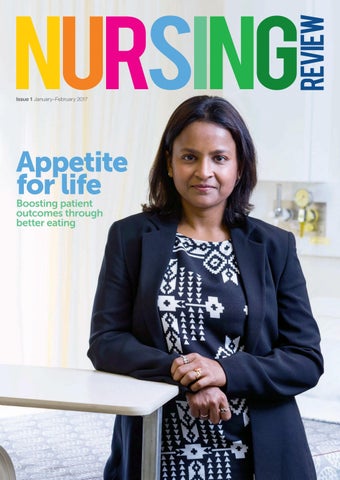
Issue 1 January–February 2017
Appetite for life
Boosting patient outcomes through better eating
contents
MANAGING EDITOR
news
Andrew Bracey 02 9936 8668 andrew.bracey@apned.com.au
02 Ginger an elixir? 04 Hypnotherapy for burns 05 End-of-life care needs national focus
NEWS EDITOR
industry & reform
Patrick Avenell 02 9936 8610 patrick.avenell@apned.com.au
06 Resident wellbeing Measuring life quality in community care
HEALTH EDITOR
Dallas Bastian 02 9936 8637 dallas.bastian@apned.com.au
08 Digging for answers
02
05
Unconventional gas mining’s potential health risks
PRODUCTION MANAGER
specialty focus
Cj Malgo 02 9936 8772 cj.malgo@apned.com.au
10 From Alaska to Cuba
SUBEDITOR
12 GEDI mastery
Looking afar for local health system inspiration
Robert Santos robert.santos@apned.com.au
Nurses fast-track seniors’ ED care
clinical practice
14 Midwife resilience
SALES MANAGER
Ben Long 02 9936 8664 ben.long@apned.com.au SUBSCRIPTION ENQUIRIES
Conquering everyday stressors and burnout
08
10
02 9936 8666 subs@apned.com.au
16 Solid starters Navigating allergy risks and infant feeding
18 Sick to the stomach Poor food intake worsening hospital outcomes
COVER IMAGE
Dr Ekta Agarwal Photo: QUT Marketing and Communication/Erika Fish.
workforce
20 Fatal prescriptions Why health professionals misuse drugs
PUBLISHED BY
APN Educational Media PO Box 488 Darlinghurst, NSW 1300 ABN 58 090 900 999 ISSN 1326-0472 PP100001944
22 Bully beefs Workplace harassment in focus
14
18
legal corner
24 Anti-social media Vent online at your professional peril
PUBLISHER’S NOTE
© Copyright. No part of this publication can be used or reproduced in any format without express permission in writing from APN Educational Media. The mention of a product or service, person or company in this publication, does not indicate the publisher’s endorsement. The views expressed in this publication do not necessarily represent the opinion of the publisher, its agents, company officers or employees.
technology
26 Wider scope of reference Virtual journal clubs take flight
28 Hold the phone Devising smarter use of smart devices
24
28 nursingreview.com.au | 1
news
relieving the symptoms of seasickness and morning sickness, but less is known about its effect on chemotherapy-induced symptoms. The trial involved 51 cancer patients from Princess Alexandra Hospital in Brisbane. Researchers looked at the severity and impact of their chemotherapy symptoms to determine whether ginger supplements made a difference. They found that taking daily doses of ginger extract could help chemotherapy
patients overcome some of the common side effects of chemotherapy, such as nausea and vomiting. “We found those in the group who were taking four ginger extract tablets a day, alongside their anti-nausea medication, experienced an improvement in quality of life in relation to nausea, vomiting and fatigue,” Marx said. He said the trial’s results, although preliminary, were promising. “Now there is a need for a larger study to further explore the safety of ginger supplementation during chemotherapy and whether we should be recommending ginger supplements as a treatment for chemotherapy-induced symptoms. “Chemotherapy is a necessary treatment for millions of cancer patients, but many suffer greatly from nausea and vomiting. It would be wonderful if they could find additional relief through a widely available, low-cost intervention.” The research team recently secured a grant from the Cancer Council to expand the trial and hope to gain more highquality evidence surrounding this use of ginger supplements. ■
workshops, as well as reimbursements for those undertaking the assessments in their clinical practice. A team of academics and health professionals from across Australia and the UK developed the training materials, and a consortium led by HammondCare will deliver the program.
Associate professor Josephine Clayton, staff specialist physician in palliative medicine with HammondCare, said the ongoing relationship general practice nurses have with patients means they are ideally placed to provide a full supportive care needs assessment. “Health professionals can feel uncomfortable discussing dying with their patients,” Clayton said. “But most patients and carers welcome the opportunity to talk about their symptoms, problems, concerns and priorities. The training the nurses will receive through the program gives them the skills to start the conversations with patients with empathy, care and compassion.” The program aims to help break down some of the barriers to ACP in general practice and enable practices to more efficiently identify, assess and address the supportive care needs of patients who might be at risk of deteriorating and dying. It will also help nurses identify patients who might benefit from early referral to specialist palliative care services. Training will take place across metropolitan cities and major regional centres during the next five months. Scholarships are available to regional and rural general practice nurses. ■
Ginger up recovery Adding the spice to chemotherapy could reduce nausea and vomiting.
I
t’s a staple of stirfries and adds flavour to drinks, but a study has found that ginger may also help people undergoing chemotherapy to go about their daily lives. La Trobe University’s Dr Wolfgang Marx presented the trial’s findings at this month’s Clinical Oncology Society of Australia Annual Scientific Meeting in Queensland. Marx, who conducted the research for his PhD at Bond University, said previous studies have shown that ginger is effective in
Talking death with patients A free program aims to remove some of the barriers to advance care planning in general practice.
N
urses in general practices across Australia will soon have access to training to help older people and those who are chronically ill discuss advance care planning (ACP) and palliative care. Through a federally funded program, called Advance, nurses will have access to free online training and face-to-face
2 | nursingreview.com.au
your future, divided On average, Australian women have just over half the super of men.* Maybe it’s time to change that?
hesta.com.au/mindthegap
Issued by H.E.S.T. Australia Ltd ABN 66 006 818 695 AFSL 235249, the Trustee of Health Employees Superannuation Trust Australia (HESTA) ABN 64 971 749 321. *According to Australian Bureau of Statistics (ABS) Retirement and Retirement Intentions, Australia, July 2012 to June 2013, women in Australia retire with 47% less in their super than men. abs.gov.au/ausstats/abs@.nsf/mf/6238.0
news
Hypnosis for kids with burns Researchers have looked at whether this therapy can ease pain and anxiety in these young patients. Stephen Chester Photo: University of Queensland
H
ypnotherapy may reduce anxiety and pain in children being treated for serious burns, a new study has found. Study lead Stephen Chester, a PhD candidate with the University of Queensland (UQ), said previous research had shown adults with burns benefited significantly from hypnotherapy
through reduced pain and anxiety, lower medication usage and shorter hospital stays, and added that the UQ research team was keen to investigate medical hypnosis in children as they are generally more responsive to hypnotherapy and therapeutic suggestion than adults. “We are not replacing pain and anxiety-relieving drugs, but examining whether medical hypnosis and medication together can help these young patients who have often been through a very traumatic time,” Chester said. The research team conducted a randomised controlled trial at Brisbane’s Lady Cilento Children’s Hospital involving 62 burns patients aged 4–16. Children were randomly assigned to either the hypnotherapy or standard care group. The team measured pain, anxiety, stress and wound healing at each dressing change. Chester said: “Children in the hypnotherapy group reported 70 per cent lower pain and 67 per cent lower anxiety scores on average, compared with those receiving standard care before their second dressing change. “Before the third dressing change, the hypnotherapy group had 90 per cent lower pain and 84 per cent lower anxiety. These results are clinically significant.” Last year, Chester trained as a hypnotherapist with the American Society of Clinical Hypnosis. He said while he initially approached it with some scepticism, he soon realised anaesthetists and dentists already use these techniques without labelling them as hypnosis or hypnotherapy. “One of the great things about it is that it has no side-effects and it’s completely safe.” ■
Insights nsights into eating disorders A new resource advises health professionals on how to support patients with these complex conditions.
M
ore than 100 Australians who have experienced an eating disorder have lent their voices to a new guide that aims to help healthcare professionals adopt a person-centred, recovery-oriented approach to care. There are almost a million Australians living with an eating disorder, yet only 27 per cent access treatment, said Christine Morgan, chief executive of the Butterfly Foundation.
4 | nursingreview.com.au
The group developed the new resource, funded by the Mental Health Commission of NSW and titled Insights in Recovery, using feedback from online surveys and focus groups with people who have experienced an eating disorder to find out what helped and hindered their recovery. Morgan said: “People who have walked the path of recovery from an eating disorder have a lot to teach us about how
we could help others return to physical and mental health, and we’ve captured that expertise in this resource.” The team found that people want health professionals to walk them through what recovery entails, help them to feel safe, use mindful language, discover who they are beyond the eating disorder and connect them with healthy supports in everyday life. NSW mental health commissioner John Feneley said the new publication shows health professionals – who often express a lack of confidence in their knowledge and training in this area – some things they can do to help people feel safe. “This wise first-hand advice, coupled with a guide to evidence-based treatment, should give health professionals the foundation they need to respectfully support people experiencing a complex condition that has been the subject of a great deal of public misunderstanding,” Feneley said. ■
news
PCA head thanks Ley for support Peak body also calls for end-of-life care to be a key priority for COAG.
P
alliative Care Australia (PCA) has congratulated ministers Ken Wyatt and Greg Hunt on their new Cabinet positions, while acknowledging the work of previous minister for health and aged care Sussan Ley. PCA chief executive Liz Callaghan (pictured) took the opportunity to tip her hat to Ley’s work as minister, including her
leadership in medical cannabis reform and for putting end-of-life care on the COAG health agenda. “Ley worked hard over the past two years as health minister to legalise access to medicinal cannabis for people with serious illness,” Callaghan said. “[She] also showed national leadership by putting end-of-life care on the COAG Health Council agenda to improve access to culturally appropriate care for all Australians.” Callaghan added that Ley’s time as minister will also be remembered for the introduction of the Health Care Homes trial. “This trial will provide the opportunity for coordinated care and early referral to palliative care for people with chronic illnesses when needed.” She said Ley had plans to focus on palliative care and end-of-life care in 2017, and added the peak body looks forward to working closely with new health minister Hunt to continue that work. “To improve care at the end of life, we need to get people talking about their end-of-life care wishes, and ensure people can access high quality care when needed, including access to timely and affordable specialist services and medications. “We also need an integrated information system that addresses the needs of patients, carers and the health workforce in the provision of palliative care. “It is important to maintain the current government focus on end-of-life care, including through making this a key priority for the COAG Health Council agenda,” she said. ■
nursingreview.com.au | 5
industry & reform
in partnership with professor Ann Netten from the University of Kent, who was involved in creating the Adult Social Care Outcomes Toolkit (ASCOT), a UK-developed measure that several countries have adopted. ASCOT was designed to capture information about an individual’s social care-related quality of life and forms the basis for the Australian tool. Nursing Review sits down with Fine and Adam Stebbing, from Macquarie University’s Department of Sociology, to discuss the development of the ACCOM and how it may come to be applied.
NR: What does the ACCOM focus on?
Care to compare? A new survey allows clients and workers to give their opinions on quality with ease, offering researchers and providers an unobtrusive new tool for improving services. Adam Stebbing and Michael Fine interviewed by Dallas Bastian
T
he researchers behind a survey tool that measures quality of life in community care have held a public seminar to detail its potential to contribute to understanding changes in the delivery of age services. The team, comprising researchers from Macquarie University and the Australian Health Services Research Institute (AHSRI) at the University of Wollongong, was awarded an Australian Research Council linkage grant to develop the Australian Community Care Outcomes Measure (ACCOM), which aims to ensure that clients get the assistance and services important to them. Macquarie lead professor Michael Fine says: “Because it is difficult at present to assess the impact of providing care, it is easy for staff, clients or family carers to lose hope, or to become distressed about the problems faced by those who need help. This is where outcome measures come into play. They provide a standard way of measuring improvement, stability or deterioration in the most important aspects of an individual’s life.” When consumers complete the ACCOM,
6 | nursingreview.com.au
providers receive information on a number of different issues, such as whether people feel they have control over their daily activities, whether they’re getting enough food and whether they feel they are engaging in meaningful social participation. Case managers answer the same questions about the client and can compare their perception of a client’s quality of life with the client’s own feelings. Researcher Dr Beatriz Cardona, from Macquarie University’s Department of Sociology, says case managers can use this information to think about the care plan and improvements to how the service is being delivered. The survey also includes an open question that allows consumers to elaborate on issues important to them or that aren’t addressed specifically. The researchers have partnered with community aged-care service providers the Whiddon Group, BaptistCare, Community Options Australia and KinCare, who all assist with making the ACCOM meaningful and practical. The research team has also been working
MF: The tool homes in on wellbeing of consumers over time, and that then becomes a measure of service quality. It can be used to monitor service efficiency and effectiveness. To do that, it breaks things down simply into three broad areas, one of which we need to ask the consumer about, and two of which [involve] data the services already hold. We ask the consumer nine questions about their quality of life and one about their self-rated health. There’s also one other question where they can say whatever they like about things. That’s the consumer input area. The first [set of data that comes from the services] is the demographic background. How old are they? Do they live alone? What sort of home do they live in? Is it their own? Is it rented? Is it an apartment or a house? [We learn] a little bit about their cultural background. The demographic data is always held on clients. The other [set of data the services provide] comes from initial assessments; it’s about clients’ need for care and their capabilities. What things do they need help with? What things can they manage to do themselves? What are the areas where they could improve? That data is also already held. We then use that to compare like with like data; for example, [we don’t want to] compare quality of life for different kinds of clients, because then you’d find the services that had high-functioning clients also had high quality-of-life results, and services that dealt with highly dependent clients had perhaps lower quality of life. We can pull out those services with highdependency clients or clients living alone and compare those clients with others who are in the same circumstance. The tool surveys case managers and clients about their views on care and quality of life. How is that information then used?
industry & reform
You discussed some of the early results of research into the use of the tool. What was revealed about how case managers’ and clients’ views aligned? AS: Overall, there was general consistency in how case managers and clients responded to the quality-of-life measures that we included, which was pleasing. What was also pleasing is that case managers and clients both agreed clients overall had relatively high quality of life, which suggests the support they’re receiving is effective.
You mentioned the results were quite positive in terms of how valid or reliable the tool is. What was revealed about that and the ease of use among staff and consumers? AS: We might start with the issue of usability. Overall, the results exceeded our expectations. We thought we’d be doing a pretty good job if we had a tool that could be completed within 10–15 minutes. Looking at the results of two rounds of
data from both clients and consumers, we’re seeing that over 90 per cent of our respondents were able to complete it within 10 minutes. Even more pleasingly, about three-quarters of case managers were able to do it within five minutes. With both clients and case managers, what we tended to see was that in round two, it took them less time to fill out the tool than in round one. On top of that, clients and case managers also reported that the tool was easy to use. That was great.
How might the tool be used in the future? MF: It’s useful for both service delivery and for research; and indirectly it can inform policy and help underpin an approach to both value and quality. It helps the individual consumer and individual staff members or case managers work out what’s working and what’s not, what the gaps are in service provision and so forth. It’s good at that individual consumer level and promotes a real discussion
between the case manager and the recipient at the moment. As we move beyond care-package recipients to other community-care receivers, it can be useful in the home support program also. [The tool is] valuable when you aggregate the data, and this is probably its main use. When you aggregate the data and look at how well a service is running, you can benchmark it against the way all other services of a similar kind are going across Australia, or across a state. If you’re doing well, you can perhaps use those results in some form of marketing, or you might like to use that for staff rewards or staff support programs. If there are problems, you use the data as a diagnostic tool to identify the areas to improve and ways to enhance your service provision. We’ve got a measure that’s easy to use, captures consumer views as well as staff views, and does it in a way that is not too interventionist. It’s not going to disrupt service delivery; it’s not too intrusive for consumers or staff members. ■
Supports easy digestion
1,2
With a unique blend of prebiotics* Our Careline team is on call for healthcare professionals and parents Our dedicated team includes experienced Midwives, Nutritionists and Dietitians. Their experience and knowledge about early life nutrition is available when you need it, for specialised, unbiased advice and one-to-one support.
Call us 1800 060 057
LiveChat www.karinourish.com
Email careline@karinourish.com
Monday to Friday, from 6:30am – 5:00pm (AEST)
BREAST MILK IS BEST FOR BABIES: Professional advice should be followed before using an infant formula. Introducing partial bottle feeding could negatively affect breast feeding. Good maternal nutrition is important for breast feeding and reversing a decision not to breast feed may be difficult. Infant formula should be used as directed. Proper use of an infant formula is important to the health of the infant. Social and financial implications should be considered when selecting a method of feeding. *Nutricia’s patented blend of prebiotic fibre = 90% short chain Galacto-oligosaccharides (scGOS) from milk, 10% long chain Polyfructose (lc Polyfructose) formerly known as Fructo-oligosaccharides (lcFOS) from chicory inulin. References: 1. Moro et al. 2002 Journal of Paediatric Gastroenterology and nutrition 34:291–295. 2. Costalos C et al. Early Hum Dev 2008; 84:45–49.
FOR HEALTHCARE PROFESSIONALS ONLY
Nutricia Australia Pty Limited, Level 4, Building D, 12–24 Talavera Road, Macquarie Park, NSW 2113. ANZ/KC/16/0054. 14059-NR.
14059 Karicare AU 2017 Logo update Nursing Review FA.indd 1
nursingreview.com.au | 7 27/01/2017 10:59 AM
industry & reform
Fracking headaches for farmers A new paper warns authorities about the potential health effects of unconventional gas mining on rural Australians. Melissa Haswell interviewed by Dallas Bastian
A
ustralian health experts have urged state and federal governments and local councils to protect rural populations from the multiple potential health risks associated with unconventional gas mining. The call comes from an article, published recently in Rural and Remote Health, that explored the impact UCG might have on Australians living in rural areas. The operations include shale gas mining, tight gas mining and coal seam gas mining, and can involve practices such as hydraulic fracturing, also known as fracking, and horizontal drilling. The lead author of the article, professor Melissa Haswell from the Queensland University of Technology, highlights health concerns in six key areas. They are: No demonstrated long-term solution for hazardous wastewater management The millions of litres of water brought to the surface through UCG operations contain some chemicals that pose risks to human and animal health, Haswell explains in the report. These include volatile organic compounds, heavy metals, naturally occurring radioactive materials and endocrine-disrupting chemicals associated with adverse effects at extremely low concentrations. “Exacerbated by incomplete assessment and problematic disclosure, health risks from fracking fluids and wastewater remain uncertain.” Air pollution Haswell describes this as an under-recognised significant health risk. Her report states that all stages of UCG mining pose potential air pollution risks, including compressor station operations and the extensive use of trucks and machinery emitting diesel exhaust, a carcinogen containing fine and ultrafine particles and nitrogen oxides. “The peer-reviewed literature indicates concerning air quality and public health impacts, with 40 of 46 air quality studies finding elevated air pollutant emissions and/or atmospheric concentrations,
1
2
8 | nursingreview.com.au
and 26 of 31 public health studies finding public health hazards, elevated risks or adverse health outcomes,” she says. Competition for water and land between gas companies and farmers “While the link between food safety and security and UCG has received less research interest, it is a critical concern for farmers for whom livestock health and water rights are paramount, especially with increased droughts predicted in Australia and globally,” the report states. Risks to mental health and social and emotional wellbeing “Disturbances from lights, noise, privacy invasion, anxiety about health, loss or contamination of water supply and falling property values enhanced distress among those living near wells,” Haswell says in the report, adding some people spoke of loss of social cohesion and communities polarised into those for and against. “In contrast, discussions with other residents and public relations firm Energy InDepth suggested the industry brings roads and neighbourhood improvements, reduced property taxes, increased business, training and research opportunities, jobs for local residents and increased self-worth.” High levels and potency of fugitive methane emissions promoting climate change Haswell says the research shows UCG mining contributes to global warming through major incidents, fugitive emissions and competition with renewable energies. The report warns that continued development may accelerate the severe health impacts of climate change. Regulation will not eliminate risk and impact “Even if theoretically possible, the capacity of regulatory agencies to handle the burden of adequately monitoring and responding to many hazardous chemical, social, mental and physical health risks posed by large numbers of producing and depleted wells is uncertain,” Haswell states in the report. Haswell says research into the health implications of shale and
3
4
5
6
industry & reform
tight gas mining should not be overlooked in the assessment of the likely costs of the industry’s development in Australia or in decision-making. “Rural residents need to be supported to access and interpret the best and most current evidence regarding the multiple health concerns associated with unconventional gas mining,” the report states. Nursing Review sits down with Haswell to find out more about what studies are telling us about the connections between unconventional gas mining and human health, and what concerned health professionals can do.
NR: Where did you gather this information from? MH: I started by looking closely into unconventional gas mining in health literature back in 2012 when there was a proposal to drill wells in Sydney’s water catchment area, where I was living at the time. At that point, it was very easy to do a review and find most of the papers that were published. However, between 2013 and 2015, there were approximately 685 publications in peer-reviewed journals addressing health concerns in the industry. So it got harder and harder to keep my head above water in terms of the new information that was coming. This paper comes from just keeping a constant eye on the literature, looking at papers that were particularly bringing in new concerns and more quality studies. The physicians, scientists and engineers who [lead the] Healthy Energy Initiative in the US keep a database of all publications, at least as many as they can. They did a summary of that evidence up to the end of 2015. They looked at what proportion were saying “It’s okay, there are no worries” and the proportion that were bringing in new information and new data that was actually indicating problems, whether it was air, pollution, water concerns, or public health impacts. This database is publicly available, and anyone can go and gain access to those publications. There’s also been some quite rigorous reports done, particularly the New York Compendium, which has been published regularly, where they compile scientific, medical and media findings around concerns and risks. They just came out with their fourth compendium in November. In Australia, I think we are starting to get ourselves on the map in terms of good research. There’s quite a bit in sociology of rural areas, which was not covered in this review, but it certainly is adding to concerns around what happens to rural communities when the industry comes to town. It’s part of quite a long-term commitment to keeping up with the literature and also being in a group with the Doctors for the Environment Australia. We frequently share papers that are of particular relevance within the group.
You said while it’s too late for a cautionary approach for millions of people living close to these operations, public health professionals can support rural residents and decisionmakers to avoid, limit or address these potential harms. What can healthcare professionals concerned about this and the other issues laid out in the article do to help rural Australians? We are at a stage where the industry is in an infancy [period] apart from in the Darling Downs of Queensland and areas around there. Different states and territories either have or are currently undertaking reviews. Initially it was the NSW government in 2013, where the chief scientists and engineer did an extensive review at that time and they listened to community members – though not as much of listening to health professionals as we would have wished. But that report, I think, was a good model for the time;
however, it was done in 2013, and so it’s very out of date in terms of what we now know from research studies. Western Australia has conducted a review that was very limited to only hydraulic fracturing. They determined that it was all okay. Health professionals in that case can say, “No, there are many aspects of the industry that raise issues of concern,” and actually put that information out there, contribute it to government processes, etc. They can also join the Public Health Association of Australia or the Climate and Health Alliance, [there are also nursing groups] as well as allied health groups, as well as university and doctors that respond to government inquiries, etc, to get this information forward. In Victoria, their review of the industry led them to actually put in a ban. They decided that the risks and the proof that regulation will protect Victorians from unconventional gas mining wasn’t sufficient, so they have actually put a ban in. I think a lot of that is because the attorney general listened to health professionals and did the homework regarding the kind of information presented in the paper. South Australia, the initial inquiry report, which Doctors for the Environment Australia made a submission to, and I made a presentation working side by side with some farmers and local health professionals. We brought these forward in the inquiry. So I think we can get this information, and we can digest it so we can work in terms of whether the industry is appropriate or not, or safe or not for a particular area. In terms of limiting, so if the green light does go ahead, we’re there in terms of what things need to be [put in place as harm reduction measures] or by knowledge of knowing what can go wrong with health, trying to ensure wells aren’t too close to houses and making sure the mental health issues, the community issues are taken care of, as best is possible anyway. Then there are places like the Darling Downs, where it is already there. It is already impacting people. [Now that the transition from no industry into a boom in the development phase is over] a lot of the negatives of the industry are now becoming part of everyday life. I think we need to really understand what’s going on there, how people are being impacted at this stage and be able to call for the different sorts of monitoring of potential exposures. Also paying attention to perhaps if people come in with symptoms, noting where they live and asking what sort of activities were happening at wells around them. What about their neighbours? And so on. Those sort of localised studies that actually involve community residents would go a long way to help people deal with the fact that their lives are really quite profoundly changed.
In what other ways do you hope this information is used? Who should take note of the concerns laid out in the article? Well, certainly our decision-makers. It’s very easy to look at one sliver of this information and go, “Oh, no. That’s okay, the water will be okay,” or looking at individual aspects. But I think these impacts cross so widely into many different areas that [it is vital to] have everything in the equation when we decide [whether this is] going to be a positive step for a community, or if it is going to [result in] some people winning and many people actually losing. To me, I would very much like to see decisions being made at the top with public health professionals, with people from the communities, right at that decision-making table, rather than gloss over the uncertainty of the research to actually say, “Well, we need to prove this research to be wrong before we know it’s safe.” We’re certainly not in that space at all. ■ nursingreview.com.au | 9
specialty focus
Rethinking primary health
Photo: Eva Blue
Do Cuba, Alaska and the Netherlands hold the key to fixing Australia’s primary healthcare woes? Petra Bywood interviewed by Dallas Bastian
P
rimary Health Networks (PHNs) will likely benefit by adopting less traditional approaches to persistent problems, experts in the field have said. Dr Petra Bywood and Dr Katrina Erny-Albrecht, both from Flinders University, recently penned an article on the topic in This Week in PHC, an online newsletter produced by the Flindersbased Primary Health Care Research and Information Service. The researchers highlighted examples of innovative and successful international models for primary care. For instance, Cuba’s model provides services through polyclinics, annual home visits for everyone, and additional visits for those with higher needs, while the Alaskan Nuka system of care has demonstrated very high levels of satisfaction among ‘customer-owners’ and employees. Nursing Review sits down with Bywood to discuss these models, as well as those of the UK and the Netherlands, and to find out what insights PHNs can gather by looking abroad.
NR: Why is it important that PHNs continue to pay attention to healthcare models in different parts of the world? PB: Many health systems, including in Australia, are struggling with exactly the same kind of pressures and challenges. This includes things like ageing populations, increased patient expectations, limited resources, both financial and workforce resources, and also increased prevalence of obesity and chronic diseases 10 | nursingreview.com.au
and multi-morbidities, so in addressing these kind of common challenges they can learn from each other and avoid some of the costly trial and error approach and also reduce duplication of effort so that resources could be allocated more efficiently. Each of the Primary Health Networks covers quite a different geographical area and population, and one single model is unlikely to meet all of their needs, but also those needs aren’t necessarily unique. For example, the remote communities that exist in Canada and United States and Eastern Europe may also have the same kinds of problems as our Indigenous community, as the remote communities in Australia, and same with the indigenous communities that are in Canada or New Zealand and Alaska. There are some common problems. So before investing in major programs and strategies here in Australia, it might be useful to look at the evidence that’s gained both locally and in other areas to provide confidence and also guidance in moving forward. Without evaluation or evidence, it’s impossible to know whether some of the programs have any impact and also whether they’re making the best use of the limited resources. In other countries like Canada and the United Kingdom, evaluation is a key requirement of the funded programs, and there hasn’t been a very strong focus on that in Australia at this point.
You recently highlighted the UK’s Greater Manchester Devolution program (GM) which focuses on the place and the people who live in it rather than the needs of specific organisations and professional groups. How does the model do this and what impact does that focus have on the people it serves and the healthcare system more broadly? Greater Manchester, at this stage, is in a fairly early stage of implementation and so the evidence of impact is lacking, but there has been quite extensive consultation in publication of primary healthcare guidelines for Greater Manchester, so it’s proposed that they focus on the place and the people and support this by working closely with patients, with service users, local communities, and the frontline staff, so this is not just in healthcare, but across sectors, like public health, housing, education, welfare, etc, and the aim is to achieve properly integrated public services. This is also supported through a neighbourhood model which they call Locality Care Organisations, and they use multidisciplinary teams that serve natural populations of about 30,000 to 50,000 people, and it expands on the traditional concept of primary healthcare, fostering a much wider system that includes things like physiotherapy, midwifery, podiatry and social care, and also voluntary organisations, so it really taps into some of the community assets and the strengths of the local community. The other thing that is really important I think in this system is that they take a very strong focus on preventive care, and that is something that I think in Australia has seemed to have dropped off the radar a little bit. They also look at using the workforce differently so that to accommodate workforce shortages they expand the roles of other professionals like pharmacists and optometrists. I guess for the general public the aim is to improve the access to primary healthcare and give them a greater say in what sort of services are provided, and also it requires rethinking about who is going to provide the care, so changing those professional boundaries means changing public and professional acceptance. Also, I think it’s having that much broader focus that covers the other sectors that is one of the key strengths of the GM approach.
specialty focus
Another example of an innovative international model for primary care that you chose to highlight was Cuba’s, which you said is strongly grounded in primary healthcare and public health. What are some of the tenets of the Cuban model that you believe make it successful? The death of Fidel Castro late last year shone a light on his legacy of free universal health and education, and some of the key elements of the Cuban success include the emphasis on inclusion with home visits that ensure individuals don’t slip through the cracks and miss out on care. Again, there’s a very strong emphasis on prevention and on training. In addition, there’s widespread establishment of polyclinics, which could be seen as the parallel to the Primary Health Networks here in Australia. In Cuba, it moved from originally a very uniform structure across the country to a much more locally responsive structure that has led to much improved healthcare, and with the polyclinics having a very important role in quality control and capacity building and service provision based on the needs of the local population rather than a top-down fund allocation. Interestingly, Cuba’s GDP is relatively low and they spend about 10 per cent on healthcare – which is similar to what Australia does – and their health status has improved substantially over the last 40 years to be much closer to that of the United States, including life expectancy. Infant mortality has dropped below that of the United States, so one of the key elements of this is the relationship between the doctors and nurses, who work as a team. The nurses do home visits in the local community, and they rarely move out of the community, so they develop this real strength in terms of the continuity of care. A Cuban-trained medical graduate [writing for The Conversation, recently argued] that this high level of general access and the dedication of the healthcare workers was a real strength [along with almost all of Cuba’s] medical graduates being required to have a specialisation in family medicine.
You also pointed to the Alaskan Nuka system of care. How do the central elements of this system work together to create a successful healthcare system and what changes has the model brought about? This is a really interesting model. It was established by the South Central Foundation under tribal authority of the Native Alaskan community back in the 1980s. It’s a non-profit, native-owned and operated healthcare organisation and it takes a very holistic approach to healthcare. It also acknowledges the impact of multiple factors on the physical, mental, emotional and spiritual wellbeing and the unique influence of the local culture and practice. Firstly, this model uses an empowerment approach to enhance the native Alaskan culture and to give individuals and their families the power to make their own health choices, so those three elements, the patients are not called patients, they’re called ‘customer-owners’, and they’re treated as equals who share the decision making about their healthcare. The second element is about the relationships and in particular the relationship between the customer-owner and the primary healthcare team, so healthcare decisions are tailored to the unique situation of the customer-owner and includes their values and their preferences. The third element is the whole system transformation, and this is not just about healthcare delivery, but it’s about getting the right balance in the workforce, including the training and the development and the financial considerations, of course.
This system moved away from the patients as beneficiaries of the long-established Indian Health Service that was controlled by Washington, and patients were waiting weeks to get appointments. They saw somebody different every time, and both patients and the employees had very low satisfaction. There was a real disconnection between the mind and the body and it also ignored the cultural needs of the community. Now this is much more than just training indigenous staff; it’s quite relevant to the Australian Indigenous population, who also argue for an empowerment approach. The results from this have been quite outstanding. The satisfaction rate has gone well over 90 per cent for both the customer-owners and for the employees, and there’s been about a 25 per cent reduction in emergency department visits and also in primary healthcare visits. Yes, it’s not a perfect system, but it’s been quite long established and they’re doing some really interesting things there, particularly for indigenous populations.
What other promising international models should Australia look to? There’s a Dutch model of primary healthcare that says that no person should be more than 15 minutes from a GP. That probably wouldn’t work so well here in Australia with the distances that people might have to travel, but it certainly works in the Dutch situation. In the United States, there are the healthcare homes that also target chronic diseases that are quite successful, and here in Australia too there are some individual groups that are making a difference. It could be useful to have something like a repository along the lines of the clinical trial databases that show a number of these different models that could be drawn on. But for the PHNs, they’re all responsible for quite different regions and populations, and no one model is likely to meet all of their needs. Even within a PHN it’s unlikely, but having some kind of inbuilt flexibility, which is quite common across these models, can overcome many of those different issues. For example, the GM model is quite exciting, but it’s really suited more to the urban populations and it still has to be evaluated. The Nuka model and the Manukau model from New Zealand are also useful where there are high levels of indigenous populations and where cultural influences need to be taken into consideration. So for each of the PHNs the models that provide guidance might differ.
How should PHNs go about integrating successful models – or parts thereof – into their operations? This is something that needs to take a multilevel approach, so it has to come from a macro-level, at policy, the meso-level of the organisation, such as the Primary Health Networks, and also the micro-level service delivery. I think, firstly, it’s got to be a willingness to invest in primary healthcare. One common feature of all the different successful models is a really strong primary healthcare focus. Also, there has to be some flexibility so that there’s an acknowledgement from the bottom up of the needs, but also some influence from the top down in terms of quality and evidence and standards, etc, and training and all of that kind of thing. The other things that are very common across these models is a very strong focus on prevention, and that’s quite clear in all of them. The other thing is the kind of neighbourhood or contextual focus, where the problems that arise from the local context can also provide some of the solutions for the local context. Integrated care is the other big issue – but on its own, it’s insufficient. It really needs to have that focus on prevention as well. ■ nursingreview.com.au | 11
specialty focus
Emergency room for improvement A nurse-led initiative to improve the care of older people in emergency departments is garnering praise. Marianne Wallis interviewed by Dallas Bastian
A
Queensland nursing project focused on providing quicker and more personalised treatment to older patients has received a state award. The Geriatric Emergency Department Intervention (GEDI) won the customer focus category at the 2016 Queensland Premier’s Awards for Excellence. The project is a joint effort between the University of the Sunshine Coast (USC), Nambour Hospital and the Sunshine Coast Hospital and Health Service. It was developed by USC nursing academics and a team of nurses and doctors with specialist geriatric experience. GEDI aims to decrease hospital and emergency admission rates for elderly people and reduce their length of stay, while improving staff and patient satisfaction. Professor of nursing Marianne Wallis, who heads the GEDI team at USC, said emergency departments can be confusing, noisy and dangerous places for frail older people. “We’re making sure they spend as little time as possible in that environment, and can quickly access the specific kind of care they need,” Wallis said. “The preliminary results of the project are so encouraging that we have already received state funding to have this program rolled out on a wider scale.” GEDI is part of a larger project that aims to strengthen the capacity of the aged-care sector and improve interaction between aged-care facilities and hospitals. Nursing Review sits down with Wallis to find out how GEDI helps to reduce the length of people’s hospital stays and how other hospitals or health services can be involved in the project.
12 | nursingreview.com.au
NR: What does GEDI set out to do and what role do nurses play in delivering the intervention? MW: GEDI is an intervention situated in the emergency department that is predominantly nurse-led, but has a physician champion. We have a clinical nurse consultant and a number of clinical nurses who basically fast-track and improve the care for older people if they have to come into an emergency department, particularly the frail older person.
What are the key elements of the program that have led to its success? I think there are a couple of aspects that have led to its success. This is a real bundled intervention. The nurses, first of all, they screen patients and work out who are the frail aged. They can then do a more in-depth assessment and liaise very quickly and effectively with emergency doctors and geriatricians and a whole host of other allied health and diagnostic services to get a real fast track on care. And because they are experts in both emergency and gerontology nursing, they are also a great resource for all of the staff. I think the fact that this service is seen as a key supporting resource within our ED is one of the elements of success. There is great buy-in from all of the ED clinicians around this particular service delivery model. The other key element of success is that the clinicians partnered with a university so that we can help them get really rigorous research results out of this and show just how well this works. People understand that it’s a common sense idea, and although it’s about diverting resources from one place to another, the clinicians and the hospital service administrators are already seeing the benefits, even before the research is finalised.
What are some of the key changes GEDI has brought about for elderly patients and the staff who care for them? One of the big outcome measures, if you like, for emergency departments, is how many people wait for more than four hours to receive medical care. In addition, obviously emergency departments are supposed to be efficient and cost-effective, so in our research we have looked at these kinds of hospital markers of outcomes. Are we getting
specialty focus
people through the system quickly and efficiently and getting them to see the medical care that they need, and are we doing it in a way that is, at the very worst, cost-neutral and hopefully cost-saving? Of course, from the patient’s point of view, are we doing this in a way that they are satisfied with this and it doesn’t mean they keep bouncing back to hospital? With the GEDI, with this focus on this particularly vulnerable population of frail elderly people, we are seeing improvements in hospital efficiency and cost-effectiveness, but also we’re beginning to see great outcomes from patients as well. They’re actually spending less time waiting and they’re returning to hospital less frequently. However, these are only preliminary results, and our final research won’t be available until early in 2017.
You’ve received state funding to have the program rolled out on a wider scale. What are the next steps there, and how can other organisations be involved? When we have got the final results and we are sure that this is a cost-efficient and effective service, we will be working with Queensland Health on a dissemination project. This is where we will actually send to emergencies departments a toolkit that we are developing that will be able to be disseminated to Queensland Health facilities, Queensland Health emergency departments, that will have everything: all the paperwork they need, all the strategies they need, where the funding needs to come from, and how to approach this.
We’re also working on a bigger toolkit that can be applied to nonQueensland Health facilities, and we hope eventually to get some sort of funding to actually run facilitation programs. Because it’s not just about having all the right pieces of paper and all of the processes that you can tick a box. It’s actually about having clinicians with the right skills and attitudes and enthusiasms as well.
GEDI is part of a larger project, CEDRiC, or Care Coordination through Emergency Department Residential Aged Care and Primary Health Collaboration. The initiative aims to improve interaction between aged-care facilities and hospitals. How’s the wider project been going? It’s going really well. As you rightly say, GEDI is one aspect of that. Actually, the GEDI program deals not just with people coming in from aged care, but any frail, older person, whether they live at home or in a residential aged-care facility. But the CEDRiC project is particularly looking at improving care for people in residential aged care. We have developed the role of the nurse practitioner candidate – a program to train nurse practitioners to work in the residential aged-care facility. We will be analysing the results of that aspect of the CEDRiC project early in [2017]. We hope that by about February we will be able to report the results. Our preliminary analysis is showing that, generally, we’re getting some very good qualitative outcomes. People are very happy and satisfied with the services and we just want to crunch the numbers to make sure that it’s also efficient and cost-effective. ■
ADVANCE YOUR CAREER IN CONTEMPORARY HEALTH ISSUES
THE
CRICOS Code: 00219C | RTO Code: 40939 | P_AD_160455_NR1
KNOWLEDGE TO YOUR
NURTURE
At CQUniversity Australia you can choose to study a variety of contemporary health issues relevant to practicing nurses including healthy ageing, dementia studies and domestic violence. Our courses are designed to provide you with contextual professional development opportunities as a practicing health professional and are designed in consultation with industry. Our graduate certificates provide foundational knowledge in your chosen area and have strong pathways through to our graduate diplomas which provide advanced concepts and hands on project work. CQUniversity makes study all about you with outstanding support services, and on-campus or distance education study options. Benefit from access to more than 20 regional and metropolitan locations across Australia. Our postgraduate contemporary health issues courses are offered online, allowing you the flexibility to tailor your study to suit your career and lifestyle. Choose from: » Graduate Certificate in Dementia Studies » Graduate Diploma of Dementia Studies » Graduate Certificate in Healthy Ageing » Graduate Diploma of Healthy Ageing » Graduate Certificate in Domestic and Family Violence Practice » Graduate Certificate in Facilitating Men’s Behaviour Change » Graduate Diploma of Domestic and Family Violence Practice.
Apply now to study in 2017. cqu.edu.au/studyhealth nursingreview.com.au | 13
clinical practice
Reigniting the flame Why do Australian midwives have much higher levels of burnout than their counterparts in other countries? Jennifer Fenwick interviewed by Dallas Bastian.
work burnout and client-related burnout. For midwives, what we’re seeing is certainly work-related burnout, not client-related burnout. That’s associated with the working environment, the way they provide care, and organisational issues. Issues around that are seemingly the reason that we’re getting quite high levels of burnout in some groups of midwives.
What else did the survey reveal about the prevalence of burnout in Australia?
T
here is a high prevalence of personal and work-related burnout, depression, anxiety and stress among Australia’s midwives, new research has found. Published in BMC Pregnancy and Childbirth, the study gathered responses from over 1000 nurses and measured them against the Copenhagen Burnout Inventory and the Depression, Anxiety and Stress Scale. The authors found that almost two-thirds of midwives surveyed reported personal burnout, while over 40 per cent reported work-related burnout and about 10 per cent reported client-related burnout. About a fifth of midwives surveyed reported anxiety and stress symptoms, as well as moderate, severe or extreme levels of depression. The research team said: “Exploring levels of burnout, depression, anxiety and stress within the midwifery population is important to better understand and address the development of responses to the stressful nature of their work and workplace demands.” Nursing Review sits down with study co-author Jennifer Fenwick, professor of midwifery at Griffith University and clinical chair at Gold Coast University Hospital, to find out what causes burnout and the factors affecting the mental health of midwives.
NR: What causes burnout and how would you characterise it when it comes to the work that midwives do? JF: That’s not an easy question to answer. In the research that we did, we used a tool called the Copenhagen Burnout Tool, and it’s kind of divided into three domains. It looks at personal burnout, 14 | nursingreview.com.au
What we were able to find out is that we have high levels of stress, anxiety and depression, which is associated with work-related burnout. We’ve done some of this work internationally in New Zealand and in Sweden, and the survey is just about to run in the UK and Canada, and has also run in Sweden. What we found between Sweden, New Zealand and Australia is that Australian midwives have much higher levels of depression, anxiety and stress than midwives in those other countries, and higher than what the normal population is. That was related to a large group of midwives suffering burnout. We were able to look at different groups of midwives and we did find differences in midwives who worked slightly differently or who had different working patterns. What we did find, here and in New Zealand, is that midwives that worked in what we call case-load models providing continuity of care to women – so they worked across their full scope of practice, providing pregnancy care, labour and birth care, and post-natal care up to six weeks – have much lower levels of stress, anxiety, depression and burnout than midwives who worked in what we call the traditional shift-based way, or core. That certainly resonates with other work that’s being done in Australia, and certainly overseas as well. What we think is potentially happening is when we ask midwives about satisfaction, what comes out is their frustration with the way care is organised, and the inability to form meaningful relationships with women. Certainly that again matches the international literature that says when midwives can form what we call longitudinal relationships – that is, get to know women across the whole pregnancy – that
clinical practice
they actually enjoy their work much better. They feel that they are being a midwife; they have time to do the things they think are important for women. Not only do women feel more satisfied, but midwives feel more satisfied, and they feel safer because they’re caring for a woman they actually really get to know.
Did the surveys reveal that any other stressors are at play? Perhaps any related to the personal or client domains? No, client domain scored very low. [The domains] asked items that particularly related to women; caring for women. Certainly in Australia, and I think overseas as well, midwives scored very low on that. There was no burnout in that client related. There were some personal levels of burnout, but that’s not surprising if you’ve got work stressors. Some midwives have personal-related burnout, in terms of looking after family, kids, organising whatever they need to do.
What are some of the other consequences that burnout can bring about for a midwife, both professionally and personally? It’s like anyone, I think that what happens is when you’re suffering burnout you don’t enjoy life. You don’t enjoy life personally. What we know professionally, of course, is that you’re not as empathetic, you can’t provide the quality care because you can’t engage effectively with clients. Your relationships with other colleagues suffer. Working in a complex and often chaotic health environment becomes much more difficult when you’re feeling down and stressed and anxious and feeling like you don’t want to be there. The other big thing is that we need midwives. We need a healthy workforce going forward. It’s costly for us to educate midwives, and we don’t want to lose them from our profession. The average age of the midwife at the moment is around 49. We need younger midwives coming into the profession to want to stay in the profession. So it’s really important that we start to look at reforming or redesigning or realigning how we do maternity care with the evidence, which means midwives really should be working to their full scope of practice, working within really supportive multidisciplinary teams – but having a caseload of women rather than just working in fragmented ways.
About a fifth of midwives surveyed reported anxiety, stress and moderate, severe or extreme levels of depression. Why might we being seeing those levels of anxiety, stress and depression? Are they all connected to burnout, or are there different elements at play? I haven’t got it in front of me and we’re still looking at all the different analysis. But certainly one goes with the other. I don’t know which one comes first. What we did find that is when we did some particular psychometric testing of the different tools, what we were able to find out is we only have to actually give midwives the six items on the work-related burnout, and that tells us how depressed they are. It all goes into the mix together. All those things are part of the same picture. I was somewhere the other day [and someone] said the heart’s gone out of health, and I think midwives and our nursing colleagues are feeling that very much now. These large health services are very financially driven. Absolutely we have to provide cost-effective and good care, but I think for many midwives – and I would think that for some or many of my nursing colleagues – there’s a real sense that the heart’s gone out of health, that the vision for quality care seems to be left behind. People are struggling with that, those nurses and midwives, a
sense of frustration and disappointment. I think there’s a sense that the budget or the finances are the only thing that count. That plays into people feeling frustrated around how they can provide quality care. Certainly for midwives, busy, chaotic, understaffed environments cause them to feel stress because at the end of the day they go home and they think: “I could have provided that woman with so much better care.” Something may have happened and they feel guilty or that it is their fault. All those kinds of feelings when we’re talking about working with women and families in what is a very special time in their lives. So midwives particularly feel stressed and anxious when they can’t provide the care that they know the woman deserves and should be getting.
Why is it important to continue to better understand and address the high prevalence of these issues in the profession from a workforce perspective? One of the reasons we did the work in the first place is we recognised that the emotional wellbeing of health professionals, or midwives particularly, is limited. For the last so many numbers of years, often midwives have been, in a way, told to suck it up and get on with what they need to do. We come across a whole lot of different events; being with women and their families is fantastic but we do experience adverse outcomes where we need to work through those. That causes stress. That comes with the territory, not surprisingly. I think we haven’t paid attention to the emotional wellbeing, and I did see a study the other day that seemed to suggest suicide was very high in both the nursing and midwifery professions. Of course, this is really important from a personal perspective, but from an ongoing workforce perspective, we want our nurses and our midwives to love what they’re doing and feel enjoyment out of that, and be emotionally well. We won’t have a workforce if we don’t pay attention to that. We’ve done the basic work that says: “Look, things aren’t good.” I think now we need to really say: “Okay, what is it that we need to do? What do our organisations need to provide their health workers with to value them?” I think that’s the bottom line now. One of the things that we’re investigating is clinical supervision. Perhaps another word for it is clinical reflection or structured clinical reflection. We think this might be an intervention that actually supports the emotional wellbeing of midwives professionally. It’s not therapy, but it’s a way of providing or valuing midwives and nurses. They get clinical supervision for an hour every month with a trained clinical supervisor. It’s a safe space where they are given an opportunity to work through some of the things that they have to tackle on a day to day basis. Most of the time when you think about what we do, everything we do really in nursing and midwifery is all about relationships. Most of the structured reflection gives clinicians time to talk about their relationships and unpick those and get some help with how they can do things better. So it’s really important that we address this. We haven’t addressed it in the past, we just expect people to suck it up and get on with it, when really our organisations, our health organisations, need to say: “We really value our clinicians and they’re the resource.” Nurses and midwives are the biggest group of healthcare professionals providing that bedside care. [But] often we don’t do things or put in place strategies that really value them, and say: “We value this. We are going to provide you with opportunities to do reflection and feel that you’ve got some way of working through the work-related issues that pop up on a day to day basis.” ■ nursingreview.com.au | 15
clinical practice
A solid start Allergy guidelines have been revised. How does this affect infant feeding? By Zoe Hutchinson
S
tarting solids can be a confusing time for new parents, with the barrage of information available online offering conflicting advice. Allergies and intolerances are on a dramatic incline, and research in this area in recent years has led to the revision of infant feeding and allergy prevention recommendations in 2016 by the Australasian Society of Clinical Immunology and Allergy (ASCIA). The cause of the increase in food allergy is unknown, and thus these guidelines are pertinent to all families, not just those with a known family history. Food allergy is an immune-mediated response to ingestion and can result in swelling of lips, face and eyes; hives or welts; eczema or rash; abdominal pain; vomiting or tingling in the mouth; and may or may not occur prior to anaphylaxis. More than 90 per cent of food allergens are from the following foods: cow’s milk, egg, peanut, tree nut, wheat, soy, sesame, fish and shellfish. However, any food may cause an allergic reaction. Food allergy in Australia is now being seen in 10 per cent of children under 1 year of age, 4–8 per cent of children under 5 years, and 2 per cent of adults. Diagnosis of food allergy must be done under the professional guidance of an allergist or immunologist via skin prick or RAST testing and oral food challenges.
16 | nursingreview.com.au
The benefits of breastfeeding on both baby and mother are well documented. However, in recent years, the evidence for a protective and preventive effect on the development of food allergy has been low. The results from the recent LEAP study and STEP trial, among others, have highlighted the benefit of introducing high-risk allergenic foods (particularly peanuts) early, and of the food remaining in the infant’s diet. This is especially true for those at higher risk of developing a food allergy. As a result, the revision of the infant feeding guidelines by ASCIA stipulates first and foremost that solids should be introduced when an infant is developmentally ready at about 6 months of age, but not before 4 months of age. Signs of developmental readiness include: adequate postural support, good head control, reaching for food, and opening the mouth when food is offered on a spoon. Iron-rich foods should be introduced first, with high allergen risk foods such as cooked eggs, wheat, fish and nuts in a suitable form. Introduction should not be delayed and allergenic foods should be offered within the first year of life. Previously recommended face smearing of food prior to ingestion can produce skin irritation without gut involvement and vice versa, and as such is now not recommended to exclude allergy. In high-risk families, i.e. those with a family history of allergy, parents may wish to seek guidance from a paediatrician conjointly with a paediatric Accredited Practising Dietitian (APD), particularly if feeding has already been a concern, including faltering growth. If foods need to be excluded from the maternal or infant’s diet, an assessment by a paediatric APD will ensure both mother and baby are consuming a nutritionally complete intake so both are thriving. Evidence gathered since 2010 has seen the infant feeding guidelines change to become more in line with preventive measures for the development of allergies for all infants. The 2016 ASCIA revised infant feeding guidelines are a useful resource. Among their key points are: • Breastfeeding should be encouraged where possible and for as long as possible before and during the commencement of solids. • Alternatively, formula is to be utilised as sole source of nutrition. Cow’s milk or alternatives are not recommended, due to the lack of nutritional composition, prior to 12 months of age. • Solids should be introduced at about 6 months of age when an infant displays signs of developmental readiness, but not before 4 months of age. • Iron-rich foods are encouraged first (red meat, iron-fortified cereal, eggs, legumes, green leafy vegetables). • No need to delay high allergen risk foods. • Cow/soy milk can be used in cooking prior to 12 months. • Do not introduce raw egg. • If an infant has faltering growth, poor feeding and strong family history of allergy/intolerance, review by a paediatric APD is strongly recommended. ■ Zoe Hutchinson is a paediatric dietitian and founder of Little Sprouts Nutrition. See: littlesproutsnutrition.com.au To find an Accredited Practising Dietitian working in infant feeding, paediatrics or allergy and intolerances, call 1800 812 942 or search ‘Find an APD’ on the DAA website www.daa.asn.au For more information about the ASCIA 2016 revised infant feeding guidelines visit: www.allergy.org.au/patients/allergy-prevention/ ascia-guidelines-for-infant-feeding-and-allergy-prevention
13 JULY 2017 AGED CARE EXPO SYDNEY Quality care later in life is a key concern for many Australians. The quality of care currently available is perceived by many to be in decline due to a number of forces: funding and investment in the sector, affordability, resourcing, an increasing skills shortage, a more informed clientele with higher expectations, and the current system not working. But what’s on the horizon?
FUTURECARE 2017 WILL EXPLORE: ® The future funding and financing of the sector ® New sustainable models of care ® The attitudes, expectations and needs of the next generation of clients ® Innovation in the design and delivery of aged care to address clients’ needs ® Maximising workforce efficiency by using innovative technology platforms. In addition to a stimulating program attendees will have the opportunity to meet and reconnect with a number of innovative suppliers to the aged care sector. From HR software, mobility products, monitoring systems and new gadgets there will be plenty to see, do and interact with during the breaks.
Register your interest today! agedcareinsite.com.au
clinical practice
NR: Your previous research showed that hospital patients are more likely to die within 30 days of admission if they eat less than a quarter of the food they’re offered or are already malnourished, and now you’ve sought out older patients’ perspectives on food intake in hospital. What insights were you hoping to gather?
Treat food like medicine
EA: We know through research that as many as half of the older patients in hospitals can be malnourished and that inadequate food intake during hospitalisation is frequently reported in this population. Previously, objective measures such as patient questionnaires or review of patient charts have been used in wider hospital patient [populations] to determine what the barriers are to food intake. There have been a couple of studies that have also explored the views of healthcare staff on the reasons for poor food intake in older hospital patients. These studies have been fantastic, because they’ve provided some useful insights into the reasons for poor food intake in older hospital patients or wider hospital patient populations. Through a qualitative interview, which is a detailed interview, we wanted to gain a more in-depth insight into why the older patients particularly don’t eat adequately in hospital. Through those interviews, we also wanted to gauge their food and mealtime experiences and food-related perceptions of older hospital patients. We knew that these perspectives from older adults would be a new addition to the literature because it had not been reported thus far, to the best of our knowledge.
A new study highlights the barriers to adequate food intake in older hospital patients.
One of the main themes that emerged from the interviews was ‘validating circumstances’ or the ways participants rationalised their poor food intake during their admission. What were respondents telling you about the way they make sense of their poor food intake?
Ekta Agarwal interviewed by Dallas Bastian
“I
don’t eat when I’m sick.” “The smell of food makes me feel nauseous.” “I’m quite depressed at the moment. When you get like that you don’t feel like eating much.” These were some of the sentiments shared by participants of a study into older people’s mealtime experiences in hospital. The QUT, Dietitian Connection and Bond University research team interviewed 25 hospital patients aged 65–98 years and found that inadequate dietary intake is complex and influenced by a range of barriers. Some of them included the view that poor appetite was an expected outcome of being sick and in hospital, and feeling rushed by food service staff who needed to clear meal trays. Patients also purposely ate less food because they were anxious about being unable to access the toilet in time, as four patients were sharing the one facility. Co-author Dr Ekta Agarwal from Bond University said: “Previous work that I have published demonstrates that when patients eat poorly in hospital, their risk of death increases by 2–3 times. Therefore, poor intake is not something that should be taken lightly in the hospital setting. There is a need to improve food awareness among staff members, patients and their families, so that food can also be treated as medicine.” Nursing Review sits down with Agarwal to unpack the different ways patients rationalised their poor food intake and the hospital systems that affect their mealtime experiences.
18 | nursingreview.com.au
A lot of respondents believed that poor food intake and appetite were to be expected during hospitalisation. They described that medications and the effect of the treatment that they were receiving and their own symptoms, such as nausea, vomiting, diarrhoea, stomach pain and reflux, contributed to their poor food intake. They also believed that their appetite and food intake would return to normal when they got discharged and returned home. There were some older patients who considered medical treatment as being more important than food in making them feel better, and they also thought that food was not a priority during hospitalisation because it was all about the medical treatment. Some respondents described feeling lonely and isolated, and missing family and friends. Some reported feeling depressed due to their medical diagnosis. Some missed their home cooking. All of these factors contributed to their low mood and affected their food intake. These were some of the reasons that patients provided themselves as to why their food intake was poor.
Another main theme related to the ways hospital systems and practices were perceived by patients as contributing to their poor food intake. What were some of the key factors at play there? Participants felt that the hospital environment was not generally conducive to eating. For example, they felt that they were frequently interrupted by doctors and nursing staff and other allied healthcare professionals during meal times. Whilst patients acknowledged that the interruptions had an impact on their ability to eat food, they accepted such interruptions as part of a busy hospital environment and did not feel that they should challenge it.
clinical practice
Many wanted to eat slowly so as to not vomit or feel nauseous, but they felt rushed to eat their meals Patients also purposely quickly because they felt that they needed ate less food because to help the service staff they were anxious about [by enabling them to being unable to access quickly] collect the trays the toilet in time, as four at the end of meals. Some participants felt patients were sharing that the advance ordering the one facility. of meals did not really work for them, and that’s because if they received the menu, let’s say this afternoon to order meals for tomorrow morning onwards, they may have selected a meal that they thought they might want to eat the next day, but when the meal actually arrived at the time of consumption they did not want it. Other contributing factors reported by patients were large meal sizes, set meal timings and menu options they were not familiar with. One interesting aspect that patients reported was they noticed that, at meal times, when they had visitors – family members or friends – who provided encouragement to eat and maybe even feeding assistance, it improved their food intake. Several participants expressed that in their opinion, the nursing staff did not monitor how much food they were eating, and did not seem too concerned if they did not eat all the food that arrived on their tray. That undermined the perceived importance of food for the older patients.
“
Were these findings in line with your expectations? Were there any responses that surprised you? We know through previous studies that inflexible meal timings, large meal sizes and meal preferences that are not in line with what patients like can impact food intake during hospitalisation. What this study also told us was that older hospital patients had the understanding that a poor appetite and intake was an expected outcome of being unwell and in hospital, and that they just simply accepted that as part of the whole deal of being ill. It was also surprising that a lot of older hospital patients that we had in the study described their food intake as good and that they were eating plenty of food and enough to meet their nutritional requirements, even though the very reason that we recruited them in the study was because researchers observed them as having poor food intake in hospital. What this tells us is that older hospital patients might need more nutrition knowledge about what is an appropriate amount of food to eat, or what is good nutrition in order to meet their requirements. Another surprising finding was that some of the patients reportedly reduced their food intake to limit their visits to the toilet. There is evidence in the literature to say that hospital patients often reduce their fluid intake to avoid using bed pans, and that’s due to the associated loss of privacy and dignity. It is possible that this perceived loss of privacy and dignity also impacts older patients’ desire to consume adequate quantities of food. To the best of our knowledge, this is the first study to identify that older hospital patients have anxieties regarding toilet visits when they are admitted to hospital, and I think that we need further investigation into this issue as a potential barrier to food intake.
Based on the study participants’ responses, what should service, medical and nursing staff be aware of, and how can they use this information to improve the food intake of elderly patients? We’ve had previous research that indicates that older adults in hospitals can take anywhere from 20 to 75 minutes to consume their meals. Perhaps food service staff can be a little bit more mindful that older adults may need more time to eat their meals, especially when they’re self-feeding, because they may not feel comfortable or they may not want to seek help from other nursing staff. Allowing them adequate time before going into the rooms to see if they’ve finished eating a meal, or seek their permission to clear the tray. I think as far as other healthcare professionals are concerned, this would include doctors and nursing staff and allied healthcare professionals, I think it’s about them increasing patients’ awareness and knowledge regarding the importance of nutrition during illness. This can be done by things like holding off showering rounds, medication rounds, diagnostic tests and procedures around meal time. The implementation of protected meal times as a strategy has been quite effective. Protective meal times is [a protocol stating] that, at meal times, all staff members, patients and their visitors on wards concentrate only on activities related to consumption of food by the patient. Everything else is held off. While this strategy is quite challenging to implement in a busy hospital environment three times a day for breakfast, lunch and dinner, research suggests that it is a promising strategy and that it does influence patients’ food intake positively.
What needs to be done on a broader level to address this issue? Our study shows that there are multiple factors that influence older peoples’ nutrition in hospitals. It’s their own perception of the importance of food during an illness. It’s about some of the psychological factors that influence their ability to eat. There’s also other hospital-related factors or organisational factors that influence how much they eat during hospitalisation. I think regular monitoring of patients’ food intake and asking them about barriers to food intake is important. Sometimes simple strategies – such as providing verbal encouragement at meal times, or changing the texture of the diet that is offered to the patient, or offering nutritious mid-meal snacks, or allowing patients to self-select food items from a trolley at the time of consumption – can hugely impact patients’ food intake. We know that poor food intake in older hospital patients is a common problem. We know that poor food intake contributes to malnutrition, which also has been associated with negative outcomes such as frequent readmission, extended length of stay in hospital, delayed convalescences, increased healthcare costs and increased risk of mortality. I think it really does come down to improving food awareness as a matter of priority. There is research to say that when physicians recommend or highlight the importance of nutrition for older patients with hip fractures, their food intake does improve. If this food awareness can be increased amongst all stakeholders, which includes healthcare staff, support staff in hospitals, patients themselves and their visitors, I think it can make a huge difference to what patients eat, especially what older adults eat during hospitalisation. What is needed is a change in the current nutrition culture that we have in hospitals, and reinforcing that food needs to be treated like medicine, because older hospital patients do stand to gain from this. ■ nursingreview.com.au | 19
workforce
Turning to drugs
“For example, nurses, dentists and pharmacists reportedly gravitate towards misuse of opioids; however, in this study, these healthcare professionals misused opioids along with other substances, namely benzodiazepines,” Pilgrim said. Nursing Review sits down with Pilgrim to discuss the study’s observations on occupation-specific drug choice and how the information might inform approaches to health professionals’ drug use and mental healthcare needs.
NR: Why is it important that research explores these types of deaths, and why did the research team decide to look at deaths reported to the coroner? JP: We know from previous research, mainly from the USA and the UK, that there are a number factors that put healthcare professionals at an increased risk of drug use and early death. These include factors like long hours and stressful jobs; they’re constantly dealing with critically ill people and the dying; and obviously their increased access to drugs. Until this study, we didn’t know what the situation was here in Australia, and if this was a problem here too. Also, we had no studies, to our knowledge, examining all healthcare professionals. A lot of them focused on either just the doctors or just the nurses. We wanted to look at all healthcare professionals that had access to drugs, which included paramedics and veterinarians as well.
Why are some Australian healthcare professionals at an increased risk of drug use and early death? Jennifer Pilgrim interviewed by Dallas Bastian
B
etween 2003 and 2013, nearly five deaths per 1000 employed Australian healthcare professionals were caused by drugs. This finding is part of a recent Monash University study that aimed to identify the best approaches to dealing with the drug use and mental health needs of healthcare professionals. The team analysed the drug-caused deaths reported to the coroner of physicians, nurses, dentists, psychologists, psychiatrists, physiotherapists, pharmacists, paramedics and veterinarians. The research revealed that between 2003 and 2013, there were on average 37 drug-caused healthcare professional deaths each year. These deaths commonly involved women in their mid-40s, a diagnosis of mental illness, personal and professional stress, and an intent to self-harm. In nearly a fifth of cases, the drugs were sourced from the workplace. Just over half the deaths recorded were intentional self-harm deaths, followed by unintentional deaths, at about 37 per cent. Mental illness was diagnosed in almost half the cases, with the majority involving depression. A number of cases reported stressors such as a relationship, or a workplace or money issue. Dr Jennifer Pilgrim, head of the Drug Harm Prevention Unit at Monash University, said the study also found a significant association between specific professions and drugs of choice, and added the research revealed some different trends to those shown in existing literature.
20 | nursingreview.com.au
What was revealed about the prevalence of these deaths among the different groups of healthcare professionals? We found 404 deaths between 2003 and 2013. Most involved intentional self-harm and mental illness. Many also involved professional and personal stresses, such as financial problems, relationship issues, and other kinds of workplace stresses. What we found was that [nurses had the highest number of deaths] across the healthcare professional group overall. However, when we considered the healthcare professionals in terms of the actual number of people employed in these positions across Australia, we found that the rate of deaths was actually highest among the veterinarian group.
How would you characterise these deaths? What were some commonalities you discovered? What was also interesting was the prevalence of females in the study. Previous studies have shown that while nearly a third of all physicians are female, around 90 per cent of those physicians treated for substance abuse are actually male. However, this might be explained by the high proportion of females in the nursing group, which happened to make up the largest healthcare professional type across the whole cohort. Since males have generally represented the higher risk group for suicide, a lot of the prevention programs have been gender focused, but perhaps we need to take a step back and look at suicide prevention among both males and females in the healthcare industry specifically. The other major concern that arose from this study was that over half of the cases were intentional self-harm, or suicides. Generally, from studies we’ve conducted on drug-caused deaths in Australia in other settings or populations, we see maybe 25 per cent are suicides. So this was a much larger proportion of suicides seen among healthcare professionals – something that’s been raised in the international literature before. It was a particular problem among the veterinary group. Anecdotal evidence suggests that this might be from a range of reasons like the higher mortality rate among animals compared with humans and the fact that vets are constantly having to
workforce
euthanize people’s pets. But this is an area that needs more research, and actually this is what we’ll be looking into next – suicides among healthcare professionals more generally and how we can find ways to prevent them in future.
There are a range of different drugs that were being used. In about 20 per cent of cases overall, the drugs were being diverted from the workplace. These healthcare professionals were actually taking them from their workplace.
What factors put healthcare professionals at a higher risk of substance abuse and premature death?
How were the drugs typically obtained?
Overall, we found that these deaths generally involved females in their mid-40s, with a mental health problem, exposure to opioids and/or benzodiazepines, personal and/or professional stress, and the intent to self-harm.
What was revealed about the drugs of choice for specific professions? We found some significant associations between specific occupations and certain drug types. Some of them are what we were seeing in the literature previously, and some were a little bit different. We saw that opioid use was very common among paramedics. Antidepressants or antipsychotic drugs were very common among psychiatrists and psychologists. The veterinarians tended to use barbiturates usually used in animal euthanasia. Most of these cases involved intentional self-harm or suicide. Alcohol use was also common among the veterinary group in particular. The medical practitioner group also involved a subset of cases where death was caused by abuse of an anaesthetic called propofol, and of these, the majority were suicides. Compared to the low number of Australians employed as anaesthetists, we found that the rate of deaths among this particular profession was very high. We know that this is a high risk profession in terms of drug abuse from previous international studies, so this just indicated that it’s a problem we see in Australia too. What we did see that was different from the literature was that previous research has shown that nurses, dentists and pharmacists usually misuse opioids specifically, and drugs like morphine and pethidine that are available or well accessible in their workplace. In this study, we found that they also misused other drugs, mainly benzodiazepines and also antidepressants and antipsychotics.
Most of the cases involving drugs obtained through the workplace involved healthcare professionals taking IV drug solutions, like anaesthetics among the medical practitioners or barbiturates among the veterinary group. There were also a number of nurses stealing pharmaceutical opioids from the workplace and combining them with other prescription and over-the-counter drugs.
How might these insights inform approaches to healthcare professionals’ drug use and mental healthcare needs? This study highlights the need for creating a culture where healthcare professionals feel like they can speak out about their problems. We know from previous research that many healthcare professionals either don’t seek help, or they treat themselves or seek treatment privately. Many don’t speak out about their problems with drug use and mental illness because they fear stigmatisation and losing their jobs. Job loss typically leads to financial problems and relationship issues, not to mention compromising the career they’ve worked so hard for all their lives, and the risk of malpractice lawsuits. But we need to remember that doctors and other healthcare professionals are human too. They need support like the rest of us, but it seems they don’t feel they can speak up to get the help they need. Also, we have to keep in mind that this study only looked at healthcare professionals that had died from drug misuse. Given the tendency to keep their drug misuse secret, it’s reportedly very difficult to estimate the prevalence of drug misuse among living [and practising] healthcare professionals. We may just be scratching the surface of a much wider problem in this industry. I think this highlights a real opportunity for prevention. We hope this will help inform those decisions that are really up to the industry bodies and relevant regulation boards for each of these healthcare professions. ■
MASTER OF NURSING Avondale’s Master of Nursing is designed to extend and deepen a registered nurse’s knowledge, skills and appreciation of advanced practice within complex health care environments. Students are given the choice to develop nursing specialist qualifications in either Clinical Nursing, Clinical Teaching or Leadership and Management. Mode: Distance education (Online)
APPLY NOW FOR 2017 for February and August intakes.
To find out more, visit www.avondale.edu.au/nursing, phone +61 2 4980 2377, or email study@avondale.edu.au
nursingreview.com.au | 21
workforce
Workplace bullying Harassment and intimidation are pervasive in nursing. A new study seeks to learn why. Peter Hartin interviewed by Dallas Bastian
N
urse-on-nurse bullying is a problem, and one research project aims to find out how nurses think it should be tackled. Study lead Peter Hartin, from James Cook University, says: “The idea that bullying is a problem in nursing probably shocks anyone not in healthcare, but unfortunately it feels all too familiar to anyone who is. “Research suggests workplace bullying is so culturally integrated into the environment that nursing students are socialised to these behaviours. Nursing students are typically eager and willing to learn new ways of practice and thinking, and bullying becomes just another learned activity.” The Australian College of Nursing was pleased to hear the announcement of the study and said the research should be welcomed. Chief executive Kylie Ward said: “Bullying must be prevented to help ensure the best possible outcomes for nurses, patients, care recipients and the community. No form of bullying or harassment is acceptable in any workplace, let alone in a demanding and time critical environment such as healthcare and where patients’ care is paramount.” In April last year, ACN released a position paper, titled Bullying in the Workplace, condemning the occurrence of bullying in health and aged-care workplaces. Ward said: “Bullying in the work place can and should be stopped. Nurses must support each other. Nurse leaders play a vital role in the prevention of bullying through the demonstration of a clear commitment to the elimination of workplace bullying and visibly supporting an open culture in which unacceptable behaviours are addressed immediately.” Hartin says the impact of bullying can be profound, with many nurses ultimately leaving the profession.
22 | nursingreview.com.au
“I want to find out why bullying continues to flourish in the nursing profession in Australia and what we can learn from nurses themselves about ways to stop it,” he says. Nursing Review sits down with Hartin to find out what is known about bullying in nursing and how the findings will be used to address the issue.
NR: What does research tell us at the moment about bullying in nursing? PH: Bullying in nursing is an international phenomenon. It has long been recognised that the nursing profession suffers from a culture of bullying. There is a significant amount of research on the incidence and prevalence of bullying in nursing which has greatly contributed to our understanding, yet bullying remains an issue. It seems odd that a profession which is based upon compassion and empathy suffers from bullying, yet similar to trends in other professions, studies indicate that the nursing profession has not escaped the increasing presence of bullying. Even with this increase, research suggests that the figure is most likely to be under-reported. With the reports we do have, what constitutes bullying is subjective.
What are some of the ways in which nurses are subjected to bullying in the workplace and where is it coming from? Bullying is devastating in any shape or form, and bullying in nursing can take on various forms, including verbal, physical, social or psychological. Bullying can be expressed in an overt way such as humiliation, exclusion or intimation, or can be more subtle such as unfair rostering, sighing or ignoring. The source can be patients, other health professionals, but more often it is other nurses. The impact can be profound, with many nurses ultimately leaving the profession.
Why might we be seeing some of this bullying taking place? While it is likely that the current pressures impacting the healthcare system contribute to the problem, bullying in the profession has been documented for over 30 years. In spite of the work that has been done on this topic, few studies have approached nurses directly and asked them what to do about it. I want to find out why bullying
workforce
continues to flourish in the nursing profession in Australia and what we can learn from nurses themselves about ways to stop it.
How will you be unpacking that? I really want to hear from nurses about their experience, and most importantly, I want to hear from nurses what they think needs to be done. Until we are willing to name what we’ve all experienced, nothing will change. I believe the vast majority of nurses are caring. However, the evidence suggests that workplace bullying is so culturally integrated into the environment it is likely that it has become a learned activity.
What are some of the particular insights that you are hoping to gather? As mentioned earlier, bullying is subjective, so we want to gain a better understanding of what constitutes bullying in nursing. We want to better understand how nurses experience bullying and then provide a clearer definition. Research from the nurses’ perspective will assist nurse leaders, educators and policymakers to better understand bullying in the Australian healthcare workforce and thus inform strategies to address the problem. I believe it can be done. We have the privilege of creating a healing environment for our patients and the people that we care for, so I know we can do the same for ourselves.
You mentioned that the findings might inform nurse leaders. How else might the findings be used to tackle bullying? Once we have a clearer picture of bullying in nursing, this can be used to inform policy. There are policies in place to address bullying that have been around for quite some time. Despite this, the incidence of bullying is increasing. We then have to ask the question, if these policies are in place, why does bullying continue? It is also important that the focus is not on individual acts. Bullying needs to be recognised as an organisational issue.
What impact might bullying have on nurses and workplace culture more broadly? Why is it so important that action is taken to eliminate this issue? If bullying continues, the impact will impede the professional growth and impact on staff retention. Also, bullying compromises patient safety. The acceptance of a culture of bullying must first be recognised and challenged before any strategy can be implemented successfully. Nurses who were bullied as students have the ability to decide if they will continue the pattern of bullying or break the cycle. Bullying must be prevented to ensure the best possible outcomes for the nursing profession and, more importantly the patients for whom we provide care. It is likely too that addressing the problem will reduce problems of attrition in the nursing workforce. ■
Four Steps to Building Dementia Practice in Primary Care
Free online learning. Promoting an evidence-based approach to dementia detection, diagnosis and support in a primary care setting.
TO UPre e
Modules • Step 1: Building dementia knowledge • Step 2: Building a process towards dementia diagnosis • Step 3: Building an approach to dementia support • Step 4: Building sustainable dementia practice www.apna.asn.au/onlinelearning admin@apna.asn.au | 1300 303 184 The Supporting GPs and Practice Nurses in the Timely Diagnosis of Dementia Project is funded by the Australian Government. It is delivered by a partnership between Alzheimer’s Australia, the Australian Primary Health Care Nurses Association, Alzheimer’s Australia Victoria, Dementia Training Study Centres, and the Australian Primary Health Care Research Institute.
How to access the education?
F P D BagRrSy! 4C U O ia HD &
It’s easy! Follow the simple steps below and if you get stuck APNA is just a phone call or email away. 1. Open up Google Chrome as your web browser (please note – Internet Explorer is not compatible for these online modules) 2. Head to www.apna.asn.au/onlinelearning 3. Under ‘Courses Available Online’ click ‘View Courses’
Existing APNA Users
New APNA Users
4. Under ‘Existing APNA Users’ click ‘Login Now’ 5. Enter in your username and password (call APNA if you have forgotten these details) 6. On the left hand side of the page click on ‘Clinical Education’ and scroll down the page until you find all four Building Dementia Practice in Primary Care module 7. Click ‘Buy’ on all four modules 8. Once all four modules are in your Shopping Cart (at the top of your page) click on ‘Proceed to Checkout’ 9. The transaction should be complete and you can access the education by clicking on ‘My Training’ at the top of the page
4. Under ‘New Users’ click ‘Start Shopping’ 5. On the left hand side of the page click on ‘Clinical Education’ 6. Scroll down the page until you find all four Building Dementia Practice in Primary Care modules 7. Click ‘Buy’ on all four modules 8. Once all four modules are in your Shopping Cart (at the top of your page) click on ‘Proceed to Checkout’ 9. You will then be asked to register your account, please complete the fields required and then click on ‘Next Step’ 10. The transaction should be complete after this step and you can access the education by clicking on ‘My Training’ at the top of the page
nursingreview.com.au | 23
Legal corner
A frustrated nurse posts on social media about a matter unrelated to her workplace and is found guilty of misconduct. By Scott Trueman
A
s an ever-increasing number of nurses embrace social media, they should not forget that the nature and content of their posts must not breach the professionalism expected of them. A recent Canadian nurses’ disciplinary tribunal hearing investigated the online social media conduct of a nurse (CS). She initially posted negative comments on her Facebook page about the standard of care her grandfather was receiving. In doing so she named the health facility. Further, from her Facebook page it was clear CS was a member of the nursing profession. CS was found guilty of professional misconduct. While the judgement originates from overseas, it has direct relevance to Australia. CS had a grandfather who was being cared for in a nursing home some three and a half hours from where she lived. CS did not work in her grandfather`s nursing home facility. Due to the distance and time taken to visit, her visitations were infrequent and spasmodic. In any event, CS was critical of the standard and level
24 | nursingreview.com.au
of care being provided to her relative. She posted, among other things, the following three posts on Facebook: “It is evident that Not Everyone is “up to speed” on how to approach end of life care … Or how to help maintain an Ageing Senior’s Dignity (among other things!) So … I challenge the people involved in decision making with that facility, to please get All Your Staff a refresher on this topic AND More. [To] those who made last years less than desirable, Please Do Better Next Time! [And] a caution to anyone that has loved ones at the facility mentioned above: keep an eye on things and report anything you Do Not Like! That’s the only way to get some things to change.” “And this has been an ongoing struggle with the often subpar care given to [named patient] (especially) for many years now … Hence my effort to bring more public attention to it (As not much else seems to be working). As an RN and avid health care advocate myself, I just HAVE to speak up! Whatever reasons/excuses people give for
not giving quality care, I Do Not Care. It. Just. Needs. To. Be. Fixed. And NOW!” “Do you actually care about the people you WORK FOR/Care For? Or is it JUST A JOB, WITH A PAYCHEQUE? … If so, maybe it’s time to take a step back. Either way I just want [named facility] (and everyone else in that facility) to be treated well, ALWAYS!” When the posts came to the attention of management, they made a written complaint to the relevant nurses` board, stating: “Despite [CS`s] concerns regard (sic) , we find it unprofessional in that it specifically names our facility and location on page one then she identifies herself as a RN on page three. With previous [Nursing Board] instructions and caution warnings to all members about appropriate use of social media, we find her posting inappropriate. Our staff are very upset about the public posting as there were many factors involved in caring for [named patient], especially , of which [CS] is unaware. Regardless of this fact there are proper channels to air grievances and concerns which do NOT include Facebook. Even nursing registration exam questions address use of social media by registered nurses. To us, a letter from her to our facility staff would have been a professional avenue to follow not Facebook.” The tribunal found two aggravating issues concerning CS`s behaviour/position. The first was via her Twitter account,
Legal corner
tweeting her Facebook postings to the minister of health and to the leader of the opposition. In response, CS stated that she wanted them to know about her concerns and that people were often afraid to speak out about their experiences. Tellingly, once she tweeted her Facebook posting, it entered the public domain of social media and beyond her ‘control’. The second aggravating issue was that CS at no stage brought her concerns to the attention, either formally or informally, of the executive director or any other staff at the facility. CS`s position was further worsened by the fact that under cross-examination, she admitted no particular expertise in palliative care or end-of-life care. There was no finding of naivety or lack of knowledge in using social media. Based on CS`s evidence, it was clear to the tribunal that she was a frequent and sophisticated user of social media. She enjoyed sharing articles, making comments and inviting discussion, frequently about healthcare issues. In other words, she used social media to stimulate debate and discussions
concerning health-related matters. A significant submission made by CS was to assert that the posts were undertaken in her own home (away from the workplace) and in her own time. Hence CS`s argument was that the nursing tribunal did not have jurisdiction to determine the matters. Her submission was that her conduct did not have to comply with and was beyond the ‘reach’ of the relevant codes of conduct and ethics for nursing, as it occurred at home, not in the work place, and hence outside of a ‘nursing practice’ environment. The tribunal (rightly based on precedent) rejected this submission, and in so doing highlighted the porous boundaries of conduct categorised as work, professional and private. While many of the provisions of the Code and Standards refer to ‘nursing practice’ or ‘nursing care’, many provisions do not. The tribunal stated that the Codes and Standards should be interpreted broadly in order to meet their intent and purpose, which is to protect the public and promote the public standing of the profession of registered nursing.
This lead to a discussion about the principles of responsibility for offduty conduct and the application of those principles to this case. Relying on precedent cases, the tribunal found that various regulated professionals are investigated and, depending on the facts of the case, disciplined for ‘off-duty’ conduct, and in so doing cited one judgement: “It is well settled, I think, that a professional [person] may expose [themselves] to disciplinary proceedings for conduct entirely outside [the] actual practice of [their] profession, if the conduct reflects on [them] in a professional way.” This case demonstrates that postings on social media made by nurses need to be very carefully and thoughtfully undertaken, as their professional responsibilities are not just confined to physical work hours or their physical workplace. Remember, think twice before you post once! ■ Scott Trueman is a lecturer in the School of Nursing, Midwifery and Nutrition at James Cook University.
MAGNIFY YOUR MANAGEMENT SKILLS AT CQUNIVERSITY AUSTRALIA
THE
CRICOS Code: 00219C | RTO Code: 40939 | P_AD_160455_NR1
KNOWLEDGE TO YOUR
NURTURE
If you’re looking to pursue a career in management within the Australian health care setting, our Graduate Certificate in Hospital and Health Services Management can help get you there. Develop your knowledge and skills as a health care manager, with a specific focus on Australia’s complex and dynamic health care environment. Our direct workplace links will help you develop an ability to apply your knowledge in a practical manner across multidisciplinary health settings. This course examines international and national health care, contemporary reform agendas and governance in health care organisations while allowing you to apply this understanding to your own workplace. This course is available online in Term 1 2017, providing you the flexibility to tailor your course to suit your career ambitions and busy lifestyle needs, with the added benefit of access to more than 20 metropolitan and regional locations across the country.
Apply now to study in 2017. cqu.edu.au/studyhealth nursingreview.com.au | 25
Technology
Tweet Talk How one university has turned to social media to teach evidence-based nursing. Caleb Ferguson interviewed by Dallas Bastian
A
n Australian university has swapped traditional journal clubs for a Twitter-based group to improve students’ engagement with evidence-based practice. A research team from the University of Technology Sydney, led by Dr Caleb Ferguson from the Faculty of Health, evaluated the new approach to learning about evidence-based practice. The authors of the study said: “Given new flipped and blended approaches to teaching and learning, there is need to rejuvenate how research is utilised and integrated within journal clubs to maximise engagement and translation of evidence.” They added that online journal clubs are not a new phenomenon and pointed to social media-based clubs currently used by nurses across the world, including Twitter-based discussion group WeNurses, which was launched in 2012 by UK registered nurse Teresa Chinn. “Since [then], this global Twitter nursing community has grown exponentially, and continues to host weekly Twitterchats on different topics such as handover, infection prevention, communication and compassion,” the paper read. Nursing Review sat down with Ferguson to discuss how the university’s club was run and to learn more about the way nurses were using social media-based discussion groups.
NR: Why did you decide to look at a new way to run a journal club? CF: At UTS we have a subject in both the undergraduate curriculum for nursing and postgraduate curriculum. It’s called Evidence Based Practice. The subject is one whereby students learn about evidence-based practice and how to critically appraise different types of evidence and incorporate that into their everyday practice within the healthcare setting. [Students] learn about different types of evidence, including different study designs and how to interpret the different studies that are available, to inform their practice and [delivery of] healthcare. To date, there has been a lot of mixed reviews in terms of how students actually learn within these types of subjects. Traditionally students find these types of subjects quite dry and quite boring. To date, a lot of the teaching around these subjects tends to be quite didactic within the classroom. We used to sit with students within the classroom environment and read different types of articles and go through some of the hallmark areas of studies and really discuss and unpack studies [examining] the design of 26 | nursingreview.com.au
#WeNurses
different studies and how to interpret findings of studies, and then how to apply these in practice. As you can imagine, sitting in a classroom and with a group of students reading some papers and talking about study design may not have been the most exciting classroom experience for students. So there’s really a need to address how we taught this subject, and this is also part of a university-wide teaching and learning strategy to move towards the model of learning we call ‘flipped learning’, which includes recognising that students learn in a lot of different ways, such as outside of the classroom and through different types of digital media.
The club used Twitter as its primary site. Why was that platform selected? I’m quite a Twitter fanatic and advocate. I’ve been on Twitter for a long time as a teacher and as an educator, and as a researcher and a clinician, so I’m quite pro-Twitter’s use in healthcare and nurse education. One of the great things about Twitter is its flexibility. There’s been a lot of studies published where they’ve used this as a medium for teaching and learning, both within the classroom and outside the classroom, with students. We were quite keen to explore using this for students and applying that to their learning experience. We thought we’d really give it a go, and I think it was met with quite a lot of enthusiasm. They really enjoyed it the first time that we undertook the activity – there was quite a lot of positive feedback, which was really exciting to see.
What are some of the key differences to traditional journal clubs? This approach was inspired by the WeNurses global Twitter chat community that was formed by an agency nurse called Teresa Chinn, who found that her work was actually quite lonely. She didn’t have time to discuss with any of her peers or colleagues some of the professional issues she was facing. So she took to Twitter and formed a weekly scheduled chat using #WeNurses. It’s really grown into this global connected community of nurses who get together regularly and chat about different professional topics. Previously we taught evidence-based practice [using a model whereby] students would come to university, they’d sit in a lecture theatre and listen to the lecturer talking about different types of evidence and different types of study design. Then in the afternoon we would usually have a workshop. Typically, students would workshop through a structured physical appraisal or CASP [Critical Appraisal Skills Programme] tool. It’s a structured paper or web-based tool. Students can work through 10 questions and review an article and answer those questions. We would work with students in a small group activity, to look at some of the really important features of a research article, and go through a really in-depth quality appraisal of that evidence.
Technology
A lot of students initially think that because [an article is published, that it must be] a fantastic work and should be taken and integrated into their practice straight away. But as we study this subject, they do find that just because it’s published doesn’t mean that it’s perfect and that they should [think carefully about what they] use to inform their practice. Then [a couple of years ago] we introduced a Twitter journal club and it was quite an experience for students. There was a lot of groundwork and preparing of students undertaken to ensure they were ready for that activity – as master’s students they are regulated by AHPRA [and so must] adhere to the regulations and the codes of conduct relating to social media use for registered health professionals. [Prior to the class, we have them] read through a journal article and then bring along with them the CASP tool to class, prepared with a digital device, ready to answer the questions and actively participate in this activity. When they came to class, they also had to have a Twitter account set up and know how to use Twitter. So there was a bit of IT work there, to work with students to upskill some of them in digital literacy. As a lecturer, I took on the role of Twitter chat moderator. [We were all initially] physically located in the classroom. The students were actually in the classroom on a digital device and answering these questions. The chat took about 75 minutes for the first activity. I would announce the question on Twitter, in public form, and use a hashtag for students to respond to. I would engage with students using the hashtag. There wasn’t much verbal activity within the classroom, as everyone was very focused on the task and their digital device. We also had some additional IT support and some additional lecturers within the class … to troubleshoot any device problems or IT issues with sending tweets or so on. The beauty of it was that we announced one question every five minutes and students could engage with each other and the lecturer through this medium. After that we were able to Storify a transcript of the whole chat and place that onto our online learning system so the students could go back and refer to that at a later date. Overall, the students found the first time that we ran this was an amazing and unique learning experience. Not only did they find it helpful in learning about evidence-based practice and the critical appraisal of the research, but also how to use Twitter for nursing and for healthcare and to keep abreast with some of the research evidence that’s out there, so it was quite well received.
Given the model’s success, is it something that the faculty will move forward with? Yes, certainly. In the paper that we’ve published, we included reflections from academics that have used this novel approach to get students to engage in evidence-based practice. There’s a few cautionary tales about Twitter and open public forums. Students
need to be careful what they write on Twitter, and risk-managing this whole public exposure on Twitter needs to be carefully thought out and planned as well. We’ve done subsequent Twitter journal clubs, and [some were] actually based outside of the classroom and a few more in the classroom as well with mixed success. We’ve not made them mandatory learning experiences, so these are just additional opportunities for students to engage in the subject and with this activity as well. Originally in the first experience we had 60 students participate in that classroom environment. We’ve probably done about four or five of the clubs now, outside of the classroom, so that people are notified when the chat will be on, and provided with the resources and the materials, and they’ll log on. I actually did one from an airport in Madrid and managed to facilitate from there. It was 8pm on a Wednesday night here in Australia, and so morning time in Madrid, and yet I was still talking with about 20 students about a paper from an airport. It really broke down the geographical barriers and boundaries with communication, and it was an instantaneous way to chat about a topic which was really well received. Student feedback has been really, really positive around the activity, and also ratings and rankings of the individual subjects – students seemed to find this a really fun and innovative way to learn. People may not often think that Twitter can be used for professional use and to keep abreast of evidence and to engage with your professional nursing colleagues and other associations and so on. They really found it quite interesting as an introduction as to how that can be used professionally as well.
Do you hope that forums like WeNurses will be used by your students when they move into the workforce? Yeah, we certainly give them a lot of resources, pre and post the chat, and I think that’s something that’s really important for other academics that are considering doing something similar within their curriculum. We really follow up the chats quite well in terms of providing resources and the transcripts and so on for students. There is a lot of role-modelling as well, from academics in terms of what is professional use of different social media and to make sure students are learning about the professional obligations and professional practice that should be extended into that digital world. We do introduce them to WeNurses as well. That is certainly something that a few of the students were quite keen to explore. These are open, global chats. They originate from the UK and they range in topics. They can be from things like handover and communication to professional issues. They also range from things like pressure injury and use of oxygen or different medical devices, to regulatory issues as well. They’re quite lively chats and they follow quite a structured format as well, and they’re one-hour chats. The transcripts are available. They’re very well organised and there is a great opportunity for interdisciplinary collaboration. The WeNurses community is growing and we now have WeGPs chats and WeHealthVisitors chats, and I think WeParamedics chats as well. It’s great that there’s other disciplines now keen to adopt similar structures and use Twitter for professional discussion about some of the issues within their individual professions. Looking forward, it would be great to host these chats with other disciplines, and certainly at UTS, it’s something we’re looking to explore – not just for nursing, but also across health services, management, public health, primary healthcare, pharmacy and midwifery. The possibilities for interdisciplinary focus are exciting. ■ nursingreview.com.au | 27
Technology
Young & mobile Research reveals a chasm between the attitudes of student nurses and their managers on the use of smartphones in practice. George McNally interviewed by Dallas Bastian
“Y
ou would have to pry it from my cold dead hands.” This was one of the comments shared by the participants of a study on the views of nurse managers and student nurses concerning the use of smartphones and tablets at the bedside. The research revealed the two groups have conflicting views on the technology’s use in clinical settings. Published in Nurse Education in Practice, the study involved semi-structured interviews with 13 New Zealand student nurses, aged 25–35 years, and five nurse managers, aged 45–55 years. The authors found that despite both cohorts using the devices as part of their work, the nurse managers interviewed did not approve of student nurses using personally owned handheld referencing technology, such as smartphones, to inform clinical decisions. Some of their key concerns were safety, security of data and ethical issues. Student nurse participants said they were unlikely to stop using what they perceive to be a practical and useful tool for novice practice. Nursing Review sits down with lead author George McNally, a lecturer at NorthTec, a tertiary education provider in northern New Zealand, to discuss the concerns of the two groups and the problems that may arise from these differing points of view.
NR: What did the student nurses tell you about their smartphone and tablet use? GM: I can’t stress enough how much this younger cohort of student nurses were enamoured by their personal phones. It is a cultural and social norm for them. It is something they perceived as completely harmless, and it is part of their lives – it isn’t an adjunct to their lives. It is completely part of who they are. Quite a lot of their identity, I think, is tied up with their smartphones and their online personas that they [express] through these smartphones. So they were greatly enamoured of their phones and saw it as a completely normal, everyday thing to do to use it for anything and everything at any time. 28 | nursingreview.com.au
You found that nurse managers do not trust younger cohorts of student nurses to act ethically when using a personal smartphone in clinical environments. What are some of the issues nurse managers are concerned about? The nurse managers were very well informed of the dangers. They knew exactly what the problems were with personal smartphones and the personal smartphone’s association with social media. They just didn’t see that younger cohorts, especially of nurses or student nurses, had the perception of knowing what is work and what is not. It was completely a social and cultural norm for them to have their personal phone and use it whenever, whereas nurse managers didn’t see it that way. They were acutely aware of the dangers of the security of data, the security and privacy of patients, the dangers of social media postings for the reputation of nursing and the hospital. It was quite a stark difference between the two cohorts. From the nurse manager point of view, more and more time is being spent policing and administering reprimands for the use of personal phones. It’s actually eating up some managerial time to police this.
Is there a way forward here that would suit nursing managers and student nurses, and if so, what would that be? I am calling for a pragmatic approach to the phenomenon. What we have at the moment is that personal smartphones are in fact informing clinical practice in a completely unregulated way. We have good regulation for the use of social media. The Nursing Council of New Zealand has an excellent document for guidelines for that, but not for the use of your personal device to inform your practice. So we don’t know what they’re looking at to inform their practice. It could be [dangerously inaccurate websites or sources]. What we want them to be looking at is the New Zealand Formulary or a respected resource like our clinical knowledge centres that we have set up online in hospitals. We don’t want them looking at rubbish, and we have no control over that at the moment. I have evidence of nurses hiding in toilets to look something up. This is completely unacceptable. We need to get on top of the pragmatic approach and on top of the regulation of it. I think in America they’re doing this a lot better. Kaiser Permanente is a very large organisation supplying healthcare. It is taking a much more pragmatic approach to it, realising nurses will use their phones, and [so telling] them how to use the phones. Let’s give [our student nurses] an idea of what they should be looking at and which sources of information they should accept, rather than banning it and having it occur covertly instead. ■
Simplifying aged care
We’re here to help make your life and theirs, a little easier. Talk to us. We’ll find the best care options to suit your patients’ needs, every step of the way.
Community Services
Residential Aged Care
Retirement Living
“I know with Catholic Healthcare, my patients’ care options are tailored to their changing needs, offering quality aged care services and ongoing support.” – Heidi, Registered Nurse
1300 319 011
catholichealthcare.com.au/refer
CHCS_01.17.4
Finding continued support for your ageing patients is challenging.
O
U
R
M
STUR
E
ICKING
IL
RELEA
FI
NISH
S E
SO
C
PR OTE
OI
W
EA
THAB
FA
BRIC
R
L
E
B
TI
OD
ON
L
AN
IA
T
BACTER
I-
AC TIVE SCRU BS Creating and providing attire for healthcare professionals is a specialty we take seriously. Our new scrubs collection features Aerosilver antibacterial technology, inhibiting the growth of bacteria and reducing odour. Call our friendly wardrobe consultants and speak to a healthcare uniform expert today. Australia 1300 652 554 (Toll Free) New Zealand 0800 864 367 (Toll Free) Find out more at: WWW.NNT.COM.AU/SCRUBS