Issue 1 Feb/Mar 2026
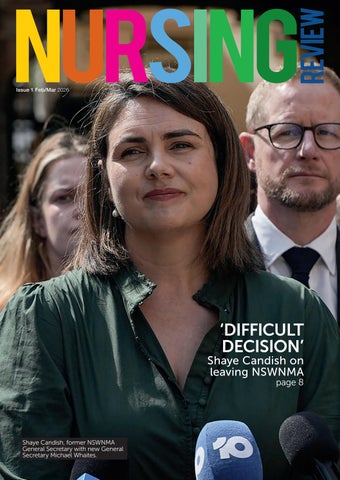
‘DIFFICULT DECISION’
Shaye Candish on leaving NSWNMA page 8
Shaye Candish, former NSWNMA General Secretary with new General Secretary Michael Whaites.
Let Lite n’ Easy help take care of you. Being a nurse is physically and emotionally demanding, making good nutrition essential. But long shifts, fatigue and limited breaks can lead to skipped meals or unhealthy choices. Lite n’ Easy makes eating well simple with over 235 affordable, nutritionally balanced meals packed with protein and fibre. From High Protein Smoothies and wholesome breakfasts to perfectly portioned lunches and dinners.
“I work in health administration and my hours can be all over the place, with set meal times non-existent, so I needed something that was healthy and convenient. I decided on Lite n’ Easy and I can just grab my food from the fridge and eat on the run.”
Tiffany
Make the shift to Lite n’ Easy today and get 35% OFF your first delivery! Order online using promo code NURSE35% or, call us on 13 15 12 and mention this offer. Offer valid for new customers only on their first delivery. Cannot be used with any other offer. Minimum order value applies.
Visit liteneasy.com.au or call 13 15 12
contents
news
MANAGING EDITOR
Rebecca Cox rebecca.cox@news.com.au
2
Sydney aged care nurse loses registration for sleeping on the job
4
Senior nurse falsified hospital records after taking patient’s pills
6
Health authorities in NSW and Victoria issue warnings after cases of measles confirmed
HEALTH EDITOR
Stefanie Schultz stefanie.schultz@news.com.au SALES MANAGER
Sarah Licence sarah.licence@news.com.au SUBSCRIPTIONS MANAGER
Lee Burrell lee.burrell@news.com.au
02
06
8
COVER
Outgoing NSWNMA chief Shaye Candish. Picture: Supplied
COVER STORY NSWNMA general secretary Shaye Candish reflects on leaving her role
industry & reform
PUBLISHED BY
11 Nursing Review takes a look
Nationwide News Pty Ltd GPO Box 4245 Sydney NSW 2001 ABN 98 008 438 828 Print Post 100008043 ISSN 1326-0472 OCLC 536881479 PUBLISHER’S NOTE
Q&A
back at the defining moments of the last 12 months
14 Healthscope’s hospitals transition to not-for-profit care as others are sold off
08
11
© Copyright. No part of this publication can be used or reproduced in any format without express permission in writing from Nationwide News Pty Ltd. The mention of a product or service, person or company in this publication, does not indicate the publisher’s endorsement. The views expressed in this publication do not necessarily represent the opinion of the publisher, its agents, company officers or employees.
16 St Vincent’s will deliver half of all care in-home or online by 2030
18 The Productivity Commission says focussing on prevention could help governments rein in health spending
clinical practice
20 New telehealth rules restrict nurse practitioners’ ability to deliver care
22 The NT looks set to introduce
16
18
voluntary assisted dying, while other states are reviewing their current legislation
workforce
24 How CPD empowers midwives to bridge health gaps and expand their role
technology
27 ChatGPT’s promise to personalise health information comes with risks
24
27 nursingreview.com.au | 1
news NCAT in Sydney CBD. Image: NCA
Night nurse Sydney aged care nurse loses registration for sleeping on the job By NCA Newswire
A
Western Sydney nurse who had been allegedly caught sneaking in naps during night shifts has had her registration cancelled, with a tribunal finding her to have “endangered the lives of patients under her care”. Chimzuroke Okembunachi, 25, appeared before the NSW Civil and Administrative Tribunal (NCAT) for unsatisfactory professional conduct and professional misconduct while working at Hardi Aged Care in Guildford. Ms Okembunachi was caught having naps in the nurses’ station while working at the aged care facility during six different shifts in March 2024. At each night shift, Ms Okembunachi was the only registered nurse and in charge of three to four Assistants-In-Nursing (AIN). On one occasion, Ms Okembunachi had lain across three chairs with the lights off and slept for four hours and 24 minutes. The tribunal heard that, due to her naps, one patient failed to get their charted regular medication multiple times.
2 | nursingreview.com.au
It was also revealed that during one of her shifts, Ms Okembunachi had to be woken up by an AIN who informed her that an elderly male resident was asking for medicine for foot pain. The tribunal heard Ms Okembunachi gave the AIN a Panadol and told her to give it to the patient, despite the AIN not being authorised to do so. When the AIN asked if Ms Okembenachi was “sure”, the former RN told her: “It’s okay sister, just give it to him”. Two of Ms Okembunachi’s colleagues reported her actions to their employer, with the employer speaking to her on the phone before issuing an email for a formal meeting. Ms Okembunachi tendered her resignation 20 minutes later. The Health Care Complaints Commission (HCCC) brought the matter to NCAT in order to have her registration as a nurse cancelled for unsatisfactory professional conduct. For her part, Ms Okembunachi was remorseful as she told the HCCC that this had been “a huge lesson” and had been juggling “far too much” in her personal life at the time of the incidents. She told the HCCC she was studying medical studies at Western Sydney University and had been suffering from
“Ms Okembunachi had lain across three chairs with the lights off and slept for four hours migraines, accepting how she had “failed” in her leadership role. “I failed in my leadership role on those night shifts and in my duty of care to the residents. I was also being paid to work, not sleep,” Ms Okembunachi told the HCCC. “My conduct was terrible. Not only was the conduct of sleeping while I should have been working but also understand how my conduct would have made the junior staff feel at the HAC, and the difficult position my actions put the AINs in. “It is conduct I will never engage in ever again.” The HCCC also heard how Ms Okembunachi hoped to return to the profession and swore she wouldn’t work night shifts while studying if allowed back. The NCAT panel found her guilty of professional misconduct and ordered the cancellation of her registration as a nurse. The tribunal has ordered a nine-month ban on any application for review of her registration. ■
Their story YOUR IMPACT
Transform your career by leading change in dementia care support. This is your opportunity to make a real impact supporting individuals and families in the community as they navigate dementia with compassion and evidence‑based guidance. If you’re driven to help others and want to grow in a role where empathy and expertise truly matter, we’d love to hear from you.
We’re recruiting nationwide across Australia. Apply now and build a meaningful career with DSA. Visit dementia.com.au/work-with-us
Join us
news A senior nurse stole a patient’s ADHD medication while she worked at Modbury Hospital in Adelaide. Picture: NewsWire / Dean Martin
Nurse banned Senior nurse falsified hospital records after taking patient’s pills By NCA Newswire
A
senior nurse stole a patient’s ADHD medication and then tried to cover it up by manipulating a colleague’s Facebook page and falsifying hospital records in a series of “troubling” actions, a tribunal has found. Sarah Rebecca Nolan, 41, has been banned from providing any health service for at least four years after a South Australian tribunal found she engaged in professional misconduct while working as a senior nurse at the Modbury Hospital in Adelaide. Ms Nolan took, or at least tried to take, a number of dexamphetamine tablets from a patient with attention deficit hyperactivity disorder “for her own purposes” on May 17, 2022. She then falsified the patient’s medication chart and patient notes in a bid to cover up her actions, the tribunal found. Her cover up also included discussing “covering up” the discrepancy when a junior nurse noticed the missing pills. Ms Nolan then “manipulated” the junior nurse’s Facebook account to show a
4 | nursingreview.com.au
message that appeared to be sent from the nurse to Ms Nolan about “providing an explanation or making attempts to make sure that the discrepancy wasn’t discovered by their superiors”. She used this false document as evidence to the Northern Adelaide Local Health Network (NALHN) to support her response. Ms Nolan’s actions and dishonesty were described as “troubling” in the tribunal’s judgment. “If the respondent’s conduct had simply stopped at attempting to take the dexamphetamine tablets or alternatively taking them, it would be a very different proposition as to the length of any disqualification period which we impose,” the judgment stated. “What makes this conduct in particular more serious, in fact very serious, is the dishonesty and the respondent’s conduct which resulted thereafter.” Her attempt to “deceive” her superiors could have cost the junior nurse her career, the judgment also stated. “That in our view, is very serious because not only did it mislead the authorities, but it potentially put that junior nurse in danger of her career being compromised and there was an imbalance of power between her and the respondent,” the judgment stated.
“What makes this conduct in particular more serious, in fact very serious, is the dishonesty “That in our view, says a lot about the fitness and the propriety of the practitioner.” Ms Nolan further failed to notify the Nursing and Midwifery Board of Australia within seven days that she had been charged over the incident. All criminal charges against Ms Nolan have since been dropped. She does not acknowledge or admit the allegations wholesale, but agreed with the statement of facts put together by the South Australian Civil and Administrative Tribunal, with the judgment stating “each of the allegations, notwithstanding the fact that the respondent does not admit them, are proven to the requisite standard”. Ms Nolan has been disqualified from applying for registration as a registered health practitioner for four years, and is banned from providing any health service until she is granted registration as a health practitioner. ■
CRICOS: 00219C | TEQSA: PRV12073 | RTO: 40939 | C_AD_2507
Success comes in chapters. Decide what comes next. Upskill with a specialist postgraduate nursing degree. With contemporary, industry-aligned courses, real support and flexible study options, CQUniversity makes your professional goals possible. Explore a range of qualifications on our website. Graduate Certificate
Graduate Diploma
Masters
Online
Hyperflexible Online
Commonwealth Supported Places *
Clinical Nursing Correctional Nursing
^
Domestic and Family Violence Studies Mental Health Nursing * Eligibility criteria apply.
^ Available for the Graduate Certificate only.
cqu.edu.au
news Tullamarine Airport in Melbourne was attended by people infected with measles. Picture: NCA NewsWire/Andrew Henshaw.
Health alert Health authorities in NSW and Victoria issue warnings after cases of measles confirmed By NCA Newswire
V
ictorians are at ongoing risk of catching measles, as the state’s health authority issues an updated list of exposure sites that includes hospitals, airports and shopping centres. Victoria’s health department confirmed two new cases of measles had been detected, bringing Victoria’s total to four confirmed cases in the first month of 2026. All cases were linked to overseas travel to South-East and South Asia, with three flights from Phuket, Vietnam and Dubai identified as exposure sites. Subsequently, a new list of sites visited by infected individuals has been published by the department. It was recommended that those who have attended these sites monitor for measles symptoms for up to 18 days after their visit. Symptoms include fever, cough, runny nose, red or sore eyes or feeling generally 6 | nursingreview.com.au
unwell, followed by a rash that often starts on the face before spreading down the body. People are urged to seek medical care if symptoms develop. Authorities have advised anyone who suspects they may have measles, but have not received two doses of the measlesmumps-rubella vaccine (MMR vaccine) or are unsure, to contact their GP. An urgent measles alert was issued for Sydney last month, with health authorities warning the city is also at an “increased risk” of the highly infectious disease. People who were at Sydney International Airport or Central Station in Sydney on January 27 are being told to watch for symptoms of measles, a statement from NSW Health said. As with Victoria, the warnings come after a confirmed case of measles recently returned from South-East Asia. There is also a current increased risk of measles in NSW, generally – with 14 cases confirmed since December 1, 2025. Vicky Sheppeard, the executive director of health protection in NSW, said people should monitor for symptoms of measles as it can take up to 18 days for symptoms to appear after an exposure.
“The warnings come after a confirmed case of measles recently returned from South-East Asia She has also urged people to check the list of locations on the NSW Health website to see if they visited any of these at the listed time. “Symptoms to watch out for include fever, runny nose, sore eyes and a cough, usually followed three or four days later by a red, blotchy rash that spreads from the head to the rest of the body,” Ms Sheppeard said. “Importantly, we want to remind the community to make sure they are up to date with their vaccinations. The measles vaccine can prevent the disease even after exposure, if given early enough”. “Anyone born after 1965 needs to ensure they have had two doses of measles vaccine. This is especially important before overseas travel, as measles outbreaks are occurring in several regions of the world at the moment,” she said. ■
Simplify* infant primary vaccination with the only ready-to-use 6-in-1 1,2
*Compared with a 6-in-1 vaccine requiring a reconstitution step.
Vaxelis is a fully liquid, pre-filled syringe requiring no mixing or reconstitution1 Save time compared with a 6-in-1 vaccine requiring a reconstitution step3
Avoid mixing or reconstitution errors No risk of missing the Hib component1
Can be given alongside common childhood vaccines including RSV immunisation (nirsevimab) 4
Vaxelis is indicated for primary and booster vaccination in infants and toddlers from the age of 6 weeks, against diphtheria, tetanus, pertussis, hepatitis B, poliomyelitis and invasive diseases caused by Haemophilus influenzae type b (Hib).1 Vaxelis has been shown to be immunogenic and well-tolerated in clinical studies.1 Common side effects after Vaxelis administration include irritability, crying, somnolence, injection site reactions, pyrexia, decreased appetite and vomiting.1
PBS Information: Vaxelis is listed on the National Immunisation Program (NIP). This medicinal product is subject to additional monitoring in Australia. This will allow quick identification of new safety information. Healthcare professionals are asked to report any suspected adverse events at http://www.tga.gov.au/reporting-problems.
PLEASE REVIEW FULL PRODUCT INFORMATION BEFORE PRESCRIBING. Full Product Information is available from Sanofi - ph 1800 818 806 or online via https://qr.medsinfo.com.au/tx/xy.cfm?h=xycvaxel or by scanning the QR code. Abbreviations: Hib: Haemophilus influenzae type b conjugate; RSV: respiratory syncytial virus. References: 1. Vaxelis Approved Product Information, 22 September 2025. 2. Infanrix Hexa Approved Product Information, 18 July 2023. 3. De Coster et al. Vaccine 2015;33(32):3976–82. 4. Beyfortus Approved Product Information, 30 July 2025. sanofi-aventis australia pty ltd trading as Sanofi, ABN 31 008 558 807 | Sydney, 2000 | www.sanofi.com.au MAT-AU-2502490-3.0. Ward 6. SAVA37658W. January 2026.
Q&A
‘Difficult decision’ NSWNMA general secretary Shaye Candish reflects on leaving her role By Stefanie Schultz
A
fter more than 14 years at the NSW Nurses and Midwives’ Association (NSWNMA), including three years as General Secretary, Shaye Candish has announced her resignation. Her tenure has been marked by significant achievements, from the
8 | nursingreview.com.au
implementation of nurse-to-patient ratios to advocating and winning improved pay and conditions across the sector. Nursing Review sat down with Ms Candish to discuss her decision, her proudest moments, and the broader challenges facing the nursing and midwifery workforce in New South Wales.
ON HER DECISION AND LEGACY Nursing Review: You’ve cited the ‘all-consuming’ nature of your role and your decision to prioritise family as the
reasons for leaving your role at NSWNMA. Could you tells us a bit more about what led to this decision and what specific factors affirmed it was the right path for you at this time? Shaye Candish: I have two young boys, both in primary school, and this job is a big job. You work long hours, which often means I’m not available to support my family with things like tucking them into bed at night, getting them ready for school in the morning, or attending school activities.
Q&A Shaye Candish has resigned from the position of NSWNMA General Secretary after 14 years in the role. Picture: Supplied.
fabulous opportunities to work with incredible individuals. The work is so varied; every day is different. I’m sure I’ll miss all those parts. I don’t know if there’s one single thing I’m most proud of. There’s been a lot of great work this union has done recently. Things like the implementation of ratios and the commencement of our special case are initiatives we’ve started, gained a foothold in, and are beginning to see improvements from. I believe these will have a very long tail and will be the beginning of real system reform, having a lasting impact for nurses and midwives for generations to come. I look forward to seeing how those things roll out. Another aspect I’m proud of is our members understanding the impact of gender in our heavily female-dominated industry, and how that affects pay and conditions. This understanding is crucial for ensuring our professions are appropriately compensated. The community deeply respects nurses and midwives, especially after Covid, but our members often don’t feel that value through their remuneration. Understanding ‘why’’is the first step to addressing this. We also need to promote the incredible value nurses and midwives offer in terms of healthcare access across the country; they are experts providing widespread access.
THE UNION’S FUTURE
As my kids are getting older and their needs are changing, I think that push-pull between work and home responsibilities also needs to change. It’s been a difficult decision, of course, but one I feel really content with. NR: Reflecting on your significant achievements, what are you most proud of, and what aspects of the role will you miss the most? SC: There’s a lot. I’ve always loved the work, and I will miss it, no doubt. And the people – I’ve had
NR: With Michael Whaites appointed the incoming General Secretary, and Katrina Bough taking on his Assistant General Secretary role, what are your hopes for the direction of NSWNMA under their leadership, particularly the continuation of key campaigns? SC: Michael and Katrina will be an incredible team. They are so determined and are truly remarkable advocates for our profession. I’m confident they will do a fantastic job and continue the work we’ve started. Michael and I have had an incredible partnership over the last three to four years, and we’ve worked together as colleagues for many years before that. I’m certain they have a strong vision for expanding the implementation of ratios across our public health system. They’ll continue our work in aged care, where we’ve seen the implementation of care minutes and once-in-a-generation pay improvements for aged care workers. They are also focused on improving members’ lives in other areas, such as housing reform. While not specific to
“The biggest challenge for us in the next few years is getting pay and conditions right so people want to stay a nurse or midwife’s job, their ability to live and work nearby is important for a supported environment where they are part of their community and not spending long hours commuting. Michael and Katrina will continue with many of the specific workplace campaigns we’ve started, but also a lot of the social justice work this union has been doing. NR: Looking at the broader nursing and midwifery sector in NSW, what are the most pressing systemic issues currently facing nurses, midwives, and care workers? SC: Pay and conditions are front of mind for every nurse and midwife in New South Wales. We’ve had many years of wage suppression under the previous state government’s wages policy, which kept wages low while other states saw increases. Coupled with the cost of living pressures over the last three years, it’s demonstrated how tough it is to live in the most expensive state in the country while wages have been deliberately kept low. Nurses, midwives, and carers in our public system are facing the brunt of these conditions, creating a perfect storm. Covid has also raised community expectations and knowledge about their work, highlighting a disparity between what should happen and what actually happens regarding pay and conditions. This is all happening in a climate where other professions have more flexibility and work-life balance, while nurses and midwives continue to face less secure situations, working 24/7 rotating rosters with significant caring responsibilities but no predictability. This is causing the workforce to opt out, choosing insecure casual or agency work, which isn’t good for our industry. We’re stuck in a cycle where deteriorating conditions drive people out, and fewer people increases pressure on those who remain, driving more out. We must fix the quality of jobs in nursing, midwifery, and care work to retain people. We have enough nurses, midwives, and carers to meet current needs, and we continue to attract new people, but our big problem is retention due to the quality of roles. > nursingreview.com.au | 9
Q&A
Ms Candish, far right, at a rally with NSW nurses and midwives outside Premier Chris Minns office in Sydney.
<
The biggest challenge for us in the next few years is getting pay and conditions right so people want to stay. They love this work; it’s deep in their heart and identity. They don’t want to leave or work casually, but they do so to make their life commitments work. If we can crack that, we can address some very deep-seated challenges. NR: Professional development plays a significant role in job satisfaction and retention. How does the NSWNMA support lifelong learning, and what is the importance of continued professional growth for nurses in NSW? SC: Lifelong learning and evidence-based approaches are strong features of how health operates, deeply embedded in how our members think and make decisions. We see this in new graduates, which is fantastic. The mismatch, however, is in remuneration. It’s common for nurses and midwives to have multiple tertiary qualifications – a bachelor’s, post-grad certificates, even master’s – yet many aren’t easily earning over $110,000 or $120,000. In any other industry, workers with multiple tertiary 10 | nursingreview.com.au
qualifications would see entirely different remuneration. This highlights that nurses and midwives are socialised to continue learning, but they don’t necessarily reap the financial benefit, though patients certainly do. We need to change policy settings to reflect that as skills increase, additional learning is undertaken, and scope of practice grows, appropriate remuneration should follow. This is the current gap. We see it in day-to-day decisions where nurses take on additional duties without compensation or recognition, from picking up phones when administrative staff are removed, to implementing new programs like nurse-led discharge, nurse-initiated pathways, nurse prescribing, and midwifery endorsement. These are significant advancements based on excellent patient-centred care, which we should celebrate for their innovation and great patient outcomes. However, we must recognise that workers are at the heart of these policy changes. They should be considered and consulted, and appropriately compensated for the
additional skills they build, because we all benefit from it.
A FINAL MESSAGE NR: Do you have a final message or any words of encouragement you’d like to share with our readers? SC: I have the utmost respect for the work of nurses and midwives. We are one of the few professions so trusted, and for good reason. I think our nurses and midwives don’t always understand how critically important they are, and they don’t always know how to speak up for themselves. The more they can do that, the better off our profession will be because we need them like never before. If they can find their own voice, whether through their union or in their day-to-day work, talking about what they deserve is critical to ensuring we have a sustainable health system. We won’t have one without nurses, midwives, and carers. We must find a way to ensure they love their job and want to stay. So, when things aren’t right, I encourage them to speak up. ■
industry & reform The NSWNMA fights for better pay and conditions. Picture: Supplied.
2025 highlights Nursing Review takes a look back at the defining moments of the last 12 months By Stefanie Schultz
T
he Australian nursing sector navigated a dynamic and often turbulent landscape in 2025, marked by significant industrial disputes, critical policy shifts, and profound ethical challenges. From landmark pay negotiations and expanded scopes of practice, to the fallout from professional misconduct and systemic pressures in aged care, nurses and midwives across the nation found themselves at the forefront of change.
In February, Ahmad “Rashad” Nadir and Sarah Abu Lebdeh were deregistered by the Nursing and Midwifery Council of NSW. Picture: NCA Newswire.
JANUARY The year began with a positive public health initiative as the Albanese Government rolled out a free vaccine program for pregnant Australians. From January 21, expectant mothers gained access to free vaccines against Respiratory Syncytial Virus (RSV) under a major expansion of the National Immunisation Program. Health Minister Mark Butler described the initiative as a “world-leading approach” to protect infants from RSV. Nurses and midwives played a crucial role in
the implementation of this program, administering the vaccine and educating families on its benefits.
FEBRUARY In February, the nursing profession faced a stark reminder of its ethical responsibilities when two nurses, Ahmad “Rashad” Nadir and Sarah Abu Lebdeh, were deregistered by the Nursing and Midwifery Council of NSW, effective February 13, following antisemitic remarks and threats against Israeli patients.
“The incident sparked broader discussions on professional conduct and the integrity of the healthcare workforce The NSW Nurses and Midwives’ Association (NSWNMA) assistant general secretary Michael Whaites condemned the actions. > nursingreview.com.au | 11
industry & reform
<
“We find the comments to be abhorrent, and I want to reassure the people of Australia… that they do not speak for nurses and midwives, they do not speak for our profession.” The incident sparked broader discussions on professional conduct and the integrity of the healthcare workforce.
MARCH March saw ongoing tensions in New South Wales regarding nurse wages. NSW Health Minister Ryan Park ruled out using federal funding to increase nurse pay, citing the “one-off” nature of the money. This decision came after NSWNMA members rallied for better pay, with Mr Park acknowledging, “I think having a wage cap in place [in NSW] for 12 years has seen big gaps set out.” The struggle for fair remuneration remained a critical issue, impacting recruitment and retention across the state’s public health system.
APRIL April brought a significant victory for private sector nurses. After two years of negotiations and extensive industrial action, the NSWNMA struck a deal with Ramsay Health Care. NSWNMA general secretary Shaye Candish celebrated the outcome. “Nurses and midwives were able to shift the original pay offer of 8.5 per cent over three years to 16 per cent over three years.” The enterprise agreement also included improved work conditions, such as reduced patient loads for in-charge nurses and increased parental leave.
MAY May saw further instability in the private hospital sector as Australia’s secondlargest operator, Healthscope, entered voluntary administration. This placed the future of 37 hospitals and thousands of jobs, including over 6000 nurses and midwives, in doubt. While the federal government refused a bailout, expecting an orderly sale process, ANMF federal secretary Annie Butler expressed “extreme concern,” “For nurses and midwives working at Healthscope, this situation is obviously very difficult and worrying for them and our thoughts are with them,” she said.
JUNE In June, the integrity of the higher education sector was called into question 12 | nursingreview.com.au
Ramsay employees took strike action for better pay and conditions, and reached an agreement in April. Picture: NSWNMA/Supplied.
when the Australian Skills Quality Authority (ASQA) revoked over 4200 care credentials from SPES Education Pty Ltd. The deregistration, due to allegations of fraudulent qualifications, impacted Certificate III in Individual Support, Certificate IV in Ageing Support, and Certificate IV in Disability Support, raising concerns about potential safety risks to vulnerable community members. In the same month, cosmetic nurses rallied outside parliament in Brisbane, protesting a state government crackdown on injectables. New interpretations of the Medicines and Poisons Act led to tightened regulations, impacting nurse-led clinics. Lisa Oakman, cosmetic nurse and founder of The Glow Co. Aesthetics, voiced her concerns. “These regulations are gutting nurse-led clinics, many of which are run by primary earners, parents, and sole providers,” she said.
AUGUST Winter marked a period of significant leadership changes across key nursing peak bodies. Dr Stephen Duns was announced as the new CEO of the Australian Primary Health Care Nurses Association (APNA), commencing on September 29, while Denise Lyons took over as APNA President on June 22. The Australian College of Nursing (ACN) welcomed Group Captain Kath Stein as its new President on July 23, and Frances Rice was appointed Chief Nursing Officer since June. Astrid Tiefholz was announced as the Federal Vice President at the Australian Nursing and Midwifery Federation (ANMF).
SEPTEMBER This was a pivotal month for both wages and professional scope, as Queensland’s 57,000 nurses and midwives secured their largest pay increase in 13 years, with an 11 per cent rise over three years, including a one-off three per cent Government Election Commitment payment. “This is a deal that better respects nurses and midwives and will support Queensland Health services in recruiting and retaining our workforce,” QNMU secretary Sarah Beaman said. In New South Wales, public sector nurses and midwives accepted an interim pay and conditions offer, including a three per cent pay increase and an increased night duty penalty rate. “Nurses and midwives are struggling to pay their bills in this cost-of-living crisis so any financial relief is welcomed,”the NSWNMA general secretary Shaye Candish said. However, this was merely an interim step, as the NSWNMA announced it would commenced a landmark case at the NSW Industrial Relations Commission (IRC), seeking a substantial 35 per cent pay increase over three years. The union’s argument, presented before a Full Bench of the IRC, centred on the gendered undervaluation of nursing and midwifery work. Also in September, a significant expansion of nursing scope of practice came into effect. Endorsed Registered Nurses (RNs) who completed additional training became eligible to prescribe some medications in partnership with a doctor or nurse practitioner.
industry & reform
“Queensland’s 57,000 nurses and midwives secured their largest pay increase in 13 years
New APNA CEO Dr Stephen Duns. Picture: APNA/Supplied.
“This change means that, for example, a registered nurse prescriber may be able to support a person adjust their diabetes medication … This increases access to care, and boosts healthcare efficiency,” ACN chief nursing officer Frances Rice said.
government reached an in-principle agreement to return the facility to public ownership for $190 million. Shaye Candish welcomed the news as a “relief” for staff, providing “much-needed certainty for our hardworking and dedicated nurses and midwives.”
OCTOBER
NOVEMBER
October brought good news for nurses at Northern Beaches Hospital, as the NSW
In November, the federal government expanded bulk-billing incentives,
making it easier for millions more Australians to access free GP appointments from November 1. ANMF federal secretary Annie Butler welcomed the investment, noting it would “reduce out of pocket fees for more patients” and “take pressure off the public hospital system.” APNA President Denise Lyons emphasised the potential for nurses to do more, advocating for “removing barriers to nurse-led clinics, enabling Nurse Practitioners to access the bulk billing incentive.” However, November also highlighted the ongoing crisis in aged care, with a frustrated Queensland nurse issuing a plea to federal ministers, warning of severe delays in aged care placements. This was followed by a meeting of health ministers across Australia, calling for a solution to the ongoing problem of ‘bed block’ in public hospitals. ■
In November, Prime Minister Anthony Albanese announced changes to bulk-billing incentives. Picture: NCA NewsWire/Martin Ollman.
nursingreview.com.au | 13
industry & reform 31 Healthscope hospitals will transition into a new not-for-profit structure. Picture: NCA NewsWire/ Nadir Kinani.
Healthscope revived 31 of its hospitals transition to not-for-profit care as others are sold By Stefanie Schultz
A
comprehensive plan has been announced to secure the future of Healthscope hospitals across Australia, averting widespread closures and safeguarding over 18,000 jobs. The resolution, spearheaded by receivers McGrathNicol Restructuring, will see 31 hospitals transition into a new not-for-profit (NFP) organisation, while five others will be sold to established operators, with Northern Beaches Hospital returning to NSW government ownership. This outcome brings much-needed clarity to patients, employees, and communities who have faced a period of
14 | nursingreview.com.au
significant uncertainty since Healthscope’s parent entities entered receivership. Central to the plan is the creation of a new not-for-profit (NFP) organisation, which will become Australia’s largest NFP private hospital operator. This entity will take over the operation of the 31 Healthscope hospitals, including the Prince of Wales Private Hospital. Healthscope’s lenders rejected an offer for Prince of Wales Private Hospital in favour of supporting this holistic NFP solution. Healthscope chief executive Tino La Spina described this as a pivotal moment. “This is a transformative day for our people, our doctors, our patients and the Australian healthcare sector,” he said. “Our whole organisation has been galvanised by the idea of transforming Healthscope into Australia’s largest not-for-profit hospital operator, reinvesting
surpluses back into our hospitals and people to continually improve patient care.” He extended his gratitude to the teams, doctors, and lenders for their support of the ‘For Purpose plan.’ The transition is designed to support the long-term sustainability of the private health sector, thereby easing pressure on the public health system. Healthscope has said that the new “non-denominational charitable structure” will reinvest surpluses back into the hospitals. The plan has garnered broad support from the Healthscope workforce, with the vast majority of employees having voted to share salary packaging benefits to support the new organisation’s viability. All hospital employees transitioning to the new NFP will enjoy continuity of employment and full recognition
industry & reform
“The new ‘non-denominational charitable structure’ will reinvest surpluses back into the hospitals
Healthscope chief Tino La Spina thanked those involved in the deal for their support. Picture: NCA Newswire.
Australia Nursing and Midwifery Federation federal secretary Annie Butler said there are still many unanswered questions to be resolved. Picture: NCA Newswire/Rob Leeson.
of their service and existing terms and conditions. Regulatory approvals for the new NFP entities, including charity registration by the Australian Charities and Not-For-Profit Commission (ACNC) in October 2025, are well advanced. Independent directors are expected to be appointed in the coming months to oversee governance, with the new organisation anticipated to be operational by mid-2026.
STRATEGIC SALES AND PUBLIC OWNERSHIP In addition to the NFP transition, agreements have been reached for
the sale and transfer of operations for five other Healthscope hospitals to respected operators: • Ramsay Health will acquire National Capital Private Hospital in Canberra. • Calvary Health will take over Hobart Private Hospital and Holmesglen Private Hospital in Melbourne. • Mater Health will acquire Gold Coast Private Hospital. • Day Hospital Partners completed the acquisition of Tweed Day Surgery in October 2025. Arrangements have also been finalised for the transfer of Northern Beaches Hospital in Sydney to NSW government ownership.
Keith Crawford, on behalf of receivers McGrathNicol Restructuring, expressed his satisfaction at the resolution. “This has been a complex process involving a large number of assets across multiple jurisdictions, and detailed negotiations with many stakeholders,” he said. “We believe the plan announced today for the Healthscope portfolio is in the best interests of all stakeholders, preventing hospital closures and protecting jobs.” The Australian Nursing and Midwifery Federation (ANMF) has tentatively welcomed the announcement, highlighting that there are many questions still remaining. “Since the collapse of Healthscope, the ANMF has been working hard with the Federal and State Governments and key stakeholders to keep hospitals open and jobs secure,” ANMF federal secretary Annie Butler said. “That’s why we’re very pleased that there will be no closures under this new restructure. “However, as frontline healthcare professionals, it’s crucial that our ANMF members and their patients have certainty and continuity of care at these hospitals across the country.” Dr Danielle McMullen, president of the Australian Medical Association (AMA), said the announcement “provides much‑needed certainty for patients, doctors, and the dedicated staff working in Healthscope hospitals.” However, Dr McMullen expressed her concern for the state of private health care at large. “Private hospitals across the country have been under increasing strain, and many private hospital services – particularly maternity – have closed in recent years,” she said. “We remain concerned more closures will follow unless meaningful reform occurs and private hospitals can operate on a more sustainable financial footing. “Establishing an independent Private Health System Authority is essential to provide proper oversight and drive the reforms the sector urgently needs.” ■ nursingreview.com.au | 15
industry & reform
‘Game changer’ St Vincent’s will deliver half of all care in-home or online by 2030 By Stefanie Schultz
S
t Vincent’s Health Australia has announced it will deliver half of all its services online or directly within patients’ homes by 2030. The ambitious strategic target is in response to growing demographic and financial challenges with the aim of enhancing patient outcomes. As one of the largest non-profit healthcare providers in the country, St Vincent’s said the organisation is determined to “lead from the front” during what has been described the current “once-in-a-generation transition” for Australia’s health and aged care system.
16 | nursingreview.com.au
“St Vincent’s is building Australia’s largest virtual and home care system,” CEO Chris Blake said. “Our ambition is that within five years, St Vincent’s clinicians and support workers will be delivering half of our total care in people’s homes – including nursing homes – either face-to-face or virtually.” This includes comprehensive hospital-level care, from pre-admission through to recovery. St Vincent’s currently has around two million patient and resident interactions annually across its two major public health networks in Sydney and Melbourne, 10 private hospitals, and 25 aged care facilities spanning Queensland, NSW, and Victoria. By making this transition, the organisation believes it will be able to add an additional one million virtual patient interactions by 2030.
“Bringing care directly to people in their homes will enhance recovery, improve outcomes, and take pressure off the health system, giving our hospitals capacity to do more,” Mr Blake said. St Vincent’s plans to develop a central ‘command centre’ model within the next 12 to 18 months. This centre will enable a virtual care team to engage in round-theclock observation and tracking of patient data, through the use of wearable devices and other monitoring technologies. The transition will be underpinned by advances in technology, with St Vincent’s saying it has potential to address a number of pressing issue in aged care. This includes: meeting shifting patient expectations; alleviating pressures on the hospital system; rising costs; an ageing population; growing rates of chronic illness; and overwhelmed services.
industry & reform Over time, hospitals will evolve into ‘hubs’ for specialised care, cutting-edge research, and training. Picture: NCA Newswire/Damian Shaw.
St Vincent’s chief executive Chris Blake said within five years, clinicians and support workers will be delivering half of its total care in people’s homes. Picture: NCA NewsWire/David Geraghty.
MENTAL HEALTH CHECK IN DELIVERY A significant component of this digital transformation is the new Medicare Mental Health Check In service, which St Vincent’s has been chosen by the Commonwealth Government to design and deliver. Launching on 1 January 2026, this free digital mental health platform aims to improve access for any Australian seeking support, regardless of their location, particularly benefiting those in rural and regional areas who struggle accessing face-to-face services. The Medicare Mental Health Check In will target individuals experiencing stress, distress, or anxiety, offering access to programs and qualified mental health practitioners. It will provide free digital mental health care, including self-guided proven digital tools to improve mental wellbeing, and access
to practitioners via telehealth, SMS, and chat. The service will be rolled out in stages, with some digital resources available from January 2026, followed by access to telehealth and online therapy delivered by trained practitioners beginning from March. By 2029, it is expected to help over 150,000 people each year. Federal Minister for Health and Ageing Mark Butler said the government is committed to delivering accessible mental health care for everyone. “The Albanese Government wants everyone to be able to access the mental health care they need, without cost and referral wait times being a barrier,” Minister Butler said. “Medicare Mental Health Check In will help people early before their problems get worse and they need more intensive clinical care. “Through our network of Medicare Mental Health Centres, Headspace youth mental health centres and other specialised free services, we are making sure Australians can get the right care for their needs.” St Vincent’s brings considerable experience to this initiative, having operated its own highly regarded digital mental health service, THIS WAY UP, for over two decades. THIS WAY UP is Australia’s most popular digital mental health treatment service, supporting over 37,000 registered clinicians and 300,000 help seekers.
“Bringing care directly to people in their homes will enhance recovery, improve outcomes, and take pressure off Mr Blake described the new Medicare Mental Health Check In as a potential “game changer” for mental health care in Australia, building on St Vincent’s strong clinical track record. “We look forward to bringing our depth of experience – along with our strong clinical track record – to making sure that Medicare Mental Health Check In becomes a key service for Australians needing mental health support,” he said. As care shifts towards home and virtual settings, St Vincent’s anticipates a change in the role of its hospitals. Over time, they will evolve into ‘hubs’ for specialised care, cutting-edge research, and training. They will support care delivery everywhere – in people’s homes, aged care facilities, or via mobile devices – becoming central to connecting care throughout the community. St Vincent’s said the changes will led to a more efficient, person-centred system that can reach more people and address unmet needs. This will ensure that those who currently don’t have access to frontline health services, including the most disadvantaged, encounter fewer barriers. ■ nursingreview.com.au | 17
industry & reform
‘Long-term thinking’ Prevention focus could help governments rein in health spending By Angela Jackson
A
t the start of the new year, many of us will commit to joining a gym, eating healthier or cutting back on drinking and smoking. We do this knowing that investing in our health today will pay off into to the future – that prevention is better (and cheaper) than the cure. It’s advice the Productivity Commission thinks federal and state governments should also follow to improve Australia’s finances and productivity. Late last year, my co-authors and I gave the federal government the final report
18 | nursingreview.com.au
of our inquiry on delivering quality care more efficiently. We found preventative investments could save taxpayers billions of dollars in health and social care costs. But to achieve these gains, the way we think about investing in prevention needs to change.
INVESTING IN EARLY INTERVENTION Australia’s spending on health and social care is growing as a share of the economy and now makes up five of the top seven fiscal pressures facing the federal budget. The care sector is also absorbing more of our workforce – close to one-third of new jobs since the pandemic have been in the care sector. In many respects this reflects changing preferences. As the nation has become
wealthier, we care more about our health and wellbeing. But making the most of this spending is one of Australia’s key productivity challenges. That means investing early to save costs later. Take for example the SunSmart skin cancer awareness campaign, which is estimated to have prevented more than 43,000 skin cancers from 1988 to 2010. Investments like this save lives and money. We estimate that an investment of $1.5 billion across all prevention programs over five years could be expected to save governments $2.7 billion over ten years. Factoring in the broader health, social and economic benefits, the total benefits would be about $5.4 billion. Other countries are ahead of the game: Canada, the UK and Finland spend over
industry & reform Preventative investments could save taxpayers billions of dollars in health and social care costs Picture: iStock
Australia’s spending on health and social care now makes up five of the top seven fiscal pressures facing the federal budget. Piture: iStock
cases, even avoid incarceration. It’s also easier to look for and hold down a job when you have a stable place to call home. Such investments can also address systemic inequities in both access and quality of care. One early childhood education program in outer Melbourne led to improved IQ and language development among socially disadvantaged Australian children, with participants reaching the same level of development as their peers within three years. Evaluations of similar initiatives in the United States suggest that benefits can persist well into adulthood and even intergenerationally, through improved lifetime education attainment, employment and health, and reduced criminal behaviour. twice as much of their health budgets on prevention as Australia. Australia’s own health prevention strategy recommends that we increase spending on prevention from two per cent to five per cent of the health budget.
THE BIG PICTURE Prevention goes beyond just health care. Investments in youth justice, out of home care and homelessness improve outcomes in a range of other areas, improving Australians’ quality of life and governments’ bottom lines. For example, when people experiencing homelessness get stable housing, they tend to end up in hospital less often, make fewer trips to the emergency department, and in some
A WHOLE OF GOVERNMENT APPROACH Unfortunately, the way our government is structured can work against these investments. While it’s often one agency or level of government that needs to put up the money for these investments, they only enjoy part of the benefit. The way governments think about and invest in prevention and early intervention needs to change. The Productivity Commission’s proposed solution is for a National Prevention and Early Intervention Framework to support strategic investments in programs that improve outcomes and reduce demand for future services. The framework’s consistent approach to assessing interventions would bring all
“Preventative investments could save taxpayers billions of dollars in health and social care costs levels of government to the table, so that worthwhile investments no longer fall between the cracks. It offers a practical way to put into operation the government’s Measuring What Matters framework. By directing funding towards outcomes and tracking progress against them, it would give federal and state governments confidence that they are investing in effective programs. Like a person struggling with a new year’s resolution, policymakers often find it hard to delay gratification. But given health and social care spending is only set to grow further, we need to start thinking long term to ensure we can afford to give future generations the standard of care we enjoy today. With a greater focus on prevention and early intervention, we can better care for future generations and put our care sector on a more sustainable path. ■ Angela Jackson is Social Policy Commissioner at the Productivity Commission, and Adjunct Associate Professor, University of Tasmania This article is republished from The Conversation under a Creative Commons license. Read the original article at theconversation.com/au. nursingreview.com.au | 19
Clinical Picture: iStock
‘Hostile system’ New telehealth rules restrict nurse practitioners’ ability to deliver care By Stefanie Schultz
N
ew telehealth regulations, introduced at the end of last year, will restrict nurse practitioners’ (NP) ability to deliver care, a peak body claims. As of November 1, patients of independent nurse practitioners are now required to attend at least one face-to-face appointment within the prior 12 months to be eligible to claim the Medicare rebate on a telehealth appointment. The Australian College of Nursing (ACN) has criticised the change, noting the country’s ever-growing health-workforce shortages. “In a health system desperately short of clinicians, independent nurse practitioners are a hugely valuable asset that we should be encouraging and supporting,” ACN chief nursing officer Frances Rice said.
20 | nursingreview.com.au
“We need to be using each and every health professional’s skills and expertise to their full extent. “Yet at every turn, nurse practitioners have to fight tooth and nail to be able to deliver care within a system that is often hostile to them. “The telehealth rules are just the latest example of this.” The ACN is calling for the expansion, rather than restriction, of the NP role across primary care, aged care, and rural health, to improve access and address health disparity. “While ever we hobble the nurse practitioner workforce from using all of their skills and expertise, Australians are missing out,” Ms Rice said. “The health system can’t afford this inefficiency and we must do better.” The Australian College of Nurse Practitioners (ACNP) has also voiced its concern that the reforms will risk cutting off care for hundreds of thousands of Australians. “This rule will disproportionately harm rural and remote Australians, veterans,
older people, and those seeking mental health care,” ACNP CEO Associate Professor Chris Helms said. “It will delay critical interventions, increase emergency visits, and worsen chronic disease outcomes.”
THE DIGITAL DIVIDE Data from the 2025 Australian Digital Inclusion Index reveals that for those in rural and remote areas, there are already persistent barriers preventing equitable use of digital technologies, including access and affordability. Chief investigator Professor Anthony McCosker said there are cohorts of Australians being left behind. “Digital exclusion remains a big challenge, particularly for older Australians, those in remote communities and people experiencing social and economic disadvantage,” he said. “It’s more than just an inconvenience; digital exclusion cuts people off from vital services and opportunities in education, work and health.”
Clinical
As local services close, digital exclusion has become a bigger and bigger issue in rural and remote areas. Picture: iStock
Anglicare Australia said the findings echo its own In Every Community report. “Whether it’s applying for jobs, accessing health care, or staying in touch with family, being online isn’t optional anymore. But too many people – especially in regional and remote areas – are being priced out or left without reliable connections,” Anglicare Australia executive director Kasy Chambers said.
“Rural services are struggling to keep up with demand. Many of them are the only lifeline for people who can’t get online to access Centrelink, book medical appointments, or use digital government services.” The report shows that the digital inclusion gap between the highest and lowest income groups in the country has grown for the third year in a row.
“Just like health care or education, internet access is essential infrastructure. It’s how people find work, stay connected, and take part in the economy. Yet our system still treats it as a luxury,” Ms Chambers said. “If governments want every Australian to take part in a digital future, they must start by investing in the communities that are being left behind.” ■
subscribe for less than $2 Per week The laTesT news for nursing and healThcare professionals Nursing Review is essential reading for anyone involved in the healthcare sector in Australia. It provides unrivalled coverage of specialist topics from features and opinion pieces, to international news and profiles. • Latest news and resources for all healthcare professionals • Comprehensive coverage of a diverse range of topics • Analysis of the major issues facing the health sector as a whole • Delivered free of charge to your home or place of work monthly
Please email edmedia.subscriptions@news.com.au to find out more nursingreview.com.au | 21
Clinical Picture: iStock
National VAD in 2026? The NT looks set to introduce voluntary assisted dying, while other states are reviewing their current legislation By Ben White, Casey Haining, Katrine Del Villar and Madeleine Archer 22 | nursingreview.com.au
V
oluntary assisted dying is now available almost everywhere in Australia. This means eligible adults can choose to end their lives with medical assistance. In November 2025, the Australian Capital Territory voluntary assisted dying laws came into effect.
Of the states and territories, this leaves only the Northern Territory without voluntary assisted dying. But the NT looks set to change its laws mid-year – and other states are reviewing their current legislation. Here’s what to expect in 2026.
Clinical
WHAT MIGHT CHANGE IN THE NT THIS YEAR? In September 2025, a NT parliamentary committee recommended introducing voluntary assisted dying. It provided drafting instructions for a new bill to be written. As 2026 began, the NT government announced it would introduce a voluntary assisted dying bill, set to be tabled mid-year. This will be decided by a conscience vote, as occurred elsewhere in Australia. If the bill follows the national trend, it will pass. But local factors will be significant in the parliamentary debates and may influence how the law is written or implemented. For example, the NT’s small population is spread out over a large expanse, and it has a higher proportion of Indigenous residents (30 per cent) than other jurisdictions. If a bill does pass, the laws are unlikely to come into effect for some time, to allow for the system to be properly set up. Based on timeframes elsewhere, Territorians would likely have access to voluntary assisted dying in early 2028.
WILL THIS ‘NATIONALISE’ VOLUNTARY ASSISTED DYING? Until now, voluntary assisted dying has largely been a matter for the separate states and territories. This has meant strict residency requirements in jurisdictions that allow it. Currently, these requirements limit voluntary assisted dying access to people who have lived in the particular state or territory for a specified period (although there are some exemptions). But if the NT joins the rest of the country and voluntary assisted dying is permitted nation-wide, these requirements are not needed. Commonwealth law also currently bans using telehealth to discuss or arrange voluntary assisted dying for patients. This is due to pre-existing criminal legislation related to “suicide” – not specifically intended to apply to voluntary assisted dying. There is a very simple legislative fix for this problem: explicitly stating that the ban does not apply to voluntary assisted dying consultations. But it has not been on the federal political agenda. If voluntary assisted dying becomes available nationally, it will be harder to justify why this barrier remains.
WHAT ABOUT EXISTING LAWS? Mandatory reviews of voluntary assisted dying laws may mean further changes are ahead. Victoria was the first Australian state to introduce voluntary assisted dying, in 2017, and still has the most conservative model. It was also the first Australian state to review its law. In late 2025, Victoria made some legislative amendments to improve access. Some of these changes, which will come into force in April 2027, include: • allowing doctors to raise voluntary assisted dying with a patient (previously prohibited) • extending the expected time until death 12 months for all conditions • requiring conscientiously objecting medical and nurse practitioners to provide information about voluntary assisted dying to patients who ask about it. These reforms will bring Victorian laws in line with some of the other Australian jurisdictions. Western Australia has also completed its first review. This recommended changes to policy and practice to improve access and support for eligible people and voluntary assisted dying providers. In 2026, Tasmania, Queensland and New South Wales will also be reviewing their laws. Significantly, the Queensland review will examine the eligibility criteria (who may access voluntary assisted dying). This was not a requirement of the Victorian and Western Australian reviews. Law reform may also occur outside these mandatory reviews. In late 2025, the New South Wales parliament considered a proposal which would make it easier for residential facilities that object to voluntary assisted dying – including aged care facilities – to prevent it happening onsite. This bill did not progress, but the issue remains contested.
WHAT ELSE WILL BE ON THE AGENDA IN 2026? The ACT’s new laws give specific powers to nurse practitioners – in line with Canada, but a first in Australia. They are permitted to be one of the two required practitioners to assess eligibility (the other must be a doctor). The ACT is also unique in not requiring someone to have a specific expected timeframe until death to be eligible. In other states, this is six or 12 months.
“The ACT’s new laws give specific powers to nurse practitioners – a first in Australia Still, we expect the types of conditions people will access voluntary assisted dying for will be similar to other jurisdictions. But ongoing monitoring of how the system is working in the ACT, and who is accessing it, will be important. It is likely access for people with dementia will also continue to be debated in 2026. Dementia is now the leading cause of death in Australia. Unlike some other countries such as the Netherlands, Australia practically excludes access for people with dementia. While there are sustained public calls to change this, it is a complex issue that raises several ethical and practical challenges, including the time at which voluntary assisted dying should be available. Voluntary assisted dying is now lawful and being accessed across most – and soon, potentially all – of the country. The focus will shift to improving current laws and systems. These deliberations must be informed by evidence and public consultation. We need to ensure voluntary assisted dying remains safe, but also accessible, to people who are eligible. ■ We would like to acknowledge the contribution of Katherine Waller to this article. Ben White, Professor of End-of-Life Law and Regulation, Australian Centre for Health Law Research, Queensland University of Technology; Casey Haining, Research Fellow, Australian Centre for Health Law Research, Queensland University of Technology; Katrine Del Villar, Lecturer in Law, Queensland University of Technology, and Madeleine Archer, Postdoctoral Research Fellow, Australian Centre for Health Law Research, Queensland University of Technology This article is republished from The Conversation under a Creative Commons license. Read the original article at theconversation.com/au. nursingreview.com.au | 23
Workforce
Broader scope CPD empowers midwives to bridge health gaps and expand their role By Stefanie Schultz
C
ontinuing professional development (CPD) is a vital tool for Australian midwives, enabling them to expand their roles and directly address critical health gaps and system pressures. Far from being a mere regulatory requirement, CPD plays a large part in shaping a dynamic and responsive midwifery workforce that significantly benefits women, babies and families, right across the country. Kristy Watson, midwifery education manager at the Australian College of Midwives (ACM), highlights the importance of ongoing learning.
24 | nursingreview.com.au
“We [at ACM] invest in midwives across the entire professional journey and that CPD becomes significantly important in helping to shape a strong and sustainable and future-focused midwifery profession,” she said. The ACM actively supports its members in completing their CPD hours through a diverse range of offerings, including free monthly webinars covering clinical updates, emerging research, and workforce issues, often aligned with key awareness dates. The College also provides e-learning modules, virtual study days on important clinical and professional areas, and face-to-face workshops, such as perineal repair training. Additionally, the annual leadership series and state and national conferences offer opportunities to connect, share knowledge, and fulfil CPD requirements.
MEETING COMMUNITY NEEDS CPD offers midwives the chance to fill gaps in care within their local communities, which Ms Watson says can not only fuel professional passion but allow midwives to provide a greater continuity of care across a woman’s reproductive lifespan and into early childhood. This is something that is particularly crucial in rural and remote settings where access to consistent healthcare can be limited. A growing trend within the sector shows an increasing number of midwives undertaking the advanced training required to become endorsed to prescribe medication and order diagnostic imaging and pathology. This expansion of scope, which can be supported by Commonwealth government primary care scholarships, is a direct response to the country’s health priority needs, Ms Watson said.
Workforce A growing trend within the sector shows an increasing number of midwives undertaking the advanced training required to become endorsed to prescribe medication. Picture: iStock.
Kristy Watson, midwifery education manager at ACM, said midwifery is increasingly recognised as extending beyond the traditional childbearing continuum. Picture: Supplied
“Midwives are eager to understand how they can continue driving systemic and practice-level changes
“A midwife, if she’s able to deliver prescribing and diagnostic imaging referrals and interpretation, then that care can continue with the midwife without needing to rely on a fragmented process.” This enhanced capability allows midwives to offer more holistic care, reducing the need for women to navigate multiple healthcare providers, leading to more efficient access to necessary medications and diagnostic tests.
ADDRESSING WOMEN’S HEALTH The scope of the midwifery profession is increasingly recognised as extending beyond the traditional childbearing continuum. “Midwifery offers expertise right across the reproductive lifespan,” Ms Watson said. This broader scope means career pathways for midwives can be vast, often
starting with childbearing but evolving into specialised areas driven by passion or community need. Ms Watson explained that there is strong concern among midwives regarding the incidence of birth trauma, which affects one in three women in Australia. “Midwives are eager to understand how they can continue driving systemic and practice-level changes to ensure every woman consistently receives respectful maternity care and to reduce the prevalence of birth trauma,” she said. Another growing area of interest is sexual and reproductive health, with midwives seeking further training in procedures such as pap smears, cervical screening, and administering long-acting contraceptives such as IUDs and Implanons, along with other sexual health screenings.
This expansion into women’s primary health care is a direct response to an acknowledged gap in services and reflective of the core midwifery philosophy of continuity of care. “The gap in women’s health and women’s primary health care is really being significantly looked at now and there is an acknowledgement that many women have inadequate and inappropriate healthcare options available to them,” Ms Watson said. “Midwives are saying that when they are enabled and supported with the right education and training, models of care, and system structures, they can work to their full scope and continue providing primary healthcare to women beyond the pregnancy and childbirth continuum.” Ms Watson advises that the context of practice and the needs of women and families are constantly evolving, making the commitment to lifelong learning paramount. “It is our job to ensure that we are adapting and evolving alongside the families we work with to be providing the best care that our community needs,” she said. ■ nursingreview.com.au | 25
The laTesT news for aged care professionals
IN OUR VOLATILE INDUSTRY, AGED CARE INSITE KEEPS YOU UP TO DATE ON ALL THE LATEST NEWS Aged Care Insite provides the best in original journalism, and is the authoritative source of news and analysis for the residential and community care sectors. We pride ourselves on being at the forefront of what's happening in the ever-changing aged care sector. We provide an independent source of news, and cover the issues relevant to you.
• Comprehensive coverage of a diversity of topics affecting the aged care sector • News and information on medical matters and products • Analysis of the major issues facing the aged care sector as a whole • 6 issues per year • Editorial integrity and industry relevance • Keeps industry professionals up-to-date on the politics and policy that matter • Tax deductible
Please email edmedia.subscriptions@news.com.au to find out more
Technology Data from 2024 shows 46 per cent of Australians had recently used an AI tool. Picture: iStock.
‘AI health advice?’ ChatGPT’s promise to personalise health information comes with risks By Julie Ayre, Adam Dunn and Kirsten McCaffery
M
any of us already use generative artificial intelligence (AI) tools such as ChatGPT for health advice. They give quick, confident and personalised answers, and the experience can feel more private than speaking to a human. Now, several AI companies have unveiled dedicated “health and wellness” tools. The most prominent is ChatGPT Health, launched by OpenAI earlier this month. ChatGPT Health promises to generate more personalised answers, by allowing users to link medical records and wellness apps, upload diagnostic imaging and interpret test results. But how does it really work? And is it safe? Most of what we know about this new tool comes from the company that launched it, and questions remain about how ChatGPT Health would work in Australia. Currently, users in Australia can sign up for a waitlist to request access. Let’s take a look.
AI HEALTH ADVICE IS BOOMING Data from 2024 shows 46 per cent of Australians had recently used an AI tool. Health queries are popular. According to OpenAI, one in four regular ChatGPT users worldwide submit a health-related prompt each week. Our 2024 study estimated almost one in ten Australians had asked ChatGPT a health query in the previous six months. This was more common for groups that face challenges finding accessible health information, including: • people born in a non-English speaking country • t hose who spoke another language at home •p eople with limited health literacy. Among those who hadn’t recently used ChatGPT for health, 39 per cent were considering using it soon.
HOW ACCURATE IS THE ADVICE? Independent research consistently shows generative AI tools do sometimes give unsafe health advice, even when they have access to a medical record. There are several high-profile examples of AI tools giving unsafe health advice, including when ChatGPT allegedly encouraged suicidal thoughts.
“One in four regular ChatGPT users worldwide submit a health-related prompt each week Recently, Google removed several AI Overviews on health topics – summaries which appear at the top of search results – after a Guardian investigation found the advice about blood tests results was dangerous and misleading. This was just one health prompt they studied. There could be much more advice the AI is getting wrong we don’t know about yet.
SO, WHAT’S NEW ABOUT CHATGPT HEALTH? The AI tool has several new features aimed to personalise its answers. According to OpenAI, users will be able to connect their ChatGPT Health account with medical records and smartphone apps such as MyFitnessPal. This would allow the tool to use personal data about diagnoses, blood tests, and monitoring, as well as relevant context from the user’s general ChatGPT conversations. OpenAI emphasises information doesn’t flow the other way: conversations in > nursingreview.com.au | 27
Technology
< ChatGPT Health are kept separate from general ChatGPT, with stronger security and privacy. The company also says ChatGPT Health data won’t be used to train foundation models. OpenAI says it has worked with more than 260 clinicians in 60 countries (including Australia), to give feedback on and improve the quality of ChatGPT Health outputs. In theory, all of this means ChatGPT Health could give more personalised answers compared to general ChatGPT, with greater privacy.
BUT ARE THERE STILL RISKS? Yes. OpenAI openly states ChatGPT Health is not designed to replace medical care and is not intended for diagnosis or treatment. It can still make mistakes. Even if ChatGPT Health has access to your health data, there is very little information about how accurate and safe the tool is, and how well it has summarised the sources it has used. The tool has not been independently tested. It’s also unclear whether ChatGPT Health would be considered a medical device and regulated as one in Australia. The tool’s responses may not reflect Australian clinical guidelines, our health systems and services, and may not meet the needs of our priority populations. These include First Nations people, those from culturally and linguistically diverse backgrounds, people with disability and chronic conditions, and older adults. We don’t know yet if ChatGPT Health will meet data privacy and security standards we typically expect for medical records in Australia. Currently, many Australians’ medical records are incomplete due to patchy uptake of MyHealthRecord, meaning even if you upload your medical record, the AI may not have the full picture of your medical history. For now, OpenAI says medical record and some app integrations are only available in the United States.
SO, WHAT’S THE BEST WAY TO USE CHATGPT FOR HEALTH QUESTIONS? In our research, we have worked with community members to create short educational materials that help people think about the risks that come with relying on AI for health advice, and to consider other options. 28 | nursingreview.com.au
Well-known Artificial Intelligence applications include ChatGPT, DeepSeek, Gemini, Copilot, Grok and Claude. Picture: iStock.
Higher risk Health questions that would usually require clinical expertise to answer carry more risk of serious consequences. This could include: • f inding out what symptoms mean •a sking for advice about treatment • i nterpreting test results. AI responses can often seem sensible – and increasingly personalised – but that doesn’t necessarily mean they are correct or safe. So, for these higher-risk questions, the best option is always to speak with a health professional.
Lower risk Other health questions are less risky. These tend to be more general, such as: • l earning about a health condition or treatment option • understanding medical terms •b rainstorming what questions to ask during a medical appointment. Ideally, AI is just one of the information sources you use.
WHERE ELSE CAN I GET FREE ADVICE? In Australia we have a free 24/7 national phone service, where anyone can speak with a registered nurse about their symptoms: 1800 MEDICARE (1800 633 422). Symptom Checker, operated by healthdirect, is another publicly funded,
evidence-based tool that will help you understand your next steps and connect you with local services.
AI TOOLS ARE HERE TO STAY For now, we need clear, reliable, independent, and publicly available information about how well the current tools work and the limits of what they can do. This information must be kept up-to-date as the tools evolve. Purpose-built AI health tools could transform how people gain knowledge, skills and confidence to manage their health. But these need to be designed with communities and clinicians, and prioritise accuracy, equity and transparency. It is also essential to equip our diverse communities with the knowledge and skills to navigate this new technology safely. ■ Julie Ayre is a Post Doctoral Research Fellow at Sydney Health Literacy Lab, University of Sydney; Adam Dunn is Professor of Biomedical Informatics, University of Sydney, and Kirsten McCaffery is NHMRC Principal Research Fellow, Sydney School of Health, University of Sydney This article is republished from The Conversation under a Creative Commons license. Read the original article at theconversation.com/au.
SubScribe for leSS than $2 a week
The laTesT news and resources for healThcare professionals Nursing Review is essential reading for anyone involved in the healthcare sector in Australia. We provide unrivalled coverage of specialist topics from features and opinion pieces, to international news and profiles of industry leaders and those at the coal face. At Nursing Review we pride ourselves on being at the forefront of the ever-changing healthcare sector, with all the latest on industry reform, pay issues, clinical updates, what's happening in the workforce, and technology.
• Analysis of the major issues facing the health sector today • Can be used as a professional development resource • 6 issues per year • Interviews and opinion pieces from professionals in the industry • Written by an independent voice • Tax deductible
Please email edmedia.subscriptions@news.com.au to find out more
The laTesT news for aged care professionals
IN OUR VOLATILE INDUSTRY, AGED CARE INSITE KEEPS YOU UP TO DATE ON ALL THE LATEST NEWS Aged Care Insite provides the best in original journalism, and is the authoritative source of news and analysis for the residential and community care sectors. We pride ourselves on being at the forefront of what's happening in the ever-changing aged care sector. We provide an independent source of news, and cover the issues relevant to you.
• Comprehensive coverage of a diversity of topics affecting the aged care sector • News and information on medical matters and products • Analysis of the major issues facing the aged care sector as a whole • 6 issues per year • Editorial integrity and industry relevance • Keeps industry professionals up-to-date on the politics and policy that matter • Tax deductible
Please email edmedia.subscriptions@news.com.au to find out more