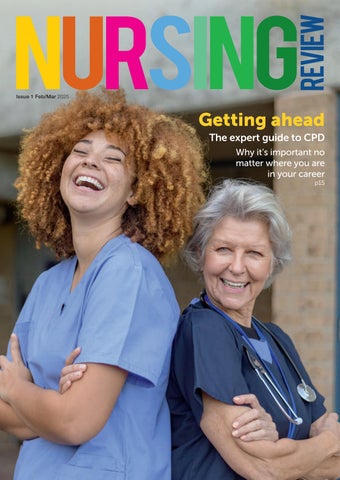
Issue 1 Feb/Mar 2025
Getting ahead The expert guide to CPD Why it’s important no matter where you are in your career p15
Let Lite n’ Easy help take care of you. Being a nurse is physically and emotionally demanding, making good nutrition essential. But long shifts, fatigue and limited breaks can lead to skipped meals or unhealthy choices. Lite n’ Easy makes eating well simple with over 235 affordable, nutritionally balanced meals packed with protein and fibre. From High Protein Smoothies and wholesome breakfasts to perfectly portioned lunches and dinners.
“Lite n’ Easy seamlessly fits into my lifestyle, I don’t have to change a thing to eat well. I have complete control over my meal choices and the best part, I no longer need to leave home to shop for food.”
Viviann
Make the shift to Lite n’ Easy today and get 35% OFF your first delivery! Order online using promo code NURSE35% or, call us on 13 15 12 and mention this offer. Offer valid for new customers only on their first delivery. Cannot be used with any other offer. Minimum order value applies.
Visit liteneasy.com.au or call 13 15 12
contents
news
MANAGING EDITOR
Rebecca Cox rebecca.cox@news.com.au
2
Government to fast-track applications from foreign nurses into Australian workforce
4
Permanent ban for AIN who stole over $100k from a patient and colleagues
6
Nurses could perform women’s health checks to prevent ED visits, says APNA
8
Health Minister announces review of trans healthcare, puberty blockers
HEALTH EDITOR
Stefanie Schultz stefanie.schultz@news.com.au SALES MANAGER
Sarah Licence sarah.licence@news.com.au SUBSCRIPTIONS MANAGER
Lee Burrell lee.burrell@news.com.au
02
06
COVER
11 Antisemitic video: pollies
The experts’ guide to continuing professional development, p15
speak out, nurses rally, migration laws under review
PUBLISHED BY
nursing review guide
Nationwide News Pty Ltd GPO Box 4245 Sydney NSW 2001 ABN 98 008 438 828 Print Post 100008043 ISSN 1326-0472 OCLC 536881479 PUBLISHER’S NOTE
15 COVER STORY CPD made
08
11
easy: Find out from those at the forefront of the industry why continuing professional development matters, and how to make it work best for you
clinical practice
© Copyright. No part of this publication can be used or reproduced in any format without express permission in writing from Nationwide News Pty Ltd. The mention of a product or service, person or company in this publication, does not indicate the publisher’s endorsement. The views expressed in this publication do not necessarily represent the opinion of the publisher, its agents, company officers or employees.
22 Australia’s clinical guidelines shape our health care. Why do so many still ignore sex and gender?
workforce
24 What are physician assistants? Can they fix the doctor shortage?
26 Albanese’s big health pledges:
15
$1.7bn for public hospitals, $573m for women’s health
22
technology
28 Give aged care nurses a voice in digital palliative care changes: Research
26
28 nursingreview.com.au | 1
news Minister for Health and Aged Care Mark Butler has announced a new government scheme for nurses moving to Australia. Picture: NCA NewsWire/Martin Ollman
Red tape cut Government to fast-track applications from foreign nurses into Australian workforce By Stefanie Schultz
T
he Albanese government has announced a new scheme for the removal of red tape to allow a record number of overseastrained nurses to enter the Australian workforce faster. In a statement, the federal Minister for Health and Aged Care Mark Butler said that, from March 2025, nurses wishing to immigrate to Australia from countries with comparable qualification standards will have their registration applications fast-tracked. Minister Butler said the result of these changes will be a streamlined assessment and registration process that will slash up to a year off the existing administration period. “For too long highly educated nurses with experience from countries like the UK, Canada and Ireland are left waiting on red tape approvals before they are able to work in our hospitals, aged care facilities and general practices,” Minister Butler said. “From March, internationally qualified registered nurses who have practised for
2 | nursingreview.com.au
at least 1,800 hours in these comparable countries will be fast-tracked, cutting the application time by up to six to 12 months, in some cases. “Australian patients will ultimately benefit from these changes, since these highly educated nurses can start working and providing care to Australians sooner, without waiting needlessly on red tape.” The new scheme means nurses from comparable countries will no longer need to undertake additional examinations or qualifications in order to gain registration in Australia, which the Albanese government is hoping will help to address ongoing workforce shortages. The Health Department’s 2024 Nursing Supply and Demand Study used workforce data from 2014 to 2022 to forecast an undersupply of full-time equivalent nurses (FTE) in the country by 2035. In the past financial year alone, 16,622 internationally qualified nurses registered to practice in Australia, with the largest number emigrating from New Zealand, under a Trans-Tasman agreement, but nurses from Canada, Ireland, Singapore, Spain, the UK and USA are also highly represented. Assistant Minister for Health and Aged Care Ged Kearney said this measure is a
“For too long highly educated nurses with experience from countries like the UK, Canada and Ireland are left waiting direct response to an independent review of health practitioner regulatory settings (Kruk Review), in collaboration with the Nursing and Midwifery Board of Australia, the Australian Health Practitioner Regulation Agency, and all state and territory governments. “As a former nurse, I know all too well that Australia’s healthcare system is powered by the sweat, hearts and expertise of nurses,” Minister Kearney said. “Streamlining the application process for the thousands of highly experienced nurses from comparable countries overseas will go a long way to ensuring Australians can get the best quality care, soonest. “Combined with the many scholarships, placements and other programs the Albanese Labor Government provides to support our home-grown nurses, this will improve the availability of nurses in health settings around the country.” ■
CRICOS: 00219C | TEQSA: PRV12073 | RTO: 40939 | C_AD_2407
Success comes in chapters. Decide what comes next. Upskill with a specialist postgraduate course. With contemporary, industry-aligned courses, real support and flexible study options, CQU makes your professional goals possible. Explore your study options at the website. Graduate Certificate
Graduate Diploma
Masters
Online
Hyperflexible Online
Commonwealth Supported Places*
Clinical Nursing Correctional Nursing Domestic and Family Violence Studies Emergency and Health Services Management Mental Health Nursing *
Eligibility criteria apply.
cqu.edu.au
news
Five year sentence Permanent ban for AIN who stole over $100k from a patient and colleagues By NCA Newswire
A
nursing assistant who took advantage of vulnerable patients in a series of fraud offences – including using a patient’s card to make transactions amounting to more than $100,000 – has been permanently banned from providing any health services in a bid to “protect public health and safety”. Steven Tran, 29, who worked as an assistant in nursing (AIN), was convicted of fraud against patients and staff at hospitals across Sydney. His behaviour was censured by the state’s Health Care Complaints Commission (HCCC). “In working as an assistant in nursing, Mr Tran was afforded a high level of trust to provide a safe environment,” the HCCC said in a media release. “Mr Tran’s conduct was serious and opportunistic, taking advantage of patients that required his care and treatment and a breach of trust with fellow work colleagues.” Mr Tran was employed at St Vincent’s Hospital as a casual AIN between October 2020 and November 2021 until he resigned after he was caught going through a colleague’s belongings.
4 | nursingreview.com.au
He would later plead guilty to making 637 unauthorised transactions amounting to $111,989 using a patient’s bank card, as well as $508 worth of transactions on another patient’s bank card, while working at Prince of Wales Hospital and St Vincent’s Hospital between April 2021 and September 2021. Following his resignation from St Vincent’s, Mr Tran continued to work as an AIN at hospitals throughout Sydney, through an agency, between February 2022 and October 2023 despite his registration being changed to unregistered in 2021. During that time he logged into the payroll system of Northern Beaches Hospital to change a colleague’s details to his own bank details, and made a series of unauthorised payments from the cards of patients, staff, and his landlord amounting to more than $2,000 between April 2022 and January 2023. While on bail between September and November 2023, Mr Tran again used a patient’s details, this time in an attempt to change his name on the Birth Deaths and Marriages website before he used the same bank card to make a payment to a moving service on Airtasker. He also had the photographs of four bank cards from people he lived with on his mobile phone and submitted a false medical certificate to Burwood Local Court as an excuse to not attend while undergoing court proceedings.
“He would later plead guilty to making 637 unauthorised transactions amounting to $111,989 using a patient’s bank card Finally, on December 5, 2023, Mr Tran pleaded guilty to 20 offences. The court found all patients were vulnerable and had been either unconscious or asleep during the offending. He was sentenced to five years in prison with a non-parole period of three years and six months and was slapped with a $100,000 compensation order to the patient whose card he had used to make transactions amounting to $111,989. The HCCC said Mr Tran had failed “to provide a health service in a safe and ethical manner” in a public statement and has banned him from providing any health services “The commission considers that by reason of Mr Tran’s convictions and conduct that he poses a significant risk to the health and safety of the public,” the HCCC decision read. “Mr Steven Tran is permanently prohibited from providing any health services, either in paid employment or voluntarily, to any member of the public.” ■
Take your nursing career on the road with Rural LAP Ready for a change of scenery? As a Rural LAP locum, you’ll have the opportunity to explore breathtaking rural and remote locations across Australia. Immerse yourself in vibrant communities, expand your skills, and make a real impact where it’s needed most. Enjoy a competitive hourly rate plus superannuation, a $150 daily incentive*, and a $100 travel allowance, with all travel and accommodation covered. Step outside your comfort zone and into an adventure. Join Rural LAP today!
*Inclusive of superannuation
1800 RURAL LAP (78725 527) | enquiries@rurallap.com.au
Apply Now
news
‘Held back’ Nurses could perform women’s health checks to prevent ED visits, says APNA
“We’ve got thousands of highly trained nurses who could be performing breast exams, pap smears, blood pressure checks, and sexual health screenings
By Stefanie Schultz
F
ollowing the release of new hospital data, the Australian Primary Health Care Nurses Association (APNA) has called upon the federal government to remove the policy barriers preventing some nurses from delivering preventative healthcare for women. The Australian Institute of Health and Welfare’s report, Australia’s hospitals at a glance, lists ‘diseases of the genitourinary system’ (such as urinary tract infections) as the third most common reason for women aged 15 to 44 to present to an emergency department. APNA considered this against its own workforce data, which shows that just one in five primary health care nurses are regularly performing women’s health checks, while 50 per cent “rarely or never perform them.” APNA chief Ken Griffin said Australian nurses are being held back from managing women’s health. “Women should be able to access routine health checks in their community before things get worse and they present at an emergency department, but right now, that’s not happening,” Mr Griffin said.
6 | nursingreview.com.au
APNA CEO Ken Griffin. Picture: Supplied.
“We’ve got thousands of highly trained nurses who could be performing breast exams, pap smears, blood pressure checks, and sexual health screenings – but half of them rarely or never get the chance. That just doesn’t make sense. “It’s a missed opportunity – women aren’t getting preventative care, and hospitals are filling up with cases that could have been managed by nurses earlier.” The AIHW hospitals report also details the time spent by patients in EDs, ranging from four hours and 55 minutes to 15 hours and 48 minutes based on triage category. It shows public hospital beds per 1,000 people in the population has been
falling by 0.3 per cent every year since 2018 and, on average, Australian hospitals, both public and private, cost around $293 million per day to run. In November, the federal government endorsed legislation to remove restrictive collaborative arrangement laws for endorsed nurses and midwives and nurse practitioners, in a bid to see more nurses working to full scope and address ongoing workforce issues. However, APNA is now calling for further policy changes “that allow nurses to do more in women’s health and improve access to early intervention.” “We have the workforce, and primary health care nurses have the skills – now we just need the system to support nurses to do the work they’re trained for,” Mr. Griffin said. “We have nurses who are still waiting for the prescribing rights Australia’s Health Ministers promised them. “Nurses are ready to step up – and we’re inviting Australia’s Health Ministers to do the same.” ■
Lead from where you are Advance your nursing leadership skills with our Institute of Leadership programs. Whether you are just starting or looking to enhance your expertise, we offer tailored programs that empower you to lead with confidence and impact within the healthcare sector.
What sets our programs apart Practical Skills and Insights: Gain practical skills, cutting-edge insights, and connections with national nurse leaders.
Confidence and Vision: Walk away with the confidence to lead, the ability to drive change, and a vision for the future of healthcare.
#ACNLeadership
Discover more at iol.acn.edu.au
30.10.24
Comprehensive Development: Our programs shape visionary nurses into leaders, advancing your career at any stage.
news
Best advice and care Health Minister announces review of trans healthcare, puberty blockers By Stefanie Schultz
T
he federal government has announced a review into healthcare for trans and gender diverse Australians, just days after Queensland announced it would pause the delivery of puberty blockers to children pending a review into pediatric gender services. Federal Health Minister Mark Butler said the review would develop new national guidelines for the treatment of trans and gender diverse children and adolescents in Australia and be “driven by evidence” and informed by “public consultation and international work”. “Governments also have a clear responsibility to ensure Australians are receiving the best medical advice and
8 | nursingreview.com.au
care available,” he said in a statement in early February. “That responsibility is especially important when it comes to the care of highly vulnerable children and adolescents. “Two weeks ago, I sought advice from the National Health and Medical Research Council and the Therapeutic Goods Administration on the current provision of care for trans and gender diverse Australian children and adolescents. “After considering that advice, I have asked the NHMRC to undertake a comprehensive review of the Australian Standards of Care and Treatment Guidelines for trans and gender diverse children and adolescents in Australia and to develop new national guidelines. “The provision of public gender services to young people in Australia is exclusively led by states and territories who are responsible for the relevant services and employ the relevant clinicians.
“But the NHMRC is the nation’s leading expert body in health and medical research and has a statutory responsibility for developing and supporting high quality guidelines for clinical practice. “It is imperative there is community confidence that Australian children, adolescents and their families are receiving the most appropriate care. “The guidelines will be developed in accordance with the NHMRC’s Standards for Guidelines and the international GRADE approach. “The NHMRC will develop the guidelines with an expert committee that includes lived experience and will be informed by public consultation, and international work.” Mr Butler added that interim advice on the use of puberty blockers would be completed in the middle of 2026. Some advocates and experts on LGBTIQ+ health have cautiously welcomed the review, saying it’s in line with what was
news
“The NHMRC will develop the guidelines with an expert committee that includes lived experience and will be informed by public consultation
Qld Health Minister Tim Nicholls at a press conference at the Cairns Hospital, held after the state government paused hormone therapies. Picture: NCA Newswire/Brendan Radke
called for in the National Action Plan for the Health and Wellbeing of LGBTIQA+ people, acknowledging the need to update the standards of care. “[It] will be of the highest standard in the hands of the NHMRC and while it will be challenging to see this occurring, now is the time to ensure that we contribute to the process, hold it to account and for the best practice gender affirming care that we know works continue to be delivered to trans and gender diverse young people across Australia,” said Nicky Bath, CEO of LGBTIQ+ Health Australia. Professor Ashleigh Lin, president of the Australian Professional Association for Trans Health, saw the review’s “inclusion of people with lived experience, as well as expert researchers, and frontline clinicians as crucial to this process.” The announcement of the review came just three days after Queensland’s Health Minister Tim Nicholls announced the state government would pause the use of puberty blockers and hormone therapies for children with gender dysphoria pending a review into the controversial treatment pathways.
“I’ve indicated to Minister Nicholls that I don’t think it would be appropriate for Queensland to continue with their stated intention to undertake an evidence review in this area of care. These issues should be nationally consistent, and in my view, should be driven by the preeminent authority, which is the NHMRC,” Minister Butler said. Minister Nicholls said the move had been sparked by “clinical governance issues” in the Cairns health service. “There is contested evidence surrounding the benefits of stage 1 (puberty blockers) and stage 2 hormone therapy for children and adolescents with gender dysphoria emerging from studies throughout the world,” Mr Nicholls said. “France, Finland, Norway, Denmark and Sweden have all tightened regulations around prescribing hormone therapy to children and adolescents. “More recently, the United Kingdom has changed legislation to restrict the prescription and supply of puberty blockers to children. “The Queensland government has already announced on January 4, 2025 that it does not support expansion of the
Queensland Children’s Gender Service (QCGS) and it has paused further delivery of the evaluation recommendations, pending further consideration by government.” As of June 2024, 547 children and adolescents were actively receiving care at the QCGS. “There is a need to maintain confidence in public health services, particularly those delivered by Queensland Health for children,” Mr Nicholls said. Dr Michelle Dutton, immediate past chair of the Royal Australian College of General Practitioners Specific Interests Transgender and Gender-diverse Healthcare, has expressed alarm about Mr Nicholls’ decision. “This decision is being framed as being about protecting young people, but this kind of blatantly political decision, and the media coverage that results, significantly increases hostility towards trans people in the community,” she said. “This will be a very hard time for GPs who look after trans young people in Queensland. “Young people and their families will be experiencing all kinds of emotions – fear, despair, anger, helplessness.” ■ nursingreview.com.au | 9
The laTesT news for aged care professionals
IN OUR VOLATILE INDUSTRY, AGED CARE INSITE KEEPS YOU UP TO DATE ON ALL THE LATEST NEWS Aged Care Insite provides the best in original journalism, and is the authoritative source of news and analysis for the residential and community care sectors. We pride ourselves on being at the forefront of what's happening in the ever-changing aged care sector. We provide an independent source of news, and cover the issues relevant to you.
• Comprehensive coverage of a diversity of topics affecting the aged care sector • News and information on medical matters and products • Analysis of the major issues facing the aged care sector as a whole • 6 issues per year • Editorial integrity and industry relevance • Keeps industry professionals up-to-date on the politics and policy that matter • Tax deductible
Please email edmedia.subscriptions@news.com.au to find out more
news
Ahmad “Rashad” Nadir and Sarah Abu Lebdeh have been deregistered by the Nursing and Midwifery Council of NSW. Picture: NCA Newswire
Sector reacts Antisemitic video: pollies speak out, nurses rally, migration laws under review By NCA Newswire and Stefanie Schultz
A
nurse who vowed to “kill” Israeli patients and another who claimed he had already sent Israeli patients to the afterlife have now been banned from practising “anywhere in Australia, in any context”. Ahmad “Rashad” Nadir and Sarah Abu Lebdeh were deregistered by the Nursing and Midwifery Council of NSW, effective from February 13, Health Minister Mark Butler has confirmed. “The Australian Health Practitioner Regulation Agency has automatically updated their record on the public register of practitioners,” Minister Butler said. “As a result this means the two nurses are unable to practise nursing anywhere in Australia, in any context. “Australians have a right to feel safe wherever they go and nowhere should be safer than a hospital. “Their sickening comments – and the hatred that underpins them – have no place in our health system and no place anywhere in Australia.” The pair were filmed wearing their NSW Health uniforms as they threatened Israeli patients in an antisemitic tirade during a video call with Israeli influencer Max Veifer, drawing nationwide attention
and strong criticism from Prime Minister Anthony Albanese. “The antisemitic video circulating today is disgusting. The comments are vile,” he said in a statement on X. “These antisemitic comments, driven by hate, have no place in our health system and no place anywhere in Australia. “These individuals have been stood down by NSW authorities. They have rightly been referred to the NSW Police for criminal investigation.”
POLICE INVESTIGATION It has since been revealed by 7NEWS that police allegedly found a vial of morphine in Mr Nadir’s personal locker at BankstownLidcombe Hospital in Sydney’s southwest. It’s understood Mr Nadir had allegedly asked a former colleague to empty his locker. But that staff member claimed they felt uncomfortable and instead called the police. The vial was seized by police and is expected to form part of the investigation into the nurses, 7NEWS reported. This comes after officers from NSW Police’s Strike Force Pearl – established in December in response to a growing number of antisemitic attacks – reportedly raided the home of Mr Nadir on Friday night, just hours after he was hospitalised. NSW Police confirmed in a statement that the property had been searched
Michael Whaites, Assistant General Secretary of the NSW Nurses and Midwives Association. Image: Supplied
and a number of items had been seized. No arrests have been made. Mr Nadir was taken to hospital over mental health concerns. NSW Police said a 27-year-old man “was taken to hospital for assessment” after officers received “reports of a concern for welfare”. Mr Nadir and Ms Abu Lebdeh had remained holed up inside their homes in Bankstown and Greenacre, in Sydney’s southwest, and had reportedly refused to be voluntarily interviewed by police. On February 25 Ms Abu Lebdeh, was arrested and changed with three nursingreview.com.au | 11
>
news
Opposition Leader Peter Dutton. Picture: NCA Newswire/ John Gass
< offences – threatening violence, using a carriage service to threaten to kill, and using a carriage service to menace, harass or offend. She was granted conditional bail.
DUTTON QUESTIONS MIGRATION After learning that one of the nurses involved was granted Australian citizenship in 2020, Opposition Leader Peter Dutton has called for a review of the country’s migration system. Mr Dutton said there were “big problems in this country when somebody like that can become an Australian citizen.” “There needs to be a proper process in place to understand how this individual became an Australian citizen and where the failing in the system originated, and 12 | nursingreview.com.au
how we can make sure it doesn’t happen,” he told Sydney talkback station 2GB. Ahmad Rashad Nadir came to Australia from Afghanistan as a 12-year-old. Mr Dutton was home affairs minister in the former Coalition government when Mr Nadir was granted citizenship. Mr Nadir has been facing calls for his citizenship to be stripped – a move Mr Dutton said had “constitutional constraints”. “There’s a provision under the migration act … that if somebody has made a false declaration … there is the ability to revoke [citizenship], say somebody who has committed a terrorist attack,” he said. “But even that is limited, and there was a high court case in the … last couple of years, where that really restricted the
ability of the government to be able to strip somebody of their citizenship. “So there are constitutional constraints.”
NURSES RALLY Nurses gathered outside the NSW parliament in the week following the new stories to protest against hate speech. NSW Nurses and Midwives’ Association (NSWNMA) assistant general secretary Michael Whaites said members were “horrified” and “devastated” by the footage, adding that the nurses’ comments in the video did “not speak for nurses and midwives”. “We find the comments to be abhorrent, and I want to reassure the people of Australia, of NSW, of our Jewish communities, our Israeli
news
Senator Fatima Payman. Picture: NewsWire / Martin Ollman
communities, that they do not speak for nurses and midwives, they do not speak for our profession,” he said. Bankstown Hospital staff have allegedly been subject to abuse since the video surfaced, according to nurses at the rally. “I’m devastated about the impact that this is having on the Jewish community … on all of our communities,” Mr Whaites said. “People should feel safe, and I want to reassure people that the vast majority of nurses and midwives will absolutely provide the best care to everyone that crosses the threshold, no matter their background.”
EXILED LABOR MP SENATOR SPEAKS OUT Exiled Labor MP Senator Fatima Payman has confessed she “held my tongue for too long” over two Sydney nurses caught on camera making vile antisemitic remarks insisting that while what they said was wrong, the pile on had gone too far. Senator Payman spoke out insisting that what the nurses did was wrong and adding that “thankfully no Israeli patient was killed”. She then added a double standard was at play over the furore. “Let me be crystal clear. What these two nurses said was wrong. No one should be ever be denied medical care based on their race, religion or nationality. There is never an excuse for that,’’ she said.
“That being said, we need to address the elephant in the room. The Prime Minister has commented. Premiers have weighed in. “They made a terrible comment yet are been treated as if they have committed the absolute worst crime imaginable,” Senator Payman said. “These individuals have been fired, banned from ever working as nurses again, raided by police, placed under the most intense public scrutiny and now [they are] the ones being hospitalised; they’ve apologised, they have been punished.
“Bankstown Hospital staff have allegedly been subject to abuse since the video surfaced, according to nurses at the rally “What is the end goal here? What exactly are we trying achieve? Justice or just public humiliation? “We never see the same level of anger and vitriol when the roles are reversed.” ■
subscribe for less than $2 Per week The laTesT news for nursing and healThcare professionals Nursing Review is essential reading for anyone involved in the healthcare sector in Australia. It provides unrivalled coverage of specialist topics from features and opinion pieces, to international news and profiles. • Latest news and resources for all healthcare professionals • Comprehensive coverage of a diverse range of topics • Analysis of the major issues facing the health sector as a whole • Delivered free of charge to your home or place of work monthly
Please email edmedia.subscriptions@news.com.au to find out more nursingreview.com.au | 13
Get ISO Certification for yourself or your organisation with the experts at ACI Global Accelerating continuous improvement to e-quip your workforce and workplace
CPD made easy The expert guide to continuing professional development Find out from those at the forefront of the industry why CPD matters, and how to make it work best for you. Plus definitions, standards, record-keeping, reporting, and career planning By Stefanie Schultz
Expert guide
No matter what point you’re at in your career, CPD plays a vital role in helping you plan your next steps.
N
ursing is one Australia’s most in-demand professions, despite nurses and midwives already representing over half of the nation’s health workforce. With the roles of nurses and midwives continuing to evolve, long gone are the days when on-the-job training was the benchmark for learning. These days, as the roles have become increasingly professionalised, nurses and midwives need to meet the stringent registration standards of the Nursing and Midwifery Board of Australia (NMBA), and an important part of this is continuing professional development (CPD). CPD is how nurses and midwives maintain, improve and broaden their knowledge, expertise and competence, and develop the personal and professional qualities required throughout their professional lives. To make completing your CPD requirements as easy as possible, we have created the ultimate guide. We’ve looked at what you need to do to retain your registration as it’s set out in the industry standard, broken down what
16 | nursingreview.com.au
learning opportunities count towards CPD (including workshops, study days and webinars), and we talk to the experts about how best to plan and record your CPD.
WHY CPD MATTERS Chief Nursing and Midwifery Officer Adjunct Professor Alison McMillan PSM draws on her more than 40 years of nursing experience to provide strategic advice to the Department of Health and Aged Care, overseeing a range of federal government projects like the National Nursing Workforce Strategy and the National Nursing and Midwifery Education Advisory Network. “Nurses are in every part of our health and aged care system – we see people at the beginning of life, and at the end, and everything in between,” Professor McMillan said. “We work in primary health, hospitals, aged care, community care, and Aboriginal Torres Strait Islander communities. We work in many places in social justice areas, in schools, in prisons, everywhere. And I think it would be fair to say that probably every family in Australia will have at least one nurse.”
Adjunct Professor Alison McMillan PSM. Picture: Supplied.
Although continuing professional development for nurses and midwives is required by law, Professor McMillan hopes that Australian nurses and midwives can recognise just how far the professions have come. “It’s important that we look back, to some extent, on the history of nursing and midwifery,” she said.
Expert guide
Nurses gaining hands-on experience during ACN’s Venepuncture and Cannulation CPD Course. Picture: ACN/Supplied
“So many leaders before me fought very hard for nursing and midwifery to be recognised as professions, to be seen as health professionals in their own right. “A part of that was the development and the move to a university-based education for registered nurses. A formal education programme that’s well regulated and of very high quality. Those that came before us fought for that. CPD is crucial for the maintenance of high quality care and the protection of the Australian public, ensuring all health professionals stay up to date with best practices, medical advancements and new digital health resources. However, understanding what is required and meeting the registration standard can be overwhelming, especially while juggling employment and the many other demands of modern life. Professor McMillan reiterates the importance of continued learning, urging nurses and midwives to recognise both how far the profession has come and how much potential they still hold for meaningful leadership within the health sector. “It is the responsibility of nurses and midwives to not only educate ourselves at the beginning of our career, but to constantly keep ourselves up to date with contemporary practice, with ethics, with
professional requirements, because that’s what being a professional is,” she said. “It shouldn’t be seen as a burden. It should be seen as something that is a part of the privilege of being a professional and making sure that we can all deliver the highest quality care in whatever context by keeping ourselves up to date through the process of a formal CPD.”
WHAT IS CPD? Continuing professional development, or CPD, refers to the minimum ongoing education and training requirements necessary for Australian enrolled and registered nurses and midwives to maintain their professional registration by the Nursing and Midwifery Board of Australia, as per the Health Practitioner Regulation National Law. The Nursing and Midwifery Board of Australia (NMBA) is the regulating body responsible for overseeing the training and qualifications of the nation’s nurses and midwives, the development of best practice guidelines and the handling of complaints and disciplinary actions, just to name a few. “[CPD is] the means by which members of the profession maintain, improve and broaden their knowledge, expertise and competence, and develop the personal and professional qualities
“It should be seen as something that is a part of the privilege of being a professional and making sure that we can all deliver the highest quality care required throughout their professional lives.” - NMBA CPD is designed as a means of protection for the Australian public by ensuring all nurses and midwives remain at the forefront of modern healthcare, and is therefore a legal requirement. However, it should also be seen as an opportunity for nurses and midwives to build upon their professional skills, diversify their practice and forge fulfilling and successful careers.
WHAT IS THE REGISTRATION STANDARD? The NMBA registration standard requires the completion of a minimum of 20 hours of CPD per registration period. However, nurses and midwives who hold an endorsement, such as Nurse Practitioner, must complete an additional 10 hours related to diagnostic investigations and medical prescriptions. > nursingreview.com.au | 17
Expert guide
<
Importantly, this standard applies to all enrolled nurses, registered nurses and midwives, whether they are employed on a full-time or part-time basis or working in paid or unpaid roles, and continues to apply even when a nurse or midwife is on leave. If you are just entering or returning to the workforce in Australia, and will be registered for less than 12 months prior to renewal, your CPD requirement is calculated on a pro rata basis:
When deciding how to meet the registration standard, you must ensure that the experience will facilitate knowledge that is new to you – the idea is that you will use CPD activities to expand upon your existing skill base. Most importantly, all CPD hours you wish to report to the NMBA as part of your registration renewal must be applicable to your specific role. This is called ‘context of practice’.
Months registration has been held
Pro rata CPD hours that must be completed
WHAT DOES CONTEXT OF PRACTICE MEAN?
0 – 3 months
≥ 5 hours (+ ≥ 2.5 hours for endorsement/ notation)
>3 – 6 months
≥ 10 hours (+ ≥ 5 hours)
>6 – 9 months
≥ 15 hours (+ ≥ 7.5 hours)
> 9 –12 months
≥ 20 hours (+ ≥ 10 hours)
Source: NMBA Registration Standard: Continuing Professional Development For those who wish to maintain both their nursing and midwifery registration, the NMBA requires the completion of standard CPD hours for both.
The NMBA says “context of practice refers to the conditions that define an individual’s nursing and/or midwifery practice.” ‘Practice’, in this case, refers to a nurse or midwife’s role, encompassing all knowledge required to provide quality care – from clinical practice, to leadership qualities, to administration skills – but can also include things like location, patients or available resources and equipment. The registration standard dictates that all CPD hours must be directly relevant to one’s ‘context of practice’ in order to count towards the minimum 20 hour requirement. A large part of this is being able to effectively reflect upon and self-assess your learning. It’s crucial to set aside time at the beginning of the registration period to plan. Identifying learning opportunities and setting goals that align with your career objectives will ensure the precious hours you spend completing the CPD requirement are as beneficial as possible.
HOW CAN I COMPLETE MY HOURS? Fortunately, there are a lot of ways to accumulate CPD hours, from webinars and conferences to graduate certificates, Masters degrees, or submissions to academic journals, there are options available to suit everybody. There is also a great deal of flexibility around how you complete your CPD hours, as long as your chosen activities can be defined as structured learning and relate to your current role. Some of the most common ways nurses and midwives complete their CPD requirements include: • Undertaking postgraduate study either through a university, TAFE or other accredited course provider •C ompleting a workshop or short course offered by an accredited organisation •A ttending conferences or seminars related to your field of practice •W orkplace training/mandatory learning. 18 | nursingreview.com.au
HOW DO I REPORT MY CPD HOURS TO THE NMBA? To prevent unnecessary stress at renewal time, keep a detailed record of all learning activities throughout the year, including your reflections. The NMBA requires a record of the following information: • Date •S ource or provider of learning activity • I dentified learning needs •A ction plan •T ype of activity (e.g. self-directed learning, short course) •D escription of topic covered during activity and outcome •R eflection on activity and specification to practice • No./Title/Description of evidence provided •N umber of CPD hours Professional organisations such as the Australian College of Nursing provide
access to a portfolio application to assist their members in tracking CPD. Or do it yourself by downloading a copy of the NMBA sample template for documenting CPD from its website. Remember, the NMBA may choose to perform an audit on your registration at any time, so it is best practice to retain records of your CPD hours for at least five years after completion.
WHAT HAPPENS IF I DON’T MEET THE STANDARD? If you are unable to prove that you have met your CPD requirement by the time of registration renewal, you will need to apply to the NMBA for an exemption. However, keep in mind that an exemption will only be granted if you can provide ‘compelling evidence’ of the exceptional circumstances that prevented you from completing your CPD, and if you are unable to provide this evidence, you may risk losing your registration. Applications are assessed on a case-by-case basis and can result in a full, partial or complete exemption. The NMBA exemptions policy dictates that exemption applications will only be considered “in one year of any four-year period.”
HOW TO CHOOSE CPD THAT’S RIGHT FOR YOU The post-graduate path A post-grad qualification can be a great tool for both the specialisation and advancement of a nursing career. Whether through a university, TAFE or college, a graduate certificate will help you prepare for advanced practice and can pave the way to acceptance into a Masters’ degree further into your career. Brisbane-based clinical nurse Steph* said her graduate certificate in orthopaedics was one of the most valuable career decisions she has made. After being promoted to clinical nurse only four years into her career, Steph knew she needed to boost her knowledge in order to thrive in her new position. “I think [post-grad study] is probably something that all clinical nurses should have to do,” she said. “Just so you have that elevated basic knowledge and can be confident when your peers or doctors are coming to you asking you questions.” Working in a smaller private hospital, Steph has also completed short courses in cannulation/venipuncture and
Expert guide
“Diversifying the ways in which you learn throughout the year will not only broaden your knowledge but help to keep you engaged
ACN CPD students developing tangible skills in a simulated learning environment. Picture: ACN/Supplied
advanced life support in order to take on greater responsibility. “Being able to do those specific things in a timely manner when the pathologist and the doctors aren’t available is so important. Not having to rely on others to get time-effective stuff done shows that you are proactive and can really instil confidence in your own abilities.” Currently on her second maternity leave, Steph is grateful to have gone the extra mile to set up a rewarding career before taking time out to have children. “For me, I feel lucky that I prioritised my career when I did,” she said. “I’ll return to work on reduced hours and I feel like it would pretty much be impossible to work my way up [now]. “There’s no way I will have the time to do extra courses at the moment or even work more than two, three days a week.” Australian College of Nursing (ACN) interim National Director for Education Dr Jacinta Kelly advises members to become a “lifelong learner.” “There are hundreds of different ways to be a nurse,” Dr Kelly said. “And the way that you approach adult learning, CPD or postgraduate qualifications depends on what kind of nurse you are, your context, what you’re doing and what you are aiming for.” Short courses and other CPD While it is important to complete your CPD requirements in a way that works for you, diversifying the ways in which you learn throughout the year will not only broaden your knowledge but help to keep you engaged.
Dr Jacinta Kelly. Picture: Supplied.
If you’re not undertaking formal postgraduate study, you’ll need to meet your CPD hours with various short courses, conferences, webinars and either reading or authoring peer-reviewed academic journal articles that relate to your individual context of practice. Dr Kelly says this is where some learners can come unstuck when preparing for registration. “There is no formal accreditation of CPD – there’s nothing that a provider needs to go through to say, this is approved CPD by the NMBA,” she said. “So there’s a little bit of individual judgement involved. You could potentially choose a short course of a very reputable organisation, but if you couldn’t show it was related to your practice, it wouldn’t count as part of your registration.
“CPD is really about reflecting on your individual context and what you need to be the best practitioner that you can be.” You can find short courses offered by a multitude of health organisations around the country and online. These can be a great way to acquire new skills that will benefit your workplace, community and career. With less commitment required than a formal post-graduate qualification, short courses are an excellent way to add value to your skills and resume. Similar to graduate certificates, there are a number of courses that are subsidised by the federal government or available under grants from charitable foundations (such as the National Immunisation Program) that may be a cost-effective solution for many nurses and midwives. Subsidised courses will change according to the most pressing needs of the industry, resulting in some of the most relevant and valuable qualifications available. For the time poor, micro-credentials and seminars offered by professional bodies allow you to break up your learning into bite-sized chunks, and can also help provide a greater amount of variation in your learning. Learning and leadership go hand in hand and Dr Kelly encourages nurses and midwives of all backgrounds to consider leadership skills as part of their professional learning. This is why the Australian College of Nursing (ACN) provides multiple pathways for nurses and midwives to become better leaders, no matter their current role, offering a Graduate Certificate in Leadership and Management, as well as continued education and support via their Institute of Leadership. “The ACN Institute of Leadership is about meeting nurses where they are,” she said. “They might be really new in their career, they might be executives, or they might be somewhere in the middle, the Institute helps nurses to lead from where > nursingreview.com.au | 19
Expert guide
< they are. Because nurse leaders, it’s just not just at the top of a food chain, you can be a leader no matter what your job description is. “The Institute is about finding ways to empower nurses to think about themselves as leaders in healthcare, and to find how we can work as a whole to make sure that our voices are represented.” Dr Kelly’s tips for CPD success •D ocument as you go – don’t wait until right before registration to try and pull your documents together. • Always ask “does this relate to my practise?” And if you’re not sure how to answer that question, it’s quite likely that the learning activity is not appropriate for CPD. • Consider becoming a member of a professional body – colleges, associations etc. are a great way to access a whole host of learning opportunities. You may find it helpful to be able to scroll through what a professional body has to offer and choose the best fit for you. •T ake advantage of government subsidised courses and graduate certificates, these are always changing according to industry demand. • Never stop learning! The best professionals in any industry are learning all of the time and always seeking new information.
CAREER PLANNING AND PROMOTIONS Nursing and midwifery are two professions that are unfortunately still operating under a legacy of gendered pay, with the Australian Institute of Health and Welfare reporting that in 2022, 88 per cent of nurses and midwives in the country were female. Data from an Edith Cowan University study showed that gender continues to have a profound influence on not only how much a nursing graduate will be paid in their first job, but also how quickly their career will progress. Key findings show that male nurses are being paid around four per cent more than their female colleagues just six months after graduation, with the gap widening to approximately 13 per cent at the three year mark. This is yet another example of why career planning, and continued learning and the development of strong leadership skills are integral to all nurses and midwives. 20 | nursingreview.com.au
Nurses from around the country connecting at ACN’s National Nursing Forum. Picture: ACN/Supplied.
Nursing Review spoke to New South Wales Nursing and Midwives’ Association (NSWNMA) general secretary Shaye Candish about how nurses and midwives can take control of their careers and seek out promotion opportunities. “Firstly, I would encourage nurses and midwives to pursue post-grad qualifications and a diverse range of education including attending conferences in their area of interest for professional development,” Ms Candish said. “It’s important to remember that there are many different career paths that you can take and many skills are transferable. “You should make the most of opportunities that arise in the workplace that allow you to gain further experience, including acting up in roles.” The NSWNMA assists its members with career progression through an array of learning, scholarship and conference opportunities, including online CPD platform iLearn. Ms Candish also encourages all nurses and midwives to seek out a mentor or other guidance from people that work in the fields they wish to pursue. “Be open-minded on the pathways you can take, as there are various sectors and specialities that often get overlooked such as Primary Health, rural and remote, Justice Health and community. It’s important to remember the hospital setting is not the only place that can provide career progression,” she said. “Lastly, nursing presents many leadership opportunities and is a key feature of our healthcare system. Roles like Nurse
Shaye Candish. Picture: Supplied.
Manager, Clinical Nurse Educator and Nurse Practitioners, to name a few, are the go-to experts that offer support, advice and guidance, and these positions allow you to enhance your skills, education and further your career.”
GROWTH AREAS Last year’s Nursing Supply and Demand Study, released by the Department of Health and Aged Care, projected a workforce undersupply of 70,707 full-time equivalent nurses (FTE) by 2035, estimating a total of 79,473 new nurses needed to meet demand. Aged care continues to be a growth sector for nurses and allied health professionals as we see sweeping legislation changes come into effect in 2025 and, more broadly, as the Australian population continues to age.
Expert guide
“Aged care presents great opportunities for nurses, and often nurses can progress their career faster in this sector moving into care management and advanced practice roles,” Ms Candish said. Other, perhaps lesser-known fields that the NSWNMA general secretary urges nurses and midwives to consider in their career planning include: • Professional and advocacy roles like those we offer in the NSWNMA that advocate for, influence and protect the professions of nursing and midwifery. Nurses and midwives in the NSWNMA do many things from organising and empowering union members, to improving their pay and working conditions, advocating for individuals experiencing a problem in the workplace and even influencing government policy that impacts on nurses, midwives and the healthcare system.
•R egulatory roles – nurses and midwives are essential in roles in government organisations like the Aged Care Quality and Safety Commission, AHPRA, the NMC and other government and regulatory organisations. They may write and review policy, conduct audits or work with academia and research. •C linical trials
A QUICK GUIDE TO BECOMING A SOLE TRADER
the Australian Business Register website is simple if you have all the necessary details. 3. Register for GST If you expect to earn over the $75,000 GST threshold, you’ll also need to register for GST and regularly lodge a Business Activity Statement with the ATO. Getting set up is relatively easy – the trickier part of a move to sole trader is handling your own taxes and financial admin. Tax preparation isn’t as straightforward as setting aside a percentage of your income for income tax, the Medicare levy, and GST. It’s crucial to know which rules apply to avoid costly surprises at the end of the financial year. For an estimate, try a sole trader tax calculator. One you’re set up here are some other tops to help you kick-start your self-employed venture on the right foot: 1. Know your tax deadlines Familiarise yourself with key tax deadlines to avoid missing important milestones. 2. Maximise your tax deductions Hnry research shows the average sole trader misses out on over $5,500 in unclaimed expenses annually. To boost your potential refund, check out our nurses’ and midwives’ guide to tax deductions. 3. Secure your super Superannuation is not compulsory for sole traders – in fact, 43 per cent of Australia’s 1.5 million sole traders have never made a contribution – but putting it off can cost you in the long run. In line with Australia’s superannuation guarantee, allocating 11.5 per cent of your income is
By Karan Anand, Nurses, midwives, and aged care workers are increasingly moving away from traditional employment in favour of sole trading and contracting work. The burnout from the Covid-19 pandemic, coupled with the national nursing shortage have contributed to the shift. In fact, last year, nurse sign-ups to sole trader tax and accounting service at the company I work for surged by 380 per cent. More and more healthcare workers pursued self-employment as it can offer higher pay, more flexible working conditions, and the opportunity to shape their own career. A ‘sole trader’ is someone who is the sole owner and decision-maker of their ‘business’. This essentially translates to being in control of what you do, how you do it, and when you do it. But with this autonomy comes responsibility – managing cash flow, contracts, taxes, and legal obligations. The good news is that setting yourself up as a sole trader is not as daunting as it might seem – it’s far simpler than setting up as a company. Here are the essential steps to get started: 1. Lock in your TFN You’ll need a Tax File Number. If you’ve been an employee, you should already have one; otherwise, apply for a TFN on the ATO website. 2. Register your business You’ll need an Australian Business Number to operate legally. Applying on
PRIVATE VS PUBLIC When considering your next career move, one of the considerations you may face is whether to work in the public or private sector. “Specialist senior positions like Clinical Nurse/Midwife Educators, Clinical Nurse/ Midwife Specialists and Clinical Nurse/ Midwife Consultants are more prevalent in the public sector, allowing nurses and midwives to enhance their skills
“Make the most of opportunities that arise in the workplace that allow you to gain further experience, including acting up in roles and progress their careers in specialist, educational roles,” Ms Candish said. “The scale of the public health service also allows for nurses and midwives to move workplaces and roles as they develop, so there are many opportunities to be explored. “However, traditionally, the hourly rate in the private sector is slightly higher than the public sector.” ■ * Last name redacted at interviewee’s request
a good starting point to help secure your retirement savings. 4. Protect yourself Ensure you have the right insurance to protect against any risks – from claims of negligence to an accident or injury that renders you unable to work. 5. Tap into tech Using a platform such as Hnry allows you to automate much of your tax admin (including tax payments and filings), so you can focus on what you do best. By understanding the basics of sole trading, you’ll set yourself up for success and can make a seamless shift into self-employment, where you can provide the care you’re passionate about, while enjoying the freedom and flexibility that comes with being your own boss.
Karan Anand, managing director Hnry Australia. Picture: Supplied.
nursingreview.com.au | 21
Clinical The male body has historically been considered the “standard” human.
Bodies aren’t generic Australia’s clinical guidelines shape our health care. Why do so many still ignore sex and gender? By Maggie Kirkman and Jane Fisher
Y
ou’ve heard of the gender pay gap. What about the gap in medical care? Cardiovascular diseases – which can lead to heart attack and stroke – are one of the leading causes of death for women in Australia. But women are less likely than men to receive preventive care for heart disease, such as appropriate medication. One study in New South Wales showed women admitted to hospital for a stroke were more likely to be first told by paramedics it was a migraine, headache, anxiety or nausea. Despite these differences, official guidelines in Australia too often ignore the impact of sex and gender on health care. For example, a guideline on atrial fibrillation (irregular and often fast
22 | nursingreview.com.au
heartbeat) has limited information on sex and nothing on gender. “Sex” refers to various biological characteristics by which at birth we are identified as female, male or intersex. “Gender” is a social and cultural concept in which people understand themselves to be a woman, a man or non-binary. Our recent study reviewed 80 clinical guidelines. We found very few define sex and gender and the majority don’t mention gender at all. This has serious consequences for everyone, but especially for women, girls and gender-diverse people.
What are clinical guidelines for? Clinical guidelines are recommendations about how to diagnose and treat a medical condition, based on research and usually developed by a team of specialists. Clinicians and other health workers are expected to use them to guide day-to-day health care.
For example, there are guidelines for physiotherapists on how to provide the best rehabilitation for someone after a heart attack. Other guidelines outline what a GP should do if a patient discloses intimate partner violence. Because clinical guidelines are based on research, they can report only what has been studied and published in peer-reviewed journals. This means where there are gaps in research, clinical guidelines are usually silent.
What we did As part of a larger project, the federal government asked our team to examine whether there are still clinical guidelines that do not take into account sex and gender differences. There is no central database of Australia’s clinical guidelines. But in a comprehensive search, we found 80 published from January 2014 to April 2024. These encompassed guidelines for conditions including various cancers, diabetes and attention-deficit
Clinical
hyperactivity disorder, designed for a range of health professionals such as general practitioners, medical specialists, physiotherapists and paramedics. We searched every document for the following words: • sex • gender • female • male • women • men • girl • boy If none of these words were found, we looked for “psychosocial” and “cultural”, to see if gender was considered without being named directly. We also read the text around each relevant word to understand its context and meaning.
What we found Clinical guidelines in Australia too often do not offer guidance on incorporating sex and (especially) gender into health care.
We found: • 1 5 per cent of guidelines didn’t mention sex or gender at all. This includes recommendations about acute coronary syndrome from the National Heart Foundation and on e-mental health by the peak body for GPs. These guidelines did not even give the most basic information on sex differences in occurrence (of heart disease or mental health problems) • only four guidelines (5 per cent) defined the terms “sex” and “gender” • 19 per cent made no reference to clinical practice concerning sex. That is, there was no information on how symptoms and treatments might vary among biologically female, male and intersex bodies • the majority (58 per cent) ignored the role gender can play in clinical practice and how it might shape what treatment is most effective. For example, some women may be more comfortable being seen by a female doctor, for a range of personal or cultural reasons • most (81 per cent) did acknowledge biological sex in some way. But among those 65 guidelines there was great variation, ranging from a single statement about whether a condition (such as lung cancer) occurred more often in women or men, to detailed risk factors, prevalence, treatment and management, such as for advanced life support by paramedics.
Why does this matter? This means research has been conducted on men and then applied to women, ignoring the differences that excluded them from the research in the first place. If the standard body is implicitly that of a (white) male, discrimination against all other bodies is inevitable. The Australian Institute of Sport’s guideline on concussion and brain health is one of just four guidelines that define sex and gender. This is crucial, given growing evidence women footballers are at greater risk of concussion than men. But their approach is far from mainstream. Gender-diverse people also require distinct health care and support, based on inclusive and non-discriminatory practice and policy. There is clear evidence the mental
“Research has been conducted on men and then applied to women, ignoring the differences that excluded them from the research health of gender-diverse people is profoundly affected by how sensitive – or discriminatory – their health care is.
Eliminating discrimination Discrimination can be explicit and overt. But it can also simply come from a lack of imagination, based on the assumption some kinds of health care are sex- and gender-neutral. For example, the treatment of skin – dermatology – could appear neutral, as everyone has skin. Yet social expectations about clothing, make-up and appearance are highly gendered, and these can influence how skin conditions develop and are treated. Guidelines that offer detailed information on sex- and gender-aware practice, such as those by GP Supervisor Australia, can contribute to challenging both explicit and implicit discrimination. Ultimately, we hope this leads to equitable health care for people of all sexes and genders. We recommend all developers of clinical guidelines look for evidence concerning sex and gender and, when they find none, say so. Funding bodies should also demand inclusion of sex and gender as a criterion to award money for medical research. Silence on sex or gender implies that the topics aren’t important. This is far from the truth. ■ Maggie Kirkman is Senior Research Fellow, Global and Women’s Health, School of Public Health and Preventive Medicine, at Monash University. Jane Fisher is Finkel Professor of Global Health at Monash University. We acknowledge the contribution of the other members of our research team: Tomoko Honda, Steve McDonald, Sally Green, Karen Walker-Bone, and Ingrid Winship. This article is republished from The Conversation under a Creative Commons license. Read the original article at theconversation.com/au. nursingreview.com.au | 23
Workforce
‘Lessons from abroad’ What are physician assistants? Can they fix the doctor shortage?
what the evidence says – and the lessons from abroad.
By Lisa Nissen and Lynda Cardiff
What is a physician assistant?
I
f you’ve tried to get an appointment to see a GP or specialist recently, you will likely have felt the impact of Australia’s doctor shortages. To alleviate workforce shortages, the Queensland government is considering introducing health workers called physician assistants more widely to the state’s health system. But the medical body representing physicians, the Royal Australasian College of Physicians, has warned thorough consultation with medical experts is needed first. So what exactly are physician assistants? And are they the solution to our workforce issues we’ve been looking for? Let’s look at
24 | nursingreview.com.au
Physician assistants, also known as physician associates, are trained health professionals who work under the supervision of a doctor. They undertake a variety of tasks including: • examining patients • ordering and interpreting blood tests • assisting in surgery • prescribing medicines. In general practice, physician assistants may also provide preventative health care such as giving vaccinations and providing health advice. Physician assistants commonly complete postgraduate-level university education and a hands-on training program. They may also need to have completed a healthbased undergraduate degree.
“Physician assistants can be found in many countries, including Canada, New Zealand, the United Kingdom, Germany and the Netherlands In most countries, physician assistants work under a “delegation” model. This means the treating doctor and physician assistant together determine the tasks the physician assistant can undertake, depending on their competence. As their skills and knowledge increase, the level of supervision changes accordingly.
When were they first used? Similar roles have been used throughout history, including in the military. As early as the 1800s, trained assistants known as
Workforce
Zealand, the United Kingdom, Germany and the Netherlands. Australia previously trialled physician assistant in two states, Queensland and South Australia. Like other countries, the role was found to be effective and acceptable.
What does the research say about their use?
feldshers (or feldschers) provided basic medical care during times of war, for example in Russia, Bulgaria and Poland. The contemporary physician assistant role evolved in the 1960s in the United States. It was initially designed to use the skills of medically trained military servicemen. Since then, it has become an accepted and well established part of the health care team in the US, where the medical profession supports the physician assistant role and contributes to its regulation. There are currently more than 178,000 physician assistants practising in the US, across a wide range of settings. Around one-quarter work in family/general medicine and one-fifth in rural and medically under-served areas. Physician assistants can be found in many countries, including Canada, New
Most research about physician assistants originates from the US. Studies spanning several decades show physician assistants provide safe and appropriate care. They can competently undertake consultations, perform complex procedures, provide preventative health care, treat non-complex patients in the emergency department and provide a wide range of services in rural areas. Most studies have reported patient satisfaction with the physician assistant role. Research has found it’s cost-effective to use physician assistants, including for complex patients. Physician assistants can improve the continuity of patient care in hospitals, as they remain with their supervising doctor rather than moving between hospital areas as trainee doctors do. This enables them to maintain consistent contact with patients, their families and other members of the health-care team. Using physician assistants in emergency departments enables doctors to review more complex patients. In surgery, physician assistants can reduce the workload on resident doctors. They can prepare patients for surgery, review them afterwards and perform some surgical procedures. They can also reduce the time patients stay in hospital. Physician assistants can also provide care in rural and remote areas and have worked with Aboriginal health workers in remote areas of Australia.
What do Australian policymakers need to consider? Like many other countries, the Australian health workforce is under pressure. Recent reviews have highlighted the need to examine how the health system and workforce can more effectively meet the needs of the community. This includes making better use of all current health professions by enabling them to perform the tasks they have been trained to do. Health professionals must ensure their care keeps patients safe and
aligns with public expectations. This relies on appropriate education and training, funding and payment policies, governance and regulation. Effective regulation ensures health professionals are held accountable for their practice, according to defined professional practice expectations. Despite physician assistants being trialled in Queensland and SA, the role did not gain the support of the medical profession. As a result, only a small number of physician assistants are currently practising. And Australia no longer provides education programs for physician assistants. Several factors affected the acceptance of the physician assistant role. Their skills and competence weren’t widely understood or recognised. This meant their scope of practice was poorly defined, which may have been confusing for both patients and health professionals. The profession was also unable to access Medicare rebates or Pharmaceutical Benefits Scheme subsidies for patient consultations or scripts. This limited their full involvement in some health services such as general practice.
What could we do better? Australia needs to learn from the available evidence when considering a possible role for physician assistants. In the US and Canada, for example, a close relationship between the medical and physician assistant professions has provided guidance and support for the role, and ensured physician assistants are accountable for their practice, through the development of “expected standards” of practice. As demand for health services increases, it makes sense to explore the addition of physician assistants to Australia’s health-care workforce, if safety and quality can be assured, and health care teams function optimally. ■ Lisa Nissen is HERA Program Director – Health Workforce Optimisation Centre for the Business & Economics of Health at The University of Queensland. Lynda Cardiff is Senior Research Fellow, Centre for the Business and Economics of Health at The University of Queensland. This article is republished from The Conversation under a Creative Commons license. Read the original article at theconversation.com/au. nursingreview.com.au | 25
industry & reform Prime Minister Anthony Albanese and Minister for Health and Aged Care Mark Butler hold a press conference at Parliament House in Canberra. Picture: NCA NewsWire/Martin Ollman
Strengthen Medicare Albanese’s big health pledges: $1.7bn for public hospitals, $573m for women’s health By Stefanie Schultz
T
he Albanese government has unveiled a $1.7bn funding boost for state-run hospitals amid “pressures” hampering the country’s health system. The funding will be delivered through a new agreement struck between the federal and state and territory governments. At a press conference at Parliament House, the Prime Minister said the Labor government’s priority is strengthening Medicare. “Australians rely upon Medicare as the centre of our healthcare, and today, I can announce that we’re delivering an additional $1.7bn to properly fund public hospitals and health services next year,” “This funding will be delivered to states and territories to help cut waiting lists, to reduce waiting times in emergency rooms … [T]his matters to people, and this decision today will help save lives and lead to better outcomes for our nation’s hospitals.”
26 | nursingreview.com.au
Under the agreement, federal funding for hospitals will jump by 12 per cent, bringing it to a record $33.91bn in 2025-26. The Northern Territory will see the biggest percentage increase in public health funding out of all states and territories, with a 30 per cent jump - almost double that of the ACT, which came in second at 16 per cent. Health Minister Mark Butler said it was a “landmark deal between the states, the territories and the Commonwealth.” “The states operate the public hospitals, but the Commonwealth must always
be a reliable partner to ensure that that core Medicare principle is always able to be enjoyed by every single Australian,” he continued. “We have a terrific public hospital system in Australia staffed by some of the best-trained doctors, nurses and health professionals anywhere on the planet, but it is a hospital system under very, very serious pressure.” The Health Services Union (HSU) has welcomed the announcement, calling it an “important first step in securing a new long-term funding model.”
Source: pm.gov.au
industry & reform
“It’s been very clear to us that women simply haven’t been getting the level of support they deserve through our healthcare system
The Labor government has pledged to subsidise menopause health assessments and hormone replacement therapies.
“While this is an important announcement, we’ll take a close look at the details to ensure it delivers for health workers,” HSU national president Gerard Hayes said. “A new five-year funding arrangement must be a top priority for the Prime Minister and his state and territory counterparts later this year. “With an ageing population and the fallout from Covid still fresh, we need governments to step up if we want to maintain our world-class health system. “That means significant investment in areas like allied health professionals and preventative care roles that have for too long been underfunded. “State governments must commit to funding foundational supports that sit outside the National Disability Insurance Scheme to ensure it is sustainable and successful.”
CALLS FOR INCREASED WAGES In NSW, nurses are calling for the extra funding to be used to deliver on their wage increase demands. The NSW Nurses and Midwives’ Association (NSWNMA) have been in negotiations with the state health department since June of last year, asking for a 15 per cent pay rise and improved conditions. “The Minns Labor government has repeatedly acknowledged that the nursing and midwifery workforce needs a pay rise but has said they just can’t afford to meet the amount needed to fix the current wage disparity. With this additional funding, the Minns government can come
back to negotiations and direct this money towards wages for nurses and midwives,” said NSWNMA acting general secretary Michael Whaites. “We can’t deliver the healthcare system the people of NSW deserve without a strong and robust nursing and midwifery workforce. Without competitive rates of pay for our nurses and midwives here in NSW, we will continue to see them leave for better pay and conditions across the border, leaving wards and units short staffed and services closing. “We call on the Minns Labor government to follow the lead of its federal Labor counterparts and put the additional health funding into retaining its essential health workforce which is on its knees.
$573M FOR WOMEN’S HEALTH The Albanese government has also pledged to add hormone replacement therapies and new oral contraceptives to the list of federally subsidised medicines for the first time in three decades. The promise is part of a suite of women’s health policies worth $573m, which also includes boosts to Medicare rebates for women getting long-term contraceptives, such as IUDs and those seeking menopause health assessments. Minister for Aged Care Anika Wells said that women’s health “has been long neglected”. “The ability to go to a chemist and get an oral contraceptive or UTI treatment is something that people desperately need when we know young women increasingly don’t even have a regular GP,” she told Sky News.
“So that’s a really important cost-ofliving initiative, let alone the fact that there hasn’t been an oral contraceptive added to the PBS in more than 30 years.” Mark Butler said “you simply can’t be serious about strengthening Medicare without a serious focus on women’s health.” “Women consume about 60 per cent of all health services in this country and they face a range of significant costs simply by virtue of being women, particularly around contraception and during perimenopause and menopause,” he said. “Through a range of pieces of work, particularly Senate inquiries that Senator Marielle Smith has led, and Ged Kearney’s work through the Advisory Council, it’s been very clear to us that women simply haven’t been getting the level of support they deserve through our healthcare system for too long. “Today’s landmark package reverses decades of neglect and finally delivers Australia’s women more choice, better care and lower costs.” Labor’s proposal would provide more Medicare funding support for people experiencing menopause by facilitating rebates for health assessments, training of health professionals and delivering the first-ever clinical guidelines and a national awareness campaign. The plan would also see around 150,000 women save on menopausal hormone therapies, with Prometrium®, Estrogel® and Estrogel® Pr being added to the Pharmaceutical Benefits Scheme (PBS), along with oral contraceptives Yaz and Yasmin. The Albanese government would also add 11 new endometriosis and pelvic pain clinics across the country, raising the number of clinics from 22 to 33. The clinics would also include support for menopause. Opposition frontbencher Michaelia Cash said the Coalition would support the Albanese government’s proposal and pledged to “match the announcement” if it won government. ■ nursingreview.com.au | 27
Technology
‘More sector voices’ Give aged care nurses a voice in digital palliative care changes: Research By Stefanie Schultz
R
esearchers are calling for nurses to have more say in the digital transformation of aged and palliative care, as the sector reports a higher associated administrative burden. ‘Technology in end-of-life care is very important’: the view of nurses regarding technology and end-oflife care, a paper from out of Flinder’s University, examined nurses’ attitudes towards the use of digital tools in the provision of end of life care, finding that new tech is potentially hindering more than helping due for a number of reasons. Study lead author Dr Priyanka Vandersman, a senior research fellow at Flinders’ Research Centre for Palliative Care, Death and Dying (RePaDD), said the results show that the successful adoption of new digital technologies in aged care relies heavily on improving the tools, training, and ongoing support available to nurses and staff. “In Australia and around the world, we have seen a significant increase in digital technologies in the healthcare sector,” Dr Vandersman said.
28 | nursingreview.com.au
“In aged care, these digital approaches can include helping with care planning and assisting with managing medications, but we need to ensure that nurses are equipped with the digital skills needed to use these tools effectively, while continuing to provide high quality, person-centred care.” Palliative care nurses are already utilising digital tools within their practice, including medication management and telehealth systems. Yet many of the study’s respondents reported issues arising due to the fragmented nature of recently introduced digital platforms, with some nurses saying the time spent on navigating technology detracts from their ability to deliver hands-on care. The study’s authors are advocating for the inclusion of more sector voices to be considered in the development of new technologies. “With more than a third of Australian deaths occurring in residential aged care facilities, it is critical we understand how technology can assist in end-of-life care,” Dr Vandersman said. “Nurses, those on the ground, working directly with residents and their families should be actively involved in shaping the future of digital innovations in aged care. “By developing intuitive digital solutions and providing nurses with the right support and education, we can ensure technology
“Nurses, those on the ground, working directly with residents and their families should be actively involved in shaping the future of digital innovations complements compassionate caregiving, enhancing residents’ choice, dignity and quality of life in their final stages.” Study co-author, and director of RePaDD, Professor Jennifer Tieman said an ongoing commitment to the training and education of aged care nurses is key to overcoming the challenges digital integration presents. “Nurses working in aged care need to share their expertise and knowledge about care needs and processes to ensure that the systems being designed are fit for purpose,” Professor Tieman said. “With the digital reform agenda and the implementation of the new aged care standards, technology has a very important role to play, offering structured and accessible care solutions. “However, its success depends on thoughtful implementation that supports, rather than replaces, the human connection central to compassionate caregiving.” ■
The laTesT news for aged care professionals
IN OUR VOLATILE INDUSTRY, AGED CARE INSITE KEEPS YOU UP TO DATE ON ALL THE LATEST NEWS Aged Care Insite provides the best in original journalism, and is the authoritative source of news and analysis for the residential and community care sectors. We pride ourselves on being at the forefront of what's happening in the ever-changing aged care sector. We provide an independent source of news, and cover the issues relevant to you.
• Comprehensive coverage of a diversity of topics affecting the aged care sector • News and information on medical matters and products • Analysis of the major issues facing the aged care sector as a whole • 6 issues per year • Editorial integrity and industry relevance • Keeps industry professionals up-to-date on the politics and policy that matter • Tax deductible
Please email edmedia.subscriptions@news.com.au to find out more
SubScribe for leSS than $2 a week
The laTesT news and resources for healThcare professionals Nursing Review is essential reading for anyone involved in the healthcare sector in Australia. We provide unrivalled coverage of specialist topics from features and opinion pieces, to international news and profiles of industry leaders and those at the coal face. At Nursing Review we pride ourselves on being at the forefront of the ever-changing healthcare sector, with all the latest on industry reform, pay issues, clinical updates, what's happening in the workforce, and technology.
• Analysis of the major issues facing the health sector today • Can be used as a professional development resource • 6 issues per year • Interviews and opinion pieces from professionals in the industry • Written by an independent voice • Tax deductible
Please email edmedia.subscriptions@news.com.au to find out more