Issue 6 Dec/Jan 2025/26
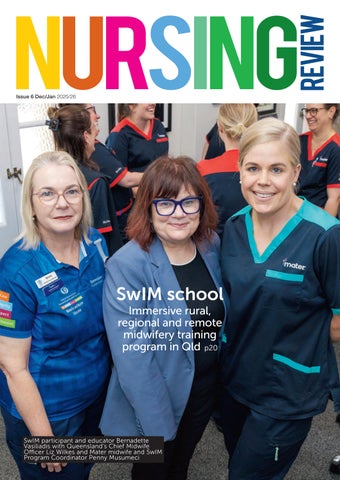
SwIM school Immersive rural, regional and remote midwifery training program in Qld p20
SwIM participant and educator Bernadette Vasiliadis with Queensland’s Chief Midwife Officer Liz Wilkes and Mater midwife and SwIM Program Coordinator Penny Musumeci
CRICOS: 00219C | TEQSA: PRV12073 | RTO: 40939 | C_AD_2513
From the frontline to the forefront. STUDY EMERGENCY AND HEALTH SERVICES MANAGEMENT. If you’ve led teams or managed services in healthcare or emergency settings, this is your opportunity to step into strategic leadership. Build the skills to lead multidisciplinary teams, influence systems and policies, coordinate responses, and drive change across Australia’s complex health landscape. Apply now to secure your spot and save on fees with Commonwealth Supported Places.* EXPERT TEACHERS
FLEXIBLE STUDY
REAL SUPPORT
*Eligibility criteria apply.
LEARN MORE
contents
news
MANAGING EDITOR
Rebecca Cox rebecca.cox@news.com.au
2
Australia’s peak body for the public hospital sector has gone into liquidation
4
Jobs safe as NSW government reaches agreement over Northern Beaches Hospital
6
Fourth Fair Work Commission aged care award increase takes effect
HEALTH EDITOR
Stefanie Schultz stefanie.schultz@news.com.au SALES MANAGER
Sarah Licence sarah.licence@news.com.au SUBSCRIPTIONS MANAGER
Lee Burrell lee.burrell@news.com.au
04
06
10 Bulk-billing incentives improve access to affordable healthcare
industry & reform
COVER
SwIM participant and educator Bernadette Vasiliadis with Queensland’s Chief Midwife Officer Liz Wilkes and Mater midwife and SwIM Program Coordinator Penny Musumeci. Picture: Supplied/Josh Woning/ J&A Photography
12 Endorsed RNs scope of practice expanded to include prescribing
13 ANMF calls on Vic govt
to fund nursing and midwifery graduate roles
14 How would the plan to turn Healthscope into a charity work?
PUBLISHED BY
Nationwide News Pty Ltd GPO Box 4245 Sydney NSW 2001 ABN 98 008 438 828 Print Post 100008043 ISSN 1326-0472 OCLC 536881479
12
14
16 Australia to establish a permanent Centre for Disease Control
workforce
18 After months of industrial
action, Queensland’s nurses and midwives have secured a $1.8 billion pay deal
PUBLISHER’S NOTE
© Copyright. No part of this publication can be used or reproduced in any format without express permission in writing from Nationwide News Pty Ltd. The mention of a product or service, person or company in this publication, does not indicate the publisher’s endorsement. The views expressed in this publication do not necessarily represent the opinion of the publisher, its agents, company officers or employees.
20 Immersive midwifery program allows regional midwives to gain years of complex birthing experience in just months
22 Nurse-led vaccination
16
20
clinics key to addressing declining vaccination rates
clinical practice
24 Victorian parliament
tables 13 amendments to the state’s VAD laws
26 Forum reveals dire need
for government-funded maternity services in the NT
28 New telehealth rules
restrict nurse practitioners’ ability to deliver care
24
26 nursingreview.com.au | 1
news Image: iStock
AHHA collapses Australia’s peak body for the public hospital sector has gone into liquidation By NCA Newswire
A
ustralia’s peak body for public and not-for-profit hospitals and healthcare providers has collapsed into liquidation owing creditors including staff hundreds of thousands of dollars. Established in 1946, the Australian Healthcare and Hospitals Association (AHHA) was involved in policy advocacy, health system reform, research through the Deeble Institute for Health Policy, and consulting, and published the peer-reviewed Australian Health Review. Its members included state and territory health departments, public hospitals, community health services, primary health networks, aged care providers, universities, academics and individual health professionals. Insolvency experts Barry Kogan and Shane O’Keeffe of McGrathNicol were first appointed as voluntary administrators on September 29, with creditors voting to place the company into liquidation in early November after no rescue deal was put forward by the company. Due to the financial and operational position of AHHA, the liquidators said they were unable to trade the not-for-profit business during the administration, and instead undertook an orderly wind-down of operations.
2 | nursingreview.com.au
The closure of the AHHA has been described as a “devastating loss” for Australia’s health system. “For eight decades it championed the same values we stand for – universal, high quality care,” Australian Salaried Medical Officers Federation (ASMOF) NSW president Dr Nicholas Spooner said. “ASMOF will continue that fight through our campaign for fair pay, safe hours and properly staffed hospitals so that we can provide the quality healthcare our community needs and deserves.” Employees were listed as being owed a total of $155,902 from the collapse, including $24,667 in unpaid wages, $26,721 in superannuation, $28,428 in annual leave and $12,546 in long service leave. Documents lodged with the corporate regulator by the directors disclose additional unsecured creditors totalling $139,198. They said there were additional matters that may represent further unsecured creditor claims, including $38,817 owed to the tax office on returns not yet due at the time, and $200,000 in income received in advance from a client for work not yet completed. The liquidators also detailed legal cases on foot against the business, including a $211,421 claim from an ex-employee relating to damages due to alleged discrimination, and two additional claims totalling $1.5m from parties who “appear to be claiming alleged damages and breach of contract claims”. AHHA operated from its owned premises in the ACT and employed seven staff before its collapse.
“The closure of the AHHA has been described as a “devastating loss” for Australia’s health system Its current directors are listed as Susan McKee, Jillian Skinner, Anna King, Michael Brydon, Anthony Schembri, Michael Bosel, Tina Janamian and Annette Crothers. The liquidators said the association’s income – mainly from membership fees, grants, consultancies, sponsorships, and customer contracts – had declined in recent years, with revenue falling by 26 per cent and nine per cent in FY24 and FY25 respectively. Company records show that the business recorded a loss of $239,000 in FY24, $146,000 in FY25 and $355,000 year-to-date FY26. AHHA’s largest expense was salaries and employee entitlement related expenses, the liquidators revealed, which had continued to increase despite revenue materially reducing. They said the directors attributed the failure to general economic circumstances facing the healthcare industry, decreases in healthcare discretionary spending, declining membership numbers, reduced trading income, inadequate cash flow, and legal claims against AHHA. The Australian Healthcare and Hospitals Association has been contacted for comment. ■
Unlock Your Nursing Potential with HCA Join Australia’s leading healthcare services provider and discover unmatched flexibility, competitive pay, and career growth opportunities.
Agency Nursing Take control of your schedule with flexible shifts across our extensive network.
Why HCA Great rates across thousands of positions 24/7 support from our dedicated team Continuous career development opportunities
Permanent Nursing
Exclusive rewards programs
Candidates are assisted in finding their next role across various healthcare settings.
Scan the QR code to apply
Travel Nursing Live, work and explore regional, rural, and remote communities across Australia.
news NSW Premier Chris Minns said the privatisation of Northern Beaches was ‘one of the worst decisions of any NSW government’. Picture: NCA NewsWire/Nikki Short.
In public hands Jobs safe as NSW govt reaches agreement over Northern Beaches Hospital By NCA Newswire and Stefanie Schultz
T
he NSW government is one step closer to bringing the controversyridden Northern Beaches Hospital back into public hands after striking a $190m in-principle agreement with operator Healthscope and receivers. The deal marks the “final phase” in the government’s push to return the hospital to public ownership following a string of high-profile controversies, including the death of two-year-old Joe Massa last year. NSW Premier Chris Minns said the decision by the former Coalition government to enter into a public-private partnership (PPP) at Northern Beaches was “one of the worst decisions of any NSW government”. “Our state’s acute hospital services that provide lifesaving care to the people of NSW should not be privatised, and thanks to this decision, no hospital in NSW will be,” he said. Under the agreement, the entire 494-bed hospital will be returned to public ownership. All clinical and support staff working at the hospital will be offered jobs by NSW Health at the site, and staff entitlements will be transferred from Healthscope.
4 | nursingreview.com.au
Health Minister Ryan Park said the state government had undone “one of the most complex privatisation arrangements in the state’s history”. “We have worked with an urgency and speed to provide certainty for the community, patients and staff. We thank the staff for their hard work and co-operation as we continue to work through the transition,” he said. “This agreement does not mark the end – but the beginning – of the transition of a major hospital into the public health system.” Mr Park noted there would still be challenges ahead, but staff and clinicians would have the opportunity to continue working at the hospital. The NSW government said it would consult with clinicians to determine future clinical services and an operating model, including the role of private services in the hospital footprint. It will also finalise the legal and commercial arrangements required for transfer. Northern Beaches Hospital was one of six hospitals earmarked for privatisation under the former Coalition government but the only one to go ahead. Earlier this year, operator Healthscope entered receivership after lenders withdrew their support. The NSW government has also introduced Joe’s Law, named after Joe Massa, which prevents any
“Acute hospital services that provide lifesaving care to the people of NSW should not be privatised further attempts to create PPPs at acute care hospitals. The NSW Nurses and Midwives’ Association (NSWNMA) has welcomed the news, with general secretary Shaye Candish calling the announcement a “relief” for nurses and midwives. “It has been an extremely unsettling and stressful time for staff working at Northern Beaches Hospital following months of public scrutiny. Today’s developments that a deal is close to being finalised which will see the hospital transition into public hands soon, will help allay fears among our members,” Ms Candish said. “We have been given assurances no nurse and midwife at Northern Beaches Hospital will lose their job and leave entitlements will be transferred when the hospital transitions to the public system. “This is much-needed certainty for our hardworking and dedicated nurses and midwives. We are pleased to see Healthscope and the state government working collaboratively to reach an outcome and provide job security to the thousands of staff employed at Northern Beaches Hospital.” ■
news Jim Chalmers says the changes to the award bring the government’s total sector spend close to $18bn. Picture: NCA NewsWire/Liam Kidston.
Key moment Fourth FWC aged care award increase takes effect By Stefanie Schultz
O
ctober 1 marked a key moment for hundreds of thousands of aged care workers across Australia, as a fourth award wage increase took effect. The pay rise, a result of the Fair Work Commission’s (FWC) work value case decision, brought welcome changes for the sector’s workforce, in particular aged care nurses and personal care workers who have long advocated for better pay and recognition. For a level two registered nurse – the most common level – this translated to an extra $60.20 per week, and with all prior increases combined, these nurses working in aged care will now be more than $28,000 a year better off under the Albanese Government’s commitment. Enrolled nurses (Level 2 award) saw their pay increase by an additional $62.40 per week, while personal care workers (Level 3 award) benefitted from an extra $39.50 per week. Since the increases began in 2023, a personal care workers hourly rate has risen from $23.20 to $34.60, an extra $433 per week. This comprehensive wage adjustment comes from a work value case initiated
6 | nursingreview.com.au
by the Health Services Union (HSU) in the FWC in November 2020, with strong support from the Australian Nursing and Midwifery Federation (ANMF). The central argument was the recognition of historical gender-based undervaluation of aged care work, combined with the growing complexity and skill required in the sector over recent decades. The FWC’s decision, which included an initial 15 per cent wage rise in July 2023, followed by further increases of 3 to 13 per cent for various direct and non-direct care roles, has been fully funded by the federal government with an investment of $17.7 billion. Treasurer Jim Chalmers praised the pay rise, stating that aged care workers “do an incredible job and they deserve every dollar of this pay rise that we’re delivering.” “This investment recognises the big contribution that aged care workers make to our economy and community and will help to create a bigger incentive for young Australians looking for a rewarding career, to pick aged care in the future,” he said. Minister for Employment and Workplace Relations Amanda Rishworth said the Albanese government has put gender equality at the heart of the Fair Work Act. “We now see the gender pay gap is at its equal lowest level on record, and Australian women are now earning more
“The determination by the FWC finally recognises the true worth of Australia’s nursing and care workforce than $250 a week more on average than they were before we came to government,” she said. “Reducing the gender pay gap was one of the key reasons the government funded the 15 per cent pay increase for aged care carers. The Fair Work Commission recognised the historical gender-based undervaluation of work in aged care, leading to significant wage increases that our government funded.”
THE ROAD AHEAD The ANMF, a key driver behind the FWC campaign, has celebrated the outcome. Federal secretary Annie Butler described it as a “significant win” for the federation and its members working in aged care. “The determination by the FWC finally recognises the true worth of Australia’s nursing and care workforce, respecting and valuing the essential, compassionate and quality care they provide to older Australians and ensuring they are paid accordingly,” Ms Butler said. >
FLUMIST FLU PROTECTION
®
WITHOUT THE
INJECTION
1
The only intranasal, needle-free flu vaccine that can trigger a 3-way immune response (mucosal, systemic, and cellular)1-6*
* While the mechanism of action conferring protection is not fully understood, serum antibodies, mucosal antibodies, and influenza-specific T cells may play a role1
Provides up to 12 months’ protection against influenza1,9 A well characterised safety profile through clinical studies and real-world data over 20 years1,5-8 To find out more about FluMist® and register your interest for 2026 preseason commitments Scan this QR code
Administered as a nasal spray, FluMist is indicated for the prevention of influenza in children and adolescents from 24 months to less than 18 years of age1 and will be available on the private market in 2026. Check with your State regarding eligibility for funded flu immunisation programs. Safety Information: FluMist is contraindicated in persons who have had a severe allergic reaction to the active substances, any of the excipients, gentamicin, eggs or egg proteins; children and adolescents with clinical immunodeficiency due to conditions or immunosuppressive therapy; children and adolescents <18 years of age receiving salicylate therapy because of the association of Reye’s syndrome with salicylates and wild-type influenza infection. Special warnings and precautions for use include severe asthma or active wheezing. Adverse reactions may include nasal congestion/ rhinorrhoea, decreased appetite, malaise, headache, pyrexia and myalgia.1
FluMist® is not listed on the National Immunisation Program (NIP). SCAN QR CODE to see full FLUMIST® Product Information
PLEASE REVIEW FULL PRODUCT INFORMATION BEFORE PRESCRIBING. PRODUCT INFORMATION AVAILABLE ON REQUEST FROM ASTRAZENECA ON 1800 805 342 OR WWW.ASTRAZENECA.COM.AU/PI OR BY SCANNING THE QR CODE.
References: 1. FLUMIST® Approved Product Information. 2. Beyer WEP et al. Vaccine. 2002;20(9–10):13401353. 3. Hoft DF et al. J Infect Dis. 2011;204(6):845–853. 4. Holmgren J et al. Nat Med. 2005;11(4 suppl):S45–S53. 5. Mohn KGI et al. Hum Vaccin Immunother. 2018;14(3):571–578. 6. Cox RJ et al. Scand J Immunol. 2004;59(1):1–15. 7. Belshe RB et al. Vaccine. 2008;26(suppl 4):D10–D16. 8. Lanthier PA et al. Vaccine. 2011;29(44):7849–7856. 9. Ambrose CS et al. Pediatr Infect Dis J. 2008;27(8):744–748. FluMist® is a registered trademark of the AstraZeneca group of companies. Registered user AstraZeneca Pty. Ltd. ABN 54 009 682 311. 66 Talavera Road, Macquarie Park, NSW 2113. www.astrazeneca.com.au. For Medical Information enquiries or to report an adverse event or product quality complaint: Telephone 1800 805 342 or via https://contactazmedical.astrazeneca.com. 3050. AU-23727_NR. October 2025.
news
HSU national secretary Lloyd Williams said members are now setting new goals to fix the aged care sector. Picture: Supplied.
Employment Minister Amanda Rishworth said the changes were significant steps in tackling the gender pay gap. Picture: NCA NewsWire/Martin Ollman.
<
“The outcome that we have achieved belongs to ANMF members, without them, this would not have been possible. The success of the Work Value Case is attributable to them through their stories, their advocacy and their unwavering solidarity. We thank them all for helping 8 | nursingreview.com.au
us deliver this successful outcome and for continuing to work with us to improve aged care.” Amongst the celebration, however, both the ANMF and HSU recognise that the push for comprehensive aged care reform continues.
HSU national secretary Lloyd Williams noted that many other aged care workers – in administration, cleaning, laundry, food services, gardening, and maintenance – were not included in this specific work value case. “These workers are just as essential to delivering care, and the HSU will keep fighting to make sure their pay reflects the value they bring,” he said. Furthermore, Mr Williams said, the entire sector faces ongoing daily challenges from a lack of training opportunities for staff, workforce shortages, outsourcing of critical services, restructuring of key roles, and serious health and safety risks. “These issues undermine workers and the people they care for,” he said. “Across the country, HSU members are now setting new goals to fix the sector. “We want an aged care system where workers can deliver the quality care older Australians deserve, with fair pay, safe conditions, and the respect they have earned.” For registered and enrolled nurses in aged care, another pay boost is scheduled for August 1 2026. ■
news Minister for Health Mark Butler said “Bulk billing is the beating heart of Medicare”. Picture: Hilary Wardhaugh/Getty Images.
Medicare boost Bulk-billing incentives improve access to affordable healthcare By Stefanie Schultz
T
he Australian government has made changes to its bulk billing incentive, making it easier for millions more Australians to access free healthcare appointments. On November 1, the Medicare Benefits Schedule (MBS) was expanded to include all Medicare-eligible patients, when cover was previously limited to patients under 16 and those with a Commonwealth concession card. Furthermore, general practices can now register for the Bulk Billing Practice Incentive Program (BBPIP), which will see participants receive an additional quarterly 12.5 per cent incentive payment on MBS benefits, which can be split between the GP and the practice. Prime Minister Anthony Albanese said his government is committed to ensuring no one is “held back” or “left behind” when it comes to their health. “No Australian should have to check their bank balance to see if they can afford to see a doctor. That is not who we are. That is not the future we want for Australia,” he said. “We’re delivering more bulk billing for every Australian, making it easier to see a doctor and saving families money.”
10 | nursingreview.com.au
Labor promised this $8.5 billion investment – the largest boost to Medicare in more than four decades – during the federal election campaign, with the vision that 90 per cent of all GP appointments would be bulk billed by 2030. “I want every Australian to know they only need their Medicare card, not their credit card, to receive the health care they need,” Minister for Health, Disability and Ageing Mark Butler said. “Every electorate in the country will now have GP practices that bulk bill every patient.” With cost affecting three in four Australians’ health decisions, more bulk billing means less people delaying or avoiding necessary check-ups. Australian Nursing and Midwifery Federation (ANMF) federal secretary Annie Butler said the investment is a welcome step towards more effective and equitable preventive healthcare. “As Australians deal with cost-of-living pressures, expanding Medicare bulkbilling services will certainly help reduce out of pocket fees for more patients, ensuring that cost isn’t a deterrent for people who need timely medical care,” Ms Butler said. “As nurses and midwives, we see the consequences of delayed treatment, so if more people can access affordable healthcare, it means they will be less likely to end-up in already overstretched
“No Australian should have to check their bank balance to see if they can afford to see a doctor emergency departments – taking pressure off the public hospital system.” Australian Primary Health Care Nurses Association (APNA) president Denise Lyons highlighted the potential for nurses, often a patient’s first port of call, to deliver on the government’s goal of sustainable patient-centred care. “Investment in access is only part of the picture. To truly strengthen Medicare, we must also support the workforce that delivers it,” Mrs Lyons said. “Primary health care nurses are a highly skilled and qualified workforce, regularly undertaking immunisation, wound care, care planning and coordination, and so much more. They already play a critical role – but if we break down the barriers, nurses can do even more for their communities. “Removing barriers to nurse-led clinics, enabling Nurse Practitioners to access the bulk billing incentive, and implementing the reforms recommended in the Scope of Practice review are all steps that will enable nurses to do so much more, particularly in regional and remote areas.” ■
Discover flexible online nursing and midwifery courses and start studying in March Undergraduate
Graduate Diplomas
> >
>
Bachelor of Nursing Bachelor of Midwifery
Midwifery
Graduate Certificates
Masters
> > > > > > > > > >
> >
Maternal Critical Care Medical Nursing Primary Health Care Nursing Rural and Remote Midwifery Practice Older Person Nursing Care Mental Health Nursing Perioperative Nursing Surgical Nursing Clinical Education Safety and Quality In Health Service Delivery
CDU nursing and midwifery CRICOS Provider No. 00300K | RTO Provider No. 0373 | TEQSA Provider ID PRV12069
Clinical Nursing Nursing (Nurse Practitioner)
industry & reform ACN chief nursing officer Frances Rice said nurses need the “systemic support that will enable this change to truly bring about improvements for people needing health care.”
New model Endorsed RNs scope of practice expanded to include prescribing By Stefanie Schultz
A
ustralian registered nurses who have completed extra training are now able to prescribe some medications in partnership with either a doctor or nurse practitioner. The updated registration standard, announced in December 2024, came into effect at the end of September and means RNs with at least three years clinical experience are eligible to apply for an endorsement for prescribing scheduled medicines. If successful, they will then undergo a six-month clinical mentorship with an independent prescriber, and be assessed under the National Prescribing Services’ (NPS) Prescribing Competencies Framework.
12 | nursingreview.com.au
Key to the new Australian Health Practitioner Regulation Agency (AHPRA) model is a system of ‘partnership prescribing’, wherein endorsed RNs must enter into an agreement with an authorised health practitioner. The Australian College of Nursing (ACN) praised the scope of practice expansion, whilst also advocating for increased government support to ensure the changes are implemented smoothly and consistently across the country. “We congratulate Health Ministers on agreeing to this change in December last year, and the Nursing and Midwifery Board of Australia and Chief Nursing and Midwifery Officers for driving it over many, many years,” ACN chief nursing officer Frances Rice said. “But we now need the systemic support that will enable this change to truly bring about improvements for people needing health care.”
The ACN said this should include: • A national communications campaign to increase the awareness of this change across both the healthcare sector and the general public • Education for employers and authorised health practitioners on supervising and being in a partnership arrangement with a registered nurse • Access to Pharmaceutical Benefits Scheme (PBS) subsidies for prescriptions provided by a registered nurse prescriber. The Australian Primary Health Care Nurses Association (APNA) echoes the ACN’s calls for extra support, highlighting the need for specialised training to ensure a harmonious rollout. “This is something the Australian Primary Health Care Nurses and other nursing organisations have advocated for over a long period. It’s a really positive change, that can make a tremendous difference for patients in primary health care,” APNA president Denise Lyons said. “This is a cost-effective intervention that allows people to receive required medications more quickly, particularly in rural and remote locations, reducing wait times, and easing access to essential treatments. It will allow designated registered nurse prescribers to deliver more holistic and personcentred care, enabling continuity and smoother patient journeys.” Under the updated standards endorsed RNs will be able to prescribe scheduled medicines 2. Pharmacy Medicine, 3. Pharmacist Only Medicine, 4. Prescription Only Medicine, and 8. Controlled Drugs, meaning many patients will be able to obtain the prescriptions they need without waiting for an appointment with their GP. Ms Rice said the changes have the potential to revolutionise the delivery of quality, efficient, and accessible care for many Australians. “This change means that, for example, a registered nurse prescriber may be able to support a person adjust their diabetes medication, instead of that person having to find a scarce appointment to see a GP to do so,” she said. “This increases access to care, and boosts healthcare efficiency by allowing a registered nurse to work to the top of their scope. Further, it takes pressure off nurse practitioners and medical practitioners and allows them to focus on more complex cases.” ■
industry & reform Victorian Premier Jacinta Allan is under pressure to look after the state’s nursing and midwifery graduates. Picture: NCA NewsWire/David Crosling.
“We must ensure today’s students are tomorrow’s nurses and midwives
‘Use us or lose us’ ANMF calls on Vic govt to fund nursing and midwifery graduate roles By Stefanie Schultz
V
ictorian student nurses and midwives rallied outside state parliament in a bid to secure post-graduate employment, with their ‘Use us or lose us’ campaign. According to the Australian Nursing and Midwifery Federation (ANMF) Victorian Branch more than 2000 nursing and midwifery students are set to miss out on a graduate program position in 2026. The campaign calls for the state government to front the cost of post grad nursing and midwifery positions. The Federation said many of the students who enrolled in fully governmentfunded nursing and midwifery degrees in 2023 and 2024 face the real possibility
of missing out on a Graduate Nursing Midwifery Program (GNMP) Match, due to a significant reduction in the number of positions available within the state’s public healthcare system. “All Victorians should care that the state government invested taxpayer dollars in educating the next generation of nurses and midwives and is now wasting that investment. We must ensure today’s students are tomorrow’s nurses and midwives,” ANMF Victorian Branch secretary Maddy Harradence said. “Public and private hospitals are still asking nurses and midwives to work overtime, double shifts and extra shifts; we must employ our next cohort of students to avoid a workforce shortage.” The ANMF is now calling on the Allan Labor government to fund additional graduate roles to ensure the state can sustain its nursing and midwifery workforce into the future.
With the demand for health services set to grow over the next decade, Ms Harradence criticised the government’s failure to recognise the role the Graduate Nursing Midwifery Program could play in preventing future health-workforce shortages. “The ANMF is backing our student members and calling on the Victorian government to fund these additional graduate places. We urge the government to hold urgent discussions with the private acute sector about their level of investment in graduate nurses and urgently explore all viable options to ensure we have a sustainable nursing and midwifery workforce into the future,” she said. The Victorian health workforce strategy shows an ageing population and increasing prevalence of chronic disease is putting strain on the health workforce. While the state’s healthcare workforce has grown by 33 per cent since 2011, the World Health Organisation’s estimate that an additional 10 million full-time jobs will be needed in the health and social care sectors worldwide by 2030 means more needs to be done. “This backdrop of workforce shortages and growing demand means that we need to retain the skilled healthcare workers we already have,” the strategy document said. The Allan government has poured funds into the state’s health infrastructure in recent months – $2.6 billion into new and redeveloped hospitals in Footscray and Frankston, with Footscray Hospital due to open its door to patients in February next year. Furthermore, legislation was passed earlier this year to expand mandated nurse/ midwife-to-patient ratios that will improve ratios at 23 hospitals and eight emergency departments across the state. “At a time when the ANMF, the Victorian government and the community know that there will be an increased demand for healthcare in the future – and a corresponding healthcare worker shortage – we cannot lose these critical graduates due to poor planning and short-sightedness.” Ms Harradence said. ■ nursingreview.com.au | 13
industry & reform Picture: NCA NewsWire/ Nadir Kinani.
Fringe benefits How would the plan to turn Healthscope into a charity work? By Dale Boccabella
B
ack in May, the parent companies of private hospital operator Healthscope fell into receivership, burdened by $1.6 billion in debt. Since then, Healthscope’s hospitals have been kept open while receivers have worked to find buyers for the business. But now, the groundwork has also been laid for a potential restructuring of Healthscope as a charity. This would allow the new entity to access a number of tax benefits – including tax exemptions on “fringe benefits” provided to employees. On its own, this might not appear all that controversial. However, Healthscope reportedly wants to access a substantial proportion of the tax break that would normally accrue to the employee. Employees have been asked to vote on the proposal.
14 | nursingreview.com.au
WHAT ARE FRINGE BENEFITS? A fringe benefit is a form of compensation provided to an employee by an employer, in addition to salary or wages. Salary packaging is essentially breaking the employee compensation into salary and fringe benefits. For example, an employer pays certain costs for an employee – such as rent and mortgage payments, or their children’s school fees – and in return the employee agrees to have their salary reduced. Any employer can provide fringe benefits to employees. But some organisations, including not-for-profit hospitals, are eligible for exemptions from the fringe benefits tax, up to a cap. For not-for-profit and public hospitals, the tax-free benefit to each employee is capped at a “grossed-up” value of the benefit of $17,000, which works out to be roughly $9,000 in value of benefits per year. For current purposes, the thinking behind the grossed-up value of a benefit need not be explored; our focus should be
on the $9,000 figure, the economic value of a benefit. The main justification for this tax exemption is that not-for-profit hospitals cannot pay the same sort of salaries as the for-profit sector to attract staff. This concession helps balance things out a bit.
AN EXAMPLE OF SALARY PACKAGING Let’s illustrate salary packaging with an example relevant to the Healthscope proposed scenario. Say an employee is on a taxable income of $80,000 (wages). The top part of this (every dollar over $45,000) attracts the 30 per cent marginal tax rate. For simplicity, ignore the two per cent Medicare levy. A not-for-profit hospital employer could ask this employee to “give up” the top $10,000 of their pre-tax wages. In return, the hospital could agree to pay $9,000 of the worker’s private expenses, such as rent or mortgage payments. The employee is not taxed on receipt of this $9,000 in benefits. And because of the concession, the not-for-profit hospital
industry & reform
Fringe benefits tax concessions for not-for-profit health entities and public hospitals can help them attract and retain staff. Picture: iStock.
wouldn’t have to pay employer fringe benefits tax on it either. The employee is better off by $2,000 ($9,000 compared to the $7,000 of aftertax income where cash salary is paid). The employer (a charity) has also reduced its costs from $10,000 (wages) to $9,000 (benefit). The only “loser” would be the public purse.
ADMINISTRATION FEE An administration fee for a salary packaging arrangement is standard, either a fixed fee or small percentage of the tax saving made and accruing to the employee. However, the Healthscope proposal would reportedly require the employee to “hand over” a large portion of the tax saving – as much as 90 per cent in certain circumstances. The Healthscope “fee” seems too high to just recoup the employer’s administrative costs for the salary packaging.
LEGAL CONSIDERATIONS Would the proposed compensation switch be legally effective? The answer is unclear. The Australian Taxation Office (ATO) may be concerned with this. That’s because the salary packaging would be done in a different environment to the ordinary type of packaging, because the employer
changed from a taxable entity into a taxexempt entity. This is unusual, especially when the taxable entity is in financial distress, like Healthscope. The counterargument is that Healthscope would be accessing a specific concession – provided to a not-forprofit hospital in the fringe benefits tax legislation – for the “benefit” of employees in a certain sector.
WHAT ABOUT ETHICS? Whether Healthscope’s proposal is ethical is another question and brings in subjective considerations. It is fair to say that Healthscope’s charity option is drawing on the tax system to help implement a lower cost structure to its operations. It could reignite the long-standing debate about the appropriateness of allowing tax-exempt charities and other not-for-profits to operate large businesses (and obtain/retain tax exemption) in competition with taxable, for-profit companies. Many other tax concessions could also become available on the switch to a charity, such as exemption from company income tax and exemption from state taxes, including payroll tax – a state tax on wages paid by employers.
The potential for lost income tax revenue is not clear-cut because Healthscope may not have paid much income tax lately anyway. Given the number of employees (around 19,000), the loss of payroll tax to the states could be significant on the switch to a registered charity.
THE BUSINESS IS STILL FOR SALE It’s important to note that Healthscope’s receivers are still inviting offers for the sale of its hospital businesses. The charity option is just one option the receivers want to lay the groundwork for. It is highly advisable for employees of Healthscope to obtain independent advice on the proposal’s possible financial impacts – such as whether employer superannuation contributions are required on fringe benefits – before voting on what appears to be an amendment to the enterprise agreement. ■ Dale Boccabella is Associate Professor of Taxation Law at UNSW Sydney. This article is republished from The Conversation under a Creative Commons license. Read the original article at theconversation.com/au nursingreview.com.au | 15
industry & reform Minister for Health and Aged Care Mark Butler said the CDC is “an investment in our national health security and in building the trust Australians place in our public health system.” Picture: NCA NewsWire/Martin Ollman.
Health security Australia to establish permanent Centre for Disease Control By Stefanie Schultz
T
he Australian government has taken a significant step in protecting the nation’s health security, with legislation to establish an independent Australian Centre for Disease Control (CDC) successfully passing the Senate. The establishment of the Australian CDC represents a pivotal investment in the nation’s health infrastructure, promising a more coordinated, evidencedriven, and resilient approach to public health challenges for current and future generations. This landmark decision, finalised on November 6, marks the culmination of decades of advocacy and a commitment to strengthening Australia’s public health capabilities. The new CDC will consolidate evidence from across the country to protect against a wide array of health threats, ranging from infectious diseases to environmental and climate-related risks. Its core function will be to provide transparent, trusted, and
16 | nursingreview.com.au
PHAA CEO Prof Terry Slevin has welcomed the legislation’s passage. Picture: NCA Newswire.
evidence-based advice to both the public and governments. Minister for Health and Aged Care Mark Butler said the CDC aims to build trust in the health system. “This legislation puts in place an enduring public health institution for Australia. Its advice will be grounded in evidence, published openly, and focused on keeping Australians safe and well,” Mr Butler said.
“It’s an investment in our national health security and in building the trust Australians place in our public health system.” Before the legislation passed, Australia stood as the only OECD country without a CDC equivalent, a gap starkly highlighted by the COVID-19 pandemic. Preparations are now underway to transition the work of the interim CDC, which commenced in January 2024, to
industry & reform
“Its advice will be grounded in evidence, published openly, and focused on keeping Australians safe
AMA President Dr Danielle McMullen is looking forward to “the appointment of a politically neutral, highly qualified Director-General” to the CDC. Picture: Richard Walker
the statutory agency, with an inaugural director-general to be recruited and foundational governance arrangements established. The permanent agency is set to become effective on 1 January 2026. Public health organisations have widely welcomed the passing of the bill, with Public Health Association of Australia (PHAA) chief Adjunct Professor Terry Slevin calling the moment one for the “public health history books.” “An Australian CDC is now more
important than ever,” Prof Slevin said. “Childhood vaccination rates are falling, misinformation is rife, the health harms from climate change are growing, and our country faces new and old infectious disease threats. The tsunami of preventable chronic disease must also be addressed. “A permanent Australian CDC will ensure we are better prepared for future pandemics by providing a central body to coordinate and co-operate with states and territories. It will be a central source of upto-date information and expertise across a
range of health issues. It will also engage with other similar bodies around the world to gather and share intelligence.” The Australian Medical Association (AMA) also lauded the Senate’s decision. It has been a vocal proponent for an independent Australian CDC since 2017, advocating strongly for its creation. AMA president Dr Danielle McMullen said the Covid-19 pandemic uncovered how underprepared the country was to respond to such events. “We are dealing with many complex issues right now including communicable diseases between people and animals, antimicrobial resistance and other emerging threats that require surveillance and monitoring,” she said. “The AMA is looking forward to continuing to work with the government and the new Director-General to ensure the CDC relies on strong, clinical and scientific expert leadership. “The appointment of a politically neutral, highly qualified Director-General is vital to ensure the CDC becomes Australia’s most trusted.” ■
subscribe for less than $2 Per week The laTesT news for nursing and healThcare professionals Nursing Review is essential reading for anyone involved in the healthcare sector in Australia. It provides unrivalled coverage of specialist topics from features and opinion pieces, to international news and profiles. • Latest news and resources for all healthcare professionals • Comprehensive coverage of a diverse range of topics • Analysis of the major issues facing the health sector as a whole • Delivered free of charge to your home or place of work monthly
Please email edmedia.subscriptions@news.com.au to find out more nursingreview.com.au | 17
Workforce Queensland Nurses and Midwives Union Secretary Sarah Beaman. Picture: NCA Newswire/Patrick Woods.
Promise delivered After months of industrial action, Queensland’s nurses and midwives have secured a $1.8 billion pay deal By Stefanie Schultz
Q
ueensland’s nurses and midwives have resoundingly voted ‘Yes’ to a new enterprise bargaining agreement (EB12), ending a 10-month campaign for improved wages and conditions. Over 83 per cent of Queensland Health’s nurses and midwives who voted in a ballot accepted the offer, a decisive outcome
18 | nursingreview.com.au
following extensive negotiations and industrial action. Queensland Nurses and Midwives’ Union (QNMU) secretary Sarah Beaman confirmed the ballot result, highlighting the collective strength of union members. “The incredible collective strength of QNMU members has returned a wages and conditions offer worth $1.8 billion for Queensland Health’s more than 60,000 nurses and midwives,” Ms Beaman said. The journey to this agreement was protracted, involving over 150 hours of bargaining and 13 intensive conciliation sessions. The initial state government offer stood at $900 million and included attempts to remove existing rights and conditions.
Ms Beaman commended the members for their resolve. “Time and again, Queensland Health underestimated you, and time and again, you proved them wrong,” she said. “You proved no one should underestimate the power of nurses and midwives united to protect those in their care and the future of free care in Queensland.” The new agreement delivers an 11 per cent pay rise over three years, which includes a one-off three per cent Government Election Commitment uplift in the final year. This package is set to position most of the state’s nurses and midwives on nation-leading pay.
Workforce
Minister Nicholls said the deal prioritises rural and remote nurses. Picture: NCA Newswire/John Gass.
Key wins also include nation-first double-time-for-overtime rates for all shift workers and a new registered nurse and midwife pay point. This particular addition will raise the earning potential for over 23 per cent of nurses and midwives across the state. Further conditions encompass a midwife and enrolled nurse allowance, alongside enhanced rural and remote incentives. Health and Ambulance Services Minister Tim Nicholls affirmed the Crisafulli government’s commitment to the deal. “Just as we promised, we have delivered a nation-leading agreement for our nurses and midwives, with an 11 per cent wage increase over three years and double-time for over-time,” Minister Nicholls said. “The deal has the interests of nurses and midwives working in rural and remote areas at its core, with a commitment to expand the Remote Area Nursing Incentive Package.” In related news, Queensland Health’s medical officer workforce,
including junior and senior doctors, registrars and specialists, have also agreed to an improved wages and conditions deal (MOCA7). This agreement, in line with the government’s central wages policy, includes CPI-linked increases if inflation exceeds guaranteed rates and ensures staff receive back pay from 1 July 2025. The nurses and midwives’ agreement will now proceed to the Queensland Industrial Relations Commission (QIRC) for certification, a process expected to take a few weeks. Once certified, Queensland Health and Department of Education payroll teams will implement the new pay and allowance increases, and calculate back pay from 1 April 2025. Ms Beaman noted that Queensland Health had repeatedly threatened to strip nurses and midwives of back pay if they took protected industrial action. “Because you stood strong, you and thousands of your colleagues will receive
“This package is set to position most of the state’s nurses and midwives on nation-leading pay. considerable pay increases, back pay and improved conditions,” she said. While this agreement marks a significant achievement, Ms Beaman emphasised that the work continues. “We’ve come so far – but we’re not done yet,” she said, looking ahead to future gains in EB13. “There will always be more to fight for, but right now, I ask QNMU members to please reflect on what you’ve achieved.” Queensland nurses and midwives can now explore their new agreement and familiarise themselves with the improved wages and conditions that their collective action has secured. ■ nursingreview.com.au | 19
Workforce SwIM participant Bernadette Vasiliadis and Mater midwife and SwIM Program Coordinator Penny Musumeci with newborn Niam Sachdev. Picture: Supplied/Josh Woning/J&A Photography.
SwIM school
Immersive midwifery program allows regional midwives to gain years of complex birthing experience in just months By Stefanie Schultz
A
groundbreaking midwifery training initiative marked its first anniversary in November, with the establishment of a partner program in neonatal care. The Midwifery Strength with Immersion Model (SwIM) program, a collaborative effort between Brisbane’s Mater Mothers’ Hospital and Queensland Health, is designed to bolster maternity services in Queensland’s regional and remote communities. The program has already seen dozens of midwives gain invaluable experience through temporary placements at one of Australia’s busiest maternity facilities.
20 | nursingreview.com.au
The placements at Mater Mothers’ Hospital, which handles up to 10,000 births annually, offer a unique opportunity for rapid skill acquisition in complex clinical environments that might take years to encounter in less busy settings. Since its inception, 38 midwives from various rural, regional, and remote Queensland Health hospitals have participated in SwIM. Biloela Hospital midwifery educator Bernadette Vasiliadis is a current SwIM participant. Her hospital is preparing to reintroduce maternity services next year after a three-year birthing bypass, making her immersion particularly timely. “Coming down to Mater Mothers’ has been a fantastic experience. I’ve been able to refresh my knowledge and midwifery currency of practice, which I will share with my colleagues,” she said. “I hadn’t supported a woman birthing a baby since 2023, but I’ve been involved in several births at Mater already – it’s
been inspiring and it’s reinvigorated my love of midwifery.” Queensland Chief Midwife Officer (CMO) Liz Wilkes visited Mater Mothers’ Hospital to commemorate SwIM’s first anniversary, expressing her immense pride in the program’s achievements. “The SwIM program is one of the things that I’m most proud of achieving as Chief Midwife Officer,” Ms Wilkes said. “Bringing regional and remote midwives to Mater enables them to gain confidence and build capacity in a range of different skills. It’s an amazing program.” The success of SwIM has paved the way for an exciting new development: the launch of NeoSWiM. This partner program will extend the immersion model to support regional and remote midwives and nurses in enhancing their knowledge, skills, and experience in neonatal care. Participants will undertake placements in Mater’s Neonatal Critical Care Unit, further
Workforce
Left to right: Bernadette Vasiliadis, Queensland Chief Midwife Officer Liz Wilkes, General Manager of Mater Mothers’ Hospital Kerri Gane and Penny Musumeci. Picture: Supplied/Josh Woning/J&A Photography.
strengthening the continuum of care for mothers and babies across Queensland. Midwives from as far north as Moa Island and as far south as St George have benefited, with another 22 participants scheduled in the coming months. Mater midwife and SwIM Program Coordinator Penny Musumeci, has seen the program’s impact firsthand. “The response from everyone who has come to Mater has been incredible,” Ms Musumeci said. “The participants in the program all leave with different insights and learnings that they can take back to their home hospitals. “We have up to 10,000 births a year here, including many complex cases, so rural and regional midwives are able to quickly gain experience and confidence
that it would take years to gain in less busy hospitals. “It’s all about keeping women and their babies as close to their communities as possible.” General Manager of Mater Mothers’ Hospital Kerri Gane highlighted the collaborative spirit driving these initiatives. “We’re focused on helping our midwifery and nursing colleagues across Queensland provide even better care for rural, regional and remote women,” Ms Gane said. “We are united by one goal – ensuring every woman and baby gets the best possible care.” The SwIM program, part of the broader Queensland Women and Girls Health Strategy 2032, represents a proactive approach to addressing
“Bringing regional and remote midwives to Mater enables them to gain confidence and build capacity the unique challenges of delivering maternity and neonatal care in diverse geographical settings. By fostering skill development, building confidence, and promoting knowledge transfer, these immersion models are not only enhancing individual professional capabilities but are also strengthening the overall capacity of regional maternity services. ■ nursingreview.com.au | 21
Workforce Australia’s childhood vaccination rates are in decline. Picture: iStock.
Cut the red tape Nurse-led vaccination clinics key to addressing declining vaccination rates By Stefanie Schultz
A
s Australia grapples with declining childhood vaccination rates and measles outbreaks, evidence shows nurses are not just participants in the immunisation effort, but central to its success. Research from the National Centre for Immunisation Research and Surveillance (NCIRS) has confirmed that Australia’s childhood vaccination rates are in decline,
22 | nursingreview.com.au
a trend that has persisted since 2020 and one which is posing a significant challenge to national public health. This decline, exacerbated by the Covid-19 pandemic, is putting young Australians at risk, it said. Research lead author Dr Kasia Bolsewicz, a social science research fellow at NCIRS, emphasised the need for urgent, coordinated action across policy, program, healthcare provider and community settings. “The latest analysis from NCIRS confirms that coverage has remained below the national target of 95 per cent across all three standard age milestones,” she said.
“Prioritising catch-up vaccinations for children who are overdue for their recommended doses is essential to protect them from potentially life-threatening, vaccine-preventable diseases.” Some of the barriers contributing to this decline identified among Australian parents, are difficulties securing appointments, deprioritising vaccination, affordability issues, safety concerns, and a general distrust of healthcare providers. Recent measles outbreaks in both New South Wales and Queensland have contributed to a national total of almost 150 cases this year – the total number of cases in 2024 was 57.
Workforce
Two doses of the MMR vaccine provide the best protection against measles. Picture: iStock.
ACN chief Dr Kathryn Zeitz said it needs to be “as easy as possible for busy time-poor families to get their children vaccinated.” Picture: Supplied.
Australian College of Nursing (ACN) chief nursing officer Frances Rice warns that travellers may contribute to the spread of the disease. “The longer this outbreak runs, the harder it will be to contain,” Ms Rice said. “The best protection against it is vaccination and authorities need to urgently act to boost vaccination coverage in the region. “Nurses can help contain this outbreak. Nurses must be supported
by policymakers and employers to be deployed in all settings to lift Australia’s vaccination rates.” The ACN is calling on all governments to remove regulatory barriers and implement funding models for financially viable nurse-led clinics to lead the immunisation effort. Nurses are Australia’s largest and most geographically distributed healthcare workforce, yet regulatory and funding barriers prevent them from working to their full scope of practice. The ACN is pressing for urgent implementation of scope of practice reforms to enable registered nurses to lead vaccination clinics and provide comprehensive primary care, including chronic disease management and preventive health services. “We are in every community across the nation, we are qualified, we are trusted, we are mobile, and we are ready to get kids vaccinated – just remove the red tape,” Ms Rice said. The ACN says that with the strategic deployment of the nursing and midwifery workforce, and the adoption of innovative delivery methods, such as the needle-free influenza vaccines recently announced by the Queensland and South Australian governments, Australia can safeguard its children’s
“Fewer than 26 percent of children under five were covered by the flu vaccine this year health and restore confidence in public health programs. “We need to make it as easy as possible for busy time-poor families to get their children vaccinated,” ACN chief Dr Kathryn Zeitz said, pointing out that fewer than 26 per cent of children under five years old were covered by the influenza vaccine this year. “Advanced practice registered nurses are perfectly positioned to deliver these vaccination programs, conduct holistic health assessments, and provide the kind of preventive care that keeps people out of expensive hospital beds.” Dr Zeitz said the National Immunisation Strategy for Australia 2025-2030 is a “missed opportunity” for maximising the deployment of nurses to increase vaccination rates. “What we need now are clear-eyed decisions about how to best use our incredible nursing workforce to enhance safe, quality healthcare while improving the productivity of our health system.” ■ nursingreview.com.au | 23
Clinical Victorian Health Minister Mary-Anne Thomas said the government has listened to feedback from health professionals. Picture: NCA NewsWire/Andrew Henshaw.
‘Gag clause’ goes Victorian parliament tables 13 amendments to the state’s VAD laws
it clearer and more compassionate for patients and their families, while keeping the safeguards secure,” she said.
By Stefanie Schultz
H
ealth practitioners are set to gain improved freedoms in discussing end-of-life options, as the Allan Labor government has introduced significant amendments to the state’s voluntary assisted dying (VAD) laws. Legislation tabled in state parliament in October contained 13 proposed amendments to the laws, including the removal of the current ‘gag clause’ prohibiting doctors from initiating conversations about VAD with their patients. The changes aim to make the process clearer and more compassionate for terminally ill Victorians, and means health practitioners can take a proactive approach to discussing end-of-life options as part of a patient’s ethical and comprehensive care plan. Premier Jacinta Allan said people who are terminally ill and in pain “deserve the choice to live out their last days with dignity.” “Under our government, Victoria was the first state to introduce voluntary assisted dying – now we’re reforming it to make
24 | nursingreview.com.au
PROPOSED LEGISLATION CHANGES INCLUDE: •A llowing health practitioners to raise VAD with patients during discussions about end-of-life options • Requiring health practitioners who conscientiously object to provide minimum information • Extending the prognosis requirement (life expectancy limit for eligibility) from six months to 12 months • Removing the need for a third prognosis for people with neurodegenerative diseases if their life expectancy is between six and 12 months • Introducing a new administering practitioner role to expand the workforce able to support VAD. Victoria was the first state to legalise VAD in 2017, and since its commencement in 2019, 1683 terminally ill Victorians have made their own decisions about their death. An independent review into the first five years of VAD found the service is operating safely and as intended, but also identified challenges in accessing VAD.
The proposed amendments seek to address these challenges, aligning Victoria’s framework with improvements seen in other states that have since introduced similar legislation. Health Minister Mary-Anne Thomas said the Allan government is working to bring Victoria’s VAD laws “into line with other states.” “We’ve listened to doctors who have told us they want to have open, honest conversations with patients about all their end-of-life options, so they can make safe and informed decisions,” she said. Previously, health practitioners could not raise VAD unless the patient brought up the topic first. Removing this law, Minister Thomas said, will mean “more Victorians can live out their final days on their own terms.” The extension of the prognosis requirement also broadens access for more terminally ill individuals, extending the life expectancy limit for eligibility from six months to a year. The Royal Australian College of GPs (RACGP) has backed the changes, confirming that the organisation supports patient-centred decisions on end-of-life care, including palliative care and VAD. “Every patient, no matter their postcode, deserves to die with dignity and not have to experience unnecessary suffering in their
Clinical
Victorian Premier Jacinta Allan said the law reforms will make VAD clearer and more compassionate for patients. Picture: NCA NewsWire/Andrew Henshaw.
last weeks and months,” RACGP Victoria chair Dr Anita Muñoz said. “Voluntary assisted dying is an emotive and, at times, divisive issue, and I’m mindful that there are a range of different views within general practice and the larger community. “Since the inception of the state’s scheme, too many people living outside of major cities have faced unfair obstacles that limit their capacity to access voluntary assisted dying. “Patients in excruciating pain who are immobile and only want to end their suffering have had to travel many hours to consult with non-GP specialists, such as oncologists. “By ending that requirement, we can ensure that voluntary assisted dying is accessible for terminally ill people in rural and remote communities across Victoria.” In a significant workforce expansion measure, the Victorian government has also introduced a new administering practitioner role in a bid to broaden the pool of health professionals able to support VAD, potentially involving a wider range of nurses and midwives in the process.
“We welcome the introduction of a new administering practitioner role to expand the workforce able to support voluntary assisted dying, and the college looks forward to working closely with the government to better understand the finer points of this reform and the role of GPs and practice teams,” Dr Muñoz said. Despite the proposed changes, Premier Allan has affirmed that strong safeguards will remain a cornerstone of Victoria’s approach to end-of-life care. These measures will ensure that decisions are voluntary, individuals retain decisionmaking capacity, and are free from coercion. Telehealth consultations for VAD will still not be permitted, as this requires changes to federal laws. Furthermore, the option for patients with dementia to access VAD has been given no consideration. “The number of Victorians who are living with dementia will continue to increase as we continue to live longer, but there is still so much we don’t know about dementia,” Minister Thomas said. “Fundamental to our laws is that the person retains decision making capacity at every step of the way, that cannot be said of a person living with dementia.”
“We’ve listened to doctors who have told us they want to have open, honest conversations with patients Go Gentle chief Dr Linda Swan said that the “practical, modest reforms” will help ensure that more eligible Victorians can access end-of-life care that respects their wishes and preserves their dignity. “These updates are about removing unnecessary barriers that prevent eligible people from accessing a legal, end-of-life choice,” she said. “Bringing Victoria’s law in line with other states will ensure the system remains safe, fair, and accessible while retaining its core objective to support compassionate endof-life care.” “VAD continues to operate safely and with deep humanity. But after five years of national experience, it’s clear that some safeguards have unintentionally become obstacles. We’ve heard too many heartbreaking stories of Victorians denied access due to overly rigid rules.” ■ nursingreview.com.au | 25
Clinical
Crisis laid bare Forum reveals dire need for government-funded maternity services in the NT By NCA Newswire
T
erritorian families and healthcare workers have continued to express concern over government maternity care facilities as private sector options appear to be disappearing.
26 | nursingreview.com.au
During a closed forum, hundreds of Territorians – including families, midwives, doctors and healthcare advocates – shared their experiences of maternity care across all sectors, exposing issues and personal heartbreak. The community action follows the closure of the Territory’s only private maternity ward at Darwin Private Hospital and changes made in August to the RDH Midwifery Group Practice.
In anonymised testaments, families and healthcare workers shared stories of loss, trauma, and deep concern the current healthcare system is costing lives. One parent described being placed in a post-natal ward surrounded by new parents with healthy babies just hours after losing her own baby. A mum-of-two who had six pregnancies end in loss, said she tried to access the midwifery group practice
Clinical Tessa Czislowski was one of the organisers behind the community forum. Picture: NCA Newswire/ Pema Tamang Pakhrin.
Attendees at the forum said there was no public consultation when changes were made to the Royal Darwin Hospital Midwifery Group Practice. Picture: NCA Newswire/Pema Tamang Pakhrin.
at 11 to 12 weeks for early support but was told she was not eligible until 18 weeks. “I lost that pregnancy at 14 weeks,” she said. “Women like me fall through the cracks before care even starts.” Others raised the life-changing problems that could occur from the severe lack of continuity of care on offer in the Top End such as serious health conditions being caught too late.
A parent said her baby was delivered stillborn at 37 weeks after she was dismissed four times by different health professionals. For her next pregnancy, she had proper monitoring and consistent care from professionals throughout her entire pregnancy and the baby survived. “Continuity is not a luxury – it’s life or death,” she said. One senior clinician said staff were also concerned by this as it could have deadly consequences. “Yesterday’s problems become today’s emergencies because no one is responsible end to end,” they said. “That costs lives.” Tessa Czislowski, one of the organisers behind the forum has her own experience with maternity services in Darwin as a mum-of-two. For the birth of her daughter in June this year after the private maternity ward was closed, Ms Czislowski was left labouring in a waiting room in Royal Darwin Hospital for three hours. Despite the many confronting stories shared and issues raised, she said the forum’s turnout had left them feeling hopeful. “It was a really, really positive experience,” she said. “As hard as it was to sit and listen to some of the stories women had that were really devastating, it was still overall a positive experience. “There was an energy in the room that we can make a change, make improvements, and really that, as a territory, we can do better, much better than what we’re doing at the moment.”
“Yesterday’s problems become today’s emergencies because no one is responsible end to end,” they said IMPROVEMENTS AND CONCERNS RAISED: •W omen are really concerned about the reducing options available to mums in the Northern Territory and that it feels like “every option is being stripped away” • Families want continuity of care to help build trust and spot issues more quickly with a view to improving outcomes. Even programs that are supposed to offer this are struggling to due to the high turnover of staff • Health care workers said workforce shortages, uncertain contracts and “casualisation” were causing the needed skilled midwives and obstetricians to work elsewhere, further decreasing available options • A better approach is needed for families who suffer the loss of a child along with more staff receiving bereavement training • There is a lack of transparency and community consultation regarding changes within services. A consumer group to consult with NT Health on changes was proposed. “Our hope is that it will continue to have the issue ventilated and spoken about but also that we will get some traction,” Ms Czislowski said. “The turnout shows this isn’t an issue that’s going to go away and if the government don’t treat it with some level of seriousness, it’s going to continue to be a problem.” ■ nursingreview.com.au | 27
Clinical Picture: iStock.
‘Valuable asset’ New telehealth rules restrict nurse practitioners’ ability to deliver care By Stefanie Schultz
N
ew telehealth regulations, introduced at the start of the month, will restrict nurse practitioners’ (NP) ability to deliver care, a peak body claims. From November 1, patients of independent nurse practitioners have been required to attend at least one face-to-face appointment within the prior 12 months to be eligible to claim the Medicare rebate on a telehealth appointment. The Australian College of Nursing has criticised the change, noting the country’s ever-growing health workforce shortages. “In a health system desperately short of clinicians, independent nurse practitioners are a hugely valuable asset that we should be encouraging and supporting,” ACN chief nursing officer Frances Rice said. “We need to be using each and every health professional’s skills and expertise to their full extent. “Yet at every turn, nurse practitioners have to fight tooth and nail to be able to deliver care within a system that is often hostile to them. “The telehealth rules are just the latest example of this.” The ACN is calling for the expansion, rather than restriction, of the NP role across primary care, aged care, and rural health, to improve access and address health disparity.
28 | nursingreview.com.au
“While ever we hobble the nurse practitioner workforce from using all of their skills and expertise, Australians are missing out,” Ms Rice said. “The health system can’t afford this inefficiency and we must do better.” The Australian College of Nurse Practitioners (ACNP) has also voiced its concern that the reforms will risk cutting off care for hundreds of thousands of Australians. “This rule will disproportionately harm rural and remote Australians, veterans, older people, and those seeking mental health care,” ACNP CEO Associate Professor Chris Helms said. “It will delay critical interventions, increase emergency visits, and worsen chronic disease outcomes.”
THE DIGITAL DIVIDE Data from the 2025 Australian Digital Inclusion Index reveals that for those in rural and remote areas, there are already persistent barriers preventing equitable use of digital technologies, including access and affordability. Chief investigator Professor Anthony McCosker said there are cohorts of Australians being left behind. “Digital exclusion remains a big challenge, particularly for older Australians, those in remote communities and people experiencing social and economic disadvantage,” he said. “It’s more than just an inconvenience; digital exclusion cuts people off from vital services and opportunities in education, work and health.”
“It will delay critical interventions, increase emergency visits, and worsen chronic disease outcomes Anglicare Australia said the findings echo their own In Every Community report. “Whether it’s applying for jobs, accessing health care, or staying in touch with family, being online isn’t optional anymore. But too many people – especially in regional and remote areas – are being priced out or left without reliable connections,” Anglicare Australia executive director Kasy Chambers said. “Rural services are struggling to keep up with demand. Many of them are the only lifeline for people who can’t get online to access Centrelink, book medical appointments, or use digital government services.” The report shows that the digital inclusion gap between the highest and lowest income groups in the country has grown for the third year in a row. “Just like health care or education, internet access is essential infrastructure. It’s how people find work, stay connected, and take part in the economy. Yet our system still treats it as a luxury,” Ms Chambers said. “If governments want every Australian to take part in a digital future, they must start by investing in the communities that are being left behind.” ■
Join Rural LAP as a locum nurse Are you ready to level up your nursing career? As a Rural LAP locum you will have the opportunity to explore breathtaking rural and remote locations across Australia. Immerse yourself in vibrant communities, expand your skills and make a real impact where it is needed most.
Spread your wings and explore locum nursing opportunities. It’s the best thing I’ve ever done. - Bronwyn, RN
Join Rural LAP today www.rurallap.com.au
SubScribe for leSS than $2 a week
The laTesT news and resources for healThcare professionals Nursing Review is essential reading for anyone involved in the healthcare sector in Australia. We provide unrivalled coverage of specialist topics from features and opinion pieces, to international news and profiles of industry leaders and those at the coal face. At Nursing Review we pride ourselves on being at the forefront of the ever-changing healthcare sector, with all the latest on industry reform, pay issues, clinical updates, what's happening in the workforce, and technology.
• Analysis of the major issues facing the health sector today • Can be used as a professional development resource • 6 issues per year • Interviews and opinion pieces from professionals in the industry • Written by an independent voice • Tax deductible
Please email edmedia.subscriptions@news.com.au to find out more