Issue 4 Aug/Sept 2025
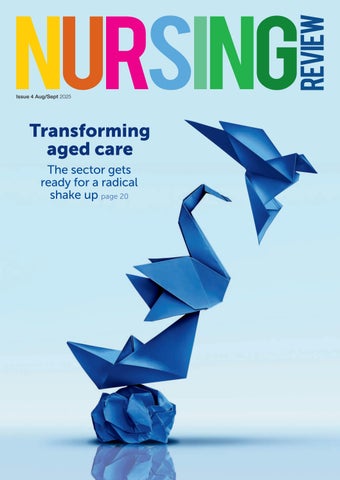
Transforming aged care The sector gets ready for a radical shake up page 20
SubScribe for leSS than $2 a week
The laTesT news and resources for healThcare professionals Nursing Review is essential reading for anyone involved in the healthcare sector in Australia. We provide unrivalled coverage of specialist topics from features and opinion pieces, to international news and profiles of industry leaders and those at the coal face. At Nursing Review we pride ourselves on being at the forefront of the ever-changing healthcare sector, with all the latest on industry reform, pay issues, clinical updates, what's happening in the workforce, and technology.
• Analysis of the major issues facing the health sector today • Can be used as a professional development resource • 6 issues per year • Interviews and opinion pieces from professionals in the industry • Written by an independent voice • Tax deductible
Please email edmedia.subscriptions@news.com.au to find out more
contents
news
MANAGING EDITOR
Rebecca Cox rebecca.cox@news.com.au
2
More than 4200 grads have care credentials revoked by skills authority
4
Bupa fined $35m for ‘misleading or deceptive conduct’
6
Early onset cancers diagnosed at unprecedented rates
8
Code yellow: Hospitals ill-equipped for winter surge in patients
HEALTH EDITOR
Stefanie Schultz stefanie.schultz@news.com.au SALES MANAGER
Sarah Licence sarah.licence@news.com.au SUBSCRIPTIONS MANAGER
Lee Burrell lee.burrell@news.com.au
04
06
10 Queensland nurses reject
COVER
government’s wage offer
Transforming aged care, page 20. Image: iStock
industry & reform
PUBLISHED BY
12 Will Trump’s mooted 200 per cent tariffs affect our PBS?
Nationwide News Pty Ltd GPO Box 4245 Sydney NSW 2001 ABN 98 008 438 828 Print Post 100008043 ISSN 1326-0472 OCLC 536881479 PUBLISHER’S NOTE
workforce
14 The benefits of a learning management system for keeping staff skills sharp
08
10
© Copyright. No part of this publication can be used or reproduced in any format without express permission in writing from Nationwide News Pty Ltd. The mention of a product or service, person or company in this publication, does not indicate the publisher’s endorsement. The views expressed in this publication do not necessarily represent the opinion of the publisher, its agents, company officers or employees.
clinical practice
16 The way women are being tested for gestational diabetes is changing
18 Vaccine rollout halves infant RSV hospitalisations
expert guide
20 COVER STORY We talk to
industry experts finding innovative ways to improve care in the aged care sector
technology
12
16
27 Cloud and genAI usage in health sector brings new cyber risks
18
20 nursingreview.com.au | 1
news 23,000 qualifications have been cancelled since 2024.
“Skills Minister Andrew Giles said the Albanese government has invested more than $40 million into VET integrity
Sham qualifications More than 4200 grads have care credentials revoked by skills authority By Stefanie Schultz and NCA Newswire
T
housands of aged and disability care workers have been forced to prove their skills as a vocational education and training (VET) provider is deregistered by the national regulator. The Australian Skills Quality Authority (ASQA) has cancelled the registration of SPES Education Pty Ltd, accusing the company of providing fraudulent qualifications under an alleged ‘cash-fordiplomas’ scheme. Diplomas including the Certificate III in Individual Support, Certificate IV in Ageing
2 | nursingreview.com.au
Support, and Certificate IV in Disability Support have been affected. Former students who completed a course with SPES Education between 8 January 2024 and 17 May 2025 are now being hit with a formal notice of ASQA’s intention to cancel their qualification. Those affected will have an opportunity to respond with documentation that proves SPES Education provided them with “training and assessment necessary for the qualification.” Early childhood education, community services and IT diplomas were also named by ASQA as being void. SPES Education was deregistered on May 17, with ASQA citing the lack of a robust assessment system, qualified staff, and the necessary training resources and required
learning outcomes and competencies as reasons behind the decision. “ASQA’s decision to cancel the registration was based on findings during a compliance investigation that SPES Education Pty Ltd did not meet the conditions of registration, including Fit and Proper Person and Financial Viability Requirements; had issued qualifications without adequate assessment; and/or did not ensure impacted individuals had successfully satisfied all requirements prior to issuing VET certification,” the authority said in a statement. “Given the significant issues identified during the compliance investigation and the potential safety risks to impacted individuals, others in the workplace, and some of the most vulnerable members of the community, urgent action is required by ASQA to consider the legitimacy of the qualifications.” In a similar move late last year, ASQA cancelled thousands of qualifications from other VET providers including the Australia Education & Career College (Luvium Pty Ltd), the International Institute of Education and Training, and Gills College Australia. This latest round of deregistrations brings the number of affected qualifications to 23,000 since 2024. Skills Minister Andrew Giles said the Albanese government has invested more than $40 million into VET integrity and is “committed to strengthening the integrity and quality of the VET sector,” The Australian reported. March’s federal budget announcement also included $4.7 million for ASQA to “undertake a surge in enforcement activity to immediately respond to large-scale fraudulent issuance of VET qualifications” in 2025-26. The Australian reports that ASQA’s Investigations and Enforcement Team is currently managing more than 189 serious matters in relation to the conduct of 154 education providers – about 62 per cent of which deliver training to international students. ■
The largest ever ‘yellow book’! Australia’s essential frontline nursing resource AIDH is available in its ninth edition... and it’s bigger than ever.
New AIDH9 highlights • up-to-date and vital information on more than 500 injectable medicines • information on more than 60 new medicines, and paediatric information extended to cover 240 monographs, including intramuscular (IM) and subcutaneous routes for over 100 medicines.
“AIDH is an integral resource utilised by nurses multiple times a day to safely prepare and administer medicines. “It is embedded at every level of education and part of the Registered nurse standards for practice, Midwife standards for practice and the National Safety and Quality Health Service Standards.” Kelli Wain, CCRN, Deputy, Self Directed Learning Lab Manager and Lecturer, Bachelor of Nursing and Midwifery at Victoria University
Order AIDH9 today! adpha.au/bookshop
news Bupa APAC chief executive Nick Stone has apologised to consumers. Picture: NCA Newswire/Supplied.
Out of pocket Bupa fined $35m for ‘misleading or deceptive conduct’ By NCA Newswire
P
rivate health insurer Bupa has been fined $35m after conceding it engaged in misleading or deceptive conduct in relation to advice given to more than 4000 customers. The Australian Competition and Consumer Commission (ACCC) said in a statement that Bupa admitted to the breaches after telling customers they were not entitled to private health insurance benefits for their claims, even though they were entitled to make a claim. This left some customers thousands of dollars out of pocket for medical treatments they had to pay for when Bupa should have paid at least part of the bill. The ACCC said some policy holders also upgraded to more expensive policies to ensure they were covered. ACCC chair Gina Cass-Gottlieb said Bupa’s conduct affected thousands of members over more than five years and caused harm to consumers, some of whom delayed, cancelled or went without treatment for which they were, at least partially, covered under their health insurance policies. “Consumers purchase private health insurance to provide peace of mind,
4 | nursingreview.com.au
certainty of coverage and the ability to choose where and when to undertake their procedures,” Ms Cass-Gottlieb said. “Bupa’s conduct denied certain members benefits to which they were entitled under their private health insurance policies.” Bupa APAC chief executive Nick Stone said he was deeply sorry for failing to get things right.. “Our priority has been to communicate and compensate our affected health insurance customers and providers, along with putting in place measures to help ensure this does not happen again,” Mr Stone said. Bupa has admitted over a five-year period between May 2018 and August 2023 that it misrepresented members over two separate insurance types – “mixed cover claims” and “uncategorised items”. A mixed cover claim includes both treatment that is covered in part by a customer’s policy and another part covered by the customer itself. According to Bupa, the private health insurer pays out more than $20m in these kinds of claims a year as well as six million in-hospital and medical claims, with the mixed coverage claims representing less than 0.02 per cent of assessed customers over the five-year period. Similarly, Bupa says about 0.004 per cent of claims fall under uncategorised items, which include treatments that were not assigned to a standard clinical category in Bupa’s claims assessment systems.
“The ACCC said some policy holders upgraded to expensive policies to ensure they were covered The ACCC says Bupa’s conduct occurred because its staff did not have consistent and clear instructions and training for assessing mixed coverage claims, and its systems were programmed to incorrectly reject mixed coverage and uncategorised item claims. “Private health insurance is complex, and consumers should be able to trust their health insurer to assess and pay health insurance claims accurately,” Ms Cass-Gottlieb said. “Bupa’s conduct is very serious and falls well short of what is expected of one of the largest health insurers in Australia. Bupa should have invested in the necessary systems, processes and training to prevent this from happening, and address it promptly when it occurred.” The ACCC and Bupa will jointly ask the court to order Bupa to pay a penalty of $35m among other orders. It is a matter for the court to determine whether the penalty and other orders are appropriate. Bupa started compensating affected members, medical providers and hospitals before the start of this legal action and has paid $14.3m for more than 4100 affected claims. ■
news Bowel cancer is of particular concern in Australia, where rates among 30 to 39-year-olds have increased by 173 per cent since the year 2000.
Defies explanation Early onset cancers diagnosed at unprecedented rates By NCA Newswire
M
ore young Australians are being diagnosed with cancer than ever before, with at least 10 types of the disease on the rise. The worrying phenomenon, known as early onset cancer, is of increasing concern to experts who say the trend is steep, widespread, and in many cases, not fully understood. New figures from Cancer Australia, the federal government’s cancer agency, reveal staggering increases between 2000 and 2024. Among 30- to 39-year-olds, rates of prostate cancer have climbed by 500 per cent, pancreatic cancer by 200 per cent, liver cancer by 150 per cent, uterine cancer by 138 per cent, and kidney cancer by 85 per cent. While changes in diagnostic techniques may partially account for the growth in some cancers, such as prostate, most of the rises appear to defy such explanation. Professor Dorothy Keefe, chief executive of Cancer Australia, told the ABC’s Dr Norman Swan that approximately 10 types of cancer are now showing significantly elevated rates in young adults.
6 | nursingreview.com.au
She says that cancer has long been a disease of ageing, with common forms such as bowel, breast, and lung cancer typically becoming more prevalent in older populations.
NOT JUST AUSTRALIA Data from cancer registries in the United States show a similarly dramatic rise in early onset cancers. Dr Philip Rosenberg, a recently retired biostatistician from the US National Cancer Institute, has observed clear generational differences when comparing Generation X to the Baby Boomers. He said the most notable increases have occurred in cancers of the colon, rectum, thyroid, pancreas, prostate (in men), and oestrogen receptor-positive breast cancer (in women). According to Dr Rosenberg, around half of all cancer types now show some generational shift in incidence. Bowel cancer is of particular concern in Australia, where the rate among 30- to 39-year-olds has increased by 173 per cent since the year 2000. Even more troubling is the fact that diagnoses in this age group are often made at a later stage, when the disease is more advanced and harder to treat. All cancers are caused by changes in genes, but not all of these changes are inherited. In well-known hereditary cases – such as the BRCA mutations linked to breast and ovarian cancer, or
Lynch Syndrome associated with bowel cancer – a clear genetic pathway is evident. However, most young people affected by early onset cancer do not carry these mutations. Instead, many scientists believe that environmental factors — or the ‘exposome’ — could be playing a role. These are external influences that interact with a person’s genes to trigger malignant changes. The key may lie in understanding the environment that today’s 30- to 40-yearolds were exposed to as children or even in utero, particularly between the 1960s and 1990s. During those decades, the Western world experienced major societal shifts. Childhood obesity began to rise, diets became more reliant on ultra-processed foods, and antibiotics were more commonly prescribed. Caesarean section rates also increased, potentially disrupting the transfer of microbiomes from mother to child – a factor that could affect immune system development.
MICROPLASTICS STILL THE GREAT UNKNOWN Compounding the concerns is the growing presence of synthetic chemicals and plastics in everyday life. Despite being a new area of research, some scientists have warned that microplastics can have harmful
news
“Diagnoses are often made at a later stage, when the disease is more advanced and harder to treat
In 2022, microplastics were detected in human blood for the first time, sparking a flurry of new research.
effects on the human body, especially in large concentrations. In 2022, microplastics were detected in human blood for the first time, sparking a flurry of new research. As the name suggests, microplastics are small plastic particles, less than
5mm in diameter, and are reported to be near ubiquitous: they have been found in drinking water, food, and the atmosphere. A University of Newcastle report commissioned by the World Wide Fund for Nature found that the average
individual could be ingesting as much as five grams, or 1 one credit card’s worth of microplastics every week. The World Health Organisation (WHO) said in 2019 that the most immediate risk to human health could be from the toxicity of some microplastics, which may be from the production process itself or toxic substances the particles pick up from the environment. “Further research is needed to obtain a more accurate assessment of exposure to microplastics and their potential human health,” said Dr Maria Neira, director of the WHO’s department of public health, environment, and social determinants of health, said at the time. ■
Open doors to specialised roles. UPSKILL WITH A POSTGRADUATE COURSE IN MENTAL HEALTH NURSING OR POSITIVE PSYCHOLOGY. Apply in 2025 and save on tuition fees with Commonwealth Supported Places. Eligibility criteria apply. EXPERT TEACHERS FLEXIBLE STUDY REAL SUPPORT
LEARN MORE
cqu.edu.au CRICOS: 00219C | TEQSA: PRV12073 | RTO: 40939 C_AD_2507_ NURSREVIEW
nursingreview.com.au | 7
news
A code yellow emergency was called at Gosford Hospital. Picture: iStock
Code yellow called Hospitals ill-equipped for winter surge in patients By Stefanie Schultz and NCA Newswire
N
urses and midwives at two Central Coast hospitals have held an own-time rally in an attempt to escalate their concerns around widespread understaffing this winter. Staff at Gosford and Wyong Hospitals said the lack of action being taken to address workforce shortages is putting everyone at risk. A ‘code yellow’ emergency was called at Gosford Hospital in June due to patient demand overwhelming hospital resources. NSW Nurses and Midwives’ Association (NSWNMA) Wyong Hospital branch president Kelly Falconer said an increasing number of staff are reducing their hours to help manage fatigue, while others are stepping away from nursing altogether.
8 | nursingreview.com.au
“Surged beds have now become the norm and there has been no additional injection of health funding into this region, despite the growing population and increased admission,” Ms Falconer. “While the nursing staff are working themselves ragged trying to care for all the patients, their pleas for help are going unaddressed. “We are asking the local community to support us and demand better from the Local Health District to ensure our hospitals deliver safe care and adequate staffing on every shift.” The nurses’ union has reported patients being treated in corridors, and severely understaffed cardiac, neurology and oncology wards, in its demands for better management from the Local Health District. “These are some of the most critically unwell patients seeking specialised treatment in their local facility and they deserve safe, quality
care,” NSWNMA general secretary Shaye Candish said. “We are also aware the Local Health District has been using casual nurses to cover their winter surge areas, while relying on regular nursing staff to pick up overtime shifts for shortages on the other wards. “This is not sustainable, and it puts additional pressure on the nursing staff to try and continue plugging gaps in the rosters by accepting those double shifts or overtime.”
IN THE NT In July, the Royal Darwin and Palmerston Hospitals in the Northern Territory also declared a ‘code yellow’ due to capacity challenges, for the first time in almost a year. The Health Department issued the ‘code yellow’ at both hospitals citing an “increase in the number of patients requiring ongoing acute care”.
news
NT heath CEO Chris Hosking said he signed off the code yellow immediately (pictured at the 2025 NT Nursing and Midwifery Excellence Awards). Picture: Supplied
NSWNMA general secretary Shaye Candish said patients deserve safe local care. Picture: Tim Hunter
The calling of the code came just weeks after the NT Health Minister and NT Health chief executive said they had not needed to call one since August 2024 due to new processes being in place at Royal Darwin Hospital (RDH). NT Health chief executive Chris Hosking said he has always maintained that if the set of conditions for a code yellow were reached, he would have no problem issuing the call. “When the hospital management came to me [...] and said, ‘Look, all of the preconditions for a code yellow have been met, we’d like to call it’, I signed it off immediately,” Mr Hosking said. Previously, Health Minister Steve Edgington and Mr Hosking were questioned on the lack of code yellows issued, replying that the notification and identification process had not changed. Mr Hosking said improved processes including moving patients to available beds
quickly had helped to reduce bed blocks and that RDH was “not in crisis”. Australian Medical Association (AMA) NT president Dr John Zorbas said the daily reality was that RDH remained “dangerously full”. “We know the hospital has been over-full for quite some time now,” Dr Zorbas said “During the week, we’ve had doctor after doctor come to us with fairly horrible situations in the hospital. “It’s clear that the hospital is too full to function properly.” Dr Zorbas said a code yellow can act as a “circuit breaker” to help hospital staff deal with the current capacity crisis but does not fix the long-term capacity issues. “We need to talk about capacity and the fact remains that RDH is full, remains full and will continue to be full once this ‘code yellow’ stops,” he said. “We’ve seen nurses and doctors who are going home in tears from their shifts.
“Surged beds have now become the norm and there has been no additional injection of health funding “They’re absolutely burnt out and every shift that they walk out of like this is another reason to leave the NT and we don’t want that at all. “They are broken.” The code yellow called for Royal Darwin Hospital and Palmerston Hospital was lifted after a few days. “Due to a number of measures being implemented, demand pressures have eased and patient flow at the hospitals has improved,” an NT Health spokesperson said. “We thank the community for their patience and kindness during these periods of high demand.” ■ nursingreview.com.au | 9
news
‘We will not be gaslit’ Queensland nurses reject government’s wage offer By NCA Newswire
Q
ueensland hospitals braced for disruption as nurses escalated their campaign for a pay rise, with a new phase of industrial action in early July. The Queensland Nurses and Midwives’ Union (QNMU) confirmed Stage 2 of its protected industrial action commenced, as it intensified its campaign for better pay and working conditions. While union officials stressed patient safety remained a priority, the action was expected to have a broader operational impact across Queensland Health facilities, with thousands of workers refusing to perform various non-clinical tasks, including making beds, delivering meals and emptying bins.
10 | nursingreview.com.au
It follows the Union’s rejection of the government’s latest wage offer of an 11 per cent pay rise over three years, in favour of a 13 per cent increase over the same period. The government’s proposal included staged increases of three per cent in April 2025, 2.5 per cent in both April 2026 and April 2027, and with a final three per cent in December 2027. Health Minister Tim Nicholls described it as a “nation-leading” package that includes an “Australian-first double-timefor-overtime care package”. However, QNMU Secretary Sarah Beaman said the deal would strip Queensland’s nurses and midwives of their status as the highest paid in the country, a position they’ve held for 15 years. “We will not be gaslit, or taken for fools,” Ms Beaman said. Stage 2 of the protected action, legally permitted under the Fair Work Act 2009,
will see union members refuse overtime without at least four hours’ notice, take their full meal and rest breaks, and step back from administrative duties including filing, data entry, stock replenishment, and internal meetings unrelated to patient care. Other disruptions include a refusal to clean beds, move furniture, handle nonclinical waste, or participate in Medicare admissions documentation. In mental health services, formal national reporting tools will be paused, although clinical observations will continue to be recorded. The first stage of industrial action began on June 5 with low-level visibility activities such as staff wearing pink or promotional shirts and email signature updates. While this initially led to two weeks of renewed bargaining, the union says negotiations broke down when the government “pulled the rug out” on perceived progress.
news QNMU Secretary Sarah Beaman said the pay offer meant Qld nurses would no longer be the highest paid in the country. Picture: Richard Walker.
Qld Health Minister Tim Nicholls described the government’s offer as a “nation-leading” package that includes an “Australian-first double-time-for-overtime care package.” Picture: NCA Newswire/Liam Kidston.
Although wages were the headline issue, the industrial action highlighted a string of long-standing grievances within Queensland’s healthcare system. Nurses cited burnout, poor nurse-topatient ratios, staff shortages (especially in regional areas), and broken promises from Covid-era commitments. Surveys have found that over 58 per cent of Australian nurses report burnout, and 71 per cent say they are asked to do more than they can manage. Almost half of QNMU members surveyed said they were considering leaving the profession. The union is also calling for improved minimum nurse-to-patient ratios, claiming current workloads are unsafe and compromise patient outcomes. A 2024 report from the Nurses Professional Association of Queensland (NPAQ) also raised concerns about centralised bureaucracy – with one administrator for every two nurses in Queensland, compared to a 1:5 to 1:7 ratio in Germany and Scandinavia – as well as a culture of fear, bullying and of punishing whistleblowing.
Ms Beaman outside Townsville University Hospital with local clinical nurse Jo Konings. Picture: NCA Newswire.
The suicides of two midwives, one a new graduate and the other senior, at the Royal Brisbane and Women’s Hospital, in 2015 and 2023, were cited as tragic examples of this toxic environment. Midwife Jackie Pulleine has alleged she faced retribution after raising concerns about patient safety at Redcliffe Hospital. QNMU said increasing waitlists, chronic overcrowding in emergency departments, and the death of baby Benson Leslie amid neonatal bed shortages were all symptoms of a broken system. The state government has now referred the dispute to the Queensland Industrial Relations Commission for conciliation. Health Minister Tim Nicholls said the government remains committed to delivering a “nation-leading wages deal” as part of a record $33 billion investment in the state’s health system. That includes hiring 4,500 additional health workers over the next year, he said.
“Although wages were the headline issue, the industrial action highlighted a string of long-standing grievances However, the QNMU argues this investment must also be reflected in frontline wages. “The funding necessary to recruit and retain skilled humans to care for Queensland has not been appropriately allocated,” Ms Beaman said. “Multibillion-dollar health facilities without skilled staff are like a car without an engine.” With protected action escalating and no resolution in sight, the QNMU warns the dispute “could escalate if demands are not met”. ■ nursingreview.com.au | 11
industry & reform Treasurer Jim Chalmers stated the government would not compromise the integrity of the PBS to do a deal with the Trump administration. Picture: David Gray/AFPo
Protecting the PBS Trump has flagged 200 per cent tariffs on Australian pharmaceuticals
Nationals Senator Bridget McKenzie also confirmed bipartisan support for the PBS.
By Joe Carrello
OUR LARGEST EXPORT MARKET FOR PHARMACEUTICALS
HOW DOES THE PBS WORK?
U
The US is Australia’s biggest pharmaceutical export market, accounting for 38 per cent of total Australian pharmaceutical exports and valued at $2.2 billion last year. About 87 per cent of exports to the US consist of blood plasma products, mainly from manufacturing giant CSL. These are used for transfusions in a range of medical and surgical situations. In a submission to the US Commerce Department, which is reviewing the sector, CSL called for tariffs to be phased in over five years, and for an exemption for certain biotech equipment. President Trump floated proposed tariffs potentially as high as 200 per cent. But he also said these would not be imposed for “about a year, a year and a half” to allow negotiations to take place. If tariffs are eventually implemented, there are fears domestic manufacturing
The PBS is an Australian government program aimed at providing affordable prescription medicines to Australians. It helps reduce the cost of essential medications, ensuring access to treatments for a wide range of medical conditions. Medicines included on the PBS are subsidised by the government, with the patient making a capped co-payment. More than 900 medicines were listed on the scheme in 2023–24, costing the government $17.7 billion. Decisions to list medications on the PBS are made by the health minister based on recommendations from the Pharmaceutical Benefits Advisory Committee. The committee evaluates the clinical effectiveness, safety, cost-effectiveness (“value for money”) and estimated financial impact of new medications.
S President Donald Trump’s proposed tariffs on Australia’s pharmaceutical exports to the United States has raised alarm among industry and government leaders. There are fears that, if implemented, the tariffs could cost the Australian economy up to $2.8 billion. That’s both in direct exports and as inputs to third countries that produce drugs also hit by tariffs. The proposed tariffs come amid growing pressure from pharmaceutical lobby groups in the US for Trump to use trade negotiations as a tool to make changes to the Pharmaceutical Benefits Scheme (PBS) and raise Australian drug prices. In response, Treasurer Jim Chalmers stated the government would not compromise the integrity of the PBS to do a deal with the Trump administration.
12 | nursingreview.com.au
may suffer, with negative flow-on effects for Australian research and innovation in the sector.
industry & reform
US pharmaceutical companies are lobbying Donald Trump to give the thumbs up to tariffs
If approved, the PBS uses this information to negotiate directly with pharmaceutical companies, helping to keep prices affordable.
HOW DOES THE US SYSTEM COMPARE? This contrasts with the US system, which operates more under free-market principles. In the US, pharmaceuticals are subsidised through private health insurance or government programs such as Medicaid. Neither directly negotiates with pharmaceutical companies. The fragmented nature of the US system enables pharmaceutical companies to maintain higher prices, as there is no central authority to enforce cost controls. Studies have shown that prices for pharmaceuticals in the US are, on average, 2.78 times those in 33 other countries. In addition, in the US, pharmaceutical companies are granted extensive patent protections. These provide exclusive rights to sell their drugs for a certain period. This exclusivity often leads to monopolistic pricing practices, as generic
competitors are barred from entering the market until the patent expires. In Australia, patents also exist. But the PBS mitigates their impact by negotiating prices and promoting the use of cost-effective alternatives, such as generics, once they become available.
INDUSTRY LOBBYING US pharmaceutical industry bodies have long criticised the PBS. They claim the scheme “undervalues new innovative medicines by setting prices based on older inferior medicines and generics, and through use of low and outdated monetary thresholds per year of life gained from clinically proven treatments”. The slow process to list drugs on the PBS has also attracted criticism. The advisory committee meets only three times a year, with resources currently being stretched beyond capacity. In response to these criticisms, the Australian government commissioned a review, which was completed in 2024. It provided 50 recommendations
“The fragmented nature of the US system enables pharmaceutical companies to maintain higher prices to ensure Australians can continue to access effective, safe and affordable medicines in an equitable and timely way. The government has established an advisory group to work on implementing these recommendations. However, it is unclear whether proposed changes will appease the powerful US pharmaceutical industry. ■ Joe Carrello is a research fellow at The University of Melbourne This article is republished from The Conversation under a Creative Commons license. Read the original article at theconversation.com/au nursingreview.com.au | 13
Workforce
Growth in motion The benefits of an LMS for keeping staff skills sharp By Audrey Moore
Workforce
F
or Australian healthcare professionals, the requirement to keep skills and knowledge up-todate is omnipresent. Research, medical discoveries, changing regulations, and evolving patient-care needs all mean the learning never stops. But with widespread workforce shortages contributing to ever-busier shifts and sometimes unpredictable schedules, finding the time for traditional training sessions can be tough. One solution that healthcare organisations are looking to is a Learning Management Systems (LMS) designed to deliver flexible learning options for staff. However, flexibility isn’t just about squeezing healthcare training into a tight schedule. It’s also about tailoring learning to a person’s individual needs. An LMS allows healthcare workers to do the training that matters most to their role. Pairing flexibility with personalised learning gives employees the opportunity to enhance their skills without feeling overwhelmed.
THE BENEFITS OF FLEXIBILITY Embracing flexible learning can deliver real results for healthcare organisations. When staff are supported to train at their own pace and on their own schedule, they not only retain knowledge better but stay more engaged. This leads to both higher skill levels and increased rates of satisfaction across the team. Highly trained teams provide safer and better quality care, reducing mistakes and improving patient outcomes and experience. Adopting a flexible learning model can also help healthcare providers adapt quickly to new methods and technologies. In 2025, staying ready for changes in the industry is the only way an organisation can remain competitive. At the same time, giving employees control over their learning shows that the organisation is invested in their growth. This mutual commitment can lower staff turnover and, in turn, save money on the hiring and training of new people.
Overall, introducing flexible training helps healthcare organisations improve care, build trust with patients, and run more smoothly.
UP-TO-DATE CONTENT AT YOUR FINGERTIPS Modern multidisciplinary healthcare teams are made up of a diverse group of professionals – nurses, doctors, technicians, administrators, and more – each with unique knowledge and skill requirements. An LMS allows organisations to create personalised learning paths tailored to each profession. For example, nurses could deepen their expertise in woundcare techniques, while lab technicians might update their knowledge on equipment protocols. This targeted training approach ensures every team member gets the training they need to excel in their role and deliver the best patient care. A Learning Management System allows learners and facilitators to deliver and manage training content online. Rather than having to change learning materials, schedule sessions and find trainers, online learning platforms make it easy to update training materials quickly and push those updates to learners instantly. This ensures everyone within an organisation has access to the latest guidelines, safety protocols, and best practices. Interactive content like videos, case studies, and quizzes help make complex information easier to digest, while the right LMS enables staff to access these learning materials whenever and wherever it suits them; on a desktop computer at work, a tablet during a break, or a smartphone on the go. A mobile-friendly LMS meets staff where they are. As healthcare professionals rarely spend time behind a desk – moving between wards, clinics, and patient rooms – an LMS can turn even a short wait between appointments into productive learning time. On top of that, healthcare workers deal with stressful situations every day. Doing flexible, self-paced learning lets them move through courses at their own speed. They can go back to tricky parts or take breaks whenever they need,
“Giving employees control over their learning shows that the organisation is invested in their growth which helps lower stress and makes it easier to remember what they’ve learned.
SUPPORTING LIFELONG LEARNERS Gathering assessment results can be a challenge of team training. LMS platforms offer tools to track who has completed which courses, how they performed on assessments, and where skill gaps exist. This data helps managers stay on top of mandatory training and compliance requirements without drowning in paperwork. It also identifies areas where additional support or refresher courses may be needed. Lifelong learning walks hand in hand with healthcare needs, and some LMS platforms can also deliver training for individual growth and development. Dedicated modules can support personal development plans that give healthcare professionals a clear roadmap for their learning and career goals. Training managers and team leaders can create checklists to build custom plans tailored to each employee’s role, experience, or career goals and assign mentors to guide employees, answer questions, and give feedback along the way. In this day and age, healthcare professionals face many challenges in organising their training: busy schedules, diverse roles, urgent need for immediate access to up-to-date knowledge. Traditional methods often fall short on this. Using LMS platforms saves time, improves training effectiveness, and helps healthcare organisations focus on their workforce development and patient care quality. ■
Audrey Moore is the account manager team lead, Australia and New Zealand, at LMS company iSpring Solutions. nursingreview.com.au | 15
Clinical
Testing times The test for gestational diabetes is changing By Alexis Shub, Matthew Hare and Susan de Jersey
H
ow Australian pregnant women are tested for gestational diabetes is set to change, with new national guidelines. Changes are expected to lead to fewer diagnoses in women at lower risk, reducing the burden of extra monitoring and intervention. Meanwhile the changes focus care and support towards women and babies who will benefit most. These latest recommendations form the first update in screening for gestational diabetes in more than a decade, and potentially affect more than 280,000 pregnant women a year across Australia. The new guidelines, which we have been involved in writing, were released June 22 by the Australasian Diabetes in Pregnancy
16 | nursingreview.com.au
Society and published in the Medical Journal of Australia.
WHAT IS GESTATIONAL DIABETES? WHY DO WE TEST FOR IT? Gestational diabetes (also known as gestational diabetes mellitus) is one of the most common medical complications of pregnancy. It affects nearly one in five pregnancies in Australia. It is defined by abnormally high levels of glucose (sugar) in the blood that are first picked up during pregnancy. Most of the time gestational diabetes goes away after the birth. But women with gestational diabetes are at least seven times more likely to develop type 2 diabetes later in life. In Australia, routine screening for gestational diabetes is recommended for all pregnant women. This will continue. That’s because treatment reduces the risk of poorer pregnancy outcomes. This includes babies being born very large – a condition called macrosomia – which can
lead to difficult births, and a caesarean. Treatment also reduces the risk of preeclampsia, when women have high blood pressure and protein in their urine, and other serious pregnancy complications. Screening for gestational diabetes is also an opportunity to identify women who may benefit from diabetes prevention programs and ways to support their long-term health, including support with nutrition and physical activity.
WHY IS TESTING CHANGING? Most women benefit from detection and treatment. However, for some women, a diagnosis can have negative impacts. This often relates to how care is delivered. Women have described feeling shame and stigma after the diagnosis. Others report challenges accessing the care and support they need during pregnancy. This may include access to specialist doctors, allied health professionals and clinics. Some women have restricted their diet in an unhealthy way, without appropriate
Clinical
Which pregnant women need a blood test and when? And when are other types of testing warranted?
and what the diagnostic glucose levels should be.
SO, WHAT CHANGES? The new recommendations are the result of reviewing up-to-date evidence with input from a wide range of professional and consumer groups.
Screening will continue
supervision by a health professional. Some have had to change their preferred maternity care provider or location of birth because their pregnancy is now considered higher risk. So we must diagnose the condition in women when the benefits outweigh the potential costs.
WHEN ARE BLOOD SUGAR LEVELS TOO HIGH? Diagnosing gestational diabetes is based on having blood glucose levels above a certain threshold. However, there is no clear level above which the risk of complications starts to increase. And determining the best thresholds to identify who does, and who does not, have gestational diabetes has been subject to much research and debate. Globally, screening approaches and diagnostic criteria vary substantially. There are differences in who is recommended to be screened, when in pregnancy screening should occur, which tests should be used,
All pregnant women who don’t already have a diagnosis of pre-pregnancy diabetes, or gestational diabetes, will still be recommended screening at between 24 and 28 weeks’ gestation. They’ll still have an oral glucose tolerance test, a measure of how the body processes sugar. The test involves fasting overnight, and having a blood test in the morning before drinking a sugary drink. Then there are two more blood tests over two hours. However, fewer women will have this test twice in their pregnancy.
Changes mean more targeted care The following changes mean health services should be able to reorient resources to ensure women have access to the care they need to support healthier pregnancies, including early support for women who need it most: • Women with risk factors of existing, undiagnosed diabetes (such as a higher body-mass index or BMI, or a previous large baby) will be screened in the first trimester, with a single, non-fasting blood test (known as HbA1c). •F ewer women will have an oral glucose tolerance test early in the pregnancy,
“So we must diagnose the condition in women when the benefits outweigh the potential costs ideally between 10 and 14 weeks gestation. This early testing will be reserved for women with specific risk factors, such as gestational diabetes in a previous pregnancy, or a high level on the HbA1c test. • Women will only be diagnosed if their blood glucose level is above new, higher cut-off points for the oral glucose tolerance test, for tests conducted early or later in the pregnancy.
Which tests are needed? These changes will be implemented over coming months. So women are encouraged to speak to their maternity care provider about how the changes apply to them. ■ Alexis Shub is Obstetrician & Maternal Fetal Medicine specialist at The University of Melbourne. Matthew Hare is Senior Research Fellow & Endocrinologist at the Menzies School of Health Research. Susan de Jersey is Associate Professor, Advanced Dietitian and Credentialled Diabetes Educator at The University of Queensland. This article is republished from The Conversation under a Creative Commons license. Read the original article at theconversation.com/au. nursingreview.com.au | 17
Clinical
Vaccine success Vaccine rollout halves infant RSV hospitalisations By Stefanie Schultz
E
arly data shows the government’s $174.5m ”world-leading” free respiratory syncytial virus (RSV) immunisation program for babies and pregnant women has been a major success. The Immunisation Foundation of Australia (IFA) has reported a 50 per cent drop in the babies admitted to hospital with RSV as compared to the same time last year. This is the first hospitalisation data to be analysed since the introduction of the National RSV Mother and Infant Protection Program earlier this year. In a major expansion of the National Immunisation Program (NIP), the Albanese government began offering fully funded inoculation of pregnant mothers and newborn babies with the “best and most comprehensive protection against RSV” in February.
18 | nursingreview.com.au
Royal Australian College of GPs president Dr Michael Wright said RSV continues to hit local communities “hard” every year. Picture: NCA Newswire.
This latest data shows that at April this year just 84 babies under six months of age were admitted to major Australian hospitals with severe RSV compared to 165 in April 2024, with intensive care admissions also falling from 11.5 per cent to 7.1. But IFA founder Catherine Hughes said the virus still poses a serious risk to young
children, and broader immunisation uptake remains critical. “We’re hearing that some parents are unsure whether their baby is eligible for free RSV immunisation, or worse, that babies have been hospitalised after missing out on protection and falling through the cracks,” she said.
Clinical
“The free vaccine program in Western Australia was found to be 88.2 per cent effective in preventing infant hospitalisations
“The maternal RSV vaccine roll-out only commenced in late February, while newborn babies only started receiving the infant RSV immunisation
from April. This means there may be thousands of infants needing to see an immunisation provider to ‘catch-up’ on RSV immunisation.”
Most infants will catch RSV at some point throughout their first two years of life, however, the free vaccine program in Western Australia was found to be 88.2 per cent effective in preventing infant hospitalisations last year. Perth Children’s Hospital paediatrician and vaccination specialist Professor Chris Blyth is urging every pregnant mother or carer of an infant to be diligent with vaccination. “We know that RSV immunisations work incredibly well when parents and healthcare professionals act to protect infants,” he said. “By continuing to ensure babies receive RSV immunisation, we have the potential to prevent thousands of infant hospitalisations across the country this winter.” With the free vaccination of pregnant women and babies having already yielded positive results just a few months into the program, Australian GPs are now calling upon the government to extend the same opportunity to the country’s most vulnerable. Royal Australian College of GPs president Dr Michael Wright said RSV continues to hit local communities “hard” every year. “It has been very encouraging to see the Western Australian Government announce their RSV immunisation program will continue in 2026 to protect infants during the RSV season,” he said. “But at this stage free vaccines for other at-risk groups are not funded nationally and they vary from state to state.” Around 20 per cent of reported cases of RSV in Australia are people aged over 60, which is why the RACGP believes older people and those with chronic health conditions should also be eligible for free RSV jabs. “What we really need to see now is all vaccines recommended in the Australian Immunisation Handbook to be freely available for every at-risk group,” Dr Wright said. “Federal and State Governments must cooperate to ensure all vulnerable groups can access the vaccine for free to keep them safe and reduce the spread of the disease.” ■ nursingreview.com.au | 19
expert guide
The expert guide to better aged care We talk to industry experts finding innovative ways to improve care in the sector By Stefanie Schultz
L
ast year, the Older Persons Advocacy Network (OPAN) recorded 44,400 cases in which older Australians sought out the organisation’s help with resolving their aged care issues, either through information, advocacy or support. That number represents a 20 per cent increase on the previous year. In the period between July and December 2024, 44 per cent of the Network’s advocacy cases were related to home care – nearly double the amount related to residential aged care (23 per cent). In its mid-year report, OPAN highlighted communication standards and access to home care packages as the two most pressing issues for older Australians. The report clearly showed that the gap between policy reform and public understanding was widening, particularly when it comes to the Albanese government’s new Support at Home plan. Chief executive officer Craig Gear OAM says he has seen the demand for OPAN’s free and independent support for older
20 | nursingreview.com.au
people using government-funded aged care services grow year on year. “Although there are pockets of high quality care out there it’s not propagated, celebrated or permeating the experience of every older person across the country,” he said. “We haven’t had a system that has got the workforce funded, paid, valued, respected, or trained enough to be able to deliver high quality care. “We didn’t have the funding system right, we didn’t have the quality standards right, but fundamentally sitting under all this, we didn’t have the human rights of older people at the forefront of everything we were doing in aged care.” The new Aged Care Act, being rolled out November 1, is in response to these very issues.
WHAT DO OLDER PEOPLE REALLY WANT? Put simply, older Australians want their care to be a relationship. The Aged Care Quality and Safety Commission’s Strengthened Quality Standards are due to come into effect alongside the new Aged Care Act on November 1. The Standards centre on the dignity and respect of each individual that chooses to engage aged care services, highlighting crucial concepts of “individuality and
OPAN’s Craig Gear. Picture: Supplied.
diversity, independence, choice and control, culturally safe care and dignity of risk” as the foundation upon which the entire sector must be rebuilt. “What I hear from older people is they want providers to be ready for 1 November to start to deliver care that listens to them, and that respects their choice and autonomy to make their own decisions,” Mr Gear said. “The opportunity of the New Age Care Act is reframing everything that we do through the lens of a statement of rights, to include the older person, with them in
expert guide
The resident-use kitchen at Uniting Aldersgate, Lilyfield, Sydney. Picture: Supplied
charge, supporting them to make their own decisions.” The Statement of Rights lives in the small moments of daily care: a knock on the door to ask what time a resident might want to shower, allowing someone to have choice and control over the food they eat or who can come to visit them and when. “Rosemary, who lives in residential aged care, said to me: ‘this Statement of Rights is really a bit of a sword and a shield.’ It’s a sword to say [to providers] get on with it, and it’s a shield to protect her as well for when things go wrong,” Mr Gear said. “People have been telling me they want connection and they want to be listened to, that’s the statement of rights.”
BETTER DESIGN, BETTER CARE When considering what makes good aged care design, architect Nick Seemann has only one question; is the environment making this person’s life and the provision of their care easier or is it getting in the way? As co-author of the National Aged Care Design Principles and Guidelines, Mr Seemann would like to see Australian aged care providers remove some of the clutter, noise and obstacles from within their facility, and notice how these simple adjustments to the environment make their work easier. “People often think the environment is a big thing that requires lots of money to change, when what staff do on a daily basis actually recreates an environment every day,” he said. This can be as simple as training staff to know that the doors out to gardens need to be unlocked, or finding ways to use the existing facilities to include residents in the preparation of a snack or meal. “A cousin of my father’s, who moved into care at the end of his life, had a small step at the edge of his room that meant he never stepped out to the balcony, because the building got in the way,” Mr Seemann said. “The move into care homes is often prompted by a physical or cognitive impairment. The physical environment either becomes a support or it turns the impairments into disabilities.” The new Strengthened Quality Standard 4: The Environment is closely aligned with the Principles and Guidelines, in that it focuses on care environments that are not just safe, clean and comfortable, but enabling. The Standard outlines the requirement for the environment to help residents to feel safe and comfortable, to be welcoming
and easy to understand. The Principles and Guidelines show providers how to do that. “In terms of a provider thinking through what that means, a lot of it does come down to how the staff uses the existing environment. When we’re looking at quality standards, the building itself is one thing, but how the staff actually work with the building is a key way of dealing with the new Standard 4,” Mr Seemann said. “It’s also important that staff have places that they can retreat to when they’re on a break, and dedicated spaces where they can do administrative work, so that administrative work is not something which is the centre of the home.” Architect Nick Seemann. Picture: Supplied.
DEMENTIA SPECIFIC CARE Dementia Training Australia (DTA) executive director Dr Isabelle Meyer said the best care is achieved at the intersection of training and the environment. “There are really two profound things that we’re trying to do that will underpin what we believe is a new future for aged care in Australia. And that is a focus on training to enable the best care to be delivered and a focus of an environment in which that care can be delivered,” she said. “A lot of our residential aged care facilities in the past have been built largely around a hospital or dormitory model and that’s no longer what people should be expecting. “Older people have the right to expect that wherever they live, their environment will feel like a home and will enable them to pursue the activities that they’re interested in pursuing safely and that they
“The physical environment either becomes a support or it turns the impairments into disabilities will receive appropriate stimulation and support as and when they need it.” DTA provides government funded training and education on the care of people living with dementia. The consortium recently developed the National Dementia Education and Training Standards Framework, which has been endorsed by the World Health Organisation.
INTO THE GREAT OUTDOORS Researchers from the University of Tasmania’s (UTas) Wicking Dementia nursingreview.com.au | 21
>
expert guide
< Research and Education Centre are quite literally thinking outside the box when it comes to dementia care. The Venture Out Living Lab Nature Hubs are the product of a collaboration between UTas and local communities, aimed at observing the many benefits of dementia-friendly green spaces. “One of the things that we’re hoping to look at is the role of nature in reducing stress,” co-lead of the nature-based dementia research group Dr Pauline Marsh said. “We know that nature reduces stress in the general population and we also know that living with dementia can create a range of new stressors for people, both for the person living with dementia and for their care partner. “When people are in a natural environment it can reduce the cognitive load and also support the use of implicit memory, or body memory, to enable people to participate in the space.” The project now has six pilot sites in Tasmania, a mix of different types of green spaces including community gardens, bushland gardens and even private farmland. To make the spaces more dementia-friendly the Venture Out team collaborates with community partners to make small but impactful changes. These might be additional seating, more shade, way-finder signage and visual prompts for points of interest such as when there’s something beautiful to smell, a plant that’s flowering at a particular time, or where a water bird might be nesting. Dr Marsh explained that not only can time in nature calm the mind of someone living with dementia, but the added benefits of physical exercise and time in the sun can help to alleviate some of the sleep challenges that often accompany cognitive decline. “Part of what we’re exploring is to see if being in nature can assist with maintaining a routine of being awake in the day and sleeping at night.” A global study by Alzheimer’s Disease International (ADI), released in September last year, revealed that 80 per cent of the general public incorrectly believe that dementia is a normal part of ageing. As awareness is crucial to early diagnosis and better patient outcomes, programs like Venture Out benefit the whole community, not just those with dementia. “Nobody benefits from locking people away who might have some sort of communication or social challenges. If we’re in regular contact with people living 22 | nursingreview.com.au
When people are in a natural environment it can reduce the cognitive load and also support the use of implicit memory, or body memory. Picture: iStock.
with dementia, then an element of fear is removed, we become more comfortable with each other and lessens the stigma around the disease.”
IS VIRTUAL NURSING THE FUTURE OF AGED CARE? A new age of digital healthcare is upon us, meaning the incorporation of technological solutions into daily workflow has become a non-negotiable. But while a scribe powered by artificial intelligence may save snippets of time for medical practitioners, and a small purple robot may be able to provide some companionship to older people experiencing social isolation, new tech is yet to really make a dent in one of the sector’s biggest issues – workforce shortages. That is until the Department of Health, Disability and Ageing announced its $1.66 million Virtual Nursing (VN) in Aged Care project. The project will recruit 30 aged care facilities over the next 18 months to test whether existing telehealth models can be adapted to lessen the burden of care minutes and 24/7 registered nurse (RN) requirements on providers. Health service provider Amplar Health has been recruited to provide the virtual nursing service and La Trobe University’s Australian Institute for Primary Care & Ageing (AIPCA) and John Richards Centre for Rural Ageing Research will evaluate the project. Senate estimates from late last year showed a shortage of almost 1500
Researcher Dr Pauline Marsh. Picture: Supplied.
RNs working in aged care, however, Amplar Health chief executive Rob Read chooses to see the sector’s workforce woes as an opportunity rather than a problem. “Curiosity is vital, we have to question how we can do things differently, leveraging technology or AI,” he said. “The population is not only ageing but dealing with more chronic diseases. “In fact, the length of time that an average Australian lives unhealthily, or with a poor quality of life due to health complications, is extending. “We need to be really thoughtful about how we do things early on, with technology that empowers patients.” Registered nurses that are a part of the trial will be assigned to a provider based on their skills and the facility’s needs, building
expert guide
Existing telehealth technology has paved the way for more RN support in aged care. Picture: iStock.
Amplar’s Rob Read. Picture: Supplied.
a relationship with both residents and staff over time. This hybrid workforce model, if successful, will open the door for the introduction of virtual GPs, geriatricians and palliative care specialists in support of staff on the ground. “As a country, if we’re not embracing how face-to-face care can be augmented and supported with virtual and digital care, then I think we’re going to run into some pretty significant workforce constraints,” Mr Read said. “This is a big opportunity for us to think very differently about virtual care and how it interacts in core parts of the health system. And then we will have to start thinking about how we train the workforce of the future to work hand in glove with digital tools, AI and virtual care.”
Academics from La Trobe University will assess the project to determine the real impact of the VN trial. They hypothesise that providing a virtual RN service to aged care providers will contribute to a reduction in ED transfers and hospital admissions, boost staff confidence, and promote more person-centred care. Dr Samantha Clune, a senior research fellow with AIPCA, told Aged Care Insite that the VN project is a direct response by the government to the Royal Commission. “Within the recommendations, there was an identification that the presence of and contribution of expertise by a registered nurse within aged care contributes to better overall outcomes of care for residents,” she said. “Additionally, by having a registered nurse in an aged care facility, there is a transfer of clinical acumen and expertise to the other staff, so decisions are made at a more critical level. And there is a much broader repertoire of experience and knowledge that is drawn from by the staff within those facilities when they make care decisions.” In terms of virtual support within aged care more broadly, the literature review conducted by AIPCA included clear evidence that staff who have a sense of support have a much higher level of satisfaction and confidence in their work. Professor of aged care research and policy development Yvonne Wells adds that with the introduction of VN into a facility, the La Trobe team will be keeping a close eye on data points including hospital transfers and serious incident reports, as well as completing a comprehensive
economic evaluation and consumer experience assessment. “We’d really like to find out from the residents what it’s like to be involved in a virtual consultation, because that’s one of the gaps that we identified in the literature. There’s a fair bit about staff and what staff think, but very little about what residents and families think,” she said. “We’ll be looking at some of the costs associated with providing the service in contrast with savings that might eventuate due to, for example, savings in staffing, in ED admissions or medications. “Some of the homes that we’ve spoken to are already considering that one of the main benefits of the project will be that they won’t actually have to have their own existing staff on call overnight because there’ll be an allocated service to provide that assistance. “This is a really exciting opportunity and we’re really pleased that we’re involved in the evaluation of it.”
FOOD FIRST, PERSON-CENTRED The Royal Commission into Aged Care Quality and Safety highlighted the widespread substandard quality, quantity, and nutritional value of the food available to older people as part of their care. A representative study of 60 Australian residential aged care services was cited, which showed a staggering “68 per cent of residents were malnourished or at risk of malnutrition” in 2017. The Commission pointed to inadequate funding, staff training, and poor regulatory standards as the key factors behind the sector’s nutritional crisis. Since then we’ve seen a number of changes, including the establishment of the Food, Nutrition and Dining Unit, the use of ‘texture modified’ and moulded foods as a remedy for dignified dining, reduced fragility and overall enhanced nutritional status. Australian food legend Maggie Beer has also emerged as the face of a new generation of aged care kitchens. Now, Strengthened Quality Standard 6: Food and Nutrition endeavours to uphold the fundamental human right of access to nutritionally adequate food for every single older person in the country. Dietitian and Eat Well Nutrition Service managing director Emma Rippon has specialised in aged care dietetic services for over 20 years. She and her team of dietitians focus on a ‘food first’ approach when helping older people to minimise the clinical impacts of poor nutrition. > nursingreview.com.au | 23
expert guide
Person-centred nutrition in aged care adds the dignity, choice and enjoyment back into meal times. Picture: iStock.
<
“Food first means using real food strategies to combat nutritional concerns and weight loss before we consider the use of commercial nutrition supplements,” she explains. “Residents enjoy and deserve tasty and nutritious food, this enhances their quality of life and helps to maintain their enjoyment of meals.” Standard 6 dictates four food related outcomes providers must achieve from November 1: •O utcome 6.1: Partnering with individuals on food and drinks •O utcome 6.2: Assessment of nutritional needs and preferences •O utcome 6.3: Provision of food and drinks •O utcome 6.4: Dining experience Ms Rippon’s message to providers is one of connection, communication and collaboration. “The opportunity of these new Strengthened Quality Standards is to bring everyone together to enhance food and nutrition,” she said. “So you’ve got a residential manager, a clinical manager, a head chef and lifestyle officers who can all contribute to the dining experience. A dietitian is able to engage these key stakeholders 24 | nursingreview.com.au
and contribute in a meaningful way to the collaboration needed for food and nutrition compliance.”
IMPROVING MEDICATION SAFETY Like food, medication use in aged care came under intense scrutiny during the Royal Commission. In particular, the sector came under fire for the inappropriate and over-use of psychotropic medications as a form of chemical restraint rather than for clinical indication. As more and more older Australians living with chronic illness, co-morbidities and increasingly complex needs enter aged care, it is crucial for providers to adopt an integrated, multidisciplinary approach to medicine safety. “One of the big challenges in aged care is that often the health care professionals you need are not always in the same room at the same time,” Monash University’s Centre for Medicine Use and Safety (CMUS) research fellow Dr Amanda Cross said. “But having structures in place to ensure that you’ve got that multidisciplinary input, both at a resident level, ensuring that case conferences are
occurring with the right people, and at a systems level, is really important.” Dr Cross recently led a national audit of Medication Advisory Committees (MACs) in aged care facilities to examine their structure and function. “Anecdotally, MACs are sometimes seen as just a tick box,” she explained. “We conducted a survey, which was based on the guiding principles for medication management in residential aged care and the audit tool that was released with that, to assess how MACs are structured and functioning. “A key part of the survey was asking whether the committees were multidisciplinary. Did they have representation from nursing, pharmacy, and prescribing? And only about half of respondents did. “In terms of function, only 28 per cent of the MACs that we audited said that they performed all the functions related to quality improvement.” MACs will be the key for providers hoping to meet Strengthened Quality Standard 5.1, which centres on clinical governance, but Dr Cross said they are a missed opportunity for driving the quality use of medicines in aged care.
expert guide
High-risk medications are unavoidable so it’s vital to have the right processes in place.
Residential medication management reviews have too been historically underutilised, however, new Quality Standard 5.3 in particular highlights the importance of regular medication reviews, and also the key instances in which they should happen. “Reviews should happen when a person has entered into a residential care home, when they’ve gone through a transition of care (maybe discharge back from hospital), if there’s a new medication, if there’s been a change in medical status or if they’re on high risk medications or polypharmacy. It’s really important to ensure that they’re happening at the right time and in the right way,” Dr Cross said. “Sometimes high-risk medications are unavoidable, but a key part of minimising medication-related harm is having the right processes in place. So making sure staff understand what a high-risk medication is and what they can do to help minimise the errors when dealing with them.”
RESILIENCE TRAINING As the sector faces ongoing workforce shortages, sweeping reform and increasingly complex expectations, resilience has become one of the most valuable attributes of an aged care worker.
Which is why it’s good to know that research shows that resilience is a skill that can be taught, practiced and improved, just like any other. Professor of human resource management Denise Jepsen has worked with the Macquarie Business School to do just that. Her focus is on using the skills of resilience and recovery to create a capable, sustainable and happy aged care workforce, which, in turn, leads to better employee retention rates and improved care for older Australians. “When we talk about the aged care workforce often we’re talking about frontline workers, but I also want to highlight management stresses,” Professor Jepsen said. “Our middle and senior management are under enormous stress as well as our frontline workers, and that includes things like the regulatory environment and the legislative changes that we’re seeing now.” Professor Jepsen broadly defines resilience as the ability to ‘bounce back’ from stressful experiences including hardship and serious traumatic experiences, she said there are two key ways that resilience can be experienced: Robust resilience is where people experience no deterioration in
CMUS’ Dr Amanda Cross. Picture: Supplied.
functioning despite the experience of psychosocial risks. Bouncing back is what most people think of when they think about resilience, where we might experience a small and temporary reduction in functioning (e.g. sleep loss) but we quickly return to previous levels of good functioning. In a 2024 study, residential aged care employees took part in workshops designed to teach skills of self-reflection, > nursingreview.com.au | 25
expert guide
< and how it can aid in creating a workplace culture in which resilience is deeply embedded, delivering some outstanding results. “In our interventions we not only taught supervisors and employees how to do self-reflection but we added self-reflection opportunities to the daily and weekly agendas and scheduled time for debriefs, so that practice becomes a “business as usual” way of working,” Professor Jepsen said. “The workshop [results] show statistically significant improvement in depression and anxiety levels. Three months after the workshops, those employees who engaged in the self-reflection practices showed significant improvement in their resilience and stress levels.
QUALITY PALLIATIVE CARE By Dr Raechel A Damarell The Strengthened Quality Standards reflect a shift towards more person-centred, accountable, and evidence-based aged care in Australia. A notable addition is Outcome 5.7: Palliative care and end-of-life care, which introduces new requirements for providers. These include recognising when residents are approaching the end of life, responding with timely and appropriate care, involving families in decisions, managing symptoms effectively, and ensuring that care remains respectful and culturally safe. As providers prepare for implementation, access to trustworthy research and guidance is more important than ever.
“We were really delighted with that, and there were further improvements in job satisfaction and organisational commitment.” The benefits to scheduled self-reflection practices are not limited to the individual however, the research shows that when staff are supported to work on their emotional regulation daily, the flow on effects are widespread. “We also had good results at the organisational level. We looked at staff turnover and absenteeism data across 16 different villages with a wide variance in the type of village, metropolitan, rural and so on, and we saw a substantial reduction in employee turnover in villages that participated in the research compared with villages that did not,” Professor Jepsen said. when structured, evidence-informed discussions led by specialist palliative care staff were embedded into routine care, confidence and care planning improved significantly for aged care staff. Other research shows that these rounds lead to enhanced skills in symptom management and can improve resident quality of life and death. However, outcomes depend on factors such as leadership, staff training, and implementation tailored to the setting, especially in rural areas where telehealth can be a critical enabler. In other words, evidence must be thoughtfully introduced, not simply adopted in a one-size-fits-all manner.
Trusted guidance for the sector Why evidence matters in aged care Aged care teams are often faced with uncertainty when caring for people nearing the end of life, many of whom will have complex health and psychosocial needs. High-quality research evidence offers a firm foundation for decision-making. It reduces guesswork, helps services avoid repeating ineffective practices, and increases the likelihood that interventions will benefit older people and those who care for them. However, evidence alone is not enough. It must be interpreted and applied with professional judgement, recognising that each aged care setting is unique. What works well in one facility may need to be introduced differently in another, depending on staffing, available resources, local systems, and, most importantly, the individual’s needs, values, and preferences. A recent evaluation of palliative care needs rounds in South Australian residential aged care facilities found that 26 | nursingreview.com.au
PalliAGED is an evidence-based website (palliaged.com.au), funded by the Department of Health, Disability and Ageing. Managed by Flinders University, its evidence summaries synthesise current, high-quality research relevant to aged care to support informed decision-making across key areas of Outcome 5.7. The evidence summaries cover 27 topics, including advance care planning, recognising deterioration, communicating with families, psychosocial and spiritual care, and terminal care. Each was written with the aged care workforce in mind, uses plain language, and is able to be translated into multiple languages. They are accompanied on the website by an ‘Improving Care’ page, which translates the evidence into practical guidance for action. These paired resources give providers a clear, accessible way to develop evidence-based policies, procedures and staff training.
“As providers prepare for implementation, access to trustworthy research and guidance is more important than ever “These outcomes underscore the value of self-reflection as a resilience and stress management strategy in the aged care workforce, and demonstrate that appropriate tailored attention on key employee issues can make a substantial difference, for employees and the organisation and ultimately, enhance resident care.” ■ The palliAGED ‘Supporting Services’ section further highlights the importance of role-specific training, especially for care workers and nurses who are new to aged care. Here, providers will find a suite of training resources suitable for use at the point of care or as part of structured learning programs. Additional tools support workforce development, change management, and quality improvement across diverse care settings. The transition to the new standards presents a timely opportunity to strengthen confidence and capability in aged care teams. The tools, training resources, and research evidence to support better end-oflife care are available to the sector. What’s needed now is the capacity to sift, weigh, and apply this knowledge thoughtfully, tailored to each service’s context, the preferences of older people, and the realities of day-to-day care delivery.
Dr Raechel Damarell. Picture: Supplied.
technology
‘Weakest link’ Cloud and genAI usage in sector brings new cyber risks By Tony Burnside
C
ybercriminals don’t act in an ethical way, therefore, they have no problem preying on older people, hospital patients, or healthcare entities. For them, it seems, the financial opportunity is too good to miss. It’s crucial that the health and care sectors operate with high cybersecurity and data protection standards, in order to keep our most vulnerable citizens and their sensitive data safe. The healthcare sector has consistently been Australian cyber’s weakest link, suffering the highest volumes of data breaches across sectors since 2018. Experts say healthcare is a prime target due to the valuable data the industry holds, yet other data-rich sectors are managing to withstand similar levels of cyber threat without as much damage, indicating there’s room for improvement in healthcare. One of the main vectors for the industry’s cyber problems is its ongoing digital transformation.
NEW TECHNOLOGIES INTRODUCE NEW CYBER RISKS Seeking to modernise operations, in recent years healthcare organisations
have deployed new technologies at a fast pace. Cloud and generative AI have both been enthusiastically adopted by frontline and non-clinical workers alike. Both bring new cyber risks, and both require careful handling. The risks of cloud and AI manifest in various ways, which are all well captured in the 2025 Netskope Threat Labs Healthcare report. Analysing genAI usage in healthcare, the report shows that a large majority of the sector’s organisations (88 per cent) are now observing genAI usage among their teams. In itself, this wouldn’t necessarily be problematic but these users are regularly putting sensitive data both in their prompts and documents they’re uploading into genAI tools such as ChatGPT, Google Gemini or Microsoft Copilot. These have included regulated data (44 per cent of all leaks), source code (29 per cent of leaks) and intellectual property (25 per cent of leaks). Over two thirds of healthcare workers are also using personal genAI accounts at work, which is likely preventing security teams from properly monitoring the data being shared with these apps, or detecting and stopping potential data leaks. But genAI-related risk is only a small part of a broader issue. Healthcare workers are also regularly exposing sensitive data in cloud environments and applications,
“The vast majority of healthcare data exposure by employees is unintentional, caused by a lack of awareness with regulated data being by far the most affected (81 per cent). These cloud environments are being accessed by cyber criminals to compromise organisations and access sensitive data. Attackers know that employees inherently trust the major applications that are managed by their organisation. Yet, previous research shows that 40 per cent of all malware delivered to healthcare workers came via the cloud applications they use every day at work (such as Google Drive and Microsoft Sharepoint).
STAYING ALERT, EVEN IN THE RUSH Healthcare staff operate in high pressure environments, and urgency and heightened emotional states can both contribute to poor decision making and enhanced cyber risk. To be clear, the vast majority of healthcare data exposure by employees is unintentional, caused by a lack of awareness of cyber risk in the midst of the rush of the day-to-day job. nursingreview.com.au | 27
technology
However, healthcare staff have a duty to protect their patient and organisation’s sensitive information, and should stop and ask themselves if there is any risk involved with sharing data with someone, or uploading it in different applications or environments. Unfortunately they won’t always know the answer. Healthcare organisations need to understand that despite education and training – which has proven to be only marginally efficient – employees are never going to be foolproof security defences.
TECHNOLOGY AS A SAFETY NET To achieve a strong security posture, organisations need to deploy security that serves as a safety net, preventing incidents even when employees forget, or find a way around security and data protection policies. A first line of defence against genAI related data leaks is to deploy organisationapproved genAI applications among the workforce to centralise usage in applications whose data policies have been checked, and which can be monitored and secured by the organisation. There are already positive signs that changes are happening. As organisations have increasingly deployed approved genAI tools, the use of personal genAI accounts by healthcare workers has declined from 87 per cent to 71 per cent over the past year. Security tools designed to prevent data loss and protect against risky behaviours also exist. Data Loss Prevention (DLP) policies allow organisations to monitor and control access to genAI and cloud applications, define the type of data that can be shared with them, and automatically block actions that break these policies. More than half of healthcare organisations (54 per cent) have already deployed DLP policies for genAI, up from 31 per cent a year ago. Real-time user coaching is another helpful technology tool, alerting employees in the moment if they are taking risky actions. For instance, if a care worker attempts to download a suspicious file from an external Sharepoint, a prompt will come up alerting them to the risk, and asking them to positively agree if they still want to proceed. This prompt can also be tailored to suggest alternative actions. A large majority of employees (73 per cent) do not proceed when presented with coaching prompts. 28 | nursingreview.com.au
Ultimately, healthcare organisations bear a fundamental responsibility to protect the sensitive information entrusted to them. This duty is constantly challenged by technology transformation, which introduces new cyber risks that healthcare workers are often ill-prepared for. If the industry wants to shake off its reputation as a cybersecurity
laggard, it is crucial that organisations keep their finger on the pulse of modern cyber threats, and adjust awareness efforts and technical integrations accordingly. ■ Tony Burnside is the senior vice president and Head of APAC at Netskope.
SubScribe for leSS than $2 a week
The laTesT news and resources for healThcare professionals Nursing Review is essential reading for anyone involved in the healthcare sector in Australia. We provide unrivalled coverage of specialist topics from features and opinion pieces, to international news and profiles of industry leaders and those at the coal face. At Nursing Review we pride ourselves on being at the forefront of the ever-changing healthcare sector, with all the latest on industry reform, pay issues, clinical updates, what's happening in the workforce, and technology.
• Analysis of the major issues facing the health sector today • Can be used as a professional development resource • 6 issues per year • Interviews and opinion pieces from professionals in the industry • Written by an independent voice • Tax deductible
Please email edmedia.subscriptions@news.com.au to find out more
The laTesT news for aged care professionals
IN OUR VOLATILE INDUSTRY, AGED CARE INSITE KEEPS YOU UP TO DATE ON ALL THE LATEST NEWS Aged Care Insite provides the best in original journalism, and is the authoritative source of news and analysis for the residential and community care sectors. We pride ourselves on being at the forefront of what's happening in the ever-changing aged care sector. We provide an independent source of news, and cover the issues relevant to you.
• Comprehensive coverage of a diversity of topics affecting the aged care sector • News and information on medical matters and products • Analysis of the major issues facing the aged care sector as a whole • 6 issues per year • Editorial integrity and industry relevance • Keeps industry professionals up-to-date on the politics and policy that matter • Tax deductible
Please email edmedia.subscriptions@news.com.au to find out more