Issue 2 | April/May 2026
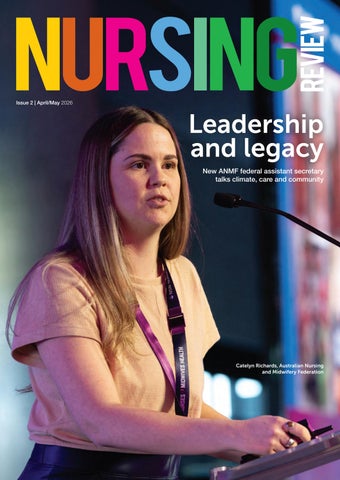
Leadership and legacy New ANMF federal assistant secretary talks climate, care and community
Catelyn Richards, Australian Nursing and Midwifery Federation
CONTENTS NEWS
MANAGING EDITOR
4
Rebecca Cox rcox@intermedia.com.au
6
HEALTH EDITOR Stefanie Schultz sschultz@intermedia.com.au
7
SUBSCRIPTIONS EDITOR
8
Lee Burrell lburrell@intermedia.com.au
9
ADVERTISING Nicola Mohtram nmohtram@intermedia. com.au
07
09
NSW begins roll out of one-tothree ratios in postnatal wards Health practitioners face public record of sexual misconduct Nurses’ union calls for financial relief as workers hit hard by fuel crisis Sharp rise in violence against nurses and midwives Study finds structured support reduces burnout among midwives
Q&A 10 The new ANMF federal assistant secretary, Catelyn Richards, talks leadership and legacy
COVER: Catelyn Richards. Picture: Supplied/Sharon Hickey.
CLINICAL
PUBLISHED BY
12 Senate Committee recommends
Positive Impact Media Pty Ltd 41 Bridge Road Glebe NSW 2037 ABN 51 063 279 630 Print Post 100008043 ISSN 1037-034X OCLC 536881479
passing bill for nurses to prescribe PBS medicines 14 Lack of disability-related content in nursing degrees 16 Elder abuse under-recognised in Australian hospitals and EDs
MIDWIFERY Copyright: All material in this publication is copyright to the publisher and/or its contributors. No material may be reproduced without the express permission of the publishers. Disclaimer: This publication is published by Positive Impact Media Pty Ltd (the “Publisher”). Materials in this publication have been created by a variety of different entities and, to the extent permitted by law, the Publisher accepts no liability for materials created by others. All materials should be considered protected by Australian and international intellectual property laws. Unless you are authorised by law or the copyright owner to do so, you may not copy any of the materials. The mention of a product or service, person or company in this publication does not indicate the Publisher’s endorsement. The views expressed in this publication do not necessarily represent the opinion of the Publisher, its agents, company officers or employees. Any use of the information contained in this publication is at the sole risk of the person using that information. The user should make independent enquiries as to the accuracy of the information before relying on that information. All express or implied terms, conditions, warranties, statements, assurances and representations in relation to the Publisher, its publications and its services are expressly excluded save for those conditions and warranties which must be implied under the laws of any State of Australia or the provisions of Division 2 of Part V of the Trade Practices Act 1974 and any statutory modification or re-enactment thereof. To the extent permitted by law, the Publisher will not be liable for any damages including special, exemplary, punitive or consequential damages (including but not limited to economic loss or loss of profit or revenue or loss of opportunity) or indirect loss or damage of any kind arising in contract, tort or otherwise, even if advised of the possibility of such loss of profits or damages. While we use our best endeavours to ensure accuracy of the materials we create, to the extent permitted by law, the Publisher excludes all liability for loss resulting from any inaccuracies or false or misleading statements that may appear in this publication. Copyright © 2026 – The Intermedia Group Pty Ltd.
18 More than a quarter of women
10
12
describe their most recent birth as traumatic
INDUSTRY & REFORM 20 Inquiry hears Medicare settings are disrupting care and worsening health outcomes in the country
AI & TECHNOLOGY 22 Simulative tech use is increasing in dementia care – ethics must catch up
14
18
20
22
nursingreview.com.au | 3
WORKFORCE NSW Health Minister Ryan Park. Picture: NCA NewsWire/Nikki Short.
Safe staffing NSW begins roll out of one-tothree ratios in postnatal wards By Stefanie Schultz
N
SW will introduce mandated staffing ratios in seven postnatal maternity wards as part of a major effort to stabilise the state’s midwifery workforce. The Minns Government confirmed the roll out of Safe Staffing Levels (a ratio of one midwife to every three women) at Campbelltown, Liverpool, Nepean, John Hunter, the Royal Hospital for Women, Royal Prince Alfred and Westmead hospitals. The change is the latest step in a broader workforce reform agenda that has already seen ratios introduced in emergency departments. NSW Health Minister Ryan Park acknowledged that the roll out will come with challenges. “By beginning the process of implementing Safe Staffing Levels in dedicated postnatal wards, we are providing support to our hardworking midwives that aims to provide a better experience for women and their families,” he said. “Recruiting more health workers won’t be easy, but it’s what the health system and the community needs.” The Safe Staffing Levels Taskforce, which includes representatives from the NSW Nurses and Midwives’ Association (NSWNMA), NSW Health and local health districts, will oversee the rollout and determine staffing allocations.
4 | nursingreview.com.au
The Labor government also appointed long‑serving midwife and former general manager of the Royal Hospital for Women Donna Garland as the first NSW chief midwife. The role was a key recommendation of the NSW Birth Trauma Inquiry report. Ms Garland said she was committed to supporting midwives and ensuring women and families received safe, evidence‑based care. “It is a privilege to be appointed as the inaugural Chief Midwife for NSW,” she said. “Midwives are central to the provision of maternity services and they are trusted clinicians, advocates and leaders in healthcare.” The NSWNMA has run a long campaign calling on the state government to invest in midwifery leadership, and improve workloads and pay. General secretary Michael Whaites said the rollout of ratios in postnatal wards was long‑awaited progress toward safer workloads. “This pivotal role will help to strengthen and advocate for the profession at a time when it is facing significant workforce challenges,” he said. “Safe staffing ratios will help improve workloads and reduce the high rates of burnout our members are experiencing because of understaffing and under‑resourcing.” Mr Whaites said the ratio of one midwife to every three women will foster a safer and more nurturing environment in which the best possible care of women and newborns can be provided, which
Significant investment in midwifery and midwiferyled continuity of care models is critical to improving outcomes and fixing the staffing crisis will strengthen the healthcare system for women and babies overall. “Alongside ratios, increased pay and significant investment in midwifery and midwifery-led continuity of care models are critical to improving outcomes and fixing the staffing crisis in maternity,” he said. NSWNMA assistant general secretary Katrina Bough said the move builds on the ratios already introduced in hospital emergency departments. “The NSWNMA has been campaigning for ratios for more than a decade, so we are extremely pleased to see the next stage of this crucial reform taking shape,” she said. “We know maternity services, particularly in regional and remote areas, have been under enormous strain in recent years, with a lack of midwives and obstetricians available. We hope to see ratios extend to these areas in the future. “We look forward to working collaboratively with the government to ensure the rollout in postnatal maternity wards is a smooth and successful process.”
Let Lite n’ Easy help take care of you. Being a nurse is physically and emotionally demanding, making good nutrition essential. But long shifts, fatigue and limited breaks can lead to skipped meals or unhealthy choices. Lite n’ Easy makes eating well simple with over 235 affordable, nutritionally balanced meals packed with protein and fibre. From High Protein Smoothies and wholesome breakfasts to perfectly portioned lunches and dinners.
“I work in health administration and my hours can be all over the place, with set meal times non-existent, so I needed something that was healthy and convenient. I decided on Lite n’ Easy and I can just grab my food from the fridge and eat on the run.”
Tiffany
Make the shift to Lite n’ Easy today and get 35% OFF your first delivery! Order online using promo code NURSE35% or, call us on 13 15 12 and mention this offer. Offer valid for new customers only on their first delivery. Cannot be used with any other offer. Minimum order value applies.
Visit liteneasy.com.au or call 13 15 12
NEWS Picture: iStock/WhiteTea.
‘Breach of trust’ Health practitioners face public record of sexual misconduct By NCA Newswire
S
exual misconduct findings against more than 100 medical professionals are now available to the public, following a major change in the law. A national reform now in effect has seen changes made to the way sexual misconduct findings against doctors and health practitioners are made public. Previously, the only information available has been about active disciplinary sanctions against them. However, under the new law, when a medical professional has a sexual misconduct finding made against them, it will remain on their public record. A review of records has identified 107 practitioners with previous findings against them, which have now been added to the public domain.
6 | nursingreview.com.au
Of these cases, 21 are still currently practising, while the remaining 86 appear on a list of cancelled registrations. But the Australian Health Practitioner Regulation Agency (AHPRA) says it is reviewing some 5,000 more as it continues to retrospectively add findings to records. AHPRA chief executive Justin Untersteiner said publishing sexual misconduct findings on the public register empowers patients to make informed choices about their care. “Sexual misconduct by registered health practitioners is an unacceptable breach of trust that undermines public health and safety,” he said. “The relationship we have with health practitioners is a special one based on trust. We often go to those practitioners in a state of vulnerability, so when there is a breach it has devastating consequences not only for the patient, but for the system as a whole.” The first set of findings made available has also been broken down by state,
AHPRA has dedicated staff and resources available to support anyone wishing to raise a concern about a practitioner with New South Wales seeing the largest number of cases, with 35. “Any incident can have a lasting and profound impact. AHPRA has dedicated staff and resources available to support anyone wishing to raise a concern about a practitioner, and I would encourage them to do so,” Mr Untersteiner added. The law change applies to all practitioners regulated by AHPRA, including doctors, nurses, dentists, psychologists, pharmacists and physiotherapists.
NEWS Picture: iStock/SolStock
‘Untenable’ Nurses union calls for financial relief as cost-of-living hits workers hard amid fuel crisis By Stefanie Schultz and NCA Newswire
U
nions are calling for higher fuel reimbursements and for businesses to allow workers to stay at home where possible amid the current fuel crisis. The Australian Nursing and Midwifery Federation (ANMF) is calling for immediate financial relief for nurses, midwives and aged care workers who may be struggling with cost-of-living pressures, exacerbated by the ongoing fuel crisis. “On top of higher mortgages, rents and energy bills, the financial burden of simply getting to and from work is becoming untenable for many of our ANMF members,” federal secretary Annie Butler said. “In these challenging economic times, many professionals are able to off-set their daily living costs by choosing to work remotely from home, but nurses, midwives and aged care workers must deliver in-person care at hospitals, aged care facilities, community health centres and in people’s homes across the country – 24/7.”
Ms Butler said high fuel prices have been particularly affecting workers in rural and regional parts of Australia, who might have to drive hundreds of kilometres for work. “Parking is also a significant, unavoidable financial strain, particularly for our ANMF members in metropolitan areas, who have to pay for on-site parking at public and private hospitals due to safety concerns and the lack of reliable public transport during their early morning, night and weekend shifts. “The ANMF has long been calling for parking to be made tax-deductible for nurses and midwives and we believe now, more than ever, it’s one way that the federal government can use the upcoming Budget to provide our members with some practical financial relief. “We’re also asking employers to play a part, by being considerate and agile and allowing for more flexible working arrangements for our members, which could help minimise peak-hour travel times and reduce toll payments and other big costs like childcare.” Swinburne University organisational psychology expert Timothy Bednall says Australia cannot afford to waste fuel on avoidable commuting. “We’re in a slightly unusual situation at the moment, where the costs of
High fuel prices have been particularly affecting workers in rural and regional parts of Australia commuting are largely borne by employees rather than employers,” he told Newswire. “From that perspective, there isn’t a strong direct financial incentive for employers to actively support remote work.” A 50 per cent reduction of the fuel excise, announced by Prime Minister Anthony Albanese last month, has led to reductions in the cost of fuel, which is being monitored by the Australian Consumer and Competition Commission (ACCC). “Obviously, we’ll make sure, via the ACCC that the benefit is passed on as is appropriate. People shouldn’t be taking motorists for mugs when it comes to passing it on,” Mr Albanese said. “I’ve written to the chair of the ACCC to set the expectations on this front.”
nursingreview.com.au | 7
NEWS Public sector workers reported the highest exposure to occupational violence. Picture: iStock/Sturti.
‘Lost confidence’ Sharp rise in violence against nurses and midwives By Stefanie Shultz
V
iolence against nurses, midwives and carers is continuing to rise, with new data revealing both the scale of the problem and the urgent need for better protection for frontline workers. A report released by the NSW Nurses and Midwives’ Association (NSWNMA) shows 88 per cent of nurses, midwives and carers surveyed in 2025 had experienced or witnessed violence or aggression in the previous six months – a 10 per cent rise since 2019. Those working in the public sector reported the highest exposure, with 92 per cent subjected to violence, while those working in residential aged care were more likely to face physical assaults. NSWNMA general secretary Michael Whaites said the findings confirmed what nurses have been reporting for years. “Violence and aggression are a systemic and widespread issue facing our members across all health sectors in NSW,” he said. “We know occupational violence has a significant impact on our members, with many reporting psychological harm and trauma as a result. This leads to higher rates of burnout and workers compensation claims among nurses and midwives.”
8 | nursingreview.com.au
The report also found that violence remains significantly underreported, with only one in four respondents saying they log every incident. Members from culturally and linguistically diverse backgrounds were even less likely to report violence, despite experiencing higher rates of hate speech and sexual assault. NSWNMA assistant general secretary Katrina Bough said many nurses had lost confidence in reporting systems. “Less than two in 10 respondents who reported occupational violence believe any action was taken as a result of their report,” she said. “The complexity of reporting systems, extreme workloads, and a feeling of not being listened to are significant barriers identified by our members.” The union is calling for increased staffing levels, safer facility design, better risk management and stronger reporting processes, with more than 30 recommendations outlined in the report. As the pressure on frontline workers grows, new research from Edith Cowan University (ECU) suggests virtual reality (VR) technology could play a role in preparing student nurses and midwives to manage aggressive behaviour more safely. A study involving 221 undergraduate nursing students found that a single 20‑minute VR training session significantly improved participants’ confidence in de‑escalating violent situations.
Violence and aggression are a systemic and widespread issue facing our members across all health sectors The program, known as I‑VADE, immerses users in realistic scenarios and allows them to practise communication and de‑escalation techniques before encountering aggression in real clinical settings. PhD candidate Joshua Johnson, who led the research, said many clinicians enter the workforce feeling unprepared for violent incidents. “Training in aggression and violence de‑escalation can effectively assist in preparing both students and clinicians to manage hostile patients,” he said. “We had an overwhelmingly positive response from the students that took part in the study.” Associate Professor Brennen Mills, who helped develop I‑VADE, said the technology’s scalability was a breakthrough. “It allows clinicians and students to really practise de‑escalation strategies in realistic, fully immersive scenarios before they encounter them in the real world, where the stakes are high,” he said.
NEWS Burnout in midwifery is driven by chronic workplace stress, high workloads and a persistent sense of being undervalued. Picture: iStock/gorodenkoff.
Good news Study finds structured support reduces burnout among midwives By Stefanie Schultz
B
urnout among midwives has reached critical levels in Australia, but new research suggests a structured support program could offer meaningful relief for a workforce under immense strain. A major University of Technology Sydney (UTS) study involving almost 2,000 midwives across 12 public maternity services has found that regular group clinical supervision (GCS) sessions can significantly reduce work‑related burnout. Lead author Professor Christine Catling said the findings arrive at a crucial moment. “Midwives carry a significant emotional and physical load,” she said. “Support that allows them time to pause and reflect on the challenges they face can make the daily pressures more manageable.” Burnout in midwifery is driven by chronic workplace stress, high workloads and a persistent sense of being undervalued. Research shows midwives frequently miss breaks, work overtime and face moral distress when systemic pressures prevent
them from providing the level of care they believe women and families deserve. These conditions contribute to compassion fatigue, deteriorating workplace culture and rising intentions to leave the profession. A national review commissioned by the Nursing and Midwifery Board of Australia described the midwifery workforce as being in “crisis,” with one in three midwives considering leaving due to burnout, stress and low job satisfaction. International studies echo the trend, with burnout rates as high as 80 per cent reported in some countries. Against this backdrop, the UTS‑led trial offers a rare piece of good news. Midwives at intervention sites were offered monthly hour‑long GCS sessions facilitated by senior midwifery academics. These confidential sessions allowed small groups to reflect on difficult experiences, process emotional stress and develop strategies for coping with the demands of their work. After adjusting for demographic and workplace factors, the study found that access to GCS led to lower overall burnout, with a statistically significant reduction in work‑related burnout. The improvement was described as modest but meaningful. Midwives also reported that simply knowing the support existed made them feel more valued – a notable shift in a profession where many feel overlooked.
It’s time to provide midwives with the same level of care and compassion they give others every day The research aligns with decades of evidence showing midwives experience disproportionately high burnout. Earlier studies have found work‑related burnout rates of 63 to 67 per cent among Australian midwives, with younger and early‑career midwives most affected. Many reported increased alcohol use, poor mental health and a desire to leave the profession. Professor Catling said GCS is not a quick fix but a practical, scalable support strategy that can be implemented immediately while broader reforms, such as safer staffing levels, improved skill mix and more flexible models of care, are developed. “Midwives play an irreplaceable role in ensuring safe, high‑quality maternity care,” she said. “It’s time to provide them with the same level of care and compassion they give others every day.”
nursingreview.com.au | 9
Q&A
‘Working together’ The new ANMF federal assistant secretary, Catelyn Richards, talks leadership and legacy By Stefanie Schultz
N
ewly appointed Australian Nursing and Midwifery Federation (ANMF) federal assistant secretary Catelyn Richards speaks with Nursing Review about leadership, climate change, aged care reform and what members can expect from her in the years ahead.
10 | nursingreview.com.au
How are you feeling about taking on your new role? It‘s a very big privilege to be working in the role, and I feel deeply honoured to be appointed. I also feel a sense of responsibility to the 356,000 members that the ANMF serves across the Federation. What kind of leader do you want to be, and what values guide your approach to leadership? I’ve been fortunate to undertake extensive leadership training through the University of Tasmania, the Australian College of
Nursing’s Emerging Nurse Leader Program, and the Westpac Future Leaders Scholarship. Through all of those supported programs, I’ve had time to reflect on various leadership styles, and how different leaders approach different challenges and problems. I really identify with and aim to practise a servant-style of leadership. That model focuses on understanding the needs of the community and serving those needs. In the ANMF, our work is about identifying where nurses, midwives and carers need support, what barriers exist in their workplaces, and then advocating –
Q&A Newly appointed ANMF federal assistant secretary Catelyn Richards. Picture: Supplied/Sharon Hickey.
There are so many things that would make a difference that it’s hard to narrow down. The ANMF branches do incredible work towards solving sector issues and to achieve better conditions for nurses, midwives and carers relevant to their local areas. Every single one of those sites — whether it be reforming entitlements or advocating for things like better staffing and staff resourcing — are really, really important. At the federal level, investment in primary health and optimising working conditions so that nurses and midwives and carers can work to their full scope of practice and expand their capacity under existing arrangements is critical. We also need sustained investment in aged care. And I’m very conscious of external pressures — digital transformation, international conflicts, maintaining trust in science, and of course climate change. All of these shape how we deliver care in an evolving landscape.
sometimes for years – until the job is done. We keep the fight alive for the members. That’s the type of leader I want to be, someone with patience, courage and tenacity to not give up until the job is done. But also, being a registered nurse, I want to bring workplace principles of humility, compassion and deep listening into my leadership. What systemic changes do you see as the most urgent for strengthening and stabilising the Australian nursing and midwifery sectors?
You were the ANMF’s first Climate Change Officer. How will that experience shape your priorities going forward? Climate change wasn’t something I always cared about; I was first and foremost a nurse and became a nurse because I really wanted to be able to share skills that created good within my community. However, working as a paediatric nurse made the impacts of climate change impossible to ignore — air pollution, asthma exacerbations, extreme heat. The National Climate Risk Assessment shows health and community services will be among the most severely impacted sectors, which means nurses, midwives and carers will be among the most affected workers. We’re in every corner of every community, so we see these impacts firsthand. That also means we have a substantial role in minimising risk and responding to threats. I see a real role for nurses to be at the forefront of calling for action on climate change, not just for their own work, but also for the health of the community. In this new role, I’ll continue advocating for climate action, but I’m also focused on workforce resilience, creating stable working environments and consistent work for nurses, midwives and carers, so that they are more resilient when they see climate change impacts affecting their work. Many of our members are finding it increasingly difficult to find housing that’s close to where they work, and that is only going to be exacerbated by threats of climate change, like flooding and other extreme weather events.
I want to bring workplace principles of humility, compassion and deep listening into my leadership
Climate change also has social justice and regional security implications, so there’s a lot to consider. What do you see as the biggest opportunities for the Federation to shape health and aged care reform in the coming years? Before this role, I was an organiser in the aged care sector in rural Tasmania, and I was involved in advocacy around achieving better resourcing, mandated care minutes and access to registered nurses 24/7. While progress has been made, there’s still a strong opportunity to ensure residents receive the care and dignity they deserve. Making sure the federal aged care legislation works as intended is a big priority. I also see opportunities in scope‑of‑practice reforms, including prescribing. There are exciting developments happening, and I think we’ll see more to come. Nurse‑led, nurse practitioner‑led and midwifery‑led models of care are also areas where we can make real gains, enabling nurses and midwives to work to their full scope. What can members expect from your leadership in 2026 and beyond? There are reforms I’ve benefited from — like university‑based nursing education — that earlier generations fought for, and I didn’t even realise it at the time. I hope to help create reforms that future nurses, midwives and carers, decades from now, will benefit from without necessarily knowing we had to fight for them. In terms of my leadership, I think that looks like securing entitlements and better working conditions, addressing housing challenges, strengthening pathways in primary and aged care, and ensuring members see their role in climate resilience recognised and supported. Above all, members can expect a leader who listens to and who will hold myself to the expectations and the needs of our community. That’s what creates better outcomes — working together and putting forward solutions that serve all of us.
nursingreview.com.au | 11
CLINICAL Picture: iStock/FatCamera
‘Significant recognition’ Senate Committee recommends passing bill so nurses are able to prescribe PBS medicines By Stefanie Schultz
A
fter a decade of advocacy, endorsed nurses and midwives are another step closer to prescribing medicines, boosting equitable care. The Senate Community Affairs Legislation Committee has recommended the passage of the Health Legislation Amendment (Prescribing of Pharmaceutical Benefits) Bill 2025, a move that could see designated registered nurses prescribing medicines under the Pharmaceutical Benefits Scheme (PBS) from July 2026. This unanimous recommendation follows a comprehensive inquiry that gathered 47 submissions from a broad spectrum of health organisations, governments, and individuals.
12 | nursingreview.com.au
The Australian College of Nursing (ACN) has welcomed the committee’s decision, highlighting the profound impact this reform will have on the health sector. ACN chief Dr Kathryn Zeitz said the recommendation marks a significant milestone for the profession. “This is the most significant recognition of nursing’s role in Australia’s health system in a generation,” she said. “Designated registered nurse prescribing will strengthen the health system by easing workforce pressures and building the long-term capacity and sustainability our communities urgently need.” If passed, the Bill will enable endorsed nurse prescribers to access PBS subsidies, allowing patients to receive rebates for nurse-prescribed medications. Nurses, as Australia’s largest and most geographically distributed healthprofessional group, are uniquely positioned to deliver this expanded care.
“This bill is a win for health equity,” Dr Zeitz said, noting that nurses operate across most healthcare settings, which will allow their patients to access prescriptions in a timely and equitable way. The reform is expected to particularly benefit people in rural, regional, and remote communities, First Nations populations, palliative care patients, and those seeking sexual and reproductive health services. These groups have historically faced barriers to timely and affordable care. “Nurses have been pushing for this reform for over a decade. The evidence shows nurse-prescribing improves patient outcomes, increases satisfaction with care, and reduces the burden on our hospitals and GPs. Today’s recommendation brings us one step closer to making that a reality for every Australian,” Dr Zeitz said. The Australian Primary Health Care Nurses Association (APNA) also welcomed the recommendation.
CLINICAL
The evidence shows nurse-prescribing improves patient outcomes and increases satisfaction with care
Australian College of Nursing chief Professor Kathryn Zeitz said the recommendation marks a significant milestone for the profession. Picture: Supplied.
APNA president Denise Lyons praised the recognition of nurses’ crucial role in improving access to care. Picture: Supplied.
“This is an important step for Australia’s primary health care system,” APNA president Denise Lyons said. “Allowing highly experienced, skilled and trusted nurses to prescribe under the PBS will mean faster, more accessible and more affordable care for Australians.” She highlighted the committee’s recognition of nurses’ crucial role in improving access to care. “The Committee’s recommendation shows that Senators in the Committee, scrutinising the legislation, agree that nurse prescribers are essential to improving access to care, particularly for those who currently wait too long or travel too far for basic health needs,” she said. The Committee’s report acknowledges substantial evidence supporting nurse prescribing, including improvements in workforce efficiency and health outcomes. “This reform will reduce bottlenecks, ease pressure on overstretched clinicians, and ensure Australians get the care and
medicines they need without unnecessary delays,” Ms Lyons said. The Nursing and Midwifery Board of Australia (NMBA) also supports the Bill, noting in their submission to the Committee that it would allow designated registered nurse prescribers to prescribe certain medicines under the PBS. Adjunct Professor Veronica Casey AM, Chair of the NMBA, confirmed her organisation’s support for the Bill’s requirements, including prescribing agreements with other PBS prescribers and inclusion under the Professional Services Review (PSR), which provides oversight for all PBS prescribers. The Australian Nursing and Midwifery Federation (ANMF) has been actively involved in advocating for nurse prescribing for over a decade and strongly supports the Bill. The ANMF said there is extensive international evidence demonstrating that nurse-prescribing delivers outcomes
that are at least equivalent, and in some cases superior, to physician-led prescribing, while improving patient satisfaction, continuity of care, and access to medicines. The Federation also stressed the importance of ensuring registered nurse prescribers are recognised as equivalent to other authorised prescribers in terms of access, accountability, standards, and governance arrangements, without unnecessary barriers or restrictions. The Committee’s final report confirms that robust safeguards are embedded in the legislation, including prescribing agreements with authorised health practitioners, specific qualification and endorsement requirements, and full inclusion under the Professional Services Review. These measures align with recommendations from the ‘Unleashing the Potential of our Health Workforce: Scope of Practice Review’ and the objectives of the National Medicines Policy. Despite the significant progress, the ACN noted that further work is still needed. Dr Zeitz raised concerns about the absence of a funding mechanism to enable registered nurse prescribing in aged care and primary care settings, and called for more clarity on which medicines will be able to be prescribed. “While this is a major step, there is still more work to be done to support nurses to care for people, using all their skills and experience,” she said. “As yet, there is no funding mechanism to enable RN prescribing in aged care and primary care settings. “We are also concerned that nurses are already undertaking study to become RN prescribers, even though the Pharmaceutical Benefits Advisory Committee and Health Minister are yet to declare which medications designated RN prescribers may prescribe.” Both the ACN and APNA are urging the Senate to pass the Bill without delay and for the government to ensure the necessary legislation is in place well ahead of the first cohort of nurse prescribers graduating in July 2026.
nursingreview.com.au | 13
CLINICAL
Largely absent Lack of disability-related content in nursing degrees By Stefanie Schultz
R
esearch has found that undergraduate nursing programs are failing to adequately prepare graduates to care for people with disability, who already face significantly poorer health outcomes. The review, led by Dr Lesley Andrew from Edith Cowan University (ECU) and Dr Martina Costello from Murdoch University, examined publicly available curriculum materials from all 32 Australian public universities offering preregistration nursing degrees in 2024.
14 | nursingreview.com.au
It revealed that 50 per cent of nursing programs did not mention disability at all in their course information despite almost one in five Australians living with disability. Only four universities offered a unit with the word disability in the title, and even these units were dominated by biomedical content and deficit‑focused language. Contemporary disability issues, including the National Disability Insurance Scheme (NDIS), were largely absent. “Approximately 18 per cent of Australians experience disability, with significant health inequities documented in this population,” Dr Andrew said. “Despite nursing’s crucial role in addressing those inequities, questions remain about nurses’ preparedness to work effectively with people with a disability.”
The review found that disability-related teaching content, when present, tended to focus on physical impairment and medical pathology. Learning disability, intellectual disability and psychosocial disability were rarely mentioned. Only two units across the entire sample referenced the social model of disability, despite its central role in contemporary disability rights and policy. The researchers warn that this narrow approach risks reinforcing outdated attitudes and does not equip graduates to work in modern disability care environments. “The Australian government is actively focused on enhancing disability rights, health equity and improving the National Disability Insurance Scheme Dr Andrew said.
CLINICAL Picture: iStock/Courtney Hale.
Questions remain about nurses’ preparedness to work effectively with people with a disability
“As the majority of health professions, nursing plays a key part in the achievement of these reforms.” Since the NDIS became a national scheme in 2020, thousands of new nursing roles have emerged in disability support, clinical leadership and complex care coordination. Nurses are now central to supported decision‑making, care planning and the supervision of delegated workers. However, the review suggests that nursing education has not kept pace with these changes. The researchers found that only one of the four units dealing specifically with disability mentioned the NDIS, and most programs did not address disability services, rights frameworks or the skills
required to work in community‑based disability care. This gap, they argue, leaves new graduates underprepared for the realities of the workforce. The study also highlights a significant policy issue. The Australian Nursing and Midwifery Accreditation Council (ANMAC) requires nursing degrees to embed principles of diversity, inclusion and cultural safety, but doesn’t explicitly require disability content. The researchers say this omission contributes to the inconsistent and often minimal inclusion of disability education across universities. They recommend that disability content be made mandatory in accreditation standards, similar to the requirements for Aboriginal and Torres Strait Islander health.
CALL FOR MANDATORY DISABILITY EDUCATION, SPECIALIST PATHWAYS The study says disability education should be embedded across nursing degrees, not confined to isolated units, recommending: • mandatory disability content throughout preregistration nursing programs • inclusion of people with disability in curriculum design and teaching • a shift toward the social model of disability and critical disability perspectives • professional development for academics who may lack contemporary disability knowledge • reinstatement and expansion of specialist disability nursing pathways at undergraduate and postgraduate levels. “There is a real opportunity here for universities to develop the content and put more of a focus on disability care during undergraduate courses,” Dr Andrew said. “Mandatory disability content should be implemented, both as discrete units and embedded throughout the program.” ECU has already begun strengthening disability education, focusing on the social model of health and collaboration with people with disability. Murdoch University is also expanding disability‑inclusive teaching through a renewed Bachelor of Nursing curriculum. It uses scenario‑based learning in a fictional rural town with community members with diverse disabilities whose evolving stories help students build clinical reasoning, communication and ethical decision‑making skills. The researchers warn that without significant curriculum reform, Australia risks graduating nurses who are not equipped to meet the health needs of people with disability or support the goals of the NDIS and Australia’s Disability Strategy 2021–2031. “This review suggests Australian nursing graduates entering the workforce continue to be poorly prepared to meet the health requirements of people with disability,” the authors concluded. “If disability competencies are not addressed, the nursing workforce may lack the skills required to meet government health equity goals.”
nursingreview.com.au | 15
CLINICAL PRACTICE
‘Tip of the iceberg’ Elder abuse under-recognised in Australian hospitals and EDs By Stefanie Schultz
A
national study has found that elder abuse is being significantly under‑recognised in Australian hospitals and emergency departments, with researchers warning that the health system may be missing thousands of cases each year. Published in the Medical Journal of Australia, the study examined linked hospital and aged care data from 965,986 older Australians across four states between 2010 and 2019. Only 580 people, or 0.06 per cent, had elder abuse recorded during a hospital admission or emergency department presentation. This is far below national survey estimates, which suggest two to 15 per cent of older Australians experience abuse each year. Associate Professor Stephanie Harrison, who led the study through the Registry of Senior Australians (ROSA) Research Centre
16 | nursingreview.com.au
at the South Australian Health and Medical Research Institute (SAHMRI) and Flinders University, said the findings reveal a major gap in detection. “What we are seeing in hospital data may only be the tip of the iceberg,” she said. “Elder abuse is often hidden, and it is likely that many cases are not identified or documented when older people present to emergency departments or are admitted to hospital.” “These figures likely represent only the most severe cases that come to clinical attention.” Of the cases identified, physical abuse and neglect or abandonment were the most commonly coded forms of harm. Smaller numbers of cases involved psychological abuse, sexual abuse or unspecified maltreatment. When domestic violence codes were included, the total number of affected individuals rose to 778, or 0.08 per cent. The study found slightly higher rates of recorded abuse among people living with dementia, those from socioeconomically disadvantaged areas, and older people who speak a language other than English.
Researchers say these patterns reflect known risk factors but also highlight how many cases may be going undetected. WHY ABUSE IS MISSED According to an Australian Institute of Family Studies 2021 prevalence study of elder abuse, one in six older Australians experience elder abuse each year, with a family member responsible for half of the cases. The ROSA research notes that elder abuse is difficult to identify in acute-care environments. Older people may be reluctant to disclose harm due to fear, shame or dependence on the perpetrator. Clinicians may also lack training or confidence in recognising signs of abuse, particularly when injuries or distress could be attributed to age, frailty or illness. Associate Professor Harrison said these barriers contribute to under‑reporting. “Stigma, fear, lack of awareness and the complexity of recognising abuse, particularly when it involves family members, can make it difficult for clinicians to identify and record these cases,” she said.
CLINICAL PRACTICE Researchers are warning that the health system may be missing thousands of cases of elder abuse each year. Picture: iStock/Dragon Claws
Elder abuse is difficult to identify in acute-care environments such as emergency departments. Picture: iStock/Pradit_Ph
International evidence shows similar patterns. Hospital‑based elder abuse detection rates in the United States are also extremely low, despite much higher prevalence in community surveys. Researchers have identified hospitals and emergency departments as key points of contact for older people who may be injured, distressed or unsafe. Improving detection in these settings could help identify abuse earlier and, importantly, prevent further harm. The study calls for stronger clinical guidelines, routine screening, clearer coding standards and better staff training to support clinicians to recognise and document this abuse. It also recommends better integration of hospital data with aged care reporting systems, including the Serious Incident Response Scheme, to build a more accurate national picture. A NATIONAL PLAN The findings come as the federal government begins rolling out its 10‑year National Plan to End the Abuse and Mistreatment of Older People, which aims
to strengthen prevention, detection and responses across health, aged care and community services. According to the Attorney General’s department, the vision of the plan is for older people to: • be safe, valued, heard and respected • have their rights protected and promoted • live free from abuse and mistreatment. Australian Human Rights Commission Age Discrimination Commissioner Robert Fitzgerald was supportive of the plan. “Elder abuse is prevalent and a growing national problem. It is one of the clearest and most harmful expressions of ageism, with significant social, legal, and economic implications,” Commissioner Fitzgerald said. “Every older Australian has the fundamental right to live free from abuse, neglect and exploitation. This Plan sets out the priority actions needed over the decade ahead to uphold that right. “These include stronger prevention and early intervention, improved community awareness, culturally safe and accessible support pathways, enhanced data and evidence, a more capable service system, and strengthened legal and policy protections.” The Plan is rights based, recognising that ageism is a key reason for this kind of abuse. One of the actions the Commissioner says should be given priority deals with this specifically. He is calling on the government to formally support “a binding international Convention on the Rights of Older Persons to strengthen human-rights protections for older persons and guide
Elder abuse is often hidden, and it is likely that many cases are not identified or documented a rights-based approach in Australian laws, policies and systems.” The Plan recognises the importance of targeted education for health workers and other relevant professionals: “Increased engagement with relevant (rather than specialist) professions, such as health professionals and counsellors, offers an important opportunity for screening and identifying risk of, or actual, abuse and mistreatment, in line with the strong focus on prevention and early intervention in this National Plan,” the Commissioner said. ROSA researchers said the National Plan, combined with improved hospital reporting, has the potential to help Australia better understand the scale of elder abuse and develop more effective strategies to protect older people. “Elder abuse is associated with serious health consequences, including injury, hospitalisation and long‑term psychological distress,” Associate Professor Harrison said. “Hospitals and emergency departments are important opportunities to recognise and respond to abuse, and improving detection is critical to keeping older people safe.”
nursingreview.com.au | 17
MIDWIFERY
Aligned care More than a quarter of women describe their most recent birth as traumatic By Hannah Dahlen, Hazel Keedle and Kingsley Emwinyore Agho
E
very pregnant woman wants to deliver a healthy baby. During labour and birth, women also want to feel listened to and respected, and to come out of the experience physically and emotionally well. But around 28 per cent of Australian women describe their most recent birth as traumatic. Birth trauma can include fear for their life or their baby’s life, a loss of control, damage to the perineum or pelvic floor, disrespectful care, or mistreatment from health care providers. Our new research paper examined birth outcomes and both physical and psychological experiences of women and
18 | nursingreview.com.au
babies who experienced five different types (or models) of care in Australia during the Covid pandemic. We found that seeing the same midwife or team of midwives was associated with lower rates of intervention and birth trauma, compared with standard care. And for some women, private obstetric care also led to lower rates of birth trauma than standard care in the public system. Let’s take a look. FIVE MAIN MODELS OF CARE Most Australian women receive standard public care or GP shared care. In standard public care, women see rotating hospital staff (midwives, obstetricians and at times, trainees) throughout pregnancy and often give birth with a midwife or doctor they’ve never met. GP shared care is when there is an arrangement between a GP and hospital. Women see their GP most during pregnancy and hospital staff for some antenatal appointments. The GP doesn’t
usually attend the birth, except in some rural, remote regions. In continuity of care models, one or a small number of midwives and obstetricians deliver the majority of the care before, during and after birth. This includes continuity of: • midwifery care in the public system • private obstetric care • private midwifery care. When given a choice, women favour continuity of care models. WHAT OUR STUDY FOUND Our study looked at the experiences of 3,682 Australian women who gave birth in 2020 and 2021. Compared to women who had standard care, we found that those who had continuity of midwifery care (through the public system or a private midwife) were: • less likely to be induced or have an oxytocin drip to speed up labour • much more likely to have a vaginal birth • more likely to have the midwife visit
MIDWIFERY Picture: iStock/Fly View Productions.
Seeing the same midwife or team of midwives was associated with lower rates of intervention We did not examine stillbirth or neonatal deaths as all the women responding to the survey had a live baby. So people still could have had those experiences but they weren’t captured in our data.
them at home after the birth • less likely to have a caesarean section • less likely to have their baby admitted to special or neonatal intensive care or receive formula in hospital when they had chosen to breastfeed • half as likely to describe their birth as traumatic. These differences were seen even after adjusting for differences in the groups that could affect outcomes, such as women’s age, medical risk, education, employment status, country of birth, income and mental health. These findings line up with decades of evidence. A 2024 Cochrane review of 17 randomised controlled trials found midwifery continuity of care models reduce some birth interventions, including caesarean section, forceps and vacuum birth, and episiotomy (surgical cut to the perineum). Our study also found that while women who had private obstetric care had higher rates of birth intervention, they had lower rates of birth trauma when compared to
standard care. There was no difference in outcomes for the baby, such as admission to special care or neonatal intensive care. This suggests when women’s choices align with their care provider’s philosophy, outcomes are better – even if intervention levels are higher. Some women seek, or are not concerned about, increased obstetric intervention. Continuity itself, regardless of who the lead health care professional is, reduces birth trauma. WHAT ARE THE STUDY’S LIMITATIONS? As with any study there are limitations. This study relied on women reporting their labour and birth outcomes, so there could be difficulties with recall that affected reporting of some health risks and other important information. A high proportion of women responding (86 per cent) were born in Australia and spoke English at home (92 per cent) and only 2 per cent were Aboriginal or Torres Strait Islander, meaning the diversity of the Australian population is not represented.
WHY DOES CONTINUITY OF CARE MAKE A DIFFERENCE? Continuity gives women a stable, familiar guide who knows their story, understands their concerns and advocates for them when the system is under strain. It also allows for the kind of personalised care women consistently say they want and which midwives wish they could deliver more often. Nearly half of all models of care (49 per cent) have a midwife as the designated carer, with 16 per cent having midwifery continuity of care throughout the maternity period. However, midwifery continuity of care models are more common in urban centres and can be harder to access in rural and remote areas. Even in urban centres, not everyone who wants to access them can. The popularity of these programs means they fill up fast and many women miss out if they don’t book in when they are first pregnant. Private obstetric and private midwifery models of care come with out-of-pocket costs and are not available everywhere. There are few private midwives and many struggle to get admitting rights into hospitals like doctors have. The recent New South Wales Birth Trauma Inquiry recommended expanding continuity of care models to help reduce the high rates of birth trauma in Australia. Our study shows that this could make a significant difference. Hannah Dahlen is Professor of Midwifery, Associate Dean Research and HDR, Midwifery Discipline Leader, Western Sydney University; Hazel Keedle is Associate Professor of Midwifery, Western Sydney University, and Kingsley Emwinyore Agho is Professor of Biostatistics and Global Health, Western Sydney University This article is republished from The Conversation under a Creative Commons license. Read the original article at theconversation.com/au
nursingreview.com.au | 19
INDUSTRY & REFORM
Rural health Inquiry hears Medicare settings are disrupting care and worsening health outcomes in the country By Stefanie Schultz
T
he Senate inquiry into rural, regional and remote Medicare access has been warned that the current system is failing people outside major cities, with advocates urging the federal government to overhaul funding, telehealth rules and workforce supports before inequities worsen. Of the 47 submissions to the Inquiry, many have told the Rural and Regional Affairs and Transport References Committee that current Medicare settings are misaligned with the realities of rural
20 | nursingreview.com.au
healthcare, leaving communities without timely, affordable or culturally safe care. The scale of the challenge has prompted the Senate to extend the inquiry timeline. On March 26, the committee was granted an extension to report by November 24 2026. NURSE PRACTITIONERS SIDELINED In its submission, the Australian College of Nursing (ACN) said Medicare’s structure is “not fit for purpose” in rural and remote Australia, where nurse practitioners (NPs) often provide the only available primary care. ACN chief Adjunct Professor Kathryn Zeitz said the recent telehealth rule changes requiring NPs to meet the same face‑to‑face consultation rules as GPs but without equivalent Medicare item access have already disrupted care.
“In many rural and remote areas, GP wait times exceed three months, or there is no GP service at all,” she said. “Underfunding nurse‑led care has stark consequences – including avoidable hospital presentations.” The ACN argues that nurse‑led models should be directly eligible for Medicare funding, and that excluding NPs from MyMedicare and key incentives is “devastating” for communities where demand far exceeds supply. “Every day, nurses and nurse practitioners are providing the only available primary care in communities across rural and remote Australia. Their work should not be structurally excluded from public funding. We need reforms that reflect the workforce we have, not the workforce we had,” Dr Zeitz said.
INDUSTRY & REFORM iStock/BJP7images
The ACN argues that nurse‑led models should be directly eligible for Medicare funding. Picture: iStock/robynmac.
The ACMHN is calling for: • expanded MBS eligibility for Credentialed Mental Health Nurses • rural complexity loadings and blended payment models • transitional protections for nurse‑led services • dedicated telehealth follow‑up for high‑risk patients • mandatory Rural Impact Statements for all future MBS reforms. One of its recommendations would avoid these kinds of issues in the future. It would require all future MBS reforms to include Rural Impact Statements with provider-type modelling, remoteness stratification, lived-experience indicators and cultural responsiveness analysis.
The Australian College of Mental Health Nurses (ACMHN) said the 1 November 2025 Medicare changes have created a two‑tier telehealth system, where patients attached to large GP‑registered practices retain access while those relying on nurse‑led or community‑based services face new restrictions. In a joint letter to the Inquiry, ACMHN Acting CEO Professor Wendy Cross and vice president Associate Professor Cathy Daniel said members are reporting cancelled telehealth clinics, disrupted continuity of care, increased travel burdens and predictable escalation to crisis care. “Aligning funding with real-world multidisciplinary practice will strengthen small clinics and community-embedded services, while reducing long-term system costs associated with crisis-driven care,” they said.
WOMEN’S HEALTH Women’s Health NSW (WHNSW) says Medicare is also failing to meet the needs of rural and regional women who make up more than 58 per cent of clients seen by women’s health centres across the state. The organisation warns that workforce shortages, inadequate bulk‑billing incentives and telehealth restrictions are deepening inequities for women experiencing socioeconomic disadvantage, domestic and family violence, or limited access to reproductive healthcare. WHNSW’s 14 recommendations include: • increasing bulk‑billing loadings for MMM3+ regions • removing telehealth restrictions • improving access to bulk‑billed imaging • expanding Medicare items for nurse practitioners and midwives
Underfunding nurse‑led care has stark consequences – including avoidable hospital presentations • extending loadings to allied health • creating items that recognise complex, trauma‑informed care • improving access to contraception and medical termination of pregnancy. WHNSW chief Denele Crozier said the inquiry is a “critical opportunity to improve health equity” for women across rural Australia. Across all submissions, a consistent message emerges: Medicare’s design privileges GP‑centric models that are often unavailable in rural areas, while undervaluing the nursing, midwifery and allied health workforce that rural communities rely on. Without urgent reform, advocates say rural Australians will continue to face long delays for basic care, increased emergency department presentations, worsening chronic disease and mental health outcomes, higher out‑of‑pocket expenses and reduced access to cancer treatment and reproductive healthcare. The committee will continue hearing evidence from communities most affected by these gaps.
nursingreview.com.au | 21
AI & TECHNOLOGY Researchers Dr Wei Qi Koh and Divya Anantharaman will develop an ethical simulative technologies guide for aged care providers. Picture: Supplied.
Rules of robotics Simulative tech use is increasing in dementia care – ethics need to catch up Stefanie Schultz
A
s robotic pets and virtual reality headsets become more common in aged care homes, Australian researchers are warning that the sector is moving faster than the ethical guidance needed on how to use these tools safely and respectfully. A research team from the University of Queensland (UQ) is leading a two‑phase study to understand how people with dementia, their families, and aged care staff perceive the ethical dilemmas surrounding these “simulative technologies” – tools that mimic real‑world experiences to support psychosocial wellbeing. Their work aims to address a gap in the global debate where ethicists and academics have long debated the pros and cons of deception, autonomy and psychological harm, but the voices of people living with dementia have been largely absent. Study lead Dr Wei Qi Koh said there is a growing need for a framework to guide responsible use in aged care homes. “We need to use technology ethically at every stage – from carefully considering who it’s appropriate for and getting the right consents, to using it responsibly and planning for how to phase it out if needed,” she said. From robotic cats and dogs to immersive VR environments, simulative
22 | nursingreview.com.au
technologies have surged in long‑term aged care settings. They might be utilised by staff in response to workforce shortages or the daily challenges of managing behavioural and psychological symptoms of dementia. Evidence shows these tools can reduce agitation, lift mood and encourage social engagement. But the rapid uptake has outpaced the development of clear guidelines, leading to inconsistent practice between facilities and even between individual staff. UQ researcher Divya Anantharaman said resident responses to these tools also vary widely. “Some people living with dementia enjoy interacting with a robotic pet, while others may find them childish or infantilising,” she said. “Similarly, a VR experience of hiking may delight someone who loves the outdoors but could bring negative memories and upset another individual.” While debates often focus on whether robotic pets “trick” residents, the research team says the ethical landscape is far more complex. The study’s early findings highlight concerns about privacy, autonomy, the risk of replacing human care, and the possibility that simulated experiences could inadvertently cause harm or deepen loneliness. Conflicts have also arisen when a resident’s perception of the tools differs from that of their family and friends. “Family members may feel uncomfortable seeing a loved one with a robotic pet, even if it brings them joy,” Ms Anantharaman said.
The rapid uptake has outpaced the development of clear guidelines “Staff often need to navigate these differing views and wants.” Phase one of the project uses in‑depth interviews and focus groups with people living with dementia, family caregivers, aged care staff and managers. To ensure people with dementia can meaningfully participate, the researchers are incorporating visual and accessible communication methods rather than relying solely on traditional verbal interviews. Phase two will bring these stakeholders together with ethics experts and decision‑makers in a consensus‑building process. Participants will review the ethical issues identified in the first phase, propose strategies to navigate dilemmas, and prioritise the most practical and respectful approaches. With the number of people living with dementia expected to triple globally by 2050, researchers say the need for ethically grounded guidance is urgent. The end goal is a resource guide that blends lived experience with expert knowledge. It will help aged care workers, managers and policymakers make informed decisions about when and how to use simulative technologies, how to obtain meaningful consent, and how to balance technology with human care.