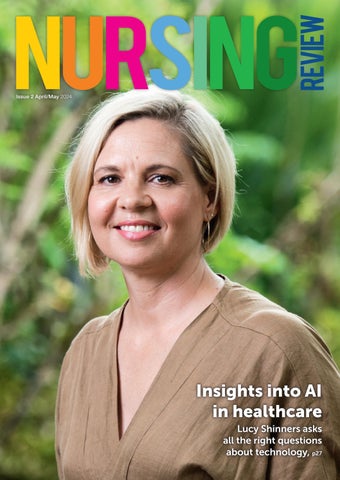
Issue 2 April/May 2024
Insights into AI in healthcare Lucy Shinners asks all the right questions about technology, p27
Australia’s Premier HOME CARE OFFICE NETWORK TAKE CHARGE OF YOUR FUTURE Have you reached a crossroads in your life and looking to make a change for the better? Secure your family’s future and make a difference in your community, whilst building a business in the thriving and dynamic home care industry with Right at Home. You’ll enjoy the freedom to grow your own business, with the full support of a top quality, national, home care brand delivering domestic support, personal care, skilled nursing, and allied health services. Your experience in nursing will assist in maintaining our high quality standards in delivering nurse supervised home care. You will be provided the necessary business training to ensure the success of your own local office. The home care market is guaranteed to grow for the next 20 years. The entry costs and overheads are very low compared with most businesses. Following rapid growth In QLD, NSW and WA, Right at Home is expanding into VIC, SA, TAS, ACT and the NT with prime territories up for grabs. Make your dreams come true… talk to Right at Home about a home care franchise today.
Apply to be a Right at Home office owner now! Go to www.rightathome.com.au/business-opportunities and fill in a form to be sent further information.
1300 363 802 | www.rightathome.com.au.
contents
MANAGING EDITOR
news
Rebecca Cox rebecca.cox@news.com.au
2
Labor to pay super on paid parental leave
4
NSW MPs and unions push for housing enquiry for essential workers
6
$1bn to support Queensland women’s and girls’ health
8
Queensland nurses rally for re-employent
HEALTH EDITOR
Arshmah Jamal arshmah.jamal@news.com.au SALES MANAGER
Sarah Licence sarah.licence@news.com.au SUBSCRIPTIONS MANAGER
Lee Burrell lee.burrell@news.com.au
04
06
COVER
industry and reform
Dr Lucy Shinners knows about the challenges and possibilities of AI, p27
10 University Accord calls for
PUBLISHED BY
12 NSW to end its Covid vaccine
Nationwide News Pty Ltd GPO Box 4245 Sydney NSW 2001 ABN 98 008 438 828 Print Post 100008043 ISSN 1836-1501 OCLC 536881479
end to unpaid placements
mandate for health workers
14 Big pay rise for aged care workers recognises increased work value
08
10
workforce
PUBLISHER’S NOTE
16 Older women retraining as
© Copyright. No part of this publication can be used or reproduced in any format without express permission in writing from Nationwide News Pty Ltd. The mention of a product or service, person or company in this publication, does not indicate the publisher’s endorsement. The views expressed in this publication do not necessarily represent the opinion of the publisher, its agents, company officers or employees.
nurses for second career
17 Victorian nurses and midwives threaten to strike
18 Aged care nurses call for accountability
20 Aged care sector can’t find staff to meet mandates
20
23
clinical practice
22 WA abortion law reforms bring it into line with other states
23 New Qld laws: abortion pill prescription and midwife ratios
24 Patients with delirium three times more likely to develop dementia
technology
27 Q&A with Dr Lucy Shinners
24
27
on artificial intelligence in the healthcare sector nursingreview.com.au | 1
news
Women retired on average, with about 25 per cent less super than men.
“It helps normalise taking time off work for caring responsibilities and reinforces paid parental leave is not a welfare payment – it is a workplace entitlement just like annual and sick leave
The care economy Labor to begin paying super on paid parental leave in major win for gender equality By NCA Newswire
A
ustralian women are set to be thousands of dollars better off by the time they retire, with the government promising superannuation on paid parental leave in a landmark win for gender equality. After long citing budget restraints, the government will move to help close the gender superannuation gap, announcing parents with babies born or adopted from July 1, 2025 who receive the minimum-wage support scheme will receive an additional 12 per cent as payment into their super funds. According to Industry Super Funds, women retire with 30 per cent – or $67,000 on average – less than men. Paying superannuation on paid parental leave was a key recommendation of the Women’s Economic Equality Taskforce (WEET) and follows the government’s expansion of the scheme, which can be shared by both parents, to a full six months by 2026. Women’s Minister Katy Gallagher released Australia’s first national strategy to achieve gender equality in March, which confirms Labor will adopt one of the hardest-fought gains for the union and women’s movement. In unveiling the blueprint, she said that gender equality cannot be achieved unless care is better valued and celebrated and without addressing the way the care economy functions.
2 | nursingreview.com.au
The ABS found in the 2019-20 financial year the median superannuation balance of women over 65 was $168,000 compared with $208,200 for men. Details of the cost won’t be released until budget night, but Senator Gallagher says the major policy reform is an “important investment to help close the super gap”. “The Albanese Labor government is serious about making sure women are supported when balancing caring and working responsibilities,” Senator Gallagher said. “The data is clear – that when women take time out of the workforce to raise children, it impacts their retirement incomes, with women retiring, on average, with about 25 per cent less super than men. “Paying super on government parental leave is an important investment.” Treasurer Jim Chalmers said the change meant, over the long term, a “more dignified and secure retirement for more Australian women”. On average, about 180,000 families receive government-paid parental leave a year. Social Services Minister Amanda Rishworth said the changes would bolster women’s workforce participation. “It helps normalise taking time off work for caring responsibilities and reinforces paid parental leave is not a welfare payment – it is a workplace entitlement just like annual and sick leave,” she said. “These reforms cement paid parental leave as a Labor legacy.” But the Greens, who have long called for the inclusion of superannuation into
paid parental leave, have accused Labor of dragging their feet on genuine reform. “We welcome this announcement, but why make women wait until 2025, when Labor has a paid parental leave bill before the Senate right now,” the party’s spokesperson on women Larissa Waters said. “Parental leave is the only leave entitlement paid without superannuation. Making people wait until after the next election to receive it is an outrage.” Modelling by health and community-care sector superannuation fund HESTA shows that if the government had paid super parental leave since its introduction in 2011, mothers who had used the policy would have a combined $3.3 billion more in their super accounts right now. The fund’s chief Debby Blakey said while the announcement was a significant step, women on lower-incomes were still paying more tax on their super contributions than their wages. “More than 80 per cent of our one million-plus members are women, many working in typically lower-paid industries such as aged care or early childhood education,” she said. The Super Members Council of Australia (SMC) said it was “stride forward” for gender equity and estimated that under the changes a mother of two’s retirement savings would be increased by about $14,500. It pointed to new analysis showing the gender super gap in Australia had narrowed for all age groups except for women in their 30s, who are retiring with about $12,000 less than men due to super not being paid on parental leave. “This watershed reform will make a powerful difference to the lives and retirement incomes of generations of Australian women in the decades ahead – and narrow the gender gap at retirement,” the SMC’s chief Misha Schubert said. ■
ADELAIDE 25-27 JULY 2024
FESTIVAL OF NURSING
KEEPING PEOPLE WELL AND OUT OF HOSPITAL
GET YOUR TICKET NOW THE FESTIVAL IS BACK IN 2024, YOU THOUGHT 2023 WAS GOOD... 2024 WILL BE EPIC!
VIEW MORE DETAIL AND BOOK YOUR TICKETS: APNA.ASN.AU/EDUCATION/FESTIVAL OR SCAN THIS QR CODE.
news
‘Not good enough’ Independent MPs and unions push for housing enquiry for essential workers By Arshmah Jamal
I
ndependent MPs and unions have formed an alliance in an effort to get a parliamentary inquiry into how the New South Wales government can deliver housing for essential workers, such as nurses, teachers, and paramedics. In a joint letter sent to NSW Premier Chris Minns in March, the MPs and unions representing teachers, firefighters, police and healthcare workers, warn there is an “urgent need for NSW to increase the provision of essential worker housing across the state”. “We note the government is working to increase housing supply across the state, but we are concerned that there are no clear strategies to ensure increased supply delivers new essential worker housing,” the letter said. “Housing for those that keep our cities, regions and suburbs running continues to be a major concern for union members and constituents in independent-held electorates. “Essential workers are often unable to find affordable accommodation close to work, and in some cases spend many hours commuting each way, at great cost to their health, safety, family, and relationships.”
4 | nursingreview.com.au
Sydney MP Alex Greenwich told The Sydney Morning Herald that finding affordable housing for these workers has become impossible. “As the government continues to be rightly focused on increasing housing supply, we need to make sure that we bake into the planning process the delivery of essential worker housing in a targeted way across the state,” Mr Greenwich said. “If you are a teacher, cleaner, or police officer working in the city, your travel time to work can be well over an hour each way. “That’s not good enough for a global city.” The MPs and unions are urging for an inquiry to explore a suitable definition the NSW government can adopt for essential worker housing and to examine planning tools for providing such housing. The inquiry should also pinpoint priority locations for affordable accommodation for frontline workers and propose goals for integrating essential worker housing into new developments on government-owned land. A spokesperson for the NSW Premier said housing for essential workers was “front-of-mind for the NSW Government”. “We have a housing crisis in NSW and we all have a responsibility to do something about it – we can’t afford our essential workers leaving the state.
“Housing for those that keep our cities, regions and suburbs running continues to be a major concern for union members and constituents in independent-held electorates “We’re happy to work with anyone to ensure we can get supply moving and make homes more affordable. “We’ve made some good progress, and we have lots more to do.” Westpac has recognised the problem and has launched a home ownership program for nurses and midwives. The initiative addresses the upfront cost barriers by allowing eligible individuals to purchase a home with a 10 per cent deposit instead of 20 per cent. Westpac’s general manager of mortgage broker distribution Sarah Willsallen said the program was designed to ease affordability challenges. “Cost of living pressures and higher interest rates mean it’s a difficult time to save for a property,” she said. “It can be especially challenging for key healthcare workers, who often find it hard to afford housing close to their place of work. “On top of that, women can also face financial setbacks over their lifetime, such as taking time out of the workforce to care for children, as well as gender pay gaps.” ■
HOSPITAL FORMULATION
Made in Australia
Made in Australia from at least 60% Australian ingredients
Made in Australia
Contains clinical Tasteless powder level of 2’-FL HMO# can be added to food or drinks^
Made in Australia from at least 60% Australian ingredients
Made in Australia
Made in Australia from at least 70% Australian ingredients
Contains clinical level of 2’-FL HMO#
Low in protein
Scan here to access product for professional evaluation
Liquid formula for Contains clinical hospital use only level of 2’-FL HMO#
Low in protein
news
Premier Steven Miles (left) and Health Minister Shannon Fentiman (right) talk to some girls at the launch of the Australian-first Women and Girls’ Health Strategy at the Royal Brisbane and Women’s Hospital. Picture: NCA NewsWire/John Gass.
‘Healthier, happier lives’ $1bn to support Queensland women’s and girls’ health By Arshmah Jamal
M
isdiagnosed, misled, and miserable – these are three words Queensland women used in relation to their experiences in healthcare, according to a government survey. In what the government has called “the largest response to any government survey” in Queensland’s history, women and girls shared their experiences in healthcare and offered suggestions for improvement. Almost 12,000 females were consulted for the government’s landmark Women and Girls’ Health Strategy 2032, which was released in March, along with the announcement of $1bn investment spread over five years to help support women and girls’ health and wellbeing. As part of the strategy, the Miles Government will deliver $250m to fund over 34 new initiatives, including chronic health conditions such as endometriosis and pelvic pain, maternity care, and sexual and reproductive health. Queensland Health Minister Shannon Fentiman said the “biggest shock” was how many women and girls felt dismissed or were misdiagnosed.
6 | nursingreview.com.au
“Essentially, women were not being believed when they came forward to seek help [from health professionals],” Ms Fentiman said. “We want every woman and girl in Queensland to be living healthier, happier lives, and I have no doubt that’s what this strategy will do. “Because we have listened to Queensland women and girls, we believed them, and now we’re acting to deliver more heath care for women and girls closer to home.” Mental health and wellbeing was the number-one issue, with 70 per cent of respondents naming it among their top three issues. As a result, $26.95m has been invested to provide additional social workers for mental health support and counselling. “We know that one of the issues that came up repeatedly was access to mental health services, and I’m so proud that we are investing tens of millions of dollars into new and improved initiatives to deal with this issue,” Ms Fentiman said. “We know there are several barriers which hinder women from accessing essential health services. This is particularly true for women and girls in rural and remote areas, First Nations’ women and girls, Culturally and Linguistically Diverse women and girls,
“Queensland Health Minister Shannon Fentiman said the “biggest shock” was how many women and girls felt dismissed or were misdiagnosed women and girls with experiences in custody, the LGBTIQ+ community, and those living with disability. “It’s time we tackle these barriers head on, and that’s what this Strategy will do.” Queensland Premier Steven Miles thanked the women and girls who shared their stories for the “historic strategy”. “Access to safe, quality care is not a nice to have – it’s a right – and we’re making sure of it,” Mr Miles said. “We have a strong track record on standing up for women, including the decriminalisation of abortion, extensive women’s safety reforms, the introduction of coercive control [legislation], and making kindy free to help women return to work. “I’m proud to lead a government that champions women, their experiences and the solutions that will break down barriers now, and into the future.” ■
Advance your clinical decision-making skills and prepare yourself for leadership roles with CQUniversity’s online postgraduate study options.
» Graduate Certificate in Clinical Nursing » Master of Clinical Nursing
news
Nurses terminated for declining the Covid-19 vaccine gathered outside a Queensland hospital rally for re-employment.
“Any staff member who left the organisation for any reason, including relating to the Covid-19 vaccination mandate, can reapply for a position
‘No barriers’ Queensland nurses terminated for vaccine refusal rally for re-employent By Arshmah Jamal
N
urses dismissed for refusing the Covid-19 vaccine have rallied outside a major Queensland hospital, demanding re-employment. Dozens of nurses and midwives waved placards outside Gold Coast University Hospital in March, after leaked Queensland Health emails in The Courier Mail alleged a nurse could not be re-employed due to official termination for refusing vaccination. Director-general of Queensland Health Michael Walsh said the order was “incorrect”, writing to all hospitals and health services telling them there was no directive to stop the re-employment of suitably qualified candidates who had been subject to disciplinary measures related to the vaccine mandate.
8 | nursingreview.com.au
Data from the Health Department showed 1249 staff were terminated due to noncompliance with the mandate. However, the vaccine mandate was no longer applicable from September last year, with Mr Walsh apologising to the nurse. “[The email] is inconsistent with the Queensland Health position that any staff member who left the organisation for any reason, including relating to the Covid-19 vaccination mandate, can reapply for a position,” he said. “In fact, since the mandate was repealed in late September, 37 staff members who left the organisation because of the vaccine mandate, have been re-employed with us.” Queensland Health Minister Shannon Fentiman said last week that no barriers were stopping former health workers from rejoining departments. “I am extremely disappointed if [hospital and health services] are not following government policies,” she said. “This is not the government’s position, and I have made it very clear that there are
no barriers for former Queensland Health employees who had their employment terminated to reapply, and I encourage them to do so.” But, nurses protesting outside the Gold Coast hospital said they were still struggling to regain their jobs. Janice Richardson was a registered nurse for 35 years when she was suspended and fired for not receiving the vaccine. “I’ve got a heart condition myself, and I just wanted to wait a little bit at the time,” Ms Richardson told 7News. “I never refused to have [the vaccine]. “I can’t find anything else that really fulfils me like my job did.” Ella Leach, secretary of the Nurses Professional Association of Queensland (NPAQ), said the health minister did not respond to an invitation sent 10 days before the rally. “I contacted Shannon Fentiman’s office to invite her to our rally and provided her with a list of concerns, including the fact that nurses and midwives were securing jobs and then having them taken away due to their disciplinary history,” Ms Leach told Nursing Review. “She cannot pretend that she did not know [the rally] was happening. “Why must we resort to shaming her in the media before she responds to anything.” According to Ms Leach, the health minister’s office did not respond to NPAQ’s invitation till after the rally had finished when Ms Leach believed “the media had started contacting her about it”. The minister has been sent the names and experiences of 350 terminated healthcare workers who wanted to return by Ms Leach. “These people should not have to reapply,” she said. Ms Fentiman told 7News that “each of the nurses who provide their names and details to my office will be followed up, and their concerns will be individually case managed”. The office of the Director-General would oversee the re-employment. ■
Disability and Aged Care Specialists
Home Caring provides important person-centred home care to seniors and people with disability. As a proud Australian health care business we have opened 80 locations in just 5 years.
NDIS
Special Regional Packages Are you interested in providing care for your regional community, then talk to us today ! For a limited time, we have special flexible financial options to make entry to our Partnership program easier and ch eaper for new regional partners. • For a limited time there is a 30% reduction on your initial investment for regional partnerships. Enquire today and receive a no obligation information package
Get in touch with Andrew Roberts, our Franchise Development Manager to find out more:
*conditions apply
1300 640 887 andrew.roberts@homecaringfranchise.com.au www.homecaringfranchise.com.au
- An Awarded ‘AFR Fast Starter
industry & reform NSW Nurse and Midwives’ Association general secretary Shaye Candish strongly supports paid placements for nursing and midwifery students. Image: Newswire/NCA
Paid to work University Accord report calls for an end to unpaid placements By Arshmah Jamal
A
report reviewing universities has recommended “sweeping changes” to better support students who undertake unpaid placements financially. The Universities Accord Review has called for the federal government to pay for placements in areas of skill shortages, such as nursing. Unpaid placements put enormous pressure on students, particularly those from disadvantaged backgrounds, or who are already undertaking significant paid work to support themselves. Students enrolled in a nursing degree are required to complete 800 hours in placements, and midwives need 1600 hours. A survey by the Australian Council of Heads of School of Social Work found
10 | nursingreview.com.au
more than 33 per cent lost their entire weekly income because of mandatory field placements. Ninety-six per cent of students said they did not have enough money to pay for food, or the clothes and travel required for placement. Education Minister Jason Clare said the nature of work placements has forced students to choose between dropping out or “sleeping in a car”. “Students who are learning to become school teachers or nurses or social workers, they spend a lot of time not actually on campus but in the classroom or in a hospital where they’re not paid for the work that they’re doing,” Mr Clare said. “Sometimes they have to give up the paid part-time job in order to do that, and this Report’s making a recommendation that governments pay for that, provide financial support for students while they’re doing a prac. “That’s the sort of thing that can help with the cost-of-living as well.”
Mr Clare said governments must “work together” on the issue, which can “be the difference between whether students finish their degree or not”. Shadow Education Minister Sarah Henderson said Mr Clare had been “sitting on the report for two months” and criticised the government for delivering “no plans or priorities for Australian universities”. The New South Wales Nurse and Midwives’ Association (NSWNMA) general secretary Shaye Candish strongly supported paid placements for nursing and midwifery students and said students carried immense financial pressure, sometimes placing them in poverty. “Many students are allocated clinical placements that are a significant distance from their home, some are allocated regional placements across the state,” Ms Candish told Nursing Review. “In these circumstances, students are not only working unpaid, but are also required to fund their own travel and
industry & reform
accommodation as well as loss of wages from their regular job whilst on placement. “This is also compounded by the housing shortage in regional areas, resulting in students having difficulty securing short-term, affordable accommodation, some even staying in caravan parks at highly inflated tourist prices.” Ms Candish said the union heard of many students dropping out due to the “devasting” amount of unpaid work. “We would like to see students receive government wage subsidies while on clinical placement because the cost burden is so great for most students,” she said. “Failure to address this will continue to contribute to the workforce shortages that currently exist in nursing and midwifery, and this is untenable if we are to continue to deliver high-quality health care in our health systems nationally.” Jobs and Skills Australia has forecast that the industries that will
grow exponentially in the next decade, such as healthcare, all require workers that hold a post-school qualification. The Independent Tertiary Education Council Australia (ITECA) said the Report was incomplete, with ITECA’s chief Troy Williams saying students were not at the centre. “The significance of the Australian Universities Accord Final Report is, in its very nature, it is institution-centric and doesn’t put students at the heart of the higher education sector,” Mr Williams told Nursing Review. “The report sets out some ambitious reforms, but many students will be left behind as the policy options are not provider-agnostic. “The report’s focus on public institutions offers little for students who want to achieve their life and career goals as a result of studying with an independent higher education provider.” Universities Australia chair David Lloyd, however, welcomed the reforms and called
“Students are not only working unpaid, but are also required to fund their own travel and accommodation as well as loss of wages from their regular job whilst on placement on the government to quickly get to work implementing them. “We encourage government to quickly establish the Implementation Advisory Committee so we can prioritise the rollout of reforms while providing universities with policy and funding certainty,” Professor Lloyd said. “It’s clear the panel has considered multigenerational reforms that require commitment from successive governments, and we urge the serving and all future governments to stay the course.” ■
Supporting nurse leaders every step of the way The Australian College of Nursing (ACN) supports nurses to be fully equipped for the challenges and expectations they face in today’s health care environment. No matter where you are at in your career, we will support you to realise and reach your full leadership potential.
SCAN TO FIND OUT MORE or visit acn.edu.au/leadership
#ACNLeadership 28.03.24
Continued over page nursingreview.com.au | 11
industry & reform
Managing mandates NSW may end its Covid vaccine mandate for health workers. That doesn’t mean it was a bad idea in the first place
health-care workers, it’s pertinent to explore how to abolish a vaccine mandate in the right way.
By Katie Attwell and Jessica Kaufman
Why do mandates end?
M
onths after Covid vaccines were introduced in 2021, governments and private organisations mandated them for various groups. Health and aged care workers were among the first to need two doses to keep their jobs. State and territory governments subsequently implemented employment and public space mandates, which required people to show proof of vaccination to enter hospitality venues and events. A constellation of private companies also required vaccines for their workers or patrons. Vaccine mandates receive considerable attention when they’re introduced. For Covid vaccine mandates, policymakers offered reasoning including protecting the vulnerable, safeguarding health systems, and making it possible to open state borders and lift internal restrictions. Experts and the public sometimes debated the merits of these policies, but the reasons behind them were relatively clear. By contrast, the removal of vaccine mandates often appears haphazard. Less is known about how or why it happens, or how it should be done. However, mandate removal may have just as much of an influence on people’s future attitudes and behaviour as mandate imposition. As New South Wales considers removing its Covid vaccine mandate for
12 | nursingreview.com.au
Many Covid vaccine mandates terminated when state governments stopped classifying the pandemic as an emergency. The mandates that remained in place covered workers in high-risk settings, but even some of these have since ended. Queensland and Western Australia removed their Covid vaccine requirements for health workers in 2023, and NSW has announced it’s considering doing the same. This is good news. Governments should treat vaccine mandates like other health policies and review them regularly in the context of changing evidence. Some criteria governments should think about when implementing or removing vaccine mandates include: Disease burden in the community Governments should consider the rate of severe illness and availability of treatment options and hospital resources. In the case of Covid, the general population has developed high levels of hybrid immunity from vaccination and infection. Population vulnerability Health-care workers are more likely to be exposed to disease, and they may transmit it to patients who are at high risk of serious outcomes. This is why NSW and some other states require staff in health or aged care to get flu vaccines each year. Vaccine effectiveness It matters how well the mandated vaccine prevents severe disease in people who are
vaccinated, which Covid vaccines do well. But whether they reduce transmission to others is also relevant. Importantly, Covid vaccination reduces but does not prevent disease transmission. Outside an emergency situation, this weakens the argument for mandating vaccination. Another good reason to revisit NSW’s current two-dose mandate for health workers is the fact it’s obviously outdated. Although some other states and territories have required one booster, this did not have to be regular or recent. Having received two or three doses of the vaccine, often much earlier in the pandemic, is unlikely to offer protection against infection today. Most people – vaccinated or not – have now also developed some immunity through infection. Since these policies don’t reflect current evidence or recommendations, leaving them in place could actually be damaging. It may erode trust and confidence in the health system and government, both for health-care workers and the public.
So how should we repeal mandates responsibly? While it’s important to review these policies in changing contexts, there’s a risk vaccine or mandate opponents will use this opportunity to claim mandates were never necessary. No Covid decisions were perfect, and we should evaluate pandemic decision-making across a range of measures. But the circumstances and justifications for introducing mandates were very different from today. This distinction should be kept in
industry & reform
mind when communicating changes in mandate policy. For NSW and any other jurisdictions considering removing mandates, first, they should consult meaningfully with the community to drive decision-making and communication. This includes engaging with those who are subject to the mandate and those indirectly affected by it. We applaud NSW Health for consulting with health workforce stakeholders. However, they haven’t described consulting with patients or vulnerable groups, who may worry mandate removal exposes them to untenable risk from their health-care providers. It’s important to prepare a communication strategy for this group, too. Transparency is key to maintaining trust in public health officials. When a decision is made to alter or remove a mandate, we recommend transparently explaining the decision and the data that informed it. For communicating about mandate removal, spokespeople could provide clear, simple data that compares the burden of
disease or immunity rates at the time of implementation versus now. It’s also crucial any announcement about mandate removal makes clear that vaccination is still recommended. NSW Chief Health Officer Kerry Chant framed the early messaging well, saying NSW Health would continue to strongly recommend employees stay up-to-date with their COVID vaccinations. Finally, governments should provide clear and accessible legal and health guidance to private companies. These employers may still have mandatory vaccination policies in place, and need support on how best to consider or announce their removal. The abolition of Covid vaccine mandates is an important milestone in our journey out of the pandemic. At the same time, it means governments need to ensure high voluntary vaccine uptake. This requires funding, efficient service delivery, support for health-care workers who administer vaccines, and
“Governments should treat vaccine mandates like other health policies and review them regularly in the context of changing evidence. persuasive public health campaigns. When governments manage mandate removal well, they make it easier for themselves to continue to protect the public against disease. ■ Katie Attwell is an associate professor in the School of Social Sciences at the University of Western Australia. Jessica Kaufman is a research Fellow at the Vaccine Uptake Group, Murdoch Children’s Research Institute This article is republished from The Conversation under a Creative Commons license. Read the original article at theconversation.com.
ENGAGE INNOVATE LEAD Continued over page nursingreview.com.au | 13
industry & reform Health Services Union national president Gerard Hayes said the wage increase delivered justice and dignity to the workforce and the residents “they devote themselves to”. Image: News Corp Australia
“Wage justice” Big pay rise for aged care workers recognises increased work value By NCA Newswire and Arshmah Jamal
A
ged care workers have secured a “historic” pay rise – up to 28.5 per cent – in what has been called a “life-changing” improvement for one of Australia’s most undervalued workforces. The Fair Work Commission (FWC) delivered the major update following an anxious wait for consultation on the proposed changes. The decision will impact more than 100,000 indirect employees in the sector, and comes four years after the Health Services Union lodged an application for a 25 per cent across-the-board increase. The commission awarded direct care employees an interim 15 per cent pay rise at the end of 2022, but since then, the union has continued to push for an increase for all staff.
14 | nursingreview.com.au
It found that rates of pay for degree-qualified nurses in the Nurses Award were not properly fixed minimum rates due to the federal award system not recognising the increased work value stemming from the transformation of nursing into a profession. Direct care employees, such as nurses, are due to get topped up to the 28.5 per cent increase depending on their skill level and qualifications. Nursing assistants secured between 17.9 and 23 per cent. Health Services Union national president Gerard Hayes said the wage increase delivered justice and dignity to the workforce and the residents “they devote themselves to”. “This is a historic improvement that will usher in a new era of decency and dignity in our aged care homes,” Mr Hayes said. “For the last decade, aged care has been held together by the goodwill and commitment of a severely underpaid, insecurely employed workforce.
“Today, those workers have won wage justice.” The pay of support services workers such as laundry hands, cleaners and food services assistants will increase by 6.8 per cent through a combination of increased wages and reclassification. In their published reasons, the commission said people involved in direct care deserved a “substantially” higher increase than the interim 15 per cent increase. “We consider it more likely than not that the supply of direct care labour to the aged care sector, and the retention of direct care employees, will continue to improve over the medium term,” the commission’s decision says. “The interim 15 per cent pay rate increase will operate, we consider, as an ongoing incentive for workers to enter into and stay in the sector. “This will be further enhanced by the additional wage increases which we propose to award to direct care employees.”
industry & reform
A rate of $1223.90 per week for Certificate 3-qualified employees was considered appropriate, according to the FWC’s decision. In a joint statement, Employment Minister Tony Burke, Health Minister Mark Butler, and Aged Care Minister Anika Wells said the government welcomed the decision from the FWC. The government has already committed funding to fund the award, including some $11bn over five years to meet the previous 15 per cent increase. “We are closely examining the content of this decision, which is lengthy and highly detailed,” the statement read. “We have committed to provide funding to support increases to award wages made by the Fair Work Commission in this matter and that will help deliver a higher standard of care for older Australians. “Our government wants people to earn more and keep more of what they earn – that’s why we’re fighting for a better future for aged care workers.”
Anglicare Australia has also welcomed the move as a way to recognise that the female-dominated workforce was “underpaid”. “A strong workforce is well trained and skilled. Wages must reflect this,” executive director of Anglicare Kasy Chambers said. “That’s why this decision is an important step for the sector – and the older Australians who rely on us for care. “Now we need to ensure that the government stands by its commitment to fund these pay increases.” However, work still remains to lift the wages of non-direct care workers, with Uniting chief Tracey Burton saying she was disappointed their increase was minimal. “We are disappointed the FWC’s recommendations do not include the same 15% increase for indirect workers that direct care workers were awarded in Stage Two,” Ms Burton said.
Whiteley Bactol Family Nursing Review ad 185x133mm Mar24.indd 1
“Health Services Union national president Gerard Hayes said the wage increase delivered justice and dignity to the workforce and the residents “they devote themselves to” “Last year, while we welcomed the 15% wage increase for direct care workers, we were disappointed that so many other non-frontline workers, such as cooks, cleaners and administrative staff, were left out, and now while we are happy they have received a slight increase, we would have liked to have seen it be more substantial. “Let’s not forget all of our aged care workers were our heroes during Covid, leaving their own families to work and care for our elderly, often for extended periods.” ■
nursingreview.com.au | 15 28/3/2024 3:32 pm
Workforce Daniella Goodridge has completed a fee-free Diploma of Nursing at TAFE.
Never too late Older women choose nursing as second career By Arshmah Jamal
A
recent TAFE graduate proves it’s never too late to follow your passion after switching from running a small business to studying nursing aged 46. Daniella Goodridge owned and operated a thriving swim school in the eastern suburbs of Sydney and sold the business just before Covid hit in December 2019. The sale of her business and the following lockdown gave Ms Goodridge time to contemplate her career. “I had been fascinated with nursing since I was 12 years old when my father accidentally injured himself, and I calmly removed shards of glass from his arm,” she said. “When my daughter started studying paramedics at university, I would think, ‘I wish I could start my life over again’. “When the swim school closed, I thought, ‘Why can’t I?’” After completing a Certificate III in Pathology Collection in 2021, Ms Goodridge enrolled in the fee-free Diploma of Nursing at Randwick TAFE. “I was impressed with the flexibility [the course] offered and the practical, hands-on approach,” Ms Goodridge said. “I went on to love every minute of it. It is harder to study as an adult, and it can be daunting, but the teachers at TAFE were so encouraging and supportive.
16 | nursingreview.com.au
“The flexibility offered also helped me to balance studies with family life.” Ms Goodridge graduated with her diploma last year and has been able to fast-track into her second year of a Bachelor’s in Nursing at Notre Dame University. With 400 hours of placement under her belt, she said she feels excited about the future. “I’m not just a mother and a wife,” Ms Goodridge said. “I wanted to show my kids that you can keep reinventing yourself. “Life is too short for regrets.” Ms Goodridge’s story reflects a broader trend, with job mobility hitting 9.5 per cent last year for the second time in a row – the highest rate in a decade. Healthcare and social assistance, such as nursing, had one of the highest entrants at 237,000. Fee-free TAFE courses in nursing were rolled out to support students through the change, especially as the career choice gained in popularity over the past five years. NSW nurses make up around 27 per cent of Australia’s workforce, with the occupation expected to grow in demand in the coming years. However, the Department of Health and Aged Care found that since 2016, there has been a 60 per cent increase in nurses and midwives who have taken an extended leave of absence. Research by the Australian Primary Healthcare Nurses Association also found that 30 per cent were planning to leave their job within the next five years.
“Often, they’ll have an increased capacity to remain calm under pressure and provide for the younger students, which fosters a positive experience for all Head teacher of Nursing at Sydney’s Randwick TAFE Sandra Peters said she was pleased to see an increase in older women switching careers to study nursing, particularly as the demand increased. “Many women tell me that nursing is something they’ve always wanted to do, but then life got in the way,” Ms Peters said. “Once their kids become older and more self-sufficient, it becomes their time to pursue their career goals.” Ms Peters said most women entering study underestimated the skills they brought to the classroom and their new professions. “Mature-age students, in particular, often excel in nursing due to their extensive life experiences. “They bring an array of essential skills transferable to nursing – communication, time management, teamwork, collaborating, and conflict resolution. “Often, they’ll have an increased capacity to remain calm under pressure and provide for the younger students, which fosters a positive experience for all.” ■
Workforce ANMF Victoria’s secretary Lisa Fitzpatrick said the government’s offer doesn’t address the issues of a changing workforce. Picture: NCA Newswire/Ian Currie.
‘Critical juncture’ Victorian nurses and midwives threaten to strike By Arshmah Jamal
A
fter unanimously rejecting the government’s wage and conditions offer, Victorian nurses and midwives have threatened to walk off the job following the start of protected industrial action by union members. At the end of March, Australian Nursing and Midwifery Federation (ANMF) members voted to apply for a protected industrial action ballot in the Fair Work Commission after the Allan Government had offered a three per cent pay rise for public sector nurses and midwives over four years, and a cost-of-living bonus of $1500. ANMF Victoria’s secretary Lisa Fitzpatrick said the “one-size-fits-all policy” would fail the Victorian health system because it won’t reverse an increasing casualisation of the workforce. “Our nursing and midwifery workforce is at a critical juncture and it’s not unlike the
situation at the end of the 1990s caused by the Kennett Government making nurses redundant,” she said. “Today, work intensification and unpopular employer rostering practices such as redeployment, and constant management requests to work additional shifts and overtime, mean nurses and midwives are moving from permanent to casual so they can control their hours. “Nurses and midwives are asking their employers to listen to them, to acknowledge what’s happened over the last five years of Covid, and to implement cost-effective initiatives that will retain and recruit early career and experienced staff and rebuild the permanent workforce.” According to the Nursing and Midwifery Board of Australia’s registration figures, there has been a net growth of more than 16,000 Victorian nurses and midwives in the past five years. Despite the increase, filling rosters remains challenging as nurses and midwives reduce their hours and move from permanent to casual employment.
“Our nursing and midwifery workforce is at a critical juncture and it’s not unlike the situation at the end of the 1990s caused by the Kennett Government making nurses redundant The union’s application for protected industrial action would give nurses and midwives a “number of opportunities”. “One of those, which will be the last resort, will be for nurses and midwives to do walkouts, which is what we also had to do in 2012 under the Coalition government,” she said. “It’s not something that our members want to have to do, and of course, there’s a lot of opportunities for common sense to prevail and for an improved offer to come from the government prior to any industrial action being taken.” ■ nursingreview.com.au | 17
Workforce
Aged care nurses and carers rallied in Canberra to highlight the conditions of the sector. Picture: Supplied/NSWNMA
‘Removing roles’ Aged care nurses call for accountability By Arshmah Jamal
A
round 60 aged care nurses and carers from across Australia travelled to Canberra to address “ongoing failures” by providers, and to call for accountability. The group stood together to call out aged care providers, saying “they can’t be trusted” to uphold the standard of care for older Australians. Aged care nurses and carers also arranged meetings with politicians in hopes of providing a first-hand account of the workload pressures they faced. Australian Nursing and Midwifery Federation (ANMF) secretary Annie Butler said many providers were “cutting corners” and failing to comply with the mandatory care minutes. “Our members are reporting that many providers are failing to meet the mandatory staffing requirements and are instead rearranging rosters to appear compliant,” Ms Butler said.
18 | nursingreview.com.au
“They are removing roles like enrolled nurses and replacing them with less qualified positions, which is unacceptable. “Providers are also placing increased pressure on staff by asking them to perform non-care work like serving meals and washing dishes.” Ms Butler said that the providers needed to “step up”, be meeting obligations and be held accountable. Aged Care Watch, an anonymous online reporting system, had thousands of accounts shedding light on the chronic understaffing and workforce pressures faced. Accounts ranged from sections being understaffed with “four care workers for 40 residents” and “attending double shifts alone”. One account said existing staff were skipping breaks, staying after their shift to complete paperwork, and working outside their scope to complete tasks. “The facility has reduced the number of lifestyle staff and food service staff. AINs are now expected to serve food, collect meal trolleys, and take residents to and from activities.”
“Our members are reporting that many providers are failing to meet the mandatory staffing requirements and are instead rearranging rosters to appear compliant Current and upcoming reforms have put an already stretched sector racing against the clock. The Department of Health and Aged Care found that residential aged care faced a gap of 5,918 nurses – an improvement of only 44 from government forecasts during the December quarter. Since September 2022, 54 aged-care homes have been closed due to staffing reforms such as 24/7 mandatory registered nurses (RN) and minimum-care requirements, with 78 per cent of providers struggling to meet the current minutes. The sector is now racing to comply with the upcoming 215 minutes of care, including 44 minutes of RN care starting from October 1 of this year.
Workforce
NSW Nurses and Midwives’ Association (NSWNMA) general secretary Shaye Candish said nurses and carers needed to feel empowered to speak up about their inadequate workplace conditions. “We need to give aged care nurses and carers greater agency by allowing them to monitor compliance and identify risks in real-time, to ensure aged care facilities are meeting quality standards,” said Ms Candish. “They know exactly what goes on in their facilities. They see the flaws in the system and know what needs to change to enable them to provide the care that every resident should receive. “We also need to see greater financial transparency from providers. The federal government should not be topping up their funds with taxpayer dollars, while they are failing to improve the quality of care for older Australians.” Chief of Whiddon Chris Mamarelis said person-centred care was important over the rigorous government mandates.
“It is an unfortunate reality that the current focus on mandated care minutes and 24/7 Registered Nurse requirements is directing the focus onto compliance rather than driving quality care and truly meeting the needs of residents,” Mr Mamarelis said. “The priority for regulators and providers alike needs to be holistic, person-centred care rather than perpetuating the battle between providers to simply fill rosters. “At Whiddon, we know that a holistic approach to care goes beyond these clinical needs. This is why we invest and place such an emphasis on our food and dining offering, leisure, and wellbeing teams, as well as our essential direct care employees.” Aged care nurses and carers will now call on MPs and Senators to pledge their support and help in the fight to keep aged care providers accountable and meet staffing obligations to ensure working conditions improve and elderly Australians receive the quality care they deserve. ■
The laTesT news for aged care professionals IN OUR VOLATILE INDUSTRY, AGED CARE INSITE KEEPS YOU UP TO DATE ON ALL THE LATEST For over 20 years, we have been the respected industry journal for the the burgeoning aged care industry. We pride ourselves on being at the forefront of the ever-changing care sector, providing the workforce with an independent source of news, covering the issues most relevant to you. • Latest updates in technology and research • Community stories from facilities just like yours • Comprehensive coverage of a diverse range of pertinent topics • Regular updates via email • Tax deductible • Delivered bi-monthly directly to your door
Please email subs@apned.com.au to find out more. nursingreview.com.au | 19
Workforce
Aged care nurses and carers rallied in Canberra to highlight the conditions of the sector. Picture: Supplied/NSWNMA
Not enough nurses Aged care sector failing to find enough fully trained staff to meet mandates By Arshmah Jamal
N
ew figures from the Department of Health and Aged Care found that residential aged care is facing a gap of 5,918 nurses by 2024-25 – an improvement of only 44 from government forecasts during the December quarter. The Australian has revealed a further seven aged-care facilities closed from October to December last year, despite escalating demand for residential services as the population ages. Since September 2022, 54 aged-care homes have been closed due to staffing reforms such as 24/7 mandatory registered nurses (RN) and minimum-care requirements. The sector is racing to comply with the upcoming 215 minutes of care, including
20 | nursingreview.com.au
44 minutes of RN care starting from October 1 of this year. Estimates from the Department of Health and Aged Care revealed 30 per cent of facilities had met the government’s current 200 target minutes, with officials unable to reveal if homes would meet the new requirements. “In terms of the number of facilities that reach both those targets, I guess we will have to wait and see,” an official told Senate estimates. During the last quarter, only 44 RNs joined the aged care workforce. Ideally, to help with the nursing shortage, enrolled nurses working alongside RNs can help, as Aged & Community Care Providers chief Tom Symondson said. “We support the need for well-designed reform that improves the lives of older Australians, but we know there simply aren’t enough registered nurses in Australia to fill available positions. “While we are supportive of improved access to nurses, including both RNs and
ENs, we have to recognise the reality of ongoing workforce shortages. This is why we’ve been calling for exemptions in areas of workforce shortage, regardless of size or location.” The shortage of nurses has impacted rural and regional homes exponentially, and calls for a more modern, flexible, and transient workforce would be needed to help these communities. “Providers in regional, rural and remote Australia experience even more challenges attracting and retaining an aged care workforce, including RNs,” Mr Symondson said. “Some regional providers are vulnerable to not being able to meet the mandatory requirements. Sometimes, it’s just not possible to get an RN, and alternative clinical models of care are put in place to support quality care in those circumstances. “We therefore want to see better recognition of ENs for mandated nurse minutes and are advocating for sensible change that both values the experience
Workforce
and skills of ENs and recognises the reality of the workforce we have in Australia.” A spokesperson for Uniting said they were getting close to meeting the required minimum minutes and having RNs onsite 24/7, but many facilities were still struggling to meet the minimum. “This struggle was entirely foreseeable given the many workforce reports into both the aged care and health care sectors identifying a severe shortage of registered nurses across Australia. “We are fully dedicated to implementing the Aged Care Royal Commission recommendations, including minimum care minutes, effectively. “Our approach focuses on providing the highest level of care and safety to our residents by maintaining robust workforce planning, optimising recruitment and retention practices, and adapting our care model as needed.” Whiddon chief Chris Mamarelis also said the majority of their homes had the minimum requirements.
However, with the upcoming increase in care minutes, “another 55 nurses” would need to be recruited. “This is really challenging in some of these regional areas, but we are working towards it,” Mr Mamarelis told Aged Care Insite. “We are continuing to look at a range of measures to meet the requirements across recruitment, accommodations and relocation, fly-in and fly-out, and international recruitment. “We are committed to continuing to provide quality care in regional locations and have no intentions of closing any homes.” Opposition health and aged care spokeswoman Anne Ruston said the Coalition was “seriously concerned” this would get worse in October. “The fact that Labor has not only managed to reduce the staffing shortage by even one per cent shows critical failings in their approach to the current challenges,” Ms Ruston said.
“The shortage of nurses has impacted rural and regional homes exponentially, and calls for a more modern, flexible, and transient workforce would be needed to help these communities “I have one simple message for the minister: if the workforce doesn’t exist, reform cannot be achieved. “It is time the government stops placing additional stress on the sector and starts providing real support by bolstering the care workforce.” Aged Care Minister Anika Wells blamed workforce shortfalls on “nine years of Coalition neglect” and poor planning. Ms Wells said Labor was addressing the shortfall by funding an $11.3bn pay rise for more than 250,000 aged-care nurses. ■
subscribe for less than $2 a week The laTesT news and resources for healThcare professionals Nursing Review is essential reading for anyone involved in the healthcare sector in Australia. It provides unrivalled coverage of specialist topics from features and opinion pieces, to international news and profiles. • Latest news and resources for all healthcare professionals • Comprehensive coverage of a diverse range of topics • Analysis of the major issues facing the health sector as a whole • Delivered free of charge • 6 issues per year • Only publication in the country dedicated to reporting issues important to nurses
Please email subs@apned.com.au to find out more. nursingreview.com.au | 21
clinical practice
“Long time coming” Pro-choice supporters rallied outside Parliament House in Perth. Picture: Newswire/Swanborough Ross
WA abortion law reforms bring it into line with other states By Arshmah Jamal
W
estern Australia’s new abortion laws came into effect in March, six months after they were passed. Abortion has now officially been removed from WA’s criminal code, putting an end to clinically unnecessary barriers, and improving access to reproductive healthcare for women across the state. The state is the last in the country to decriminalise abortion. “These are really important reforms that will bring WA more in line with other states and jurisdictions,” said WA Health Minister Amber Jade-Sanderson, “We know that over the last 20 years or so that the former laws have been in place, that many women, [particularly] women who need to seek a late-term abortion past 20 weeks, often have to travel interstate to seek the care that they need. “This bill will hopefully [mean] no woman in WA will need to travel interstate to access the abortion care she needs.”
22 | nursingreview.com.au
Changes to the law include that women seeking an abortion will no longer need a doctor’s referral or to undergo counselling. Women also do not need to seek approval from a special ministerial panel of doctors for abortions between 20 and 23 weeks gestation. Later-term abortion will need the approval of two doctors. There is also no requirement for a later-term abortion to be performed at one of the only two state-sanctioned clinics in WA. “We wanted to make sure that women are cared for in their own hometown or in their home state by clinicians that know them best with their friends and family around them,” Ms Sanderson said. “The mysterious ministerial panel [that approved them] no longer exists – this is purely a discussion and decision between the woman and her doctor.” The reform also allows for an endorsed midwife or nurse practitioner to prescribe abortion drugs within their scope of practice. “This is going to be really important for regional women in Western Australia to provide that
“We wanted to make sure that women are cared for in their own hometown or in their home state by clinicians that know them best with their friends and family around them really early, early support and early medication if that’s what they choose to do,” said Ms Sanderson. Chief of Fair Agenda Renee Carr said the reforms were “a long time coming”. It’s hard to believe that we’re celebrating the official nationwide decriminalisation of abortion care access for patients in 2024,” she said. “But unfortunately, we can never take our reproductive rights for granted. “This milestone has only been possible as the result of decades of advocacy by women, healthcare professionals, community members and advocates around the country, who have bravely and relentlessly spoken out on this issue.” ■
clinical practice Queensland Health Minister Shannon Fentiman. Picture: NCA NewsWire/Glenn Campbell
It’s the law New Queensland laws – nurses able to prescribe abortion pill, and changes to midwife ratios By Arshmah Jamal
Q
ueensland has passed new legislation to allow nurse practitioners, endorsed midwives, and registered nurses to prescribe termination-of-pregnancy drugs, as well as laws that reform midwife-to-patient ratios. In March, laws allowing nurses and midwives to provide the drug MS-2 Step passed parliament despite strong opposition from the Liberal National Party of (LNP). Queensland is the second jurisdiction to pass these laws, after Western Australia. On the other side of the chamber, however, flanked by women from the opposition, Shadow Minister for Women Ros Bates rose to oppose the laws. Ms Bates referenced her nursing career and claimed the new law would be unsafe due to lack of resources in rural areas. Queensland Health Minister Shannon Fentiman, said she was “disappointed” the LNP had voted against the bill. “It’s 2024; I would have thought women in regional Queensland accessing termination services would be a no-brainer,” Ms Fentiman said. “Queensland women continue to face barriers to access safe and timely termination of pregnancy services, particularly in rural and remote communities.
“These new laws will greatly improve access and give women more choices in their reproductive health.” According to the Australian Bureau of Statistics (ABS), 20 percent of women who have given birth around Australia are from Queensland. It is generally estimated that between 10,000 and 14,000 abortions take place each year in the state. Due to a lack of standardised data collection, the number is an estimate. Chief of Children by Choice Daile Kelleher said the expansion to nurses and midwives meant “more options, closer to home”. “Being able to choose to terminate a pregnancy at home, with your support people, provides better health outcomes and reduces unnecessary travel or hospital visits,” Ms Kelleher said. “Queensland has huge abortion deserts where no options for care are available; this change will allow nurses and midwives in regional and remote areas to provide care where it is needed.” “Access to safe, compassionate and timely termination of pregnancy is fundamental for the legislation to work, and this addresses gaps within current delivery of care.”
CHANGE TO MIDWIFE RATIOS Reforms to midwife-to-patient ratios were also announced that mean newborns are counted as separate patients. Starting this year, a ratio of one midwife to six patients will be the standard at public maternity wards with “high-level
“Queensland has huge abortion deserts where no options for care are available; this change will allow nurses and midwives in regional and remote areas to provide care where it is needed services delivering complex care and acting as a referral service”. A spokesperson said almost 50 per cent of births occurred in these hospitals, which include Logan, Southern Coast University, Cairns, Townsville University, Gold Coast University and Royal Brisbane and Women’s Hospital. As part of the amendment the ratios will include stillborn babies, recognising the care midwives provide to the family and their child after a stillbirth. Chief midwife at Queensland Health Liz Wilkes said the initiative had been campaigned for “for some time” and said she was pleased their efforts had been acknowledged. “It’s fantastic this initiative has been realised, as our midwives work with increasingly complex women with varying care requirements,” Ms Wilkes said. “Each day, our Queensland midwives do an extraordinary job caring for mums and babies, and this important reform will ensure greater focus is able to be provided to each mother and baby.” ■ nursingreview.com.au | 23
clinical practice
‘Strongly linked’ Patients with delirium three times more likely to develop dementia By Arshmah Jamal
A
new study has found older patients who experience delirium are three times more likely to develop dementia. Researchers from the University of Queensland also found that every episode of delirium increased the chance of developing dementia by 20 per cent. One of the researchers, Professor Ruth Hubbard, said both were “strongly linked”. “Delirium is an acute confusional state which particularly impacts older people and can have long-term detrimental effects on patients,” Professor Hubbard said. “Our study found that it is also strongly linked to dementia.” Around 10 to 18 per cent of Australians aged 65 and over have delirium at the time of admission to hospital, and a further two to eight per cent develop delirium during their hospital stay. Delirium causes an estimated 10.6 per cent of dementia in Australia.
24 | nursingreview.com.au
According to a study, the total costs of delirium were estimated to be $8.8bn. Dementia attributable to delirium accounted for $4.5bn of the total costs. Despite being a common condition, delirium still remains under-recognised, poorly understood, and not adequately managed. Researchers analysed a cohort of more than 110,000 patients from NSW hospitals over five years. Among the participants, 58 per cent died, and 17 per cent developed incident dementia in the follow-up period. Individuals with delirium showed a 39 per cent increased risk of mortality and a three-fold higher risk of developing dementia than other individuals. Patients who experienced at least one delirium episode had a 10 per cent increased death risk. Lead author Dr Emily Gordon said more than 55,000 patients who had experienced delirium were compared to patients who had not experienced delirium. “We paired the patients by matching certain criteria such as age, sex, frailty, reason for being in hospital, length of stay in hospital and length of stay in the intensive care unit,” Dr Gordon said.
“This was done to ensure we got as close as possible to isolating the impact of delirium on dementia risk, and to ignore the effects of other factors known to impact dementia, such as older age “This was done to ensure we got as close as possible to isolating the impact of delirium on dementia risk, and to ignore the effects of other factors known to impact dementia, such as older age.” The researchers then followed both cohorts for five years to see if they were eventually diagnosed with dementia. Dr Gordon said the finding highlighted the need for delirium prevention and care, emphasising that if delirium is reduced, dementia may be as well. “Up to 40 per cent of delirium cases are preventable, and treatments are readily available. “Measures to prevent delirium include keeping patients well nourished, hydrated and mobile.” ■
The laTesT news for aged care professionals
IN OUR VOLATILE INDUSTRY, AGED CARE INSITE KEEPS YOU UP TO DATE ON ALL THE LATEST NEWS Aged Care Insite provides the best in original journalism, and is the authoritative source of news and analysis for the residential and community care sectors. We pride ourselves on being at the forefront of what's happening in the ever-changing aged care sector. We provide an independent source of news, and cover the issues relevant to you.
• Comprehensive coverage of a diversity of topics affecting the aged care sector • News and information on medical matters and products • Analysis of the major issues facing the aged care sector as a whole • 6 issues per year • Editorial integrity and industry relevance • Keeps industry professionals up-to-date on the politics and policy that matter • Tax deductible
Please email subs@apned.com.au to find out more.
SubScribe for leSS than $2 a week
The laTesT news and resources for healThcare professionals Nursing Review is essential reading for anyone involved in the healthcare sector in Australia. We provide unrivalled coverage of specialist topics from features and opinion pieces, to international news and profiles of industry leaders and those at the coal face. At Nursing Review we pride ourselves on being at the forefront of the ever-changing healthcare sector, with all the latest on industry reform, pay issues, clinical updates, what's happening in the workforce, and technology.
• Analysis of the major issues facing the health sector today • Can be used as a professional development resource • 6 issues per year • Interviews and opinion pieces from professionals in the industry • Written by an independent voice • Tax deductible
Please email subs@apned.com.au to find out more.
Technology
applies to my professional practice as a nurse and my work as an educator. There’s a lot of crossover.
AI has become a huge part of life, especially in the health sector. Why did you decide to do your thesis and research on this, and what have you found?
Dr Lucy Shinners has a background in ICU nursing and her research work is helping healthcare better prepare for AI. Picture: Supplied/Southern Cross University
From ICU to AI Q&A with Dr Lucy Shinners about the challenges and possibilities of artificial intelligence in the healthcare sector By Arshmah Jamal
A
ustralia has been quick to embrace artificial intelligence (AI) technologies to enhance patient care and improve overall health outcomes. For instance, virtual reality (VR) has been one mode, with NSW rolling out VR training for nurses to help with stroke care, and Queensland health using it to help rural midwives upskill their maternity abilities. With a background as an intensive care (ICU) nurse, Dr Lucy Shinners is currently the course coordinator of the Bachelor of Nursing at Southern Cross University. She recently completed her PhD on the perceptions of AI in the healthcare industry, which has led to one facet of her work being used in over 15 countries. Nursing Review spoke with Dr Shinners about how she got to this point in her career, and what AI means for the healthcare system. Nursing Review: You went from being an ICU nurse to an academic coordinator to receiving your PhD and having your work used globally, congratulations! Can you tell me why you became a nurse in the first place, and what it was that motivated you and inspired you to take the next steps in your career? Lucy Shinners: I was led to nursing because I have a heart for people. Serving
others through care just seemed the right thing for me. Working with and for people is such a fascinating and complex space to be in, but I never get tired of it. With each [career] transition, I am taught new ways to positively impact people’s lives. I think that I am a naturally inquisitive person and I tend to lean into the directions that intimidate me the most. At one stage ICU seemed like the most unachievable goal, but with postgraduate study and mentorship, I have now worked in that space for 15 years. I was always involved in nurturing new graduates so university tutoring was a natural progression. When the opportunity to help design a course for overseas-qualified nurses presented itself to me, I went for it, and so began my journey through academia. The research space is an entirely new area, and completing a PhD has given me a new set of skills that I am now on a mission to use in a positive way. Mentorship from others has enabled those shifts. Health is full of people who want to invest in your life.
How do you balance your nurse, educator, and researcher responsibilities? It’s not a perfect science, but I love what I do, which helps! The three parts of my professional life are very interconnected. I often observe things in my professional practice that I interrogate as a researcher and this influences my teaching. My research also
I was attending professional events, like conferences, and AI kept coming up. As an ICU nurse, I am surrounded by technology and use it to augment my decision-making. That got me thinking about how AI was influencing our practice as nurses and how it would influence healthcare in the future. That led to my research topic. The potential for AI’s application in healthcare is mind-blowing. The world’s healthcare settings are now creating millions of terabytes of data, which AI technology can use to support diagnosis, offer insight into care interventions, and even automate human tasks, among other things.
How do healthcare professionals feel about this rapid technological change and its ethical implications? We really have very limited research on exactly what those perceptions are, so that’s what I set out to discover. We often fear what we don’t understand, and that sets up an enormous barrier to the successful implementation of AI in healthcare. My research found that professionals feel AI will affect their role but they do not feel prepared for its use, highlighting the urgent need for education and preparation to maximise AI’s potential in healthcare. Without education, this crucial opportunity to engage the workforce will be lost. The key to success will be to empower health professionals to come up with the ideas and to be leaders in AI development and implementation.
The work from your PhD led to the creation of the SHAIP tool, with 15 countries currently using it. What is it, and how is it being used? If we can gain an insight into the workforce’s perception of AI, we can identify potential challenges we will face in the introduction of this new technology. Shinners Artificial Intelligence Perception (SHAIP) is effectively a questionnaire that was developed with input from Health and IT experts across four states to act as a baseline measurement in relation to nursingreview.com.au | 27
Technology
healthcare professionals’ perceptions of AI’s impact on their professional role and their preparedness for AI. To establish its reliability and validity, the tool was piloted in a single regional health district, before the questionnaire was distributed to multiple NSW health districts. A positive flow-on effect was that the questionnaire prompted organisations to begin a conversation about AI. We published the studies in open-access journals so that the public could access it easily, and I have been talking about my work in conferences, webinars, and to whoever will listen! During the three years of my PhD, the research interest about how AI will impact the workforce has grown enormously. Other researchers now reach out in response to my work to request the tool and develop collaborative projects. The tool is being validated in other languages and health settings, so it will be interesting to see the similarities and differences as this work is published.
Can you share any notable insights or trends from the data collected with the SHAIP tool? What was very evident from the SHAIP questionnaire was that a majority of respondents (67.3 per cent) thought ‘workforce knowledge’ posed the greatest challenge to implementing AI, while cost was also a major concern. The study showed that healthcare professionals currently using AI and those seeking education were more inclined to believe that AI would influence their professional roles. In comparison to non-clinical participants, nursing and midwifery professionals felt less equipped for AI, with this feeling intensifying as healthcare professionals age.
How do you perceive the current challenges and perceptions that healthcare professionals have regarding AI when it comes to the delivery of care? Some healthcare professionals perceive AI as robots, others believe that it is a computer technology that can think and act like a human being with emotions, insight and intention; for others, it is just a piece of technology that sits in the storeroom. AI has stormed into the health sector – as it has in many fields – from assisting in the diagnosis of melanoma through to 28 | nursingreview.com.au
supporting the delivery of medical support in remote communities. Bias has been a problem, particularly when the models used to train many health algorithms have been based on data sets from developed Euro-centric countries. Understanding the bias in many algorithms, I think, remains a problem for many of our colleagues.
How can healthcare professionals be empowered to contribute to the development and application of AI in healthcare? There are a lot of trust issues for our colleagues, and this often comes down to understanding just how AI works. Workforce education is key. People need to know how AI actually works in each specific use case, making professionals more likely to engage with the development of the technology in their specific field. Even if you are not very literate in IT, understanding how AI diagnostic tools get trained, for example, can be very empowering. Similarly, if you understand how it can help your work [then] that can be a great incentive to engage with the development of it.
Where do you see the intersection of healthcare and AI heading in the future? Do you envision AI positively impacting healthcare delivery in the long term? There will not be an area of healthcare untouched by AI technology in the future – from prevention, patient access to care, diagnosis, treatment and surgery, post-treatment care, to the pharmaceutical industry, and administration. AI potentially has huge benefits for patients, particularly in rural and remote communities, through the use of diagnostic smartphone apps and health data collection from wearable biometric sensors. Wearable and smartphone technologies also have great potential to reduce the need for appointments and the length of hospital stays in some of our busiest city hospitals. In areas of health where we have long been dependent upon patient history to predict outcomes – for example, during pregnancy – AI algorithms will be used to support clinical decisionmaking, potentially reducing unnecessary interventions and alerting doctors or midwives to problems earlier.
“As an ICU nurse, I am surrounded by technology and use it to augment my decision-making. That got me thinking about how AI was influencing our practice as nurses and how it would influence healthcare in the future. That led to my research topic Generative AI will start to help us with our administrative and labour-intensive tasks. Given that we have an ageing workforce and workforce shortages, using this technology will be crucial to high-quality care delivery.
What steps do you think are crucial in preparing the health workforce for the evolving role of AI in healthcare, and how can educational institutions better prepare healthcare professionals for the integration of AI? Australia is well placed to benefit from this industrial revolution, with innovative higher education leaders – such as Southern Cross University academics, researchers, students and alumni – set to be at the forefront of technology development and re-training our current workforce. Collaboration is essential. When you have people in higher education like me very much in touch with the healthcare workforce, we can work together with the sector and governments to find the best way to address these education needs. The combination of academic rigour, investigation, and integration of research into teaching is essential to prepare our students for the challenges they will face when they enter the workforce. They will be the healthcare leaders who will be implementing and driving change in the future. We must understand the specific education needs and unique challenges of the different areas of health to ensure we deliver education that is meaningful and accessible. I’m trying to do my part by continuing to identify those specific needs and challenges. ■
The laTesT news for aged care professionals
IN OUR VOLATILE INDUSTRY, AGED CARE INSITE KEEPS YOU UP TO DATE ON ALL THE LATEST NEWS Aged Care Insite provides the best in original journalism, and is the authoritative source of news and analysis for the residential and community care sectors. We pride ourselves on being at the forefront of what's happening in the ever-changing aged care sector. We provide an independent source of news, and cover the issues relevant to you.
• Comprehensive coverage of a diversity of topics affecting the aged care sector • News and information on medical matters and products • Analysis of the major issues facing the aged care sector as a whole • 6 issues per year • Editorial integrity and industry relevance • Keeps industry professionals up-to-date on the politics and policy that matter • Tax deductible
Please email subs@apned.com.au to find out more.
SubScribe for leSS than $2 a week
The laTesT news and resources for healThcare professionals Nursing Review is essential reading for anyone involved in the healthcare sector in Australia. We provide unrivalled coverage of specialist topics from features and opinion pieces, to international news and profiles of industry leaders and those at the coal face. At Nursing Review we pride ourselves on being at the forefront of the ever-changing healthcare sector, with all the latest on industry reform, pay issues, clinical updates, what's happening in the workforce, and technology.
• Analysis of the major issues facing the health sector today • Can be used as a professional development resource • 6 issues per year • Interviews and opinion pieces from professionals in the industry • Written by an independent voice • Tax deductible
Please email subs@apned.com.au to find out more.