Why Bangkok is becoming a bastion of sustainability in the restaurant sector.
10 // NEWS
The latest openings, books, events, and more.
12 // PRODUCE
Tawnya Bahr on Mexico’s soft and melty Oaxaca cheese.
16 // BEST PRACTICE
Why AI-driven bookkeeping is becoming essential in hospitality.
18 // PROFILE
Odd Culture CEO Rebecca Lines on the group’s recent big moves.
22 // DRINKS
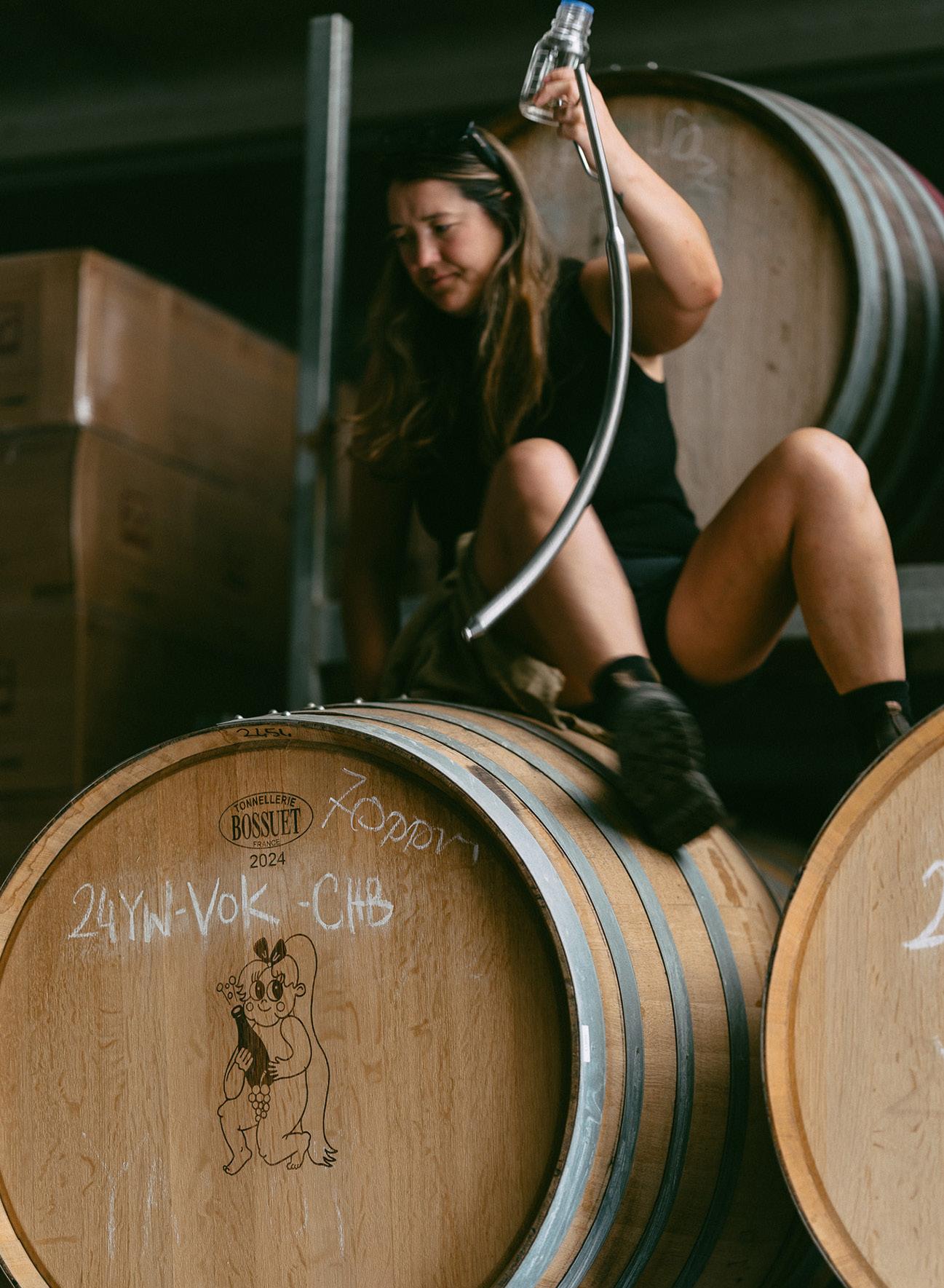
Two Australian winemakers share their love of local Chenin Blanc.
32 // EQUIPMENT
Refine your omelette and scrape the mixing bowl clean with this handy tool.
44 // BAR CART
Thirst quenchers, slow sippers, and all things beverage related.
50 // FIVE MINUTES WITH …
Sophie Dalah, the chef behind catering and production company Sophie’s Table.
Features
28 // RESTAURANT EVOLUTIONS
Restaurants are making serious moves to keep up with changing customer behaviour.
34 // TECH
How new tech is giving your staff the time to focus on customer service.
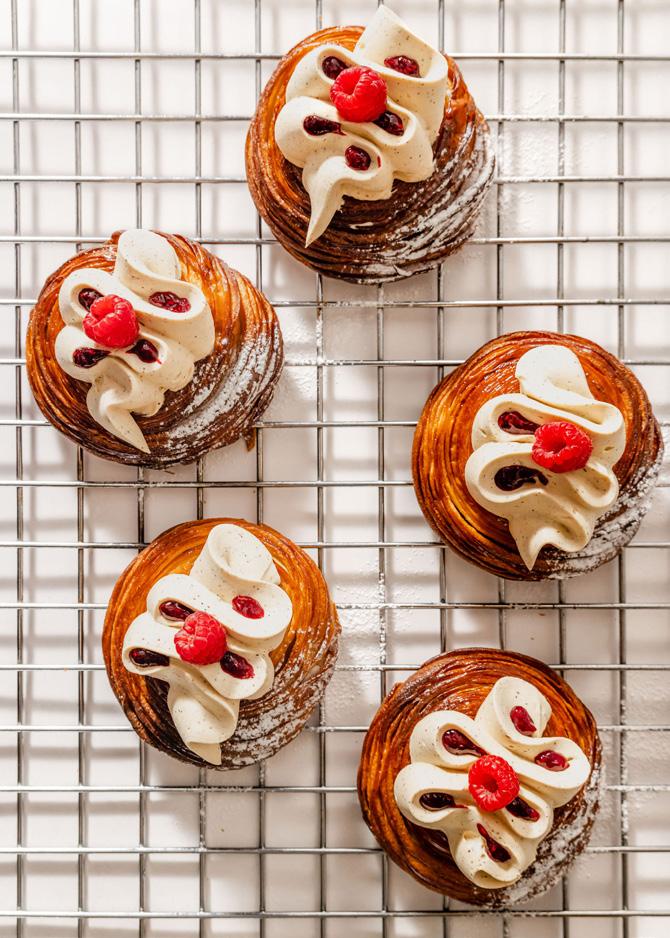
38 // PASTRY
Roberto Mele and Jose Silva on what it takes to become a cult pastry icon.
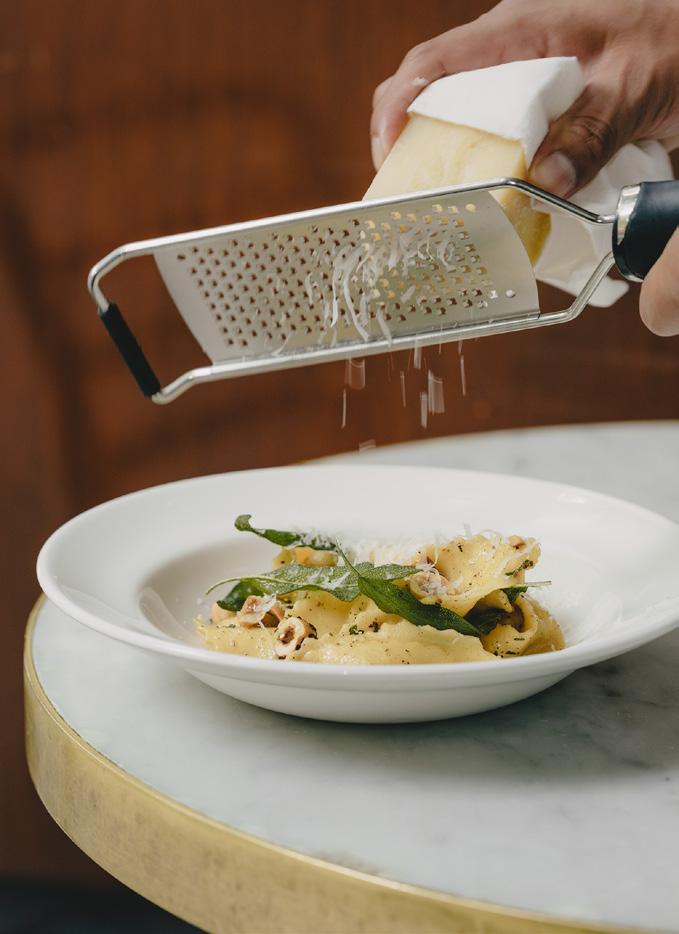
46 // ITALIAN
Michael Greenlaw on bringing old school Italian menus into the modern era.
A note from the editor
IT’S THE SEASON of the rebrand: In a bid to refresh their offering and keep guests intrigued, a raft of Sydney restaurants are keeping their names, but spinning new stories. Journalist Maia Hart delves into three restaurants that are launching new concepts and asks, will this help curb restrained spending?
With the cooler months upon us, this edition also looks towards comfort food: Edition Group Culinary Director Michael Greenlaw shares how local Melbourne producers are helping reshape his Italian
PUBLISHER Paul Wootton pwootton@intermedia.com.au
EDITOR Laura Box lbox@intermedia.com.au
JOURNALIST Maia Hart mhart@intermedia.com.au
menu at Florentino, and Roberto Mele of Hobart's Mama Artisanal Bakery and Jose Silva of Sydney’s Sweet Belem share their tips on honing cult pastry brands. Also, Ken Burgin offers his bookkeeping tips, Straight to the Source’s Tawnya Bahr examines the properties of Oaxaca cheese, and Nadja Wallington and Steffi Snook discuss the rise of Chenin Blanc in Australia. Happy reading,
Laura Box Editor
COMMERCIAL DIRECTORHOSPITALITY
Simon York T: 02 8586 6163 syork@intermedia.com.au
GROUP ART DIRECTOR –LIQUOR AND HOSPITALITY Kea Webb-Smith kea@intermedia.com.au
PRODUCTION MANAGER Jacqui Cooper jacqui@intermedia.com.au
CIRCULATIONS
To subscribe please call 1800 651 422. hospitalitymagazine.com.au facebook.com/ HospitalityMagazine twitter.com/Hospitalityed instagram.com/hospitalitymag COVER Image supplied by Franca
SUBSCRIPTION
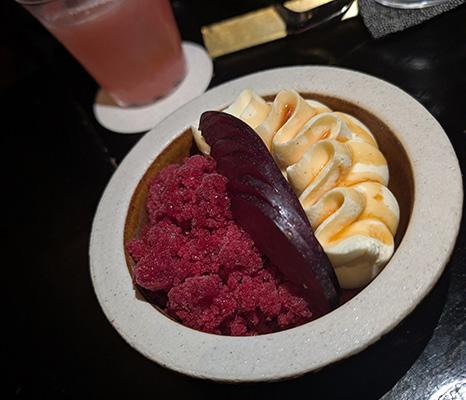
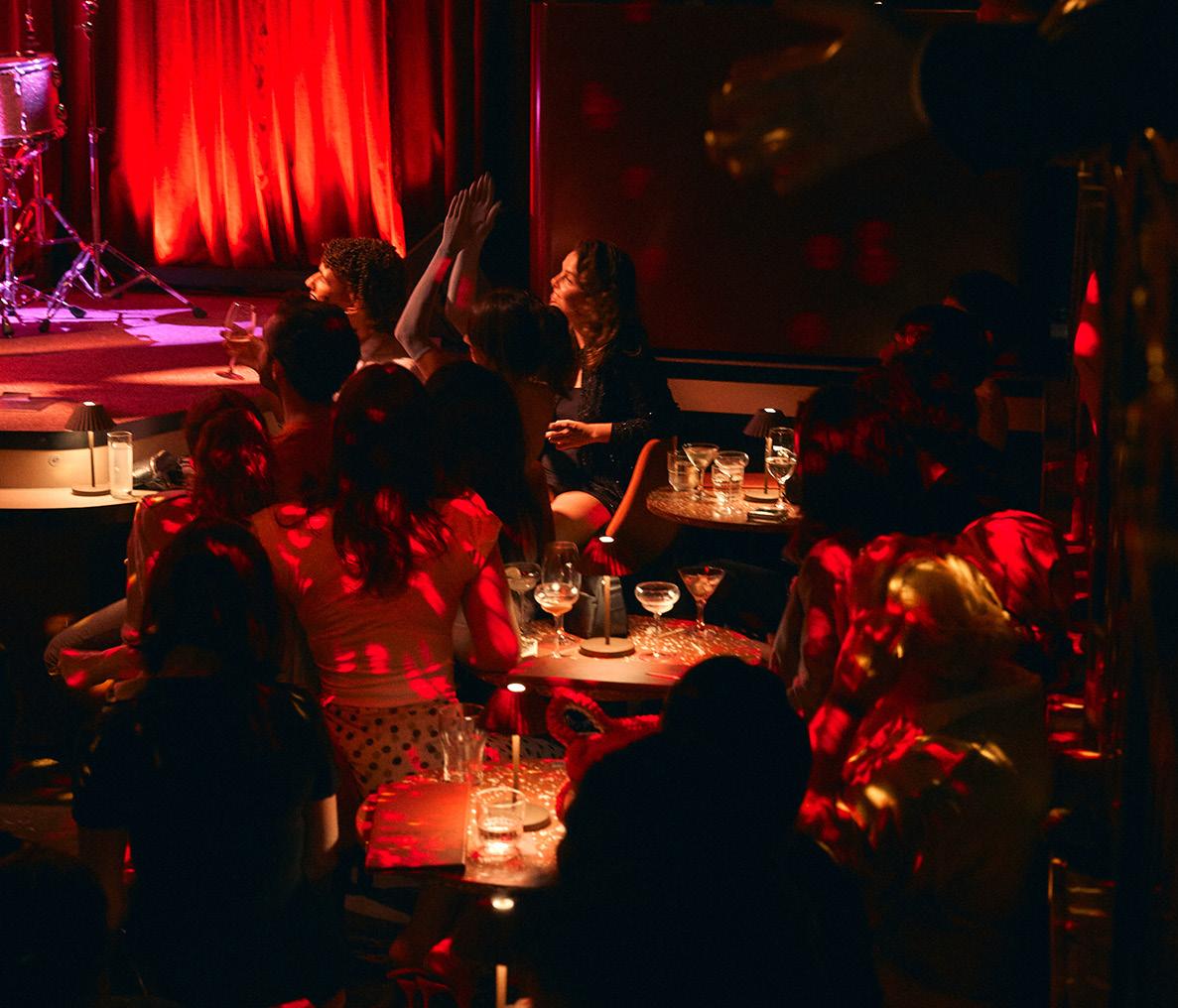
Granita with Scarlet Amaro caramel and kasu cream at Ante
Lua opening day at the Sydney
Market
International inspiration
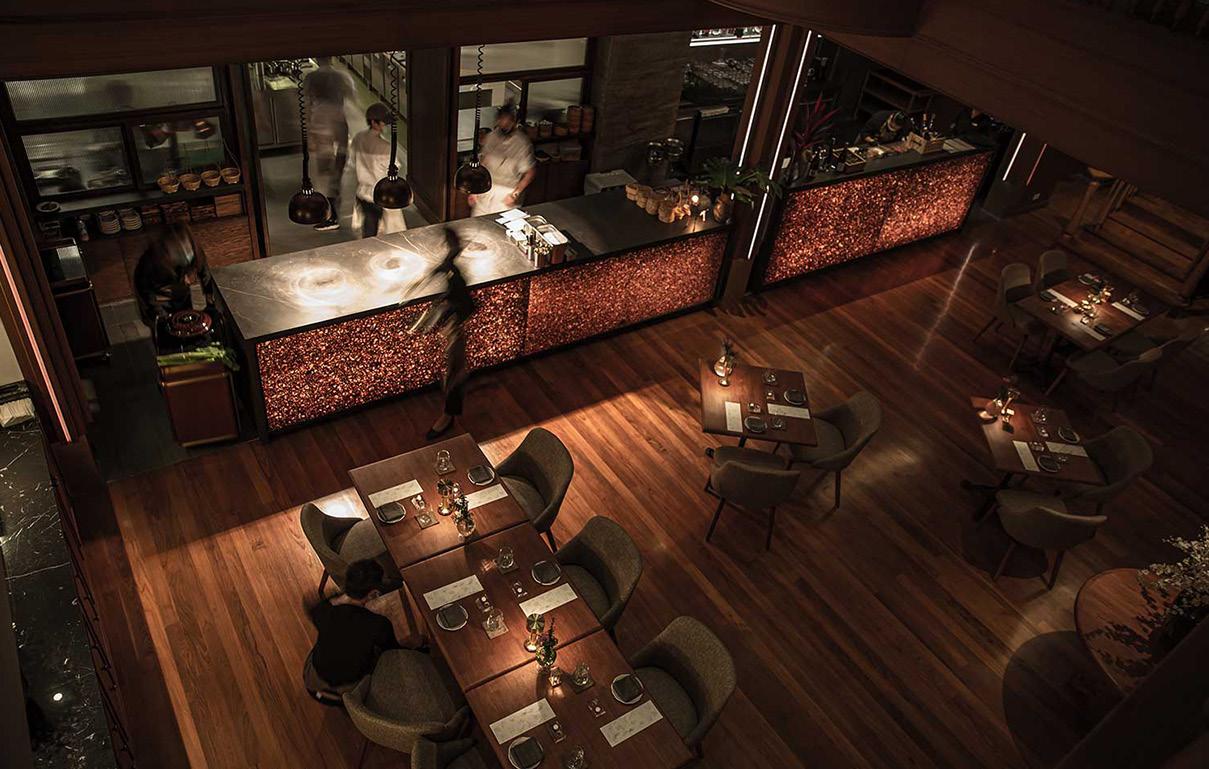
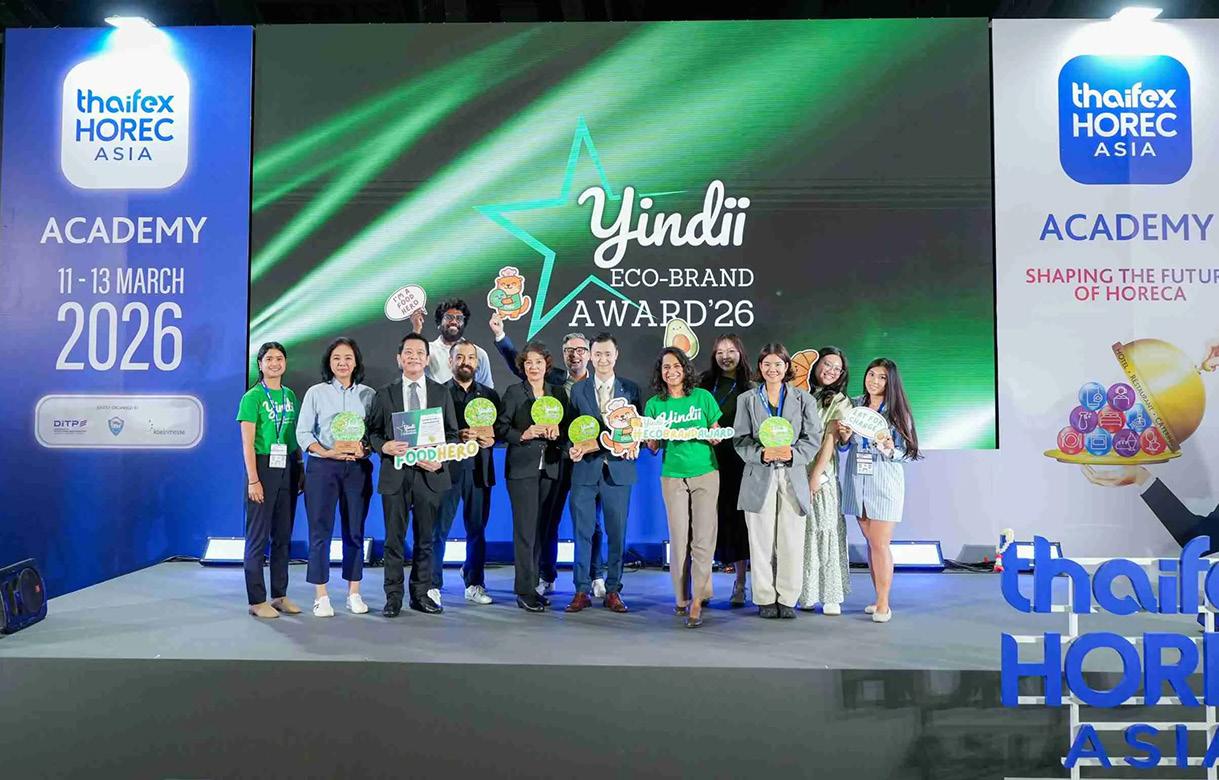
Thai restaurants and manufacturers are gaining recognition for their sustainable practices.
What can Australian operators learn?
WORDS Laura Box PHOTOGRAPHY Thaifex-Horec Asia; Baan Tepa
THAILAND’S FOOD AND beverage sector has been making significant waves in sustainability. Now, the nation is receiving international recognition – and it may be overdue for Australian operators to take note. Bangkok institution Baan Tepa has recently been receiving its flowers for years of eco-conscious work, with the farm-to-table fine diner taking out this year’s Sustainable Restaurant Award at Asia’s 50 Best Restaurants Awards. Meanwhile, trade shows like Thaifex-Horec Asia are championing more sustainable businesses than ever, and manufacturers like Sonite are finding ways to repurpose agricultural by-products into tableware and restaurant fitouts.
Baan Tepa
In 2025, Asia’s 50 Best Restaurants named Chudaree ‘Tam’ Debhakam Asia’s Best Female Chef. Debhakam is also recognised as the first Thai female chef to earn two Michelin stars, which Baan Tepa holds alongside one Green star and its 2026 Sustainable Restaurant award.
Baan Tepa focusses largely on championing local produce, and the restaurant has close ties with over 70 producers from over 36 Thai regions. 95 per cent of the menu is domestically produced, with just two menu items sourced internationally – caviar and Australian wagyu - both of which are used in small quantities. Not only do these actions reduce carbon footprint by minimising food transport; they also support local businesses.
The team is also driving this local ethos by deliberately procuring heritage and underutilised produce, including native rice species, wild herbs, and traditional fermented ingredients such as Tua Nao (fermented soybean) from northern communities, which ultimately helps increase the market value of biodiversity in the region.
Staff are trained thoroughly, with monthly in-house ingredient presentations from farmers, fishers, and foragers, improving staff knowledge and creating direct relationships between those who grow food and those who cook and serve it. Many Australian chefs are also recognising the value of strong staff-supplier relations, with some noting that introducing staff to producers has increased engagement, retention, and mental wellbeing.
Juliane Caillouette Noble, CEO of The Sustainable Restaurant Association, which acts as 50 Best’s sustainability audit partner, says Australian restaurants can look to Baan Tepa for inspiration when designing their processes.
“Baan Tepa’s approach to sourcing is conscious and commendable, using their procurement strategy to support regional biodiversity and farming communities," says Caillouette Noble.
“They also provide an outstanding example of how even highend kitchens can take an active approach to designing waste out of their systems – particularly relevant for Australian businesses now, as food waste legislation begins to tighten.”
Baan Tepa's approach to waste begins in-house, where a circular food system processes 100 per cent of organic waste on site. Dedicated fermentation and surplus R&D roles are responsible for transforming the kitchen’s by-products into usable components. The team ferments fruit scraps into vinegars and kombucha; processes herb stems into oils and powders; uses seafood shells for
stocks; and diverts used cooking oil to biodiesel. Caillouette Noble points out that only materials that can't be further upcycled are composted, closing the loop by returning to the on-site garden.
She adds that Baan Tepa can provide a blueprint for Australian kitchens looking to redesign their workflow to treat by-products as ingredient streams, looking to track waste to refine systems, or wanting methods to train staff on proper segregation and contamination reduction.
“We would love to see businesses in Australia taking inspiration from Baan Tepa, embedding circularity into their own operations in similar ways,” says Caillouette Noble.
Thaifex-Horec Asia 2026
Bangkok’s Thaifex-Horec Asia 2026 is among the nation’s most significant annual hospitality, restaurant, and catering (HoReCa) fairs. In 2026, the event showcased Thailand’s strength as a regional hub for the HoReCa industry and as a gateway connecting ASEAN with global markets.
This year, it welcomed over 21,000 trade visitors from over 70 countries and hosted a multitude of sustainability-focussed businesses. Among these were the likes of 100 per cent plant fibre packaging company Alterpacks; restaurant equipment and solution provider Welbilt; and award-winning Yindii, a sustainable food app that allows restaurants, cafes, and supermarkets to sell surplus food at discounted prices.
The convention also presented a subsidiary form of sustainability: with escalating wars causing global uncertainty, international trade feels like less of a fact, and more of a luxury For Australia, looking closer to home – namely in Asia – may be a way of securing more stable and sustainable trade partnerships.
Thailand’s Prime Minister Anutin Charnvirakul addressed the event’s opening ceremony, noting the importance of resilience, adaptability, and cooperation for ensuring sustainable growth of the HoReCa industry.
“Shifts in trade policies, geopolitical tensions, rising energy costs, and disruptions to global supply chains are affecting industries worldwide, including the travel and tourism sectors,” said Prime Minister Charnvirakul. “In such circumstances, resilience, adaptability, and cooperation have become essential foundations for sustainable growth.”
In financial year 2023-24, Thailand ranked 9th among Australia’s top two-way trading partners, with trade value based at over $33 million AUD.
Sonite
Thailand is one of the largest rice producing nations in the world. For Nithiphan Darakananda, the president of Bangkok-based surfaces and decor producer Sonite, the by-products from this industry presented an opportunity. He developed a material, dubbed ‘Husk’, which upcycles rice husk waste to be used for mosaics, surfaces, and décor.
With so many industries’ by-products becoming waste and landfill, Darakananda soon decided to extend Sonite's range of composite materials. The resulting range includes Java, a material which uses a high percentage of discarded coffee grounds (and
“We don’t want to do something that is eco-friendly and using recycled material, but doesn’t last long.” - Nithiphan Darakananda
has since been used to make coffee tables for Starbucks); Cocco, made of coconut fibres (with Thailand producing over one million tonnes of coconuts annually, a large amount of related waste is also produced); ‘E-marble’, which consists of upcycled egg shells; Talay, made of ocean-bound PET; and Naturla, a natural stone material made of thin layers, reducing its weight and carbon footprint compared to ordinary stone.
Now, the company creates tiles, décor, and solid surfaces –some of which has landed in significant Thai hospitality venues, including Michelin-starred restaurants in Bangkok, like Le Du.
“We want to change something that is waste into something that is very high value and looks quite beautiful. At the same time, the most important thing is that it needs to last a long time. We don’t want to do something that is eco-friendly and using recycled material, but doesn’t last long,” Darakananda tells Hospitality
“Our materials have been used in hotels, restaurants, hospitality, and in commercial real-world environments every day for years. So we know it’s not something that will break apart – it’s sustainable in terms of the material itself, but also sustainable because you can use it for a very, very long time.”
The company has won awards recognising it as a leader in sustainable exports, including Thailand Prime Minister’s Export Award 2024. ■
Entrée
The latest openings, books, events, and more.
Edited by Laura Box
You’re Welcome!
Raymond Tan and Audrey Payne
Murdoch Books
$49.99
You’re Welcome! is the latest project from Raymond Tan, the name behind cult Melbourne bakery Raya and “Scandinasian” bakery Dua, in Collingwood. The collection of sweet and savoury recipes showcase baking with a Southeast Asian spin. Among the offering are miso peanut cookies, matcha almond ‘pocky’ sticks, an array of cakes (that range in difficulty), mooncakes, colourful Malaysian kueh desserts, and the “unfortunate” cookies that made Tan famous. murdochbooks.com
Garden of delights
Hunter St. Hospitality (Rockpool Bar & Grill, Spice Temple, Saké, 24 York, and more) has launched Bar Ferdinand, a compact 21-seat cocktail bar above its Melbourne steak frites restaurant 7 Alfred. The bar has an evolving garden-themed cocktail menu, with each drink aiming to evoke elements of an imagined botanic garden rather than “simply mimic an ingredient”. The opening menu includes ‘Herb’, a sage freeze-infused ginbased cocktail with macadamia orgeat, lemon, and fig leaf; and ‘Eucalyptus’, which pairs unaged Calvados with fermented nashi pear wine and eucalyptus soda. bar-ferdinand.com.au
Dark Mofo
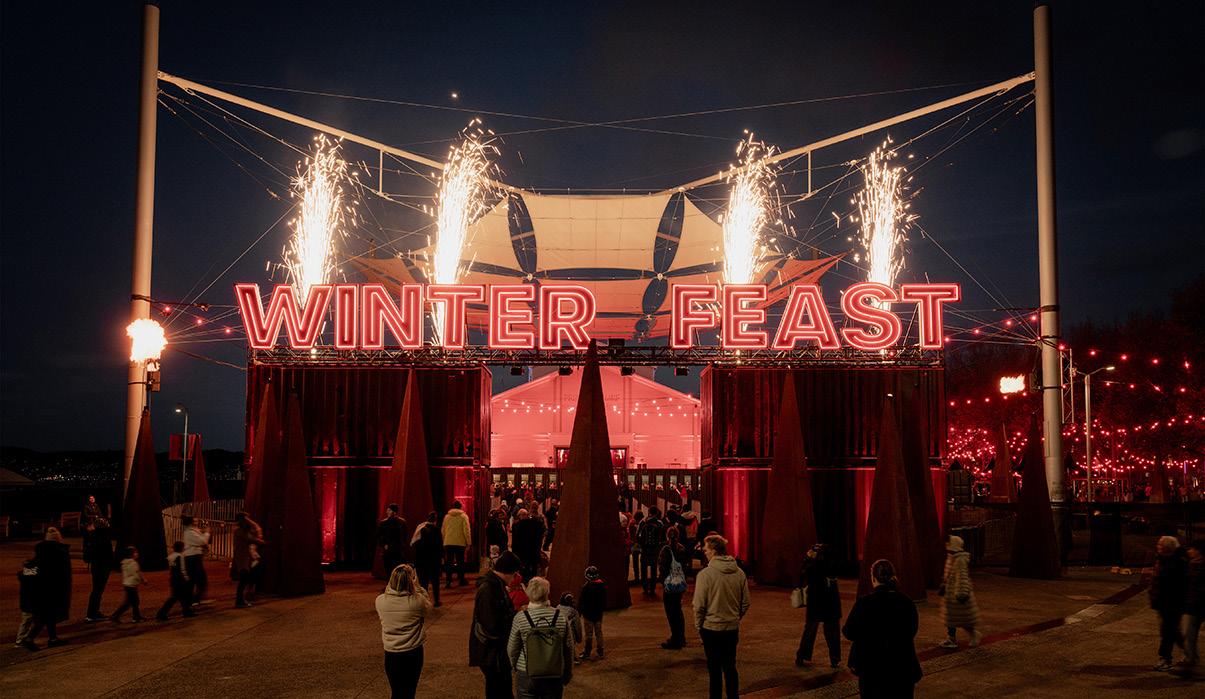
Hobart’s most titillating festival is back again, along with festival’s annual culinary centrepiece, the Winter Feast. The feast, which runs for eight nights over the event, marks a significant milestone on the state’s food and wine calendar, with over 500 Tasmanian chefs, producers, and operators vying for just 75 stallholder spots. “[Being able to] showcase some of the incredible produce, operators, and chefs that we have down here does feel really special,” Dark Mofo Food Curator Amanda Vallis tells Hospitality. “We feel really proud of what we have to offer, and I think all of the stallholders that are involved feel that pride as well.” This year's festival takes place 11 – 22 June. darkmofo.com.au
Vegan vision
Shannon Martinez has partnered with impact investor Kelly Jarrett to launch Made by Smith, a wholesale arm of Martinez’s vegan food business. Martinez says she has had “numerous enquiries” from hospitality groups wanting to purchase products but could not meet this demand from her small kitchen. Jarrett’s investment will allow Martinez to outsource production for the first time, unlocking the ability to supply the growing number of hospitality businesses seeking premium plant-based products. smithanddaughters.com
The future of hospitality
We’re teaming up with Australian Hotelier to launch HospoNext, a free industry show exploring the ideas, products, and people shaping the future of hospitality. The event will be co-located with the Pub Leaders Summit and will also mark the inaugural Top 50 Gastropubs Awards. 13 July at the Hyatt Regency Sydney. hosponext.com.au
iStock.com/bor-zebra
Oaxaca Cheese
Pronounced wah-HAH-kah, this traditional Mexican cheese has a beautiful melt and stretch.
WORDS Straight to the Source Director Tawnya Bahr
Origin
Oaxaca cheese, known in Mexico as quesillo, traces its roots to the southern state of Oaxaca, which is a region in Mexico rich in Indigenous culture and embedded food traditions. Legend has it that the cheese was created by accident when a young girl overheated milk, leading to the discovery of its now-signature stretchy texture. Rather than waste it, she leant into the mistake, and a standout, melting cheese was born.
While it’s now produced across Mexico and in many countries, including Australia, Oaxaca cheese carries a sense of place tied to local milk, climate, and technique. In Australia, chefs are discovering its versatility, story, and ability to provide a point of difference to a dish.
How it’s made
Oaxaca cheese is made using the pasta filata technique, which is in the same family as the
methods used for mozzarella, but with its own rhythm and personality. It starts with cow’s milk, which is gently acidified and heated until curds form. These curds are then cut, rested and eventually immersed in hot water.
At this stage, the curd becomes elastic and pliable. Cheesemakers stretch and knead it repeatedly, pulling it into long, glossy ribbons. This process develops the cheese’s signature stringy texture: soft, layered, and built to melt. Instead of forming into neat balls like mozzarella, those ribbons are wound into a loose, tangled ball, almost like a ball of yarn.
The result is a semi-soft cheese with a delicate structure and mild, milky flavour. It’s fresh, not aged, which keeps it light and versatile. The craftsmanship lies in the feel, knowing exactly when the curd is ready to stretch and when to stop before it loses its integrity. Here in Australia, Master Cheesemaker Vito Minoia of Vannella Cheese is drawing on decades of filata expertise
to produce an outstanding hand-stretched Oaxaca made with Australian cows’ milk.
Culinary applications
Its mild flavour makes it incredibly versatile, but it’s the melt that steals the show: silky, stretchy, and indulgent without being heavy. You’ll find it front and centre in dishes like quesadillas, enchiladas, and in dishes that long for that perfect cheese pull. It’s also a natural fit for baked dishes where a clean melt matters more than sharpness. Beyond traditional uses, chefs love it for its adaptability. It can be torn into strands for salads, folded through scrambled eggs or melted over roasted vegetables for a softer, more delicate finish than aged cheeses would bring. Think of it as mozzarella’s more understated cousin, less about punch, more about texture and balance. It plays well with spice, acidity, and smoke, making it ideal for dishes that need cohesion without overpowering the plate. ■
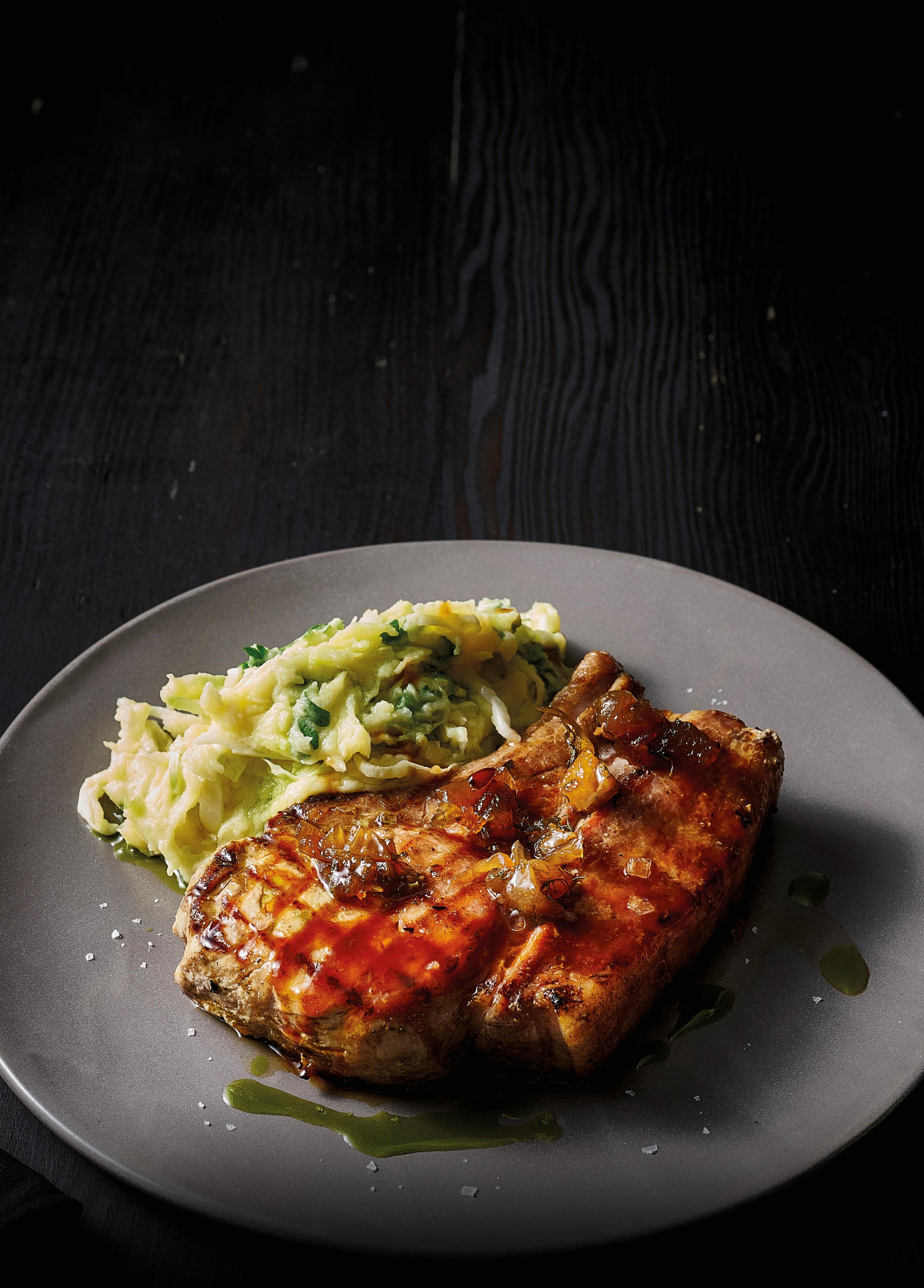
For the past 8 years grilled meat has firmly held its position as the second most popular foodservice meal in casual dining.*
So it’s no surprise that grilled pork is one of the top 5 most popular pork meals in foodservice.*
There is no better time to put a succulent, sweet pork chop, cutlet, steak or tomahawk on your menu.
Discover how tasty, delicious pork brings an enticing twist to your grill menu.
Table matters
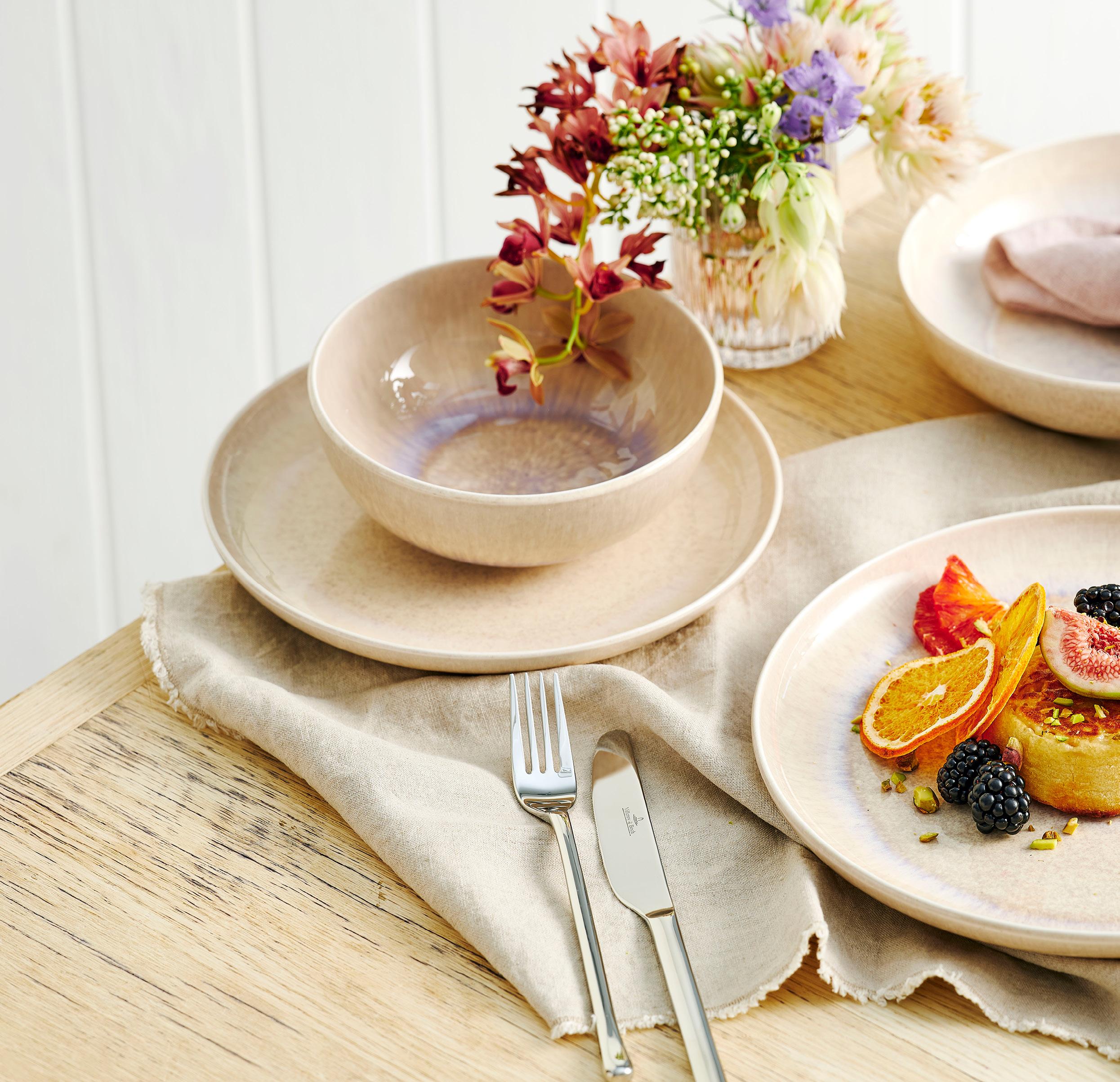
Your tableware is working every service. The question is whether it’s working for you.
THE BEST CHEFS in Australia think about their tableware the way they think about quality ingredients — as a deliberate choice that either elevates the outcome or works against it.
Villeroy & Boch ANZ Managing Director Toula Xenos says that when a guest chooses your restaurant, small details like tableware can help them feel like they’ve made the right choice “A guest who books your restaurant has already decided you’re worth it. Your job from that moment is to confirm they were right,” says Xenos.
Xenos adds that operators who get tableware right make their design choices based on branding, rather than price. “And in a world where every dish is photographed before it’s touched, that plate is representing their brand to an audience they’ll never meet,” she says.
Walk through service at any venue operating at the top of its game and you’ll see it. The way a plate is picked up before a dish
is placed, the slight rotation to find the right angle, the instinctive check of the rim. Chefs who care about their food care about what that food sits on. Because the plate arrives first, it sets the tone for everything that follows.
Rim profile, glaze depth, bowl geometry, weight in the hand; none of this is neutral. A shallow rim makes a composed dish look crowded. The white of a glaze, cooler or warmer, changes how colour reads on a plate. Details at this level are conscious decisions which determine whether plates serve the food or compete with it.
Menus change seasonally, rooms get refurbished every few years, and staff move on. But the tableware is there at every cover, every service, and for every photograph. It’s the single most repeated touchpoint in the guest experience. The operators who understand that don’t treat the specification lightly.
This is why the best operators specify rather than select. Villeroy & Boch has
been making porcelain since 1748. Many of its hospitality collections have been in continuous production for decades — not because they haven’t evolved, but because the design was resolved from the start. That’s why Crown Resorts, Shangri-La, and Grappa at The Rocks specify them. Not just for opening night, but for every service that follows.
The collections are built for what a professional kitchen does to tableware, including thermal shock, relentless dishwasher cycles, and the daily pressure of high-volume service. The aesthetic holds because the material science demands it. When a venue needs to replenish for a new dining room, a breakage cycle, or an expansion, they can source the same piece, in the same glaze, with the same tolerances and confidence that the design won’t drift. The table on a Tuesday in year four looks the same as it did on opening night. In this industry, that’s not a detail. That’s a standard. ■
“A guest who books your restaurant has already decided you’re worth it. Your job from that moment is to confirm they were right.” — Toula Xenos
Bookkeeping at its best
AI-driven bookkeeping is becoming essential in hospitality.
WORDS Ken Burgin
IN TODAY’S ENVIRONMENT of rising wages, tighter margins, and unpredictable trade, treating bookkeeping simply as a compliance task is no longer good enough. AI-powered bookkeeping is becoming more common, and it’s starting to shift the role of financial data from passive to active reporting.
While traditional bookkeeping tells you what has already happened, AI-supported systems are beginning to tell you what is happening now and what is likely to happen next. When cloud accounting platforms are connected to POS, rostering, and supplier systems, AI can analyse patterns across daily sales, wage percentages, supplier pricing, and seasonal trends. Instead of waiting for end-ofmonth reports, operators can receive prompts and alerts.
For example, a café owner might get flagged that wage costs are trending 3 per cent above target for the week, based on current rostering and sales pace. That allows for immediate adjustment rather than retrospective damage control.
Slow, inconsistent, and error-prone manual data entry has long been a major weakness in hospitality bookkeeping. AI is rapidly reducing this burden by scanning and automatically coding invoices, learning and categorising recurring expenses over time, and reconciling bank feeds with minimal human input.
A single-site restaurant relying on manual entry might take weeks to identify a rise in supplier costs. With AI-driven capture and categorisation, those increases can be visible almost immediately, prompting quicker pricing or purchasing decisions.
AI-enhanced bookkeeping directly improves performance in the areas where most hospitality businesses struggle:
• Cash flow visibility: AI tools can forecast cash flow based on current trading patterns, highlighting potential shortfalls before they occur.
• Cost of goods control: Systems can detect unusual price changes or usage spikes, helping operators catch margin leaks early.
• Payroll and compliance: AI-assisted payroll can flag anomalies in hours, pay rates, or award interpretation, reducing the risk of costly mistakes.
• Decision-making: Rather than relying solely on instinct, operators receive data-backed suggestions, enabling faster, more confident decisions.
One of the most powerful shifts is the ability to predict. AI can analyse past performance and current trends to forecast quieter trading periods, upcoming cash pressure, and potential overstaffing or understaffing. A multi-site operator, for instance, might be alerted that, based on last year’s data and current bookings, a particular location is likely to underperform next week. That creates an opportunity to adjust marketing, staffing, or promotions in advance and to move bookkeeping beyond reporting into planning.
In the past, this level of financial insight was only available to larger groups with dedicated finance teams. AI is changing that. Smaller cafés and independent restaurants can now access similar levels of analysis through more affordable platforms. The systems do much of the heavy lifting, allowing owners to focus on interpreting the information rather than producing it, ultimately giving them clearer, faster signals about what is really happening in their business.
Ask your accountant what AI-based analysis is available now with the bookkeeping system you use. ■
Crafting culture
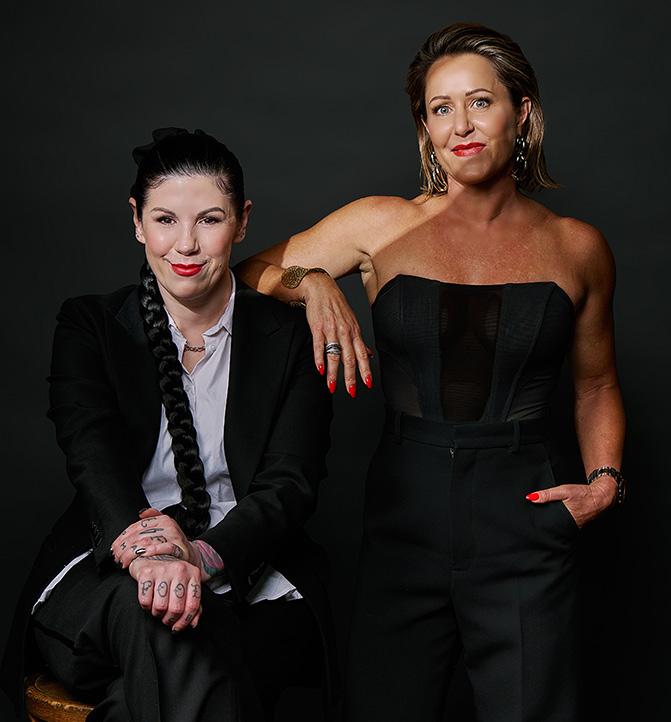
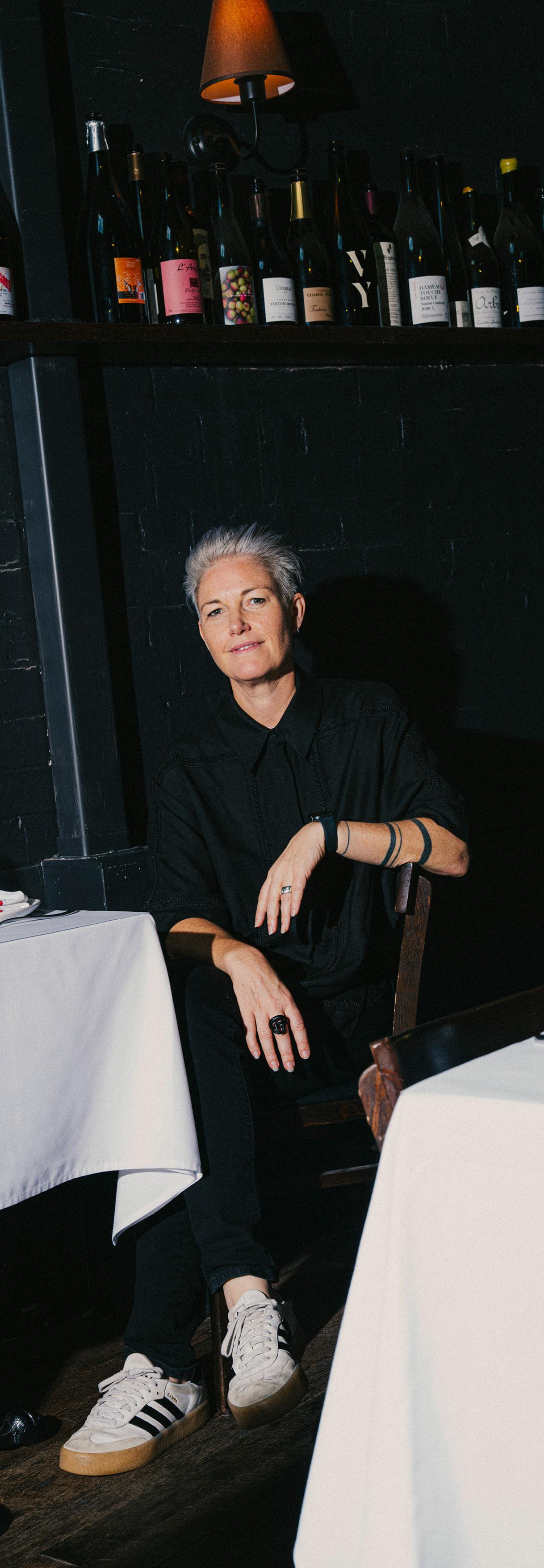
As Odd Culture launches their two latest venues, newly appointed Chief Executive Officer Rebecca Lines outlines the decision to move into the Sydney CBD.
WORDS Maia Hart
PHOTOGRAPHY Ethan Smart and Andrea Veltom
“I REALLY LIKE to make sure we have a concise direction and brand so that everything else can flow through from that. That’s really important to me,” says Rebecca Lines. “I think you have to have good vision to be able to maintain something long term. That’s the part I really love – and then making all the pieces fit into the puzzle.”
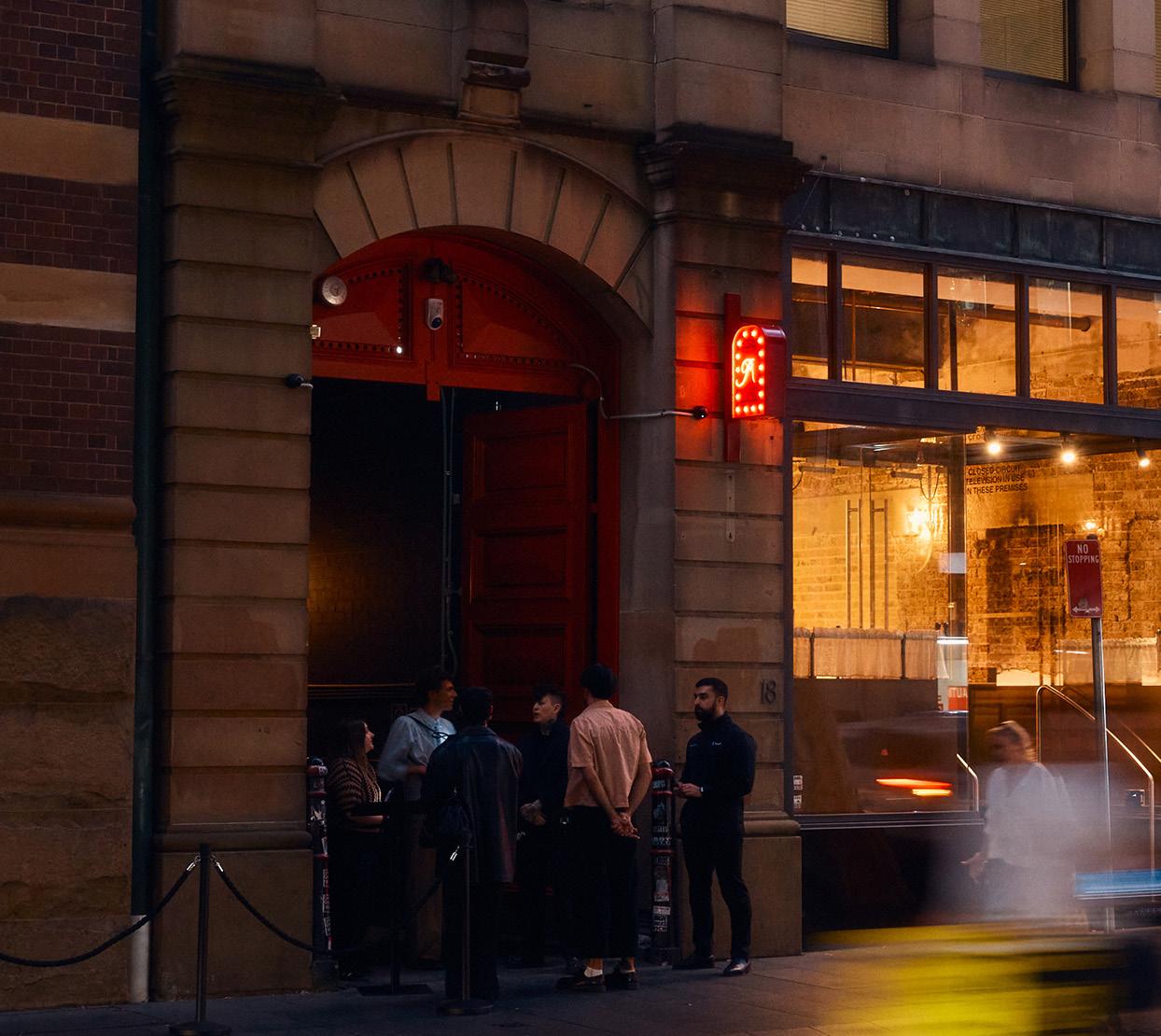
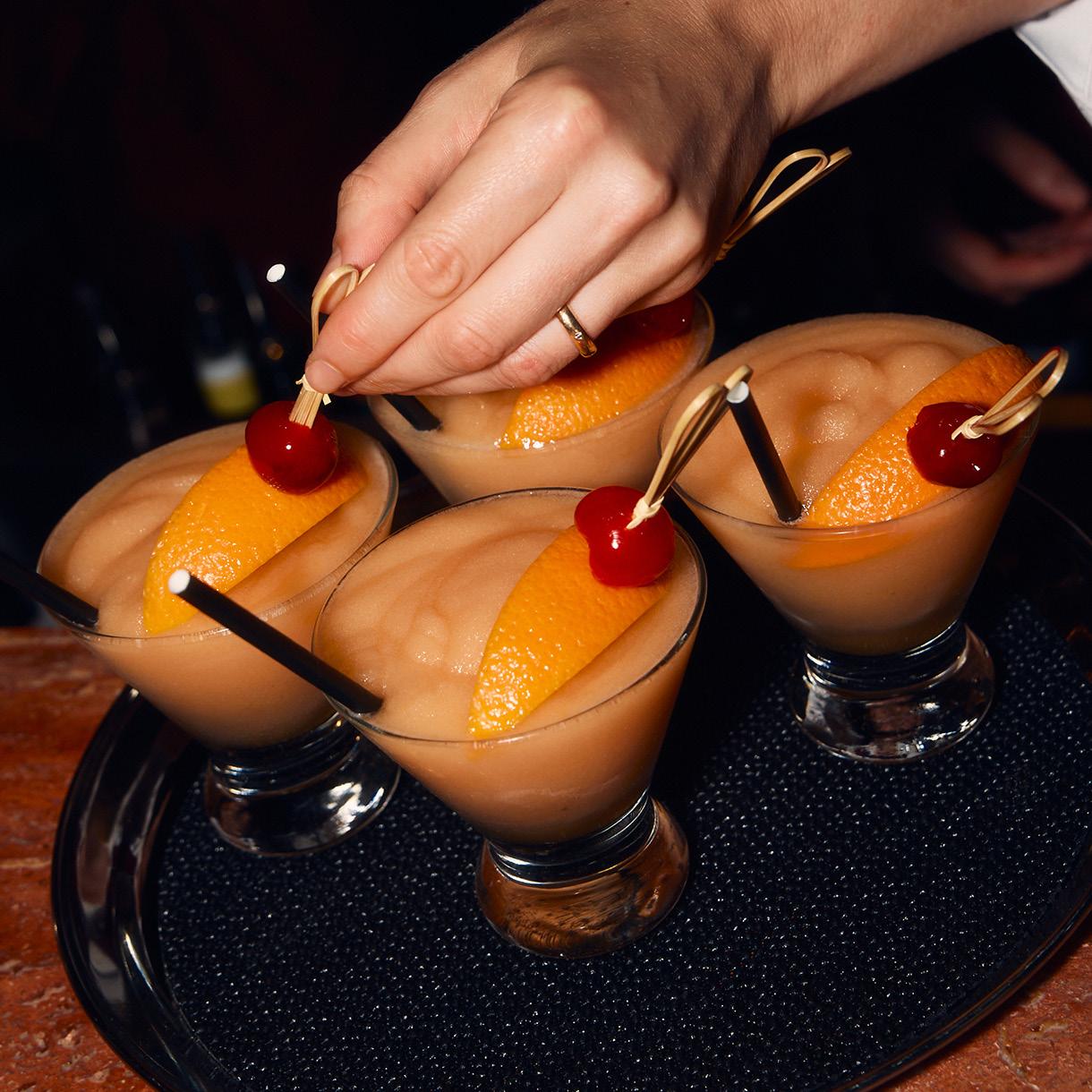
Lines, Odd Culture's recently instated CEO, is speaking to Hospitality off the back of the announcement that the hospitality group is making its move into Sydney’s central business district. While the CBD is a new venture for Odd Culture, it was described as a “natural progression” for the group, which operates the likes of the Old Fitz in Sydney’s Inner East, and Inner West venues Bistro Grenier, The Duke of Enmore, and Pleasure Club. They first teased the plans earlier this year, and it was later confirmed that the CBD openings included two venues on York St. In April, the group opened the first of those – an underground daiquiri bar and discotheque dubbed Razz Room – and a neighbourhood Italian osteria is set to follow in the space upstairs.
Lines, who spent a year as chief operations officer for Odd Culture before moving into the chief executive role, is working on the group’s move into the CBD alongside Co-Directors James
“I think you have to have a good vision to be able to maintain something long term.”
Thorpe and Nick Zavadszky. Prior to this, she operated her own restaurants for 15 years.
“This opportunity came up through a friend of mine. James was really looking for someone who could take over the leadership of the company. For me, that was probably the right move as it is somewhere I can have impact and help the company grow. So, it just seemed like a natural fit,” says Lines.
“There’s a really great group of people here at Odd Culture. There are a lot of really skilled people within the team and all it needs is a great leader to take some of the heat off James. His love is definitely in legislation and helping the industry via legislation. That is where he wants to focus, so he needed somebody who could help lead the team day-to-day operationally.
“It has been nice to be able to help guide them all into in the right direction, in terms of helping them all do what they do best.”
Though she wasn't there when the decision to take on the York St site was made (those discussions probably started about two and a half years ago), Lines’ position within Odd Culture has seen her working behind the scenes to make sure the two venues come together as smoothly as possible.
“It’s hard to turn down something which has got such charisma, and is in a great position in the CBD,” she explains.
Lines believes the venues will contribute to the revival of Sydney’s city centre. She says the CBD should be a great place for both locals and tourists to experience, with a wide variety of venues on offer.
“It’s hard to turn down something which has got such charisma, and is in a great position in the CBD.”
“I think certainly post lock out laws we really turned Sydney into a very boring place. It shouldn’t be, it should be a global city. Hopefully we can be part of bringing back a vibrant city,” says Lines. “Once upon a time people didn’t dine out in the CBD. I think the GFC [Global Financial Crisis] is when people started moving in and doing more casual restaurants in the CBD. Now it is a place where people go out, as it should be.”
Prior to opening, a lot of Lines’ time was taken up by making sure the build went smoothly. But recruitment, organising security, signing off on food and beverage direction, photography, and branding also needed to be completed.
“It’s a little bit of everything, which is what I like. I think having oversight of all those things and making sure those details are as they should be, right down to how staff greet a customer coming in, those types of things are really important when you’re opening a new venue.”
Throughout her career, Lines says she has learnt to “just get on with it”. That mentality was needed as they worked towards the Razz Room opening – like when the wrong chairs were delivered and six tables didn't show up. So while navigating the build is what she describes as the hardest part of the process, she says she knows not to dwell on things when they (somewhat inevitably) don’t go to plan.
“It’s those sorts of details where there’s literally nothing I can do … you just have to go with it really and work on a solution. The solution might not be ideal, but it is what it is. I don’t think I’ve ever been at a build that goes perfectly smooth to be honest. Maybe one? I’ve learnt not to be too stressed about it nowadays.”
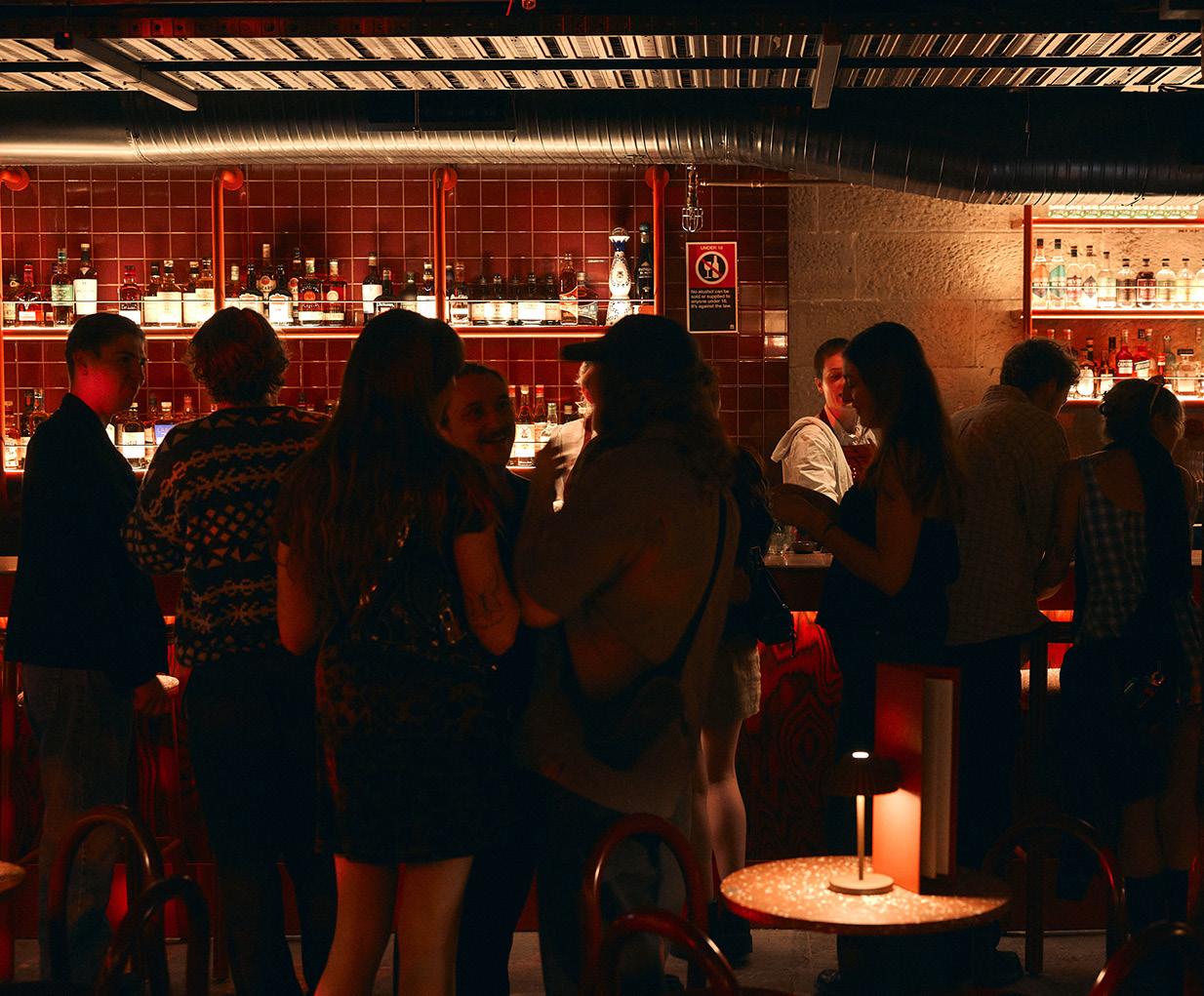
The build in question was needed to separate the venues into two. Lines says downstairs at Razz Room, Odd Culture has “really kept” to what it means to be underground. The result is a discotheque and daiquiri bar, which will host disco funk, soul, and early house sounds. It has two distinct spaces: an upper bar area and a sunken dance floor, in a nod to the underground clubs of New York City.
“It’s just a bit gritty; disco before it got shiny,” Lines explains. “We’re very aware that it’s corporates here in the CBD and so that’s one of the main clientele. But corporates are very diverse in a sense, and they come from all over the place.
“We’ve tried to ensure that downstairs, after work drinks are cocktail leaning. It’s very loungey, relaxed, and the space is made to evolve throughout the day. We’re open until 4am [Thursday to Saturday], which is why we have a sunken lounge for dancing, where the DJ booth is and the stages, and then there’s kind of an upper bar that has a nice cocktail feel to it.”
At the time of her discussion with Hospitality, Lines remained fairly tight lipped on what the osteria will look like, but she did confirm it will seat about 85. But things were ticking along, job interviews were underway, and she was confident that Odd Culture would deliver something that people will want to visit.
“If we’re doing what we should be doing, and we’re doing it well, then we’ll have customers.” ■
Blanc canvas
As Chenin Blanc gains momentum in Australia, its quality just keeps getting better.
WORDS Laura Box PHOTOGRAPHY Pip Farquharson and Yayoi
WHEN STEFFI SNOOK began getting into wine, she travelled to the “motherland” of Burgundy to explore the world’s best. “It was a slap in the face when I realised I couldn’t afford to drink them,” says Snook.
She resolved instead to seek out other regions in France that were more affordable.
“I remember constantly coming across Chenin Blanc and thinking, this wine is so undervalued. It’s affordable, it’s super expressive, and it’s quite diverse in its range of flavour profiles, depending on where it’s from and how it’s made.”
Back in Australia, around a decade ago, Snook began delving deeper into Chenin Blanc and found there were only a small handful of people making it nation-wide.
“It was often made as a very commercial, clean, and crisp dry white. I wondered why no one was making Chenin Blanc in Australia like
the Loire Blancs that I fell in love with. So that became my mission.”
Snook launched her label Yayoi Wines in 2022, with a goal of putting Australian Chenin Blanc – which doesn’t fall into that commercial trap – on the map.
The Yayoi Chenin range explores the grape’s possibilities. “I wanted to make two quite polarising styles of Chenin Blancs to really highlight the diversity of the varietal and push the boundaries in terms of winemaking,” says Snook.
She developed Vallée of the Kings, which is an ode to the Loire Valley Chenin Blancs, and receives the “Rolls-Royce treatment” with barrel fermentation and 10 months of aging in new and old large-format oak. Then there’s Lueur, which Snook calls her “off-dry style Chenin”, which is inspired by Loire Valley Vouvray.
The label also has a “Chenin Rouge”, which
“It’s affordable, it’s super expressive, and it’s quite diverse in the range of flavour profiles depending on where it’s from and how it’s made.” – Steffi Snook
Chenin Blanc
“It has these orange hues and ginger spice, and texture plays a bigger role.”
– Nadja Wallington
pairs Chenin and Cabernet Franc; a pètilliant naturel “crowd pleaser and the perfect picnic companion”; and a soon to be released méthode traditionnelle, made in a more “serious” champagne style with three years on lees to increase its structure and complexity.
She points out that because Chenin Blanc is naturally high in acid, it’s got quite a neutral base palette.
“It’s a bit like Chardonnay in that way. Chardonnay is actually quite neutral, but when you start focussing on the picking, how it’s handled, how it is made, it starts getting into that complex zone,” says Snook.
“The wines that I really loved coming out of the Saumur in the Loire are these richer styles of Chenin Blanc that are aged in oak, they have a lot of power, they’ve got a lot of texture behind them. That’s what I gravitate towards.”
The majority of Australian Chenin Blanc is currently grown in Western Australia. Although the grape hasn’t reached Chardonnay-level popularity in Australia, it’s not without a decent local history. Snook points to an article published by WA’s experimental wine brand Vino Volta, which traces the history of Chenin back to English Botanist Thomas Waters.
Waters is believed to have planted Australia’s first Chenin vines as early as the 1820s in WA’s Swan Valley.
“Much of it was originally planted and turned into high yielding, quite acidic neutral grapes that were often blended out for bag and box,” says Snook. “It wasn’t until quite recently that people highlighted that it wasn’t the variety they thought it was.”
Snook points out that until the 1970s, all Chenin Blanc in Western Australia and the Barossa Valley was incorrectly known as Semillon and Albillo/Sherry, respectively.
Much of Australia’s current Chenin is planted in warm climates, in contrast to the cool-tomoderate Loire climate. This cross-climate success speaks to the grape’s versatility, says Snook, with the warmer climate varieties exhibiting richer, bolder flavours and notes of tropical fruits.
The Loire Valley is a large and long region of France made up of a diverse patchwork of soils including stony clay-limestone, schist (a metamorphic rock which imparts mineral notes), and fossil-rich tuffeau (a sandy limestone characteristic of the area).
“Each subregion within the Loire really speaks of place. Vouvray has its own style when compared to Anjou or Savigny. Australian Chenin may not ever get to that distinctive regionality,” says Snook. “But as [Australians] start planting more in cooler climates, it will be super interesting to see the varietal’s next wave take shape.”
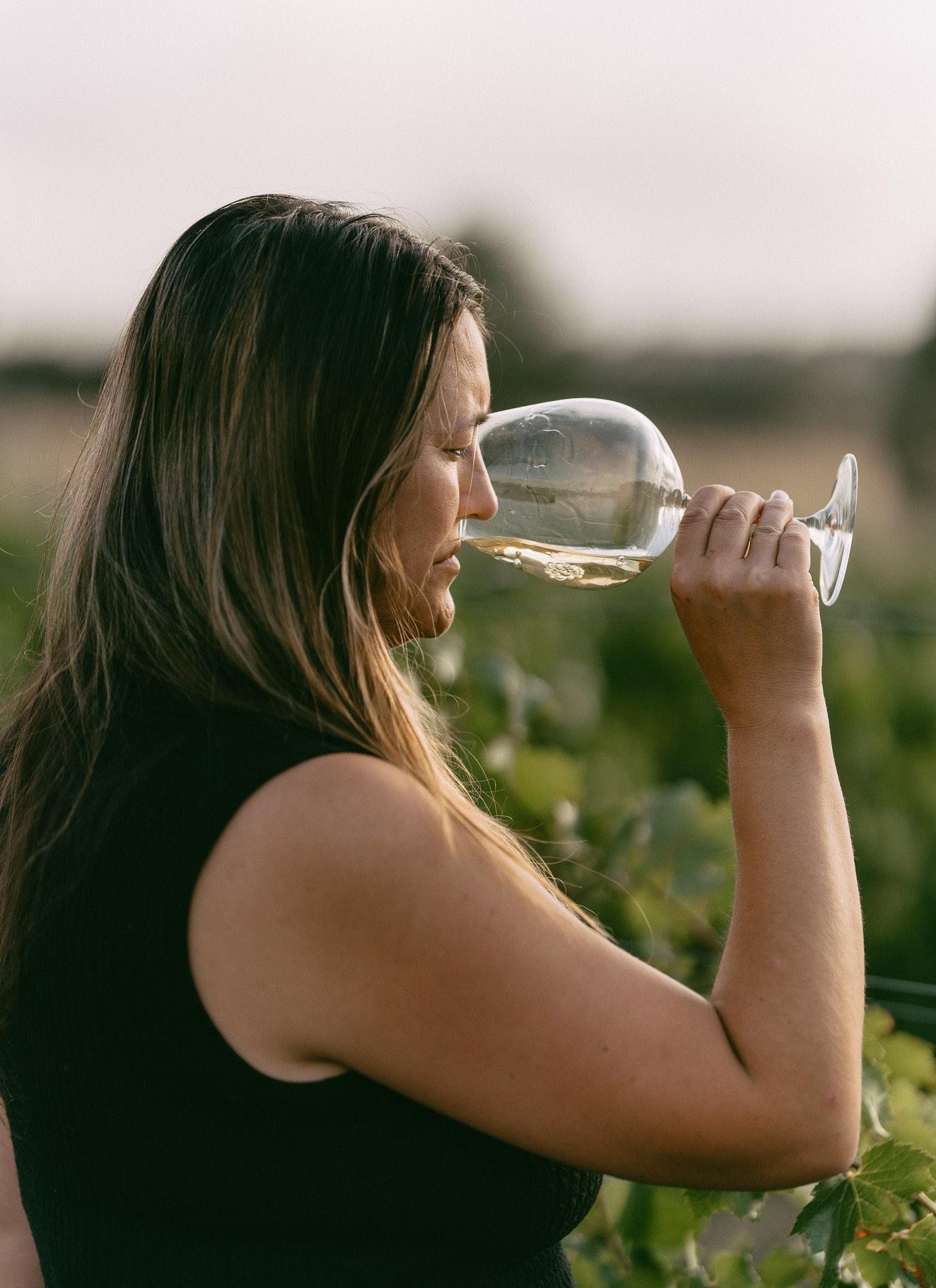
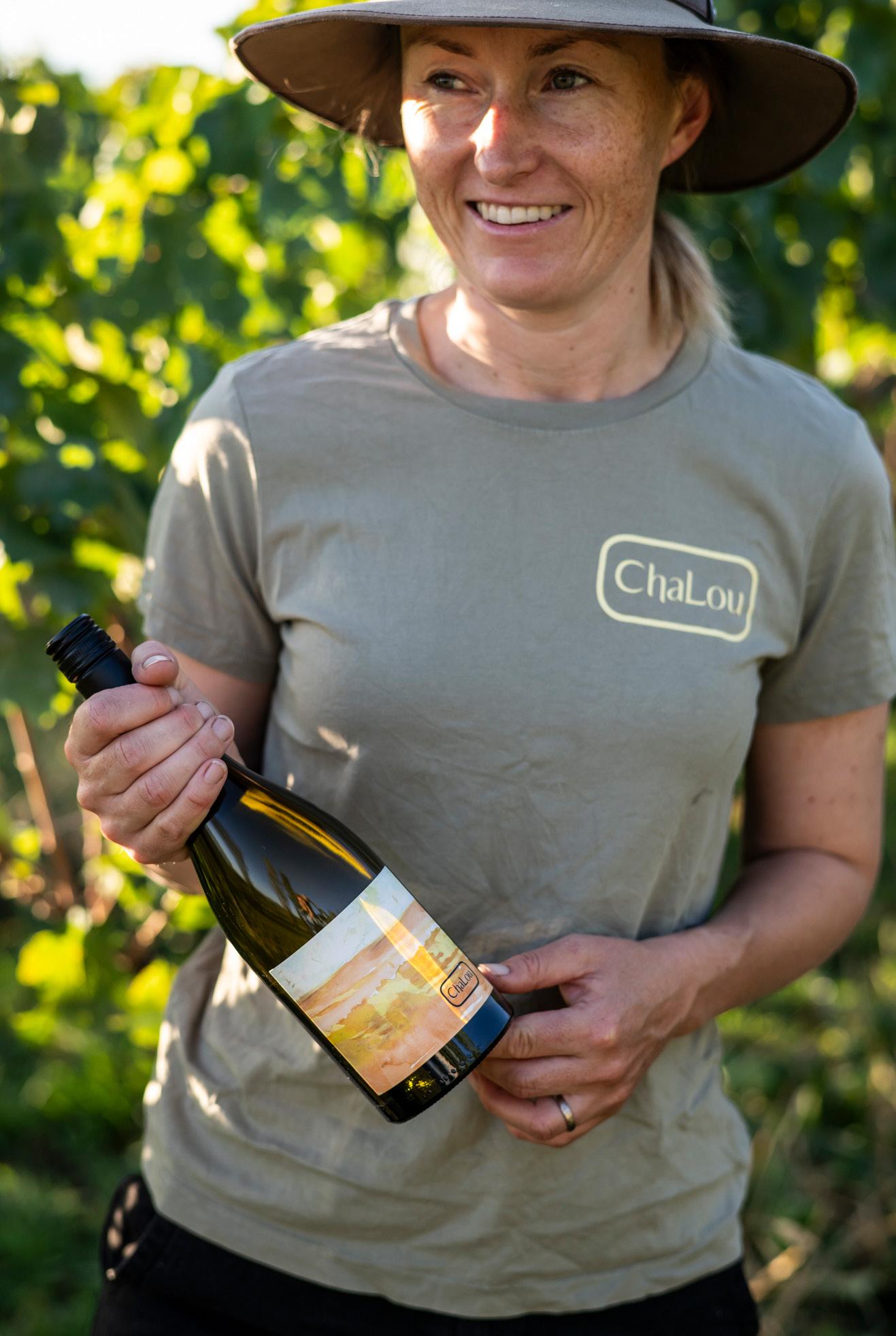
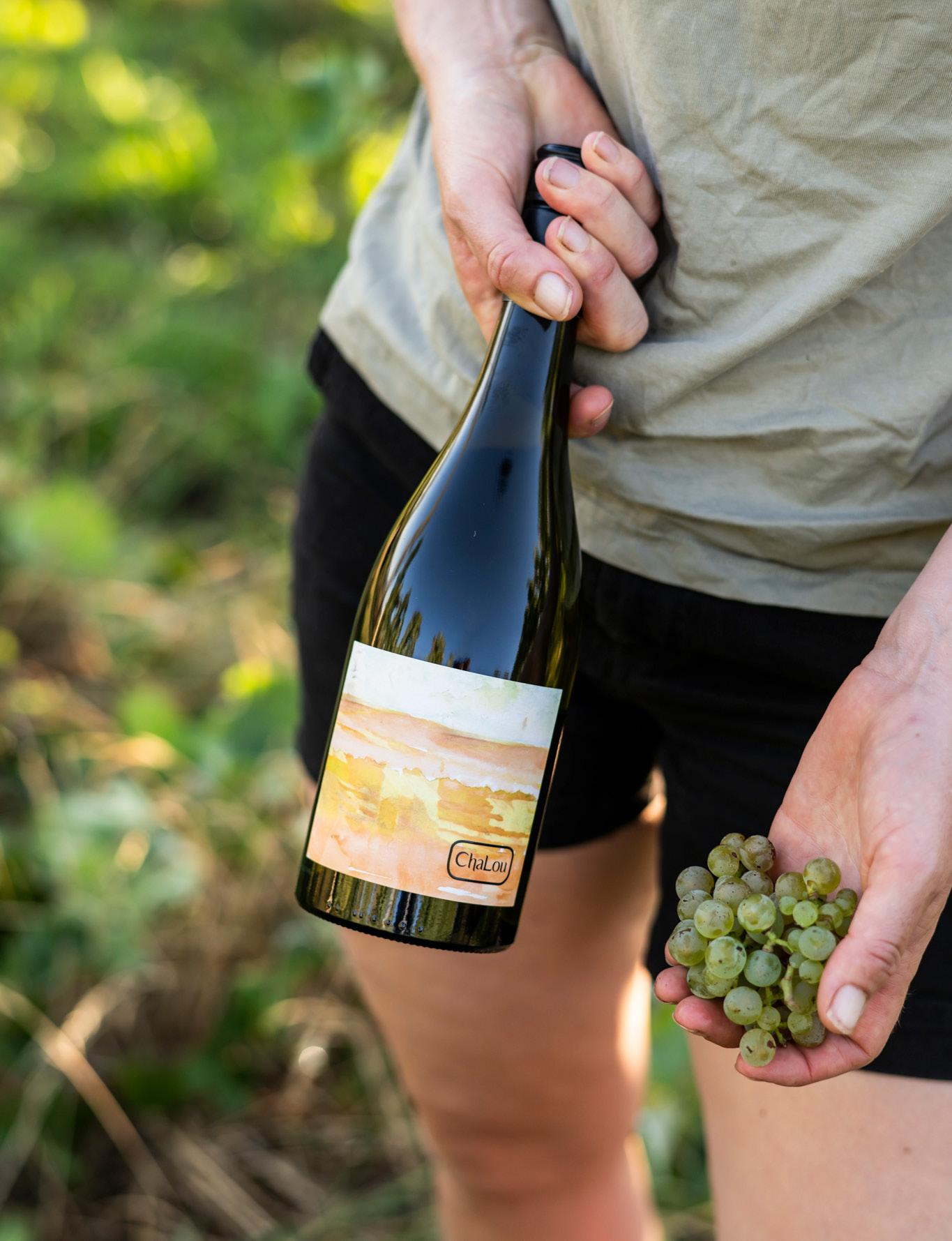
ChaLou Wines, a boutique winery with a cool climate vineyard in Orange NSW, is a newcomer to the Chenin Blanc game. After launching ChaLou in 2021, Nadja Wallington and Steve Mobbs began considering different varieties to add to their portfolio, and Chenin kept coming up as one they believed they could champion.
“It’s a later ripening white, so it comes in just ahead of our Syrah, but it holds its acidity really well," says Wallington. "In cooler years, that later ripening could be challenging for us, but there are opportunities to make it as a sparkling or an off-dry. It’s very versatile in that sense.”
“For those warmer, drier years, we’ll still get something that’s really vibrant and fresh. And we can play with a lot of texture too, because of the Orange wine region being cool by elevation.”
Wallington is confident that it’s the first time the grape has been planted in the region, which she believes is because the variety is slightly unusual. “It’s not in that mainstream cohort, despite being a variety that is grown quite widely throughout Australia – you’ve got great examples in South Australia and Western Australia, and other parts of New South Wales.”
The vigneron fell in love with the grape when she was winemaking in South Africa, and she has explored the versatility of styles that can be achieved with the grape across South Africa, the Loire, and Australia.
“I haven’t actually had a huge amount of experience working with Chenin Blanc, but I’ve drunk a lot of it,” she admits with a laugh. “In crafting any wine, you have to take your own path with it, because your climate is different and your expressions are different.”
She adds that it’s important to know your own preferences as a winemaker. For her, that involves playing with the wine’s textural attributes. “So using a little more skins in the winemaking of Chenin Blanc – just at the juice stage, not so much fermenting on skins – but rather giving them that time ahead of pressing so that we get a nice, gentle extraction of flavour and tannins from those skins,” says Wallington.
Like Snook, she notes the similarities between Chenin Blanc and Chardonnay. “It holds similar attributes, but it’s got a little bit more of an exotic expression. It has these orange hues and ginger spice, and texture plays a bigger role. I’ve always been quite drawn to wines that play with texture a bit more and using a bit of skin contact.”
ChaLou Wines’ first Chenin Blanc release is due in May. Wallington says the variety has strong potential, but its lack of mainstream commercial appeal may pose a challenge. Regardless, she says, “I don’t think we’ll be the last vineyard planting Chenin Blanc in Orange”.
In terms of trends, Snook says she’s seeing more people comfortable with ordering Chenin Blanc by the glass. She points out that for restaurants, there’s an element of value that sommeliers can pass onto customers.
“A lot of somms in restaurants have been good advocates of the varietal because they see Burgundy as so expensive. A Loire Chenin Blanc
becomes something quite attractive on a wine list, allowing people to try great examples of the French style.
“Then when [customers] go out to the bottle shop the next day, they can say, ‘Oh I’ve had a Chenin Blanc, and that’s an Australian example’,” says Snook. “People are more open and willing to explore. And I think the trend of people drinking less, but better, is influencing this as well.”
Snook recently joined a Young Guns wine tasting with 60 bottles of Chenin Blanc. She’d participated two years ago, and even in that short period she’s noticed an evolution.
“There are a lot of people making it in a more serious way, which is super exciting. Even compared to a few years ago, it went from being almost basic wine, with a few examples of what almost looked like Sauvignon Blanc in the glass. It was crisp, dry, and there was no complexity –it was quite one dimensional. This time round, there were multiple brackets that showed a lot of complex styles.”
As this complexity grows, it’s undoubtedly an exciting time for Chenin Blanc in Australia. ■
“I don’t think we’ll be the last vineyard planting Chenin Blanc in Orange.” – Nadja Wallington
Resetting for longevity
COSTS ARE BITING for everyone, leaving even tried-and-true neighbourhood favourites reeling from shifting consumer behaviour. While financial pressures have left some restaurants closing their doors, others are taking a step back to reassess how they can adapt to deliver what’s best for both their staff and the people walking through their doors.
One such restaurant is Arthur in Surry Hills. Now almost eight years’ old, Arthur will close its current iteration on 31 May, giving its operators time to recoup before they deliver a new concept under the same name in July, plans permitting. Chef and CoOwner Tristan Rosier tells Hospitality there is more than one driver behind the change.
“When you own your own restaurants, if you get sick of a job, you can’t just change
jobs. We make long-term commitments to these leases, so there is definitely a part of this which is us wanting to come at it a little bit differently,” explains Rosier. “But also, there’s obviously been a massive shift in what consumers want and what they can afford. The economics of running a restaurant have changed pretty dramatically, even in the past five years, and the changes have been so rapid.”
Arthur is known for its philosophy of supporting Australian farmers and producers and has always committed to a set menu that is entirely Australian. The Arthur team has promised this ethos will remain as they shift into the next chapter, but its delivery will look different.
“I want to remove some of the rules and just allow people to experience it how
Restaurants are undergoing major evolutions in response to shifting external factors and tightened consumer spending.
WORDS Maia Hart
they want,” Rosier explains. “Arthur, for example, has always had seating times, and the meal has been a relatively longer format, so the commitment of time is bigger. One of the big shifts for us is going to be getting people to think about it in a way that they can just rock up as they are, where bookings aren’t necessary.
“If you want to come in and have a drink and a snack you can. If you want to come in and have a three-course meal you can. Arthur’s mission has always been to be a neighbourhood restaurant, and I think that the best way we can serve our neighbourhood at the moment is to let people have a bit more freedom to visit how they want.”
Arthur has seen “different ends of the spectrum” through the years. From
“The economics of running a restaurant have changed pretty dramatically, even in the past five years, and the changes have been so rapid.”
– Tristan Rosier
operating as a takeaway restaurant during the Covid-19 pandemic to now, Rosier says they have noticed a change “not necessarily in what customers want, but what they can afford”.
“We definitely feel it first when there’s a downturn because dining out is a choice, it’s not a necessity. But people still want nice things and venues to go to. Maybe they can’t afford to go to them as often, or maybe they’re choosing to go to venues that are a little lower priced, or somewhere that’s à la carte, where they can choose how much they consume,” he explains.
“I think whatever we are experiencing as a restaurant business, people are experiencing that for their household. If you think about the things that a restaurant buys and spends money on, it’s pretty much the same as what households spend on food, water, gas, electricity, and rent.”
Rosier also operates Jane in Surry Hills, and Fior in Gymea. He says they are noticing less main courses ordered across the board, while starters and entrees are more popular. But it’s
also different depending on location. “We have to do different things for different venues, but what we’re definitely seeing is people skipping dessert, or having one drink rather than two or three,” he says.
It’s an observation backed up by recent stats. Lightspeed’s 2026 State of Hospitality Report showed that 35 per cent of diners are skipping dessert, often due to budget constraints, and 40 per cent of venues reported customers ordering fewer or no drinks.
Arthur’s closure period will also allow it to make some well-needed updates. When the restaurant first opened, they had “very little money”, leading the team to construct the cool room shelving from milk crates – a solution that was never supposed to be long-term.
“The kitchen lasted longer than we had anticipated, which is great, but we need to do some work on it to see it into the next 10 to 15 years. Maintenance-wise, things have worn out and we need to build this to suit where we think the industry is going to go and what the restaurant’s going to do. So, we need to do it once and we need to do it right.”
Oi Hospitality Group Owner Kurtis Bosley has been operating Ullo in Dee Why for the last two and a half years. Bosley says his original approach was to create a mid-range Italian restaurant.
“I’ve been noticing in the last probably 12 to 18 months, and more so recently, I think that middle dining space is dying. People are still going out. They still want to have time in restaurants … but it’s either for an experience, it’s something quite niche, or they want something that is fast-casual,” says Bosley. “I always heard the stories: a restaurant on the first floor is a difficult thing to get guests up to. But it wasn’t until I took over this space that I really realised that.”
“Where a lot of restaurants have had to look at ways to increase price and increase spend per head, we went the other way.”
– Kurtis Bosley
In response, Bosley says they had to shift Ullo into a more casual, seafood-driven venue where once you get upstairs, “it’s a bit of a vibe, and it’s fun”.
Ullo is Bosley’s third venue, having operated Corretto in Dee Why for seven years and Banco Manly for about four and a half years. He says this is the first time he has had to look at the space from an external lens and say, “this isn’t working. You need to do something different”.
“It’s a bit of a shot to the ego to an extent, and the confidence that is built up with the other restaurants. I reckon I knew within probably the first six months that it wasn’t quite right, and I wasn’t too sure whether it was the experience, whether it was the space, or whether it was the location. I didn’t ask that question seriously enough to work out why that was.”
Recognising something needed to change comes with a cost. “I work really closely with my bookkeeper; I’ve been able to rework our budget to put more into the food. Our costs have gone up, but we actually reduced our prices as well. Where a lot of restaurants have had to look at ways to increase prices and increase spend per head, we went the other way.
“We want more people through here. We want a quicker table turn time, and we’re happy for people to spend less money. Again, it gets back to this idea that we’re investing in the vibe of the space and the experience.”
At Franca, a recent “brand evolution” has repositioned the Potts Point venue towards a lighter, more Mediterranean expression rather than being “pigeonholed” by an expressly French menu. Owner Andrew Becher says the change is because they have seen a shift in dining behaviour, as diners' budgets have become more constrained.
“Branding is critical. People are looking for something to buy into and a narrative to buy into, and if you are wishy-washy about what you are as a restaurant, then you’re going to struggle.”
– Andrew Becher
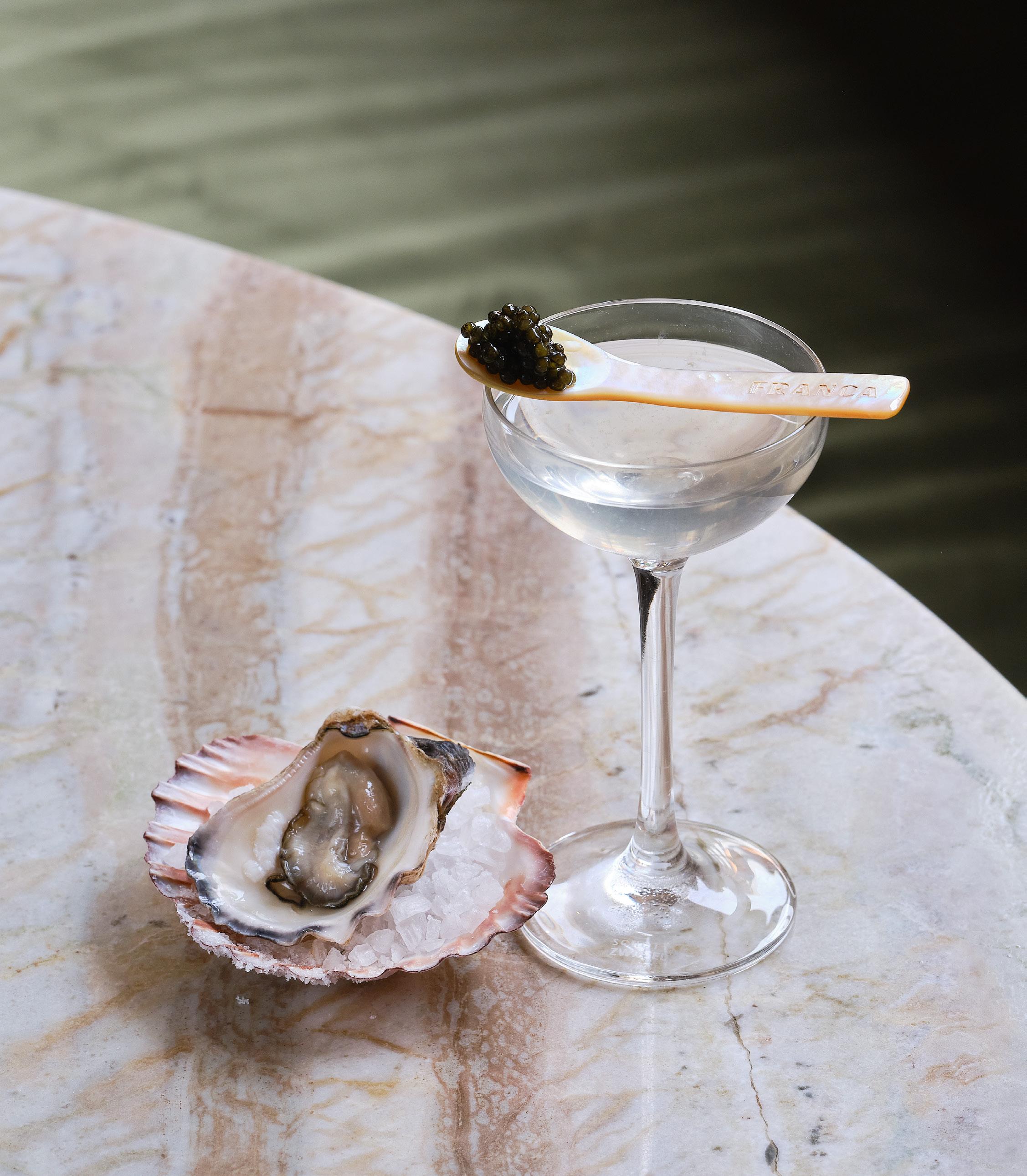
“What we’ve done is we’ve added a section to the menu which allows for an entry point which is slightly lower than the previous Franca iteration,” he explains. “But then we also have a mix of different dishes that range all the way up to things like caviar, so we do have a broader spectrum on the menu, and it allows people of all walks of life to come and enjoy Franca effectively based on price.”
While there is still “plenty of money in Sydney” and a very strong consumer sentiment, he feels this is smart playing in the current climate.
“We want to make sure that everyone can still come and enjoy Franca without isolating them because of price. Even though there’s some cost-of-living constraints, I think people still utilise some portion of their earnings to go and enjoy time with family and friends, but there are some sectors in the restaurant that have been hurt.”
Becher says they have also seen some other iterations of brasseries opening in Sydney, so they wanted to stay ahead and keep “repurposing”. Those external factors are out of their control, so he says it has become important to have a strong brand and set price points that align with what they are promising to deliver.
“Branding is critical. People are looking for a narrative to buy into, and I think if you are wishy-washy about what you are as a restaurant, then you’re going to struggle. We are now really strictly going down a new path, but it’s very well explained and it’s going to show through the food.” ■
Sh*tty Schnitty, What a Pity.
HMMM
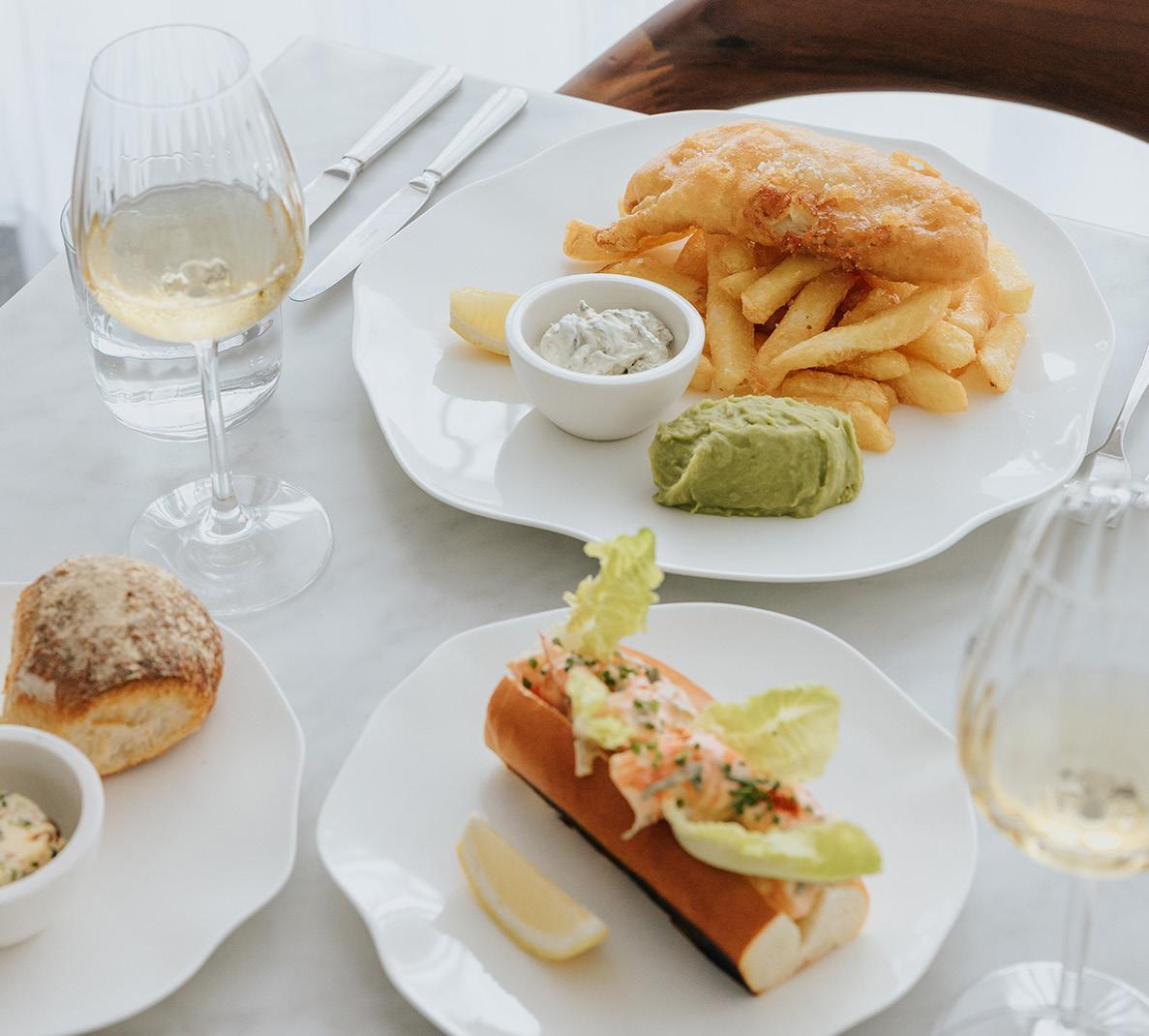
Speak to us about XLFRY, the better oil for better frying.
XLFRY
Silicone spatula
This flexible utensil is a kitchen favourite.
Ayo Edebiri’s character in The Bear uses one in her iconic two-minute omelette-making scene
Handy for scraping the final remnants of batter from your cake mix bowl
Silicone is generally more expensive and more difficult to recycle than plastic
Food-grade silicone is nontoxic, durable, and heat resistant to 220°C+
The utensil’s Dutch name, pannenlikker, means pan licker
Gained popularity in the 1990s
Referred to in some kitchens as a ‘Maryse’, to avoid confusion with the flipping spatula
Over 60 years of Food Service Equipment Excellence
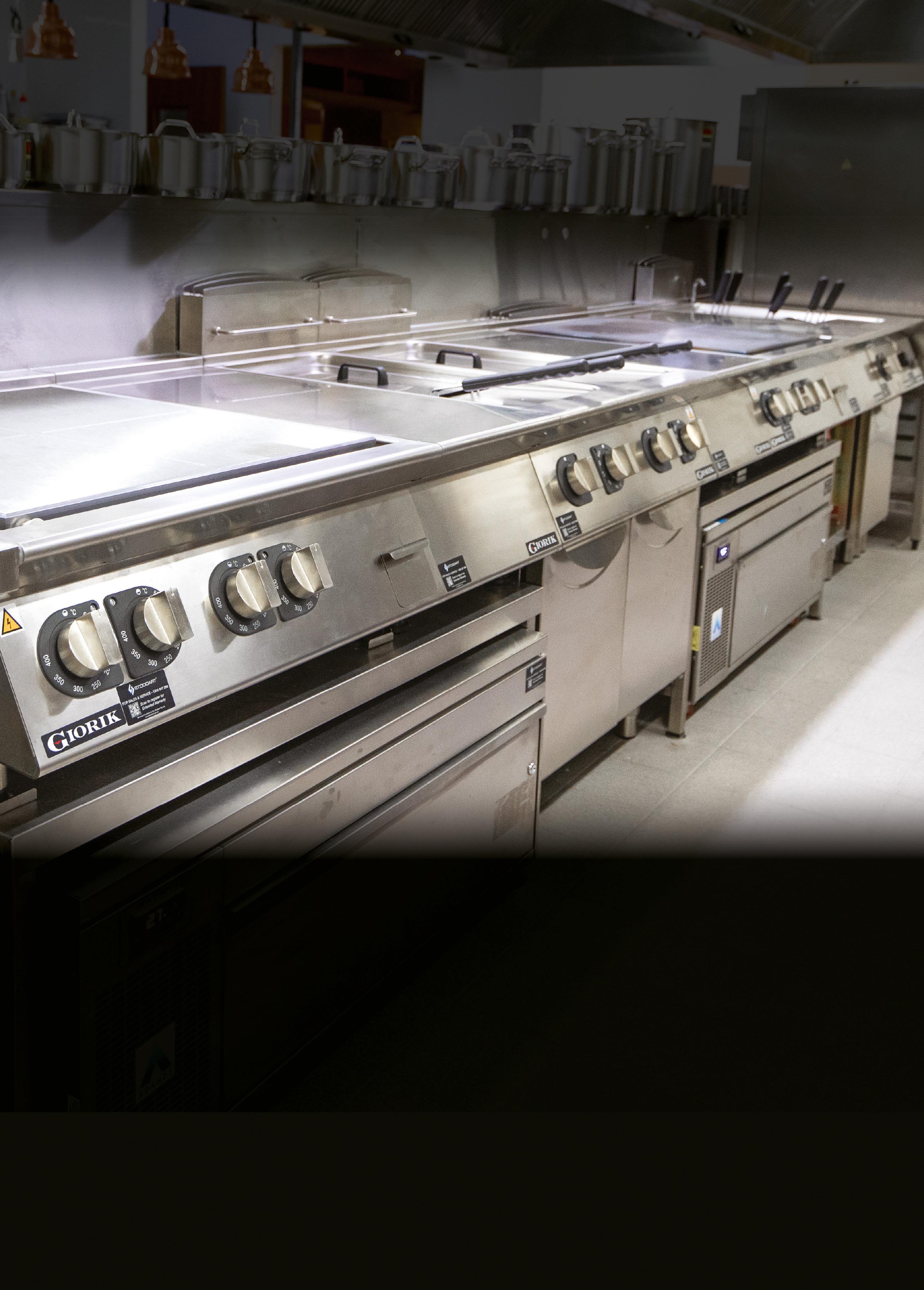
The Giorik cooking range delivers efficiency: Steamline Workflows Reduced Downtime Long-term Value
From its humble beginnings in 1963 to becoming a global powerhouse of catering equipment with installs all across Australia. Giorik is a trusted name for Combi Ovens, Modular Cooking Equipment and Salamanders.
Smooth service
New technologies are reducing the day-to-day burdens on you staff, so they can focus on delivering prime customer experiences.
WORDS Maia Hart PHOTOGRAPHY Matt Callian
FROM PLATING UP a balanced dish to standing out to potential customers, there are many moving parts when it comes to running a successful venue. To reduce the pressure, new technologies are giving operators more insight into their customers and operations than ever before, allowing for hyper-personalised, ultra-smooth service.
Feros Group Culinary Director Jamie Gannon tells Hospitality that technology such as QR codes on the table and systems to streamline kitchen ordering are having a massive impact on the industry. “But I think the most important thing is people. Because they're running the tech. You still need to recruit well and hire the right people. It’s all about having the right people in place to manage that tech as well,” says Gannon.
“The platforms and the ordering systems that chefs now use are next level. It used to be Excel systems or a clipboard and a piece of paper. Now a chef can see what
his budget is, he’s got data straight away of what his top sellers are, and he knows what he can spend for the weekend.”
Technology and data like this allow venues to keep their best chefs in the kitchen for longer, rather than in the office, he says. “I think that’s the best thing about tech. It’s keeping that most senior figure in the kitchen around the other chefs.”
Within the kitchen, technology is evolving too. “There are a lot of models now where there are touchscreens, which helps the timing of the kitchen. That removes a lot of the vocal, and people shouldn’t be yelling anyway,” says Gannon. He says while this helps chefs to get the timing right, it can also tell operators how long it is taking an individual chef to cook each dish.
“You can highlight a dish straight away that’s dragging the kitchen down, and you can highlight a person that needs more training or isn’t cut for a certain service
– that’s how much detail you get into it. Whereas before, you could go through two or three poor services, and cop ten complaints because old mate on the grill can’t cook steaks. But now the systems are telling you straight away if someone is lagging,” says Gannon.
It is also eliminating the room for errors, which increases the likelihood of the customer having a positive experience.
QR codes, for example, mean the order is always entered into the system correctly, and the table number is always correct.
“Mistakes like putting in the wrong table number slows everything down. There’s wastage involved with that, and customers are left unhappy.” This type of tech is ideal given the industry faces staff shortages, as they allow staff to focus more on delivering positive service where it counts the most.
Gannon says technology is also aiding venues in understanding people’s
“Mistakes like putting in the wrong table number slows everything down. There’s wastage involved with that, and customers are left unhappy.”
– Jamie Gannon
behaviours and patterns around where and how they spend. Feros has a large membership base, which they can utilise to understand more about what people want. For their next opening, the Social House, which will be connected to The Prince Hotel in Kirrawee, they were able to survey their customers ahead of time to understand what it is they wanted from a venue. Through that, the group landed on a nostalgic menu which will include dishes such as rotisserie meats. “It took the guessing game out of it, and we were able to pick out what the customer wanted. We know what people want before you even give it to them. I think that’s a game changer, and I think most businesses, not just hospitality, would agree.”
However, like most things, there are limitations. “Technology is good when it works. Like the ordering screens, when they go down you revert to a docket system, which isn’t ideal. It’s carnage. It’s the same as when you do QR at the table. If that goes down, you could have 100 people not knowing that their food’s not coming, and you might not even know that they have ordered.”
In March, OpenTable’s Chris Boersma presented at the company’s HospoCircle. Here he explained the different capabilities that restaurant reservation service OpenTable has been building behind the scenes to support venues operators.
Speaking to Hospitality after the event, OpenTable Australia General Manager Drew Bowering says guest insights are the engine of personalisation. “They allow restaurants to optimise their service and deliver the kind of thoughtful hospitality that builds long-term loyalty,” Bowering says. Insights sourced from OpenTable data, their restaurant partners, and point of sale integrations are limited to non-confidential information, but Bowering says they are incredibly powerful.
“Whether it’s helping a server suggest a specific dish or recognising that a guest prefers a more relaxed dining pace, these details turn a standard meal into a special experience. By sharing these insights across our network, we enable restaurants to constantly learn and improve the hospitality experience for everyone,” he explains.
Bowering says in the past year, OpenTable has expanded its offering to make dining discovery easier for guests and daily operations smoother for restaurants. He says through a mix of inhouse tools and partnerships, diners can use features such as natural languages prompts and book tables. On the restaurant side, voice partners help ensure that every call and enquiry can be handled.
Bowering points out that it is important to remember that this technology can’t replace human connection. Rather, it’s a tool for resilience and growth, and makes the research and booking process intuitive and frictionless.
At HospoCircle, to a room full of venue operators, Boersma gave further examples about how OpenTable has been exploring new technology. “We’re all hearing about AI quite a lot, and one thing that we really wanted to show was the fact that AI is a very genuine thing, and it can hold some very genuine possibilities for us, and everyone’s sort of exploring what this means.
“Rather than have people sifting and squinting and reading through analytics and reports to try and find opportunities for the
business, more and more what we want to do is just bring them to the surface automatically. So, you don’t need to go and find the opportunities, but the system is telling you or flagging you with the opportunities that you might have.”
While understanding your customer base and getting people into your venue is crucial, that’s only one piece of the puzzle. Operators also need to control what is happening out the back, and dishes need to get through the pass. One technology supporting this is My Local Foodie, which is designed to help chefs and food businesses optimise their food costs and menu pricing with their software, Costimer.
“In an industry where margins are tight and expectations are high, the venues that consistently deliver great service are not necessarily the ones working the hardest, they’re the ones working the smartest,” says My Local Foodie Chief Executive Maria Kucherhan. “Local Foodie exists to put those tools in reach of every venue, cutting the admin, sharpening the numbers, and freeing your team to focus on great service.”
Kucherhan says every chef knows the feeling: you have nailed the menu, the team is firing, and the numbers still don’t stack up. “Real, sustainable success comes when what’s happening in the kitchen is matched by clear, confident control of the numbers behind it,” says Kucherhan.
“Whatever the scale, the challenge is often the same: without the right tools, financial oversight falls through the cracks. COGS [cost of goods sold] is one of the most critical and most
“By automating time-consuming tasks like answering basic questions or managing phone lines, we return the focus to the core of the business and allow teams to spend more time doing what they do best.”
– Drew Bowering
misunderstood levers a venue has. When you don’t have a clear, real-time handle on what each dish actually costs to produce, you’re essentially running blind. And at scale, that blind spot gets expensive fast.”
Kucherhan says that is the gap Costimator has been designed to close. It lets kitchen operators break down the true cost of every item on their menu, accounting for ingredients, portion sizes, prep waste, and fluctuating supplier prices without spreadsheets or guesswork.
“The operational impact is immediate. Venues using Costimator can identify which dishes are eroding margin, adjust pricing with confidence, and make smarter purchasing decisions before service,” says Kucherhan. “That consistency across sites means tighter control, better benchmarking, and real visibility across the entire operation.”
My Local Foodie is also launching a mobile experience designed to make ordering and stocktaking as simple and accessible as possible.
“It’s all part of keeping things practical, efficient, and built around how hospitality really works,” says Kucherhan. ■
“Technique without ingredients is nothing — you can use the same technique with different ingredients and have a different result.”
— Roberto Mele
Sweet religion
What does it take to get — and maintain — a cult pastry following? Sweet Belem’s Jose Silva and Mama Artisanal Bakery’s Roberto Mele share their experiences.
WORDS Laura Box
PHOTOGRAPHY Sammy Jones for Mama Artisanal Bakery; Sweet Belem
THE FIRST DAY that Roberto Mele opened his artisanal bakery popup in Hobart, a line of customers stretched from the shopfront, down the street, and around the corner.
“Our first pop-up was like something I’ve never imagined in my life, the queue was going around the block, and people were queuing for more than an hour to try our croissants, which was pretty astonishing,” says Mele.
Prior to moving to Hobart, the chef had spent 12 years working in pastry shops and kitchens around the world. During a stint living in Melbourne (where he worked at Baker Bleu), he visited Tasmania and fell in love with the state’s unique culinary scene, and eventually he decided to move to Hobart.
Once there, he spent time working with Federica Andrisani and Oskar Rossi, the duo behind contemporary European restaurant Fico and Italian pizza bar Pitzi. It was during this period that he noticed a gap the city’s culinary scene. “I was struggling to find a very good croissant in Hobart. I do love croissants, even though I’m Italian,” he admits.
Mele asked Andrisani and Rossi if he could use the Pitzi venue some Sundays, when the restaurant is closed, to run a popup. And so he founded Mama Artisanal Bakery. It’s a win-win for both parties: Mele doesn’t have to pay the outgoings on a permanent venue, or deal with the stress that comes with finding permanent staff, while Pitzi has an additional purpose on the day it sits quiet.
The name stems from the Italian word for mother, Madre, which also refers to sourdough starter (lievito madre) – the main ingredient that sets Mele’s croissants apart.
“We concentrate on 100 per cent sourdough
croissants and we keep it simple with local ingredients, a 20-year-old sourdough starter, and a long fermentation – time is our secret ingredient,” says Mele.
Mele calls cooking with sourdough “a gentle way to bake”. “We believe that time makes things better and good things come to those who wait. We found that 12 to 15 hour overnight fermentation takes longer and there’s more effort, but there’s more care which makes a difference.”
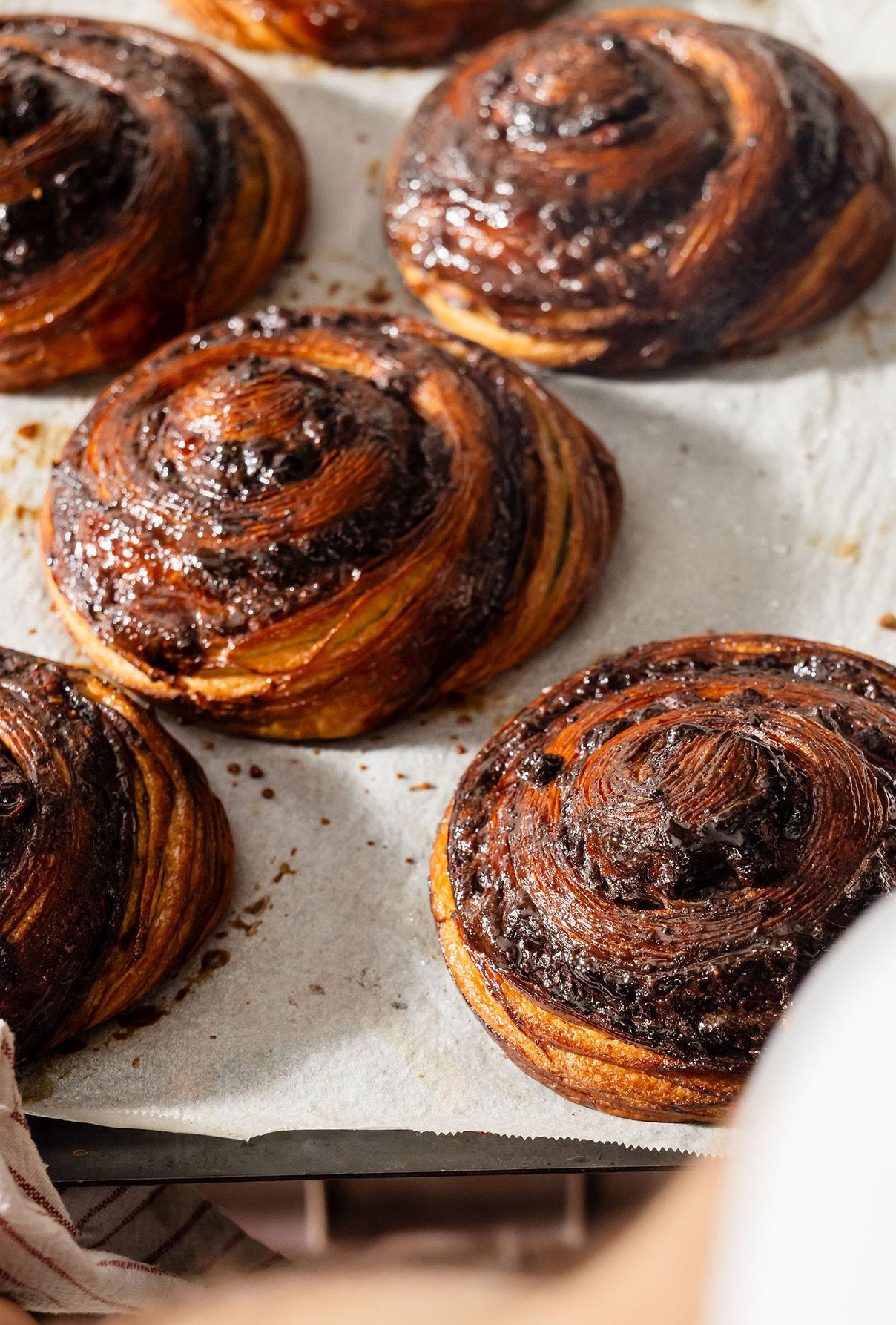
The result is a croissant that is slightly denser than usual, and Mele likes to bake them quite dark, which is helped along by the addition of malt syrup. “It’s basically magic. There’s more flakiness, the crumb is denser, but the flavour itself is way richer than a normal croissant,” he says.
This slow process, he says, reflects the attitude in Hobart. Drawing on the essence of the region has been a large part of his process and reflects Mama’s values.
“Hobart is not a big city, you can literally breathe in that slow life. This resonates with Mama’s values of using sourdough and a slow approach to fermentation. I believe Mama is a very unique Tasmanian example of a bakery,” says Mele.
This Tasmanian focus is reflected in the produce Mele uses, from local Lenah Valley honey to a mix of mainland flour and flour from a mill in Launceston.
He also operates with a zero-waste mentality and makes the most of fruit from friends' and family’s backyards – much of which would otherwise go to waste. “Our neighbour, Theresa, has massive lemon and orange trees and she doesn’t know what to do with the fruit, and she just gives it away,” says Mele, who used homemade candied orange peels for hot cross
to program him as an core part of the Winter Feast lineup. The feast is the festival’s culinary centrepiece, and it will run over eight days between 11 and 21 June.
“Competition is good. If someone else comes along, you’ve got to stick to your guns and do what you do well.”
— Jose Silva
buns during Easter. “I would definitely buy these oranges and make orange peels again, because they’re organic, they haven’t been sprayed, they’re beautiful.”
Mele puts his popup’s initial popularity down to word of mouth in the tight-knit Hobart hospitality scene, but the crowds have continued to materialise every second Sunday for over a year now.
The chef says the key to his following is trifold: ingredients, consistency, and technique.
“We try to be consistent with the ingredients we use, which might seem a cliché thing to say, but its’s a key part of production. If you use a different flour, or a different butter, or more or less water, it might not be right. Technique is very important. Every time I make a new batch, I try and understand what went wrong last time and what could be better,” he says.
“But technique without ingredients is nothing –you can use the same technique with different ingredients and have a different result.”
He adds that the help of his family and friends has been crucial for making the venture possible.
“Most of the time I’m solo in the kitchen, but it’s not just about that. It’s also the people that serve croissants and make your coffee. They’re part of what Mama is and what people resonate with. So I want to say thank you.”
Mele’s following caught the eye of Dark Mofo Food Curator Amanda Vallis, and it led her
“His offering has a cult following here in Hobart,” says Vallis. “Whenever he has one of his pop-ups, there’s a line around the corner with everyone wanting to try his traditional sourdough pastries.
“The idea of putting him on the centre stage of the feast for this year really appealed to me, knowing that he’s so loved here locally. Throughout Dark Mofo, we have such large visitations from interstate, so being able to showcase what he does to visitors outside of Hobart was quite appealing.”
When Vallis sat down with Mele to discuss collaborating with an international chef for the event, the chef immediately said he wanted to work with someone from Puglia, where he’s originally from. Floriano Pellegrino and Isabella Potì of Michelin starred Italian restaurant Bros’ were the first to come to mind – and although Potì can’t make it (she’s recently given birth), Pellegrino jumped on board.
Mele says his work with Pellegrino will be an “ode to Puglia”, as they’re both from the region. “We believe our region is one of the most beautiful, bountiful regions in Italy, especially in the food scene. [At Dark Mofo] it’s going to be a few Apulian dishes, Apulian techniques, blended with Tasmanian ingredients.”
For Jose Silva, the chef who runs renowned pastel de nata (Portuguese custard tart) bakery Sweet Belem in Sydney’s Petersham, as well as Fich at
Petersham, Lunas Petersham, and Bibo Wine Bar in Double Bay, ingredients, consistency, and staff are also central to his philosophy.
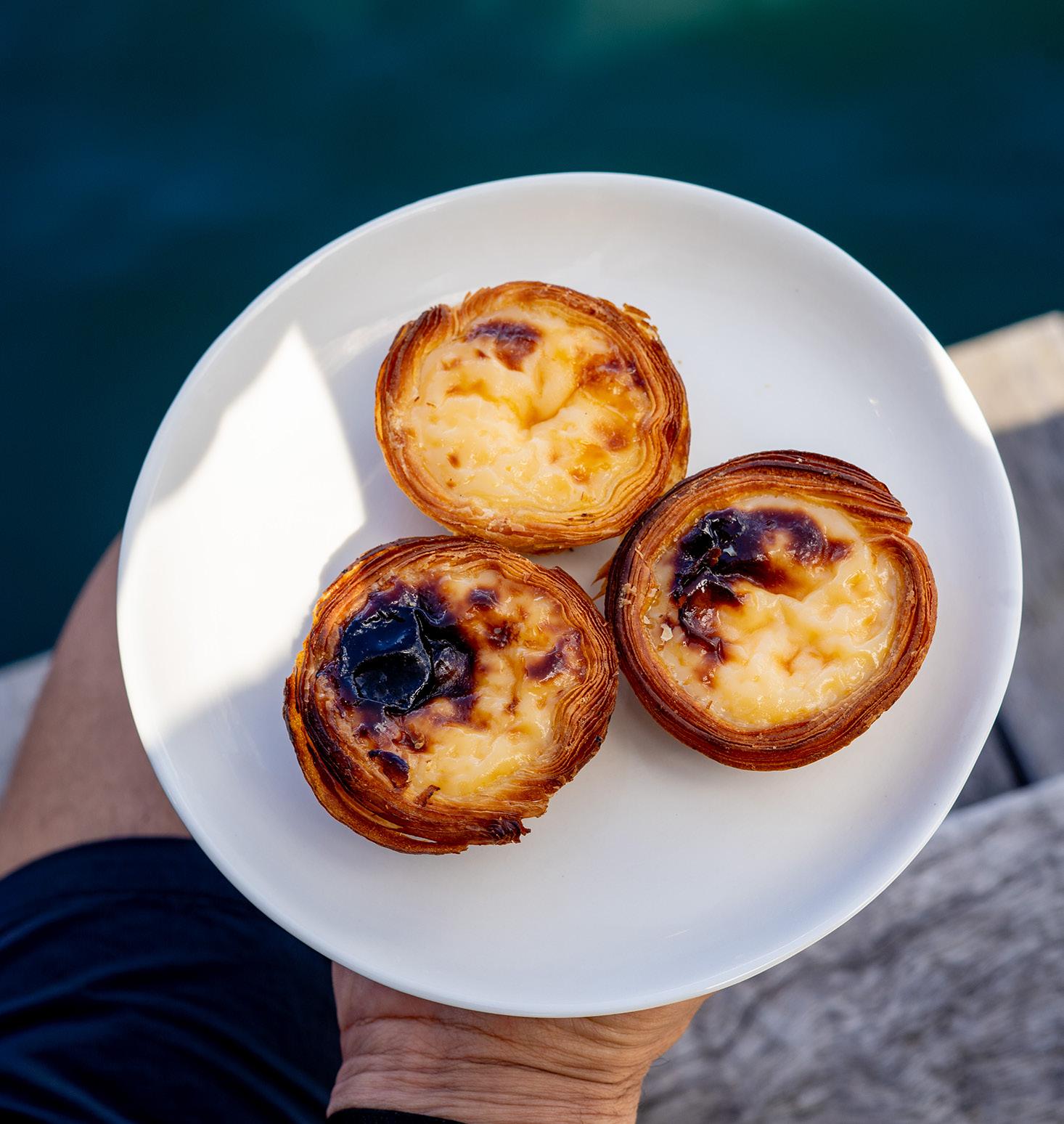
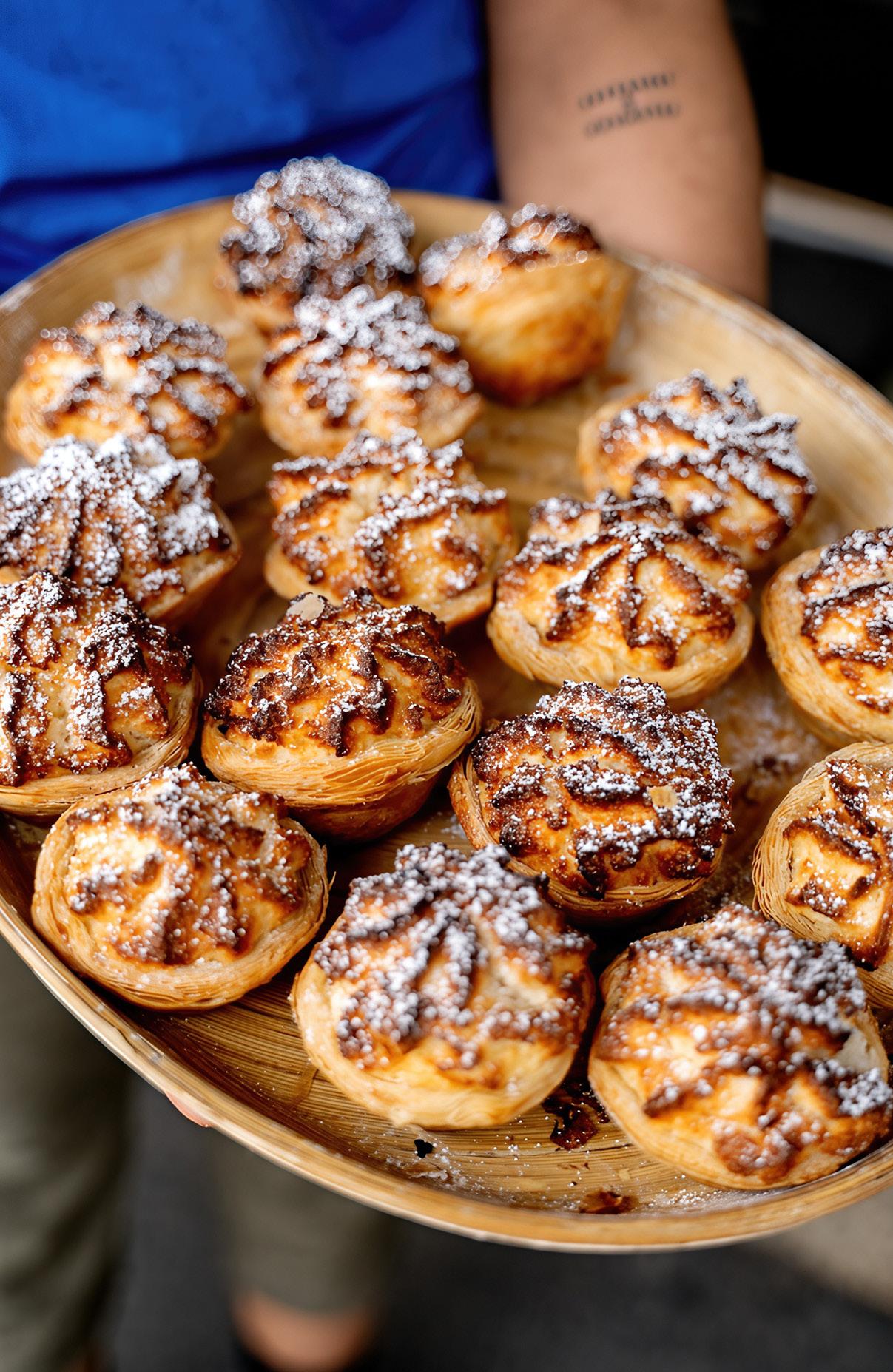
Silva took over Sweet Belem from Founder João De Almeida in 2014, and its success has been enduring – even through the pandemic, when they were selling over 2000 pasteis de nata per day. This June, he’s set to open a second store in Barangaroo.
Silva says this enduring success, and now expansion, comes down to cooking with “the best possible quality we can, with the best ingredients we can get, and doing it with love”.
Every product they use is fresh, from the vanilla bean to the lemon zest, and doesn’t come from an essence. They’ve also had the same egg supplier for around nine years, says Silva. He opts for free range eggs, a decision which he says makes a difference to the flavour, colour, and consistency of the custard. All the pastries are made with butter to ensure they achieve a specific mouthfeel.
Having a cult following means that any change to the core product offering – in this case the Portuguese tarts – is risky business, and it’s why a reliable product is crucial. “One of the keys is consistency and sticking to your guns,” says Silva. He says that when new chefs come on board, it’s particularly important to conduct intensive training to retain the product’s uniformity.
“When new chefs come through, we make sure they’re doing exactly what we did before to keep quality and consistency,” says Silva.
“Chefs are creative, they like to change things. Sometimes you can improve on something, but this is what we do, [Portuguese
tarts are] what we’re known for. I allow chefs the freedom to get creative on other things, like specials or the seasonal changing flavours. You don’t want them to get bored, because chefs are creative and they want to stay interested.”
Over the years, Silva and his chefs have developed a range of Portuguese tart varieties, from flourless and seasonal fruit flavours to an increasingly popular vegan option, in order to entice as many customers with as many dietary requirements as possible.
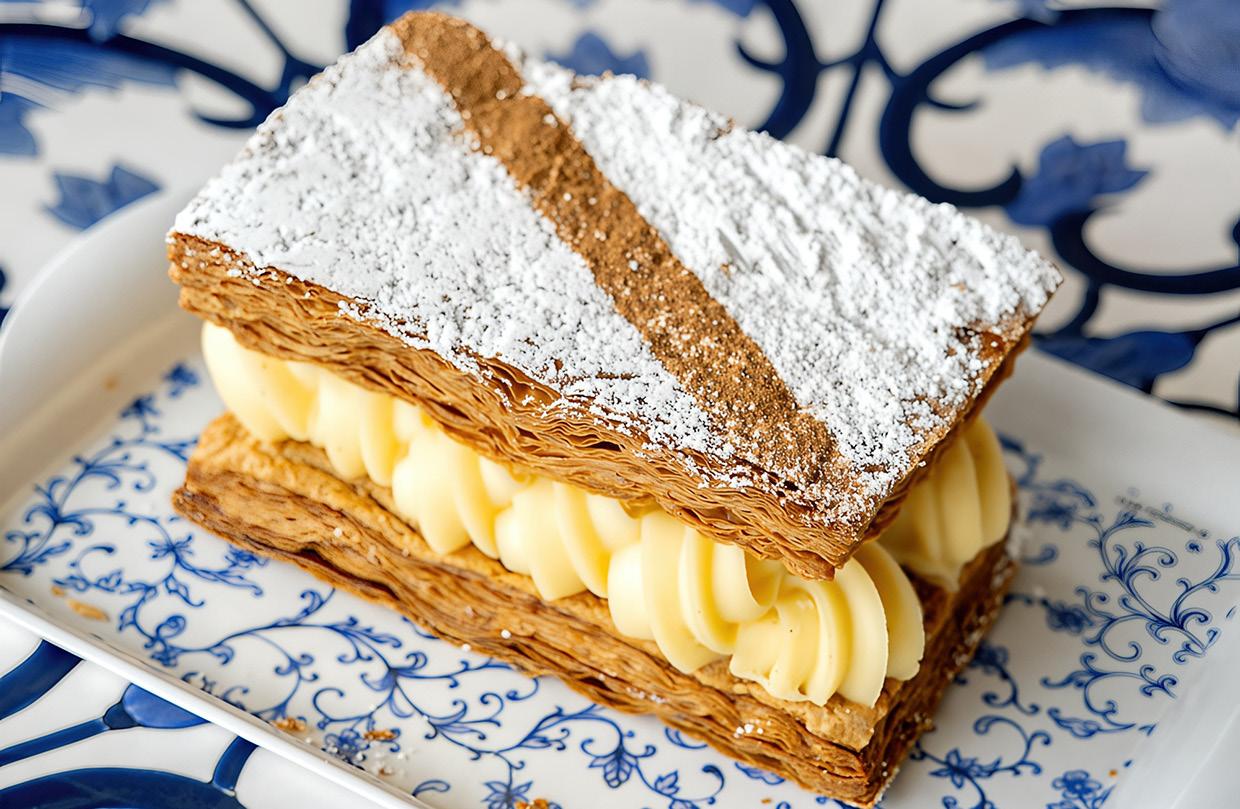
Silva says that while the Portuguese tart has been a key to their success, having a subsidiary range of high-quality pastries, such as doughnuts, vanilla slice, and Portuguese-style brioche croissants, encourages higher spend.
The new Barangaroo venue came during a quest for his “next adventure”, says Silva. When the site emerged, the opportunity felt promising. “You’ve got your corporates on the weekdays, and then tourists on the weekends. So we thought it was a good spot to expand the brand.”
He plans to bring over some older staff from Petersham to train his new staff and bring the brand’s philosophy into the new space.
“We don’t want to change the process. We’re still going to cook everything on site, not in a factory and bring it in. Especially the Portuguese tarts. You want to cook them fresh for the day. The Portuguese tarts are great for one day, but then the next they’re not as good. It’s edible, but it’s not the same,” says Silva.
Silva says he isn’t worried about competition threatening Sweet Belem’s cult following.
“Competition is good. If someone else comes along, you’ve got to stick to your guns and do what you do well. If someone else comes along with a better product, it keeps everyone on their toes and makes you strive to be better, so I think it’s healthy.” ■
Bar cart
Thirst quenchers, slow sippers, and all things beverage related.
Edited by Maia Hart
Outback boundaries
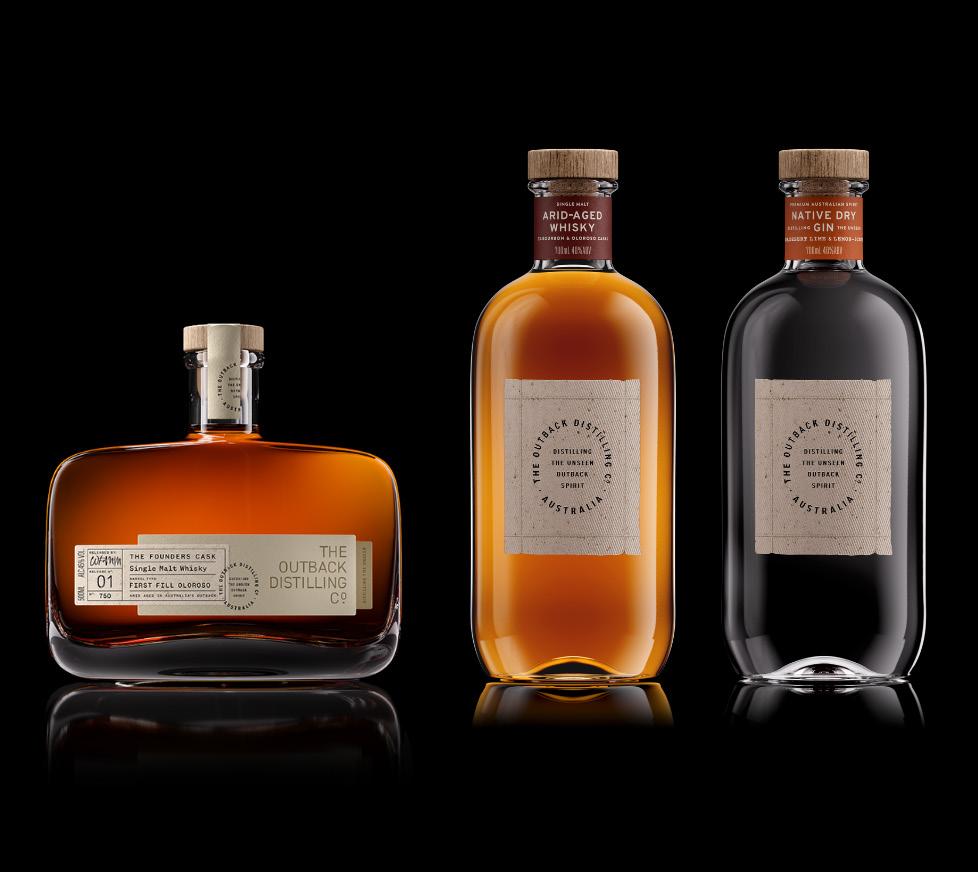
Despite temperatures that can surpass 44 degrees during the day and drop below zero at night, the climate in Western Queensland has not stopped The Outback Distilling Co. “We wanted to see what would happen if we completely embraced our outback provenance and climate in making a whisky,” says Co-Founder Will Fellowes. And so, the Arid-Aged Single Malt Whisky was born. The distiller has also unveiled its first gin expression, the Native Dry Gin, alongside the Pioneer’s Collection – The Founders Cask. Arid-Aged whiskey RRP $139, Native Dry Gin $89, Pioneer’s Collection $220. outbackdistilling.com
Exercising patience
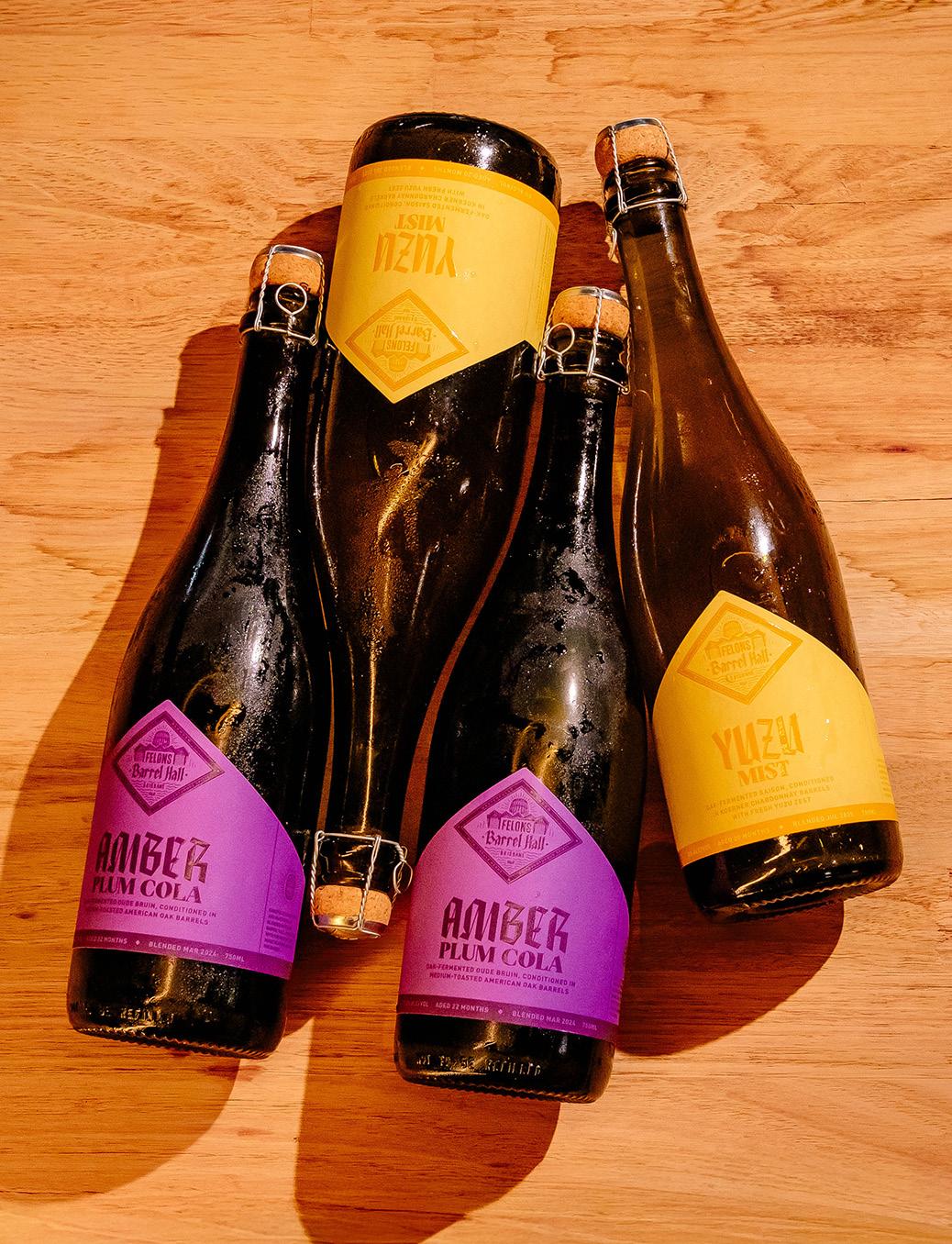
Felons Brewing Co. has released its latest barrel aged twin release, continuing its exploration of oak, time, and wild fermentation. The small-batch beers include the Amber Plum Cola (Oude Bruin) and Yuzu Mist (Fruited Saison). “These beers are an expression of patience and possibility,” says Felons Brand Director Dean Romeo. The 7.4 per cent ABV Oude Bruin is aged 22 months in American oak barrels, revealing notes of plum, raisin, and vanilla. The saison is aged 20 months in ex-Chardonnay barrels with fresh yuzu zest, resulting in notes of lime, lemon, and pear. RRP $39 for 750ml bottle. felonsbrewingco.com.au
Bittersweet
allure
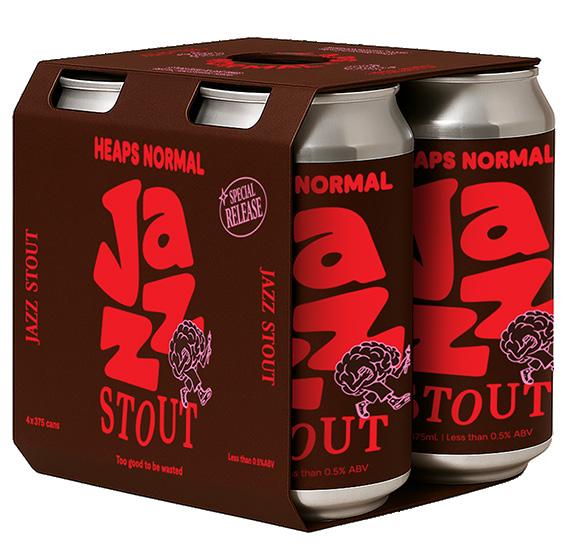
Fresh from being named Australia’s best non-alcoholic beer at the 2025 Sydney Royal Beer & Cider Awards, Heaps Normal has re-issued its award-winning special release Jazz Stout. “It felt criminal not to bring back Australia’s best non-alc beer,” says Heaps Normal Co-Founder and Chief Product Officer Ben Holdstock. The team says the limited-edition brew suits those with a taste for the “bittersweet allure” of stout – with the drink delivering notes of coffee and cocoa, “rounded out” by the flavour of rolled oats. heapsnormal.com
Terroir transparency
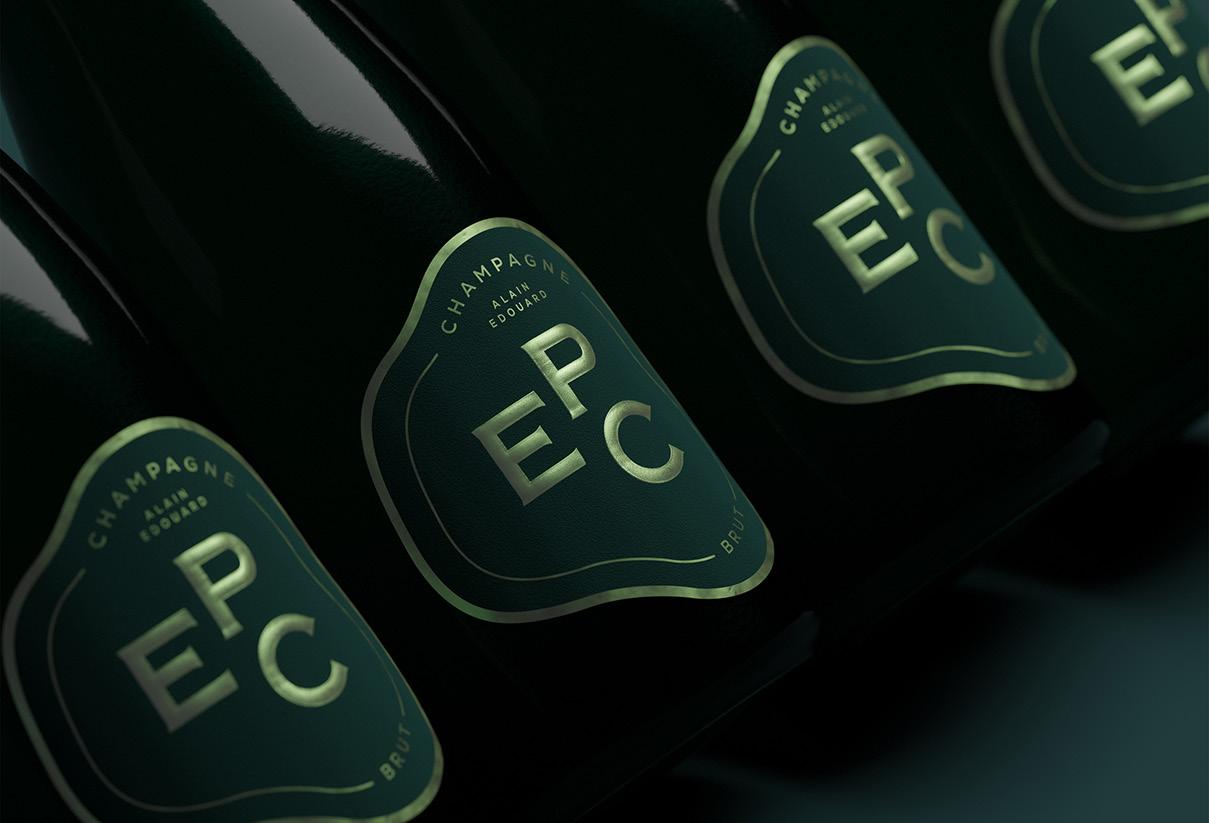
Playing on the word “epicurean”, Champagne producer EPC has launched two cuvées into Australia. Each bottle of EPC leaves the cellar with back-label details on the wine’s terroir, blend of grape varieties, vintage, dosage, and winegrowers. EPC Champagne Co-Founder Jérôme Queige says it is important to acknowledge and celebrate the winegrowers who play such a vital role in the development of each bottle. The EPC Champagne Blanc de Blancs Brut NV is crafted from 100 per cent Chardonnay fruit grown during the 2022 vintage in Côteaux du Sézannais, located south of Épernay. The EPC Champagne Brut NV is made from a blend of Pinot Meunier (50 per cent), Chardonnay (33 per cent), and Pinot Noir (17 per cent) grown in Épernay. Champagne Blanc de Blancs Brut NV RRP $91.99; Champagne Brut NV $71.99. epc-champagne.com/en
Sparkling resurgence
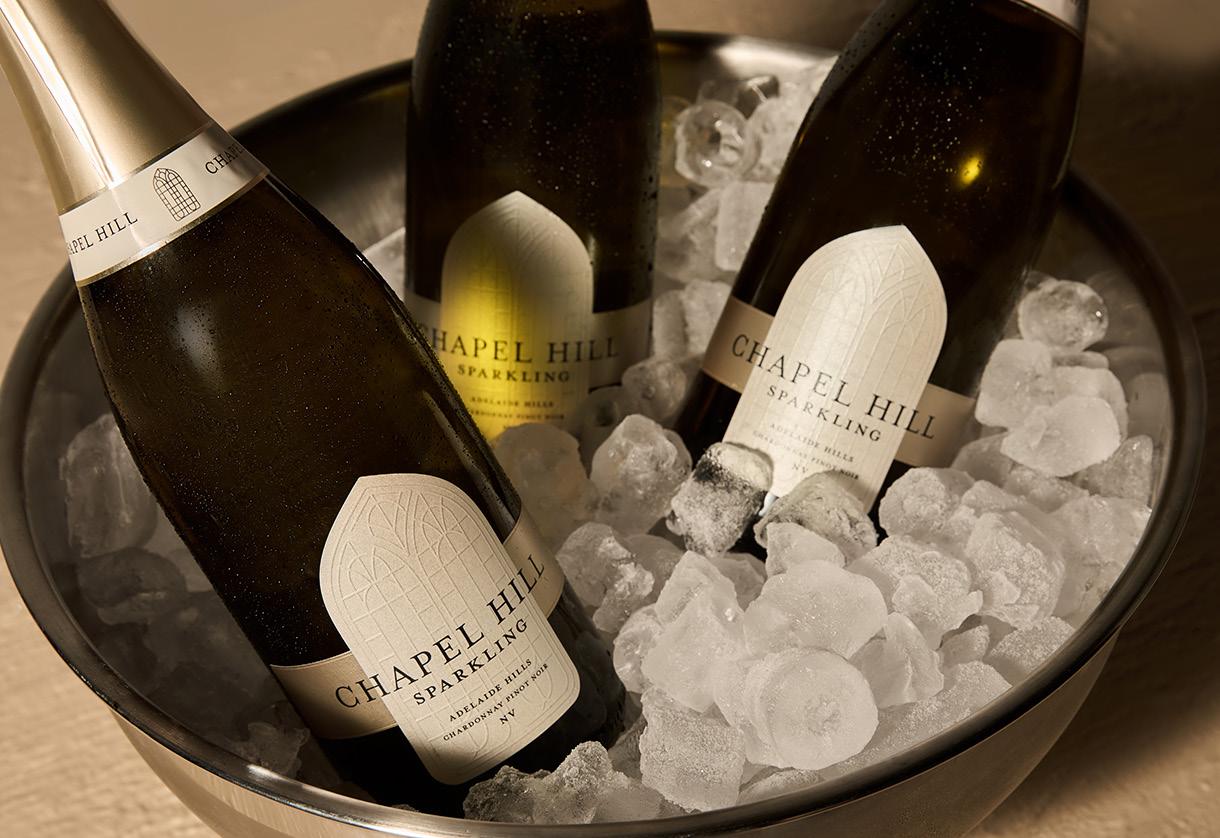
In 1979, McLaren Vale winery Chapel Hill first released a sparkling wine, primarily available through its cellar door, says Winemaker Michael Fragos. Although guests were “reminiscing” about those wines for years to come, the winery did not release another sparkling for 20 years – until now. Setting its sights on the Adelaide Hills, Chapel Hill has released the Chapel Hill Chardonnay Pinot Noir Sparkling NV. “Sparkling winemaking is very unforgiving – absolute attention to detail is required in both the vineyard and winery to avoid any blemishes,” says Fragos. The sparkling spends 24 months in bottle on lees, with the fruit providing purity and acidity to the wine with hints of citrus blossom. RRP $27. chapelhillwine.com.au
French meets Australian
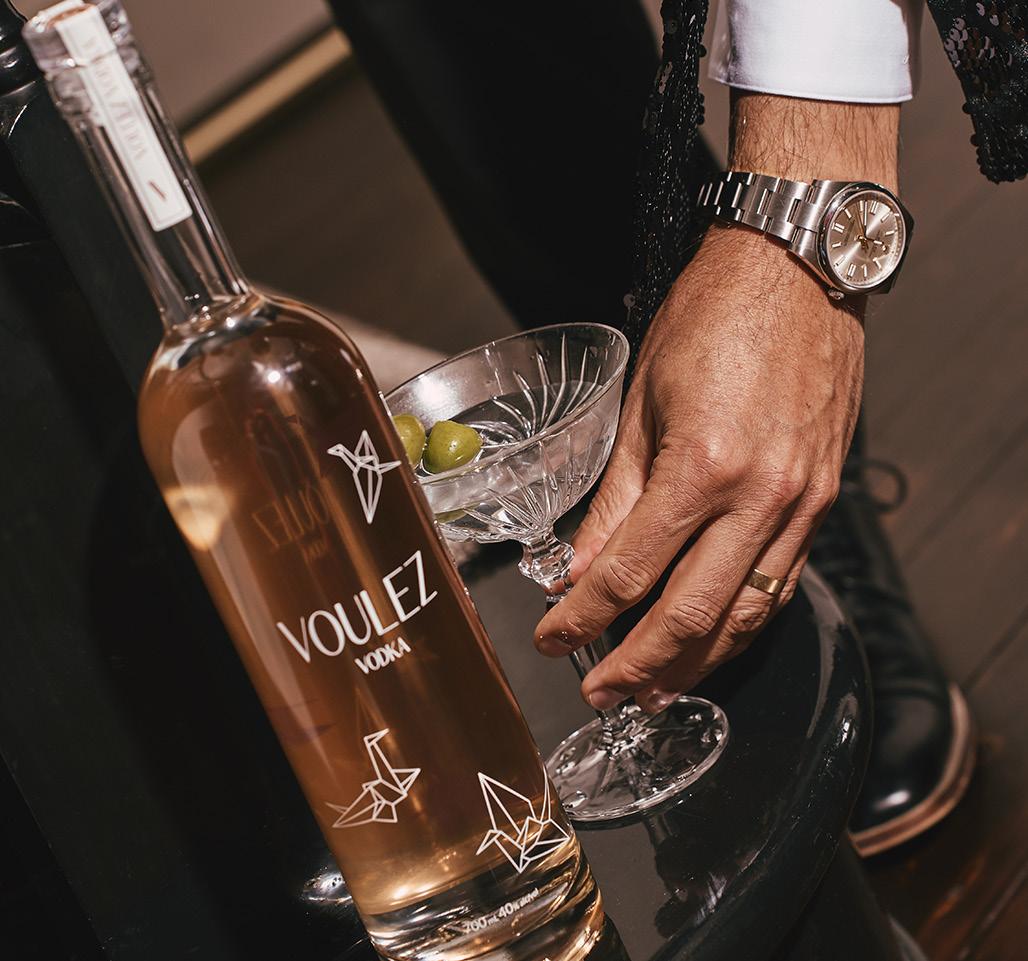
Crafted in partnership with Anther Distillery, French-born entrepreneur Tamara Craig has launched Voulez Vodka, a Victorian ultra luxury spirit. The brand has carefully cooked, fermented, and distilled, locally sourced potatoes, before blending them with an Australian wheat distillate and distilling once more. The raw ingredients eliminate the need for filtration, so the vodka retains natural clarity and a clean finish. Within Anther Distillery, the spirit is brought to life under the guidance of Lead Chemist Dervilla McGowan. The limited release is available at select luxury retailers, bars, restaurants, hotels and boutique cellars. RRP $200. voulezvodka.com
Fan favourite
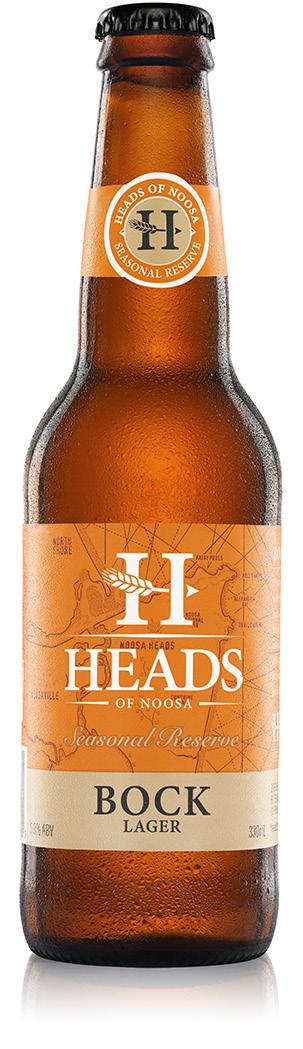
Heads of Noosa Brewing Co has brought back Bock – a fan favourite lager returning as part of their Seasonal Reserve range. It sits alongside their core range as one of four limited releases brewed throughout the year. The strong lager is crafted in traditional German style, with a blend of six malts, creating a fuller body with caramel and chocolate notes. “Bock is a style we’ve always admired,” says Co-Founder and Head Brewer Lance Masterton. “It’s rich and flavourful, but when brewed well it’s also beautifully balanced.” Four pack RRP $25.99. headsofnoosa.com.au
Tradition meets ingenuity
Edition Group's Michael Greenlaw is executing an exemplary Italian menu that honours Florentino's history, while taking it to new heights.
WORDS Laura Box
PHOTOGRAPHY Gavin Green
“WALKING INTO A restaurant business with five venues was obviously very daunting on one hand, but very, very exciting on the other,” Edition Group Culinary Director Michael Greenlaw tells Hospitality.
The scale represents just one aspect of the daunting task Greenlaw has faced since Rebecca Yazbeck’s Edition Group (Nomad, Reine & La Rue) took over Melbourne’s Florentino in December last year. But taking on an institution steeped in history is yet another.
In 2028, Florentino’s will mark its centenary
anniversary, placing it among Melbourne’s oldest restaurants, and likely making it the city’s longest continuously running fine diner.
The restaurant currently comprises five venues: Florentino Dining Room, Café Florentino, Cellar Bar, Ombre, and (currently closed) Arlechin – but its origins were much humbler. Samuel Wynn began Il Florentino as a wine shop in 1918, before purchasing popular nearby venue Café Denat and relocating it above the shop. In 1928, Rinaldo Massoni leased the upstairs café, changing its name to Café
“If anything’s been successful for 100 years, there’s a big weight on your shoulders to continue that legacy for the future.”
“The service is very refined and elegant, but it’s not stuffy or stiff in any way.”
Florentino and its style from French to Italian – a cuisine it has stayed fixed on to this day.
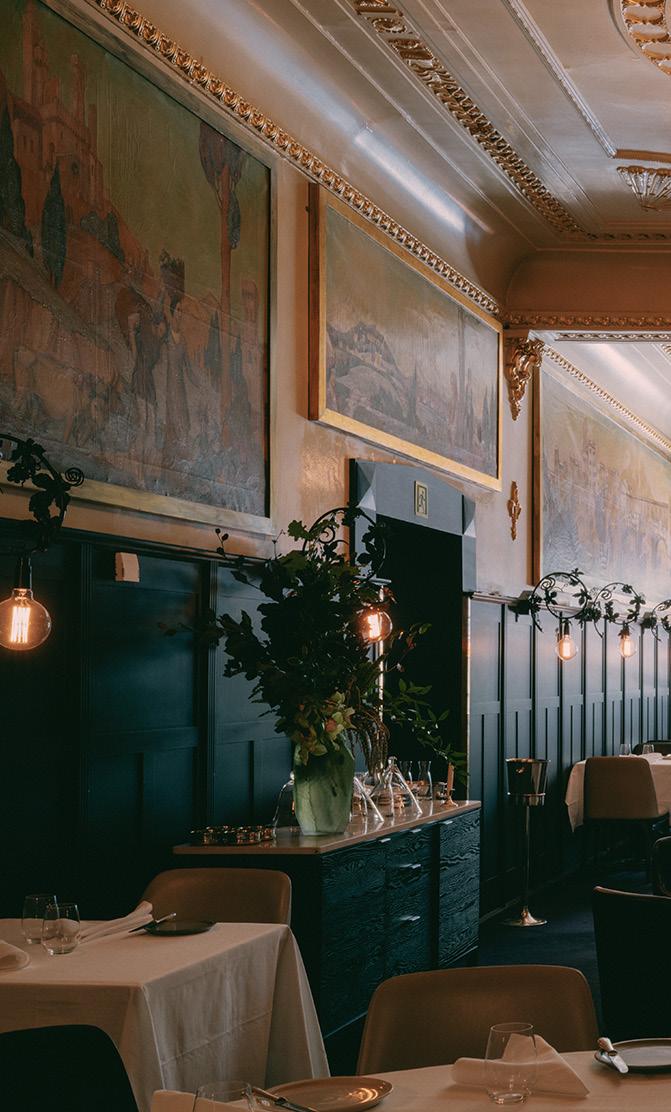
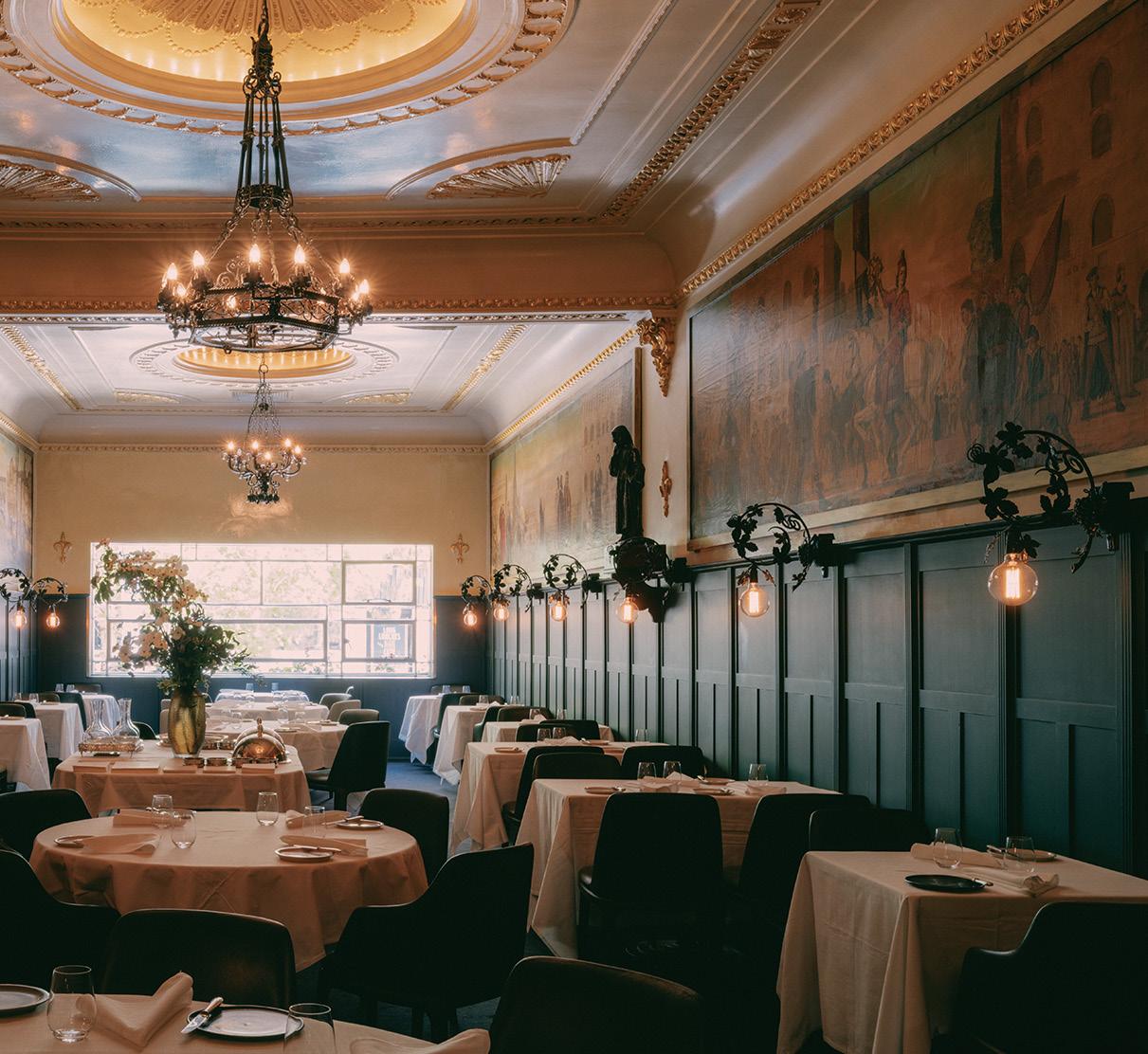
In the 1930s, following further expansions, a new upstairs dining room was designed by Walter Butler, decorated with eight murals by pupils of artist Napier Waller, and aptly dubbed ‘The Mural Room’. Over the next decades, a series of takeovers and expansions took place, until most recently, when the Grossi family sold to Edition.
Taking over a restaurant of this calibre came with an inherent question: How to execute an exemplary Italian menu that honours Florentino's history, while also taking it to new heights?
“Our intention was never to start over. It was more to continue to build on that distinctive identity that had come 100 years before,” says Greenlaw.
The restaurant changeover happened in December – the busiest time of year for many restaurants – and Edition Group jumped in without a pause. “During that December period it was business as usual, and we were working away there in the background, updating dishes, creating new recipes and new menus.”
After 10 to 12 weeks of refinement, Greenlaw says the new menus – with 142 new or modified dishes – were at a place that the team was incredibly proud of.
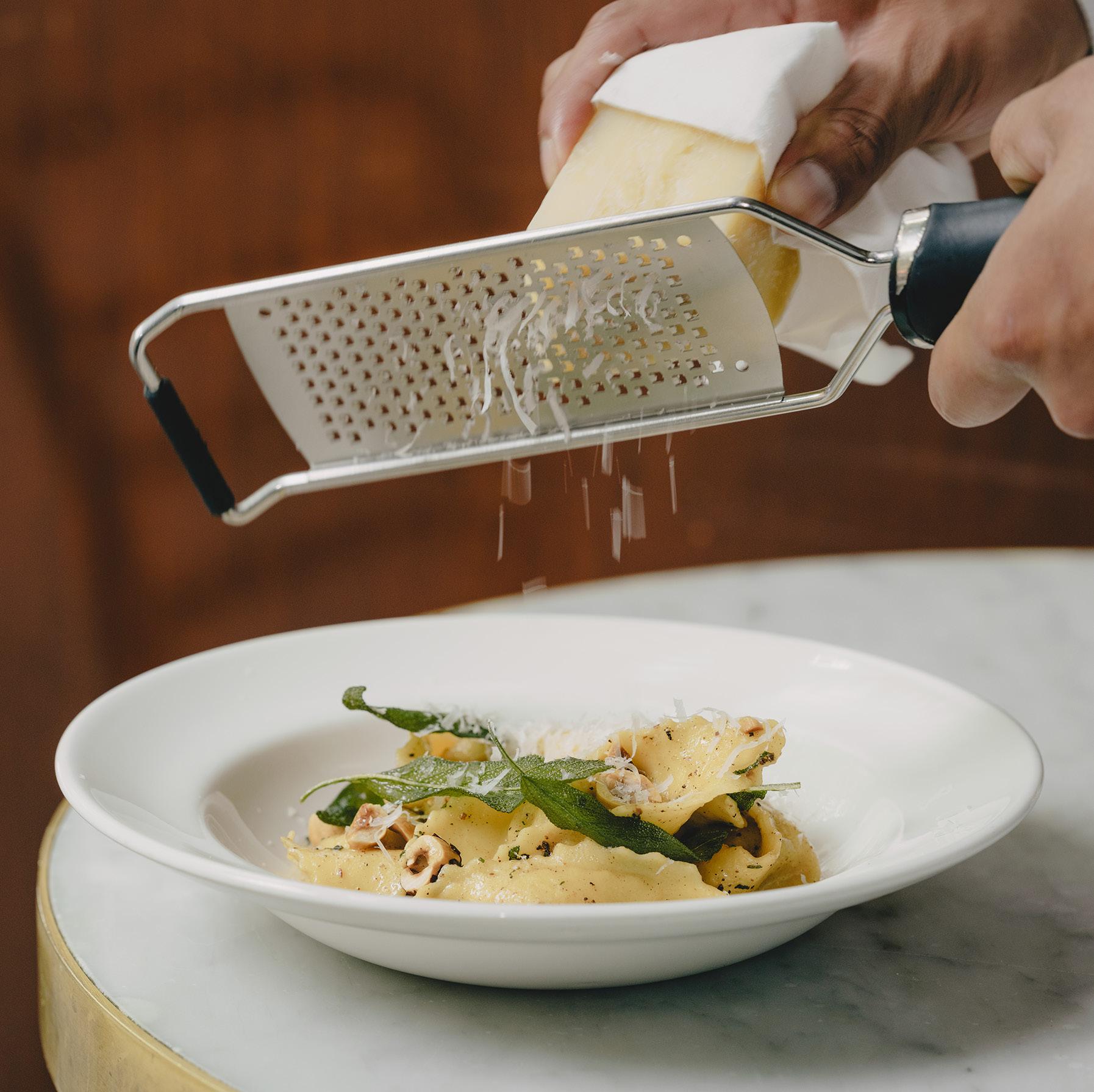
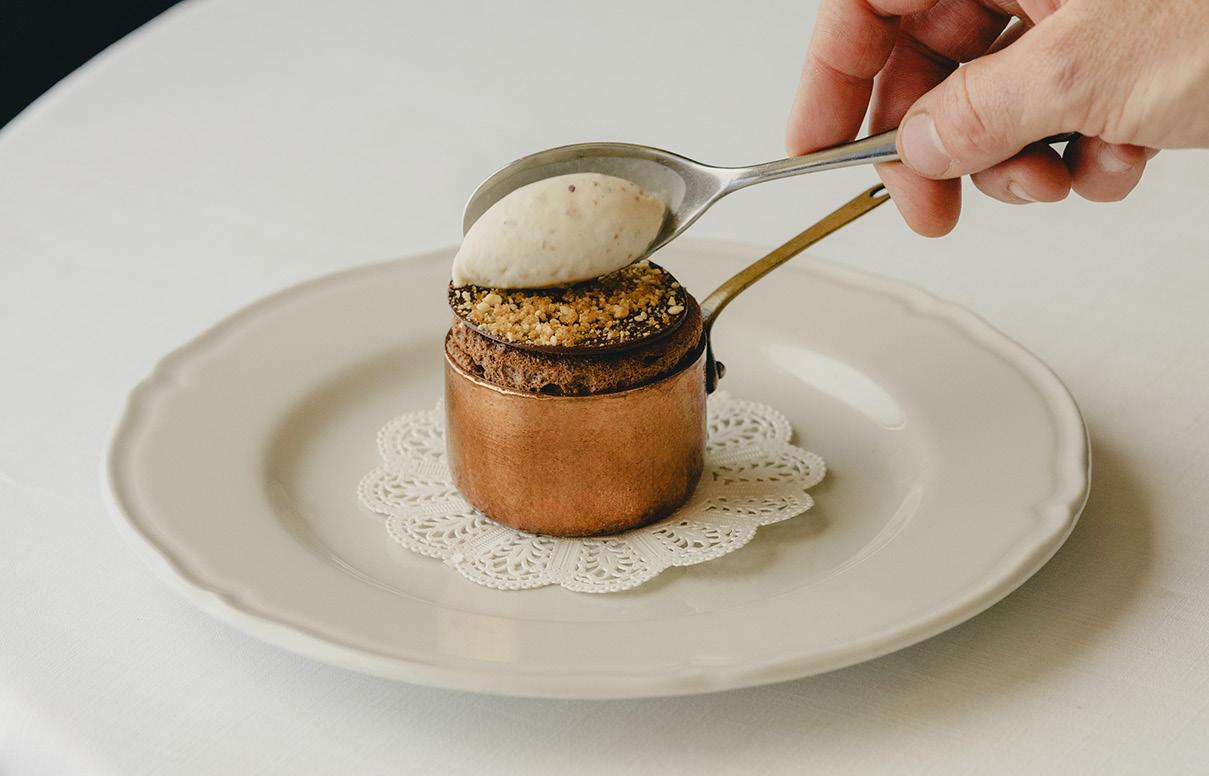
“There are some hero dishes, particularly in Cellar Bar, that have been around for a very long time, and that Melbournians resonate with and love and know as part of the institution, like the pumpkin tortellini. Another one of the dishes that has been on the menu for a long time is the chocolate soufflé, upstairs.”
Greenlaw’s team has been busy adding their own touches to the hero dishes that are sticking around, like extra brown butter on the tortellini, and additional chocolate from local Melbourne producer Cuvée in the soufflé, which is served beneath a quenelle of Fernet Branca gelato.
When it comes to offering Italian food on a premium scale, Greenlaw says they start each concept with the same philosophy of quality and handmade.
In Café Florentino (which has returned to its original 1928 name after time spent as Florentino Grill in the Grossi era), inspiration comes from the Tuscan grills of Florence.
“We use beautiful charcoal and native red gum, and we have constructed a list of different cuts of meat and fish, rotating anywhere from whole crayfish to whole flathead from Corner Inlet to O’Connor T bones. And we’ve got some of those well-known Italian classics on there, like the antipasti, assaggini, and tuna crudo that we’ve updated.
The tuna crudo moves away from traditional use of lemon. Instead, it takes freshness from early season grapefruits and oranges, which are seasoned with Campari and Mount Zero olive oil.
“We’re leaning into autumnal flavours with a wide range of little baby peppers that we finish on the wood fire grill. We then use some delicious, whipped ricotta. And instead of a more traditional pesto, we’ve lightly toasted some sunflower seeds and used that to make a pesto.”
It’s clear that Greenlaw and his team aren’t averse to playing with the classics, and it’s something he says diners have already responded well to.
“The feedback is that the guests are loving seeing some of the more interesting modern touches that are rotating. We’re always working towards what that next dish is,” he says.
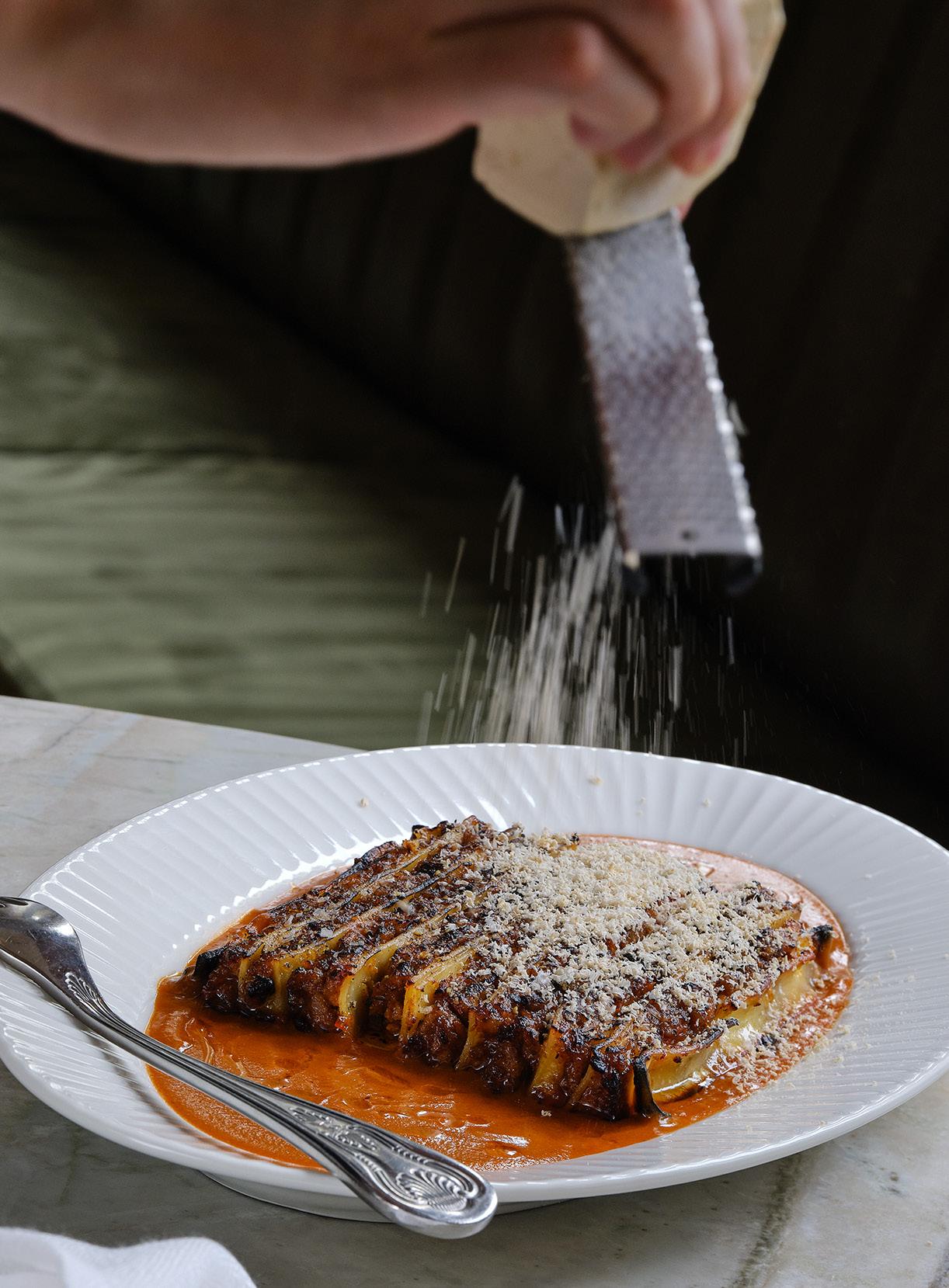
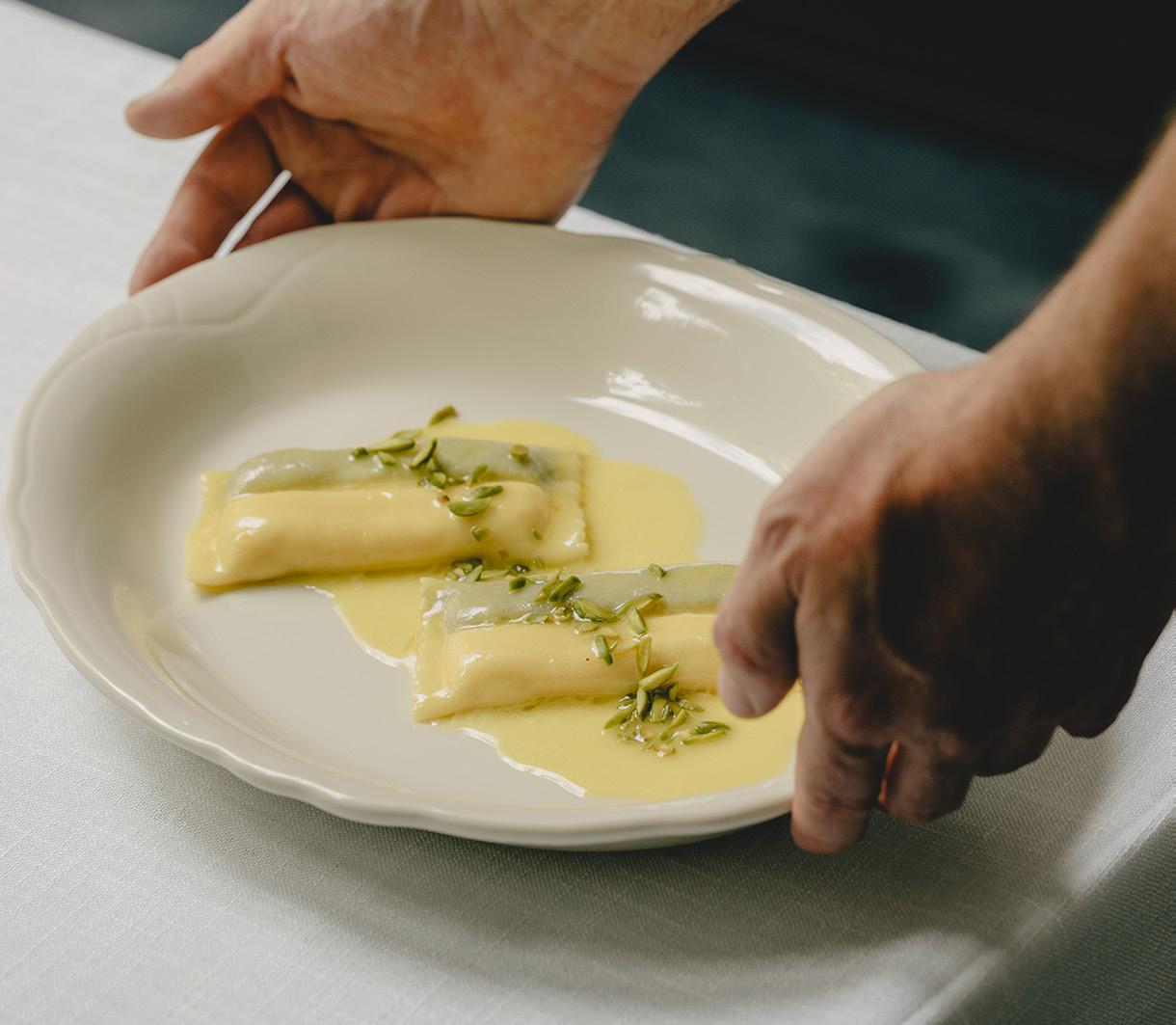
Another standout dish at Café Florentino is the ravioli doppio, which is a pasta with two separate fillings. On the left side is a mix of erbette (Italian chard), shallots, garlic, and crunchy toasted pistachio, with a touch of lemon. On the right is an almost fonduelike Fontina cheese.
“As you cut into it, you get the burst of fontina and you can mix it all in with the crunch of the pistachio and the erbette. It’s a really delicious pasta that the guests love,” says Greenlaw.
Upstairs, The Mural Room has become Florentino Dining Room. “Although it’s arguably one of the most beautiful dining rooms in Australia and could be seen as a special occasion restaurant, on a beautiful day it does lend itself to a nice lunch with friends,” says Greenlaw. “The service is very refined and elegant, but it’s not stuffy or stiff in any way.”
He says the menu is the same – while guests can opt for a special occasion seven course tasting menu, there is also a more affordable set menu offering for $95pp.
In the Dining Room, Greenlaw looks to suppliers like Romarro Farm and Day’s Walk Farm, who, “continually supply some of the best produce in Australia”. Using this produce, he makes a conscious decision to be guided by the seasons.
“Going from summer to autumn, there are some beautiful, unique products available to us and one of our tasks was to bring it as local as we could.”
“One of my favourites [on the menu] is the tartalletta di zuccha. It has this very thin semolina tart shell with a beautiful Parmigiano-Reggiano mousse. Then we’ve created a bright green pumpkin seed praline using pepper seeds and pumpkin seeds. It’s beautifully garnished with some summer and autumn flowers.”
Another standout dish, says Greenlaw, is the crudo. For the
early autumn menu, they opted for sea bream and pickled green tomatoes, the last of the season, lightly seasoned with fennel.
He also mentions the coral trout, which is served with a crema zucchini, spanner crab, a little lemon, and a crab-bone bisque that’s poured at the table.
“Coral trout is my most loved fish in Australia,” says Greenlaw. “It has the most beautiful texture that lends itself really well to that dry ageing that concentrates its flavour. And that skin is so delicious crisped up after dry ageing.”
Greenlaw also points out a duck pasta dish, crafted by Executive Chef Brendan Katich, who manages the day to day of the venues.
“We break down and roast the whole ducks to make the filling. He’s turned it into the most delicious sunflower shape, and what was, during summer, a nice little slice of pickled cherry.” Now, in autumn, it’s served with pickled beetroot.
Greenlaw says that Edition Group is the fifth owner since 1928, and during the takeover, the team came across beautiful historical menus from the 1960s.
“Having that historical element there is a bit of legacy that we have to continue. Knowing those menus are around and knowing that we need to keep it going is a special feeling.”
“Chris [Rodriguez, former head chef at Grossi Florentino] and Chef Guy [Grossi] were always talking about old menus and different dinners that they’d done. And that resonated with us, leaning on that history and knowing that the restaurant had been around for almost a hundred years.”
But with that legacy comes the burden of responsibility.
“If anything’s been successful for 100 years, there’s a big weight on your shoulders to continue that legacy for the future. And there are a lot of very strong opinions in Melbourne and Australia on the stewardship of this restaurant.”
Instead of leaning too much on the historic Italian menus, Greenlaw and the Edition team are looking at how they can bring in modern elements that will safeguard the restaurant for what they hope will be another century – without stripping too much history. To do this, they’re keen to change menus regularly, and showcase the depth and variety of local suppliers.
“A big mission and a point we would make with the team is that there is such a wide diversity of suppliers in Australia, and definitely in Victoria there is something new every week. We need to draw on that and I’m really excited by updating seasonal dishes that go with the incredibly amazing Victorian produce.
“Our big mission is to always innovate and create new dishes, and with an incredible cuisine like Italian it definitely leans into that. There are some classics that everyone knows, but the world is our oyster for Italian cuisine and distinctly Melbourne produce.” ■
Sophie Dalah
The chef and creative director behind Sophie’s Table talks showcasing Australian produce in the United States.
Can you please introduce yourself and your professional background?
I’m Sophie Dalah, a chef and creative director behind Sophie’s Table. I create immersive dining experiences that sit at the intersection of food, design, and storytelling, focusing on how people gather, connect, and experience a moment.
What drew you to move to the States, and what do you enjoy about the culture?
I moved for the energy and scale. There’s a real sense here that ideas can happen quickly. I love how food, fashion, art, and culture overlap, creating space for more dynamic, creative work.
Can you tell us about your recent experience at G’Day USA?
I partnered with Westholme at G’Day USA to showcase Australian produce in a refined, thoughtful way. I have worked with Westholme before and fell in love with their story. They own the land and grow the cattle on native grasses in the remote landscapes of Northern Australian. They have a nature-led approach to how they farm and that relationship with the land is expressed directly through the Wagyu. There’s a distinct terroir, a sense of place, that makes it an eating experience unlike any other. For me, it was about letting the product speak for itself, while presenting it within an elevated experience that allows its quality, provenance, and story shine through at this very important event.
Why was that important for you?
As an Australian, it felt meaningful to represent something so uniquely Australian – something I genuinely love. Westholme has always been my favourite. Working with a partner that is so connected to land, legacy, and care mirrors how I approach Sophie’s Table – creating experiences that respect origin, elevate craft, and connect people through food, art, and culture.
What’s next for you?
I’m focused on growing Sophie’s Table into a more expansive creative studio, developing larger scale experiences and continuing to push food as both a visual and emotional experience. ■