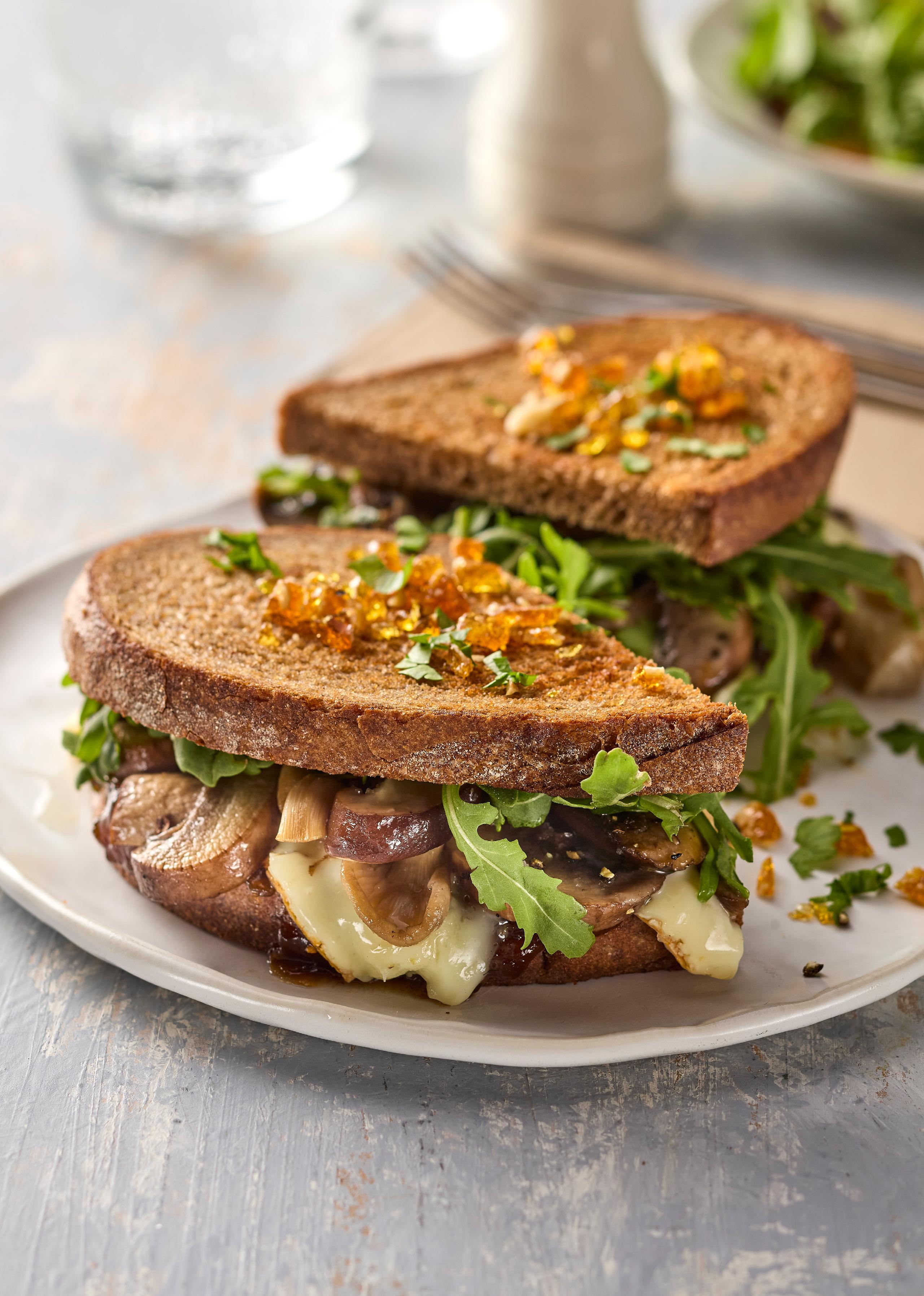

Hand-crafted

Hand-crafted
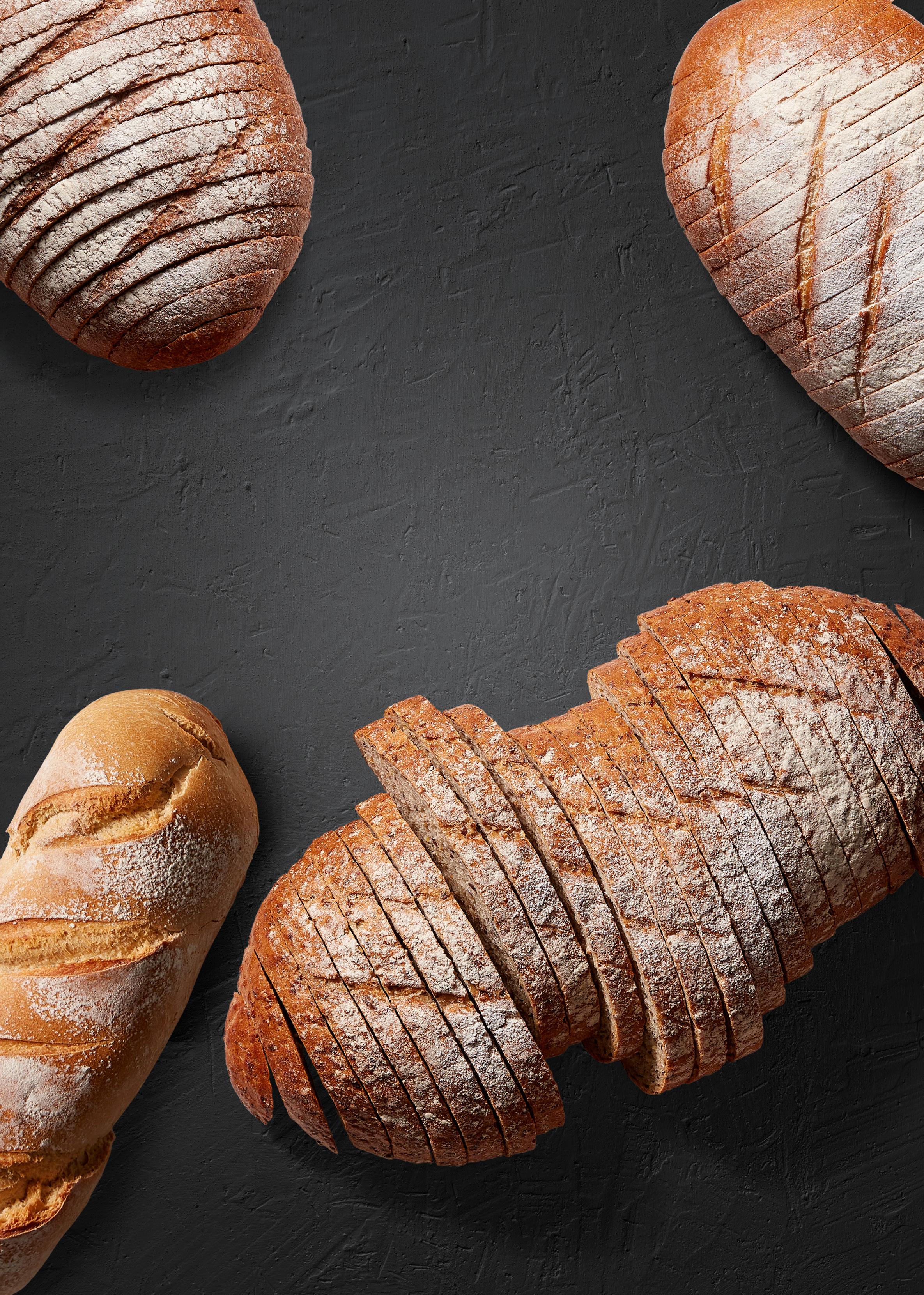
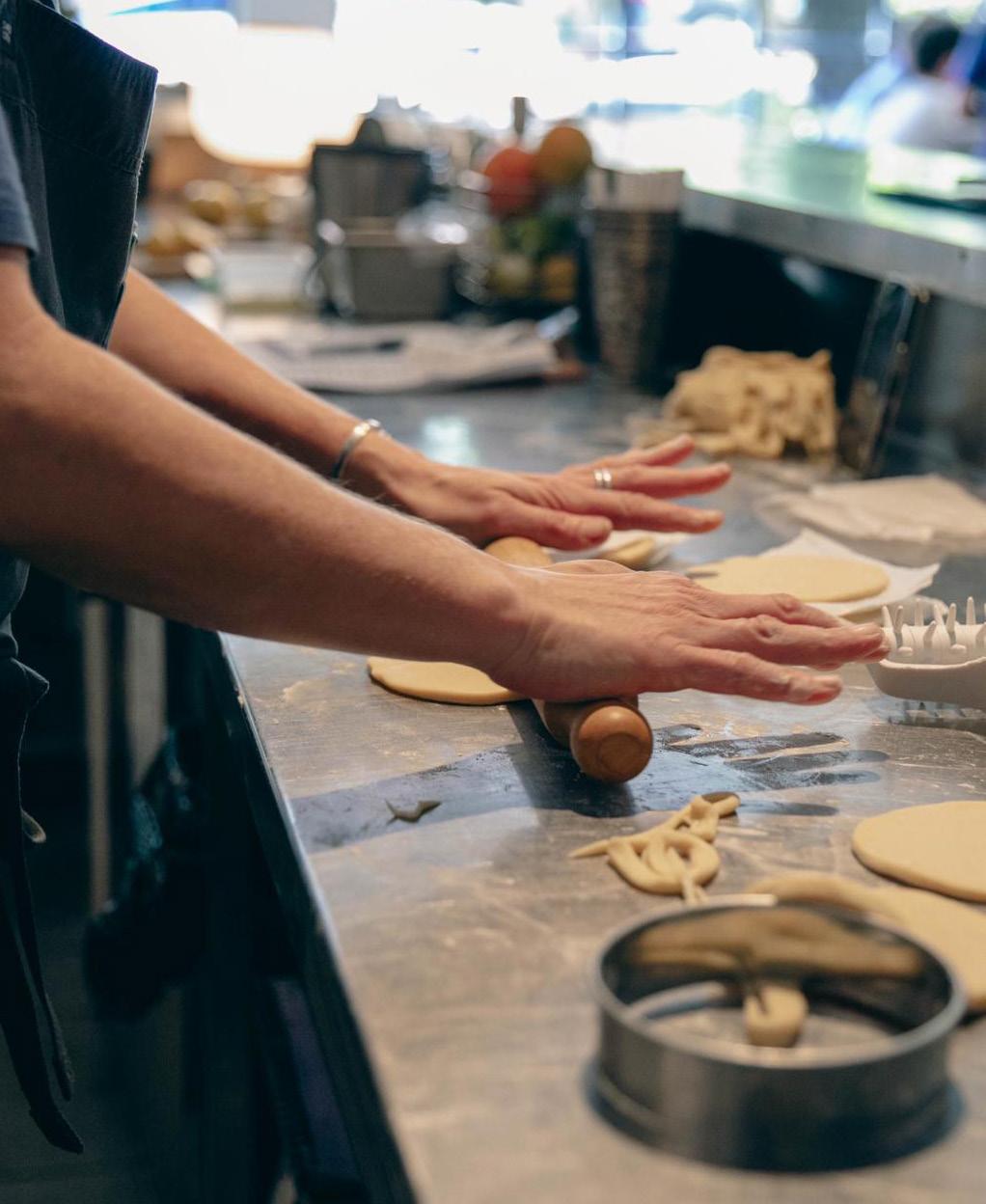
Starting with a sourdough culture that’s been nurtured for over 15 years, our dough is fermented for 24 hours before being lovingly hand-moulded by artisan bakers and baked to perfection. Ideal for café breakfasts or rustic sandwiches.

NO.819 JULY/AUGUST 2026
8 // IN FOCUS
Nestlé Golden Chef’s Hat alumni on why they’re encouraging next-gen chefs to enter
12 // ENTRÉE
The latest openings, books, events, and more
14 // PROFILE
For Alex Prichard, finding Moraea Farm was step one in executing his dream
20 // DRINKS
Forget food and wine pairings; it’s time to find the flow state between gin and food
26 // PRODUCE
This versatile nut is easy to snag off the shelf
38 // EQUIPMENT
An elegant blade designed for efficiency and control
52 // BAR CART
Thirst quenchers, slow sippers, and all things beverage related
58 // 5 MINUTES WITH …
Kim’s Bop Co-Owner Emily Tarran and Chef / Co-Owner Byungjae Kim
28 // MONEY TALKS
Despite biting costs, these restaurants keep promising affordable menus
40 // SCALING SMALLER
A recent boom in small venues has shown that operators are looking at tightening their output
46 // FUTURE OF DESIGN
Operators and designers are moving away from trends and towards longevity
54 // NEW WAVE
Hyper local and super fresh: New Mexican restaurants are redefining how Aussies see the nation’s cuisine


AN ENTIRE MENU under $30, in this economy? It seems too good to be true, but the operators executing these menus – without skimping on quality or size – are pumping out 700 covers a night. Journalist Maia Hart explores just how operators are keeping costs down, while passing these savings on to consumers.
This edition, we also explore the future of Australian hospitality design with award winning Studio Gram and Alex Cameron, the owner of Bronte's Fishnets and Table Manners,
PUBLISHER Paul Wootton pwootton@intermedia.com.au
EDITOR Laura Box lbox@intermedia.com.au
JOURNALIST Maia Hart mhart@intermedia.com.au
and hear how they craft exceptional spaces that stand the test of time.
We also hear from the team at Glebe Point Road newcomer Kim’s Bop, delve into the current proliferation of small venues, uncover a new wave of Mexican restaurants, and ask the important question: can gin pair with food as well as wine? Happy reading!
Laura Box Editor
COMMERCIAL DIRECTORHOSPITALITY GROUP Simon York T: 02 8586 6163 syork@intermedia.com.au
GROUP ART DIRECTOR –LIQUOR AND HOSPITALITY Kea Webb-Smith kea@intermedia.com.au
PRODUCTION MANAGER Jacqui Cooper jacqui@intermedia.com.au
and
at Avia @laurabox_
SUBSCRIPTION
CIRCULATIONS To subscribe please call 1800 651 422. hospitalitymagazine.com.au facebook.com/ HospitalityMagazine twitter.com/Hospitalityed instagram.com/hospitalitymag
SUBSCRIPTION


Chefs
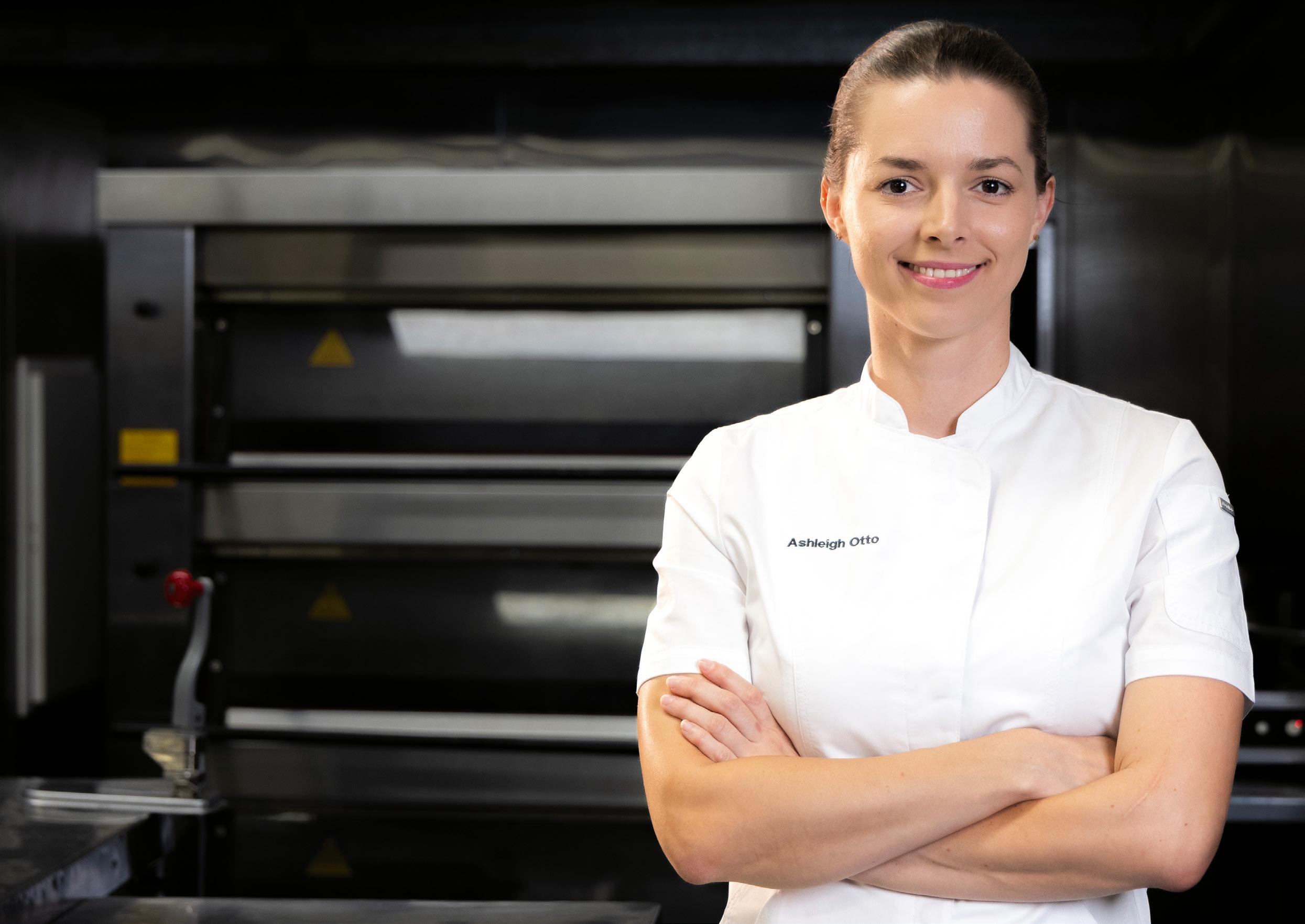
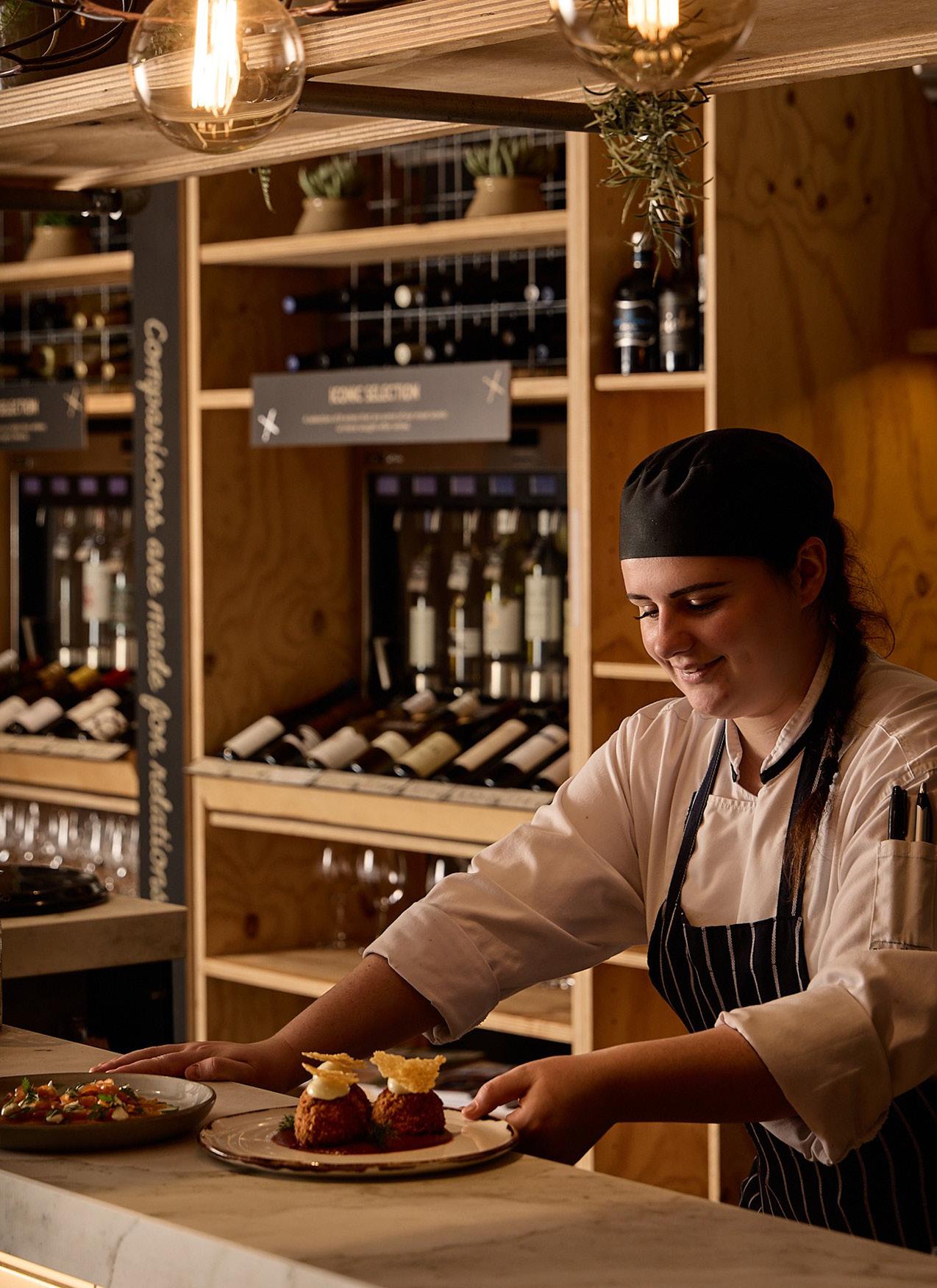
THREE EXCEPTIONAL ALUMNI of the Nestlé Golden Chef’s Hat Awards share their experience with the competition, how it’s helped in their careers, and why they’re encouraging young chefs to get on board.
Ashleigh Otto
“At my core, my work is about storytelling through food and creating memorable experiences, while staying passionate and sharing that with others,” says Pullman Cairns International Head Pastry Chef Ashleigh Otto.
Time is of the essence for the chef, whose extensive responsibilities include overseeing the pastry section, ensuring consistency, quality, and smooth service across all outlets while managing costs, rosters, and planning behind the scenes.
“I work closely with my team across all the outlets in a la carte, banquets, high tea, and outside catering; while focusing on teamwork and growth for each individual and keeping that creativity and passion alive through involvement with menu designing,” says Otto.
For Otto, early-career participation in the Nestlé Golden Chef’s Hat Awards helped her to develop the significant skills needed to thrive in her current role, and her participation saw her come away with multiple gold medals.
Now entering its 61st year, the competition supports emerging culinary talent with mentoring, industry recognition, and the opportunity to connect with chefs across Australia and New Zealand. Otto says the competition taught her precision in timing and strong communication skills.
“Working efficiently with a team and meeting time frames is essential in kitchens, alongside upholding high standards in a tidy environment. These takeaways are so valuable to use back in the daily kitchen life.”
The chef says that competing for multiple years pushed her to return stronger and aim higher each time. “Each time competing opened a new challenge for me,” says Otto, adding that the competition is one of her most memorable career highlights to date.
“After consistent training then executing, the sense of personal achievement was incredibly uplifting and rewarding, building my confidence and letting me take more precision back to the kitchen,” says Otto.
For young chefs looking to take part in the Nestlé Golden Chef’s Hat Competition, Otto says “stay focused and create a precise time plan — and train, train, train”.
“The more you practice the dish the more concreted and refined it will be,” she adds. “It allows you to iron out any issues, so execution feels smooth, driven by muscle memory, and your speed naturally increases for a smooth and well-organised execution.”
She stresses the importance of learning as much as possible.
“Be a sponge. Surround yourself with great mentors and driven creatives and keep your passion alive. Keeping this aligned will keep your drive and opportunities open. Never stop learning, and don’t just rely on social media for inspiration; while social media is a valuable tool there’s just as much to discover in nature and through reading books.”
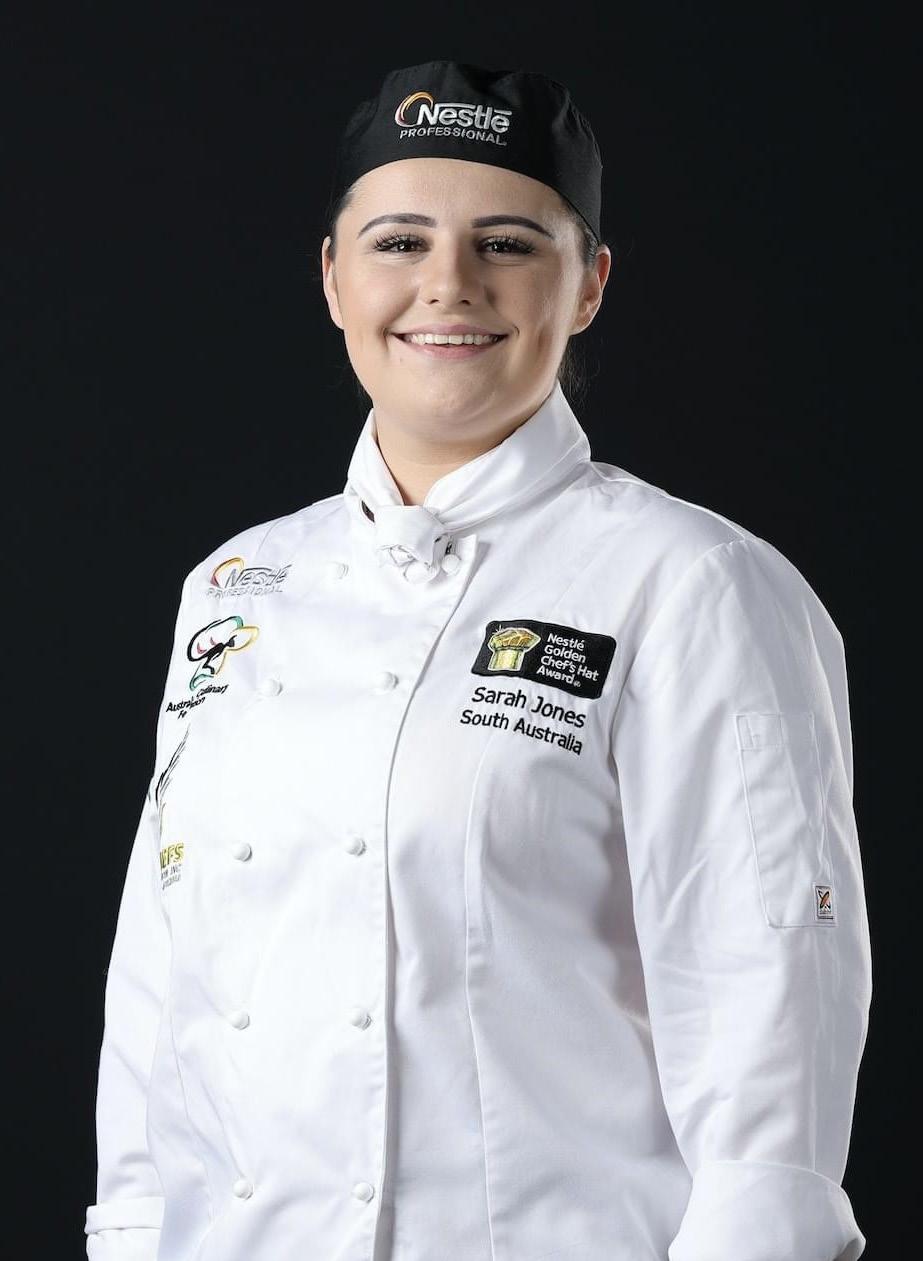
Sarah Jones
During her time as a first-year apprentice under Chef Steven Clark, Sarah Jones was required to enter and take part in culinary competitions.
“I knew from my first time competing that this was for me,” says Jones. “I was in love with the thrill of it all and it drove me to keep giving it a go each year.”
Jones went on to enter the Nestlé Golden Chef’s Hat Award multiple times between 2017 and 2024, ending up among the national finalists six out of the eight times she competed.
She believes the competition gave her a strong foundation in the industry — “in some cases, better than on-the-job training” — as she had to learn how to be extremely organised, clean, and sometimes work within strict budgets.
“It also helped give me confidence in the kitchen and with my menu developments,” says Jones. She adds that the competitions were “amazing” networking experiences, especially at the national finals, where she made lifelong friendships with other competitors such as Amber Heaton.
Now, Jones is Sous Chef at Adelaide’s Morphettville Racecourse. She manages a brigade of eight to 10 chefs, with two to four chefs on at any one time.
“I do everything from prepping, running functions, food costing, menu development, and recipe books, to invoicing and everything in between. I mentor and train kitchen staff, including our two young apprentices,” she tells Hospitality
Her own food philosophy has grown and changed over the years, from focusing on showcasing native Australian ingredients, perfecting intricate plating, making “good hearty meals full of classic flavours”, to spending time refining flavour combinations. Currently, her focus is on prioritising fresh, quality ingredients, while supporting local and smaller businesses.
“It keeps a steady clientele and happy customers who keep coming back. Word of mouth is your best friend when it comes to making a successful business or restaurant,” says Jones.
“I also love including my fellow chefs’ ideas in my menus as this also helps me learn new things and encourages our regulars to try something new.”
Jones, who is currently mentoring Morphettville Racecourse’s own 3rd year apprentice Owen to take part in the Nestlé Golden Chef’s Hat Award regional cook-offs for 2026, says she would give potential entrants the same advice given to her by Chef Steven Clark: “This doesn’t define you”.
“He would use this phrase every time I had a breakdown or saw the slightest inkling that I was nervous or stressed during my training,” says Jones.
“Those words from my chef pushed me through it to keep going, and by the end I understood that it was all a learning opportunity.
“To this day he still says those words to me, and it helps level me back out, as a reminder that no matter what happens, I will be ok and I will continue grow.”
Tom Hitchcock
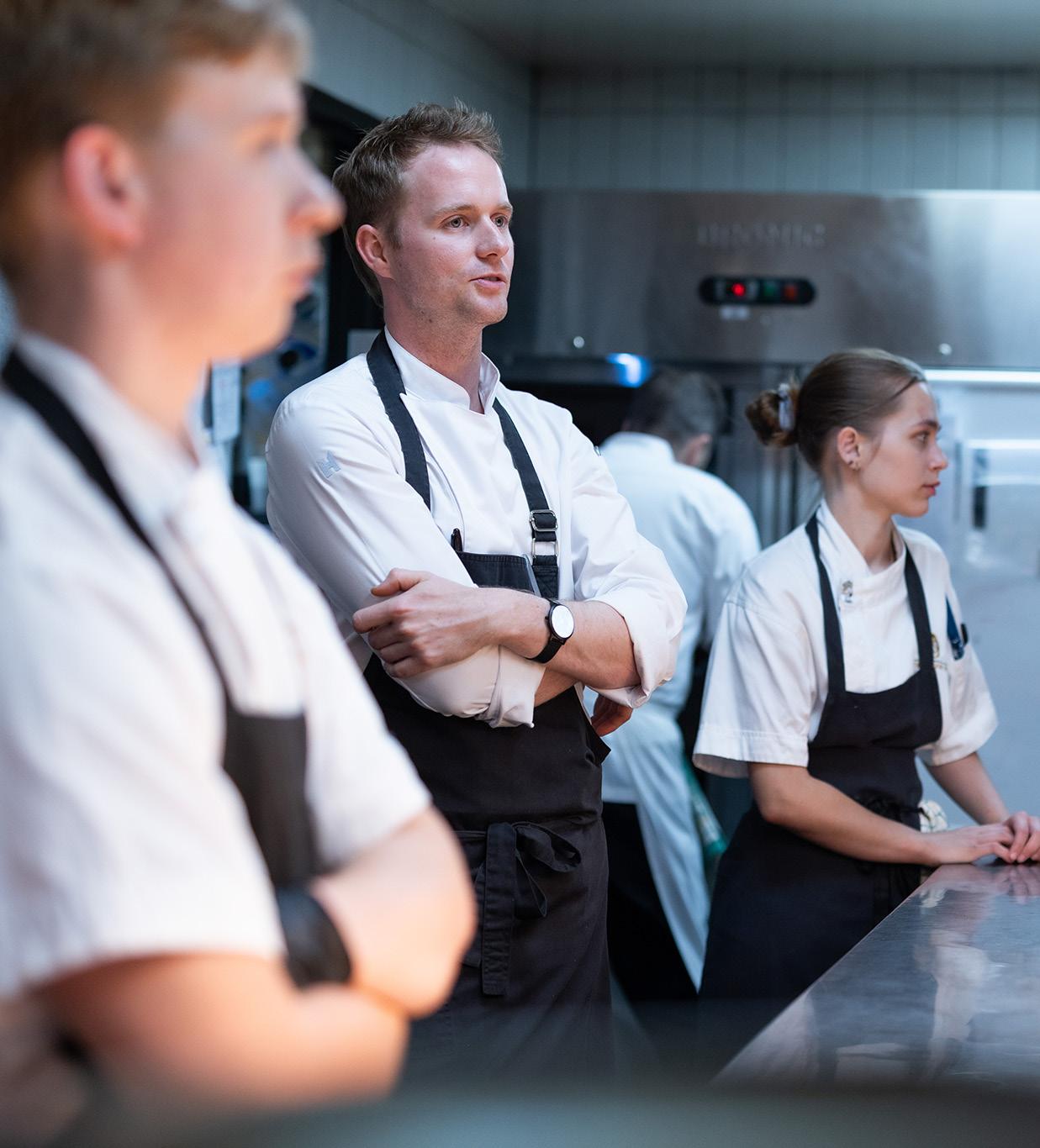
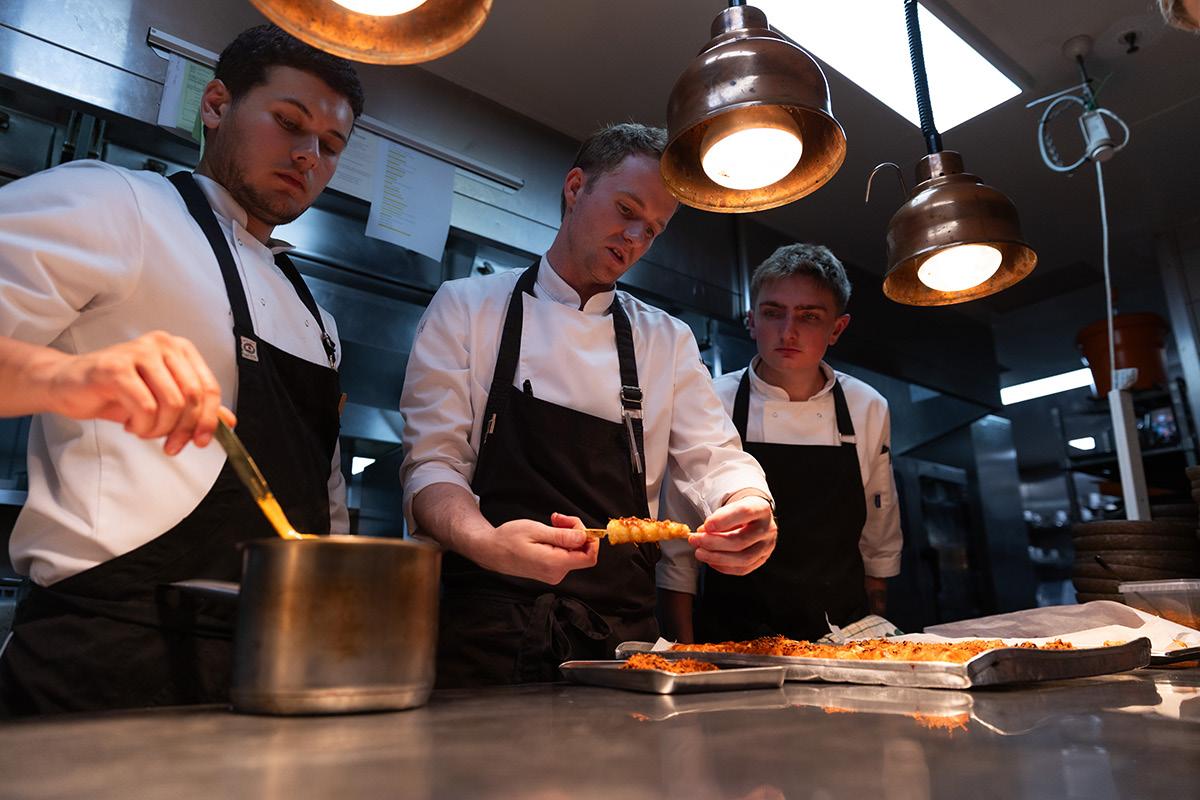
“A big part of my role is building a kitchen culture where people enjoy coming to work and can keep improving,” Spirit House Head Chef Tom Hitchcock tells Hospitality.
“What I enjoy most is seeing the team grow. Great food matters, but great people matter more. Watching young chefs gain confidence, develop skills, and become leaders themselves is one of the most rewarding parts of the job.”
Hitchcock has taken this desire to help his team develop beyond the confines of his own kitchen by encouraging them to enter competitions.
“Competitions are one of the best ways to learn because they force you to sharpen your skills, think quickly, and perform under pressure,” says Hitchcock. Back in 2017, the chef entered the Nestlé Golden Chef’s Hat Award and ended up in the national finals. The decision to enter, he says, stemmed from a desire to test himself.
“The Golden Chef’s Hat Award had a great reputation, so entering felt like an opportunity to step outside my comfort zone and measure myself against talented chefs from around the country.”
Hitchcock says the experience presented him with a huge learning curve, “in the best possible way”.
“You’re surrounded by talented people who all care deeply about what they do, and that energy pushes you to lift your own standards. Becoming a national finalist gave me confidence early in my career. It showed me I could compete at that level but also reminded me how much more there was to learn.”
The chef’s career has skyrocketed in the years since, and in 2023 he took out the Australian Chef of the Year title at the Foodservice Australia tradeshow in Melbourne.
Currently, Hitchcock is the head chef at award-winning Sunshine Coast restaurant Spirit House. He oversees menu creation, training, service standards, ordering, and making sure the team has what they need to perform at a high level. It’s here that he honed his philosophy towards food. “I think the best dishes
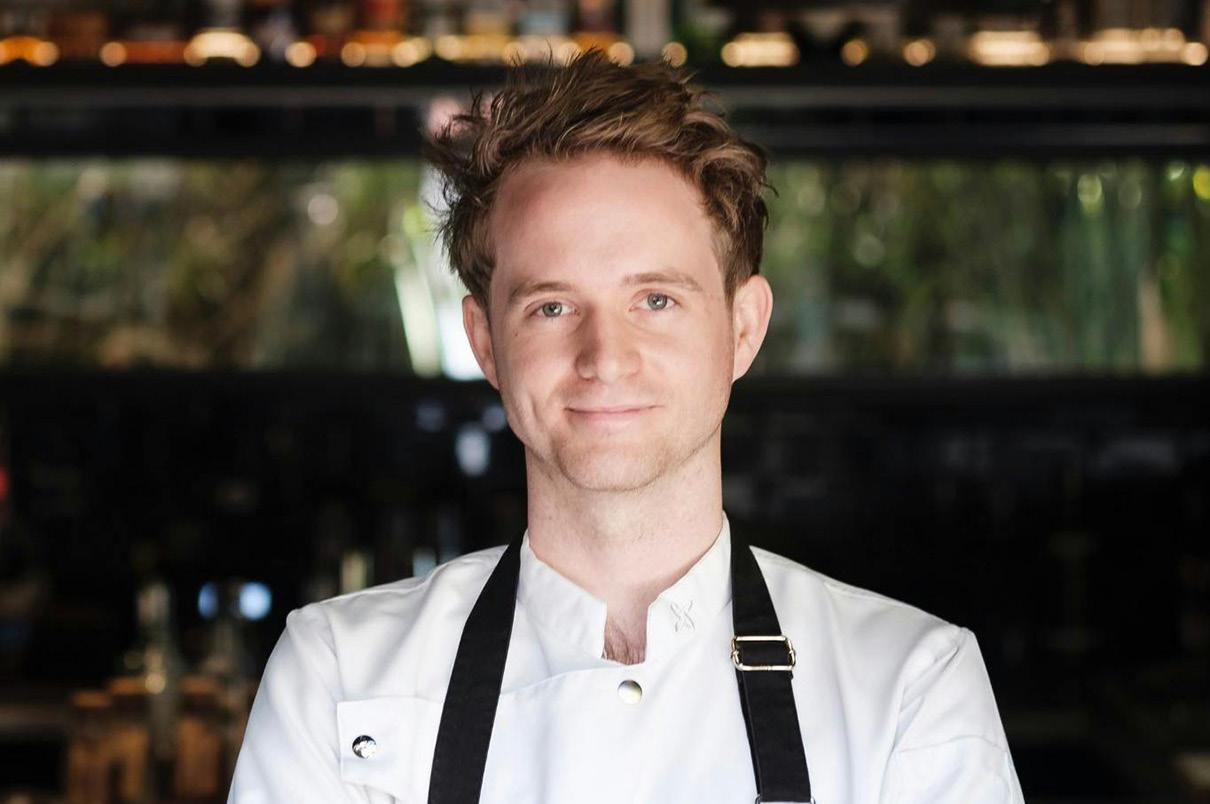
are balanced, thoughtful, and let ingredients speak for themselves rather than trying to do too much,” he says.
He now encourages the Spirit House team to also enter the Nestlé Golden Chef’s Hat Award, with the belief that competitions fast-track growth — a move that has paid off. Last year, Baxter Sanderson — a young chef working at Spirit House — competed as the Queensland national finalist and won the Buondi Crafting Moments Award.
“I was proud of him. When someone puts in the work, stays consistent, and then gets recognised for it, it’s a great feeling to witness,” says Hitchcock. “Awards are fantastic but seeing someone gain belief in themselves is even better. That confidence can change the direction of a young chef’s career.”
For young chefs entering the competition, Hitchcock recommends they back themselves early.
“You don’t need to know everything before you start — no one does. Just be willing to work hard, ask questions, and stay curious. Learn the basics properly, keep your ego in check, and don’t be afraid of pressure.
“Most importantly, stay authentic. Trends come and go, but genuine passion lasts.” ■
This story was created in partnership with Nestlé Professional and originally published on hospitalitymagazine.com.au








The latest openings, books, events, and more.
Edited by Maia Hart

Daisy Tulley has been appointed Group CEO at Mucho Group, formalising her leadership of the operator behind Bar Bridge, Bar Herbs, Centro 86, Bar Planet, and more. Tulley has been with the hospitality group for a decade, most recently as Group General Manager.
“At the heart of everything we do is a desire to bring more joy to Sydney,” says Tulley. Tulley says they want to keep creating venues that feel welcoming, inclusive, and deeply connected to Sydney’s cultural fabric. The appointment comes as Mucho enters its next phase of growth, with new projects currently in development. muchogroup.com.au
Josh Niland
Hardie Grant
RRP $80
Acclaimed chef Josh Niland will release Saint Peter: Chapter & Verse on 1 September. The book is a complete expression of what Saint Peter stands for and includes three first-person essays charting the restaurant’s 34-seat venue on Oxford Street, through to its second iteration as a 22seat counter, and the now 30seat restaurant and bar at the Grand National Hotel. “Saint Peter: Chapter & Verse is a record of a decade of work – not just recipes, but a new way of thinking about fish, modern craftsmanship, and leadership,” says Niland. hardiegrantbooks.com

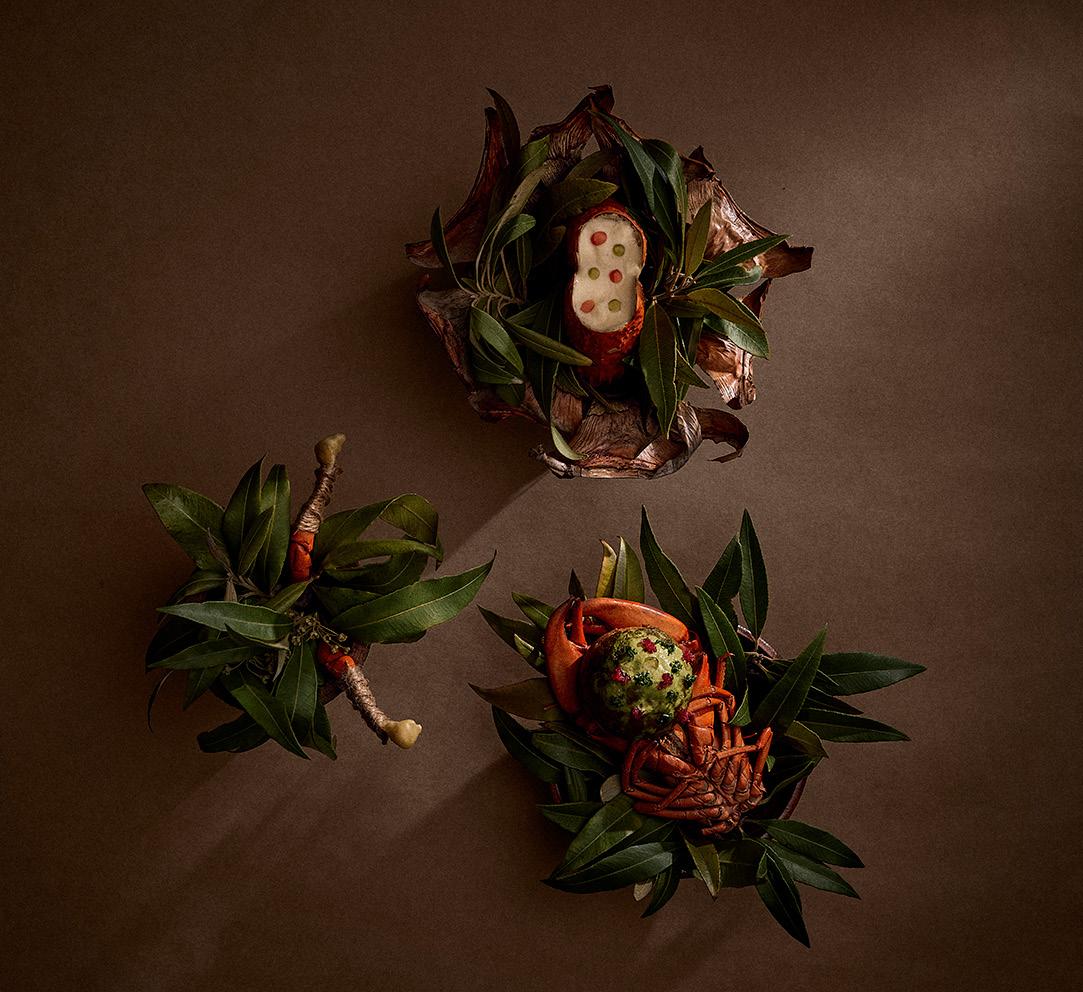
Restaurant Aptos is the work of former Restaurant Botanic Head Chef Justin James. Set in an historic former church in Adelaide, the intimate restaurant features a 16-course menu showcasing the natural Australian landscape and wild local ingredients. The restaurant is one of three venues James will open within the church, alongside Bar Cruz, which will open this winter with a list of innovative cocktails and a 20 dish a la carte menu, and Bar Mary, which will specialise in whiskeys and serve the singular food option of a bento box. restaurantaptos.com
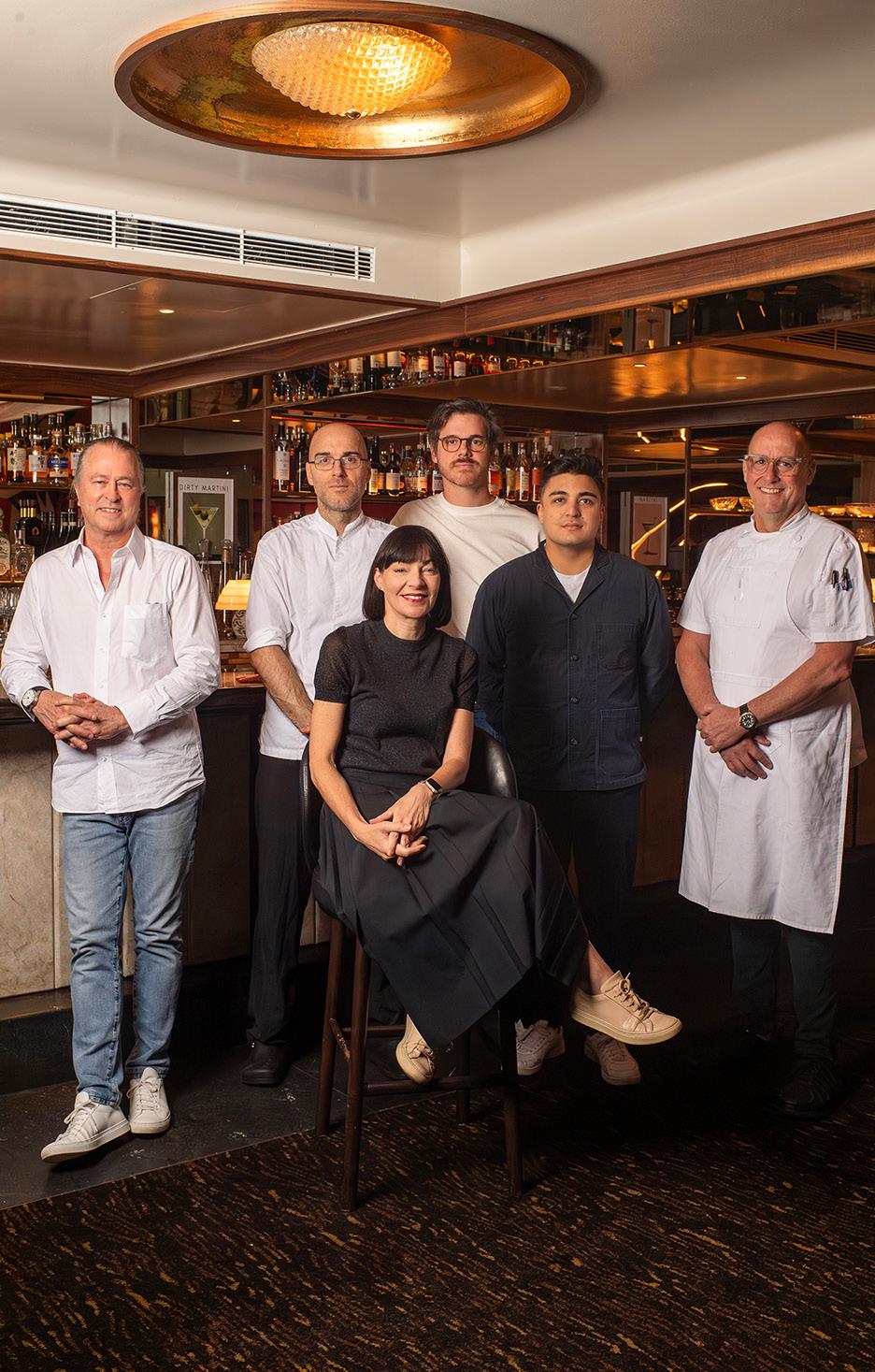
Neil and Sam Perry’s casual pizzeria has opened in Double Bay, replacing Bar Torino beneath Italian restaurant and grill Gran Torino. Perry says Pizzeria Sotto is best described as Gran Torino’s little sister. “The food is as a blend of a great Roman pizzeria with a neighbourhood trattoria. Start with some antipasti, move onto pizza and salad, and then something sweet to finish,” says Perry. themargaretfamily.com
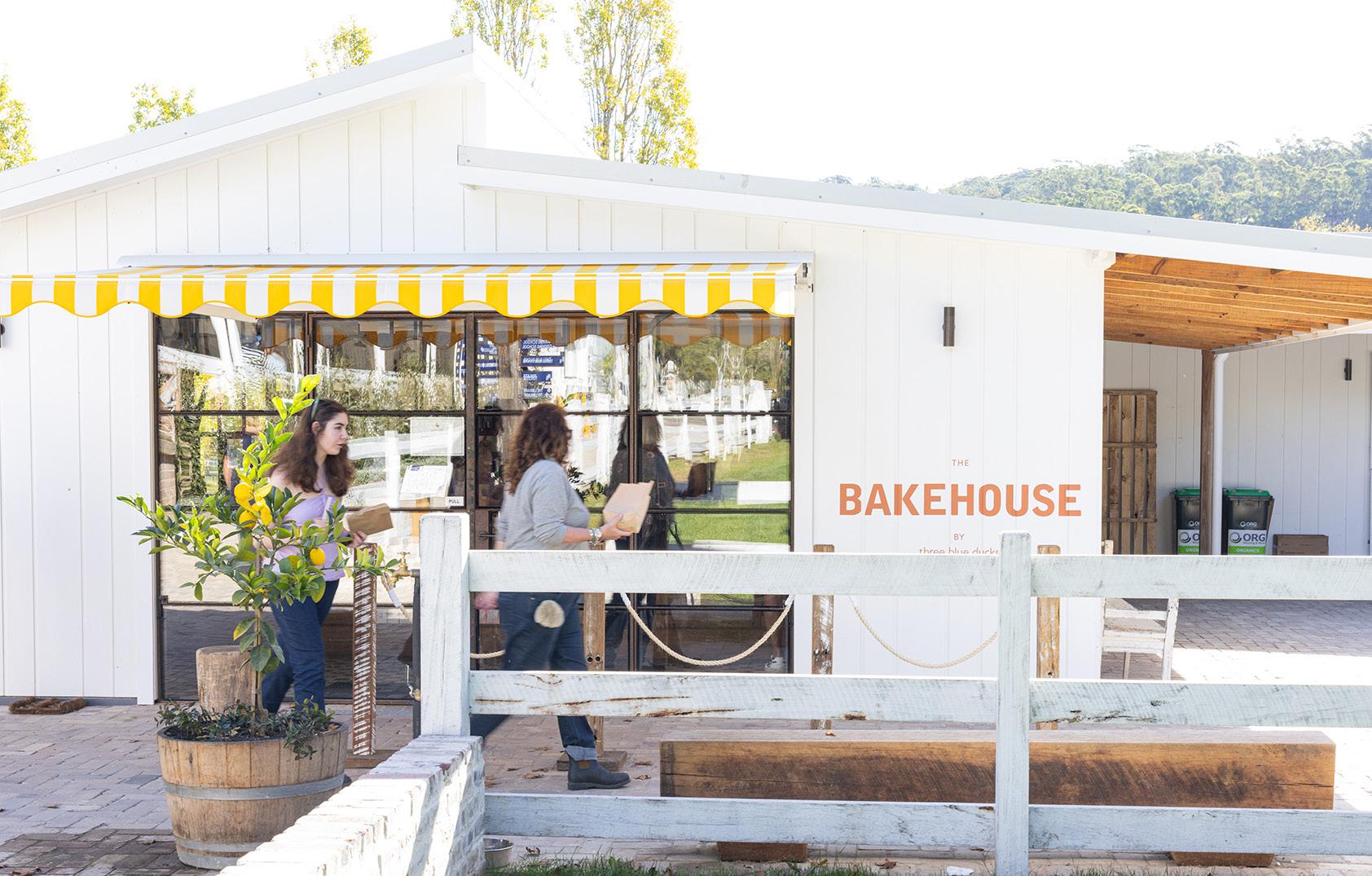
Three Blue Ducks opened its restaurant at Burradoo Park Farm in June, joining The Bakehouse and The Farmhouse in the New South Wales’ Southern Highlands. The restaurant is led by Group Executive Chef Troy Crisante and newly appointed Head Chef Rhys Connell under the guidance of Co-Owners Darren Robertson and Andy Allen. The menu is showcasing ingredients grown on-site at Burradoo Park Farm, a regenerative farm founded and operated by Annie Cannon-Brookes. threeblueducks.com
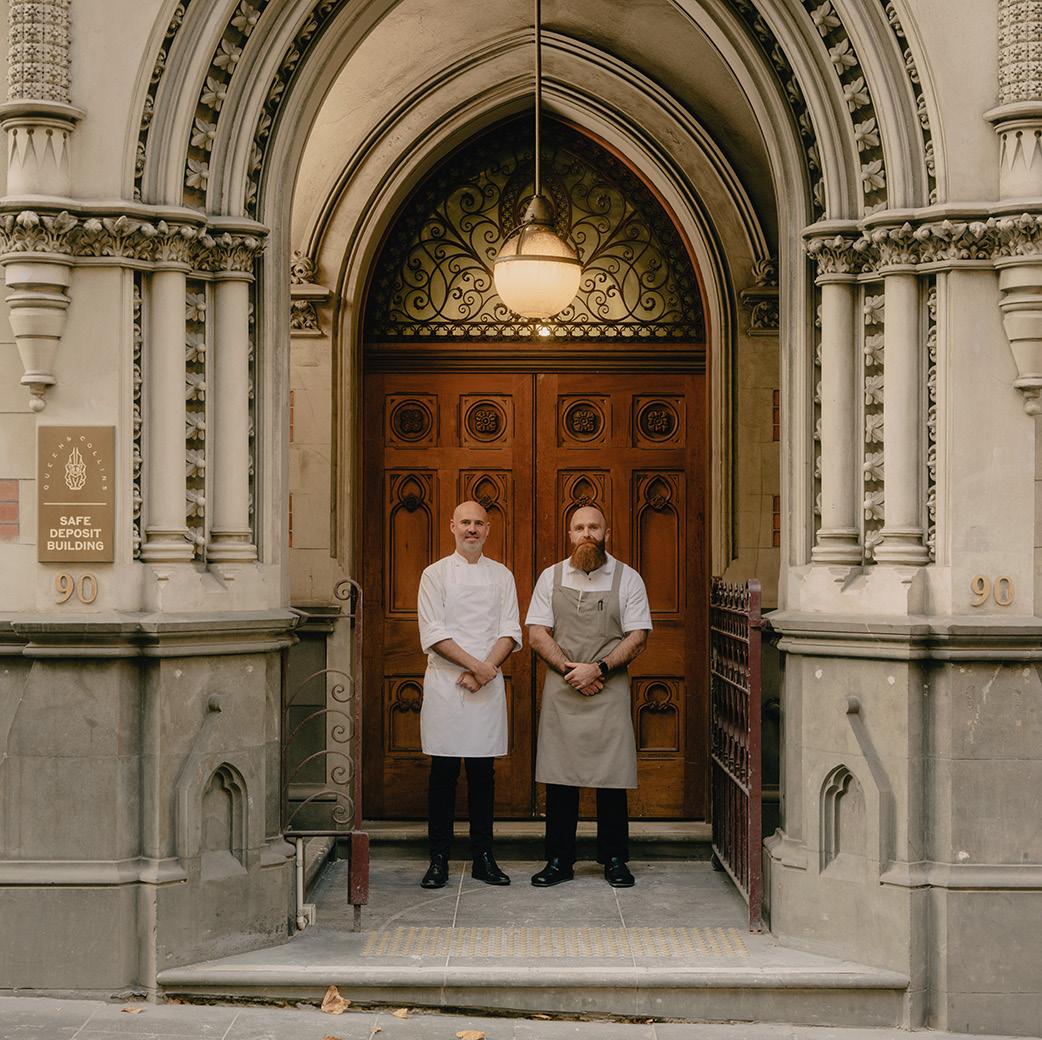
Edition Hospitality opens Bar Privé in July, a new cocktail bar within the former Melbourne Safety Deposit building. Privé has been created in response to growing demand for private dining and events at Reine & La Rue, which is just around the corner. The venue is designed to offer a more drinks focussed experience with cocktails as the centrepiece. “There’s an intimacy and warmth to these rooms that naturally lends itself to cocktails, private dining, and smaller gatherings, while still carrying the character and history of the precinct,” says Edition Group Founder and CEO Rebecca Yazbek. prive.melbourne
main reason we didn’t go ahead with that project was because we did a soil test there, and it was impossible to grown anything on that land,” Prichard tells Hospitality
In Prichard's opinion, a substantial garden is an essential element of a regional restaurant. “I want to be able to grow as much of our own produce as possible. For me, it was about saying, ‘If we can do this, it won't just be a pretty herb garden’,” he says.
After scrolling through the group’s Instagram and being taken by their “incredible” collection of properties, Prichard decided to reach out, thinking their clients would align with the clients of his catering business.
He soon met up with Peter and Nadia Yannopoulos, the group’s owners, who showed him around their properties. “We got to Moraea and they showed me the site they wanted to turn into a restaurant. I went, ‘Oh my god. This is incredible’,” says Prichard.
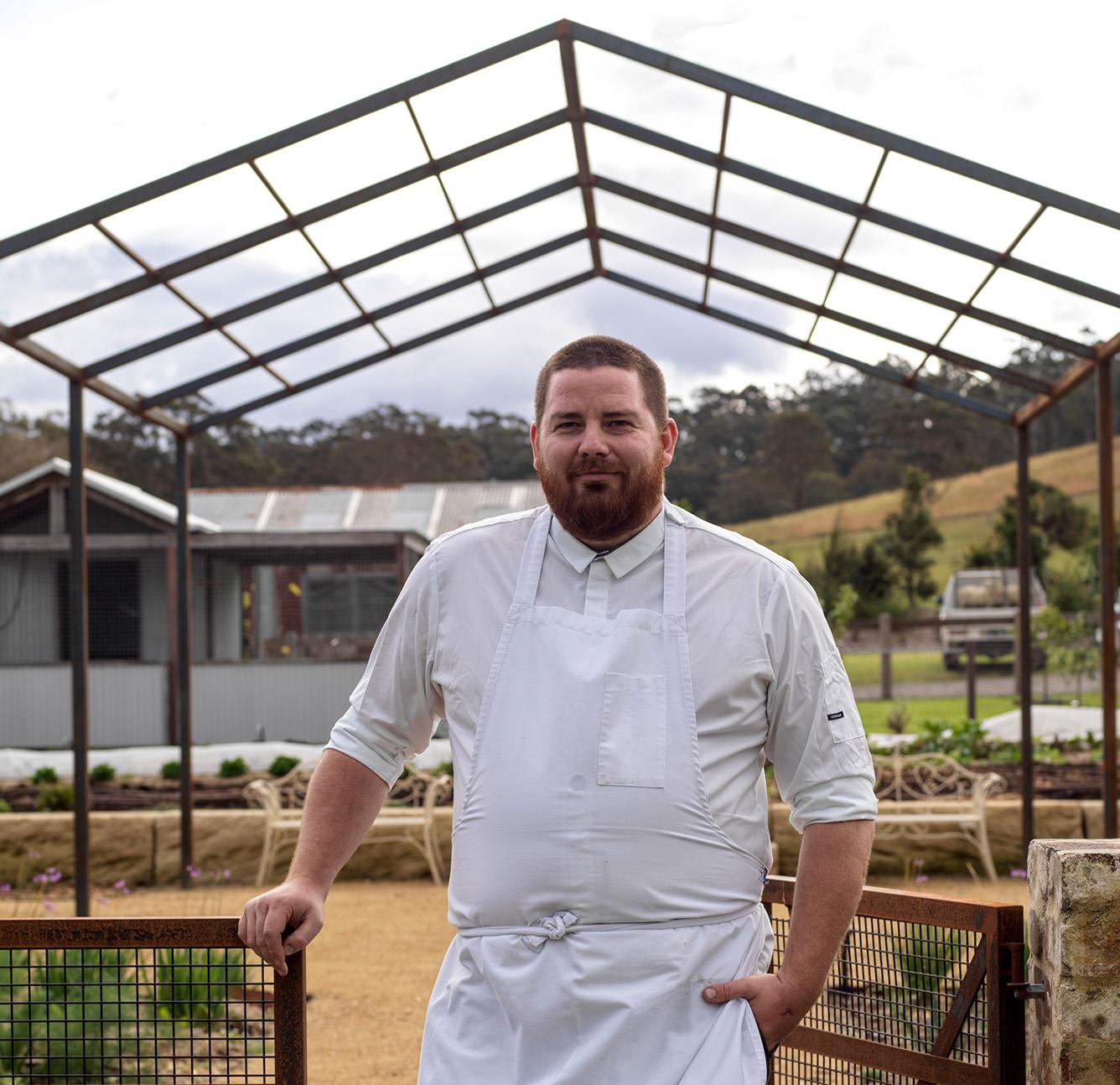
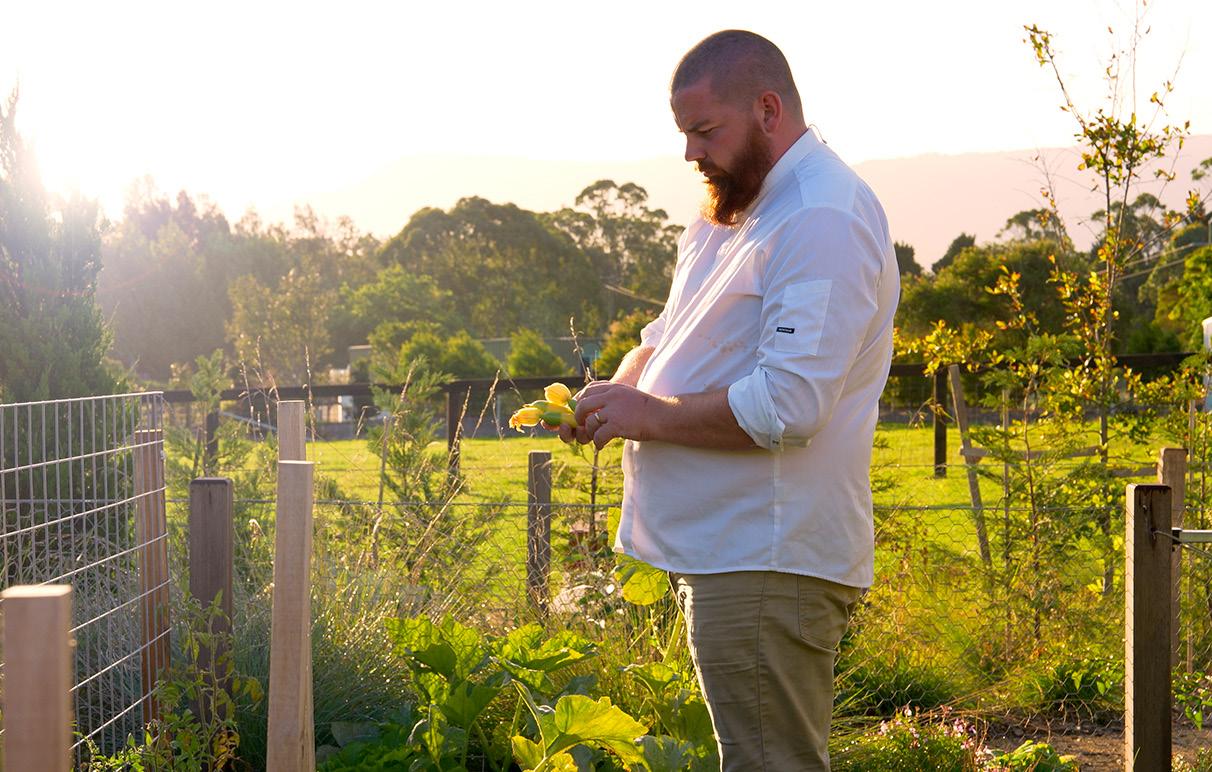
Finding Moraea farm was step one in Prichard’s dream. Now the ex-Icebergs chef is growing his menu quite literally from the ground up.
Words Laura Box
Photography Jason Loucas
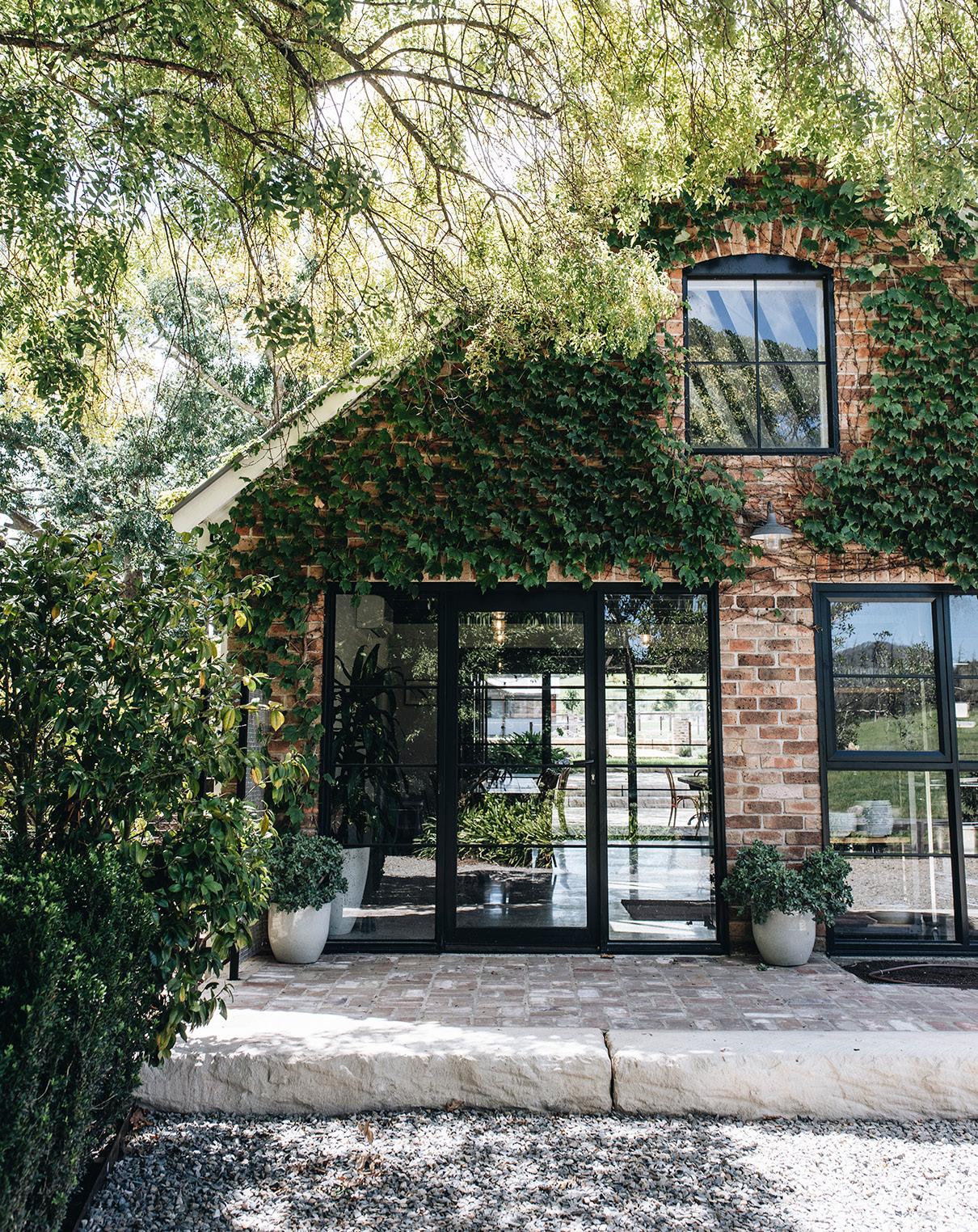
ALONG THE VERDANT, softly winding road that connects the NSW South Coast town of Berry to the seaside village of Shoalhaven Heads, you’ll find Moraea Farm.
The farm is part of the Linneaus Collection, a curated group of “architecturally distinct luxury holiday homes and farms”. For former Icebergs Culinary Director Alex Prichard, who discovered the property when scrolling on Instagram one day, the farm has turned out to be the answer to his long-enduring dream of opening a restaurant in the region.
“My wife and I looked at one site that we were offered, but the
For the Yannopouloses, the Linnaeus Collection was never simply about accommodation. Rather, their vision was to create an experience that would elevate guests’ connection to nature, inspired by Carl Linnaeus, the Swedish botanist who created the binomial naming system for all living things. Prichard's vision aligned with this.
“Alex brings a rare combination of precision and restraint, but also a deep respect for produce and people. He loves the community on the South Coast. We started talking about a restaurant over a year ago, and our alignment was immediate,” says Yannopoulos.
At first, the chef came on board as a consultant, helping the duo safeguard their interests and ensure the restaurant would deliver their goals. After a few months of working together, the team were getting along swimmingly.
“The project evolved and it got to a point where I went, ‘Hey, this is a project that is about 20 per cent away from something I’d want to be doing. Why don’t we partner up, and we’ll go the extra 20 per cent and do it together?’ We haven’t looked back since,” says Prichard.
And so, Sara Dining was born.
The restaurant, which sits within the farmhouse’s restored
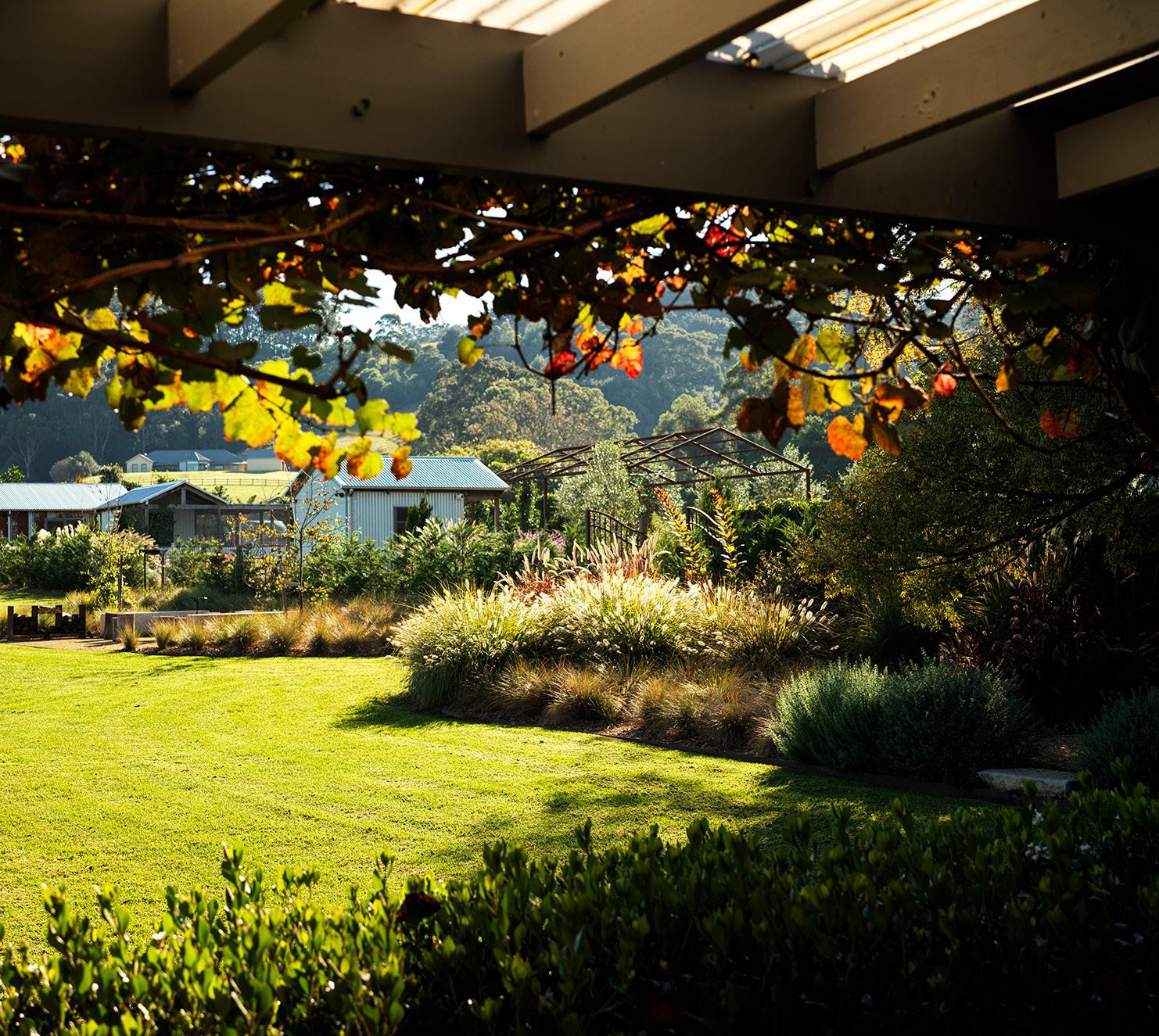
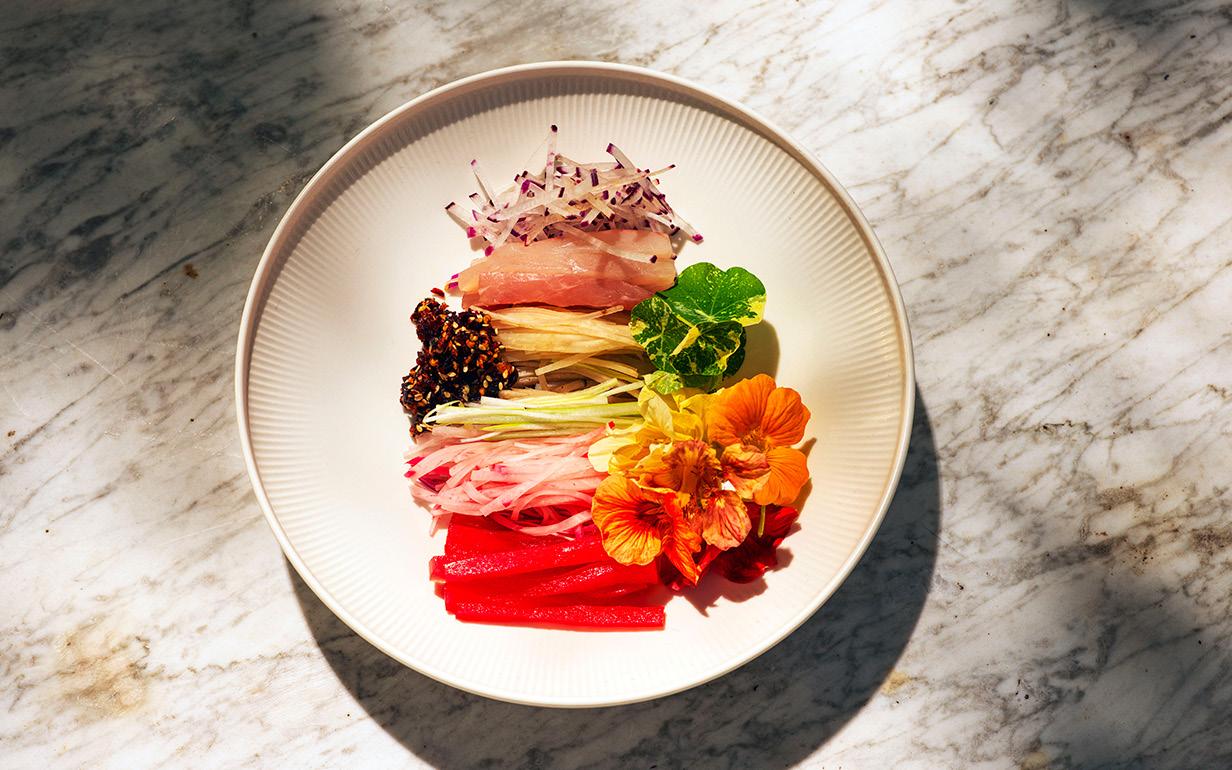
1970s garage and workshop, is produce-driven, with a menu built around an on-site garden and the area’s plethora of producers and farmers. Prichard's goal is for the on-site produce to make up the core of the menu, and he’s keen to showcase a range of unconventional fruit and vegetables.
“We’re growing things that most people haven’t seen before. We’re hopefully going to be doing 80 per cent fresh produce for the restaurant,” says Prichard. Over the summer, the team experimented with a range of different cucumbers and melons (with melon varieties including ‘Minnesota Midgets’, ‘Charentais’, and ‘Ha’Ogen’). But Prichard says this is just the tip of the iceberg.
“I’ve got this obsession with fruit,” says Prichard, who has “painstakingly” sourced seeds for difficult-to-find varieties of berries like Marionberry, Loganberry, and Indica Gooseberries.
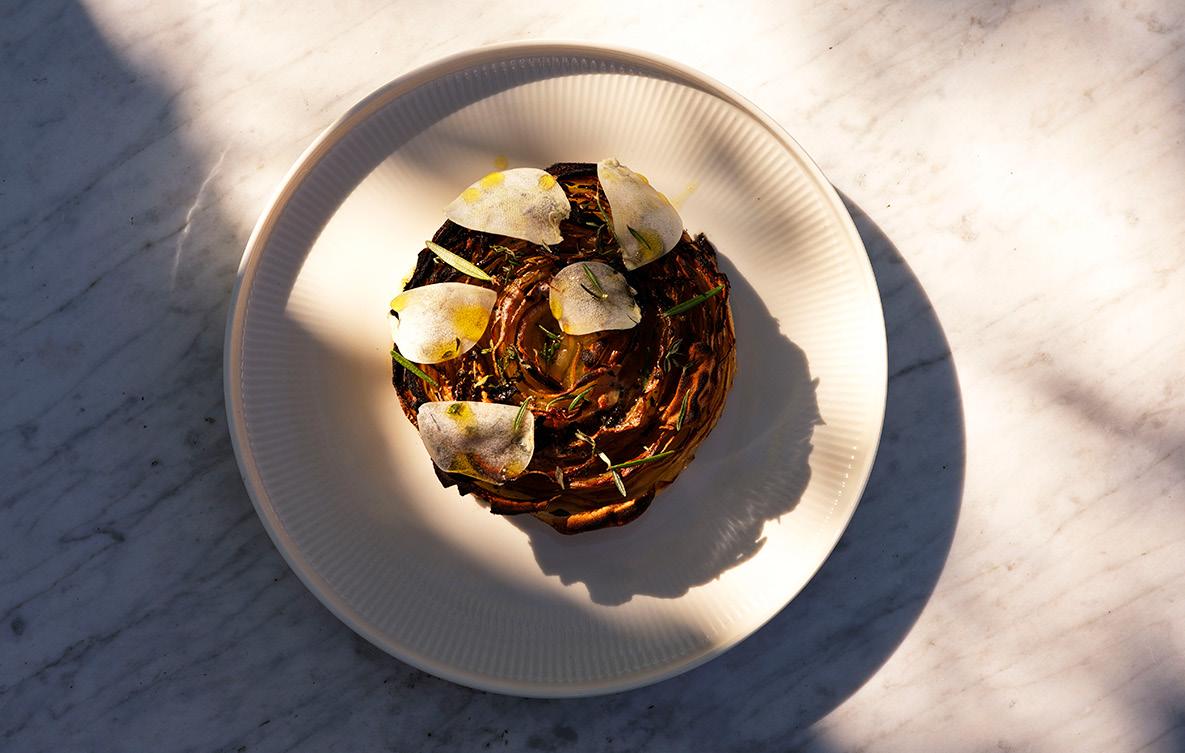
His goal isn’t to grow every single clove of garlic or onion that the restaurant would use. Instead, he’s growing produce that will add something interesting and unique to the menu — like 400 heads of elephant garlic. “This garlic is so amazing. If you shave it super thin, raw on the top of something, it gives a bit of spice and punch that's beautiful and also subtle.
Prichard has lived just 15 minutes south of Berry with his family for seven years, and he’s spent much of this time test growing produce in his own backyard, with feedback from the network of producers and growers he’s developed over his years in the industry, including Dylan Abdoo from Newcastle Greens and Greg Kocanda from Block 11 Organics.
“Because I’ve known them and worked with them for so long, they’re very forthcoming and open with information. They try to help because they know my intentions are in the right place,” says Prichard.
It’s clear that Prichard is a significant champion of South Coast produce. The chef is working closely with producers in the region for produce that he can’t grow on-site — some he’s known for years, and others he’s newly developing relationships with.
Among the newcomers is Greg Mumm of Rosewood Farm, who puts retired dairy cows from neighbouring farms on pasture for
a few months before processing them through his own butcher shop. “He’s a new one that appeared out of the woodwork through a mutual friend. Pete and I went up and visited his farm and loved what he was doing and the product,” says the chef. Other suppliers have also reached out to him, like a finger lime producer just outside Gerringong. “They dropped off some samples and they were phenomenal.”
For the chef, a huge benefit of the South Coast location — apart from the abundance of quality producers — is the proximity to the coast. “It’s interesting having a restaurant that’s on a farm but also feels natural selling seafood. Generally, with most regional restaurants that are set on a farm, you’re usually so far away from the ocean that it does feel a bit odd serving seafood. Whereas here, we’re on a farm but we’re also 15 minutes from Shoalhaven Heads and then 30 minutes from Ulladulla Fishing Co-op, which is one of the best co-ops on the eastern coast.”
But one sourcing challenge for the chef’s locally-minded ambitions comes in the form of dairy.
“I’m surrounded by dairy farms, but all of them are contracted to these huge dairy conglomerates,” says Prichard.
“I can buy milk where a portion of it has come from their farm, but it’s then trucked into Sydney, mixed with the milk from a thousand other farms and then trucked back down to me. It just doesn’t make sense.
“I’m trying to approach a lot of them, but they’re all stuck into these contracts where if you don’t give 100 per cent of the milk that you produce to these companies, the penalty is huge.
“It’s a tough pill to swallow when I’m in one of the most beautiful dairy regions of Australia, and I’m unable to buy local dairy,” says Prichard.
Hotels around the country are showcasing the importance of investing in in-house F&B offerings and hiring standout chefs. In Sydney, the likes of Kiln (the Ace Hotel’s rooftop restaurant), Lottie and Bar Julius in The Eve, and more recently, 25Hours’ Palomar are exemplars of this. If they’re positioned correctly, they can act as a source of revenue year-round by appealing to locals, even in months where accommodation is quiet.
Other capital cities are no different, with Melbourne’s Flack Studio-designed Coupette in Hannah St Hotel; Torquay’s Surf Hotel, where Jo Barrett leads the kitchen; and Hyde Perth’s Grecian diner Farra. In regional areas that go without the luxury of the abundance of restaurants that the metropolises offer, the need for boutique hotels to have quality restaurants is arguably even more crucial.
Prichard points out that the houses in the Linnaeus Collection have everything guests could hope for in a luxury accommodation — from lush pools, spas, and saunas to a person that delivers an IV drip if you’re hungover — but the one missing puzzle piece was the food and beverage offering.
Yannopoulos says that their goal is to “reimagine” regional hospitality, and adding Sara Dining to the collection gives their offering a new layer. For Prichard, the move was a win-win.
“Not only does it give me the opportunity to open a restaurant on a farm that I love, but it also completes their offering. There now a restaurant in the collection, and we’re also doing a poolside menu — our version of in-house dining,” says Prichard.
This in-house dining means guests can order room service, bottles from the restaurant wine list, pre-batched cocktails, or even organise a private chef to come to their house.
“I love that it’s multi-faceted. It gives multiple F&B experiences rather than just being locked into only one restaurant,” says Prichard.
And while the restaurant will be a crucial aspect for guests of the accommodation, Prichard says a large goal was also ensuring locals felt welcome. To achieve this, they’ve kept 20 seats off the reservation platforms.
“We wanted both locals and people staying at the collection alike to have confidence that they can just roll up and get a table. That’s something that was really important to us. A few regional restaurants that became really hot ended up with locals hating them because they could never get a table — they were always taken up by tourists.
“One thing I knew we wanted to do as part of the community is make sure if you live down the road or around the corner, there’s somewhere for you to go.” ■
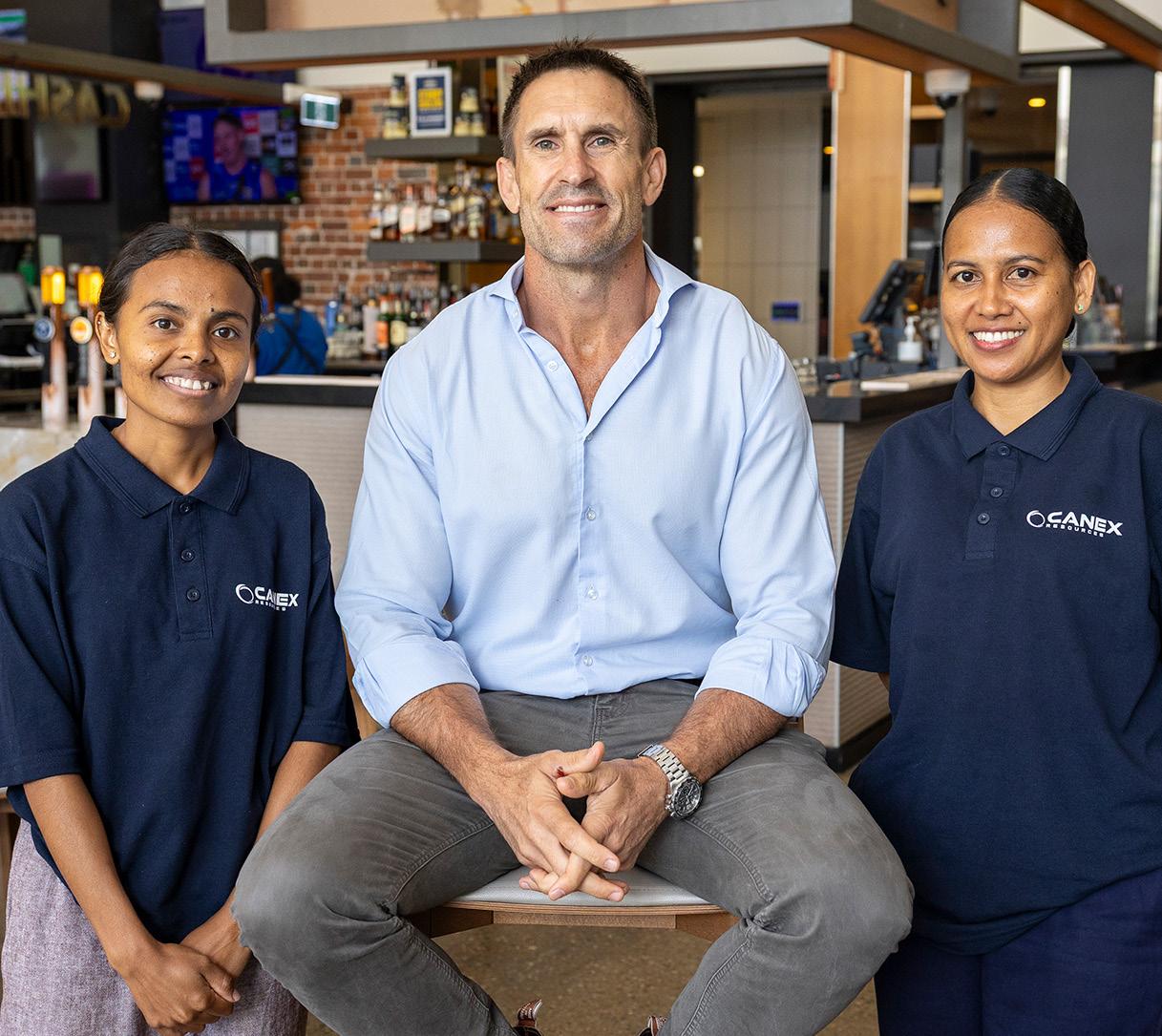
IN A HOTEL kitchen in Dili, Timorese Pacific Australia Labour Mobility (PALM) scheme candidates are learning to plate dishes, manage food safety and work as a team — skills that could take them all the way to a commercial kitchen in Australia.
The training is part of a partnership between Governments of Australia and Timor-Leste, and Australian company Canex Resources which is delivering intensive culinary courses in TimorLeste to prepare candidates for hospitality roles in Australia.
The course has been held at the Palm Springs Hotel in Dili, providing access to real-world training facilities that are equivalent to a commercial kitchen environment in Australia. Supporting the training has been Reinaldo da Silva, a Timorese mentor with firsthand PALM scheme experience from his time working in Darwin.
Before joining, candidates were screened by Timor-Leste's Secretariat of State for Vocational Training and Employment (SEFOPE) for English language skills, motivation, and readiness for Australian workplace culture. Since September 2025, 102 participants have completed the focused two-week culinary program. *
For participant Enerviana, originally from Baucau municipality, the experience was transformative.
“We learnt about safety in the kitchen, health, cooking preparation and plating, how to serve our customers and build trust and teamwork,” she said.
“I learned so many things, and I am grateful for the opportunity.”
Having made the journey himself, da Silva understood what the candidates were preparing for.
“This training is very good — especially for real food preparation, organising the kitchen, and food safety, which is important,” he said.
For Timorese workers who have completed the pathway, the results speak for themselves. At Cowboys Leagues Club in Townsville, the workers are gaining hands-on experience alongside experienced chefs in food preparation, kitchen operations, and food services.
General Manager Clint Williams has seen the impact firsthand.
“We’re very excited about the PALM scheme and bringing a multicultural aspect to our employees here at the club,” he said.
“The PALM workers have a lot of opportunities to learn from our very experienced chefs.”
“This training is very good — especially for real food preparation, organising the kitchen, and food safety, which is important.” — Reinaldo da Silva
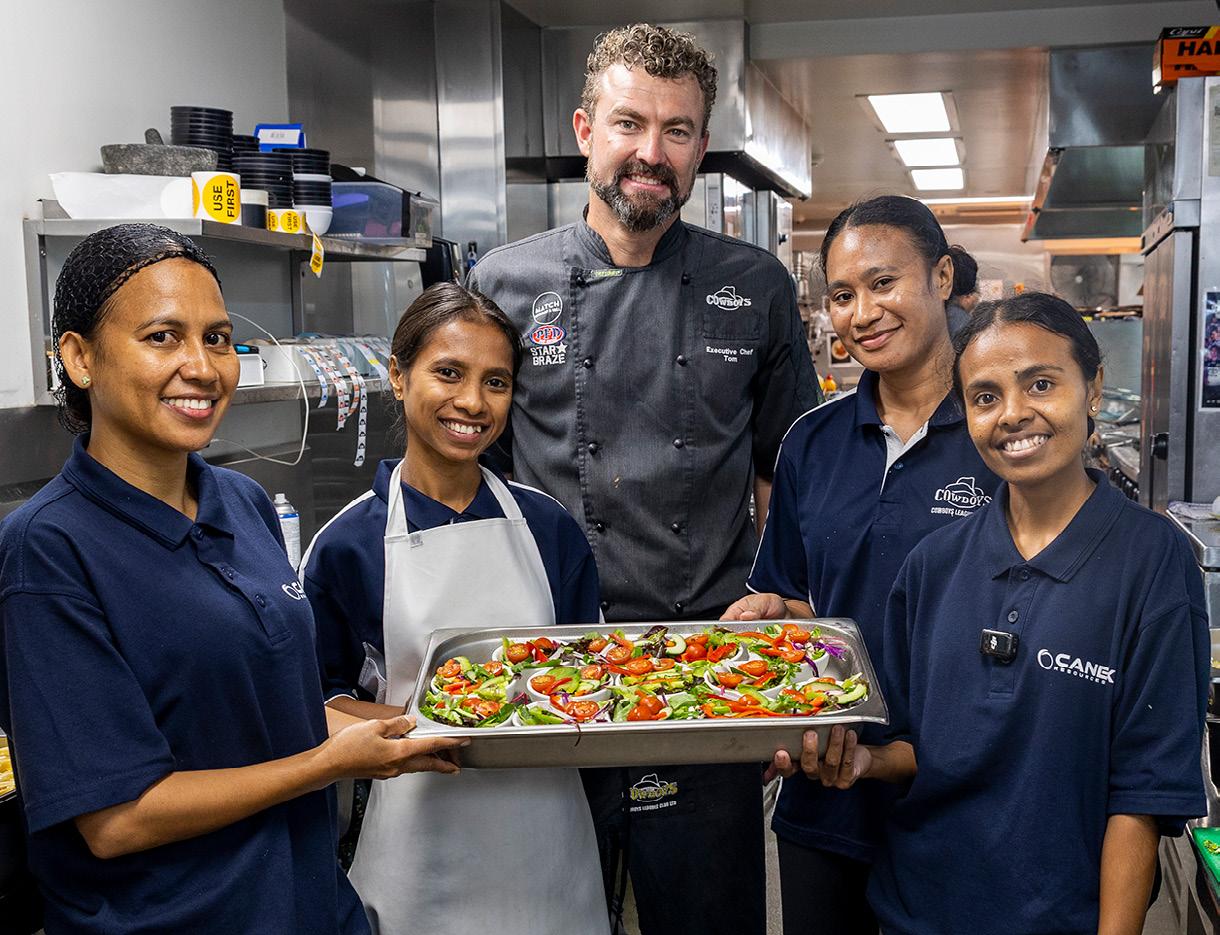
For Canex Resources Managing Director Mark Cantoni, TimorLeste has become a reliable source of hospitality talent.
“Timor-Leste is an ideal country to recruit from. There’s a large number of suitable candidates for the hospitality industry, and they integrate well into the sector.”
The workers themselves are equally clear about what they bring to Australian workplaces.
“Employers should recruit Timorese people because we are responsible, hardworking, and good at teamwork,” said Louguina, who works in the scullery kitchen at Cowboys Leagues Club.
With more training courses planned in Dili, the partnership between Canex and the PALM scheme is creating a clear and growing pathway — from w-Leste’s kitchens to Australia’s. ■


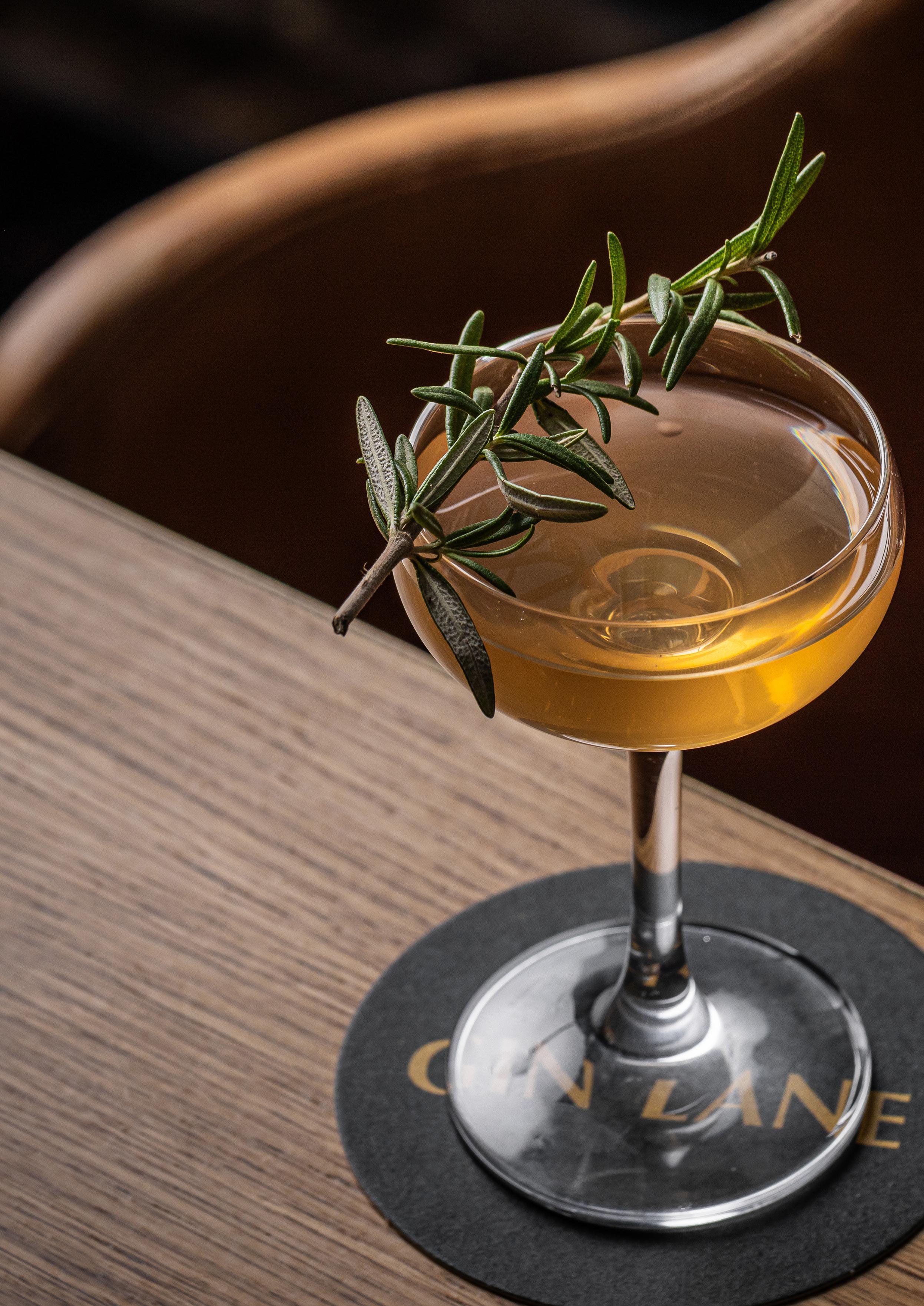
Forget food and wine pairings. Gin deserves a place at the table, too.
Words Maia Hart
Photography Saint Juniper; Gin Lane by Trent van der Jagt
“We’ve got some really wacky gins here. Before, we had to really work hard to sell them.”
– Grant Collins

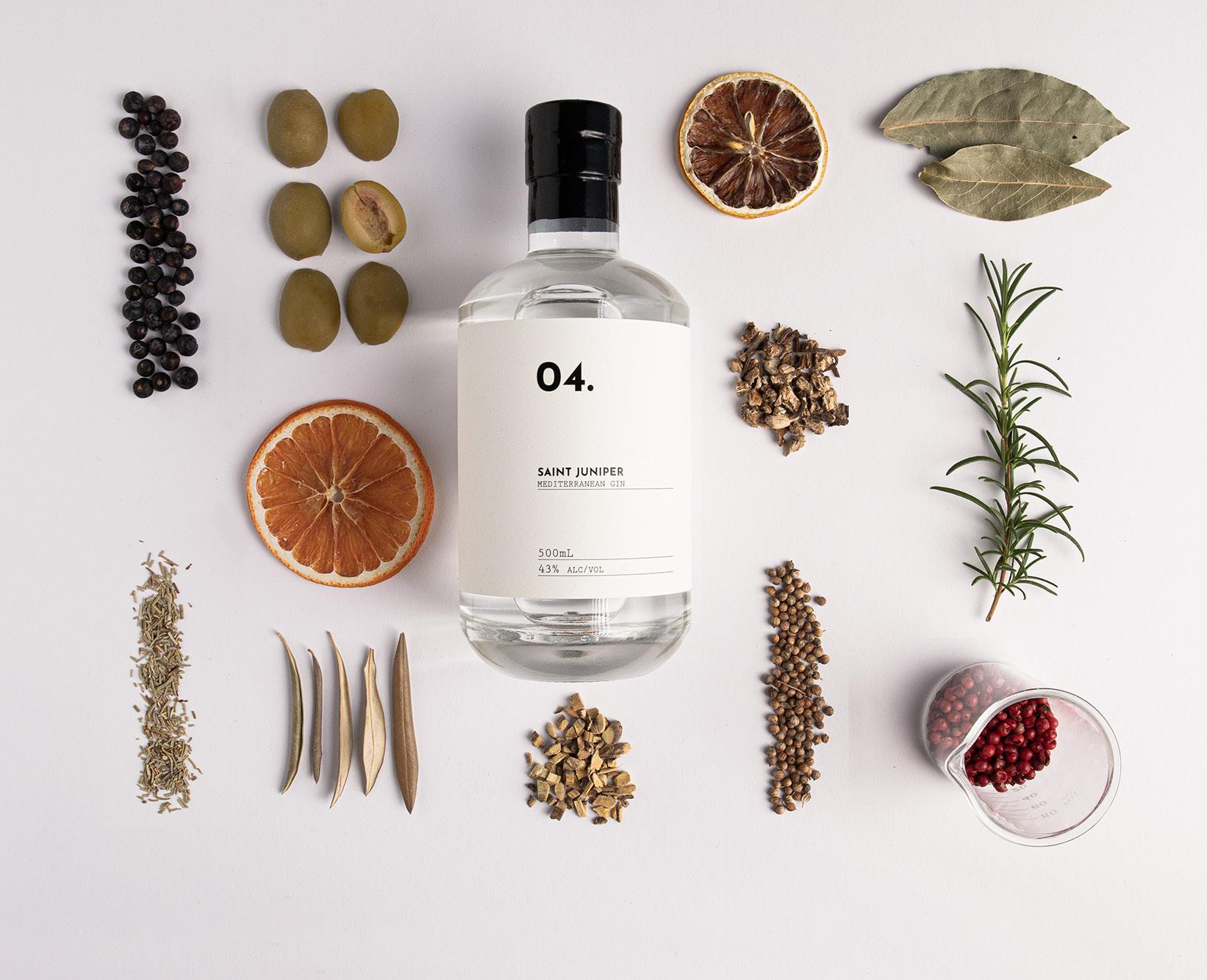
SAINT JUNIPER FOUNDER Paul Walton is on a bit of a mission. The goal? To convince people that gin pairs with food as well as a good wine. He might just have the credentials to convince people this is the case, given his background as a sommelier-turned-gin founder.
“How I ended up in gin specifically? To me it’s all about flavour, and gin has the most expression of flavour out of pretty much all spirits,” Walton tells Hospitality. “Gin was a way for me to explore. And, just like wine is paired with food, I really wanted to start pushing down the same path where we can use gin as an expression or complement to different dishes.”
Walton built his distillery from the ground up in 2023, teaching himself everything he could from his own research and a little trial and error. His first award came in July 2024 at the Australian Distilled Spirits Awards, just months after launching. The following year, Saint Juniper’s Mediterranean Gin was awarded 98 points at the 2025 London Spirits Competition.
To date, there are five different drops within the Saint Juniper range: the Original Dry, Contemporary, Pink, Mediterranean, and Red Lime Gin.
“One of the ways I decide what gin I’m going to make is generally based around a culinary dish or type of cuisine,” says Walton. “For example, our most recent release is very heavily based around a fusion of Australian and Southeast Asian flavours, so it’s about expressing those flavours in the spirit.”
The process of finding his next iteration is something Walton does not like to force. “It’s about trying to find something that is unique in its own right and different to what I already have in my range,” he explains.
“We are a young distillery, and I don’t need to be pushing out any new products on a consistent basis, so I’m not forcing that. But I am taking my learning from some of the conversations I have with the consumer to understand what they like about our gins and what they don’t like.
“In terms of making the gin, there is definitely a process of trial and error. Obviously, we have the basics of how the gin is made, but it will take 10 to 15 variations of the recipe in order to get the right balance for the final product.”
That process seems to be working out, with his flavour preferences resonating well with the market.
“What I’m finding is people in recent years are starting to realise how wide gin’s flavour profiles can actually be. To me, they are one of the most versatile spirits that you can make, just due to the amount of different flavour profiles that you can achieve.
“A lot of people traditionally thought of gin as what their parents might have drunk, which is that traditional London dry style from the brands before the craft movement. It’s not until people start to taste more craft spirits that they understand there is such a wide range of flavours and profiles that exist in gin.”
Walton says they have releases that are more successful than others, with Mediterranean sitting as their bestseller, but he puts that down to the awards that it has won. And in fact, from his experience with inperson tastings, all the varieties tend to be as well-liked as each other.
He thinks demand across the board for gin is growing, as people gain an appreciation for the craft distilling world. Although that does make for a saturated market, and he says some distillers are worried about brands that are coming in too cheap and undercutting the competitors.


“A lot of people traditionally thought of gin as what their parents might have drunk, which is that traditional London dry style from the brands before the craft movement.”
– Paul Walton
“But from my point of view the opportunity is actually more about how you position your brand. We definitely want to strive to have the best gin on the market, but you also need to have a strong brand that people resonate with and want to buy, and I think that’s equally important.”
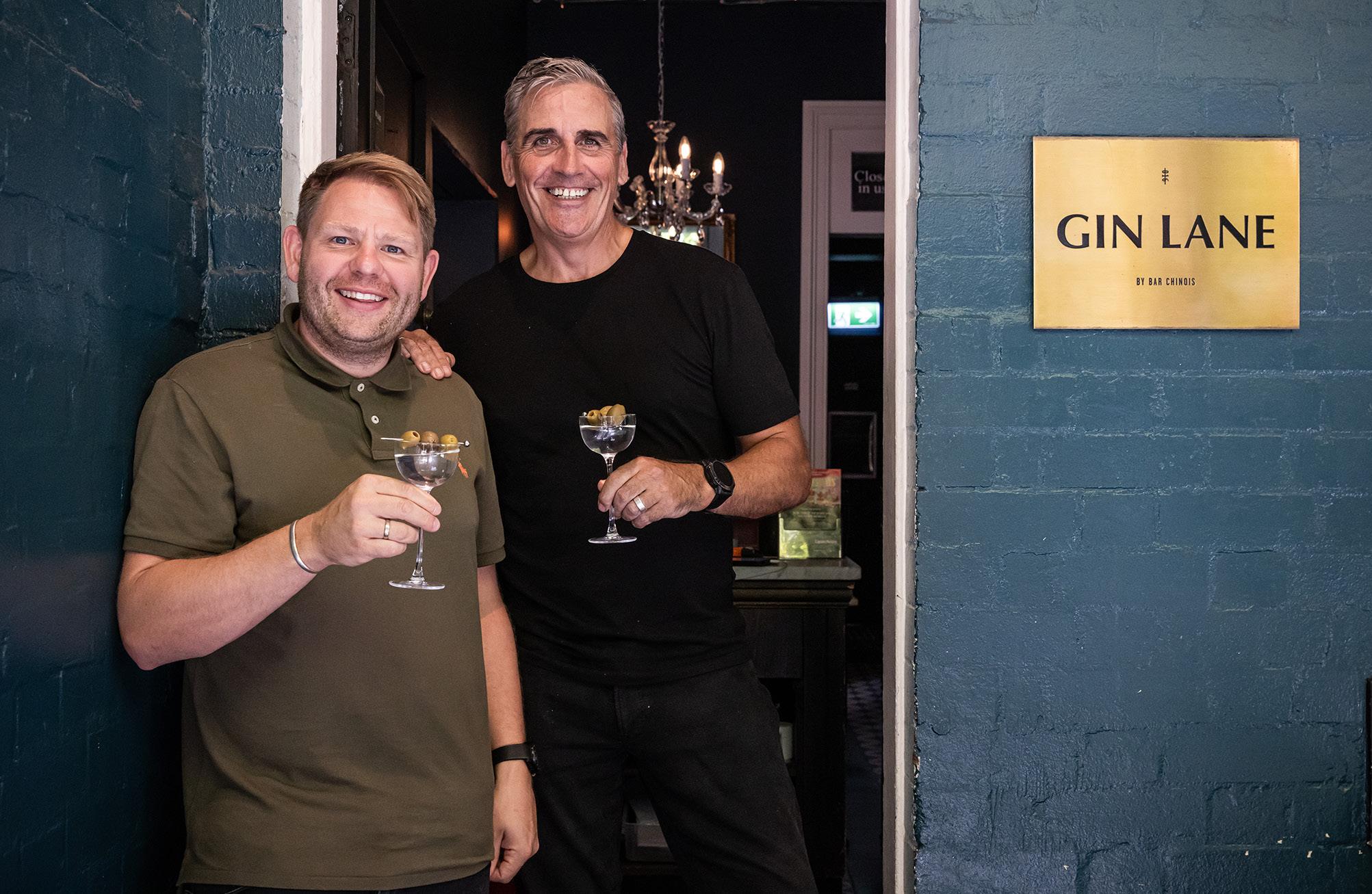
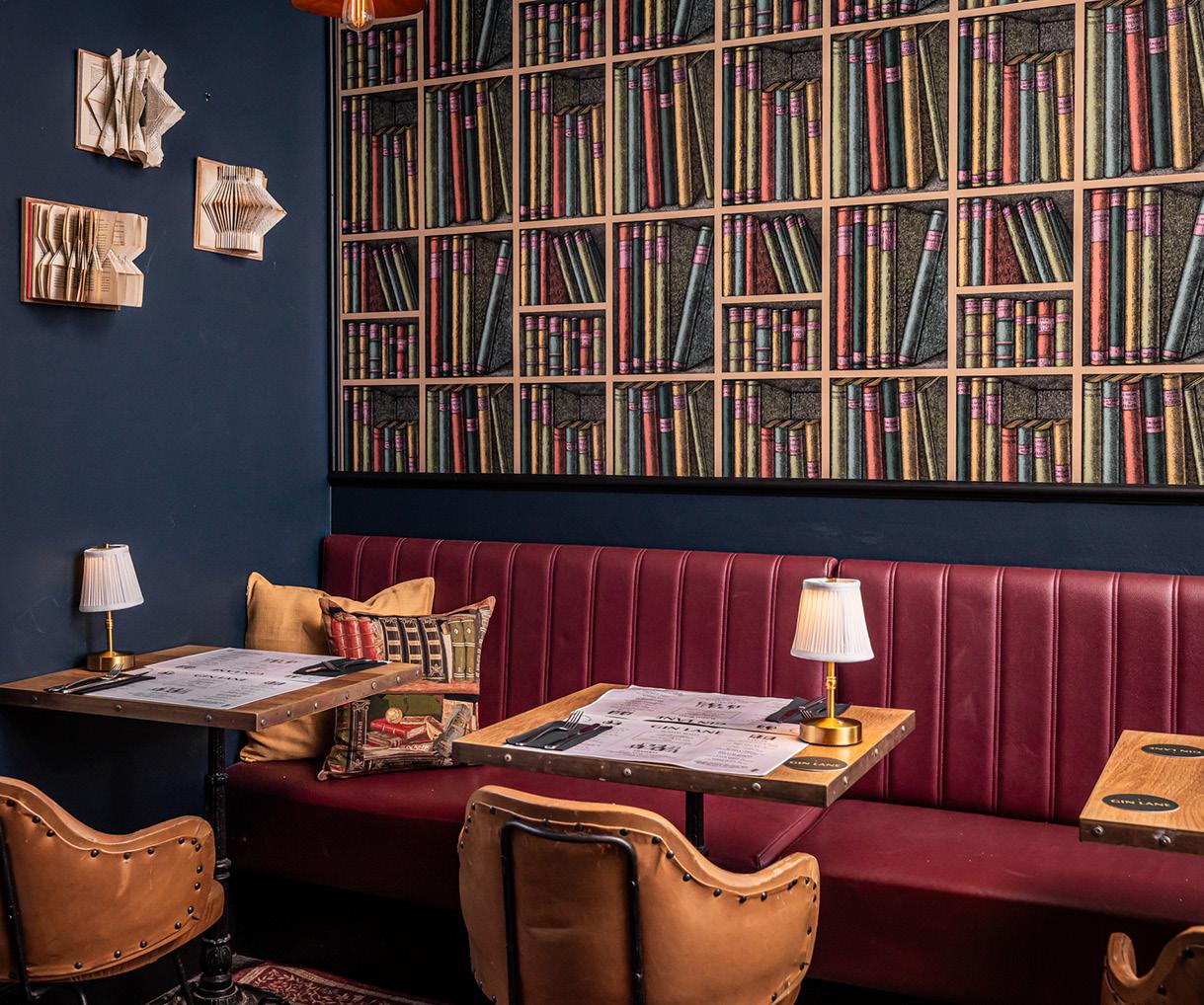
At Gin Lane in Chippendale, Founder and Bar Consultant Grant Collins knows a thing or two about the gin world. Despite this, he’s still learning more about how it can be paired with food. That’s in part because Gin Lane recently launched its British dining room and a menu developed in partnership with British-born chef Nelly Robinson.
“I really wanted a British chef and the only chef that was really on my hit list was Nelly. I’ve always admired his food. I was a bit nervous when I called him, but he jumped at it, and he’s brought a whole new level of enthusiasm," says Collins.
“I’ve learnt that gin cuts through fat very well. And gin and tonics and pork pies go really well, I never really knew that before. And negronis are amazing with burgers and pork pies too.”
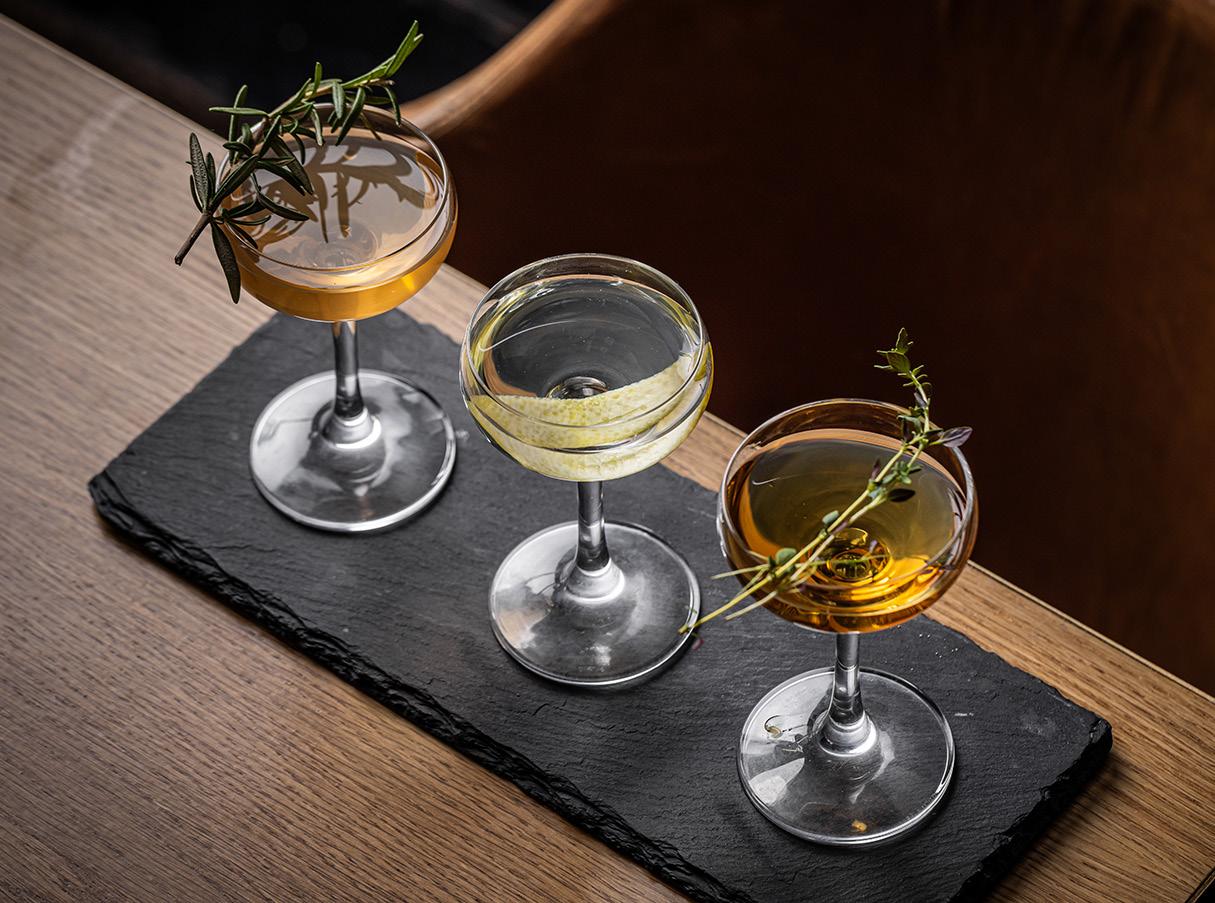
In launching the dining room, Robinson then set out to curate a martini list to pair with the British style menu, with signatures including the Salt and Vinegar martini designed to pair with fish and chips, a
Wagyu Beef and Mustard Waste Bloody Mary Martini, and a Lamb Roast Martinez.
The investment has paid off, with average spend per customer going up since the launch, says Robinson. He says despite hospitality being hit hard as people cut back on spending, there is still an appetite from people who want to spend on thoughtful experiences, which is what they are trying to deliver — like their recent launch of a gin tasting paired with a four-course menu.
“We’re probably getting less guests, but they’re more discerning and they’re happy to spend as long as they’re getting great service and a great product. Nelly has really helped us make sure that the food matches the cocktails and the gin and tonics.”
Collins says they can generally tell what type of gin a customer will enjoy. The older crowd tend to lean juniper heavy, while younger consumers are more botanical driven, and the age group in between often goes for something savoury.
“If you dial back three years ago, people were sort of playing safe with big brands, so they weren’t really experimenting too much. But I think Australians are generally well travelled, and it’s led people to start experimenting more.
“From my experience, they’re happy to trade up and pay a premium for


“People are happy to pay for a cocktail as long as it’s something quite different, or very good.”
– Grant Collins
something that gives them an experience. That’s pretty much what we are seeing in the cocktail and gin and tonic world as well. People are happy to pay for a cocktail as long as it’s something quite different, or very good.”
He says people are also starting to understand that a smaller batch gin is likely going to be quite unique and a higher quality. It’s a positive for the small-batch distilling world, which Collins says seems to be holding strong compared to the craft brewery industry.
“We’ve got some really wacky gins here. Before, we had to really work hard to sell them. We’ve got one from the south of France, called Umami Gin. It’s from the Cognac region and it’s distilled with capers, parmesan cheese, and it’s finished in exCognac aged barrels.
“That was quite a hard sell three to five years ago. Now, people are really jumping into gins like that and absolutely loving them. So definitely people are more discerning and braver to make sort of more bold choices if the product is good.”
It’s a positive shift for them, as people start to see the value of food and gin pairings. It’s ideal for Collins too, who is particularly fond of the history of the spirit.
“I’m from the UK, gin had a big explosion there in the 1750s. There’s so much mystique, and so much history, and it’s just so complex. What I like about it as well is it goes across so many different demographics in so many different age groups.
“We all were very concerned when hospitality got hit. We probably started feeling the pinch 18 months ago, but it’s been really motivating the last few months to see the resurgence. People are really excited.” ■















Often an ingredient for plant-based milk, cheese, and cream
The fourth most consumed nut in the world
Cashews are technically seeds, not nuts
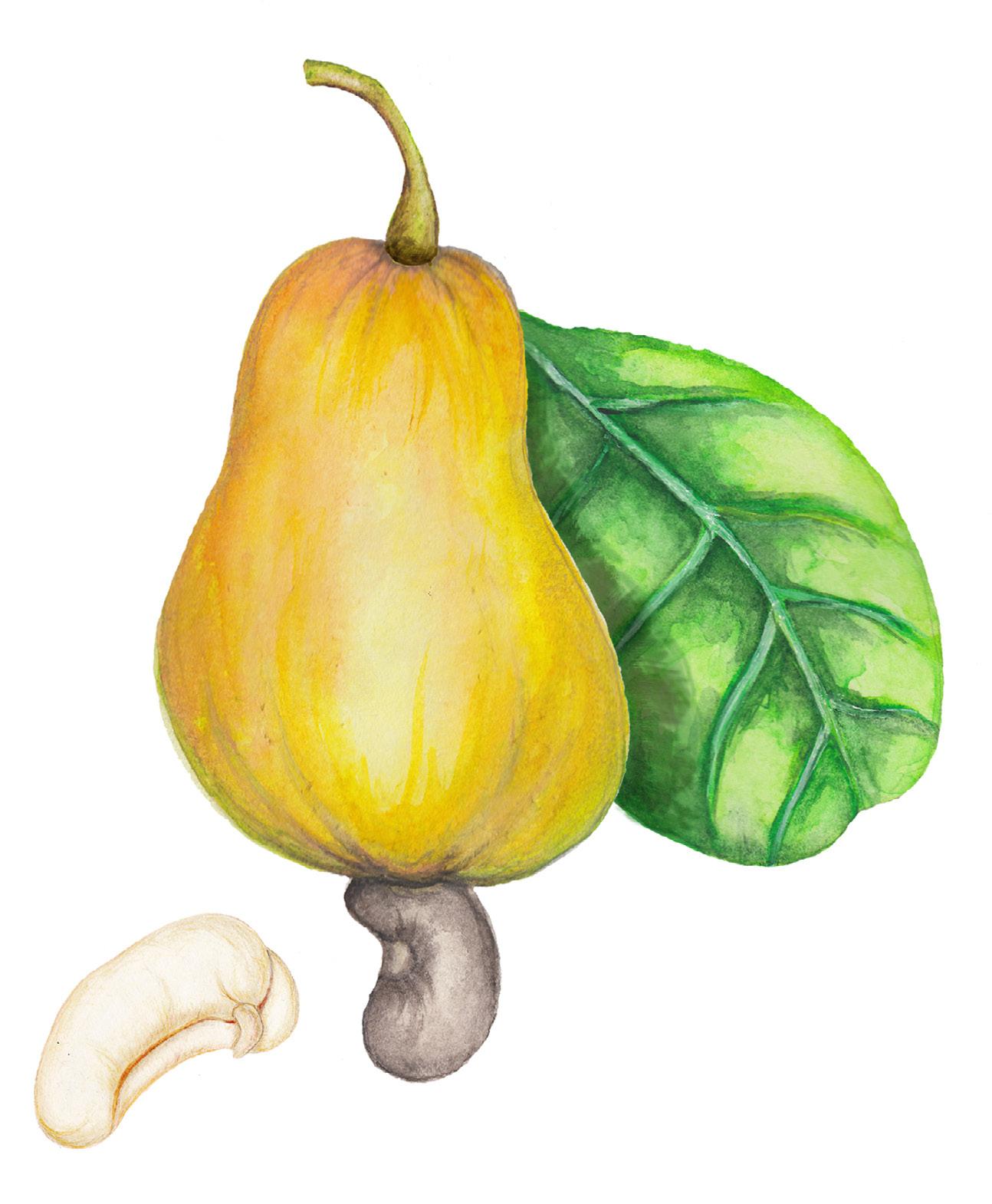
Studies have suggested cashews can lower blood pressure and promote heart health
Grown in north Queensland
The cashew tree was first discovered by the Indigenous people of Brazil
Raw cashews can be poisonous
The versatile nut is easy to snag off the shelf, but the process of getting it there is not so simple.
The cashew tree, or Anacardium occidentale, is native to tropical South America. It originated in Brazil, where Indigenous people were the first to use its nuts after recognising their nutritional and medicinal value. In the 16th century, Portuguese explorers discovered cashews’ taste and uniqueness, eventually carrying the seeds to India. The trees have been further cultivated over time and introduced to places with similar climates such as Mozambique and Tanzania in Africa, and parts of Southeast Asia such as Vietnam and the Philippines. In Australia, most cashew trees are found in north Queensland.
The cashew tree grows best in tropical and warm subtropical climates and can take from five to seven years to mature and produce nuts. Throughout this time, the trees need to be pruned. Once fruit is produced, it still takes a few months for the ripening process to take place, and they will likely fall on their own when they are ready for harvest.
Harvesting is not a simple process, as raw cashews with shells contain the natural toxin urushiol. To remove urushiol, which can soak through the shells into the nuts, the cashews need to be dried out, often done by placing them in a single layer in the sun.
The cashew fruit looks like a cross between an apple and pear and is edible and aromatic. A single kidney-shaped seed — that we know as the cashew nut — grows at the bottom of each fruit.
Cashews are versatile and can be added whole or crushed to dishes, or used as an ingredient in plant-based milks, cheeses, and creams. They are common in curries and sauces, or as add-ins to stir fries. Given their natural sweetness and fat content, cashews are also popular in desserts or as a pine-nut replacement in dips such as pesto. ■

success of your establishment are too important to trust to any cooking oil.
For over 25 years, Formula 40, our flagship frying oil has built a reputation on consistent frying quality oil, which is why Formula 40 is the preferred brand of oil for chefs who understand the value of a good reputation.
Formula 40 is a uniquely formulated oil:
• Ideal for heavy-duty deep frying.
• It has a thicker, robust base ensuring a longer fry life and superior drain-off.
• A neutral oil taste helps retain food's natural flavour.
• It’s the frying oil of choice for the William Angliss Institute, the specialist training provider of tourism, hospitality and events industries.




Formula 40 is vegan and Halal certified and available in a 20L tin or in a lighter OH&S friendly 15 litre bag-in-box, which is a fully recyclable carton.
To order Formula 40 contact your local distributor For further oil advice or technical support contact Peerless Foods on 1800 986 499 or go to: peerlessfoodservice.com.au / peerlessfoodservice
Making it happen
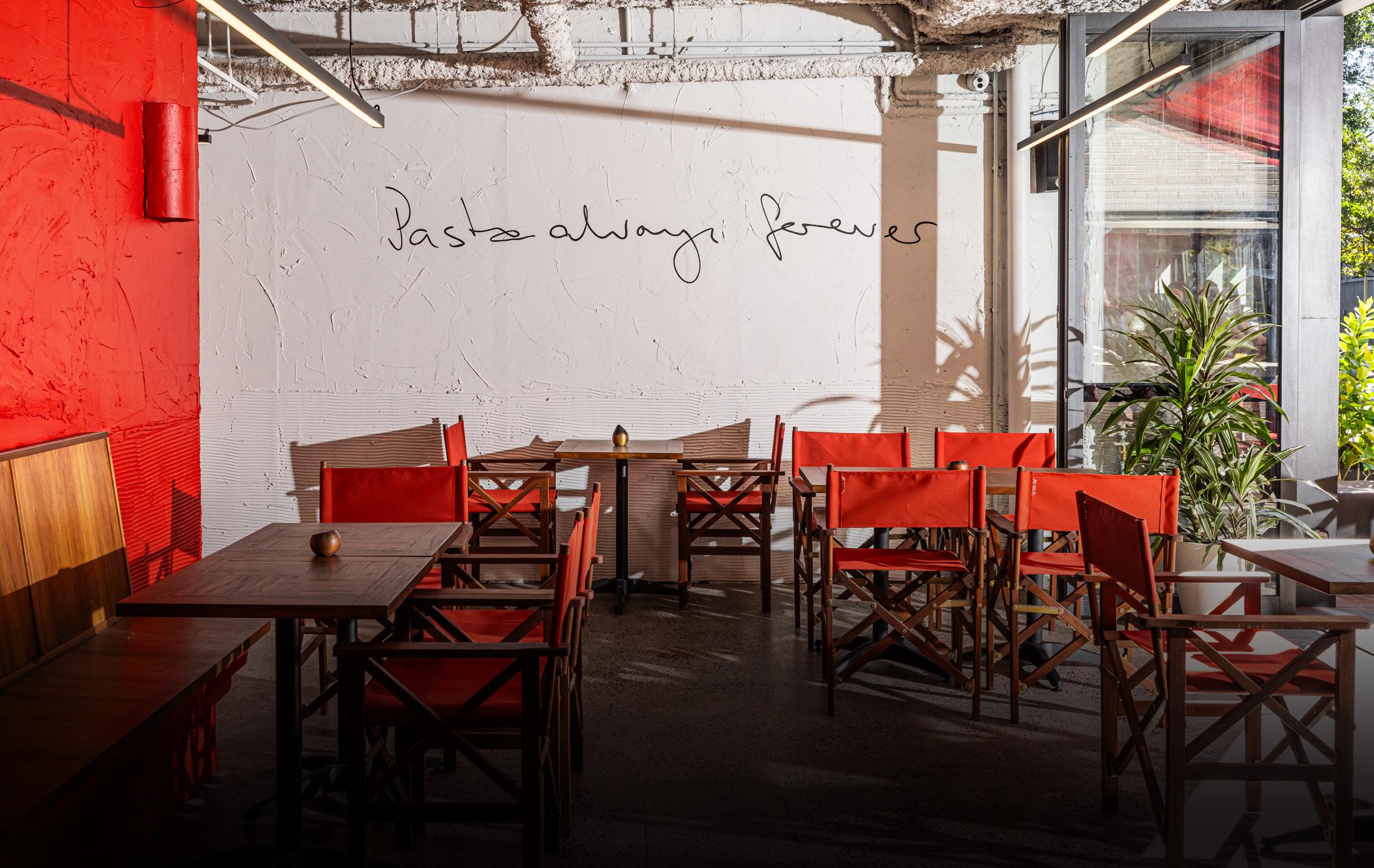
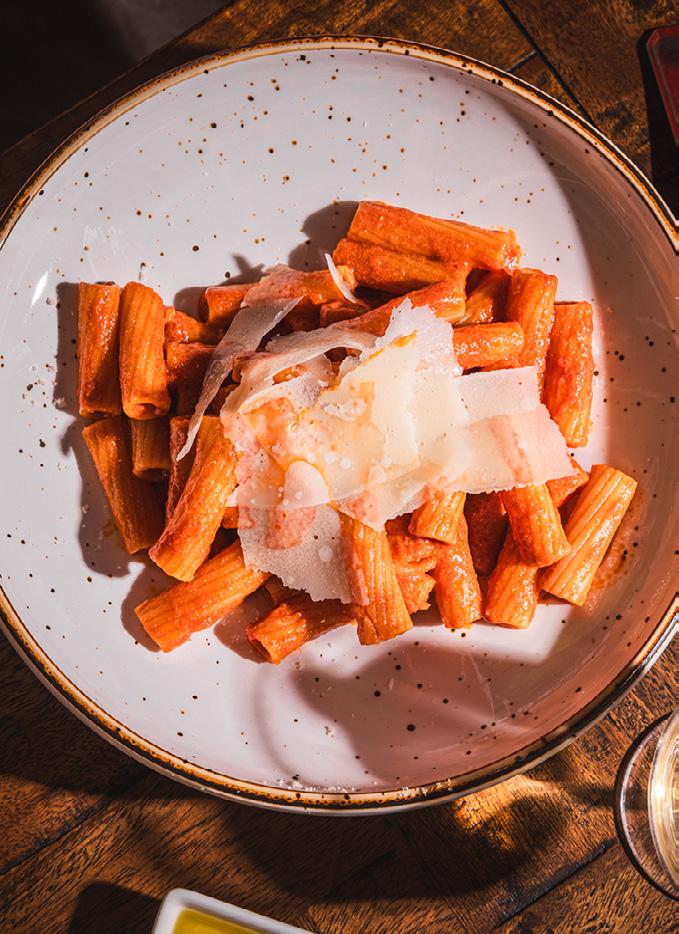
As consumers tighten their budgets, operators are feeling the sting. But some restaurants are promising affordability. How are they doing it?
Words Maia Hart
Photography
Pasta Shop by Trent van der Jagt; Frenchie by Griffin Simm
IT’S HAPPENING EVERYWHERE. Consumers are tightening their budgets, and the costs associated with running a venue continue to skyrocket. Despite this, some new restaurants are promising affordability and launching menus where everything falls under a certain price point, while vowing not to skimp on quality or portion size. With those promises a question arises: how are they doing it?
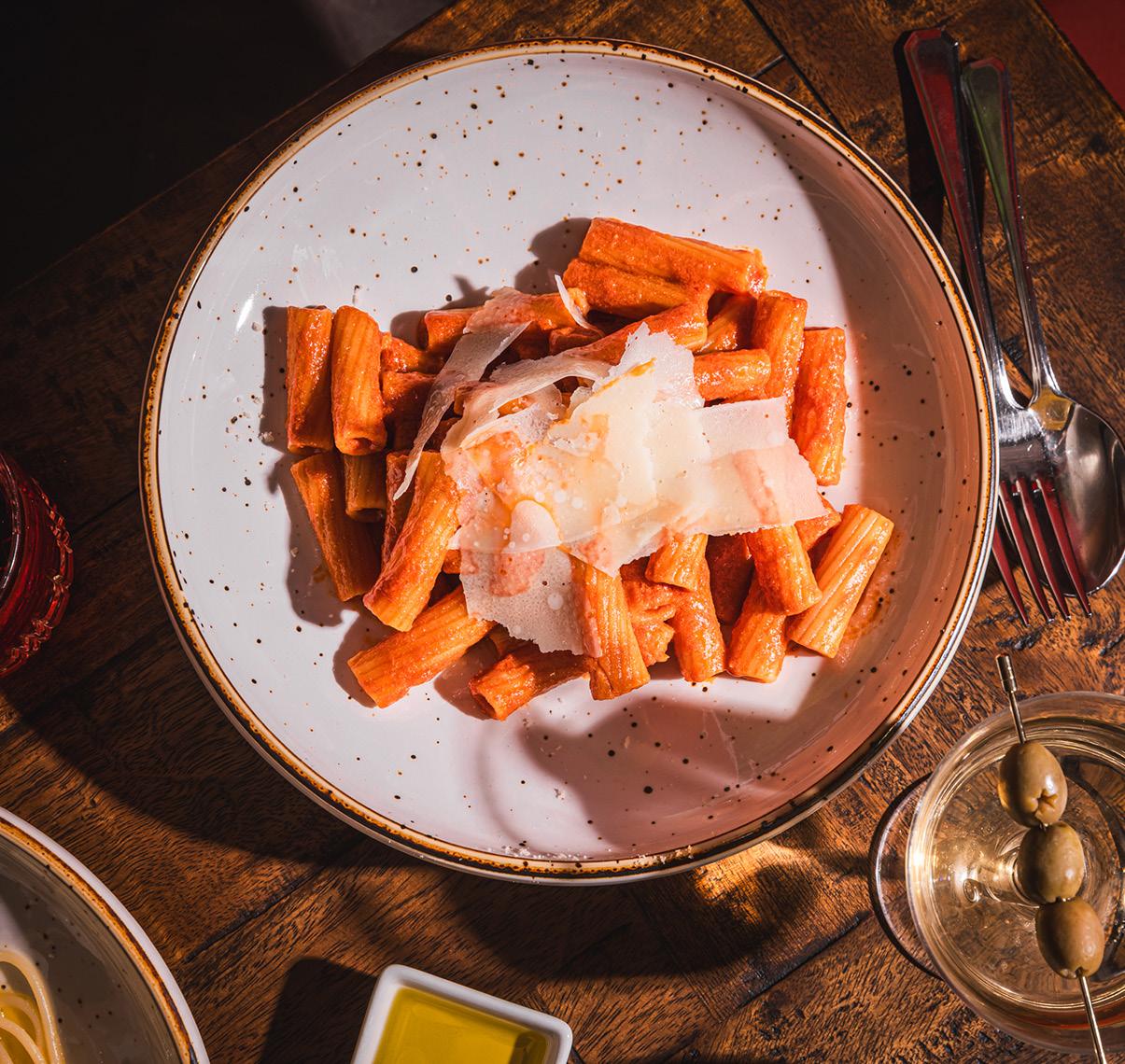
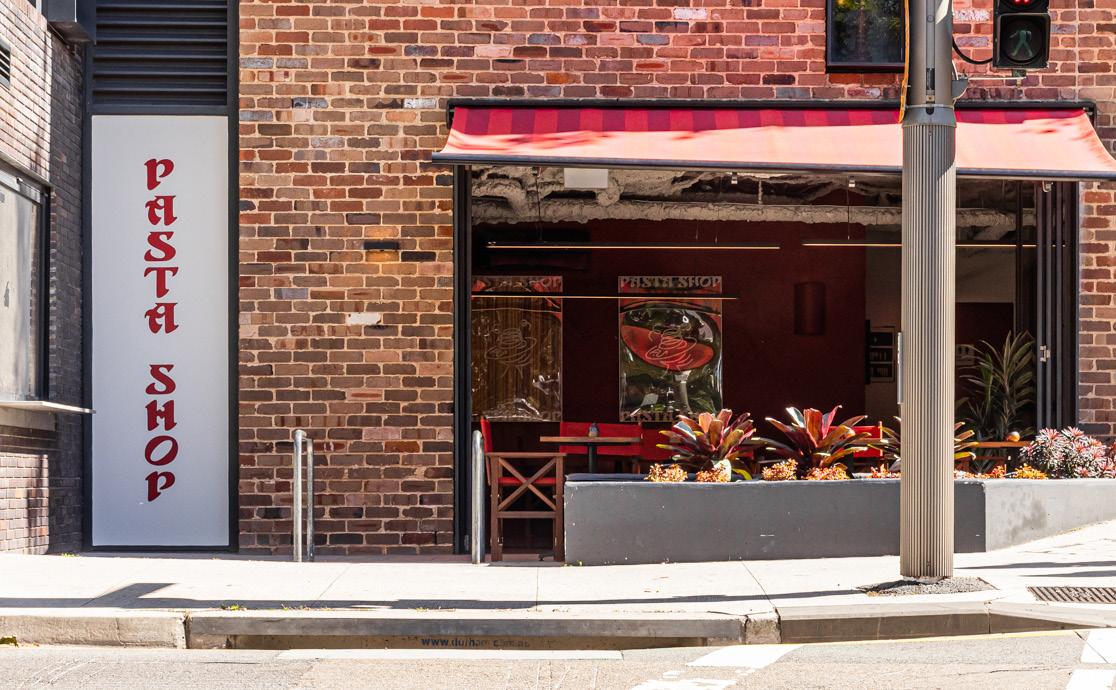
Paola Toppi recently opened Pasta Shop in Potts Point, with a menu that’s entirely under $30. It’s a stark difference to what Toppi, who has self-admittedly worked in fine dining her whole life, has done in the past. But during that era, she says rent, wages and payroll, taxes, GST, and superannuation costs “just kept piling up”.
“It was just impossible to catch up, and it just got out of hand,” she explains. “You’re working with very fine margins, and then if you have a bad month, or you have a bad six months, it just doesn’t compute.”
It’s part of the reason she set out to do something that would enable her to reach more people.
“My idea was to serve the same quality that you’re getting in my fine dining restaurants, with the same produce and the same techniques, for under $30,” explains Toppi.
“Living in Potts Point, God help us with the price of supermarkets, it just doesn’t make sense. When you’re cooking for small numbers, it
makes more sense to find a place where you can get good, wholesome, quality food, for a price that you can afford. That’s the ethos. It’s a fairly simple formula — good quality, good prices, and minimal service.”
The first step to making it work was reducing staffing costs by stripping back and the number of front-of-house staff on the floor. It’s where QR codes come in handy, which Toppi admits are not for everyone. But the restaurateur is OK with that, because those who don't like the codes are not the market they're targeting (although if the customer is elderly or needs help with the tech, staff will assist). From there, she set out to find a space that was not too expensive to rent.
“You can’t please everybody. It’s a great casual atmosphere here, and people are happy, the staff aren’t stressed, and it feels comfortable,” she explains. “People accept that. There is the occasional person that complains that we’ve got no service, but I say: ‘Yeah, but you haven’t paid $45 for the pasta either’.”
She says pasta is a good approach, because she can achieve a decent margin without compromising on the quality.
“It’s actually the price point that people really appreciate. A lot of customers have eaten my food before, and they’re saying this is better than before. I think psychologically, it probably is.”
From an operational point of view, Toppi says she is enjoying that the pressure is not as high.
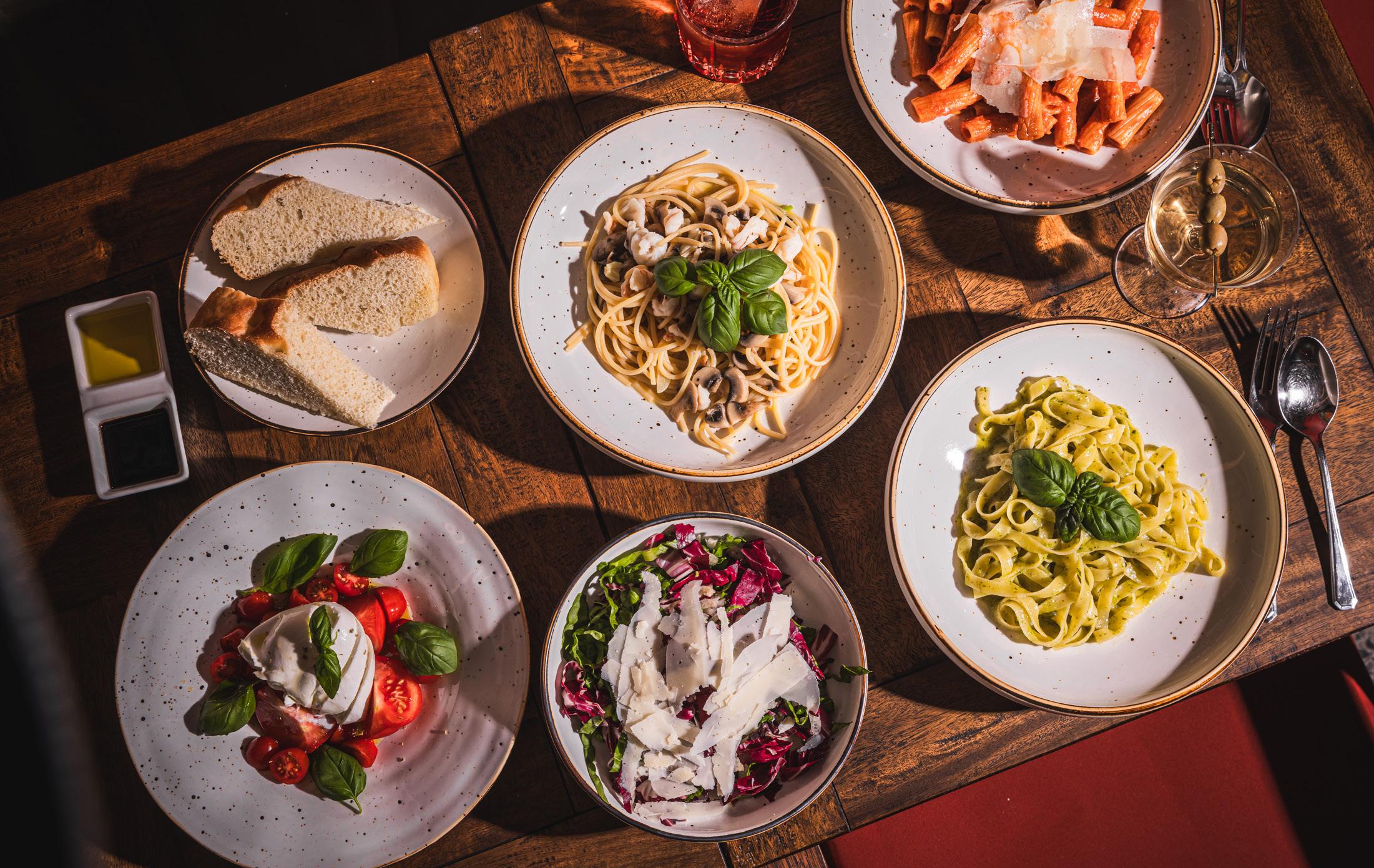
“You can’t please everybody. It’s a great casual atmosphere here, and people are happy, the staff aren’t stressed, and it feels comfortable.” – Paola Toppi
“I’ve done this for 40 years and this is the first time I’ve actually enjoyed cooking for people. I can see they’re happy. The plates are coming back empty. It’s just a good feeling to have people appreciate good food and good prices,” she explains.
“There’s nothing worse than going to a restaurant where everyone’s faces are long and they’re stressed and they’re rushing around like lunatics. This is just a casual environment, it’s fun, it’s happy.”
She says she has not left anything she wants off the menu either, despite aiming for that affordability. It means customers will find pasta options that include produce such as prawns, crab, and veal.
The last piece of the puzzle to making it work is getting the covers through. The restaurant seats 35 people and Toppi says they are doing about 700 covers a week. But being a smaller venue, they needed to make sure they have a decent turnover, so she intentionally does not sell wine by the bottle.
“It means we’re turning over the tables four or five times, and that really works for us. People accept it, they see the queue of people waiting to sit down, so they eat and they leave,” she says. “I’m really catering just to the locals, that’s why I don’t take reservations. Within reason, of course, if you’re coming from Double Bay, that’s okay too.
“I’ll never go back to the CBD again. That’s been monopolised by the groups, and I’m very happy for them, they’re going tremendously well, but being a single operator in the city is not easy. Not with the rents that they charge.
“I’m happy to be in my little suburban Potts Point eatery. I just want to make good food, at a good price, and make people happy.”
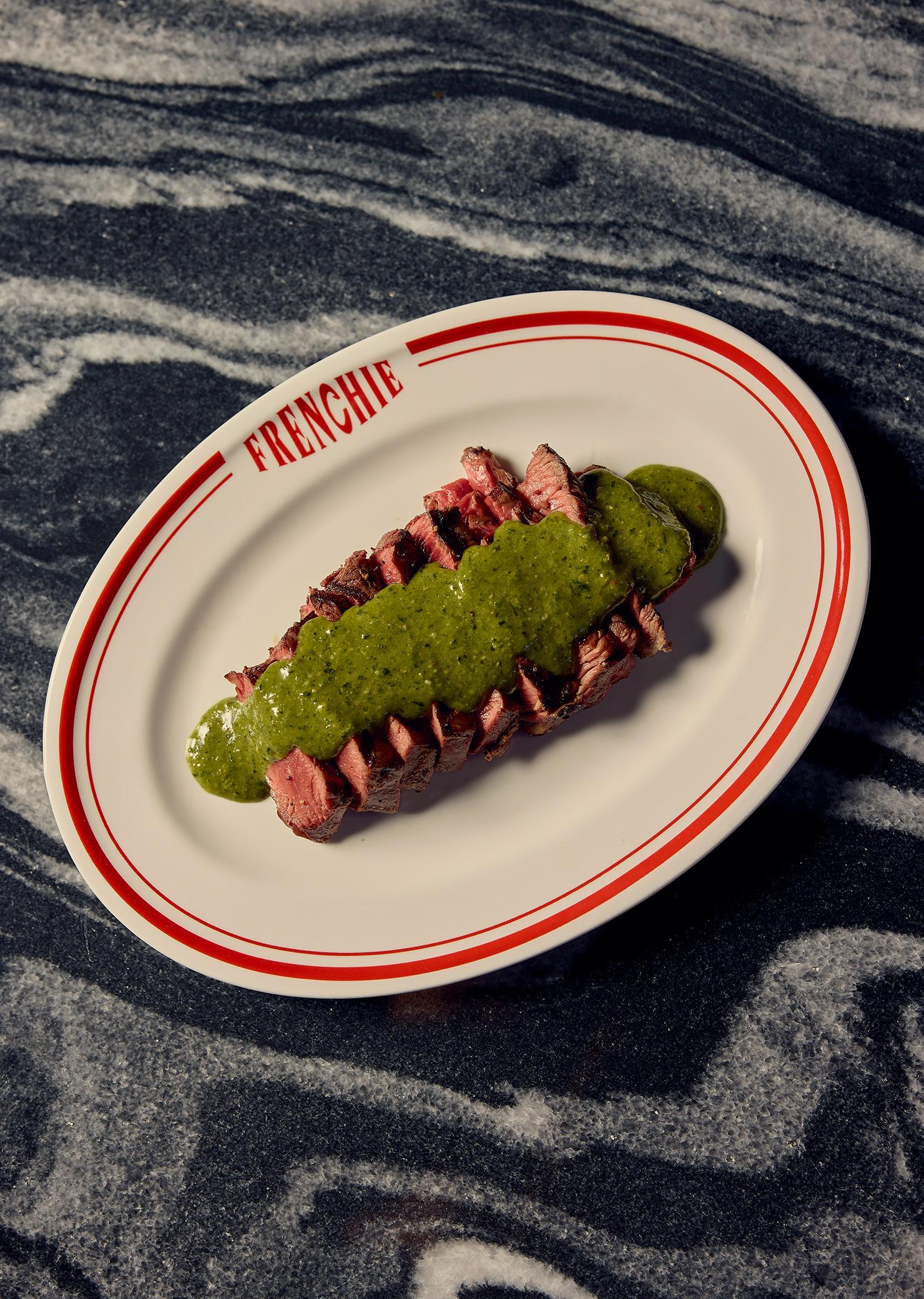
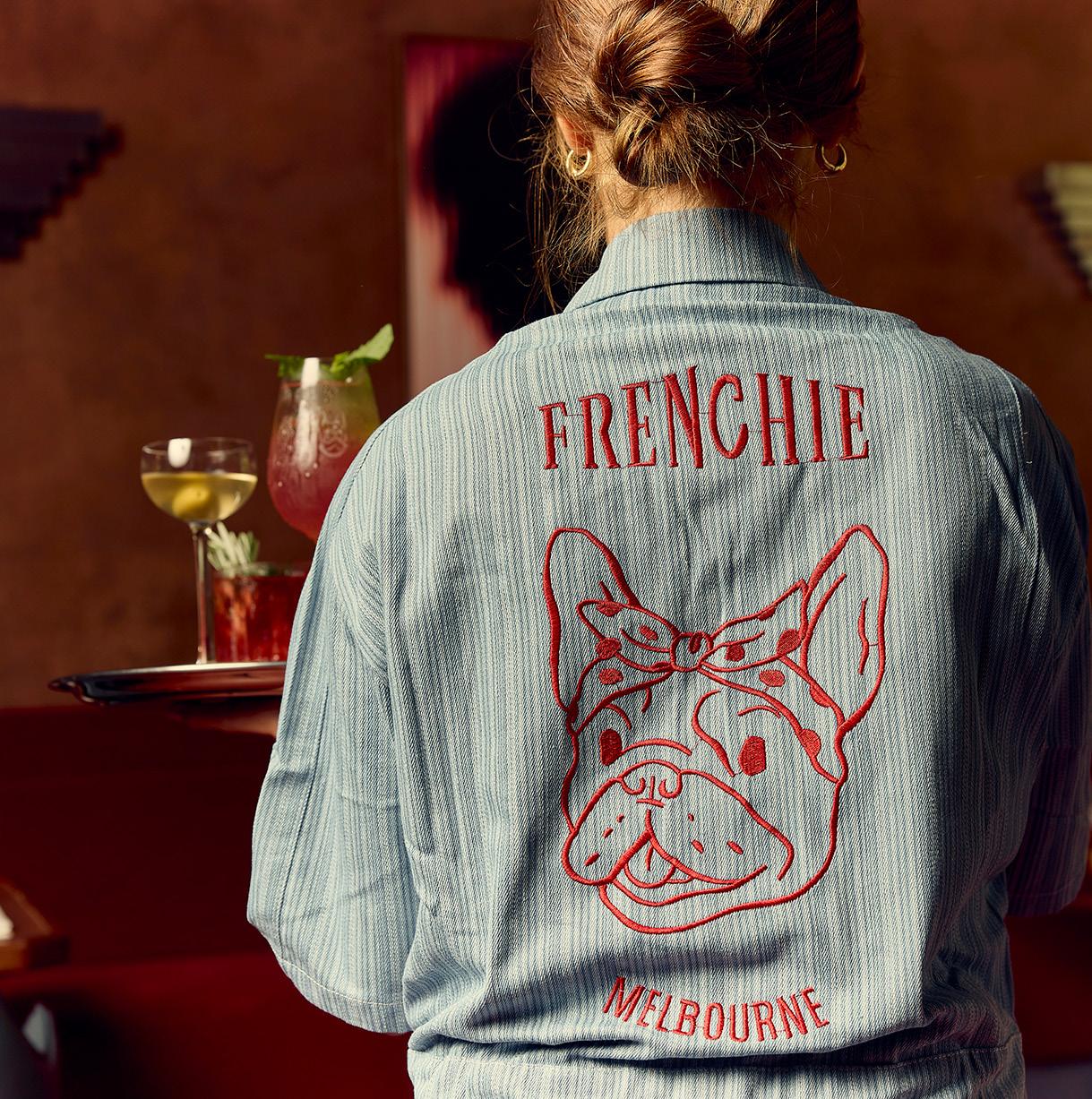
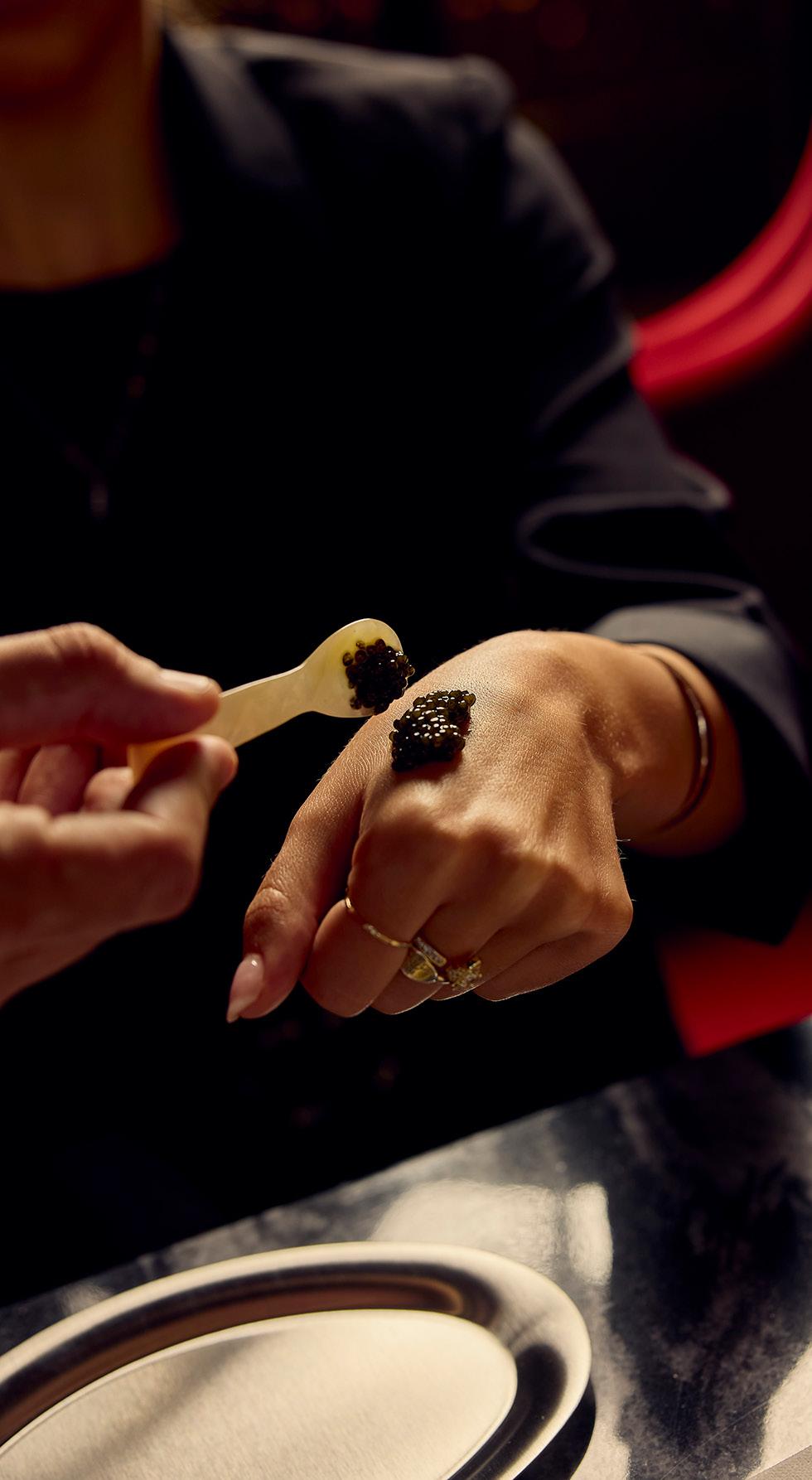
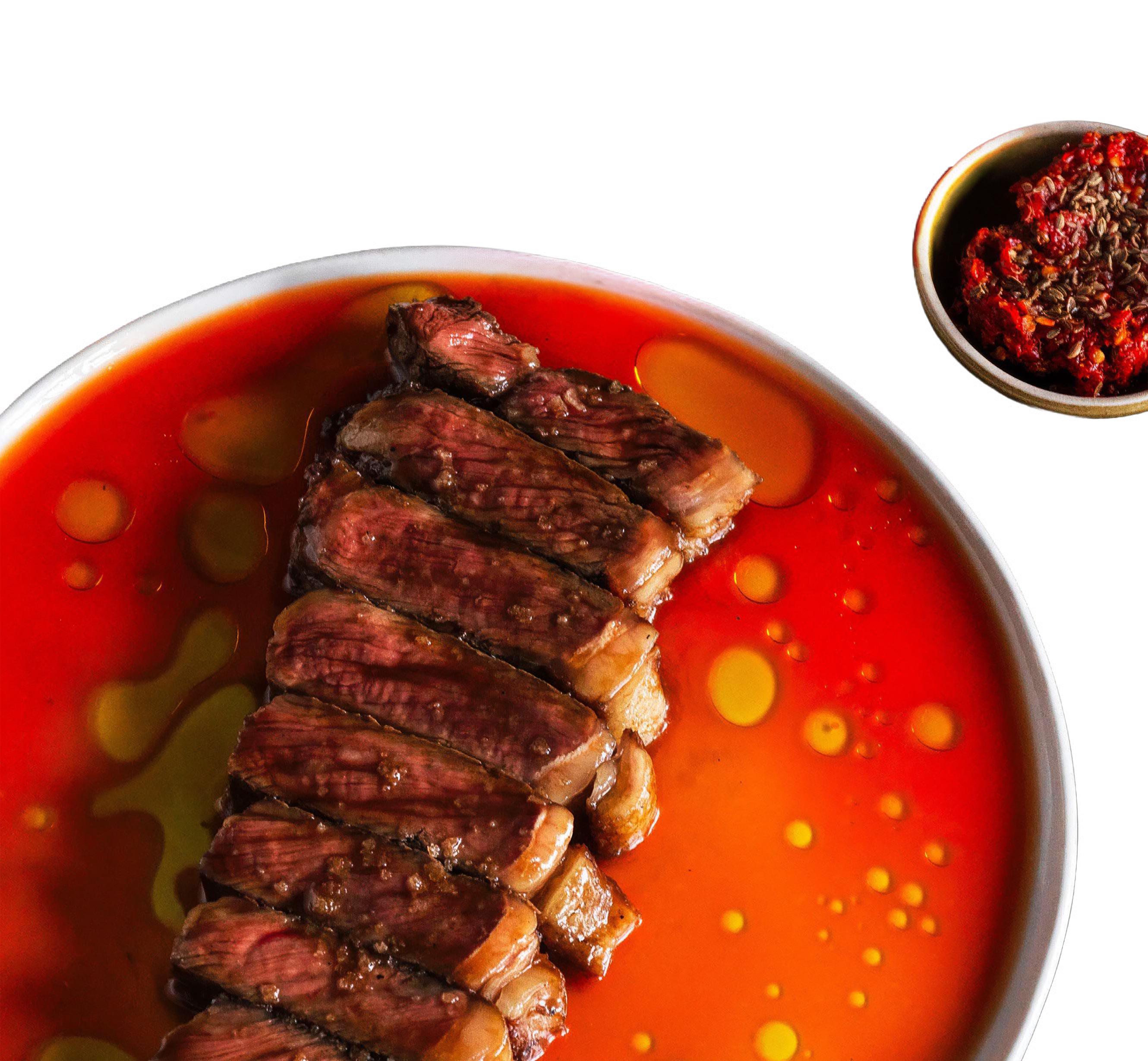
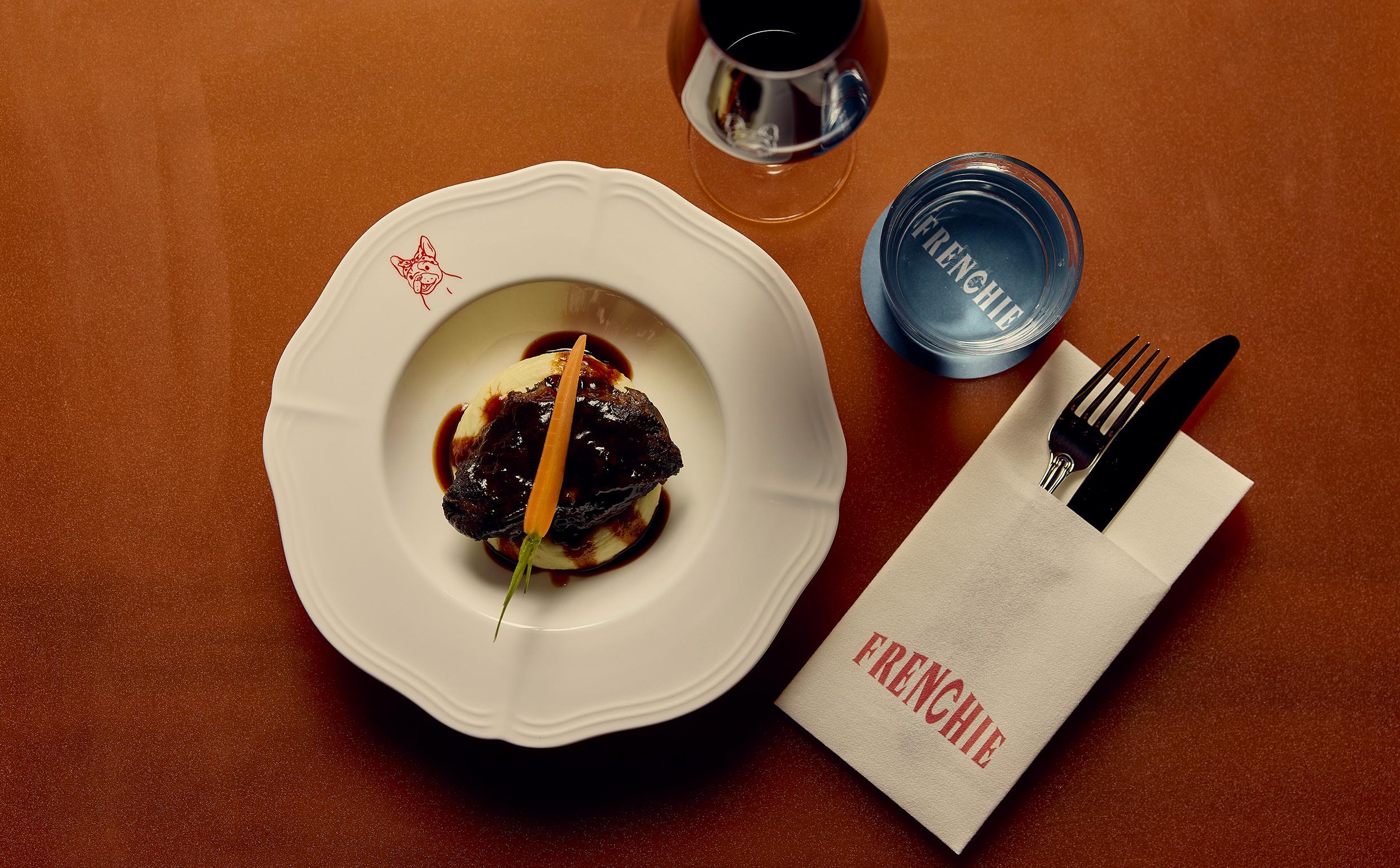
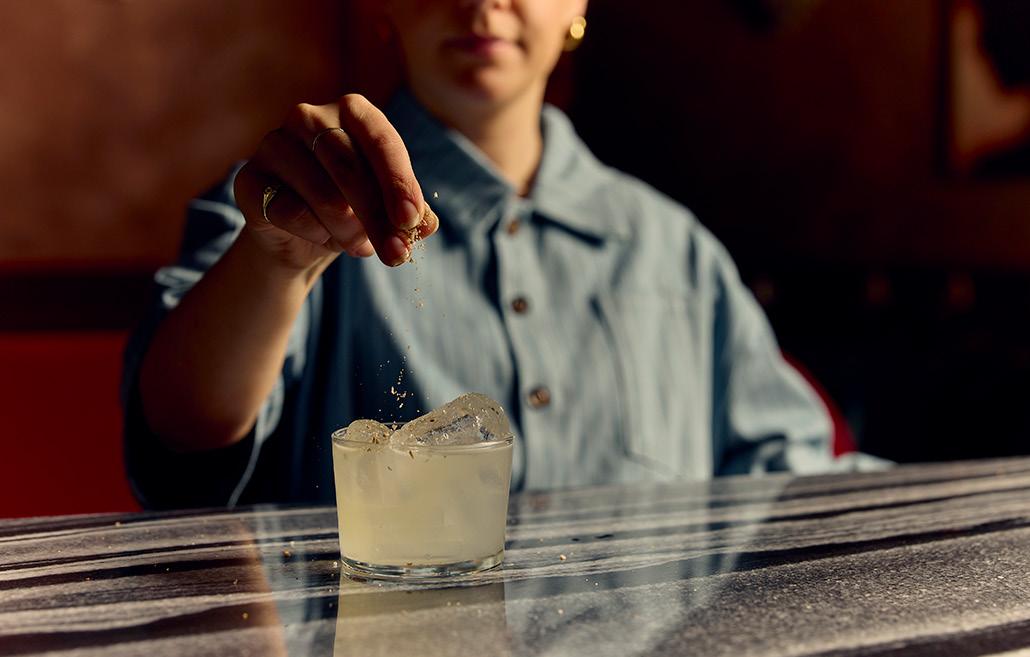
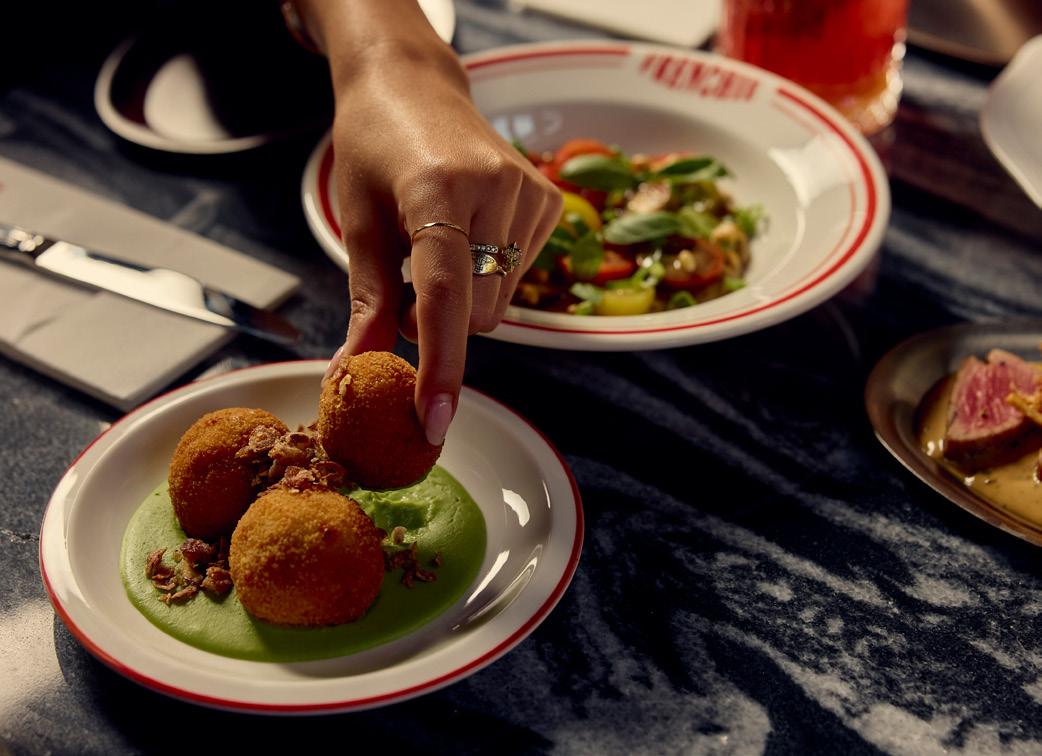
At Frenchie on Collins St in Melbourne, (almost) everything is $14. For that price, you might expect to read a fairly basic menu. But — as the name suggests — the restaurant leans French, and with it comes with dishes that include produce such as blue swimmer crab, seared tuna, tiger prawns, steak tartare, confit duck leg, rump steak, and caviar.
Co-Owner Julian Diprose says their objective for the restaurant was to make things accessible. The concept is not completely new to him and his business partner Lucas Boucly, as they have previously opened fixed-price restaurants in New Zealand. But those restaurants were Asian leaning, and sat at the $8 mark per dish, or $8.88 when inflation bit and prices had to be increased.
Diprose says it was a concept that went “absolutely wild”.
“We came over to Melbourne, and my business partner is French, so we thought it would pretty fitting to do French food. We’re both super passionate about it,” says Diprose.
He does not have an exact answer as to why they landed on $14 at Frenchie, but what he did definitively say was that it left them a bit of wriggle room for margin, and any higher they felt as though people could find happy hours elsewhere offering similar concepts.
“It left us enough room for creativity. Then was about building it out from there,” he explains.
Diprose says given the price, they are getting enough people through to go through large quantities of each dish. The steak, for example, is their most popular. By building relationships with suppliers and farmers, and going through a decent number of covers, he says they can get the product cheaper to help make the $14 concept viable.

“I wouldn’t say anything operates at a loss, but there are a lot of dishes that we don’t make a whole lot of margin on, like the caviar. We do that because we want to make it accessible,” he says.
“I’ll be honest, I only ever tried caviar once before I stepped into the food industry — it wasn’t something I’d actively been seeking out. But I think if it is being presented at a reasonable price then of course, I’d like to try it, and we want to give other people that experience as well.”
They also wanted to be sure people didn’t just box them up as a “small plates restaurant”, which meant they had to make sure to get decent portions on the plate too. For example, their Magret de canard à l’orange, with grilled duck breast, orange sauce, and burnt orange, works out to be about 100 grams, while the steak is about 140 grams.
“I couldn’t name a single restaurant where you could go out there and get a whole duck breast cooked for $28. Our portions are relative depending on the cost of the dish, but there will be slight variations depending on the produce,” he says.
There are a couple of dishes that sit at $7 however, including the fries with aioli, and the baguette with smoked butter. The thinking behind that?
“I didn’t want people to fill up on fries,” he explains. “And if I was doing a $14 bowl it would have to be a substantial number of fries. That was the logic there, and obviously soft drinks are priced accordingly as well. We also have an extensive wine list for people who don’t want $14 glasses, so we have some more premium wines by the bottle,” he says.
Having been open since the start of the year, Diprose says so far, the concept has been really well received.
“It’s been amazing. The best you could ask for given the current climate. It makes me and my business partner quite proud that we’ve been able to achieve what we set out to do,” he concludes. ■
“I wouldn’t say anything operates at a loss, but there are a lot of dishes that we don’t make a whole lot of margin on.” - Julian Diprose


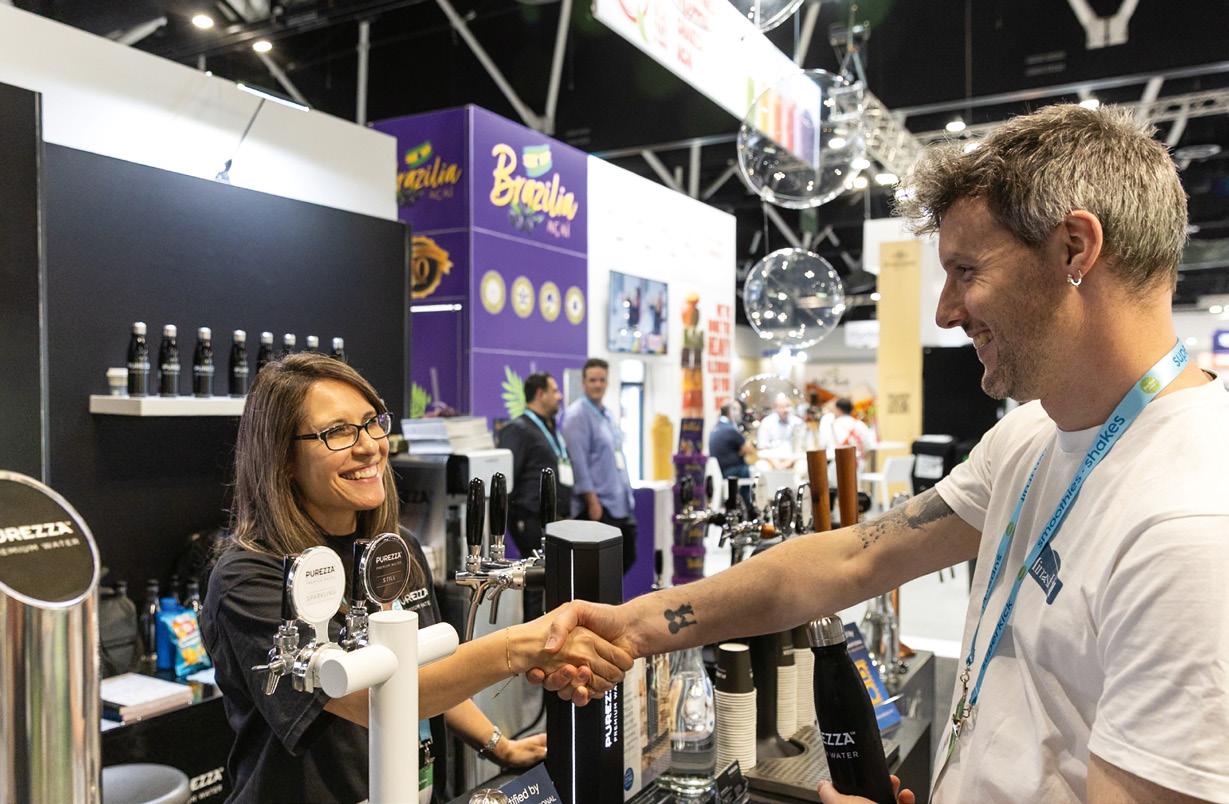
The industry’s leading event for the foodservice sector kicks off on Monday 31 August in Melbourne.
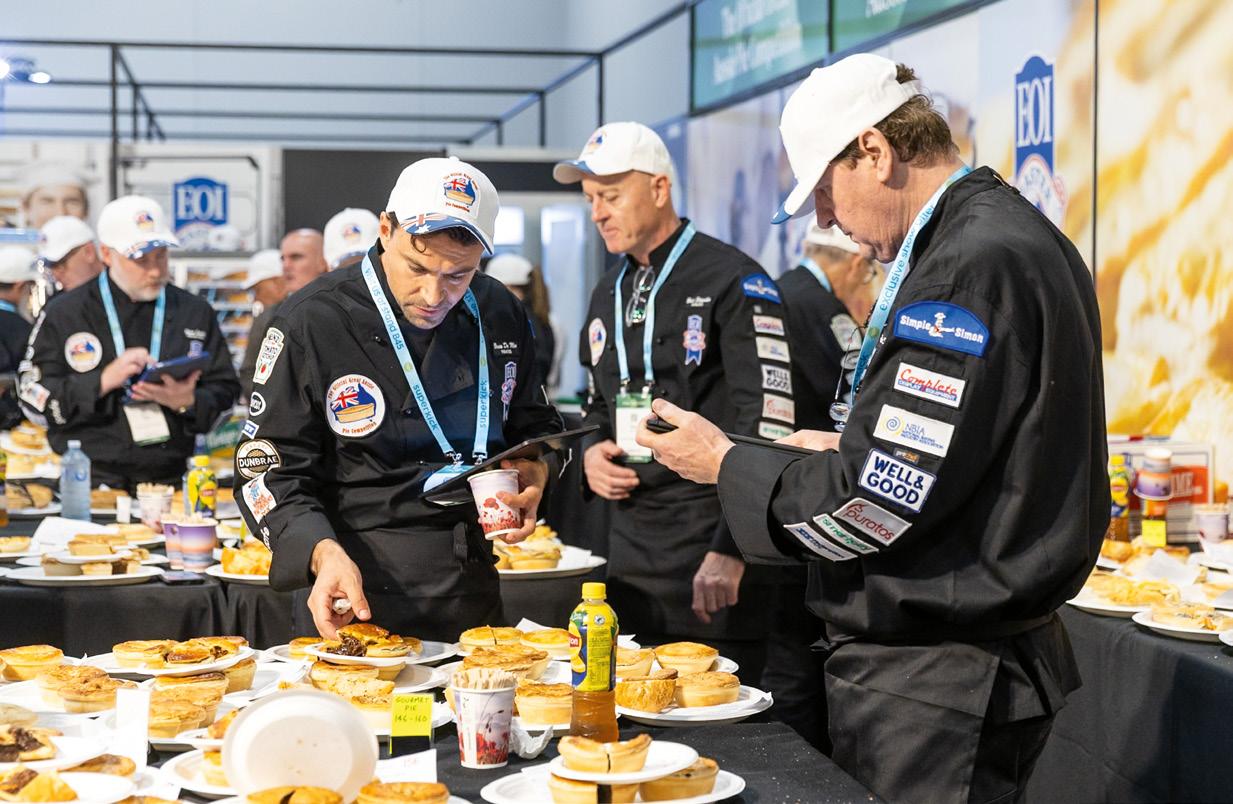
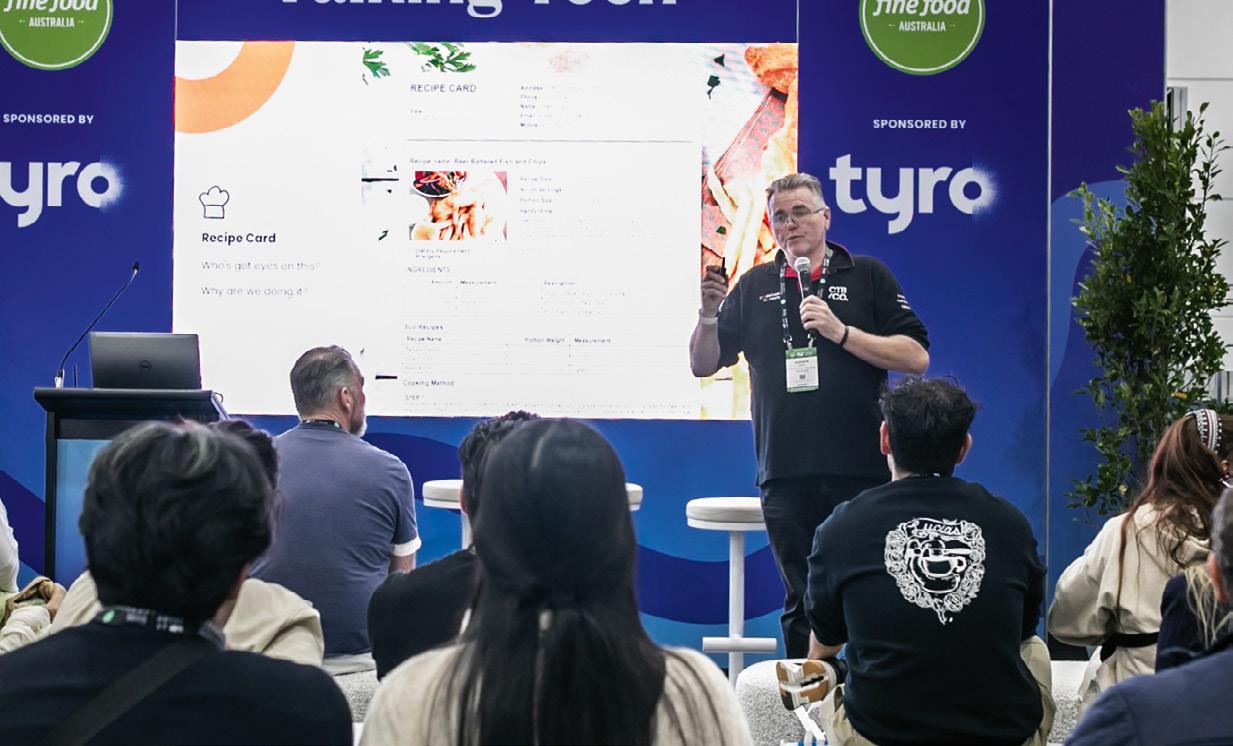
FINE FOOD AUSTRALIA returns to Melbourne over four days from Monday 31 August, delivering an efficient way for anyone running a venue, kitchen, or foodservice business to see the entire industry at once. The 2026 floor at the Melbourne Convention and Exhibition Centre will bring together more than 900 exhibitors across 10 different product categories, covering everything from food, drinks, and bakery, to equipment, technology, and packaging.
The team behind the event says visitors walk away with a wealth of resources. In previous years, people have come to the Fine Food Australia to source new suppliers and products, discover the latest innovations, uncover new opportunities, and stay ahead of where the market is heading.
“Whether it is a chef hunting a new signature dish, a retailer building a premium range, or an operator upgrading their kitchen, the floor is where the search starts,” says Fine Food Australia. “Now in its 42nd year, Fine Food Australia is where product discovery turns into purchase orders, and the brands on this floor are the ones on menus and shelves tomorrow.”
This year, the United States has been confirmed as the
inaugural Country Partner, a new initiative designed to spotlight a nation’s food and beverage excellence across the event. Fine Food Australia Commercial Product Manager Sinead Kavanagh says the relationship between Australia and the United States works both ways.
“The United States and Australia share a deep and genuinely two-way food trade relationship,” says Kavanagh. “This partnership gives both U.S. brands and Australian producers a powerful platform to strengthen those connections and open new doors with the buyers and distributors who matter most.”
Meanwhile, Meat & Livestock Australia has been named as an Official Industry Partner, helping to put Australian product at the heart of the 2026 show. During the event, MLA will take to the show’s education stages, sharing red meat expertise with the buyers, chefs, and venues sourcing for the year ahead.
The exhibitor directory is live at finefoodaustralia.com.au/ exhibitor-directory, which gives buyers, operators, and foodservice professionals a first look at who they can meet on the floor. The event alternates between Melbourne and Sydney, and will return to New South Wales in 2027.
A snapshot of some of this year’s exhibitors.
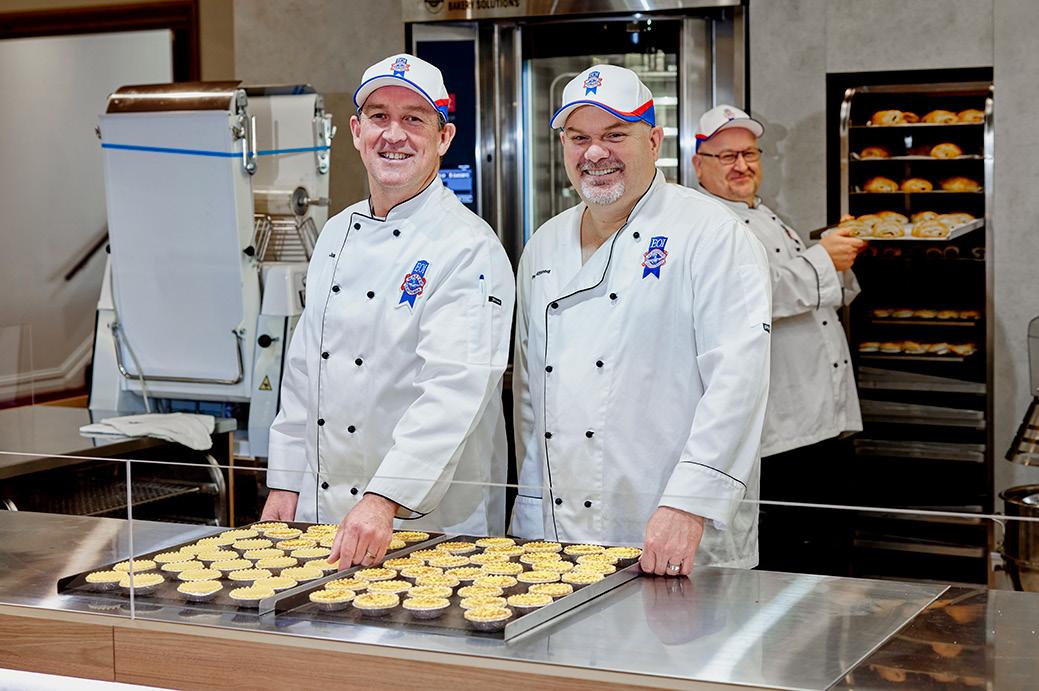
The EOI Bakery/Peerless Foods team are welcoming you into the world of pastry with live demonstrations throughout the Fine Foods event.
The talented Peerless pastry chefs will be running daily pastry masterclasses, sharing practical techniques, insider tips, and expert methods to help elevate your pastry offerings.
They’ll also be showcasing baked favourites, from bite-sized sausage rolls and savoury pies to decadent filled sweet tarts. Sweet and savoury Danish squares will also be on offer, featuring a range of delicious fillings.
The friendly team will be available to provide recipe ideas, product advice, and guidance on where to purchase the range. Find Peerless at stand P41 — the team look forward to welcoming you. peerlessfoods.com.au
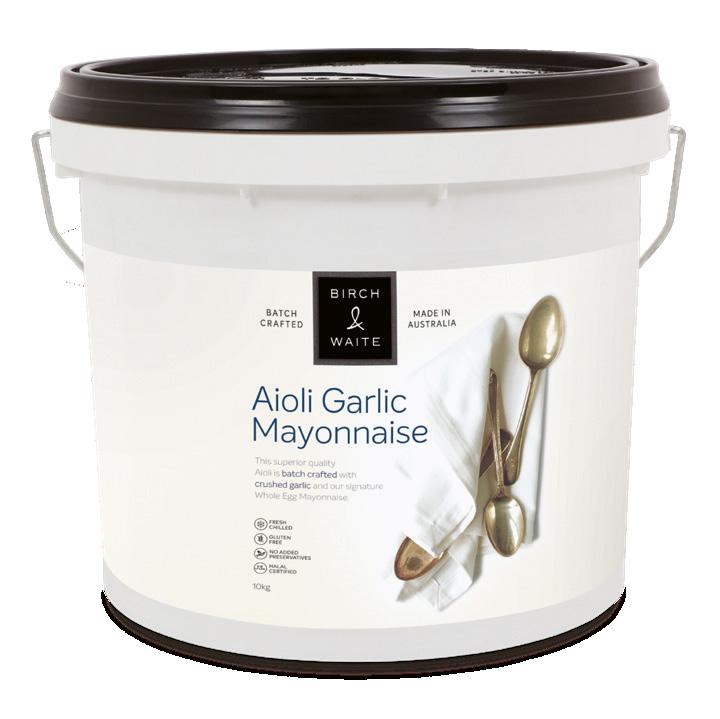
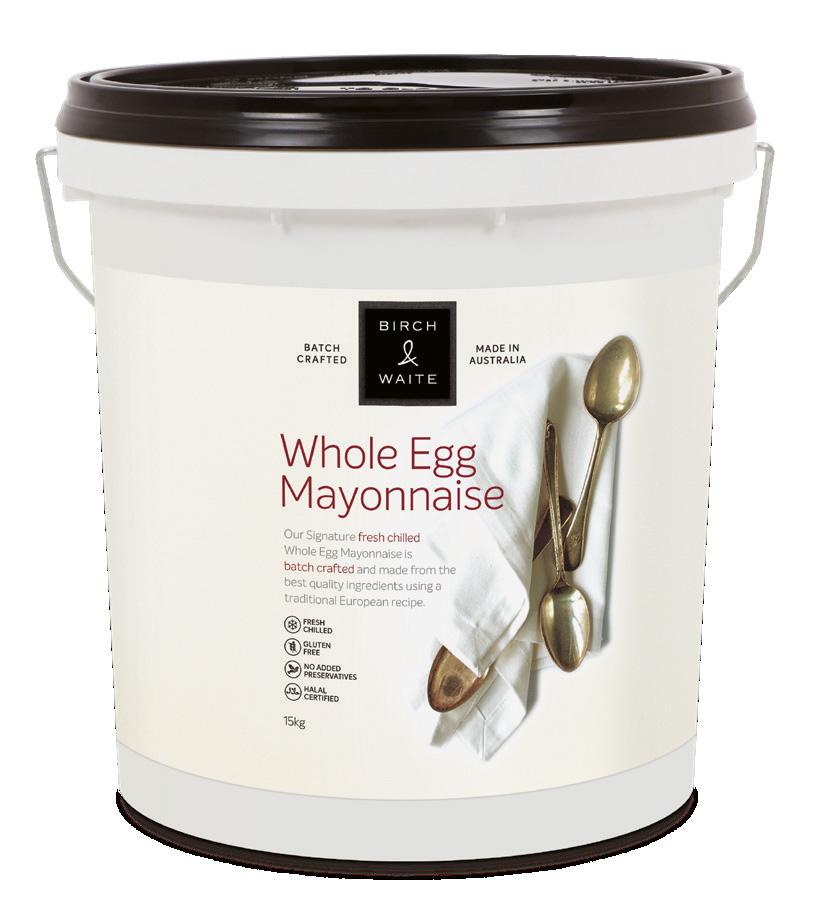
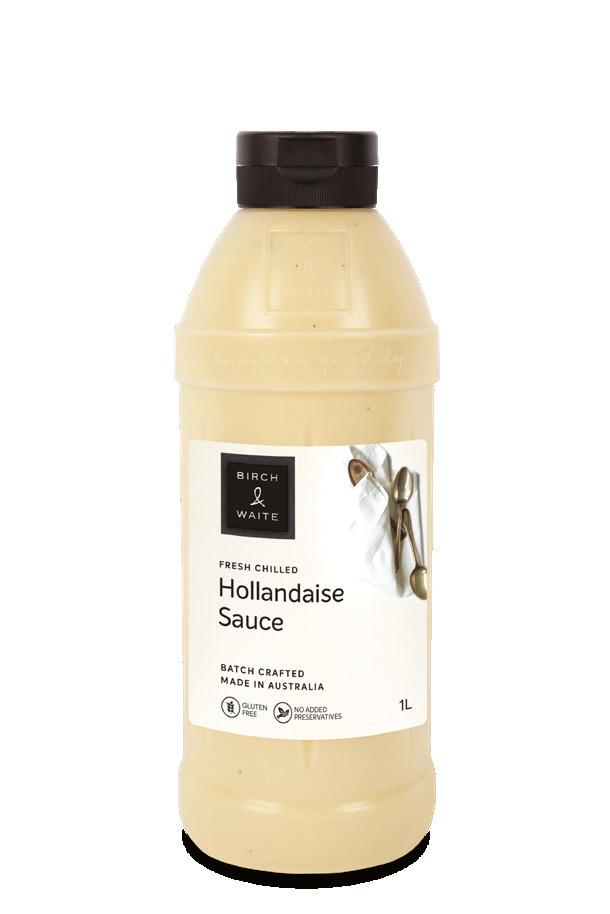
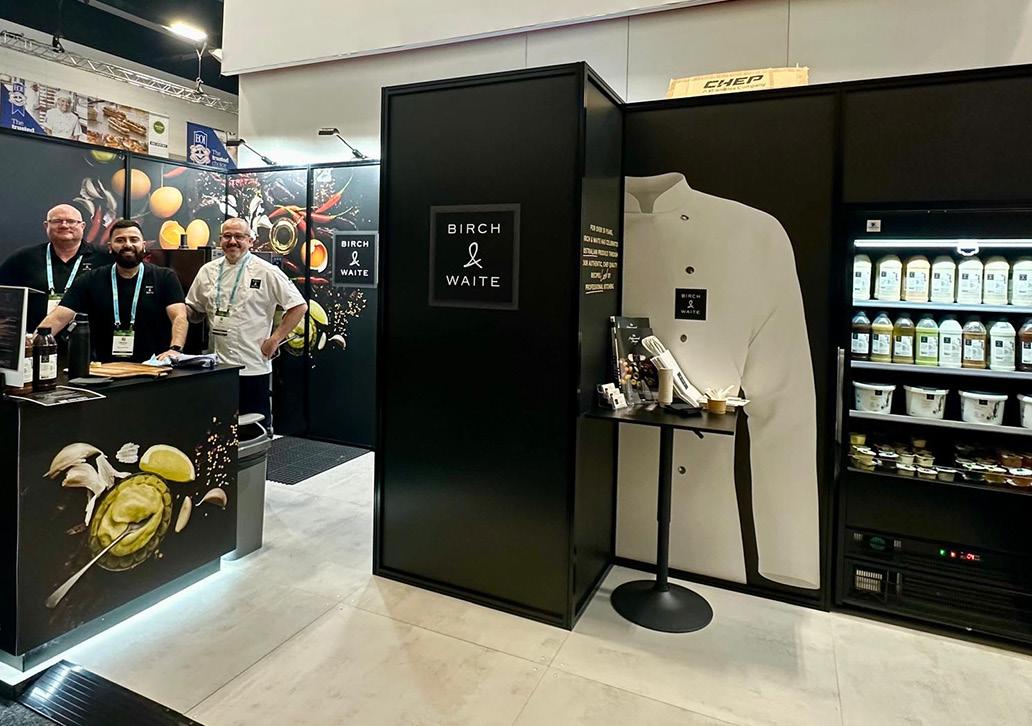
Birch & Waite is a locally owned business founded 40 years ago, with a vision to provide superior quality fresh chilled products for the professional chef. Birch & Waite’s endless pursuit for culinary perfection and innovation continues to set the benchmark in Australia for superior quality mayonnaise, dressings, relishes, sauces, desserts, and more recently, dips.
Their range of products are made using chef-quality, authentic recipes, that are fresh chilled, without the need for artificial flavours, colours, or preservatives. They are the perfect solution for kitchens that take pride in the highest quality, and can assist with labour shortages and consistency challenges.
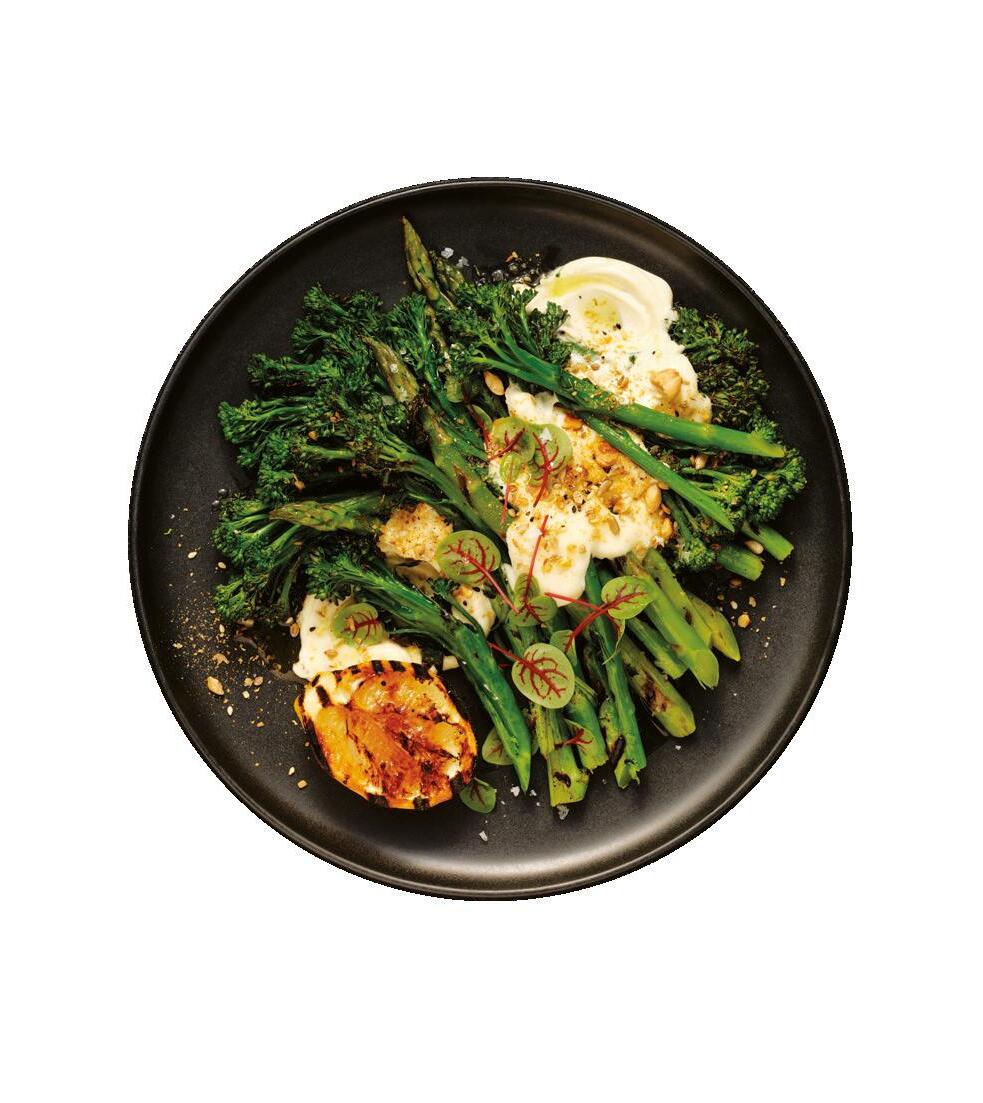
Find the Birch & Waite team at stand N16 and try their new range of dips, and award-winning whole egg mayonnaise, aioli, and hollandaise sauce. birchandwaite.com
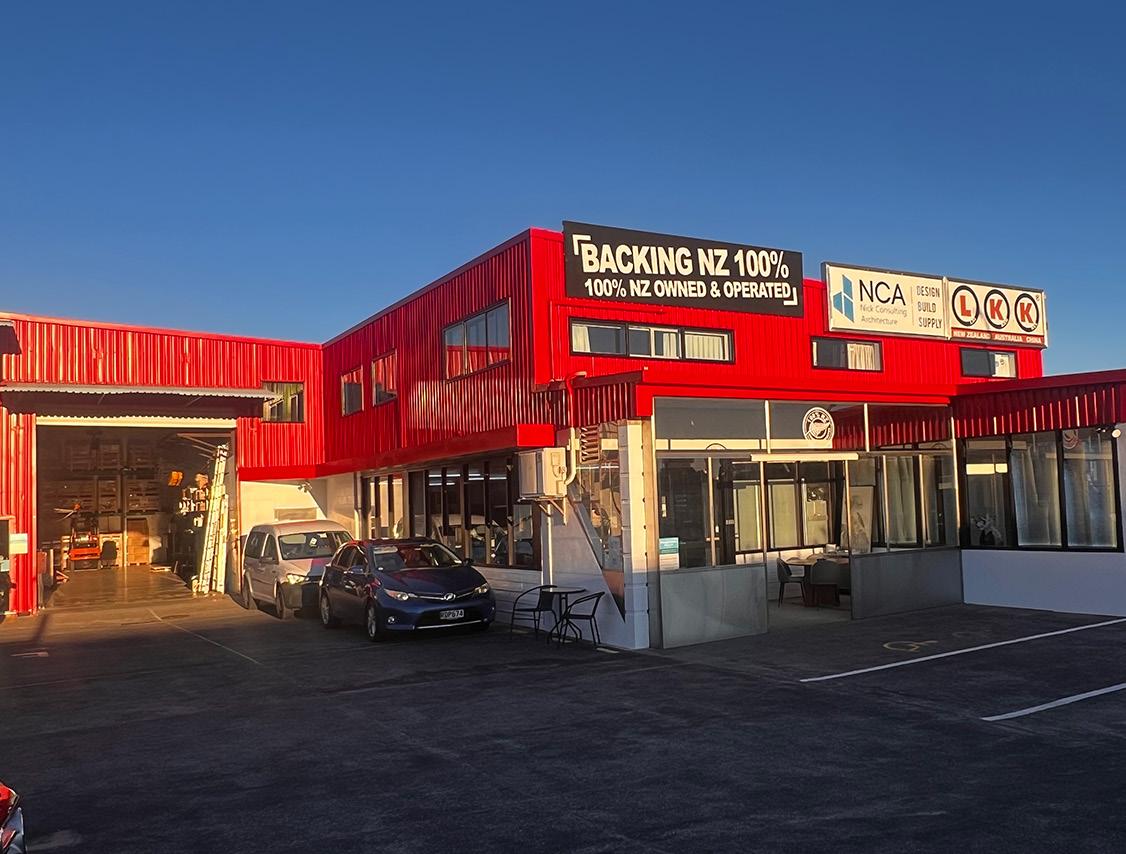
Since 1988, LKK has been a trusted leader in commercial kitchen solutions across Australia and New Zealand. Specialising in both Asian and Western cooking equipment, LKK deliver reliable, high-performance culinary solutions tailored for restaurants, cafés, hotels, and foodservice operators. Built to perform, LKK’s market-proven products are fully certified to Australian and New Zealand standards, including WaterMark, GasMark, and RCM.
Visit LKK at stand E50 to explore their extensive equipment range, featuring their core traditional gas appliances alongside their NEW electric series. LKK will also be showcasing their latest innovations, including an eco-efficient heat recovery dishwasher and a versatile, multifunctional combi oven.
Beyond premium hardware, LKK is dedicated to your success. Supported by an experienced technical team, they offer complimentary kitchen design services to help bring your commercial culinary vision to life. lkk.co.nz
A snapshot of some of this year’s exhibitors.

Looking for a better way to manage your sanitary disposal?
SaniPod™ offers sanitary, nappy, and incontinence units designed to eliminate costly contracts and service delays.
The user-friendly self-service liner system means you or your cleaning provider can maintain the units with absolutely no exposure to waste. It’s safe, it’s hygienic, it’s simple – and all within Australian regulations.
SaniPod™ helps your business save money, say goodbye to contracts and frustrating service delays, take control of your washroom, and enhance your washroom and business reputation.
Compact and convenient, touch-free or manual – SaniPod™ is the sanitary unit people actually choose to use, which eliminates expensive plumbing issues and out-of-action toilets.
SaniPod™ is found in some of the world’s busiest washrooms for proven reliability and dependability you can trust. Visit SaniPod™ at stand J41 to find out more. sanipod.com
As Australia’s leading supplier of commercial kitchen equipment, Comcater is set to make a major impact at Fine Food Australia 2026. Visit stands G1 and H1 to discover the latest innovations shaping the future of professional kitchens and foodservice operations.
From intelligent cooking systems and food production technology to advanced food storage, holding, refrigeration and pizza solutions, the Comcater stand will showcase some of the industry’s most exciting innovations. Be among the first to experience the latest developments from RATIONAL, Lincoln, Cambro, and many more leading global brands.
The team of experts and chefs will be on hand throughout the show, delivering live demonstrations and sharing practical insights into how the latest equipment can help operators improve efficiency, consistency, sustainability and profitability.
Whether you’re planning a new venue, upgrading existing equipment or simply looking for inspiration, the Comcater stand is a must-visit destination at Fine Food Australia 2026. comcater.com.au

a better way!

Own your washroom solution
No rental contracts
No service delays
No technician visits
Lower ongoing costs
Your bathroom says a lot about your business. Make sure yours speaks volumes!
SaniPod™ offers sanitary, nappy and incontinence units that people actually want to use, eliminating expensive plumbing issues and out-of-action toilets
The user-friendly self-service liner system means you or your cleaning provider can maintain the units with absolutely zero exposure to waste.
It’s safe, it’s hygienic, it’s simple. Period.

Enhance washroomyour - it looks great, plus it’s safe to use and safe to service



Australian workplaces are required to provide sanitary disposal units
Period products are classified as General Solid Waste *
That means you don’t need a specialist waste collection service
* Environmental Protection Authority
Take controlsave time, save money eliminateandhassle

Trusted in venues and businesses across Australia
Stop renting. Start saving. www.sanipod.com.au
These elegant blades are designed for efficiency and control.
Should be razor sharp to ensure safety
Some have arched blades to facilitate the removal of fish flesh from bones
They feature narrow blades with varying levels of flexibility
Designed to trim, debone, and fillet with efficiency and control
Traditionally used for removing bones and skinning meat and poultry
They range between 12 and 17 cm in length
iStock.com/the8monkey
An ergonomic handle allows for safe grip when hands are slippery
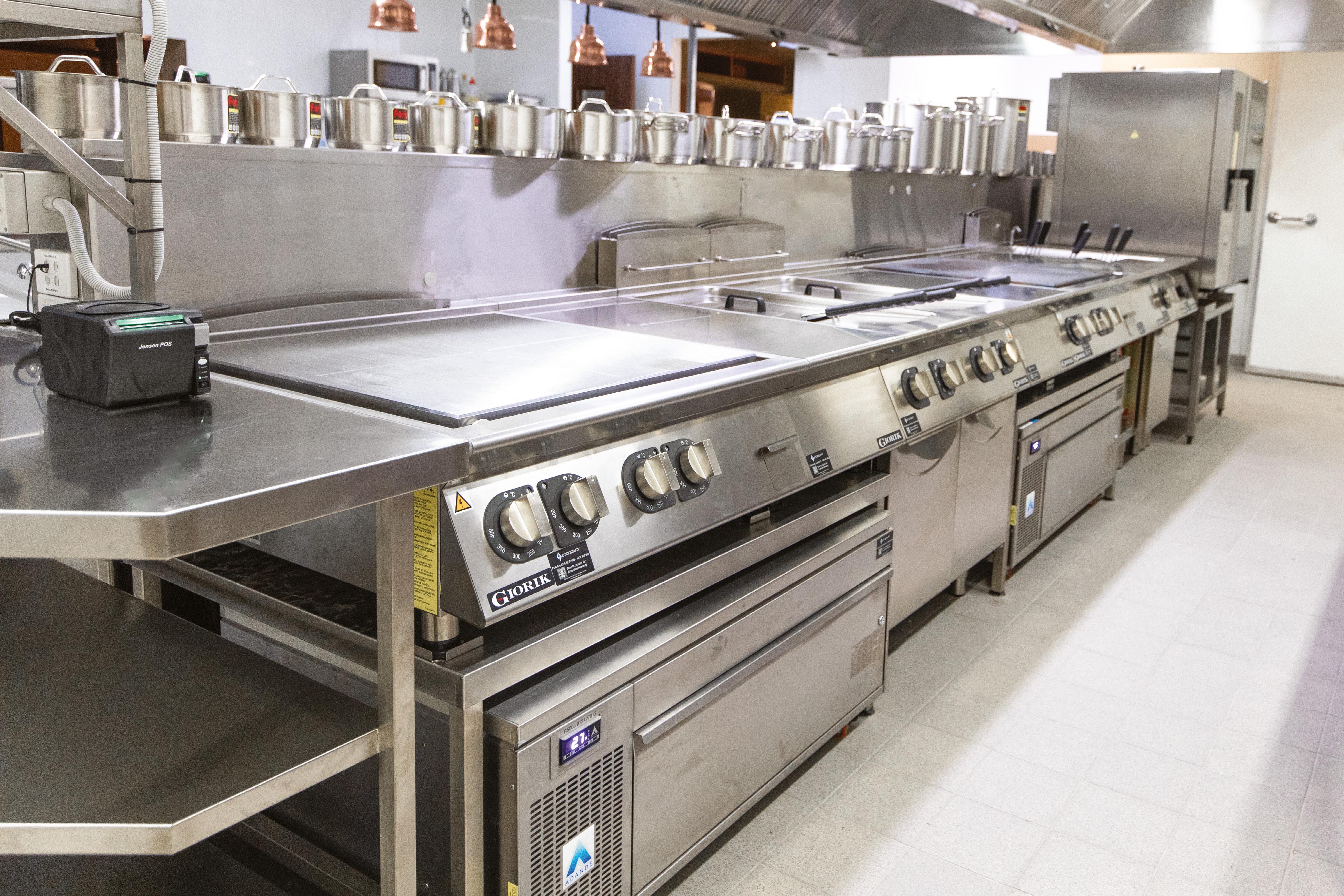
The Giorik cooking range delivers efficiency: Steamline Workflows Reduced Downtime Long-term Value


From its humble beginnings in 1963 to becoming a global powerhouse of catering equipment with installs all across Australia. Giorik is a trusted name for Combi Ovens, Modular Cooking Equipment and Salamanders.
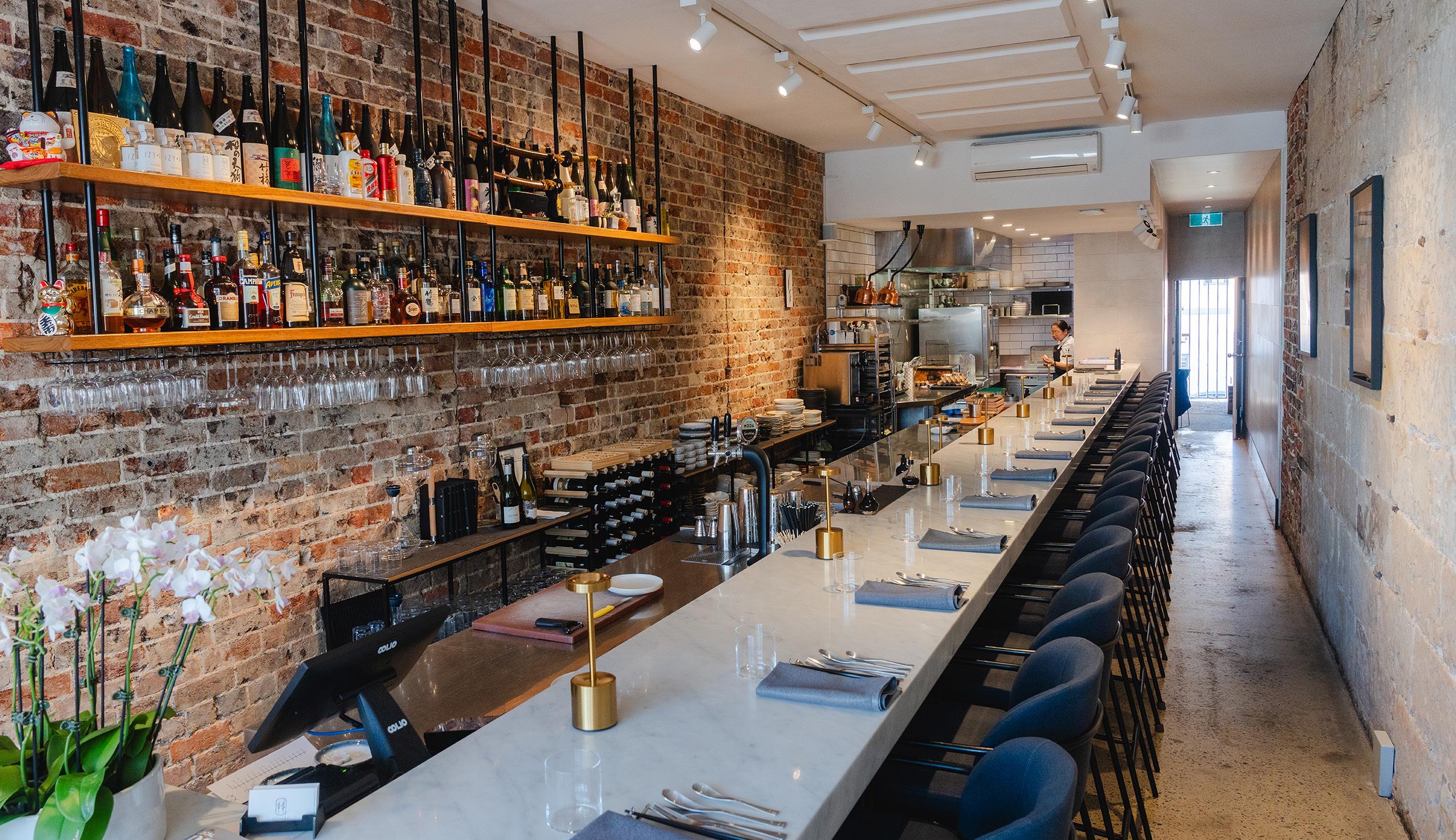
A recent boom in small venues has shown that operators are looking towards tightening their output. The result is a dining experience that can be deeply personal.
Words Maia Hart
Photography Izy.Aki by Tomo Okai; Mishy’s; Atsu
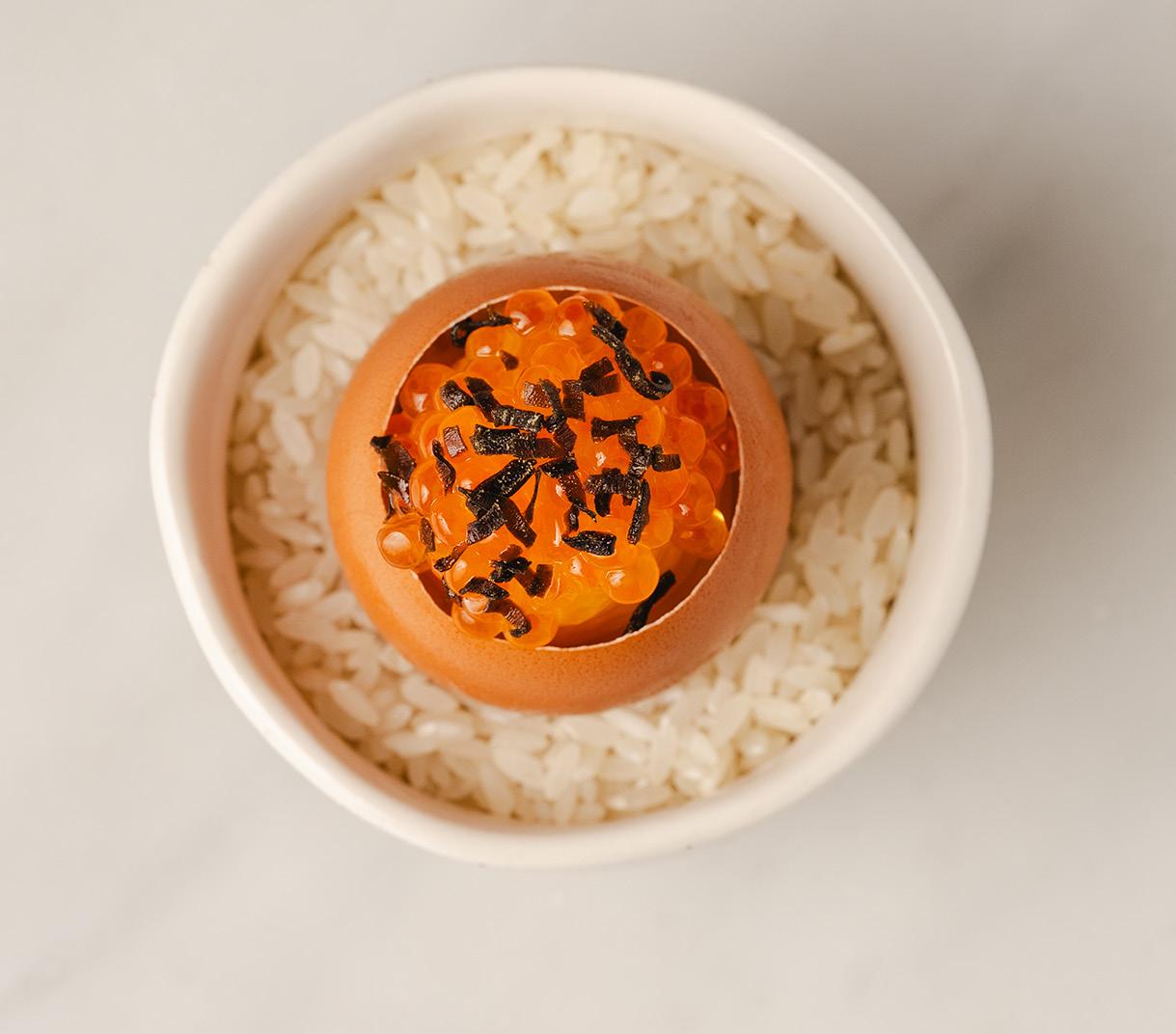
IZY.AKI OWNER DARREN Templeton has worked in restaurants where it was normal to do 200 to 300 covers a night. For a lot of operators, that might sound like an ideal scenario, but for Templeton he found the experience “quite impersonal”.
“From the minute you arrive at a venue like that, you’re greeted by one person, you’re sat by somebody else, somebody else takes your order, and somebody else will bring it to you,” says Templeton.
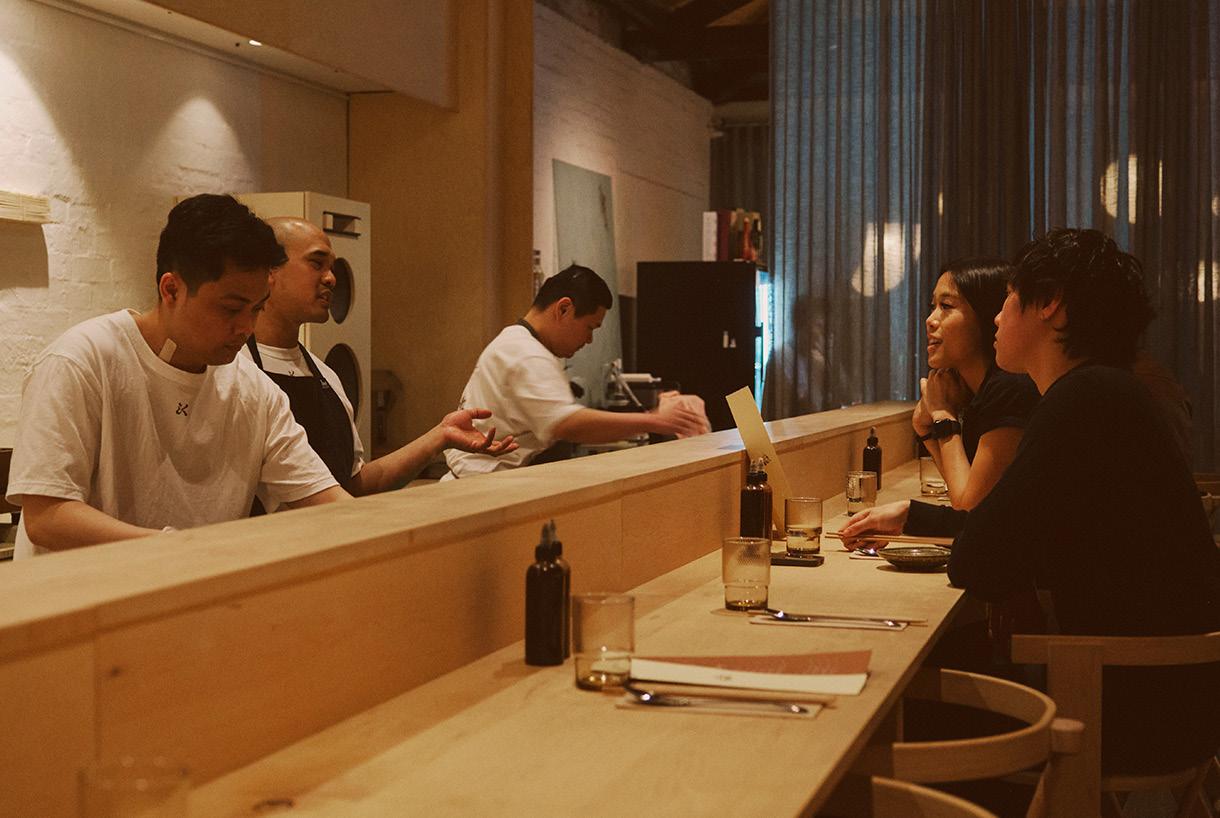
That type of setup is the exact opposite to what you will find at Izy.Aki. Born from a pop-up that first started in The Rocks, Sydney, Izy.Aki is now tucked into its permanent home in the former Saint Peter space on Oxford Street in Paddington, with the omakase experience seating just 20 people. The restaurant, which offers either a six or ten course menu, blends Japanese tradition with Australian produce. There are just three people in the team, which Templeton says turns the entire experience into something personal.
“It’s more like a dinner party. Rather than a restaurant environment where you just become a number, here you are sat right in front of me, so you have to talk to me no matter what,” says Templeton.
From an operational point of view, it means there’s nowhere to hide and the team are incredibly reliant on each other.
“From an introvert’s point of view, it’s a nightmare. But it’s great to have that challenge as well. There’s nowhere where you can just disappear into the crowd. We’re very much accountable to the customer from the start,” says Templeton. “Staff-wise, if one person disappears you don’t have anyone to back you up. Logistically, that can be very tough, but what far outweighs that is the fact you are a very tight team, you become a family.”
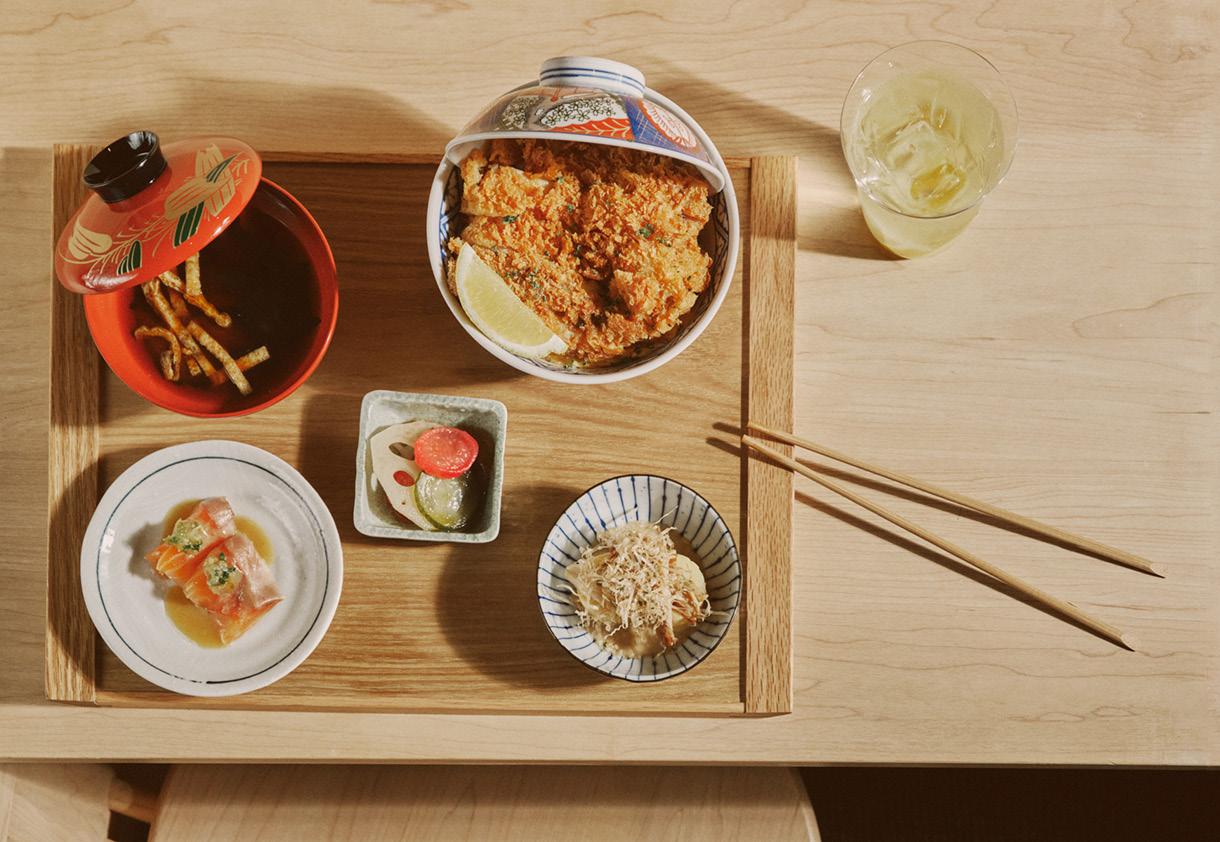
Absolutely nothing is fixed on the menu, but customers will likely find 9+ Australian Wagyu and a selection of fresh seafood. Although Templeton does admit it would be hard to take one of
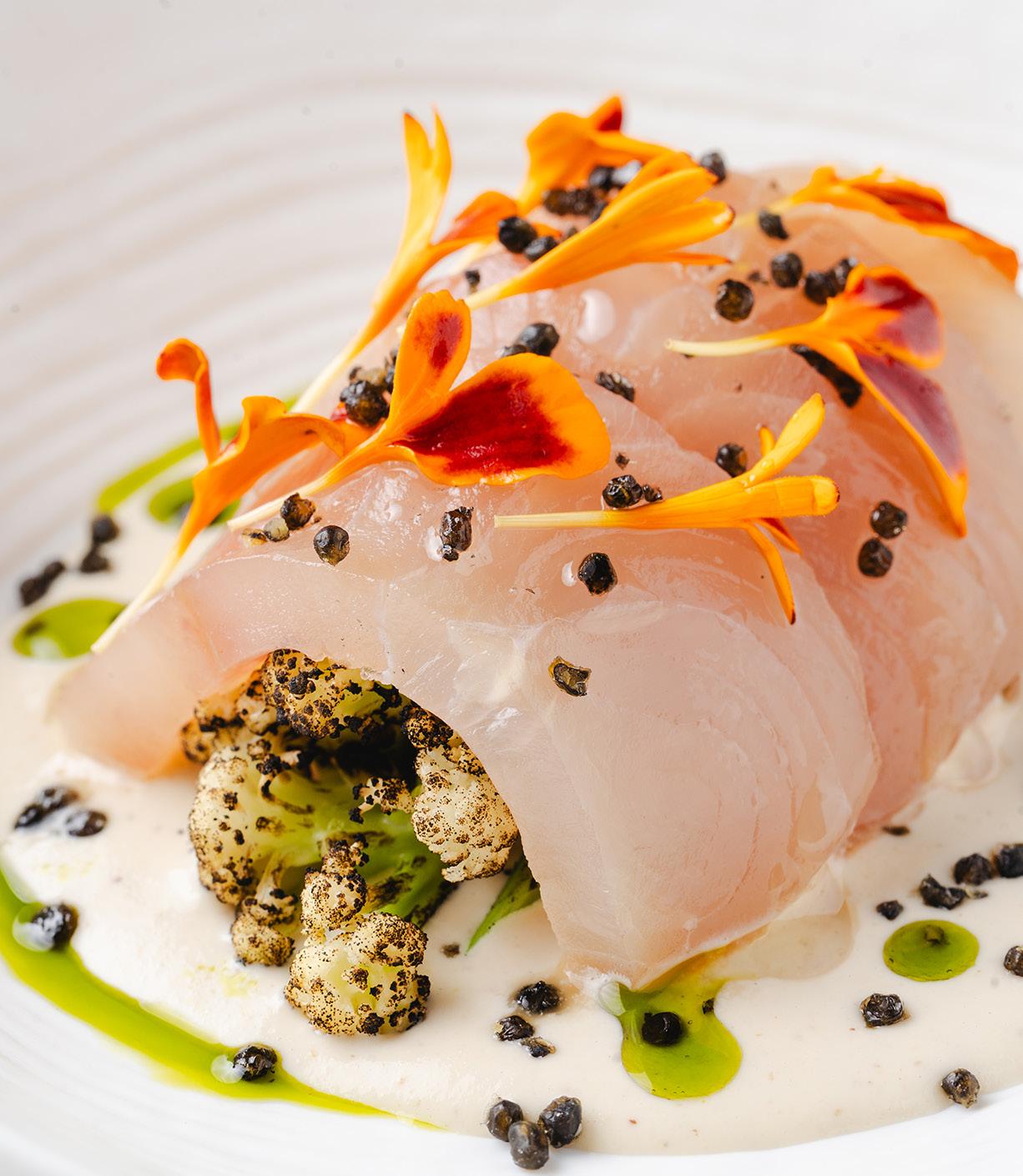
their signature dishes — The Egg — off the menu. That dish, which includes white onion purée, foie gras, smoked eel, and golden trout roe, is the one that customers tend to ask about the most, he says.
“This is one of the first dishes that you get when you arrive, and people go crazy for it. We see the joy on people’s face when they have The Egg, it’s like a ground hog moment for us, but that dish has to stay.”
Lucky for them, The Egg can stay, because they have complete control, says Templeton.
“There is no CEO, there’s no culinary director telling us what we have to do, what targets we have to meet. The freedom we have for the food, the wines, and the sake is purely down to us and what we like,” he says.
For Templeton, it makes for an absolute dream.
“Everyone was saying, are you crazy? And yes, there are a few people who come to the restaurant who haven’t made a booking and they’ll just walk away because there’s no menu, but that’s fine because that’s not our customer base. But the people who are coming to us are trusting us for what we do, which I think is a good thing.”
“I think small restaurants — be it neighbourhood or be it in the city — are the way to go, because I think people want to have more of a personal experience when they go out, especially now when times are tougher. Everyone that comes through the door is absolute gold and I just smile and open the conversation and off you go. I’ll tell you, it just changes the world.
“When we started Izy.Aki as a pop-up down at The Rocks, we never knew what was going to happen. But the big surprise is that people have embraced it. They’ve embraced the culture of the venue, and that trust is something else. Even though I’ve been cooking now for about 40 years, since I was 15, this has really blown my mind, and I think it’s something that other chefs should look at as well and just forge their own path.”
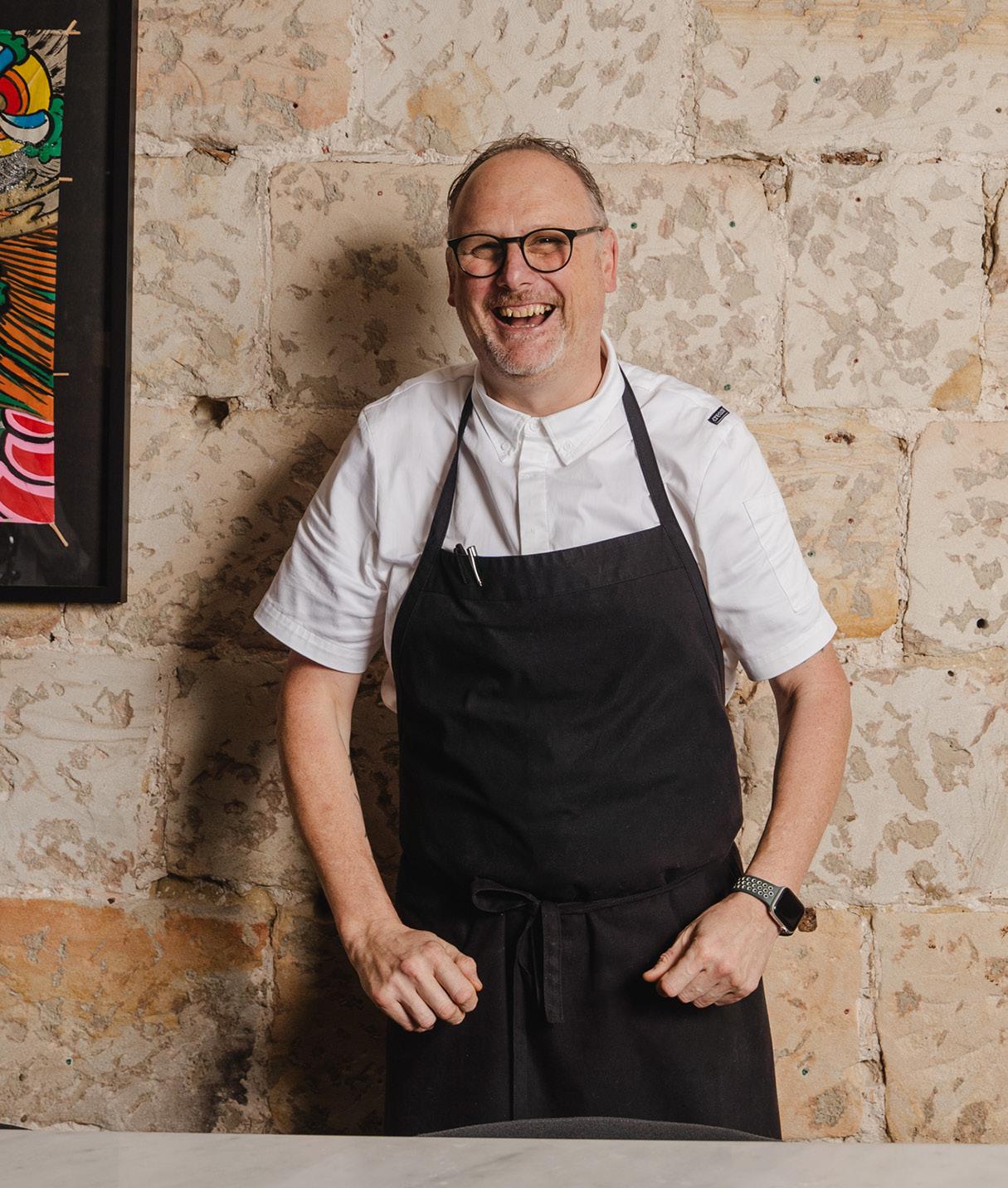
“From an introvert’s point of view, it’s a nightmare. But it’s great to have that challenge as well.”
– Darren Templeton
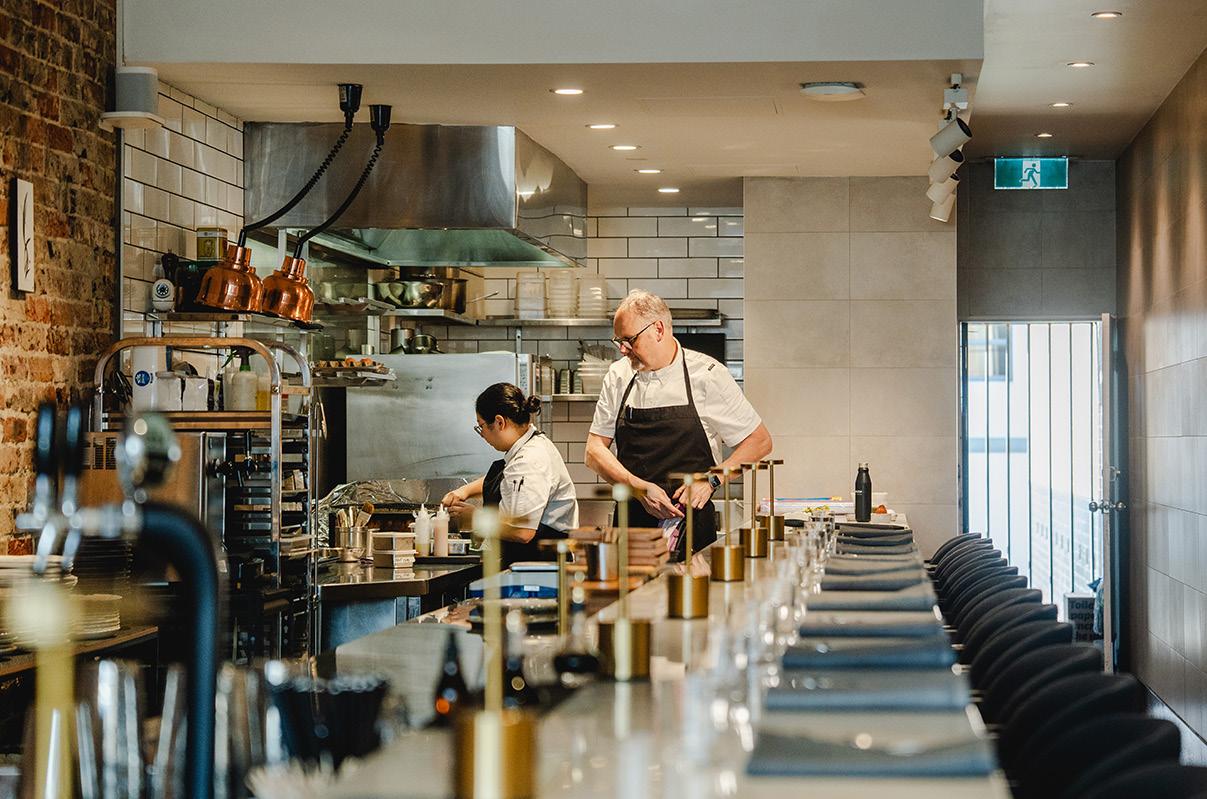
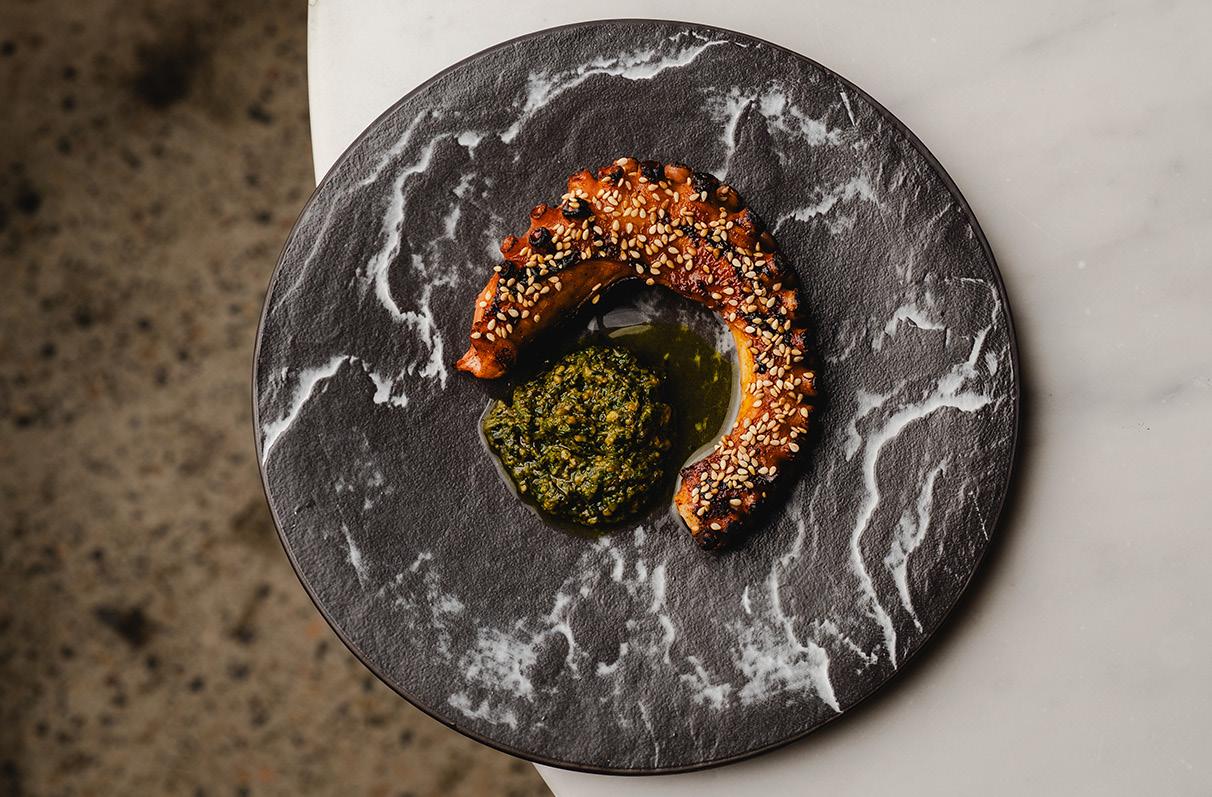
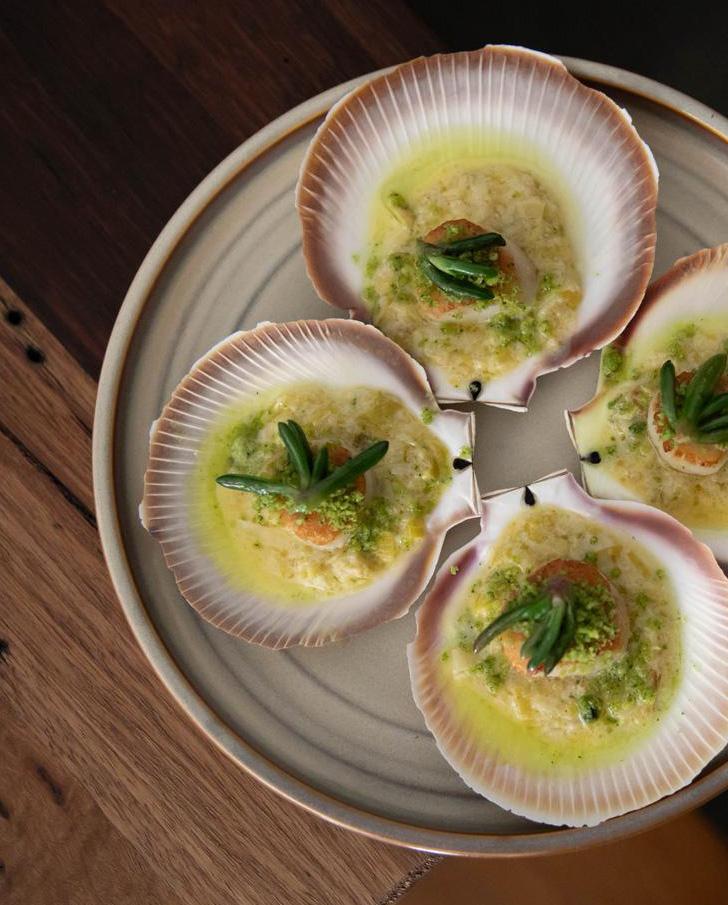
“One of the biggest advantages is that if we do have a quiet night, it’s not burning a hole in my pocket financially,”
- Michelle Powell
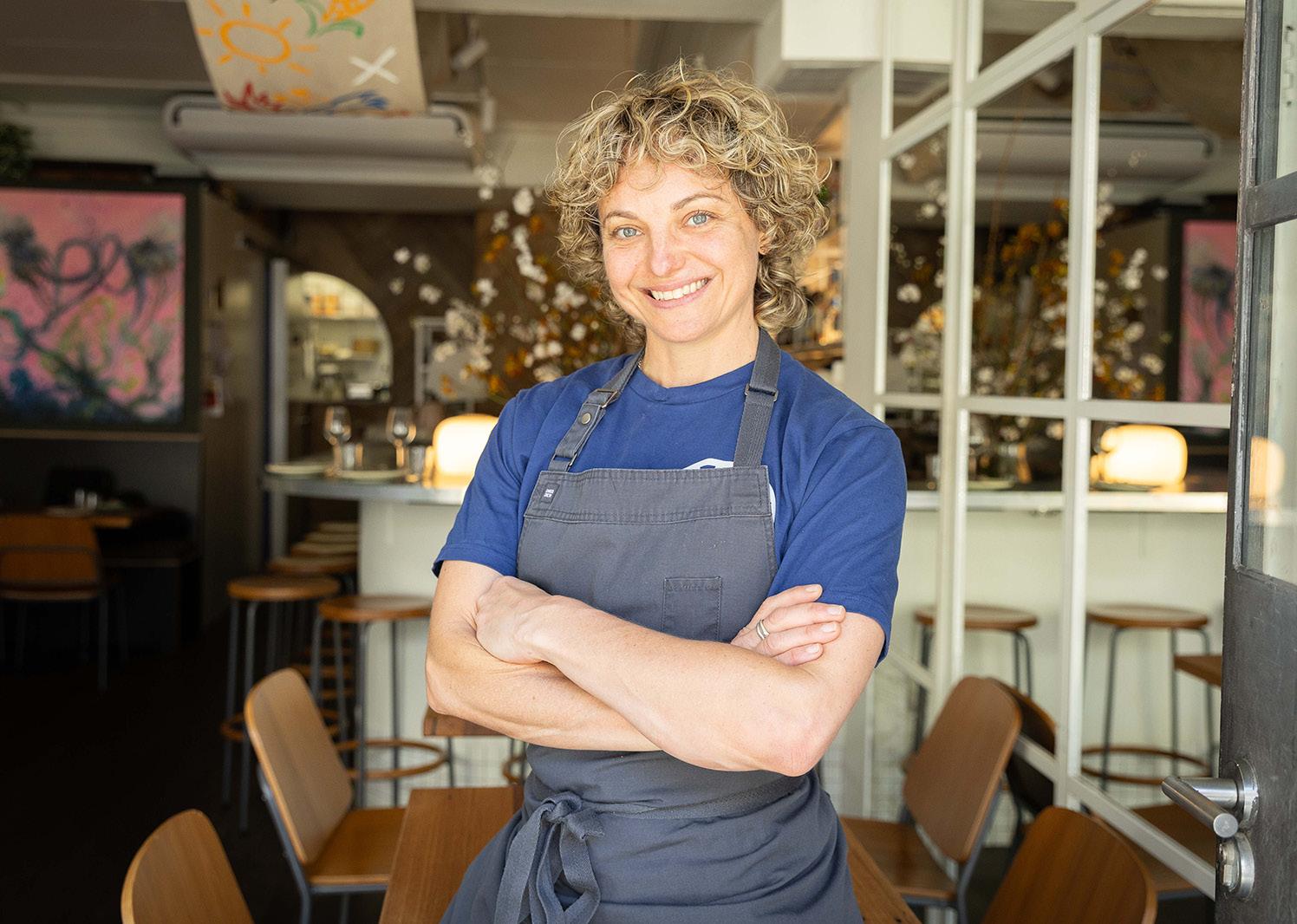
At Mishy’s in Surry Hills, owner Michelle Powell’s path to owning a small venue was partly born out of burn out, and from asking herself, 'What’s next?'.
Powell has spent 20 years working in the industry as a chef and also front-ofhouse, both overseas and in Australia.
“My biggest venture was that I was invited to be a part of a bigger restaurant. I was one of eight owners. It was the real deal; everything was brand new and there were 130 seats in the heart of Potts Point. I was the head chef, but I resigned from my position there because I was feeling quite burnt out. I took three months off and then the pandemic hit. For the first time in my life, I felt unemployable as a chef,” she says.
Powell began to hustle. Launching a sauce brand, she quickly learnt that manufacturing condiments and being a restaurant chef were two very different skill sets. So, she approached the bank, and was able to get a “very, very, very” small loan, which led her to find a petite space in Surry Hills that already had a grease trap, which Powell says was one of her necessities.
“Historically it has been a site where nothing has worked. I ended up signing and I built the venue with no business plan, I had no money, and I had no name.
“But what I did want to do was bring back community spirit, especially after the pandemic. So, I literally started on my own. I had one employee, which was me, and I was working it out along the way.”
Powell says she grew obsessed with Facebook Marketplace, which was ideal at the time because lots of restaurants were either closing down or pivoting. Then as she grew, she was able to hire more staff and invest in equipment.
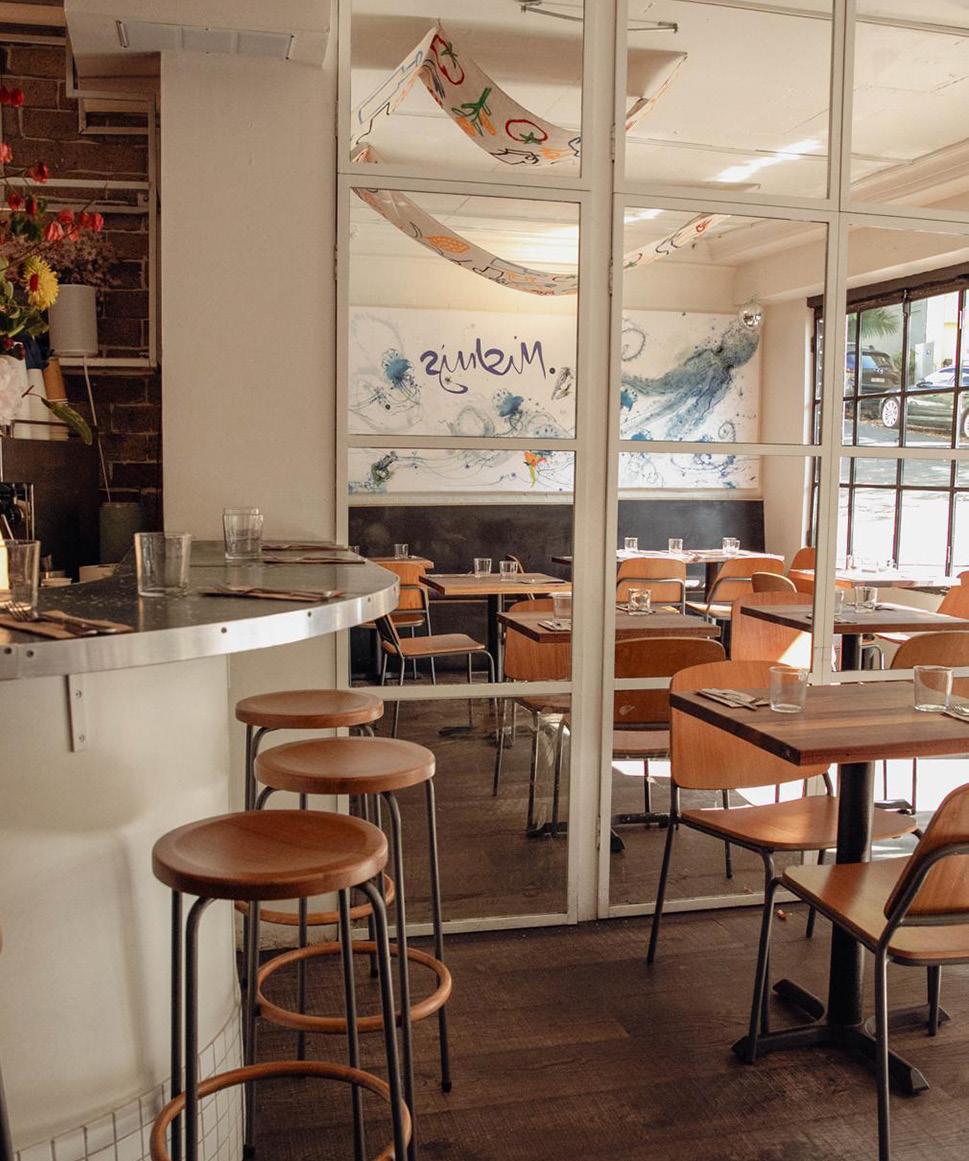
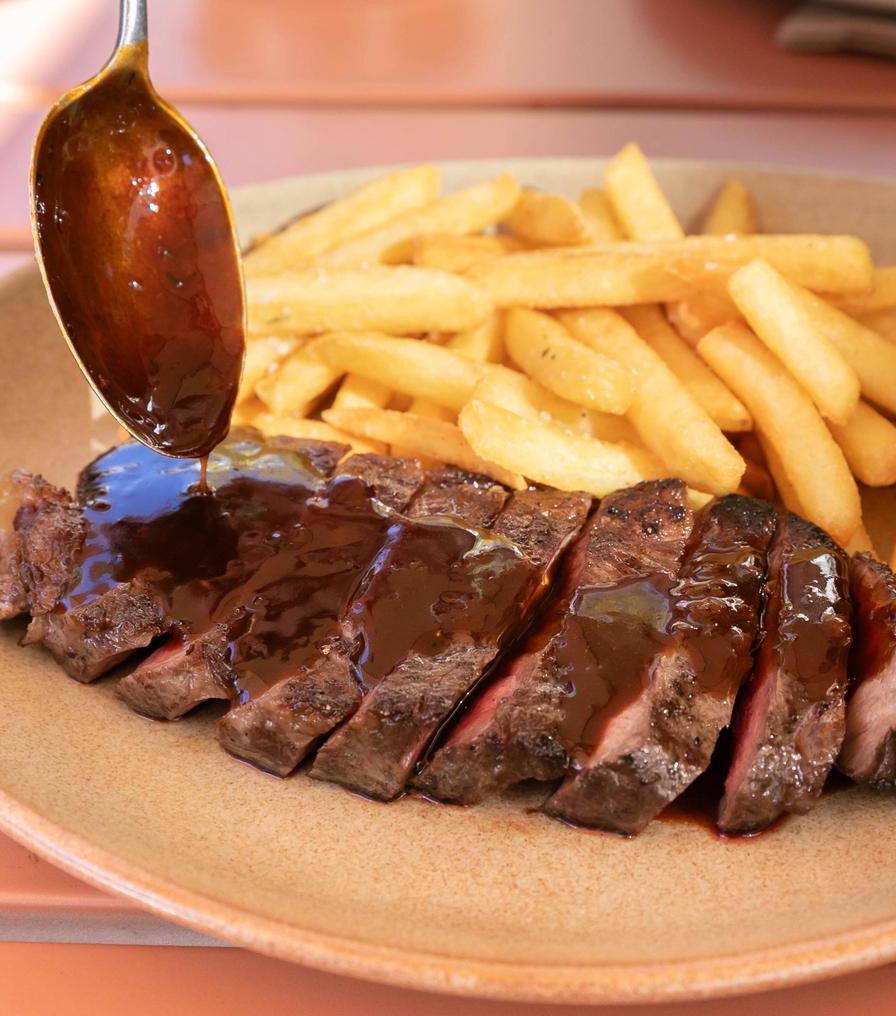
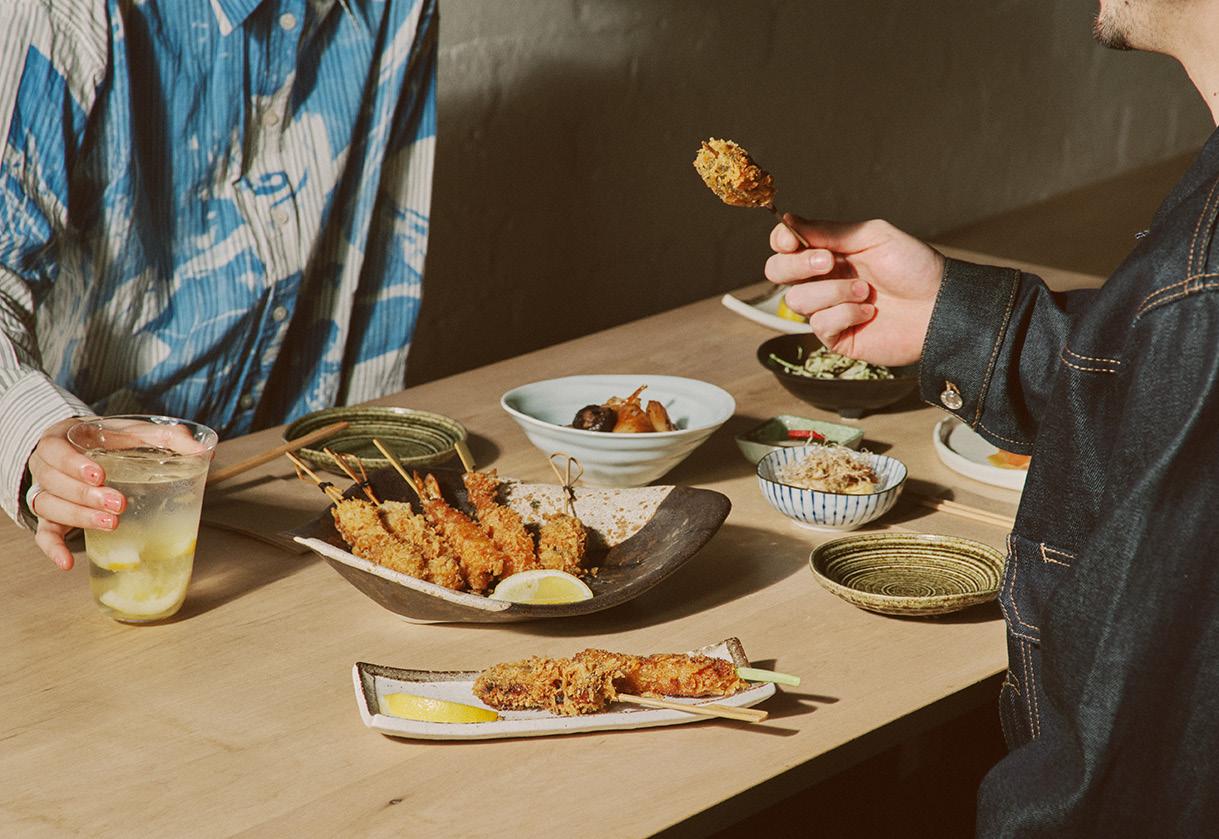
Seating 24, she says Mishy’s is small and personal, with a menu that features small plates such as Sydney rock oysters with finger lime mignonette and zucchini flowers with goat’s curd and honey. Larger plates include dishes such as spinach and ricotta ravioli with warrigal greens and Murray cod with ajo blanco and harissa butter.
The small-scale venue is something Powell says she enjoys, because she can chat to customers, find out how they found the venue, and understand what people are enjoying the most. She also hits up farmers markets herself to try and keep prices lower for the restaurant and her customers.
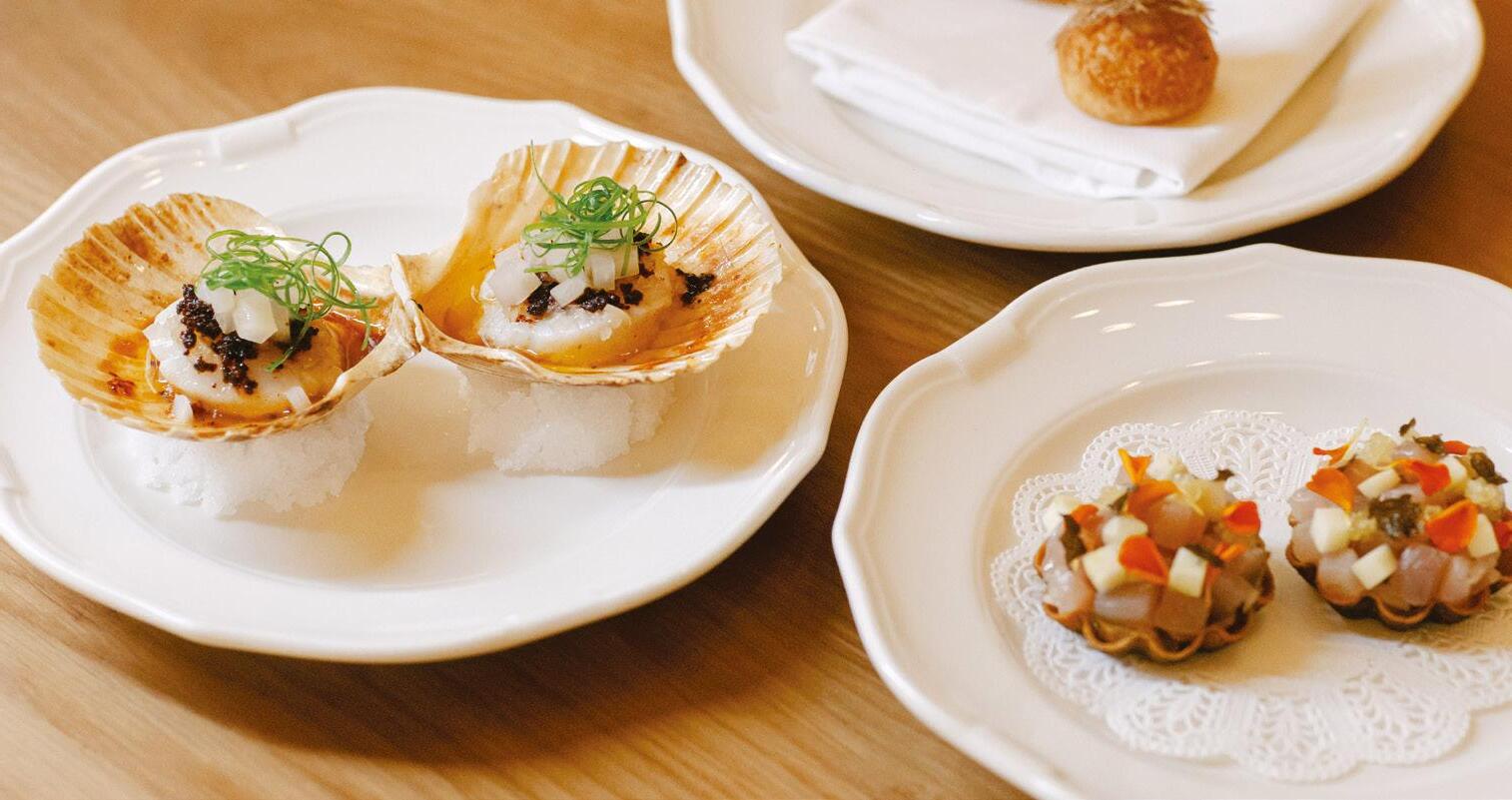
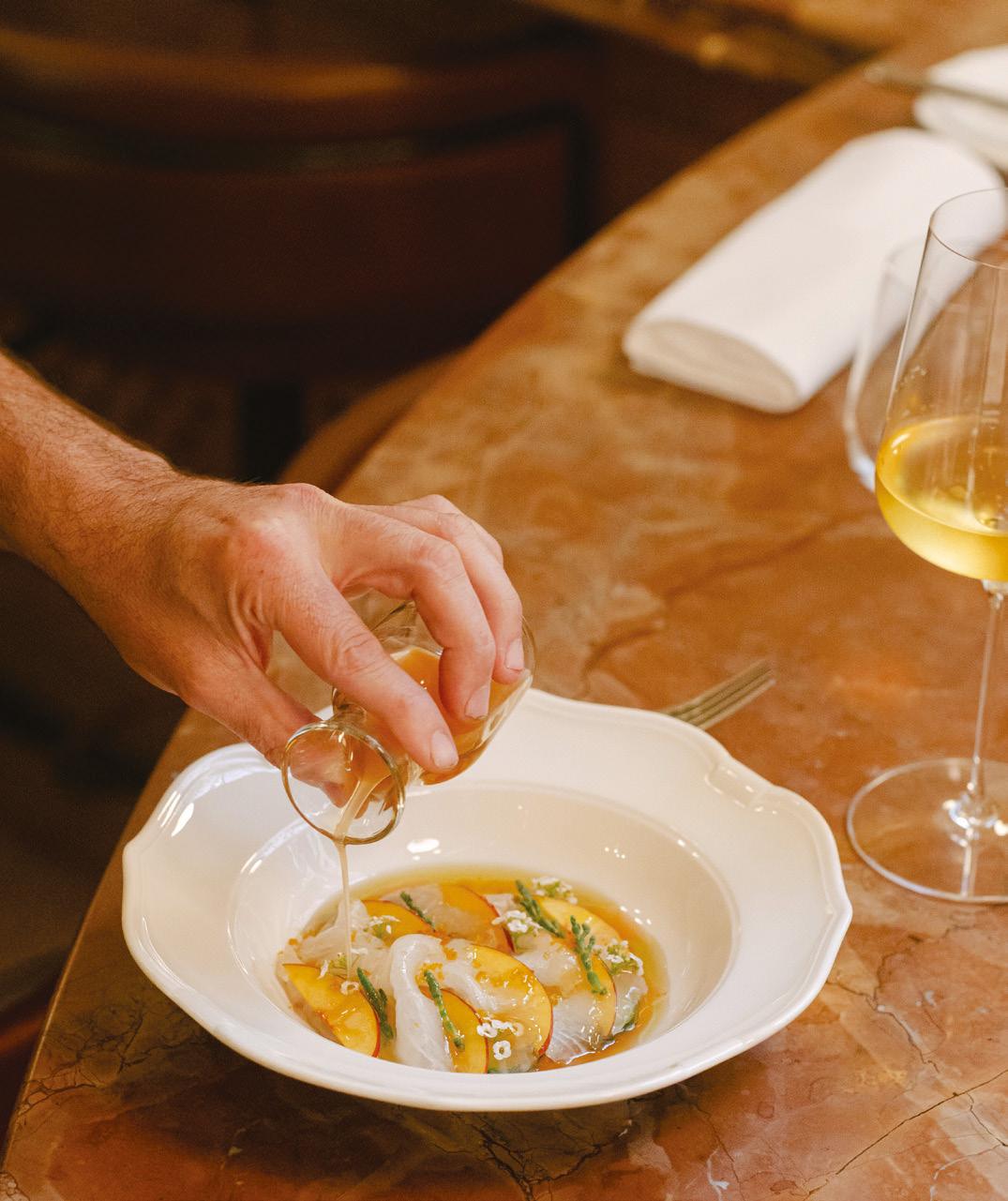
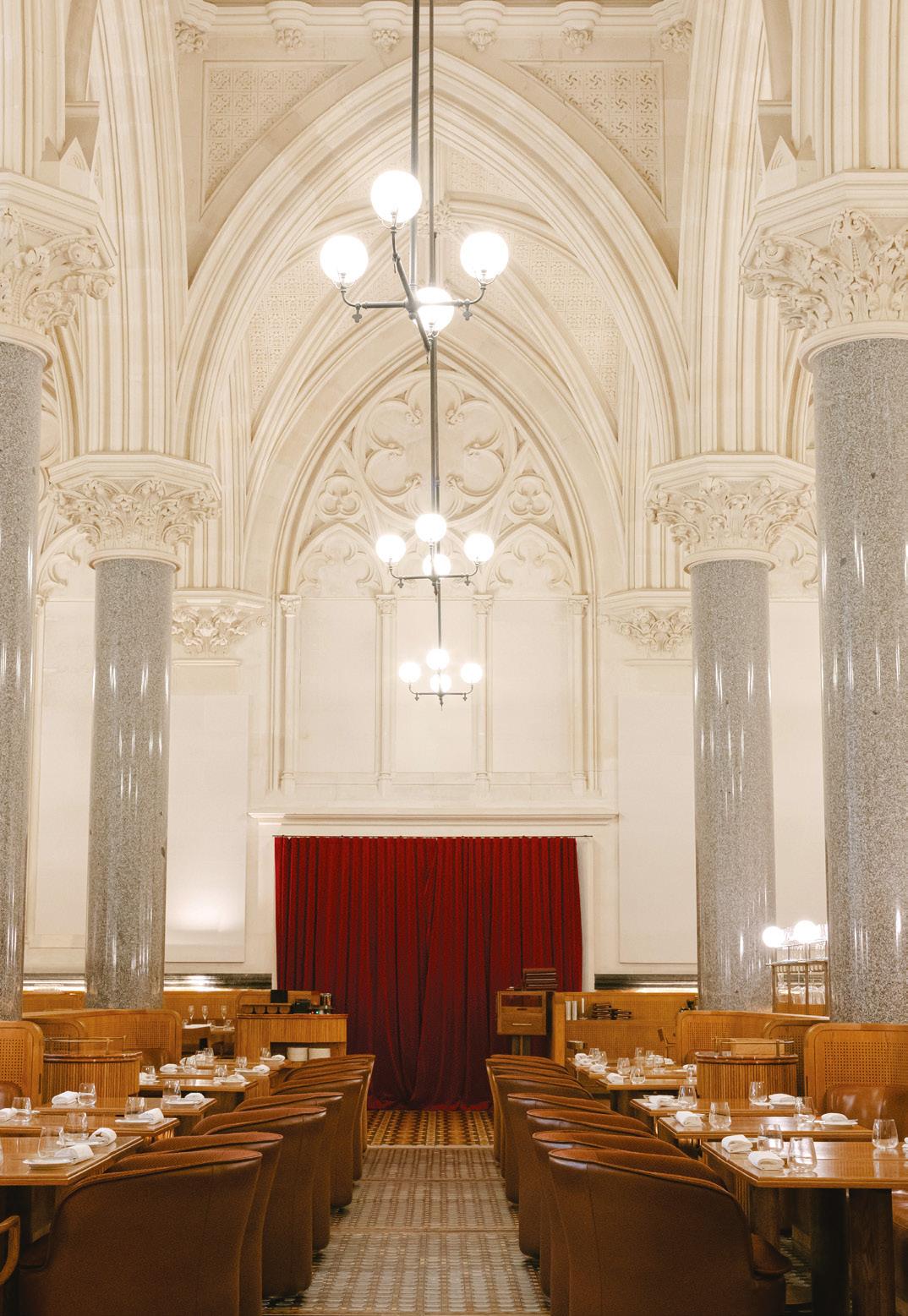
ART OF THE TABLE WHERE CLASSICAL DESIGN MEETS THE DEMANDS OF THE WORLD’S FINEST VENUES
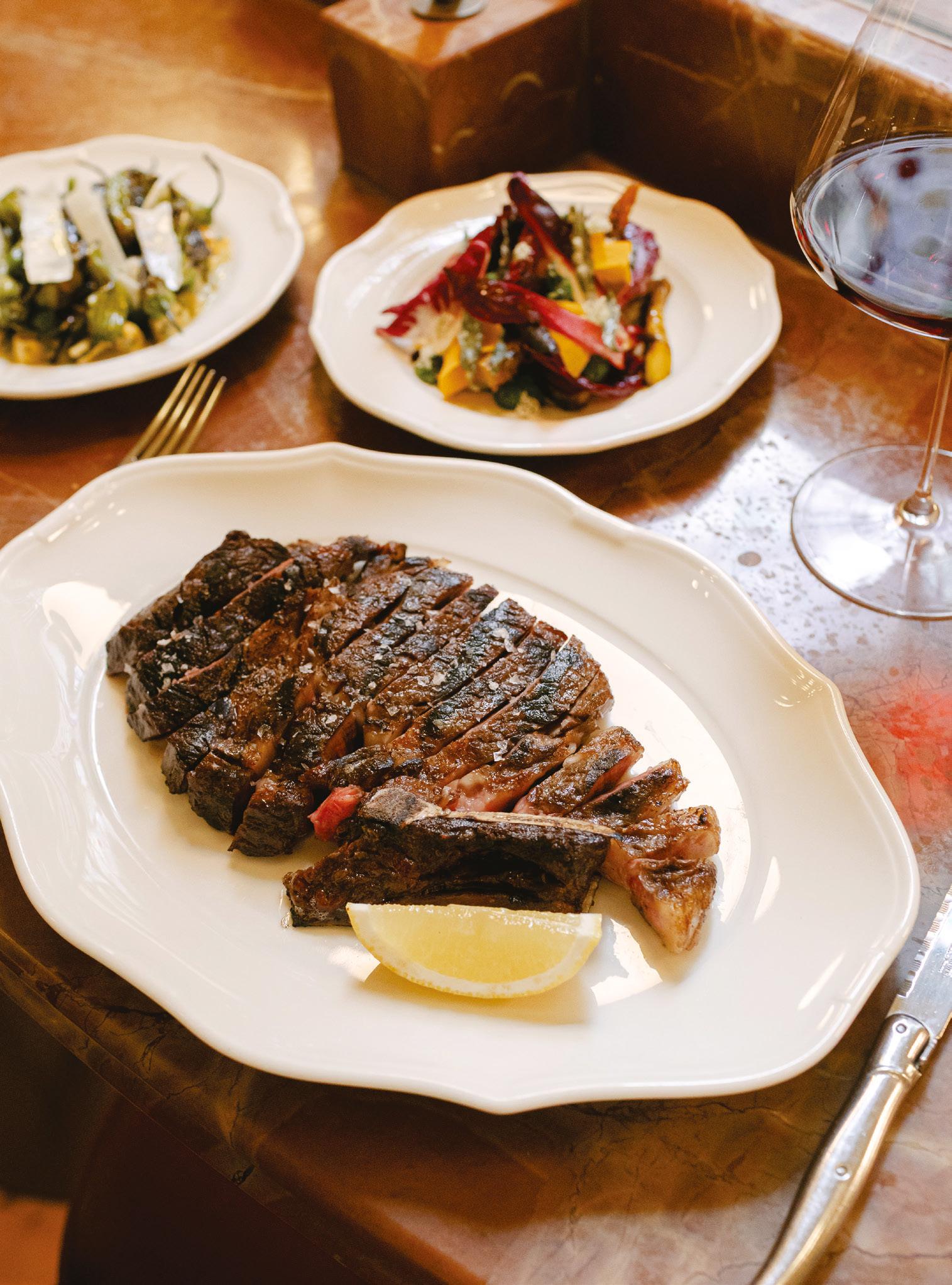
At the heart of Reine & La Rue, Melbourne, the La Scala Collection by Villeroy & Boch draws from the opulence of design heritage, intricate in detail, flawless in finish, built to endure. 277 years of German craftmanship behind every piece.
“One of the biggest advantages is that if we do have a quiet night, it’s not burning a hole in my pocket financially. I think with the bigger restaurants, as soon as you do have a quiet night, it costs you a lot of money to operate and keep the lights on.
“I’d rather have customers come twice a week than once a month. I have some customers who come daily, and I have them on my mind all the time. We are a local business, so I don’t want to make it too pricey that people can’t afford to eat here regularly.
“Everyday life is becoming more and more challenging, and I think being small, we’re able to create that living room experience where people feel like they are walking into someone’s home. That’s something that I really love about having a small venue.”
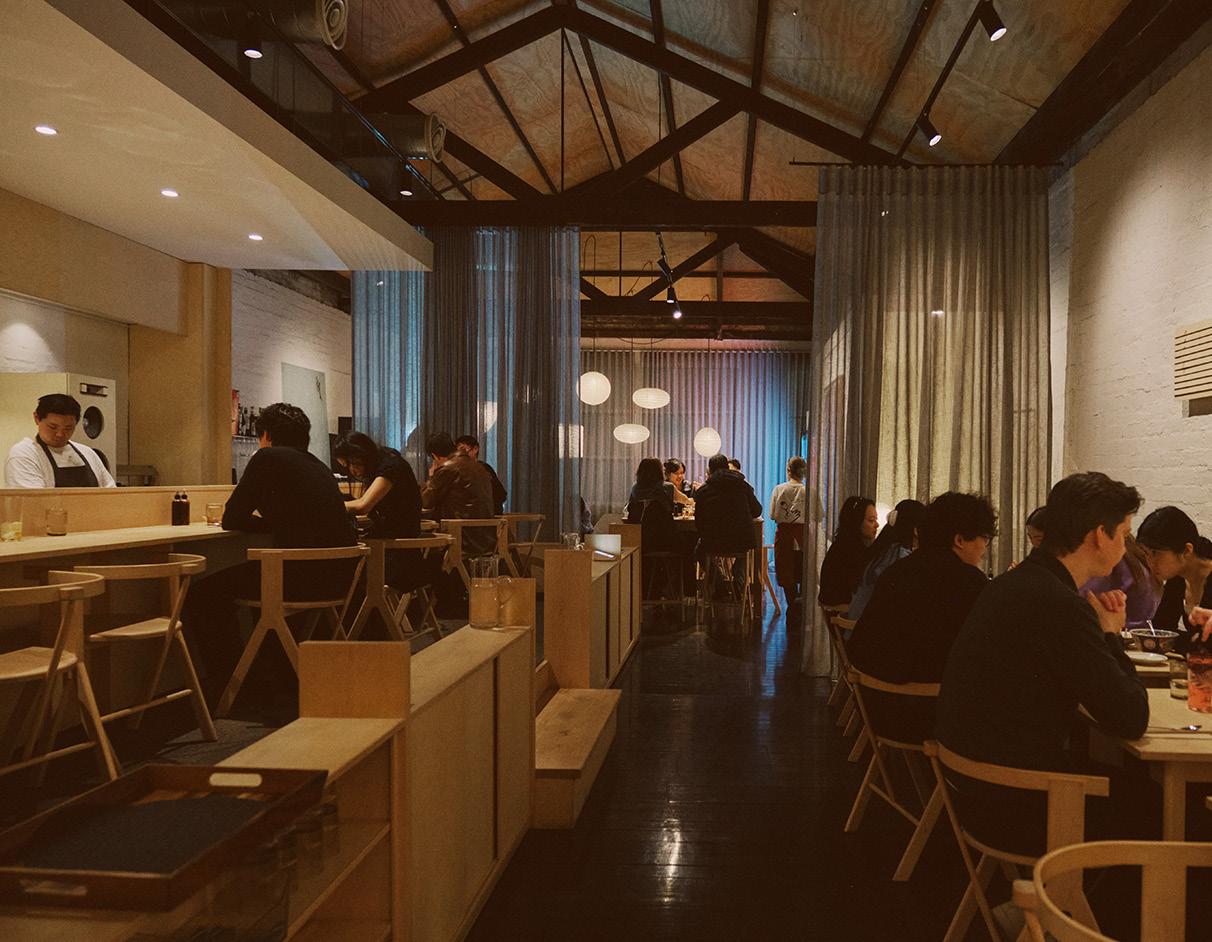
At Atsu in Carlton, a small venue seating just 32 people was a no brainer for Owner Reki Reinantha. Reinantha was previously head chef at Kisume in Flinders Lane, and also operates Andzero and Sachi in Melbourne. The chef says it makes sense to start small.
“From a business point of view, it’s less risk. But on the other side, you always want to have a connection with people. When you’re a bigger establishment, it’s always harder to keep track of say, 1000 customers in a week,” he says. “Carlton as a suburb is super close and a lot of people know each other really well. We want to have better connections with our customers, we want to know them by name and what they like to order,” he says.
Being smaller, he says the strategy is to make sure they have the turnover and covers to get as many customers as possible.
“But that’s not something that we can control. So, it’s also a matter of focussing on my staff and the product, because if it’s good, then Melbourne people will come. It’s a matter of how we can make it visible, and for ourselves, we just try to be better and better. I wouldn’t do it any other way. I’m very happy with the small team, and the small venue.” ■




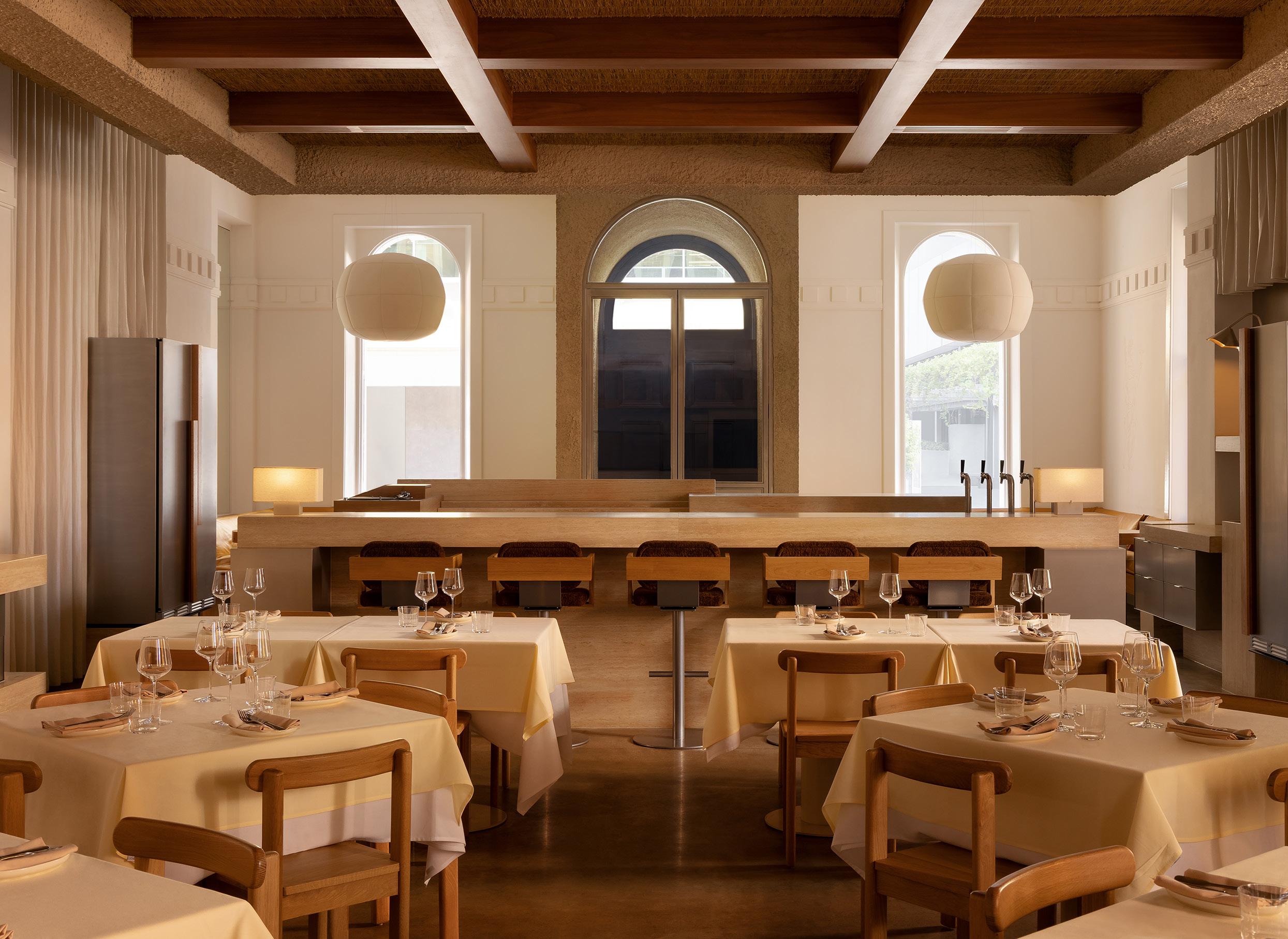
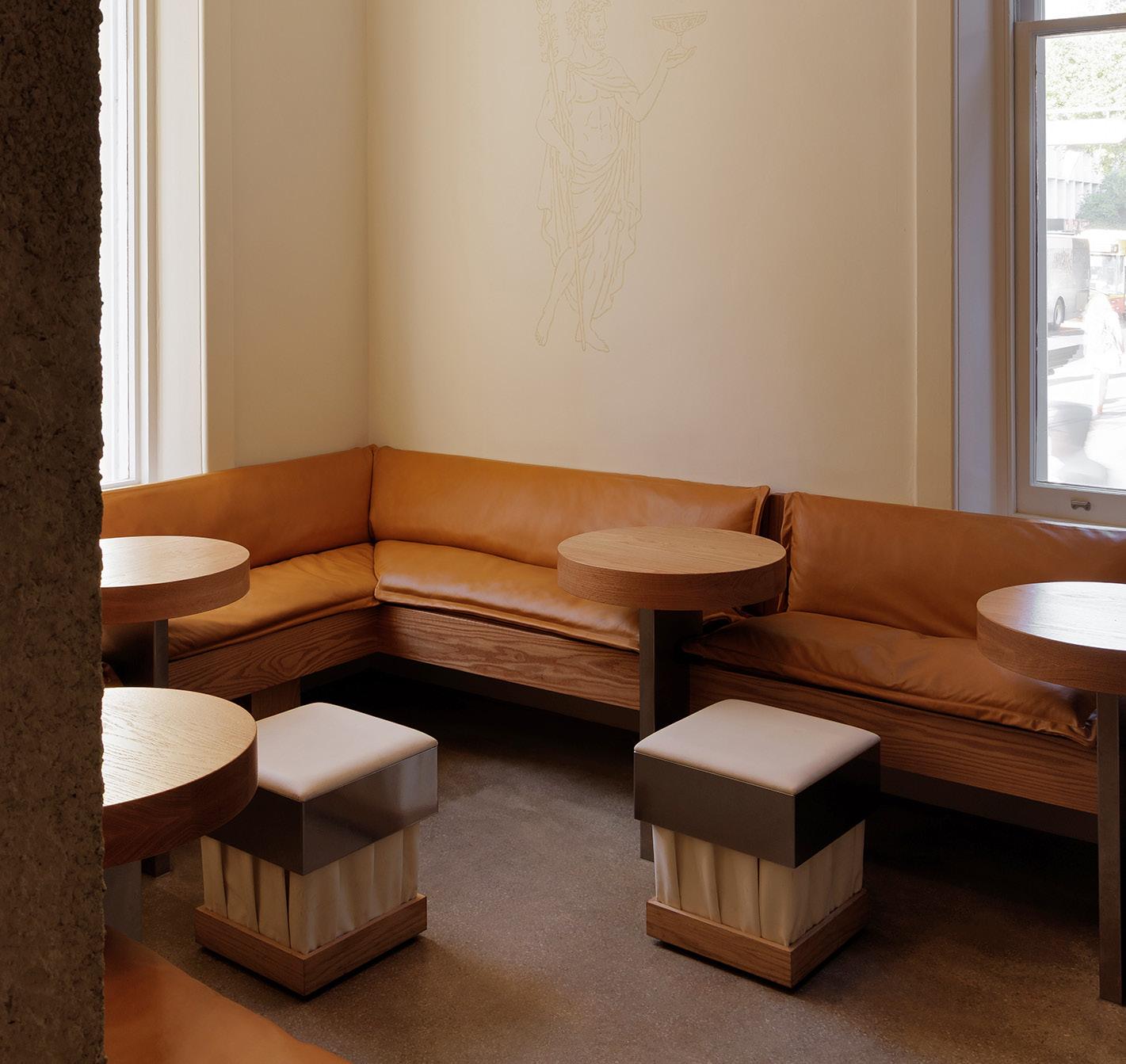
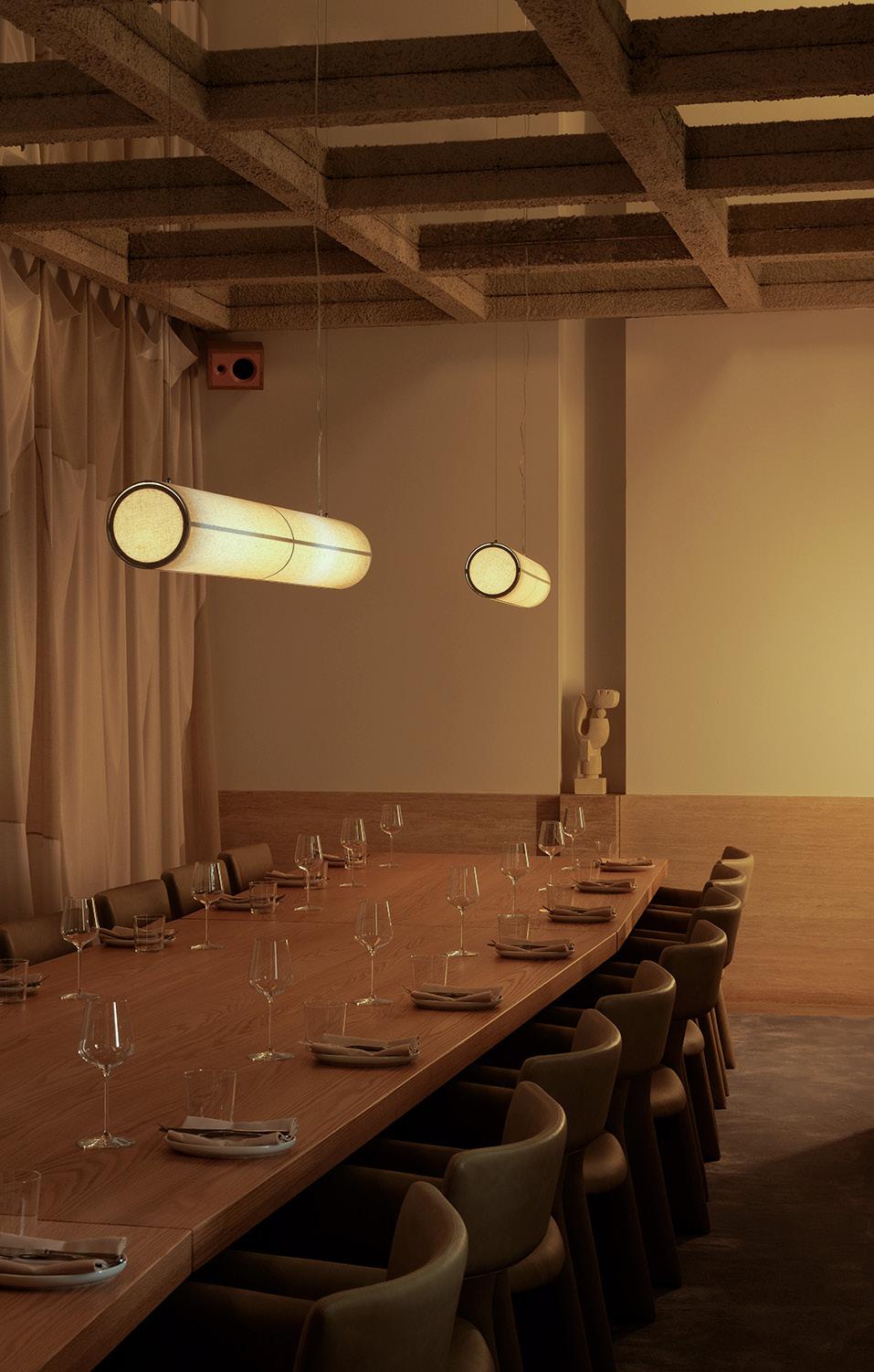
Operators and designers are looking away from trends and towards longevity to execute timeless fitouts.
Words Laura Box
Photography Omada by Timothy Kaye; Fishnets by Fortem
IN HOSPITALITY, IT’S easy to talk about trends deferentially: they signify what consumers want, and consequently, what will make money. Often trends stay longer than expected, and the sooner operators pick up on them, the sooner they can capitalise on the boon. Take the rise and rise of matcha, or the perennial manifestation of kingfish crudo on Australian menus. Cafes and restaurants that have built these tried-and-true money makers into their menus can ensure regular, easy, and often highmargin sales.
But when it comes to design, trends are more touch and go. And for the operators investing significant time, thought, and money into their fitouts, they’re generally also keen to retain quality and ensure the staying power of their interiors, beyond the three-to-five-year trend cycle. So how are operators delivering fitouts with longevity in mind to future-proof their venues?
Graham Charbonneau, the director of awardwinning South Australian design agency Studio Gram, says the first step to creating a venue with longevity in mind is nailing the functionality of the space, before filling in the beautiful and experiential elements.
“We’ve been doing this long enough to know that if the venues don’t work, it doesn’t really matter how beautiful or how experiential you make them,” says Charbonneau. “If they’re fundamentally flawed from a functional point of view, they’re never going to work.”
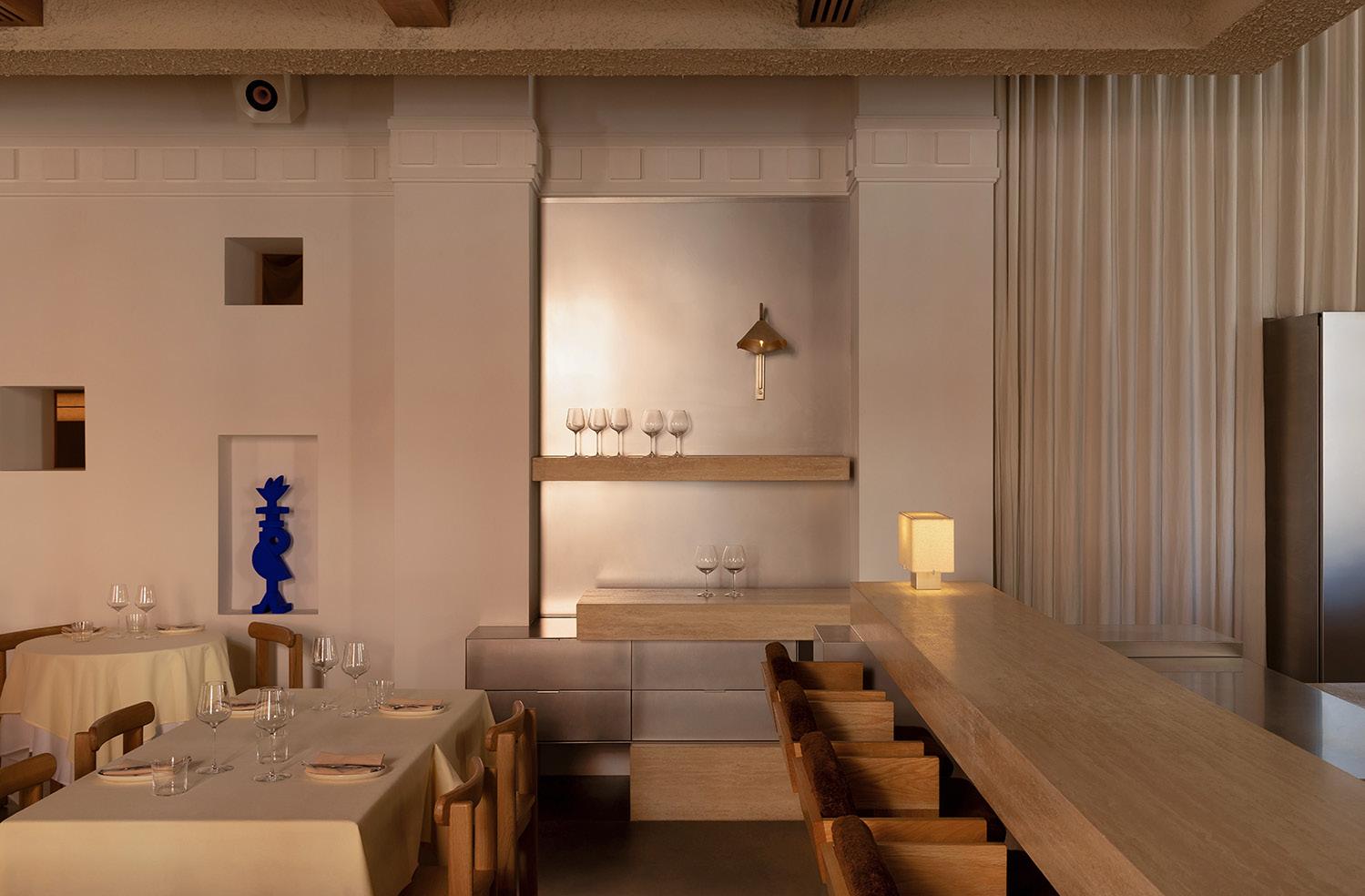
Studio Gram is behind the fitouts of some of Adelaide’s most iconic (and beautiful) hospitality institutions, including Pernod Ricard’s high-end
“We’ve been doing this long enough to know that if the venues don’t work, it doesn’t really matter how beautiful or how experiential you make them.”
– Graham Charbonneau
Barossa Valley wine room St Hugo; Jake Kellie and Martin Palmer’s fire-driven restaurant Arkhé; and a long list of Simon Kardachi’s Food and Wine Collective venues, including Latteria, Fugazzi, and Oggi.
At the end of last year, they completed Omada, the latest of Kardachi’s openings (although there may be some more in the works, Charbonneau tells Hospitality). The contemporary Greek restaurant in Adelaide has just taken out the Hospitality Design Award at the 2026 Australian Interior Design Awards.
Charbonneau’s function-first mentality means beginning the design at the back of house, before moving on to the “sexy bits” — aka, the front of house spaces.
“We like to make sure that we’re working from the cool room and the back door, where they’re going to take deliveries, to the dry store, through the kitchen, and through the amenities. Then we work through the front of house.”
Charbonneau says they consider things like how orders arrive; making enough space between counters; and ensuring the right amount of prep space, especially in venues with multiple services.
When designing Omada, the design team brought the head chef and bar manager on board to ensure the operational spaces were well considered. “We went through those spaces in quite a lot of detail very early on in the process to make sure that we had allowed enough space for those areas to work effectively,” he says.
In Sydney, Alex Cameron, the founder of Bronte’s Table Manners and newly opened Fishnets, also takes a functional approach to both the back and front of house. In the kitchen, Cameron says the right equipment is crucial and the design should be straightforward.
“I try to make very simple oblong or box-shape kitchen designs that have stainless steel, refrigeration on both walls, and a good line. Obviously, it can be expensive in terms of buying equipment
and stainless steel, but neither of my venues have half a million dollar kitchens. They have kitchens that cost between $100,000 and $200,000,” says Cameron. “I don’t know whether I see the difference between something that might be $200,000 versus $500,000.”
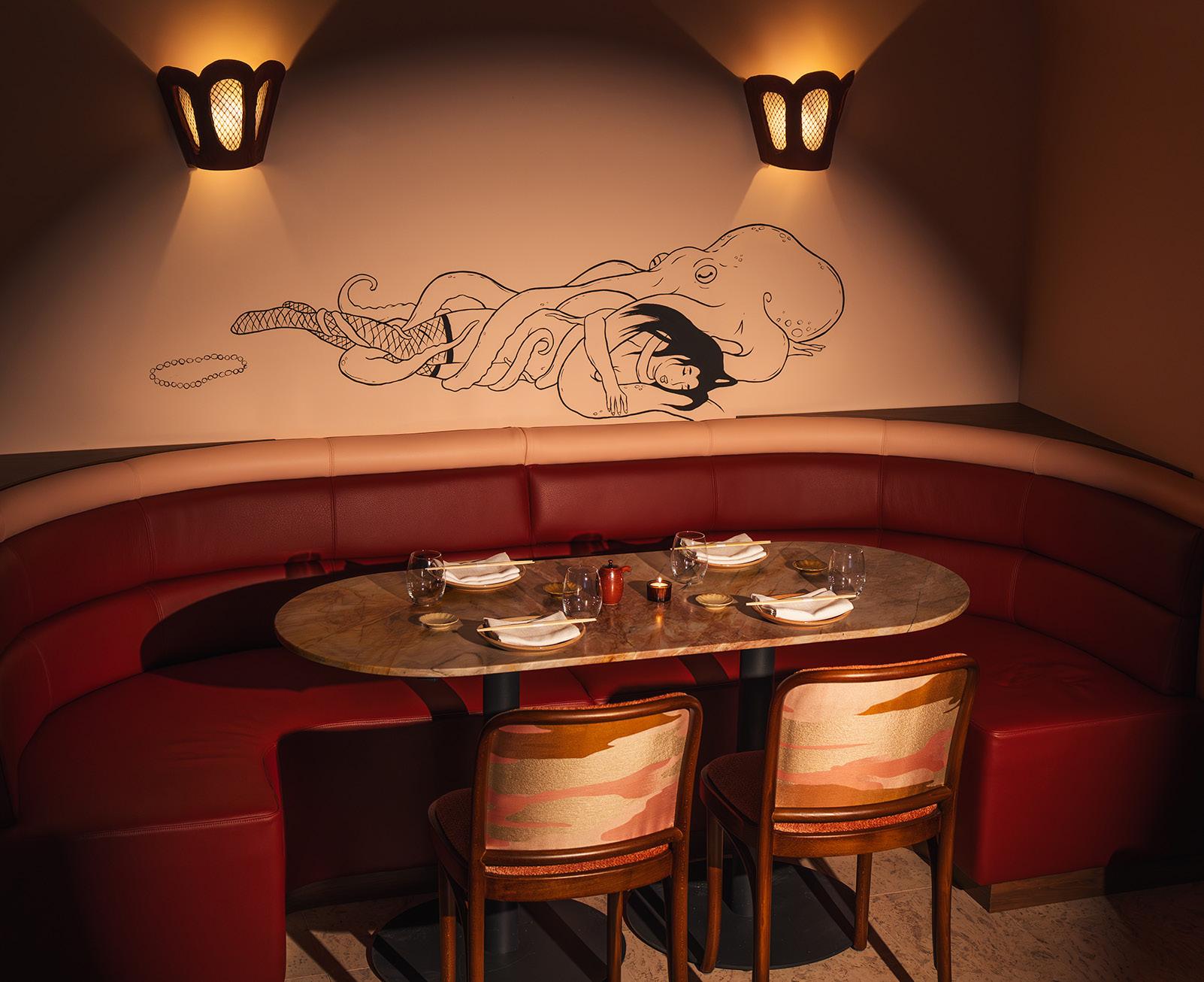
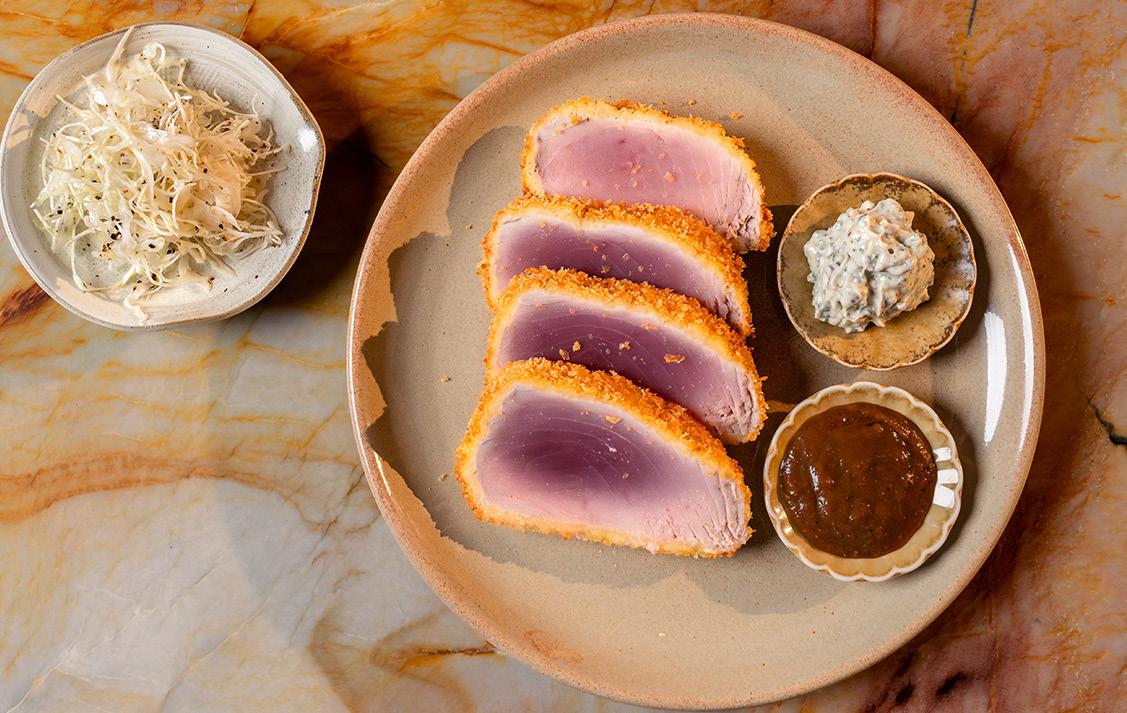
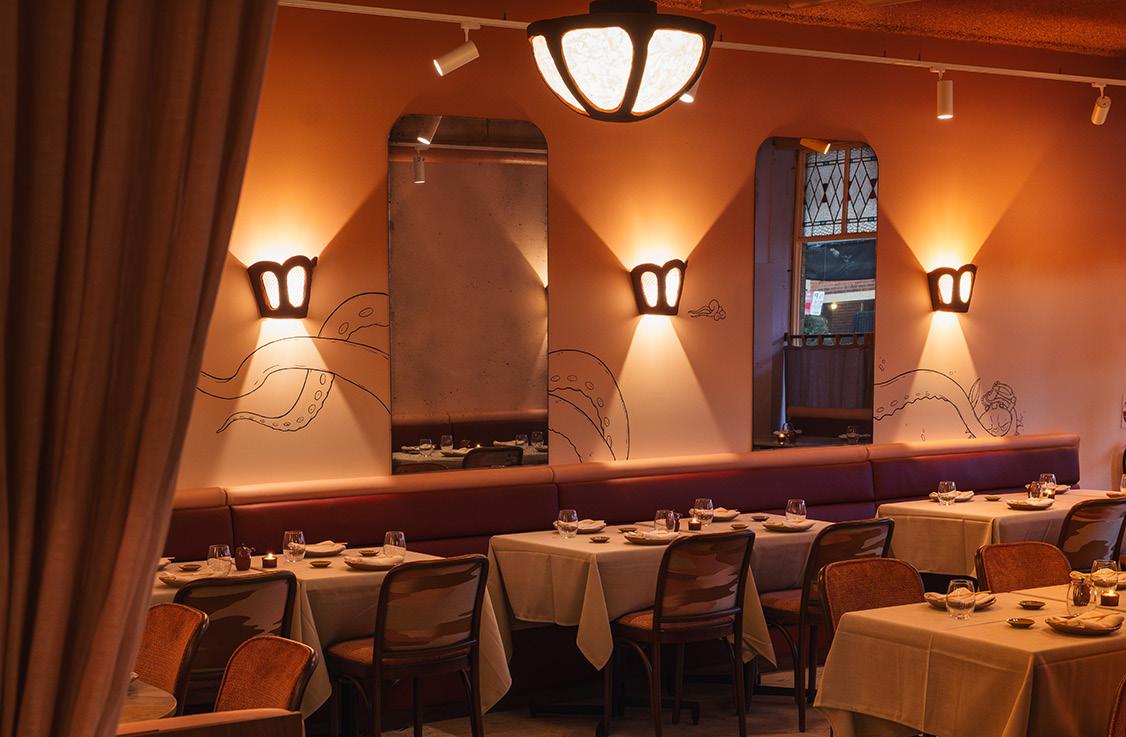
Designed in collaboration with Blainey North, Fishnets is Cameron’s second hospitality venture Bronte, following on from neighbourhood European-style venue Table Manners, which opened in 2024. Fishnets is darker and more intimate, leaning evening-centric.
For both Charbonneau and Cameron, choosing the right materials can be make or break in the longevity of the design. Wherever possible, the Studio Gram team opts for natural materials with the belief that they can “age in place”.
“A beautiful piece of stone is equally as beautiful in ten years when it might have a corner knocked out of it, or a whole bunch of stains on it. There’s going to be etching for acids, from lime and lemon and other things that are used in the drink making process. But that layer of imperfection becomes part of the story of the place,” says Charbonneau.
“The older it gets, the more beautiful all these natural materials become. The first red wine ring that you get on a table or a beautiful piece of timber is a bit soul destroying. But as it multiplies, it adds this layer of storytelling to the space over different ages.”
The ageing process isn’t equal across all natural materials though — a lesson which Cameron learnt in his first venue. “I chose a leather for Table Manners that I really loved,” says Cameron. “It’s this beautiful, natural, non-treated, non-aniline leather — but unfortunately it shows every small drip of oil or wine and there’s nothing you can clean it with.”
“Sometimes you do have to reinvest in these things,” he adds.
“The future of hospitality design isn’t about spending more money. It’s about making smarter choices.”
– Ali van Woerden
When it comes to designing with longevity in mind, the easiest roadblock is cost. But Fackelmann Housewares Chief Marketing Officer Ali van Woerden argues that the most successful venues are not necessarily those with the biggest budgets. Rather, she says, “they’re the ones that make thoughtful decisions and remain consistent in how they deliver their experience”.
Both Cameron and Charbonneau argue that strategic design spending can help save money for what matters.
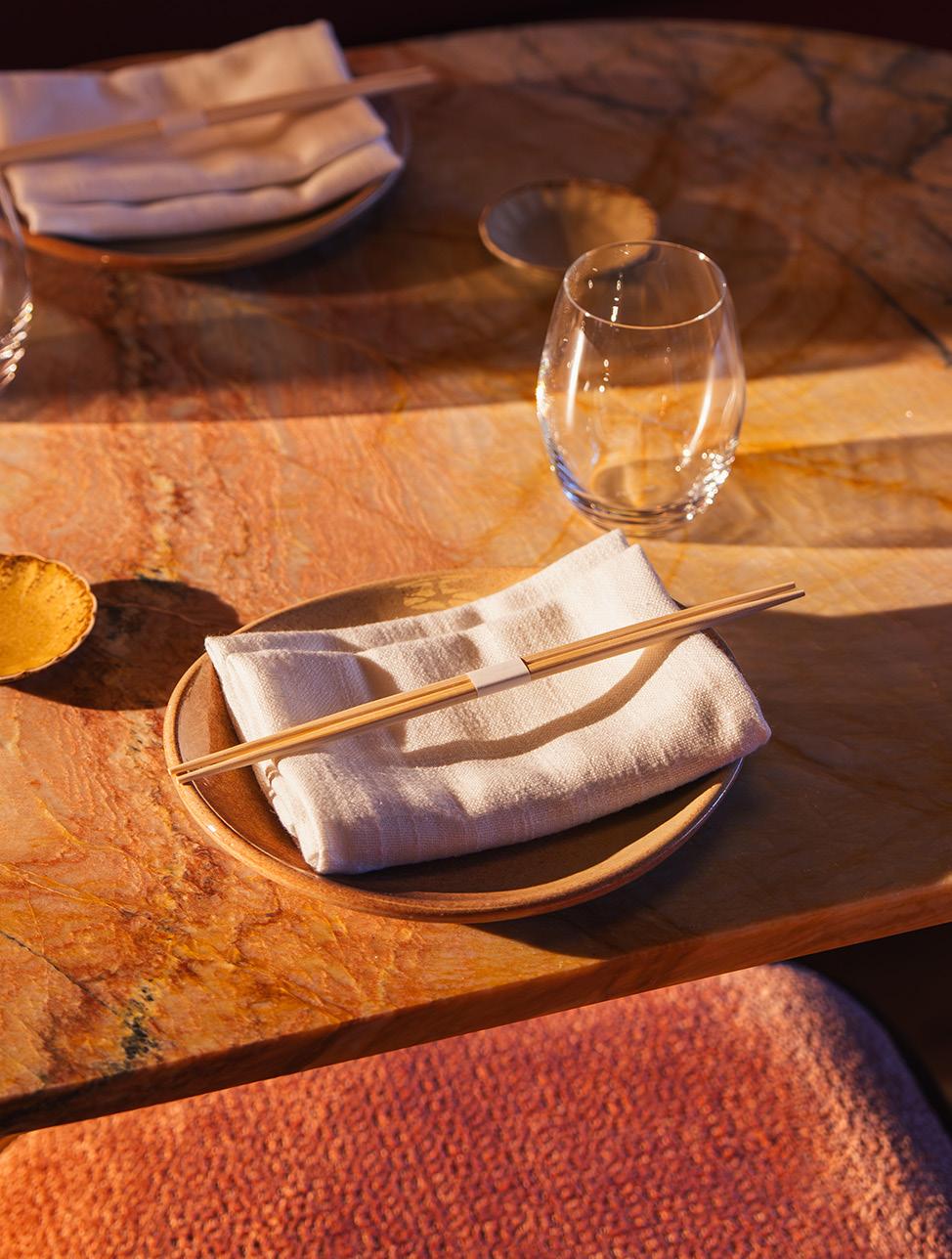
Cameron believes money can be saved on floor treatments — an area that quickly adds up. For Fishnets, Cameron used cork tiles. “They end up looking like terrazzo marble when they’re laid out, but they’re just 8 millimetre pieces of cork board with a finished top.”
The operator says the cork tiles are cheap, easy to lay, and cost him about 25 per cent of what timber, carpet, or micro-cement flooring would have cost.
“They’ve also got an acoustic property, so they’re a win.”
He’s also a fan of using cheap tables as an easy way to save money.
“The one thing I always skimp on is tables, because I’m all for a tablecloth,” he says. “I can spend a hell of a lot less by buying tables off the rack and covering them in a nice linen tablecloth. I think it has a lot of impact.”
Studio Gram retains existing floor plans and bathrooms where possible, as significant structural changes can see costs quickly add up.
In Omada, Studio Gram prioritised beautiful joinery, but they saved money by keeping existing perimeters in place — aside from a few holes in the wall that separates the private dining room and the main dining space — and applying plaster.
“If we have all this beautiful joinery that we know is going to be a huge hit to the budget, then we look at existing walls and rather than trying to layer them with materials or additional panelling, we’ll just whack a paint on them.”
Charbonneau says that keeping bathrooms in the same position — even if they’re not perfect — can save $50,000 - $100,000 by avoiding excess plumbing and electrical changes.
“In our mind, that money is better spent elsewhere. They’re still really beautiful bathrooms. Just not perfect, I guess.”

Fed up with being the last to know?
Follow Hospitality Magazine’s Instagram and Linkedin pages for the latest hospo news in your feed.
As van Woerden adds, “The future of hospitality design isn’t about spending more money. It’s about making smarter choices.”
She says that longevity in hospitality design is increasingly about adaptability rather than scale. “The venues performing well today are creating foundations that can evolve,” says van Woerden. “Something as simple as changing glassware, introducing a new dinnerware collection or refreshing tabletop presentation can completely change the perception of a venue without requiring a major refurbishment.”
For Cameron, comfort has taken priority as one of his main design principles.
“My goal with all hospitality spaces is a comfortable timelessness that people will want to settle into for the next five, ten, fifteen, or twenty years,” he says.
Rather than chasing spectacle, Cameron says successful restaurants that have stood the test of time are often comfortable and encourage diners to become ensconced in them.
To execute this, his first priority is soft furnishings, fabrics and seating.
“I look at banquette seating, high quality, timber chairs that I can upholster; joinery that’s made well and has the correct recline and the correct cushion padding — those are the things that I look at first and foremost.”
“And then of course, looking at mood. The good dining rooms of the world all have a connection in that they tend to have a feeling and a mood in them, which comes from lighting, music, and setting,” says Cameron.
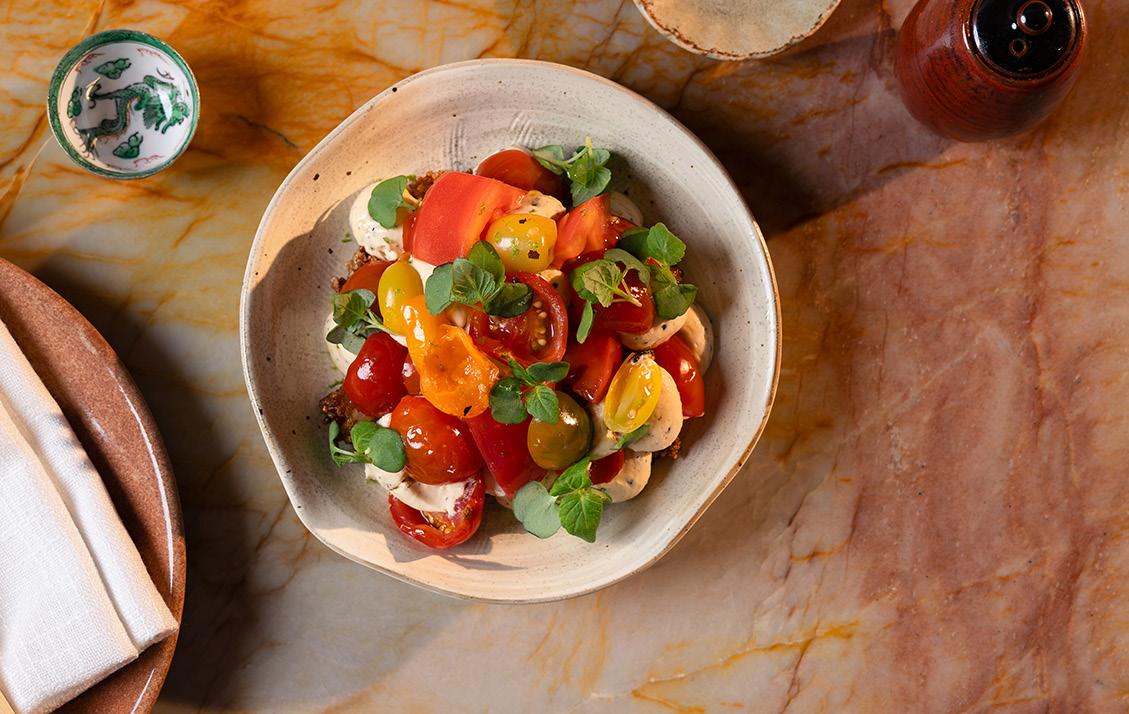
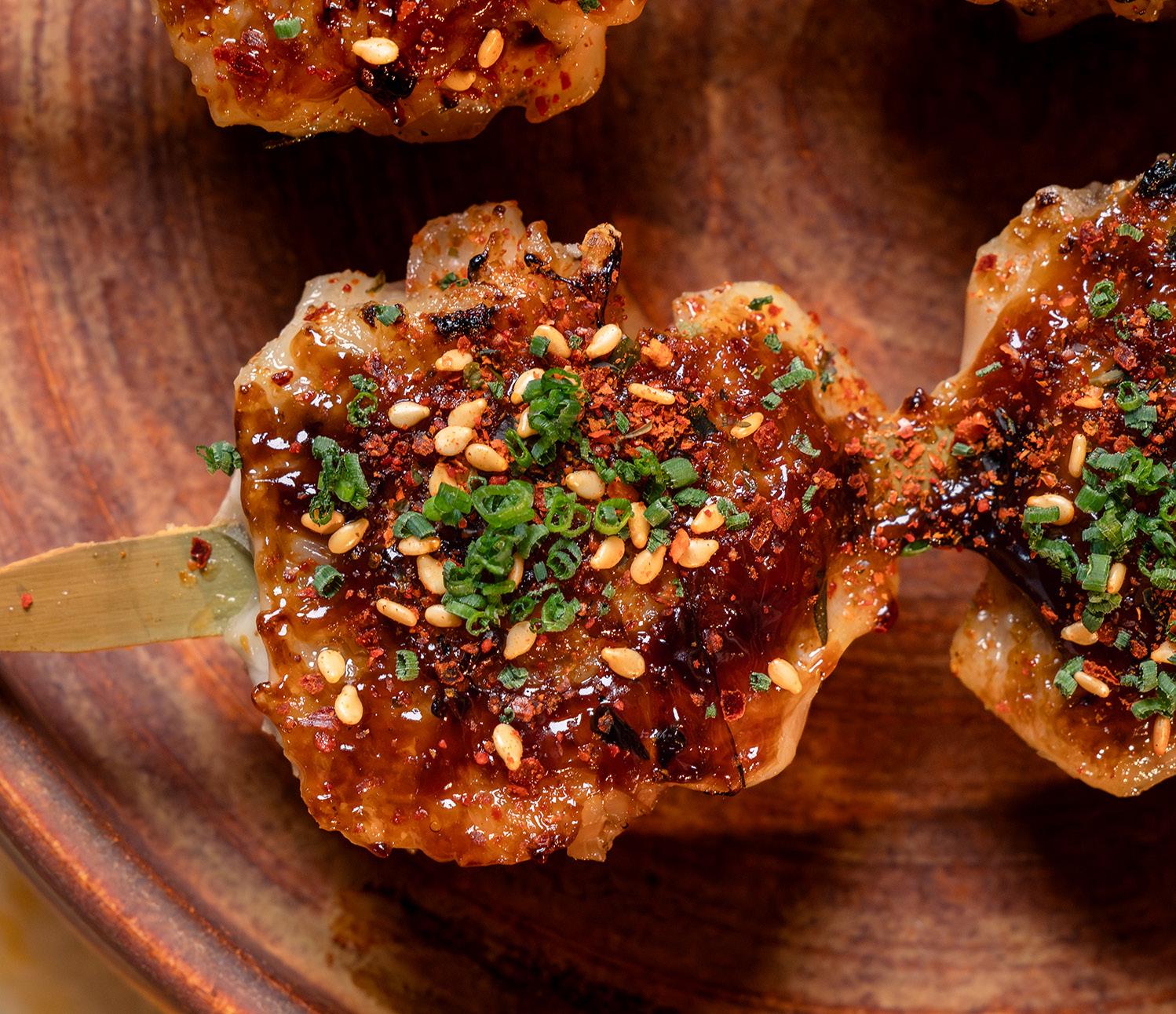
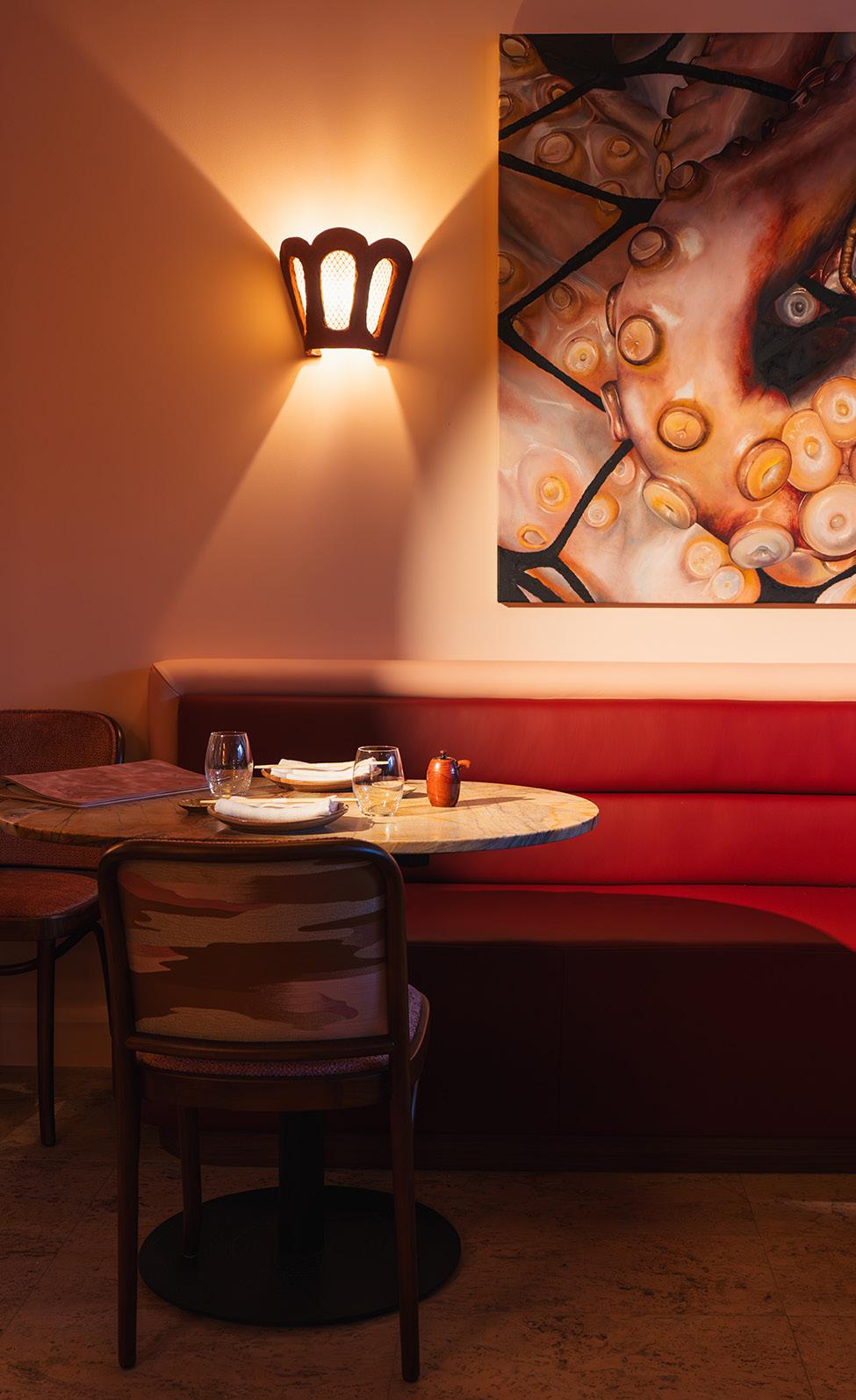
Operators looking to create this “mood” and a cosy atmosphere often opt for wall sconces with warm bulbs, as opposed to overhead, stark lighting. In Fishnets, this warmth is led by custom sconces from Joanne Odisho and Frangere Studios. Works by local artists Nix Francia and Rebecca Fernon, alongside subtle references to Japanese folklore, add to the atmosphere. The walls are donned in a palette of dark pinks, ochres, and reds, intended to emulate a setting or rising sun.
Cameron is aware that it’s in contrast to the style that would typically be used in both seafood-oriented or Japanese restaurants — with many Japanese venues opting instead for light timber and sparse settings.
“For me, that isn’t necessarily a comfortable dining experience, or one you want to spend time in,” he says. “For me, the mood of the room was just as important as the food.”
Both Cameron and Charbonnea's ideologies echo the sentiment of operators increasingly designing for longevity, comfort, and authenticity over "Instagramable" short-term trends. ■
“I can spend a hell of a lot less by buying tables off the rack and covering them in a nice linen tablecloth.” – Alex Cameron


Thirst quenchers, slow sippers, and all things beverage related.
Edited by Laura Box
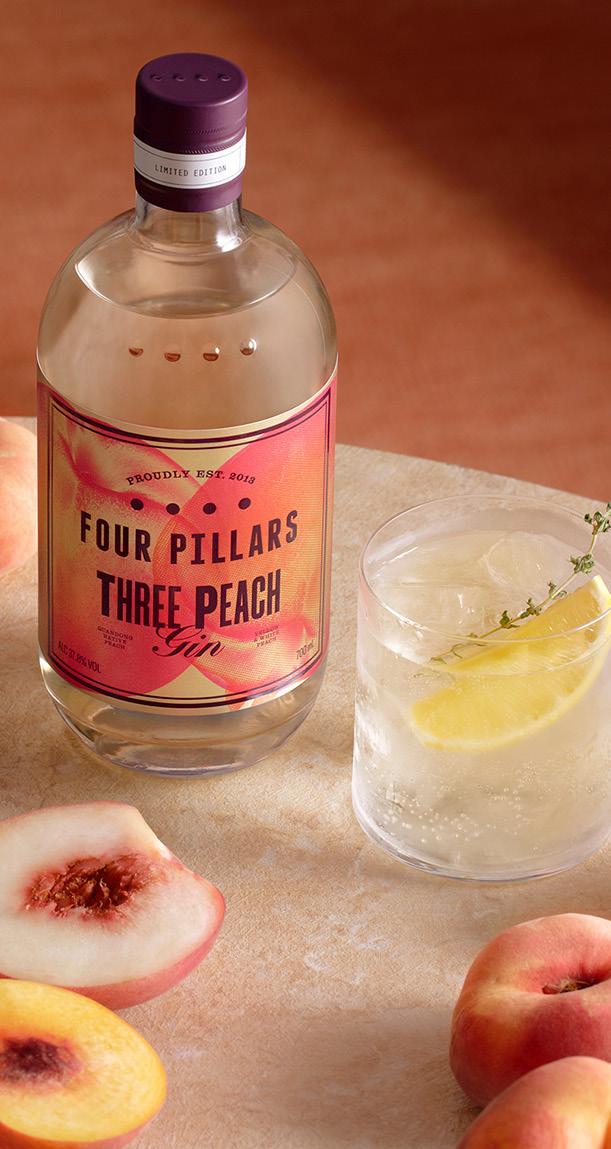
Three Peach Gin is Four Pillars' new limitededition gin release, which takes inspiration from the Bellini. Dry botanicals including juniper, bourbon vanilla pods, roasted almonds, roasted wattle seed, strawberry gum, and the first of three peaches (native quandong) are added to two original Four Pillars stills. Fresh botanicals including apples, finger limes, and fresh peaches are added for brightness. Post distillation, a yellow and white peach macerate is added to deliver that peachy bellini flavour and a hint of colour. The result? A 37.8 per cent ABV layered gin with notes of fresh peach, green apples, and finger lime. RRP $82; fourpillarsgin.com.
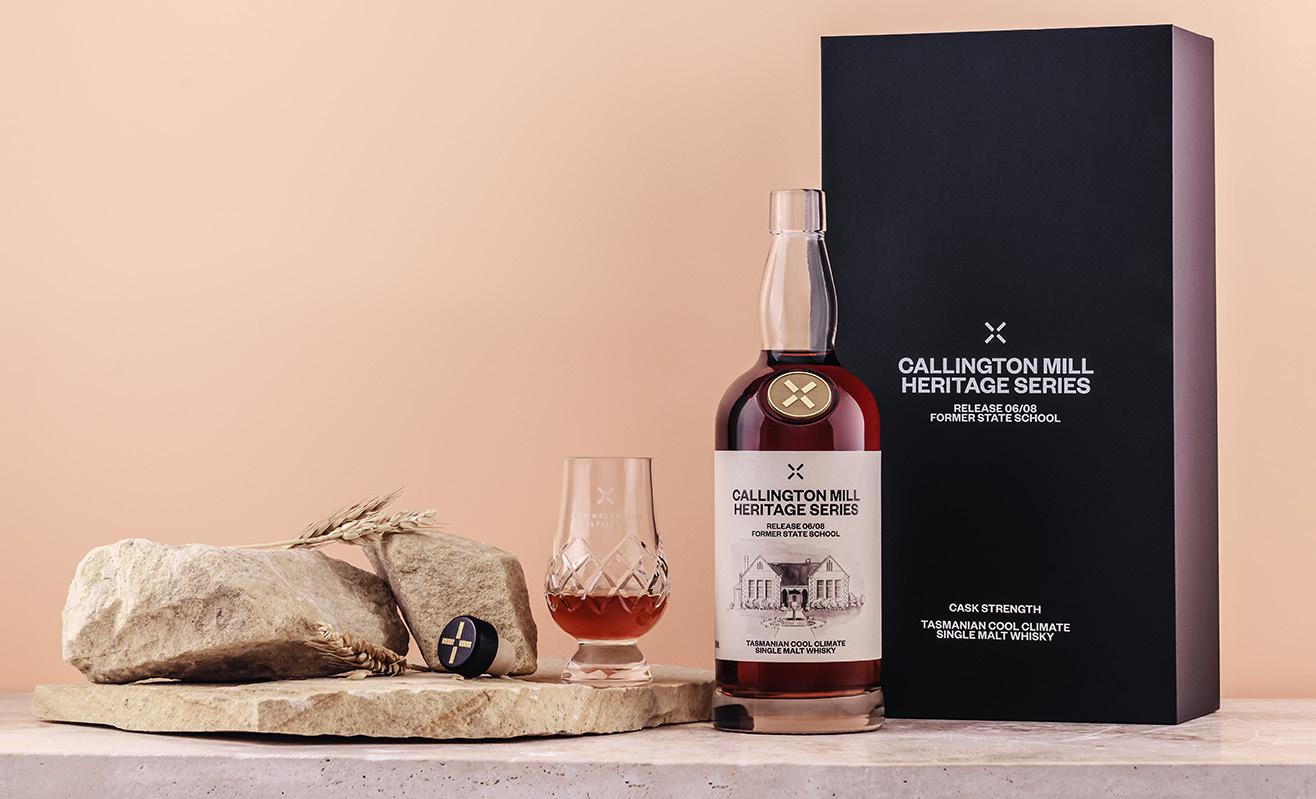
Callington Mill Distillery has released Former State School, the sixth edition in its prestigious Heritage series. The collection acts as a liquid timeline for the rural Tasmanian town of Oatlands, with each bottle in the collection dedicated to an iconic landmark. As the name suggests, this edition calls on the history of a former single-storey school, which was built in 1886. The robust 64.3 per cent ABV whiskey is aged in Madeira casks and opens with notes of honeycomb and maple syrup layered over dried fruits, sultanas, and oak. RRP $195; callingtonmilldistillery.com.
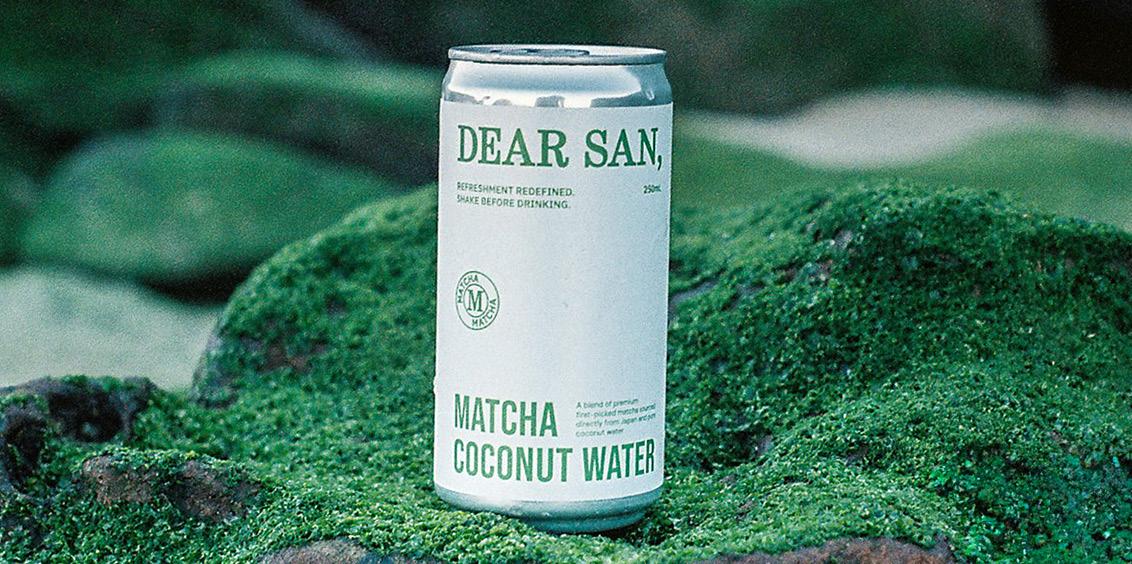
When Ruth May noticed a gap in the Australian market for clean, dairy-free drinks that don’t compromise on flavour or quality, she set out to fill it. Her solution? Dear San, a matcha and coconut water RTD can. May sourced matcha directly from Japan and combined it with a minimal list of functional ingredients for sustained energy: coconut water, filtered water, agave syrup, and vanilla extract. The result is a lowcalorie, plant-based, and non-alcoholic alternative to coffee. Four pack RRP $24; dearsan.com.au.
Melbourne’s Sean Forsyth has brought a “mothballed” distillery in Brunswick back to life with the launch of Oakburn Distillery and its first spirit brand, Sunchaser. Sunchaser Spirits begins with three releases: Sunchaser Pure Vodka, a small-batch, wheat-based spirit designed to prioritise texture, mouthfeel, and minerality; Sunchaser Dirty Vodka (both vodkas RRP $64.99-69.99), which blends vodka, olive distillate, and natural olive brine for a savoury, umami-driven serve; and finally, Sunchaser Agave Triple Sec (RRP $44.99-49.99), a small-batch liqueur combining orange rind distilled with heads and tails cuts of pure vodka and sweetened with agave nectar. sunchaserinnovation.com.au

Never Never Landers Lime Gin is the first gin release from the new Landers Pocket micro-distillery and brewery near Brisbane International Airport. The gin takes native citrus, distilled coconut cream, and Queensland ginger to harness the spirit of sun-soaked caravan parks and palm-lined resort bars. “From day one, we’ve wanted everything at Landers Pocket to feel connected to Queensland; the people, the produce, the lifestyle,” says Landers Pocket Head of Hospitality Chris Cogriff. “Landers Lime isn’t just a great spirit, it’s a celebration of what this community is capable of, and what active hospitality can really look like.” RRP $86; neverneverdistilling.com.au.

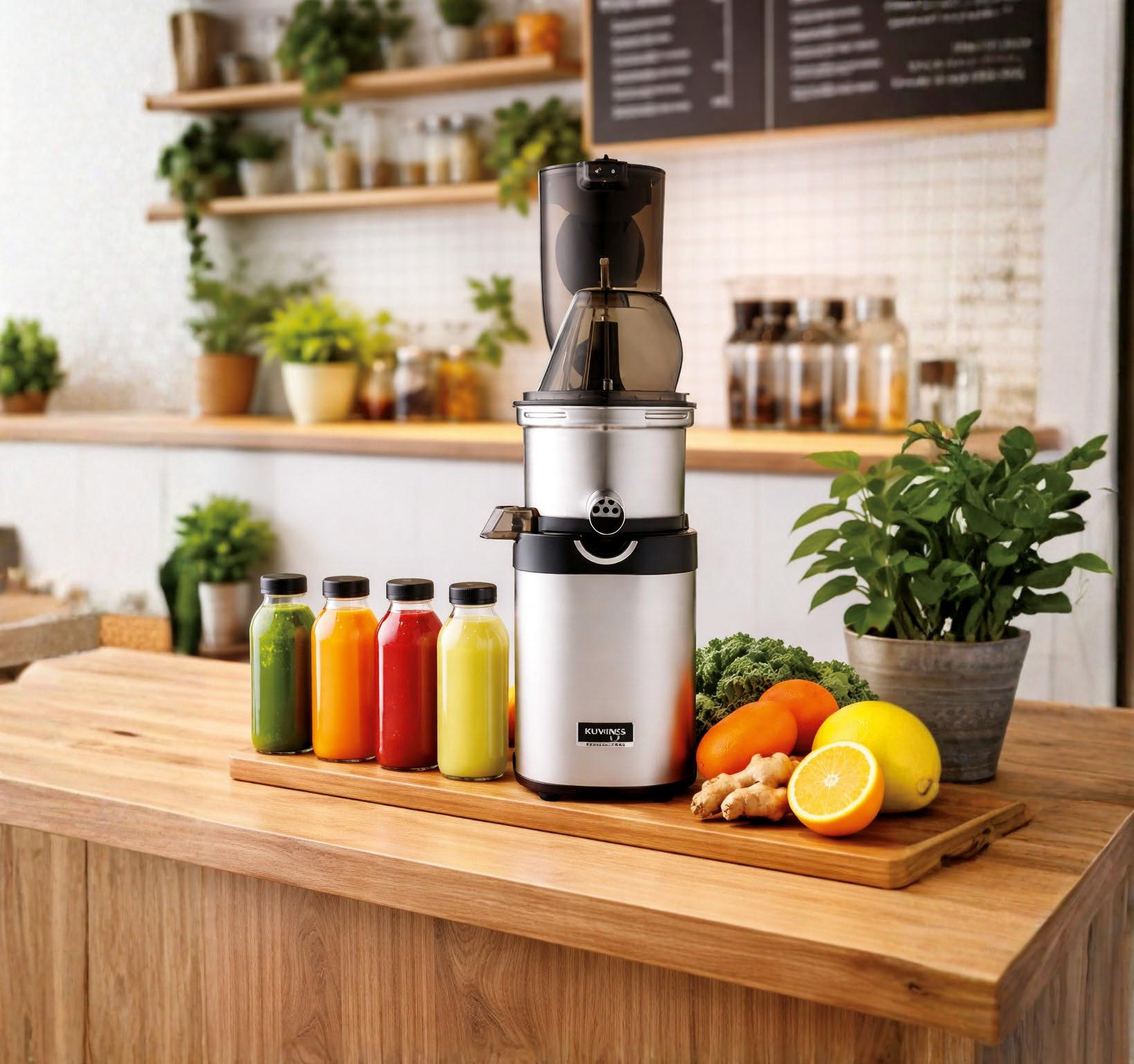



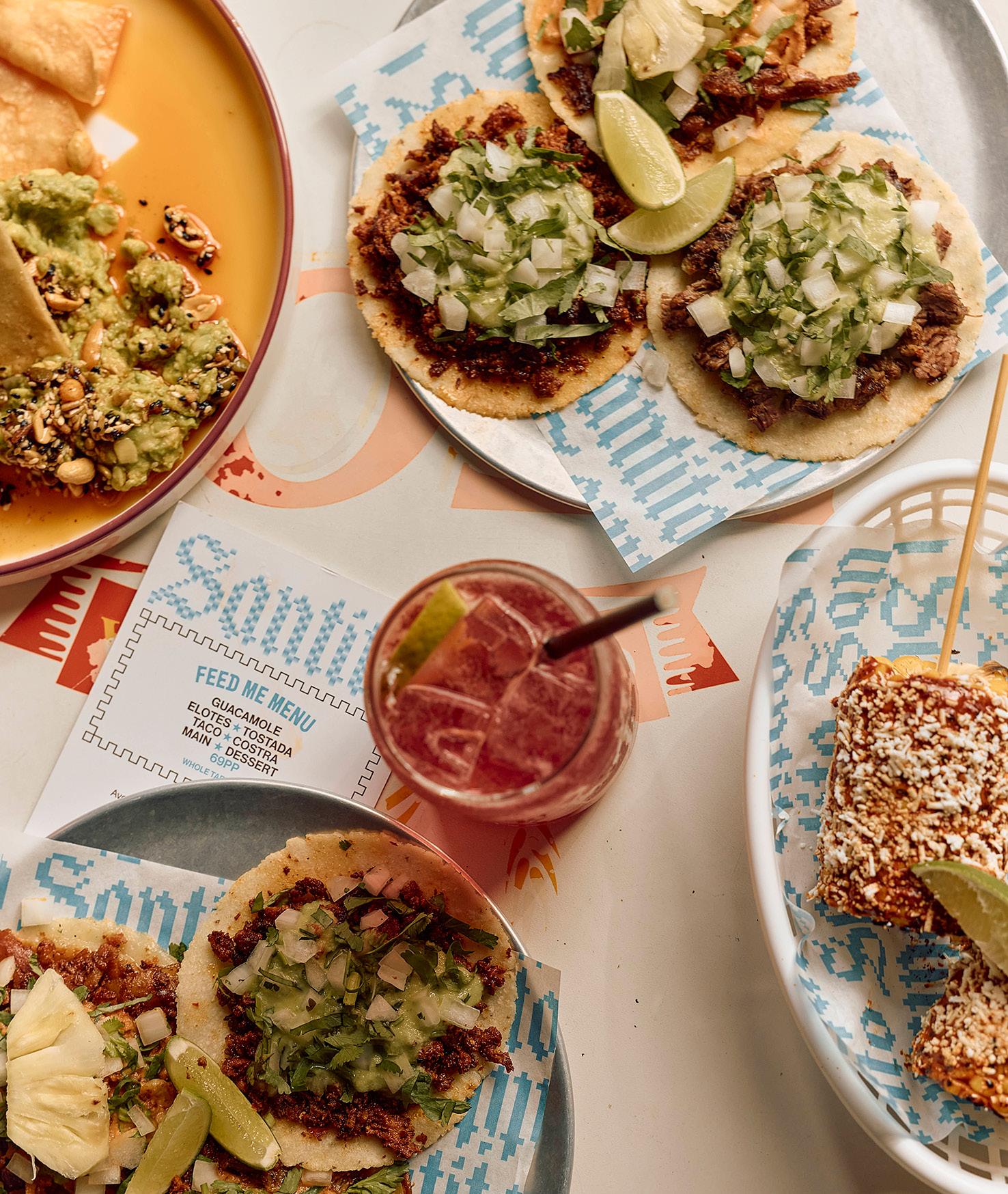
IF YOU GREW up in Australia, it’s likely that there’s a certain type of “Mexican” food you would have been exposed to. It came in yellow boxes and led to chilli con carne and hard-shell tacos becoming a staple in many households.
But as diners have become more familiar with regional Mexican cuisines, operators have responded with tighter concepts, labourintensive techniques, and a renewed focus on ingredients.
“Mexican restaurants are having a moment,” observes Jenna Davies, the owner of Collingwood restaurant Santito. “Especially in Melbourne, there have been a lot of new restaurants opening.”
“The difference is that the restaurants that are opening now are more niche and leaning into different regional aspects of the cuisine,” says Davies.
Santito is evidence of this. The restaurant is harnessing the energy of Mexico City’s taquerias with a small menu that sees almost everything prepared fresh daily.
“It’s a lot of work, but I think in order to replicate what is happening in Mexico with the cuisine and the culture, it needs to be prepped fresh with fresh ingredients. I think that’s the length that restaurants in Australia are going to now, the ones that have opened in the last one or two years,” says Davies.
Santito opened in the latter half of last year, around the same time that homestyle Mexican diner Maiz y Cacao relocated to Queen Street. In the year prior, Hotel Nacional on Hardware Lane joined the city’s Mexican ranks with its 100 per cent gluten-free menu. With the constant influx of newcomers, the city’s style of Mexican food has slowly shifted, a change that Davies says Collins Street restaurant Mamasita paved the way for.
Hyper local and super fresh: Why operators are significantly investing in labour, sourcing, and menu development to redefine Australia’s Mexican cuisine.
Words Laura Box
Photography Picoso by MJ Manolo; Santito by Chege Mbuthi and Julia Sansone
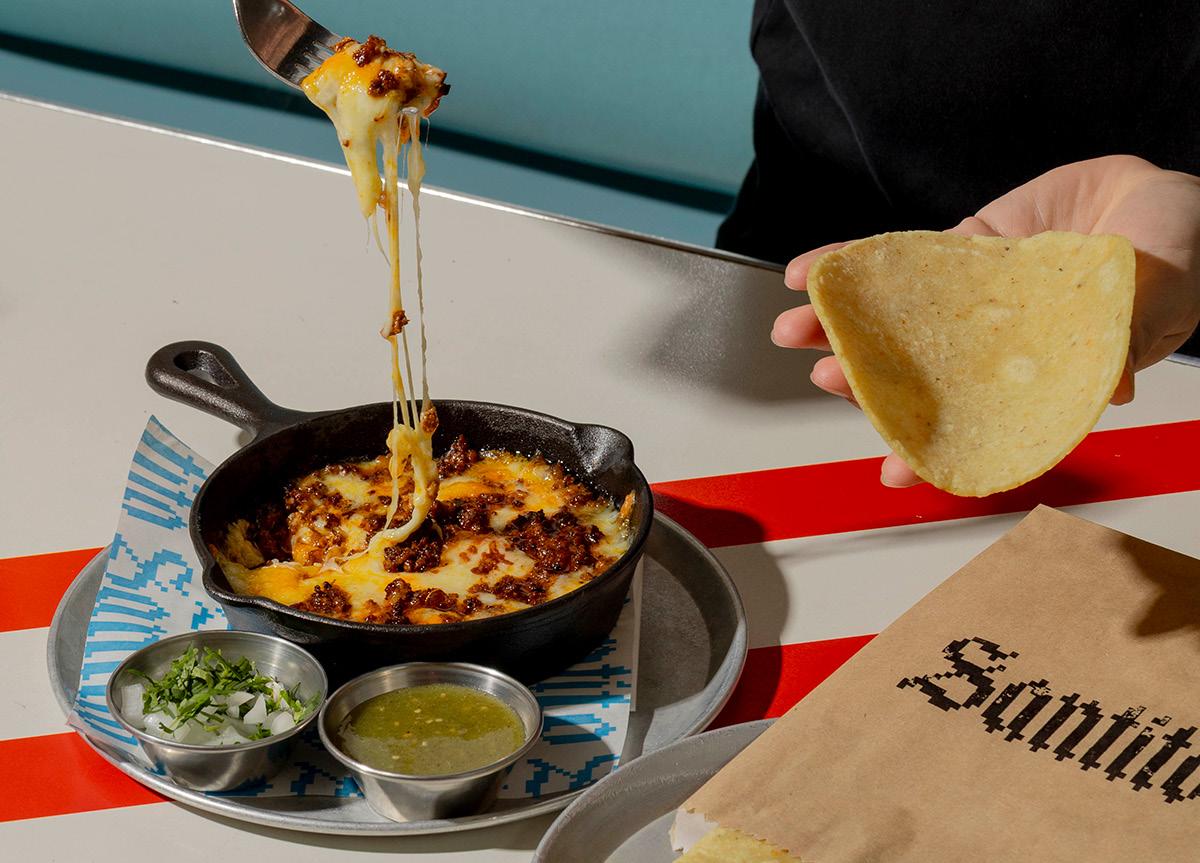
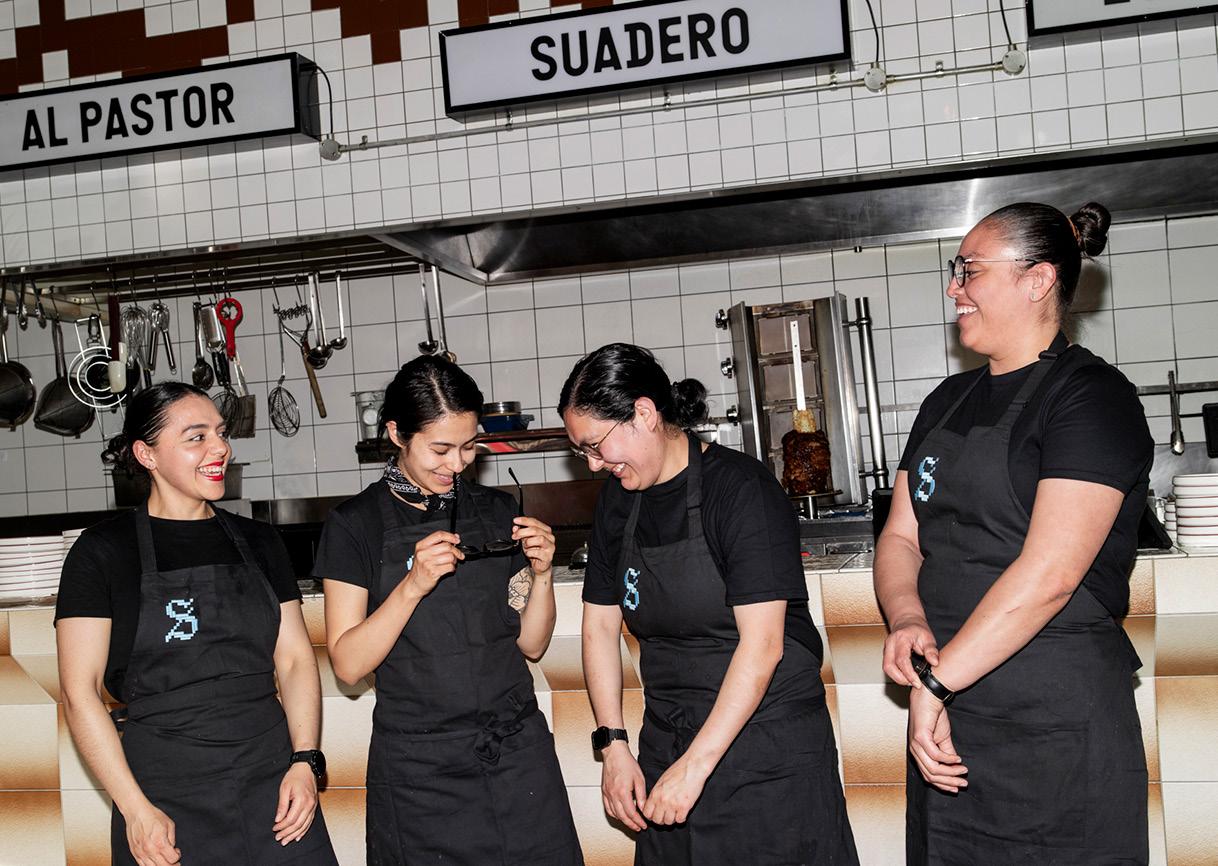
“There are so many crossovers. People are actually realising how nicely Australian ingredients can work with Mexican cooking.”Oliver Luxton
But it’s not only Victoria experiencing the renaissance.
In Sydney, newcomer Arre (from Chef-Owner Roy McVeigh, who is also behind Potts Point Mexican restaurant Sonora) has stepped in to fill the former Comedor venue on Australia Street in Newtown. It follows on from the 2025 opening of Liquid & Larder restaurant Lottie in Redfern’s Baptist St precinct and nearby QSR Radio Taco, which is dishing up slow-cooked birria tacos from its coveted 12-seat space.
As operators deepen their culinary appreciation for the diversity, quality, and uniqueness of Mexican food, they’re developing more authentic and considered offerings. But in doing this, they’re facing a whole new world of challenges – from the drive to find the right produce (and whether it’s even possible), to the question of how operators can instil an Australian perspective on the menu, while respecting Mexican authenticity. Adelaide is also part of the recent groundswell of Mexican restaurants, with the arrival of Picoso Mexican Bar y Cocina, led by ex-Restaurant Botanic Head Chef Oliver Luxton.
The restaurant promises traditional Mexican techniques through a more modern, easy-going lens, and Luxton is bringing his knowledge of native Australian produce into the mix.
Drawing on his experience working at Adelaide’s Restaurant Botanic under Executive Chef Jamie Musgrave, where native Australian produce leads the menu, Luxton says Picoso is digging deeper into Australian native ingredients than would typically seen in a Mexican restaurant.
Beach succulents have found their way into Picoso's salsa verde, while sea celery has
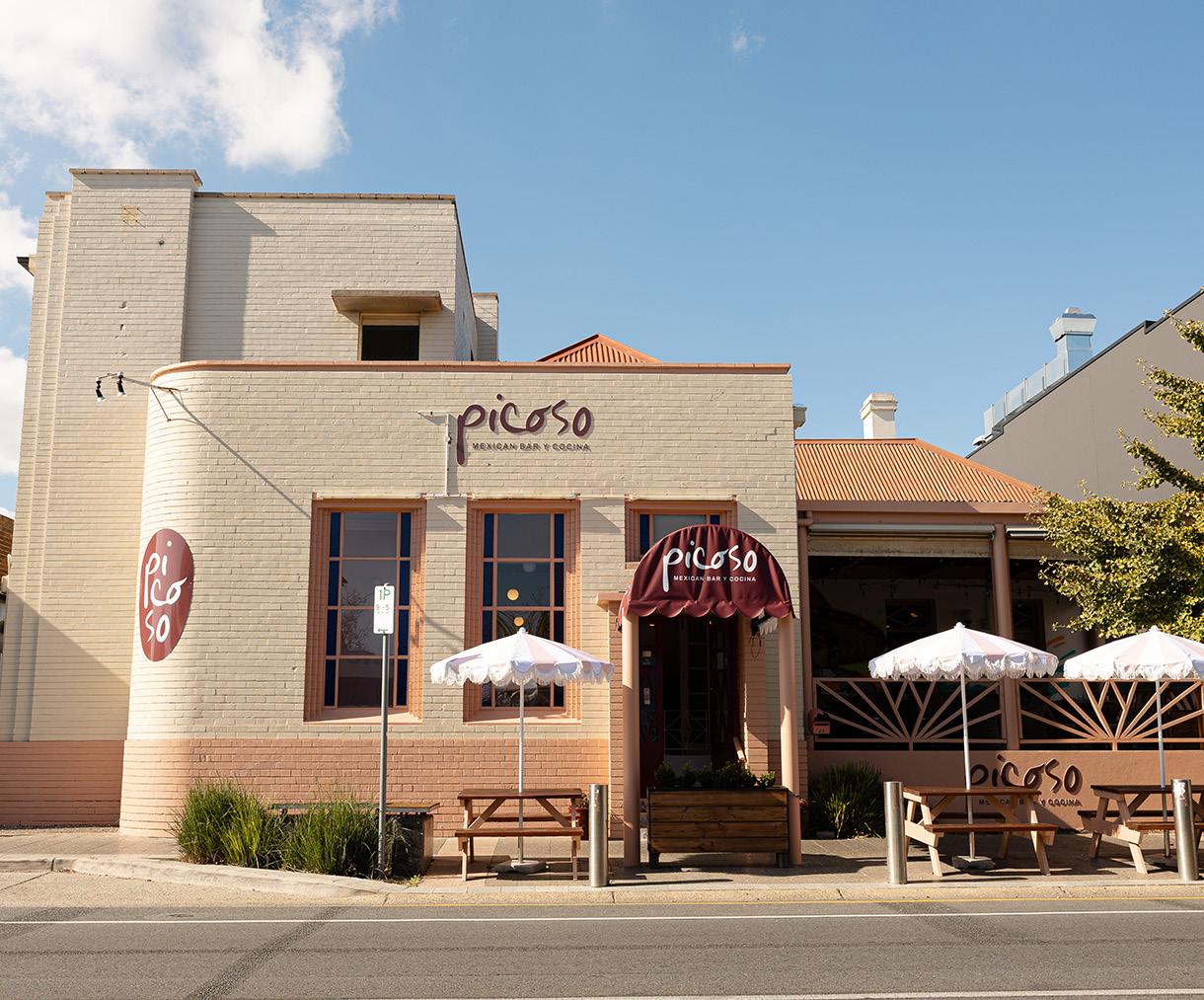
uniquely herbaceous notes that work well alongside coriander.
“There are so many crossovers,” says Luxton. “People are actually realising how nicely Australian ingredients can work with Mexican cooking.”
Davies has been experimenting with locallygrown ingredients to replace difficult-to-source produce, like the tomatillos that generally make up salsa verde.
“One of the biggest discussions we have around this time every year is about tomatillos, because the tomatillos in Australia are only seasonal for six to eight weeks of the year,” she says.
Outside this tight season, tomatillos are largely only available canned. Santito has experimented with green tomatoes as a substitute, but Davies says replicating the flavour profile of a traditional salsa verde remains difficult.
“It is so hard to replicate a lot of the ingredients that are in Mexico in Australia. For example, the limes that you get in Mexico don’t even compare the limes that we get here.”
“The biggest one for us is the corn,” says Davies. “We actually spent about four months looking at importing corn from Mexico. We had meetings with an importer, but four months into the process we found out that to get it through customs, it needed to be processed and ground at a facility. By that point we were like, 'Well, if it’s not the corn kernels anymore, then there’s no point'.”
In the end, Davies ended up finding an Australian black corn supplier that she’s tightlipped about.
“We had to order a tonne,” says Davies. She’s not exaggerating – when the delivery arrived, it came in massive bags that they had to store
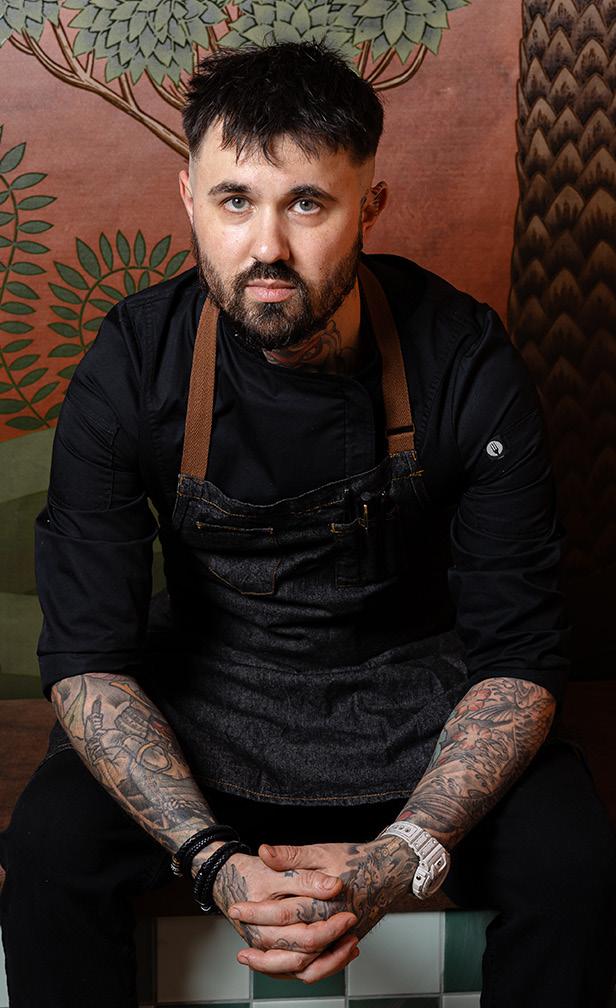
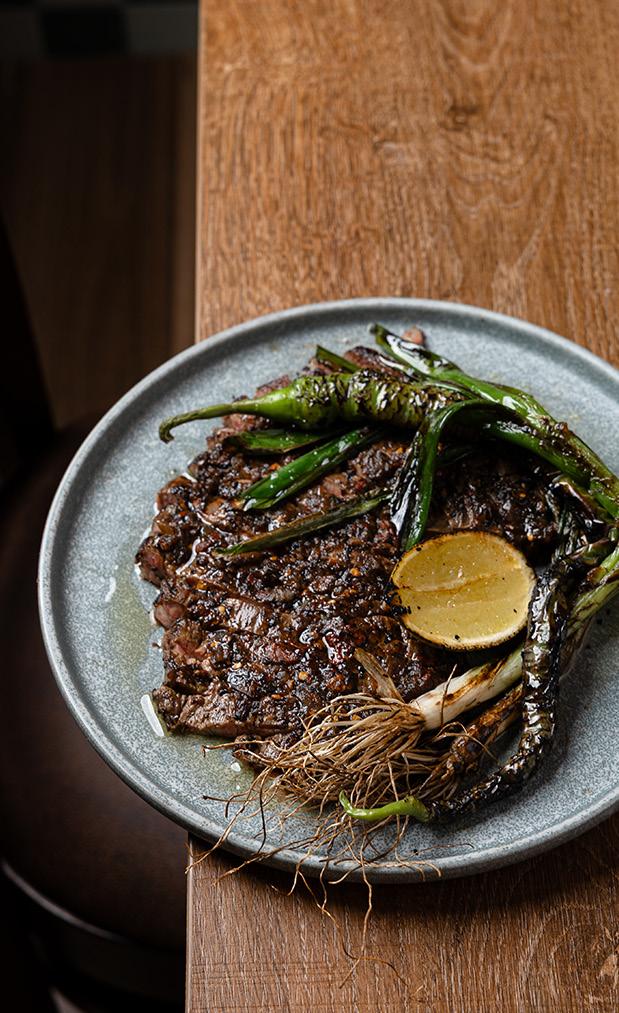
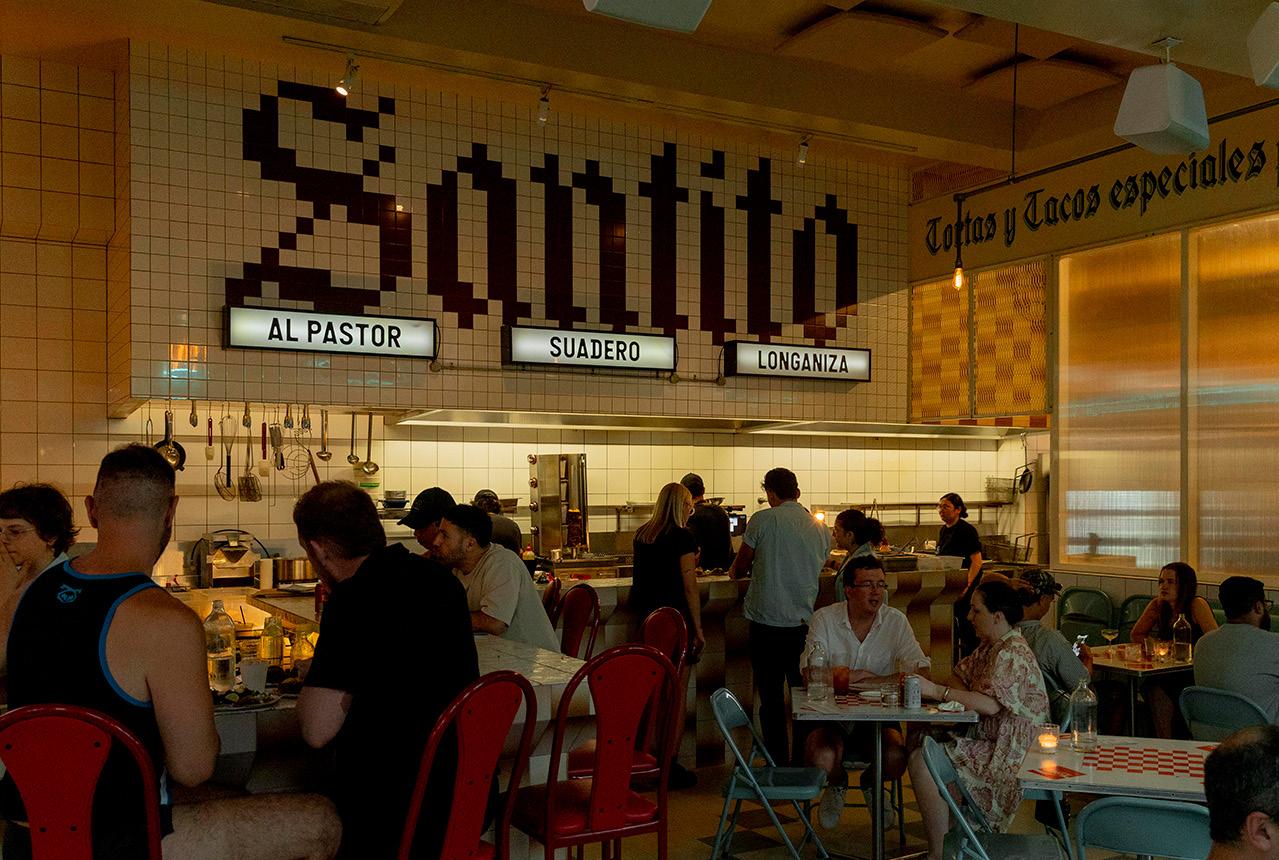
around the venue. But now, they’re getting to the end of their first tonne, and looking to order the second.
The reason for the tonne of corn comes down to Davies’ interest in nixtamalizing in-house.
"Nixta-what–?!" You might be asking. It’s a word you may only know if you’ve spent time thinking about the ins and outs of making tortillas. Nixtamalization is the process of soaking and cooking corn and other grains in an alkaline solution — and it’s a key element of making tacos.
The alkaline solution breaks down the corn’s cell walls, helping essential vitamins and amino acids become bioavailable. Without this nutrition-boosting element, diets heavily reliant on raw corn can lead to deficiencies. It also improves digestibility, enables dough formation by gelatinising starches and causing proteins to bind, and enhances flavour.
Davies thinks the Santito team might be the only ones in the country doing nixtamalizing in-house at this stage. The reason, she says, is that the presence of the corn flavour in fresh tortillas is much more pronounced.
“They just taste fresh. You can’t really compare them to a store-bought tortilla,” says Davies.
“The fresh tortilla brings out all the flavours in the meat, the salsa, the cilantro, the onion and so much more than the storebought tortilla. It brings it all together.”
Davies estimates that Santito makes between 300 and 400 tortillas on a busy day. The entire turnaround process takes about 24 hours: The corn is nixtamalized overnight before being ground with a Molino – an imported corn grinder which grinds the nixtamalized corn over volcanic stone. It comes out not as flour, but as dough. They then roll the dough at the start of service into little balls, press them in a tortilla press
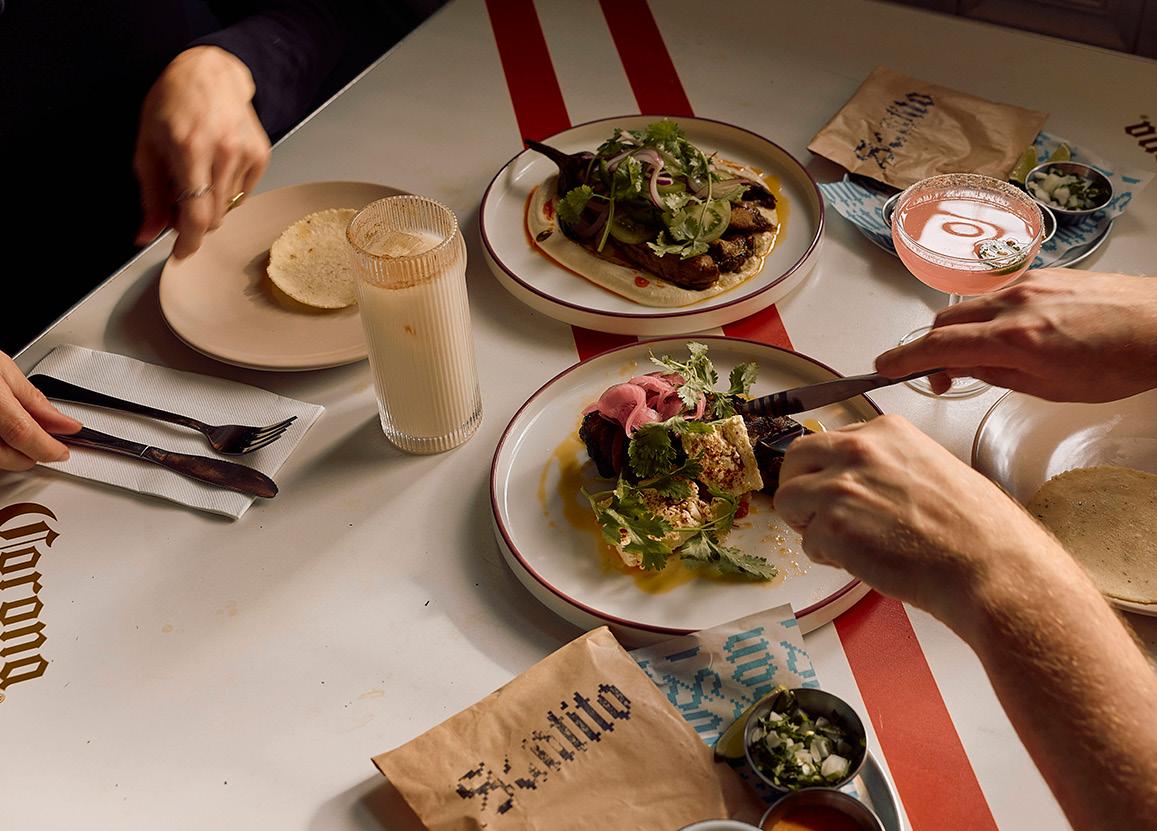
by hand, and then cook them to order
According to Davies, the tortilla is not only the most overlooked thing on Mexican menus — it’s also the most important.
“It’s not just the vessel to hold the meat and hold the taco together. It really does contribute to the entire flavour. And until you’ve eaten the taco in Mexico with a freshly made tortilla, you don’t really realise what you’re missing,” says Davies.
“We said to ourselves, if we’re really going to do this and lean into the taqueria concept, we need to make our own tortillas.”
Luxton is also reverent of the tortillamaking process. “You’ve got to treat tortillas with love and care,” he says. “Every day, the temperature of the room and the humidity, might change the dough. You’ve really got to make sure your water level is right, not just using tap water — you’ve got to use warm water that’s been purified.”
For many restaurants that are making tortillas in-house, it often means buying pre-nixtamalized corn — something which Luxton has been doing — although he’s exploring the concept of nixtamalization for down the line. He says the appeal is about keeping it traditional.
“It’s given me a challenge to learn and understand the foundations. It changes the whole concept and experience of a fresh tortilla. It changes the texture, the flavour, the aroma,” says Luxton.
The new wave of Mexican dining isn’t necessarily defined by a single style, or adhering to textbook Mexican ingredients. Rather, it’s defined by a willingness to invest time, research, and care into developing menus that respect and consider the quality and diversity of Mexican cuisine.
As Davies points out, “each time a new restaurant opens, the bar gets set higher”. ■
“It is so hard to replicate a lot of the ingredients that are in Mexico in Australia.” – Jenna Davies
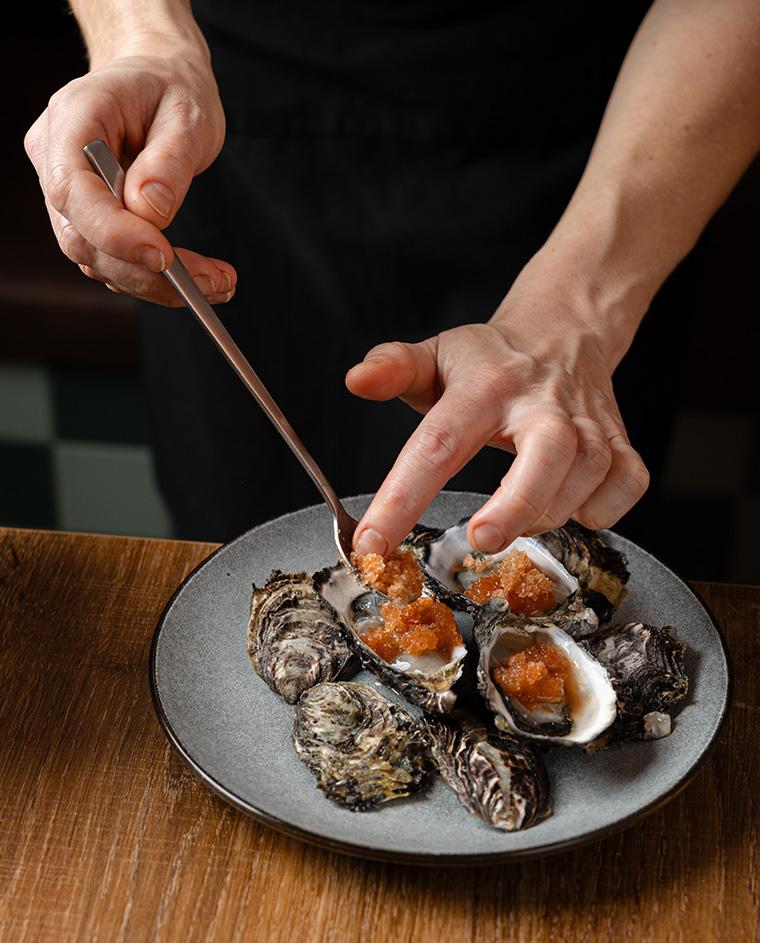
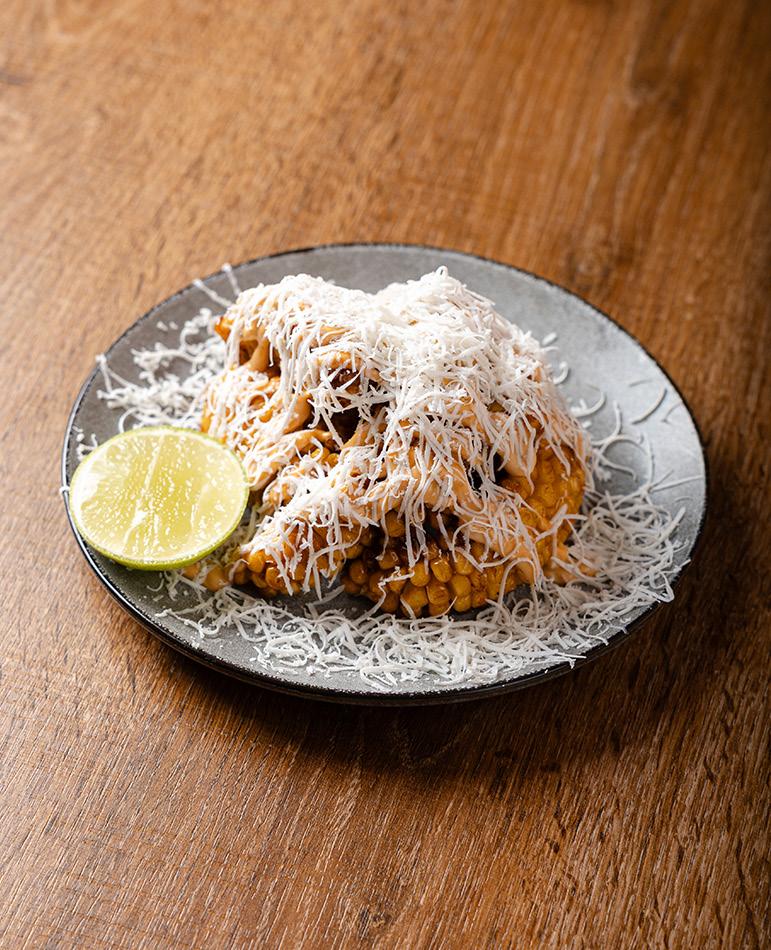

Kim’s Bop Co-Owner Emily Tarran shares what it's like working alongside Chef and Co-Owner Byungjae Kim in their intimate 16-seat restaurant in Glebe.
Since opening Kim’s Bop in April, what has customer reception been like?
Very warm and supportive, it has taken us by surprise. In our previous iteration, it took us several months to establish ourselves and even then, whenever we tried a new food market we would initially struggle to attract customers. We thought the same would apply to our first venue, especially as we have never had a presence in Glebe. However, the locals have been curious from the get-go. Many of them had little to no experience with Korean food, but all were willing to give it a try. That’s been impressive and it speaks volumes about the food scene that Glebe has already established.
How many square metres is your kitchen, and what’s the secret to working in such a small space?
Our kitchen space is roughly 1.5 m x 2.5 m. Kim spent many years working in small kitchens in Japan, so that experience helped him to develop systems that suit tight spaces! But in order for it to work, Kim had to modify his menu to suit the space. We had to let go of a lot of things we wanted to do, simply because it wasn’t feasible.
Your broth is fine-tuned and expertly layered. Why do you sell small bowls of it for just $3?
This is a menu item that we want everyone to try, as it really typifies Kim’s style of cooking. It’s the one item that can be paired with everything on the menu.
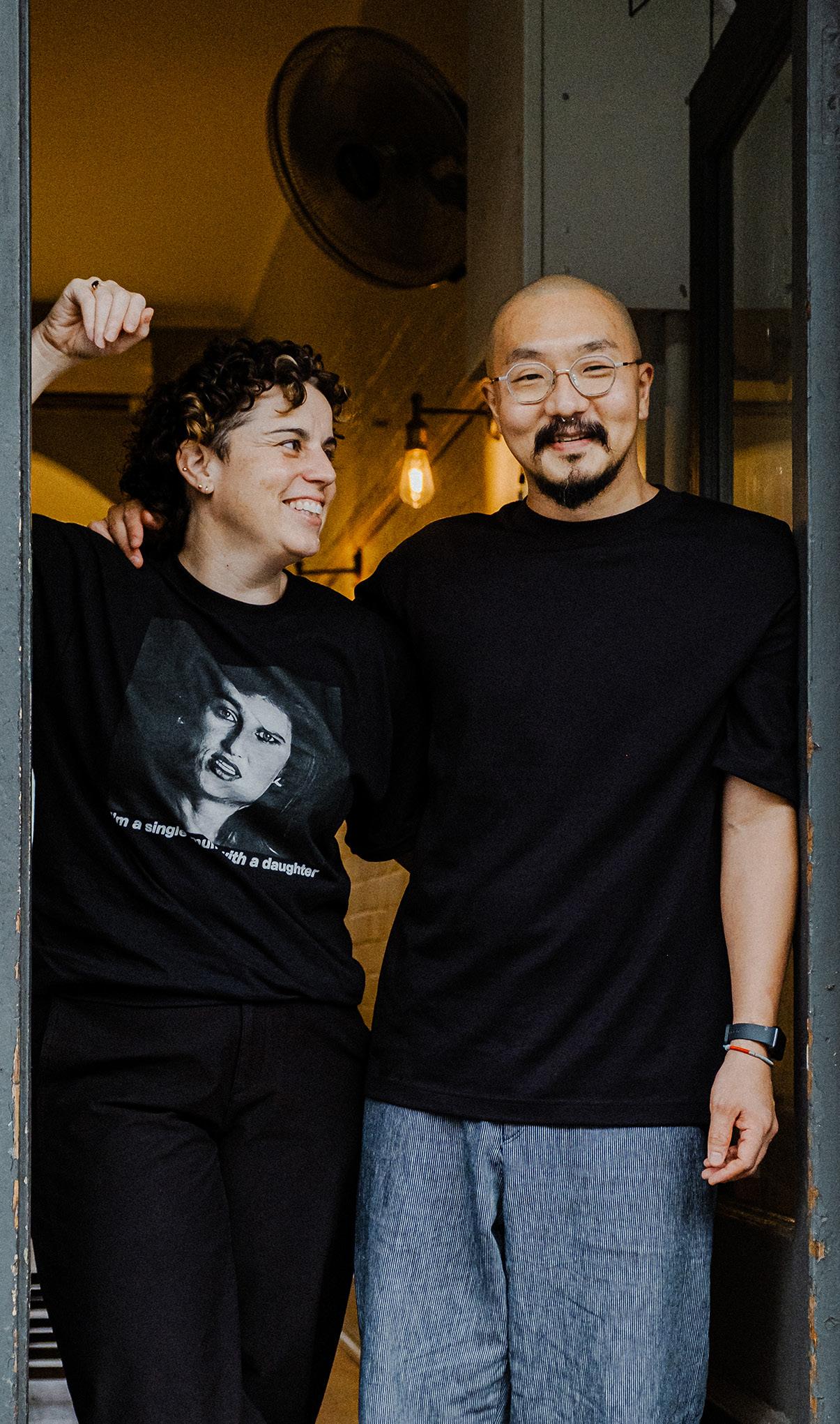
in Korean culture, in winter, there are so many street food vendors selling this type of seafood broth. When it's cold, people buy this broth to warm up. It’s very nostalgic and heartwarming for Kim. He wanted to recreate those feelings in his shop.
From an operations perspective, what has the shift from markets to permanent venue been like?
A lot smoother than anticipated. Of course, there is more work and prep involved, but we can utilise our time more efficiently in our own space. Also, Kim has more creative freedom with his menu. At markets you are quite limited in what you can do. Opening a permanent venue is something we have always wanted to do, but it felt very daunting, almost unachievable. But since opening, we’ve realised that is so far from the truth. Our time in the markets was crucial in making the process somewhat smooth.
What’s next for the team?
We are not looking too far ahead. Our main goal is to establish Kim’s Bop as a local eatery that the people of Glebe can rely on. Right now, we can only really provide dine-in service, so in the near future we want to introduce takeaway options, as well as special menus. In saying all that, Kim does have some ideas brewing of what he could do in a bigger kitchen! ■