
KEEPING AHEAD OF THE BOTS
The race to adopt AI is reshaping government cybersecurity
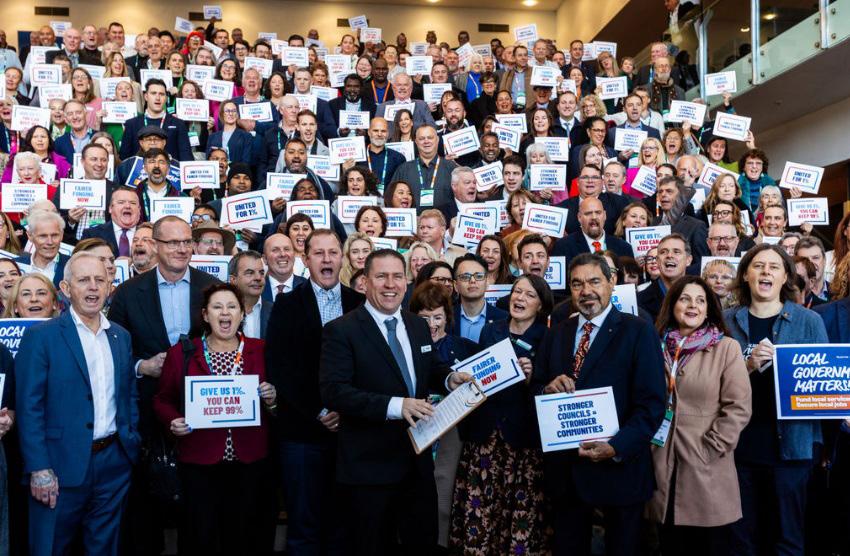
UNITED CALL FOR ‘A FAIR GO’
By Christopher Kelly
There were two words on everyone’s lips at the annual gathering of local government leaders in Canberra: “networking drinks”. Four, if you also count “financial sustainability”.
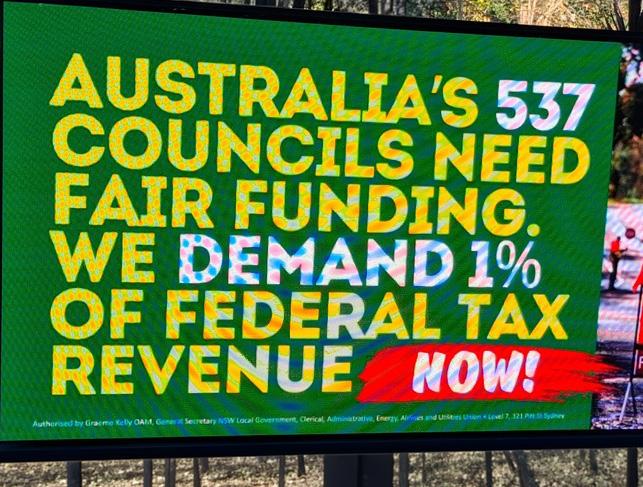
At the sector’s National General Assembly last month, representatives from Australia’s 537 councils – including mayors, shire presidents, and councillors – were united in calling for a funding model that would increase financial assistance grants from 0.5 per cent of federal taxation to 1 per cent.
Speaking to GN EXTRA at the event, Australian Local Government Association president Matt Burnett said councils cannot survive on the current quantum. “We can’t keep doing more with less. Just give us a fair go.”
A letter sent to every member of parliament –and signed by all seven LGA presidents – warns that local government “is in jeopardy” and that the present funding system “is threatening the viability of councils across the country”.
It’s a view supported by the United Services Union, which represents approximately 25,000 council employees in NSW alone. General secretary Graeme Kelly said the level of Commonwealth funding has been in steady decline over many years. “That decline has real consequences for the workers and communities who depend on council services.”
The Commonwealth, however, isn’t budging from its position. Minister for Local Government Catherine King told delegates at the NGA: “It’s not government policy to return financial assistance grants to 1 per cent, and we’ve made that very clear.”
Burnett told GN EXTRA that clinging to the coffers was a bipartisan position. “No matter who is in government, they don’t want to give councils more,” he said.
Burnett thought the government’s refusal was unfair. “An ask of one per cent seemed of federal taxation seemed reasonable,” he said, “considering that allows the government to keep 99 per cent of the funds for themselves”. All councils were wanting, was for the Commonwealth to “give a little bit back”.
A week later, Burnett returned to Canberra to bang the drum before a local government funding inquiry. Chair Fiona Phillips said the committee was interested in finding out “whether current funding mechanisms are effective and how increasing demands alongside budget pressures are affecting the workforce”.
No doubt Burnett had plenty more to say. GN

On the cover
As governments increasingly adopt agentic AI, the implications for security and governance increase significantly.
Government News is Australia’s independent online publication reporting on government in Australia. We provide independent coverage of local, state and federal government and their administration of programs and initiatives.
PUBLISHED BY INTERMEDIA GROUP ABN 23142047943 41 Bridge Road, Glebe NSW 2037 Ph: 02 9660 2113
EDITOR
Christopher Kelly 02 8586 6130
ckelly@intermedia.com.au
GROUP SALES MANAGER: Tom Solis 02 8586 6197
tsolis@intermedia.com.au
A RT DIRECTOR Katy Brack kbrack@intermedia.com.au
GRAPHIC DESIGNER
Alyssa Coundouris
PRODUCTION MANAGER
Jacqui Cooper
GENERAL ENQUIRIES 02 9660 2113
info@governmentnews.com.au
Council leaders from across the country back a 0.5 per cent funding increase
PUTTING THE BRAKES ON EBIKES
By Rebecca Benson

The NSW Government is fighting back against “the wild west scenes” playing out on Sydney’s footpaths.
More than $6 million has been allocated to fund initiatives designed to tackle the increasing number of ebikes strewn across the city’s suburbs.
Sixteen councils – including the City of Sydney, the Inner West, CanterburyBankstown, Burwood and Parramatta – can apply for up to $200,000 each to deliver designated parking bays “in areas of most conflict and complaint”. Operators will fund the scheme through a 60-cent fee paid per ebike trip to Transport for NSW.
Transport Minister John Graham said, “the wild west scenes” would no longer be tolerated. “Pedestrians have been crying out for order and for their footpaths back.”
Trials have shown that clearly marked parking bays reduce the number of abandoned bikes and blocked footpaths by half. “Poorly parked shared ebikes have been a pain point for too long,” Parliamentary Secretary for Transport Marjorie O’Neill said. “Funding councils to deliver more parking bays is a practical, evidence-based solution to help give riders and operators a clear place to leave their bikes – in order and out of the way.”
Operators who fail to clear abandoned bikes will be fined up to $55,000, plus $5,500 for each day the offence continues.
Councils will also be funded to establish no-go and go-slow zones. Other measures include strengthening seize-and-crush laws, limiting an ebike’s power output to 250 watts, and introducing a minimum age limit for riders.
Sydney averages more than 40,000 shared ebike trips per day, with more than 50 per cent occurring within the CBD. “We know that more needs to be done to ensure that growth is well

supported,” Transport Secretary Josh Murray said. “People want and need better places to park, and communities rightly expect shared ebikes to be better managed.”
Meanwhile, the Queensland Government has passed legislation targeting ebike hoons and illegal devices. Police now have stronger powers to seize-and-crush bikes that fail to comply and to conduct random breath tests on riders in public places.
Ebikes which can exceed 25km/h unassisted will be banned and a speed limit of 12km/h now applies when riding near pedestrians. Higher penalties also exist for speeding, careless riding, failure to wear a helmet, illegally carrying passengers, and riding ebikes on prohibited roads.
“For too long, reckless riders have been allowed to terrorise Queensland communities,” Minister for Police Dan Purdie said. “The free ride is over – if you’re riding an illegal device, putting pedestrians at risk or treating public spaces like your own racetrack, expect to be caught.” GN
“FOR TOO LONG, RECKLESS RIDERS HAVE BEEN ALLOWED TO TERRORISE QUEENSLAND COMMUNITIES.”
Illegal bikes will be seized and crushed
THE NATION: FEDERAL

PLUGGING THE SKILLS GAP
By Jake Kendall
The Australian Public Service is facing continuing skill shortages, according to a new poll. Conducted by recruitment agency Hays, a workforce survey shows 90 per cent of agencies reporting skill gaps, making the APS one of the hardest-hit sectors for hiring talent. “The findings suggest this is not simply a recruitment issue,” Matthew Kelly – Hays’ ACT regional director – told GN EXTRA.
The biggest skill gaps are in project management (45 per cent), engineering (37 per cent), software development (35 per cent), and data analysis (32 per cent). “These are capabilities that are in demand across the economy, meaning organisations are often competing against a much broader pool of employers for the same talent without the same flexibility on remuneration and benefits,” said Kelly.
More than half of public sector employers (52 per cent) cite low salaries and unattractive benefits as a major contributor to talent shortfalls. Indeed, the survey shows the APS forecasting the lowest salary increases of any sector, with pay rates expected
‘OFF THE RAILS’
By Christopher Kelly
The federal government truncated the Inland Rail project when it became increasingly unclear how much the freight network would cost to complete.
Speaking at an event in Canberra, Transport Minister Catherine King said the project had “gone so far off the rails”, she couldn’t “in good conscience continue it”.
It was announced in May that what would have been Australia’s largest freight rail network – stretching from Melbourne to Brisbane – would now terminate in the regional NSW town of Parkes.
King said doubts about the project began to surface when she was informed that the $16 billion provisionally allocated for the network “was nowhere near enough to build it”. When she was later advised that the project was estimated to cost up to $45 billion, King put the brakes on. “In essence, we wouldn’t get our money back,” she said. Since the announcement to curtail the network, executive changes have been made at Inland Rail to guide the “refocused direction” of the project. GN
KELLY SAID EMPLOYEES ARE MORE LIKELY TO STAY PUT WHEN THEY CAN SEE OPPORTUNITIES FOR GROWTH.
to increase by just 2.9 per cent over the next year – below the national average of 3.8 per cent. Kelly told GN EXTRA: “While salary is only one part of the employee value proposition, it can make attraction and retention more challenging in skill-short areas where candidates have multiple opportunities available to them.” Kelly said employees are more likely to stay put when they can see opportunities for growth. “Employers will need to continue focusing on career development, progression opportunities and employee engagement to support long-term workforce stability –retention will be just as important as attraction.” GN
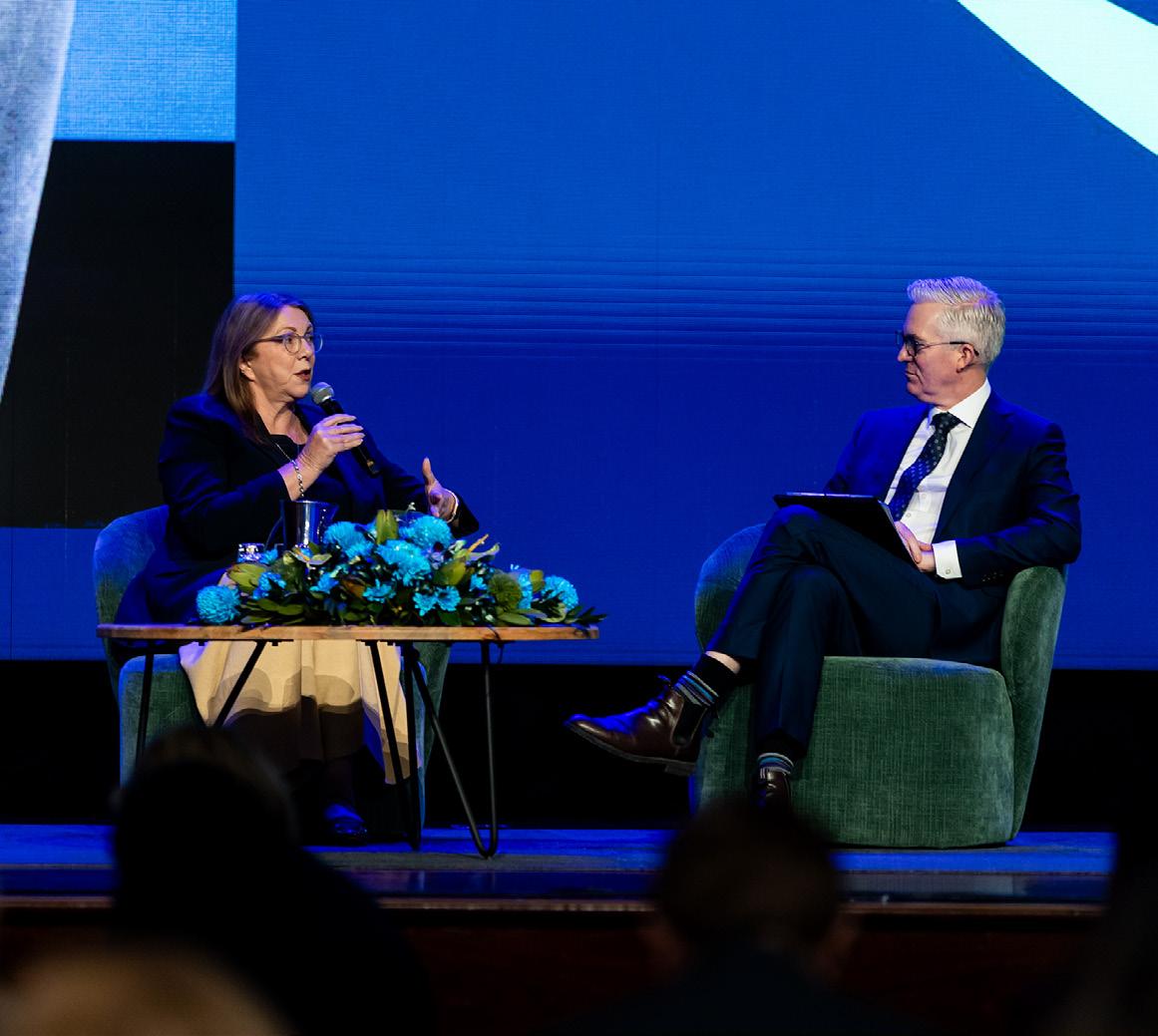
Transport Minister Catherine King in conversation
Photography:
iStock.com/Andrii
Yalanskyi

A leading Australian law firm partnering with all levels of government to navigate, regulate and innovate with AI –securely and strategically.
From governance and procurement to deployment and risk management, Maddocks is uniquely placed to support that journey.
Maddocks
CIVILITY IN CRISIS
Abuse occurs both within local government and from the community. Christopher Kelly reports.
The most comprehensive review yet of workplace behaviour in the local government sector finds abuse and bullying can have serious impacts on individuals, councils, and communities.
The independent review – conducted by Flinders University on behalf of the Local Government Association of South Australia – was prompted by a parliamentary motion in June 2025 calling for an inquiry into poor behaviour in council offices.
“This review reflects the experiences, insights and improvement ideas of people working across local government and provides a roadmap for strengthening leadership, governance and council culture into the future,” says LGASA president Heather Holmes-Ross.
The review identified 10 key findings and made 35 recommendations to improve behaviour and wellbeing across the sector. They include improvements to governance frameworks, council-level actions to strengthen psychological safety in the workplace, and awareness programs to support professional development.
“Bullying in any workplace is not acceptable,” president of the Australian Local Government Association and mayor of Gladstone, Matt Burnett, tells GN EXTRA. “I’ve always said to my councillors when they get elected that we won’t always agree, and you don’t have to cheer a decision if you don’t agree with it, but you don’t speak against it either. You need to accept that’s what the majority have determined. You have to move on and work together as a team.” However, Burnett acknowledges that local government is “a very big family and sometimes it’s hard for everyone to get along”.
Abuse isn’t just occurring within local government – it’s being levelled at it. And social media is the primary driver, with women the primary target. Analysing Facebook, Instagram, TikTok, and YouTube, social media monitoring company Areto examined online comments received during May by women in public life across Australia, New Zealand and the Pacific.


“MORE AND MORE PEOPLE ARE JUST BEING VICIOUS AND NASTY – AND IT’S NOT JUST DIRECTED AT LOCAL GOVERNMENT, IT’S THE STATE AND FEDERAL GOVERNMENTS AS WELL.”
The findings show that out of 11,343 comments monitored, a third – 33 per cent – were negative. Research conducted by the office of the eSafety Commissioner shows online abuse is limiting women’s participation in public service – impacting recruitment, retention, and wellbeing. Women were also found to have retreated from online spaces and lowered their public profiles because of the abuse. Burnett tells GN EXTRA people on social media feel emboldened by anonymity. “They can be as abusive as they’d like to be because they can hide behind a keyboard,” he says. “More and more people are just being vicious and nasty – and it’s not just directed at local government, it’s the state and federal governments as well.”
But measures are being implemented to challenge abusive behaviour. The Local Government Association of Tasmania has launched a campaign to improve the tone of civic engagement. It was devised after a survey found almost 80 per cent of councillors and staff across the state had interactions with members of the community that were abusive and intimidating. “We don’t expect people to agree with every decision, but we should be respectful when voicing opposition or opinions,” says LGAT president Mick Tucker.
The Municipal Association of Victoria has also called for a public awareness campaign to counter harmful community behaviours and social media attacks. “Councils in Victoria are affected by the growing challenge of negative public sentiment, misinformation, and online abuse directed at councillors,” MAV says in a communiqué to its members. “These behaviours undermine trust in local government, discourage civic engagement, and impact the wellbeing of elected representatives.” SA has gone further. In May, legislation was passed to protect council staff from abuse and harassment. “These new laws strengthen protections for publicfacing workers, including council employees, and promote accountability for unacceptable behaviour,” an LGASA spokesperson tells GN EXTRA, adding: “Everyone should feel safe in their workplace.”
KEEPING AHEAD OF AGENTIC AI
As governments increasingly adopt the technology, the implications for security and governance increase significantly, writes Christopher Kelly.

AI bots have gone beyond acting as glorified search engines and assisting with basic tasks. They are taking autonomous action. “This means they are not just reacting to requests but are proactively making decisions,” says Craig Nielsen from technology company GitLab.
This shift to agentic AI has been rapid and is likely to increase at a rate of knots – as are the risks. “Government agencies in Australia have a duty to consider –not only what these agents can do – but what this new capability means for their cybersecurity posture,” Nielsen tells GN EXTRA.
Agentic AI reshapes and expands the attack surface. “It creates far greater potential for vulnerabilities – including interactions between agents that traditional security models weren't designed to catch,” explains Nielsen. “Ensuring security keeps pace with capability is a new, defining challenge for public sector agencies as AI rollout continues.”
An AI agent with access to private data, exposure to untrusted content, and the ability to communicate externally presents a materially different risk profile than one lacking any of these three elements. “Some observers have described the combination as the ‘lethal trifecta’,” says Nielsen.
The security challenges include both entirely new risks and evolved forms of long-standing issues. “One of the biggest risks stems from pairing AI bots’ natural language capabilities with agentic AI’s instruction-following behaviour,” says Nielsen. “The combination enables ‘prompt injection’ attacks, where malicious instructions embedded in otherwise legitimate content or requests can manipulate agent behaviour.”
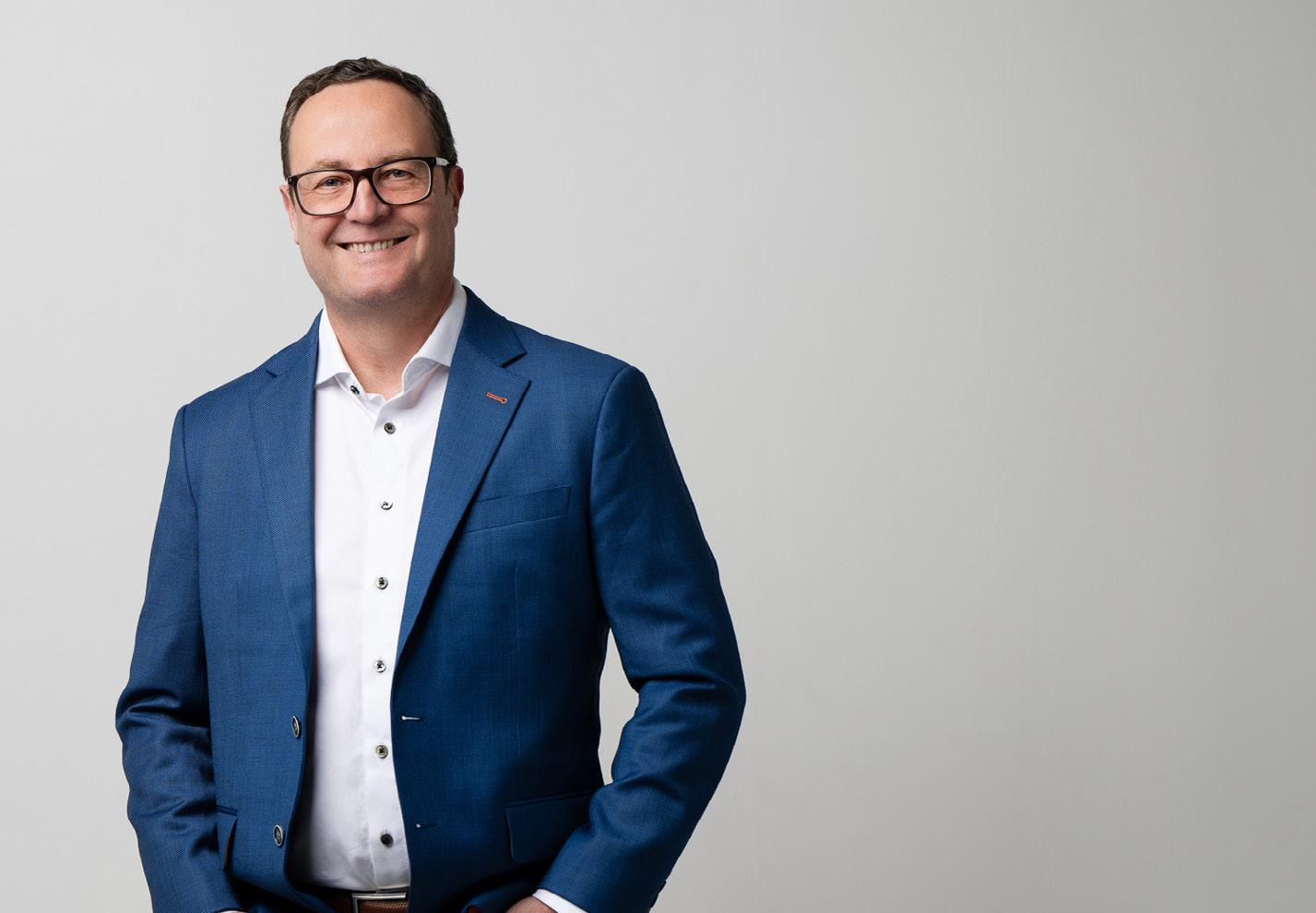
THEY ARE NOT JUST REACTING TO REQUESTS BUT PROACTIVELY MAKING DECISIONS
Craig Nielsen, GitLab
Other risks may include privilege escalation, in which AI agents with certain permissions perform sensitive operations beyond what the initiating user intended, or cascading failures, in which a compromised agent in a multi-agent system can corrupt agents downstream. “Agents should only access the tools required for their tasks, with credentials narrowly scoped and set to expire quickly,” says Nielsen.
While security will need to become more robust, governance also has to evolve accordingly, says Tom Dissing – agentic AI advisor at Technology Connect Australia. “We’re no longer just protecting data and applications, we’re governing behaviour and decision-making.”
In a government context, that matters a lot. “Because it’s not just about accuracy, it’s about fairness, consistency. It’s about how we trust in that system and what it’s allowed to do. We set the boundaries for that,” says Dissing.
If a system can act, mistakes aren’t just informational. “They become operational and real for us. This becomes a public accountability risk.” Traditionally, the risk involved what the system knows. “Agentic risk is about how it behaves.”
And it’s a transition that governments and agencies haven’t considered enough, warns Dissing. “When systems start judging and acting, and not just informing, the implications for governance and security and risk and accountability – they increase significantly.”
To help mitigate the risks, there needs to be a level of human oversight. “Require explicit approval for critical operations while allowing lower-risk actions to proceed with notification,” says Nielsen. “Users should be able to halt execution at any time, with rollback of partially completed work where possible.”
But while it’s prudent to acknowledge and address the risks that accompany agentic AI, it’s also important to recognise the opportunities the technology presents.
“The right combination of data access, content processing, and external communication – when properly governed – is exactly what makes agents powerful tools,” says Nielsen. “AI agents can monitor systems, apply consistent security rules without fatigue, and respond to threats at a speed and scale no manual process can match.” GN


RIC MARKS

LEADERS ARE CARRYING RESPONSIBILITIES THAT ARE GROWING FASTER THAN THE AUTHORITY, CAPACITY AND SUPPORT AROUND THEM.
When leadership pressure is discussed, the conversation usually turns to burnout, resilience, wellbeing, workload and work-life balance. Those conversations matter, but they can also pull attention toward the individual when the deeper issue may sit in the structure around them.
Across government and service delivery environments, I keep seeing a similar pattern. Leaders are carrying responsibilities that are growing faster than the authority, capacity and support around them. They are managing more decisions, more accountability, more stakeholders and more complexity, often inside systems that were not designed for the load now being placed on them.
This is not simply about being busy. It is the pressure of becoming the person everyone depends on – the leader who signs off the difficult decision, resolves the escalation, carries the relationship, understands the history and gets called when something goes wrong.
At first, this looks like strength. Capable leaders keep the system moving. They absorb uncertainty, manage risk and help others navigate complexity. But over time, responsibility can accumulate around them. Decisions concentrate. Escalations become routine. What began as capability slowly becomes organisational dependency.
The public sector can be particularly exposed to this pattern. Government leaders work in environments where scrutiny is high, stakeholder interests are complex and the consequences of decisions can be significant. In response, organisations naturally add controls, approvals, reporting and governance mechanisms. Each layer may be reasonable on its own, but together they can create leadership roles that become increasingly load-bearing.
This is where the conversation needs to shift. If leadership pressure is treated mainly as a wellbeing issue, the focus becomes helping leaders cope with the load. That may help, but it does not answer the more uncomfortable question: why is the load there in the first place?
Where has responsibility accumulated? Where has authority become unclear? Where have decision pathways become dependent on a small number of individuals? These are not only questions of personal capability. They are questions of organisational design.
The distinction matters because the consequences reach beyond individual leaders. When responsibility concentrates, organisations can become slower to respond. Decision-making narrows. Succession becomes harder. Capability becomes tied to particular individuals rather than embedded in the system. Eventually, performance itself becomes vulnerable.
This is why leadership pressure deserves more attention. Not because leaders are incapable of carrying responsibility. Many do so remarkably well. The concern is whether organisations are quietly asking a small number of people to carry more than the system was designed to hold.
That question sits behind the Australia Leadership Load Survey 2026, which is exploring responsibility, accountability, decision pressure and organisational dependency across Australian workplaces – including government and the public service.
Before we can solve leadership pressure, we need to better understand where it is coming from. Increasingly, I suspect the answer sits as much in the structure as it does with the individual. GN
BUILDING A RESILIENT DEMOCRACY
Democracy is under sustained pressure everywhere. Australia is one of the world’s leading democracies, but we cannot – and should not – take ours for granted, writes Michelle Hopkins.
Around the world, democracies are backsliding, and the world order in which Australia has flourished is being seriously tested. These are more turbulent times not just for our economy or sustaining our living standards, but for liberal democracies themselves.
Compared to other developed countries, Australia comes from a place of strength and has a history of democratic innovation to be proud of. Australians consistently value democracy.
But satisfaction with how our democracy is working is fragile. Without effective and trusted institutions, it will only be harder for Australians to make informed decisions, and harder for policymakers to develop and implement solutions to our most pressing challenges.
A new report from the Grattan Institute sets out five priorities for Australia to build a better and more resilient democracy.
First, our elected federal parliament sits at the centre of our democracy and we can make it more representative and better functioning, to deliver better long-term decision-making and better administration of government, and to engender greater trust.

Second, we can do better to ensure that Australians have a voice and feel a sense of belonging, particularly those who find themselves on the margins of the economy and society.
Third, we must protect our public sphere – where Australians inform themselves and engage in the contest of ideas – by ensuring the sustainability of our news media and investing in institutions that produce trusted information. We should also experiment with public responses to misinformation, to work out which approaches are effective at scale.
REFORMS THAT DEMONSTRATE GOVERNMENTS ARE WILLING AND ABLE TO ACT ON PERSISTENT AND BROADLY UNDERSTOOD CHALLENGES IN THE PUBLIC INTEREST, WILL BUILD TRUST IN OUR DEMOCRATIC SYSTEM.
Reforms that demonstrate governments are willing and able to act on persistent and broadly understood challenges in the public interest, will build trust in our democratic system.
Fourth, in a democracy, process matters, but so do outcomes. Australians need confidence that our system of government can work for them and is capable of building something better than the status quo, and acting in the public interest, not vested interests.
Finally, crises are the moments that build trust, or erode it, and we face a future of rolling shocks. Governments need to act to reduce vulnerability to known risks and invest in the expertise to tackle hard-to-predict events. They need to preserve fiscal buffers for a more expensive future and calibrate community expectations about what governments can reasonably do to cushion the blow.
Reforms that demonstrate governments are willing and able to act on persistent and broadly understood challenges in the public interest, despite noisy ‘losers’, will not only deliver better economic and social outcomes, they will build trust in our democratic system. Critically, both economic growth and distribution of that growth matter to a resilient social compact. And proceeding with imperfect reform is better than waiting for perfection.
Australians have high expectations of their governments, but in a democracy, we govern ourselves. This is a task for all of us. GN