ISSUE 2 AUGUST 2026

Responding to a changed environment means changing how government works

ISSUE 2 AUGUST 2026
Responding to a changed environment means changing how government works
A local resident has left his local government unable to function. Unhappy with Hepburn Shire Council in central Victoria, Daylesford businessman David Penman launched private prosecutions against the CEO, the mayor, and four other councillors.
The private prosecutions include allegations of misconduct in office and failing to file budget documents. Under Victoria’s Local Government Act, if a councillor faces charges, they must automatically step down while the allegations are dealt with in court. With only two of seven councillors able to serve, Hepburn Shire no longer has a quorum and is unable to hold monthly meetings and make major decisions.
Accusing Penman of disrupting democracy, a council statement said: “This move appears to be a purposeful manipulation of the Act intended not to address any reasonably suspected wrongdoing but instead to disrupt council’s elected representatives and the fulfilment of their functions.”
In response, Penman posted on social media: “Democracy does not mean elected representatives are immune from the law. Democracy requires elected representatives to obey it.”
Brian Hood – one of the two councillors not facing charges and still able to serve – told ABC radio: “We’ve been elected to do a job, that has come to an end … There’s no mayor, there’s no point – we can’t meet or function.”
The case prompted Rural Councils Victoria to call for proposed legislative changes to the Local Government Act to be fast-tracked. “What is happening in Hepburn today could happen to any council tomorrow. We fear that without urgent action, a tidal wave of vexatious nuisance lawfare proceedings could grind local councils to a standstill,” RCV chair Robert Amos said.
Representing Victoria’s 38 rural councils, the peak body is calling on Local Government Minister Paul Hamer to expedite the Local Government Amendment Bill, which resets governance standards including removing the automatic stand-down clause. “The Victorian Government is already planning to close this legal loophole, but there is now more urgency – it must be done immediately,” Amos said.
President of the Municipal Association of Victoria Jennifer Anderson said the Hepburn case highlights the need for stand-down arrangements to be completely re-examined. “Currently, when concerns about councillor conduct are raised, they enter a framework that is fragmented, under-resourced and slow. Delay serves no one. It leaves genuine matters unresolved, and it may leave a good councillor who has been unfairly complained about, and their community, in limbo for months.”
Anderson is calling on the state government to commit to structural reform with clear statutory timeframes, “so that complaints are dealt with promptly and fairly”. GN
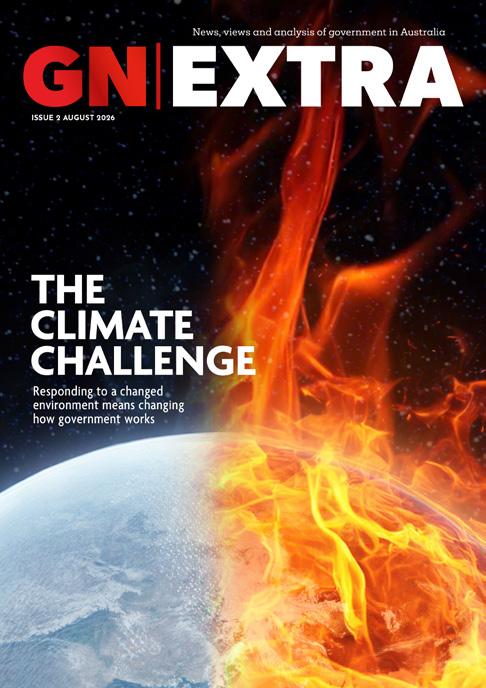
On the cover
If climate change is now a permanent part of the operating environment and responding to it a permanent feature of every policy area, then we should see understanding climate change as part of the portfolio of experience that every successful public servant requires, writes Alison Reeve.
Government News is Australia’s independent online publication reporting on government in Australia. We provide independent coverage of local, state and federal government and their administration of programs and initiatives.
PUBLISHED BY INTERMEDIA GROUP
ABN 23142047943 41 Bridge Road, Glebe NSW 2037 Ph: 02 9660 2113
EDITOR
Christopher Kelly 02 8586 6130
ckelly@intermedia.com.au
GROUP SALES MANAGER: Tom Solis 02 8586 6197
tsolis@intermedia.com.au
A RT DIRECTOR Katy Brack kbrack@intermedia.com.au
CONTRIBUTORS
Rebecca Benson
Jake Kendall
Alison Reeve
PRODUCTION MANAGER
Jacqui Cooper
GENERAL ENQUIRIES 02 9660 2113
info@governmentnews.com.au
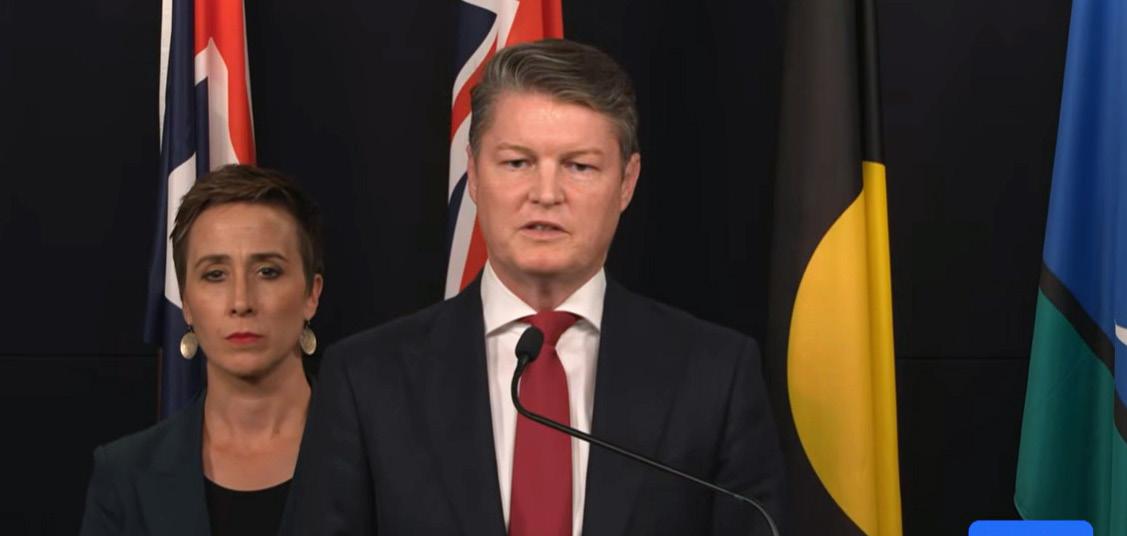
Ben Carroll became Victoria’s 50th premier following Jacinta Allan’s decision to step down.
Initially planning to fight a leadership bid – which she was tipped to lose – Allan chose to step aside to open the way for her deputy. In a speech to parliament, Allan said Carroll “will have my congratulations and my unqualified support”.
Carroll said he was “honoured and humbled” to step into the role. “This was not an easy decision. But it is clear that on key issues that matter to Victorians, our government needs to go in a new direction. As premier, I will deliver that new direction.” Gabrielle Williams becomes deputy premier.
The Labor caucus turned against Allan because of poor polling and allegations of corruption in the construction industry. Carroll said his first action as premier will be to call a royal commission into the construction sector and “immediately establish a special prosecutor that will work in parallel with the royal commission and we will strengthen IBAC by giving them follow-the-money powers this term. Not in 2027, now.”
Allan steps down after 1,036 days in the job. Allan said she was making the decision “because it is the right thing by the Labor
Unsustainable workloads, staff shortages and system failures are among the concerns staff have raised about the NSW Environment Protection Authority. EPA workers have also reported leadership instability, classification creep, and a lack of transparency and direction. The complaints follow a mass restructure at the environmental regulator.
The operational overhaul – which began last year and saw 75 roles cut (about 8 per cent of the workforce) – has caused “heightened stress” among the workforce, said the Public Service Association of NSW.
Earlier this year, EPA executives appeared before the Industrial Relations Commission following disputes over the restructure plans, which have been implemented in a bid to shave $20 million off the authority’s annual budget.
The EPA has defended the restructure. The agency said in a statement that the changes were needed to “bolster critical environmental protection capability and the delivery of our core regulatory functions through increased effectiveness and efficiency”. GN
Party and by the Victorian people. I was prepared to put my record and my plan to a ballot of members. I believe I would have won.”
But Allan said a leadership contest close to the state election in November would put Victoria in a position of uncertainty. “That hurts the Victorian people, and I just won’t do that.”
Listing her achievements as premier, Allan included strengthened bail laws, free public transport for children, new public schools, a wage increase for nurses and police, and an economy that “has grown faster than any other state”. She also said she was “goddamn proud” of the Metro Tunnel, which opened in December. “Under my feet, five new underground stations, 1,200 weekly services.”
But if Allan were to be remembered for one thing, she wanted it to be women’s health. “We opened 15 women’s health clinics across the state. We rolled out the green whistle for pain relief free of charge. You can get the pill at the chemist without paying to see the GP.”
Allan finished her speech by thanking the Victorian people. “I didn’t achieve all I set out to do for you in this role. I didn’t get everything right,” she said. “But I will leave knowing that I made a difference.” GN
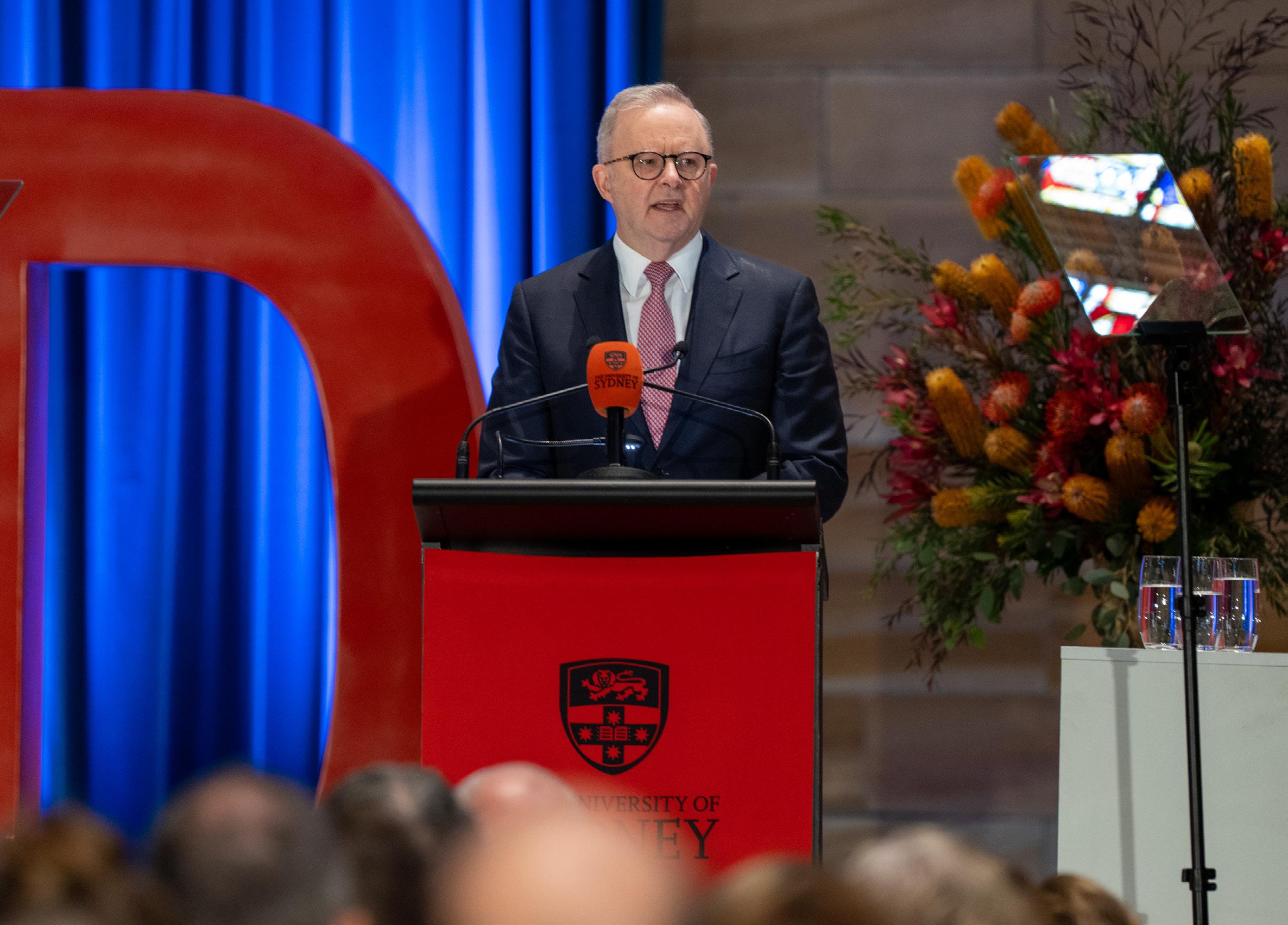
A new feder al agency has been established to oversee artificial intelligence. Sitting within the Department of Prime Minister and Cabinet, the Office of AI will liaise across government to develop a single, national framework to deal with the opportunities and concerns arising from the rapidly developing technology.
During a speech in Sydney last month, Prime Minister Anthony Albanese sought to reassure Australians that the government is focused on anxieties over job losses, data centres, copyright protections, and higher energy costs.
Albanese said Australians shouldn’t view the technology as a threat. “If we back ourselves, and invest in our people, then I have every confidence that Australia can seize this moment and make it our own.”
Addressing copyright protections, Albanese announced that companies will be barred from using Australian content to build or train AI without the consent and control of the creator. “The best way to secure the strongest copyright protections for Australian artists is for Australia to be active and involved,” he said.
The PM also announced the development of national guardrails enforcing data centres “to underwrite new power supply,
“IF WE DO IT THE AUSTRALIAN WAY, TRUE TO OUR VALUES AND OUR STANDARDS, WE CAN MAKE AI WORK IN AUSTRALIA’S NATIONAL INTERESTS.”
Anthony Albanese
to pay their full share of grid connection, so no costs are passed on to homes or businesses.” The PM said he hoped to pass legislation through parliament early next year.
While Albanese recognised there were challenges ahead, the PM said he was confident that Australia could make the technology work for the greater good. “If we do it the Australian way, true to our
values and our standards, we can make AI work in Australia’s national interests.”
The tech industry responded largely favourably to the announcement. "The establishment of Australia's Office of AI is a welcome step towards creating the national leadership and policy framework needed to support responsible AI adoption,” Lisa Fortey, general manager at Logicalis ANZ said.
Describing the PM’s speech “as a clarion call” for leadership in the AI era, Jane Livesey – president, Microsoft ANZ – said: “It sets out a confident direction for how we must calibrate national policy. Australia’s rapid embrace of AI has been felt across every government portfolio, industry and community, and a single national framework is the right way to ensure all Australians benefit from the many opportunities this technology promises.”
Not everyone received the government’s plans positively, however. Speaking to GN EXTRA (see page 8), AI expert Lambros Photios said he’s doubtful the government can achieve its objectives. “You tell people you’re going to climb Mount Everest, but you’re not in shape. A single flight of stairs has you out of breath. This is the state of Australia’s Office of AI ambitions today.” GN
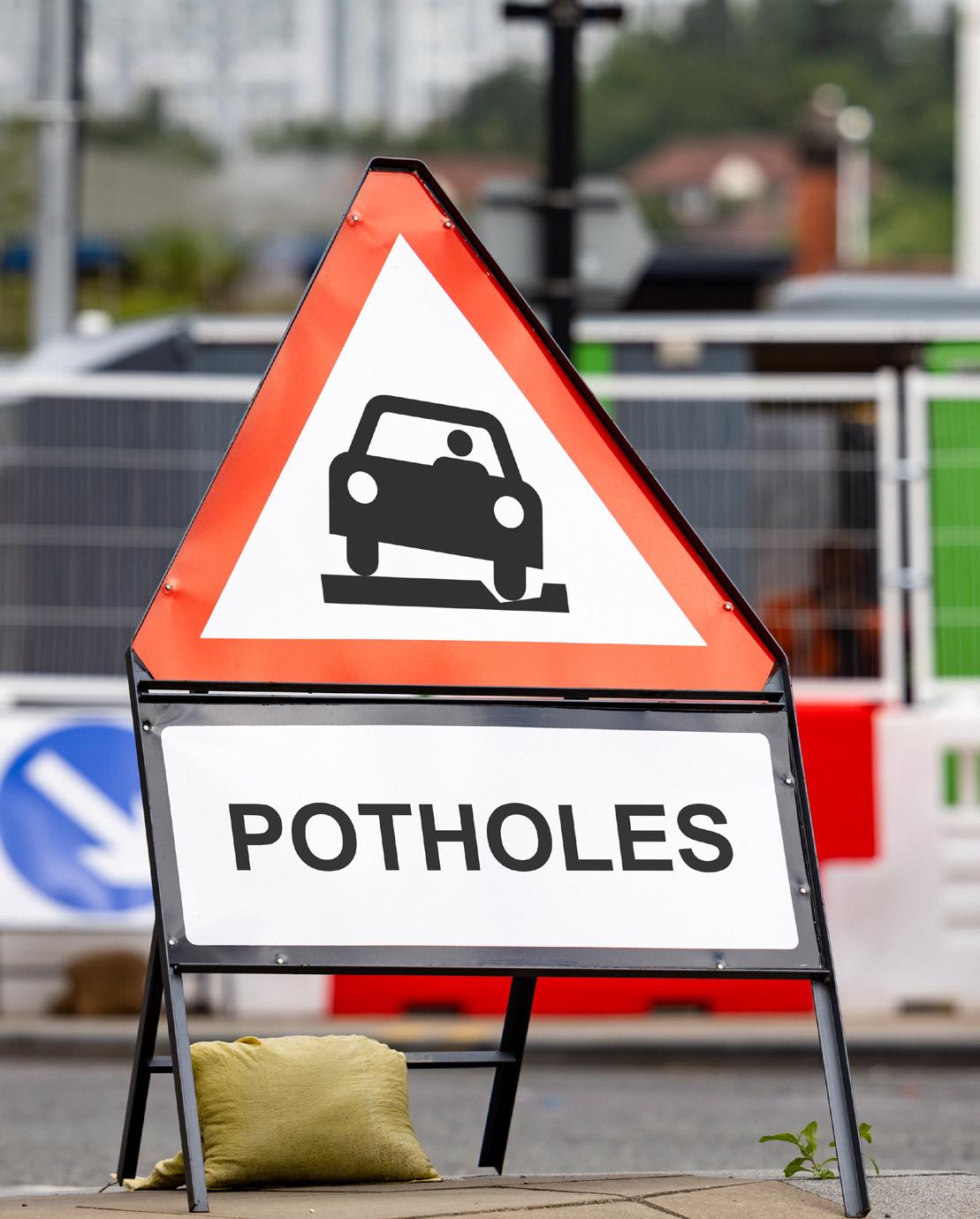
In recent local government elections, many UK voters had one issue front of mind. Cost of living, you’re thinking? Hospital wait lists? Immigration. Nope – potholes.
According to the Asphalt Industry Alliance, road repairs in England and Wales will cost councils an estimated £18.6 billion ($35 billion) and take 12 years to complete.
Meanwhile, motoring organisation the RAC reports the number of members complaining of potholes increased from 5,420 in the first three months of 2025 to 15,421 in the same period this year. And no wonder, the RAC estimates there are a million potholes across the UK – an average of one every 9.5 kilometres.
Peak body the Local Government Association – which represents 317 English councils – said: "Councils take their responsibilities to maintain roads seriously, but the truth is that ever-increasing pressure on budgets has impacted their ability to do so as much as they'd like."
To tackle what has been dubbed the “pothole plague”, the UK Government has provided councils with £7.3bn ($14bn) in funding for local road maintenance for the next four years. And in January, a traffic light system was introduced to rate councils' progress in completing repairs. Councils that score poorly will have road funding withheld.
One local authority in the government’s bad books is Oxfordshire County Council after Transport Minister Heidi Alexander had to seek roadside assistance when her Mini Cooper hit a pothole. “I joked to my husband that I thought that the astronauts on Artemis II might have seen a similar-size crater when they were sling-shotting around the Moon,” she said. GN
France is the latest country to follow Australia’s lead as its parliament approves a bill banning under 15s from social media, making it the first European country to deny access to platforms such as TikTok and Snapchat. “France is leading the way in Europe when it comes to protecting our children and teenagers,” President Emmanuel Macron said in a video posted (ironically) on social media.

As in Australia, the onus will be on big tech to enforce the ban, which will prevent under-15s from creating social media accounts from 1 September –the start of the new school year. France is one of 20 countries worldwide to have considered or implemented social media bans. A minimum age limit is expected to come into effect next year in the UK. Spain, Greece and Denmark are also planning to impose similar restrictions. GN

As Europe endures record-breaking temperatures causing wildfires to rage across France and Spain, Spaniards are seeking refuge in government buildings that have been converted into climate shelters to protect citizens from the heat. Prime Minister Pedro Sanchez has called the events “the new normal”. “Devastating heatwaves are no longer rare,” he said. “It’s not separate waves we face, but one long heatwave stretching from June through August.”
Offering people air-conditioned spaces and free water, the national network of shelters – refugios climáticos – expands on programs already introduced by regional governments. The shelters offer people living in heat-trap homes sanctuary from the sun. They also protect the vulnerable from dehydration, heat exhaustion, and heatstroke. Spain has one of the highest rates of heatrelated mortality in Europe. In 2025, there were more than 150,000 heatrelated deaths – the second-highest total ever recorded. GN
With financial savings and emissions reductions in sight, more councils are charging towards an electric future, writes Christopher Kelly.
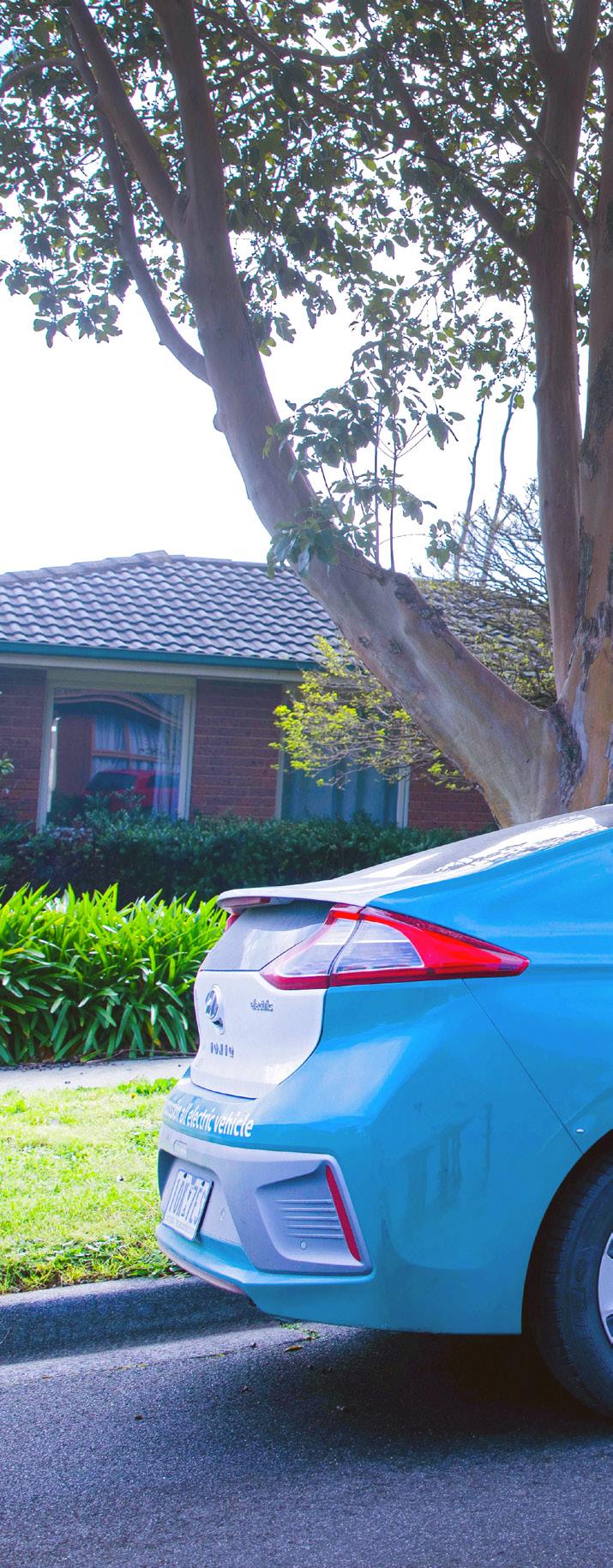
City of Parramatta is one of a growing number of local governments across the country embracing electric vehicles. The Western Sydney council has recently implemented an electrification program that has introduced 22 EVs to its fleet. “The initiative was driven by financial, operational and environmental priorities, with a focus on reducing fuel usage and costs,” a council spokesperson tells GN EXTRA.
Parramatta’s EV transition initially focuses on progressively electrifying passenger and leaseback fleet vehicles. “We have started progress to electrify light commercial vehicles such as vans and operational fleet vehicles,” says the spokesperson. “We will be exploring electrification of heavy vehicles and selected plant and equipment as technology and charging infrastructure matures."
The program is already delivering significant benefits. Each vehicle delivers a minimum of 1 tonne of CO2 reduction annually, equating to approximately 22 tonnes of emissions avoided each year. In addition, the transition is generating ongoing fuel savings of up to $72,000 per year. “The primary cost benefits come from lower energy costs compared with petrol and diesel,” says the spokesperson. Reduced maintenance requirements and longer servicing intervals also create savings.
To keep the fleet on the move, City of Parramatta installed a solarpowered charging facility, which includes 22 charging bays. “The infrastructure supports council's growing EV fleet and has been designed to accommodate future expansion,” the spokesperson tells GN EXTRA.
Council tracks the success of its EV program through various measures – emissions reductions, fuel savings, fleet performance, charger usage, and progress towards its net-zero targets. “These metrics help ensure the program delivers both environmental and operational benefits,” says the spokesperson.
Another Western Sydney council – Blacktown City – is also taking steps toward electrification by introducing an EV heavy truck to its fleet.
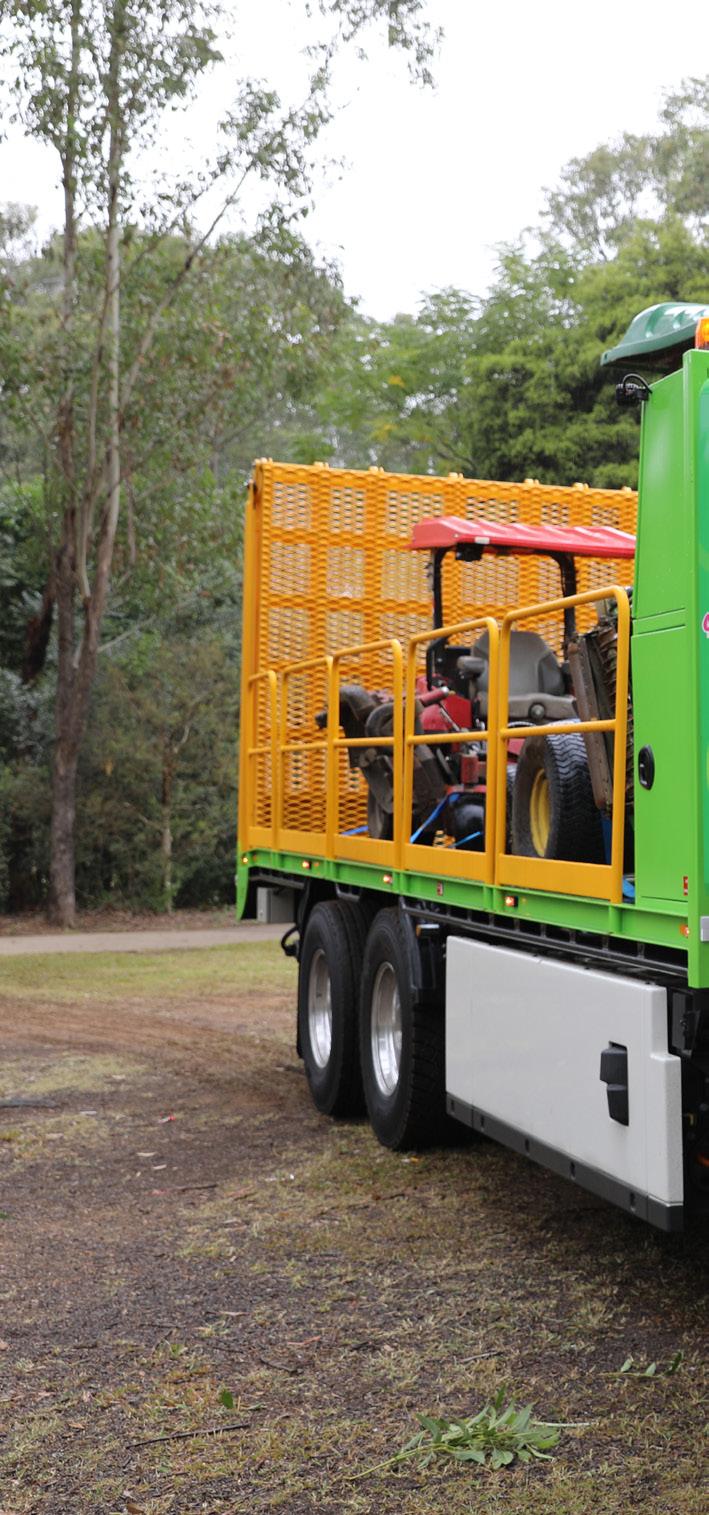
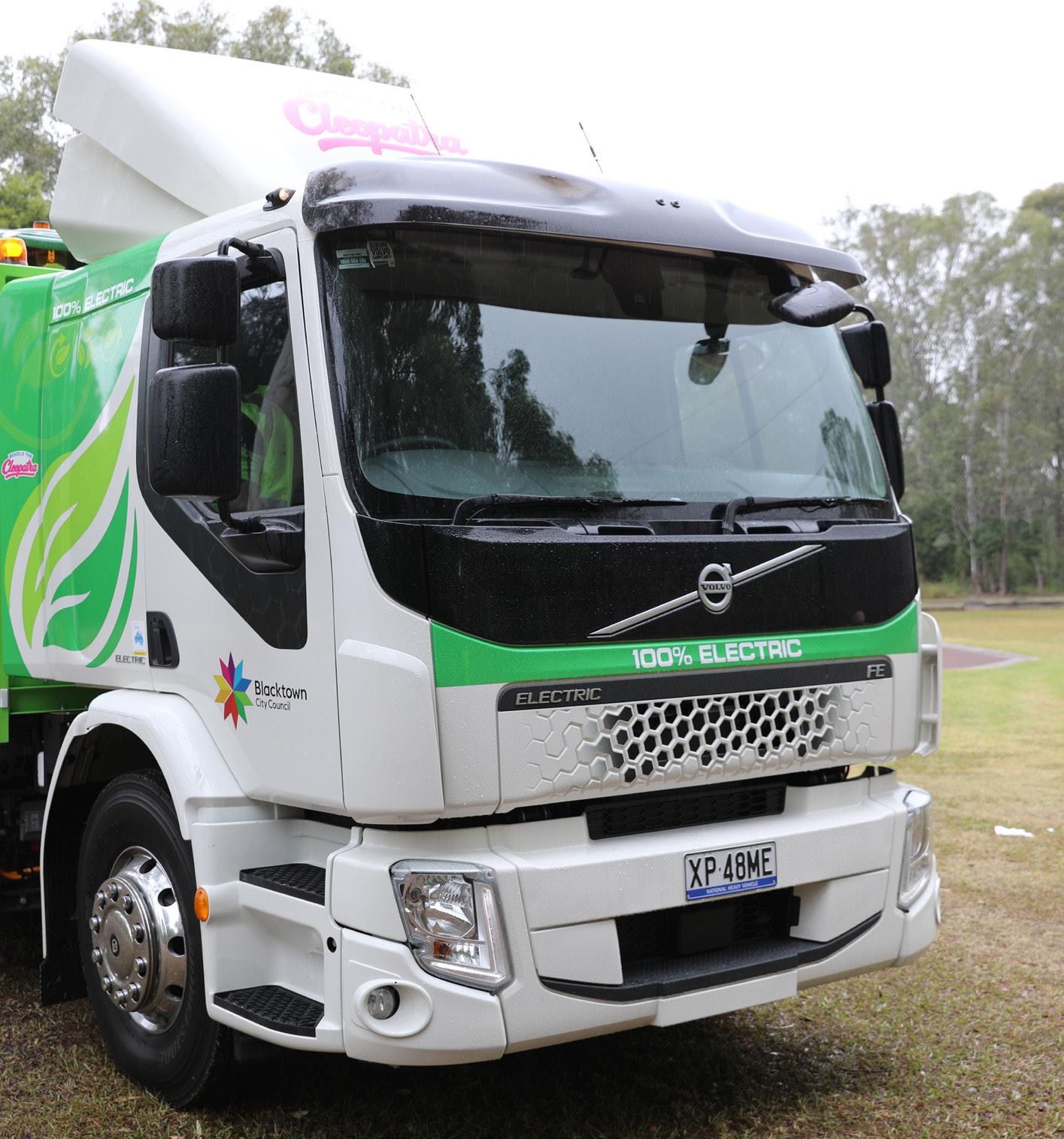
Nicknamed Cleopatra, the truck is performing strongly. “Our staff use Cleopatra daily to provide more efficient and environmentally friendly transport of mowers, tractors, supplies and equipment,” Blacktown Mayor Brad Bunting tells GN EXTRA.
Council invested in Cleopatra when staff identified two ageing diesel trucks that could be replaced by an EV. The custom-designed, 27-tonne vehicle is already producing efficiency improvements. “The first is reduced maintenance challenges. Our staff now have one vehicle to maintain, rather than the two diesel trucks that were replaced,” says Bunting. A second efficiency improvement is reduced running costs. Another benefit is reduced noise. “Our electric truck is quieter and minimises disturbance to our community,” says the mayor.
Council staff are currently exploring opportunities where more EVs can be introduced to Blacktown’s fleet. This includes light passenger vehicles, operational fleet vehicles and specialised heavy vehicles. “I am told that improvements in battery technology and charging infrastructure will help councils like ours further improve services and reduce emissions in future,” says Bunting.
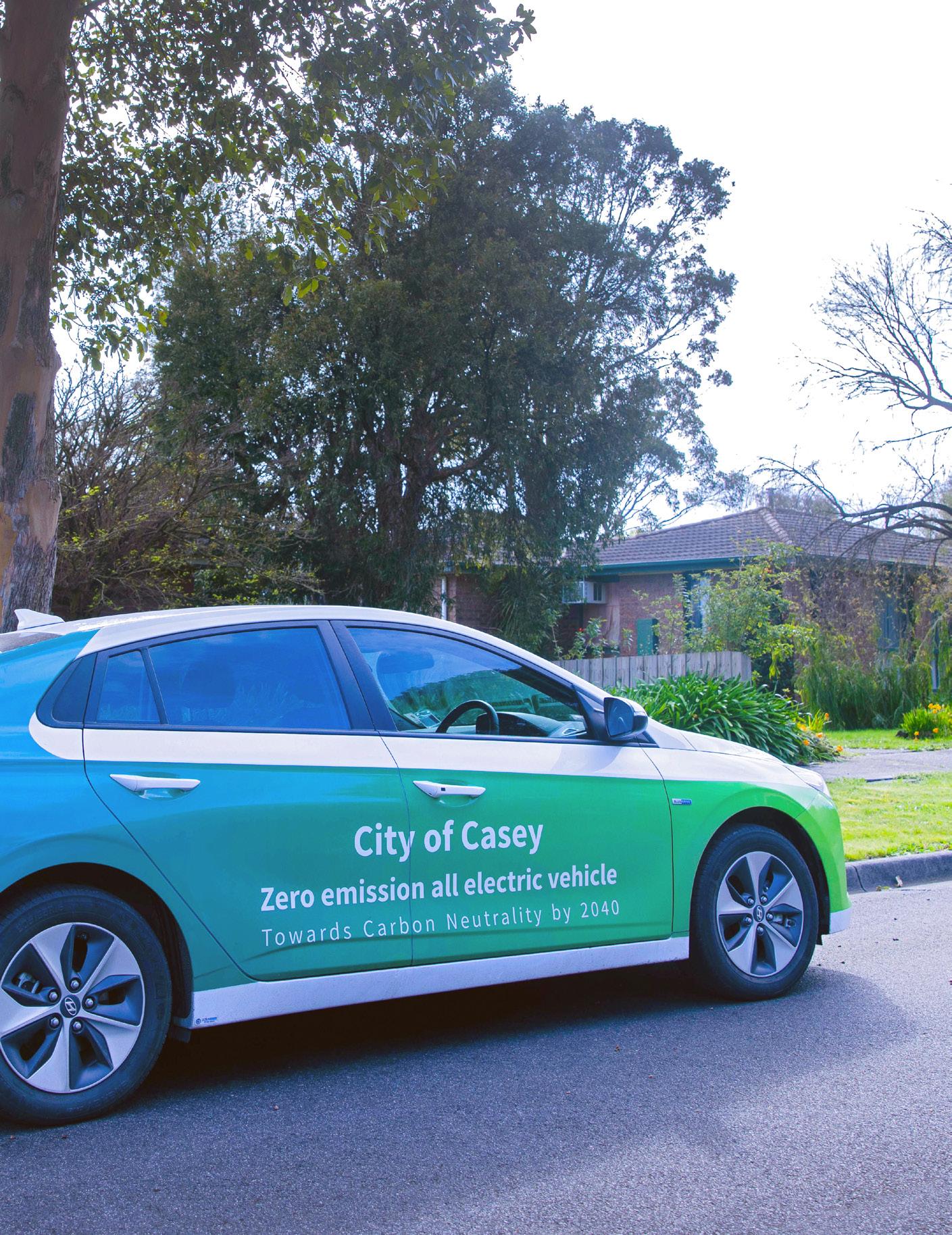
City of Casey council is also leading the way in EV uptake. Its current fleet consists of three electric rugged terrain vehicles, two electric trucks, and one electric wicket roller. The Victorian council also has 13 electric passenger vehicles and 30 hybrid vehicles in its fleet. “We have been steadily increasing the number of electric and hybrid vehicles, including vehicles used to maintain our parks and open spaces,” City of Casey Mayor Stefan Koomen tells GN EXTRA.
Most recently, council expanded its fleet of electric compactor trucks from three to six. “These trucks have performed exceptionally well, reliably completing their daily collection routes and are proving particularly suited to the stop-start nature of waste collection services,” says Koomen. Future procurements will be guided by operational suitability, available technology, infrastructure requirements, lifecycle costs, and budget considerations.
Over the coming decade, continued advancements are expected to accelerate EV adoption across local government fleets. This shift will help councils reduce emissions, lower operating costs, and support long-term sustainability goals. Koomen tells GN EXTRA: “As vehicle technology continues to mature, we expect the range of viable electric fleet options to expand.” GN
Last
month, Anthony Albanese unveiled
a bold plan to regulate and harness AI – not everyone has faith in the PM’s vision, writes Rebecca Benson .

Anew agency – the Office of AI – has been established within the Department of the Prime Minister and Cabinet to oversee artificial intelligence and develop national guardrails. Announcing the move, Anthony Albanese told a gathering in Sydney he was convinced the country could make AI work for the greater good.
“I have every confidence that Australia can seize this moment and make it our own,” he said.
Not everyone shares the PM’s conviction. AI expert Lambros Photios tells GN EXTRA that he’s doubtful the government can achieve its objectives. “You tell people you’re going to climb Mount Everest, but you’re not in shape. A single flight of stairs has you out of breath. This is the state of Australia’s Office of AI ambitions today.”
Working closely with Industry Minister Tim Ayres, and Assistant Minister for Science, Technology and the Digital Economy Andrew Charlton, the Office of AI will coordinate across government departments including Defence, Education, and Energy. Photios is concerned the approach is overly intricate. “Having multiple ministers responsible for coordinating the project translates to zero ministers with absolute accountability,” he says. “We need one minister, and one person claiming ultimate responsibility for success or failure of the project. This

initiative needs undivided focus. Not the fractional focus of representatives with competing priorities.”
Photios says no other country has effectively resolved the complex issues AI creates such as concerns over mass job losses and energy-sucking data centres and has little faith that the government can develop an effective regulatory framework inside a year. “We want to do all this within 12 months, while competing at a global scale and while achieving net zero. This ambition must be weighed against Australia’s dismal track record.”
Listing “a litany of failures” – that includes Robodebt, My Health Record, the NBN, and the $100 million BOM website – Photios tells GN EXTRA there isn’t a single flagship public sector tech program in recent memory that has landed on time, on budget, and fulfilled its objectives. “The pattern is overpromise, underdeliver, and blow out cost and timeline by an order of magnitude,” he says. “We can’t deliver stable internet for our country or build a reliable website. Now we want to be a world leader in a much more complicated and ethically fraught technology, that combines the thorniest challenges in copyright, labour, climate damage, natural resources, and planning.”
Photios argues that the private sector should be left to lead the way on AI. “It is the government’s job to set the right conditions through regulation and policy that incentivises innovation. Then they need to stay out of the delivery.”
Photios points to China as a template for success. “Chinese startups lack the capital, the infrastructure, and can’t match the salaries of Silicon Valley,” he says. “Yet [Chinese AI platform] Kimi K3 launched recently, delivering Claude-like capabilities, at a tenth of the price and a tenth of the compute. Australia lacks the resources of the US, just like China does, so perhaps we can follow in their footsteps.”
Instead of focusing on AI delivery, Photios tells GN EXTRA the government should provide an open path for startups and innovation. “We need more venture capital, early-stage funding, founder support, and research and development tax concessions,” he says. “We need to build a pipeline for local entrepreneurs to build and scale AI companies here.”

IPWEA Fleet is Australasia’s leading professional community for plant and vehicle fleet management. We drive better fleet outcomes through industry-recognised education, practical training, and peer connection.

Develop the skills required to effectively and efficiently manage a modern fleet through IPWEA’s industry-recognised Fleet Management Certificate.
With 6 online modules over 12 weeks, this interactive and practical program will help participants gain immediately applicable knowledge that delivers value to both individuals and organisations.
IPWEA Fleet webinars provide practical insights into the issues shaping fleet management today.
Featuring industry experts, fleet practitioners and leading suppliers, each webinar combines bestpractice guidance, real-world case studies and emerging trends to help professionals make informed decisions and improve performance.
IPWEA Fleet training opportunities are ideal for:
• Fleet Managers
• Fleet Officers
CONTACT US admin@ipwea.org www.ipwea.org
• Asset Managers
• Precurement Professionals
• Workshop Supervisors
• Infrastructure Leaders
Held across Australia and New Zealand, IPWEA Fleet Management Training Days provide targeted professional development and valuable networking opportunities for fleet practitioners.
In 2026, Training Days will feature sessions covering EV transitions and infrastructure, fleet strategy and governance, data and technology.


COUNCIL TRACKS THE
ITS EV PROGRAM THROUGH MEASURES – EMISSIONS FUEL SAVINGS, FLEET PERFORMANCE, CHARGER USAGE, AND TOWARDS ITS NET-ZERO
IF YOU WERE TO ASK MOST PUBLIC SECTOR PROCUREMENT PROFESSIONALS WHAT PROBITY MEANS, YOU WILL HEAR A REASONABLY CONSISTENT ANSWER: DECLARE CONFLICTS OF INTEREST, KEEP TENDER DOCUMENTS SECURE, FOLLOW THE EVALUATION CRITERIA, DOCUMENT YOUR DECISIONS .
Of course, these responses are not wrong, but they describe the minimum, not the capability. The gap between probity as compliance and probity as confidence is where many of the most significant procurement failures in recent years have occurred.
The past two years have produced a series of instructive examples. In 2024, an audit of the $550 million Australian War Memorial redevelopment found that multiple contracts were awarded without ministerial oversight, prior relationships were not disclosed, and contract splitting was used to bypass approval thresholds. The same year, approximately 75 per cent of Tourism Australia’s procurement budget was directed to third-party contractors without competitive tendering, in direct contravention of the Commonwealth Procurement Rules.
Neither of these failures was the result of officials who did not know that probity rules existed. They were the result of organisations where probity had become a peripheral consideration, something managed by legal and audit functions rather than embedded in the day-to-day judgement of the people making procurement decisions – that is the distinction that matters.
These Commonwealth examples are not isolated. The same pattern recurs across state and territory governments, where integrity commissions regularly expose procurement failures of exactly this kind: probity treated as a process to navigate rather than a judgement to exercise. The revised Commonwealth Procurement Rules, which took effect in November 2025, reinforce this point explicitly.
The updated rules also extend ethical obligations further into supplier assessment. Officials must now consider a
supplier’s historic performance and ethical conduct as part of value-for-money analysis and must make reasonable enquiries to verify compliance with labour regulations and environmental requirements.
The organisations that handle procurement probity well share a common characteristic: they have conscientiously made it a practitioner skill rather than a governance event. Probity in these settings is not something that happens when an adviser is engaged or a register is signed. It is the lens through which procurement professionals assess situations as they arise. The Australian National Audit Office reinforced this, noting that internal probity guidelines need to be actively followed, documented and applied to decision-making as procurements progress.
When probity is embedded as a capability rather than treated as a compliance exercise, it changes what procurement professionals can do. This is the confidence dividend: the ability to apply judgement rather than consult a checklist. It does not eliminate the need for documentation, advisers, or formal processes. It makes those tools more effective because the people using them understand what they are for. Organisations that are serious about this shift are increasingly building probity literacy into their broader procurement capability frameworks – alongside commercial skills, stakeholder management, and contract administration.
The War Memorial audit did not reveal a shortage of probity rules in the Australian public sector. They revealed a shortage of embedded probity capability. That is a more demanding problem to address, but also a more tractable one, because capability can be deliberately built in ways that rules alone cannot achieve. GN
SUCCESS OF THROUGH VARIOUS
Minimising the impacts of climate change will be a defining public policy challenge of the 21st century, writes Alison Reeve.
EMISSIONS REDUCTIONS, PERFORMANCE, AND PROGRESS
TARGETS.

The division of responsibility is a series of vertical reporting lines, each with a single minister at the top. The Department of Health works to the minister for health, the Department of Transport works to the minister for transport. This pattern repeats at state level.
But climate change is not a vertical problem, because it is a systems problem. And the response also therefore is not the responsibility of one minister. It requires many ministers to act, and to act together. It requires state and federal government to co-operate.
The challenge is to find the enduring institutional structure to do the work. Most of our crossgovernment tools are useful for short-term cooperation on short-term tasks. Think the taskforce, the inter-departmental committee. Central agencies can provide the helicopter view and the joining up but have limited capacity to go deep. And things like communities of practice are good for skills, but not for policy change.
No-one anywhere has cracked this problem. Governments everywhere are struggling with how to do this – and it might not have an institutional answer. If climate change is now a permanent part of the operating environment and responding to climate change a permanent feature of every policy area, then we should see understanding climate change
YOU DON’T HAVE TO KNOW EVERYTHING THERE IS TO KNOW ABOUT CLIMATE CHANGE AND RESPONDING TO IT. BUT IT IS HELPFUL TO KNOW WHO TO CALL WHEN YOU NEED TO KNOW SOMETHING, AND TO KNOW THAT THEY WON’T MIND YOU CALLING.
and learning about emissions reductions as part of the portfolio of experience that a successful public servant requires.
Our public service is small, and people move around a lot. When you talk to senior public sector figures about their careers, the pattern you see is a deliberate acquiring of experiences. Some time in a regulator, to learn how to apply law in the real world. Some time in a central agency, to learn how budget and decision processes work. Some time in a delivery agency, to experience the frontline. We should add climate change to this list.
You don’t have to know everything there is to know about climate change and responding to it. But it is helpful to know who to call when you need to know something, and to know that they won’t mind you calling. In other words, adding experiences to your portfolio is about adding relationships as well as skills. These interpersonal connections could become the scaffolding for an emerging institutional form.
Climate change is not just about weather, disasters, events. It will come for every aspect of culture – including the culture of the APS. GN