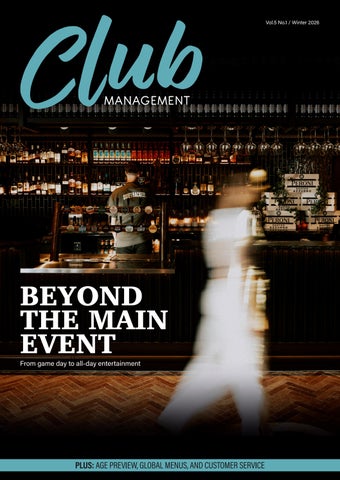

BEYOND THE MAIN EVENT
From game day to all-day entertainment


Signing in
Sports bars are changing, technology is advancing, and strong leaders are helping shape what comes next for clubs.
RECOGNISING AND CELEBRATING the women shaping our industry shouldn’t be limited to one day. In this issue, we spotlight remarkable women shaping the club sector. They keep breaking barriers, challenge perceptions, and pave the way for future generations.
Our CEO profile features St Marys Diggers and Band Club’s Marlene Shipley. We also profile Club Menangle’s Jasmin Billitteri and include insights from Club Quirindi secretary manager Phillipa Fuller. Each shares their story and reflects on how the industry has evolved and continues to improve.
That spirit of adaptability can be also found across so many components of club operations. For example, the evolution of the humble sports bar. No longer simply spaces to watch live games, sports bars are transforming. These areas are becoming flexible, multi-purpose destinations that encourage patrons to stay longer and engage with venues in new ways.
Of course, adaptability is more important than ever as clubs continue to navigate mounting economic pressures. But if the past few years have taught us anything, it’s that this industry is incredibly
Published by:

resilient. The response to Covid-19 has proven that clubs can adapt and emerge stronger. The latest figures and forecasts also suggest that resilience remains firmly embedded in the sector today.
This same hunger for innovation will be front and centre at this year’s Australasian Gaming Expo.
AGE remains one of the industry’s most important events. This issue takes readers behind the scenes with VIP access, while spotlighting several exhibitors preparing to showcase what’s next for the industry on the expo floor.
Yet amid all this evolution, one thing that remains the same: customers still appreciate great customer service. While technology continues to reshape operations and venue experiences, patrons still value genuine human connection, personalised service, and the sense of community that clubs are positioned to provide.
Signing out.
Aimee
Editor, Club Management aimee@intermedia.com.au www.clubmanagement.com.au
Food and Beverage Media Pty Ltd
41 Bridge Road GLEBE
NSW Australia 2037
Tel: 02 9660 2113
Publisher: Paul Wootton
WE ENCOURAGE RESPONSIBLE DRINKING Get the facts DrinkWise.org.au
Managing Editor: Vanessa Cavasinni vcavasinni@intermedia.com.au
Editor: Aimee Chanthadavong aimee@intermedia.com.au
Commercial Director - Hospitality Group: Simon York Tel: 02 8586 6163 Mob: 0431 219 328 syork@intermedia.com.au
Group Art Director –Liquor and Hospitality: Kea Webb-Smith kea@intermedia.com.au
Production Manager: Jacqui Cooper jacqui@intermedia.com.au
If the past few years have taught us anything, it’s that this industry is incredibly resilient.
Cover image: CSi Club Southport
Photography: Tanika Blair
Subscription Rates: 1yr (4 issues) for $36.00 (inc GST) 2yrs (8 issues) for $72.00 (inc GST)
To subscribe and to view other overseas rates visit www.intermedia.com.au or Call: 1800 651 422 (Mon – Fri 8:30-5pm AEST) Email: subscriptions@intermedia.com.au


Winter 2026

Regulars
12 / News Briefs:
Club news from across the country.
20 / The Foyer:
The best new products on the market.
22 / The Bar:
Fantastic new drinks products to stock behind the bar.
24 / On The Big Screen: The sporting fixtures that will make visitors flock to your sports bars.
82 / Q&A:
Amanda Warburton reflects on seven years with the Vikings Group.
Column
18 / AML/CTF non-compliance:
The financial penalty shouldn’t be a venue’s only concern.
Features
26 / CEO Profile:
She wasn’t meant to be CEO, but 30 years later, Marlene Sharpley is still leading St Marys Diggers and Band Club.
31 / AGE 2026 Preview:
The premier event for hospitality and venue professionals looking to stay competitive, informed, and connected.
40 / Sports Bar:
Live sports remains the main attraction, but clubs are giving guests more reasons to stay.
50 / Customer Service: Why genuine human connection still matters in a digital-first world.
55 / Sustainability:
Clubs are finding practical ways to reduce their environmental footprint.
Food And Beverage
62 / Global Menus:
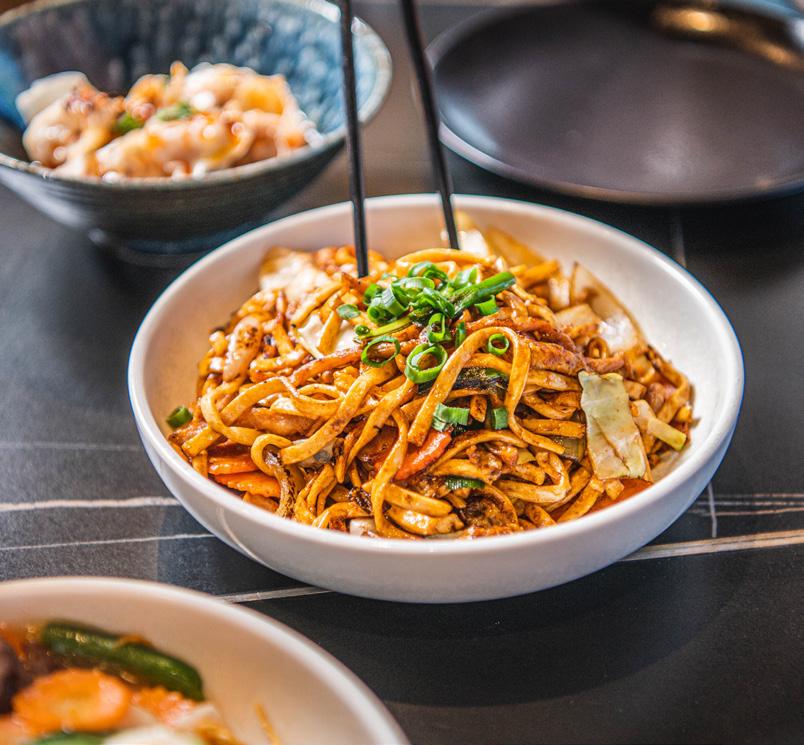
Classic club favourites meet international flavours.
68 / Chef Profile:
Club Menangle’s Jasmin Billitteri on thriving under pressure.
72 / Best In Practice: How owning the supply chain can work in your clubs’ favour.
In Focus
74 / Economic climate: Navigating rising costs and shifting consumer spending.
Events
78 / Clubs QLD Awards: A night of celebration and recognition of Queensland’s standout venues.
A shred above the rest

Flexible shred pieces for convenience and versatility
Ideal ‘all-rounder’ for a range of applications


Smooth taste with a mild cheddar flavour
Great stretch with melt in mouth texture
Consistent golden caramelisation when heated
White style shred
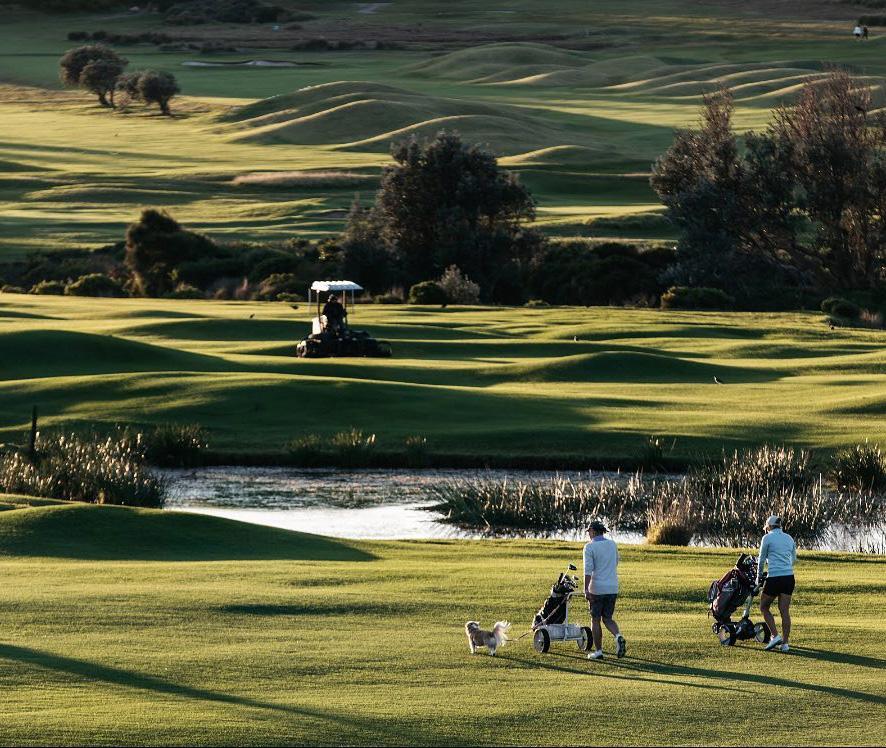
Council rejects Long Reef Golf Club’s $21m plans
LONG REEF GOLF CLUB has expressed disappointment in the Northern Beaches local planning panel’s decision to unanimously refuse the golf club’s $21 million redevelopment application.
“This decision is disappointing, particularly given the application was rigorously assessed and recommended for approval by Northern Beaches Council’s professional planning staff and an independent planning assessor,” general manager Ben Russell wrote in a recent members update.
The planning panel cited several reasons for its decision, including that the building would be too big and bulky for the coastal setting on community-owned land and there was insufficient information for the application to be considered properly.
Russell, however, rejected the latter.
“The club is of the view the majority of the technical matters raised by the panel, specifically those regarding site construction documentation have already been addressed through comprehensive documentation, technical reports and submissions lodged during the assessment process,” he said.
“The club maintained a collaborative relationship with Council throughout the process and understood the proposal met all necessary criteria for approval.”
Russell said the club will now assess its options, including an alternative development, but says master plan remains a key long-term project for the club.
“Our current clubhouse is approximately 60 years old and is no longer fit for purpose for the needs of our members, guests, staff, hospitality operations and broader community,” he said.
“The objective remains to deliver a modern, sustainable and high-quality facility that supports the club’s future and strengthens Long Reef’s role as a significant community asset.”
Mounties Care goes national MOUNTIES CARE, OWNED and operated by Mounties Group, has announced the national expansion of its subsidised home care support.
Up until now, Mounties Care has only provided its home care services in New South Wales, but with this latest announcement it will now support residents in Queensland, Victoria, the Australian Capital Territory, and soon Western Australia.
According to Mounties, the care it provides is subsidised at a fixed cost of $79 per hour, versus the industry standard of $100 through the Australian government’s Support at Home program.
“At a time when many other providers are increasing their fees following the changes with the Support at Home Program and the general cost of living is also increasing, Mounties Care is proud to expand our footprint and reach more Australians looking to maintain independence and access more affordable healthcare services,” Mounties Care GM of Health Rachelle Bernia said.
“This announcement builds upon the incredible work we do at Mounties Care to support our community directly and also through partnerships with established not-for-profit organisations in the health and wellbeing space who service our communities.”
The expansion announcement was made alongside aeromedical charities CareFlight and Little Wings, both of which receive funding support from Mounties Care.
Mounties Care has committed $18.7 million in funding to CareFlight’s New South Wales operations over a 15-year partnership, while Little Wings has received more than $345,000 since 2024.
“Funding commitment from profit-for-purpose organisations like Mounties Care is integral to ensuring the continued efficacy of emergency services such as ours, so we can safely and rapidly respond to Australians in critical conditions,” CareFlight CEO Mick Frewen said.
Little Wings CEO Clare Pearson added the partnership was helping improve access to healthcare for regional families.
“Our partnership with Mounties Care is transforming what’s possible for families in their hardest moments, providing not only vital flights and ground transport, but also reassurance, dignity, and connection to care,” she said.

Photo credit: Facebook/Long Reef Golf Club
Mounties Care expands interstate, while it continues its long-standing support for CareFlight and Little Wings.
Photo credit: Mounties Group
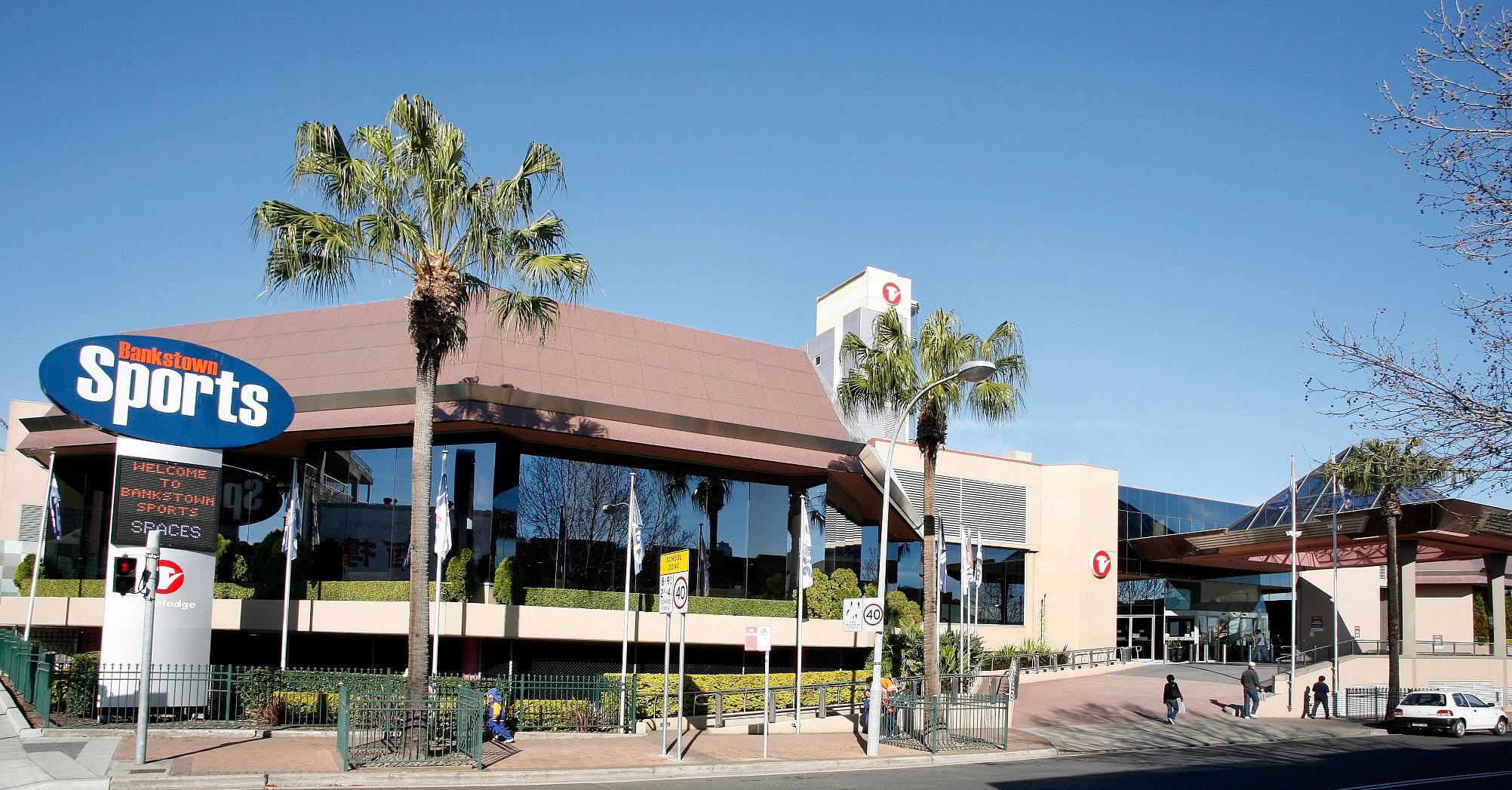
Austrac intervenes at Bankstown Sports over AML concerns
AUSTRAC HAS ORDERED Bankstown District Sports Club Ltd to appoint an external auditor, citing concerns the group’s anti-money laundering (AML) controls “may not be strong enough to stop organised crime from exploiting poker machines and gambling venues”.
The order was made after Austrac conducted a compliance assessment of Bankstown Sports Club, which raised concerns about the effectiveness of the assessment of risks the business faces and subsequent monitoring of customers.
Bankstown District Sports Club Ltd operates Bankstown Sports Club, The Acres Club, Bankstown Sports Bowls, Birrong Sports, Bankstown Golf Club, Baulkham Hills Sports, and Auburn Tennis Club.
Austrac said the order, made under section 162 of the AntiMoney Laundering and CounterTerrorism Financing Act 2006, requires an independent auditor to assess whether the group is complying with its AML/CTF obligations.
This includes whether the group has an effective, riskbased AML/CTF program to identify, mitigate and manage money laundering and terrorism financing risks.
The auditor will also examine whether the group has conducted an appropriate assessment of the risks posed by its customers, services and delivery methods, and whether there are adequate systems to monitor customers and identify suspicious behaviour linked to money laundering or terrorism financing.
Austrac acting CEO Katie Miller said clubs and pubs play an important role in preventing money laundering but can be easily exploited when controls are weak or warning signs are missed.
“In gambling venues, criminals may repeatedly insert cash into poker machines, engage in little or no genuine play, and then cash out – turning illicit cash into funds that appear legitimate,” she said.
“That’s why it’s critical clubs and pubs understand their risks, have strong controls in place and report suspicious activity.
“Where we see signs of systemic weaknesses, Austrac will intervene to protect the community and the integrity of Australia’s financial system.”
Bankstown Sports will have 180 days to deliver a report once an auditor is selected and approved by Austrac.
Austrac said the audit will not only assist the club to strengthen its AML/CTF compliance but also inform the financial watchdog whether any further regulatory action is required.
In a statement, Bankstown Sports said: “Bankstown Sports takes its regulatory obligations as a Registered Club in NSW extremely seriously, particularly in relation to key compliance responsibilities regarding anti-money laundering and counter-terrorism financing, responsible conduct of gaming and responsible service of alcohol.
“Our Board of Directors and CEO are committed to working closely with Austrac as part of the external audit process and we welcome the opportunity to demonstrate our capabilities in this space.”
This latest action by Austrac forms its ongoing regulation of the gambling sector, including civil penalty proceedings involving Mounties Group, an enforceable undertaking with online wagering provider Sportsbet, and an enforcement investigation involving Tabcorp.
Photo credit: Bankstown Sports Club

Club Willougby celebrates long-awaited reopening
CLUB WILLOUGHBY HAS officially reopened its doors, celebrating the milestone with two plaque unveilings and a ribbon-cutting ceremony marking the completion of its new three-storey venue.
The new club features a bistro, alfresco dining, sports bar, and venue and meeting spaces designed for community groups and special events. A Chinese seafood restaurant within the club is also set to open soon.
The redevelopment forms part of the $400 million Heart of Willoughby mixed-use precinct, a project more than a decade in the making since plans were first proposed in 2013. The precinct combines retirement living, aged care, retail and medical services alongside a 2,000-square-metre memorial park.
Club president Ves Campion said the reopening represented the culmination of years of planning and collaboration.
“We’re relieved that we’re finally here after all these years,” he told Club Management
“We’ve been in negotiations, meetings, and arguments about floor plans and layouts, so it’s a great relief to get this brand new chapter underway. It’s now about creating our own character and hopefully legend.”
The project was delivered in partnership with family-owned developer Hyecorp and includes 111 retirement apartments, aged care services and a range of community facilities.
Hyecorp managing director Stephen Abolakian said the development was designed to secure the club’s long-term future while strengthening its role within the community.
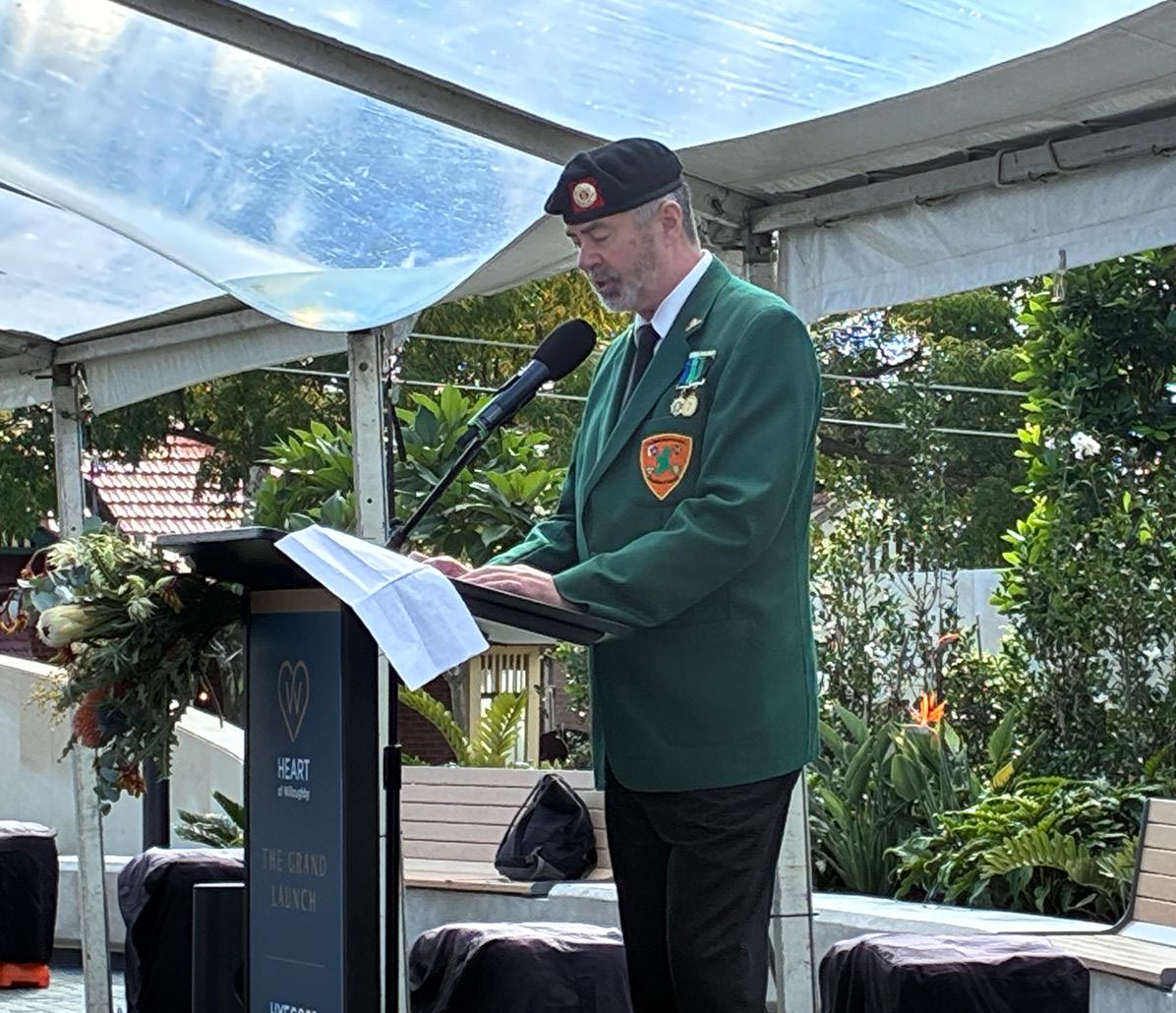
“For the club and the wider community, this project is about giving Club Willoughby a sustainable future and a new role at the heart of local life – a place to meet, eat, drink, celebrate and commemorate,” he said.
Abolakian said preserving the site’s history and military legacy was central to the development.
“This land carries the legacy of the Willoughby Legion Ex-Services Club and generations of veterans and families who have given us so much,” he said.
“From the beginning, we were determined not to shy away from that, but to place remembrance at the centre of the design through the sandstone remembrance area, the plaques, the memorial walk and the stories told along the boardwalk.
“We hope this garden and memorial walk will be places where people of all ages can pause, reflect and honour that service and sacrifice.”
Ribbon cutting by Club Willougby board, Hyecorp representatives, and state government and council dignitaries.
Club Willoughby president Ves Campion

Shattering the glass ceiling
Club Quirindi’s secretary manager Phillipa Fuller is on a mission to reshape workplace culture.
AFTER COMPLETING A Bachelor of Business Management majoring in human resources, Phillipa Fuller never imagined a career in the clubs industry spanning more than a decade.
“I sort of fell into hospitality,” she said.
But after realising her personal values aligned with the role clubs play in supporting communities, Fuller began building a long-term career in the sector. The path, however, wasn’t always straightforward.
Fuller said she encountered repeated barriers to progression throughout her career, describing “very thick glass ceilings” at multiple venues. Those challenges ultimately pushed her to pursue leadership roles, securing her first general manager position at Club Bombala before later moving to Club Quirindi.
Now at Club Quirindi, Fuller is focused on creating clearer pathways for staff, particularly women, through succession planning and traineeships.
“The saying ‘to move up, you’ve got to move on’ has been the case for me, but I want to change that,” she said.
Her leadership has also been shaped by becoming a mother shortly after taking on the role. Initially anxious about disclosing her pregnancy, Fuller said she was met with strong support from the board.
“I was petrified to tell the board... but their response was amazing,” she said.
That experience has influenced how Fuller approaches leadership at Club Quirindi. While balancing leadership and motherhood herself, often bringing her daughter to work, she said she is also trying to create a more flexible and supportive environment for staff.
“If there’s anything we can do to make life easier for people, we should,” she said.
While she believes the clubs industry is becoming more supportive of women in leadership, Fuller said more progress is needed.
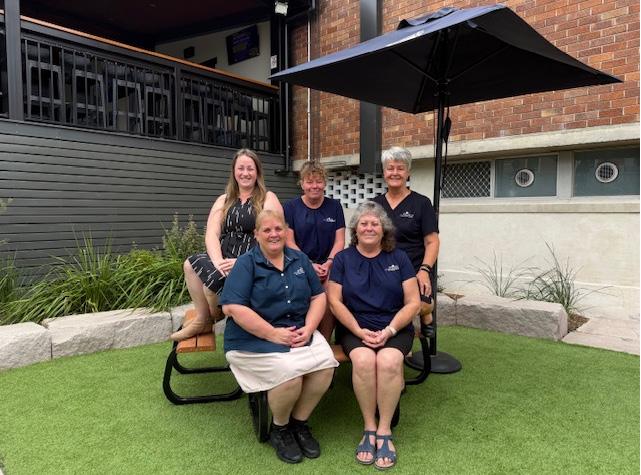
“Women in clubs are still few and far between,” she said.
Fuller credits much of her resilience to the support network she built along the way, particularly her mentor, former Club Wyong RSL CEO Angela Sanders, who remains a constant sounding board.
“Having someone in your corner who’s been through it before makes a huge difference,” she said.
Beyond her immediate support network, Fuller said regional manager networks and industry leaders have also played an important role in creating more inclusive spaces, even where female representation remains limited.
“I was often the only female CEO in the room, but I never felt excluded,” she said.
She also points to the visibility of women in senior roles as a critical driver of change, helping to normalise leadership pathways that were once harder to access.
“The more of us that are out there, the more it becomes the norm,” she said.
Phillipa Fuller is supported by a strong admin team.


Three hidden costs of AML/CTF non-compliance

A financial penalty may be the most visible fallout from an AML/CTF breach, but executive chairman of Identitii and former ASIC director of enforcement
Tim Phillipps argues it’s rarely the most damaging.

FOR MANY IN the clubs sector, AML/CTF noncompliance is viewed through one lens: the size of the penalty. AUSTRAC investigates, a penalty is issued, the number may make the news, and the business finds a way to pay it and move forward. It’s an uncomfortable outcome, but a contained one.
That version of events misses the bigger picture entirely, and industry leaders would be wise to acquaint themselves with just how far-reaching the costs of a significant adverse AML/CTF finding can be.
The penalty, as significant as it may be, is often the least complicated part that follows a finding of non-compliance. It is a known number, a defined liability. What comes next is harder to quantify and much harder to recover from.
Reputational damage
Few businesses are as deeply woven into the
fabric of their local communities as clubs. They often do incredible work to support and lift the communities that they serve. AML/CTF laws were designed to fight financial crimes, such as laundering the proceeds of crime, to protect these local communities and the wider Australian society.
While a penalty can be paid and a liability closed, brand and reputational damage doesn’t work that way and can be viewed as one hidden cost of a significant breach. If a breach is significant enough or the suspected crimes being committed in a venue are made public, a venue that spent decades positioning itself as the heart of its community can find that standing gone almost overnight as partners, customers, and even staff distance themselves from it.
Jeff Bezos, the founder of Amazon, famously said: “Your brand is what people say about you when you are not in the room.”

“Prudent and strategic investments that strengthen AML/CTF programs today can prove wise investments for tomorrow.”
For a club, that room is the local school, the sporting club canteen, or the neighbour’s back fence. A finding of non-compliance can change those conversations in ways no penalty payment can undo. With a brand often described as an organisation’s most valuable asset, it is worth taking brand damage into account when considering the real cost of non-compliance.
Operational disruption
The second hidden cost of non-compliance is the major disruption to operations that typically follows.
In my previous role as head of Deloitte’s global forensic and financial crime practice, I saw many businesses experience these disruptions firsthand. Board members, management and staff are moved on. New people are brought in. Technology platforms are replaced. Processes, systems and procedures are rewritten from the ground up. And through all of it, management and directors find their attention pulled away from running the business, toward fixing it. This process can last years.
An overhaul of operations is often voluntarily agreed to by a regulated business and AUSTRAC. Distinct from civil penalties, a regulated business and AUSTRAC may agree on an “enforceable undertaking” where the regulated business commits to specific remedial actions to address compliance shortcomings. This can include comprehensive program uplifts, independent reviews, and enhanced governance and monitoring.
Australian clubs do a remarkable job delivering their services and products in typically fast paced and challenging operating environments. A disruption to those operations is a real cost that is rarely publicly discussed but should inform the industry’s assessment of its level of investment and commitment to AML/CTF compliance.
The bills nobody budgets for
The third cost is the one that tends to surprise organisations most – not because it is unexpected in theory, but because few have ever modelled what it amounts to in practice. That is, hard costs – outside of penalties – that can result from a significant non-compliance issue.
I have seen the total costs of lawyers,
consultants, new technologies, staff, processes and procedures aimed at addressing issues stemming from a financial crime run into the tens of millions of dollars.
While that likely won’t be the case for the vast majority of non-bank Australian regulated business, it is worthwhile for organisations to include and model these costs in different scenarios. Not only will this raise awareness of the likely damages involved if serious breaches are found, but to inform a strong decisionmaking filter that can be used to assess whether further AML/CTF investments are worth the cost.
Prudent and strategic investments that strengthen AML/CTF programs today can prove wise investments for tomorrow. The consequences of a significant AML/CTF breach are broader than many organisations appreciate. Focusing on potential brand damage, operational disruption and the hard financial numbers will quickly reveal why a penalty alone tells only part of the story.
My advice to organisations that want to strengthen their AML/CTF compliance programs this year is to start by educating – or re-educating – their organisation about the real harm and social impact that financial crime has on the local communities that clubs serve. The financial crimes these laws are designed to prevent cause real harm to real people, many of whom walk through the doors every week. When that is seen and understood – warts and all – organisations often approach AML/CTF differently, with newfound enthusiasm across all levels.
When organisations genuinely want to be part of the fight, as most do, something shifts. They stop thinking of themselves as a regulated business ticking boxes and start thinking of themselves as part of a solution that helps protect their members and their communities. It’s also important to realise that organisations aren’t alone in this fight. Governments, compliance experts, the legal industry, and technology platforms are there to help.
In a sector built on community trust, the true cost of getting AML/CTF wrong is never just a monetary fine – but with a firm commitment, sector focused tools, and strong partners, getting it right can be very straightforward and rewarding.
Photo credit: iStock/JamesBrey
The Foyer
Brand news and promotions
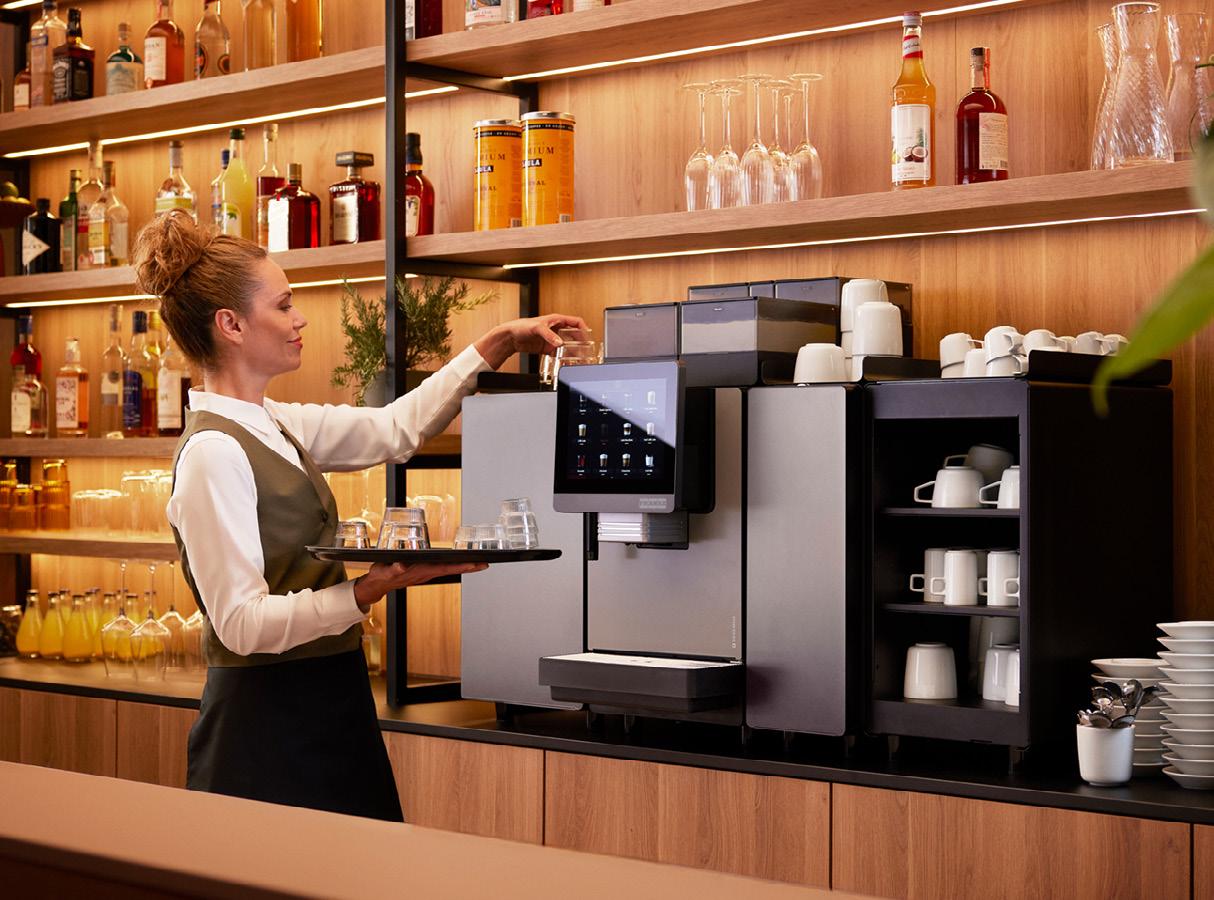
Franke’s New A Line awarded Red Dot Award: Product Design 2026
Franke Coffee Systems’ New A Line received the “Red Dot” in the Red Dot Award: Product Design 2026, recognising a design concept created to support intuitive operation, visual clarity, and consistent performance in professional coffee environments. In a competitive field of international submissions, the international Red Dot jury honoured the platform for its outstanding design quality and holistic approach.
The New A Line was developed with one clear priority: delivering consistently high, premium in-cup quality in professional coffee environments. Its design is not merely aesthetic – it is functional and performance-driven. Across clubs, hotels, restaurants, coffee shops, and high-traffic retail locations, operators must balance speed, customisation, and consistency.
The New A Line meets these demands through an integrated system architecture that combines advanced coffee brewing technology with intuitive operation, powered by FrankeOS and a structured, image-led user interface. Every element is engineered to safeguard premium beverage standards while simplifying workflows and reducing operational complexity. franke.com

Stay ahead of Payday Super changes for entertainers with Surreal
When Payday Super legislation comes into effect on 1 July, employers will need to pay employee superannuation at the same time as wages or invoices, rather than quarterly. These changes mean that venues booking regular entertainment may now be required to process superannuation contributions weekly, or even daily.
The changes impact anybody that carries a superannuation obligation to their sole trader entertainers, and the implications are significant. From collection of information, processing and error management to increased compliance expectations, the practical requirements of this legislation generate a significant increase in workload from existing obligations.
With this legislative change fast approaching, the hospitality and entertainment industries are getting ahead by understanding their superannuation obligations, making the connection to their own entertainment bookings, and considering what compliance looks like in practice post-1 July –from frequency and timing to record keeping.
Reducing the increasing workload associated with this legislative change, Surreal is already processing same-day contributions and managing superannuation payments for more than 1,000 businesses across Australia.
Surreal can also manage payments and contributions to other contractors – such as photographers, light and sound techs, security staff and cleaners – and the platform has recently added split payment and split superannuation functionality for bands and multi-member acts; simplifying the experience for hospitality operators. surreal.live

Photo credit: iStock/sturti
ALM On-Premise launches digital hub
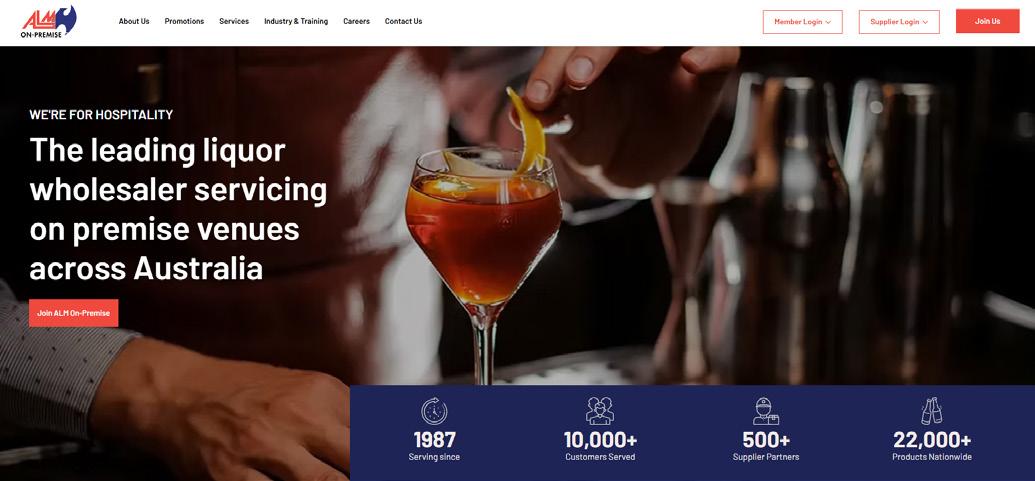
ALM On-Premise has launched a new standalone website, creating a centralised digital hub for customers and supplier partners across the on-premise channel.
This exciting platform brings together customer offers, services and an engagement tool into one destination, reflecting ALM’s broader strategy to deliver value beyond product and price. It also supports a shift towards a more connected, data-led model, while reinforcing the scale and capability of its parent company, Metcash.
The website provides clear access to promotions, value-added Metcash services and, over time, training and capability resources that support venue operators deliver their customer experience.
The new site provides a modern, user-friendly experience, while acting as a central hub for programs, insights and supplier activation opportunities. By consolidating these elements, ALM On-Premise will deliver more consistent communication and strengthen its presence within the on-premise channel.
ALM On-Premise digital marketing manager Deborah Barrese said: “The new website is all about strengthening our offer: delivering clear communication, real value and meaningful support for both our on premise customers and supplier partners, while strengthening the ALM On-Premise brand in a fast evolving digital environment.”
The launch marks a step forward in ALM On-Premise’s digital capability, positioning the business as a more connected and futureready wholesaler.
almonpremise.com.au

Cherryhub, BNDRY roll out AML/CTF platform
Cherryhub and BNDRY has partnered on a new anti-money laundering and counter-terrorism financing (AML/CTF) technology platform.
The compliance solution, which formally launched mid-last year, combines Cherryhub’s club member-data infrastructure with BNDRY’s financial crime compliance technology and is being positioned as a tool to help clubs strengthen AML/CTF processes amid increasing regulatory scrutiny across the sector.
Originally developed for global financial institutions including Mastercard and HSBC, BNDRY’s platform has since been adapted and purpose-built specifically for Australian clubs and pubs.
“Venues have been waiting for an AML/CTF compliance solution that speaks their language – practical, connected and built for the way they run,” stated Cherryhub co-founder and executive director Amanda Makryllos.
The system automates and stores know-your-customer (KYC) checks, risk ratings, investigations, transaction monitoring and compliance reporting in a single platform.
BNDRY chief executive John Rayment said technology will play an increasingly important role as venues continue to strengthen their AML/CTF compliance programs.
“Many clubs and pubs are taking a proactive approach to their AML/CTF programs, but may be dealing with manual processes, systems that don’t talk to each other, and fragmented data that is harder to reconcile and access than it should be,” he said.
“The combination of Cherryhub’s reach and member-data foundations with BNDRY’s technology provides a one-stop solution to all of those challenges, which ultimately means businesses may run more efficiently and have substantially more confidence in their AML/CTF programs.”
bndry.net
Adrenalen Group introduces Adrenalen Edge platform
Adrenalen Group has announced the launch of its newest venture, Adrenalen Edge, a new commercial platform designed to accelerate the adoption of new technologies across venue, sports, and live experience industries.
Adrenalen Edge is focused on identifying high-potential technology, deploying it through its network, validating it against real operational challenges, and scaling successful solutions across the industry to address the gap between innovation and real-world deployment.
The first product to be announced by Adrenalen Edge is SportEdge, a white-label in-venue viewing and screen management platform.
Features of SportEdge include intelligent content scheduling, real-time on-screen tickers, promotions engine, and the ability to manage tipping competitions and leaderboard updates.
“The platform removes the guesswork and manual effort involved in deciding what to show, when to show it, and how to align it with promotions,” stated Adrenalen Group CEO Mark Sturdy.
“By combining live sports data, venue-specific insights, and seamless screen control, SportEdge ensures every screen is working harder, driving engagement, increasing dwell time, and maximising revenue.” adrenalen.com.au
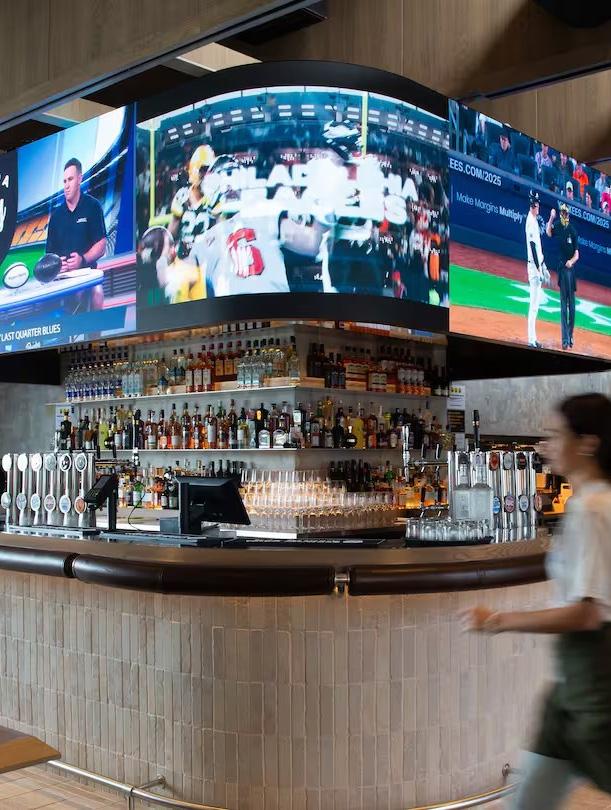
Photo credit: iStock/Supatman
The Bar
Drinks news and promotions
Tap into flavour innovation with Matso’s Vodka Pash Pine Crush
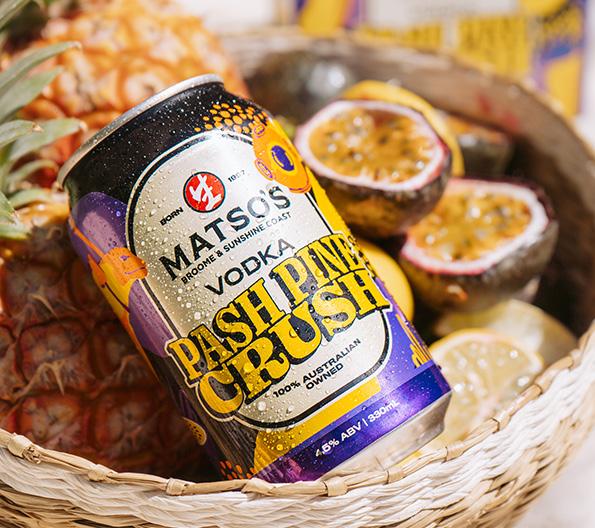
After a hugely successful summer in its canned format, Matso’s Pash Pine Crush is now available nationally on tap. The second SKU in the Crush series, the Pash Pine release moves taste trends on from citrus into the nostalgia of tropical flavours.
The flavour innovation has hit the right note with the Australian public. Pash Pine Crush blends premium vodka with real passionfruit and pineapple, delivering a tropical flavour hit that’s both sweet and sessionable.
Pash Pine Crush is Good Drinks Australia’s fastest selling NPD, with the company selling five months’ worth of stock in six weeks.
“Matso’s Vodka Pash Pine Crush exceeded all expectations over summer, and with expanded distribution and taps pouring nationwide, the tropical wave is only just getting started,” stated Mick McKeown, GM of sales and marketing at Good Drinks.
For venue managers who are looking for the next flavour to help their taps work hard for their establishment, Pash Pine Crush hits all the right notes.
gooddrinks.com.au
Breaking Barrels is breaking spirits conventions
Australia’s spirits landscape is being shaken up by Breaking Barrels, the first brand to hit the market from Everstill Spirits a portfolio built to challenge traditional conventions around spirit ageing and how they’re defined.
Matured in just 30 days using proprietary steel barrel technology, Breaking Barrels delivers the depth and character of aged whisky, without the wait. With no added colours or flavours, it may look, taste, and drink smooth like a 20-year-old... but it’s proudly ‘Not Whisky’.
Luis Senra, Everstill CEO said: “Until now, delivering this level of quality meant long ageing times – and higher costs that pushed up price. With Breaking Barrels, we remove the wait and deliver the same depth and smoothness at a far more accessible price point. Breaking Barrels is distilled using traditional methods, just like most dark spirits – but it’s the maturation that sets it apart.”

On the palate, Breaking Barrels is bold yet refined, offering layers of vanilla, caramel and spice wrapped in an exceptionally smooth mouthfeel. It’s approachable for new drinkers, yet complex enough for any seasoned whisky fan.
Additional Everstill products are set to be released in the coming months, including Canesnap Dark Cane Spirit and Golden Hour Aged Vodka, each showcasing how Steel Barrel technology can be applied across categories to create distinctive, modern spirits.
Available in 200ml, 700ml and 5lt containers for on-premise. breakingbarrels.com.au
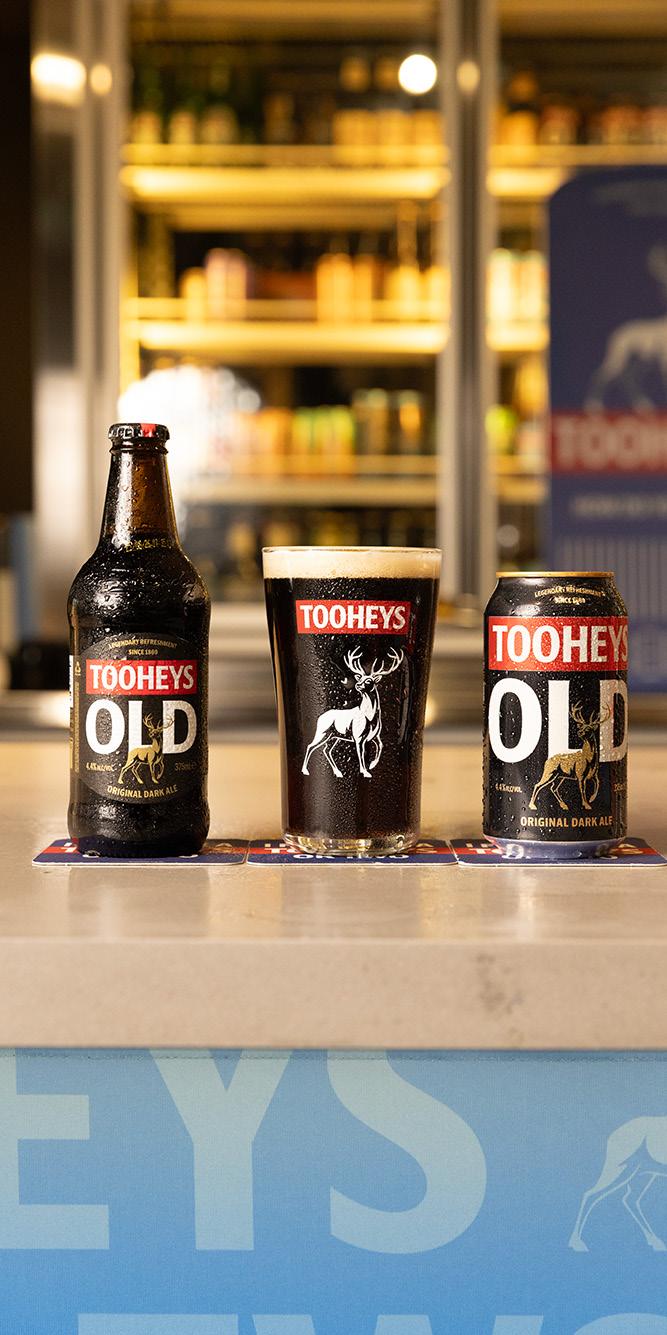
Tooheys Old returns to cans
Tooheys has announced the highly anticipated return of Tooheys Old Dark Ale in 375ml cans. The launch marks the first time in decades that the heritage brew has been available in the canned format, following overwhelming demand from its loyal consumer base.
First brewed in 1869, Tooheys Old has been a mainstay of Australian pubs and clubs for over 150 years, maintaining a dedicated following for its unique top-fermentation process and roasted malt profile.
“Tooheys Old is a legend of the Australian brewing industry, and its fans are arguably the most passionate in the country,” said Karen Sterling-Levis, brand director of core beer at LION. “For years, the question wasn’t if we should put Old in a can, but when.
“We’ve listened to the pub talk and social media comments, and we’re stoked to finally say ‘yes, it can.’”
Tooheys Old Dark Ale (4.4% ABV) retains its signature chocolate and roasted coffee notes, derived from the use of black malt during the brewing process. lionco.com
Aperol unveils refreshed bottle design
Campari Group has introduced a refreshed bottle design for Aperol, reinterpreting the aperitivo’s iconic look through a contemporary Italian design lens. The evolution signals a new chapter for the brand while remaining true to the visual codes that have made Aperol instantly recognisable around the world.
Aperol has reimagined its bottle design to celebrate its iconic story from a local Italian aperitivo created in 1919 to a global icon of modern aperitivo culture. The rippled glass around the bottle’s shoulder puts the radiant, instantly recognisable orange liquid at the centre stage. The more refined silhouette takes the cues of elegance and balance from Italian architecture. A smaller front label steps back, giving the spotlight entirely to the recognisable orange.

“This new bottle is a celebration of what has always defined Aperol,” said Andrea Neri, managing director house of aperitifs. “It reflects our Italian roots while bringing a more contemporary expression to an icon enjoyed around the world. Every detail has been carefully considered to enhance the Aperol experience and reaffirm the brand’s place at the heart of modern Aperitivo culture.”
The new bottle will be available in Australian retail stores and online from July 2026. camparigroup.com

Serve up award-winning Tassie single malt with Callington Mill
As drinking habits continue to evolve, and the typical drinker prefers value over volume, the desire for quality whisky sub$100 is becoming ever more present. Welcome: Callington Mill’s Enigma Single Malt Tasmanian Whisky.
The Enigma expression is aged in ex-Sherry casks from Jerez de la Frontera and ex-Port casks from the Douro Valley, and Tasmanian terroir is held with the utmost reverence. Callington Mill sources only local barley while the pristine Tasmanian air and water leave their own mark. The premium dram, in only double-digit dollar territory (RRP $99), has been picked up in both ALM and Paramount for nationwide distribution, representative of a truly Tasmanian experience.
Speaking about the Enigma expression, founder John Ibrahim said: “Oatlands is an agricultural dream. It really is the best place in Australia to distil whisky. We want to bring our Tassie drams to the mainland. We are so glad to see our ongoing Dan Murphy’s listing, alongside our new national distribution. Hopefully you’ll see our Enigma pop up in more bars and bottleshops, from far north QLD to WA!”
Callington Mill has garnered countless globally acclaimed awards that Callington Mill in its short seven years, including Australia’s Best Single Malt Whisky at the San Francisco World Spirits Competition for its Pedro Ximénez, and similarly for its innovative Amphora-rested Single Malt at the World Whiskies Awards earlier this year.
Callington Mill is now available through ALM and Paramount.
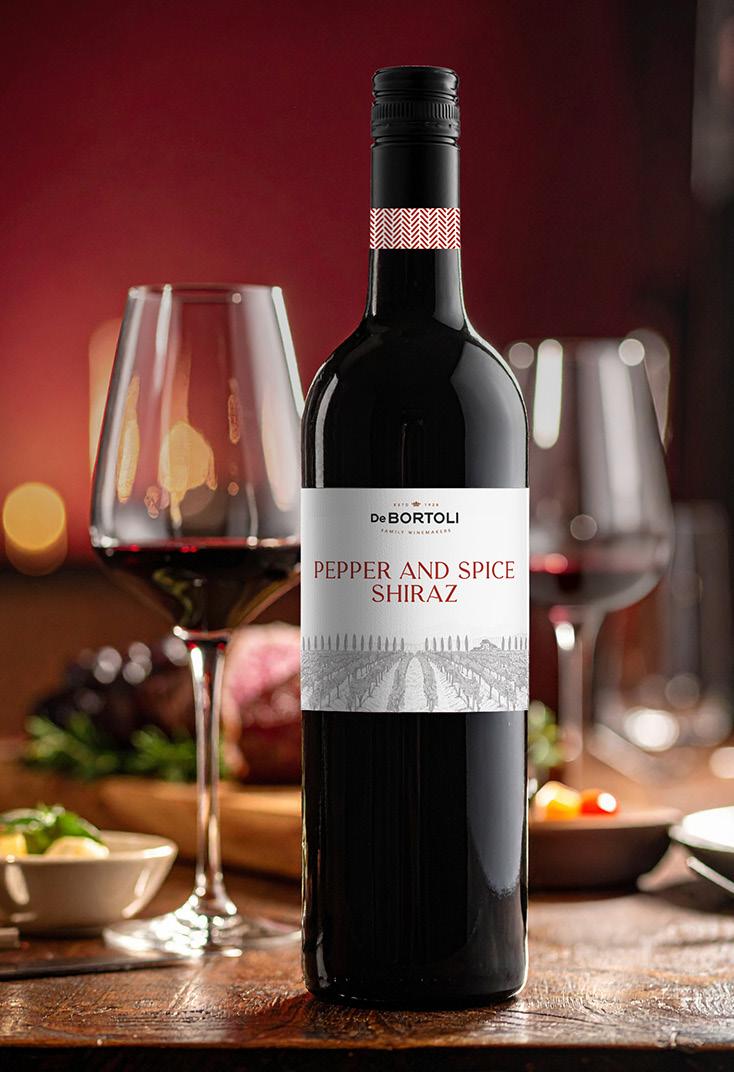
Shiraz still reigns with De Bortoli’s Pepper & Spice
De Bortoli Wines is expanding its successful flavour-led range with the release of Pepper & Spice Shiraz, a bold, aromatic red that leans confidently into everything Australians love about Shiraz and delivers exactly it. The release builds on the success of Buttery Chardonnay, the first wine in De Bortoli’s flavour-led range, marking the next chapter in its flavour-led approach.
Australians continue to favour bold, flavour-driven Shiraz, a style Pepper & Spice Shiraz embraces with confidence. Bursting with juicy plum and blackberry, cracked black pepper and warm spice, it is balanced by a smooth, generous finish that makes the second glass inevitable. Deep maroon in colour, it opens with lifted dark fruit and spice aromatics before delivering a concentrated palate of blue fruits and subtle chocolate. Coating tannins provide structure and length while maintaining approachability.
Winemaker Roberto Delgado said the intention with the wine was clear from the outset. “Shiraz is Australia’s signature red, and we wanted to create a wine that celebrates everything people already love about the style. With Pepper & Spice, we didn’t want to shy away from intensity. We wanted to embrace it. It’s bold and full-bodied, but it finishes smooth. It’s a wine with presence.” Ideal for sharing and casual occasions, it pairs seamlessly with grilled meats, roasted dishes, hearty pasta, pizza or burgers. debortoli.com.au
On The Big Screen
Fixtures and matches that will pack out your sports bars

FIFA World Cup 2026™ fever
The FIFA World Cup 2026™ will capture the attention of football fans from 11 June to 19 July, with clubs perfectly placed to cater to supporters tuning in during the late-night and early-morning kick-offs. The tournament will feature a record 48 teams, the biggest expansion in World Cup history. As the tournament progresses into the knockout stages, anticipation is expected to build around whether the Socceroos can progress beyond the group stage. With dramatic finishes and penalty shootouts almost guaranteed, the month-long spectacle is set to keep football fans glued to every match. Catch it all on SBS.
Blues and Maroon face off
The 2026 State of Origin series is set to deliver another huge showdown, with Game II heading to the Melbourne Cricket Ground on 17 June before the series wraps up with Game III at Suncorp Stadium on 8 July. After the Queensland Maroons claimed last year’s series, all eyes will be on whether they can go back-to-back or if the New South Wales Blues can respond under pressure. Origin remains one of the biggest nights on the sporting calendar, making it the perfect excuse for clubs to fire up the big screens, roll out food and drink specials, and pack the venue with footy fans. Watch it on Nine.

Make it an ace serve
The world’s best tennis players will descend on the grass courts of the All England Lawn Tennis and Croquet Club when Wimbledon Championships returns from 29 June to 12 July. The two-week grand slam is shaping up as another blockbuster, with Italy’s Jannik Sinner looking to continue his rise following the withdrawal of two-time champion Carlos Alcaraz due to a wrist injury. In the women’s draw, Iga Swiatek headlines a field that also includes former winner Elena Rybakina. Wimbledon presents an ideal opportunity for themed promotions and longlunch screenings. Watch it on Nine and Stan Sport.

Image credit: SBS
Image credit: NRL Images

Go for gold
The 2026 Commonwealth Games will see more than 3,000 athletes from 74 nations descend on Glasgow for 10 days from 23 July to 2 August. Featuring the largest integrated para-sport program in Commonwealth Games history, the streamlined 10-sport event will include everything from athletics, swimming and cycling to netball, boxing, bowls and 3x3 basketball. With more than 200 gold medals on the line, Glasgow 2026 is expected to deliver wall-to-wall action and plenty of reasons for sports fans to head to clubs to catch the competition live.
Catch all the action on Seven.

Get into the swing of things
The US Open Championship will return to New York’s Shinnecock Hills Golf Club from 18–21 June, with the world’s best golfers set to take on one of the sport’s toughest and most iconic courses. Known for its slick greens and unpredictable coastal winds, Shinnecock Hills is expected to test every aspect of a player’s game as the game’s elite fight to stay under par and keep their US Open dream live.
Watch it on Foxtel and Kayo Sports.
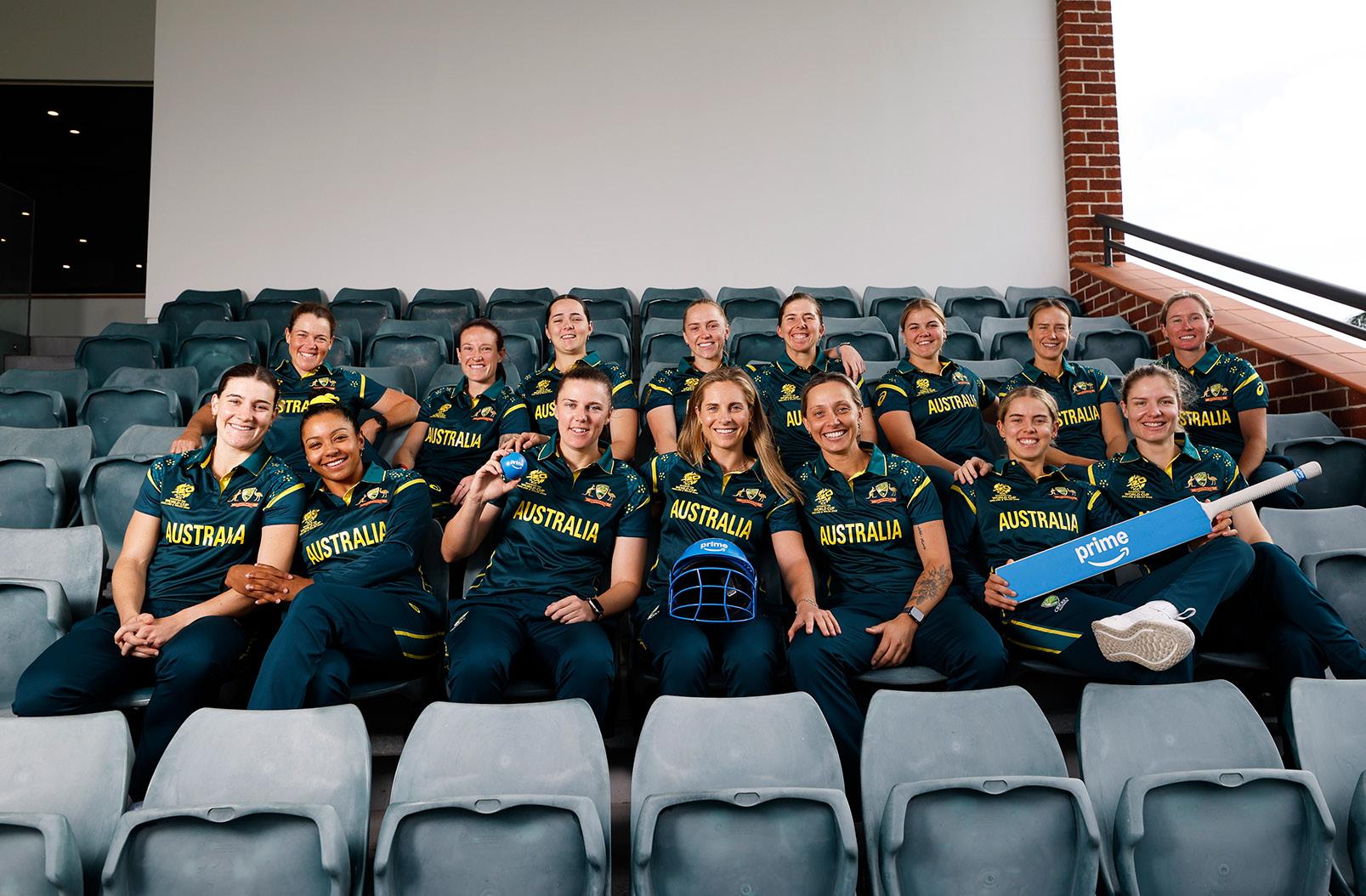
Women’s T20 World Cup bowls over fans
The ICC Women’s T20 World Cup will bring the world’s best cricketers to England and Wales from 12 June, with 12 nations battling it out across 33 matches in the tournament’s 10th edition. Led by all-rounder and new captain Sophie Molineux, Australia women’s national cricket team will be chasing a record seventh title as they attempt to reclaim the trophy from current champions, New Zealand, who won in 2024. The tournament culminates with the final at Lord’s Cricket Ground in London on 5 July. Tune in on Prime Video.
Image credit: Seven West Media
Image credit: Foxtel
Image credit: Amazon
The long game

Marlene Shipley wasn’t meant to be CEO. More than 30 years later, she’s still leading St Marys Diggers and Band Club.
IT WAS AN ordinary morning in 2006 when Marlene Shipley, thensenior operations manager of St Marys Band Club, received a phone call that would redefine her career. She wasn’t at work that day. There had been no warning, no succession plan in motion, just a sudden request from the board: “We need you here in the morning to take over [the CEO’s] office”.
“I thought, ‘Oh my goodness, what has happened?’” she said.
It wasn’t a role she had been preparing for, at least not consciously. And yet, over three decades later, Shipley remains at the helm of St Marys Diggers and Band Club, after it all began with a chance opportunity.
In 1993, Shipley began looking for something closer to home in Sydney’s western suburb of St Clair, having just wrapped up work on the Sydney Harbour Tunnel project and was being seconded to another role elsewhere.
“There was this tiny ad in the local paper, advertising for someone in the finance department, but no mention of who the company was. I reached out… and it was St Marys Band Club,” she recalled.
At the time, working in clubs didn’t carry the same professional weight it does today.
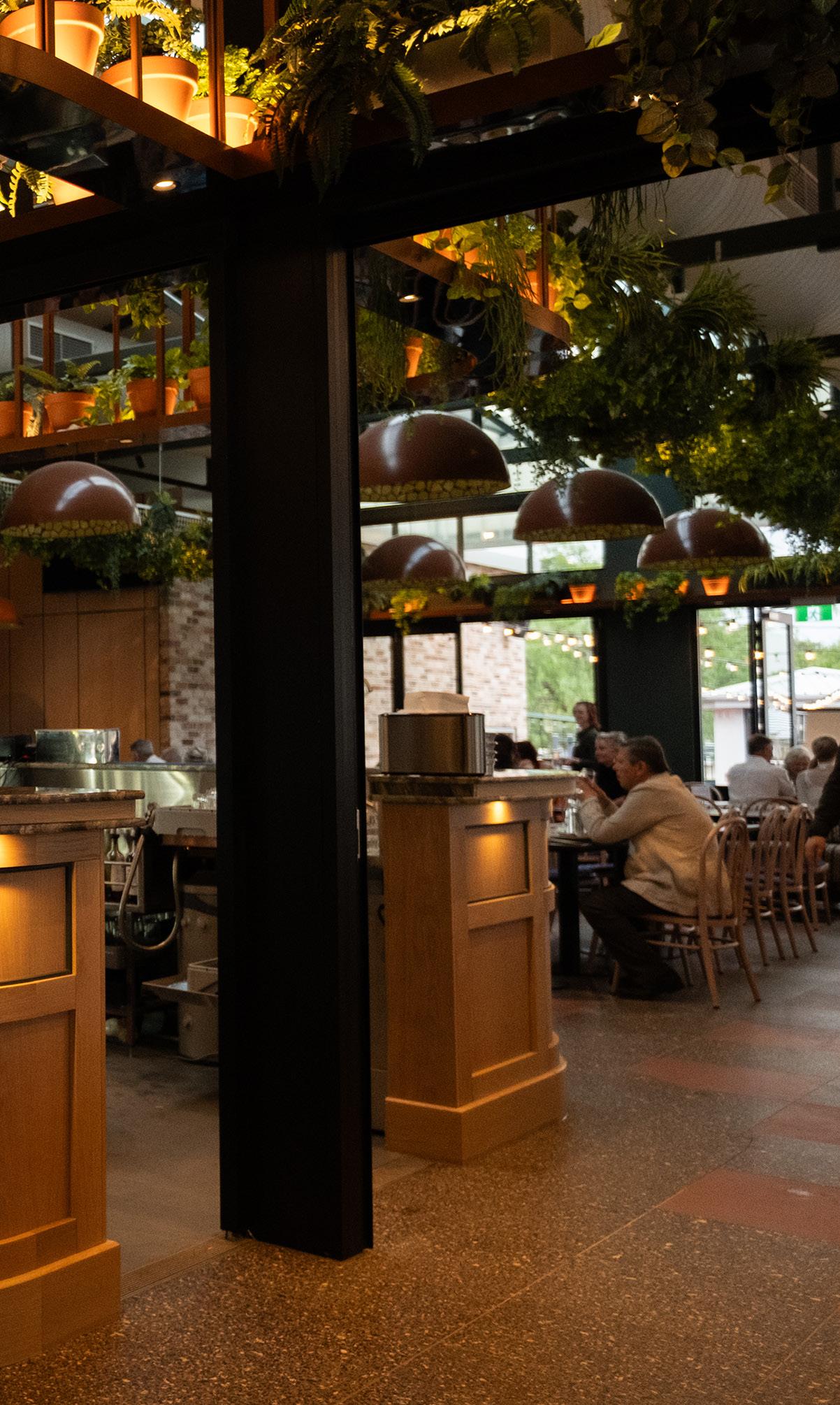
“It probably wasn’t the most professional industry to work in back then, which is disappointing, because it has come a long way,” she said.
Still, Shipley saw an opportunity and took it. What followed was a steady rise through the ranks, moving from finance into operations and eventually to interim CEO. When the CEO position was formally advertised in 2007, Shipley hesitated.
“At the time, I thought I couldn’t possibly apply for it, because I’d have no hope,” she said.
The board at the time was largely male-dominated, and the industry itself was even more so. But encouragement from the single female director and her husband shifted her thinking.
“They were both like ‘What have you got to lose? Just apply. If you’re not successful, then you’re not successful. But you won’t regret that you haven’t applied.’”
She took their advice and, after a rigorous recruitment process, secured the role.
Looking back, Shipley often reflects on how quickly the time has passed. “It’s actually really hard to believe that it has been that long. I honestly feel like I’ve been here for five minutes sometimes.”
A rocky road
Shipley’s early days as CEO were no easy feat. The club was under financial strain at the time; it was operating with a significant overdraft, and even meeting payroll was a weekly concern.
wherewhen I inherited the balance sheet. I used to have to call the bank on a Tuesday morning to have our payroll processed,” she said.
Compounding the issue was a poorly performing property investment that the club owned. Selling the land immediately would have crystallised losses, so Shipley took a longer view and got it rezoned.
“That block of land was not sold until 2013. It was a struggle,” she admitted.
For years, the club operated under that weight. “I used to think that we would end up closing our doors or having to amalgamate with another club,” Shipley said.
In the end, St Marys Band Club amalgamated with St Marys Diggers Club, which was also facing its own financial challenges Finalised in late 2019, the merger was a strategic move designed to unlock long-term growth, particularly through access to larger land holdings and development opportunities.
But the amalgamation process was far from straightforward. “Cultural clashes, different club identities, traditions and leadership styles. That created a lot of friction,” she said.
“I still think it’s a bit of a boys’ club, but I do think it’s changing very slowly… is it changing fast enough? I don’t know.”
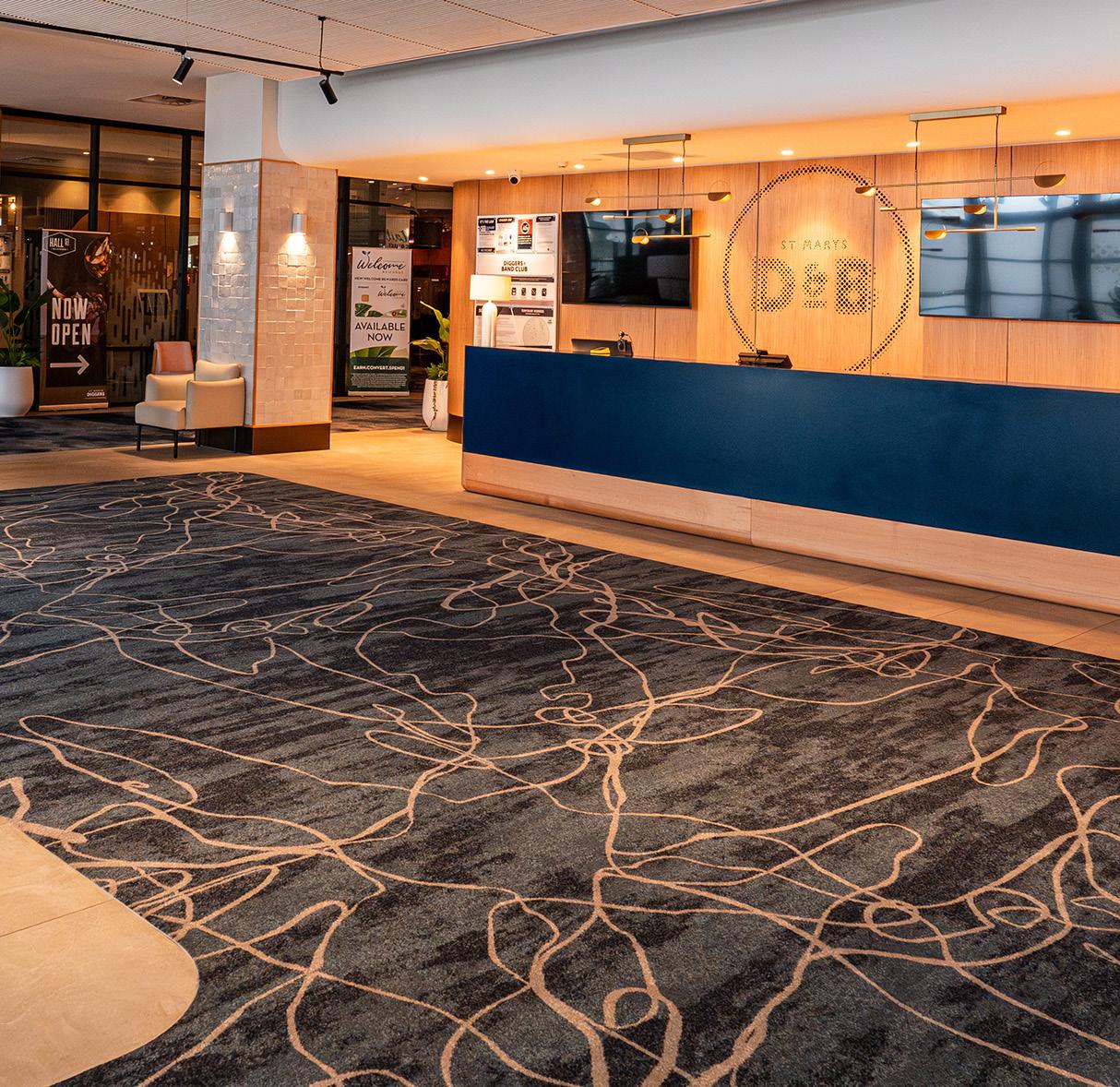
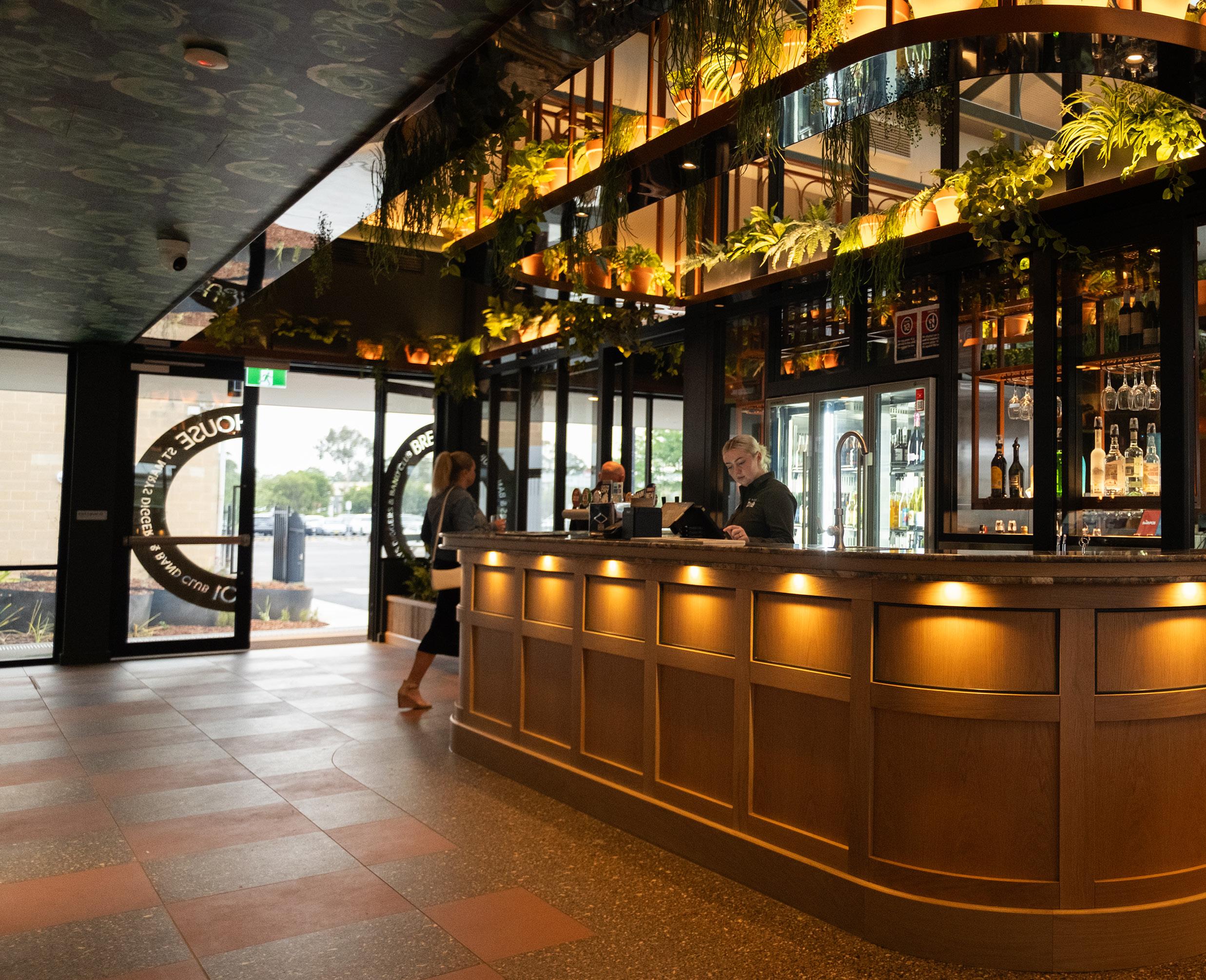
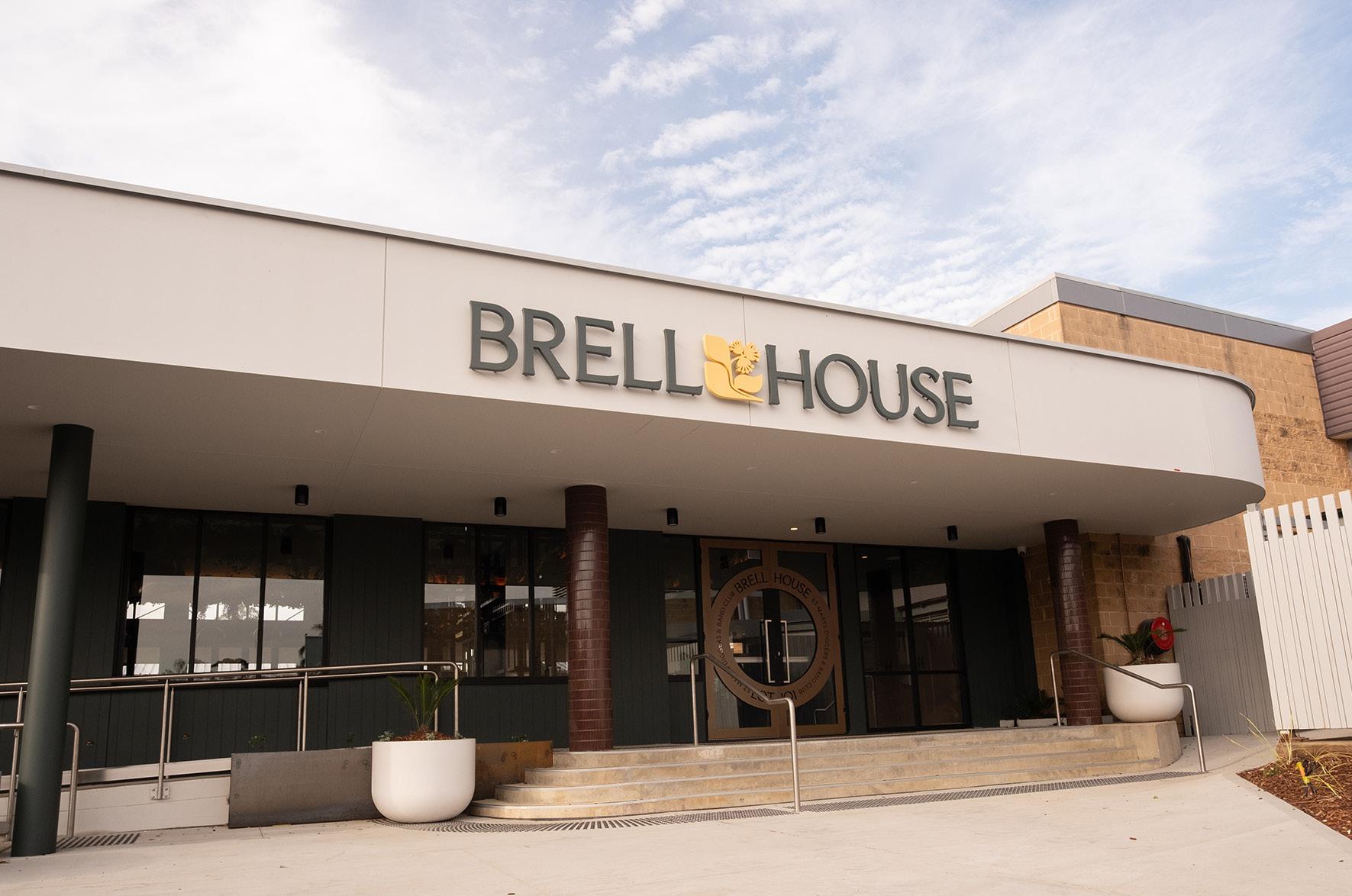
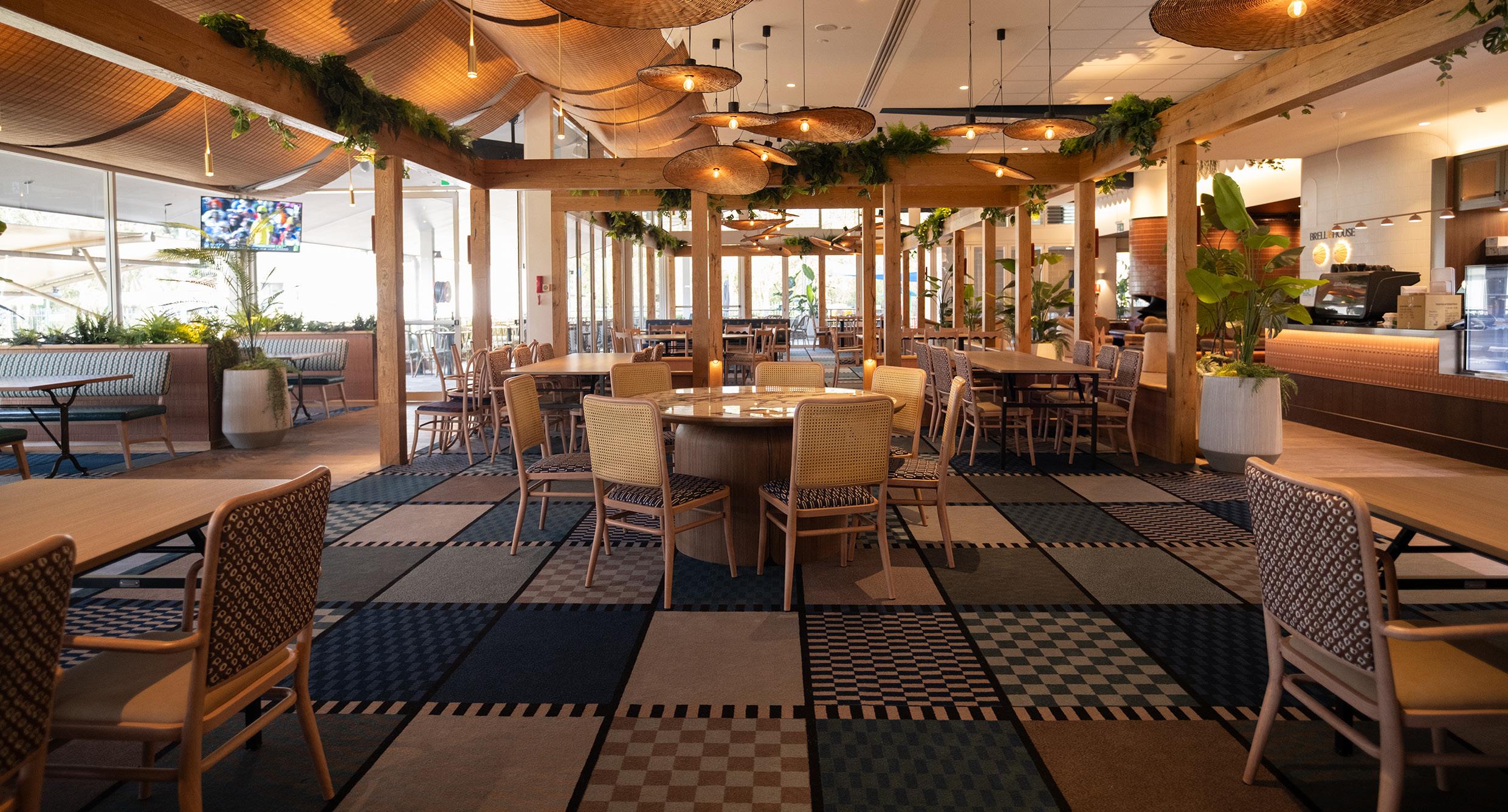
Brell House was launched last September as the club’s upmarket offering.
Image credit:
St Marys Diggers and Band Club
Members were not universally supportive either. “There was member resistance. For example, we had a lot of people who felt their loyalty to their original club and couldn’t extend it to the other,” she said.
“The patron that sits in that same seat, that same club was like, ‘What are you doing to this place? You’re going to kill it.’”
Even at board level, the idea was initially rejected. However, that didn’t deter Shipley, who approached the situation with patience rather than force. “I remember saying to [the club president], it’s not my job to tell you whether you should do it or not, but it’s your job to look at it and make a decision based on what’s best for the club.”
The amalgamation was also a turning point for Shipley personally. “I remember saying to my husband, if the amalgamation doesn’t happen, then it’s time for me to move on because I needed the challenge,” she said. “I also knew that it was the right thing for the club to continue to grow.”
Ultimately, through careful planning, the club, which became St Marys Diggers and Band Club, stabilised and began to grow. “We have evolved and have moved forward, and we are successful at what we’re doing. I don’t have one single regret,” Shipley said.
Today, the contrast is striking. “We’ve just funded $4 million of our renovation out of cash flow … [and] we’re sitting on year-todate of $2.5 million in net profit,” Shipley said, proudly.
A people-first approach
Throughout her career, Shipley resisted the idea that leadership is about control. Rather than directing outcomes, she believes her role is about facilitating discussion, bringing her board and team into the decision-making process.
“I’m not a dictator; I like to collaborate. I’ll go into the boardroom with some ideas and have an open discussion. I give my board an opportunity to talk through things and work it out for themselves. We usually all come up with the right answer at the end,” she said.
This style has also helped Shipley navigate being a woman in a male-dominated industry. Early in her career, she admitted to finding the environment intimidating and often avoided networking.
“It’s actually really hard to believe that it has been that long. I honestly feel like I’ve been here for five minutes sometimes.”
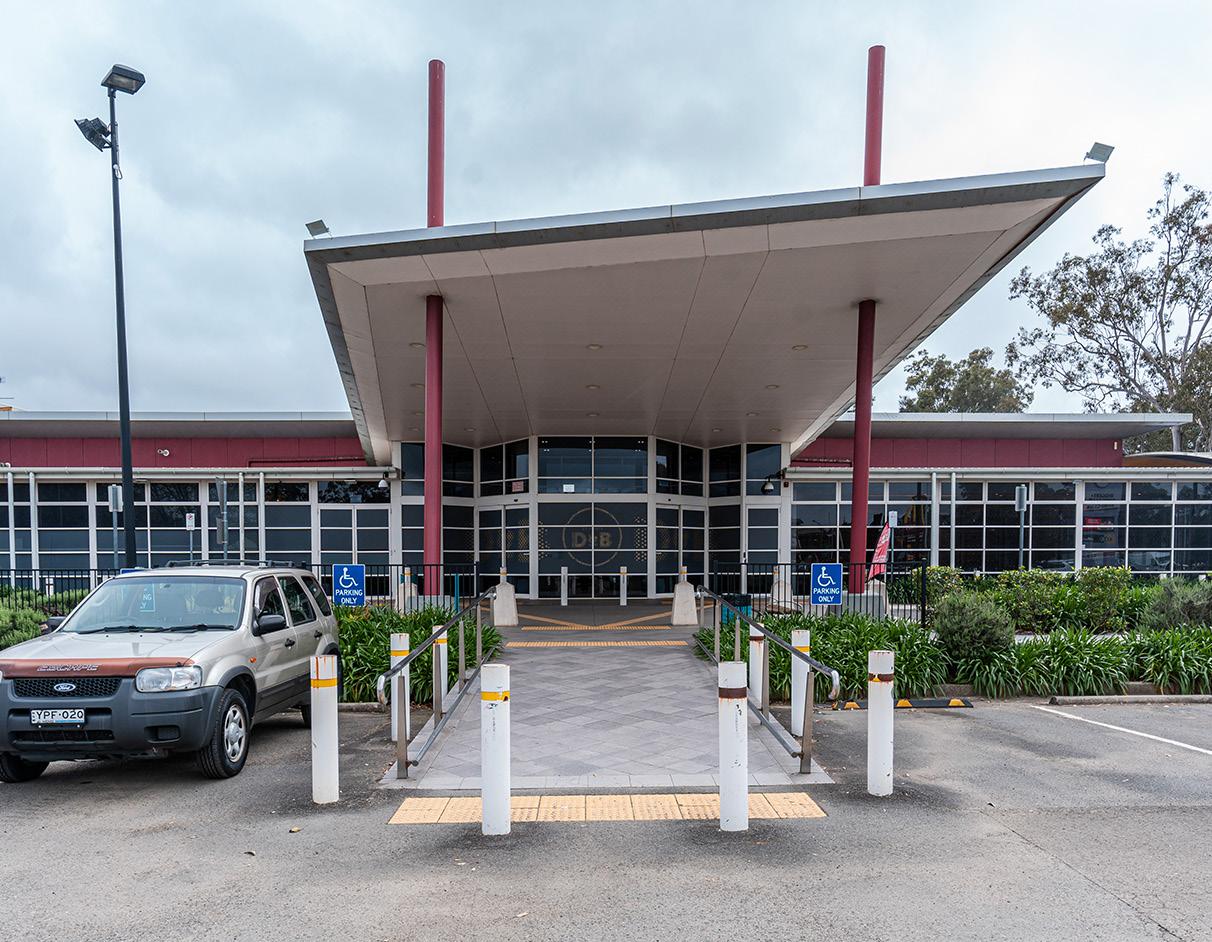
“I just didn’t feel comfortable. I wouldn’t network or mix with the other CEOs. I tended to just come in and do my thing and not get out there,” she said.
Over time, support from male peers helped shift that.
“There are a couple of really great male CEOs who extended their hand and would call me to say, ‘How are you going? If you need anything, we’re here,” Shipley explained. “So, I started to become comfortable with that, and I found that I would reach out and do a little bit of networking because they were encouraging me to do that.
“I found that in the end, I wasn’t actually seeking advice; sometimes I just needed an ear with somebody that understood what I was facing or what I was working through. It was just support, which I found valuable.”
While she believes the gender imbalance in the industry is changing, she is realistic about the pace. “I still think it’s a bit of a boys’ club, but I do think it’s changing very slowly…is it changing fast enough? I don’t know.”
Her advice to other females in the industry is grounded and practical. “Just be you. Don’t try to think you have to be another manager at another club.”
The club, formed in 2019 through a major amalgamation, marked a turning point for Shipley.
Keeping up with the times
Despite the club’s success, Shipley is clear that challenges remain. Regulatory pressures, particularly around gaming compliance, continue to evolve and demand attention.
“It’s just getting harder and harder,” she said.
Diversification is another ongoing focus, though she acknowledges the complexity. “We all talk about diversifying… but that’s not as easy said as done.”
Staffing has also emerged as a major issue in the post-COVID environment. Even the club’s newest venture, Brell House, which launched last September as the club’s more upmarket offering, has faced operational challenges tied to workforce availability and retention. “You can’t get a duty manager because everybody had an opportunity to reassess what they were doing, their family life, and the hours they work,” she said.
For Shipley, the future is about continued evolution. The club is currently exploring development opportunities linked to its land holdings and its proximity to major infrastructure projects, including the Western Sydney Airport.
“We’re working with a town planner, we’re working with council, and we are working with architects to try and come up with what suits what we’re doing here,” Shipley said.
“I can’t even tell you at this stage if it’s going to be seniors’ living, or whether it’s going to be a hotel … because we haven’t got that far, but we are very seriously working on that plan.”
Beyond the CEO role
But just in case running a club wasn’t enough, Shipley’s commitment to her local community extends well beyond the club’s four walls. Over the years, she has taken on roles across local
organisations, including business and health-related boards, and even served as a councillor. These roles have allowed her to engage with local businesses, support initiatives, and contribute to broader regional development.
Balancing these commitments alongside a CEO role has required discipline, but for Shipley, it comes down to motivation. “When it’s something you really want to do, you just find time.”
Her connection to the community is also what continues to drive her in her primary role.
“I’m up every day and come to work and love the club and love the people and do what I do,” she said.
Eventually, she knows she will step away. When she does, her measure of success will be simple.
“I’d love to be able to walk out of here and just hold my head up for the next person to come in and keep doing good for the club and the community.”
Pictured on this page:
The club’s newly renovated interior.
Explore innovation at AGE 2026
The Australasian Gaming Expo (AGE) returns in 2026 as the premier destination for hospitality and venue professionals looking to stay competitive, informed, and connected.
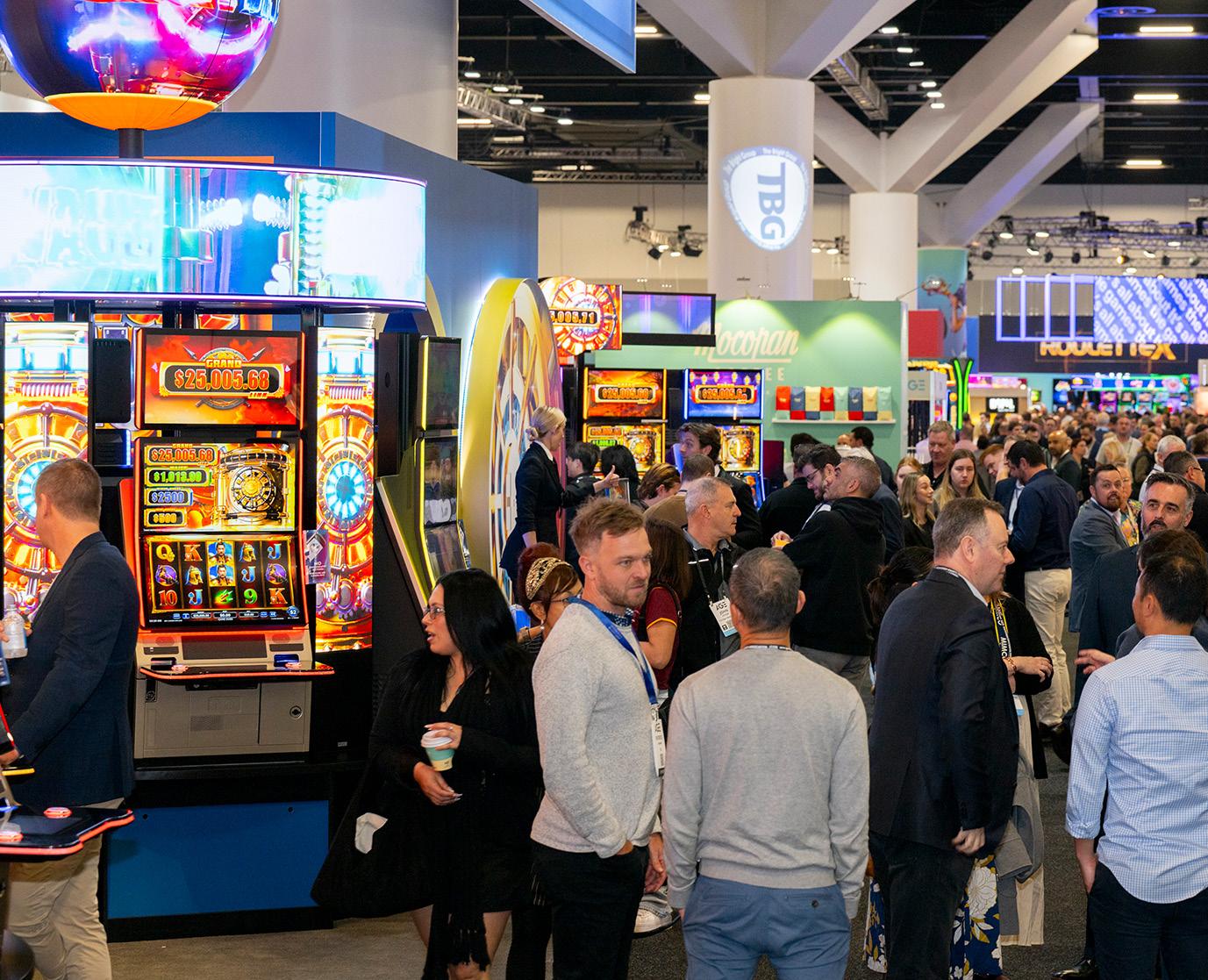
TAKING PLACE FROM 11-13 August 2026
at the ICC Sydney Exhibition Halls 1-4, the Australasian Gaming Expo (AGE) brings together people, products, and ideas shaping the future of clubs, hotels, and hospitality venues across Australia and beyond.
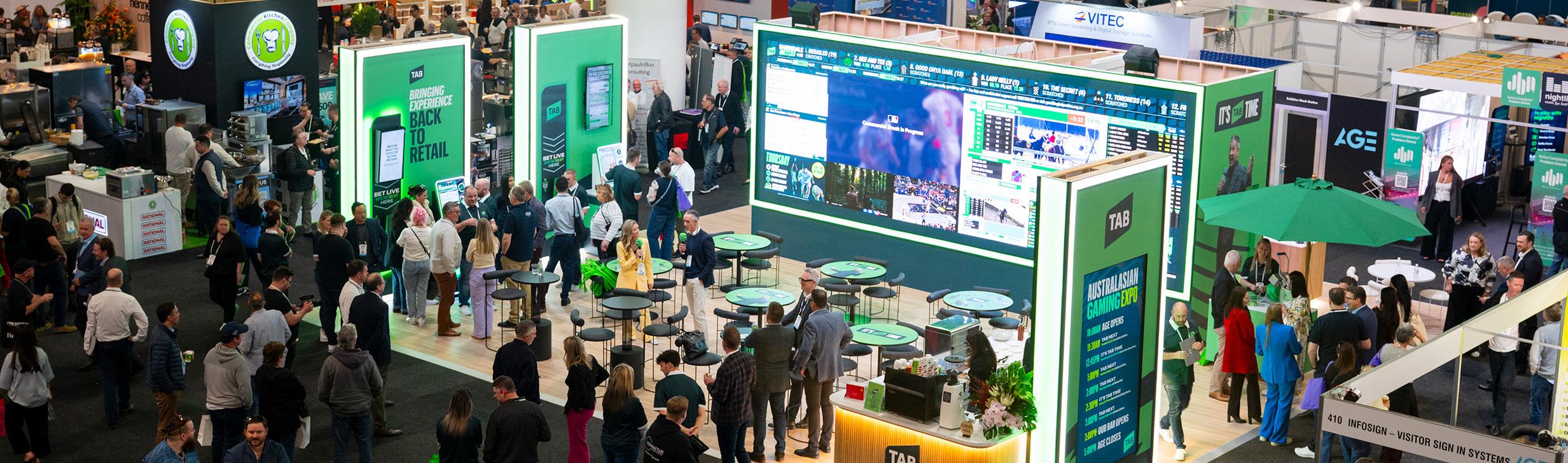
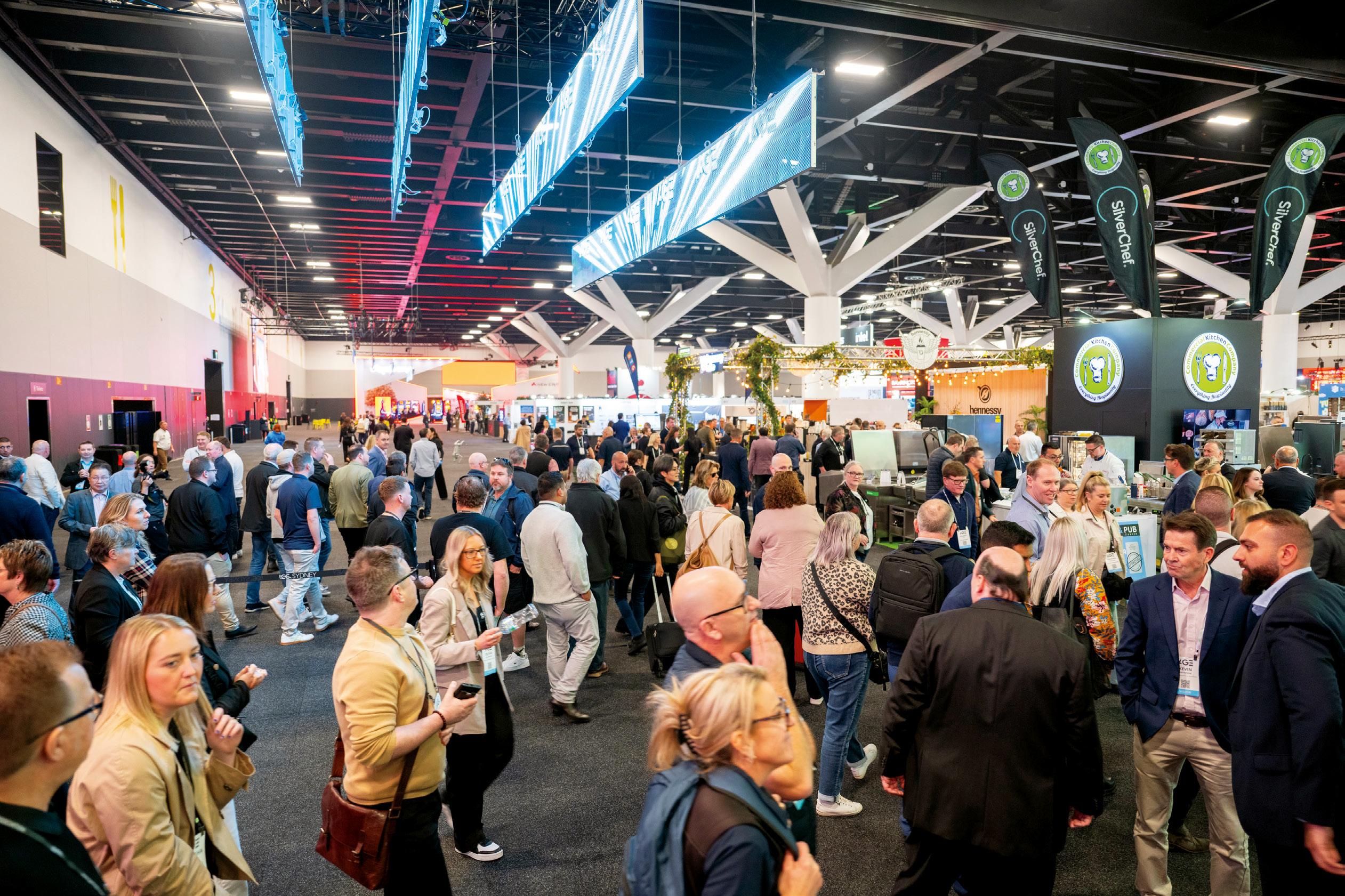
Recognised as the largest event of its kind in the country, AGE will once again welcome more than 200 exhibitors and thousands of industry professionals across three dynamic days. For venue operators, managers, and decision-makers, it is an efficient and highly valuable way to explore new suppliers, compare solutions, and gain insights that can be applied directly to day-to-day operations.
“The Australasian Gaming Expo continues to play an important role in bringing the industry together, providing a space to share ideas, explore new technologies, and have meaningful conversations about the future of our sector,” Gaming Technologies Association CEO Jinesh Patel said.
The latest on display
The expo floor is designed to deliver practical outcomes. Visitors can expect to see the latest innovations in gaming technology, food, and beverage equipment, point-of-sale systems, signage, lighting, furniture, security, payments, and venue fit-out solutions. Whether you are planning a refurbishment, upgrading systems or exploring new revenue opportunities, AGE provides direct access to the suppliers and expertise that can support your next move.
“What makes AGE valuable is the ability to see solutions in action and have direct
conversations with the people behind them. That level of access is difficult to replicate elsewhere,” Patel said.
“Exhibitors continue to invest significantly in the event, and that commitment reflects the importance of face-to-face engagement in this industry.”
Conversations that matter
Beyond the exhibition, the AGE Seminar Series offers an added layer of value. Developed to address the most relevant challenges and opportunities facing the industry, the sessions will cover leadership, operational efficiency, workforce development, and emerging commercial strategies. Each seminar is designed to be concise, practical, and immediately applicable, making it easy for busy professionals to gain insights without stepping away from the show floor for long periods.
Networking is still one of the main reasons people attend. AGE creates a focused environment where meaningful conversations happen naturally. From reconnecting with existing suppliers to meeting new partners, the event brings together a broad cross-section of the industry in one place. It is an opportunity to exchange ideas, benchmark your operations, and discover what other successful venues are doing differently.
Plan your visit
Entry to AGE is free to industry professionals, but registration is required.
By registering in advance, visitors can save time on arrival, receive updates, and access key information to help plan their time at the expo. The venue, ICC Sydney, offers convenient access via public transport and is surrounded by a wide range of accommodation and dining options, making it easy to attend for a few hours or across multiple days.
For those looking to maximise their visit, it is recommended to review the exhibitor list ahead of time, identify priority suppliers, and allocate time for seminar sessions. With so much to see, a well-planned schedule ensures you make the most of every moment on the show floor.
The Australasian Gaming Expo continues to be where industry connections are strengthened, new ideas are discovered and business decisions are made. If you are involved in running or supporting a hospitality venue, this is an event that delivers real value.

Register now to attend AGE 2026
Dates: Tuesday 11 August to Thursday 13 August 2026
Location: Halls 1-4, ICC Sydney, Exhibition Centre
Register: www.austgamingexpo.com
Exhibitor Spotlight
Here’s a sneak peek at what some of the AGE 2026 exhibitors will be showcasing.

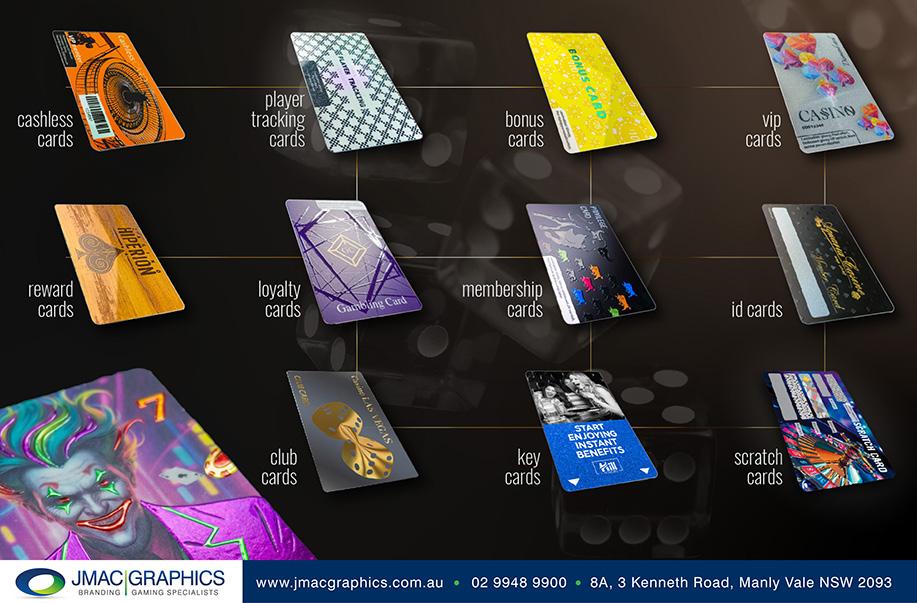
Create loyalty with custom membership cards
Create a stronger first impression with premium custom loyalty and membership cards from Jmac Graphics. Each are designed with superior finishes for elegance and prestige.
Available in magstripe, RFID contactless and contact formats, the cards can be customised with a range of high-end specialty finishes including:
• Pearl, gold, and silver effects
• Transparent and hologram
• UV varnish - gloss and matte
• Lamination - gloss and matte
• Embossing, debossing and indenting
• Hot stamp foil and other effects
Stand out from the competition and impress your members with a high-quality card they will want to hold on to and present when visiting your property. This means less reprinting of cards saving you time and money.
With competitive pricing, fast turnaround time and support, customised cards will become an asset and a marketing tool for your property.
Visit Jmac Graphics at Stand 734.
Upgrade your gaming floor security with MIWA Locks
Snapped or lost a key? Avoid compromised security and lost revenue. MIWA Locks are a game changer for machine doors and casino tables.
MIWA Locks deliver superior operational performance and antipicking protection through advanced sidebar technology. Designed to fit all machine doors, cash boxes and bill validators, the locks provide a versatile security solution for gaming venues.
The user-friendly reversible, bi-directional key design allows for smooth insertion and removal with minimal binding, reducing key wear and extending product life. The turning direction can also be changed in the field for added flexibility.
When changing the key code on the lock, the tail and cam remain in the locked position, thus maintaining security and improving efficiency. MIWA Locks also offer approximately 650,000 practical key combinations for enhanced protection.
Additional security comes from a patented key ward system that prevents unauthorised duplication, with master keys cut exclusively in Japan. Keys are manufactured from durable nickel-silver and are backed by a lifetime warranty.
Learn more about MIWA Locks by visiting Jmac Graphics at Stand 734.

Exhibitor Spotlight
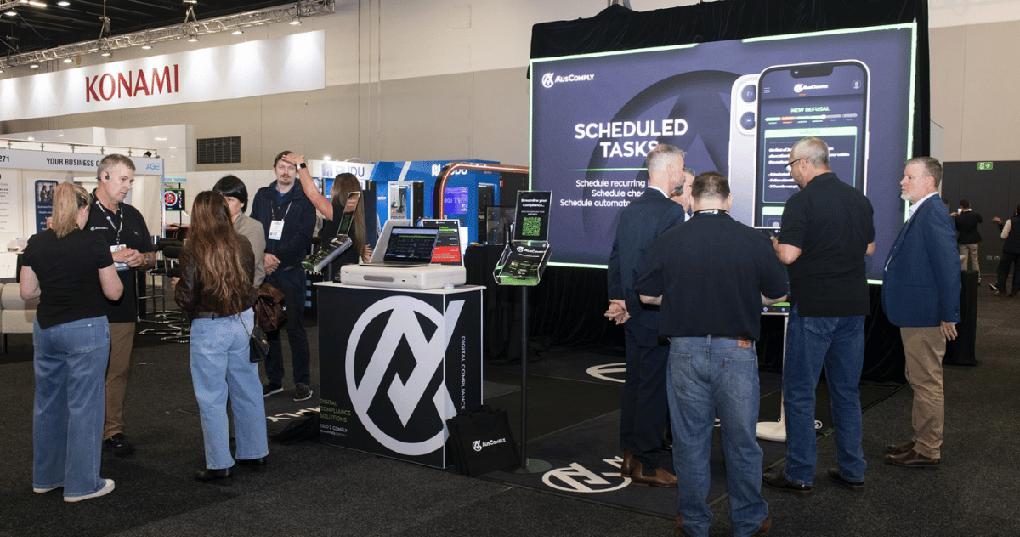
Streamline compliance with AusComply
AusComply is helping hospitality and gaming venues simplify compliance, strengthen operations, and stay ahead of evolving industry requirements. Built specifically for the hospitality sector, AusComply delivers a mobile-first platform that streamlines incident reporting, digital checklists, risk management, staff processes, and venue oversight, all-in-one place.

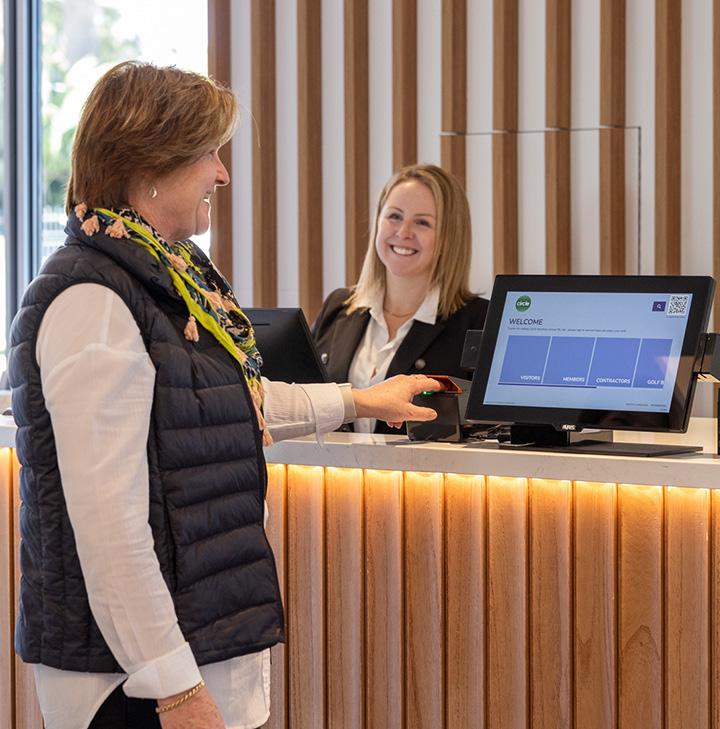

Gain a full circle view
For 25 years, Circle Solutions has been at the forefront of visitor management for clubs and RSLs and Circle 2.0 represents the next evolution. Circle 2.0 streamlines the entire member and guest sign-in process through intuitive touchscreen kiosks or QR code web sign-in, delivering fast, compliant entry while reducing staff workload. The system captures visitor data in real-time, supports responsible gambling compliance, and integrates seamlessly with existing club management software.
Trusted by hundreds of venues across Australia, AusComply empowers teams with real-time visibility, automated workflows, and smarter compliance tools designed to reduce risk and improve operational efficiency. From incident management and task scheduling to facial recognition integrations and AML/ CTF solutions, AusComply’s platform is built to adapt to the changing needs of the industry.
As regulatory expectations continue to evolve, venues need practical, reliable technology partners more than ever.
Visit Stand 250 to see how AusComply can help your venues modernise compliance and operate with confidence.
ANALYTIQ is turning member data into decisions
Most clubs are sitting on a wealth of member data they can’t access. Operational reports are product-specific, dashboards are locked behind analyst-only systems, and by the time insights surface, the moment to act has passed.
Challenge That’s propriety analytics platform, ANALYTIQ, changes that by putting all member data in one place.
Built on cloud-centric architecture, Circle 2.0 is smart technology that is easy to manage and scale, backed by strong industry partnerships, real-time alerts, and proactive software and hardware monitoring.
Key features include digital guest registration, automated ID scanning, membership verification, and comprehensive reporting dashboards, giving venue managers complete visibility over foot traffic and compliance obligations.
Ongoing innovations. Smarter solutions. Visit Circle Solutions at Stand 530.
Built specifically for pubs, clubs and hospitality venues by a team that has worked in the industry, it’s a reporting and analytics platform that puts member-level intelligence directly in the hands of your whole team. So, there’s no SQL, no analysts, no waiting.

From gaming performance and tier movement to promotions analytics and F&B reporting, your marketing, operations and venue management teams get the visibility they need, when they need it. The AI query engine lets anyone ask plain-English questions and get structured, downloadable answers instantly.
ANALYTIQ gives your team the tools to make confident, data-driven decisions every day.
Find out more about ANALYTIQ by visiting Challenge That at Stand 471.

Exhibitor Spotlight
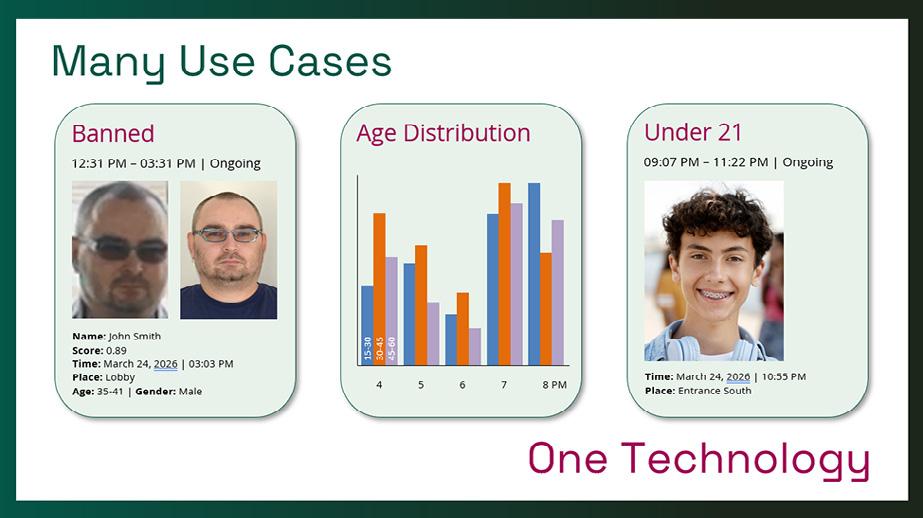

Face recognition technologies for underage and security alerts
Augment your security measures and ease staff duties with real-time notifications for banned, self-excluded and underage patrons!
Cognitec’s FaceVACS-VideoScan supports fast response times and intervention, and acts as a deterrent for barred people who consider entering again in the future. Clubs and pubs can also use the technology to quickly check in members, VIPs and preregistered guests without looking at ID documents.
As a bonus, the software analyses faces to produce statistics about people count, age, gender, and movement. Monitoring visit lengths, for example, enables casinos to fulfill their host responsibility, as the system identifies and alerts staff to persons who have overstayed their time in the gaming areas.
Cognitec’s products deliver industry-leading face matching speed and accuracy, along with a top-performing age estimation algorithm. The German technology is used extensively by both the Australian government and commercial enterprises, supported by an expert team in Sydney.
Visit Stand 670 to find out more.

Reliable POS when you need it most
SENPOS creates tailored point-of-sale ecosystems featuring POS terminals, tablets and integrated online ordering.

The latest release is SENPOS’s signature handheld POS device, SENPOS GO. It brings you an even more intuitive all-in-one solution, on top of already existing features, including built-in EFTPOS, membership integration and faster customer service.
SENPOS’s fresh Kitchen Displays are another valuable addition to your SENPOS system, ensuring even the busiest of commercial kitchens can keep pace with the flow of orders. Minimise delays, prevent communication breakdowns and increase order accuracy thanks to key features like an all-day count sidebar, multiple preparation statuses, group pass function and more.
SENPOS has pioneered point-of-sale technology in Australia for over 30 years, collaborating with our customers to enhance front and back of house operations, whilst keeping pace with industry relevant software integrations, such as staff management, accounting and purchasing software, among more.
Additionally, customers can benefit from an Australian support team for training and timely help year-round, crucial for peak trade periods, plus in-house software development. From first demonstration through to installation, our team create a seamless experience that makes transitioning to SENPOS simple.
Meet SENPOS at Stand 48 to see a demonstration and discuss your tailored solution.
Konami Australia’s big reveal
There’ll be an exciting reveal at this year’s AGE. Konami Australia is gearing up to showcase some of its biggest developments yet. Konami Australia has been hard at work creating fresh experiences, refining cutting-edge technology, and building a lineup of new games designed to deliver even more impact on the floor!

Come check it out at Stand 390 and discover more about what the company has been working on, including a major AGE reveal you won’t want to miss!


Exhibitor Spotlight


Make every chip count
From gaming chips to payment chips, every interaction in your venue should count.
At this year’s AGE, Next Payments will be showcasing how one connected technology ecosystem can help venues streamline operations, strengthen compliance, enhance patron engagement and future-proof every corner of their business.
Returning with a completely new stand experience, visitors can explore interactive product zones, discover the latest technology enhancements and experience firsthand how Next Payments connects every part of the modern venue.
From cash management to venue intelligence, loyalty, reconciliation and cashless gaming, our integrated ecosystem is designed to optimise everything from staff-facing to customerfacing operations - all through one trusted partner.
Because with the Next Payments chip, one partnership unlocks endless possibilities.
Visit Stand 240 and discover how far your chips can take you.


Onyx Gaming powering successful gaming floors
Onyx Gaming partners with pubs and clubs across Australia to simplify gaming and support more consistent long-term performance.
From Gaming-as-a-Service and financing models through to gaming systems, compliance, loyalty, patron engagement and business intelligence, Onyx Gaming brings together the operational and commercial elements of gaming into one structured model.
Backed by real venue experience, Onyx Gaming helps venues modernise gaming floors, reduce complexity and realise longterm investment decisions.
Visitors to the Onyx Gaming stand can explore:
• Gaming as a Service
• Funding and investment models
• Gaming performance strategy
• Loyalty and patron engagement
• Trac Gaming System
• Reconciliation and BI reporting
• Prize-based jackpot solutions
Visit the team at Stand 225 to explore a different approach to gaming for your venue.



Why reliable live sport still matters
Live sport remains one of the most powerful ways for clubs to create memorable in-venue experiences and build patron loyalty.

THERE’S NOTHING QUITE like tuning into game day at your local club. The tension of a close fourth quarter, the roar after a match-winning try, and the atmosphere that only live sport can create are all part of what keeps fans coming back.
For clubs, delivering that experience has never been more important with the NRL and AFL seasons now in full swing.
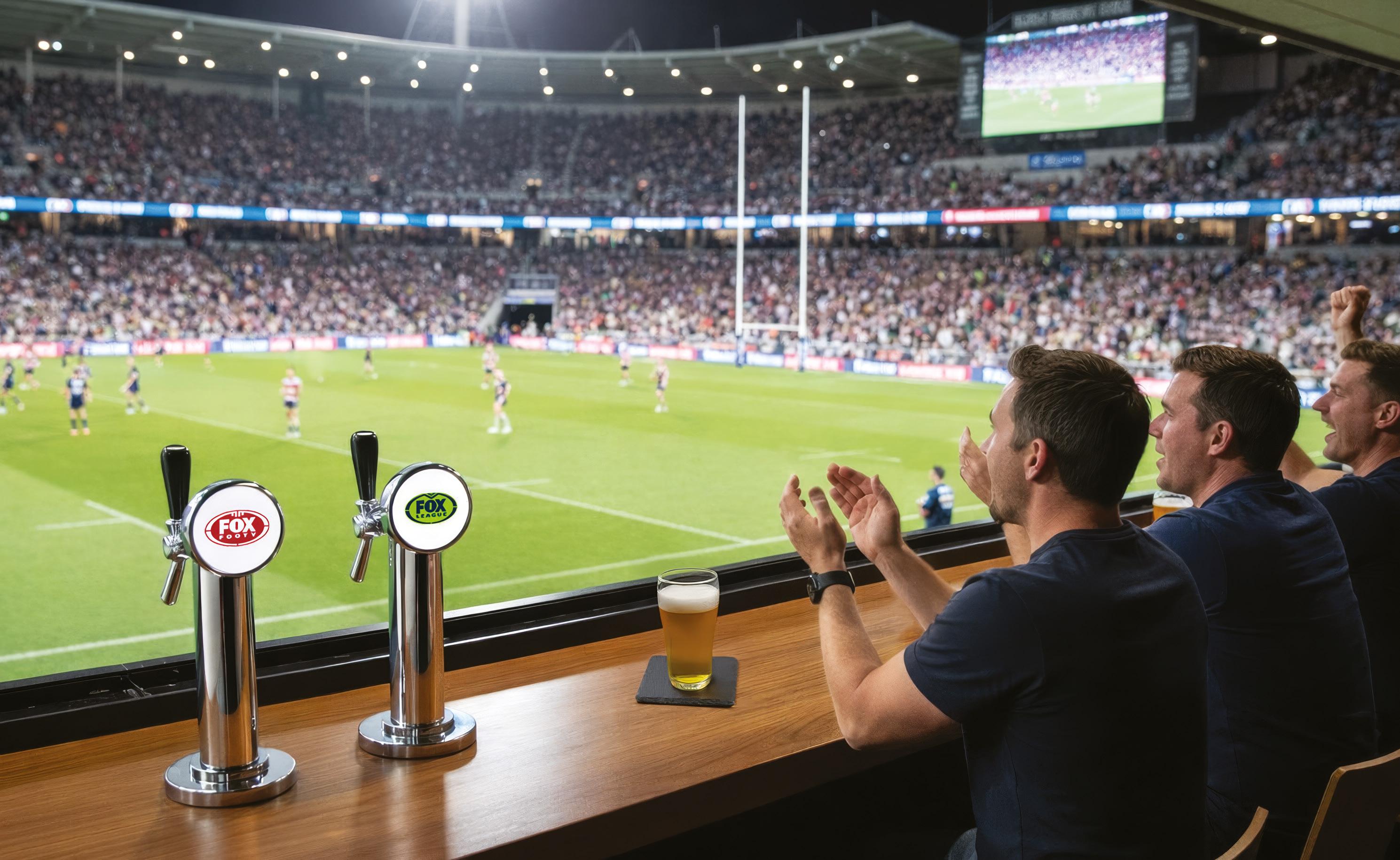
The good news? It’s not too late to ensure you’re showing every game of every round. Some of the biggest games of each round are exclusive to Fox Footy and Fox League so if you don’t have a Foxtel Business subscription, you won’t be able to show them.
Game-day certainty
When footy fans go to their local club, they expect the game to be on. Fans don’t want to walk in only to discover the match they came to watch isn’t available. Foxtel Business gives venues certainty on game day, with access to every game of every round across the AFL and NRL seasons, helping clubs build trust with patrons who want to know the match will always be available.
Building that confidence matters. When fans trust a venue to consistently show every game, they’re more likely to choose to come back again and stay longer.
More than just footy
Foxtel Business is also continuing to expand its offering beyond traditional footy codes, giving venues even more opportunities to attract crowds throughout the week.
All live commercial UFC content is now available in one place with Foxtel Business’ new channel 524. The content includes live UFC events (all UFC Fight Nights and UFC Numbered Event Prelims), Ceremonial Weigh-Ins, UFC Press Conferences, UFC classic fights and replays, and all UFC BJJ events as part of a standard Foxtel Business subscription. The channel will switch over to Pay-PerView coverage only when UFC Numbered Event Main Cards are on.
Foxtel Business has also partnered with beIN SPORTS to become the exclusive home of premium global football and tennis for licensed venues across Australia.
The beIN SPORTS add-on package brings some of the world’s most soughtafter competitions back to clubs, including LALIGA, Serie A, Bundesliga, EFL and the Carabao Cup, alongside ATP and WTA tennis, Davis Cup and Billie Jean King Cup coverage.
Importantly for clubs, the add-on can be integrated through existing Foxtel Business equipment without requiring additional hardware or complicated installation, making it easy for operators to expand their sports offering.
Be the venue fans rely on
Live sport continues to play a major role in driving atmosphere and longer stays. But attracting sports fans is only part of the equation. For clubs wanting to become reliable destinations for live sport, consistency matters. Patrons want confidence that the game they go to watch will always be available.
Sign up to Foxtel Business today and make sure your venue can show every game of every round this season. For more information or to arrange a demo, call 1300 761 056 or visit www.foxtel.com.au/venues.
MONDAY 13 JULY 2026
Hyatt Regency Sydney
FEATURING:
• Exhibition showcase
• NEXT Stage talks
• Future Leaders Scholarship
• Top 50 Gastropubs Awards
• Hospo Hour (ticketed networking drinks)

More than a game
While live sports remains the main attraction, sports bars are evolving into all-day, multi-functional spaces.
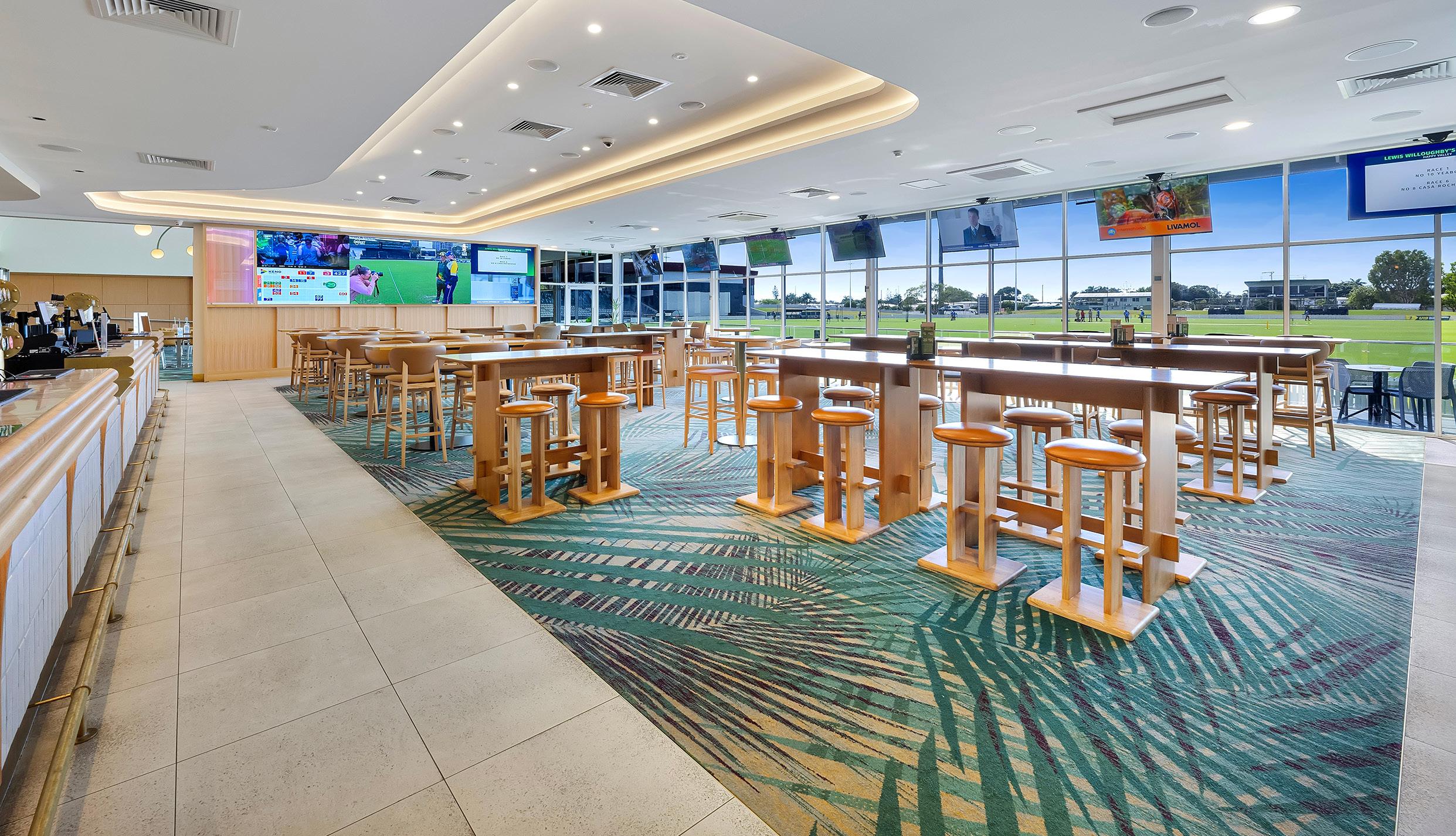
IT’S THURSDAY NIGHT at Harrup Park in Mackay, Queensland and the club’s sports bar is packed. The crowd is roaring as they tune into the main screen to watch their favourite footy team play. Scenes like this are what sports bars have always been built for.
But increasingly, they are no longer enough.
While this atmosphere feels effortless, it’s anything but accidental. Behind the scenes, it’s the result of careful planning and a growing recognition among operators that relying solely on live sports is no longer a sustainable strategy.
Today, clubs are thinking far more critically about how their sports bars perform. Not just during major games, but across the entire week. For many, the answer lies in completely rethinking what the sports bar is meant to be.
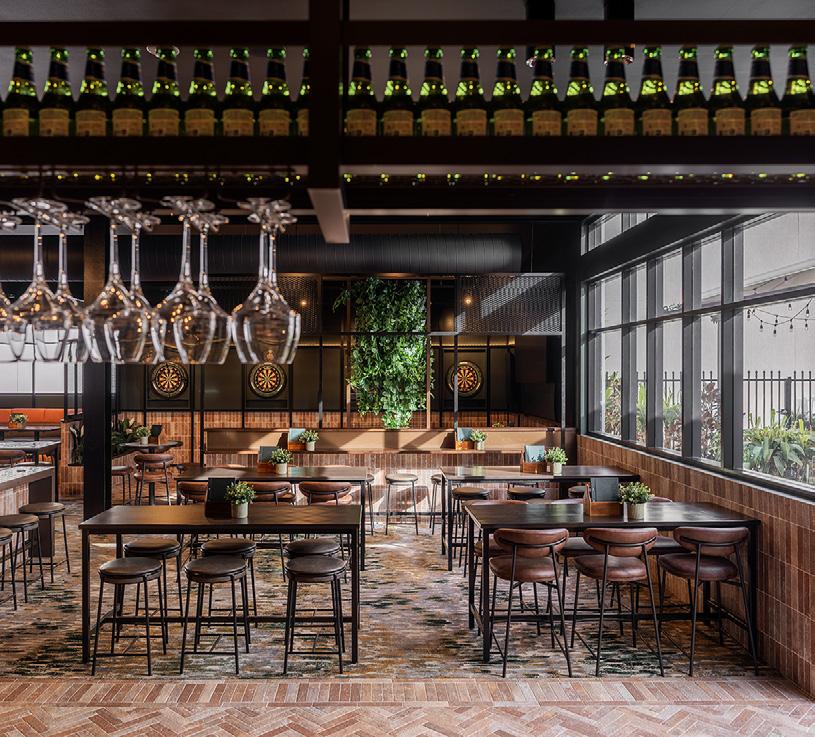
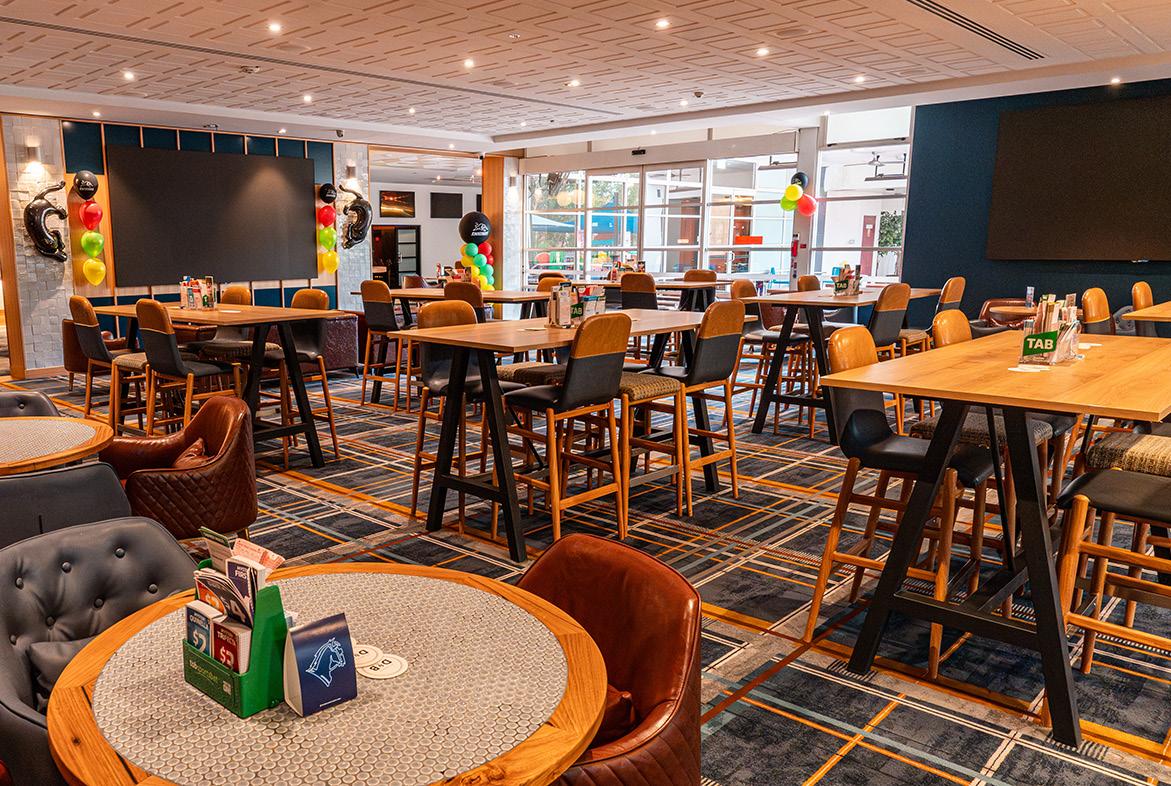
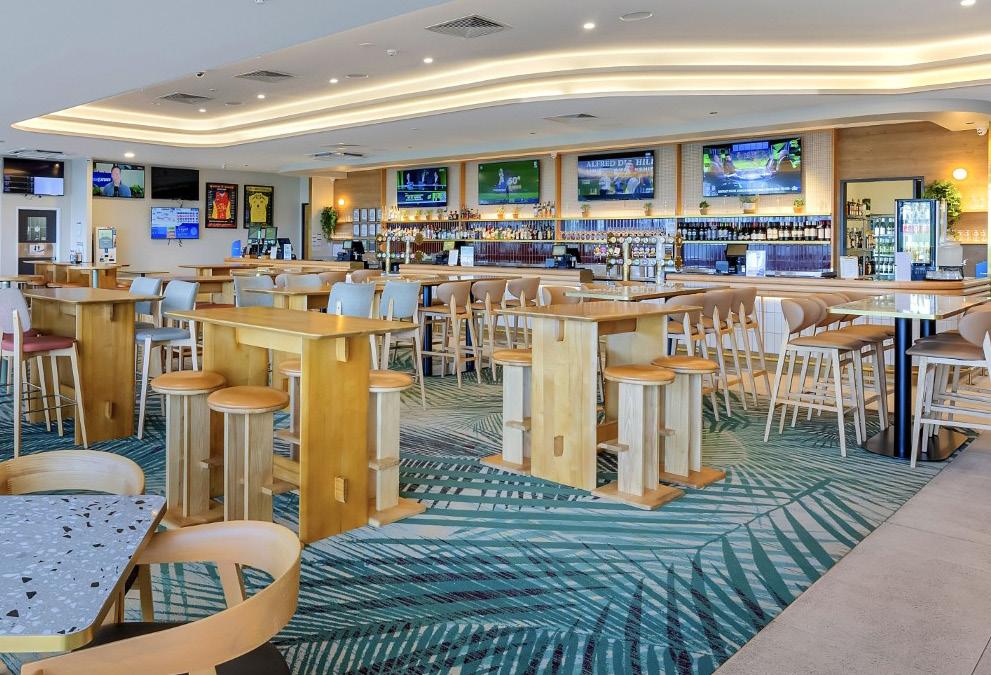
At Harrup Park, that rethink was driven as much by necessity as it was by opportunity. A renovation completed in mid-2025 transformed what had become a failing space into one that’s been designed to meet patron expectations, both operationally and experientially.
CEO Adrian Young said the previous sports bar had reached a point where change was unavoidable.
“The old bar was degrading significantly. The bar was built across two levels, and there was a false floor that had been in place for 20 years, which was rotting. We didn’t really have much choice. We had to do something,” he said.
Rather than replacing what was there, the club used the opportunity to rethink the space entirely. The goal was to create what Young described as a “relevant sports bar feel” — one that could flex between everyday use and major event demand.
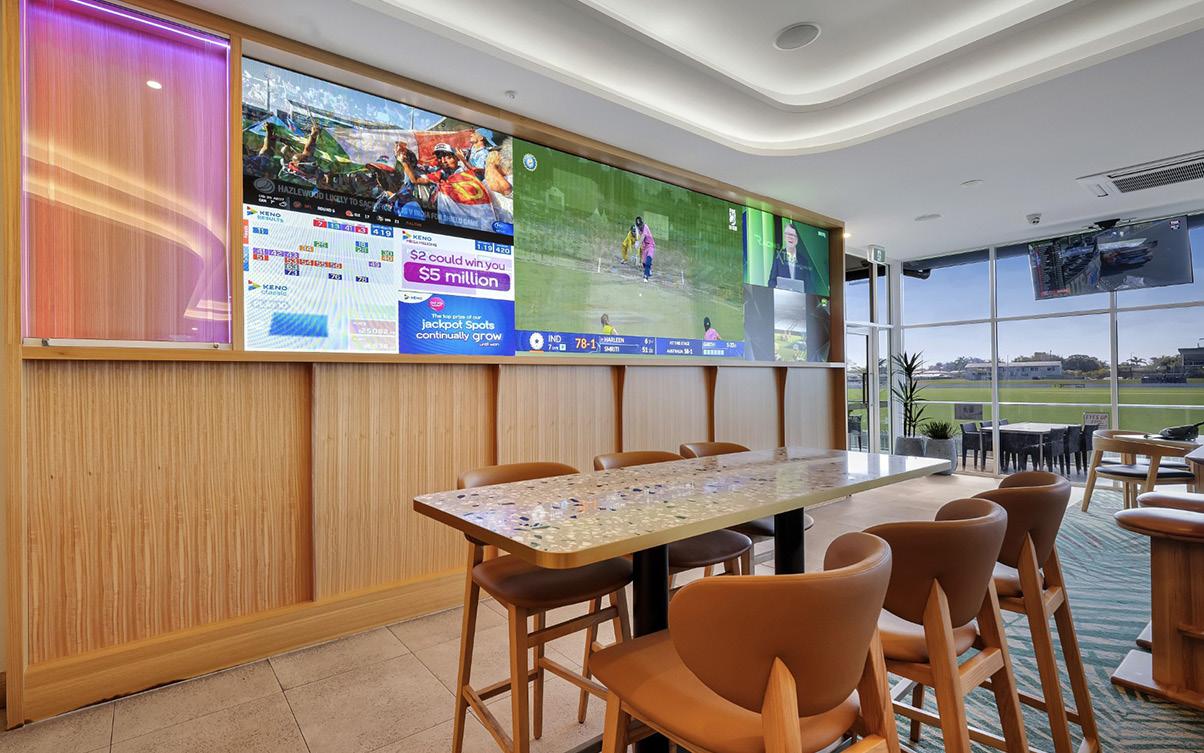
Working with Altis Architecture, the club installed a large LED screen alongside multiple smaller screens positioned throughout the space.
“I can’t even tell you how many TV screens there are. We wanted to provide that experience where you can come in and watch whatever,” Young said.
This shift towards large-format screens reflects a broader evolution in sports bar design, according to Adrian Musico, managing director of Total Concept Projects.
“The sports bar concept has evolved significantly from the historical model of just a room with a few TVs and a TAB terminal. A major shift is the move away from older tiled video walls, which have noticeable bezels, toward large-format LED super screens,” he said.
“This visual upgrade is now coupled with really thoughtful audio that makes patrons feel like they are in the front row. The focus is
Pictured on this page: Harrup Park gave its sports bar a revamp to make it feel more relevant. Photo credit: Harrup Park
no longer just on a big screen but on flexible LED layouts integrated with high-quality sound.”
Adrenalen CEO and founder Mark Sturdy agreed, pointing out that while screens are “absolutely central” to the experience, what the screen experience looks like has risen dramatically.
“Venues that have invested in quality LED infrastructure are seeing that pay off in loyalty and repeat visitation in ways that other technology investments simply haven’t matched,” he said.Sturdy warned, however, that “hardware alone no longer wins the room”.
“There’s a spectrum of effort when it comes to watching sport,” he explained. “Staying home takes no effort, but you sacrifice the atmosphere. Going to a stadium delivers the atmosphere but demands real commitment.
“The venue sits perfectly in the middle, low effort with all the energy of being surrounded by people who care as much as you do. The screen is what makes that trade-off feel worth it every single time.”
That broader expectation around venue experiences has become increasingly important as home entertainment systems continue to improve, according to Greg Bohlsen, national manager for licensed venues at Foxtel Business.
“If people are going to go out to watch live sport and spend good money to do so, they now expect a premium experience across the board, from the furnishings and atmosphere through to the F&B on offer, high quality vision, 4K coverage and a seamless viewing experience,” he said.
It’s something that Harrup Park recognised, as its upgrade was not just about enhancing the visual experience. It also represented a significant leap forward operationally, with new technology transforming how the space is managed.
“We were very much in the dark ages; we were turning every TV on by a remote, and there was no scheduling,” Young explained.
“Now, we’ve introduced an AV system where our duty managers can control and schedule using an iPad. Our marketing team can also run advertising on TV screens from their computer.”
That investment in behind-the-scenes technology is just as critical as the visual experience, Musico said.
“The biggest mistakes are under-investing in invisible tech, such as sound systems or control interfaces, choosing consumer-grade hardware not built for continuous commercial use, and overcomplicating the interface, making it unusable for staff during peak times,” he said.
“The biggest mistakes are underinvesting in invisible tech, such as sound systems or control interfaces … and over-complicating the interface, making it unusable for staff during peak times.”
– Adrian Musico, Total Concept Projects managing director
Harrup Park’s sports bar renovation also created an opportunity to expand the club’s beverage offering, with additional taps installed to broaden the range available to members.
At one point, the club even considered introducing additional entertainment features such as virtual darts and virtual golf.
“But we just didn’t have the space,” Young said. “We had to keep it pretty simplistic in terms of trying to maintain what we had and just improve the overall usability.”
Despite those constraints, the outcome has been significant. Revenue has increased, and patrons are engaging with the space in new ways.
“The bar has absolutely picked up patronage,” Young said. “The space has been designed to overlook our main oval, where one side is all glass windows offering a perfect viewing space for sports on the main field, but also watching sports content.”
The anchor venue
While clubs like Harrup Park are focused on improving performance through design and technology, other clubs are rethinking the role of the sports bar entirely.
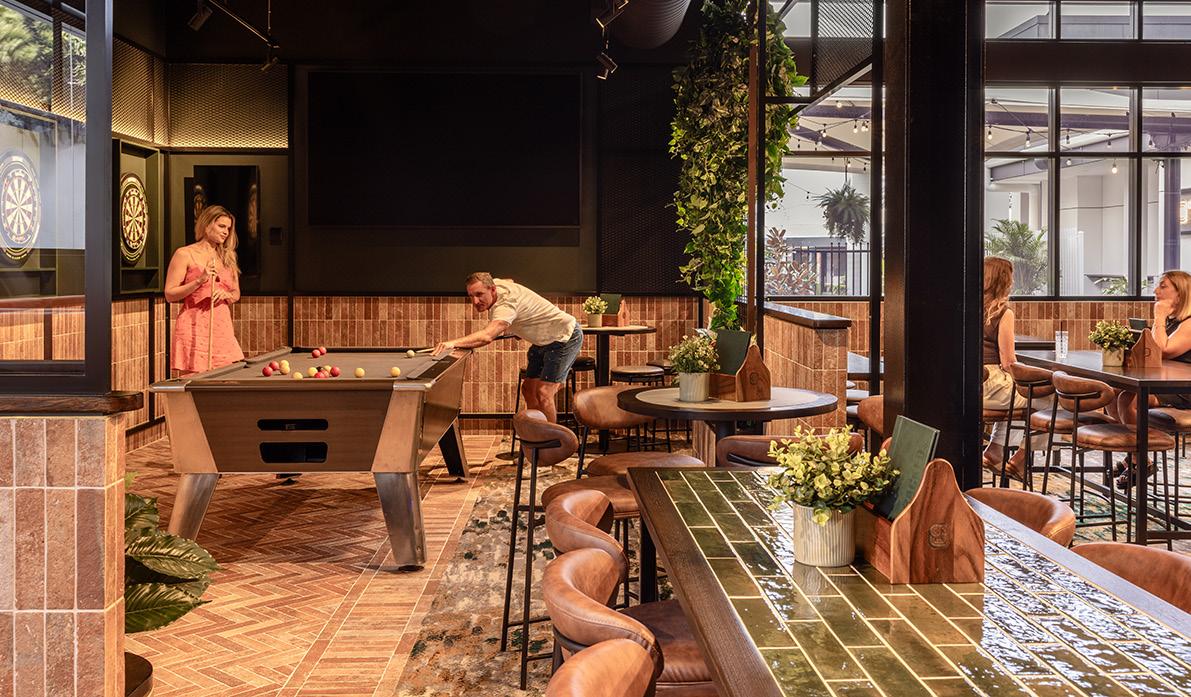
Take Gold Coast-based CSi Club Southport and its launch of Sidetracked, a venue designed not just to be another sports bar, but as a destination with its own identity – and even custom beer.
“Sidetracked was envisioned as a venue within a venue, a highoctane, industrial-chic sports bar that functions as a standalone brand,” general manager Blair Sleeman said.
Harrup Park wanted to give patrons enough screen so they can watch what they wanted. Photo credit: Harrup Park
Sidetracked is CSi Club Southport’s new sports bar.
Photo credit: Tanika Blair
“Guests are not just popping in for a single drink; they are engaging with the interactive elements like the dartboards and pool tables, often staying for the duration of a full game or event.”
– Blair Sleeman, CSi Club Southport general manager
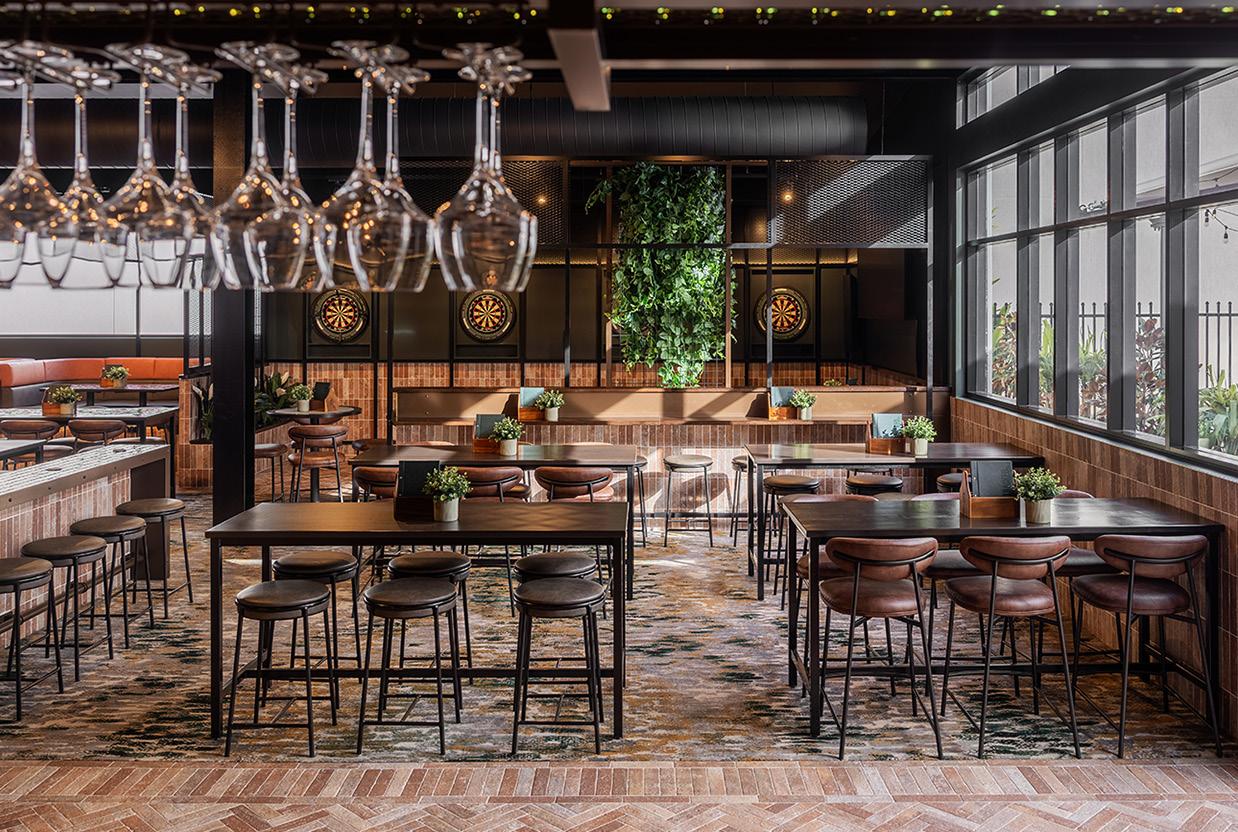
“The club decided to create a separate identity to move away from traditional hospitality cliches and offer a more cinematic, modern experience.
“By branding it separately, we can target a specific demographic of sports fans and social seekers who want a premium ‘neon-vibe’ atmosphere that feels distinct from the broader club environment.”
Design plays a critical role in delivering that experience. The space, designed by BSPN Architecture, leans into an industrial-chic aesthetic, combining warm timber, exposed black ductwork, and textured brickwork. This is combined with softer elements such as hanging ivy and potted plants to create a layered, “laneway-style” environment. The bar itself features a striking corrugated matteblack finish with a stone top.
A massive LED wall acts as the visual centrepiece of the room, supported by multiple high-definition screens and professionalgrade dartboards and pool tables.
But just as important as how a space looks is how it functions. Unlike traditional sports bars that prioritise sightlines and seating density, Sidetracked has been designed to encourage interaction and longer dwell time, and can be scaled to accommodate large crowds, while maintaining a high-energy atmosphere during major sporting events.
“We moved away from stadium-style rows in favour of a more social layout. A mix of high-top communal tables, bar seating and
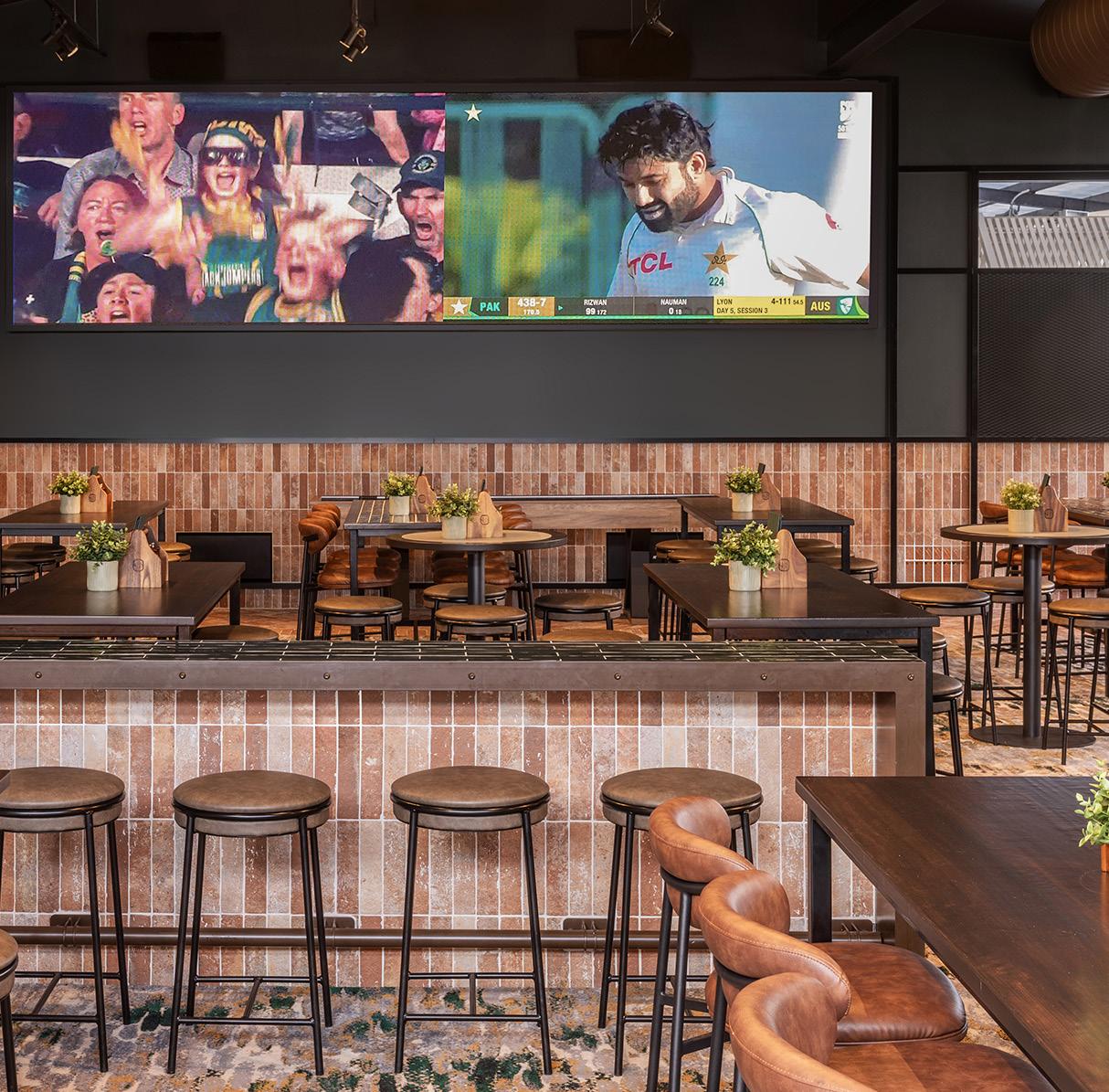
perimeter booths encourages guests to settle in and socialise rather than just sit and watch,” Sleeman said.
Beyond design, Sleeman said the venue plays a strategic role within the broader club.
“Sidetracked serves as the anchor for the club’s modern entertainment strategy,” he explained.
“It bridges the gap between traditional membership and a younger, event-driven audience. By offering a specialised destination for major events like UFC and interactive nights like Drag Bingo, it complements the club’s diverse ecosystem, providing a high-energy alternative to the more relaxed dining and gaming areas.”
Early results suggest the approach is working.
“Rather than just seeing a quick spike, we have observed a steady build in high-value dwell times,” Sleeman said.
“Guests are not just popping in for a single drink; they are engaging with the interactive elements like the dartboards and pool tables, often staying for the duration of a full game or event.”
Make it social
That shift in patron behaviour, where it’s no longer just about the game, is something Maroochy RSL has also observed, leading to the creation of Lounge Seventy-Two.
Named after the year the current venue opened in 1972, the new sports bar was driven by a need to better reflect how members use the space. The project has since been recognised at the 2026 Clubs Queensland and McCain Foods Awards for Excellence, taking out Best Club Redevelopment (Small).
“The previous sports bar had become dated and was no longer an inviting space for our members. It was quite dark, with little natural light, and the seating was predominantly high bar tables, which suited the venue when it was first built, but no longer reflected how our members use the club today,” said executive manager of hospitality, Tracey Boeck.
Rather than doubling down on a traditional sports bar format, the redesign deliberately softened the space, focusing on comfort, flexibility and inclusivity.
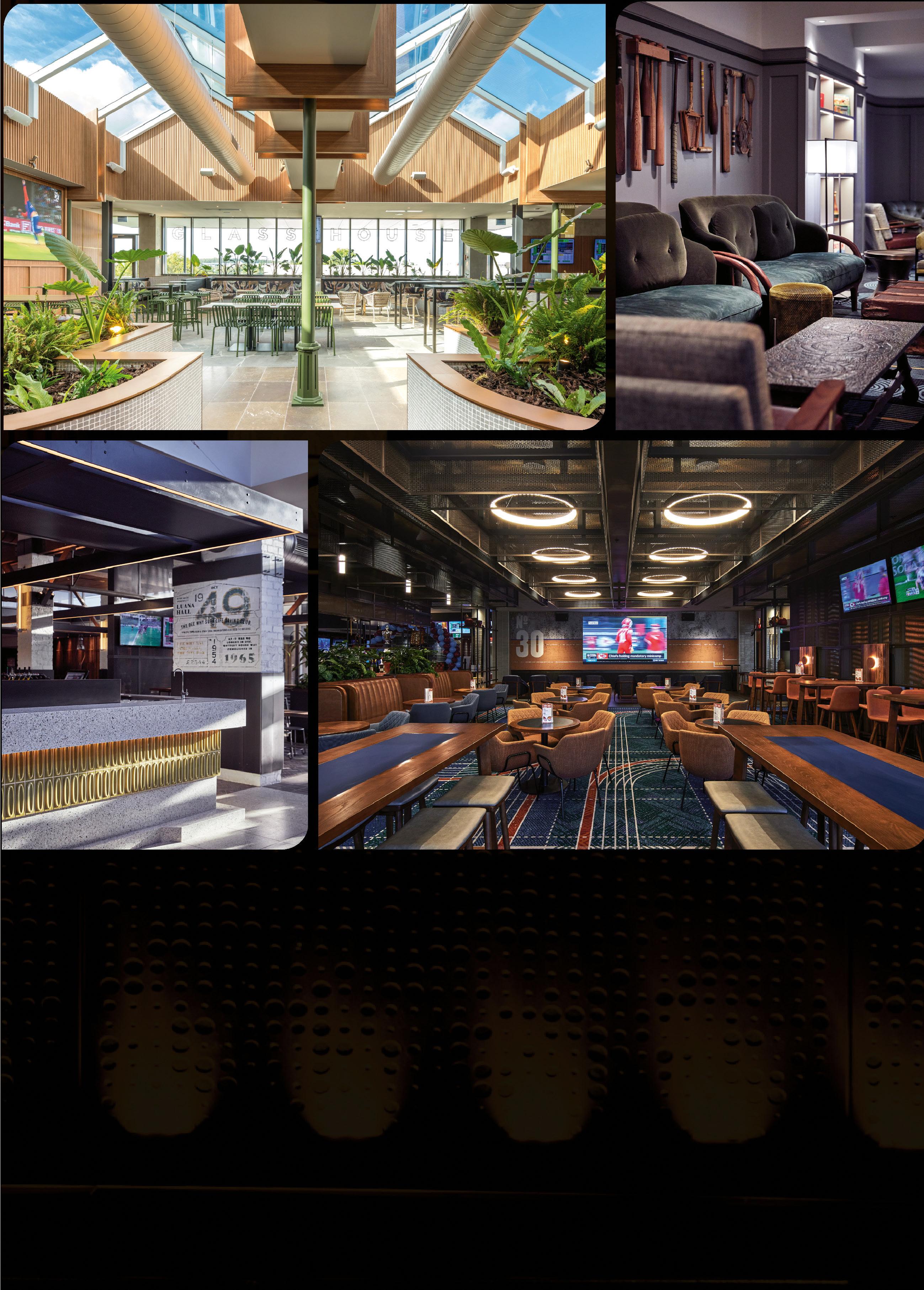
Pictured on this page: CSi Club Southport purposefully designed Sidetracked to have a standalone identity.
Photo credit: Tanika Blair

What’s next for sports bars
As clubs continue to rethink the role of the sports bar, Adrenalen CEO and founder Mark Sturdy believes the next wave of innovation will be defined by three key shifts.
Intelligence
“The venues that will win are the ones that understand their audience and how that differs from other venues. Consumer analytics, first-party data, knowing who is in your sports bar and what keeps them coming back.”
Gamification and content control
“Live scores, stats, breaking news, predictions and sports scheduling presented as a genuine fan-first experience rather than a betting wrapper. It’s the first step toward venues having a real relationship with their audience rather than just a transaction.”
Immersive experience
“Concepts like Cosm in the US are proving that the gap between the couch and the stadium can be closed inside a venue. That technology is closer to viability in Australia than most people realise, and something we continue to monitor closely in global markets. The venue has always been the perfect middle ground. Immersive technology is what takes that proposition to its absolute ceiling.”
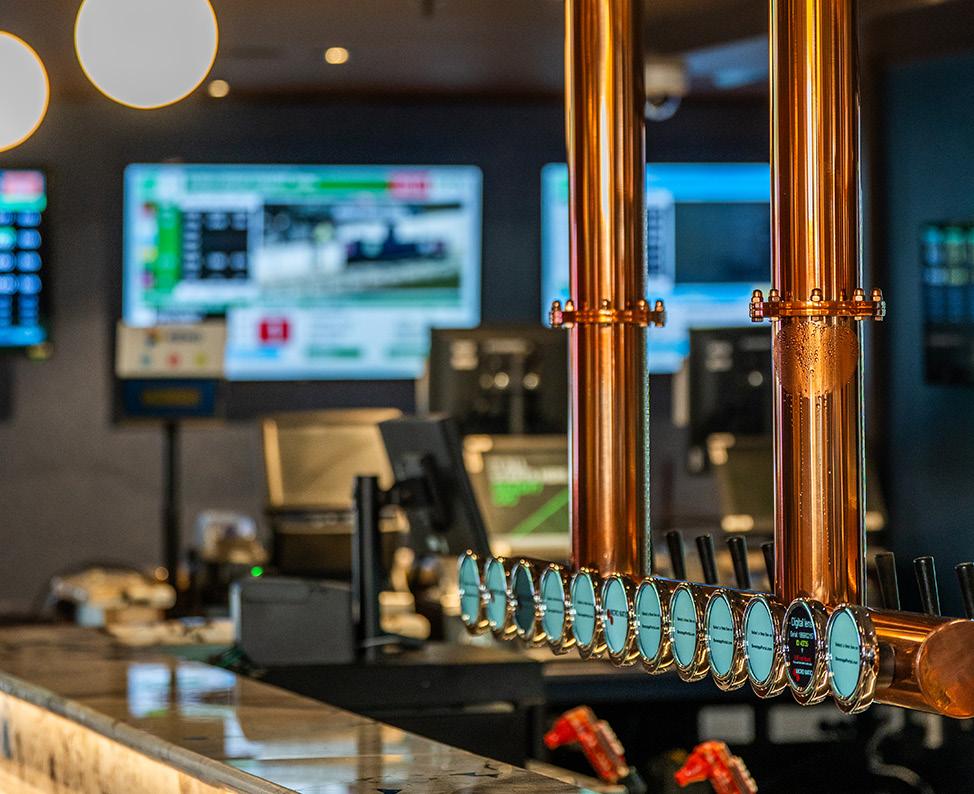
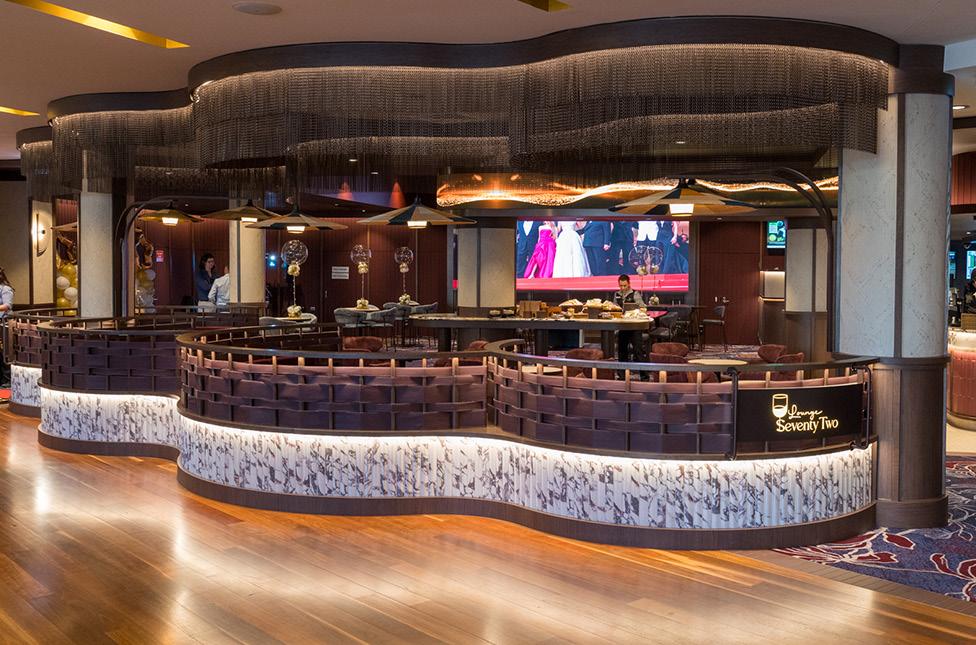
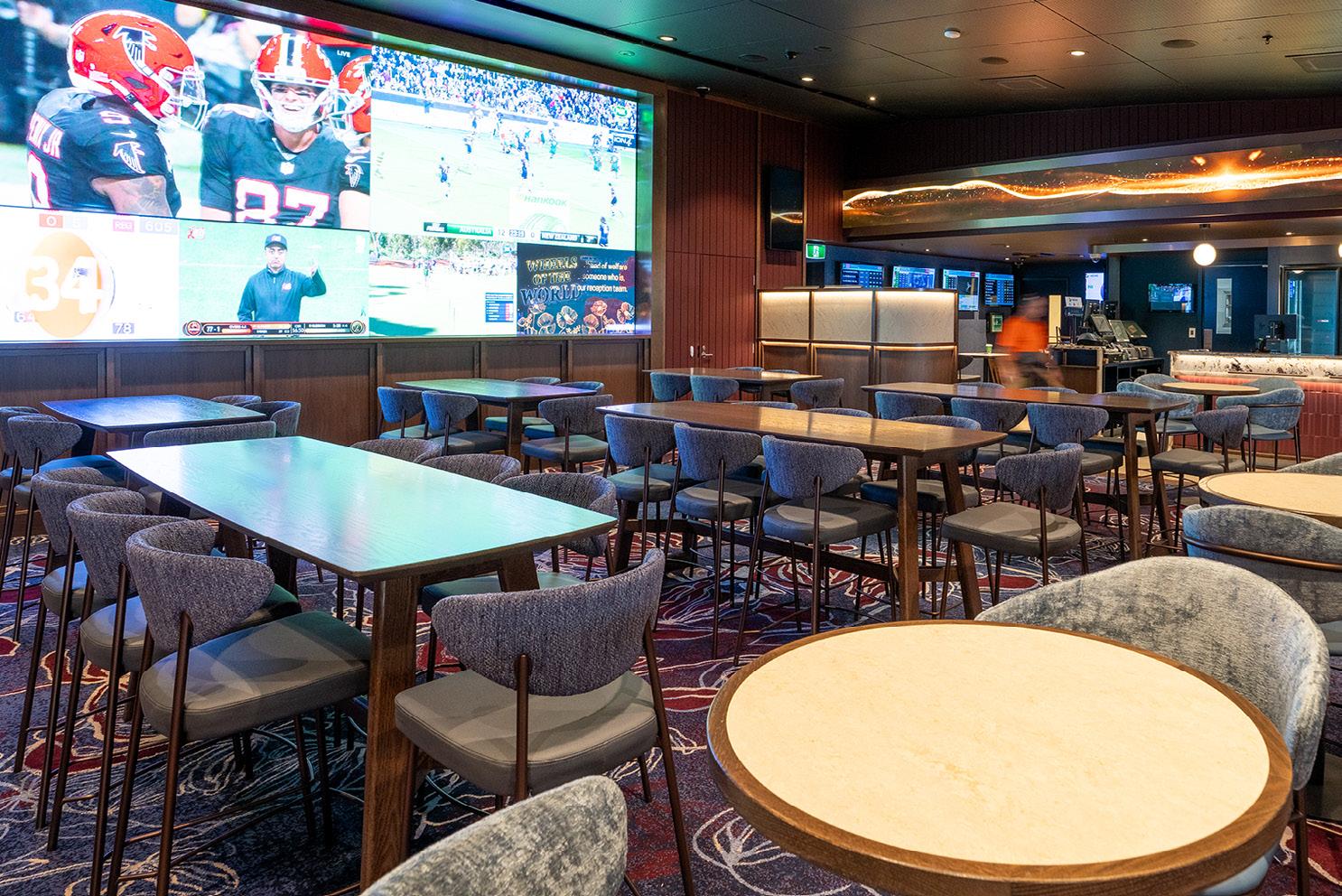
Designed by BSPN Architects, with construction delivered by Ashley Cooper Construction, the venue now features lower tables, varied seating heights and booth seating, alongside improved natural light, creating a more relaxed and adaptable environment.
“Our member database shows that a large portion of our patrons are female, many of whom regularly use our facilities, including the gaming room. With that in mind, we wanted to create a space that felt welcoming and comfortable for everyone,” Boeck said.
“The result is a much more relaxed and inclusive environment where people can settle in and enjoy the space.”
The venue now blends sport with social dining and entertainment, allowing the space to transition throughout the day and into the evening. It’s anchored by a large screen for live sport, which is complemented by a cocktail bar, a dedicated TAB area, and an entertainment zone featuring live music and a dance floor.
“Guests can still put on a bet, watch the footy on the enormous screen, or enjoy live music from talented local musicians, but they can do so in a much more relaxed and luxurious setting,” Boeck said. “The goal was to create a venue that truly has something for everyone.”
Importantly, the design allows different patrons to use the space without friction.
“The smaller TAB area at the back caters for serious punters who want to focus on racing, but they can easily step out to watch the football on the big screen,” Boeck said. “For guests who aren’t interested in racing at all, the TAB is discreet enough that they may not even realise it’s there.”
Food and beverage have also been refreshed to support Lounge Seventy-Two’s more social environment, with a menu designed for sharing and a stronger focus on cocktails. Standout offerings include chicken bao buns, alongside share plates featuring flatbread, local olives, cheeses and cured meats.
The cocktail list has also become a feature, with offerings such as Lychee Disco, with vodka, lychee liqueur, prosecco and lemonade; and Sunshine in ’72 with Gordon’s Pink Gin, lemon, house syrup, prosecco and a flower garnish, a sparkling nod to Maroochy and the golden era.
According to Boeck, Lounge Seventy-Two has quickly become one of the most popular areas in the club.
“We’ve seen strong support from our regular members, many of whom have embraced the change, while also attracting new visitors,” she said.
“Local office workers have adopted it as a spot for after-work drinks and a quick snack on Friday evenings. As the evening progresses, the space transitions again with live music and dancing, drawing a diverse crowd from across the community.
“The booth seating is now fully booked most weekends from Thursday through Sunday, and tables are typically full, with staff actively managing the flow of guests.”
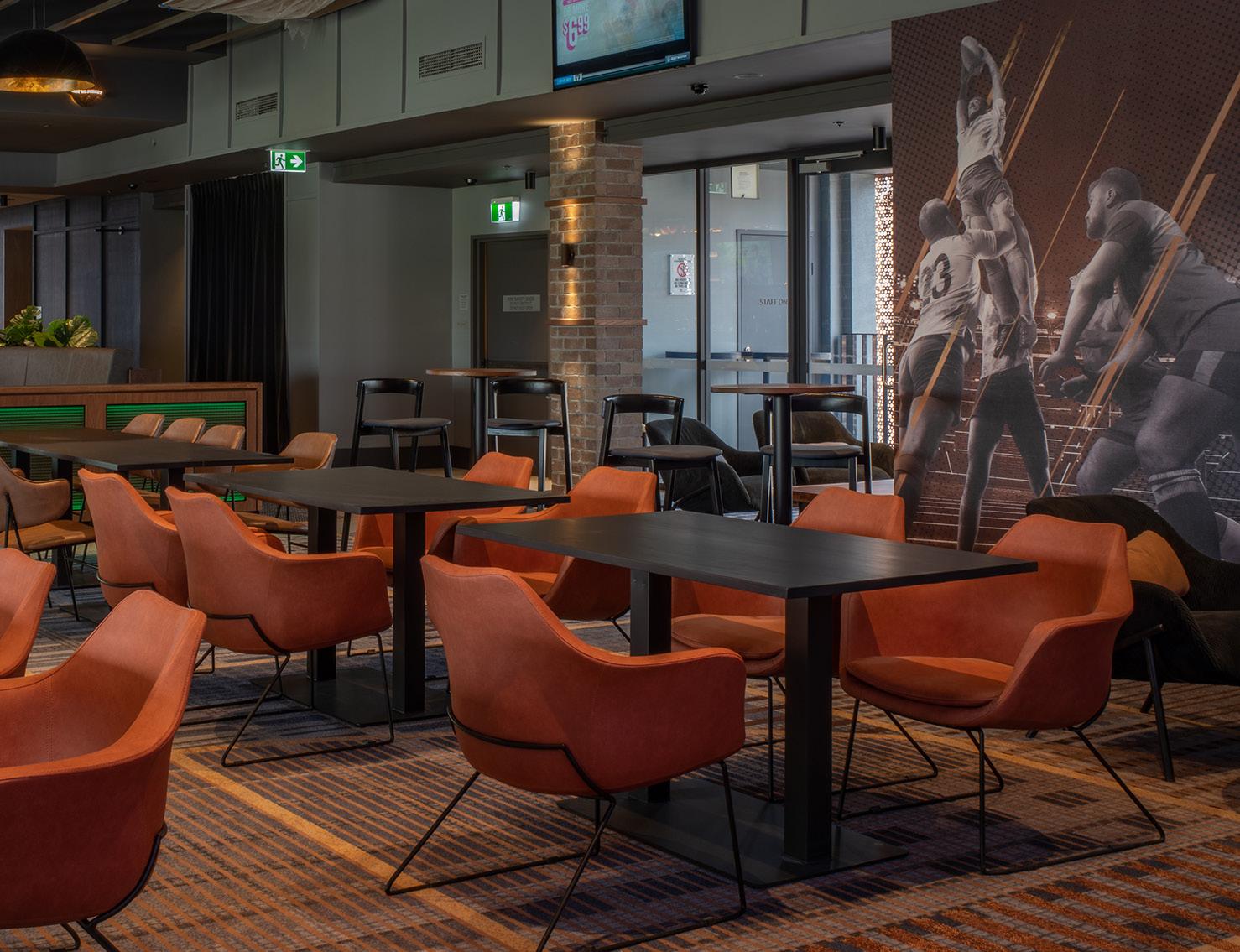
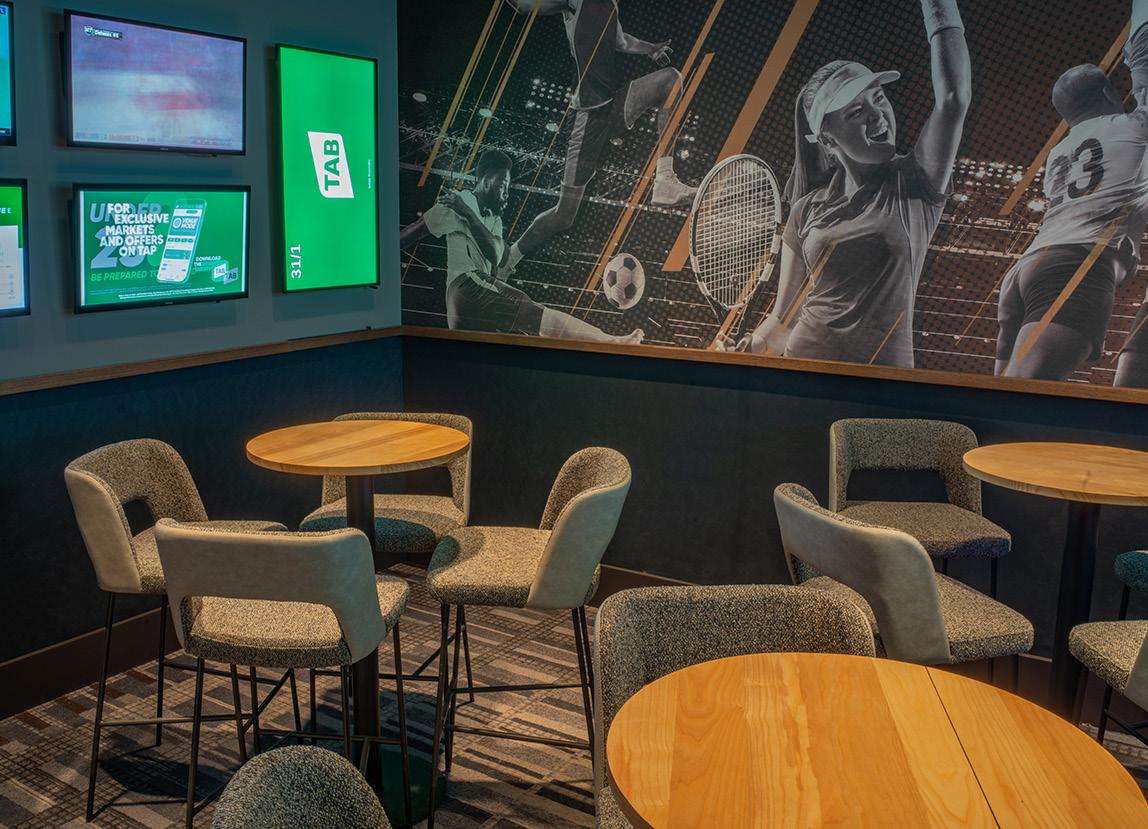
That level of repeat visitation is what ultimately defines a successful venue. As Sturdy puts it, “it’s the reason people don’t just go to a sports bar, they go to their sports bar.”
“That sense of ritual and belonging … that’s not something you install,” he said. “It’s something you earn through consistently delivering an experience worth coming back for.”
Programming beyond the game
But even with the right design, getting people through the door remains a big challenge.
As Sturdy points out, the issue is not just execution, but focus. “Where I think Australia has a blind spot, and I say this constructively, is that almost every product or technology built for sports venues in this country starts and ends at the bet… The bet might be part of that experience, but it isn’t the whole identity of it.”
For clubs to get it right, the focus needs to shift. At Gladesville RSL, the sports bar – known as The Front Row – reflects how clubs are balancing design, technology and programming to drive consistent visitation.
Featuring a 136-inch LED screen with 90-inch wings, supported by a high-quality sound system, the space is designed to capture
“Hardware alone no longer wins the room.”
the theatre of live sport while also functioning as a flexible, multiuse environment.
For the club, the shift has been driven by a simple reality that competition is no longer just other venues, but the living room.
“Since Covid, we’re competing with Netflix, footy at home, Uber Eats. What people do now is get a carton of beer and sit there with Sportsbet on their phone. Getting people out of the house is th thing that we’ve got to look at,” Gladesville RSL CEO David Walsh said.
In response, the club has leaned into programming, using the space across the entire week rather than relying solely on live sport.
“It’s more of a multi-purpose area. We have sports in there during the day, then on different nights we use it for poker, trivia, and raffles, which we use the big screen for as well,” he said.
As Sturdy noted, smart screen programming can be used to promote what’s next, build anticipation, and give people a reason to stay.
“The main screen drives the experience, but the screens around drive the behaviour … done well, a patron who came in for UFC is already considering staying for the NRL before they’ve ordered their next drink,” he said.
“The same logic applies pre-game. The storylines, the stats, the context that gets people genuinely invested before a ball is ki Arrive early, stay late. That’s the commercial outcome a smart content and scheduling strategy delivers.”
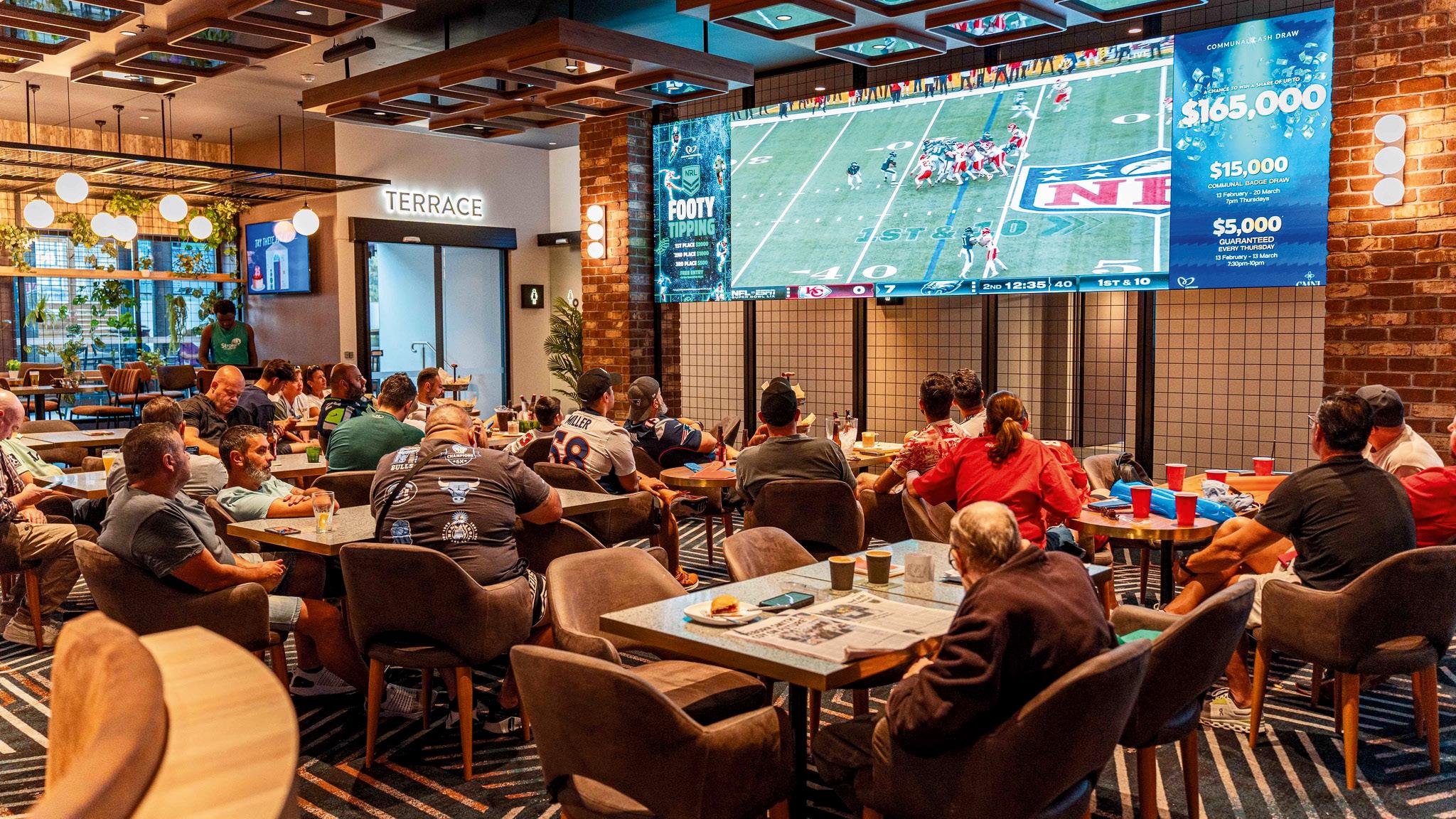
The move towards sport as an event-style experience is something Stan Sport national business manager Lorik Haliti said clubs are increasingly embracing.
“The answer lies in atmosphere and community. You simply cannot replicate the electric energy of hundreds of fans cheering a dramatic Premier League derby or a Rugby World Cup try from a living room sofa,” he said.
Haliti said clubs could amplify that experience by treating major broadcasts as “fully fledged events” rather than simply broadcasting sport on screens.
“It is about transforming a simple broadcast into a shared, localised community event that patrons want to return for week
Pictured on this page: Gladesville RSL’s sports bar serves as a multipurpose space for the club.
Photo credit: Altis Architecture


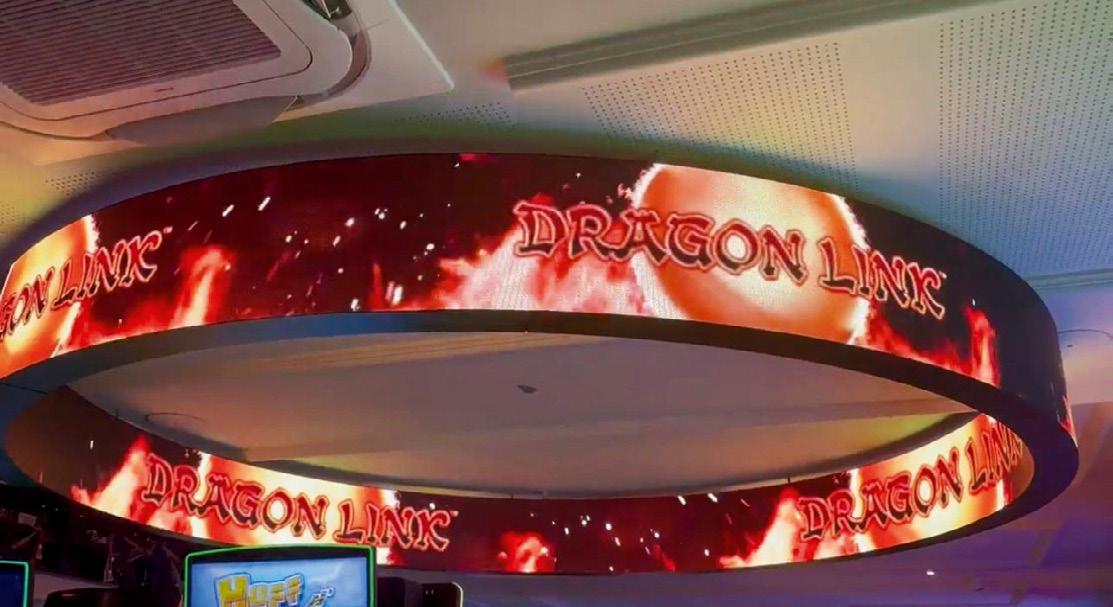




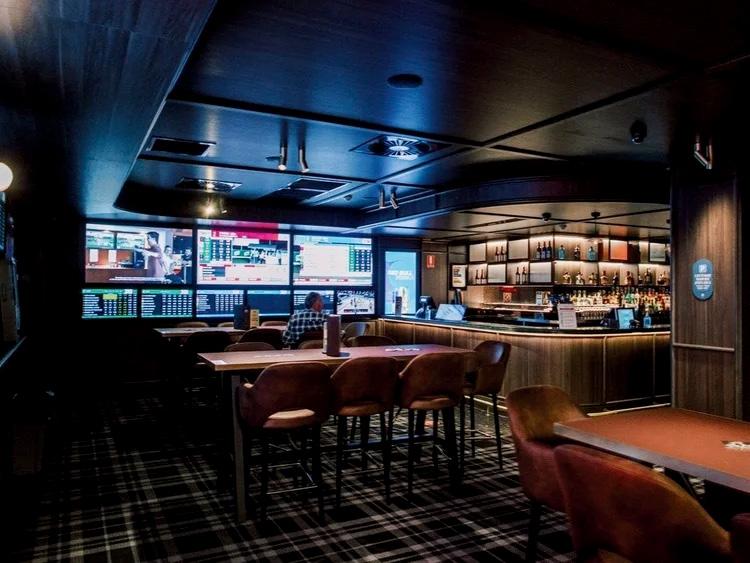



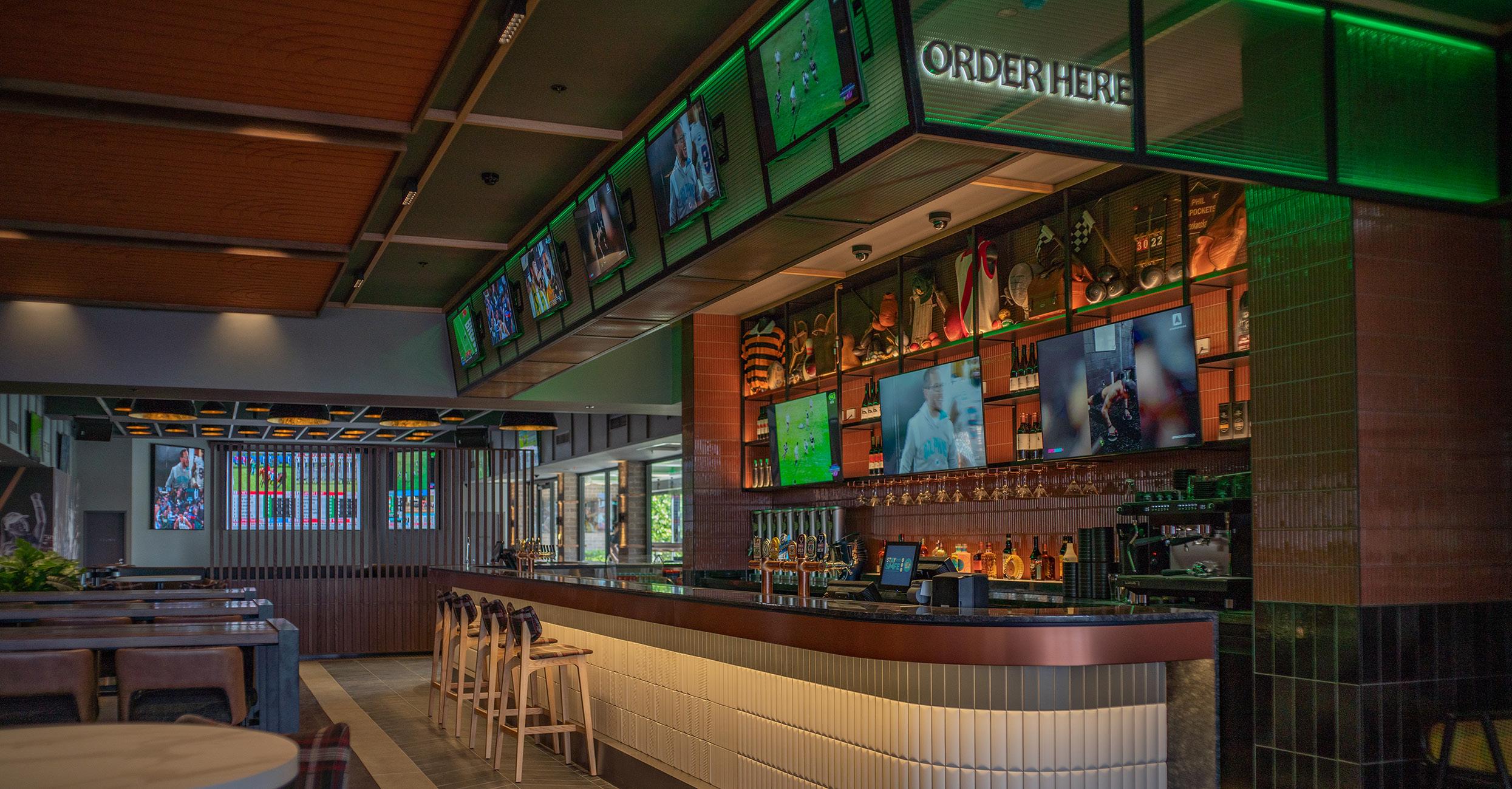
“The sports bar captures the theatre and social quality of being at a live sporting event.”
–
Katherine Herod, Altis Architecture associate
after week,” he said. This is exactly the approach that Gladesville RSL has taken to cater to different audiences at different times.
“We’re not all things for all people, but we do try to fit into different markets at different times,” Walsh said.
The sports bar design supports that flexibility, where seating is available in adjacent areas and an undercover alfresco zone, allowing the entire floor to operate as a connected, multi-use environment.
“We use that sports bar, and it backs onto a small outdoor area, and the whole floor can serve four or five different purposes at the same time,” Walsh said.
Within that, the club has also introduced more premium, experience-led elements such as a dedicated 16-person VIP booth called the Owner’s Box. “You can sit there in a nice booth with a great view of the big screen. It’s been quite popular,” Walsh said.
That balance between atmosphere and flexibility was central to the design, according to Katherine Herod from Altis Architecture. The design incorporates a mix of materials, including timber joinery, custom wallpaper, concrete tiles, marble and brickwork, creating a layered and distinctive hospitality environment.
“The sports bar captures the theatre and social quality of being at a live sporting event,” Herod said.
More generally, Herod believes the role of the sports bar has evolved significantly over the past decade.
“We are finding that sports bars are leaning towards welcoming a more diverse patronage, becoming more female- and familyfriendly. This is driven by changes in how we socialise, parent, and a shift in cultural and societal views and values,” she said.
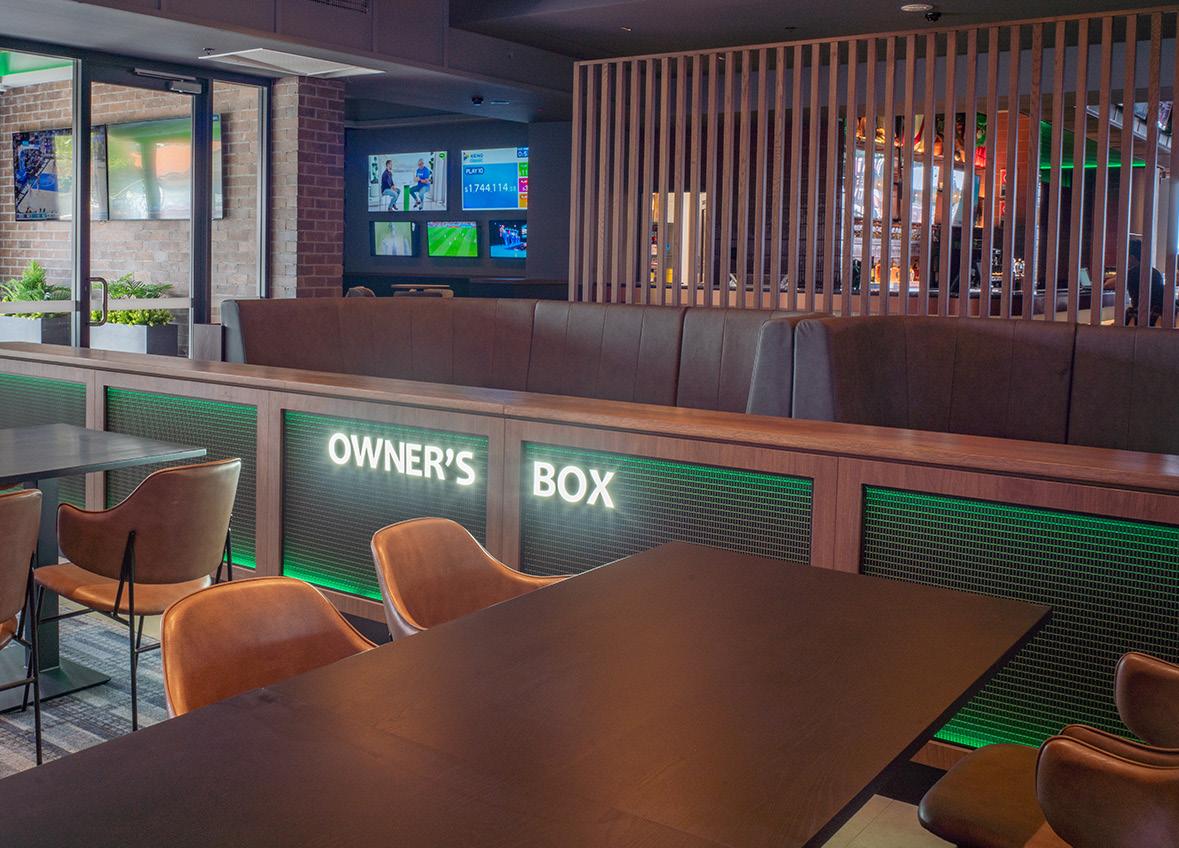
“Sports have become more inclusive and so has its viewers. Inclusion means that families can enjoy a night out together, and it is a shared experience, not just what has historically been a maledominated space.”
Back on the ground at Gladesville RSL, its multi-functional strategy has been delivering results.
“On Friday nights, you can’t get a seat in the area. That’s when all worlds collide because everyone’s here for three or four different purposes,” Walsh said.
Food, beverage, and targeted promotions are also playing a key role in driving visitation.
“Since we’ve gone with a new catering partner, Catering HQ, and amended the menu, we’ve seen a 40 and 50 per cent increase in meals served in the sports bar.” Walsh said.
“It’s no longer just the typical sports bar space. We’ve brought in females, males, older people and younger people.”
It’s this shift that speaks to the bigger picture, where sports bars are no longer built around the game alone, but around what brings people back.
Pictured on this page: Gladesville RSL was designed by Altis Architecture, giving patrons a premium viewing experience during main sporting events. Photo credit: Altis Architecture
































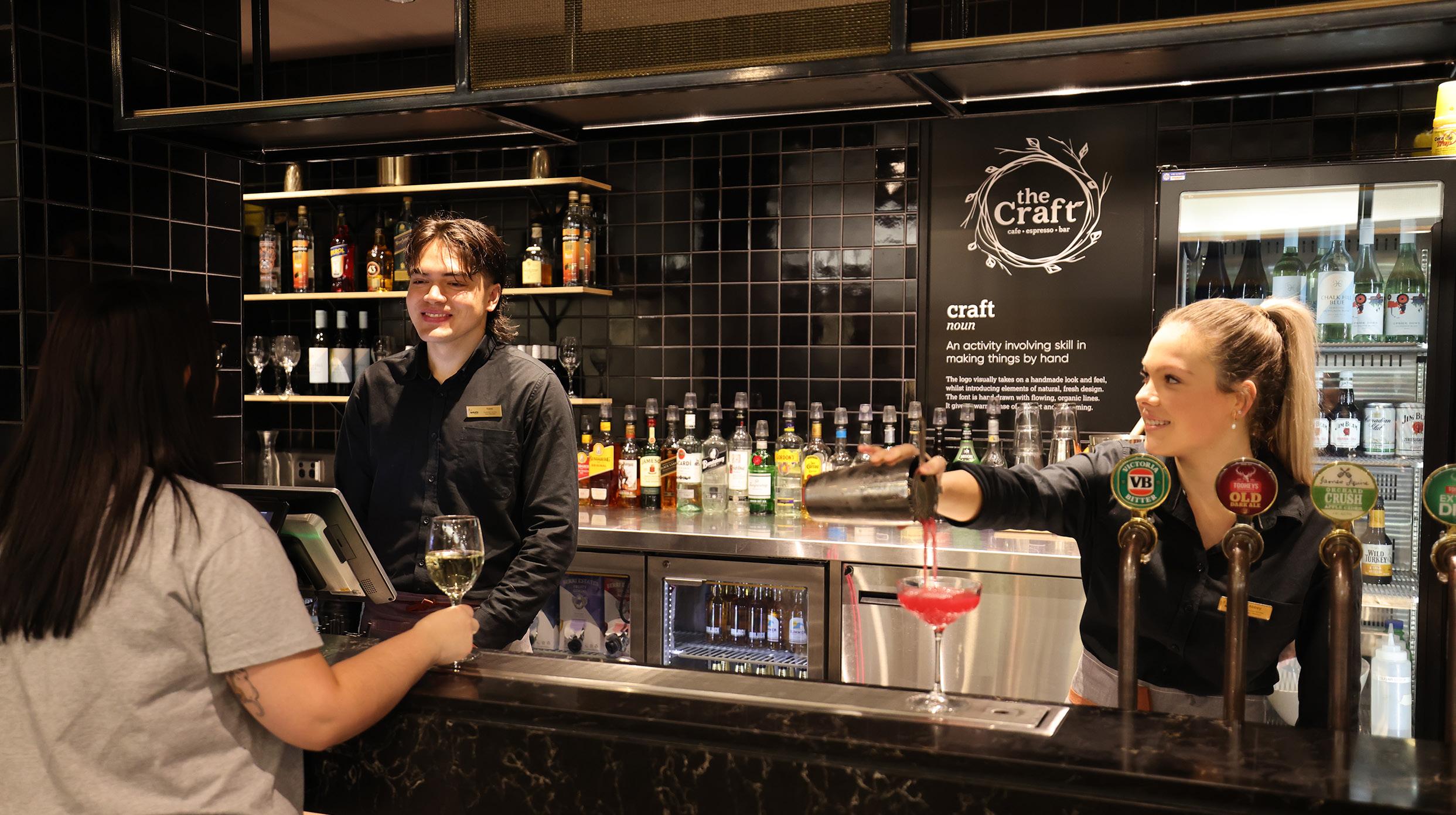
The new rules of connection
In an increasingly digital world, human connections and a sense of belonging have never been more important – and clubs are at the forefront on delivering both.
EXCEPTIONAL CUSTOMER SERVICE has always been the foundation of the club industry. But delivering efficient service or good facilities is no longer enough. Members now expect something deeper, personal, and more human.
That expectation is playing out against a broader social backdrop. Research from the Australian Institute of Health and Welfare shows loneliness is rising in the country. Further studies from Monash University indicate it is especially pronounced among older Australians without partners or children. This shows that clubs are more than places to dine or socialise; they are spaces where people connect and belong.
What is changing is not the role clubs play, but the way that customer service is delivered. Increasingly, it’s about creating experiences that are seamless, personalised, and emotionally resonant. It’s a view that customer service expert and Optimum Operating Procedures and Services (OOPS) founder Michelle Pascoe has observed over the years.
“We are now serving seven generations, from pre-veterans to Gen Beta; each with their own values, beliefs, and communication styles. That is extraordinary. And for clubs, it means customer service can no longer be one-size-fits-all,” she said.
“But here is what has not changed: the fundamental human need to belong.”
Pascoe said the feeling of belonging needs to extend to every service interaction with patrons.
“Staff need to recognise members, use their names, and remember the small details: the holiday they’ve just returned from, the new grandchild, the health challenge. Visitors need to feel just as welcome.”
At Wests Illawarra, that shift from principle to practice is already well underway.
“Customer service today is really about creating something bigger than what people thought they were coming for,” said Dominic Monti, strategic leader of customer experience at Wests Illawarra.
“It’s not just about serving a meal or drink anymore; it’s about creating an experience. People are expecting a connection now as well.”
Monti believes the shift from transactional to experiential service has become more evident in the wake of Covid-19.
“I think the biggest evolution over the last few years, particularly post-Covid, has been moving from reactive service – where someone comes up to the bar and you serve them a beer – to being much more proactive,” he said.
“We’re moving towards anticipatory service, where we’re providing what people want before they even ask. A classic example that’s pretty traditional to clubs is when you know your regulars, and you’ve already got their beer half poured by the time they’re walking to the front of the line.”
At Wests Illawarra, this anticipatory service extends well
beyond the bar. It also informs how events are curated, how spaces are activated, and how staff engage with members across the entire venue.
“What we do a little bit differently is create a real experience around launching a new product on the floor. Rather than just putting a new game in, we turn it into more of an interactive, partystyle event,” Monti explained.
Technology as an enabler
Pascoe highlighted the need to deliver a more personalised service has only intensified as technology plays an increasingly visible role.
“Technology connects us digitally while quietly disconnecting us in person, and your members feel it,” she said.
While technology has played a significant role in shaping modern expectations, both Monti and Pascoe cautioned against relying on it as a substitute for human connection.
“At Wests, our approach has been to support the experience, not replace it,” Monti said. “When we introduce technology, it should make things easier, reduce friction, and speed things up, but human interaction is still what creates a connection.”
There is also a commercial risk in over-automating the experience, Monti warned.
“Without that human interaction, and more importantly the connection, people become ‘value shoppers’, where they’re looking for the best deal, rather than focus on building a relationship with your venue,” he said.
“The venues that get it right will be the ones that use technology to enhance people, not replace them.”
In practical terms, Monti explained that the club doesn’t rely on
“expensive CRM systems that track people’s likes and dislikes” but sticks to the “old-fashioned way” of getting to know patrons.
“This makes a big difference,” he said. “We’ve still got a sign-in system, and we’ve got an app that people enjoy, but that’s more about the interaction to speed things up than to enhance the service.”
Pascoe reinforced this point, highlighting that systems can help alleviate staff from administrative tasks so they can focus on servicing patrons.
“When membership sign-up, digital cards, targeted communications, and entry processes run smoothly in the background, staff are freed up to do what no system ever can: look a member in the eye, use their name, and make them feel like they matter,” she said.
“The most powerful customer service moment I’ve witnessed is not the one driven by a CRM prompt; it is the staff member who spots that a regular has not been in for a few weeks, or who mentions the sub-clubs – the photography group, the lawn bowls, the seniors’ lunches – because they read the room and sensed an opportunity.
“Systems create consistency. People create loyalty. You need both. But never let the system become the experience.”
Building a culture of care
But systems alone are not enough to deliver that experience. Despite best intentions, there are still common tension points where the customer experience can falter. According to Pascoe, one of the most critical moments, which is also one of the most overlooked, is at the entrance. She said it’s because staff are often not trained to see that initial greeting as an opportunity, but rather to process sign-ins.

“We’re moving towards anticipatory service, where we’re providing what people want before they even ask.”
– Dominic Monti, Wests Illawarra strategic leader of customer experience

“Nobody enjoys dealing with a frustrated patron. But that moment someone walking through the door already wound up about the carpark, the wait, the traffic is actually a golden opportunity, and most clubs are wasting it,” she said.
For Monti, missed opportunities highlight the importance of training and culture in shaping how service is delivered.
“Culture and staff training are everything to us. You can have great systems, but if your people don’t understand the why behind what they’re doing, it won’t land,” he said.
“We put a big focus on culture where every staff member understands they play a role in the customer experience, and it’s not just the frontline teams. The people in admin are just as important. Because for us, we have internal and external customers.
“We invest heavily in development, give people opportunities to grow, to take on responsibilities, and build their skills.”
That investment extends beyond traditional training methods.
“It’s not just sitting in a room and going through a slide deck and saying, ‘You’ve been trained’. It’s about exposing people to different ways of thinking,” Monti said.
“One of the things that we talk about a lot to our team is what we call invisible baggage. You don’t know what someone’s walking in with,
what kind of day they’ve had, what’s going on in their life, so a big part of service now is empathy and just taking an extra moment to understand the person in front of you.”
Leadership also plays a critical role. “You’ve got to walk the talk. People can smell bullshit from a mile away,” Monti added.
One of Wests Illawarra’s most significant initiatives has been the introduction of a dedicated customer care manager held by Tori Oberg.
“The role is focused on really understanding and supporting our customers at a deeper level, not just their experience on the day, but their overall relationship with the club,” Monti explained.
“It’s helped us look after people more holistically … some of it has been around safer gambling … [and] learning about our people and then engaging with them differently.”
Raising the standard
Customer experience is also increasingly shaped by presentation and professionalism, according to Darryn Bull, regional sales manager at Alsco Australia.
He said clubs are now operating on a scale comparable to – or even greater than – major hospitality operators, with multiple restaurants, cafes, functions, and event spaces all under one roof. “They’re all of a high quality and high
“Systems create consistency. People create loyalty. You need both. But never let the system become the experience.”
– Michelle Pascoe, OOPS founder
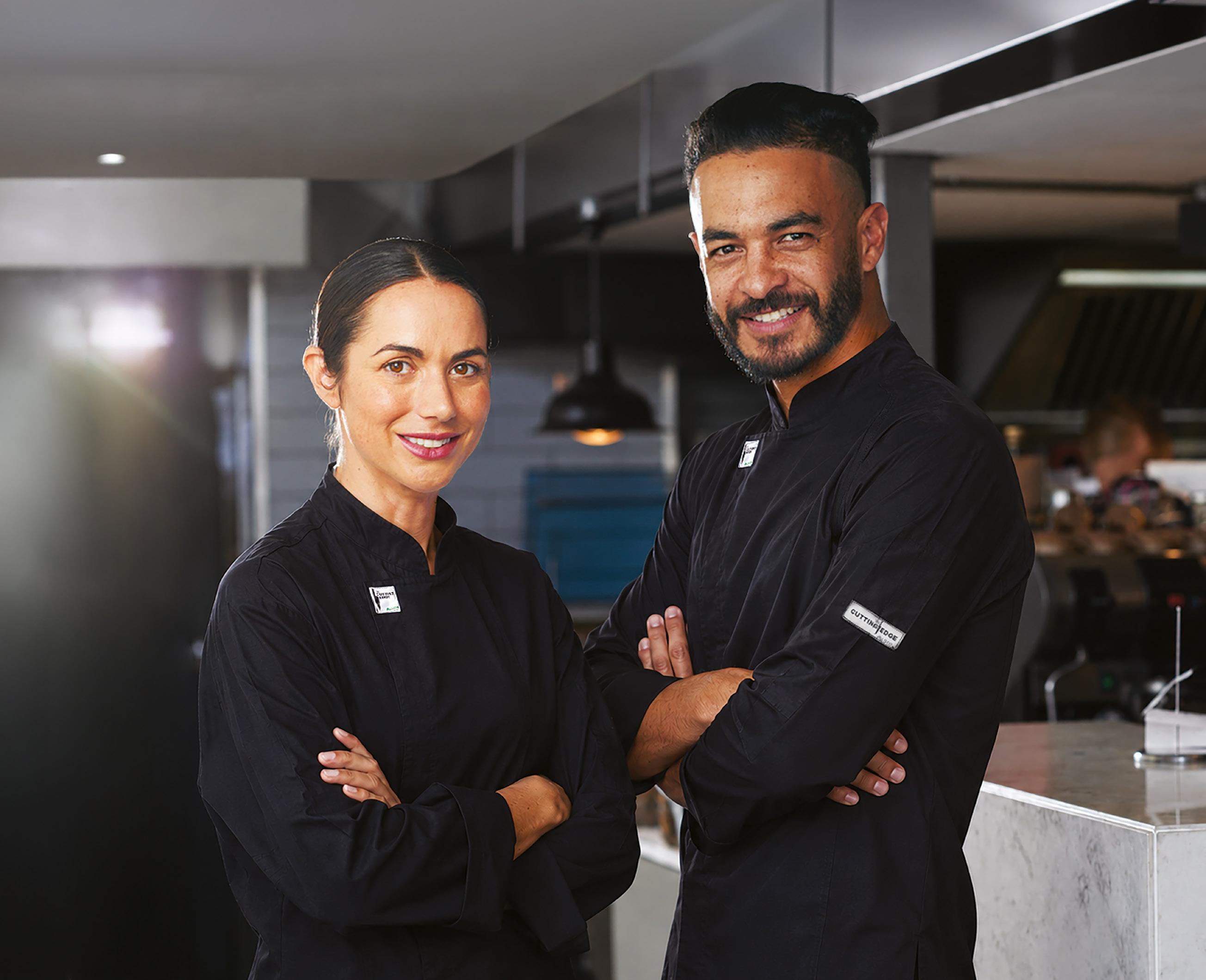
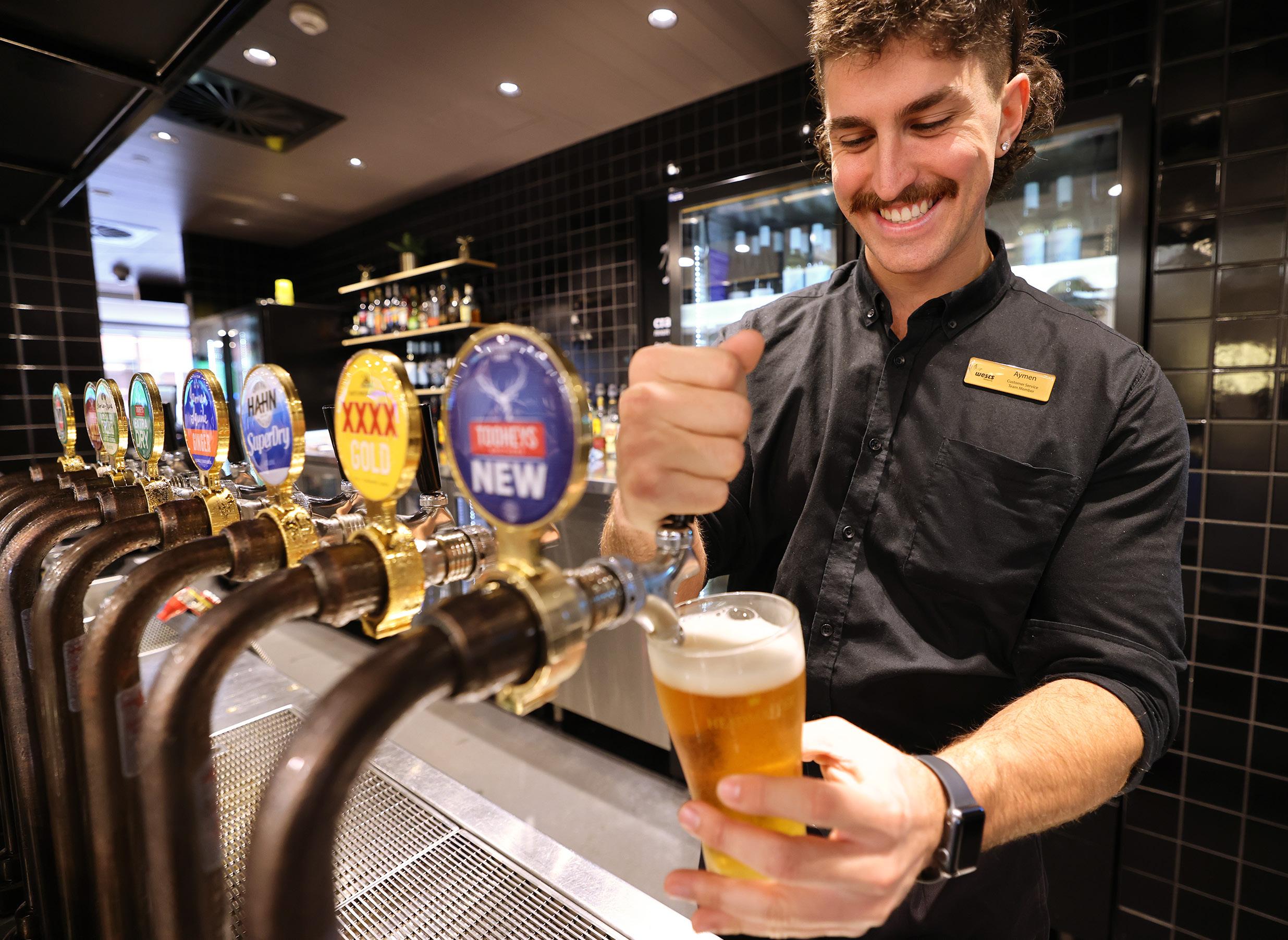
standard, and they’re quite successful,” Bull said. “They’ve got money to invest, and many are regularly renovating and looking at ways to improve their services to customers.”
With more open kitchens and visible hospitality spaces, maintaining high presentation and hygiene standards has become increasingly important, he added.
Bull said professionally managed uniforms, kitchen linen and hygiene services can help clubs maintain consistency while allowing staff to focus more on member experience and day-today operations.
“From an image perspective, staff are always looking very presentable,” he said. “If uniforms are left to staff to wash themselves, they might not always be cleaned to the same standard. Professionally laundered uniforms mean staff always have clean, ready-to-wear garments without having to worry about managing it themselves.”
Bull said clubs are also increasingly investing in managed first aid and defibrillator services as part of creating safer hospitality environments.
“We’re hearing a lot of success stories of people getting saved because there are more defibrillators available,” he said. “Because of the volume of people clubs have coming through, they want to make sure they’re doing the best they can to help keep patrons safe and protected.”
Moments that matter
Ultimately, it’s the small, human moments that leave the biggest impression. For Monti, those instances can also carry greater meaning, particularly when they involve supporting members through challenging situations.
He pointed to a recent example involving a patron the club had previously spoken with about their gambling behaviour, encouraging her to take a break. After building that trust, the member chose to self-exclude for a period.
“I got an email from her that said, ‘Hey, I’m really well … I’d love to come back’, and we’re happy to welcome her with open arms again,” Monti said.
“If we hadn’t created that relationship with her initially, she wouldn’t have taken a break. The conversation wouldn’t have been received the same way, and we wouldn’t be in a position where she wants to come back in for a meal with her family.
“We want people to have a relationship with the club for life, not just for a short period. If that means there are a couple of bumps in the road or breaks along the way, that’s okay.”
As expectations continue to rise, members will continue to want experiences that are not only seamless, but personal, empathetic, and meaningful. For clubs that get it right, it builds loyalty, and in today’s environment, that may be the most valuable reward of all.
Photo credit: Wests Illawarra



Greener grounds
Clubs are finding practical ways to reduce their environmental footprint.
AUSTRALIA IS GETTING more serious about protecting its environment. The passage of the Australian Government’s Environment Protection Reform Bills in late 2025, followed by the first tranche of reforms that came into effect in February 2026, signals a clear shift in national priorities.
While the legislation may not directly reshape day-to-day hospitality operations, it sets the tone for industries like clubs, where energy consumption, food waste and supply chain pressures carry a significant environmental impact.
As expectations from members, regulators and communities grow, many clubs are stepping up their sustainability efforts.
Powering up
For some, such as Canberra Southern Cross Club (CSCC), when it launched Southbound and its Argentinian-inspired kitchen, it was a chance for the club to rethink how a commercial kitchen could operate.
Rather than installing a traditional gas kitchen, the club opted for a fully electric commercial kitchen, a move that remains rare in the club sector.
For food and beverage general manager Anurag Gautam, who spearheaded the initiative, the decision aligned closely with the organisation’s broader philosophy.
“If you take a look at the way we do things the CSCC way, one of the pillars we have is community, and it’s about how we care for our community, our people, and our environment,” he said.
“From an environmental point of view, any new decisions we make, we say, ‘How does it impact the environment?’ That was one of the key things when we were designing the kitchen, and raised that question: how do we protect our environment?
“From an environmental point of view, any new decisions we make, we say, ‘How does it impact the environment?’”
– Anurag Gautam, CSCC F&B general manager
We know gas is one of the biggest polluters. What can we do to mitigate it? That’s where the whole exercise came in.”
While gas cooking has long been the default in commercial kitchens, Gautam said the club was inspired by international kitchens where electric cooking technology has already become widespread.
Having previously worked in Europe, he had seen large-scale commercial kitchens successfully adopt electric equipment years earlier.
“They’re already on their second generation of equipment overseas,” he said, adding that the experience demonstrated the technology was mature enough to support high-volume hospitality environments.
The Southbound kitchen is the first fully electric, large-scale commercial kitchen within a club environment in the ACT.
While Gautam admitted the transition required a substantial upfront investment to retrofit the kitchen and undertake extensive staff training, the operational benefits have been significant.
Unlike traditional gas appliances that emit constant heat, many electric cooking systems generate heat only when required. This has reduced the ambient temperature within the kitchen and improved working conditions for staff, particularly during Canberra’s hot summers.
“On 42- or 43-degree days, we can still operate at around 30 degrees in the kitchen because there’s no heat being generated unnecessarily,” Gautam said.
The equipment also delivers efficiency gains. Some appliances that would traditionally remain switched on throughout the day now operate only when required, reducing energy waste and operating costs.
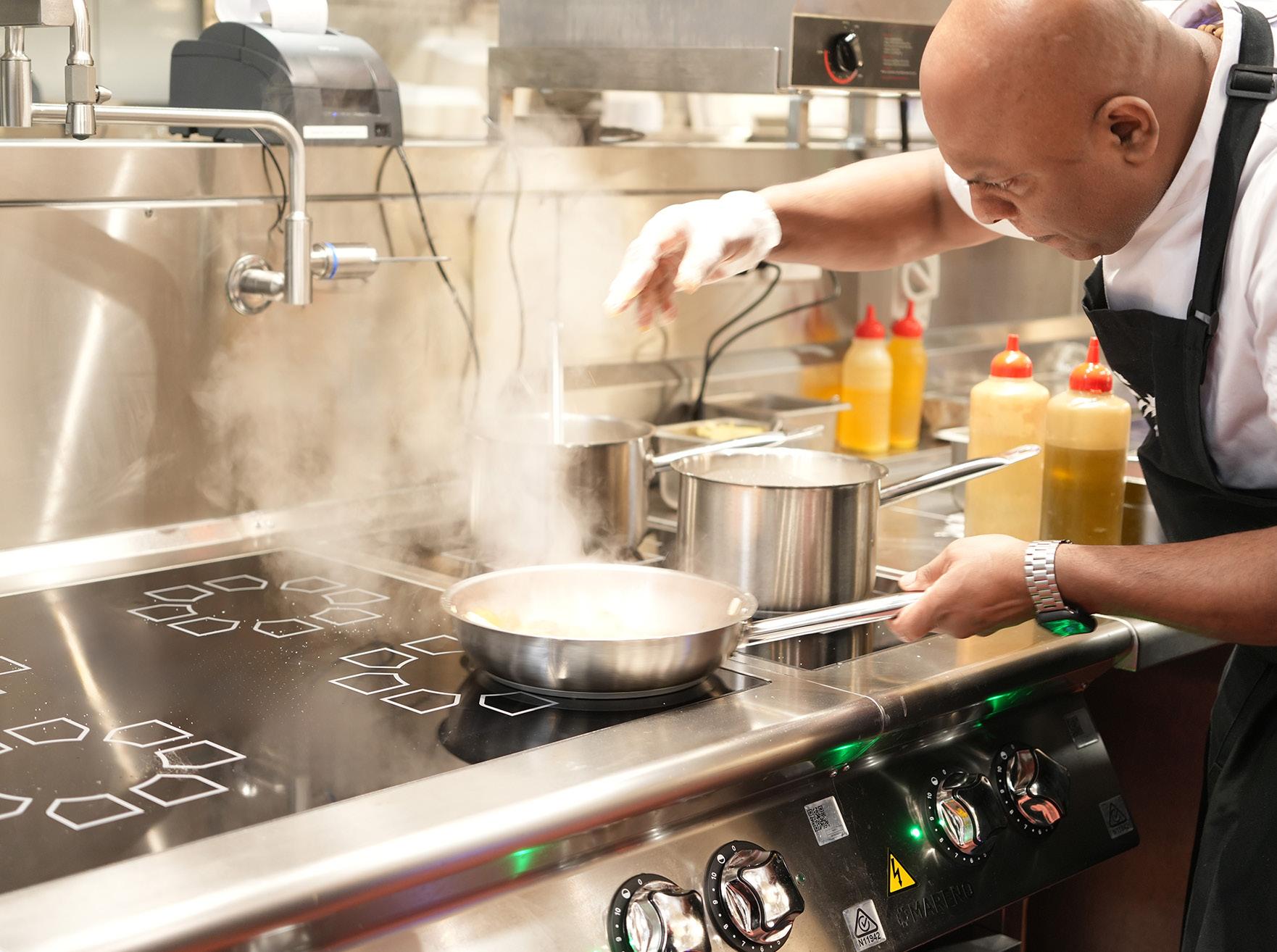
It’s an all-electric kitchen at Southbound in the ACT.
Photo credit: CSCC

“Developing a sustainability plan is part of our commitment to managing this impact responsibly and ensuring the communities we operate in can thrive for generations to come.”
– Daniel Perkiss, Wests Group Macarthur CEO
“Some of the new equipment is instant, so there’s no latent heat generated or wasted,” Gautam said. “The cost savings are huge.”
Every bit counts
The electric kitchen is just one part of a wider sustainability strategy across CSCC. The organisation has introduced a range of other sustainability initiatives aimed at reducing waste, improving ingredient sourcing practices, and lowering energy consumption.
Food waste, for example, is repurposed through partnerships with local farms and composting programs, ensuring organic waste is diverted from landfill and returned to agricultural use.
Kitchen operations also follow a “nose-to-tail” philosophy, with chefs butchering meat inhouse, dry-ageing meat, and using offcuts and by-products to create stocks and other dishes.
The club has also worked closely with suppliers to minimise packaging and reduce
reliance on single-use plastics. At the same time, ingredient sourcing decisions prioritise local producers wherever possible.
“We have an Australian-first philosophy,” Gautam said. “We’ve even started putting our farmers’ names on the menu. It’s not just about the product, but the whole experience and the story we want to tell.”
Together, these measures align with the ACT government’s goal to achieve net zero emissions, including phasing out gas in all homes and businesses in the territory by 2045.
For Gautam, the project has demonstrated what is possible when clubs are willing to challenge traditional practices.
“Be open-minded,” he advised. “Go and see how other businesses who have taken steps towards sustainable practices and spend some time getting clarity and a better understanding.”
Turning intention into action
Like CSCC, sustainability has also become an

increasingly important focus for Wests Group Macarthur. But rather than beginning with a single project or operational change, the group’s efforts started with a broader review of how sustainability was managed across the organisation.
CEO Daniel Perkiss said that process began during a strategic review in 2023 where the group recognised it needed a more structured approach to managing sustainability. The group subsequently engaged sustainability consultancy Rana Environmental to help strengthen its approach.
“Sustainability is now embedded in the organisation through reporting dashboards, staff training, clear policies and practical resources, including an Environmental Response Flowchart and formal Sustainability Values,” Perkiss said.
Early work focused on putting governance and measurement structures in place.
“We established a Sustainability Committee to ensure accountability, introduced key policies including a Sustainable Procurement Policy, and formalised a process to support local sustainability initiatives,” Perkiss said.
What’s that buzz?
Wests Group Macarthur’s sustainability initiatives have also led to an unexpected partnership with the Macarthur Beekeepers Association, helping secure the future of a long-standing community organisation while supporting local biodiversity.
The Macarthur Beekeepers Association, a not-for-profit education group with more than 165 members, has spent decades teaching residents about sustainable beekeeping and the vital role pollinators play in food production and ecosystem health.
For more than 20 years, the association operated from the Macarthur Centre for Sustainable Living at Mount Annan Botanic Gardens. But in 2024, the group faced an uncertain future when the centre lost council funding and was unable to continue its lease, leaving the association without a permanent home for its hives, equipment or members.
Recognising the importance of the organisation to the local community, Wests Group Macarthur stepped in to help. Rather than providing short-term assistance, the club committed to developing a purpose-built facility that would allow the association to continue its work and expand its education programs.
The new beekeeping and education facility, located within the Lakeside Golf Club maintenance precinct in Camden, includes 13 active beehives, two large bee sheds, an education and workshop space, and a food-grade honey extraction facility where members can bottle and label honey on site.
Since opening in August 2025, the site has provided the association with its first permanent home, enabling it to host training sessions, field days and workshops for schools, families and aspiring beekeepers.
Ed Napiorkowski, president of the Macarthur Beekeepers Association, described the relocation as a transformative moment for the organisation, sharing that the group was thrilled to finally have “a place to call home.”
The presence of the hives also supports pollination across the golf course, contributing to plant health and biodiversity while helping highlight the role bees play in food production.
Locally produced Macarthur honey is also now available for purchase at the golf club, while honey-inspired menu items have been introduced across Wests venues.

Macarthur Beekeepers Association now calls Lakeside Golf Club home. Image credit: Wests Group Macarthur
The organisation also established baseline data for energy, water and waste to help track progress over time, including reviewing the club’s solar capacity and lighting plans to identify energy opportunities.
Alongside operational initiatives, the club group has also begun extending its sustainability focus beyond its venues and into the broader Macarthur community. The organisation recently launched the $20,000 Wests for the Future Sustainability Grants Program.
“The program supports small-scale sustainability projects for local schools, sporting clubs and community organisations across the Macarthur region,” Perkiss said.
Small steps, big impact
While many of the initiatives are still relatively new, the organisation is already seeing measurable results.
“We planted 180 trees on behalf of our staff and recycled 41 tonnes of cardboard – the equivalent of saving more than 300 trees, half a million litres of water and enough energy to power 10 homes for a year,” Perkiss said.
“Our Strive4Sustainability score increased to 91 in 2025, up from 79 in 2024, demonstrating improvement in our overall sustainability performance year-on-year.
“In addition, and despite venue growth, water consumption reduced year on year, and energy efficiency improved across all venues, with energy per patron visit decreasing from 14kWh to 11kWh.”
Beyond environmental outcomes, Perkiss said sustainability initiatives can also strengthen connections between clubs and the communities they serve.
“Clubs are at the heart of their communities, contributing time and resources to support the regions they serve,” he said.
“At the same time, clubs, especially large ones, can put a load on energy, water and waste. Developing a sustainability plan is part of our commitment to managing this impact responsibly and ensuring the communities we operate in can thrive for generations to come.”
As more clubs begin examining their own environmental impact, Perkiss said the key is to focus on achievable, practical steps.
“What has helped us most is developing a clearer roadmap so we can take practical, manageable steps rather than trying to do everything at once,” he said.
“For Wests Group Macarthur, it was about simple initiatives that were easy to implement and that could deliver visible results.
“And of course, setting realistic, measurable goals.”




Photo
Future Food is delighted to congratulate our client, Doyalson Wyee RSL Club “The Doylo”, on the successful appointment of On Point Catering Solutions as its new catering partner.
“ ““We engaged Future Food to support our Catering Contractor EOI process and were really happy with the how it all came together. Allan was great to deal with, professional, approachable, and clearly very experienced in the space. He helped us connect with the right operators and kept the process clear and well-managed throughout, which made a huge difference. Overall, a really positive experience and a strong result for the club.”
Mark Irrgang | Hospitality Operations Manager
Doyalson Wyee RSL Club


IMAGE: Rory Calbert [centre], Chief People Officer at The Doylo, welcomes newly appointed caterers Mitchell and Elianna Walton of On Point Catering Solutions.
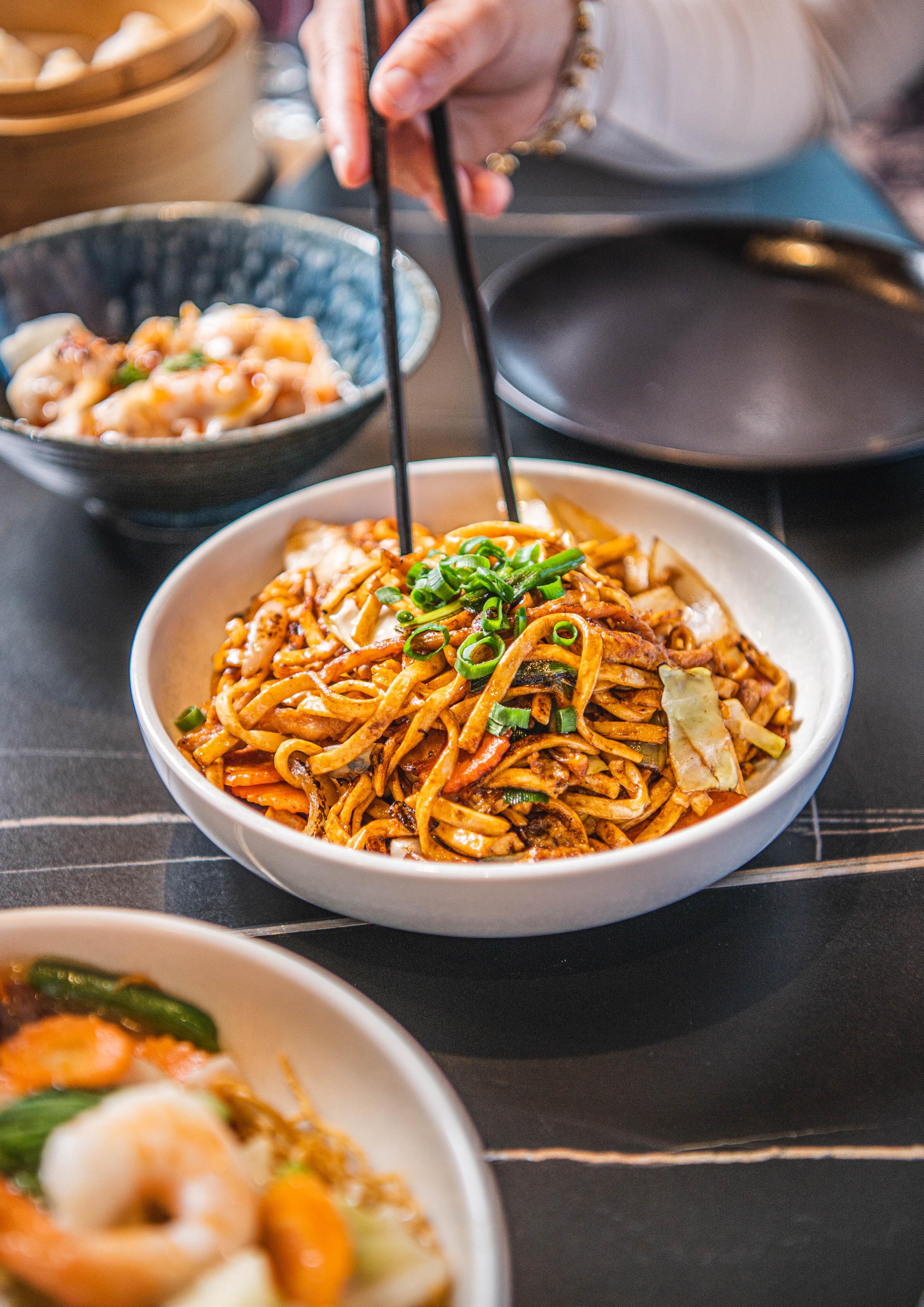
Handmade noodles from New Shanghai Night at Wests Ashfield.
Photo credit: Holman Barnes Group
A melting pot of flavours
In one of the world’s most multicultural societies, club menus are catching up, offering a variety of cuisines beyond the classics.
THE QUESTION OF what defines Australian cuisine has long been debated. A schnitzel, a steak or a Sunday roast might still come to mind, and for good reason. These are the staples that have kept members returning to their local club bistro for decades.
But look more closely at today’s club food offering, and a different picture emerges. Alongside those familiar favourites are influences from across the globe, from Cantonese and Italian to Mexican and beyond.
For some clubs, however, food is not just evolving; it is the foundation of their identity.
At Concordia Club in Sydney’s inner west, one of Australia’s oldest German clubs, the menu remains firmly grounded in tradition. Founded in 1883 as a meeting place for German migrants, the club continues to centre its offering around traditional cuisine.
“Authentic German cuisine has always been an attraction for our members and patrons, with the traditional dishes remaining unchanged over the years,” club president Teresa Sonntag said.
Signature dishes such as pork knuckle, schnitzel, and sausages – like Weisswurst, Bratwurst and Kransky – remain core to the menu, accompanied by traditional sides of sauerkraut and red cabbage. Desserts like apple strudel and Black Forest cake are always on offer in the cake stall, while imported German beers, including Erdinger, Weihenstephan, Bayreuther and Rothaus, along with schnapps, reinforce the experience.
While the membership base has broadened over the years to include Swiss, Austrian and local members from the surrounding community, the club has leaned further into authenticity as its point of difference.
“The Concordia Club has evolved to earn the name ‘The Hidden Gem’. Upholding traditional festivals such as Oktoberfest, Frühschoppen, and Carnival attracts those wishing to partake in the ‘eat, drink and be merry’ German experience at Concordia,” Sonntag said.
It’s this commitment to embracing its German identity that has shaped the club’s long-term success.
“The balance of preserving the club’s German heritage and traditions with the need to remain financially sustainable is driven by its dedication to German culture, a menu dominated by hearty German classics, and a bar serving imported German beers on tap, which has proven to be Concordia Club’s recipe for success,” Sonntag said.
A balancing act
While tradition defines the identity of cultural clubs, for groups like Holman Barnes Group, which operates venues including Wests Ashfield and Markets Club in Sydney, the food and beverage strategy has evolved to mirror the diversity of the communities they serve.
At Markets Club, for instance, a Chinese restaurant sits within a traditional club setting, offering Cantonese-style dishes including live
“Members still expect the familiarity of a traditional bistro offering, but they also want menus that reflect the cultural richness of their community.”
– Daniel Paton, Holman Barnes Group CEO
seafood and chef specials such as pork ribs with imperial sauce and deep-fried stuffed scallops with yam.
“Members’ tastes have become far more diverse and culturally influenced,” Holman Barnes Group CEO Daniel Paton said.
“For us, our community is truly a melting pot of cultures, and that diversity has shaped the expectations around our food offerings. We have seen continued demand for traditional Asian flavours as well as classic Italian influences.
“Members still expect the familiarity of a traditional bistro offering, but they also want menus that reflect the cultural richness of their heritage and our community.”
To deliver that breadth of offering, the group relies on external catering partners, selecting operators who can bring both authenticity and consistency to each concept.
“In our case, because we outsource our catering, the selection of international flavours really begins with choosing the right catering partner,” Paton said.
“We look for a caterer who not only understands our members’ preferences but also reflects the cultural diversity of our local community.
“When assessing potential partners, we consider their ability to deliver authentic, high-quality food, their flexibility to adapt to emerging trends, and their willingness to collaborate with us on menu development.
“Ultimately, the caterer needs to align with our vision for the club, balancing the comfort of familiar favourites with the creativity and cultural experience that our members expect.”
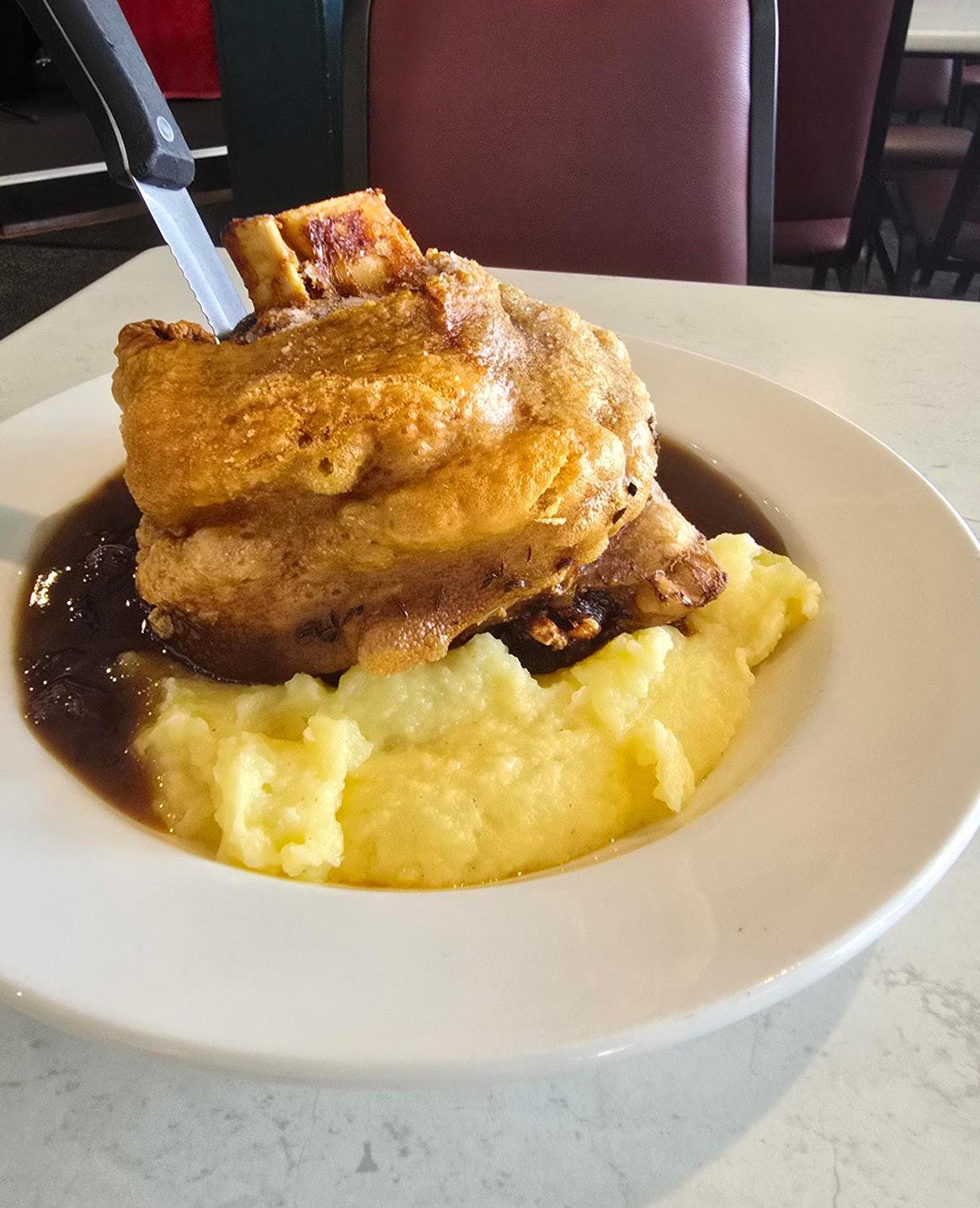
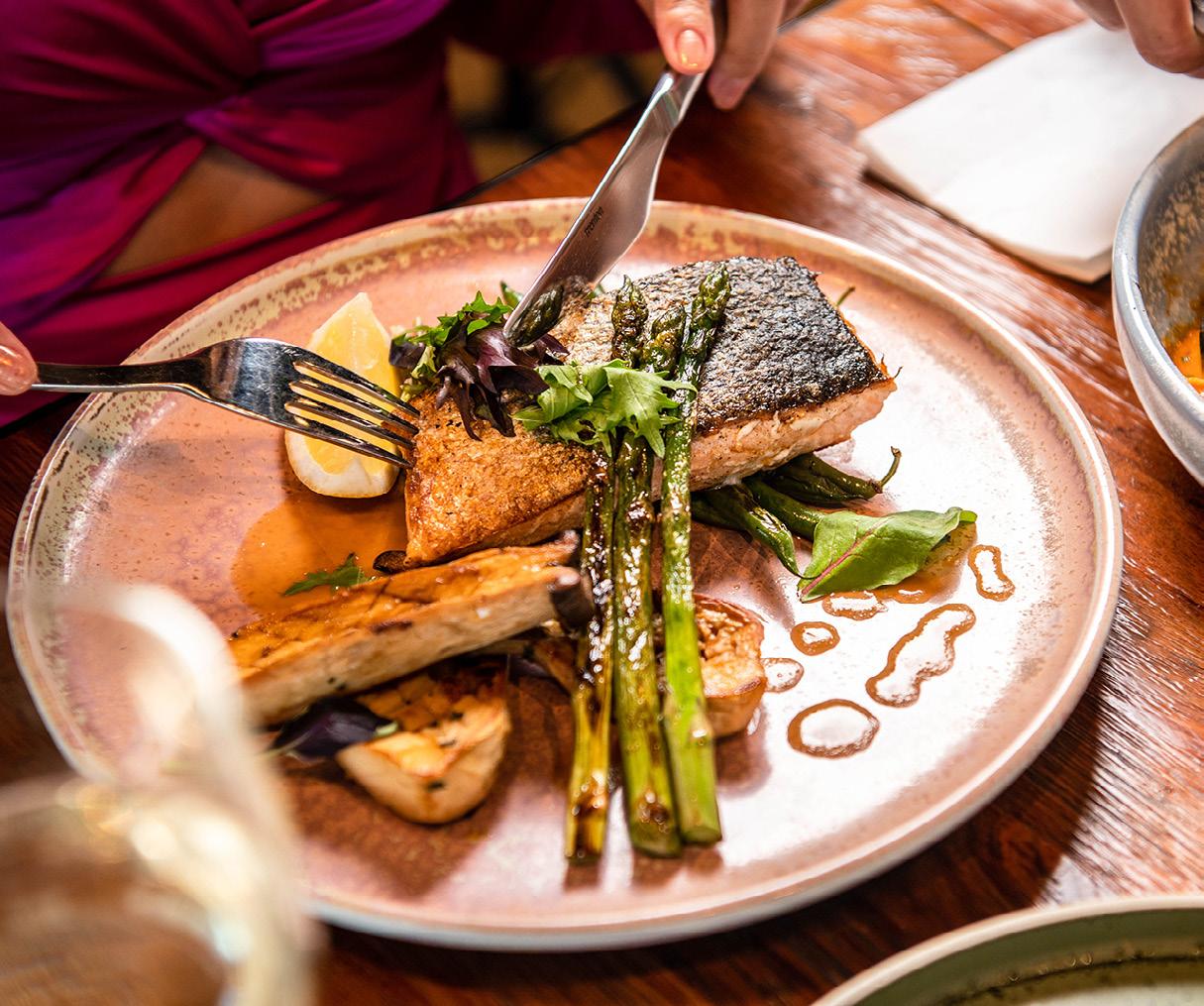
That approach extends beyond menu design to the operational realities of delivering multiple cuisines at scale, where consistency, sourcing and kitchen capability all come into play.
“This starts with understanding what our members value most. We analyse sales data and listen closely to member and community feedback to identify both the core favourites that must remain and the flavours people are excited to explore,” Paton said.
“Because we outsource our catering, it is essential that any new concept aligns with our caterer’s capacity, whether that is their ability to source specialised ingredients or maintain authenticity and consistency.
“We also consider practical factors like supply chain reliability and kitchen workflow to ensure every offering can be delivered to a high standard. Ultimately, it is about respectful collaboration with our caterer to create menus that are exciting for members while remaining operationally viable and sustainable.”
All under one roof
It’s a similar story at Club Blacktown, which also works with external caterers to create an international food experience for its members and guests. The expansion of its food offering initially began in response to changing dining conditions post-Covid.
“We saw a real gap in the market coming out of Covid, particularly with traditional club buffets no longer being viable,” Club Blacktown deputy CEO Ethan Dean said.
“At the same time, our members and guests were eager to get back into the club, not just for a meal but to reconnect and enjoy each other’s company.
“We had just developed a brand new, family-friendly space that was crying out for generous, high-quality food.”
Rather than returning to a single dining format, the club leaned into a multi-venue approach, curating a mix of cuisines that could operate independently while contributing to a cohesive overall experience.
The club introduced Italian dining through Villaggio and Cantonese cuisine, daily yum cha and live seafood through Ocean Treasure Asian Dining, alongside Just Pho, an affordable casual Vietnamese eatery.
Wests Ashfield brings variety to its food offering by working with external caterers, such as Villagio.
Photo credit: Holman Barnes Group
Concordia Club prides itself on serving traditional German food.
Photo credit: Concordia Club
“A great experience travels fast, whether that’s through word of mouth or a well-timed Instagram post.”
– Ethan Dean, Club Blacktown deputy CEO
At Villaggio, the menu centres on familiar Italian staples such as pizzas and house-made schnitzels, while Ocean Treasure focuses on traditional Cantonese cuisine, with seafood dishes, yum cha and share-style plates designed for group dining. Both brands have expanded beyond Club Blacktown, with Villaggio now operating across multiple Sydney clubs, including at Wests Ashfield, and Ocean Treasure opening a second location at Cabra Bowls after earning recognition at the 2025 ClubsNSW Your Local Perfect Plate Awards.
Dean believes the model is a natural reflection of the local community, but also a deliberate strategy to broaden the club’s appeal.
“Western Sydney, and Blacktown in particular, is one of the most culturally rich and diverse regions in the country. For us, it was important that our food offering reflected that,” he said.
“We wanted our members and the local community to be able to come into the club and have a different experience each time, knowing that no matter what they choose, it is coming from venues that consistently deliver high-quality food. It is about giving people options that reflect who they are and what they enjoy.”
He said those expectations are also being shaped by external factors, including cost-of-living pressures and the influence of social media.
“We are also seeing members become more adventurous with their food choices and more open to trying new flavours and cuisines. Social media has played a role in that, but I still think word of mouth is just as powerful,” Dean said.
“A great experience travels fast, whether that is through a recommendation or a well-timed Instagram post.”
For the Western Sydney club, diversifying its food offering has been both experiential and commercial.
“There are a lot of benefits to having multiple cuisines under one roof. From a member experience perspective, it continues to elevate what we offer and gives people more reasons to visit more often,” Dean said.
“Whether someone is coming in for a casual meal, a family catchup or a special occasion, there is something for everyone.
“From a business perspective, it broadens our appeal, increases dwell time and drives repeat visitation. It also means we are not relying on one single style of dining, which creates a more resilient and well-rounded offering.”
This model, however, only works if the food operators themselves can strike the right balance between authenticity and broad appeal.
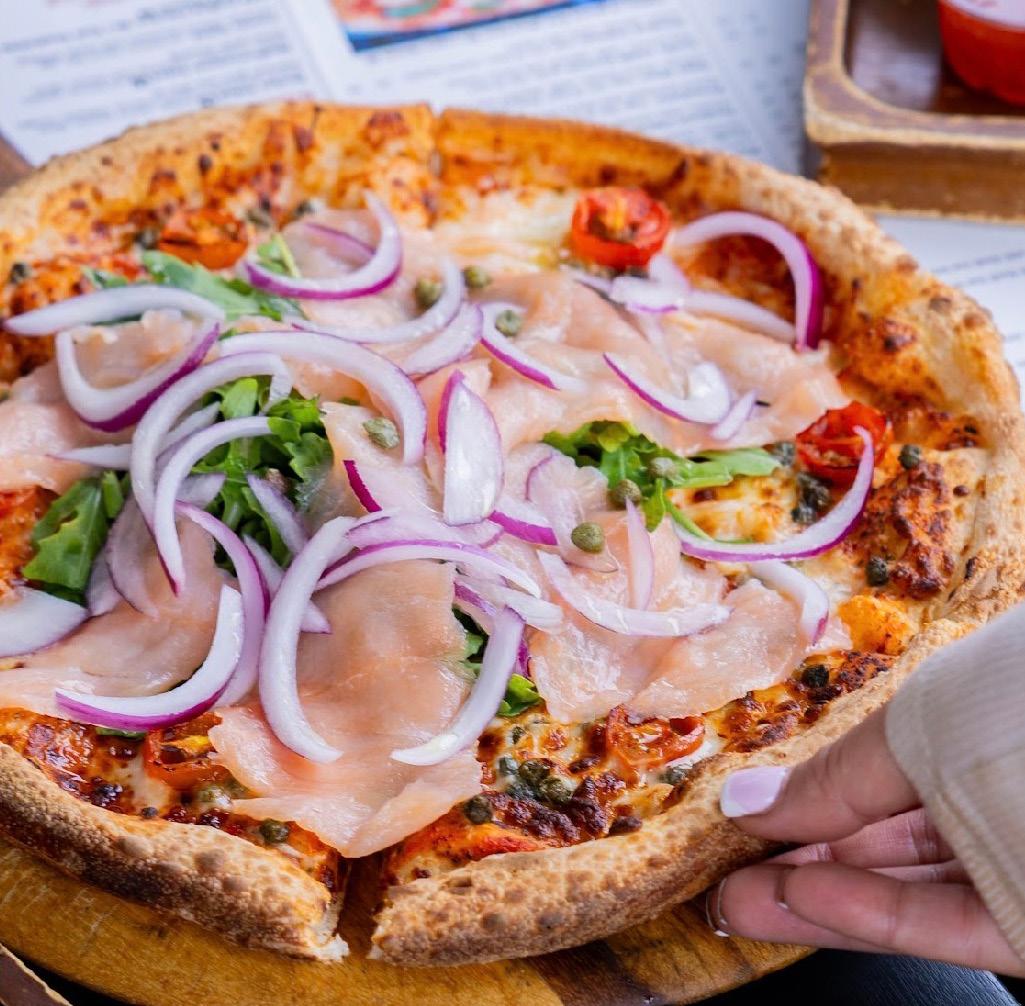
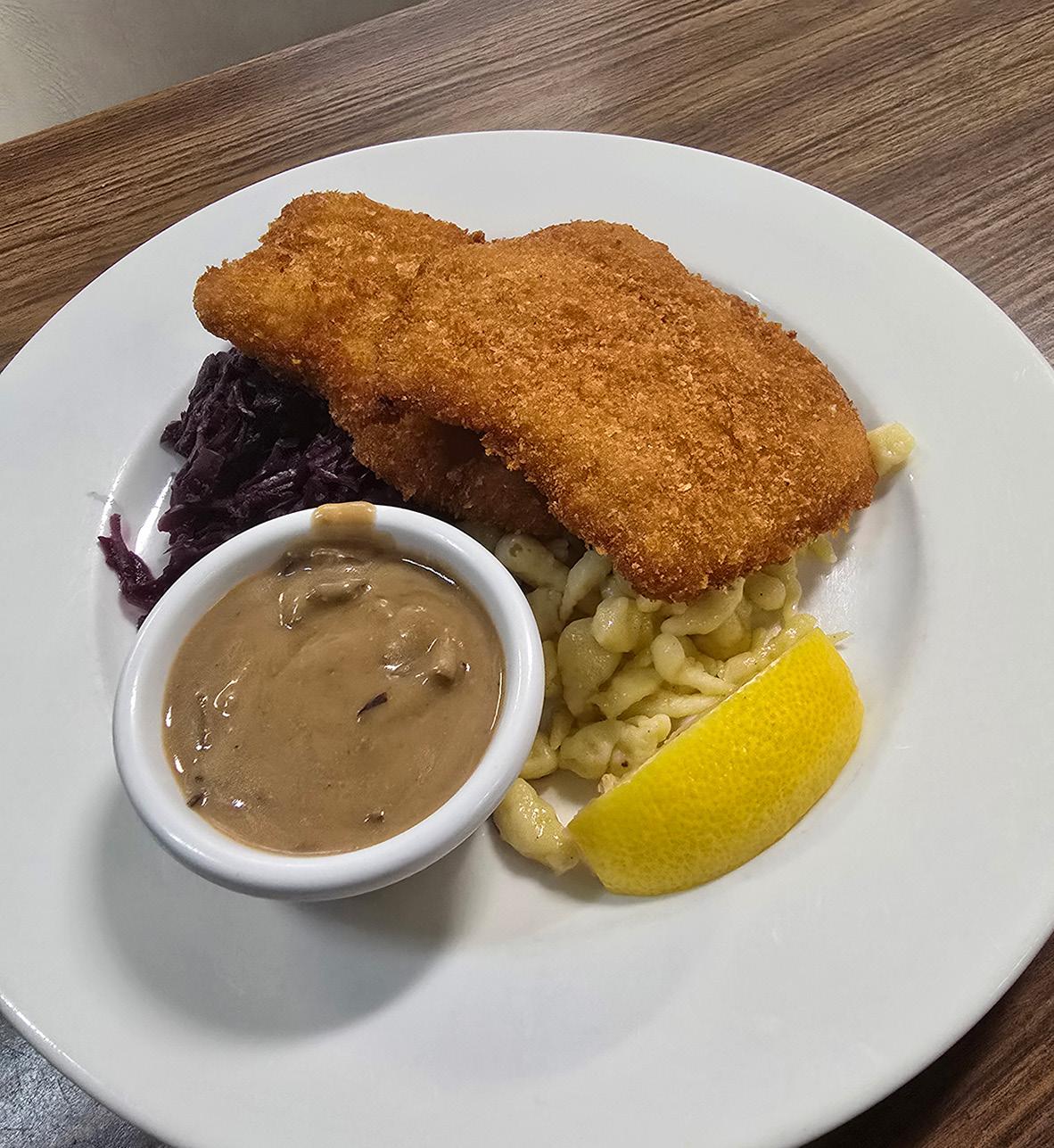
Villagio brings Italian cuisine to multiple clubs, including Wests Ashfield and Club Blacktown.
Photo credit: Villagio
The Jäger Schnitzel is a firm favourite among patrons at the Concordia Club.
Photo credit: Concordia Club

For Simon Kanaan, owner of Villaggio, that starts with simplicity.
“From day one, the focus has been on finding the right balance between variety and simplicity, and that approach has remained consistent since 2011,” he said.
“It is about creating a menu that offers something familiar and enjoyable for a wide audience while still staying true to the cuisine’s identity.
“By focusing on well-executed classics that are cooked with care and consistency, we are able to appeal to a broad demographic without compromising on quality or authenticity.”
That approach is reflected in the dishes that continue to resonate with diners. Kanaan points to schnitzels and pizzas as standout performers, both popular across age groups and known for their consistency and quality.
Ocean Treasure Asian Dining managing director Stevenson Su agreed, saying as Sydney’s multicultural community continues to influence dining expectations, members are increasingly open to exploring authentic cuisines, while still valuing comfort and familiarity.
“Club dining will continue to evolve, embracing diversity while maintaining high standards of quality and service. Ocean Treasure aims to contribute to this future by offering authentic Cantonese cuisine in a welcoming and inclusive environment,” he said.
For Ocean Treasure, that comes in the form of delivering share-style classic Cantonese favourites, seafood dishes, and yum cha selections.
“They suit family dining and social gatherings, which reflects the
club’s community-focused environment. Consistency, value, and quality are key factors behind these popular choices,” Su said.
Both operators also point to a shift in expectations, with members increasingly seeking restaurant-quality food within a club environment.
“Club dining has moved well beyond traditional pub-style meals and is now centred around quality, variety and the overall experience,” Kanaan said.
“Members are increasingly expecting food that rivals standalone restaurants, while still enjoying the relaxed, family-oriented environment that clubs are known for.”
As club dining continues to evolve, the challenge is not simply about expanding the food offering, but doing so in a way that feels considered, commercially sustainable, and true to their community.
At Club Blacktown, Dean believes that evolution will continue to be shaped by both changing expectations and economic realities.
“I think clubs are still underrated when it comes to their food offering, and it is something I personally enjoy with my own family, being able to go out, have a great meal and do it in a familyfriendly environment,” he said.
“Looking ahead, I see clubs continuing to evolve, particularly around healthier options, not just in the dishes themselves but also in portion sizes and overall balance. With the ongoing cost-of-living pressures, it is also critical that we continue to offer value, making sure our members and the community can access high-quality, affordable dining experiences.”
Club Blacktown is home to Ocean Treasure, a popular Cantonese restaurant serving seafood and yum cha.
Photo credit: Ocean Treasure

MEET THE NEW ARRIVALS

At RDM Pizza, we’re always looking for new ways to help our customers create exceptional pizza experiences. That’s why we’re proud to introduce the lat est additions to our range – combining Italian tradition, innovative technology and premium quality products designed for today’s foodservice industry.
NAPOLI LEOPARDO ROSSO Premium Pizza Base. Outstanding results.
SUPER VELOCE PIZZA OVEN
Authentic pizza. Extraordinary speed.
Designed for speed, performance and authentic results, the Super Veloce Pizza Oven helps operators produce restaurant-quality pizza with ease.
Reaching 450°C in minutes, it's the p erfect solution for venues looking to deliver exceptional pizza without the complexity of a traditional wood-fired setup.
Crafted using premium ingredients and traditional techniques, our Napoli Leopardo Rosso Pizza Base delivers the authentic textur e, flavour and leopard spotting expected from true Napoli-style pizza.
Ready to top and serve, it's a simple way to achieve consistent results without compromising on quality.



PINSA FIORENTINA
Light, airy and endlessly versatile.
Made using a highly hydrated dough and long fermentation process, our Pinsa Fiorentina offers a crisp exterio r and soft interior.
Perfect for sharing boards, gourmet toppings or menu innovation, it's a delicious alternative to traditional pizza.



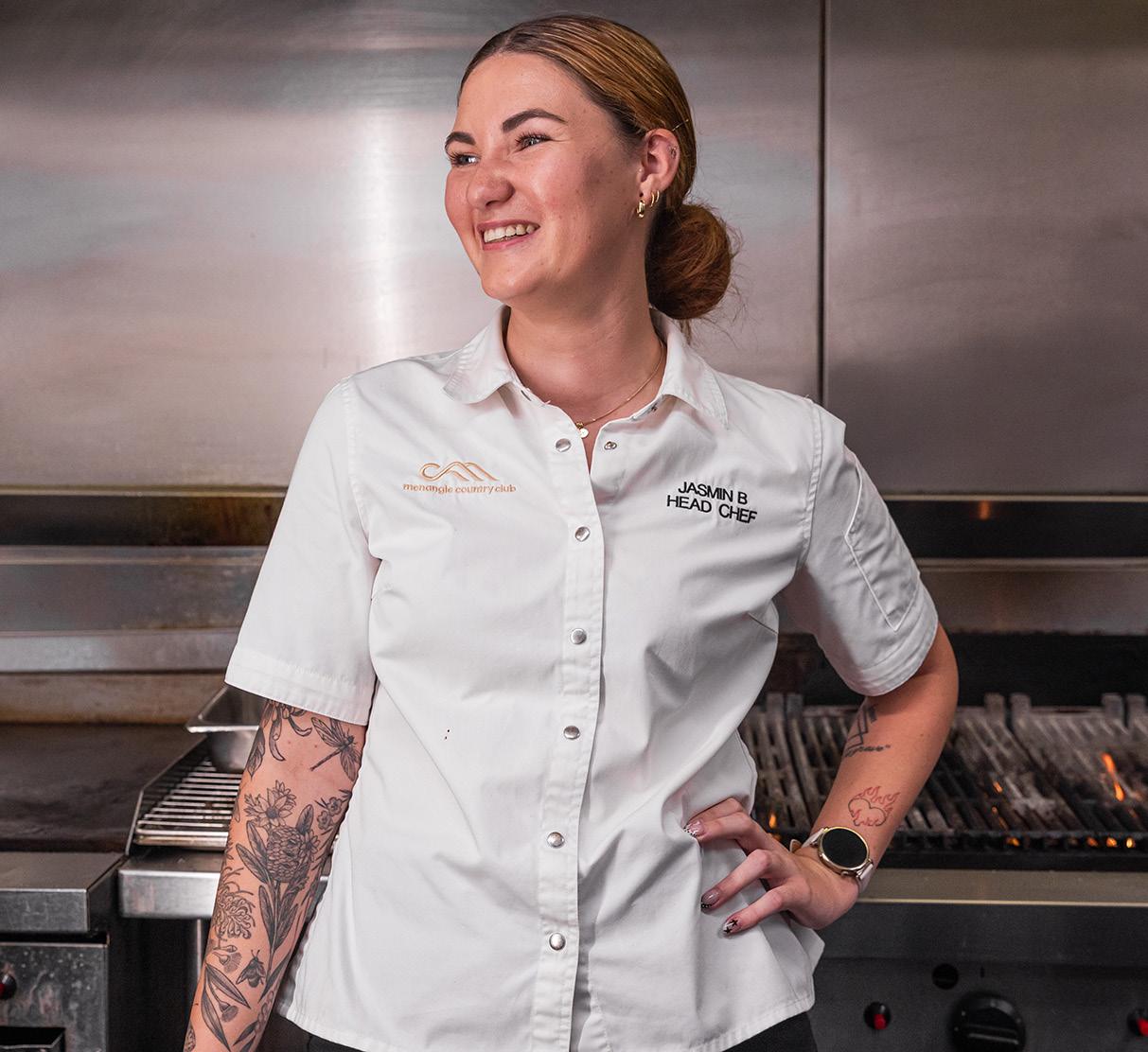
In the heat of the moment
Leading three kitchens and thousands of covers, Club Menangle’s Jasmin Billitteri thrives on the pace, pressure, and people.
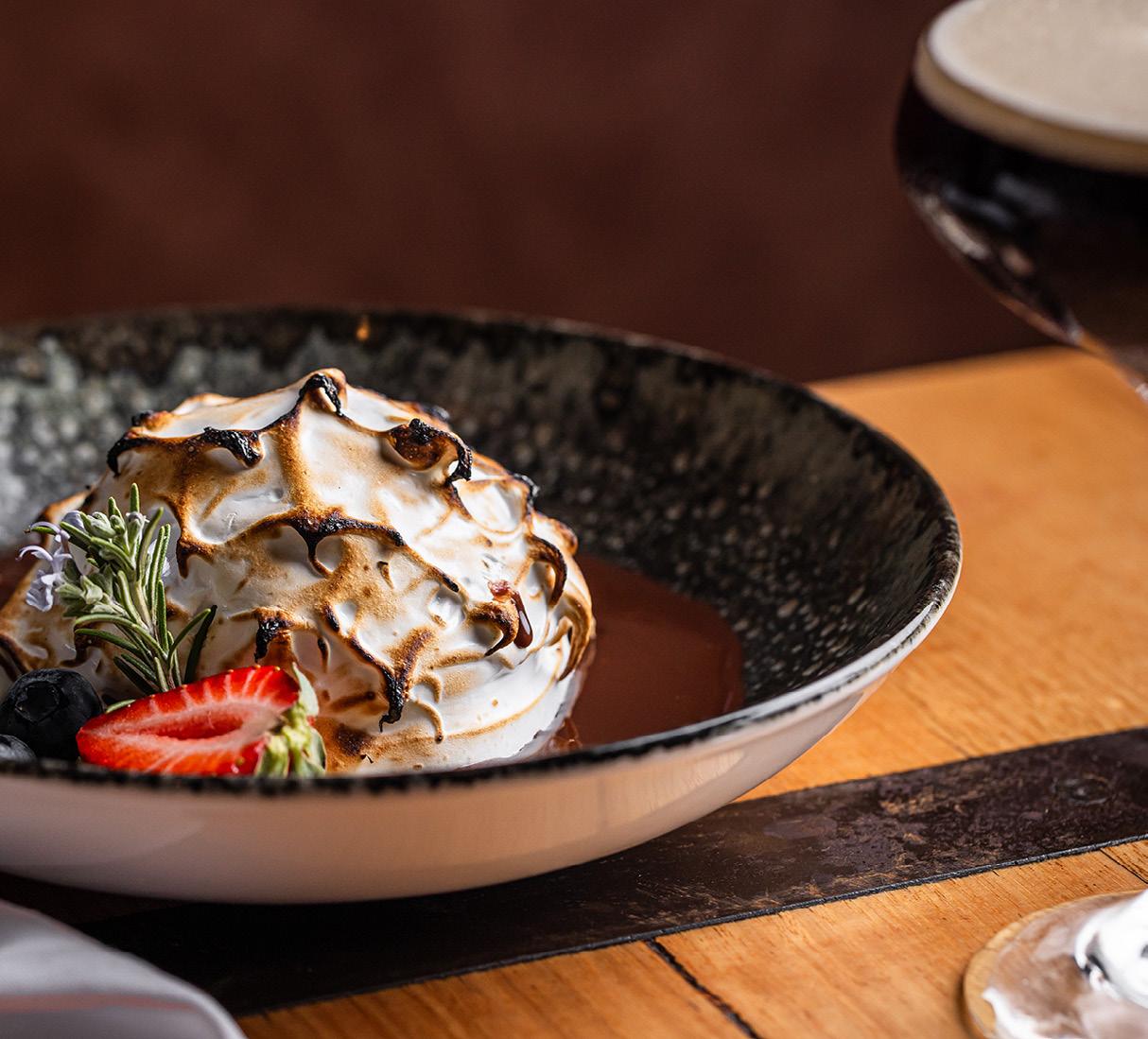
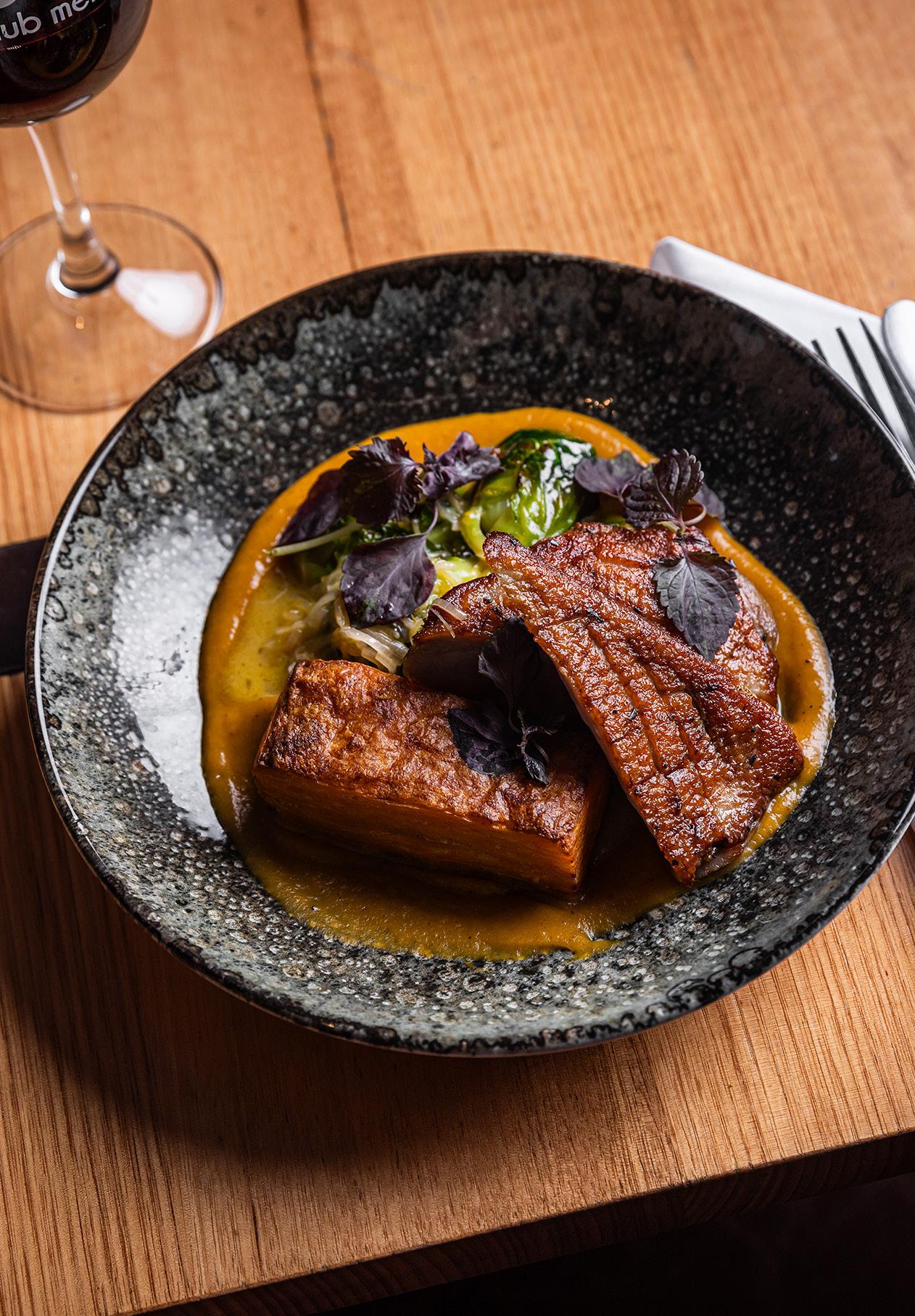
AT CLUB MENANGLE in Sydney’s southwest, Garrard’s Miracle Mile is more than just a race day. It is one of the biggest weekends of the year on the club’s event calendar, drawing crowds of around 10,000 people and more than 1,200 catered guests.
For head chef Jasmin Billitteri, catering for that number is just part of the role.
“It sounds a bit over the top,” she said, “but I feel like I was born to do this job.”
Billitteri oversees three kitchens at Club Menangle, including the main club kitchen and its trackside venue. The trackside kitchen operates primarily around race days, where a single night can involve multiple functions, buffets, and plated services all running simultaneously.
“It’s a juggling act,” she said. “You can have eight different functions happening at once. They’re really big days, and they take months of preparation. But I love the thrill of being busy. There’s never a dull moment in this job.”
In contrast, servicing the main club is a constant. “It’s seven days a week, with multiple dining areas – it never really stops.”
Just when running two kitchens wasn’t enough, Billitteri introduced a third to the mix. She launched La Terrazza last November, a wood-fired pizza bar featuring hand-made dough that has become both a commercial and operational success.
“It’s great for families, and it also helps take pressure off the main kitchen during busy periods,” she said.
Pan-fried duck breasts with spiced pumpkin puree and brussels sprouts.
Photo Credit: Trent van der Jagt
A Neapolitan bombe Alaska
Working up the ranks
Billitteri was promoted to the head chef role just over a year ago, after spending four years working her way up the ranks in the kitchen at Club Menangle.
While the progression may appear straightforward, she said it has been built on years of hard work, experience, and a willingness to take on new challenges.
Billitteri left school at 15 to begin her apprenticeship at Campbelltown Catholic Club after realising the classroom was not for her. By the time her peers were finishing year 12, Billitteri was already a qualified chef.
“I did hospitality at school in year 10, just like most chefs, and I just knew school wasn’t for me,” she said. “It was a chance for me to get out of school.”
A big influence was her older cousin, a chef she admired growing up. “I just thought he was the coolest person ever,” she said. “I wanted to be him.”
From the outset, she gravitated towards the club sector because of the scale of opportunities it offered.
“I’ve always loved working in clubs,” she said. “You’ve got big teams, lots of moving parts, and so much room to grow. You can start as a kitchen hand and work your way all the way up.”
That trajectory accelerated early. In the first year of her apprenticeship, she won a cooking competition that caught the attention of a Wests Macarthur executive chef in the crowd.
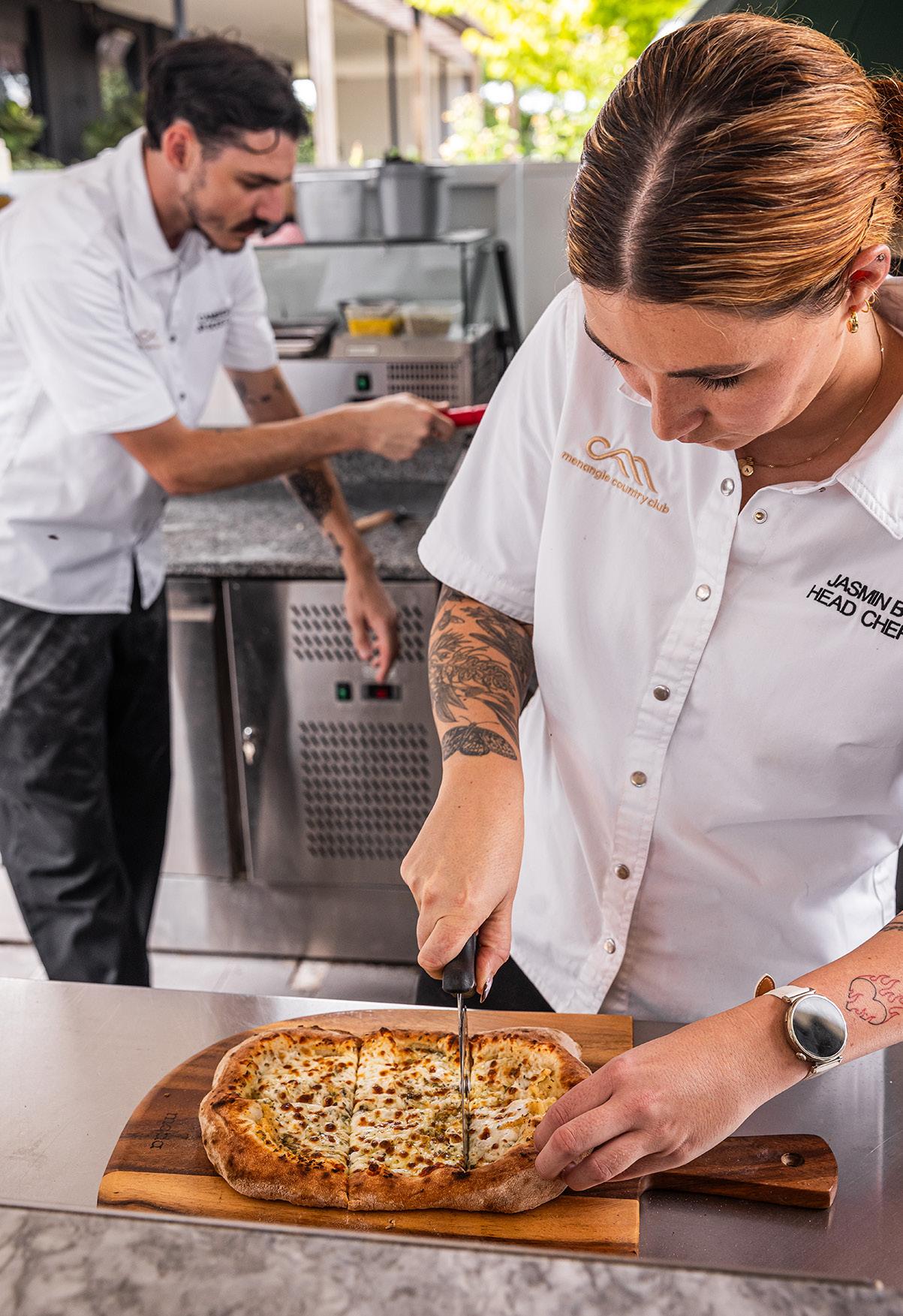
“He asked, ‘Do you want to come work for me instead?’” she said. The move to Wests fast-tracked her to becoming a function chef at 18 and a junior sous chef by 20.
“You can’t treat everyone the same. Everyone’s different, so you have to learn how to communicate with each individual.”
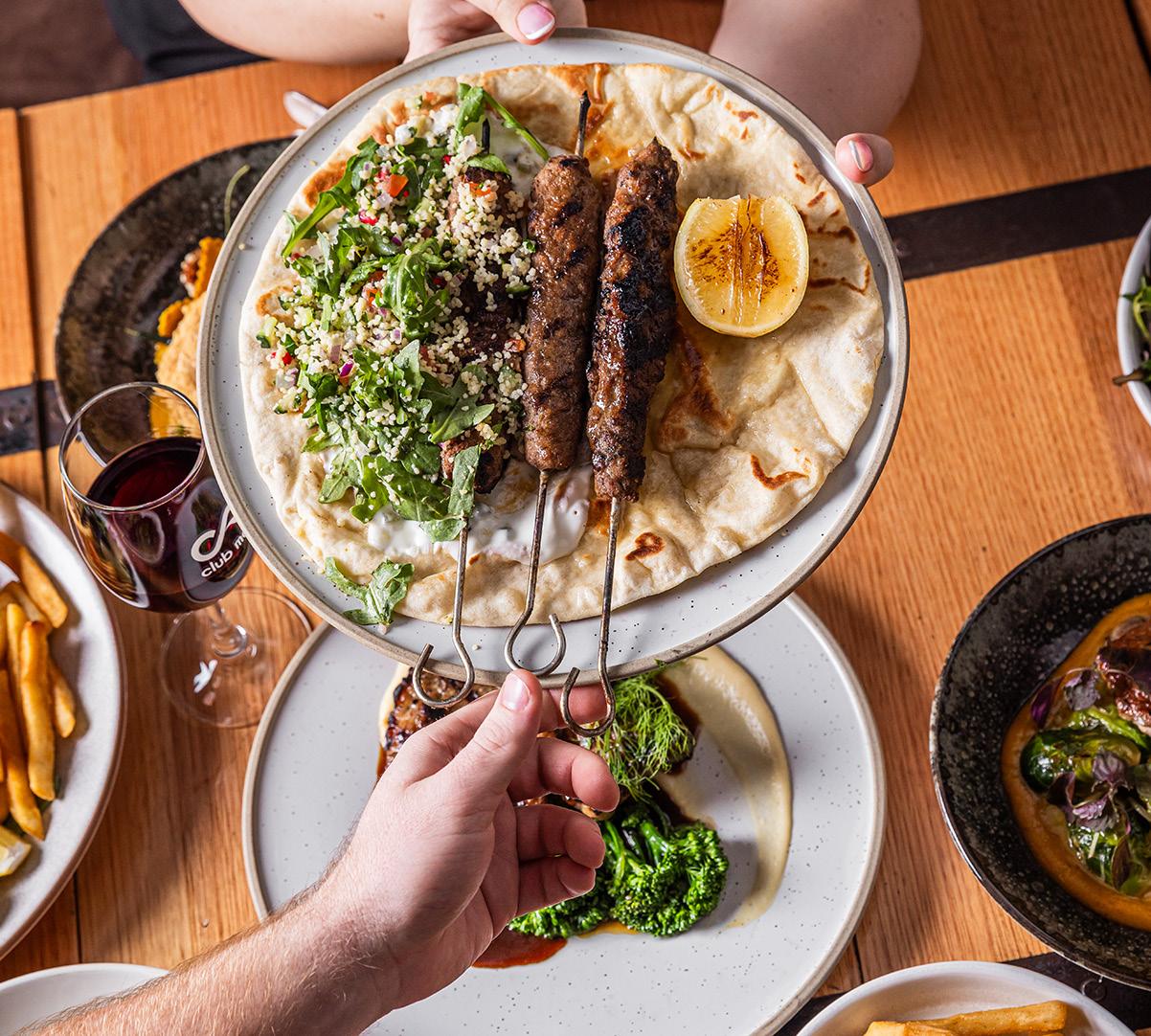
After starting a family, she returned to the industry, joining Club Menangle less than a year after it opened. Within six months, Billitteri stepped into the sous chef role and from there became closely involved in the kitchen’s growth.
“[Club Menangle] said it was a chance to build something from the ground up,” she recalled.
Leading by example
In an industry often defined by hierarchy and gender imbalance, Billitteri has taken a more people-focused approach.
“I’m a people person,” she said.
Billitteri thrives in team environments and takes pride in mentoring apprentices, ensuring they receive the same hands-on, supportive training she did.
“I want them to have the best opportunity possible,” she said. “You can’t treat everyone the same. Everyone’s different, so you have to learn how to communicate with each individual.”
She admitted that, while managing people has been the trickiest part of stepping into the head chef role, it has helped shape a strong and cohesive team.
“I’ve got a very solid team, and we all know how to communicate with each other now, which is good. It makes a huge difference,” she said.
La Terrazza is the newest kitchen at Club Menangle.
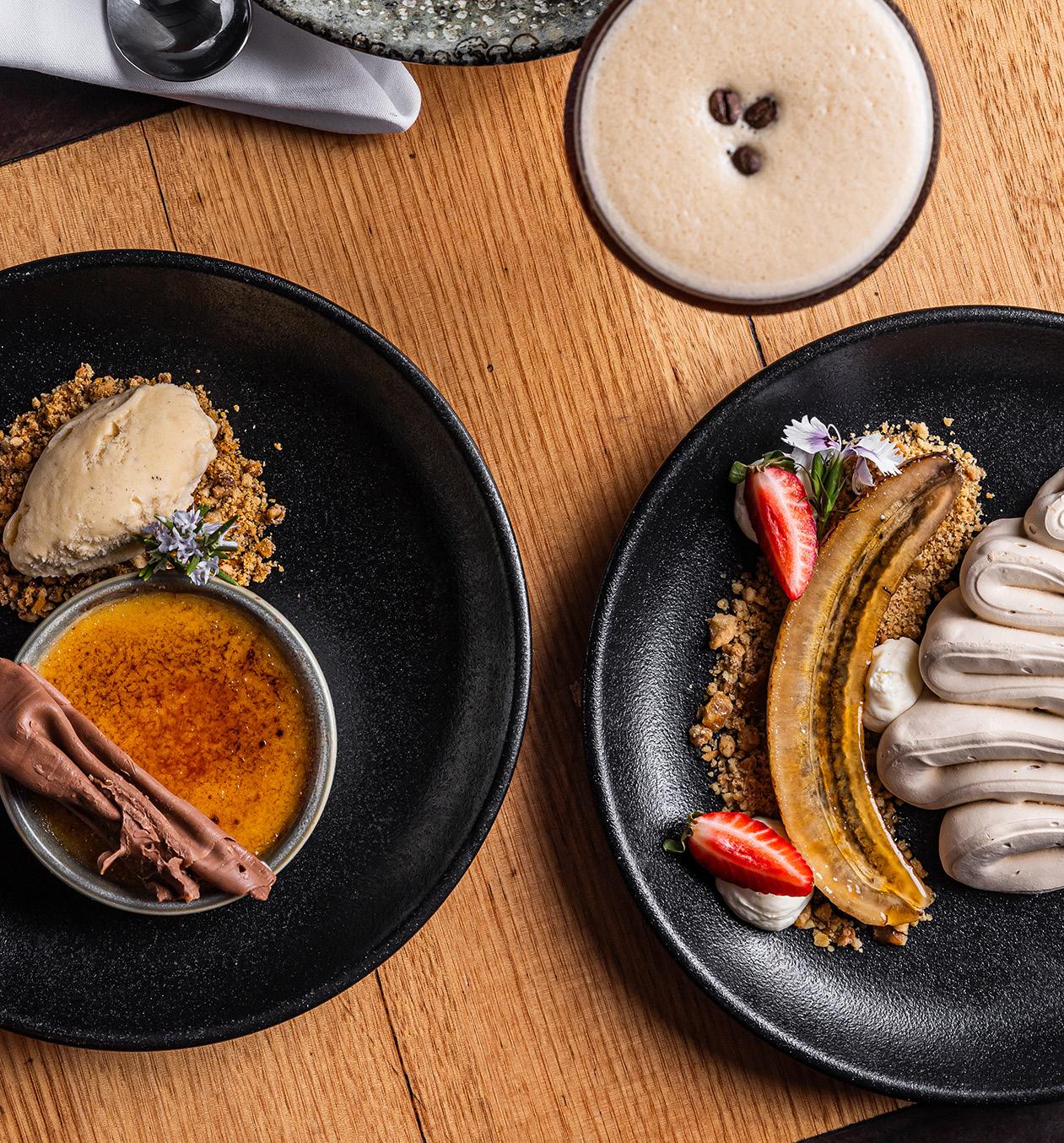
That commitment to training staff is already evident within her team. Billitteri recently appointed an in-house pastry chef who has risen through the ranks at the club, completing her apprenticeship on site before returning to study and specialise in pastry.
“Luckily for me, I got first dibs,” she said.
Billitteri explained how supporting the next generation of chefs, especially young women entering the industry, is important, as she is often met with surprise from others in the industry.
“I get a lot of comments from chefs I meet, especially head chefs who are twice my age, asking, ‘How are you doing this?’”
For Billitteri, it’s about shifting perceptions of who belongs in the kitchen.
“I genuinely think it’s because I’m trying to change the demographic by bringing through younger chefs and showing people that nothing should stand in your way. If you really want something, you go for it,” she said.
“I want the younger generation to know that you don’t have to be male in this industry, and that working in a male-dominated environment shouldn’t stand in the way of what you want.”
Elevating the menu
Billitteri’s determination to change the conversation isn’t just evident in the kitchen; it’s also clear in the food she’s putting out. She’s bringing restaurant-quality food into a club setting. While there are still schnitzels and Scotch fillet on the menu, other dishes include pan-fried duck breasts with sweet potato gratin, spiced pumpkin puree, brussels sprouts, and orange sauce.
“I love being wined and dined, getting things that are fresh from the farm,” she said. “I think bringing that to a club and being able to give our patrons that without the price tag is nice.
“When you go out dining, you can expect to pay $300, but if you go out to a club, it’s maybe only $150, and you can get the same quality. The chefs are of the same quality.”
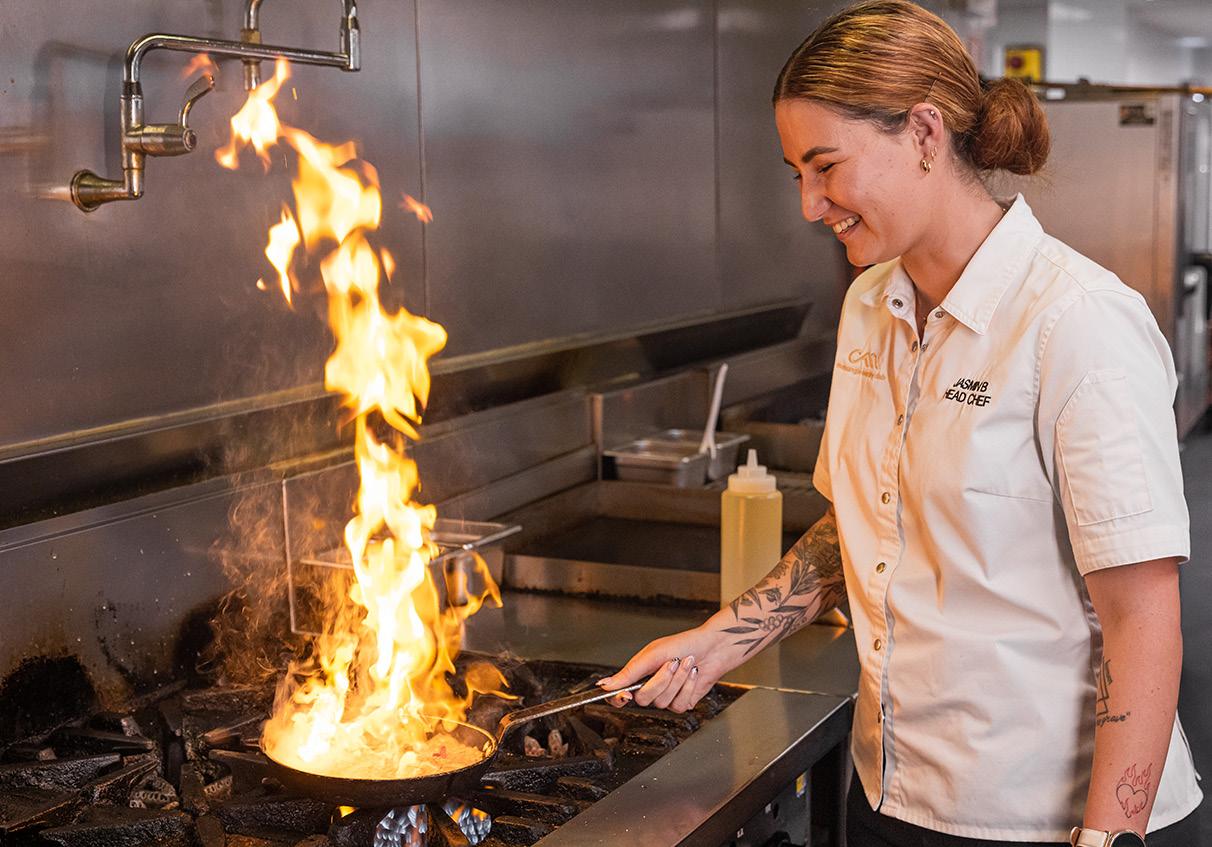
“Working in a male-dominated environment shouldn’t stand in the way of what you want.”
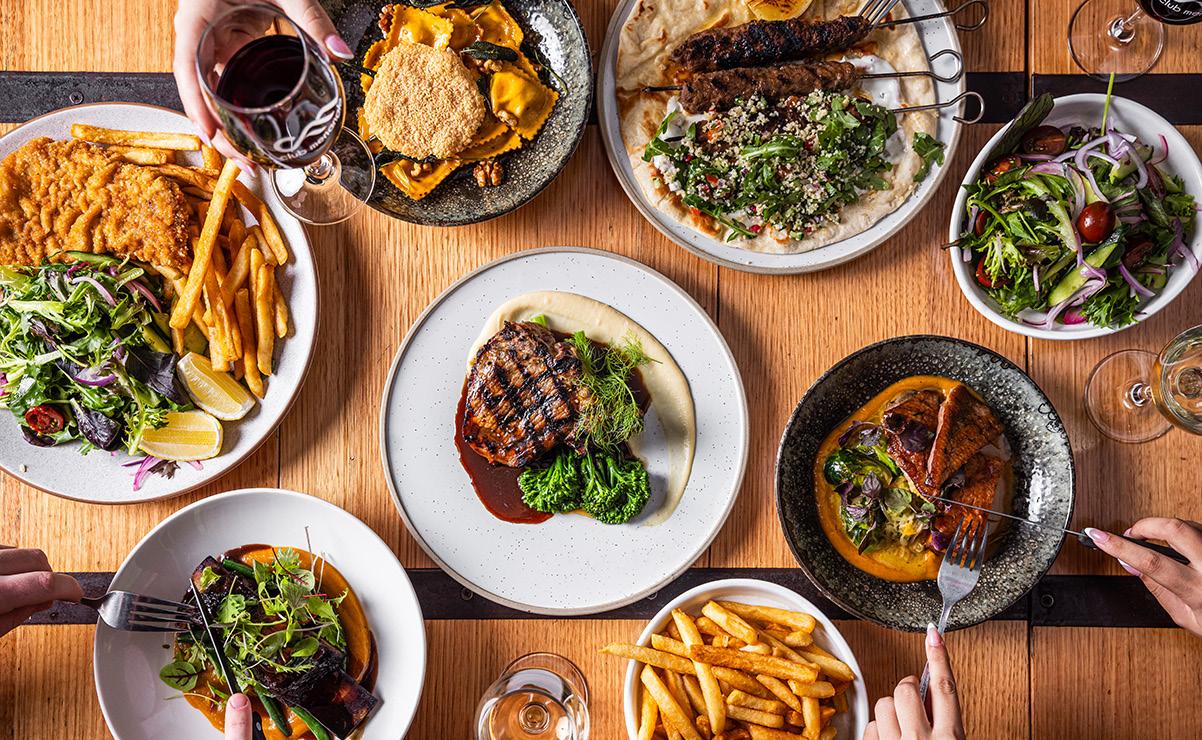
That push towards a more elevated offering is also evident in the dessert menu, led by the club’s newly appointed in-house pastry chef. New additions include a brown sugar meringue with salted caramel, caramelised banana, walnut crumb, and Chantilly cream, alongside a smoked maple and cinnamon crème brûlée and a Neapolitan bombe Alaska.
In an environment where cost-of-living pressures are shaping dining habits, Billitteri is acutely aware of the need to balance quality with affordability. Her solution is seasonality and strong supplier relationships, which she said really pays off.
“I try really hard to work with a lot of our suppliers and go with the season,” she said. “If I can build my menus around seasonal fresh food, it means I can get good products at a good price.”
That approach benefits more than just diners. Billitteri regularly brings her team to farmers’ markets to better understand where ingredients come from, reinforcing a paddocktoplate mindset and building skills beyond the pass.
With three kitchens and a growing team, Billitteri said she is still learning the full scope of the role, but building her team and bringing them up with her is something she’s not willing to compromise on.
Creativity is encouraged in the kitchen at Club Menang.
It’s all about elevated food at Club Menangle.


Get more out of your veg
Improve yield and boost profit with smarter vegetable choices
Learn the truth about taste and nutrition for frozen veg
How to cut waste and save labour
Sign up to access FREE
The endto-end model
Steve Sidd, managing director of Catering HQ, shares how owning the supply chain means the business can keep costs low, improving overall performance.
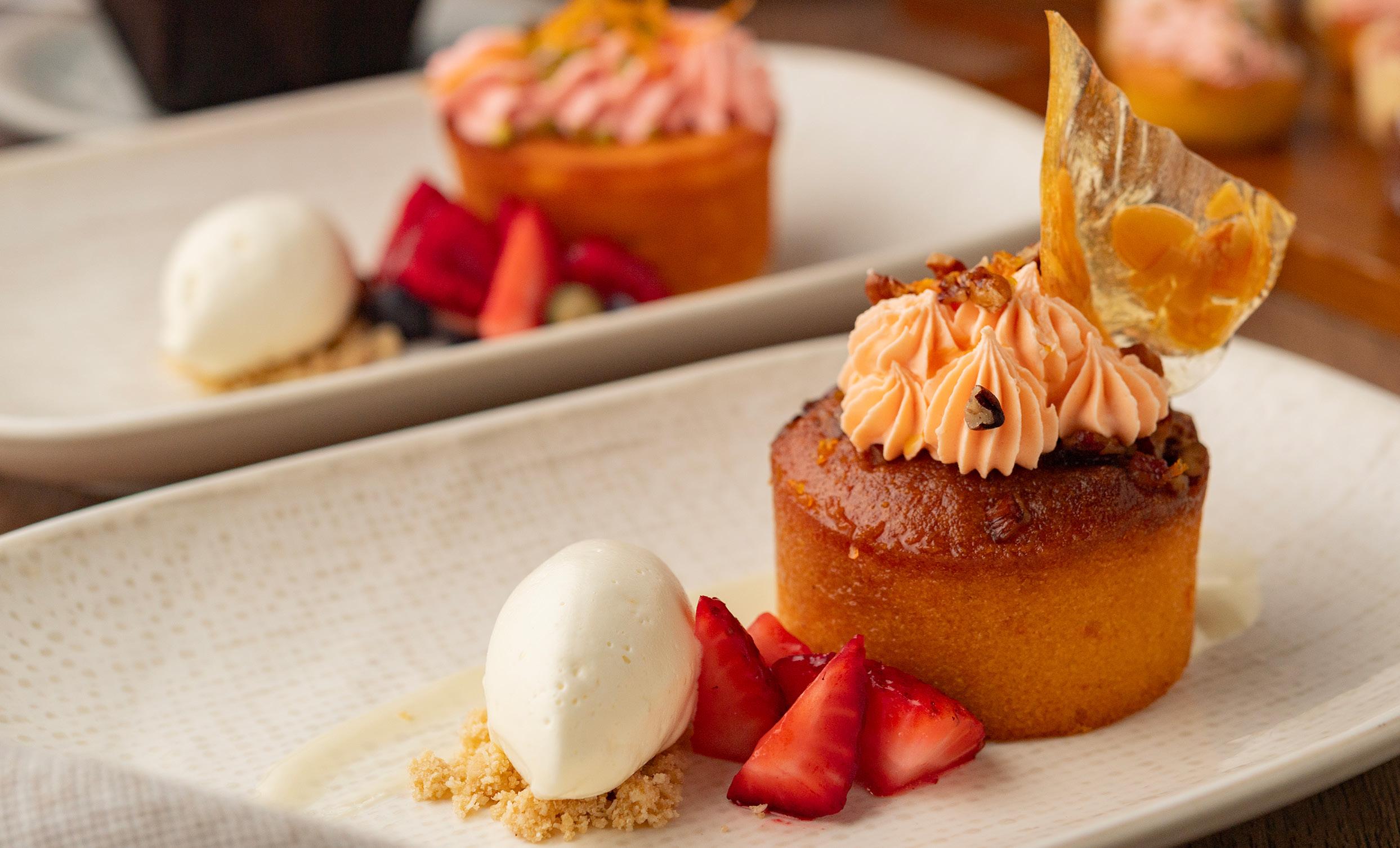
IN 2026, WE’RE seeing clubs operate in an environment where cost pressures are constant and expectations from members are higher than ever. Rising wages, increasing food costs, and the demand for quality mean traditional approaches are no longer enough.
At Catering HQ, our focus has been on owning more of the process, building capability across production, supply and menu design so we can better control performance and protect margins. Central to this approach is Wholefoods, our in-house production and supply capability. Rather than relying heavily on external suppliers, this model brings product development, production and distribution in-house. This gives us far greater control over quality, consistency and cost, while also reducing exposure to supply chain volatility.
Importantly, it also allows us to supply beyond our own venues. Ranges like Tooti’s, along with other Wholefoods products distributed externally, create additional revenue streams while improving scale, efficiency and buying power.
Consistency at scale
Through Wholefoods, we focus on working with fresh, high-quality
ingredients and transforming them into products designed specifically for our venues. This shift away from heavily processed, third-party inputs allows us to create a more stable and predictable operation. When we control the journey from raw ingredient through to finished product, we can better manage portioning, reduce waste and protect margins.
This is also reflected in Tooti’s, our bespoke patisserie range. By developing products tailored to our venues and our members, we’re able to differentiate our offering while also ensuring those products perform operationally. Yield, shelf life, consistency and ease of execution are all considered upfront. It’s not just about creating something unique; it’s about designing products that work commercially at scale, both in-venue and externally.
Sous vide has become another important capability within this model. It allows us to deliver precision and consistency across multiple venues while reducing pressure on kitchens. By preparing products centrally and finishing them on site, we maintain quality while improving labour efficiency and portion control. This directly contributes to reducing waste and supporting stronger margins.
Putting it into practice
Menu creation is where these capabilities come together. Menus are a strategic tool rather than just a list of dishes. Every item is designed with intent, whether that’s driving revenue, supporting operational flow or showcasing our product capabilities. Integrating inhouse production, bespoke products and techniques such as sous vide allows menus to be both compelling for members and efficient to deliver.
Performance comes from alignment. When production, supply and menu design work together, it creates a system that naturally supports consistency and control. It becomes easier to manage costs, maintain standards and deliver reliable outcomes across every venue.
In 2026, best practice isn’t just about managing costs. It’s about owning more of the supply chain and using that control to drive better outcomes. It’s not about a single initiative, but building capability across the business to create more resilient, scalable operations. Clubs have an opportunity to strengthen margins, elevate their overall offering and unlock additional growth through external supply.
Photo credit: Catering HQ
Made with real ingredients, Tooti’s creates premium desserts that taste as good as they look!
Crafted for consistency, quality, and ease of service.
Perfect for cafés, clubs, and events, with personalised options available and gluten free and dairy free options.


OUR RANGE


Cakes & whole cakes, Tarts & slices, Brownies & cupcakes, Loaves & muffins, Petit fours & more.
tootis@cateringhq.com.au
www.cateringhqgroup.com
Holding the line
Economic pressure is reshaping the hospitality landscape, but clubs across Australia are proving resilient.

CLUBS ARE NAVIGATING another period of economic uncertainty, as rising operating costs, softer consumer spending, and broader market instability reshape both business operations and member behaviour.
At the start of May, the Reserve Bank of Australia announced its third consecutive rate rise, adding further pressure to households and businesses already operating cautiously.
CPA Australia business and investment lead Gavan Ord said the latest increase comes at a time when confidence across the economy is already low.
“Households are pulling back, businesses are losing confidence, and yet costs keep rising,” he said. “This rate increase adds fresh pressure just as many were hoping for some relief.”
This is echoed by the CommBank Household Spending Insights for March, which showed that while hospitality spending was largely decent, driven by major sporting events, such as the kickoff of the NRL, AFL series and Women’s Asian Cup, it is expected to soften.
It’s something that ClubsACT CEO Craig Shannon acknowledged clubs are living through at the moment.
“We are living through a period of genuine challenge,” he said.
“Costs are up. Households are under pressure. Businesses are under pressure. Confidence
is fragile. Policy settings are becoming more cumulative, more complex and more difficult to navigate. Many in our sector are carrying all of that weight at once.”
Spending with purpose
Promisingly, industry data suggests clubs are proving more resilient than many other hospitality operators despite ongoing economic strain.
CreditorWatch’s January Business Risk Index showed that 10 per cent of food service businesses closed over the past year, the highest rate of any industry and double the economywide average.
While pubs, clubs and bars are also closing at above-average rates, they are proving far more resilient, with annual failure rates closer to 8 per cent, supported by stronger cash flows and asset backing.
“These numbers show the hospitality sector has effectively split in two,” CreditorWatch CEO Patrick Coghlan said.
“Asset-back pubs and clubs are holding firm, but cafes and restaurants are operating on razorthin margins with very little room for error.”
National Australia Bank also found in its consumer sentiment survey released in early April that while discretionary spending declined overall, with consumers cutting back on eating out and food delivery services, the strongest
“We are experiencing lower patronage, reduced average spend, and fewer return visits, particularly in our F&B departments.”
– James Rogers, Ballina RSL executive food and beverage manager
spending growth over the past year was recorded in catering services and clubs, while growth across takeaway food services and pubs was more moderate.
This was exemplified at Cabravale Club Resort, which recently recorded the biggest single day of food and beverage trade in its 101-year history on Mother’s Day, with venues across the precinct fully booked.
Chief commercial officer Vicki Le said the result reflected a shift in how consumers are approaching discretionary spending.
“What we’re seeing is that when people do choose to go out, they want it to mean something,” she said.
“They want good food, a genuine experience, and somewhere they actually feel welcome.”
Le said the club’s mix of premium and accessible offerings had allowed it to cater to a broad range of spending behaviours during a difficult economic period.
“There’s something here for every occasion and every budget, and that breadth matters right now,” she said.
The club’s hospitality expansion over the past year has included the opening of venues such as Magma by Dany Karam, Caffe Vicini and Solaire Lounge, helping reposition the precinct as a dining and lifestyle destination.
At the same time, Le said maintaining affordability remained critical.
“There’s no question we’re experiencing higher operational expenses – our suppliers are facing their own supply chain pressures, and that flows through to us,” she said. “But we’re doing everything we can to absorb that where possible.
“You can still get daily specials here for $13.50, which our members really appreciate – and in this environment, that matters.”
In it together
But while some clubs are benefiting from consumers choosing fewer, more meaningful hospitality experiences, others are seeing households pull back altogether as economic pressures intensify.
At Ballina RSL, trading conditions have tightened considerably in recent months, particularly across food and beverage operations, according to executive food and beverage manager James Rogers.
“We are experiencing lower patronage, reduced average spend, and fewer return visits, particularly in our F&B departments,” he said.
“Ticket sales and club spending at events have also declined, and functions are seeing last-minute cancellations related to fuel costs and budget limitations.”
Rogers said consistent trading growth over the past twelve months had come to a halt recently.
“Trading has grown consistently over the past year; however, the Iran war, fuel crisis, inflation, and rising living costs have led to a revenue decline of approximately 15–20 per cent in April 2026.”
At the same time, he said Ballina RSL had made a conscious decision to absorb as many rising costs as possible rather than passing them directly onto members.
“Over the past six weeks, the cost of goods has increased sharply, impacting profit margins at all our food and beverage outlets,” he said.
“Normally, we revise our menu every three months to adjust food costs and prices, but recent inflation has required us to absorb many additional expenses.”
In response, Ballina RSL launched its Connecting Our Community dining campaign in May, expanding member and seniors’ meal specials, family meal nights, discounted coffee and
Mother’s Day delivered the strongest F&B trade in Cabravale Club Resort’s 101-year history. Photo credit: Cabravale Club Resort
Ballina RSL’s Connecting Our Community dining campaign was designed to ease the cost-of-living burden for patrons.
Photo credit: Ballina RSL

cake offers, meal-and-beverage packages, and extended happy hour periods across lunch and dinner services.
“While we recognise that it is not possible to address every challenge, we are committed to identifying opportunities within our club to provide support where we can,” Rogers said.
He added the operational challenges of recent years have also helped the club become more adaptable in periods of uncertainty.
“Clubs are now more agile, responding rapidly to new difficulties,” Rogers said. “Over the past six years, Ballina RSL has managed through Covid, floods, cyclones, and a fuel crisis – each providing valuable experience in facing adversity.
“The current challenge is another opportunity to apply this adaptability.”
Putting up a fight
Looking ahead, CreditorWatch chief economist Ivan Colhoun warned the Australian economy will continue to face a complex mix of forces throughout 2026, including geopolitical instability, higher interest rates, cost-of-living pressures, and uneven sector recovery.
“While unemployment remains low, households are still under significant financial strain,” he said.
“As a result, business conditions are likely to remain challenging, and insolvencies are expected to stay elevated or rise slightly over the year ahead.”
Despite the uncertainty, Shannon’s message to clubs is clear: fight.
“We must be prepared to fight,” he said. “Not with bitterness. Not with division. But with discipline, solidarity, persistence and belief.”
Shannon believes the current environment presents an
opportunity for greater collaboration across business, tourism, hospitality and community sectors.
“This can be a defining moment,” he said. “A moment where clubs stand not alone … a moment where civil society stops waiting for permission and starts exercising leadership.
“A moment where we stop talking narrowly about survival and start talking confidently about shared civic strength.”
Federal Budget breakdown
On 12 May 2026, Treasurer Jim Chalmers delivered the 2026–27 Federal Budget, outlining a range of measures aimed at easing pressure on hospitality operators and improving business certainty.
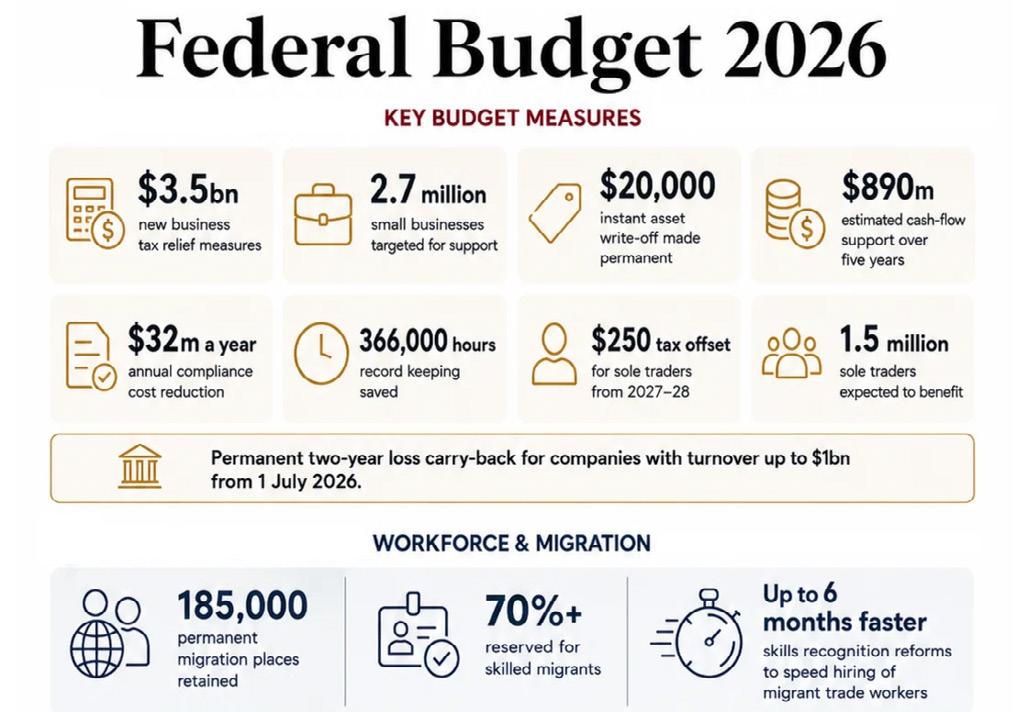
Photo

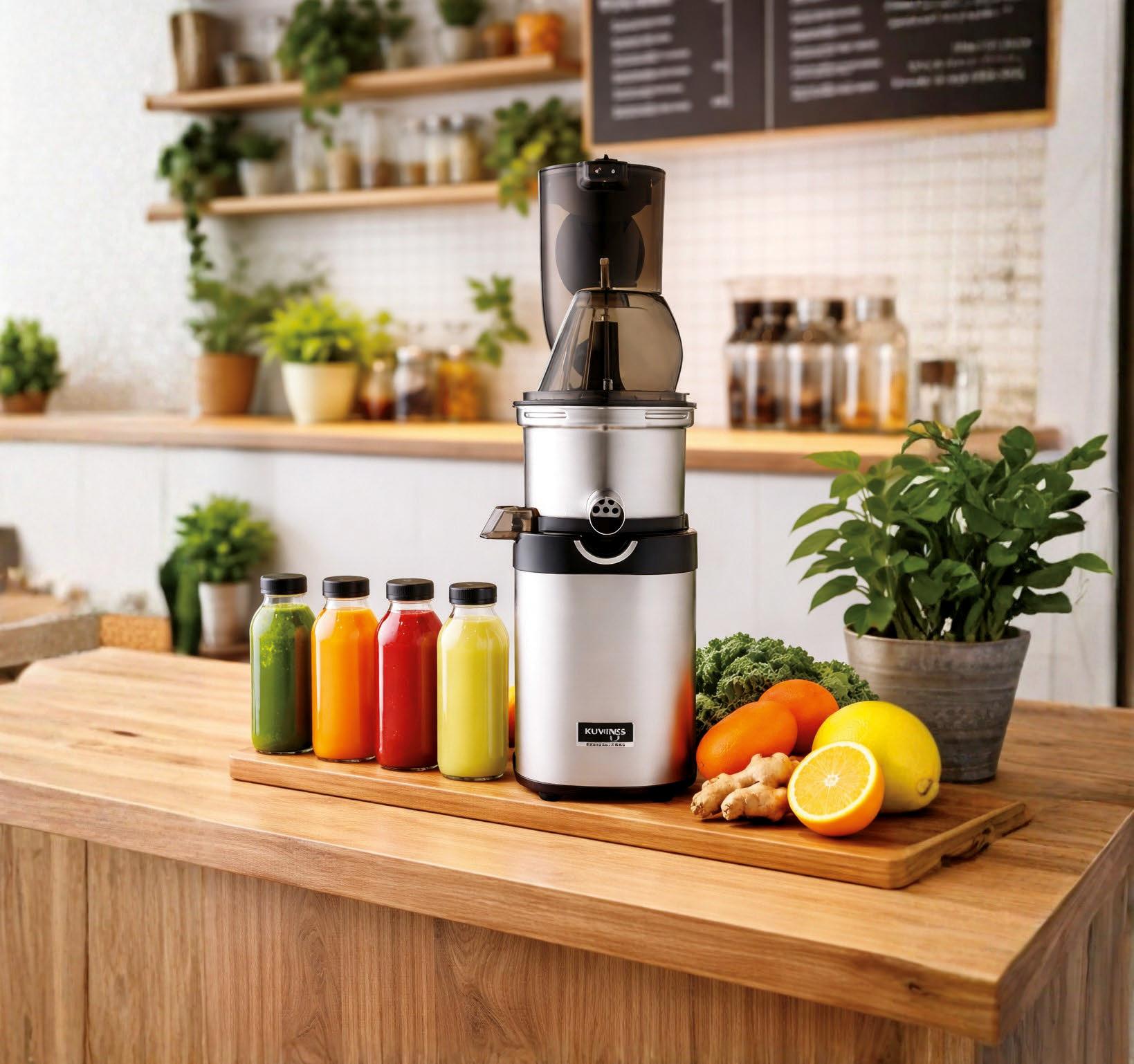



Queensland’s best clubs take centre stage
Standout venues and individuals were recognised at the 2026 Clubs Queensland and McCain Foods Awards for Excellence

MORE THAN 1,000 industry leaders gathered at Brisbane’s Convention & Exhibition Centre on Thursday 26 March for the 2026 Clubs Queensland and McCain Foods Awards for Excellence, celebrating standout achievements across the state’s club sector.
The black-tie gala recognised clubs delivering exceptional community impact, innovation, and operational excellence.
Clubs Queensland CEO Kelly Egan praised the winners for their role beyond hospitality.
“These are among the many Queensland community clubs that step up and really make a difference in their community,” he said.
“This is what sets them apart in the hospitality market – their charter to support the members who support them, be it through sports programs, grants, fundraisers or creating an environment for members to really connect with others.
“The Clubs Queensland Awards, now in their 27th year, give us that opportunity to say you’re doing a great job, and we really value the service you provide to your members.”
The biggest winner of the night was Greenbank Services Club, which secured eight awards, including Large Club of the Year, Manager of the Year, and Young Manager of the Year.
The club also received the prestigious Community Support Services Award for its Together We Rise initiative, a program launched during Covid-19 that supports local students, carers and grassroots organisations.
Funded through proceeds from meals, memberships and selected products, the initiative provides bursaries for 50 students across four local schools, subsidises training in disability and aged care, and has contributed more than $100,000 to community groups.
“Together We Rise isn’t just about giving, it’s about creating lasting change for our community, by our community,” Greenbank Services Club general manager Tim Wright said.
“During the COVID-19 recovery period, we recognised our role extended far beyond operational resilience… The program emerged with a focus on three priority areas: education, health, and grassroots support.”
Another standout was Carina Leagues Club, which claimed the Heart of the Community Award for its Carina Cares program and earned five finalist nominations.
The initiative recently donated almost $120,000 to the Small Steps 4 Hannah Foundation, established following the deaths of Hannah Clarke and her three children, and focuses on addressing domestic violence and coercive control.


“Our club operates on a mandate of deep, continuous engagement with our community to ensure our work is relevant and impactful,” Carina Leagues Club general manager Adam Wiencke said.
“This strong foundation allows us to focus our strategic support where the need is most critical, which is exactly how we zeroed in on the rise of coercive control and domestic violence.”
Other winners of the night included Maroochy RSL, which took out Best Club Redevelopment (Small) for its sports bar transformation into Lounge Seventy Two. It adds to its 2024 wins for Best Licensed RSL Club and Support of All Abilities Sport.
“[The award] is a strong endorsement of what the project set out to achieve; creating a modern, welcoming space that genuinely enhances the member experience,” CEO Jason Scanes said.
“It shows what can be achieved when everyone is aligned around quality, teamwork and doing the fundamentals exceptionally well. We are

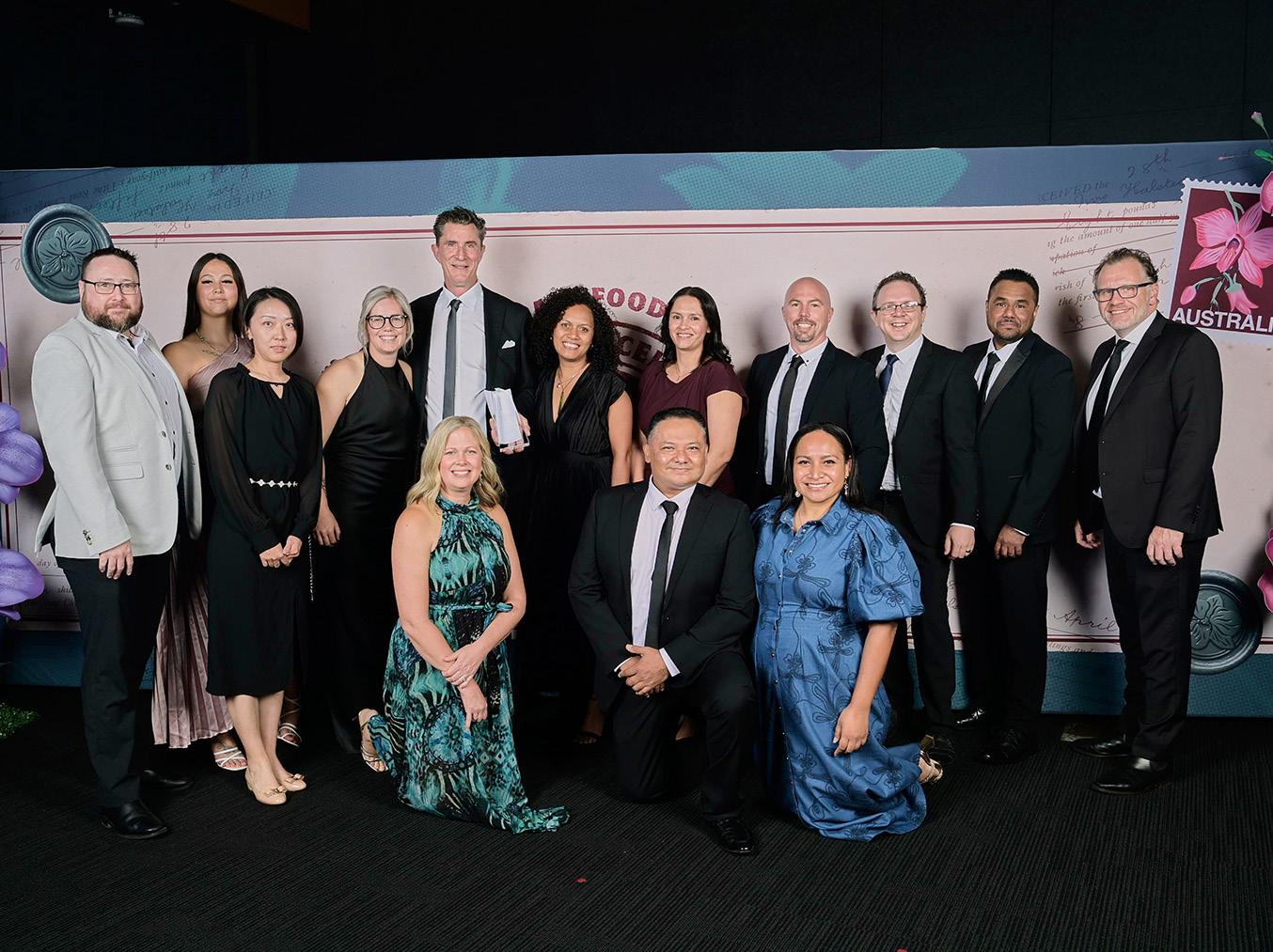
proud of what this award says about Maroochy RSL and our people.”
Meanwhile, The Lion Richlands was crowned Best Gaming Venue (Large) and was also inducted in the Hall of Fame, after winning for the third consecutive year the Best Cafe (Large) category.
“We’re incredibly proud of our team and the culture we’ve built together,” The Lion Richlands gaming manager Julie Fernandez said.
Over at Brothers Leagues Club Ipswich, the team celebrated the success of their chairperson Greg Walsh, who was named Club Director of the Year. An accountant by trade and an Ipswich local, Walsh joined the board in 1995 before being appointed chairman in 2003.
“It’s truly humbling to receive Director of the Year… when you look at the commitment that directors across Queensland clubs give to their organisation and the broader community, it’s extraordinary, so it was privilege to receive that recognition,” Walsh said.
“These are among the many Queensland community clubs that step up and really make a difference in their community.”
– Kelly Egan, Clubs Queensland CEO
Frenchville Sports Club was recognised for its all-abilities Wheels in Motion basketball program.
Greenbank Services Club walked away with eight awards.
Full winners list
BEST BOWLS CLUB
Club Broadbeach
BEST FOOTBALL CLUB
Victoria Point Sharks Sporting Club
BEST LICENSED RSL AND/ OR SERVICES CLUB
Greenbank Services Club
BEST SOCIAL OR CULTURAL CLUB
The Blue Fin Fishing Club
BEST SPORTS CLUB
The Waves Sports Club
BEST SURF LIFE SAVING SUPPORTERS CLUB
Tallebudgera Surf Club
BEST CAFE
The Cafe, The Lion Richlands
BEST DINING, BOUTIQUE
Gardens Steak & Seafood, Greenbank Services Club
BEST DINING, GRAND
Bistro, CSi Club Southport
BEST CLUB REDEVELOPMENT, SMALL
Maroochy RSL
BEST CLUB REDEVELOPMENT, LARGE
Greenbank Services Club
BEST GAMING VENUE, SMALL Sports Central Caboolture
BEST GAMING VENUE, MEDIUM
The Services Club Maryborough
BEST GAMING VENUE, LARGE
The Lion Richlands
COMMUNITY SUPPORT SERVICES
Together We Rise, Greenbank Services Club
HEALTH & WELLBEING
Active Together: Building Health and Connection for Veterans, Gympie RSL
HEART OF THE COMMUNITY
Carina Cares - Community Giveback Program, Carina Leagues Club
SUPPORT OF ALL ABILITIES SPORT
Wheels in Motion - Removing Barriers for All Abilities Athletes, Frenchville Sports Club
SPECIAL ACHIEVEMENT AWARD - RESPONSIBLE SERVICE OF ALCOHOL
Cowboys Leagues Club
SPECIAL ACHIEVEMENT AWARD - SAFER GAMBLING Greenbank Services Club
CLUB CHEF OF THE YEAR
Peter Brown, The Bower Tree
CLUB DIRECTOR OF THE YEAR
Greg Walsh, Brothers Leagues Club Ipswich
CLUB MANAGER OF THE YEAR
Tim Wright, Greenbank Services Club
YOUNG MANAGER OF THE YEAR
Tayla Fullagar, Greenbank Services Club
CLUB OF THE YEAR, NON-GAMING
Royal Queensland Yacht Squadron
CLUB OF THE YEAR, SMALL
Tallebudgera Surf Club
CLUB OF THE YEAR, MEDIUM
Victoria Point Sharks Sporting Club
CLUB OF THE YEAR, LARGE Greenbank Services Club

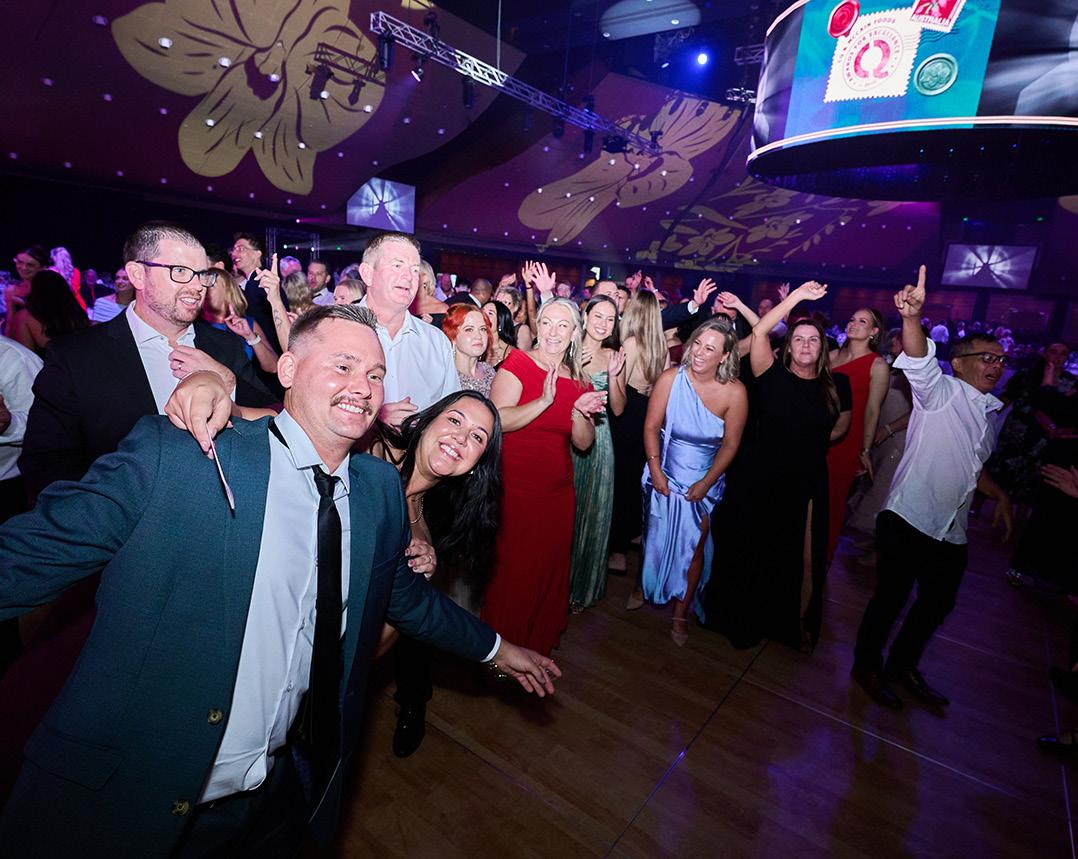

Brothers Leagues Club Ipswich chairman Greg Walsh (pictured right) won Club Director of the Year.
Maroochy RSL CEO Jason Scanes and facilities manager Steve Dragget were there on the night to accept the Best Club Redevelopment (Small) award.


Super Staff
Q&A
Amanda Warburton reflects on her seven-year journey of growth, leadership and recognition at Vikings.

Amanda Warburton
Venue Manager Lanyon Vikings
Amanda Warburton shares how she progressed from a casual employee to an award-winning venue manager, after being named Employee of the Year at the 2025 ClubsACT Clubs and Community Awards.
Can you walk us through your career at Vikings?
I have worked at Vikings for almost seven years. I started as a casual employee and progressed through several roles, including supervisor, duty manager and operations manager, before stepping into my current role as venue manager. It’s been a really rewarding journey of growth and development.
What does a typical day look like for you?
No two days are ever the same, which is one of the things I enjoy most about the role. I’m a very hands-on venue manager, so my day might start with supporting my supervisors, jumping in behind the bar, or catching up with patrons. From there, I shift into my operational responsibilities. It’s a balance of being on the floor with the team and making sure everything behind the scenes is running smoothly.
What did it mean to win Employee of the Year at the 2025 ClubsACT Clubs and Community Awards?
It was incredibly rewarding and a real honour to be recognised. It meant a lot to reflect on the journey and the effort that’s gone into my time with Vikings, and to be acknowledged at that level was very special.
What drew you to work in the club’s industry in the first place?
I enjoy building connections, having conversations and creating positive experiences, which is something I’ve focused on in every job I’ve had.
How have you seen the clubs industry change over the years?
The industry has evolved quite a bit over the years, with a mix of both challenges and positive changes. Covid, in particular, had a significant impact on how we operate, and coming out of that period helped shape new expectations from both staff and patrons to create better experiences while looking after our people.
More broadly, the club industry continues to evolve with changes in government policy, expectations, and rising costs. It’s encouraged us to think differently and look at new ways to grow and adapt, so we can continue to offer great experiences for our members now and into the future.
If you weren’t working in this industry, what do you think you’d be doing instead?
I think I would still be in a people-focused role. I really enjoy the interaction, connection and energy that comes from working closely with others, so that would always be a priority for me.
What advice would you give your younger self?
Have more confidence in yourself and don’t be afraid to back your abilities. Stay persistent, keep learning and don’t give up. You can achieve anything if you put your mind to it.


THREE BIG WINS FOR YOUR SUPER Compare Hostplus
Three respected awards, one clear result. Money magazine, Finder and Mozo have all called it: Hostplus is their Best Super Fund winner. That’s three big wins for your super. That’s a plus.
Potato bun 4.5"
Super soft, savoury taste
Distributor (9108)
Direct (2012)


MILK Style BUN 4.5"
Slightly sweet flavour & glazed
Distributor (9141)
Direct (3009)
gourmet BUN 4.5"
Soft white, seeded & glazed
Distributor (9142)
Direct (3010)
brioche style bun 4.5"
Sweet buttery taste & glazed
Distributor (9295)
Direct (2011)