





Ifirst heard of Marie Curie in high school, and she fascinated me. She was a woman born in Poland who became one of the most important physicists and chemists in history. She helped transform radioactivity from a strange scientific observation into a field of study. She coined the word radioactivity and, with Pierre Curie, identified polonium and radium. She remains the only person to win Nobel Prizes in two different scientific fields: Physics in 1903 and Chemistry in 1911. The reason I have been thinking about her again is the recent discussion around New Zealand’s nuclear-free policy. The United States Ambassador to New Zealand, Jared Novelly, has suggested that America would welcome a change in New Zealand’s stance on nuclear-powered ships, but that it is not for the United States to demand. Any change would have to come from New Zealand itself.
New Zealand effectively closed its ports to U.S. nuclear warships on 4 February 1985. The immediate standoff began when the U.S. requested port access for the guided-missile destroyer USS Buchanan. New Zealand refused because the U.S. would not confirm or deny whether the ship carried nuclear weapons.
That refusal became a defining moment in New Zealand’s foreign policy. It was later written into law through the New Zealand Nuclear Free Zone, Disarmament, and Arms Control Act 1987. The cost was serious, as the U.S. suspended its security obligations to New Zealand under the ANZUS alliance.
Prime Minister Christopher Luxon has recently stated that New Zealand’s nuclear-free position is not up for review. In one sense, this is understandable. The policy has become part of New Zealand’s national identity. It represents independence, moral principle, and distrust of nuclear weapons. For many New Zealanders, it is not just a defence policy. It is a statement about who they believe they are.
However, Marie Curie’s story makes the issue more complicated for me. Curie focused her knowledge of radiation on medicine and human benefit, not weaponisation. During the First World War, she developed mobile X-ray units, sometimes called “little Curies”, so wounded soldiers could be examined near the battlefield. She also helped begin the medical study of radioactive isotopes for cancer treatment. Her work shows that the power of nuclear is not automatically

evil. It depends on how humans choose to use it.
At the same time, her life also shows that powerful discoveries carry danger. Marie Curie died in 1934 from aplastic anaemia, caused by years of exposure to radiation without proper protection. She gave the world a gift, but that gift came with huge risk. This is true of many breakthroughs. Drones can deliver medicine or death. Artificial intelligence can improve the rate of cures or guide weapons. Nuclear science can treat cancer, power enormous cities, or destroy cities.
None of this is simple. In the world we live in, some of our dangerous technologies become
necessary. Several countries rely heavily on nuclear energy because they do not have sufficient France and South Korea have used nuclear power as a major part of their energy security. For them, nuclear energy is not only ideology. It is about independence, cost, supply, and survival.
New Zealand is fortunate. It has hydro, wind, geothermal resources, and other natural advantages. It does not need nuclear energy in the same urgent way. But energy is only one side of the issue. The harder question is defence. New Zealand may not need nuclear reactors for its own electricity, but it may need friends whose ships, submarines, and strategic protection are connected to nuclear technology.
I’m in Australia at this time with my family. My sister has decided on Assisted Dying and it will take place in a few days. She has suffered greatly from Motor Neurone Disease and her life will soon end even without this intervention. I am privileged
to be her sister, to be with her and to help the family through the funeral. I am surrounded by family.
I think about Whitianga and the Coromandel a lot – every day. It actually helps me cope with this situation.
New Zealand also has limited defence capacity. The sinking of HMNZS Manawanui showed how small and fragile the navy can be. We speak strongly when other powers act in the Pacific, but we also rely quietly on Australia and the U.S. to help secure the ocean around us. That is why I find the stance somewhat hypocritical if it refuses even to reconsider the issue. A country can oppose nuclear weapons while still having an honest discussion about nuclear-powered vessels, alliance responsibilities, and regional defence.
To me, Marie Curie represents the heart of the dilemma. Nuclear science began, in her hands, as a force for knowledge and healing. Later, humanity turned the same force toward destruction, fear, and deterrence. The question is not whether nuclear technology is pure good or pure evil. It is whether New Zealand can keep its principles while also facing the world as it actually is.
Not reassessing how the nuclear ships of friendly countries might sometimes share space at our ports feels more like lack of recognition of reality than making a courageous stance.
This is where I think the current position deserves another look. Revisiting a decision does not automatically mean betraying a principle. It can simply mean asking whether the circumstances have changed. The world of 1985 is not the world of 2026. Strategic pressure in the Pacific has increased. China has tested missiles in the region. Australia, under AUKUS, is preparing to acquire nuclear-powered submarines from the United States and later operate the SSN-AUKUS class with Britain. New Zealand cannot pretend these developments are unrelated to its own security.
As the Editor of The Informer, I felt compelled to publish in bold headlines, the material from Geoffrey Robinson, Denis Tegg and Dirk Sieling all of which is at odds with the three Options selected by our Council from which you have been asked to


indicate your preference for ‘Which way should TCDC go?’
This is in terms of the Local Government Reform instruction from central Government.
It is important that you know there are other options –and that you can ask for more to be done.
The vision is for simplified government, local voices and local decision making, more efficient governance and fewer management processes. The means to attain these could lie within the Coromandel Peninsula.


AWhitianga designer joins a librarian, a death doula, a GP, fashion students at the start of their careers and designers whose work has been worn by the likes of Lady Gaga and Beyoncé as finalists selected for the 2026 World of WearableArt® (WOW) Competition.
WOW is the world’s leading wearable art competition and one of Aotearoa’s most spectacular live experiences. Each year, designers from around the globe and New Zealand transform imagination into extraordinary wearable creations, brought to life in a breathtaking arena performance in Wellington. Now approaching four decades, WOW is a glorious rebellion against the ordinary, celebrating creativity without limits.
The 2026 World of Wearable Art Show: GLO! runs from 17 September to 4 October at Wellington’s TSB Arena, with 54 Kiwi finalists joining an international lineup of designers pushing the boundaries of art, fashion and storytelling.
This year’s 108 finalist garments, from designers across 18 countries, represent an extraordinary cross-section of global creative talent. Their designs draw on personal histories, cultural

traditions, engineering, performance, fashion, and fine art.
Whitianga textile business
owner Delys Magill is the creator of one of those finalist garments.
“I first saw WOW in 2022. We came out of the show, and I immediately said to my friend, ‘I want to enter.’ Four years on, the idea that inspired me then, will be on stage this year. I still can’t believe it.”
Magill now runs a small textile business from her home, after careers in the Air Force, as a chef, and as a sign language interpreter. She says stepping away from high-pressure roles has given her the time and headspace to fully embrace her creativity.
“When I’m creating, I draw on every part of my life, but the last few years have really given me the space to channel those experi-
ences into my garment,” she says.
WOW Head of Competition
Sarah Nathan says one of the things that makes WOW so special is its diverse range of art makers.
“WOW sees the work of everyday people making extraordinary things stand alongside some of the world’s most exceptional avant-garde talent. It’s an incredibly unique community, where a deep passion for craft and storytelling is shared between everyone from technologists and teachers to designers whose work has been worn by some of the boldest dressing celebrities on the planet.”
Nathan says that creativity is also applied to materials across the board, with designers transforming everything from more than 100 love letters to Aotearoa to emergency blankets converted

“I first saw WOW in 2022. We came out of the show, and I immediately said to my friend, ‘I want to enter.’
Four years on, the idea that inspired me then, will be on stage this year. I still can’t believe it.”
into over a thousand flexible spikes.
“Every year, designers astound us with their innovation,” Nathan says.
“There’s some particularly genius reimagining of materials this year, with garments incorporating milk bottles and chip packets that are so completely transformed, even those in the front rows and stage side will be hard pressed to identify them.”
Metallic and Kinetic – two of this year’s special sections –have inspired some particularly awe-inspiring work, Nathan says.
“Each year the special sections propel designers to take on creative challenges they – and we –may never have imagined.”
Rooted in mineral tones and ore-inspired textures, Metallic has inspired everything from sleek,
high-shine futuristic creations to delicate filigree work and narrative-driven pieces. Meanwhile, Kinetic was designed to create moments of genuine wonder through movement.
“No two approaches are alike –from delicate to industrial – WOW fans are in for such a treat, and the judges have a real challenge on their hands.”
Nathan says the Aotearoa Section promises to be one of the most emotionally resonant experiences of the 2026 show, with designers drawing deeply on their personal connections, perspectives and stories of their relationship with Aotearoa New Zealand.
“The resulting works are moving, surprising and deeply reflective, combining compelling kōrero with exquisite craft – which sits in direct contrast with the bold, bizarre and downright delightful riot that will be Bizarre Bra.” WOW finalists will travel to Wellington in September for a programme of designer events ahead of the WOW Awards Night, where winners will share more than $200,000 worth of prizes. Tickets to the 2026 WOW Show: GLO! are on sale now at www.worldofwearableart.com.

































BY VERNA CARR
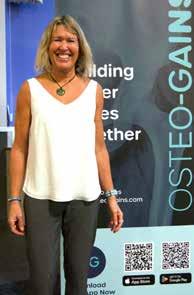
Here’s a sentence you don’t expect from a medical specialist: “When I ask you to jump, you don’t ask how high – you ask how do I land.” That’s Dr Tracey Clissold, bone density specialist, and she’s serious about getting women over 30 to bounce their way to stronger bones. Her prescription sounds almost too simple: jump up, land flat, jump again. Jump left, jump right, jump forward, jump back. Do it for two to three minutes a day — while the jug boils, the moment you roll out of bed, or any stray minute you can steal. Bare feet are best, she says, so your body absorbs the impact.
This advice took centre stage on Tuesday 9 July at Crossroads Church, Whitianga where Conquer Health hosted its Resilience and Longevity Series. Dawn Kiddie, representing Conquer Health, co-hosted alongside keynote speaker Dr Clissold, and together they made a compelling case for taking women’s health seriously –well before anything breaks.
Dawn Kiddie’s own motivation is personal. In her mid-twenties, she survived a horrific car acci-

dent, spending months relearning to walk — some days one step forward, some days two back. From that point on, Dawn became passionate about preventive health. Her philosophy: your health span should match your life span, and healthcare should be the fence at the top of the cliff, not the ambulance waiting at the bottom.
Conquer Health is a team of experts across multiple disci-
plines who look after you as a whole person. Their focus is preventive, functional and lifestyle medicine and testing –leading-edge work here in New Zealand – helping people take preventive measures and make lifestyle changes that enhance wellbeing and ward off disease, joint stiffness, brain fog, weight issues, sleep problems and genetic conditions. Through your
own unique DNA testing, they dig into your biology to get real answers, not guesses.
Want to find out more or take charge of your own health? Get in touch with Dawn to see how Conquer Health can help.
Dr Clissold’s specialty is osteoporosis – a condition where bone breakdown outpaces rebuilding, leaving bones thin, porous and prone to fracture from surprisingly minor knocks.
After menopause, estrogen levels decline – and estrogen normally helps protect bone. Women can lose up to 20% of their bone density in the five to seven years following menopause, with the steepest drop in the first year or two. It’s called “the silent disease” because there are usually no symptoms until a bone breaks.
Genetics play a role too: European and Asian women are affected more than Māori or Pacific Islanders – so, as Dr Clissold jokes, choose your parents wisely.
The stakes are real: roughly two in three women will suffer a fracture at some point, bringing pain, lost mobility and lost independence with it. Dr Clissold’s research points to weight-bearing
‘We have not heard anything’ From Hahei community
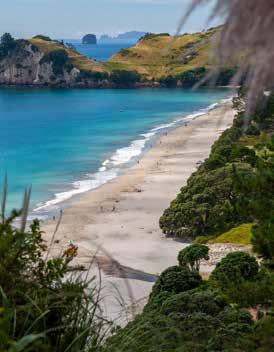
The Hahei community is still waiting to hear the outcome of a DOC meeting whereby a decision was to be made about whether the two tracks they proposed to close to Cathedral Cove could remain open.
In response to DOC’s statement which was without consultation with the Hahei community, the Hahei Residents & Ratepayers Association (HRRA) made a submission to DOC to keep
the Hahei Beach and Gemstone Bay tracks open.
In addition, a petition of almost 18,000 signatures has been presented to DOC as evidence of very strong public and community support for keeping the tracks open which also comes with a willingness on the part of locals to maintain the tracks.
The Hahei submission is proposed as a way forward for discussion with DOC.
1. That the track remains
open and under DOC management with a bypass included to avoid the major slip. We have identified 2 possible ‘simple’ bypass routes.
2. That DOC retain the existing infrastructure until the alternative track route bypassing the cliff section of the track (possibly modified to better align with major slip bypass route), as originally proposed by DOC, is constructed.


3. Should DOC decide to continue with a ‘closure’, then that closure should be limited until funds become available to undertake the cliff bypass route and that DOC notify on-line and on site that the track is no longer maintained by DOC and that persons enter at their own risk.
DOC stated an intent to get back to the Hahei community after their 6 July discussion with Iwi.
exercise, resistance training, calcium, vitamin D and creatine supplements as the most beneficial. Walking helps but isn’t enough on its own – bones and muscles strengthen best under load roughly three times body weight. That’s why short jumps, just two to three minutes a day, are such an effective solution.
To make all this practical, Dr Clissold has built an app, Osteogains.com, covering bone health, nutrition, fitness and stretching. It’s free to download, with a fuller personalised program available for US$24.99 a year. Conversations are underway with ACC and Osteoporosis NZ – who recognise the long-term cost of fractures –about potentially making it free for New Zealand women.
So next time the jug’s boiling, don’t just stand there. Jump. Jump with your daughters and granddaughters – a jump to the right, a jump to the left, a jump to the front, a jump to the back. Your bones and your future self will thank you. Enjoy your cup of tea. For further information, contact: Dawn Kiddie: dawn@ conquerhealth.co.nz; Dr Tracey Clissold: Tracey.Clissold@toiohomai.ac.nz


































This means different things to different people – a follow up to the article re bullying Issue 1211 26 May.
BY RICHARD SHELFORDWOODCOCK
For some parents, ‘showing up for their kids’ meant finding the courage to speak up when they believed something wasn’t right about their school. For Mercury Bay Area School, it has meant opening its doors, listening to concerns, holding space for difficult conversations and beginning a process that, while not always easy, has been necessary. For me, it meant listening to our community, carrying those concerns forward, asking difficult questions on their behalf, and later accepting the Principal’s invitation to walk the school grounds, better understand the school’s perspective and see the work already underway.
Several weeks ago I wrote Our Kids Deserve Better, reflecting concerns raised by parents from Mercury Bay and the wider community. That article was intended to ensure those concerns were heard.
On 9 June, I met with Principal Ross Dunn, Presiding Member, Gary Hinds and Board member Joe Davis. During that meeting, I presented a verbal submission reflecting the concerns entrusted to me by members of our community. It was a candid and respectful discussion, and I believe those
concerns have now been heard.
Following that meeting, I later accepted Ross Dunn’s invitation to return and walk around the school grounds during which Ross openly shared both the school’s strengths and its challenges. He outlined the significant investment being made into the school’s future and the work already underway to improve the learning environment.
Ross also shared the school’s longer-term vision of strengthening cultural identity, improving learning environments, expanding opportunities for students and continuing to build support for young people with additional learning needs. I was also encouraged to hear about the progress the school has made in recent years, including improved NCEA achievement, national recognition for attendance and engagement. Those successes deserve to be acknowledged just as much as the challenges deserve to be addressed.
In relation to the senior toilet facilities, I was shown where external blind spots had already been removed, how camera coverage around the surrounding areas had been improved, where vape detection technology had been installed, and the further changes planned to improve passive supervision while protecting
student privacy.
These are encouraging steps. Ross also spoke about the proactive engagement he had undertaken with our satellite schools following concerns that led some schools to temporarily withdraw students from technology classes. Practical measures, including dedicated toilet facilities for visiting students, were introduced quickly and addressed an immediate concern.
For many families, however, those concerns extended beyond the immediate safety of the toilet facilities to matters concerning bullying, student wellbeing and reassurance that these issues continue to be addressed. For them trust is built through visible action, consistency and ongoing engagement.
During our discussion, Gary Hinds also explained that correspondence received by the Board is not typically responded to by an individual member. Rather, responses are considered through the Board’s governance processes before a formal reply is provided. While that process can understandably feel slow for families waiting for answers, it provided a better understanding of the governance responsibilities and collective decision-making that sits behind those responses. During my meeting on 9 June, I
left ten questions on behalf of the community. They were intended to promote accountability, transparency and continued dialogue.
A month has now passed. I acknowledge the positive steps already underway and I believe those questions remain just as relevant today as when they were first asked. They reflect many of the concerns entrusted to me by parents from Mercury Bay and the wider community, and I believe they deserve thoughtful responses from the Office of the Principal.
Set out are the following ten questions exactly as they were presented during my verbal submission on 9 June 2026.
1. What steps have already been taken to improve student safety around the school’s toilet facilities. What further improvements are being considered, and how confident is the Board that students currently feel safe using them?
2. How do we create a pathway where concerns can be raised, heard and discussed before frustration reaches that point?
3. What does the Board see as the biggest challenges currently facing the school in these areas?
4. Does the Board acknowledge that confidence in the school

Richard Shelford-Woodcock. Chair, Mercury Bay Community Board
has been affected within the wider community?
5. How can the school create more opportunities for direct engagement with the community?
6. How does the school ensure consistency when dealing with behavioural issues and student wellbeing concerns?
7. What steps are being taken to strengthen confidence in both leadership and governance moving forward?
8. How can the community be reassured that meaningful action is taking place when much of the detail cannot be shared publicly?
9. What would a genuine partnership between the school and community look like?
10. What would success look like one year from now, and how will the community know progress has been made?
This is an Opinion Piece which made the Editor smile and frown.
BY GT
Iwas wandering through the local supermarket the other day, out foraging for the good wife and me, when I started to wonder what the supermarket experience would be like if they were run by political parties. The one thing I decided is they would offer a variety of shopping experiences, so I thought I would summarise my thoughts for the readers.
Firstly, The Opportunities Party New Look Supermarket would offer the shopper something completely different in that a nice young lady (or maybe young man) would greet every shopper who entered the store with a smile and a $200 shopping voucher.
Their business model was that the shopping voucher would get you started and they could offset the cost of the vouchers by raising the prices of the stock items in the shop.
An obvious flaw is that couples would enter separately so that they both got a voucher and could have $400 of free stuff.
Another obvious flaw is people would spend to the limit of their vouchers and do the rest of their

shopping at another supermarket. I would find it hard to see this option as being a sustainable business model.
The Act Party market would offer something different in that you could wander around an immaculate shop featuring signs at every aisle explaining the rules because they do not want the shopper to be confused.
Another difference would be the lack of price tags, this being efficient as they do not have to employ staff to carry out the pricing.
When you got to the checkout you would negotiate with the operator to agree on a price you
should pay for the basket full of goods. Not a bad model; both parties would feel like they were in charge of the process and all was agreeable. It may, however, be a bit confusing for many and result in long queue lines of bargainers.
The Te Pati Club Mart would be a great concept; having club members who are able to select their groceries and pay a uniform price of zero. This would be funded by non-club members who would pay very high prices for their items. Club membership would be accepted with a show of racial connection to the first immigrants. Club members have no queues at checkouts because
you don’t have to pay. Taking your groceries to your car won’t take long as only club members will be allowed in the car park. The problem I can see with this model is convincing non-member shoppers to support the Club Mart.
The First Mart concept from NZ First would appeal to some, provided they are thick skinned. The store manager would be at the front door casting his eye over all shoppers. If you looked foreign, he or she would berate you, accuse you of cooking butter chicken, and make you feel most unwelcome. The principle is to have locals only as customers so in concept a bit like an extended Te Pati Club Mart. A prime difference inside is that the prices you pay will be the same as everybody else. This model is probably sustainable but doesn’t have much potential for growth. There could be a reluctance to trade with suppliers from out of town.
The Green Party would naturally drift to an Earth Market operation. This would appeal to some but not many due to its restricted product offerings. For example, there would be no room for dairy products, no vegetables or fruit grown using fertiliser and
of course no butchery. To compensate, there would be displays of seeds and lentils for customers to select from, along with a range of herbal wines and ales. Such a specialised operation would indicate the stores would be very small, but customers could use barter, as a method of trading with the store, which may be beneficial for some. No car park would be provided but a large bicycle rack would be available.
The Main Mart was previously owned by the Labour Party, but they unfortunately went into liquidation quite quickly. Their policy of handing out wads of cash to shoppers as they entered the store and retrieving some of that cash at the checkout was never going to be sustainable. This store has been taken over by new owners, the National Party. They have reorganised into a traditional model whereby customers spend their own money; prices are kept as low as possible and there are no frills on offer. Customers who enjoyed the Labour Party free money idea are disappointed, but the new concept does look sustainable and should guarantee the town has a super market for many years to come.
2 & 3 Bedroom Villas and North Facing Apartments Available Now!
All villas and apartments are within walking distance to Thames’ shops, cafes, and walkways. The perfect location to enjoy your fun-filled retirement.
Living the lifestyle, loving the choice... ALL ENQUIRIES WELCOME, VIEW OUR VILLA AND APARTMENT OPTIONS TODAY!

Phone us to view by appointment!
Come and experience the difference!
82 Richmond St, Thames Phone 0800 868 5484 richmondvillas.co.nz


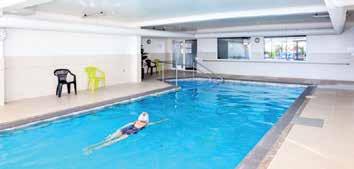






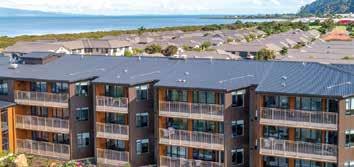
Our open plan, single level apartments feature covered balconies with fantastic views of the sea, Kauaeranga River and mountains. Each unit’s elegantly finished kitchen, lounge, bedroom and bathroom offer stylish warmth and light. All residents enjoy scenic views from each level’s shared lounges, use of the Village Community Lodge and participation in all activities and amenities at your leisure
BY VERNA CARR
ccording to Māori star lore, Taramainuku is the captain of the great celestial waka, Te Waka o Rangi – a canoe formed from stars, with Matariki at the prow and Tautoru (Orion’s Belt) at the stern. Every night, Taramainuku casts his net down to earth to gather the souls of the people who died that day, carrying them along behind his waka for the next eleven months.
Once a year, when the Matariki constellation rises again on the eastern horizon, Taramainuku releases these souls into the sky, where they become stars.
This is the origin of the saying “kua wheturangihia koe” –“you have now become a star.” It’s also why, during Matariki, people pause to remember those who have passed. Matariki is considered the Māori New Year.
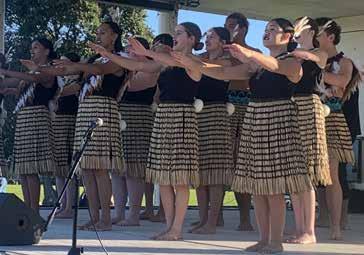
Friday, 10 July, brought ideal weather – perfect for the long weekend and school holidays. Kuaotunu had a full day of celebrations, starting at dawn as the Matariki star cluster became visible in the sky.
Throughout the day, there was an exhibition in the hall where nine local artists paid homage to the nine stars of Matariki. There were also demonstrations of harakeke (flax weaving), uku (clay work), and kōrero around kaitiakitanga (talks about guardian-
ship of the environment).
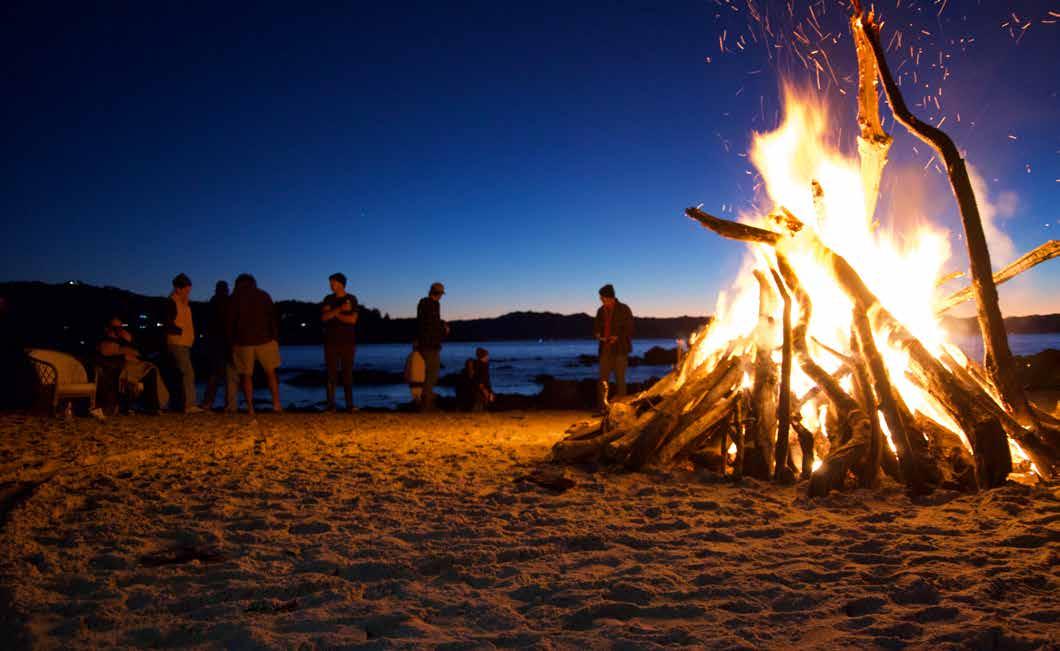
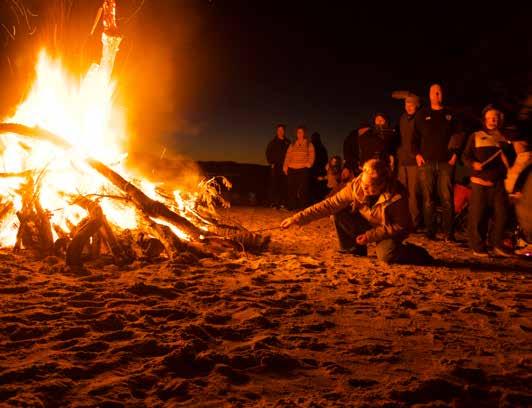
As the day drew to a close and the sky streaked orange with the setting sun, waves lapped gently against the Kuaotunu shoreline. Families gathered at the boat ramp for the lighting of the bonfire – an opportunity for the community to come together to celebrate, reflect, and contemplate. Very young children, wrapped in blan-
kets, sat or slept on their parents’ and grandparents’ laps. The older kids held marshmallows just at the edge of the flame, low and patient, the way you learn only after you’ve set a few on fire and eaten them anyway – black and bitter, because nobody wanted to waste one. Sitting around a fire is primal, creating community in the low hum of conversation.


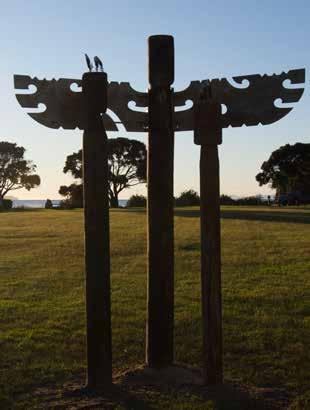
As the sparks of the fire rose into the clear night sky, I had my own introspective moments, thinking of my ancestors and the people who had passed in my own life – especially Mum. Kuaotunu is one of the few dedicated dark sky places in the world, where light pollution is kept to a minimum. As I stepped away from the fire into the pure dark-

ness of the night, the Milky Way and the Southern Cross shone in their full glory. I found myself searching the sky, thinking of her, and of that old saying – kua wheturangihia koe. Wouldn’t it be nice if she really was up there somewhere, watching over me. No matter what language we speak or culture we come from, we all look at the same stars.






•
•
•
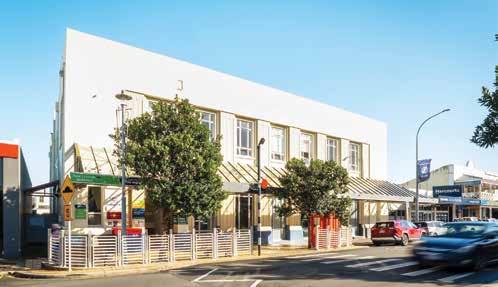
• Neighbours include Harcourts, Westpac, Unichem Pharmacy, Farmers, Noel Leeming, The Bakehouse Café and Superprice Furniture
Situated
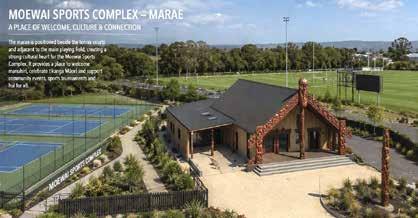
A NEEDED FACILITY FOR THE FUTURE
I will not forget Noel Hewlett’s first picture of what he envisioned for the multi sports complex –Moewai Sport Park – having a full kitchen to feed sporting groups and hosting them in club rooms as well as a concert venue for visiting artists and bands, kapa haka performances and school productions.
I support this whole heartedly and in addition to what Noel proposed, my vision also includes a Marae placed in the heart of the Moewai Sports complex, plus providing plenty of room for the Whitianga rescue team and other search and rescue units to coordinate activities and create a homebase.
This is all needed since Sherriffs land was supposed to host the Marae and a lot of in-house disagreements finished that discussion.
However, as a resident I would also hope to see a little dippers swimming pool but beyond that I have been advocating for a Marae/Civic Centre since 2007 for cultural arts performances and large scale productions.
This would also be amazing on Taylor’s Mistake, Dundas Street or right next to the Marina Entrance in the heart of our community so that people from Hahei and Cooks Beach can walk to it from the ferry. These facilities are essential as is deciding where they are to go.
Neera
Giri, Whitianga
This letter was addressed to the CEO Thames Coromandel District Council
A question in regard to the online “public engagement” survey currently seeking community input on TCDC options for council reorganisation...
Toward the end of the June 23 Council meeting, in response to the concerns of several councillors regarding Council’s decision not to include the “Option 9” (Coromandel Unitary Council) choice, you stated that survey respondents could enter a comment, if they feel so inclined, that their preferred option is the “standalone” structure. I believe you assured councillors that this information “could still be captured” or words to that effect.
Having just gone online, I found that the SLG survey was designed in such a way that the respondent cannot proceed to the second page without ticking one of the three options.
In other words, if a respondent does not support any of the three options (does not tick one of the three) but would nevertheless like to enter into the comments
box her/his opinion on alternatives such as a stand-alone Coromandel Unitary, the survey design will not accept those comments, but instead reloads the page with indication that choosing one of the three boxes “is mandatory”.
The respondent is thus unable to proceed without indicating a preference for one of the shortlisted options – unable to enter what is commonly known as a “blank ballot” with explanation and then go on to complete the survey.
This design feature can be expected to distort the survey findings. Could you please advise, a) if this function can and will be disabled; 2) if this functional design feature is intentionally programmed and, if so, the reason. Given the public interest and extremely short timelines, a response as soon as possible would be greatly appreciated.
Editor’s Note: This comment was heeded and the function altered on 7 July.
Noel Hewlett will be much missed and was a true visionary.
However, some of the solutions which I am sure would be expensive and possibly unpopular with surounding residential areas.
A question for the future regarding access; – could a shorter more visible route be considered – going past Basker and through the old concert ground running parallel to the State Highway?
Let’s not forget Noel Hewlett’s vision.

I hope who ever picks up the baton as advocate for the Moewai Park Sports Ground keeps pushing forward. It’s a great facility and could be used much more. The edge of town location and concealed access don’t do it any favours.
Every business in the Coromandel tells locals to “support local.” We put it on posters, in ads, on social media, and in shop windows. But here’s the truth most won’t say out loud:
A lot of local businesses expect loyalty from the community while sending their own purchasing dollars straight out of the region. You can’t build a strong local economy on one way loyalty. The wider Coromandel relies on seasonal visitors, but its locals who keep the lights on through winter –so the lights can be on in summer. Yet many businesses still buy their stock, materials, and services from Auckland, Tauranga, Hamilton, or
further afield, often without even checking whether a local supplier can match the price.
And here’s the uncomfortable reality: sometimes it is price competitive to buy local. However, purchasing decisions are often driven by habit, not value. Supply chains exist that haven’t been reviewed in years. Defaulting to the same distributors happens because it’s familiar. Procurement is on autopilot. Some out-of-region suppliers employ slick sales techniques and pricing options that are designed to deceive along with questionable pressure tactics. You can resist these tactics and see through the corporate speak.
Before placing that next order with an out of region supplier, ask yourself two questions: Does that supplier ever buy from your business – if ever?
Is saving a dollar today, worth costing your community far more tomorrow?
Every dollar spent outside the Coromandel is a dollar that doesn’t circulate through local wages, local services, or local investment. Economists call it “leakage.” In a small region like ours, it’s not leakage – it’s a drain plug pulled out of the bathtub and we all feel it every winter.
This isn’t about blame. It’s about responsibility. Local suppliers offer
advantages big distributors simply can’t.
• Faster turnaround
• Real accountability
• Local knowledge and flexibility
• Emergency support when things go wrong
• A genuine stake in the community’s wellbeing
These aren’t “nice to haves.”
They’re competitive advantages that strengthen your business and the region at the same time.
If we want a resilient Coromandel economy, the shift has to start with business owners – not with slogans, not with posters, not with campaigns; but with procurement; with purchasing; with
actual decisions.
When local businesses choose local suppliers, the benefits are immediate: stronger margins, faster service, more stable year round employment, and a region less vulnerable to seasonal swings. The “buy local” message is powerful – but it’s meaningless if we only expect customers to follow it. If we want locals to support local businesses, then local businesses must support local suppliers.
It’s time for the Coromandel business community to stop preaching “buy local” and start practising it – year round.
Supplied by a local business who asked for confidentiality













Acouple of weeks ago I wrote about Female Empowerment. This is a follow-up to that article as I also want to thank those men that have shaped my life.
A metaphysical universal truth is that we are all one. In being one, gender does not exist. My old self would have disagreed. Now, with a little more wisdom, I get it. In outlining the beauty of women, I failed to also recognize those men who have lifted me and many other women up and continue to do so. They are many and they are all around us. What does “lifting us up” mean? To me it is those who support us both with smiles and a love of life that fills our hearts. There are also those souls who have supported my journey by not always coming from love, merely because they did not love themselves. However, lessons were still there and valuable. Having lost my father when I was twelve, and then having male role models in my life who were not behaving as the male role models I had wished I had, I now recognize the gifts they have given me. A few of those things are a love of learning and questioning, a joy for Shakespeare, an appreciation of discipline and

structure, being strong, going after goals even if the world has told me to stand down.
Then there are the gifts from my ex-husband. An easy divorce it was not. My girls were only 3 and 5 years old, so I faced raising them as a single mother, but not completely, as I was blessed that my former spouse always contributed financially. He also remained part of their lives, so I suppose the
correct way to say this is that we co-parented the girls in vastly different ways but still the outcome has been glorious; both living their dreamed-of life.
Whatever negative attributes I gave to my ex-spouse, they are meaningless now as the journey brought success to our daughters, and thus the lessons were necessary for the outcomes they are living. This was so hard to see at
By Ananda Laberge
the time when I was caught up in pointing a finger at him and complaining about him to anyone who would listen. I bid farewell to that old Ananda as this one now only loves. With that, gratitude and appreciation make life so much more enjoyable. Gone are the anger and the hatefulness. What an incredible blessing.
To all my former partnersthere were many - whom I learned so much from, I thank you. To my beautiful husband, who shows me beauty in sensitivity, thank you. It was masked for many years, but I see now my vision was blurred and so I could not see inside me, the love that he had for me all these years. I am awake now and see him clearly with all the love he has inside himself.
I adore my male friends in Whitianga. My lovely ocean swimming group - you show up always with a love of life that is sweetly infectious. I used to quit swimming when it got cold, but now have returned, mostly because of you and now appreciate the cold in a way I did not before - I missed your joie-de-vivre. Thank you. (I must also say thank you to the women in the group-you rock!)
All this I write on what is Father’s Day in the United States.
It has me thinking deeply about how men have lifted us women up over the years in all ways. Those whose actions may not have appeared loving at the time, built a strength and fortitude in me that has made me thrive. Those who did show up with love, have shown me how beauty can appear in the most unlikely of placessometimes obvious, sometimes not so much; but each with a heart, a soul, searching for meaning and purpose, just like all of us. We are all so much alike at the end of the day. My focus is on what we have in common, not what differentiates us. That is love. That is community. That is joy. What a gift to have this shift of perspective; eyes and heart open to the beauty all around us in all souls. To be reminded of it in everyday things and to “see” them as such took me many years and endless searching.
Then…it just appeared. Like a rainbow in the sky. So, thank you all you lovely men out there for all that you have taught me and continue to do so by simply being YOU.
Feel like connecting with me? Reach out at: ananda.laberge@ gmail.com

















BY DENIS TEGG
WHAT IS HAPPENING AND WHY IT MATTERS
On 5 May 2026, Local Government Minister Simon Watts launched the ‘Head Start’ pathway: a threemonth window for councils to propose merging into larger unitary authorities. The deadline is 9 August 2026. The message from Wellington is authoritarian: come up with a plan, or we will impose one.
TCDC’s five-member Working Group is assessing merger options they proposed three options. One option does not appear on the list: retaining the Thames-Coromandel District Council.
TCDC officials and the Mayor have signalled, “staying as we are is not an option.” – the Government will act anyway.
I am arguing that position is wrong and that residents and ratepayers have every right to demand that TCDC be retained. You write it into your submission or on the current survey forms. Here are 16 reasons why.
1. DEMOCRATIC REPRESENTATION WILL BE GUTTED
Right now, Thames-Coromandel is represented by 11 elected people governing a population of 32,200. That is one councillor for every 2,930 residents. Under any significant merger, that ratio collapses:
Under a merged coastal council of 90,000 to 120,000 people, Thames could end up with one seat, or none – and no Mayor.
• Mercury Bay also faces the same reduction.
• In a merged council as promoted by TCDC Mayor Peter Revell, combining Tauranga City, Western Bay of Plenty, coastal Hauraki, and Thames-Coromandel, our district’s 32,200 people would hold barely 12% of the vote in a council chamber shaped overwhelmingly by Tauranga’s priorities.
2. AMALGAMATION WILL NOT SAVE MONEY
The main promise behind amalgamation is cost savings, efficiency and simplified governance. After Auckland merged in 2010:
• Annual operating costs rose from $2.7 billion to over $6 billion; an increase of more than 120 percent in 13 years.
• Rates climbed 85 percent above inflation.
• Staff numbers exceeded those
of all eight predecessor councils combined.
A 2013 Morrison Low study commissioned by TCDC itself found that a stand-alone Coromandel unitary authority was already financially viable.
3. EXPERIENCED STAFF WILL LEAVE AND TAKE THEIR KNOWLEDGE WITH THEM
Any merger means job losses, relocations, and restructuring. The people most likely to leave are the experienced mid-level staff who actually know how to get things done: which contractor is reliable, where the old pipes are, how consents work in different parts of the district.
That affects every service ratepayers rely on:
• Community relationships built over years have to be rebuilt from zero.
4. THAMES WILL LOSE ONE OF ITS BIGGEST EMPLOYERS AND ITS ECONOMIC HEART
If TCDC’s headquarters moves to Paeroa, Tauranga, Matamata, or anywhere else, Thames does not just lose a building. It loses its largest single-site office employer.
The numbers matter here:
• TCDC employs 180 to 225 staff, the majority based in Thames on Mackay Street.
• Council roles in planning, engineering, finance, and management pay between $70,000 and $130,000 a year.
• The total wage bill for Thamesbased staff is conservatively estimated at $12 million to $18 million a year.
Thames is already fragile. The 2024 Infometrics report found zero economic growth in the year to March, with consumer spending at just 0.5 percent against a national rate of 2.8 percent.
Skilled council jobs are one of the few things keeping working-age families in the town.
The town has been here before. When the Thames sawmill closed in 2007-8, it cost 145 jobs and the effects were felt for years. The council employs far more people than that mill did.
5. TRANSITION COSTS ARE ENORMOUS AND FALL ON RATEPAYERS
Ratepayers must pay for the cost of building a new council. In Wellington’s Local Government Commission analysis, the preferred supercity option cost $210 million to implement and delivered
a net benefit of only $58 million over time.
For any TCDC merger, those costs to local ratepayers will include:
• Redundancy payments and employment restructuring across multiple councils.
• IT system integration, which consistently blows out in cost and time in every council merger.
• Harmonising different rates schedules, bylaws, and planning rules.
• Legal costs, consultants, working groups, and new governance structures.
6. ONCE DONE, IT CANNOT BE UNDONE
Amalgamation is permanent. Once systems are integrated, staff relocated, assets transferred, and plans merged, there is no practical path back. No New Zealand council has been de-amalgamated since the 1989 reforms.
The international evidence is stark. In Queensland, forced amalgamation in 2008 produced such community anger that a formal de-amalgamation process was opened. But the costs and legal complications were so severe that barely any councils managed to separate. The communities that wanted their independence back simply could not afford to get it.
7. ACCOUNTABILITY SHRINKS AS COUNCILS GROW
The larger a council, the harder it is for any individual ratepayer or resident to influence decisions. Today, a Thames resident can walk into the Mackay Street office, attend a council meeting, and speak to an elected representative who knows their street. That level of access disappears in a large, merged council run from a city/town two hours’ drive away.
Auckland shows now accountability is diminished.
8. THE COROMANDEL’S UNIQUE IDENTITY WILL BE DILUTED
The Coromandel Peninsula is a place with its own economy, its own culture, and its own relationship with its environment. The economy runs on coastal tourism, lifestyle amenity, and small-scale agriculture. What people value here: protecting the coastline, limiting heavy industry and mining, maintaining rural character, is not what drives the agenda in Hamilton or Tauranga.
In 2014, The Local Government Commission noted that reorganisation in the Waikato region would be unusually complex because of the distinct communities of interest on Thames Coromandel.
9. THE PROCESS IS BEING RUSHED
A government with no mandate is rushing this. Councils have three months to decide governance for fifty years. TCDC’s public survey ran for less than three weeks before it closed on 15 June 2026. Their Working Group concluded before the full implications of any option were made public.
For comparison, the Auckland amalgamation followed a full Royal Commission process with multiple rounds of public consultation and legislative scrutiny.
Rangitikēi District Council stated publicly that ‘decisions of this scale should not be rushed’ and require ‘robust information, open discussion, and enough time for residents and ratepayers to understand what is being proposed.
10. LOCAL INFRASTRUCTURE DECISIONS WILL BE MADE FROM FAR AWAY
Under any merger, infrastructure decisions move to a distant council with different priorities. Roads, stormwater, waste, coastal walkways, and esplanade reserves are currently managed with direct accountability to you. They will be decided by people who don’t know this place or its infrastructure:
• Roads overwhelmed by tourist volumes in summer.
• Coastal assets exposed to sealevel rise and storm damage.
• Ageing pipe networks where replacement costs per connection are far higher than in urban areas.
11. THE GOVERNMENT BACKSTOP IS A THREAT, NOT A MANDATE
TCDC’s most used argument – ”if we do not propose something, the government will.” should be challenged directly. The government’s
threats have not been legislated. Minister Watts has spoken of replacing regional councillors with Crown commissioners or a panel of mayors, but no law enabling this has passed.
History shows communities can push back successfully. The Local Government Commission rejected the Hawke’s Bay supercity proposal outright after public opposition. Wellington ratepayers voted decisively against amalgamation. These communities faced similar pressure and held their ground.
12. HOLIDAY PROPERTY OWNERS AND SEASONAL RATEPAYERS ARE BEING LEFT OUT
Many of TCDC’s rating base is made up of holiday property owners who live elsewhere for most of the year. They pay rates, use services, and have a real financial interest in how the district is governed. But most of them will not hear about this process until it is over.
The concerns specific to seasonal coastal communities – rates fairness, recreational infrastructure, management of summer traffic and waste – become minority issues in a council dominated by permanent urban populations.
13. PLANNING RULES THAT PROTECT US WILL BE WATERED DOWN
The district plan controls what can be built, where, and under what conditions. It sets coastal setbacks, limits vegetation clearance, restricts mining, and protects natural character. These rules were negotiated locally, over decades, for local conditions. Under amalgamation, planning functions must eventually merge into a single instrument covering the whole new council area. That process pushes rules toward the middle, toward standards that work for the majority population, not for a coastal peninsula with over 400 kilometres of shoreline and a conservation estate the size of a small region.
14. CONSERVATION LAND WILL HAVE FEWER DEFENDERS
The Coromandel Forest Park, the Kauaeranga and Wentworth Valleys, the Coromandel Ranges, the kauri remnants, and hundreds of kilometres of coastline under the Hauraki Gulf Marine Park Act make this one of New Zealand’s most significant conservation landscapes. Continued on next page
Continued from previous page
That status exists partly because local governance has historically prioritised protecting it. Two pieces of legislation already threaten that protection. The Fast-track Approvals Act 2024 and The Conservation Amendment Bill 2026. A distant, urban-focused merged council will have neither the local knowledge nor the political will to fight these threats the way TCDC can.
15. NOBODY KNOWS WHAT POWERS THE NEW COUNCIL WILL ACTUALLY HOLD
The government is running two major reforms at the same time: local government restructure and RMA reform. The new planning system replacing the RMA is expected to pass in 2026, but it is not yet finalised. That means councils are being asked to design their governance struc-
tures before knowing what planning powers those structures will actually carry.
As legal firm Wynn Williams noted, the local government reform ‘is closely tied to ongoing resource management reforms’. Communities that rely on planning rules to protect their coastline, conservation land, and property values should want to know exactly what powers a new council will hold before agreeing to any merger.
16. TREATY OF WAITANGI OBLIGATIONS AND HAURAKI IWI RELATIONSHIPS ARE AT RISK
Thames-Coromandel sits in the rohe of Hauraki, the collective territory of twelve iwi whose Treaty settlement processes have been among the most complex in New Zealand. The Pare Hauraki Collective settlement, Rights of First Refusal over land, co-governance
arrangements, and Treaty-based committee structures are all embedded in the existing relationship between TCDC, Waikato Regional Council, and Hauraki iwi. These took years of negotiation and trust-building to establish. Amalgamation puts them at risk.
Treaty-based arrangements negotiated at the local level may not survive the transition to a new council structure.
CONCLUSION:
Assert That TCDC Should Be Retained
TCDC will likely tell you that retaining Thames-Coromandel District Council is not an option. That is not true. It is the option not on the list but you can put it back in.
Submissions close 14 July. Do not just choose the least bad merger option. State clearly that you oppose all amalgamation proposals and that you prefer the
retention of Thames-Coromandel District Council. You have every right to do that, and the more people who do it, the harder it is to ignore.
Summary of the sixteen concerns
• Gutted democratic representation
• No credible evidence of savings
• Enormous transition costs falling on ratepayers
• The economic blow to Thames township
• Loss of experienced local staff and knowledge
• A rushed and inadequate consultation process
• Weakened accountability and remote decision-making
• Planning rules diluted across a larger district
• Conservation land left with fewer defenders
• Treaty of Waitangi relationships at serious risk
• A permanent decision that cannot be undone
Retaining Thames-Coromandel District Council is a legitimate democratic choice. It is not a failure to act. It is the decision that will better serve the people, the ratepayers, and the environment of Thames-Coromandel. Say so loudly and on the record.
Editor’s note: This is not the full statement. We have taken out some content due to space constrictions, but not changed the meaning. The full document by Denis Tegg is on Denis’ Facebook and on The Coromandel Informer website. What is important is to find a Survey Form and write on it your preference and get it to a Council office by end of business Wednesday, 15 July. If you go online to do the survey, be sure you are able to write your preference.
BY GEOFFREY ROBINSON
With two weeks to go (9 August) before TCDC councillors meet to decide next moves on local government reform, the question is not which of three advertised “short list” merger options should be pursued. The real question before Council is whether any amalgamation proposal should be submitted by TCDC on 9 August – whether Coromandel communities instead deserve the opportunity in coming months to thoroughly explore homegrown council re-organisation models that might better serve the longterm interests of the district, while protecting local democracy on the Peninsula for following generations.
TCDC DOES NOT FIT THE ‘HEAD START’ PROFILE
With its overarching goal of local government simplification, government’s 5 May ministerial directive states unambiguously which districts its “Head Start Pathway” is intended for.
The process, ministers said, is intended to “give councils that are ready the opportunity to take the lead … and the confidence to get on with delivering the new planning system now.”
Ministers noted, “Some councils and mayors have been clear they are ready to move faster.” Ministry guidance describes its “streamlined, voluntary Head Start pathway for councils willing and able to re-organise quickly.”
This is precisely why TCDC leadership has been struggling to meet a shotgun-wedding merger deadline.
TCDC is not one of those shovel-ready councils. TCDC is not part of the government’s “target market” for first-mover Head Start merger proposals – and far from it.
There are some districts, both here in the Waikato and around New Zealand, in a position to immediately proceed with specific amalgamation proposals. That is because certain groupings have always reflected broader, well-defined communities of common interest, and mergers of those councils may present potential operational advantages.
These proposed amalgamations reflecting natural geographic, economic and cultural commonalities make good sense to the relevant mayors, councils and wider communities – and to any impartial outside observer as well.
These councils have been ready to move forward, in some cases for years, but have been stymied until now by long-standing legislative hurdles.
Examples abound. Hamilton City Council has been looking at amalgamation with Waipa and/ or Waikato districts – integral parts of the wider urban catchment – since 2010. Waitomo and Ōtorohanga districts, which have worked together closely for years, have been quick to propose an amalgamated unitary King Country Council.
Tauranga Mayor Mahé Drysdale has called merging with surrounding Western Bay of Plenty District “a no-brainer”. Wellington City has long considered potential merger with urban neighbours Porirua and Upper and Lower Hutt. Close to home, Hauraki Plains districts, which make up
another (but smaller) community of interests, have also indicated readiness to move quickly. With the government’s recent green light, all these councils may be ready to submit workable Head Start proposals early next month.
However, as the Coromandel lacks any broad-based and well-defined community of shared interests with neighbouring districts, a TCDC amalgamation either east or west would be extremely risky at best. while offering limited potential upside, if any. Apart from some shared geographic features, limited economic overlaps, and possibilities for additional cooperation in either direction, the Coromandel Peninsula is a very special case – far from a logical match with either the Bay of Plenty or Plains districts. Of greatest consequence and concern, however, is that all three “shortlist” options deliver a guaranteed and irreversible long-term loss of local control, self-determination, and democratic process – no matter how the proposed council seats and votes are allocated. Once forfeited or diluted, political power and autonomy are gone forever, as sure as night follows day.
Thames-Coromandel District Council requires time to fully evaluate the range of available options for any eventual council re-organisation and to cost out regional functions – which may change – and potential efficiencies over the long term. Even the well-integrated Wairarapa districts – Carterton, Masterton and
South Wairarapa – with their long-standing interest in amalgamation have already commissioned and received high-level independent financial analysis to better inform any decision on advancing a merger plan in August. By comparison, TCDC councillors and the wider public have been pressured to pick partners virtually blindfolded and sound-cancelled. It is little surprise that council leadership and its internal “working group” have failed over more than two months to make any case whatsoever to the public as to why a merger with either Hauraki Plains districts or the greater Tauranga urban catchment is in the longterm interests of the Thames-Coromandel District, its communities and its ratepayers. Absent such a case – and an exceptionally strong one – it would be unlikely, if not impossible, for councillors to responsibly back with confidence any merger proposal at this time.
To be sure, TCDC is not being forced to submit any amalgamation proposal by 9 August. While a proposal pulling in TCDC along with Hauraki, Matamata-Piako, and (possibly) South Waikato districts will likely be submitted to government by Hauraki Plains mayors, TCDC does not have to support that proposal and can, if it chooses, actively register its opposition to inclusion. Opting instead to follow the government’s alternative “backstop” option – despite the word’s negative connotations – would provide an opportunity for substantive, informed discussions
with Coromandel communities and time to gather solid research and analysis to inform any ultimate decision.
While there is understandable concern about the uncertainty of the “backstop” path, there is also much that can change in the next two years while Thames-Coromandel weighs its own best options and the government proceeds with those mergers that might make sense.
The current (or future) government could substantially alter its simplification expectations, including allowing for smaller but viable unitary councils such as a potential Coromandel Council. Functions that are currently regional may be redistributed upward or sideways due to pending RMA reform or other legislation. Advice from Wellington is always subject to change, and ministerial intervention on the district’s behalf is always a possibility with enough forceful advocacy from the peninsula and effective Council leadership.
As for timelines, formal discussions with the government on advancing specific “backstop” options will not start until relevant legislation is enacted in mid-2028, by which time Thames-Coromandel could be expected to develop a robust and convincing plan. There is no emergency. Until 15 July, Coromandel residents who complete TCDC’s current merger survey are free to write in their preference for a standalone Unitary Coromandel Council, should they wish. Residents may also send their preferences directly to any or all councillors before 28 July.
Option 4 was considered by the TCDC working group but not chosen as it is an amended form of Option 2 –amalgamating with WBOP but with a carve out for the greater Thames area. Only two districts would have to amalgamate into a manageable, moderately sized unit (including Tauranga with its debts and assets ringfenced or equitably dealt with). Thames would amalgamate with Hauraki. The three options are set out in previous issues of The Informer and online TCDC website.
This past week, Community Boards around the Peninsula hosted public briefings on Local Government Reform as if effects he current TCDC region .
BY DIRK SIELING
Last Thursday’s consultation meeting at The Lost Spring was informative. I acknowledge the huge challenges our elected representatives are grappling with. They will always be open to criticism, no matter what they come up with.
The answer to not include a version of Option 4, splitting the Coromandel Peninsula into two, with East going East and West going West, was unconvincing. Still, it was noted that in the TCDC online (or paper) survey, you could add it as an alternative suggestion. Afterwards, people approached me asking for my opinion on Community Boards, which, in my view, after the Accord’s adoption, are a waste of time unless they are given more budget and decision-making powers.
That’s where Option 4 comes into play. Its core idea is to
reset the Thames bureaucracy, reducing its influence and creating focused Local Boards in Whitianga, Tairua/Pauanui, Whangamata, and possibly Coromandel/Colville, which would better serve local interests.
The rub is: local communities don’t get to choose, despite the current “engagement”.
As with the amalgamation of the Thames and Coromandel Counties some 37 years ago, when both Coromandel and the East Coast were passionately opposed, Thames, with its larger constituency, won the day, much to the chagrin of Coromandel County residents.
History now looks to be repeating itself. If Option 2 (WBOP/ TCC) is chosen, which appears to be TCDC’s leaning, it will, by and large, maintain the status quo in Thames. Power will still be concentrated there, and money will keep flowing from East to West.
So, how to achieve Option 4 against these odds? Here is a possible pathway, keeping the option of not splitting TCDC in play: Account for the separate engagement input from all 5 Community Board areas, including Thames. Still, with one simple proviso: if Thames were to choose, say, Option 2, it would be on the condition that it is reformed into a Local Board equal in status to the proposed East Coast Boards. If Thames chose Option 3, it could join Hauraki on its own or together with Coromandel, depending on its choice. There is a minor risk that not all East Coast communities will favour Option 2 (or Option 4), but from what I hear, that risk is negligible.
With Local Boards in charge of a number of general responsibilities, where commonality and economies of scale weigh in, these responsibilities would
migrate from Thames to Tauranga. This would help to keep the local Boards lean and mean. They would be funded from rates collected in the wards they represent, without cross-subsidisation.
At the meeting, a slide listed ‘maintaining the local voice’ as a high priority; it should have said ‘strengthen our local voices’. It indicated to me that voices would be heard, but did not convince me that the LOCAL voice would be listened to.
Option 4 will truly empower the local voice, and if implemented properly, will reduce bureaucracy and costs.
OPTION 4 IS CONDITIONED ON THE FOLLOWING PRINCIPLES:
1. Ringfencing of debts and assets of the amalgamating Councils, meaning we don’t take on other Council’s debts and protect our assets.
Summary of one of the scheduled public meetings on Local Government Reform
BY TREVOR AMMUNDSEN
The Council held one its scheduled public meetings on the local body amalgamation process at the Lost Springs last Thursday, 9 July. The meeting was well attended - about 50 people turning up on a chilly winter night to hear detail on the Council’s preferred options and to voice their views.
The meeting saw strong representation from Mercury Bay Community Board members along with Councillors John Grant (Deputy Mayor), Flemming Rasmussen, Tony Brljevich and making his way from over the hill, Robert Ashman from Coromandel.
Richard Shelford-Woodcock as Chair, got the meeting underway, then handed the speaking stick to John Grant who gave a 30-minute presentation on the history and timeline of the amalgama-
tion process and a summary of where things were at currently.
The amalgamation process has been decreed by central Government and as such there is no ability to decide if we want to do it. Our decision is how we want to do it. This was made clear by the presenter, ably assisted by Councillor Rasmussen who explained the legal nuances from time to time as demanded by those attending. The purpose of the amalgamation is to simplify local government while retaining local voices.
There were three options presented to the meeting and the rationale behind the selection of these three from an original list of nine was explained. A concern of many in the audience is the risk of merging with other fiscally weaker councils and the scope for this happening was out-
lined with TCDC having a borrowings per household figure of slightly over $2000 whereas most other councils were three times that number, the worst being Hauraki at over $13,000 per household. Issues such as ring fencing the borrowing and asset values of the individual councils was explained. Many aspects such as this, as well as the important matter of genuine community decision making will be subject to an amalgamation negotiation stage once the option route has been determined.
Upon completion of a professional and informative presentation, the questions came in, thick and fast but ably handled by the Chairman. There were too many questions for this old scribe to write down but the general flavour of many questions was disappointment with the speed of process; why we had to do the process at all;
the lack of detailed information; why we couldn’t look at other options and challenges to the legal aspects.
These were all handled well by the Council team although many questioners would have not been satisfied. For example, questioning the lack of detail was answered by statements along the line of there not being much detail, ‘you know what we know - as good a response as could be given but not very satisfying.
The meeting ended with a show of hands on the audience’s preference. On my quick count up, it would appear the preference was to merge with the Northern Bay of Plenty with the option of doing something else (any thing else?) being a close second.
Editor’s note: Please see the other articles in this section on ‘Which way should we go? - all are important.
2. All participating Wards would be represented at the Unitary Authority level by empowered Boards with equal delegated authorities, funded by local rates.
3. The rural voice will be protected via zoning-based representation. Environmental science and compliance migrate to the central government.
It has taken me some time to arrive at a preferred option, and that will be the case for many of us. The ‘engagement’ is scheduled to end tomorrow, Wednesday, the 15th. I urge our elected representatives to give Option 4 a fair chance by extending the feedback deadline until the Mayor returns. This will help residents feel their opinions are truly valued and respected.
CHOOSE OPTION 4……… POWER TO THE PEOPLE!
Coromandel communities deserve clean water, healthy rivers and thriving oceans.
Green Party Coromandel candidate Pamela Grealey has welcomed the Green Party’s new Drink Swim Fish policy package, saying it reflects something people across the Coromandel electorate value deeply: the right to clean drinking water, healthy rivers, swimmable beaches and thriving marine ecosystems.
“Across the Coromandel electorate, water connects all our communities,” said Grealey.
“Whether it’s drinking water from the tap or a rainwater tank, families swimming in the Waihou or Ohinemuri Rivers, people gathering kaimoana along our coastline, boating on the Firth of Thames or Tauranga Harbour, fishing from our beaches, or simply enjoying our local waterways, healthy water is central to our way of life.”
Grealey said protecting waterways is about far more than the environment alone.
A Green Government would restore and protect nature so that it thrives. For all of us.
Green Party MediaPamela Grealey, 021 913 661
‘Worth Watching Online’

All these short movies are on Youtube – I have found them informative and enlightening. Just type in the titles as presented here -
1. THE BEATLES – LIVE AT THE WASHINGTON COLISEUM
When the world’s first supergroup stepped off the plane in Wellington in 1964 they were greeted by thousands of Kiwis who had been struck down with Beatlemania.
2. SHRIMP VS PRAWNS: WHAT’S THE DIFFERENCE ?
Are shrimp and prawns the same thing or have we been confusing them all along?
3. CHINA 2050: A COUNTRY THAT LIVES IN THE FUTURE.
This documentary explores China’s most futuristic sites from skyscrapers, bridges and Hi-speed rail.
Enjoy viewing Mike
BY DIRK SIELING
Having recently returned from a trip to Northland to visit friends and family, I was shocked by the amount of good farmland covered with recently planted radiata pine trees.
My mind’s eye imagined what it would look like in 20, 50 or 100 years’ time – sombre regiments of monoculture trees darkening the roads and blocking the views.
I am of the mind that landowners should be able to grow the crops they choose and pine trees are one of those crops that has been grown successfully at scale since the seventies. Large tracts of land where cattle did not thrive because of ‘bush sickness’ were planted in pines mostly on the central plateau around Rotorua and Taupo. This instigated a successful timber industry requiring sawmills and employment in places where it was sorely needed. It was discovered only afterwards that bush sickness was caused by cobalt deficiency and easily remedied by adding cobalt to the fertiliser mix when top dressing.
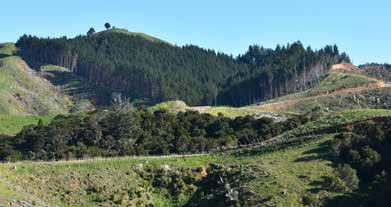
Since then a considerable amount of that land has been returned to pasture. However the pines I observed in Northland, covering thousands of hectares, will more than likely never be harvested.
These farms have been bought up for the purpose of carbon forestry and are entered into the Emissions Trading Scheme to collect annual returns for the carbon
sequestered by these trees.
Other than planting the trees, this money making scheme requires no further labour and the end result is a dying rural economy with derelict houses bearing witness to the folly of the ETS.
The government has tinkered with the classes of land where carbon forestry can occur but hasn’t dealt with the core issue.
Without entering into the climate change debate today, in my view, if you must have an ETS (and its merits are very debatable) and think trees are the answer, at least insist on those trees being natives rather than pines.
Take into account the biodiversity benefits that native trees would provide. In the early nineties the official view was that pine trees, due to their fast growth, were vastly better at sequestering carbon than native vegetation.
In later years, scientists came to the conclusion that pines were better at it in the first few decades of growth but in the long term native trees, despite their initial slower growth, would overtake the pines due to their longevity.
Unfortunately vested interests and inertia make it likely that those carbon pine forests are here to stay and add to the wilding pine scourge creeping across the land.
Editor’s Note: Dirk Sieling has been harvesting the pine tree plantations on his Ohuka Farm.
BY FLEMMING RASMUSSEN,
Nine months ago, many of us campaigned on a straightforward promise: Stop the drift. Restore accountability. Put TCDC back on a fiscally disciplined, sustainable path.
The job is far from finished, but one achievement deserves to be called what it is: Significant.
A WIN Council adopted an annual rate increase of 3.97% for FY2026/27 on June 30, 2026. That is real money for households and businesses under pressure. Nobody should pretend otherwise. But context matters. The business-asusual track was heading towards a rate rise of +14.6% or more.
For TCDC for this new fiscal year, one percentage point is approximately $1.175 million, or around $35 per ratepayer. The intervention therefore avoided roughly $12 million in additional rate pressure, equal to about $370 per ratepayer. Money remaining in your pocket!
That did not happen by accident. It took difficult conversations, challenging assumptions,
line-by-line pressure, and a will
ingness to say that ratepayers cannot be treated as an ATM or an unlimited funding source.
The FY2026/27 Annual Plan also signals a focus on more UserPay Funding (UPF) in the future. It proves an important point: Elected members can change outcomes when they own budgets, interrogate priorities, and insist on value for money.
HOWEVER, accountability cuts both ways. A lower rate rise is not a free pass. It is merely the first step. Policy work on risk, risk management, debt structure and composition, depreciation, procurement, service levels, water, roading, and resiliency remains – all structural and all to be addressed in our 2027/37 Long Term Plan. The real test is whether we permanently change the organisation’s discipline.
We have also had a setback. In my view, the adoption of the Accord has significantly weakened Community Board empowerment.
That is why I voted against it. I stood for a stronger local voice: community-led decisions,

cost-benefit discipline, and local services shaped closer to the people who use and pay for them. Community Boards should not be treated as consultation channels or political shock absorbers. They must be empowered to help determine local priorities, local service levels, targeted local investment, and the practical trade-offs each community is prepared to make. If we say we believe in localism, we must act like it. The danger is that fine words about partnership
become another centralised process, where local voices are heard politely and then managed back into a district-wide template. That is not empowerment. It is administration!
The third, and largest, issue before us is the Government’s present Simplifying Local Government reform program. This is not just another Wellington review. It is the most radical remodelling of local government since 1989, when today’s New Zealand local authority landscape was fundamentally reshaped.
The current Head Start process requires us to think beyond existing boundaries and propose structures that simplify governance, strengthen capability, reduce duplication, and preserve or improve local voice.
It is once-in-a-lifetime work. We must be clear-eyed. Focused. Determined. The wrong model could dilute our peninsula communities, bury local priorities, or unfairly shift costs.
The right model could strengthen local boards, protect communities of interest, improve
water and infrastructure capacity, and give our district a stronger strategic platform for the next generation.
This is where the earlier themes come together. Fiscal discipline, community empowerment, and local government reform are not separate conversations. They are the same conversation: who decides, who pays, who benefits, and who is accountable. You should (must) watch closely. Ask hard questions. Demand plain English. Insist that local voice is not traded away for tidy organisational charts. Hold us, your elected members, to account.
A much-reduced 3.97% rate rise shows change is possible. The next test is whether we are brave enough to lock it in, to make it structural.
WHAT DO YOU THINK?
Flemming is a local businessman, lawyer and elected Mercury Bay Councillor. This opinion piece is a private opinion – not written on behalf of the Council nor in his capacity as an elected Mercury Bay Ward District Councilor.
Proudly sponsored by

Win a $5.60 Wednesday Lotto ticket. Hand deliver, mail, scan/photograph or email your entry to The Coromandel Informer, 14 Monk Street, Whitianga, or info@ theinformer.co.nz to reach us by 12:00pm on Monday each week. The winner must please claim their prize from the New World checkout manager directly. Issue 1218
ACROSS
1. Maple leaf country (6)
5. Mum’s mum (4)
7. Marriage relative (2-3)
8. Luxuriant (4)
9. Shrill bark (4)
10. Devoured (5)
11. NZ glacial inlets (6)
13. Resentful desire (4)
14. Plunder (6)
18. Globe (6)
27. Baby owl (5)
28. Intend (4)
29. Servile flatterers (3,3)
DOWN
1. Summon (4,3)
2. Detest (5)
3. Helpers (5)
4. Bombards (7)
5. Actress, ... Paltrow (7)
6. Completely finished (3,4)

Win a coffee and a treat from Mat’s Cafe in Whitianga (T’s & C’s apply). Hand deliver, mail, scan/ photograph or email your entry to The Coromandel Informer, 14 Monk Street, Whitianga, or info@ theinformer. co.nz to reach us by 12.00 noon on Monday each week. The winner must claim their prize from Mat’s Cafe directly with ID with their published name.
Name:
Phone no:
Last weeks winner CONGRATULATIONS Philip Bartlett
For last week’s solutions see page 21
21. Looked at warily (4)
22. Johannesburg township (6)
24. Pacific nation (5)
25. Ammunition (4)
26. Passenger vehicle (4)

12. Used shovel (3)
15. Awful (7)
16. Et cetera (3,2,2)
17. Specimen (7)
19. Arab organisation (1,1,1)
20. Natural abrasion (7)
Sudoku instructions
Fill in the boxes using the numbers 1 to 9. Every row and column, and every group of 9 boxes inside the thick lines, must contain each number only once.











BY JACK BIDDLE
The vehicle brand Subaru has continued to grow its fan base and shown its diversity since the very first vehicle rolled off the production line in Japan way back in 1954. While having to match and grow the business with ongoing market demands and consumer preferences ever since, it’s always gone about its business holding true to its core and unique values and standing out as being something of a niche brand in the mainstream market. Along the way, it’s grown its own loyal fan base as well, but for many different reasons. Over time, that loyalty base has grown and changed in the way they see and have experienced the brand.
Those that grew up following or being part of the motor sport scene in the 90’s will have fond memories of Subarus total dominance in the World Rally Championships. They then became extremely popular as used imports into NZ and were often seen as a boy-racer vehicle earning themselves something of a reputation as being a brand that was expensive to maintain and repair during ownership. Little

wonder in some cases with the hard life many were exposed to.
But there was another side to the brands uniqueness and it involved the very same technology that won all those rally titles but put to good use in other environments, including becoming an established player in the mainstream market globally and in NZ.
Key to their livery has always been their Symmetrical AllWheel-Drive System which provides a balanced drive distribution to all four wheels. While it powered the brand to numerous international and local championships, it has proven to be ideal for those wanting to experience their own version of off roading and in particular handling the tricky challenges such as driving
in snow, navigating narrow and extreme bends and the rough outback. This technology took the brand to places many other mainstream competitors simply couldn’t go. There was virtually no compromise once back on the hard seal either with overall performance, comfort and driveability matching what a traditional mainstream SUV drove like.
Working in perfect harmony with the drive line has been Subarus BOXER engine design. The pistons operate horizontally which means a lower centre of gravity, helping to improve handling and overall road balance.
Over the years, Subaru as a brand has always continued to evolve and keep pace with the competition while retaining its
key point of differences. A huge compliment to the brand is the fact that while it has never aggressively gone out to top the sales charts in NZ, it has continued to collect numerous awards by the motoring press over many years.
In recent times their R&D teams have continued to meet the challenges of new technology including electrification along with maintaining a key strategic partnership with Toyota.
Recently Subaru New Zealand signalled the next phase of the brand’s electric Evolution.
Joining their SUV line-up in September will be the all-new, all-electric Subaru Trailseeker Touring EV-SUV, offering Kiwi customers a larger, even more adventure-oriented EV.
The Trailseeker is set to become the fastest-accelerating production Subaru ever built accelerating from 0-100 km/h in just 4.4 seconds. And true to its core DNA values, the retention of the allroad capability and high ground clearance which has served the brand so well in NZ, will continue to be a strong selling point.
Power will be supplied by a 74.7 kWh CATL (advanced lithium-ion and sodium-ion) battery, delivering a claimed driving range of
around 488 kilometres. With 150 kW DC fast-charging, Trailseeker is said to be charged from 10 to 80 per cent in approximately 30 minutes. Subaru New Zealand is also claiming a 1,500kg braked towing capacity, which if used to its maximum on long journeys, would potentially see that estimated driving range decrease significantly.
Crucially, Trailseeker remains unmistakably Subaru. Its dual-motor Symmetrical AllWheel Drive system, will be made available as standard.
Being the fastest Subaru production vehicle ever, many former owners of that successful rally era of the 90’s may well be drawn back to the brand based around those performance numbers. Their existing loyal customer base will also be looking forward to the introduction of the Trailseeker as Subaru enters their next chapter in EVolution through electric power.
Further details on detailed specification and pricing for the all-new, all-electric Subaru Trailseeker will be announced closer to launch but to find out more go to or register their interest with a local dealer.
AMALGAMATION
EDICT FROM CENTRAL GOVERNMENT
I attended the meeting held 9 July at Lost Spring about the forced amalgamation of Councils by central government. Full credit to the working group from Council and Community Board for their work, but the only 3 options presented for consultation are not the only options.
A fourth option not presented is “No thanks, we do not wish to amalgamate”
Even though not offered as an Option, when a show of hands was called for at the end of the meeting, the fourth Option overwhelmingly received the most votes. We have not been consulted on this Option, and we are not the only region expressing opposition to this government edict. I think local polling should have taken place in the first instance. Then, if sufficient numbers were opposed, we could have joined with others to mount protest against the entire move to force amalgamation.
At the very least, we should have refused to accept the tight time frame for the process. It is unreasonable for government to require councils to inform and consult sufficiently widely enough on a decision with such long reaching implication for the future as this.
Amalgamation or centralisation has not been successful, and often had to be reversed in other bureaucracies, such as education and health, so where is the evidence that it will bring about the cost savings etc claimed by the
propaganda issued around this forced move?
Shane Murray posted on Facebook 9 July, an excellent piece setting out evidence that amalgamation is unlikely to be advantageous. https://www.facebook. com/search/top?q=shane%20 murray%20amalgamation
Since when in our democracy has it been acceptable for our government to say ‘decide or we will decide for you?’ This is government by force. NOT ACCEPTABLE, nor democratic.
If you would like to express
your views on amalgamation and Option 4 go to: http://schr.io/ options
If you are happy to be railroaded by government, jog on, otherwise please take a minute to comment.
Sandra Scott, Matarangi Editor’s note: Please see pages 12, 13 and 14 in this issue of The Informer. The articles relate to this Letter to the Editor. Note: Sandra Scott’s Option 4 in this letter is not the same as Option 4 as proposed by Dirk Sieling on Page 13.


Mercury Bay Cancer Support Trust
Bookshop – Blacksmith Lane, Whitianga. Open every Mon-Sat 10am-2pm.
Mercury Bay Resource Recovery Centre ReUse Store 239 South Highway, Whitianga Open Tues-Sat 9:30am-3:30pm
St John Opportunity Shop – 29 Albert St, Whitianga. Open Mon-Fri, 9.30am-4pm and Sat 9.30am-2pm.
St Andrew’s Church Op-shop – Owen St, Whitianga. NEW HOURS - 9.30am-1pm Tue-Sat. Social Services Op-shop – 15 Coghill St, Whitianga. Open Mon-Sat 9.30am-2pm. Donations welcome.
SPCA Op-shop – 2 Blacksmith Lane, Whitianga. Open Mon-Sun 9am-5pm.
AA Driver Licensing – NEW LOCATION.
Monday 27 July and Friday 14 August, Whitianga Community Service Trust Centre, 2 Cook Drive, Whitianga.
American Muscle Street and Custom Club
Whitianga – Club meetings first Sunday of the month, 11am at Buffalo Beach Reserve for cars and coffee. Phone Reg and Julie Smith on 027 493 5822.
Cooks Beach Garden Circle –Last Thurs of the month 11.15am-2.30pm. New members welcome. Ph Anne on 021 0247 7460 for more information.
Craft Group – Meets first Saturday of the month 10am-3pm at Whitianga Social Services, 2 Cook Dr, carpark end. Work on your own craft (stitching, colouring in, scrapbook, card making anything goes). Bring your lunch and enjoy mixing with other crafty people. Any queries ph Alison 021 0508 772 or Sally 027 3962 383. Kūaotunu Dune Care – Every third Wed of the month. To get involved, please email kuaotunudunecare@gmail.com.
Hauraki U3A (University of the Third Age) has interesting speakers every 3rd Tuesday of the month. All are welcome. Paeroa Baptist Church, 2 Wood St, Paeroa. $10 at door. To book email event_registration@u3ahauraki.nz
Hei Mara Garden Club Hahei - We meet on the first Monday of each month at members’ homes, 11am - 2.30pm. New members from Hahei and surrounding areas are welcome. Phone Liz on 0210649232 for more information.
Hospice Waikato’s Bereavement Support Group – Lost a loved one? Join Hospice Waikato’s monthly bereavement support group. Connect over morning tea with others who understand. Held on the fourth Tuesday of each month. 10.30am to 12.00pm at Whitianga Social Services. Registration required. Contact Hospice Waikato to register at 07 859 1260. Mercury Bay Model Railway Club – Monthly meet. Contact. Damon 0273551650 Mercury Bay Shooting Federation – Muzzle loader, rimfire, centre fire, military, pistol. Email mbsfsecretary@gmail.com
Ohuka Garden Club meets 2nd Wednesday of the month. New members welcome. Contact Beverley Sheppard Ph 02109028855 or email beverley@annabells.co.nz
Peninsula Penultimates (ex Probus Club) Fourth Monday of every month, 10am at the Mercury Bay Bowling Club, Cook Drive, Whitianga. Phone Jo on 021 264 3753. Tairua Market takes place on the 1st Saturday of the month all year at Tairua Community Hall, 9am till 1pm. Food, fruit and veges, crafts, clothing, home decor, plants, furniture, books and much more.
Greeting Card Making – The second and fourth Fridays of the month, 10am-12pm at St Peter the Fisherman, 7 Dundas St. All materials provided. Contact Rev. Gillian Reid on 021 781 081 or just turn up.
Knit for a Purpose – First and third Fridays of the month, 10am-12pm at St Peter the Fisherman, 7 Dundas St. Ph Gillian Reid on 021 781081 for further details, or just turn up. Mercury Bay Creative Fibre – Spin, knit, weave, crochet. First and third Wednesday every month, 10am-1pm, supper room of Town Hall. Phone Sue 021 274 7899. Email suzyed@ outlook.com
Mercury Bay Quilters – 10am-4pm on the first and third Mondays and second and fourth Saturdays of each month. Contact Margaret on 021 140 4016.
Whitianga Tramping Group – Every second Sunday at 8.30am. Phone Wally 021 907 782 or Lesley 021 157 9979 for more information.
Alcoholics Anonymous – The Whitianga Big Book Group meets every Thursday at 6.30pm at St Peter the Fisherman Church, Dundas Street. Phone 0800 AA WORKS (0800 229 6757) for more information.
Al-Anon Serenity Group – For those affected by someone else’s drinking. Every Wednesday at 1.30pm. Phone Pauline on 021 086 10955 for more info.
Badminton – Whitianga Badminton Club –Thurs 5-7pm, MBAS school gym. Four courts. Now open to new members wanting to play competitive Badminton. Coaching provided for those wanting to improve their skills. Phone Steve for more details 027 211 3568.
Boys Brigade – An adventure, activity, and values based ministry for boys. For boys aged 5-13 years old. Tues 5.30-7pm For information contact Robyn 020 409 39674.
Chess Club – Mondays 6.30-9.30pm, MB Bowling Club. Players of all levels. Cost $2. Contact Brett Soanes 0272117195 or brettsoanes16@hotmail.com
Coroglen Farmers Market every Sunday until Easter at Coroglen Gumtown Hall (SH25), from 9am-1pm.
Coffee and Discussion Group – Every Sunday, 2-4pm, at The Lost Spring. Topics are open and respect shown. No charge. Convener Peter H. Wood.
Cooks Beach Care Group – Meet new friends, learn about coastal conservation and make a difference. Hands-on weeding and planting, Thursday mornings. Register at: www.cooksbeachcaregroup.org.nz; www.facebook.com/ CooksBeachCareGroup
Cooks Beach Indoor Bowling Club Wednesday at 1.45pm. Come and join us at the Community Centre (Hall). New members are most welcome, please contact Coral ph. 0212303944.
Cooks Beach Pickleball – Community Tennis Courts, 9am Saturday morning. Weather permitting. Nets and bats provided. $5 each, first time free. Contact Kevin 021 396 062.
Cooks Beach Table Tennis – Every Thursday night. Juniors 6pm to 7pm - $2 pp each night; Seniors 7pm to 9pm - $5 pp each night. Cooks Beach Community Centre. Players of all levels welcome. Contact Leanne Barnes 021 468 533
Coromandel ‘Growers & Artisans Market’ – Every Saturday from 9am - 1pm at The Anglican Church Hall, Coromandel Town. Dog walking group – Every Thurs, 2pm, Lovers Rock, Robinson Road. All breeds and sizes welcome to a very sociable group. Ph Jenny on 021 186 5797.
Hahei Contract Bridge Club – Every Tuesday 12.30pm at the Hahei Community Hall. Learners and casual welcome. Contact Don Barry 021 741 959 or Robyn Hogg 021543015.
Hahei Tennis & Pickleball Club - Thursday & Sunday Contact Tim 0278432683 or refer their facebook page.
Meditation Classes – Thursday evening. Spiritual, heart, soul development. Sacred energy, chakra activations, working with spiritual guides. Open forum conversation, Thursdays, 6.30pm at Flat 1, 15 Mill Rd, Whitianga. Cost $10. Contact Verna 027 320 0079, vernajcarr@gmail.com.
Mercury Bay Badminton – Every Wednesday 9-11am, at the Whitianga Town Hall, Monk Street. Social badminton. Casual players and visitors are welcome. Players of all levels, ages 16+. Phone Carol 027 474 7493 for more information.
Mercury Bay Bowling and Sports Club – 92 Cook Drive, Whitianga. Social Bowls, Thursday & Sunday at 12.30pm, Contact Steve Williams 027 855 2772.
Mercury Bay Bridge Club – Every Wednesday at 1.00pm and every Thursday at 7.00pm at the MB Bowling and Sports Club, Cook Drive, Whitianga. For more information contact Gavin 021 146 9203.
If you have an activity or group or the existing information is incorrect, let The Coromandel Informer know. Call 07 866 2090, email info@theinformer.co.nz. Our What’s On page is not guaranteed to run every week as often space is restricted. Consider paying for a classified advert if you want to guarantee your activity runs every week.
Mercury Bay Community Choir – Meets
Monday 5.45-7.15pm at the Mercury Bay Area School music room. Friendly non auditioned choir. All comers welcome. Phone Kate 0272709058 for details.
Mercury Bay Environmental Trust – Every Tues and Fri from 9-11am, location advised prior. For more information, phone 022 104 1701 please email mbenvironmentaltrust@ gmail.com or go to www.mbet.co.nz.
Mercury Bay Indoor Bowling Club. Every Thursday evening, Whitianga Town Hall 6.45pm. New members, beginners and visitors very welcome. Phone/txt Cheryl 027 452 7887 or Sandie 021 825 666 for more information
Mercury Bay Pickleball Club - At the Mercury Bay Area School Gymnasium, Tuesdays Members Only 5.30-7.30pm; Saturdays Social & New Players 9-11am; Sundays All Players 4-6pm. Members/ Guests/Visitors $5, a complimentary session is available to new players wanting to trial pickleball. Current membership only $10 to 30/09/2026 www.mercurybaypickleball.co.nz Contact Tony 021426150. Moewai Sportspark sessions are weather dependant & advised on our facebook page Mercury Bay Pickleball. Matarangi Pickleball Club (Matai Pl Courts) Thurs 3-5pm (Winter) 5-7pm (Summer) Saturday 9-11am Contact Grant 0223836351. Mercury Bay Squash Club – New members/ enquiries to Dawn Thurgood mercbaysquash@ gmail.com
Mercury Bay Table Tennis – Every Tues, 9-11.30am at the Whitianga Town Hall, Monk Street. All welcome. Ph Anne on 07 869 5162 or 027 565 5575 for more info.
Mercury Bay Tennis Club – Social tennis at Lyon Park on Thursdays at 5.30pm. All welcome. Ph Jason 022 186 7992 or Carl 027 680 5570.
Oneness Meditation Centre – The centre focuses on the meditative art of going deeper within. Learn how to meditate, breath, calm the mind, relieve stress, anxiety and be a calm, peaceful, courageous, dynamic human being. Every Monday, 9.30-11.00am. Further info. text Linda 027 650 4881 or email linda_c@orcon. net.nz
Self-defence classes – Town Hall, Tues/Wed 6-7.30pm. Ph Tony 027 333 5146.
Spiritual Conversation Mornings – Every Tues and Wed, 10.30am-12pm, 15 Mill Rd, Whitianga the Starlight Centre. Grab a coffee and join in some great conversation where we talk about topics and subjects that have meaning. $5 donation. Contact Verna 027 320 0079.
Tai Chi for all levels – Town Hall, Mondays 6-7pm. Gold coin donation. Ph Tony 027 333 5146 for more info.
Tairua Contract Bridge Club – Every Monday at 12.30pm at the Tairua Bowling Club, 44 Hornsea Rd. Contact Lynnette Flowers 021 252 4709 or Johanna Bonnar 027 466 3726. Whenuakite Area Playgroup – 9.30am12.30pm every Wednesday morning at the Hahei Community Centre. Ages newborn-5years. We invite all parents, carers, visitors and grandparents. Contact whenuakiteareaplaygroup@gmail.com
Whitianga Art Group – Every Thurs/Fri 10am-3pm, 23 School Road. Visitors and new members welcome. Phone Margaret on 027 635 1615 for more information.
Whitianga Menz Shed – 18 Abrahamson Drive, Open Tues/Thurs, 9am-12 noon. Phone Glenn 0274-952-015. All welcome. Whitianga Playcentre – Every Tues/Fri 9am12 noon, 1F White St. Contact whitianga@ playcentre.org.nz or 027 880 3947. Whitianga Senior Citizens Club – Indoor bowls and card games. Mondays at the Whitianga Town Hall, Monk St, 1pm-4pm. Join us for a fun time and afternoon tea, 55+ age group. Phone Lionel Lawrence (president) on 027 274 6964 for more info.
Whiti Stitchers – Embroiderers meet every Tues 9am start. For more information phone Margaret on 027 7802 744. All levels welcome. Whitianga Toy Library - Tummy Time sessions for parents/caregivers and babies under 12m. Every Wednesday 9:30am at the toy library - Shop 4, Blacksmith Lane, Whitianga. Members and non-members welcome. Contact librarian@whititoylibrary. co.nz for more information
Women’s Wellbeing and Weight Loss
Whitianga – Wed 5-6pm, Room 10, Whitianga Social Services, 2 Cook Dr. Support to lose weight wisely. Check out our Facebook page or phone Cecily on 027 294 1750 for more information.
Yoga for Everyone - Whitianga - beginners, retirees, inflexibles welcome. Mon 2.30pm, Tues 5.15pm, Thurs 4.20pm, Fri 8.45am, Sat 8.15am. Gentle Simple. $25 for a 90 minute session. Text Rosemary 0274 489326 for info. DANCING
Argentine Tango Dance Class – Fridays, Town Hall, Whitianga, 5.30-7.30pm. No prior experience or partner necessary. Text Sergio for questions 027 410 2454. Belly Dancing – Contact Catherine Corcoran, 021 210 2438 or smile@catherinecorcoran. com. Weekend classes twice a month at 4pm. Mercury Bay Line Dancing Club – Held in the Whitianga Town Hall. Tuesdays beginners 11.30am-12.30pm, Seniors 12.45-2.30pm; Thursdays Seniors 10.15-11.15am, Absolute Beginners 11.30am-12.30pm, Improvers 12.45-1.45pm. Night class held at Whitianga Town Hall for Absolute Beginners 5.25-6.25pm. Contact Margaret 027 463 8850, Glynis 021 1099 155, Kathleen 022 154 1702. Silver Swans Adult Ballet Class – Tuesday’s weekly 10am to 11.10am $20, Whitianga Town Hall supper room. All ages welcome. Marilyn Swan, experienced professional teacher of Dance.M: 0273365263 E; swanebbs@gmail. com
Whitianga Line Dancing Club Classes –Town Hall, Monk St, $7 per session. Beginner/ Improver classes Monday 10.30-11.45am, Intermediate classes Wed, 12-1.30pm; . Contact Kathy 027 4321 353 or Cecily 027 294 1750 Zumba – Wednesdays at 5.30pm at gym for Zumba and Step Zumba on Mondays at 4.45pm at the Whitianga Town Hall in Monk St. GROUP INFO
Grey Power Mercury Bay – our next gathering will be on Thursday 6 August “Mad Hatters Luncheon at The Mercury Bay Club Further info please phone Grey Power Mercury Bay 07 866 5516 or email:- greypower.mercurybay@ gmail.com. Come and join us for our next get together.
Mercury Bay Athletics – For info contact mercurybayathletics@gmail.com
Mercury Bay Lions Club – New members are welcome. Email mercurybaylions@gmail.com. Phone Cecily 027 253 3088 or Chrissy 021 177 4226.
SeniorNet Whitianga, Inc. – Learn, update your skills using smart phones, etc. in a friendly setting. Call Carol Wood on 021 022 62504 or email Carol on seniornet.whitianga.admin@ gmail.com.
Whitianga Bike Park – 144 Moewai Rd, Whitianga. Open 24/7. Many bike tracks available, picnic areas, BBQs and walking trails. Donations welcome on entry. If you wish to volunteer or for programme enquiries, contact Jon Maud 027 366 4606. Whitianga Gun Club – For information, phone Mike Deverell 0274 959 477 or Neville Crawford 021 276 2169.
Whitianga Community Patrol – Monitors the township and neighbourhood. If interested in volunteering, ph Gary 027 391 3043.
The Mercury Bay Club is looking for a new volunteer to drive our courtesy vehicle on Tuesday & Friday evenings. This is a volunteer role, but each night the driver is given a $40 food & beverage voucher to reimburse reasonable expenses considering the driver can’t go home for dinner etc. This is a valuable service for our members. If you have a full, valid drivers licence, and would like to support the Club in this way, please leave your contact details with the staff. The courtesy vehicle drivers are entered into a roster system and you might typically be rostered on once every 4 weeks or so.

By Agent EJ

Kaikōura is underwater again. The Kowhai River has burst its banks, and once more, it’s Takahanga Marae doing the heavy lifting, feeding people, sorting blankets, chasing down medications, all on volunteer power, not algorithms.
Same story up in Northland back in January: Ōtetao Reti Marae fed and housed 150 locals, many of them elderly or living with serious health conditions, while the roads stayed cut off for days.
Meanwhile, the big AI money
isn’t going anywhere near getting someone’s aunty her insulin through a slip. In the US, the Pentagon actually penalised Anthropic for refusing to let its AI be used for mass domestic surveillance, then handed the work to a competitor instead. The FBI purchased location data from brokers just to track citizens. And Palantir has walked away with hundreds of millions in UK government contracts for tools that human rights groups say enable mass surveillance, with one former employee
saying they help “track, detain and… KILL people at scale.” That’s where the ambition and the funding are going. Watching us, not warning us. It doesn’t have to be this way. NIWA has already built an AI model that produces flood depth forecasts in one to two minutes, instead of the usual 24 hours, and it predicted the 2021 Buller River flood with 95 percent accuracy. That is genuinely useful. But a fast forecast is only the first step. Someone still has to physically retrieve an 80-year-old with
limited mobility out of a flooded Coromandel valley where public transport doesn’t reach and the nearest neighbour is a farm track away. The apps we use can’t drive a vehicle during these weather emergencies, at least not yet. No chatbot is carrying anyone down a slip.
That’s the gap nobody is properly funding. Marae are patching it together with solar panels from a government boost they had to beg for and sheer manaakitanga, while surveillance companies post record profits. If a govern-


ment can find £240 million for a Palantir contract, it can find the money for on-the-ground coordinators, accessible transport, and welfare checks on our elderly, before the warning goes out, not after the marae is already full. We built the technology to SEE everyone. It’s time it actually REACHED everyone too. I want our future generations to imagine and build a world where self-driving vehicles rescue cutoff whanau, where drones deliver medicine on time, and AI serves care, not control.





















5 Monk Street, Whitianga O ce Ph: 07 8671087 Email: info@plannersplus.co.nz
David: 027 4994833
Tracey: 027 4907988















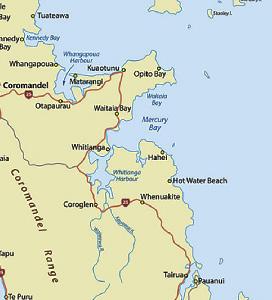



























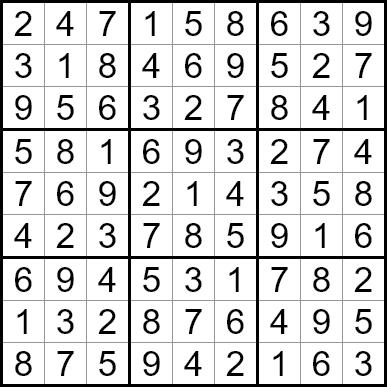
9 Hole Women Stableford
Tuesday 30 June
Div 1: 1, Lee Rattray; 2, Audrey Vickers
Div 2: 1, Cathy Breeuwer; 2, Sharron Morrissey
9 Hole Men Net
1, Bob Holiday; 2= Kelvin O’Leary, Bruce Godden, Rodrick Bott & Gavin Brinkley. 18 Hole Women Stableford
Wednesday 1 July
Div 1: 1, Marg Maher 37; 2= Jenna Leach & Diane Andrew 33
Div 2: 1, Angela Cook 30; 2, Christine Van Veen 29; 3, Shay Geach 28.
Twos Jackpot: Marg Maher
NTP #4: Marg Maher
Whilst this seems like the Marg Maher benefit tournament, Shay Geach got closest to the 18th in two and Debbie Holmes got the longest putt.
18 Hole Men Stableford
1=, Cam Walls, Steve Geach & Mark Boe 38; 4=, Ron Watson, Greg “I never get a mention in The Informer” Peterken & Jimmy Duncan 36
Twos: Greg Farrant & Big Willie Jones.
Senior Gross: Mark Boe 67
Junior Gross: Patrick Gonthier 95 9 hole men stableford
Friday 3 July
1, Graeme Heathcote 20; 2, Patrick Gonthier 17; 3= Rodrick Bott & Jeff Dixon 16 18 hole men stableford
Saturday 4 July
1, Jimmy Duncan 38; 2, Dom Szparagowski, 3= Kerry Allan, Les Walbridge, Sam Murphy, & Patrick Gonthier, all 35, with an honourable mention to Jeff Dixon on 34
Twos: Trevor Hayde, Nathan Wilson, Johnny Day, Alan Coubray, Richard Steel, Kerry Allan & Chian Ho.
MERCURY BAY BOWLING CLUB
The Triples Open Tournament kindly sponsored by Snowdens Menswear, was played Sunday 5 July in beautiful winter sunshine.
1, Mike, Gavin and Peter from Pauanui; 2, Peter, Doug and Bones; 3, Shane, Lee and Pam.
PURANGI GOLF AND COUNTRY CLUB
9 hole Stableford and hidden holes
Tuesday 30 June
Stableford: 1=, John Hamilton, Ryan Cochran; 3, Catherine Borlase; 4=, Jock Peacock, Wayne Morrison, Lauren Stephens Hidden Holes: Lauren Stephens
9 hole Stableford Cooks Beach Building
Supplies Monthly Medal
Thursday 2 July
1, Mark Bell winner of monthly medal; 2=, Ryan Cochran, Lauren Stephen’s; 4, Annelise La Roche.

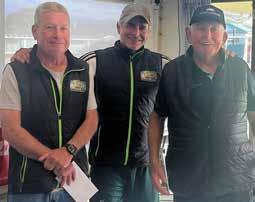
Saturday 4 July
18 hole nett Cooks Beach Building
Supplies Monthly Medal
1st and winner of Monthly Medal: Annelise La Roche; 2, Tim Bartlee; 3, Bob Walker
4BBB: Brian Keucke and Kelly Phillips NTP: Bob Walker
TAIRUA BRIDGE CLUB
Session 1, Monday 6 July.
North/South: 1, Tony White & Jill Huston 60.87; 2, Johanna Bonnar & Peter Clark 56.96; 3, Lee Hughes & Peter McNeil 53.48. East/West: 1, Chris Death & Robyn Waters 60.00; 2, Celia young & David Wilkinson 56.96; 3, Sue Poland & Kim van Diepen 54.78.
HAHEI BRIDGE CLUB
Week 1 of the Mahurangi Pairs
3 July 2026
North/South: 1, Margaret Muir and Peter Hogg 58.33%; 2, Robyn Waters and Alison Tichbon 54.17%; 3, Val Dwight and Anne Knowles 54.17%
East/West: 1, Denise Knutson and Tia Ormsby 63.75%; 2, Lee Hughes and Ngaire O’Brien 51.88%; 3, Robyn Hogg and Angela Butterworth 51.25%
MERCURY BAY CLUB INDOOR BOWLS
Monday 6 July.
1, Maureen Lack, Jan Harvey and Liam McQueen; 2, Ray Rout, Ian Mitchell and Pat Fisher.
Good Sports, Lee Pudney, Colleen Holmes and Betty Simpson.
MERCURY BAY CLUB DARTS
Tuesday 7 July
18 players this week, so 501 singles were played. Two players went through unbeaten in all 4 sets, so a 1 game final was played. The two players in the final were Mike Gillett and Steve Jessup with Mike Gillett coming away with the win. Highest finish was 110 for the men, scored by Colin Jessup. No finishes over 50 for the ladies


STAR and SPACE STATION GAZING IN 2026 – your guide to the night sky
Tuesday, 14 July to Wednesday, 22 July
Bright Venus continues to glow brightly in the western dusk sky and is still getting slightly higher each night. The dawn sky has two red gems close to the eastern horizon, one being the red giant star Aldebaran in Taurus with similarly bright Mars to its left. Mars however is slowly descending towards the horizon each day relative to Aldebaran. Matariki or the Pleiades sits above and to the left of them both and rises four minutes earlier each day so becomes easier to spot each morning. It is on its way to becoming a lovely evening sight in the spring and summer.
Tuesday, 14 July: There will be an early ISS pass in the north from 5:46am. Wednesday, 15 July: There will be a good ISS pass from
6:35am in the west. Thursday, 16 July: We have another bright ISS pass starting right overhead at 5:50am and at dusk the Moon sits below Venus with Regulus in between and there is a Tiangong pass from 6:29am in the west. Friday, 17 July: There is a low ISS pass from the SW at 6:38am while at dusk the Moon sits between Regulus and Venus. Saturday, 18 July: At dusk the Moon, Venus and Regulus are evenly spaced in the western dusk sky with a Tiangong pass from 6:13am in the west. Sunday, 19 July: The Moon now sits well above bright Venus at dusk. Monday, 20 July: The Moon lies high above Venus at dusk in the west. Tuesday, 21 July: The Moon now lies half way between Venus and the red giant star Antares in Scorpio’s neck at dusk.

Mercury Bay Red Devils enjoyed an all-invited fun day match on Sunday, with perfect weather making for a great afternoon of football.
A big thank you to everyone who came along for a run in the sun. It was fantastic to have our Solomon Islands friends join us as well – they added plenty of skill and made the day even more enjoyable.
The first two thirds were closely contested, with the score sitting at around 3–2 heading into

the final third. Unfortunately, the Blue team completely fell apart after that! No one seems to know what the final score was.
The Red Devils were a bit light on numbers today, and without the kids and our Solomon Islands players, we would have been very thin on the ground.
this week. One player scored a 180 this week and that was Mike M. A new player and his first ever 180.
MERCURY BAY BRIDGE CLUB
June Competition – 8 July
North/South: 1,Giorgio Allemano, Ischelle Stevenson 58.93; 2, Jenny Layton, Bob Schibli 57.14; 3, Johanna Bonnar, Sue Gill 51.43.
East/West: 1, Tadok Gawor, Susan Swan 55.42; 2, Colin Day, Alison Tichbon 54.17; 3, Robyn Hogg, Pete Hogg 53.33.
THE DUNES MATARANGI GOLF CLUB
Junior Haggle 28 June
Best Gross: Alfie Buttigieg 33 (6 holes) Stableford 9 holes
Sean Given, 10, on countback Men’s 9 hole Stableford
3 Blind Mice 6 July
1, Paul Anderson 9; 2, Lance Croawell 7.
18 Hole Men’s Stableford
Wednesday 8 July
1, David Gaskell 41; 2, Rowan Toms 37; 3, Trevor Martin 37; 4, Tony Joblin 37; 5, Scott Troughton 36
Twos & Stableford: Trevor Martin #14 & #18; Wally Hayes #18; Tony De Coek # 18.
NTP: Tony De Coek
9 Hole Men’s Youth VS Wisdom Stableford
Thursday 9 July
1, David Ellis 20; 2, Noel Rogers 19; 3, Peter Murphy 17.
Twos: Peter Murphy #5, David Ellis #7, Noel Rogers #7.
18 hole ladies Stableford Shootout
Qualifier & Area Stableford
Thursday 9 July
1, Polly Lambert 36; 2, Joanne Dartnall 33; 3, Marie Dumm 33; 4, Kayleen Smith
We’ve got Hahei at home in a couple of weeks, with the Log of Wood up for grabs, so let’s get some good numbers along to training and be ready for a big one!
32; 5, Cathy Drake-Wells 32.
Twos: Joanne Dartnall #14, Polly Lambert #18.
Mixed Sat Haggle Stableford
Saturday 11 July
1, Ruth Fisken 40; 2, Tracey Mulligan 38; 3, Graham Harrison 38; 4, Tony De Coek37; 5, Trevor Martin 37.
Twos: Curtis Gibson #14, Brett Craies #18
NTP: Brett Craies
MERCURY BAY INDOOR BOWLING CLUB
Thursday 9 July
Winners: Merle Ward, Ray Rout and Wayne Fisher
Runners Up: Maureen Lack, Ian Pudney and Pat Fisher Good Sports: Cheryl Henderson, Ken Lack and Sue Webb
MERCURY BAY CLUB SNOOKER
Wednesday 8 July
After 3 rounds of section play, it was Ian Baumgren who came through unscathed with 3 wins to take out the day’s top prize. Ian’s wins included breaks of 24 and 29 showing he was in good form, taking out the Jackpot High Break. Players with 2 wins each included Dave Colman, Ken Gibson, Bob Haase, and Brian Codyre who also had a good break of 25.
Saturday 11 July
A round robin was played in section play with Peter Schultz demonstrating again that he is the man in form with 4 straight wins to take the prize money. Ian Baumgren achieved 3 wins with no high break recorded.
Mercury Bay – the sun, the moon and the tides


Wednesday 15 July Sun: Rise 7:27am Set 5:19pm Moon: Rise 8:06am Set 6:06pm High Tides: 7:12am 7:48pm Low Tide: 12:45am 1:06pm


If you have an event coming up, sports results, or some local news, please let us know. Email info@theinformer.co.nz or phone 07 866 2090
The Coromandel Informer would like to thank all our advertisers – our paper relies on you to keep our community informed of local news and upcoming events.




Mercury Twin Cinemas has a great line-up of movies for children and their

Two copies of the book Beverley The Bee are on their way to the lucky winners. Yolanda Wills and Cathy Putt. The book is all about a Whangamata Bee called Beverley who gets blown offshore but is saved by local charter boat Te Ra. It’s a song and a book. You can hear and see the song here on YouTube Beverley the Bee and the book is available at Discover Whangamata (Info Centre).
MOANA
PG 115 minutes
MINIONS AND MONSTERS
PG 90 minutes
In “Moana,” Disney’s live action reimagining of the beloved Oscar®-nominated animated adventure, Moana (Catherine Lagaʻaia) answers the Ocean’s call and, for the first time, voyages beyond the reef of her island of Motunui with the infamous demigod Maui (Dwayne Johnson) on an unforgettable journey to restore prosperity to her people.
Times: Wed 15 July 11.00am and 6.00pm; Thurs 16 July 12.45 and 6.30pm; Fri 17 July 1.00pm; Sat 18 July 11.15am; Sun 19 July 1.30pm, Tues 21 July 6.30pm.

This is the rambunctious, ridiculous and totally true story of how the Minions conquered Hollywood, became movie stars, lost everything, unleashed monsters onto the world and then banded together to try and save the planet from the mayhem they had just created.
Times: Wed 15 July 1.45pm; Thurs 16 July10.30am; Fri 17 July 2.15pm; Sat 18 July 1.45pm;
TOY STORY 5
The toys are back and this time, Buzz Lightyear, Woody, Jessie and the rest of the gang’s jobs

are challenged when they come faceto-face with Lilypad (voice of Greta Lee), a brand-new tablet device that arrives with her own disruptive ideas about what is best for their kid, Bonnie. Will playtime ever be the same?
Times: Wed 15 July 4.00pm; Thurs 16 July 3.30pm; Fri 17 July 10.45am; Sun 19 July 10.30am.
CATS IN THE MUSEUM 2: TREASURES OF EGYPT
PG | 88 MIN
This fun movie follows Vincent the cat, Cleopatra, and their friends as they leave the safety of the museum for an adventure in Egypt. Chasing an ancient leg-
end that promises a powerful wish, they journey through pyramids and temples, facing new obstacles at every turn.

Times: Thurs 16 July 11.30am; Fri 17 July12 noon; Sat 18 July, 10.30am; Sun 19 July 11.15am
DR NO
One special showing for Lions Club fund raiser
Buy your tickets to DR NO. Action, Adventure, and Spy/ Thriller

You have one chance to see the
first James Bond movie featuring Sean Connery, on the big screen as part of our Whitianga Lions Winter Warmer Series.
James Bond 007 is Britain’s top agent, and is on an exciting mission, to solve the mysterious murder of a fellow agent. The task sends him to Jamaica, where he joins forces with Quarrel and a loyal CIA agent, Felix Leiter. While dodging tarantulas, “fire breathing dragons”, and a trio of assassins known as “the three blind mice”, Bond meets up with the beautiful Honey Ryder and goes face to face with the evil Dr.No.
Your $25 ticket includes a drink, nibbles, and a $5 donation to the Lions Club. Beat the cold with a great movie and warm company!
Time: Mercury Twin Cinemas Monday, 20 July 3.30pm



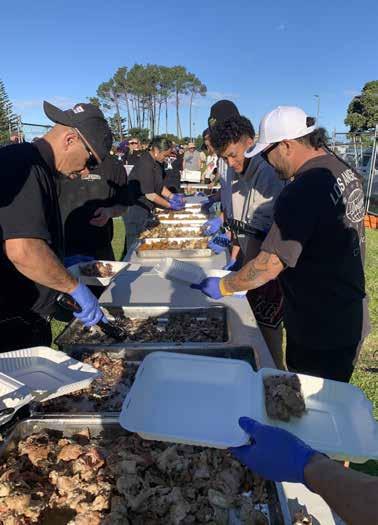
BY SHAUN FAY
There were so many to help at Williamson Park for the Matariki celebrations – setting the hangi, serving it, and of course there were so many more enjoying the feast and being together picnic style.
The outdoor stage came to life at 1.30pm with games, a dance competition, a concert featuring kapa haka presentations. Lots of stalls lined the area making it an occasion that involved so many in the community. Whangamata celebrated Matariki well. What a wonderful day it was – music, dancing, hangi and great weather.
Congratulations to all who helped make this happen.