
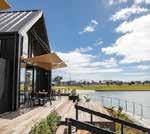
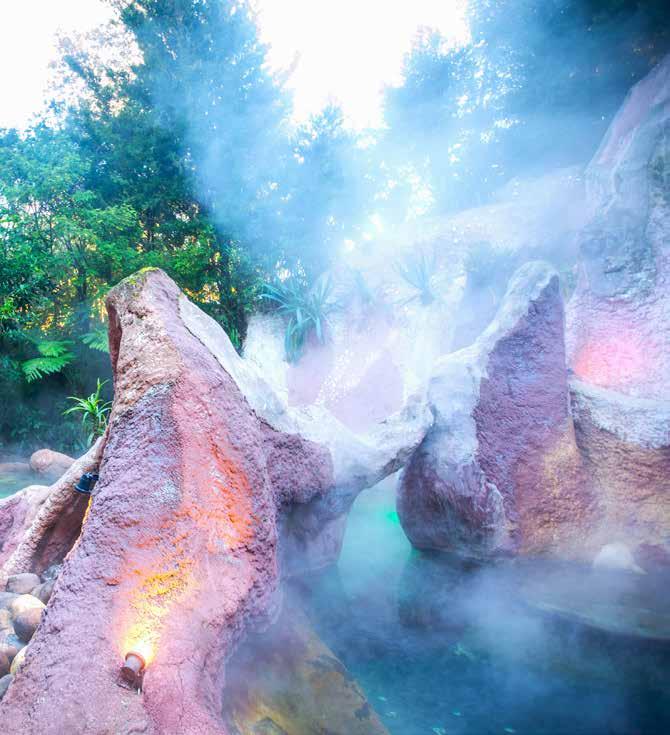

Forty Years ago, a journey began that would eventually become
The Lost Spring.
This past week, the news was published online by global companies by SpaSeekers.com and ‘Travel + Leisure’ and in the New Zealand Herald that The Lost Spring has been named, “The Most Beautiful Spa in the World”.
The Informer located Alan Hopping, the founder and creator of The Lost Spring, to speak with him about this amazing achievement and recognition.
“I am both humbled and incredibly grateful to share that The Lost Spring has been awarded this recognition for its visual beauty, geothermal pools and unique natural surroundings – The Most beautiful Spa in the World – Wow!
“My dream was always simple yet ambitious: to create New Zealand’s number one geothermal day spa,“ says Alan. Never in my lifetime did I expect that journey would one day lead to being recognised as the World’s Number One Geothermal
Day Spa and Resort. To see a project that started with a simple idea receive global recognition is truly overwhelming.”
The story began in 1987 when a test well was drilled to a depth of 325 metres. Two years later, in 1989, geothermal water was discovered in a second well. So the whole town celebrated and we made a pool with a blue plastic tarpaulin as the base. Everyone jumped in. The spring was originally known as Champagne Hot Springs, named for its natural sparkling effervescence.
During the early 1990’s, the Thames Coromandel District Council commissioned a $100,000 study by the Pacific Asia Travel Association (PATA), an internationally respected tourism organisation. The study sought to answer a critical question: COULD THE COROMANDEL BECOME A YEAR-ROUND INTERNATIONAL TOURISM DESTINATION?
Continued on page 2



“Pata’s findings were clear, says Alan. “ While the Coromandel possessed some of new Zealand’s most beautiful beaches, so too did many other regions. Unlike other destinations, the Coromandel lacked ski fields and year-round attractions that could consistently draw visitors throughout all seasons.
“However, PATA identified a significant opportunity. Around the world, geothermal spa destinations were experiencing remarkable growth and attracting both domestic and international visitors. The report suggested that geothermal spa developments could become a cornerstone of the Coromandel’s tourism future.
“Inspired by that vison, The Lost Spring was developed with two goals in mind:
1.To restore and showcase the area’s unique natural environment and native wildlife.
2.To create New Zealand’s leading geothermal day spa and pool experience.
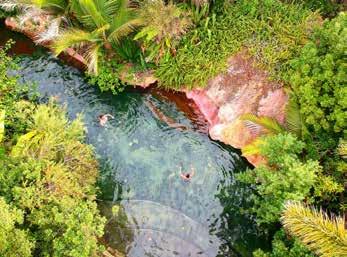
“This recognition is not mine alone. It belongs to every person who has contributed to this dream over the past four decades – our dedicated team, loyal guests and particularly a supportive community have, along the way, contributed to this success.
Volunteers helped plant Nikau palms and Pohutukawa trees. Friends and family spent weekends weeding, landscaping, delivering food, donating plants, and offering encouragement when challenges seemed overwhelming.
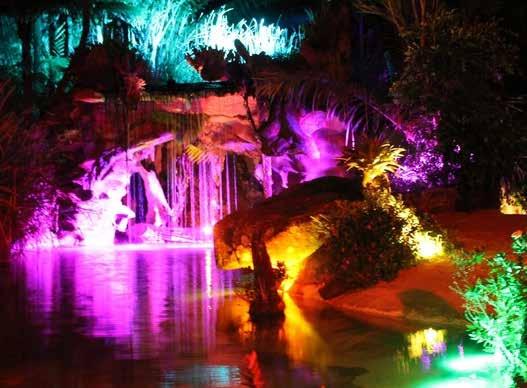
time, the support, kindness and belief shown by people from all walks of life; all provided enormous strength and motivation to continue.“
Peter and Ros Johnson, local Kaumātua, came and located the boundary pegs and gave a blessing over the entire property.
“Today, looking back over four decades those goals have been achieved beyond anything we could have imagined. This recognition we have now received comes 38 years after the original drilling and 18 years after opening our doors to guests.
“There were difficult periods, including a five-year loss of our geo-thermal water source. During that
“Today, the future envisioned by that PATA report is becoming a reality. Planned hotel developments and improvements to regional aviation infrastructure have the potential to bring greater tourism opportunities to the Coromandel.
“When these developments are complete, it will represent the fulfilment of



a vision first identified more than 30 years ago – a vision that recognised the Coromandel as a unique destination capable of attracting visitors from around the world all year round.
For The Lost Spring, this international recognition is not simply an award. It is the culmination of four decades of perseverance, community support and belief in a dream that began with one man – Alan Hopping, a single well and a vision for what the Coromandel could become.
Contact The Lost Spring, Phone: 07 866 0456, Email: magic@the lostspring.co.nz, Website: www.the lostspring.co.nz Continued from front page








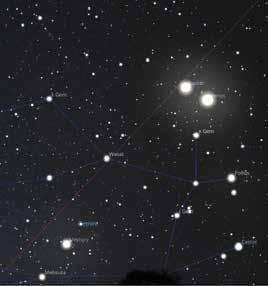
STAR and SPACE STATION GAZING IN 2026 – your guide to the night sky
Tues 9 June: The Moon has moved down closer to Saturn with Mars lower at dawn while at dusk in the west Jupiter and Venus are at their closest until 2028. Wed 10 June: The Moon now sits just above and to the left of Saturn at dawn while at dusk Venus has just passed fainter Jupiter. Thurs 11 June: Saturn is now just above the Moon with Mars lower down at dawn while Venus and Jupiter start to pull apart in the western dusk sky very briefly accompanied by the ISS from 7:02pm before it disappears into the Earth’s shadow. Fri 12 June: The Moon is now half way down towards Mars and in the evening we have a good ISS pass from 6:14pm near to Jupiter and Venus. Sat 13
June: The Moon lies just to the left of Mars at dawn with Saturn higher up. Sun 14 June: The Pleiades or Matariki sits low in the east just above the Moon before sunrise and binoculars can help to find them. Mon 15 June: There will be a low ISS pass in the west from 7:03pm. Tues 16 June: The Moon, Mercury, Jupiter and Venus are all lined up at dusk in the west and from 6:15pm there is a good ISS pass in the west. Wed 17 June: The Moon now sits between Jupiter and faint Mercury at dusk with Venus, Jupiter and Mercury all equally spaced. The Dance of the Planets
All five naked eye planets are visible this week with the two brightest, Jupiter and
Venus, putting on a lovely early evening show giving us a rare chance to actually see planets in motion from night to night. Both rise ever higher in the sky each night and they will actually be at their closest on Tuesday night until 2028. Venus rises more quickly and is the brighter of the two and passes much more distant Jupiter on June 10. Much fainter Mercury lies almost on the horizon but gets slightly higher each day. Meanwhile both Saturn and Mars are visible low in the eastern dawn sky and the Moon can help us find them all. The Pleiades or Matariki will be visible with binoculars late in the month very low in the eastern pre-dawn sky.
“The Most Beautiful
It has geothermal pools, treetop treatments, and lush surroundings.
BY KRISTINE HANSEN
Travellers can soak in geothermal pools formed more than 16,000 years ago.
More than just fluffy robes and a great massage, what makes a spa worth travelling for is the ambiance, evoking all your senses.
Sitting in Whitianga on Coromandel Peninsula , New Zealand, The Lost Spring spa checks all those boxes, rated the most beautiful spa in the world, according to a study from SpaSeekers.com that was shared with Travel + Leisure. At the day spa, visitors can soak in stunning geothermal pools formed more than 16,000 years ago and book a massage using Pure Fiji oil within the treetops.
“These spas double up as a form of sightseeing and allow you to take in breathtaking views while relaxing,” Maddie Evans, a spa therapist and booking expert at SpaSeekers. com, said in a statement shared with Travel + Leisure. “With so many spas around the world, there’s also something for everyone – so whether you love the sound of tropical hot springs in New Zealand or a forest getaway in England, there’s always going to be something for you, and we hope our research helps to provide inspiration for your next trip.”
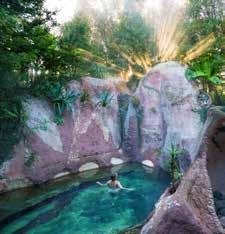
The Lost Spring wasn't the only New Zealand spa that made the list: The Polynesian Spa on Lake Rotorua took the seventh spot, and the Wairakei Terraces & Thermal Health Spa in Taupo came in at No. 13.
The Chena Hot Springs Spa in Alaska was listed as the most beautiful spa in the United States and ranked No. 4 overall. First discovered in 1905, the hot springs now offer the chance to soak in mineral-rich water in Fairbanks. The Miraval Arizona Resort & Spa was rated the second-most beautiful spa in the U.S. at No. 17 overall, while Quinn’s Hot Springs Resort in Montana was rated the third-most beautiful spa in the U.S. at No. 20 overall.
To come up with its list, SpaSeekers.
com used eye-tracking technology to measure the responses to photos of the spas from 200 individual participants. They looked at two metrics: the speed at which each participant first focused on a spa image and the average length of time they looked at each image. SpaSeeker is the ultimate online resource for destination spas. A website specialising in health and wellness.
This is the full list of the top 20 most beautiful spas in the world, according to SpaSeeker.com.
1. The Lost Spring, New Zealand
2. Peninsula Hot Springs, Australia
3. COMO Shambhala Estate, Indonesia
4. Chena Hot Springs Spa, Alaska, United States
5. Lefay Resort & Spa Lago di Garda, Italy
6. Santani Wellness Kandy, Sri Lanka
7. Polynesian Spa, New Zealand
8. Mandarin Oriental, Bangkok, Thailand
9. Shanti Maurice, Mauritius
10. Hoar Cross Hall Spa Hotel, United Kingdom
11. Cap Rocat Spa, Spain
12. Emirates One & Only Wolgan Valley, Australia
13. Wairakei Terraces & Thermal Health Spa, New Zealand
14. Delaire Graff Lodges & Spa, South Africa
15. Carden Park Hotel Spa, United Kingdom
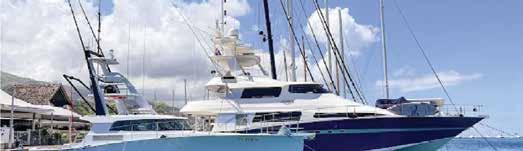
AwayaheadforMercuryBay
Boating Club page 5
Fusion Contracting page 7
When is it ok to pick up rubbish?..........page 10
Hans’ ‘Little Prince’ – timeless story to timeless jewellery page 10
St Peter the Fisherman begins a new chapter..................................page 11
Growth and awards for Bayleys page 13
Local Government Matters – highlighting The Accord and Local Reform including visit of Local Government Minister Simon Watts Pages 14-18
Three questions to MBAS student leaders page 17
Pauline’s Piece Editorial page 18
Inspiration Alley: The power of being grateful page 19
Who are you kidding Uncle Sam? page 19
Sudoku has two new sponsors page 20
Blood Donor Week – more donors needed page 21
Treasury Open Day page 21
Letters to the Editor page 22
Sports page 26
French Film Festival page 27
Squash stars coming to Thames Back page
Pauline’s piece has moved due to the importance of the Worldwide Award for The Lost Spring on our front pages.




























Editorial/News:



















Phil Hart, Commodore of the Mercury Bay Boating Club, spoke to The Informer this week as to the current situation and future of the Boating Club in particular the Boating Club building.
RECAP
FROM INTERVIEW WITH KOLBIE AND HER DAD, BLAIR
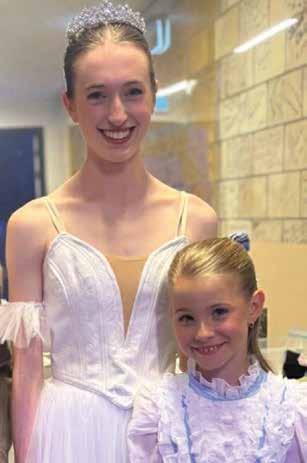
Kolbie Fraser is seventeen and until the beginning of 2025 she was in Cooks Beach preparing to go to Wellington for her post-MBAS college studies at the New Zealand School of Dance.
There have been several articles in The informer and Waikato Times since the club building was threatened to wash away during Cyclone Hale. It was moved back by huge tucks and placed on temporary stands for over three years. There were a number of concerns from several parties then about keeping the building there due to it being a sacred site amongst other concerns.
She is quietly proving that talent backed by grit goes far. Late last year almost at the end of her first year at the dance school, Kolbie earned the invitation to a fiveweek paid professional contract with Rising Ballet Company BIG Live, performing Nutcracker productions across Australia.
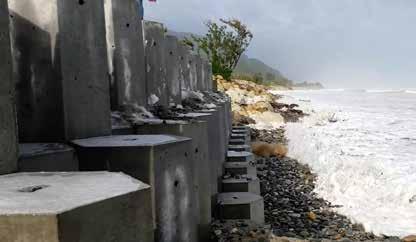
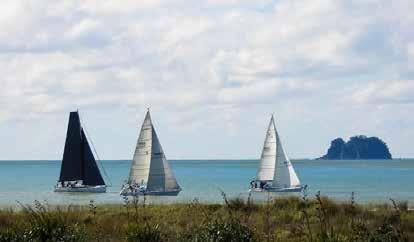
An attempt was made to place it on Dundas Street Reserve adjacent to the estuary but that failed finally due to DoC charging a rental well beyond what any community group could afford. There was also a legal battle relating to residential objection to it being placed on that Dundas Street site. This stole energy, funds and goodwill. So now the temporary stands have been removed, and the club building sits about 50 metres back from where it once was. There are no piles or slabs underneath it.
Regional Council), Flemming Rasmussen (legal implications), TCDC and Community Board representatives; All are clear — they want the yacht club to be spared demolition and to stay where it is and will support this.
Under directors Joel Burke and Khalid Tarabay, part of one of the highest-selling ballet companies in the Southern Hemisphere, she completed 45 performances, dancing five ballet roles, some lasting nearly seven minutes, performing to around 80,000 people. She was also trusted with partner work, which was an honour and embraced wholeheartedly.
Kolbie could hardly believe the experience she was getting and being chosen to be part of the elite ballerinas in the country.
However, there is one sticking point and that is with Heritage New Zealand.

on sailing which is why we exist.
We have had some encouraging news which is just terrific.
imity to the Boating Club site.
She knows her achievements to this point are not just about hours in the studio. There were
“First, I wish to say, we are in good heart and the next National Regatta is in August here in Mercury Bay and another in November. Also, at this present time we are advertising for a summer sailing coach. And have positive leads”
With regards to the Boating Club building, we had a meeting just last week and there is much to report. Sadly or maybe not, there has been no committed interest in anyone purchasing the building for removal.
nights walking 30 minutes uphill after training, soaked by Wellington rain and buffeted by wind, legs burning and body exhausted. Shared houses, different cul-
“We can’t bypass Heritage New Zealand even though the local iwi have given us the go ahead. The sticking issue is that the area is an Urupa – a sacred site to local iwi. Not digging into the ground is the concern, but we could place the building on a concrete slab. Our supporter has been enquiring and making arrangements with local businesses for assistance and this is positive. But there’s still the matter of running utilities to the new site which require elements of digging up the surface. The original pipes are still sitting back where the boating club was before Cyclones Hale and Gabrielle.
Another supporter has offered financial assistance in moving of our container which stores a lot of our equipment to the site where our building is. At present the container is down at Ohuka Reserve near the Macrocarpa tree but this has always been a temporary measure. This assistance could extend to the re-establishment of the club house on its present site on a concrete base or low impact piles. This is overwhelming generosity but we are stifled by the policy of Heritage New Zealand.
tures, and strict dancer nutrition became unexpected hurdles, and Kolbie made the tough call to move, prioritising her health and training.
COROMANDEL-COLVILLE
BETTER HEALTH CARE
“A supporter has discussed the option of keeping the building where it is with a number of key decision makers – Joe Davis (Ngati Hei), Warren Maher (Waikato
Access to healthcare is one of the biggest concerns for people in rural and remote areas and our government is committed to ensuring New Zealanders can get the care they need, when they need it, no matter where they live.
“This land is owned by council, and council is beholden to Heritage New Zealand. We still need to get a resource and building permit and that requires Heritage New Zealand to give the go ahead. That one-metre trench for the essential pipes requires that kind of permission.
A recent court case involving a heritage site found 30cm of intrusion was too much. In the meantime, we have no real choice but to leave the building like it is while we see if any pathway forward is feasible. As a committee in its 4th year of dealing with this, it’s safe to say we are exhausted.
MP For Coromandel
“We do have understandable pressure from the Council management to clear up the reserve where the clubhouse stood but much of the obstacles in the way are not ours. In fact we can’t even remove the buildings old piles and infrastructure without upsetting Heritage NZ. The soon to be commenced homeowners wall will restrict use of the reserve anyway. We need to have a clear pathway forward to keep on being The Mercury Bay Boating Club. We tried and committed to so many options that have drained our finances and our energy. We believe that Whitianga and this region wants our Boating Club to do well. We have had such generous support which we can never repay. There will always be reasons why we can’t get this building set here so this one sticking point needs to be unraveled and overcome.
Kolbie’s success is inspiring others back home. Eight-year-old Harlow Macaw from Tairua also joined the Adelaide and Sydney legs of BIG Live’s Nutcracker tour, a remarkable achievement for someone so young. Performing insands each day, Harlow thrived on stage and says she loved every minute of it. She has since returned home full of inspiration and will continue training under Sarah Fitzsimons at Thames Hauraki Dance Theatre where all the girls have come from, united by their love of dance.
That resilience and decision to change her situation, soon turned into opportunity as it was after that she earned the invitation to dance in Australia
“We accept that members of council are right behind us. The argument is with Heritage New Zealand.”
SUMMING UP
This all requires a lot of energy which takes away from the focus
Last year’s Budget invested $164 million to strengthen urgent and after-hours care nationwide, meaning 98 per cent of New Zealanders will be able to access these services within one hour’s drive of their home. One of the initiatives funded was a pilot programme to enhance urgent and after-hours healthcare in six rural communities, including Coromandel and Colville.
I was thrilled to hear the announcement from Associate Health Minister Matt Doocey that these pilots have been rolled out and have shown the positive impact that locally led approaches can make, with faster care, better access to treatment, and stronger links between rural health ser-

In terms of the Coromandel pilot programme, it began in mid2025 and is being delivered at the Coromandel Family Medical Centre and Colville Health Clinic practice. They’ve been benefiting from extra support, better access to information and working more closely with an Emergency Care Paramedic which can treat urgent care patients in the clinic, while also available to respond to local 111 calls.
I’m hoping that there will be even more support for similar projects around our region and the rest of the country in the com ing year. People in rural areas can often travel long distances for care and rely on small teams sup porting large regions, that’s why this investment is so important.
3 treatments $950 including trial size a ercare (each treatment usually $350). Proven treatment to improve ne lines and wrinkles, large pores, uneven texture, acne, scarring and pigmentation.
In othernews, our region is still recovering from January’s heavy weather event, but it’s encourag ing to see communities rebound so quickly and contractors work ing to stabilise our roads. There are parts of the Peninsula which are stillaffected by storm damage, and I visited these areas a
Matt Algie, Chair of the Community Driving Trust which is now no longer in operation have donated the garage they owned which housed their community van. This stands at the Mercury Bay Bowling Club who have offered a free lease and this garage will house our boats, all in close prox-
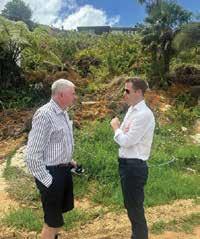

couple of weeks ago alongside the Associate Minister of Emergency Management and Recovery Chris Penk.
We received a briefing from the Thames-Coromandel District Council, which outlined the impact of the storm and the work ahead. It was stressed throughout these visits that support is available, such as Civil Defence payments through the Ministry of Social Development.

Phil’s report is somewhat puzzling as not far from the Boating Club site, the Taputapuatea Stream bridge was built with substantial land disturbance along with two poles at the point to
mark the significant traditional Maori cultural entrance along with further poles within the spit itself where a traditional storehouse was planned to be built. They have never been finished, as the motifs have not been placed on top and storehouse never built. The bridge foundation and poles would have had to have been dug into the ground. The earth would need to have been disturbed for the poles to be placed there and stand high for all these years. This is the same area on which the Boating Club building stands and that same area was once a sawmill, the Mercury Timber Company Mill, with untold level of construction and ground use in our history.
The Coromandel Peninsula’s presence in national dance continues to grow, with Kolbie training in ballet and Liarah Anderson – 2nd year, Izzy Fitzsimons and Neka Woolf - now accepted into the New Zealand School of Dance, first year contemporary programs.
Proudly carrying her Coromandel roots into every lesson, Kolbie’s journey is proof that big dreams are being built right here at home. Kolbie has just now begun her second year – carrying with her the lessons of life away from home and the experience of professional dancing for several weeks and there will be more to come!
The rules applied by Heritage New Zealand seem to be different according to the request.
Well done!
Phil Hart, Commodore, and his team, are committed sailors and want to develop youth sailing more. The local Mercury Bay Area School has been working towards boat building classes in the same way as the plane building project. They have worked hard and still have hope things can be done. We will need our community and government leaders to go in to bat for them in this next short term.
“Major events are critical for our hospitality and tourism sectors, especially here in the Coromandel. Accommodations fill up, restaurants and cafés thrive, and local businesses see more customers, creating jobs and lifting incomes.”
Please see the advertisement for Sailing Coach page 25.
“Across New Zealand, Tourism directly contributes $17 billion to national GDP and just under 200,000 jobs. Tourism makes up almost 12% of Coromandel’s GDP. The economic ripple effect of major events is huge, supporting our local businesses and growing our economy.”


Addition to Scott’s column Excerpt from his Press release Wed 11 Feb.

GOVERNMENT FUNDING FOR OCEANS FESTIVAL


“I’m excited that the Coromandel will once again host the Whitianga Oceans Festival in September 2026, attracting visitors from around New Zealand and overseas, as part of the national $70 million Major Events and Tourism Package. “
“Events such as the Whitianga Oceans Festival don’t just bring visitors; they bring life and energy to our region and to our towns which helps to create vibrant communities and unforgettable experiences.”
“This funding is a significant boost to Whitianga and the wider Coromandel, and I’m looking forward to our region hosting another great event which encourages locals and visitors to celebrate all that we have offer.”





















It was a very wet day and a public holiday, yet these two men were distributing their business cards on their day off.
The Informer wanted to know more and are pleased to share Jeremy and Sam’s business with readers.
Jeremy is the principal of their company.
“Building and demolition were my bread and butter,” says Jeremy.
“Over the years, I became involved with landscaping and painting. I was ‘fusing the trades’ contracting across four trades. I learned to be flexible and particular about all aspects of a job.”
“What I noticed about myself is that every time I had a tree job, I loved it; I got excited about getting it right and felt at home working through the logistics and angles required with each tree or hedge. However, it was quite dangerous and there were many variables. I decided I had to either stop doing it or only do that. Demolition taught me a lot about physics and as a kid, I was always a tree climber. So, given the nature of arbor care being so dangerous, I decided to go all in.”
“I enjoy working with chainsaws and the hi-ab and so a little over two years ago, I made the decision to specialize in this work, what I regard as one of the
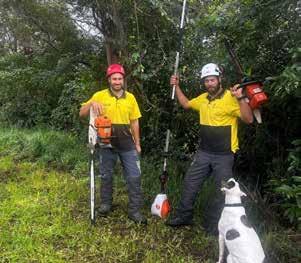
most respected trades. Sam and I are a team, and we can go anywhere on the Peninsula.”
There is not much we can’t do; we have experience, excellent equipment and transport including a truck, chipper and 15-tonne hi-ab.
When asked about one of their more difficult assignments, Jeremy recounted… “A woman was selling her house and she had a serious prospective buyer who was coming to have a final look. A storm raged through their area and deposited a tree directly on her home. I needed to remove that tree and make arrangements to restore the house in a
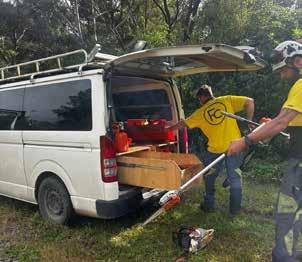
very confined space of time. It was very big tree.”
Jeremy grew up in the bush on Hokianga Harbour, innately learning skills about the trees and shrubs and identifying them and their cycles.
“Our business is about adding value to someone’s property,” says Sam. “It is not just cutting down or pruning trees and hedges.”
“We will always provide full and detailed information on a job before we start and will identify what is best for the trees,” says Jeremy. “Sometimes a job has been left too long, or it is not yet due, depending on the trees.

We can’t be part of willfully damaging something that will not recover, but we will always find a solution for our clients.”
The Informer learned that Jeremy also makes videos of some of his tree-felling work and posts them with explanations of how to do certain jobs. He was a natural, very at ease and competent. To find out he is Barry Crump’s grandson was no surprise. These two men are available to help you with your big outdoor tasks.
Give Jeremy a call 029 121 0463 or email fusion contractingltd@gmail.com.

Look under the exact titles and these will come up for you.
1)The Entire Story of Route 66 in 15 Minutes
For those nostalgic petrol-heads amongst us this video relates the history of the most famous highway in the U.S.A. Duration 15 mins.
2)Born in New Zealand (1958)
The story of Dr Truby King’s “Association for the Health of Women and Children” which was to become known as the “Plunket Society.”
3) EVs Outsell Petrol in Europe for the First Time EVER and Battery Trains go Live Robert Llewellyn host of the UK based A.B.N. (Almost Breaking News) announces that pure battery powered electric cars have outsold petrol cars in the European Union for the first time ever. Enjoy viewing Mike


By Agent EJ
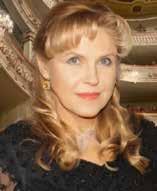
An excellent concert programme will feature at St Georges Church In Thames this Sunday afternoon, 14 June. It will feature arias by Italian, German, French, and Russian composers. All arias and romances will be performed in their original languages.
Olga is a graduate of the N. A. Rimsky-Korsakov Saint Petersburg State Conservatory and built her career as a leading soloist of the Mikhailovsky Theatre in Saint Petersburg. She has toured in Germany, France, the Netherlands, Spain, Bulgaria, Greece, Turkey, Japan, and China. Olga now lives in New Zealand, where she is a soloist for festivals and concerts.
Olga works with distinguished accompanist pianist Rosemary Barnes. Rosemary was
awarded a New Zealand Arts Council bursary and studied piano at the Royal Academy of Music with Franz Reizenstein. She worked in London, England, for 28 years as an accompanist and vocal coach, music staff member at the English National Opera 19801988, and teaching at the Royal College of Music. In New Zealand, she has performed at NZ International Festival of the Arts,
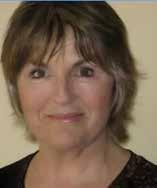
1990; and was Director of the Dip Perf Arts (Opera) at the University of Auckland 1993-1999. Rosemary was awarded an MNZM, Member of the New Zealand Order of Merit – for her services to music in 2000. Concert commences at 2.00pm. Tickets: $20/ Adult, $15/TMG Member, Free entry/Under 18 yrs old. Contact: thamesmusicgroup@ yahoo.co.nz
When Kevin and Jean McKillop of Pāpāmoa learned that Spark's infrastructure contractor Connexa had selected the berm outside their front fence for a new cell tower and 1.8-metre equipment cabinet, they did everything right. They emailed. They engaged their MP. They even lodged a resource consent for a new driveway to block the proposed site. Connexa's response? The tower may simply shift to the neighbouring pedestrian path. Their story is playing out in Bethlehem, Queenstown, and Pirongia too. The names change. The boilerplate doesn't.
The reason families feel powerless is because, legally, they largely are. New Zealand's National Environmental Standards for Telecommunication Facilities (NESTF 2016) classifies most tower installations as permitted activities. No resource consent required. Where consent is needed, councils must accept any compliant application and cannot redirect it elsewhere.
Community notification only has to reach residents

within 30 metres of a proposed site. One Queenstown council member called that "a bit light" after just eight households were informed about a tower beside a golf course bus stop. The telecommunications provider makes the final call on location, full stop.
Connexa told the McKillops that "multiple locations were assessed" and the selected site was the most suitable. That may be true by the company's technical criteria. But technically suitable and least harmful to the people who live there are not the same calculation, and only one of those carries legal weight.
The frustrating part is that alternatives already exist. Small-cell networks distribute signal across discreet nodes on lampposts and building facades, reducing the need for large towers in residential streets. Commercial and industrial rooftops offer equivalent coverage with far less neighbourhood impact. Stronger tower-sharing mandates between carriers could cut the number of new structures required altogether. And a reformed NESTF could simply require companies to present communities with more than one viable site option before construction begins. Not a veto, just a voice. Nobody serious is arguing against the network. Mobile connectivity is classified as critical lifeline infrastructure, and rightly so. But "we need the network" and "this specific tower must go outside your front fence" are two different propositions. The current law treats them as one. Until that changes, families like the McKillops will keep fighting a system that was never designed to hear them.

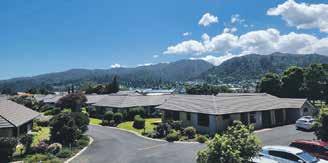
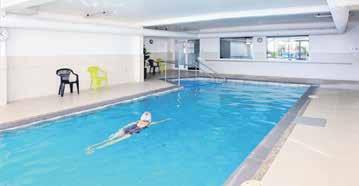





If you are thinking of selling, be sure to call Arizto Real Estate as we will save you thousands of dollars. Guaranteed.
When you sign up with Arizto Real Estate Whitianga to sell your home, you secure our vendor package that will let you keep thousands in your pocket.
2%+GST Commission* is our standard rate, not a deal, not a special. What does this mean in real dollar terms?
$650,000
$850,000
$950,000
$13,000 +GST
$17,000 +GST
$19,000 +GST
$1,000,000$20,000 +GST
$1,500,000$30,000 +GST
•Trade Me Platinum (payable ONLY upon sale)
•FREE professional photography
•FREE professional drone and video
•FREE floorplan
•FREE For S ale sign, the biggest in town.
•NO fixed term contract, cancel at any time
•No sale, No fee.
Call us for a free market appraisal. You’ll be very pleased you did.
Fawcett &
BY SUZANNE HANSEN
The beaches in Mercury Bay are a major attraction for tourists and a major driver of income for the region. Whitianga beaches are of this type with Buffalo Beach being one of the major attractions, bring tourists from around the globe who feed our local economy. It is therefore imperative that we keep these beaches in pristine condition.
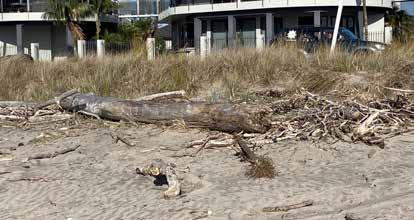
There is an increasingly vocal sentiment among locals that our Whitianga beaches are not what they once were. The central issue that causes this sentiment is the appearance, and challenges to the safety, of Whitianga’s beaches. The appearance is seriously impacted by the sheer magnitude of debris, of all sorts, all along the beaches, especially after each weather event. Most of the debris is large pine logs, pinecones, or in other words, forestry slash.
Of course, there is other detritus such as the odd incredibly durable palm branch, dog poos or other types of general organic matter but the key landscape feature along our Whitianga beaches is slash washing down our estuary from forestry sites and swirling around our bay, onto our beaches. Compared to other east coast beaches, Whitianga’s shoreline is by and large the most organically littered beach on the eastern Coromandel. There seems to be a lack of
resources to clean up our beaches after weather events, perhaps exacerbated by the apparently green philosophy of both our local and regional councils, a philosophy of letting nature take its course. This philosophy guarantees things are getting worse.
Even after the last major weather event, when council staff were thankfully cleaning out debris from Mother Browns creek, the staff were heaping the slash into piles along the riverside, which presumably they are hoping will break down naturally.
What happens when the next storm comes and washes the piles back out into the bay?
For a town so dependent on holiday makers, tourism and hospitality, the state of our beaches is highly concerning.
Compare Whitianga to other beach-dependent holiday areas
like the Gold Coast, where there is constant work grooming their beaches, and it becomes apparent that we must be damaging our own reputation as a beachside holiday destination. This can’t be good for business.
On the 23rd of May, a group of 25 locals from the estuary end of Buffalo Beach, decided that their end of the beach was a disgrace and they made the call to arms for volunteers to have a concerted beach cleanup. Good on them! As part of the community the Buffalo Beach Club joined in and provided a sausage sizzle. Good on them too!
According to the volunteers, the predominant ratio of beach debris was clearly and simply pine slash, logs, pinecones and the like.
A secondary but more disgusting part of the debris was; yes, you guessed it, dog poos. What is
concerning is that a big part of the beautiful grass planting along that part of beach front has already been destroyed by the sheer levels of salty slash. The group did a wonderful job of clearing out that part of our waterfront resulting in large collections of debris which needed then to be discarded. This is where it gets interesting. Council’s approach to these volunteers was to one, turn down any approach to discard the rubbish in the council tip. Two, the council was very concerned with the effect that such a beach rubbish clean up might have on some native lizards and spiders, and three, the council later approached the group with their opinion that they should put all of the rubbish back on the beach where they found it, and let nature deal to it. The problem is that there is nothing natural or
native about pine slash, and the sheer volume of the slash means that nature will never cope with it.
Also, this request smacks of hypocrisy from the TCDC, who allow various man-made alterations and plantings to an area which is a natural sand spit. And let’s not even talk about the marine safety issues with all this floating debris.
What is our strategy to clean up our beaches?
Have we taken our green back to nature approach too far?
What should TCDC and Waikato Regional Council’s roles be?
What responsibility do the forestry companies bear for cleaning up their rubbish on our beaches?
Should local organisations who volunteer to clean up our beaches get more support and respect for their efforts?
Bottom line is that we need some common sense to prevail and we need to develop strategies to limit slash washing down the river, to clean up our beaches and to keep them clean, especially before the high season.
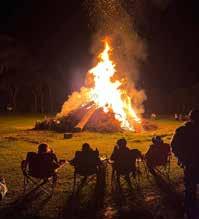
A potential remedy, which could also bring some communal fellowship and fun, could be to initiate a winter’s community bonfire where families can join in, picnic, dance and sing! Just a thought.
BY PAULINE STEWART
Hans-Leo Peters is a goldsmith specialising in gold and metal jewellery and large sculptures. He has created gold jewellery all his working life, studying under the masters in his apprenticeship in Germany and winning national and international awards. These days he resides in Whitianga having moved to New Zealand with his wife and children many years ago.
“When I was growing up, The Little Prince was the most popular story book in Germany,” says Hans. “My children loved it and it is still a popular and greatly loved story.” Hans tells how is love of incorporating the Little Prince into his jewellery began. Few books have been as universally cherished by children and adults alike as The Little Prince
First written by Saint Antoine de Exupery in 1943 with its first English translation by Katherine Woods some years later, it has travelled all over the world for generations of children.
The Little Prince follows a young prince who travels from planet to planet, meeting various inhabitants who each offer him insightful and philosophical life lessons.
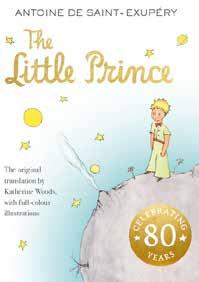
It begins with a pilot stranded in the desert (Australian) and awakes one morning to see the most extraordinary little boy standing before him. “Please,” asks the stranger, “draw me a sheep.”
The pilot realises that when life’s events are too difficult to understand, there is no choice but to succumb to their mysteries. He pulls out a pencil and paper, and thus begins this wise and enchanting fable that, in teaching the secret of what is really important in life, has changed the world forever for its readers. It’s a
timeless tale that captivates both children and adults with its profound simplicity and charm.
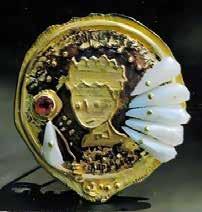
“Every year I would contribute to a city wide exhibition,” says Hans. “I would create for my exhibition five pieces. In 1985, I decided that the Little Prince was to be my first piece. I created something similar to what is presented in The Informer now” Heart of the Little Prince 2026”.
“It created a lot of interest and it has remained close to my heart. I have done similar exhibitions in New Zealand under the name, Golden Art”.
Hans has the rights to create jewellery from the Little Prince for his life time which he received

from the sister of Saint Antoine de Exupery.
“I got this request in the mail from a business woman and poet from Germany. Since then other requests have come.”
Hans found that the story of The Little Prince jewellery had been published in a daily newspaper in Germany. This had brought requests for The Little Prince in different jewellery forms. Hans is now offering these to the New Zealand community.
As well as pendants of The Little Prince, Hans designs rings and
brooches, working with both gold and silver and other precious stones on request. Hans uses a technique which he invented – Golden Positive Technique. “This is a difficult process and it takes many tries and a long time to get the piece to be just right,” says Hans.
The brooch pictured is decorated with wing pearls. These pieces are most unusual – gold and silver – silver is used to create the colour.
As a goldsmith, Hans creates from a photograph of a loved one (their face-front or side shot) and with the help of AI, a miniature scaled picture of the person. (A front facing image with both eyes is best for the piece of jewellery.)
Then he creates a raised piece of jewellery using gold and/or silver. The final shape can be a heart, oval or a free shape – 2-3mm in height above the base. Other precious stones can be added. Hans is a goldsmith artist and will create what is desired.
Enquire about any jewellery to Hans-Leo Peters gold metal artist. Phone 07 866 5806, Email: art@ golden-art.com, www.golden-art. com and www.sky-sculpture.com
BY SARAH-JANE LEE
At first glance, St Peter the Fisherman looks much like many small community churches throughout New Zealand.
The congregation is not large. The church building, originally constructed around 1966 and formerly known as the church hall, sits quietly in a suburban Whitianga street.
The grounds were simple – a wide expanse of mown grass surrounding a well-loved building.
It was functional, but hardly inspiring.
For a church that regularly hosts weddings, baptisms, funerals and community gatherings, the setting lacked the sense of occasion that such milestones deserve.
Couples could exchange vows inside the church, but outside there were few flowers, no welcoming entranceway and little to encourage visitors.
Yet beneath the surface, St Peter the Fisherman was thriving. Through the generosity of parishioners, and donations from the wider community, the church has continued to grow at a time when many religious buildings across the country have been forced into mothballs.

The question became: what if the grounds reflected that same sense of life and renewal? The answer began with a conversation.
What if an exterior makeover encouraged Whitianga residents to take a second look at the church? The grounds could become a welcoming place for reflection, remembrance and celebration.
There was no grand landscape plan. Instead, there was a can of spray paint, a vision, and a willingness to trust the process.
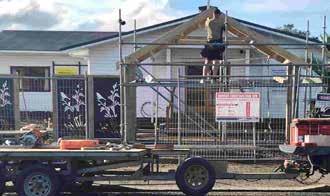
Local builders JD Hoyland embraced the challenge. The instructions were refreshingly straightforward: lines painted on the grass marked where winding pathways should go, while a cou-
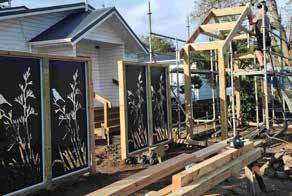
ple of carefully positioned stones suggested the route visitors might one day follow.
What has emerged is far more than a simple garden makeover. One of the most meaningful features is the Memorial Walk. Designed as a place of remembrance, the pathway will provide space for memorial plaques honouring loved ones and people of significance to this church. An inspired suggestion from Jason of JD Hoyland introduced timber inserts into the concrete path, creating texture, depth and visual interest. At the end of the walk, seating and garden plantings will provide visitors with a quiet place to sit and reflect and remember those whose memories remain close to their hearts.



(07)2420042 or 02041714916 trish@mobilelawsolutions.co.nz
Engineer and member of the congregation, Michael Bates contributed plans for a traditional lych gate; a fitting entrance for an Anglican church. Historically, lych gates have welcomed generations of worshippers attending weddings, funerals and Sunday services. St Peter’s version has been thoughtfully adapted to suit the site while retaining that sense of arrival and ceremony. Another significant feature will be the installation of three pou (carved poles) near the St Peter the Fisherman entrance sign. Representing the Christian Trinity, and the three Tikanga model of the Anglican church in Aotearoa New Zealand, the carved poles will serve as a visible expression of faith while acknowledging the
importance of Māori culture.
The landscape design reflects both the church’s values and New Zealand’s bicultural heritage. Native plantings will feature prominently throughout the grounds, with a more traditional Kiwi-style garden near the mobility parking area. Parishioners have committed to donating plants.
The transformation is already evident. What was once a largely open lawn is becoming a place with purpose. Paths invite exploration. Gardens encourage visitors to pause. Seating provides opportunities for conversation. Future weddings will have a more beautiful setting for photographs. Families remembering loved ones will have a peaceful place to gather.
Most importantly, the project demonstrates what can happen when people have a common vision and work together to achieve it.
St Peter the Fisherman is not building a grand cathedral. It is creating a welcoming garden where faith, community, remembrance and beauty can grow side by side. Like the congregation itself, the garden is being built not overnight, but through patience, generosity and hope.













































































Flood protection schemes were built where flooding caused significant damage and disruption to farms, communities, transport networks and essential services.
Today, more intense weather events and higher tides are putting pressure on the service levels of these flood schemes. Population growth, urban development and changes in land use are also adding to the flood risk.
Flood protection schemes are designed to protect against events up to certain levels. In the Waikato region, design standards range from protection against events of a 1% annual exceedance probability (AEP), which is commonly spoken about as being a 1-in-100-year event, down to a 10% AEP, or a 1-in-10-year event. Over time, different factors can impact how well a scheme works.
Climate change brings more intense rainfall events or sea level rise.
Land use changes, like urban development and farming, can increase runoff.
When assets wear out, rising costs and new technical requirements can make upgrades and maintenance more complex and costly.
Improved monitoring (rainfall, river levels and river flows), flood modelling and surveys show flooding risk is different than originally thought.
We have a comprehensive work programme in place to understand and manage these risks. However, there is always a chance that our schemes could be overwhelmed by a flood event larger than they were designed to withstand.
Flood protection reduces risk but does not eliminate it. Find out more at waikatoregion.govt.nz/come-high-water.
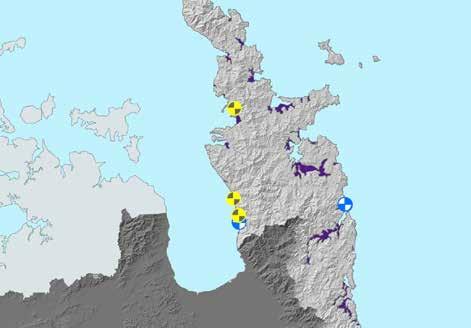
Includes flood schemes for Te Puru (100-year event), Waiomu (50-year event), Tapu (100-year event), Coromandel town (100-year event) and Graham’s Creek (Tairua) (100-year and 50-year events).
Schemes constructed between 2005 and 2016 in response to the “Weather Bomb” of 2002.
· Altogether, includes 2.6 kilometres of stopbanks and floodwalls, and five floodgates.
Schemes protect certain areas of the communities only.
· Constructed between the early 1960s and 1980s.
Includes 253 kilometres of stopbanks, 298 floodgates, 72 pump stations, three control gates, six detention dams, managed natural storage areas (Lake Waikare and Whangamarino Wetland), and improvements to river channels, including river training and dredging.
Provides protection against:
10-year to 100-year river flooding events, depending on location and asset
100-year tidal flooding events.
Protects Ōtorohanga, Huntly, Rangiriri, productive farmland, state highways and the main trunk.
Constructed between the early 1960s and 1990s.
Includes 300 kilometres of stopbanks, 131 floodgates, 52 pump stations, ponding areas and four detention dams.
Provides protection against:
100-year tidal flooding events
– 50-year or 100-year river flooding events, depending on location
10-year tributary flooding events for rural areas.
Protects urban areas of Ngātea, Kerepehi, Te Aroha, Paeroa, Turua, Kopu and Thames, productive farmland, roads and state highways.
· Includes flood schemes for the Tongariro River (protection against a 100-year flooding event) and the Tauranga-Taupō River (50-year flooding event).
Schemes constructed between 2005 and 2008.
Altogether, includes 8.5 kilometres of stopbanks and floodwalls, and 25 floodgates.
Schemes protect Tūrangi, Oruatua and Te Rangiita, and neighbouring farmland.

Bayleys Coromandel had a fabulous awards night recently hosted by Basker Restaurant, Whitianga with 70 people from across their business.
It was a night to celebrate some amazing stories of growth and achievement and to honour Bayleys agents who had won regional awards. It was also a night of encouragement and affirmation. The business had gone into 2026 with two big national awards behind them from 2025 which had given the entire further cause to celebrate. These awards are very much coveted among the more than 100 Bayleys offices in New Zealand – The Bayleys Way Award and The Bayleys Growth Award.
BAYLEYS WAY AWARD
This award recognises a franchise within the national organisation who truly epitomises the core company values. To work in The Bayleys Way is framed by inter-generational family values, deep community connection and a simple determination to be the best, always put the clients first and offer an impeccable level of service.
BAYLEYS GROWTH AWARD
This was for the most growth is any small Bayleys Franchise for the year in all of New Zealand. It is worth noting that in 27 years, this was the first time the Coroman-
del Peninsula business has won such awards. They are not easy to come by!
Shaun Paterson hosted the evening. It is four years since Shaun joined the Bayleys business and arrived in Whitianga with his wife Laura, to be General Manager and one of the Coromandel Directors. In that time, Bayleys have grown from two offices and 28 staff on the Peninsula to five offices and 52 staff, after various new office openings.
“This job is a rollercoaster. It comes home with us whether we like it or not,” says Shaun.
“I know first-hand – through regular reminders at home – just how much impact each and every member of the team has on what gets achieved by Bayleys.”
“Reflecting and looking back, it’s amazing how much has changed… and how much hasn’t.
If you’d tried to predict where we’d all be four years on… we probably wouldn’t have got many things right. And in fairness –that’s probably still true today. There’s still uncertainty. There’s still distraction.
And in our world – there’s certainly no such thing as an easy deal. But what has become clear, especially this past year, is who we are as a business and a team.”
Shaun spoke of a market over those four years where nothing has come easily, yet the Bayleys team had still found a way to
0800 868 9579


grow in the past year. They had completed 249 transactions –up from 199 the year before. This translated to a deal every working day. It was no small effort.
He spoke about the opening of their new office in Pauanui, a renewed office in Whangamata and that they had gone from being involved in one in every eight Peninsula real estate deals four years ago, to one in every four across the Peninsula based on sales value last year. In Whitianga, the ratio was one in every two.
“That doesn’t happen by accident,” says Shaun. “The awards night is about recognising thatand celebrating what has been a genuinely outstanding year.”
Shaun reflected with the gathering about the sadness of Chris Bayley’s death in the last
six months. “Chris left a lasting impression on many of us – and a lasting impact on this business. He built this business with energy, optimism, and a genuine love of people.
Everyone who is a part of Bayleys is part of something pretty special. We are a company that will celebrate our wins, and we will celebrate each other. What we’re building here - together - is far more powerful than anything any of us could do alone.”
Shaun Paterson is General Manager of Bayleys Coromandel Peninsula and Director along with Lee Carter and Karl Davis.. Operating as M H Realty within the wider Bayleys Real Estate network, they oversee branches in Whitianga, Whangamata, Thames, Tairua and Pauanui.
Long
BY RAY VAN BEYNEN
For those of us who live in our corner of paradise on the dark side, a highlight of the week can be a wee visit to townaka Whitianga.
There are two travel options including one of the shortest ferry rides in the world or an adventure along State Highway 25. Invariably, the motorist will encounter either a dawdling sightseer or a low-slung car driven by someone with a death wish.
On SH25 one can admire the amazing autumnal colours just north of Coroglen or the ever-increasing stands of privet, tobacco weed and a host of other noxious weeds along the state highway. The debris still hung up on the fences along McLeod Straight is a reminder of the regular flooding on the final approaches, not to mention braving the Moewai Rd intersection - still as dangerous as ever.
At last count Whitianga boasts 4 Opportunity Shops, 8 cafes, 3 Indian restaurants, 2 sushi shops, 2 pharmacies, 2 pubs, a dozen restaurants, 2 supermarkets and too many bottle shops.
There are a host of clothing beachy type places that are a reminder of our Whangamata cousins along the main street and the outskirts have a large number of service premises.
A favourite trip into town includes a visit to the excellent Op shops, a quick drop into the Library, morning tea at the Earth Store, lunch at Blue Ginger, New World for the fish and delicatessen, the wonderful Whitianga Butchery, Woolworths for the fruit and vegetables, a doughnut at Bay Bakery, the Post Office at Paperplus, household goods from Pinkies and the excellent selection of hardware at either Whitianga Hardware, Hammer Hardware or the Glasshouse.
Blacksmith Lane is a personal favourite with the Cancer Society bookshop and Longshore Marine well worth a visit.
We are blessed with a great selection of shops covering a great variety of consumer goods. With the economic situation and the arrival of winter there will be an inevitable downturn in business until the warmer weather and the tourists return.
A big shout out to all the people who staff all these business premises. They are unfailing friendly, helpful and great representatives of the town. They are especially patient with our rapidly ageing population.
Don’t forget there are plenty of other shops and businesses also providing excellent service in Whitianga.
Now I am off to find a good gym and a dietician, otherwise I will be in the market for a larger pair of pants.
The Government has delivered the Budget, and it confirms that New Zealand’s economy is strengthening despite global volatility and the fuel crisis.
Forecasts indicate that the country’s books will return to surplus in 2028/29, which is a year earlier than anticipated. This is the result the Government’s strong economic management, a commitment to fixing the basics and building the future, and the determination of everyday Kiwis up and down the country.
In the face of global turmoil, the economy is expected to grow, on average, 2.7% each year over the next four years. Over this period, the growing economy is set to create 220,000 new jobs, with wages outstripping inflation. That means more opportunities for people to get ahead and a more secure future for all New Zealanders.
Here in the Coromandel, we’ll benefit from this growth, as well as $85 million of confirmed funding for resilience upgrades on State Highway 25 and the replacement of the Kirikiri Stream Bridge on State Highway 26. Our region has been impacted by more than its fair share of weather events, and we know the damaged that can be done to our roads and infrastructure. I welcome this new funding because we can't stop severe weather from happening, but we can be much better prepared for it.
In other news, my colleague
Thames-Coromandel is asking for your views.
Thames-Coromandel District Council is calling on ratepayers, residents and stakeholders to help shape the future of local government in our district with a public survey opening asking for views on the Government’s proposed local government reforms.
The survey – opening on Monday 8 June - will gather community views on what people want to see from the reform process and will inform the options Council develops over the coming weeks.
Councils have been asked by Government to work with neighbouring councils and put forward a reform option by early August that meets five key requirements:
• maintains strong local voices
• simplifies local governance (makes it easier for decision-making)
• supports the new planning system
• has economies of scale (is more efficient)
• be “doable”.
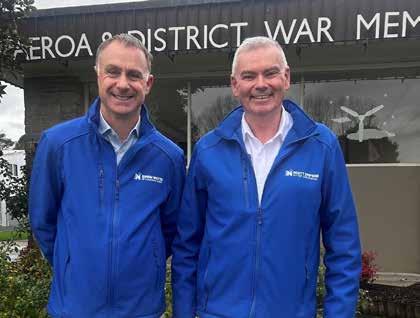
Hon Simon Watts visited the Coromandel electorate last week in his capacity as Local Government Minister. It was a great opportunity for the Minister to brief the area’s district and regional councillors about the Government’s proposed local government reforms, and to answer any questions that they have about the process and how it will impact our communities.
A lot of the discussion focused on the Government’s Head Start pathway, which gives councils a three-month window to put forward proposals to fast-track local government reform in their region. This initiative comes as a
result of the feedback we received from some councils that they wanted to move faster and have more say on how they want to reorganise.
These proposals should focus on creating unitary authorities which combine regional and local council functions into a single organisation, reduce duplication, simplify decision-making, and have a structure that works better for their communities.
It was a robust meeting and I’m encouraging all the councils in our region to get to the front of the queue and take the opportunity for more localised control of regional functions.
Mayor Peter Revell has already highlighted the tight timeline, but stressing it is vital the community has a genuine opportunity to contribute.
“Time is short, and we have been given a very clear deadline by Government which makes it even more important that we hear from our communities now,” he said.
“We do not want to come up with something behind closed doors. We want to develop options that reflect what our communities value and what they want for the future of local government on the Coromandel Peninsula.”
More information from the government is available at www.dia.govt.nz/simplifying-local-government and www.tcdc.govt.nz.
Elected members have established the Simplifying Local Government Working Group to lead this work, report to Council, and provide weekly public updates on the Council website.
The Working Group will also engage with neighbouring councils as it works through possible reform models.
Mayor Revell said Council is committed to making the process as open and transparent as possible.
“We know people want to understand what is being
considered, why it is being considered, and how they can influence it,” he said.
“That is why we will be sharing regular updates, publishing the options we are working through, and making sure there are clear opportunities for people to give feedback at each stage.”
The options TCDC develops over the next eight weeks will be shaped by community input as well as discussions with other councils.
The Working Group is encouraging all ratepayers and residents to take part in the survey. Every response will be read and considered as the group works toward a shortlist of possible reform options.
A summary of survey feedback will be published on Council’s website on 17 June.
While the survey is open from 8 to 15 June, the Working Group will develop some possible options and review these against the Government’s criteria. Once community feedback has been reviewed and considered, the Working Group will narrow down to a few draft options for further feedback from our communities.
“This is a once-in-a-generation conversation about how local government could work in our district, and we want people to be part of it from the beginning,” Mayor Revell said.
“If you want your views reflected in the options Council considers, please complete the online survey by 15 June.”
People are also welcome to provide their feedback by calling Council on 07 868 0200 to have their say. In these cases, the staff will read out the question and record the responses.
The link to the survey is here: https://www. tcdc.govt.nz/Our-Community/Have-Your-Say/ Current-Consultations/ Simplifying-Local-Government-local-government-reforms
And the link to the DIA background information is here: https://www.dia.govt. nz/simplifying-local-government”
We will have hard copies of the survey at all service centres.
The Informer Office in Whitianga will be open and make Survey Forms available on the weekend of 13 and 14 June.
BY GEOFFREY ROBINSON
Adraft report that surfaced two weeks ago at TCDC headquarters lends strong support for a unitary Coromandel Council that could help preserve – and even increase – local decision-making and local democracy when government re-organisation proceeds.
WE HAD BEGUN IN 2013
Major government consultancy Morrison Low and Associates in Auckland issued the confidential draft to TCDC in November 2013. The study was commissioned specifically “to investigate the likely operational revenue and expenditure requirements resulting from the formation of either a Thames Coromandel Unitary Authority, or a Thames Valley Unitary Authority” with two neighbouring eastern Waikato districts. At the time, TCDC was advancing a proposal to break from Waikato Regional Council (WRC) by assuming regional council functions on the peninsula. According to its executive summary, “the study suggests that the financial position of a Thames Coromandel Unitary Authority would, in terms of operational expenditure relative to operational income, be similar to that of the Thames-Coromandel District Council.” In other words, the additional rates revenue going to regional council would be sufficient to provide those same regional functions locally by a unitary council. A larger unitary authority amalgamated with Hauraki and Matamata-Piako districts, the investigation found, “would be able to operate within the revenue available to it and would have an operating surplus,” attributable mainly to reductions in governance and management costs.
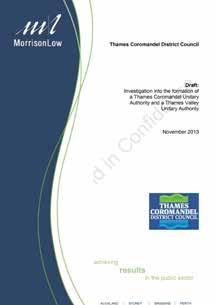
The Morrison Low report was retrieved from archives following an Official Information Act request by The Informer on 11 May and was subsequently circulated internally to the Mayor and all councillors for their information.
While revenue and expense numbers on which the draft study is based date from the 2013-14 financial year, it is likely that updated analysis using current figures would yield a similar conclusion, given the aggressive rates increases and mushrooming activities observed at both district and regional councils in recent years. The study’s key takeaway is that a smaller unitary council for the Thames-Coromandel District is in fact a viable financial option, just like it has been in comparable Marlborough, Tasman and Gisborne districts for decades.
As Council starts to consider options for re-organisation proposals to be submitted by 9 August, the Morrison Low report
is an important guidepost and beacon.
As the study states, “Any decision to amalgamate should not be premised on cost savings alone, but rather on the wider benefits to the community.” It notes that if a unitary council was organised for our area, “All decisions relating to local government would be made by elected members who understand the needs, values and culture of the communities of the Thames Coromandel District.” The report confirms, “The formation of a Thames Coromandel unitary authority would mean that the community has a greater level of control over local and regional decisions made.”
Peninsula community boards, community groups, ratepayers and residents have been consistently vocal that greater local control and local decision-making is a top priority. Recent annual plan feedback and community board friction serves again to confirm this. As this is being published, the council has begun consulting the public via a survey, on re-organisation choices, ranging from an all-Waikato Hamilton-based regional supercity to several options for sub-regional council groupings. At the near end of the spectrum will be a more locally focused grouping, and the Morrison Low financial analysis lends strong foundational support for this latter choice. Mayor Peter Revell and councillors have so far talked only about process and “next steps”, but unlike some other local leaders, they have remained quiet about what structure(s) they believe would serve our district best.
‘GOING IT ALONE’?
THERE MAY BE OPTIONS
On 5 May, Government published eligibility guidelines for proposals to form new unitary councils. One rule stipulates proposals must be submitted jointly by two
or more councils. This guardrail means that no individual local council may simply propose that it become a stand-alone unitary council. But councils across New Zealand are approaching these guidelines with open minds. And in the end, there are usually “workarounds”.
Western Bay of Plenty District Council (Waihi Beach south) has been formally consulting the public on specific council re-organisation options for more than two weeks. The public is being asked for feedback on five options, including a regional supercity, but also including a stand-alone unitary council “to inform future decision-making by Council.” The consultation document highlights several potential benefits of the stand-alone option. Most importantly, just as TCDC’s original Morrison Low report noted, the local council option would “maintain local voice and decision-making.” For Western Bay district, this option is still on the table, although the council notes, “this scenario does not officially fit the current government criteria” at this time.
However, Thames-Coromandel Mayor Peter Revell last week appeared to shy away from the more local option. “A ‘going it alone’ option will not meet the government’s expectation,” he said, indicating an apparent reluctance at the outset to consider – let alone advocate for – a more local eastern Waikato council, including the possibility of an “expanded” Coromandel council with borders adjusted to address specific responsibilities such as (Waihou) catchment management. With the Coromandel Peninsula comprising one of New Zealand’s most wellknown regions – geographically and economically distinct from its neighbours – failure by Council leadership to actively pursue a proposal reflecting this reality
would be surprising – if not derelict.
In its briefing paper to the incoming government back in September 2014, the Local Government Commission confirmed that any local council re-organisation process in the Waikato Region “would be larger and more complex” than in other regions. The TCDC unitary council proposal being advanced at that time was noted by the Commission. Fast forward to 2026, and meeting the needs of the peninsula’s distinct “communities of interest – geographic, economic and social –remains part of that challenge.
To support any local proposal and achieve acceptance for further development, a robust update of the original Morrison Low analysis, would be an immediate priority. Numbers need to be refreshed and operational details fleshed out. The greater the supporting detail, the better its chances.
While other council leaders around New Zealand have been stating strategic objectives and starting substantive consultation, TCDC is still back at the starting gate, once again “gathering community views” and asking residents, “What matters most to you about local government/council?” Hello?
Coromandel communities have been abundantly clear about their priorities – local decision-making, local accountability, and responsible budgeting. Local government simplification needs to deliver on those goals. Can the mayor and this Council make it happen? Geoffrey Robinson, local resident, covered local body reform efforts for the Hamilton News and other Waikato publications from 2011
Please see opposite page and Dirk Sieling page 18.



BY FLEMMING RASMUSSEN
Mayor Revell and local Deputy Mayor Grant ask us in last week's The Informer (Issue 1212, published June 2, 2026, p15 and p17) to celebrate the recently adopted Community Board Accord.
This is a rebuttal of their flawed reasons for sponsoring and, with Machiavellian brinkmanship and backroom dealings, voting the Accord into effect.
1. TO KILL LOCAL DEMOCRACY:
Analogous to "To Kill a Mockingbird", a novel about innocence confronted by prejudice. Through Scout Finch's childhood eyes, it shows how racism, fear, class judgment, and mob thinking corrupt a community's sense of justice, while Atticus Finch's defense of Tom Robinson models moral courage, fairness, and the duty to do what is right even when defeat is likely.
Its central lesson is that society often destroys the vulnerable and harmless – the "mockingbirds" –unless people are willing to stand against cruelty and injustice.
Metaphorically, the Accord is destroying local democracy. The Accord, presented by the Mayor

and Deputy Mayor as a historic breakthrough, is, we are told, the first document to set out mutual obligations between the Council and its five Community Boards. Sounds impressive until one remembers the existing TCDC Community Board Terms of Reference (ToR), giving local boards much wider and far-reaching empowerment and influence to make local decisions. The fact it, for some convenient reason(s), was never implemented in the 2022/25 term, during which both the Mayor and Deputy Mayor served as councilors, speaks volumes!
The ToR, whatever its imperfections, recognised a simple democratic proposition: district and core functions sit with the district; genuinely local matters should be shaped locally. The Accord reverses that spirit. It speaks the language of partnership while leaving the real levers elsewhere. It is the council's version of Atticus Finch being told that Tom Robinson will receive a fair hearing, provided the jury has already been instructed on the verdict to reach.
The claim the Accord gives Boards a real pathway when things are not working deserves closer examination. A pathway to what? Escalation, discussion, reporting back, alignment, relationship-building and further process are the answers.
That is not a pathway to local empowerment and influence. It is a corridor lined with committee language. If a Community Board cannot make meaningful decisions, set meaningful local priorities, and hold staff accountable for local matters, then why have local Community Boards?
3. A BIG BACKWARDS STEP
It is not persuasive to say the Accord supports Board members
in navigating a system that was not set up to support them. That admission should be the starting gun for reform. Not the closing speech for surrender!
The Mayor, together with several of us, campaigned on local empowerment. If the system was not built to support local representation, the answer is to rebuild the system. It is not to issue a guidebook explaining how elected community representatives may better endure their own marginalisation.
4. FACTUALLY WRONG
Most troubling is the suggestion that all four Mercury Bay elected representatives supported the Accord. That is factually wrong. Chair Richard Shelford-Woodcock, currently on health leave, did not support the Accord. Accuracy matters, especially when public confidence is already thin. Local democracy is not strengthened by tidying dissent out of the story!
Further, two out of three Mercury Bay elected Councillors voted against the Accord – only Deputy Mayor Grant supported it.
5. CONCLUSION
To Kill a Mockingbird endures because it shows how respectable
institutions can produce unjust outcomes while speaking in the language of order, procedure and civic virtue. The mockingbird is harmless; it sings, it contributes, and it asks for little. Community Boards are much the same. They are closest to the streets, halls, reserves, boat ramps, libraries, local events, small frustrations and practical needs of our communities.
To strip them of real influence, then praise them as valued voices, is to admire the song while removing the branch.
We do not need letterboxes, liaison panels, ceremonial consultation, or elected couriers delivering local disappointment to district headquarters. We need members who understand community empowerment is not a slogan. It is delegated authority, budget influence, local priority-setting, transparent accountability, and the courage to say no to district convenience dressed up as collaboration.
What do you think? This Opinion Piece is my private opinion. It is NOT written in my capacity as an elected Mercury Bay Ward District Councilor. I do NOT speak on behalf of Council. I write in my capacity as a resident of Kuaotunu, a lawyer and businessman.
– is it a big
BY TONY BRLJEVICH
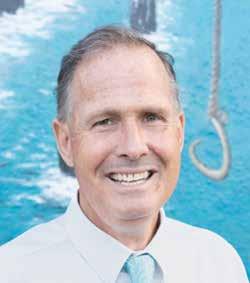
Prior to Council's recent decision to replace the Community Board Terms of Reference with a new Community Board Accord, I wrote to all Community Board Chairs, Councillors, and the Mayor expressing my personal views, as set out below, and urging them to retain the existing Terms of Reference. I did so because I believe the significance of that decision for local democracy and community empowerment cannot be overstated.
As a Councillor between 2010 and 2013, I was one of the architects of the Community Empowerment Model during its development and implementation. I subsequently worked within that framework as both a Councillor and Community Board member until October 2019.
The philosophy underpinning the model was simple: the closer a decision is made to the community affected by it, the better the outcome is likely to be.
That is why it was called the Community Empowerment Model, not the Community Board
Empowerment Model. The objective was never to empower Community Boards for their own sake. It was to empower communities through local decision-making. Under the Terms of Reference, Community Boards were delegated authority to make local governance decisions relating to parks and reserves, community facilities, libraries, airfields, swimming pools, cemeteries, community grants, local strategic planning, local roads, harbour facilities, and local economic development. They also held a range of additional responsibilities that recognised
their role as the local voice of their communities.
The difference between that model and the current situation is stark.
Today, many communities feel disconnected from decision-makers. Community Boards are frustrated, and residents increasingly feel they have little influence over decisions that directly affect them. Those concerns were raised repeatedly during the last election campaign and were a significant reason for my return to local government.
Earlier this year, seeking to understand the source of that frustration, I reviewed the Community Board Terms of Reference. What I discovered was surprising. The 2019 Terms of Reference remained in force. As recently as 2024, Council reviewed them and made only one amendment, allowing Council to set the value of Community Board discretionary grants through an Annual Plan or Long-Term Plan.
The problem was not that the Terms of Reference had been repealed or replaced. The problem was that they were not being implemented.
Community Boards possessed significant delegated authority on paper, yet in practice many of those powers were not being exercised. The very document capable of restoring meaningful local decision-making had effectively been left gathering dust.
Rather than requiring the existing Terms of Reference to be implemented, Council chose to replace them with the Community Board Accord.
Supporters of the Accord argue that it will strengthen the relationship between Council and Community Boards. I hope they are right. Council's credibility is now tied to its success.
However, the Accord does not confer meaningful decision-making authority. It largely formalises the ability of Community Boards to provide feedback, recommendations, input, and advice to Council. Those functions are important, but they are not delegations of decision-making power.
In practical terms, the Accord leaves Community Boards with only a handful of minor delegations, including approving attendance at conferences, allocating community grants, and approving
street names, all within existing policies and budgets.
That is a significant reduction from the authority contained in the Terms of Reference.
The issue was never the Terms of Reference. The issue was the failure to implement them.
Seven months of this Council term have been spent developing a replacement for a system that already existed and, if properly applied, would have delivered the local decision-making many communities have been calling for.
The difference between the Terms of Reference and the Accord is not semantic. It goes to the heart of who makes decisions in our communities and whether local voices genuinely matter.
I fear that in replacing the Terms of Reference, Council has exchanged a proven framework for community empowerment for one that offers little more than consultation and advice.
I would like to acknowledge Councillors Rasmussen, Smith, and Ashman, who voted to retain the existing Terms of Reference. They recognised that the solution was not to replace community empowerment, but to restore it.
We asked our Senior student leaders the following questions:
1. "What is your favorite way to spend your time outside of school, and what has that hobby taught you about yourself?"
2. "What is your 'big dream' for your career or life after school, and what inspired you to chase it?"
3. "If you could change or improve one thing for the next generation of students in our town/school, what would it be?"
JOSEPH MAY - HEAD STUDENT
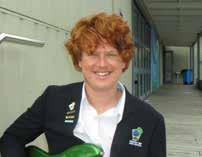
I really enjoy creating and learning music outside of school, it really helps me bring more creativity into my everyday life and allows me to find more meaning in what I do.
I'm very interested in becoming an electrician. I have just started doing work experience and I'm loving it. I've always found the trades interesting and the theory behind electrical work, but of course I'd also love to be a part of a famous band and tour all over
the world.
What I would like to happen for future generations of students would be to spread awareness that everyone has their own future and career-path, and that people can find their own dreams and should chase them.
ISABELLA WHITE - HEAD
by the opportunity to lead with compassion in high-stakes situations and provide care for others where it matters most. In addition, my general love for learning, and awareness of social barriers and politics has further convinced me to gain a better understanding of the challenges people face in accessing healthcare.

Through school, I am involved in competitive netball, however staying physically active is something that has consistently become a fun hobby outside of school. Being involved in sport has taught me the importance of collaboration and teamwork, as well as the discipline and resilience required to push beyond my limits and reach my goals. Through both competition and training, I’ve learnt how to stay focused under pressure and support my teammates, shaping my confidence and determination to succeed.
My goal after school is to become a Critical Care Paramedic, where I can make a meaningful impact in Aotearoa and potentially abroad. I’m most inspired
There are so, so many things I would love to introduce and alter for the next generation of students in Whitianga, but first I would like to improve our attitudes. In particular, it would be incredible to see a stronger sense of respect for the native environment and ecosystems, along with a greater confidence to speak up for what they believe in. Every single young person I have ever met has at least one good idea or perspective. Imagine a community where they all feel empowered to share those ideas and create positive change. Encouraging student voices and environmental sustainability builds a generation of rangatahi who are confident and ready to make the differences our world needs.
LIAM MORGAN - DEPUTY HEAD STUDENT
I enjoy coaching swimming because I like helping others improve and build confidence. It has taught me patience, leadership, and how to encourage others.
My big dream is to become a doctor because I want to help

Green Party Coromandel candidate Pamela Grealey is concerned that Coromandel MP Scott Simpson has introduced legislation that would expand the Ministry of Social Development’s ability to use automated systems in welfare decision-making.
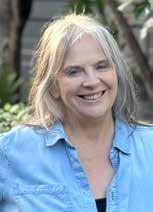
Pamela Grealey.
Pamela Grealey says, “Scott Simpson is our local representative in Parliament. That means Coromandel people have a right to know when legislation is being advanced that could have significant consequences for families already struggling to make ends meet.
“Many people across the Coromandel rely on a combination of low-paid, seasonal or casual work and supplementary support to get by.
“Through my advocacy work with the Coromandel Workers Council, I’ve seen firsthand how many local families rely on MSD support to bridge the gaps created by insecure work. These are not simple situations that can always be reduced to a set of rules. People’s
lives are complicated, particularly in rural communities where transport options are limited and employment can be unpredictable”
Grealey said she was particularly concerned that the bill is being progressed under urgency, bypassing the normal select committee process.
“When changes affect some of the most vulnerable members of our community, people deserve the opportunity to be heard. Rushing legislation through Parliament reduces transparency and limits public participation. While the Government argues the changes will improve efficiency, efficiency should never come at the expense of fairness and human judgement.
“Technology can support public services, but decisions that affect a person’s income, housing security and ability to feed their family should always have meaningful human oversight.
“Our community deserves a welfare system that understands people, not just processes. “
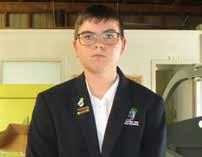
people and make a positive difference in their lives.
I would improve support for students so everyone has equal opportunities to succeed and feels encouraged to achieve their goals.
MALIA HERBERT
- DEPUTY HEAD STUDENT

My favourite way to spend time outside of school is by playing football! I've played football for nine years now, and it has taught me a lot about myself, and how I act in pressured situations. It has taught me how confidence affects my performance, not just within the sport. Football has taught me to be confident within myself, and how believing in myself truly does show within my daily life. It
has taught me sportsmanship and how to behave towards others, whether doing better or worse than me. This sport has given me something to look forward to, and work towards. For example, having a tournament to look forward to motivates me to get fitter, which improves my mental health and fitness overall.
I think I'd like to eventually join the police force. This is inspired by my want to help people,but still desire a fun, action-filled job. I plan to apply for police college this year, to hopefully get in by the time I turn 18 in December. If I don’t, due to not enough life experience, I plan to travel for maybe a year or two, or do a course. This will give me a few years out of school living life and experiencing moving out and independence. I think I would like to make it easier for students to come to school. Often, if students struggle with peers, classes, and mental health, they fail to come to school. This leads to more struggles. There could be activities in place that allow students to feel more included and comfortable at school, though it's hard to include everyone, due to students' individual behaviour. If I could, I would put in certain systems that make school a nicer place for everyone,or put in more fun activities within the school routine to give students more to look forward to.
Next week meet other student leaders.















BY DIRK SIELING
Councils have less than 3 months to propose a future governance model to the central government. Reform is decades overdue.
Some 20 years ago I supported a move to a unitary authority model, referred to in Geoff Robinson’s article (on page 16 of Issue 1212).
This concept got support from the community but it was never seriously considered by TCDC. Since then, our rates have skyrocketed and efficiencies have declined. Bureaucracy has multiplied exponentially and the cost and time required has become a disincentive to try and get things done. There’s a myriad of instances where the process costs exceed the actual works costs by a substantial margin. Quite rightly, the current government is replacing the RMA and reviewing local government structures.
At this stage it looks as if the RMA replacements won’t go far enough but today, I want to concentrate on local government reform. Unitary Authorities (UAs) won’t solve all these problems but should assist in reducing duplication and complexity. The TCDC response due on 9 August is a high level one. If accepted by the Government, it will need to be
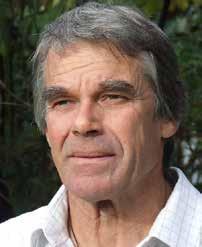
followed up with more granular details at stage 2. The things we need to consider at this stage are size and representation.
TCDC going it alone will not be accepted and even joining with Hauraki may be considered too small. An amalgamation of TCDC, Hauraki, Matamata-Piako and possibly the far northern part of WBOP (Waihi Beach) would join communities of shared interests, largely rural and coastal (with the exception of Matamata-Piako). Such an amalgamation risks losing a lot of skills and experience currently residing in WRC as well as some funding. On the
other hand, one outcome could comprise the entire Waikato Regional Council area, a proposal promoted by WRC. For the rural districts the latter would have financial advantages as a lot of environmental initiatives are largely financed by Hamilton ratepayers. The challenge would be how to ensure that the smaller communities have a say and are being catered for accordingly, which brings us to:
REPRESENTATION
In a Unitary Authority, care must be taken that Urban and Rural interests don’t collide. Currently a lot of rural matters are being considered by WRC, whereas the bulk of urban matters fall under the districts. In terms of area, rural far outweighs urban; in terms of population, it’s the other way around. A sensible option promoted by Federated Farmers is to strengthen Community Boards (CBs), representing predominantly urban interests and reviving Catchment Committees (CCs) catering predominantly for rural areas. A further notion to consider is to elect Councillors separately in urban and rural wards. This could simply be based on zoning. These Councillors would have a close relationship with the CCs. Parochialism is a recurring issue in the present system and

always hard to avoid. There are no easy answers but some mitigation might be achieved by having a proportion of Councillors elected area wide, depending on the size of the Unitary Authority. Another aspect of representation is voting rights. The principle of ‘no taxation without representation’ would indicate that ratepayers are the ones entitled to vote. That would include absentee landlords rather than tenants.
One promoted rationale for the reforms is reduced bureaucracy. For TCDC that should mean redundancies in Thames if the headquarters of the new Unitary Authority are not based there. To improve bureaucratic efficiency through reduction is never easy. Bureaucracies have a tendency to enlarge themselves for some simple reasons. Ambitions can be fulfilled by either climbing the ladder or taking the easier path –elevating your position by creating jobs below you. But to create those jobs, more rules have to be created for the new staff to implement.
I remember a time when a small rural subdivision was as simple as putting in an application and following approval by the Council on the advice of one of their planners, the council engineer would indi-
cate what was expected and he would inspect the infrastructure to approve it or indicate improvements. No disasters followed. Things were just getting done without needing a small army of planners, engineers, landscape consultants, biodiversity consultants, heritage reports and RMA legal experts. It’s a chicken and egg situation: what came first, the rules or the bureaucracy?
Creating improved efficiencies could well be the biggest challenge of the current reform.
TCDC appears to be a late starter in this process but on the positive side has promised to involve the public in its decision making. My words are just a simple overview of the basics. There are a lot more pitfalls and complex issues to work through and time is very limited. This is a challenging period for our elected members and it is important that they get the views of the public directly and don’t rely on ‘sanitised’ proposals developed by staff.
It’s on the rate payers to inform themselves and express their views.
The Informer sought this piece. Dirk Sieling is a long-time resident and a significant volunteer contributor to the development of Mercury Bay. He resides at Ohuka Farm. Opinion
BY PAULINE STEWART
Local government Councils across the land are looking at amalgamations as part of creating a unitary local governing body. With the Governments decision re the demise of Waikato Regional Council, the current two-tier government is to finish. How big the boundaries, who will join with who, and how WRC responsibilities are absorbed, must all be worked out. The first deadline is 9 August. Submitting a proposal involving two or more councils gives Councils a head start. Central government is clear – “Lead your own reform or we will do it for you.” There is a lot of work to be done quickly in our region - with a minimum of grandstanding. It is a time to ‘lose one’s life to
find the new one “, for our District Councils.
“The Minister of Local government visited The Coromandel on Friday, 5 June and one of his key meetings was with Mayors, and Councillors from across the electoral area represented by our MP Scott Simpson. This is a much larger area than HaurakiThames Coromandel Scott Simpson accompanied the Minister to the various meetings.
In attendance; from TCDC –
The Mayor Peter Revell, Deputy Mayor John Grant and Councillors Rodley, Sinclair and Hampden and Rasmussen were present.
From Hauraki – The Mayor Toby Adams, Deputy Mayor Paul Milner and Councillors Grey, Spicer, Croymans, Bates and Howell.
The Informer had a brief time
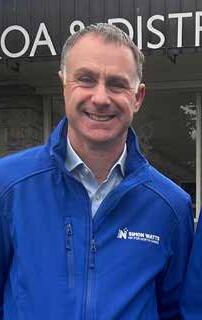
with Minister Simon Watts following this gathering which was closed to the public. No doubt the group discussed the five criteria from the Department of Internal Affairs that must receive weight in the local government reform outcome.
1) Financial sustainability and rating capacity.
2) Infrastructure capability and service resilience.
3) Local democracy, representation, and communities of interest.
4) Efficiency, effectiveness and reduced replication.
5) Legal implement ability – is it doable?
Simon Watts was very clear that, “We protect local voices through the structure and governance model” which will come about. His
second emphasis in the interview was that all model and amalgamations must be ‘simple’. He did not say, ’simpler’ but “simple”.
As this goes to print, Hauraki District Council has announced four preferences that are possible, and these have been circulated. Each of these includes Thames-Coromandel District Council. TCDC has five Community Boards and a larger population, so the step of a survey which is a little later than others is very important. There are no options presented in the TCDC survey. However, the priorities of TCDC ratepayers which were made very clear in the time leading up to the last election, will not be forgotten. It is a short time until 9 August. I urge the people of TCDC and Hauraki areas to have their say.

By Ananda Laberge

Having now lived in New Zealand nearly 5 yearsand super excited about applying for my New Zealand citizenship at the end of this year! I couldn’t be more proud and extremely grateful to have the opportunity to live in this resplendent country.
The natural environment that exists here is beyond magnificent. I describe it to friends in North America as a ‘Garden of Eden.’ People in the US often brag about their California beaches –they obviously have not seen NZ beaches. Wide expanses of white sand, few people and so many hidden coves to find. The hiking is beyond my wildest dreams with unlimited variety between coastlines and farms, fjords and valleys, each with its own distinct beauty.
Feeling this enormous gratitude, I’ve started appreciating the feelings it gives me. I put it into three main buckets: mental and emotional wellbeing, the physical benefits and how it positively impacts our relationships.
From a mental perspective, when we are grateful, we get a surge of “feel good” chemicals in the brain, in the form of serotonin and dopamine. This then encour-

ages us to practice gratitude more regularly due to its reward mechanism. It also trains our brains to look for the positives in life which naturally reduces the production of cortisol (the stress hormone). Bye-bye stress!
Then there is the gratefulness of being able to enjoy the outdoors each and every single day. If you live in a desert, say Las Vegas, going outdoors is an exercise in preparation: is the temperature such that I can walk more than 10 minutes? Have I hydrated enough to last those minutes in a
scorching sun? After considering all this, it’s sometimes easier to just stay inside with the air conditioner blasting. But here-yes, we have to make sure we are sun screened and wearing our favourite hats-but there are few reasons not to go outdoors and take in the astounding beauty New Zealand offers. Whether it be on the sea, in the mountains, on its stunning beaches, it begs us to venture outdoors. We all know the physical benefits of outdoor exercise – better sleep, a stronger immune system and a longer life. Doing this in
combination with gratitude is the magic formula!
Being thankful extends itself to all life. Being able to have that feeling in having the joy of partnership with my husband; a man who loves me no matter what. Who’s seen me at my best but also at my worst. Who never stops believing in me, who is always there no matter the storms we encounter, and we’ve seen many, as most couples have. How miraculous to have that one person that is ‘our’ person is a gift and as such must be appreciated for the extraordinary opportunity it is, daily.
My two daughters are always a source of inspiration and amazement. As they navigate being adults at the tender ages of 21 and 24, the fact that they still make time for me several times a week is something I can appreciate especially since at that age, I wasn’t as conscious of those around me. I was too wrapped up in ‘me’ and felt like the world was taking me on magic carpet rides that weren’t always joyful and so I spent much of my time simply surviving which left no room for others. I am much more directive and purposeful in my life now, but they miraculously already are!
Self-directed, self-focused and loving others at the same time.
All my countless friends around New Zealand and the globe at large is something beyond my wildest dreams. To have that connection to other souls who are living their own path and yet make time for me and my travails is incredibly special. Time is irrelevant regardless of the space between us because when I need them, they are there. I can only be the best friend back to be there for them when I am most needed, and that is a massive gift. There is also a feeling of joy that comes with feeling that gratitude in my heart. It opens me up and makes me feel oneness, that we are all connected. This has to be something we want, otherwise this world can feel very lonely. That is my wish for everyone; find those connections that make your soul soar and bathe yourself in that feeling. That love is something to be treasured and appreciated. And with that gratitude make life grand!
Feel like commenting or getting in touch? You can reach me at: ananda@seismicaudit.com. You can also find me online at: www.linkedin.com/in/anandalaberge.
BY TREVOR AMMUNDSEN
Ichecked with Google the other day, my question being, “How many countries have a secretary of war?”. The response didn’t take AI very long. There is only one country currently with a cabinet level position titled, “Secretary of War”, this being the United States. All other countries focus on defence. With the emphasis on war, it is not surprising that during this presidential term the USA has bombed Iran to bits, invaded Venezuela to kidnap their elected leader, blown up boats in international waters that it claims were carrying drugs but of which there was no real proof, and threatened to acquire by invasion, both Greenland and Cuba. Quite an active display of aggression, and the USA President is miffed that he wasn’t awarded the Nobel Peace prize!
Since the second world war the USA has been predominant in seven wars, including the current one in Iran. We have been very friendly and helped in six of those; wars in Korea, Vietnam and the middle east. We have lost almost 100 of our personnel in these wars. On the other side of the equation, the USA has lost no personnel supporting us in our wars, primarily because we don’t declare war on anybody. So, when their Secretary of War says we are free loading, I just look at the numbers which do not lie. Who do you think you are kidding Uncle Sam?
Increasing our expenditure on the weap-

ons of war should not be at the discretion of another party, it is our decision as our Prime Minister has said. What we spend our money on should also be at our discretion. I recall about 20 years ago we purchased over 100 light armoured vehicles that were of no use to us in New Zealand or in the Pacific Islands. They were primarily deployed in Afghanistan to assist the American efforts there, so in effect we made a significant purchase for the benefit of the USA, not our people. Our sphere
of interest is a large one, mainly consisting of water. It stretches from the Antarctic to the southern Pacific Islands. Our defence forces and their weaponry should be suitable for and concentrated in this area.
There will be people who feel we should help our great mate the USA. Of the great powers, the USA doesn’t really act like a mate. They cancelled the ANZUS defence treaty because of our anti-nuclear policies. They refuse to enter into a free trade agreement with us. They charge tariffs on anything we export their way. The biggest threat of major war currently is over Taiwan with China wishing to reclaim what used to be their island of Formosa and the USA stating they will fight to prevent that. China, as we should all know, is quite a good friend of New Zealand with a free trade agreement between our two countries being in place for several years. Economically, China is our best buddy, and it would not be in our best interests to join a lower-level mate of ours in a war against them, or to even indicate we might.
In my view we must concentrate our defence spending and activities on our sphere of interest, but we also need to think about the shipping lanes to and from New Zealand, as these must be kept open and functioning properly. This demands two major actions for our country. The first is to allow nuclear powered commercial ships into our ports. Only a few nuclear-powered cargo vessels have been built but development is well underway for the next genera-
tion of commercial ships with the Jiangnan Shipyard in China unveiling a design for a 25,000-container nuclear vessel and the major shipping companies exploring Small Modular Reactor designs. Within ten years such vessels will be knocking on our doors, and we need to be prepared to accommodate them.
If we are to keep our shipping lanes open, it would seem sensible to have a powerful buddy involved with them. The USA is not that buddy as its attention and interests are northern hemisphere based. However, China has already expressed interest in having us involved with their Belt and Road Initiative. As part of this initiative, China is building a railway between the Chancay Port in Peru to the eastern coast of South America in Brazil. This will greatly improve access between Asia and the economies of South America. What would help this route, however, is to have a hub in the South Pacific. Why not Auckland? Why not be proactive and commence discussions with China to build a new port for Auckland in the Firth of Thames. This would provide a lot of good for the country, including more sea views for Auckland latte drinkers.
So, Mr Hesgeth (USA Secretary of War) please do not accuse us of freeloading when in fact the opposite appears to be true. Partnerships should be a two-way thing and the way things look now is, that China understands this far more than your administration does.
Lovatts Puzzles 5360
Win a $5.60 Wednesday Lotto ticket. Hand deliver, mail, scan/photograph or email your entry to The Coromandel Informer, 14 Monk Street, Whitianga, or info@ theinformer.co.nz to reach us by 12:00pm on Monday each week. The winner must please claim their prize from the New World checkout manager directly. Issue 1213
Proudly sponsored by

Last weeks winner CONGRATULATIONS Dave Blake ACROSS
For last week’s solutions see page 26
1. Amazon river carnivore (7)
4. Pleasant atmosphere, good ... (5)
7. Journalists’ credits (2-5)
8. Older person (5)
9. Numskulls(6)
12. Conferred holy orders on (8)
15. Traffic violence (4,4)
17. E African country (6)
18. Potency (5)
21. Venetian or Neapolitan (7)
22. Gnat (5)
23. Overdue (7)

DOWN
In any case (6)
Shadow-box (4)
French farewell (5) 13. Demented (8) 14. Tavern wench (7) 16. World’s largest desert (6) 18. Egg cell (4) 19. Hole up (4) 20. Curved hook (4)




Proudly sponsored by

to our new Sudoku sponsors Snapper Jacks and Mat’s Cafe! They will be alternating every week.
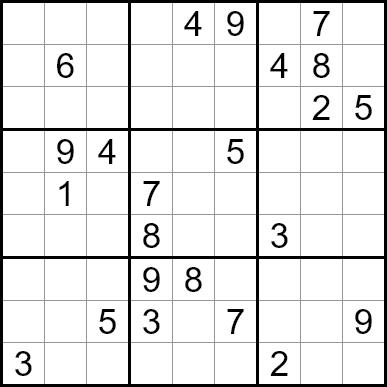
Name: Phone no: Issue 1213 – Grid 181
Win a fish and chips for one from Snapper Jacks in Whitianga. Hand deliver, mail, scan/ photograph or email your entry to The Coromandel Informer, 14 Monk Street, Whitianga, or info@ theinformer. co.nz to reach us by 12.00 noon on Monday each week. The winner must claim their prize from Snapper Jacks directly with ID with their published name.
Sudoku instructions
Fill in the boxes using the numbers 1 to 9. Every row and column, and every group of 9 boxes inside the thick lines, must contain each number only once.








Monday 8 – Sunday 14 June
Friendly competition between Whangamata and Whitianga - Who will have the most donors??
BY SHAUN FAY
Agood natured Coromandel Eastern Seaboard rivalry is happening with Blood Bank this week. It is based on the first day of giving blood.
Whangamatā’s one-day mobile blood drive is on Tuesday 9 June, 8:30am to 1:30pm at the Memorial Hall. There’s room for 90 and while early is booked up, there is room between 10:40am and 1pm. Recent drives in Whangamatā have averaged around 65 donors. They need another 25.
Whitianga’s first day is at Crossroad Church, 36 Cook Drive, June 10 from 1pm to 6pm Bookings for the first day currently stand at 66, with 24 appointments available. Whitianga has an extra day as well on the 11 June but Whangamata is determined to beat them on the first day.
Learn more visit www.nzblood. co.nz or call 0800 448 325 to book an appointment to donate.
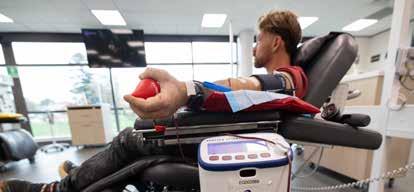
Quick general facts (from NZ Blood Service):
• Every 18 minutes someone in New Zealand needs blood or blood products
• Around 30,000 people living in New Zealand have their lives saved or improved by blood, plasma and platelet donors every year.
• There is no alternative for patients in need of blood or blood products. Blood donors save lives.
• Just one whole blood donation can help save the lives of up to three people.
• Red blood cells, the main component of donated blood, can only be stored for 35 days, making regular donations essential for ensuring there is a continuous supply for patients in need.
• New Zealand Blood Service needs to collect over 5,000 donations every week to meet demand.
• NZ currently has over 141,000 blood and plasma donors.
• Currently, only around 4% of the eligible population are donors.
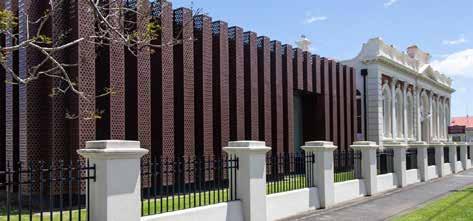
Things are ticking along very well at The Treasury with a very busy open day for The Treasury team.
The Treasury’s Open Day exceeded all our expectations.- it was a very busy time for the Treasury Team.
What was really cool was to hear how many of the people who visited say ‘we’ve never been in here before’… .’this is my first time…’. We hope to see many come back to research a part of our fascinating local history. There is so much to see!
A huge thanks to all the Treasury volunteers (Trust Board included) who were there helping out. The activities included second hand book sales, showing people how to access information, explaining displays, photo swapping and sharing, and registering to be a member of The Treasury; and hot drinks and muffins were served.
It was a a great success really. The wider community needs The Treasury, it is the principal guardian of and generous sharer of our history but also
the building itself is a significant and treasured symbol of period architecture adding to the character of Thames attractions.
A great way to assist is to become a member and/or offer your skills as a volunteer.
BECOME A MEMBER OF THE TREASURY, AND THE COROMANDEL HERITAGE TRUST
Membership runs from 1 April - 31 March
Annual Student Membership $10, Annual Membership $50, Joint Membership $90, Life Member Donation $500, Joint Life Member Donation $900. The Coromandel Heritage Trust - 02-0456-0019877-000 (Name & Membership as reference) www. thetreasury.org.nz, email: admin@ thetreasury.org.nz
Pay your membership in person at The Treasury or complete a form online.
• NZBS needs more than 4000 new donors in the next 12 months to ensure it can continue to meet demand
• There are 12 permanent donor centres across Aotearoa, and every year there are around 2,000 mobile drives at over 330 separate locations.
DISCOVER THE SOCIAL SIDE OF SAVING LIVES
This National Blood Donor Week, we're celebrating the social side of blood donation - the friendships struck up at donor centres, the conversations had over tea and bickies, families and friends who turn up and donate together. At a time when genuine social connections are becoming harder, blood and plasma donation can bring people together through a shared sense of purpose.
Our goal is to thank every New Zealander who makes this lifesaving community what it is, while encouraging others to become part of it too.

Received from Hobson’s Pledge this week – ‘A win for every New Zealander who believes in equal voting rights.’
The Coalition Government has just announced new legislation to ensure that only democratically elected councillors will have voting rights on local government committees.
The principle of one person, one vote is being restored to local government with Local Government Minister Simon Watts adopting Cameron Luxton’s/ACT’s Bill.

THE HAURAKI SETTLEMENT: APOLOGISING FOR THE PAST WHILE REPEATING IT!
I read Wanda Brljevich’s open letter on behalf of Ngāti Huarere ki Whangapoua with real dismay. (The Informer, 2 June, p 5)
Here is an iwi who descend from Tamatekapua, captain of the Te Arawa waka, and who have kept ahi kā in Hauraki for close to seven centuries. Yet the Crown has folded their Wai 475 claim into the Hauraki settlement against their clearly stated wishes, vesting their ancestral lands, wāhi tapu and urupā in six other iwi never given authority to speak for them. What disappoints me most is how easily this happened. The Crown’s own policy says it cannot confer a mandate – yet it effectively did. And the Waitangi Tribunal’s recommendations were simply set aside. Reconciliation built on coercion is no reconciliation at all.
There is a way forward. The Crown should carve Wai 475 out of the Hauraki Deed of Settlement and negotiate directly
By David Yeomans
Come gather round, good townsfolk all, And hear the latest civic call, Where Boards convene with solemn face To occupy their proper place.
They meet, you see, but not too much, For governance requires a touch Of careful separation made 'Twixt things discussed and things delayed.
The formal meeting now begins, With minutes, reports and earnest grins, The public speaks, the groups report, The planners offer every sort Of update, strategy and planThen everyone applauds if they can.
“Any decisions?" someone cries.
"Good heavens no!" the Chair replies. "We've scarcely time for such a thing, We've heard what every group's been doing."
The meeting closes, papers stacked, The official business neatly packed, Then comes the truly curious partThe discussions that were meant to start.
"Now let us talk," the Chair declares, "Of all the matters and affairs Not on the agenda, not prepared, Not formally noticed, not quite shared."
And so they talk with great delight Into the softly fading night, About the matters most importantThough none may be officially current.
Next month they gather once again, Without the burden, stress or pain Of minutes, motions, votes or rules, For such things are for formal fools.
The Chair prepares the grand agenda,
with Ngāti Huarere ki Whangamatā. No iwi’s redress should vest in another without consent. Where mandate is disputed, an independent body should settle it before legislation proceeds.
It is not too late to get this one right.
Patrick Kerr, Whangamatā
A TALE OF TWO SHARK BITES
Whitianga residents woke on the morning of 14 February 2023 to find Shark Gabrielle had taken a dramatic bite out of Buffalo Beach to the edge of the road. The second bite has been out of our wallets and has happened in excruciatingly slow motion.
Your grandfather and mine would have got hold of some drainage pipe, located suitable rocks and backfill, a digger and a truck, checked out the the existing rock wall then simply got on with extending it and fixing the footpath.
Not these days!
It took nearly a year to prepare engineering reports and make the necessary resource consent applications to both WRC and TCDC. Almost another year passed
before both consents were granted in late 2024.
Nearly two years to get to this stage, still no actual remedial work – cost approximately $140,000!
Council does have an excuse of course – it must “go through the same resource consent process as a private individual”. Is this at all ironic?
The actual work took a couple of months and cost about $110,000. What did it involve? Basically, some drainage pipes, suitable rocks and backfill and fixing the footpath. Oh, and also some landscaping.
We are now being asked to take part in a survey on how to “simplify local government”. A good start would be to appoint a powerful Commissioner of Common Sense to oversee all local government activities.
Helen
Vivian, Wharekaho
It has been announced that $85 million has been earmarked for our region for roading upgrades and maintenance. That’s

great. If they could reduce the number of road cones and the cost of them, which is out of control, we would have so much more of that money to actually put into the upgrades and repairs.
Mervyn

A masterpiece of local splendour, And everyone may freely chat About this, that and whatnot-that.
"What shall we decide?" asks eager Fred. "Nothing at all," the Chair has said.
"For this is not a meeting where Decisions breathe the public air."
"But why discuss?"
"To stay informed."
"But why be informed?"
"To be well warmed For meetings where we'll hear reports
And practise all the formal sports."
The audience sits in growing doubt, Trying hard to work it out.
The talking happens where none decide, The decisions wait off to the side. The records stop where matters start, And governance becomes an art.
An art, perhaps, of smoke and mist, Where every point somehow is missed, And every pathway neatly bends To nowhere very much in the end.
So raise a cheer for this Accord,
This curious civic drawing-board, Where Boards may meet and Boards may speak,
Yet governing remains unique.
For never has bureaucracy Produced with greater subtlety
A system quite so neatly planned
To keep authority unmanned.
The Emperor himself, were he To witness such ingenuity, Might proudly say, with knowing glance,
A government without governing, At last; how enhanced!



Sales and installation of Mitsubishi and Fujitsu heat-pump/air conditioning. Call Bill for a free no obligation quote. 027 2714803
www.dynamicelectrical-whitianga.co.nz
Warm up a medium sized bedroom with a Mitsubishi heatpump. Starting at $2000 installed.
Servicing Whitianga & the surrounding area.
Call Jon 021 0254 3570 or email jonmacca4@gmail.com








PILING Mark McManus 027 493 1601 Email: Mark@pmcivil.co.nz


manufactured aluminium windows and doors since 1990: - New builds & renovations - Replacement joinery in existing homes
- Aluminium & glass balustrades

07 869 5990 | nzwindows.co.nz 1 Abrahamson Drive, Whitianga (Mon-Fri, 8-4)




































































Following the passing of our dearly loved father, grandfather, and great-grandfather, NEIL MARTYN SMITHSON (19/05/2026), our family would like to sincerely thank everyone for the kindness, care, and support shown to Dad and our family during this difficult time.
A special thank you to the doctors, nurses, and front-of-house staff at Te Korowai for the compassion, dignity, and care you provided. Your kindness and support meant so much to Dad and gave our family comfort and reassurance throughout his journey.
We would also like to thank those who visited Dad regularly and helped him over the years: Shelly and Russell Lamb, Mervyn and Joanne Trebes, Robbie Yeomans, Robbie Moyes, and Bill Skinner. Your friendship, generosity, and presence brought him great comfort and were deeply appreciated.
As we mourn the loss of a much-loved father, grandfather, and great-grandfather, we are truly grateful for the support we have received from so many people.
Thank you all from the bottom of our hearts.
•
•
MERCURY BAY CLUB INDOOR BOWLS
Monday 1 June
1, Lee Pudney, Judy Cullinane and Sandie Morris; 2, Ray Rout, Sue Webb and Colleen Holmes. Good Sports: Cheryl Henderson, Doreen Davis and Betty Simpson.
MERCURY BAY INDOOR BOWLING CLUB
Thursday 4 June
Winners: Ray Rout and Judy Cullinane
Runners Up: Ian Pudney and Lionel Lawrence
Good Sports: Cheryl Henderson and Jan Harvey
MERCURY BAY CLUB DARTS
The dart club travelled to Tauranga on Saturday, 30 May for a challenge against Tauranga Citizens Club. Having won the previous encounter last year, we were feeling pretty confident – how wrong we were. We were given a sound darts lesson by Tauranga, being between 101 games to 51. Thanks to Tauranga Citizens Club for hosting the event, we had a great day at a well organised club. 16 players at this week’s club night on Tuesday, so 501 singles were played. Three players went through unbeaten in all four sets. They were Beau Hamilton, Selwyn Whatarangi, and Rex Donalson. Beau came away with a good win in the one game final. Highest finish for the men was 108, scored by Rex Donaldson and 62 for the ladies, scored by Nan. One person scored 180 this week and that was Beau Hamilton.
HAHEI BRIDGE CLUB
Bright Pairs Tuesday 2 June
North/South: 1, Ngaire O’Brien and Anne Knowles 53.65%; 2, Jenny Hemmings and Beth Dickie 52.08%; 3, Carol Henwood and Tia Ormsby 48.96%.
East/West: 1, Peter Clark and Robyn Walters 62.50%; 2, Margaret Muir and Dave Dylla 58.13%; 3, Donna Harvey and Maggie Beattie 50%.
MERCURY BAY BRIDGE CLUB
Championship Pairs round 6
Wednesday 3 June
North/South: 1=, Julie Rutledge & Giorgio Allemano, Val Dwight & Johanna Bonnar 55.2; 3, Terri Lipanovic & Rose Tegg 53.1 East/West: 1, Sue Gill & Deidre Stevenson 60.3; 2, Dave Dylla & Jan Autumn 54.4; 3, Hillary Scott & Geoff Jervis 52.5. Whiti Championship Pairs round 2
Thursday 4 June
1, Pam Churchill & Sue Gill 61.3; 2, Rose Tegg & Geoff Jervis 55; 3=, Alan Drew & Terri Lipanovic, Angela Cook & Julie Rutledge 53.7
MERCURY BAY GOLF CLUB
9 hole men Stableford Tuesday 2 June 1, Jeff Dixon 17; 2, Les Walbridge 16; 3, Patrick Gonthier 15


Sun: Rise 7:25am Set 5:07pm
Rise 1:22am Set 1:13pm
Tides: 1:49am 2:16pm
Tides: 7:48am 8:06pm
18 hole Ladies Lou Rivas Trophy Nett
Wednesday 3 June
1, Diane Andrew; 2, Marg Maher; 3, Jo Geoghegan
NTP #4: Lynn Butler
Longest putt: Diane Andrew
NTP #18: Diane Andrew
18 hole Men Stableford
1, Greg Peterken 39; 2, Alan Coubray 38; 3, Rob Baines 36. Twos: Mark Bow with 2, Steve Geach and Greg Peterken.
18 hole Men. Saturday 7 June
1=, Kevin Smith & Carl Mitchell 37; 3=, Alan Coubray, Willie Jones, Matty Menzies & Greg Peterken.
19 Hearty golfers braved the conditions and got out there and played. Nathan Wilson defying the odds and shooting 70, with a 3 putt. Well done guys and girls. Yes, even
Jenna braved the conditions and played.
18 Hole Mixed Scramble, Stableford
Saturday 7 June
1. Julie Rutledge 36; 2. Jenna Leach 34; 3. Dominik Sparagowski 32; 4. Jazz Tagaloailuga 32; 5. Trevor Hayde 32; 6. Tony Foster 32; 7. Richard Steel 32
Ladies NTP - Janine Hayde
Men’s NTP - Mark Boe
Ladies Longest Drive - Marg Maher
Men’s Longest Drive - Brian Cohalan No twos today.
THE DUNES MATARANGI GOLF CLUB
9 hole Men’s 3-Man Ambrose
Monday 25 May
1, Ray Green, Lance Croawell and Paul Anderson, Nett Score: 37.5
18 Hole Men’s Monthly Nett Medal
Wednesday 3 June
1, Ross Alexander 70; 2, Wally Hayes 71; 3, Nick Lambert 72.
Best Gross: Craig Batty 72
Nearest the Pin #18: Ross Alexander
Twos: #5 Mike Purchase, #14 Craig Batty, #18 Liam Tukiri.
9 hole Men’s Stableford
Thursday 4 June
1, Rey Bertling 23; 2, Kevin Mills 21; 3, David Ellis 19.
Mixed Haggle 18 Holes Stableford - Meat
Pack Saturday 6 June
1, Paul Shaw 40; 2, Tony De Coek 38; 3, Russell Barnett 37.
Nearest The Pin #18: Peter Hunt
PURANGI GOLF AND COUNTRY CLUB
9 hole Stableford Cooks Beach Building
Supplies Monthly Medal and Putts
Thursday 4 June
1, Dianne Gilmour, winner of Monthly Medal on count acknowledged; 2, Ryan Cochran; 3=, Kelly Phillips, Richard Agnew. Putts: 1=, Dianne Gilmour, Ryan Cochran. 18 hole nett. Saturday 6 June 1, Annabel Wharton; 2, Kelly Phillips; 3, Tim


Bartlett; 4, Phil Ander.
4BBB NETT: Ryan Cochran and Mike Farance
Nearest to pin: Bob Walker Nett Eagles Ryan Cochran, Danny Phillips
MERCURY BAY CLUB SNOOKER
Wednesday 3 June
A large turn-out of players produced some very close games, but it was Ken Gibson, Brian Codyre and Bob Haase who secured 3 wins each to go through to post-section play. Ken drew the bye into the final. The semi-final was a close game between Bob and Brian, ending with an unlucky in-off by Brian on the deciding black. In the final, consecutive breaks of 18 and 16 saw Bob set up a good cushion to weather a determined fightback by Ken and take the win on the pink. Players with 2 wins included Ian Baumgren, Peter Schultz, Peter Challis and Rob Reilly. Saturday, 6 June
Ian Baumgren was the only player to win 3 games in section play to secure top prize for the day. Players with 2 wins each were Rob Reilly, Peter Schultz and Bob Haase who also had the day’s highest break of 23.
MERCURY BAY FOOTBALL
The MBAS Senior Boys hosted an understrength HBHS Silver winning 13-0. A big thank you to Louie and Cale for accepting the challenge of playing for the opposition in an attempt to make the game more even. Special performances from Charlie Bahr, Noah Palmer & Hyodo Taniguchi ensured we dominated more parts of the game. Goal scorers were Noah Palmer (4), Hyodo Taniguchi (3), Curtis Treherne (3), Charlie Bahr (2) and Ben Collins.

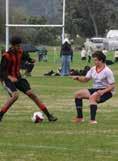

Mercury Bay Junior Girls Football host Te Awamutu
Tough Weekend Match: Mercury Bay Junior Girls extended warm thanks to Te Awamutu for travelling such a long way to play in this weekend’s fixture. The visitors proved too strong across the park, taking an 8–0 win despite a committed effort from the Bay side.
Although the Mercury Bay girls worked hard and played well, they found it difficult to create clear chances against a good side. There were bright moments for the Bay, with Siaree Johnston standing out and earning recognition from the opposition. Isla Flynn was named Player of the Day for her work rate and determination all over the field.
Mercury Bay Junior Boys, Sat 6 June Tough Battle in Ngatea: The Mercury Bay Junior Boys faced their toughest test of the season, travelling to Ngatea in cold, wet conditions to take on unbeaten Hauraki Plains College (HPC), a physically imposing side.
First Half: Mercury Bay started
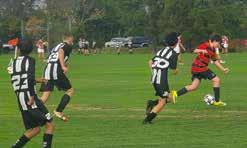
brightly, dominating early and creating several strong chances, including a nearmiss on an open goal. Against the run of play, HPC scored first after a scramble in the box (0–1).
The Bay responded well. Around 20 minutes in, Luke drove into the area and set up Tylar, who finished calmly to level the score (1–1). However, HPC quickly regained the lead from a chaotic free-kick situation (1–2), then added another just before halftime to make it 1–3 – despite Mercury Bay creating more clear chances overall.
Second Half: Mercury Bay showed determination, pushing hard and battling through HPC’s physical play. A controversial penalty gave HPC a chance to extend their lead, but goalkeeper Alfie produced an outstanding save to keep the Bay in the match. As Mercury Bay committed players forward chasing goals, gaps opened at the back. HPC capitalised late to score their fourth.
Final Score: HPC 4, Mercury Bay 1
Takeaway: Despite the result, Mercury Bay showed strong effort, skill, and resilience. The match provided valuable lessons against a tough opponent and highlighted the team’s potential moving forward. Up the Bay.


Mercury Bay U11, Marlins, Sat 6 June
The U11 Marlins faced the Whenuakite Hawks in a thrilling game under great weather, with both teams showcasing 110% effort. The second half was particularly exciting due to strong defense and skillful play, highlighting players like Soul White and Max Corkill, who earned recognition from both sides.
Mercury Bay Stingrays U13 Outstanding game versus Whenuakite on the small pitch at Cooks beach saw us dominate large parts but fail to break their strong defence while they threatened on the counter; our defenders held firm, we kept composure on the ball and made good passes, entertaining the spectators, with Piata earning player of the match for his defensive strength and attacking danger, Kaia receiving pod from the opposition, and a warm welcome to new player Johnathan who settled in well.
05.05.2026 Coromandel Injury on walking track. Extrication by winch. The patient was flown to Thames Hospital in a minor condition.
06.05.2026 Pauanui Crew were stood down at scene.
13.05.2026 Whitianga Crew tasked to assist a male patient in his teens suffering a medical complaint. He was flown to Auckland City Hospital in a moderate condition.
13.05.2026 Thames Interhospital transfer of a male patient in his 80’s suffering a medical complaint. Flown from Thames Hospital to Waikato Hospital in a serious condition.
14.05.2026 Whitianga Male patient in his 60’s suffering a medical complaint. Flown to Waikato Hospital in a critical condition.
14.05.2026 Cooks Beach Crew tasked to assist a male patient in his 80’s suffering a medical complaint. He was flown to Auckland City Hospital in a serious condition.
14.05.2026 Whitianga Crew tasked to assist a female patient in her 70’s suffering injuries from a fall. She was flown to Waikato Hospital in a moderate condition.
16.05.2026 Matarangi Crew tasked to assist a female patient in her 70’s suffering a medical complaint. She was flown to Waikato Hospital in a critical condition.
16.05.2026 Whitianga Crew tasked to assist a male patient in his 20’s suffering a medical complaint. He was flown to Middlemore Hospital in a serious condition.
16.05.2026 Whitianga Crew tasked to assist a male patient in his 50’s suffering a medical complaint. He was flown to Thames Hospital in a serious condition.
17.05.2026 Whitianga Crew tasked tto assist a female patient in her 70’s suffering a medical complaint. She was flown to Waikato Hospital in a critical condition.
19.05.2026 Whitianga Male patient in his 80’s suffering a medical complaint. Flown to Waikato Hospital in a serious condition.
19.05.2026 Whitianga Crew tasked to assist ambulance with a male patient in his 60’s suffering a medical complaint. He was treated and flown to Waikato Hospital in a serious condition.
19.05.2026 Thames Male patient in his 70’s suffering a medical complaint. He was treated and transported by road ambulance to Middlemore Hospital in a serious condition.
21.05.2026 Kuaotunu Male patient in his 60’s suffering a medical complaint. Flown to Waikato Hospital in a serious condition.
21.05.2026 Thames Interhospital transfer of a female patient in her 70’s suffering a medical complaint. Flown from Thames Hospital to Waikato Hospital in a serious condition.
22.05.2026 Whitianga Crew tasked to assist a male patient in his 70’s suffering a medical complaint. He was flown to Waikato Hospital in a critical condition.
24.05.2026 Whitianga Crew tasked to assist a female patient suffering injuries from a fall. She was flown to Waikato Hospital in a moderate condition.
26.05.2026 Whitianga Assist a baby suffering a medical complaint. The baby was flown to Waikato Hospital in a moderate condition.
28.05.2026 Thames Male patient in his 70’s suffering a medical complaint. He was flown to Waikato Hospital in a serious condition.
30.05.2026 Whitianga Crew tasked to assist a male patient in his 20’s suffering a medical complaint. He was flown to Auckland City Hospital in a critical condition.
31.05.2026 Whangamata Assist a female patient in her 80’s suffering injuries from a single motor vehicle accident. She was flown to Auckland City Hospital in a critical condition.




BY ANNE-MARIE MCDOUGALL
We have had a phenomenal first week of the L'Oréal Groupe French Film Festival, with over 700 patrons through our doors and a further 600 prebooked through to the end of the festival on 17 June. We have been carefully taking scores from our Movie Lovers, asking them to rate their viewing out of 5 croissants. Here are some of the top contenders for your consideration:


Colours of Time x5, screening Sat, 13 June 1.00pm
Once Upon My Mother x5, screening Saturday, 13 June 8.00pm
Jean Valjean x4, screening Thursday, 11 June 3.00pm
The Money Maker x4, screening Thursday, 11 June, 7.00pm
The Richest Woman in the World x4, screening Friday, 12 June 11.00am
Santiago: The Camino Therapy x4, screenings Tues 9 June 7.00pm & Tues 16 June 7.00pm

Guru screening Thursday, 11 June 11.00am Redress screenings Wed 10 June 11.00am & Wed 17 June 11.00am Book
The Son Of screening Wed 10 June 3.00pm
An Evening with Victor Hugo screening Saturday, 13 June 6.00pm Book Cycle of Time screenings Wed 10 June & Wed 17 June 3.00pm Dash of Love screening Sun, 14 June 11.30am. You are allowed to bring a coffee from your favourite cafe with you to the movie. Goes with our Choc-Tops!


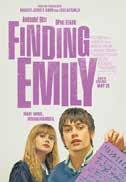



The Thames Squash Club is preparing to welcome some of New Zealand’s biggest names in squash for a special evening that will celebrate both the sport’s elite talent and the strength of the local squash community.
Made possible through the support of Westpac and other local businesses, the event will showcase the depth of experience and passion that exists within the Thames Squash Club, with members and supporters helping create an opportunity that brings world-class squash directly to the region.
Headlining the evening will be New Zealand squash superstar and current World No. 2 Paul Coll, who will take part in a special exhibition match against the talented Oli Dunbar. Paul Coll remains one of the world's leading players and continues to fly the flag for New Zealand on the international stage. He was the first New Zealand male to reach World No.1.
Also, former World No. 3 and Commonwealth Games gold medallist Joelle King, will face excit-
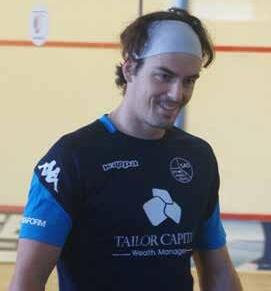

Paul Coll, Joelle King and Ella Lash are coming to Thames.
ing young New Zealand prospect Ella Lash in a second exhibition match. Joelle King remains one of the country's most accomplished squash players, while Lash continues to build momentum on the PSA World Tour as one of New Zealand's promising emerging professionals. Beyond the exhibition matches. Junior players will take part in on-court hitting sessions with Coll
and Dunbar, while all attendees will have access to meet-and-greet opportunities and Q&A sessions.
This event reflects the Thames Squash Club’s ongoing commitment to growing the game and creating opportunities for players of all ages to learn from and be inspired by some of New Zealand’s best.
Club President ,Leigh Robcke adds “This is more than hosting a

Mitch has over 40 years experience with an Advanced Trade Cert Wooden Boat Building quali cation to back it up
We specialise in woodwork repairs & maintenance, including teak decks & platforms, insurance and rot repairs, plus we t new transducers, anchor winches, bow thrusters and more.

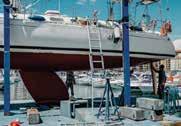

couple of exhibition matches. It’s about celebrating squash, showcasing the incredible knowledge and experience within our own club, and giving our members, juniors and the wider community a chance to engage with players performing at the highest level of the game.”
Squash enthusiasts from across the region are invited. It promises to be an evening of world-
class competition, inspiration and community spirit.
Tickets available now, with full event information available on the Thames Squash Club Facebook page. Contact: Casey Owen 021 179 0207. Event Details: 2 July. Doors Open 5.30pm, Thames Squash Club. Tickets: Adults $75, $50, $25 Child $25 (with a paying adult).
resin, breglass, TruDesign plumbing ttings and so much more!
Phone or email for info: info@whitiangaboatrepairs.co.nz info@whitiangaboatchandlery.co.nz Mitch 027 4852046 | Phyll 027 4852036