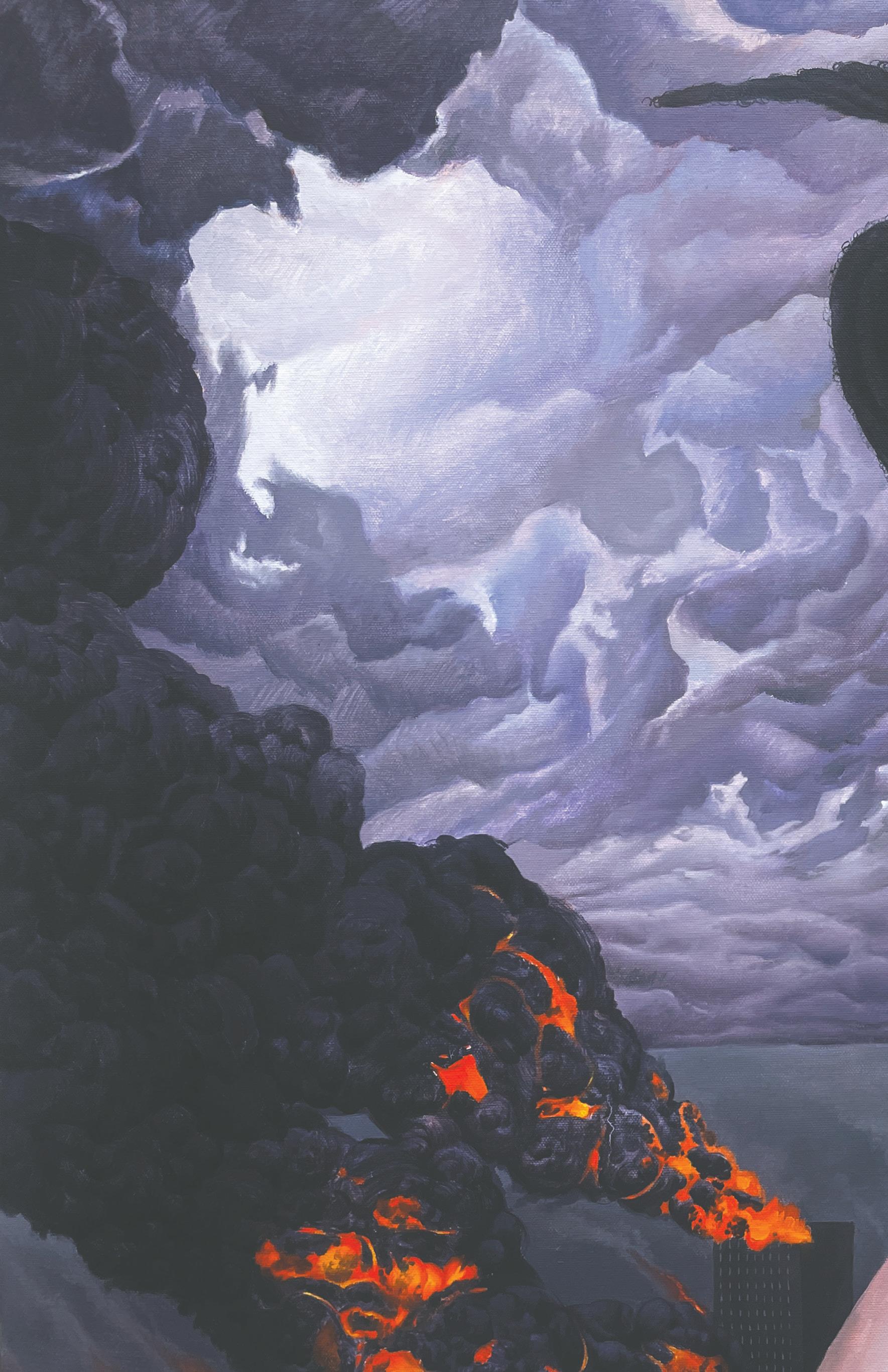
01 CREPUSCULAR
Longways down Benefit and crossways up Transit, I thought I’d spark a dalliance with time, the way it goes, man. Has anyone else noticed that the passing is lowkey slower when the time is differently spent? So, I headed to India Point Park. A step away, friends, a step away.
I will briefly slip into the third person plural to declare that We the editors wish the powers-that-be wouldn’t remove the old wood pilings from the Providence River. The pilings shed bits, and the bits pose an ecological threat. Counterpoint: the wood makes for a little man-made something amidst the river’s natural everything, and that is politically imperative.
Georgia wrote a song called “I don’t think of you at all 1.” It’s about thinking and calling it not-thinking. Let’s not-think about the wood disintegrating into the river and call it thinking about nature and artifice in the India Point Park riverscape. A necessary troubling of, let's say, nature’s sublimity. Georgia’s album, by the way, is laugh-out-loud beautiful, like a pencil.
MANAGING EDITORS
Benjamin Flaumenhaft
Nahye Lee
Kendall Ricks
WEEK IN REVIEW
Maria Gomberg
ARTS
Lucas Friedman-Spring
Martina Herman
Gabriella Miranda
EPHEMERA
Heidi Lin
Sara Parulekar
FEATURES
Sebastian Botero
Chloe Costa Baker
Peter Zettl
LITERARY
Liliana Greyf
Ayla Tosun
Georgia Turman
METRO
Jackie Dean
Elena Jiang
Mikayla Kennedy
METABOLICS
Annelie Delgado
Evan Gray-Williams
Evan Li
SCIENCE + TECH
Jolie Barnard
Selim Kutlu
Lila Rosen
SCHEMA
Paulina Gąsiorowska
Cindy Li
WORLD
Emilie Guan
Sabine Jimenez-Williams
Andrea Li
DEAR INDY
Angela Lian
BULLETIN BOARD
Caiden Demundo
Sarya Baran KılıÇ
MVP
Metro Mart
DESIGN EDITORS
Mary-Elizabeth Boatey
Kay Kim
Seoyeon Kweon
DESIGNERS
Isabella Castro
Hongrui Guan
Rose Holdbrook
Esoo Kim
Jennifer Kim
Jordan Kinley
Selim Kutlu
Jennie Kwon
Hyunjo Lee
Soohyun Lee
Chelsea Liu
Kayla Randolph
Anaïs Reiss
Lea Seo
Liz Sepulveda
Anna Wang
Caleb Wu
STAFF WRITERS
Layla Ahmed
Tanvi Anand
Cameron Calonzo
Megan Chan
Nan Dickerson
Ray Eggerts
Jacob Hansen
Maxwell Hawkins
Mohamed Amine Jaoudi
Annie Johnson
Nadia Mazonson
Keya Mehra
Naomi Nesmith
Nikolaos
Nikolopouslos
Alya Nimis-Ibrahim
Nora Rowe
Alex Sayette
Samdol Sichoe
Luca Suarez
Santino Suarez
Mahliat Tamrat
Ben Underwood
Ellie Wu
Jodie Yan
ALUMNI COORDINATOR
Peter Zettl
SOCIAL CHAIRS
Raamina Chowdhury
Lila Rosen
Alex Sayette
DEVELOPMENT COORDINATORS
Cindy Li
Peter Zettl
FINANCIAL COORDINATORS
Zak Hashi
Simon Yang
ILLUSTRATION EDITORS
Selim Kutlu
Serena Yu
ILLUSTRATORS
Abby Berwick
Rosemary Brantley
Rosalia Gonzalez Pousa
Koji Hellman
Jiwon Lim
Ellie Lin
Megha Nambiar
Ruby Nemeroff
Meri Sanders
Angelina So
Luna Tobar
Naomi Zaro
Cora Zeng
Alena Zhang
Faith Zhao
COPY CHIEF
Eric Ma
COPY EDITORS
Jordan Coutts
Mackenzie Ellis
Kainalu Faucher
Lucie Huang
Indy Nijjar
Camilla Rodriguez
Zeke Tesler
Sasha Watson
WEB EDITORS
Casey Gao
Erin Min
WEB DESIGNERS
Maja Mishevska
Amy Pan
Dominic Park
Joy Zou
SOCIAL MEDIA EDITORS
Olivia Falk
Sylvie Foster
Isabel Hahn
Avery Reinhold
Eurie Seo
SENIOR EDITORS
Jolie Barnard
Nan Dickerson
Paulina Gąsiorowska
Sabine Jimenez-Williams
Angela Lian
Plum Luard
Nadia Mazonson
Talia Reiss
Luca Suarez
OUTREACH AND INCLUSION
COORDINATORS
Raamina Chowdhury
Naomi Nesmith
*Our Beloved Staff
MISSION STATEMENT
The College Hill Independent is a Providence-based publication written, illustrated, designed, and edited by students from Brown University and the Rhode Island School of Design. Our paper is distributed throughout the East Side, Downtown, and online. The Indy also functions as an open, leftist, consciousness-raising workshop for writers and artists, and from this collaborative space we publish 20 pages of politically-engaged and thoughtful content once a week. We want to create work that is generative for and accountable to the Providence community—a commitment that needs consistent and persistent attention.
While the Indy is predominantly financed by Brown, we independently fundraise to support a stipend program to compensate staff who need financial support, which the University refuses to provide. Beyond making both the spaces we occupy and the creation process more accessible, we must also work to make our writing legible and relevant to our readers.
The Indy strives to disrupt dominant narratives of power. We reject content that perpetuates homophobia, transphobia, xenophobia, misogyny, ableism and/ or classism. We aim to produce work that is abolitionist, anti-racist, anti-capitalist, and anti-imperialist, and we want to generate spaces for radical thought, care, and futures. Though these lists are not exhaustive, we challenge each other to be intentional and self-critical within and beyond the workshop setting, and to find beauty and sustenance in creating and working together.
Week in the Pursuit of Property Pt. 1
( TEXT MARIA GOMBERG DESIGN ANAÏS REISS ILLUSTRATION NAOMI ZARO )
c Those of you who see me as a person, and not merely as an unlimited fountain of satirical content, will know that I am addicted to Zillow. Look, we all have our vices. I just happen to find a masochistic pleasure in comparing my own, admittedly shitty and overpriced apartment, with all the other options on the market. There is something titillating about knowing that in a better, counterfactual universe, I could be paying $750, utilities included, for an apartment with a garbage disposal and a slightly nicer tile in the bathroom. In this universe, I know that I am a chud with no dishwasher. This fact sometimes gets in the way of my sleep.
To be candid, Zillow is somewhat of a metonymy, a stand-in for all the other sources of ragebait I consume on a day-to-day basis. It encapsulates Facebook groups designed for those of us searching for roommates (Women+, or otherwise), homebuying TV shows, Craigslist listings, competitors like Redfin, Apartments.com, and, obviously, the real Zillow. (Did you know that Zillow is actually an anagram for ‘Lizzo,’ the stage name of the four-time Grammy Award–winning recording artist Melissa Viviane Jefferson? Say that ten times fast.) These various websites bring me lots of grief. Having deleted the Instagram app, and being relegated to its slower, uglier sister, the web browser version, I find myself turning to all of these sources of domestic insecurity for respite. Instead, I face disappointment and grief. Because all of you have to go through what I go through, because we are a family, and if I don’t have it good, neither can you, I have selected some of my favorite (semi-fictional?) listings from all of these

1. Are we all sexually involved with you because you are our landlord, or are you our landlord because we are all sexually involved with you?

Queer Poly House in Wayland Square: “Hi Loves <3, Join our vibrant, eccentric, and diverse COMMUNITY (I love community). I am the non-hierarchical collective experience manager, Charles M (he/him, 46), and I am so eager to have you join our freaky lil’ collective. Although I do consider collective experience managing my full-time job, I am a retired pro wrestler and a kayaking artist. Your coven (haha), is just off of the ‘shared lives quarters,’—which come with a pink foosball table (everybody watches women’s sports) and a high-pressure massage hot tub swing in the middle of the room. The more attentive kittens amongst you might have noticed that the rent is a little higher than a regular property of this size, but it includes the HRA (Home Renters Association) fee, the bush-trimming service (which I provide myself), and a small redistributive premium for the local community (not tax deductible)! We share all of our groceries, and we take turns cleaning. All new members get the opportunity to intern as ‘cleaning facilitators’ during their first weeks, wherein they will take on the majority of cleaning duties.”
2. No Window, No Problem!
“Studio apartment” in Downtown: “NEWLY RENOVATED OFFICE BUILDING CUBICLE/LOFT HYBRID. 52 sq. ft of luxurious vinyl laminated space, designed for hard-working professionals in various sectors. The unit comes equipped with an all-in-one nifty & co. compact, low-maintenance kitchenette (microwave, toaster oven, kettle) and a composting toilet murphy bed. Enjoy the hustle and bustle of Downtown Providence on a Sunday morning while sipping an instant coffee by your regulation-sized vent. NOTE: This is technically not legally qualified as an apartment, or even a room! Ideal for short-term renters working in the medical industry. NO PETS. NO PARTNERS. NO FRIENDS. NO, NO, NO.”
3. Slumlord Special
Dilapidated shack in Fox Point: “5 bed. 1 bath. 15 minutes from Brown, 15 minutes from RISD, somehow also 15 minutes from Trader Joe’s, I promise. Adequate apartment, with floor and some ceiling. Ideal for hard-working college students seeking a place to live. Priced and built. Close to places, and also geared towards you. May have a bathroom also. Parking spot, sometimes.”
4. Mansion?
Mansion for rent in Smith Hill: “Do you know that giant, beautiful, ornate, Edwardian mansion with a turret and a balcony shaped like a Venetian mask?
dermatologist. You know how you always wonder who can afford to live in such a gorgeous feat of architectural zeal? Well, it could be you! For the suspiciously low price of less rent than you are paying right now, you can live in a 126 sq. ft. room with a bay window, adjoining a formal dining room with a living pheasant who doesn’t shit, but does care for you when things get hard. The kitchen has been newly remodeled and has an induction stove, which is neither gas nor electric but is beautiful and expensive. Located ideally, next to a park full of joy and earthly pleasures, as well as your job. Smells great. Shared with only one roommate. Her name is Alice Von Cherineal, and she is a scary lady in a nightshirt.”
5. If you lived here, you would be home already. One of those apartments by the train station. “NEW! VERY GOOD! AMAZING SHARED AMENITIES. LIVE IN COMMUNITY IN THE HEART OF PROVIDENCE, RHODE ISLAND. IDEAL FOR COMMUTERS. PLEASE LIVE HERE. Do you want to support a local real estate development company that made a heh-heh, uh, a less-than-ideal investment? Please. PLEASE. We will throw in a welcome mat. Your apartment is customizable! It’s a big gray box, to fill with your life! We have a gym and smiling children! And a pool, we will throw in a pool. Oh my God, oh—they are—please not the TV, you have repossessed everything I own, please sir, please, I beg you, I will pay back my many debts. Do I really have to say it again? I already said it the other day—ok, I am a dirty, dirty debtor. What do you mean by louder? I just said it super loud. Yes sir. Okay sir. I AM A DIRTY DIRTY DEBTOR. I AM A DIRTY DIRTY–”
As with all apps, I am more than a little dubious. Why would a company that benefits from a captive audience of buyers, sellers, renters, and landlords want to help people find their “forever home”? They are just trying to capitalize on the ‘forever home renter,’ forced to relocate every rental cycle, when their landlord hikes up their rent beyond the livability threshold. Even still, I can’t help but scroll. Every night, when I get into the bottom bunk with my three bunkmates, when we have all turned off our overhead light, I curl under my corner of the covers and open my Zillows, taking a peek into the lives of the more fortunate, and their many, many roommates.
MARIA GOMBERG B’26 is feeling good as hell.
Providence’s Rent Stabilization Debate
ON CRISIS AND THE VALUE OF PROPERTY
c On February 18, South Side resident and housing justice organizer Terri Wright faced a packed chamber hall at a public hearing for the Providence City Council’s proposed rent stabilization ordinance. “Every day, I work at the intersection of ‘the rent is due’ and ‘the shelter is full,’” she said. “I’m here to tell you that those two are the same thing.”
Approximately a month earlier, on January 22, City Council President Rachel Miller and President Pro Tempore Juan Pichardo proposed a rent stabilization ordinance that, if enacted, would cap Providence’s rent growth at 4% per year. The ordinance would play a major role in curbing rent prices, which grew 16% in Providence from March 2023 to March 2024. This far outpaced wage growth in Rhode Island, which stood at 5.8% (per the 2024 Rhode Island Employment and Wage Report).
The February hearing, which drew a mass of advocates, was called by the Council to solicit comment on the ordinance. It kept a quick time schedule and cut several speakers short. Still, it ran nearly six hours.
During those six hours, a number of speakers painted a dire image of housing unaffordability in Providence. One tenant, Daniel Haskins, said that he works multiple jobs, “between food service, delivery driving, theater, and teaching,” and is still “putting up 70, 80 percent of [his] monthly income just to cover [his] rent.”
Tenant Fran Webber, who submitted written testimony, told The College Hill Independent in an interview that “my partner and I together make an income that is just about the median income […] we spend more than a third of our income on rent. If the rent increased at all, we would have to move.”
Such experiences are emblematic of Providence’s housing “crisis”—a word that rang through city hall on the night of the hearing. That crisis is borne out across the 60% of Providence residents who rent.
About a third of renters in Providence are cost-burdened,1 meaning they spend more than 30% of their income on rent. 44% of those cost-burdened renters dedicate over half of their income to housing costs. According to a report released by the National Low Income Housing Coalition (NLIHC) last year, a minimum-wage worker would have to work 85 hours a week to afford rent for a two-bedroom apartment in Rhode Island.
These statistics are harrowing. But as Wright articulated, the “housing crisis” extends beyond the rent being due: It’s also the shelter being full. Although not all unhoused people may opt for available shelter, the fact remains that 618 of the 2,373 unhoused people recorded by the 2025 point-in-time count were classified as unsheltered. This means the primary residence for those people was “a car, tent, abandoned building, or other outdoor space,” according to the Rhode Island Current. This winter, at least three unsheltered people in Rhode Island have died from the cold
Many advocates for unhoused people in Providence identify high rents as a direct cause of
1But even these numbers don’t demonstrate the full problem: advocates have criticized the “cost burden” threshold for being too low, as it places an arbitrary number on housing insecurity and insufficiently describes the ripple effects of high rents.
eviction and homelessness. A number of Providence residents “could be one [rent] payment away from an eviction,” said Alicia Joo B’26, leadership coordinator with the Brown student organization Housing Opportunities for People Everywhere. Since 2020, 24,000 evictions have taken place in Providence, which has an eviction rate three times that of Boston —a city also described as experiencing a housing affordability crisis.
Cost burden and displacement also generate ripple effects. Cost-burdened individuals have “less money for groceries, less money to go out and buy from your local coffee shop, less money to go to your local restaurant,” explained Rhode Island State Senator Tiara Mack in an interview with the Indy. “So the economic impact is not just on that one household, but on that entire community.”
“When families are displaced, our schools lose students, our local businesses lose customers, and our streets […] lose the people who actually care for them,” said Wright in her testimony. “This is where property values truly sink: when a neighborhood becomes a revolving door for strangers rather than a home.”
The increase in rents is part of a nationwide unaffordability trend, affected by a lack of housing supply, the COVID-19 recession, and stagnant wages. “There is nowhere on the East Coast where you can make $25 per hour and afford a two-bedroom apartment,” said Mack, citing the NLIHC report. It also follows cuts to welfare programs like healthcare, utility assistance, and SNAP benefits by the Trump administration.
“It’s just really clear renters are getting slammed,” said Siraj Sindhu, executive director of Reclaim RI, in an interview with the Indy. Rent stabilization aims to address that pressure in two ways: “one, slow down the rate of increase of rents, and two, in the long term, bring down rents.”
Rent stabilization is one form of rent control, which has gained traction in recent years, with policies in San Francisco (1.6% cap) and St. Paul (3% cap).2
A rent freeze, or a 0% cap on rent growth, for rent-stabilized apartments is a major policy platform of leftwing New York City mayor Zohran Mamdani.
“From Trump winning in 2024 because people thought he would be stronger on the economy, to Zohran Mamdani winning in New York just last year on cost of living and affordability issues […] cost of living and affordability is front of mind for people in Rhode Island and for people in Providence, as it is for people across the country,” said Sindhu. “We’re in an economy where some of us are becoming fantastically, unimaginably wealthy and powerful, and most of us are living paycheck to paycheck.” Frustration with this reality, he says, has brought energy to the question of rent stabilization.
Nancy Green, a local landlord in favor of rent stabilization, also connected the issue to a broader affordability crisis. “Young working people are not
2 These examples are highly contentious. Supporters of rent stabilization in Providence argue that the implementation of rent control in other cities has helped lower rent prices. Meanwhile, critics note that rent stabilization caused a decline in property values in St. Paul and subsequent rise in real estate investment in nearby Minneapolis.
( TEXT NORA ROWE
DESIGN JORDAN KINLEY
ILLUSTRATION FAITH ZHAO )
being given the opportunity that they deserve or a fair share of the prosperity in this society,” she said.
In Providence, as the housing affordability crisis worsens, rent stabilization is now at the top of many city councillors’ platforms. It is the culmination of years of organizing by housing advocacy groups like Direct Action for Rights and Equality (DARE), which has been campaigning on the issue since 2017.
In order to be put into policy, the ordinance must pass two majority votes and the mayor’s signature. Mayor Brett Smiley has repeatedly stated his refusal to pass any rent stabilization ordinance, citing concerns with the policy’s efficacy and repercussions for the housing market. As advocates push for a city council supermajority (10 out of 15 votes) that could override the veto, debate around the ordinance has gotten more and more intense.
+++
Perhaps one of the reasons why rent stabilization has proven so contentious is that, as researcher Jonathan Tollefson at the University of Chicago put it, “there’s a bigger question here about the role of policy in peoples’ economic lives.” But policy has interfered with people’s economic lives for decades, with unequal distribution across neighborhoods.
One of the greatest examples of this emerged in the mid to late 1930s, when the Home Owners’ Loan Corporation (HOLC) conducted a neighborhood-by-neighborhood survey of “residential security,” or perceived property value, in what proved to be one of the most influential urban policy projects of the last century. The HOLC ranked each neighborhood from A (“Best”) to D (“Hazardous”), with D neighborhoods drawn in red (hence the term ‘redlining’). The project was intensely concerned with the racial and ethnic composition of neighborhoods: the presence of nonwhite and immigrant residents was characterized as detrimental to property values.
These maps were drawn by a federal agency, but they were also a tool of the market: they were intended to designate where would be safest for investors to spend their money. Meanwhile, neighborhoods with the lowest property values were cordoned off from investment. And as urban renewal projects swept across the States in midcentury, attempting to revitalize American downtowns, urban planners targeted “C” and “D” grade neighborhoods for demolition, believing they were adverse to the city’s commercial development. These neighborhoods contained disproportionately high populations of people of color.3
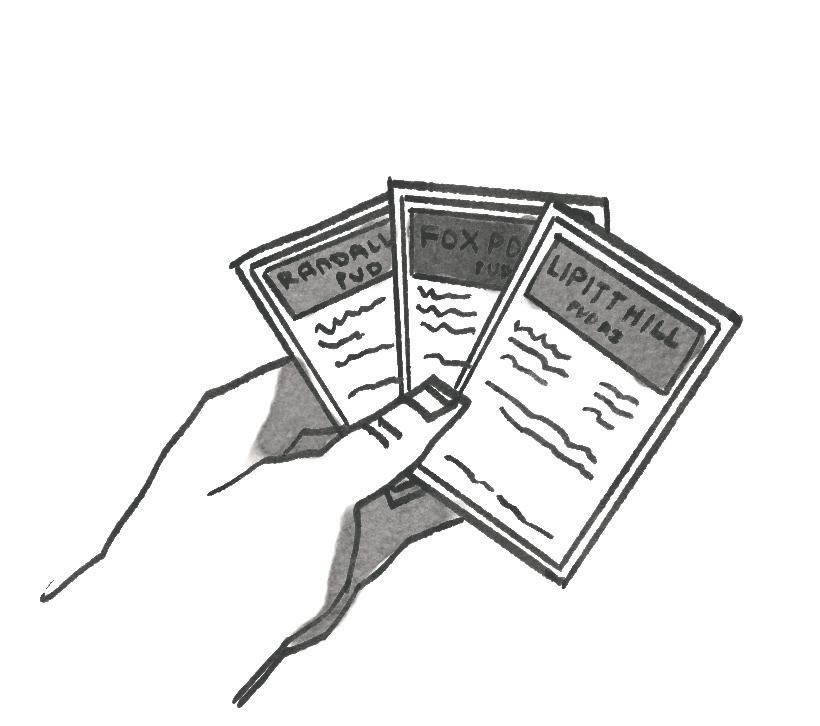
The HOLC drew up their map of Providence in 1936. 56% of the city was subsumed in a vast swath of “C-grade” neighborhoods, characterized as “definitely declining.” Included in this group was Lippitt Hill, a neighborhood northeast of downtown. In its official report, the HOLC described the neighborhood — with 92% of its population recorded as “non-white” at the time — as one of the city’s “most blighted areas.” It was then targeted and razed by urban renewal in 1959. In the aftermath of demolition, ³ Fogelson, Robert. (2001). “Inventing Blight: Downtown and the Origins of Urban Redevelopment.”
Yale University Press.
the majority-Black population of Lippitt Hill faced a ‘renewed’ urban landscape that contained unaffordable rents. “Monthly rent in the new units started at $90, far in excess of the ‘$36 to $40’ that [surveys] identified as an acceptable range for former residents,” wrote Tollefson for the Mapping Inequality project. “Relocation for Black families thus proved a significant challenge.”
Adjacent to Lippitt Hill, the neighborhood of Randall Square was redlined by the HOLC and later became a site for highway interchange construction. “Over subsequent decades, Black Providenceans were increasingly confined to neighborhoods bereft of industrial employment but replete in industrial pollution,” Tollefson described. “As a result, areas of the city’s South Side increasingly emerged as a new site of Black residential isolation.” Similarly referencing the effect of urban renewal on Providence’s South Side, Mack stated that “There were over 300 Black households that were removed during urban renewal to make the Rhode Island hospital.” Policymakers, she said, “wanted to divest from the inner city, because it was too Black, too poor.” The South Side has been a site of industrial pollution and disinvestment across decades. And this reality hasn’t been a result of the whims of the market; it’s a result of policy. Housing instability in Providence today is highly unequally distributed across neighborhoods. Eviction rates are highest on the South Side (with filings against 16.5% of renters), and in the neighborhoods of Randall Square and Olneyville: three of the lowest-income regions of the city. “In many ways, politics has steadily abandoned working people to the financialization of necessities like housing and employment,” wrote Tollefson. He characterized rent stabilization as “a chance to think about how political action might respond to rising social and economic inequality on the local level.”
Rent stabilization may be one policy to address housing instability in Providence, but is it the best one?
One major concern about the ordinance is that a decline in rent prices due to rent stabilization would reduce property values, causing the city’s revenue to drop. This, critics fear, would strip the city’s services and cause increased property taxes to make up the difference.
To explore these concerns, the Indy spoke with Tom Sgouros, a policy consultant who wrote the fiscal note for the proposed rent stabilization stat ute. He said that its impact on city services would be “negligible,” because any lost property taxes would be compensated elsewhere. But increased property taxes were a possibility.
“Property assessments are how the burden of supporting municipal government is allocated. If someone’s property value goes down relative to someone else’s, then their tax will go down and some one else’s will rise,” Sgouros explained in a text to the Indy. A decrease in rented properties’ value would cause an increase in taxes for another category—like owner-occupied homes.
Still, Sgouros characterized the damage as mini mal. “Residential rental property in question is less than 15% of all the property in the city.4 Any reduction 4If it seems strange that 60% of people in Providence rent, but only 15% of property is residential rental property, that’s because
in value to that property would be diluted by a factor of 5 or 6 if spread around the rest of the property in the city,” said Sgouros. “That is, a 5% loss in value to rentals would result in a change in everyone else’s property taxes of less than 1%.”
Rent stabilization would cause a decrease in rental property values, “but so would an increase in rental supply, which is what the landlords are arguing is a better solution,” said Sgouros.
This argument for a supply increase has been a primary talking point for many of the ordinance’s opponents, who acknowledge the housing crisis, but call for other means to address it. Last year, Rhode Island was ranked as the worst city in the country for housing construction and affordability. Mayor Brett Smiley, while opposing rent stabilization, has cited “accelerating housing production” and “streamlining development” as two of the main methods his team is using to address the housing crisis.
Local landlord Daniel Abram, another of the ordinance’s critics, runs a 15-unit rental business that’s been in his family for 20 years. He acknowledges that Providence is in housing trouble.
Instead of Rent stabilization to address the crisis, which he called “unfair,” he voiced support for rezoning and a reformed tax code to incentivize housing construction. “Anything above four units is considered commercial for tax purposes, and the taxes are double. My four-unit is $13,000 a year [in taxes] but my six-unit is $26,000,” he said. The high commercial tax rates “discourage builders to build over four units.”
He also claimed that business deregulation could create “the next Silicon Valley” in Providence. “I think that would increase people’s income so they’d be able to afford rents.”
of the unsettling nature of housing inequality, Sgouros says. “Space is distributed as unequally as income and wealth.”
Abram’s focus on deregulation to boost housing affordability runs contrary to solutions like rent stabilization, a market intervention. But to place rent stabilization against all other policies that address the crisis is a false dichotomy: rent stabilization advocates are overwhelmingly in favor of increasing housing supply, too. “The only proven way to improve rental costs is to build more housing,” Senator Mack said. “Rent stabilization is one tool we can use, but when rents are already as high as they are and we’re not refreshing the housing stock, it’s not going to be a tool [anymore].”
In an effort to encourage investment in new housing construction, the Council’s ordinance includes a cutout for new constructions, letting them set market rents for 15 years. “I think that should be plenty of incentive for private developers to build. They can see the return on the investment that they’re looking for,” said Sindhu. At the same time, advocates expressed concern about how quickly the benefits from building market-rate apartments might result in lowered rents more broadly. “I would love it if they would build more housing,” said Webber, but “I probably wouldn’t be able to live in new housing. So if they could stabilize the rents, too, that’d be fantastic.”
To fill the gap between affordability and construction, housing justice advocates have supported housing solutions can operate outside of the private market. Reclaim RI has advocated for the establishment of a public corporation that builds, owns, and operates mixed-income housing. “I’m hopeful that in the coming years we’ll be able to fund and build public housing at scale,” said Sindhu, “but that is going to take time.”
Proponents of rent stabilization argue that it could fill in that time gap, providing a guardrail against skyrocketing rents while other policies are pursued. “What are we gonna do between now and three, five, and 10 years, when we actually have the housing stock that will fulfill the needs of Rhode Islanders?” Mack asked. For now, “I think that we need something more aligned with rent freezing.”
The proposed rent stabilization ordinance would also provide support to renters through its establishment of a five-person rent board, appointed by city

multifamily homes “in order to turn them into student rentals with massively inflated rent costs,” according to Sindhu. The mass construction of student housing by few, powerful corporate actors—namely Strive, the 02908 Club, and Amicus Properties—has contributed to the rise of housing unaffordability in neighborhoods surrounding Rhode Island College and Providence College.
Rent stabilization isn’t set up to address this. Rather, housing justice advocates push for the establishment of tenant unions and new policies to mediate tenant-landlord interactions. These include just-cause eviction policies, a longtime platform of organizations like Reclaim RI and DARE which would require landlords to provide a ‘satisfactory cause’ for eviction. Sindhu also gave the example of Hell’s Kitchen no-harassment zones as a model for Providence, which require developers and landlords looking to raze property “to prove to the satisfaction of the rent board that the previous tenants [were] not harassed or coerced in order to get them to move out.” While some tenant unions have seen successful negotiations with landlords, municipal or state policies such as these have yet been unsuccessful.
“It’s important to remember that there’s a big policy toolkit, and that there are a lot of housing policies that can be enacted,” Sindhu said. “I’m in favor of looking at everything in that toolkit.”
Rent stabilization, more so than other tools in the housing policy “toolkit,” is seen by its opponents as having a direct and dramatic impact on the market. But when asked about critics’ fears that rent stabilization would change the housing market, Sgouros burst into laughter. “Isn’t changing the market the point?”
Markets, Sgouros said, are really good at making sure every seller can find a buyer. But “a market where every seller can find a buyer [is also] a market where lots of buyers can’t find a seller.”
Housing is different. For housing, “we really want a world where every buyer can find a seller.” And to Sgouros, “it does not seem totally crazy to try to address it through some kind of market intervention.”
Like any market intervention, rent stabilization has its costs. Landlords have submitted testimony stating that lower rents would compound on already mounting utility costs, making their business more difficult to run. “I don’t doubt some of the stories that they tell about how much their costs are going
up,” said Sgouros. However, he pointed out that other market-reliant policies, like increasing housing supply through deregulation, would also lower the landlords’ profits.
More so than any other policy, critics argue that rent stabilization strips them of their agency. “It’s very anticapitalist, anti-market to tell me how to run my business when I want to be able to crunch the numbers and charge a fair rate and do it in a way I know is possible,” said Abram. But as Sgouros added, “markets aren’t infallible.”
Sindhu also spoke to this point. “What we’re seeing all over the country is market failure. And that’s a market failure caused by the fact that we do have a housing shortage. But the market doesn’t seem to mind that. The market doesn’t seem to mind short supply and high rents, because that means high rates of profit,” he said. “Investors and property owners are not incentivized to do anything, to build more, or to bring down rents, because [...] the status quo is actually working well for them.”
“None of the controls that happen in our economy happen because some economist thought this was a good idea,” Sgouros noted. They happen, rather, in response to “disaster.”
What, exactly, defines that disaster? Providence has been characterized as being in a ‘housing crisis,’ but that crisis isn’t singular or recent; it’s part of a long and complex history of housing inequality and disenfranchisement directed towards low-income people and people of color. By extension, questions about the crisis bring about a discussion of the very purpose of the housing market.
Some arguments against rent stabilization criticize the principle of government intervention. According to Abram, “it’s very anticapitalist, anti-market to tell me how to run my business when I want to be able to crunch the numbers and charge a fair rate and do it in a way I know is possible.”
But there’s a category of goods “too precious to be left to the market,” Harper Keehn, an organizer with DARE, said in an interview with the Indy. Owning these goods “is not luxury, it’s not a preference; it’s actually a condition of dignity and survival.” If such things are left to the logic of the market, that market “becomes extraction instead of exchange.”
“The question is,” said Keehn, “is housing in that category [of goods] or not?”
To many advocates, it is. In her testimony, Wright argued that price should be tied to liveability rather than profit. The value of property sinks, she said, “not
because tenants have protections like rent stabilization, but because the livelihood of tenants [has] become this numbers-crunching game.”
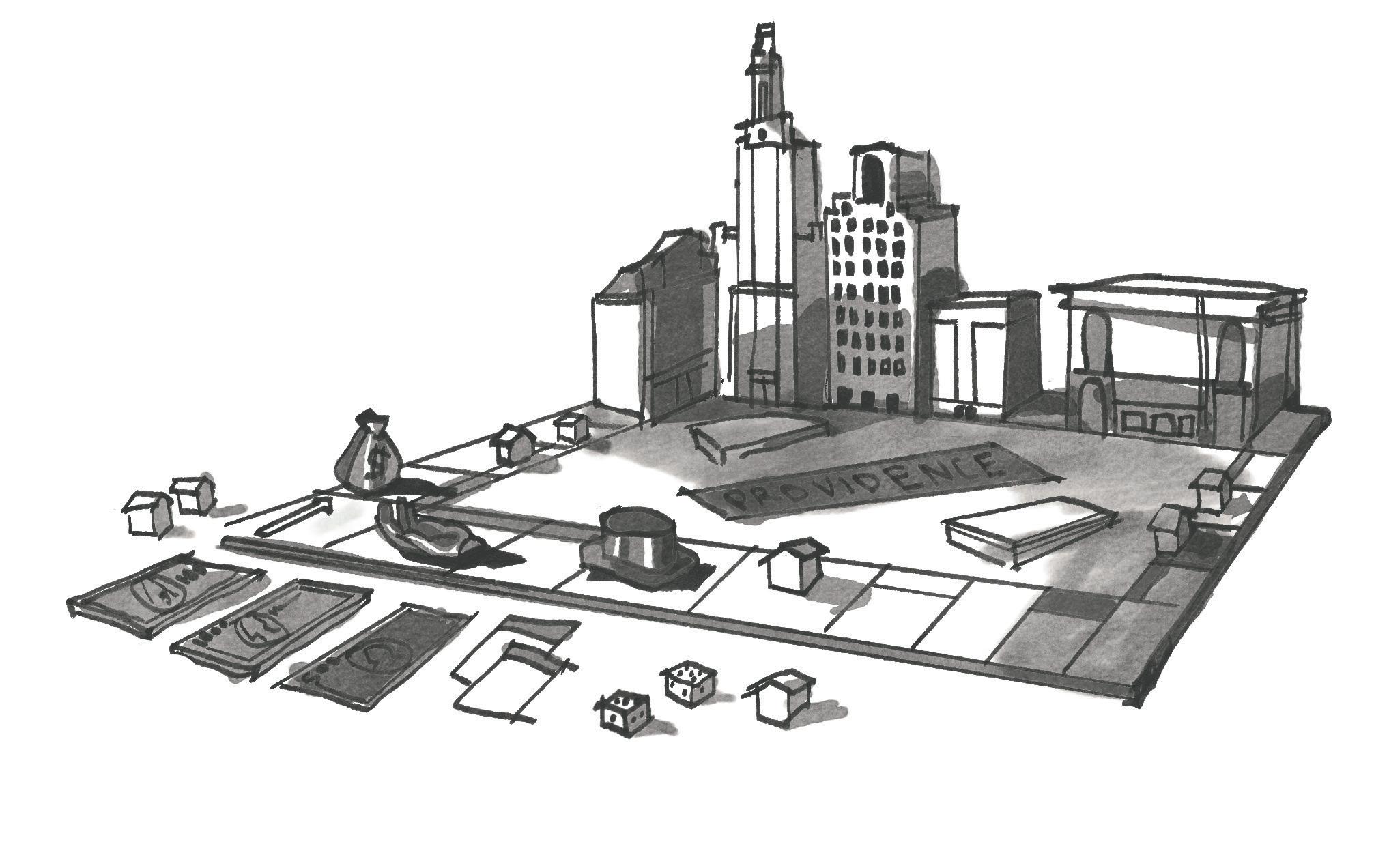
“We are not pieces on a Monopoly board,” Wright added. “We are tenants and families who solely depend on our landlords and our property owners […] to make sure that [we] live in clean, dignified apartments that [we] can afford.”
“The landlord lobby doesn’t need to explicitly argue that their right to profit should come before others’ right to shelter,” Keehn said, “because the legal and cultural infrastructure of our country already assumes this to be true. The pro-tenant side has to argue against an invisible default.”
The rent stabilization debate is a microcosm of a broader critique of who the market provides for. “Housing is an issue that really gets to the heart of the class contradictions in our society,” Sindhu said. “It really speaks to who has power and who doesn’t. Who has some measure of security, and who has to live at the mercy of [owners].” To its advocates, rent stabilization is a small step towards ensuring that security for all. But without a large-scale definitional shift of the way we put roofs over our heads, housing justice will continue to be an uphill battle.
“The only way that we’re gonna truly get out of this housing crisis,” Sindhu said, “is to make sure that housing actually is a human right, and that that human right is bottom lined by public entities.” In short, we need to do more than make sure that tenants are “not pieces on a Monopoly board.” We need a bigger board, and a new definition of winning.
NORA ROWE B’28 has sworn off land-grabbing board games.
EXTRACTIONS, REVISIONS, IMPROVEMENTS
c The burden of articulation oppresses certain friends of mine. I see how well they wish to say things about being alive. This has happened to me! Wishing to live well, too, can be an obstacle to feeling alive. I’ve always been afraid of the deliberate. It’s in poor taste to admit that you want things, that you are in fact aware of a world not directly pertaining to the self— that’s insecurity, and that’s unattractive. Smile and know that your old clothes look good. But it is also frightening to think that, in deliberation, we assign everything a first state corresponding to its last one. Beginning and ending become the stuff of being; what we want instead is living.
“Living well is the best revenge.” No one who lives well means it. Meaning is just something imposed by those who experience distinctions. It’s perhaps the worst aesthetic conceit of the modern age to assume that anything or anyone appealing must be distinct. To be appealing is instead to be everything to everyone and yet, when left alone, to know how to be quiet. What does it mean, then, to be independent? It is, I sometimes think, a bad undertaking, for we misunderstand independence as the pursuit of individuality rather than of experience; being independent in no sense requires being yourself, whatever that means. We too often mistake an aesthetic commitment to distinction for an ethical one to judgment. I read Henry James’ The Portrait of a Lady last fall, for class. The American Isabel Archer goes to England, acquires suitors, inherits a fortune, and makes a bad marriage. Her chief desire is for “independence”—she wishes to know everything, all conduct right and wrong, “so as to choose.” Lord Warburton, the perfect aristocrat, admires her perpetually; Caspar Goodwood (my professor made jokes) attracts her sexually; Osmond, the “sterile dilettante” whom she marries, makes her wretched. She is the victim of manipulation and deception; her Albany earnestness suffers under the Continental reign of moral turpitude. Her passion for independence, technically rather twee, evolves into a posture of obligation. Though loss and acquiescence haunt the novel’s conclusion, certainty does not obtain.
For the most part, I read only for class; if you can’t be one with the universe of knowledge, then perhaps better to carry your books at a slight distance from your body. I shrive myself—shriek my own name, and whisper “Isabel Archer” into my pillow. Did I really read it? We were made to write about it. A strange place in which we find ourselves, when expression must confirm experience. I am full of strange compulsions; it seems wrong that anyone might compel me to express them. Do you like me? This is the question that the properly independent person has learned not to ask. She accepts what you will think—and knows that you already like her.
Are you reading my work, reading me? Here you will see the way that I thought when no one was looking—my professor glanced at my work only once, at the end of the semester. He missed me by not reading; you will miss me by reading. Because I was made to keep a course notebook, because I wrote only what presented itself to me—in a certain sense, I am not here. My absence is assured by my lack of volition and deliberation, the totality of experience, my utter independence.
For 11/1/24
It is difficult for any adolescent girl to read The Portrait of a Lady and not imagine that she is Isabel. Still, there’s something to her character beyond the verdict of “appealing.” The question is why she seems the right thing to be. Maybe I’ll have an answer to it in a few weeks.
There’s a lot of ordinary pleasure in the novel. Isabel’s mind feels familiar rather than confining. When worried, she longs “to transfer the seat of
consciousness to the organ of pure reason.” The inability to do that, coupled with the fantasy that you might be capable of it, is as good a description as any of being young. Isabel’s sense of the waiting world is determined, at least in part, by a sense that it is rational. She imagines life as a process of discovery rather than creation; she supposes that the world already exists. Abstraction enchants her and that may be why she rejects Lord Warburton. His appeal is entirely concrete—good looks, wealth, a moat. Her commitment to independence emerges from her interest in the abstract; she regards satisfaction with suspicion. She wants to be free, but has little sense of anything other than constraints. Her independence exists in the negative rather than in the positive sense. She is certain that she cannot marry Warburton: “I can’t escape unhappiness.” But her sense of unhappiness, like her desire for independence, hangs loosely. She knows that she has been happy and wants to be so. Unhappiness, as fate, is both determined and expansive. Things will happen and it is right that they should. Nothing more specific.
For 11/8/24
For the sake of plot, I am glad that Isabel has succumbed to infatuation. Still, I shake my head at the eternal tendencies of young women. Her independence! Osmond—perfect taste, paucity of emotion— is unbearable but so is, at times, Isabel’s earnestness. She makes him easier to like. Let me hold forth, in fragmented fashion, about the role of the aesthetic thus far. There is a great deal of beauty in the novel; it is not that to which I refer. Instead, I am groping towards a theory of the aesthetic life. Osmond leads one; Isabel, though a beautiful creature, does not. The aesthetic life is highly subjective without being truly independent. Order characterizes Isabel’s thinking. Her mind is vertical. She is glad to find that “in spite of the growing complexity of things she was still capable of these primitive sequences” of thought. She visits Rome and her reaction is “as might have been expected of a person of her freshness and her eagerness.” The aesthetic life is horizontal, in its multiple suggestions and moral haziness; a single authority, that of taste, determines its course but such taste is beholden to no moral rigor. Is it an accident that when she visits Osmond’s house, they go from room to room, from side to side? When he professes his love, she sits in a garish room of overwhelming impressions. Nothing follows directly. Her feeling for him brings her imagination to “a last vague space it couldn’t cross […] but she was to cross it yet.” She cannot help it. Perhaps Isabel’s vertical mind indicates the survival of the Puritan ethic in America. Such logic propelled the Puritans across the sea; the elect and the damned, the city on the hill, etc. Some things are right and true to some people. Proceed straight on from there, onto I-95. That’s about the gist of it. But this “last vague space” proves to be one of terrible sorrow.
For 11/15/24
Is the ending, in fact, a portrait of a lady? Isabel is strangely absent from it. We finish with her a few passages before. An intense sexual experience with Goodwood, the “kiss like white lighting,” and then a final thought: “There was a very straight path.” A path, it seems, leading back to Rome and to her husband. Goodwood’s kiss is all-consuming but not unpleasant; one could call it the consummation of adult desire in a book full of infantile affection. She leaves. Perhaps unhappiness is the crux of independence; Isabel knows now what might make her happier, but she retains her right to choose. In this final interaction with Goodwood she has come to know, as she wished to much earlier in the novel.
( TEXT JULIA SPRUNG
DESIGN JEN EUNGYO KIM
ILLUSTRATION KOJI HELLMAN )
That line of hers—“so as to choose”— is haunting now, because knowing involves other people and other people cannot help but feel. A friend of Isabel’s advises Goodwood: “Just you wait”—the truth lies beyond you. Isabel has struggled to imagine the degraded motivations of her companions, alienated as they are from the tendencies of her own mind. Perhaps, in returning to a life in which she cannot be herself, she has finally separated the individual from the experiential. Self-concept need no longer play its role as the cherished limit of her understanding. The path is “very straight,” its perceptible aspect entirely complete. Over her behavior she need not worry; her imagination plays no role. “Very straight” strikes me as among the strangest phrases in the novel. Isabel’s initial earnestness brooked moral but not physical certainty; it was the material experience of the world to which she was so open. Now, everything converges to the clarity of appearance. In the end, her great quest for subjectivity is futile; it does not matter who she is but only what she does. Acquiescence has freed her of fantasy and of herself. The path is not particular to her; and it is only on such a path that she may walk in independence.
I have made extractions, revisions, improvements—these reflections are probably the worse for it, having lost their freshness, the rhetorical equivalent of the body young and erotic. Actually younger bodies are too purposeful for much eroticism. That old independence in its phoenix moment of wrinkles, vermillion, and gold—ashes to ashes, dust to dust—there’s something wonderful in a body that knows that it must return and knows well not to hazard the question of choice. But I am real and, as it rains tonight, somewhat closer to the eroticism of true independence, the kind that realizes an impulse towards dependence as the condition of its possibility. An independence that knows that it must end but that time, somehow, is external to it. Sometimes I listen to a song, again and again—the composition contains itself, subjects you to its logic of time, makes each movement feel natural and necessary. But it’s the moment when you choose to begin once more, as the beginning contradicts that you realize that you were not the first to choose—and that certain developments can’t be taken back. And you look down, to see just how still you are. And you know that growing up is only really possible in art.
JULIA SPRUNG B’28 seeks independence from The College Hill Independent.

ABAJO EL BLOQUEO
CRISIS AND RESILIENCE MARK CUBANS’ EXPERIENCES OF THE U.S.-IMPOSED BLOCKADE
( TEXT BENNETT SHIN LACERTE DESIGN ISABELLA CASTRO ILLUSTRATION SERENA YU )

This piece anonymizes the last names of certain interviewees to protect their identities.
c Al volver de distante ribera con el alma enlutada y sombría, afanoso busqué mi bandera ¡y otra he visto además de la mía!
¿Dónde está mi bandera cubana, la bandera más bella que existe?
¡Desde el buque la vi esta mañana, y no he visto una cosa más triste!...
Con la fe de las almas austeras, hoy sostengo con honda energía que no deben flotar dos banderas donde basta con una: ¡la mía!
Excerpt from “Mi Bandera” by Bonifacio Byrne.

The days take their time here in Havana. Tonight is like any other: a candle-lit dinner of arroz, frijoles, pollo, remolacha y vianda, followed by hanging laundry to dry and watching it float in the humid February breeze. I massage my host mother’s arms until she falls asleep to notes from a neighbor’s cello carried in through the window. The steady clacking of dominos drags into the early morning light only to be replaced by mourning doves trilling from the tops of almond trees. Amidst such a gentle backdrop, one might not know the crisis currently threatening Cuban life and sovereignty.
On January 29, 2026, Trump issued an executive order imposing tariffs on all countries that provide oil to Cuba. This is the latest escalation in a long history of intervention, including a decades-long economic blockade which has strangled the nation. When Cuba achieved independence from Spain in 1898, the island became a satellite state of the U.S. until 1903, after which the Platt Amendment granted Cuba its sovereignty in exchange for the U.S. to maintain the right to intervention. Following the triumph of the 1959 Cuban Revolution, which was in large part a response to the intense inequality generated by U.S. enterprise in Cuba, the U.S. government placed strict sanctions on Cuba, effectively isolating the island from the rest of the world. UN estimates put the accumulated cost of the U.S. blockade of Cuba at $1.5 trillion.
I arrived in Havana for my semester-long study abroad program with the Consortium for Advanced Studies Abroad, three days after Trump’s order cut Cuba off from oil imports. I’ve seen lines snake around blocks as
people wait late into the night for gasoline, international airlines cancel flights to and from the island because of their inability to refuel, public transportation become so infrequent that the sight of a bus is considered a miracle. Without a supply of oil into the country—a supply which largely came from Venezuela before American forces ousted Venezuelan president Nicolás Maduro—Cuba’s major transportation networks, electrical plants, hospitals, and water supply have been effectively paralyzed, leaving the country in a worsening humanitarian crisis. And yet, Cuban life persists: Jazz concerts and movie projections continue despite interruptions from daily power outages, children dance and couples kiss on el malecón, neighborhood networks distribute essential medication amongst their residents, medical vans make stops on my street to transport elderly patients to the hospital, people squish without protest to make space in increasingly infrequent máquinas.
With aims of ushering in regime change, the Trump administration’s assault on Cuba is part of a new wave of U.S. imperialist aggression—exemplified by the January attack on Venezuela and abduction of Maduro, the annexation threats made against Greenland, and the escalating regional war with Iran. But imperialist advances against Cuba are nothing new. For decades, the U.S. government has employed a wide array of tactics in its attempts to undermine Cuban sovreignty—from the failure of the Bay of Pigs, to the trauma inflicted on Cuban children through Operation Peter Pan, to the recent redesignation of Cuba as a State Sponsor of Terrorism.
Meanwhile, mainstream U.S. media have portrayed Cuba as a failing state, predicting its inevitable collapse and presupposing the nation’s inability to govern itself. Visible consequences of a strained and sequestered economy, like dilapidated urban dwellings and growing piles of trash in the streets, are evidence of a sort of bygone glamour that can only mean the failure of the Cuban Revolution (and the necessity of U.S. intervention).
But the United States’ war against Cuba cannot fully be understood through the geopolitical analysis given to us by U.S. media outlets, which have much to gain financially from pro-intervention sensationalist stories. It must also be told through the lived experiences of people on the island. In what follows, I recount a series of conversations with a few of the Cubans I’ve met in the six weeks that I’ve been here.
The Cuban experience is by no means monolithic. That is, the blockade enacts its violence across factors such as geography, race, neighborhood, ability, and age. Thus, it’s important to note that my access to interview connections has been determined by my location and position as an exchange student. None of the conversations referenced
in this article were first encounters; rather, I have only interviewed people with whom I had established a previous level of contact and trust. All interviews were conducted in Spanish and translated into English by me. +++
Kali is 22 years old, a recent graduate of the José Antonio Echeverría Technological University, and currently lives in Bejucal, a rural town in a province bordering Havana. She is also my host mom’s niece and spent the weekend with us before returning to her job as an industrial engineer.
As we sat down to begin our interview, the lights flickered out and the soft voice of Silvio Rodríguez coming from the CD player came to an abrupt stop. A beat of silence was broken by the distant whir of generators kicking in for some more fortunate apartments. “Ah, the power went out,” Kali said, the side of her mouth curling up. After placing a solar-charged LED lamp between us, we sat back down to resume the interview. Through the window behind Kali, droplets of seawater showered the dark street as waves crashed into el malecón, their violent spray lit up only by the moon.
Apagones, or electrical blackouts, have become a daily part of life in Cuba, with some parts of the island going without power for 22 hours a day. Kali lives in a rural town, where apagones last much longer and have a greater impact than in the city of Havana. Her experience is just one example of the disparity between urban and rural experiences of the blockade; the networks that provide food, medicine, and transportation for rural Cuban populations are more strained than those in urban areas. Current inequalities between rural and urban life have been compounded by worsening housing conditions and fewer opportunities for education and employment, which has been caused by decades of sustained depopulation
Within her municipality, Kali notes, “Some houses have generators or batteries. But in my house we have nothing, and so we have to depend on other people. The moment the power comes, you have to cook, collect water…it’s as if you have a timed life.”
Arriving at the topic of her educational background as an engineer, she expressed pride in her country’s efforts to make university accessible. “Here everyone has access to university, but going to university can come with its expenses. You need money to pay for a computer, food, and connection to the internet,” she said.
But interruptions plagued her time attending
college. “We have been suffering from the blackouts since my first year at university. After my second year, I couldn’t take public transportation to school anymore,” she told me.
While Kali is no longer in school, many of her friends in university have been taking classes online since mid-February. Their virtual attendance follows a wider trend. According to Kali, many students from rural provinces attending university in Havana—who make up about half of the student population there— were sent home the week of February 9. “It’s not ideal, but it can be done. It was done during Covid,” Kali said. “But accessing the internet is not as easy as it once was.” As with the interruptions that marked Kali’s first year in university, a shift to online learning places a disproportionate burden on students from rural regions that lack consistent internet connection and electricity.
Currently, Kali works as an electrical engineer—specifically an Innovation and Development Specialist—at the state-run Ministry of Science, Technology and Environment. As of January, she has been working on a prototype for a hybrid system of converters and solar panels, a project that can hopefully be used to meet the country’s dire energy needs. Such a project falls in line with Cuba’s recent push toward renewable energy; in the last two years, a collaboration with China has helped Cuba to be well on its way to meeting a goal of installing 92 new solar parks by 2028
After I asked her how her workplace has changed after the recent escalation in the U.S. blockade, she sucked in air through her teeth. “My relationship with my work has been marked from the beginning by the U.S. blockade, which limits access to updated scientific information and essential technologies,” Kali said. Indeed, U.S. sanctions have restricted Cuba’s access to scientific collaboration, biomedical databases, and even the medical supplies necessary to produce their own vaccines.
Kali explained to me that her story is not a particularly unique one. She told me “[the United States] isn’t realizing that we, the Cuban people, are suffering, and we are not guilty of anything.”
Kali’s hopes for the future of Cuba are not unattainable: “I dream of a country that, in spite of the difficult realities that we have confronted like the blockade and the shortages, can construct a path toward development, where the younger generations have full access to education, technology, and international collaboration.”
Rafael Hernández is a Havana resident and the director of Temas, a Cuban academic journal in the social sciences and humanities. Hernández has not only studied the subject of Cuba-U.S. relations for decades, but also lived through the Cuban Revolution himself. His involvement in the Revolution and his
“Kali’s hopes for the future of Cuba are not unattainable: ‘I dream of a country that, in spite of the difficult realities that we have confronted like the blockade and the shortages, can construct a path toward development, where the younger generations have full access to education, technology, and international collaboration.’”
conviction in its socialist ideals dates back to his adolescence, when, during the 1961 literacy campaign in the Cuban campo, he taught rural families to read and write. I know him as my professor for the political science class “Cuban-U.S. Relations.” In the still heat of a February afternoon in Havana, we sat down to chat over a cup of Cuban coffee.
He began our conversation by telling me about his work with Temas and the resilience with which
the journal has met the current crisis. Just two weeks ago, the review published its latest issue and hosted its Último Jueves seminar, which continues a 20-year tradition of monthly public debates on national issues ranging from public health to foreign investment. With regards to the blockade’s effects on daily life, Hernández stated plainly, “One must adapt themselves to the current conditions. Sometimes, the lights go out […] The circumstances of the crisis—the lack of energy, the lack of transportation—force us to create a different framework.”
Hernández’s outlook on the issues afflicting the island is one shared by many Cubans: Life must continue. In the time since Trump issued his executive order in January, the island has made significant progress in the development of solar panel infrastructure, the electrical system has begun implementing backup batteries that can prevent future apagones, and free technology has been distributed to Cuban students continuing their studies from home when transport is unavailable.
And yet, little news of Cuba’s resilience against the oil blockade reaches the United States. Instead, headlines from U.S. media outlets declare that Cuba is doomed. “Cuba’s Long-Suffering Economy Is Now in ‘Free Fall’,” The New York Times declared on January 6, and on February 18, CNN reported that “Under US pressure, life in Cuba grinds to a halt.” While Cuba’s situation is certainly urgent and warrants alarm, it’s important to note how these headlines imply the inevitability of regime change in Cuba. Bringing up the 1992 bestseller titled Castro’s Final Hour, an hour that lasted 16 more years until Fidel’s brother Raúl took his place, Hernández reminded me that sensationalism around Cuba’s collapse in U.S. media is nothing new. “They must stop announcing the final hour of the regime because it’s been decades since they first announced it.”
Hernández went on to elaborate the fundamental differences between Cuba and Venezuela’s respective relationships with the U.S. “Here there is an order, a sociopolitical system that needs to be transformed and reformed—a process which began 10 years ago and could have come faster, if we had continued to better relations with the U.S. as we did during the Obama era,” Hernández said. “We came to shared agreements on national security, the environment, the issue of migration, the fight against drug trafficking and organized crime[ … ] The United States did not have those agreements with Venezuela nor Iran.”
As Hernández spoke of the two-year period between 2014 and 2016 when President Obama began to normalize relations between the two countries (out of which emerged exchange programs like mine), his face grew animated and his hands grasped at the air in front of him. I sensed in him a sentiment that can perhaps be best described as a longing for “what could have been,” tinged with nostalgia for a more hopeful era.
Today’s narratives of Cuba’s imminent collapse often do nothing more than stoke the flame of hostility between the two countries, reinforcing a centuries-old tradition of propaganda that casts Cuba as a failing state incapable of governing itself. Hernández folded his hands on his lap and explained the relationship between the two nations to me. “The conflict of interests between Cuba and the U.S. does not have to do with revolutionary ideology, or communism, or Marxism-Leninism,” he said. “The difference of interests between the governments, since the 19th century until now, has always revolved around the problem of Cuban independence.”
From the first years of U.S. occupation following Spanish colonial rule to the tumultuous decades of the early 20th century defined by U.S. intervention to the CIA’s 638 assassination attempts against Fidel Castro, the United States has long wielded its imperial force against its island neighbor. Accordingly, like most of the Cubans I have met, Hernández sees the January escalation against Cuba as only the most recent manifestation of U.S. intervention.
As we finished our interview, Hernández’ words were clear: “We are in a crisis. There are blackouts, scarcity, problems with transportation and health services…but to believe that we are in the collapse, and that the system is going to fall, is an error.” Hernández added, “The only way the United States could impose regime change is by invading Cuba. And an invasion of Cuba would be very costly for the United States.”
“Why is that?” I asked him.
He paused to take off his glasses and wipe his face,
then looked me in the eyes. “The Cubans are going to defend their independence. Just as they have done before.”
+++
Miranda works three jobs: a bartender (sometimes), a sales clerk (sometimes), and a musician (always). And despite speaking almost fluent English, Miranda came to our English class because she wanted to practice and meet new people her age (22). During our interview outside of a street market, she told me about her experience as an artist under the blockade. Miranda explained to me the long process of becoming a professional musician in Cuba: She entered school to become a flutist at the age of eight and has been training ever since. After finishing school at the Instituto Superior de Arte, she joined an alternative band. Her equipment and pay are partially subsidized by the state, so upon graduation she effectively entered the workforce as an artist. The earnings from this job, however, aren’t sufficient for her to sustain herself. “One must work,” she told me with a slight smile, sinking lower into her chair.
For Miranda, apagones and the fuel crisis have disrupted her life in ways that are, at best, an embarrassing moment when the power gets cut off mid-show, and, at worst, the uncertainty of being able to put food on the table. Given that performing artists like Miranda rely on in-person shows, the effect the apagones have had on cancelling gigs has been devastating. As she paused for a second to organize her thoughts, the sound of dogs barking in the distance and the pulsing sound of crickets filled the thick air between us. Placing her hands on her head, she said, “It makes me really sad to see myself and my family working so hard for so little. Right now almost everyone is vulnerable. The people are tired. I’m lucky to have two healthy parents.” In 2024, the average Cuban spent more than 70% of their earnings on food, a consequence of diminishing national production, declining purchasing power reflected in low real wages, and the decreasing value of the Cuban peso.
And yet, Miranda and her community have been quick to help each other in the face of material shortages. “If my neighbors have eggs and I have rice, we trade. And on other occasions if someone is missing a medication, I’ll give it to them,” she said. “I think that it’s a characteristic of our country: to give what little we have.”
In the last few months, these types of informal networks of community mutual aid have flourished. At two different moments in our interview, Miranda stopped to hug friends who were passing into the market. It seemed to me that she knew everyone.
Toward the end of our interview, we arrived at a particularly polarizing issue of the Cuban experience: emigration. Over the last five years, intense economic hardship has pushed a staggering 13% of the Cuban population to emigrate, leaving behind a rapidly aging population. Contrary to what the current U.S. government might suggest, many Cubans who have made their home in the U.S. view normalization between the two nations in a favorable light, seeing as it could open paths for visiting family, sending money to loved ones, and encouraging economic and political change in Cuba.
For Miranda, the issue was deeply personal— she has considered emigrating herself. Many young people like her find that a sense of pride in their home country and the desire to find financial stability abroad are by no means mutually exclusive.
Underneath the table, a cat slinked between us, its tail flicking against my shins. Darkness had risen since the start of our interview, and a single streetlight illuminated the street. After finishing the last bites of maní that we had been sharing during the interview, she exhaled, then stated slowly: “There is an artist within me that says, ‘Stay in Cuba, fight because you can. Study, make art, work more.’ And then there is another artist, who I think is my younger self, telling me: ‘Leave. You have to see the world. Grow.’ If there were a better relationship between the U.S. and Cuba, maybe things would be different.”
BENNETT SHIN LACERTE B’27 is asking you to donate to letcubalive.info/donate, which is organizing an urgent campaign to bring solar panels to the people of Cuba.

Polymarket
Polyamory
Furries in Illustration McKinsey Mama BCG Baddie
Women in Animation
Fdfsfdsfguhfddjdfhdjdjdjdj
LDS (Mormon)
LCD (Soundsystem)
Remote Viewing
Real Life Cuck Chair
Declaring Independence Lesbian Codependence
getting naked during the eclipse
getting naked during the blizzard
“I am delighted to announce…”
“We did it, team ����”
Horsing Around Monkey Business
Mia from SAO
Jen from A&L
Eric Cartman
Eric Ma
March Madness
SCHEMA
March Madness
Mayor Smiley
Slimy Mayor
Biphobic allegations
Bisexual allegations
Good Object
Bad Object
House House
bringing a girl home
Roth Child
IRA Daughter
sound artist
touch designer
radical joy
communities of care
51st State
11th Province
Mo Bamba
Sicko Mode
Letterpress
Letraset
Fingering (Active Voice)
Getting Fingered (Passive Voice)
High Femme Camp Antics
Being Normal sexless theory sexful praxis
Yung Lean
Old Fent
Mexico City relocation
Zürich, Switzerland vacation
Indycest
Political Celibacy
( TEXT INDY STAFF DESIGN ANNA WANG, CINDY LI, PAULINA GASIOROWSKA )

Visitors, Please Don’t Touch the Glass

( TEXT ROCIO DIAZ
DESIGN CHELSEA LIU
ILLUSTRATION
RUBY NEMEROFF )
c Shivering from the rare cold and unsettled by the driving rain outside, I entered the Museum of Living Animals with sudden urgency. I had never been to a museum before. There was rarely ever time. The moment the doors shut, warmth began to return to my body and an intense wave of relief washed over me. But it didn’t last long. As my eyes focused, somehow the view around me grew increasingly unfamiliar. Small groups of children were strung together with yellow bungee cord and their sticky fingerprints littered every surface. Teachers half-heartedly gestured to the shadows in the water hiding behind the blur of the glass, but the children paid no attention, giggling at the brightly-colored fish that swam by instead. As I followed behind them in line, an arm blocked my path. “Hold on, you forgot something,” said a voice. Someone handed me a pamphlet, which said, The Museum thanks you for your participation. As I opened it up, the lines of the map on the inside cover seemed to jolt, as if they were aware of my gaze. I looked up, and the crowd at the entrance had suddenly thinned. The Museum began to reveal itself.

from my breath on the glass. I wiped it with my sleeve and quickly turned to the next display.
This display belonged to the Madagascar mouse lemur. “No larger than a child’s palm, the mouse lemur is the smallest primate on Earth. Its enormous eyes gather even the faintest light of the Madagascan night, giving it an expression visitors often describe as uncannily human.” The creature inside seemed incapable of stillness. Bouncing from twig to twig in crackling bursts, the lemur’s tiny body flew all around the exhibit. I whipped my head, following its erratic pattern of movement. It gripped both hands firmly onto a branch, and leaned slightly forward to prepare for its biggest jump yet. It paused only long enough for it to tilt its head toward me, its glassy eyes shimmering under the exhibit lights. The lemur released the branch and began to fly through the air when suddenly, the animal stiffened and plummeted to the ground. Its small body was locked in place as if struck by an invisible current.


head toward the exit. All of a sudden, from the corner of my eye—I noticed it. One exhibit, near the doors, seemed to glow faintly. Perhaps its stark simplicity was what drew me closer. There was almost nothing remarkable about it. The walls were made of porous rock, almost like limestone, but the grooves were wide and uneven, as if someone had once clawed their way up and out. The floor was pure sand, and there was little to notice except for one small spot that shimmered so brightly it lingered as a shadow in my vision.
I drifted toward the exhibit, entranced by the glimmer. My fingers reached out to it, expecting the cold resistance of the glass, but my hand went straight through. There was now nothing stopping me from touching the glimmer.
Most exhibits recreated the native homes of their captive species. One of the first signs described the Javan leopard. I ran my fingers over the engraving as I carefully analyzed the text. “A rare sight even in the wild, many Javan leopards have a melanistic coat, creating the striking ‘black leopard’ that has fascinated visitors for generations.” Its enclosure was draped with jungle leaves that partly concealed vibrant flowers, which nearly overtook the display. The creature was hard to spot within the frame. The other Museum visitors, unamused by this, quickly moved on. But I eventually found the leopard crouching on a branch. It seemed surprised that I had managed to find it and its eyes dared me to step back from the glass it was enshrined in. I didn’t realize how close I was until I saw the fog
The Amazon milk frog exhibit was arranged around a pristine pond that shimmered under the overhead lights as small fish leapt in and out. “Frightened milk frogs release a white toxin across their skin, a biologically fascinating defense that has long enthralled rainforest explorers.” I spotted the frog, as if posing for a portrait, standing proudly atop a lilypad, its skin glossy. I looked back at the display and suddenly there were two, then three, then four frogs in the exhibit, each with their own lily, each trying to hold their chest up higher than the others. They were performers, each one playing their given role. I was careful not to press my fingers on the glass.
The Museum seemed to go on forever, like an endless series of live portraits framed behind glass. There were creatures that I had never heard of, from countries farther than the one I had been born in. I let the map lead me through the rest of the hallways.
Finally, after exploring nearly every hidden corner of the Museum, I noticed that it had stopped raining outside, and I began to gather my things to
I rushed in and dove toward it. Sand flooded my eyes and glittered my lips as my face crashed against the floor. I heard a rumble and a loud drop. I leapt to my feet, flapping back toward the edge of the enclosure, but my body crumpled against the glass wall. I screeched until my small voice burned. My neck swiveled rapidly from side to side, still searching for the glimmer.
The walls around me dissolved into Araguaney leaves, and Flores de Mayo burst from the ground. My chest twitched slightly, and a flutter ran down through my back.
On the other side of the glass, a young girl tugged at her mother’s sleeve and whispered, pointing toward me with delight. I pressed against the barrier, wings trembling, the sound of her voice muffled as she read the sign on the side of the display. And in that moment, I understood—whatever name she spoke was now mine.
ROCIO DIAZ B’29 sometimes forgets what side of the glass she’s on.

The Candidate
Connor Burbridge is running for Senate in Rhode Island, challenging the 30-year incumbent, Jack Reed.
What can we learn from him?

c Connor Burbridge loves punk rock. Having grown up in a devoutly Catholic New Jersey family, the 30-yearold elder care worker and plant nursery owner “found his folks” in the punk scene upon arriving at Lehigh University in Pennsylvania. After spending his college years in ROTC, he graduated in 2017 and joined the Army Reserve, where he served until 2022. During this time, Burbridge returned to Lehigh for a master’s degree in Environmental Policy, and, in 2021, moved to Rhode Island to join a friend who had recently gotten a job in the state. Immediately, Burbridge “fell in love.” In fact, he fell so in love with the state that he decided to challenge R.I.’s senior senator, Jack Reed, in this September’s Democratic primary. The spirit of his campaign against Reed, Burbridge says, is “internally and personally, punk rock.”
For our first interview, Burbridge suggested meeting at Coffee Exchange on Saturday at 11 a.m., and I happily obliged. Arriving about 15 minutes early, I sat within eyeshot of the door and, unfortunately, earshot of every conversation in the packed cafe. Burbridge came in promptly at 10:58 a.m. and
( TEXT BEN UNDERWOOD DESIGN IRIS LEE ILLUSTRATION ALENA ZHANG )
met me with a not-quite-firm handshake at the door. I suggested grabbing coffee and trekking about a half mile to India Point Park for our interview. He agreed, and we trudged through the knee-deep snow to one of the swings opposite Green Jacket Shoal, the ship graveyard connecting the Providence River to the Seekonk. As Burbridge would tell you, he “loves the outdoors.” My clothes were not quite up to snuff for the terrain, and for our whole conversation, the soggy hems of my pants passed cold water down to my socks. Conversely, Burbridge, in what I have to assume is his favorite outfit, sported a white fisherman’s sweater, a red wool scarf, grey hiking boots, and a hefty pair of brown Carhartt overalls. This was no surprise; with one glance at his Instagram (@burbridge.for.ri), you’ll see he wears this outfit—or some iteration of it—in the bulk of his videos.
Whether Reed’s popularity is due to a lack of serious challengers or the lack of serious challengers is due to his popularity, it’s true that he received more than 85% of the vote in both of the primaries in which he’s been contested.
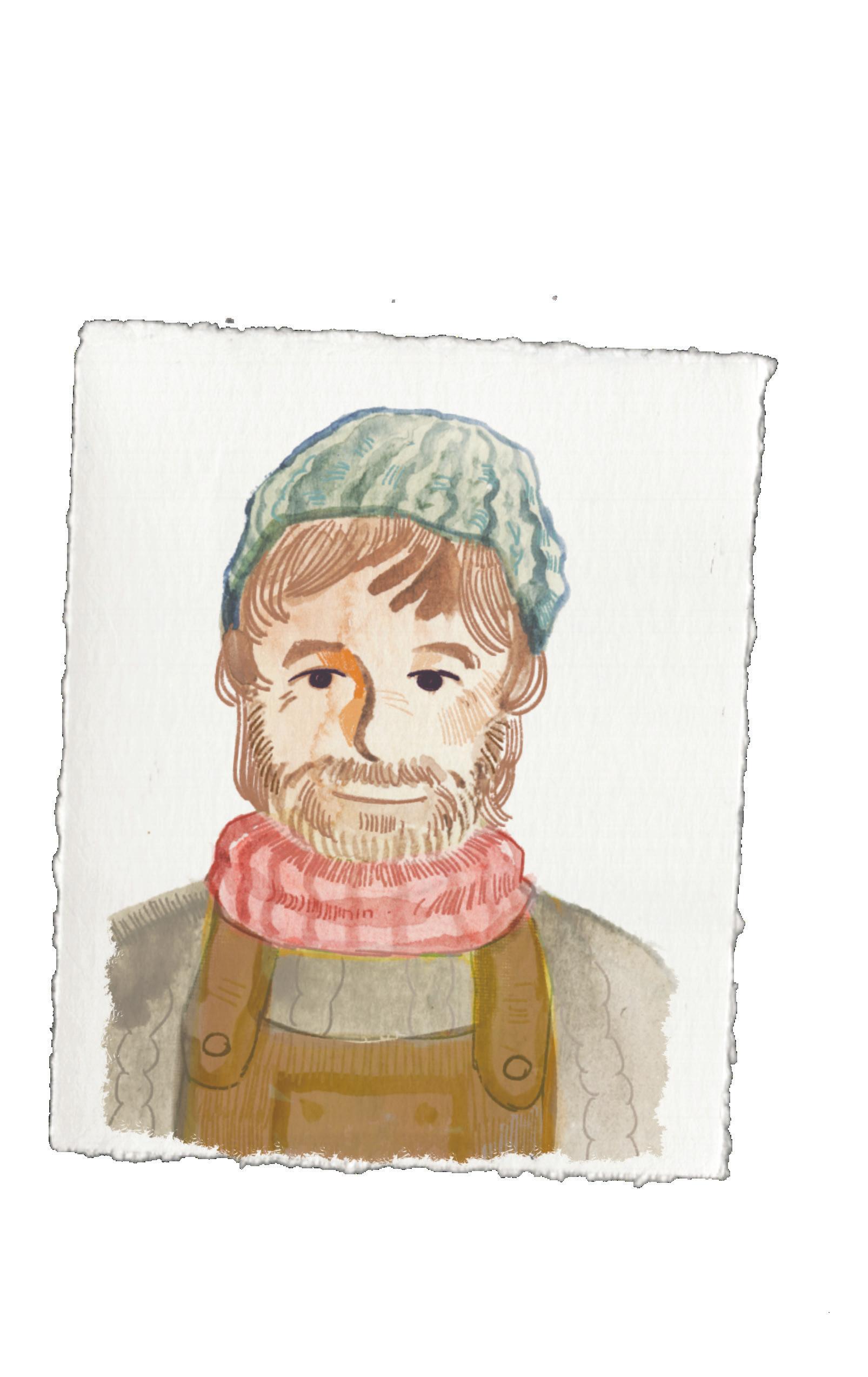
that Reed has “never really had a serious primary challenger.” Whether Reed’s popularity is due to a lack of serious challengers or the lack of serious challengers is due to his popularity, it’s true that he received more than 85% of the vote in both of the primaries in which he’s been contested. Connor Burbridge wants the Democratic electorate of Rhode Island to move past Jack Reed’s platform, which is “largely based in the 1990s.” He wants to ask Rhode Islanders, “What do you want the future of the Democratic Party to be?”
Burbridge’s platform—and his vision for the future of the Party—aligns with those of many contemporary leftist candidates. Vowing to exclusively take small-dollar donations, the bottom of his website reads, “Paid for by Burbridge for RI (not the billionaires).” Unlike Reed’s “country club fundraisers,” Burbridge prides his style of politics on its “prioritization of working-class people.” A self-proclaimed New Deal Democrat, he sees the most pressing issue in the contemporary Democratic Party as its “betrayal of salt-of-the-earth people.”

Burbridge, born just one year before his opponent’s initial election to the Senate, explained that he decided to run due to a conversation with a friend. “Hey Connor, you’re really into politics. You have strong ties in the community. We should take a bold stand and swing for the fences.” Swinging for the fences is perhaps an understatement for Burbridge’s goals of unseating Jack Reed, who is seeking a sixth term and holds one of the highest approval ratings in the Senate at approximately 60%. Outside of owning and operating Nuts & Bolts, his plant nursery co-op, Burbridge’s community organizing experience is largely labor-based. Nuts & Bolts, along with other worker cooperatives around the state, helped establish the Rhode Island Worker Cooperative Alliance, an organization that has “advocated for legislation at the state house” to “bolster collective ownership.” He’s also “worked with some tenant unions” and completed a leadership program with the Rhode Island branch of the AFL-CIO labor union. After detailing his history as a community organizer, Burbridge said, “That’s all I have time for.”
Though Burbridge’s platform mirrors that of some of the most successful contemporary progressives— Alexandria Ocasio-Cortez, Bernie Sanders, Zohran Mamdani—a few of his policies stand out. The most striking is his proposal for a universal basic income, dubbed “Burbridge Bucks.” In his bill entitled the “Wealth for American Workers Act,” Burbridge vows to create a $7 trillion national wealth fund, “financed through progressive taxation on the ultra-wealthy and strategic public borrowing.” Under this policy, each American will receive a $1,000 dividend annually, paid entirely from the fund’s investment returns. While this dividend would provide less than $100 dollars monthly, Burbridge sees its true value in reminding working-class Americans that the government is “invested in them.”
Burbridge, newly engaged to a teacher in the Providence Public School District, would also propose an Equal Education Amendment to the Constitution that would “make the federal government the guarantor of children’s education.” Before attending Catholic high school, Burbridge attended public school in New Jersey. He has also worked as a substitute teacher in elementary schools around Providence, where he saw firsthand the shortcomings of schools “unable to shoulder the tax burden to adequately educate their students.” This amendment would, as Burbridge says, “state something along the lines of ‘[the federal
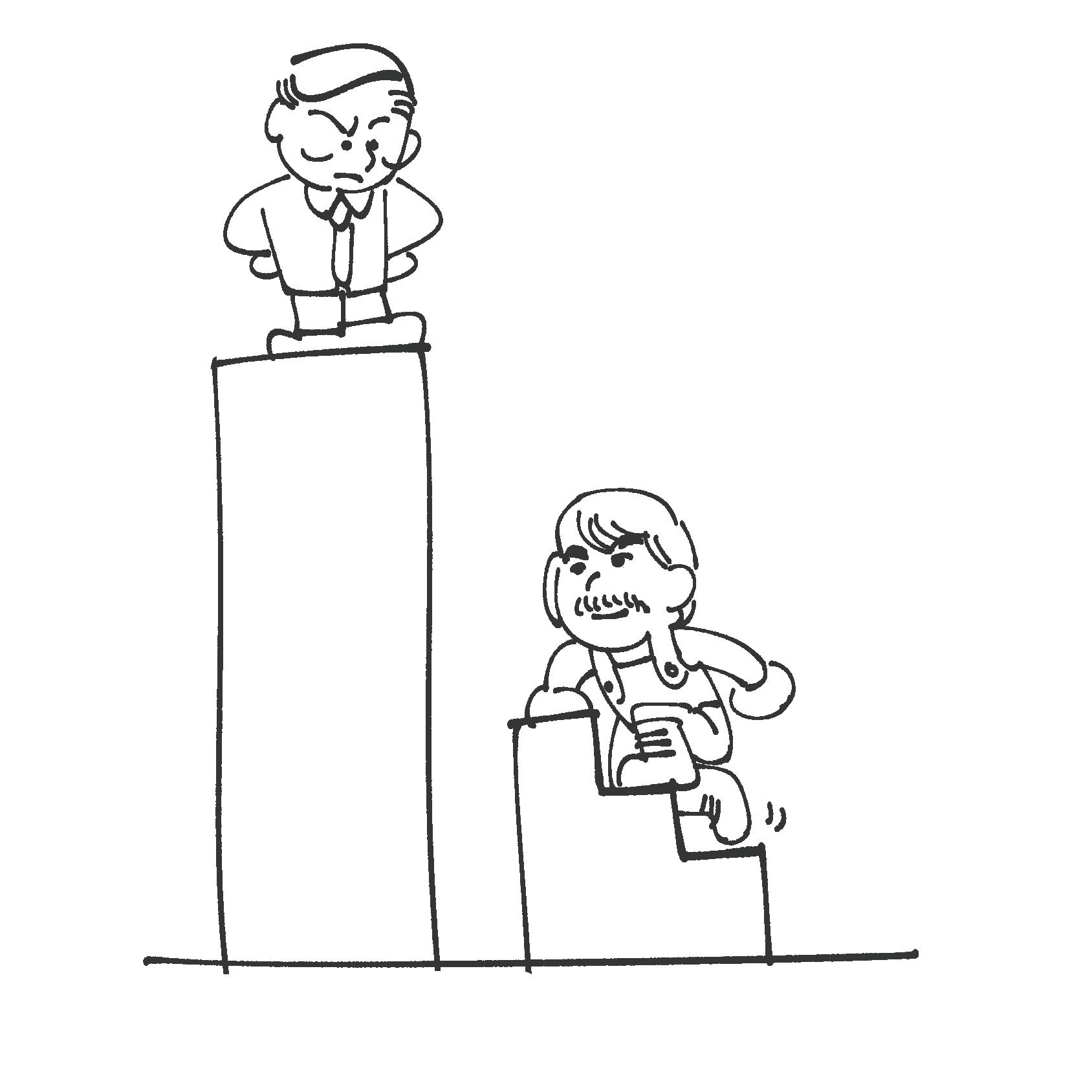
government] guarantees the right of every American student in the United States to a high-quality education.’” With its passing, Burbridge says, “a lot of interesting stuff would happen.” Alongside this amendment and the national wealth fund, Burbridge’s “six core priorities” include collective ownership of utilities, universal eldercare, a climate superfund law, and an act restricting corporate landlords who own more than one thousand units nationally from owning more than 0.1% of any city’s rental market. Burbridge’s ambition in the goal of his campaign and policies he’ll enact is palpable, but it will take more than excitement at the prospect of a fresh senator to win the seat. For a fighting chance at unseating Jack Reed, Burbridge will need to shift Rhode Islanders’ opinions about Reed to be more critical.
Outside of Jack Reed’s popularity among his constituents, the senator has consistently contributed to Rhode Island’s outsized influence in the Senate. A member of the Appropriations Committee, Reed has repeatedly brought hundreds of millions of dollars to Rhode Island, a disproportionate amount of funding for the smallest state in the union. Despite critiquing these “pork barrel politics,” Burbridge held that Reed is “an underperformer in the amount of money he brings home” compared to senators such as Susan Collins of Maine or Lisa Murkowski of Alaska—“They bring home fucking bank for their states.” Jack Reed’s second most notable legacy in the Senate is his chairmanship of the Armed Services Committee. Though Burbridge critiques Reed’s “war hawk” behavior, many left-wing voters and lawmakers would arguably prefer a more progressive Democrat like Reed on the highly consequential committee. While Reed’s influence may not be as powerful as that of some of the other senators from relatively small states, his five-term career and remarkable popularity are directly tied to his unique effectiveness in the position. Reed is the sixth-most senior U.S. senator and, by most metrics, the most popular elected official in Rhode Island.
Burbridge “does not really like to talk about the age thing.” Speaking with more-than-mild discomfort, he followed up by saying we “didn’t need to [talk about it].” At 30—the minimum age for a U.S. senator—he would be the youngest member of the Senate, nine years Georgia Senator Jon Ossoff’s junior. Despite Burbridge’s apprehension about speaking in detail about his own age, he very explicitly warns against Reed’s. Burbridge has worked in elder care since early 2023, and, when discussing how it informs his platform, said he “knows exactly what it feels like to be 75.” Though the cognition of these older politicians is cause for concern, his chief problem is with their disconnect from younger constituents. Growing increasingly animated, Burbridge declared, “We need leaders at the national level who know what the fuck Twitch is. Does Jack Reed know what Twitch is?”
edge of digital media with reluctant praise of Trump’s team for getting the president appearances with some of the most popular contemporary commentators.
Burbridge’s own campaign strategy, like that of his progressive contemporaries, rests heavily on the reach of social media. In considering the challenges of fundraising and “breaking through the algorithm,” Burbridge cites a “chicken and the egg thing”: Potential supporters prefer a certain level of influence or amount of followers before providing an endorsement, yet these very endorsements help create this wider following. “It’s tough. I mean, we’re grinding, we’re posting every single day, and engaging people, and we even have a couple hundred small-dollar donors.”
Burbridge’s campaign manager (and good friend) Christopher Woods is a volunteer. Woods holds a PhD in Political Science from Brown, is currently pursuing a law degree from Yale, and works as a professor of political science and a legal researcher. Consequently, Woods is a hard person to reach. Despite a few attempts, we were never able to set up a virtual meeting, so we exchanged a few emails. When asked about the daunting task of unseating a 30-year incumbent, Woods pointed to the campaign’s “desirable platform and fresh, young energy.” As Woods is an unpaid employee, his role exemplifies what he calls the campaign’s “small and scrappy team” with an “‘all hands on deck’ approach.” Handling platform development and long-term strategy, Woods is, on paper, a traditional campaign manager. The Burbridge campaign’s “shoestring budget” is a challenge, however. Running almost entirely on volunteer hours, largely outside the workday, makes consistent campaigning more difficult. According to Woods, though, the campaign “wouldn’t do it any other way. We’re a campaign by workers, for workers.”
Citing the campaigns of people like Zohran Mamdani and Graham Platner as models for his digital media efforts, Burbridge has cultivated a certain look for his content. Often donning the aforementioned white sweater and brown overalls, Burbridge sits somewhere between Mamdani and Platner. While not quite the suit and tie of the NYC mayor, he also does not lean into the gruff, rolled-sleeve style of the Mainer, who is running for Senate as a Democrat to challenge Collins, the long-standing Republican incumbent. Burbridge’s look is a gentle one. Despite his radical stances and diametric opposition to the U.S. political establishment, Burbridge makes no effort to hide his soft demeanor. With a mild and, at times, uncertain voice, Burbridge’s presence does not signal the same confidence and charisma as some of the politicians from whom he draws influence. These traits have been central to the successes of Burbridge’s contemporaries, but the Rhode Islander has not yet found an effective voice.
Like Platner, Burbridge is a veteran, populist, and owns and operates a small business. Burbridge and
Platner also share a similar political desire to combat, as Burbridge says, “big corporations screwing over regular, hard-working people in this country.” Burbridge also very clearly takes cues from Mamdani through his visual presentation and campaign strategy. Often walking and talking in his videos, Burbridge mirrors the mayor’s successful formula, though his videos haven’t quite broken through yet. In a video from late February, Burbridge interviews folks from around the state on the RIPTA, asking them, “What do you think is the biggest issue facing Rhode Islanders today?” He closes the video with a reminder to his viewers that “It’s so clear: We need change. We need something bold to deliver for people.” As of March 10th, his largest video on Instagram has 32,000 views.
More than anyone else, Burbridge cites Bernie Sanders as his political role model. In fact, “Bernie Sanders, particularly in 2016, was really what got [him] interested in electoral politics for the first time.” Burbridge contrasted Sanders’ popularity with Jack Reed’s, highlighting the Vermonter’s near-70% approval rating compared to Reed’s 60%. Burbridge is also inspired by Alexandria Ocasio-Cortez (AOC), the representative from New York, whom many see as Sanders’ spiritual successor. AOC, much like Burbridge, came from a background in community organizing rather than experience in public office. As Burbridge says, these role-model progressives— AOC, Bernie, Graham, and Zohran—demonstrate that “political will has shown to be able to secure major wins and really push the conversation forward, regardless of experience.”
Burbridge is so inspired that, in his first one hundred days, he plans to lead a scaled-down version of the AOC/Bernie-led “Fighting Oligarchy” tour. In this tour, running with varying frequency since February of 2025, Sanders and Ocasio-Cortez visit locations across the US to discuss “how we move forward to take on the Oligarchs and corporate interests who have so much power and influence in this country.” These events are often in places without large Democratic voting blocs, with a goal of broadening the reach of a progressive platform among working-class voters. While I didn’t ask about Burbridge’s first one hundred days—and most voters and media outlets do not consider the first one hundred days of a senator with remotely as much scrutiny as the president—he does have a plan. He’ll spend five days a week in DC, executing his senatorial duties, and his weekends in Rhode Island visiting all 39 municipalities, mimicking the larger events nationwide to “let these communities know, ‘We haven’t forgotten about you.’” +++
For our second meeting, Burbridge suggested that I visit his permaculture nursery co-op in Smithfield, RI. About half an hour northwest of Providence, Mowry Commons is the flagship location for Revive the
Roots, a nonprofit “where people and the environment thrive through sustainable practices, community building, and education.” Burbridge sits on the board of Revive the Roots and owns the Nuts & Bolts Nursery on the grounds. In his grace, my roommate lent me his car to make the drive. Before our meeting, Burbridge texted to warn me that the farm was hit pretty badly in the recent snowstorm, so parking may be an issue. If I couldn’t find a spot, he instructed me to call him, and he’d lead me to “another spot in the back.” A colorful “Revive the Roots” sign beside a half-empty driveway indicated I was at the right place. I pulled into the driveway and, within seconds, understood the prudence in Burbridge’s warning. Sure enough, I was sitting in my roommate’s Camry perpendicular to the only other car in the all-mud lot, spinning my wheels and covering my fenders in sludge. Standing about 30 feet away, in what I would soon find out was the “Kindergarten in the Garden” program, 15 or so fiveto-seven-year-olds watched me move forward and backward for five minutes to the point of exasperation. I heeded Burbridge’s advice, called him, and, without hesitation, he assured me “everything [was] okay.” If I truly was stuck, “we’d get it out,” and, if I could get back on the road, “he’d point me in the right direction.” I am not the kind of person who can easily be reassured, but Burbridge’s tone calmed me down. Following his guidance, I moved the steering wheel back and forth until I forced myself out of the ruts in the mud and speedily backed onto Farnum Pike in a frankly impressive maneuver
I met Burbridge at the “other spot in the back,” and though he acknowledged its distance from the nursery made it less convenient, he was clearly excited for the hike. We stomped through the snow, and again, I was underdressed, and Burbridge wore his sweater, overalls, and boots. In the first seconds of our hike, Burbridge, wary about walking down a snow-covered hill, plopped down and slid. Perhaps I don’t have the same whimsy or daredevil instincts—I navigated down the hill on foot. About a quarter mile later, we arrived at Nuts & Bolts Nursery, and I faced the children who saw my struggle in the mud. We sat down around sunset in the co-op’s greenhouse and spoke for an hour.
Smithfield’s demographics do not match those of the younger, more progressive Providence. In 2024, Trump won 53% of the town’s vote. Burbridge not only appreciated this statistic, he was “humbled by it.” Working with working-class neighbors who “might have some questions about the progressive agenda” is integral to Burbridge’s experience as a small business owner and Senate candidate. Leading me through the woods to his farm, he excitedly pointed out the beautiful landscape of Mowry Commons and discussed how Revive the Roots’ mission informs his politics. While smiling and pointing to a pile of logs and wood scraps left by the “guys that cut trees for power lines,” Burbridge discussed how being a small business owner has allowed him to redefine mutual aid. “Relying on your neighbor—even if you don’t see eye-to-eye—is mutual aid. Most people wouldn’t call it that, but…you know what I mean.”
Burbridge recalled that his first exposure to leftist values came through his high school Spanish class. After his teacher, often fearfully labeled a socialist, screened The Motorcycle Diaries, a biopic about Che Guevara, a Marxist revolutionary, Burbridge was hooked. While this experience “sowed the seeds” in high school, Burbridge’s radicalization occurred in his time at Lehigh. Learning about Martin Luther King Jr.’s Poor People’s Campaign and universal working-class ethic at the end of his life, Burbridge concluded, “They don’t fucking teach you that in school.”
While driving home from our meeting, after navigating through Smithfield’s curvy, often poorly-lit roads, I found the nearest drive-through car wash to return my roommate’s car better than I found it. The next morning, Burbridge sent me two texts. In the first, he asked, “Hey Ben, you get back ok last night? Sorry for not checking in earlier, a lady was broken down on Branch Ave and I was helping her out and got home pretty late.” The second one, perhaps more solicited, was a list of the volunteer days put on by Revive the Roots, captioned, “Always great talking,
feel free to come through on the volunteer days, and I can introduce you to the crew.” I promised to bring some friends on April 12 or May 3. I think you should come too!
When Burbridge initially reached out for an interview with the College Hill Independent, he said, “The resurgence of leftism, especially among young folks, has been a big part of my life, and it’d mean a lot to be able to engage with the Indy’s readers and team.” In college, he used to distribute a “kind of punk newspaper that had a lot of leftist leanings.” According to Burbridge, the Indy was one of the first local outlets he contacted. Of course, despite the Indy’s commitment to creating “work that is generative for and accountable to the Providence community,” the bulk of its readers are students on College Hill. To Burbridge, though, this readership comprises “cool people around Providence.” While this publication uses a leftist framing to engage with issues in and around Providence, the majority of readers do not vote in Rhode Island elections. This tension makes the Indy’s role in electoral politics relatively unique. Though we can engage with these candi-
“Perhaps Burbridge’s lack of ‘experience’ is a drawback of his candidacy; perhaps it is the core benefit.”
dates and their platforms, our university affiliation will ultimately limit our reach outside of the Brown community.
While alternative publications like the Indy may not as effectively boost his campaign’s reach, larger publications like the Boston Globe or the Providence Journal, which may provide paths to greater recognition and electoral efficacy, will apparently not consider a candidate with a fractional chance of victory. In the sole coverage Burbridge’s campaign has gotten from a larger local outlet, WPRI titled the article “East Providence elder care worker launches US Senate primary against Jack Reed.” Spending nearly half the article chronicling Reed’s successes, WPRI did not deem it necessary to foreground Burbridge’s leftist, populist platform; his occupation was the primary concern.
Though Burbridge’s opponent, Jack Reed, had a more standard path to public office—going from military service to higher education to electoral poli tics—there is no shortage of former community organizers in the U.S. Democratic estab lishment. Barack and Michelle Obama started as leftist community organizers on Chicago’s South Side. By the time Obama was elected pres ident, he was far from his grassroots origins. Despite widespread praise for their progressive poli tics in Congress, OcasioCortez and Sanders are often challenged for the concessions they make in pursuit of coalitions and bipartisan support. While leftist organizing clearly has the capacity to elevate its members to the highest offices in the nation, many of the people initially elected for their dedication to community are whittled down into traditional liberals by the time they reach these positions. This watering-down of leftist politicians is an undeniable trend, and Burbridge’s campaign offers an alternative. Leftist spaces are no escape from this entrenched notion of ‘experience’ as a non-negotia ble prerequisite for holding office, and the exception. While Burbridge does not have the legis lative experience some voters may deem necessary, his work in community organizing and ambitious platform align with the political future supported by
leftists. Redefining ‘experience’ to include community organizing is crucial for creating a more just political system. For Burbridge’s politics of “punk rock,” he sees the ethos of his campaign as being “scrappy, stupidly courageous, willing to speak truth to power, and willing to say it as loud as you possibly can.” Though this assessment of his campaign makes it seem lofty and, at times, corny, these values are at the root of leftist organizing. From boots-on-the-ground protests against corporations to legislative activism, challenging seemingly insurmountable obstacles has been central to the rare successes leftists have seen in recent years. Despite these core values, the kinds of political activism that leftist publications and community groups seek to precipitate seem to run into an implicit ceiling in electoral politics. For these values and frameworks to penetrate the Senate without legislative experience is somewhat unprecedented. Many of the people Burbridge sees as most analogous to his campaign— AOC, Zohran, Bernie—started in a more localized government position. To scale an ‘unqualified’ candidate’s campaign strategy beyond a local race does not seem realistic. Why? Ocasio-Cortez was a bartender. Mamdani was a rapper. Sanders was a carpenter. Starting with local elections allowed these progressive superstars to rise from otherwise irrelevant occupations to nationwide recognition by appealing to their neighbors and running on platforms unquestionably relevant to their constituents. In this statewide race, Burbridge does not have the same privilege of running on a hyper-local platform. He must appeal to the diverse electorate of Rhode Island and demonstrate an ability to cater to everyone—a big ask given Jack Reed’s demonstrated effectiveness. Many progressive leaders and organizations argue for ‘starting locally’ and ‘building coalitions’; however, many of these initiatives fizzle out as just that: beginnings. Burbridge may be running a nearly impossible-to-win campaign, but maintaining a level of optimism and courage is vital to the sustainability of leftist organizing
Speaking to his chances of winning, Burbridge estimated, “Do I think we have a higher than 5% chance to beat Jack Reed? I don’t. Is it lower than 3%?” After pausing for about five seconds, he continued, “We can talk about that. It’s in the low single digits.” Crucially, though, “it’s a fight worth fighting.” Burbridge’s campaign, unlike those of some other candidates without expectations of victory, is not a delusion or PR stunt. Rather, his campaign aims to move the needle in the Democratic Party and show Rhode Island voters a potential future. “People are like, ‘You can’t just pass a

face, among other promised improvements. They are not FDA-approved, have unknown side effects, and are commonly ordered online from Facebook or commercial websites like Alibaba.
Many men also develop eating disorders in pursuit of bodily transformation. In an article on Looksmax.org, titled “how to nuke your appetite if your [sic] broke” the author recommends 800 mg of caffeine and 10+ mg of nicotine daily as a quick and easy appetite suppressant for fellow users looking to ‘leanmax.’ Beyond just ‘leanmaxxing,’ many users claim to be ‘starvemaxxing’ to really ensure successful weight loss. Other ‘looksmaxxers’ admit to using meth as an appetite suppressant, with one user posting, “reject gluttony and embrace meth[.]” Discourse within the black pill community online promotes disordered eating and weight loss through trends like ‘twinkmaxxing,’ or “being able to turn to the side and have your arm be thicker than your waist.”
More invasive and dangerous (so-called hardmaxxing) techniques are becoming popular, too. One method, bone-smashing, entails literally using a hammer to break the bones in your face so they grow back bigger and in a hotter structure. While surgical enhancements such as jaw implants, leg extensions, hair

predominantly white, when looksmaxxers aren’t, they are also looking to subdue their ‘ethnic’ features. Many of these consumers are depressed and suicidal. To market unsubstantiated solutions to these seriously troubled men is exploitative—the black pill and incel mental health crisis needs clinical support and therapy, not peptides and a personal trainer.
These influencers do a really good job making it seem like their strategies work. They compare photos of themselves, puffy and acne-ridden at 16, to photos of themselves with clear skin, strong jaws, and hollow cheeks at 22. They attribute these transformations to gua sha, cheek sucking, and face pulling—ignoring the glaringly obvious puberty they also went through during those years. Incels want to believe that there is hope for them to reap the social and romantic benefits of conventional beauty––not that attractiveness is largely just the result of genetics and puberty. This content on social media depicting before and after transformations only further creates a sense of insecurity and failure among men who have yet to ‘ascend.’

transplants, nose jobs, eyelid reshaping, and so on are not all dangerous on their own, they become dangerous when performed in unsafe environments or in combination with each other. ‘Jelqing,’ a process that went viral in looksmaxxing corners of the internet, involves manually stretching one’s semi-erect penis to create micro-tears that improve length and girth—and carry the risk of bruising and damaging penile function. While one’s penis is not part of a man’s outward appearance in society, looksmaxxers are increasingly worried about the perfection of all aspects of their body, especially the sexual organs that are important for maintaining a relationship with a woman.
Some men are Maasai Jumping—bastardized from a dance originating in Kenya and Tanzania—in the hopes of creating microfractures in one’s body to prompt height growth. Others are ‘icemaxxing’ or rubbing ice around their faces to tighten their skin—a technique with thousands of years of history across the Mediterranean and East Asia. Others swear by gua sha, another age-old practice pulled from traditional Chinese medicine. These practices have deep roots in non-Western cultures, despite their recent appropriation by men to assimilate to rigid, Eurocentric, male beauty standards. Many have also historically been used by women to make the same social gains that these men now seek.
What started with criticism of facial fat and acne has turned into analysis of someone’s hyoid bone height, midface ratio, maxilla position, canthal tilt, and clavicle length. Using very medical and scientific language to describe the anatomy of the face or the physics behind these methods also curates a sense of legitimacy for a new knowledge market that has cropped up to meet the demand of black-pillers who want to ascend. Many influencers are preying on incel insecurities to gain followers and interactions online, marketing some combination of private coaching and training resources that claim to unlock the secret to self-improvement. These guys not only offer coaching in the gym, but also dietary regimens, gua sha practices, and peptides. Often, these strategies don’t yield satisfactory results, and the helpless incel consumer becomes even more desperate to try another solution. To create demand for their training and resources, influencers continue to discover new, niche facets of the male body to critique so that they can sell a solution for it. The looksmaxxing knowledge market is already reaching esoteric levels of anatomical analysis and appearance-improving interventions, and will continue to perpetuate itself until incels have completely lost all their money, or end up so hopeless they commit suicide.
The underlying knowledge market is incredibly predatory. Monetized looksmaxxing content and coaching specifically target the most insecure and desperate people in society. While this community is
All of this content online has made these men increasingly beholden to the advice of black pill influencers, namely Clavicular (the biggest looksmax icon right now, a 20-year old influencer and streamer who is also 6’2”, 180 pounds, with a chin-tophiltrum ratio of 2.6), Kareem Shami (who claims to be the “GODFATHER of LOOKSMAXXING” and is a massive peddler of supplements), and Androgenic (a 24-year old Australian looksmax influencer who worried about dropping significant positions in ‘Chad rankings’ after having his wig snatched off on camera, revealing his true hairline).
To spew their harmful rhetoric, peddle dangerous looksmaxxing techniques, and market illegal peptides, these influencers use a specific looksmaxxing lingo. Peptides become ‘gear’ or ‘sauce’ or simply the needle or gear emojis. Bone smashing becomes ‘BS’ or a hammer emoji. ‘Starve-maxxing’ becomes ‘[star emoji] ve-maxxing’ or just the star emoji. Testosterone is just ‘test’ or ‘GH’ (short for growth hormone). On some level, these abbreviations might just be for efficiency. But the obscuring of names and use of emojis also codes blackpill language in a way that ensures this content does not get flagged by digital censorship algorithms. By avoiding content screens, the black-pill community is able to broadcast their ideologies and looksmaxxing methods on mainstream social media platforms—namely Instagram and TikTok—and reach a wider audience of young, vulnerable men than what they had on their original recruitment sites like Reddit and Discord.
People outside of the looksmaxxing community see many aspects of the lingo, including the obsession with suffixing everything with ‘-maxxing,’ as funny memes. Due to their obsession with selfimprovement and apparent detachment from normalcy, outsiders view popular looksmaxxing influencers as ridiculous and larger than life. As a result, the users on these platforms memeify them and the movement. This is how Clavicular getting frame-mogged (‘mogged’ being another looksmax-ism to mean ‘beaten’) by a very broadshouldered Arizona State frat leader has become one of the biggest memes of 2026 so far. Clavicular also recently walked in the Elena Velez show at New York Fashion Week, which was not only a huge moment for Dimes Square, but also indicated the broader cultural weight of black-pill figures. What started as a niche, extremist subculture of the already fringe male supremacist movement has gone totally mainstream.
the more these elements persist in mainstream internet culture, the more people will be able to find them, and then fall down the rabbit hole. Even if they face some mockery and memeification, the continued discussion around and gradual acceptance of black pill culture allows the underlying ideology to garner a sense of legitimacy: people become desensitized to their demeaning, eatingdisorder-pushing, racist, misogynistic language. And, the more these aspects of the manosphere become integrated into pop culture, the less scared men will be to admit that they are black-pilled. Younger boys will let their insecurities take over and drive them to develop a lifestyle built around perpetual self-deprecation and attempts at self-improvement. They will end up stunting or misdirecting their development during formative years. They will admit that they hate and want to subjugate women. They will feel like their ‘suppression’ in society warrants a male supremacist revolution.
The blind adoption of black pill as a label on social media is already happening. Tons of male models, influencers, and gym-goers have started tagging (what I can really only describe as) thirst traps with #bp (now that “black pill” and “#blackpill” have been banned on TikTok). There is nothing black pill about these men, or the content: They are not engaging in any of the major black pill self-improvement techniques; they are not incels; and they are not even broadcasting how unattractive they used to be. These men are simply masculine and pretty, and therefore see a way to capitalize on a growing trend. The normalization of a watered-down version of black-pill content now means that, association with it comes with the lucrative effect of appearing more masculine and sexual, with a semi-ironic tinge to it (due to the ridiculousness of black pill influencers like Clavicular), instead of indicating one’s status as an incel. While the digital knowledge market of earnest looksmaxxing influencers preys on a very small but vulnerable group of individuals, these opportunistic male influencers further normalize the movement’s dangerous language, ideology, and affiliation. Most people have no idea what the underlying philosophy of black pill is—most of the content they see is just hot, buff men. These men don’t explicitly identify as incels or misogynists, but by co-opting the black pill badge, they are inadvertently normalizing open identification with blackpill ideology, and offer extremists who spew harmful rhetoric a new facade of being popular, cool, and mainstream to hide under.


However, when we laugh at Clavicular and start incorporating manosphere language into our daily lives (getting ‘grade-mogged’ or ‘Main Green–maxxing’), we normalize these terms’ original, more insidious community. These jokes and influencers might be the extent to which most of us engage with the black-pill, but
Even without explicitly platforming extremist black-pill content, the broad appeal of hypermasculine content is an indication that toxic masculinity is back in vogue. In the ever-growing blackpilled-looksmaxxing manosphere, male dominance, power, and narcissism are no longer a serious societal threat—it is something cool and sexy that should be developed and projected out into the world by today’s male youth. The rise of the black-pill community is just one facet of a broader right-wing shift among young people, and society writ large.
By not realizing the true black-pill philosophy underlying these looksmaxxing trends and memes, non-incels let themselves remain ignorant to this quickly growing movement of male-supremacists. While we are probably far off from a critical mass of men waging social revolution, we risk doing irreparable mental and physical damage to the many young men who are starting to idolize Clavicular and his beliefs, no matter how much irony and mockery they’re packaged in.
ASHTON HIGGINS B’26 also thinks this is all a little fake and gay.
(
Jndiescreet Glances
HOW TO DO THE THING YOU DON’T KNOW HOW TO DO
c I used to get really confused whenever French people would text me winky faces ;) in entirely inappropriate contexts for winky faces (naturally, I am in a lot of situations where I am texting French people on a regular basis). It took me a while to figure out that those are practically just smiley faces :) to them and don’t necessarily have a romantic or sexual connotation.
The French know something we don’t.
Everyone says flirting is dead. I say it’s only dead if we let it die. So simply don’t. Stop letting it die. Give it some good solid chest compressions to the beat of the 1977 hit single “Stayin’ Alive” by the Bee Gees. You know. Flirting is fun. Flirting is free. Flirting makes the barista interaction 40% more enjoyable. Every flirt adds two hours to your lifespan, it’s true, they said so. The Indy even sponsored a series of clinical trials on real, human subjects to test the benefits of flirting, and we found out that flirt- ing can SOLVE loneliness! It can also decrease your chances of
1.
3.
developing early-onset osteoporosis! SO. Are you lonely? Are you suffering from boring barista interactions? Are you worried about your lifespan and/or your bone health? All you need to do, dearest reader, is Flirt.
It might seem hard. It might even seem impossible. You might be eyeing that cute someone across the bar with no fr*aking clue how to approach them, let alone Flirt. Or you might think you know what you’re doing, but your only move is fake laughing and slapping their arm playfully while everyone else at the party watches and sort of pities you. But that’s what I’m here for. The weekend approaches, the bar beckons, and by the end of this page, you’ll be an expert just like me. (Credentials include being accused of being a flirt in the eighth grade and inadvertently collecting six of my last ten waiters’ numbers.) This, my sweet awkward readers, is:
INDIE’S PATENT-PENDING PEER-REVIEWED TOP TEN TIPS FOR BONE-SUPPORTING FLIRTATIONS
Ask for small favors, like borrowing a pencil or helping you reach something that’s just soooo high up.
A synonym for “flirty” is “kittenish.” So meow a little meow. Just a small one. See what happens.
6.
Say their name a lot!
Be seen ‘reading’ an interesting and/or esoteric book (see Volume 51 Issue 8, “10 books to prompt smart conversation (reading optional)”)
4.
Be a little bit bad at something in front of them, in an endearing way.
Ask if they are bisexual.
Offer to do something chivalrous, like parallel parking their car or dueling anyone who dare besmirch their fair name.
Better yet, do something chivalrous without offering! Break into their apartment to clean and redecorate it. Faye Wong did it, so you can too:)
Be the one to end the conversation.
5.
Get a really big paper bag full of fresh local produce (you just went to the farmers market) oh no it’s so big and heavy and Oops!!!! Drop it in front of them… Your oranges and tomatoes and kohlrabi are rolling all over the place… Oh no… They have to help you… Your hands touch as you reach for the same nectarine. Surprised, you look up at them through your eyelashes. You make eye contact. It’s electrifying. You feel heat creeping up your neck. You both jerk your hands away and look to the side, mumbling incoherent apologies as you quickly shove most of the fresh local produce back into the bag and walk away, resisting the urge to look behind you.
03/13/2026
c Help Amiri’s Family in Afghanistan During His ICE Detention
[From the AMOR GoFundMe: Amiri was detained by ICE in July and is currently imprisoned in the Wyatt Detention Facility. Amiri's two sisters live in Kabul, Afghanistan, and rely on his financial support, but ICE detention has prevented Amiri from sending funds to his family. Amiri's mother died in August, and his family is suffering during his detention and struggling to make ends meet. AMOR is collecting funds which will go directly to Amiri's sister, to support living costs during her brother's detention in Rhode Island.]
Support a Haitian Family Facing ICE Detention & Eviction
[From the AMOR GoFundMe: The Alliance to Mobilize Our Resistance (AMOR) is fundraising for M, whose son has been detained by ICE since 2023 and is currently detained at the Wyatt Detention Facility in Central Falls, RI. We are seeking to raise $10,000 for M so that she can continue to support her family of four, to help cover the cost of housing, utilities, food, and legal costs for her son while he is detained by ICE at the
Bulletin Submission Form
Do you have an event or mutual aid fund you’d like to promote? Or perhaps you have a burning (but short!) opinion you’re dying to share? Well, now you can submit it to the Bulletin!
Pokémon Drag Trivia March 18, 7–9 p.m. Black Sheep Providence, 397 Westminster St $12.51 Art After Dark March 19, 4–7 p.m. Providence Art Club, 11 Thomas St Free Art History Lecture: “Rosa’s World: Women Artists in the Nineteenth Century” March 19, 5:30–6:30 p.m. Providence Art Club, 11 Thomas St, Maxwell Mays Gallery Free LGBTQ+ Songwriting & Identity Workshop March 19, 6:30–8 p.m. Now or Never PVD, 301 Harris Ave Free Express Yourself: Open Mic March 19, 7–10 p.m.