How to Choose Between Add-On Covers for Your Car Insurance
You're at the final step of buying car insurance online, and suddenly there's a list of eight add-ons with checkboxes next to each one. Zero depreciation, engine protection, roadside assistance, and a bunch of others you've never heard of. Do you need all of them? None of them? Somewhere in between?
Most buyers either check every box out of anxiety or skip all of them to save money, and both approaches are usually wrong Let's actually break this down
What Add-Ons Are, In Plain Terms
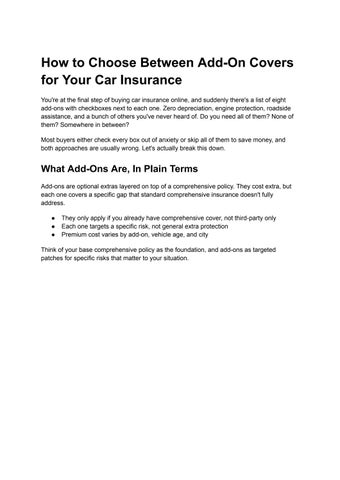
Add-ons are optional extras layered on top of a comprehensive policy They cost extra, but each one covers a specific gap that standard comprehensive insurance doesn't fully address
● They only apply if you already have comprehensive cover, not third-party only
● Each one targets a specific risk, not general extra protection
● Premium cost varies by add-on, vehicle age, and city
Think of your base comprehensive policy as the foundation, and add-ons as targeted patches for specific risks that matter to your situation
The Add-Ons Actually Worth Considering
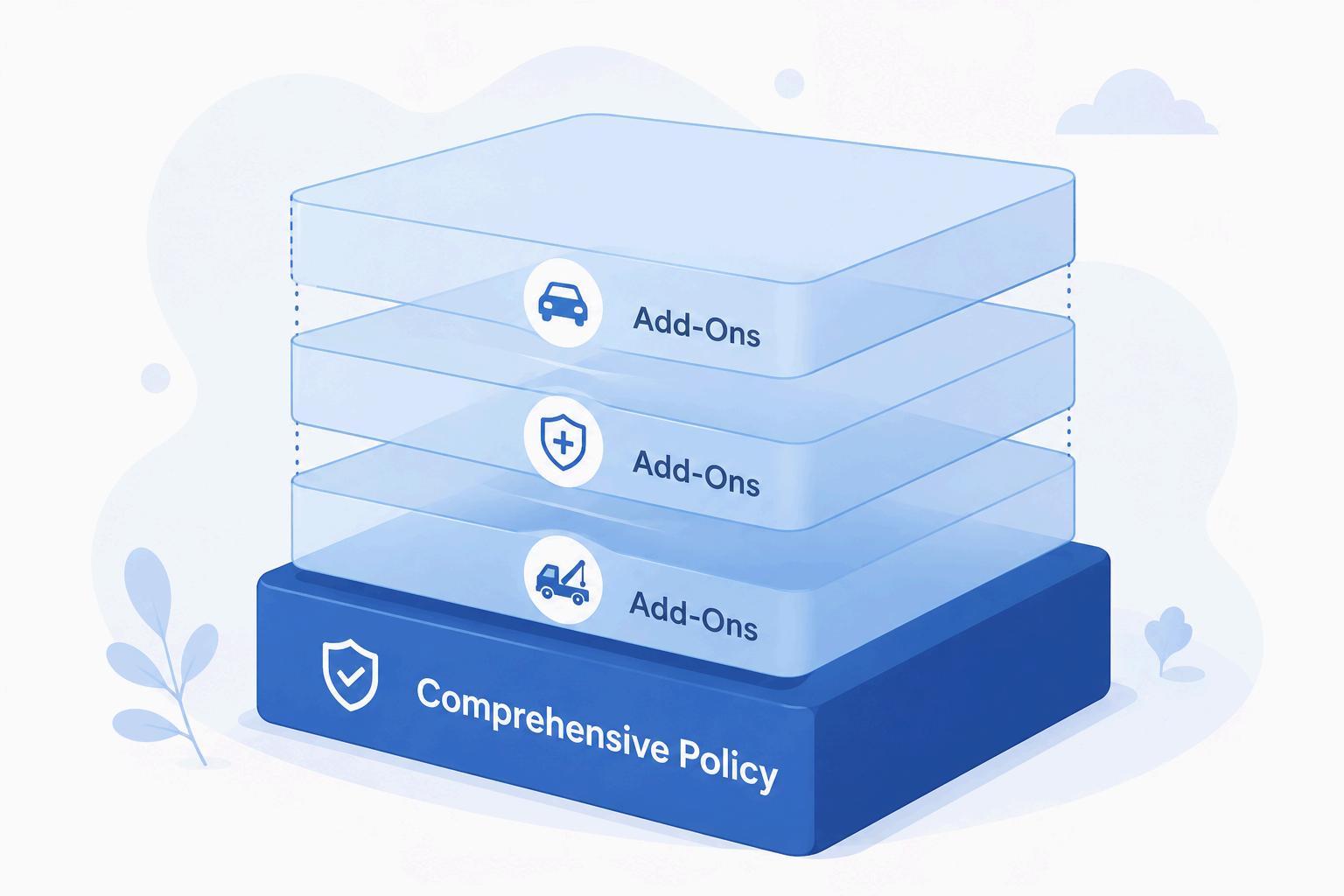
Not every add-on deserves your money. Here are the ones that consistently matter for most Indian car owners
Zero Depreciation Pays the full repair cost without deducting value for wear and tear on parts. Without this, older plastic and rubber components get depreciated heavily during a claim, leaving you to pay the difference Worth it for cars under 5 years old
Engine Protection Covers engine damage from water ingress, a genuinely common issue during monsoon flooding in cities like Mumbai and Chennai. Standard comprehensive policies often exclude engine damage caused by water, which surprises people the first time they file a claim for it
Roadside Assistance Covers towing, jump-starts, fuel delivery, and flat tire help Inexpensive, and genuinely useful if you drive long distances or through areas with limited access to mechanics nearby
Return to Invoice Pays your original purchase price, not the depreciated IDV, if your car is stolen or declared a total loss Especially relevant in the first 2 to 3 years of ownership when depreciation has already eaten into your IDV significantly
No-Claim Bonus Protection Lets you keep your accumulated NCB discount even after filing one claim in a policy year Useful if you've built up a high NCB percentage and don't want a single incident wiping it out.
Add-Ons That Are Often Skippable
● Consumables cover: useful in theory, covers nuts, bolts, engine oil during repairs, but the actual rupee value it adds is often small compared to its cost
● Tyre protection: only worth it if you're in an area with genuinely poor road conditions, otherwise the premium rarely justifies the payout
● Key replacement cover: nice to have, but a fairly low-probability event for most drivers
None of these are useless exactly, they're just lower priority compared to the five above for most typical driving situations
How to Actually Decide What You Need
Ask yourself these questions before checking any boxes:
● How old is my car? Newer cars benefit more from zero depreciation and return to invoice
● Where do I park and drive? Flood-prone areas justify engine protection strongly
● How much do I drive, and where? Frequent long-distance driving makes roadside assistance worth it
● What's my current NCB percentage? Higher NCB makes NCB protection more valuable
● What's my actual budget ceiling for the policy overall?
Answering these five questions honestly usually narrows an eight-item list down to two or three that genuinely matter for your situation
Why Garage Access Matters As Much As the Add-On List
Here's something that doesn't get discussed enough alongside add-ons: even with the right coverage, your claims experience depends heavily on where you can actually get the car repaired
Most insurers restrict cashless repair strictly to their network garages, which can be limiting if your preferred local mechanic or an authorized brand workshop isn't on that list Kiwi General Insurance has approached this differently through PayFirst, extending cashless-style claim support to garages outside its own network too, not just empanelled ones. It doesn't replace the need for the right add-ons, but it does remove one common source of friction people run into after they've already chosen their coverage