How Does Insurance Work for Second-Hand Cars in India?
You just bought a used sedan from a dealer in Kochi, and now you're staring at an insurance form asking for details about a car you've owned for exactly two days The rules here are different from buying new, and most people learn this the hard way
Second-hand car insurance isn't complicated, but it does work a little differently. Here's what actually matters
The First Thing to Understand: The Policy Doesn't Automatically Transfer to You
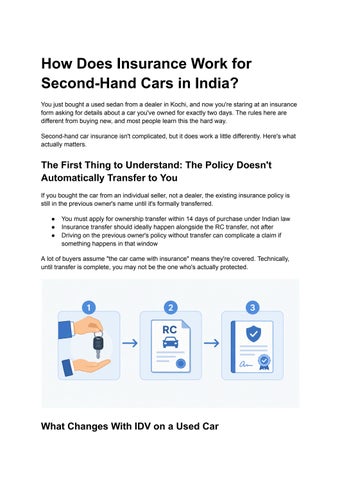
If you bought the car from an individual seller, not a dealer, the existing insurance policy is still in the previous owner's name until it's formally transferred.
● You must apply for ownership transfer within 14 days of purchase under Indian law
● Insurance transfer should ideally happen alongside the RC transfer, not after
● Driving on the previous owner's policy without transfer can complicate a claim if something happens in that window
A lot of buyers assume "the car came with insurance" means they're covered. Technically, until transfer is complete, you may not be the one who's actually protected.
IDV works differently once a car has some age and history behind it
● IDV is based on the car's current market value at the time you're insuring it, not what you paid the previous owner
● Older cars, generally beyond 5 years, often have IDV negotiated directly between you and the insurer, since standard depreciation tables become less precise at that stage
● A well-maintained older car might justify a slightly higher IDV negotiation than a neglected one of the same age
Don't assume the IDV automatically matches your purchase price It's based on genuine market value, which your insurer assesses independently
The No-Claim Bonus Question
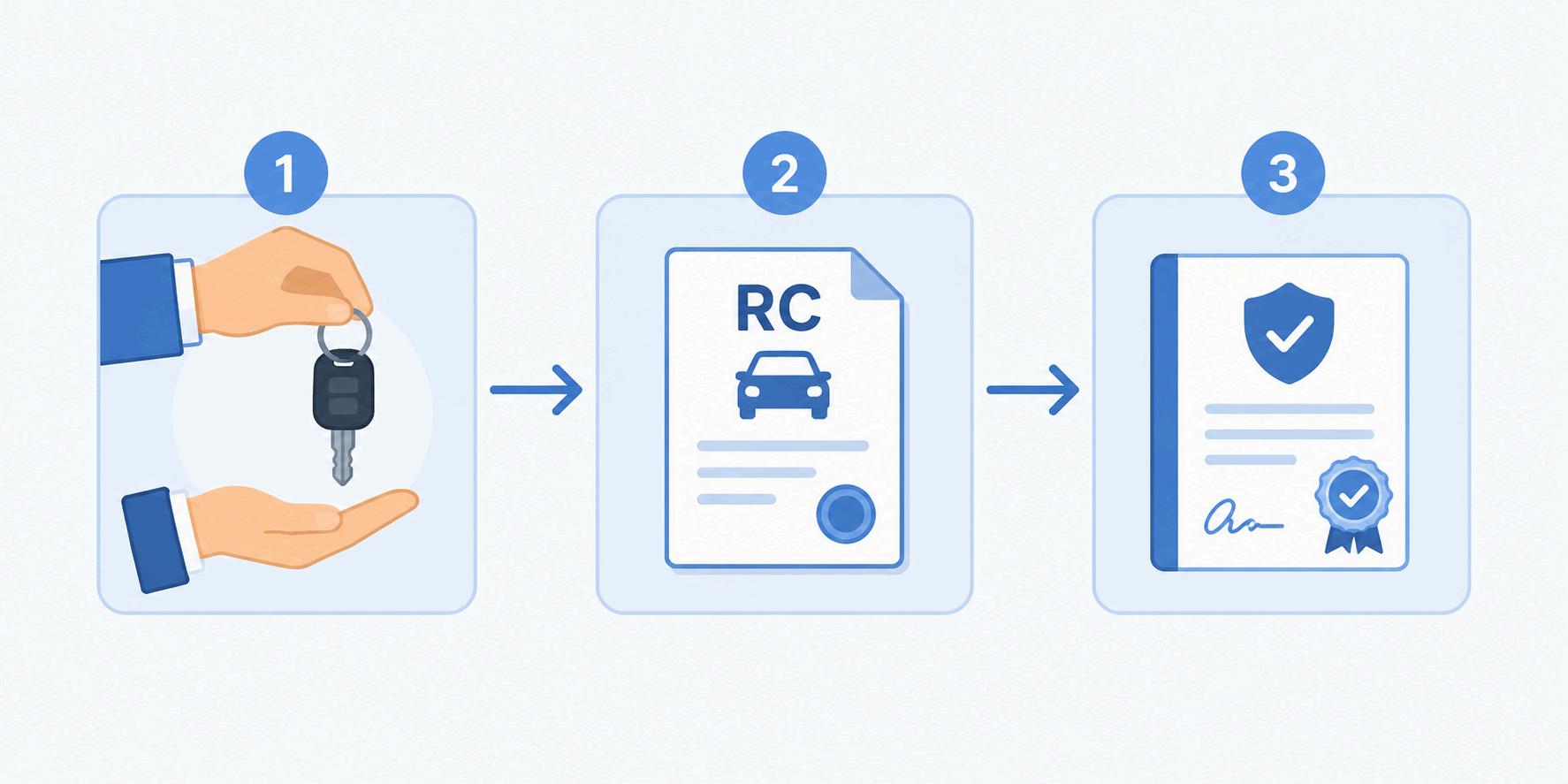
This one trips people up constantly NCB belongs to the person, not the vehicle
● If you're the buyer, you do NOT inherit the previous owner's NCB automatically
● Your policy typically starts at 0% NCB unless you have your own accumulated NCB from a previous vehicle you owned
● If you owned a car before and sold it, you can transfer your own NCB to this new purchase, provided you have your NCB certificate and are within the transfer window
So a used car with a "50% NCB seller" doesn't mean you inherit that 50% It's tied to the seller's driving record, not the car itself
Third-Party vs Comprehensive for Older Cars
The comprehensive vs third-party decision often shifts once a car has some age on it
● Newer used cars, under 3-4 years: comprehensive still generally makes sense, given the car's residual value
● Older used cars, 6+ years: third-party might genuinely be the more cost-effective option, since repair costs may approach or exceed the car's actual market value in a serious incident
There's no universal rule here It depends on the specific car's condition, value, and how much financial risk you're comfortable carrying yourself
What Insurers Actually Check Before Insuring a Used Car
● Current RC and ownership status
● Vehicle inspection, sometimes required for older cars or when switching insurers
● Previous claim history on the vehicle, if available
● Odometer reading and general condition in some cases
None of this is unusual, it's just more thorough than a straightforward new-car policy since there's more unknown history involved
Why Repair Costs Matter More for Older Cars
Owners of second-hand and older vehicles tend to be more cost-sensitive about repairs specifically, since every rupee spent matters more relative to the car's overall value
This is exactly the kind of situation where a feature like Flexi Repair from Kiwi General Insurance becomes genuinely useful, letting you bank minor dents and dings instead of forcing an immediate all-or-nothing claim decision every single time something small happens For an older car that tends to pick up small nicks more frequently, this avoids repeatedly triggering claims and NCB hits for things that don't individually justify the process.
A Quick Checklist Before Buying a Used Car's Insurance
● Confirm ownership and RC transfer status before finalizing your policy
● Don't assume the seller's NCB carries over, it doesn't
● Get an accurate IDV assessment, don't rely on the purchase price alone
● Weigh comprehensive vs third-party based on the car's actual current value and condition
● Ask about your own NCB transfer if you owned a previous vehicle
Bottom Line
Insuring a second-hand car isn't harder than a new one, it just runs on slightly different rules around ownership transfer, IDV, and NCB. Get these three right at the start, and the rest of the process works the same way it would for any other car.