- H e r b a l s u p p o r t f o r i n f l a m a t i o n
- H e r b a l s u p p o r t f o r i n f l a m a t i o n
- F e e d i n g B r a n - F e e d i n g B r a n
- P e d a l o s t e o m y e l i t i s - P e d a l o s t e o m y e l i t i s
- C l i p p i n g h o r s e s - C l i p p i n g h o r s e s
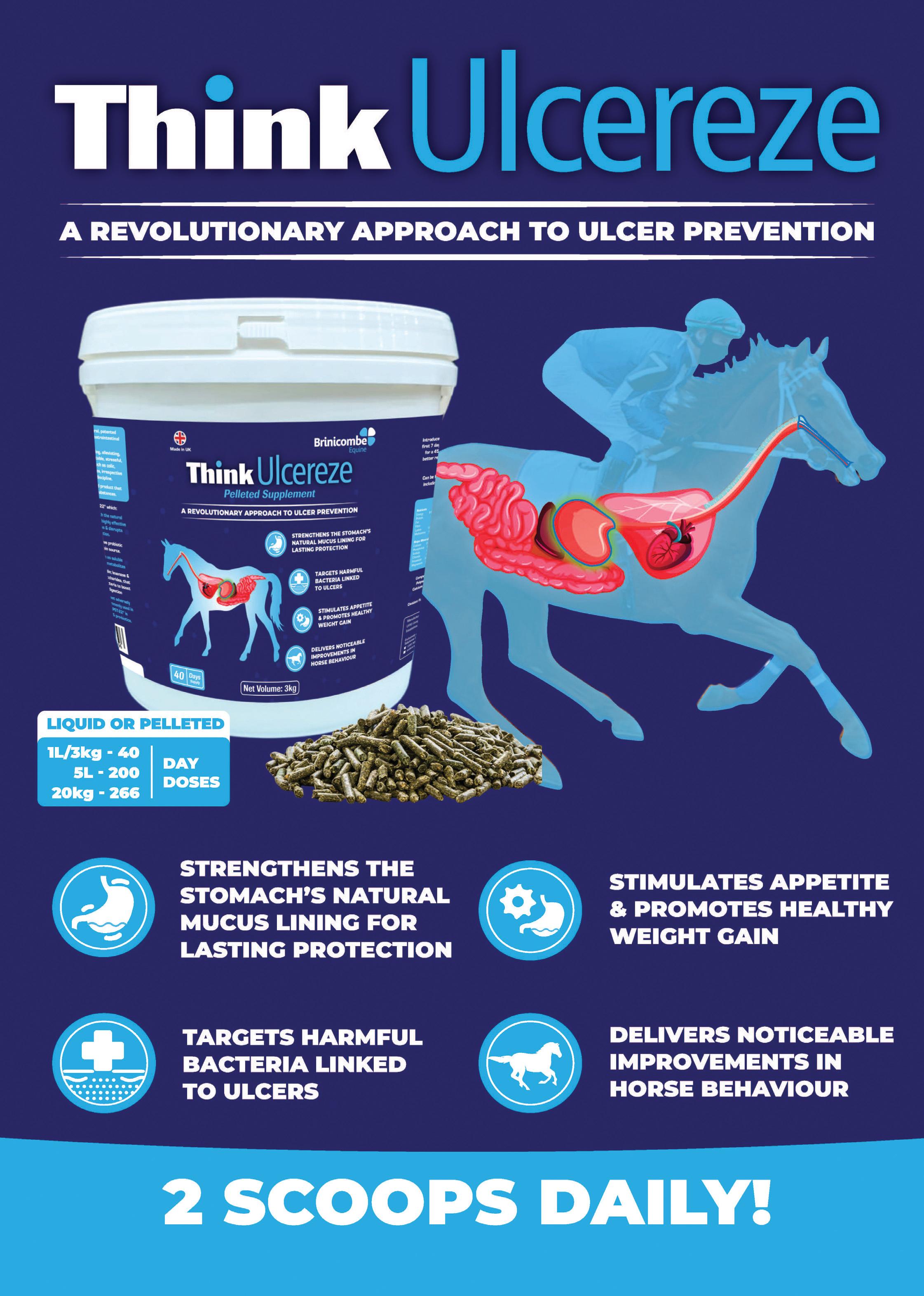
- U l c e r T r e a t m e n t s - U l c e r T r e a t m e n t s
- E q u i n e S k i n c o n d i t i o n s
- E q u i n e S k i n c o n d i t i o n s
- T r e a t m e n t s f o r r u b b e d m a n e s - T r e a t m e n t s f o r r u b b e d m a n e s
- W o r m i n g p r o t o c o l s - W o r m i n g p r o t o c o l s
- T h e i m p o r t a n c e o f w a t e r
- T h e i m p o r t a n c e o f w a t e r
* U p c o m i n g e v e n t s
* U p c o m i n g e v e n t s
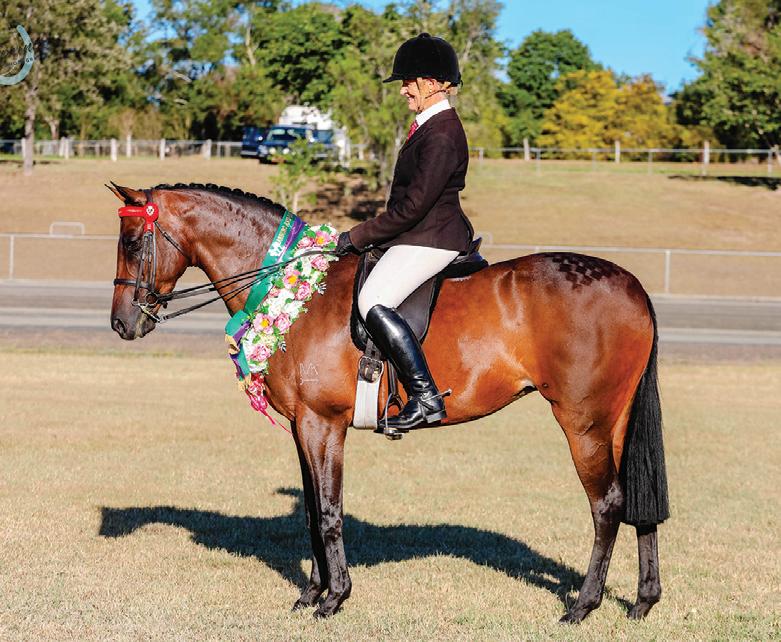
* S h o w p h o t o s
* S h o w p h o t o s
* T r a i n i n g T i p s w i t h T a n j a K r a u s
* T r a i n i n g T i p s w i t h T a n j a K r a u s
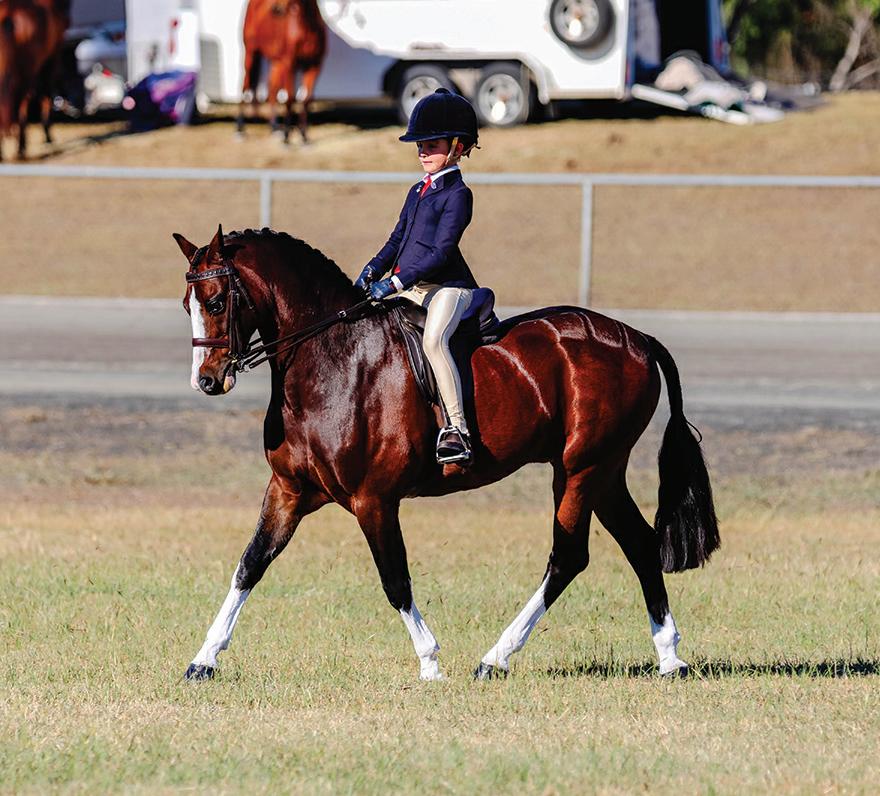
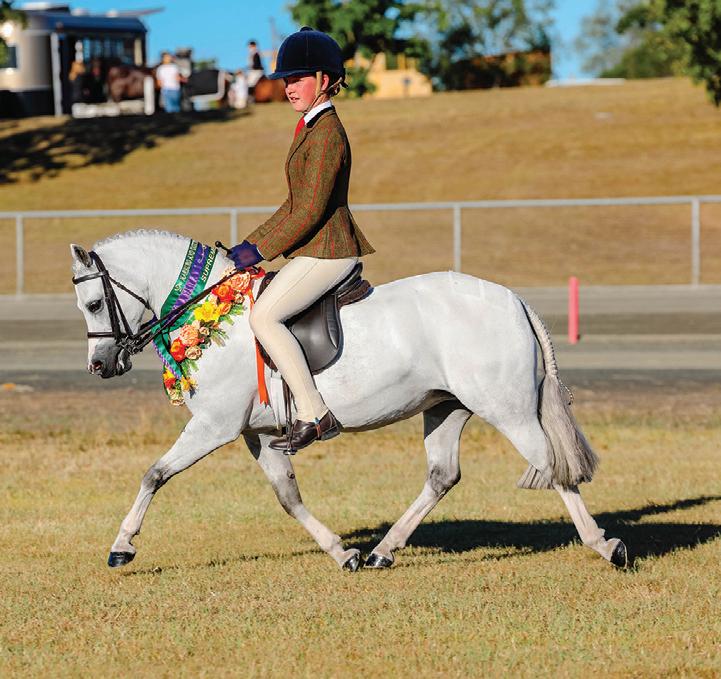
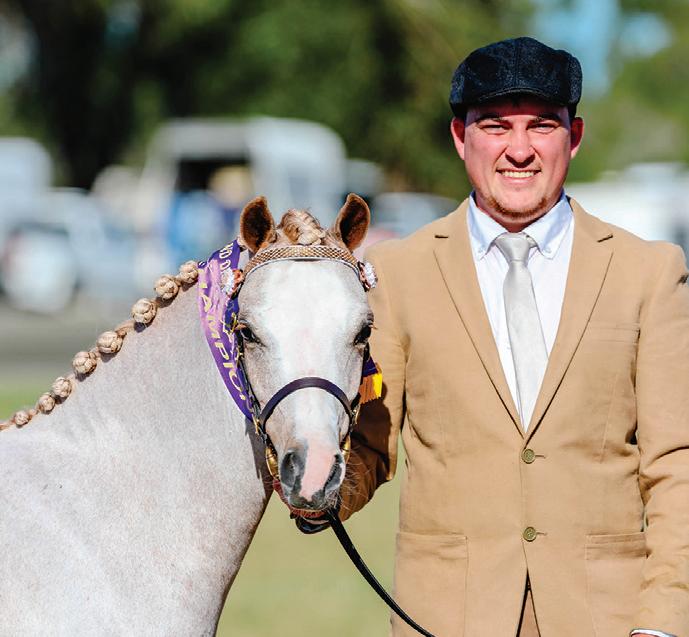
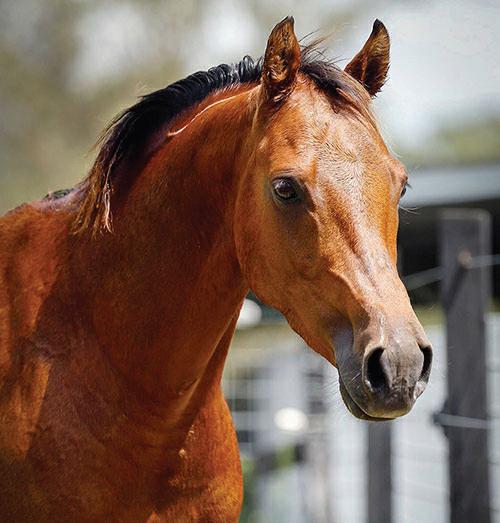
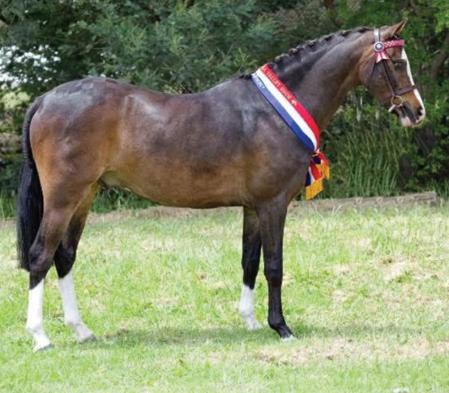
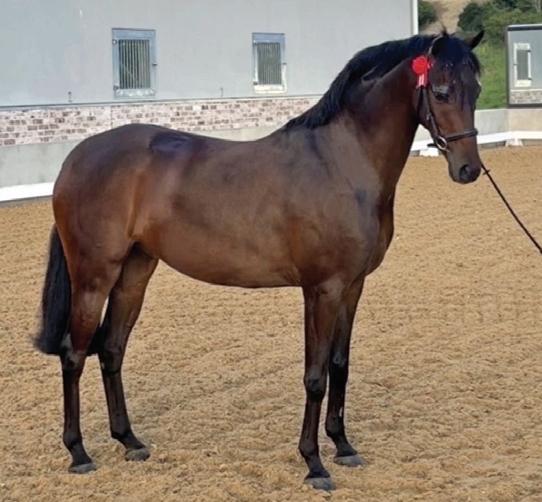
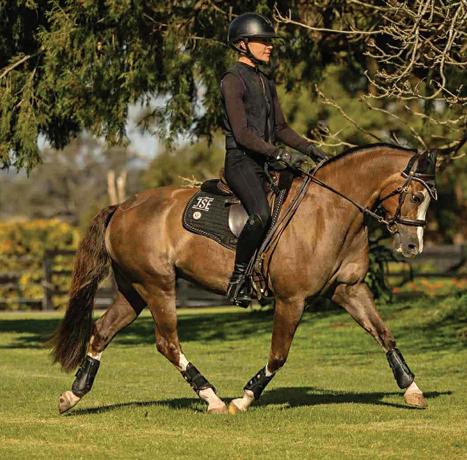
* T h e v e r s a t i l e A u s t r a l i a n P o n y
* T h e v e r s a t i l e A u s t r a l i a n P o n y
The Horse Report
Local feral horse control and rehoming program
Supplied by WWW.NSW.GOV.AU
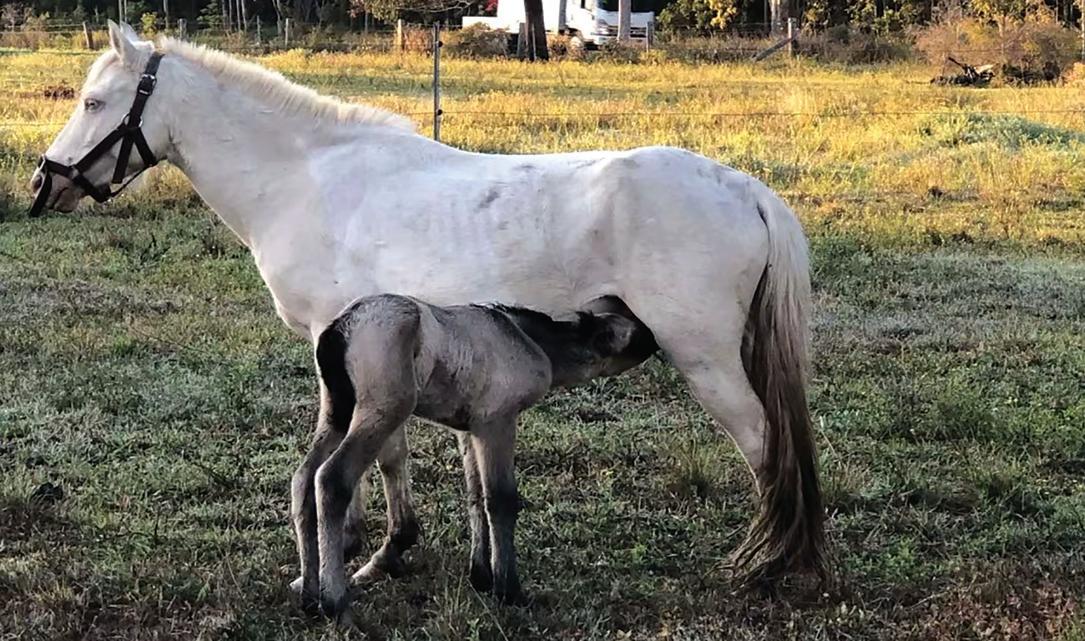
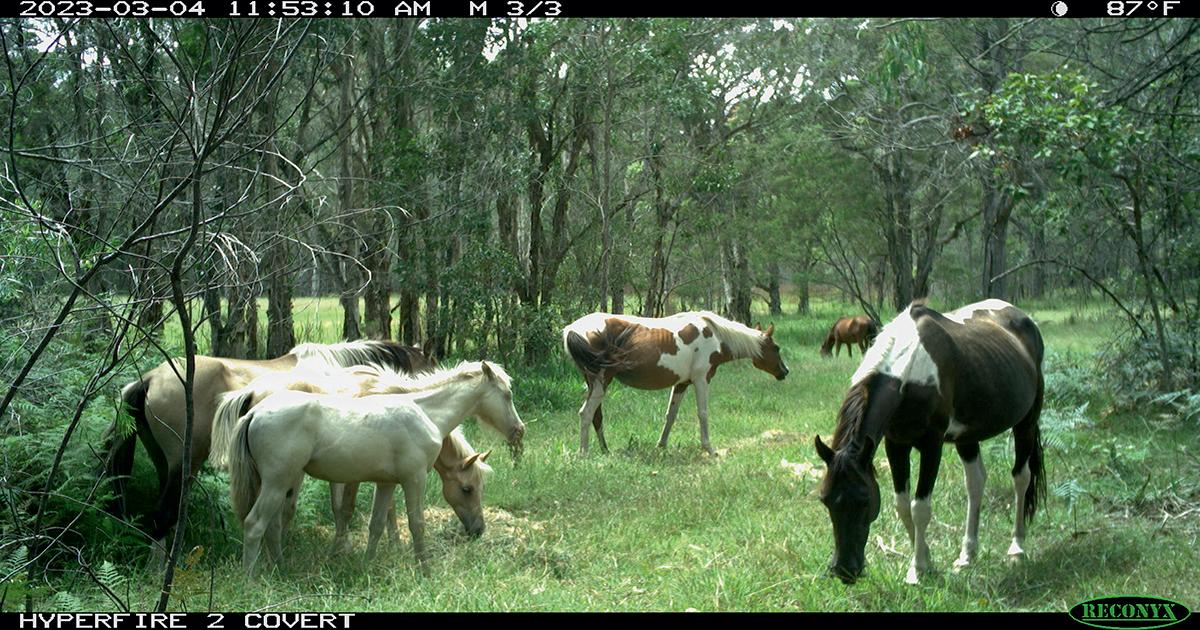
The North Coast feral horse management program works with local land managers to trap feral horses and rehome them through rescue organisations and private landholders.
This program supports landholders to report the presence of feral horses, develop a written management program, and maintain records of control actions.
Ageneral biosecurity direction is in effect in Clarence and Coffs Harbour to control feral horses. This directive relates to activities involving the presence, spread, or increase of wild horses within the North Coast LLS Wild Horse Management Area Zone.
Landholders in the zone must:
* Report the presence of wild horses.
* Develop a written wild horse management program using
help develop a management program and maintain records of control actions in order to:
* Reduce the number of feral horses on the North Coast
* Support humane rehoming through approved organisations and private landholders
* Ensure compliance with the General Biosecurity Direction in Clarence and Coffs Harbour.
Timelines for trapping and rehoming are dependent on seasonal conditions and operational requirements. Members of the public can apply to own rehomed feral horses.
Applicants must provide suitable facilities, accept responsibility for care and acknowledge biosecurity risks.
North Coast LLS is seeking EOIs
- Provide facilities that meet basic requirements and humane care.
- Understand that wild horses are not tame and are unaccustomed to human contact.
- Accept all liability associated with the wild horses once they are delivered or collected and loaded onto the applicant's transport.
- Take responsibility for the wild horses’welfare and biosecurity risks once they are delivered or collected and loaded onto the applicant's transport.
- Acknowledge that unless specifically advised by NCLLS, the wild horses have received no health treatments or vet checks. Their parasitic burden and disease/health status are unknown.
- Understand that the wild horses (and if pregnant, their offspring) become the applicant's possession and responsibility once delivered or loaded onto the applicant's transport.
Wild horse rehoming may include an unexpected foal.
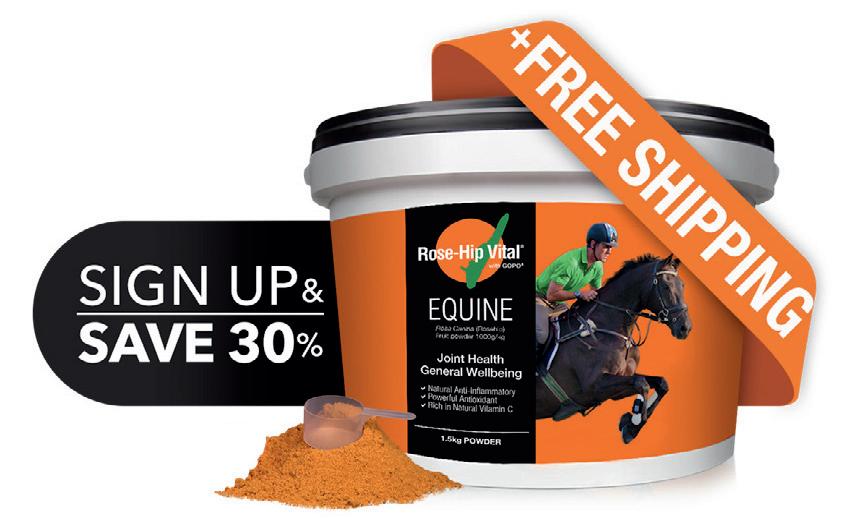
The Secret is out!
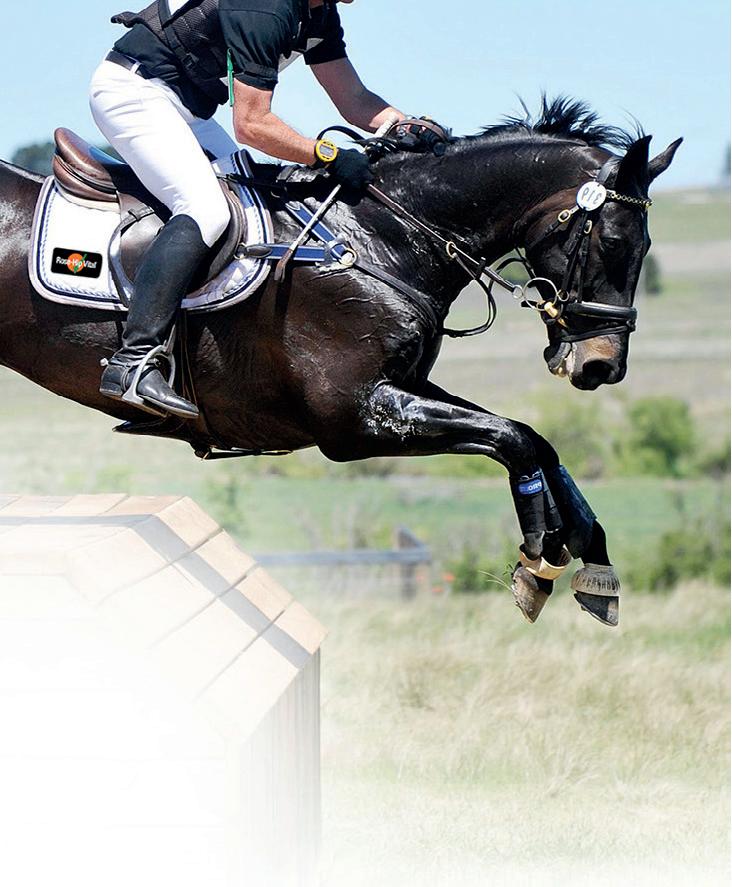
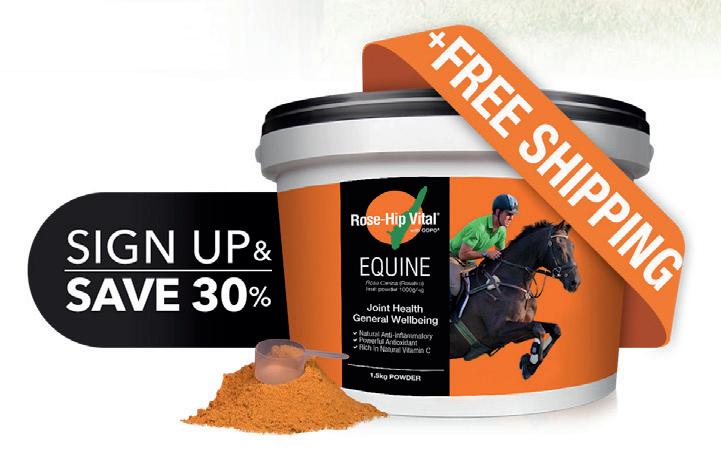
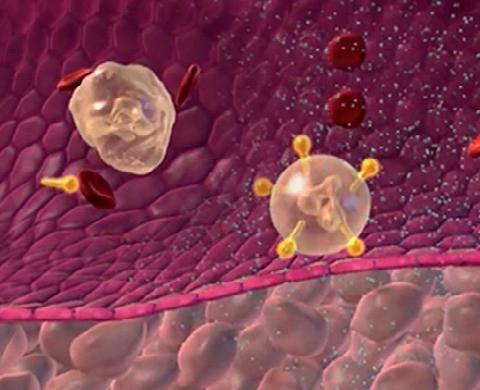
Vet-formulated for joint protection & mobility Combines Rosehip, MSM, Glucosamine, Chondroitin, Green-Lipped Mussel & Turmeric Results in as little as 2–3 weeks
"This blend is absolutely mind-blowing. All of the therapeutic ingredients that horse owners once had to use separately are now in one powerful, practitioner strength formula."
– Tamara Frances, Nutritionist & Herbalist
Equine Health Feature
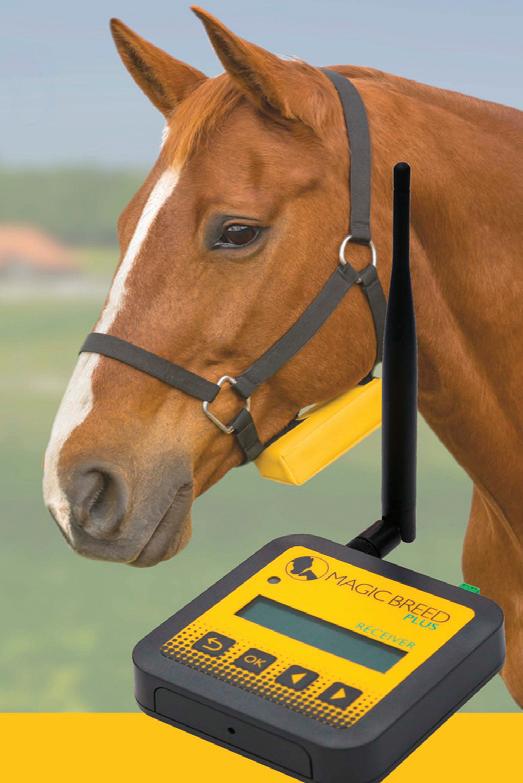
The Horse Report System aids in breeding and health monitoring
Supplied by MAGIC BREED
When it comes to foaling, ontime human intervention - if needed - is crucial to ensure a successful outcome.
This also applies to horses after surgery or for detecting colic.
Magic Breed has earnt the trust of breeders and veterinarians as a crucial frontline tool.
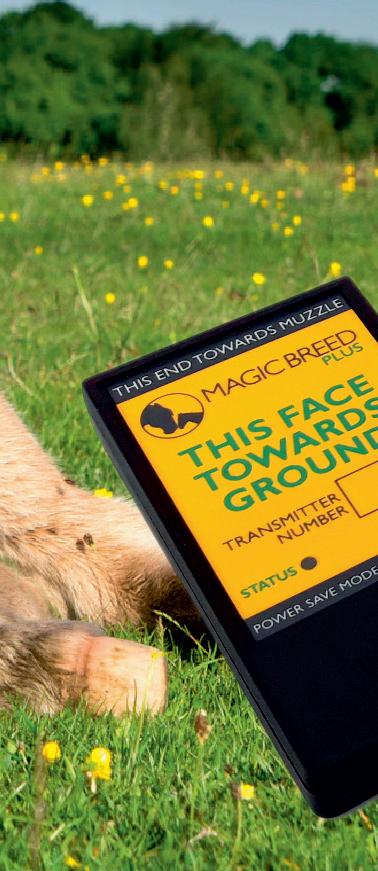
This is a non-invasive approach for the animal, the pouch is small and lightweight attaching to the halter which tucks up underneath.
You will be alerted when the animal lays down, which would indicate foaling or a health issue, depending on which scenario you are monitoring.
This product was designed and manufactured here in Australia more than 40 years ago, starting with the original Magic Breed, this system has continued to service breeders for more than 40 years in Australia and New Zealand.
In recent years, Magic Breed have moved with technology hence the birth of the Magic Breed Plus system, giving breeders a plethora of enhanced features.
No Wifi or phone service is
required so no dropouts.
Magic Breed Plus's operating system works on a 917MHz frequency, providing it with greatly improved immunity to interference and superior range - 500m is no problem and in excess of 1km is possible.
All you require is power to plug in the base station (receiver). While this means that it won't work with the 27MHz antenna from the original Magic Breed system, we guarantee that the performance is so good that the external antenna isn’t necessary.
You can also monitor up to eight mares at the same time on the same system.
If you need more, just add another receiver base.
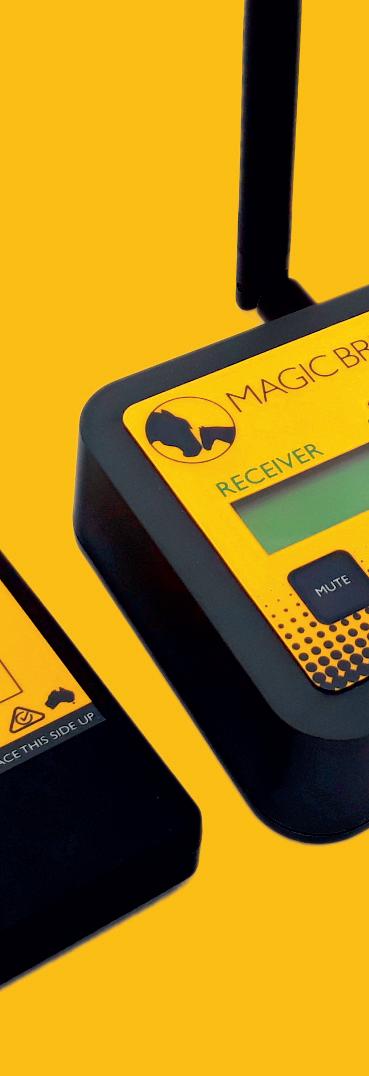
The addition of an LCD display on the Magic Breed Plus receiver provides a wealth of operator feedback.
This includes signal strength and battery level, along with individual identification for up to eight transmitters.
Your Magic Breed Plus foaling alarm kit is supplied in a polypropylene rubber sealed IPX7 water resistant rugged carry case for protection during storage, transportation, employs a UV resistant rubber seal to ensure dirt and moisture stay outside of the case and is shock absorbing.
It includes a built-in pressure release valve to ensure internal pressure to be equalised with ambient external pressure. This ensures a reliable seal at all times.
Magic Breed Plus, with its 100% solid state technology does not require regular servicing or adjustments. It is designed by our in-house experienced engineers on the Sunshine Coast, Queensland.
FAST FACTS ON MAGIC BREED PLUS
* Up to eight transmitters can be used per receiver
* Non-invasive - detects when the mare lays down
* Range exceeding 1km possible (easily 500m in built up area's)
* Display shows signal strength, no second guessing
* Long battery life with indicator on display showing level
* Can be used alongside your original Magic Breed System
* No booster aerials required
* 2 year warranty
* 100% solid state technology
* 5-star customer service
UPGRADE NOW AND RECEIVE A 15% DISCOUNT
Magic Breed is offering all current users of the MB system a 15% discount if they want to upgrade their system.
To order, send an email with a photo of your old system and the new product you would like to order and you will receive an invoice for payment with your 15% discount.
For further information visit www.magicbreedplus.com.au Ph 07 5453 4355 or email contact@magicbreedplus.com.au
The Horse Report Nutrition and feeding your pregnant mare
By FEEDXL EQUINE NUTRITION TEAM
Pregnant mares carry your hopes and dreams, be it for the next big champion or a quiet riding companion.
Regardless of what you are breeding, good care of the mare during her various stages of pregnancy has long term impacts on both her and her foal’s long-term health and athletic capacity.
Here are some tips for feeding pregnant mares to keep them healthy and breeding sound, strong and athletic foals:
1. Don’t let mares get fat
Mares in their early stages of pregnancy don’t need many, if any additional calories than they needed when they weren’t in foal. All mares are different, so to really know how much feed your pregnant mares need you should condition score regularly. Pregnant mares should ideally be maintained at a condition score of 6 and should not be allowed to exceed a score of 7. Having mares too fat can:
- Reduce their milk production when they foal.
- Put unnecessary strain on their hooves and joints, making them heavy and uncomfortable.
- Lead to difficulty foaling (though this isn’t necessarily proven to occur).
- Make it difficult to fall pregnant again, particularly if a mare is forced to lose weight just prior to or immediately after foaling. As mares progress through their pregnancy
their requirement for energy and protein does increase, so you may find you need to feed additional feed to maintain their body condition score.
For more information on Condition Scoring read our blog.
If you are feeding pregnant mares, get in the habit of running your hands over them every time you feed them.
Doing this means you will quickly pick up if they are putting on more condition than they need and will allow you to adjust their feed intake accordingly.
2. Don’t let mares get skinny Apregnant mare shouldn’t be allowed to drop below a condition score of 5. Mares that are any lighter will fall away quickly after foaling, reducing the body
energy and protein reserves for milk production and also switching off the reproductive cycles, making it difficult or impossible to get in foal again.
Thin mares may also be more susceptible to disease.
Again, get in the habit of running your hands over your mares to assess whether they need more feed to hold them in the desired body condition.
If you notice their ribs becoming easier to feel or their topline and rump starting to fall away, you will need to increase the amount of feed they are getting.
Because so much room is taken up in the mare’s abdomen late in the pregnancy you will likely need to feed high energy grains (make sure they are cooked—see Grains for Horses: Cooked or Uncooked) or high energy fibre feeds that use ingredients like sugarbeet pulp or soybean hulls to allow them to increase their energy intake enough to hold their body condition.
High fat feeds are also useful for late pregnant mares.
Continued page 7
The Rosehip Supplement Loved by Horses and Riders
Rose-Hip Vital Equine is not just for horses. Our wholly natural daily multivitamin is made with only one ingredient, pure Rosa Canina rosehips,
The Horse Report Healthy mares produce healthy strong foals
From page 6
3.- Make sure mineral and vitamin requirements are met
Meeting the mineral and vitamin requirements of pregnant mares during early and late pregnancy is crucial to:
- Promote the sound development of their foals.
- Prevent deficiencies like iodine that can affect the thriftiness and survival of newborn foals.
- Prevent problems in the mares like retained placenta and the associated laminitis.
- Maintain a strong immune system in the mare and foal.
- Maintain the long-term health and soundness of the mare for future reproduction. While pregnant mares can often be maintained on good quality pasture with little additional feed, without supplementation of minerals, a pasture-only diet will almost certainly have quite dramatic deficiencies of copper and zinc and depending on the geographical location may also be very deficient in calcium, phosphorous, magnesium, iodine and selenium.
If the mare doesn’t receive the additional minerals she needs to support herself and her growing foetus, she will draw them from her own body reserves.
However, if she is required to do this for many consecutive breeding seasons it will eventually have implications for both her and her future foals’long-term health, soundness and athletic ability.
One study has shown that foals born to mares early in her breeding career have less structural problems than foals born later in that mare’s life, which may indicate that over consecutive pregnancies, mares can run out of reserves of minerals that directly impact the sound development of her foals. FeedXLallows you to quickly and easily determine your mare’s requirements for these critical minerals as well as vitamins and helps you make sure the diet you are feeding is meeting her requirements through all stages of pregnancy.
4. Feed high quality protein
During pregnancy a mare requires high quality protein to meet her own requirements and those of her growing foetus. If the pasture your mare is on is of low qual-
Keeping mares in the correct body condition, making sure you meet mineral and vitamins requirements from day one of the pregnancy, feeding high quality protein, and using pasture when you can will help you to breed sound foals.
ity (for example sub-tropical C4 Type pastures, or pasture that has matured, gone to seed or browned off), add some high quality alfalfa/lucerne hay to raise the quality of protein in the forage component of her diet. If you are using supplementary feeds on low quality pasture, select feeds that use legumes and oilseeds with quality protein, including soybean, lupins, faba/field beans and canola meal.
Low quality protein sources like cottonseed meal shouldn’t be used for pregnant mares. FeedXLwill help you make sure you are feeding enough good quality protein to your mares to produce healthy foals and will also stop you from overfeeding protein which will make your mare’s diet very expensive.
5. Make the most of pasture
Pasture is an excellent source of energy and protein
Feeding a diet that relies largely on pasture has two main positive effects.
The first is it will make for an economical diet, with pasture being one of your cheapest feeds available.
Secondly, a high fibre diet will keep your mare’s gastrointestinal tract healthy, reducing the risk of problems like colic (something to be avoided in a pregnant mare).
To really know what is in your pasture and what your mare needs in addition for her diet to be balanced, you should have your pasture tested for energy, protein and minerals levels.
Once you have had your pasture tested, we can enter the results into your FeedXL account so you can see what is in and what is missing from your specific pasture.
Then you only need to add what is missing from the mare’s diet. Equi-Analytical can run a full analysis starting at $45 (Aus).
It is well worth the investment. If you rely on hay for your mare’s main source of forage this too can be tested and the results put into FeedXL.
Because it is so often said that a pregnant mare needs little more than a horse at maintenance, it is sometimes mistakenly thought that mares and particularly early pregnant mares can be fed diets of forage only with little or no supplementation.
However, while a pasture or good quality hay diet may be sufficient to maintain your mare’s bodyweight, it will almost certainly be lacking in critical nutrient including minerals that can determine if your foal is born structurally sound or not.
Keeping mares in the correct body condition, making sure you meet mineral and vitamins requirements from day 1 of the pregnancy, feeding high quality protein, and using pasture when you can will help you to breed sound foals that are healthy and full of life when born.
It will also mean your mares can remain healthy and able to produce strong foals with good structural soundness year in, year out.
Being pregnant may not appear to be hard work, but it will take a toll on your mare’s body if she is not properly cared for.
www.feedxl.com and join today to start building scientifically balanced diets for your horse
The Horse Report
The Horse Report
Bran, to feed to horses or not to feed
Supplied by RANVET
For many years feeding bran to your horses was a normal practice especially before a lot of the new premixed feeds were available. However now in the day of supplements and new advances in feeds, is this still a good thing for us to be doing, or is this now very much outdated, and is bran really that bad for my horse?
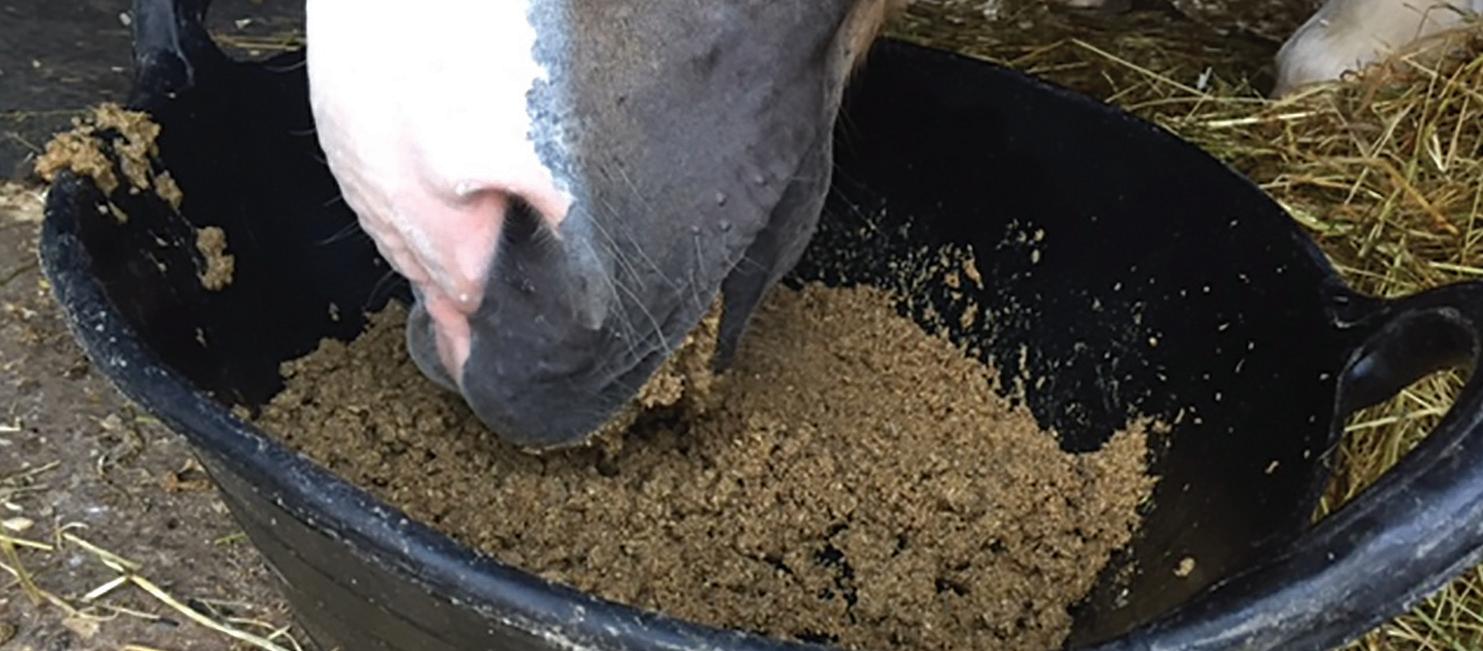
Bran has often been fed for various reasons. Abran mash can be a tasty treat on cold wet days.
You can add other things to it such as molasses, steamed grains (oats or barely), carrots, etc which all add nutritional value. For hydration, adding salt to a bran mash can encourage drinking, plus the added moisture content of the mash.
As a mash, it can assist with fussy eaters and disguise medications.
For horses that have gone off their feed, whether it’s due to them being unwell or age-related issues such as poor teeth. And one of the most common reasons it has been used over the years is the belief that it is a good source of fibre and can be used as a laxative, making it helpful with colic.
With all-new advances and research into horse nutrition, we can now see why bran may not be as beneficial for our horses as we used to believe
Bran is the byproduct of flour milling. Bran has quite a high phosphorus level, 10 times higher than calcium.
As a rule, horses require a calcium to phosphorus ratio of 2:1 (2 parts calcium to 1 part phosphorus), this mirrors the levels found in horses’own bones and really should not drop below 1:1.
The higher levels of phosphorus found in bran can decrease a horse’s ability to absorb calcium from their diet, and in doing so they will start to draw on calcium from their bones.
This has the effect of weakening their bones, leading to what we call Big Head syndrome, or once referred to as Miller’s disease, (named for the fact that years ago horses
that worked in the flour mills used to be fed the byproducts of the milling process).
Any change to our horse’s diet should be gradual so that the bacteria in a horse’s hindgut can adapt, with minimal upset. Feeding bran at random intervals could therefore cause digestive upset and is potentially where the idea that bran has a “laxative effect” originated, leading to the thought that it is beneficial for horses that may suffer from colic.
Horses require a high level of fibre however bran is in fact, quite low in fibre.
We all like to think giving our horses a nice warm bran mash on a cold day is a nice treat, but due to its low fibre content, bran actually won’t warm your horse up. Feeding hay or other forage will have a much better warming effect, due to the way a horse’s hindgut ferments fibre.
After what we have read above are there any benefits to feeding a little bran?
It can be palatable for sick horses that have a reduced appetite, or older horses with dental issues that can’t eat more traditional foods. Other ingredients can be added such as molasses and boiled barely to increase the nutritional value, and even some medications can be mixed in for fussy eaters.
It can also assist horses that are not drinking enough, especially in winter, as salt can be
added to encourage drinking, together with the additional moisture of the mash itself.
Before deciding to add bran to a diet it may be worth investigating many of the premixed feeds and supplements available as an alternative to bran.
Bran is used in many of these, but manufacturers take into account the levels of phosphorus and calcium and adjust their feeds accordingly.
Alternatively, you can feed a calcium supplement such as Ranvet’s Folactin range of products to help with any imbalances.
As another alternative to feeding bran, you can dampen down the feed you are currently feeding your horse, therefore not making any dramatic changes to your diet, and you can easily add some salt as well if you are not already doing so.
If you do wish to give your horses a little bran, start adding it slowly and in small amounts to give your horse time to adjust to the new diet.
Seeking the advice of a nutritionist would be well-recommended to make sure you are feeding a well-balanced and nutritional diet, best suited to your horse’s requirements. Submit your horse’s diet online for a free diet evaluation.
Bran mash can be a tasty treat on cold days or when horses are sick with reduced appetite.
The Horse Report
Feature Gut bacteria, Vitamin B1and behaviour
By FEEDXL EQUINE NUTRITION
Gut bacteria, vitamin B1 and behaviour - are thye linked?
The short answer is yes.
Here is how:
Vitamin B1 has been observed to have an influence on behaviour in multiple animal species, including horses. Ahorse will meet its vitamin B1 requirements via the vitamin B1 it eats in its diet and from vitamin B1 produced by the bacteria in its hindgut.
There are two main families of bacteria living in your horse’s hindgut:
1. The fiber fermenting bacteria who love to ferment fibre from the forage your horse eats. These little critters are the ones we consider the ‘good bacteria’; and
2. The starch and sugar fermenting bacteria who prefer to ferment starch and sugars. These we generally consider to be the ‘bad bacteria’.
The good bacteria produce vitamin B1 that your horse can then absorb and use.
On the other hand, the bad bacteria produce a compound called ‘Thiaminase’that actually destroys vitamin B1 (also known as thiamine) that is in the gut, making it useless to your horse.
If your horse has too many bad bacteria and not enough of the good ones your horse may not get enough vitamin B1 and behavioural changes may occur.
How do you avoid this?
Keep your horse’s hindgut healthy with an
abundant population of good bacteria.
The main two things you should do to achieve this are:
1. Feed lots of forage!; and
2. Never feed uncooked grains (with the exception of oats for some horses)
For more tips on caring for your horse’s hindgut, read Keeping the Hindgut Healthy at
www.feedxl.com/15-keeping-the-hindgut-healthy/
www.feedxl.com
Good behaviour in your horse can be determined by vitamin B1 and gut bacteria.
The importance of water in winter
Provided by WWW.RANVET.COM.AU
Many people are of the belief that in winter their horses don’t need as much water or an electrolyte supplement.
We can be tricked into thinking that because temperatures aren’t as high, humidity is lower, our horses aren’t sweating as much and thus it’s normal for fluid intake to reduce.
This could not be further from the truth!
In fact, our horse’s hydration needs just as much attention in winter as it does in summer.!
Why happens in winter?
- Water temperatures fall in the colder months, so horses tend to drink less.
- Horses still sweat throughout winter even if it’s not as visible. Especially horses that may be inappropriately rugged.
- As well as excretion of electrolytes, they are also losing all the important Vitamin Bs that need to be replenished daily.
- Anaturally reduced thirst reflex occurs in winter.
- Decrease in pasture quantity and quality in winter reduces the availability of fluid intake through grazing on fresh grass.
- There is increased intake of dry feeds such as hay and chaff, used to maintain roughage intake and condition.
What can this reduced water intake lead to?
- Dehydration can occur as water intake reduces.
- Reduction in gut mobility due to reduced fluid intake
- Increased risk of impaction colic due to dehydration
- Effects on body temperature regulation
What can I do to reduce this risk of winter dehydration?
- Add 30g of salt to your horse’s feed. Ensure access to a salt lick ad lib. Make sure your salt lick is molasses free, such as our Iodised Salt Licks, to avoid your horse overindulging in it the sugars.
- Monitor daily water intake / supply
- Monitor water quality and temperature- regularly refresh water troughs and check in the morn-
ings for freeze overs.
- Add an electrolyte supplement to your daily feed, or have on hand to provide after exercising /travelling your horse.
Ranvet Electrolyte Replacer is a great option for targeted electrolyte supplementation, or if you are looking for a premium electrolyte and B-group Vitamin Replacer, Salkavite is a go to. Either of these products can be added to the daily ration from doses starting at 30g.
Proper hydration is just as important when it is cold as during the warmer months.
Dehydration can quickly lead to various health ailments; poor gut health, reduced performance, loss of body condition and poor general health, and can escalate quickly into colic.
Continuing to maintain good fluid and electrolyte intake in winter is very important to your horse’s health.
Small things such as adding salt to your horses’diets, monitoring water supply and adding some electrolytes are just a few things you can do to help your horse stay hydrated and healthy through the cold winter months. For more great articles and advice visit www.ranvet.com.au
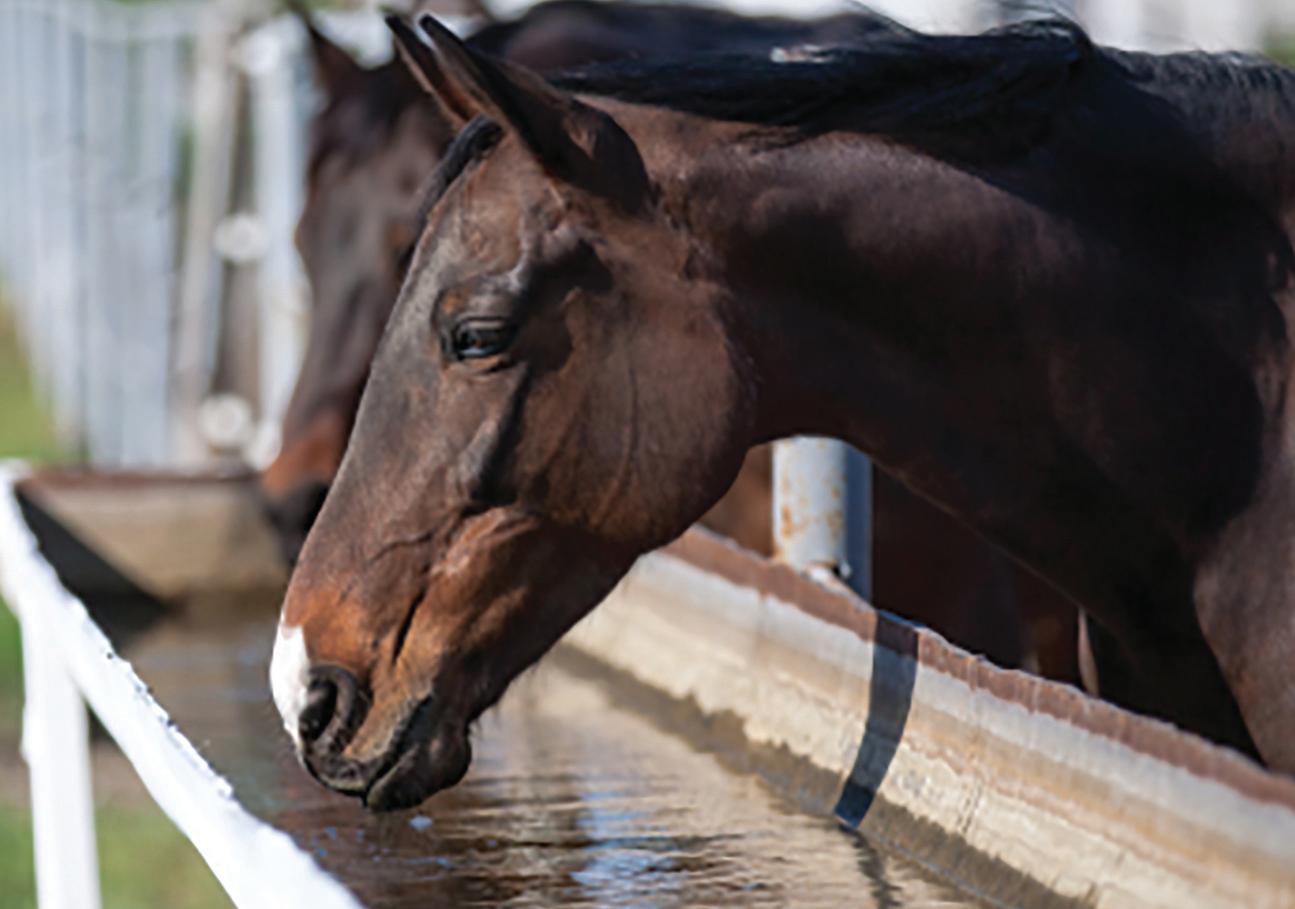
Maintaining clean fresh water during winter is crucial for your horse’s health.
The Horse Report
Byron Bay Equine Practice
Dedicated
Routine Visits & Preventative Health
Lameness & Orthopaedic Checks
Portable Diagnostic Imaging
Dental Exams & Powerfloating
Reproduction & Breeding Services
Routine Surgeries
Freeze Branding & Stud ID
Emergency & After Hours Services
Equine Health Feature
The Horse Report Helpful feeding tips for horses in winter
By LARISSA BILSTON, BAgrSc (Hons 1), Animal Nutritionist, Farmalogic
Should you make changes to your horse feeding program during cold months?
Sometimes it only takes a small feeding or horse husbandry change to provide significant health benefits to horses over winter. In this article, I investigate some common winter feeding practices and offer tips to boost your horse's winter health.
Avoid respiratory problems
* Avoid feeding dusty feeds and mouldy hay as these can exacerbate respiratory problems and cause digestive and toxicity issues.
* Wherever possible provide feed at ground level so that the horse can eat with a natural posture (they were designed to graze from the ground) which allows the respiratory tract to clear out.
* Steaming or soaking hay for a few minutes can be useful for minimising dust but only feed out as much as the horse will eat in a few hours to avoid mycotoxin contamination from mould growth.
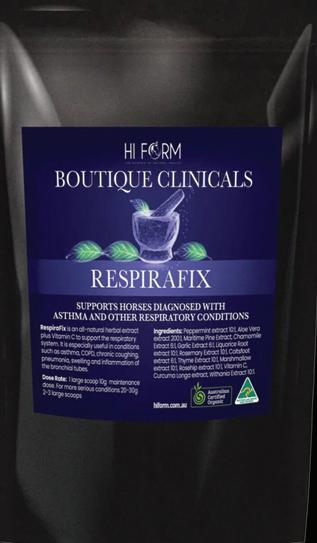
* Horses diagnosed with respiratory diseases such as COPD or RAO will benefit from supplementation with antioxidants including selenium and vitamins C and E at levels higher than found in feeds and multivitamin supplements.
Horse feeding to prevent diarrhea
Accute (sudden, severe) diarrhea can be caused by feeding too much grain, sudden changes in diet, stress, use of painkillers and bacterial or fungal toxins in mouldy hay, lush pasture, old or poorly stored grain.
Chronic (ongoing) diarrhea can be caused by sand in the digestive tract, intestinal worms or starch overload.
If your vet is unable to diagnose the cause, try some or all of the following:
* feed on a mat to limit sand/dirt intake;
* feed plenty of long stem roughage (this is one of the best ways to assist with removal of sand build up in the gut);
* feed salt (10 grams per 100 kilograms horse bodyweight) to encourage drinking;
* give an electrolyte supplement to replace lost electrolytes;
* implement a deworming program as advised by your vet;
* reduce starch (e.g. by removing feeds containing cereal grains or by-products) and increase dietary fibre;
* use probiotics and prebiotics (look for live yeast as well as deactivated prebiotic ingredients);
* provide B group vitamins, including a high dose of B1 (thiamin);
* use a toxin binder containing multiple ingredients to trap, bind or deactivate the broadest possible range of mycotoxins.
* try a different batch of hay; and
* remember to make all feed changes gradually over a two to three week period.
Keep up the water intake
Some horses don't drink enough water during colder weather, which isn't good for their health. You can encourage drinking by:
* always providing fresh clean water that is not too hot or too cold.
* keeping water under cover can help keep it clean (especially if bat or bird droppings are likely to contaminate it) and manage temperature fluctuations.
* emptying and cleaning the water trough every few days to avoid algae, bird droppings, dead insects and the like building up in the water.
* sprinkling salt over free choice hay.
* feed approximately 10 grams of salt per 100 kilograms of horse bodyweight to encourage healthy levels of water intake. Remember to include the salt content of pre-mixed hard feeds
when calculating how much to add.
A nice warm bran mash?
As humans we love the smell of a nice warm bran mash on a cool night but we're not doing our horses any favours by suddenly introducing a new feed like bran occasionally because the hindgut microbes can't adapt for a once-aweek feed.
Make dietary changes very gradually and a few days to introduce a new supplement.
In addition, bran has an inverted calcium to phosphorous ratio so if you do choose to feed it, make it part of a daily ration with added calcium to balance the mineral ratios correctly (aiming for a total daily intake of calcium that is twice the level of phosphorous).
A nice warm stable?
Stabling and confinement can cause low level stress and increase the risk of ulcers, enteroliths and colic.
Horses need frequent movement to be relaxed and for their gut to function properly.
If you need to stable, ensure your horse never has an empty haynet.
If you are stabling to keep a horse under lights for a show coat, consider an extra rug and letting him out of the stable when you turn the lights out.
continued page 17
If you need to stable, ensure your horse never has an empty haynet.
Equine Health Feature
The Horse Report Horses may need extra calories in winter
From page 16
Feed horses roughage for mental and physical health
Many horses do not get enough roughage in their diets.
This is particularly true for horses kept in stables and small yards as well as during winter if your pasture growth becomes very slow. Horses need to have access to hay, chaff or grass approximately more than 20 hours every day (although they won't eat constantly 24/7). When they go without food for more than three or four hours, horses become very stressed and unsettled leading to behavioural problems, ulcers, colic and bolting feed which can cause choke.
Most horses need to eat a total of 2% of their bodyweight in dry matter.
Dry matter is the weight of a feed if you put it in the oven on low heat to dry out all the moisture it contains. Fresh grass is low in dry matter and high in water (15 - 30% dry matter; 7085% water) compared to hay (85% dry matter) and grain or pellets which are high in dry matter (90%) and low in water (10%).
A500 kg horse needs 10 kg of dry matter from food. This can mean as much as half to two thirds of a bale of grass or meadow hay every day day or free access to a large bale of hay when pasture is poor or not available.
Horse feeding: Concentrates to prevent weight loss
Although many mature easy-keeper horses and ponies at rest or in light work hold body condition easily from hay and grass alone, others need more calories over-winter to prevent unwanted loss of weight. Ahard feed is often necessary for ageing horses, thoroughbred types and those in harder work.
Keeping warm in cold weather burns body fat, so appropriate use of rugs, wind breaks, shelters and stables helps less thrifty breeds hold condition over winter.
Boosting immunity with omega-3 and antioxidants
Omega-3 oils help to prevent the formation of damaging free radicals in the body and stabilize the immune system.
Including omega-3 supplements in the feed can improve general health as well as improving joint and skin health, hoof quality and coat shine.
Omega-3 rich sources suitable for horses
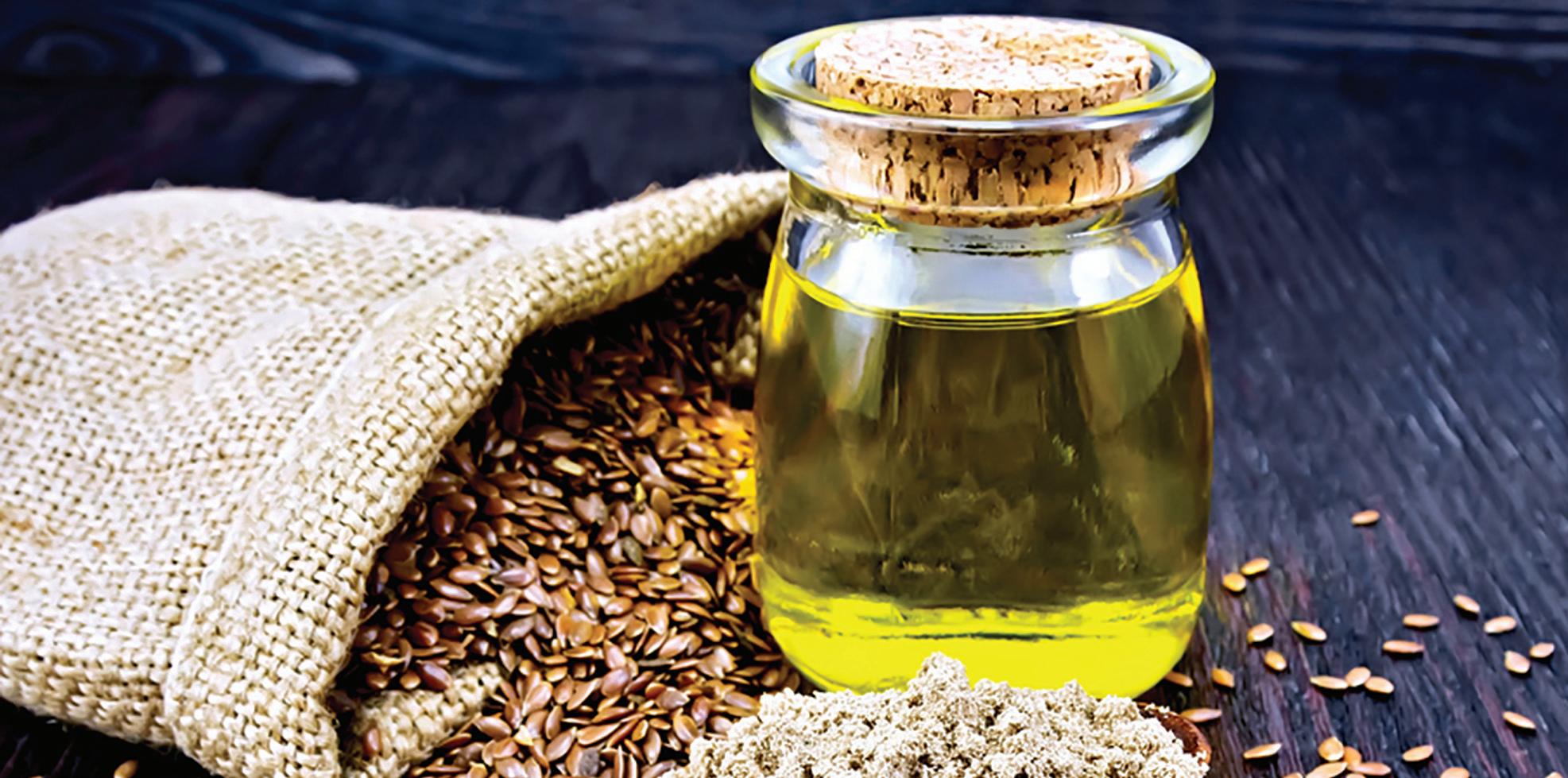
include green grass, algal meal, linseeds, chia seeds and fish oils. The recommended feeding rate is 30gm of whole or freshly ground linseeds, 15ml of stabilized linseed oil or 2ml of fish oil per 100 kg of bodyweight.
Chia seeds are lower in omega-3 and need to be fed at about 30% higher than linseeds. Marine-derived omega-3 sources (algal and fish oils) can be more economical to feed because they have the advantage of providing the most active forms of omega-3: DHAand EPA. Omega-3 supplementation is particularly important when hay and grains form the majority of the diet and access to omega-3 rich fresh grass is limited.
During cold weather, additional antioxidants can boost immune function.
* Even the freshest green grass leaves horses deficient in vitamin E and the levels in many feeds and multi-vitamin supplements are too low to top up the diet. When choosing a vitamin supplement, look for one with high levels of vitamin E or use an antioxidant booster to top up vitamin E levels.
* Horses produce maintenance levels of vitamin C for much of their lives but sick or stressed horses and those over 16 years of age require more than the body can make. Introduce supplementary vitamin C gradually and wean the horse off it slowly when the extra dietary source is no longer required.
* Many Australian soils are selenium deficient, so this mineral is often added to horse feeds. Additional selenium can be added to boost
antioxidant levels when required. Be careful not to double dose on selenium through different feed sources as this is one mineral where toxicity levels are relatively low. Look for organic sources such as selenium yeast in antioxidant supplements.
A note of caution regarding garlic
Although garlic is often promoted as being beneficial for horses, it contains allicin which is good for people but a known toxin to horses. Garlic's antimicrobial action may harm the beneficial microbes in the hindgut.
Feeding garlic long term can cause Heinz body anaemia leading to lowered endurance, energy level and immune function in horses.
Nutraceuticals for Joint Care
Horses with osteoarthritis often 'feel their bones' and suffer more pain during the cold of winter. Whilst feeding cannot cure degenerative joint problems, adequate vitamin and mineral supplementation also supports your horse's joint health. Vitamins B6, C and E and the minerals manganese, copper and zinc are required to help the body build, maintain and repair joint fluids, connective tissues, muscles and bones. Orally ingested hyaluronic acid (HA), MSM, glucosamine and DHAomega-3s are recorded to have anti-inflammatory &/or analgesic (pain relieving) affects in humans, dogs and horses. Oral joint supplements may offer relief and most can be used on veterinary advice in addition to prescribed oral or injectable treatments.
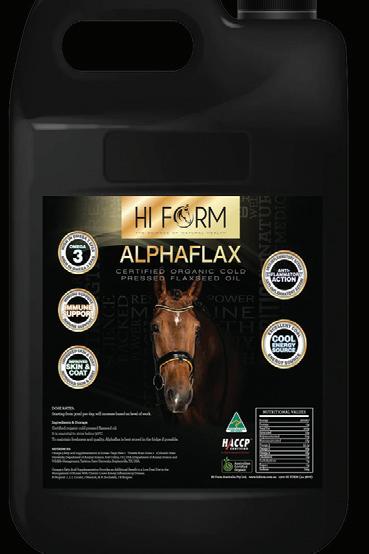
Give your horse’s immunity a boost by adding Omega-3 rich oils.
Some horse owners adhere to traditional practices, administering deworming treatments every 8 to 12 weeks.
Others believe that natural supplements like garlic and wormwood are sufficient to prevent worm infestations, opting not to deworm at all.
However, neither approach is advisable, as both can be detrimental to your horse's health.
So, what does the latest research say about deworming?
Here’s a statement regarding the goals of parasite management in horses from the Australian Veterinary Journal, Australian Guidelines for Equine Internal Parasite Management.
The objectives of internal parasite control in horses have changed substantially since the era of emphasis on chemical intervention. The focus on advice has shifted from complete elimination of parasites and/or prevention of clinical disease through intervalbased treatments to maintaining “manageable” levels of infection through more strategic and targeted approaches.
Regardless of geography or climate, modern objectives should be overarching.
These are:
1. Reduce the risk of parasitic disease
2. To limit parasite egg shedding into the environment, particularly when favourable conditions for egg & larval survival prevail.
3. To decrease the frequency of anthelminthic administration and maintain a refugia population through selective use of effective anthelmintics
4. To determine effective drugs for use on individual properties through the faecal egg count reduction test (ECRT) and/or egg reappearance period
5. To avoid the transmission of resistant parasites between farms through the implementation of effective quarantine protocols
The aim is to reduce egg shedding and parasitic disease while addressing the overuse of anthelmintics in the equine industry.
Emerging resistance among intestinal parasites highlights the need for new parasite control strategies.
Recent research provided insights into intestinal parasites and the importance of maintaining a refugia population.
Key points include:
Fecal Egg Count (FEC) Testing
Recommended at least annually, more frequently if high burdens are suspected. Fresh manure samples should be collected for testing.
Interpreting FEC Results
- Low Shedders (<200 EPG): Deworm twice a year.
- Moderate Shedders (200–500 EPG): Deworm three times a year.
- High Shedders (>500 EPG): Deworm four times a year.
Deworming treatments:
Spring: Ivermectin or moxidectin. Summer: Ivermectin.
Annual deworming is advised for parasites not detected by FEC, such as tapeworms. Integrating FEC testing with tailored deworming can effectively manage parasite burdens and promote horse health. Good husbandry practices such as removing manure three days per week will also reduce parasite burden on paddocks.
Effects of anthelmintics on the gut
When anthelmintics are administered, the gut may be affected in several ways:
Disruption of microbial balance:
The elimination of some beneficial bacteria can lead to a reduction in microbial diversity, which is essential for the metabolism and fermentation of fibre.
Changes in microbial composition:
The decrease or removal of parasites can modify the gut environment and the types of bacteria present. Some bacterial species that thrived alongside parasites may decline, while others may proliferate.
Short-term vs long-term effects: The disruption of the gut microbiome posttreatment can take time to stabilize.
In cases of repeated or frequent use, there may be long-lasting effects.
Impact on digestion and immunity:
Gut microbiome is vital for digestion, nutrient absorption, and immune function and disturbances caused by dewormers may temporarily affect these processes, though major harm is rare with proper usage.
How can Hi Form help?
BioEquus and BioEquus Gold feature:
Prebiotics, Probiotics, Postbiotics
These beneficial bacteria play a crucial role in restoring and stabilising the microbiome, with over 11 billion CFUs in each formula. Notably, every ingredient is of human-grade quality, which is rare in equine supplements. Prebiotics nourish beneficial bacteria.
Probiotics introduce beneficial bacteria.
Postbiotics are non-living by-products of fermentation, including VFA's, peptides, Vitamin B, Vitamin K, and immune-modulating compounds that offer health benefits. Additionally, BioEquus and BioEquus Gold are enriched with healing herbal extracts that aid in repairing the epithelial lining and digestive tract tissue, which can be compromised by migrating parasites.
Restoring this lining is vital to preventing leaky gut, excessive toxin absorption and ulcer forming lesions.
Hi Form’s gut supporting formulas, don’t have just one action like most other equine gut supplements.
They have several courses of action in the one low dose including:
- Promoting beneficial bacteria
- Reducing dysbiosis
- Decreasing excess acid
- Assisting in the regulation of hindgut pH
- Soothing and healing damaged tissue in the digestive tract
For further information visit www.hiform.com.au
Parasite control in horses have changed over the years.
The Horse Report
“BYE BYE FLY”
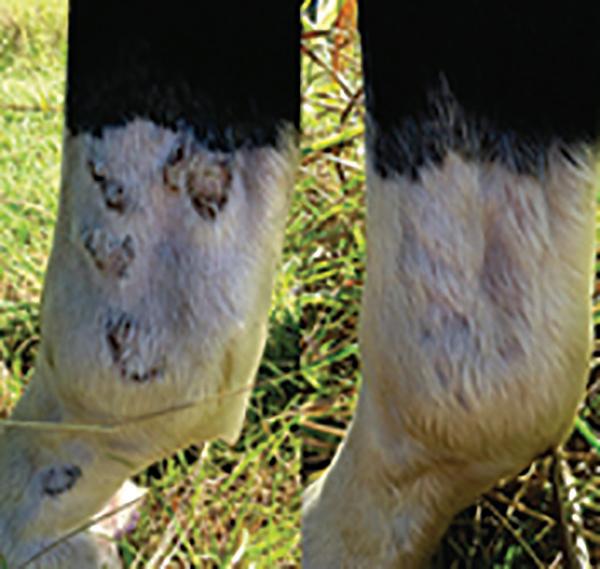
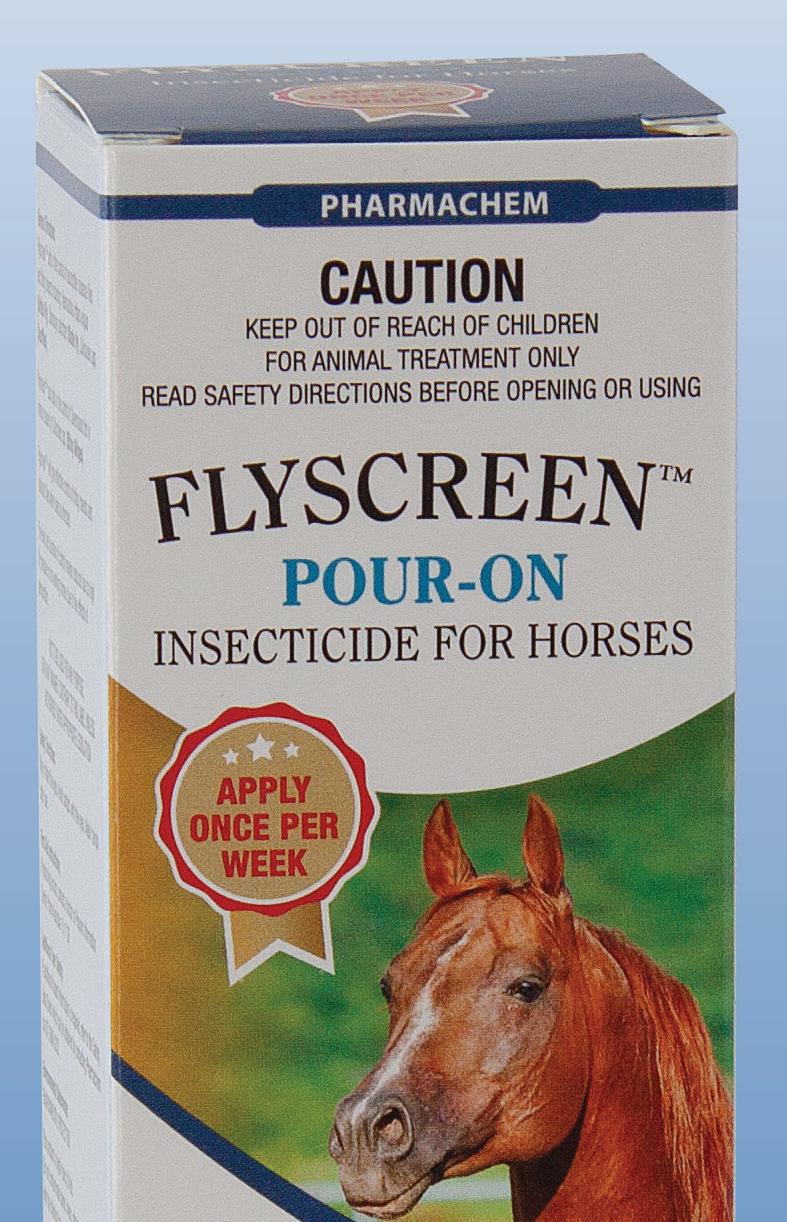
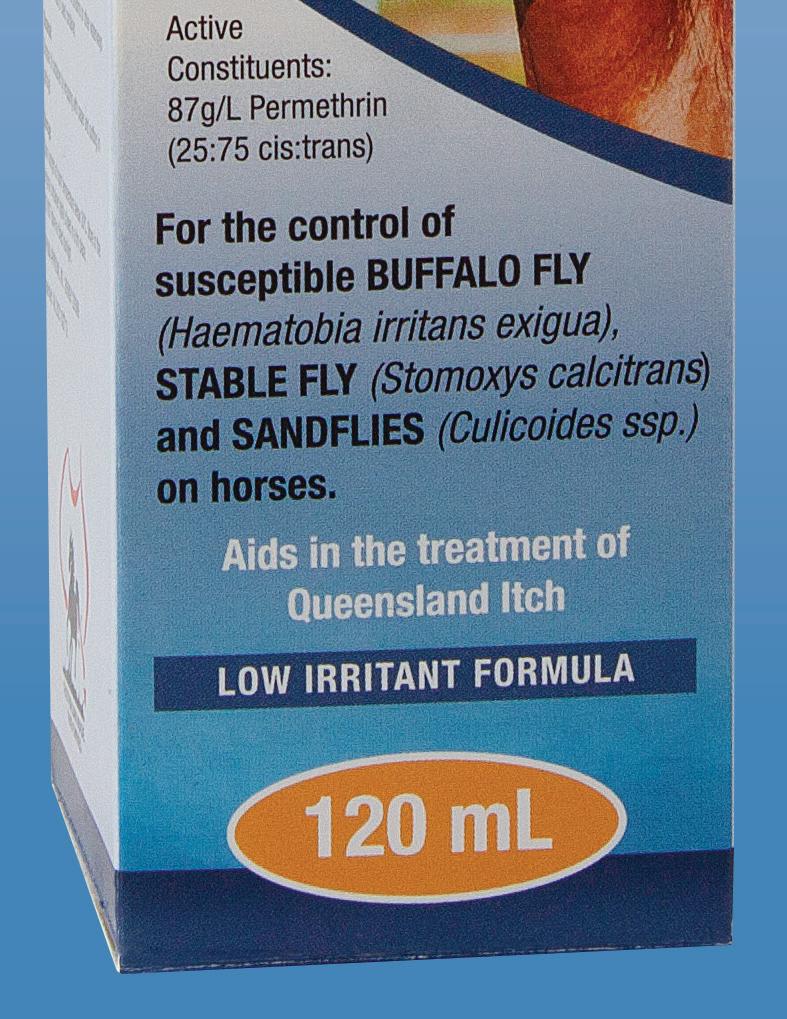
QUEENSLAND ITCH, SWEET ITCH, SUMMER ECZEMA and EQUINE ALLERGIC DERMATITIS are names for distressing skin conditions which affects horses in spring and summer months throughout Australia and around the world.
The usual cause is a hypersensitivity to the bites of flies (in particular sand flies or midges).
While the bite of the flies are an irritation, some horses develop sensitivity to the bite and will rub themselves so much that they cause injury to their skin.
Research shows the cause is an allergic reaction to the chemicals in the saliva of the midges (as with humans).
Not only that, but once or twice a day, stable lies come to the horse, feed vigorously for a minute or two, and then return to the shade to digest their food. These bites can cause intense irritation in some horses. The bites appear as small raised lumps with a central scab.
The effects on the horses can be dramatic. They suffer intense pruritus (itchiness) on the mane, tail, face, ears and back, resulting in biting, rubbing, hair loss, self-trauma and a change of temperament. They become miserable and irritable.
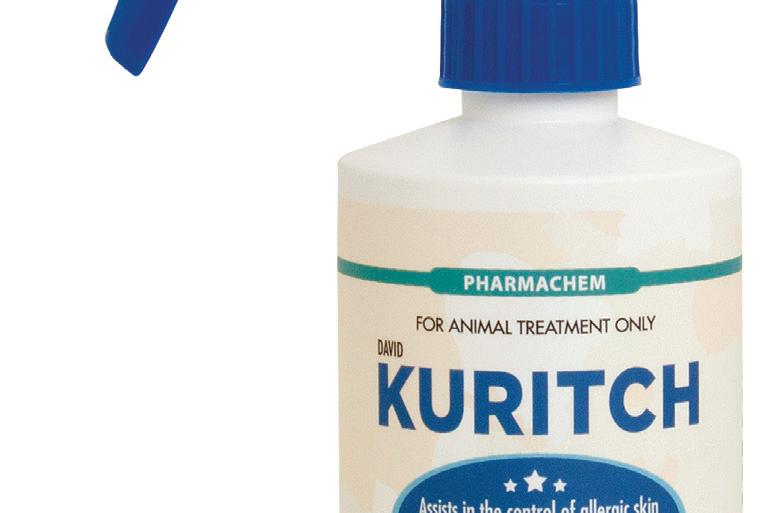
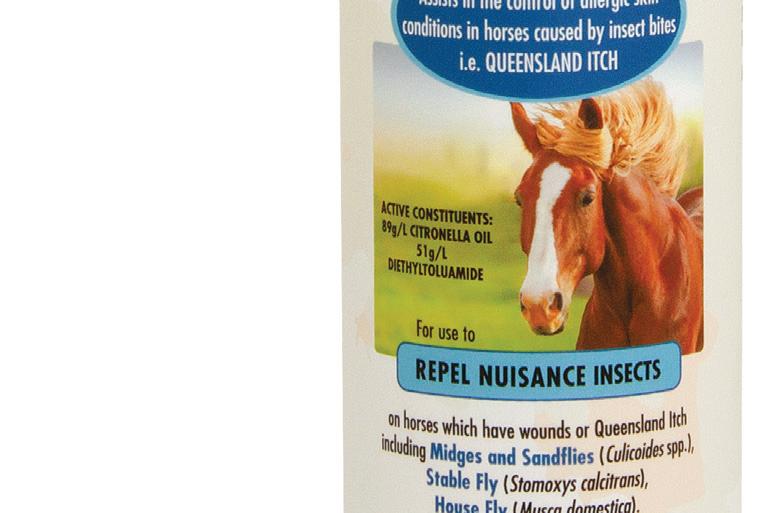
KURITCH has been specially formulated to help assist this problem effectively, in a number of ways:
Firstly, it repels the biting insects using the combination of the natural repellent “Citronella Oil” and a highly effective repellent “DEET”. Secondly, it soothes the irritated areas thus relieving the horse from biting and rubbing, which in turn allows the normal healing process to begin.
Also rugging, hooding or stabling your horses between the hours of 4pm – 7am during spring and summer will limit the contact of the flies.
Should your horse already be suffering from the effects of allergic skin dermatitis, ensure you use QUIT ITCH to treat and relieve the effects of insect bites.
Since the 1970’s, QUIT ITCH has been an essential weapon in the fight against skin disorders in horses.
It achieves this by the inclusion of the natural antiseptic “Eucalyptus oil” and Camphor oil” which naturally relieves itchy skin.
These significant benefits are also enhanced by the “Rain Resistant” and “Low irritant” formula. As it doesn’t contain alcohol (prevalent in most fly sprays) it won’t “sting” the horse. It can also be applied to surface wounds, minor cuts and skin abrasions to help prevent irritation and possible infection by nuisance insects.
Registered by the APVMA in Australia for over 40 years, extensive field experience has proven KURITCH to be a most effective solution for both preventing and healing distressing skin conditions caused by biting insects.
As well as KURITCH as a repellent, environmental management will also assist in protecting your horse.
Midges breed near stagnant water. As they don’t fly more than a few hundred metres from their breeding area, housing or paddocking your horses more than 500 metres from those areas will reduce their exposure to the flies.
The Horse Report
Clipping your horses in winter
Supplied by RANVET
As winter rolls around and the days start to cool off, why do we see so many horses’ warm, fluffy coats being clipped off?
Contrary to what some may believe, clipping is not purely for the aesthetic.
Why do people clip their horses?
For horses in work or competition, it assists in managing sweat and heat.
Aclipped horse will cool down and dry off quicker than a horse with a thick coat. It reduces cold sweats which can occur when a horse’s body must work for a prolonged period to cool down.
Comfort - for example, horses who suffer from Cushing’s disease often grow a long, curly, thick coat, which can be uncomfortable and cause overheating.
External parasite control - clipping can be a management tool in severe cases of external parasite burden.
What sort of clips are there?
There are various types of clips that all suit different needs.
They include:
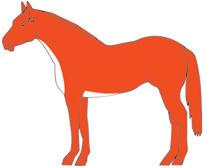
BELLY CLIP – used to remove areas of heavy sweat under the belly and neck, and between the front legs. The belly clip is often used for horses in light work who may not have access to a stable or shelter, as the rest of their coat remains to help generate warmth in the cold.
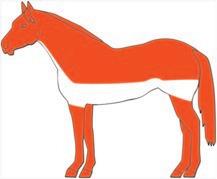
TRACE CLIP – also known as a harness clip as the areas of hair removed are where a harness would sit on the horse! This clip removes hair from areas of high heat, under the neck, between the front legs and across the belly and flanks.
It is often seen on horses in light work who are not stabled, where their natural coat can protect them from the elements.
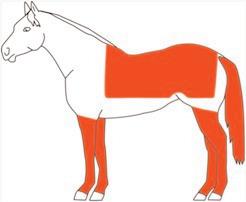
BLANKET CLIP – clips all hair apart from that on the legs and covering the back and loins. This clip is used on horses with a medium workload, where areas that are not clipped will not be likely to reach a point of sweating.
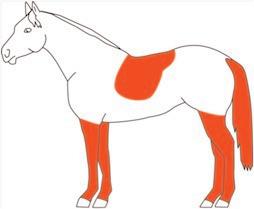
HUNTER CLIP – this style leaves hair on the legs and around the saddle. Often seen on horses in heavy work. Leaving the hair on the legs is aimed to protect them from winter mud and wind, as well as jumping obstacles as in a traditional hunter event. Leaving the saddle pad area is also for protection and comfort when saddled and ridden for long periods of time.
FULL BODY CLIP – this clipping pattern will be seen across a range of performance horses, who are in heavy work. It allows a quicker cool down and quicker drying after a hose. These horses however require much attention with rugging and protection/treatment of skin ailments that may arise from not having their natural coats.
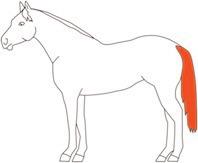
The decision on the type of clip which is best for you horse comes down to the type and intensity their workload, as well as the climate. Professional horse groomers can assist greatly in helping you choose if, and what type of, clipping is right for your horse.
BELLY CLIP
TRACE CLIP BLANKET CLIP
HUNTER CLIP FULL BODY CLIP
The Horse Report
NEW PRODUCT FOR RUBBED MANES AND TAILS
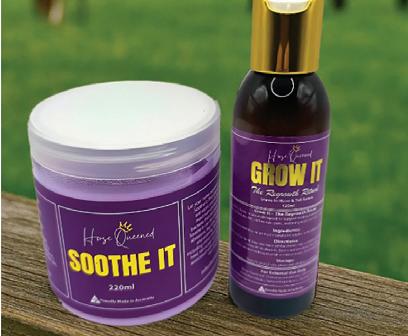
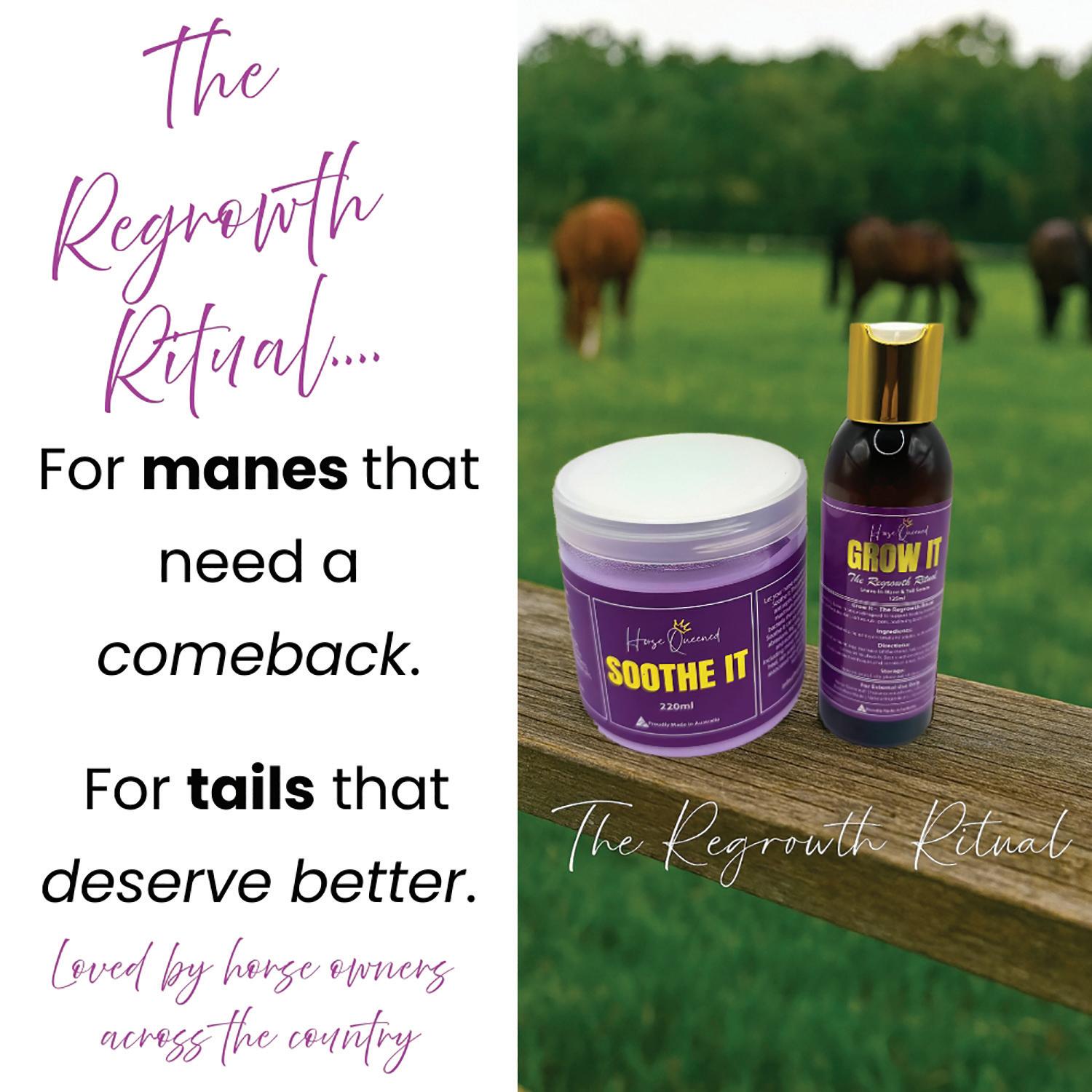
The Regrowth Ritual Pack
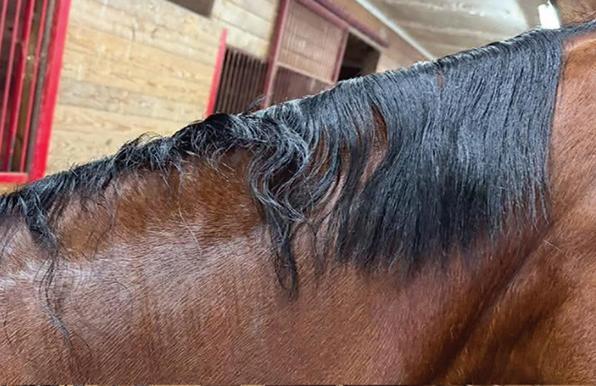
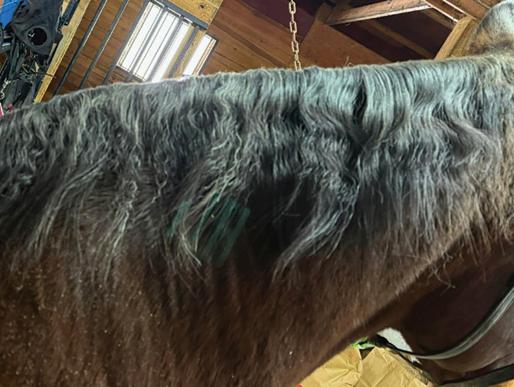
For many horse owners, dealing with thin manes, rubbed tails, rug rubs, or patchy hair can feel frustrating, especially when you're doing everything right and still not seeing results.
That's exactly why Horse Queened created the Regrowth Ritual Pack. Made in regional Victoria by horse people, this simple two-step routine combines Grow It, a nourishing mane and tail serum, with Soothe It, a rich purple comfort cream designed to support skin exposed to rugs, weather, and everyday horse life.
Together, they work routinely to support healthier-looking hair while keeping the skin feeling soft and comfortable. What makes it different is how easy it is to use.
No complicated routines, no harsh ingredients - just practical, everyday care designed for real horses in real conditions.
The Regrowth Ritual Pack has quickly become a favourite among customers across Australia and the world, with many horse owners incorporating it into their regular grooming routine.
At Horse Queened, everything we make is created with one goal in mind: simple, effective care that fits into a busy horse life. For more information visit www.horsequeened.com
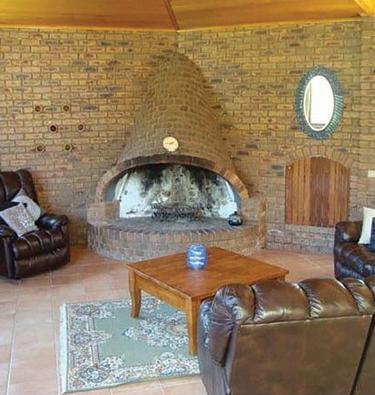
EQUESTRIAN CENTRE, AIRBNB, SUBDIVISION POTENTIAL
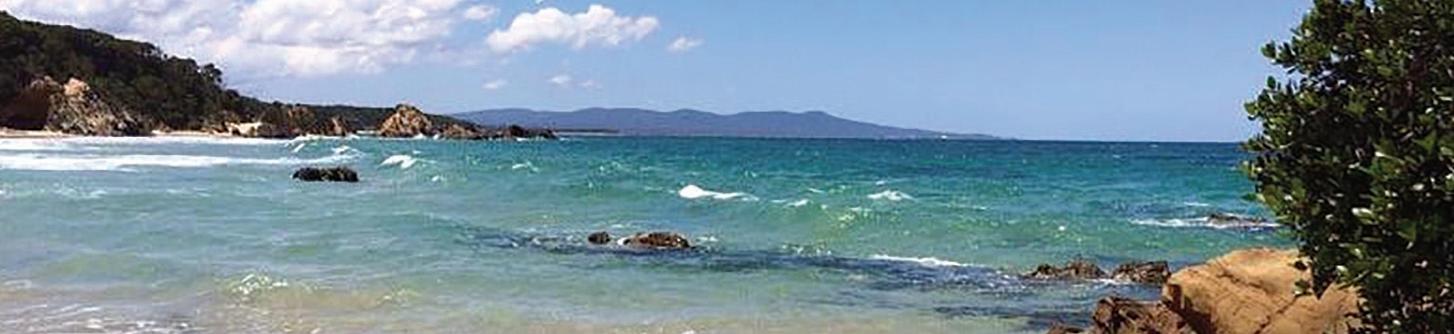
Offered for sale is this outstanding property located just 3km from the beach at 17 Genoa-Mallacoota Road, Mallacoota.
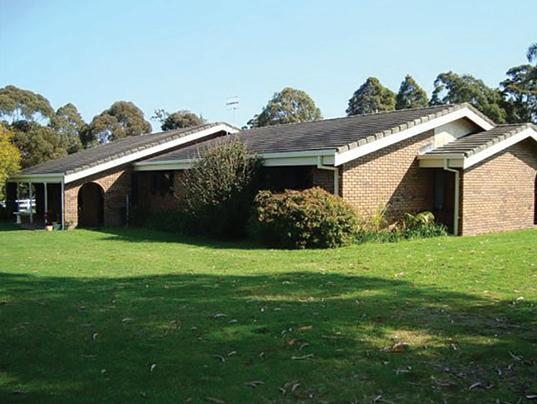
Set on 8 acres, the 481 square double brick 4 bedroom home has two large family rooms and two bathrooms. The large master bedroom has a huge ensuite and walk-in-robe. There are three large children's bedrooms, 2 of which have built-in robes and the third a walk-in robe close to the second family bathroom with shower. The office could serve as a fifth bedroom. The house has recently painted inside and out ready for the new owner to move in.
The home features beautiful Western Red Cedar cathedral ceilings, Oregon beams and Blackwood dado wood panelling.
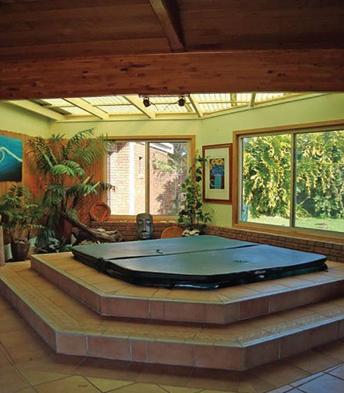
In addition, there is a large 8 seat spa, a built-in bar, wood heater, carport and double garage topped by a new colour bond roof. Two phase electricity and also wired for generator power, the property runs on both electricity and cylinder gas so is outage-proof.
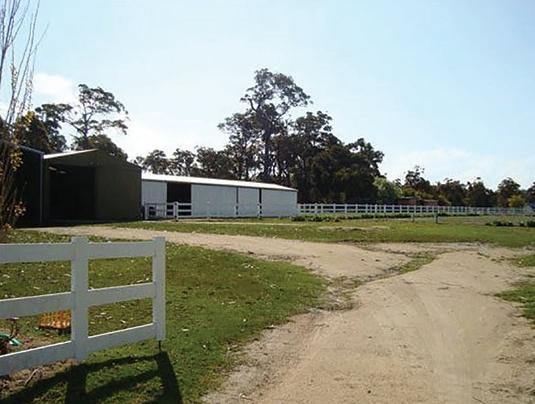
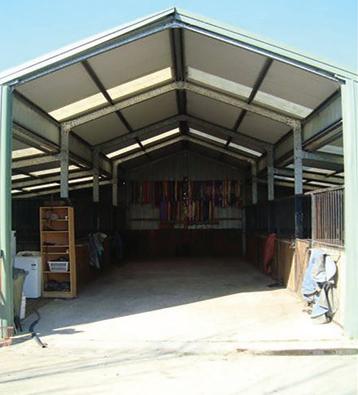
The property boasts a large 7 bay stable and tack room, a shed port that has housed a helicopter, a massive workshop with work benching and a large 3 double bay feed shed (approximately 45 squares of shedding).
Children will love the 3 level tree house with fireman's pole, 70m zip line and pulley system…or feed the chooks in the large fox proof poultry run.
Surrounded by mature trees, the garden offers colour and fragrance through all seasons with a fully enclosed veggie garden next to the orchard of fruit and citrus trees.
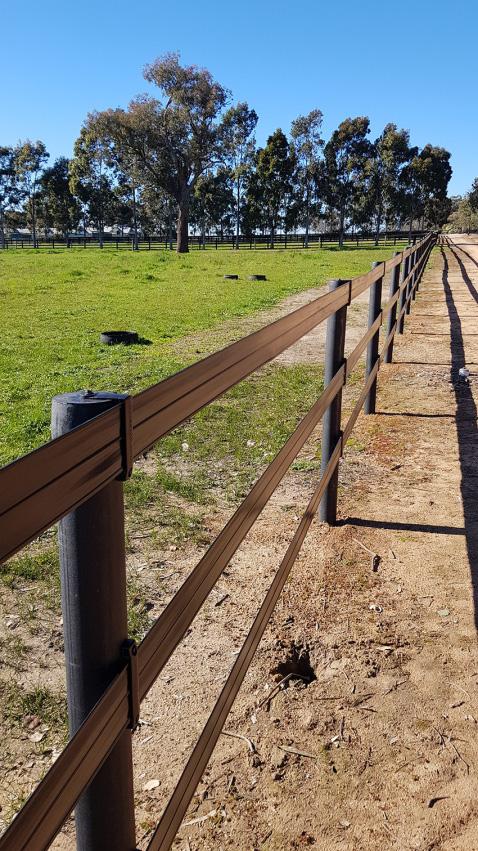
Completely fenced with mostly new white polycarbonate horse fencing and completely new boundary fencing all around, the property is also eligible for subdivision.
This outstanding property is perfect for a large family, an equestrian centre or luxury Airbnb.
For further information email: catherine.tregellas@gmail.com
The Horse Report
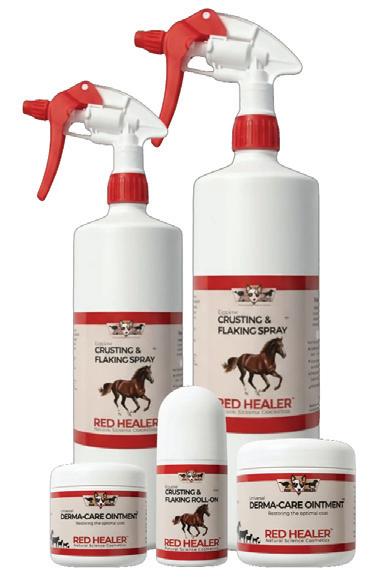
Red Healer is an Australian company that specialises in the research and development of natural equine and canine skin and coat products.
By A Cox, K Wood, G Coleman, AJ Stewart, F-R Bertin, H Owen, WW Suena, and CE Medina-Torresa
Essential oil spray reduces clinical signs of insect bite hypersensitivity in horses
Objective: To assess the efficacy of an herbal spray combining various essential oils, with a claim of mast cell stabilisation, antipruritic, antiinflammatory, and insect repellent effects on the clinical presentation of insect bite hypersensitivity (IBH) in horses.
Methods: Twenty adult horses with clinical IBH were treated with a daily application of herbal spray or placebo for 28 days in a randomised, cross-over fashion, separated by a>28-day washout period. Horses were examined and scored prior to and after the completion of each treatment. Histopathology was performed on four horses.
Owners kept daily diaries of observations.
Results: The herbal spray significantly reduced the severity of all assessed parameters (pruritus, excoriations, lichenification and alopecia; P< 0.05) compared with baseline values (pretreatment) and with placebo.
Owners reported improvement of pruritus in 19/20 horses (95%) with complete resolution in 17 horses (85%) following treatment. Skin biopsies showed resolution of orthokeratosis in 4/4 horses, reduced thickness of the stratum spinosum in 2/4 horses and complete resolution of histopathological abnormalities in 1/4 horses after treatment
Ask us about our latest trial and publication on a potent natural anti-inflammatory ointment for all other equine skin conditions
The tested herbal spray may be an effective treatment for the management of equine IBH.
- What we learnt from this trial on our Equine QLD Itch 3 in 1 formulation: 'Insecticides and horse covers only prevent new bites and can't help with existing itching and lesions - a multi-action spray that repels, stops the itching and heals the existing lesions is necessary.'
BARREL RACING
www.abha.com.au
JUNE
6 Biloela, QLD
6-7 Walkamin QLD
7 Biloela, QLD
20 Beaudesert, QLD
20 - 21 Paradise Lagoon QLD
21 Walgett NSW
26 - 28 Widgee Sports Grounds, QLD
27 - 28 Cooranbong, NSW
28 Bartlett Park
JULY
4 Gingin, WA
4-5Wingham Showgrounds 11-12 Geurie, NSW
12 Emerald, QLD
18-19 Ridgelands QLD
25 Cooranbong, NSW
26 Beaudesert, QLD
26 Bartlett Park Futurity & Maturity
BREEDS
JUNE
13-14 Scenic Rim Clydesdale Spectacular
JULY
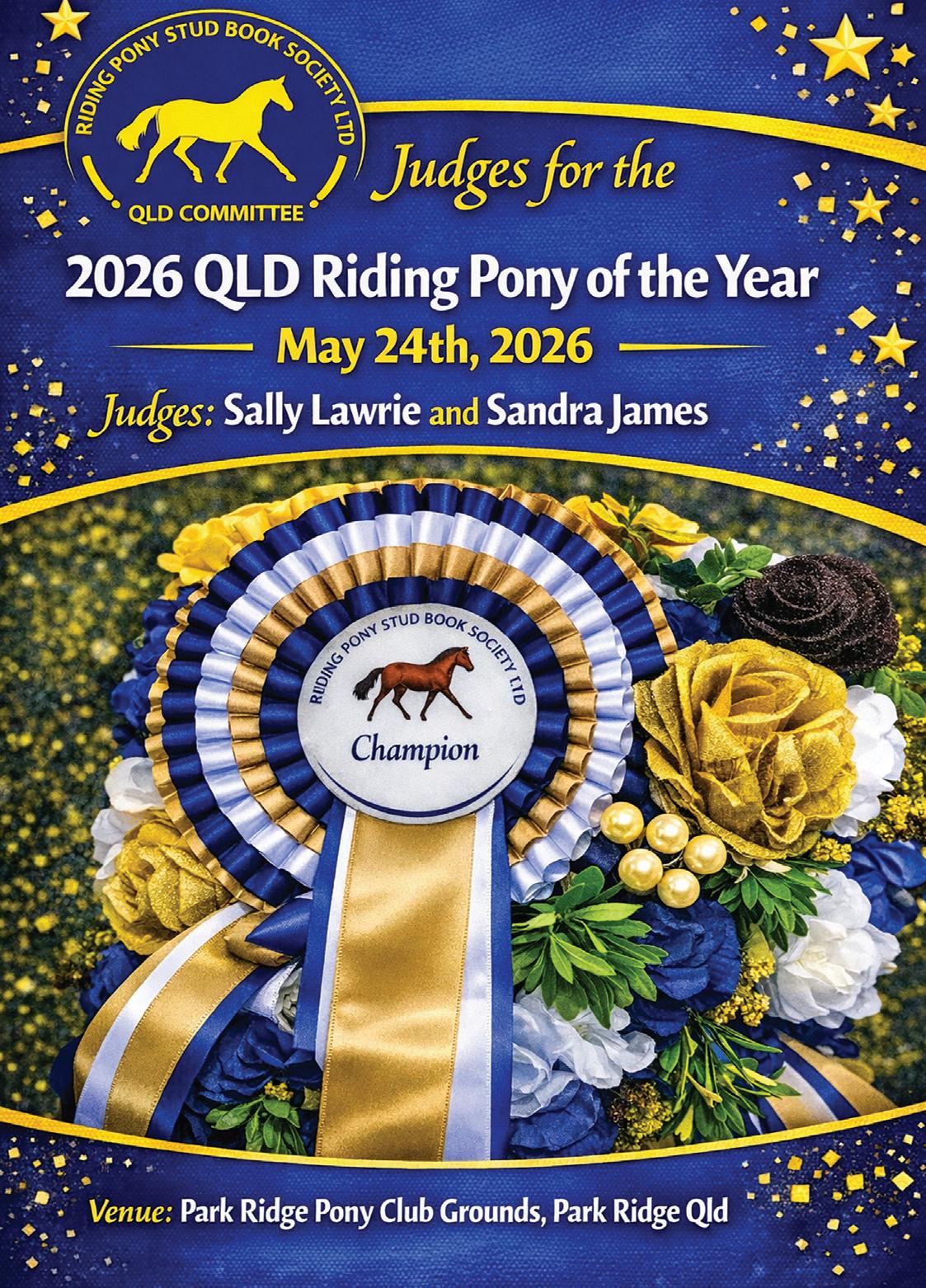
5 Qld Riding Pony HOTY@ Park Ridge
12 Winter Woolies Breed Show @ Luddenham
16-18 Qld State Paint Championships @ QSEC
CAMPDRAFTING/CUTTING /TEAM PENNING
JUNE
4-7 Normanton Campdraft
5-8 Coonamble Campdraft
5-7 Maclean Show Society Campdraft
6-7 Dungog Charity Campdraft
6 Boonah Show Campdraft
10-13 ACANational Finals at Paradise Lagoons
12-14 Mallanganee Campdraft
12-14 Jericho Campdraft
12-14 Croydon Campdraft
12-14 Yelvertoft Campdraft & Rodeo
19-21 Tambo Campdraft
19-21 Mt Coolon Campdraft
25-28 Nebo Slouch Hat Campdraft
25-28 Saxby Round-Up Campdraft
25-28 Douglas Daly Campdraf
26-28 Mount Surprise Campdraft
26-28 Moura Campdraft
26-28 Brunette Downs Campdraft
JULY
2-5 Mount Isa Campdraft
3-4 Tipperary Station Campdraft
7-12 Cloncurry Campdraft
9-12 Warrego Campdraft 15-18 Territory Cup Campdraft
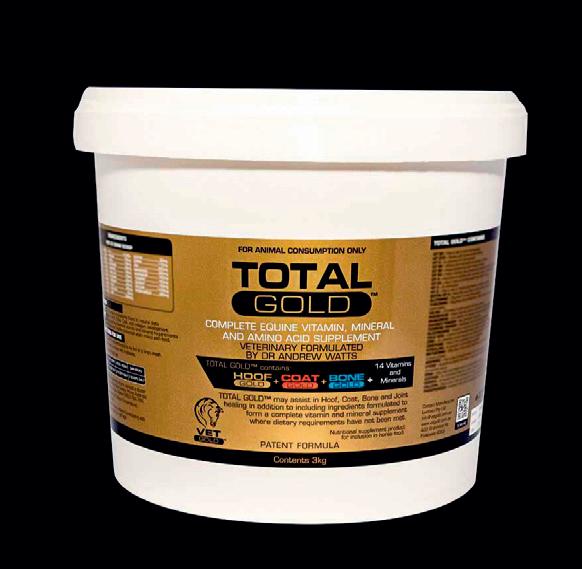
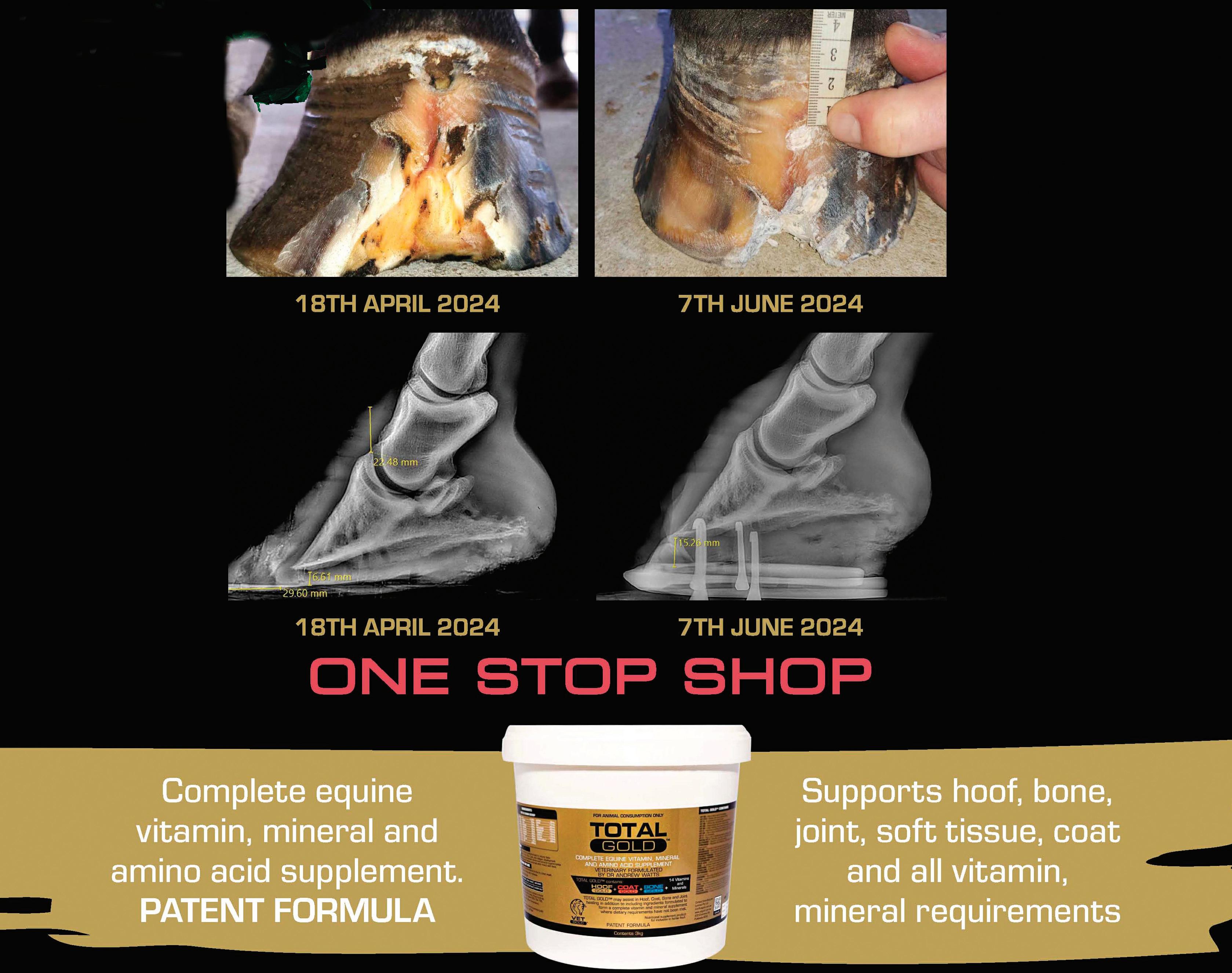
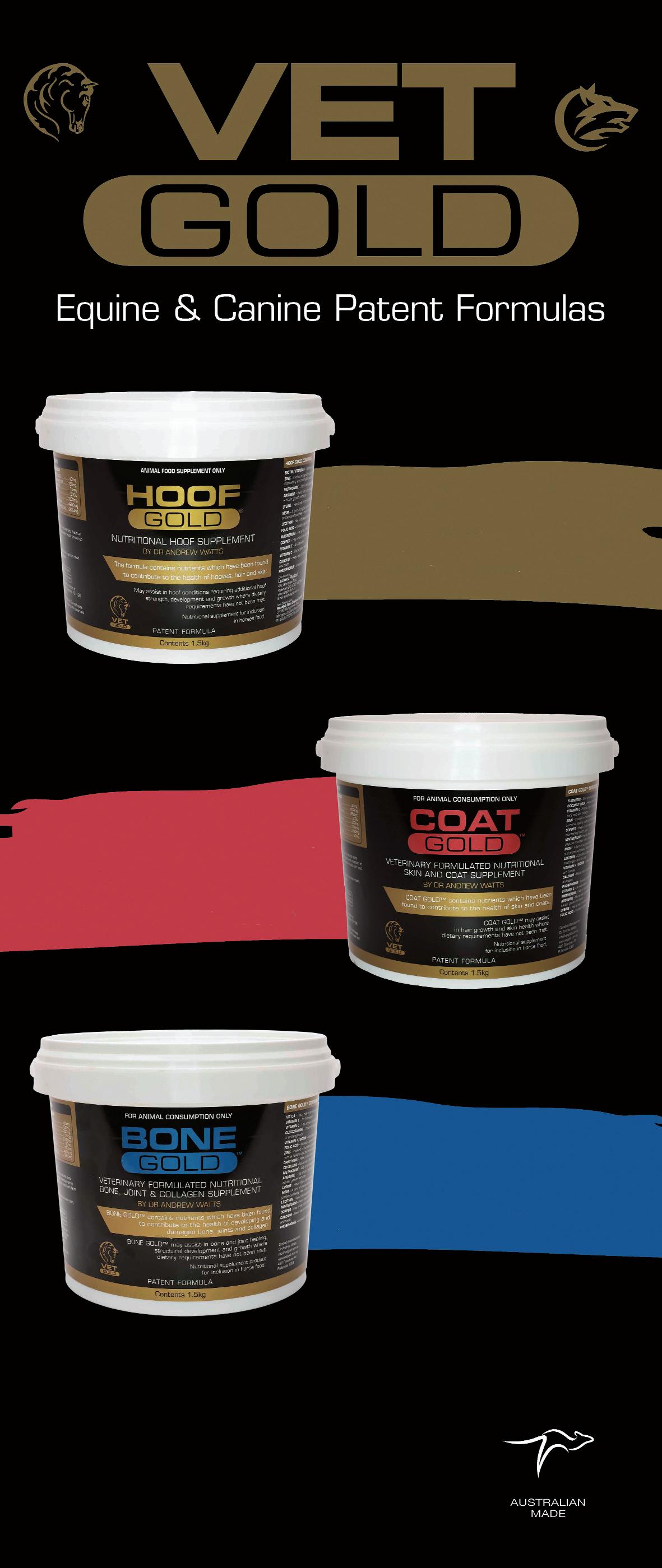
BONE Gold nutritional bone joint and collagen supplement was formulated to provide some of the essential amino acid requirements of collagen type I, II and III (found in bone and connective tissue) in addition to supporting the nitric oxide pathway which has been found to assist in the formation of bone callus postinjury.
Veterinary surgeons have recommended that Bone Gold may assist with sore shins, tendon injuries, ligament injuries, osteoarthritis and post-surgery in horses and polyarthritis, geriatric osteoarthritis, and post-surgery in dogs.
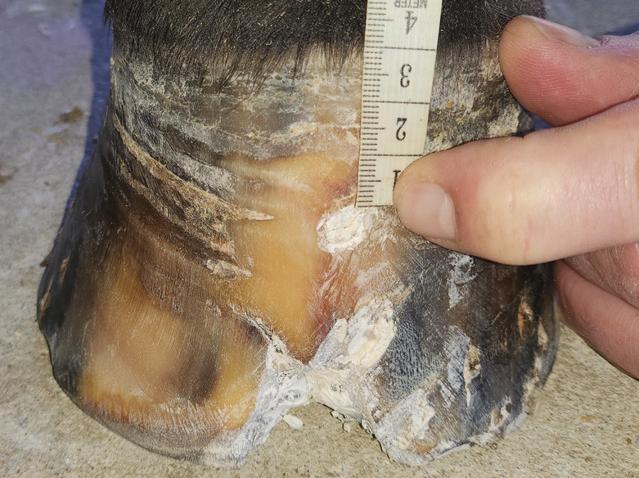
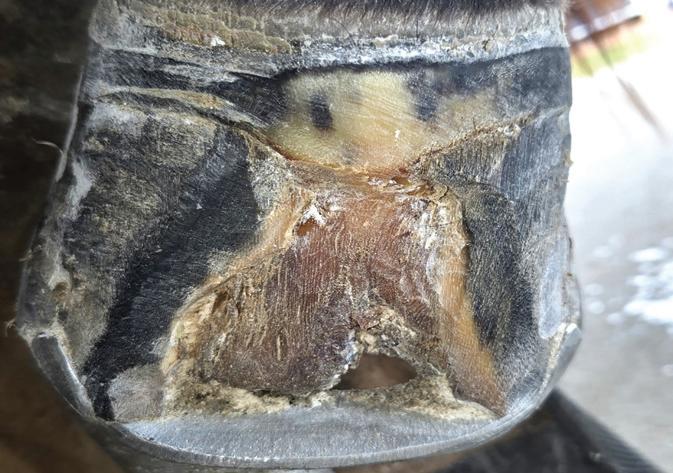
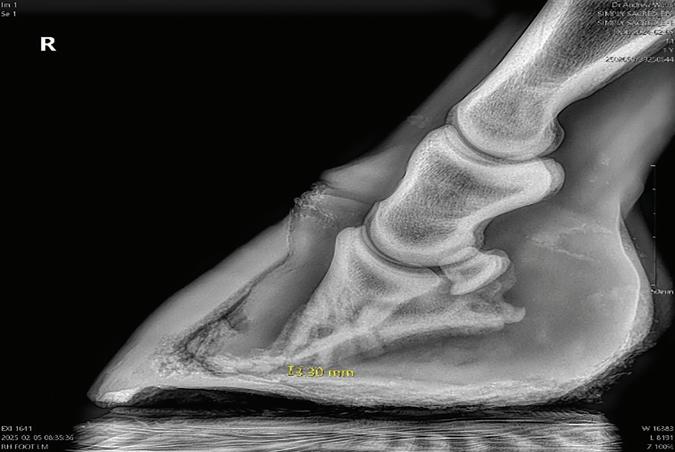
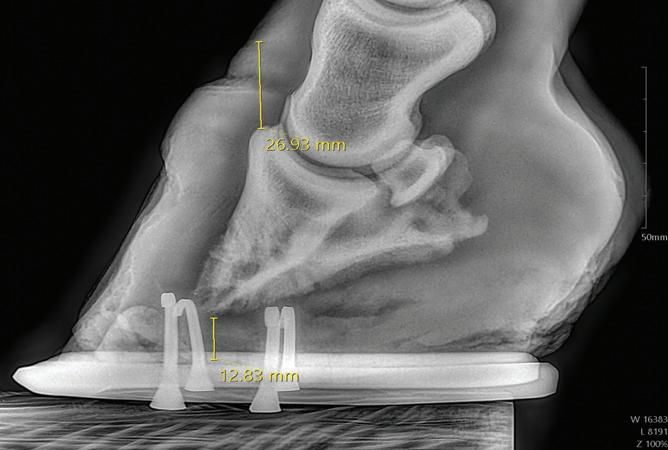
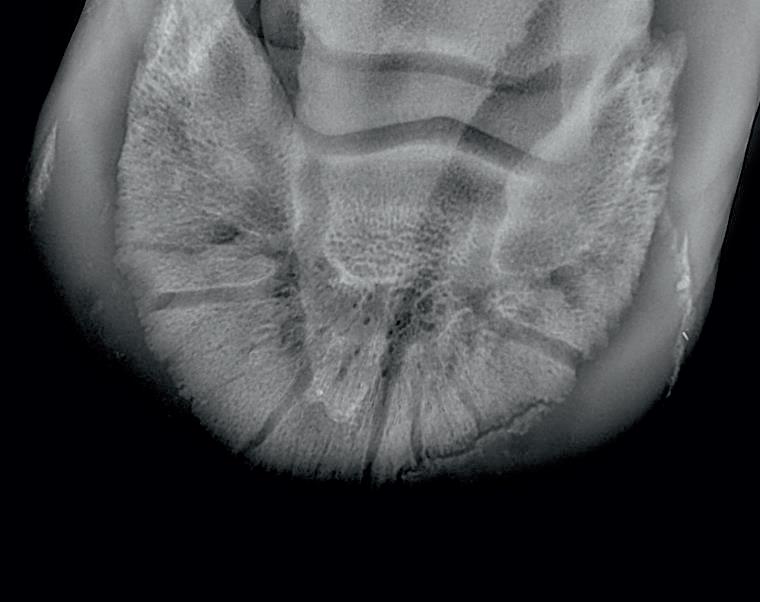
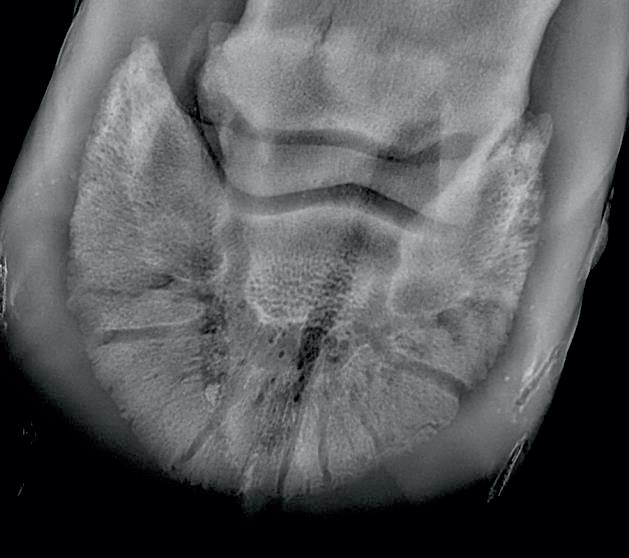
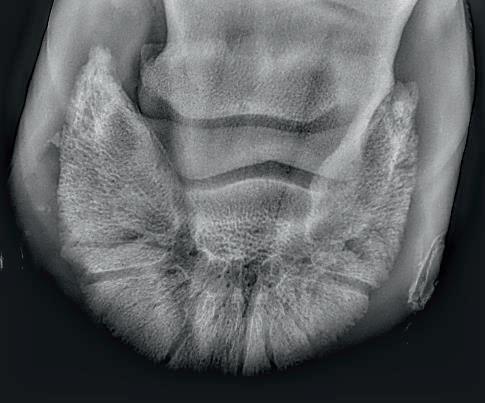
Here is a veterinary radiographic report on a horse with a fracture evident on the medial toe and after treatment and feeding Bone Gold during this period. More information on these products can be found at www.vetgold.com.au
VETERINARY RADIOGRAPHIC REPORT
HORSE: "XXXXXXXX"
DATES OF EXAMINATION: 26TH AUG, 21ST OCT 21 & 17TH NOV '21
PLACE: XXXXXXXXXX FARM
XXXXXXX's left and right front feet were radiographed on 26th Aug, 21st Oct (8 weeks) and again on the 17th Nov '21(12 weeks).
RADIOGRAPHS:
26.08.21: Right Front: Large P3 solar margin fracture evident on medial toe 32.6mm x 4.1mm with approximately 1.4mm separation from parent bone as below left image.
21.10.21: Right Front: Fine residual 4.2mm fracture still evident, approximately 90% resolution
17.11.21: Right Front: Fracture fully resolved
RECOMMENDATIONS:
Radiographic results as of the 17th Nov '21 show total resolution of the original fracture.
XXXXXXX was reshod today utilising off an alloy shoe with a toe clip - inner circumference seated out to avoid any sole pressure.
The horse can return to training. Please do not hesitate to contact me if you have any further queries
COMMENTS:
Solar margin Type IV fractures of this magnitude have well-documented internationally published healing rates of 7 - 12 months. Full resolution of these fractures is rare as most often the fracture fragments are resorbed.
Full resolution in a 3 month period was not anticipated.
The horse was on Bone Gold 3 x scoops fed once per day for this period.
"Go to our webpage or scan the QR Code to see more Bone Gold Radiographic results"
The Horse Report Behind the scenes of the Royal Windsor Horse Show
The Royal Windsor Horse Show was first staged in 1943 to raise funds for the war effort and celebrates a longstanding and close relationship with the Armed Forces.
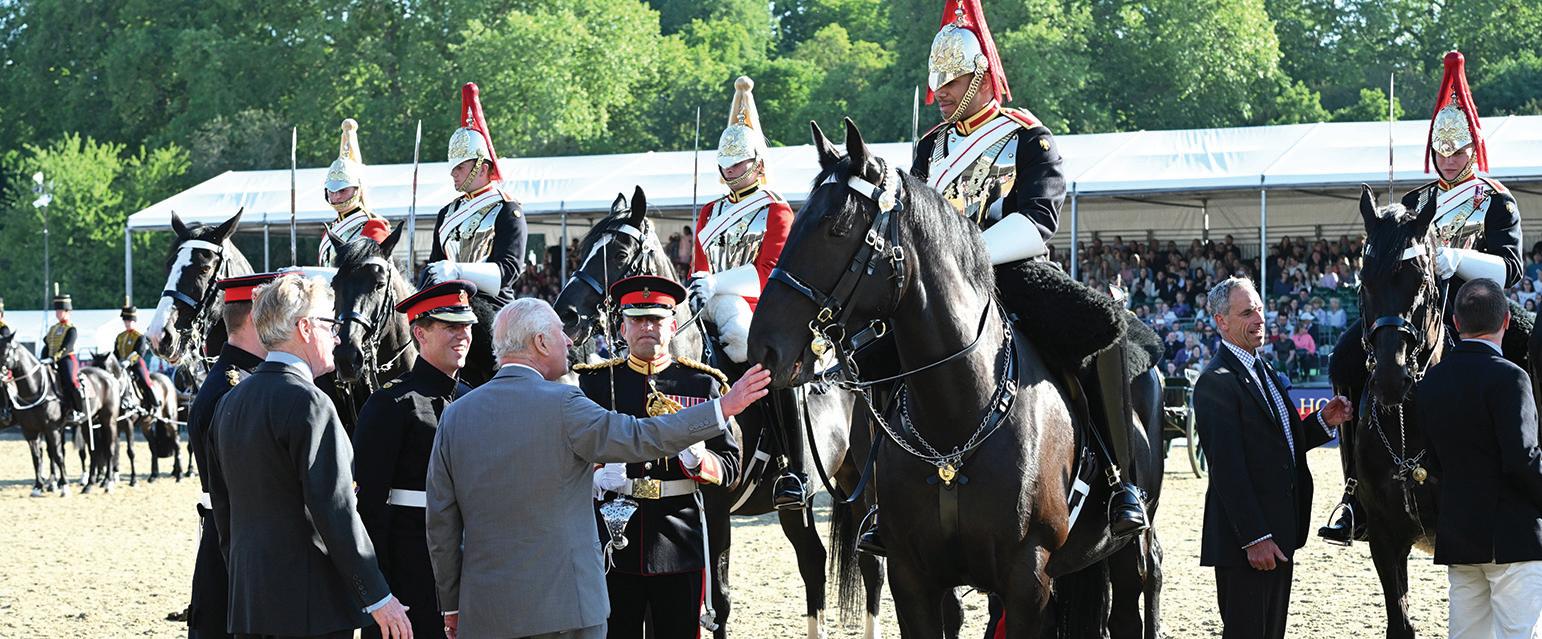
This enduring connection is prominent at the show, particularly through the presence of the United Kingdom's two bestknown equestrian regiments; The King's Troop, Royal Horse Artillery, who perform the Musical Drive at the Show, and the Household Cavalry Mounted Regiment, who present the prestigious Princess Elizabeth Cup to the year's Best Trooper at the Show.
The Princess Elizabeth Cup is awarded to the most outstanding cavalry trooper, and recognises the highest standards of turnout, horsemanship, military discipline and soldering skill. For those in contention, Windsor will be a home from home - as it is nearby Combermere Barracks that will have played the most significant role in their pathway to date.
The barracks, located in central Windsor, is the home of the Household Cavalry Mounted Regiment Training Wing, and as such it is the starting line for not just all cavalry personnel - who all learn to ride here - but also all cavalry horses, for whom Combermere provides the initial setting for their backing and training to become fully-fledged cavalry blacks.
For the servicemen and women, training at Combermere Barracks not only includes learning to ride and mounted exercise, but also practical stable work and horse management. Instilling high standards of
horsemanship from the very beginning is crucial to the soldiers' ceremonial roles on state occasions- when they are expected to be able to manage their mounts in front of huge crowds. Each element of a typical day at Combermere reflects a horsefirst approach, grounded in consistency and attention to detail. Troopers are taught the hows and whys of the equipment they use, how to tack up, what the pre-ride inspections look for, and the responsibilities of care before and after exercise.
The mounted work in the arena brings these elements together, demonstrating the balance, control and partnership required to be part of the Household Cavalry.
For Trooper Newell of The Life Guards, the foundations that were set during his time at Combermere have paid off, and he now finds himself in contention for the 2026 Princess Elizabeth Cup.
Speaking of being put forward for the award, which involved a
week of assessment across multiple elements from fitness, to mounted navigation and kit cleaning, Trooper Newell said: "We don't find out who has won until Royal Windsor Horse Show, so the wait is quite nervewracking, but I'm really excited for the Show.
“It would be amazing to winmy father was in the military before me and it would make me and him so proud, and it would make my division proud. You give it your all that week, so to win it would be amazing."
Royal Windsor Horse Show is also this year further recognising the role of horses in supporting veterans and serving personnel.
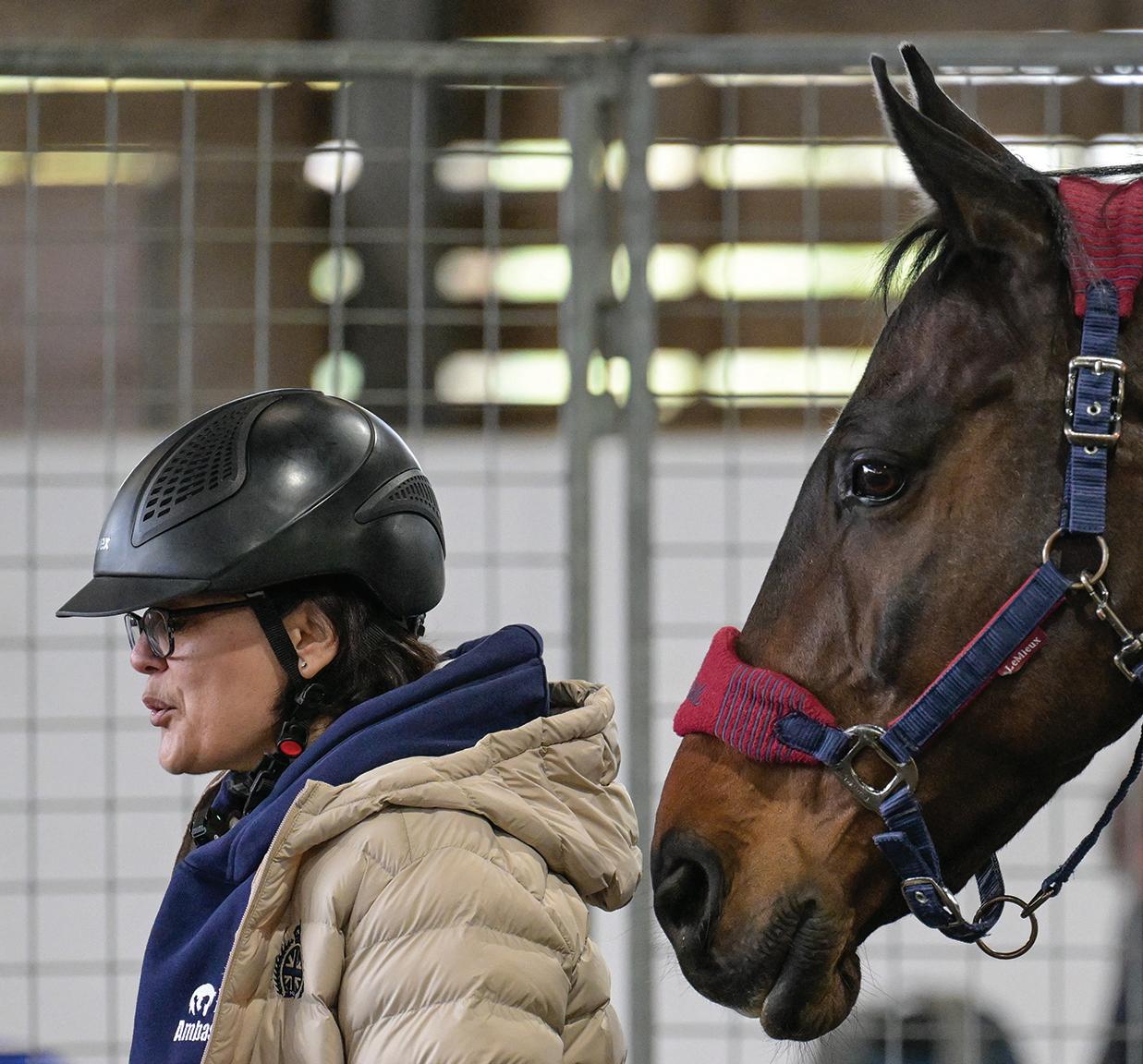
The 2026 Show charity - Warrior Equine - offers equine-assisted programs to support recovery, build confidence and develop emotional resilience of veterans and serving personnel. Founded in 2019, Warrior Equine delivers courses designed to support Armed Forces personnel, veterans and others living with the effects of psychological trauma, including anxiety, burnout, social withdrawal and loss of confidence.
Working with horses on the ground rather than riding, the charity's approach is centred on the animals' sensitivity to human emotion and behaviour, helping participants to build trust, regulate responses and develop practical coping strategies through calm, focused communication.
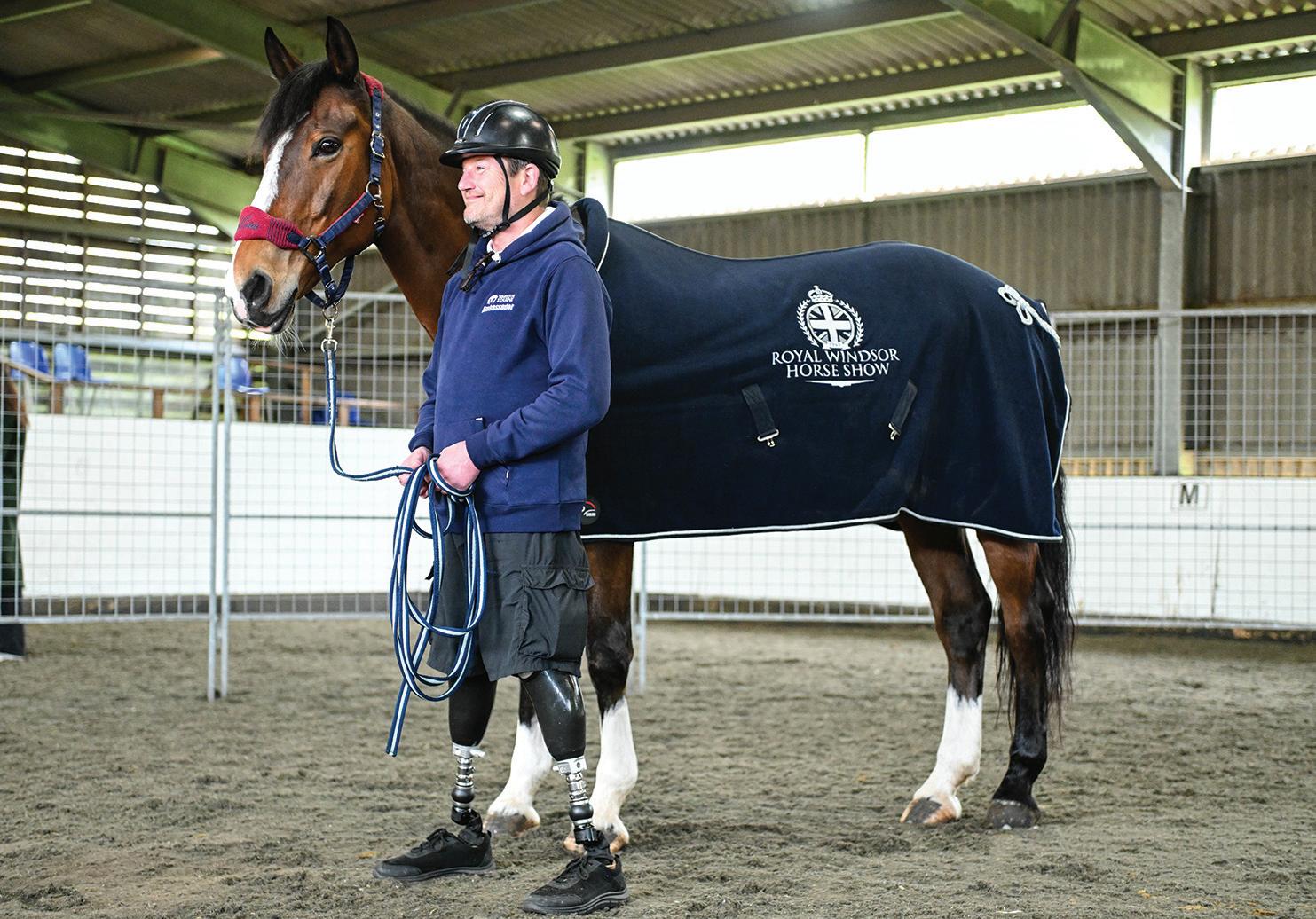
Al Strudwick, an Army veteran and former Sergeant with the Intelligence Corps, who was diagnosed with complex PTSD following operational tours and later survived life-threatening illness resulting in double leg
amputation, described his experience with Warrior Equine as life-changing, helping to rebuild his confidence and re-engage with life.
The Warrior Equine Ambassador said: "After everything I went through, I lost my confidence and became very restricted in how I lived my life.
“Warrior Equine helped me rebuild that confidence and, more than that, gave me a sense of freedom again. I was initially very sceptical and even fearful of horses, but the experience pushed me beyond what I thought I was capable of.
“It has had a lasting impact and continues to shape how I approach everyday life."
Rachel Virdee, a Royal Navy veteran of over 30 years who has navigated PTSD, depression and burnout, and John Lewis, a former RAF reservist whose life was significantly altered following serious injury, have also spoken of the program's lasting impact in helping them better understand and manage their emotional responses.
Lewis said: "At first, I was terrified to be on the course and didn't even like horses, but this was my last chance saloon.
“ I'd tried many different types of therapy before and nothing had made any difference to my life.
“The work I did with horses through Warrior Equine was a turning point in my life - I couldn't lie to the horses.”
“They sense what is going on inside your body, not what you're presenting outside your body and they don't see the mask. The horses could sense what the therapists couldn't."
Continued page 29
His Majesty The King presents the Princess Elizabeth Cup to the Best Trooper at Royal Windsor Horse Show. @RWHS/Peter Nixon
Al Strudwick, an Army veteran and former Sergeant.
The Horse Report Healing horses star at the Royal Windsor Horse Show
From page 28
Inspector Nick Morton of West Midlands Police, a serving police officer, who following a diagnosis of complex PTSD after 26 years of service, has described his experience with Warrior Equine as both enlightening and transformative.
Morton said: "I've gone from having panic attacks in public spaces, to being able to keep a steady head in all circumstances.
“The horse therapy has taken me back to thinking 'there's nothing I can't deal with' - it's given me that confidence again to believe in my own ability.”
Together, these experiences offer a powerful reflection of the program in practice, demonstrating how equine-assisted approaches can support individuals in building trust, developing emotional awareness and strengthening resilience in a practical and lasting way.
Ele Milwright, Founder and CEO of Warrior Equine, said, "Horses are incredibly sensitive to human emotion and respond instantly to the energy we bring into the space.
“That gives people a unique opportunity to understand how
they are feeling and to practise regulating those emotions in real time.
“For many of those we work with, that process can be transformative.
“To have the support of Royal Windsor Horse Show is hugely meaningful for us, as it allows us to share that impact and the role horses can play in support-
ing recovery."
Simon Brooks-Ward, Chairman of Royal Windsor Horse Show, said: "Royal Windsor Horse Show has always been closely connected to the Armed Forces, and horses have long played a central role within that relationship.
“What this day demonstrates is the breadth of that connection -
from the discipline and tradition seen at Combermere Barracks to the profound impact horses can have in supporting wellbeing and recovery through organisations such as Warrior Equine.
“It is a powerful reflection of the many ways in which horses continue to serve, both within and beyond the sphere of sport."
Royal Windsor Horse Show takes place each year in May in the private grounds of Windsor Castle, where over 55,000 visitors are welcomed to view an extensive program of international equestrian competition and performances.
First staged in 1943 to raise funds for the War effort, the Show is honoured to have as its Patron His Majesty, The King, and as its President, His Royal Highness, The Duke of Edinburgh.
The 2026 edition of the Show, which has Defender as principal partner, was held in May, and featured the CSI5* Rolex Grand Prix Show Jumping class, the CAIO4* International Carriage Driving Grand Prix, the CEI3* Royal Windsor Endurance, over 120 Showing classes and displays featuring Shetlands, military horses and mounted games.
EQUINE - new book by Western Australian writer
BY Jennifer Kean
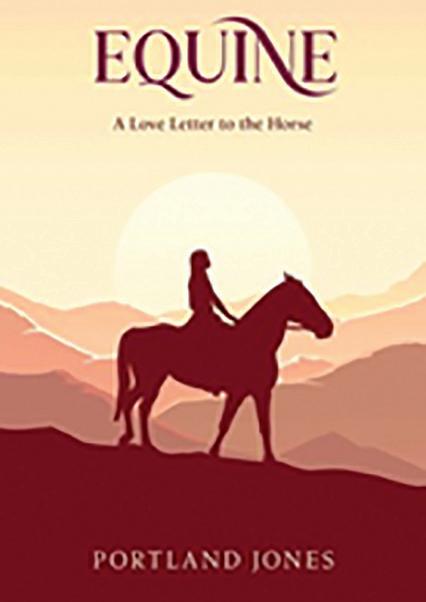
EQUINE - the newest equestrian book by Western Australian writer, horse trainer and academic Portland Jones, will be released in June 2026.
The work combines narrative fiction with scientific and historical insight to examine the evolution, cognition, and enduring relationship between horses and humans, and what defines the horse as a thinking, feeling animal.
Jones, who lives and works in the Swan Valley region of Western Australia, is uniquely positioned at the intersection of literature, science, and equine practice. With a PhD in Literature, Jones is an awardnominated novelist whose debut was shortlisted for the TAG Hungerford Award and whose second novel was shortlisted for the ARAHistorical Novel Prize, one of Australasia's most significant genre-based literary awards.
Alongside her literary career, Jones is an experienced horse trainer with a strong focus on animal welfare and evidence-based training practices.
She also teaches equine behaviour at Murdoch University and works as a trainer for The Help Foundation, a charity dedicated to improving the welfare of captive popu-
lations of endangered Asian elephants. Drawing on more than 30 years of horse training experience, Equine examines equine cognition, sensory perception, and learning, translating scientific research into accessible insights for horse people and general readers alike.
At its core, the book argues for evidencebased training as a way to improve both safety and welfare, and offer new insights into Horse Behaviour and Training.
"It is my belief that evidence based training not only makes horse training safer but also improves the welfare of the horse." Jones says.
Jones describes the project as the culmination of decades of daily practice and observation, aimed at deepening public understanding of horse behaviour and strengthening the human-horse bond which spans 6000 years of co-existence.
"I want people to feel the same sense of awe and wonder as I do at the side of the horse. Equine is my love letter to the Horse and is for anyone who works with horses, rides them, or simply admires this most beautiful of creatures."
Equine, ALove Letter to the Horse is published by Exisle Publishing.
This book will appeal to a broad audience, from equestrian communities and animal
welfare advocates to readers interested in science, history, and the human-animal connection
For further information or to get yor copy visit www.keanandcreative.com.au contact Jen via email: E: jen@keanandcreative.com.au
Supplied by QUEENSLAND AUSTRALIAN PONY OWNERS AND BREEDERS
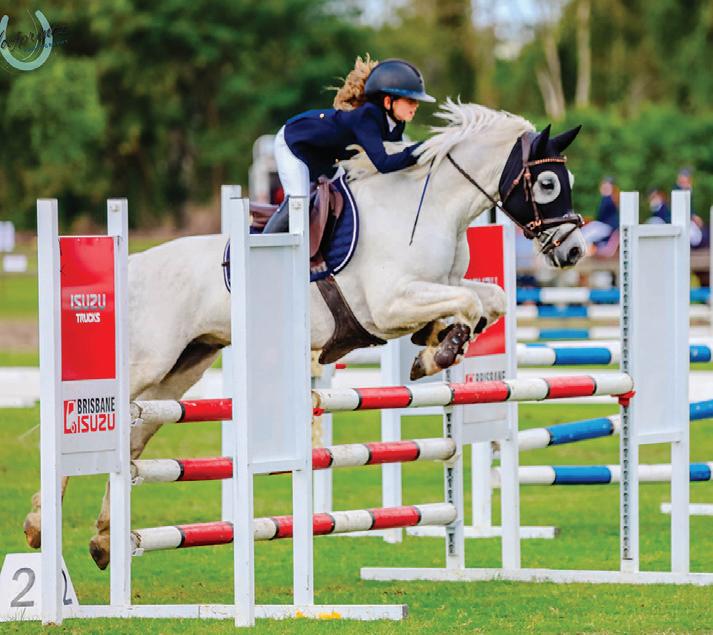
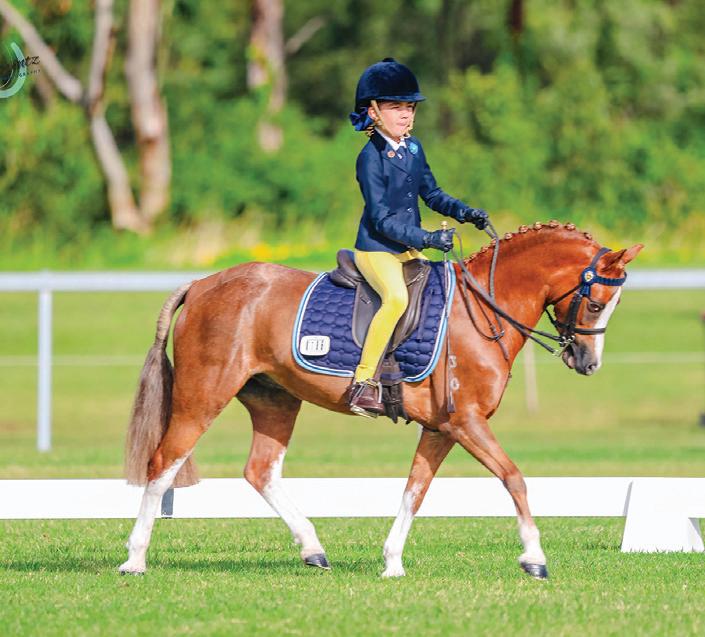
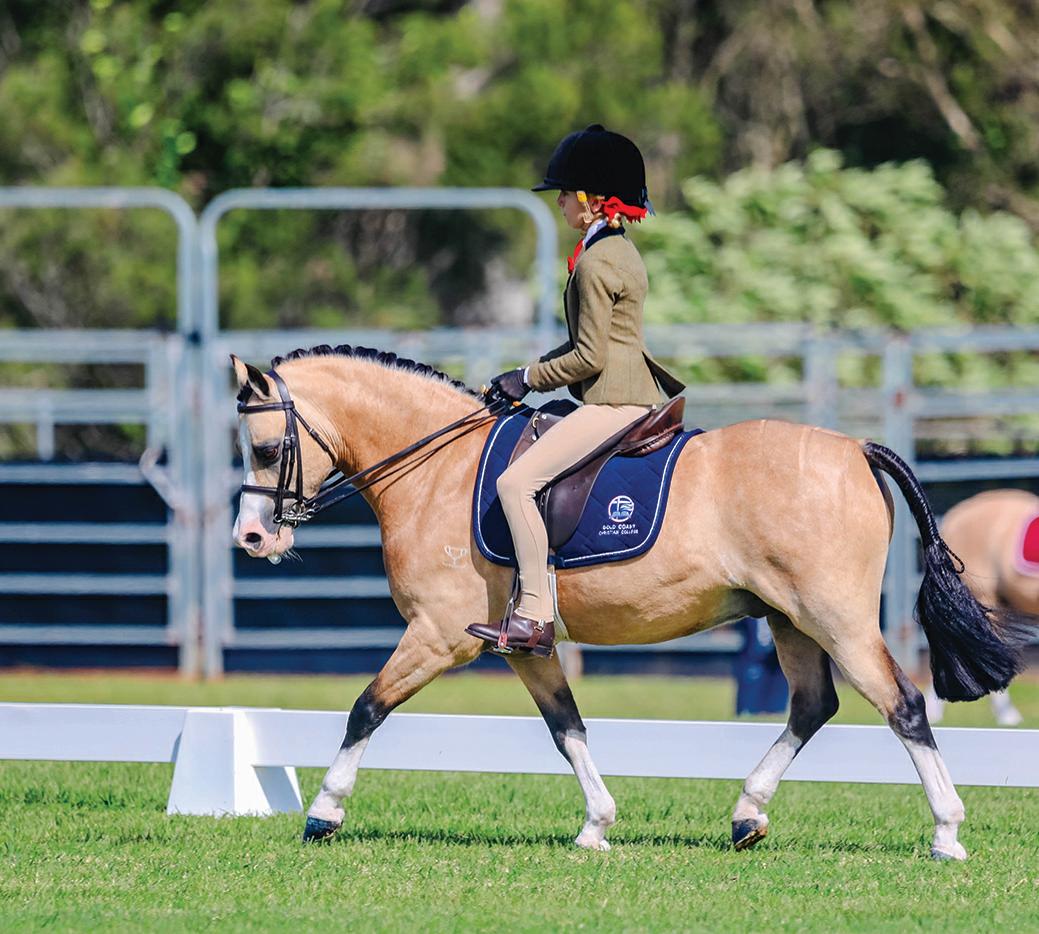
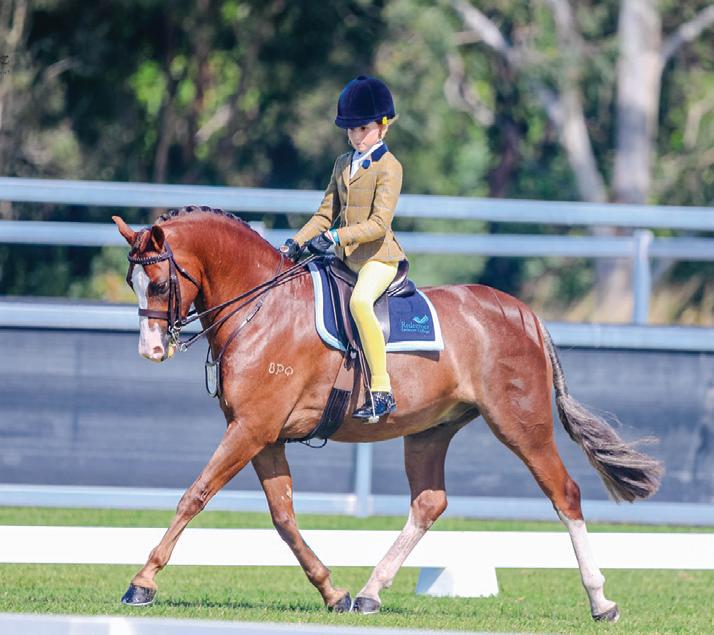
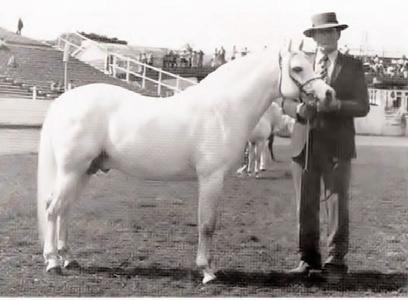
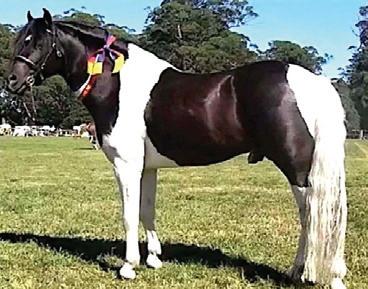
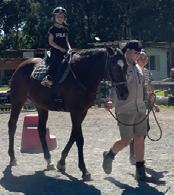
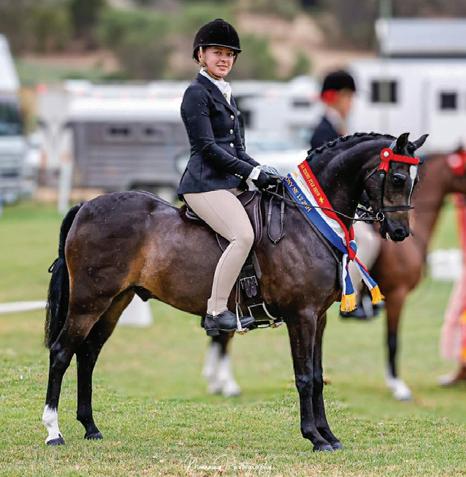
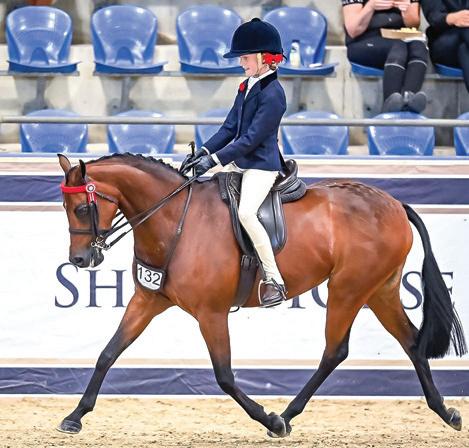
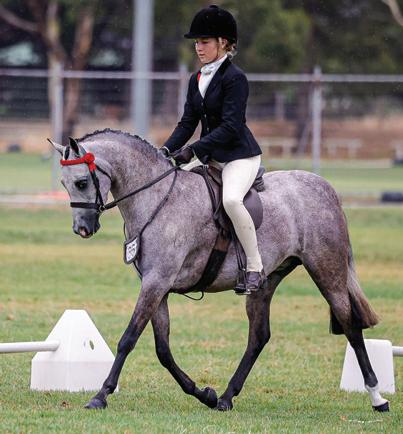
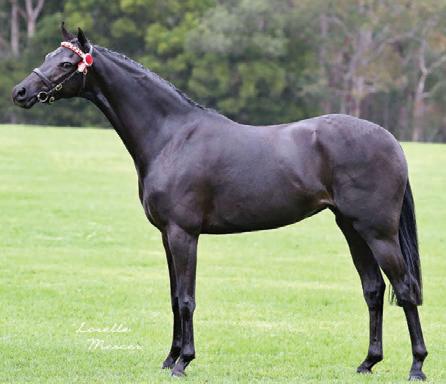
The Australian Pony, from its inception, was always purpose bred.
Our Australian Ponies were bred to be hardy, hardworking equines that could stand up to the harsh Australian conditions. This tough pony is noted for its endurance, agility, sure footedness and exceptional temperament
Its ancestry dates back to the arrival of the First Fleet in 1788.
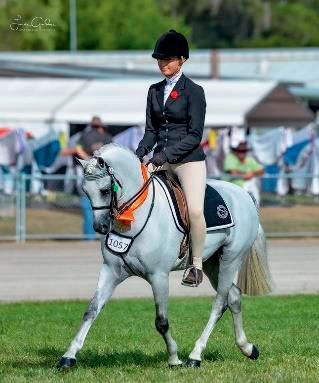
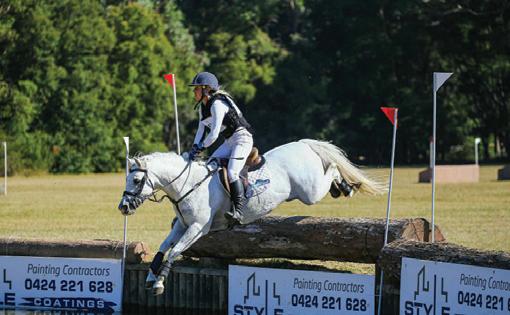
The Australian Pony is used in every equine discipline.
Possibly the world’s most versatile pony - a beautiful pony with great bone and substance, renowned for its intelligence, athletic ability, speed, quiet temperament and great mind. It has all the prerequisites for a first-class, modern-day performance pony.
This pony did not just appear as a recognised breed in 1931 at the formation of the Australian Pony Stud Book Society.
It had developed from the time of colonisation and with the importation of the very first equines into Australia.
Thoroughbred, Mountain and Moorland ponies, Timor ponies, Arabians, Manipur and Batik Hill ponies, as well as that little Hungarian pony, Bonnie Charlie, all contributed to the foundation of our breed.
The Australian Pony was a combination of all these genetics and more.
Over 100 years of breeding has gone into this breed for it to become one of the most versatile and outstanding ponies in the world.
The Australian Pony has evolved during this time as Australia’s own pony.
The harsh conditions and vast open spaces of early Australian
settlement demanded a tough, durable pony with a good mind and a comfortable ride, able to work on the farm, deliver the kids to school (usually bareback) and to harness up and take mum to town.
It was suitable and handsome enough to transport the family to Church on Sundays.
The pony continued to develop and a definite type was emerging by the 60s.
In the 70s and 80s a very consistent type of pony, that, if left to develop, would have set a standard easily recognisable as our own true Australian Pony.
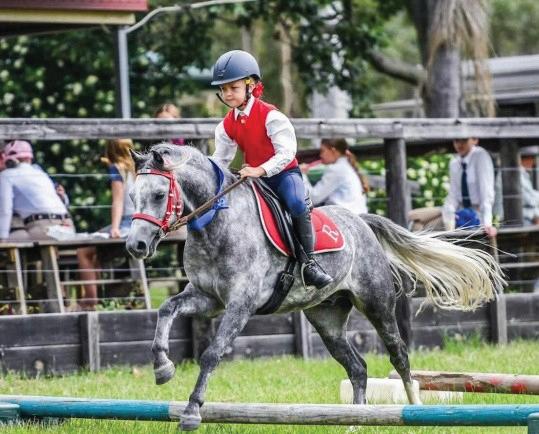
Today, the Australian Pony is still an exceptional pony as it can do a hard day’s mustering on an outback Australian station, go to the local agricultural show and compete in hack and child rider classes, then off to a gymkhana to compete in the novelty events. They even capably chase cows in a Campdraft and that’s only mentioning a few of its disciplines and talents.
The purebred Australian Pony is known for its great mind kind and trainable nature and its reliability, it has been used for many equestrian pursuits by children and adult riders or drivers.
It is a very versatile and accomplished pony that excels in the show ring, pony equitation,
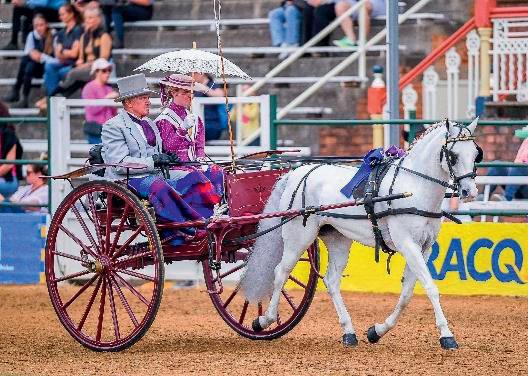
English and Western pleasure, pony jumping, sporting classes such as barrel racing, flag and bending races, pony jumping, harness, dressage, pony club and pleasure riding.
It is still used to this day on large and small country properties to muster cattle or sheep and then their young riders can enjoy their ponies by swimming with them in the dams and creeks, after a long day’s work.
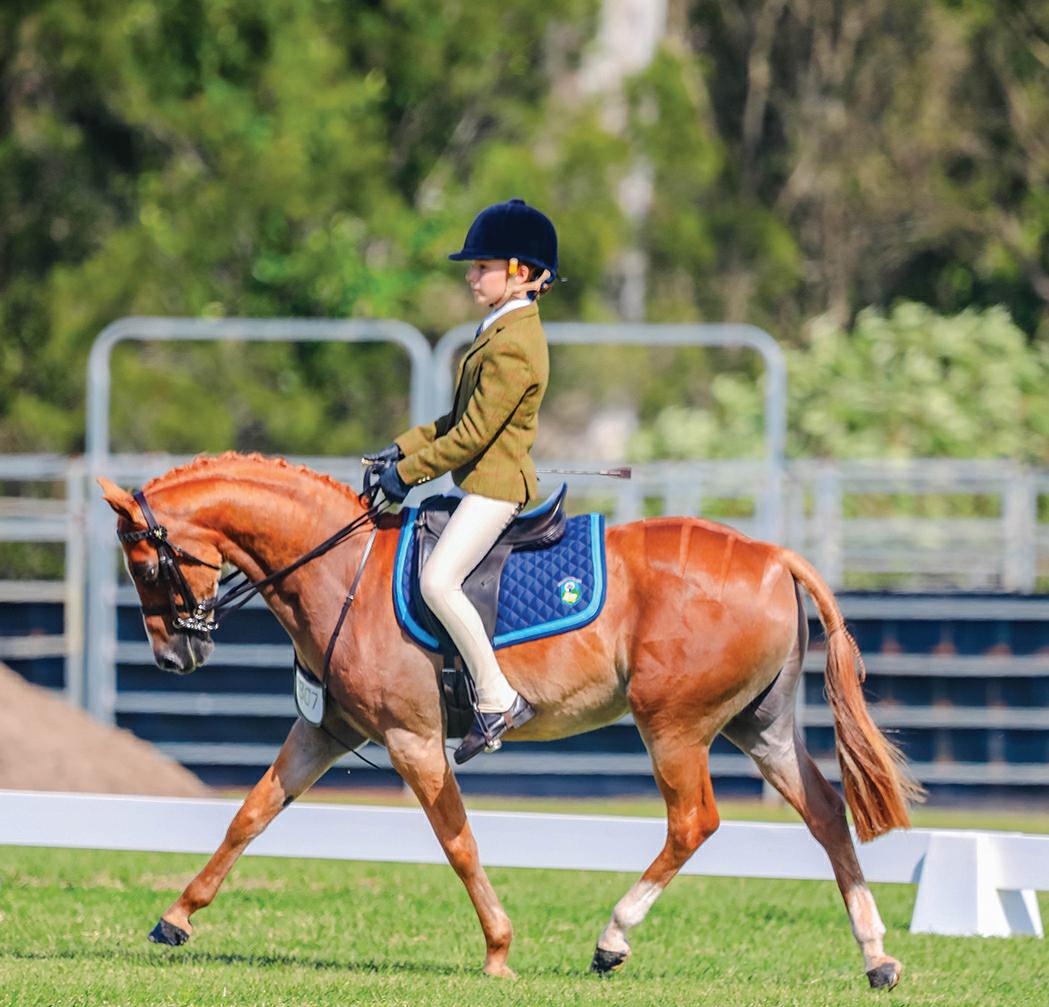
The relatively new Inter-school competitions have proved to be an area where Australian Ponies are very proficient.
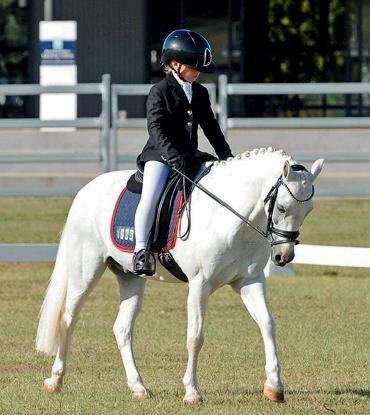
There are five disciplines for young riders to compete, these being Dressage, Jumping, Eventing, Show Horse and Combined training.
Pony dressage is another discipline that is becoming increasingly popular and once again this pony has risen to the challenge and is highly competitive.
Our Australian Pony will do all of this without complaint and very successfully.
They also make the best children’s ponies from a very young age looking after their little human and, in a lot of cases, the kids use them as playmates.
They don’t need shoeing and live on love, feed and hugs all year round.
Many Australian Ponies have
been highly decorated in their fields of expertise prior to the formation of The Australian Pony Stud Book Society.
There are many records, pictures and results of Australian Ponies, from our very early Royal shows, winning their classes in hand and under saddle.
The Australian Pony should not exceed 14 hands and all colours are acceptable, grey being a dominant colour.
The Queensland Australian Pony Owners and Breeders Group was formed in late 2023 by a few dedicated Australian Pony enthusiasts.
The group’s main function is the preservation and promotion of the Australian Pony whilst being governed by the rules of the Australian Pony Stud Book Society Inc.
We promote the Australian Pony in all equine pursuits and welcome new members or enthusiasts whether you own, breed or are interested in the Australian Pony of today or yesterday.
We produce a quarterly newsletter Aussie Antics, for anyone keen to read it (accessed via our Facebook page).
It provides information to assist new and established owners and breeders through educational articles and details of promotional activities.
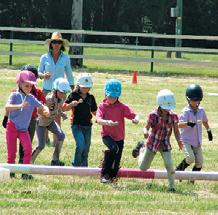
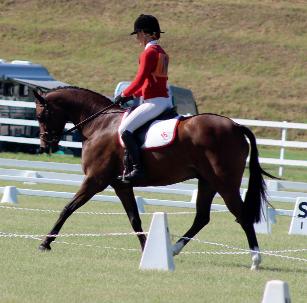
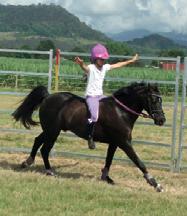
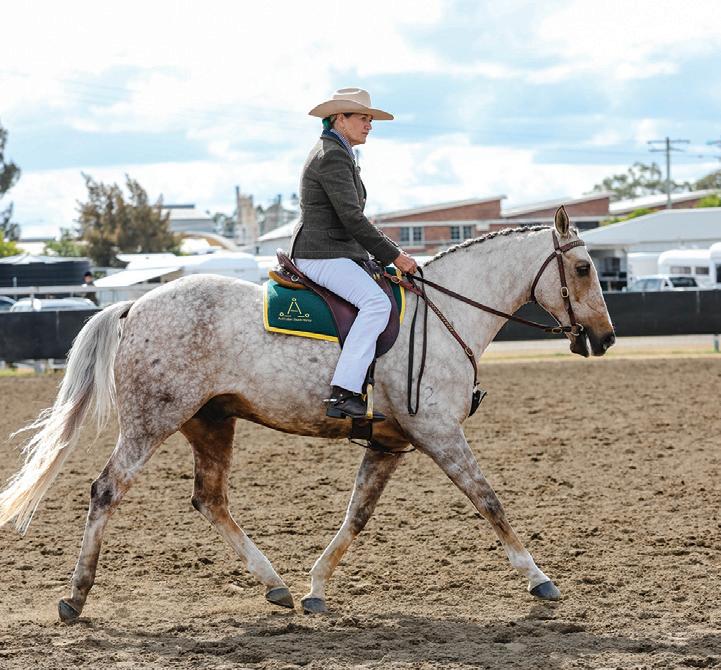
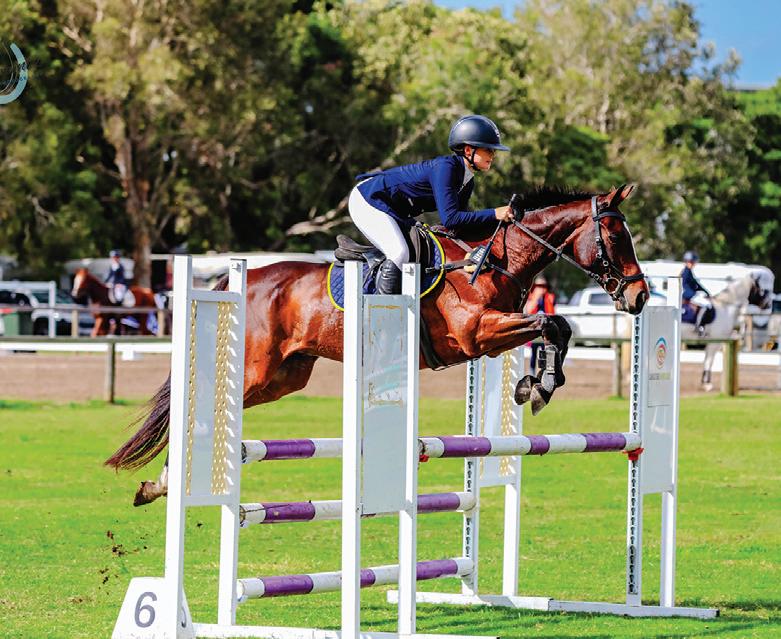
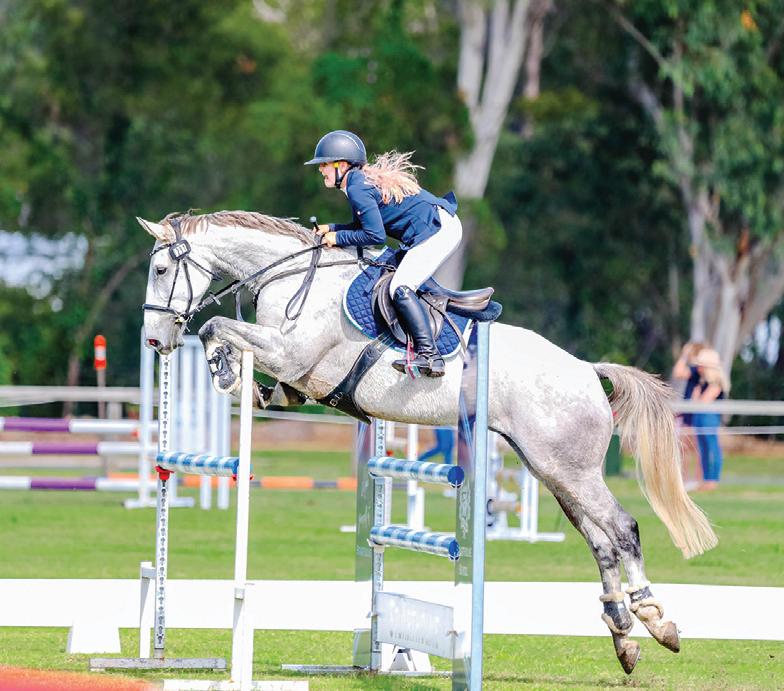
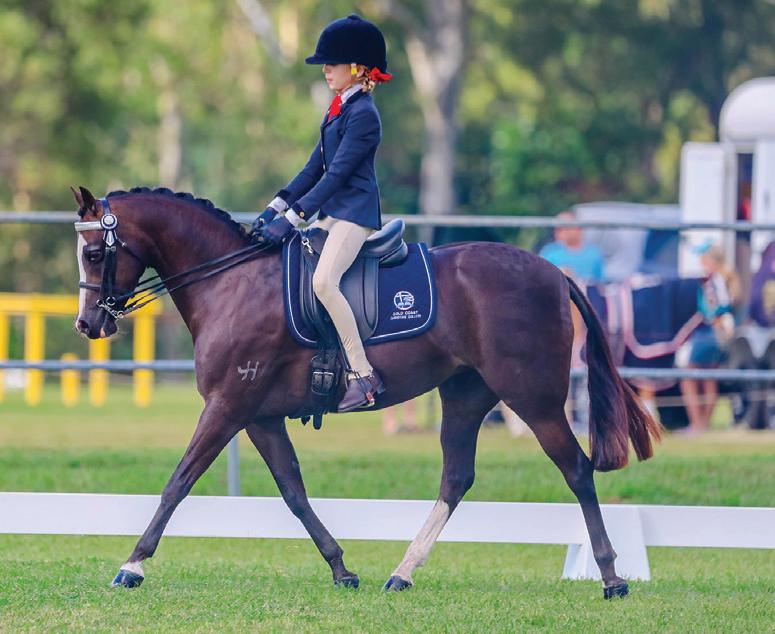
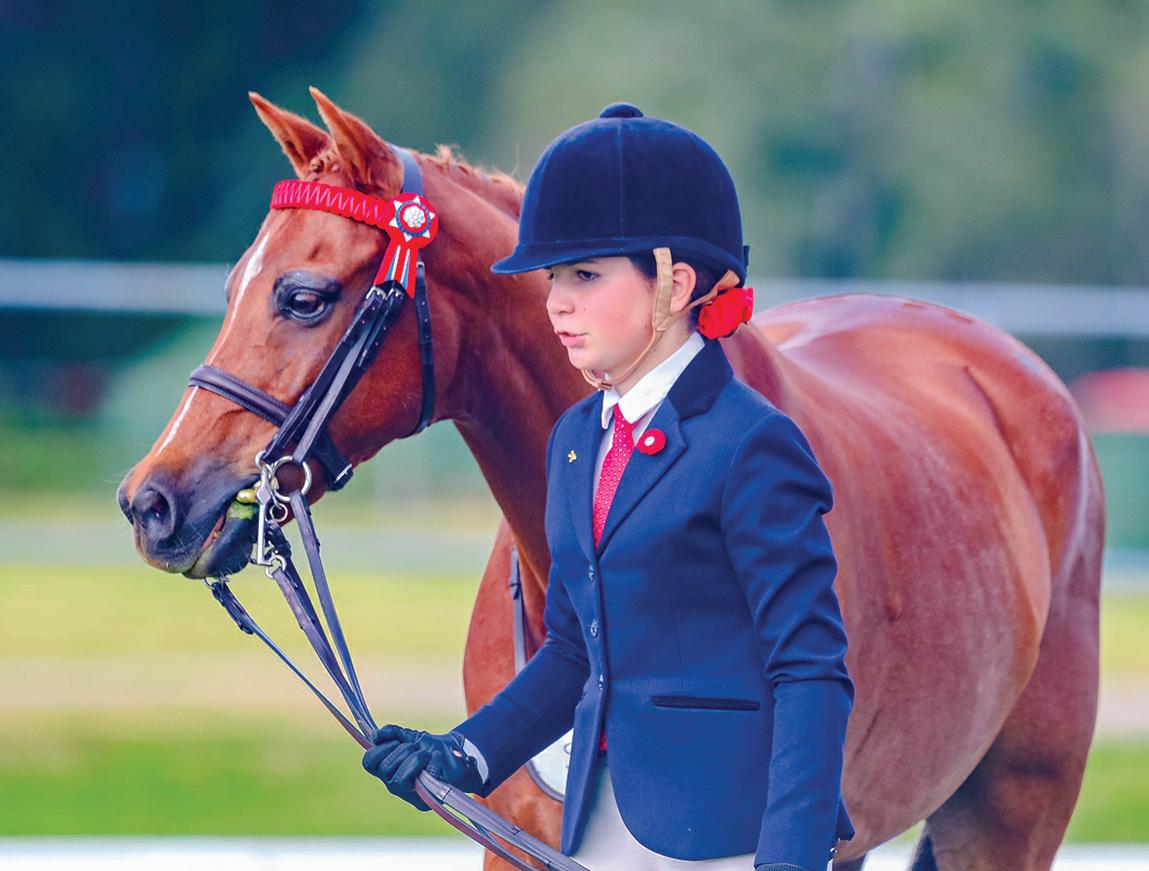
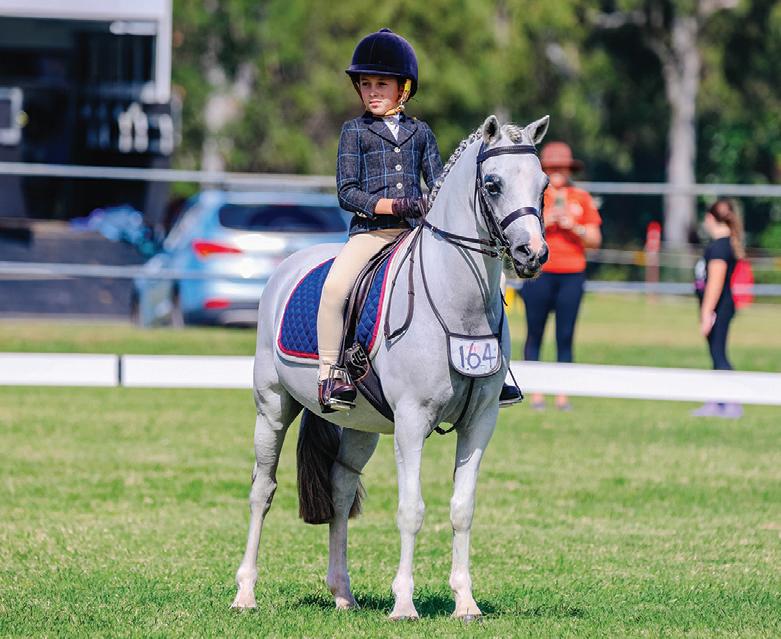
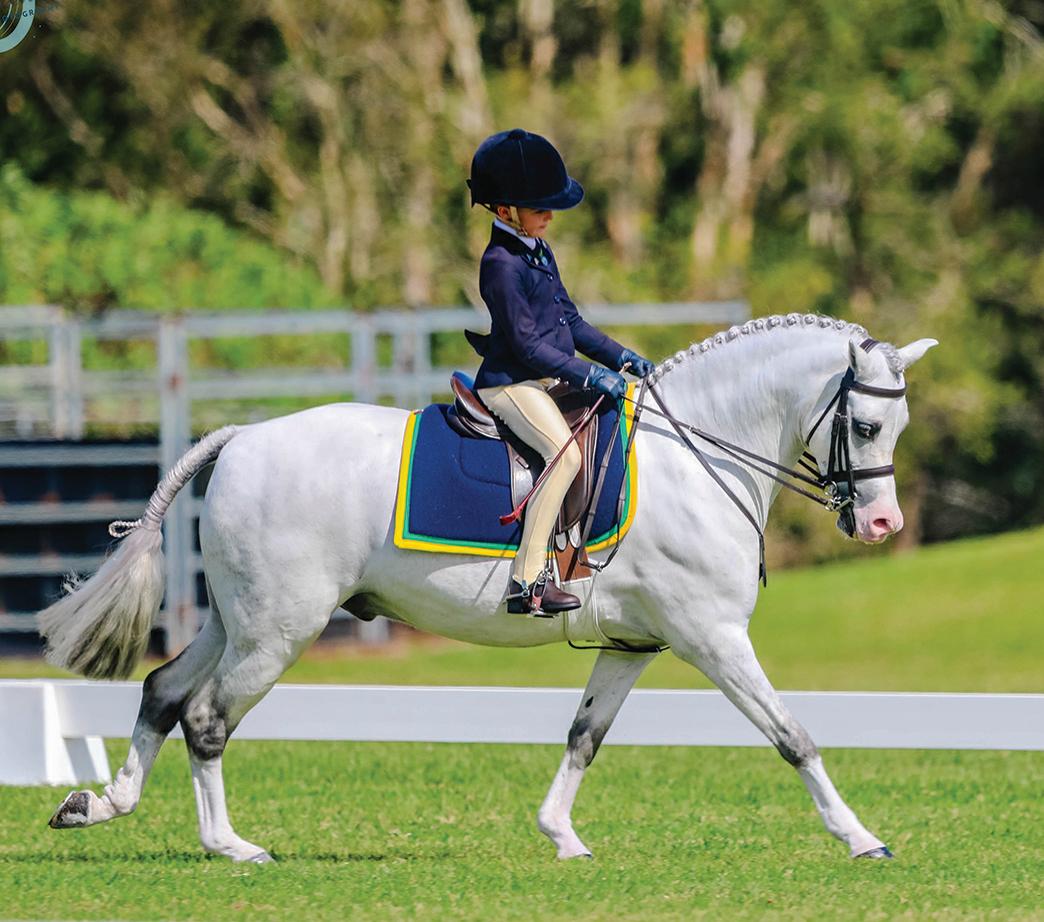
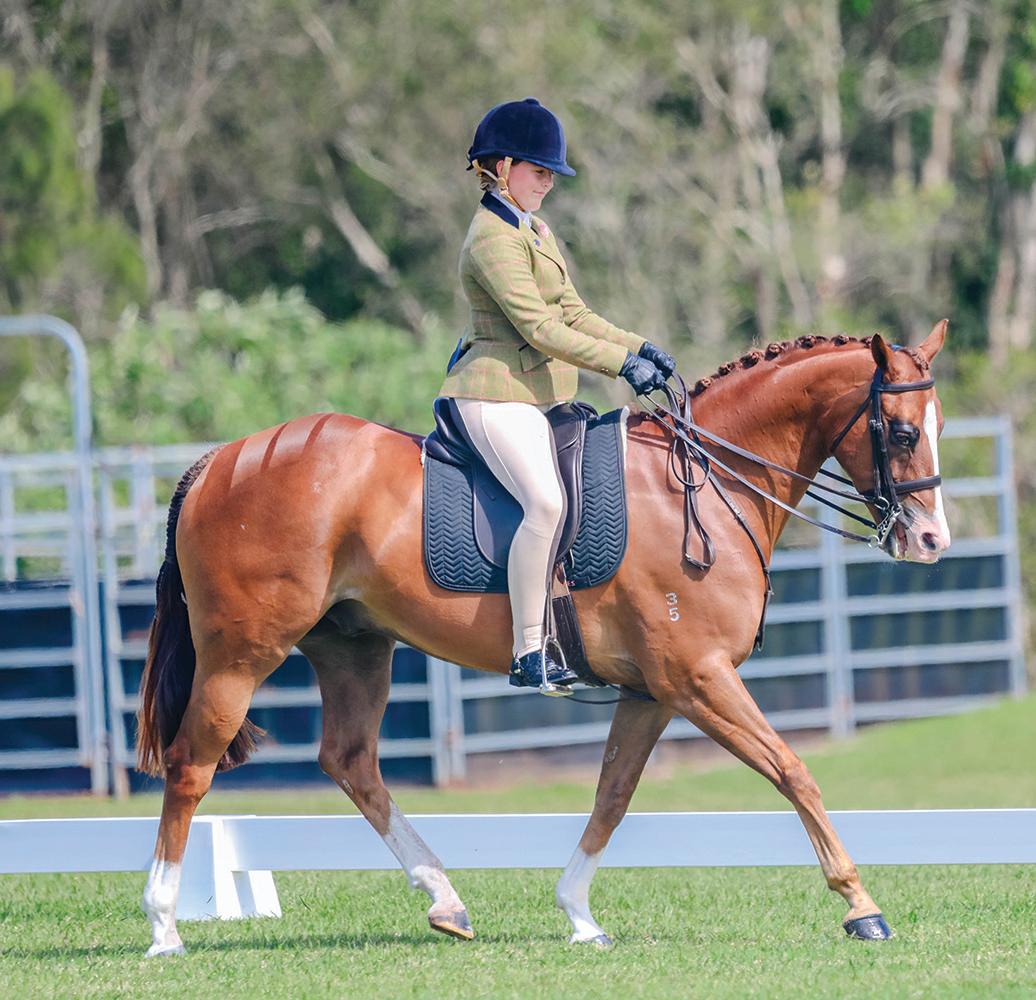
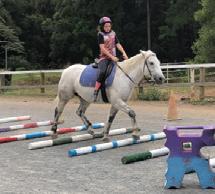
The versatile Australian Pony is used in every equine discipline.
The Horse Report Flexi-Fibre®
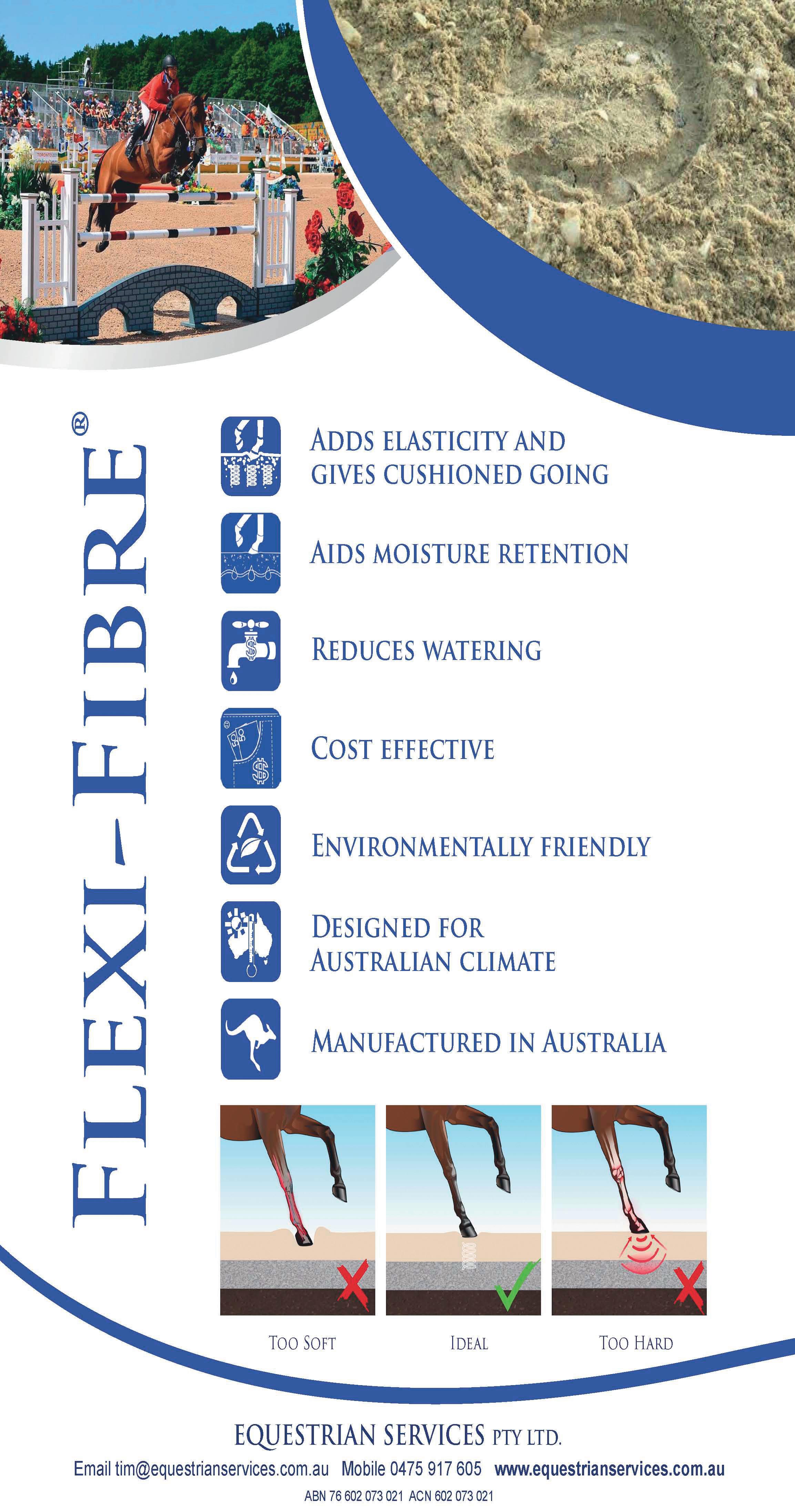
Flexi-Fibre
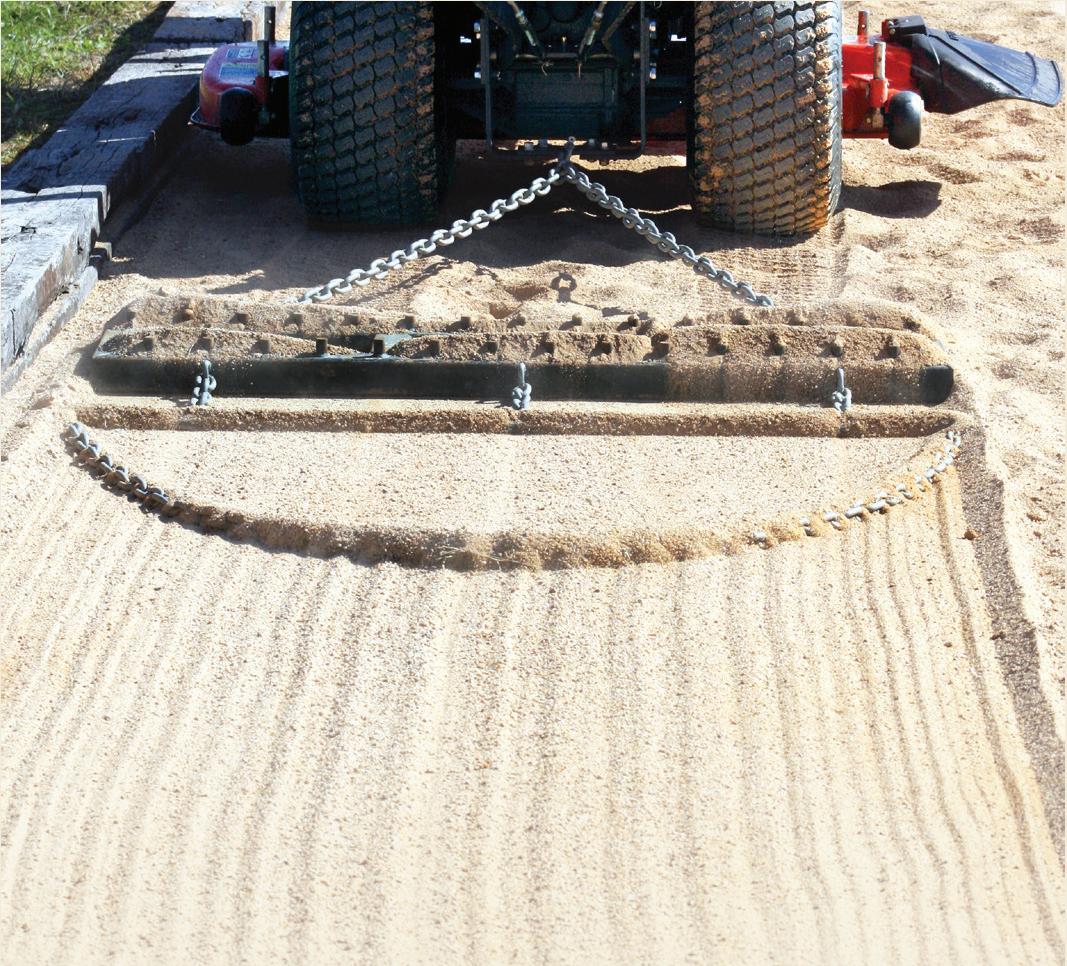
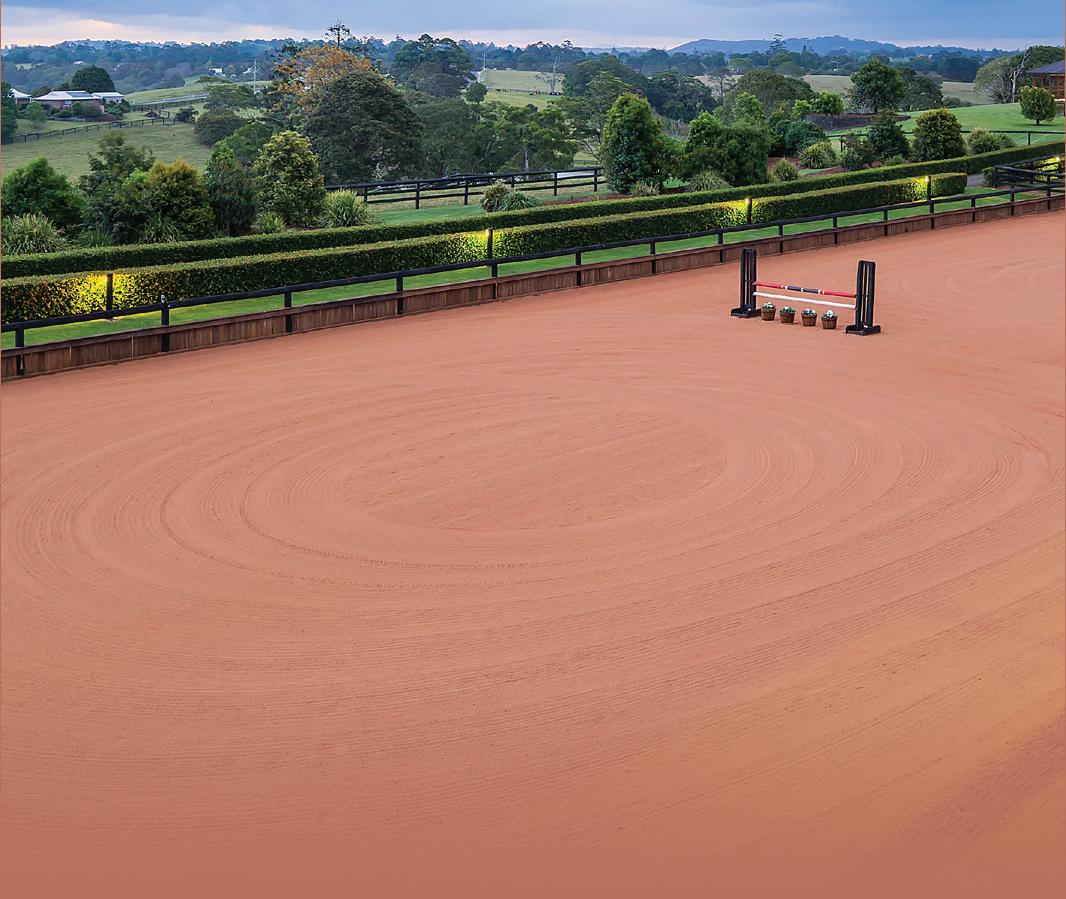
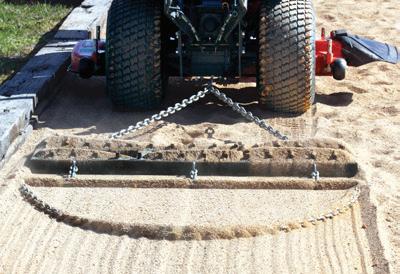
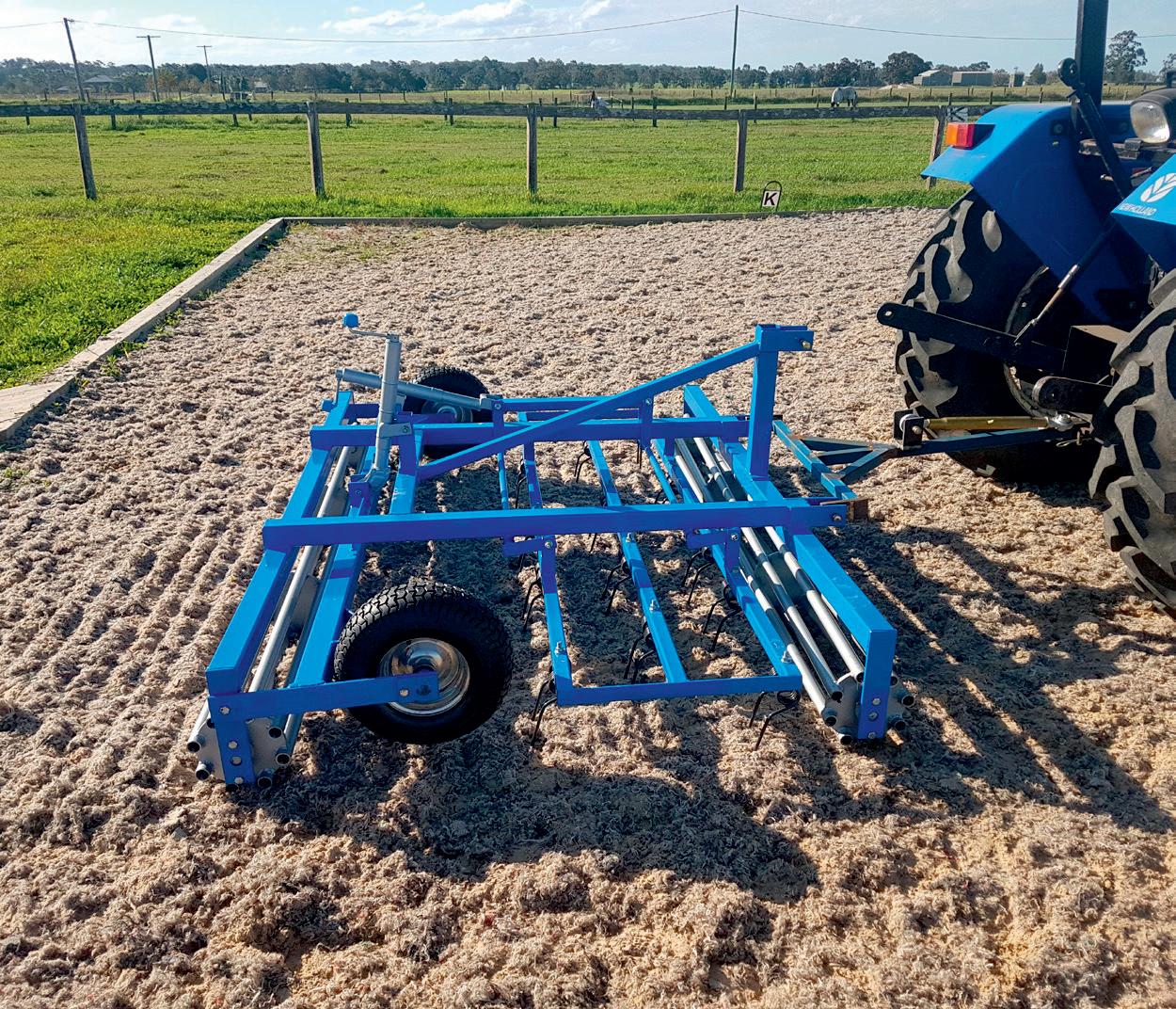
Fibre provides root structure, similar to grass roots in turf, to existing or new sand-based riding surfaces. Fibre improves the surface stability, therefore the horse will work ‘on top’ of the surface rather than ‘through’ it.
Our Flexi Fibre is a mixture of polypropylene, polyester and nylon Fibres which are the base material to all of our surfaces worldwide and similar to all other top surface suppliers. We
Australian conditions and manufacture here in Australia, enabling us to produce at very competitive rates.
• Improves preformance
• Improves stability of new or existing sand surfaces
• Long
• Enhances drainage
The Horse Report
The Horse Report
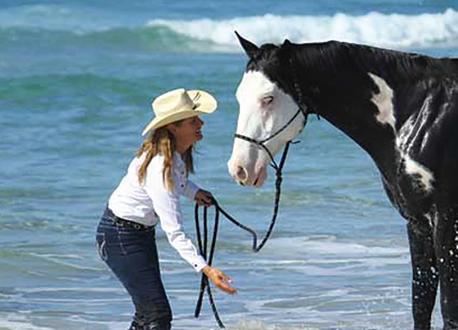
Unique Collaboration takes riders to a deeper understanding
By TANJA KRAUS
Ive been teaching clinics for quite some time now, and I have witnessed first hand the power of owners being able to understand their horses on a deeper level.
Trainers
Understanding why your horse reacts the way they do to certain things, how they see the world, how they learn, respond and think takes training to an entirely new level. But, there has always been something missing. The last piece of the puzzle that will allow a deeper connection and way of being with our horses, and that is a deeper understanding of ourselves.
It's been long understood that horses are a prey animal, humans are a predator, and thus we both see and respond to the world differently. This has been the heart of my teaching over the past 15 years - helping people see the world through their horses eyes.
But what about having a deeper understanding of ourselves?
How does the human brain think, feel, learn, react and respond.
Why do I get frightened when my horse does something ?
Why do I get angry when he does something else?
The human mind is a complex thing, and we don't learn a lot about its function when we are children. In fact most of us go through life 'at the mercy' of our mind, without realising we can learn how to understand it, and more importantly, how we can control it.
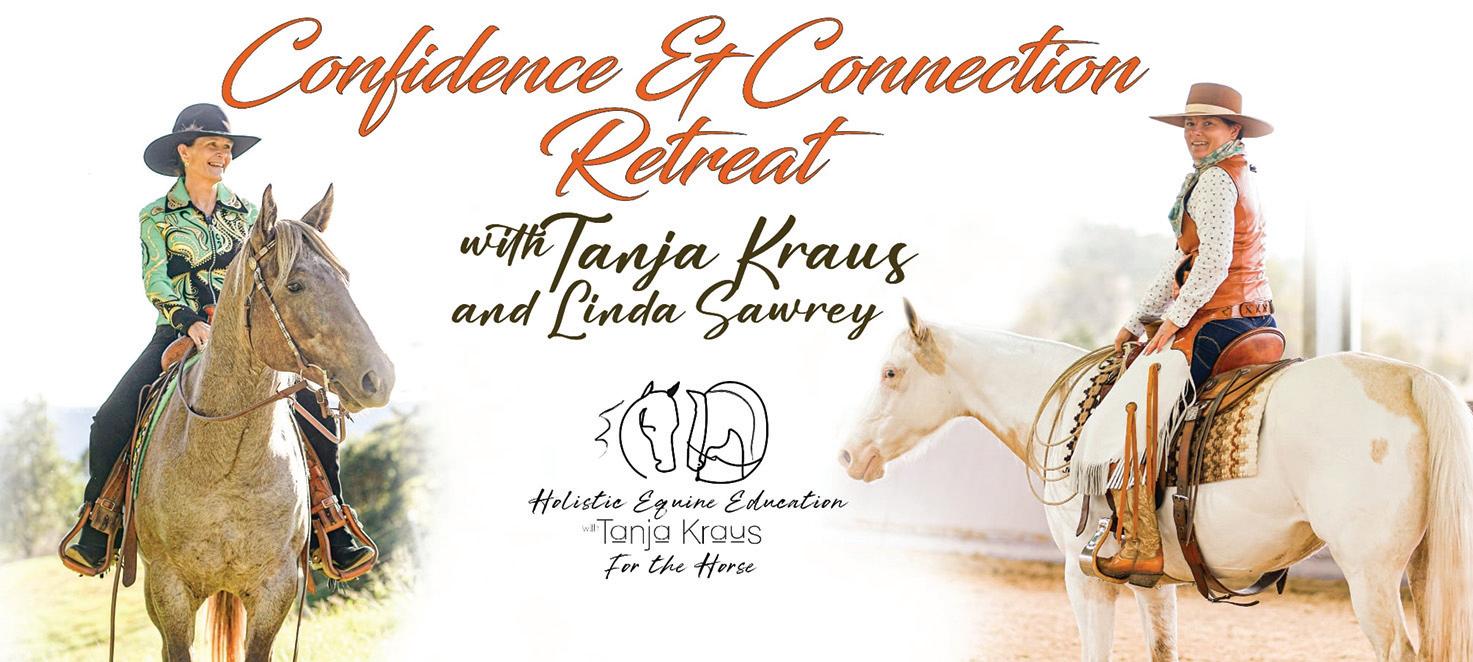
Since late last year I have been collaborating with Linda Sawrey, to deliver a unique retreat experience. Aclinic like no other, where you learn from a horse behaviour expert, and a human behaviour expert at the same time, to have a deeper understanding of how we function, how our horse functions, and how we can optimise that partnership together.
In a short time we have helped many people understand how and why they respond and react to situations the way that they do.
Coupling that knowledge with how the horse responds and reacts with the world has forged a deeper and more confident connection in both the horse and the human. From understanding the Window of Tolerance, Trauma, relationships and attachment styles, students have reported not only
having a better, safer and deeper connection with their horses, but with their family, friends and co-workers.
This collaboration has been a long time coming to the Equine community, and is rapidly becoming a 'game changer'.
Masters have long said the horse is a reflection of ourselves, so isn't it time we knew more about who is looking back at us from the mirror?
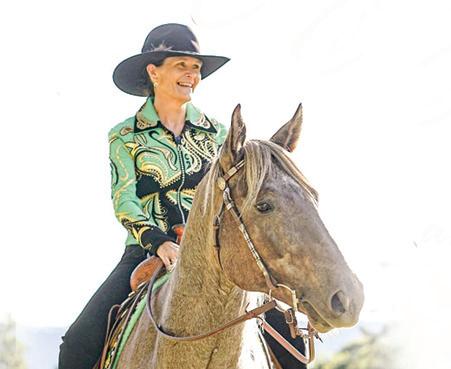
Tanja Kraus is an experienced horsewoman specialising in building skill and a deep understanding of the horse. Linda Sawrey, a highly qualified Psychotherapist, Clinical Counsellor, and Registered Nurse and blends evidence-based psychotherapy with real-world leadership experience to help individuals and teams navigate stress, build resilience and strengthen connection
MAY
13 - Staying Safe - Free Webinar
JUNE
4 - The Brain - Free Webinar
5-7 - 3 day Intensive Retreat (Humans Only) Gold Coast
JULY
8 - Anxiety - Free Webinar
21 - 25 - 5 day Immersion (Bring a horse) Gold Coast
To find out more about Tanja or Linda visit their websites Tanja Kraus- www.horsemanshipforperformance.com
Linda Sawrey- www.nurturedbynaturepsychotherapy.com.au
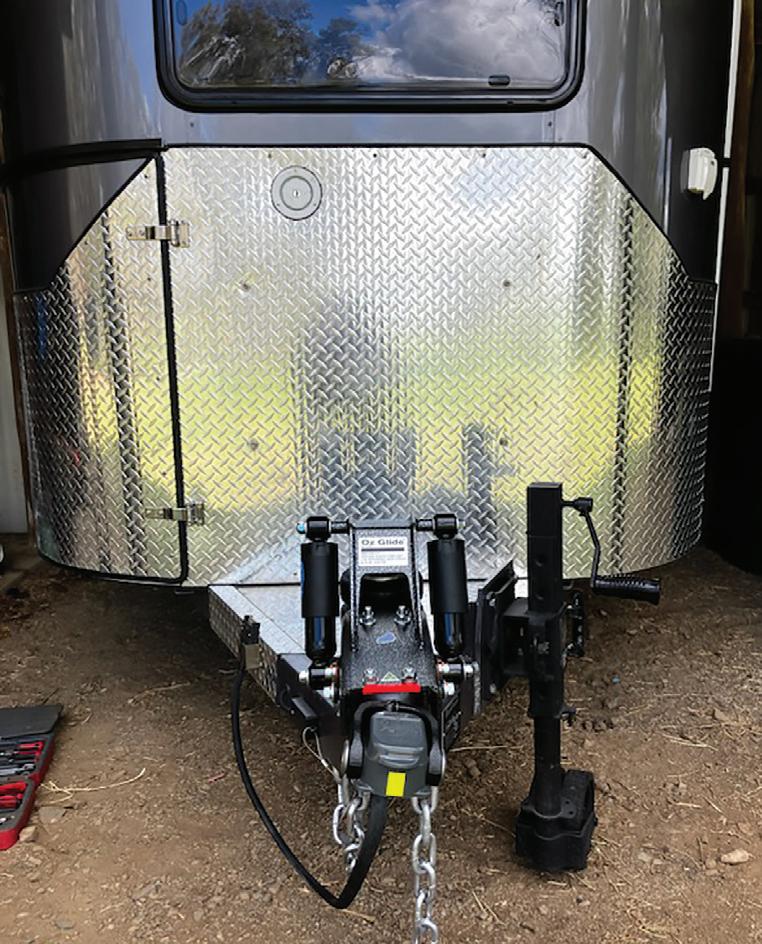
The Horse Report Your Horse Deserves A Better Ride...OzGlide
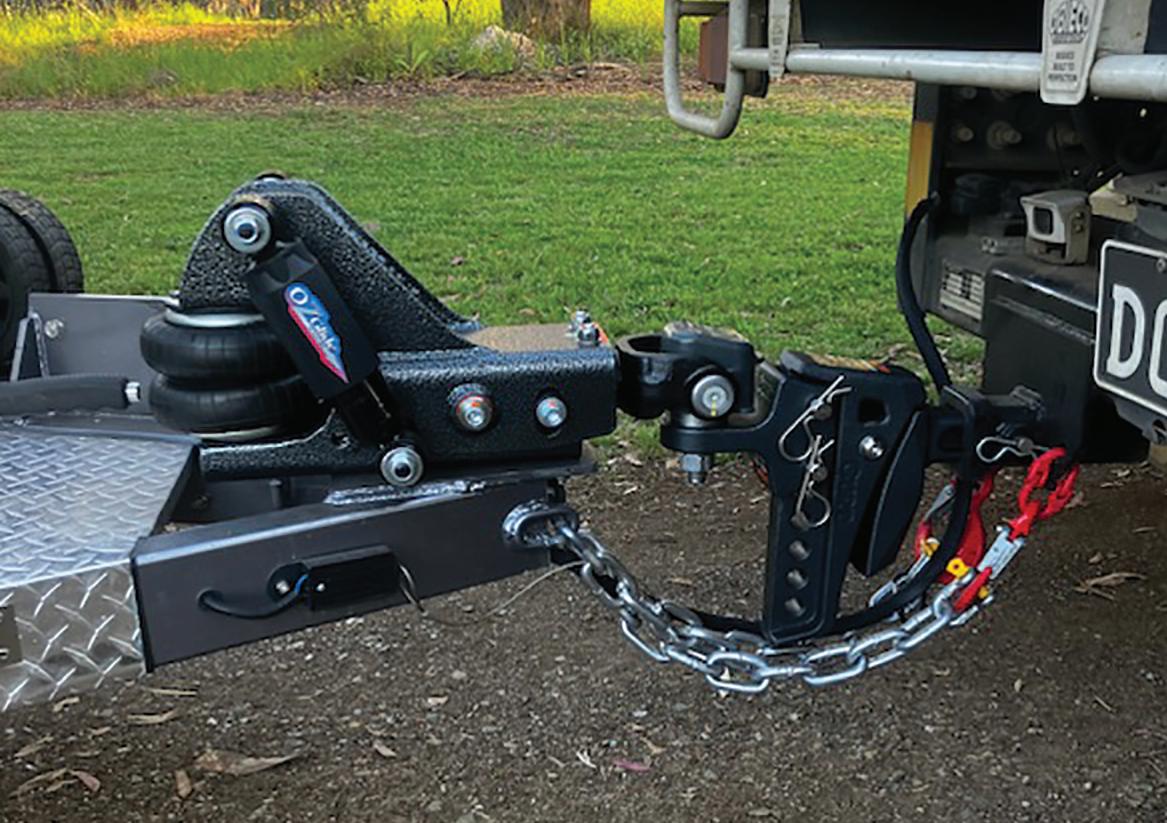
What is the Oz Glide?
* Premium towing solution;
* Enhances stability, safety and control for tow vehicle;
* Minimises vibrations and impacts generated by travel -for tow vehicle and float;
* Improves longevity of vehicle and float chassis;
saving $ on your investment
* Provides a smoother, more stable and comfortable travel experience for your horse;
Less stress related behaviour, less fatigue, less anxiety
* 100% Australian owned and manufactured;
* Guaranteed to work - or your money back;
* Simple installation
The Horse Report Intelligent Inventions recognised with awards
BY ADRIAN MORGANTE
Intelligent Inventions (II) continues to lead equine welfare and performance innovation, now recognised with 29 international awards across its expanding product range.
Recently awarded seven major global awards for 2026, Intelligent Inventions is recognised for their leadership in equine safety, welfare, engineering and performance innovation.
These awards highlight why more trainers, riders, veterinarians, retailers and owners from around the world are choosing to stock and use II Winners products. Each award affirms the credibility, trust and proven results behind our patented designs.
Below is a summary of II Winners seven newly awarded products:
1. Magic Fly Mask with Sunglasses
Award: Global Equine Comfort & Welfare Innovation Award 2026
Recognised for transforming equine visual comfort, UV protection and behavioural calmness.
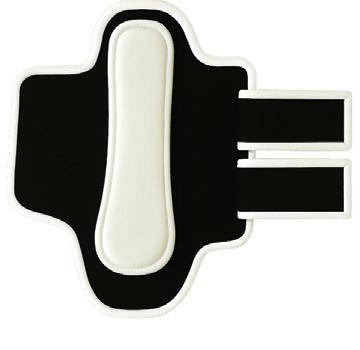
2. Magic Horse Calmer & Eye Protector Award: Global Equine Safety Product of the Year 2026
Celebrated for dramatically reduc-
ing loading anxiety, transport stress and eye injuries.
* Riders and trainers prefer equipment that is proven, tested and independently recognised.
* This portfolio of seven new world-class awards positions our products as the leading equine innovations for 2026.
The team at Intelligent Inventions looks forward to helping you and your horses benefit from the world's best equine safety and welfare technology. Discover more at www.iiwinners.com
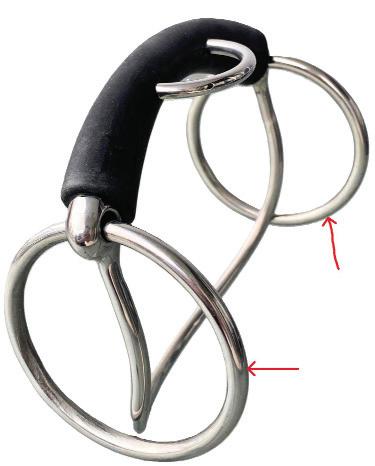
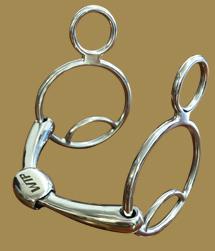
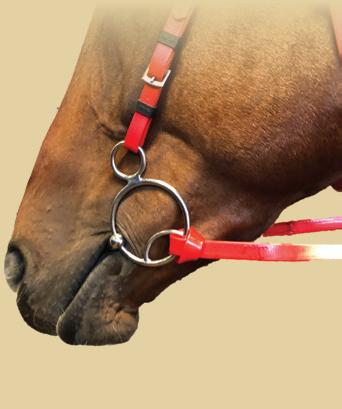
The design creates Power Steering and Brakes for strong horses. Very kind in the mouth and relaxes them. Lowers the horse’s head, creating a smooth, and time faults, making the difference of winning. Award-Winning Bit. Horses, trainers, coaches, and riders love them,
The Horse Report
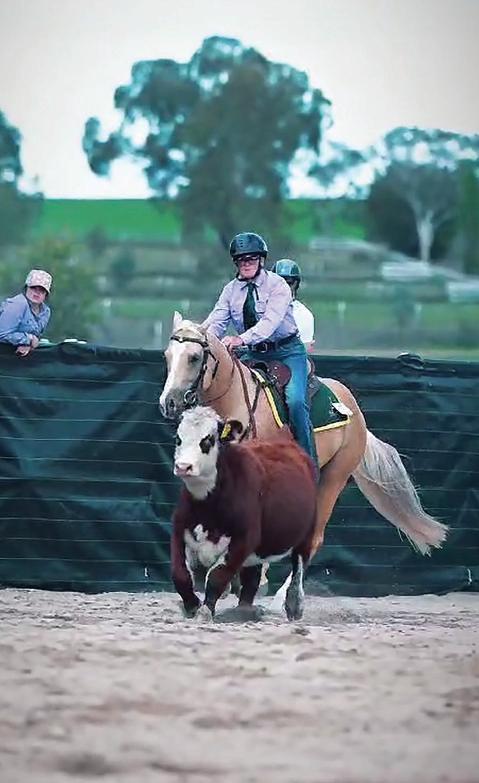
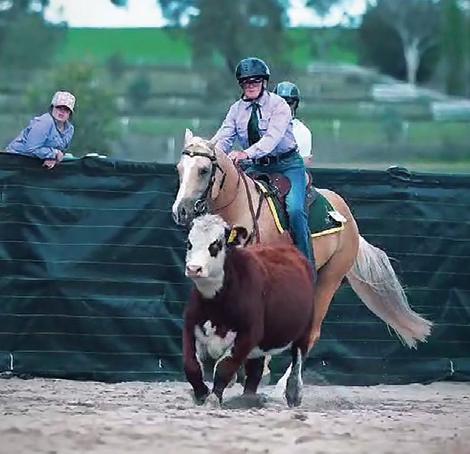
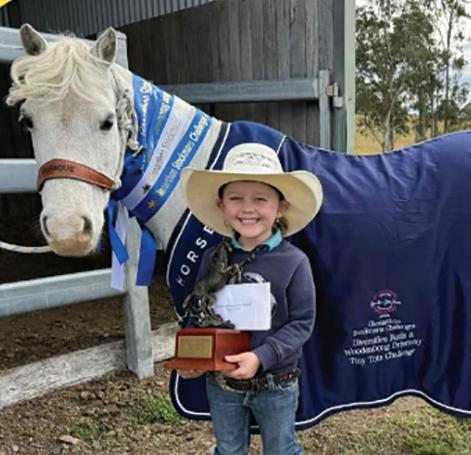
GLENARTHON STOCKMANS CHALLENGE
The 2026 Glenarthon Stockmans challenges will be held at Woodenbong Showgrounds on the weekend of July 4 & 5 at Woodenbong showgrounds
There is a lot on offer this year not only for the Open rider but for everyone. They will be running11 challenges and the challenges are open to all breeds not just Australian Stock Horses.
Events include the Tiny Tots Challenge, Mini Challenge, Junior Challenge, Youth Challenge , Encouragement and Rookie Challenges and Challenges for 2, 3 and 4 year old horses.
Plus the feature event the Open challenge Winner of this years challenges will recieves prize money , rugs and great prizes thanks to the wonderful sponsors.
There will be an auction on saturday night to raise money for Neimann Pick Disease awareness and they are still looking for donations for the fundraising auction.
For further information contact the Event Co Ordinator: Colleen McQueen 0429 334 041 Email glenarthonstockhorses@hotmail.com
The 2026 Pony Club is well under way, club have been running camps and rally days and competition have started.
If you haven’t yet signed up:
All registrations are done online via JustGo. Simply head to www.pca.justgo.com/Account.mvc/SignIn
• Log in or create an account
• Select your Pony Club and membership
• Follow the prompts to complete your registration For clubs needing new uniforms or promotional gear visit www.williamson.com.au
Looking for a pony club event in the school holidays why not enroll for a Murwillumbah Pony Club camp. The Murwillumbah club runs a camp in each school holidays. The camps are open to all ages including little lead line riders, junior and senior and associate riders and adult riders so that mums dads and kids can all enjoy pony club and all it offers together. They offer great facilities, stables, camping, canteen, new dressage arenas, jumping and sporting equipment, qualified instructors, friendly helpful members. Based out of the Murwillumbah Showgrounds, Queensland Road, Murwillumbah. For further information contact Paula on 0413 733 294.
QLD RIDING PONY OF THE YEAR
The 2026 Qld Riding Pony of the year show will be held on July 5 at the Park Ridge Pony club grounds in conjunction with the EAQld winter show. The show offers an excellent program for both youngstock and senior led and ridden ponies. There are great prizes on offer including rugs, trophies and garlands for all the Supremes, prizes and rosettes for all the champions and trophies for the most successful exhibiter and breeder. Programs are now available at www.rpsbs.com.au/qld/qld-events/ and entries are now
For more information email rpsbsqld.treasurer@gmail.com
SCHOOL HOLIDAY CAMPS
The Horse Report
THE 2026 MUDGEERABA SHOW
The 96th Mudgeeraba Agricultural Show will be held on Saturday 27 and Sunday 28 June. For nearly 100 years, the Mudgeeraba Show has celebrated the very best of agriculture, community, and country living right here on the Gold Coast Hinterland with two days of competitions, displays, entertainment, food, and family fun. With more than 20,000 visitors each year, it’s the place “where the country meets the coast.” Saturdays ring events start at 8:00 and nominations or taken on the day. The program includes led and ridden breed classes, Hack hunter and rider classes, Western and Ranch riding, and a beginner ring. SUnday will be a full day of showjumping starting at 7:15 am and showjumping nominations are via www.nominate.com.au closing on 27 June For further information visit www.mudgeerabashow.org.au or Email: info.mudgeerabashow@gmail.com
2027 PONY CLUB NSW FESTIVALS
TRADES & SERVICES LINE LISTINGS ($44 for 6 months or $77 for 12 months)
NSW DPI cattle tick record of movement https://app-cattletick.bfs.dpi.nsw.gov.au
NSW legislation www.legislation.nsw.gov.au
QLD cattle tick zones & accredited certifiers for cattle tick https://www.business.qld.gov.au/
We recommend speaking with one of our authorised officers on 0429 185 136 or email cattletick@dpi.nsw.gov.ua prior to bringing animals into NSW.
Department of Regional NSW
The Secret is out!
Vet-formulated for joint protection & mobility Combines Rosehip, MSM, Glucosamine, Chondroitin, Green-Lipped Mussel & Turmeric Results in as little as 2–3 weeks
"This blend is absolutely mind-blowing. All of the therapeutic ingredients that horse owners once had to use separately are now in one powerful, practitioner strength formula."
– Tamara Frances, Nutritionist & Herbalist
The Horse Report
IT’S WHO YOU KNOW
Price: $ 8,000.
Height: 16.0 hh
Reg: SHC
Bay Gelding
Sire: Apologia
Dam: Catakate
Spud is a lovely educated gelding who has had professional training since retiring from the racetrack.
He has good established flat work and is a nice ride with balanced paces.
Spud is suitable for an intermediate rider and above wanting a nice horse to enjoy and educate.
Spud has had 1 season in the show ring and low level show jumping training.
Contact: Shauna McClean
Ph: 0478 191 171
LORD MARKEL
Price: $ 9,000 - This Week ONLY!
Height: 15.3 hh
Reg: SHCV/Thoroughbred
Bay/Brown Gelding
Sire: Hallowed Crown
Dam: Given With Love
Quality Small Hack – “Pickles” 9yo Thoroughbred Gelding | Sourced from Greg Gerry, Whitmere Stud. Pickles is the full package, stunning looks, exceptional movement, and undeniable presence. Currently in his newcomer year, he’s already proving himself, winning at every outing and taking out his Ridden OTTto qualify for VAS.
He’s in full work and show condition, ready to continue his successful campaign. This beautiful gelding oozes quality and turns heads wherever he goes.
Like any OTTB, Pickles will best suit a knowledgeable home to continue his showing career, he has all the makings of a highly competitive hack in the right hands.
Price is negotiable to the perfect home.
Footage available upon request.
Contact: Amber Baker
Ph: 0422 033 123
SANLIRRA NOTATION
Pice: $25,000.
Height: 15.3 hh
Reg: RPSB
Brown Gelding
Sire: Sanlirra Revelation
Dam: XX
15.3hh 9yo Gelding
Reg Riding Pony x Thoroughbred
Sire: Sanlirra Revelation
This beautiful little gelding is not limited to the show ring, possessing three quality paces, and a natural ability to expand and compress within the pace, Noah could have a future in the dressage arena.
His experience lies within the show ring, in 2022 he qualified for Grand Nationals and was Champion Novice Hack and winner of his open at Brisbane Royal, in 2023 he again placed in all his classes at EKKA, and has too many Champion Small Hack titles to list.
Noah has performed well in very big atmospheres and indoors. He is very sweet on the ground and straight forward to ride but wouldn't suit a nervous or novice level rider, he takes alot of confidence from his rider, and under the right riderhe happily does just about anything (see video ??
Avery talented, clever and fun horse to ride!
For further videos and details please phone.
Contact: Courtney Larard
Ph: 0415 592 569
SUPER ANGEL
Price: $20,000.
Height: 15.2hh
Reg: Thoroughbred, SHC, Equimillions Eligible
Colour: Black/Brown Mare
Sire: Super One
Dam: Bangal Angel
Quality Small Thoroughbred Show Mare
Madge is a rare find — a small TB mare with a lovely temperament, correct conformation, and genuine show-ring potential. She is soft, sweet-natured, and very straightforward to handle both on the ground and under saddle. Aconsistent and reliable ride, Madge is at the very beginning of her showing career but already boasts impressive results — including winning at her first Royal Show under extremely challenging conditions without putting a foot wrong. Her most recent results include winning her novice and open hack 15-15.2hh class at Brisbane Royal 2025.
She would suit a capable teen rider or an adult looking for an uncomplicated and honest mare to enjoy and produce. However is not a beginners horse and does require a confident rider still. With limited outings due to work commitments, she’s only been lightly shown and would thrive in a home with time to bring out her full potential.
Easy to handle in every way
Contact Lillian Mills
Ph: 0429 916 767
The Horse Report
JA REGAL TEMPEST
Price: $12,000.
Height: 13.2 hh
Reg: Riding Pony & Saddle Pony
Bay Gelding
YOB: 2020
Sire: Willowcroft Regal Alliance (exp NZ)
Dam: Kolbeach Roses
Offered for your consideration.....
'JARegal Tempest' 5yo Riding Pony 'Gary' as he is known is by Willowcroft Regal Alliance (exp NZ) and from Kolbeach Roses. This pony is super pleasant, unspoilt and an all-round 'Gary'. Just a good bloke.
His first official competition was the QLD State Riding Pony Show a few short weeks ago. He was Reserve Champion Led SH Pony and Supreme Ridden Hunter Pony. He was a pleasure to prepare and exhibit. Gary is still green in the competition arena but we know with the correct guidance, he will be a super show pony for the whole family. In show work and ready to be viewed at Paul Austin Equestrian in Tamborine QLD. About to go home to Gympie for a spell over Christmas so be quick!
Enquiries Paul Austin on 0401 660 189 or Mel Gauld on mel@westerhorseannual.com
LYNLEA PRINT DELIGHT
Price: $12,500.
Height: 13.0 hh
Reg: EA, WPCS, RPSB
Bay Gelding
Sire: Ponsteffan Simwnt
Dam: Lynlea Paper Doll
Legs is a sibling to the highly decorated hunter pony Lynlea Print Design. He is sure to follow the same path in the show ring and is truly royal quality.
Legs is rising 5 with an attitude and work ethic of a school master. Nothing fazes this guy, he epitomizes the saying box to ring with no work down required down required and no plugs. He is happy to carry my six year old daughter around both at shows and home.
Legs has attended three agricultural shows with success at each of them. Only reason we are selling him is with four little children and other ponies in work I am finding I don’t have the time legs deserves.
Legs is 100% sound and blemish free. More photos and videos available for genuinely interested parties.
Contact: Sammy Reeves
Ph: 0431 487 166
Ph: 0421 483 920 Contact: Suzie
MEADOW'S GOLDEN GIFT
Price: $15,000.
Height: 13.0 hh
Reg: EA
Brown Gelding
Sire: Kolbeach Holly's Gold
Dam: Pemberley Amazing Gift
4 years old, by Kolbeach Hollys Gold and out of the beautiful, Pemberly Amazing Gift. Currently measuring 13 hands.
Teddy has been brought on slowly and is now ready to find his new home. His nature is impeccable - absolutely NO dirt. Easy to trim, clip, wash, travel. Atrue fuss free pony that has never put a foot wrong. Although green, he has been ridden by child riders with no issue, never requiring any lunging. Whilst he has no shying or silliness, he is forward moving, so would also be suited to a teen or small adult in his first season!
Teddy has recently attended his first 2 shows for broad sashes, and has been ridden off property to indoors, trail rides and the beach. He is a much loved family member and is only available to the best of homes - you don’t get a temperament like this often!
Contact: Sarah Ryan Ph: 0437 526 076
WESTON PARK MAXIMUS
Price: $19,000.
Height: 13.0 hh
Reg: Welsh
Colour: Chestnut
Sex: Gelding
YOB: 2016
Sire: Steehorst Kyro
Dam: Weston Park Madonna
Atrue standout in and out of the ring, Maximus is the ultimate all-rounder for a competitive child rider. Professionally schooled in dressage, exposed to jump lessons, pony club, riding school environments & jump days, Max is beautifully educated, level-headed, and ready for his next little rider.
Career Highlights:
Highly placed in open Show Hunter pony classes, Melbourne & Canberra Royals
Reserve Champion Welsh B Exhibit, Canberra Royal
Contact: Jessica Stalling
The Horse Report
MALIBU PARK TOP CLASS
Price: $ 20,000.
Height: 14.1 7/8 hh
Reg: ASPB, EA, SHCV, Part Welsh
Colour: Bay
Sex: Gelding
YOB: 2018
Sire: LLanarth Top Cat
Dam: Malibu Park French Kitten
Patch is a full novice & has completed at HOTYshows, Barastoc, Royals Melbourne, Geelong, Adelaide, Canberra. He’s also done pony dressage, suited to someone who can take him higher, someone who is not a full beginner, loves food & liquorice & carrots. Patch has beautiful paces. He’s currently in full work & condition, in Mornington VIC.
Contact: Sharon Ph: 0477 157 638
LENDENE SKYFALL
Price: $12,000.
Height: 14.2 hh
Reg: AHSA, WPCS, Dilutes
Colour: Palomino Gelding
Sire: Ablue Moon’s James Blond
Dam: Marwans Fortune KP
With beauty, movement, and an enviable show record, ‘Tucker’is a superb coloured Galloway who will shine in a competitive show home. Triple registered, he is 4yo and has recently measured just under 14.2hh. Lightly shown with enormous success as a halter horse, Tucker’s accolades include Australian National Champion, Supreme at the Melbourne Summer Horse Show, and Supreme at Barastoc HOTY, with numerous other Champion and Supreme titles to his credit. These already impressive achievements offer only a taste of what is ahead.
Professionally broken in by the Lee sisters at Tamrie Park, and ready to go on with, Tucker’s height, movement, and temperament make him a superb prospect for a ridden home. Kind and willing, with absolutely no dirt, he has taken everything in his stride and has proven to be very quiet under saddle. Elegant and scopey, with beautiful length of rein, a gorgeous face, and expressive eyes, He is easy to do anything with, great to catch, rug, trim, wash, clip, float, etc., and has a lovely, people-oriented nature. He is available to a loving show home where he will have the opportunity to fulfil his potential, and we welcome your enquiry. $12k firm - Video available on request.
Contact: Tamara Lee Ph: 0409 182 938
Contact: Sonja Ph: 0449 527 233 Contact: Suzie
GREENWOOD PARK
CALVIN KLEIN
Price: $14,000.
Height: 15.0 hh
Reg: Riding Pony x TB
Brown Gelding
Sire: Royalwood Boy Soprano
Dam: Keys to Windsor (TB)
Calvin is a beautiful kind gelding with an eye catching big soft front and way of going. Calvin has only been lightly shown over the last 3 years through no fault of his own but due to having another large Galloway and starting a young family not long after he was ready under saddle. Calvin is full brother to Greenwood Park Prada Champion Galloway 2025 Perth Royal show. He is currently stabled and in show condition and he can happily go days or weeks without a ride and ride no lunge etc. He is gentle and polite to handle on the ground and loves attention, he does require a competent teen or adult with a kind encouraging nature to bring out the best in him as he is very eager to please.
Please don't let Calvin’s age deter you from enquiring, he has not been spoilt and all of the hard work has been done ready for his lucky new owner to take the reins and reach his full potential.
This is a difficult sale and Calvin will only be sold to the best of homes. $14,000 negotiable.
Video and more photos available on request.
Contact: Emma Panizza
Ph: 0439 134 175
JEWEL OF AJMAN
Price: $ 4,500.
Height: 14.2 hh
Reg: Arabian Bay Gelding
Sire: Ajman Monisione (Dec)
Dam: Daughter of Kiss and Tell
Highly competitive with movement to burn.
Very pretty 14.2hh Pure-bred Arabian Gelding that oozes presence and demands attention in the ring. Julez is one of the most affectionate and loving horses I've known. He loves his person wholeheartedly, very in your pocket type gelding.
Julez has competed successfully in Halter at both Ag and National levels ranging from National Capital, East Coast, Double Diamond, Victorian Championships andwalks out in the Champion circle every time.
Has attended dressage training days and Ag shows lightly.
Julez is still relatively green under saddle due to life getting in the way of our saddle plans. Fantastic for the farrier, float, catch, rug etc. No Kick/bite/buck
Julez is not a beginners mount - he is far to smart, he will however be perfect for capable, sensitive and confident older teen/young adult who is looking for a horse to take them up the levels in both show and or dressage, he would also hrive in endurance as he is bold and inquisitive.
Heartbreakingly hard sale of a loved member, He is not one I ever thought I would sell (my childhood dream type) however it just seems to be in the cards for us. He is being sold out of the paddock and out of work therefore is priced accordingly will negotiate to the right home
The Horse Report
BARINDALE BUTTONS
Price: $7,000. neg
Height: 12.2 hh
Reg: SHC, RPelig Part Welsh
Brown Gelding
Sire: Chelleason Soldier of Fortune
Dam: Morningside Fancy Affair
Suzie
Buttons is a stunning small show pony with the world at his feet and has the nature to be an exceptional child's pony in the future. Full brother to successful child's show pony Barindale Silhouette.
He has had a fantastic start and been out to his first show taking out Champion Newcomer Small Pony at SHC Rising star. Buttons has taken everything in his stride and been a pleasure to have and show.
Only for sale as was purchased as a foal to be a lead rein pony and unfortunately got a little big.
Contact: Melissa Harding
Ph: 0402 660 884
ARTSWORTH PARK LOVE STORY
Price: $20,000. - Price Updated!
Height: 12.2 hh (life measured)
Reg: RP, SHC, EA
Bay Mare
Sire: Final Edition of Astral
Dam: First Love of Astral
Lexi provides the perfect opportunity for a confident young rider looking to dominate the show ring or excel in any discipline.
Lexi is beautifully educated, sits softly into the bridle and highly responsive to seat aids.
Aconsistent winner in the show ring, having qualified for EANationals and Grand Nationals multiple times.
While she shines in the ring, she is just as happy at Pony Club, popping over jumps, or enjoying a relaxed trail ride. Apleasure to do anything with and an absolute professional to take out requiring no work down at shows. Lexi is very in tune with her rider and is therefore best suited to a confident, capable rider who wants a pony that can take them to the top of their game.
She is ready to bring as much joy to her next family as she has to ours.
Plenty of photos and videos available.
Contact: Jodi Goss
Ph: 0407 941 497
ASCOT TRU LA LA
Price: $8,000. - Price Updated!
Height: 12.3 hh
Reg: Riding Pony, Welsh, SHC
Grey Mare
Sire: Mirinda Field of Dreams
Dam: Ascot True Love
Newcomer 2026
Layla is beautifully bred and is going to be a super competitive child’s large pony with having the most beautiful movement that floats across the ground and she has been an absolute pleasure in every way to have at home and show in such a short time of her career with minimal work down at the shows.
Layla has been ridden by my 8 year old at home, she has a lovely soft mouth and sits in frame and has a lovely way of going. She is not lazy and always happy to please. She has been ridden at the shows by a 15 year old and is now qualified for Adelaide royal 2026.
Layla would suit a teenager to finish her newcomer career and then she would absolutely be suitable for a child once she has done some miles. She has no nasties whatsoever. She can have days off and jump on and go.
She has been on trail rides on her own and with others and always a pleasure to take out.
She is amazing to float, clip, tie, shoe. She has no vices, full vet check is welcome.
Contact: Naomi Karutz Ph: 0425 198 277
CARLINGFORD PARK SWEET SURRENDER
Price: $5,500.
Height: 12.3 hh
Reg: Riding Pony, EA& SHC
Black Mare
Sire: Royalwood Rossini (exp NZ)
Dam: Carlingford Park Sweet Embrace
Lightly shown with success. Although very quiet and easy to ride with little to no work down required Sia isn't a huge fan of show preparation and coupled with the fact she is more of a small pony type in a 12.3 body we decided it was in her best interest to retire her. She has since enjoyed a number of years wasting in the paddock as a beautiful paddock ornament as we’ve reduced our breeding interests.
We would prefer a home wishing to do some light riding or as a broodmare where she offers some very beautiful bloodlines for the discerning Riding Pony breeder.
She paddocks well, isn't pushy with others, and does very well on very little.