FUHSD receives new tier of sustainability award

Club reflections are turning into club fiction
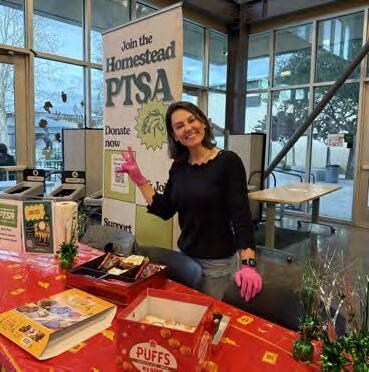
Girl Scout cookie sales sweeten campus




Representation is knowing we’re all different but the same
FUHSD receives new tier of sustainability award
Club reflections are turning into club fiction
Girl Scout cookie sales sweeten campus
Representation is knowing we’re all different but the same
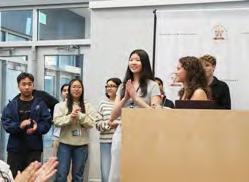
To express opinions against recent immigration measures, students from HHS, FHS and Sunnyvale Middle School walked out of fifth period together on Feb. 4, walkout organizer, senior Imaan Syed said. Numbering close to 1,000 people at its height, Syed coordinated the demonstration with other HHS students and with support from staff, admin and city officials.
After hearing about the success of other school walkouts, walkout organizer, senior Brian Sanchez said he posted the first online promotion of the demonstration on Feb. 2.
“My family members are immigrants. I know a lot of people that are immigrants, especially from the school,” Sanchez said. “Seeing what was happening on the news and the internet, I wanted to do something for us students from Sunnyvale. I wanted to make a difference and help others make
“City councilmember Linda Sell helped me so much throughout this entire process,” Syed said. “We discussed how to get people to show up and how to de-escalate situations, and she put me in contact with people who ran No Kings Day parades across the Bay Area.”
Although the school aimed to respect student independence and is not legally responsible for student protests, staff still provided water and supervision to keep students safe at the walkout, principal Denae Nurnberg said.
“During the school day, we feel very strongly about ensuring that students are under our care,” Nurnberg said.
“A lot about what’s going on with ICE is that they have been acting out of order. To counter that behavior solidifies that we don’t need to break the law to advocate for people and our beliefs.”
— Scarlett Ozturk, 12
“When there are big groups, we choose to go with [them].”
on, some students directly impacted by immigration issues did not attend the walkout, lacking the privilege of confidently participating because of a fear of legal retaliation. The Epitaph spoke to one student, who will be referred to as Taylor to protect their anonymity.
Leading up to the walkout, Taylor said their parents brought up possible repercussions upon hearing their plans to attend, and after multiple conversations they were persuaded not to go.
[is] have more volunteers stay with the people who don’t feel as safe or secure,” Moozarmi said. “They can have a buddy with them and someone there to be like, ‘It’s okay and I’m here. I got you.’”
“My parents were worried because [although] we have green cards and we’re legally allowed to be here, we’re still not citizens, so we can’t 100% deny that we’re going to be deported or threatened,” Taylor said. “Also, there are people supporting ICE. Just because I look Asian or I’m not a citizen, they could say or do things that are dangerous, even though I’m legally fine.”
Taking these fears into account, student leader, junior Zoe Moozarmi said in future instances, she hopes for greater emotional support for prospective attendees.
“I get their fears, but what we can do next time

On the day of the walkout, numerous student volunteers such as senior Vanessa Muñoz helped lead the walkand families are scared to go out,” Muñoz said. “Since we have the privilege of going to school in America and being in Califor nia, where it’s very Democratic, we have the freedom to do this. We’re using our voices
test, Syed said school administration and Sunnyvale city officials coordinated to





Chinese department, clubs collaborate for annual event
Elina Li and Alan Zhang
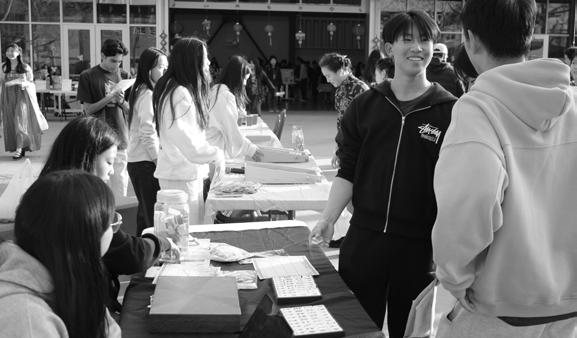
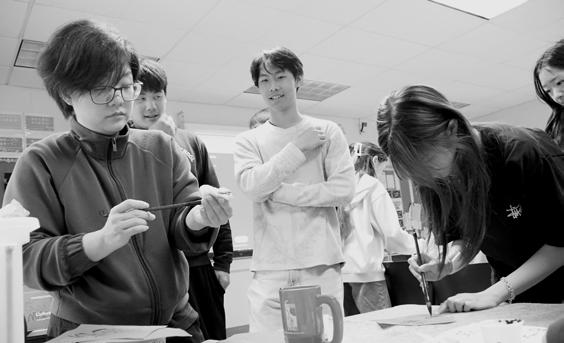
In collaboration with National Chinese Honor Society and other cultural clubs, the Chinese department hosted its second annual Chinese Cultural Night, also known as C-Night, on Feb. 24, NCHS vice president, junior Naveen Badrinath said.
Through food, games, presentations and performances, the event aimed to promote culture to the school community, Badrinath said. With last year’s turnout and engagement setting a high bar, the Chinese department looked to improve planning and the event itself by utilizing the organizational experi-
ence they gained, NCHS secretary, junior Rachel Chen said.
“Going into this year, there was a pressure of meeting the level of expectation because last year still ended up being a success despite the unknowns,” Chen said. “As much as there is this pressure to perform at the same level or higher than last year, all of us still went into the event with a lot more confidence and direction.”
Getting off to a steady start, NCHS president, junior Kalea Chau said the Chinese department began the process earlier this year to reduce the stress of deadlines. Since last year marked the inaugural C-Night, they used experience as a planning blueprint and identify aspects to improve on, Chau said.
See C-Night, page 2




Continued from page 1
With help from Sunnyvale Public Safety for traffic control, participating students were able to safely walk from their schools to the protest location at the Sunnyvale-Saratoga intersection, Sunnyvale mayor Larry Klein said.
In addition to the organized arrangement of the walkout group, senior Scarlett Ozturk, an attend-
ing protester, said demonstrators’ civilized conduct was meaningful.
“A lot about what’s going on with ICE is that they have been acting out of order. To counter that behavior solidifies that we don’t need to break the law to advocate for people and our beliefs,” Ozturk said. “It’s important for students to have a chance to pro-

test in a safe space because protests outside of organized spaces can be dangerous.”
The presence of local government figures and other caring adults empowered and supported the protest atmosphere, senior Sydney Gutierrez, a protest leader, said.
“It was important to have the deans, the principal and all of them there, supporting the students, because it made [us] feel comfortable with the choice [we] made,” Gutierrez said. “When mayor Klein gave his speech, it brought everything together. It showed that he cares about what people have to say.”
Through the protest, support for recent student activism has fostered a deeper bond between students and staff, assistant principal Mayra Valdivia said.
“From an administrative point, we were able to create a partnership. We said, ‘We will stand with you. We will walk with you, not against you,’” Valdivia said. “It opened the door for [students] to feel they’re going to be seen and heard and that we’re going to
Team members, advisers support team to qualification
Sanjeet Jayaseelan and Advay Ranade
After months of drafting a business plan and advancing through multiple competitive rounds, one of the virtual enterprise teams, Ampower, earned a spot at the 2026 Youth Business Summit that will take place from April 21-23 in New York, VE facilitator and teacher Graeme Logie said.
While HHS teams have qualified for other competitions, this year’s qualification marks the first time a group has qualified for the business plan competition, Logie said.
“We’ve been there for marketing, but we’ve never been for the business plan [competition], which is very competitive,” Logie said. “It’s a pretty big accomplishment.”
Since 2012, the business department has offered VE as one of the business classes to juniors and seniors, Logie said. By taking this class, students are given the
unique opportunity to run their own virtual company alongside their peers and compete at trade shows and summits across the country, Logie said.
“At the beginning of the year, I’ll set up the class, we get to know each other a little bit and then we have to determine what the product or service is going to be,” Logie said. “Then, we hire executives [of the virtual company] and their associates who will work under them. The CEO is supposed to take on a leadership role, make sure that the company is focused and that each of the other five executives are all working together well.”
In the competitive qualification process, the team must progress through several elimination rounds at regional and state summits before being selected to participate in the business plan competition in New York, Logie said. By being within the top 20 teams from a competition and placing 11th out of 20 at Napa Valley College, Ampower qualified to compete in New York YBS competition, Logie said.
Ampower administration department team member, senior Meredith Tan said qualifying
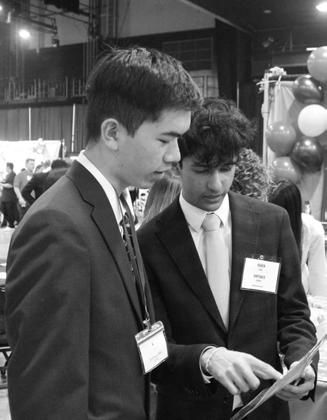
requires tremendous work to reach the national stage.
“Before we are able to be eligible for a speaking round, we have to submit a written marketing plan, [which] took a lot of writing and research,” Tan said.
The team’s success largely came down to the strength of the sales team members’ presentation and preparation at conferences, such as the Napa Valley College qualifying contest, Ampower sales associate, senior Kyle McDivitt said.
“We had to work really hard to memorize, create interactive slides and make sure we had a presentation that didn’t just check the boxes, but exceeded them,” McDivitt said.
Tan said the experience of contributing to a VE team nurtured her skillset for a future in finance by developing her communication and feedback skills.
“Judges ask us a lot of impromptu Q&A [questions], and we have to think on our feet and answer questions effectively,” Tan said. “In the future, I want to do something in finance, and that’s the most relevant soft skill that can be transferable.”
Photos by Henry Hu
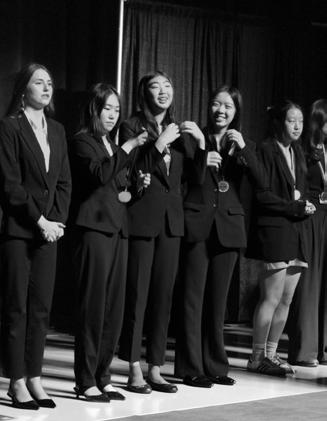
As the team embarks to prepare their presentations for the nationals competition in April, Logie said he hopes for success at nationals and to leave a strong legacy, especially with this being his final year of teaching VE due to his planned retirement.
“I started [the VE program,] and I’ve learned from others in the program. We’ve got some awards over the years, and I’m very proud of that,” Logie said. “Every year, we walk away with something, and we chip away at it. That’s all you can ask, which is to just get the program to be better every year.”
by

stand with them when they take a position like this.”
Growing up involved in activism, Ozturk said she felt proud of the solidarity students expressed.
“It’s not just an immigration issue. It’s a humanity issue, and you don’t need a personal connection. It’s just the right thing to do,” Oz-
Continued from page 1
“Last year, a lot of the things that we did were really late, so it was rushed. Near the end, everyone was nervous and stressed,” Chau said. “This year, we started spending more time in the first semester to plan, instead of starting at the [beginning] of second semester. This way, we got more done and we could look into the details.”
As one of the musical performers for the event, violinist, sophomore Constance Kuan said she was encouraged by a friend to audition for C-Night and chose a festive song popularly played to celebrate Lunar New Year.
“I was so nervous [at first], but then I just started, and it ended up going good,” Kuan said.
“There were a few mess ups in between where I felt like I didn’t quite shift to my note the way I wanted to, but overall, it was fun. I’m glad I got to share my music with so many people, even though it was nerve wracking.”
Activities with strong public reception last year made a return, and NCHS officers brainstormed together to propose new ideas of what people would enjoy, Chau said.
Besides the options hosted by NCHS, several other clubs such as TSA, HKSA and Mahjong club brought their own contributions to the event as well, TSA social
turk said. “What ICE is doing and the lack of care from our government is outrageous, but there’s something therapeutic about a protest. It makes you realize that you’re not the only one feeling the way you feel, and that other people are just as motivated to make a change as you are.”
media manager, junior Ashley Chao said.
“We featured fan painting, [in] which we provided plain fans and paint to allow participants to draw their own design,” Chao said. “It’s different from other mainstream cultures because it allows participants to express their own artistic [ideas] in the way they want, rather than just following a template.”
The event had a successful turnout of community members, creating a cheerful atmosphere filled with the collection of activities and other offerings, Kuan said.
“I had a lot of fun just walking around, looking at the presentations, activities and booths, and I hope that we have it again next year,” Kuan said. “A lot of people were talking and having fun. It felt a little bit chaotic when I first got here, but I feel like it’s pretty organized, actually.”
Looking to future years, Chau said she hopes C-Night will become a staple annual event for students to learn and teach others about Chinese culture.
“I want C-Night to become a well known thing throughout our school. I know Multicultural Night is a tradition of HHS, and everyone knows about it,” Chau said. “I want C-Night to establish itself as an annual event that people can have fun at and see Chinese culture.”
Ethan Xue
Local: Nonprofit gets $200,000 grant for service van
Congressman Sam Liccardo announced Feb. 20 that he secured $200,000 for the West Valley Community Services Mobile Navigation Van. This roaming van will provide various services like showers, laundry and food to unhoused residents, according to the Town of Los Altos.
As part of a federal bill to aid community housing projects, the grant would significantly support the custom van, according to East Bay Times.
In coming weeks, WVCS executive director Sujatha Venkatraman said she hopes West Valley residents will make significant donations to match the federal grant. They will also consider having clients operate the van, according to East Bay Times.
National: Trump delivers State of the Union address
With midterm elections coming up, president Donald Trump made his annual State of the Union address on Feb. 24, setting a record for the longest one in U.S. history at one hour and 47 minutes, according to CBS.
Throughout the speech, Trump stated he made sweeping reforms during his first year back in office and criticized Democrats for continued opposition to his actions, according to WSJ.
During the address, Trump also included an awards ceremony, according to WSJ. Specifically, he gave the Olympic hockey team’s goalie a Presidential Medal of Freedom and a Purple Heart to a National Guard, according to NYT.
Overall, the speech included many misleading statistics over topics like immigration, employment levels and foreign investment, according to CBS.
International: U.S.-Iran tensions increase
Although president Trump stated last summer that he had destroyed Iran’s nuclear program, in the State of the Union address, he stated further action may be needed to restrict Iran’s nuclear program over fears of weaponization, according to NBC.
The Trump administration has offered varying assessments of Iran’s military capabilities and plans, creating mounting tensions between the two countries, according to NBC.
In recent weeks, U.S. aircraft and warships have been deployed to the Middle East to pressure the Iranian government, according to AP News.
While Iran’s government maintains that their nuclear program is strictly energy-focused, Trump continues to threaten attack, raising fears over a possible war, according to BBC.

FUHSD earned the 2026 gold level ranking for the Green Ribbon sustainability award, administered by the California Department of Education, superintendent Graham Clark said.
The award is given to schools and districts that show notable efforts toward making on-campus facilities environmentally friendly, Clark said.
The award evaluates the district’s performance in the categories of facilities, environmental education and nutrition and wellness, Climate Collective lead teacher Kavita Gupta said.
This year’s award marks an increase in prestige, upgrading from the lower silver level received in 2023, Clark said. To earn it, the district has made various installments across campuses, like adding HVAC units and EV chargers.
“Every opportunity we can, when we’re remodeling or modernizing a facility, or when we’re building a new facility, we build it in the most energy efficient
way we can,” Clark said.
Achieving the award was made possible by Climate Collective, a student-faculty collaborative organization responsible for advancing district-wide environmental education and sustainability, Gupta said.
“We are over the moon,” Gupta said. “[The students] are the ones who are really pushing this work forward. They are wanting to learn more, and they really have drive. They want to know about the future. They’re anxious about climate change. To see them feeling like they have a voice, and being knowledgeable about something they value, is exciting for me as a teacher.”
The Climate Collective is students-first, yet they are built upon collaborations with people like teacher site leads and board of trustees members, co-site lead, junior Chloe Dahl said.
“They are really proud of the fact that we have a climate collective because it makes such a big difference in being acknowledged. It really validates our mission,” Dahl said. “It shows the district support for climate change and action.”
In support of Climate Collective’s vision for sustainability, the board passed Policy 6142.5. The policy asks them to implement a

Event on March 6 - 4-7 P.M. - HHS Cafeteria
The science of organization

SNHS club president, senior Nora Steel discusses preparation, goals for upcoming event
Q: What is STEM Night?
A: It is an annual event in the cafeteria, and it’s just a bunch of different clubs coming together and showcasing what they can do. It’s mostly [for] younger kids. We mostly advertise[in] elementary schools and then also some middle schools, as well.
Q: What is some preparation you have been doing?
A: The preparation began in December. It’s mainly just deciding what we want our theme to be. This year, it’s STEM and sustainability. Then, we start arranging: “when do we want the event?” and “how [do] we reach out to clubs and make our flyers and advertisement?”
Q: What are your STEM night goals?
A: Our goal is mainly to provide educational opportunities for kids in the area and build a community for them to learn more about STEM. It’s mostly just to associate science to something more fun rather than something more difficult.
Q: What is changing from last year’s STEM night?
A: Expanding the reach of the clubs that are there and outside of school organizations. We also try to expand our reach to more schools and then also [try] different methodologies of advertising to make sure it’s reaching everyone in the community.
Infographic by Sachin Chandran and Danielle Feldsher
program for environmental education that teaches students how to preserve nature, Dahl said.
“I love that our district is open to these kinds of things,” Dahl said. “The fact that it was passed without a second reading shows that they’re confident in their decision.”
Through monthly meetings with members and administrators, Climate Collective effectively discusses sustainability efforts, board of trustees vice president Rosa Kim said.
The Green Ribbon Award allows students to feel encouraged to continue pursuing goals they have worked toward for district sustainability, Clark said.
“It’s not about just getting recognition,” Clark said. “For some people, that does motivate them, but it’s the thought that we’re doing the best with our district and our schools to be good stewards of the environment and use our natural resources wisely.”
Similarly, Kim said the award will keep driving the district to uphold and expand its sustainability commitment.
“This is an honor [that] we are recognized for our effort on climate action work,” Kim said. “That encourages us to be more exemplary as a school district in leading this work. It’s not the end, it makes us push more.”
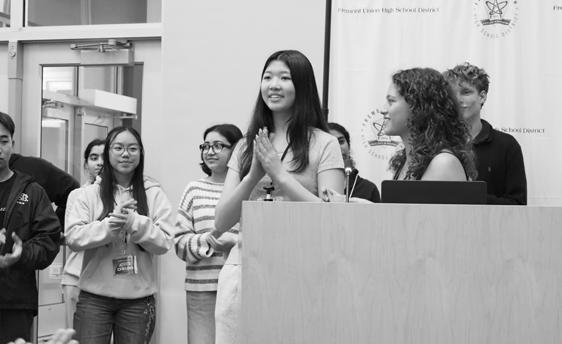
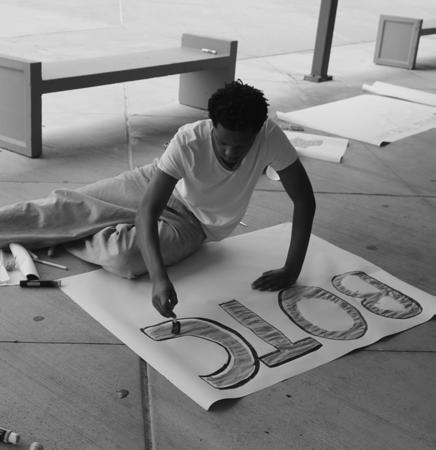
The annual Battle of the Classes spirit week will take place from March 9-13, featuring traditional events like the boat race, a flag football tournament, a dance competition and a rally to wrap up the week, ASB adviser Hector Almendarez said.
The social media managers began planning BOTC in late January, social event manager junior Maya Power said, and there are no significant changes to the typical BOTC spirit week or rally. However, Power said ASB will change the previous title of Powderpuff to the Flag Football team, since the previous name was gender specific.
“This change was mostly focused on the background of Powderpuff and some of the history behind it,” Power said. “Our administrators decided that it would be a more inclusive change to stand up for the people participating in the games and working behind them.”
Along with changing the traditional name for the BOTC game, ASB has adopted a new element to add more spirit for BOTC week, social event manager, se-
nior Agnes Ko said.
“We’re doing a poster wall for each class, where you can take pictures in your class colors,” Ko said. “Each class is going to have its wall area where it’s going to be covered in a poster [paper] of your class color, so everyone can feel a sense of community.”
In preparation for BOTC week, ASB will decorate the campus with the designated class colors, with freshmen as yellow, sophomores as purple, juniors as pink and the seniors as blue, Ko said.
With ASB students doing most of the planning for BOTC, Almendarez said the social event managers have been working endlessly and hope for a successful spirit week.
“I hope folks are excited for this year’s BOTC,” Almendarez said. “I have full confidence in our team and our social event managers to do something special this year. Everyone should look forward to having a great time competing against each other and building their high school memories.”
Volume 63 · Issue 5 · March 5, 2026
Editors-in-Chief
Parth Dhaulakhandi Alicia Liste
Web Editor-in-Chief Amanda Boles
Print Managing Editor Maya Dutt
News Editors Danielle Feldsher Ethan Xue
Opinion
Sachin Chandran Adam Orrin
Lifestyles
Matas
Alan Zhang
Arts & Culture Editors Jason Lai
Malar Raguraman
Sports Editors
Olivia Levesque Ouellette Selina Wang
Copy Editors Ethan Xue Alan Zhang
Photo-Illustration Editor Isabela Guilardi
Design
Junior
Dutt
Guo
Multimedia Editors Isabela Guilardi
Aashka Nagarkar
Junior Multimedia Editor Yichen Yao
Social Media Editors
Sanjeet Jayaseelan Advay Ranade
Reporters Natasha Bandil Alexander Cao
Ferreria Henry Hu
James Jiang
Elina Li
Saachi Nangare
Kanmani Raguraman
Julia Song
Ethan Tan
Chloe Wang
Catherine Yang
Adviser Natalie Owsley
Mission Statement
The Epitaph is a non-profit publication at Homestead High School, 21370 Homestead Rd., Cupertino, CA 95014.
Many people are involved in creating district policy, including school administrations and the FUHSD Board of Trustees, student board representative Amy Tang said. However, policies are most robust when they are created after considering student input and obtaining a deep knowledge of issues throughout campuses.
Although the district has measures to grasp these challenges, they possess deficiencies in addressing the entire student population. To
make certain they are creating policies that benefit the most students possible, the board of trustees must expand their methods to survey a larger population.
The board performs site visits to school leadership classes, gathering responses from a wellness form and discussing it with the students, Tang said.
However, site visits only include discussions with ASB officers, Tang said.
In your opinion, are all types of students equally represented in leadership, clubs or events?
These cannot provide an encompassing view of issues faced in the district. Additionally, select board members visit classes while they are in session, such as resource classes, Tang said. Even though some make these visits, they still represent a miniscule sample size compared to what students truly experience.
Apart from visiting classrooms, to assess mental wellness in student populations, the board utilizes information

from the California Healthy Kids survey that is administered in closed tutorial once a year, Tang said.
Unfortunately, The Healthy Kids Survey does not allow the board of trustees to see how issues impact students over time since it is administered once a year. Thankfully, Tang and future representative Kat Heller are taking a step in the right direction by implementing an in-person office hours system where students can state their concerns, Tang said. Overall, while the board is making efforts to include students in the decision-making process, they must resolve disadvantages with the current system. Instead of discussing with ASB, board members should perform random samples of 40 or more students, having extensive conversations with them similar to how leadership is currently surveyed. This would ensure a varied sample of students is being consulted for their views, giving the board a stronger backing for measures that impact students.
How supported do you feel by the school district when it comes to mental wellness?

The Epitaph is a designated forum for student expression and not subject to prior review, in accordance to Education Code 48907. The staff is comprised of HHS Journalism students. Views expressed do not necessarily represent views of the school, its staff or the district. Editorials are opinions of the editorial board.
The Epitaph welcomes letters to the editor but reserves the right to edit submissions. Letters should be limited to 300 words. Include contact information. Unsigned letters cannot be published, but names will be withheld upon request. Send via homestead.epitaph@gmail.com, or drop letters in the newsroom or the office mailbox.
If The Epitaph has made an error, please send corrections to homestead.epitaph@gmail.com.
The corrections will be published in the corrections box for the next issue.
To reach the Epitaph in C102, call (408) 522-2572.
Advertising
One email and you can reach over 2,400 students, teachers, administrators and community members from Northern Sunnyvale to Southern Los Altos. If your target market is between ages 14 to 18, contact The Epitaph at epitaph.ads@gmail.com, and we can make it happen.
Thank You to Our Donors & Supporters FUHS Foundation
Homestead PTSA

To portray the uneven representation caused by the site visit process, The Epitaph conducted an identical survey to the one given by the board of trustees. It had questions answered from a scale of 1-10 based on severity. However, we collected 200 responses compared to the board’s 39. Comparing the averages of answers, this larger, more varied sample yields different results.
Alan Zhang
Everyone has to visit a doctor at some point, whether it is for an illenss or an injury. Because physicians are the most visible members of the healthcare system, it is often a patient’s first instinct to blame them for its faults.
In reality, many outcomes are determined by insurance policies and administrative rules doctors must follow, an important distinction patients should make before pointing a finger at physicians.
For instance, 93% of medical treatments mandating prior authorization, a requirement for insurance companies to approve medical procedures before they can be ordered, face delays, according to a survey by the American Medical Association.
Because patients rarely interact directly with insurance providers,
the wait may seem to completely stem from the doctor’s office, which shifts accountability onto the physician.
Although many believe providers are responsible for procedural issues that arise during care, most mistakes cannot be attributed to a single doctor and instead are results of miscommunication or other system errors, according to the Association of American Medical Colleges.
Outside of simply holding the wrong party responsible, this misdirected criticism can cause extremely problematic issues, most glaringly with physicians’ likelihood of reporting medical error.
16.8% of doctors acknowledged not reporting minor errors, and 3.8% said they did not report major errors, according to a study published in the Journal of the American Medical Association.
This is potentially due to a fear of legal repercussions or practicing physicians being blamed.
Additionally, they should send the site visit survey to all students by email and Schoology every two months, making it mandatory to fill out. This will allow them to reach a wider audience, creating a more reliable dataset.
Furthermore, the form should include optional free response sections so students outside of the random sample can expand on their answers. This would be more effective than the Healthy Kids Survey, as students can voice specific complaints, allowing the board to create policies that they are passionate about. By implementing these changes, the board of trustees will ensure they can assist the largest percentage of the student body, creating a more equitable district.
The Epitaph editorial board voted unanimously in support of this stance.
When mistakes go unacknowledged, the underlying issues are never corrected, making complications escalate and recovery unnecessarily prolonged.
Instead of patients directing frustration at individual doctors, more transparency in how care is delivered would help them understand where issues really occur. By asking what is causing delays, patients can distinguish administrative approval from a doctor’s judgment.
Furthermore, community education can reinforce this understanding. Schools and local organizations
can greatly improve health literacy by explaining referrals, insurance authorization and other delays through presentations.
Frustration with health care is understandable, but directing blame toward doctors drastically oversimplifies a complicated system and hinders meaningful reform.

PE self defense unit must be implemented for safety measures
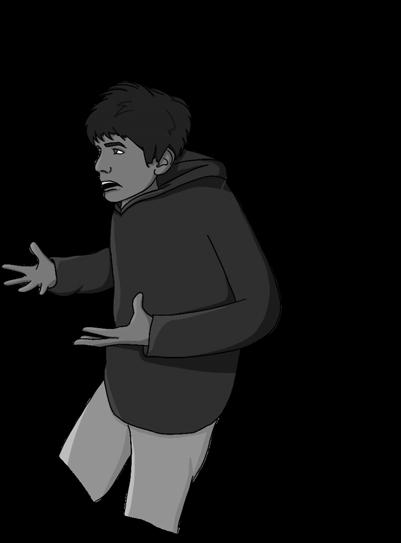
As a freshman, I was verbally attacked by a man on a field trip. He not only yelled sexual comments toward me and my classmates but also cornered us, threatening to touch us inappropriately.
I completely froze in the moment, unaware of how to approach the situation. We ran away, hoping we could escape the moment.
If I had been able to defend myself, whether by recognizing the situation sooner or by physically retaliating, the trauma following the incident could have been prevented.
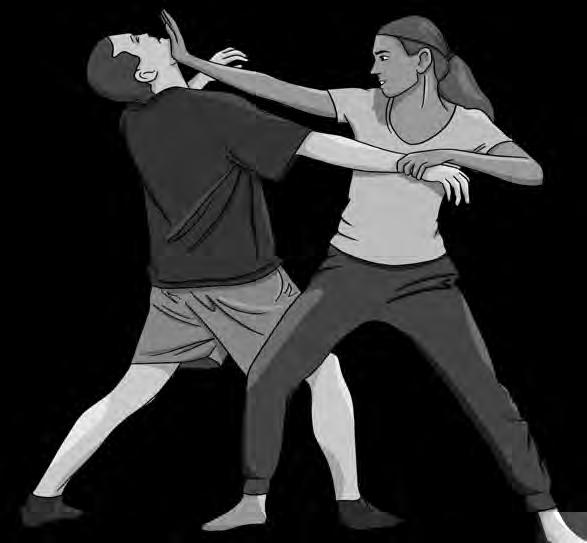
The school can help with this effort by teaching students ways to protect themselves, such as by implementing a self-defense unit in freshman PE.
Horrifyingly, in 2025 one in five
girls under the age of 18 reported having experienced sexual or physical violence at some point in their lives, according to the CDC.
The rate of violence against teenage girls must be a priority to address. Therefore, self-defense must be implemented in the PE curriculum, as it will allow teenage girls to protect themselves and others, alongside allowing all students to protect themselves in threatening scenarios.
Beyond physical confrontation, basic defensive verbal skills like de-escalation tactics, recognizing a potential threat and staying calm during a dangerous scenario are all taught in self-defense classes, marking another basis for its introduction.
Currently, freshman PE consists of only a few units, most of which are sports like basketball or badminton, according to the HHS PE Handbook. Rather than using students’ time on a sport that offers few applicable life skills, students should practice physical defense and learn to protect themselves.
Bad flu season clarifies importance of vaccination
Aviv Matas
Given the opportunity to be bitten by a radioactive spider and gain superpowers, most people would leap at the chance. Yet nearly half of Americans refuse the only real superpower we have: immunization.
Developing these superpowers can cost hundreds of millions of dollars, take years and require the collaborative effort of scientists worldwide.
This season alone, the flu is responsible for 280,000 hospitalizations and 12,000 deaths nationwide, according to the CDC. The prevailing virus strain, subclade K, possesses genetic mutations differentiating it enough from past flu viruses to evade existing immunity, according to CNN.
The severity of this season’s flu makes it critical for people to protect themselves and those around
them by getting vaccinated.
Additionally, flu shots in our area are free. I have even received discounts from supermarkets for getting mine.
Despite this, only 46% of U.S. adults have received their flu shot this season, according to the CDC. In Santa Clara County, the number is even lower, with only about 36% of those eligible being vaccinated, according to Santa Clara County.
This is incredibly selfish. Most healthy young people recover without further repercussion. However, flu can cause serious complications or even kill adults above 65, people with chronic medical conditions and the immunocompromised. Vaccination plays an essential role in preventing infection and protecting the most vulnerable among us.
Flu shots are safe, free and lifesaving. With months still left in the season, it is imperative that students and their families take action and get their flu shots.
Safeway on Homestead Rd.
0.6 miles, free with most insurance
CVS on Hollenbeck Ave.
0.6 miles, free with most insurance
Walgreens on Mary Ave.
1.1 miles, free with most insurance
Better Health Pharmacy in Santa Clara 12 miles, free regardless of insurance
Moreover, students can also find a healthy outlet to alleviate stress through self-defense curricula, according to Frontiers.
As many students struggle with academic stress or a shortened attention span, those who participated in martial arts like self-defense saw growth in both alertness and awareness, according to Cabarrus College of Health Sciences.
Additionally, other FUHSD schools, such as CHS, have incorporated a self-defense unit in PE class. This class provided many lessons applicable to everyday life, CHS senior Anya Gupta said.
Although not thought of as a conventional skill, learning the different methods of how to protect oneself is a necessity. Whether it be to protect oneself or another, self-defense should be taught in schools to allow students to feel safe on and off campus.
Administrators must address tutorial cell phone use, absences
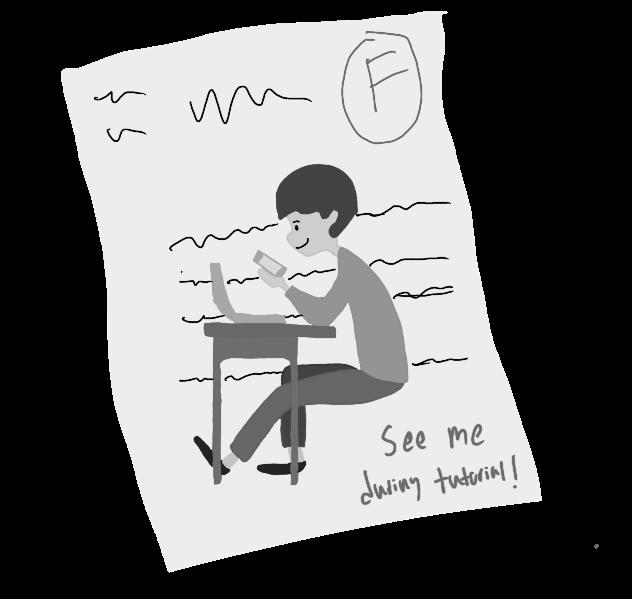
In junior year, every Wednesday and Friday during tutorial, I would walk over to the practice rooms in the band room. There, instead of doing my math homework, I spent my time playing Clash Royale for the full 40 minutes with my friends.
Tutorial is a time for students to make up any work and get extra help from teachers. However, it has lost the academic purpose it is supposed to serve to students.
Administrators must ensure that tutorial serves a purpose and that students are using it to their advantage. By making attendance mandatory and having students put their phones in phone caddies during tutorial, it can provide the instructional presence students need to succeed.
Tutorial’s main advantage is that it provides dedicated time for students to catch up on homework. Whether a student is finishing a worksheet before the next period or getting help from a

teacher, study hall systems serve as a way to alleviate the pressures of schoolwork on students, according to The Panther Press. However, phones have made it increasingly difficult for this instructional time to be useful.
My friends and I scroll reels or play mobile games on our phones during tutorial instead of taking advantage of the time to do work. By implementing a similar phone caddy system to what’s already in place in class rooms, teachers can make tutorial a pro ductive learning envi ronment. Students should put their phones in caddies during tutorials to ensure focus on academics.
Beyond just being dis tracted, many students sim ply skip tutorial altogether. Whether students leave cam pus or find hallways and cor ridors to pass time in, tutorial is now just a time for many to wander on or outside of campus.
Minga. By implementing a system where students check in at the start and end of tutorial, the app could easily verify if students are on campus. Tutorial is crucial to teach students how to focus on their academics in an unstructured system. By implementing new measures, tutorial can help students stay on track toward their academic goals.
The best solution for this is to utilize the new Minga app. Minga provides an easy, accessible platform with features that include attendance check-in, according to
Waymo takes jobs, violates privacy, poses safety risks
Adam Orrin
Waymo, the autonomous self-driving taxi, has become a staple of major cities across the country according to AP News. However, despite the appeal for their consistency and novelty as driverless vehicles, Waymo is a dangerous company that is actively stealing jobs from those who need them most.
Many advocates for Waymo argue that they offer a safer alternative to human drivers, citing statistics like the 82% fewer airbag deployments compared to human drivers, according to Waymo. However, the safety benefit does not outweigh the greater safety concern that Waymo has kept secret until recently.
In a Senate hearing about the company’s safety measures, their
CEO said that when Waymo vehicles are confused, they receive guidance from remote operators in the Philippines, according to the San Francisco Chronicle.
This is a ridiculous concept. Waymo, an American corporation, outsources its operators in a system that they described as “phone a friend” to workers in the Philippines. There is an unparal leled safety risk of having unsu pervised remote operators whose driver’s license status is un regulated.
Aside from the direct safety concerns of Waymo, there are concerns of mass surveillance. Waymo footage can be ac cessed by the gov ernment, given a proper legal war rant. Alphabet, the company that owns Waymo, does not release how many of these requests they comply with and has
While tutorial is crucial for keeping students on track academically, policies must be put in place to reinforce structure.
not commented on how long they store Waymo footage.
This only continues the trend of secrecy. Waymo has hidden its compliance with police and use of remote operators and does it all under the guise of progress. We must pressure our politicians to continue to bring Waymo to court, create regulations and force them

ASB measures contain loopholes with work-arounds
Advay Ranade
“Club president” has become one of the most valuable titles on campus. It shows up on college essays, student webpages and LinkedIn profiles as a badge of leadership.
However, to maintain illustrious officer roles, clubs on campus are using loopholes in the weak accountability systems.
To increase accountability for clubs on campus, ASB must rework its club auditing system by strengthening the security of their current system or implementing new verification tactics, such as random club meeting verifications. With a stronger auditing process, campus organizations can receive proper funding from ASB.
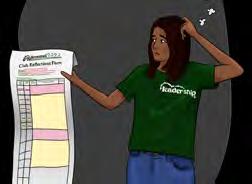
Currently, clubs are required to submit Club Quarterly Reflections to remain active. The CQR is a form in which clubs must outline essential information re-
garding personnel, meetings and events, leadership teacher Hector Almendarez said.
CQR forms require club officers to also submit meeting min utes, a type of meeting notes, along with each entry for an officer meet ing in the form, Almendarez said. The current CQR system makes it easy for club executives to engineer meeting minutes that are attached to CQRs.
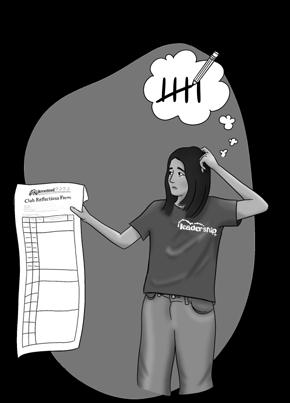
IllustrationbyKaylinYi
However, these minutes are extremely easy to fabricate. ASB club commissioners and advisers are unable to check when they were written, so there is no way to ensure the meeting took place.
ASB should bring more accountability to the auditing processes through random checks and funding cuts.
Loopholes even exist in the strongest aspects of the system. Clubs are required to submit a photo to show that at least one
Prediction markets disguise addiction as investment
Henry Hu
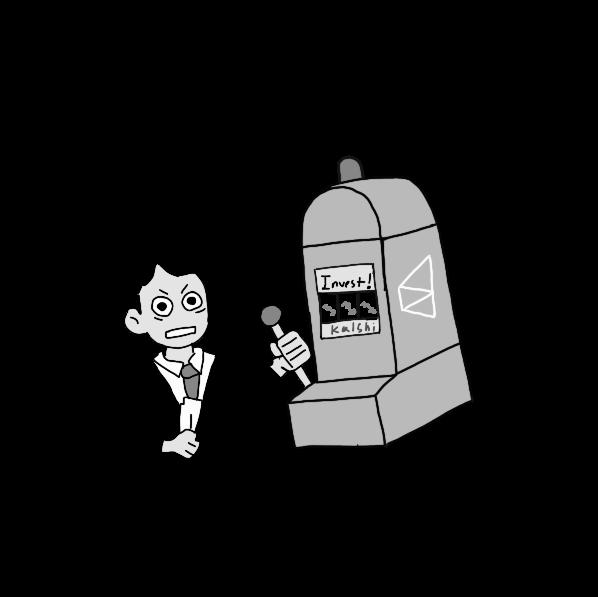
After learning about prediction markets such as Kalshi from countless social media ads, I was astounded. I could make thousands off of random, trivial events, like the number of tweets Elon Musk will make in a week.
However, as I researched further, I realized this seemingly new get-rich-quick scheme was far more sinister than I expected.
A prediction market is a platform where users trade shares predicting the outcome of future events. The price of shares varies based on how likely users believe an event will happen. If users believe something is more likely to happen, then the price of a “yes” share rises while a “no” share falls, according to Investopedia.
While prediction markets pretend to be viable investment opportunities, the truth is that all prediction markets are hidden gambling platforms designed to addict users. People must learn to reject prediction markets.
A key feature touted by prediction markets is their classification as financial exchanges, akin to trading platforms like Robinhood, according to Kalshi. Through this, prediction mar kets are regulated more lenient ly as financial institutions, de ceiving users into believing that intellect and research can drive profit.
tional invest ments, predic tion markets are based entirely on chance. While sav vy inves tors can use models and research to predict a
company’s stock futures, there is no similar way for participants to know whether a future event will occur.
As a result, users of prediction markets are rapidly losing money at rates even faster than at traditional gambling platforms, according to Futurism.
People must see past the branding to label prediction markets for what they are: gambling simulators lulling users into thinking they are making actual investments.
Politicians and regulators must step in to formally label these sites as gambling websites, subjecting them to harsher scrutiny and making it harder for prediction markets to fool unsuspecting users.
Even worse, prediction markets incorporate features designed to addict users, much like gambling websites. Flashy graphs, comment sections and controversial topics give users strong hits of dopamine, causing them to grow addicted.
I personally watched friends lose money on prediction markets, having been tempted by the seemingly legitimate investment opportunities. These platforms have real consequences that are being felt by people in our com
event was held during the year. Unfortunately, this system allows club officers to justify a club’s existence with a photos of one small event, or worse, a false claim backed by older photos. The broader impact of fabricated CQRs and inactive clubs on campus is that they still receive access to ASB funding. When clubs are inactive but ASB is unaware, underfunded programs lose the chance to receive money, especially when they have regular meeting occurrences and other clubs do not.
To better facilitate funds for all clubs, ASB must rethink its auditing and verification system by selecting a random percentage of clubs to verify each quarter.
In this process, ASB officers
would select random club meetings to attend across campus in order to ensure that meetings are happening on a regular basis and that there is a student base for all clubs on campus.
Currently, clubs receive strikes for failing to submit CQRs and having communication issues, Almendarez said. If a club is unable to provide a meeting date and time to ASB, the club should receive a strike in the current system.
Implementing stronger CQRs and random club verification will make faking evidence and club meetings substantially harder. In turn, the strike system will be more effective because it will become better at policing clubs.
In its current form, the CQR system is ineffective at measuring club activity or holding officers accountable. To make clubs maximize useful spending, ASB must enforce the CQR system with real verification through strong evidence or accompany the current CQR system with random club verification tactics to hold clubs to the highest possible standard.
Disparities between class supplies inhibit
Aashka Nagarkar
When I was a junior, I decided to take regular U.S. history classes, thinking it would cover the same material as AP U.S. history but at a slower pace. When I saw my friends doing their homework with shiny, new textbooks, while the textbooks we used were from the Clinton presidency, I realized my expectations were far from reality.
AP students need newer books to learn advanced material for their exam. However, the school should prioritize getting recent books for college-prep courses.
New supply requests by teachers are usually approved, principal Denae Nurn berg said. In order to make sure that students can achieve a quality education, teachers must take the care to recognize when textbooks begin to inhibit learning, rather than aiding it.
do not have access to textbooks that give them all the information they need, they will struggle in college courses where they need a solid foundation. Students will need to use valuable time catching up, inhibiting their ability to learn effectively.
In addition to preventing information gaps, revamped textbooks will provide students with access to specific information on the topics they are exploring.
A simple Google search often leads to information overloads that go deeper than necessary and lead to misinformation. However, textbooks provide students streamlined access to the knowledge they need.
The current textbooks are unable to meet this need, as they are not comprehensive and must be supplemented with other sources. Resultantly, students with older textbooks will be unable to learn about updates.

Teachers prioritizing asking for new textbooks not only benefits the students, but also themselves. Comprehensive textbooks make it easier to create lesson plans and assign reading.
In my U.S. history course, during poster making projects, we would often have to use digital sources rather than textbooks, a burden of our textbooks’ lack of recently updated details.
Though digital tools can be useful, students retain more information when they use physical media, scoring higher on comprehension tests, according to The Los Angeles Times.
If students in regular courses
Recent order strikes down unconstitutional tariffs
Sachin Chandran

COLUMN—And Mexico gets a tariff! And China gets a tariff! And the whole world gets a tariff!
In the year since he has taken office, president Donald Trump has channeled his inner Oprah Winfrey, dishing out tariffs to whichever country he deems deserving.
Thankfully, the Supreme Court struck down these tariffs with a six to three majority, according to CBS. This move displays the bipartisanship the court was created to enforce, and negative responses from government officials must be tamed to maintain the sanctity of the judicial system and keep it free of political influence. These tariffs were invoked through an executive order citing the International Emergency Economic Powers Act, a statute meant to regulate imports due to national emergency. However, the order was deemed unconstitutional, as it ignored the necessary checks and balances to impose tariffs, according to The Hill.
This ruling is entirely valid, as the executive branch does not possess the power to unilaterally slap tariffs across the face of the earth. Instead, they must pass measures through Congress, a vital step ignored by the administration.
My college-prep U.S. history classmates and I learned little about modern events in U.S. history, unlike our peers in AP classes. Discrepancies such as these force students to learn essential curriculum on their own time rather than in a classroom setting, leading to them getting less guidance from teachers.
Additionally, teachers should provide students with specific online sources that address topics covered in class rather than letting them depend on web searches. This could be done by giving students a document containing a detailed list of websites.
In order to aid students in properly learning material, the school must prioritize making sure that students have access to materials that are concise, comprehensive and up-to-date.
Unfortunately, the president levied insults following the ruling toward justices Neil M. Gorsuch and Amy Coney Barrett, who voted against Trump even though he appointed them, according to NYT.
Suggesting that Gorsuch and Coney Barrett should betray the Constitution to support a singular leader undermines the court’s purpose as a neutral litigator. This will only lead to public outrage and distrust toward the Supreme Court, discouraging future bipartisan rulings from justices.
Rather than fighting back against a rightful ruling, the federal government must find a constitutional manner to initiate their policies. By pushing legislation through Congress, they will build more balanced, lasting measures with perspectives from both sides.
Furthermore, the Supreme Court must disregard governmental backlash and continue to legislate based on constitutional interpretations. America is not a reality show with one person calling the shots, and it is our judicial system’s responsibility to ensure that.
Jie Bai, peers discuss impact, recognition
Alicia Liste and Olivia Levesque Ouellette
Chinese teacher Jie Bai received the 2026 Outstanding Teacher Award from the California Language Teachers’ Association at the 2026 CLTA conference on March 1, Bai said.
“I was happy, and at the same time, felt humbled to be awarded. I also know it’s a recognition of my work, so I really appreciated that,” Bai said. “I feel fortunate and lucky to be able to work in this community.”
Working collaboratively under a similar teaching philosophy, Chinese teacher Vivian Ju said she and Bai prioritize student-centered and hands-on learning.
“[Bai] never stops developing
herself, making herself an even better teacher,” Ju said. “I think she’s a very personable person to work with. She’s very easy-going, understanding and passionate about teaching.”
While teaching at both HHS and CHS, Bai said her lessons often enforce key content through creative activities, such as hosting an annual mock award ceremony for student-made films.
“We try to make our Chinese classes fun and meaningful for students, not only focusing on the curriculum, the vocab and grammar, but also the culture and [expanding] students’ experiences with the culture within the classroom,” Bai said.
Chinese 2 student, freshman Aaron Wang said he values how Bai adapts her teaching style to complement the strengths of his classmates, whether in writing or speaking the language.
“She treats everyone like family in a way because she treats everyone very respectfully, and she gives everyone the time of day to talk and say what they need to say,” Wang said. “In my opinion, there hasn’t ever been a dull moment in that class.”
Moreover, Wang said his most memorable experience in the class occurred during a final project last semester, where students designed posters about different Chinese holidays. While missing three members from his group, Bai lent a hand to help them complete the task.
“[Bai] is always there to help us, and she’s here no matter what, no matter how big of an issue,” Wang said. “I think that she deserves the award. She teaches kids well-lasting memories and lessons. People remember what she says, even people who don’t try too hard in her class, because
she’s such a supportive teacher.”
Despite initially teaching in China, Bai said she left the career after first moving to the U.S. However, she soon felt a strong, promising pull to return to the classroom.
“After a while, I was like, ‘I really miss the feeling of interacting with students and getting ideas,’” Bai said. “I think that the best part for me as a teacher is I’m always inspired by my students. Not only am I delivering knowledge, but they give me inspiration. I am not doing a tedious job every day. I’m growing together with my students.”
Girl Scouts reflect on community contributions
Sanjeet Jayaseelan and Malar Raguraman
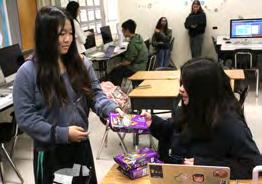
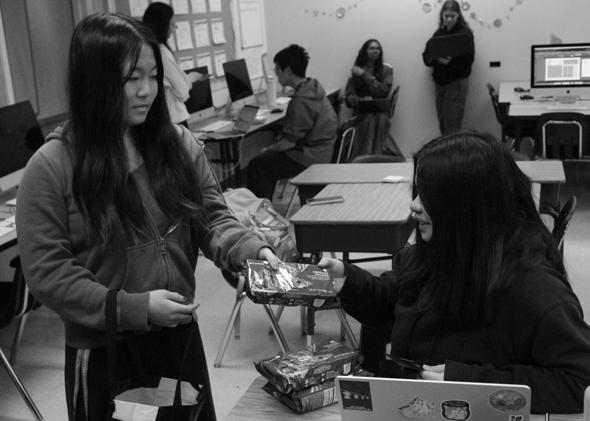
Satisfying the campus community’s sweet tooth, enterprising Girl Scouts sell cookies while honing their business skills from February to April, Girl Scouts ambassador, senior Agnes Ko said.
Ko said she began her annual sales tradition over a decade ago.
“I remember that first booth I [sold at],” Ko said. “I was in first grade, and there were some fifth graders, so they mentored me, which was a cool experience. I remember wearing a cookie costume and just asking everyone on the street if they wanted to buy food. There was a huge appeal, since I was younger and cuter.”
Today, Ko said she sells cookies to an established clientele of HHS students, teachers and community members.
Similarly, Girl Scout ambassador, sophomore Mahathi Stalin said she sells cookies to raise money for her troop and support
predetermined charitable causes.
“I tell all of my customers that this is also for a goal. It’s not just to give you cookies. It’s meant for the greater good,” Stalin said.
“Last year, we decided to donate to homeless shelters or natural disaster shelters, because of the abundance of earthquakes and disasters.”
Customer, sophomore Arjun Khokhar said the true sweetness of buying cookies comes from being able to conveniently support the nonprofits funded by sales.
“[I] buy Girl Scout cookies primarily to give back to my community,” Khokhar said. “You see people trying to sell something and make an initiative to actually do something in this community. [Buying cookies] is like appreciating that and funding their organization.”
Always eager to attract new customers, Ko said she always stations herself at local destinations. While rejection is a natural part of the role, facing such challenges has helped shape Ko’s marketing strategies.
“I’ve gotten better at reading people. I’ve learned what to say and what to not say to certain
types of people and when to just smile, nod and be like, ‘Yeah, I understand,’” Ko said. “If I’m selling in front of Safeway and people walk out with beer or wine, which is pretty common during the Super Bowl, then I’d be like, ‘This [drink] really goes well with that cookie,’ And, sometimes, it works.”
As a yearly tradition, math teacher Katie Navarro said she buys Girl Scout cookies from one
of her students, periodically replacing her supplier as past sellers graduate. Aside from the delight of indulging in her personal stash of cookies hidden on campus, Navarro said supporting the Girl Scouts goes beyond personal enjoyment.
“I could buy cookies when I go grocery shopping,” Navarro said. “Frankly, I could buy them cheaper, but I like Girl Scout cookies. I
In the last 35 years, technological innovation has touched every aspect of life, and The Epitaph is no exception. The Epitaph interviewed alumni to see how these innovations have changed how we produce the newspaper.
think the quality is good, and I like supporting my students. I can help a student out and eat cookies. It’s a win-win.”
The Samoas and Thin Mints she bought this year have also helped her forge a stronger connection with her students, Navarro said.
“For me, it’s a little window into who they are outside of my classroom,” Navarro said. “I only see my students for a small period of their day. I don’t always know that they’re in Girl Scouts or in other extracurricular activities, so [buying cookies] is a nice gesture to have some connection to what their goals are and everything outside of school and math.”
Similarly, Khokhar said the lessons Girl Scouts learn while hawking sweet treats can blossom into valuable, lifelong skills.
“Buying Girl Scout cookies is for a worthy cause, but it teaches the younger generation to value taking initiative, organizational skills and actually get out there to make a difference in the world,” Khokhar said. “Right now, at a young age, it’s selling cookies, but later, they might be selling the next biggest products of the world.”
“We didn’t have digital photos, so you couldn’t just resize things. We actually had a dark room on campus. The photographers would go down there and develop film in black and white. Sometimes, there would be accidents and someone would open the door mid-development, so all that film would be trash. If you lose those photos, then they’re gone forever.”
- Class of 1991 design editor, Sejal Patel
now
We use our DSLR cameras. We try to stray away from phones. If anyone has their own personal camera at home that can shoot manually, they can use that. For editing software, we normally use Lightroom on Adobe.”
- Photo and Illustration editor, Isabela Guilardi (10)
“We had artists that would draw things for us. Sometimes, we would say, [for example], ‘I need art for something on our rights as students,’ and we’d want a scroll of the Constitution or something. They might draw that separately, and then we would cut it out and paste it where we wanted to place it onto the spread. Sometimes, they would just do it directly on the spread, especially if it was not a blocked out piece and it was spread out.”
- Class of 1991 design editor, Sejal Patel
We designed the page, we actually printed the article out and cut it out with an X-Acto blade. Then we put hot wax on the back of the paper and hot wax on the back of the actual page that was going to go to the printers, and we burnished it. We took this roll, and we literally rolled it.”
now now
“We mainly use iPads and Apple pencils. Reporters will create their illustrations on the Procreate app. It makes it a lot easier for everyone because illustrations are also easy to fix on Procreate. You don’t have to crumple up a piece of paper and restart the whole thing. If a line is wrong, you can just erase a little piece and redo it.”
- Photo and Illustration editor, Isabela Guilardi (10)
- Class of 1991 reporter, Chryssa Sanders
“Every reporter is in charge of designing a page every single cycle. At the beginning of the cycle, we lay out how much space each article gets, and we do word counts and decide where the photos go on paper. Then, we create the page on InDesign, which is a file-based system, so you work on a file and then you push that file to someone else, and they have to work directly on that file. It’s different from a Google Doc, where multiple people can go on it at once.”
- Design editor, Maya Dutt
Parents discuss their involvement with student activities
Enriching campus programs often rely on the persistent efforts of parent volunteers working behind the scenes. The positive impact of parents’ involvement reaches far beyond their own child’s high school experience, PTSA president Manuela Silveira said.
Manuela Silveira, PTSA
After immigrating to the United States in 2011 from Brazil, Silveira said she became involved in her sons’ school organizations to form meaningful connections within her new home as a parent of senior Gustavo Silveira and sophomore Eduardo Silveira.
“My village has come from being a part of the school experiences that my kids have and finding amongst the parents and those community kindred spirits and people that have become really
wonderful and essential people in my life,” Silveira said.
Now in her fourth year with the PTSA, Silveira said she finds meaning in planning events, fundraisers and programs through the organization.
“I had time on my hands, the energy and the creativity for it, so it seemed like a wonderful way to use my time and meet the communities in which my kids were a part of,” Silveira said.
Marissa Levy, Virtual Enterprise
Marissa Levy, parent of Parker Levy, said she chaperones her son’s Virtual Enterprise class for field trips. Through her involvement in the class, Levy has chaperoned trips to a corporate office, business plan presentations in Napa and watched students compete for awards in Bakersfield.
“When I was a kid, my mom worked a full-time job and didn’t have the flexibility to help out with things like field trips and stuff, so I always felt that since they’re only going to be home for
so many years, [volunteering] is a great way to be involved and get to know them,” Levy said. “There are some kids who maybe don’t have a lot of support at home, and so maybe I can just be another reliable adult in their lives that they can count on or talk to.”
By volunteering and consistently being present for her son, Levy said she has been able to relate to his interests and will miss this opportunity when he leaves for college.
“We can talk about it at home because when he talks about what they’re doing in class, or different kids doing different projects, I have a face to put with that name,” Levy said. “I’ve been really excited to be able to have the opportunity to be involved.”
Chris McGraw, Speech and debate
Having served on panels since his daughter was in 7th grade, parent of sophomore Claire McGraw and debate judge Chris McGraw said his daughter’s love for the program motivated him to get
involved, despite a lack of previous debate experience.
In some debate formats, McGraw said he is the sole judge, deciding which of two students wins the round. To avoid bias, McGraw is never assigned to an HHS student and bases his assessment solely on the quality of each argument.
“It’s a pretty cognitively demanding activity to do on your weekend, so you have to be on your best behavior and pay attention, but in the end it’s an opportunity for me to exercise my critical thinking skills and share my bits of wisdom that I learned as a professional adult,” McGraw said.
While judging remains an essential role, McGraw said supporting his daughter at tournaments by providing food and transportation, as well as managing logistics, is equally valuable.
“Even though I’m not



Students ponder sibling dynamics, relationships
“[Being a triplet] is a really great experience because it’s like you always have two friends side by side. Since they’re nearly around the same age, they’re more relatable to be with. I feel like that’s really important because in the early years of childhood, you immediately get communication, and you learn teamwork much earlier than other people.”
— Cameron Chan (12)
Two siblings
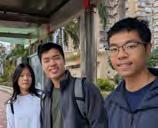
“I talk to them on a daily basis, usually during dinner, and since our schedules don’t match up, we don’t really see each other that often. So I wouldn’t say we’re too close, but we are pretty friendly towards each other, and we don’t tease each other.”

— Anna Lu (9) One sibling
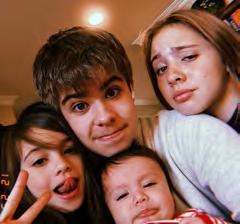
“The way I hang out with [my siblings] is different. With the seven-year-old, I have to calm her down because she’s super energetic, or I have to shoo her away because I’m doing homework. Whereas the 14-year-old, instead of coming in being annoying, she’ll just come in and show me a funny YouTube video. Or we’ll hang out and I’ll drive her somewhere we can get boba. It’s a little different because there’s different things that we can do.”
— Alex Regidor (12)
in her classes, I learned dynamics of the other tors, and I am a part exactly what she’s going where I can give her and where she’s McGraw said. “Debates ally great activity, happen by magic. school hired a professional you would still need teers.”






learned about the other competipart of it. I know going through, extra support independent,”
“Debates are a reand it doesn’t
Even if the professional coach, parent volunvolunteers allow run smoothly.
Families form a fundamental role in our societal structure. On campus, students’ diverse families have been integrated into the school community.
Jason Lai, Selina Wang and Yichen Yao
They say the apple falls close to the tree, but sometimes it can fall thousands of miles away. This holds true for many students on campus whose parents immigrated to the United States.
One assignment that prompts students to explore such ancestral connections is assigned in Rosie Nguyen’s world literature class. Students are assigned to interview an immigrant about their journey to the United States and write a vignette based on it, Nguyen said.
“What makes this assignment special is that students are actually required to talk with another person and interact with somebody who may or may not have the same experience as them, which is important for broadening their perspectives,” Nguyen said.
While not being a requirement of the assignment, students frequently interview their family members, Nguyen said, prompting students to broaden their perspectives.
ment was great to teach students about what it is like to move to a new country.
Junior Adriana Islas Ramirez, who completed Balas’ assignment last year, said she learned meaningful information about her father’s arduous journey to the United States from Mexico during his interview.
“I used to think my dad worked hard, but I just didn’t think he cared for his family a lot because of the way he portrays himself to other people. He seems kind of arrogant and mean,” Islas Ramirez said. “In a way, you would have not thought that he cared about his parents, but hearing about that vulnerable side of my dad made me think, ‘Oh, wow, he does a lot for his family,’ and I was like, ‘Okay, you know what? I love my dad a lot more.’”
Likewise, senior Vivek Athavale said the vignette assignment allowed him to discover his fathers’ dream to move from India to start a family and study in America.
“It was important to learn more about where I came from and why America is important,” Athavale said. “I never talked with my dad about that sort of thing, so it opened more opportunities for me to talk about his childhood and learn more about him as a person, rather than just talk about me.”
Sophomore Ahmed Kandil said the vignette assignment opened the door for him to look more closely into his family’s immigration from Egypt.
“They felt really guilty leaving their families behind, and they had to start over in a country where they didn’t really know anyone, and it made me see them as incredibly brave and appreciate the sacrifices a lot more than I had used to,” Kandil said.
Rather than writing a vignette, in Spanish 4 Honors, students must interview an immigrant and share their experience in front of the class as if it were their own, Gabriella Balas said. Balas said the assign-
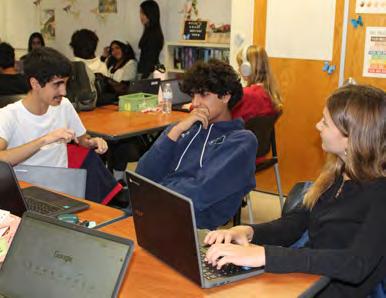
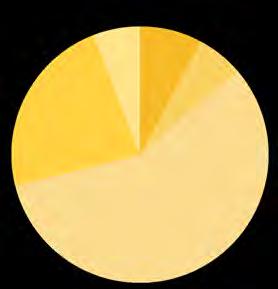

What is the ideal number of children in a family?

Joining both classes has taught me a valuable lesson
Carrying the regrets of never having reached outside my comfort zone in middle school, I viewed freshman year as an opportunity to break free from my streak of inaction.
When August rolled around, I pushed my boundaries by committing myself to freshman cabinet elections. At the same time, I joined journalism with hopes of pursuing my love of writing.
While I had no idea how these classes would shape my growth, I knew it would be the first step

experience. Eventually, being a part of both ASB and The Epitaph has not only helped me be more involved on campus but also learn valuable life skills for the future.
During the campaign for cabinet elections, I realized students often felt their peers’ higher level of experience made them insecure about trying new things, just as I did. My ability to empathize with this sentiment and talk to unfamiliar people helped me connect with my classmates meaningfully.
I was shocked after being chosen through the interview process. Eventually, I learned that taking initiative and asking members of ASB to advise me on running for the position had stood out to them, ultimately earning me my position.
as a freshman officer was a cheerful experience, but this new commitment, along with the responsibilities of reporting for The Epitaph, placed an unexpected strain on me. My focus shifted from figuring out what class to study for to balancing my work with these two activities.
However, the upside of being in journalism and leadership is that they have offered more involvement than I ever imagined. They also taught me that participating in these extracurricular opportunities requires sacrifice and organization for the other activities I am committed to.
about events at school while helping to report on those same events through journalism.
These environments have not only allowed me to experience our school’s community dif ferently but also use my two skillsets to manage compli cated situations efficiently.
My newfound confidence has allowed me to interact better with people and take on even more opportunities that I would have never considered before.
of criticizing and helping to build HHS at the same time, high school feels like a step toward experiencing the real world and a place that has grown into home.

Entering the leadership room
Students share thoughts on zodiac sign predictions from ‘chinesenewyear.net’ for the Year of the Horse
Infographic by Annika Abraham and Selina Wang
Rabbit (class of 2029): Feb 3, 2011 – Jan 22, 2012
Although the Rabbit does not face a direct clash with the new year, they will face their own small, persistent setbacks. On the upside, the new year is expected to bring romance and celebration, allowing the Rabbit to explore challenges and rewarding opportunities.
“I sort of agree because it’s had a lot of celebration. I’m really looking forward to being able to celebrate a lot of things. I’m going to start outside basketball, so I think that’ll be really fun, and I’m excited to have a really good year.”
— Abigail Lin (9)
Tiger (class of 2028): Feb 14, 2010 – Feb 2, 2011
This year will be filled with excitement and hurdles, as the Tiger feels inspired to grow despite unexpected obstacles blocking their path. The Tiger’s natural courage, combined with staying adaptable, will allow them to see impactful breakthroughs in this new year.
“I hope the topic of this description comes true this year. Hopefully, I [will] cross many obstacles throughout the year and push through many challenges that I’m going to be facing throughout the year, but also try to improve myself in many different aspects.”
— Bhasker Vasudevan (10)
Ox (class of 2027): Jan 26, 2009 – Feb 13, 2010
The Ox’s steady approach will clash with the Horse’s fast-paced energy, creating many challenges that will push the Ox out of their comfort zone. If the Ox stays flexible, they can find growth in this turbulent year.
“I agree with it because I’ve seen changes in me and my surroundings regarding that. If it’s something that’s pushing me out of my comfort zone, I will go with it because it’s always good to better myself and what I’m doing.”
— Harshitha Sundarrajan (11)
Rat (class of 2026): Feb 7, 2008 – Jan 25, 2009
As the Horse is directly opposite to the Rat in the zodiac cycle, this year is expected to be difficult and not in the Rat’s favor. However, the Rat’s cleverness and adaptability will help in finding opportunities and blessing.
“I don’t believe in the predictions. I think this year is going to be a lot better than last year because last year was not my favorite, so it can only go up, and so far, it’s been really good. I don’t think it’s gonna be that challenging.”
— Sarah Nelson (12)
More interestingly, being a part of these two communities has allowed me to experience a unique mix of student feedback, giving me fresh perspectives on the school community.
In ASB, I help make decisions

Being the only one experiencing the intersection of ASB and The Epitaph has offered me a well-rounded point of view and countless skills that have changed my outlook.
As I’ve grown through the journey
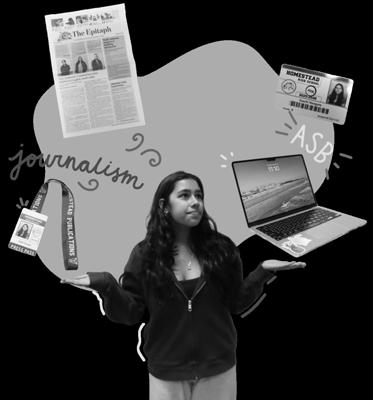
While balancing both classes is a challenge, it has given me unforgettable experiences.
‘Blind date with a book’ event inspires new readers
Sharing a love of reading with the student body, the library distributed their annual ‘Blind date with a book’ valentines on Feb. 13. Students who answered a survey regarding their interests and personality were provided with three handpicked novel recommendations, librarian Shannon Vakili said.
The original concept of the event was inspired by a public display where booksellers advertised novels with hidden covers to customers, Vakili said.
“Students don’t know the genre or what it might be. It could be something like a fantasy novel,” Vakili said. “I hope that they find a book that they hadn’t read before and they like it. If they got sent something different, maybe they got inspired to find something that they hadn’t seen before in the library.”
Rather than checking out a single surprise book to students as she had done previously, participants were given greater freedom of choice during this year’s event, Vakili said.
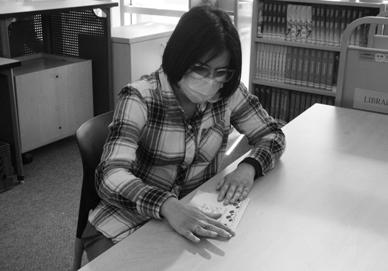
Each student received a bag containing three slips of paper, which were individually labeled with a book reccomendation. The recipient then decided which novel, if
any, to check out, Vakili said.
Junior Benjamin Hansen, who has participated in the event for the last two years, said that having the librarians choose a suitable array of books was a simple yet effective way to promote literature.
Similarly, fourth-time participant, senior Agnes Ko said she appreciates the library’s prioritization of creative events that encourage reading.
“[This event] is definitely a better form of entertainment than scrolling reels or social media,” Ko said. “[Reading] helps with critical thinking. Vocabulary and reading comprehension is something that is starting to become lost, so I try to practice.”
Recognizing the significance books hold, Hansen said he is grateful the library incorporated reading into the holiday spirit.
“Knowledge is power. Even if the book is fiction, you can still learn things from it,” Hansen said. “Each book is its own miniature universe [and] its own microcosm. In the grand scheme of things, it’s also like a budget vacation.”
Nonprofit aids immigrants through art fundraiser
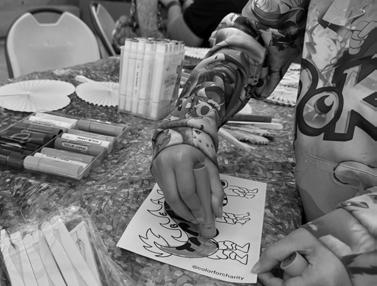
Student-led nonprofit Color for Charity held a fundraiser to support the National Immigration Law Center at the San Pedro Superfest on Feb. 8, executive director, senior Arcus Foo said.
During the festival held in downtown San Jose to celebrate the Super Bowl, the organization ran a craft booth where children decorated student-designed coloring pages and paper fans, Foo said. The booth’s pages featured QR codes encouraging attendees to donate to NILC, which assists low-income immigrants in accessing legal support.
“We are a city of immigrants, and we felt the need to support our community in that way,” Foo said. “A lot of the members ourselves are immigrants or children of immigrants, and there’s a lot of news going on about the
treatment of immigrants that we wanted to [help] in any way.”
During the event, member and freshman Audrey Geiger said she took on the role of interacting with passers by to increase interest in the booth and gather donations.
Geiger said she views her involvement with the club as a positive contribution to the broader community, given Color for Charity’s support for a valuable cause.
Beyond their artistic value, the booth’s coloring pages hold additional messaging which highlights diversity, community volunteer lead, senior Nathaniel Cohen said.
“There was a drawing we had [with] some butterflies, captioned ‘Immigrants make America Beautiful.’ It’s symbolic,because butterflies are known for their migration patterns throughout the season,” Cohen said. “We had another one where it’s three people
in a dragon costume [to] celebrate culture.”
Throughout the festival, encouragement from attendees left a lasting impression, Foo said.
“We had a couple people come up to us and [say], ‘Hey, we’re really glad to see that there’s people who support us [immigrants].’” Foo said. “There is a lot of awareness going on about immigration rights right now, but it’s different having people show up in person and do something about it. I think part of that’s really powerful.”
Selina Wang and Kaylin
As students tap their feet to a catchy beat, the sound of international music fills world language classrooms during the annual March Madness competition.
Teachers participating in the annual musical tournament handpick tracks in their respective foreign language, French teacher Muriel Von-Stein said. Students then listen and vote on their favorites.
Originally introduced to HHS through Von-Stein’s incorporation of it in her French classes, the tradition was eventually adopted by other language courses, Von-Stein said.
“I want to show students that we learn a language for a reason, not only to get a grade and to complete worksheets or to fulfill a requirement, but we can use the language in an authentic way, talking about authentic things aside from the book and the lessons,” Von-Stein said. “It’s really to communicate, to express our opinion and give them the opportunity to show off what they can do with the language.”
The tournament’s playlists are carefully selected, as teachers search for artists with diverse backgrounds and songs that contain positive, appropriate messaging, Von-Stein said.
“[A] guiding factor is a diversity in our artists,” Von-Stein said. “We want a good mix of men and women, or nonbinary. We want a mix of the French speaking world. We have people in Africa speaking French, people in Asia. France as a country is very diverse, so we also want to reflect that diversity.”
Through each song’s lyrics, students are exposed to a vast
range of new vocabulary that may have been overlooked in more orthodox lessons, Von-Stein said.
Having participated in the March Madness tradition in her French classes since seventh grade, French 3 student sophomore Olivia Blake said the competition is an intriguing way to explore more niche musical perspectives.
“I like how we get to explore different genres of French music, and it exposes us to French culture, because it’s not just classical music,” Blake said. “It’s all these different types of pop and music styles. It’s really cool to hear non-mainstream language music, because people really like to listen to K-pop or J-pop, so French music is fun to listen to [as a change of pace].”
Aside from exposing students to music from different cultures, the competition allows listeners to have fun as they connect their classroom learning to the real world, Japanese teacher Lisa Nakamatsu said.
“You can spend your entire life studying Japanese and just work, so you have to get jazzy with it,” Nakamatsu said. “What’s really neat is, when in the song you start
picking out words you recognize, and then you’re like, ‘Oh my gosh, I understood that part.’ It’s that type of excitement of ownership of what you know and then being able to see it from a real life source.”
Additionally, Nakamatsu said she hopes to utilize the competition as an opportunity to keep students interested in learning the language. This unconventional teaching method also allows her to adapt to a range of skillsets, such as expanding the assignment to cover deeper lyrical analysis in her higher level classes, Nakamatsu said.
Above all, March Madness offers students a platform for genuine communication through their shared musical experiences, VonStein said.
“Art in general is important, and a lot of our students are touched by art, so it’s a way to connect with life by talking about music that they like,” Von-Stein said. “Even outside the classroom, you might talk about Taylor Swift and the last concert, and why you like it and don’t like it. Those are conversations that teenagers have outside the classroom, so why not have it inside the classroom in the
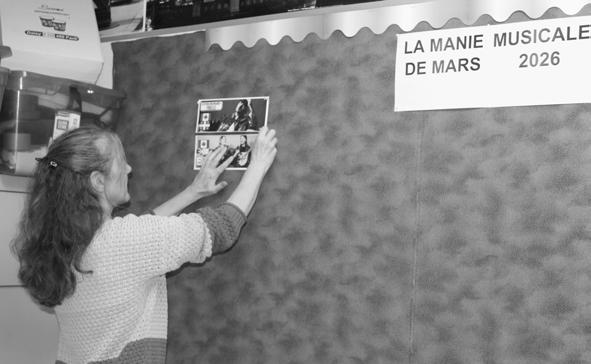
The March Madness competition motivates and expands the vocabulary of students, Muriel Von-Stein said.
Outside opportunities enhance musical knowledge, experience
Outside musical opportunities provide student musicians with meaningful pathways to advance their artistic journeys, director of instrumental music Ben Scharf said.
“It’s largely a symbiotic relationship between us and outside groups,” Scharf said. “What I always encourage is that students do these outside groups in addition to school groups, not instead of school groups. [This way,] they can take everything that they learn from these outside groups and bring it back to their peers.”
As a member of All State Honor Band and Santa Clara County Honor Band, euphonium player, freshman Tabitha Anderson said joining these organizations has helped develop her confidence.
“I often take the lead in band because I feel [a sense of] responsibility from those experiences,” Anderson said. “When I sense a problem, [these experiences] help me have less anxiety about going out and fixing it. I always feel like I’m encouraging other people to
try to be their best.”
Additionally, associate director of music Mark Lee said the main benefit derived from participating in these opportunities is the added practice time. However, balancing extra responsibilities can also demand financial and time considerations for participating students.
“There are times where we’ll have an HHS performance, and they’ll say, ‘You can’t miss our rehearsal for your school thing. If you do, you’re out,’” Lee said. “That’s really disappointing [since] we want to have a collaborative relationship, as any time students play outside is a fantastic opportunity, and we don’t want it to be at the expense of them enjoying their time here.”
Giggles echo through classrooms as choir members surprise students with singing valentines on Feb. 12. Serenaded by lighthearted love songs, some recipients laugh while others begin to blush.
Having received three singing valentines during her English class, senior Suri Yau said she is grateful her friends thought to recognize her, despite the embarrassment of being the center of attention.
“It was really fun to watch [the choir dance], and it made me want to get up and dance with them,” Yau said. “It was a memory to cherish.”
While enticing students to purchase the valentines, which serves as a fundraiser for choir, choir member sophomore Sachin Karthik said sellers rejected the holiday’s traditionally romantic association.
“We embrace that humor,” Karthik said. “We say, ‘Hey, you should do this. It would be really funny.’ It’s like a funny method of sending a joke to your friend.”
Choir member, sophomore Natalie Graham said performing in front of classmates can often feel intimidating as a singer, as well as comical.
“It can also be funny for us, especially if you’re in the same class, and then there are people laughing,” Graham said. “It takes the nerves off it if there’s people laughing at the students being sang to instead of laughing at us.”
Although sales dipped compared to last year, choir teacher Jeff Morton said the choir program will not be heavily affected. Aside from funding choir trips, the tradition furthers choir members’ artistic growth.
“Singing in a smaller group pushes singers to know their part and see where their strengths and weaknesses are,” Morton said.
Beyond fundraising, Karthik said the tradition adds a welcome break to the long school day and livens the classroom atmosphere.
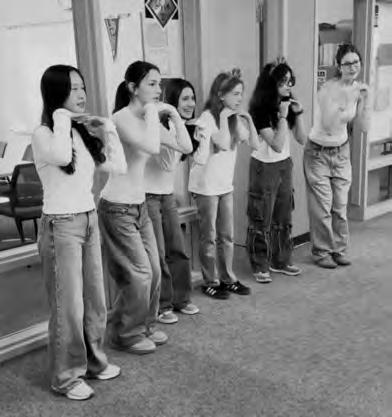
“It’s meaningful not because of what it does, but because of what it symbolizes,” Karthik said. “It symbolizes joking around, friendship and having fun in a time that’s really stressful. I hope [this tradition] keeps going, because people get to joke and escape their academic struggles.”
her technical knowledge, Anderson said older members in these more competitive groups also act as helpful mentors.
“For me, it was a life-changing experience to go to these things,” Anderson said. “Being in a high level group where everyone is very dedicated to music helps because rehearsals are streamlined very quickly, and everybody is
really responsible. A lot of upperclassmen who have [more] years, more abilities and a lot more experiences than me can help me with rhythms and other stylistic aspects.”
Similarly, choir member, senior Ashna Yadav said her experience as a member of the Cantabile Youth Singers singing group has exposed her to a program with greater professional emphasis than HHS.
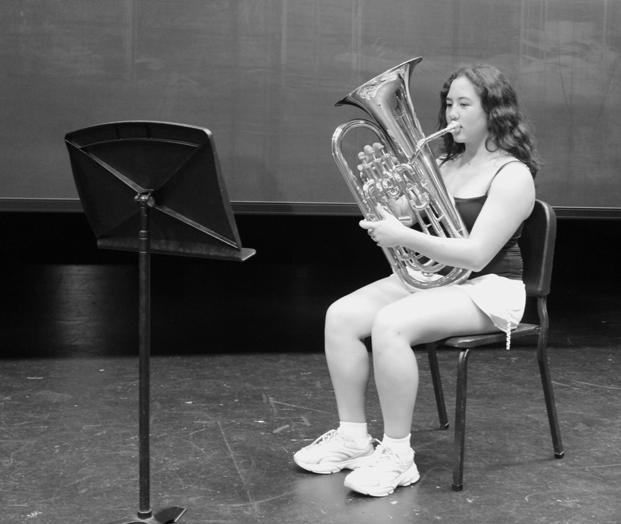
“With HHS, we talk about what goals we want to set at the start of the year. One big thing has always been that we want to prioritize having a good community over always winning,” Yadav said. “Cantabile is a lot more about having a higher
caliber of music. There’s definitely community, as well, but we study not only the piece of music, we study the composer’s life and the architecture in the country at the time when it was written, [so] we can give a performance that emulates what the people writing it wanted.”
Despite their differing musical environments, Yadav said she cherishes her time with both groups equally.
“I have made a lot of my best friends in HHS choir, and we spend a lot of good time together, especially on trips,” Yadav said. “[In] my other choir, I enjoy it because of the quality of music that we produce. Even on the first or second time we get a piece of music, we can sing the whole thing with all of the inflections we need to have, and it already sounds like a finished piece, so it’s for different reasons.”
Ultimately, Scharf said outside activities provide a supportive community for musicians that is complementary to classroom learning.
“The more music that students are exposed to and the more challenging music that students are exposed to, the better musicians they become,” Scharf said. “And that only benefits us when we get to learn from their expertise.”
Thai indie rock band feels straight out of a teen movie
Maya Dutt
COLUMN—“New year, new you.” This is the saying my algorithm took to heart when recommending me new music.
I was trying to listen to an Olivia Dean song when my algorithm kicked me out of English music altogether. I spiraled through Ethiopian jazz, Korean R&B, Indian rock and then finally arrived at a small Thai band which made music with tones and feelings straight out of an indie comingof-age movie. I was hooked.
YONLAPA is a Thai indie rock band from Chiang Mai, consisting of vocalist Yonlapa “Noina” Pienpanassak, synth player Arnuphap “Gun” Foeilung, bassist Nawin
Raknaisil and drummer Chalanthorn “Few” Soontornpitak. They primarily sing in English and Thai, and released an album and two EPs since their founding in 2019.
Their alternate between anthems that feature hype vocals and guitar riffs, and psychedelic dreamscapes that send me to another plane of existence.
The two most addictive riffs are in “Let Me Go” and “Saltburn.”
“Let Me Go” starts off simple, with guitar and vocals backing up Noina’s velvety voice. Then, the instrumentals slowly start to layer on top of each other until they reach a climax near the outro. The band harmonizes over the drums, guitar and bass. They play increasingly more complex rhythms, and
just as abruptly as the song started, it stops.
The structure mirrors the sad sentiment of heartbreak and loss.

Money grab romanticizes toxic manhood
COLUMN — Walls made out of veined skin. A slug squelching across the screen. Jacob Elordi’s tongue, everywhere.
Unlike the avalanche of tearyeyed moviegoers on social media, I struggled to keep my popcorn down while watching “Wuthering Heights.” Released on Feb. 13, the film inserts acute sensuality into every scene, completely distancing itself from its source material.
The film loosely follows the plot of a 1847 novel of the same name, a dark story by Emily Brontë that traces the tragic history of an extended family. Narrowing in on the first half of its written counterpart, “Wuthering Heights” depicts the melodramatic bond between Catherine Earnshaw (Margot Robbie) and Heathcliff (Elordi), her adopted brother.
In the novel, their mutual passion traverses between familial, platonic and romantic love. The movie, however, commits to establishing a sexual relationship between the two, serving up pornographic lovemaking to remarket the ambiguous story for Valentine’s Day season.
The problem is, “Wuthering Heights” is about bad people. Fundamentally, it is impossible

to transform a depressing testa ment of the hatred of humanity into something worthy of “Be mine” Sweethearts.
Catherine refuses to marry Heathcliff as it might “degrade” her, and Heathcliff embarks on a vengeful rampage to hurt those around her after she marries Edgar Linton. These details are included in the film to capture the pessimistic essence of the novel, but make it futile to spin a love story.
By blatantly ignoring Catherine’s brattish nature and Heathcliff’s cruel violence, the film pretends their relationship is one of good-natured yearning instead of jealous obsession. This only perpetuates a narrative that passively regards abusive relationships.
The film refuses to direct its screentime and resources to the novel’s purpose of dramatically exposing such distressing normalities, instead actively rationalizing that behavior. Instead, it misses out on key opportunities to commit to the hard-hitting themes of the book.
Rather than exploiting a teenage heartthrob to target a female audience that desperately yearns to see Elordi shirtless, “Wuthering Heights” should have been casted with more intention. In the novel, Heathcliff is described as racially ambiguous, a key trait that de-
fined his lower-class treatment and formation of bitter contempt. With an actor of color, incorporating racism could have made Heathcliff and the movie as a whole more complex.
However, the film’s sensuality opens up thought-provoking avenues to explore. For example, the movie depicts Catherine’s sister, Isabella, and Heathcliff’s relationship as sexually exploitative. Rather than being built on mutual hatred, their relationship is transactional, a unique interpretation of their dynamic and Isabella’s inability to leave.
Despite the movie’s passing attempts to artistically modernize “Wuthering Heights,” from its makeouts to futuristic costuming, most efforts fall massively short. It is simply disappointing to see it try to bring this story to the future, when in reality, its blunt acceptance of toxic romance already moves it backwards.
Movie: “Wuthering Heights.”
Grade: D. Rated R. Watch in theaters.



The emotions continue to build up until they hit a climax, and then they fade into acceptance.
Meanwhile, “Saltburn” features a dirtier guitar, and the song feels like a muted version of Beabadoobee’s “Worth It.” Noina’s vocals are a lot quieter in the verse, while the guitar penetrates through everything. Instead of a riff that is continually developed throughout the song, it is developed each time it is played, and the process restarts every consecutive time.
The band simultaneously knows how to control their energy to perform soft ballads. “Why Why Why” is a perfect showcase of Noira’s vocal ability and the
band’s ability to play an old-fashioned, jazzy piece. The instrumentation leaves no room to hide lack of vocal talent, as Noira delivers each line with the perfect amount of wistfulness and loss. This variety in their songs is refreshing, making it easy to listen to YONLAPA over and over. I can rely on them to impress me through the highs and lows of life.
Whether you’re looking for upbeat tracks or lowkey music to study, YONLAPA is the “Sweetest Cure” to your problems. Their soft yet chaotic duality allows them to bring the Thai music to the forefront of the indie pop-rock band scene.
Heavy social media usageseems to be inescapable in modern teenage life. Young people send reels to maintain friendships and expand their meme vocabulary by spending hours of their free time scrolling.
However, since deactivating my Instagram and TikTok accounts roughly one year ago, I have realized the value of going offline.
By rejecting short-form content, I have detached myself from the burden of constant comparison to my peers, and I now lead a lifestyle better aligned with my true ideals.
About four in 10 American teens reported being online “almost constantly” in 2025, according to the Pew Research Center.
As a once similarly-attached social media user, I dedicated any free moment to scrolling.
The alluring promise of an easy distraction often morphed into hours-long consumption of content as unattended homework and chores piled up.
Rejecting social media forced me to address my responsibilities head on. In overcoming procrastination, I found the time to reconnect with old hobbies, such as getting lost in a good book.
While online content left me feeling unfulfilled, my rekindled pastimes provide me with opportunities to make rich memories and expand my worldview, all while having fun.
Aside from dominating my downtime, excessive social media usage also took a toll on my mental health.

Overwhelmed by a barrage of posts from influencers andfriends alike, each presenting unrealistically polished narratives, I felt wrong for not having a perfect, organized life.
After going offline, however, I experienced a noticeable positive change in my mood.
While on social media, I was exposed to unnatural amounts of details regarding the lives of many. Comparing my own behavior and actions to people I saw online left me feeling dejected and self-critical.
Nowadays, knowing so little about the lives of others feels surprisingly liberating.
Soon after I had deactivated my accounts, I remember seeing my sister scroll through her Instagram feed, engrossed by the content flashing before her eyes. I felt an instinctive pull to open the same app on my own device, and disappear into that familiar, captivating world.
Yet, I realized this desire stemmed from discomfort at the prospect of having to bear the slow passage of time without the assistance of an attention-grabbing crutch. Having no control over my own mind disturbed me and further cemented the merit of my offline lifestyle.
Though leaving social media has left me detached from trends and the achievements of acquaintances, this isolation has allowed me to go through life at my own pace.
Teenagers must realize the harms of frequent social media usage and take steps to disconnect, whether by setting time limits on apps or fully deleting their accounts. Going offline is an essential step to defining their youth by more than just the content they consume.

Representation is sometimes better in the background
As I sat in my classroom with students of various ethnicities, the substitute teacher taking roll looked up from the roster and approvingly pronounced us a “DEI classroom.” To my disconcerted classmates and me who are accustomed to the diverse Bay Area population, her comment felt out of place but at least well-meaning.
The same awkwardness presents itself within celebrations of diverse racial, gender, disability and LGBTQ+ representation in entertainment, too.
Films and books that hyperfixate on diversity as a selling point can easily backfire and reinforce the idea of minorities being outsiders.
For instance, in the 2006 graphic novel “American Born Chinese,” the protagonist is a Chinese American boy living in a majority-white town who is harassed by his peers and longs to become white. The book intends to convey the Asian American experience of feeling ashamed about one’s identity.
I felt sympathy for the character. However, living in the Bay Area all my life, I cannot remember people ever making fun of my lunch or bullying me about Chinese stereotypes.
I understand that many people
from minority groups face discrimination. Still, that does not explain why they are presented as alienated from American society in seemingly every piece of media about them.
When diverse media brings such “outcast” stories and little else, it only perpetuates the narrative that minorities are misfits who must fight to accept themselves and be accepted.
Therefore, there is a clear need for casual representation: when a marginalized community is portrayed as regular people instead of constantly battling against the world.
“Brooklyn Nine-Nine,” for example, is one of my favorite sitcoms due to its vibrant cast of characters and, more important-
‘All The Signs’ point to a new musical era with Don Toliver’s ‘OCTANE’
Album represents diversification from previous music
In eighth grade, I listened to Don Toliver’s 2024 album “Hardstone Psycho” and was subsequently hooked by his heavy 808 beats, trap percussion and autotuned melodies.
However, as time passed and my music taste developed, I moved away from Toliver’s music and started enjoying other artist’s R&B songs more than his past projects.
Then came “OCTANE,” released on Jan. 30. The growth in music production and variation from past projects that he showcases has once again piqued my interest in his music.
Toliver evolves from past album releases through the songs on “OCTANE” with tracks such as “Secondhand,” “All the Signs” and “Long Way to Calabazas.” These tracks trade Toliver’s usual aggressive track style for softer melodies, thick basslines and larger usage of drums in the background, marking a clear departure from previous releases.
Apart from leaning into R&B styles, Toliver also sings about personal, emotional ideas.
For example, “OCTANE” in-
cludes “Secondhand,” one of Toliver’s first songs that includes lyrics about vulnerability and yearning for love, contrasting from his typical focuses of hedonistic and deeply aggressive adaptations of major milestones,such as fatherhood and buying a new car. This thematic change shows a newfound emotional depth in Toliver’s artistry.
In addition to more empathetic topics and R&B vocals, Toliver effectively uses featured artists’ strengths and weaknesses to take “OCTANE” to the next level.
“Rosary,” featuring Travis Scott, is a stellar example of how a collaboration with effective musical production and strong vocals creates a song that demonstrates the best parts of an album.
The punchy, electronic beat is a highlight that elevates the listening experience on this track. Unlike past collaborations between Scott and Toliver, “Rosary” carries a more intimate and R&B-adjacent listening experience, marking a change in their dynamic.
Unfortunately, songs like “Excavator” and “OPPOSITE” feature recycled beats and do not show a
change from past projects.
After the second beat drop on “Excavator,” the music seems very similar to past Toliver projects, sharing almost identical themes in the lyrics and production.
While tracks toward the end of the album feel repeated, “OCTANE” shows a notable shift from past Toliver projects by and more personal details, covering topics that Toliver’s music normally does not cover. This makes it one of the best music projects in the hip-hop industry this year.
Album: “OCTANE.”
Grade: A. Artist: Don Toliver.

Creative bankruptcy, greed have made fans lose interest
World Wrestling Entertainment, under new ownership TKO Group Holdings Inc. and booker Paul “Triple H” Levesque, has provided themselves with more profit than ever. However, this has come at the cost of a good product. Since controversial figure Vince McMahon stepped down as owner and booker in 2023, the company has fallen into a corporate hell hole.
During previous press confrences, Triple H has promised and pledged about how the inring product will improve, according to WWE. However, this has not been the case due to re-
petitive storylines. If WWE wants its mojo back, it needs to go back to being able to show off cool, ridiculous and inspiring feats in a unique, real-time storytelling and athletic soap-opera medium.
For example, the hooded man trope where a mysterious wrestler in all black clothing and a ski mask interferes with the match has been overused. Ever since the massive shock value and viewership of the moment, Triple H decided to run the trope to the ground.
In addition to his lack of plot creativity, Triple H’s ability to put wrestlers over is pure fantasy. Triple H cannot turn non-established main eventers into top end talent. He mainly relies on what was given to him from McMahon’s departure, and potential and already proven stars are stuck on the dark side of the ring.
ly, because it knows when to zoom in on their differences and when to zoom out.
Captain Holt, a character who is Black, gay and happily married, explicitly acknowledges the prejudice he faced from col leagues. However, his role is not to instruct viewers about homophobia or rac ism. He is the irreplace able leader of the squad, and his identity settles into a place where it is re garded as perfectly nor mal, unlike other pieces of media.
Not everyone’s challenges are related to their identity. Diverse stories should not be relegated to a
separate category where characters’ identities are always made out to be a hurdle.
By including diversity in both characters and their stories, media will more accurately reflect the experiences of viewers from
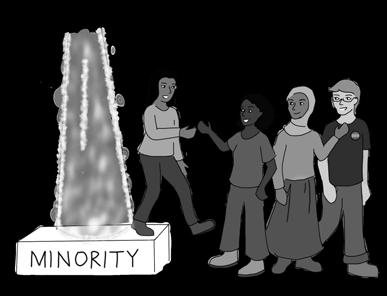
normally.
Selina Wang
In Chinese culture, the month leading up to Chinese New Year is packed with superstitions.
During this time known as “Làyuè,” many avoid saying unlucky words and breaking dishes. These are all symbolic representations of “cutting off the luck” before the New Year.
Today, however, superstitions don’t just live in homes, but they thrive on social media. When I scroll through TikTok, I always see videos that tell me to “Like and share for good luck,” or that scrolling past a video with a specific sound will curse me. These creators use superstitions solely as a means for profit, aesthetics and being viral.
The virality of superstitions we see on social media threatens traditional superstitions that carry real weight, such as those that illustrate hope. Their mindless manner erases the culture and meaning behind the long lasting superstitions that have been built over generations.
Although specific traditions may differ within families, they still build a sense of unity in ways that social media could never replicate, making holidays feel more meaningful.
Additionally, superstitions allow for a moment to slow down, reminding people to be mindful of their words and thoughtful with their actions.
John Cena’s retirement tour was another indicator of WWE’s sharp decline under Triple H.
At Elimination Chamber 2025, John Cena won the main event and officially contended to fight the champion. To draw more viewership, Dwayne “The Rock” Johnson and Travis Scott, who are
For instance, if a dish were to
completely unrelated to current day WWE, came out and persuaded Cena to turn heel and embrace a “bad guy” persona.
This resulted in months of his retirement tour having no direction and making a bare-bones characterization of Cena, ultimately wasting opportunities on mediocre matches.
Professional wrestling is not only iconic for in-ring performances, but also music and aesthetics.
Former WWE composer Jim Johnston’s defining and catchy tunes used to build and introduce a wrestler’s persona and character. However, nowadays, entrance music is generic and soulless.
break, in our family, we must immediately say, “suì suì píng ān,” an idiom that wishes lifelong safety. However, in this context, it’s a play on words between “age” and “broken,” turning bad luck into good. My mother instilled this belief in me at a young age, prompting me to be an avid believer.
Through these superstitions which transcend generations, I have learned what my ancestors in China have believed in for decades, allowing me to feel close to them despite the ocean that separates us. I’m able to take in new information about cultural traditions every year when we reach this time, teaching me about my roots authentically rather than through a 15-second video on TikTok posted for clicks.
Superstitions in pop culture may come and go, but the ones that are grounded in culture deserve to be preserved. As students in a diverse community, we should learn to recognize the differences in superstition between heritage and clout-chasers. Rather than simply clicking the repost button, we must respect traditions and keep them alive for the culture they hold.

Furthermore, cuts from product and budget from the company have harmed aesthetics too, causing a lack of unique stage designs, less matches and ads.
As WWE begins to skyrocket globally and financially, they love to show off how many big numbers they have garnered during TKO’s tenure. However, numbers only tell one side of the story.
The eye test at the in-ring product is evidence to why Triple H needs to shift gears and prioritize creating new and original content for viewers. With alternative companies like All Elite Wrestling and Total Nonstop Action Wrestling emerging onto the scene, WWE’s “renaissance era” needs another revival.
Ada
Buricea discusses experiences, growth
The Epitaph spoke with competitive fencer, junior Ada Buricea, regarding her experience on finding a fencing community and expanding her perspective through the sport.
The Epitaph: When and why did you start fencing? What was it like when you first started?
Ada Buricea: I started around sixth grade. It was during COVID-19, so I think my initial experience was different. I did dance for eight years before that, but I actually couldn’t even point my toes, and that was necessary. Also, I felt like there was a big pressure in dance to look good, and I wanted to try something else. But because it was late, I felt if I started soccer or something, it would be too late to be
on par with everyone else. So, I decided to go niche, and fencing seemed fun.
TE: What is your favorite part about fencing?
AB: Because it’s small, the community is really tight. It has also helped me think more creatively. For example, there’s a certain phrase in fencing, which is “You should fence like a girl,” because you’re not meant to be using your strength so much as trying to trick the person into coming forward [and] doing something unexpected. I think that’s a good example of how it’s more creative, because even though you’re meant to be fast, it’s not like you have to be the most physically fit to win.
TE: What makes fencing different from other sports?
AB: I don’t know how many other sports are just sword fighting. The national tournaments that you have to qualify for are not so hard to qualify for. Former Olympians come to them, and people who are on
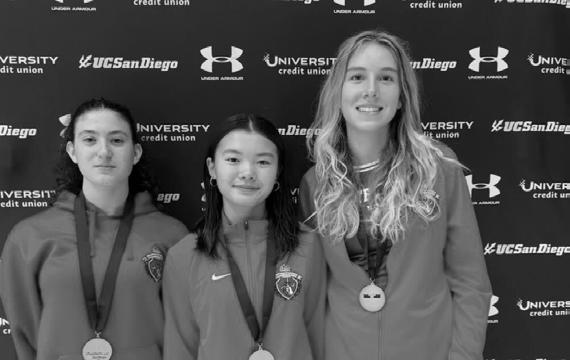
travel or world teams. Even if you’re not so high level, you get the opportunity to fence world class athletes. My coach was an Olympian. It’s very common in the sport to have a wide range [of skills] fence each other. I think that’s really unique. I don’t think [there are] other sports where you can find someone who was in the Olympics.
TE: What is your biggest accomplishment in fencing?
AB: My biggest accomplishment was ranking top 100. It’s not that crazy, but I was pretty happy with myself for it. I think now, a lot of [my work] is also just being more involved in the community. So [I’ve done] refereeing, I’ve done volunteering and also managing the social media for my club. I feel like I’ve become more invested, not just the sport part, but more of the community.
TE: What’s an important lesson you learned from fencing?
AB: An important lesson I learned is to understand that, in each situation, nothing is entirely on you, and nothing’s entirely on the other person. Because you’re going against someone, you can’t take every mistake and be like, “That’s my fault.” Maybe they actually got a good touch on you. You can’t chalk everything up to being [within] your internal locus of control. I think it’s gotten me a little less prone to being rage baited. Now, I’ve become more calm and collected, especially with high pressure situations.
Editor’s note: Buricea’s responses have been edited for brevity.
Looking to continue their development at the highest youth level, freshmen Christopher Juillard and Matthew Lee both compete in Major League Soccer Next, a competitive youth soccer league while balancing their first year on campus.
The chance to play for MLS Next is a golden opportunity for student-athletes, as it sets the path to join professional teams, friend of Juillard, freshman Arihaan Rastogi said.
“It’s a big time commitment. You have to be extremely skilled because it’s one of the highest levels [in boys soccer],” Rastogi said. “It’s really prestigious, only the best of the best can make it, and if you do, it’s a big achievement.”
Juillard, who plays centerback, said he was supported from a young age by his family and coach. Having a mentor who played professionally in Scotland at a national level, as well as siblings who play collegiately, inspires him to follow in their footsteps.
“My brother is going D1, and I also want to be like him,” Juillard said. “We’re really close, and we always do everything together in terms of sports. It would be amazing for me if I could also be with him in my professional career.”
Lee, also a centerback, said he
started playing when his parents enrolled him in a local program at age 5, and he continued with the sport as his interest grew.
“Over the summer between eighth and ninth grade, I tried out for the club that I’m at, De Anza Force, and they offered me an MLS Next starting position,” Lee said. “I was like, ‘Oh this is a perfect option for me’, so I took it and I’m super happy here.”
Due to the high level of competition of MLS Next, being part of the team teaches him on-the-field skills and lessons he can apply to the rest of his life, Lee added.
“I’m learning a lot of emotional management,” Lee said. “There’s a lot of anger in soccer, and [playing] is good for me because it can help me control everything and escape from school. It lets me release stress and do what I love.”
With four team practices every week, the players have had to take great strides to balance schoolwork with soccer.
Despite the high commitment, playing with MLS Next is a step closer to his goal of playing intercollegiately, Lee said.
“I’ve met a lot of amazing people through soccer,” Lee said. “Without it, I don’t think I’d be the same person.”
Captains share experiences with three styles
Indopak is a diverse dance club composed of five teams, including Bhangra, Bharatanatyam and Kathak, each highlighting a unique dance style from across India, Bharatanatyam captain, sophomore Sanvi Bharadwaj said.
Bhangra Bhangra originates from Punjab, and is traditionally danced to celebrate the harvest, with explosive moves based on farming techniques, captain, junior Jaya Singhal said.
Singhal said she began dancing Bhangra earlier in her life as a way to stay connected to her culture, given her father’s Punjabi heritage, and reconnected with the style in freshman year.
“I stopped doing [Bhangra] after the COVID-19 pandemic. I was interested in doing it again, but I didn’t want to join a professional team,” Singhal said. “The first rally I saw [Indopak] perform, I was like, ‘My God, that’s really exciting,’ so then I tried out.”
Despite her previous dance ex-
perience, Singhal said she had rarely done longer songs, and initially found the physicality of the dance hard to adjust to.
“I needed a lot more stamina than I expected because you’re just jumping for two hours,” Singhal said. “But when you start practicing, you get used to the movements.”
However, as long as beginners come motivated to learn the style, Bhangra can be a fitting team to join, Singhal said.
“Even if you’re flapping your arms around, if you’re doing it energetically and big, it will look good,” Singhal said. “If you come in with the excitement of wanting to do something new, it’s a really fun group to join.”
Bharatanatyam Bharatanatyam originates from Tamil Nadu and is the oldest classical dance form in India.
The style has been a significant part of Bharadwaj’s life since early childhood, serving as an avenue
to honor her family members, she said.
“Back when I was four years old my mom made me join Bharatanatyam, because my mom really wanted to learn it when she was younger, but she didn’t have the opportunity to,” Bharadwaj said.
Experience is required to join the team, whose performances combine movement and music to portray a complex storyline,

Bharadwaj said. When she first joined last year, Bharadwaj was intrigued by their unconventional, contemporary approach.
“[The style’s] very traditional,” Bharadwaj said. “I had never thought about it as a fusion where you’d do with pop music or Bollywood, which is the more modern type of Indian music.”
As a first year team captain, Bharadwaj said she aims to continue introducing new ideas, while still embracing the style’s traditionality.
“What I really like about blending [Bharatnatyam and modern dance] together and bringing that into HHS is we get to tell stories, not just about ancient stories that we would normally do, but put our movements into more modern and more relatable things for people of our generation,” Bharadwaj said.
Kathak
Originating from Northern India, Kathak is a dance often used to retell mythological stories, captain, junior Niki Lakhani said.
Like Bharatanatyam, Kathak requires previous experience to join the team, as the captains are not qualified to teach the intricacies of the dance to beginners, Lakhani said.
“You study under a Guruji
[who] brought the dance form over from India, so they want to keep it as close to the traditional dance as possible,” Lakhani said. “All the complexities are just to get a story across better [through] the way you raise your eyebrows, to the way you tilt your head.”
While practicing for long periods of time can still be taxing, Lakhani said Kathak relies more on agility than strength compared to other Indian dance forms.
“It’s not super physically demanding, but you do need to have good control of your body,” Lakhani said. “There’s a lot of fast turns, which means you have to have good core strength and control of your shoulders and neck.”
Lakhani said she enjoys the collaborative aspect of choreographing each performance, a level of independence often unavailable when studying under a teacher.
“[The performance] turns out so much better than if one person was just choreographing the whole thing, because you got many different perspectives,” Lakhani said. “Each person brings something new and everybody gets their moment to shine.”



Senior’s mindset creates success for team, self
Natasha Bandil
For wrestler, senior Lila Tsao, the focus of her athletic career has never centered on the score of a match. Rather, Tsao said her approach to the sport revolves around the actions she takes after the final whistle is blown.
Whether she wins or loses, Tsao immediately begins to analyze her performance, replaying sequences and making adjustments for future matches.
“I always film my matches, so then afterwards, I always review them to see what mistakes I made,” Tsao said. “Even if it’s a loss, I know


that the match wasn’t all bad.
There were good moments, and I try to look at those moments to see how I can make them stand out.
Sometimes, when I lose matches because I made a really stupid error, I make sure I can work to fix that.”
After transferring to HHS midway through her sophomore year, Tsao said she joined the wrestling team with a background in martial arts and managed to place fifth at CCS that season.
“When I watch my matches from sophomore year, I’m just thinking, ‘What am I doing?’” Tsao said. “Now there’s a lot less of that. I definitely got a lot better because I was just relying on instinct, whereas now, I use a lot more technique.”
Coach Lenis Brown said Tsao’s rapid improvement stems from
her growth-oriented approach.
“She started winning lots of matches and major events with almost no experience, which rarely happens.” Brown said. “With her mental toughness, I just kept after her to put in the work, and in the off-season this year, she did more than she ever had.”
As a captain on the team, Tsao also graciously checks in on others and shares honest feedback when asked, teammate, freshman Sofia Salas said.
“[Tsao’s] very generous and humble about her wins and losses,” Salas said. “She encourages everybody around her to do better, and she makes sure not to hurt her wrestling partners, so we can compete. She is like a free spirit, and she’s serious at the same time.”
Looking ahead, Tsao said she
hopes to place in the top four at CCS and qualify for the CIF State Wrestling Championships. Tsao hopes to continue wrestling at the club level in college or stay involved in similar sports, she said.
“I like how you have to push yourself really hard to do wrestling. In a match, it is basically like sprinting for two to three -minute intervals,” Tsao said. “Seeing everyone else keep going keeps me motivat-
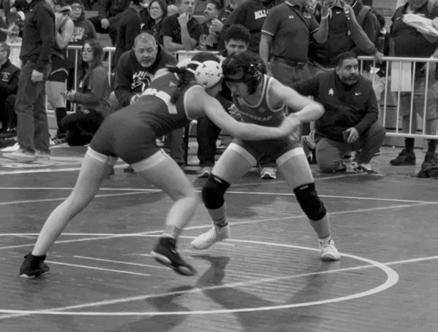
ACTivating Change
The Revolution will not be televised
StudentS share their critismS on activism in pop culture, media
Should Artists have a political messaGe?
“I think it’s a double edged sword. Bad Bunny’s concerts can raise political awareness about ICE and the mistreatment of people, but at the same time, his music can neglect women because of its misogynistic undertones and sexual de sensitization. He talks about having multiple women, and having this fantasy that he can just be with any woman for the pleasure of their body is dehumanizing.”
— Marcel Valdez Hernandez (11)

How is activism portrayed in film/TV?
“It’s not always portrayed well in the media. In the film ‘One Battle After Another,’ which came out last year, it feels like activism was only a background theme for aesthetic purposes, instead of fully covering what it means to be an activist and how it can apply to the real world.”
— Dylan Lai (9)



Student activism is vital for creating change. community members show their journey S through different form S of it and how it is repre S ented in the media.
ommunity Shares unique activism journeys
Beginning in January in his junior year, senior Ruofei Yang said he created an In stagram account where he eats banana peels to protest the absurdities of how students attempt to get into a top college.


Is social media activism performative?
“Social media activism is important, but it is also performative in a way. There are people that would not have gone to the walkout if they couldn’t post it on Instagram because people want to be seen as ‘in the know.’ Protesting and posting on social media is important and impactful, but some people’s intentions are misplaced. People need to do their own research


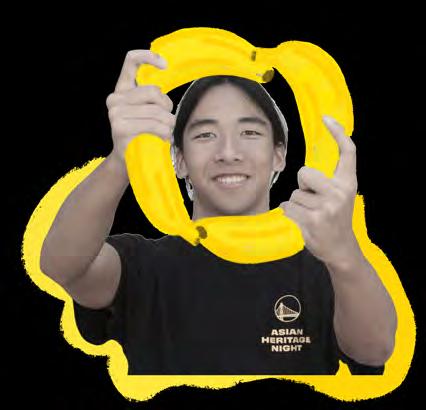

“A friend talked about how he was lying on his summer camp applications just to appeal more to the person reviewing the applications, and I feel like it was outrageous,” Yang said. “I was eating a banana at that time, so I was like, ‘What if I started eating banana peels?’ It’s satire, since you’re making fun of them by doing something ridiculous.”
Knitting since she was nine years old, phys ics teacher Kathleen Shreve said she uses her longtime hobby as a form of political activ ism. Recently, Shreve said she has been knitting a ‘melt the ICE’ hat based on a Norwegian design that protested Nazi occupation during World War II.

Collaborating with a friend, junior Ashley Chao said she founded a student initiative on Instagram advocating against eating disorders. Posting monthly infographics covering healthy eat ing habits, Chao said she is proud of her impact on her youth audience. “I found out about these topics through social media platforms such as TikTok and Instagram, where girls around my age often post unhealthy eat ing habits and normalize that. People glorify and approve these actions, which is a really bad influence to the younger generation,” Chao said. “Just because it’s not widely spoken about does not mean it doesn’t require attention. On a surface level, I hope the content I create will solve [these] problems or help guide people through their futures, but I also wish to inspire people to make similar content in other fields.”



“Knitters around the country are creating this red hat as a way of showing solidarity with the people in Minnesota [and] anyone feeling attacked by ICE, helping to financially support programs that are impacted by ICE’s actions,” Shreve said. “It’s actually pretty common for people who engage in crafts to be proactive with political movements. It helps me feel centered in myself, and it’s a way I can show students my politics without being too ag gressive about it and still have conversations around knitting.”
Scan this QR code to read a personal reflection on creating community change through Epitaph reporting!









Outside of school, sophomore Cynthia Li said she engages in civic activism, speaking at city hall public comments and petitioning to support environmental causes at farmers’ markets.
“I would like to protect the environment because it brings out the best in everyone. As the years go on, trying to fix our environment becomes exponentially harder,” Li said.“I’ve learned that protecting the environment and working in the climate change sector is very policy-based, as much as people say it’s science. I want to see people thrive, do good for them selves and do good for the environment.” said it is a meaningful way of fostering positive change for one’s com munity.
“A lot of activism starts with students,” Li said. “Historical ly, a bunch of civic move ments like the protests at Tiananmen Square and the Civil Rights Movement were stu dent-based, and by mobilizing people when they’re younger, they get to experience a camaraderie of people that feel the same way. It’s powerful when your friends also stand behind something.”