The Hawk Eye magazine is an official publication of Hebron High School. It is a student-produced magazine which strives to represent the student voice. We will aim to report all news relevant to Hebron High School and its student body without bias to race, religion or creed. Views expressed by columnists are their own personal opinions and do not necessarily represent the views of the entire staff. Editorials reflect the staff opinion and may not reflect the views of the school administration. We encourage reader input via letters and story ideas. Contact a staff member or fill out the contact form on our website, www.hebronhawkeye.com, with any of these items. The Hawk Eye is a member of Interscholastic League Press Conference, Texas Association of Journalism Educators, Association of Texas Photography Instructors, the Journalism Education Association and the National Scholastic Press Association.
Find us online by scanning this QR code or visiting hebronhawkeye.com!
contentS
Lights, Camera,
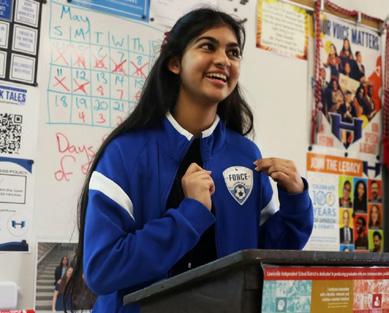
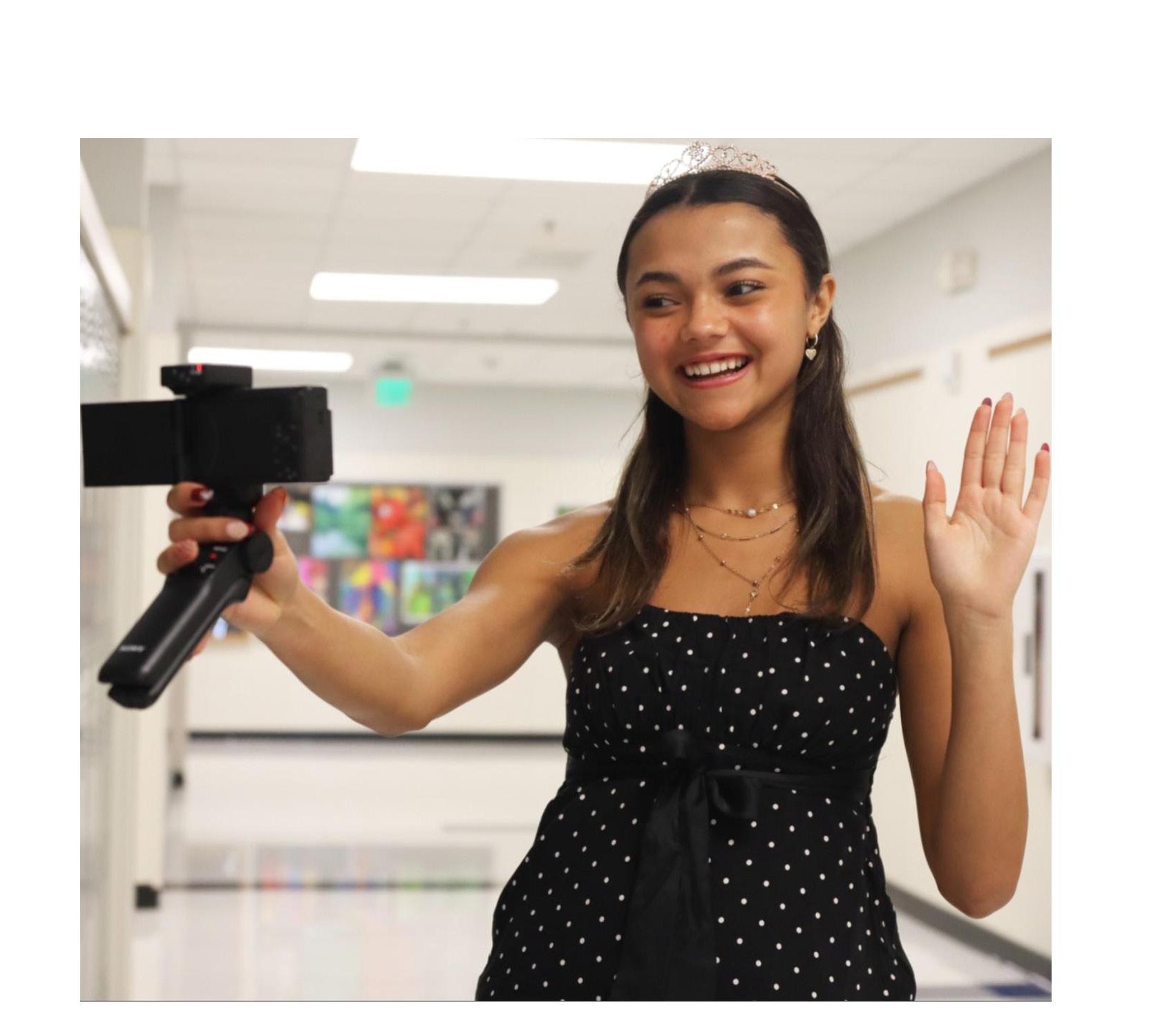
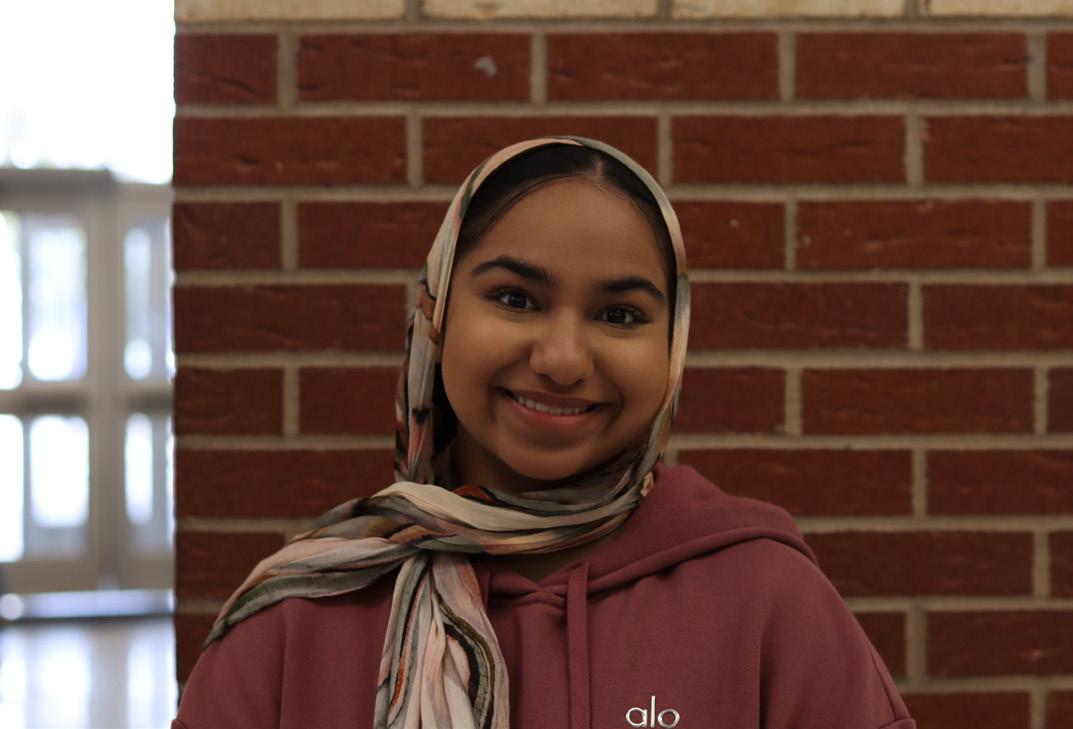
With over 170,000 subscribers, sophomore Echo Browne runs her own YouTube channel, @echobrownevlogs, where she posts school vlogs, lifestyle and fashion content. She launched her first merchandise line in October.
Echo started creating content when she was 9 years old, posting iMovie trailers and drawing tutorial videos on her older sister’s YouTube channel. However, it wasn’t until middle school that she started posting day-in-the-life content, and her views augmented. Her subscriber count increased, eventually
“ -SoPHomore ecHo browne
your auDience iS tHe reaSon you are wHere you are. If you Don’t care about your auDience, tHey’re going to know tHat.”
reaching 50,000 subscribers.
“The motivation is natural and I feel like [it’s] my gift,” Echo said. “It’s like editing and just storytelling. When I take breaks and remember why I started, that’s how I get motivation back. Watching other creators can be inspirational, because I love this.”
Echo‘s channel received more publicity once she reached high school. In her freshman year, she started posting on YouTube Shorts, a short-form section of YouTube. She gained more traction on shorts, hitting a milestone of 100,000 subscribers.
“Staying consistent, having a good perspective and engaging with [my] audience is something I have to do a lot,” Echo said. “Your audience is the reason you are where you are. If you don’t care about your audience, they’re going to know that.”
This year, Echo attended
Story by Daniela ValDez rioS
VidSummit, a YouTube and video marketing conference where content creators hold keynotes and network with others. There, she got to meet other YouTubers, like Angelo Bahu and PaisLee Nelson, who she said inspired her.
“[VidSummit] was a pivotal moment in my YouTube career because I met a lot of other creators, and it changed my perspective,” Echo said. “There are a lot of people there who do YouTube full-time. So, I [thought] maybe this could be a career, not just a hobby.”
Echo launched her merchandise brand, Burnt Brownie, two months ago and has been promoting it on her channel. She designed the products on her own, which include hoodies, sweatpants and tote bags. Two of her friends since middle school, sophomores Ellory Schulte and Allison Tran, are featured on the website.
“She encourages me and pushes me to become a better person,” Tran said. “The fact that she was able to launch her own brand at 15 makes her stand out.”
The process
Echo goes through to make her videos starts with inspiration. She plans out each video, records and finally edits it. She said she spends two hours a day editing videos on average.
“[I] support her and tell her she’s got it, because she has so many goals that she’s already met,” Schulte said. “[I like] telling her that she can do so much more. I’m proud of her.”
Taking her YouTube channel more seriously has helped her gain confidence. Echo said the community she’s made on her platform is positive and that she doesn’t get many hate comments. Beyond high school, she plans on growing her business further. [YouTube has] definitely made a positive impact because it’s what I’m passionate about,” Echo said. “It’s inspiring and it’s why I’m here. I know the term influencer is thrown around really easily, but I don’t want to be someone who influences you to buy a product. I want to influence people’s perspectives to be a positive, good inspiration.”
by JoSHua tHomaS
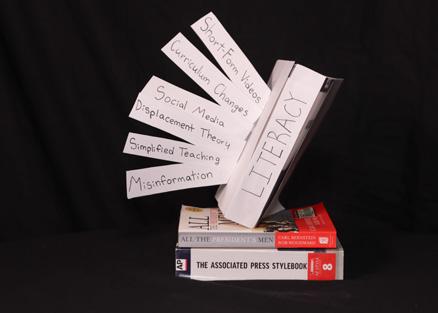
Literacy
used to be a ladder to new worlds; now it’s a forgotten muscle. We are losing the ability to read, focus and imagine as our culture quietly leaves reading behind.
54% of adults have a literacy below a sixth-grade level, with 20% being below the fifth-grade level.
The rates of low literacy in adults is directly correlated with educational outcomes, meaning many students are reading below their grade level.
reading to digital skimming, interest in complex literature has gone down, as well as stamina.
There is a documented trend of reducing or eliminating assignments to read full-length books in advocacy for selected passages, poetry and articles.
“A big shift that I’ve seen is a lesser focus on longer texts and old classic novels, and more of a focus on shorter texts,” AP English teacher Kathryn Goff said. “There is also more of a focus on student choice in independent reading instead of teaching a text [for the whole class.]”
critically evaluate complex information from diverse sources — skills essential for navigating life saturated with misinformation.
Prior to the pandemic, national reading scores have been decreasing since 2019.
The stakes are higher than ever in 2025, as national assessment scores for high school seniors have plummeted to historic lows.
The classroom crossroads
English Language Arts taught in high school has changed. As we modify our educational methods from deep
Research has shown the complexity of high school textbooks (measured by Lexile scores) often plateaus, making texts for grades 9-12 shockingly similar to those for grades 7-8. This invisible gap means students are not being adequately challenged to reach the level required for college reading.
While elementary schools often dedicate time for reading intervention, only about a third of high schools offer dedicated, scheduled time for reading support.
This cut in sustained reading time is often caused by standardized testing pressures, making teachers feel that they must prioritize content coverage and test-taking strategies over in-class reading.
Digital media usage grows, and has conditioned students’ brains for skimming and quick switching.
“As things have been more digital, I have noticed more of a weakness in attention to detail in the ability to write
cleanly,” Goff said. “As far as punctuation and spelling, I think that [keyboard] typing lends itself out of the nature of autocorrect and students have a harder time focusing for longer periods of time.”
In a poll surveying 36 Hebron students, 38.9% claimed they had a mostly positive reading experience in elementary school and middle school, with 27.8% stating it was neutral. Despite this, severe high school reading failures often originate from a lack of foundational skills taught in the elementary and middle school grades.
Despite this, studies show a large decline in literacy in the transition from middle school to high school.
32% of 12th graders scored below the basic level in reading, only a two-point increase from 2019. Older, struggling readers lack core decoding skills, especially with complex, multisyllabic words. Their problems can become masked in high school where general comprehension is tested, but the root cause of is a foundational failure that was never addressed.
“Reading impacts so much – basic comprehension, grammar, creativity, the way students write and their knowledge about the world,” English teacher Samantha Craig said. “I think my challenge as a teacher is to help students read more deeply and write more thoughtfully in meaningful ways, which is not an easy task.”
Outside the pages
This crisis in literacy is fueled by a cultural shift occurring outside of school walls. The rise of stimulating digital media has managed to fundamentally rewire the youth’s brain’s relationship with text and focus. In this new environment, where the swipe is faster than the page turn, longform reading is perceived as laborious..
“Reading [can] get boring really fast, mostly because everyone has really short attention spans now,” National English Honors Society president Arjun
cultural shift
occurring outside of school walls.
The rise of stimulating digital media has managed to fundamentally rewire the youth’s brain’s relationship with text and focus. In this new environment, where the swipe is faster than the page turn, long-form reading is perceived as laborious..
“Reading [can] get boring really fast, mostly because everyone has really short attention spans now,” National English Honors Society president Arjun Parthiban said. “Some people can’t even sit through a whole YouTube video”
Recent longitudinal studies show a correlation between increased social media use in early adolescence and measurable declines in specific cognitive skills.
A leading theory explaining this correlation is the displacement hypothesis. Time spent engaging with social media displaces time that would otherwise be spent on cognitively beneficial activities like reading books, completing homework or sleeping.
“The rise of streaming services and social media has impacted reading in general,” English teacher Kate Mayo said. “It seems like more people prefer to watch a video , especially very short videos, than to read a book for enjoyment.”
The constant flow of fast paced, short-form videos causes attentional disruption and reduces executive functioning, such as the brain’s ability to plan, focus and manage tasks. It is due to the constant availability of instant, high-reward content that makes the effort required for longer reading feel disproportionately arduous to most.
retention than digital reading, a phenomenon called the screen inferiority effect.
Print books provide spatial cues and physical feedback that help the brain create a mental map of the text. Digital reading often disrupts this mental mapping, which is essential for retaining information.
The unread future
This waning of high school literacy is not a localized academic problem; it is a cascading crisis that reaches beyond
non- credit remedial courses. These courses are designed to teach skills like basic comprehension that students should have mastered in high school. Students placed in remediation are significantly less likely to earn a degree.
In today’s digital landscape, misinformation is increasingly prevalent on many platforms, and it is becoming harder to decipher what is true or false.
A poorly literate society is forced to rely on soundbites, headlines or trusted intermediaries, making individuals highly vulnerable to polarization and
“We like simple; we like eyecatching; we like easy to understand, because it doesn’t require any work [from] us,” Goff said.
Studies also show that print reading leads to better comprehension and
Poor literacy skills are equated to, and one of the greatest predictors of academic struggle in higher education, leading to remedial course requirements and delayed graduation.
A significant percentage of firstyear college students are placed into
“When you see others writing, you’re learning how to think. And then you can choose to think in that way or not, and that’s the beautiful thing,” Goff said. “But unless you have the tools in your toolbox, you’re not going to be able to create better movies or art for anyone to watch in the future.”
Studies analyzing popular movies, TV scripts and song lyrics have found a tendency toward simpler vocabulary and less complex sentence structures compared to media from past decades. Specific linguistic analyses of popular music have shown a clear trend of decreasing vocabulary size and thematic complexity in lyrics across genres since the 1980s.
Turning the page
Crucially, students themselves are driving change. National English Honors Society (NEHS), for instance, are actively working to restore literacy culture. Our school has a chapter.
“The purpose of NEHS is to promote literacy and reading everywhere,” Parthiban said. “This year we’re shifting more to using less and less AI in writing, because that’s been really bad with the ninth graders especially.”
To read the full version, go to hebronhawkeye.com
Junior braDy brock
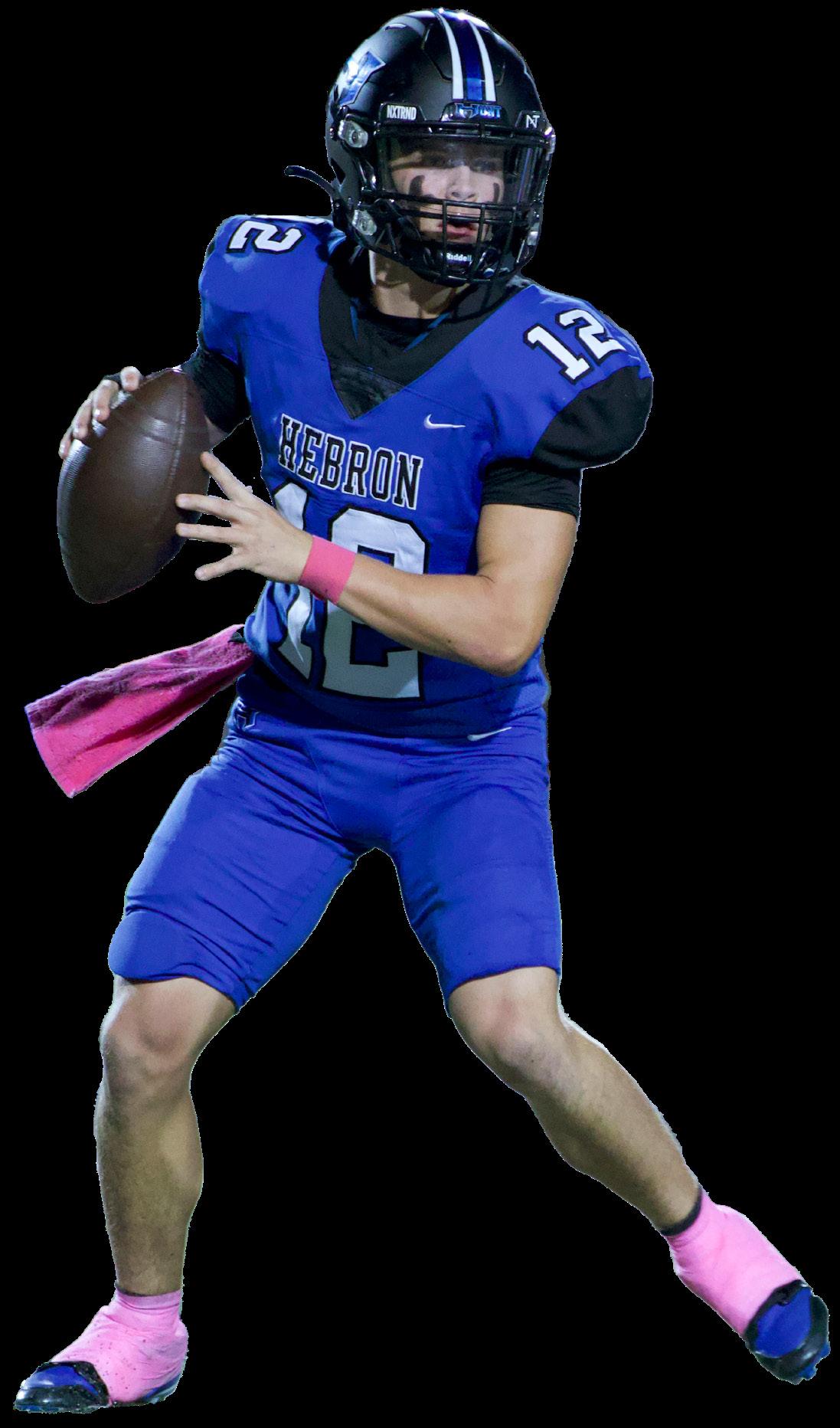
PrePareS to PaSS tHe football to HiS teammate During tHe game againSt little elm oct. 17. He ScoreD a 30yarD ruSHing toucHDown in tHe firSt quarter anD an 80yarD ruSHing toucHDown in tHe SeconD quarter. (PHoto by Daniela ValDez rioS)
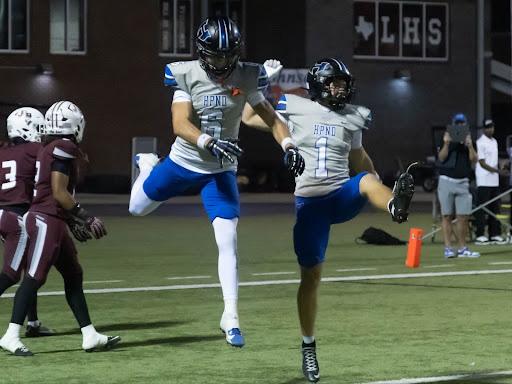
wiDe receiVer etHan Hellwig anD Drew koSter celebrate after tHe team ScoreD tHeir firSt toucHDown againSt lewiSVille oct. 23. tHe HawkS DiD not Score anotHer toucHDown in tHe firSt quarter. (PHoto by JoSHua tHomaS)
wiDe recieVer tyler Hoke JumPS for tHe ball During tHe final DiStrict game againSt flower mounD noV. 16. Hoke ScoreD one toucHDown anD tHe team won 38-7. (PHoto by Daniela ValDez rioS)
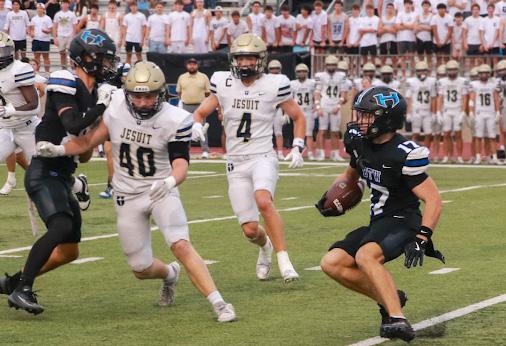
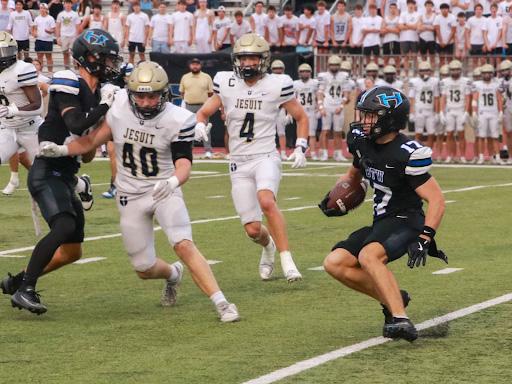
wiDe receiVer natHan Parnell returnS a kickoff During tHe firSt quarter gaining 32 yarDS following tHiS Play, JeSuit ScoreD tHeir only PointS earneD tHrougH a fielD goal in tHeir fourtH Down. (PHoto by JoSHua tHomaS)
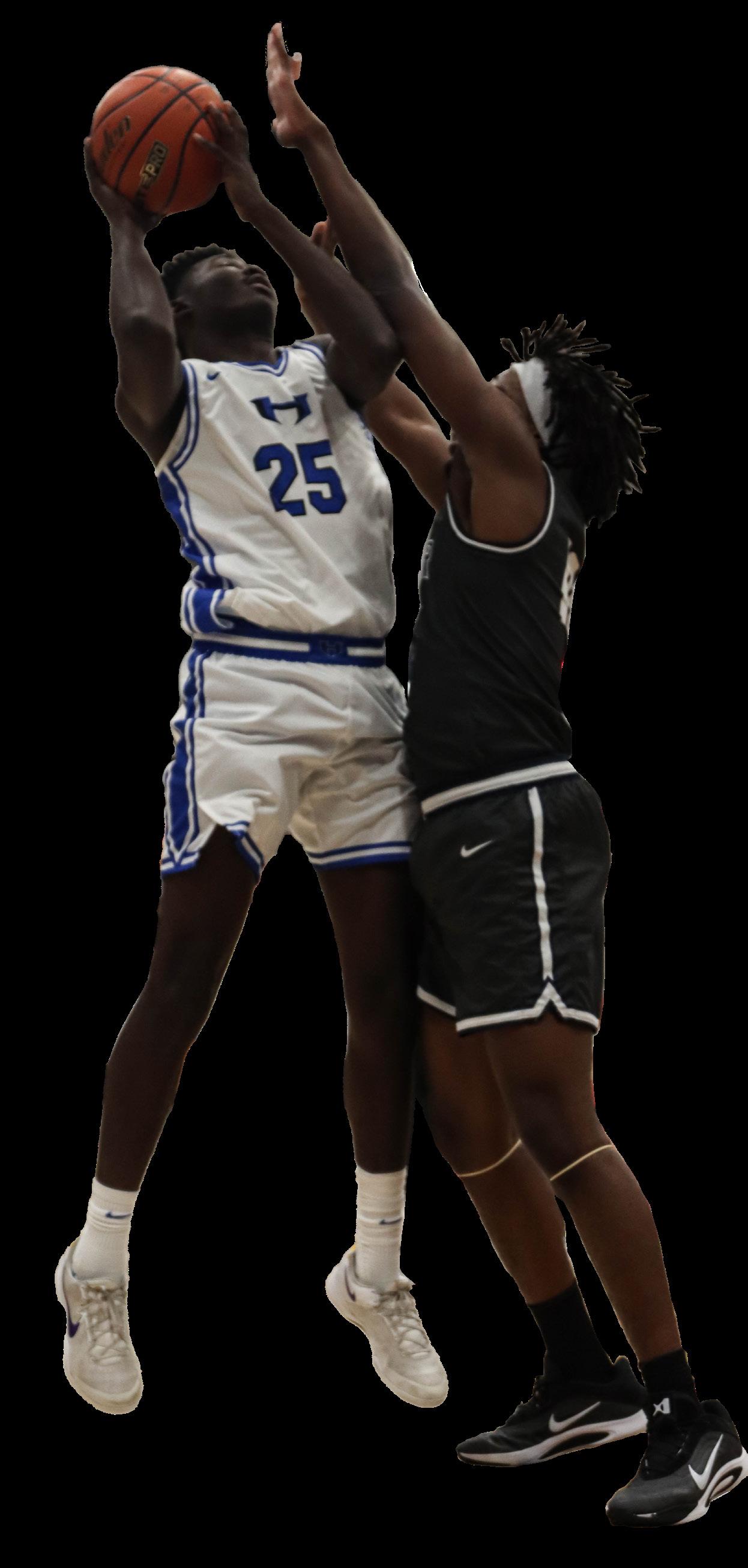
Power forwarD mekHi
Penelton attemPtS a faDe away SHot but miSSeS anD lamar getS tHe rebounD. tHe team waS winning witH a Score of 3217 at tHe enD of tHe firSt Half. (PHoto by JoSHua
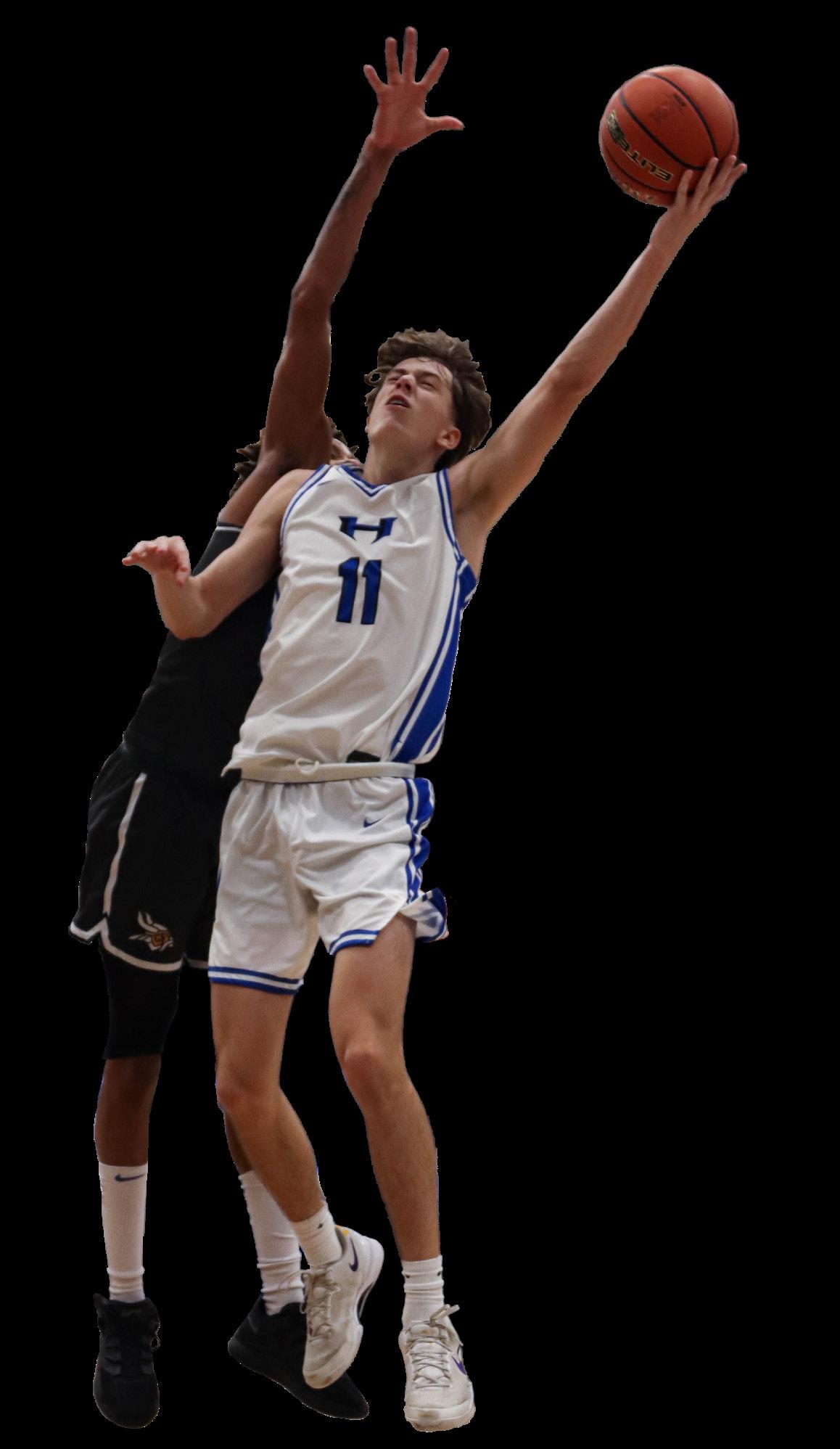
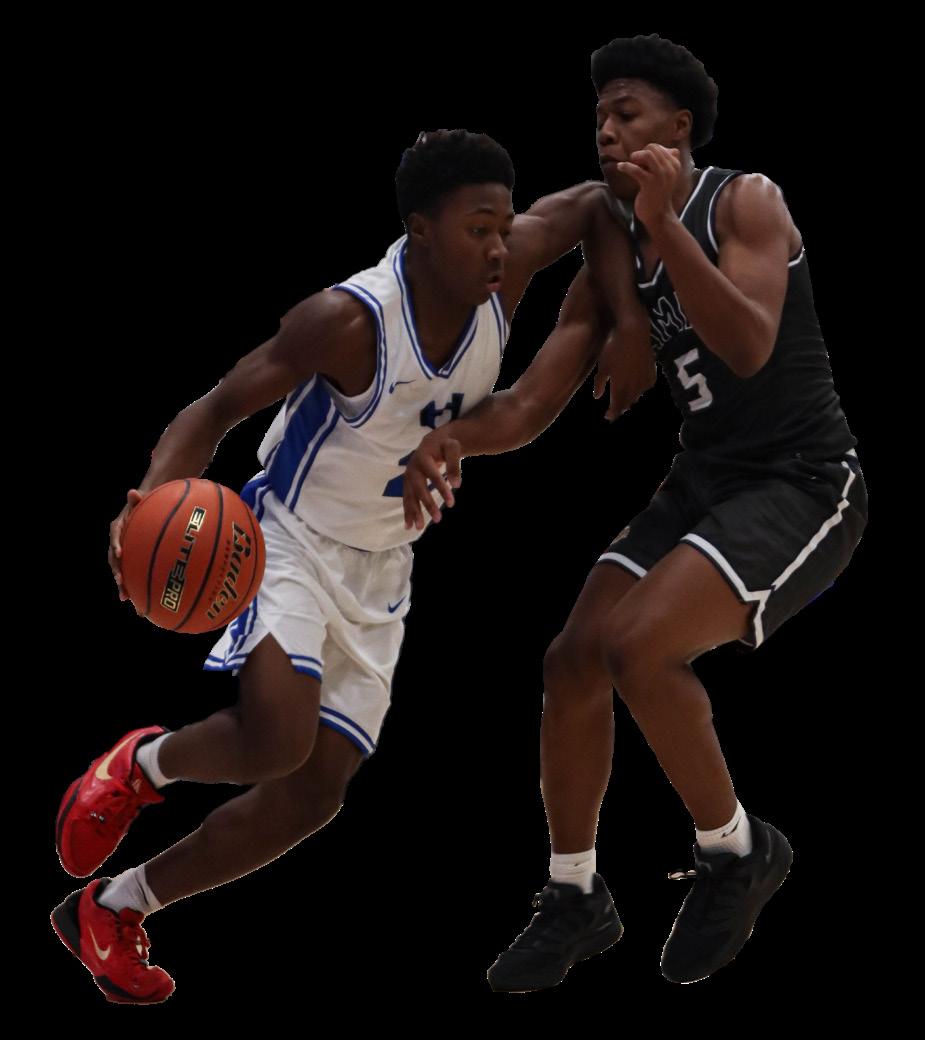
Point guarD Jake PoPe DriVeS in for a layuP but iS fouleD in tHe laSt minute of tHe laSt quarter Dec. 2 againSt lamar. tHe final Score waS 54-43. (PHoto by JoSHua tHomaS)
Small forwarD giDeon etufugH DriVeS in for tHe layuP, but tHe PoSeSSion iS StoPPeD becauSe of a foul calleD on lamar During tHe SeconD quarter Dec 2. tHe team waS leaDing 25-10. (PHoto by JoSHua tHomaS)
Soccer cleats to debate seats
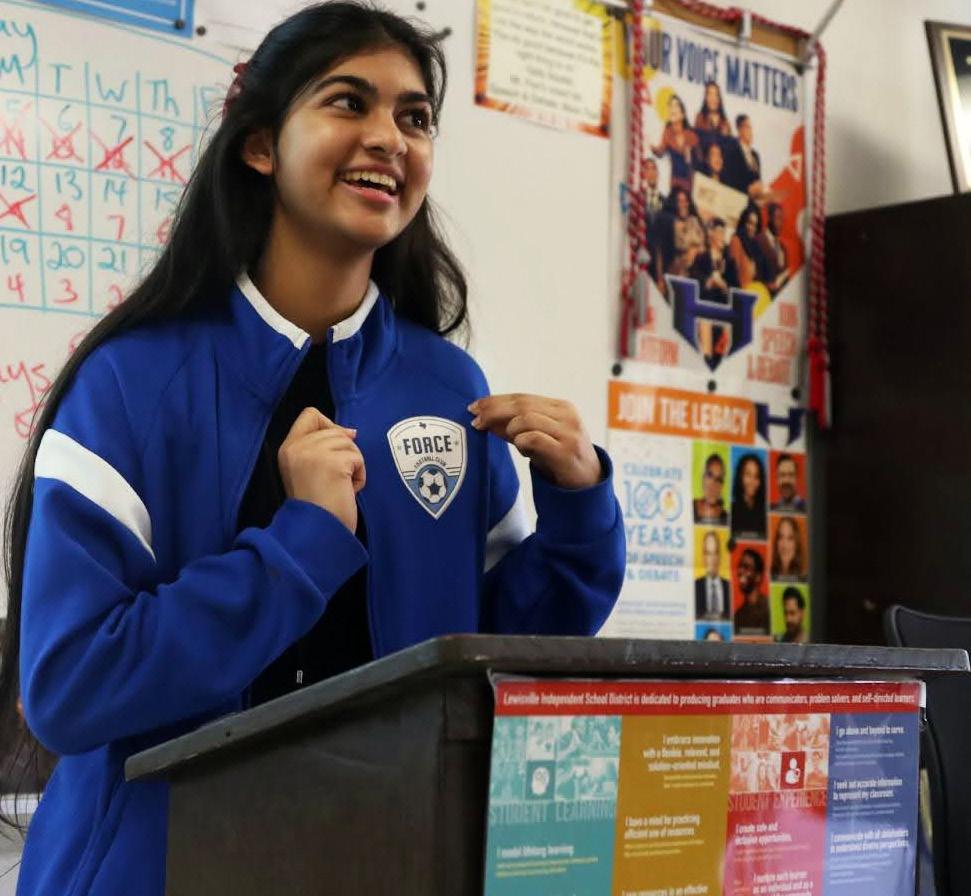
Junior JoinS Debate after Soccer inJury
Story by alySSa DawSon
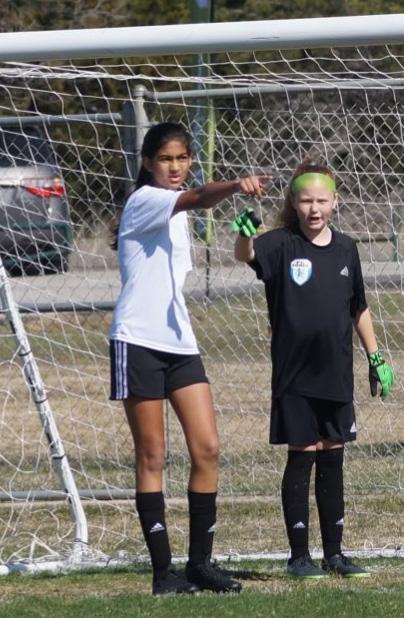
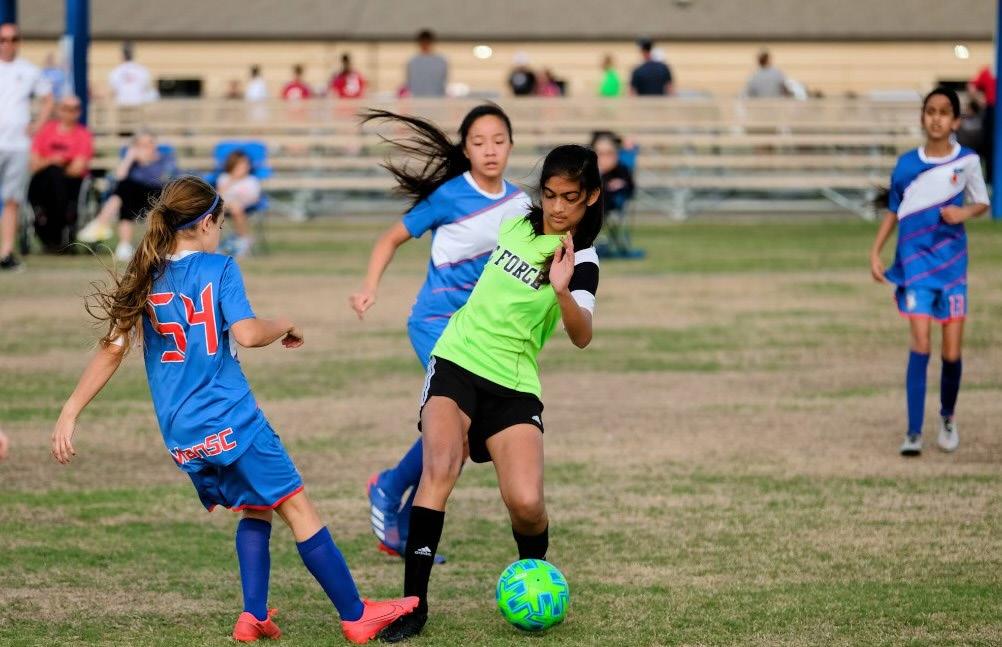
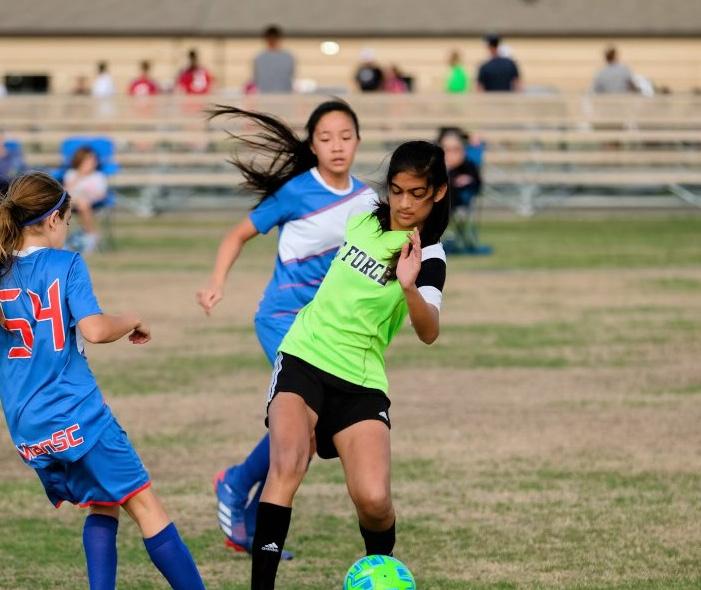
Soccer cleats crashed into her leg as she attempted to pass the ball. Tears streamed down her face as her knee hyper-extended in the wrong direction.
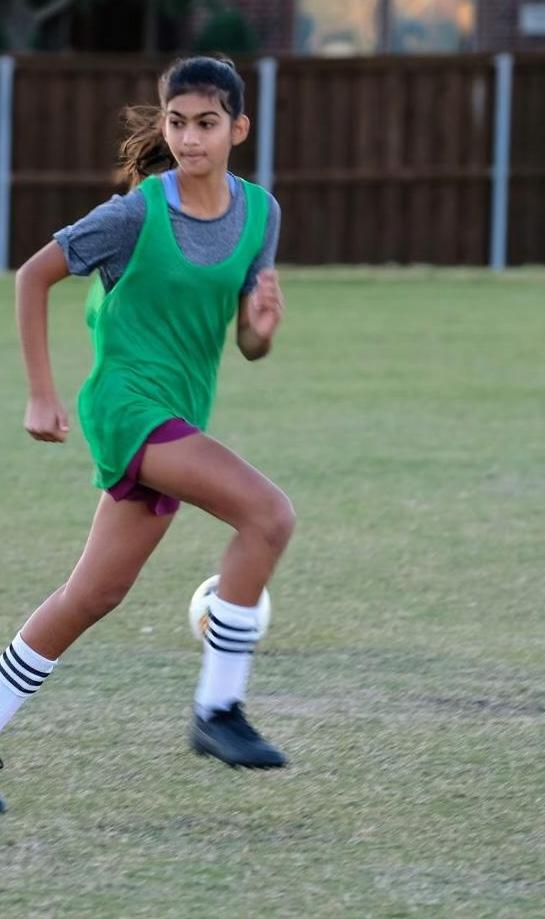
Junior Siyona Mehta was a lifelong soccer player until ninth grade when she had her second major knee injury. While she is no longer able to play soccer, she has found her voice in debate. She competed in state last year.
“I was very disappointed because I had [played] soccer my whole life,” Siyona said. “I had other things as well, but soccer was my main competitive [outlet] so I [felt] I was going to be lacking that in my life.”
Siyona’s mother Jennie Patwa is a physical therapist, is familiar with musculoskeletal issues and knows the appropriate course of action. For Siyona, that meant surgery for the tearing of both her ACL and meniscus.
“It was difficult to see her, and not just as a physical therapist, but as a mom,” Patwa said. “[It] was a very tragic feeling. I was almost upset at myself that I [could] not help her, so [I felt] sad and helpless, but right after I turned my mommy mode on and I was like, ‘how can we help you? How can we get you to the car [and] get you to the doctor?’”
Female soccer players are two to
“I definitely think about [having to quit soccer] now, but it’s not as hard as it used to be.”
After quitting soccer, Siyona decided to pursue a new competitive outlet. She devoted herself to various extracurriculars such as volunteering, orchestra — where she is the only female bass player – and, debate. Siyona participated in Public Forum debate last year and made it to the state level.
“We didn’t think we were going to go to state, but we worked really hard to get where we were,” Siyona said. “We ended up having a really good time.”
Siyona is vice president of the debate team. She has been involved in debate since her freshman year, but dedicated herself to the program last year as a representative. As vice president, she guides the debate captains and helps others improve.
“I’ve always been the person that was being mentored, and not the person who is the mentor,” Siyona said. “In the past, there’s always been [someone] to look up to, and a place to go. I would [observe] the senior members and try to reach that standard, especially with having people who were such great role models.”
Kayla Fleming was last year’s treasurer as well as Siyona’s close friend and mentor. Though she now attends Sam Houston State University, Siyona still keeps in contact with her at least once a week. Siyona said Fleming helps her with debate prep and keeps her grounded after a hard day.
“I feel bad because I know soccer meant a lot to her,” Fleming said. “But selfishly, I’m really happy it happened because otherwise, I don’t think she’d be as involved in debate as she is. At first she didn’t stand up [for herself] as much because she’s a nice person, but I think
debate’s really helped her express [her] confidence.”
Since Siyona’s event partner graduated, she’s been competing in Lincoln-Douglas (LD) debate, which is competed by individuals rather than partners. In LD debate they focus on philosophical and ethical arguments.
“That was another big change for me,” Siyona said. “I’m technically new at [LD debate] even though I’m competing in varsity, because I’ve always done [debate] with a partner. It’s so hard to transition into something where I don’t have that support next to me in a round.”
Siyona won first place in varsity LD debate at the tournament hosted by Plano Senior High School Sept. 5-6. She had seven rounds total, going through quarter-finals, semi-finals and finals.
“
For me, debate IS up there above everythIng elSe. It’S not juSt becauSe oF the competItIon aSpect, but becauSe the tIme Spent there IS tIme havIng Fun.”
-Kayla FlemIng, SIyona'S FrIend and mentor
In order to compete in nationals, competitors have to obtain 12 state points which are earned through tournaments. Siyona said her goal this year is to qualify for nationals. If she advances past the state competition in March, she will compete in the national tournament this April, and subsequently nationals over the summer.
“[I’m most excited about] sharing the traditions with the new people and showing them what it’s really like to be in the culture of debate,” Siyona said. “It happens more when you go to these tournaments and you get experience. I’m so excited for where it’ll take us as a family.”
DeSIGneD by Mareya tan
Story by Sarah Mitchel
I sat in my seat boiling with excitement.
I knew this was for me. The QR code on the scree linked to an interest form to join the Hebron Band Media Team. However, my face paled when I realized I was too far from the screen for my phone to recognize the QR code.
But I knew I couldn’t just sit there and watch the best opportunity for me to show my love for photography and graphic design go to waste.
So I stood up and moved. I chased the person down and got the QR code. Looking back, I am surprised I even did that.
But my split-second decision paid off.
American inspirational writer William Arthur Ward, once said “opportunities are like sunrises. If you wait too long, you miss them.” These “sunrise opportunities” fade just as quickly as they appear.
After submitting proof of my skills, I proceeded to the interview round. I couldn’t believe it when I got a text congratulating me for making it onto the Hebron Band Media Team. The simple action of moving and seizing the opportunity was proof that little things can make a big difference.
There have been plenty of moments in my life where I jumped at an opportunity. For the longest time, I put off starting the process of getting a license. As time passed, more of my
friends were getting licenses, but I wasn’t, yet I did nothing about it. My mother had always been there to drive me to and from places I needed to go, but even she was getting tired of it. I knew driving was a big responsibility that needed my full attention. I knew I needed it for adulthood. Last April, I finally seized the opportunity when I saw it. Now, I’m on the way to getting a drivers license.
Networking is another area that required me to seize the opportunity. Networking is something I still struggle with, which benefits me in the long run. It was scary for me to go up to others and strike up conversations. But the experience has not only built up my confidence, it has allowed me to put myself out there and connect with people who love photography as much as I do. While starting a conversation can be scary, the small action could land you a dream position.
There are always chances to seize the opportunity — another sunrise on the horizon.The rewards were worth the potential discomfort. I gained confidence in myself and the ability to capitalize on the opportunity.
The first step is always the hardest, but the sunrise will always be beautiful, as long as you actually turn your head to look.
Story by Siya Patel
I have been considered a “gifted” kid since elementary school. I remember taking a multi-part test and then receiving a letter home informing my parents that I was considered “Gifted and Talented.” Along with others alike, I was pulled out of class once a week throughout elementary school and given different course options as I moved into middle school.
I thought being “gifted” Meant being SMart. the word alwayS felt like a badge — Shiny, reaSSuring and a little SMug.
School was easy. I finished assign ments early, read books far above my grade level and could do math in my head faster than most kids could find a pencil. As I progressed through school, I didn’t study because, frankly, I didn’t have to. I thought coasting was the same thing as succeeding.
But when everything came naturally to me as a child, I never learned how to work through what didn’t.
I became terrified of effort be cause effort felt like failure. I clung to the identity that made adults proud, even when it started to feel more like a weight than a compliment. Underneath the label “gifted,” exhaustion began creeping in — quietly, invisibly — until one day, I crashed.
I crashed in high school.
My homework was harder, and my classes moved faster.
The students around me were just as smart — sometimes smarter. Suddenly, I wasn’t the kid who could guarantee an A without trying. I didn’t know how to study and I didn’t know how to fail. The burnout hit me hard: procrastination disguised as perfectionism, and anxiety over grades I used to earn effortlessly. It felt like failure.
But failure, as it turns out, is a phenomenal teacher.
I had to learn discipline, patience and the courage to ask for help. I had to redefine success as something I build, not something I inherit. I learned how to fail without falling apart, how to try again, how to show up even when things felt overwhelming.
Most importantly, I learned that
Story by eloDie Hamm
The holiday season: a fun, exciting part of the year with celebrations unique to every household.People have unique -– sometimes untraditional -– ways to go about celebrating the same holidays. From top-hats to burning stockings, here are some ways students celebrate this season with nonconformity.
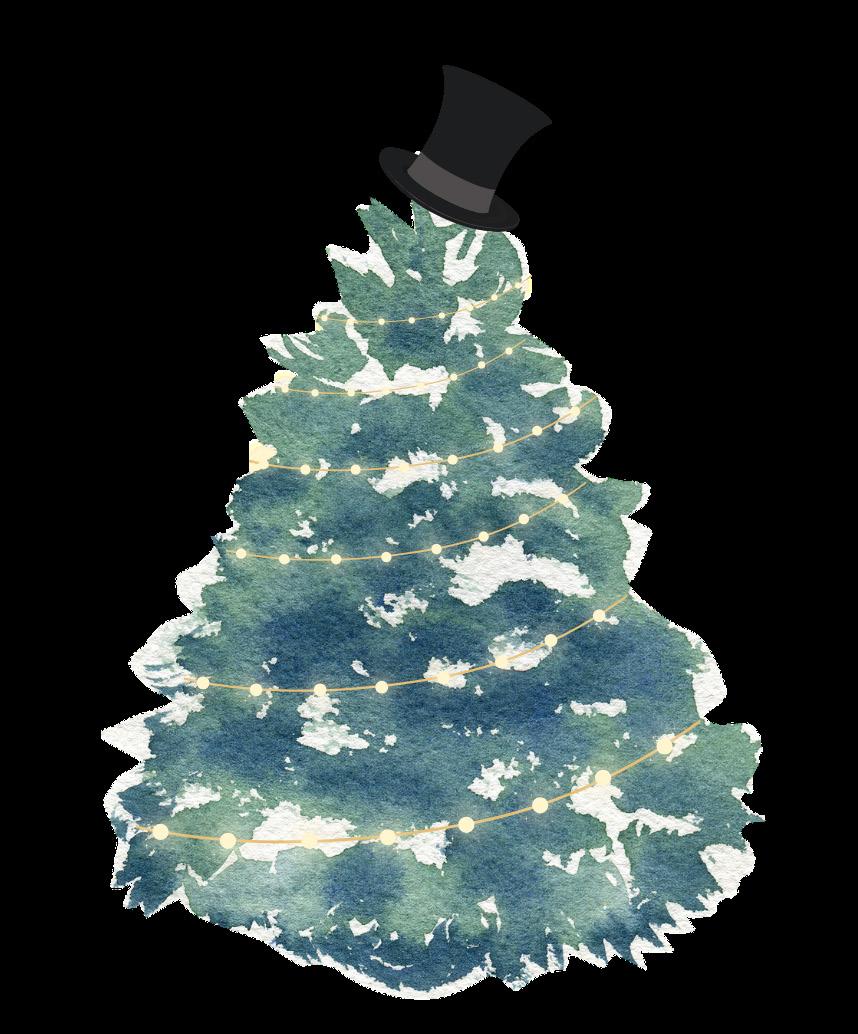
cHriStmaS tree toP Hat
Sophomore Jada Wilson’s christmas tree is nothing if not festive: lights, ornaments and to top it off — a top hat.
“We have it there for my grandpa,” Jada said. “After he passed away, we put it up there to resemble him.”
While it’s not the exact top hat he wore, it stands as a symbol of remembrance and family togetherness.
SoutH-InDian feStiVal
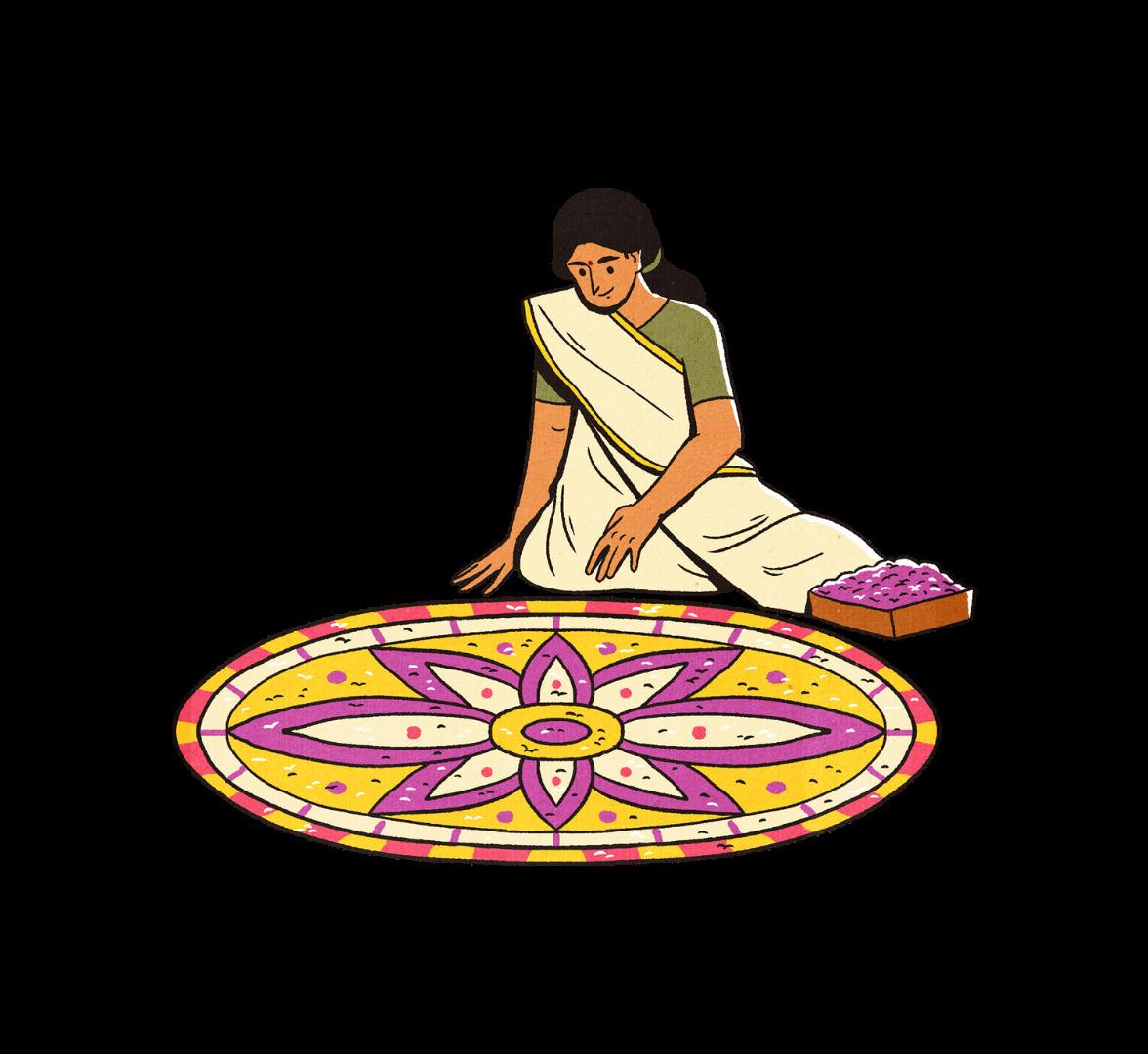
Cousins junior Athulya Sebin and junior Angela Bageras celebrate the South Indian festival of Onam, which is associated with the legend of the benevolent Asura King Mahabali returning to visit the people of Kerala.
“We are Christian,” Angela said. “So we don’t participate in the religious aspect of it, but we participate in Onam because of our language and culture.”
There are a lot of traditions with Onam, including wearing traditional clothes, consisting of brightly colored blouses and saris and making pookalam, which is art made from flower petals.
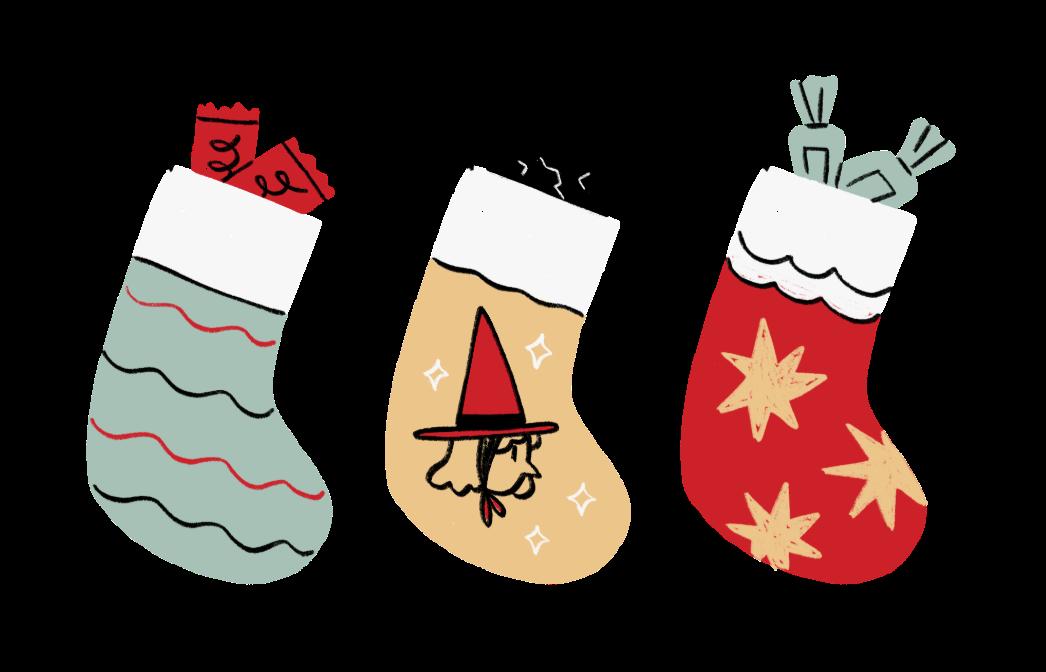
burning StockingS
Instead of hanging above the fireplace, sophomore Micheal Sculpher ’s stockings go into the fire.
“It’s just funny,” Micheal said. “I won’t say it’s fun to watch it burn, but it is. It’s just a fun thing we do.”
He doesn’t know where his families’ tradition of burning one of their stockings started, but every year, they throw a stocking — usually the youngest child’s — into the fire. It’s a way to get the family together and enjoy their time together.
Story by Siya Patel
future farmerS of america
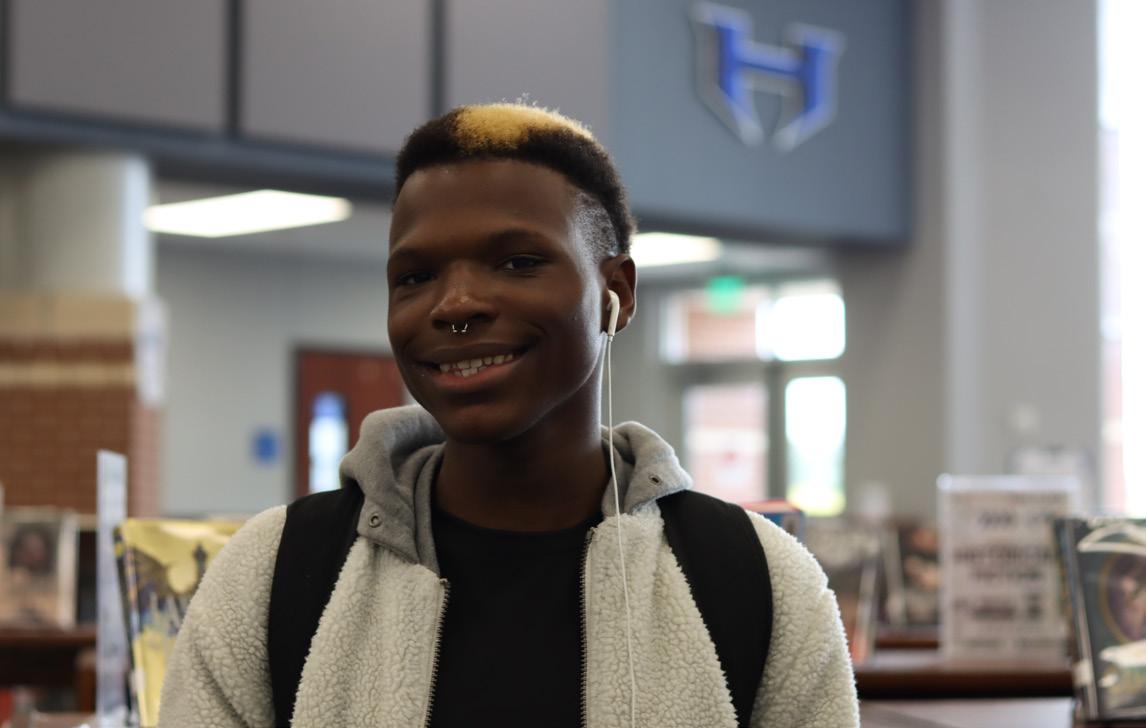
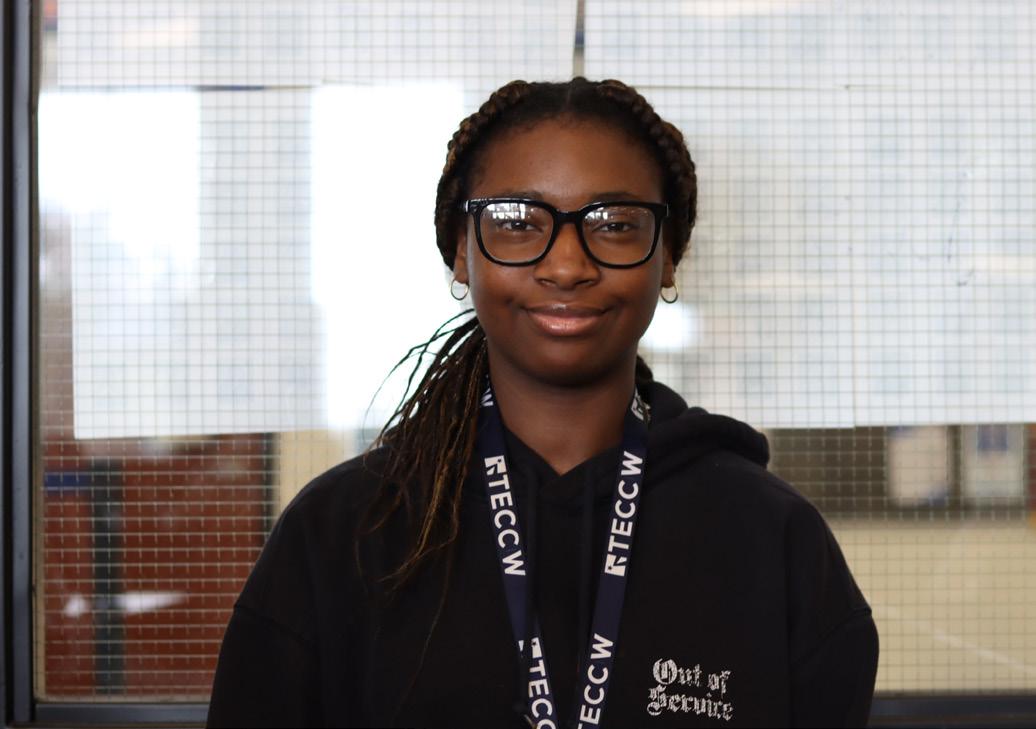
Junior Truth Smith found out about the Future Farmers of America (FFA) through her Small Animal Management class, offered at the TECC center. The club goes out and helps animals with their agricultural group and participates in animal showings at state fairs.
“I get to learn about and meet new people and animals,” Smith said. “I want to be a veterinarian, so this has been really cool.”
team
unique wayS Hebron StuDent’S SPenD tHeir time outSiDe of claSS.
Senior Drelynn Stephens is a part of the Step team. Step is a percussive, rhythmic form of dance that combines intricate footwork, claps and body movements to create a beat. The form of dance is rooted in African-American culture. Stephens said it provides a sense of community at the school.
“I love that we’re a team,” Stephens said. “Even if we have disagreements, we all work together at the end of the day to make fun sounds.”
golDen Heart
Junior Dua Rizvi joined Golden Hearts, a volunteer project, to support her friend, Ashlynn Ngyuen, and fell in love with its initiative. The group currently volunteers at senior aid facilities, or senior homes, and put together gifts for the residents they spend time with.
“We really get the opportunity to connect with elders,” Rizvi said. “I don’t think that’s a thing that we see a lot these days, so I feel like it’s a really great opportunity to branch out and do something you don’t really get the chance to do.”
Story by Sarah rogerS
As reported by The Guardian, 71% of Gen-Z goes out less, a significant drop from previous generations — generations shaped by participation in colorful, flashing dance clubs, sweat induced sock hops or nights filled with cruising down the street, the collective music from the many radios echoing through the air as teenagers interacted from out of their car windows. As a part of this so-called stay-at-home generation, the articles on Gen-Z are correct.
I am often confronted with the choice of where I want to go on the weekends or the destination of a hangout with my friends, and just as reoccurring, it always follows with the thought of I don’t know. What can I do in this monotonous city? There are new film releases, or I could go miniature golfing, but the expenses outweigh the desires I have for the activities. I could drive to downtown Dallas, but teens are hardly allowed anywhere past 10 p.m.
The internet has a big finger pointed its way. Imagine a time when every Friday night, plans were being made and staying at home was social suicide. Imagine attending discos or rock clubs to discover new and innovative music with friends. Imagine the soft serenade of doo-wop hits as kids danced around juxeboxes in diners. The consequences of the lack of these environments today cannot be understated. The communities built around them are gone, because in 2025, a night’s entertainment is at your fingertips.
It is ironic that the internet was invented to facilitate connection, when if anything, it has hindered it. Why go to a theater if there are streaming services at home? Why would anyone shop at malls when online stores exist? Why would anyone even speak to their peers at all when a text message can be sent within seconds? Gen-Z may be virtually connected, but arguably they are socially disconnected.
restricted wall due to the presence of alcohol consumption. The scenario of most is that they will work long weeks and feel satisfied that they’ve saved enough money from never leaving their home. The reality of it depresses me.
we have been called the lonely generation, the anxiouS generation and the iSolationiSt generation. there iS no coMMunity, there are no Social SkillS and there iS no revolution for the better. we are reaPing the raMificationS.
There is nowhere young people can go at night that will satisfy what teens search for. Thus, the creeping death of nightlife.
The term “nightlife” was coined in the 1850s by English novelist Herman Melville, who used it in his writings. The main preface is summarized as the “social activities, entertainment and commercial values available in a city or town after dark.” It is likely that the sudden noticing of this socialization gap is only a small piece in a larger puzzle of conflict. But why is this happening?
This absence of interaction is also due to the loss of another term: third spaces. A third space is “a public or social place, separate from home (the first space) and from work (the second space), where people can freely encounter others, build relationships and experience new ideas in a relaxed setting. They are typically non-commercial spaces where individuals from different backgrounds can come and socialize.” Lingering around is not a crime, and no one will attempt to rush you out. But of course, these are disappearing too. Young people cannot afford them, as they are getting priced out at the cost of losing their ability to live their lives outside of their required jobs or classes. Or, it could be that current centers of mingling are blocked behind an age
With the concept of “no life,” the question arises whether I am talking about the fact that young people literally have no lives, or if there is simply no life in the things around us — in the arts. In the places we used to deem valuable. It is a curse to look back and see how good it was; the conversations that were held, the exchanges and interconnectivity that formed relationships and led to the beauty of our surroundings, both visually and emotionally. It is that sense of community that we are missing.
Individuals claim that now they can be found in online spaces, but a part of humanity is missing that goes along with face to face interactions. It was the reason for going out in the first place — the aspects that led to the formation of the nightlife culture, because what is life if not to live. So live. Go out more often, turn your phone off, find people like you to create with, experience with and discover with. Nightlife only dies if you let it, because it dies with you.
Story by avery boyle
In a time where families can’t afford groceries, individuals lack access to fresh food and major gaps in nutritional knowledge persist, there is a clear need for community gardens in Texas.
IMagine thiS — in the center of every neighborhood reStS a garden blooMing with colorful flowerS, refreShing fruitS and nutritiouS vegetableS. volunteerS tend the garden, teaching children and adultS about harveSting and Planting SeedS. aS Soil iS watered, StorieS are told, ideaS are Shared and relationShiPS are built.
A community garden is a shared piece of land cultivated, managed and owned by community members. They provide opportunities for social interaction, education and access to fresh food. While the operation of these gardens can differ between a commu-
nity’s unique needs and circumstances, studies show that greening a vacant space drastically reduces feelings of depression by up to 60%.
As Texas demographics change rapidly and regions increasingly become more urbanized, gardens would ultimately restore a sense of community in a state where only 43% of people interact with neighbors at least once a week.
The food crisis is negatively affecting people all across the nation, and in Texas, 1 out of 6 people experience food insecurity. Those living in food deserts, an area with limited access to affordable, nutritious food, would greatly benefit from the accessibility of a communal garden. During periods of recession and inflation, gardens are affordable and help relieve financial burdens.
Gardens owned by the people also provide deep, educational connections. Especially in innercity, lower income areas, where the youth lack quality education, community gardens provide volunteering opportunities where young people can learn about agriculture, ecology and earth science.
While personality clashes and cultural differences can arise, community gardens provide a space for meaning-
ful, collective work. Immigrants and refugees have great potential to grow through community gardens, as they can grow closer with their newfound community, and feel supported by volunteers — an outcome that greatly benefits any minor disagreements.
Plano Community Garden, a green space in Plano, Texas, provides over 5,000 pounds of fresh organic produce annually to local food pantries serving families in the area. Run by volunteers, in the garden rests 50 raised beds. However, neighborhoods still lack gardens, especially in low income areas such as South Dallas where there are less than a dozen.
Ultimately, in a time where Texas demographics are changing by the minute, and a food crisis is on the rise, we need communal gardens. We need food for the people, by the people.