Staff Contributors
Ava Au
Staff Contributors
Maryam Aziz
Avery Boyle
Avery Boyle
Avery Boyle
April Choe
April Choe
April Choe
Sarah Mitchell
Sarah Mitchell
Sarah Mitchell
Siya Patel
Siya Patel
Alexander Musal
Aman Puttagunta
Aman Puttagunta
Siya Patel
Mayera Tan
Mayera Tan
Aman Puttagunta
Daniela Valdez Rios
Daniela Valdez Rios
Mareya Tan
Juliana Werlinich
Juliana Werlinich
Daniela Valdez Rios
Juliana Werlinich
Adviser
Adviser
Adviser
Katherine DiDonato
Katherine DiDonato
Katherine DiDonato
The Hawk Eye magazine is an official publication of Hebron High School. It is a student-produced magazine which strives to represent the student voice. We will aim to report all news relevant to Hebron High School and its student body without bias to race, religion or creed. Views expressed by columnists are their own personal opinions and do not necessarily represent the views of the entire staff. Editorials reflect the staff opinion and may not reflect the views of the school administration. We encourage reader input via letters and story ideas. Contact a staff member or fill out the contact form on our website, www.hebronhawkeye.com, with any of these items. The Hawk Eye is a member of Interscholastic League Press Conference, Texas Association of Journalism Educators, Association of Texas Photography Instructors, the Journalism Education Association and the National Scholastic Press Association.
The Hawk Eye magazine is an official publication of Hebron High School. It is a student-produced magazine which strives to represent the student voice. We will aim to report all news relevant to Hebron High School and its student body without bias to race, religion or creed. Views expressed by columnists are their own personal opinions and do not necessarily represent the views of the entire staff. Editorials reflect the staff opinion and may not reflect the views of the school administration. We encourage reader input via letters and story ideas. Contact a staff member or fill out the contact form on our website, www.hebronhawkeye.com, with any of these items. The Hawk Eye is a member of Interscholastic League Press Conference, Texas Association of Journalism Educators, Association of Texas Photography Instructors, the Journalism Education Association and the National Scholastic Press Association.
The Hawk Eye magazine is an official publication of Hebron High School. It is a student-produced magazine which strives to represent the student voice. We will aim to report all news relevant to Hebron High School and its student body without bias to race, religion or creed. Views expressed by columnists are their own personal opinions and do not necessarily represent the views of the entire staff. Editorials reflect the staff opinion and may not reflect the views of the school administration. We encourage reader input via letters and story ideas. Contact a staff member or fill out the contact form on our website, www.hebronhawkeye.com, with any of these items. The Hawk Eye is a member of Interscholastic League Press Conference, Texas Association of Journalism Educators, Association of Texas Photography Instructors, the Journalism Education Association and the National Scholastic Press Association.
Find us online by scanning this QR code or visiting hebronhawkeye.com!


Find us online by scanning this QR code or visiting hebronhawkeye.com!
Find us online by scanning this QR code or visiting hebronhawkeye.com!

02



The whistle blows and the track erupts.
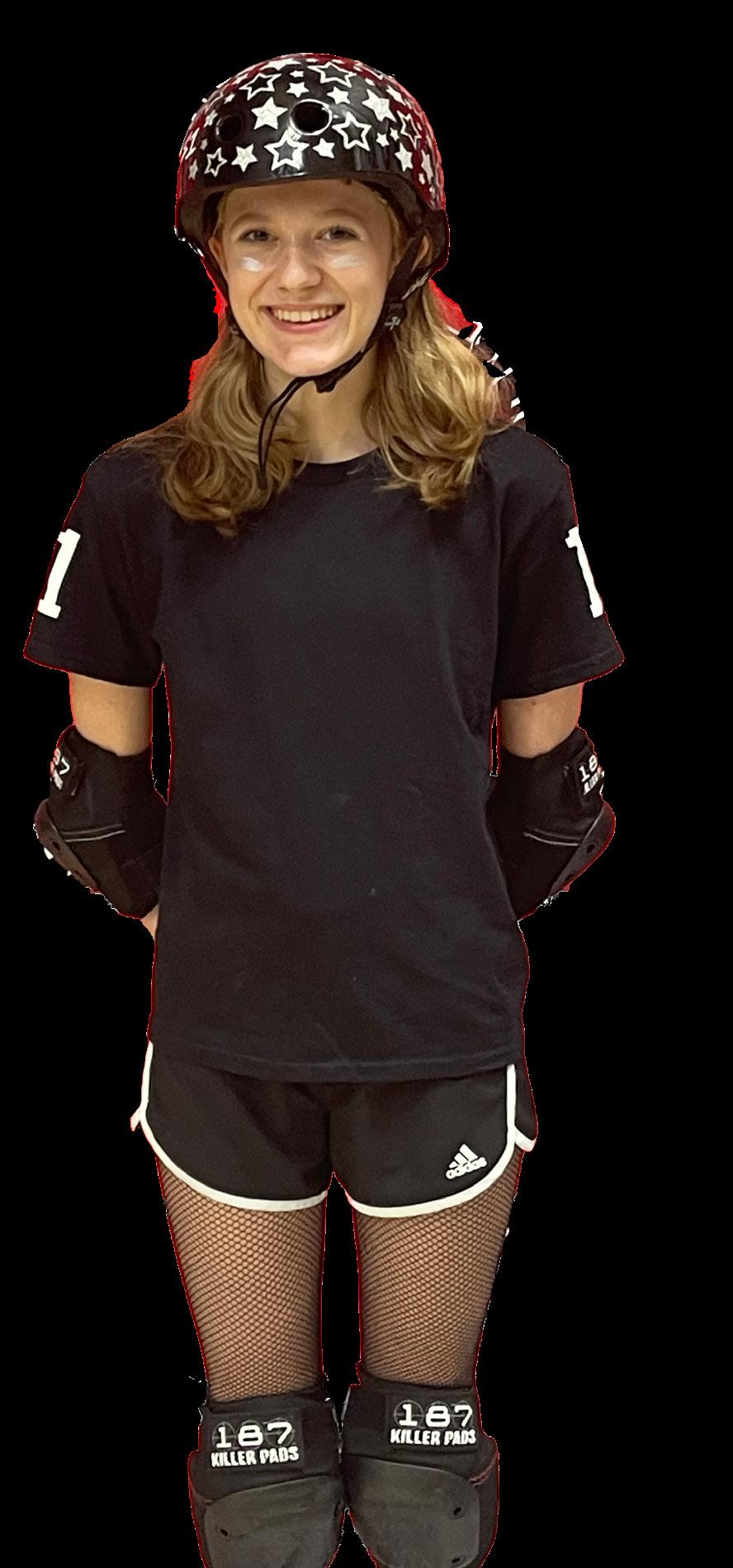
Wheels scrape sharply against the polished floor. A tight wall of skaters lock shoulders. In the center, a girl looks around at her teammates and braces for impact. When the jammer charges, she doesn’t flinch — she leans in.
On the roller derby track, sophomore Jessalyn Casall isn’t just another skater.
She’s Stardust, a nickname only her team calls her.
Jessalyn skates for the junior league of the Dallas Derby Devils, competing with both her home team, Rolling Rebellion, and the advanced Junior All Stars travel team. After starting in 2022, she has grown from a beginner afraid to fall into a reliable blocker and emerging leader during a rebuilding season for her team.
“It was super welcoming,” Jessalyn said. “I started from just knowing how to move on my skates to doing a whole bunch of stuff I never thought I would have been able to do.”
Before roller derby, Jessalyn spent six years rock climbing alongside her dad. But she felt ready to step away from the sport shaping much of her childhood.
Looking for a new sport to keep her active, she discovered roller derby almost by accident.
Jessalyn was attending a game to watch her friend’s sibling and the energy of the track hooked her without understanding the rules of the game.
“Roller derby is a really fun sport to watch,” Jessalyn said. “Even if you don’t know what’s going on, you can watch people hit each other, and as long as you know that, I think it’s fun.”
Roller derby is a full-contact sport played on an oval track with five skaters




Story by Siya patel
from two teams on the floor at once. Four blockers form defensive walls, while one jammer, identified by a star on their helmet, scores points by passing opponents. The game requires constant communication, quick decision-making and controlled physical contact — skills that Jessalyn’s teammates name as her strong suits.
“She’s such a reliable player and teammate in gen eral,” teammate Katy Davis said. “She’s a really great communicator and works really well with all of our players. She takes feedback and communicates with the rest of the people [on] the wall.”
Jessalyn primar ily plays blocker, a position allowing her to stay engaged in the action without the repeated laps required of jammers. Blocking gives her the opportunity to fo cus on strategy and teamwork, but she said the collaborative nature of the role is what she loves most.
“You are always making contact with people,” Jessalyn said. “When you make a good move, it’s not just one person that made that good choice, it’s everyone collabo rating together.”
Teammate Claire Koch said that Jessalyn’s charac
ter makes her invaluable to the team. In a sport built on contact, Jessalyn still prioritizes sportsmanship and kindness.
“She’s a really kind person,” Koch said. “When we were in walls together she was really stable and calming, especially when I was stressed. She [is] able to take over and show leadership.”
This season is a turning point not just for Jessalyn, but for the whole team. After struggling in previous seasons and rebuilding from pandemic losses, the junior team has already secured four wins in the first month of competition. Their next tournament, The Clover Cup, is taking place
“One of my favorite memories is us realizing that we are gonna make it this year,” Jessalyn said. “We’re expecting to keep seeing that hapJessalyn is also an active member in theater at school. With about six hours of practice each week, plus additional workouts, she has learned how to juggle commitments while staying active She said she hopes to continue skating through high school and make the most of the expe-
“I don’t personally see myself going past high school,” Jessalyn said. “I’m happy that roller derby just fell into exactly the right place and time for me.”

tIktok anD newS conSumPtion
Sixty second news.
A student hearts a video, checks the comments then scrolls.
This is the cadence of 56% of young Americans every day. TikTok has transformed the lives of millions — shaping culture and influencing fashion — and also instrumental in spreading information worldwide. A survey conducted with juniors at Hebron concluded that 65% of the 20 students participating use TikTok as their main source of news.
In eight years since its merging with short-form video app Musical.ly, TikTok’s become the top social media platform in the world, with almost two billion users monthly.
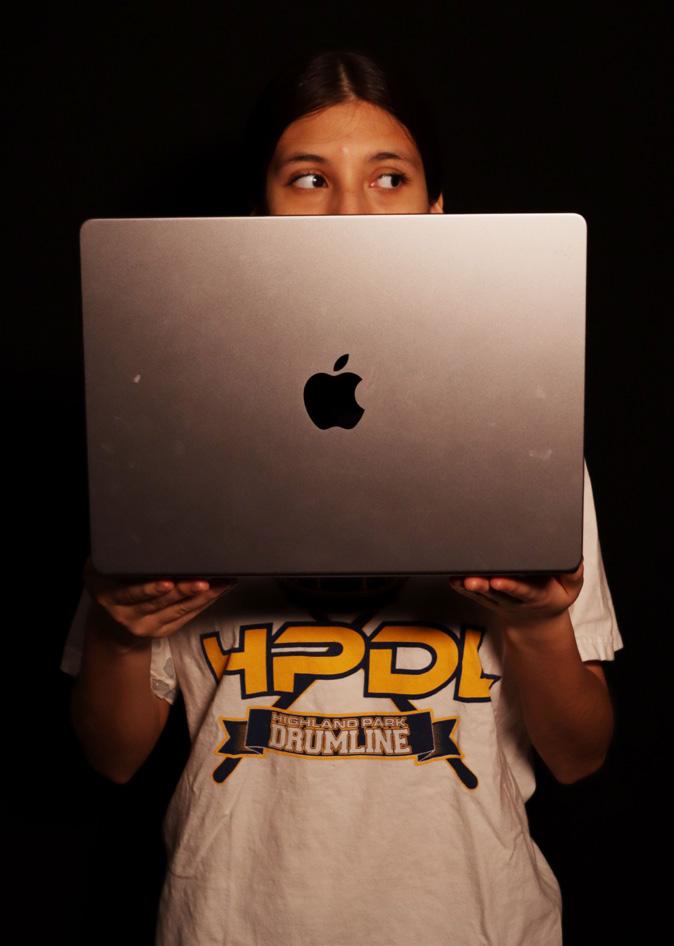
“I have a short attention span,” junior Diya Joseph said. “[On TikTok], I can just swipe and swipe and see a bunch of cool things. Shorter videos are just more entertaining [for me].”

Story by MaryaM aziz
The digitalization of news has made global scale information available to more people.
“Now, [news] is way easier, shorter and more compact,” junior Adrian Nyamongo said. “I can get the main ideas with out having to watch a full news program.”
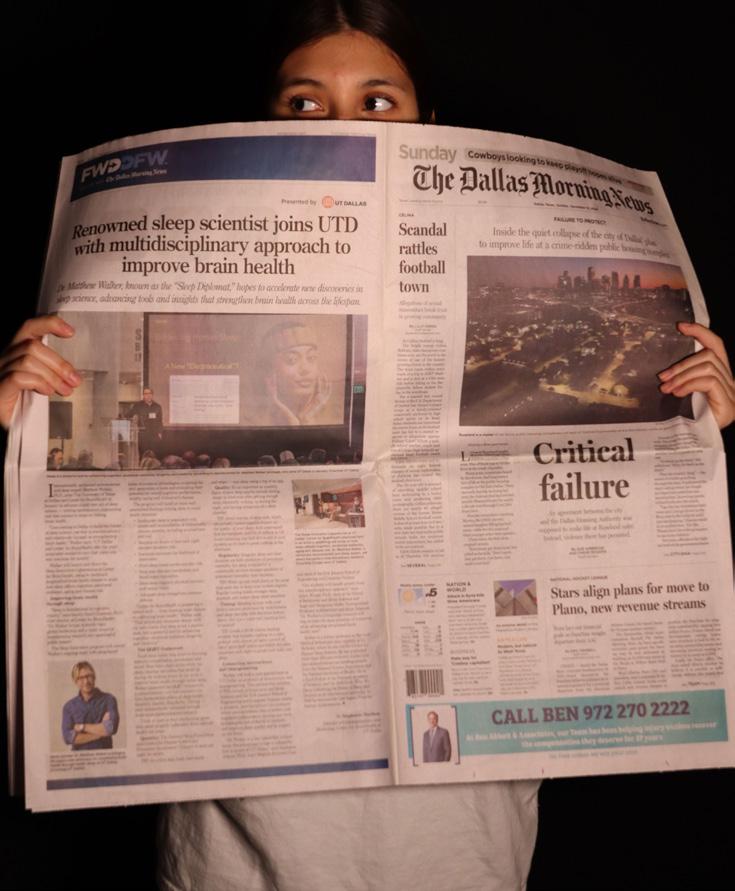
TikTok has become a consistent source of news stories for young people. In January of 2026, TikTok became the top news source for Americans ages 18-29. Associated Press reported that short, concise videos help news become more available to people.
“TikTok has made news more fun for me,” Nyamongo said. “I can absorb information while [enjoying myself] scrolling, instead of the traditional way like on a TV.”
The growth of TikTok as a news source coincides with the all time high reports of misinformation. Pew Research shows less than 1% of the accounts people
follow on TikTok are actually from institutional news sources. With its short-form video content, reported by Capitol Technology University, TikTok provides a platform for false information to be presented as credible. Inaccurate facts are deliberately spread on the app to harm others – a process called disinformation.
Newsguard states that TikTok has long been considered the “new Google.” What separates the app from the search engine, however, is the lack of reliable sources and security of knowing accurate information is being presented. Newsguard reports that one in five TikToks are fueled by misinformation.
“It’s pretty weird because TikTok is replacing real new sources like CNN and CBS,” junior Jacob Tran said. “Things like that are definitely more credible because it’s more controlled. On TikTok, anyone can make content or news just for likes and views.”
Over half of the top 100 videos discussing mental health aid contain amounts of misinformation.
Other medical advice presented on the app has caused
harm to those participating, such as on “#sinustok” where unlicensed creators recommended shoving garlic up one’s nose to unclog sinuses. This caused irritation and nasal tissue damage.
“It’s scary,” said Tran. “You don’t really know for sure if what you’re watching is the truth.”
News literacy — the ability to analyze and verify the credibility of news critically — is rapidly declining within young people in America.
Before TikTok, news primarily was spread through radios, television and physical papers. Information moved slower and followed editorial guidelines and fact-checking.
“Back then, you had to go to a very specific news outlet or resource,” AP English Language and Composition teacher Nicole Perkins said. “But I feel like now you have regular people delivering that news information.”
With the growth and integration of technology into our daily lives, the declining news literacy rates are brought into the classroom as well. 38% of US adults have practiced news and media analysis in high school.
“There’s more mediums we have to be aware of now to be able to spot something and tell if it’s credible,” Perkins said. “That’s not always in the scope of what we can do.”
A study by The Guardian in There were over 1.3 billion artifi-
cially generated videos on the app in 2025 – a number that has been increasing. The Guardian reports AI content videos are often used to spread misinformation.
“I feel like with AI, it’s not easy to teach [news literacy],” Perkins said. “It’s just so new, you have to be aware of so many different things.”
On TikTok, anyone can post, so authority. Creators are paid by engagement.
“In my opinion, the goals of [creators] on TikTok is to get views, likes and money,” Tran said. “They just want to catch the eye of people.”
“Doom-scrolling” — excessive scrolling online regardless of how it makes you feel — allows for a lot of passive consumption of content.
“When you’re in that doom-scrolling mindless spiral, you’re probably not going to [dig deeper] with what you’re watching,” Perkins said.
Media Literacy Now reports that because TikTok is so heavily integrated in modern society, it’s not leaving, meaning improving the young generation’s news literacy is critical in defending against misinformation and fake news.
55% of Americans support legislation restricting false information and content..
“It seems difficult just because of the volume of videos that are being produced and posted,” junior Gavin McCain said. “But
I think there should be more restrictions and TikTok should be working towards that.”
By partnering with fact-checking organizations like PolitiFact and Snopes, there are now tools on the app’s interface to help viewers identify and report misinformation.
According to Media Literacy Now, young people are sharpening their discernment abilities to aid in responsibly consuming news and content.
Teachers at Hebron have implemented news literacy in their instruction. In English and History classes, students are acquiring the skills needed to understand media and news by practicing analysis and credibility checks.
“[I teach my kids how to recognize that], we can keep that in the back of [our] mind when reading news,” Perkins said. “That way, we can get ahead of [misinformation] and be a little bit more critical up front instead of being reactive later.”

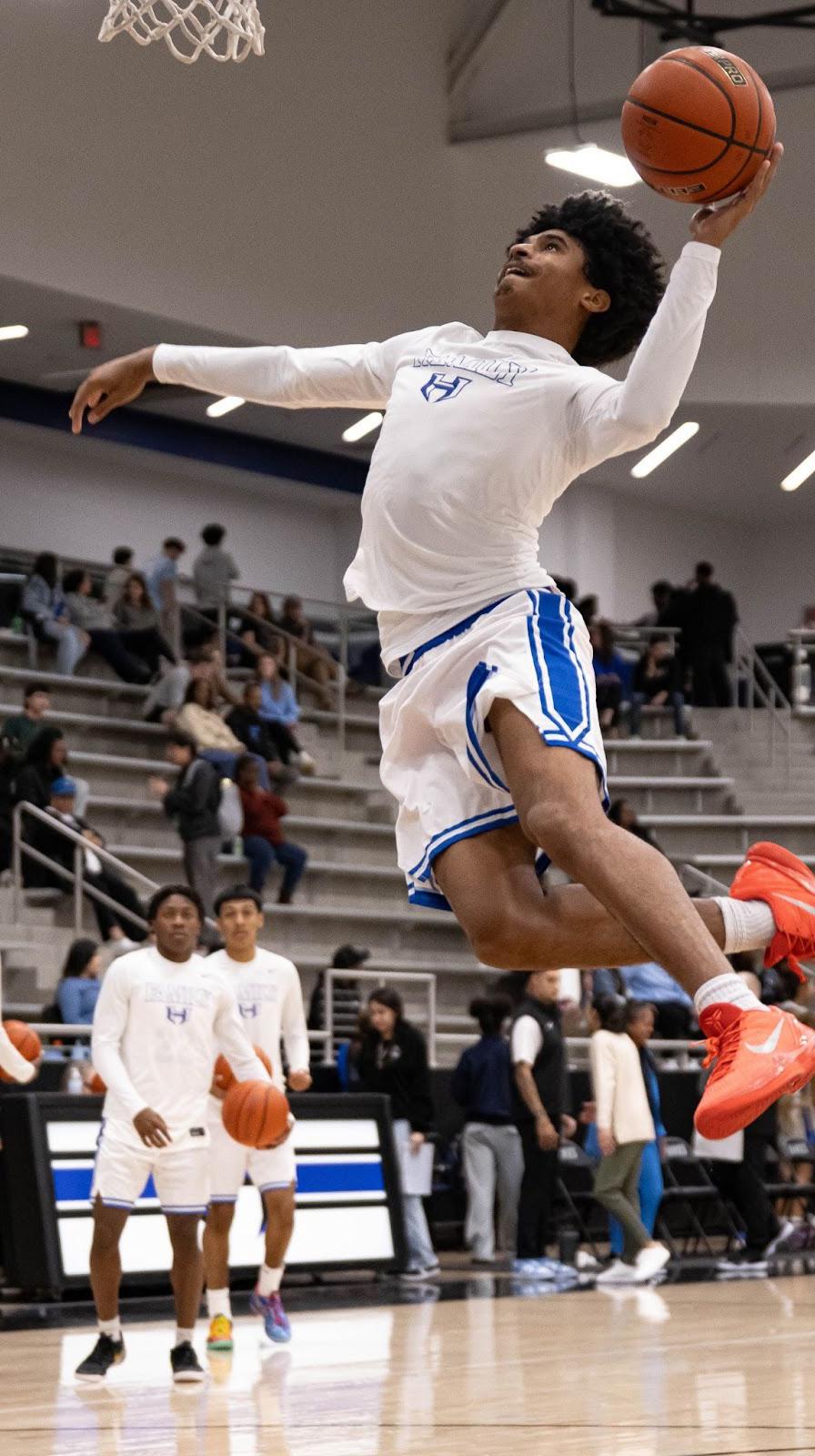
guarD JeVonaye brouSSarD PracticeS Dunking During warmuPS. tHe team StanDS 2-8 in DiStrict anD iS rankeD no. 318 in tHe State.
(PHoto by JoSHua tHomaS)
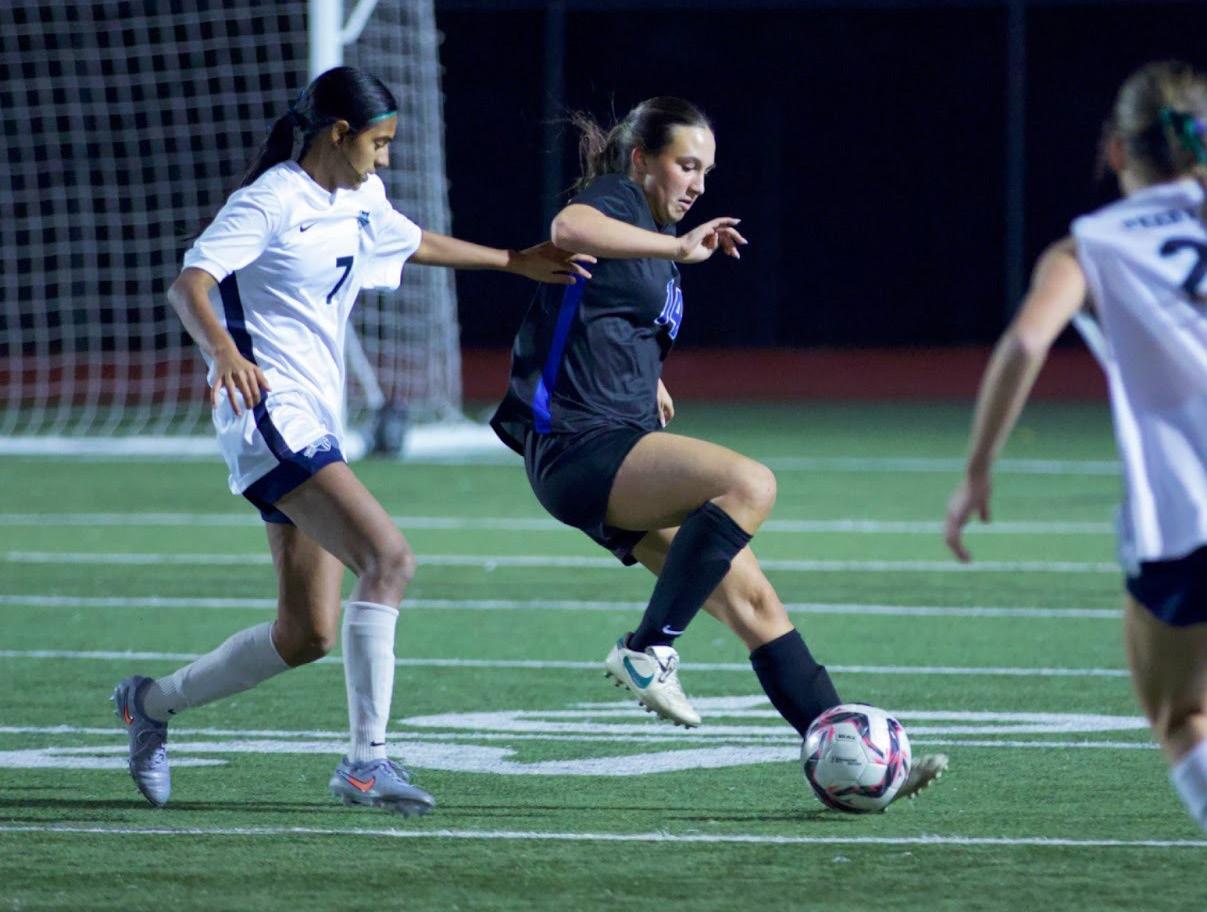
DefenDer kaylee riVera cutS beHinD a reeDy Player at tHe beginning of tHe game. riVera waS calleD uP to Play witH tHe Puerto rico u20 national team earlier tHiS year.
(PHoto by Daniela ValDez rioS)
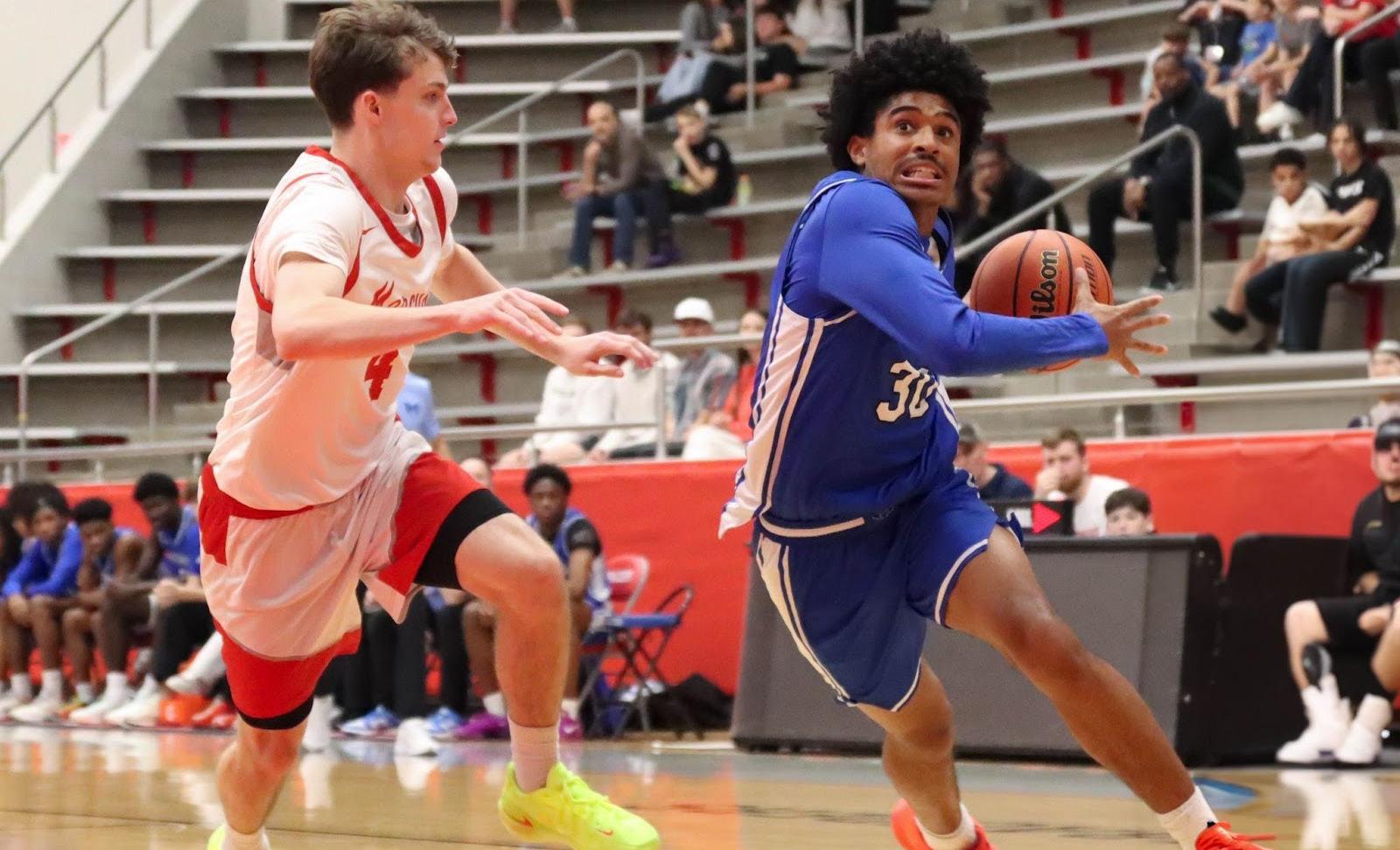
guarD JeVonaye brouSSarD DriVeS into tHe Paint anD ScoreS a layuP, making tHe Score 16-16. tHe HawkS finiSHeD tHe firSt quarter 16-18. (PHoto by JoSHua tHomaS)
miDfielDer leaH
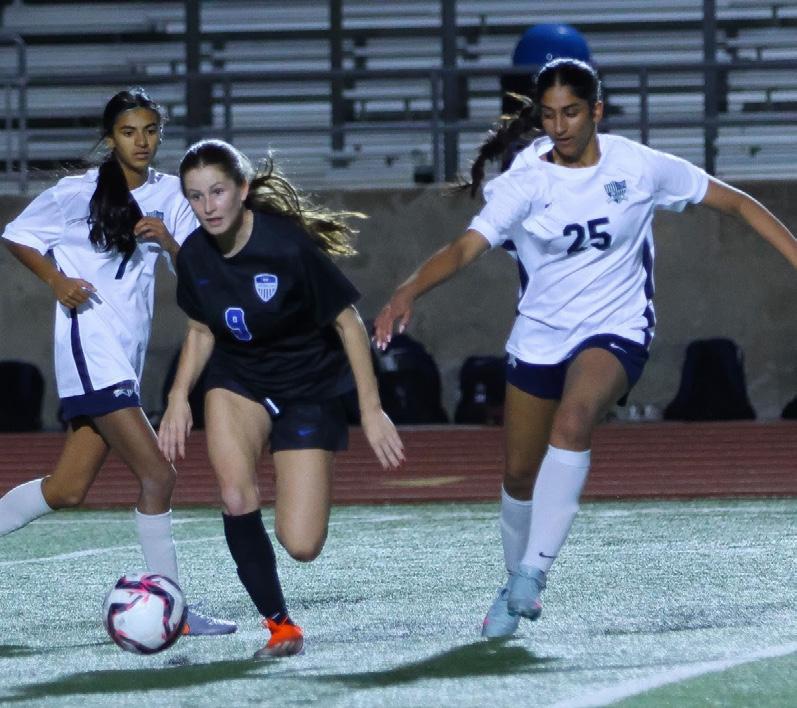
SimPSon StealS tHe ball from a reeDy Player anD PaSSeS it forwarD to barko. “we wanteD to go in witH [tHe] minDSet of [winning] tHiS game,” SimPSon SaiD. “It waS imPortant to come out Strong anD HaVe eVeryone eXciteD to Play.”
(PHoto by Daniela ValDez rioS)
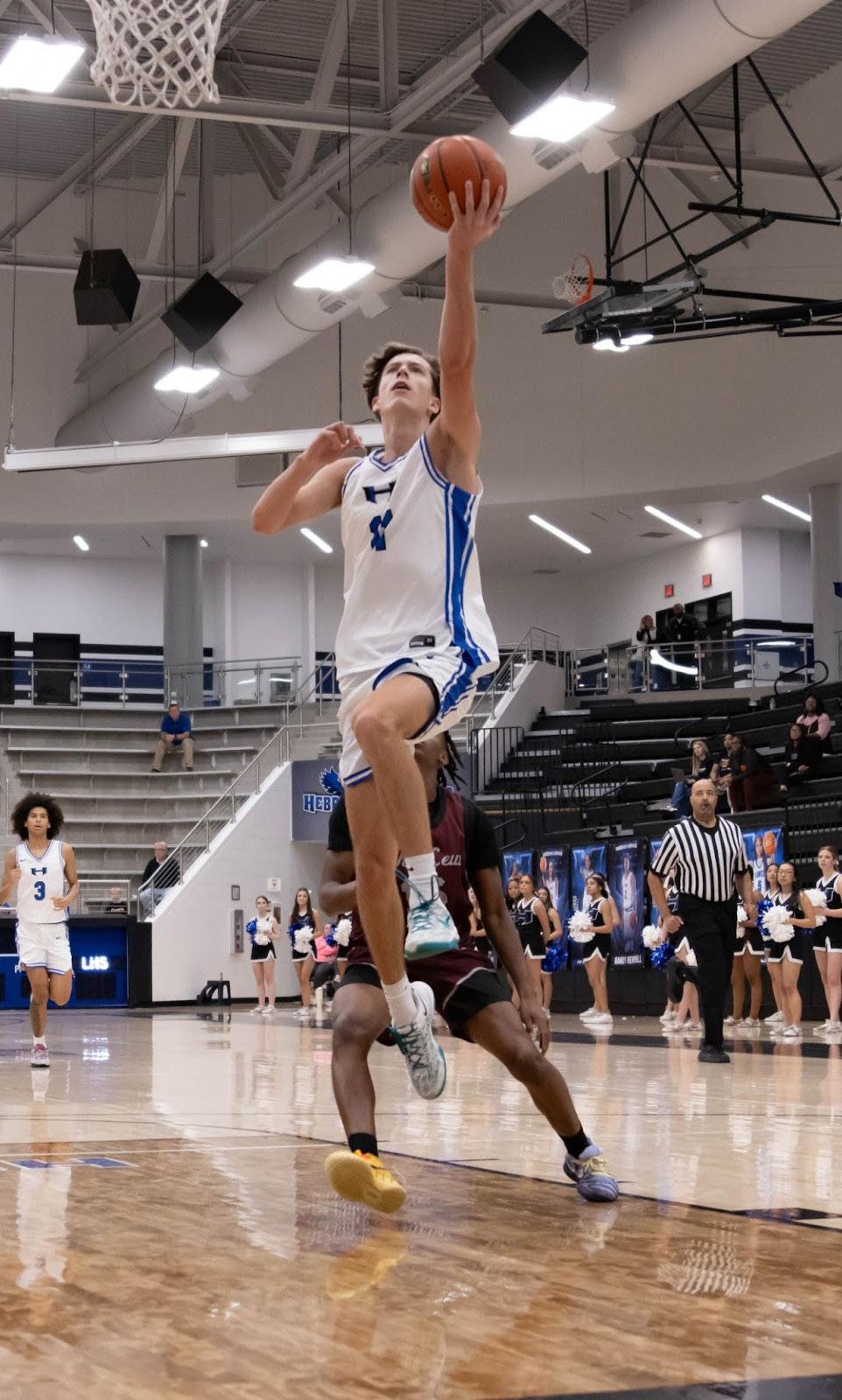
guarD Jake PoPe DriVeS in for a layuP During a faStbreak anD SucceSSfully makeS it in. tHe Score waS 10-4 late in tHe firSt quarter. (PHoto by JoSHua tHomaS)
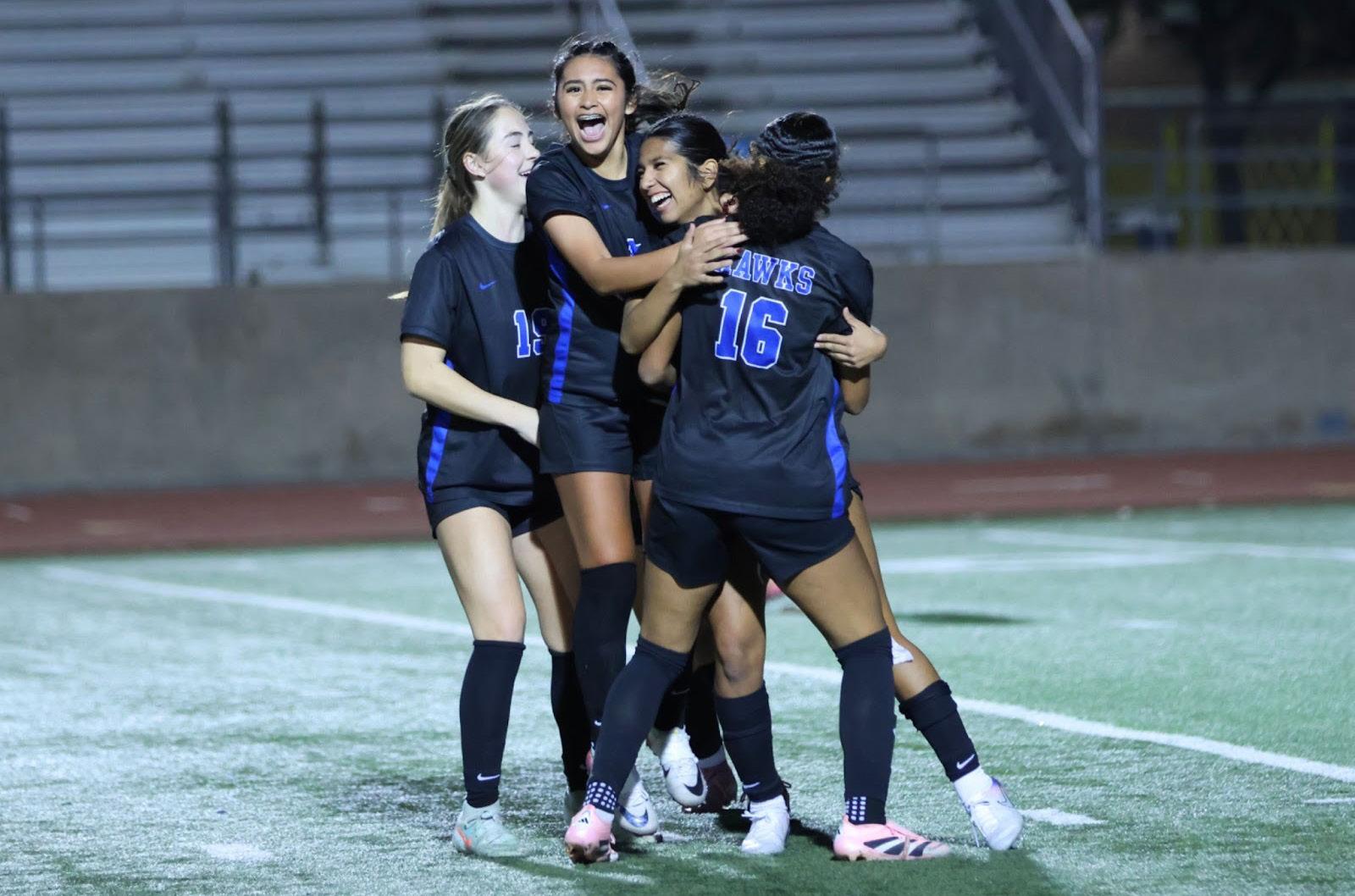
after forwarD zoe Puente ScoreD tHe SeconD goal of tHe game in tHe 20tH minute, DefenDer bella ramirez JumPS on toP of Her. Puente HaS been on tHe VarSity team Since Her freSHman year. (PHoto by Daniela ValDez rioS)
Story by Juliana Werlinich
The day was a blur. However, one thing was certain. She was home.

In 1999, two years after English teacher and Academic Decathlon (AcDec) coach Donna Friend started her first teaching job at The Colony High School, Hebron High School opened its doors for the incoming freshman and sophomore class. Friend was inspired by her fellow coworkers to interview for and accept a job teaching English I at the new campus.
The campus was built right across the street from her apartment. She spent years watching the construction before stepping inside for the first time a month before it was set to open. She had gotten married in the summer of that year to her high school sweetheart, stepping into the new school with a new life herself.
Now, Friend is the last teacher to have been here since the campus opened in 1999.
“I didn’t know if I would ever get an opportunity like that in my career. How often do teachers get to open brand new schools and start from the ground up?,” Friend said. “I just didn’t know if that would ever happen again, and I didn’t want to miss the chance.”
When the school opened, there were a total of 498 students in the entirety of the campus, with about 50 teachers instructing. Friend said the teaching staff was mostly made up of brand new teachers and transfers from The Colony High School.
“I used to be able to walk the halls and know
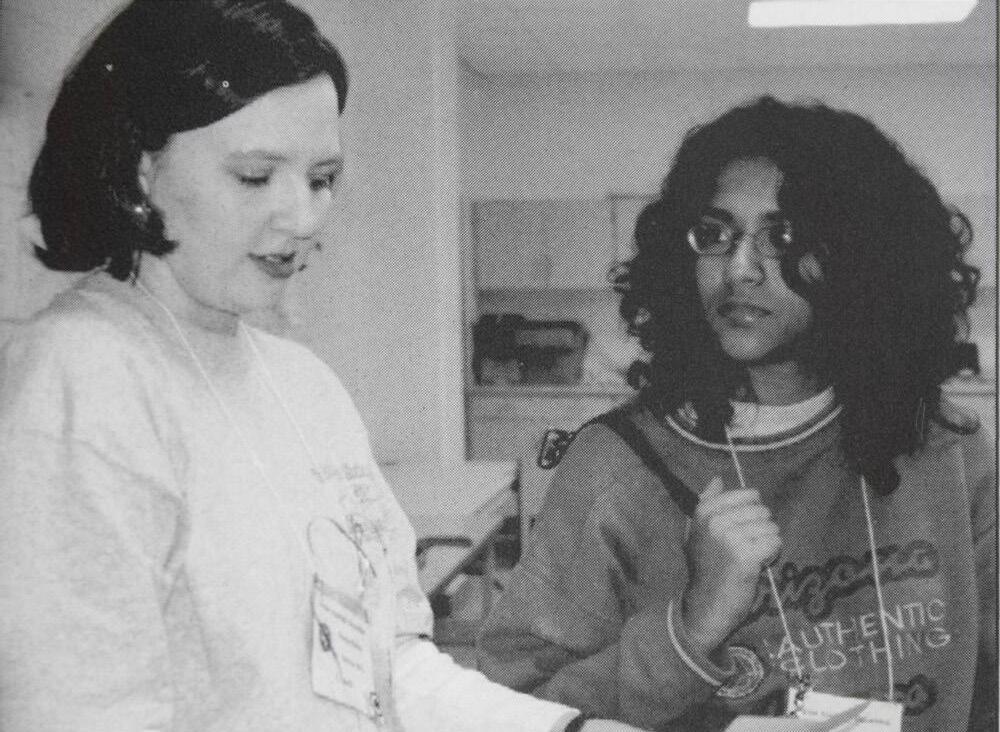
In this photo from the 2002 Talon Yearbook, Ms. Friend helps a student participating in Academic Decathalon.

any event outside of school and cheer for the kids on the court, field or stage because [I] knew them all.”
The school spent its first years trying to find itself. The school anthem was being written, the fight song was being voted on and Homecoming was called “Forthcoming” because nobody was coming home yet. In 2002, Friend founded the Hebron chapter of the Academic Decathlon (AcDec) team with former English teacher Patrica Sinclair.
“I was [in] the Decathlon when I was a senior in high school,” Friend said. “I was familiar with the program and had started helping out [with] The Colony’s program when I left. We realized we needed to add things to Hebron that all the other high schools had.”
For the next 10 years, Friend primarily stuck to teaching English I. At that time, she had two children. Her son, Ian in 2005, and her daughter Emily in 2008. However, when the freshman center opened in the fall of 2010, Friend chose to stay at the main campus and move to teaching English II so she could continue coaching the AcDec team.


tHat cHoice broke me out of my freSHmen engliSH molD, So I HaD to try new tHingS. I neeDeD to learn [anD] grow, [anD] alSo learn to truSt mySelf.
The school’s AcDec team is current ly one of the ten teams in the state.















They competed at state at the end of Feb., where they placed eighth this year. They placed fifth at state in 2023, and have had multiple students gain recognition awards and scholarships.
“She’s a great leader because she cares for people,” assistant principal Casey Edwards said. “She’s just so passionate. Her students feel safe and cared for, and they’re willing to take risks.”

In 2023, Friend went to Austin with other Teachers of the Year from LISD’s primary and secondary schools to advocate to raise the student allotment and against school vouchers.



“[Our] goal was to highlight what was going on in public school classrooms and the great things our students were doing,” Friend said.
“I tried to paint a picture of what happens during [class] and what my students are capable of doing.”
Friend was appointed the English Department Chair in 2015. She won Teacher of the Year in 2015, and then again in 2024.
SHe’S one of tHe moSt PoSitiVe PeoPle in tHe builDing. SHe’S great at making Sure we get wHat we neeD. SHe’S one of tHe firSt PeoPle I call if I neeD SometHing.
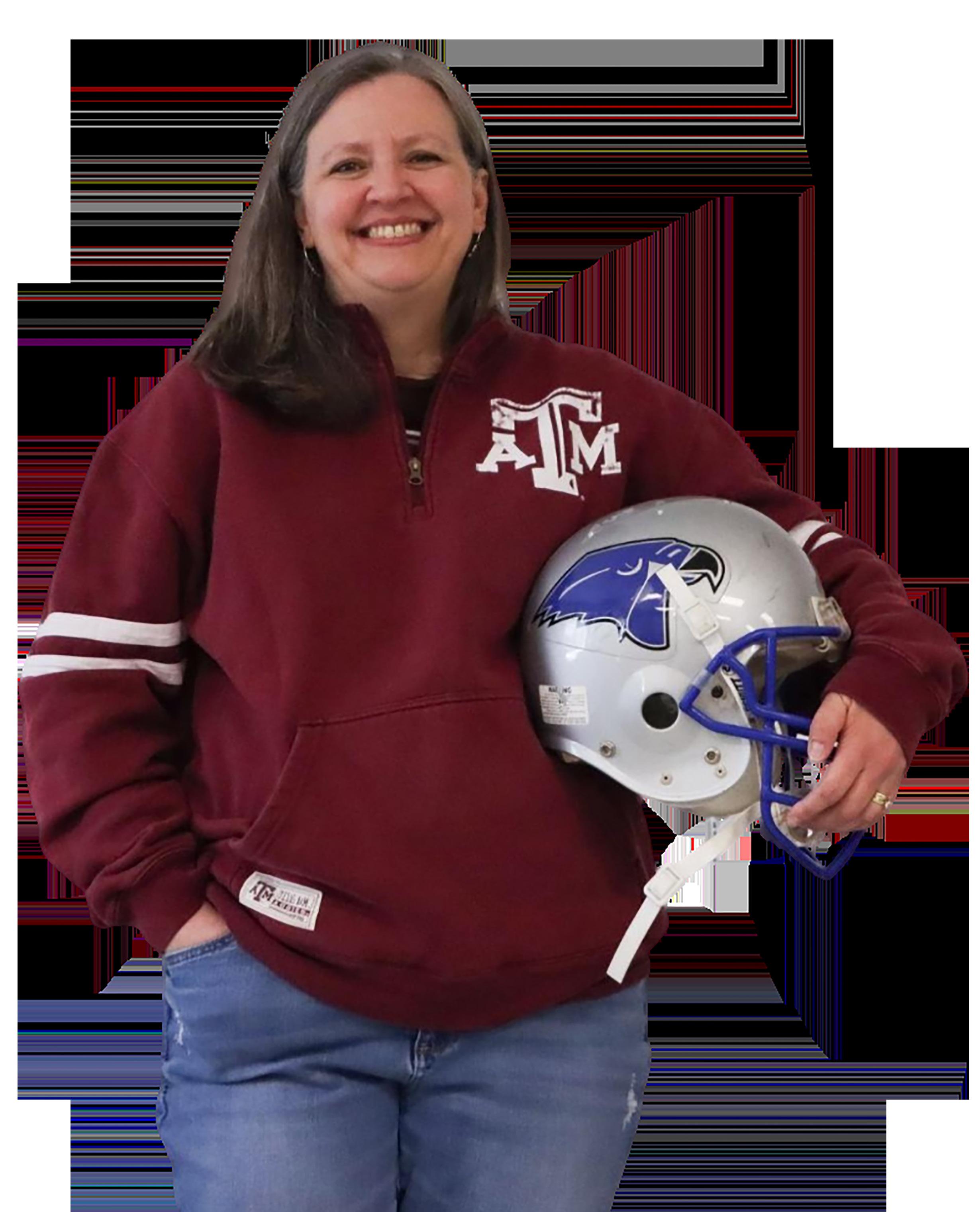

Friend continues to teach English II and coach the AcDec team. She has no plans of retirement, despite qualifying this last fall.


“It’s not to say there weren’t years that were more difficult than others, but [there’s a] consistency of having a place that’s mine that I get to be a part of every day,” Friend said. “I have never felt like I can’t do this anymore.”














As a child, my fondest memories include renting out DVDs from my local Redbox kiosk.
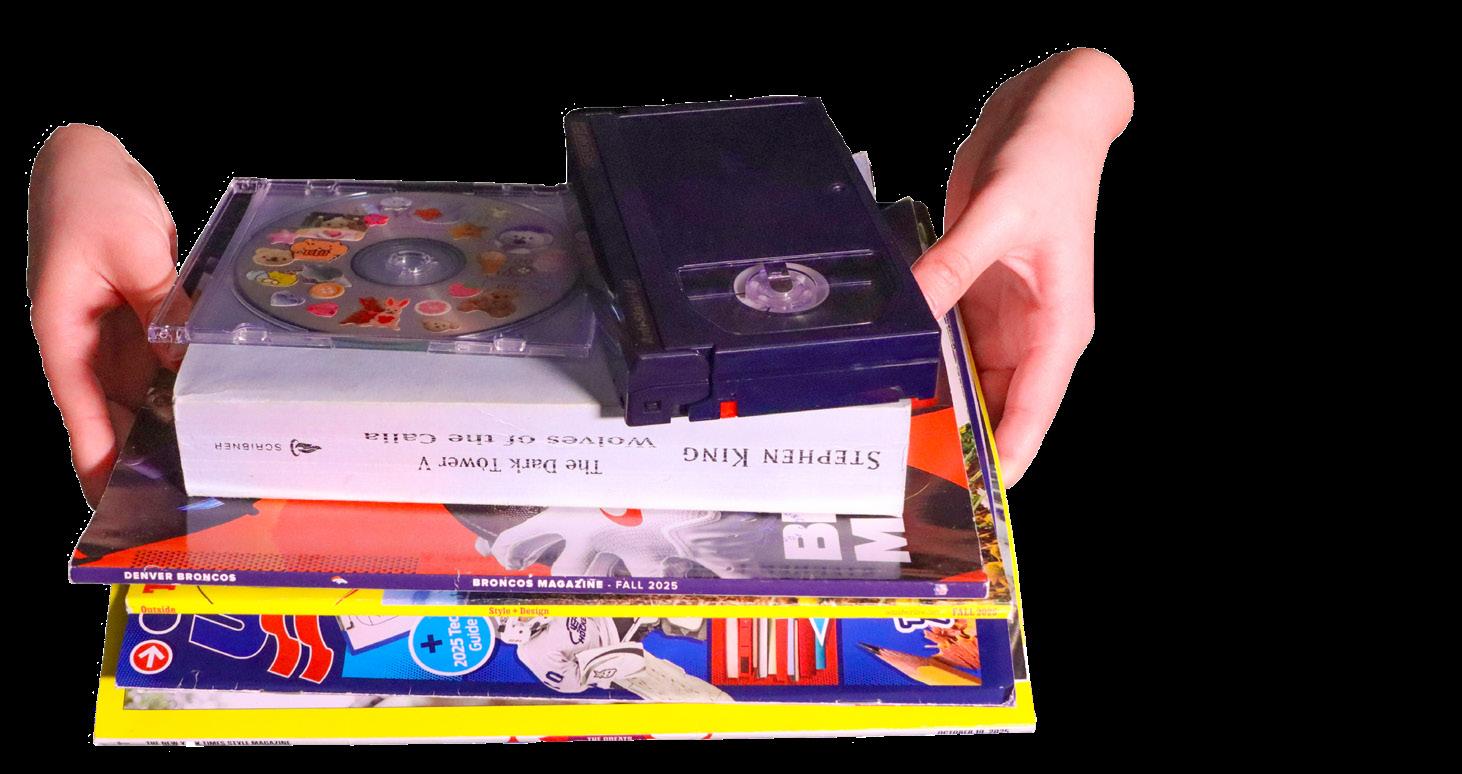
The excitement felt opening and inserting the tangible disc is unforgettable, an experience everyone should know. But unfortunately, due to the decline of physical media, moments like these are becoming nonexistent.
The concept of media ownership has completely shifted since the mid-2000s, leading to the license vs. ownership gap, a legal gap between a consumer’s expectation of owning a piece of media and the reality that it is limited, and revocable, due to its license. The gap has widened quickly, with 94% of all global storage being digital by 2007. Today, streaming services charge monthly and make viewers sign lengthy terms of service for content they don’t truly own. On the contrary, physical media belongs to the owner, safe from being lost, corrupted or deleted
Physical ownership engages the brain in emotional ways that physical files cannot. Owning a physical copy of a movie, album or book gives a sense of commitment that has proven to increase emotional engagement and satisfaction. Tactile interaction, like opening a CD or flipping through a photo album, activates additional brain regions in charge of memory formation. This leads to the formation of richer, more meaningful memories that stick.
In addition to the mental benefits, the physical aspect of unboxing a piece of media is a conscious, intentional process that eliminates scrolling. Streaming services are designed for engagement metrics, leading the viewer to be in a state of
continuous partial attention.
It’s argued streaming services and online photo storage are more convenient, which is admittedly true. But, we shouldn’t to trading our history convenience. The rapid evolution of technology could lead to a reality where
trapped in outdated formats, like old Zip
Unlike a book where only light is needed to read it, digital history requires specific hardware and
software to access and function correctly.

Today’s most hightech hardware and software could no longer exist in a decade.
Relying on companies to be in charge of streaming and cloud storage creates a dangerous possibility where corporations have the power to decide what parts of our history are “worth” keeping. Companies have already begun the process of deleting cultural material, such as news archives and TV history, to save on hosting costs and taxes.
Without the presence of physical media in our society, we lose sentimental and tangible pieces of our history to the cloud. We can combat this rapid pressure by starting our own collection of photos, videos, movies, books and music in a physical format.
My CD and book collections provide a comfortable state of nostalgia that should be kept alive. The act might seem insignificant, but they’re small steps that can keep our fondest memories alive and protect them from the delete button.

Story by aVery boyle
In my history classes, students have always said, “none of this matters.”
Although I’ve muttered the same thought in math class countless times, I still catch myself pursing my lips: history is inescapable, a constant force rippling through the present. Therefore, I am frustrated with the way we attempt to solve societal dilemmas. As we forget about the past, we fail to see the present with clarity, but ignoring the past can’t heal society — it guarantees repetition. We cannot dismantle systemic issues if we refuse to examine the history that sustains them.
From economic inequality and racism to housing insecurities, the root of ingrained issues are not isolated problems, accidents or coincidence. These problems are selforganizing and have evolved over time, and as society silently bleeds, humans suffer from symptoms and fail to see the poison causing them.
In the beautiful mountains of Appalachia, poverty is prevalent. After the collapse of the coal industry in the early 1980s, the once booming region quickly fell behind the rest of America, experiencing a rapid brain drain. Due to geographic isolation and lack of opportunities, the people
of Appalachia became a joke in the media as stereotypes grew associated with interbreeding, lack of hygiene and general stupidity.
Despite the regularity of these insults, Appalachia has been coined as the most misunderstood region in the nation.
While its people ache from a lack of quality
healthcare, infrastructure and education, as well as an ongoing opioid crisis, a cycle of pain persists — children are born into poverty, and die in poverty — and cycles like this are prevalent across our nation.

While understanding links between the past and the present is needed to heal these patterns, I cannot deny the failures within our education system. Studies have gathered that the U.S. education system primarily focuses on memorization of facts and dates, neglecting critical thinking and historical analysis. This prioritization leads to low student engagement and fails to foster a connection between the past and present.
Because of this, I don’t blame my peers for feeling disconnected from history. But I urge them to acknowledge one truth: history is not optional for progress — it is essential for it.
From the clothes we wear to the songs we sing, history shapes every part of our lives. The next time you feel anger, confusion or pain in the face of injustice, question it. Examine it. Trace it back. Even if you don’t enjoy history class, the answers are waiting in the pages of the past.

Story by Sarah rogerS
The five greatest films of the two greatest decades — filled with culture-shifting, cinematic classics, one after the other. Notable and consistently relevant blockbusters were released in the 70s and 80s, each leaving a monumental impact on our culture and entertainment still to this day.
This period was a golden age for the box office, but it was dually an era when the “multiplex” became the heartbeat of the social scene. Whether it was the gritty, auteur-driven realism of the 70s or the neon-soaked, high-concept spectacles of the 80s, these movies dictated the rhythm of the streets.
To understand the world we live in now, one must look at the specific frames and stories that first captured the collective imagination of this transformative era.
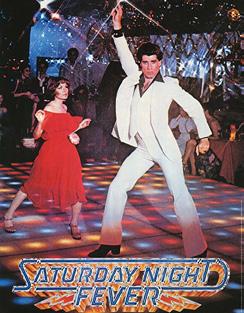
5. “Saturday night Fever” (1977)
John Travolta’s 1970s career peaked with his role as Tony Manero in “Saturday Night Fever,” a film that follows a working-class Brooklynite escaping his dead-end job on the disco dance floor. More than just a flashy musical with a legendary Bee Gees soundtrack, the movie is a gritty drama about escapism and identity that pushed disco into the mainstream, defining the fashion and culture of the era.
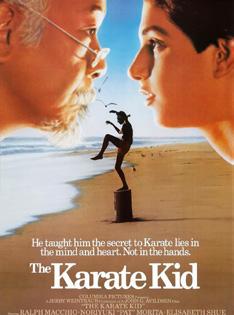
4. “the Karate Kid (1984)”
Released in the mid-80s, “The Karate Kid” perfectly captured the decade’s obsession with the underdog spirit through the story of Daniel LaRusso (Ralph Macchio), a bullied newcomer who learns karate from his mentor, Mr. Miyagi (Pat Morita), via mundane chores. Beyond its iconic crane kick finale, the film triggered a massive martial arts boom and shifted cinema away from 70s cynicism toward a narrative of individual triumph. By cementing the “training montage” as a cultural fixture, it provided the definitive blueprint for the modern sports drama.
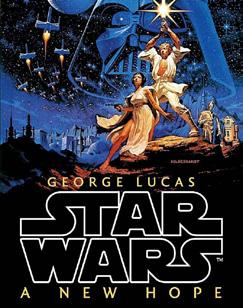
3. “Star WarS: a neW hope” (1977)
When George Lucas unleashed “Star Wars,” he reset the DNA of global entertainment by creating a vast new galaxy that filled a void in the sci-fi landscape. The plot follows farm boy Luke Skywalker (Mark Hamill) as he leaves a desert planet to master “The Force” and destroy a planet-sized superweapon alongside a rogue pilot and a princess. By blending old-school heroics with “used-future” aesthetics and groundbreaking effects, Lucas replaced 70s cynicism with a high-stakes mythology that revolutionized movie marketing and merchandising for generations.
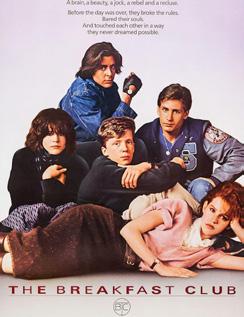
2. “the breaKFaSt club” (1985)
John Hughes’ definitive 80s thesis, “The Breakfast Club,” stripped away diverse settings to focus on five students from clashing social hierarchies—the jock, brain, beauty, rebel, and outcast—forced together in Saturday detention. Departing from the era’s raunchy comedies, the film introduced genuine emotional vulnerability and a classic synth-pop soundtrack as the characters dismantled their stereotypical barriers. By its iconic fist-pump finale, Hughes had permanently redefined how Hollywood portrays the teenage soul and the high school experience.
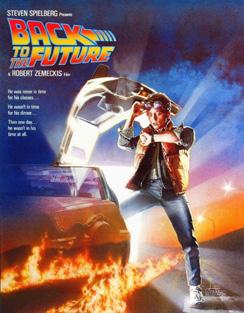
1. “bacK to the Future” (1985)
“Back to the Future” defined 80s optimism through the charmingly chaotic story of Marty McFly (Michael J. Fox), who accidentally travels to 1955 in a plutonium-powered DeLorean built by Doc Brown (Christopher Lloyd). To save his existence, Marty must ensure his teenage parents fall in love, a journey that flawlessly blends mid-century nostalgia with 80s liveliness. By mixing iconic fashion, a “Johnny B. Goode” cover, and a vision of small-town America, Robert Zemeckis created a global landmark that turned vests, skateboards, and time travel into permanent cultural staples.
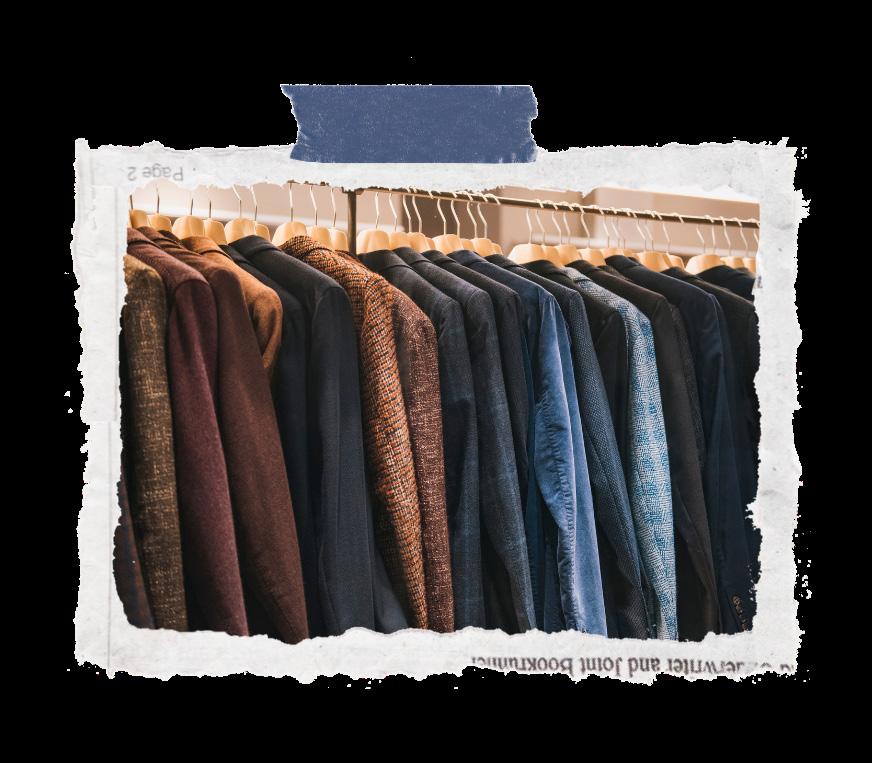
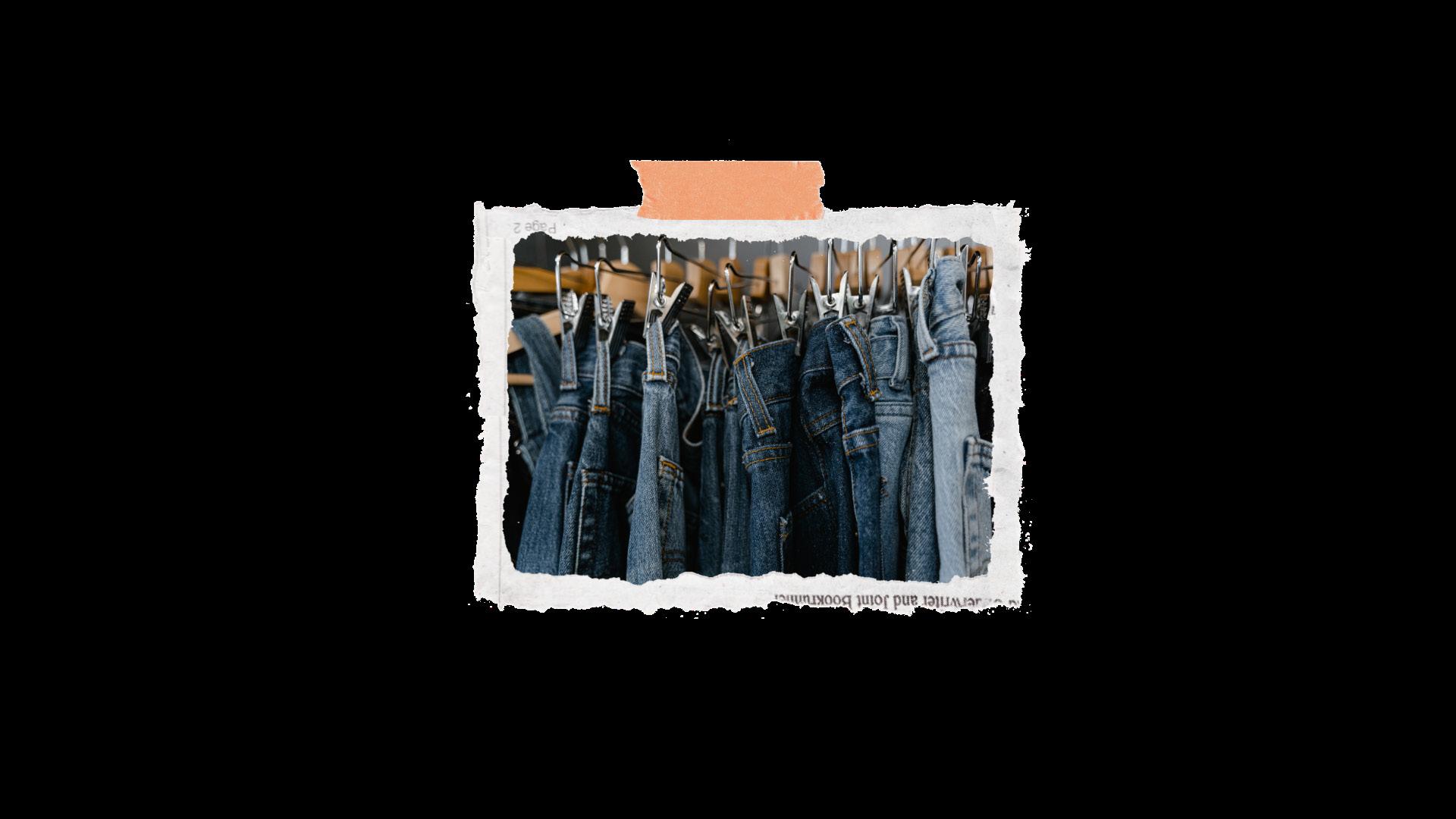
Junior Jayden George’s current favorite trend is bootcut jeans. Similar to the well-known baggy, straight-leg cut, bootcut jeans feature a tapered fit that widens out from the knee to the ankle of the pants.
“I think it’s a bit better than baggier pants,” George said. “I feel like that’s pretty overused. Bootcuts kind of make you stand out a little bit more.”
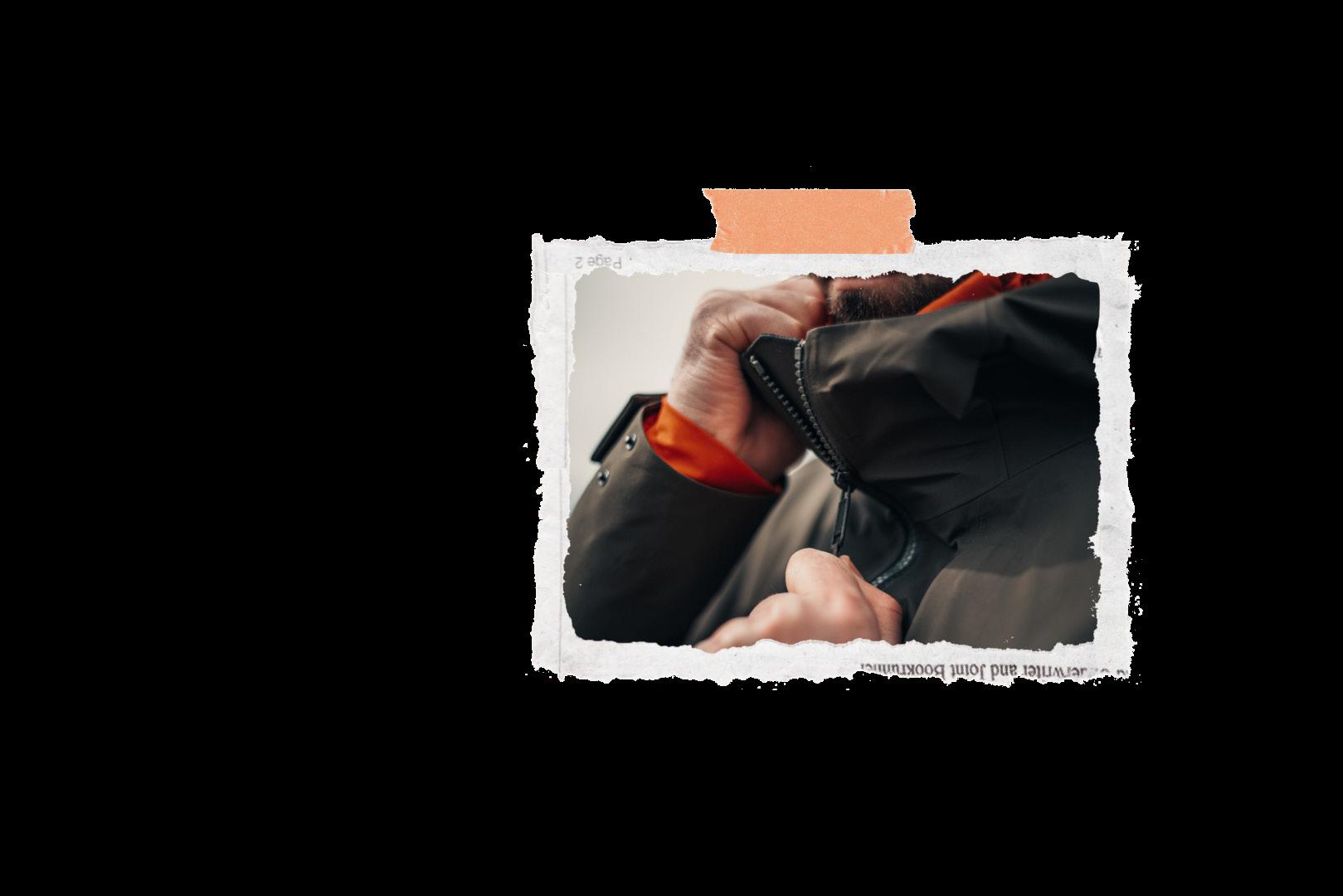
Additionally, George said he thinks windbreakers – jackets made of a thin material designed to resist chilly weather and rain – should be brought back into the mainstream, but not for their weather-resistant qualities.
“That 2000s look is cool, I’d want to bring that back more,” George said. “Windbreakers are a really nice piece.”

Story by maryam aziz


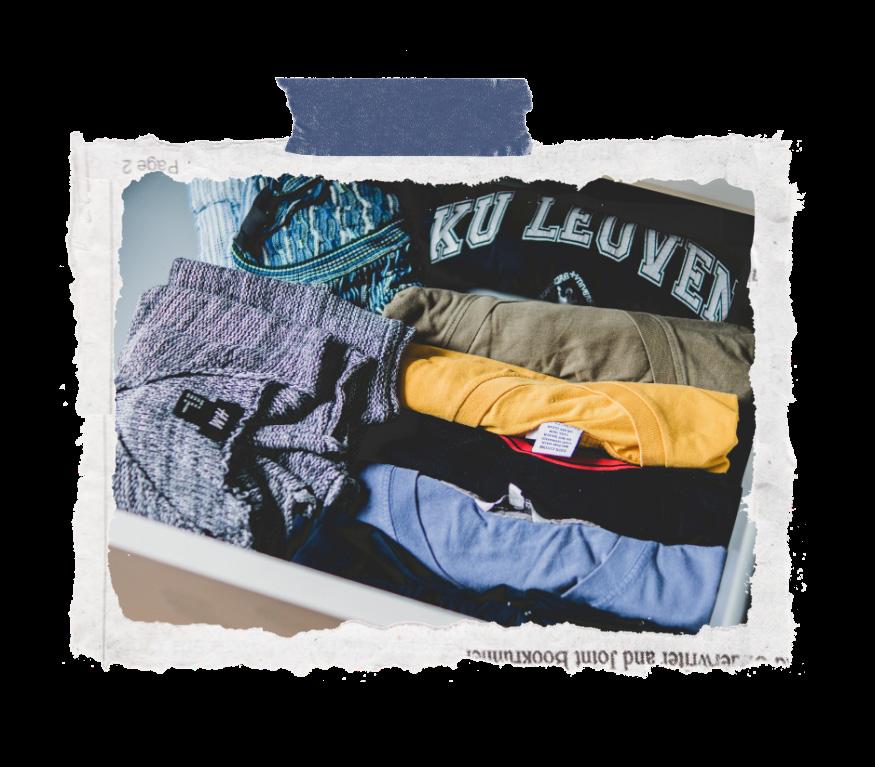
In junior Harini Kumar’s opinion, polka dots are a go-to. Popularized in the 1950s, polka dots have experienced a resurgence in modern clothing and accessories, such as tank tops and hair clips.
“I’ve always liked polka dots, but now that it’s back I feel like I can find more tops with them,” Kumar said. “My mom really likes polka dots and she always has, so I guess I got it from her.”
In tandem with the feminine look of polka dots, Kumar said she wants more “girly” clothes to make a comeback, such as peplum tanks, babydoll tops and blouses.
“I like the way they look on me,” Kumar said. “They make me feel cute and put-together.”
Pieces catching his eye include quarter zips, sweaters and especially polos.
“I just want to dress for success,” Nyamongo said. “I’m getting to that age where I’m looking more like a man than a kid, so it’s about time I start dressing like it.”
Nyamongo also said he wants to see a different trend become more commonplace: individuality.
“[I want to see] people wear what they want to

Story by Kaishya Billups
“What are you?”
I get that question a lot, and I hate it.
I assume people are unaware of the damage caused by asking this question. It’s not rude to ask about my ethnicity, but I feel objectified when the question is phrased like that — people are blissfully unaware until they’ve been in your shoes.
People who are half-Japanese like me are called “Haafu” in Japanese, translating to “half.” There are countless standards surrounding this word. Most of the time, I don’t enjoy saying that I’m a Haafu. In Japan, being mixed is considered a blessing. Especially if you’re mixed with a non-Asian ethnicity.
I have many advantages; big eyes, unique facial features and being multilingual. However, Japanese culture expects more from me: to be taller, prettier and smarter. But I fail to meet those expectations. Because of the pressure, one of my biggest insecurities has been my appearance, since I don’t look Asian and I don’t look like my Japanese mom.
Whenever you tell somebody in Japan that you’re a “Haafu,” they typically expect you to be half white and half Japanese. Whenever I say I’m a “Haafu” on text, they expect me to be white, but when they meet me in person, I can see their surprised faces.
Post World War II, Japanese people started leaning towards wanting a Western appearance. High nose bridges, double eyelids, petite figure, pale skin, the list goes on. I barely fit into even two of those categories. Since my dad has the stronger genes in my family, I inherited more Black features.
Whenever I meet somebody for the first time, I put on makeup that enhances my nose bridge and use foundation a shade lighter than my original skin tone, hoping that I can meet those expectations.
On the other hand, Black beauty standards include 3A curly hair, a
“slim-thick” figure and an almond skin tone. I have most of those features, like my hair, figure and skin tone, but I am still perceived as “different” because I don’t “talk and act more Black.” I get told that if “I talk and act more Black” then would I be a walking work of art. But I don’t. Sometimes I wish that I had those mannerisms, so I would have a sense of belonging.

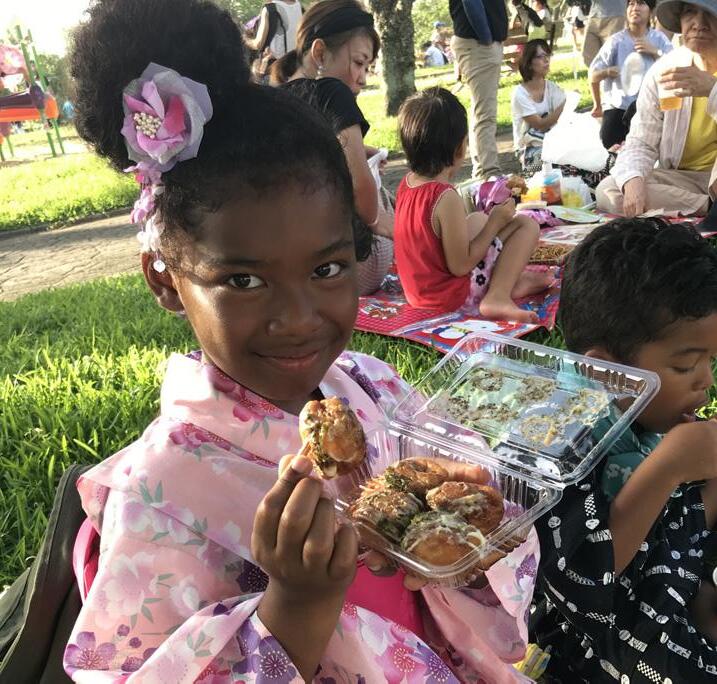
I visit Japan every summer to see my family and friends, specifically Okinawa, that has one of the most beautiful beaches in the world. In the summer of 2025, I decided to enroll in a public Japanese school, since summer break starts in early July. During the short time I was there, I was often reminded of how “different” I was.
“Kaishya you look so exotic, like you look like you walked off of a UNIQLO commercial!”
“Wow you’re so big,”
UNIQLO is a Japanese clothing brand famous for using Western looking models; I’m sure she had good intentions, but being called exotic made me feel like a zoo animal.
When I was talking to the boy that I liked, he once told me how I was “big,” I was taken aback thinking that he was insulting me. In reality, he had meant that I was tall because I towered three inches over him.
While in Japan, I am treated as a celebrity; at home I feel like a misfit.
“You don’t act black at all, it’s almost like you want to be Asian,” is another popular comment I get. I never understood being told how I want to be Asian, because I already am.
My mom and I have had a close bond since I was little. Many people assume I am adopted since we don’t look alike.
When I was younger, I hated how I felt that I had to pick a side. It left me stressed, and unable to take a moment to realize how many joys I have had solely from being mixed. I am culturally wealthy from having friends and family across the globe, and being exposed to experiences that others may not be able to.
For years I have looked at my ethnicity as two pieces of land — searched for the piece that connects it. No matter how hard I looked, I couldn’t find it. But I have learned, instead of being half I can be both.
There is no need to pick a side, when I can embrace both of my cultures. I am grateful that I have become who I am, and blessed to have encountered all of my good and bad experiences, and to many more that are yet to come.
People may view my heritage as a curse, assuming I’ll never be able to stop the negativity directed toward my ethnicity. However, it is actually a blessing in disguise; I know hidden spots that only locals know, eat foods that you only see in movies and experience things a tourist can never can, things so precious that others may not even notice. I’m not the stereotypical biracial person that embodies both cultures, but I know I am the bridge that connects the two.





thought was my best friend. We sang together, laughed together and had fashion shows together. But like a sudden snap of a finger, she was gone.
From the outside, my biological mom and I looked like the ultimate duo. We did the typical mother-daughter things; draw, cuddle and do each other’s makeup.
But as I got older, reality sank in — I was alone. My biological mom, Lizzy, chose addictive substances over me. As my life dramatically changed, I questioned: is meth more valuable than me and my four other siblings?
Behind the smile.
After being separated from Lizzy, I moved between different people in my family. Shortly after, Child Protective Services (CPS) decided it was better for me to get placed into my first foster home in 2016. Months later I got into my second foster home, which I stayed in for six months.
I stood in front of the doorbell at the Child Protective Services (CPS) building. I wondered if my mom showed up to see me. I rang the doorbell, but received no response. I heard a woman on the other side of the speaker, “she didn’t show up, is it drugs again? I thought she was taking classes to get better but I guess she is not.” Big buildings, small rooms, children would visit their parents hoping to see improvement, hoping their parents would get better, but often left disappointed, just like me.
I was put in the foster care system at age seven. I grew up in different families, living with people I didn’t know. Once I’d get comfortable, I would be moved
Story by Angelina Garcia

tion what was wrong with me. Why did the families I was placed in abandon me? Was I too loud? Was I too angry?
I acted out because I didn’t understand the instability in my life — I didn’t understand the system I was thrust into. I was living through the messy aftermath of choices adults made, not choices I made. I didn’t understand my biological mom was sick and unable to heal.
I was dealing with immature parents who weren’t ready for children, and I was angry. I put so much effort into hoping my mom would change. I missed when she once tickled me. I missed her smile, but I also missed my own. Hannah Galeano and Lizzy became best friends the summer before eighth grade. They would hang out every weekend, wear each other’s clothes and do each other’s hair. However, they grew apart in their early 20’s when Lizzy became unrecognizable, awashed in addiction.
After living in my last home, I got a call from Hannah one day. I was so excited; I was in the game room of my foster home, playing Mario Kart on the Nintendo, and I heard my name being called from downstairs. Running down the stairs, the phone was placed in my hand, and I was told amazing news — I would finally see my Hanny –- a nickname I gave her when I was young — because she was taking me in.
In the car, a CPS worker drove me up a dirt road with end less land to my right. I saw a tiny home with two pitbulls to greet me and a trampoline in the back. Hannah was on the door step ready to see me and show me my new home.
was all set up for me — her new daughter.
I want the world to understand the choices Lizzy made and how those decisions led to the trauma I carry today. While she is biologically my mother, being a parent means more than a title — it means taking responsibility, and that’s something she failed to do.
But Hannah deserves to be called mom. She is an outstanding woman and she is my favorite person. I may not be her biological child, but she took me in and chose me.
It’s weird referring to her as Hannah because she’s the one I call mom. Hannah, my mom, has always been at my side, especially through the screaming, the crying and every bit of emotional roller coaster I put her through. She tells me I’m better than what happened, she says my past does not define me.