the index


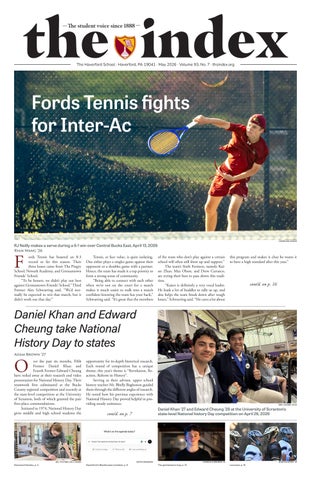
RJ Neilly makes a serve during a 6-1 win over Central Bucks East, April 13, 2026
Fords Tennis has boasted an 8-3 record so far this season. Their three losses came from The Pingry School, Newark Academy, and Germantown Friends’ School.
“To be honest, we didn’t play our best against Germantown Friends’ School,” Third Former Alex Schwarting said. “We’d normally be expected to win that match, but it didn’t work out that day.”
Tennis, at face value, is quite isolating. One either plays a singles game against their opponent or a doubles game with a partner. Hence, the team has made it a top priority to form a strong sense of community.
“Being able to connect with each other when we’re not on the court for a match makes it much easier to walk into a match confident knowing the team has your back,” Schwarting said. “It’s great that the members
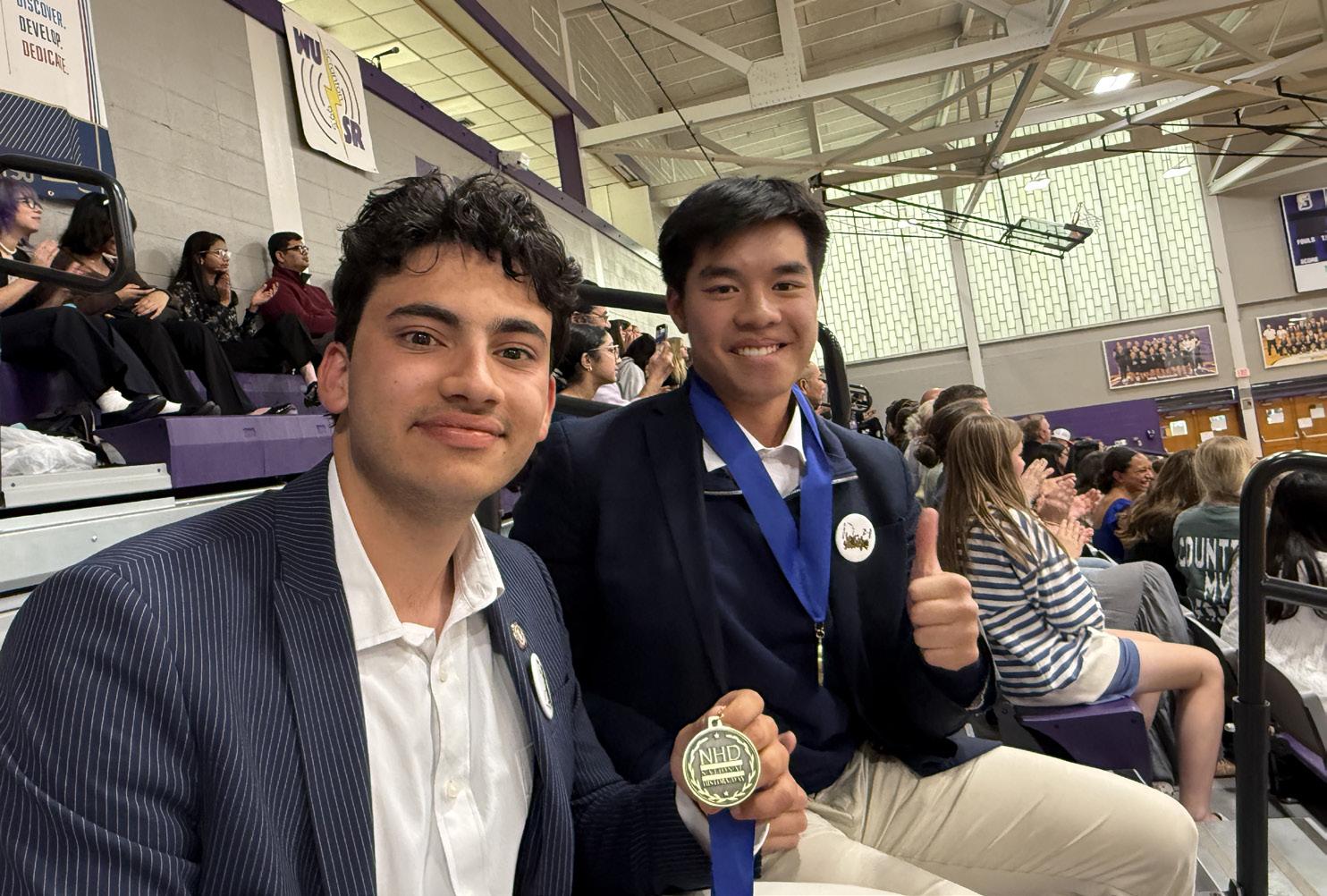
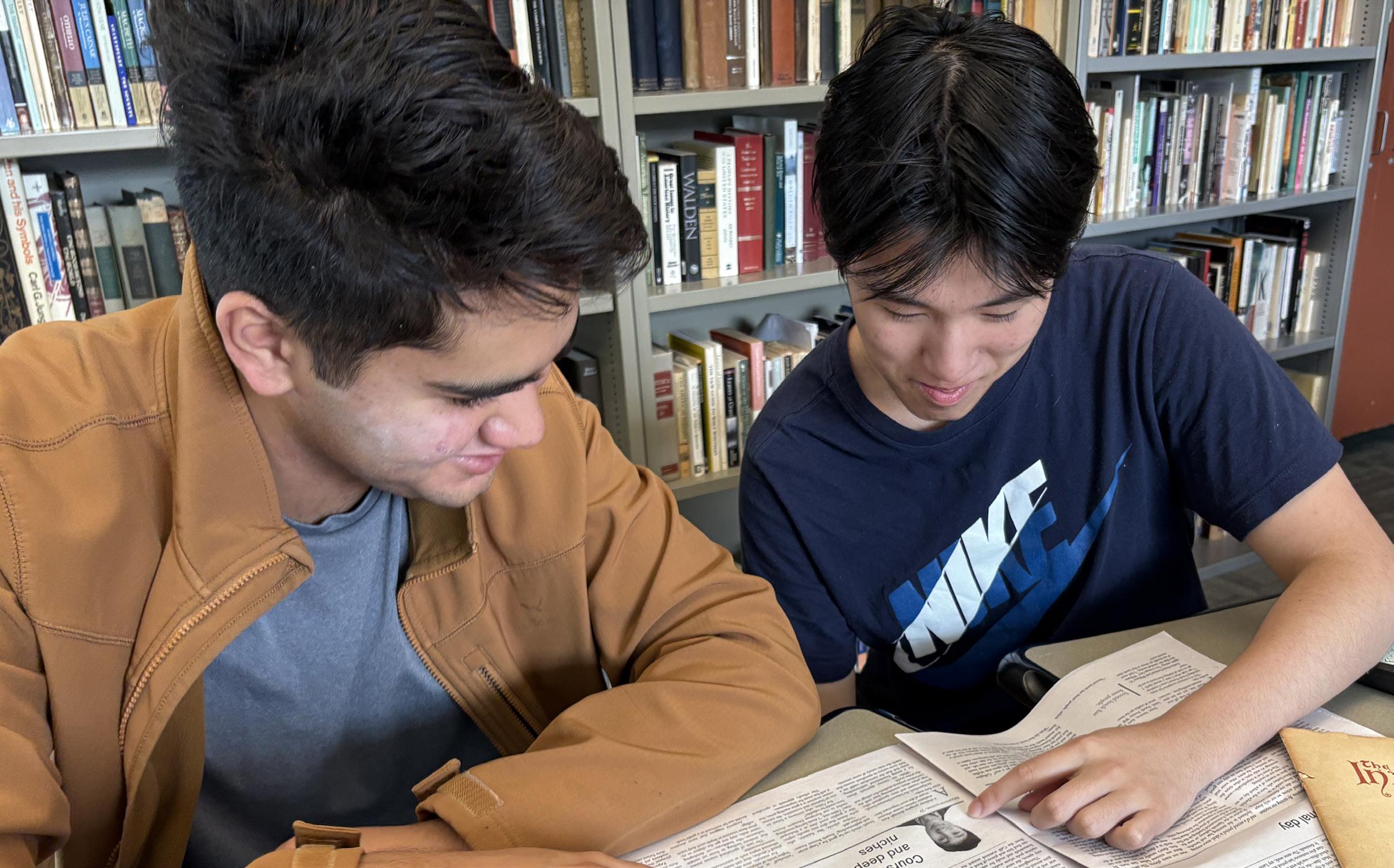
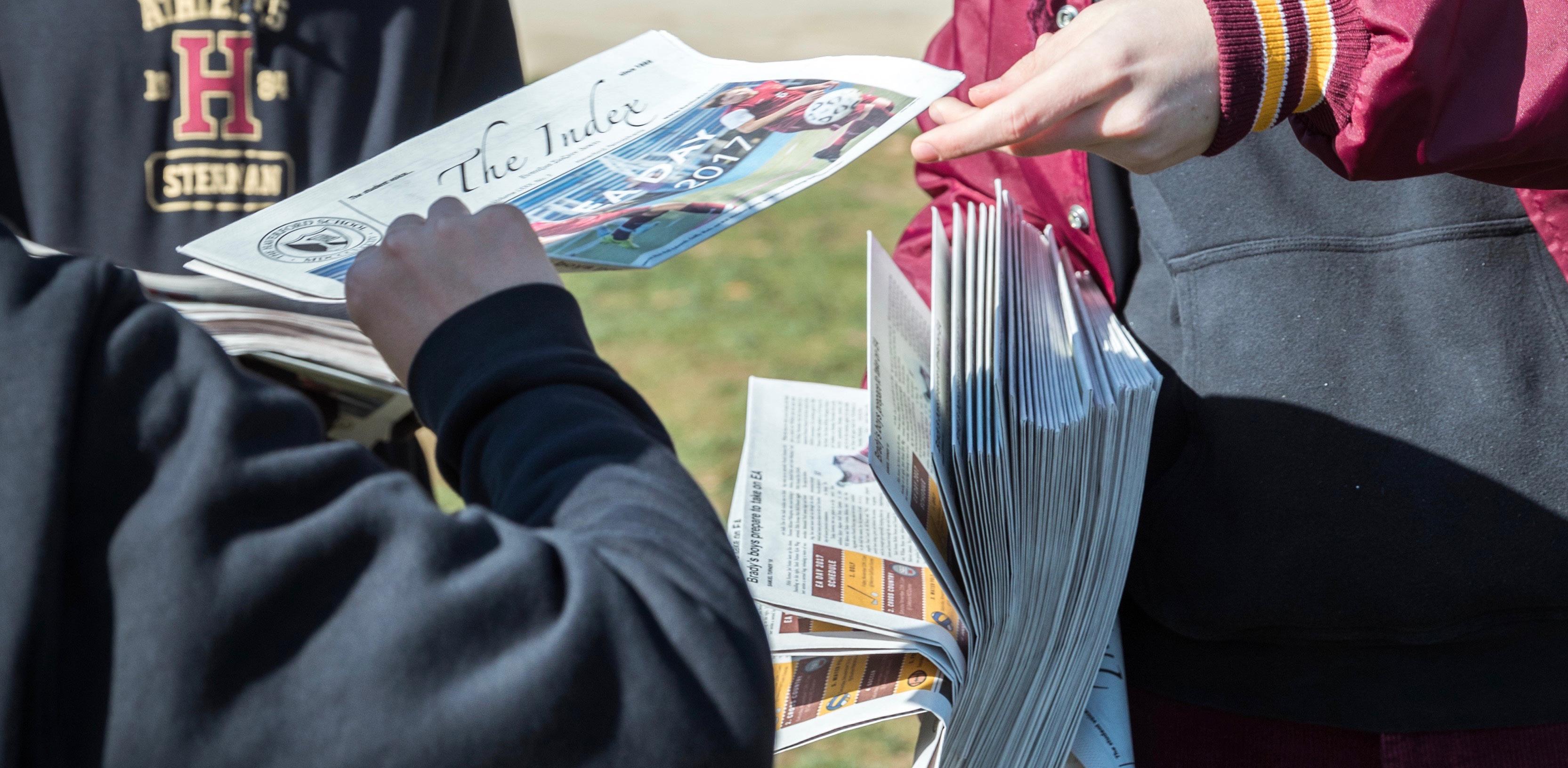
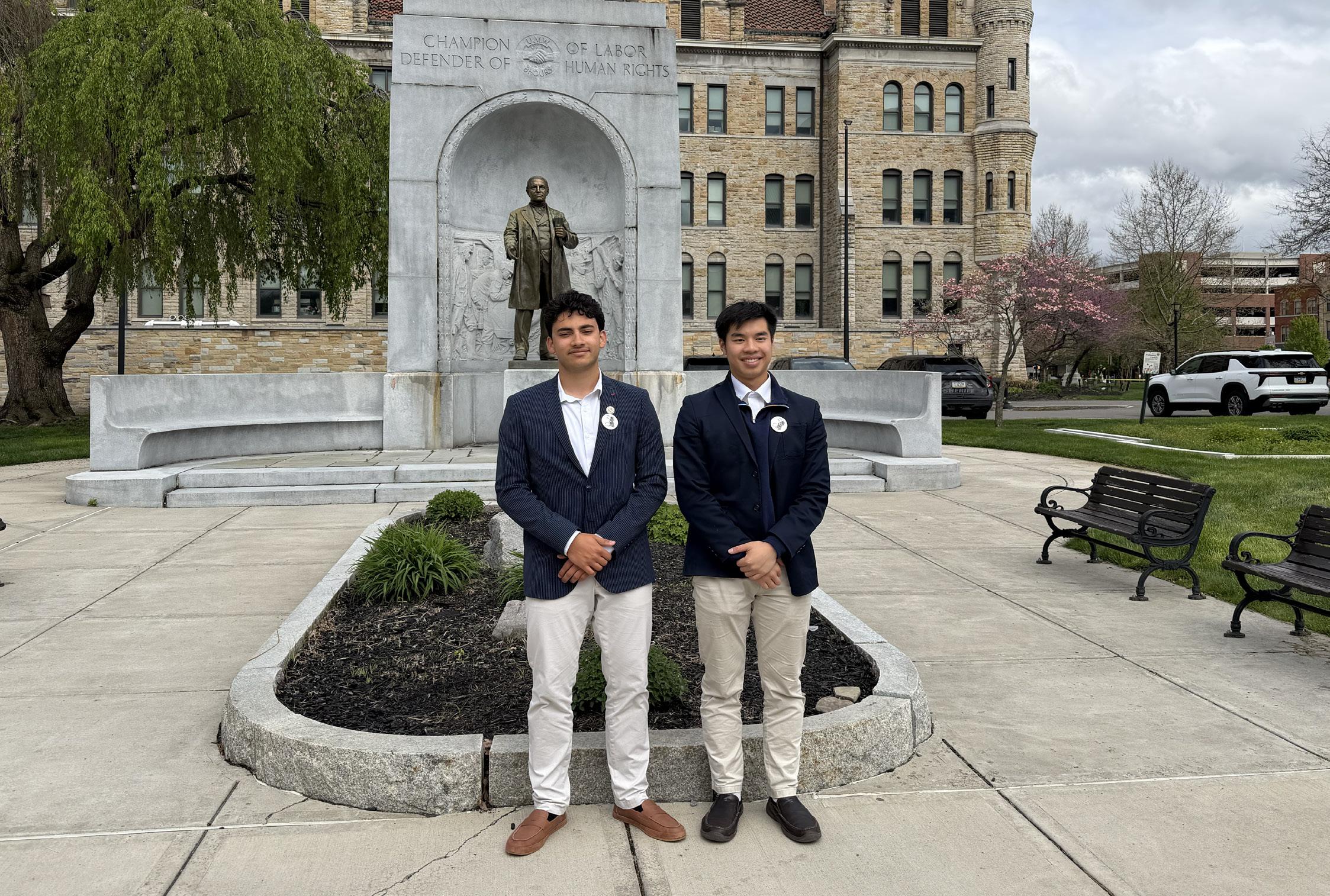
Over the past six months, Fifth Former Daniel Khan and Fourth Former Edward Cheung have toiled away at their research and video presentation for National History Day. Their teamwork first culminated at the Bucks County regional competition and recently at the state-level competition at the University of Scranton, both of which granted the pair first-place commendations.
Initiated in 1974, National History Day gives middle and high school students the

opportunity for in-depth historical research. Each round of competition has a unique theme; this year’s theme is “Revolution, Reaction, Reform in History”.
Serving as their advisor, upper school history teacher Mr. Bhelly Bagbonon guided them through the different angles of research. He noted how his previous experience with National History Day proved helpful in providing steady assistance.
cont’d. on p. 7
of the team who don’t play against a certain school will often still show up and support.”
The team’s Sixth Formers, namely Kaiser Zhao, Max Olson, and Drew Carrasco, are trying their best to pass down this tradition.
“Kaiser is definitely a very vocal leader. He leads a lot of huddles to rally us up, and also helps the team break down after tough losses,” Schwarting said. “He cares a lot about
this program and makes it clear he wants it to have a high standard after this year.”
cont’d. on p. 16
2025–2026 Staff
Ajay Chakraborty ’26
Editor-in-Chief
Ryan Wang ’26
Editor-in-Chief
Nate Gill ’26
Senior Managing Editor
Adam Brown ’27
Managing Editor
Matt Lo ’27
Managing Editor
Ayush Varma ’27
Managing Editor
Ben Qu ’28 News Editor
Edward Cheung ’28
Features Editor
Jayden Thomas ’27 Academics Editor
Byron Yang ’28
Neighborhood Editor
Keith DiMarino ’27
Campus Opinions Editor
Brandyn Luong ’27
Off-Campus Opinions Editor
Sahil Manjeshwar ’28
Off-Campus Opinions Editor
Peter McConnell ’26
Voices Editor
Will Komada ’28 Arts Editor
James MacColl ’26 Sports Editor
Jonny Wang ’26 Staff Writer
Jesse Kanefsky ’29 Staff Photographer
Riyadh Rolls ’26 Staff Photographer
Charlie Schreiber ‘26
Photography Editor
Mr. Anthony Pariano Faculty Advisor
Mr. Thomas Stambaugh Faculty Advisor
The Index is a student-run publication of the Haverford School that does more than bring news: it provides the diverse perspectives of the Haverford student body. It is an outlet for student writers to take stands on issues they deem important. It chronicles the daily struggles and accomplishments of the Haverford community. The Index also provides a forum for discussion of pertinent issues, such as student culture, academic policy, and Haverford’s place in world affairs. The Index presents new ideas and aspires to influence constructive change. All opinions and viewpoints expressed herein do not necessarily reflect those of The Index or the school. The Index is designed and produced digitally. Photographs may be retouched. Submissions and letters to the editors regarding any and all articles are welcomed at index@haverford.org The Index, a member of the Columbia Scholastic Press Association, is composed using the applications of Google Suite and Adobe Creative Cloud. Its surveys are conducted via Google Forms and are advertised via email to current Haverford students. Graphic designs are created by Index staff via Canva. Southern Dutchess News prints 200-400 copies of each issue, and its editorial staff distributes them in the upper school on the day of release. The Index serves the needs of a total school population of 1152 community members, consisting of 952 students and 200 faculty and staff members. Contact The Index: 450 Lancaster Ave, Haverford, PA 19041 index@haverford.org
Twitter: @Haverford_Index
Instagram: @Haverford_Index
Volume 93, No. 7 - May 6, 2025
As the school year draws to a close, it’s easy to focus on finals and deadlines and how many days until summer vacation. However, we forget that the best part of the end of the school year can often be the better weather.
The dark, icy mornings and early sunsets of the winter months are replaced with extended light and warmth. New life is felt
on campus, and the daily grind feels easier.
Savor this May weather. It is the perfect time sandwiched between too cold and too hot, and being outside during this time will put a smile on your face.
Eat your lunch outside, play some basketball with your boys, or go for a walk after school. These small things will help as finals creep up on you.
Good weather is also a reminder that Haverford is not entirely about academics. It’s about spending time with friends and enjoying yourself. It’s about creating memories of this place.
So, before the end of the year, take a moment and appreciate the good weather. The work is important, but so is enjoying the world around you.
Boys, by the time you’re reading this, the year will have almost closed for the Class of 2026. It’s been a great ride. I’ve made memories at this place that I will never forget. High school felt long while I was in it, but now that it’s about to end, it’s felt shorter than I could’ve ever imagined. I truly love all of you boys. Now that the final moments of high school are upon me, I’ve been thinking a lot about my regrets and things I wish I had done differently over the years.
As an underclassman, I remember getting into water polo and hating it. I wasn’t very good at the sport, and I didn’t
want to go in the water every day. But looking back, I don’t really think it was the sport that made things so hard. Aside from a few guys, I didn’t really know anyone. The hardest part was that I wasn’t connected with my teammates.
And honestly, that’s a lot like life.
If you’re not connected to the people around you, everything becomes harder than it has to be. The bad stuff sticks out a lot more, and you start to focus harder on what you wish you could avoid. It’s a lot more difficult to “get into the water.”
But when you’re bought into the people around you, and you work to build relation-
ships, all the things that “suck” start looking a lot different.
To the guys who have more time here, my biggest piece of advice is to not just show up to school every day, but to connect. And to the guys that are about to leave, I’d do the same thing wherever you go. In every situation, try to be present and connect with the people around you, rather than standing around like you have somewhere better to be, or being too scared to put yourself out there.
If Third Form me had done that, getting in the water probably wouldn’t have been that bad.
How do students who are admitted to college make the most out of their remaining weeks?
For many college-committed upperclassmen, the time remaining at Haverford can feel strange. The pressure of applications is gone, but there’s still time left until graduation. This begs the question: how do these students actually make the most out of their time left at Haverford?
Many students can fall into “senioritis,” a decline in motivation or performance during the last year of school. However, the final months of Sixth Form offer a perfect opportunity to enjoy high school without constant pressure.
Classes feel lighter, and students prioritize learning instead of chasing grades. Whether it’s participating more in discussions or taking a class that you don’t know much about, students may be more inclined to learn.
Another opportunity is through community involvement.
Students who were not involved as much earlier in upper school can make it up. This includes going to more games, joining more events and clubs, or just being more present in school activities. Haverford has a strong community, and it becomes more noticeable as students mature into upperclassmen.
Sixth Former Grayson Morgan, who is committed to college, prioritizes connection and initiative before graduation.
“I think the biggest thing is not checking out too early,” Morgan said. “It’s easy to just relax and zone out for the rest of the year once you’re committed, but this is the last time you’ll actually see a lot of these guys every day. I’ve been trying to hang out more with friends and make connections before leaving for college.”
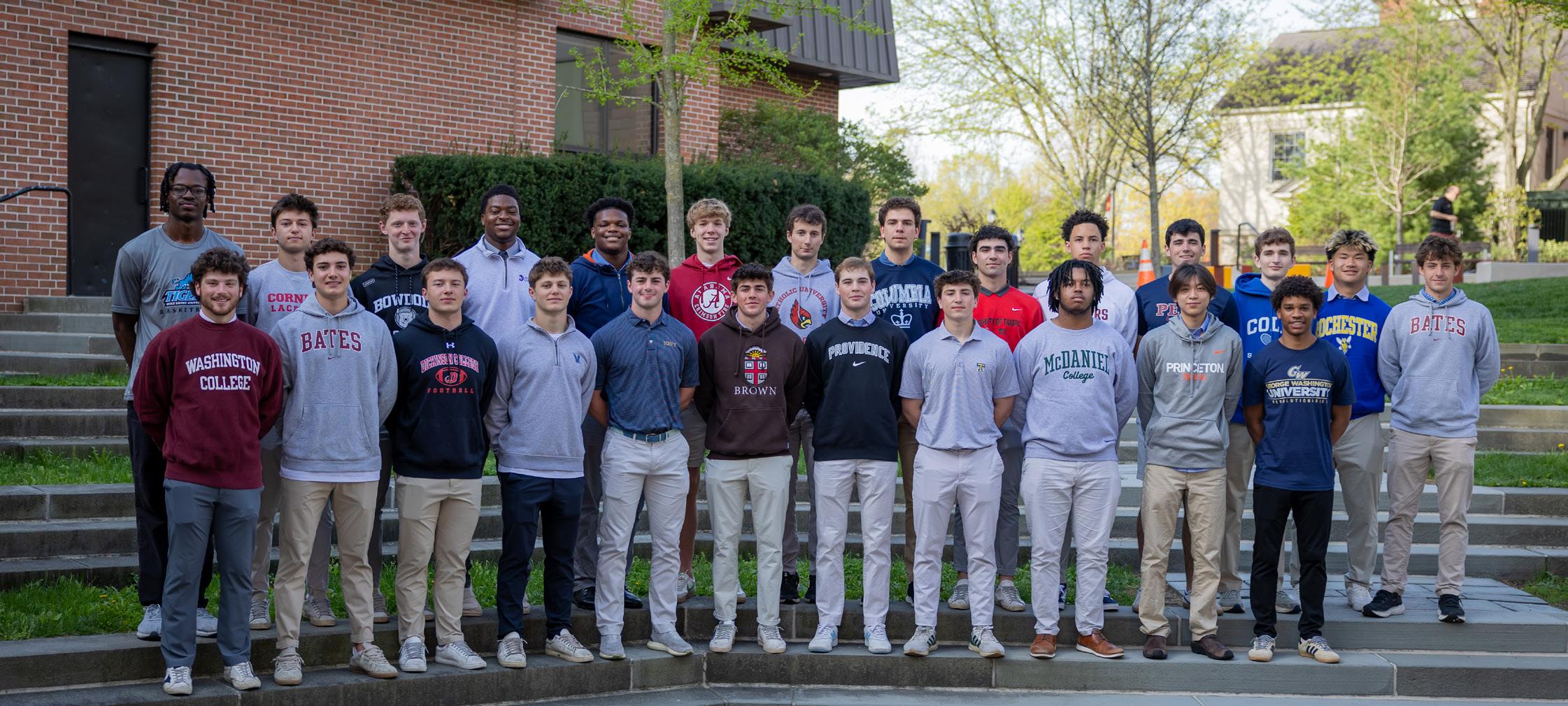
Since committing to college, Morgan prioritizes school events and relationships.
“I started going to more school events and talking to teachers more. You realize these relationships matter more than you thought,” Morgan said.
For many students, this time is crucial for preparation for the next chapter. Building independence, connections, and good habits can make the transition into college much smoother.
“In the end, making the most out of Haverford isn’t about doing something huge,” Morgan said. “It’s more about appreciating the connections, classes, and everyday routines that won’t be the same after graduation.”
Sixth Former Jack Levensten has taken a similar approach, focusing on trying to be more present with the people around him as
the year comes to an end.
“I think about the fact that after graduation, a lot of us are going to different schools and won’t see each other the same way again,” Levensten said. “That makes you want to actually be there for every single moment you have left with your friends, like hangouts, dinners, and even being in class with someone. You stop taking the small stuff for granted.”
Levensten reflected on how one can have an impact on the school.
“There’s something special about this time at Haverford that pushes you to carry yourself a certain way. I want to leave knowing that I did right and I set an example for the rest of the school,” Levensten said. “I want to leave knowing that I treated people well and respected what this school is actually about.”
For Sixth Former Avery Paul, the end of the year has been about spending more time with friends and family, and doing more activities in the community.
“I try to participate in things I haven’t done before, like school events, socializing with teachers, and talking to more people,” Paul said. “It sounds small, but it opened up a lot, and I have really enjoyed talking to more people. I met people I wish I had talked to in my freshman year.”
Paul believes the urgency of graduation changed the importance of friendships and school.
“You realize that your close friends here are kind of irreplaceable. The bond you build together at Haverford is not something you just find anywhere,” Paul said. “I am extremely grateful and lucky to have been able to be a part of the Haverford community.”
Sahil Manjeshwar
The Pan-Asian Alliance Club has had a rough year, and Fifth Former Brandyn Luong is the first to admit it. As next year’s club leader, he’s been thinking a lot about what needs to change. Take movie night, the club’s biggest event of the year.
“The movie turnout was disappointing to say the least,” Luong said. “I did enjoy the movie, but seeing less than a dozen people there reminded me how poorly coordinated we were as a club.”
He doesn’t blame anyone but himself and the other leaders.
“While I wished we had planned outreach more thoroughly, there were many things I could have taken into my own hands to achieve,” Luong said. “Firstly, taking the initiative to contact school leaders was a must, and trying to go through word of mouth and students alone was not enough.”
The bigger issue, though, wasn’t just outreach. It was that the club barely knew itself. PAA met about once every two months, which made it tough for members to keep track of when to show up, let alone build any real connection.
“As our hallmark event, we should have been building up camaraderie and just getting to know each other better,” Luong said.
Club advisor Ms. Taylor Smith-Kan summed it up with the analogy that it takes a few minutes of grading for every hour spent writing an essay. The big events only ‘work if you put in the small, steady work first. “We didn’t build community, and suffered as a
result.”
Next year, that’s the first thing changing. Luong and the other rising seniors want to meet a lot more often, ideally beyond the regular clubs period if they can swing it.
“Establishing a minimum meeting schedule of once a week would be the least we could do for our pan-Asian students who really only connect with each other from other grades through PAA,” Luong said.
Communication between leaders is another piece he wants to fix, and he thinks part of that starts with making sure the right people are in those leadership roles in the first place.
“Knowing that people are still passionate about their heritage... makes me proud to be an Asian American.
BRANDYN LUONG ’28
“Finding leaders who have genuine interest in trying to connect and challenge adversity is something I think needs to be improved on, which could be done through at minimum interviews for leadership positions like many other clubs and activities,” Luong said.
The long-term goal is bigger than just
getting more people in the room.
“I have one singular goal for PAA, which is to increase connection with other schools. That begins by strengthening our current club and providing opportunities for them to connect with other schools,” he said.
Luong has been to conferences at places like FCS that hold annual workshops, and those experiences stuck with him.
“Knowing that people are still passionate about their heritage and looking out for their brothers and sisters makes me proud to be an Asian American, despite feeling different my whole life,” Luong said.
PAA isn’t just another club on the list. It’s a space Luong wants to actually mean something next year, for himself and the students who need it the way he does.
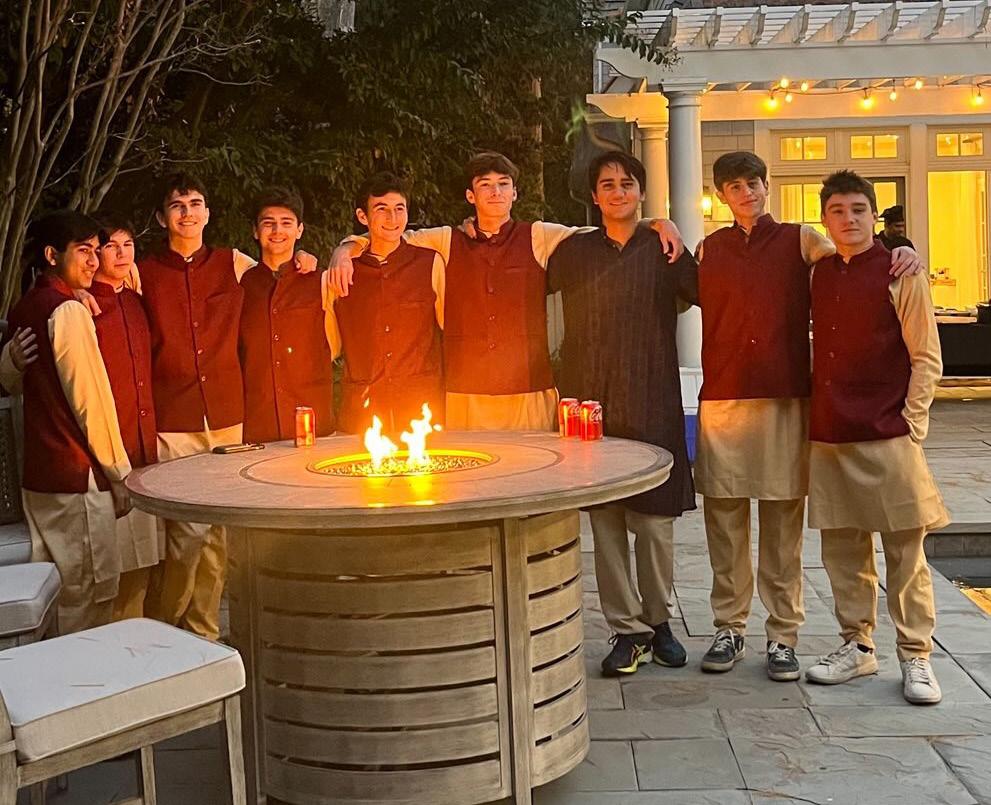
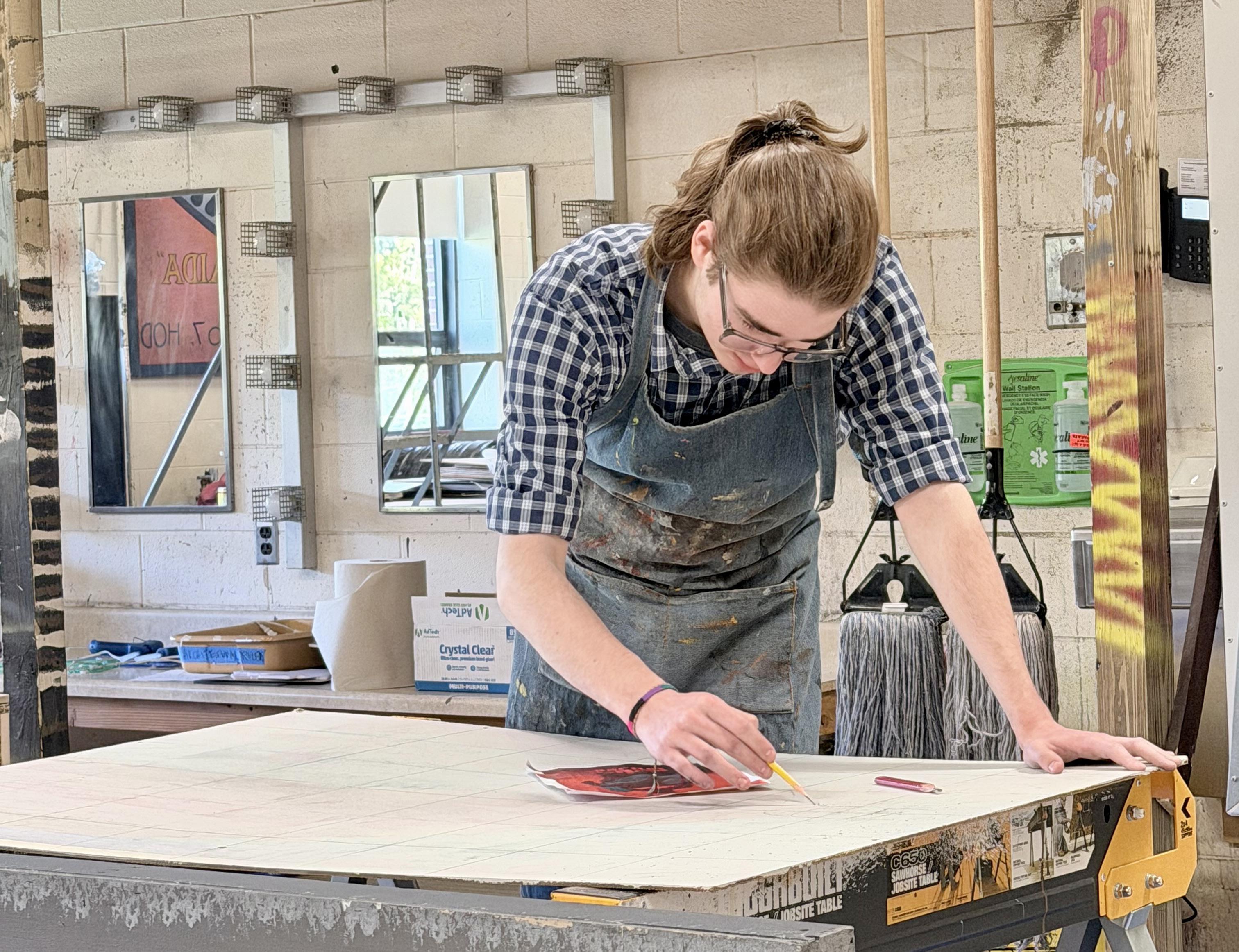
At the start of his stage crew tenure in sixth grade, current Sixth Former Desmond Heneks helped create the splendiferous chocolate factory set bristling with red and white candy canes, shining in custom peppermint colored lights for the school’s production of the musical Willy Wonka
He has concluded his impressive career by helping design and paint a ragged, rusty 1900s Harlem apartment set for Haverford’s largest production: Ragtime
“As a small sixth grader coming into the space for [the musical] Willy Wonka, his first task was painting pieces of the set,” Director of Centennial Hall Mr. Stephen ‘Dex’ Woodward said, chuckling. “Most of the paint ended up on the scenic elements, but a very good chunk ended up on him, too.”
While his initial experience was amateur, Heneks would grow proficient in many areas of stage crew work.
“He showed early on that he has a really good focus and attention to detail. Over the next several years, he bloomed into a ‘jack of all trades,’” Mr. Woodward said. “He got experience in set construction, electronics, wiring custom speakers for Cuckoo’s Nest, and figuring out how to make an old computer screen look like a new TV.”
The demands of stage crew allowed Heneks to operate independently only after a few years from the beginning.
“My first show with Desmond was The Addams Family,” Centennial Hall Technical Assistant and Venue Supervisor Mx. Victoria
Gill-Gomez said. “[By this time] Desmond was already doing technical work and programming at a level you don’t usually see at the high school level. [He] was working at an undergraduate or even professional pace.”
Very quickly, Heneks would grow from a mere assistant to a full artistic collaborator.
“In the professional realm, scenic and lighting designers have a constant conversation about how the work influences each other. For the show Enron, we talked about which lights to buy and where to install them on the set—that was Desmond’s decision.” Mx. Gill-Gomez said. “It was cool to see him move beyond the teacher-student dynamic and jump the line into being a true collaborator.”
Beyond Haverford musicals and plays, Heneks has also been involved with helping Centennial Hall’s professional clients.
“Centennial Hall hosts rental clients who use our student crews because they are familiar with the space, the consoles, and the fly system. Desmond has been a regular fixture working with these outside clients to make their shows a success,” Mr. Woodward said. “That bridge to the professional world isn’t very long. We set high standards, and Desmond has risen to them with high professional decorum.”
Mx. Gill-Gomez agreed.
“We recently worked together on the Haverford Dance Center’s recital. Desmond was on the fly rail (the individual who manually controls the curtains), and we didn’t have any other student labor on that. Desmond
showed a high level of respect and professionalism,” Mx. Gill-Gomez said. “When [professional] clients come to talk to me, I often say, ‘Go talk to Desmond, he’s doing this job for you,’ and they feel comfortable having that conversation.”
Centennial Hall’s professional clients are often excited to work with Heneks.
“We have some dance clients who specifically ask for Desmond by name. He signs up for almost every call—this kid is always here. It’s impressive,” Technical Assistant and Assistant Venue Supervisor Mx. Kayla Strine said.
Working on Haverford productions as well as for professional clients’ requires much work.
Nevertheless, Heneks believes the Stage Crew’s sense of family helps everyone pull through.
“I think it is the long days where you get to see the best and the worst of everyone [that] makes this community special,” Heneks said. “Even when this community is at its lowest energy, people are burnt out, and it’s 10 p.m., and we’re just trying to all go home, we have each other, and that helps us get through even those tough days.”
Mx. Shrine agreed.
“There’s a very special bond in the stage crew because the demands are insane. You are all collaborating on something bigger than yourself,” she said. “To see a group led by someone like Desmond, who believes in it so strongly, is incredibly special to witness.”
While Heneks controls the spotlight for
actors and dancers, he himself has not received a spotlight of his own. However, it’s not that he wishes to be hidden or wants to be known. Instead, he understands the larger responsibilities of his role.
“It’s the people that I’m gonna miss the most. You know, I’m hoping to stay in contact with the kids, and Vic, Dex, and Kay.”
DESMOND HENEKS ’26
“There’s a misconception that stage crew people just ‘don’t want to be seen,’” Mx. Gill-Gomez said. “It’s not that. It’s that they see how they can support the story and the other people on stage. The stage crew supports the ensemble, and the ensemble supports the main cast. [Stage crew] makes everyone feel special and uplifted.” Heneks will miss the family he has made in Centennial Hall.
“It’s the people that I’m gonna miss the most. You know, I’m hoping to stay in contact with the kids, and Vic, Dex, and Kay,” Heneks said. “Just being able to come here every day and having a community of people I’ve known for so long, I’m going to miss that a lot.”
Sahil Manjeshwar ’28
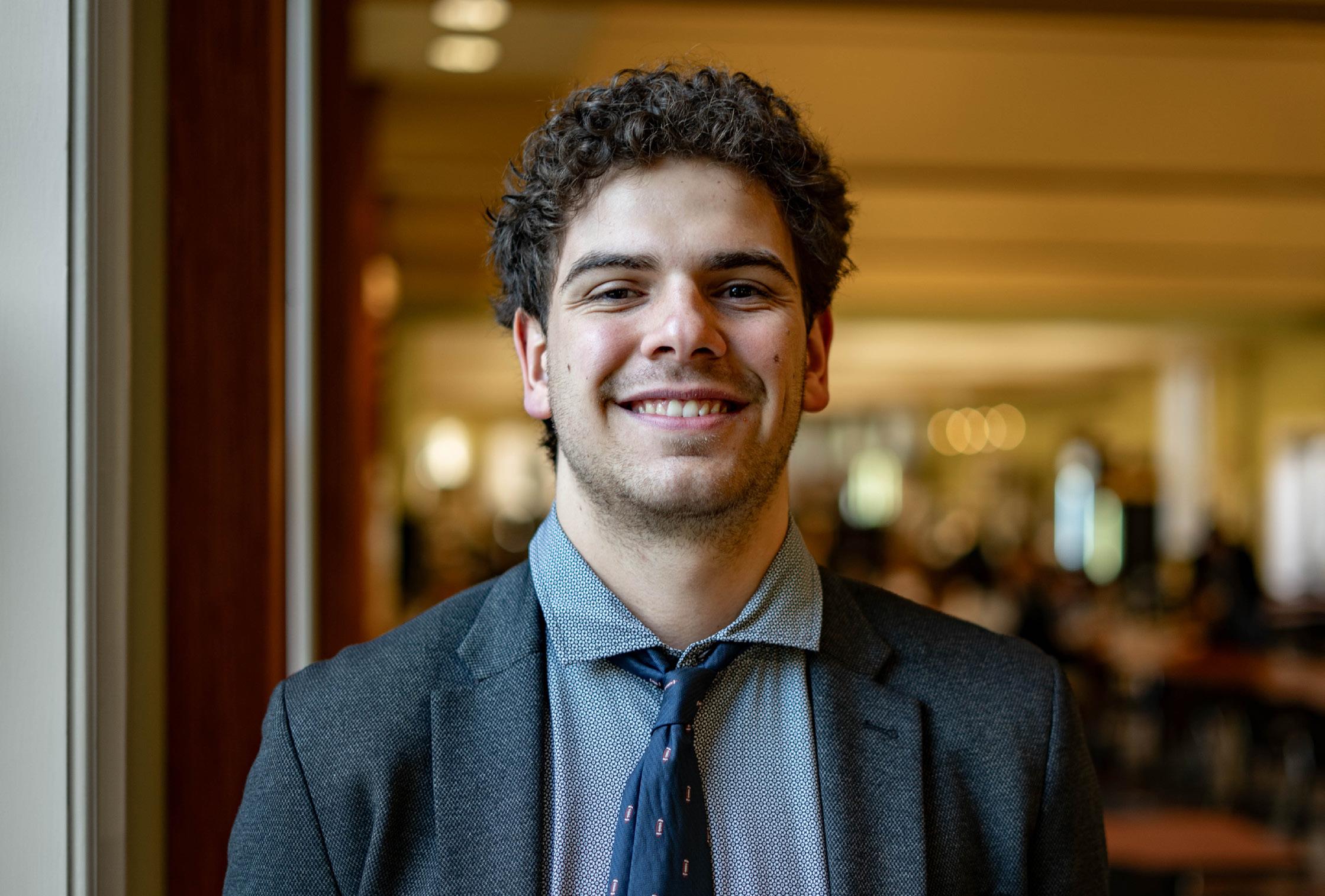
“The journey was long and confusing,” Sixth Former Quinn Gallagher said.
Gallagher’s recruitment process narrowed his search from an SEC (Southeastern Conference) football team to an offer from Columbia University.
“It is confusing and difficult because at the end of the day, [football recruiting] is a business, and you have to find the coaches that truly care about you,” Gallagher said.
One week, Gallagher’s phone could be going off with calls from coaches; the next week, it could be quiet. For a while, that bothered him greatly.
“I used to resent not getting the big offers,” Gallagher said. “But I realize now that I am in the perfect place at an Ivy League school, which doesn’t accept many transfers, so my spot is quite secure.”
Gallagher has competed in football since first grade, but only in his Form IV year did he believe he could reach the collegiate level.
I sacrificed a lot of hours and time to focus on sleep, training, and nutrition. I was so focused on becoming the best athlete for most of my high school career.
QUINN GALLAGHER ’26
“My first game during my sophomore year was against Imhotep, one of the best teams in the state at the time, and I learned I loved to compete against the best,” Gallagher said.
The journey involved early mornings, diet restrictions, and intense training.
“I sacrificed a lot of hours and time to focus on sleep, training, and nutrition. I was
so focused on becoming the best athlete for most of my high school career,” Gallagher said. “I forgot to have a great social life. I had friends, but I couldn’t put as much into the friendships as I should have.”
Gallagher transferred to The Haverford School to chase the football dream, leaving his old school and the friends he grew up with behind.
“In the end, it’s all worth it,” he said.
The athletic recruitment process was not solitary, though, as Gallagher’s family, friends, and team all contributed as much as he did.
“The people who helped me the most were my mother, father, personal trainer Antonio Davis, and many other people, too many to name,” Gallagher said. “The dream
of going to college and getting to do what I love for the next four years. I can’t imagine my life without football, so I had to make it happen.”
“Take nothing that happens to heart, and continue to reach out to every coach that gives a chance, and push for your opportunity.”
QUINN GALLAGHER ’26
Sahil Manjeshwar ’28
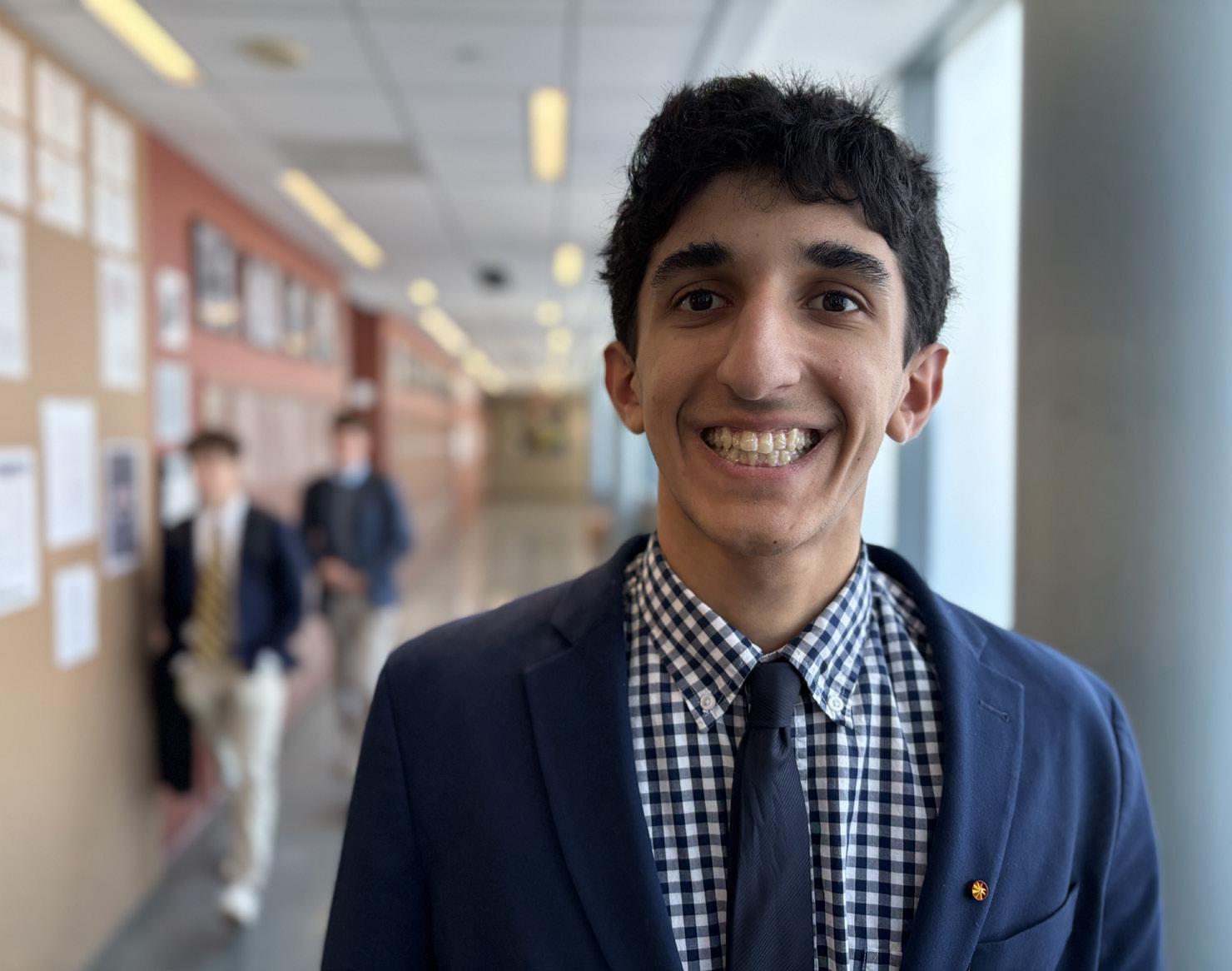
The Haverford School ventures to the Model United Nations conference at Cornell University every year, but for Sixth Former Ryan Shams, this trip was different. It was his first time back at the Cornell conference in three years, and it would be the last of his Haverford Model UN career.
CMUNC, short for Cornell Model United Nations Conference, draws student delegates from schools across the nation to Cornell’s scenic campus in Ithaca, New York. Haverford sent eight delegates this year, many new to Model UN. Having a group with less experience changed the group dynamic. Shams and Sixth Former Seth Virmani were the most experienced members, and they were expected to lead the delegates.
“This was the first time Seth and I were able to lead our group.”
RYAN SHAMS ’26
“This was the first time Seth and I were able to lead our group,” Shams said. Model UN is a complex activity. Del-
egates are expected to walk into a committee room, represent a country they may have only researched a few weeks earlier, debate complex global issues, and hold their own against delegates from other schools.
For the newer members of the team, there was a steep learning curve. However, Shams and Virmani did their best to aid the new delegates. For Shams, that responsibility was one of the highlights of the whole trip.
Outside the committee rooms, though, Shams’ favorite part had nothing to do with debate. It was just walking around Cornell’s campus with everyone. The university’s campus is hard to miss: rolling hills, gorges cutting through the landscape, and old stone buildings spread out across a lot of open space. Exploring the Cornell campus felt far removed from a typical school day, and for a group of students spending a few days there, that was a big part of the appeal.
“It was a new area for me,” Shams said.
It also made CMUNC stand out compared to the other external conferences Haverford attends: Ivy League Model United Nations Conference (ILMUNC) at the University of Pennsylvania, which runs almost entirely inside a downtown Philadelphia Marriott hotel.
CMUNC was also Shams’ last conference. Four years in Model UN, countless
Gallagher is ready for the next chapter of his career, one that features him as a student-athlete for the Columbia Lions.
“I am most excited to get to focus on my sport against the highest level of competition and get some of the best facilities in the world to train in every day.”
Gallagher stressed the importance of consistency.
“It is an everyday journey, and a few days off can set you back,” Gallagher said. “It is also a business. Take nothing that happens to heart, and continue to reach out to every coach that gives a chance, and push for your opportunity.”
committee sessions, innumerable late nights researching foreign relations, and many speeches in front of rooms full of people you don’t know. It means watching yourself get better at something year after year, and for
Shams, it also means finishing that run as one of the leaders of a group that was just getting started.
“I had a lot of great experiences and appreciated the last four years,” Shams said.
Alex Fenton ’28
When students think about Haverford, many think of a student in the midst of their educational journey, learning new concepts and becoming men of character.
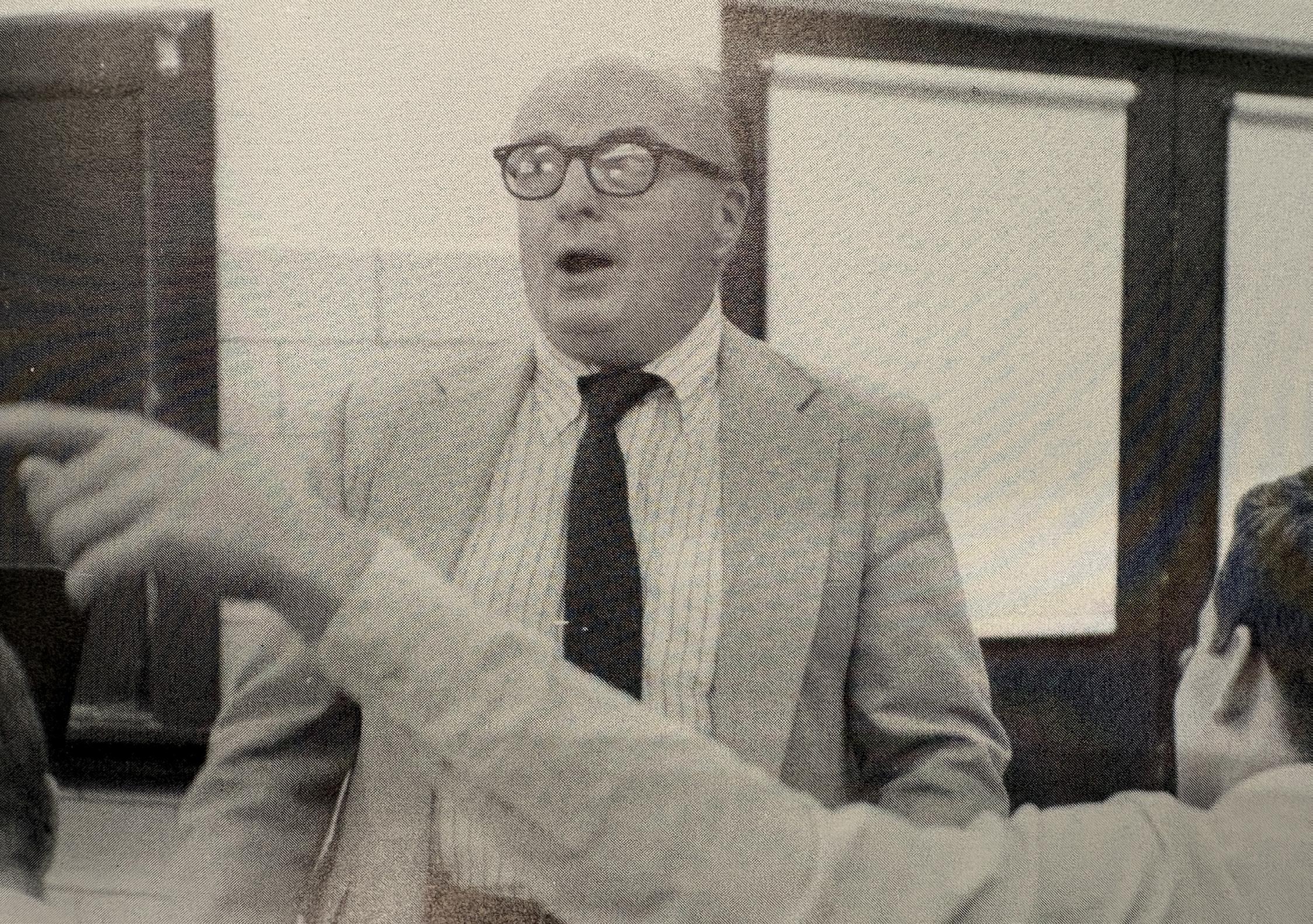
What is often understated is the great impact teachers have on these boys. No person exemplifies this more than Mr. Donald Brownlow.
Born in 1923 in nearby Germantown, Brownlow attended the Tredyffrin-Easttown High School, better known today as Conestoga High School. He then attended the University of Pennsylvania, but it would be only a year before he enlisted to fight in Europe.
“You
can’t appreciate the history of Europe in the 20th century if you don’t know the smell of gunpowder.”
MR. DONALD BROWNLOW
He deployed at Utah Beach on D-Day and survived one of the bloodiest days in U.S. history. As American troops moved into the heartland of France, so did Brownlow. He was captured by elite German Schutzstaffel troops in the Ardennes during the Battle of the Bulge, yet escaped a mere two days later.
Beginning at The Haverford School in 1951, Brownlow quickly became a beloved member of the faculty.
His heroism is not to be downplayed. Brownlow would earn an array of prestigious military awards: the Purple Heart after being injured by shrapnel fired from a German tank shell, a Bronze Star for dismantling several Nazi minefields, and the Croix de Guerre from the French government. During his time in Europe, he managed to come into contact with the very silverware used
by German dictator Adolf Hitler, as well as several items from the Nazi headquarters known as the Brown House.
After returning from Europe, Brownlow entered a new chapter as an educator. Beginning at The Haverford School in 1951, Brownlow quickly became a beloved member of the faculty. He regularly attended sporting events and pep rallies, embracing the community almost instantaneously. He was also a wrestling coach.
On campus, he was known for his annual firing of a cannon on the football field, now known as Sabol Field.
“You can’t appreciate the history of Europe in the 20th century if you don’t know the smell of gunpowder,” Brownlow often remarked.
Despite this new job, he never forgot his campaign in Europe, making sure to visit France and Germany with students on exchange trips and let them see what he had
seen on that day.
During his teaching, he also managed to publish several books about World War II and European history. His genuine passion for history and teaching made him so beloved by both students and faculty during his 55 years of teaching.
Donald Brownlow left an immense impression upon all those he taught.
Brownlow also became an advisor to several government officials. He corresponded with Jawaharlal Nehru, the former prime minister of India, discussing the PRC’s influence on Pakistan. Brownlow wrote to the director of Central Intelligence, Allen Dulles, about the importance of defeating the Soviet
Union, and provided advice regarding Soviet and Chinese expansion during Cold War times, continuing to impart what he learned in his time as a soldier.
Donald Brownlow left an immense impression upon all those he taught. It was for this reason that his death in January 2006 was so poignant to the school. In memory of the teacher, the Donald Brownlow Memorial Scholarship Fund was established by the members of the Class of 1959 and received significant aid from the Class of 1963. The fund is designed for “boys who have demonstrated a love of history that Don inspired and nurtured during his 55 years in the classroom.”
Continuing the school’s tradition of excellent instruction honors the work of people like Mr. Brownlow, whose excellence continues to impact students to this day. As a school, we should continue to prioritize excellence in this aspect.
“I’ve had experience working with National History Day in my previous institution, and with students from local public schools here on the Main Line, so I’ve familiarized myself with the rubric and some of the requirements,” Mr. Bagbonon said. “I was able to help these two boys—Daniel and Edward—with ideating and thinking about how they wanted to present their research.”
“The internet’s a big place, and we’re trying to find very specific, very niche documents.”
DANIEL KHAN ’27
Their project, “Asphalt Genesis: The Hidden Cost under the Forced Revolution of America’s Roads,” chronicles the revolution of the American street from mixed-use development to car-dependency with respect to the influence of the automobile industry.
As part of their project, the team uncovered archival documents, ranging from census data with car registration statistics to 1924 conferences on street and highway safety. Conducting such in-depth research proved difficult.
“The internet’s a big place, and we’re trying to find very specific, very niche documents,” Khan said. “To do something as indepth and as high quality as us, to be able to make it to nationals, is time-consuming, and it’s really frustrating.”
“Who really runs the road? Is it the pedestrian, or is it the vehicle?”
MR. BHELLY BAGBONON
The team used every source of information they could find, including archival documents from the Philadelphia Archives and the Detroit Collection, along with an interview, allowing for words beyond the page.
“It was an elderly woman named Phyllis Ewing, whose dad was a mechanic. She was a witness to our topic, the revolution of roads and automobiles in our modern society,” Cheung said.
Khan emphasized his own growth in mindset over the course of research.
“At first it was boring, but as you get into finding all these cool documents and when you interview people, it’s less about researching and more about being able to tell a story, and a factual story at that,” Khan said.
Mr. Bagbonon also grew more interested in the topic.
“I’ve been thinking a lot about cars and pedestrians,” he said. “Every time I walk past the street, and I see the little white guy on the sign, I think, ‘Whoa, am I really safe? Who really runs the road? Is it the pedestrian, or is it the vehicle?’”
National History Day provided a unique opportunity for the pair to put their in-class skills to real-world historical use.
“It’s an outlet for young people to test their journalism skills, to test their research skills, to test their ethnographic skills of interviewing other people, and their anthropological skills. It’s really inspiring, as a teacher, and as a member of the community, to leave no stone unturned, to look underneath questions that we oftentimes just glaze over,” Mr. Bagbonon said.
For Khan, however, the unique aspects of National History Day came not in the process itself, but in the atmosphere of the competition.
“What sets National History Day apart is that everybody’s passionate. Everybody wants to do the work, and everybody enjoys seeing it all come together for the competition and potentially getting rewarded for it,” he said.
That supportive and joyful atmosphere allowed the team to create a project truly refined and special. Upper School physics teacher Mr. Jamison Maley served as the teacher chaperone for both levels of competition, providing encouragement and, occasionally, offering a different perspective on aspects of their projects.
“[Their project] was quite comprehensive and offered a very nuanced look at the impact of the automobile on our lives. The history was impeccably researched, while on the more technical side of things, the production of the video was equally impressive,” Mr. Maley said. “It became abundantly clear that what Edward and Daniel created was heads and shoulders above the competition.”
“We followed one very simple rule: simply to be honest with ourselves.”
DANIEL KHAN ’27
To assist with part of the process at state-level competition, Mr. Maley worked with Khan and Cheung, asking practice questions similar to what the judges would ask them during the panel.
“I would just play devil’s advocate sometimes, or I’d try to riff or improvise off some of the questions they were already asking each other, offering secondary questions in that capacity,” Mr. Maley said.
Despite their preparation, the team faced uniquely challenging questions, many of which they had not accounted for.
“A lot of the questions we’d been asking were simply just fact-checking with research,
like ‘What year was this founded?’” Cheung said. “The questions that they asked were a lot more broad… And these questions were actually quite difficult—definitely a step up from districts. ‘How do your video’s topics speak to the virtues of the life of America?’… That was a pretty difficult question to answer.”
Nevertheless, the duo will advance to the national competition. They are worried about heightened competition, which includes foreign English grammar schools, but are hopeful to present their research at even higher levels.
Cheung said, “We have teams from China, teams from Singapore, teams from South Korea that will be the best from all these nations. Last year, it was a South Korean team that won…We need to ensure that our thesis is bulletproof and that our evidence buttresses our thesis.”
Khan recalled a motto that helped carry them through the research process, and that will prove especially helpful when progressing to the national level.
“We followed one very simple rule: simply to be honest with ourselves. A lot of the time, kids will look at a paragraph and they’ll say, ‘Okay, this is good,’ but what Edward and I did is this: whenever there’s even a very slight, minor issue that we thought would bring any sort of attention—it could be as simple as an opacity being set 2% higher— we wrote it down and we fixed it,” he said.
“To cultivate a genuine love of science, you must also be a student of history.”
MR. JAMISON MALEY
Both members emphasized the importance of their determination and precision to detail.
“When it’s one in the morning in your research, and you’re looking at a document from Herbert Hoover talking about intersection widths, you’re just wondering what you’re doing with your life, but if you want to win, that’s the work it takes. That’s what
needs to be done,” Khan said.
Khan’s relentless work ethic toward National History Day propelled Cheung to put in the same intense work, providing him with a reason and a way to balance his busy schedule.
“It’s not going to affect the transcript. So the mindset almost becomes, ‘Why should I work on this? Why am I spending time with this?’ It almost becomes your last priority,” Cheung said. “But in the wake of the competition, seeing how much work Daniel is putting in, I thought, ‘I want to match that.’”
“To cultivate a genuine love of science, you must also be a student of history.”
MR. JAMISON MALEY
Everyone involved came away from the competition with a renewed sense of the importance of National History Day in encouraging historical learning and of the importance of history itself.
Mr. Maley emphasized the importance of history in the understanding of science.
“To cultivate a genuine love of science, you must also be a student of history,” he said. “The historical timeline of cultural and intellectual movements, landmark equations, and technology provides essential context for understanding seismic discoveries in the timeline of science. You can’t divorce history from science and fully appreciate science.”
Khan said, “History answers why everything is the way it is in life. And I think people need to understand the fact that history is more than studying the past. It’s studying how different patterns in the past lead to the things we have in the present, and it creates a very good indicator for what things may happen in the future.”
Mr. Bagbonon said, “I’ll borrow the line of Mark Twain: ‘history doesn’t repeat itself, but it rhymes’… National History Day brought [road construction] to the surface, and I think these boys took the opportunity, and they’re scoring a touchdown with it.”
Byron Yang ’28
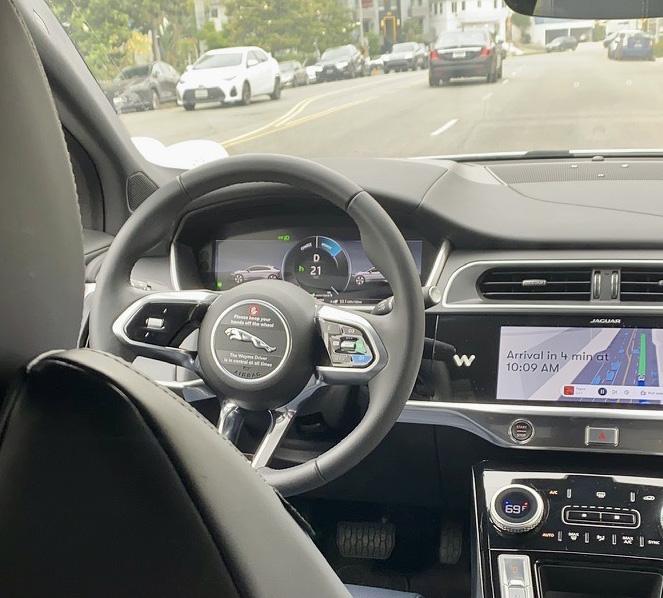
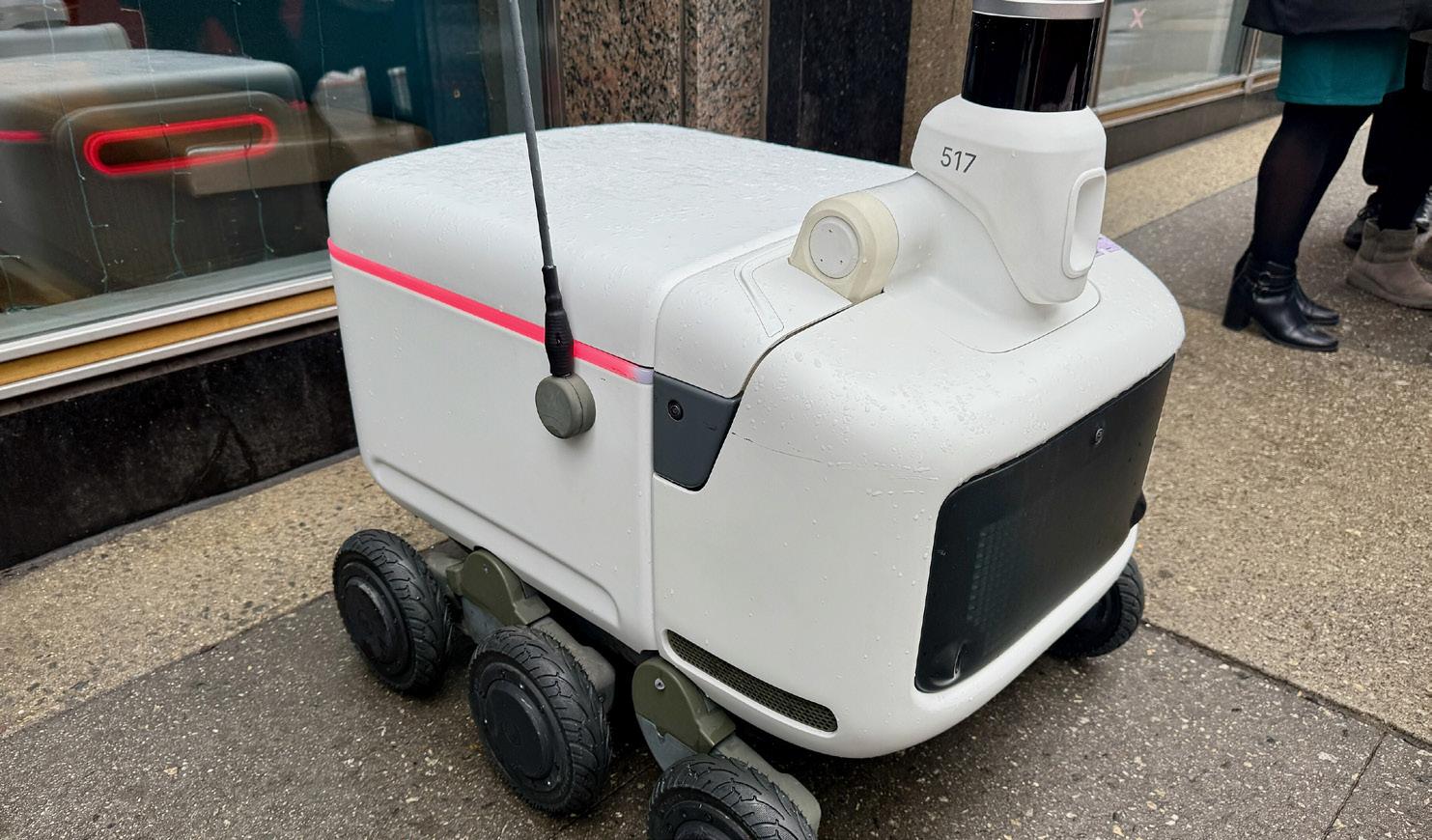
For better or for worse, a Waymo vehicle symbolizes the advancement of modern technology. These driverless taxis can feel futuristic, offering a gq navigated riders through an active police stop, like it did in LA last year.
Still, the data is hard to ignore. Waymo has reported fewer crashes than the average human driver over the course of 127 million passenger miles. If implemented successfully, that could mean safer roads and perhaps fewer frustrated honks for urban drivers.
Now, Waymo is tackling a new challenge: navigating the harsh Philly winter conditions.
On March 3rd, the company released footage of its vehicles driving through snow and icy streets of Market Street as well as roads with similar conditions in New York, Denver, and Detroit.
While Philadelphians will not be able to ride in a Waymo just yet, the video indicates significant progress since testing began in the city last summer.
That progress matters, especially for Haverford students, many of whom rely on SEPTA and regularly deal with delays and cancellations. A reliable alternative, if it proves effective, could offer a new way to navigate the area. But, as this past winter has shown, Philadelphia’s weather can be unpredictable, and when combined with the city’s already chaotic traffic and tight streets, it creates a difficult environment for any driver, human or autonomous. If Waymo can handle Philadelphia, it could handle almost anywhere.
To make that possible, the company has been studying how the city responds to snow, including road maintenance, transit changes, and detours.
Waymo is also testing new features, such as a “pull ahead” button that allows riders to
adjust pickup locations when snowbanks block access.
Beyond technology, the company has also emphasized community partnerships.
In a recent press release, Best Buddies Pennsylvania State Director Samantha Civitate highlighted the potential benefits. “With Waymo’s support, we can grow our programs and create more opportunities for friend-
ship, jobs, and leadership development, helping build a more inclusive community for people with intellectual and developmental disabilities,” she said.
However, the company still has challenges to address. Waymo is continuing to develop its sixth-generation driver system, which will be more efficient and scalable.
The company says this system is designed
to expand into more cities while maintaining safety standards, particularly in complex environments like those with extreme winter weather.
For now, Waymo’s presence in Philadelphia remains in the testing phase. As the technology improves, though, the question is no longer if autonomous vehicles will become part of our city, but when.
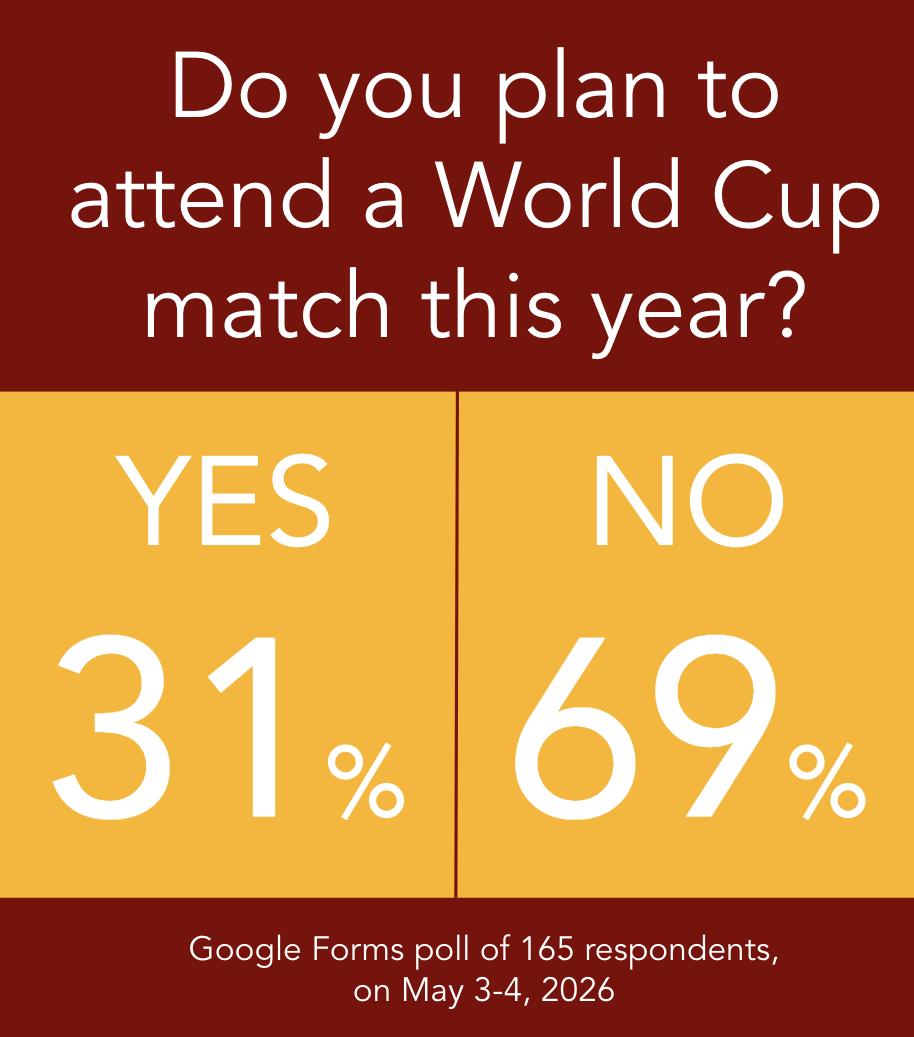
This summer, one of the largest international sporting events is coming to Philadelphia: the World Cup. With large crowds expected, transportation may become more difficult and parking more limited. Airbnb, an official sponsor of the 2026 World Cup, will sponsor rides home on SEPTA’s Broad Street Line from Lincoln Financial Field following
Philadelphia games.
This agreement states that Airbnb will fund free rides returning from Lincoln Financial to the NRG Station for all six matches.
These free rides will run from halftime until two hours after the match concludes.
In Philadelphia, several prominent nations are expected to play, such as Brazil, France,
Croatia, Ghana, and two additional teams that will meet in the Round of 16.
Two representatives from SEPTA and Airbnb voiced their staunch support of the project.
Jay Carney, Global Head of Policy and Communications for Airbnb, said, “We’re proud to partner with Philadelphia Soccer 2026 and the City of Philadelphia to make

the World Cup more affordable and accessible for fans and residents across the city.”
Scott A. Sauer, General Manager of SEPTA, said, “The B Line is the best way to get to and from the Sports Complex, and their generous support will help us deliver a safe, reliable, and efficient trip home for visitors and residents alike.”
While transportation will be free for fans in Philadelphia, fans from other cities are not as fortunate.
The base fare for New York subways has increased to $3.00. Accompanying high transportation prices come high game prices. Traveling to a match at MetLife Stadium, New York’s official venue for the World Cup, has reportedly increased to $150.

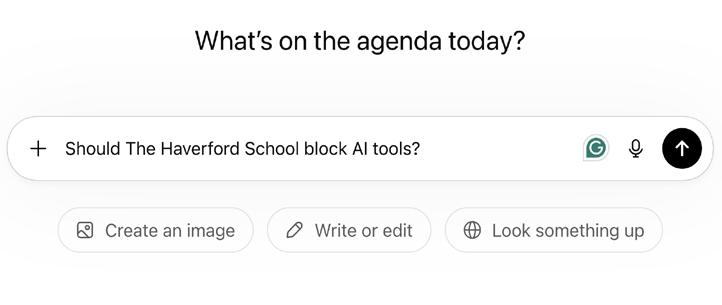
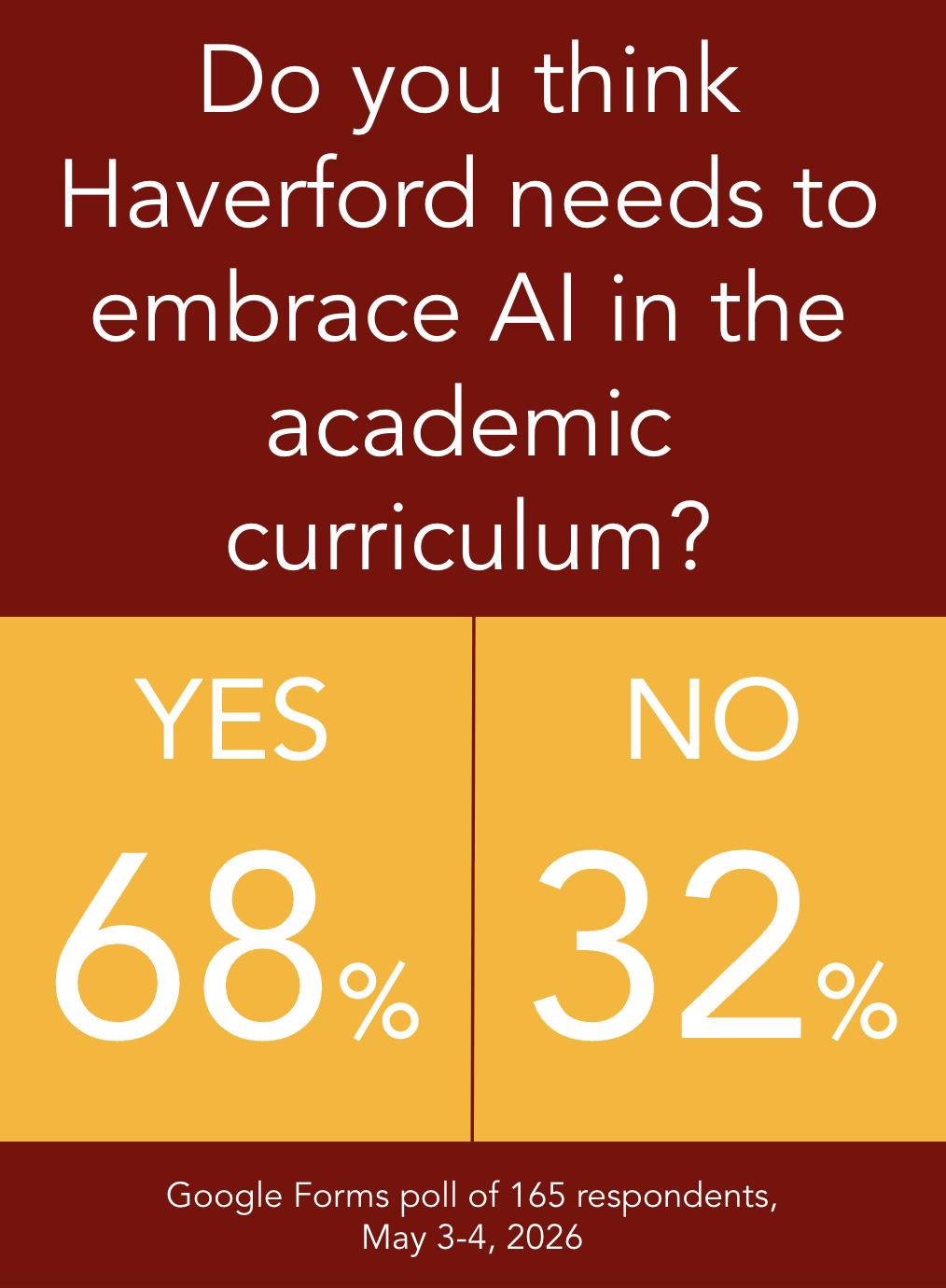
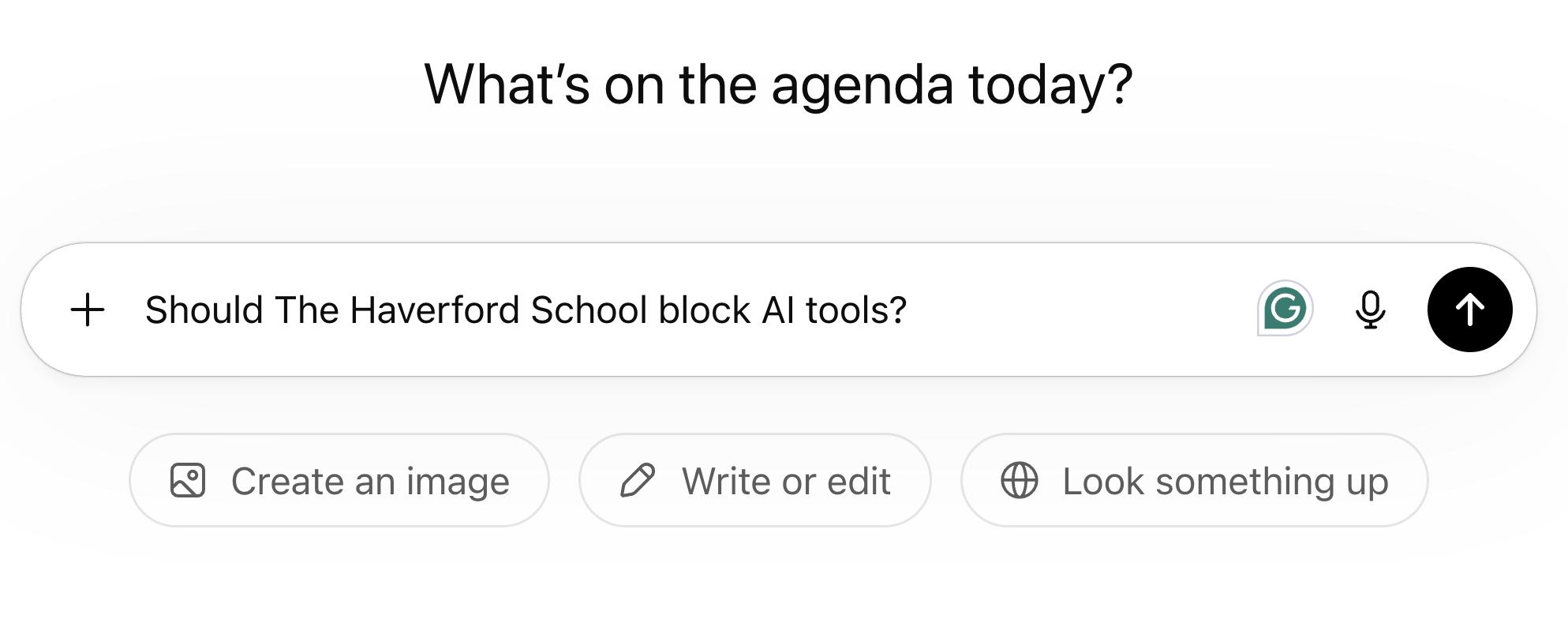
Artificial Intelligence is quickly becoming a part of everyday life, with people using it for everything from dieting tips to coding entire websites, raising the important question for Haverford: should the school block AI tools or embrace them?
This year, the school has been inconsistent with its approach to AI. The year started with ChatGPT and Claude blocked, but not with Gemini and Grok. Recently, Haverford unblocked ChatGPT on school WiFi but blocked GPT Zero, a way to check one’s AI percentage on one’s writing.

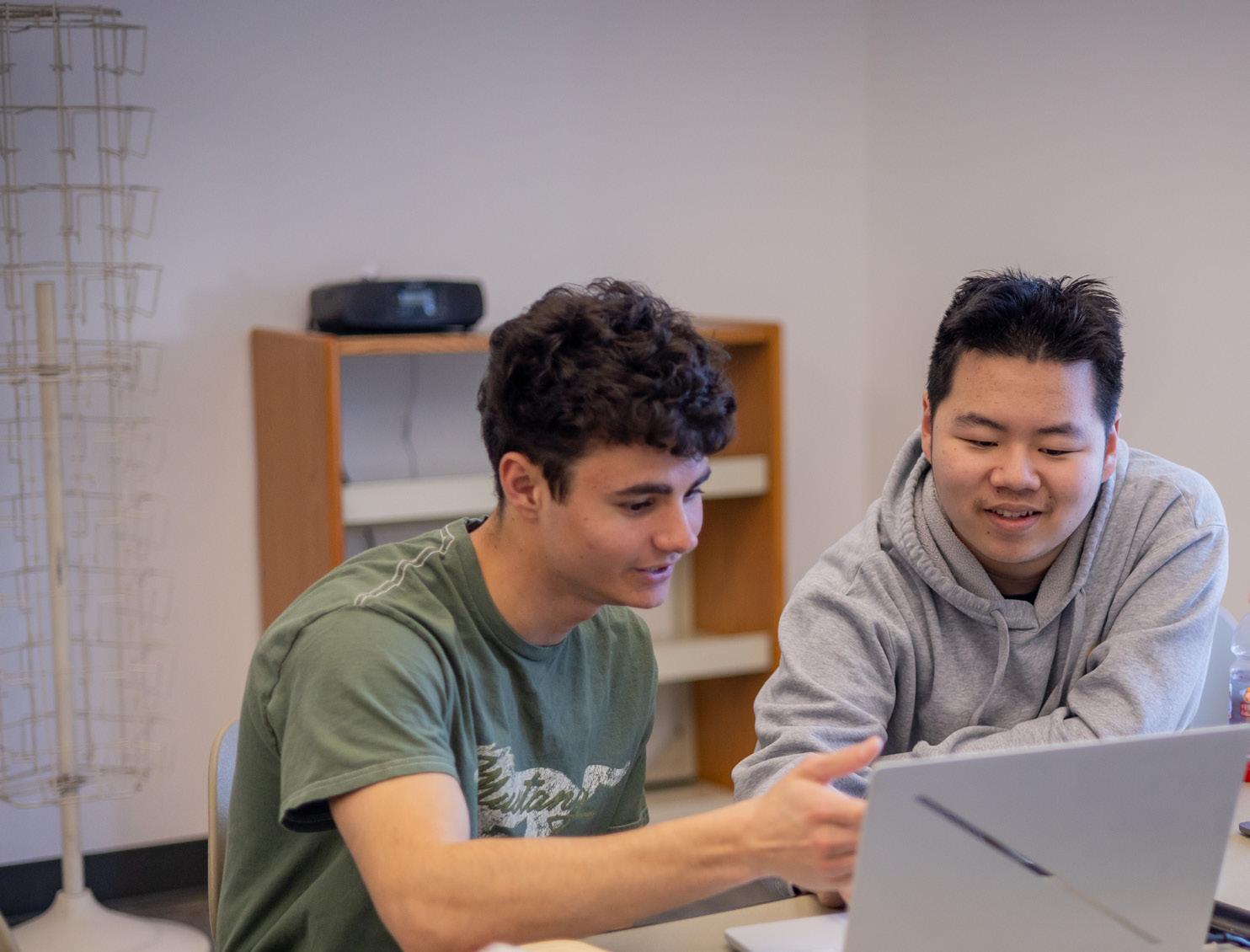
Walk through Wilson Hall between classes, and you’ll see students everywhere looking at laptops or finishing work. What you won’t see as often, though, are groups of students gathered around a table actively working together. At a school that prides itself on community, the reality is that collaborative spaces are becoming increasingly harder to find.
On paper, the building offers a few places designed for group work: the library, the Street, the Big Room, and the Durham Community Room. But these options are often restricted. The quiet expectations on the second floor of the library make it hard to have real discussions. Hence, the first floor allows discussions at a friendly tone— but what if a group can’t fit everyone in the space available? Other potential spaces are either too crowded, noisy, or simply unavailable during the day.
This lack of accessible space has shifted how students approach their work. Instead of meeting to collaborate, many default to working alone or dividing tasks digitally. Group projects become less about true teamwork and more about splitting responsibilities. While this might be efficient, it eliminates the back-and-forth exchange of ideas that makes collaboration meaningful. At Haverford, where discussions and brother-
Pushing away from AI might seem like a simple way to prevent cheating, but could it actually be hurting the school more than it realizes? In the 2000s, Blockbuster, a physical DVD rental company, had the opportunity to buy Netflix, for $50 million. Blockbuster CEO John Antioco and his executives thought that Netflix’s idea was insane. Ten years later, Blockbuster declared bankruptcy. While not buying Netflix could be a reason for Blockbuster’s bankruptcy, I would say their lack of ability to adapt was the main reason. Blockbuster didn’t just need to keep up with its competitors—it needed to lead the industry and be one step ahead.
In 1975, Kodak engineer Steven Sasson invented the digital camera. When he told his management, they told Sasson not to tell anyone about his invention. They were comfortable with their film business and feared that digital photography could endanger it. In 1981, Sony introduced the world’s first digital camera, called Mavica. It wasn’t until 1991, sixteen years after Steven Sasson’s invention and ten years after Sony, that Kodak was forced to release its own version of the digital camera, the DCS-100. As you might assume, Kodak filed for bankruptcy in 2012.
The real lesson is this: Blockbuster and Kodak didn’t need to just keep up in their industries; they needed to lead. You can’t win by responding to change; you can only win by leading it.
This is the brand-new Kūlia Academy’s
way of thinking. Kūlia Academy is a new public charter school in Honolulu, Hawaii, that is designed to teach AI and data science education around a normal curriculum. This school is so popular that parents showed up for school events in such numbers that the school’s new parking lot overflowed. While this new school might seem outlandish, it proves that school and AI can blend.
Every semester that passes without a clear AI plan is a semester a rival InterAc school starts building theirs. Haverford doesn’t need a perfect plan, but it needs
a plan that should be modified quarterly. Waiting until the answers are given to them and passing up on an opportunity to show we are up for change is how Kodak ended up behind and how Blockbuster went bankrupt. As a junior in high school, I don’t claim to have the perfect way to implement AI, but Haverford has the resources. This school has the funding, resources, and personnel to create a clear AI approach for the next ten years. What’s missing is the willingness to take action.
By doing nothing, we fall behind daily.
hood are central values, that shift feels significant.
Part of this issue is structural. The school is simply a busy place, and nearly every space serves multiple purposes throughout the day. Classrooms are occupied, chairs are often removed from the Big Room, the street pods are full, and there are only a few designated areas where students are encouraged to talk and think together. Even when space technically exists, it often doesn’t function as a true collaborative environment. The result is a barrier where collaboration isn’t discouraged, but isn’t fully supported either.
There’s also a cultural side to consider. In a rigorous academic environment, students are focused on efficiency and performance. It sometimes feels easier to work independently than to coordinate schedules or risk slowing down a project by working as a group. Without ample spaces that naturally bring students together, collaboration becomes a challenge.
The consequences go beyond academics. Collaboration is where students develop communication, ideas, and build stronger connections with one another. It’s where learning becomes interactive instead of isolated. When those opportunities are limited, the overall experience of school changes. Students may succeed individually, but they potentially miss out on the kind of shared
learning that prepares them for life beyond Haverford.
Addressing this problem doesn’t require a complete overhaul of the campus. It starts with recognizing the gap. Creating a small number of more accessible collaborative
spaces could make a noticeable difference. Allowing more flexibility in how existing spaces are used could also help. If collaborative spaces continue to disappear, so does an important pillar of what makes our community strong.
The term “brotherhood” is used frequently around campus. On sports teams, in assemblies, musicals, and so many other parts of how our students experience the school, brotherhood is considered the foundation of our community. Having a brotherhood suggests a community where everyone has trust and support and feels they have a place. Does everybody feel that way about the school community?
Jerry Collins ’29 says, “I truly felt the brotherhood when I was on the wrestling team. Outside of the team, the brotherhood

Is a forty-five-minute lunch period really long enough?
Students have much that they need to do in this short amount of time. They have to eat, socialize, and do academic work. Furthermore, most students don’t even get the full amount of time during the lunch period.
First off, students have to walk to the dining hall. While this isn’t always a problem, some classrooms, like Dr. Griffiths’, are a long walk away. On top of the walking time, lunch lines are long, and waiting can be upwards of ten minutes. While students do have five minutes in between classes and lunch to mitigate the loss of time, it does not fully fix the issue. Some students do not even get the full amount of time. Even if they did, it still would be too short.

With the 2025-2026 school year coming to an end, our school can make many changes to encourage good behavior. The administration can reward students with phones, a usual restriction during school hours.
Last year, the school prohibited students from using phones during school hours. The administration introduced Yondr pouches to lock the phones permanently unless unlocked with a magnet at the school’s entrance.
was less noticeable.”
This suggests that brotherhood could be felt within smaller communities rather than the whole community, though it’s stated in Haverford’s new mission statement that “each boy is known, challenged, and supported.”
Devon Royal ’29, who has attended the school since pre-Kindergaren, says, “Throughout different stages of my life at Haverford, lower school, middle school, and upper school, brotherhood had the same noticeable strength but in different ways. In high school, I feel that bond when I’m doing
things I like with my closest friends.”
A community-wide brotherhood may be unrealistic, and the brotherhood might truly be special, just with closer friends. After all, if you have a couple of close friends that you can connect with throughout and maybe past your time here, that is something special in itself.
During a recent upper school assembly, Head of School Mr. Tyler Casertano discussed the school’s past competitive culture, claiming that it prevented students from forming that bond that Haverford labels a brotherhood. Maybe part of that competi-
tive culture remains, the very reason some question the brotherhood in the first place.
In our greatest moments, after a sports team wins, after a successful musical, after a Sixth Former commits to a really good college, our brotherhood truly shines.
While the school’s brotherhood is not without challenges, its ideal is meant to be imperfect.
Brotherhood is meant to be built over time and through struggle, and it will have to be tested. Ultimately, it is up to us, the student body, to decide what the brotherhood will look like today and tomorrow.
Third Former Hanru Li said, “Lunch is not long enough. I would love to eat and talk to my friends more.”
Having a bit of a longer lunch would be beneficial.
After students eat their food, they are left with around twenty-five minutes, maybe even less. This does not leave that much time to talk to each other, along with walking back to classes. This could prevent some students from building connections they can take outside of the lunchroom.

What if students could potentially earn back a day with their phone?
When teachers see a student do something that represents one of our core virtues, they could allow them to bring their phones in one day.
They would hand in a slip saying they have permission, and they would have their phone for the school day. The school could use this method to promote good virtues outside of school, such as the student section’s good behavior at away games or showing some sort of class on the field.
If we put aside the social connections, we have some other things that could be done during lunch.
“I wish there was a bit more time to study before fourth period,” Fourth Former Eli Goldberg said.
Some teachers assign tests in the last period, so some extra studying time would be appreciated.
The time could also be used to make up certain tests and quizzes, since most can’t be taken in forty-five minutes. Along with tests, it could also be used to do some homework, so you don’t have as much after practice. No students would ever complain about a bit of extra time to just relax after eating a large meal.
Having a bit of a longer lunch would be beneficial for all groups involved.
This system will reward students when they represent Haverford well.
“I think it would be a good incentive, but I don’t think that good behavior means students can be responsible with phone use,” Liam Jones ’29 said.
With this new privilege installed, students could learn how to be more responsible with using their phones, so that they can challenge their need to use technology. Students could also be more motivated to perform at a higher level. Returning phones could also be seen as a sign of trust between

students and teachers.
Admittedly, this reward could come with downsides. Having phones could distract students from doing real work.
Between games, social media, and artificial intelligence, there are many ways that someone could potentially get sidetracked. And even with this rule, students should already try their hardest to stay motivated.
“Our phone policy should be used to engage students with each other and in class. So using this method could ruin some of the energy,” said chemistry teacher Mr. Will Leech.
To fix these negative possibilities, phone usage could only be allowed during free periods or study halls. If one’s phone is too loud or is disturbing another teacher’s class, it could be taken away from that student, and they could retrieve their phone by the end of the school day.
Students and teachers could have similar outlooks on this rule. It could be a fun idea, but it would be difficult to actually incorporate it into the community. It could improve the current status of the school, or it could ruin the energy at our school.
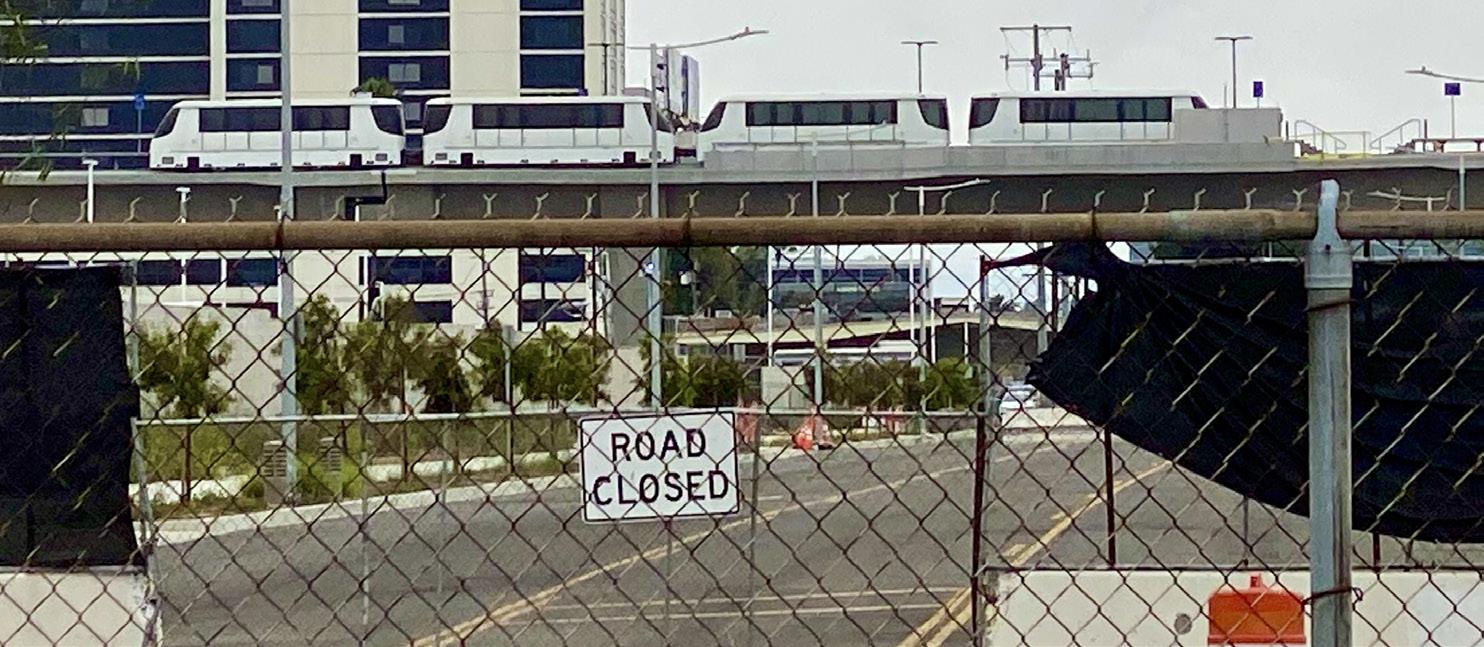
Los Angeles International Airport has long been defined by its infamous “horseshoe” loop, a traffic bottleneck that can turn a simple pickup into a prolonged ordeal. Now, after seven years of delays, construction, and more delays, the city is still betting on its innovative solution: the Automated People Mover, or APM.
Originally expected to open in 2023, the system is now projected to begin operations in the second half of 2026.
Construction was largely completed as of December 2025, but ongoing disputes over maintenance responsibilities and final testing have delayed its launch. At one point, the project was reportedly 95 percent complete, yet still unable to open. Currently, the APM is conducting testing without passengers, a promising sign that it will launch before 2027.
Despite the frequent setbacks, the APM
remains central to Los Angeles’ efforts to tackle congestion, especially ahead of the influx of tourism during the 2028 Olympics. According to Los Angeles World Airports, the system is expected to carry around 30 million passengers annually and reduce car traffic near the airport by an estimated 117,000 vehicles per day.
The system is designed to fundamentally change how travelers move through LAX. It will be free to riders and connect directly to the Metro Transit Center at 96th Street and Aviation Boulevard, linking the airport to the region’s rail and bus network. It will also connect to the Consolidated Rent-a-Car facility, one of the largest concrete structures in the country.
Together, these changes aim to pull traffic away from the crowded terminal loop and reduce reliance on cars.
The APM is a key part of a much larger

As governments across the globe face aging populations and shrinking budgets, the workforce is increasingly filled by robots and artificial intelligence. From military drones to assistive robots in healthcare, automation has become a feasible reality. However, as these smart services move from in-lab testing to our streets and offices, we face a difficult question: can a machine ever truly be ethical?
One of the most common fears regarding AI is that it lacks the capacity for true emotion. To combat this, designers have adopted more anthropomorphic or humanlike robot designs. A recent study published in Government Information Quarterly by Jurgen Willems and colleagues explored whether giving a robot a smiling face makes citizens trust its ethical judgment more.
Interestingly, the research found that while a human-like face grabs our attention faster, it doesn’t change how we judge the robot’s actions. This suggests that we as a society are more action-oriented; as long as the AI is programmed to act ethically, the public will eventually come to accept robots roaming the streets as the norm.
The core of the debate is the clash between beneficence and autonomy. Most pro-
infrastructure push. In a unanimous vote, airport commissioners approved $1 billion for roadway improvements as part of a $30 billion capital program, including plans to reconfigure miles of streets around LAX to better manage traffic flow. The goal is not just to ease congestion at the airport, but to rethink how people access one of the busiest travel hubs in the world.
Beyond LAX, Los Angeles is investing heavily in expanding its transit network to address the region’s broader traffic problem. The D Line extension, which will run toward Beverly Hills, is expected to improve access to one of the city’s busiest corridors. Meanwhile, the proposed Sepulveda Transit Corridor aims to connect the San Fernando Valley to the Westside, cutting through one of the most congested stretches of highway in the country along the 405.
Additional projects, such as the Southeast Gateway light rail line, continue to expand access to underserved areas, signaling a shift toward a more connected and less cardependent city.
On a larger scale, California is also looking beyond Los Angeles. Projects like Brightline West, a high-speed rail line connecting Southern California to Las Vegas, and the long-developing California High-Speed Rail system reflect a broader effort to rethink transportation across the state.
Taken together, these efforts represent a clear strategy: reduce dependence on cars by investing in faster, more reliable alternatives. If California can pull off its ambitious plans
in the coming decade, the state could serve as a model of infrastructure reform in America’s cities.
Still, questions remain about the timing surrounding the APM’s approaching launch. First announced in 2019, construction was supposed to take four years; now, assuming all goes to plan, it is expected to arrive at a critical juncture for California. The APM is already expected to miss the 2026 World Cup in June, but more importantly, the APM will also miss Los Angeles’ mayoral race. This November, a contentious race for California’s next governor will also be decided. This places even greater pressure on Los Angeles to have the system ready before the Olympics in 2028 under potentially new administrations.
Two years is a long time, but it also could be a drop in the bucket for such an ambitious and troubled construction project. Now, after seven years of construction and roughly $880 million in cost overruns, the project symbolizes the future of LA, for better or for worse.
While Los Angeles faces its own unique challenges, its approach offers a useful case study.
As Philadelphia continues to deal with traffic congestion and growing transit demands, agencies like SEPTA and PennDOT may eventually face similar questions. Expanding rail connections, improving airport access, and investing in long-term infrastructure could play a key role in shaping how the region moves in the future.
Is automation the answer to public service ethics?
ponents against automation point to the distinction that AI is unable to understand and handle sensitive situations, especially refusals of service. The fear is that a robot, following an algorithmic logic of saving lives, might override a human right to choose and act in a way that does more harm.
Since the current work landscape is made up of predominantly human workers who are prone to error, bias, and fatigue, an automated system could account for those pitfalls. These systems can be programmed to provide a consistent level of care based on a standardized set of ethical rules. For something as spontaneous as a car accident or a medical emergency, an AI decision could be the determining factor between life and death.
While automation promises to streamline efficiency and reduce the physical burdens on public workers, it simultaneously puts job security at risk. The challenge isn’t just about how the robot treats people, but how current workers can maintain a livelihood after being replaced.
A transition to robotized services is only ethical if it provides a means for work elsewhere, perhaps by adapting existing jobs to work alongside technology. As noted in
Farah Stockman’s American Made, without work, you lose a sense of self and pride. What you do is synonymous with who you are, whether consciously or subconsciously.
The evidence from the study above highlights the truth that “it is not the more human-like appearance that influences evaluations of ethicalness, but a robot’s ethical actions influence the extent to which it is perceived as human.”
In other words, if a robot acts with transparency and care, we will eventually stop seeing it as a hunk of metal and start seeing it as an equal. The benefits in the long run: safer streets, more efficient hospitals, and a more independent elderly population, outweigh the cons.
“Ican hold the door myself,” she said, as she took the handle from me and then entered the building. At the town library, the quiet hum of turning pages and the faint old-book smell filled the air. The November cold bit at my neck as I stood frozen, my arm still extended toward empty space
I had been raised to hold doors not because women are weak, but because my grandfather held them for my grandmother, because it was a small gesture that cost me nothing and might mean something. But in that moment, watching her dark hair disappear into the distance, I felt like I had committed an invisible crime.
Later that night, I scrolled through my phone in the blue glow of my room. My feed: a carousel of the same message repackaged in different fonts.
“Women don’t need men to protect them.”
“Reject the damsel in distress narrative.”
Each post got thousands of likes. I set my phone face down on my chest and stared at the ceiling, trying to understand when offering courtesy became an insult, when masculinity became something to apologize for rather than something natural.
The confusion I felt that night is not

unique to me. It is a symbol of a broader generational reckoning. According to a 2025 survey by Ipsos UK and King’s College London, 60% of Gen Z men believe they are expected to do too much to support equality, while 57% think society has gone too far in promoting women’s equality to the point of discriminating against men. These are not fringe statistics. They represent a disconnect between how young men experience the world and how they are told they should experience it.
What is most striking is the paradox these numbers reveal. Gen Z men are simultaneously more likely than their elders to value traditional masculine traits while also feeling more confused about what masculinity means. According to a recent Newsweek article, Gen Z males are nearly three times more likely than Baby Boomers to prioritize “dominance” as a key trait, 23% vs. 8%, yet many of these same young men report feeling lost, lacking clear models of what healthy masculinity looks like.
This is not hypocrisy. It is desperation. It is young men grasping for something solid in a cultural landscape that seems to have decided their natural instincts are inherently toxic.
I think about that door. About how something so small, five seconds of holding metal and glass, could feel so loaded. The truth is, I was not trying to make a statement about gender roles or female capability. I was trying to be kind. But kindness, when filtered through the lens of gender politics, becomes something else. It becomes a power play, a microaggression, evidence of internalized patriarchy.
The internet has amplified this confusion into a full-blown identity crisis. Social media feeds young men a steady diet of contradictions: be sensitive but not weak, be confident but not egotistical, support women but do not assume they need support. The algorithms do not care about nuance. On one end of the spectrum, you have posts celebrating emotional vulnerability and deconstructing toxic masculinity. On the other hand, you have Andrew Tate and Jordan Peterson with millions of followers, offering a
return to masculinity that feels certain, even if that certainty comes at the cost of empathy and equality.
Researchers describe this phenomenon as “identity threat”: a psychological state where people perceive a risk to a cherished part of who they are, leading to stress and defensive behaviors. For young men who have grown up being told that traditional masculinity is problematic, that their natural inclinations toward protection and provision are relics of a patriarchal past, the threat feels constant. Some respond by retreating into hyper-masculine postures, adopting the very behaviors that confirm everyone’s worst fears about men. Others, like me, see it happening before our eyes and try to move through the world without causing offense.
I remember my father teaching me to hold doors, to carry groceries, and to walk on the street side of the sidewalk. These were not lessons in female inferiority. They were lessons in care. In noticing. In the kind of attentiveness that says, “I see you, and I want to make your day slightly easier.” But somewhere between his generation and mine, those gestures got reinterpreted. What was care became control. What was courtesy became condescension.
The feminist movement has done tremendous, necessary work in dismantling genuine oppression and expanding opportunities for women. But in the urgency to correct historical wrongs, something got lost in the translation. The message “women can do anything men can do” may have evolved into “women don’t need men at all.”
For young men trying to find their place in this new world, that evolution feels less like progress and more like exile.
Research on young men’s relationship to feminism reveals this tension clearly. Many young men feel excluded from feminist discourse, viewing it as primarily benefiting women and not addressing their concerns. When you are constantly told that your masculinity is toxic, that your instincts are problematic, it is hard not to internalize that message.
This is not to say that all expressions of masculinity are healthy or that the feminist
critique of harmful masculine behaviors is wrong. The statistics on male violence and domestic abuse are real and devastating. But acknowledging those realities does not require deeming all masculine traits dangerous. Strength can protect without dominating. Confidence can inspire without diminishing others. Courtesy can honor without belittling someone else.
I think about the girl at the door a lot. I wonder if she even remembers that moment. If it registered for her the way it did for me. I wonder what she saw when she looked at me. Did she see a helpful stranger or an embodiment of everything feminism is fighting against?
Young men are so afraid of doing the wrong thing that many are choosing to do nothing at all.
The real tragedy is not that I held a door. It is that we have created a culture where such a small act of kindness can feel like a political statement. Young men are so afraid of doing the wrong thing that many are choosing to do nothing at all.
Maybe the solution is not to abandon traditional masculine virtues but to expand them. Strength can include emotional courage. Protection can mean creating spaces for vulnerability. But that resolution requires conversation, not shunning. It requires recognizing that young men are not the enemy. They are fellow travelers trying to navigate a landscape that none of us fully understands yet.
I still hold doors every time. I do not have answers. I do not know how to be courteous without having the fear of being condescending. I do not know how to be masculine in a world that has decided that masculinity itself is the problem. So I keep reading and learning. And when I see someone coming behind me, I am sure to hold the door.
Ihave been using Linux for nearly five years on my gaming desktop, Steam Deck, or even my MacBook with Asahi Linux. What originally started as a quick way to get through virtual school, avoiding Windows’ bloat and excessive pricing, quickly became a deep passion of mine, reshaping my understanding of computing.
For those unfamiliar with Linux, it was created by Linus Torvalds in 1991 as an alternative to the expensive, AT&Towned UNIX operating system. On its own, “Linux” is only a kernel, a foundational connection between hardware and software. It manages such base-level tasks as allocating certain sections of memory to programs, each precisely timed and tracked to prevent conflicts; along with translating software commands to hardware commands, like opening the DVD drive for a media player app, and making sure that no matter what brand or type of DVD drive is attached to the computer, it opens—this last functionality is called a driver. And so, because a kernel can only do so much, he incorporated simple utilities (such as the command mkdir to make a new folder) from Richard Stallman’s GNU project to create a fully-featured operating system. Thus, GNU/Linux was born.
And it was born under the GNU General Public License; it was and will forever be free and open-source. The public can view exactly what the developers type, and hobbyists can (and often do) suggest changes to every aspect of the ecosystem.
My Linux experiment started with Ubuntu, the “easiest” Linux distro.
Linux’s open philosophy quickly resulted in multiple offshoots (distros, short for “distributions”, each one suited for a unique setting. Some are ultra-lightweight, some are more user-friendly, many are for enterprise servers like Microsoft’s and Apple’s, while some are truly just for fun (most notably Hannah Montana Linux).
My Linux experiment started with Ubuntu, the “easiest” Linux distro; with its intuitive tools and desktop, it provided me— and many more newcomers—with a stable, reliable first dip-of-the-toes into Linux. I soon started “distro-hopping” as I saw other people’s flashy setups—they were not using beginner Ubuntu, but more sophisticated distros. I experimented with numerous distros before landing on Fedora, which I used for several years.
I could rise from using a measly beginner distro to a real one, and I would finally know the real Linux.
Fedora was the perfect distro for me. Everything I needed came pre-configured, everything from easy installation of NVIDIA drivers to immediate support for typing in Chinese with Pinyin. Most distros do not configure these automatically, and the process to do so can be quite cumbersome. All the while, I had immediate access to the terminal, a place which many users of any operating system fear due to its unattractive, unintuitive, raw information-based interface. As the years passed, I would open the terminal for certain tasks or merely to explore. Most of the time, I used intuitive graphical apps to configure my settings and install programs.
I have been viewing Linux-related content for as long as I have been using Linux
itself. And in learning about the Linux environment, I would constantly hear about one distro in particular. It carried with it a profound sense of elitism: Arch Linux. It was the antithesis of user-friendliness; nearly everything related to installing was done in the terminal, by no means a walk in the park. Yet this difficulty created a certain elusiveness, a feeling that if I could become part of that top-tier club, I would have “made it” in Linux.
I could rise from using a measly beginner distro to a real one, and I would finally
I dismissed Arch Linux as useless. Overcomplicated for no reason, I thought.
know the real Linux.
This is nonsense, of course, and so for those years, I dismissed Arch Linux as useless. Overcomplicated for no reason, I thought. I stayed comfortable, I confined myself—logically—to what worked. “If it ain’t broke, don’t fix it.” Yet the possibility of joining that club planted a seed in my mind. It slowly grew, and what worked well grew stale and boring. My subconscious sought change, and so for those years, I looked at what other people did with Arch: their perfectly set, customized desktops and their terminals open with that beautiful Arch logo.
A few weeks ago, with some spare time on my hands, I decided to set out and see if I could actually do it.
The fabled process of installing Arch Linux starts the same as any other distro: downloading and flashing the distro’s file to a USB stick, and then booting from it. What’s different, and what makes Arch so infamous, is everything after. Rather than loading a clean, friendly, live desktop to install from, Arch brings you back to the fundamentals of Linux: the command line. Nothing more, nothing less.
From its inception, Arch was created for minimalism—and it shows.
Staring at the blinking cursor in the terminal, I was instantly intimidated; I knew what hurdles stood in the way between a simple text line and a finished installation. But people have done this before. And so, as I was advised to, I ventured to the ArchWiki for a comprehensive guide. It brought me through everything from setting my region and connecting to the internet to manually partitioning my hard drive and formatting it. It was simple, but not easy. As I worked, every command I hand-typed had exactly the effect that the Wiki and I intended. Every setting, every program installed in those few hours of setup was there precisely because I willed them to be. Not because Microsoft was paid to put it in, not because Apple wanted me to buy into a subscription—no, I installed them out of my own decision and reason. I put them there. No one else did.
But in advancing through my installation, not once did I sign into an account.
And to emerge with a bare-bones installation, I had to install everything manually. I installed network and Bluetooth utilities, the kernel, the bootloader, and even the package installer itself. But in completing these
tedious tasks, I learned what Linux needs to function. I wasn’t just pressing buttons; I was telling my computer what to do directly— no middle man—and seeing my results happen in real-time. I read the names of programs I installed along the way, and tried to comprehend the files I edited. What I didn’t know already, I researched, either through the ArchWiki itself or by talking with an AI. With the guidance of the ArchWiki, I edited configuration files to name my computer and set my region, and ran base-level commands to create a user and give it a password. And at the consummation of my learning, I rebooted my computer to find a spectacular terminal login window waiting for me, with which I finally installed a desktop environment and considered my install complete.
But in the desire for convenience, current computer users have lost the power of selfreliance.
The beauty in this process comes in its simplicity. From its inception, Arch was created for minimalism—and it shows. Exactly nothing that you don’t consider installing manually is left out of your installation, often resulting in a non-functional system. But in advancing through my installation, not once did I sign into an account. Not once did I have to provide my location (It’s optional and stored locally in a simple text file), my age, my identification, or sign into “optional” telemetry.
In today’s world, major computing companies, notably Apple and Microsoft, have made the process of installing and using an operating system easier than ever. But in the desire for convenience, current computer users have lost the power of self-reliance. They have lost their own freedom of choice in lieu of what Microsoft deems “fitting.” What if you want to remove Edge from your Windows installation in favor of a different browser? Too bad. Microsoft does not deem you trustworthy enough to do this simple
task. Arch Linux does not include a browser by default, yet it is trivially easy to install one when you invariably need to. The absence of such software in Arch Linux requires the user to choose, and thus it makes the user know their computer.
As a result, when issues arise—as they do on any system—I am better equipped to handle them. It doesn’t read as an empty failure, but as a callback to my own knowledge, and to the great hivemind of the internet and all the work of millions over decades. By solving these problems by myself, even if I simply copy a few commands that worked for someone else, I will recognize phrases, perhaps a folder name for a program, or another term that I had come across during the installation, and my knowledge further strengthens.
But why build this knowledge? It’s certainly a compelling question, and I’m not sure if I can define a concrete answer—most things nowadays can be solved with an AI query anyway. Nay, the answer to this question is more majestic in scale: the hardware of your laptop, the kernel that rests on it, your desktop environment, your file explorer, and everything in between did not come into existence by chance. They are the result of the marvelous act of true human cooperation. We rest on the shoulders of giants. In a simple Linux install, I contributed hours, but so too did I harvest the hours of numerous other humans, people, developers, who have poured their lives into the unimaginable edifice of humanity that is the computer.
The farmer tenderly cultivates his crops, methodically arranging a garden, too, and then feasts on the food he knows blossomed from his own labor. Every seed that blossoms into a burgeoning flower—he planted it; every facet of my Linux desktop comes from my own choice, learning, and input, and it provides me with a feast of accomplishment. Yet the farmer cannot grow his crops from nothing. His shears come from China, his tractor from Indiana, and his fertilizer from Canada—these he cannot make himself. Yet he uses them to create a beautiful symphony of cooperation. I am the cultivator, and Linux is my garden.
ONone of this would have been possible without many rehearsals and much practice. Even so, students insist that joining bands is not the daunting task it seems.
Fourth Former Ebiel Febres said, “I think Jazz Band is a pretty fun extracurricu-
n Wednesday, April 22, students gathered for the Rock and Jazz concert in Centennial Hall to witness the result of months of hard work from both middle and upper school students. Whether it be the elegant and sophisticated performance by the Jazz Band opening the concert or the farewell performance of the student band Westward, the concert was not to be missed.
lar, which anyone can do without having to devote all of their time to it.”
The group meets once a week on Tuesday nights from six to eight o’clock. This schedule gives students time to pursue what interests them and to express their individuality as musicians, rather than solely practicing as a collective.

As Project Hail Mary moved from page to screen, it is easy to attribute its current success to the relevant themes of rapid advancements in artificial intelligence and how the story’s central premise—a humble scientist relying on technology to survive and solve an existential crisis—mirrors real-world uncertainties about trust, autonomy, and control.
Project Hail Mary soon became Amazon MGM Studios’ highest-grossing film, with over $300 million worldwide. Directed by Phil Lord and Chris Miller (who also co-directed The Lego Movie and the SpiderVerse sagas), the duo skillfully translated a highly science-driven narrative into a visual and emotional experience.
The film focuses on the isolation of Ryland Grace (played by Ryan Gosling) while maintaining the novel’s problem-solving and humor.
Adhering to the story’s timeline, the motion picture jumps around through flashbacks and key moments leading up to the launch of the Hail Mary spaceship.
Febres said, “We can choose when we want to practice on our own, and what we want to practice.”
Rock bands face a similar challenge. In addition to other tasks, some individuals participate in multiple bands, leading to scheduling conflicts. Although spaces to rehearse are available on campus, they are few and often limited to only certain hours of the day. The Conservatory, despite providing several practice areas, proves itself somewhat small for bands with large equipment.
“It [the Jazz band] promotes the school’s music program and allows peers to explore variations of music and support others’ passions”
EBIEL FEBRES ’28
Students still find meaning and joy in performing. Fourth Former Alton Tiongco, a member of the Jazz Band, views the importance of both participating in and viewing these concerts.
“It promotes the school’s music program and allows peers to explore variations of music and support others’ passions,” Tiongco said.
The Jazz and Rock concert is a culmination of all things music and spectacle. For anyone with musical interests of any kind, it is a chance to appreciate the hard work of fellow Haverford students.
One particularly effective sequence occurs during the early mission preparation, where the abrupt cuts between briefing rooms and moments of reflection on Earth capture his urgency to save the world and his personal ambivalence.
Rather than relying heavily on exposition, the film uniquely combines visual pacing with sound design to communicate the weight of the mission, allowing the audience to closely follow Grace’s disorientation as he attempts to save the world: a “hail mary” attempt.
As is common with science fiction movies, astrophysicists have questioned the
realism of the depicted technologies.
In this respect, Lord and Miller have earned praise for their commitment to grounding the story in accurate scientific principles.
One such example is the centrifuge mechanism for artificial gravity in the spacecraft, which is a field of research from pioneering aerospace companies such as Vast. The 2026 adaptation also distinguishes itself through a commitment to practical filmmaking, featuring a massive 360-degree interior of the spacecraft, allowing for continuous immersive shots and eliminating the need for green screens.
Ultimately, Project Hail Mary succeeds not only as another science fiction adaptation but also as a reflection of contemporary anxieties and curiosity surrounding artificial intelligence, climate change, and human dependence on technology.
The work of translation truly captures Andy Weir’s scientifically dense narrative into a visually immersive and emotionally grounded film.
The result is a story that feels both futuristic and immediate, asking audiences not only how far technology can take us, but what it means for humanity’s shifting emotional state.
The 23-time Inter-Ac champion and four-time independentschool state champion Haverford School Baseball, when facing adversity, can fight.
Last year, the Fords saw the beginning of an era with the arrival of Coach John McCann. This season, they’ve added a new hitting coach, replaced many key graduates, and have boasted wins against Germantown Friends’ School, Penn Charter, Germantown Academy, and Archbishop Carroll. They won those games by a margin of six, five, one, and five, respectively.
“I think we’re a more talented team than last year overall,” Fifth Former catcher Thomas Lawler said. “We were playing really well at the beginning of the season, but then injuries affected us. Once we get healthy again, we’ll be really good.”
The Fords stand at a 3-5 record in the Inter-Ac, having suffered a losing streak partly due to injuries from Lawler and Sixth
“The team has come together very well. It’s really a team effort this year with a lot of guys tepping up due to various injuries.”
COACH JACK MCCANN
Former Jayden Rivera, both of whom are excellent batters. The Fords still aim to make a strong run in the PAISAA state tournament.
“The team has come together very well,” Coach McCann said. “It’s really a team effort this year with a lot of guys stepping up due to various injuries. This group sticks together and supports each other. [We are] continuing to work together to have good games for both the offense and the pitching.”
The team found success early on by leaning on younger players to step up.
“Danny Getz has been the MVP of the
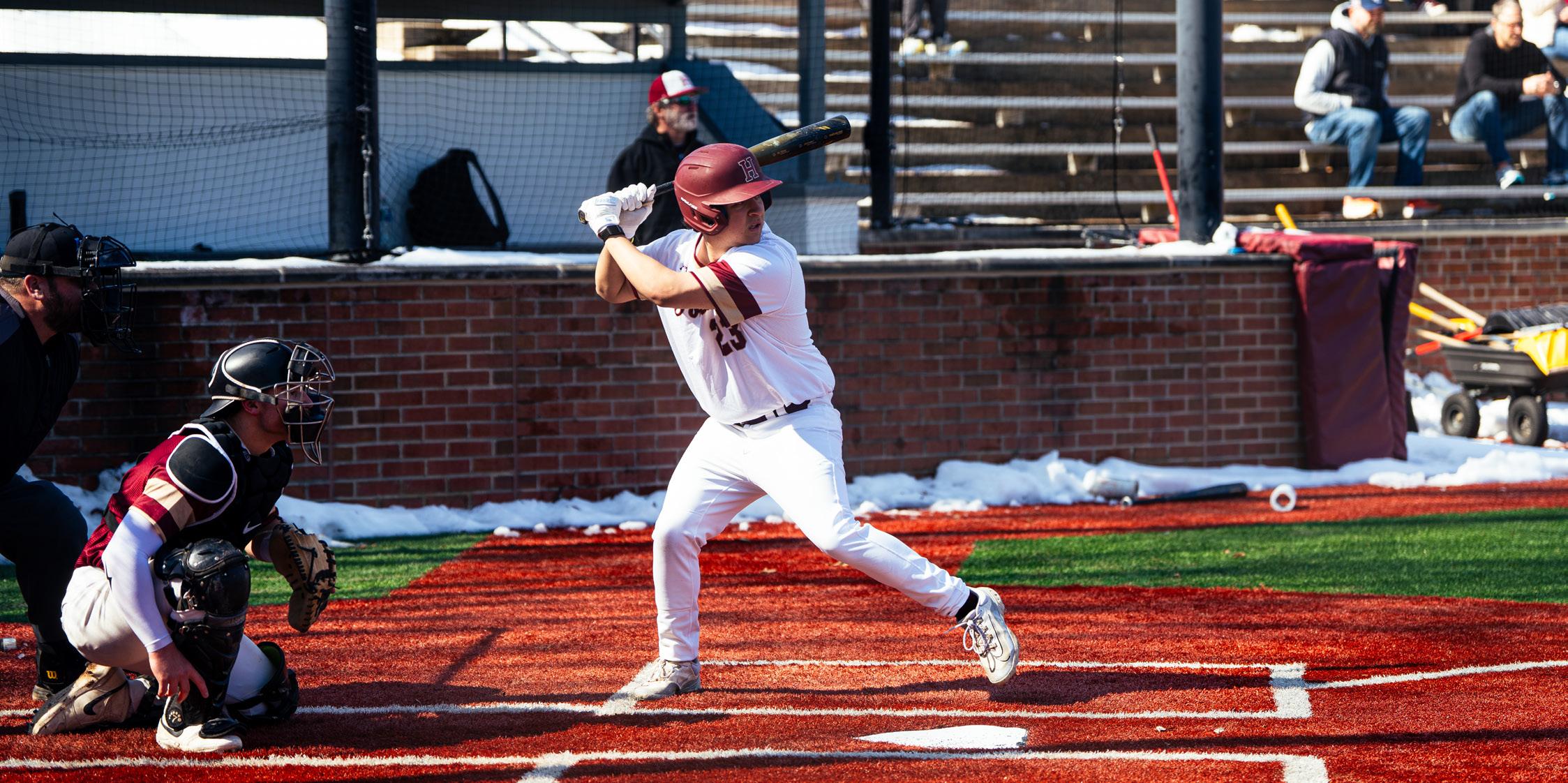
team so far,” Fifth Former Harrison Bongiovanni said. “Zach Lawler as well. Overall, we all have a shared goal, and we have fun playing. We play for ourselves, and honestly, it’s just about going out there and seeing what happens.”
“Danny Getz has become a huge part of the program, stepping up into a leadership role as well as a key player in the lineup for us,” Coach McCann said.
“That means a lot,” Getz said in reply to compliments on his current performance. “I think a lot of it comes from preparation, especially working with my dad and getting extra reps in the cage, hitting. It feels really good because not many people expected me to do too much, so it’s rewarding to be able to show up and perform for the team.”
Still, despite being mostly out of consideration for the Inter-Ac, the Fords find a way to compete.
“To regain momentum in the final stretch of the season, the focus has been on finding purpose,” Siever said. “The mindset has shifted toward playing for the state championship and for personal meaning in the game. It’s no longer just about standings,
it’s about finding deeper motivation and playing for yourself and your teammates.”
Specifically, leadership has switched hands.
“The younger players are excited to show up every day and try to win for the team.”
THOMAS LAWLER ’27
“I see a different group of leadership,” Lawler said. “It comes from both younger players and seniors. The younger players are excited to show up every day and try to win for the team, and the seniors do a good job of including everyone and making sure everyone feels part of the team.”
“After graduating a strong senior class, we had to develop new leaders,” Siever said. “Coach McCann emphasized what it means to be a team leader. We had to learn a lot of it
on the fly—how to manage a team and lead in different situations.”
The preparation, paired with strong team spirit, has kept the Diamond Fords hopes alive.
“My favorite part of the team this season, compared to last year, is the off-the-field stuff,” Getz said. “The seniors are strong leaders who make practice fun. Everybody wants to be at practice because the team is really tight this year. From seniors through freshmen, it’s a close group and overall a really good environment.”
Despite the tough competition, the Fords have learned to appreciate the small moments and still look forward to games.
“My favorite part of the season is the bus rides,” Lawler said. “I’m also looking forward to the state playoffs because we should be fully healthy again.”
“It’s really about being with close friends for hours every day,” Siever said. “There’s a strong team culture, including things like hacky sack before and after practice, and during team dinner. We’ll get into circles and play together, and that’s one of the best parts of it.”
ACheung ’28
fter a dominant, 14 to 8 win against Episcopal Academy on April 26th, the Fords Laxmen are prepared to end their season with the PAISSA state tournament trophy secured in a cabinet in the Fieldhouse.
“Obviously, we’re hoping to win it all. There are some really good teams out there, like Malvern and Hill School, but we’ll compete hard and get the job done. I think we can win,” Fifth Former Connor Morsell said.
The team has been toiling on the turf and in the weight room ever since the fall preseason.
“I love being on the lacrosse team. It feels like there’s an awesome brotherhood all the time.”
LUKE ANDERSEN ’28
“Doing a lot in the offseason really helped: training with Rosko, working on my game, and staying committed outside of the regular season is really important,” Morsell said.
The team’s camaraderie helps them get through tough workouts and practices.
“I love being on the lacrosse team. It feels like there’s an awesome brotherhood all the time. If someone’s down, people pick them up. If someone’s doing great, everyone hypes them up. It’s just an awesome environment. Even on JV, some guys may not have played lacrosse before, but nobody cares— you just help them out,” Fourth Former Luke Andersen explained.
Their preparations include film, intense workouts, and skillwork.
“A lot of practices later in the season are more focused on learning, watching film, and going over other teams. So if we’re really locked in mentally, that can take away some of the physical wear while still making us better,” Andersen said.
Morsell stresses the importance of rest and injury prevention.
“I think resting more between practices helps. As the season goes on, we’re not always going as hard physically every day because we’re trying to save our bodies a little bit. Mr. Warner also does a really good job helping us with that,” he said.
In preparation for the final matches, the team will give full effort in every practice.
“Especially going into PAISSA and playing Malvern Prep, a team we’ve had a long-time rivalry with, we need to be ready to go. We’re going to be a hundred percent,” Andersen finished.
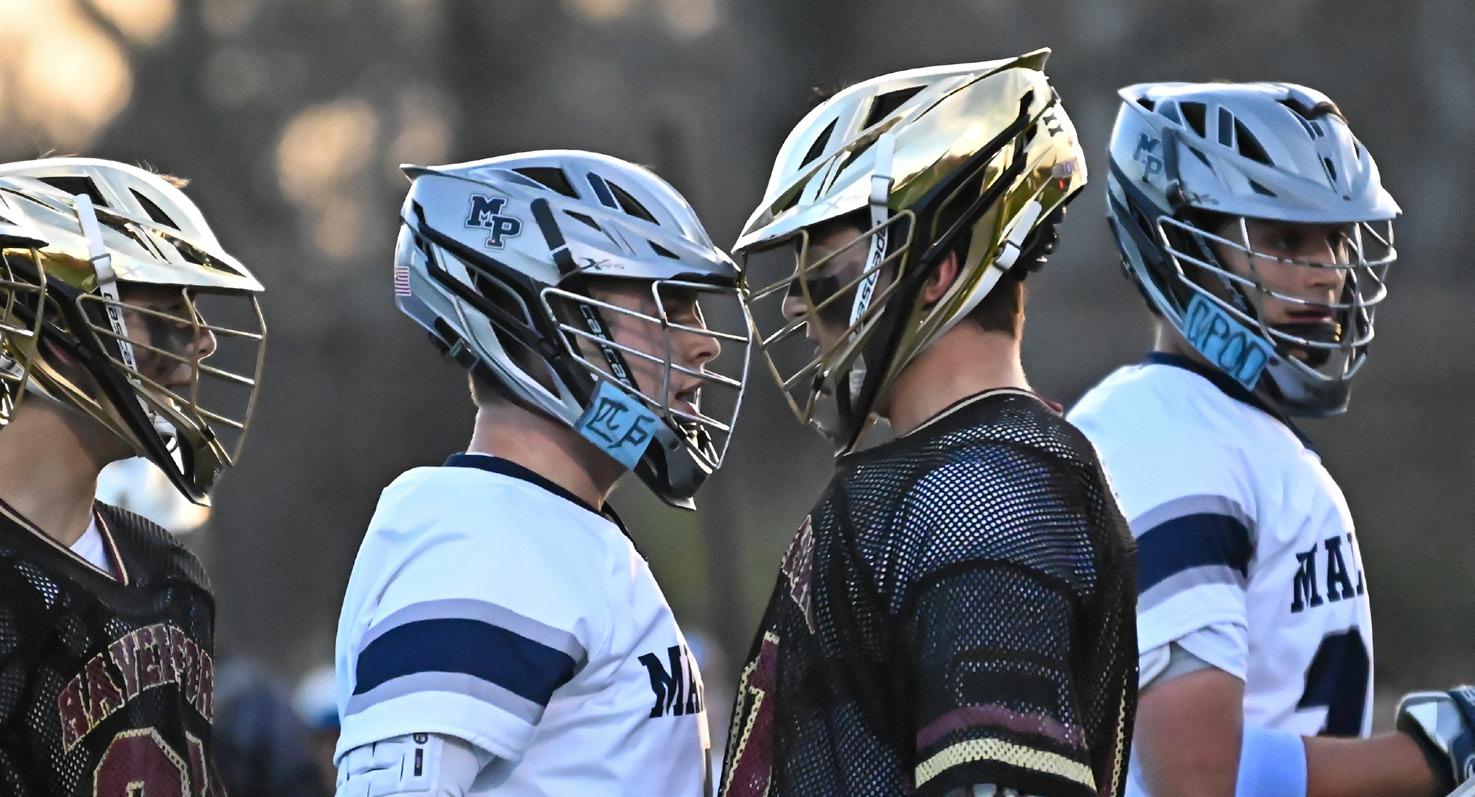
The team follows a rigorous practice schedule to complement team camaraderie, with the varsity squad traveling to Baldwin whenever they don’t have a match. They begin with dynamic stretches, then transition into drills or intense singles and doubles matches amongst themselves. Practices run roughly two hours until 5:45 p.m.
With a deep and talented roster including two recruited athletes, Kaiser Zhao to the University of Rochester and Max Olson to Bates College, the team can “rely on anyone to win their match on any given day.”
“Most
of the teams we play have a good 1 and 2 singles players, and maybe one good doubles team, but they lack heavily at the bottom half of their roster.
“What makes this team so special is the depth of our roster,” Zhao said. “Most of the teams we play have a good 1 and 2 singles players, and maybe one good doubles team, but they lack heavily at the bottom half of their roster. We are strong from our first singles player to our fourth doubles team.”
Even with its intense training and competition, the team maintains a more light-hearted environment.
The team also found success in individual/doubles tournaments. Zhao was second at the Inter-Ac Singles Championship, losing 5-8 to Episcopal Academy’s Preston Lubinecki, who is regarded as one of the best players the Inter-Ac has seen. Olson also played well, finishing third. At the Shafers Doubles Invite, Carrasco and Schwarting placed second.
Even with its intense training and com-
Spurred by the warming weather, the Track and Field team has emerged from its indoor season faster than ever before. With less than a month left, the team has been hard at work to excel in their last few meets.
“This season, since indoor, is the best track and field program we’ve ever had,” Sixth Former Ahijah Goins said.
The team recently competed at the renowned 2026 Penn Relay Carnival, where
they faced off against the fastest teams in the Inter-Ac and across the state in the 4x100 and 4x400. In the days leading up to their race, weather conditions were looking favorable. However, when it came time to compete, conditions worsened.
The two days of Penn Relays before [we raced], it was 70 degrees, and then when it got to our day, it was like forty degrees,” Goins said. “So our expectations…changed because we knew we’d probably run slower

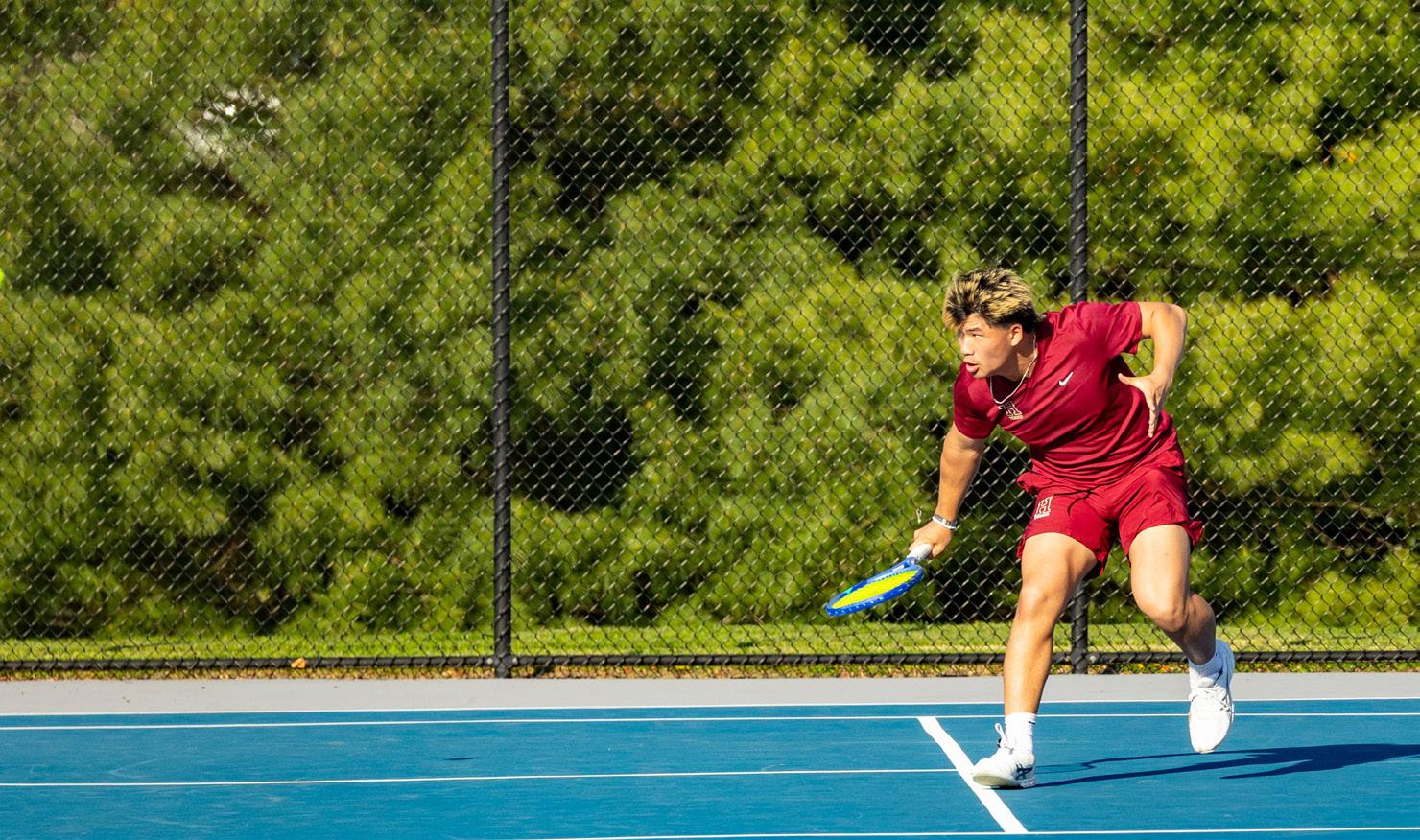
petition, the team maintains a more lighthearted environment. On their Senior Day on April 30, Carrasco brought a grill to serve hot dogs and hamburgers for the team as the seniors were recognized with the team and their parents.
“It’s a fun group to be a part of,” Schwarting said.
just because of the elements. Nevertheless, the boys went in with resolve.
“ We went into it trying to win the Inter-Ac Division and then make it to the Championship of America,” Goins said.
While others in their situation may have been discouraged about missing a major opportunity by such a narrow margin, the boys were not.
Although they missed out on placing first in the Inter-Ac league and qualifying for the Championship of America by less than a second, the 4x400 team consisting of Sixth Former Ahijah Goins, Fifth Formers Haven Hoilett and Isaiah Bland, and Fourth Former James Hawkins broke the school record with a time of 3:16.06, advancing to the Philadelphia Area finals.
While others in their situation may have been discouraged about missing a major opportunity by such a narrow margin, the boys were not. In the Philadelphia Area finals, the
The crew team has a long history of winning championship regattas, triumphing in over 100 throughout its history. Despite a hard start to the season, where many boats were struggling to find a rhythm, the team has found greater successes recently.
The team placed on the podium in three separate events. At the Manny Flick 5 competition, three boats won, including the Varsity Four, Junior Varsity Four, and Second Varsity Four. On top of that, a few other boats did very well, either placing on the podium or right behind it.
To qualify for Nationals this year, a boat needs to place in the top three at City Championships. The anticipated race took place on May 2nd and 3rd, with time trials on Saturday and finals on Sunday. The team has been preparing for this race for two weeks, practicing every day since the Manny Flick 5 competition.
After City Championships, the team has two weeks to prepare for the monumental Stotesbury Cup Regatta. As the largest high school rowing race in the U.S., held every spring on the Schuylkill River in Philadelphia, it features top crews from across the country.
Three championship regattas, within this short amount of time, will be nothing short of extraordinary; however, it also provides the school a major opportunity to prove its worth. With strong momentum and growing confidence, the team is beginning to peak at the right time. Each practice has become more focused and competitive, as rowers push each other to improve and secure their lineups. If the team continues this level of intensity and execution, they will be in a strong position to succeed at the City’s and carry that speed into the rest of the championship season.
The team now looks forward to the PAISAA State Championship, which they won last year.
“There are a number of strong teams there,” Schwarting said, “but I think we have a good chance of winning it.”
team had another superlative run, clocking in at 3:16 again and winning first out of the twelve fastest teams in the area.
“ We did want to make it to the Championship of America, but making it to the championship of Philadelphia and winning it all is [also] really good,” Hoilett said.
Although the season is nearing its end and the team will lose veteran runners, the team has confidence in continued improvement.
My first year running high school [in Form II] was Coach Hawk’s first year coaching,” Goins said. “ We came a long way since then, all the way from coming last or second to last at Inter-Acs to being PTFCA state champions.”
Such confidence is backed by the prevalence of strong young runners.
“I’m one of the only seniors that’s leaving from a running standpoint,” Goins said. I’m proud of the team. I think they’ll have an even better year than we had last year and this year.”
The team and its younger runners’ strength over the years is a byproduct of pure dedication.
“Track isn’t just one of those piggyback sports,” Bland said. “It’s a real sport that people try and work very hard for, and it’s one of the best sports here at the school.”