2025-26
JOHN NEAR GRANT Recipient
Why Western Intervention Failed in Afghanistan: Between Intervention and Interpretation
Sofia Shah
WhyWesternInterventionFailedinAfghanistan:BetweenInterventionandInterpretation
SofiaShah
2026NearScholar
Mentors:BronwenCallahanandAmyPelman
April13,2026
Introduction
OnNovember17,2001,justweeksaftertheUnitedStateslaunchedmilitaryoperations inAfghanistan,FirstLadyLauraBushdeliveredaradioaddressunlikeanypreviouslygivenbya presidentialwife.1 SpeakingdirectlytotheAmericanpublic,sheframedtheinvasionasmore thanjustaresponsetoterrorism;itwasamoralcrusadetoliberateAfghanwomenfromthe Taliban’soppression.2 TheaddressemphasizedthebrutalityofTalibanpoliciestowardwomen, includingbansoneducation,forcedveiling,andexclusionfrompubliclife.Theonlysolution, accordingtotheFirstLadyandtheadministration,wasU.S.intervention:anecessaryactof rescue.Feminismwasnowacentraljustificationforthewar.
ThisframingrippledthroughouttheWest.ImagesofAfghanwomenin burqas and hijabs circulatedinmainstreammedia,becomingavisualshorthandforbothoppressionandthemoral urgencyofAmericansolutionsforwhat Time Magazine called“LiftingtheVeil”(SeeImage1).3 Theideathatforeigninterventioncould“save”Afghanwomenquicklybecameembeddedinthe broadernarrativeofliberalinternationalism,wheredemocraticinstitutions,secularlaw,and Westernmodelsofgenderequalitycouldbeexportedandtakerootacrosstheworld.
1 LauraBush,“RadioAddressbyMrs Bush,”NationalArchivesandRecordsAdministration,November17,2001, accessedApril12,2026,https://georgewbush-whitehousearchivesgov/news/releases/2001/11/20011117html
2 Bush,“RadioAddressbyMrs Bush”
3 JohnStanmeyer,“TimeMagazineCover:WomenofAfghanistan-Dec.3,2001,” Time,accessedApril12,2026, https://contenttimecom/time/covers/0,16641,20011203,00html
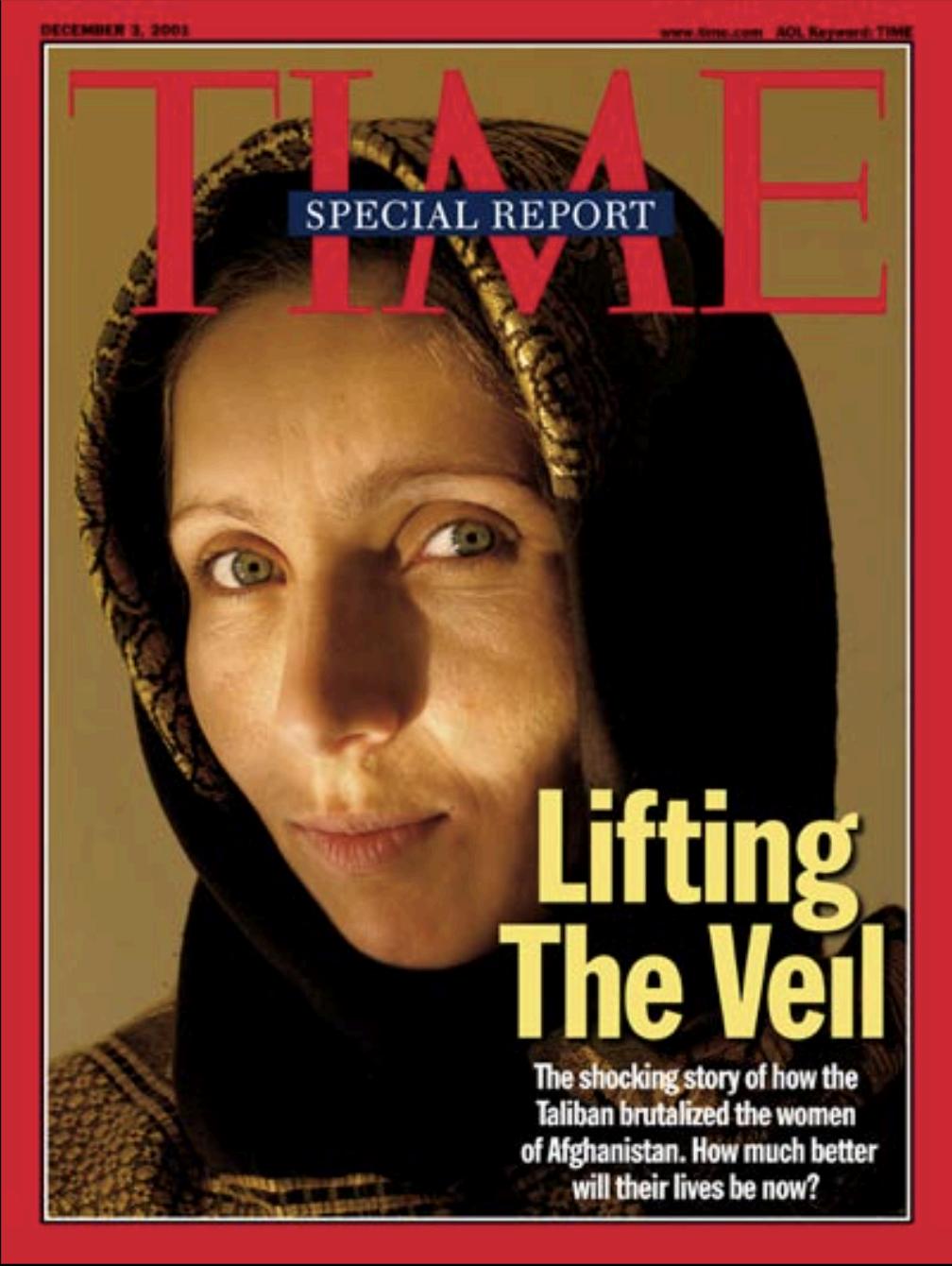
Image1.JohnStanmeyer, “Lifting the Veil,” coverof Time,December3,2001. Time
Magazine.
Twodecadeslater,itisclearthattheU.S.’sgoalswerefarfrommet.Despitemeasurable gainsinprimaryschoolenrollmentamonggirls,femaleliteracy,andthepresenceofwomenin urbanemploymentbetween2001and2021,theseadvancesprovedfragile.4 FollowingtheU.S. withdrawalandtheTaliban’sreturntopowerinAugust2021,secondaryeducationforgirlswas bannednationwide,womenwereexcludedfrommostformsofemployment,andearlierprogress 4 PBSNewsHour,“WomeninAfghanistanDescribeTaliban’sBrutalRepression,”PBS,August30,2024, https://wwwpbsorg/video/women-in-afghanistan-describe-taliban-s-brutal-repression-1725057669/
collapsedwithalarmingspeed.5 Therapidreversalraisesafundamentalquestion:ifAmerican interventionfailedtostructurallyimproveAfghanwomen’slivesasintended,whatapproaches aremoreeffective?
Muslimwomenthemselveshavebeenposingthesequestionsformanydecades.Perhaps themostwell-knowninstancewasin1923whenHudaal-Sha‘rawiunveiledherselfinabustling Cairotrainstation.6 Thoughavocalcriticofharemculture,sheneverdisavowedherMuslim identity.Al-Sha‘rawistronglybelievedthatthroughIslamicschoolsandgirls’education,equal rightswerepossible.7 HerideascombinedfeminismwithastrongMuslimidentityinEgypt,a theorynowcommonlyreferredtoasIslamicFeminism.Herexampleillustrateswhatthe followingdecadeswoulddemonstrate:thatthemostdurablefeministmovementsinMuslim societieshaveworkedfromwithinIslamicframeworks,notagainstthem.
Whilevariousmethodswereattemptedbetween2001and2021inAfghanistan,from internationalinterventiontograssrootsmovements,theevidencerevealsaconsistentpattern: reformsthatbypassedIslamiclegitimacycollapsed,whilethosethatengagedIslamonitsown termsdemonstratedgreaterdurability.Themostviablepathforwardisnotsecularliberation imposedfromoutside,butIslamicfeminism,thereinterpretationofIslamictextsfromwithin, becauseitgroundsreforminwaysthatAfghansocietycanfindlegitimate.
Background
Afghanistan’scontemporarywomen’srightscrisisdidnotoriginatewiththeTalibanin 1996,norwiththeU.S.invasionin2001.Instead,itistheproductofcenturiesofinteraction
5 PBSNewsHour,“WomeninAfghanistanDescribeTaliban’sBrutalRepression”
6 NourMohamed,“HudaShaarawi:TheEarly20thCenturyEgyptianFemaleActivist,” Arab America,December 13,2021,accessedApril12,2026, https://www.arabamerica.com/huda-shaarawi-the-early-20th-century-egyptian-female-activist/.
7 JudithCochran, Educational Roots of Political Crisis in Egypt (Lanham,MD:LexingtonBooks,2008),148–49
betweenIslamicjurisprudence,tribalcustomarylaw,state-buildingefforts,andforeign intervention.8 Therefore,understandingAfghanwomen’sstatusrequiresexaminingthereligious, legal,andpoliticalstructuresthathavehistoricallyshapedAfghansociety
ClassicalAfghanistanHistory
Beforetheseventhcentury,theregionnowknownasAfghanistanwasamosaicoftribes, satrapies,9 andprovincesundershiftingempires.TheSilkRoadplayedanimportantroletying AfghancitiesintotradenetworkswithIndia,Iran,andChina.ThisnetworkbroughtPersians, AlexandertheGreat’sempire,ArabMuslims,Mongolsandothers,bringingwiththemreligious traditionsincluding:Zoroastrianism(pre-Islamic),Buddhism,HinduismandlaterIslamtothe region.
Afghanistan’spre-Islamichistoryrevealsalegacyoffemaleagencyacrossvarious aspectsoflife.DuringtheKushanera(firsttofourthcenturies)womenwereactiveincommerce, templepatronage,andheldpowerasdonorstoreligiousinstitutionsunderBuddhismandother faiths.Womenoftheregionhadpower,economicresources,andspiritualauthority.10 During AchaemenidandSassanianPersianrule,Afghanistanwasmanagedassatrapies,blending ZoroastrianlawwithsurvivingBuddhistandHindupractices.Theregionwasamulti-religious landscape;lawsandcustomsevolvedthroughinteractionamongreligiousandethnicgroups,and women’sstatuschangedaccordingly.AftertheIslamicconquestof651CE,Islamgradually becamethemajorreligion,especiallyineliteurbancircles,reshapingmarriage,inheritance,and
8 HumaAhmed-Ghosh,“AHistoryofWomeninAfghanistan:LessonsLearntfortheFutureorYesterdaysand Tomorrow:WomeninAfghanistan,” Journal of International Women’s Studies 4,no 3(May2003):2-3, https://vcbridgewedu/jiws/vol4/iss3/1
9 AdministrativeprovincesoriginallydeterminedbytheAchaemenids
10 AshwiniLakshminarayanan,“TowardsInvestigatingtheRepresentationofGandhāranFemaleDonors,” Arts Asiatiques 78(2023):17, https://www.researchgate.net/publication/379294899 Towards Investigating the Representation of Gandharan Fe male Donors
publicgenderroles.However,inthevillagespre-Islamiclocalcustomarylaw,whichcenteredon kinshipandmaleguardianshipwasmoreinfluentialthanreligiouslaw.11 TheSilkRoadmade Afghanistanadynamiccrossroads,opentoinfluencesfromPersia,India,China,andGreece.
ThispluralismissignificantbecauseitdemonstratesthatAfghanwomen’sstatushasneverbeen fixed.Ithasbeenshapedbywhichinterpretationsofpowerandlawheldswayatagiven moment.
PashtunSociety
BeginningwiththeconquestofBalkhin708–709,subsequentArabinvasionsgradually incorporatedtheregionintotheIslamicworld.Whiletherewasnosingleforcedmass conversion,Islamspreadgraduallythroughtrade,Sufinetworks,andintermarriage.Zoroastrian, Buddhist,andHinducommunitiespersistedforcenturiesthroughouttheregion.Forwomen, Muslimrulemeantanuneventransition.WhileIslamicShari’alawincreasinglydefined marriage,inheritance,andveilingamongurbanelites,ruralandtribalcommunitiesmaintained customarycodes,suchasPashtunwali,thatoftenlimitedwomen’sautonomy.12
ThecomplexityofAfghancustomsstemsfromthefactthatsocietyoperatedwithtwo overlappinglegalframeworks:PashtunwaliandIslamicShari’alaw Pashtunwaliisthe customarycodeofthePashtuns,thelargestethnicgroupinAfghanistan,anditgovernsmuchof dailylifeinruralregions.13 PashtunwalidevelopedalongsideIslamiclaw,andisthecustomary codegoverninglarge,ruralregionsofAfghanistan.Althoughitisnotasinglewrittenlegal system,itemphasizescoreprinciplessuchasfamilyhonor(nang),loyaltytokinandtribe,and
11 ThomasBarfield, Afghanistan: A Cultural and Political History (Princeton:PrincetonUniversityPress,2010), 29–30
12 Ahmed-Ghosh,“AHistoryofWomeninAfghanistan,”4-5
13 KateFitzGibbon,“Pashtunwali:PashtunTraditionalTribalLawinAfghanistan,” Cultural Property News,August 2021,accessedApril12,2026, https://culturalpropertynewsorg/pashtunwali-pashtun-traditional-tribal-law-in-afghanistan/
maleguardianshipoverbothwomenandfamilyaffairs.Thesenormsshapegenderroles,conflict resolution,andsocialhierarchywithinPashtunsociety.14 Inpractice,Pashtunwaliisenforced throughlocalcouncils(jirgas)wheretribaleldersresolvedisputesbasedoncustomratherthan formallegalcodes.Asaresult,Pashtunwalifrequentlyoperatesalongsideandoverridesformal statelawanddirectinterpretationsofIslamictext.Thisreentrenchessystemsofhierarchyin ruralvillageswheregovernmentlegalinstitutionsarelacking.
Bycontrast,Islamiclawiswidelyregardedasthesupremelegalframework.However,in practice,whichframeworkisapplieddependsonthoseinpowerandisnotalwaysconsistent. Islamiclawcanofferstrongerprotectionsforwomen,particularlyininheritanceandmarriage consent.Thisoverlapcreatesacomplexlegalenvironment.Informalforumsfrequentlyprioritize PashtunwalioverIslamicrules,especiallyinfamilymatters.Asaresult,women’srightsare oftenlimitedinpractice.Inheritancemaybedeniedorreduced,andmarriagedecisionsmay occurwithoutconsent,sometimesthrougharrangedorexchange-basedsystems.15
Religiousscholars(ulama)areconsultedincertaincases,butofteninlimiteddomains. Manypeopleviewthemaspoliticallyinfluencedorinsufficientlytrained,andknowledgeof Islamiclegalsourcesissometimesincomplete.AlthoughIslamiclawisseenasthehighest authority,informalsystemsdisregarditinfavorofcustomarylawsshapedbythelocalpower structure.16
Historically,Pashtunwaligovernedsociallifelongbeforestrongcentralstatesemerged, whichhelpsexplainitscontinuedinfluencetoday.WhenAfghanrulerslaterattemptedto centralizepowerusingreligion,religiouselitesbecamemoreinvolvedinpolitics.Thiscreated
14 HamidM Khan,“IslamicLaw,CustomaryLaw,andAfghanInformalJustice,”UnitedStatesInstituteofPeace, March2015,accessedApril12,2026, https://ciaotestcccolumbiaedu/wps/usip/0033929/f 0033929 27632pdf
15 GhulamShams-ur-Rehman,“PashtunwaliandIslam:TheConflictofAuthorityintheTraditionalPashtun Society,” Pakistan Journal of Social Sciences 35,no 1(2015):297–298, https://pjss.bzu.edu.pk/index.php/pjss/article/view/310/279.
16 Shams-ur-Rehman,“PashtunwaliandIslam,”300-301
ongoingtensionsbetweenthestate,triballeaders,andreligiousauthorities.Sincethen,the questionof“whodecides,”customarylaworShari’a,hasremainedacentralissueinAfghan governance.17 Thisgapbetweenlegalidealsandactualpracticehas,inmanycases,limited women’saccesstotherightsoutlinedinIslamiclaw Thisunresolvedcontestbetweencustom, religiousauthority,andstatepowerisnotarelicofthedistantpast.Itisthestructuralcondition thateveryattemptatwomen’srightsreforminAfghanistanhashadtonavigate,andrepeatedly failedtoovercome.
20thCenturyExamplesofProgress
Oneofthefirstmajorattemptsatstate-ledreformoccurredunderAmirAmanullahKhan, whoruledfrom1919-1929.HiseffortstomodernizeAfghanistanincludedsignificantchangesto women’sroles.Aftertakingpowerfollowinghisfather’sassassination,AmanullahKhan declaredAfghanistanfullyindependentaftertheThirdAnglo-AfghanWar.18 Hewantedto modernizethecountryandreduceforeigninfluence.Acentralpartofhisplanfocusedon improvingthestatusofwomen.19 AmanullahKhanintroducedreformsthatpromotedgirls’ education,limitedpolygamy,andencouragedwomentotakepartinpubliclife.Healsospoke publiclyagainsttheveil,statingthatIslamdidnotrequirewomentocovertheirbodies.Atone publicevent,hiswife,QueenSoraya,removedherveil,andotherwomenfollowed.20 Girls’ schoolswereopened,andwomenbegantoappearmoreofteninpublicspaces,especiallyin Kabul.
17 Shams-ur-Rehman,“PashtunwaliandIslam,”306-307
18 JimGreene,“Anglo-AfghanWars,” EBSCO,2022,accessedApril12,2026, https://wwwebscocom/research-starters/military-history-and-science/anglo-afghan-wars
19 Ahmed-Ghosh,“AHistoryofWomeninAfghanistan,”4–5.
20 Ahmed-Ghosh,“AHistoryofWomeninAfghanistan,”8
ReactionstoAmanullahKhan’sreformsvariedacrossAfghansociety,withurbanelites generallymorereceptivethanruralcommunities.Thesereformswereinfluencedby modernizationeffortsincountriessuchasTurkeyandEgypt,andbyAfghanreformerssuchas MahmudTarzi,whobelievedthateducatedwomenwereimportantforthenation’sfuture.21 In cities,especiallyamongtheelite,thesereformswerewelcomedandseenasprogress.22
However,thesituationwasverydifferentinruralareas.Manypeopleinvillagesandtribal regionsviewedthesechangesastoofastandtooforeign.Theybelievedthereformswentagainst theirtraditionsandtheirunderstandingofIslam.Men,inparticular,sawthesechangesasathreat totheirauthoritywithinthefamilyandtribe.Asaresult,therewasstrongresistancetoending practicessuchasbrideprice(walwar)andpolygamy,aswellastosendinggirlstoschool.23
MostofthereformswerecenteredinKabulanddidnotreachthecountryside.Tribal leadersstillheldstrongcontroloverruralareasandwereabletoorganizeresistance.As resentmentgrew,protestsspread,andeventuallyatribaluprisingmovedtowardKabul.
AmanullahKhandidnothaveastrongnationalarmytosupporthisreforms,andhewasforced toflee.24 Uponthecollapseofhisgovernmentin1929,manyofhisreformswerereversed.
Womenwereagainrequiredtoveil,girls’schoolswereclosed,andwomenwerepushedoutof publiclife.Itwasevidenthowfragilereformswerewhentheydidnothavesupportfromrural andtribalcommunities.
Intheyearsthatfollowed,Afghanrulerstookamorecautiousapproach.Some modernizationcontinued,especiallyincities,butleadersavoidedpushingwomen’srightstoo quickly.AsProfessorHumaAhmed-Ghoshobserves:
21 JulieBillaud, Kabul Carnival: Gender Politics in Postwar Afghanistan (Philadelphia:UniversityofPennsylvania Press,2015),35–36
22 Billaud, Kabul Carnival,40
23 Ahmed-Ghosh,“AHistoryofWomeninAfghanistan,”9.
24 Billaud, Kabul Carnival,40
Bythelate1950s,aneedwasperceivedforwomentobeeconomicallyactivetohelp Afghanistanachieveitstargeteddevelopmentgoals.Women'sissueswereonceagain givensomeconsideration.ThethenPrimeMinisterMohammadDaouddidnotwantto repeatthehasteandmistakeofhispredecessorAmanullahanddeclaredveilinga voluntaryoption.Bynowwomenwereexpectedonceagaintoabandontheveil,marriage expenseswerecurtailed,andwomenwereencouragedtocontributetotheeconomy.The 1940sand1950ssawwomenbecomingnurses,doctorsandteachers.In1964thethird Constitutionallowedwomentoenterelectedpoliticsandgavethemtherighttovote.25
ThisgradualrecalibrationreflectedthelessonofAmanullahKhan’sera:thatreform imposedfasterthansocietycouldabsorbitinvitesviolentreversal.Thetippingpointhappened in1978whenthePeople’sDemocraticPartyofAfghanistan(PDPA)rosetopower ThePDPA, whichwasbackedbytheSoviets,intensifiedwomen’sreforms.Theyintroducedmassliteracy formenandwomenofallages,landreformprograms,theabolitionofbrideprice,andraisingof themarriageage.26 Womenwereencouragedtoenterpubliclifeandtakeonnewrolesin society.27
Onceagain,thesechangesweremostlydrivenfromthetopandwereseenasforcedby manyruralcommunities.ManyAfghansviewedthesereformsasforeignanddisconnectedfrom theirtraditionsandreligiousvalues.Asbefore,thereformschallengedexistingsocialstructures, especiallymaleauthoritywithinfamiliesandtribes.Mostoffensivewascompulsoryeducation forwomenasitwasagainstthe“grainoftradition,anti-religiousandachallengetomale authority.”28 Thisledtostrongresistance,especiallyfromthe mullahs andtribalchiefsinthe
25 Ahmed-Ghosh,“AHistoryofWomeninAfghanistan,”6
26 Ahmed-Ghosh,“AHistoryofWomeninAfghanistan,”11-12
27 Billaud, Kabul Carnival,47.
28 Ahmed-Ghosh,“AHistoryofWomeninAfghanistan,”6
interiors.Violenceincreased,reformersweretargeted,andwomenwhotookpartinpubliclife weresometimesattacked.29
ThisperiodrepeatedthesamepatternseenduringAmanullahKhan’srule.Rapid, top-downreformsthatfocusedonwomen’srightscreatedbacklashwhentheywerenotaccepted bylocalcommunities.Theseefforts,althoughintendedtoimprovewomen’slives,oftenfailed becausetheydidnotalignwithexistingsocialstructuresorgainsupportfromruralpopulations.
Together,thesetwoperiodsshowedaclearpatterninAfghanhistory.Effortstoimprove women’srightsthroughcentralizedreformhaveoftenfacedresistancewhentheymovedtoo quicklyorignoredlocalsystemsofauthority.The1920sand1970sprogressiveeraweremet withviolent,fundamentalistbacklashbysubsequentgovernments.30 Thispatternhelpsexplain whygenderreforminAfghanistanhasbeenunstableandcontestedovertime,anditsetsthe stageforunderstandingthedeepertensionsbetweencustom,religion,andstatepower.The questionofwhoholdstheauthoritytodefinewhatIslamrequiresturnsouttobethecentral battlegroundofAfghanwomen’srights,andithasneverbeenresolvedfromoutside.
Argument1:ReligiousInterpretationandtheStruggleforAuthority
ThequestionofwhohastheauthoritytointerpretIslamisnotmerelytheological.In Afghanistan,ithasdeterminedwhichrightswomencanclaimandwhicharedenied.31 While Islamiclawprovidedaframeworkthatcouldsupportwomen’srights,itsapplicationwasalways uneven,mediatedthroughlocalpowerstructuresthathadeveryincentivetopreservethestatus quo.32
29 Ahmed-Ghosh,“AHistoryofWomeninAfghanistan,”7
30 Ahmed-Ghosh,“AHistoryofWomeninAfghanistan,”7-8
31 Shams-ur-Rehman,“PashtunwaliandIslam,”307.
32 Shams-ur-Rehman,“PashtunwaliandIslam,”307
ThisstruggleextendsbeyondAfghanistanandreflectsabroaderdebateacrossMuslim societiesoverwhohastheauthoritytodefinereligiousmeaningandsocialnorms.Competing interpretationsofreligioustextsnotonlycoexist;theyshapelegalnorms,socialexpectations, andthelegitimacyofreform.
WesterninterpretationsofAfghanwomen’srightsoftenreflectbroaderstrugglesover authority,framingIslamitselfastheprimarysourceofoppression.Themediaoftenportrays practicessuchasveilingorgendersegregationasdirectexpressionsofIslamicdoctrine.This framingreducescomplexsocialrealitiestoasimplenarrativeinwhichMuslimwomenare oppressedbytheirreligionalone.Scholarsofpostcolonialpoliticscriticizethisperspective.
GayatriChakravortySpivakdescribedthisrecurringcoloniallogicinwhich“whitemensave brownwomenfrombrownmen.”
33 WhileSpivakreferredtotheBritishabolishingthepractice of sati, orwidowburning,incolonialIndia,shecritiquedthislogic.Sheshowedhowcolonial powerspositionedthemselvesasrescuersofoppressedindigenouswomenfromtheir“barbaric” men,andjustifiedtheirinterventions.34 Thissimplifiednarrativealsoleadstodeeper misunderstandingsabouttheactualsourcesofgendernormsinAfghansociety.
TheU.S.invasionofAfghanistanin2001againreinforcedtheneedtorescueoppressed Afghanwomen.Photographsofwomeninblueburqasbecamesymbolsforoppressionitself.
ThemediaimagescreatedapowerfulemotionalresponsebutobscuredthediversityofAfghan women’sexperiences.ClothingpracticesdifferinAfghanregions,tribes,andfamilies.Formany women,formsofmodestdresscarryreligiousorculturalmeaningsthatcannotbereducedtoa singlepoliticalsymbol.35
33 GayatriChakravortySpivak,“CantheSubalternSpeak?”in Colonial Discourse and Post-Colonial Theory: A Reader,ed PatrickWilliamsandLauraChrisman(Hertfordshire:HarvesterWheatsheaf,1994),93
34 EdwardW Said, Covering Islam: How the Media and the Experts Determine How We See the Rest of the World (NewYork:Vintage,1997),28.
35 LilaAbu-Lughod, Do Muslim Women Need Saving? (Cambridge,MA:HarvardUniversityPress,2013),35–36
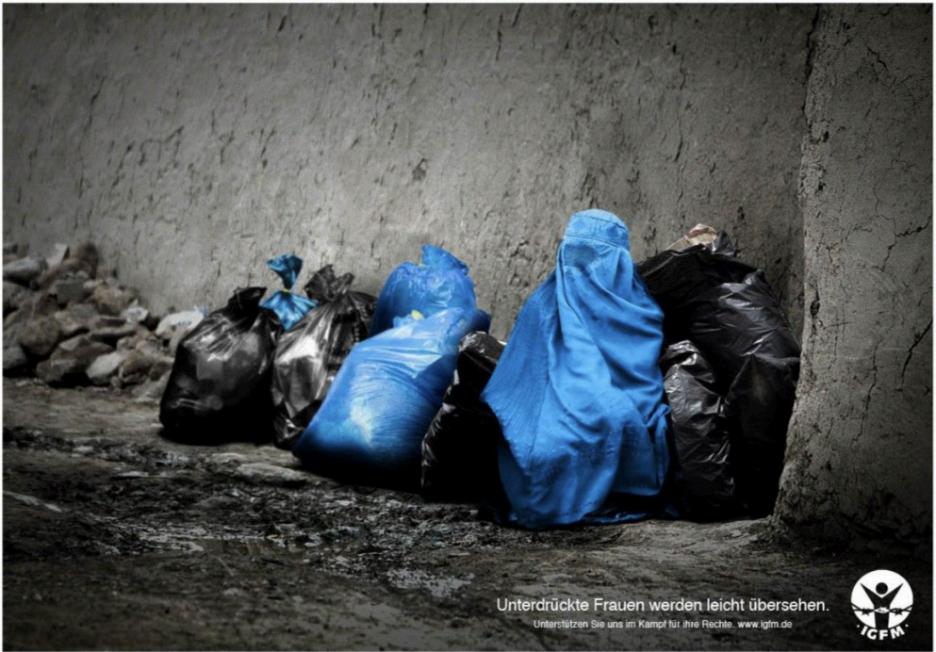
Image2.InternationalSocietyforHumanRights(IGFM),"UnterdrückteFrauenwerdenleicht übersehen"("Oppressedwomenareeasilyoverlooked"), advocacyadvertisement,Frankfurt, Germany, 2010.
A2010Germanactivistadvertisementmadethislogicexplicit.Theaddepictedwomen inblue burqas alongsidebluegarbagebags(SeeImage2).Thevisualequationisunmistakable: thegarmentandtheobjectareinterchangeable,andthewomaninsideisinvisible.The advertisementwasintendedasaprovocationagainstIslamicveilingpractices,butwhatit actuallyrevealsisthedepthoftheWesternmisreading.The burqa istreatednotasagarment withvariedcultural,religious,andpersonalmeanings,butasasymboloferasure,andthe womenwhowearitarereducedtotheveryinvisibilitytheadclaimstooppose.Thisconflation ofthe burqa withoppressionreflectsabroaderpatternofWesternmisreading,onethatextends beyondclothingtotheverysourcesofgenderrestrictioninAfghansociety Afghanwomen
themselveshavearticulatedthismisreadingprecisely.AstwoAfghanwomen,FaridaandNasira, explained:“TobepressuredbytheWesttotakeoffour chaddari isasbadastheTaliban imposing[it]onus[inthefirstplace].Wehavetherighttochoosewhattowear.”36 This insistenceonself-determinationextendsbeyondclothing.Itreflectsadeepermisreadingof wheregenderrestrictioninAfghansocietyactuallyoriginates.
AnothercommonmisunderstandingistheconflationofIslamwithtribalcustom.Many restrictivegendernormsinAfghanistanarenotfromIslamiclaw,butfromPashtunwaliand othercustomarycodes.Practicessuchasstrictseclusion,familyhonorrestrictions,andmale guardianshipoftenstemfromtribalstructuresthathaveexistedbeforeIslamarrived.37 Over time,thesecustomsbecameintertwinedwithreligiousrhetoric,makingitdifficulttodistinguish betweenreligiousdoctrineandlocalpractice.
Afghanwritershavenamedthisfalsebinarydirectly.AsRuhiKhanwroteafterthe2021 Talibantakeover:“TherearenobinariesinAfghanistan:TheWestisnotthesaviourofAfghan women.AndtheTalibanisnottheonlymonster[…]Weweregivenonlytwochoices–oppressionbytheTalibanorfreedombytheWesterninvasion.Therewasnoroomforan alternative.”38 Thisfalsebinarypersistsinpartbecausereligiousinterpretationitselfhas remainedconcentratedinthehandsofthosewiththeleastincentivetochallengeit.
Historically,religiousauthorityhasbeendominatedbymalescholars.Seminaries,courts, andreligiouscouncilsareoverwhelminglymaleandasaresult,interpretationsoftheQur’anand
36 LisaA.BerkleyandAshleyLackovich-VanGorp,"FemaleLeadershipforPeaceandHumanSecurity:CaseStudy ofIsrael/Palestine,"in Women and Leadership around the World,ed.SusanR.Madsen,KarenA.Longman,and CynthiaCherrey(Charlotte,NC:InformationAgePublishing,2015),36
37 Abu-Lughod, Do Muslim Women Need Saving?,30
38 RuhiKhan,“AfghanistanandtheColonialProjectofFeminism:DismantlingtheBinaryLens,” LSE Media Blog, September2,2021, https://blogs.lse.ac.uk/medialse/2021/09/02/afghanistan-and-the-colonial-project-of-feminism-dismantling-the-binar y-lens/
Islamiclawreflectpatriarchalassumptions.
39 Conservativescholarsarguethatgenderhierarchy reflectsdivineorderandtheyrepresentthe“trueIslam.”TheycontendthatbecauseIslam alreadydefinesgenderroles,feminismisaWesternideology,andreinterpretationis illegitimate.40 AcrosstheMuslimworld,scholarscontinuetochallengetheseconservative interpretations,reexaminingreligioustextsinmoreinclusiveways.
ProgressivescholarsarguethatIslamictextscontainthefoundationsofgenderjustice. TheirprinciplesformthefoundationforalternativeinterpretationsandarereferredtoasIslamic feminism.KeyscholarsinthisfieldsuchasAminaWadud,AsmaBarlas,FatimaMernissiand RiffatHassanarguethatpatriarchalreadingsofscripturereflecthistoricalinterpretationsrather thandivinecommand.UsingtoolswithinIslamicjurisprudencesuchas ijtihad,orindependent reasoning,41 thesescholarsreexamineclassicalinterpretationsthroughhistoricalandlinguistic analysis.Theirworkshowsthatconceptssuchasjustice,dignity,andequalityareembedded withinIslamicframeworks.
ThesereinterpretationsdrawonestablishedtextswithinIslamiclaw.VersesintheQur’an suchas4:7–8grantwomenexplicitlegalrightstoinheritance.42 Verse4:19prohibitsinheriting womenaspropertyandagainsttheirwill,whilegroundingmarriageinconsent.43 Verse4:32 affirmswomen’srighttoindependentpropertyandearnings.44 TheQur’analsoemphasizes moralequalityofmenandwomen,asseeninpassages33:35and9:71,whichdescribesmenand
39 AsmaBarlas, “Believing Women” in Islam: Unreading Patriarchal Interpretations of the Qur’an (Austin: UniversityofTexasPress,2002),3-4
40 HaifaaJawad,“TheFundamentalContradictionofIslamicFeminism,” Renovatio: The Journal of Zaytuna College,February6,2023,accessedApril12,2026, https://renovatiozaytunaedu/article/the-fundamental-contradiction-of-islamic-feminism
41 Ijtihad referstoindependentreasoningbyscholarstointerpretIslamictextsinresponsetoneworchanging circumstances Formoreinformationsee:JanineUngvarsky,“Ijtihad,”EBSCO,2023, https://wwwebscocom/research-starters/law/ijtihad
42 TheNobleQur’an,SuratAn-Nisā’4:7-8,Qurancom,accessedApril12,2026,https://legacyqurancom/4/7
43 TheNobleQur’an,SuratAn-Nisā’ 4:19,Quran.com,accessedApril12,2026,https://legacy.quran.com/4/19.
44 TheNobleQur’an,SuratAn-Nisā’4:32,Qurancom,accessedApril12,2026,https://legacyqurancom/4/32
womenasspiritualequalsandalliesofoneanother.45 Awidelycitedhadithdeclares“seeking knowledgeisadutyuponeveryMuslim.”46 Theseprinciplesarenotperipheral.Theyare embeddedwithintheQur’anicframeworkitselfaccordingtoIslamicfeminists.Takentogether, thesepassagesestablishthatIslamicsourcesdonotmandatewomen’ssubordination;theyhave simplybeenreadthatwaybythosewithinterpretivepower.ClassicalHanafijurisprudence, whichhashistoricallyshapedAfghanlegalpractice,alsopermittedwomentoownproperty, engageincommercialtransactions,andaccesscourts.
47 Theissue,therefore,isnottheabsenceof rightswithinIslamicsources,buthowthosesourcesareinterpretedandappliedinpractice.
48 ThesedifferencesininterpretationmeanthatIslamictextscanbeusedtosupportbothmore expansiveandmorerestrictiveunderstandingsofwomen’sroles.
WhatdistinguishesscholarslikeWadud,Barlas,orMernissiisnotsimplythattheycite theseverses,butthattheyinsistthepatriarchalreadingsthathavedominatedIslamic jurisprudencearehistoricalconstructions,notdivinecommands.Thustheinterpretationcanbe challengedfromwithinthetraditionitself.
49
ForAfghanistan,thedebateaboutIslamicfeminismcarriesparticularimportance.When reformsareframedasforeignorsecularimpositions,theyoftenencounterresistancefromrural communitiesandreligiousauthorities.However,whenreformsarearticulatedthroughIslamic principles,theycanchallengetribalpracticesandextremistinterpretationswhilestillholding locallegitimacy.ThestruggleoverAfghanwomen’srightsisthereforeinseparablefromthe questionofwhohastheauthoritytointerpretIslam,becausetheseinterpretationsdetermine whichnormsareseenaslegitimatewithinAfghansociety.
45 TheNobleQur’an SuratAl-’Aĥzāb33:35and9:71,Qurancom,accessedApril12,2026, https://legacyqurancom/33andhttps://legacyqurancom/9/71
46 Sunnahcom,“SunanIbnMajah224,”accessedApril12,2026,https://sunnahcom/ibnmajah:224
47 AminaWadud, Inside the Gender Jihad: Women's Reform in Islam (Oxford:One-worldPublications,2006),43
48 Wadud, Inside the Gender Jihad, 35
49 Barlas, Believing Women in Islam,3
Thesescripturalfoundationsmatterbecausetheydemonstratethatsevererestrictionson women’seducationorpropertyrightsarenotinherenttoIslamitself.Theyreflectparticular interpretationsandsocio-politicalcontexts,andimportantly,theycanbereinterpreted.For Afghanistan,thisdistinctioniscritical.Whenreformersframechangeinsecularorforeignterms, theylosebeforetheybegin.WhentheyspeakinthelanguageofIslamicjustice,theyhavea betterchanceofbeingheard.Whetherthatchancewasevergiven,andwhyitwassoconsistently denied,iswhatthenexttwosectionsexamine.
Argument2:LimitsofSecular,Top-downPolicyReform
Between2001and2021,theinternationalcommunity,includingWesterngovernments, NGOs,andmultilateralorganizations,adoptedastrategytoimprovewomen’srightsin Afghanistanthroughstateinstitutions,developmentprograms,andlegalreforms.Thisapproach wasconsistentwithliberalinternationalistframeworksshapedbypost-ColdWardevelopment theory,whichemphasizedinstitutionbuilding,legalreform,andtheexpansionofrightsthrough centralizedgovernance.Inpractice,theseinitiativesproducedmeasurableimprovementsin educationandemploymentinurbanareas.50 However,becausetheylackedsociallegitimacyand institutionaldurability,theirlong-termeffectivenessremainslimited.
Acentralproblemlayinhowwomen’srightsinAfghanistanwereframed.Western governmentsandinternationalorganizationsoftenapproachedAfghanwomen’srightsthrough whatscholarshavedescribedasa“rescuenarrative.”Afghanwomenwereportrayedaspassive victimsofIslamneedingliberationthroughexternalintervention.51 Mediacoveragehighlighted
50 DenizKandiyoti,“ThePoliticsofGenderandReconstructioninAfghanistan,”UnitedNationsResearchInstitute forSocialDevelopment,2005,accessedApril12,2026, https://cdn.unrisd.org/assets/library/papers/pdf-files/opgp4.pdf,12.
51 Abu-Lughod, Do Muslim Women Need Saving?,4
thebrutalityofTalibanrestrictions,includingthebanoneducationandemployment.Whilethese policiesweresevere,theframingoverlysimplifiedthebroaderstructuralfactorsshapingAfghan society Itreducedacomplexpoliticalandreligiouslandscapetoasinglestoryofoppression, leavinglittleroomforAfghanwomen’sownvoices,priorities,orexistingstrategiesforchange.
WhentheTalibangovernmentfellin2001,internationalorganizationsandAfghanstate institutionslaunchednumerousprogramsaimedatimprovingwomen’ssocialandeconomic participation.Majorinitiativesincludedexpandinggirls’education,promotingfemale employment,andreforminglegalframeworksrelatedtomarriageandpoliticalrepresentation. Internationaldonorsfundedschools,literacyprograms,anddevelopmentprojectsacrossthe country 52
YetevenwithintheAfghangovernmentitself,reformeffortsfacedobstruction.Masooda Jalal,Afghanistan’sformerministerofwomen’saffairs,describedwhathappenedwhenshetried tobuildagenuinewomen’snetworkacrossthecountry.“Sofinally,theydecidedaltogether,all thefundamentalistleadersincludingthegovernment’shighauthorities,thewarlords,toremove peoplewhosepowerwoulddisadvantagethem.Theyalljoinedhandstogether,theysentme home,andmadeahousewifeoutofme.Someofthemaresendingmemessagessometimes.
Theysendmetheir‘littleones’totellme:‘You’recookingnow?’”53
Theseeffortsproducedvisibleimprovementsinseveralmetrics.Girls’primaryschool enrolmentincreasedsignificantlyduringtheearlyyearsofreconstruction.Femaleliteracyrates rosegradually,andwomenenteredprofessionssuchasteaching,journalism,andpublic administrationinurbanareas(SeeImage3).54 However,thereformswereuneven.Muchof
52 Kandiyoti,“ThePoliticsofGenderandReconstructioninAfghanistan,”10
53 MasoodaJalal,interviewbyJulieBillaud,in Kabul Carnival: Gender Politics in Postwar Afghanistan (Philadelphia:UniversityofPennsylvaniaPress,2015),75
54 GlobalenLLC,“AfghanistanFemaleLaborForceParticipation,”TheGlobalEconomy.com,2024,accessedApril 12,2026,https://wwwtheglobaleconomycom/Afghanistan/Female labor force participation/
Afghanistan’spopulationlivesinruralareaswherestateinstitutionsareweakandtribalauthority isstrong.ProgramswereconcentratedincitieslikeKabul,Herat,andMazar-i-Sharif,whilevast ruralregionssawlittlemeaningfulchangeinwomen’sdailylives.Furthermore,theinitial increaseinratesfollowingtheinterventionfellevenbeforetroopswereremoved.55
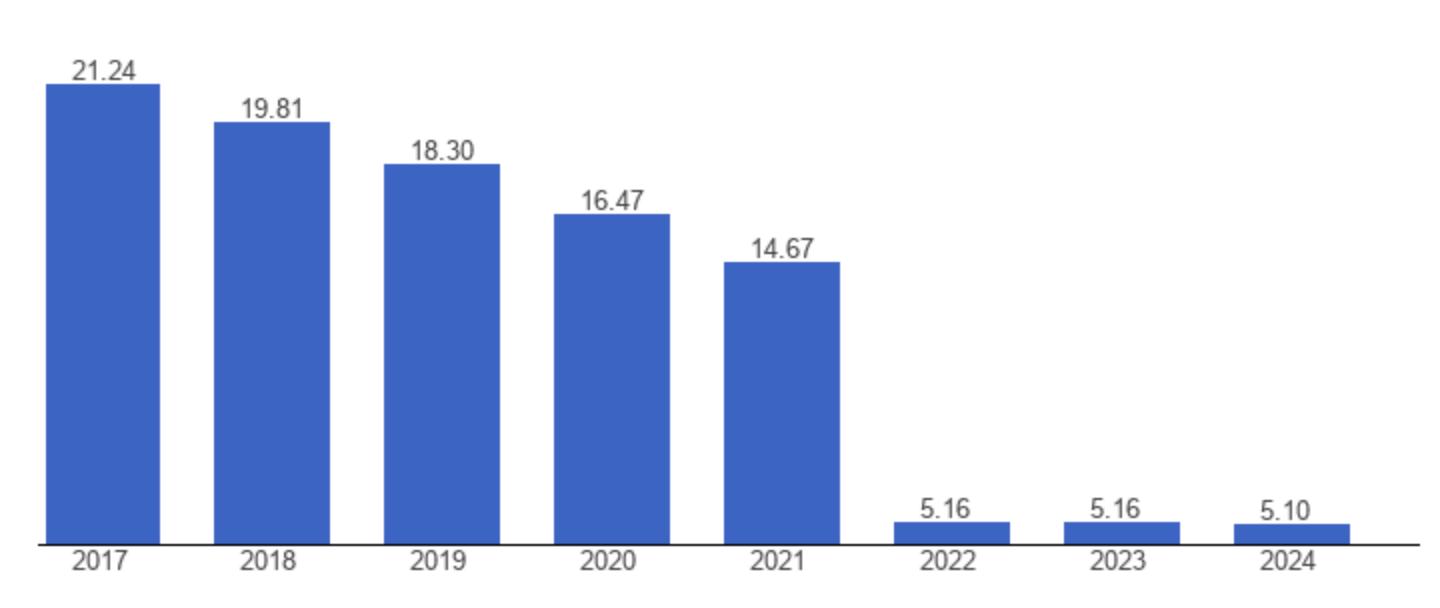
Image3.FemalelaborforceparticipationrateinAfghanistan,1990–2024, The Global Economy,basedonWorldBankdata.
Inmanyruralcommunities,developmentinitiativeswereperceivedasforeigninitiatives imposedwithoutlocalconsultation.Theabsenceofcollaborationwithreligiousscholarsortribal leaderslimitedthelegitimacyofreformefforts.Thiswasnotsimplyalogisticalfailure.It reflectedadeeperproblem:internationalactorsoftenassumedthatWesternmodelsofgender equalitycouldbetransplantedintoAfghansocietywithoutfullyengagingthediversityof religiousinterpretationsandlocalpowerstructuresthatgoverneddailylife.56
55 GlobalenLLC,“AfghanistanFemaleLaborForceParticipation”
56 Abu-Lughod, Do Muslim Women Need Saving?,11
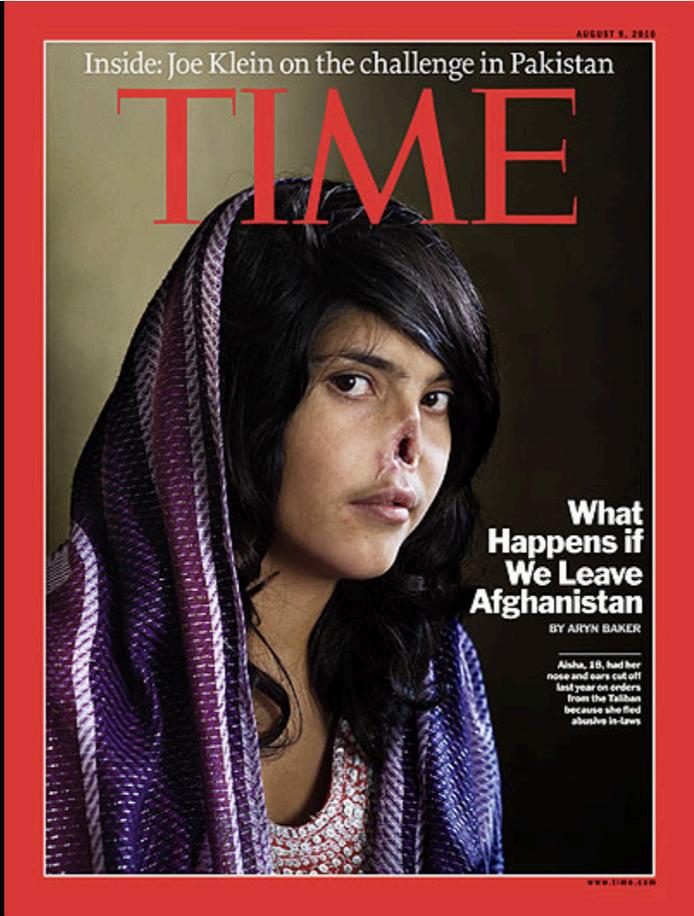
Image4.JodiBieber, "BibiAisha, " Time Magazine, August 9, 2010
Thegapbetweentherescuenarrativeandtherealityonthegroundfounditsstarkest expressionintheAugust2010coverof Time Magazine (SeeImage4).Thecoverphotograph showedBibiAisha,aneighteen-year-oldAfghanwomanwhosenoseandearshadbeencutoff byherTaliban-connectedhusbandaspunishmentforfleeinganabusivemarriage.Theheadline read“WhatHappensIfWeLeaveAfghanistan.”Theimageisdeeplydifficulttolookat,andthat difficultyispreciselythepoint. Time wasnotsimplydocumentingBibiAisha’ssuffering,itwas deployingit.Hermutilatedfacewaspresentedastheanswertoapolicyquestionabout
Americanmilitarywithdrawal,turningarealwoman’straumaintoanargumentforcontinued intervention.
Securityconditionsfurtherunderminedreform.Ongoingconflictdisruptedgovernance, infrastructure,andeducationalinstitutions.Schoolswerefrequentlydestroyedorcloseddueto violence.Withweakgovernance,familiesreinforcedpatriarchalcontroltomaintainstability.57 In conflictzones,familiesfrequentlyrestrictwomen’smovementsandaccesstoeducationnotout ofideologicalopposition,butasaprotectiveresponsetoinstability.58 Thismeansthateven well-fundedprogramsstruggledtoreachwomeninthecommunitiesthatneededthemmost, becausetheconditionsrequiredforthoseprogramstofunction,stablegovernanceandphysical safety,wereabsent.
Wheninternationalmilitarysupportdeclinedafter2014,thefragilityofthesegains becamevisible.TheAfghangovernmentstruggledtomaintainconsistentservicesoutsidemajor cities.Schoolenrollmentdeclinedanddevelopmentprogramsfacedinstability.Donorfatigue compoundedtheproblem.Asinternationalattentionshiftedelsewhere,fundingforwomen’s programsdecreased,andtheAfghanstatelackedtherevenueandinstitutionalcapacitytosustain themindependently 59
TheTaliban’sreturnin2021acceleratedthereversal.Secondaryeducationforgirlswas bannednationwideandrestrictionsonwomen’semploymentreappeared.Therapidcollapseof earlierprogresswasstriking.Twodecadesofgainsweredismantledwithinmonths.Thisreversal illustratesastructuralweakness:reformsthatdependonexternalfunding,foreignsecurity guarantees,andsecularlegalframeworkshavenoindependentfoundationtostandonwhen
57 Kandiyoti,“ThePoliticsofGenderandReconstructioninAfghanistan,”11
58 Kandiyoti,“ThePoliticsofGenderandReconstructioninAfghanistan,”12
59 UNESCO,“BannedfromEducation:AReviewoftheRighttoEducationinAfghanistan,”March2025,accessed April12,2026,https://wwwunescoorg/en/articles/banned-education-review-right-education-afghanistan
thosesupportsareremoved.Withoutgroundinginlocallyrecognizedsystemsofauthority,these programsremaineddependentonexternalsupportandcollapsedoncethatsupportwas removed.
60
ThispatternechoesthepatternfromAmanullahKhanandtheSoviet-backedPDPAeras. Ineachcase,reformsadvancedquicklyunderexternalpressureandcollapsedjustasquickly whenthepressurewasremoved.The2001to2021periodisnotanexceptiontoAfghanhistory. Itisarepetitionofit,carriedoutwithtremendousresourcesandthesamefundamentalflaw.
61
Thispatternraisesanimportantquestion.Iflarge-scalereformsbackedbyinternationalpower couldnotlast,whatformsofchangehaveprovenmoreresilientwithinAfghansociety?The answerbecomesclearerwhenweshiftfocusawayfromstateinstitutionsandtowardthe everydaystrategiesAfghanwomenhavedevelopedwithintheirowncommunities.
Argument3:GrassrootsAgencyandLocalAdaptation
Withinthiscontext,Afghanwomenhavelongpursuedtheirownstrategiesfornavigating socialrestrictionsandexpandingopportunitieswithintheircommunities.Wherestate-led reformsfailedduetolackoflegitimacy,grassrootseffortsprovedmoreresilientbyembedding themselveswithinexistingsocialandreligiousstructures.Theseeffortsoperateatthelocallevel throughinformalnetworks,communityorganizations,andadaptivesocialpractices.Crucially, thestrategiesthathaveproventhemostdurablearethosethatworkwithinexistingreligious frameworksratherthanagainstthem,eventhoughthoseframeworksthemselvesarenotuniform andcansupportdifferentoutcomes.
60 UNESCO,“BannedfromEducation”
61 Ahmed-Ghosh,“AHistoryofWomeninAfghanistan,”11
Inhis2021 New Yorker investigationofruralAfghanlife,journalistAnandGopal reported,“AllthewomenImetinSangin,though,seemedtoagreethattheirrights,whatever theymightentail,cannotflowfromthebarrelofagun—andthatAfghancommunities themselvesmustimprovetheconditionsofwomen.Somevillagersbelievethattheypossessa powerfulculturalresourcetowagethatstruggle:Islamitself.…Khalida,fromanearbyvillage, said,‘TheAmericansdidnotbringusanyrights.Theyjustcame,fought,killed,andleft.’”
62
TheinsistenceisalreadyvisibleinthestrategiesAfghanwomenhavequietlydeveloped withintheirowncommunities.Duringperiodsofsevererestriction,womendevelopedinformal methodsformaintainingaccesstoeducation.SecrethomeschoolsemergedduringTalibanrule inthelate1990sandreappearedaftertheTalibanreturnedtopowerin2021.Womenandgirls gatheredinprivatehomestostudyreading,writing,andmathematics.63 Thesenetworksarenot randomactsofindividualdefiance.Theyareorganized,sustained,andoftenprotectedby communitymemberswhoframedthepursuitofeducationinIslamicterms,pointingtothe hadith thatdeclaresseekingknowledgeobligatoryforeveryMuslim.
64 Bygroundingtheactof learninginreligiousobligationratherthansecularrights,thesewomenmadetheirschoolsharder tocondemnonIslamicgrounds.
Womenhavealsoadoptedpracticalstrategiestonavigatepublicrestrictions.Some womenhavedisguisedthemselvesasmalerelativestomovethroughpublicspacesoraccess employmentopportunities.Thepracticeiscommonenoughtohaveitsownname: bacha posh. 65 Inothersituationsthe burqa itselffunctionsasaformofmobility.Becausethegarmentconceals
62 AnandGopal,“TheOtherAfghanWomen,” The New Yorker,September13,2021,accessedApril12,2026, https://wwwnewyorkercom/magazine/2021/09/13/the-other-afghan-women
63 Abu-Lughod, Do Muslim Women Need Saving?,11
64 Sunnahcom,“SunanIbnMajah224”
65 NilabHamidiandMeghanBohren,“GirlsForcedtoActasBoysinAfghanistan,” Pursuit bytheUniversityof Melbourne,March4,2022,accessedApril12,2026, https://pursuitunimelbeduau/articles/girls-forced-to-act-as-boys-in-afghanistan
identity,womencantravelorconducteconomicactivitywithreducedscrutiny.Bothpractices havethesameunderlyinglogic:Afghanwomenfindwaystouseexistingsocialandcultural orderascover,ratherthanconfrontingitdirectly 66
Culturalexpressionhasservedasanotherformofagency Afghanwomenpoets,writers, andartistshavedocumentedtheirexperiencesthroughliteratureandvisualart.Kabulstreets displaymuralsandstreetartfromthepost-2001period, andagainasquietactsofresistance after2021.67 PoetryinparticularhashistoricallyplayedacentralroleinAfghanculturallife,and womenhaveusedittoexpressbothpersonalexperiencesandpoliticalcritique.68 Whatis significantaboutthistraditionisthatpoetryandoralliteraturecarrydeeplegitimacywithin AfghanIslamicculture.Womenwhowriteorreciteversearenotsteppingoutsidetheirtradition. Theyareworkingsquarelywithinoneofitsmosthonoredforms.69
Thesepatternsarenotlimitedtoinformalspaces.Religiouseducationalinstitutions providetheclearestexampleofhowIslamicframeworkscanexpandwomen’sopportunities.In manyruralareas, madrasas representtheonlyaccessibleeducationalinstitutions.70 Whilesome madrasa systemsreinforcerestrictiveinterpretationsofgenderroles,othersincorporatebroader curriculathatincludeliteracy,mathematics,andsocialstudiesalongsidereligiousinstruction.71 Becausetheyoperatewithinreligiousframeworksthatcommunitiesalreadytrust,these institutionsmayprovideamoresustainablepathwaytoexpandgirls’educationthanexternally fundedsecularschools.72 Thisvariationhighlightsthatreligiousinstitutionsarenotinherently
66 Abu-Lughod, Do Muslim Women Need Saving?,51
67 HumanRightsWatch,“Afghanistan:WomenArtistsHelpDriveResistancetoTaliban,”December11,2024, accessedApril12,2026, https://www.hrw.org/news/2024/12/11/afghanistan-women-artists-help-drive-resistance-taliban.
68 ElizaGriswold,“AncientFormofPoetryCapturesAfghanWomen’sLives,” NPR,April27,2014,accessedApril 12,2026,https://wwwnprorg/2014/04/27/307340717/ancient-form-of-poetry-captures-afghan-womens-lives
69 Griswold,“AncientFormofPoetryCapturesAfghanWomen’sLives”
70 Kandiyoti,“ThePoliticsofGenderandReconstructioninAfghanistan,”10
71 Kandiyoti,“ThePoliticsofGenderandReconstructioninAfghanistan,”10.
72 Kandiyoti,“ThePoliticsofGenderandReconstructioninAfghanistan,”11
progressiveorrestrictive,butdependontheinterpretationsandlocalcontextsinwhichthey operate.
Takentogether,thesegrassrootsstrategiespointtowardaconsistentpattern.Theefforts thathaveprovenmostdurablearenotthosethatconfrontedexistingreligiousframeworks,but thosethatoperatedwithinthem.Secretschoolsjustifiedbyreligiousobligation,cultural expressionrootedinIslamicliterarytradition,andeducationalinstitutionsthatcarryreligious authorityallreflectthesameunderlyingprinciple:inAfghanistan,durablechangerequires Islamiclegitimacy.Thisisnotalimitationtoworkaround.Itisthefoundationthatany sustainablereformmustbebuilton.Whatthatfoundationlookslikeinpractice,andwhatit demandsofscholars,policymakers,andtheinternationalcommunity,isthecentralquestionthe Afghancaseleavesuswith.FatimaGailani,headoftheAfghanRedCrescent,statedthismost directly:"IinsistuponanAfghansolutionwhichmeansinvolvingreligiousandtriballeaders andordinaryvillagepeople.InordertoestablishanAfghanfeminism,wehavetoinvolveour ownreligionandculture.”73 Herinsistenceonreligionandcultureasthefoundationofreform, notobstaclestoit,istheclearestarticulationofwhatsustainablechangeinAfghanistanrequires.
Conclusion
TheexperienceofAfghanistanillustratesthecomplexityofadvancingwomen’srights withinsocietiesshapedbylayeredlegaltraditions,tribalauthoritystructures,andcompeting religiousinterpretations.Thelessonsarecostly,buttheyarelegible.
Internationalinterventionproducedmeasurableimprovementsineducation,literacy,and employmentincertainurbanareas.However,thesereformsremainedunevenandvulnerable
73 RosemarieSkaine, Women of Afghanistan in the Post-Taliban Era: How Lives Have Changed and Where They Stand Today (Jefferson,NC:McFarland,2008),152
becausetheyreliedheavilyonforeignfundingandsecurityapparatuses.Whentheseexternal structuresweakened,manygainsproveddifficulttosustain.Scholarshadlongwarnedthat reformslackingsocialandreligiousrootswouldbedifficulttosustainonceexternalsupport weakened.74
Religiousinterpretationremainscentraltodebatesovergenderequality.While conservativereadingsofIslamiclawhavereinforcedpatriarchalnorms,theworkofscholars suchasAminaWadud,AsmaBarlas,andFatimaMernissidemonstratesthatprinciplesofjustice, consent,andeducationforwomenexistwithinIslamictraditionitself.However,Islamic feminism'simpactdependsonwhichinterpretationsgainauthoritywithinspecificcommunities andinstitutions.Thisisaframeworkwithdeeptextualrootsandgrowingscholarlysupport,one thathasthepotentialtochallengerestrictivenormsfromwithinratherthanfromoutside.Islamic feminismisnotacontradictioninterms.75
Grassrootsinitiativesprovideanothermeasureofhowchangeactuallyoccursonthe ground.Informaleducationnetworks,culturalexpression,andeverydaystrategiesofadaptation demonstratethatAfghanwomenhaveneverstoppedpursuingagency.Fromsecrethomeschools topoetrytothegirlslearningin madrasas,theseexamplesshowagencyunderthemost restrictiveconditions.Themostresilientoftheseeffortsshareacommonquality:theyderive theirlegitimacyfromwithinIslamicframeworksratherthaninoppositiontothem.76
Educationremainsoneofthemostimportantpathwaysforimprovingwomen’ssocial andeconomicparticipation.Somescholarsarguethatreligiouseducationalinstitutionssuchas madrasas mayplayanimportantroleinexpandingaccesstoschooling,particularlyinruralareas
74 Kandiyoti,“ThePoliticsofGenderandReconstructioninAfghanistan,”9.
75 Wadud, Inside the Gender Jihad,34-35
76 Kandiyoti,“ThePoliticsofGenderandReconstructioninAfghanistan,”9 Gopal,“TheOtherAfghanWomen”
wherestateinstitutionsremainweak.77 Thisisnotanargumentforacceptingthestatusquo.Itis anargumentformeetingAfghancommunitieswheretheyare,ratherthanwhereoutside observerswishtheywere.
TheAfghancaseisfarfromresolved.Asof2024,Afghangirlsandwomenremainone ofthemostsystematicallyrestrictedpopulationsonearth,barredfromsecondaryanduniversity education,excludedfrommostformsofemployment,andsubjecttoadegreeoflegalcontrol thathasnoparallelinthemodernworld.78 Thepathtowardsustainablechangeisneithershort norcertain.
Theframeworkforthischangealreadyexists.Itdoesnotneedtobeimported.Itdoesnot needtobeimposed.ItisalreadypresentintheQur’anicversesthataffirmwomen’srightto inheritance,consent,andeducation.Itispresentinthe hadith thatdeclaresthepursuitof knowledgeobligatoryforeveryMuslim.ItispresentintheworkofIslamicfeministscholars whohavespentdecadesrevealingthatthetoolsforgenderjusticeareembeddedwithinthe traditionitself.ItispresentintheAfghanwomenwhohave,underextraordinarilydifficult conditions,continuedtoteach,write,organize,andresist.
WhenLauraBushaddressedthenationinNovember2001,sheframedthewarin Afghanistanasanactofliberation,arescueofwomenwhoneededsavingfromtheoutside.Two decadeslater,theevidencesuggestsadifferentconclusion.Afghanwomendonotneedsaving fromIslam.Theyneedthespace,thesafety,andthesupporttoreclaimitsinterpretationsfor themselves.Thatisaharderprojectthanmilitaryintervention,andalongerone.However,itis theonlykindofchangethathasshownthecapacitytolast.
77 Kandiyoti,“ThePoliticsofGenderandReconstructioninAfghanistan,”9
78 UNESCO,“BannedfromEducation.”
Bibliography
Abu-Lughod,Lila. Do Muslim Women Need Saving? Cambridge,MA:HarvardUniversityPress, 2013.
Ahmed-Ghosh,Huma."AHistoryofWomeninAfghanistan:LessonsLearntfortheFutureor YesterdaysandTomorrow:WomeninAfghanistan." Journal of International Women's Studies 4,no.3(May2003):4–12.https://vc.bridgew.edu/jiws/vol4/iss3/1.
Barfield,Thomas. Afghanistan: A Cultural and Political History.Princeton:Princeton UniversityPress,2010.
Barlas,Asma. "Believing Women" in Islam: Unreading Patriarchal Interpretations of the Qur'an. Austin:UniversityofTexasPress,2002.
Berkley,LisaA.,andAshleyLackovich-VanGorp."FemaleLeadershipforPeaceandHuman Security:CaseStudyofIsrael/Palestine."In Women and Leadership around the World, editedbySusanR.Madsen,KarenA.Longman,andCynthiaCherrey,36.Charlotte,NC: InformationAgePublishing,2015.
Bieber,Jodi.“BibiAisha”.Photograph. Time,August9,2010.
https://time.com/3774895/photographing-aisha/
Billaud,Julie. Kabul Carnival: Gender Politics in Postwar Afghanistan Philadelphia:University ofPennsylvaniaPress,2015.
Bush,Laura."RadioAddressbyMrs.Bush."NationalArchivesandRecordsAdministration, November17,2001.
https://georgewbush-whitehouse.archives.gov/news/releases/2001/11/20011117.html.
Cochran,Judith. Educational Roots of Political Crisis in Egypt.Lanham,MD:LexingtonBooks, 2008.
FitzGibbon,Kate."Pashtunwali:PashtunTraditionalTribalLawinAfghanistan." Cultural Property News,August2021.
https://culturalpropertynews.org/pashtunwali-pashtun-traditional-tribal-law-in-afghanista n/.
GlobalenLLC."AfghanistanFemaleLaborForceParticipation."TheGlobalEconomy.com,2024. AccessedApril12,2026.
https://www.theglobaleconomy.com/Afghanistan/Female_labor_force_participation/.
Gopal,Anand."TheOtherAfghanWomen." The New Yorker,September13,2021.
https://www.newyorker.com/magazine/2021/09/13/the-other-afghan-women.
Greene,Jim."Anglo-AfghanWars."EBSCOResearchStarters,2022.
https://www.ebsco.com/research-starters/military-history-and-science/anglo-afghan-war
Griswold,Eliza."AncientFormofPoetryCapturesAfghanWomen'sLives."NPR,April27, 2014.
https://www.npr.org/2014/04/27/307340717/ancient-form-of-poetry-captures-afghan-wo mens-lives.
GhulamShams-ur-Rehman."PashtunwaliandIslam:TheConflictofAuthorityintheTraditional PashtunSociety." Pakistan Journal of Social Sciences 35,no.1(2015):297–98.
https://pjss.bzu.edu.pk/index.php/pjss/article/view/310/279.
Hamidi,Nilab,andMeghanBohren."GirlsForcedtoActasBoysinAfghanistan." Pursuit (UniversityofMelbourne),March4,2022.
https://pursuit.unimelb.edu.au/articles/girls-forced-to-act-as-boys-in-afghanistan.
HumanRightsWatch."Afghanistan:WomenArtistsHelpDriveResistancetoTaliban." December11,2024.AccessedApril12,2026.
https://www.hrw.org/news/2024/12/11/afghanistan-women-artists-help-drive-resistance-ta liban.
IbnMājah."SunanIbnMājah224."Sunnah.com.AccessedApril12,2026.
https://sunnah.com/ibnmajah:224
InternationalSocietyforHumanRights(IGFM),"UnterdrückteFrauenwerdenleichtübersehen" ("Oppressedwomenareeasilyoverlooked").Advertisement.Frankfurt,Germany,2010.
https://www.juedische-allgemeine.de/politik/verschleierter-blick/.
Jalal,Masooda.InterviewbyJulieBillaud.In Kabul Carnival: Gender Politics in Postwar Afghanistan,byJulieBillaud,75.Philadelphia:UniversityofPennsylvaniaPress,2015.
Jawad,Haifaa."TheFundamentalContradictionofIslamicFeminism." Renovatio: The Journal of Zaytuna College,February6,2023.
https://renovatio.zaytuna.edu/article/the-fundamental-contradiction-of-islamic-feminism.
Kandiyoti,Deniz."ThePoliticsofGenderandReconstructioninAfghanistan."UnitedNations ResearchInstituteforSocialDevelopment,2005.
https://cdn.unrisd.org/assets/library/papers/pdf-files/opgp4.pdf.
Khan,HamidM."IslamicLaw,CustomaryLaw,andAfghanInformalJustice."UnitedStates InstituteofPeace,March2015.
https://ciaotest.cc.columbia.edu/wps/usip/0033929/f_0033929_27632.pdf.
Khan,Ruhi."AfghanistanandtheColonialProjectofFeminism:DismantlingtheBinaryLens." LSEMediaBlog,September2,2021.
https://blogs.lse.ac.uk/medialse/2021/09/02/afghanistan-and-the-colonial-project-of-femi nism-dismantling-the-binary-lens/.
Lakshminarayanan,Ashwini."TowardsInvestigatingtheRepresentationofGandhāranFemale Donors." Arts Asiatiques 78(2023):17.
https://www.researchgate.net/publication/379294899_Towards_Investigating_the_Repres entation_of_Gandharan_Female_Donors
Mohamed,Nour."HudaShaarawi:TheEarly20thCenturyEgyptianFemaleActivist." Arab America,December13,2021.
https://www.arabamerica.com/huda-shaarawi-the-early-20th-century-egyptian-female-act ivist/.
PBSNewsHour."WomeninAfghanistanDescribeTaliban'sBrutalRepression." PBS NewsHour, August30,2024.
https://www.pbs.org/video/women-in-afghanistan-describe-taliban-s-brutal-repression-17 25057669/.
The Noble Qur'an.SuratAn-Nisā'4:7–8,4:19,4:32;SuratAl-Aḥzāb33:35;SuratAt-Tawbah 9:71.Quran.com.AccessedApril12,2026.https://legacy.quran.com/4/7.
Said,EdwardW. Covering Islam: How the Media and the Experts Determine How We See the Rest of the World NewYork:Vintage,1997.
Skaine,Rosemarie. Women of Afghanistan in the Post-Taliban Era: How Lives Have Changed and Where They Stand Today.Jefferson,NC:McFarland,2008.
Spivak,GayatriChakravorty."CantheSubalternSpeak?"In Colonial Discourse and Post-Colonial Theory: A Reader,editedbyPatrickWilliamsandLauraChrisman,93. Hertfordshire:HarvesterWheatsheaf,1994.
Stanmeyer,John. Women of Afghanistan.Photograph. Time,December3,2001. https://content.time.com/time/covers/0,16641,20011203,00.html
Sunnah.com."SunanIbnMajah224."AccessedApril12,2026.
https://sunnah.com/ibnmajah:224.
UNESCO."BannedfromEducation:AReviewoftheRighttoEducationinAfghanistan." March2025.AccessedApril12,2026.
https://www.unesco.org/en/articles/banned-education-review-right-education-afghanista
Ungvarsky,Janine."Ijtihad."EBSCOResearchStarters,2023.
https://www.ebsco.com/research-starters/law/ijtihad.
Wadud,Amina. Inside the Gender Jihad: Women's Reform in Islam.Oxford:Oneworld Publications,2006.